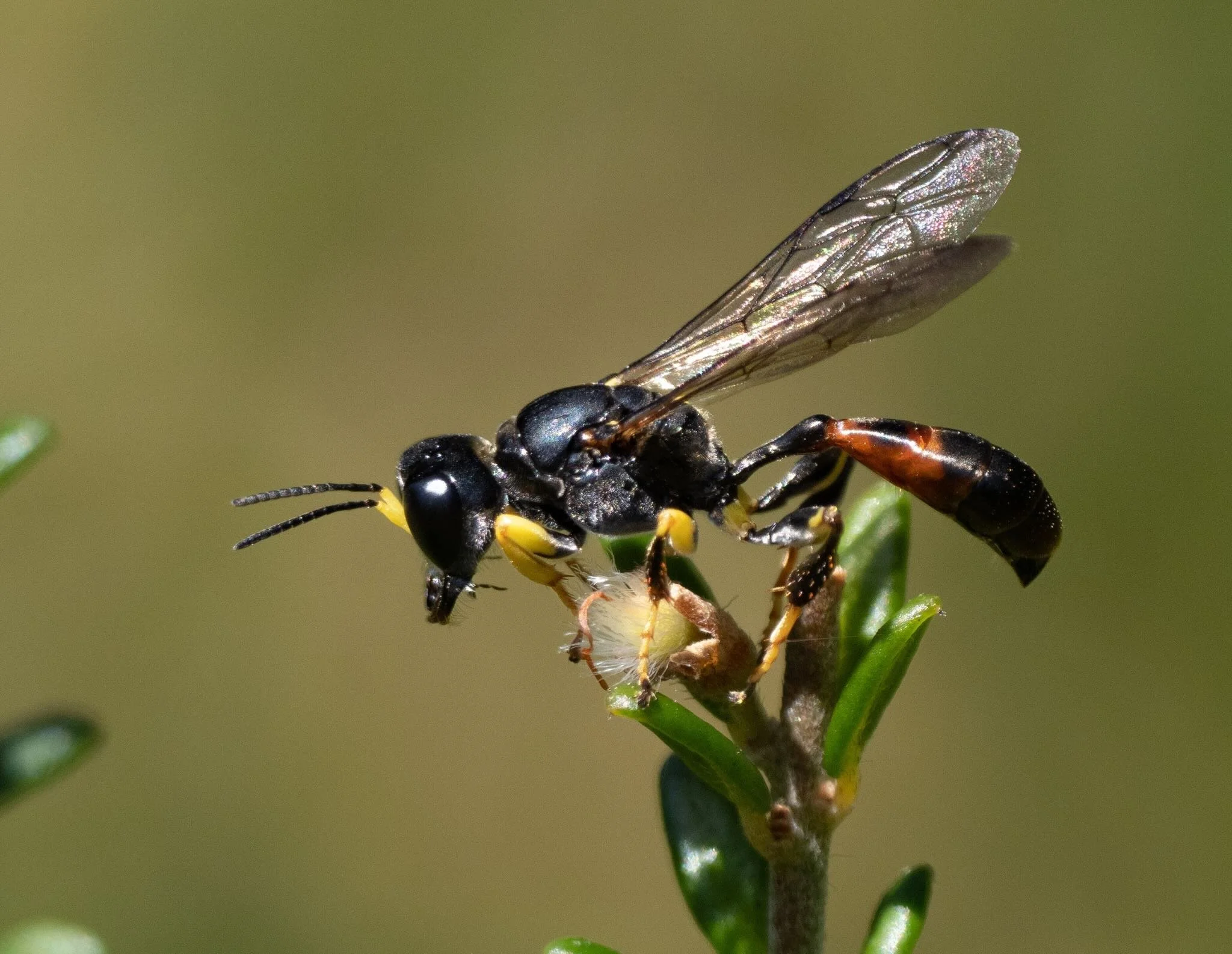
Podagritus leptospermi (Crabronini)
Workbook
It has been several years now since I first noticed this species nesting here in the forest. They are colourful and (relatively) large, typically appearing in October or November. Nests are dug in sandy soil, concealed under vegetation. Their favoured prey are the heavy-bodied Anabarynchus, and nesting females can carry remarkably large flies.
This season I spotted a particularly active congregation of these wasps!
I decided it was time to collect a couple for a closer look at this species.
Some live action
I’m quite confident that mid November was the very start of the nesting period. November 13th was my first sighting for the season, and I’m sure I would have noticed if they had been present in numbers the day before.
Females typically disappear quickly when they return to the nest area laden with prey. Sometimes, however, this goes amiss. The follow sequence was taken over 5 minutes. The female arrived carrying a particularly over-sized stilleto fly (Anabarynchus sp.) … but then couldn’t locate her nest opening. It provided me a rare photo opportunity. And in the end, she gave up and left the scene. Ants quickly moved in to claim the abandoned, paralysed fly. But I was quicker! It is now in my collection (specimen #2511G).
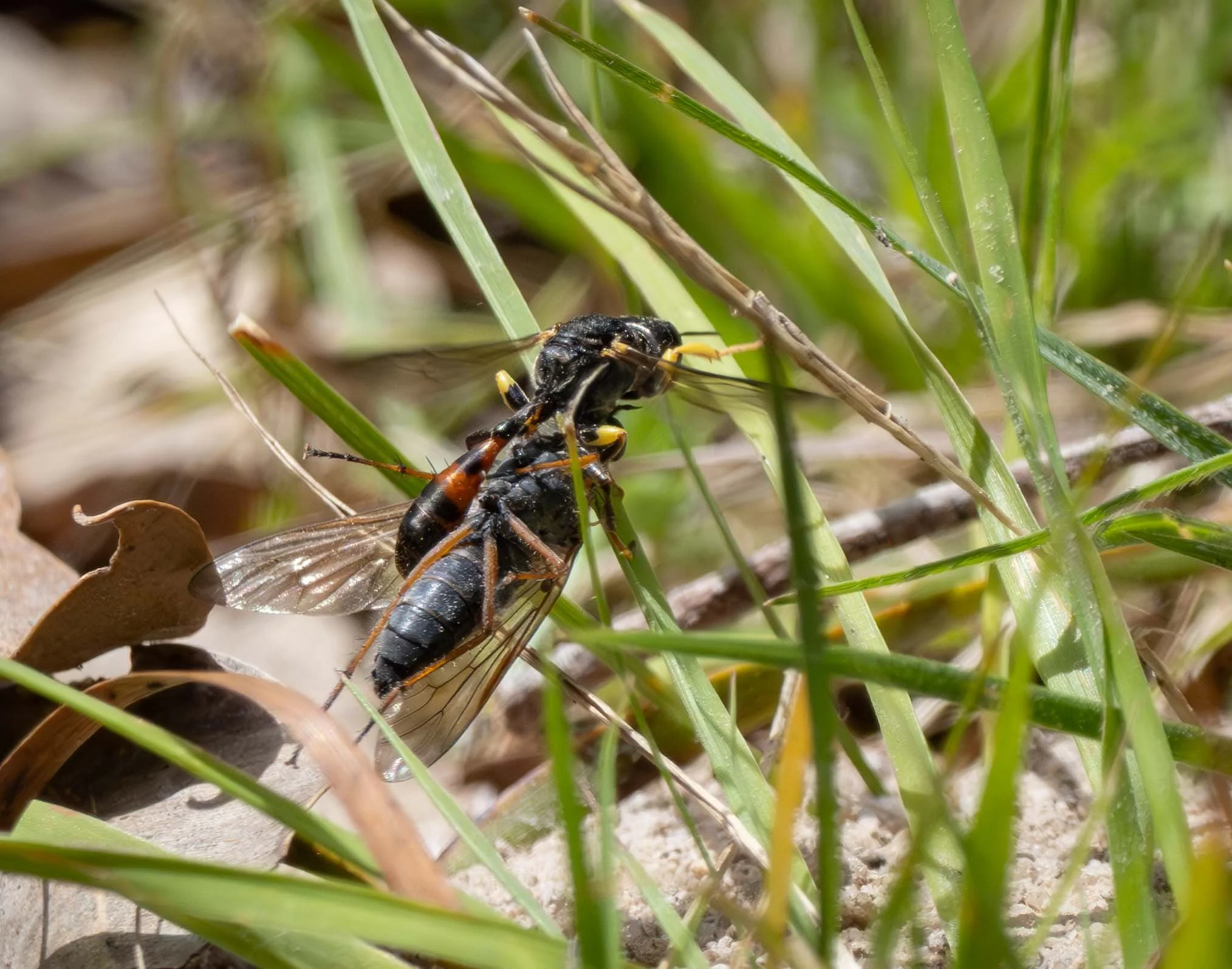
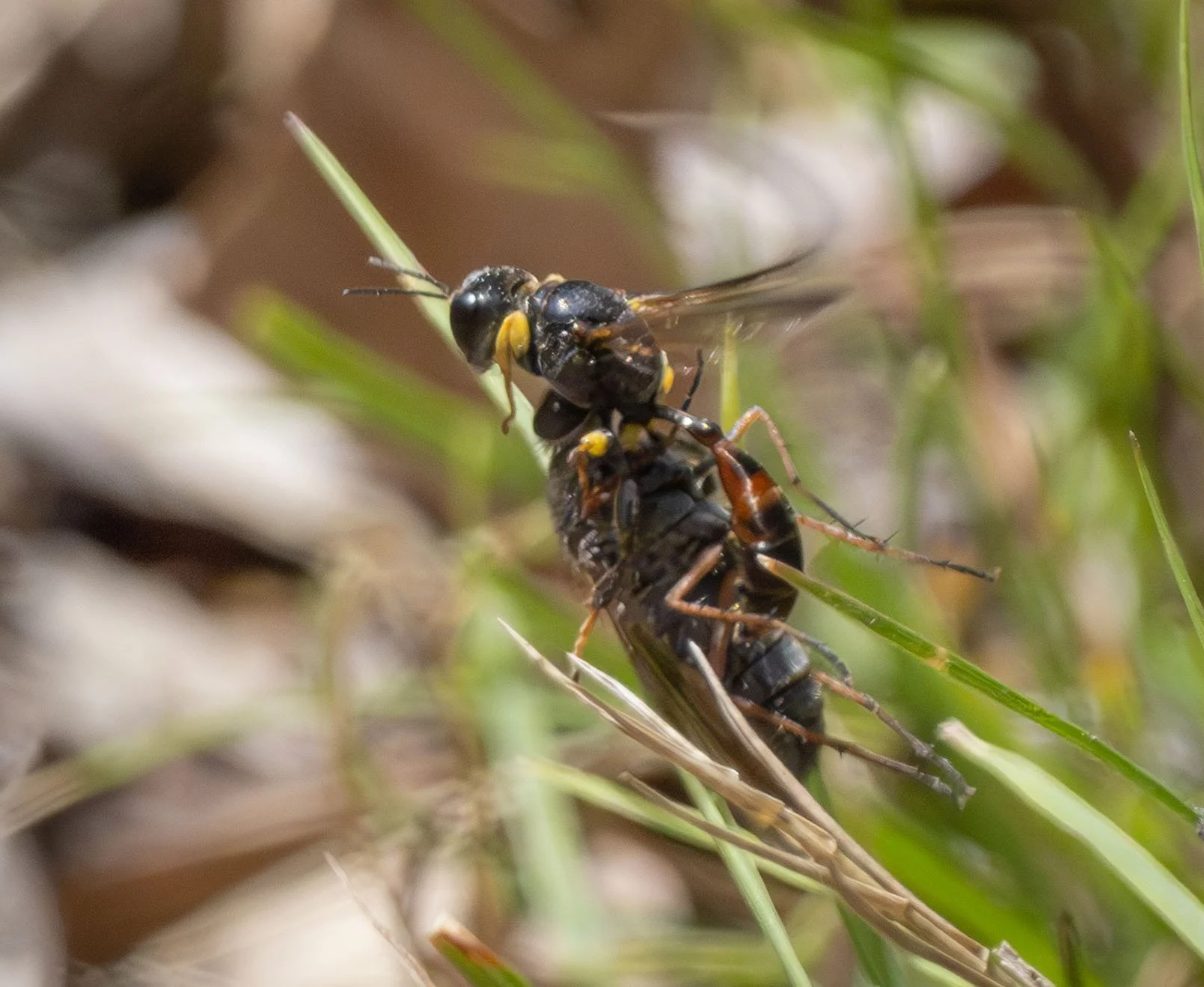
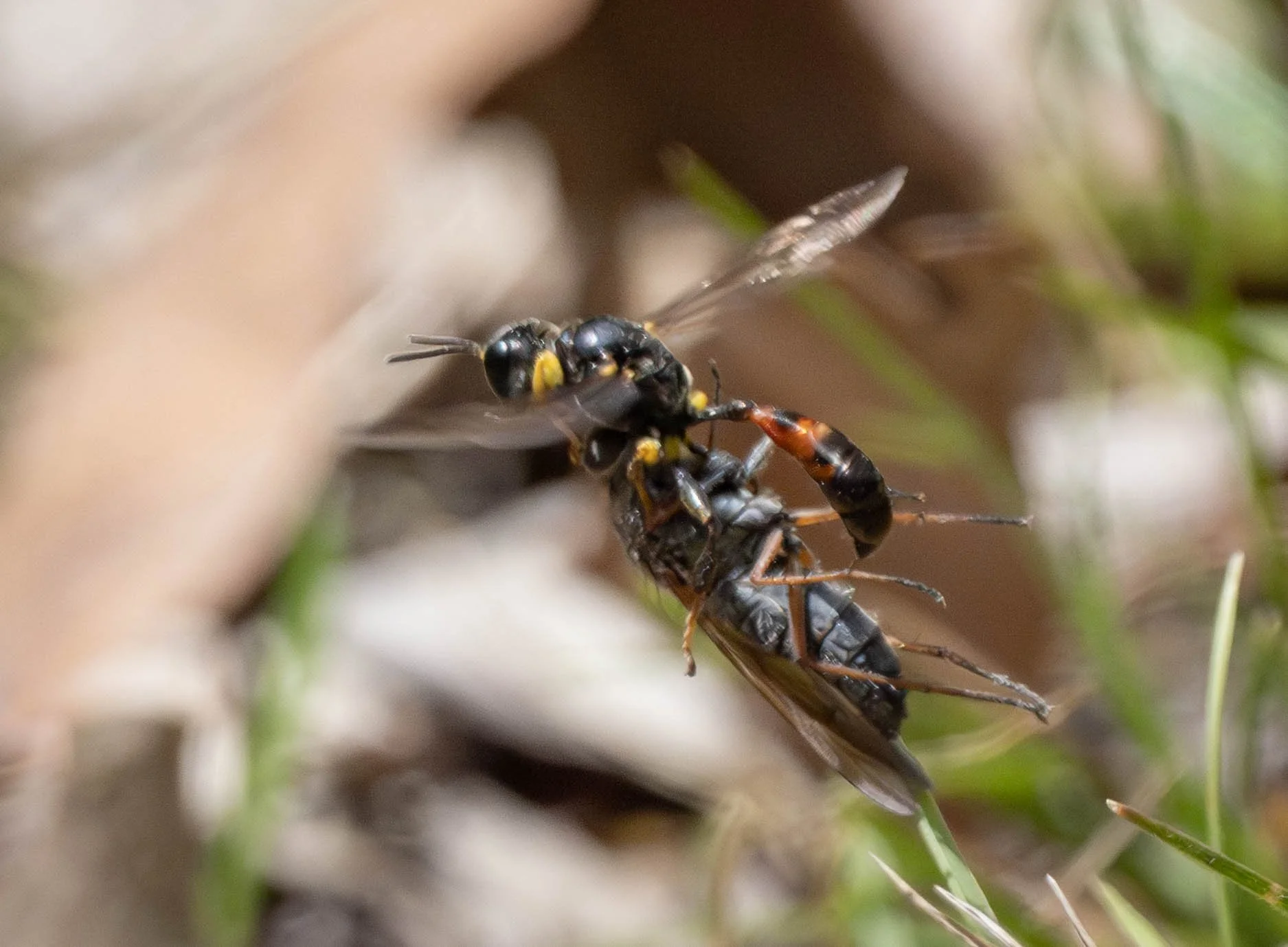
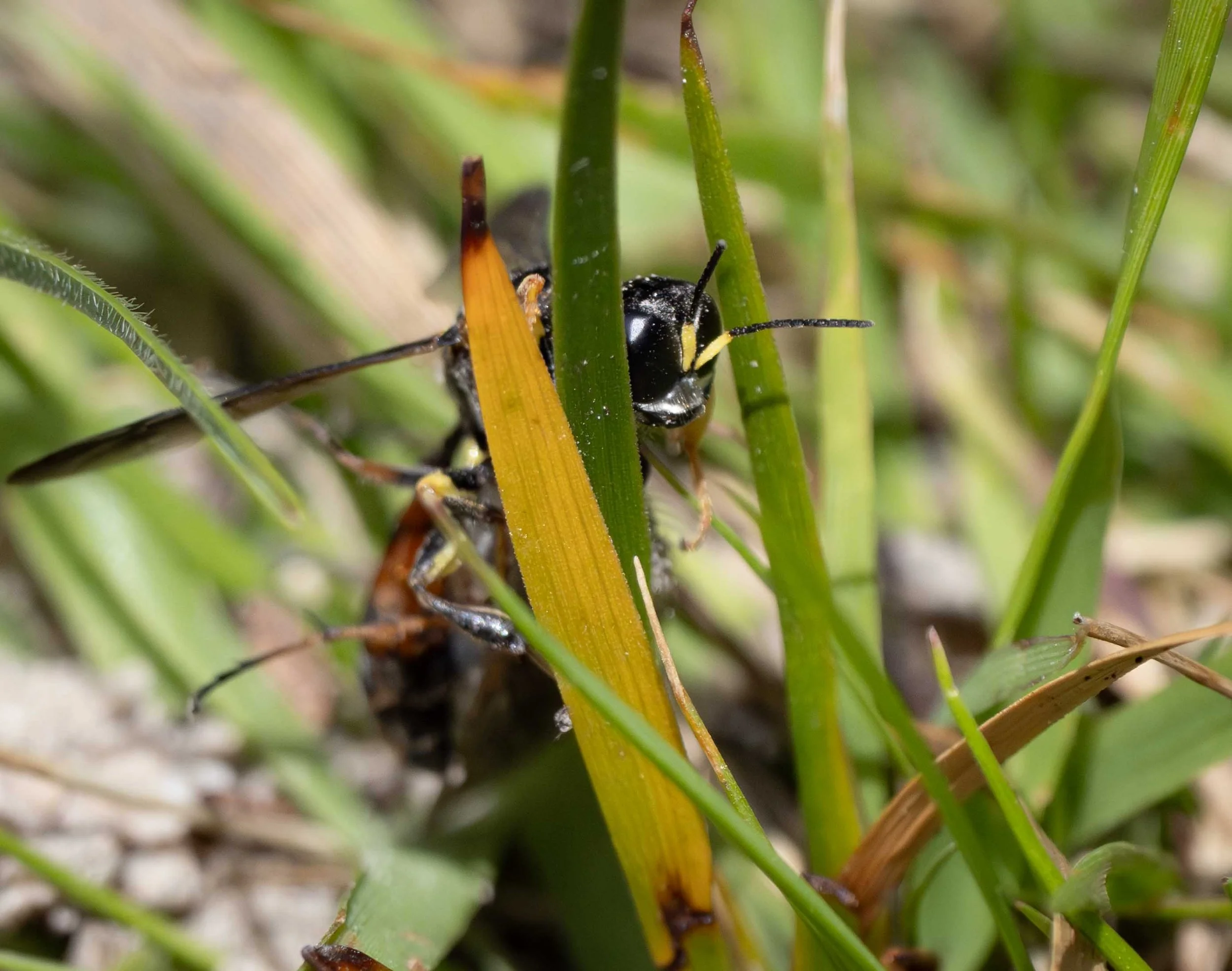
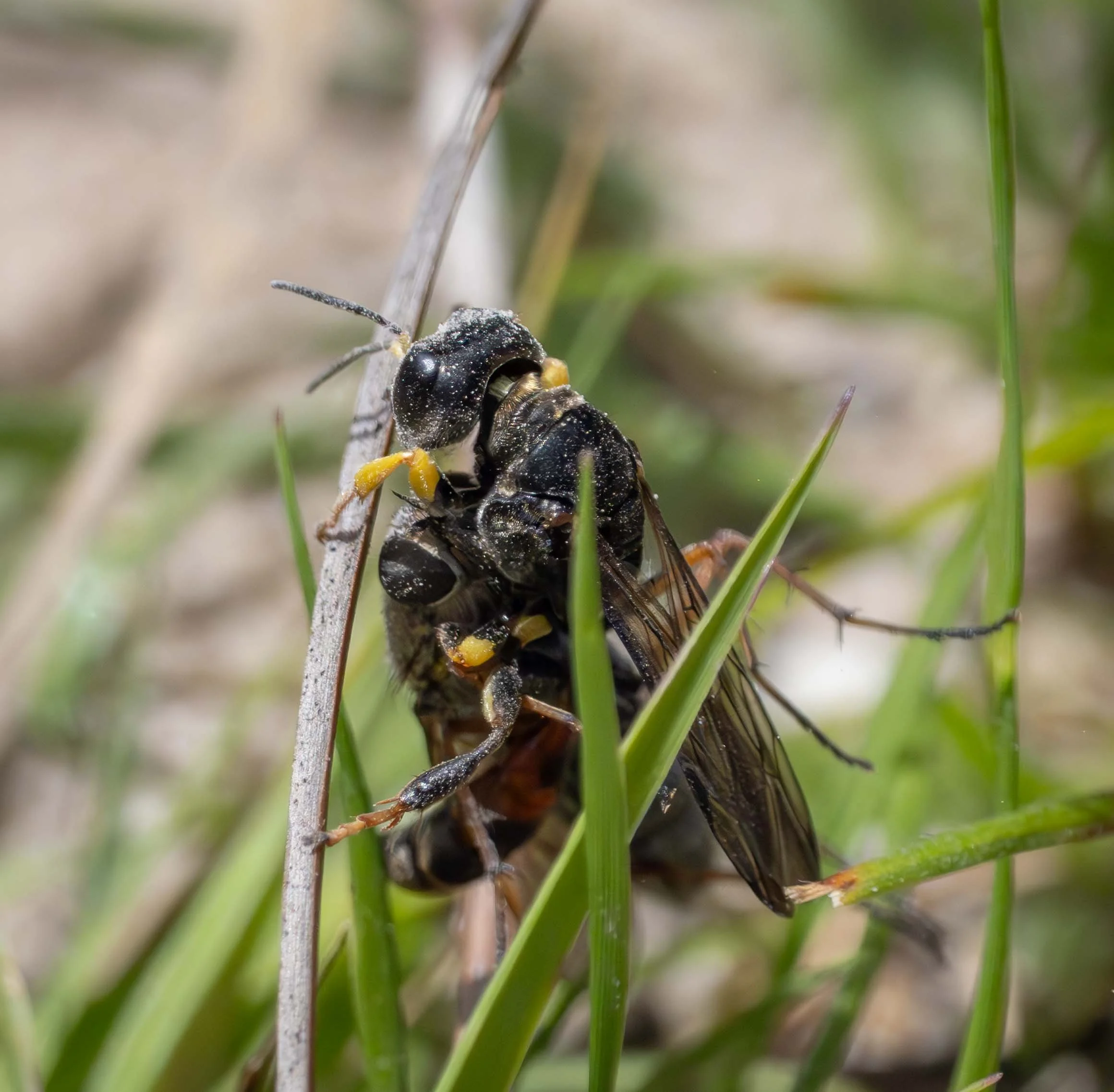
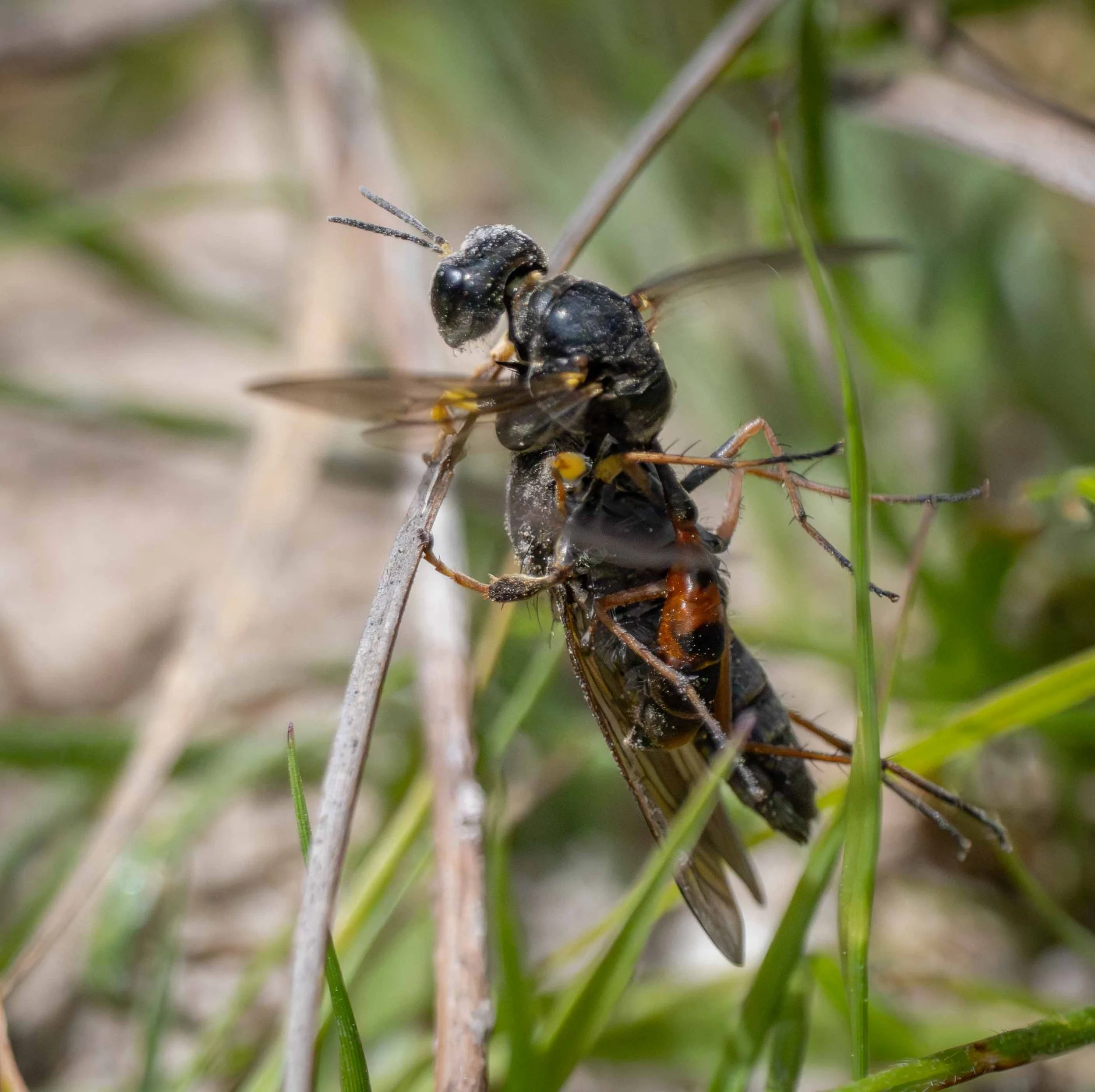
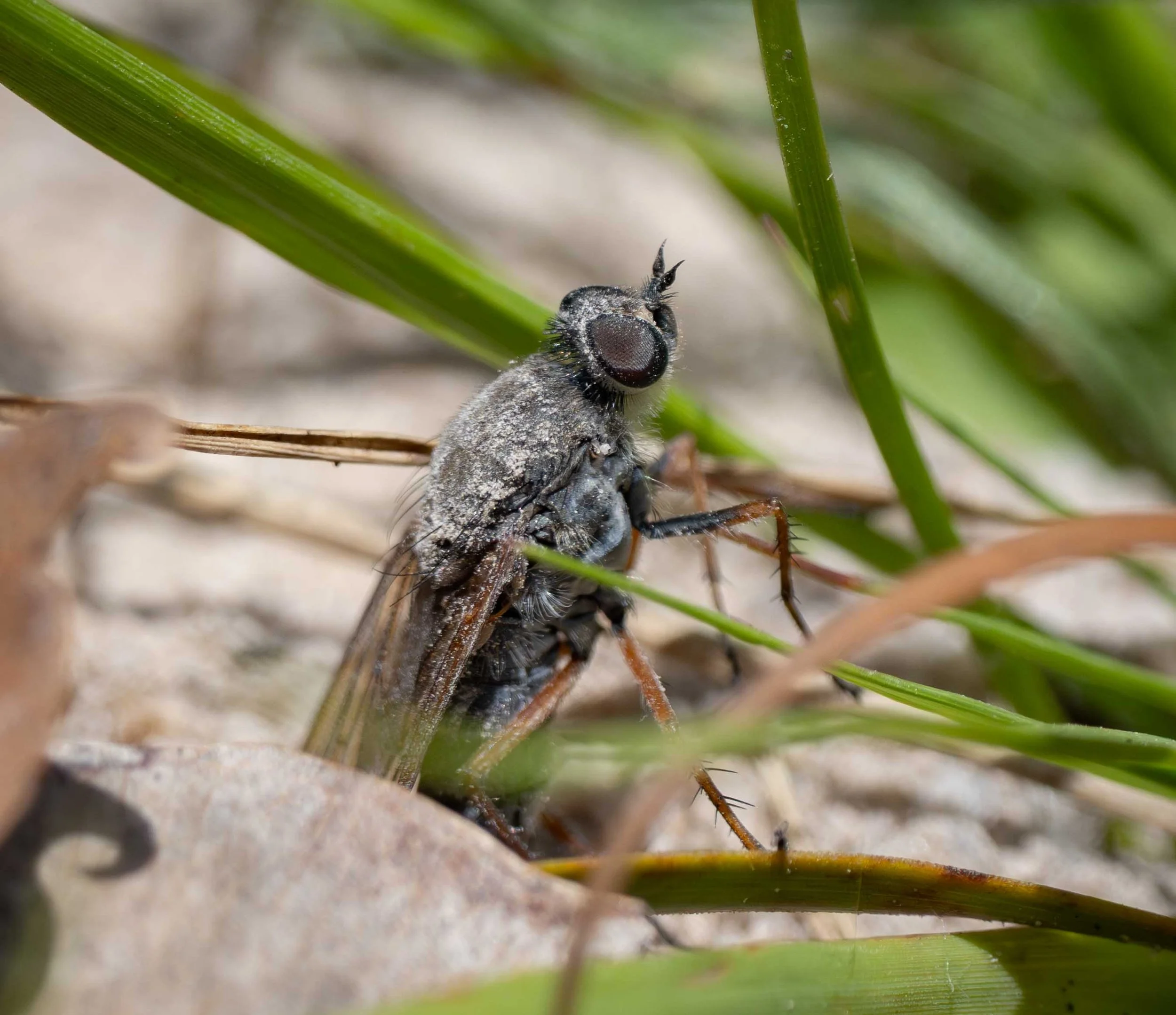
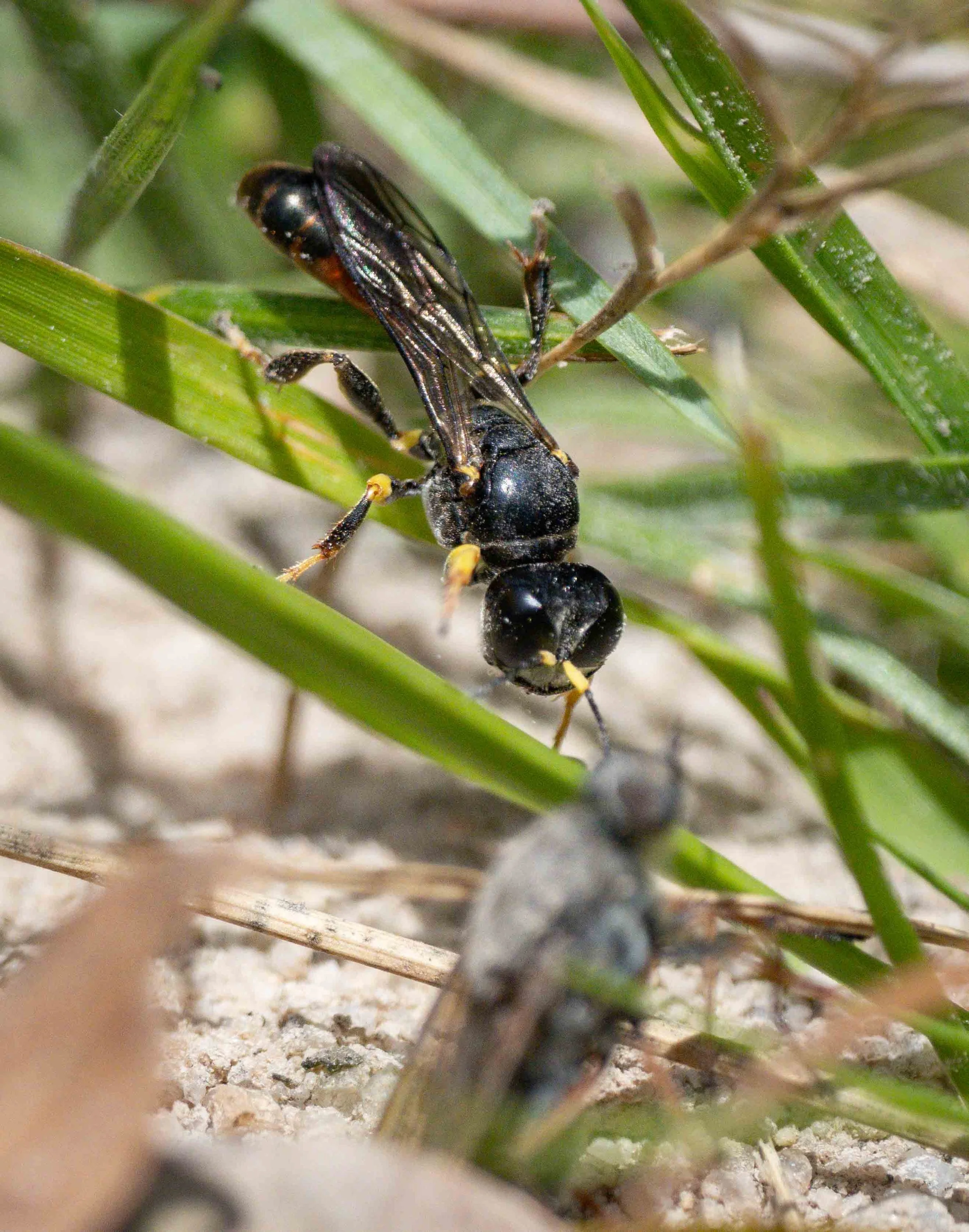
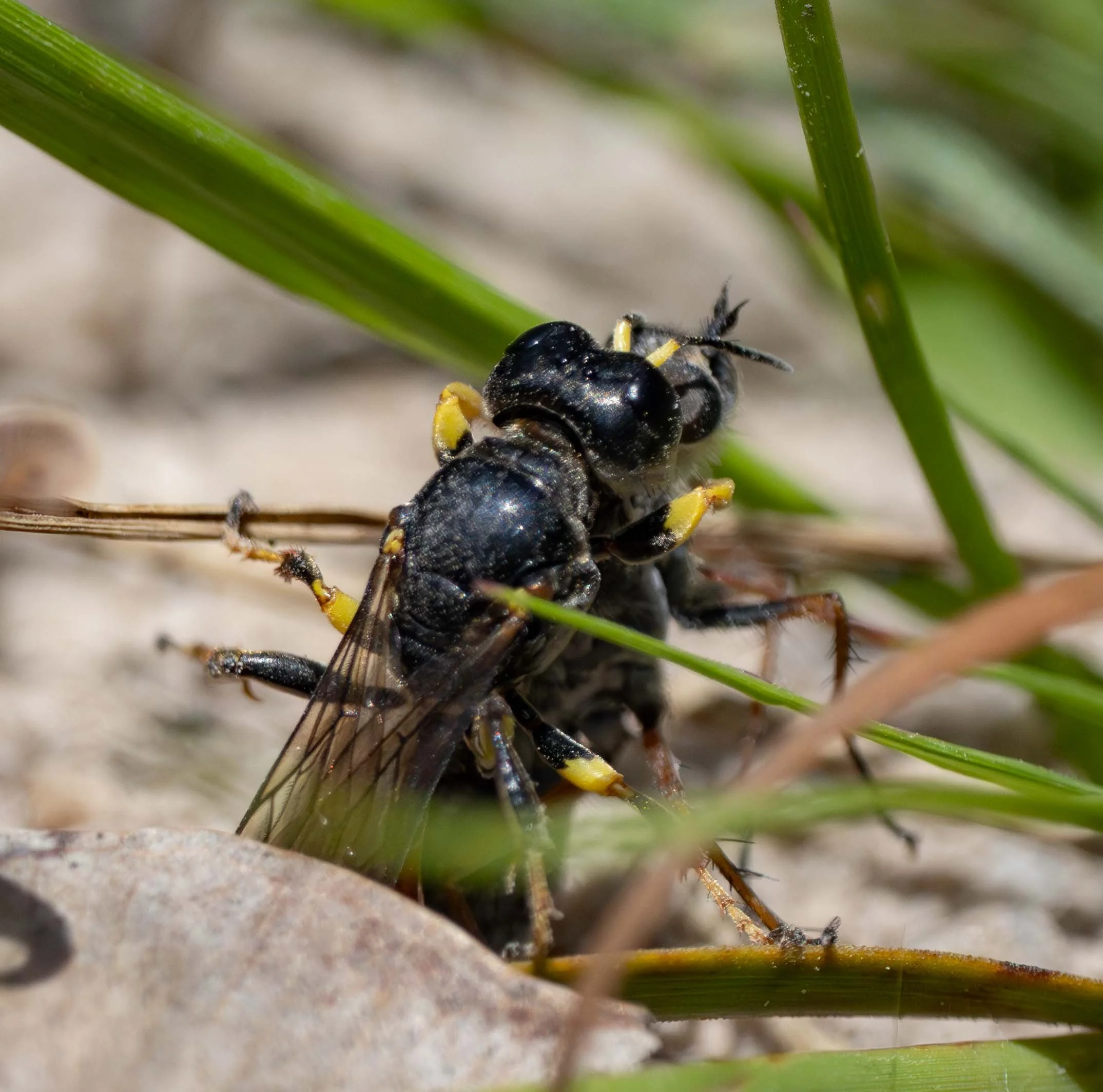
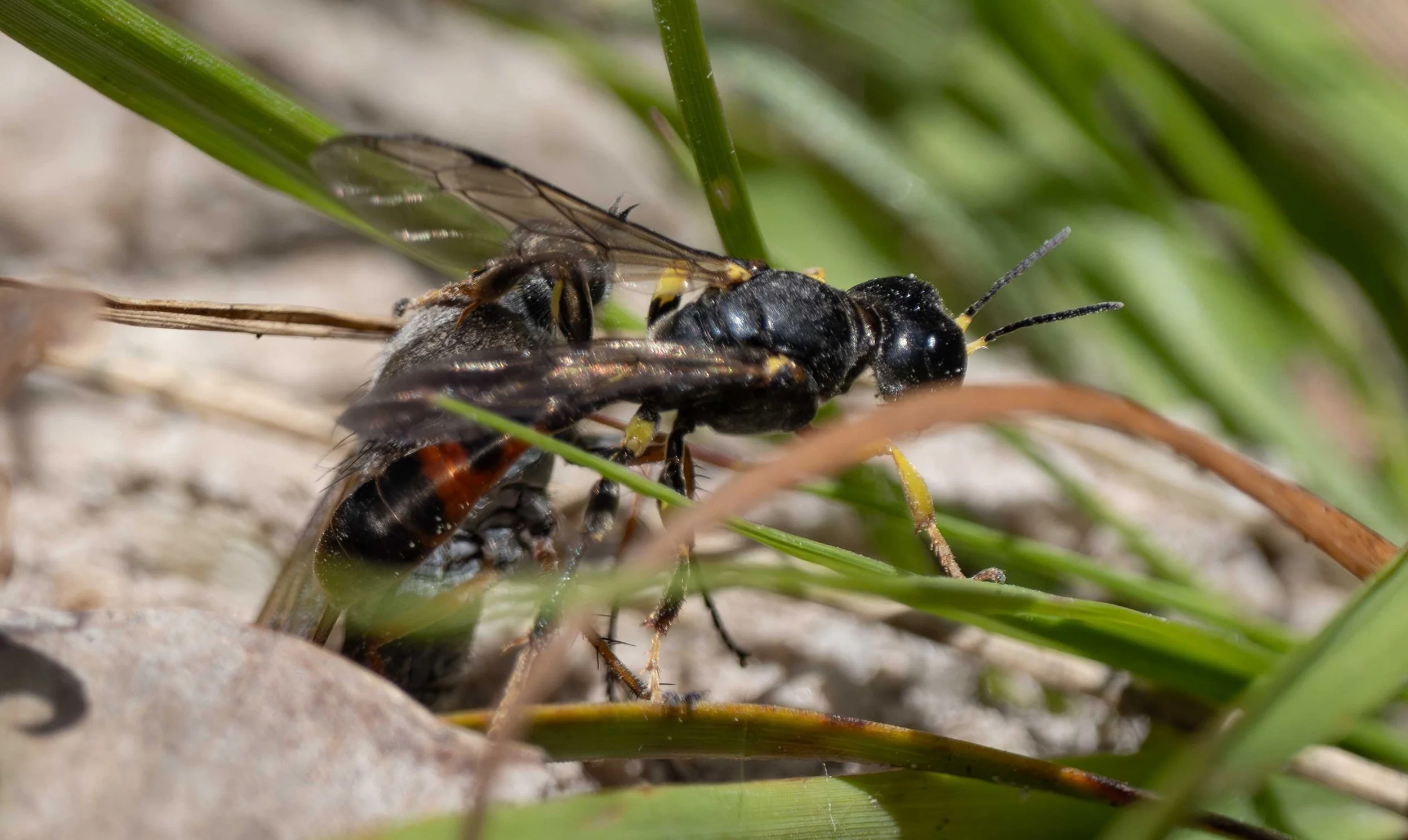
While all this was going on, other females were busily stocking their nests, and males were hovering about, with their characteristic bobbing flight.
So I collected two specimens: a female (#2511I, along with the paralysed fly she was carrying {#2511H}), and a male (#2511J, taken in flight).
Podagritus
Most of what we know of this genus is down to the extensive studies of Jean Leclercq. I have drawn heavily on his 1998 revision, which includes a key to the 30 Australian species described by that time. A further two species have been added since, both from Western Australia (Pulawski 2023).
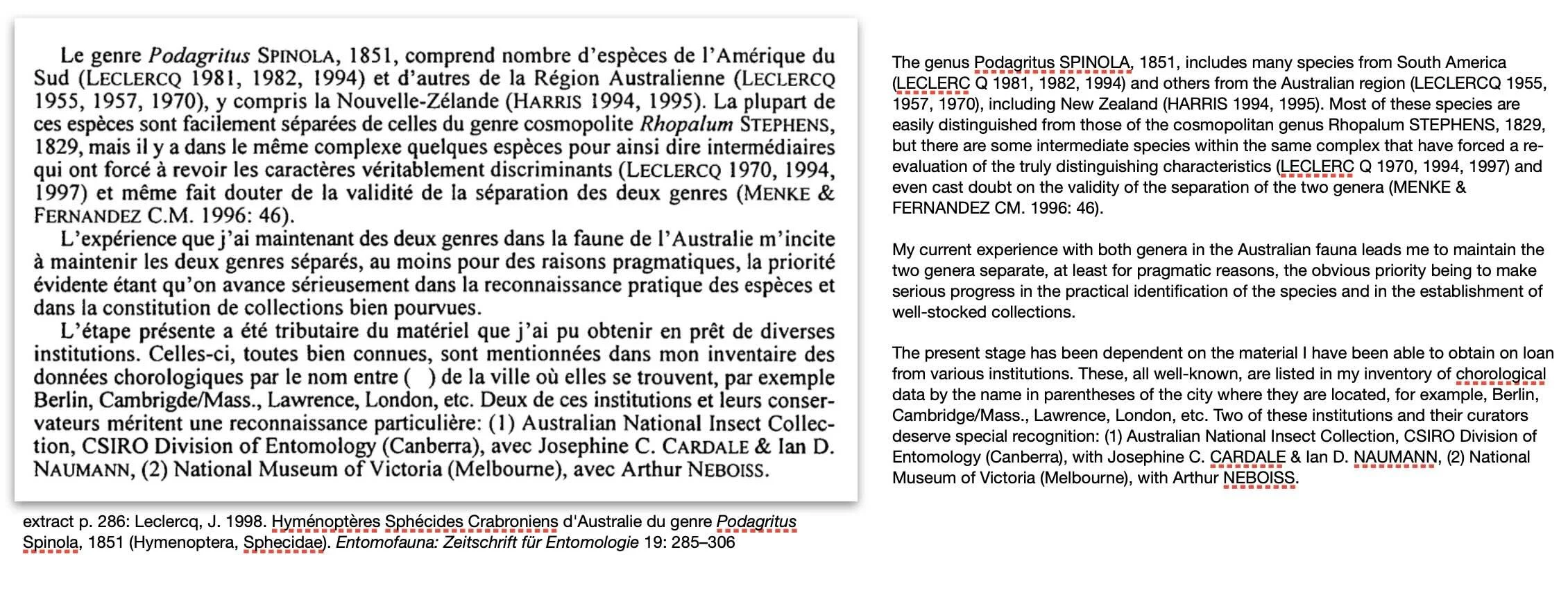
It is worth noting the challenge in distinguishing Podagritus and Rhopalum. Some species neatly fit the diagnoses of one or other genus, but there are exceptions. Despite this, the current delineation is generally accepted (Leclercq 1998; Pulawski 2023) … for convenience, for now.
Drawing extensively on Leclercq’s work, I’ve put together some further notes on Podagritus that includes:
a detailed comparison of Podagritus & Rhopalum
a summary table comparing the 15 Podagritus species known to occur in eastern Australia
a copy of Leclercq’s 1998 key to Australian Podagritus (original French language text & English language translation)
Podagritus leptospermi
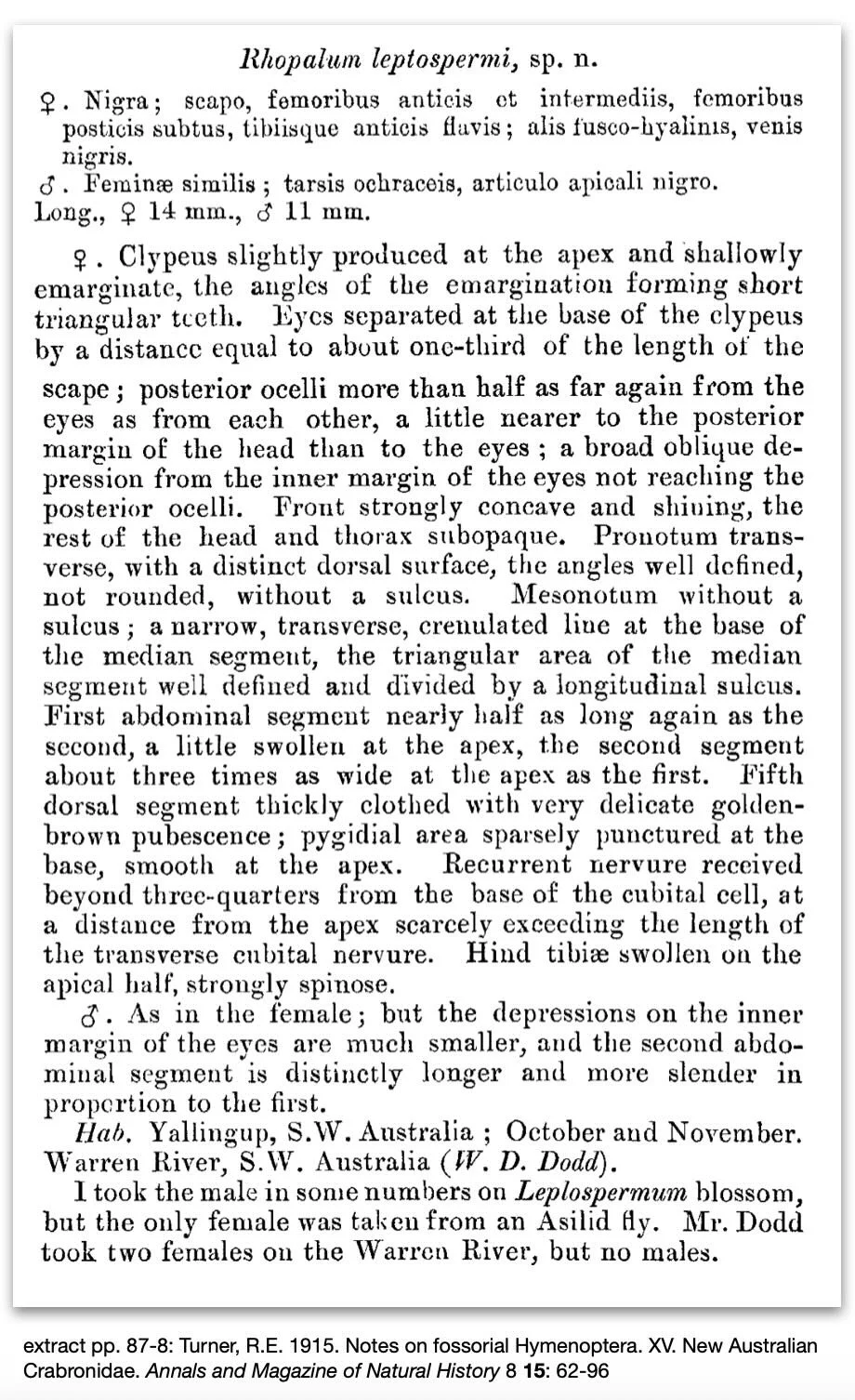
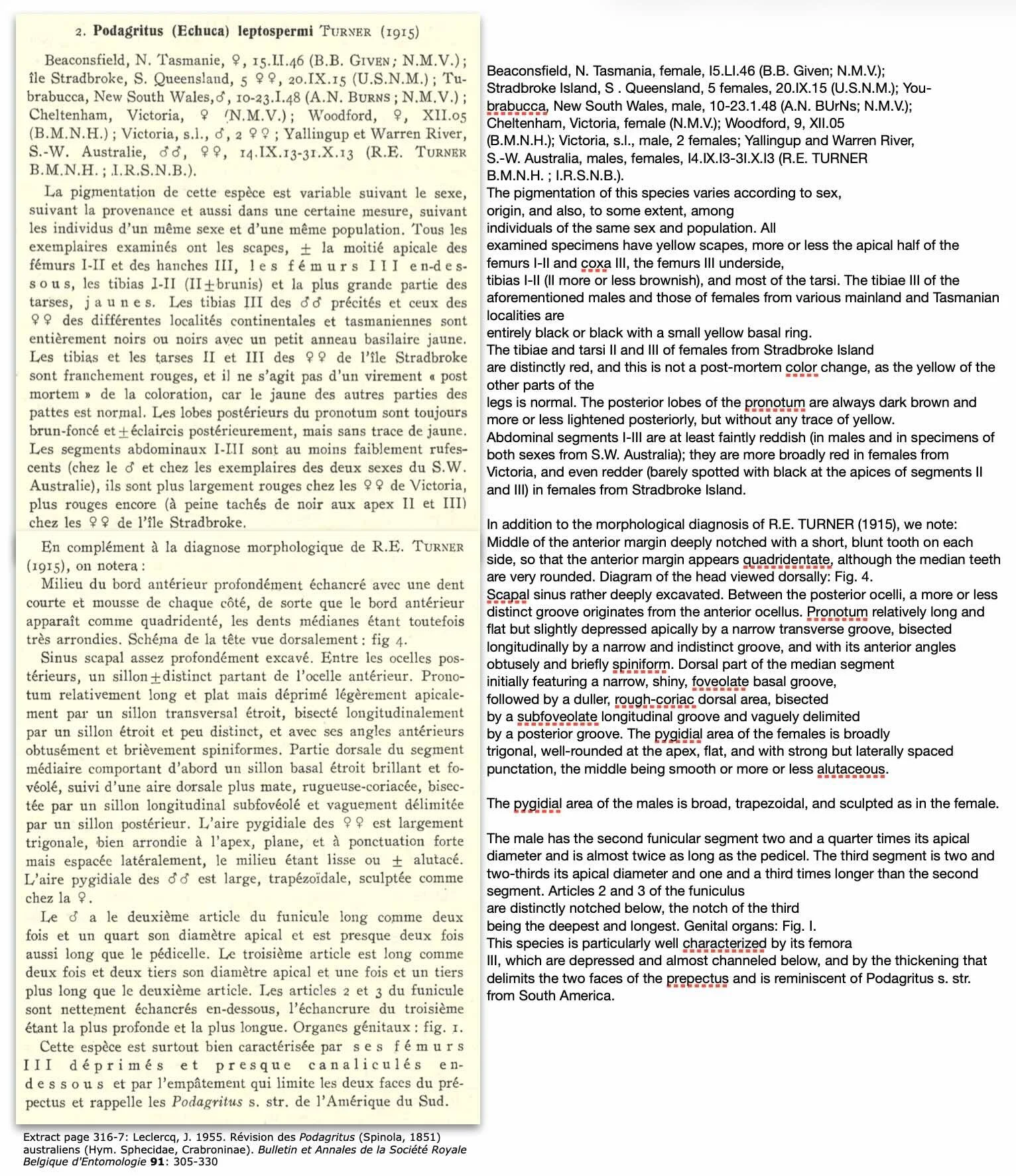
Based on the Leclercq’s 1998 key plus earlier species descriptions (Turner 1915, Leclercq 1955), I am confident our local species is Podagritus leptospermi.
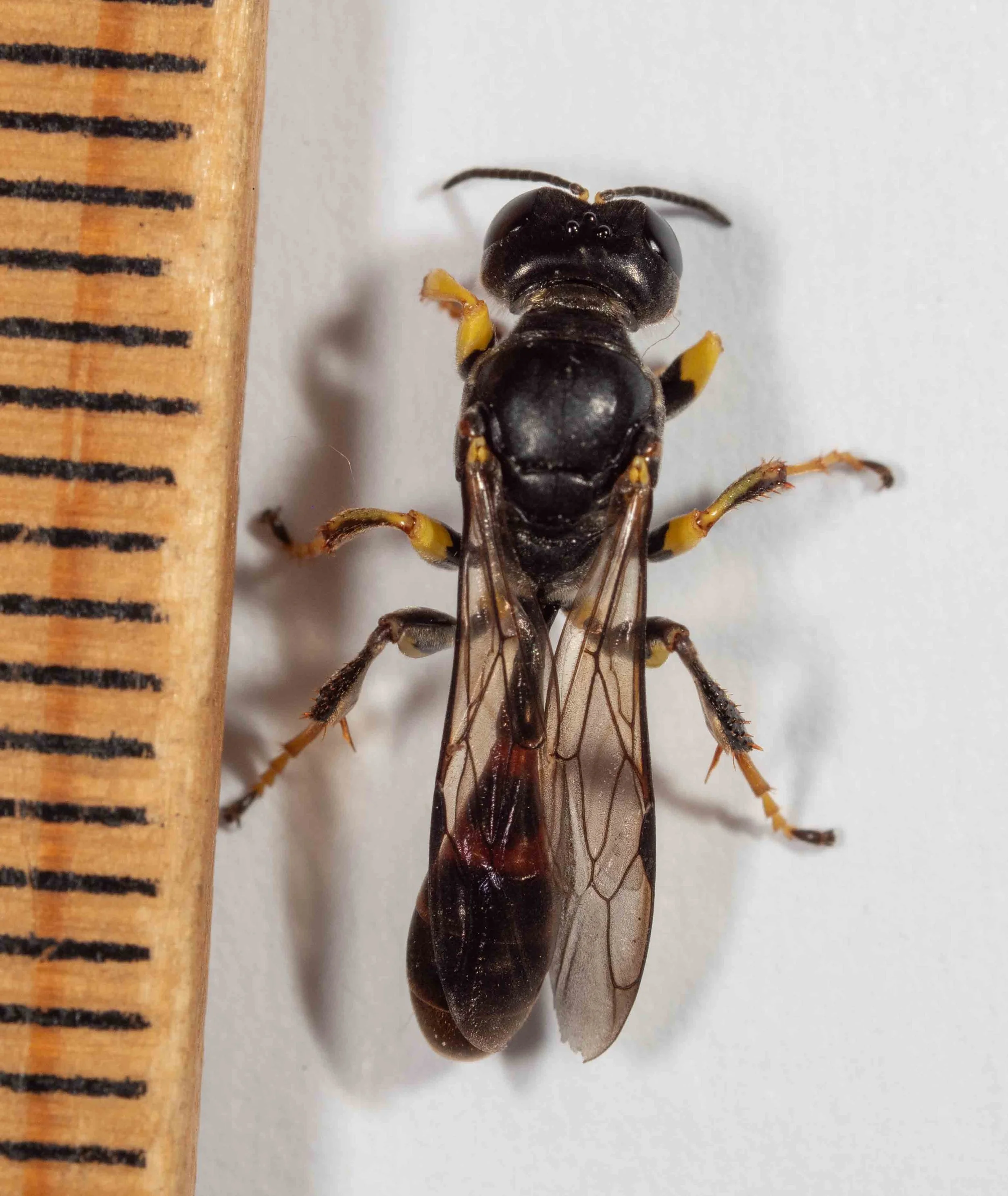
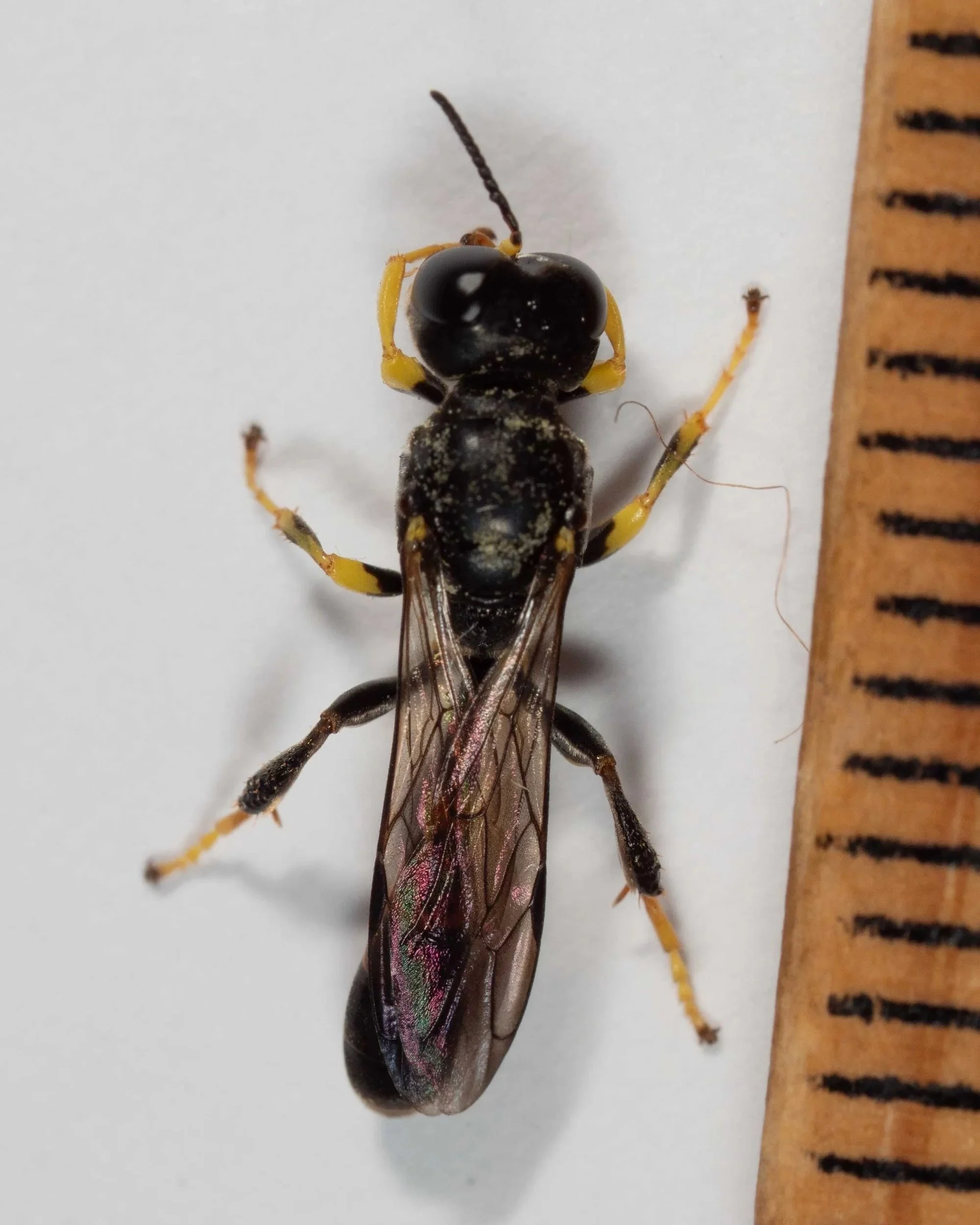
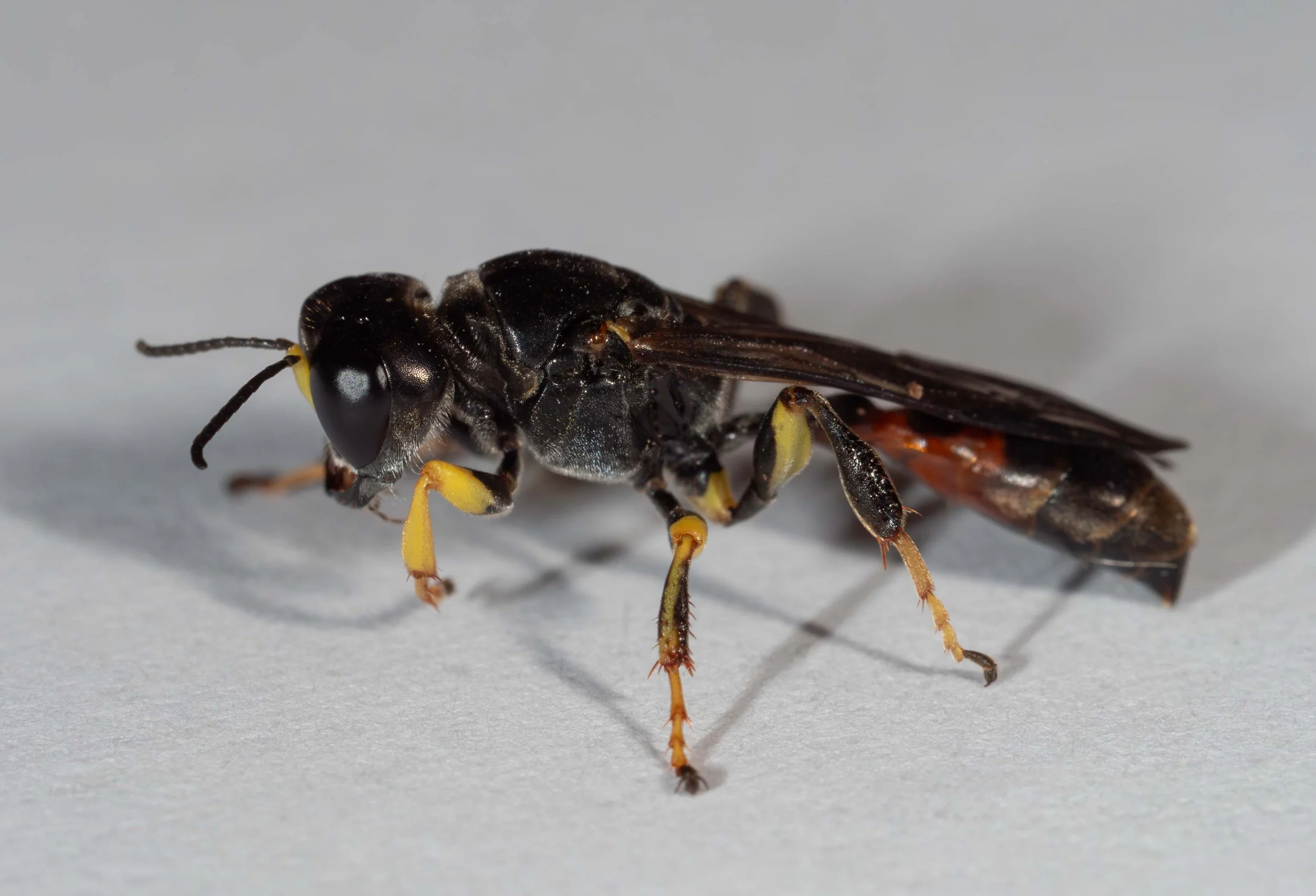
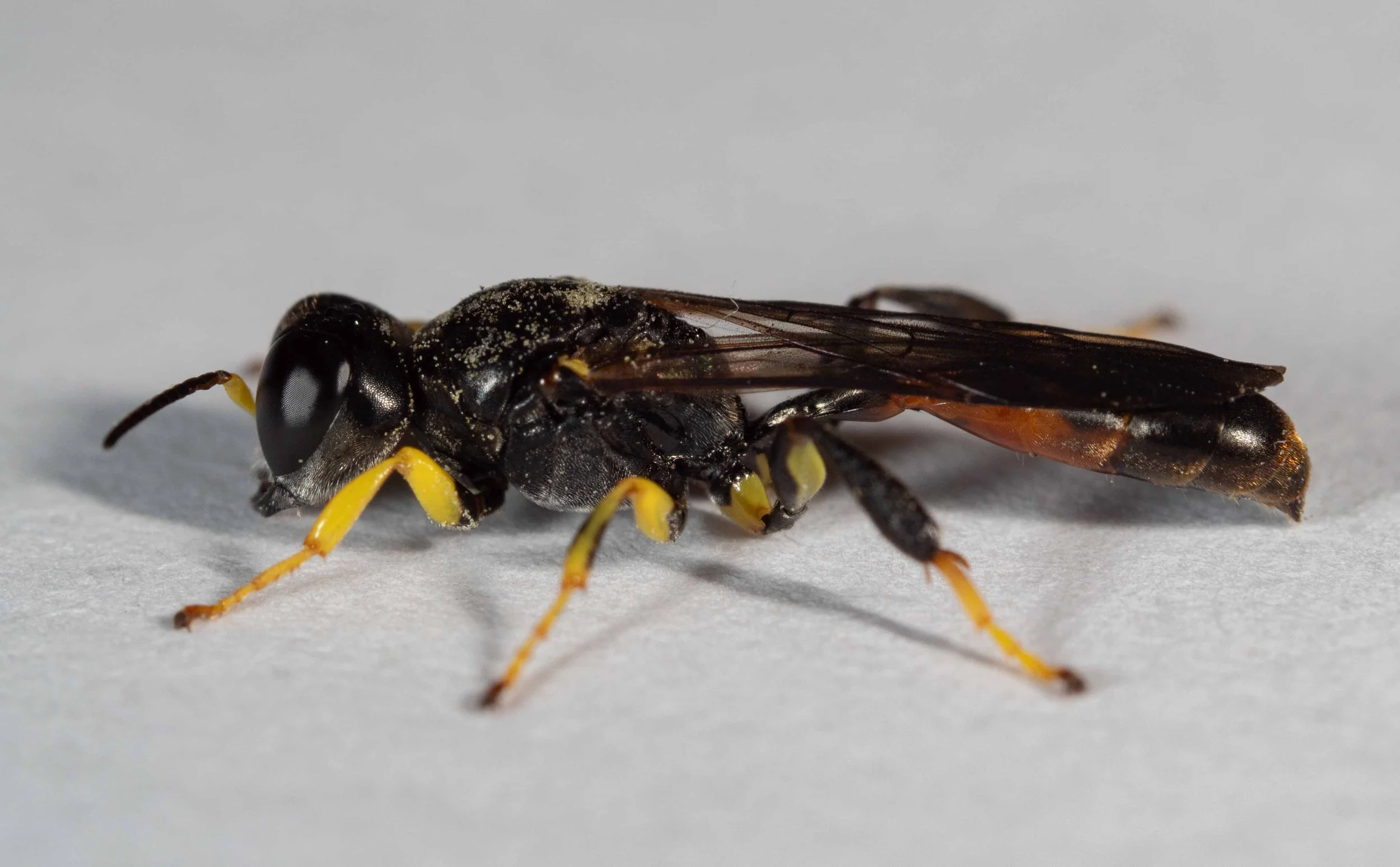
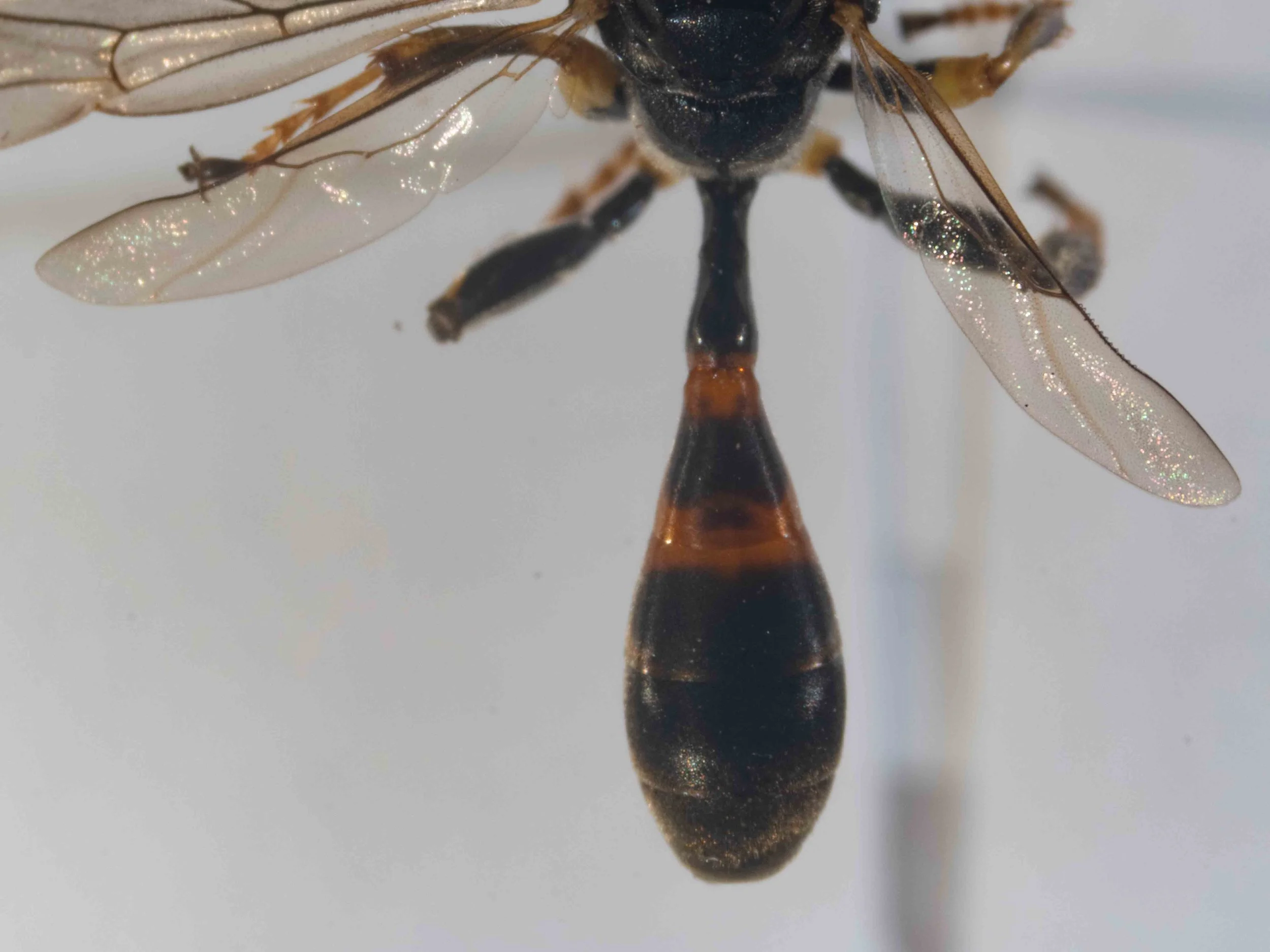
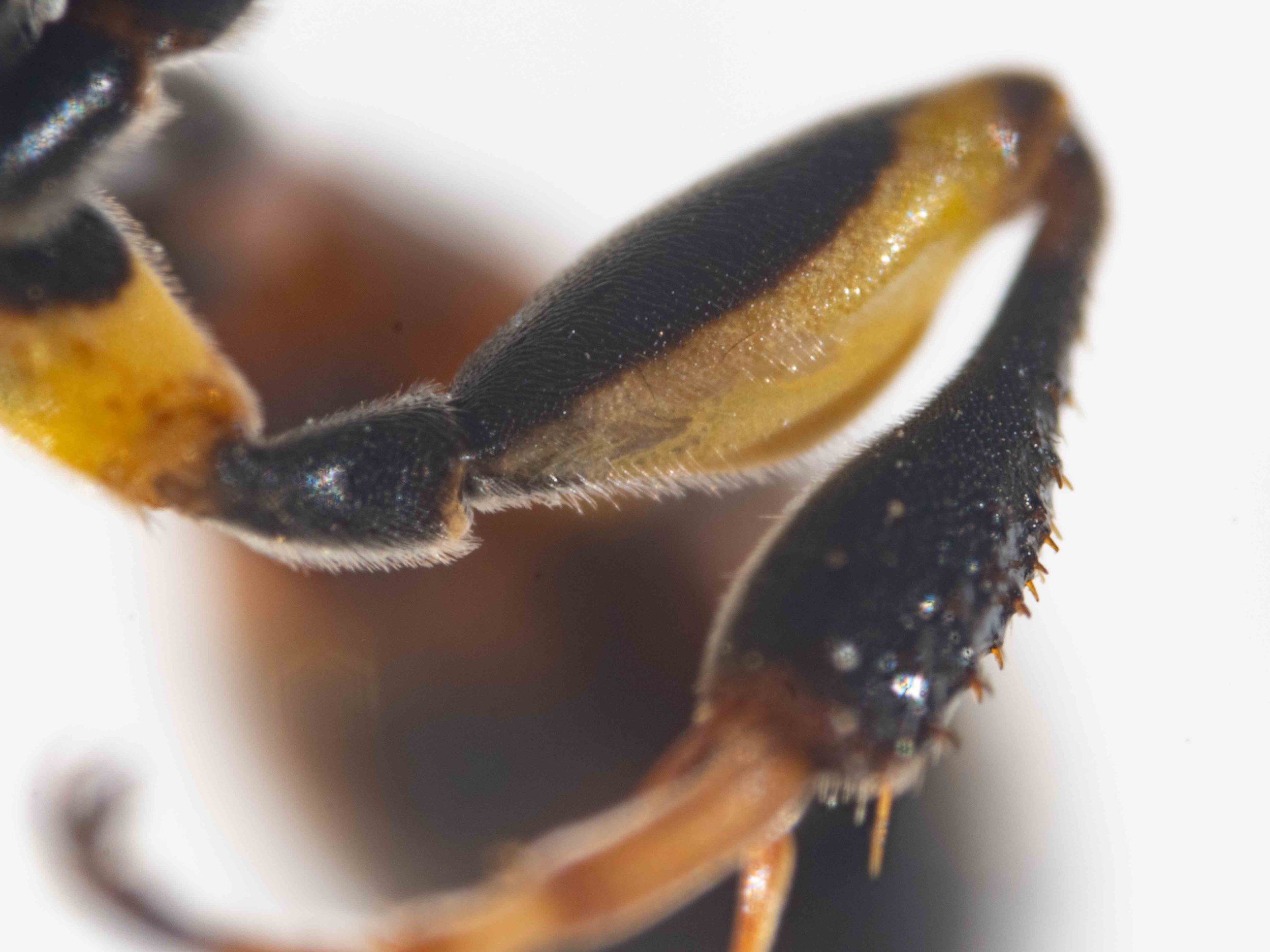
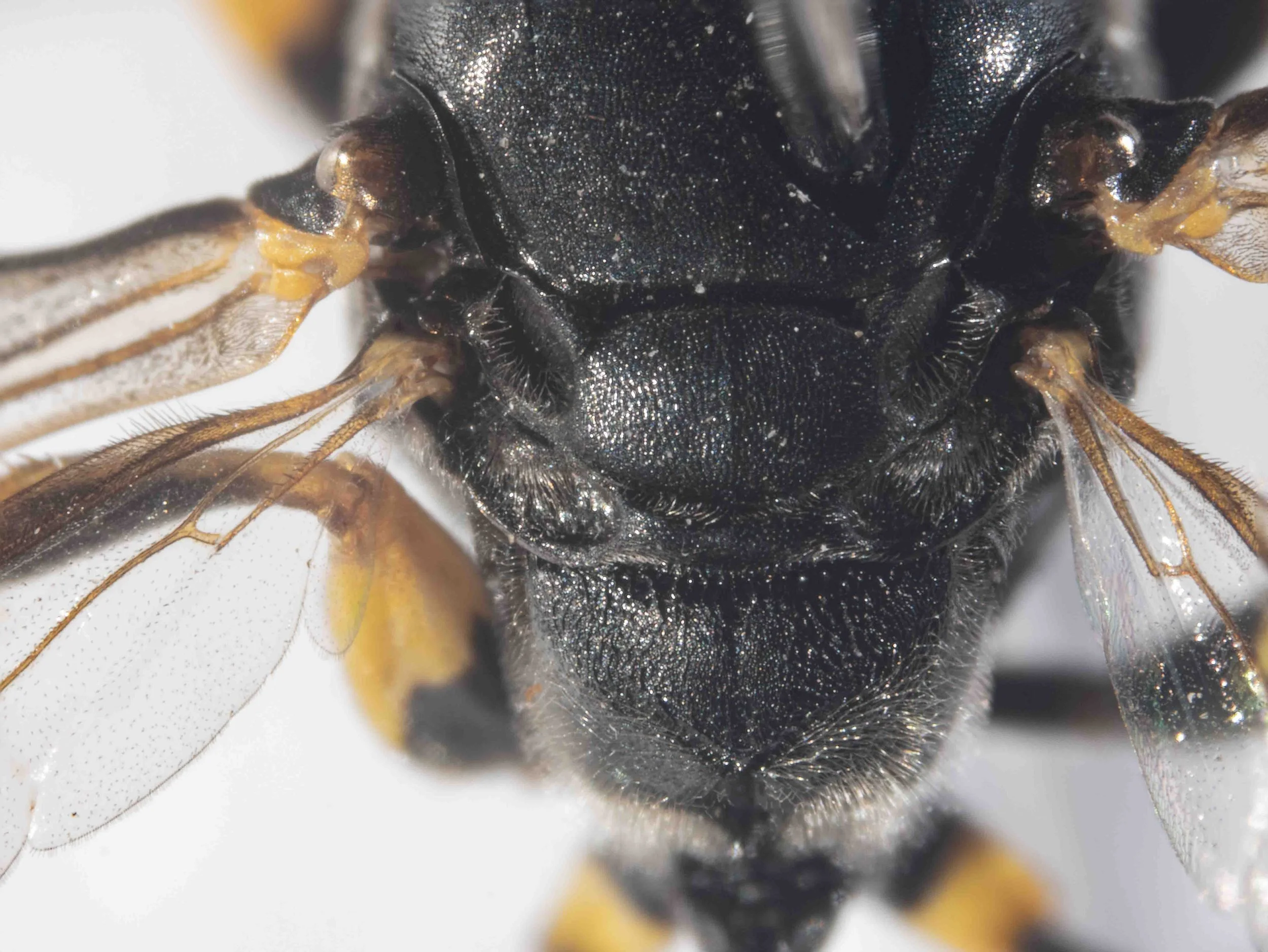
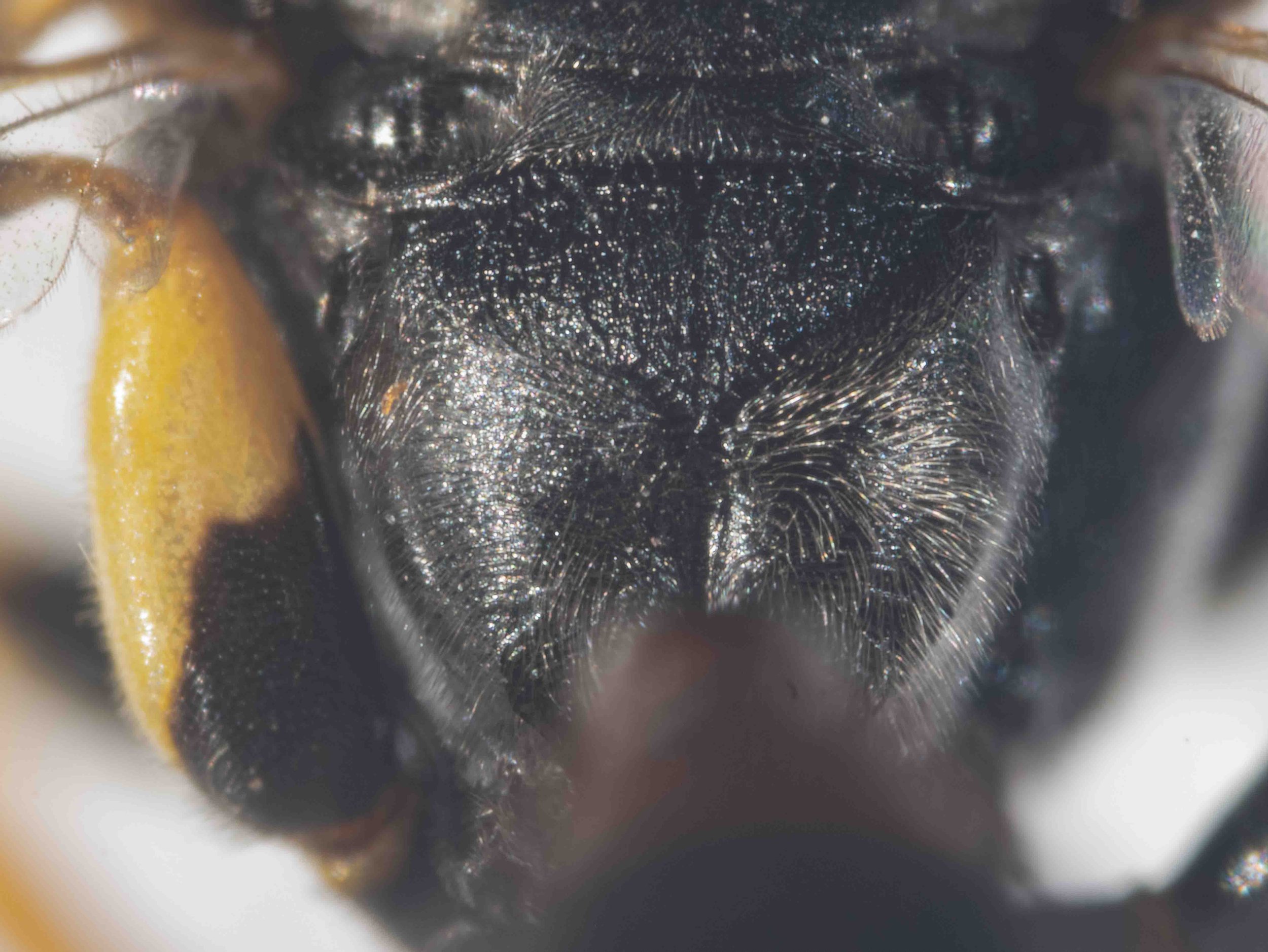
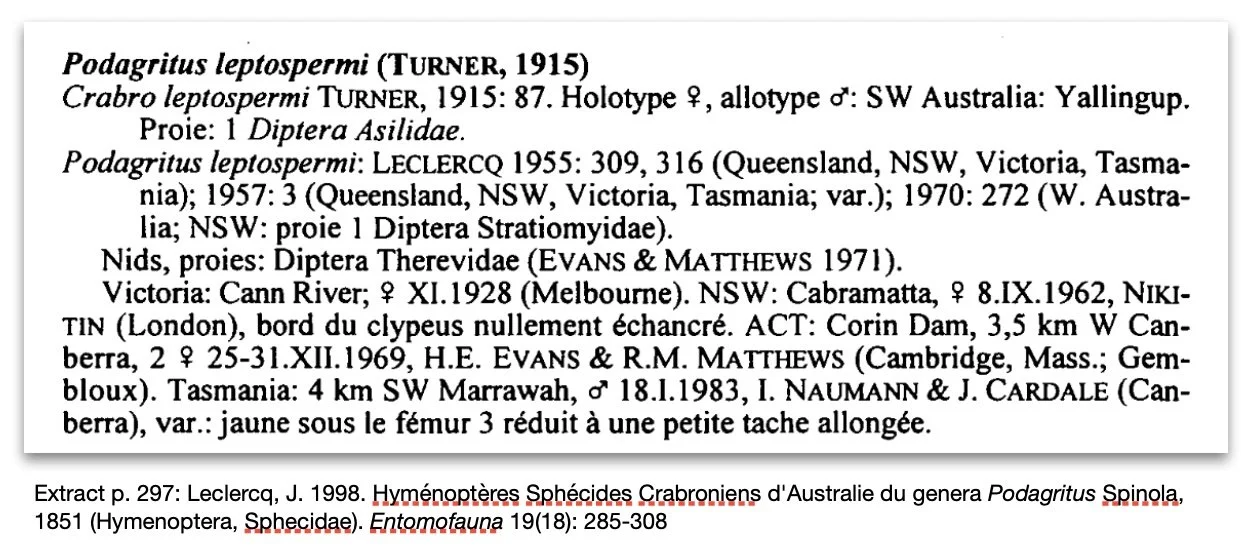
Podagritus leptospermi was one of the first described Podagritus species, at the time named Rhopalum leptospermi (Turner 1915). Although the type specimens were collected in Western Australia, Leclercq subsequently recognised the species in collections from the eastern states (Leclercq 1955, 1998) – including Cann River in Victoria, just 80km south west from here.
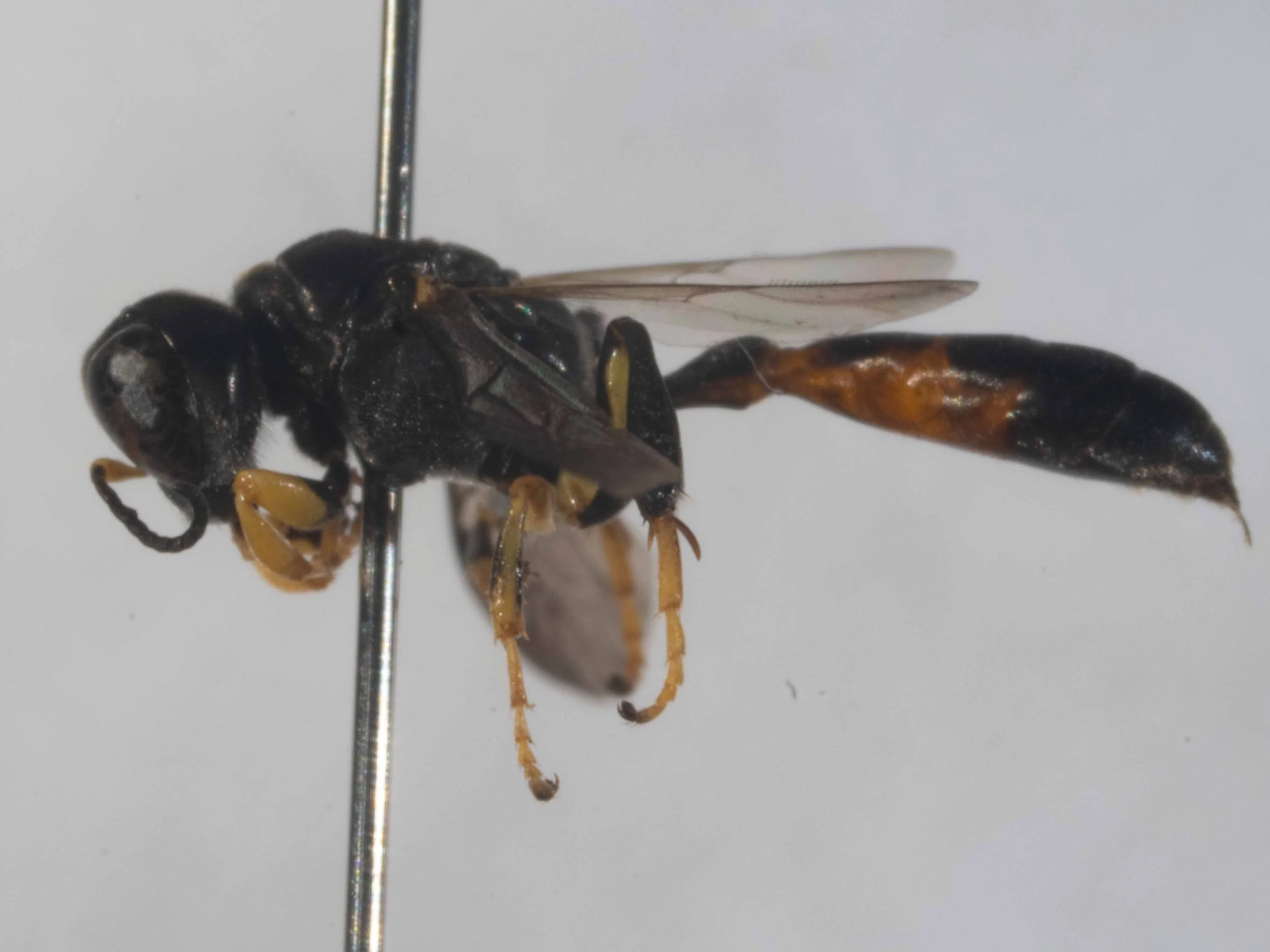
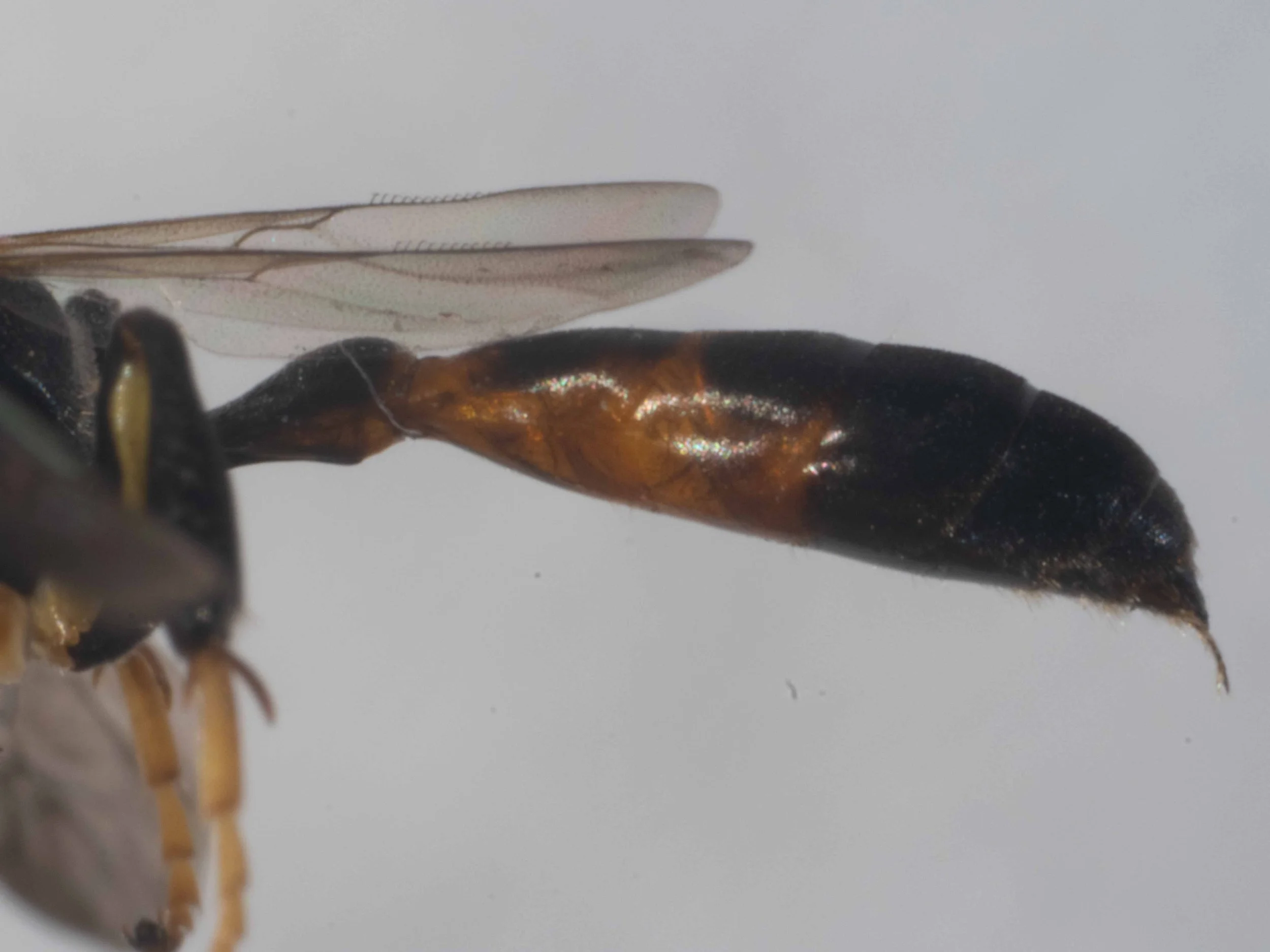
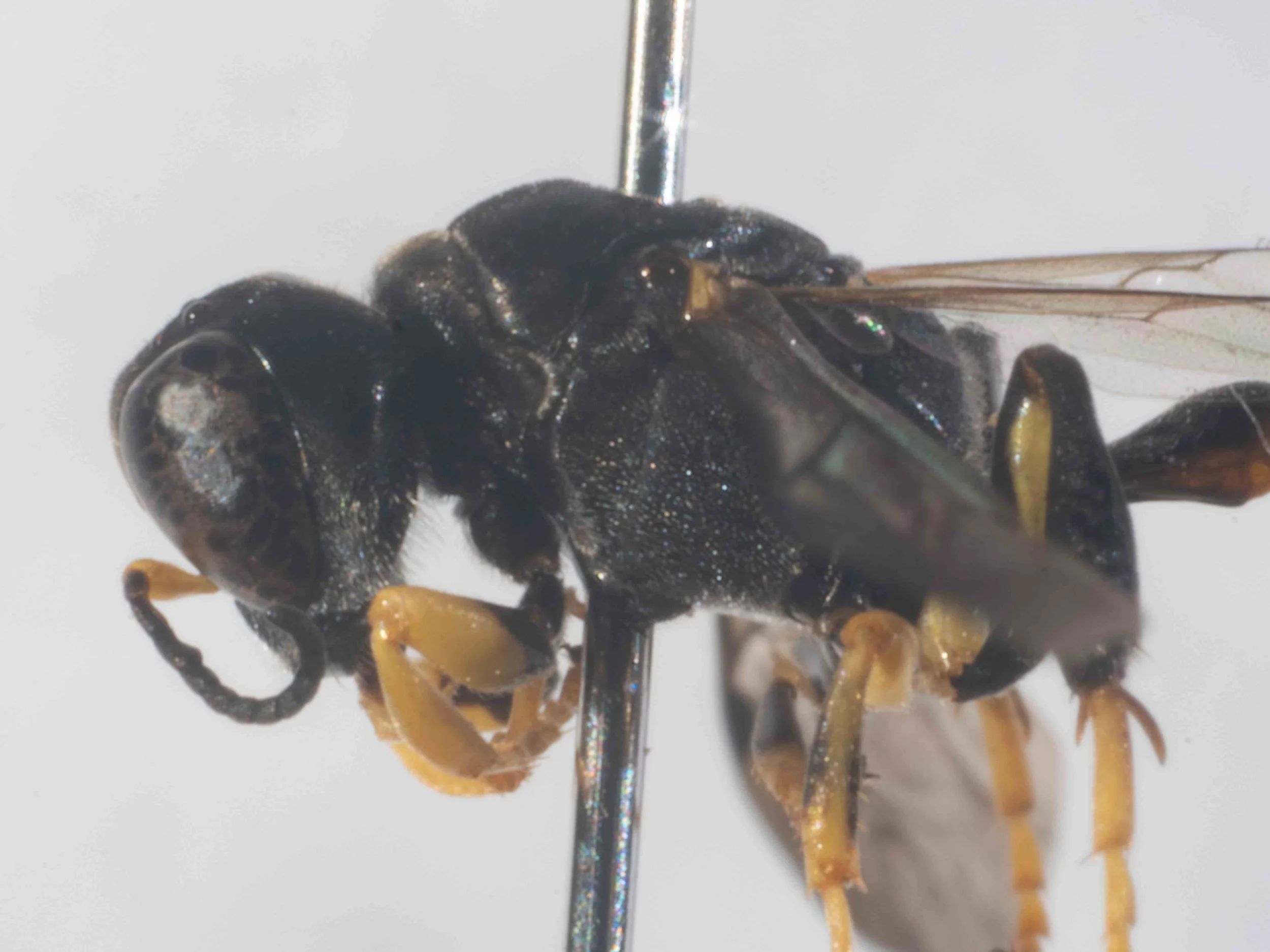
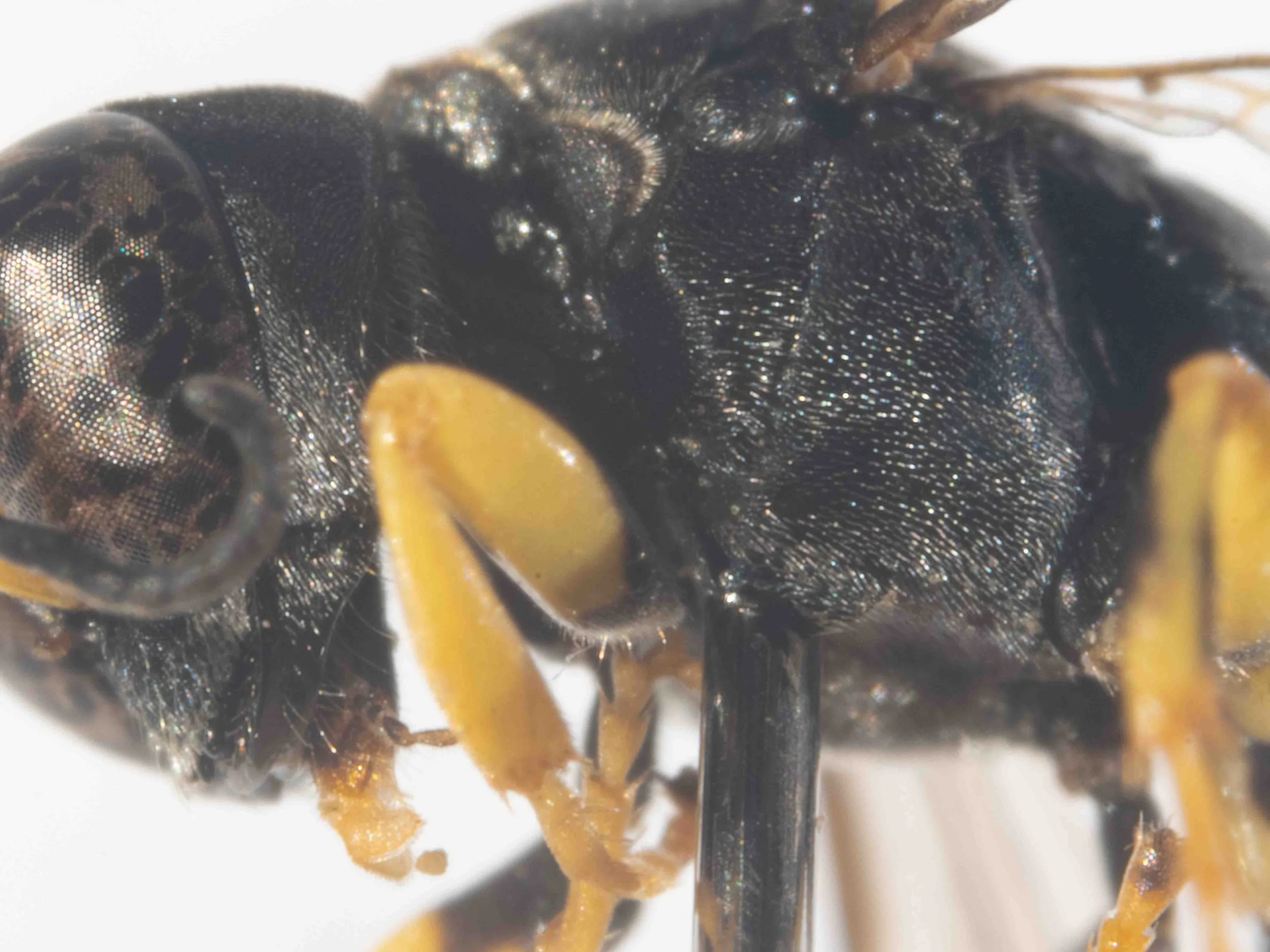
Simply for reference, here are additional images of both the female (#2511I) and male (#2511J). They will soon each become part of the BOLD reference database (thanks to Paul Hebert and colleagues at the Centre for Biodiversity Genomics, Ontario).
FEMALE
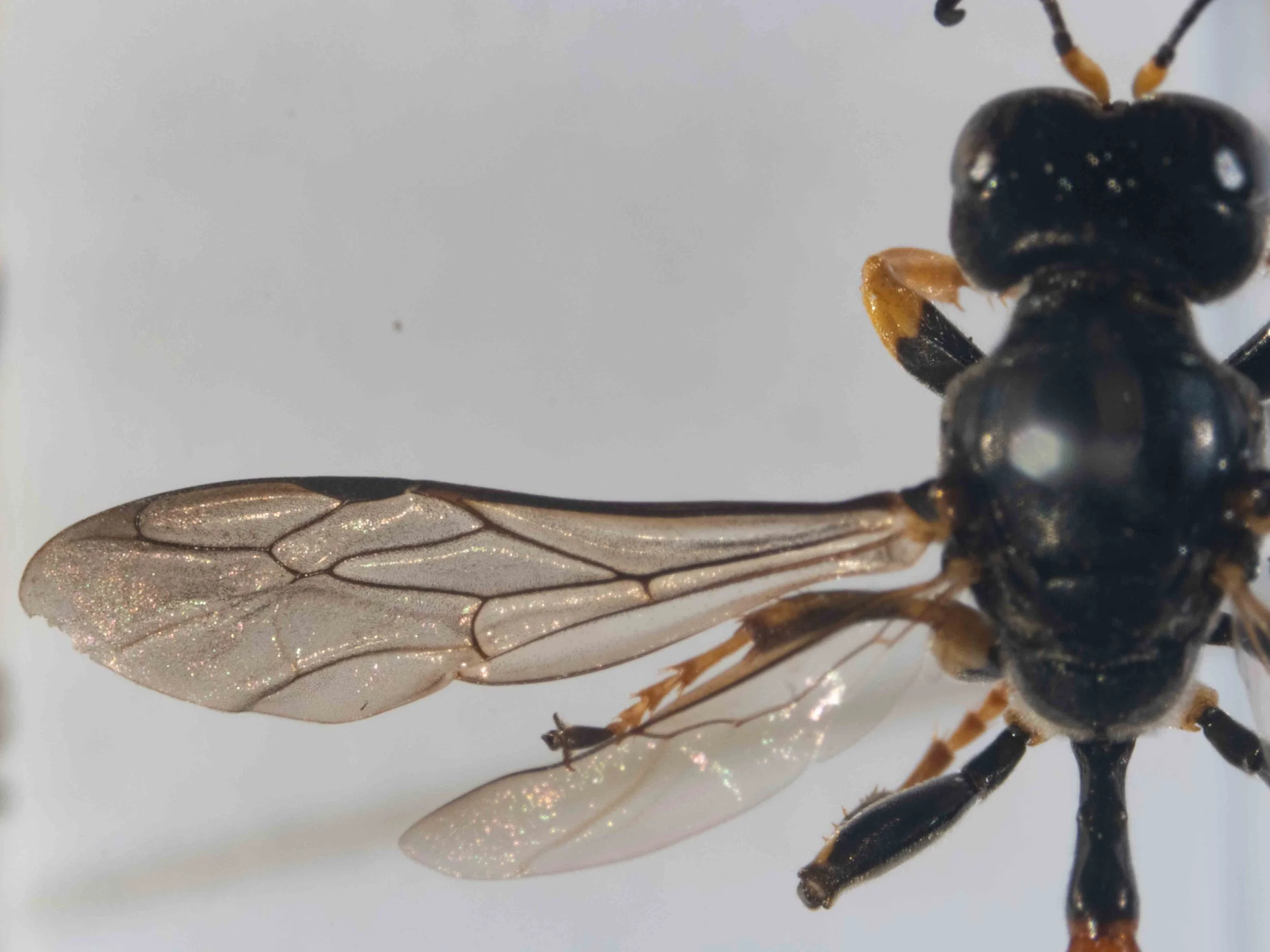
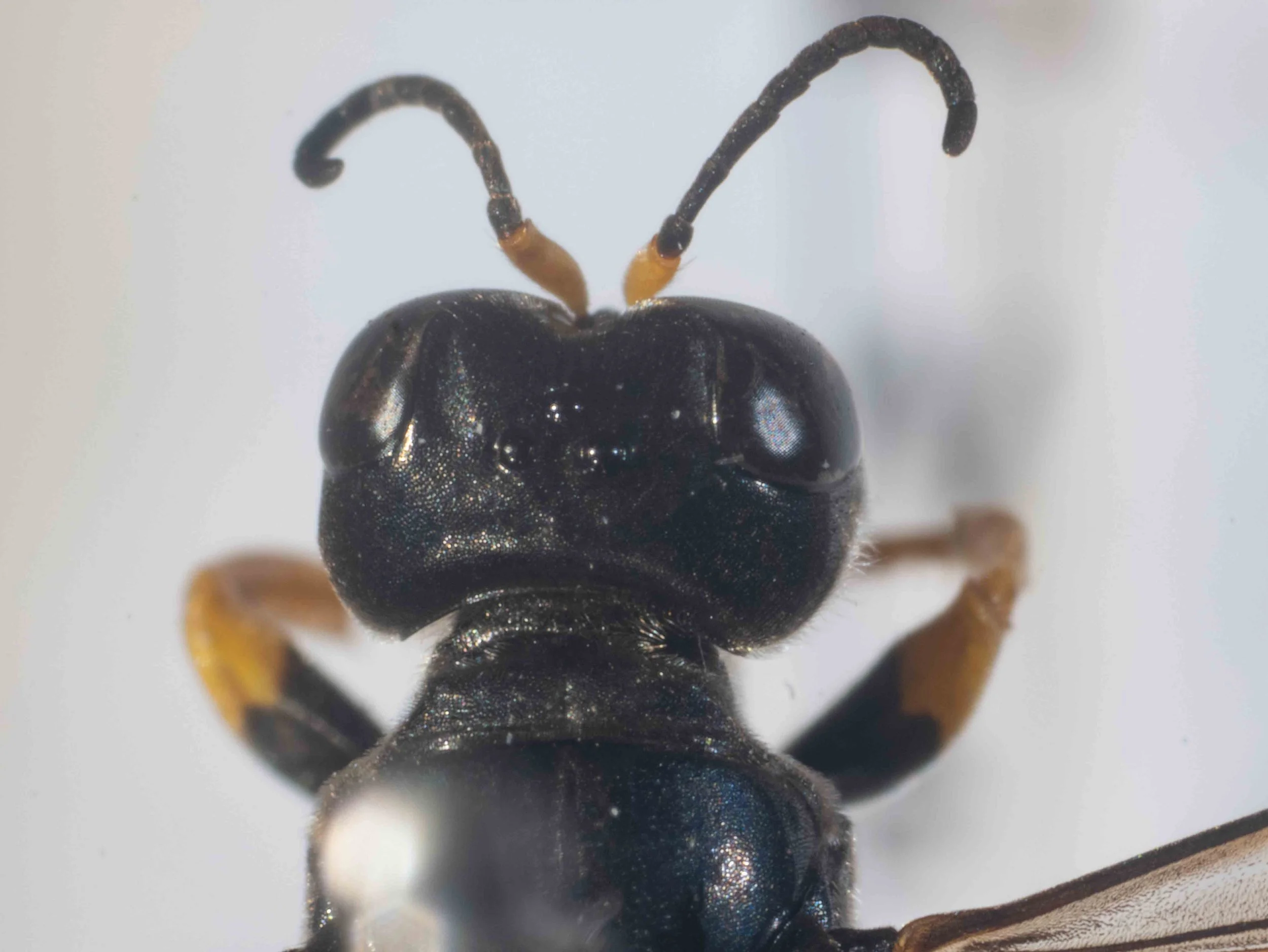
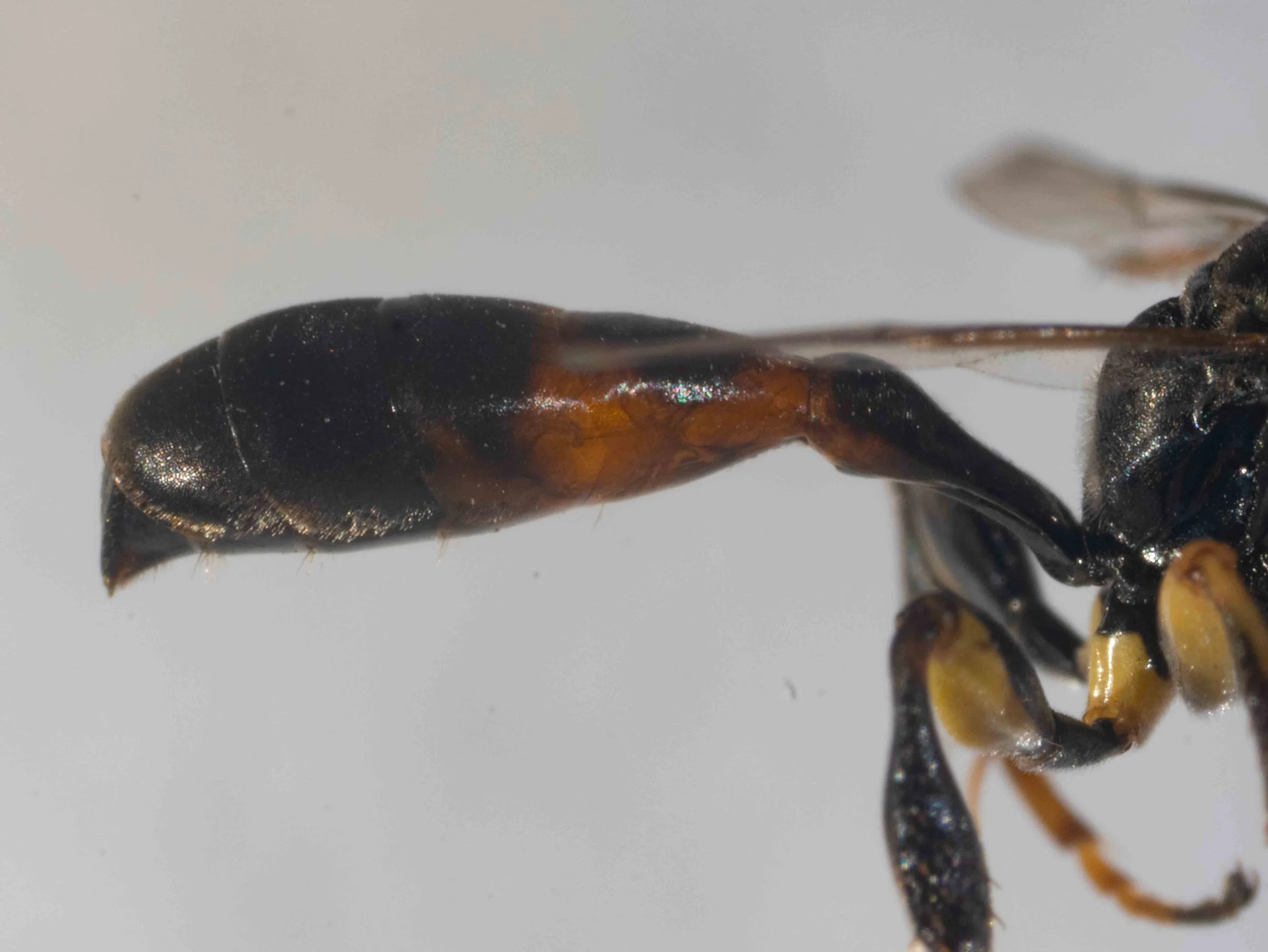
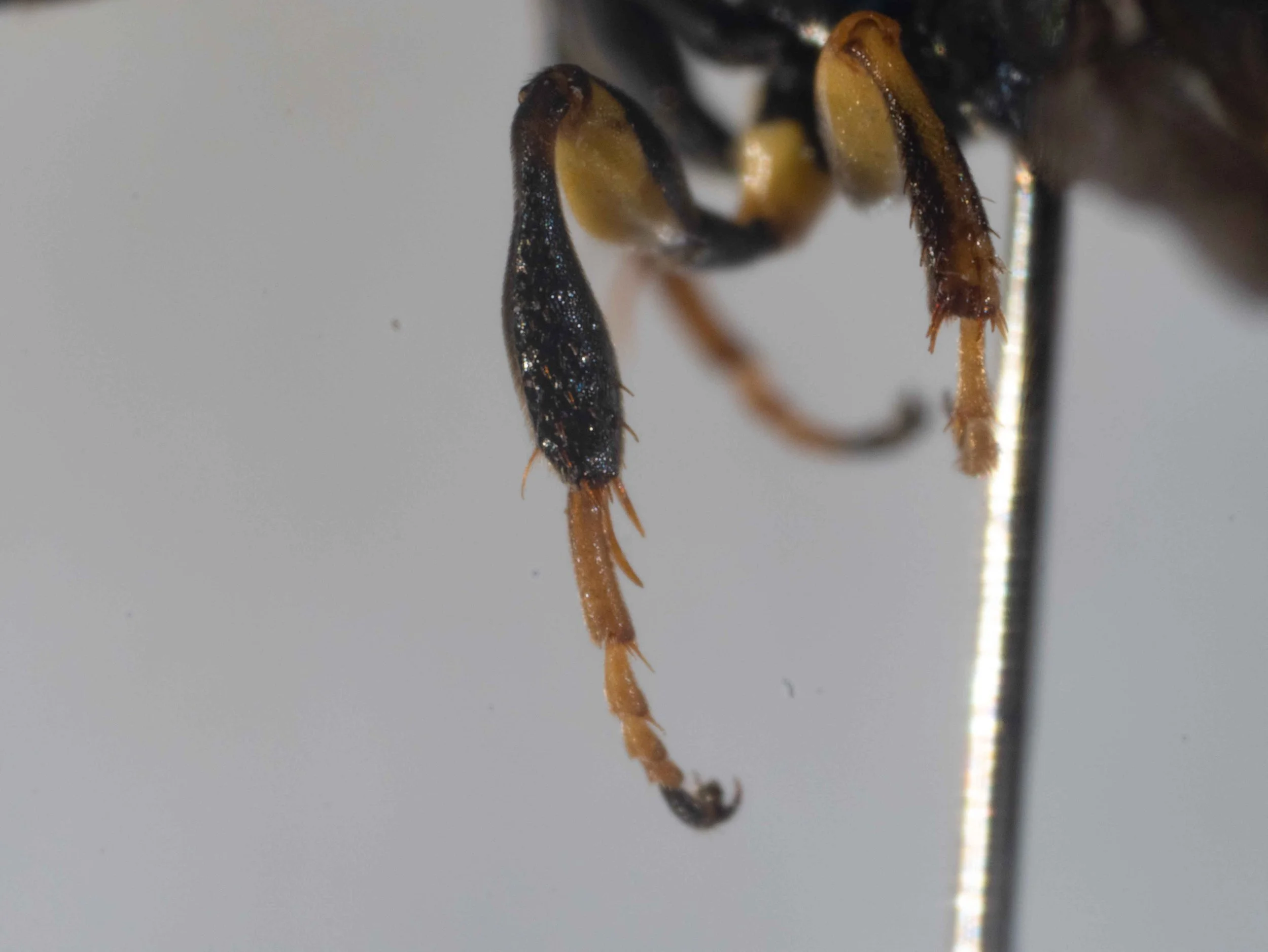
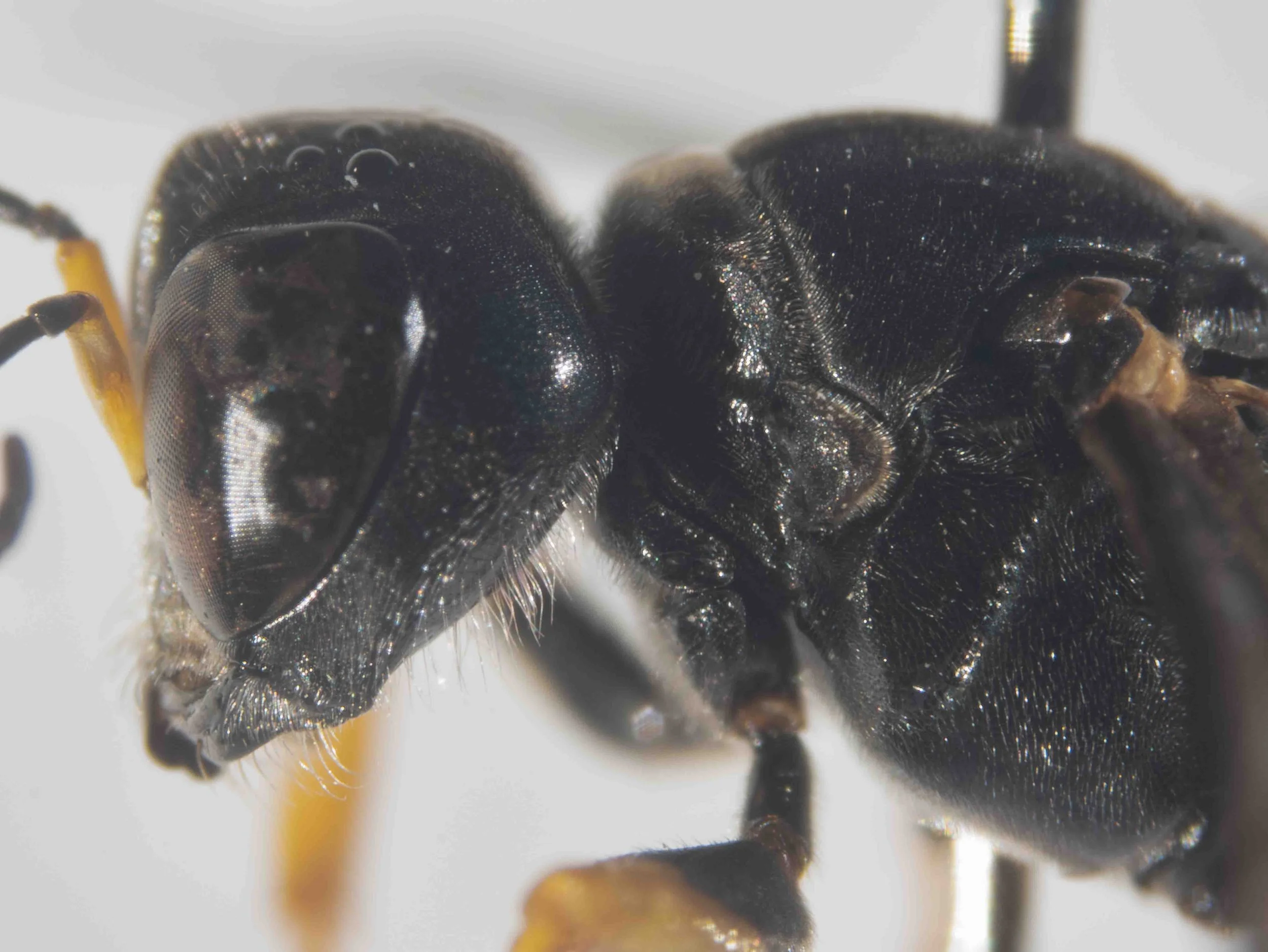
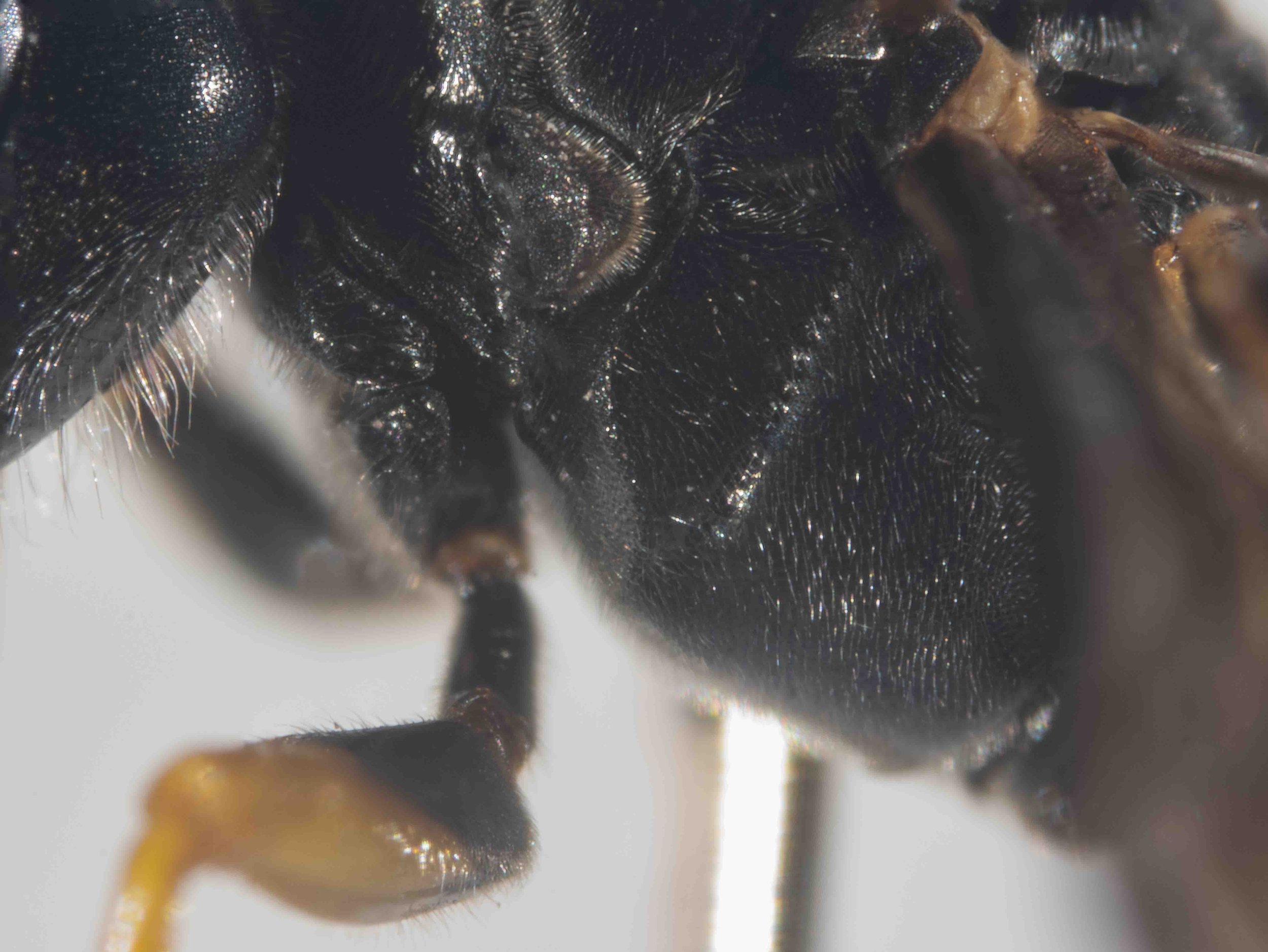
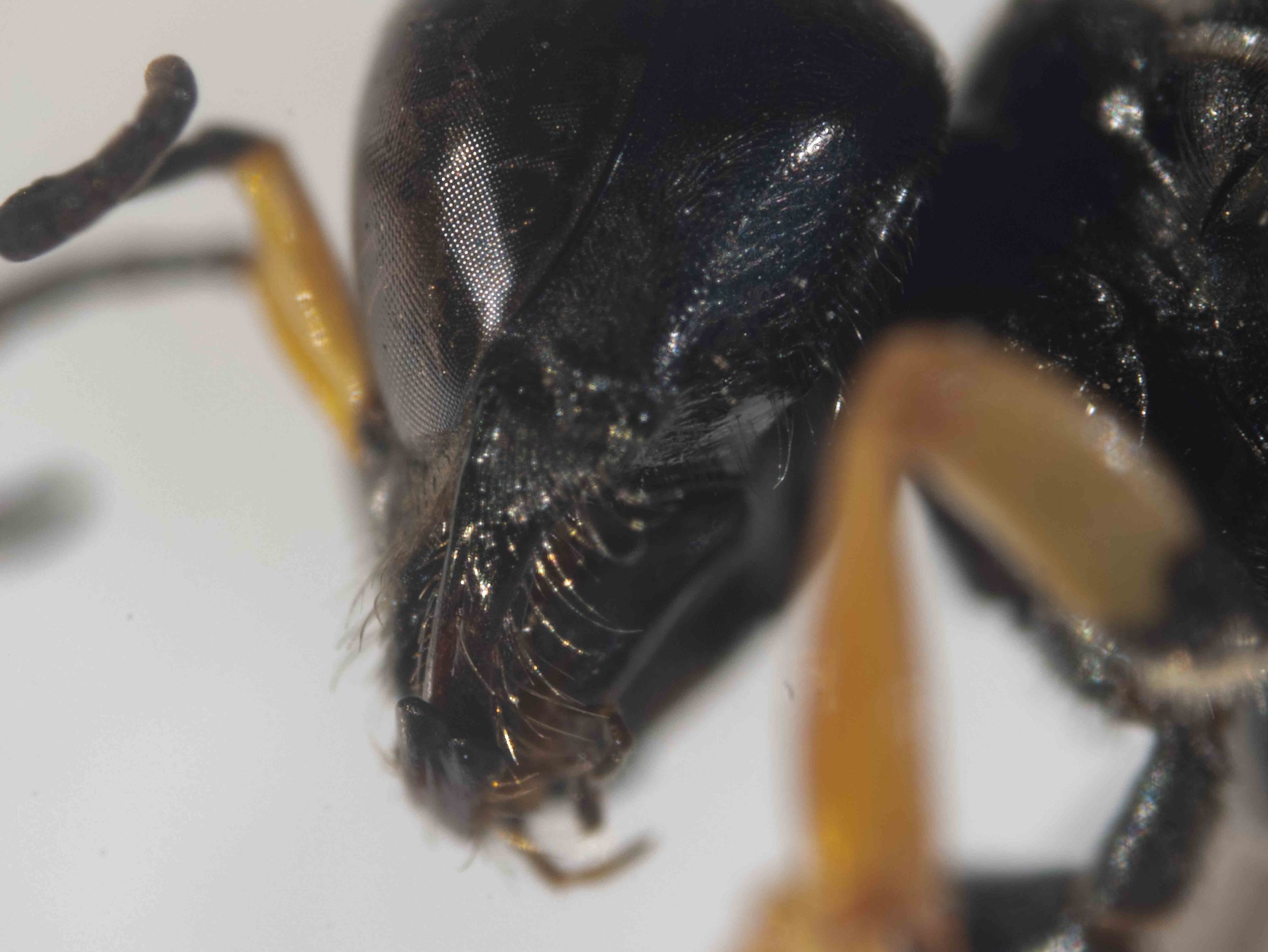
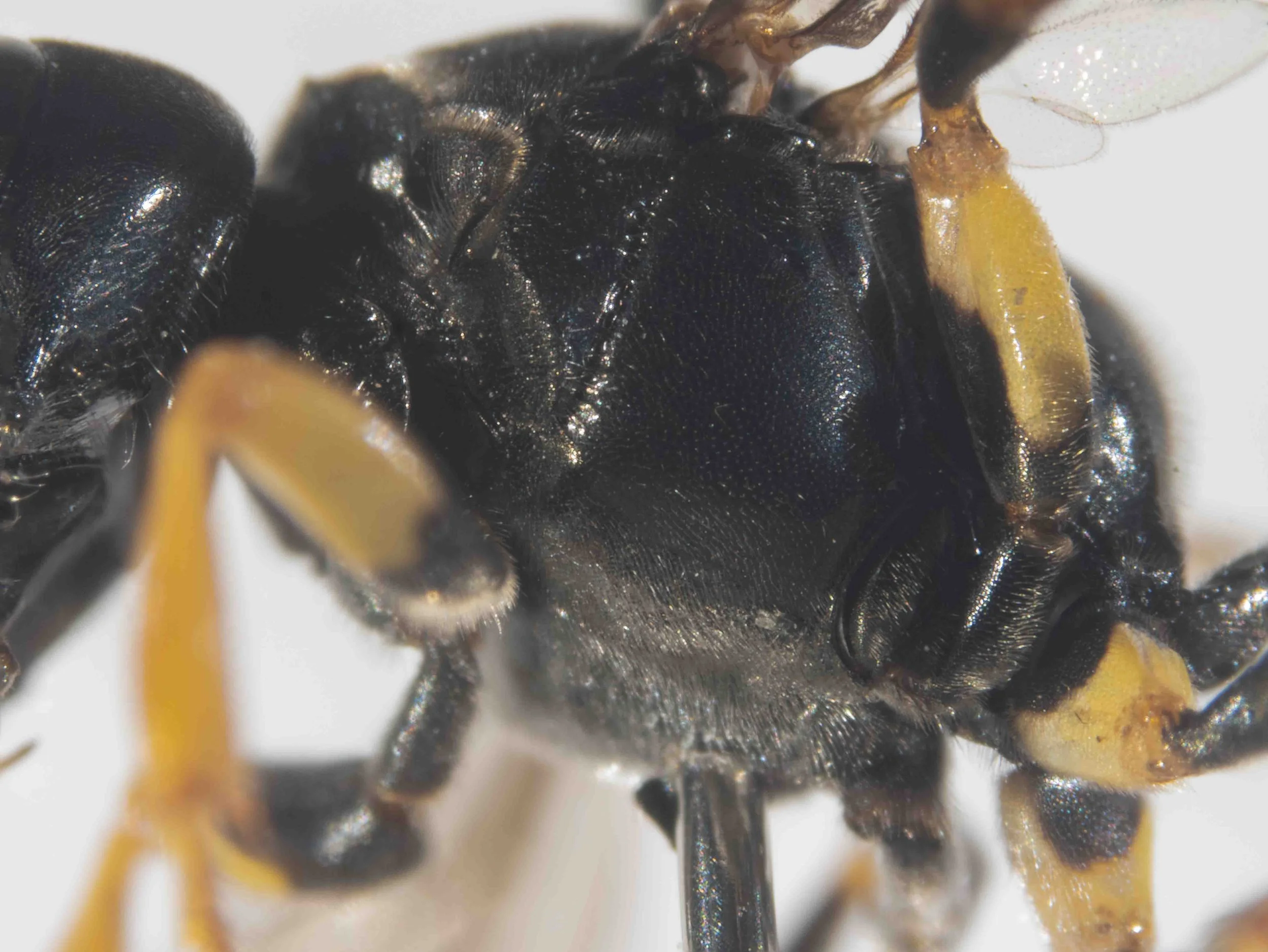
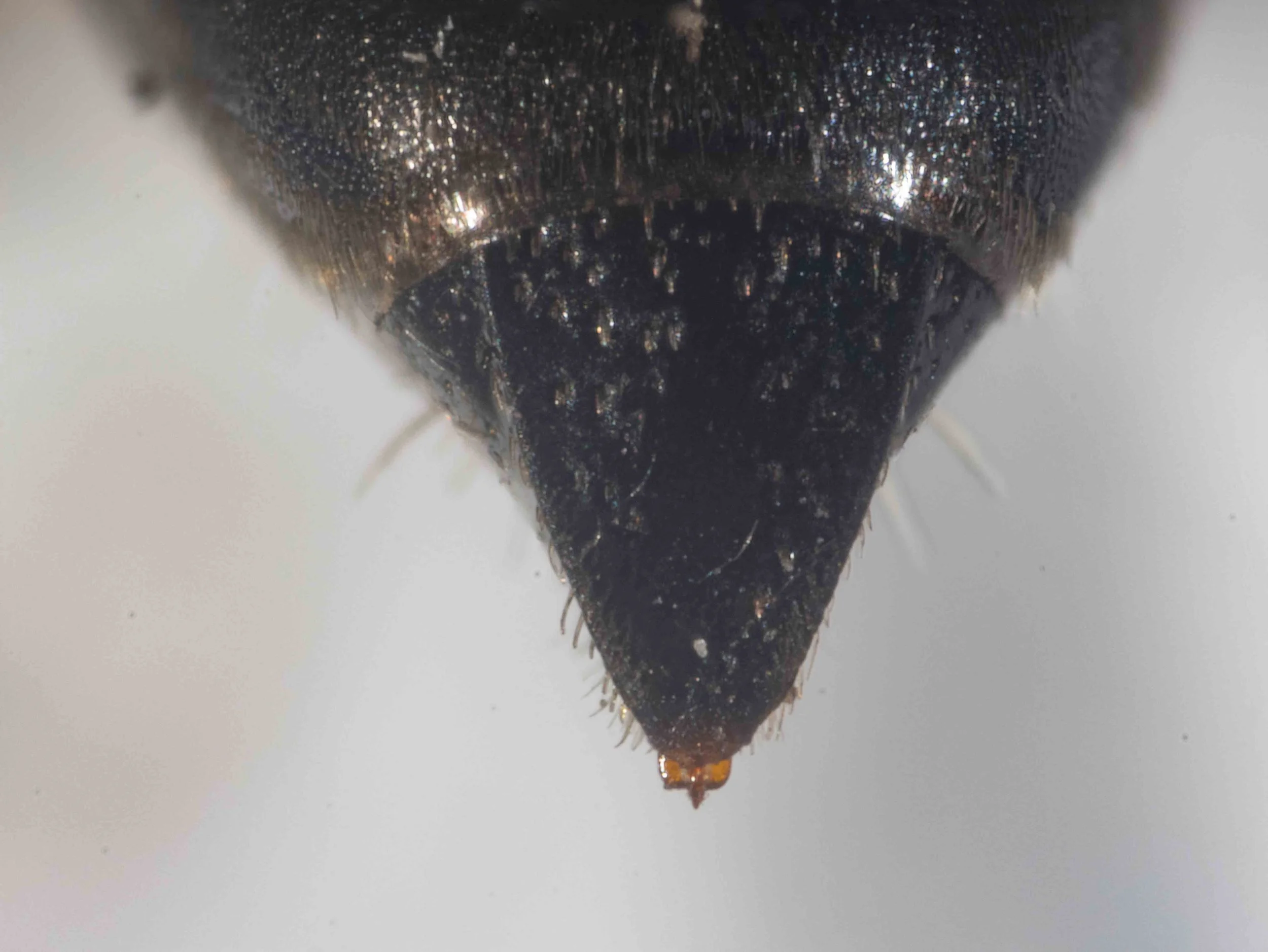
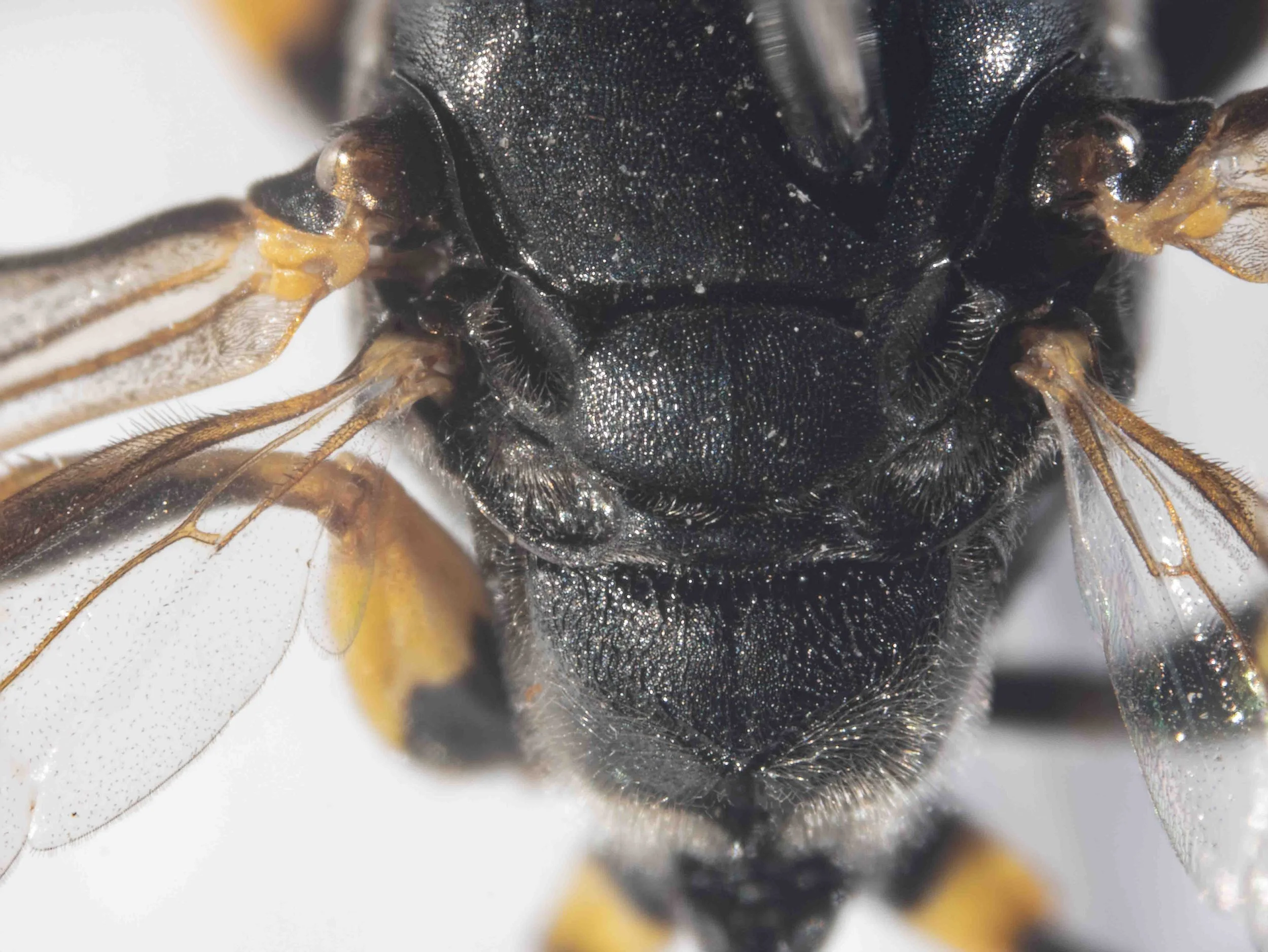
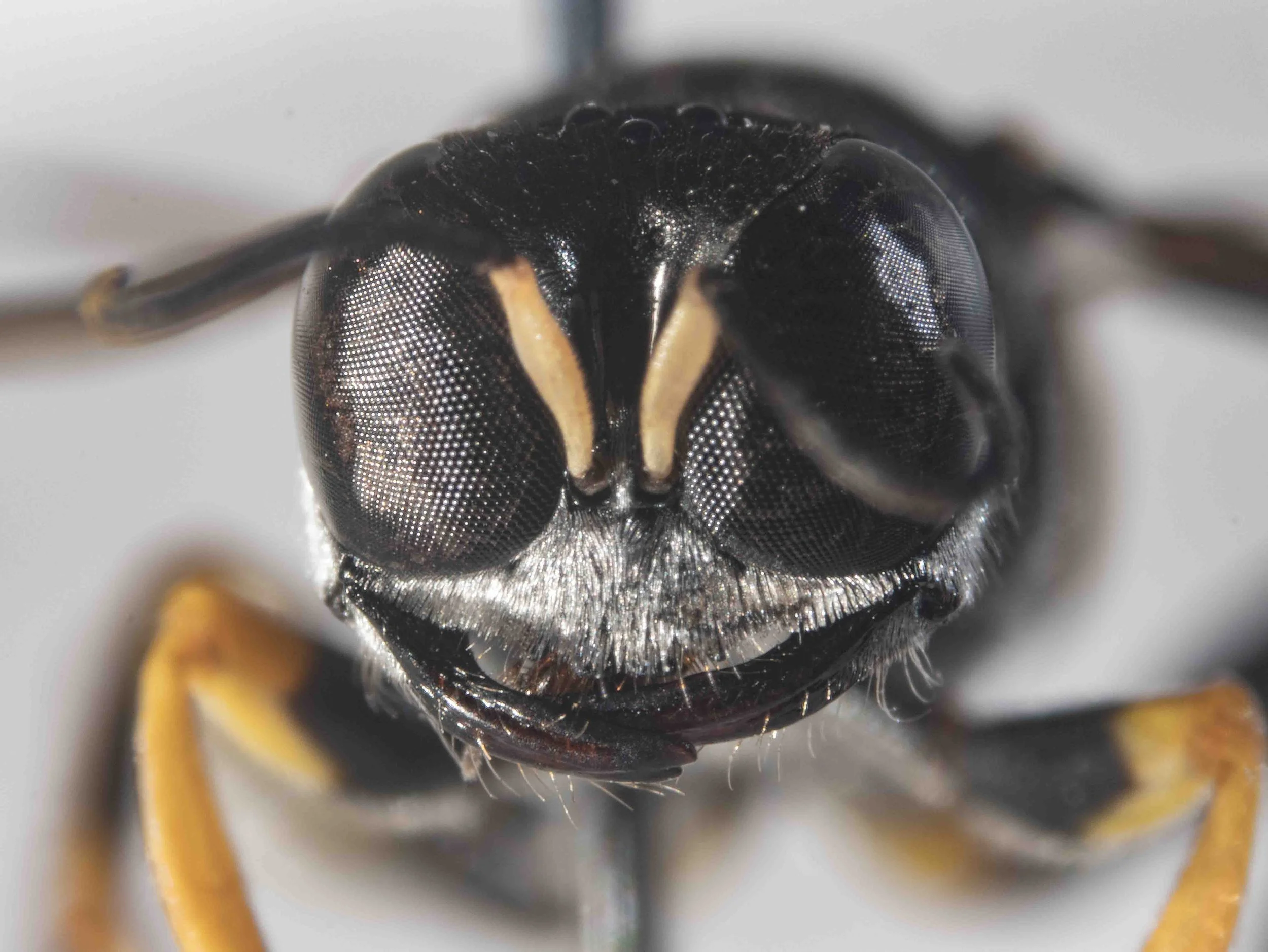
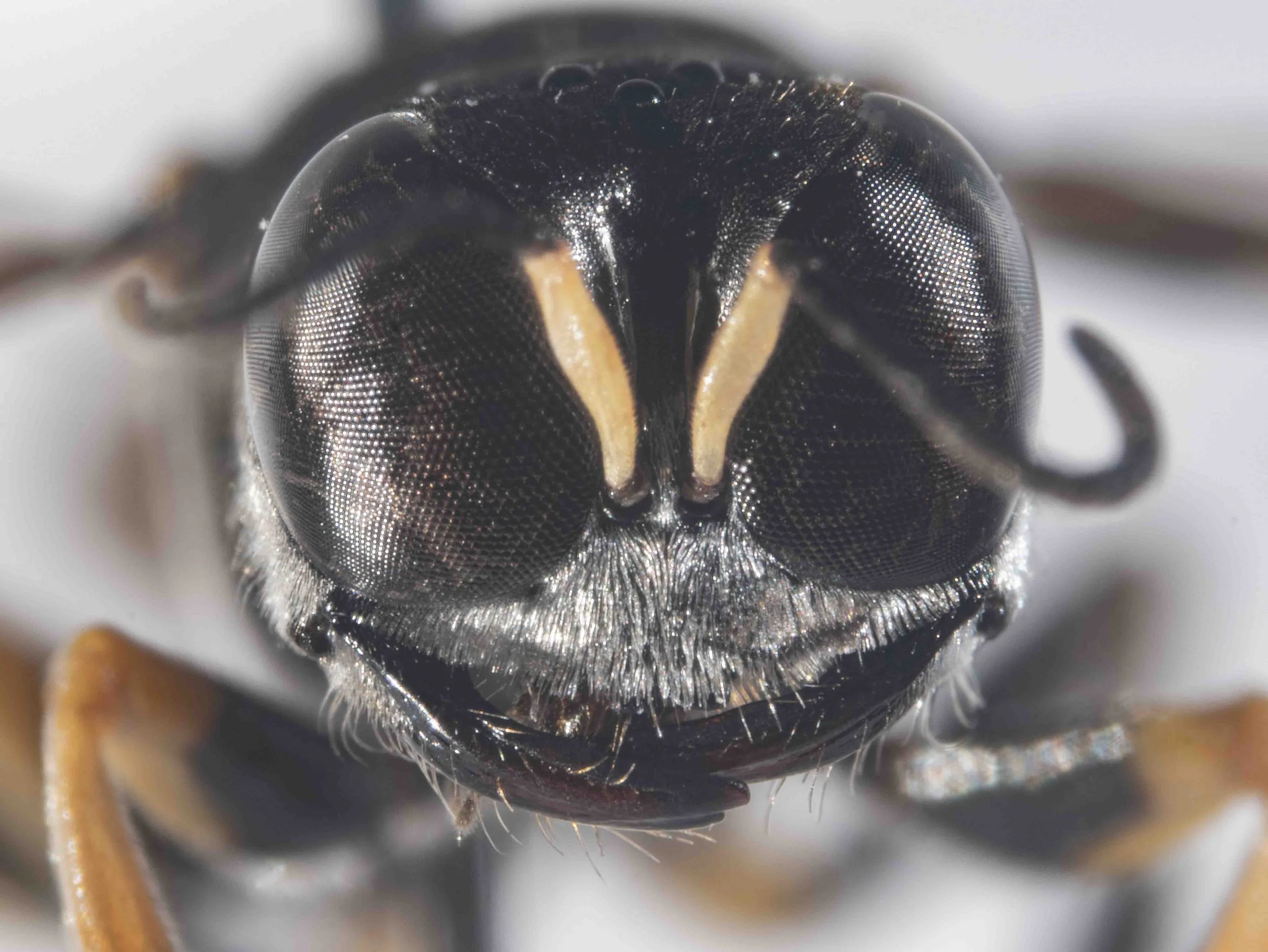
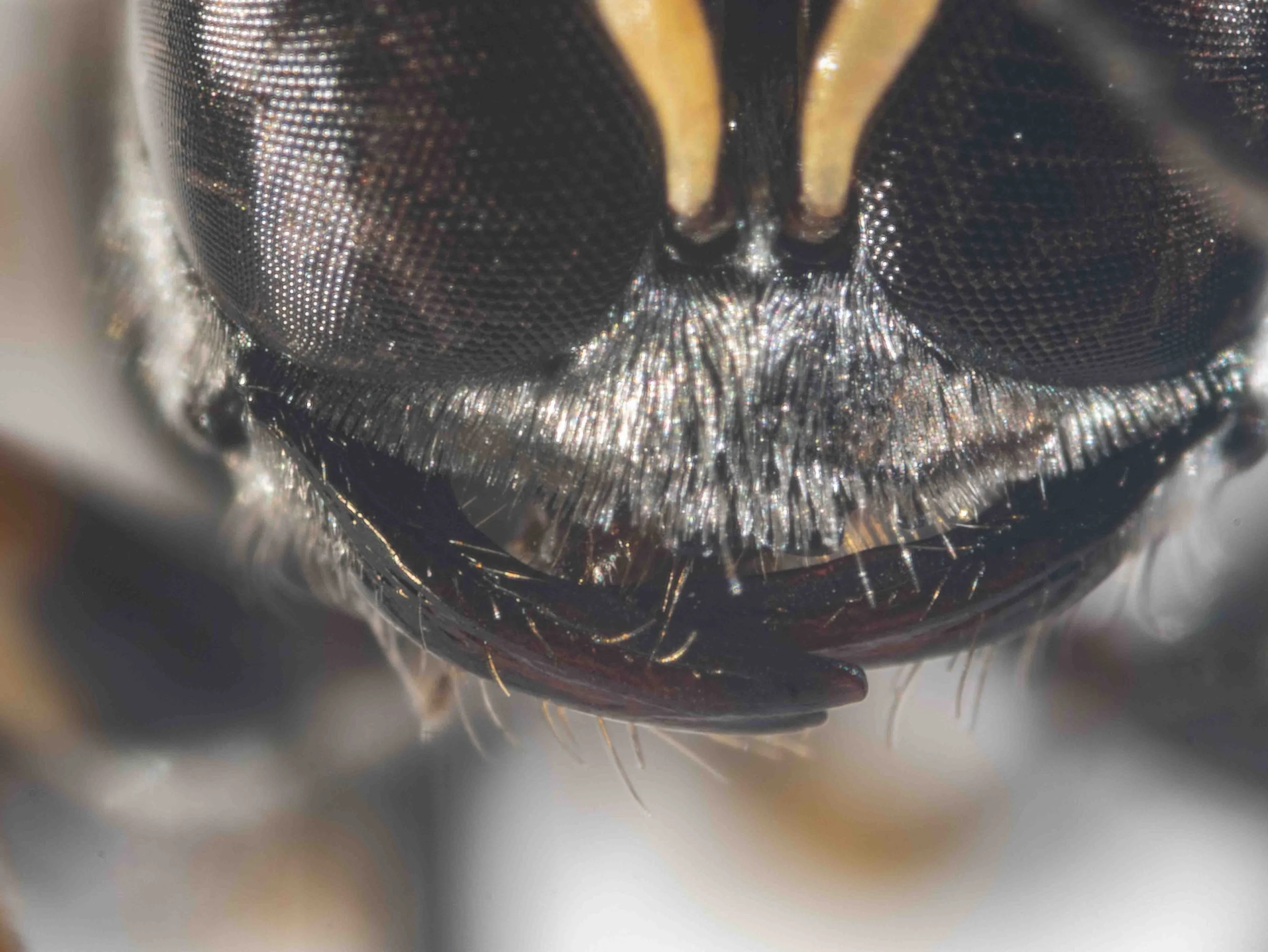
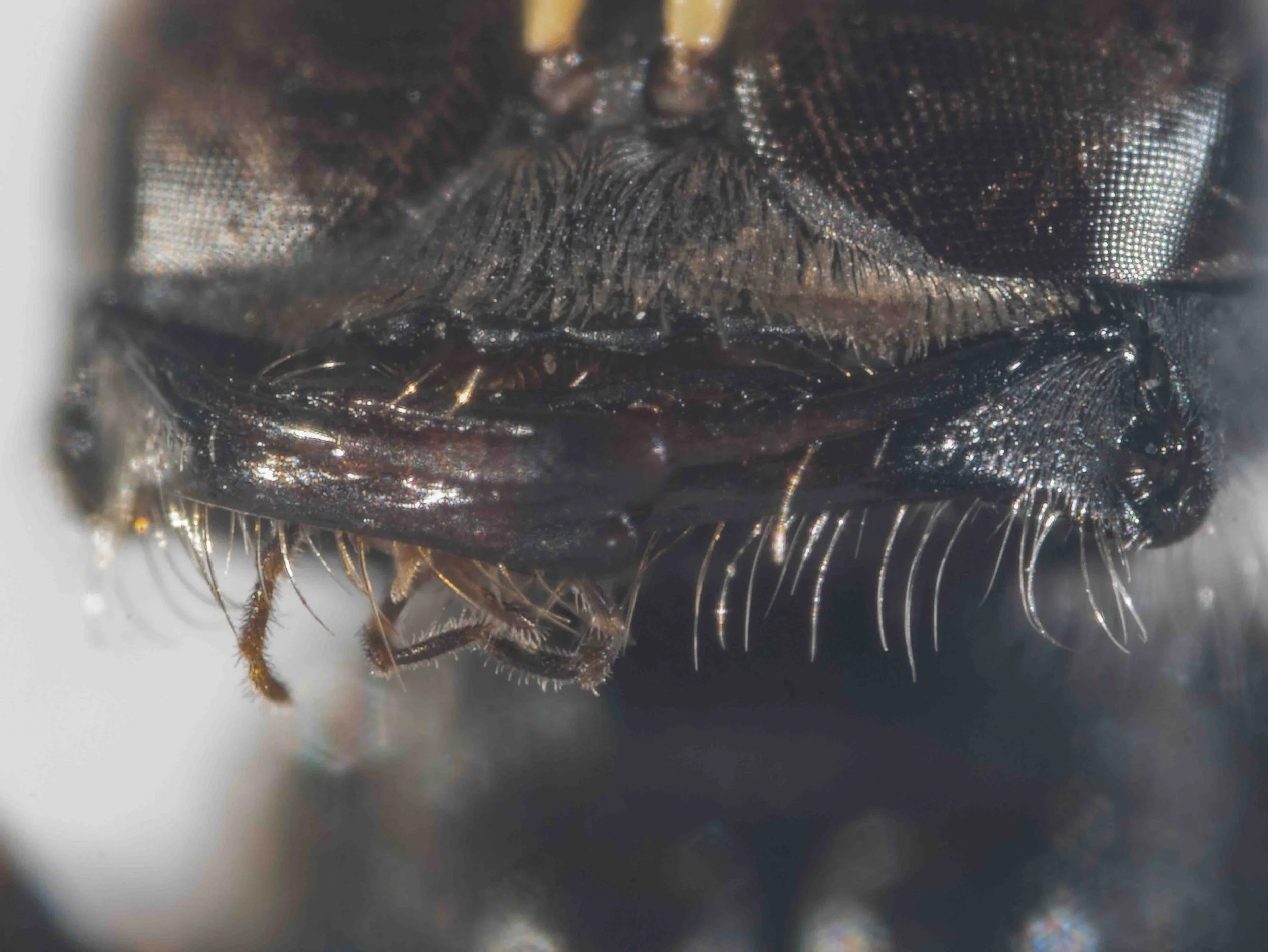
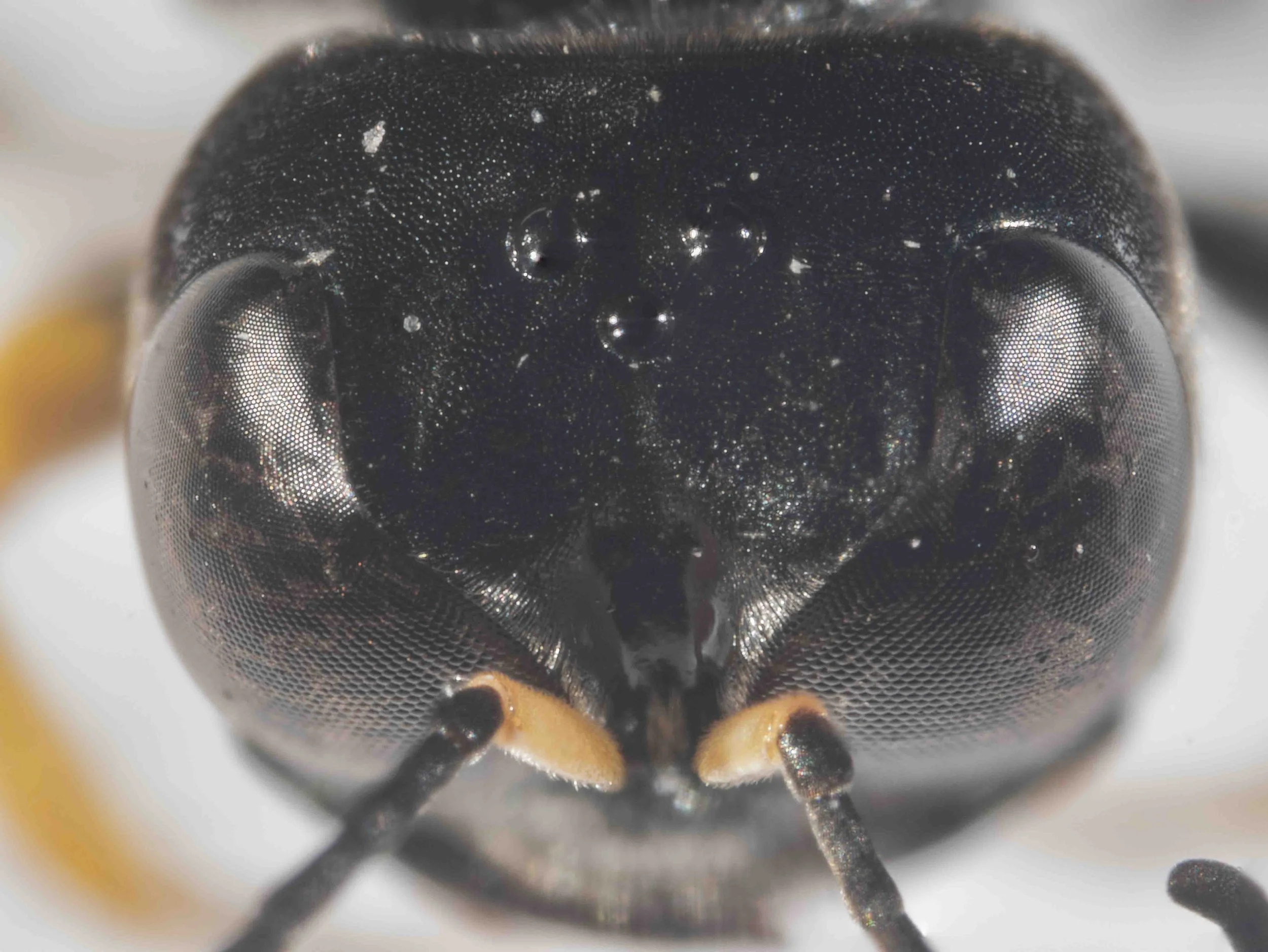
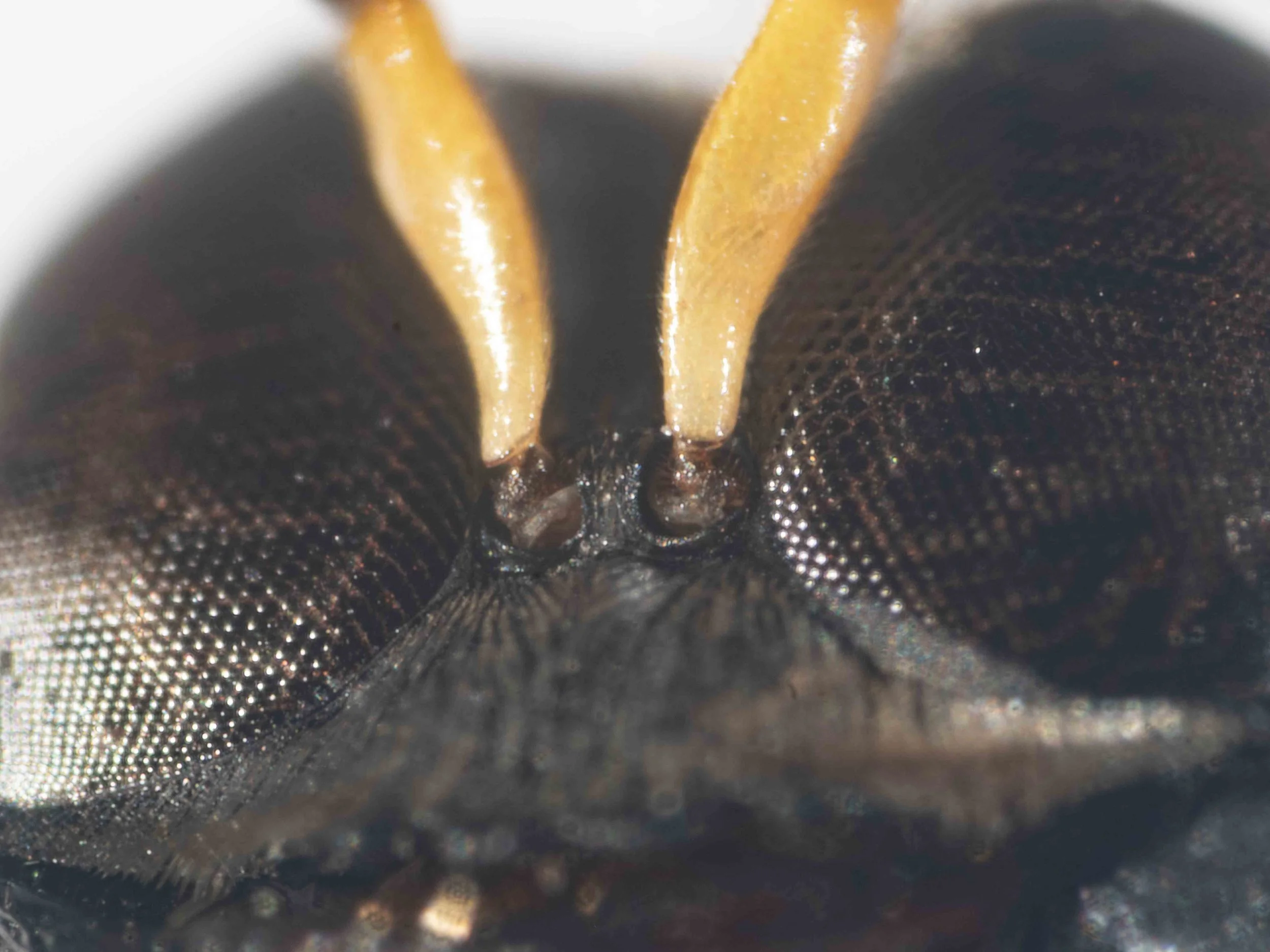
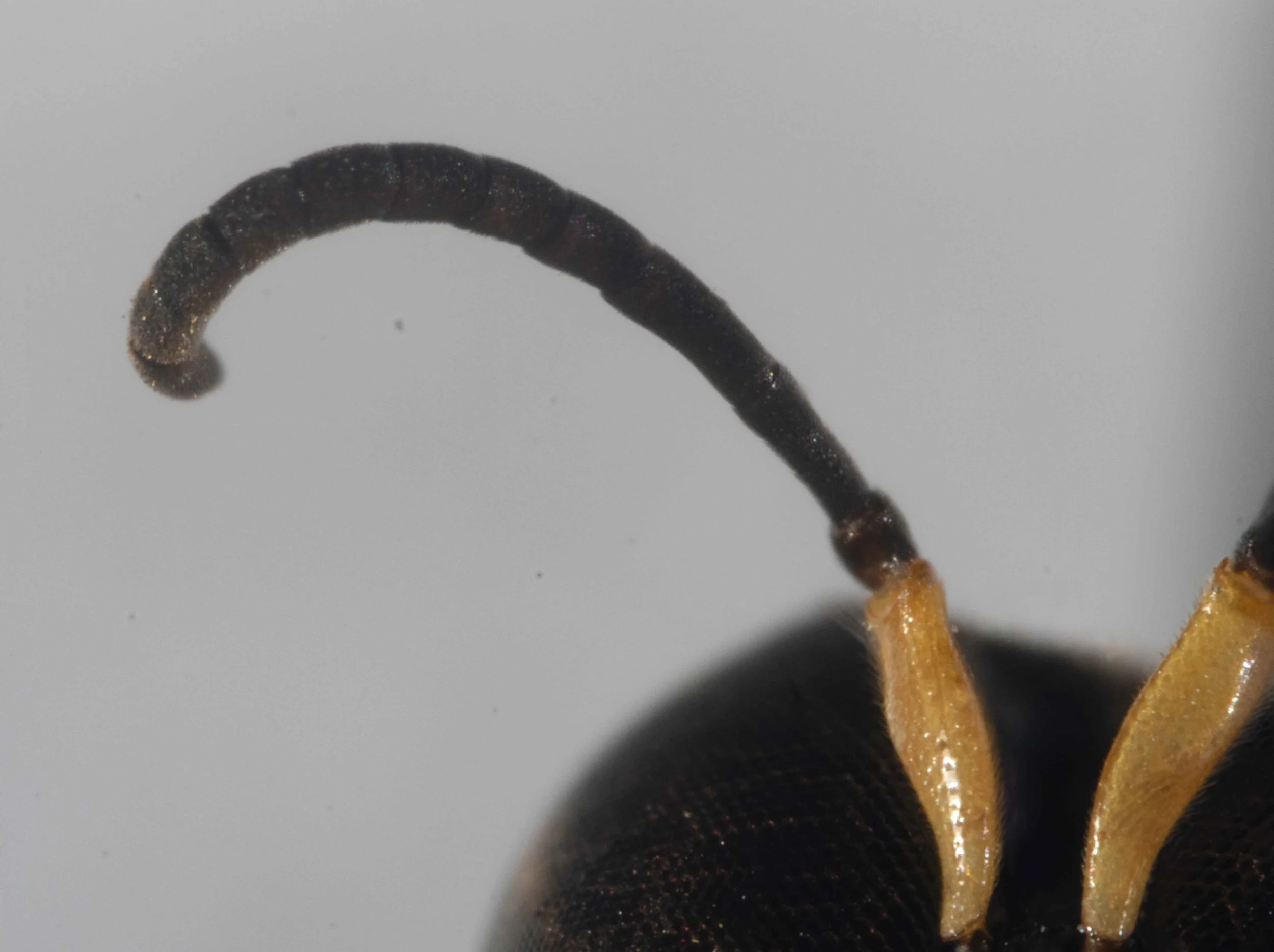
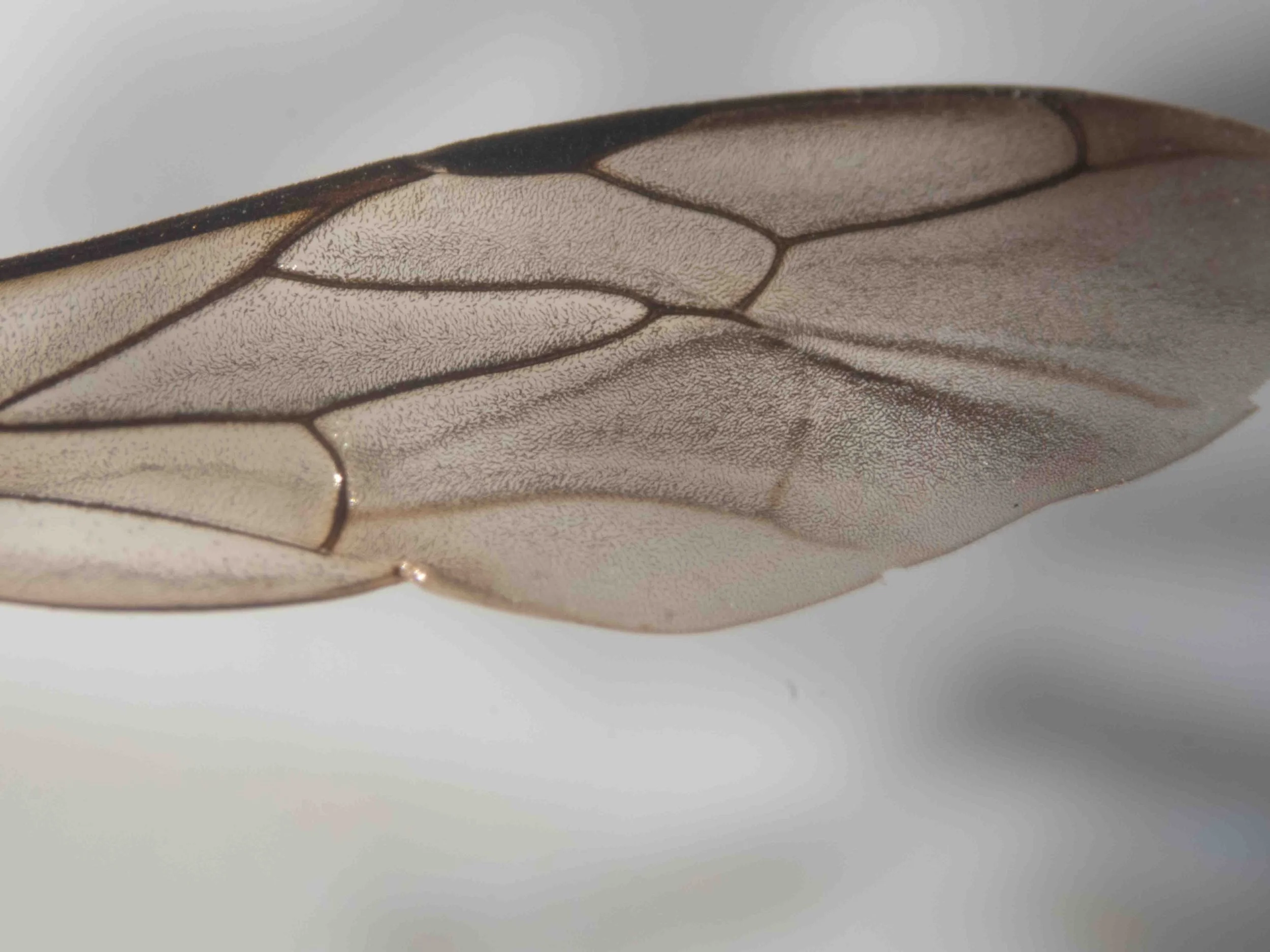
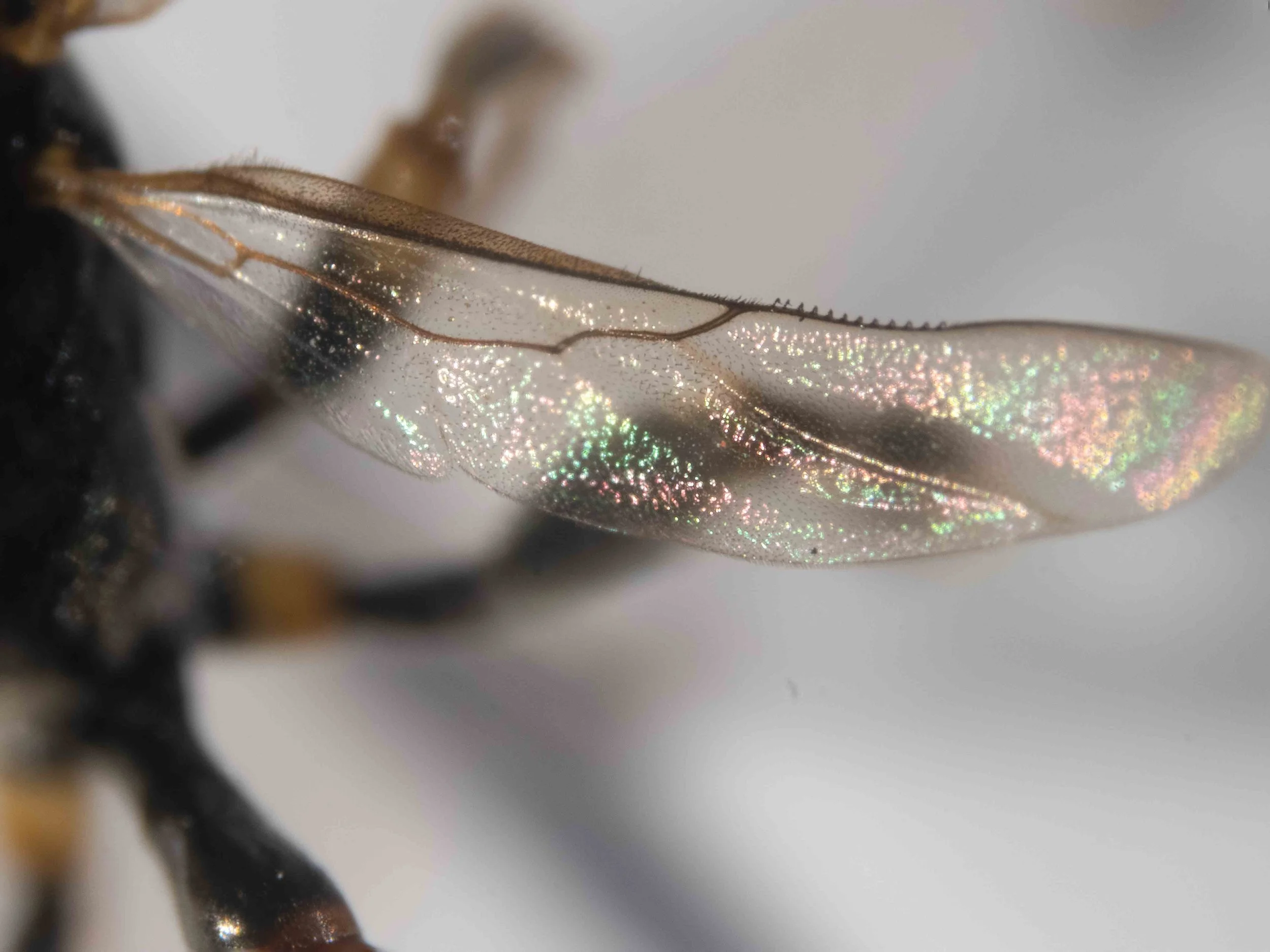
MALE
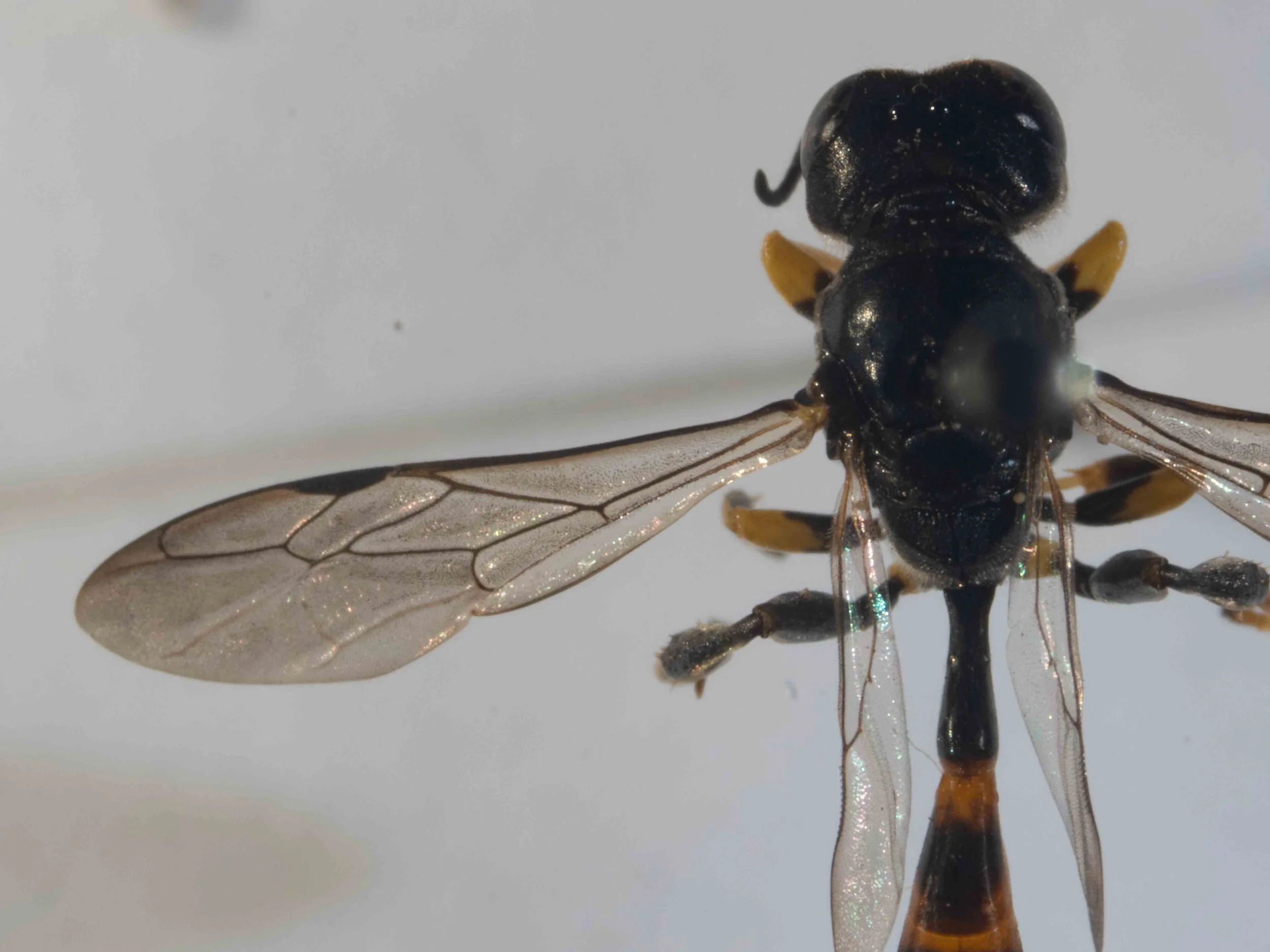
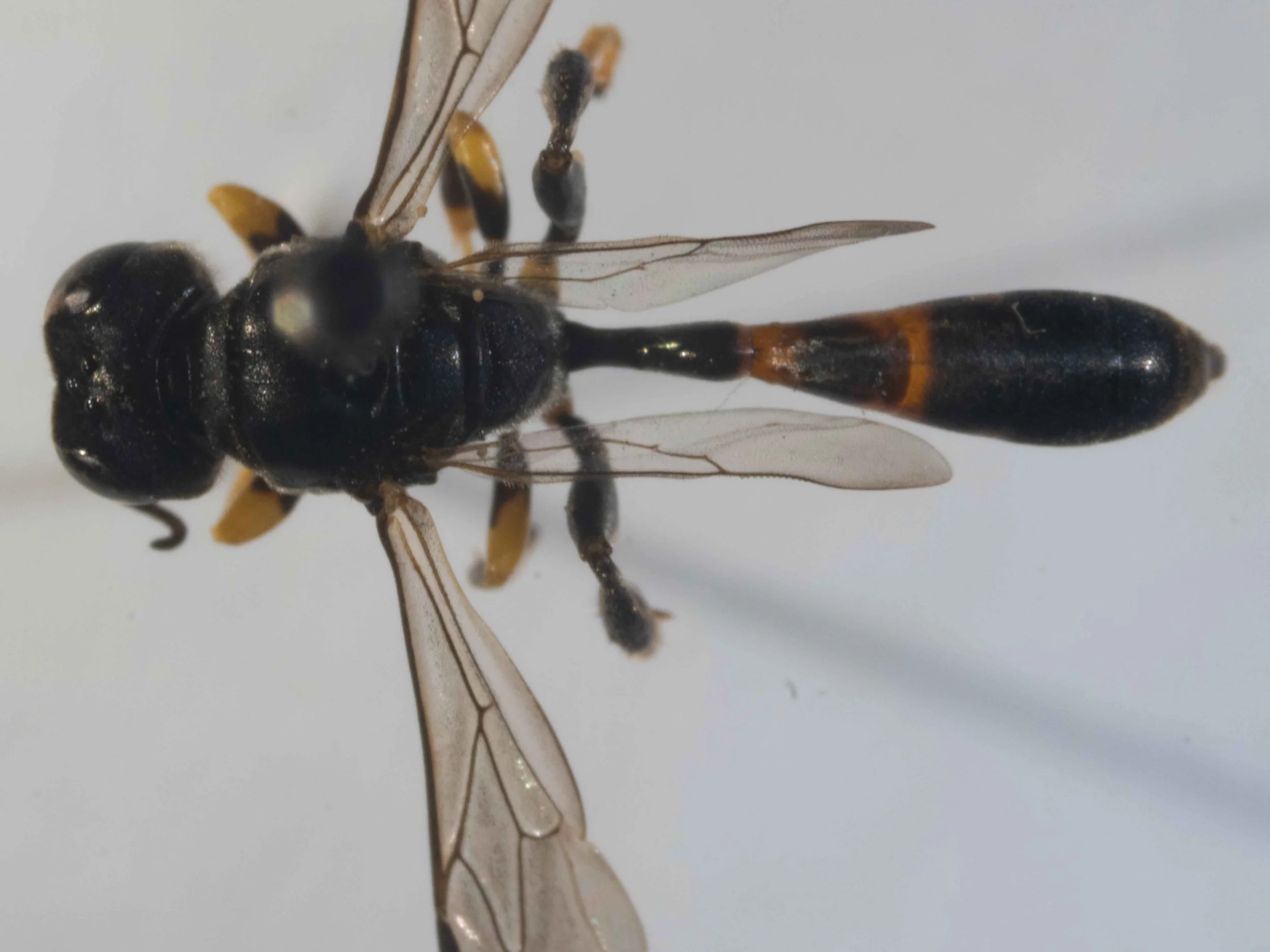
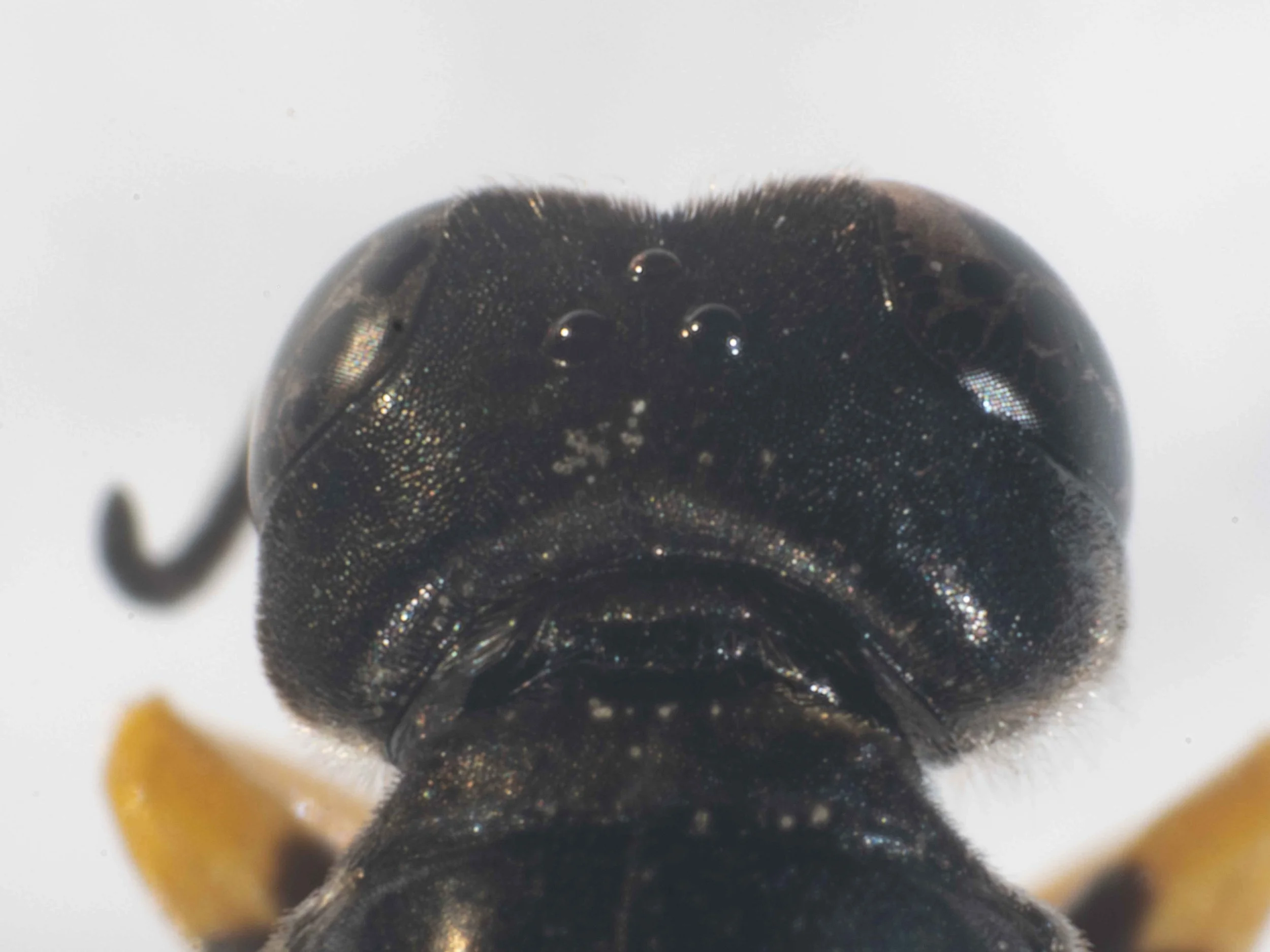
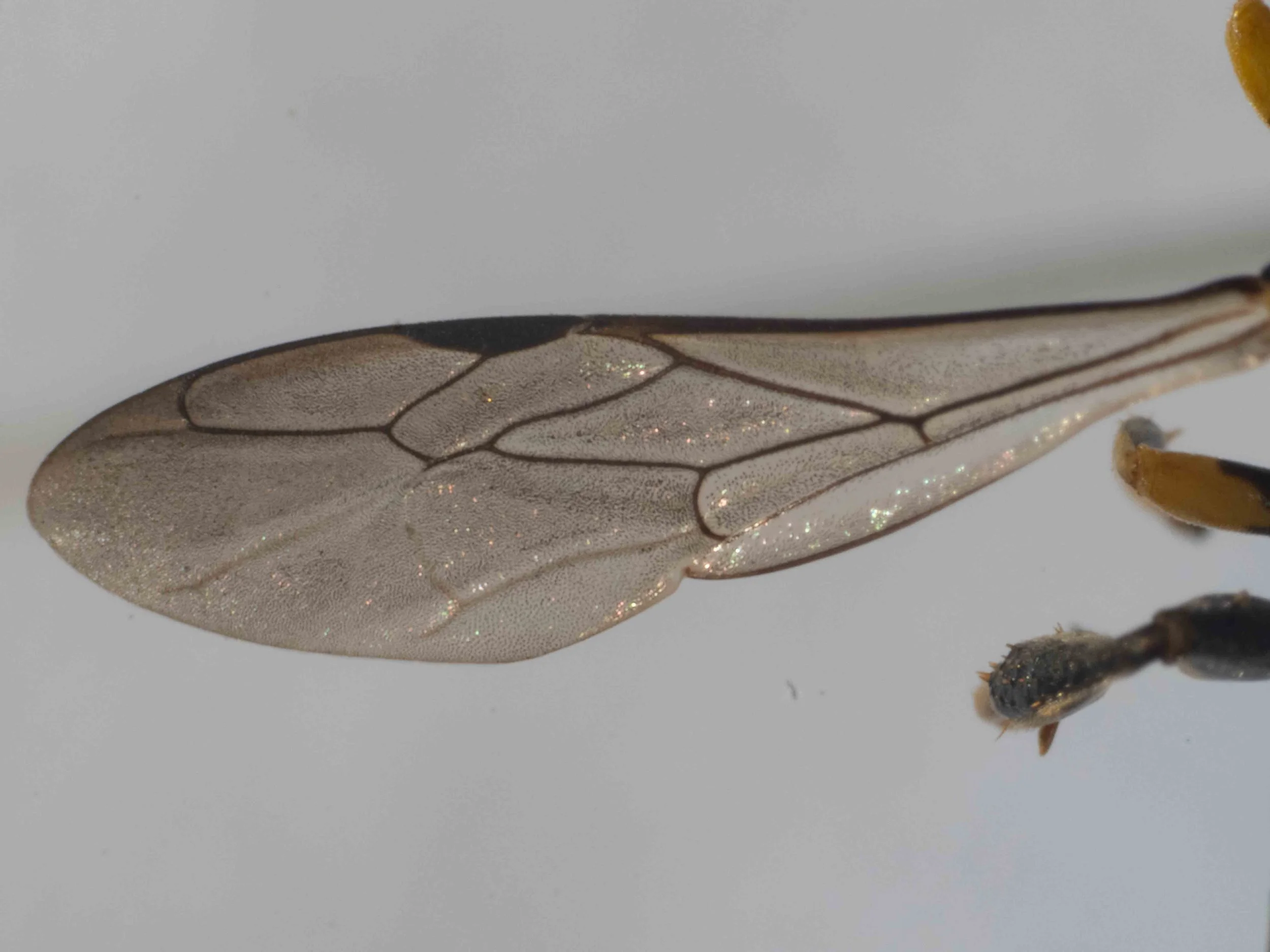
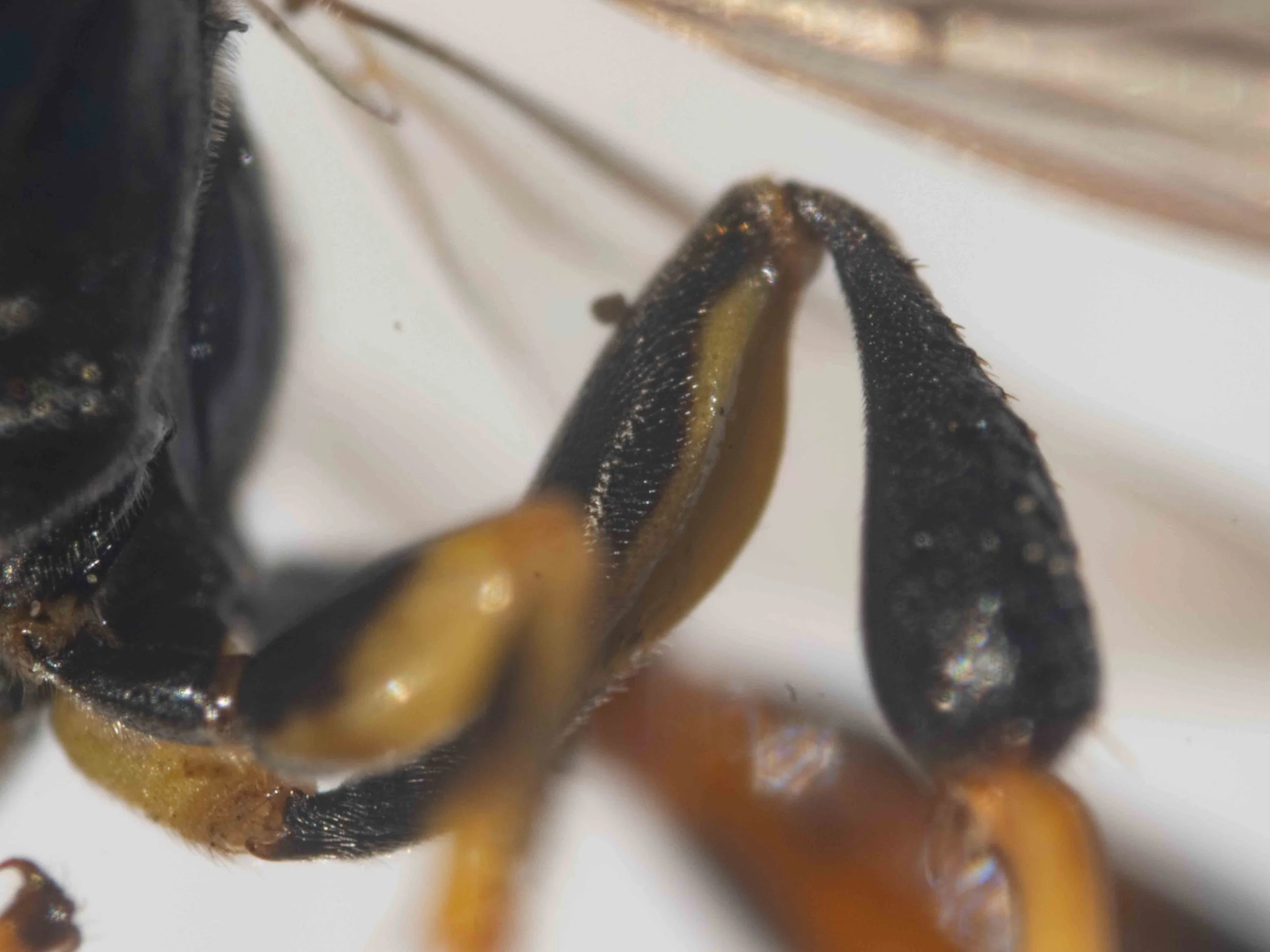
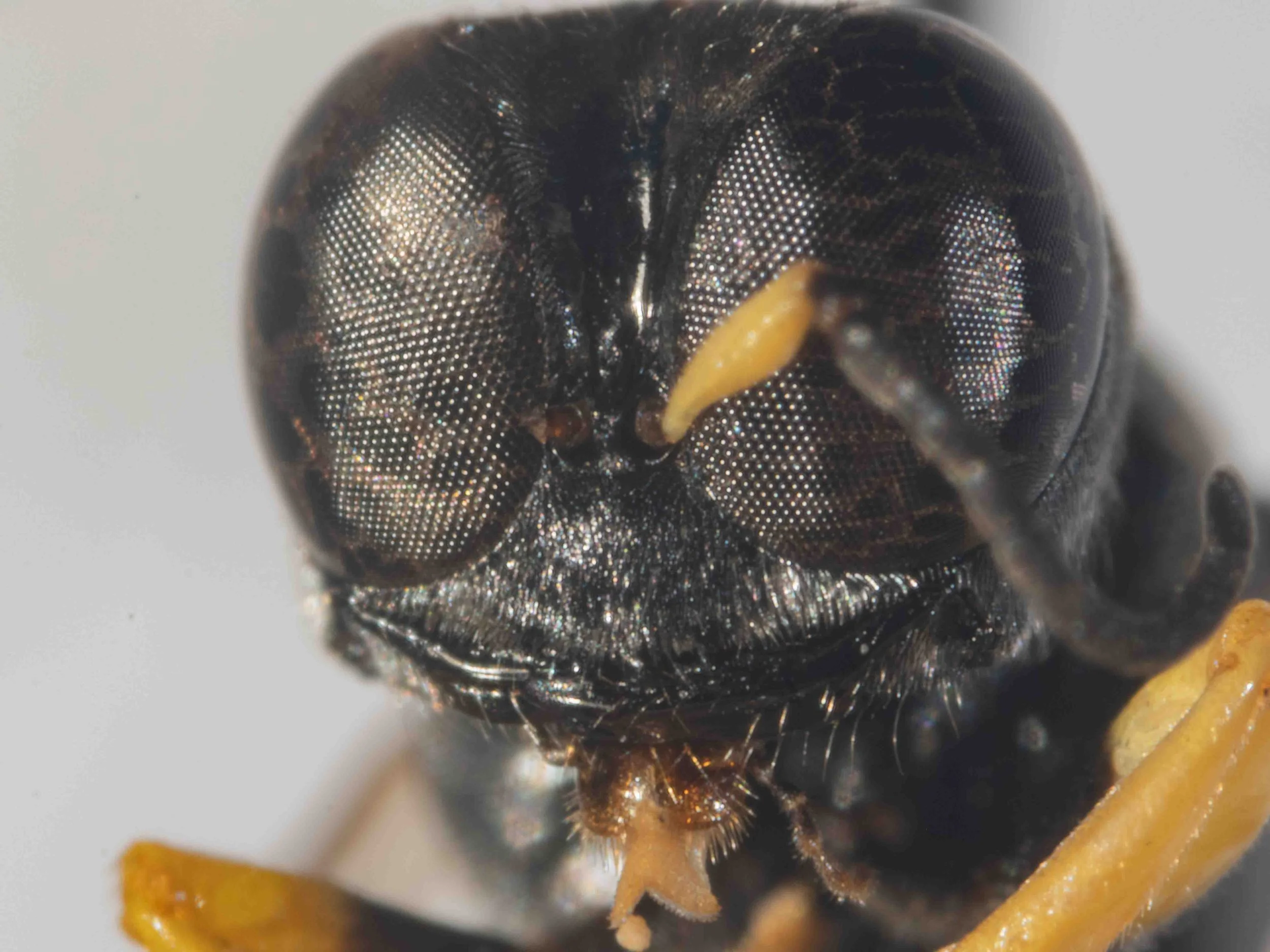
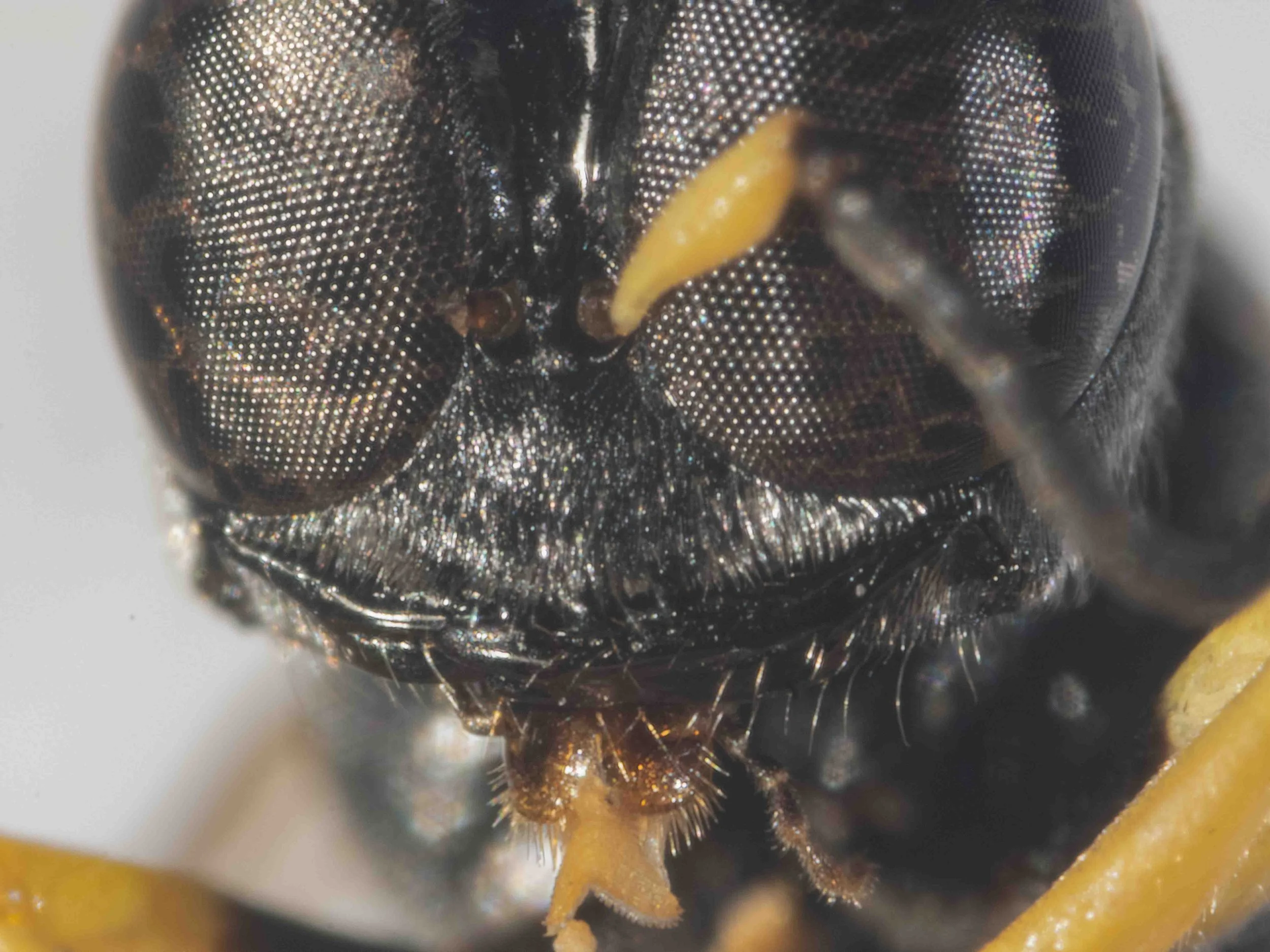
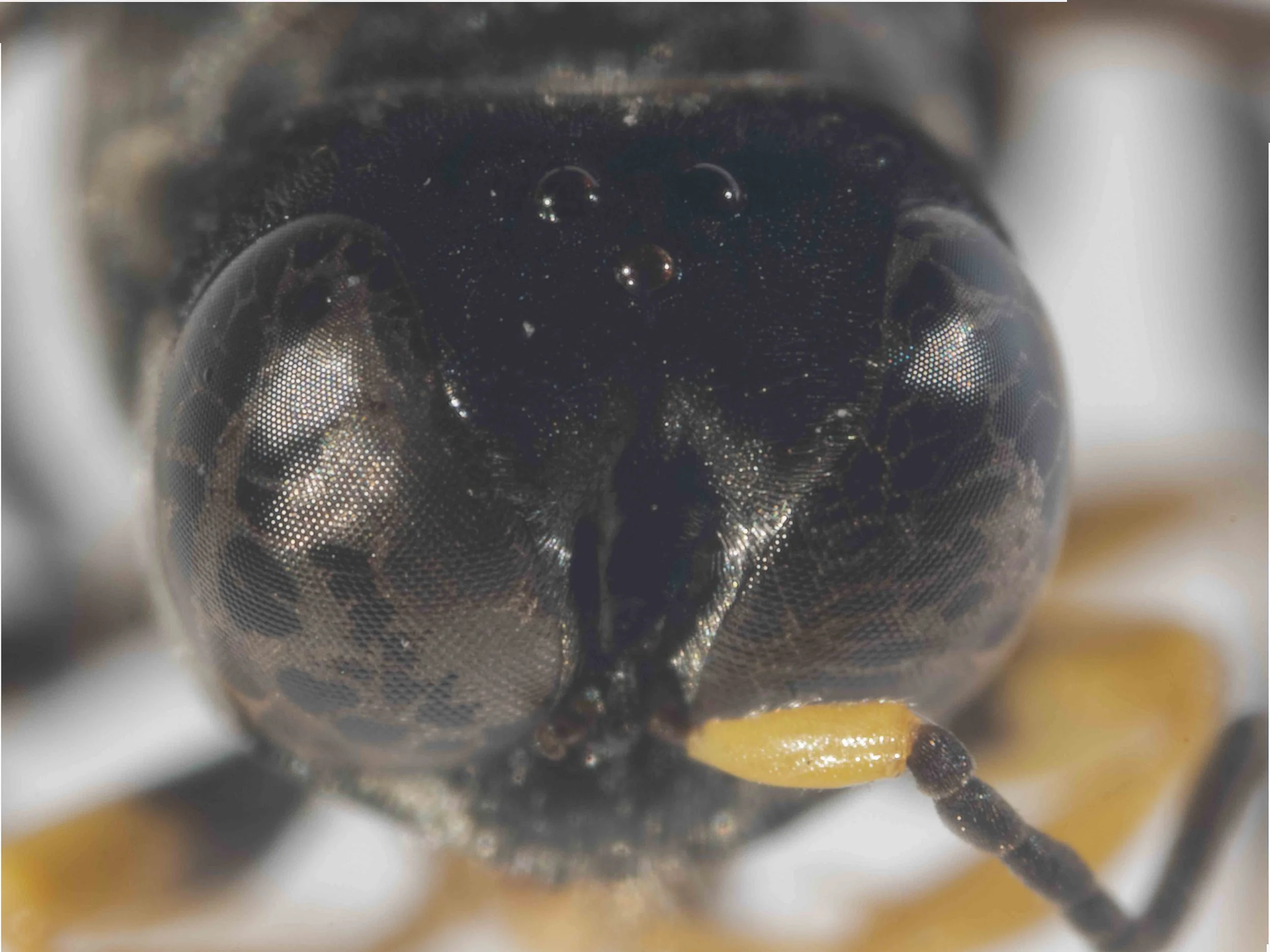
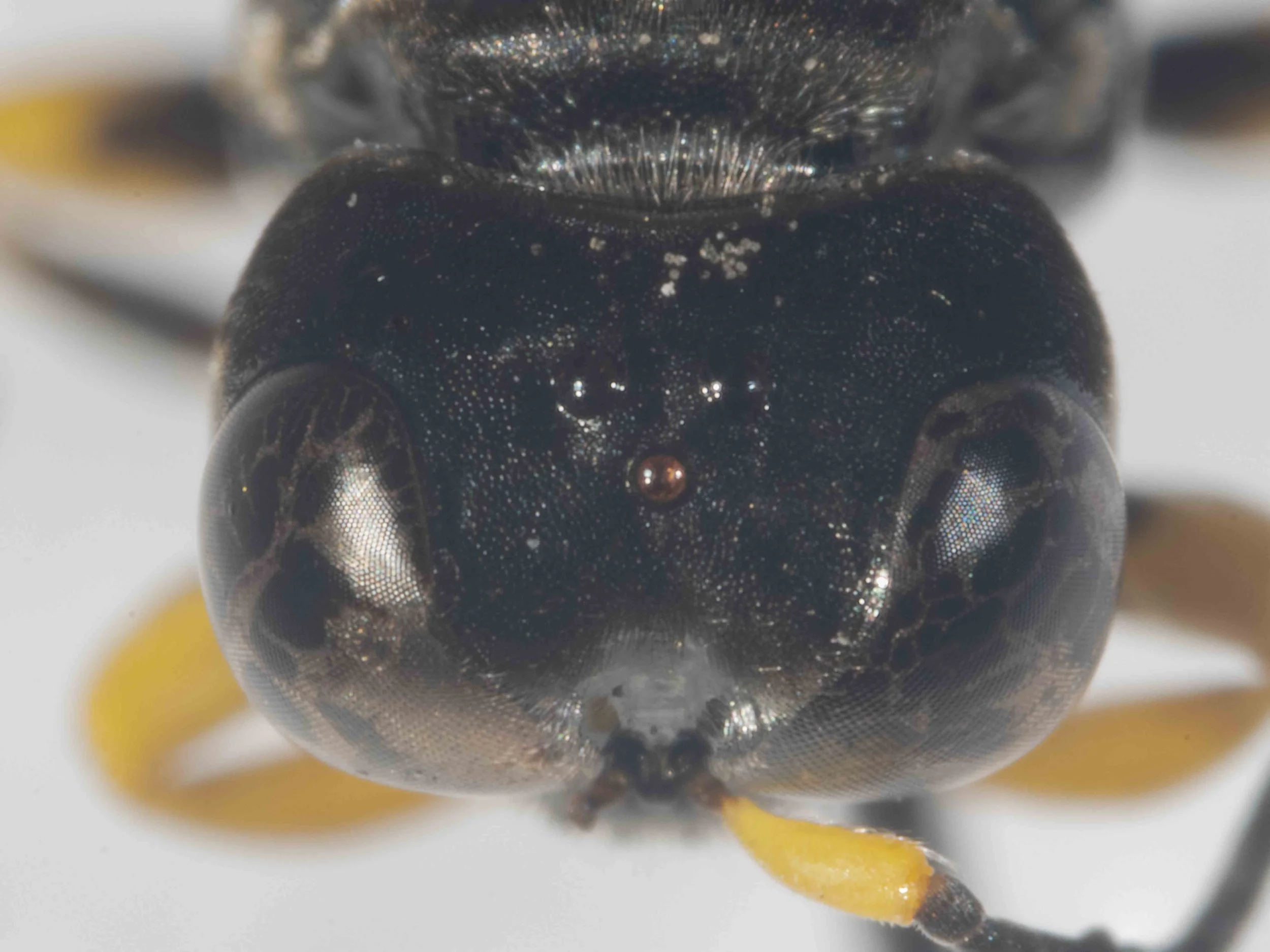
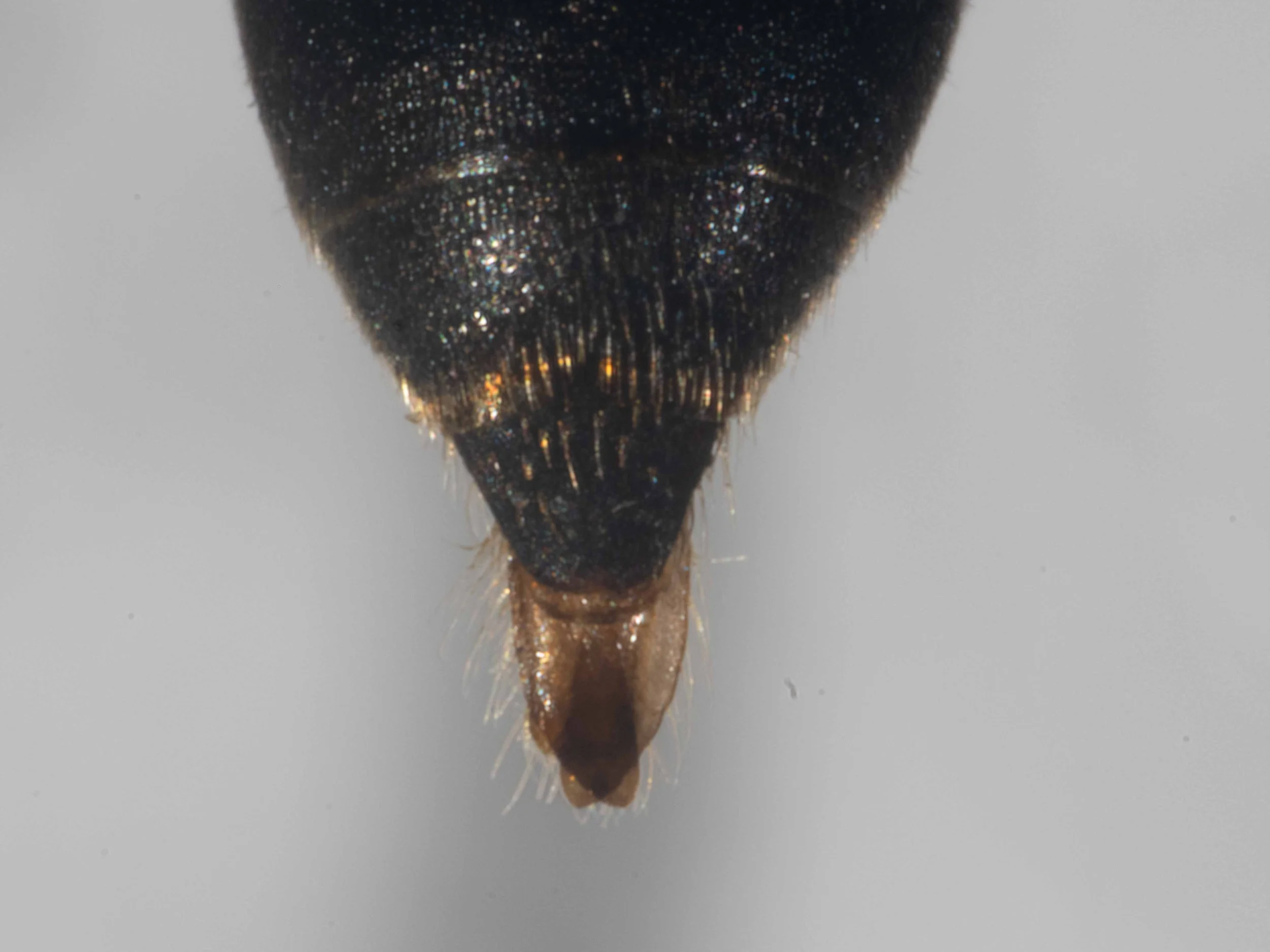
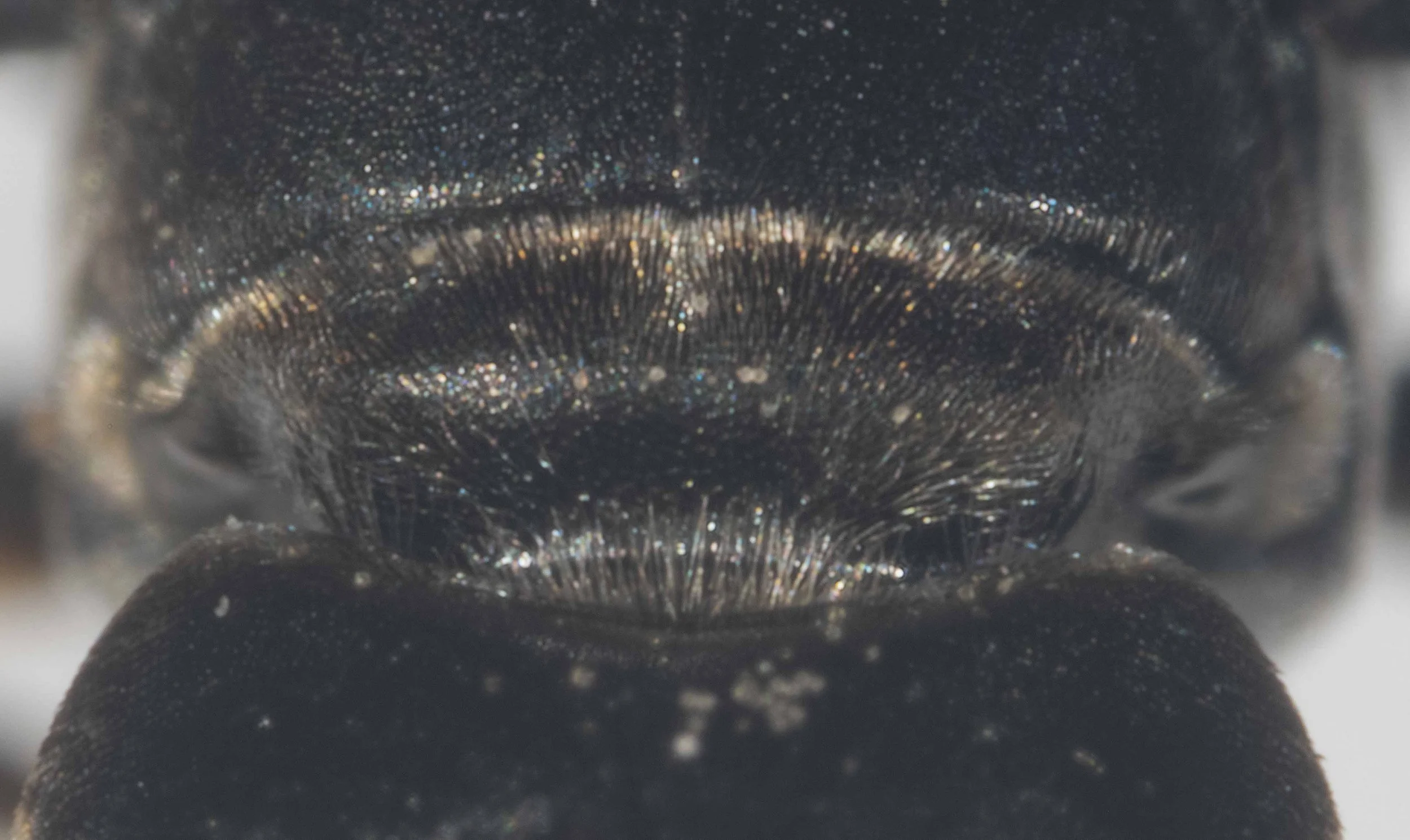
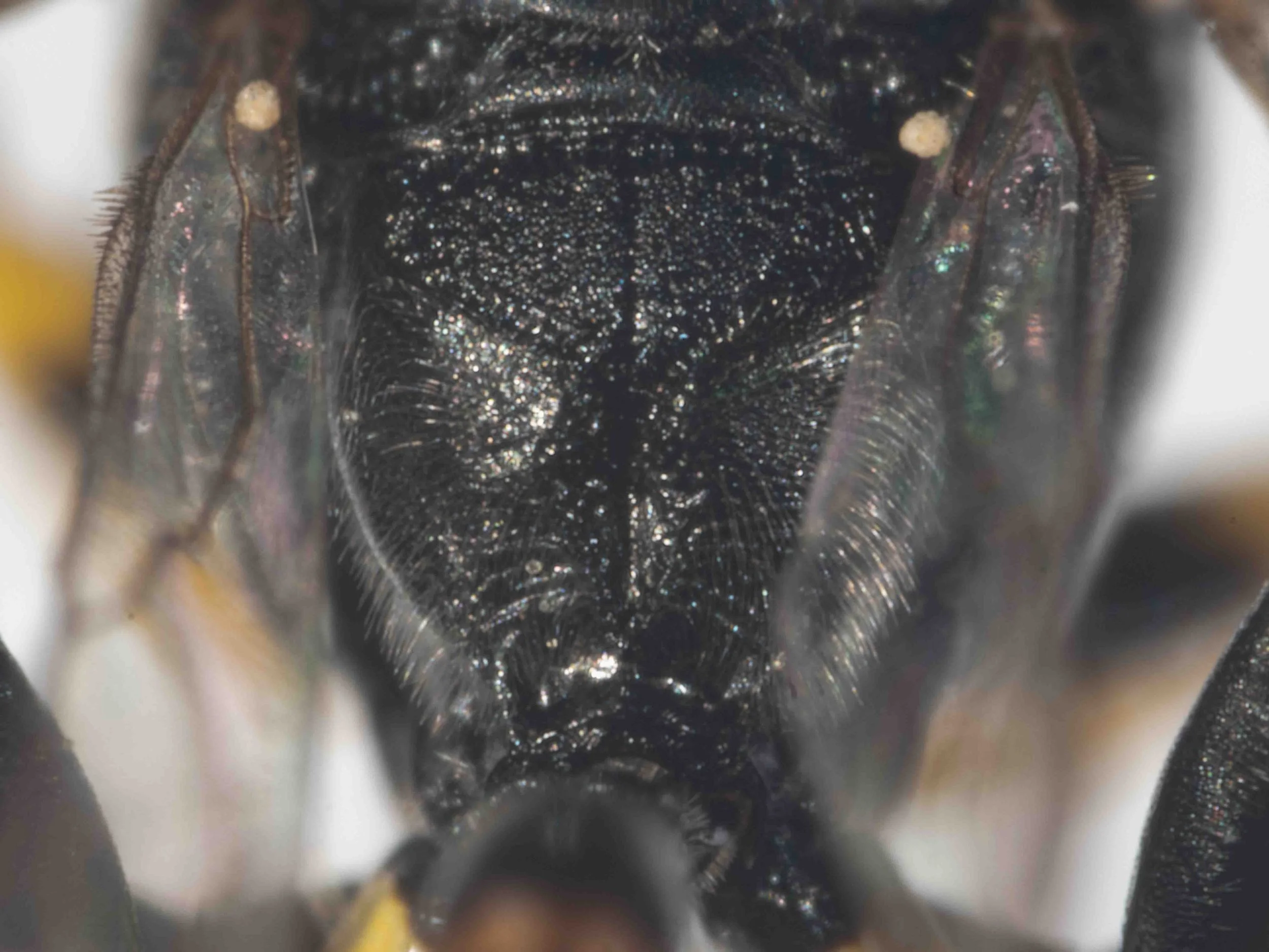
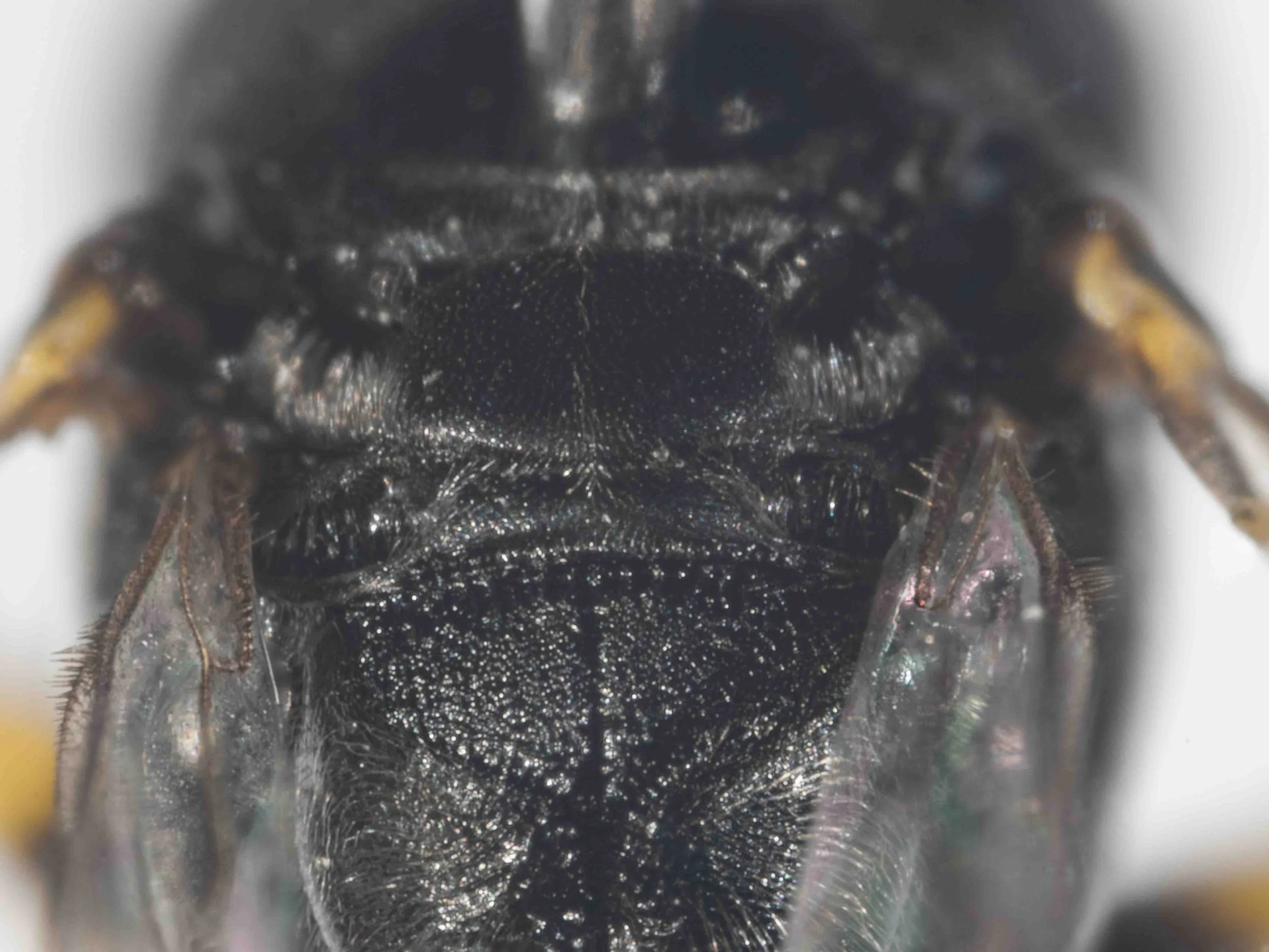
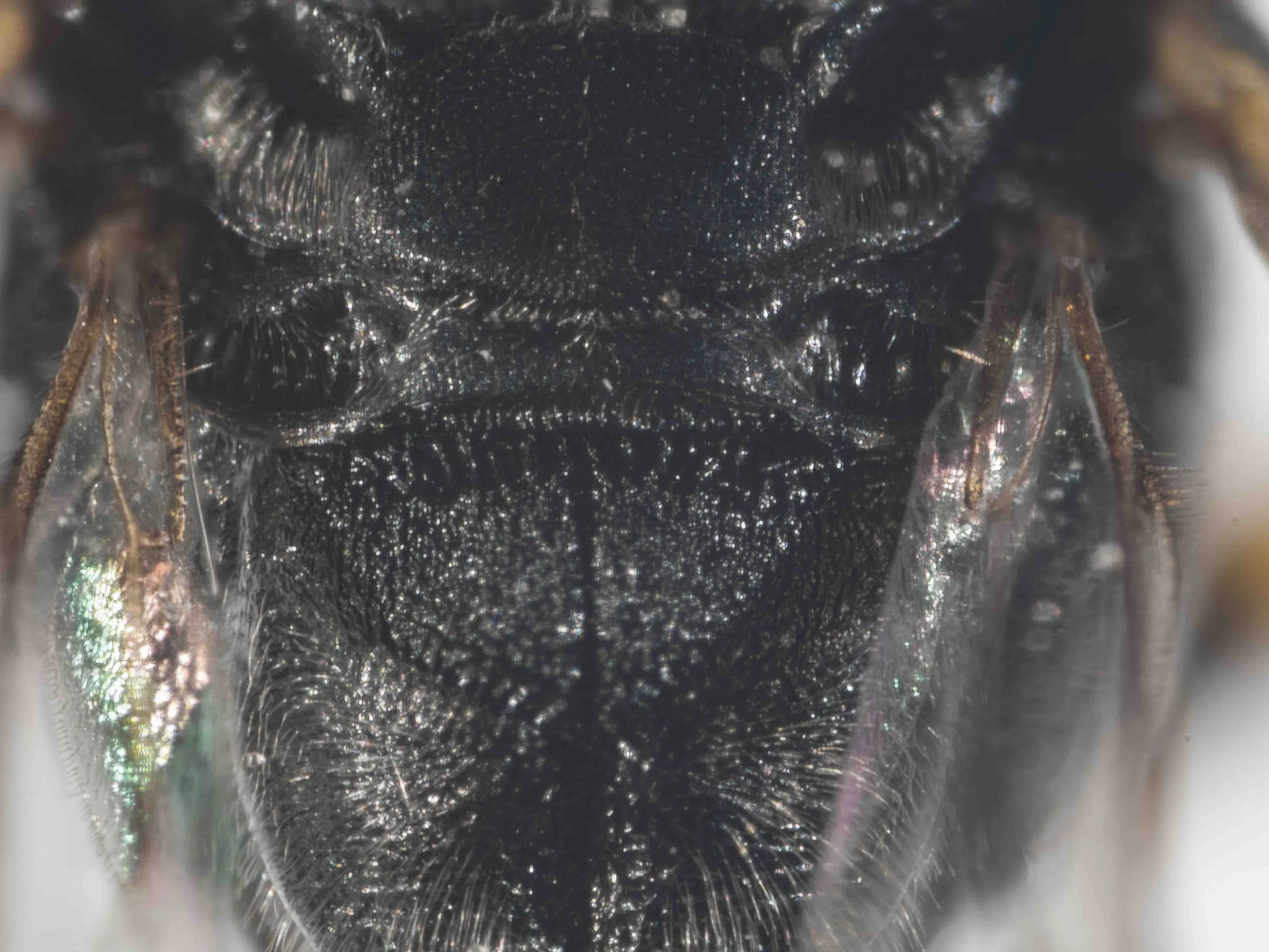
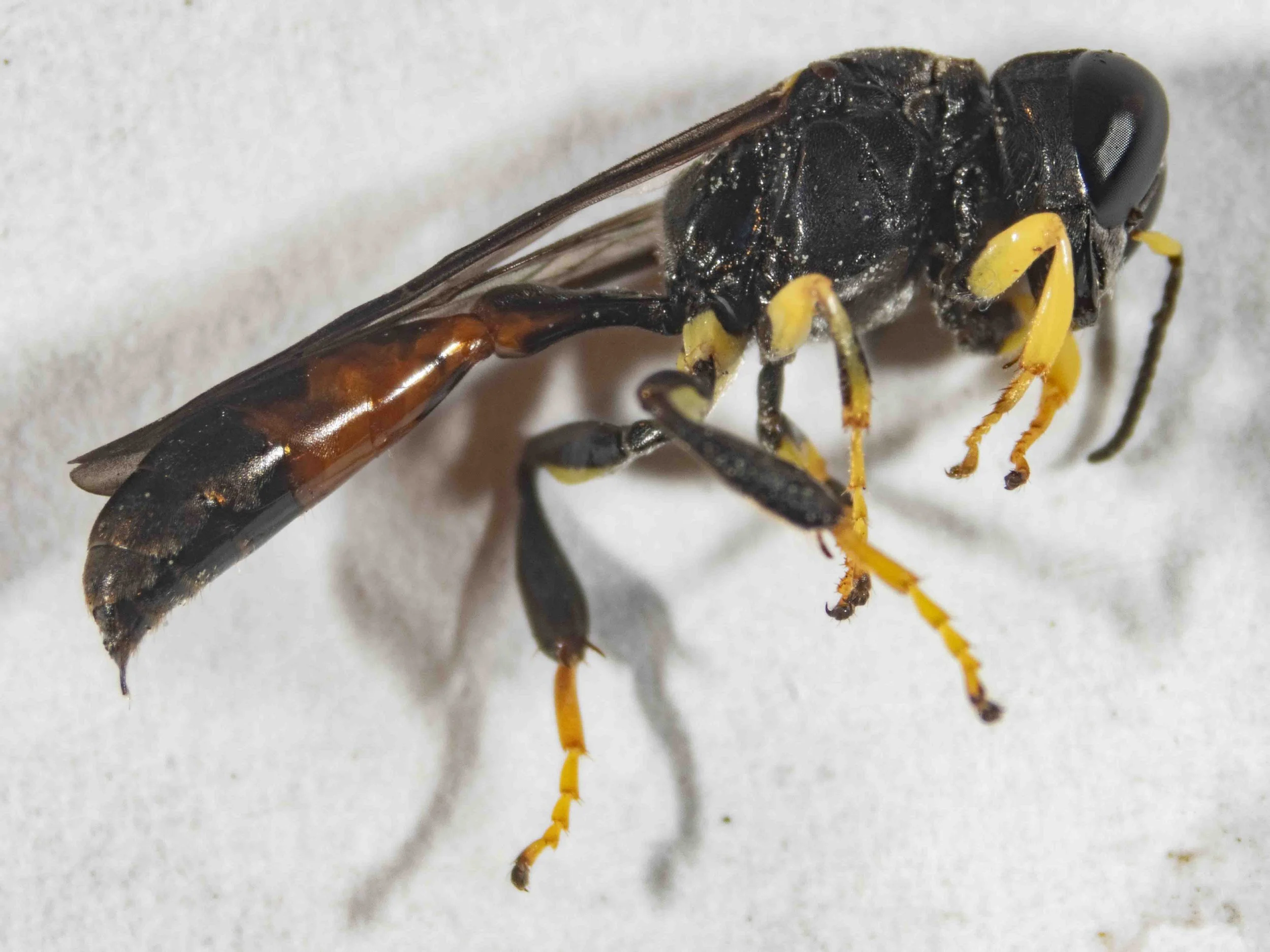
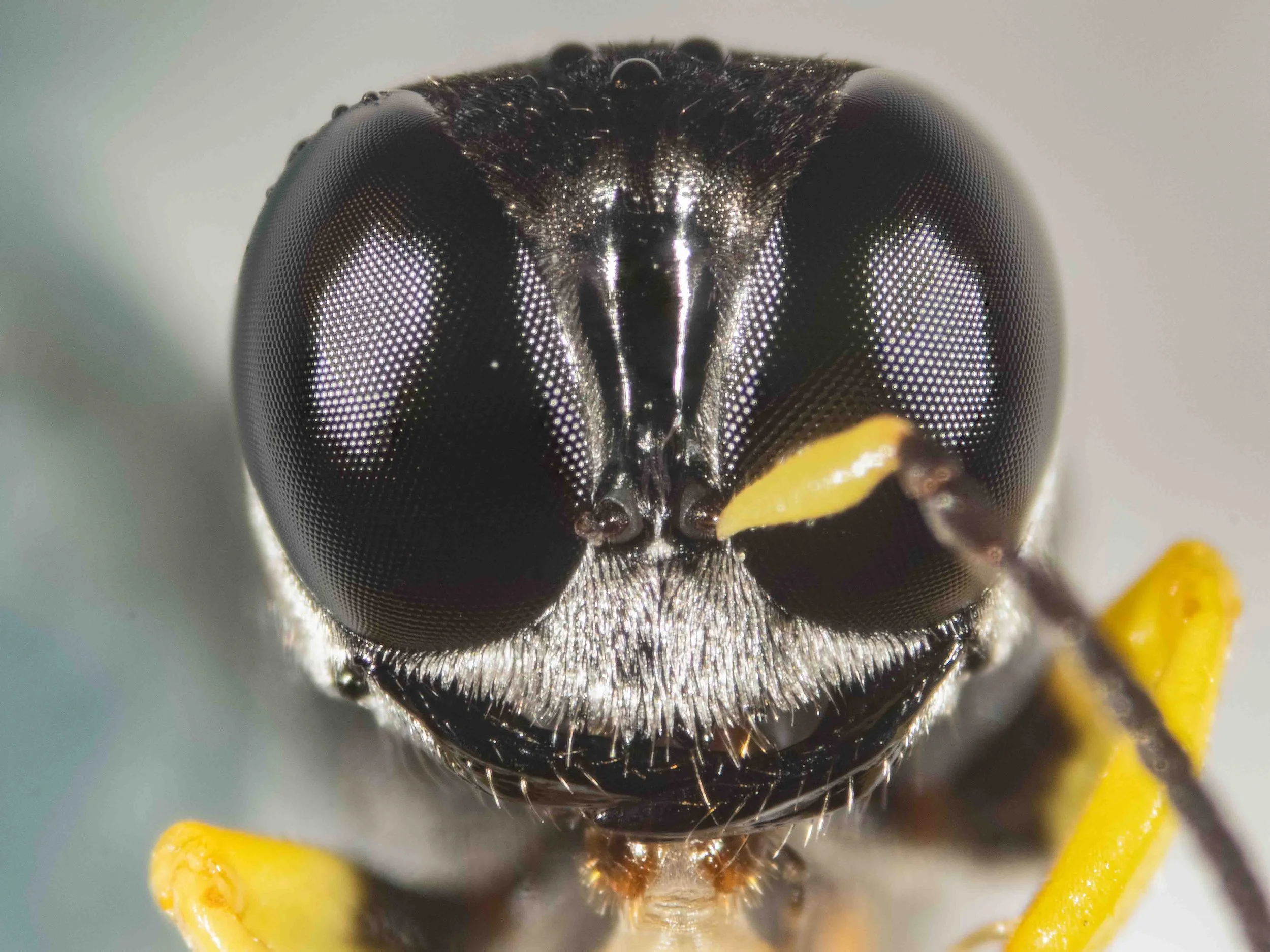
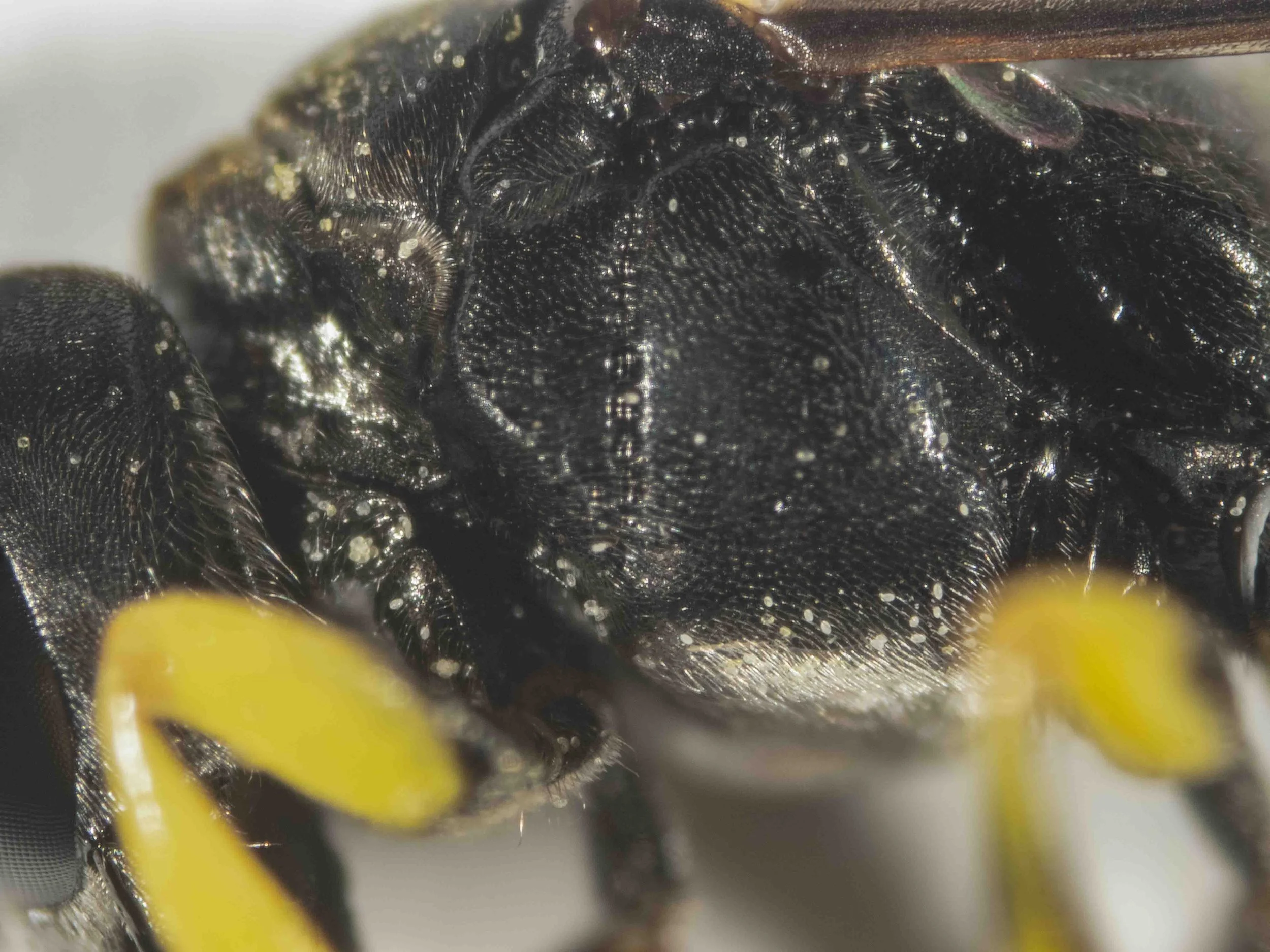
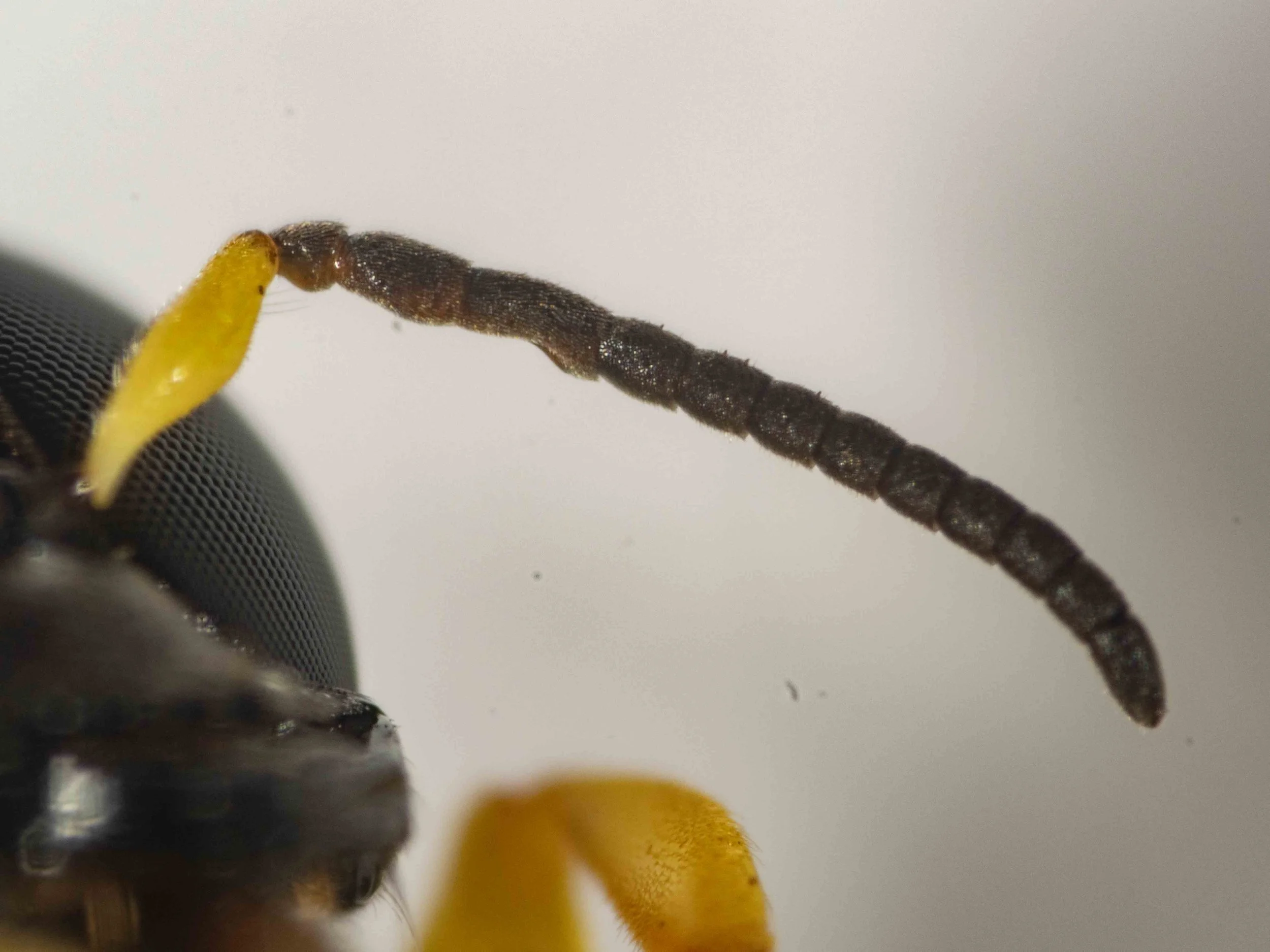
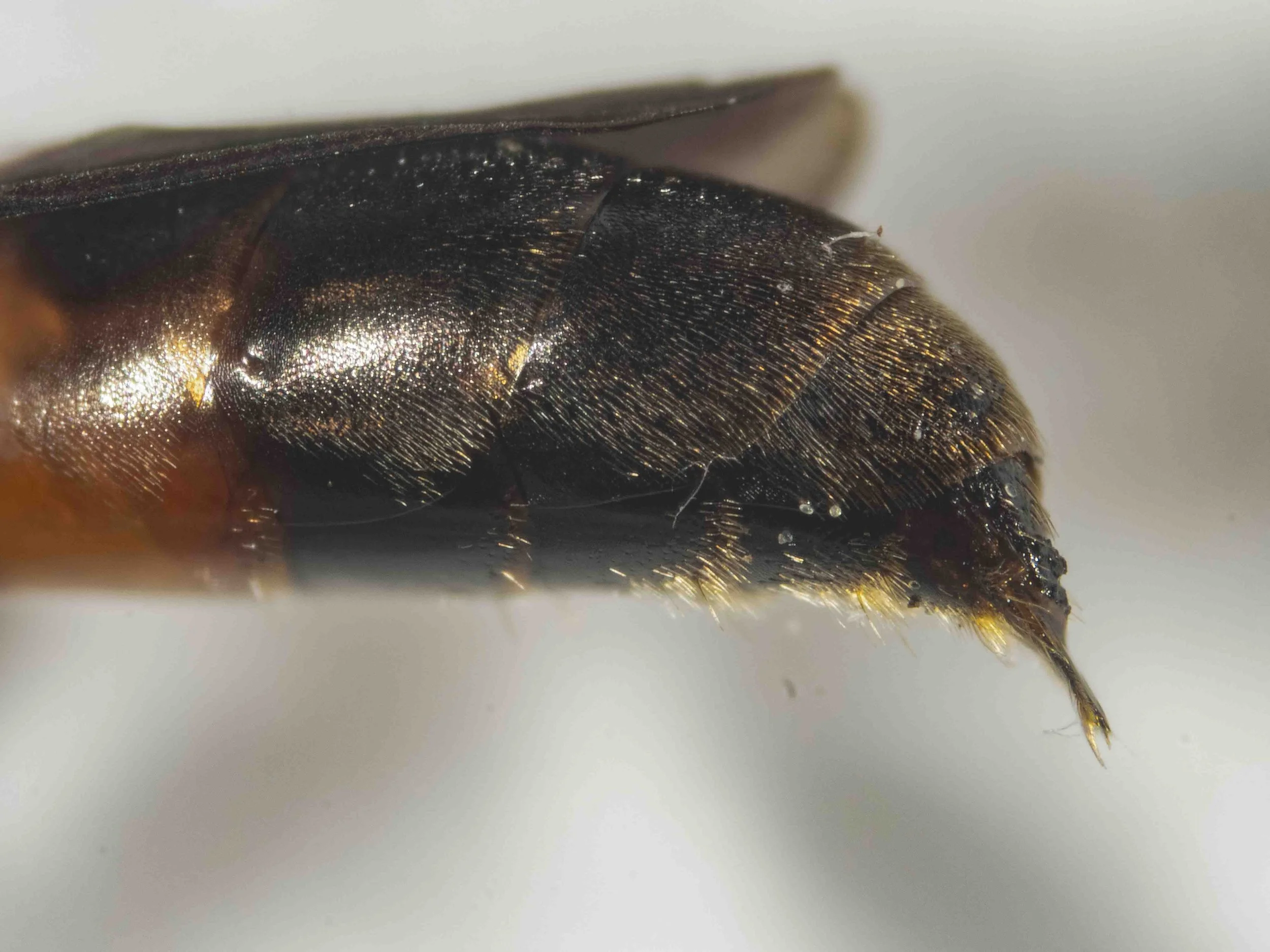
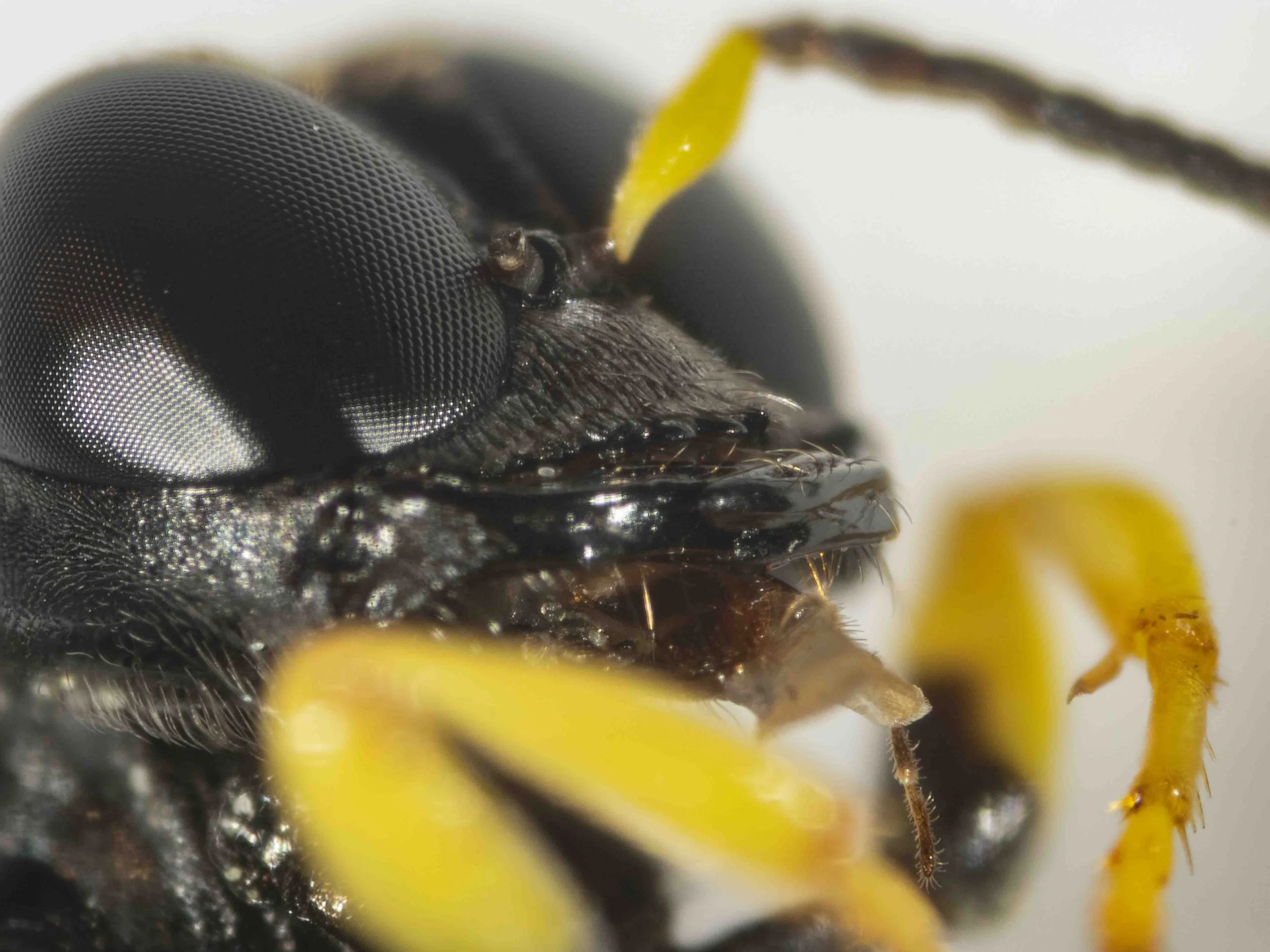
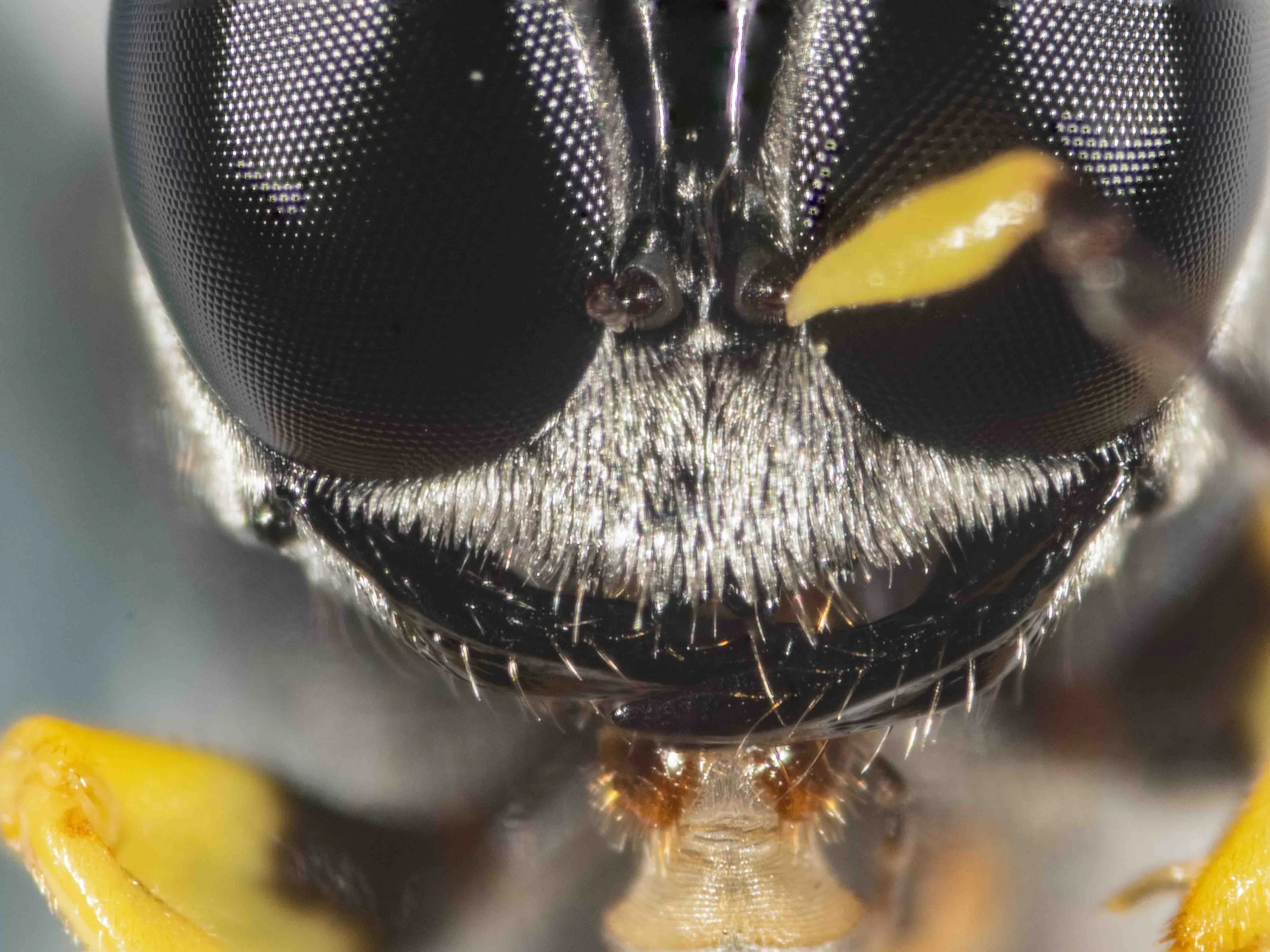
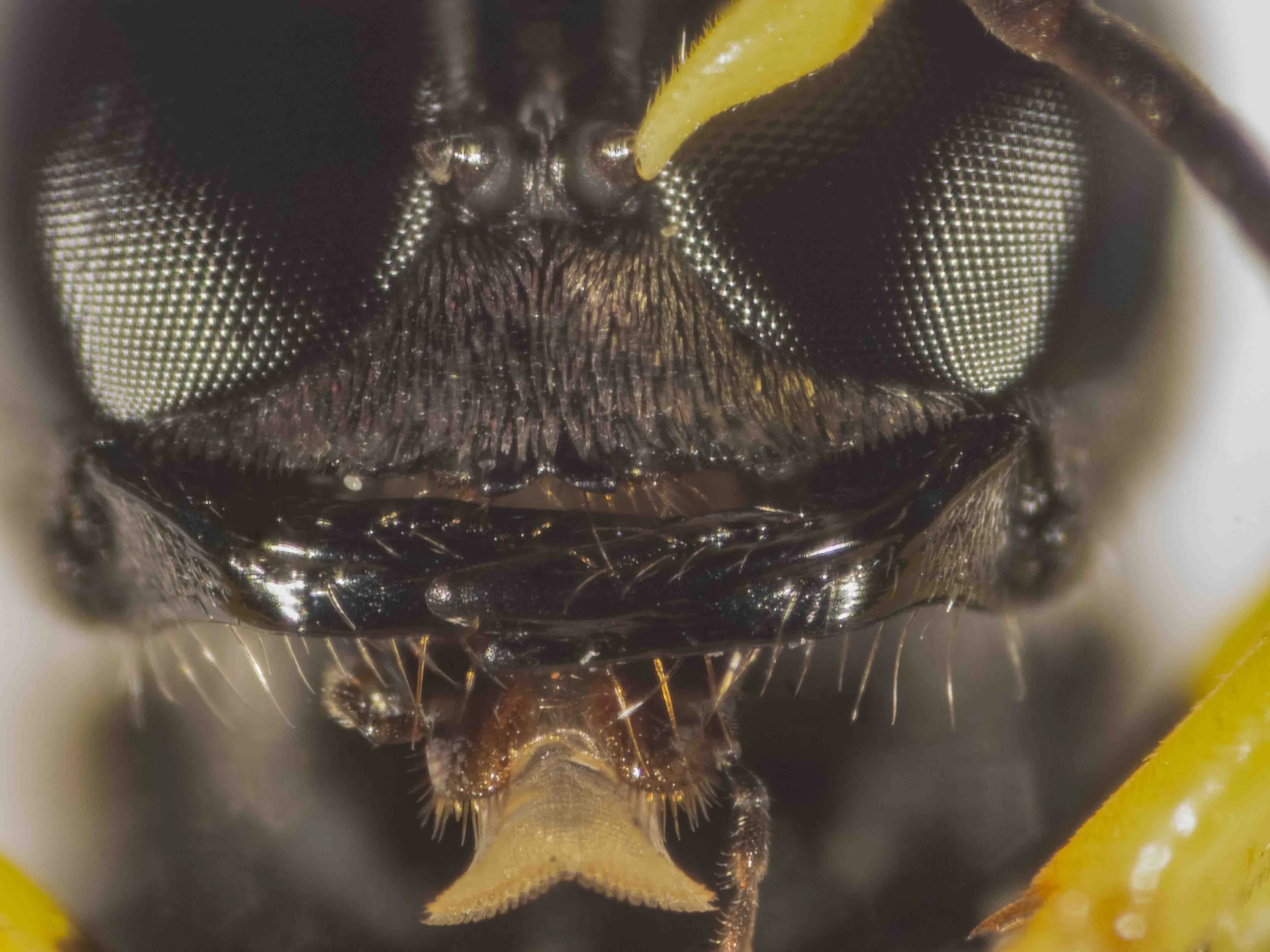
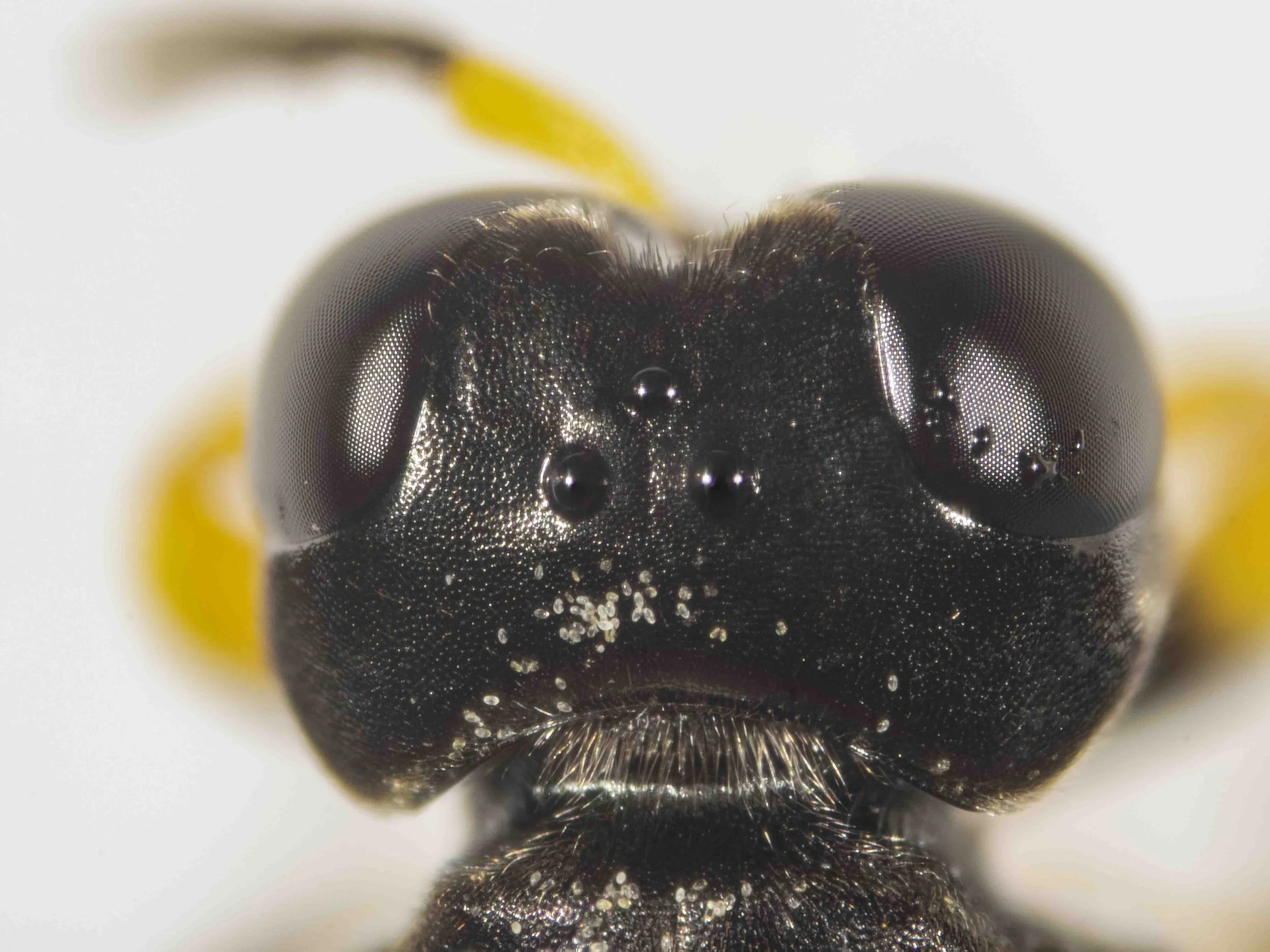
A note re specimen age and colour:
When preserved dry, most wasps maintain their morphology but lose some intensity of colour. This is important to remember when comparing published descriptions with live specimens. Most early species descriptions were made on the basis of old, long dead specimens. A dull ochre in an old specimen may actually look vivid yellow in life. The images of the male Podagritus above, illustrate this. Those marked 14th November were taken very soon after death, whereas those marked February 2026 were taken after more than three months drying.
bits & pieces
References
Evans, H.E. & Matthews, R.W. 1971. Notes on the prey and nests of some Australian Crabronini (Hymenoptera: Sphecidae). Journal of the Australian Entomological Society 10: 1-4
Leclercq, J. 1955. Révision des Podagritus (Spinola, 1851) australiens (Hym. Sphecidae, Crabroninae). Bulletin et Annales de la Société Royale Belgique d'Entomologie 91: 305-330
Leclercq, J. 1970. Quelques Podagritus d'Australie et d'Amérique du Sud (Hymenoptera Sphecidae, Crabroninae). Bulletin des Recherches Agronomiques de Gembloux ns 5: 271-280
Leclercq, J. 1998. Hyménoptères Sphécides Crabroniens d'Australie du genera Podagritus Spinola, 1851 (Hymenoptera, Sphecidae). Entomofauna 19(18): 285-308
Pulawski, W.J. 2023. Two new western Australian species of the wasp genus Podagritus Spinola, 1851 (Hymenoptera: Crabronidae) that prey on bees. Australian Entomologist 50(2): 121–130
This is a workbook page … a part of our website where we record the observations and references used in making species identifications. The notes will not necessarily be complete. They are a record for our own use, but we are happy to share this information with others.