
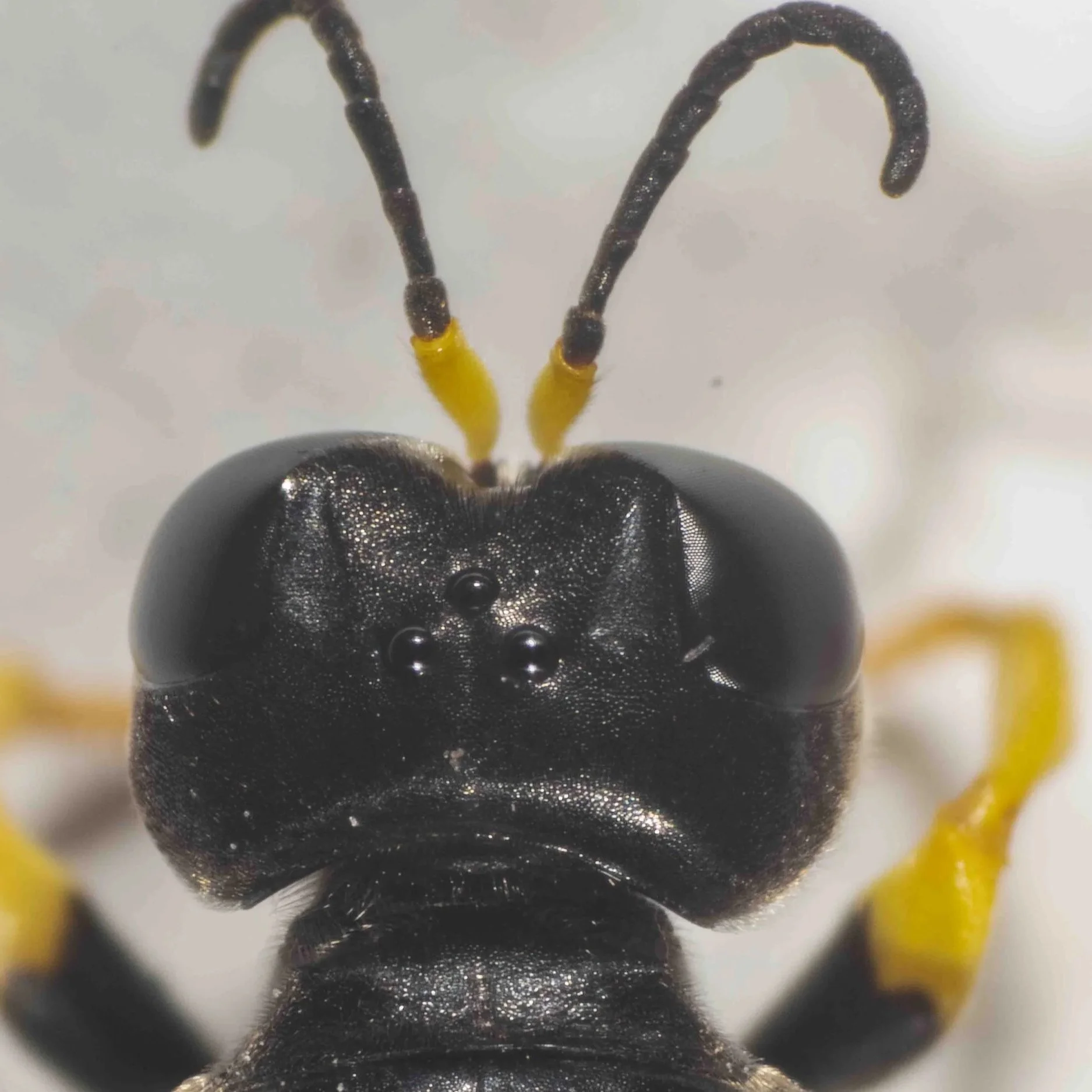
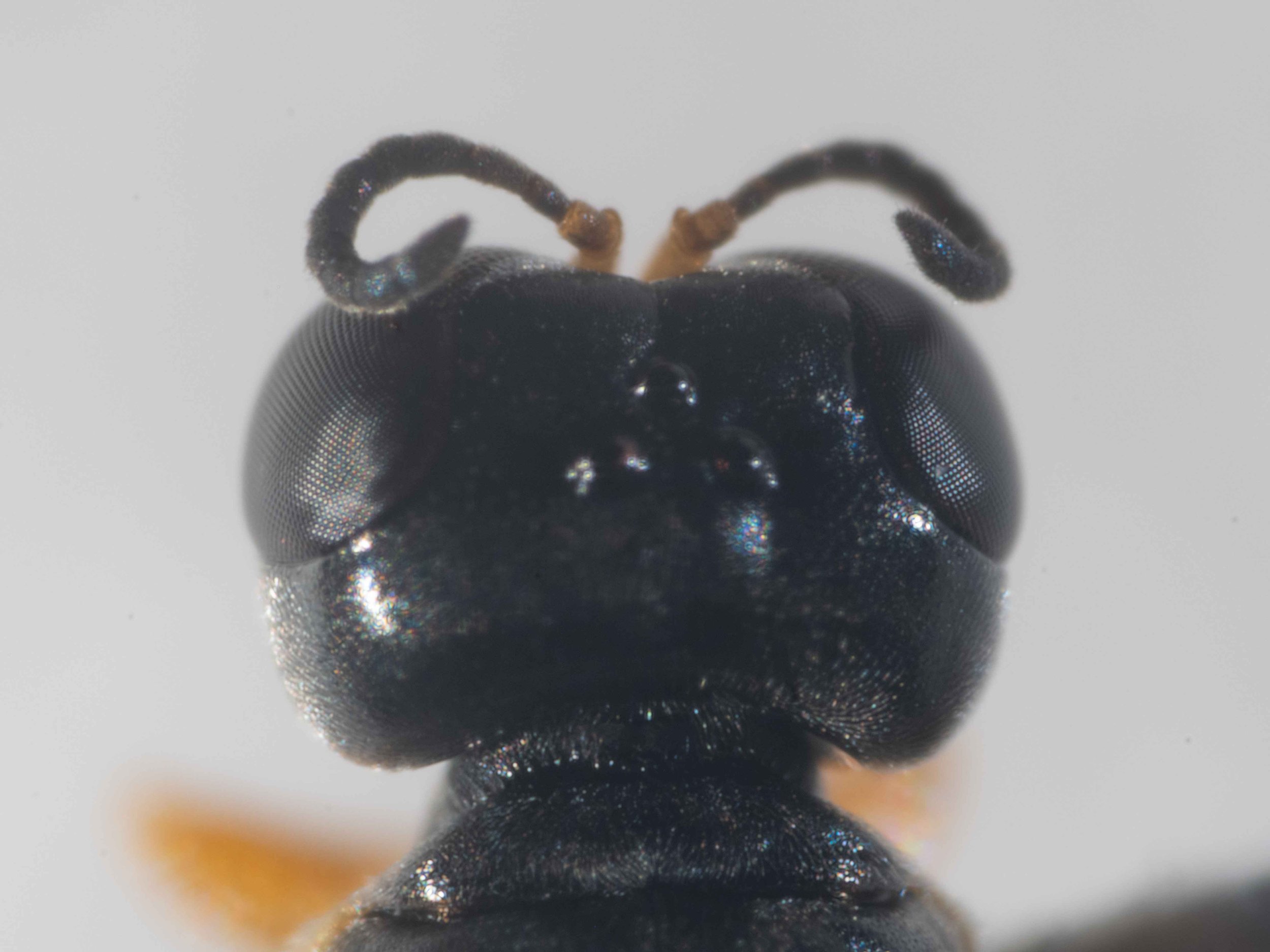
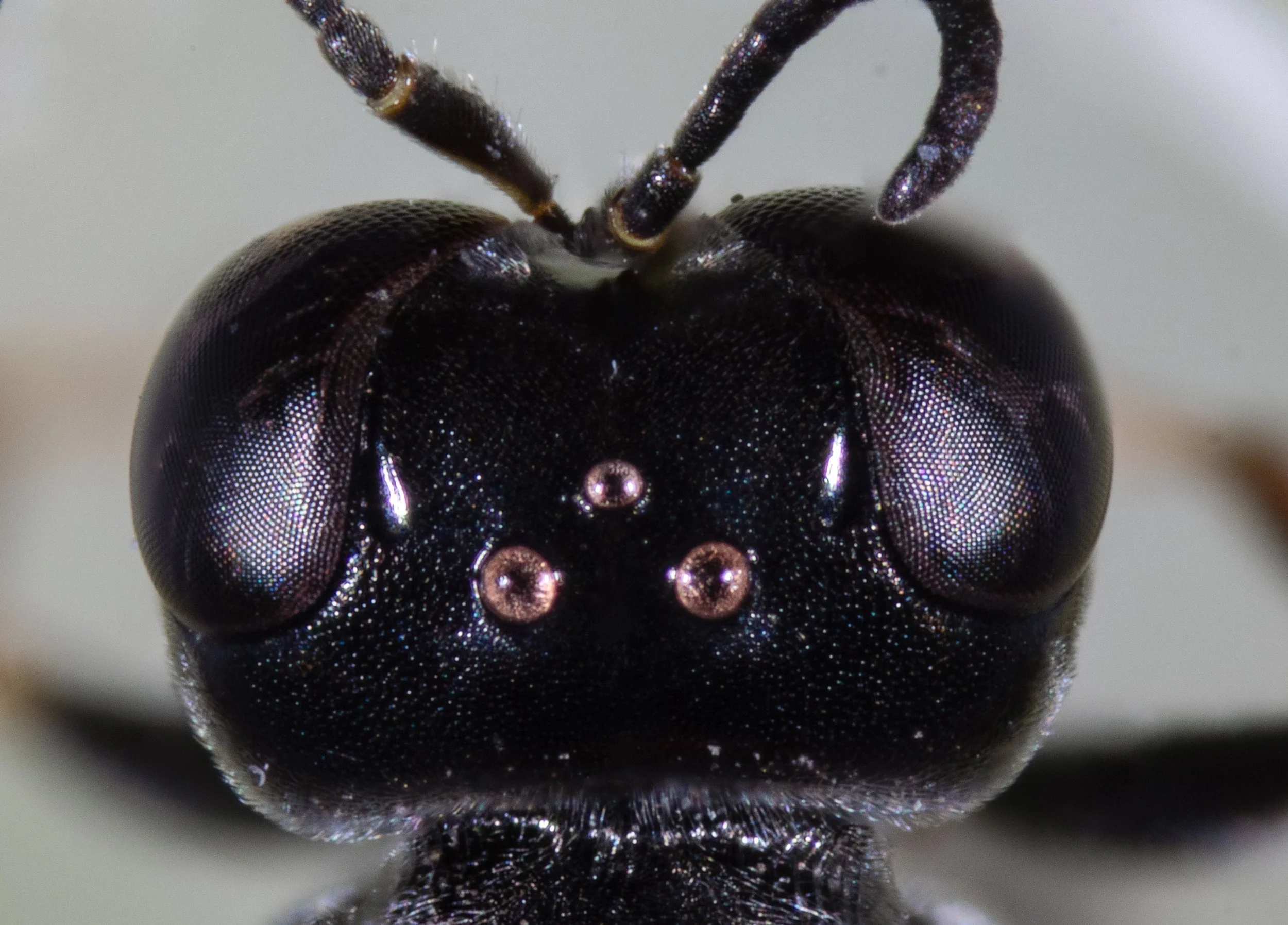
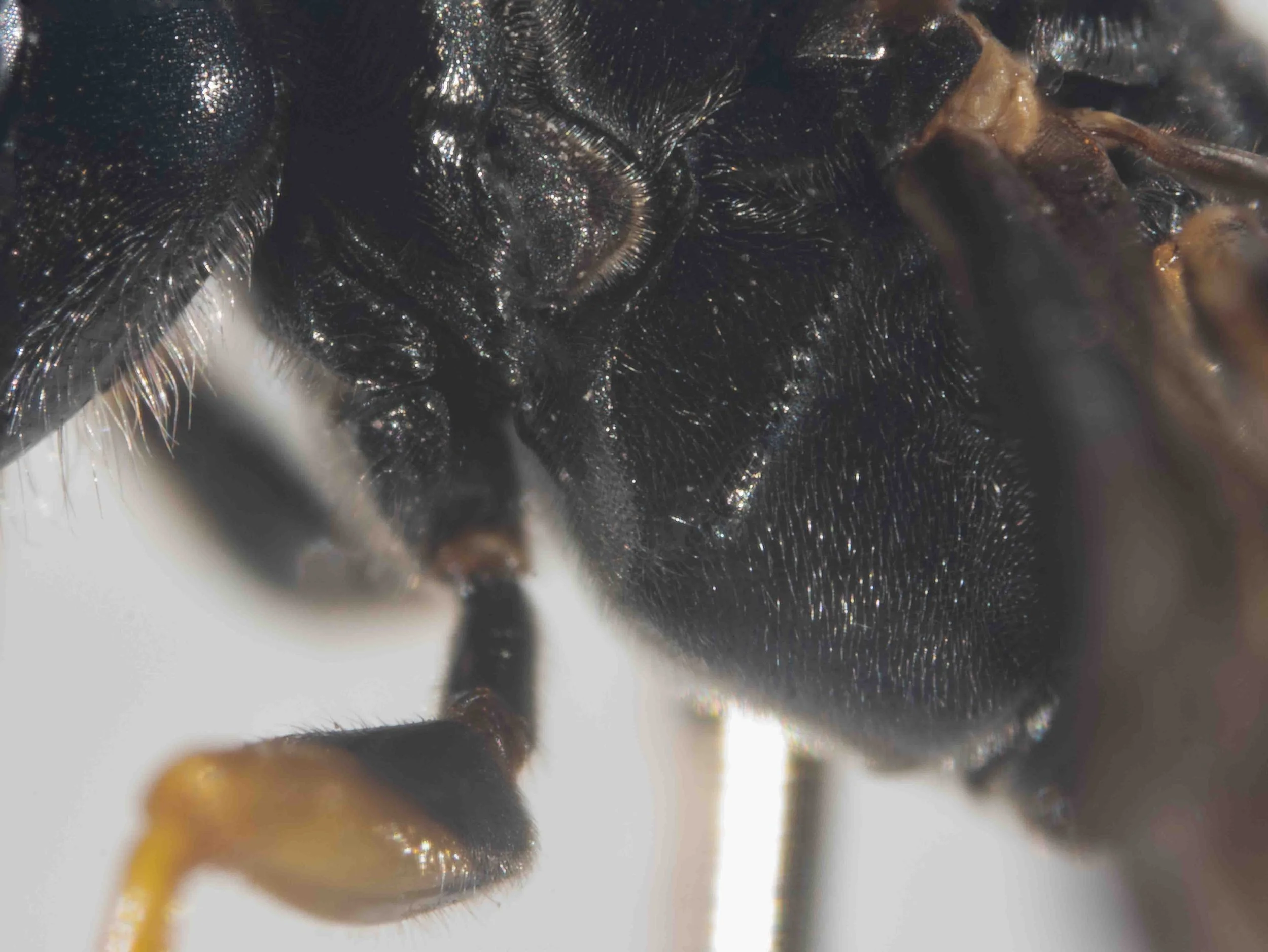
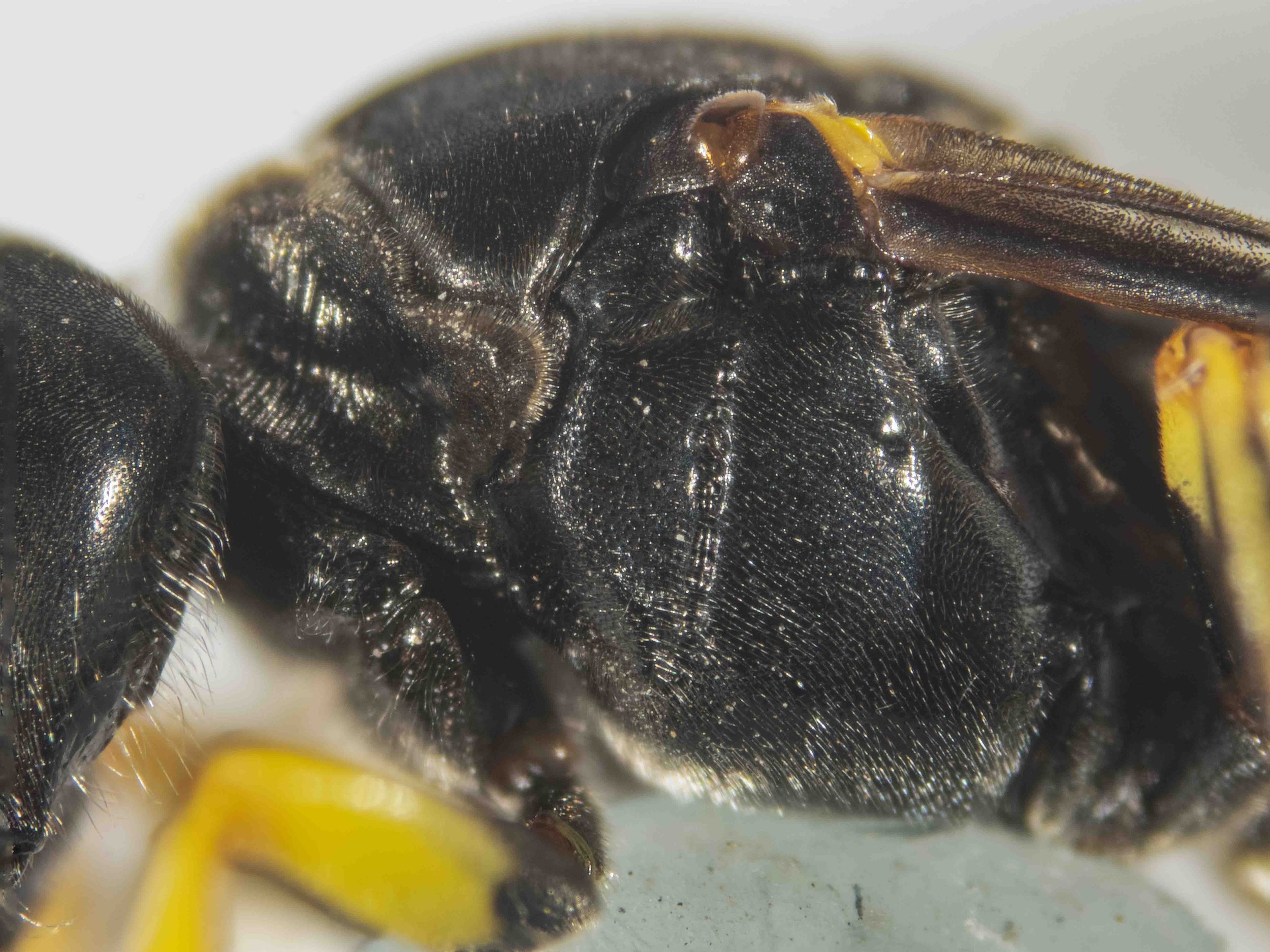
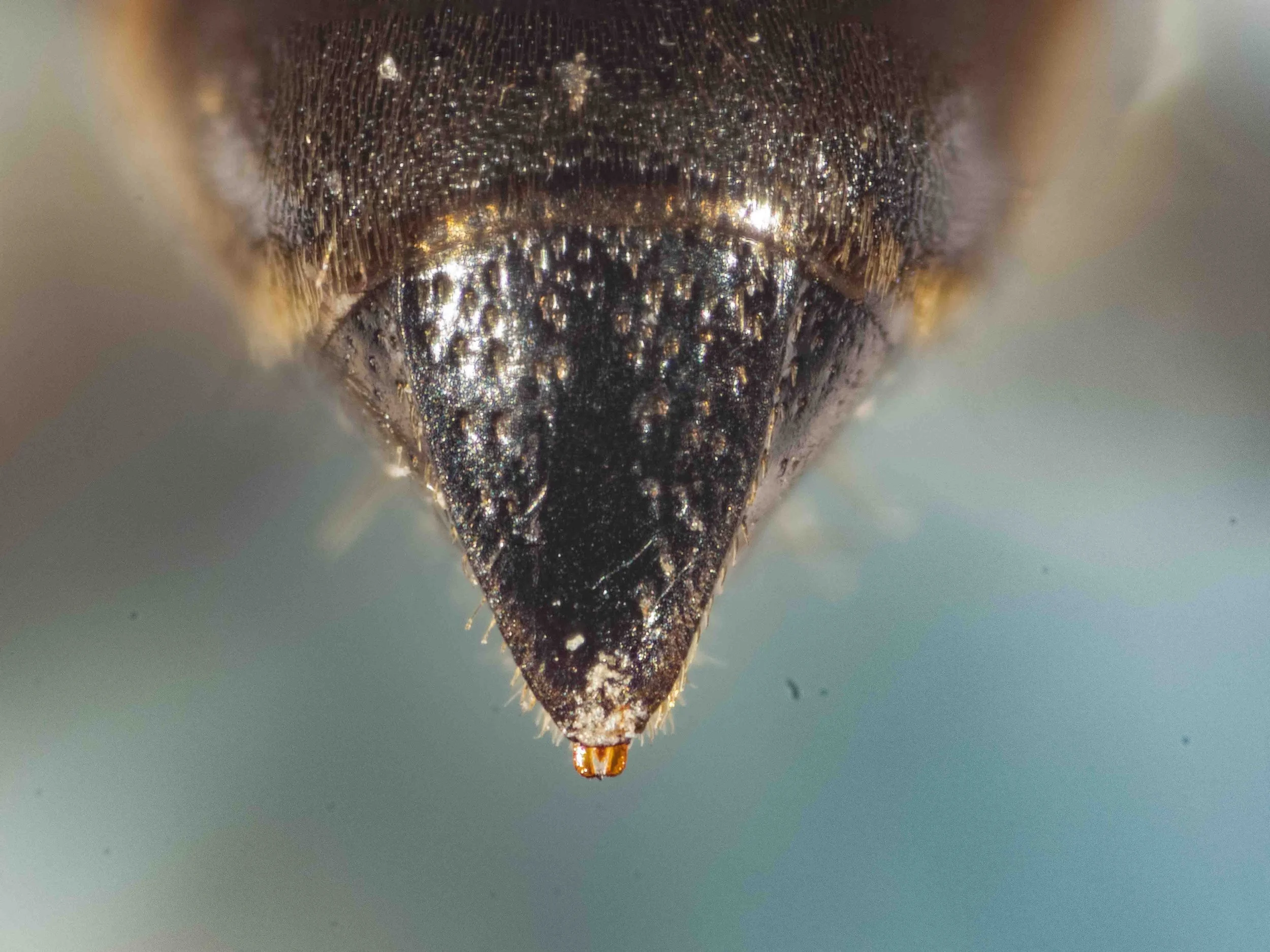
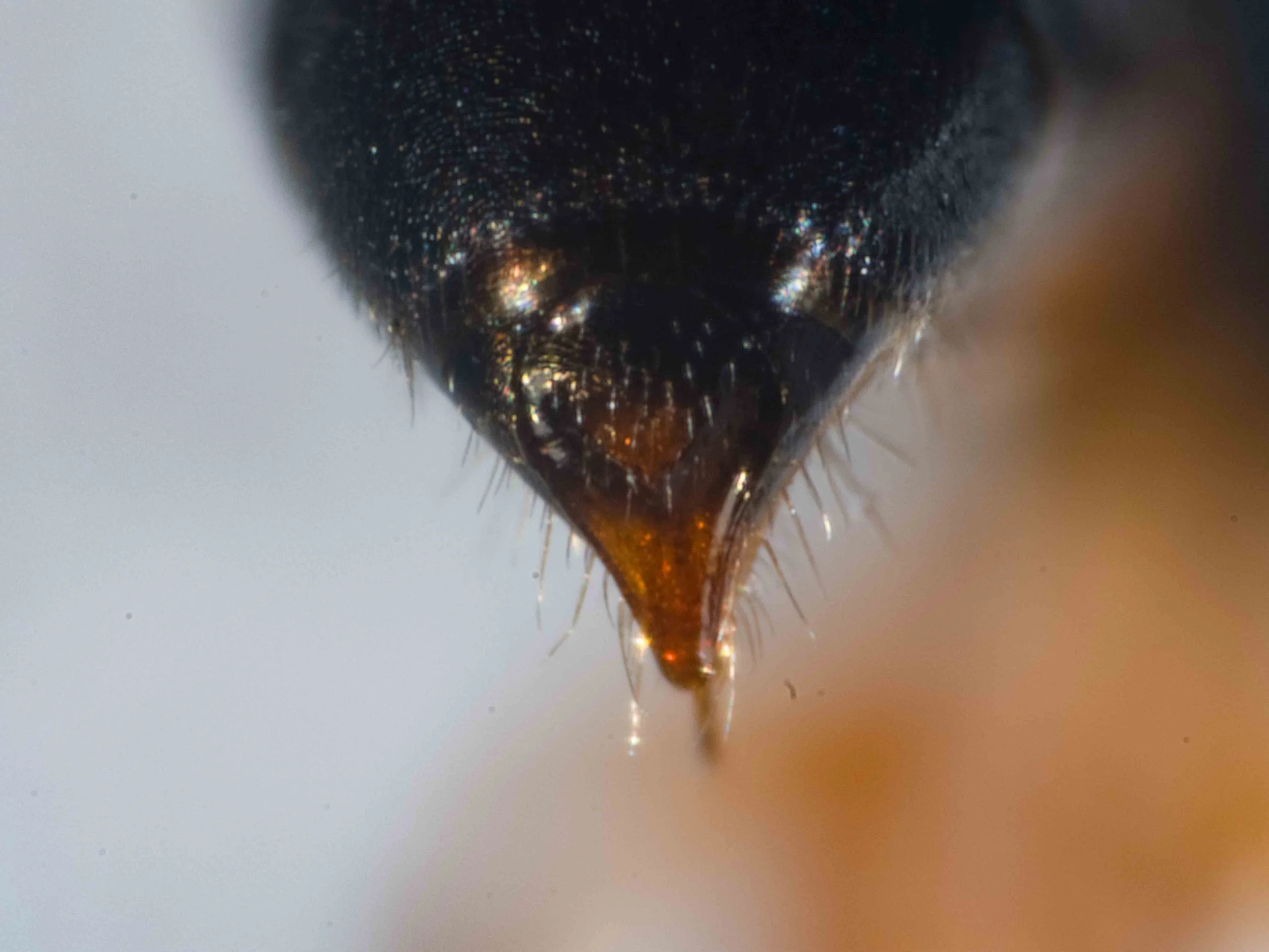
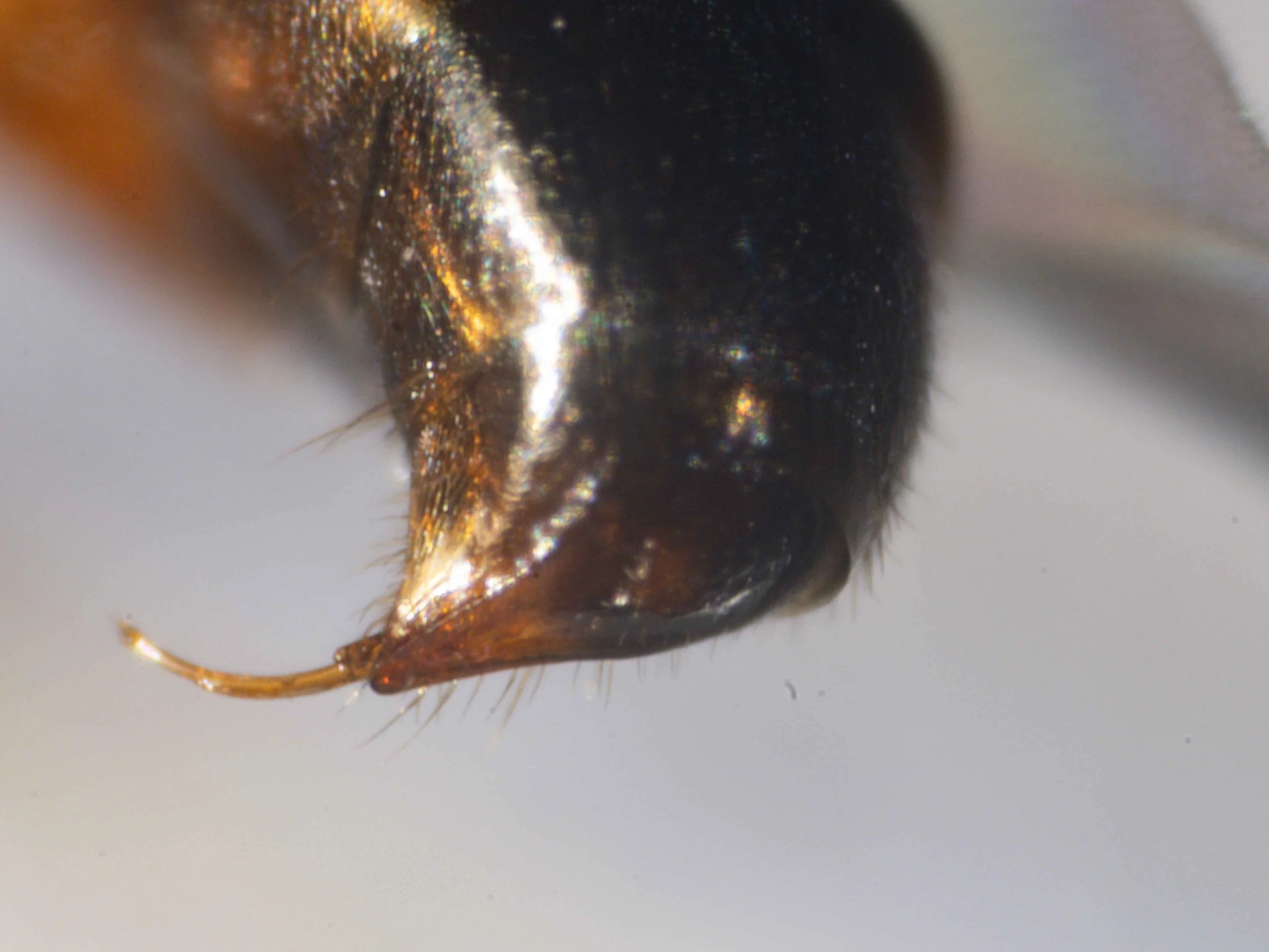
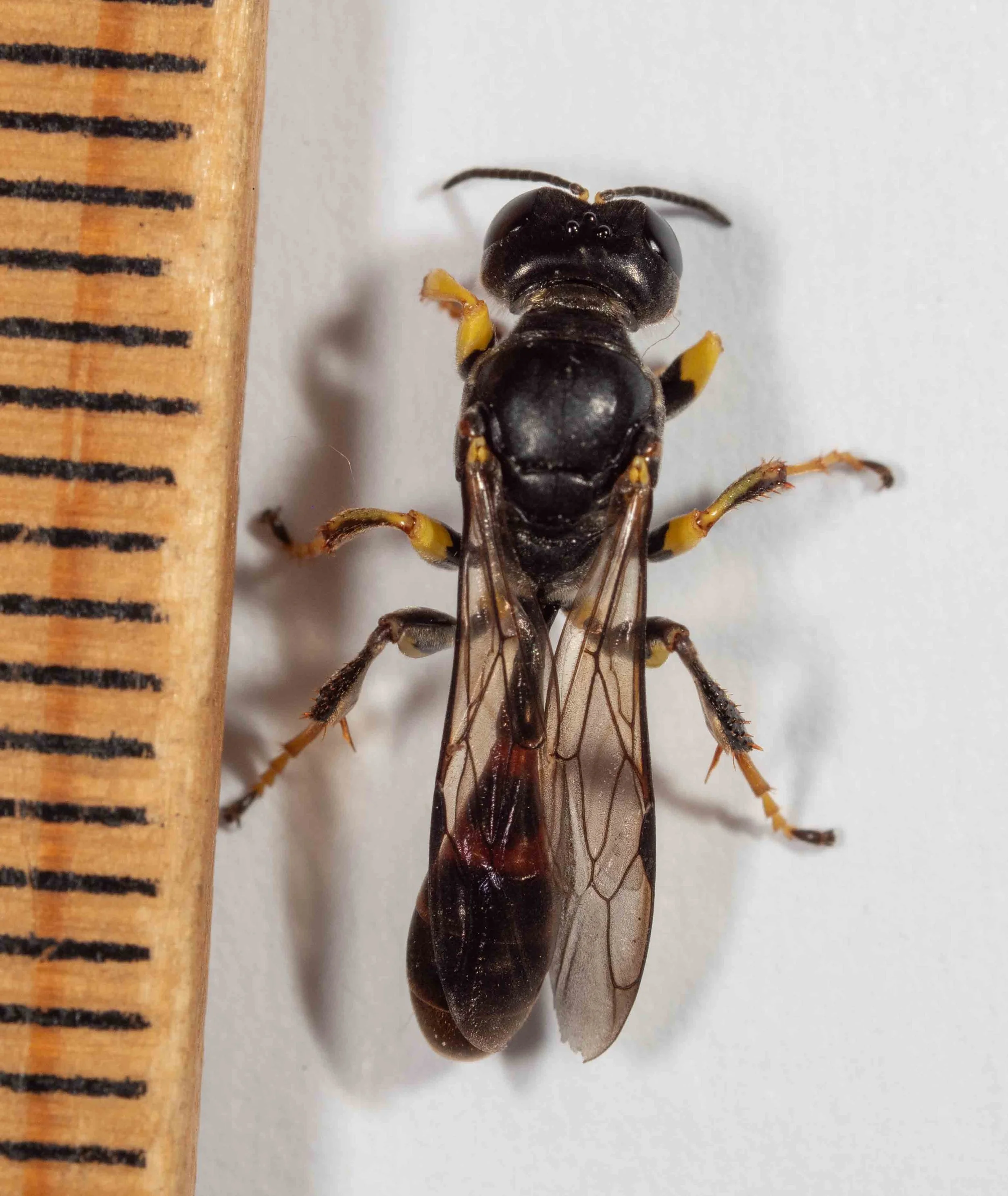
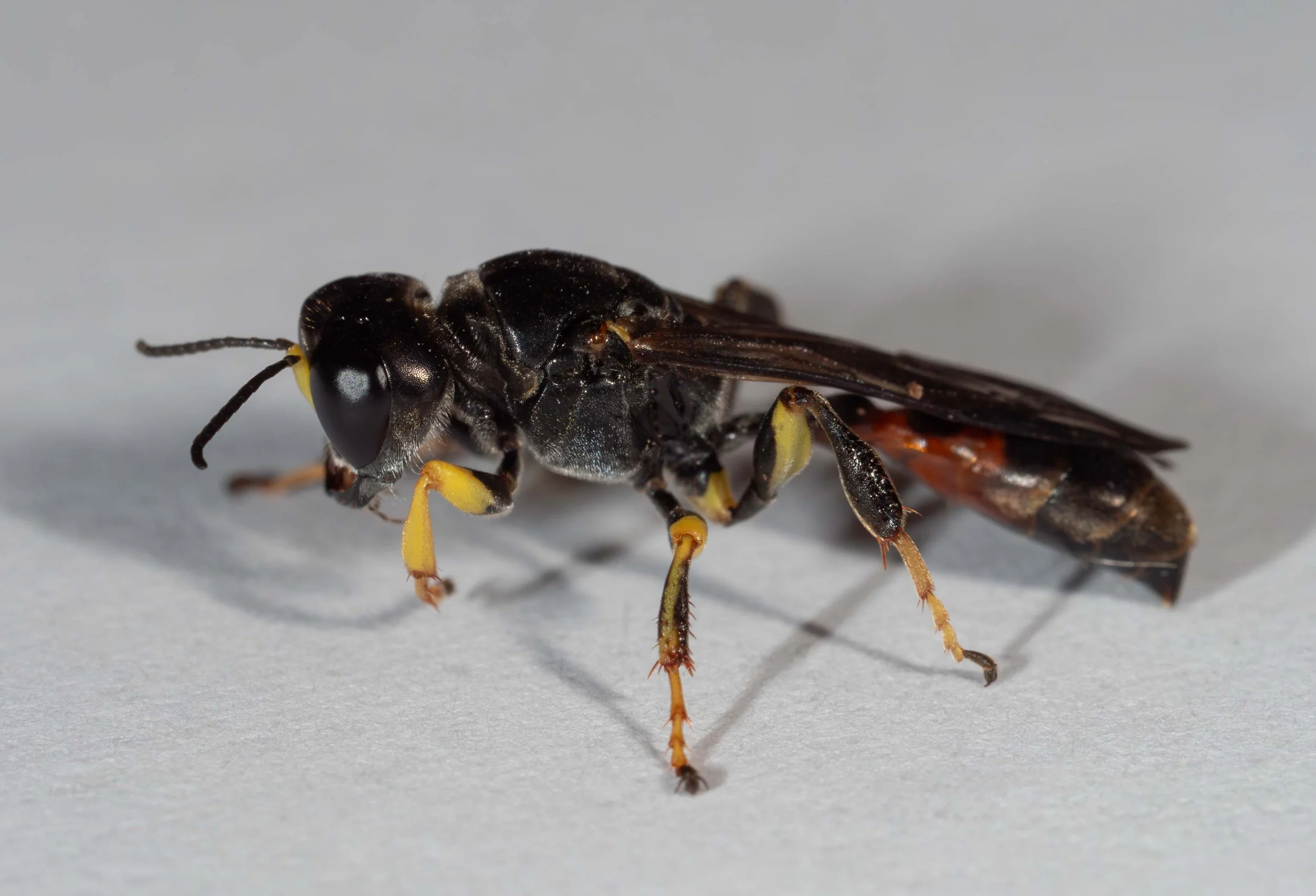
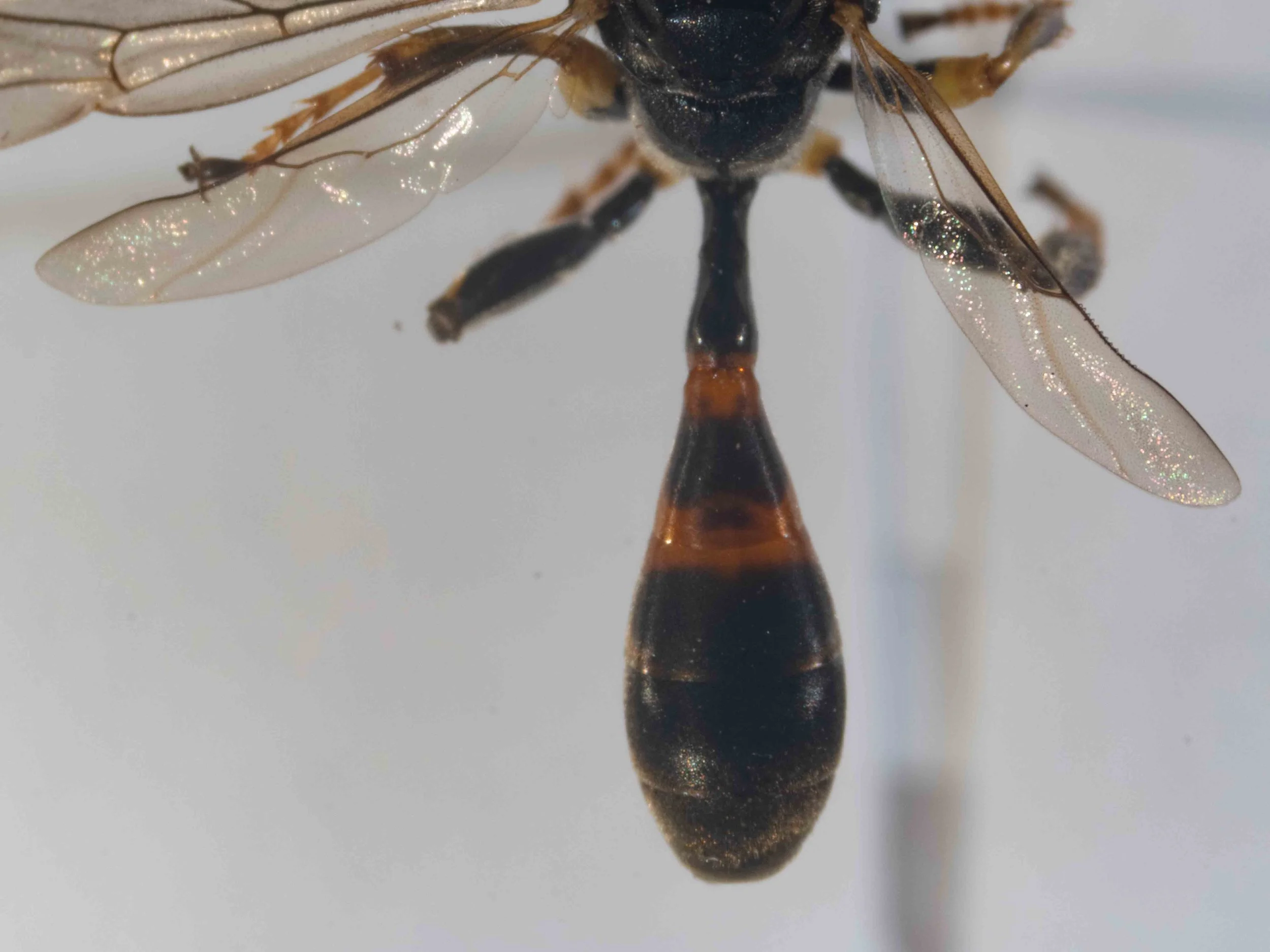
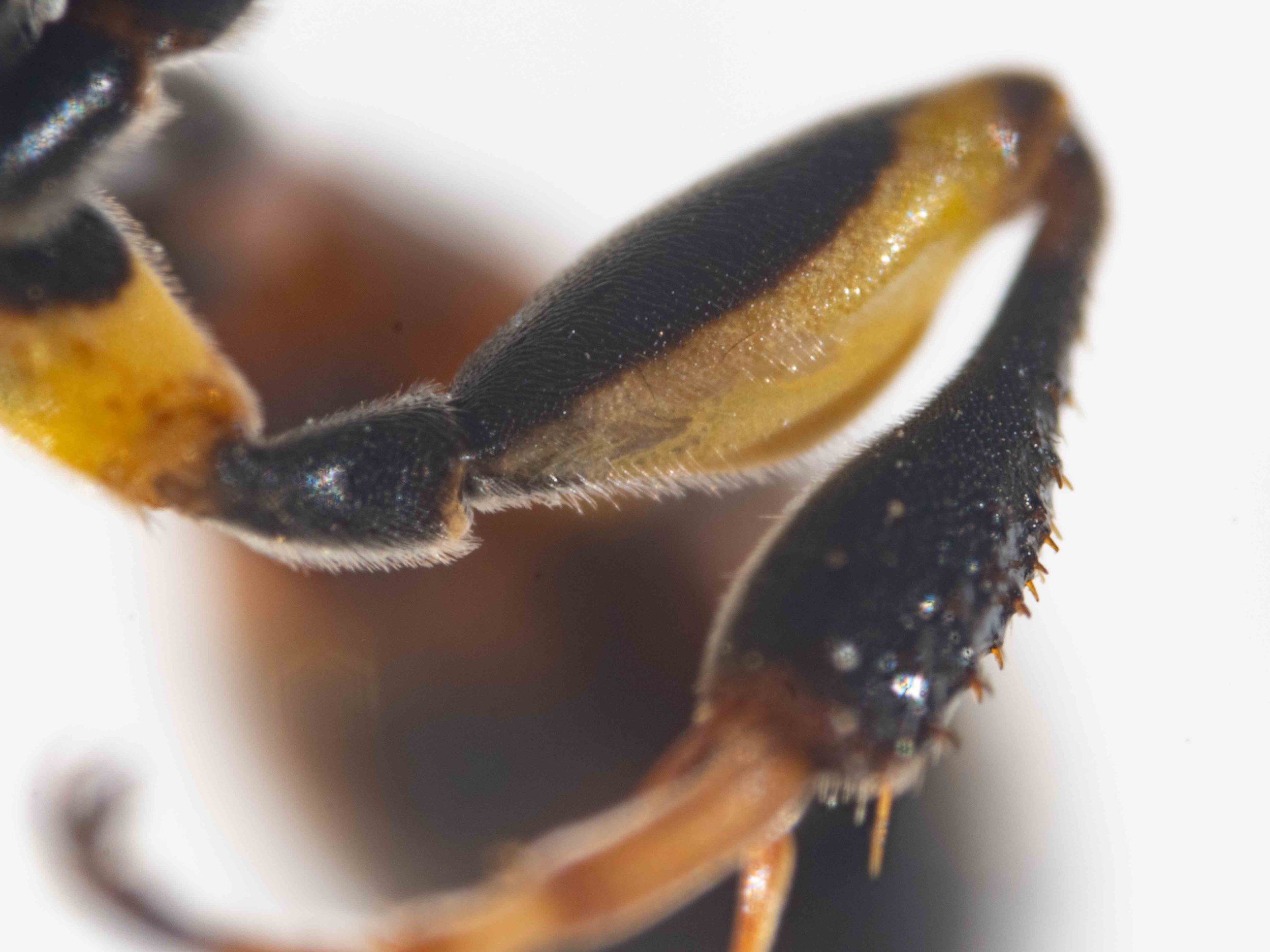
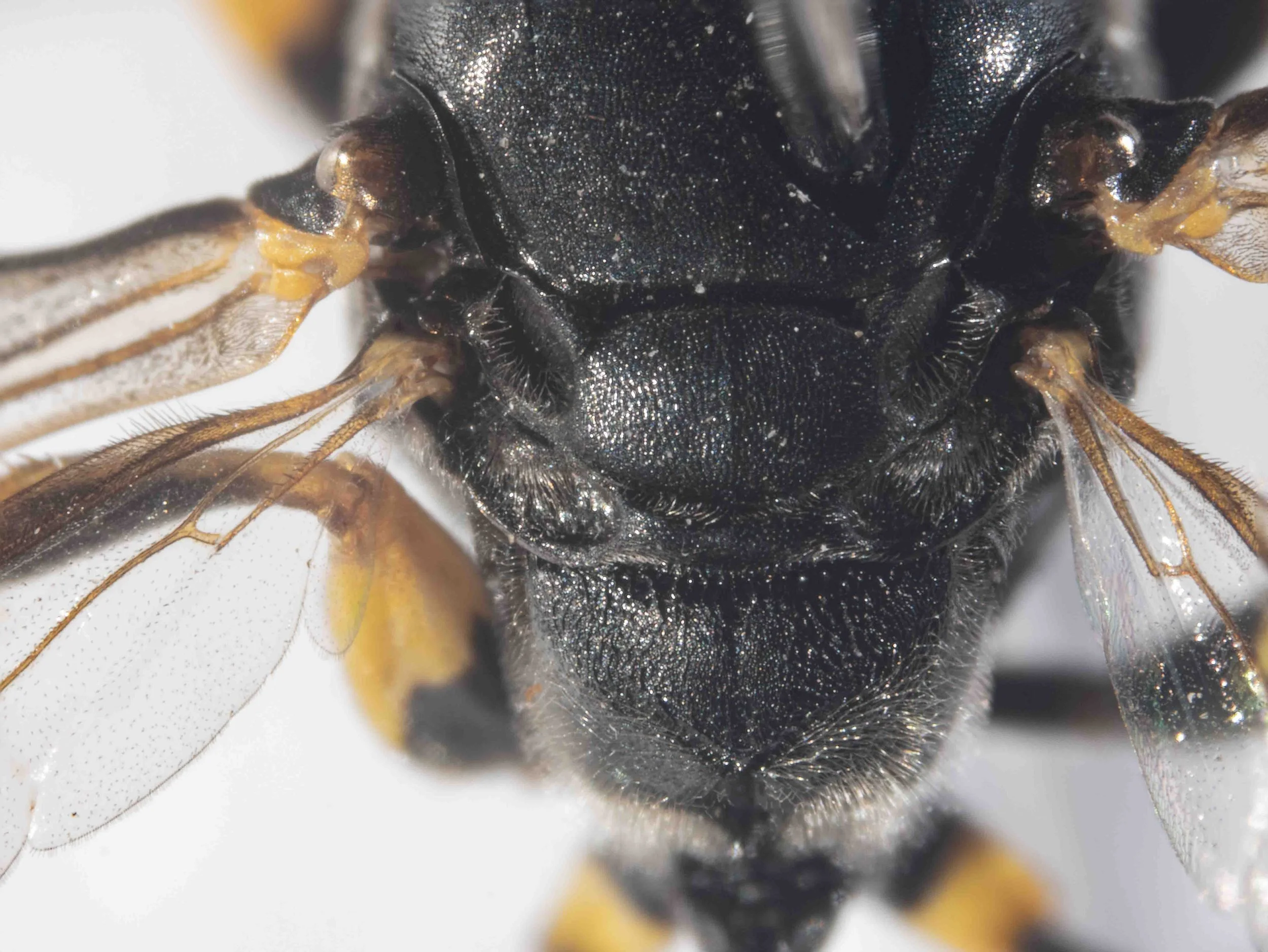
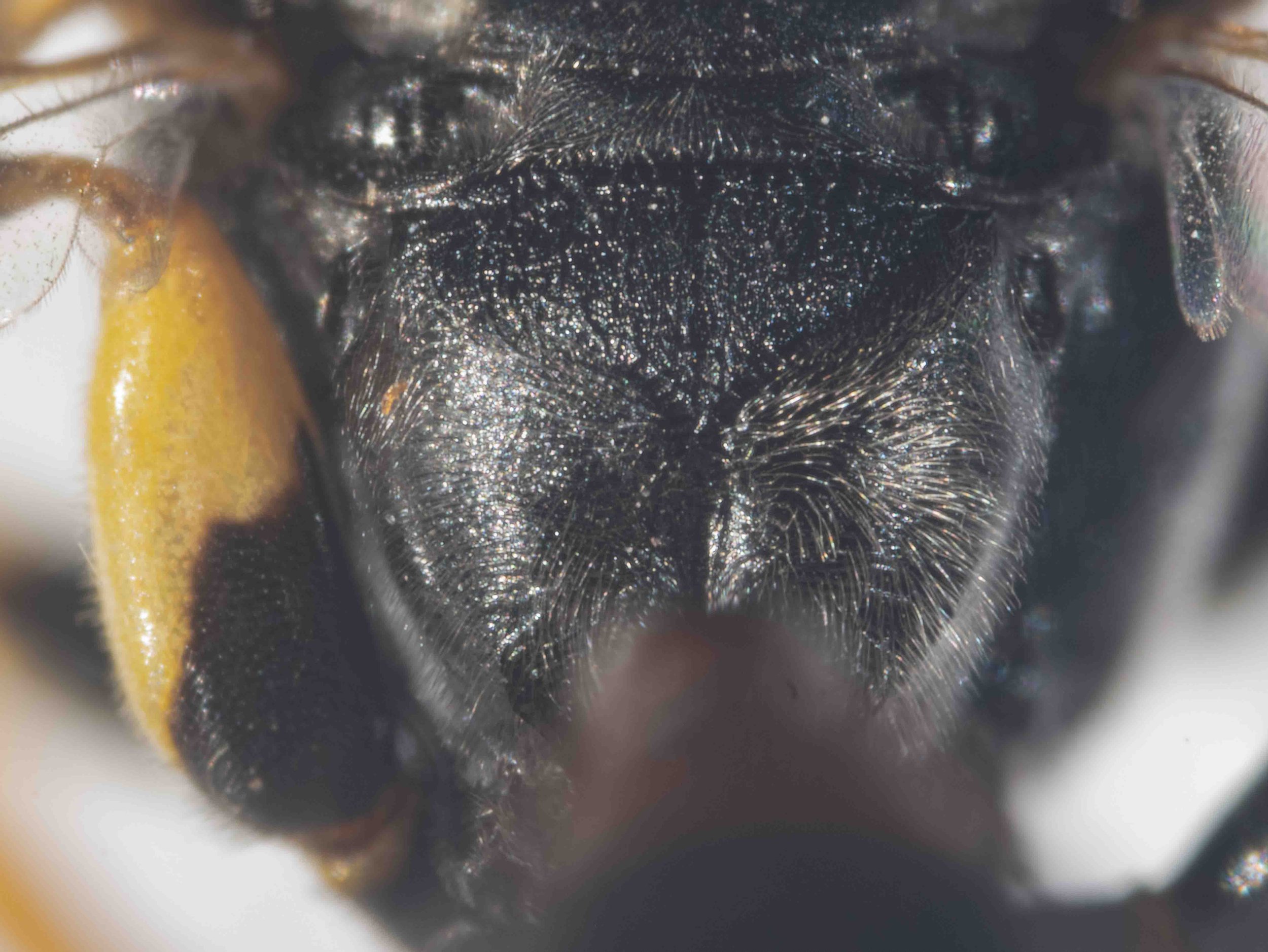
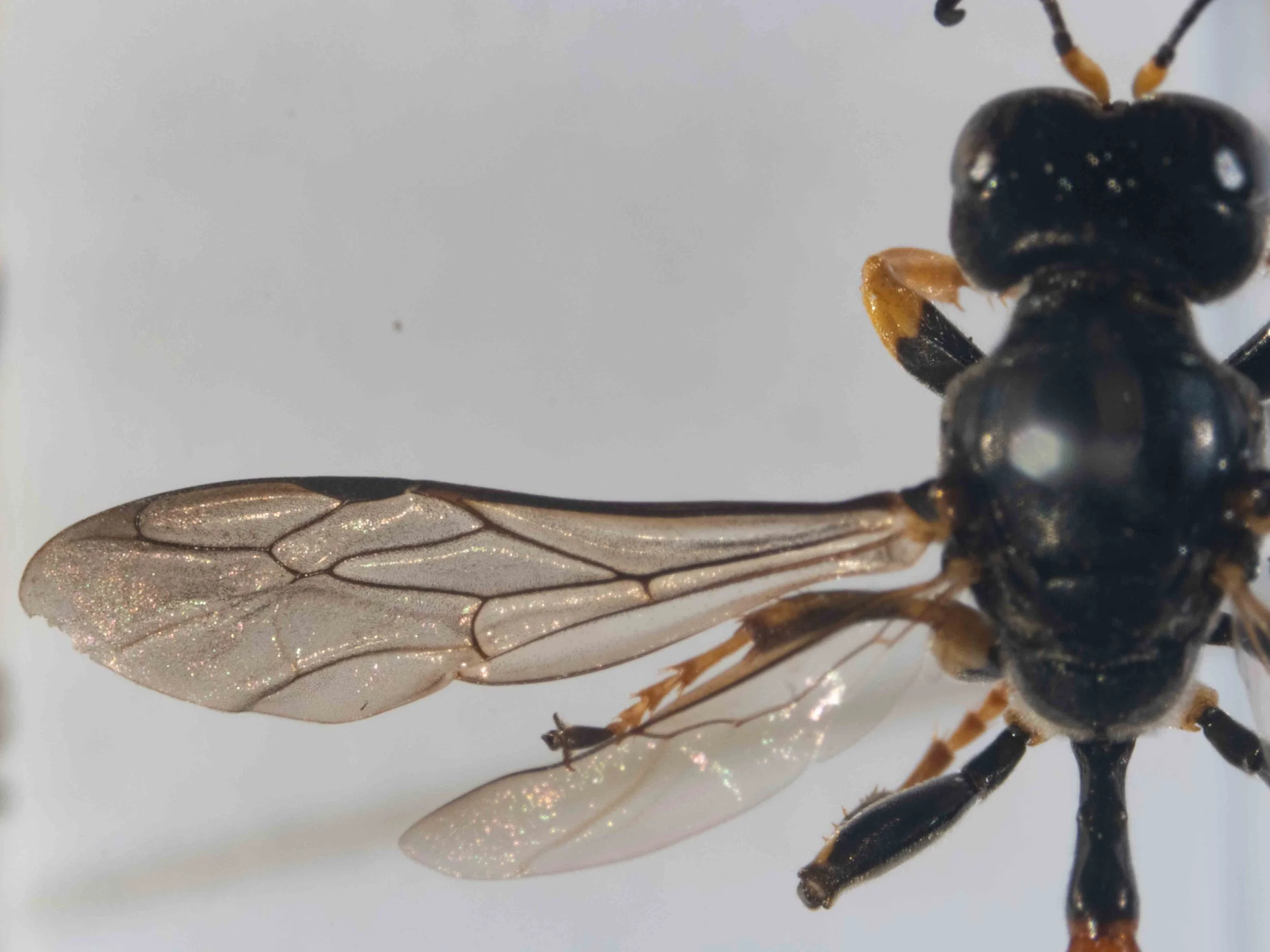
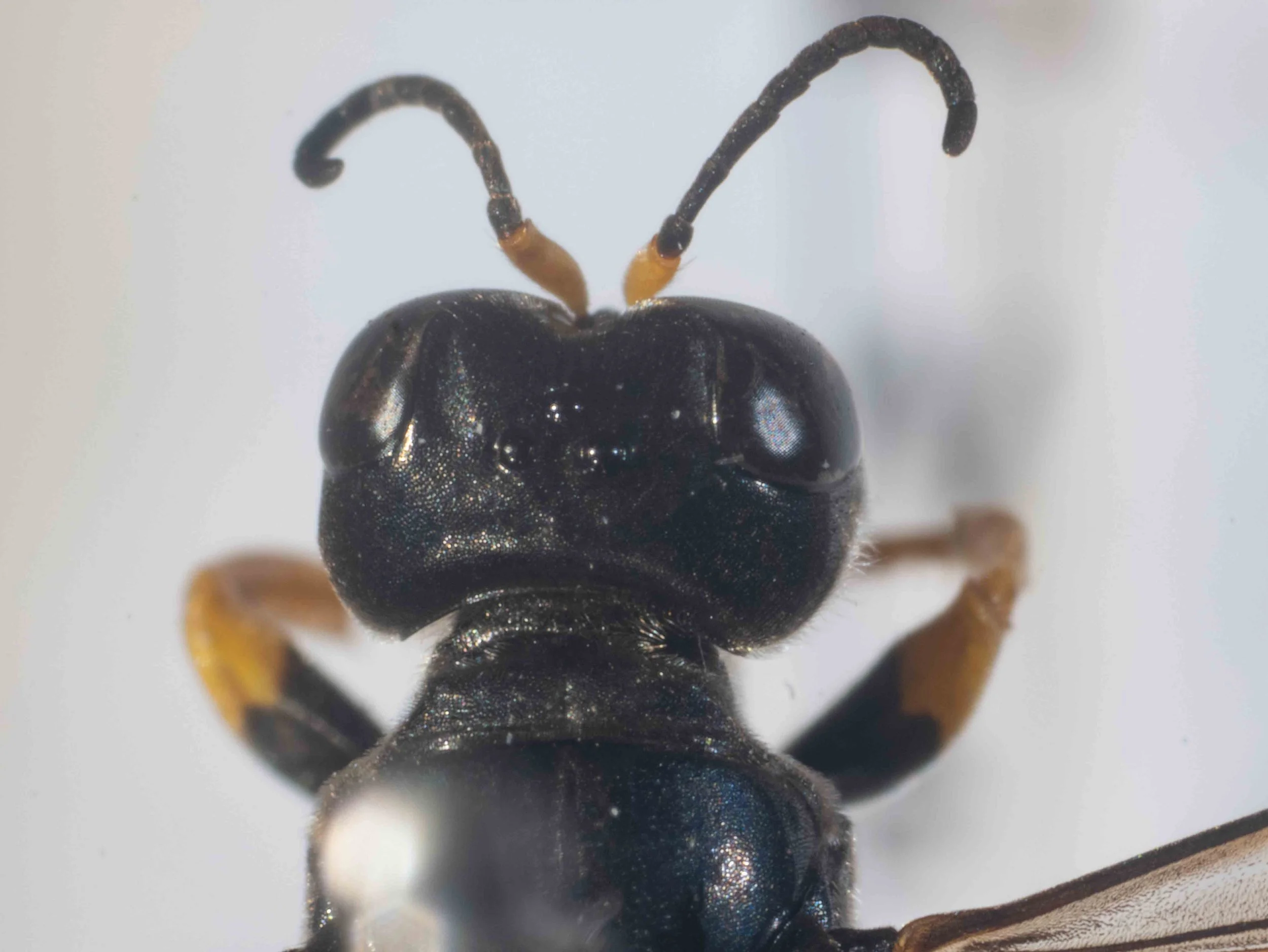
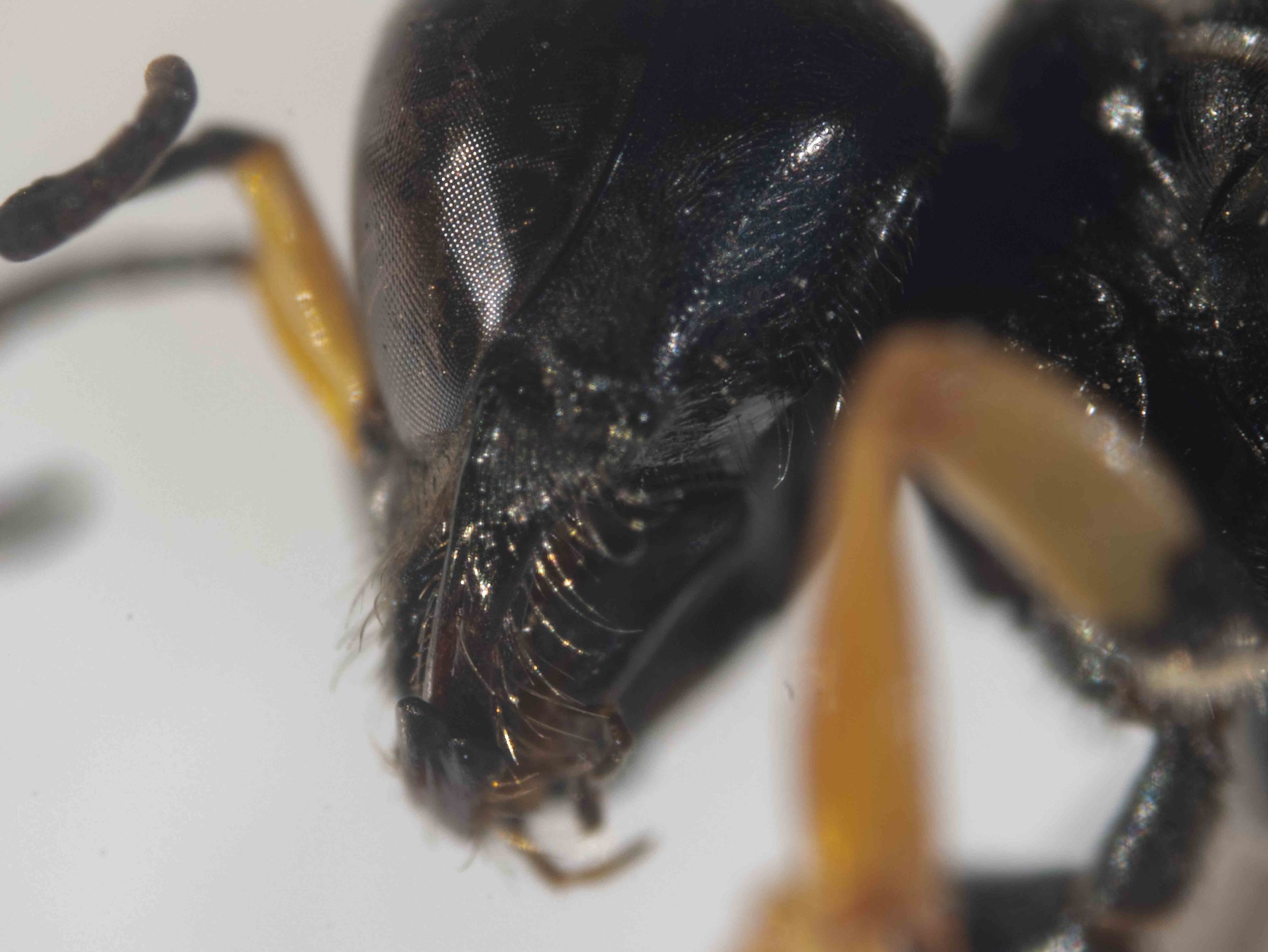
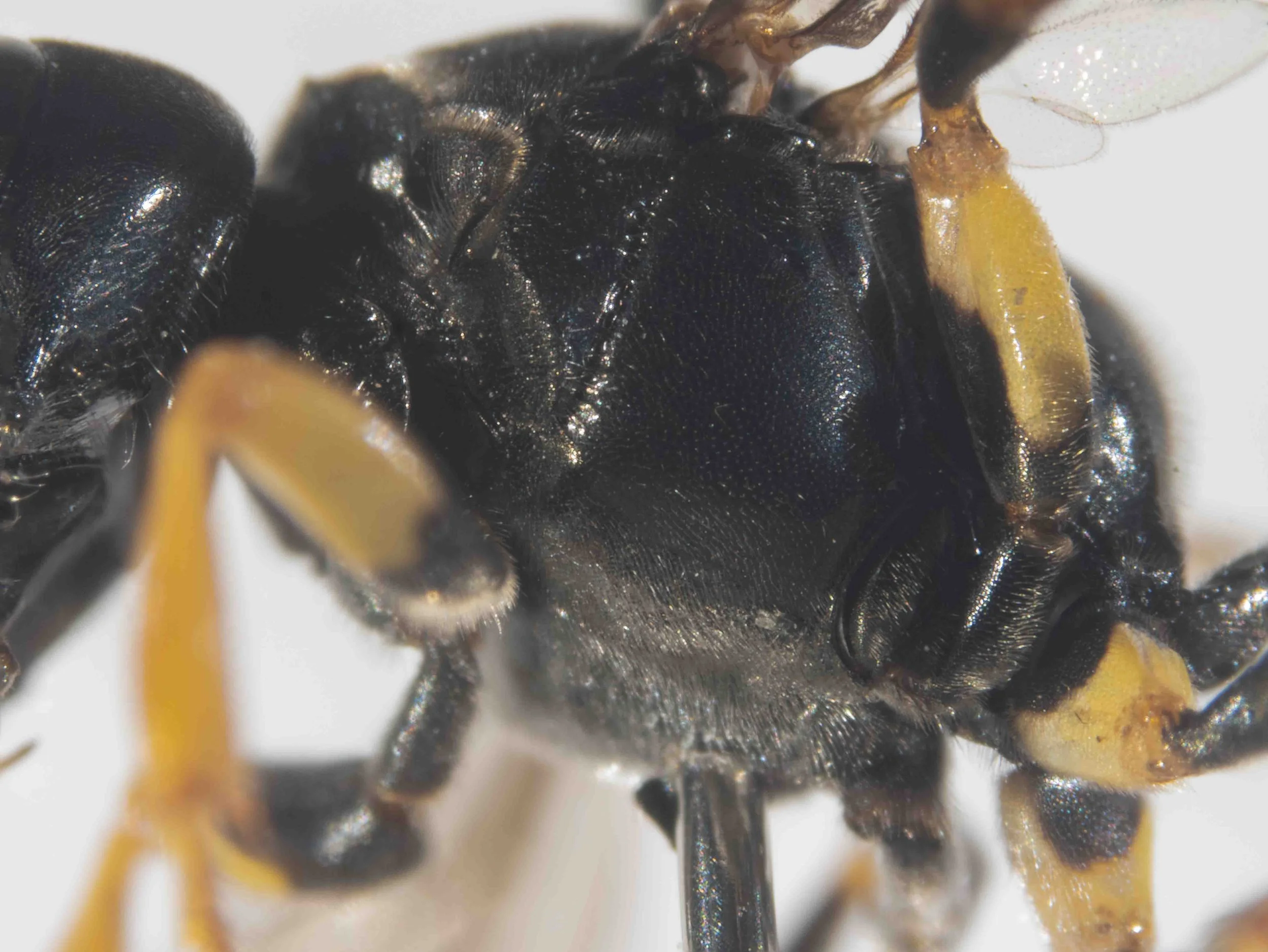
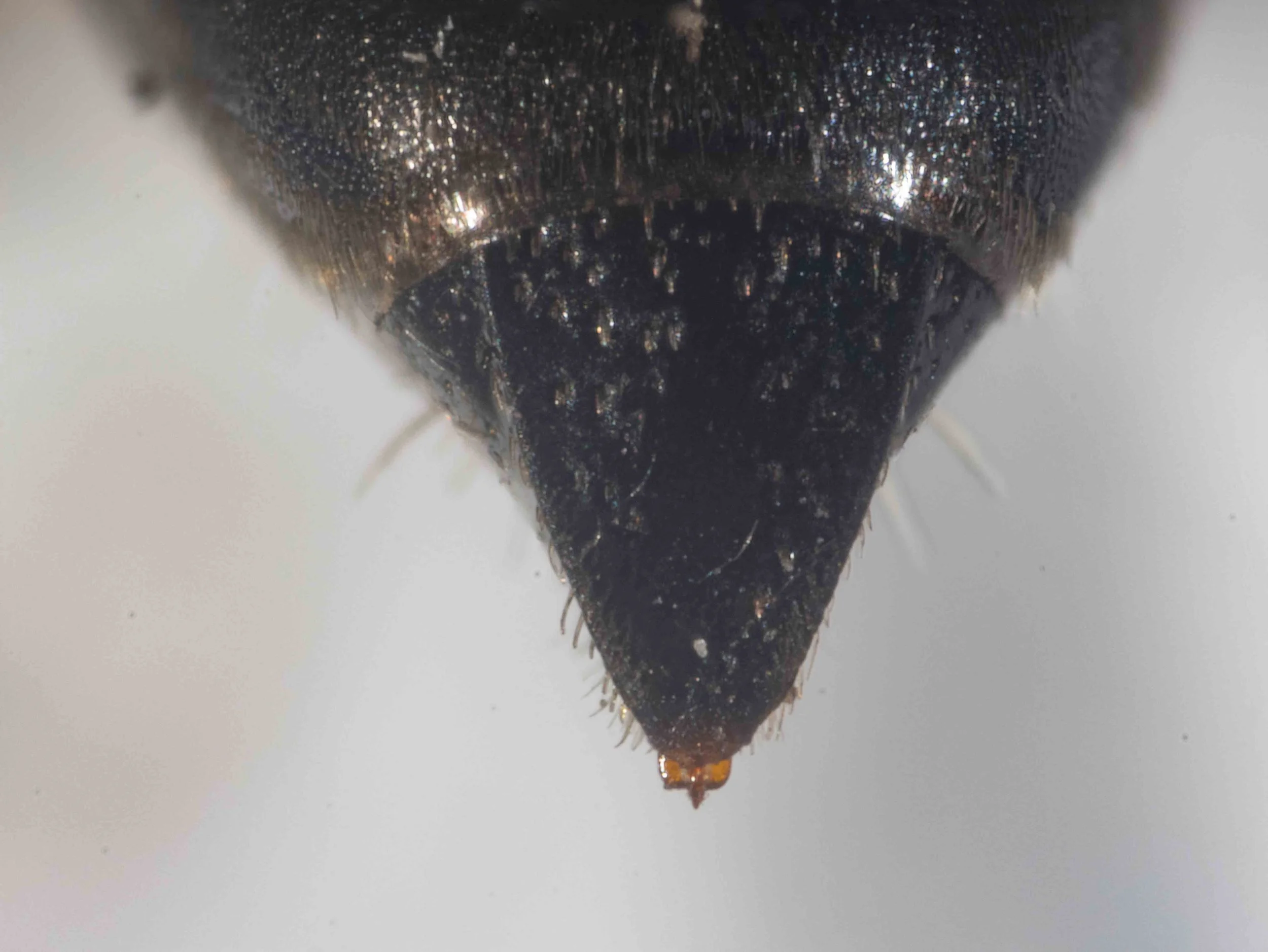
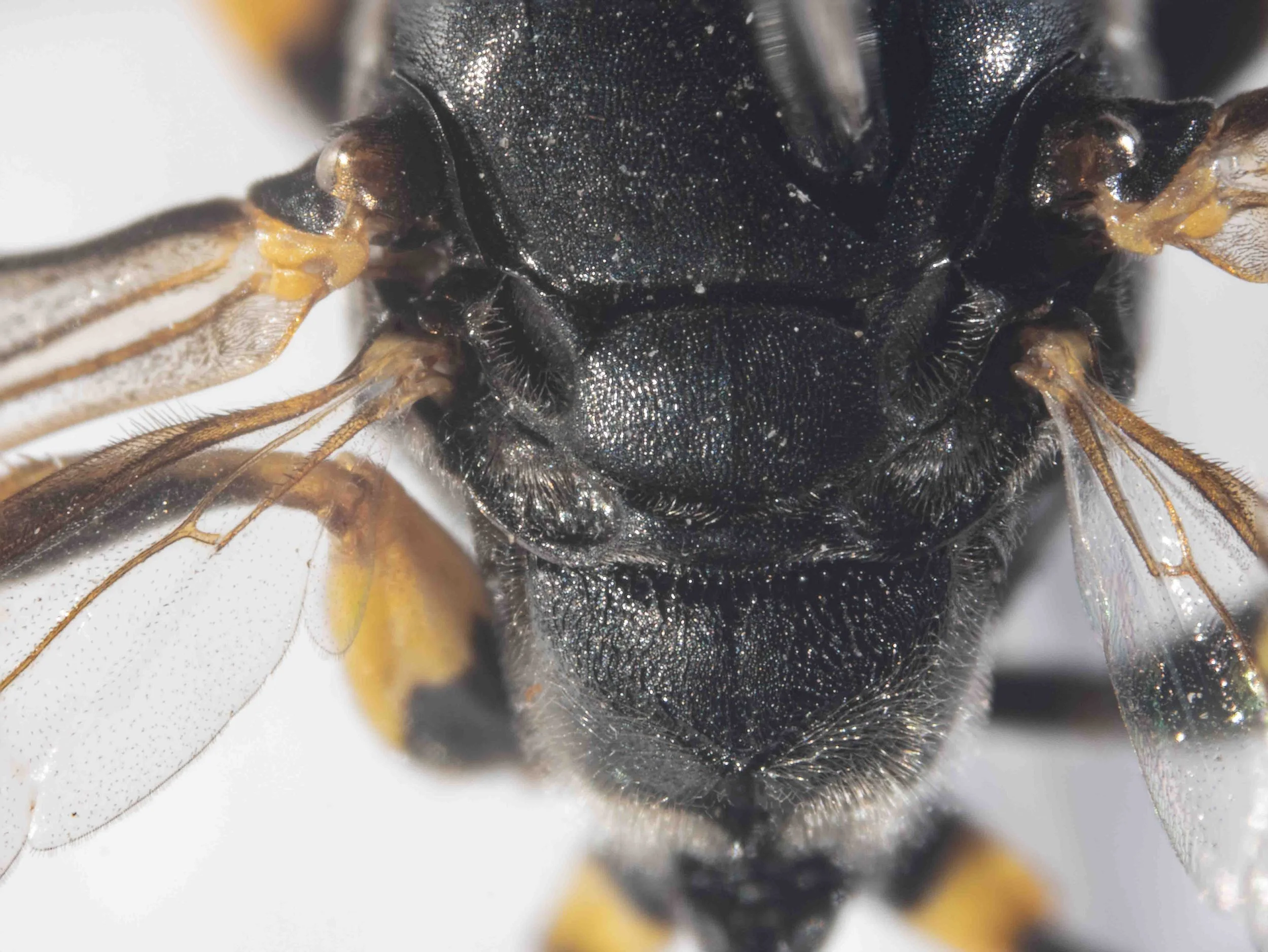
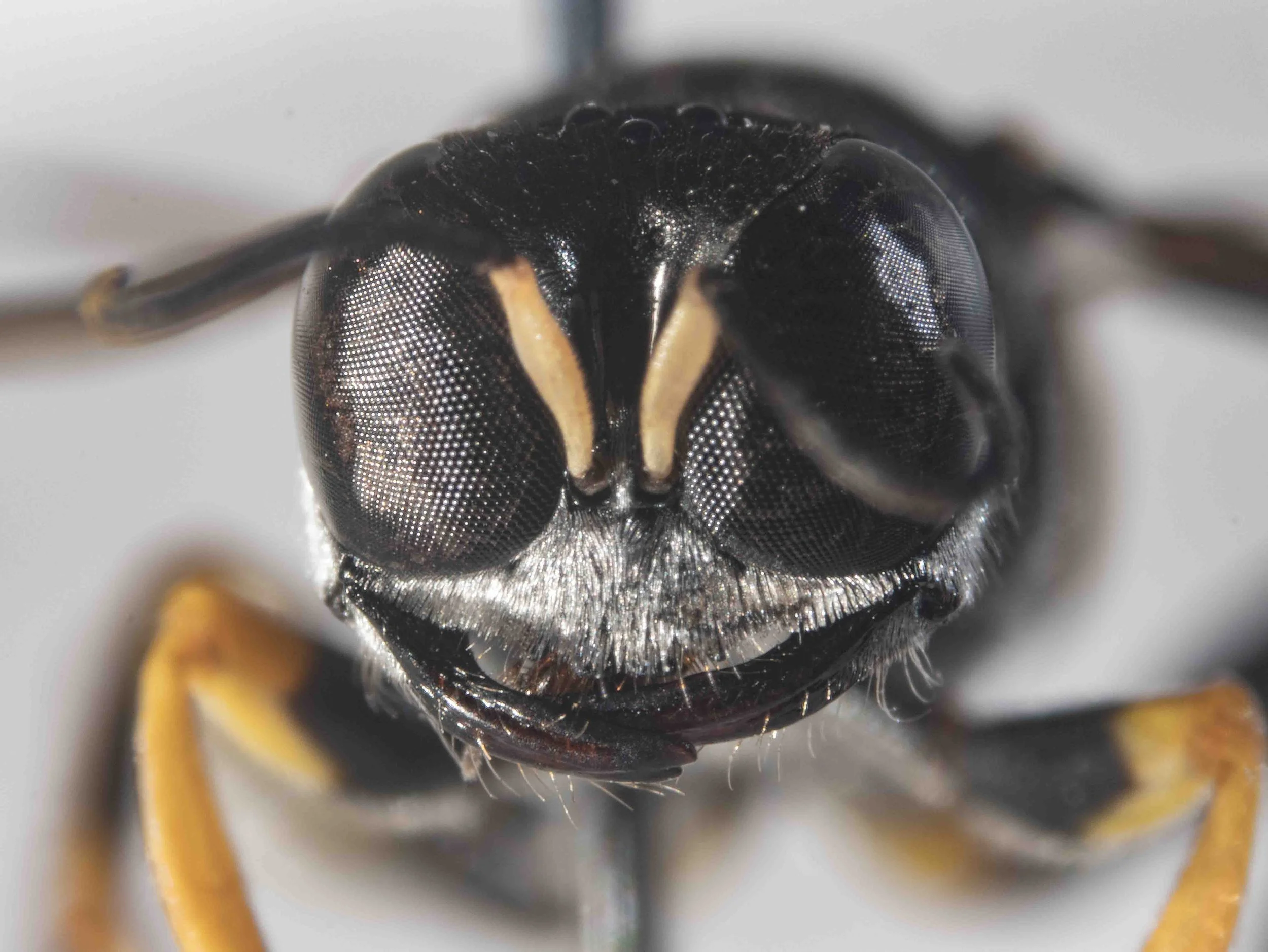
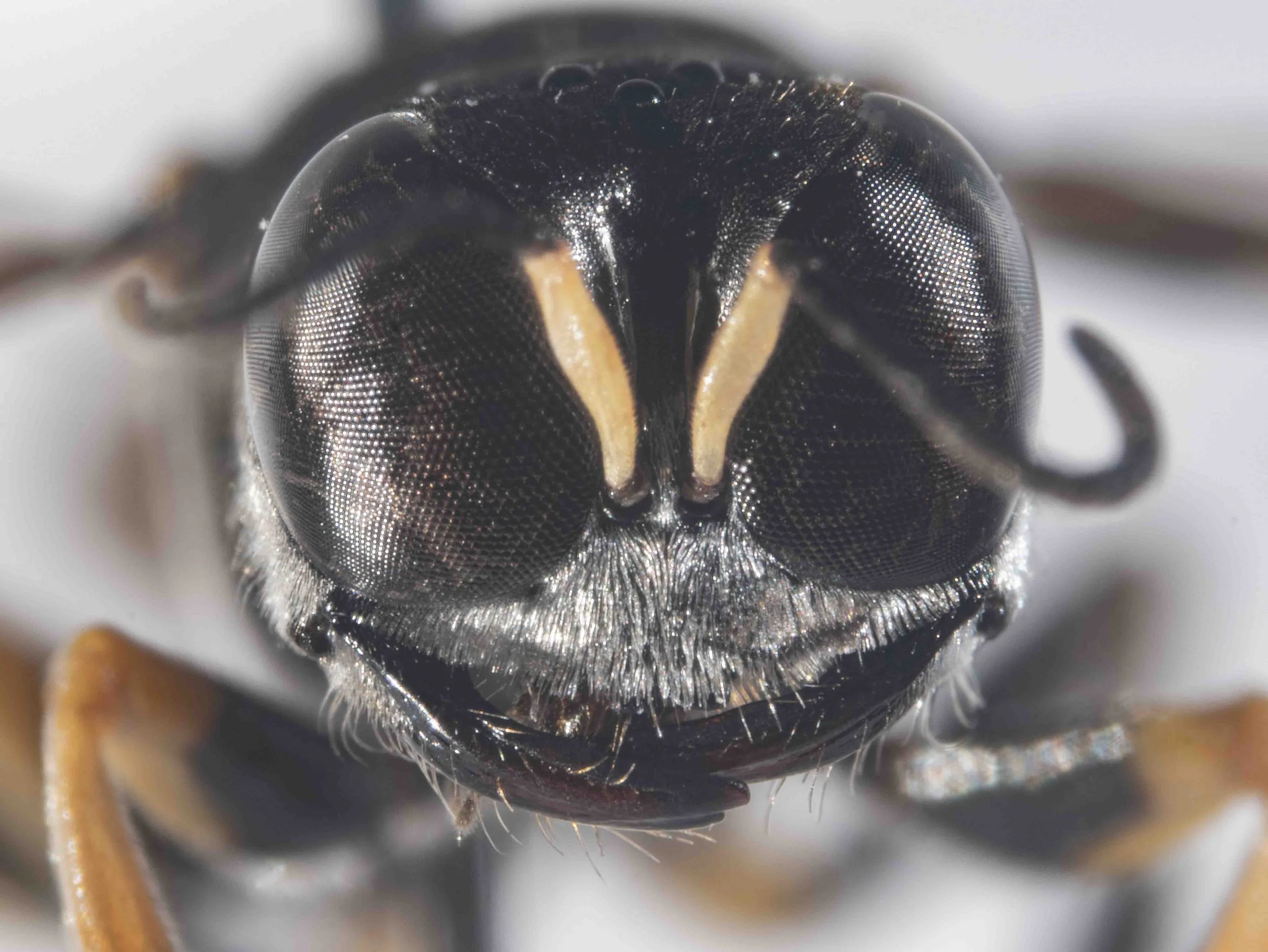
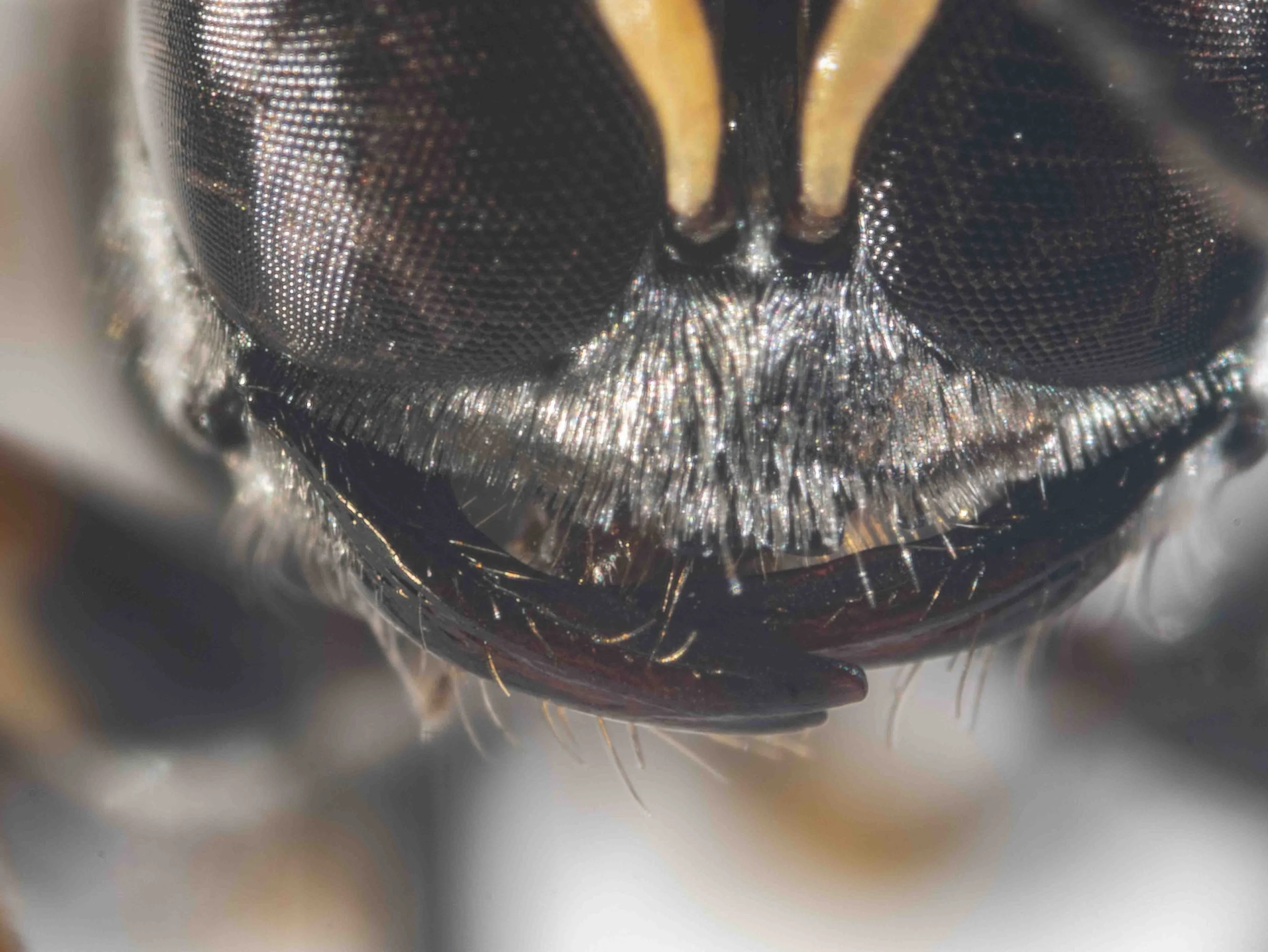
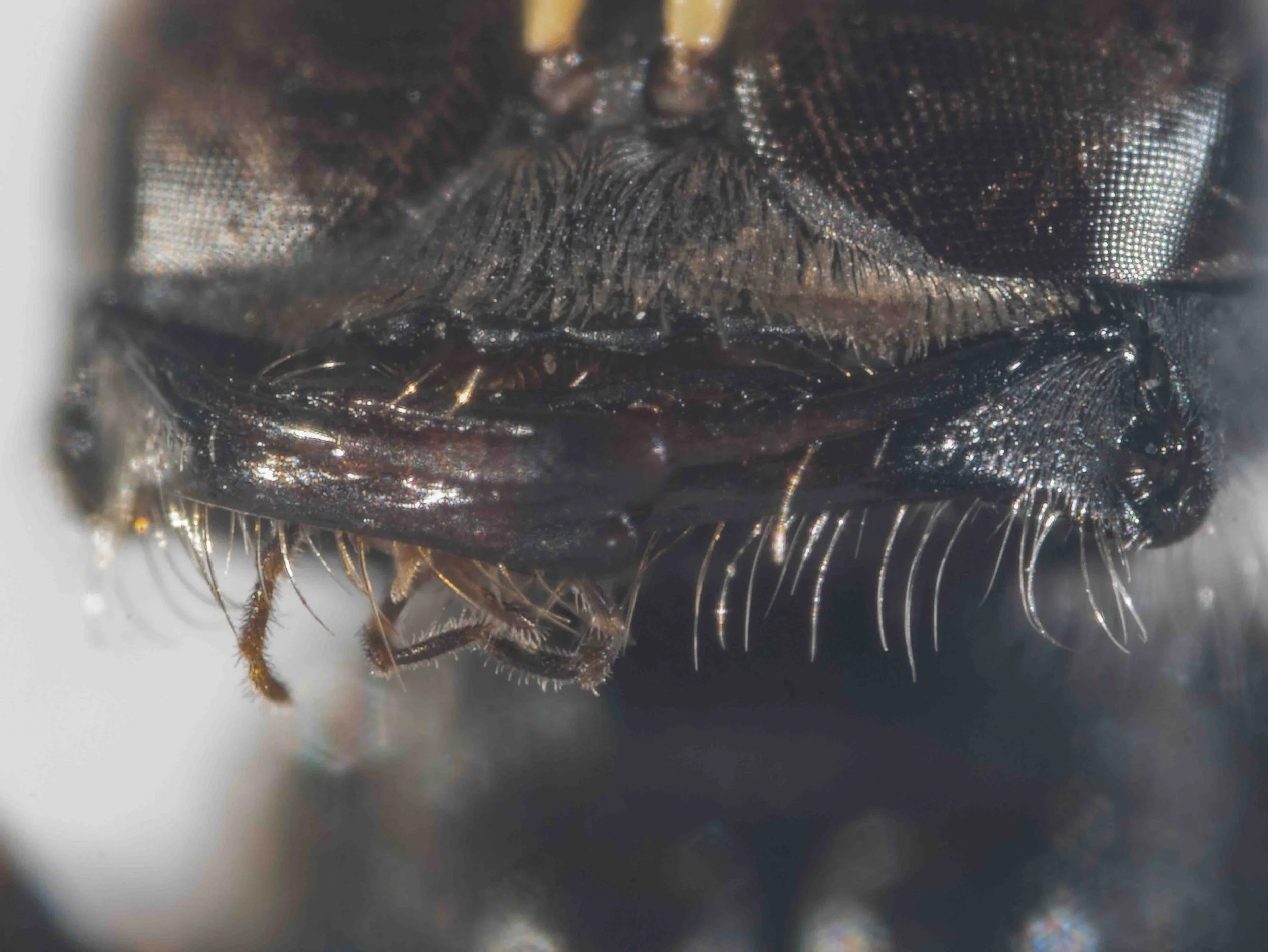
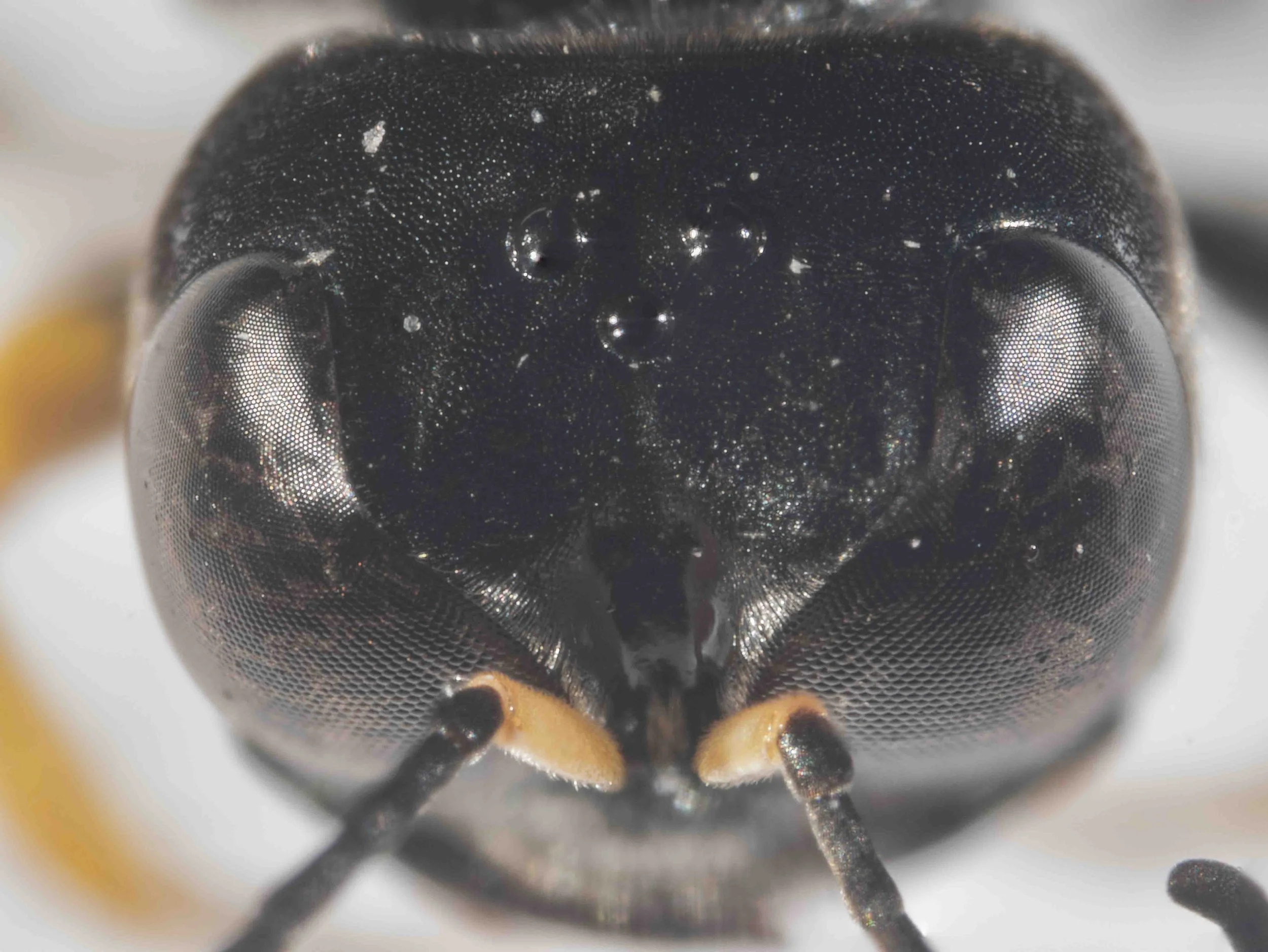
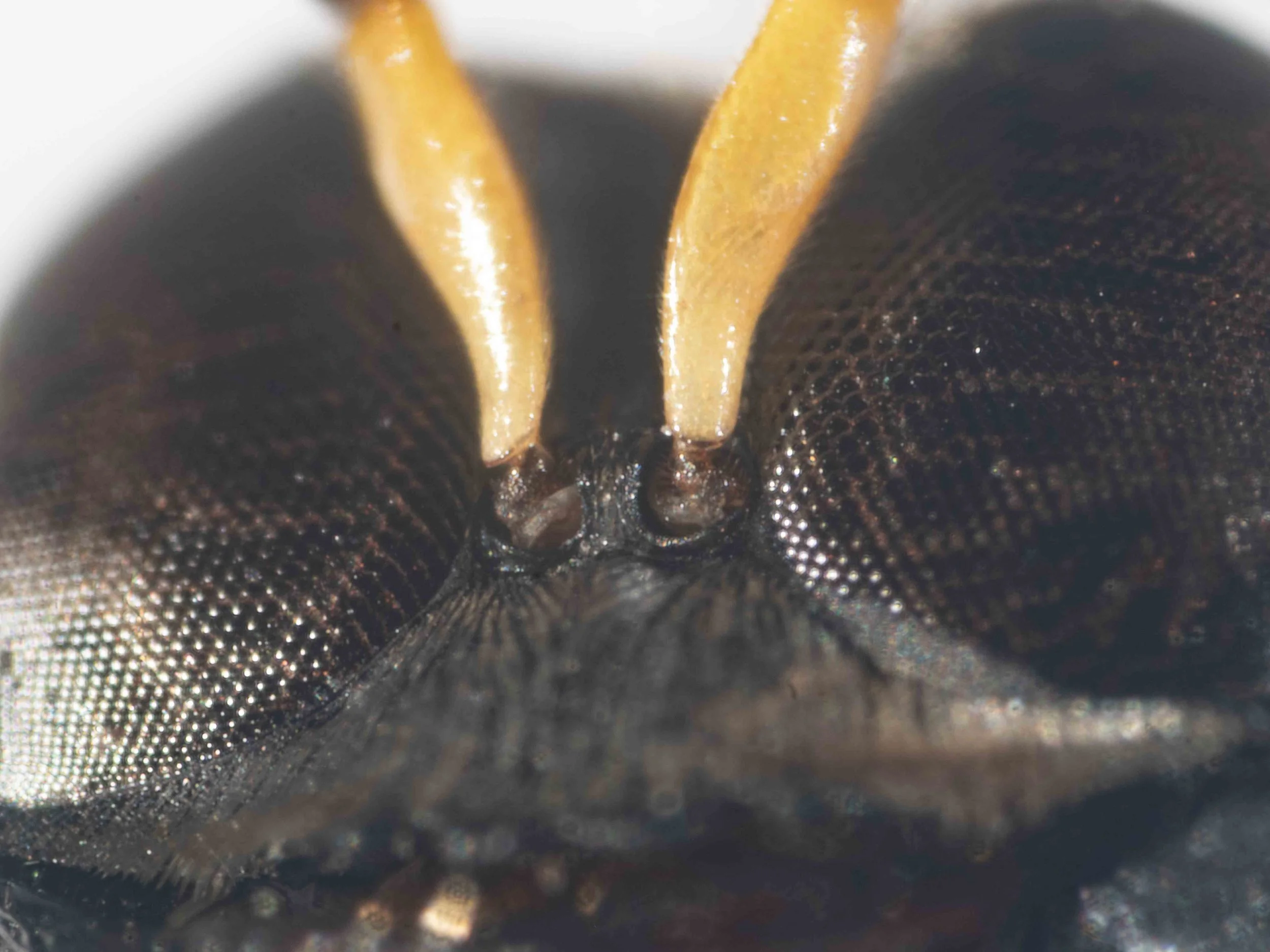
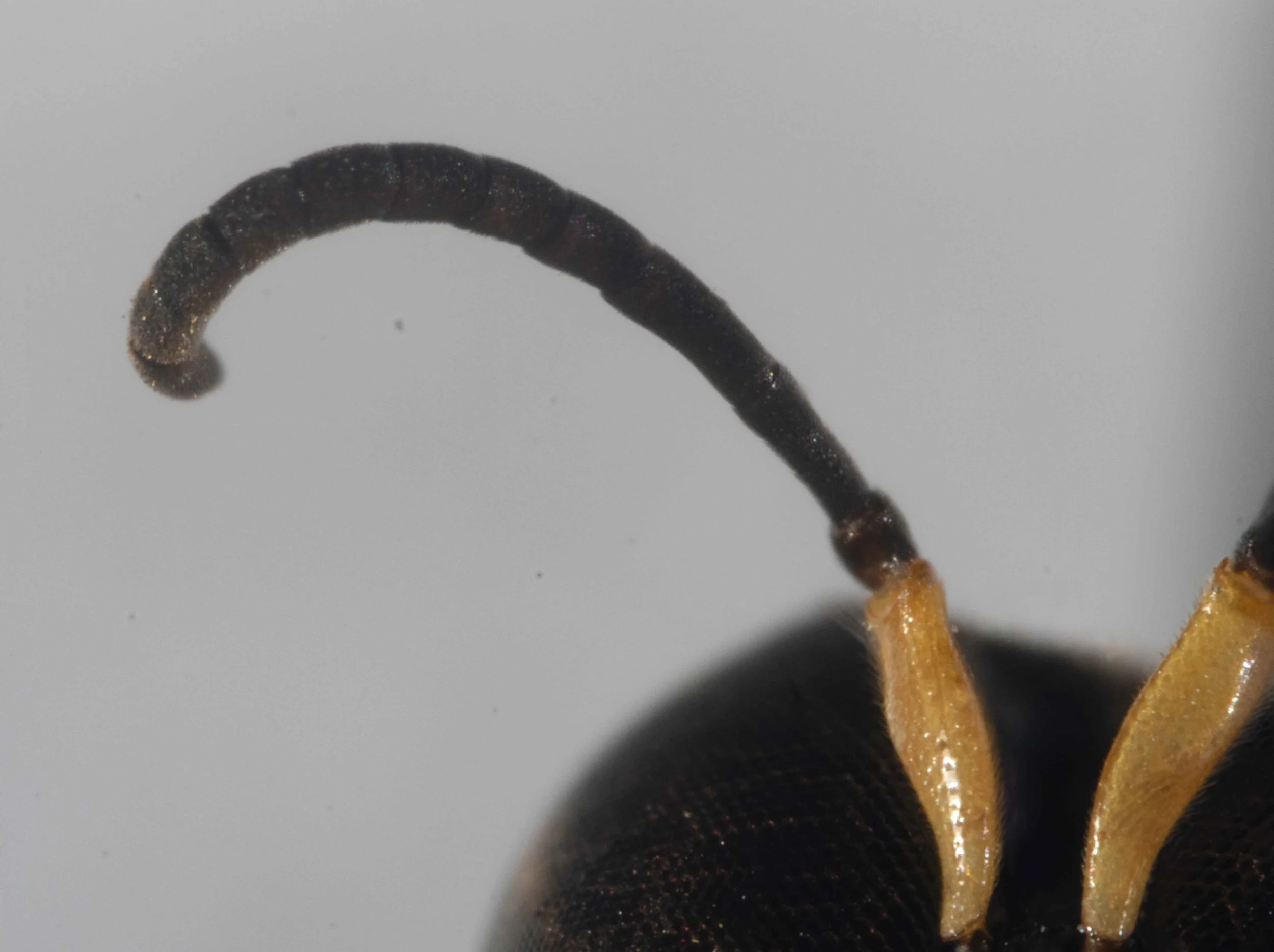
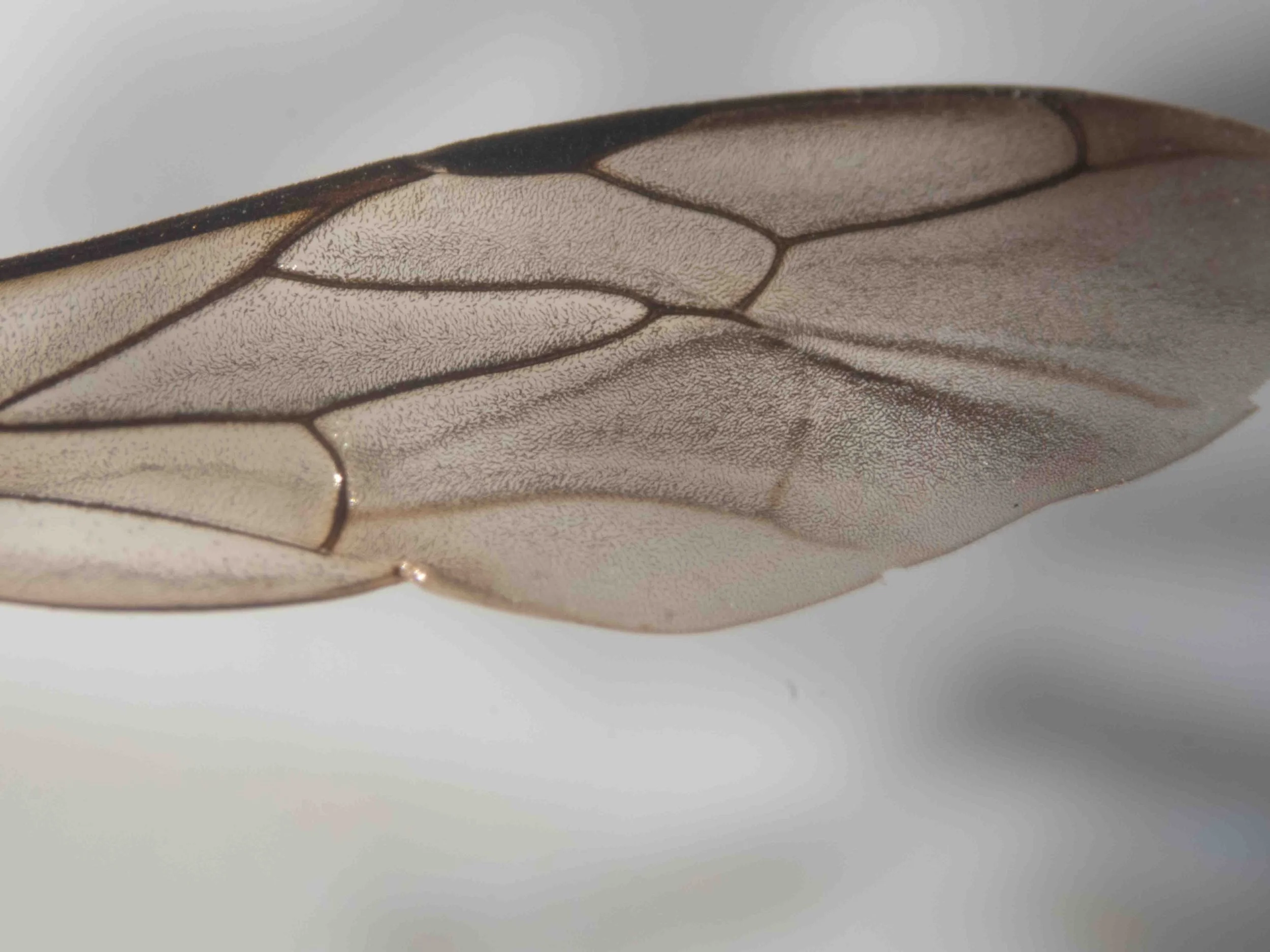
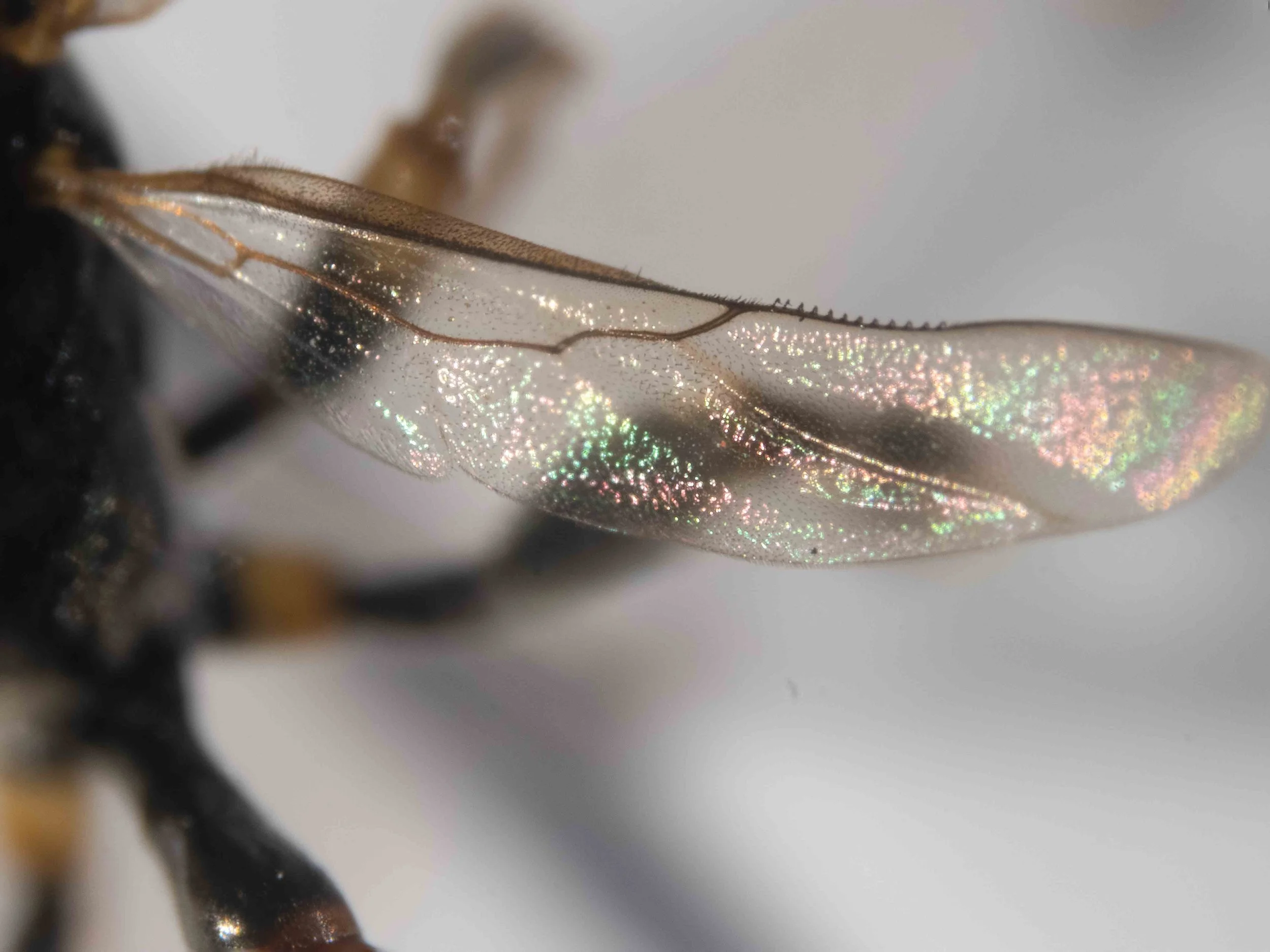
Podagritus leptospermi
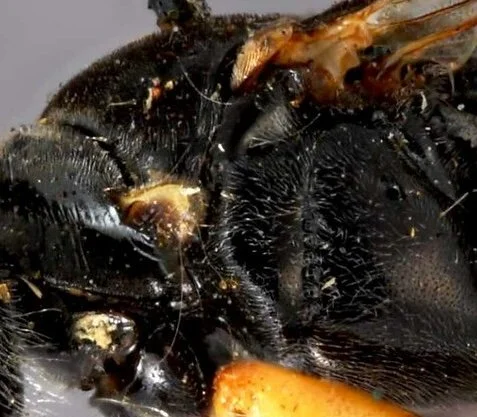
Rhopalum sp.
Rhopalum coriolum
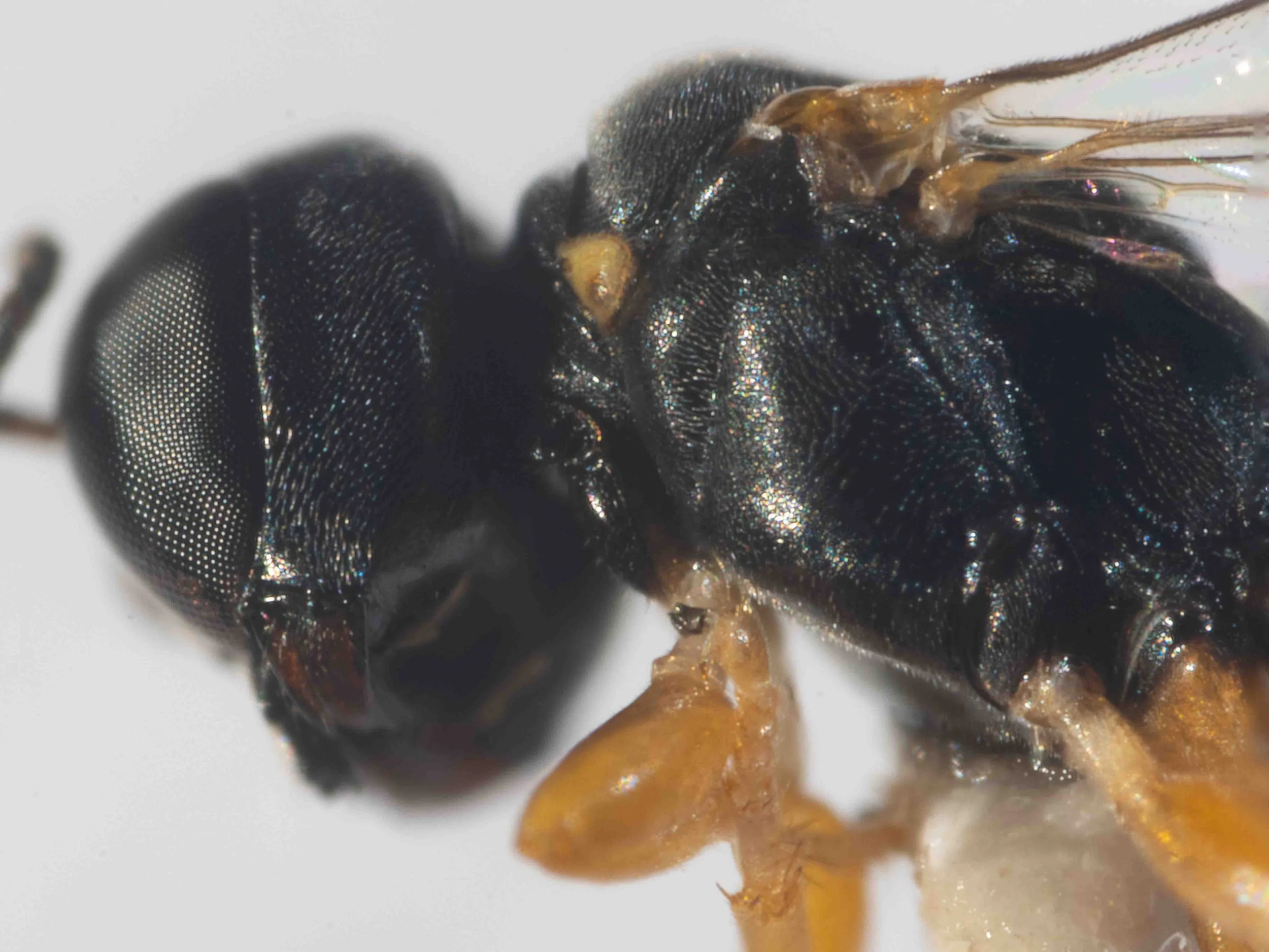
Podagritus leptospermi
The ‘typical’ angular prepectus of the genus – consisting of two nearly perpendicular planes – is exemplified in this large species of Podagritus.
Podagritus kiatae
Note the two flat planes of the prepectus, with the upper section in the same plane as the region of the mesopleuron posterior (to the right) of the episternal sulcus.
Note too the absence of a ridge at the junction of the planes. That is, there is no sign of an epicnemial carina. This is the condition in the vast majority of Australian Podagritus species.
photographer: Kristy Hoath; Museums Victoria https://collections.museumsvictoria.com.au/specimens/1013432
Rhopalum neboissi (holotype)
There can be no question that this is Rhopalum, as it is the holotype of a species described by Leclercq (1957). Yet in this image the prepectus looks angular … simply due to the light reflecting of the front surface.
photographer: Kristy Hoath; Museums Victoria https://collections.museumsvictoria.com.au/specimens/1013430
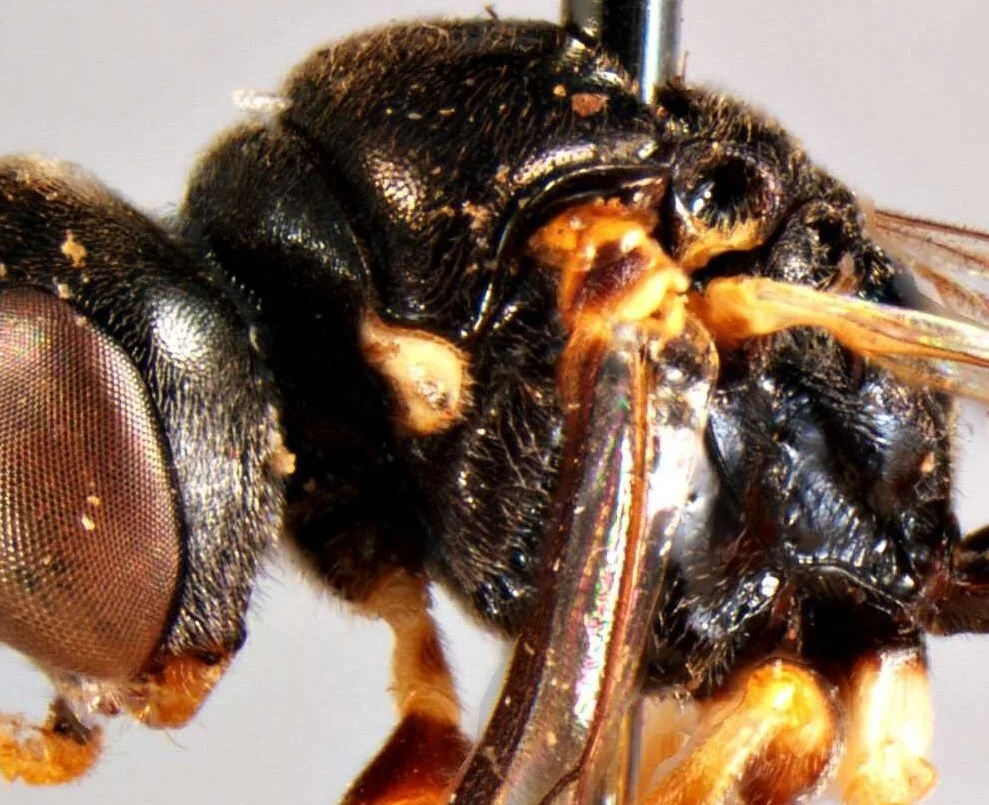
Rhopalum sp.
When viewed slightly ventrally, the rounded shape of the prepectus is apparent.
pronotal collar dorsally large
In this species the dorsal surface of the pronotum is particularly long (distance from anterior to posterior edge) and flat.
Note too that in this species there are obtuse, anterolateral ‘teeth’ and a median longitudinal groove. These characters become relevant when discriminating between species of Podagritus.
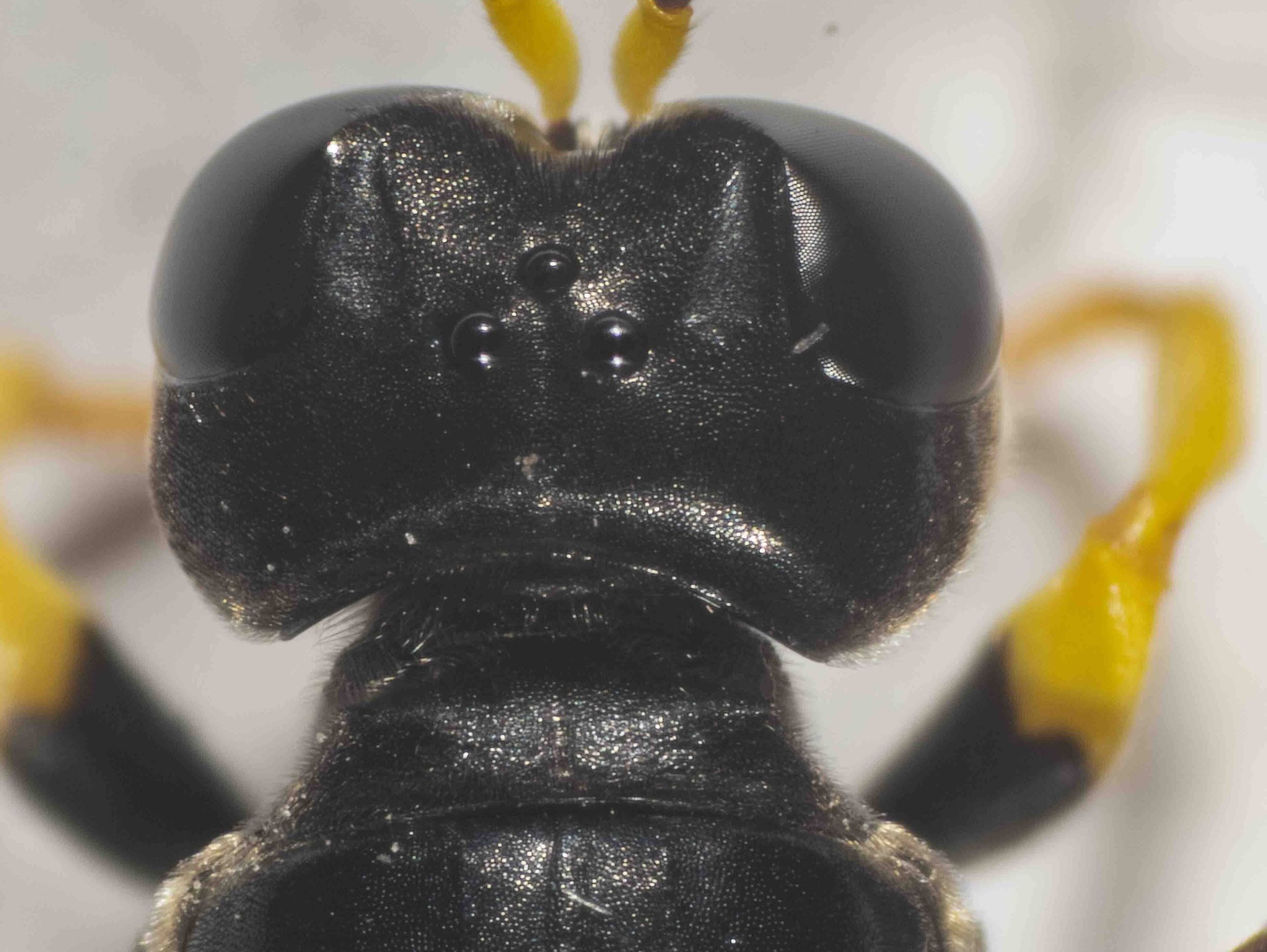
Podagritus leptospermi
pronotal collar flat
The shape of the collar (flat or rounded) is best viewed laterally. This species also illustrates the alignment of the upper surfaces of collar and mesoscutum. They form a smooth, continuous arch.
Podagritus leptospermi
The size and spacing of the small depressions (‘punctures’ or ‘punctations, depending upon the author) often differs between species. So too does the overall shape of the plate, including the apex.
Rhopalum sp
The presence of a pygidial plate is evidenced by the strong lateral carinae, in this species uniting apically into a fine, curved point.
Rhopalum sp.
In small species such as this one (body size less than 6mm), the details of the pygidium are easier to see when viewed from the side. The surface is shiny, without the extensive punctations common in Podagritus.
Note too the stinger, extended upon death.
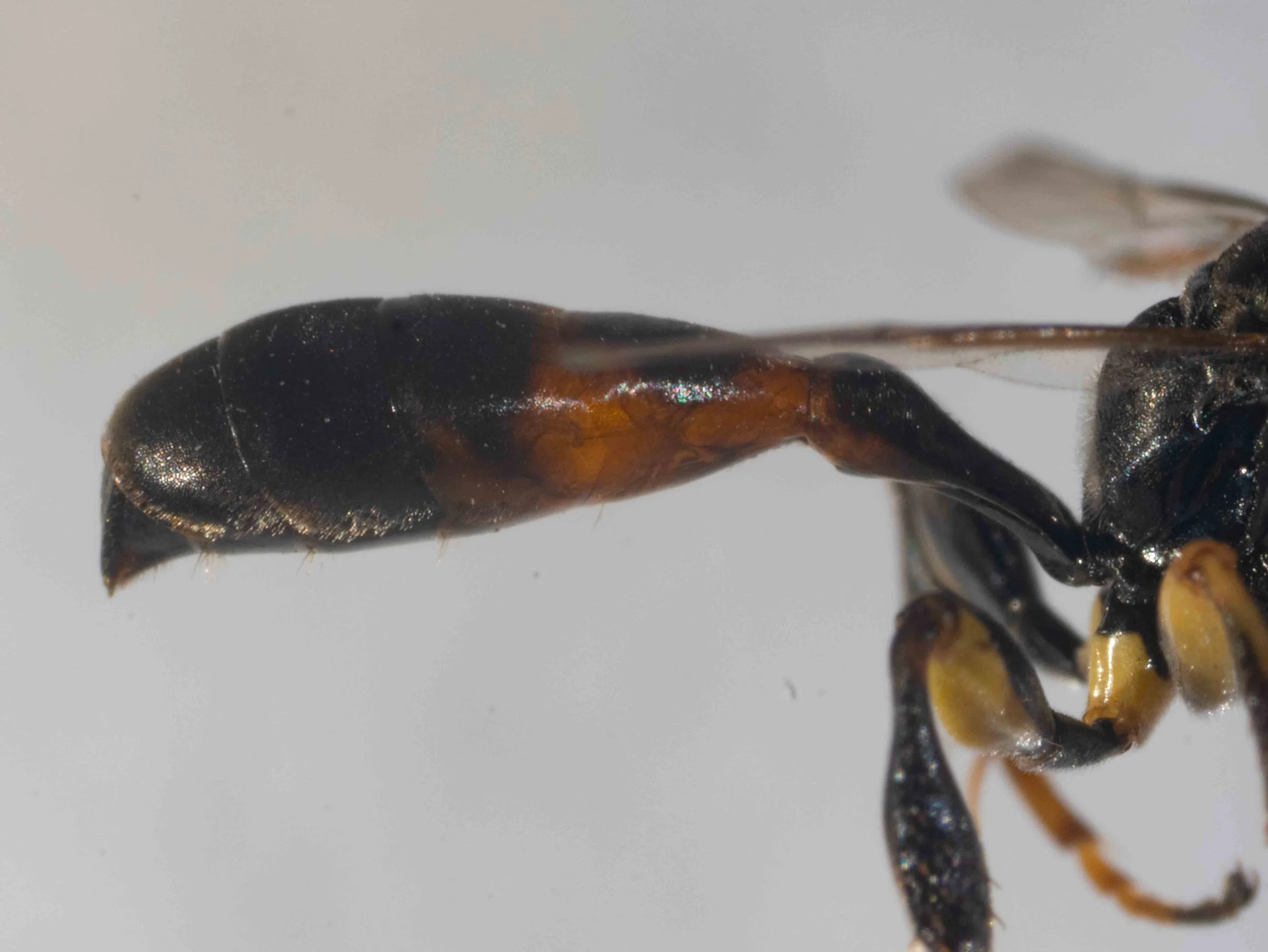
Gaster: strongly clavate.
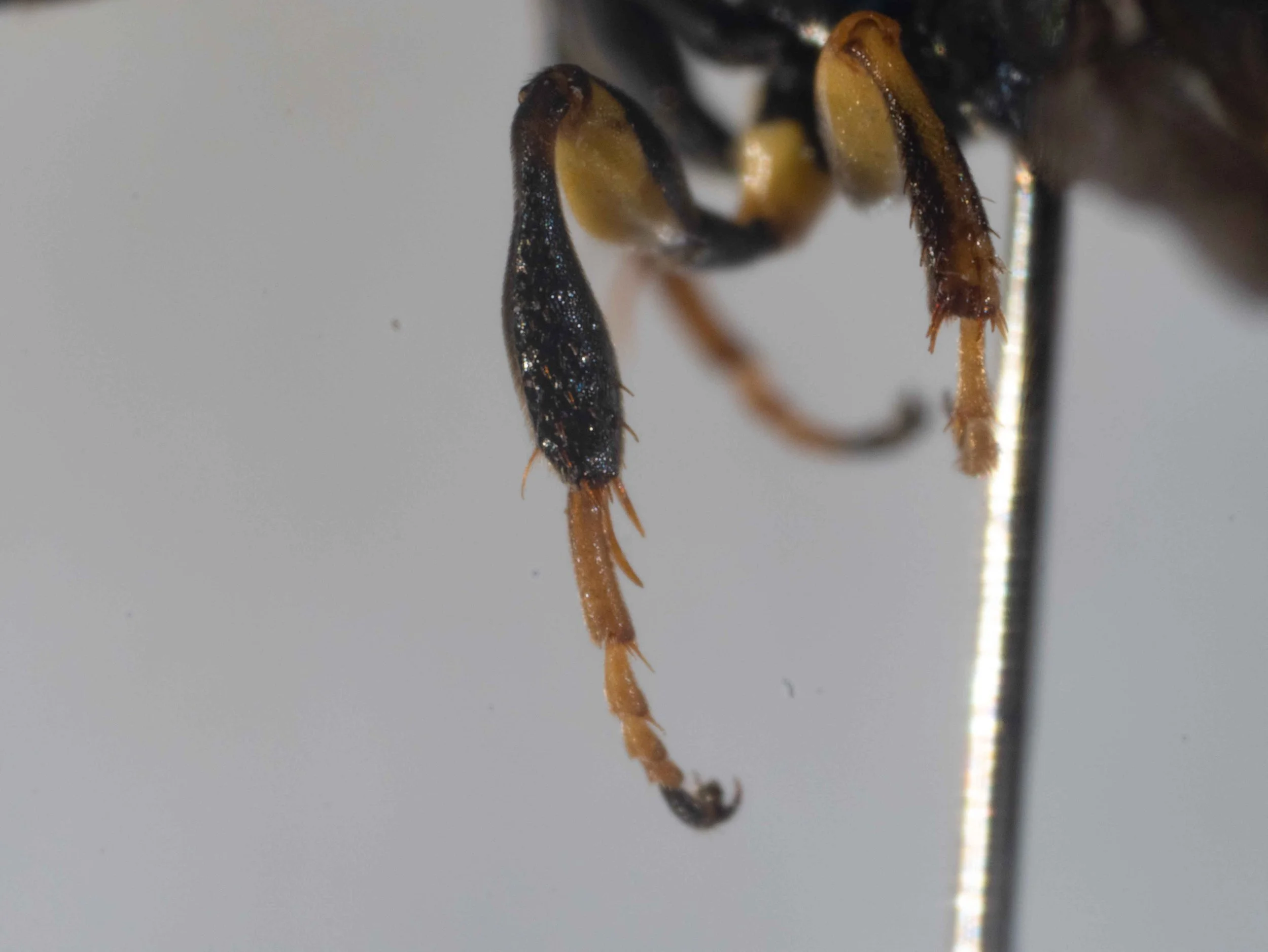
Femur 3: strongly depressed ventral surface; broadly yellow.
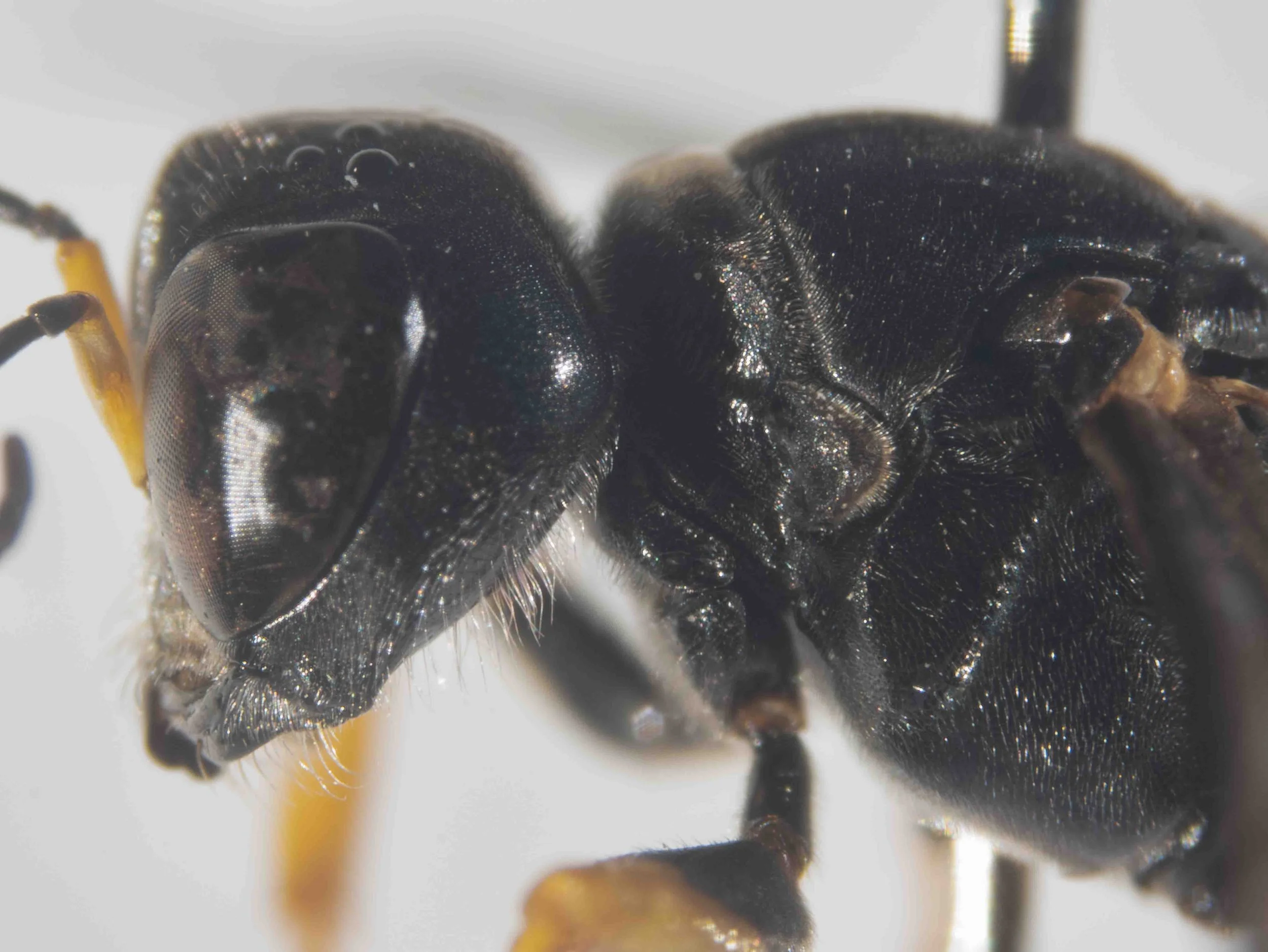
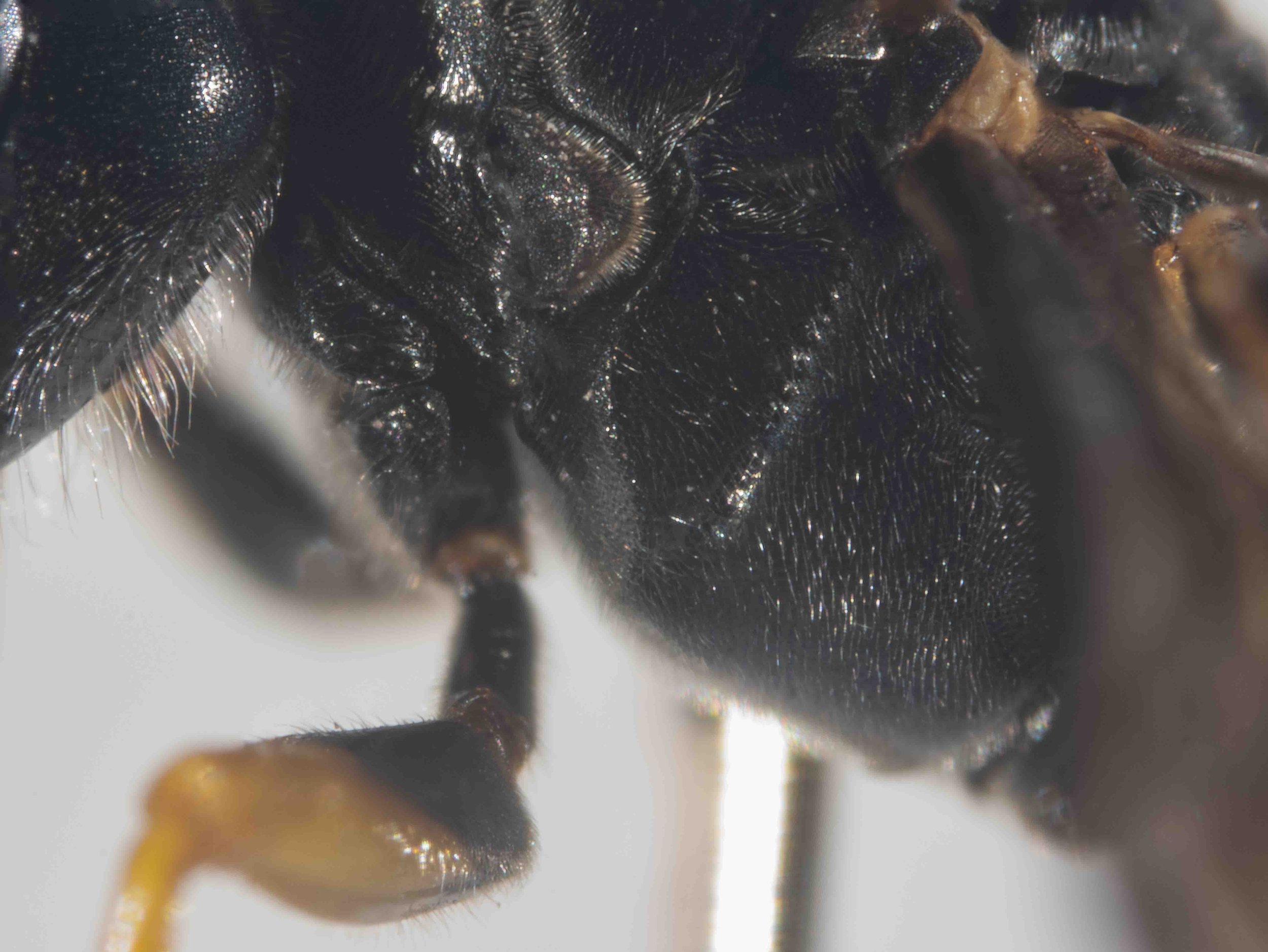
Pronotal lobe: dark.
Leg 1: femur apical half yellow; tibia yellow
Leg 3: tibia entirely black; tarsi yellow
Gaster: strongly clavate; widest in middle of T4.
Femur 3: strongly depressed ventral surface; broadly yellow.
Key step 1: Metanotum flat or slightly convex. Scutellum not prominent at the posterior angles.
Key step 5: Enclosure rough, irregularly sculpted, visibly limited posteriorly by a groove.
Key step 5: Propodeal enclosure: dull, rough-coriaceous, bisected by a well-defined longitudinal groove, and separated from the posterior part by an apical groove.
Propodeum beyond enclosure: strong transverse ridges in the apical part of the middle segment.
Body length: 13mm