
Arpactophilus (PEMPHREDONINAE)
Workbook
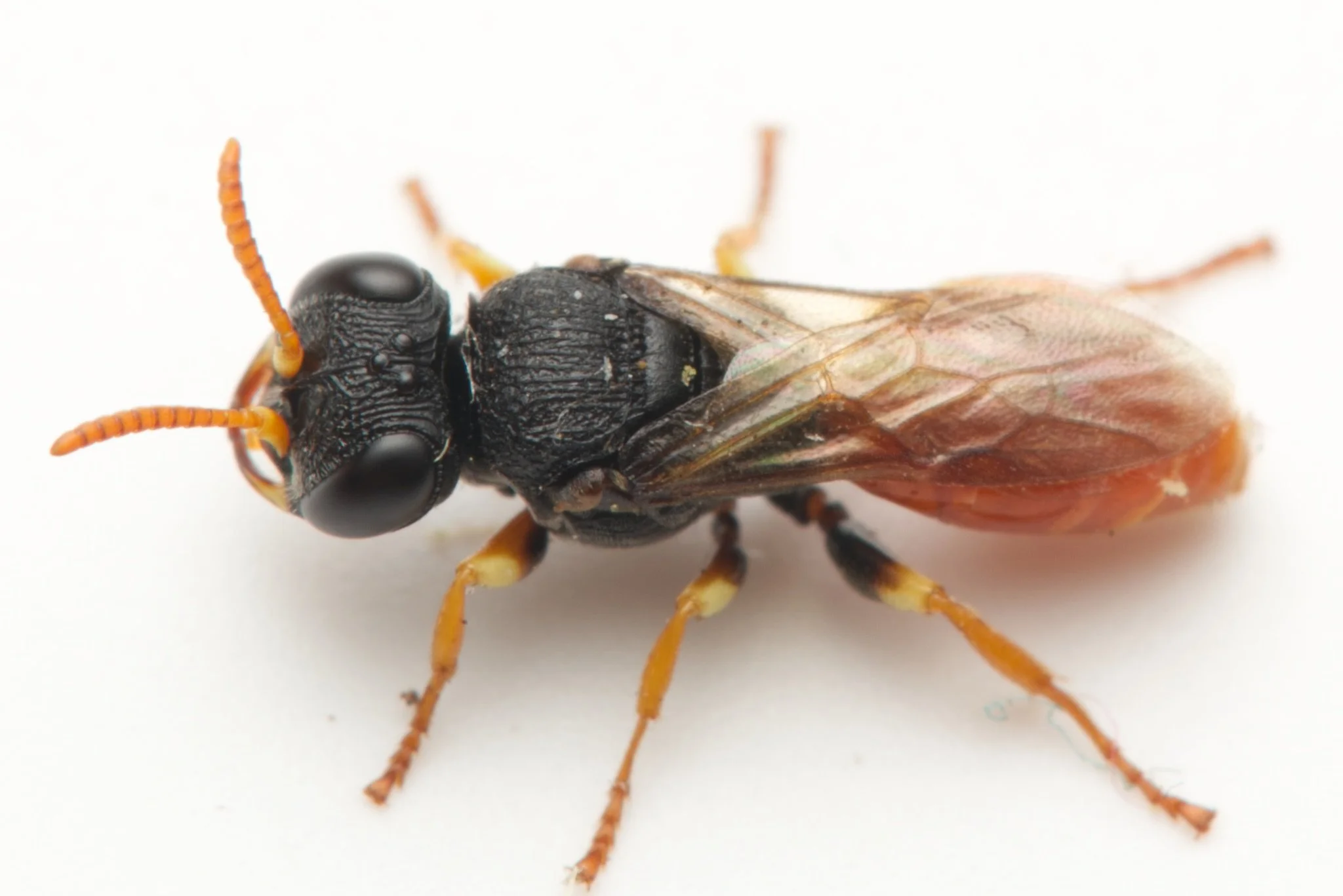
[ Cover image: Nigel Main (shared CC BY), iNaturalist record 107011141, Queensland]
My first close encounter with this genus was when I discovered one inside the house, in the winter of 2024. Intrigued, I set out to learn more about its identity and biology (read the blog Firewood & mystery wasps). Arpactophilus deakinus (below) became yet another species on our crabronid home list.
Since then I’ve become much more familiar with the Pemphredoninae, and reckon it’s time to look more closely at the Arpactophilus genus as a whole.
Arpactophilus are small predatory wasps that raise their larvae in silk-lined chambers, typically within natural cavities created by other insects. Nests have been discovered inside abandoned beetle burrows in dead wood, in the hollow spaces within empty plant galls, in the narrow, hollow stems of various shrubs plants, and even within the disused nests of mud wasps or termite galleries (Matthews & Naumann 2002). It seems many species are quite opportunistic in their selection. I’ve yet to read of any using ‘bee hotels’, but that seems another likely site.
Arpactophilus is one of seven genera in the crabronid tribe Pemphedonini. The subfamily may soon be elevated to family status (Sann et al. 2018), but for now I still include them under the umbrella of my crabronid project.
Arpactophilus, Spilomena, and the newly erected genus Australomena are all very alike. They are typically black with orange or yellow legs, antennae and mandibles. In some species the metasoma is orange, and just a few have orange markings on the mesosoma. In short, colour is of some value but rarely sufficient to distinguish genera or species. Structural details are necessary.
Most Arpactophilus are small, typically around 4mm long. There are a few larger species, such as A. steindachneri that reach 8mm, and unsurprisingly these are the species most likely to turn up on iNaturalist. The smaller species are more likely to be discovered in traps (e.g. Malaise traps) or net collections.
Identification to species
Arpactophilus is the most speciose genus among the Australian Pemphredoninae, at least in terms of described species.
There are currently 22 described species of Arpactophilus in Australia, and it has been suggested that there are perhaps 60 Australian species represented in collections (Matthews & Naumann 2002).
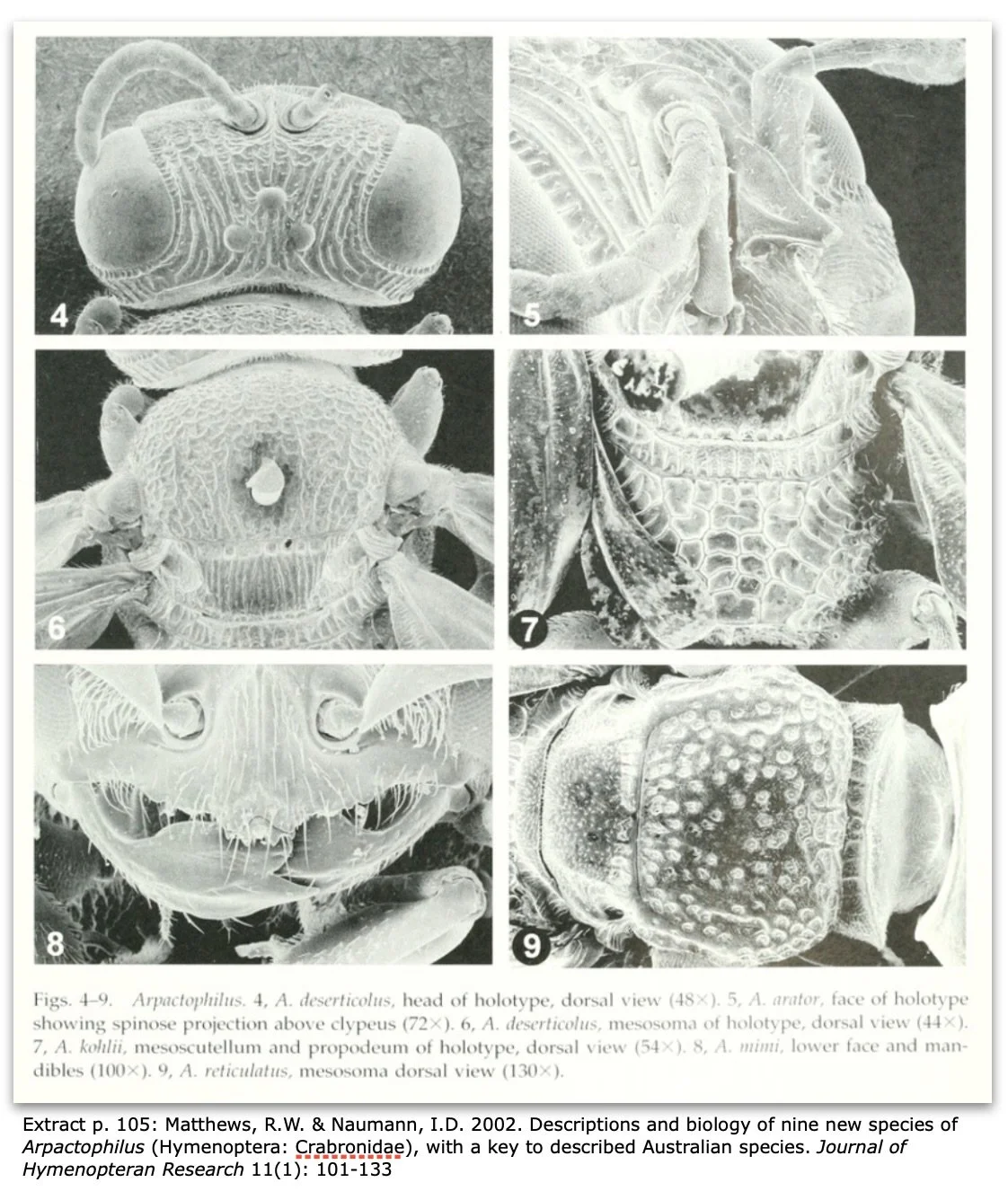
Species vary widely on a number of characters (Matthews & Naumann 2002) … and many of these are readily visible in images:
Head shape: globular to quadrate to rectangular & flattened
Vertex beyond ocelli (in dorsal view): long or short; broadly emarginate to transverse
Sculpture of head, mesonotum & propodeum typically rough but ranges from: smooth to finely punctate, striate or rugose areolate
Gena: with or without strong carina
Frontal carina: strong to weak, and various in shape; extending onto clypeus or not
Pronotal collar: very long (almost as long as scutellum) to short & knifelife; adpressed to scutum or clearly separated
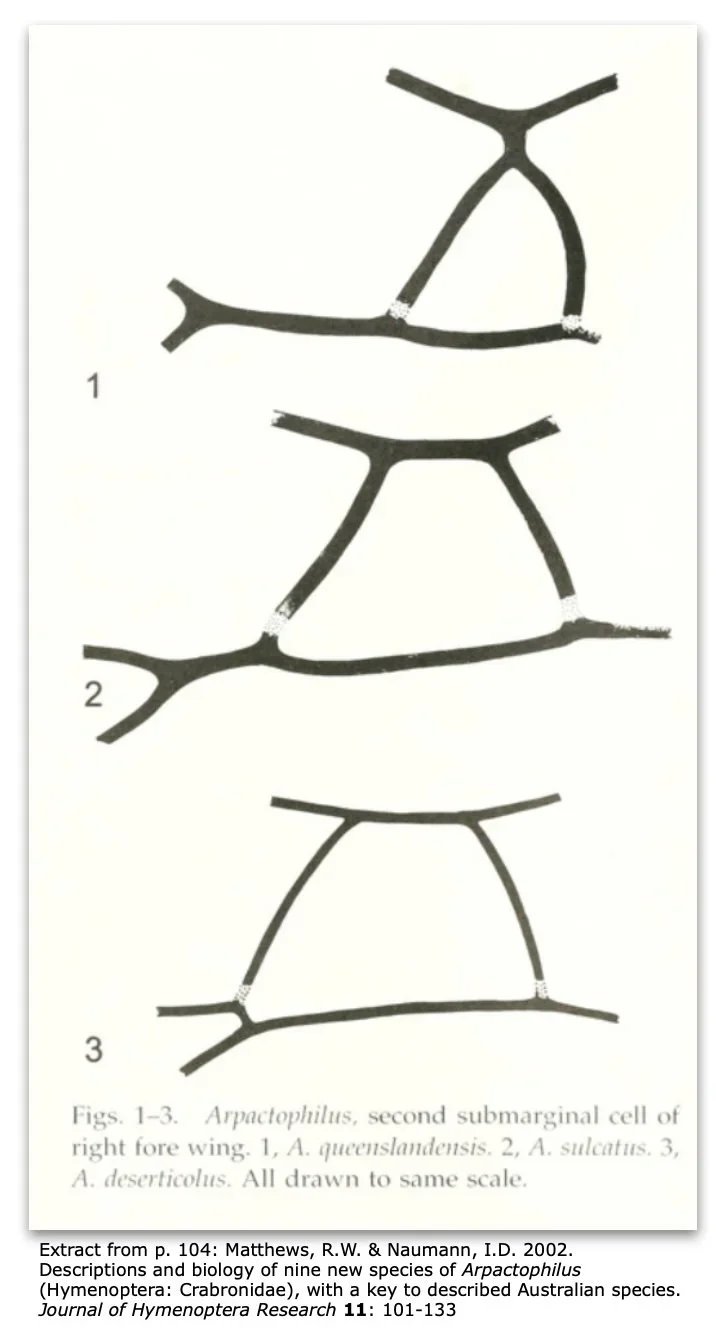
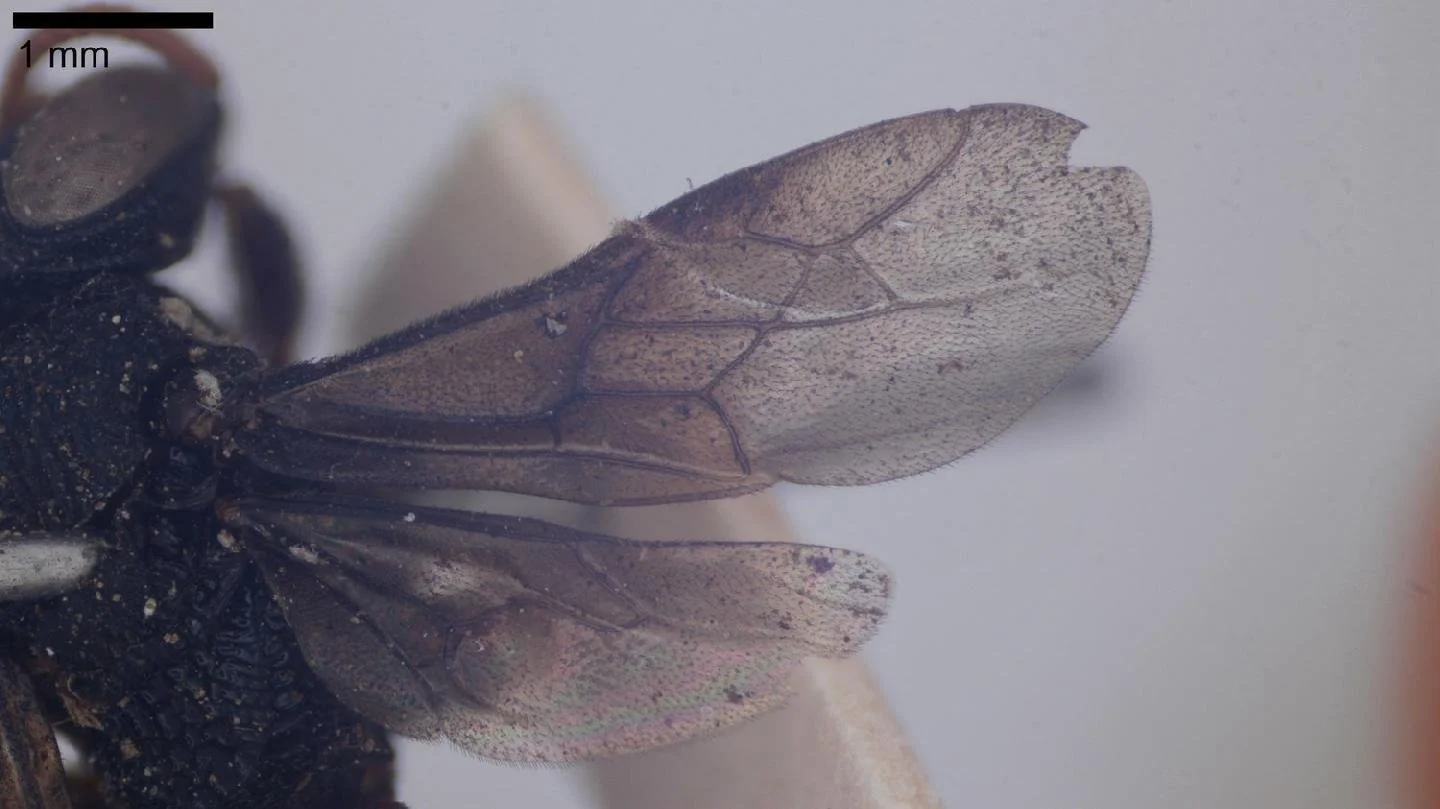
Venation: submarginal cell varies from anteriorly broad to petiolate; first recurrent vein inserts on SCI, interstitially, or on SCII
Colour: entirely black to entirely pale with a black head (although these extensively pale species are among the undescribed in ANIC); light areas range from pale yellow to red-orange.
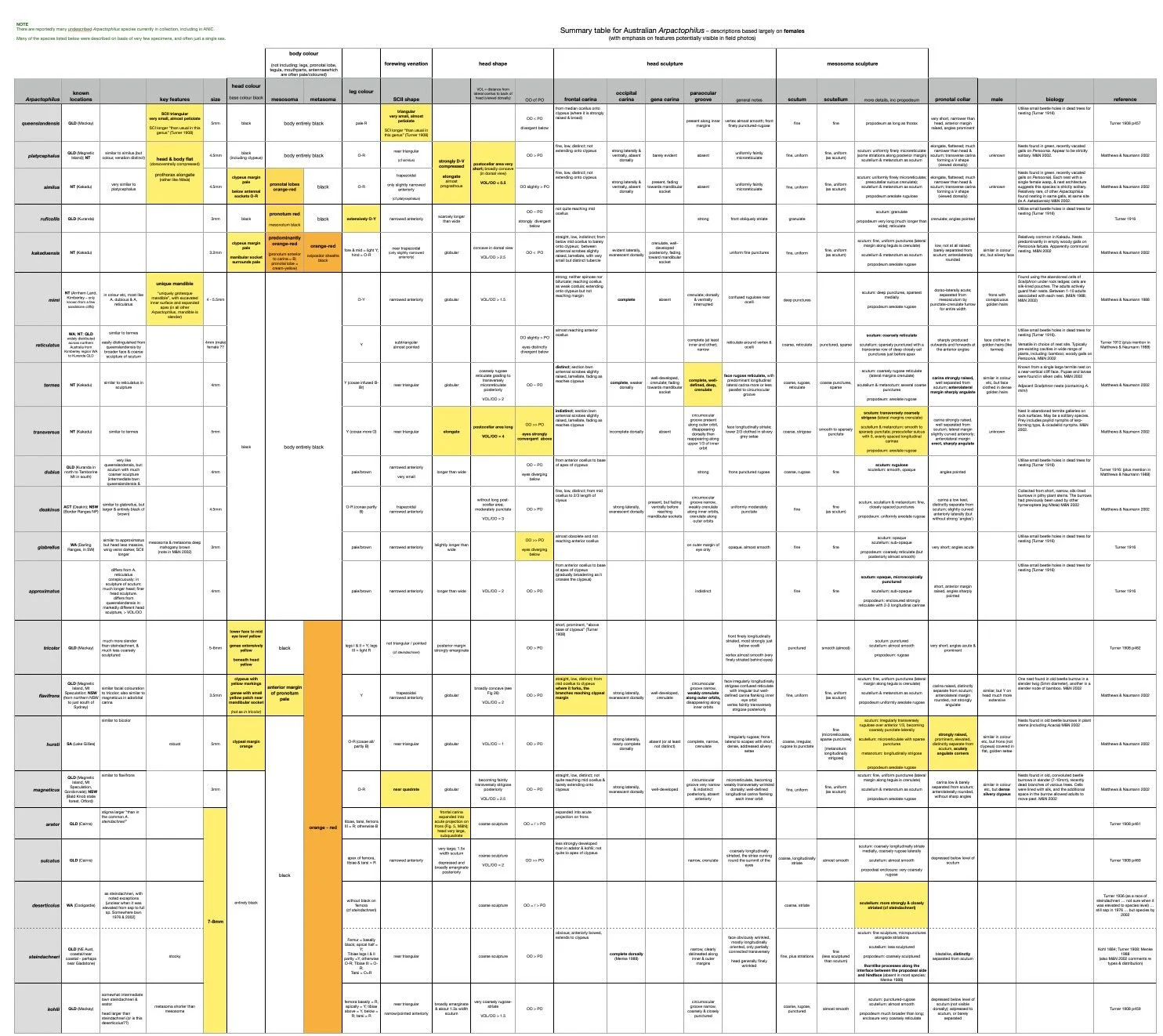
Click image to open/download latest version as pdf (<400kb)
This summary table is drawn from the work of Matthews & Naumann (2002), along with earlier species descriptions where necessary.
Bits & pieces
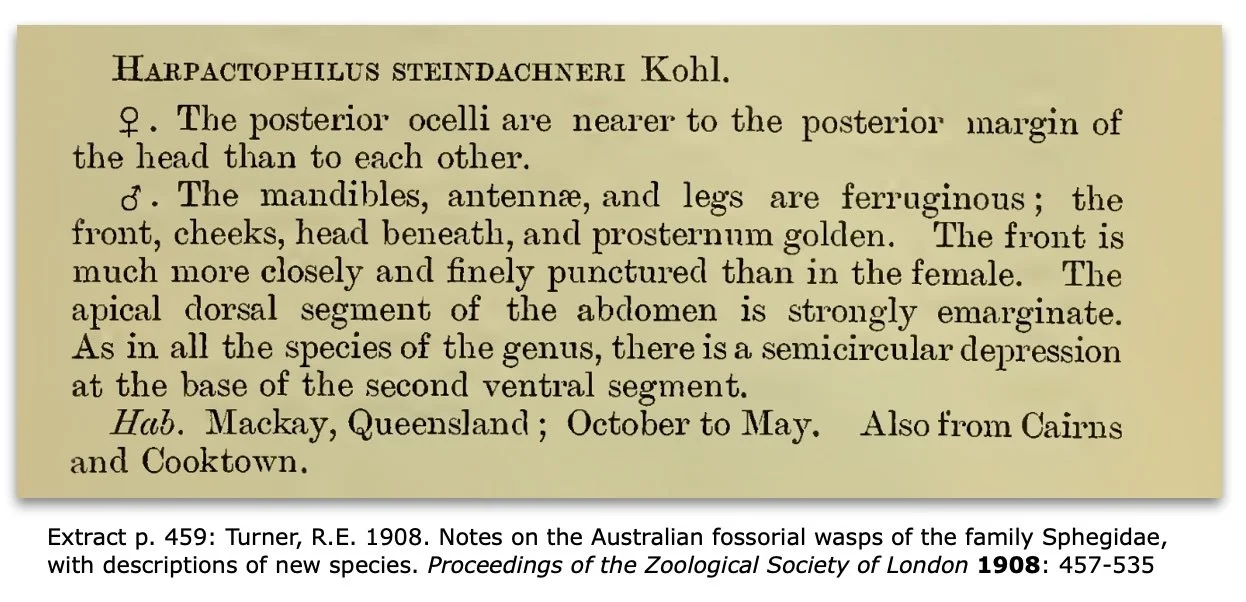
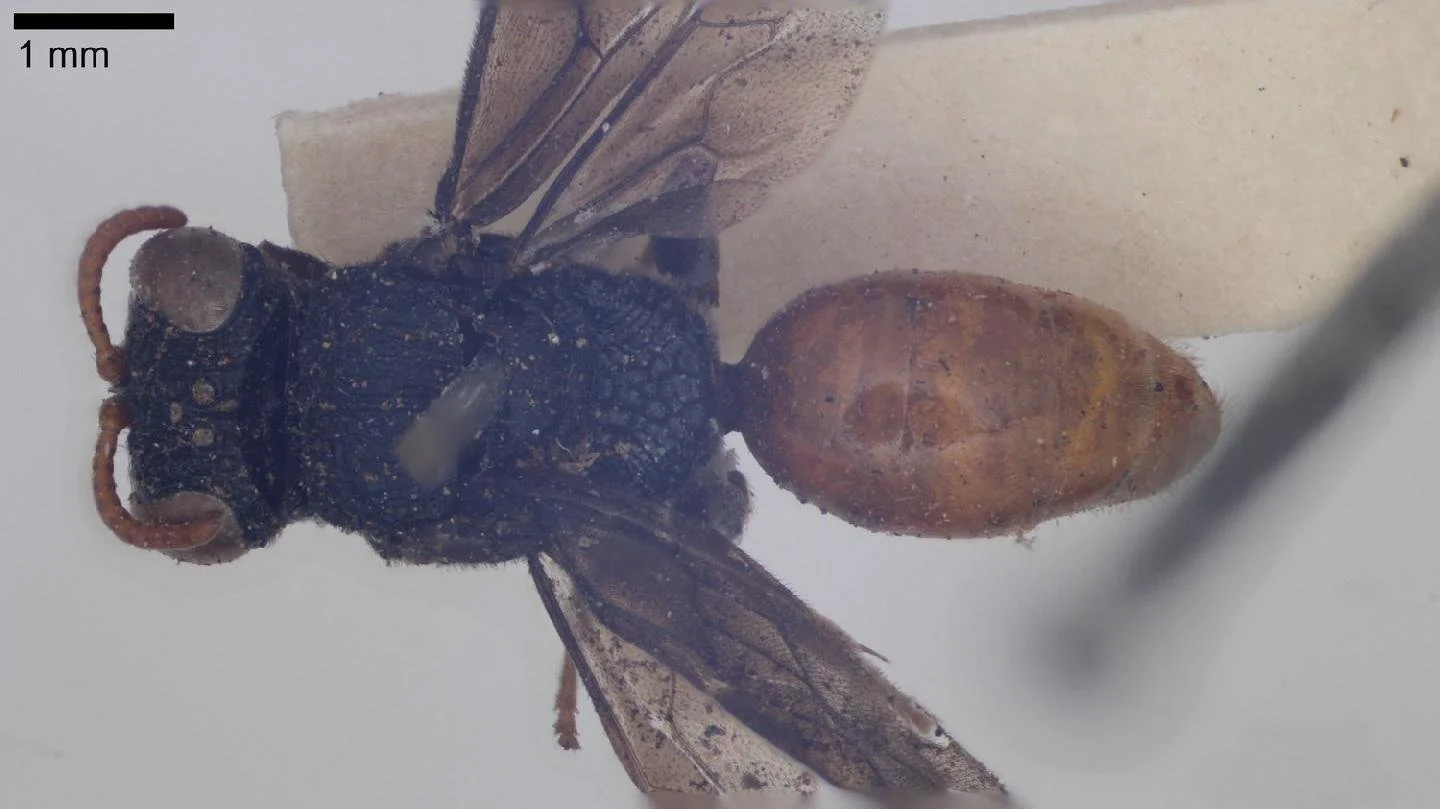
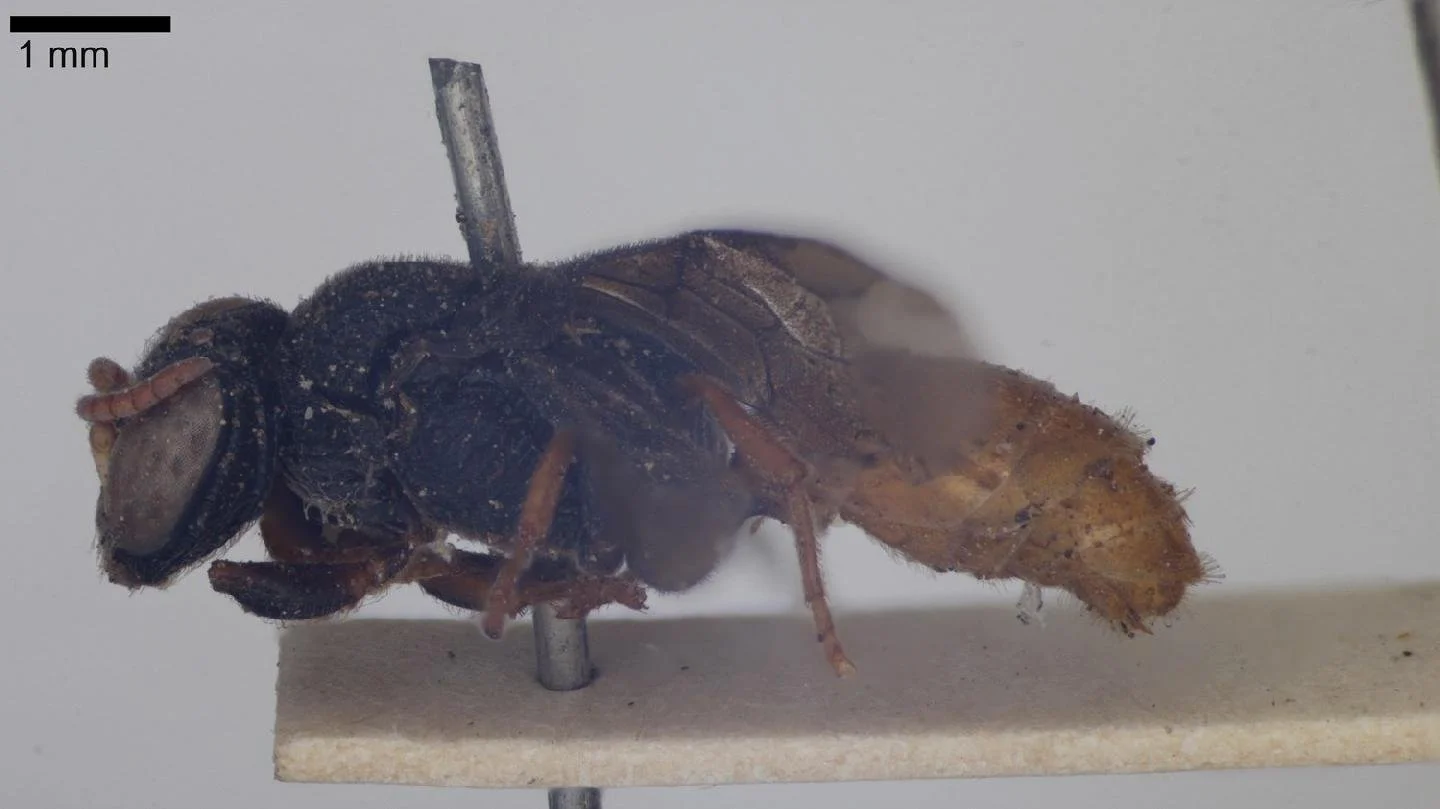
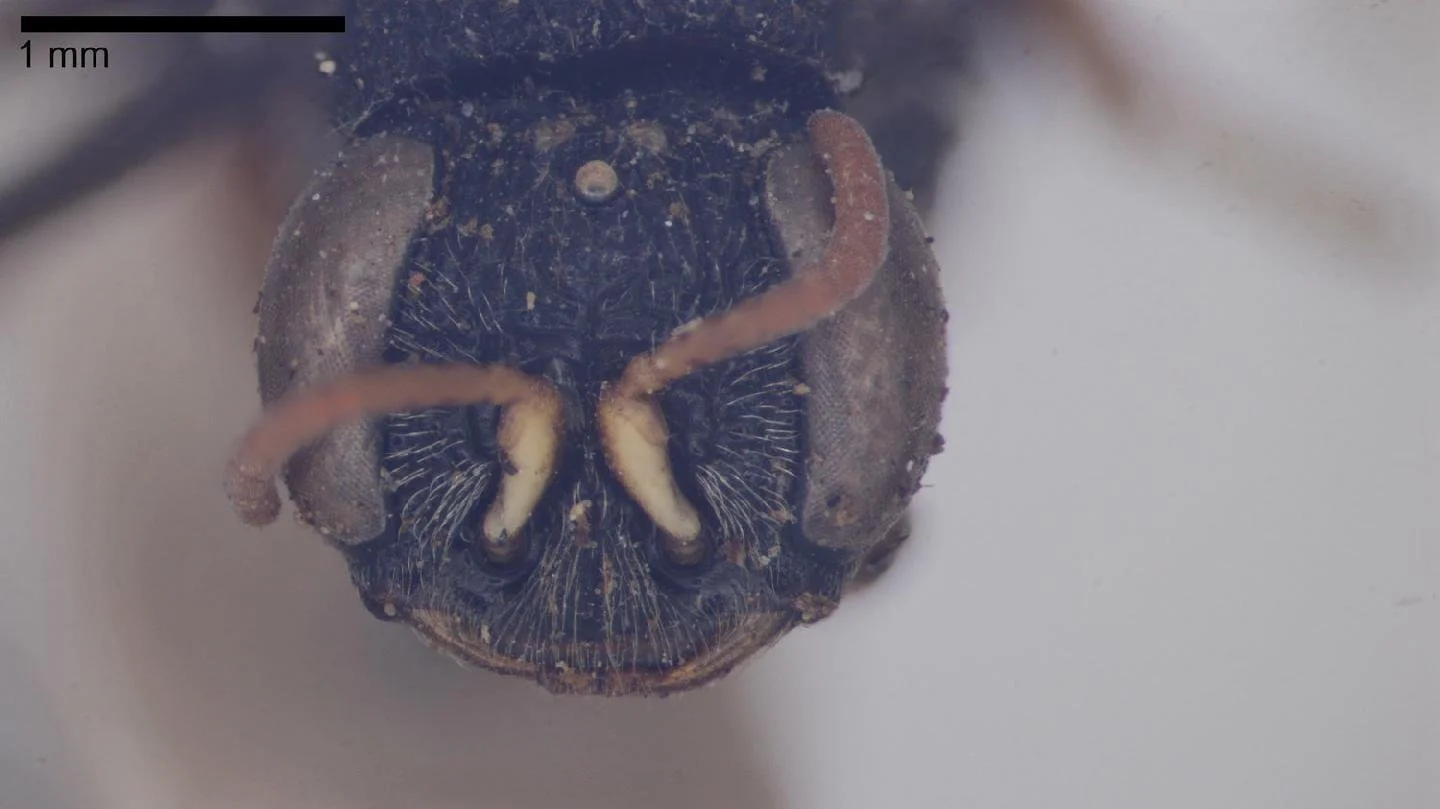
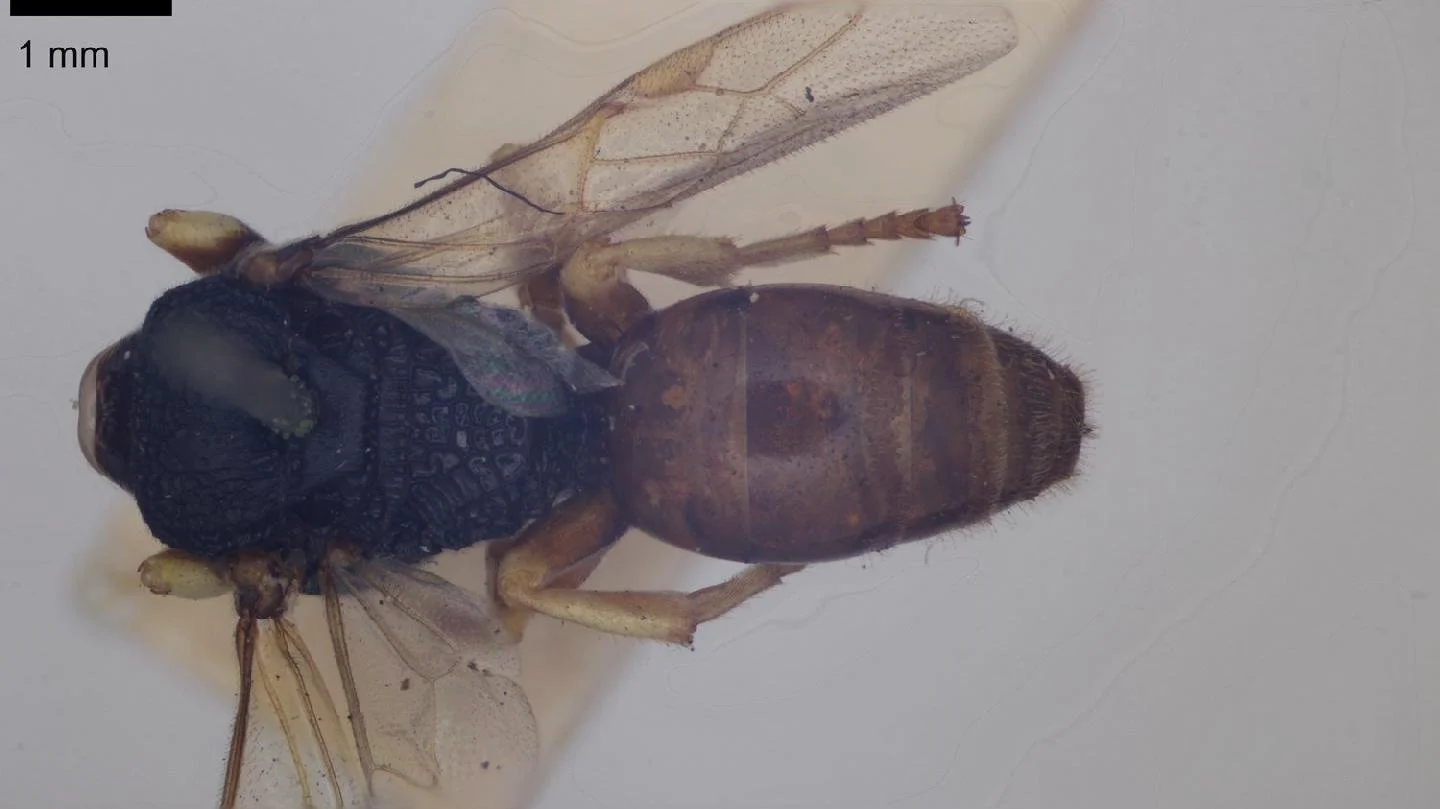
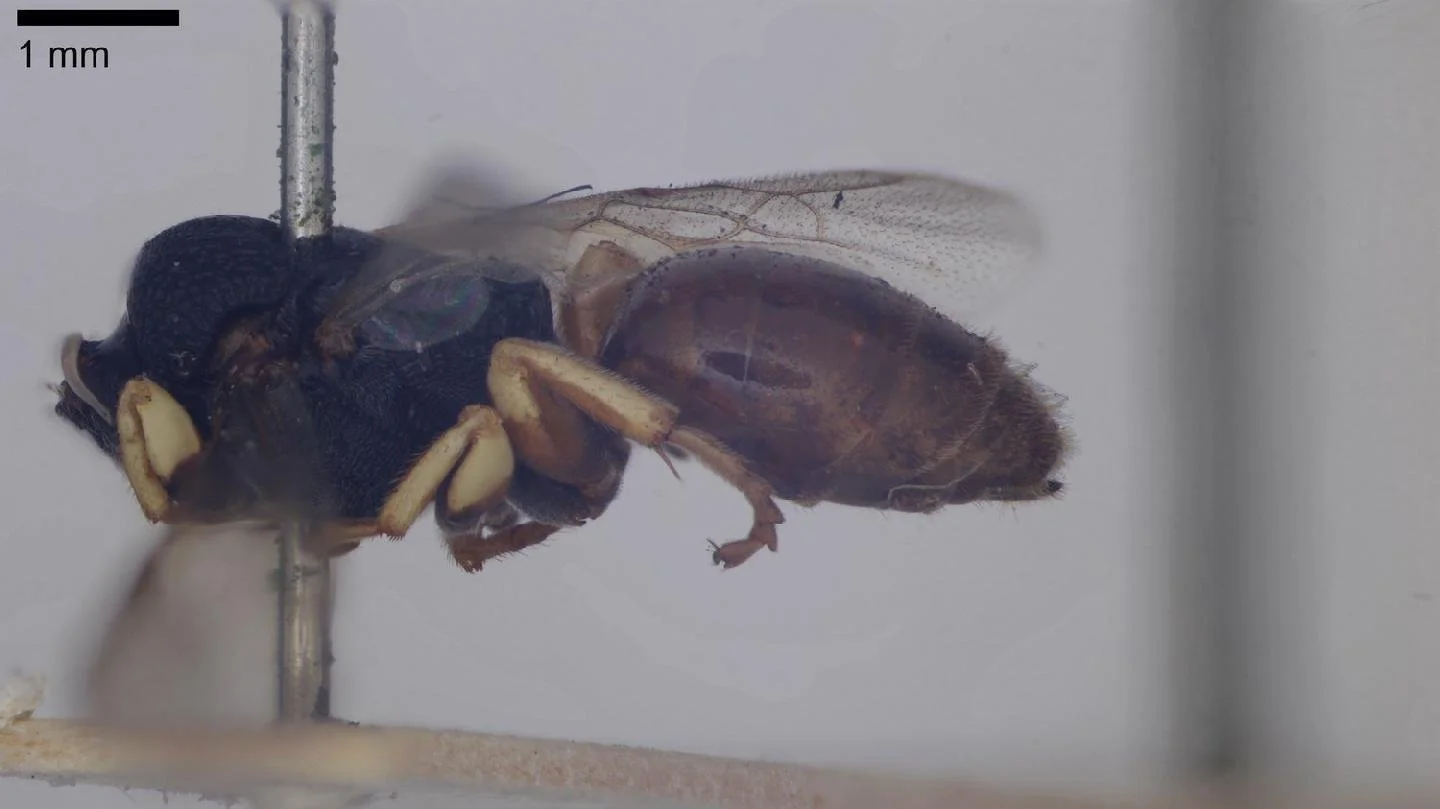
Various extracts from the literature, and identified specimen images (including types, where available).


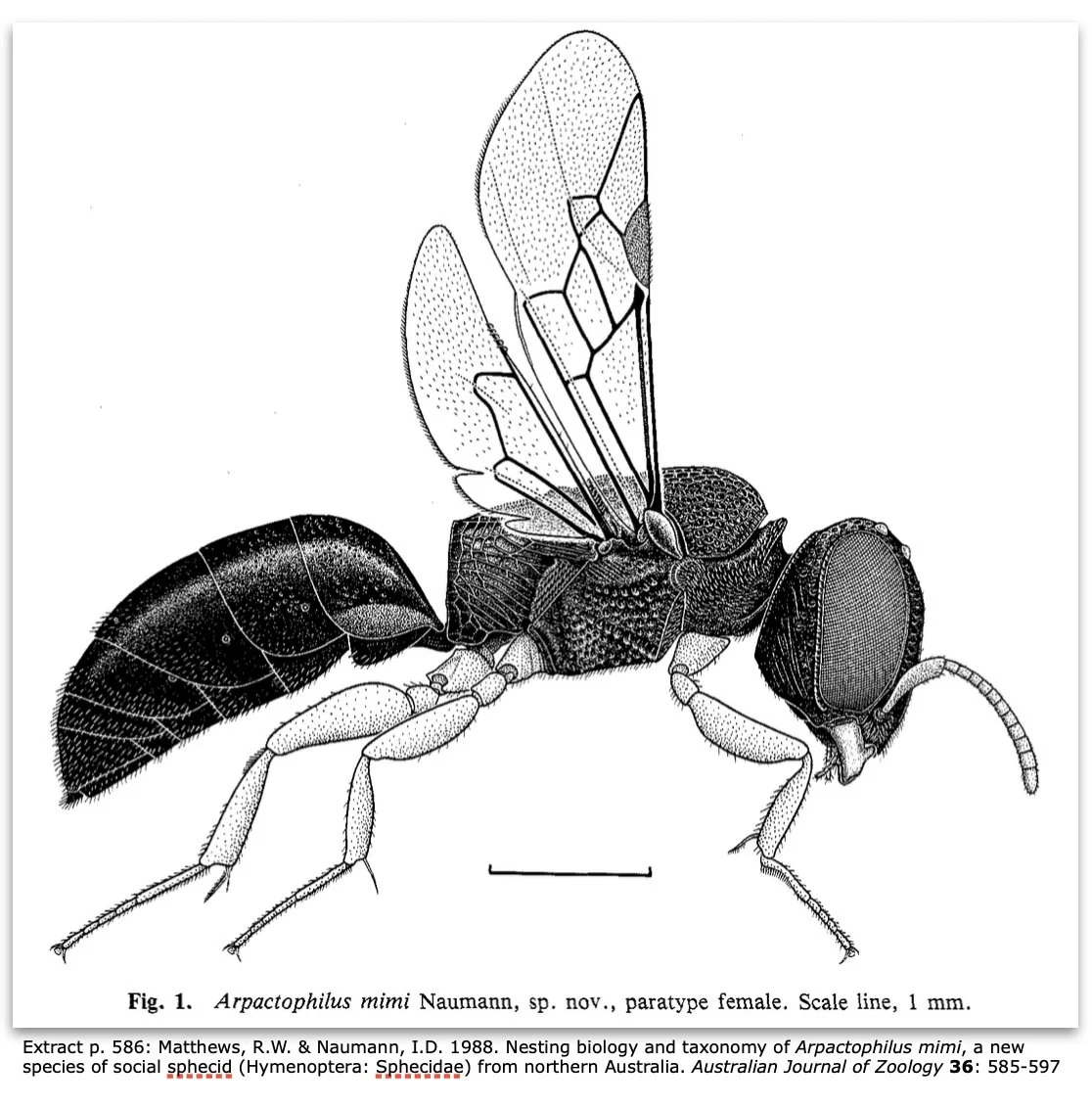
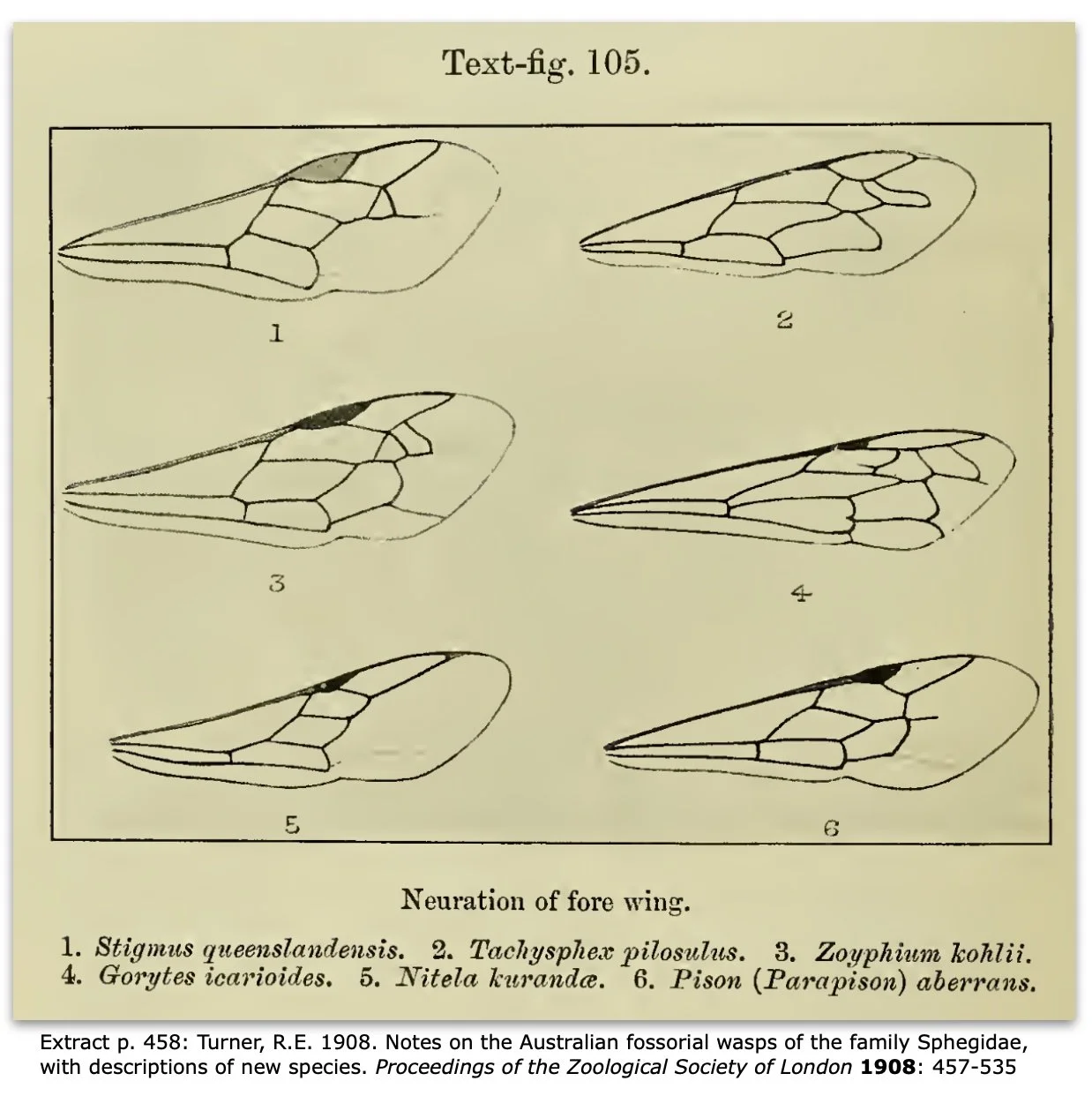
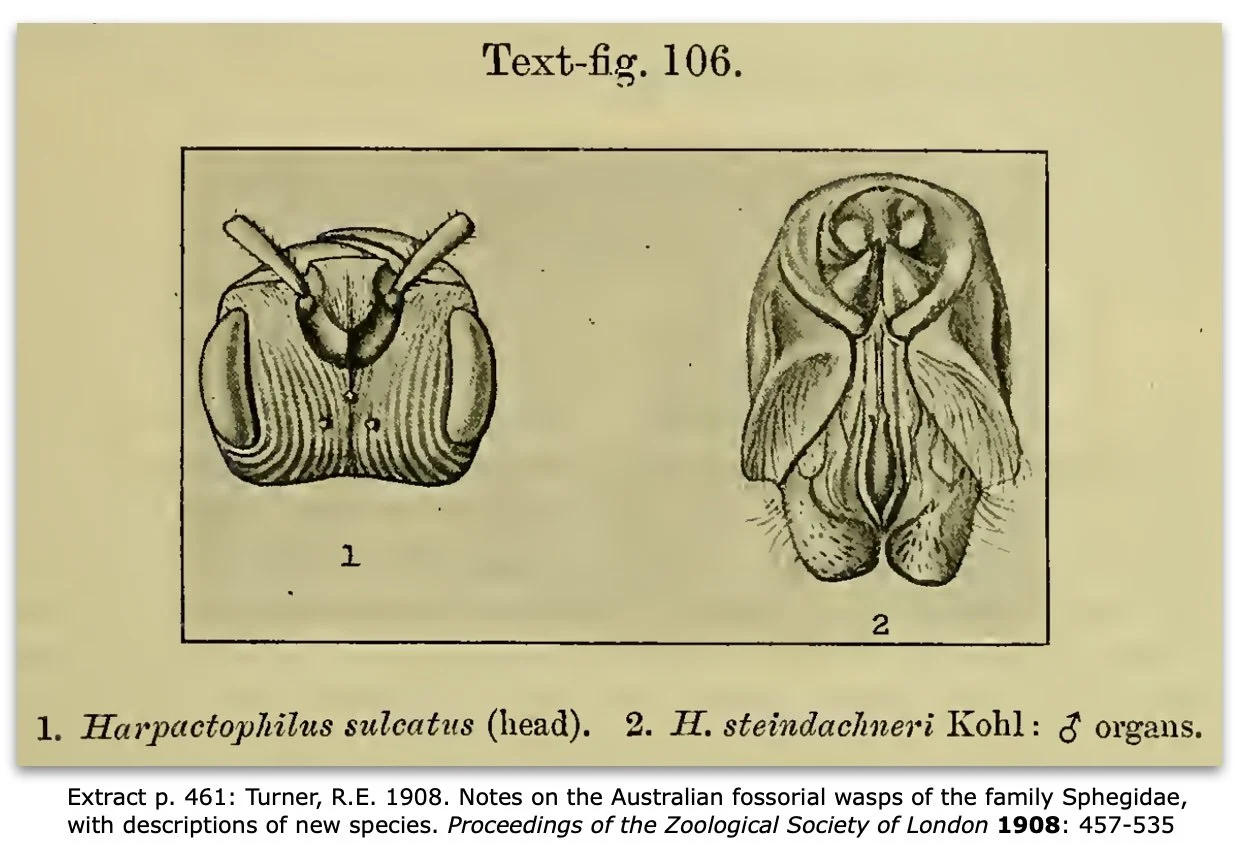

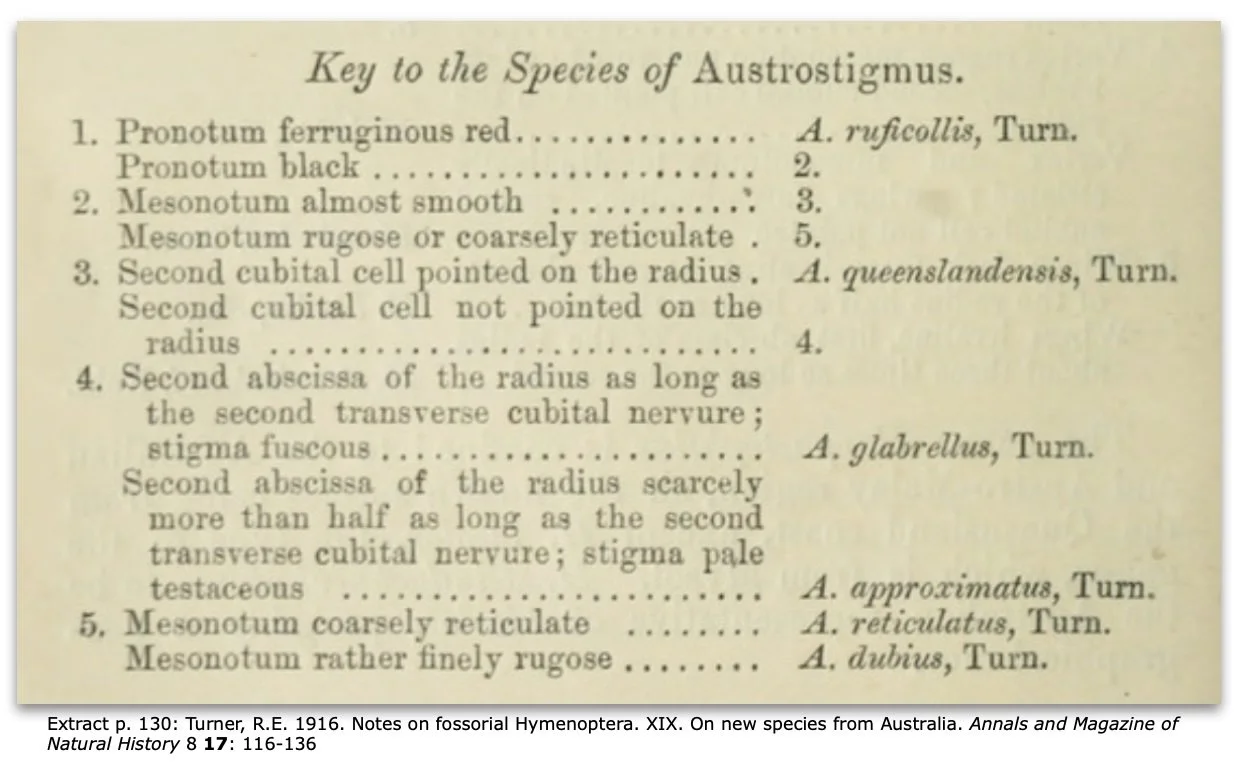
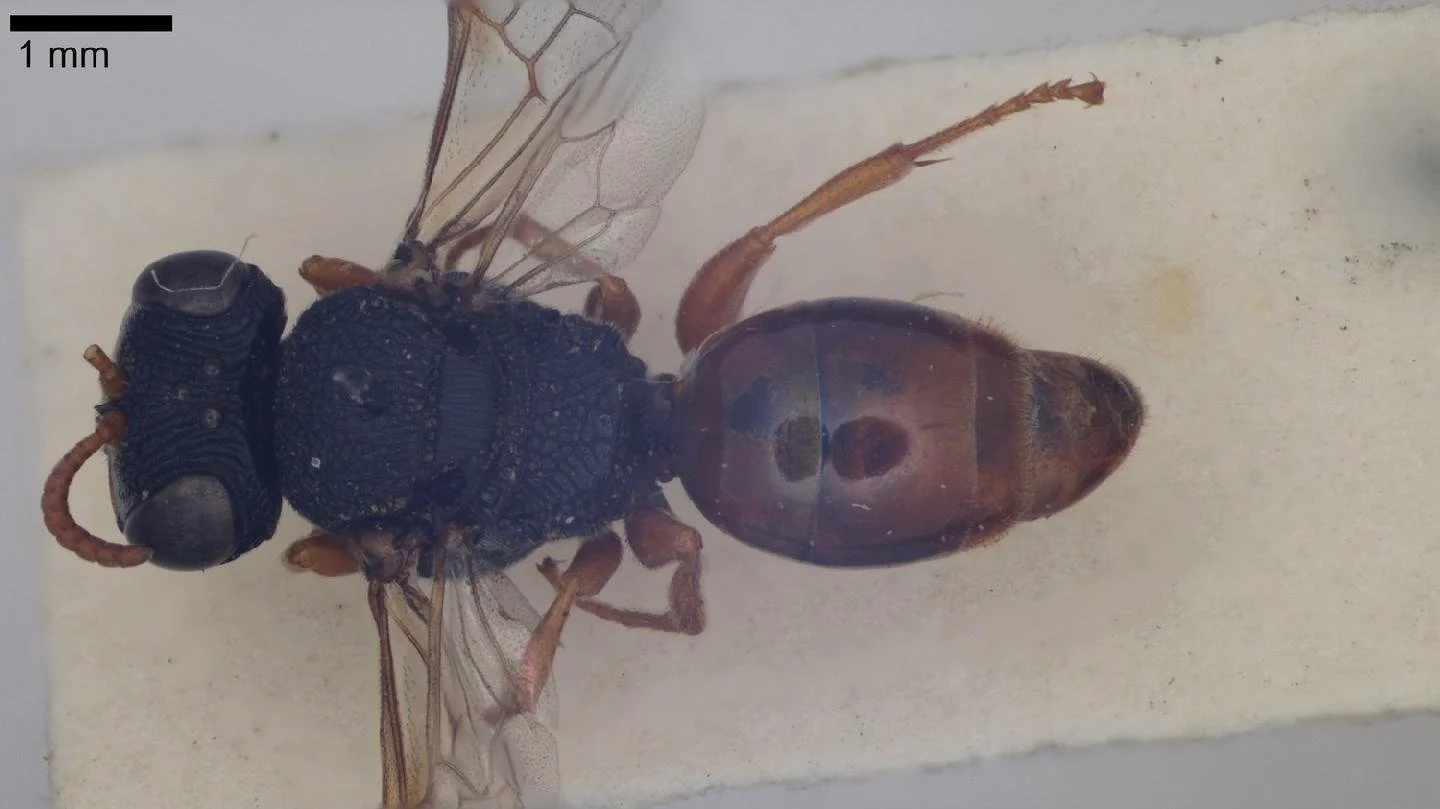
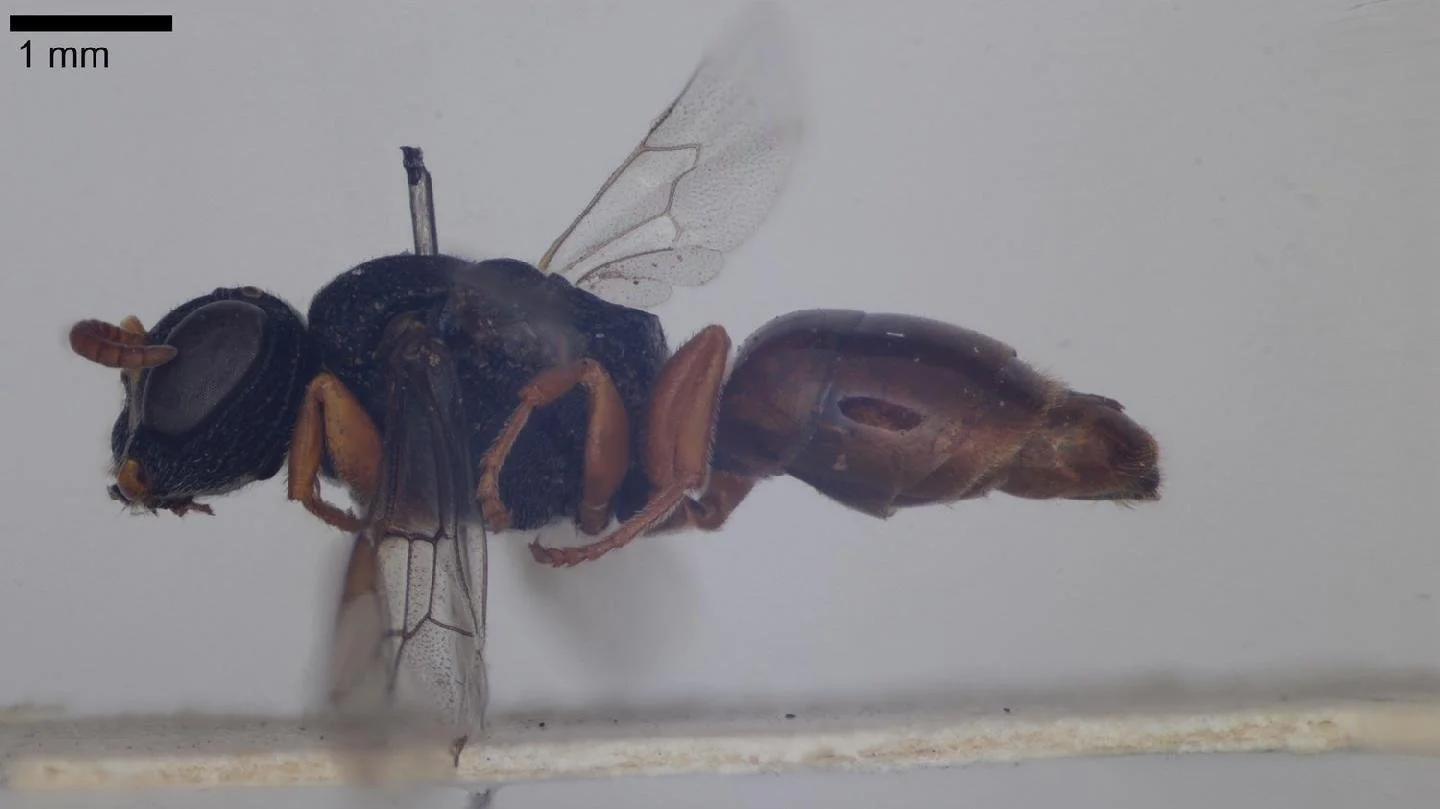
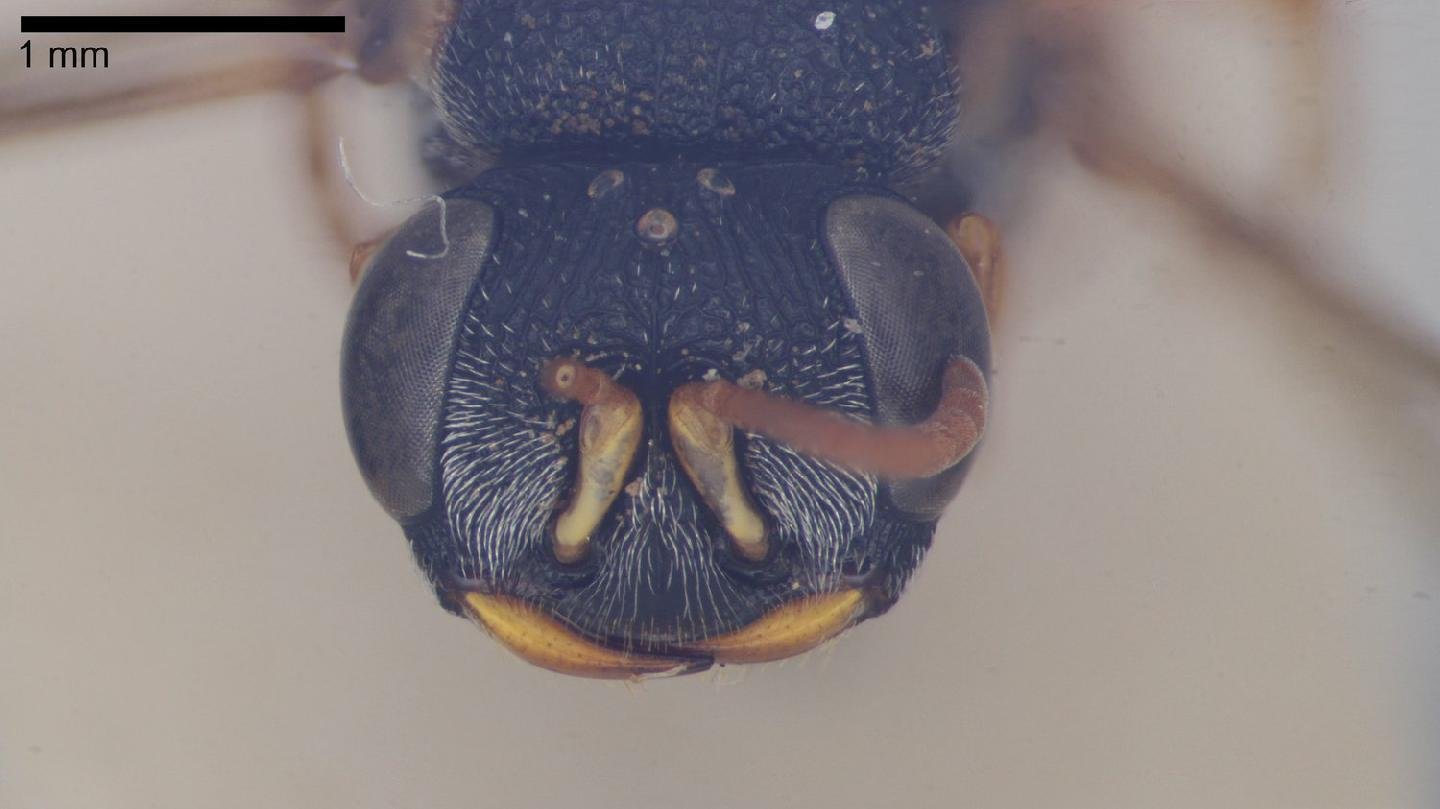
Select species, in detail
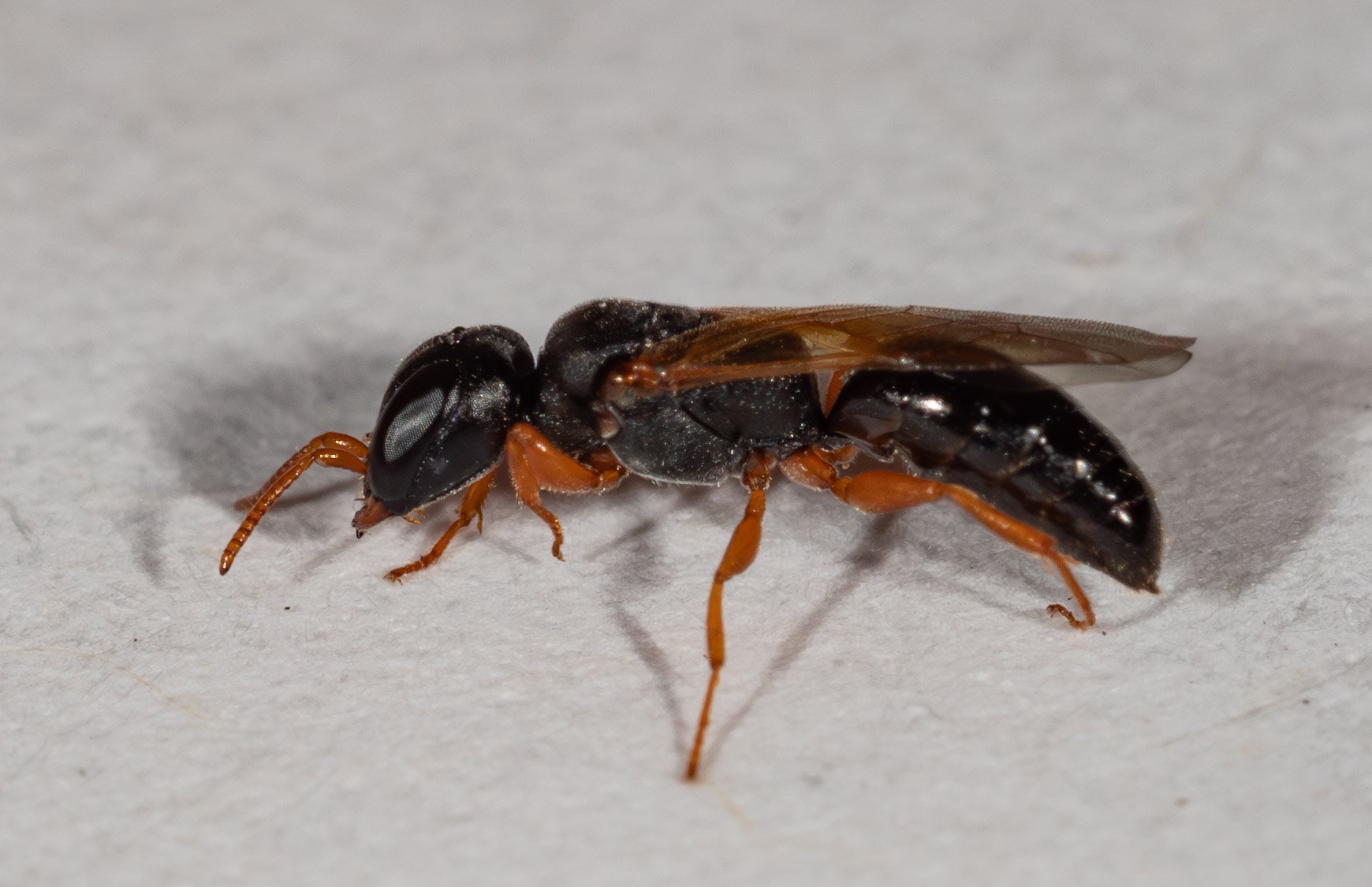
As opportunities arise, I take a closer look at individual species within this genus.
References
Bohart, R.M. & Menke, A.S. 1976. Sphecid Wasps of the World: A generic revision. University of California Press.
Breitkreuz, L.C.V., Ohl, M. & Engel, M.S. 2016. A review of the New Caledonian Arpactophilus (Hymenoptera: Crabronidae). Zootaxa 4063(1): 001-066 (available from authors’ ResearchGate page)
Eady, R.D. 1968. Some illustrations of microsculpture in the Hymenoptera. Proceedings of the Royal Society of London. Series A, General Entomology. https://doi.org/10.1111/j.1365-3032.1968.tb01029.x
Finnamore, A.T. 1995. Revision of the world genera of the subtribe Stigmina (Hymenoptera: Apoidea: Sphecidae: Pemphredoninae), Part 1. Journal of Hymenopteran Research 4: 204-284
Matthews, R.W. & Naumann, I.D. 1988. Nesting biology and taxonomy of Arpactophilus mimi, a new species of social sphecid (Hymenoptera: Sphecidae) from northern Australia. Australian Journal of Zoology 36: 585-597
Matthews, R.W. & Naumann, I.D. 2002. Descriptions and biology of nine new species of Arpactophilus (Hymenoptera: Crabronidae), with a key to described Australian species. Journal of Hymenopteran Research 11(1): 101-133 freely available from BHL
Melo, G.A.R. & Naumann, I. 1999. Two new genera of pemphredonine wasps from Australia (Hymenoptera: Apoidea, Crabronidae). University of Kansas Natural History Museum Special Publication 24: 221-229 freely available from BHL
Menke, A.S. 1988. Arpactophilus reassessed, with three bizarre new species from New Guinea (Hymenoptera: Sphecidae: Pemphredoninae). Invertebrate Taxonomy 2: 737-47
Sann, M. et al. 2018. Phylogenomic analysis of Apoidea sheds new light on the sister group of bees. Evolutionary Biology 18:71 https://doi.org/10.1186/s12862-018-1155-8
Turner, R.E. 1916. Notes on fossorial Hymenoptera. XIX. On new species from Australia. Annals and Magazine of Natural History 8 17: 116-136
This is a workbook page … a part of our website where we record the observations and references used in making species identifications. The notes will not necessarily be complete. They are a record for our own use, but we are happy to share this information with others.