
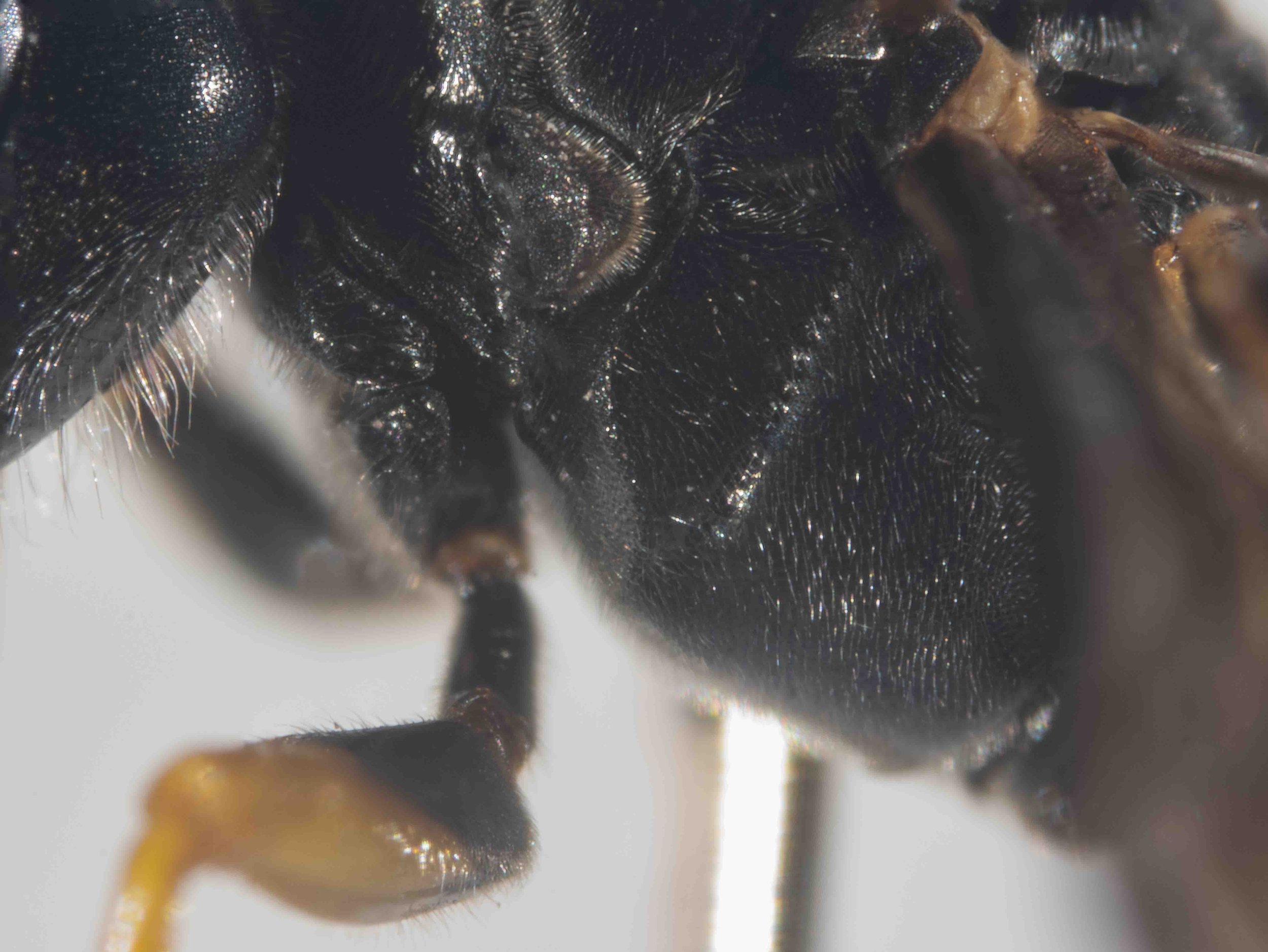
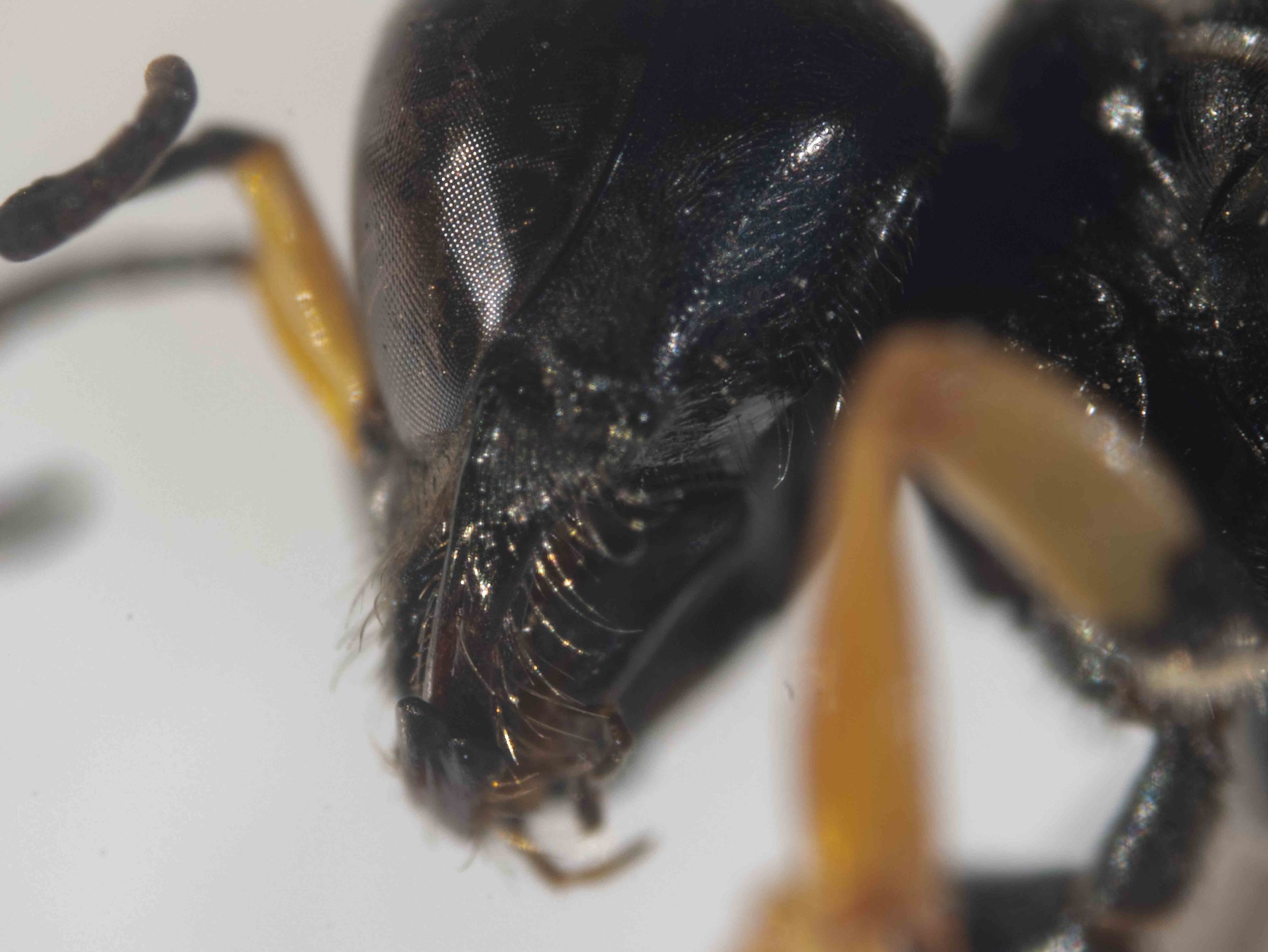
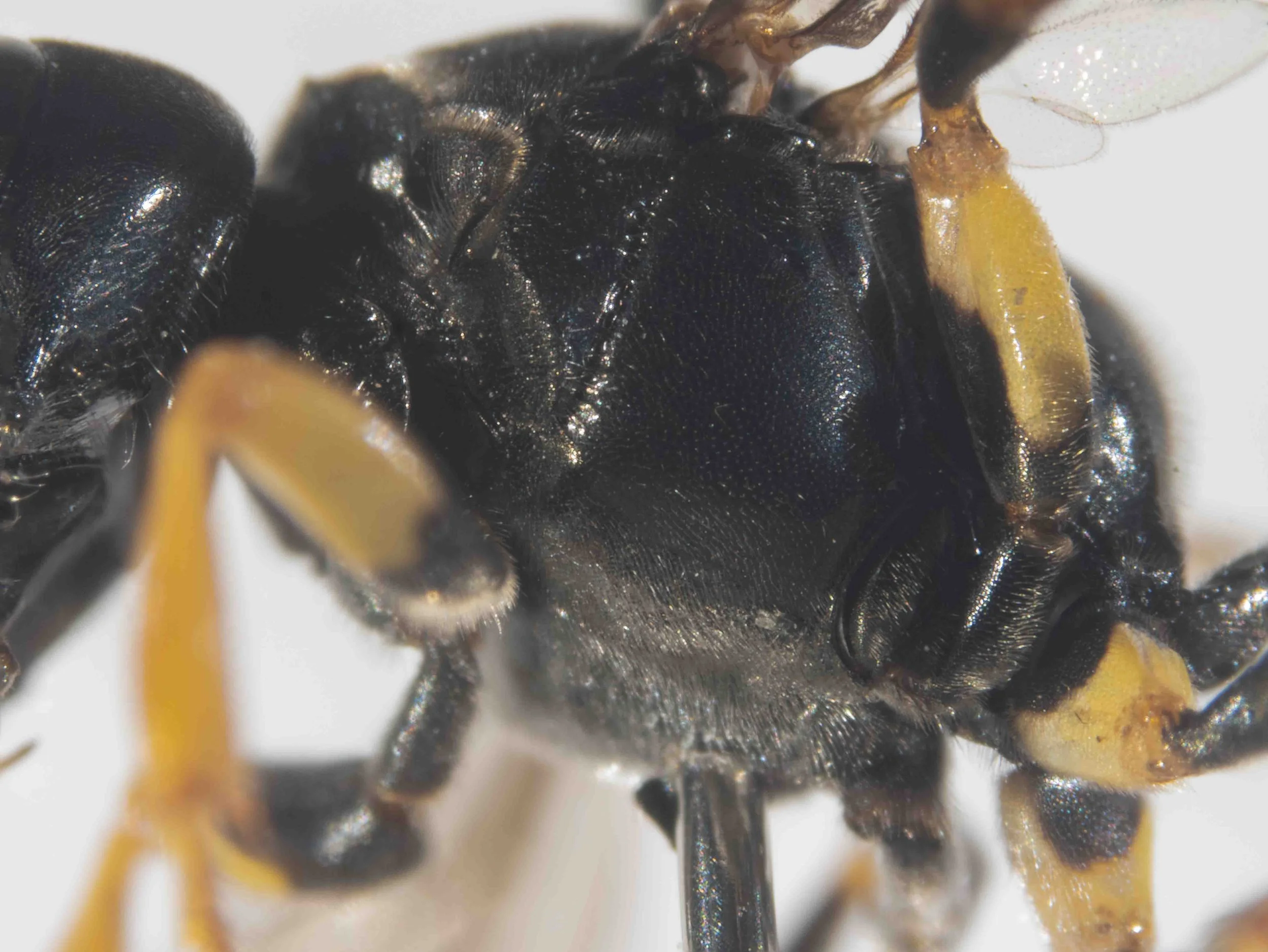
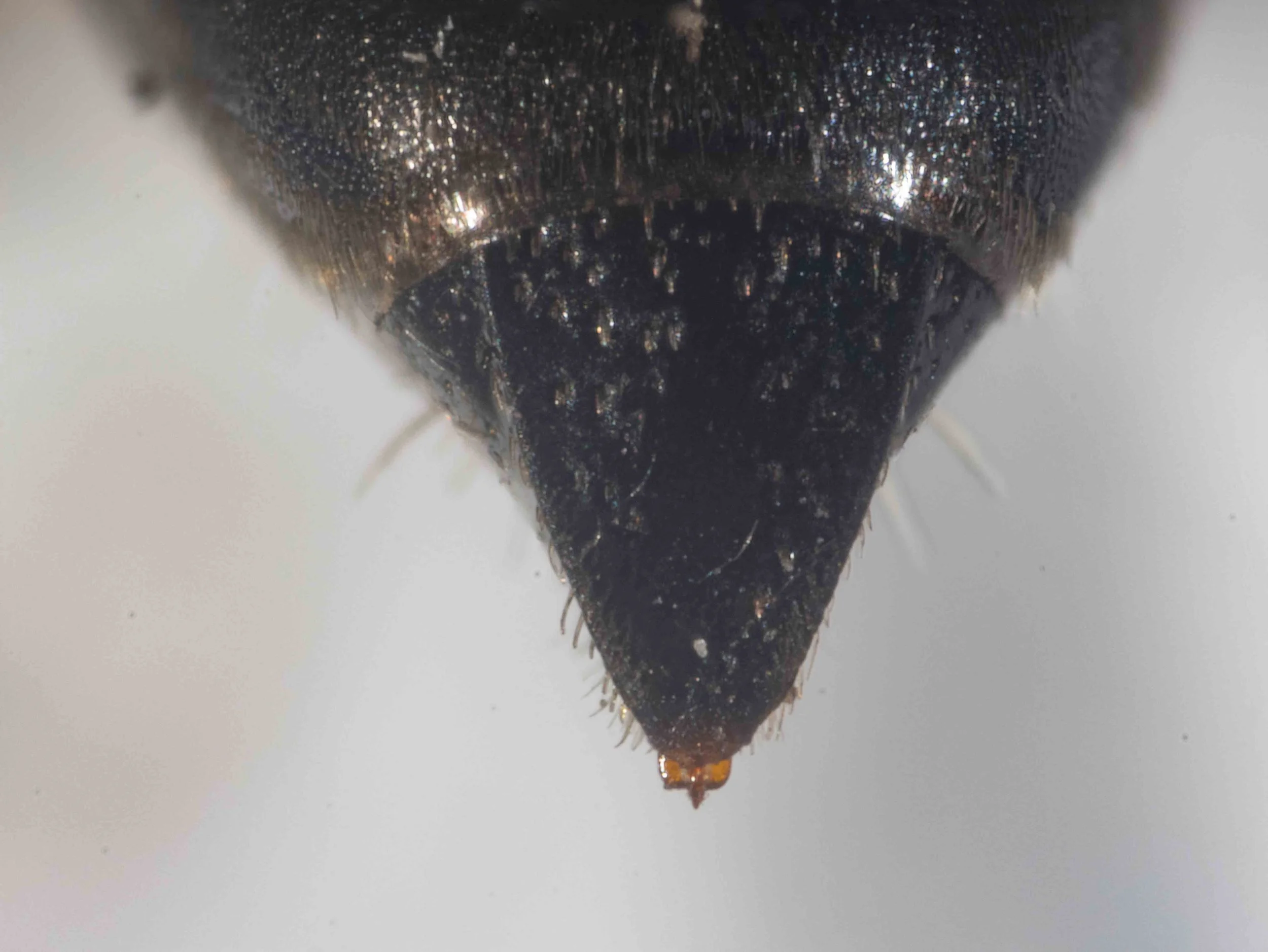
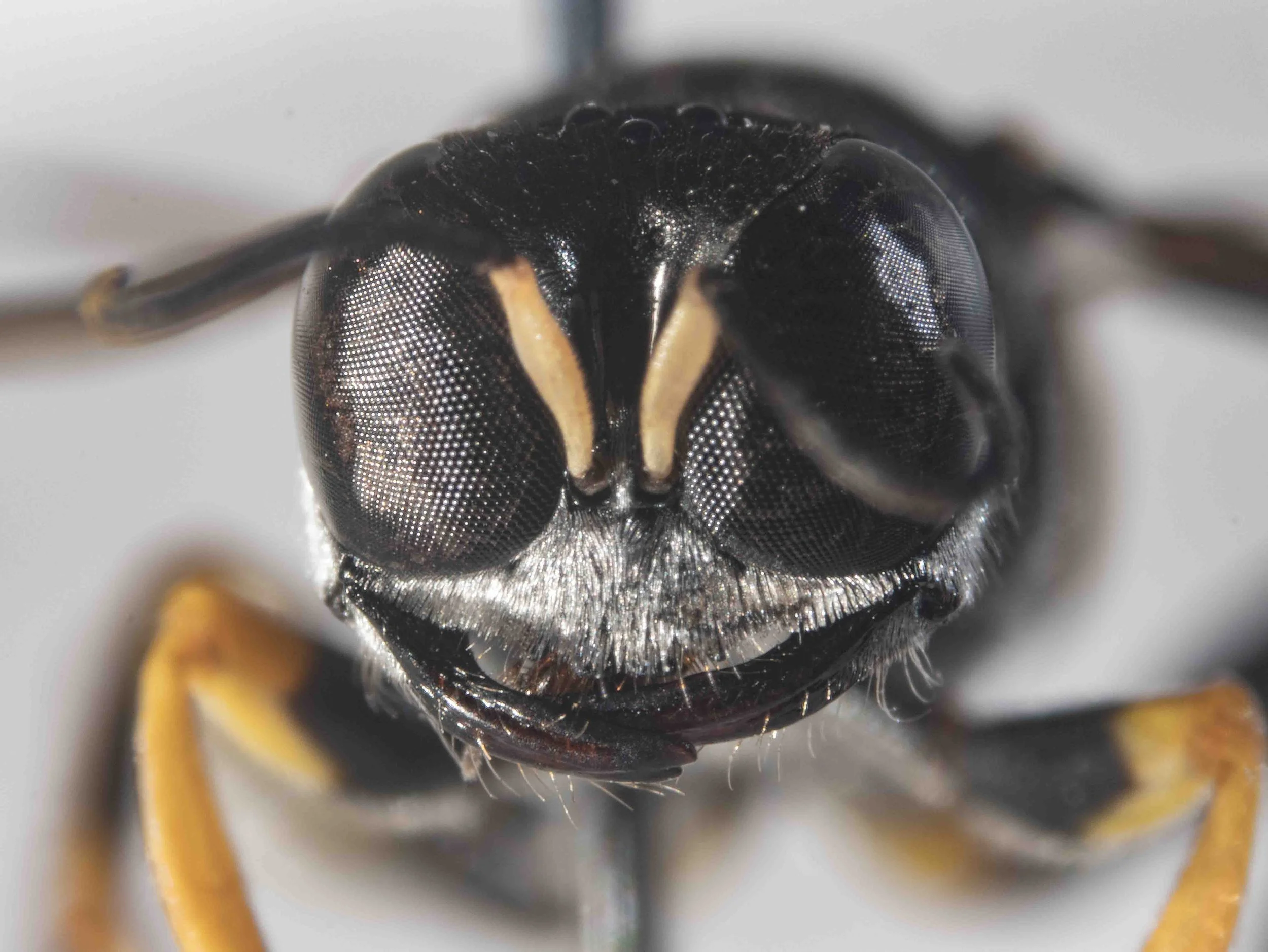
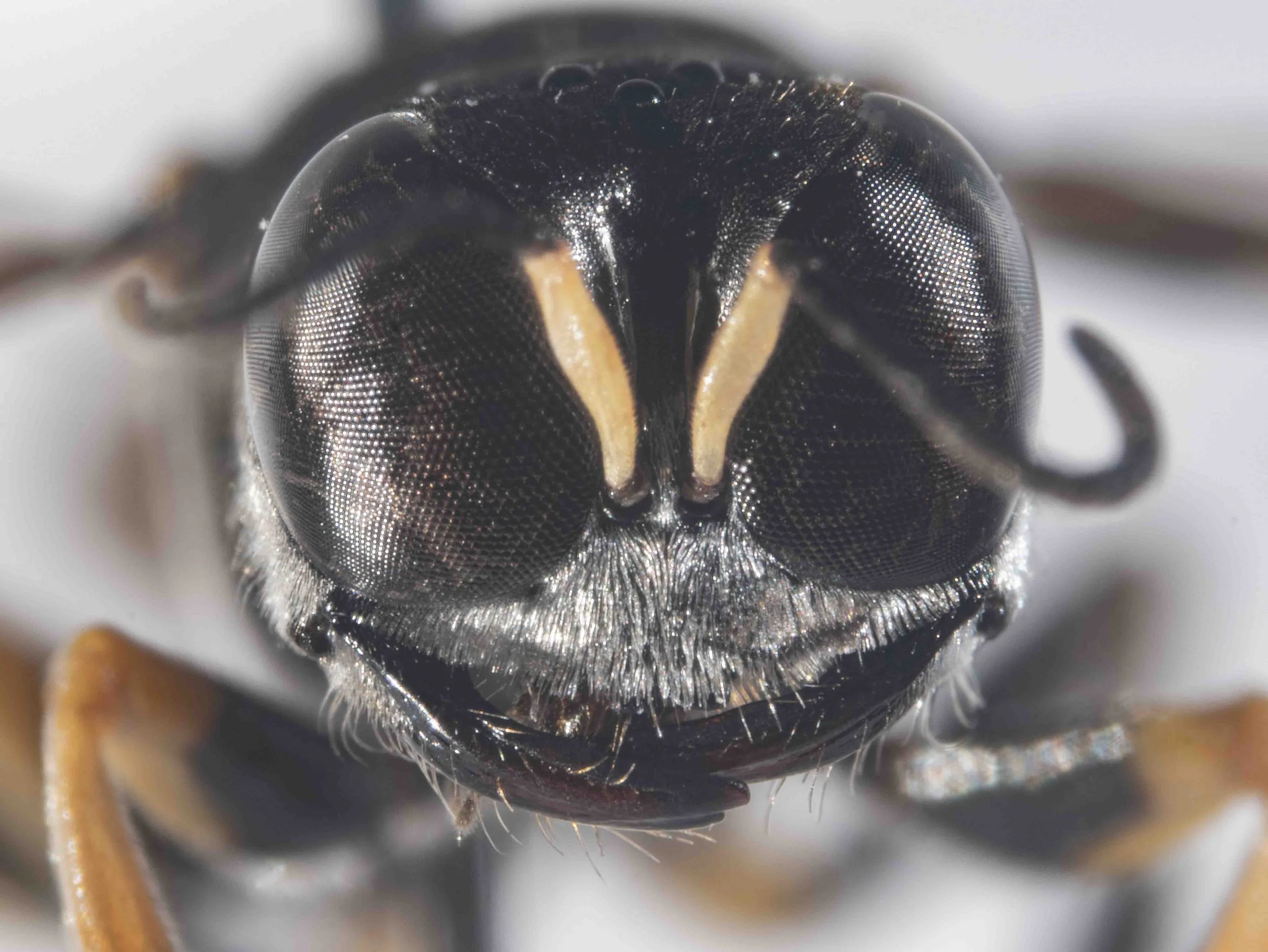
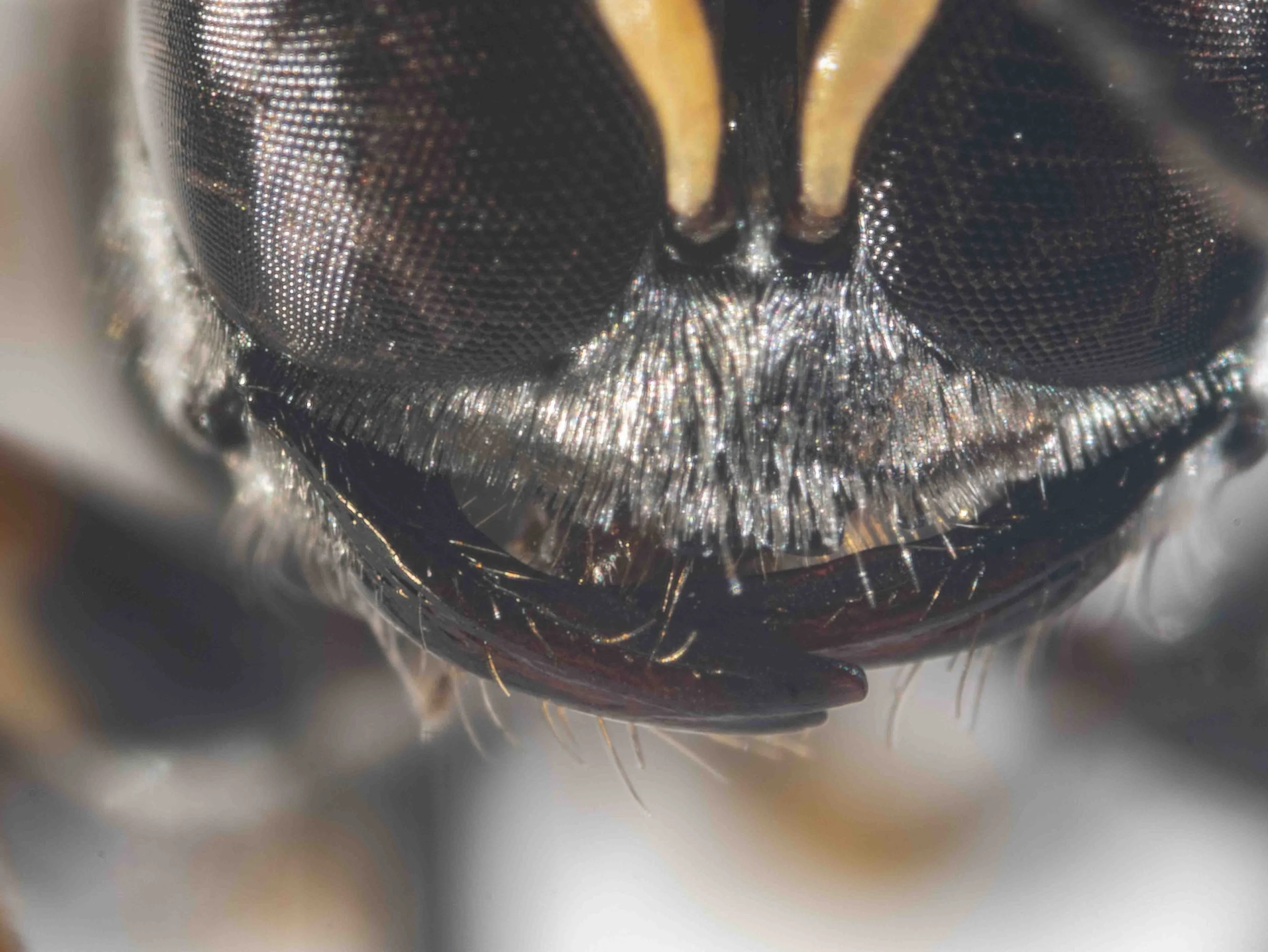
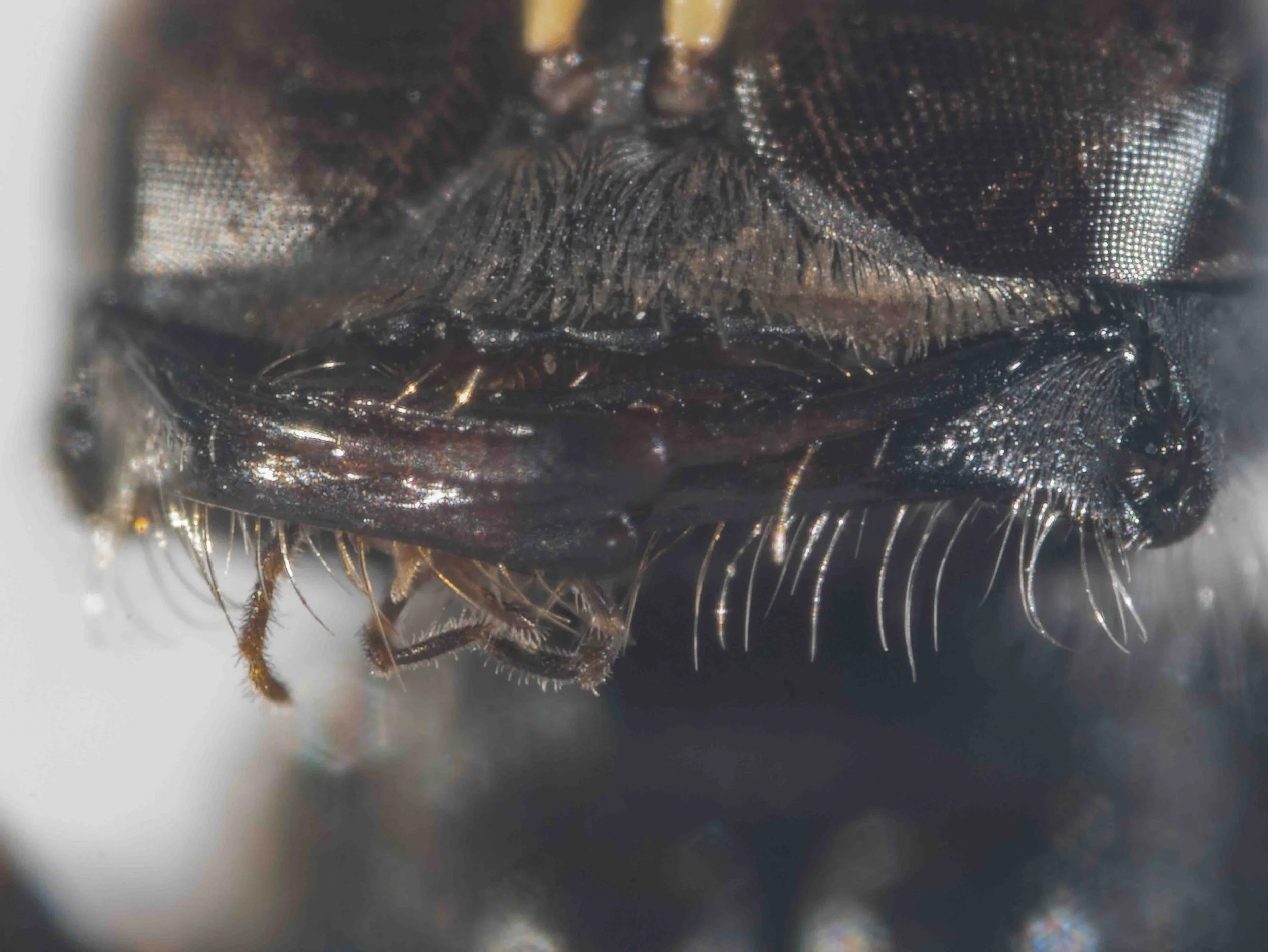
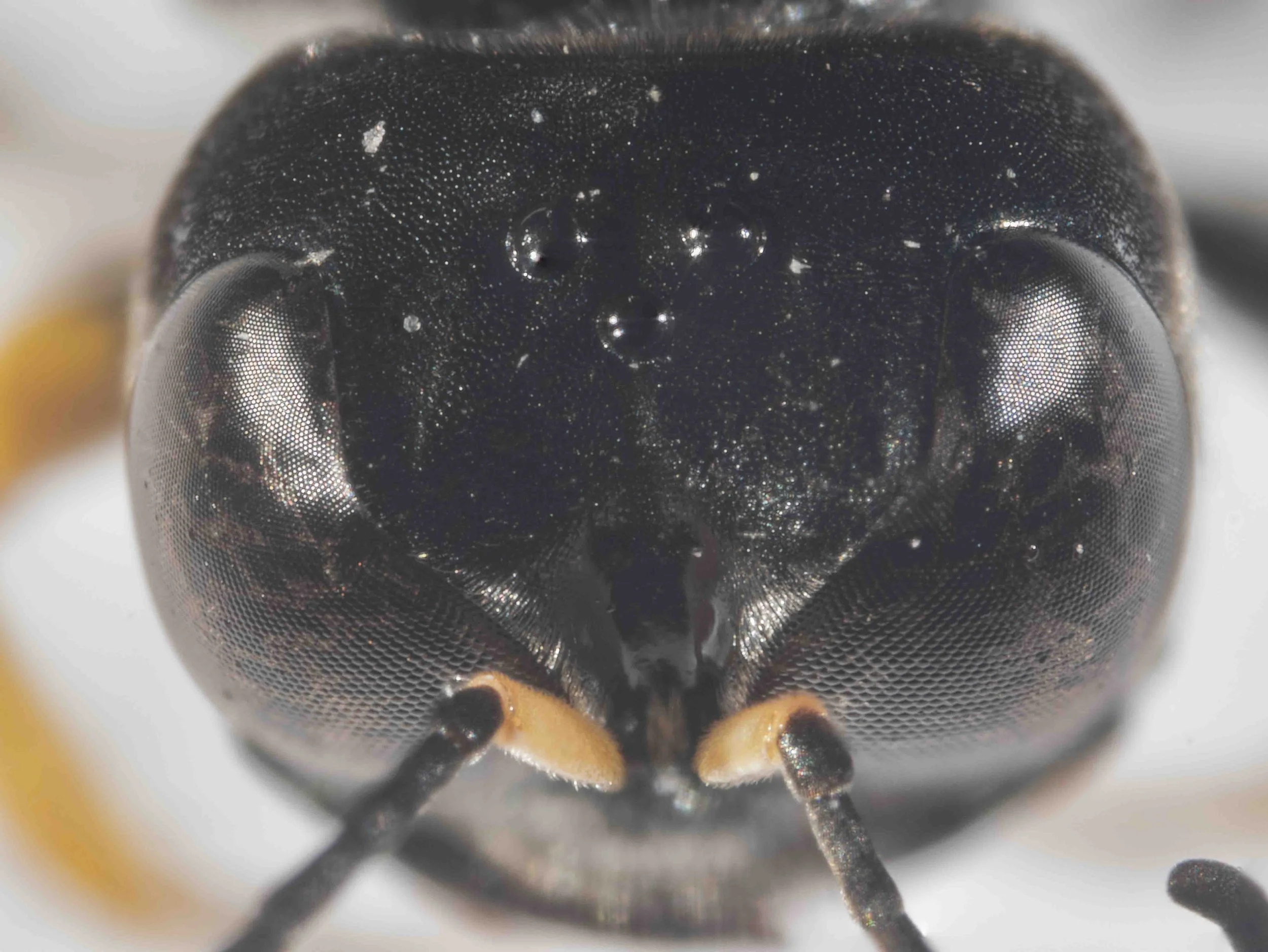
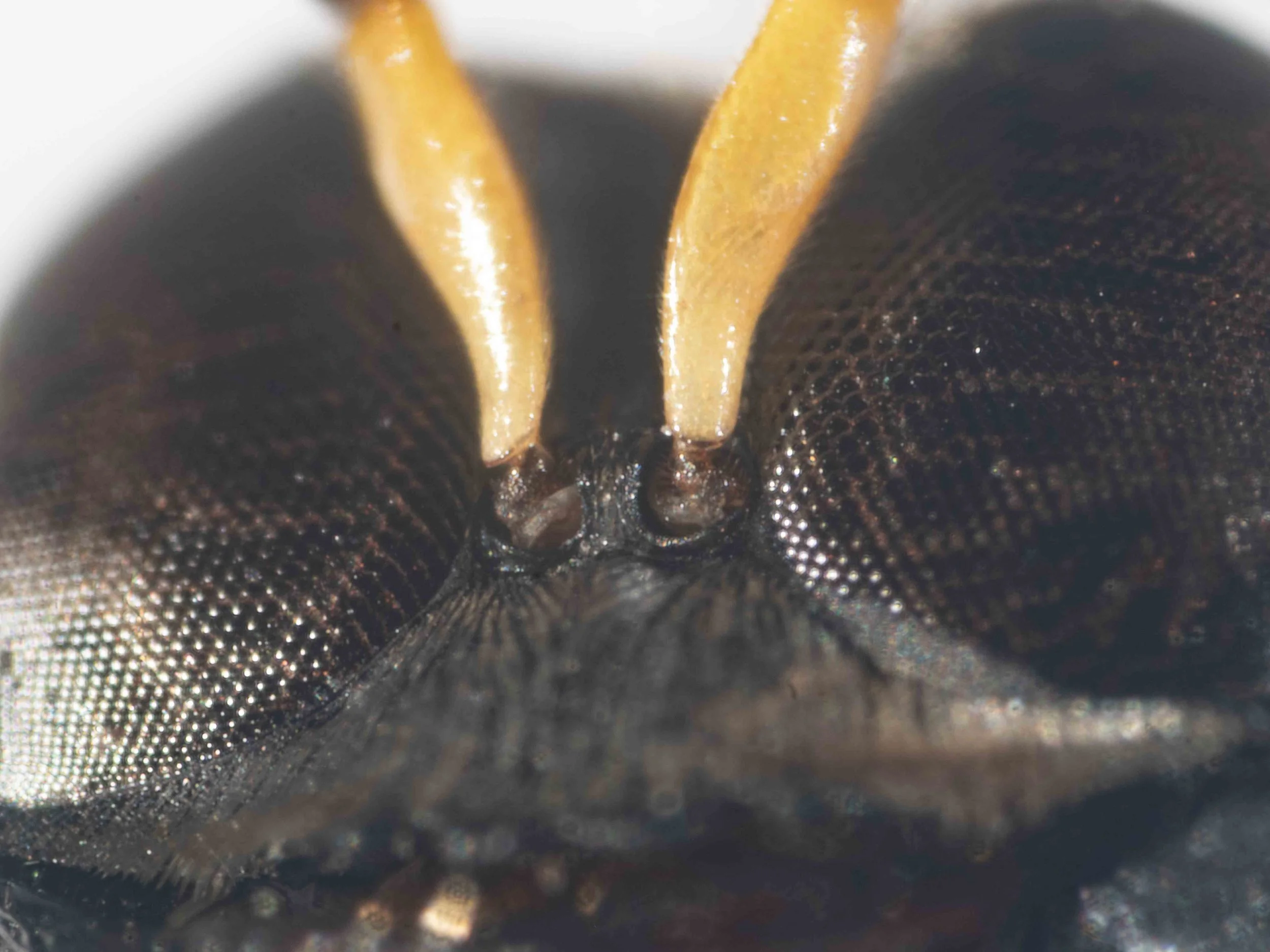
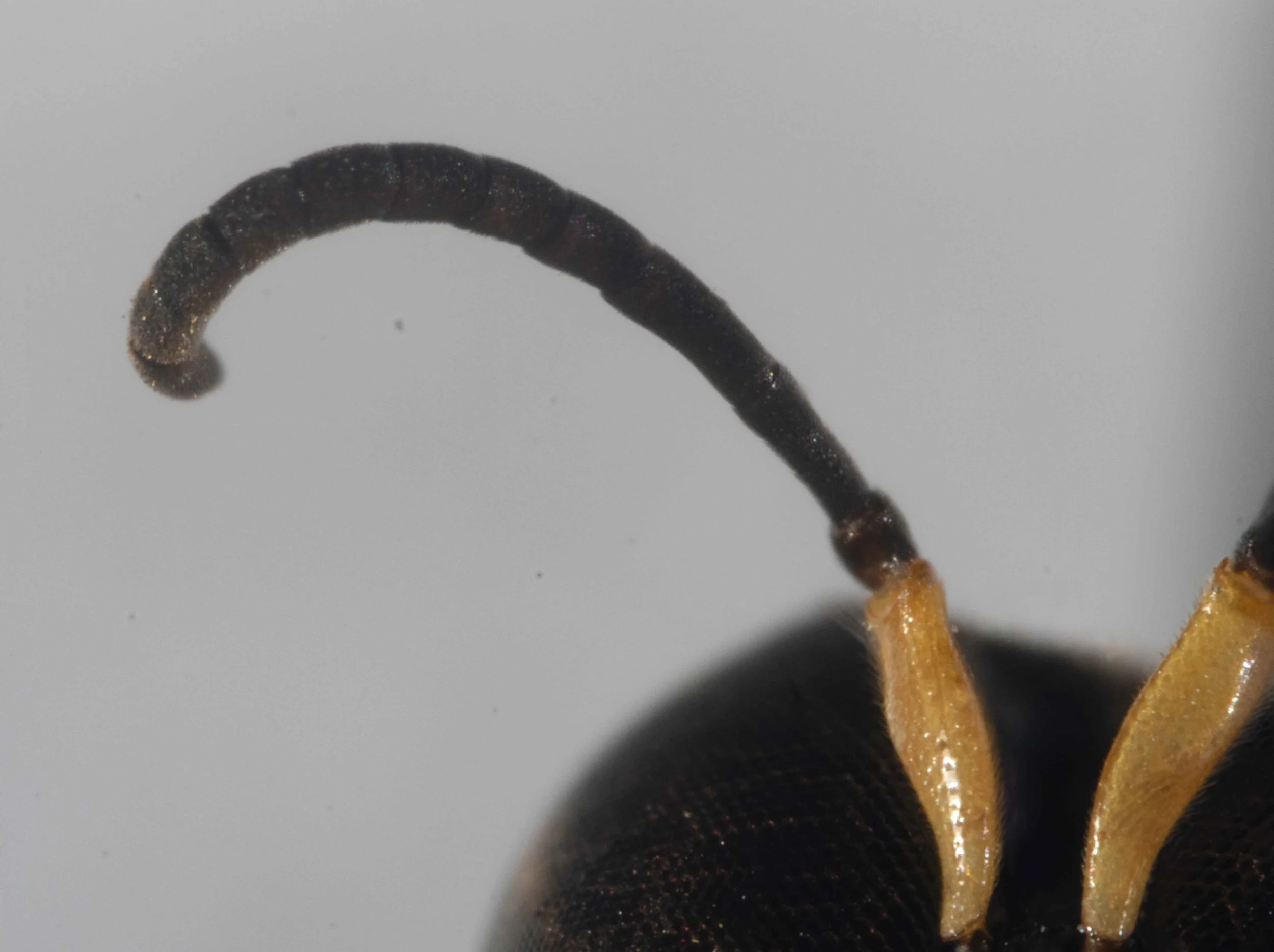
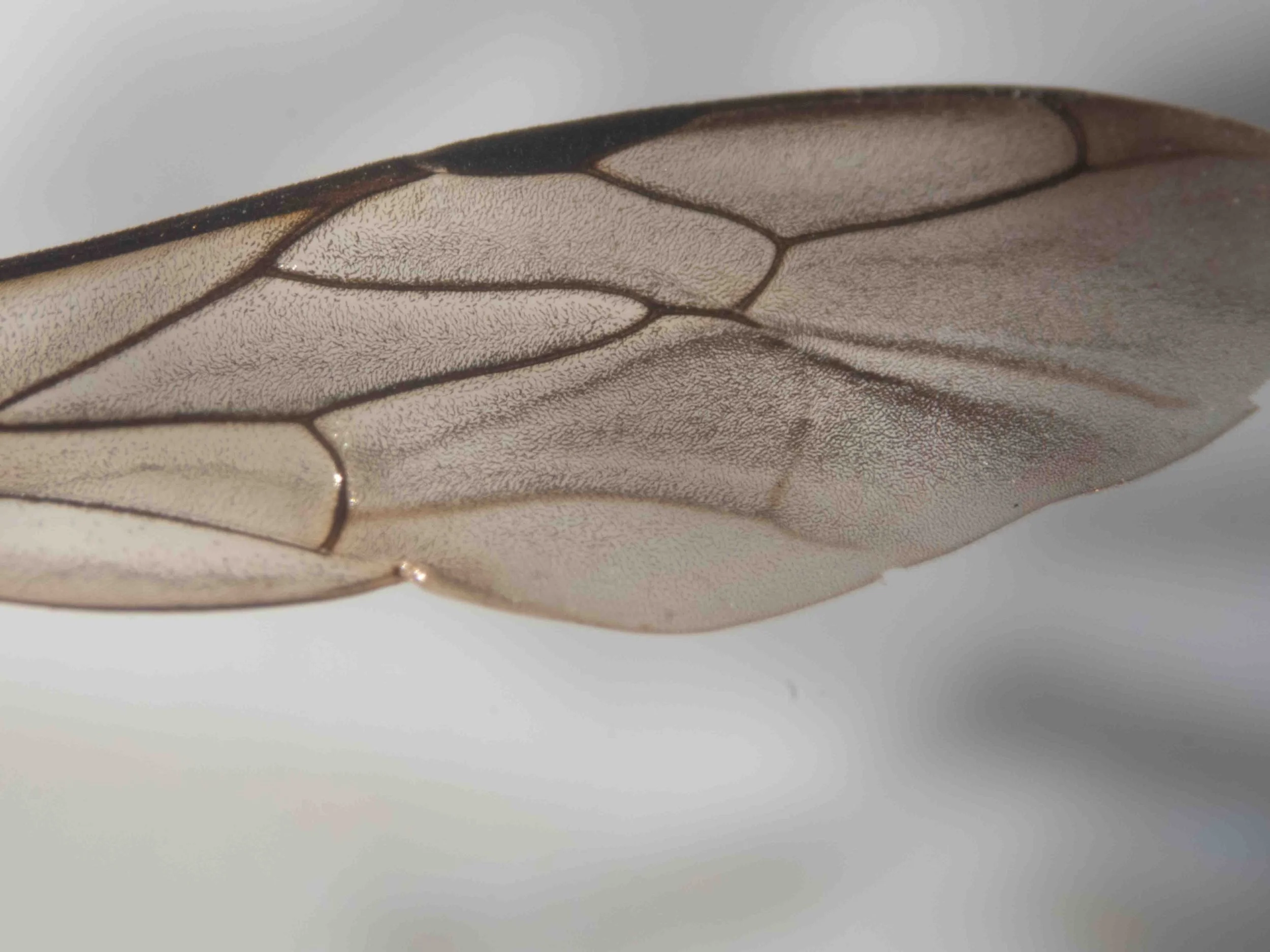
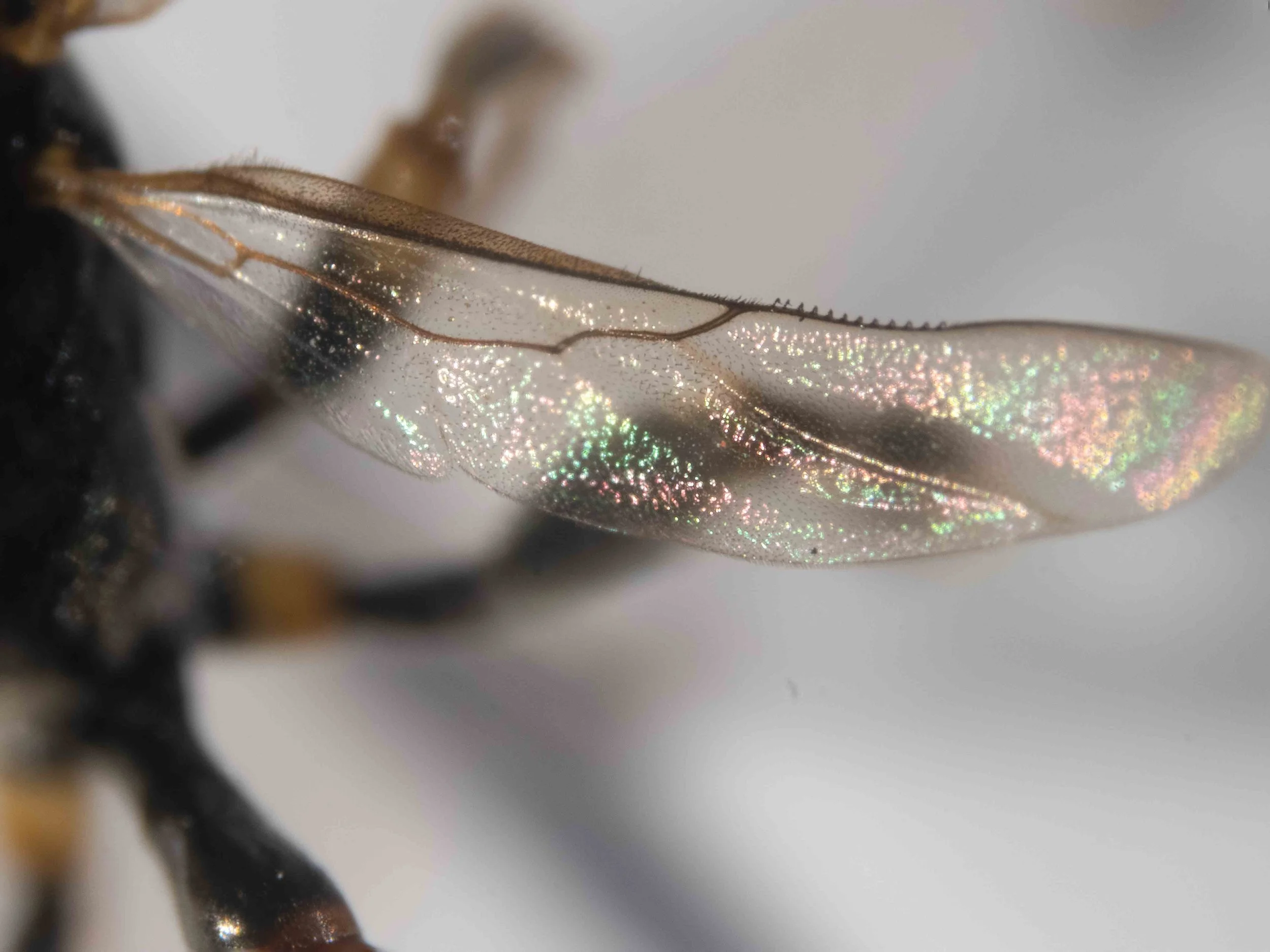
Podagritus leptospermi
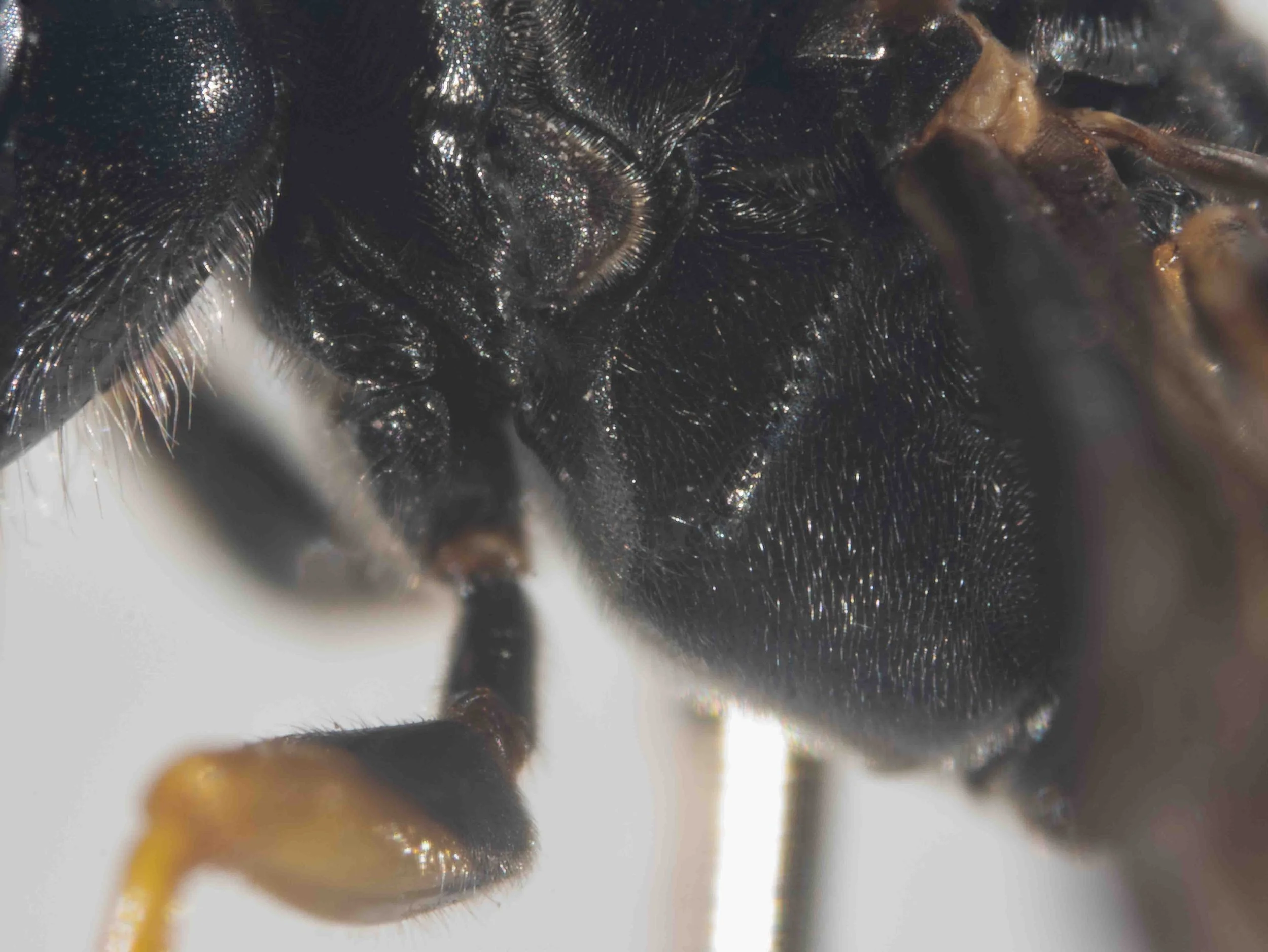
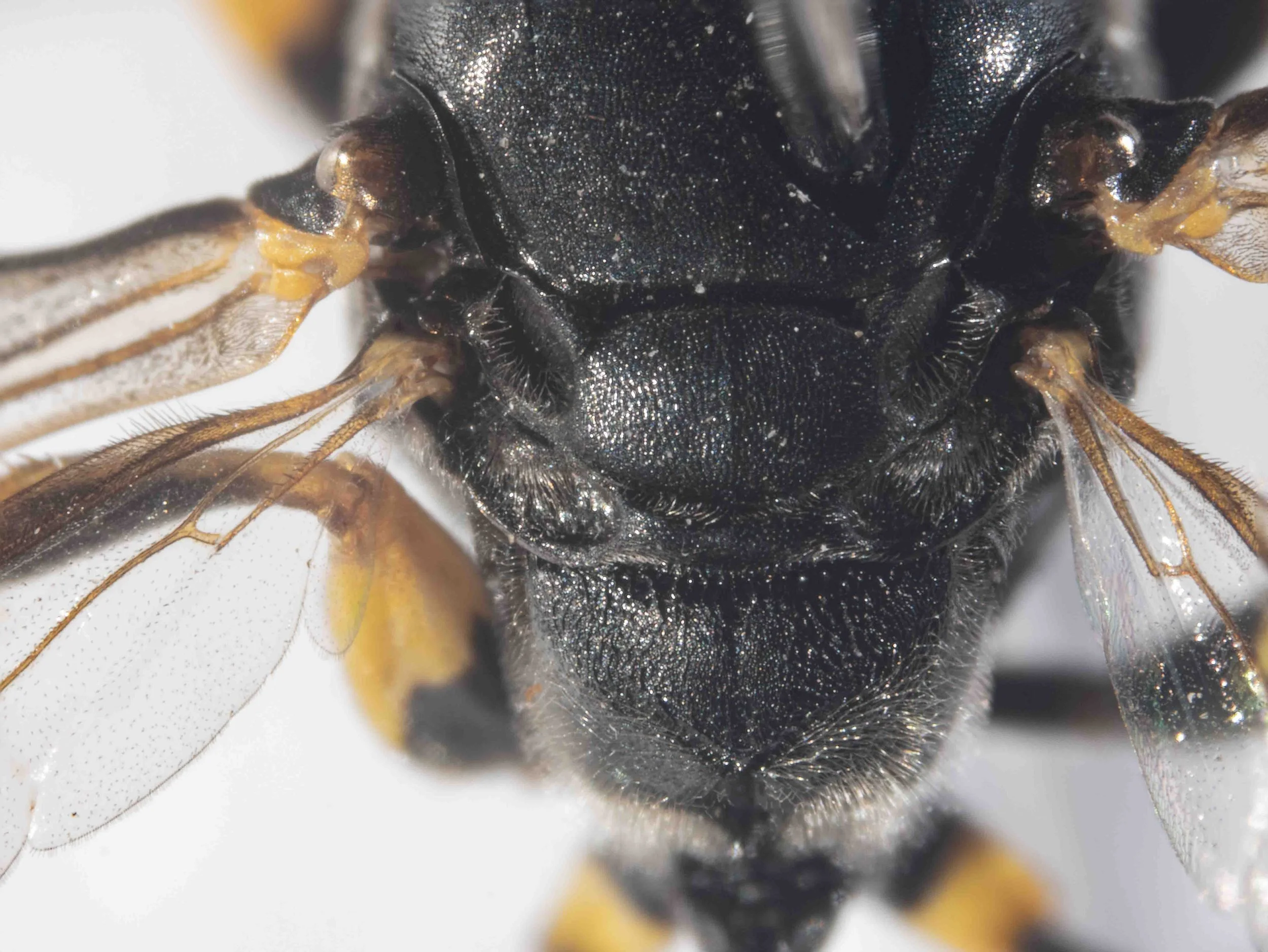
The ‘typical’ angular prepectus of the genus – consisting of two nearly perpendicular planes – is exemplified in this large species of Podagritus.
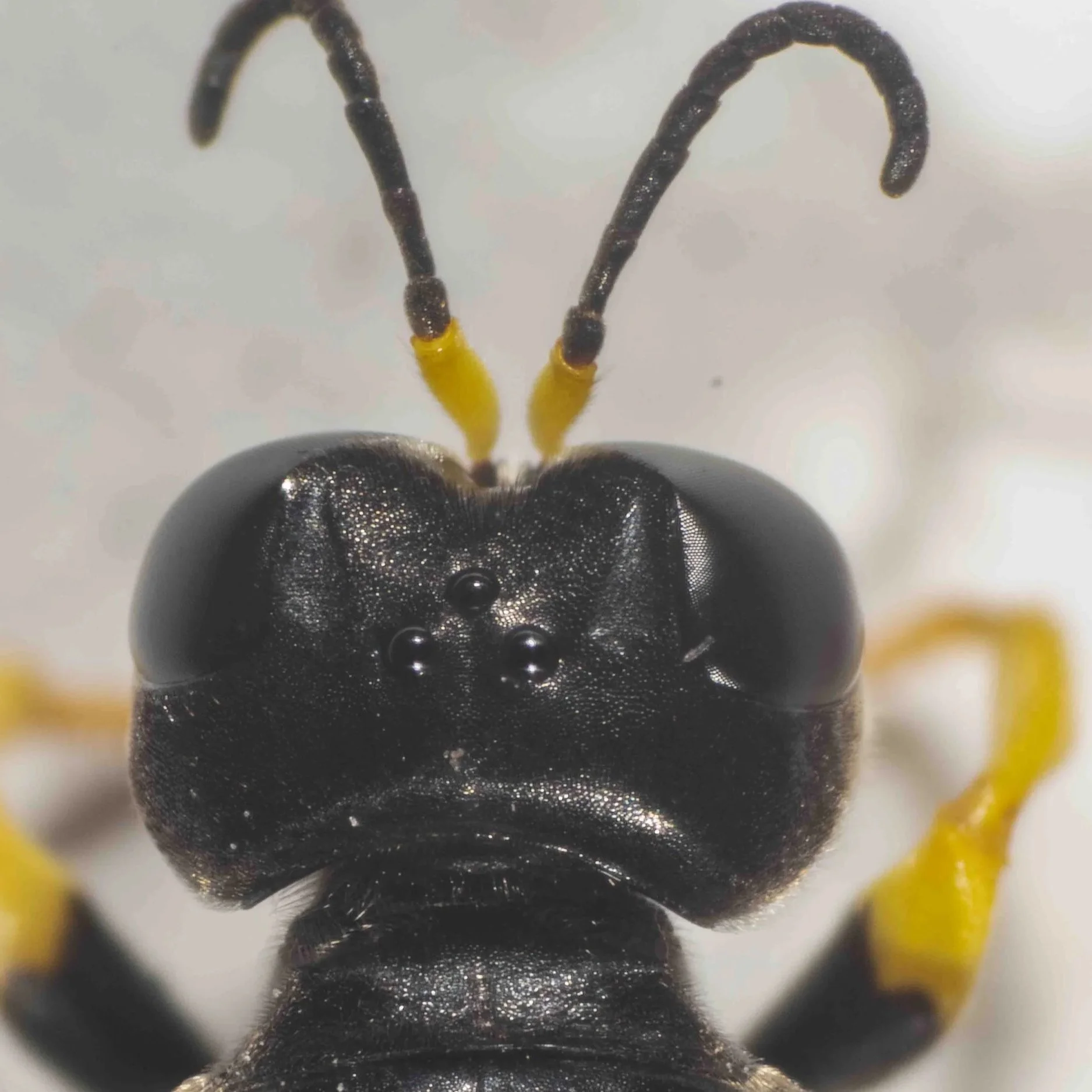
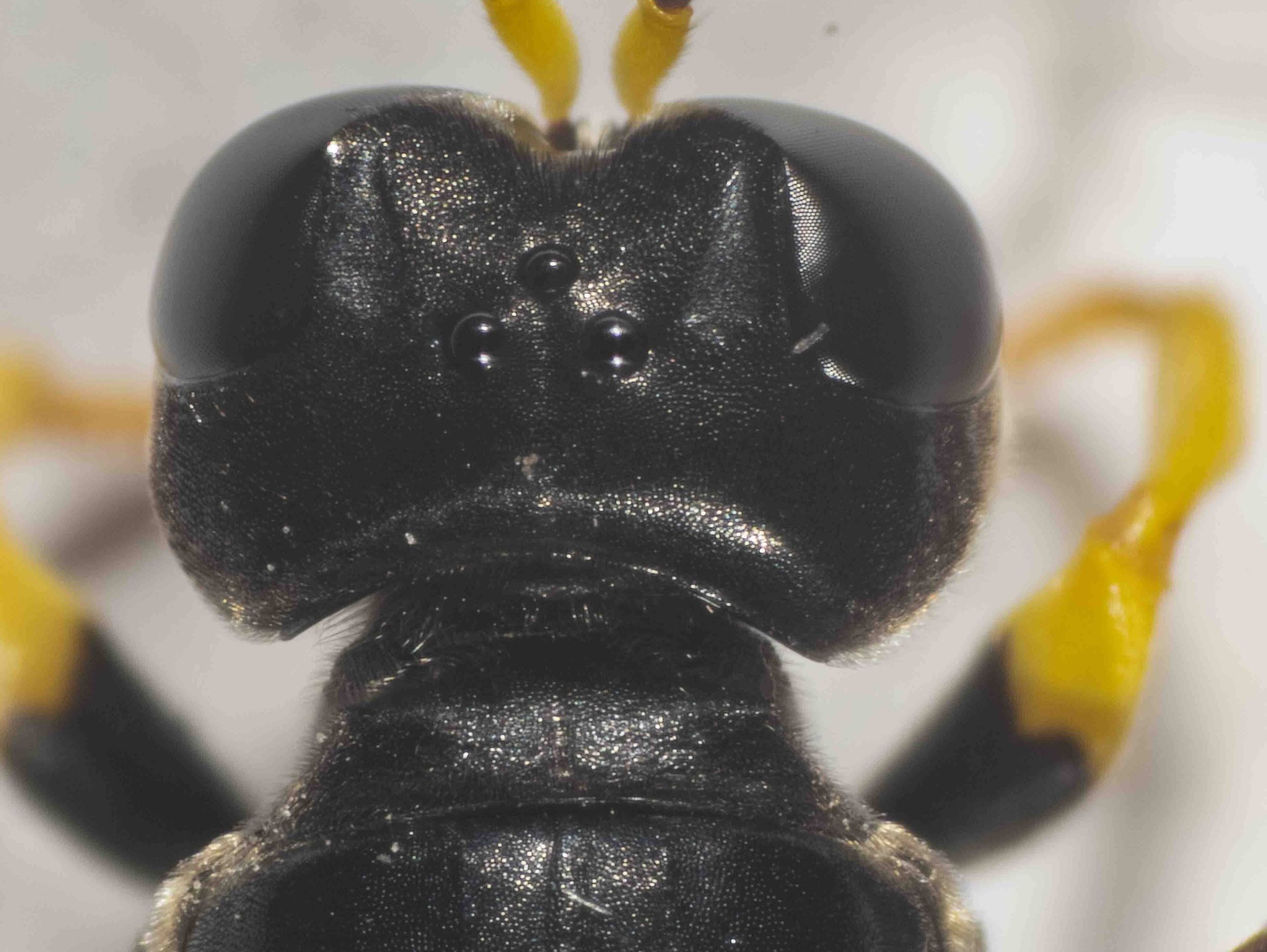
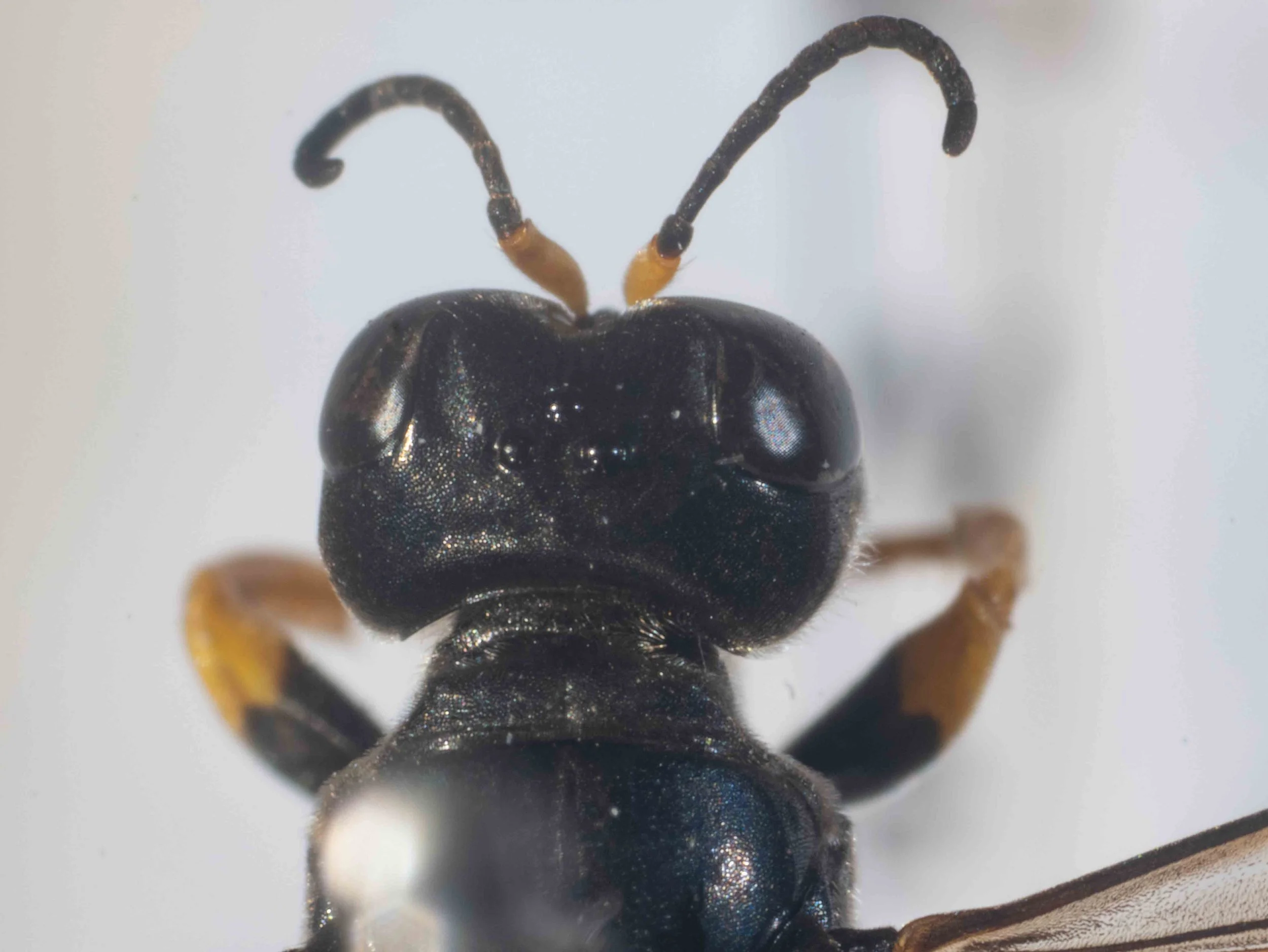
pronotal collar dorsally large
In this species the dorsal surface of the pronotum is particularly long (distance from anterior to posterior edge) and flat.
Note too that in this species there are obtuse, anterolateral ‘teeth’ and a median longitudinal groove. These characters become relevant when discriminating between species of Podagritus.
Podagritus leptospermi
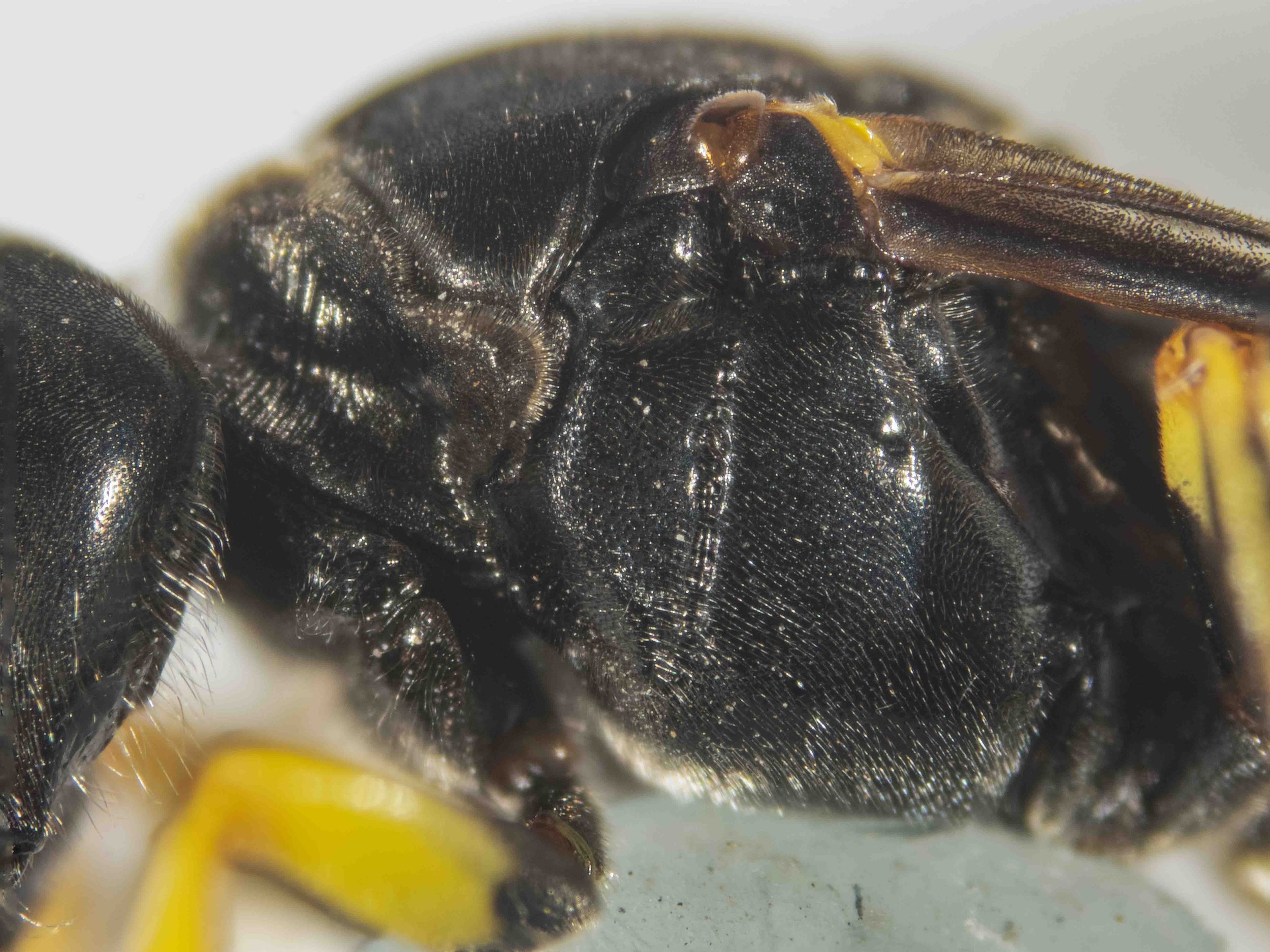
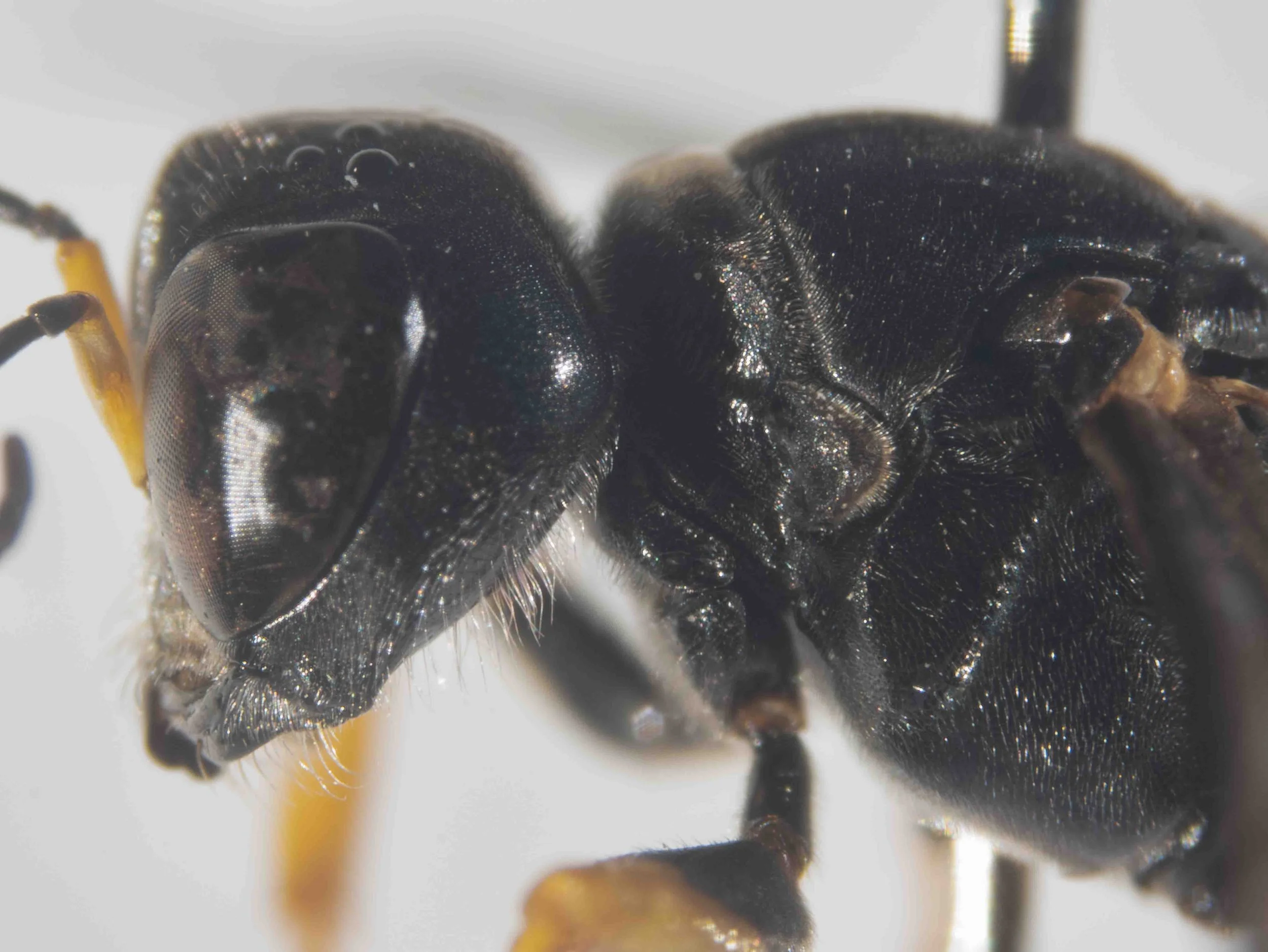
pronotal collar flat
The shape of the collar (flat or rounded) is best viewed laterally. This species also illustrates the alignment of the upper surfaces of collar and mesoscutum. They form a smooth, continuous arch.
Podagritus leptospermi
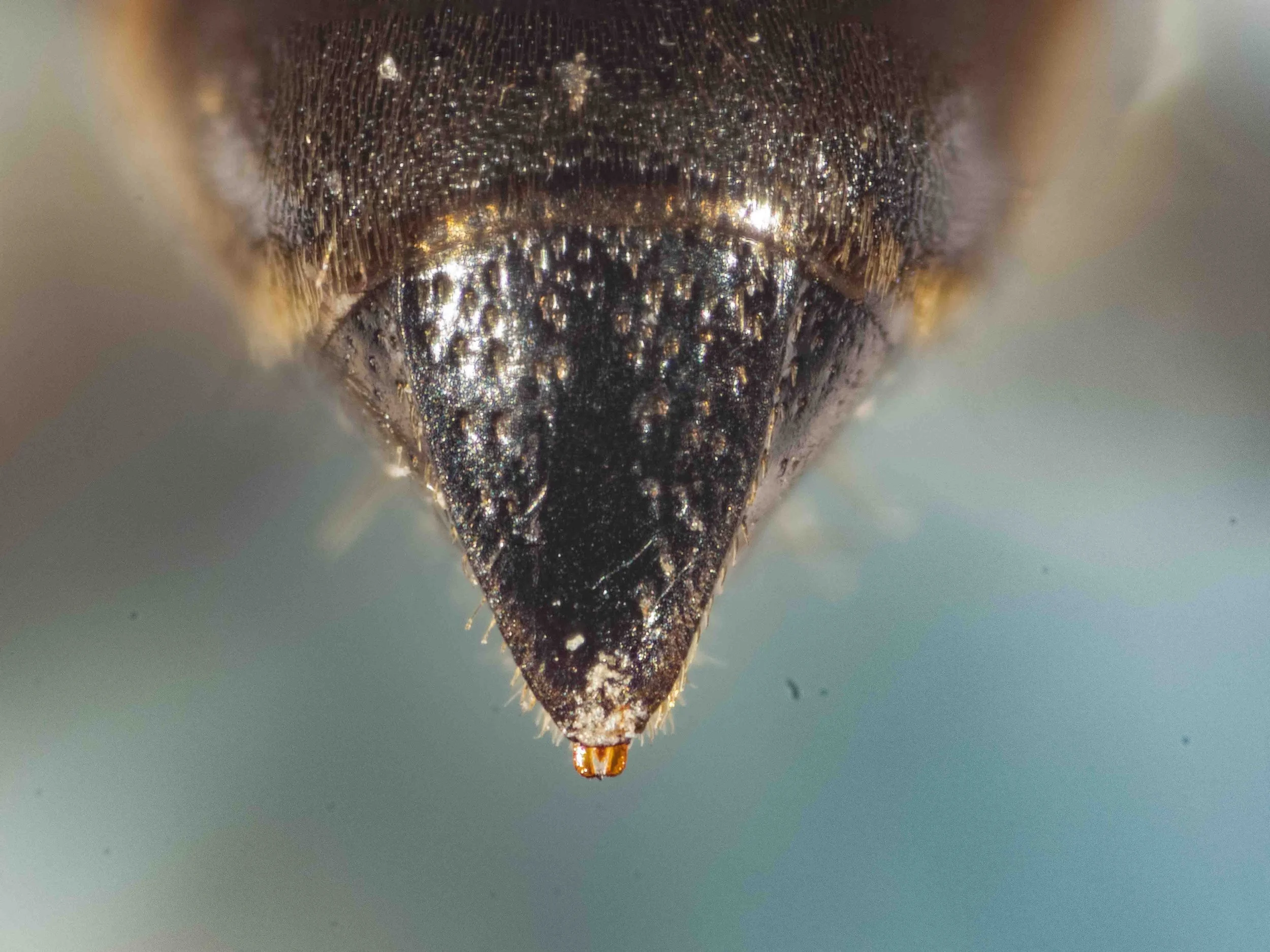
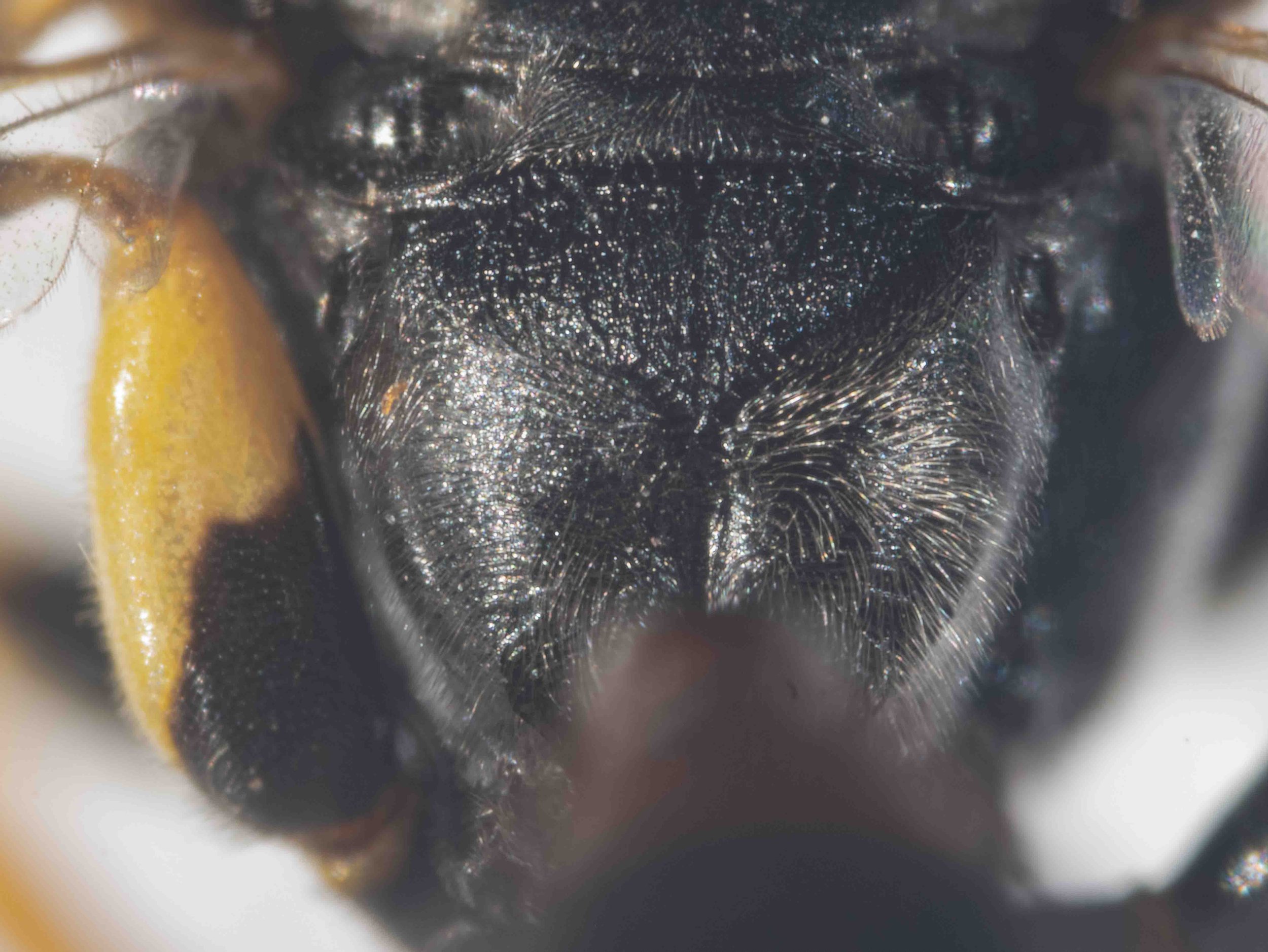
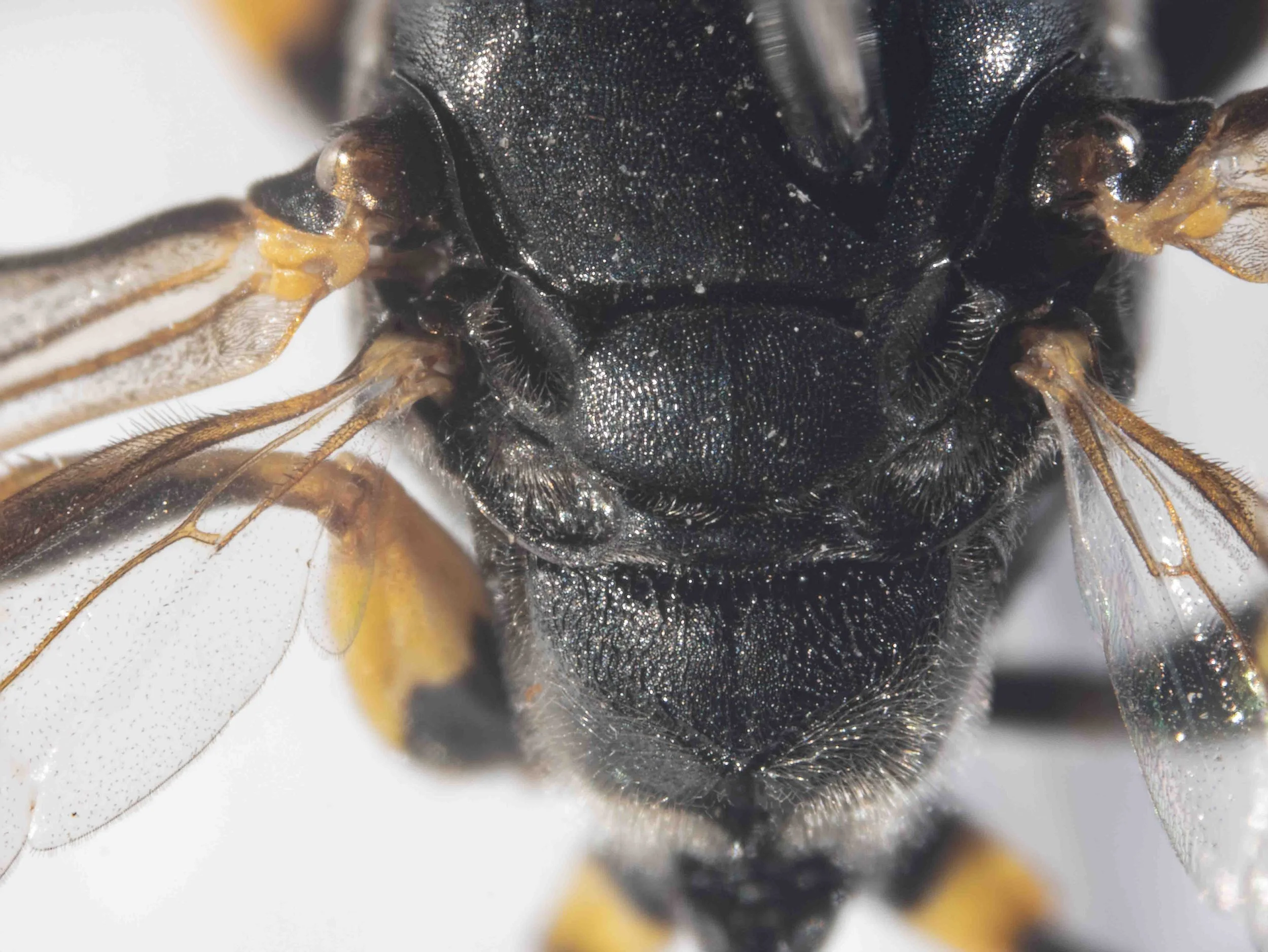
The size and spacing of the small depressions (‘punctures’ or ‘punctations, depending upon the author) often differs between species. So too does the overall shape of the plate, including the apex.
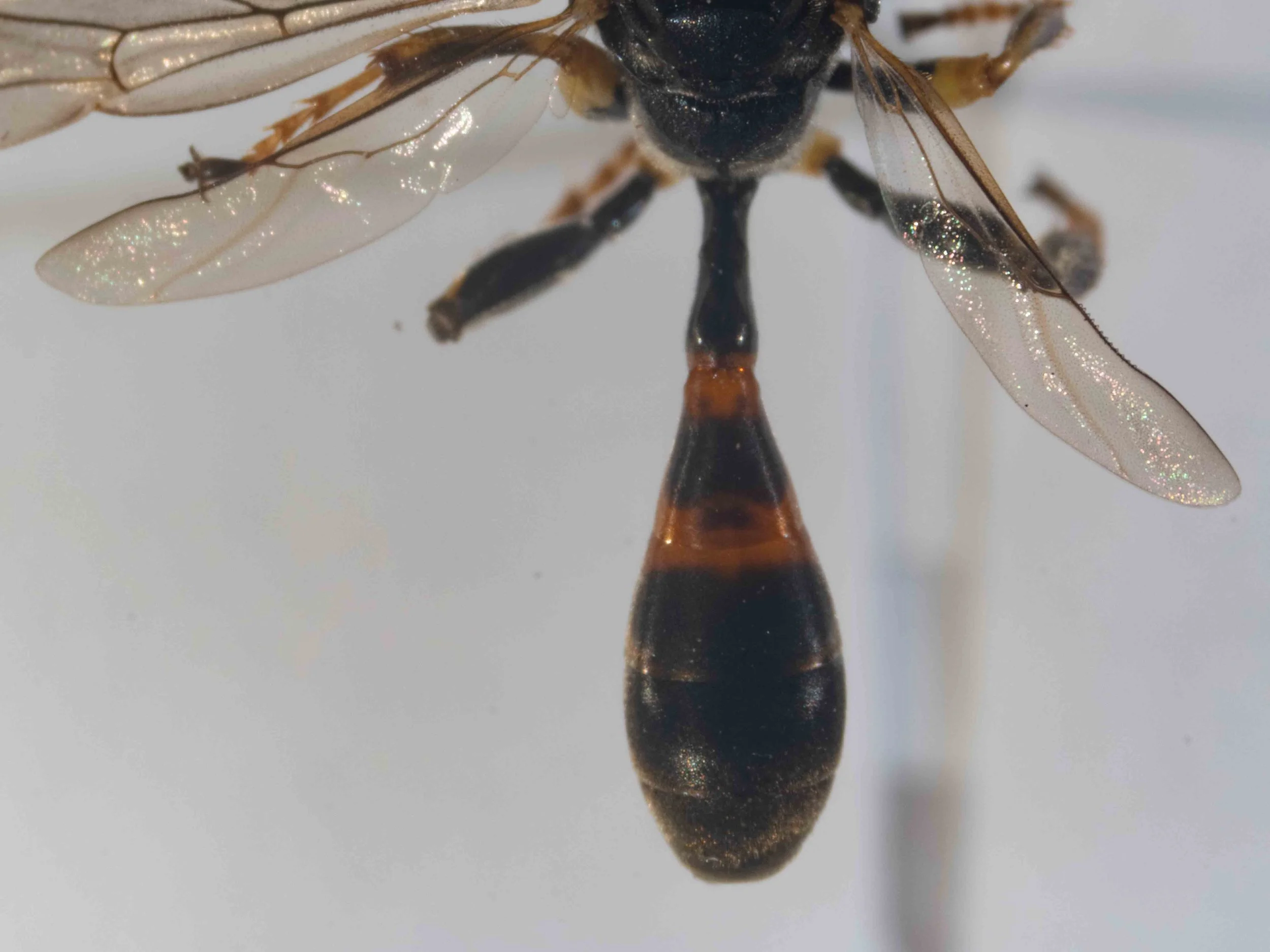
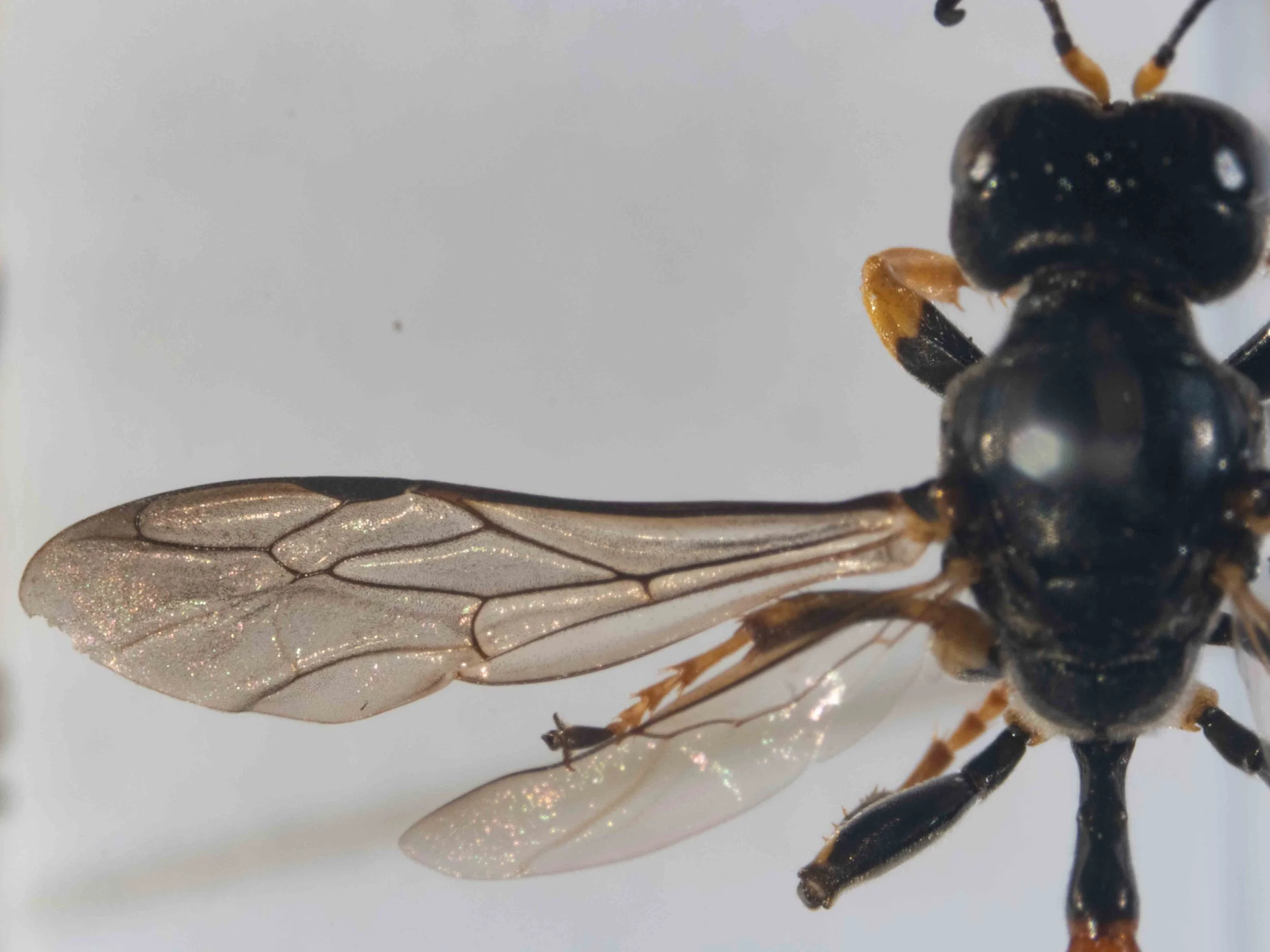
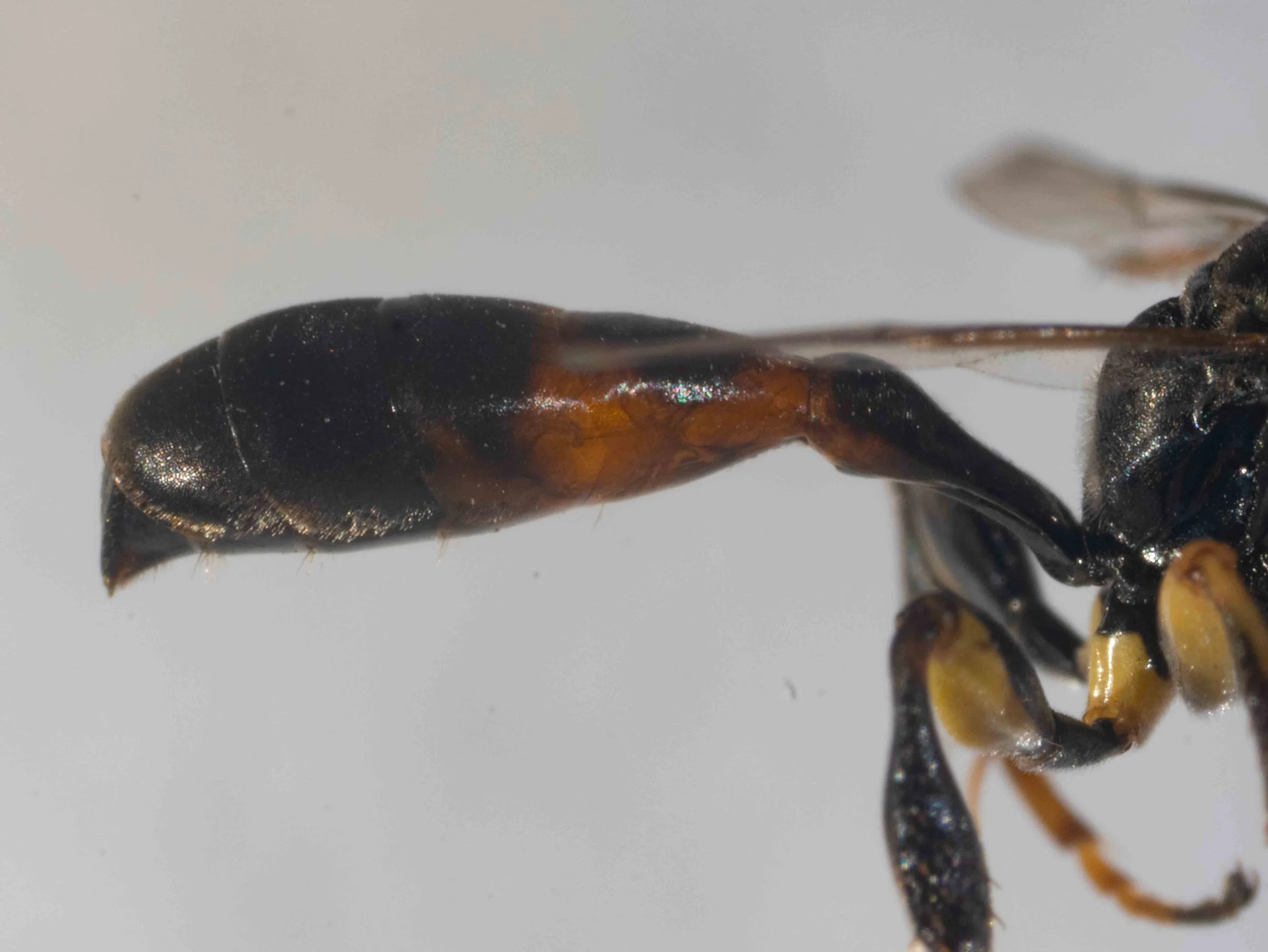
Gaster: strongly clavate.
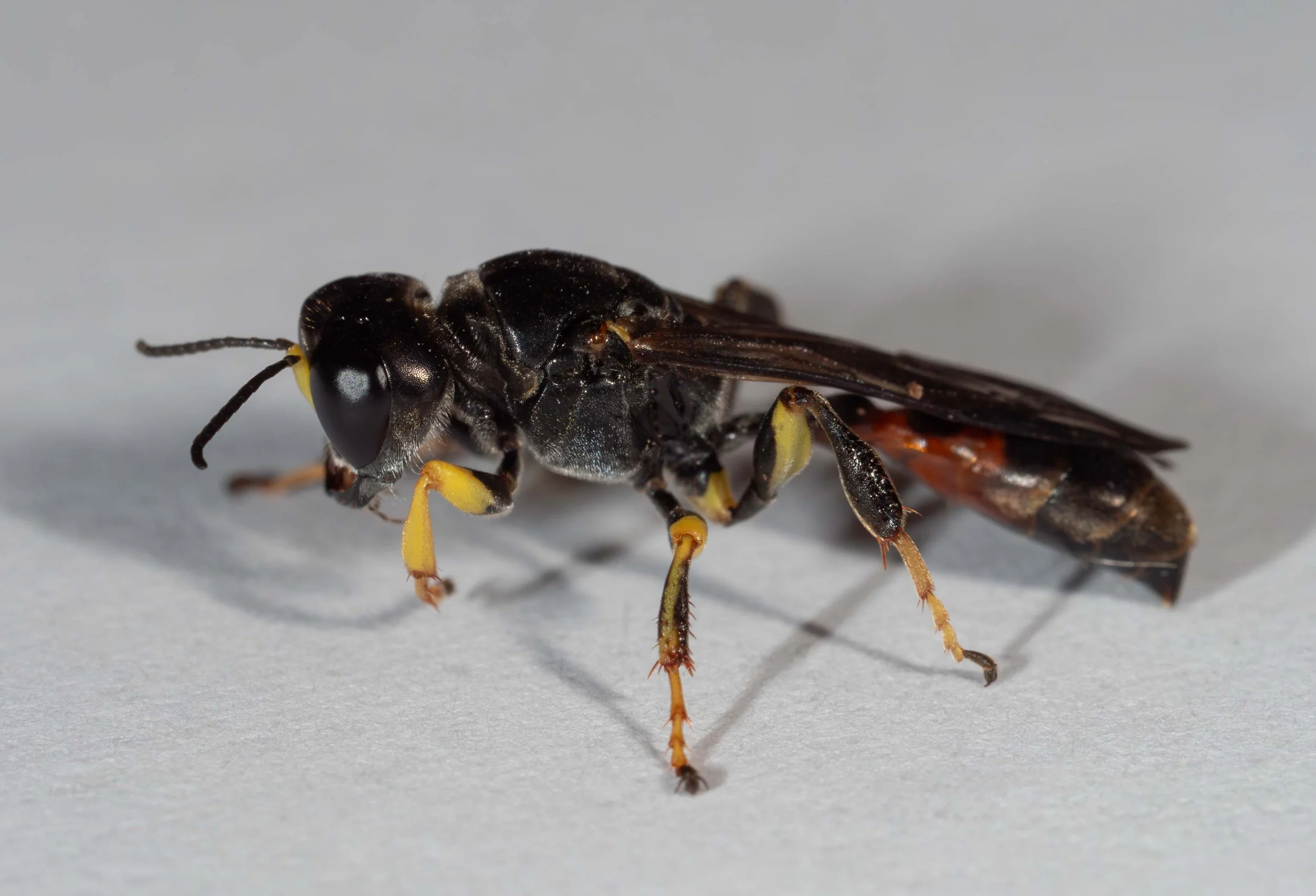
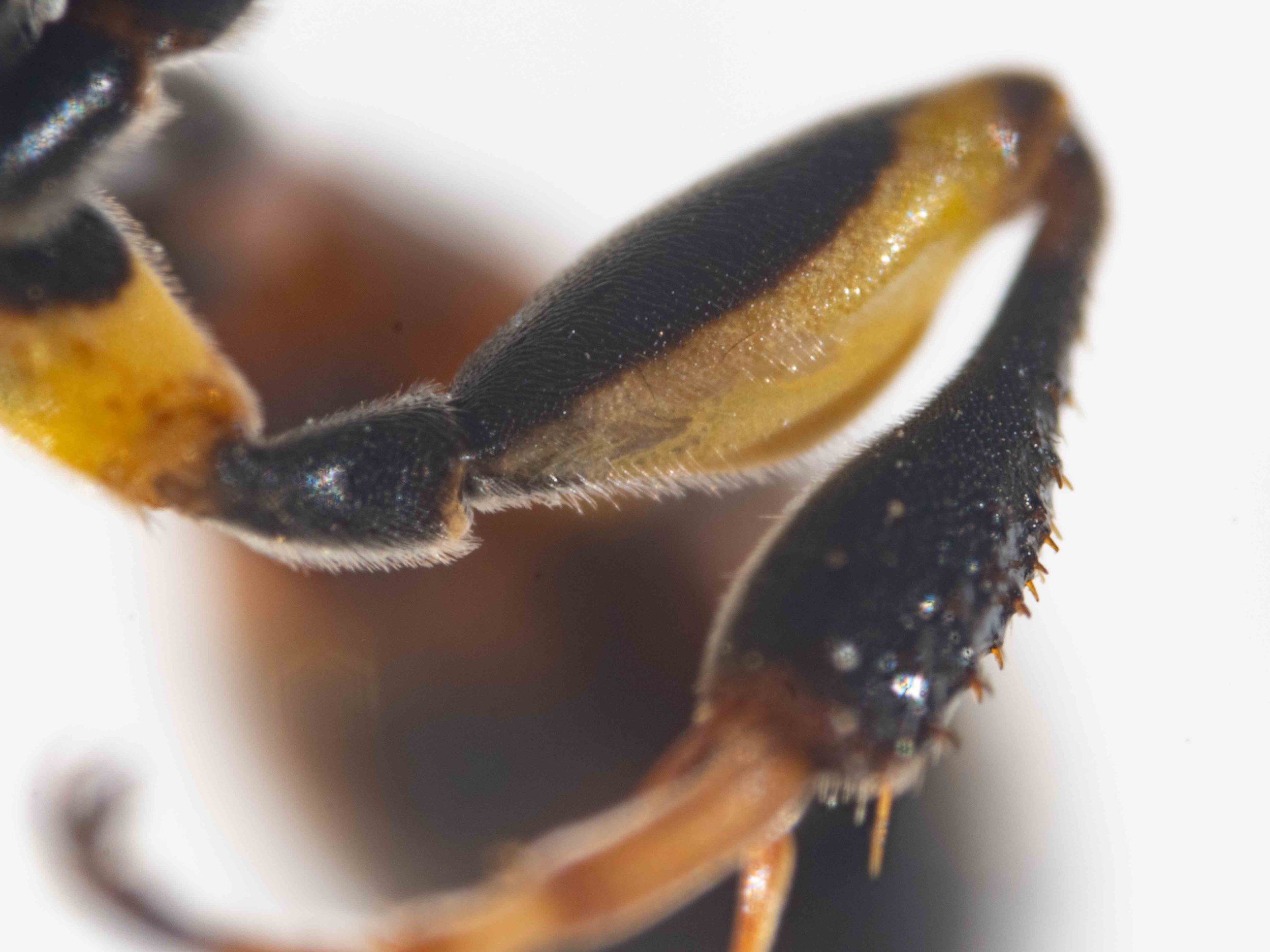
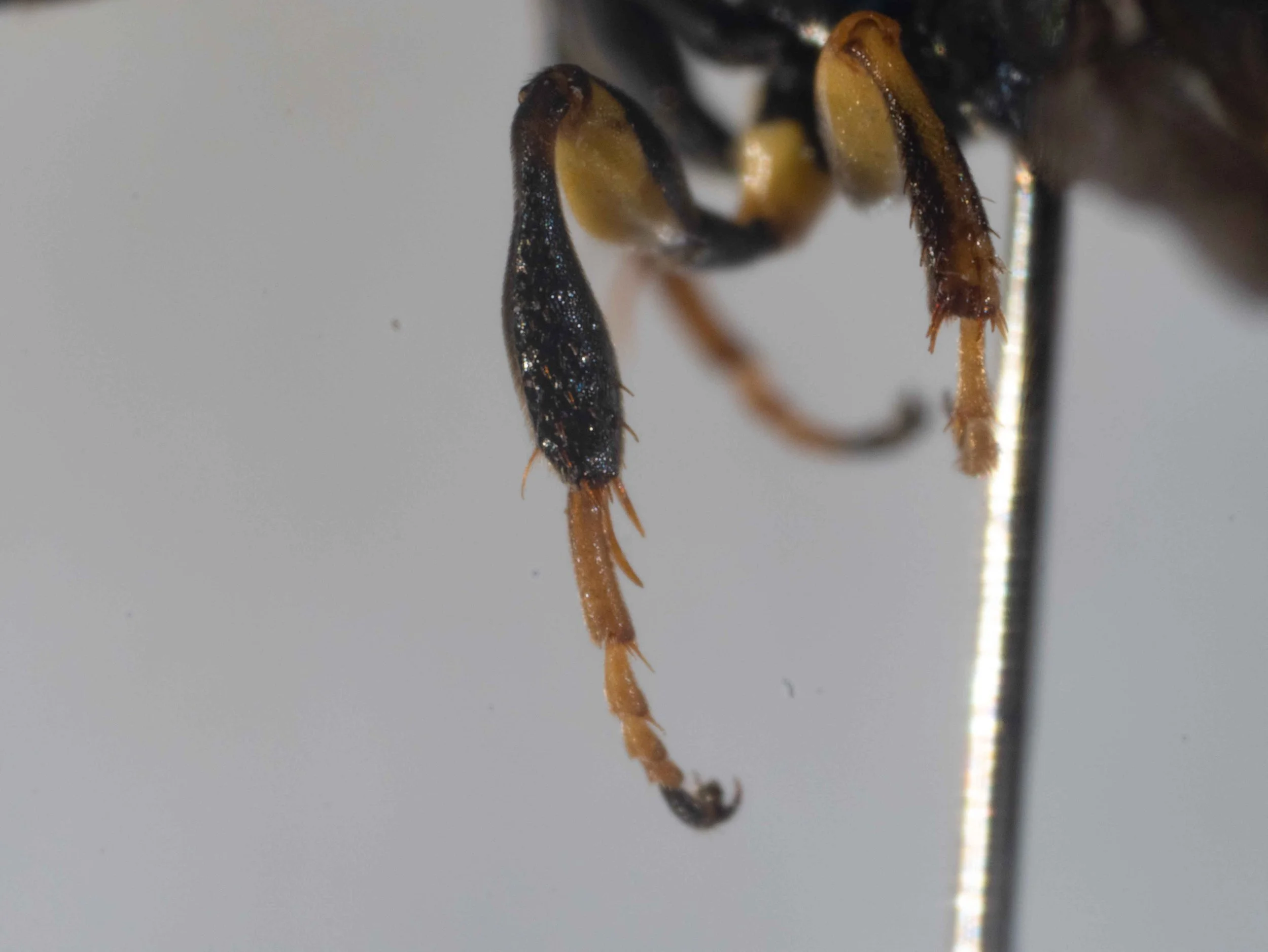
Femur 3: strongly depressed ventral surface; broadly yellow.
Pronotal lobe: dark.
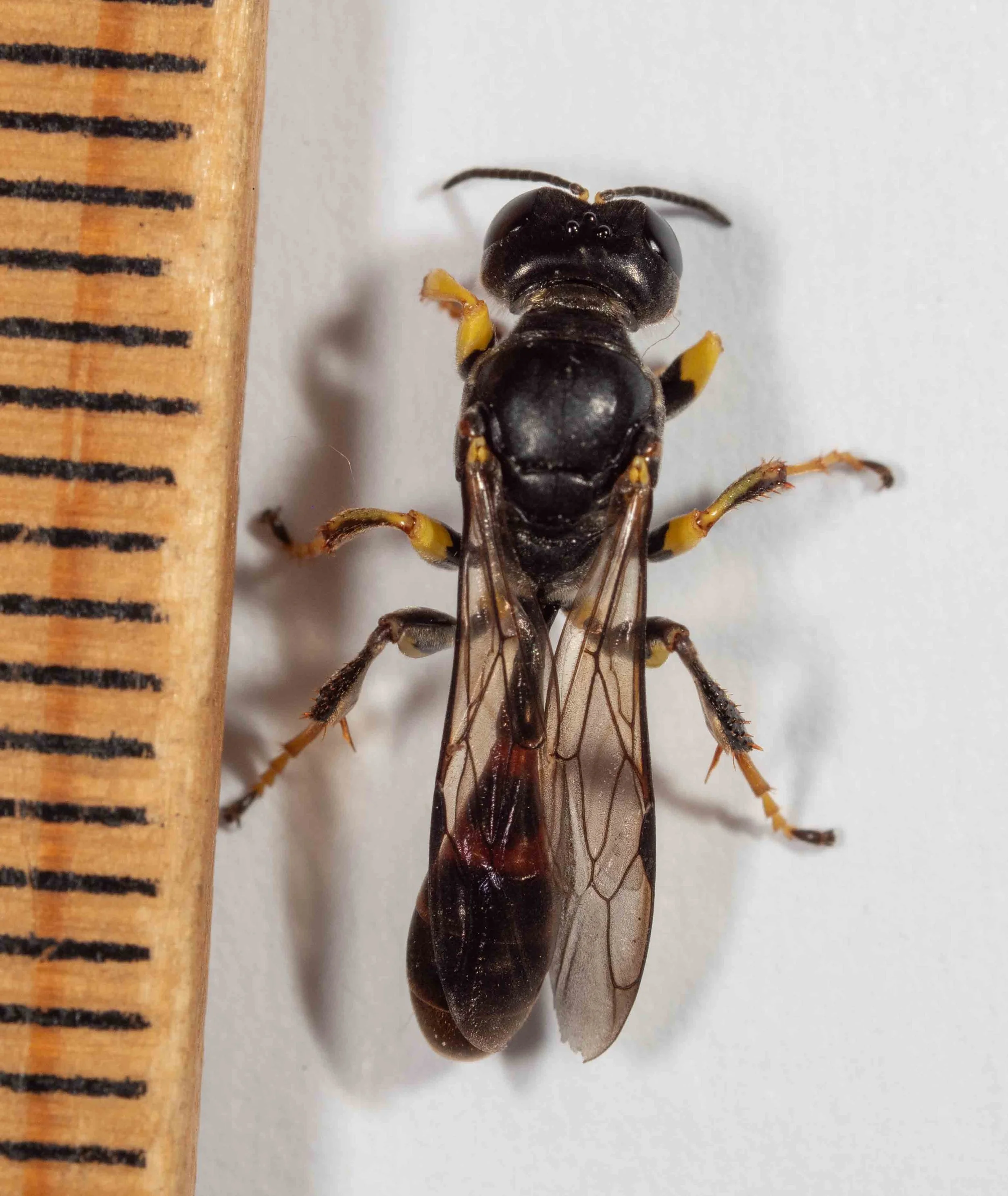
Leg 1: femur apical half yellow; tibia yellow
Leg 3: tibia entirely black; tarsi yellow
Gaster: strongly clavate; widest in middle of T4.
Femur 3: strongly depressed ventral surface; broadly yellow.
Key step 1: Metanotum flat or slightly convex. Scutellum not prominent at the posterior angles.
Key step 5: Enclosure rough, irregularly sculpted, visibly limited posteriorly by a groove.
Key step 5: Propodeal enclosure: dull, rough-coriaceous, bisected by a well-defined longitudinal groove, and separated from the posterior part by an apical groove.
Propodeum beyond enclosure: strong transverse ridges in the apical part of the middle segment.
Body length: 13mm