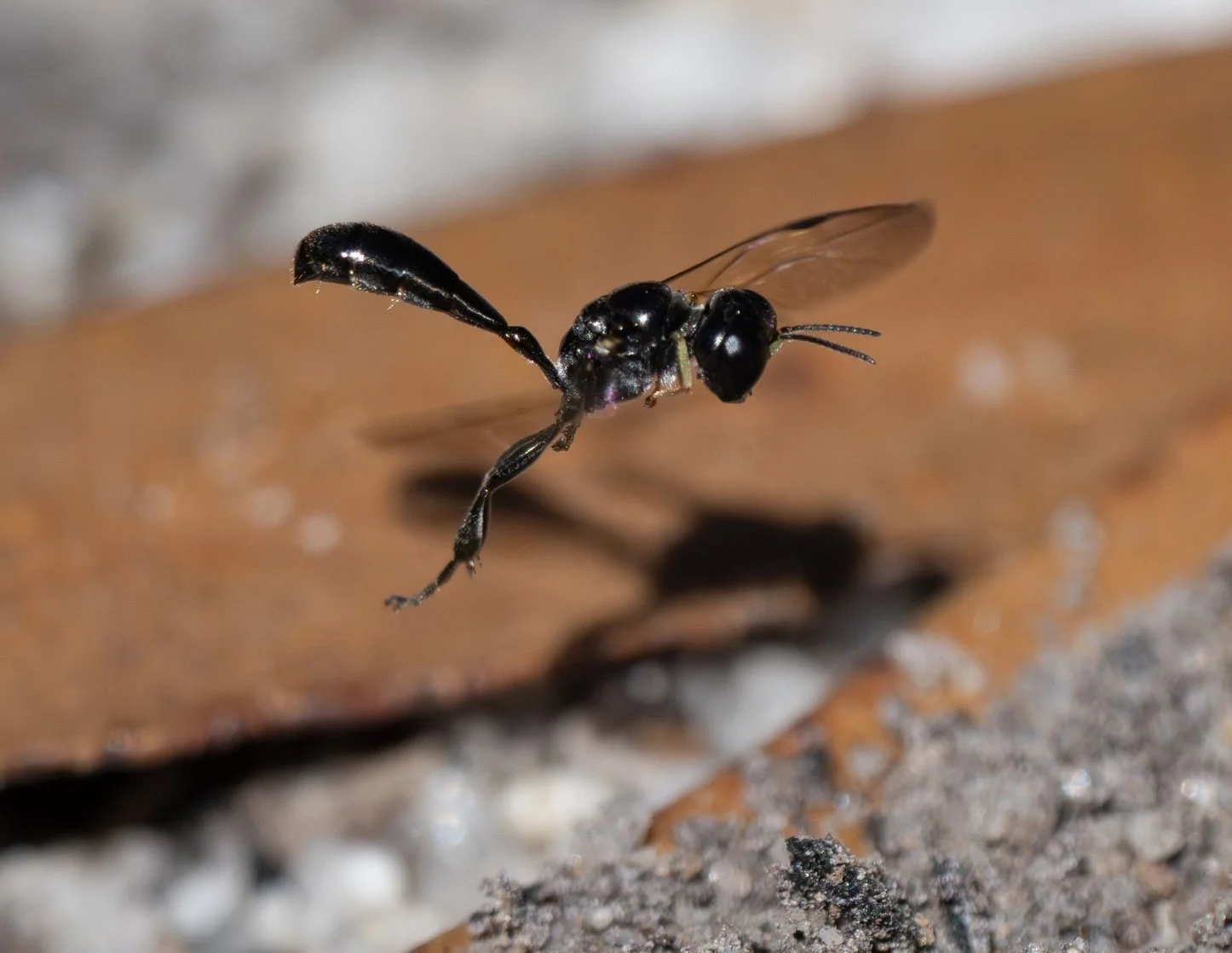
Rhopalum coriolum (Crabronini)
Workbook
In spring of 2022 we discovered these small wasps nesting in a patch of well-packed coarse sand. Since then we have studied their nesting habits over consecutive breeding seasons (manuscript in preparation). On this notes page I detail their morphology, make a species-level identification, and describe the previously unknown male of this species.
There are currently nearly 100 described Rhopalum species in Australia, with additional undescribed specimens in collection (Pulawski 2010). Leclercq is responsible for the majority of that work, including the most recent review and key to species (Leclercq 1997).
It is worth noting the close similarity between Rhopalum and Podagritus. For a more detailed discussion of this, see my notes on Podagritus:
Rhopalum are small wasps, typically black with relatively few colour markings (although there are exceptions, including orange legs and metasoma). Species distinctions largely rely upon subtle differences in shape (e.g. pronotal angles; clypeus margin; interantennal space), although there are more obvious clues too (e.g. head width; metasoma shape).
The Malaise traps we have set up in 2026 as part of the GMP are helping uncover our local Rhopalum diversity.
During 2022 and 2023 I collected five Rhopalum specimens, all from a nesting site in our local forest.
Specimens: 2209A (female); 2308A (female); 2309C (female); 2305A (male); 2305B (male). 2308A and 2305A were lodged with Museums Victoria in March 2026.
Features of Rhopalum coriolum
Our local species is an excellent match for Rhopalum coriolum, based on the original species description (Leclercq 1957) and the features presented in the most recent revision (Leclercq 1997). Importantly, the key diagnostic characters that distinguish this species from R. variitarse are evident. Comparison with images of the holotype provide further justification for referring these specimens to R. coriolum.
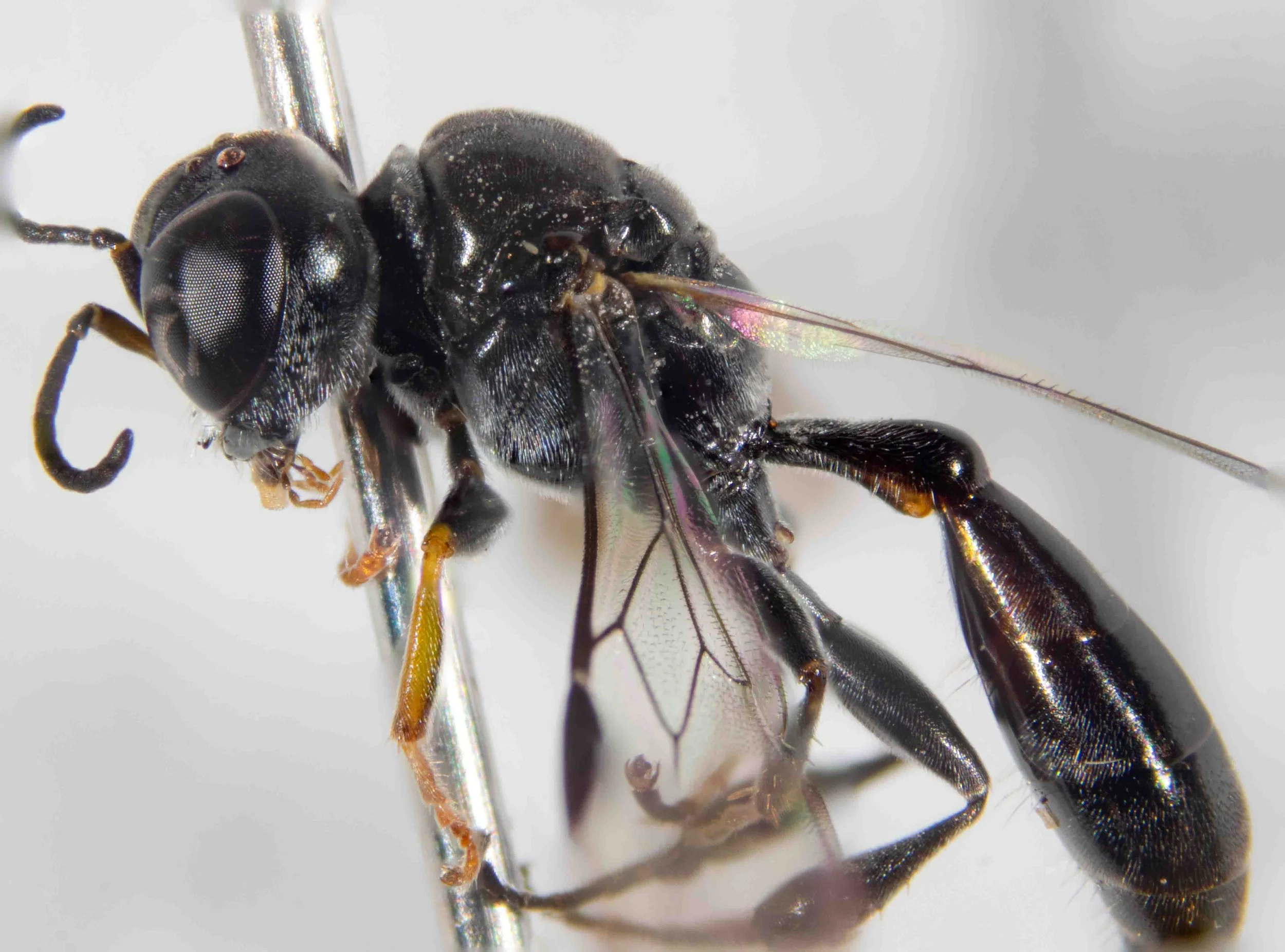
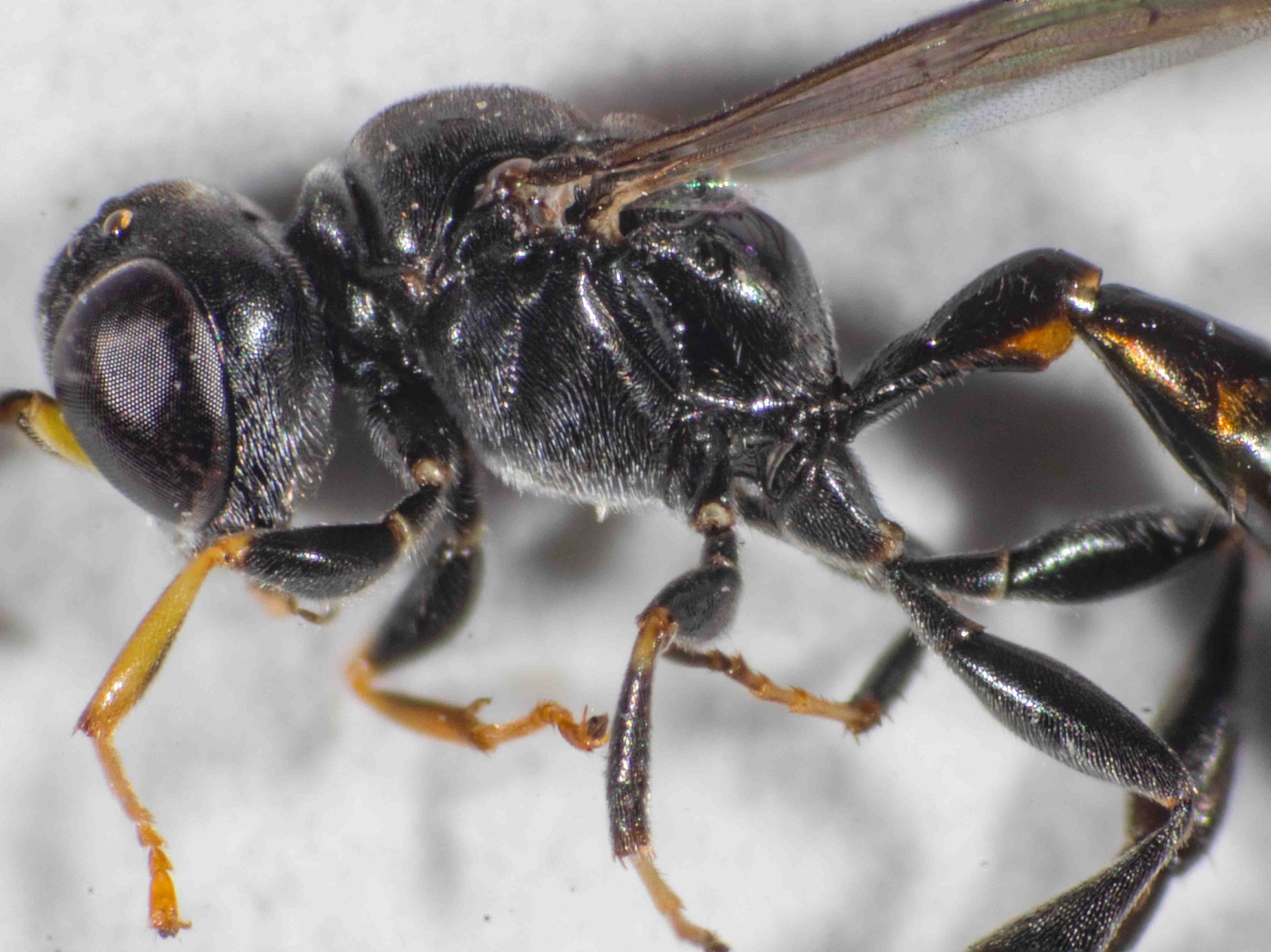
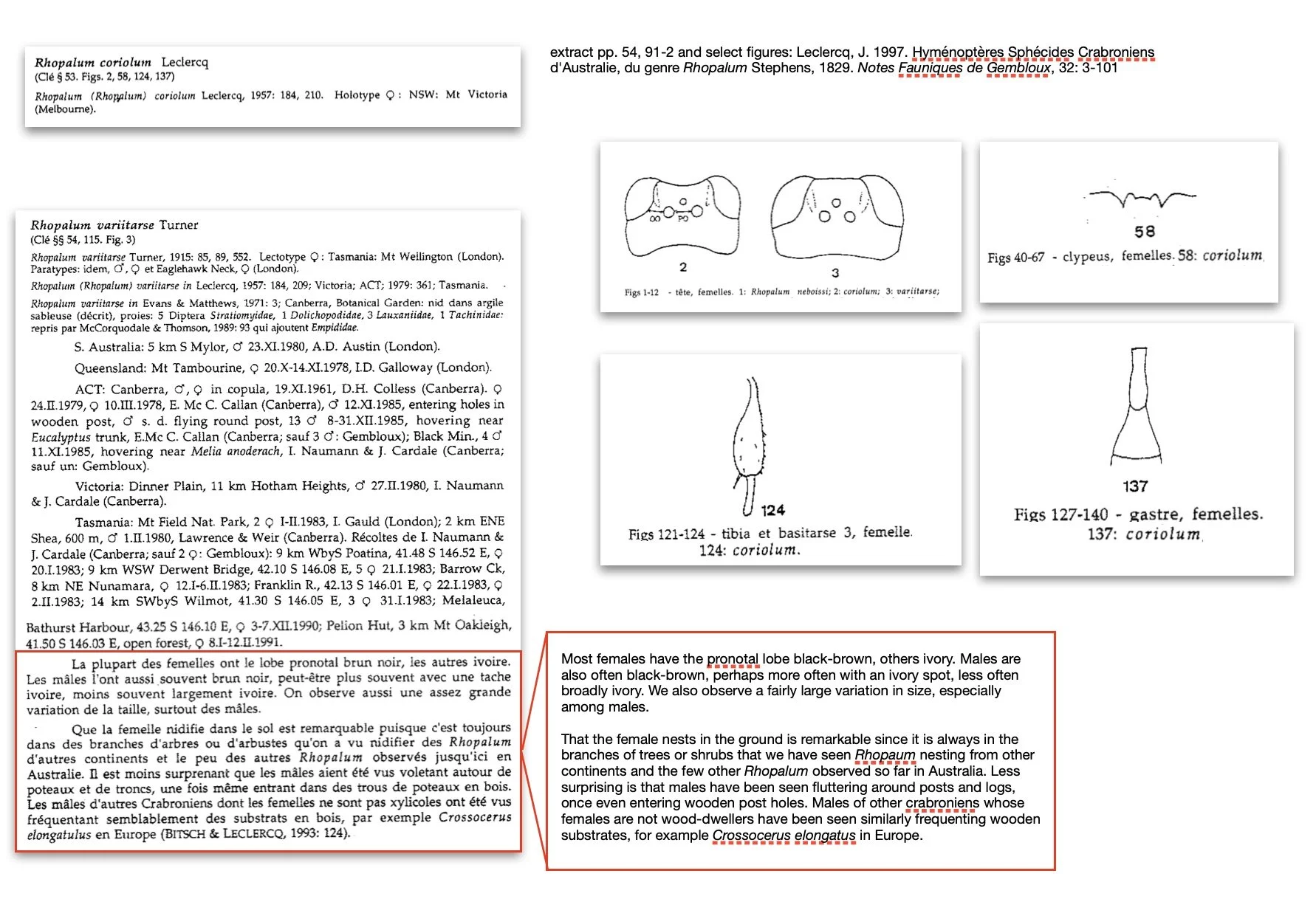
At the time of his major revision of Australian Rhopalum, Leclercq (1997) had not discovered any additional specimens beyond the female holotype. The male remained unknown. In 2022 I observed mated pairs in the field, and subsequently collected two male specimens from the same nest site. These specimens (2305A & 2305B) closely resemble the females, including in several diagnostic characters for the species.
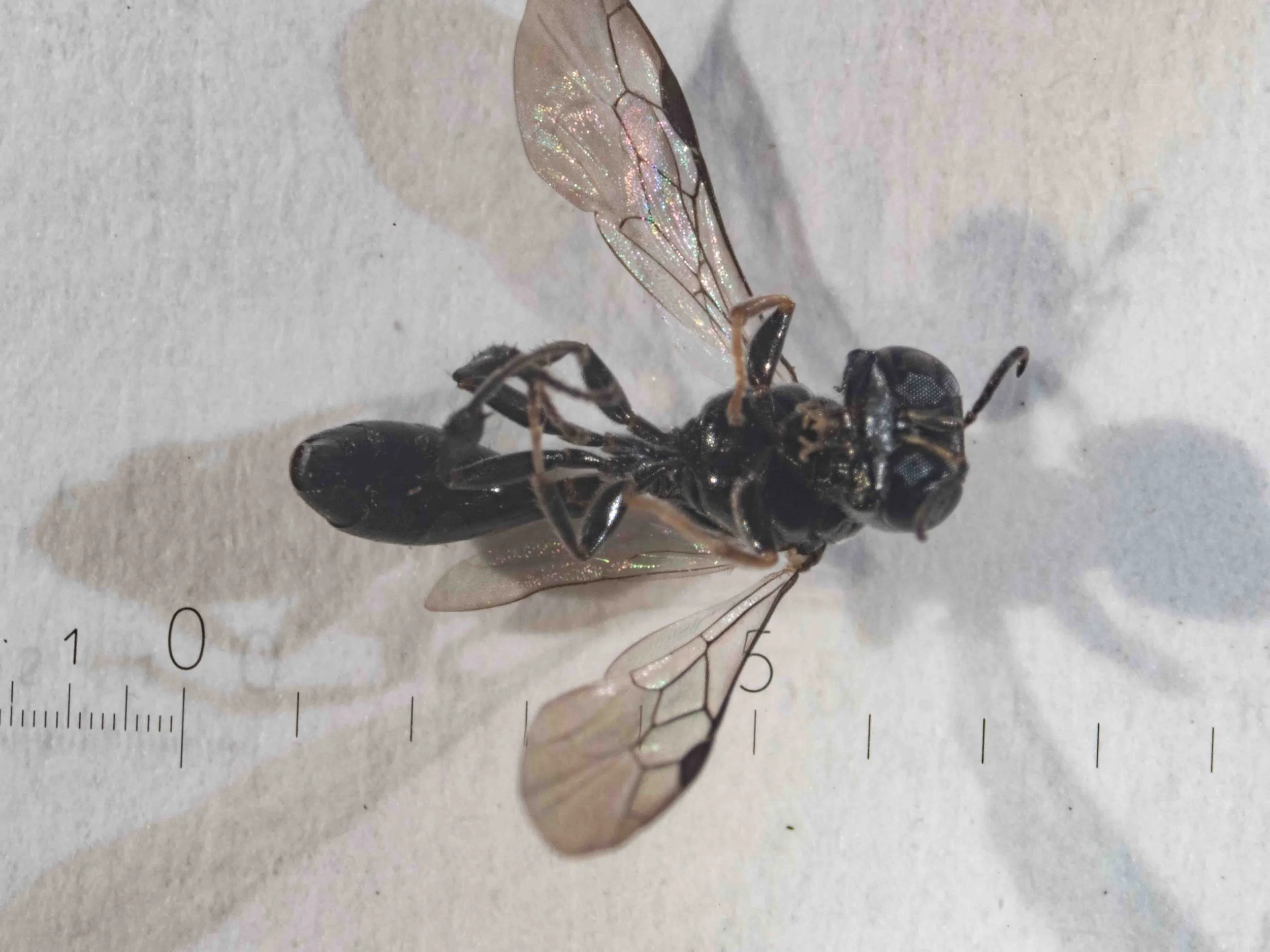
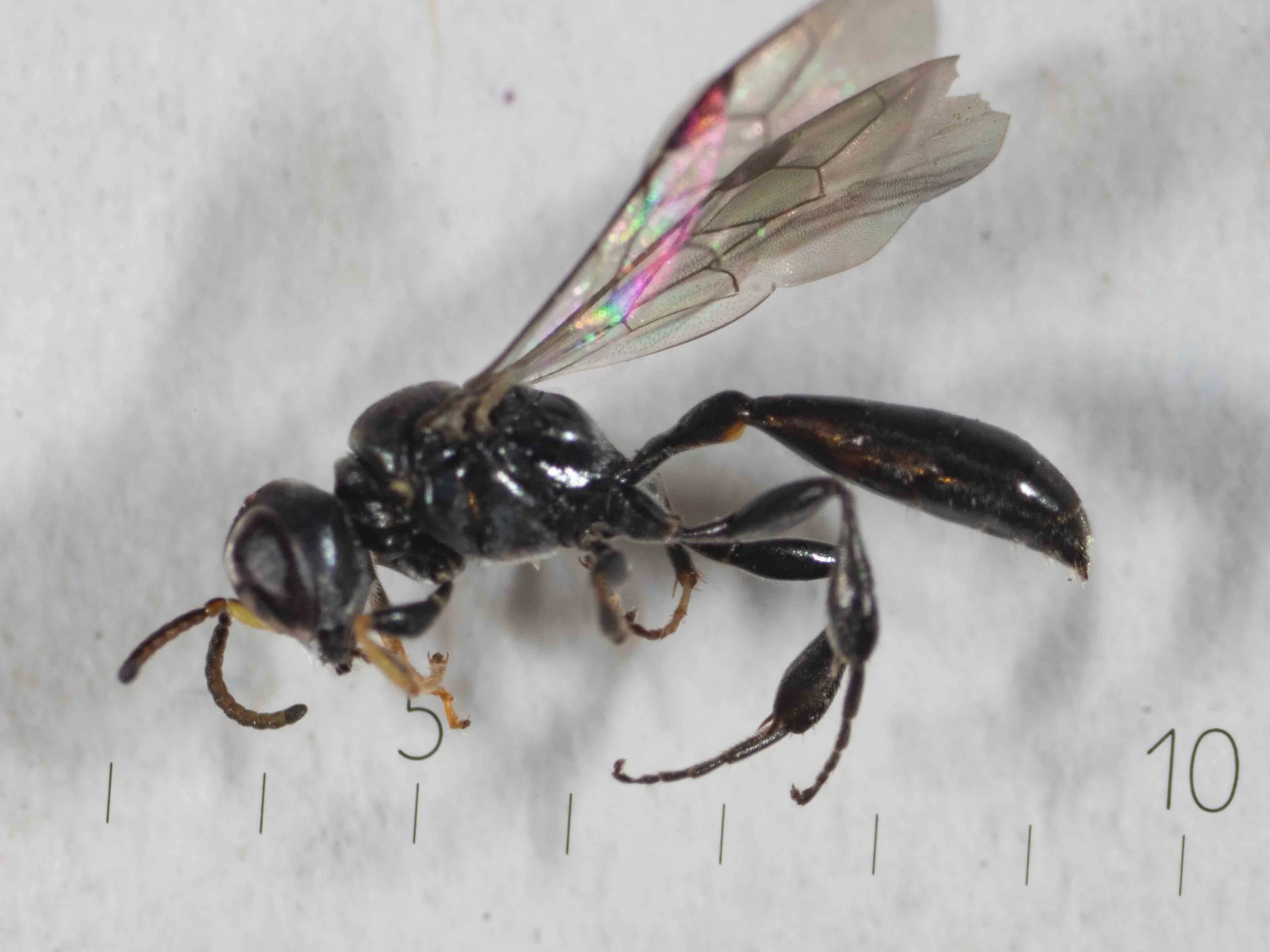
Key steps to R. coriolum
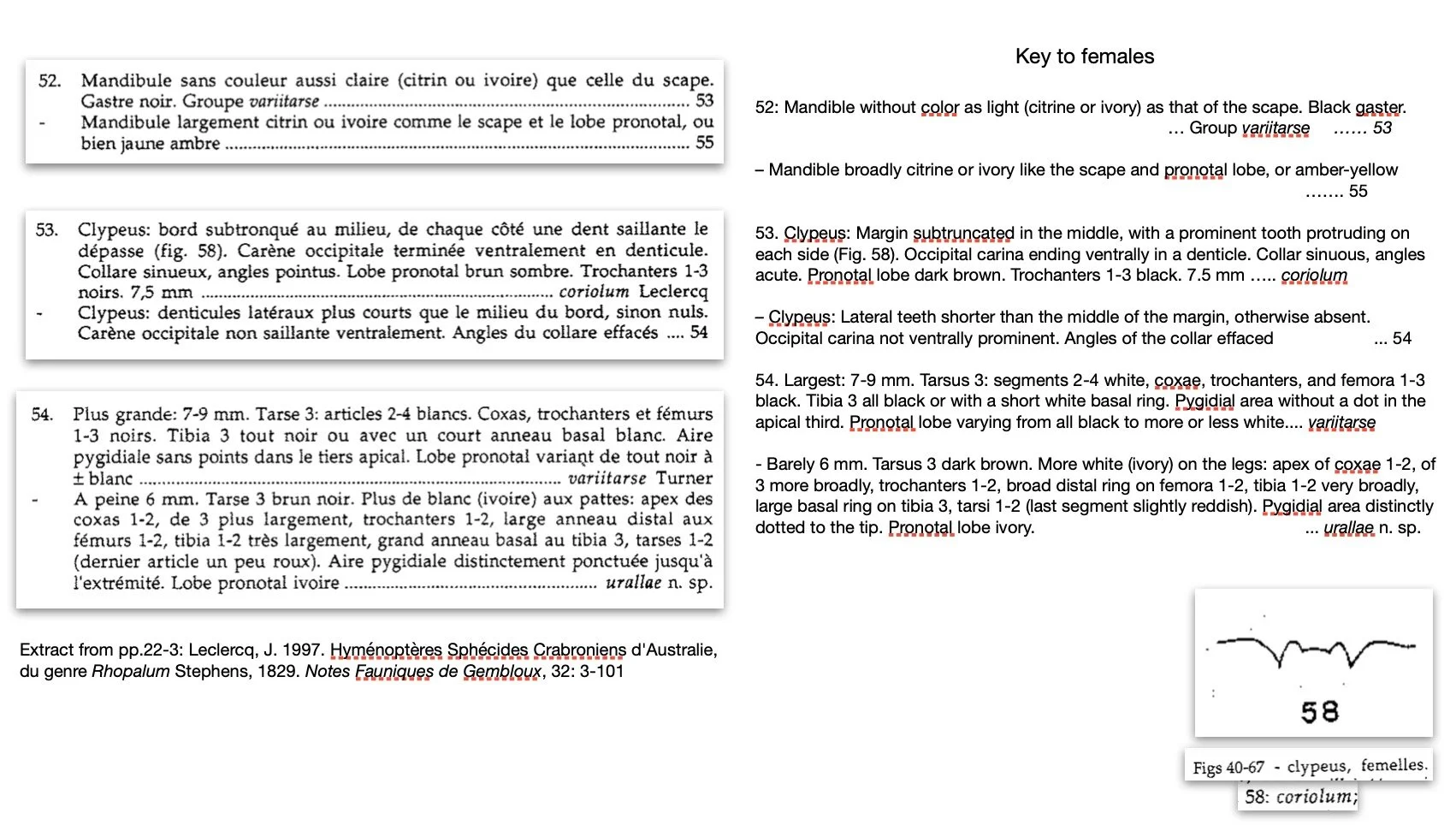
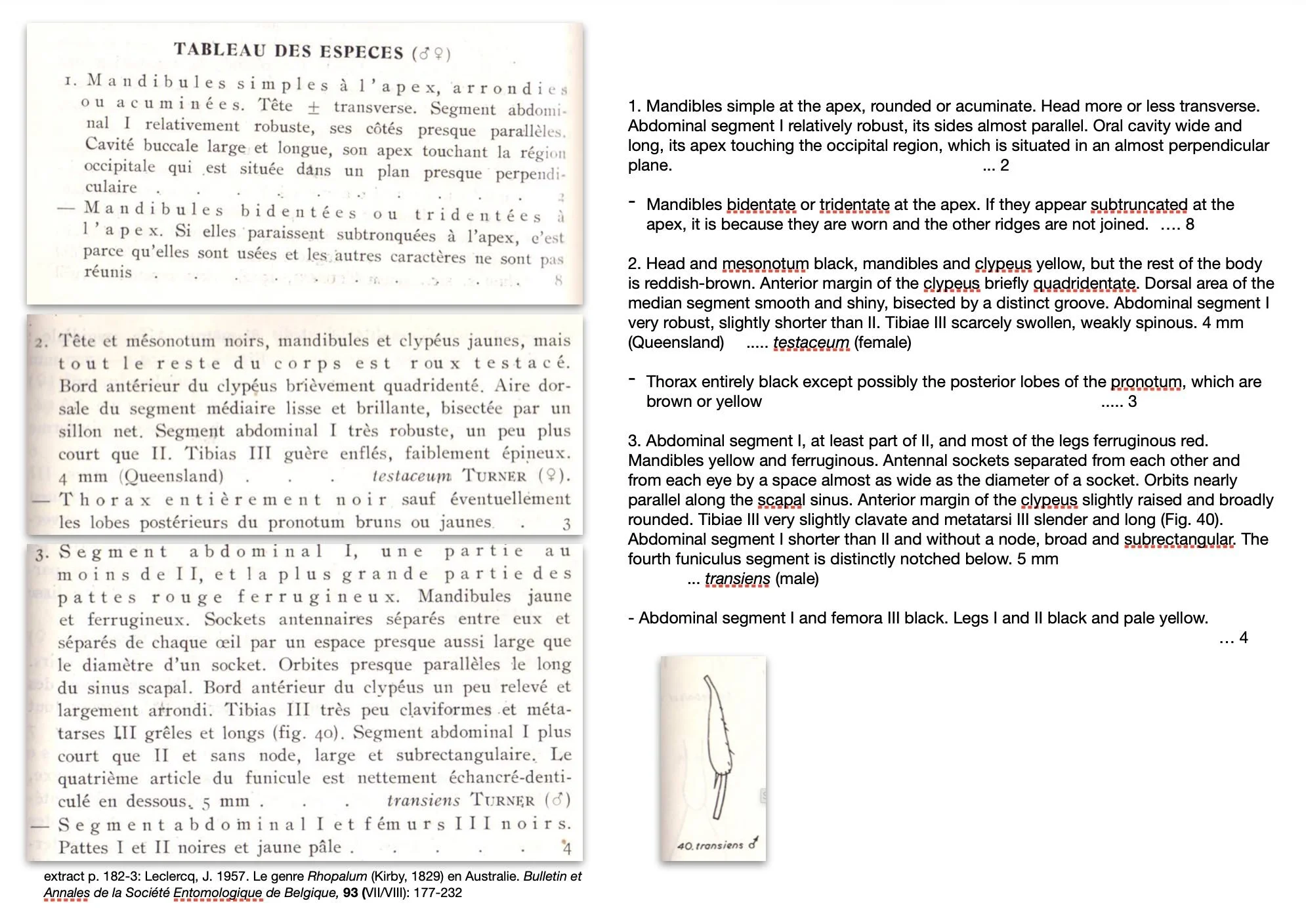
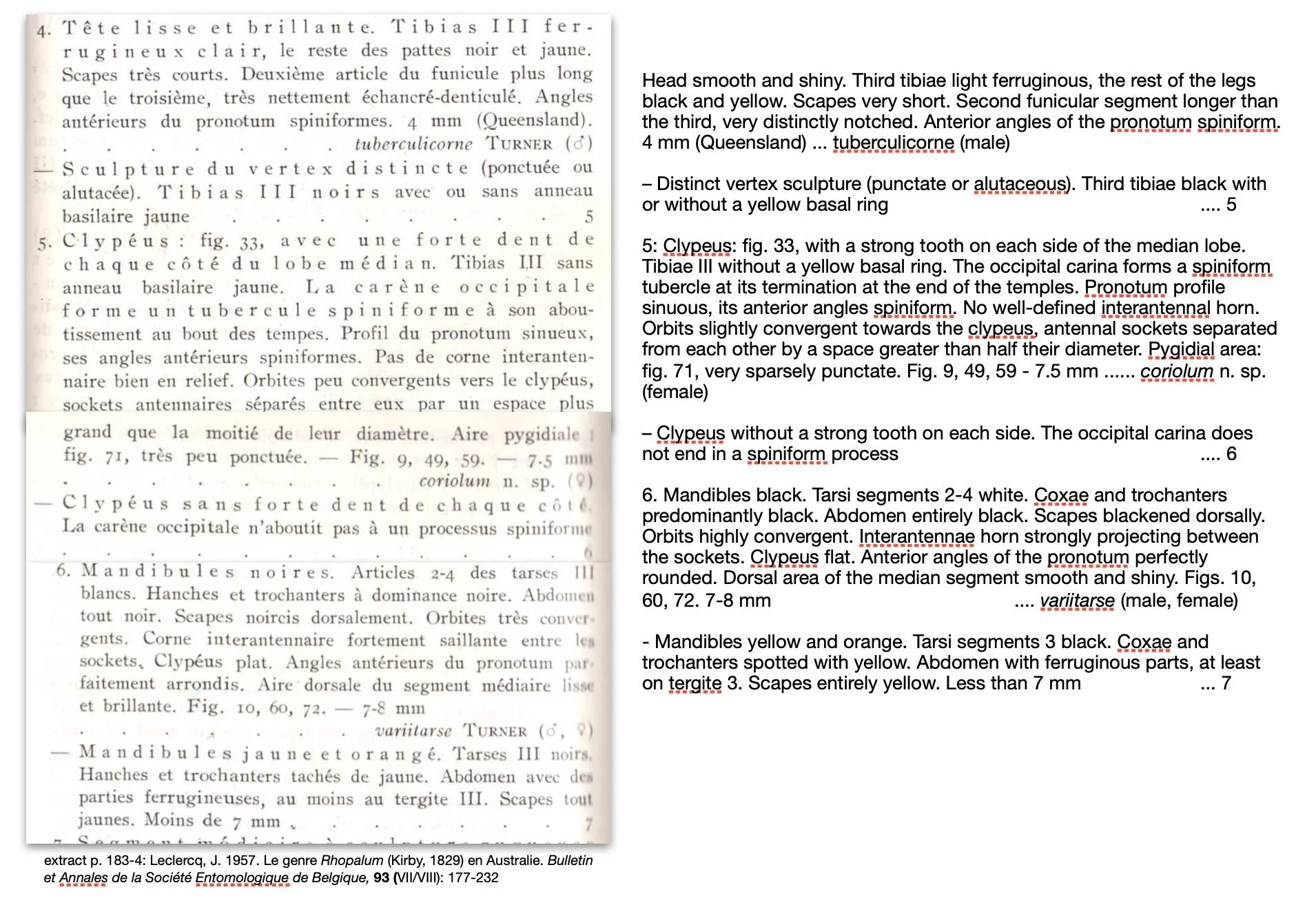
The following annotated set of images step through the key to females (Leclercq 1997; translated extracts also below, for reference).
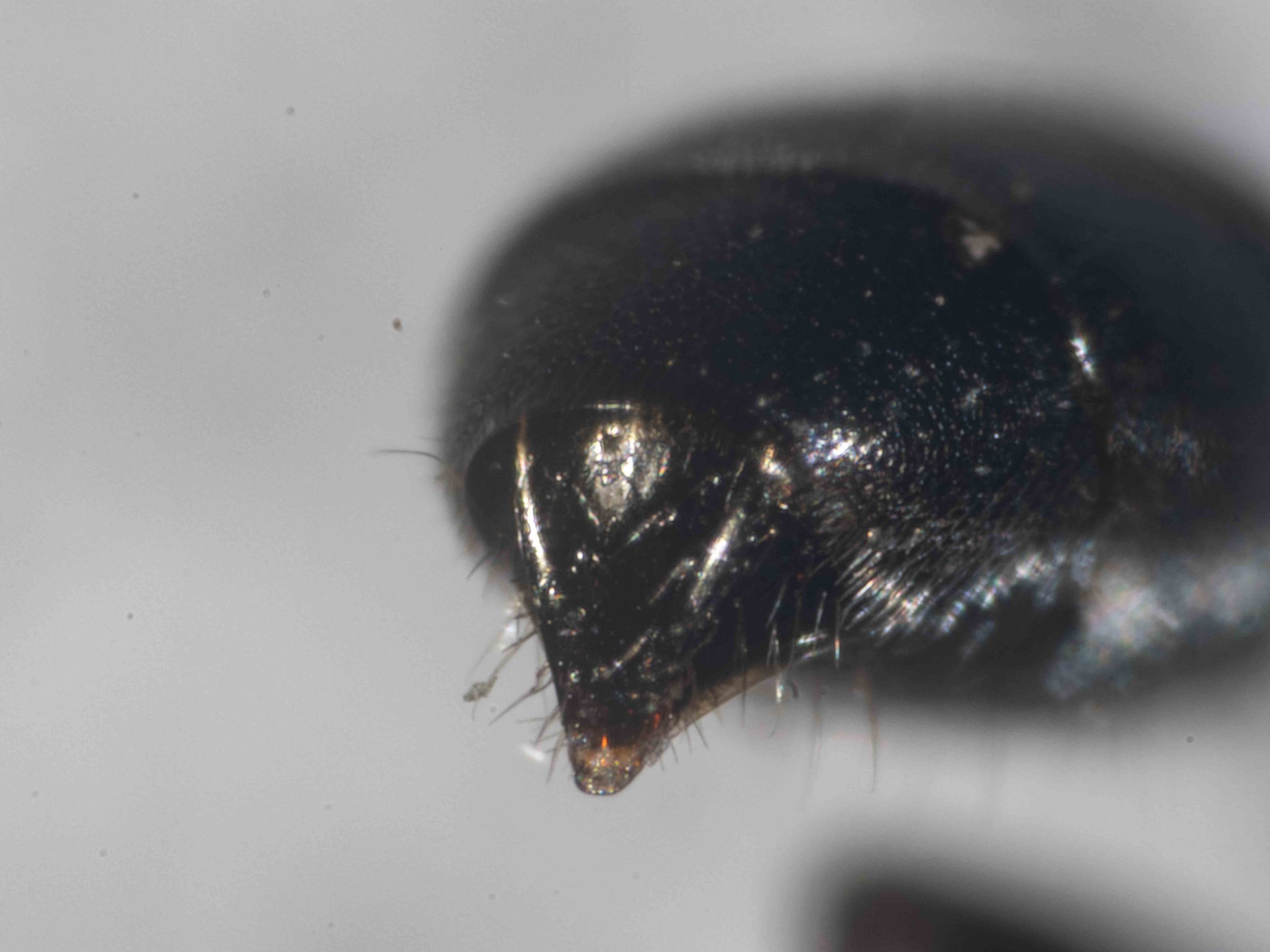
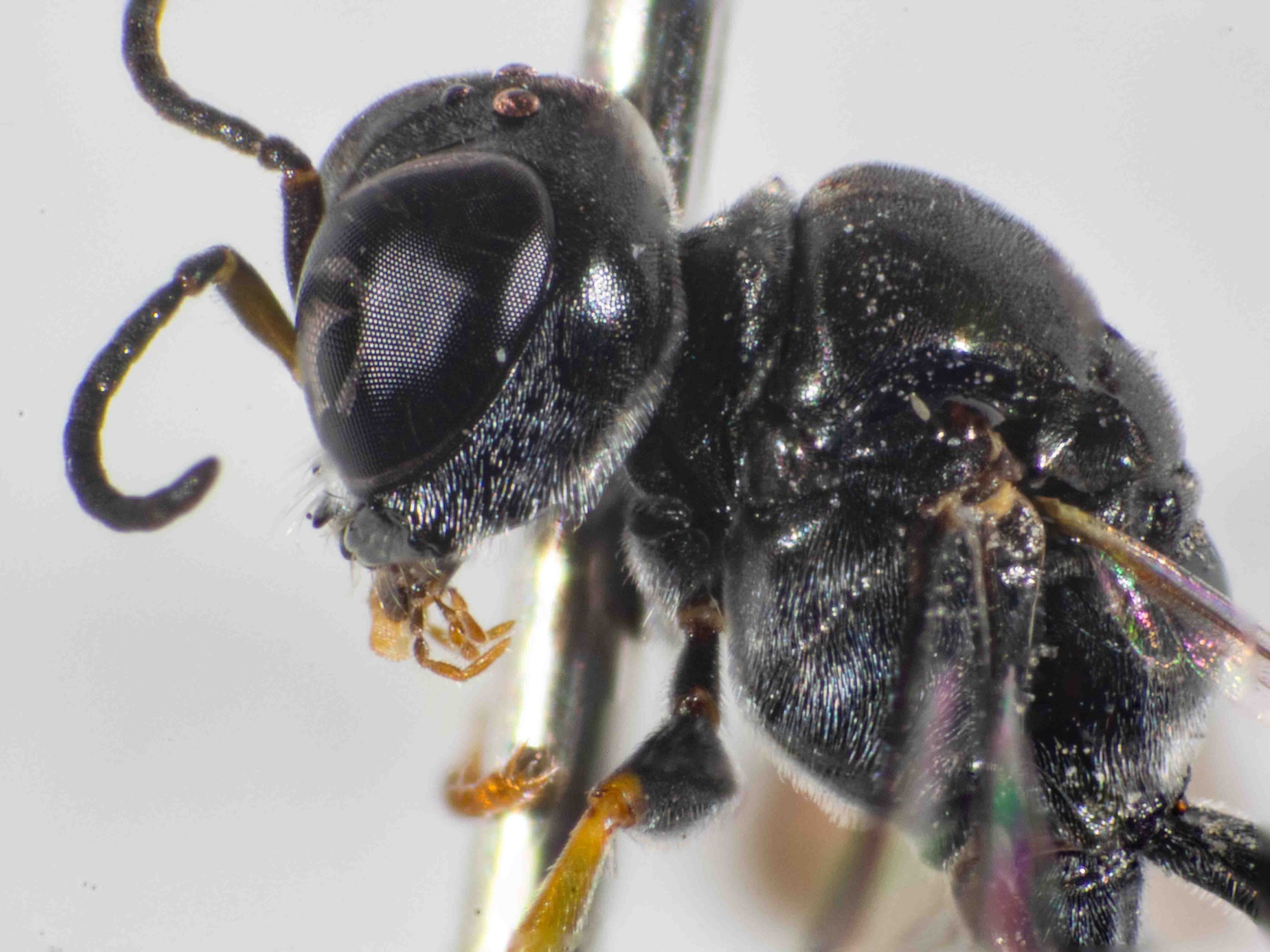
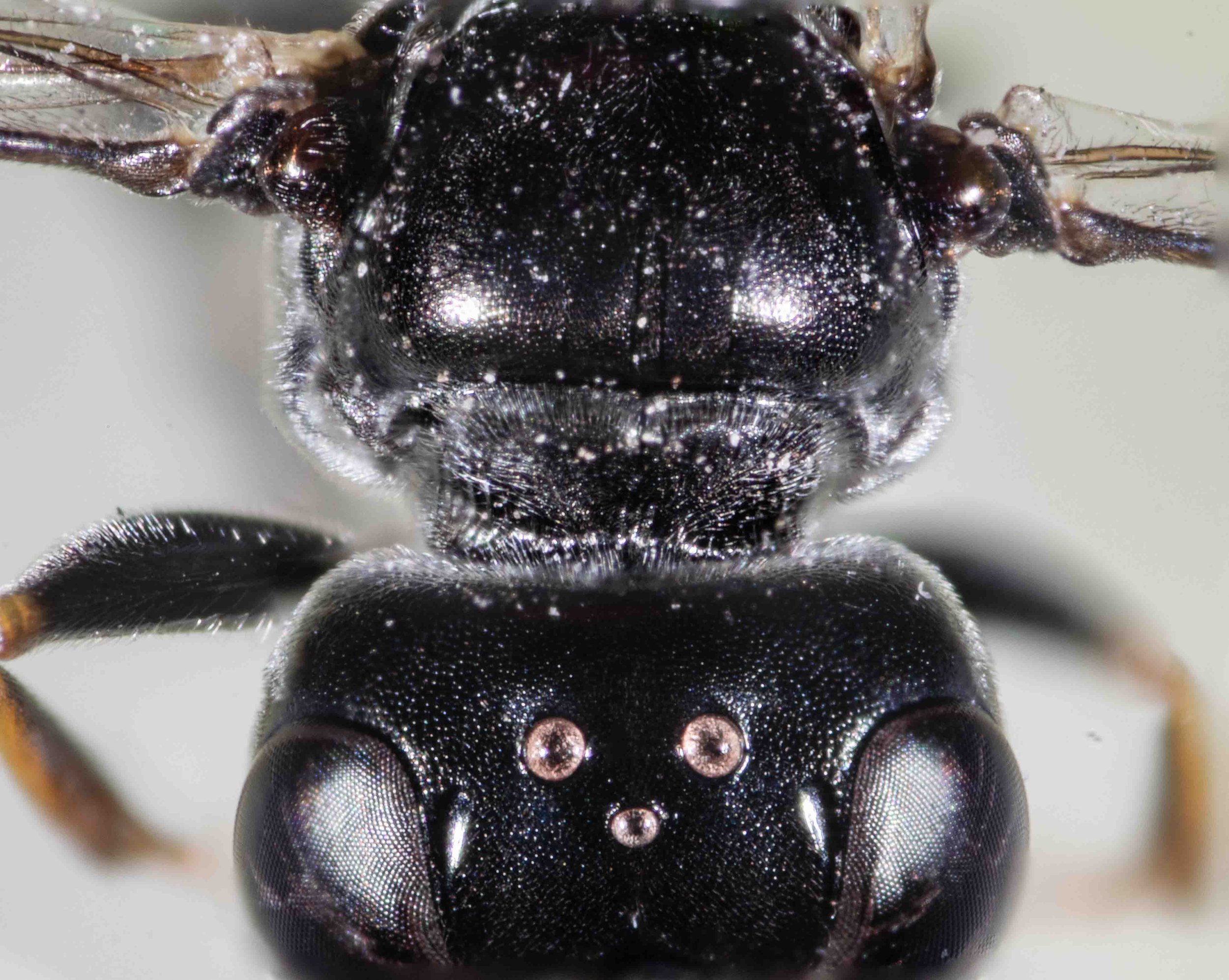
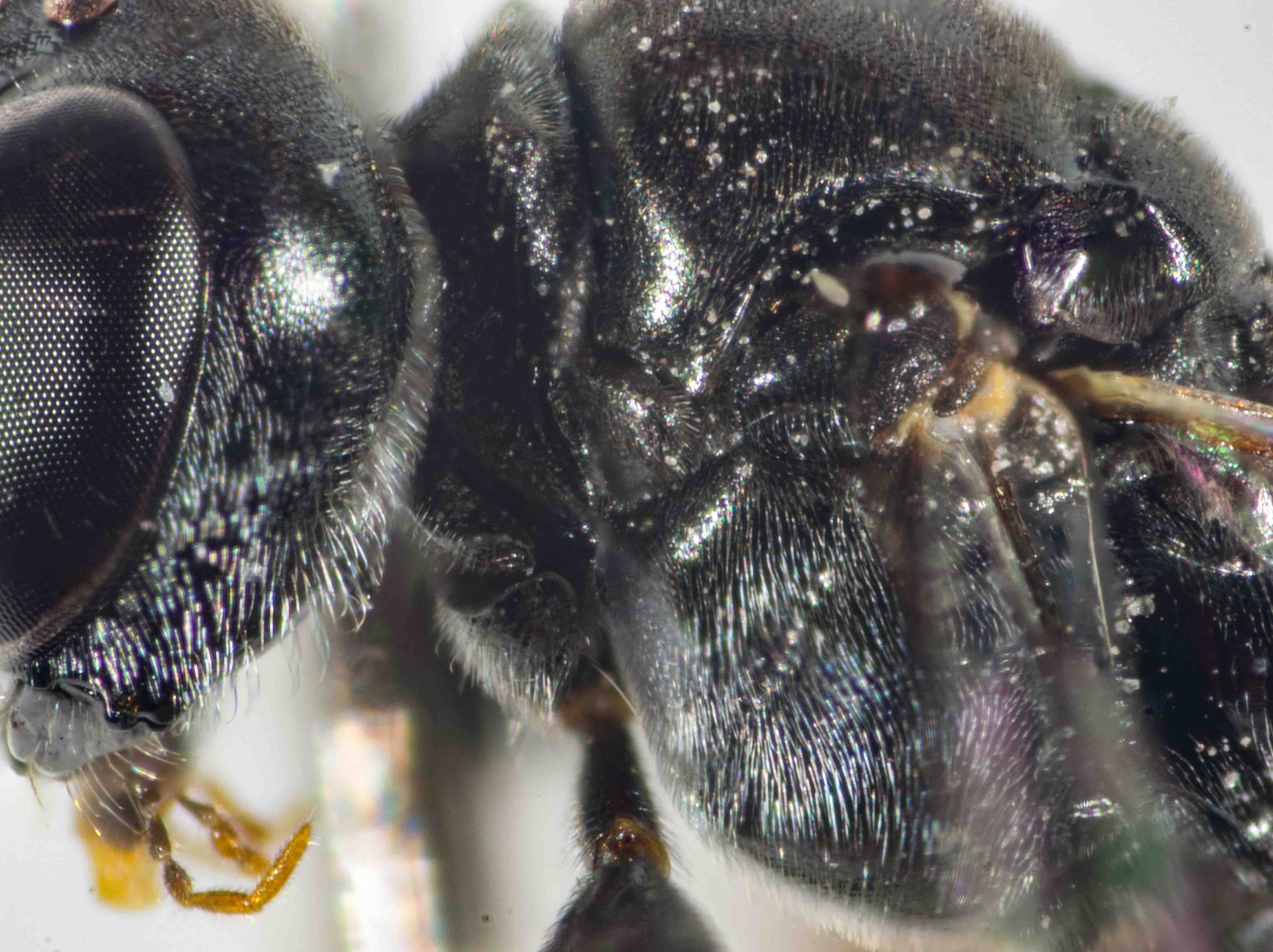
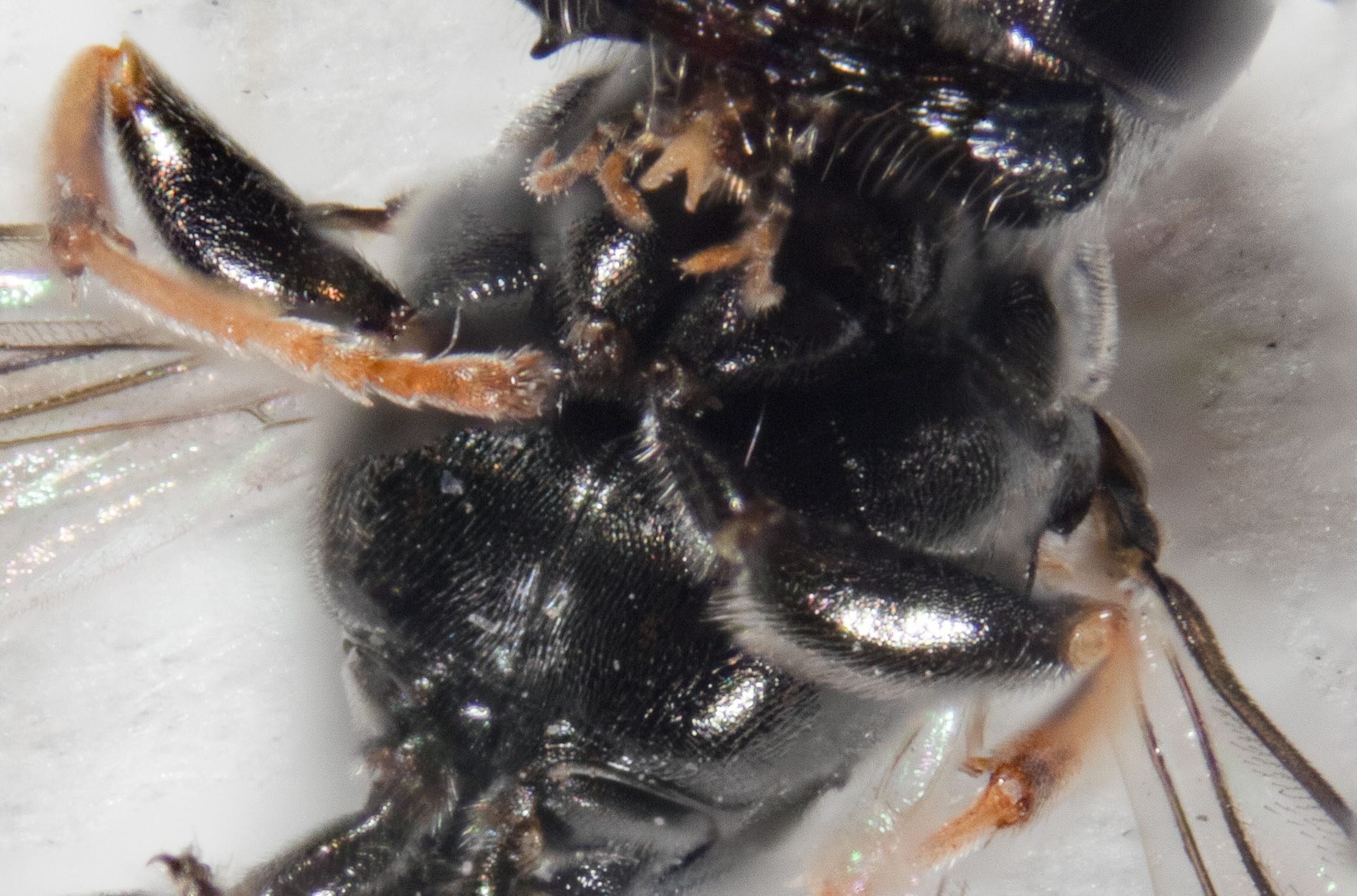
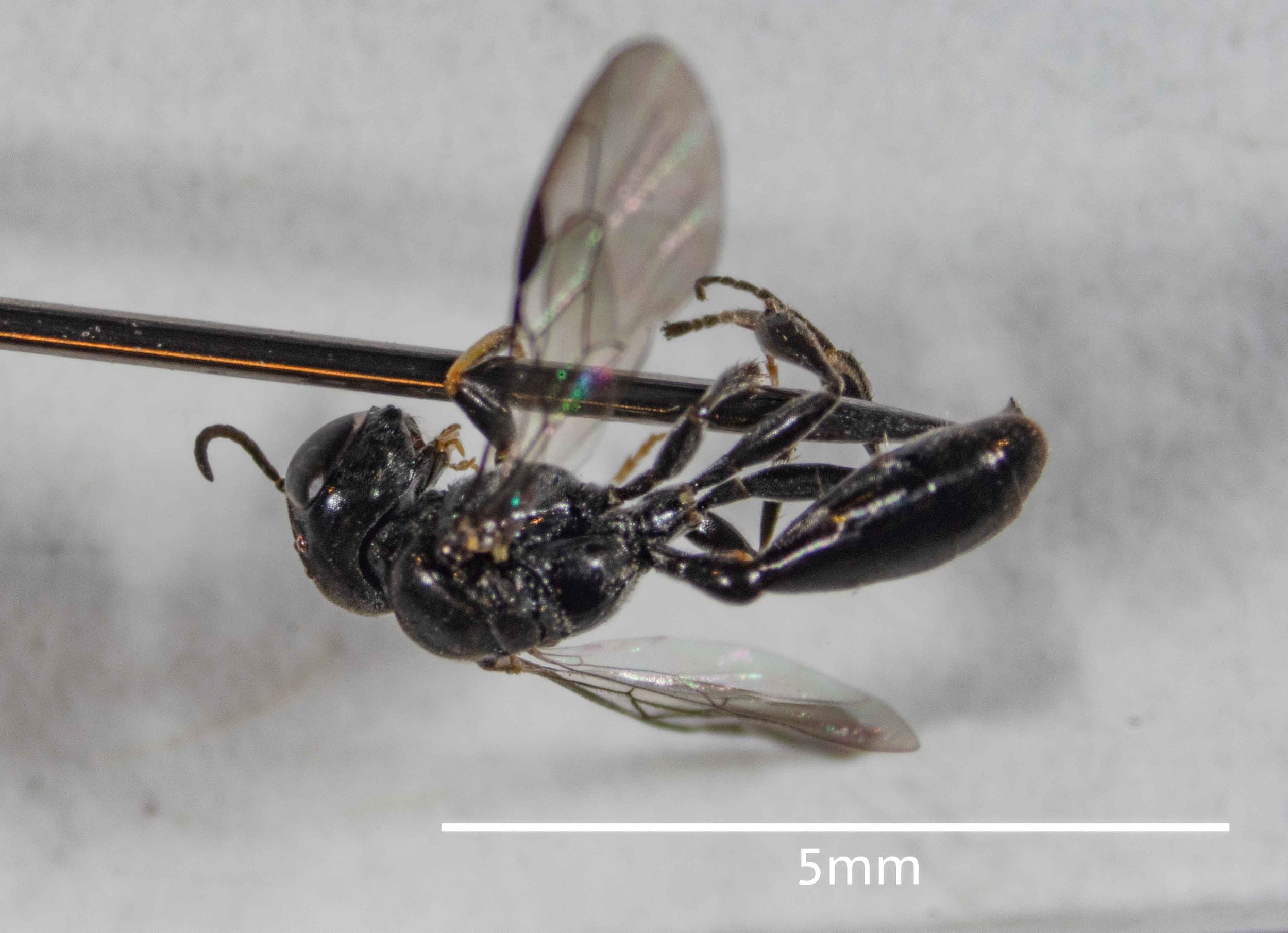
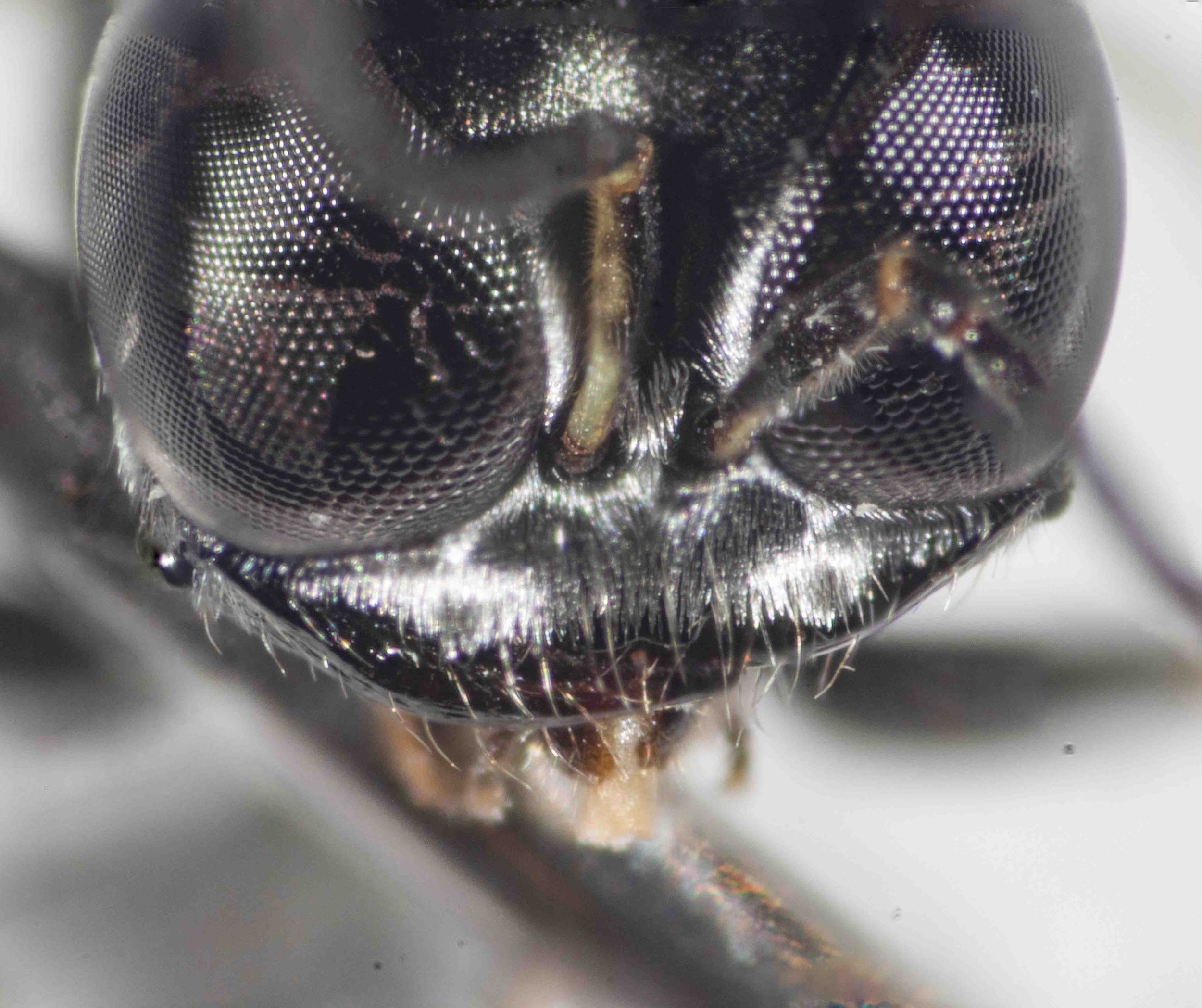
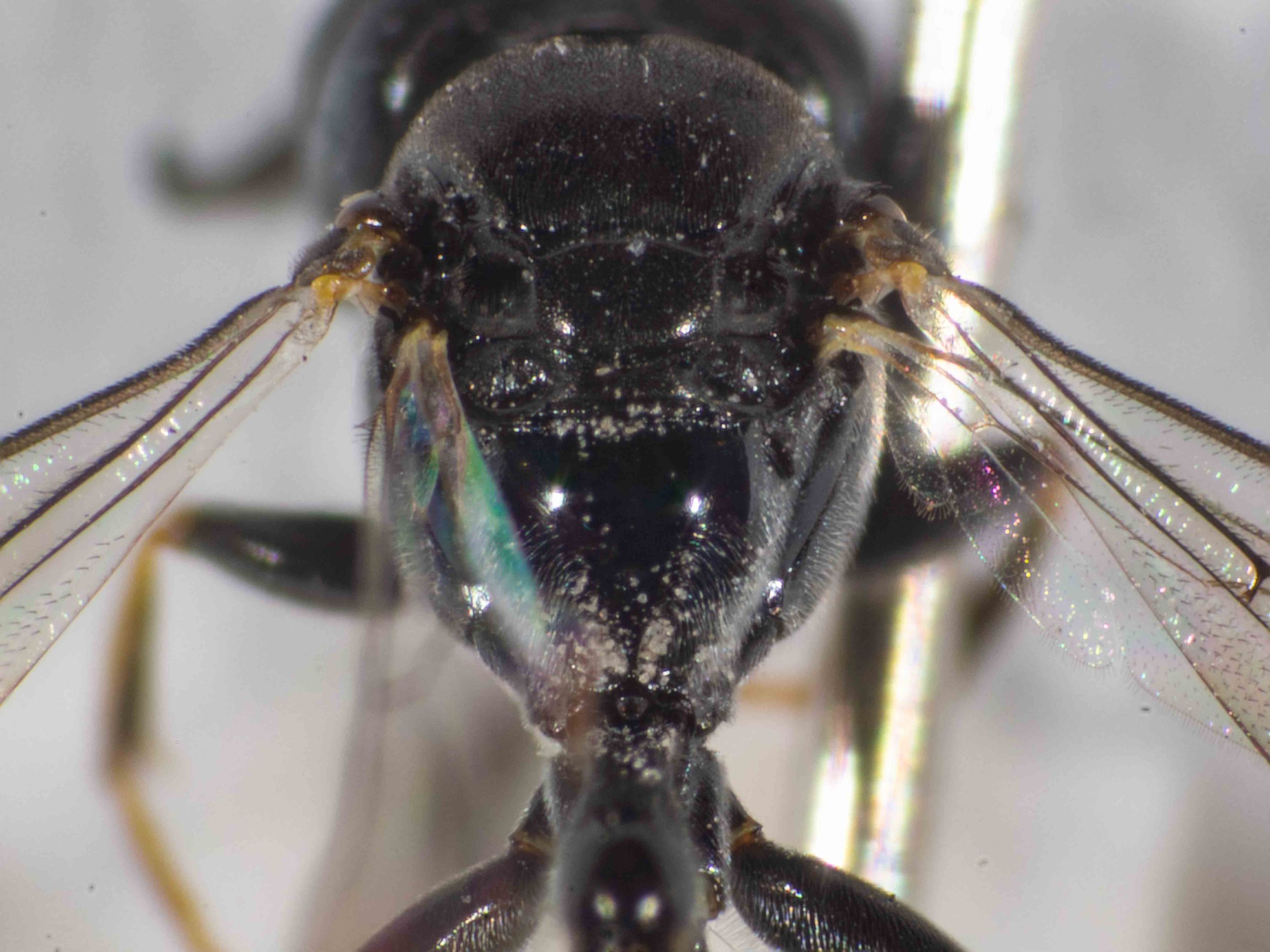
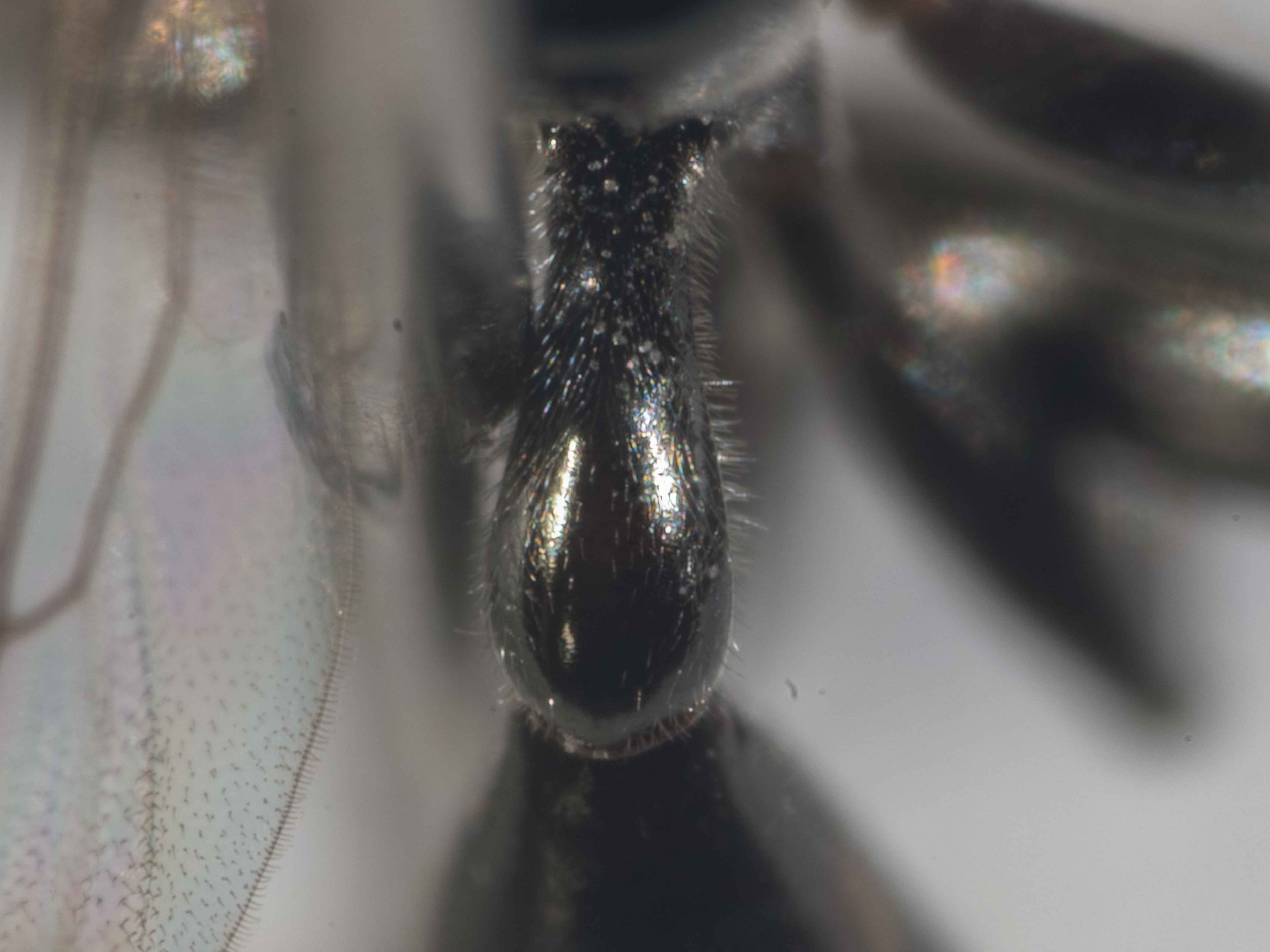
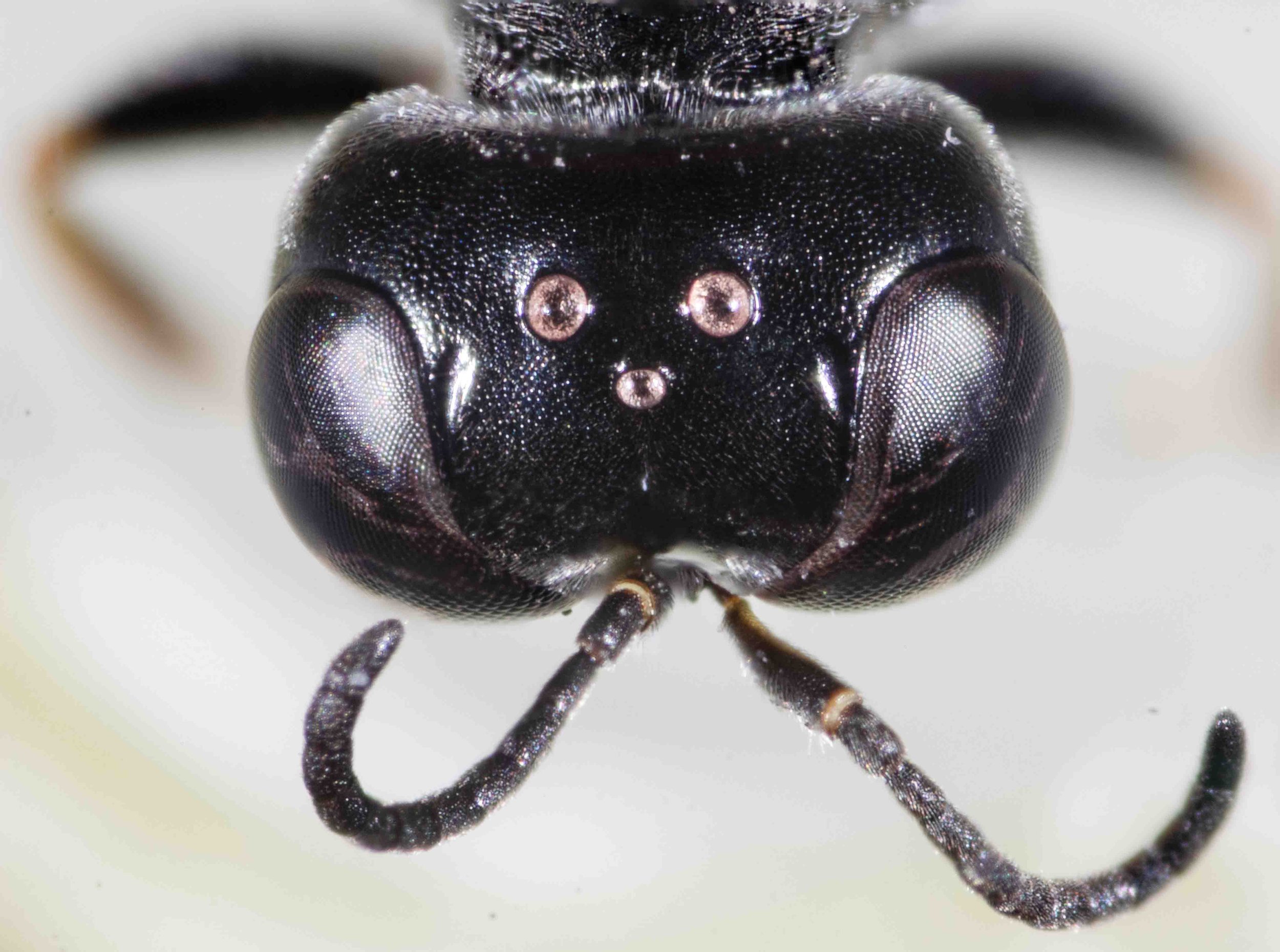
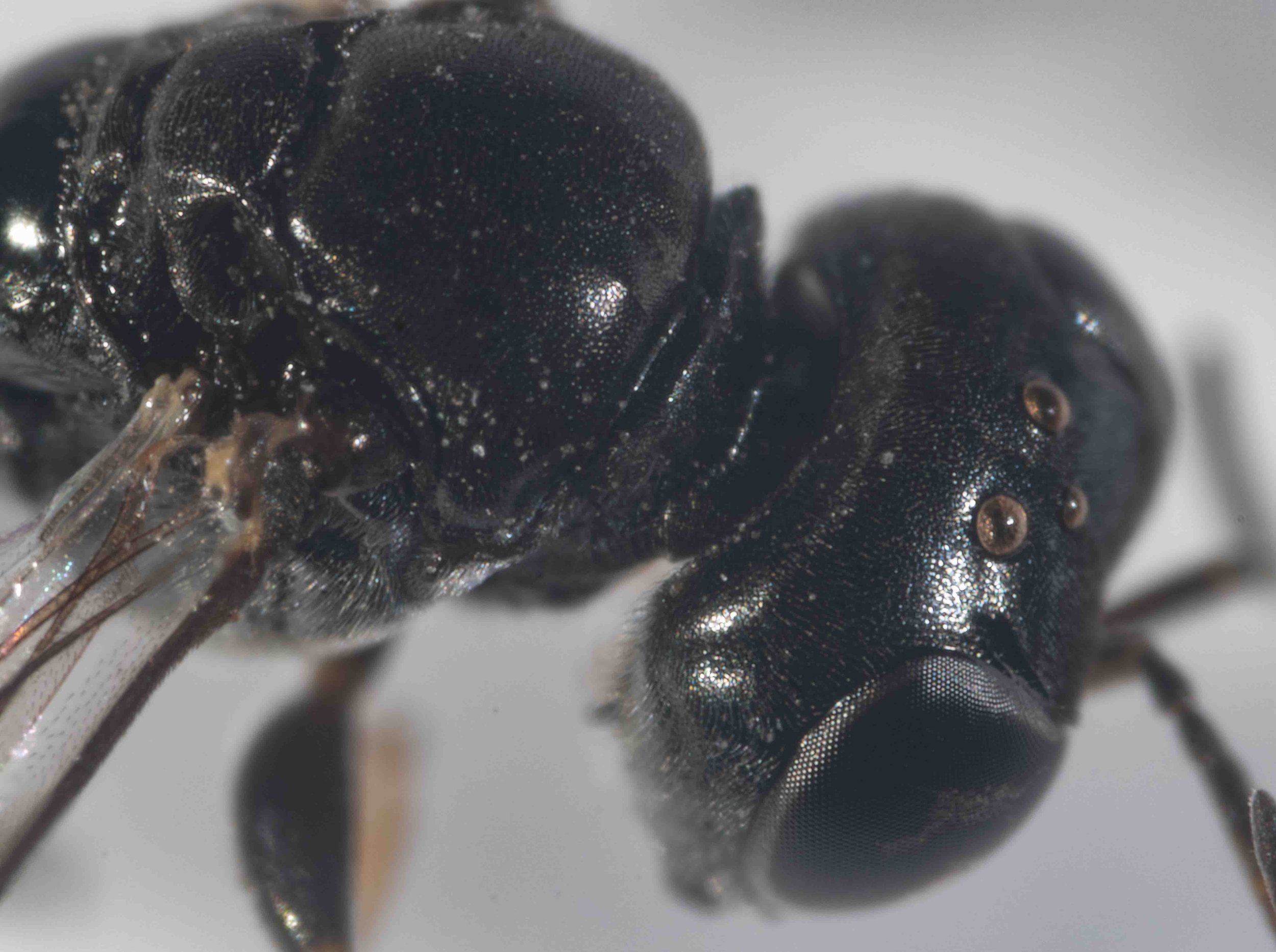
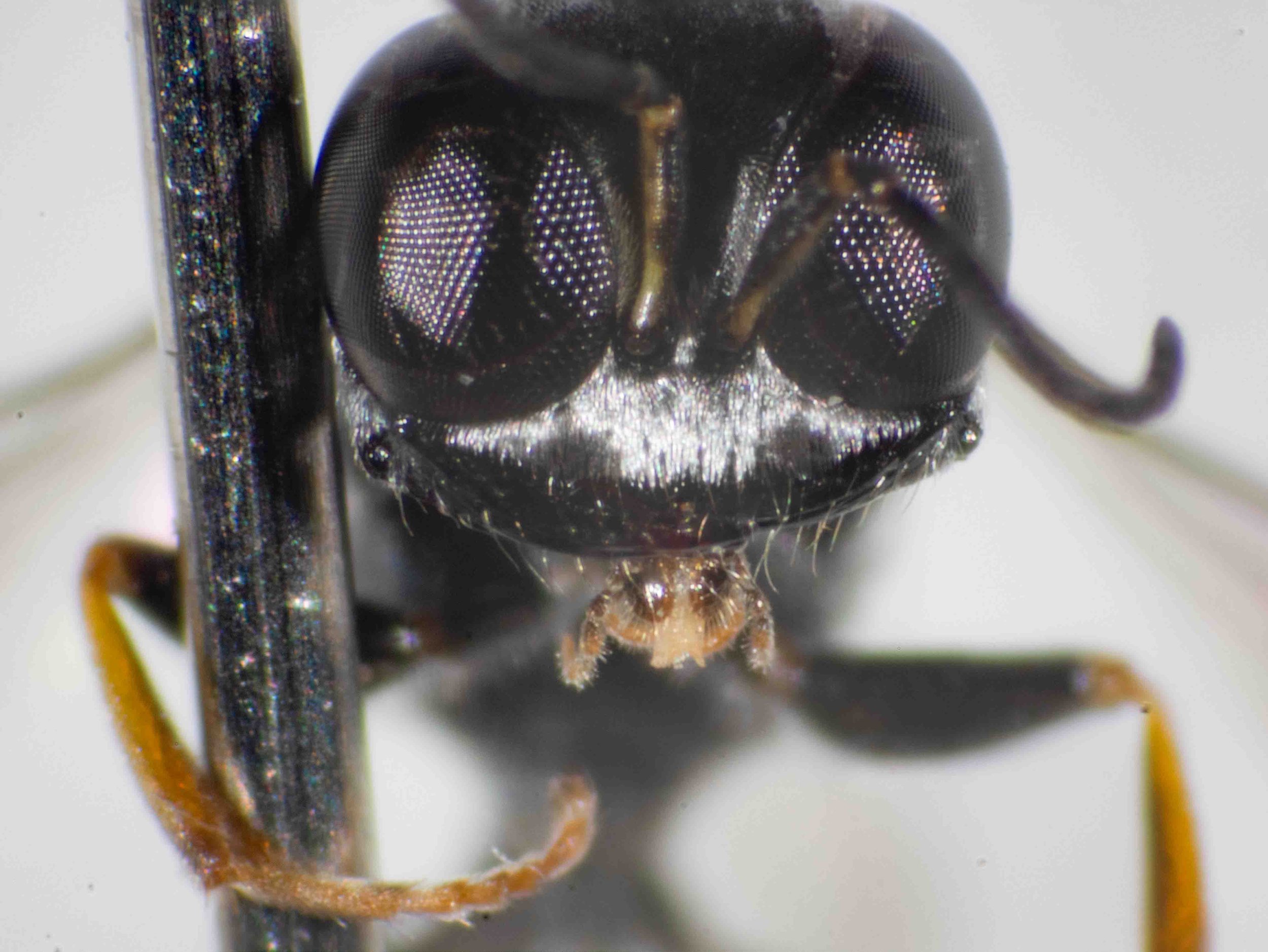
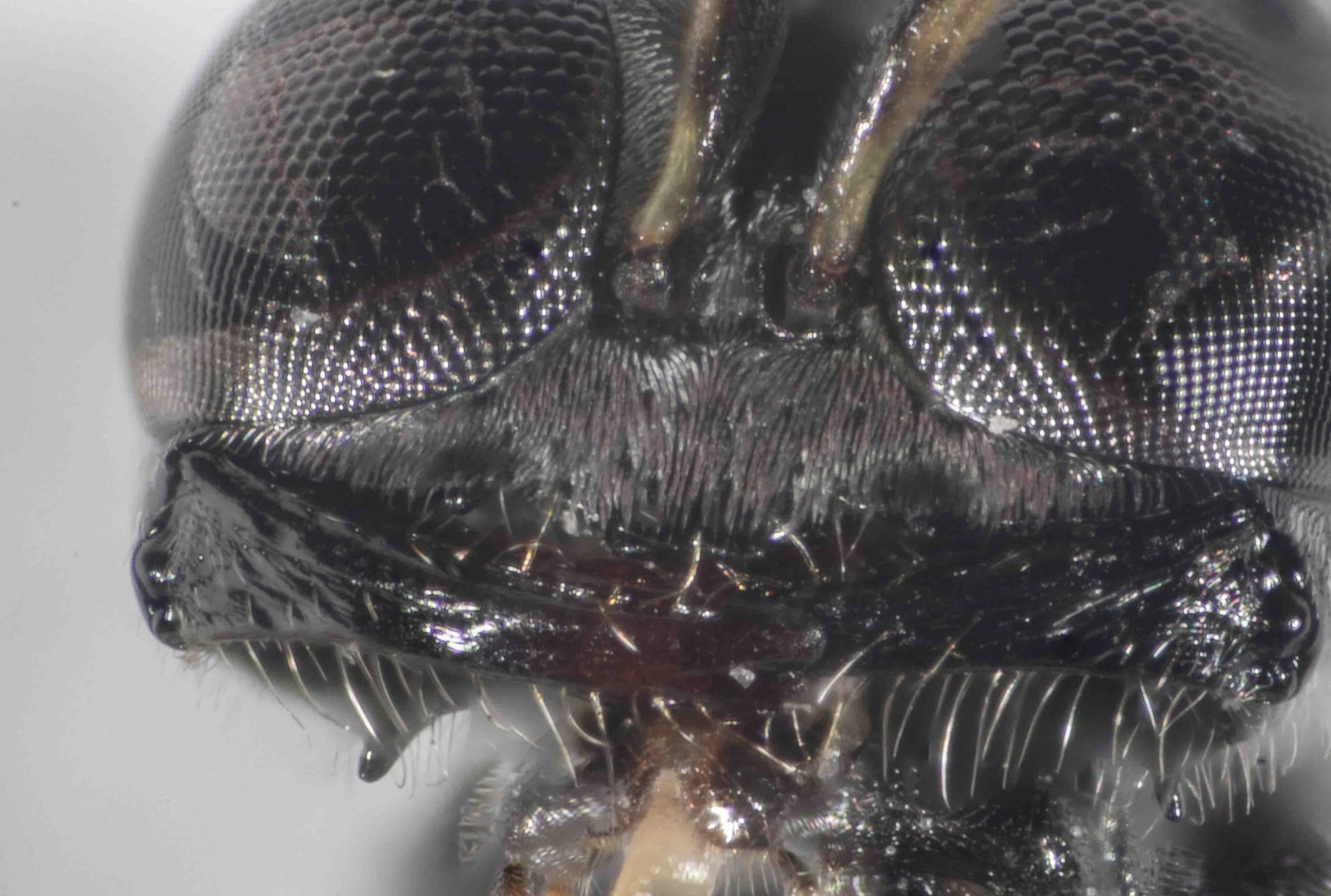
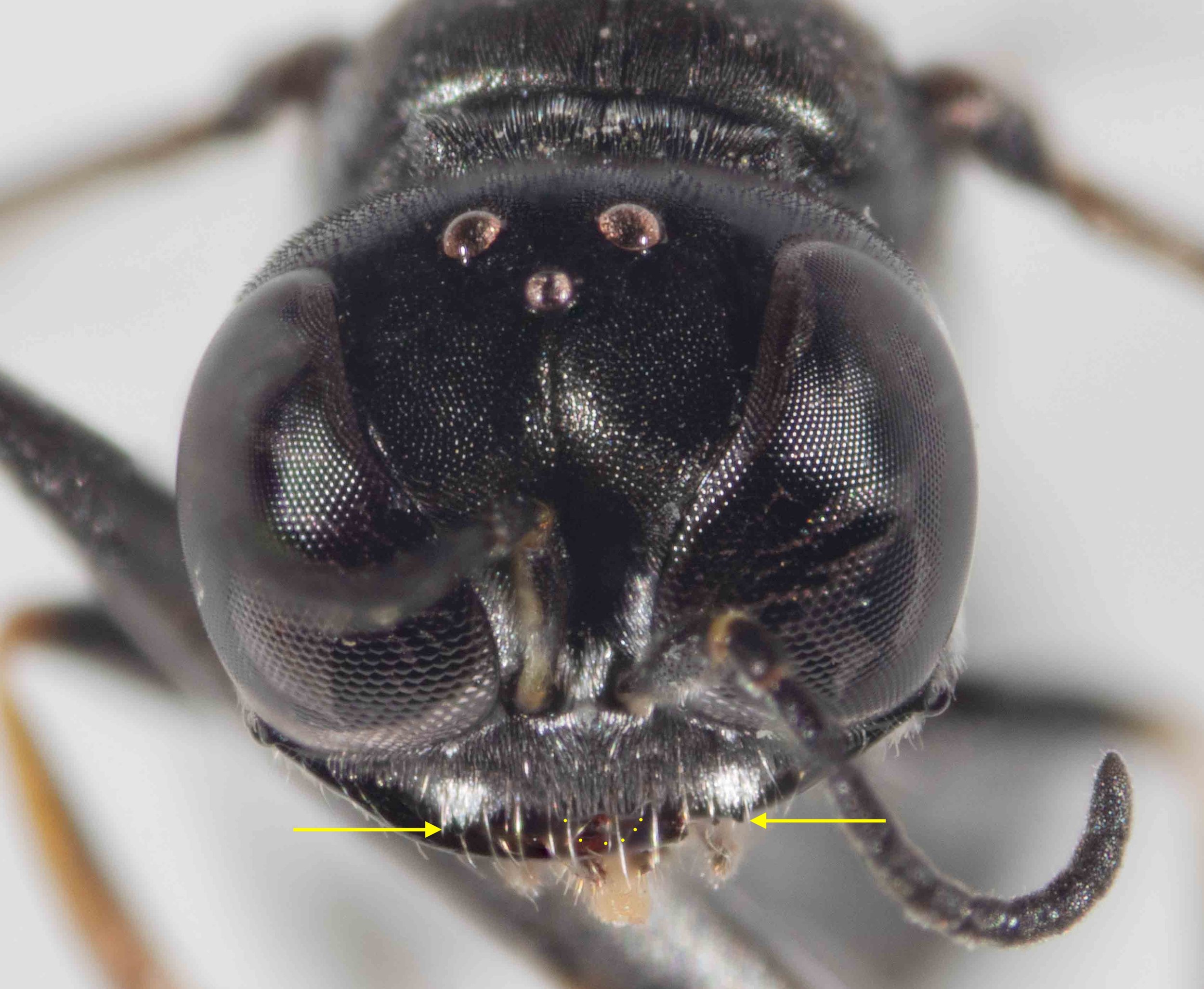
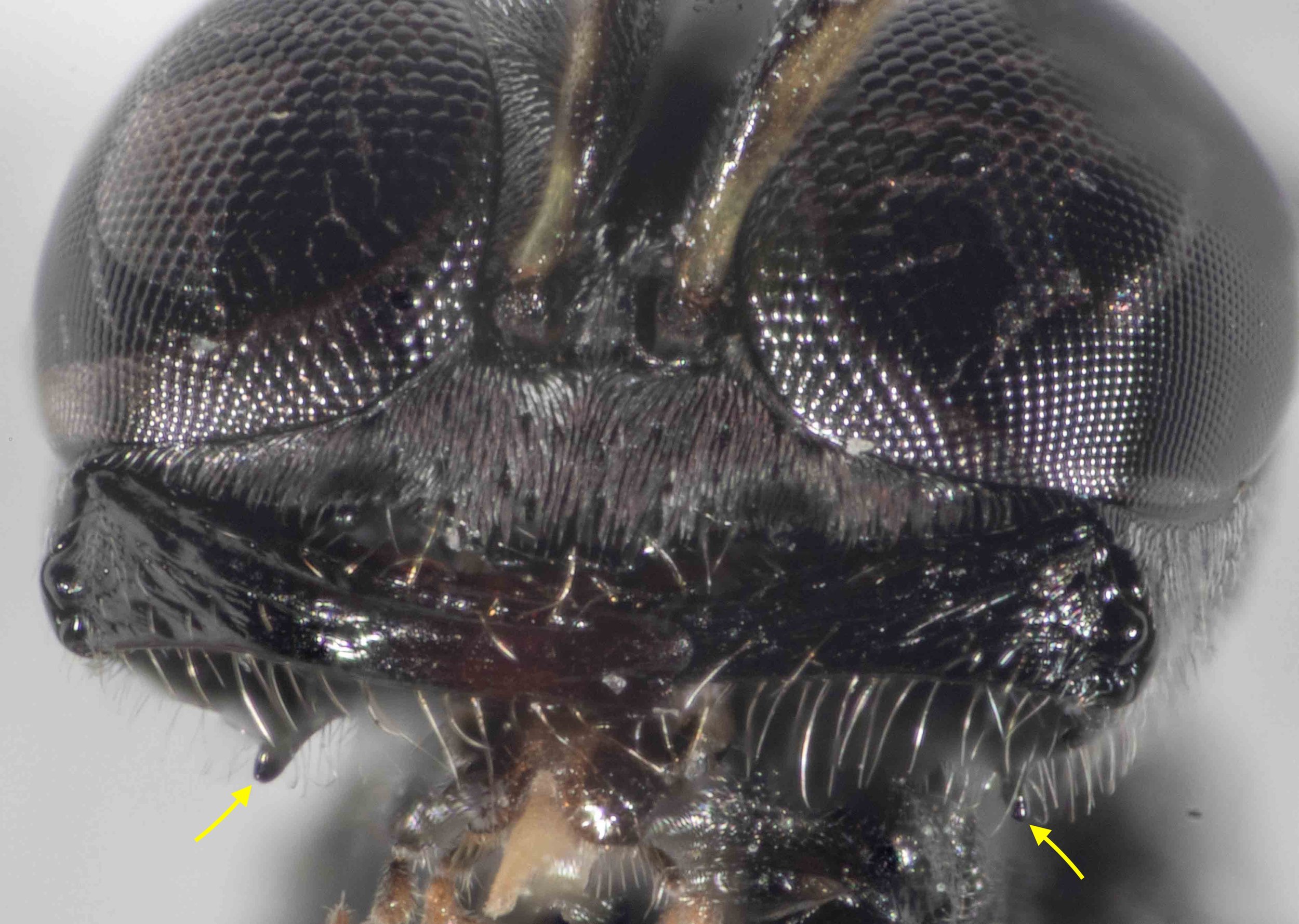
Note re mandibular teeth: the distinction between bidentate and unidentate mandibles is unclear in the key, and I have deviated at Step 51. That is, although there appear to be two teeth at the mandible apex, I have followed the ‘unidentate’ option which then leads to Step 52 (not the bidentate option, which leads to Step 59). Importantly, the image of the holotype female clearly shows evidence of a second, lower tooth … most evident when viewed from slightly below (see images of the holotype).
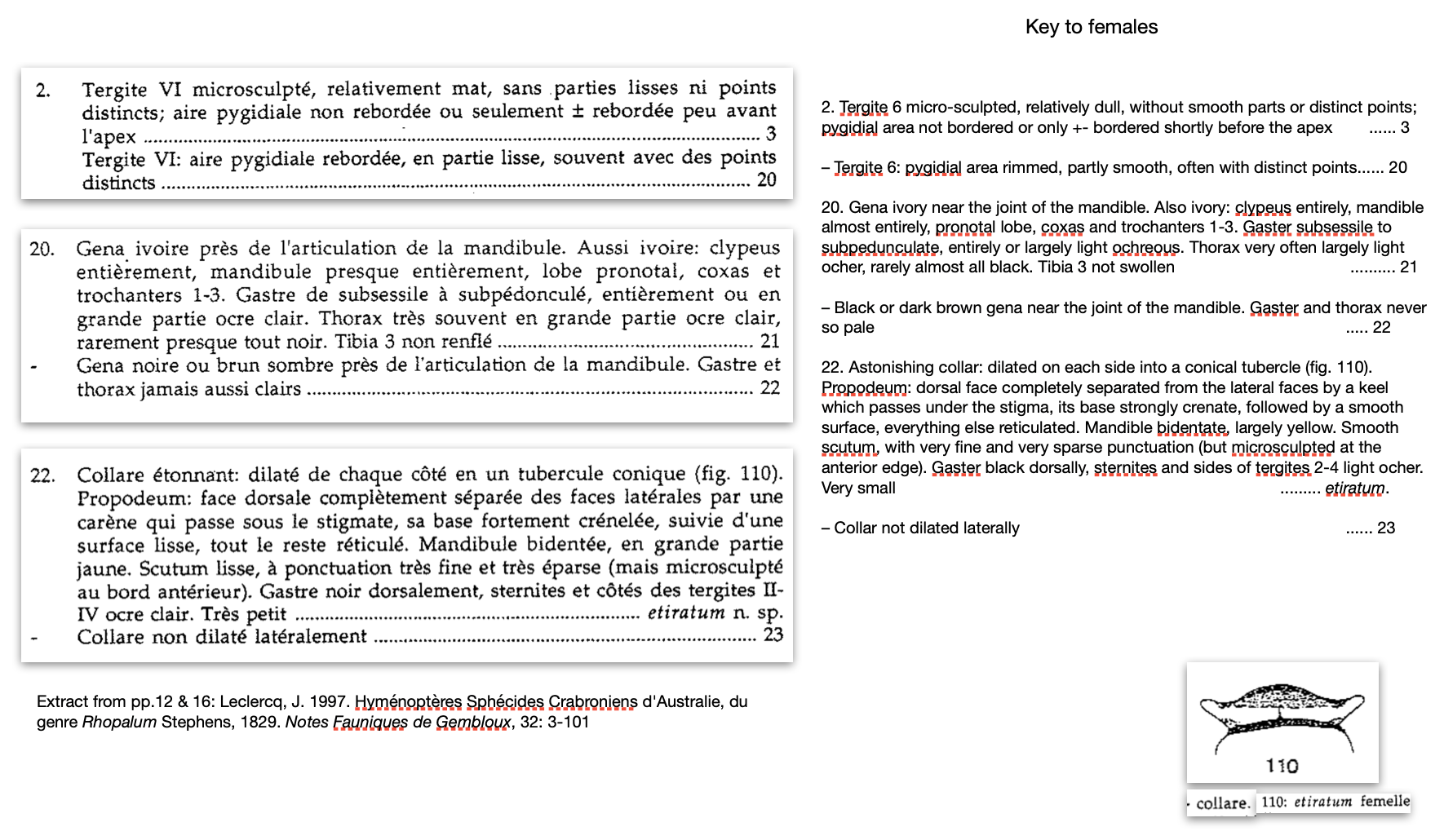
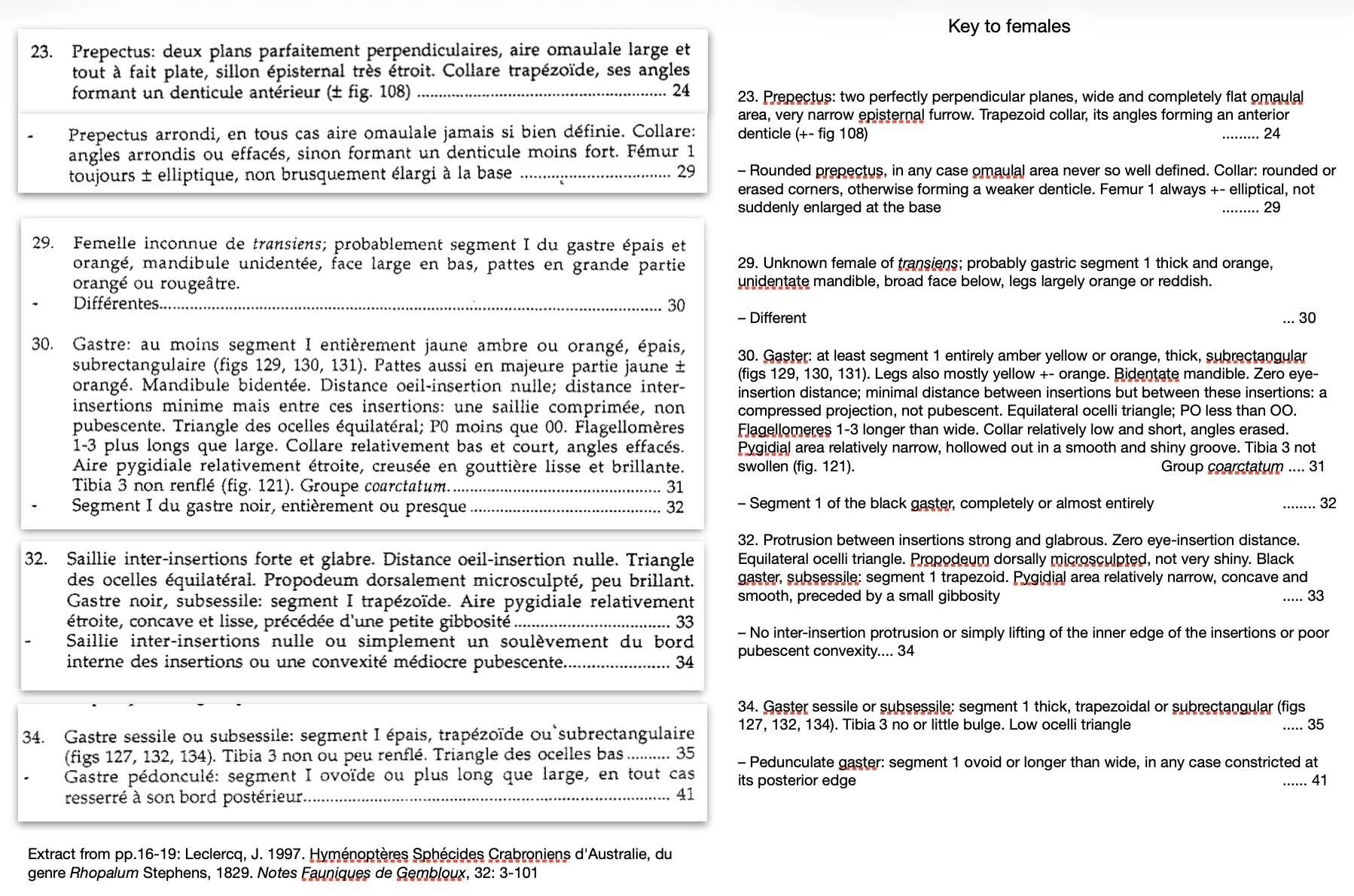
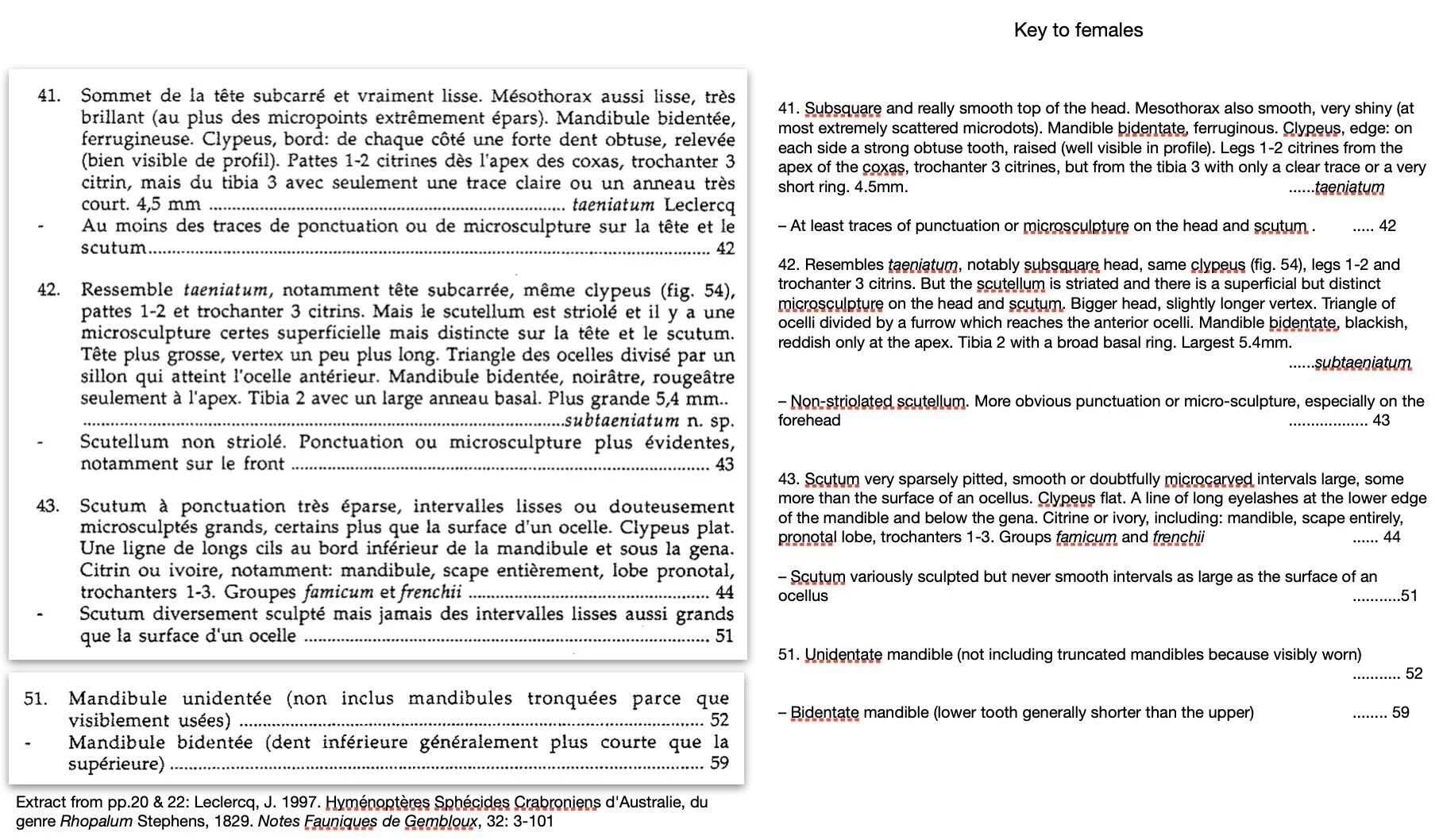
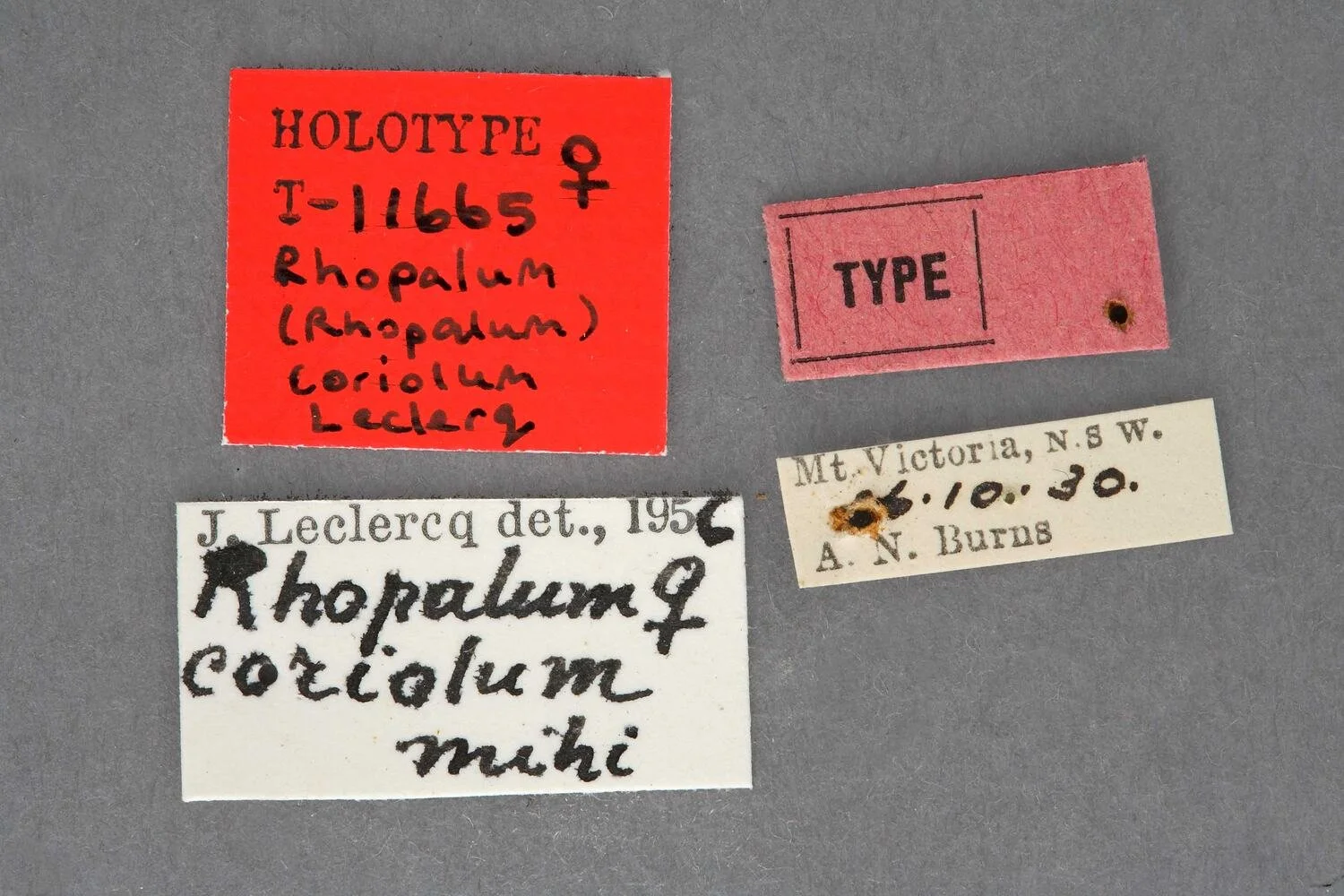
The R. coriolum holotype
The holotype was collected in October 1930 at Mt. Victoria, NSW (Blue Mountains region) by A.N. Burns, identified by Jean Leclercq in 1956, and officially designated in the published description the following year (Leclercq 1957). It is held in the Museums Victoria collection, database number T-11665. https://collections.museumsvictoria.com.au/specimens/1013418
Dr. Ken Walker from Museums Victoria kindly provided additional, close-up images of the head for comparison with my collected specimens. They match!

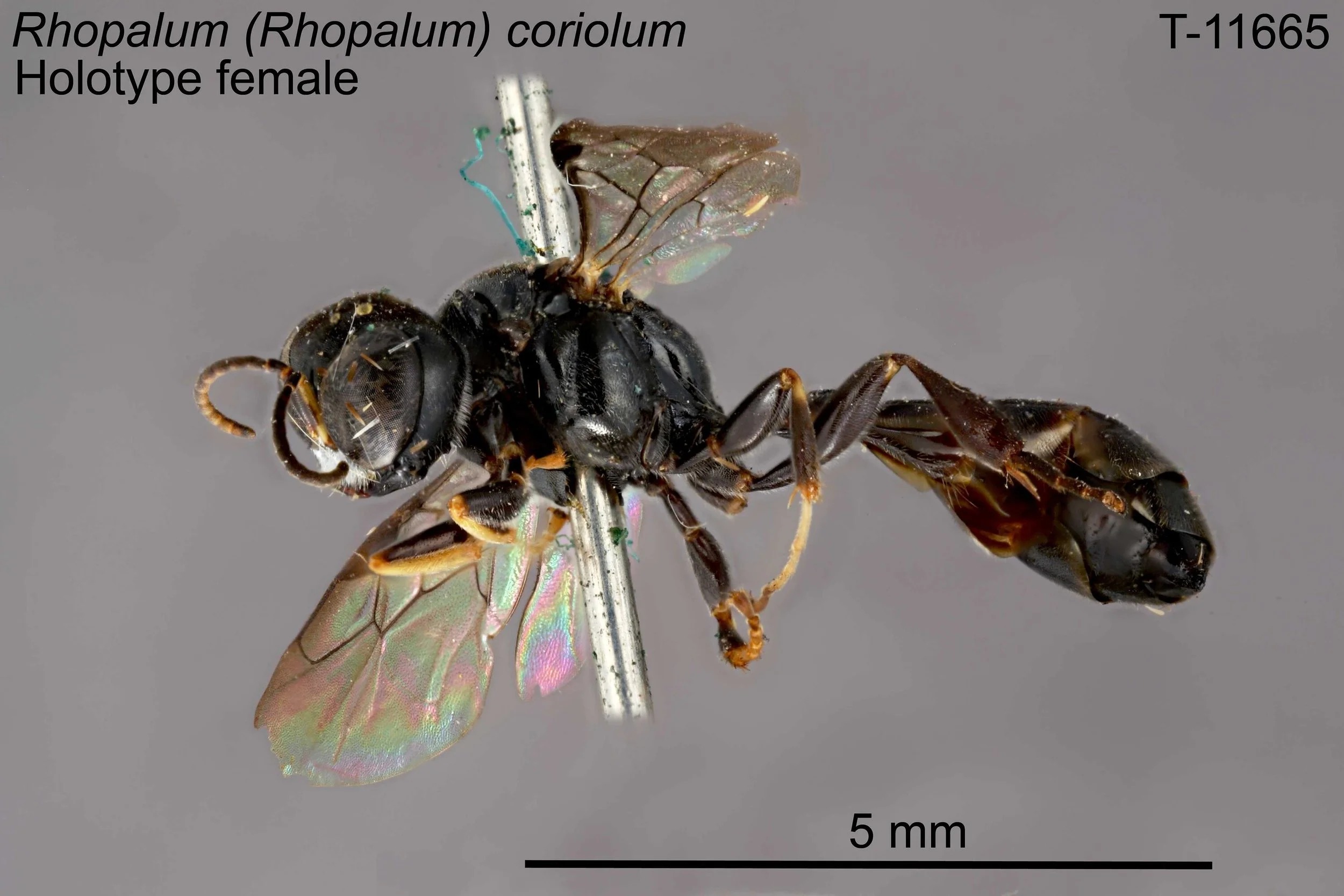
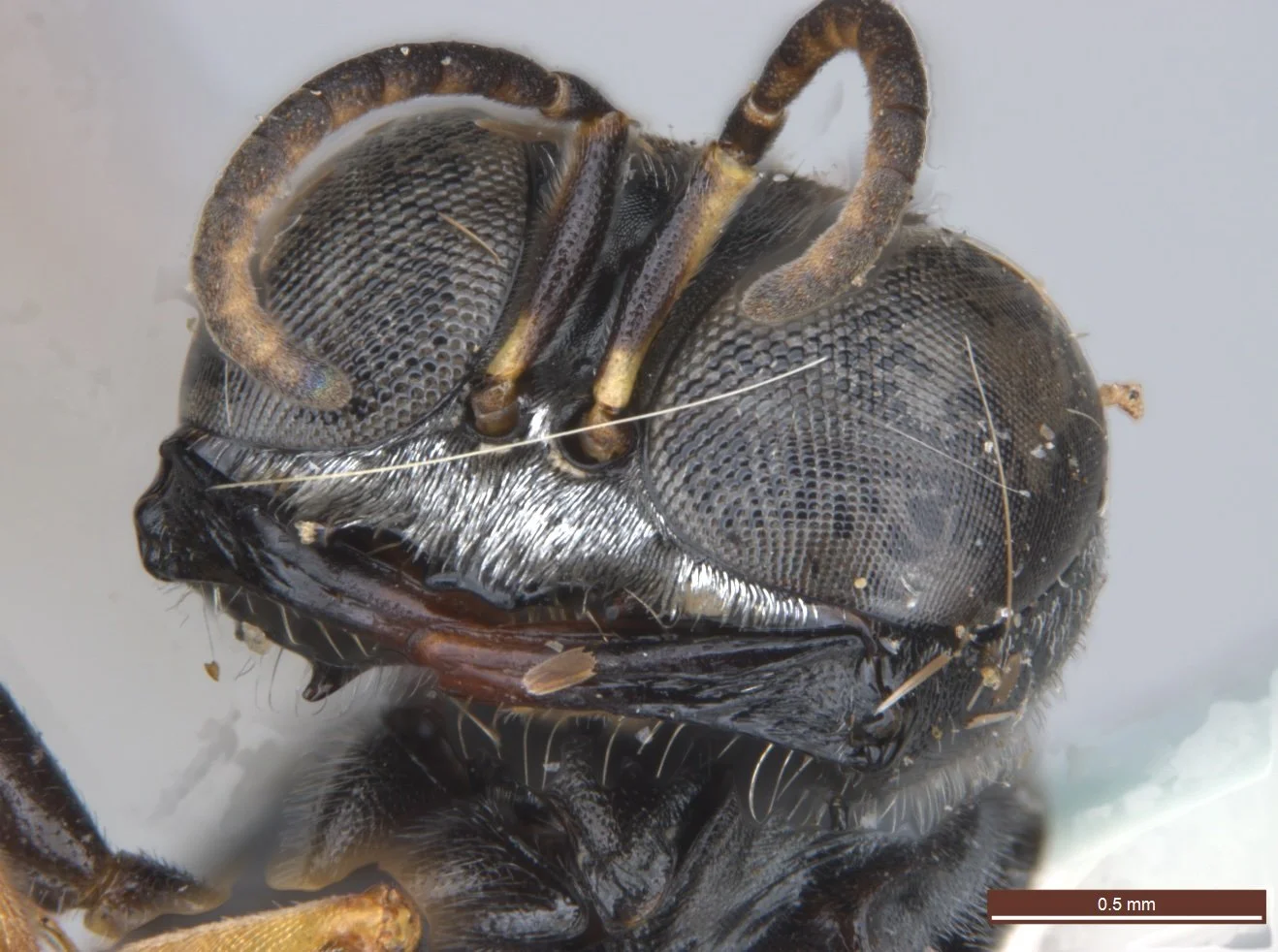
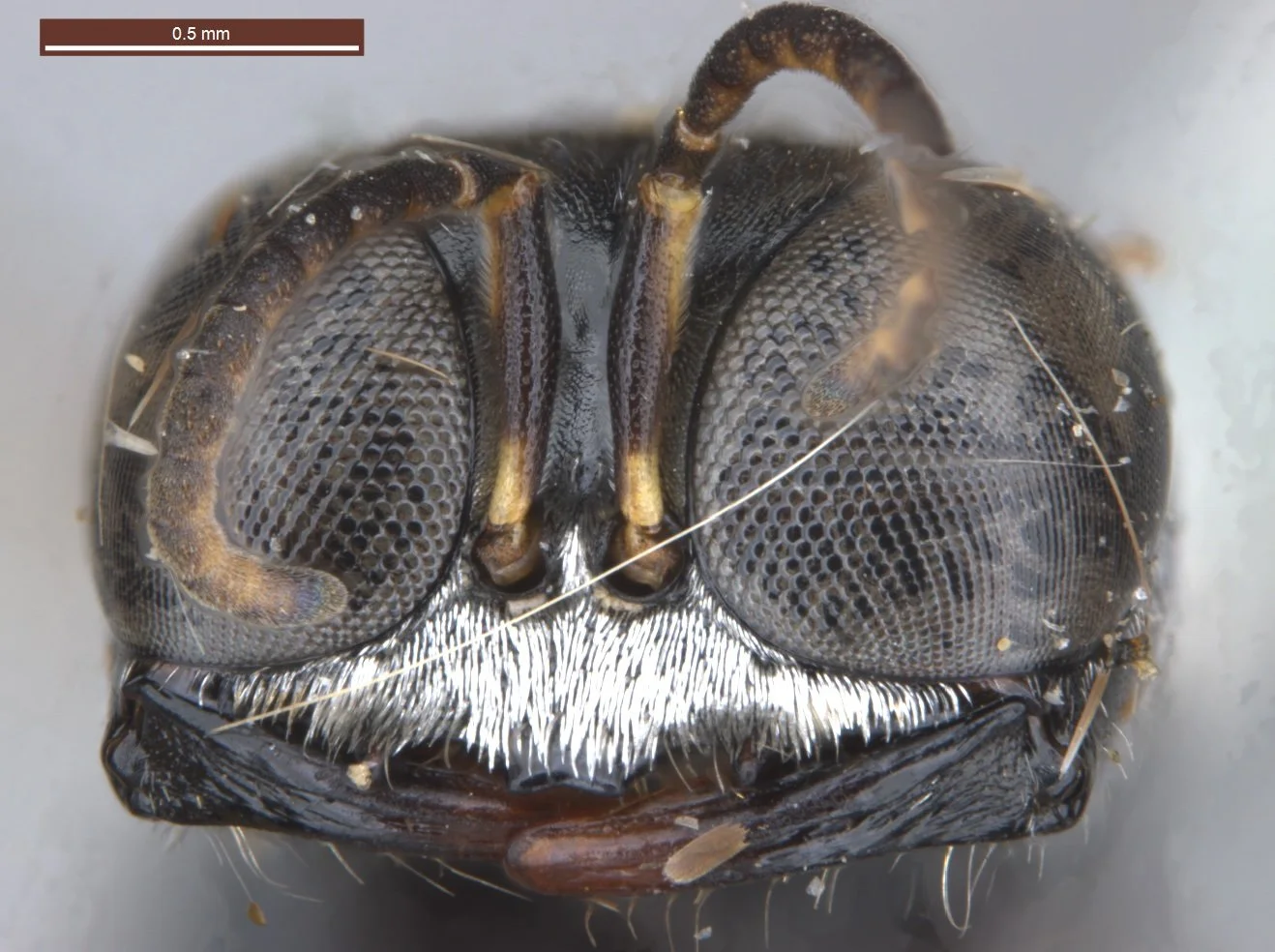
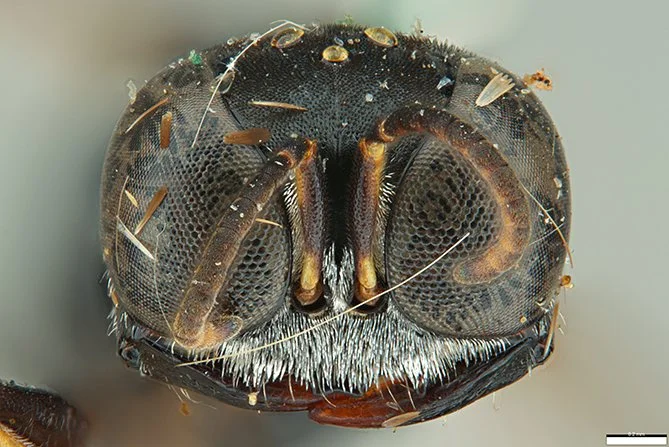
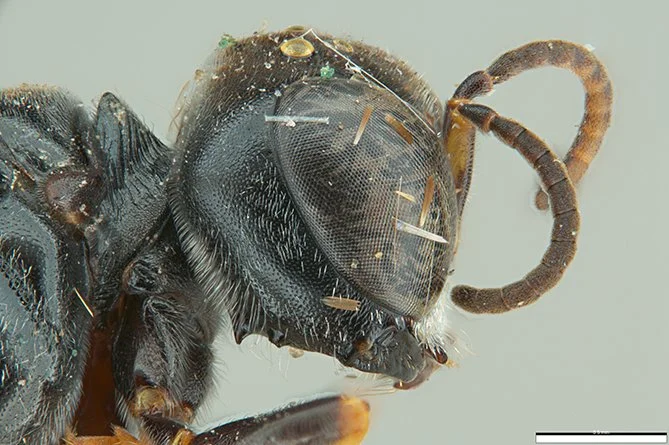
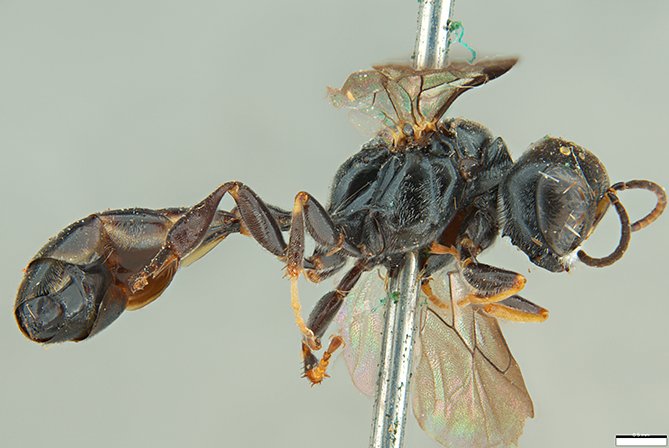
The holotype is the only R. coriolum specimen I am aware of in museum collection. Presumably Leclercq examined all Rhopalum specimens held by Museums Victoria and the Australian National Insect Collection (ANIC) at the time of his revision (Leclercq 1997). However, as Leclercq makes no mention of reviewing the collections of other Australian institutions, it is possible that there are additional specimens of R. coriolum held elsewhere and/or in drawers of undetermined Rhopalum. These caveats aside, identified (‘determined’) species are no doubt in short supply.
For this reason our small contribution it likely to be quite beneficial to researchers in future.
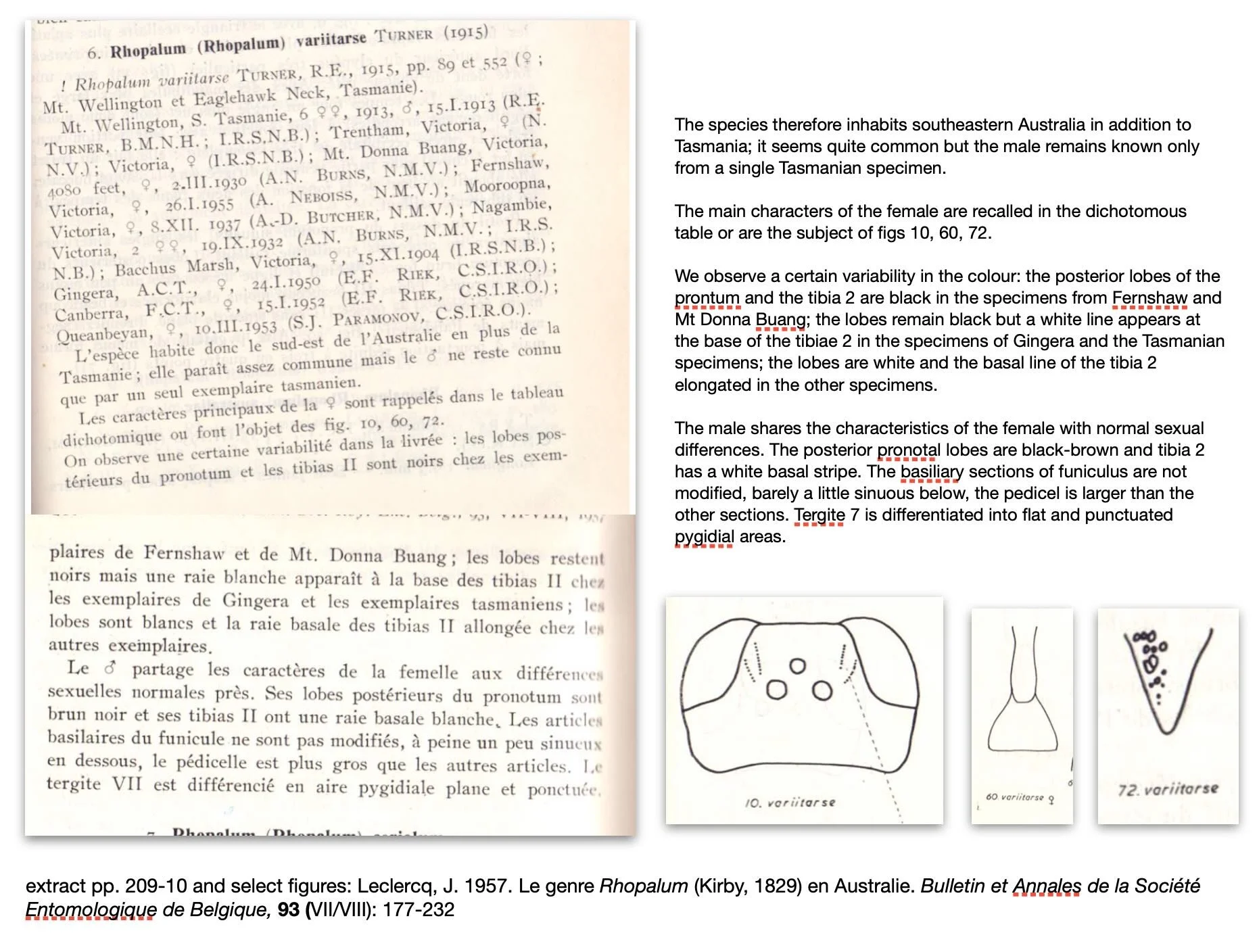
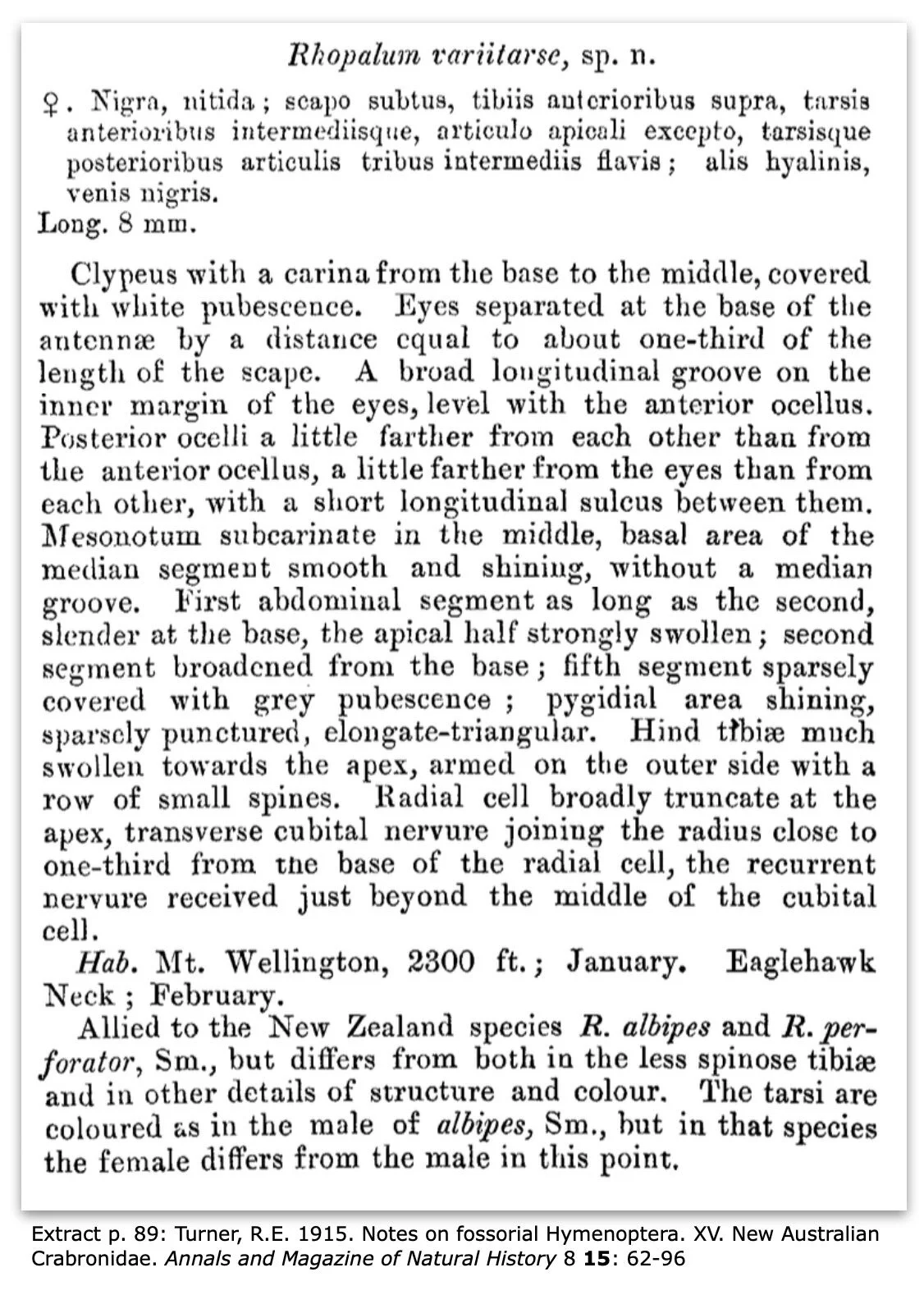
R. coriolum versus R. variitarse
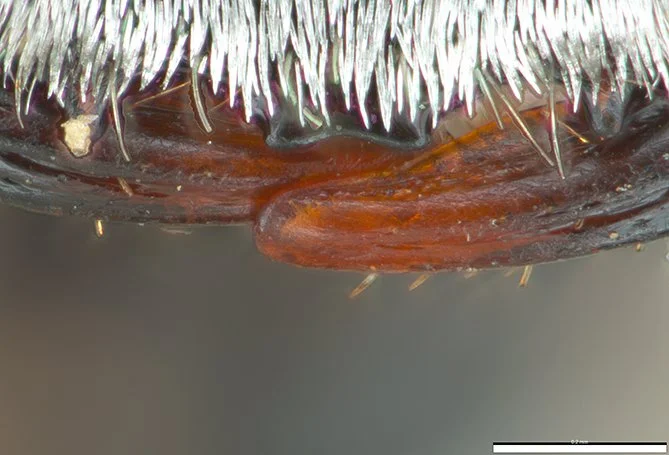
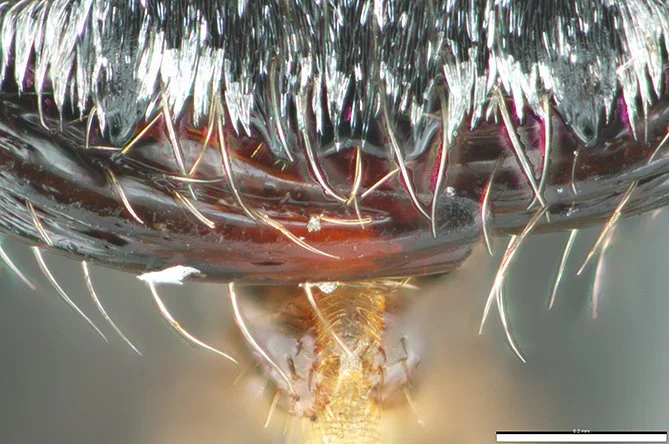
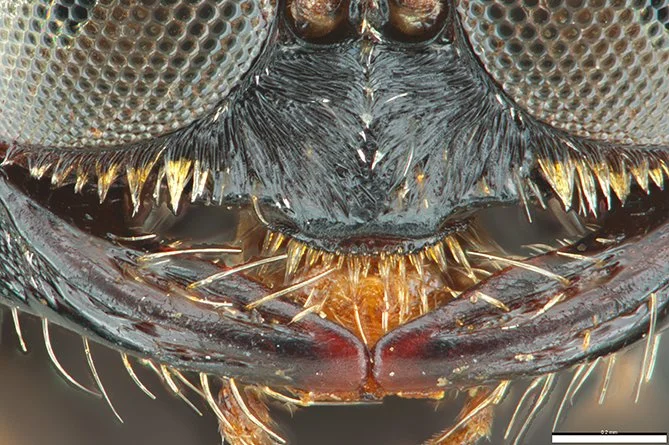
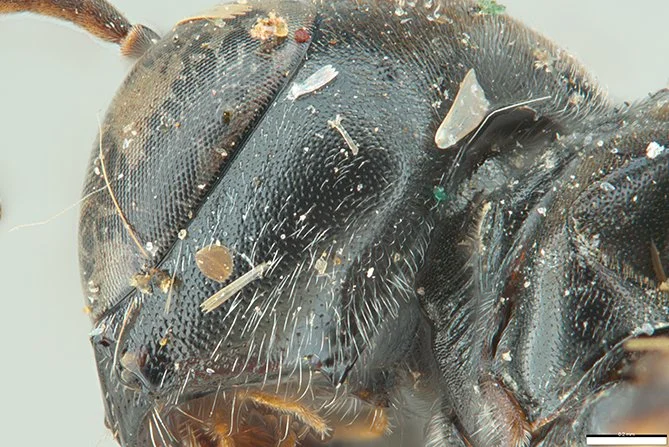
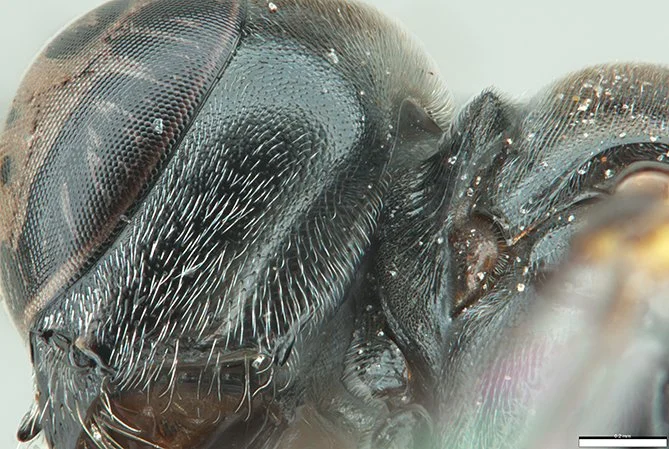
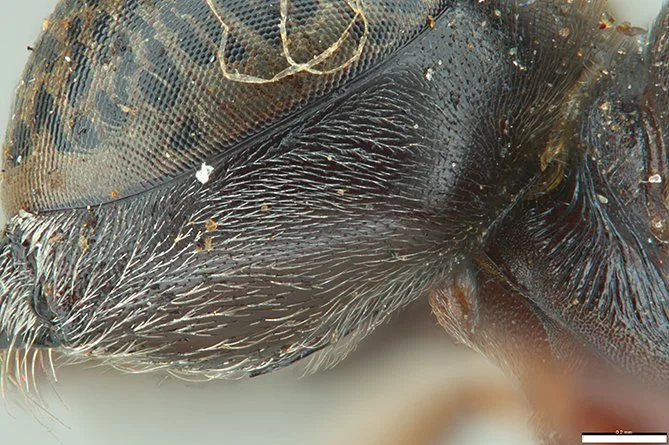
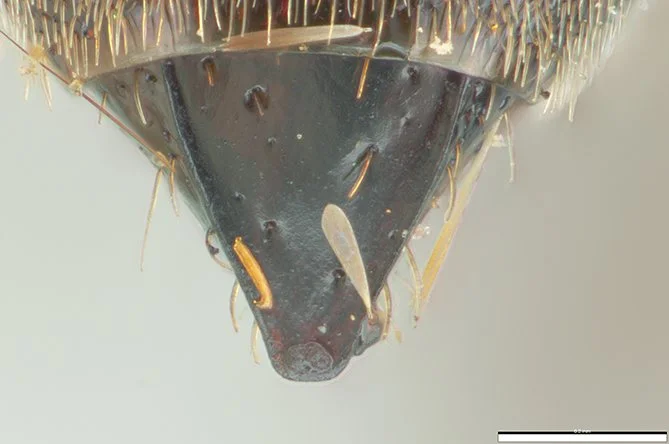
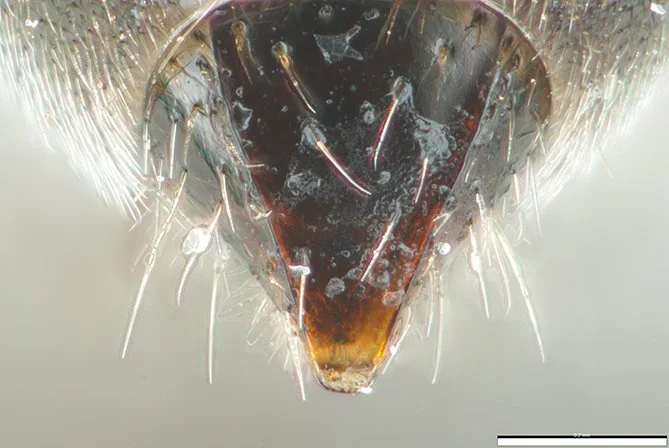
The key differences between R. coriolum and R. variitarse are subtle. These include:
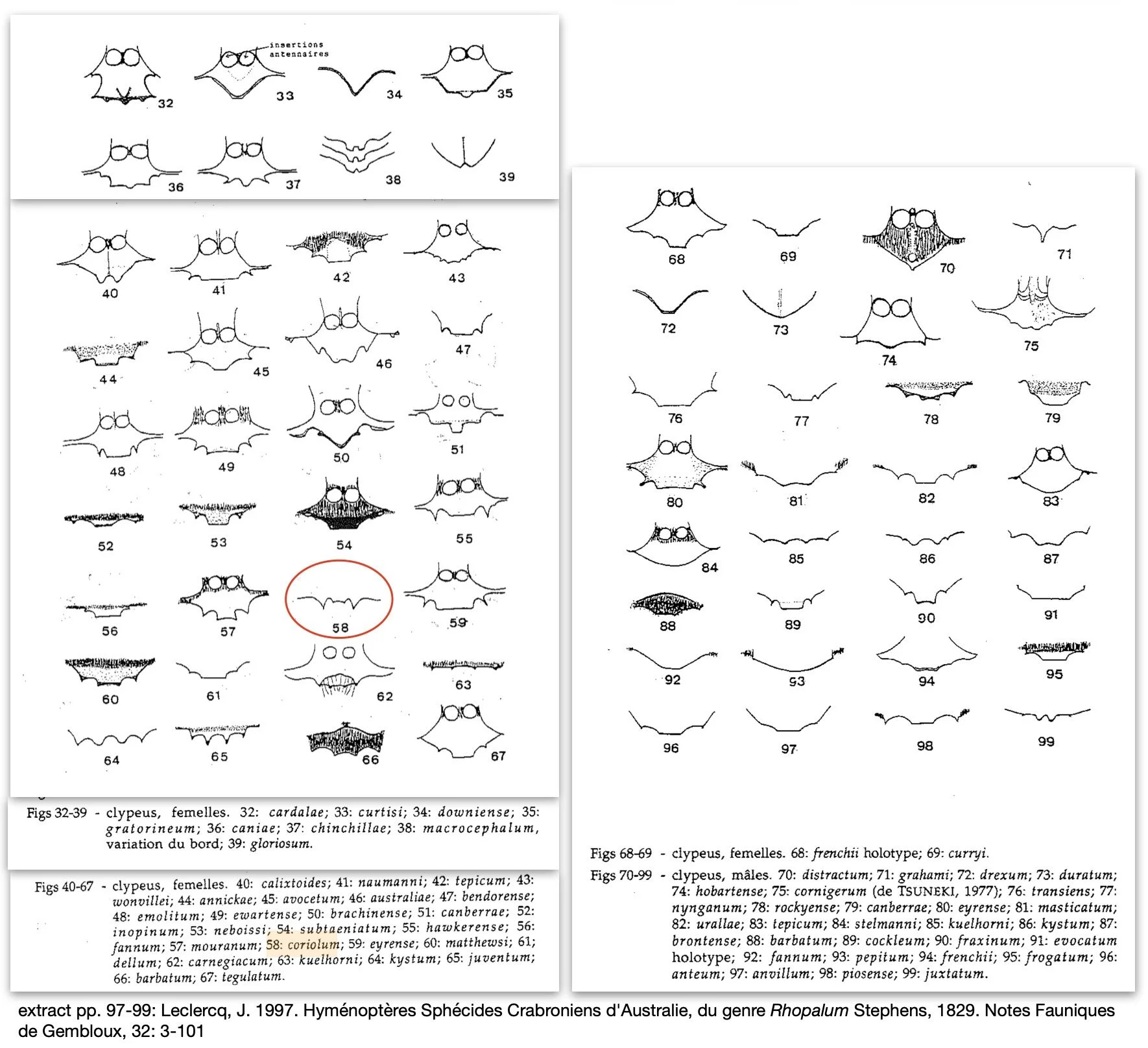
clypeus shape (distinctive, see Figs. 32-99, Leclercq 1997 in ‘bits & pieces’ section below)
occipital carina (with denticle in R. coriolum, without in R. variitarse)
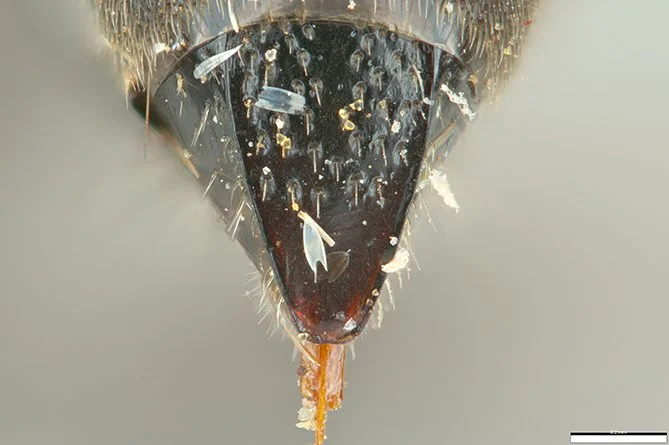
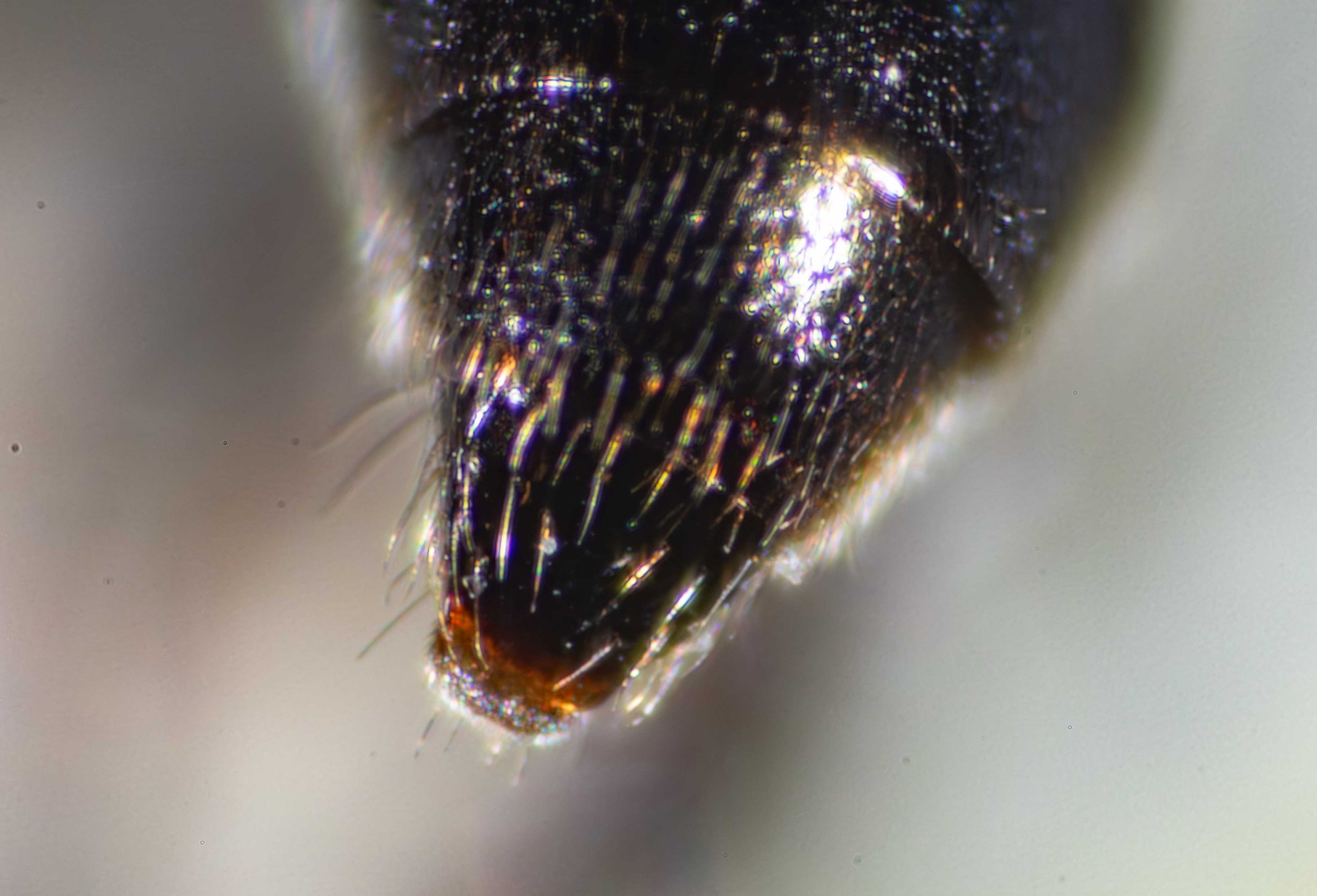
pygidal plate (less punctate in R. coriolum, but otherwise a similar shape).
In March 2026, Dr Ken Walker kindly provided comparable images of the R. coriolum holotype, an R. variitarse female (determined by Leclercq, and held in the Museums Victoria collection), and my #2308A. He agreed that #2308A is indeed R. coriolum, or ‘near’. In addition to the highly distinctive clypeus, R. variitarse is considerably larger than R. coriolum (K. Walker, pers. comm).
clypeus shape
occipital carina
pygidial plate
A word about mandibles
In comparable views, the mandibles of #2308A seem to differ from both the R. coriolum holotype and the R. variitarse specimen. In #2308A, a smaller second tooth is clearly present, ventral/posterior to the primary tooth. In contrast, the R. coriolum holotype appears unidentate.
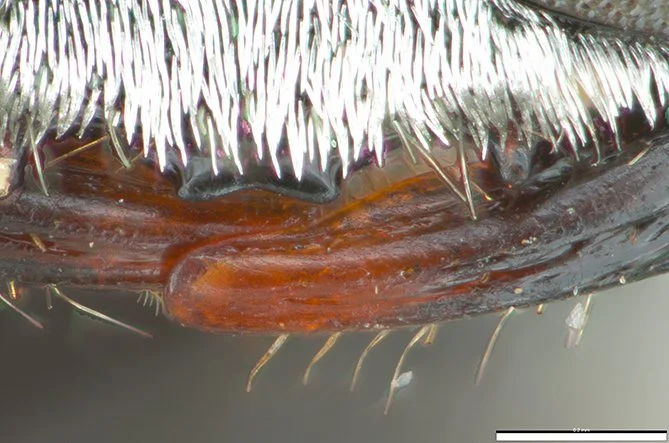
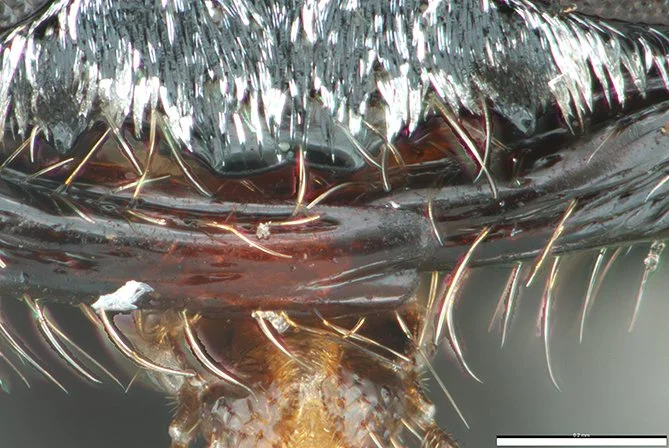
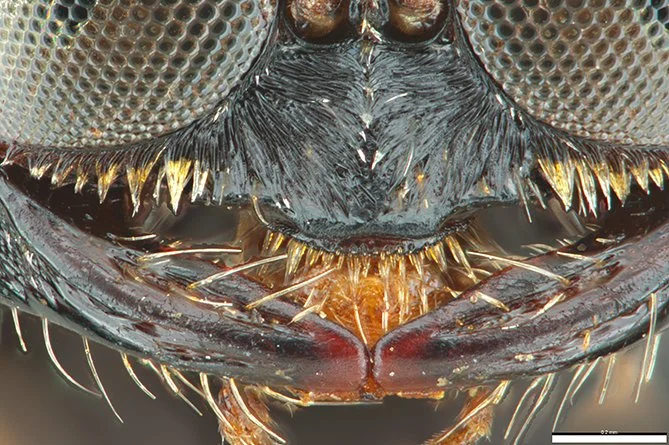
R. coriolum (holotype female T-11665). Image provided upon request, Sept. 2022. © Ken Walker, Museums Victoria, CC BY-NC 4.0
This highlights a difficulty with mandibular teeth as a morphological character: the viewing angle is critical.
Note that when viewed from a slightly ventral perspective, the second tooth is clearly evident in the holotype (arrow).
It seems even Leclercq could be caught out by this, describing R. coriolum as unidentate.
There is a second challenge with assessing mandible shape among ground-nesting wasps – wear incurred over the course of the nesting season. In some other species I’ve studied, the mandibles can wear down to nearly half their original length, the tip worn away completely. I collected #2308A in mid August, early in the season. In contrast, the R. coriolum holotype was collected in late October.
The missing males
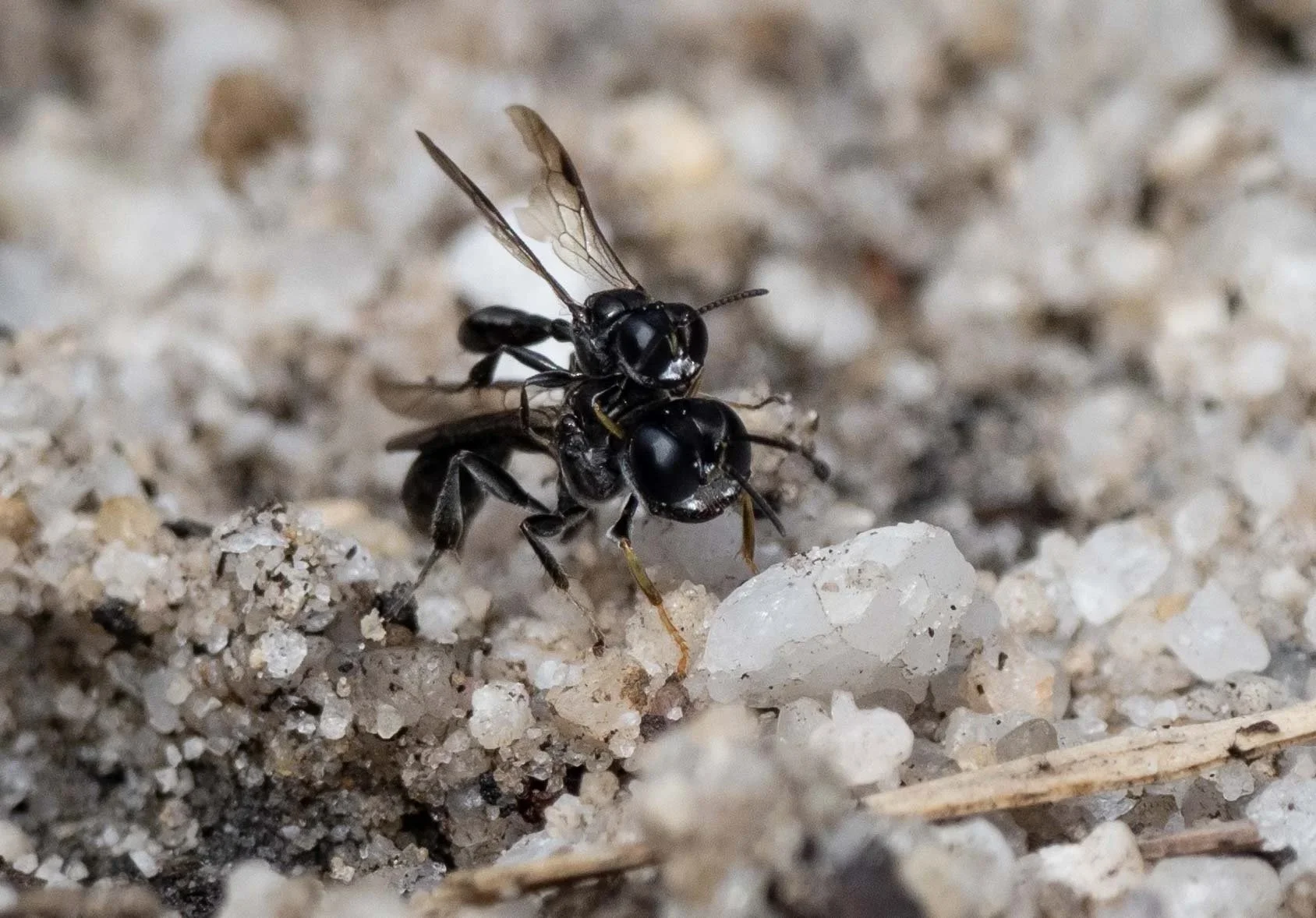
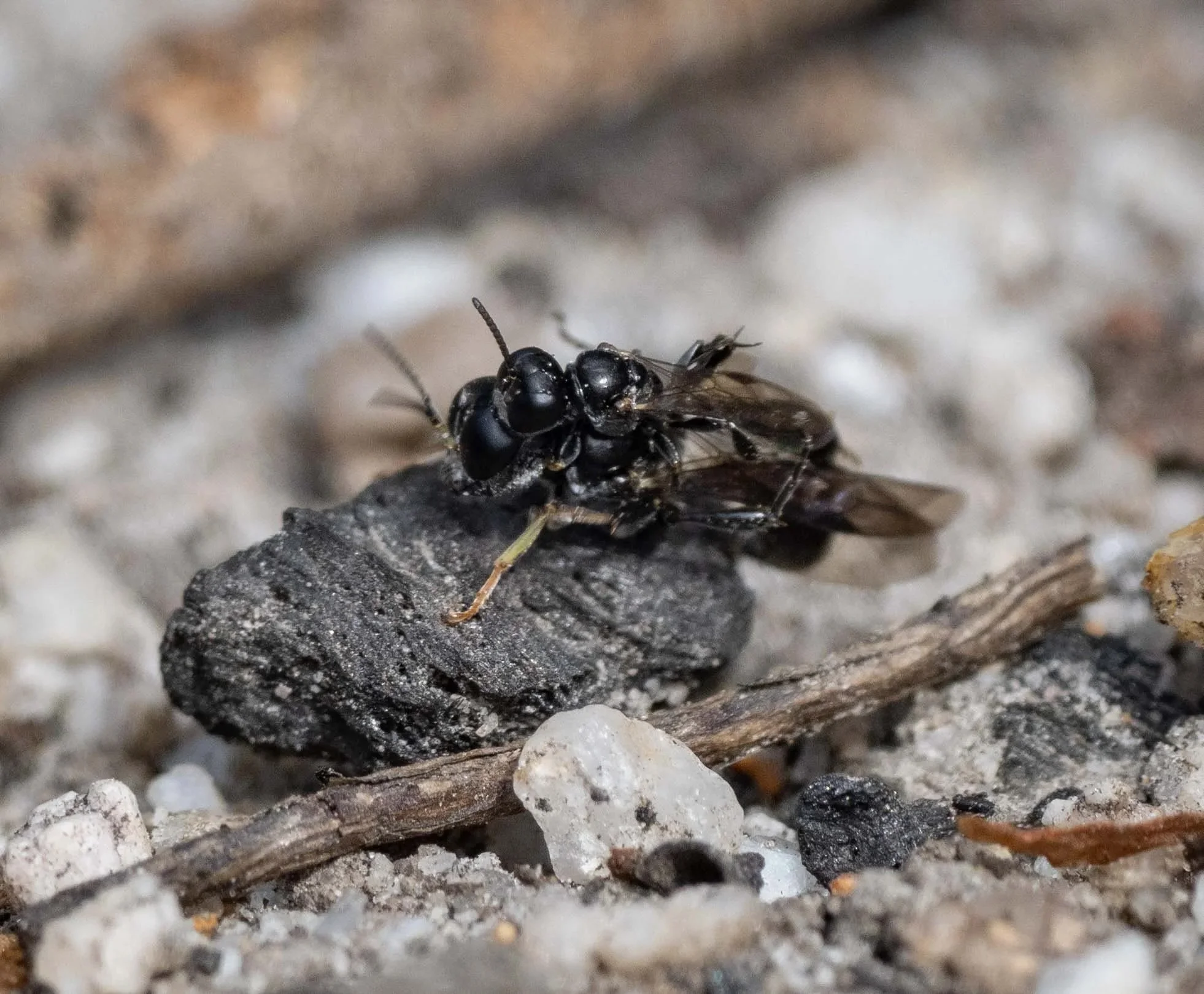
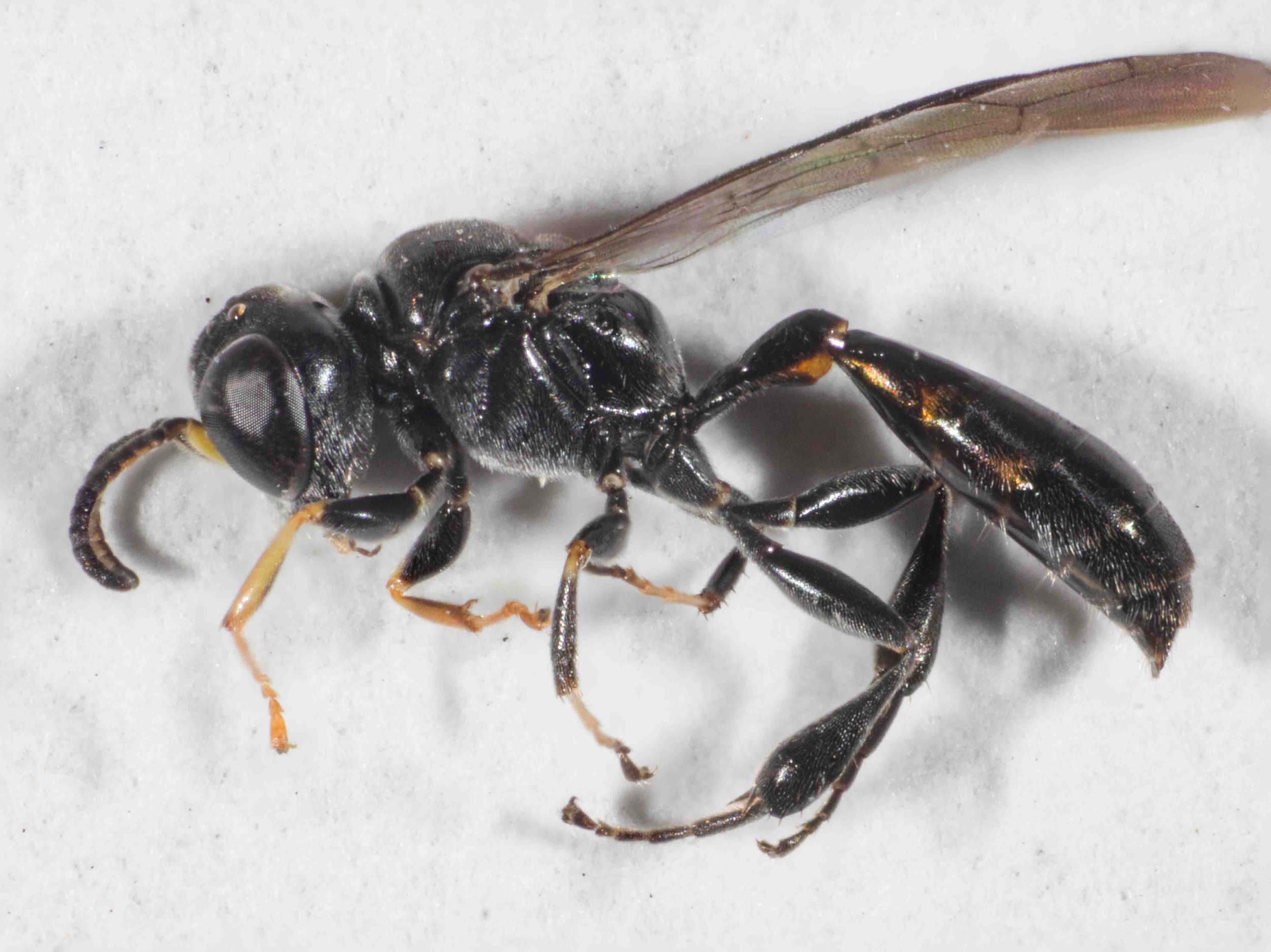
We first sighted males at the nesting ground in September 2022. These two field shots highlight the overall similarity in shape and colour pattern between the sexes. And the striking difference in size!
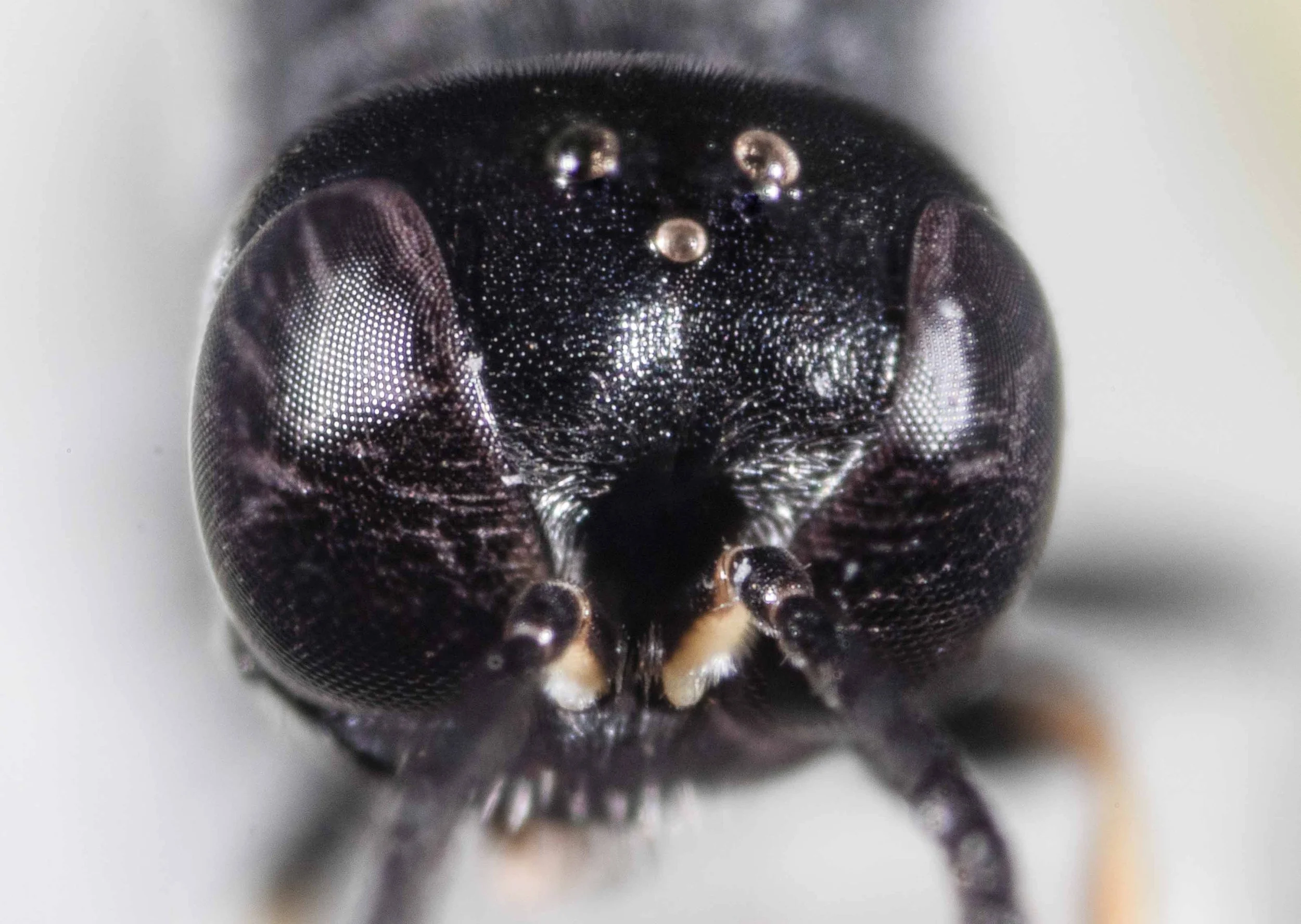
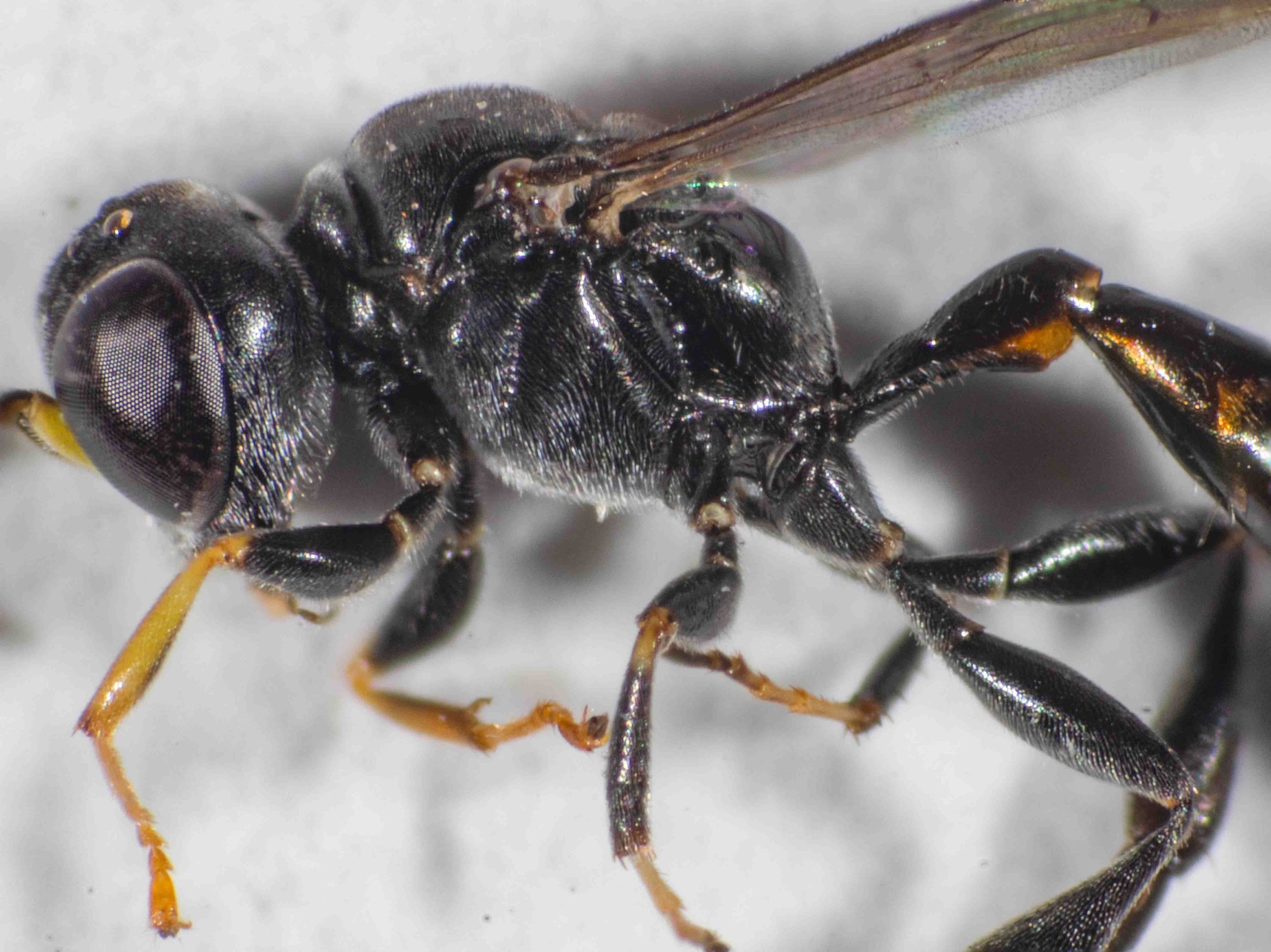
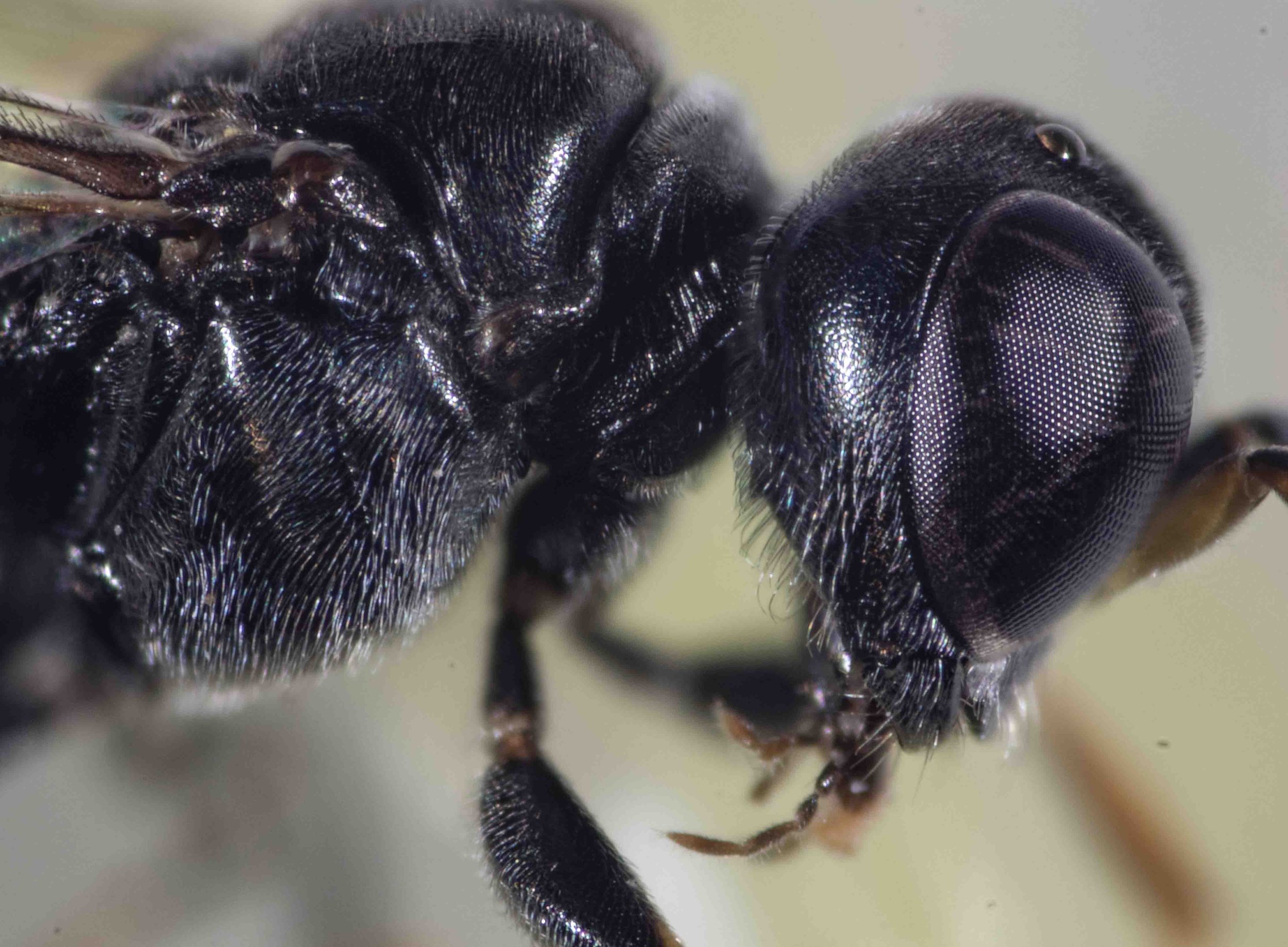
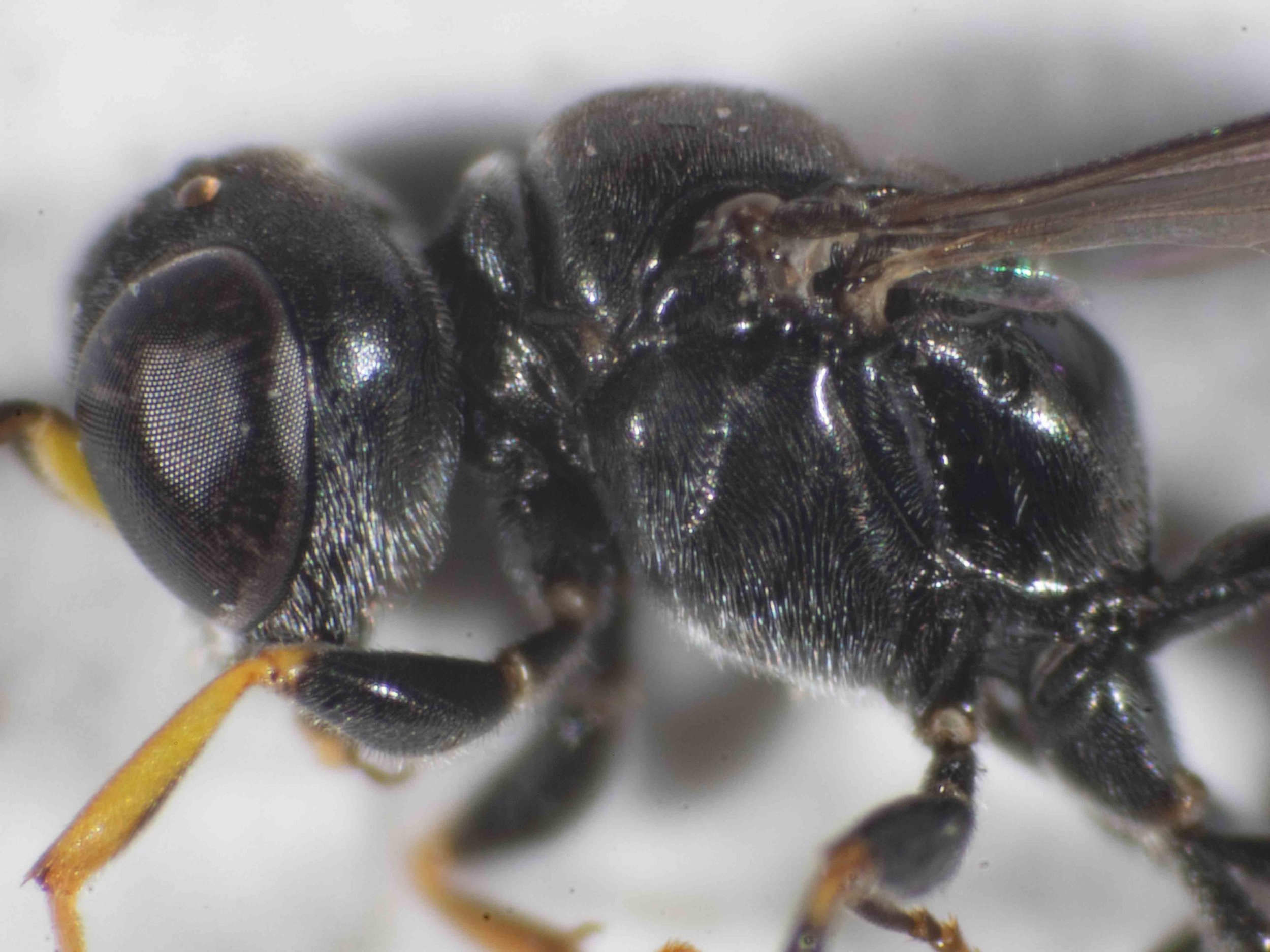
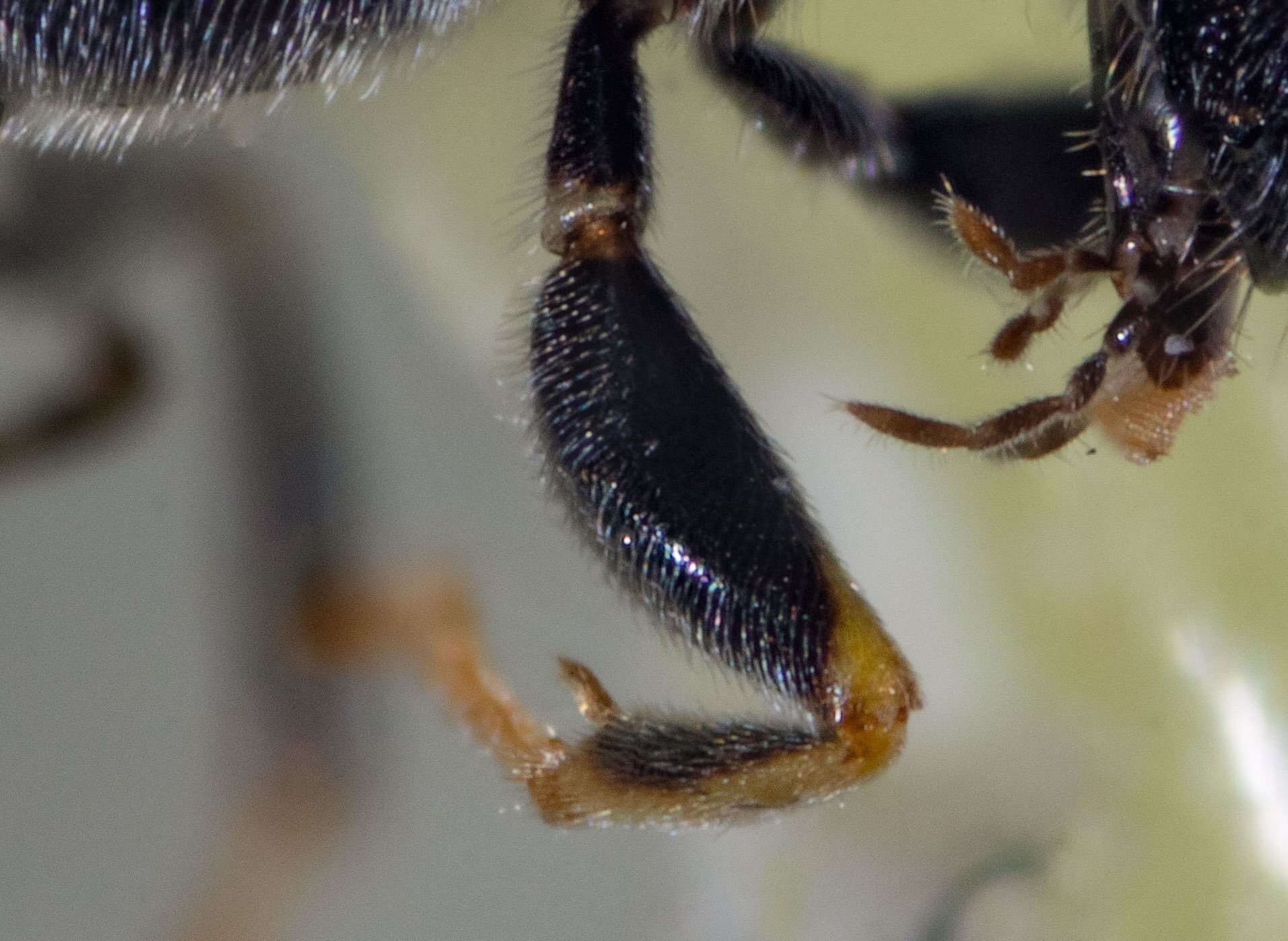
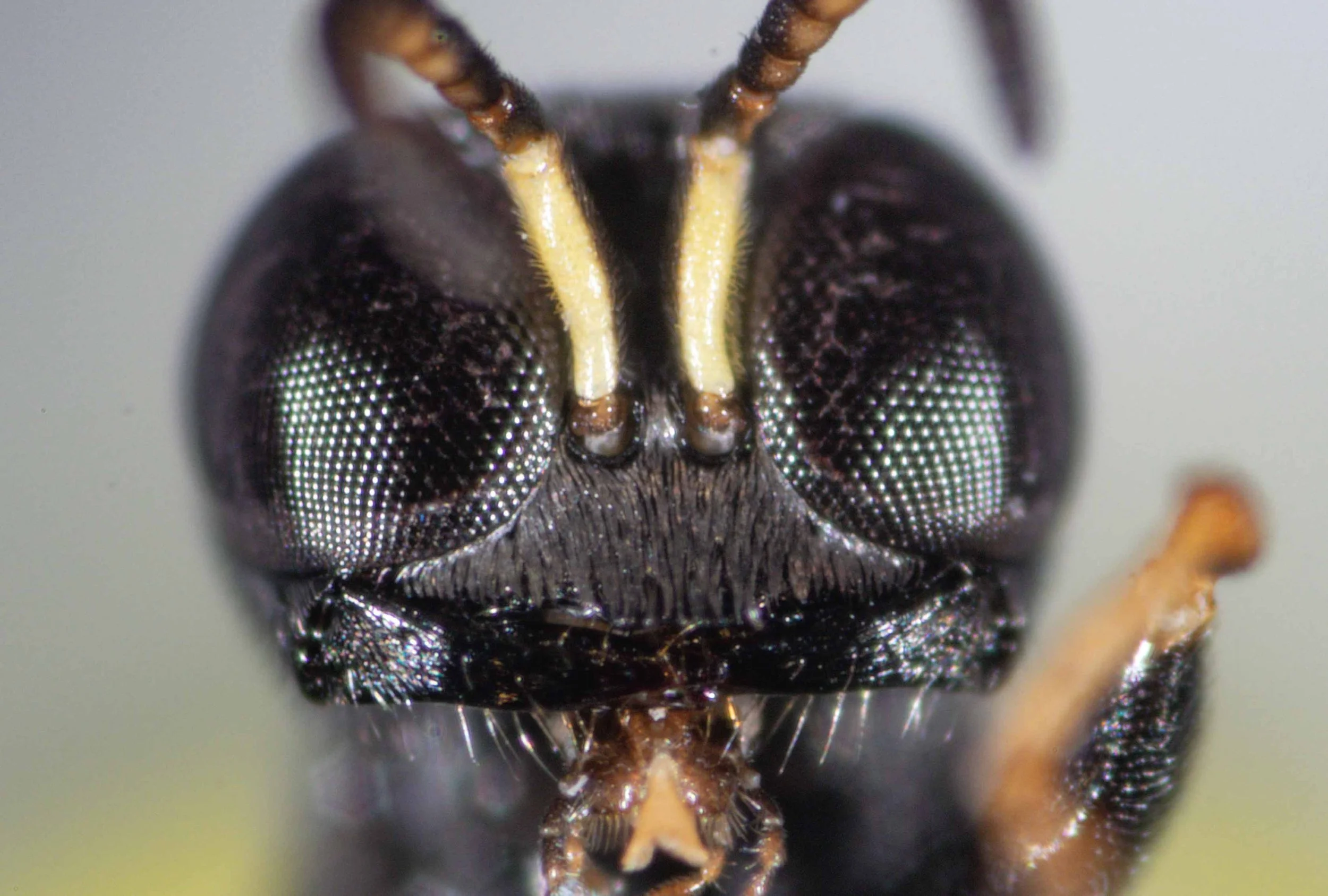
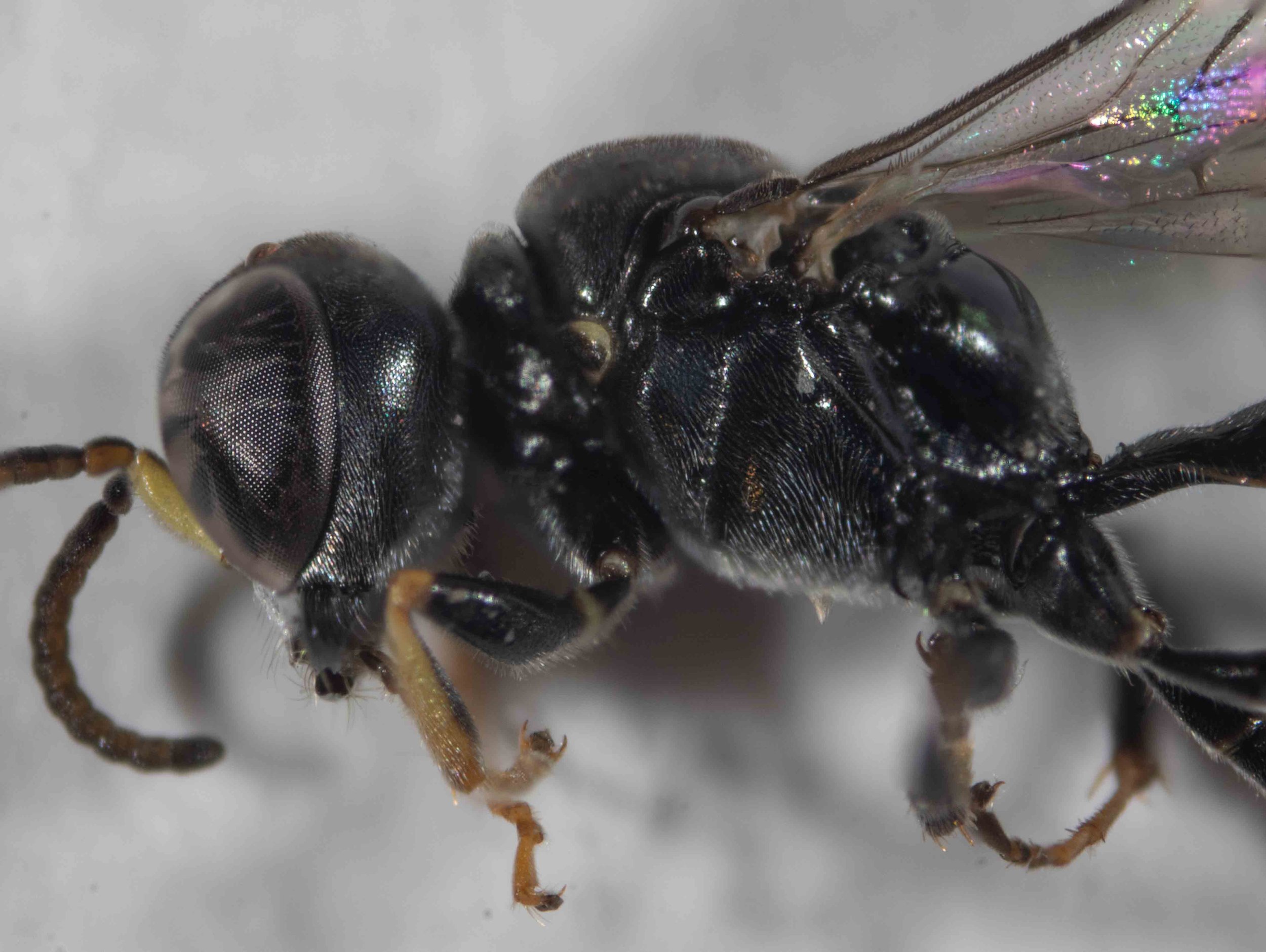
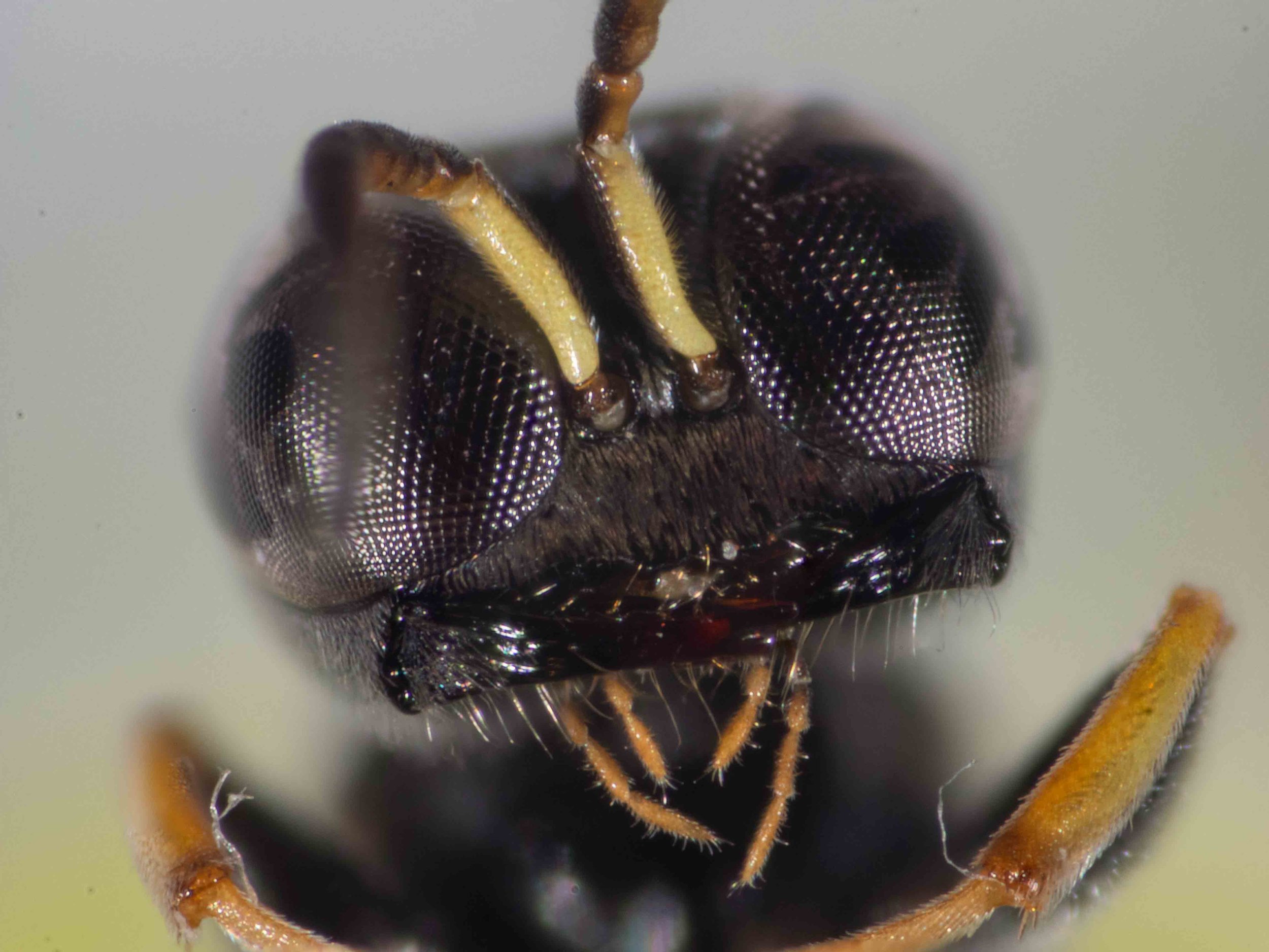
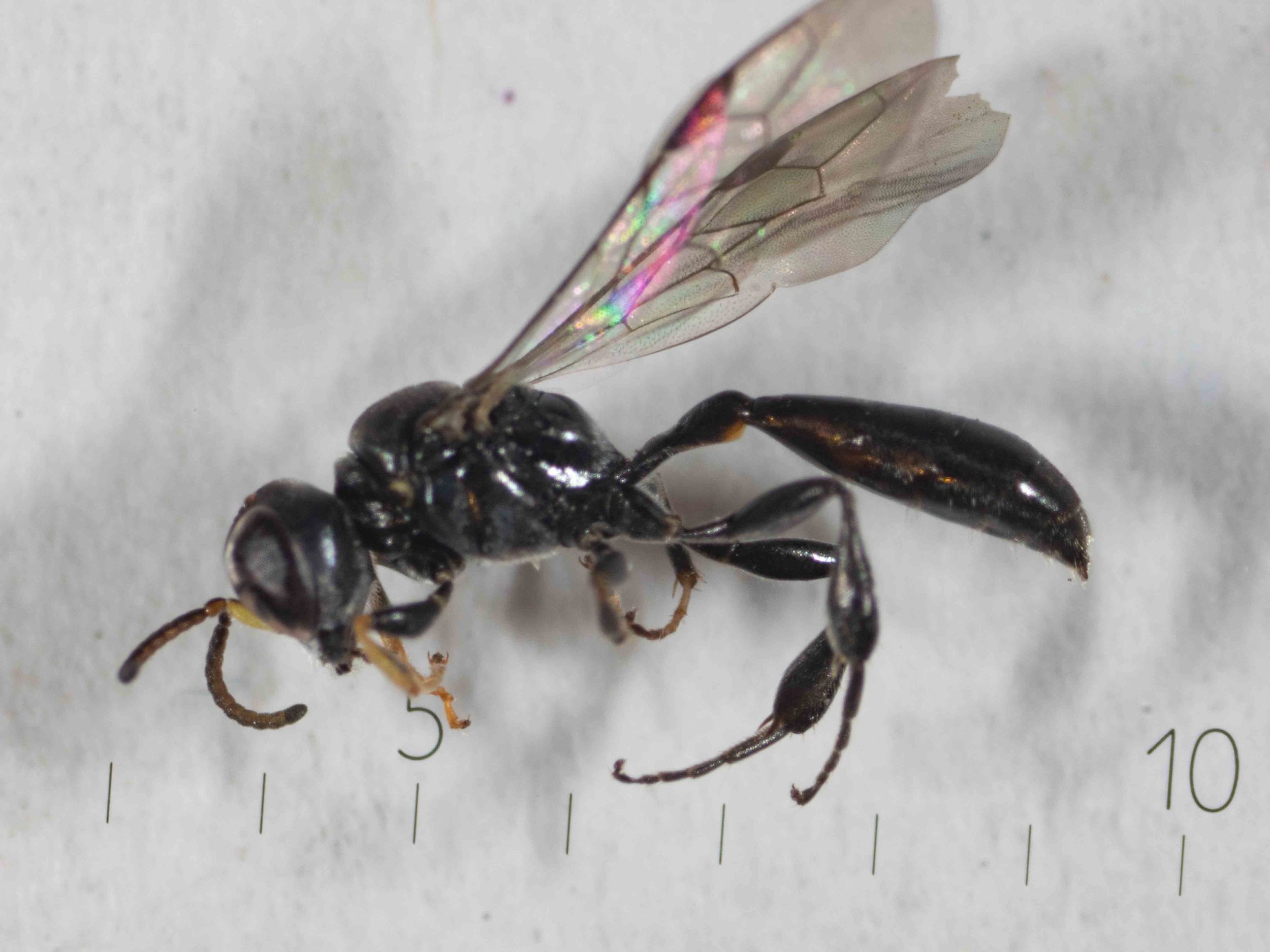
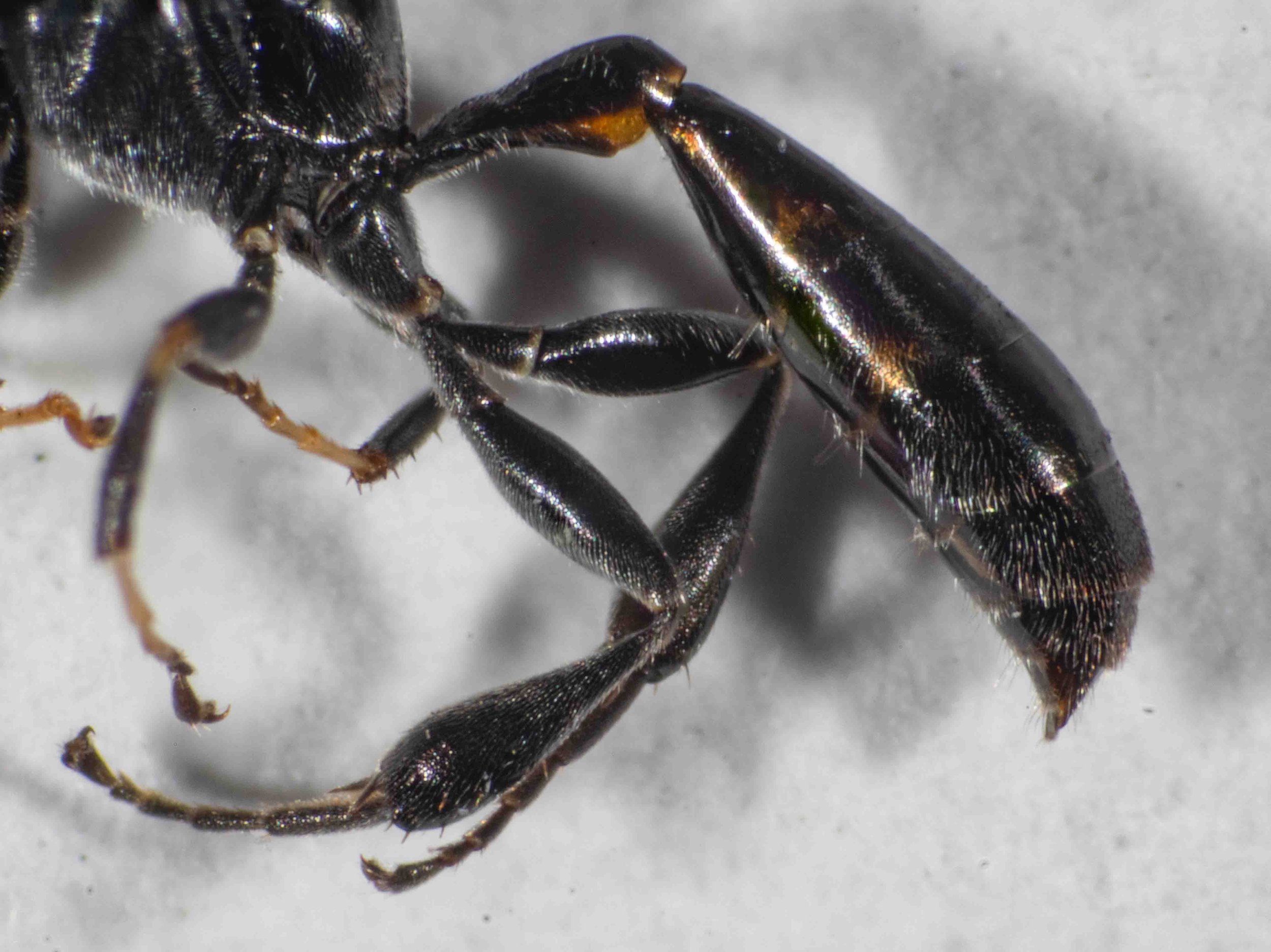
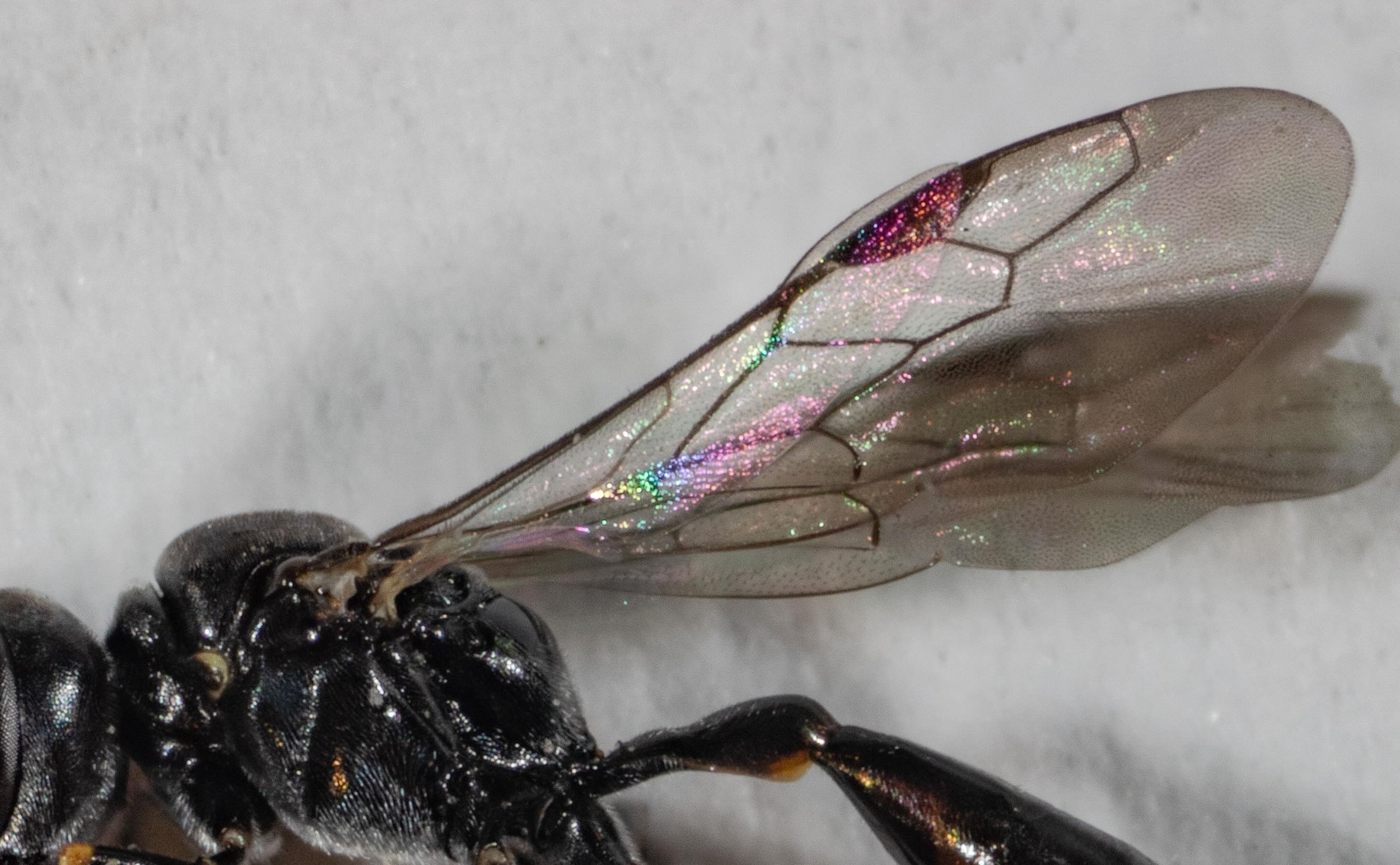
A closer look at the collected males (2305A & 2305B) shows just how very alike the sexes are. In terms of the diagnostic features of the species, they are virtually identical to the female. Minor differences include: the head (less broad), the metasoma (more slender), and the scapes (more extensively yellow beneath).
Bits & pieces
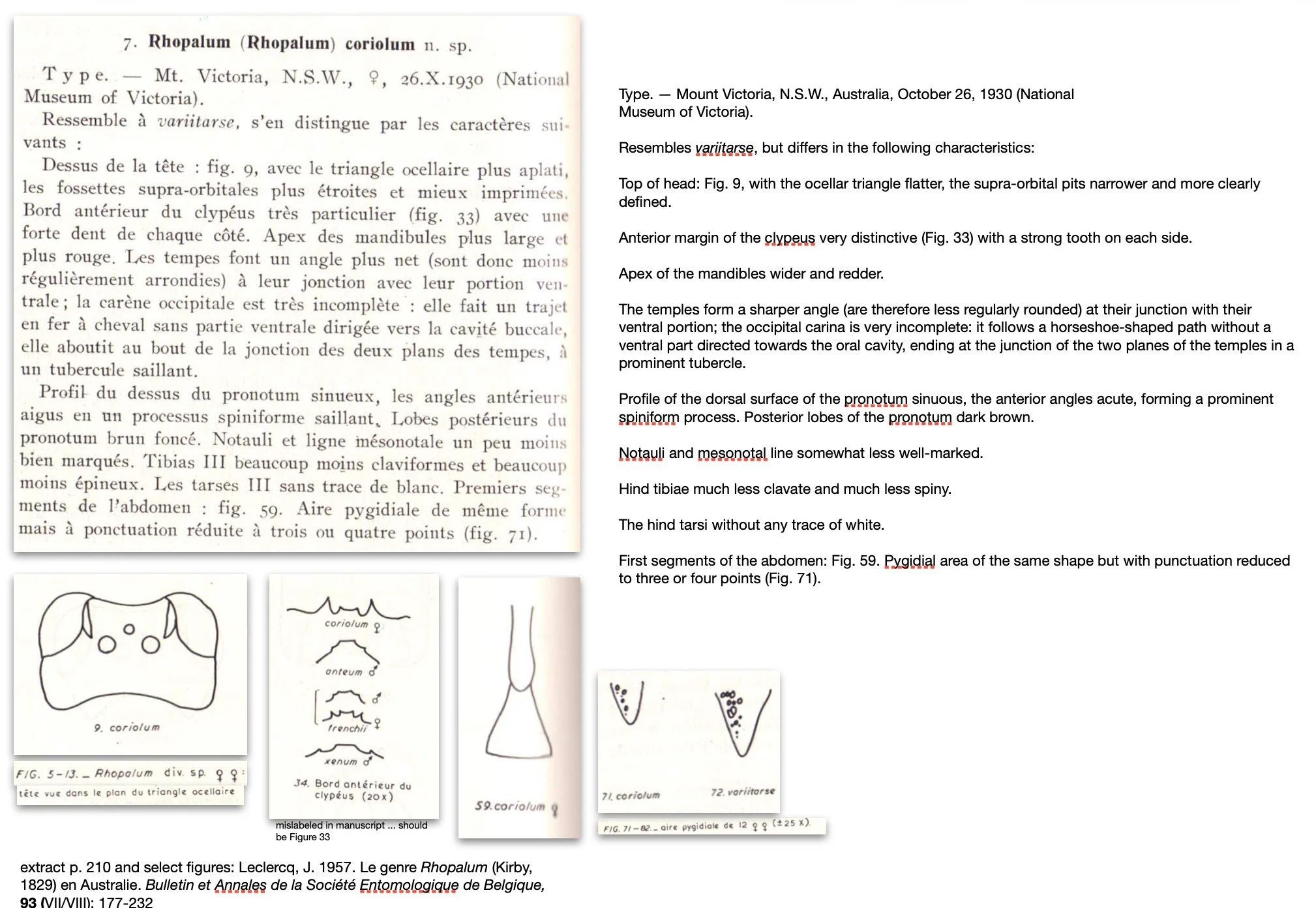
Earlier work, including the original descriptions of R. coriolum (Leclercq 1957) and R. variitarse (Turner 1915).
Update: September 2026
The nesting season for 2026 commenced on 26th August, and the patch was soon busy with provisioning females. I collected one specimen for barcoding. For further details, including a range of images, see the following notes page:
References
Leclercq, J. 1957. Le genre Rhopalum (Kirby, 1829) en Australie. Bulletin et Annales de la Société Entomologique de Belgique, 93 (VII/VIII): 177-232 (available here)
Leclercq, J. 1997. Hyménoptères Sphécides Crabroniens d'Australie, du genre Rhopalum Stephens, 1829. Notes Fauniques de Gembloux, 32: 3-101 (available here)
Pulawski, W.J. 2010. Rhopalum nasale, a new species from Australia (Hymenoptera: Crabronidae). Journal of Hymenoptera Research 19: 139-143
This is a workbook page … a part of our website where we record the observations and references used in making species identifications. The notes will not necessarily be complete. They are a record for our own use, but we are happy to share this information with others.