
Podagritus (Crabronini)
Workbook
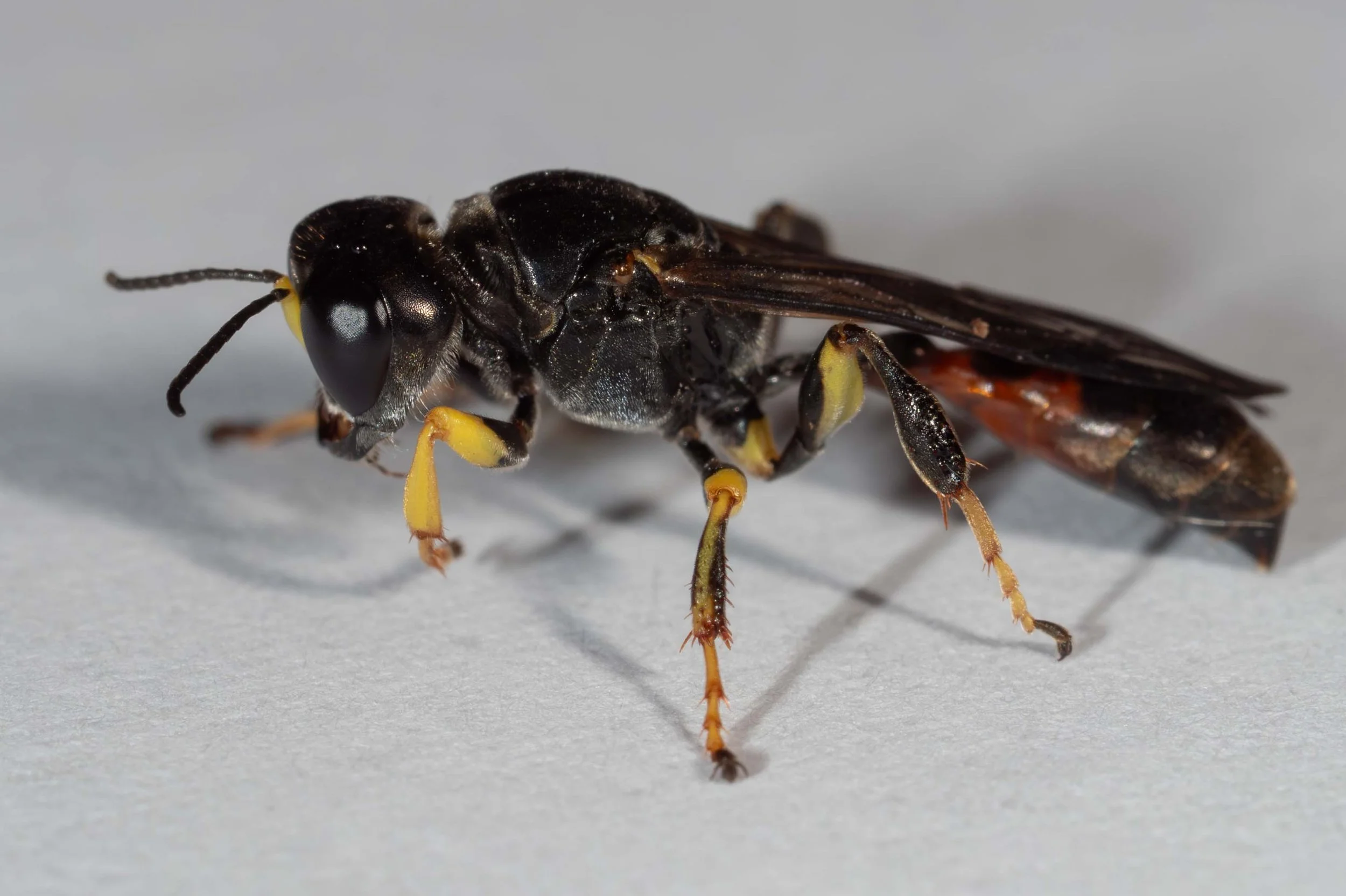
There are currently more than 30 recognised species of Podagritus in Australia. Most are medium in size, and rather similar in general shape and colour pattern.
The notes below are my attempt to sort out who’s who, at least in south eastern Australia.
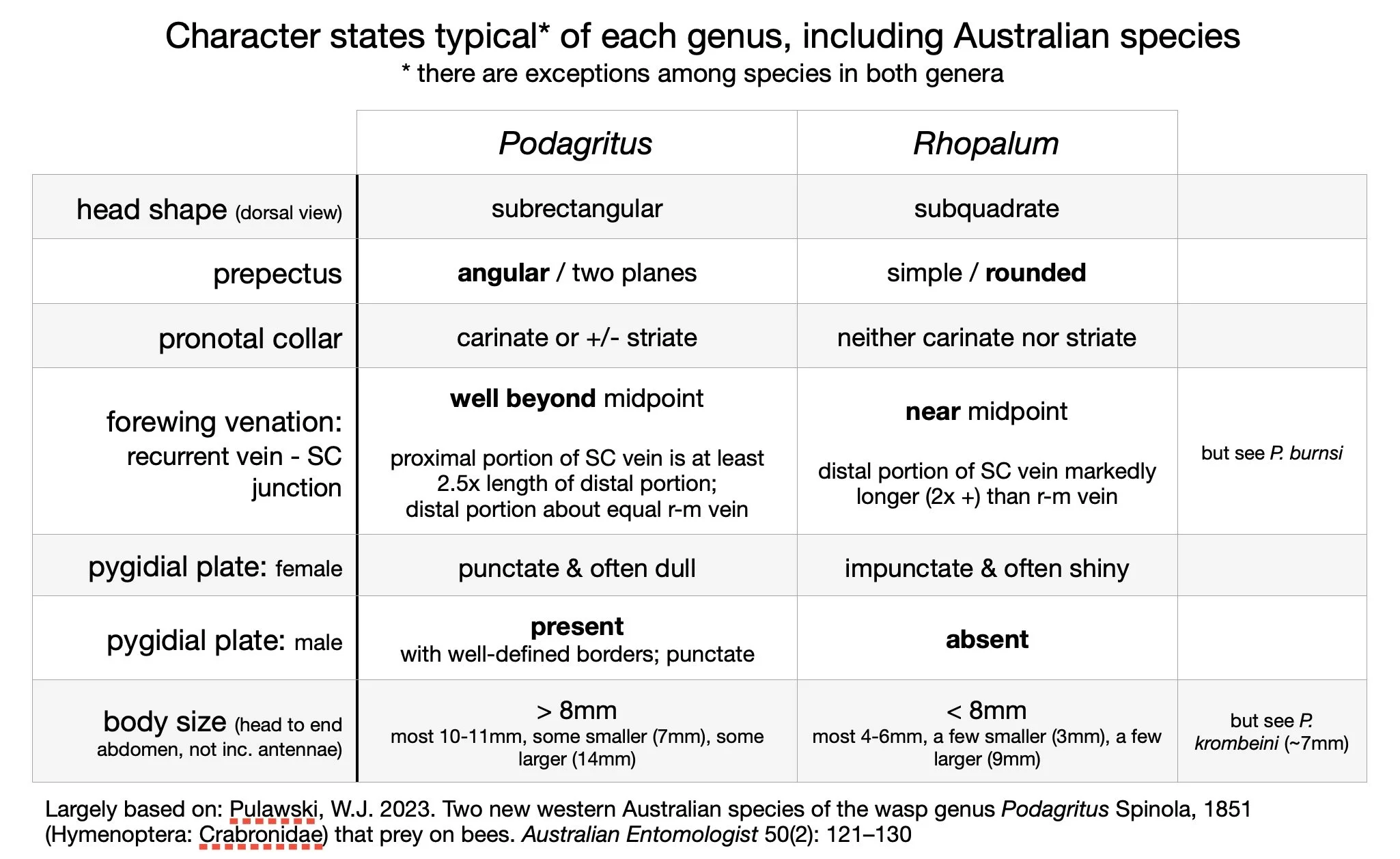
Podagritus has much in common with Rhopalum, and some species share a mixture of the characters typical of each genus.
My motivation for working up the following notes is twofold. First, collating the descriptions of a variety of Podagritus species should clarify key diagnostic features, and – importantly – help me recognise those tricky ‘cross-over’ Podagritus species, distinguishing them from Rhopalum. Second, I hope to confirm the species identification of a local Podagritus that I watch nesting here in the forest each summer.
Podagritus is one of 13 Australian genera in the tribe Crabronini (Crabronidae: Crabroninae). Note that under a revised taxonomy (Sann et al. 2018), the tribe will be elevated to the subfamily Crabroninae (Crabronidae). That aside, for more detail:
Podagritus vs Rhopalum
These two genera are so alike they rather defy simple diagnosis. Indeed, in time they may be combined into a single, massive genus or redistributed across several smaller genera.
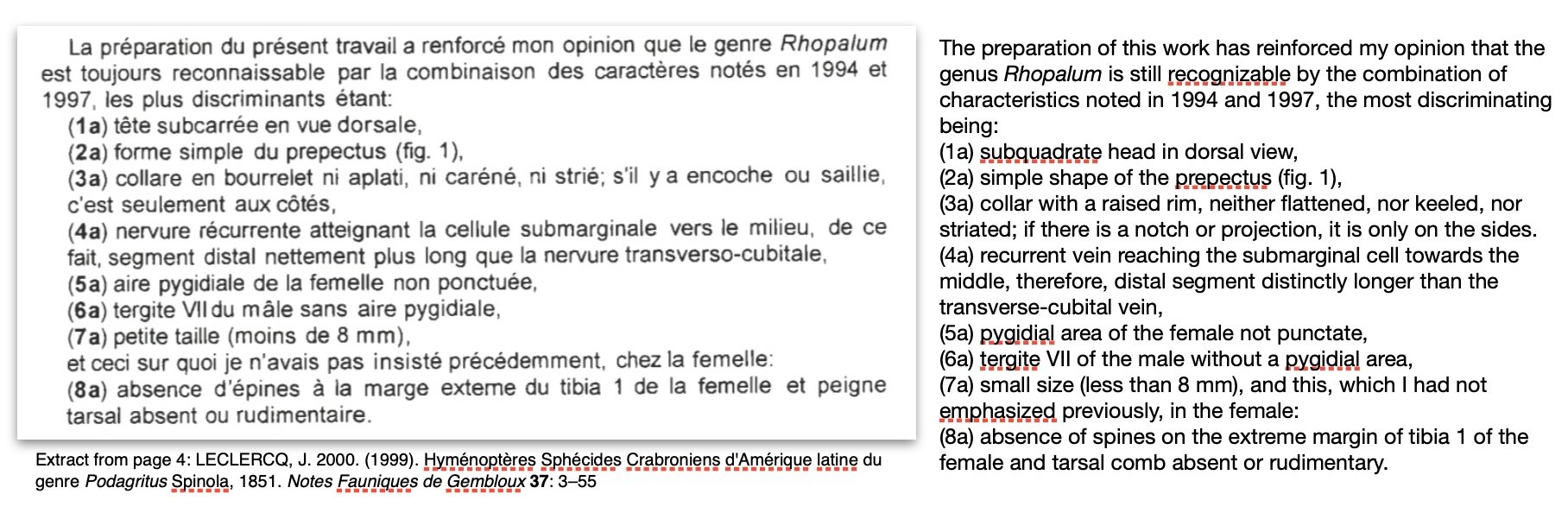
For now, I am following the generally accepted distinctions developed by Leclercq (see Leclercq 1998) and most recently adopted by Pulawski (2023).
Below I take a closer look at these characters, and explore their utility for identifying specimens – with a particular emphasis on working from images.
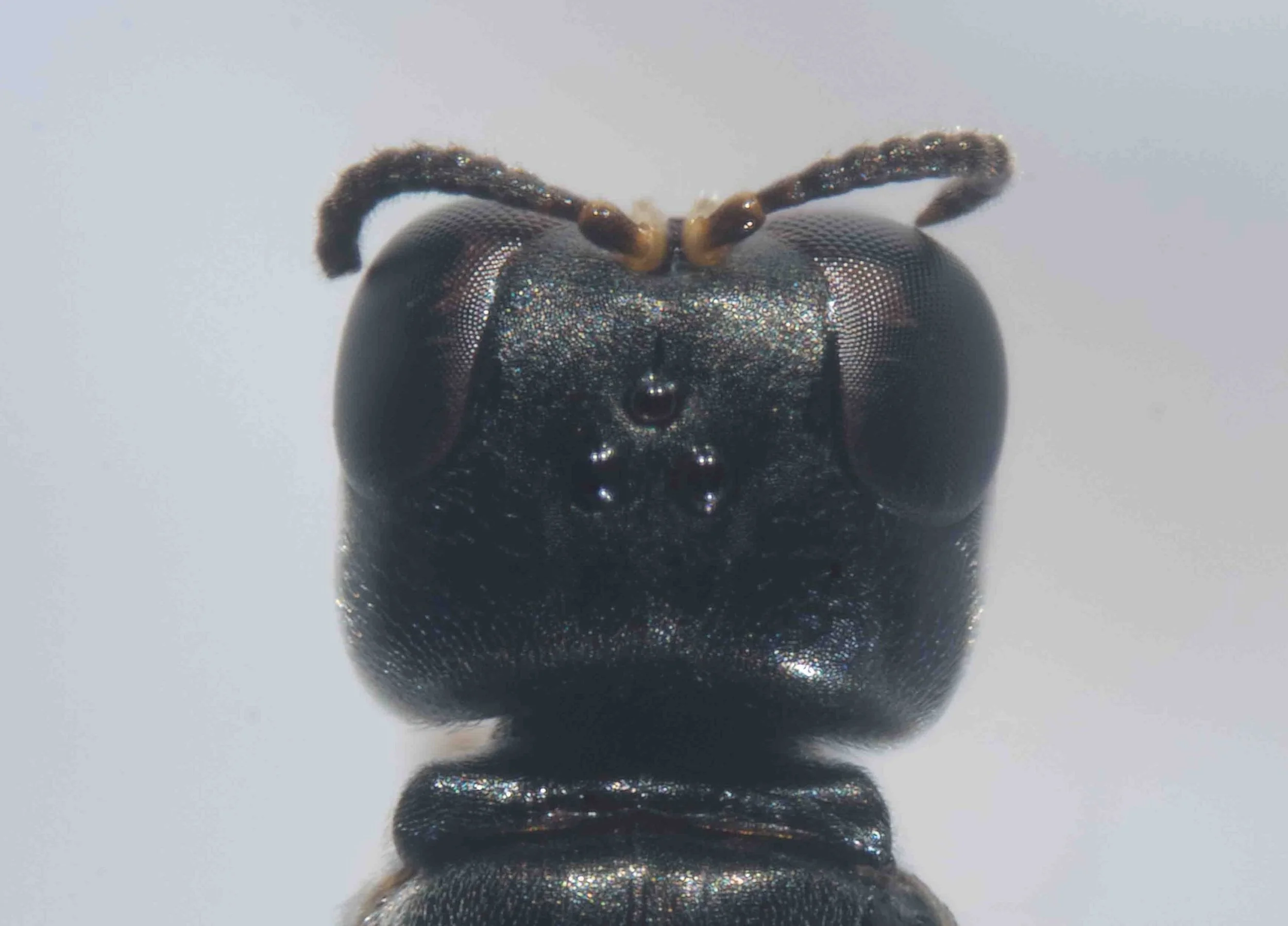
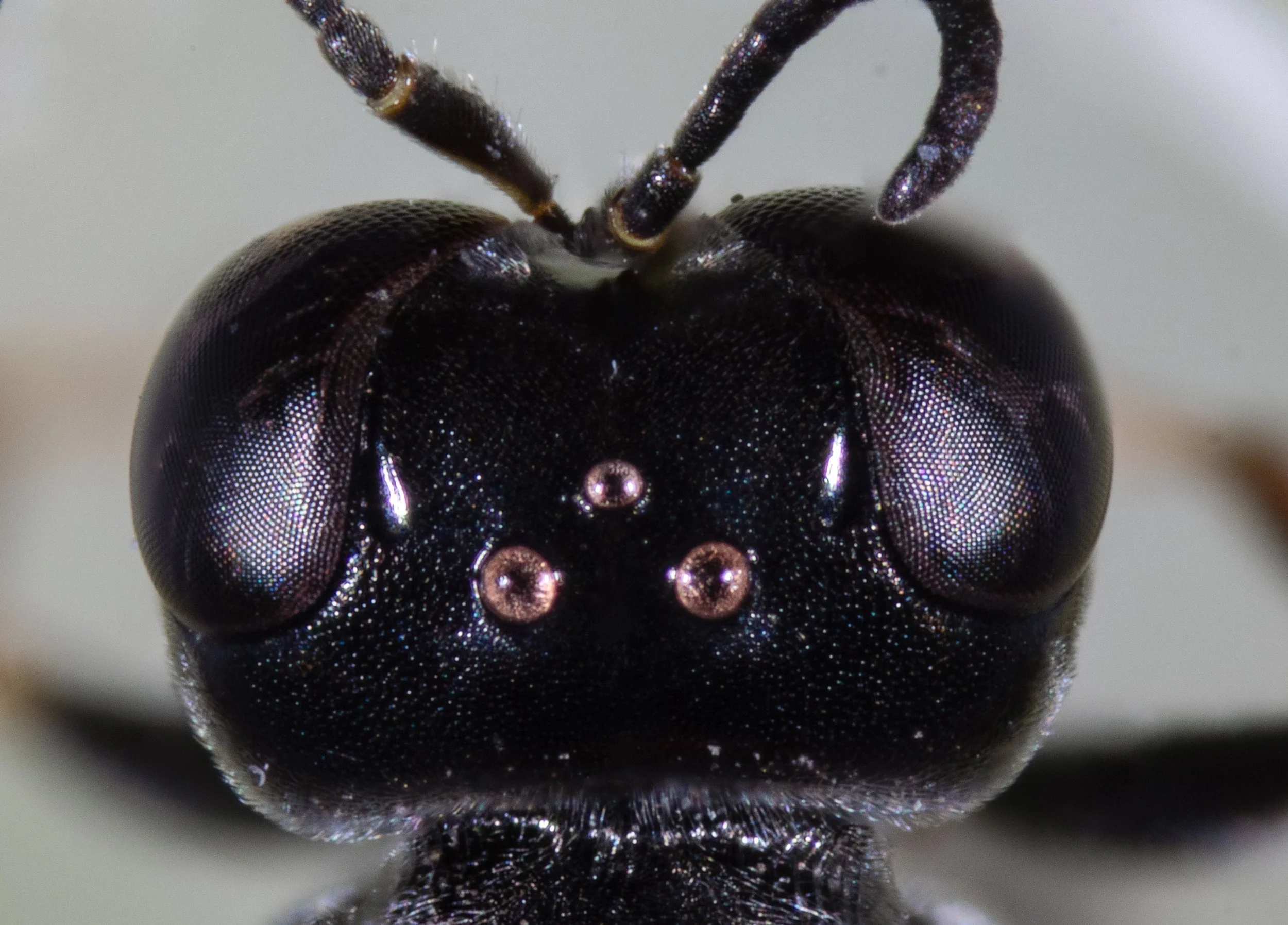
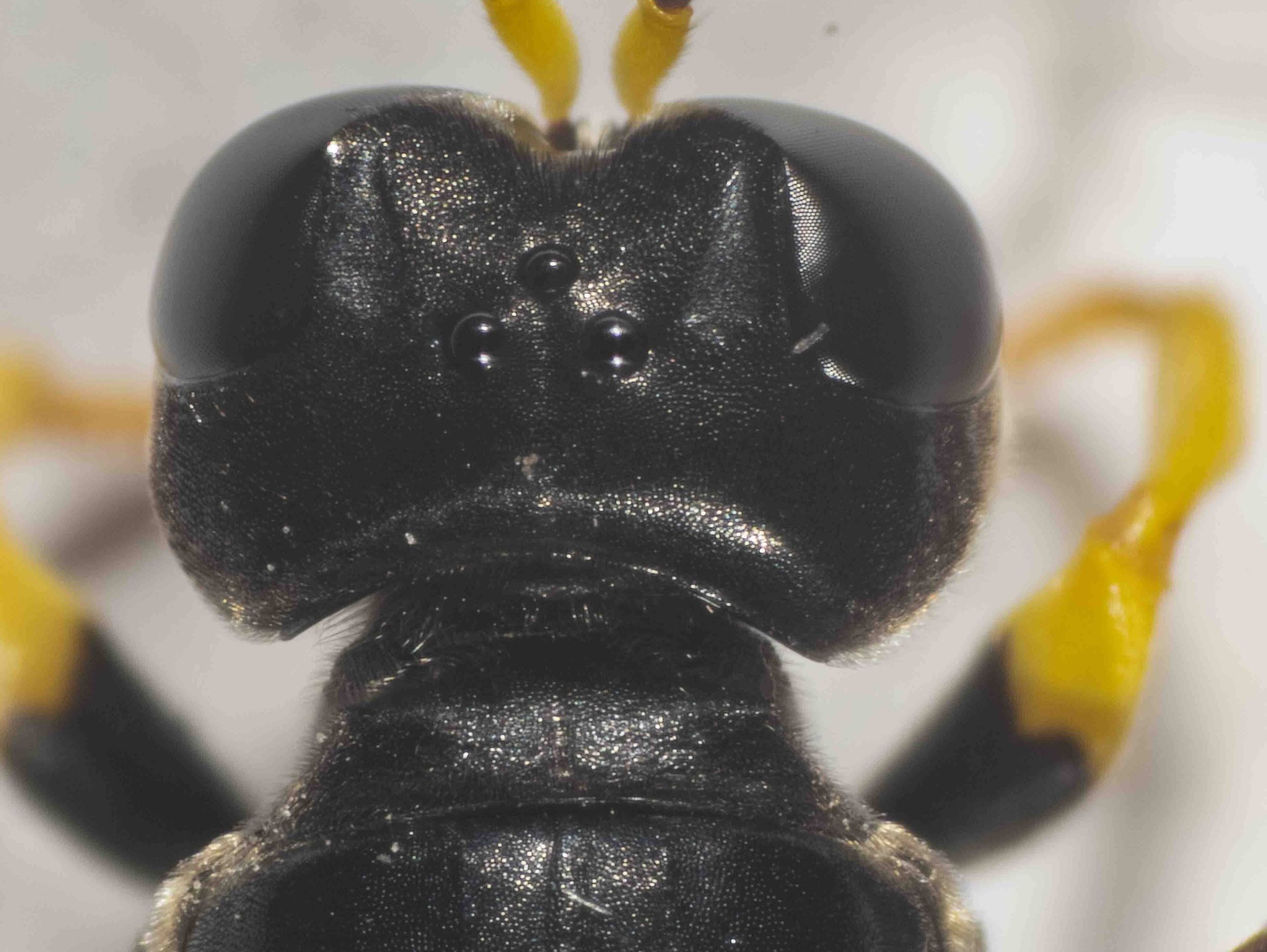
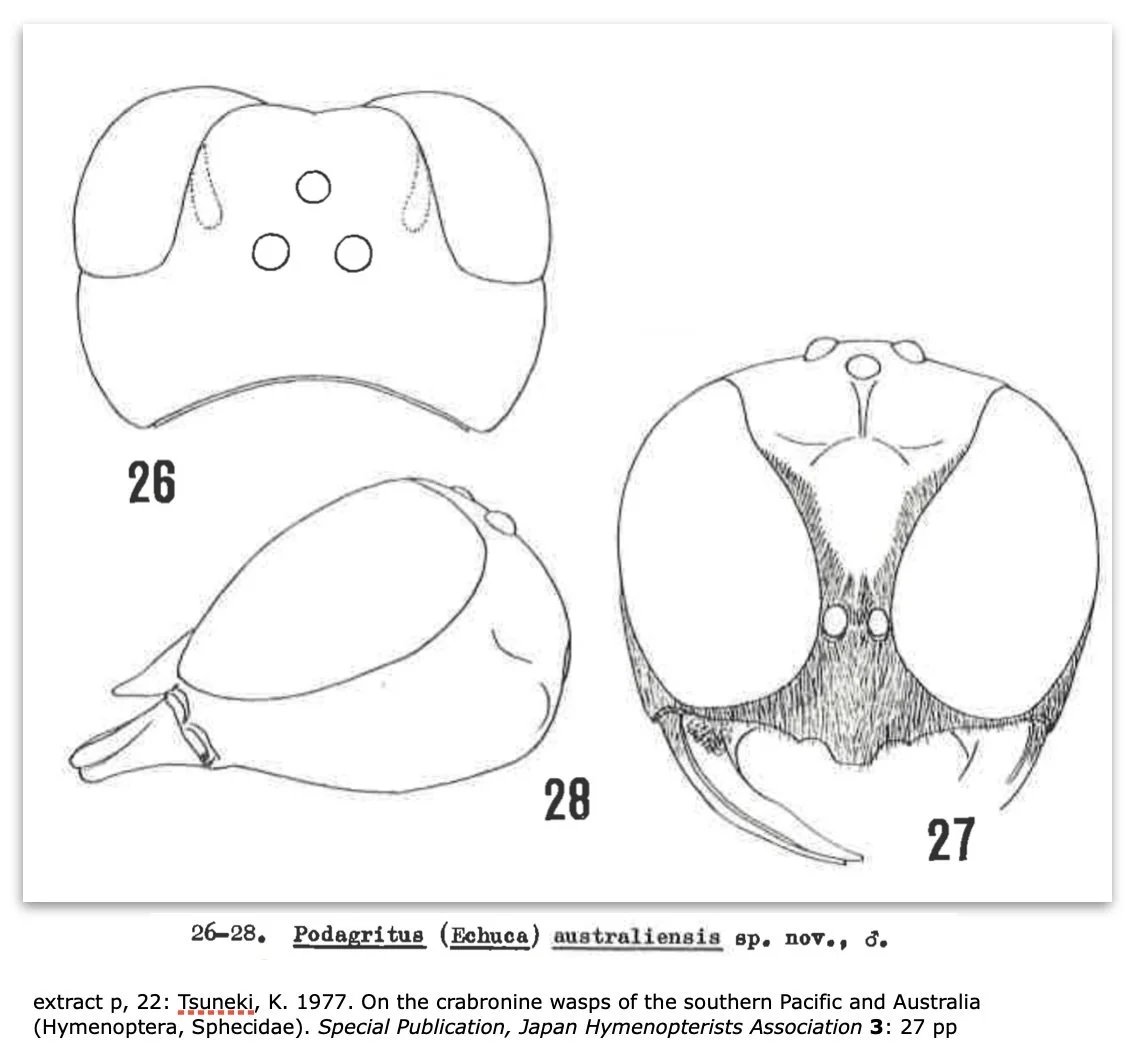
Head shape
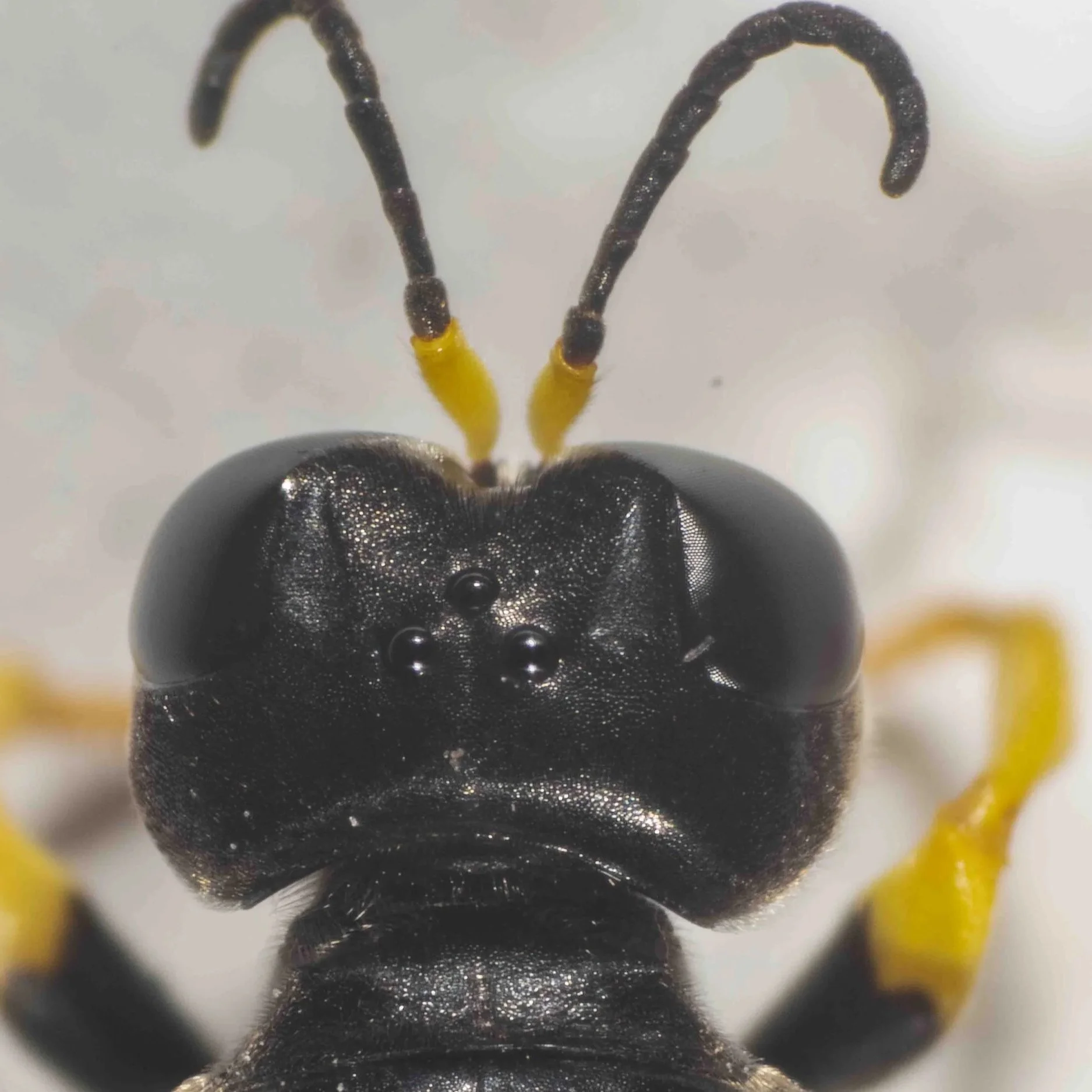
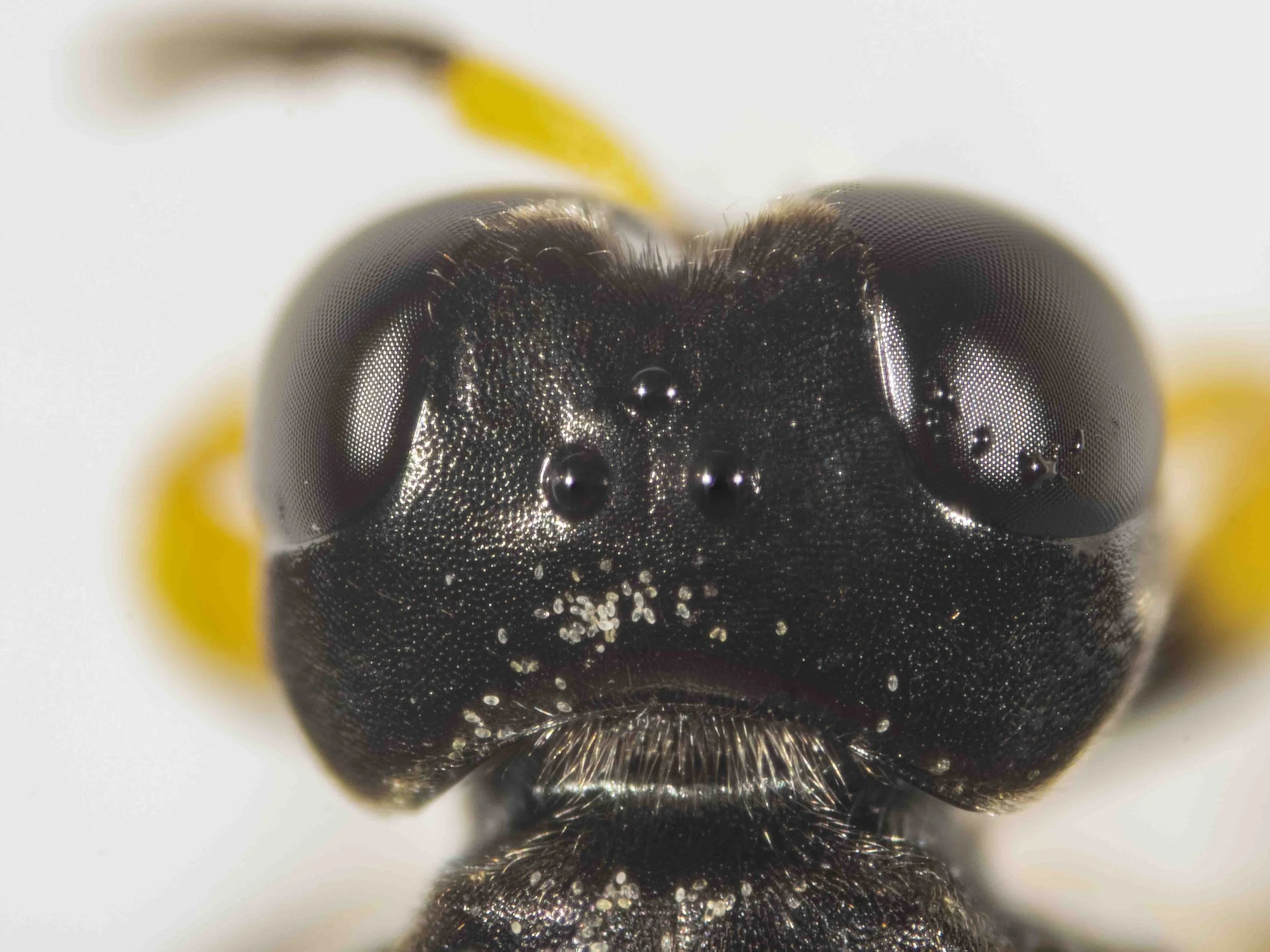
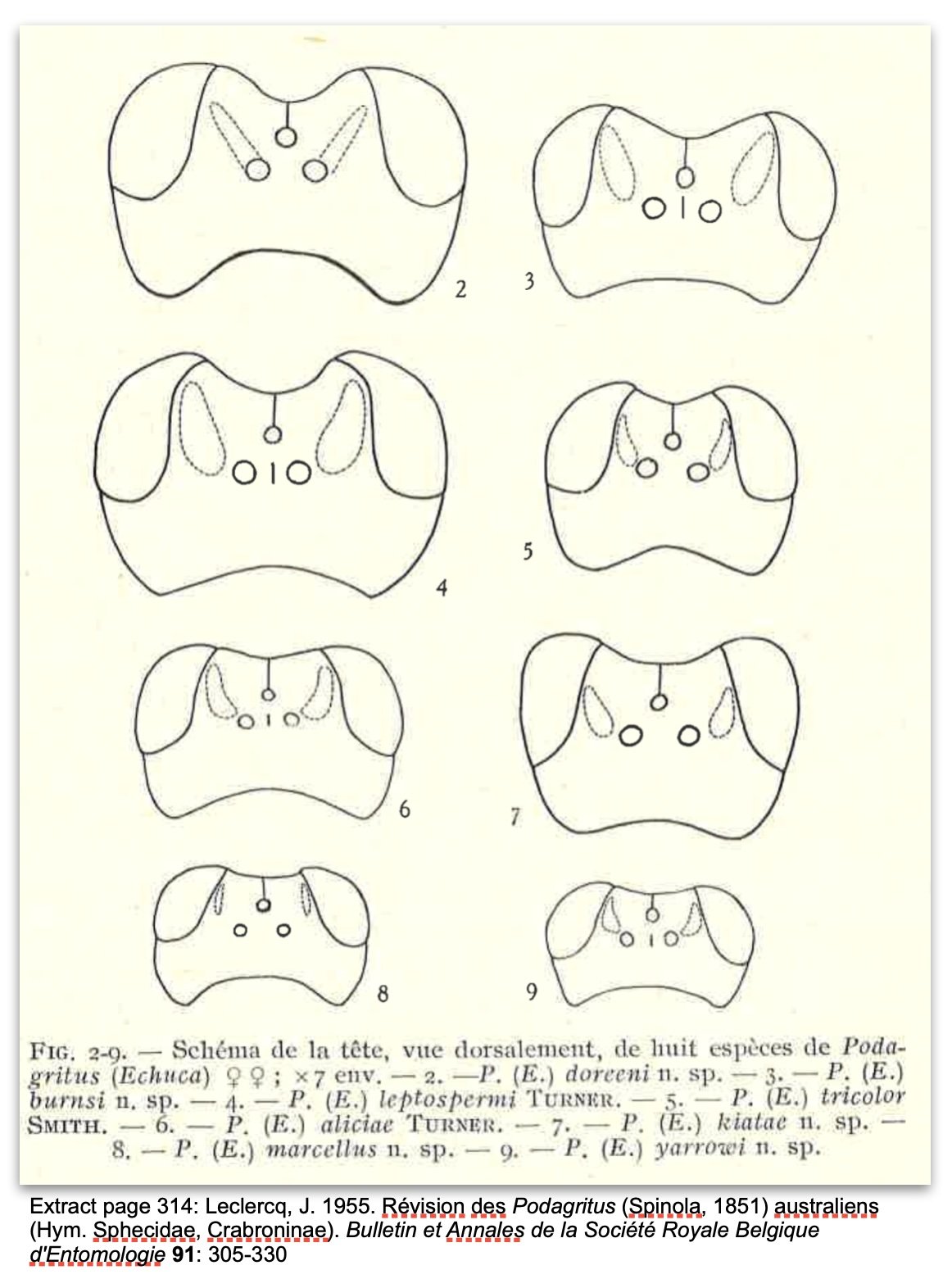
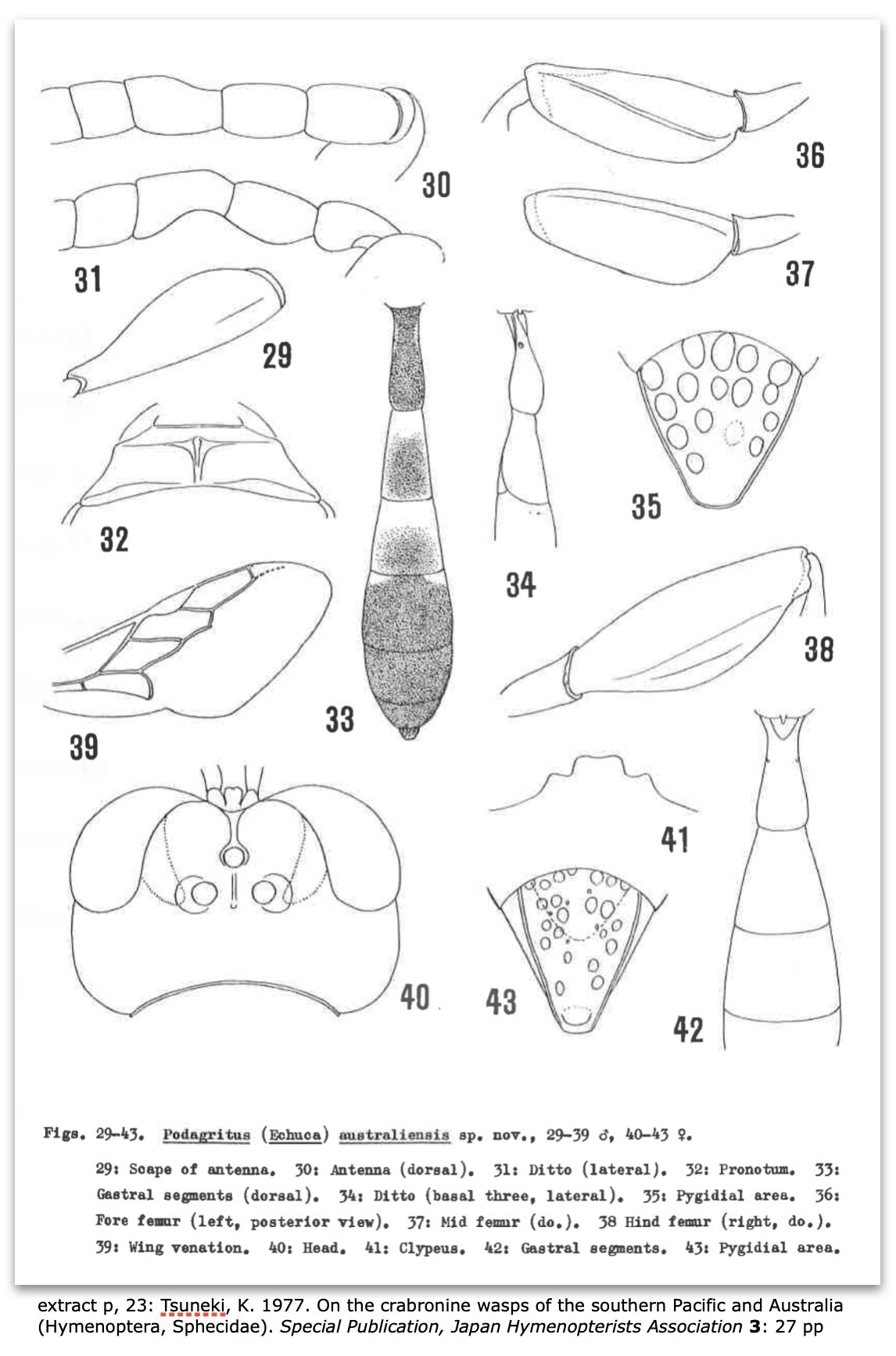
When viewed dorsally, the head is significantly wider than long in Podagritus. The ocelli form a roughly equilateral triangle, with the OO typically less than the PO. Note, however, that in some small species (e.g. P. tricolor), the OO is roughly equal to the PO (see Figs. 2-9, Leclercq 1955 – extract in ‘Bits & pieces section below).
Note that while some species of Rhopalum have a distinctly square head, others approach the proportions of Podagritus.
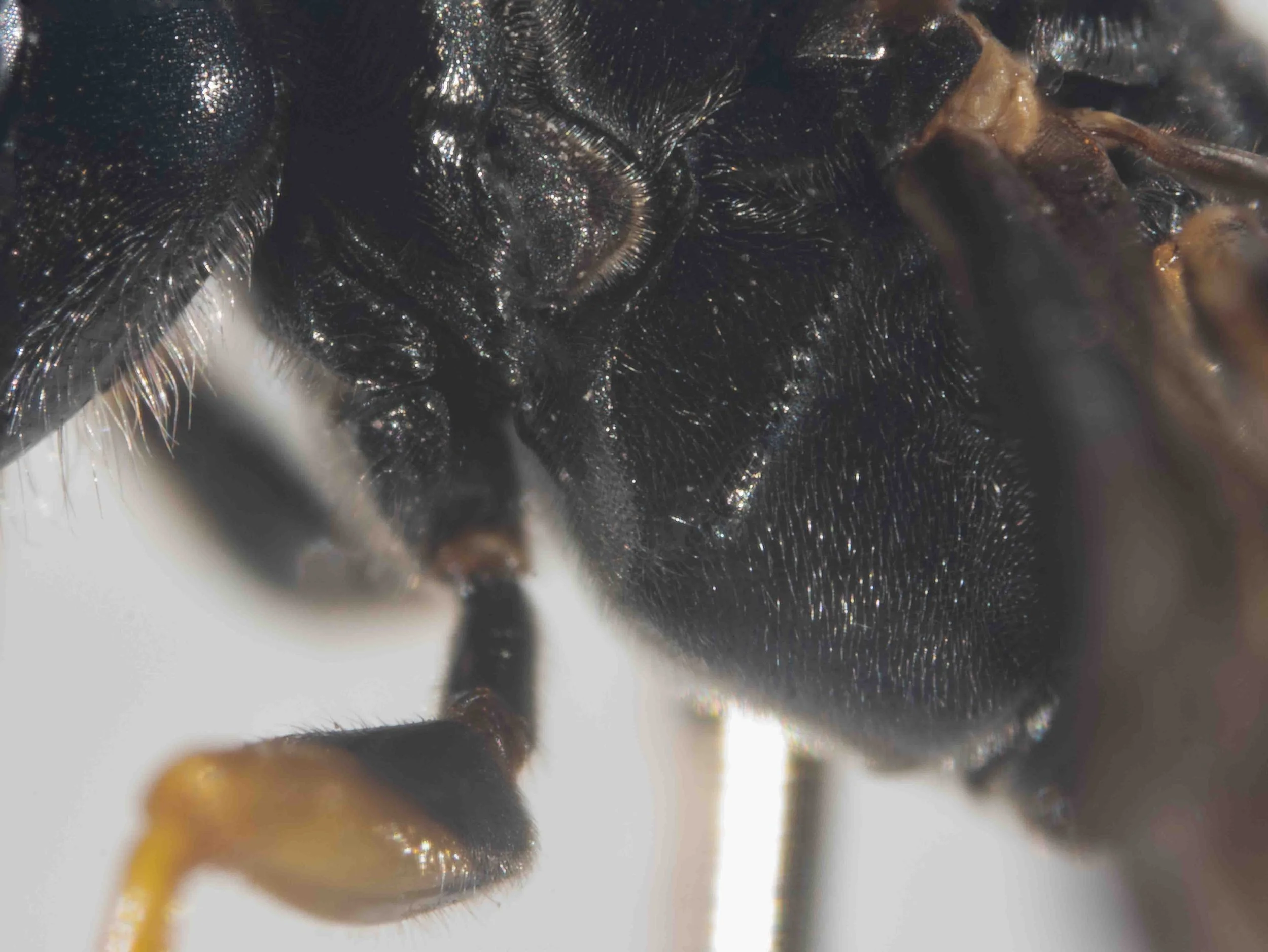
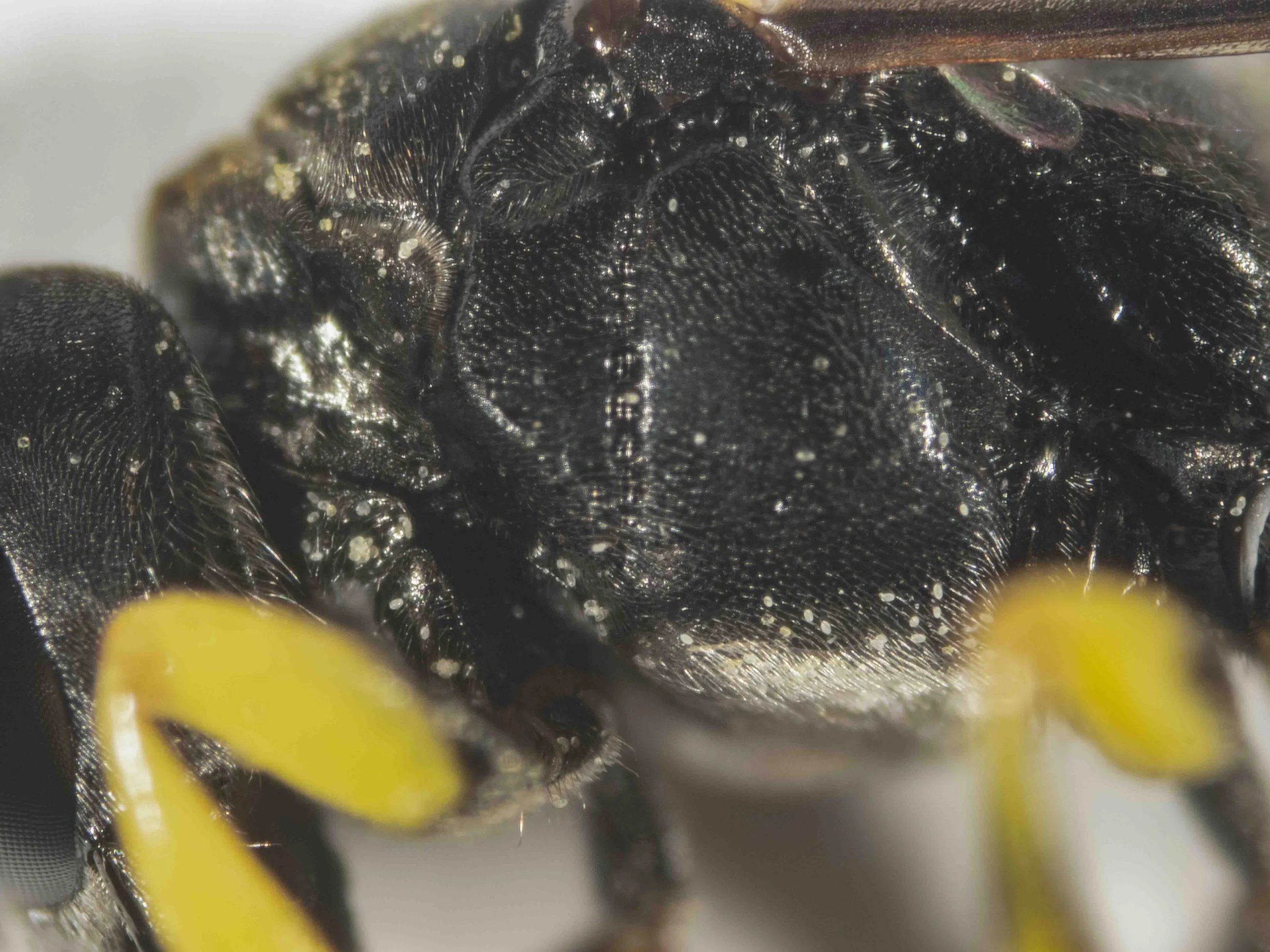
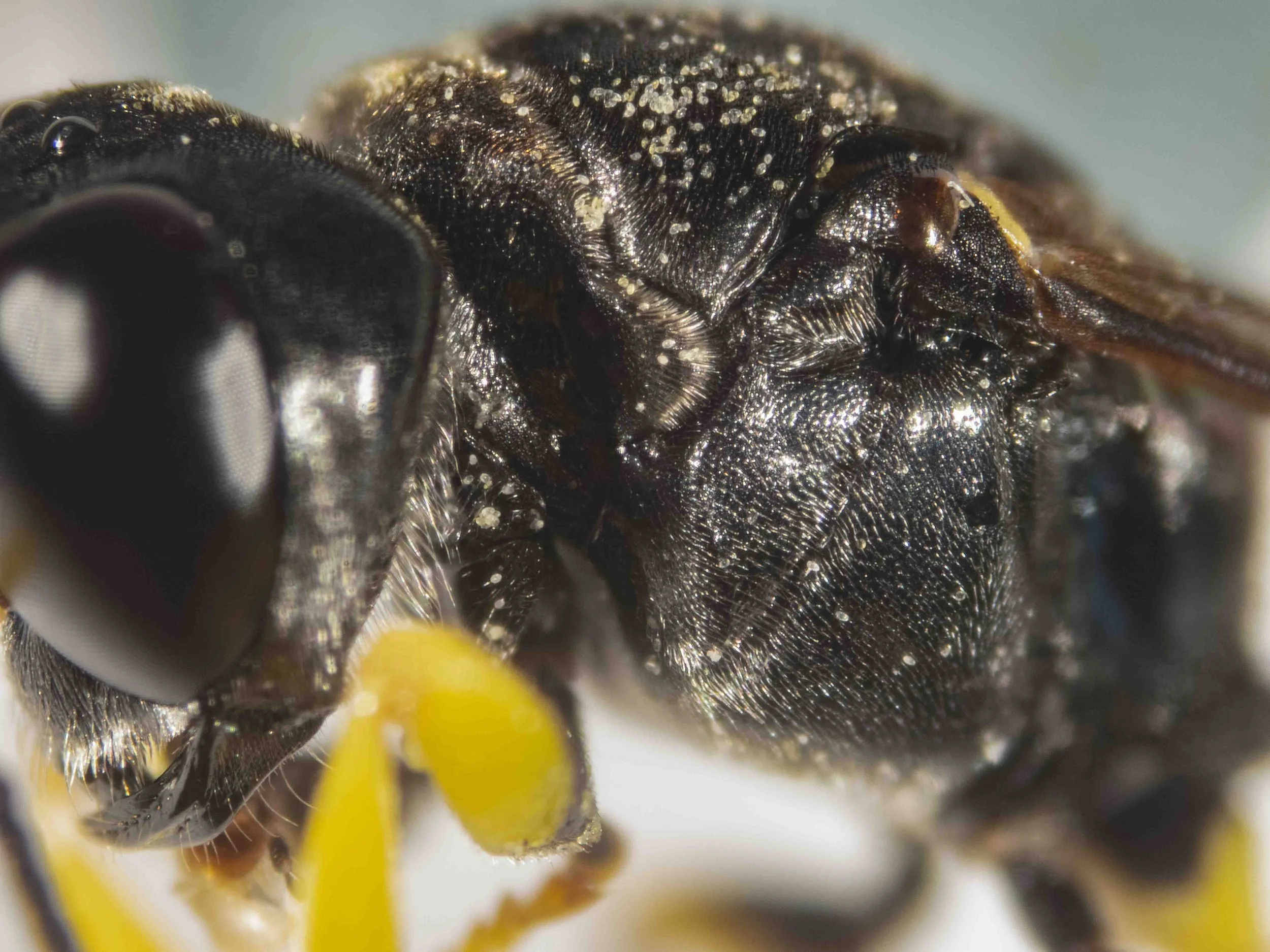
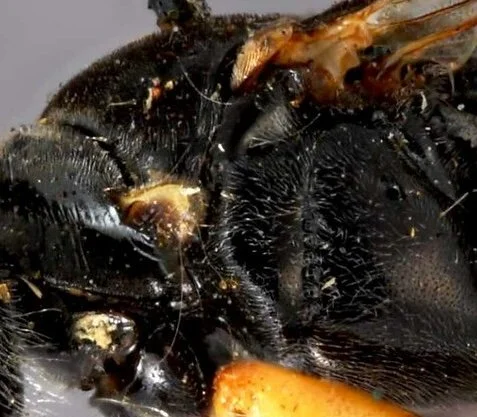
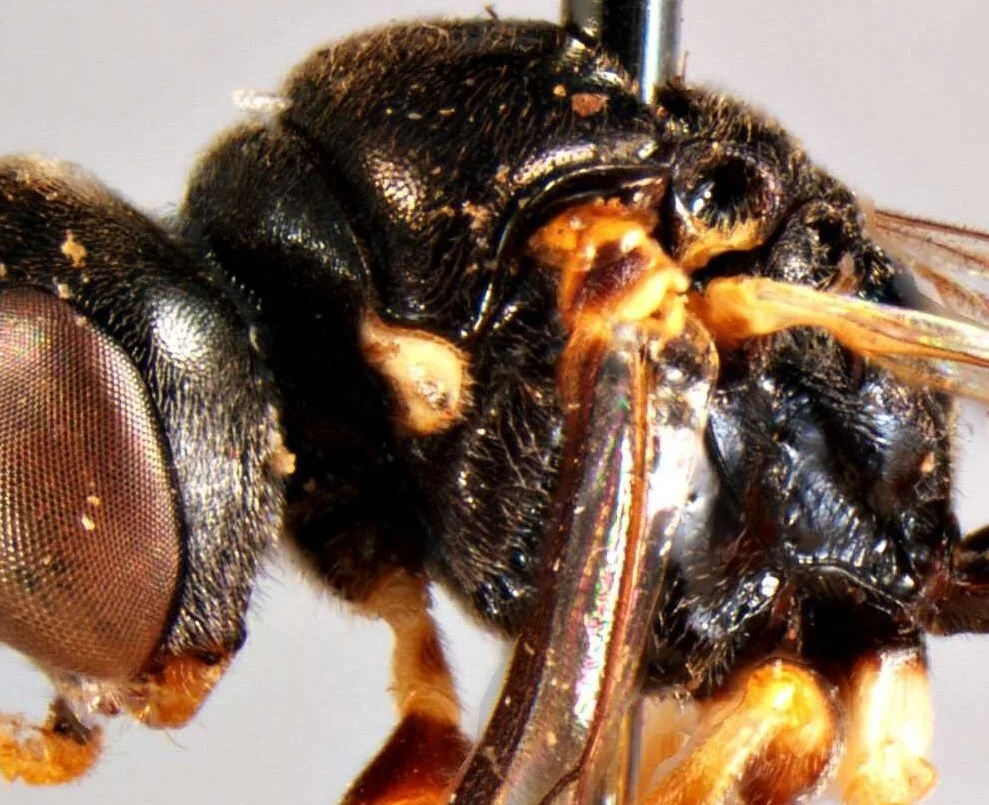
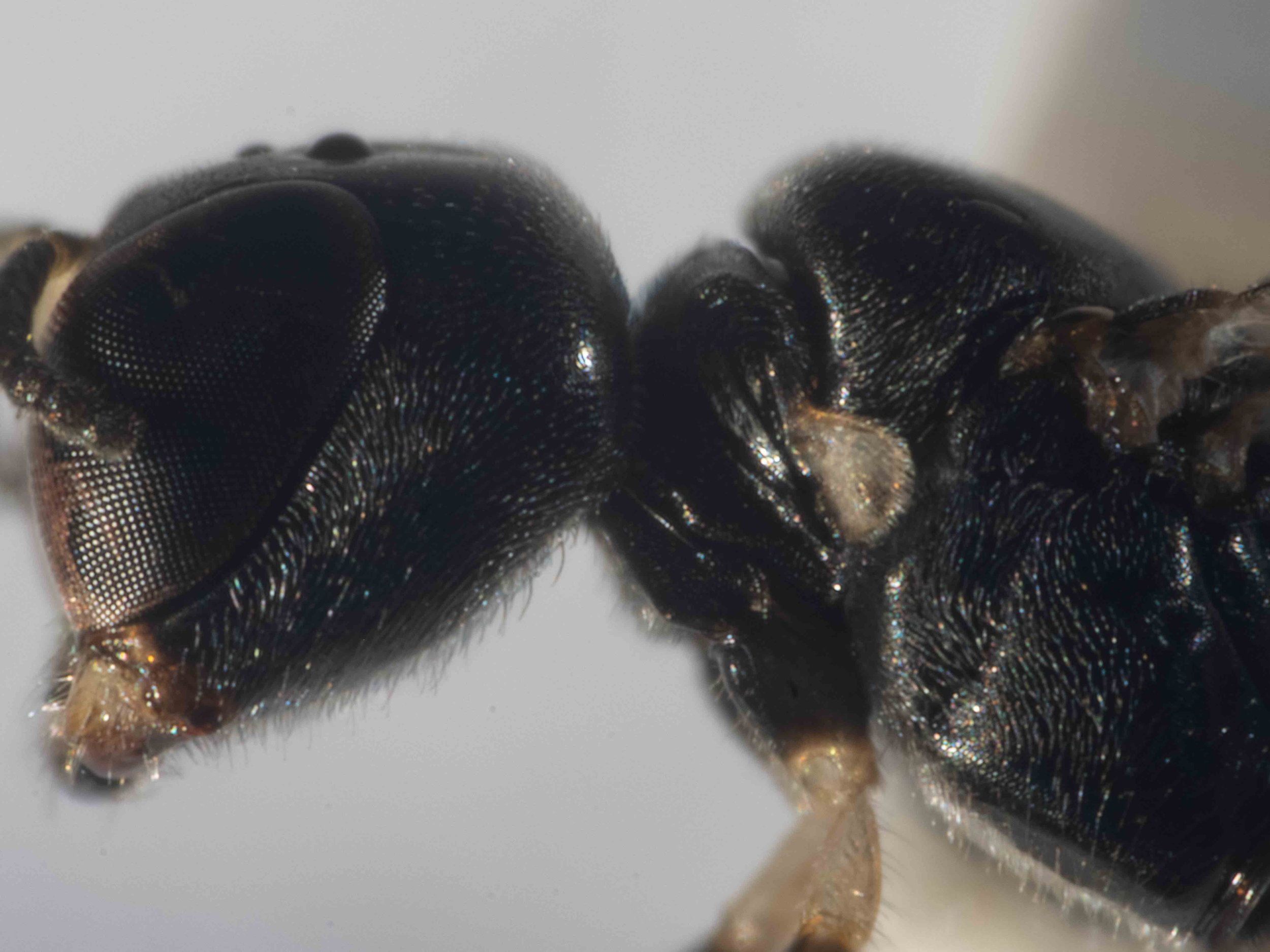
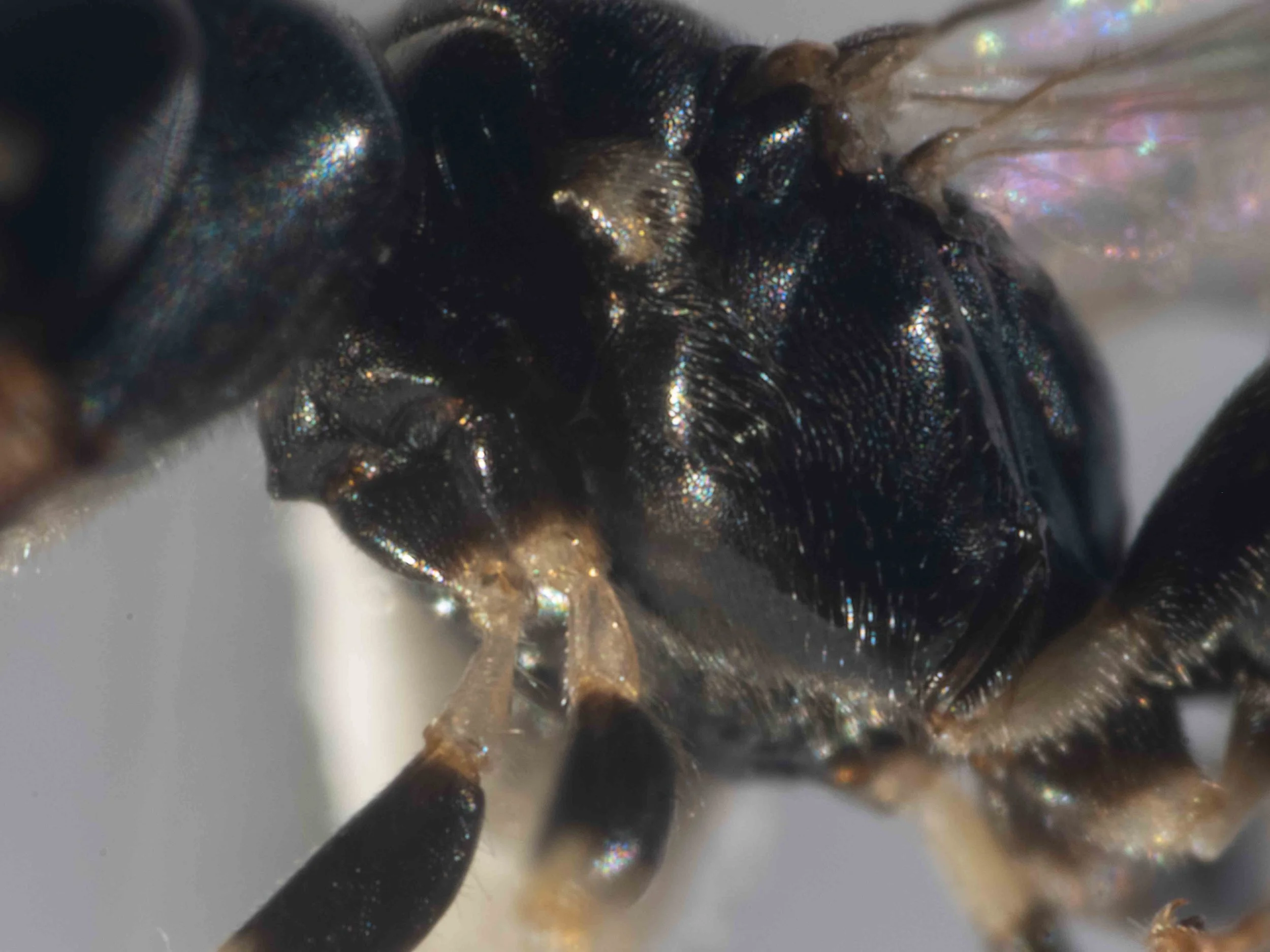
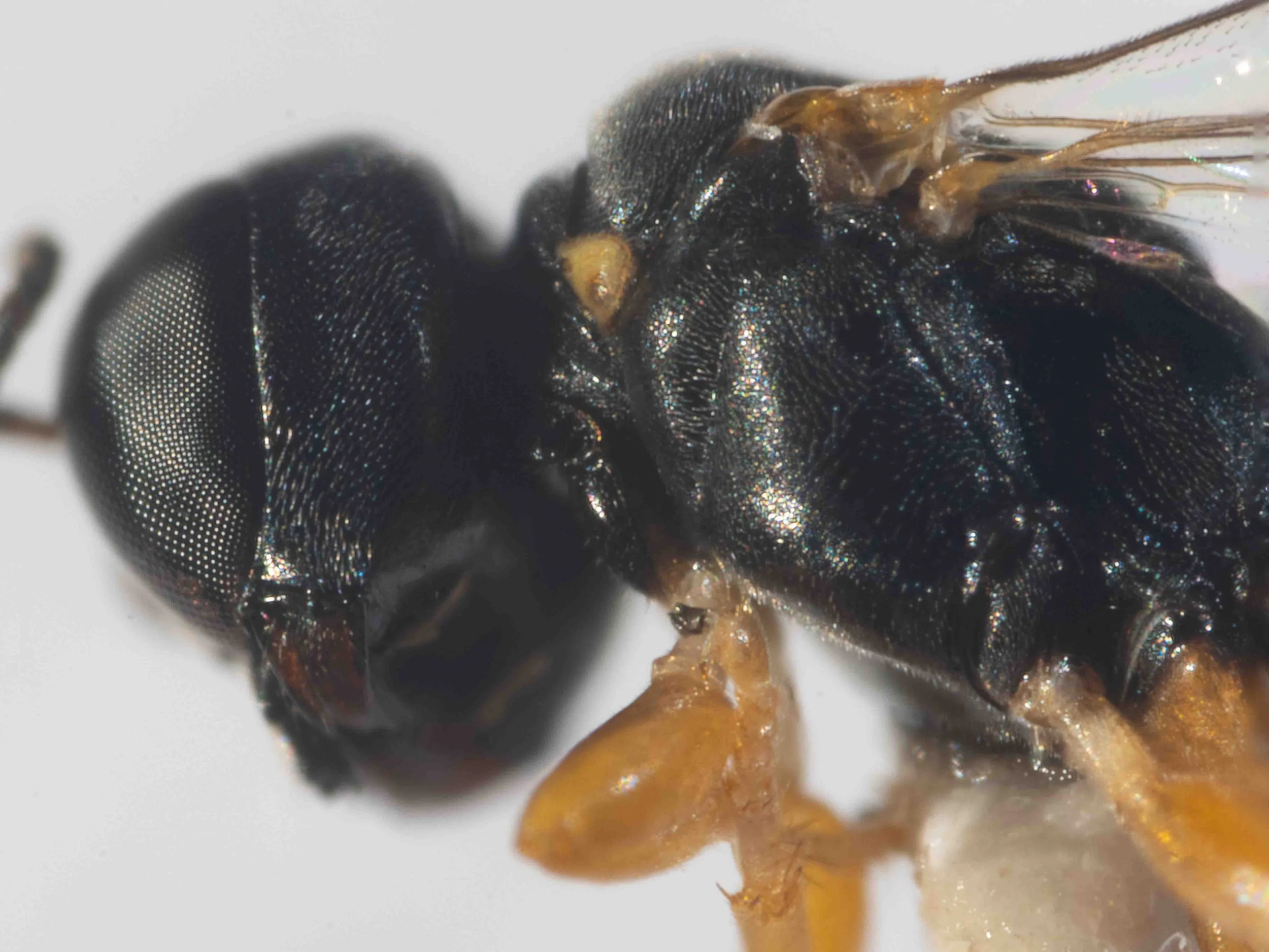
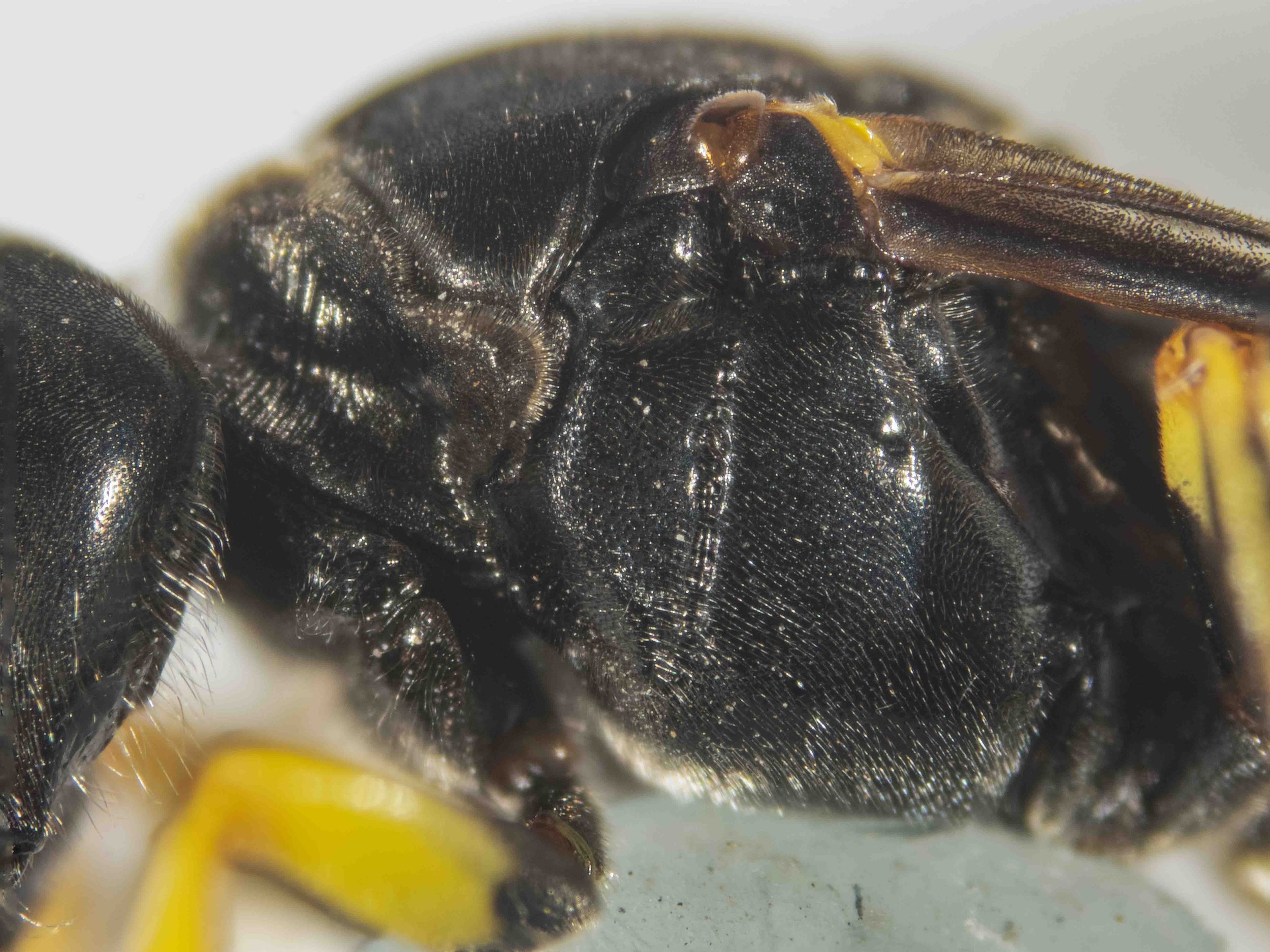
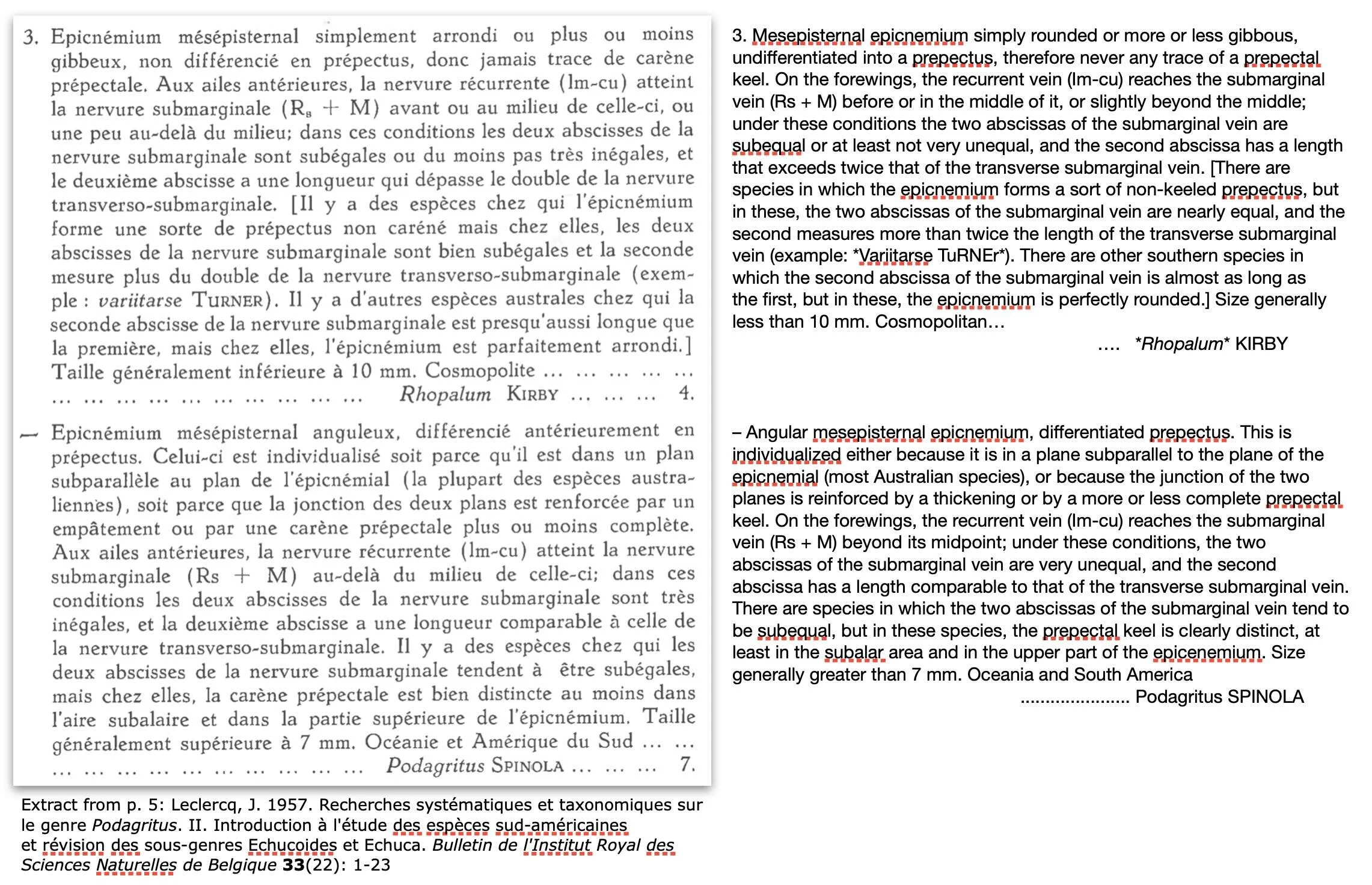
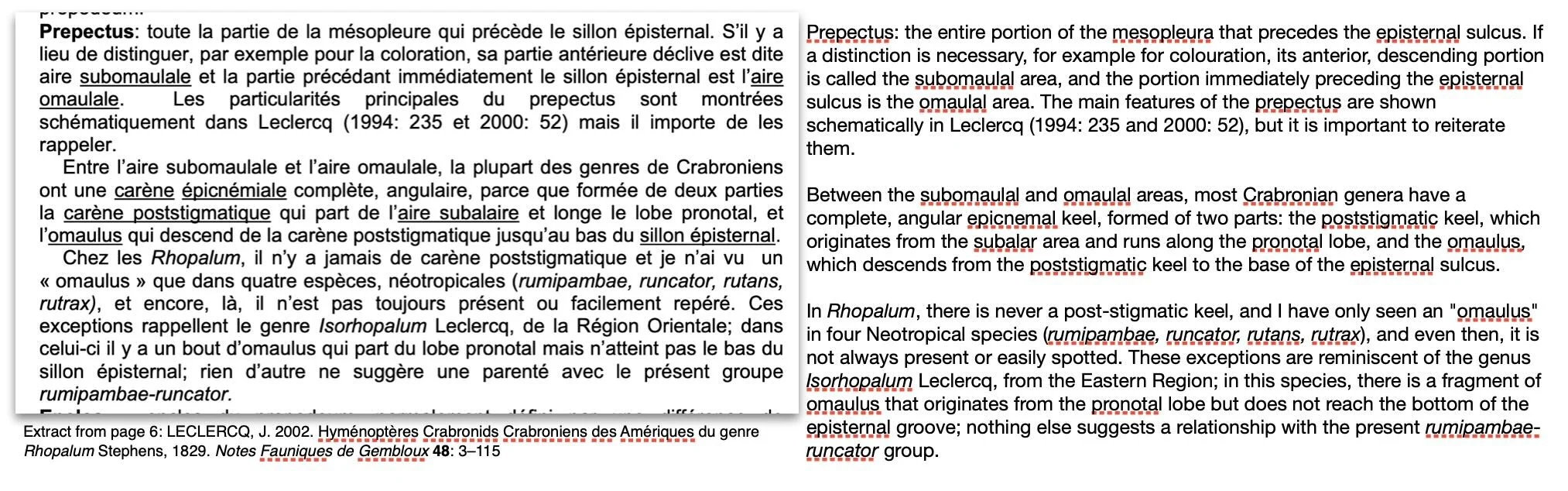
Prepectus
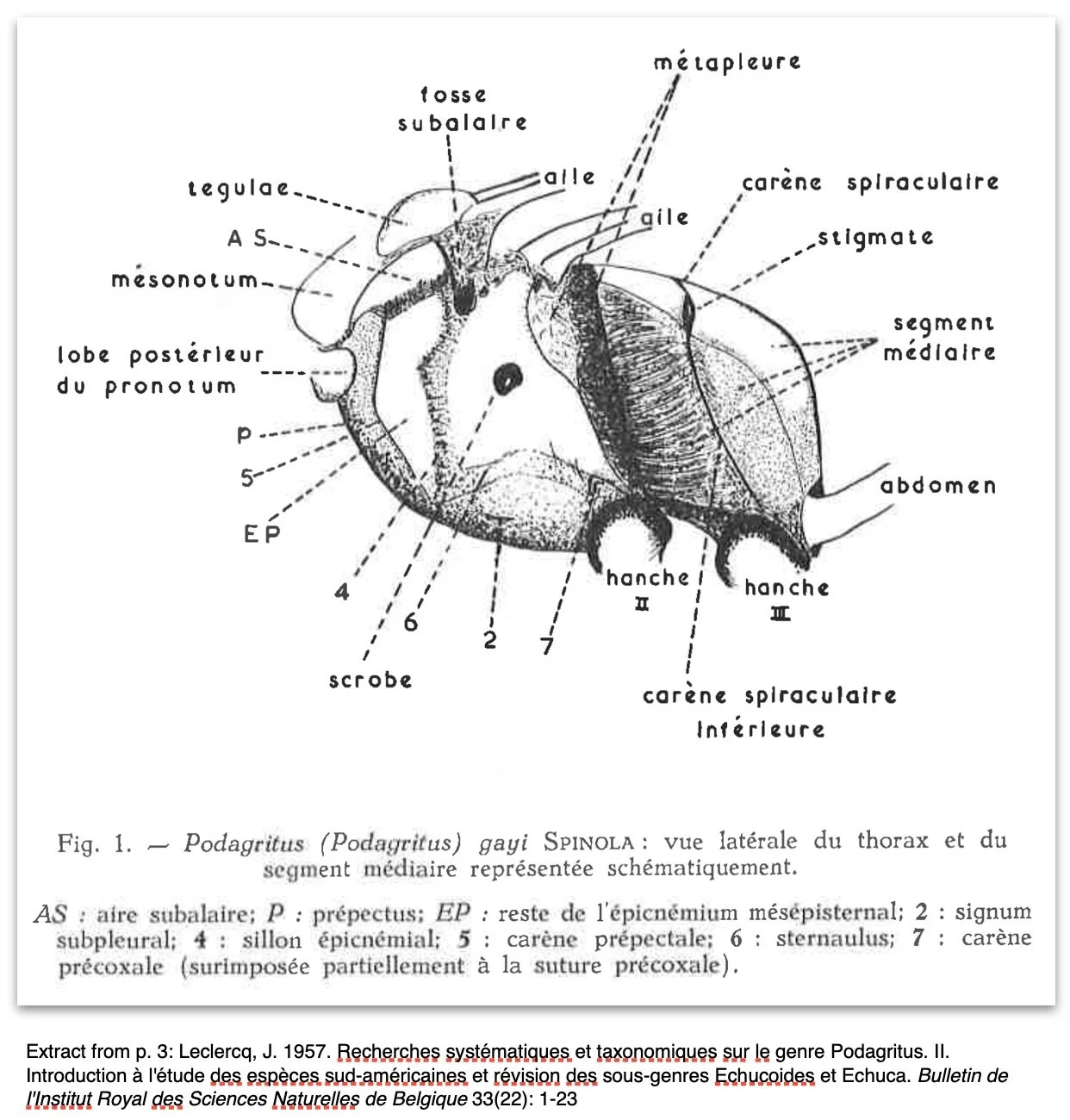
The shape of the prepectus is one of the key diagnostic characters for Australian species of Podagritus … but it is not a simple feature to assess, even with a specimen in the hand.
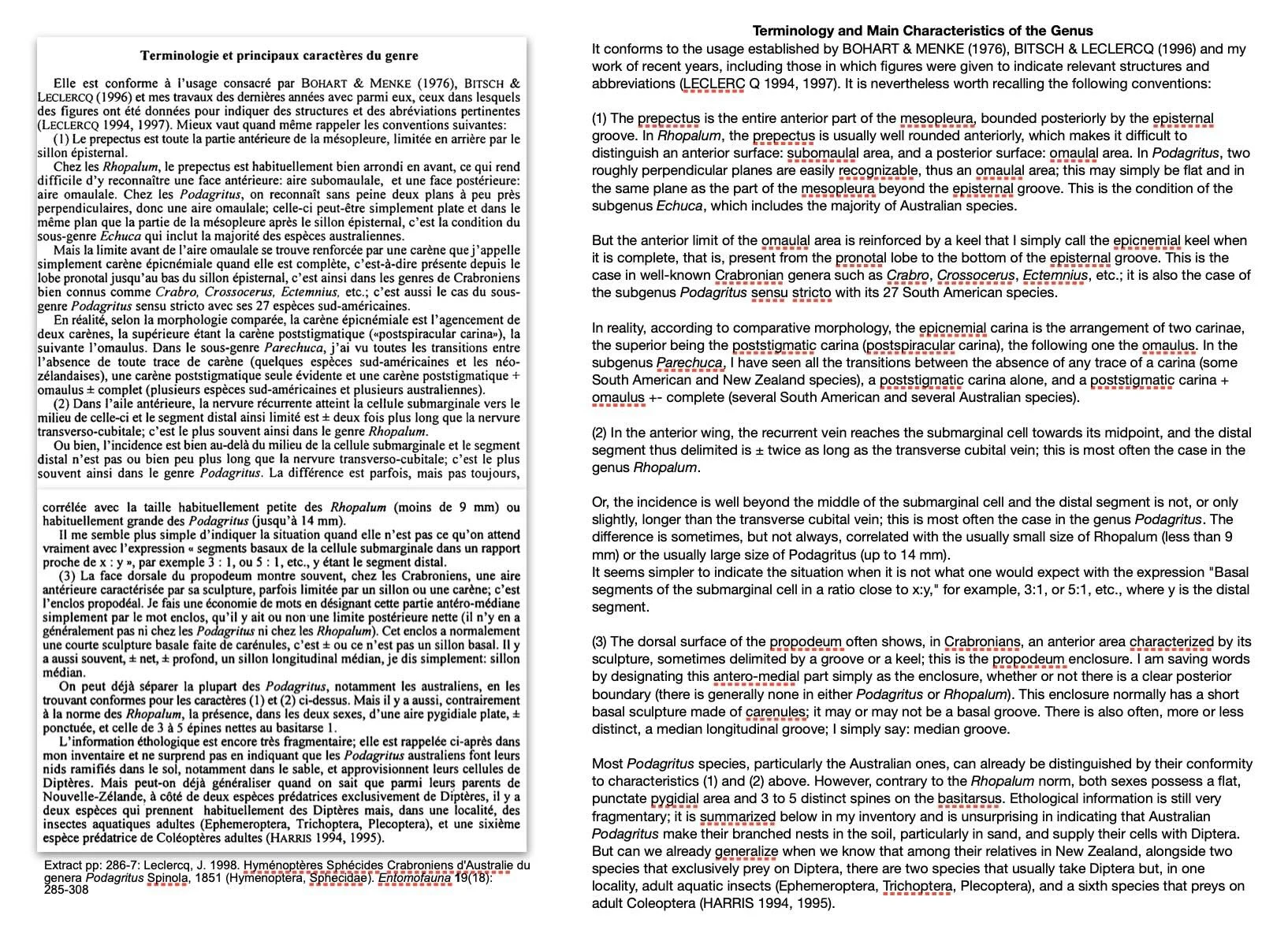
The first challenge is identifying the relevant parts of the mesopleuron. Different authors adopt different terminology, and even Leclercq has applied different names for the same structures over the years. So … a schematic and a correspondingly labelled image:
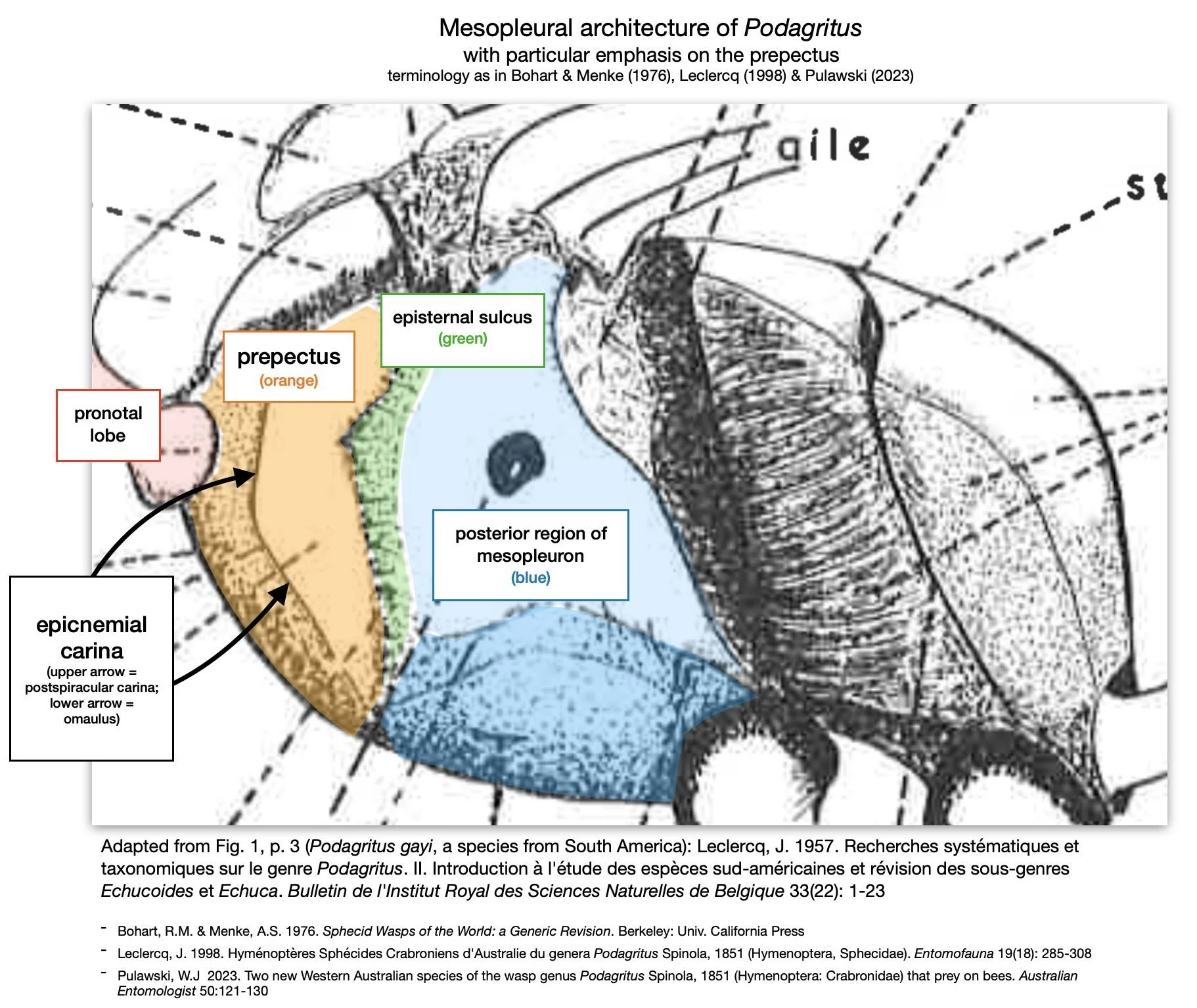
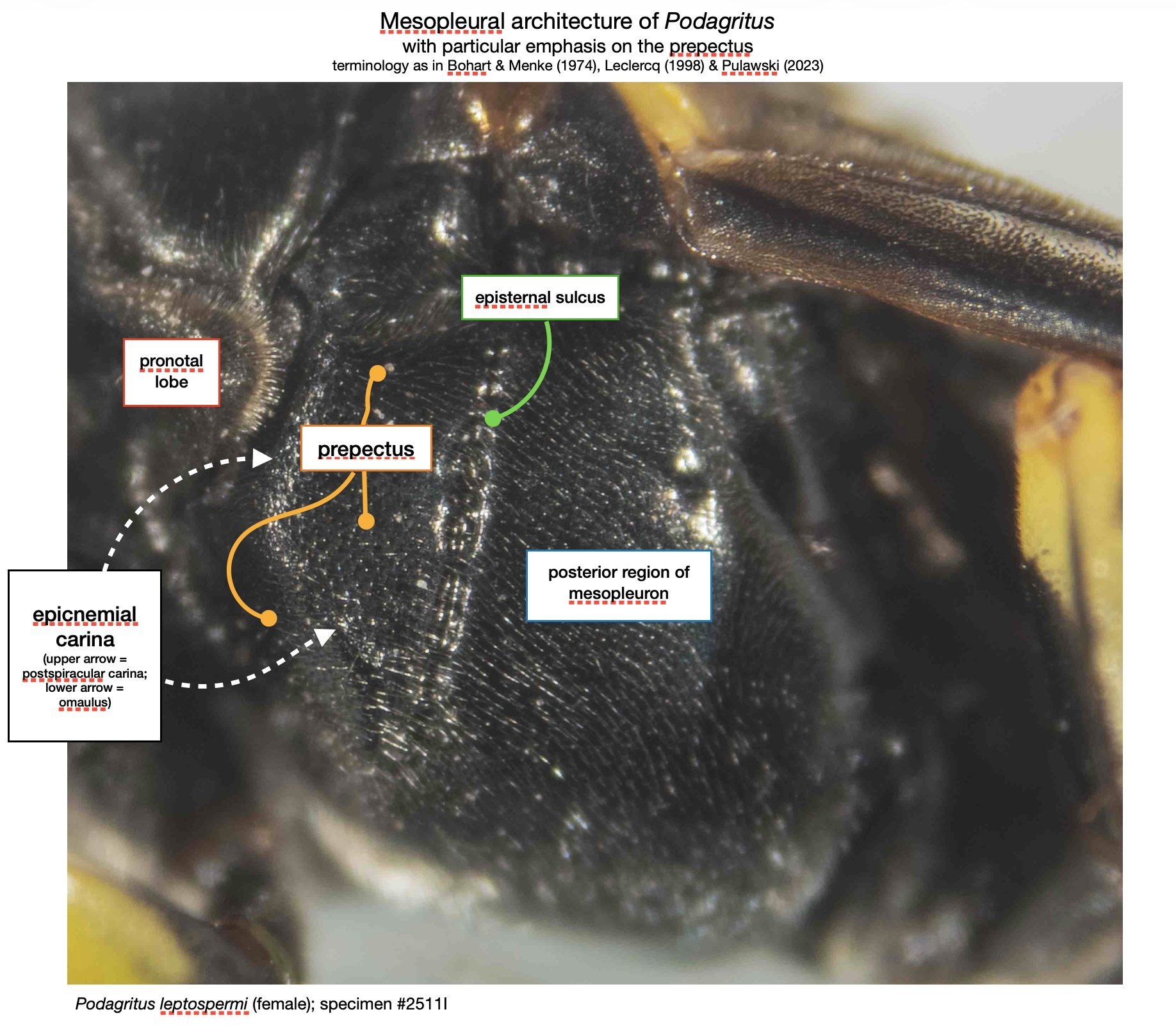
The second challenge is to recognise the shape of the prepectus – angular or rounded – from a photo. It’s not at all trivial. In some Podagritus, such as P. leptospermi, the two distinct planes are relatively obvious. Rhopalum, however, is proving a challenge. In a direct lateral view the prepectus can appear angled. I have taken to viewing each specimen from several angles, including anteroventrally. And even then I need a range of other characters, including body size, before I’m convinced of the genus.
Pronotal collar
The characters listed in the table – striate, carinate, or neither – I have yet to find particularly useful for distinguishing the genera. The shape of the collar relative to the mesoscutum, however, is worth a mention.
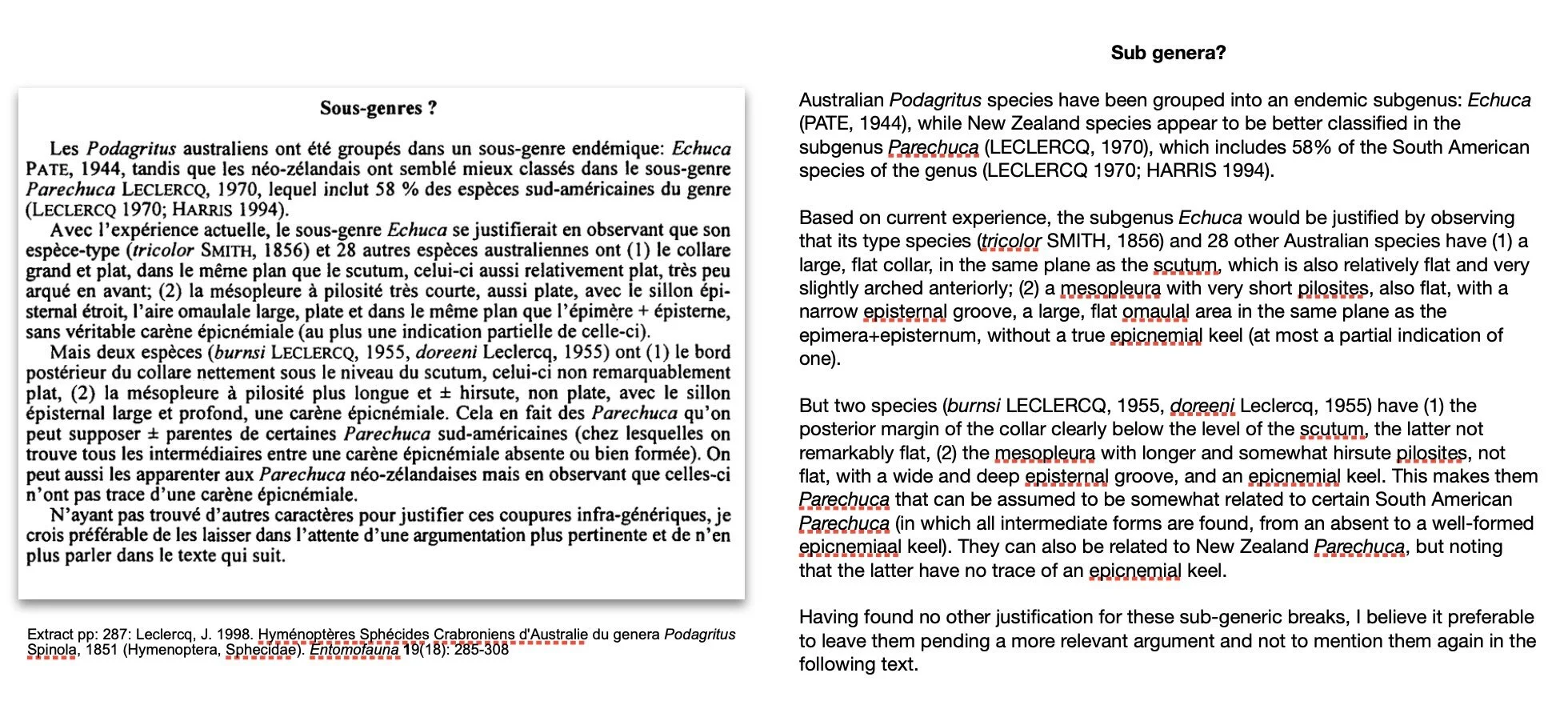
In nearly all Australian Podagritus (i.e. subgenus Echuca), the pronotal collar is large, flat, and in roughly the same plane as the mesoscutum – which is itself relatively flat. This contrasts with most Rhopalum, in which the mesoscutum is strongly rounded and often almost arched forward anteriorly.
Forewing venation
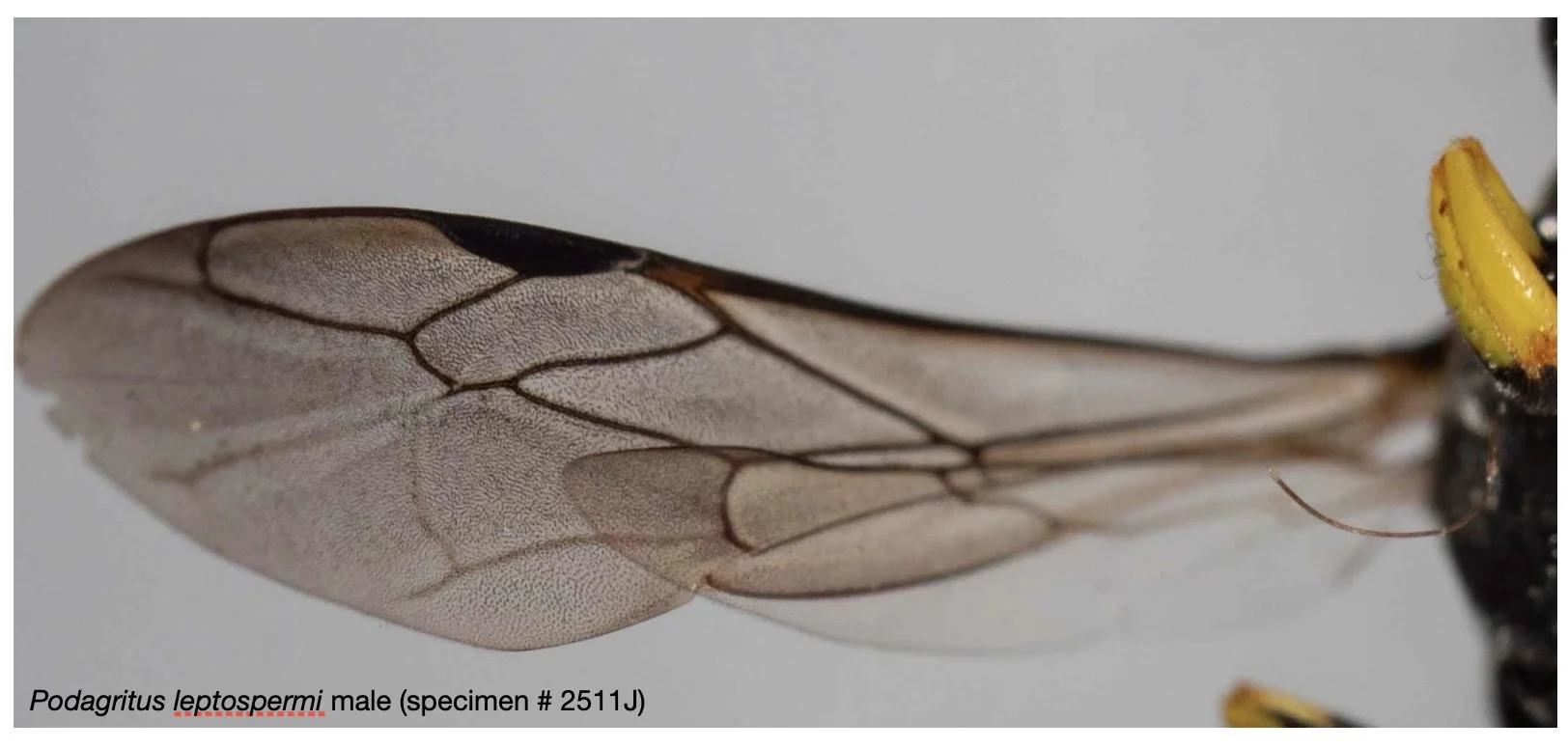
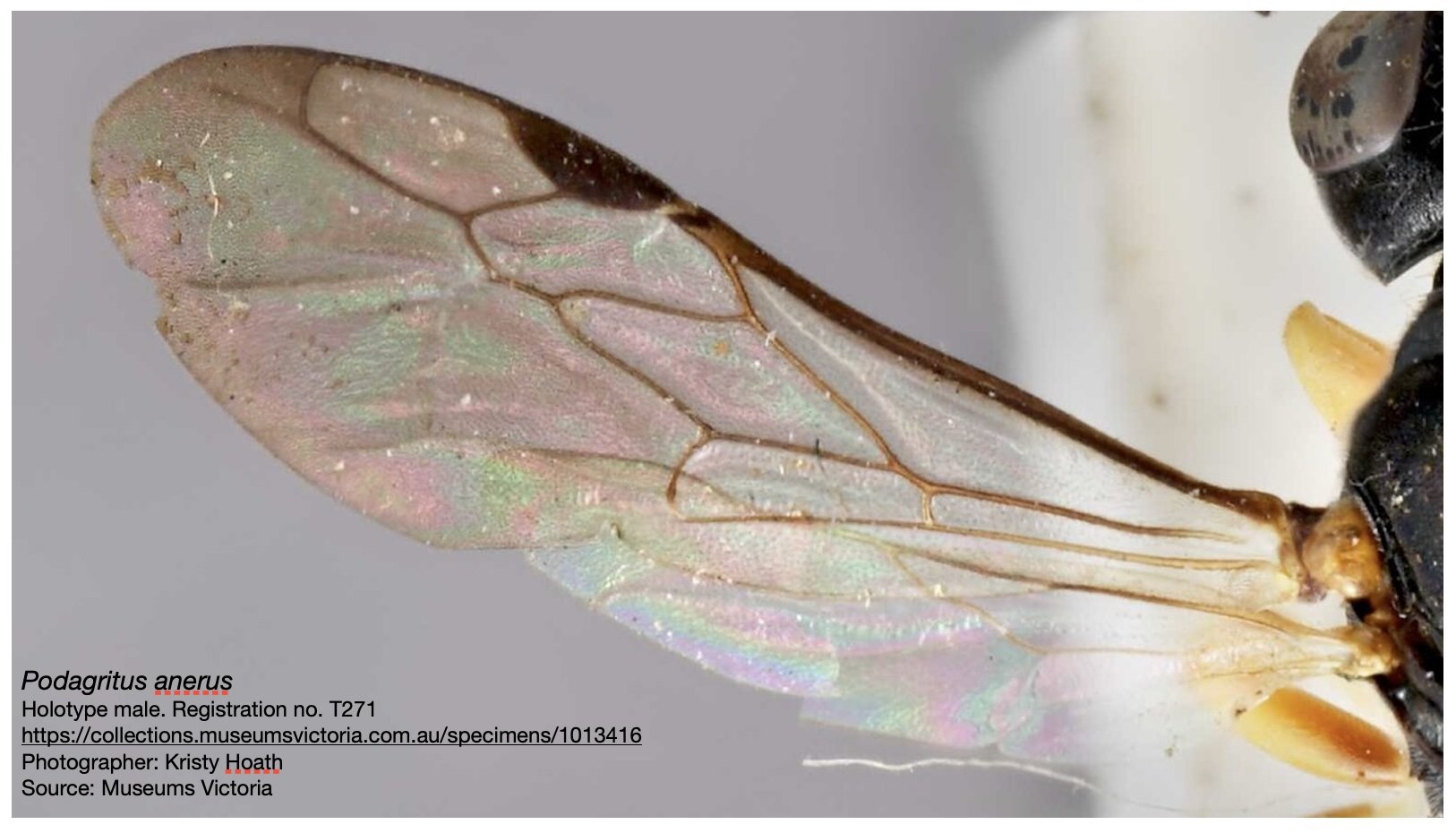
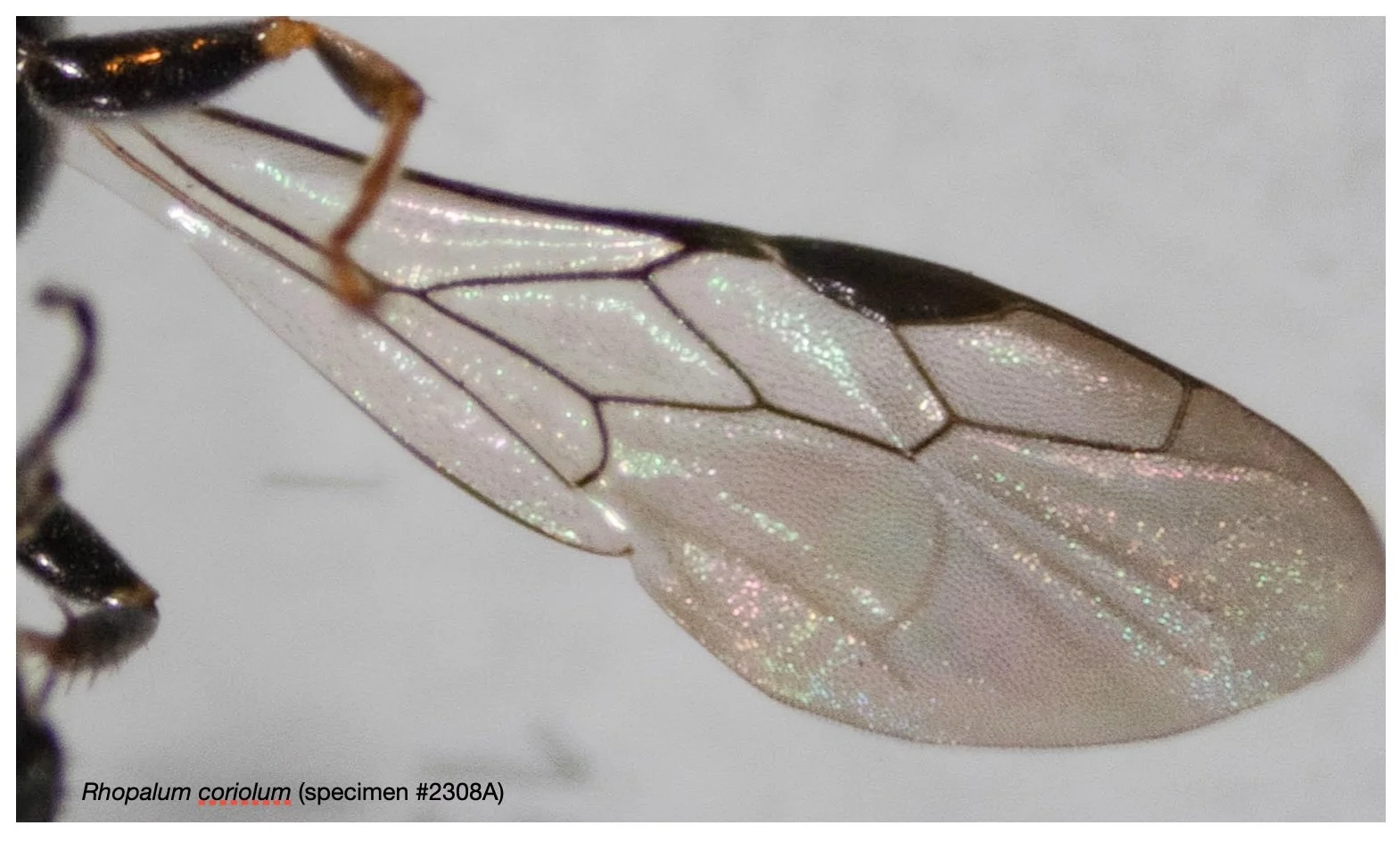
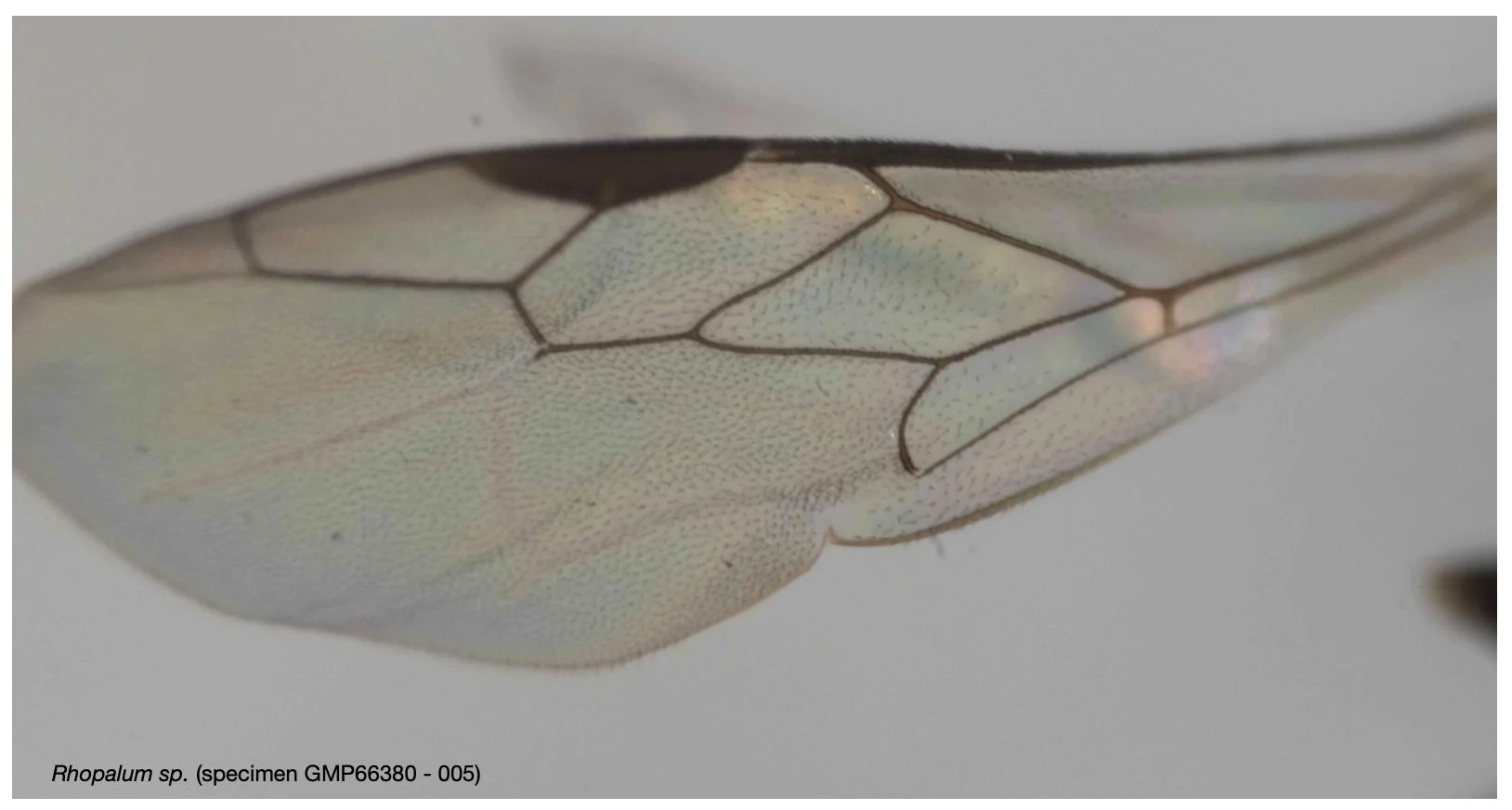
Forewing venation is a particularly useful feature when identifying specimens from field photos. Often features such as the mesopleuron shape or even the pronotum may be difficult to see, but the insect happens to have a wing extended.
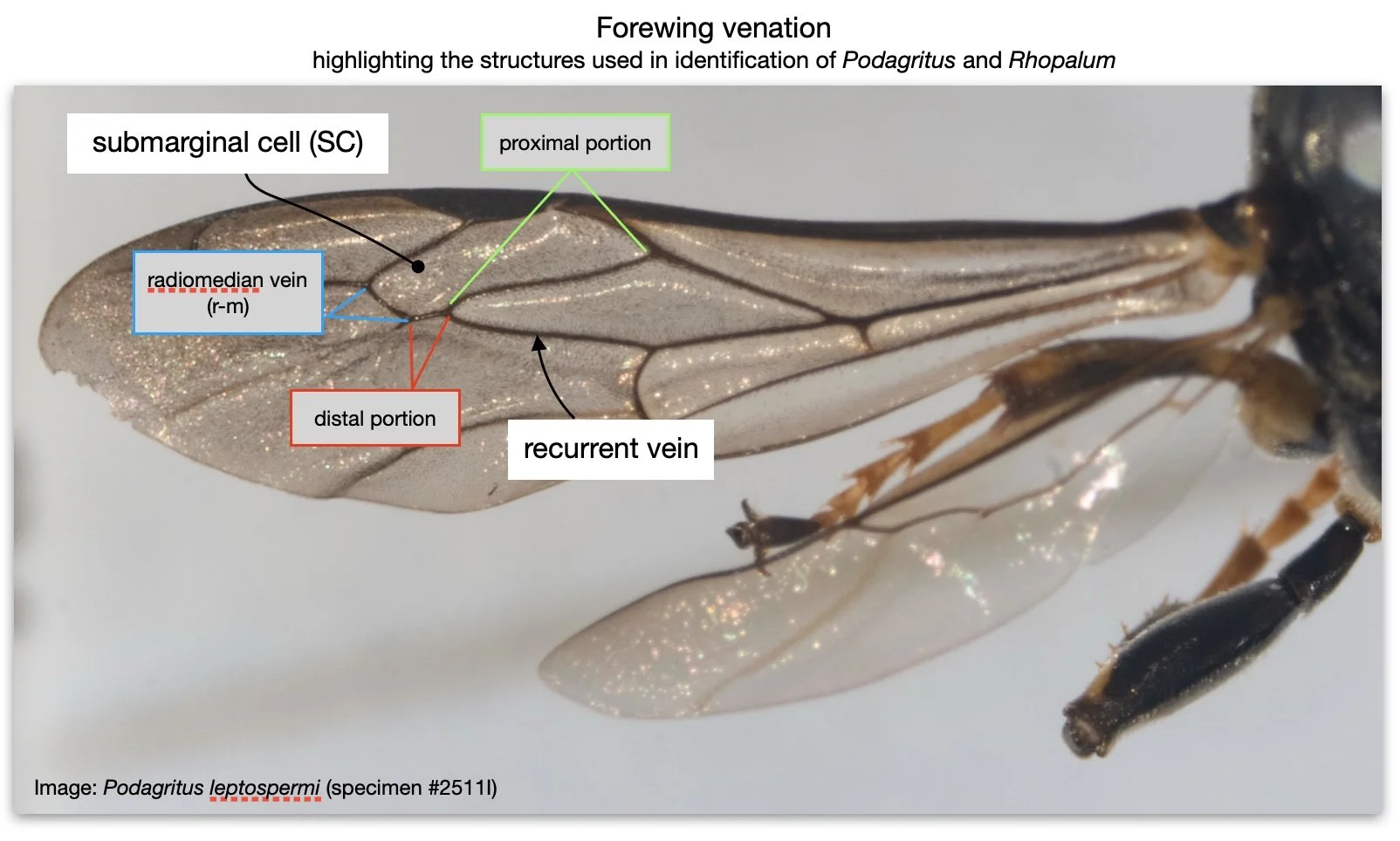
While again there are exceptions, most Podagritus have the recurrent vein meeting the submarginal cell (SC) well beyond the midpoint. That is, the ratio of the proximal portion to the distal portion of the posterior vein of the SC is around 5:2.
In contrast, in most Rhopalum the junction is at the midpoint or slightly beyond. But as this may vary considerably (cf Rhopalum examples below), it is important to also compare the relative lengths of the distal portion and the r-m vein. In Podagritus these are nearly equal in length, whereas in Rhopalum the distal portion is usually at least twice the length of r-m).
Pygidial plate
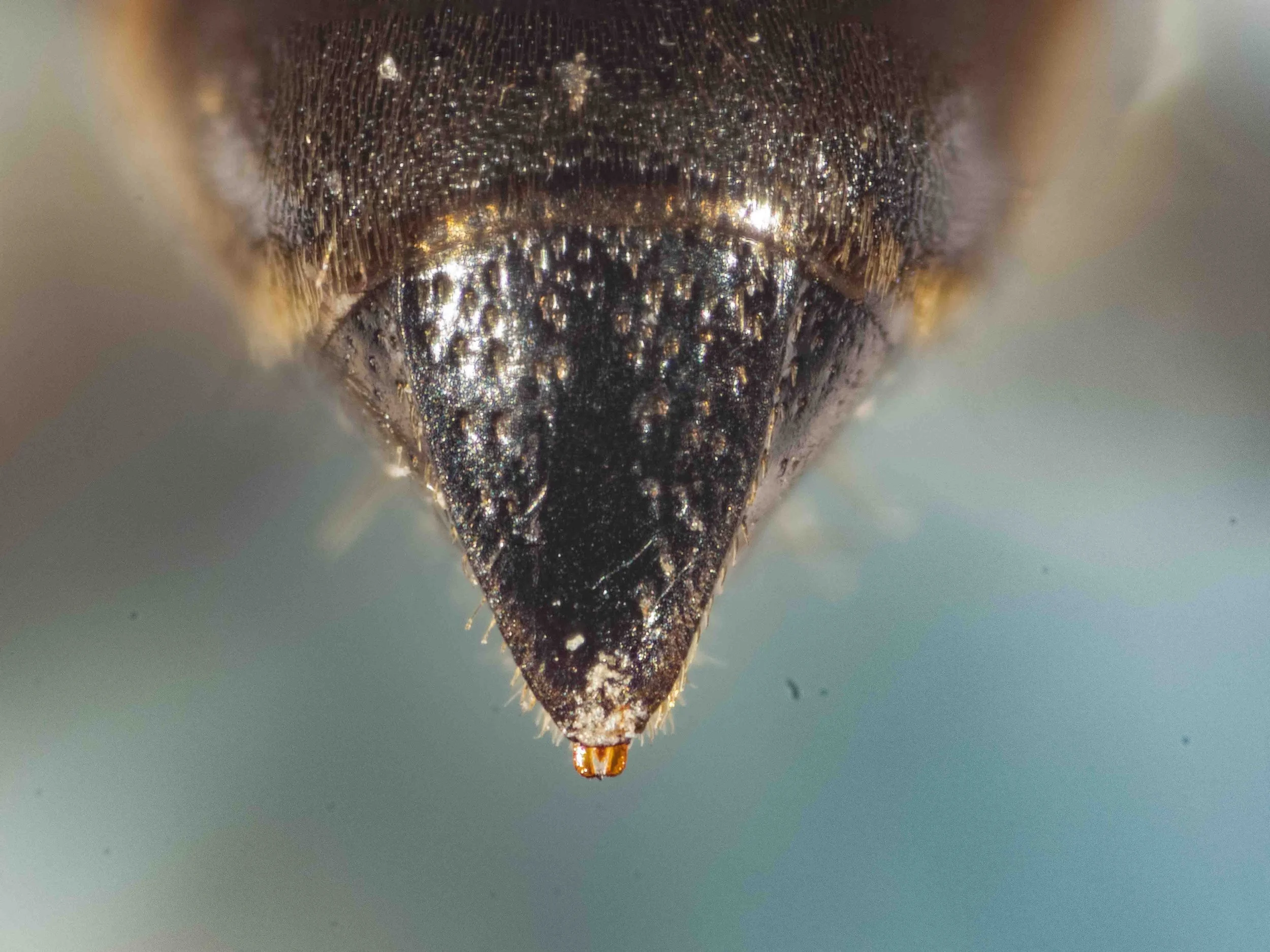
The shape of the tip of the abdomen may be of limited use when identifying these wasps from field photos, but it is worth considering when a specimen is at hand.
The pygidium is the term used for the last visible, dorsal segment of the abdomen. In female crabronids this is the sixth tergite, in males the seventh.
A feature common among fossorial forms of crabronids, particularly the females, is the flattening of the pygidium to form a plate. The pygidial plate is often defined by lateral carinae or grooves, converging apically to form a V or U-shape (Bohart & Menke 1976).
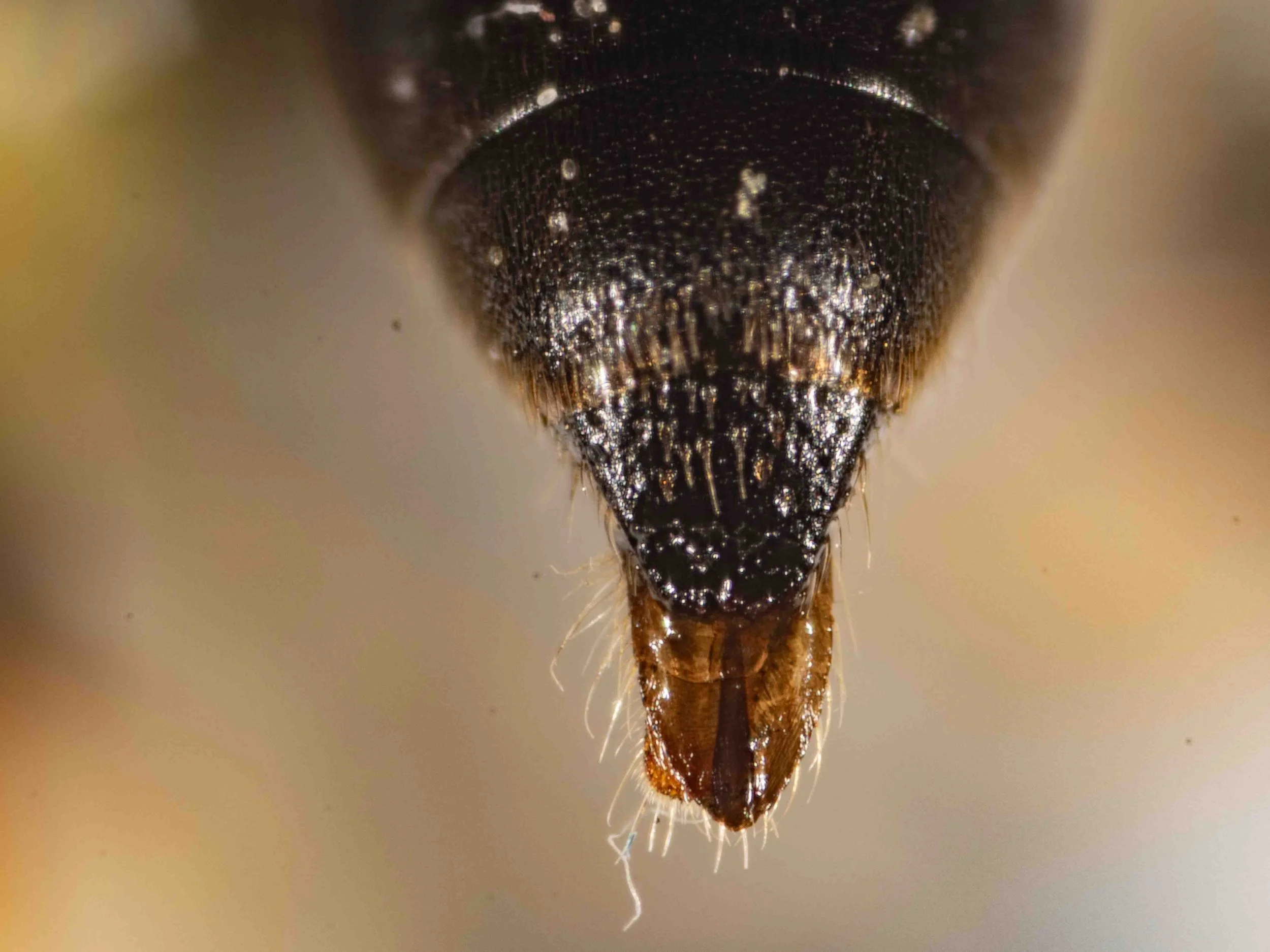
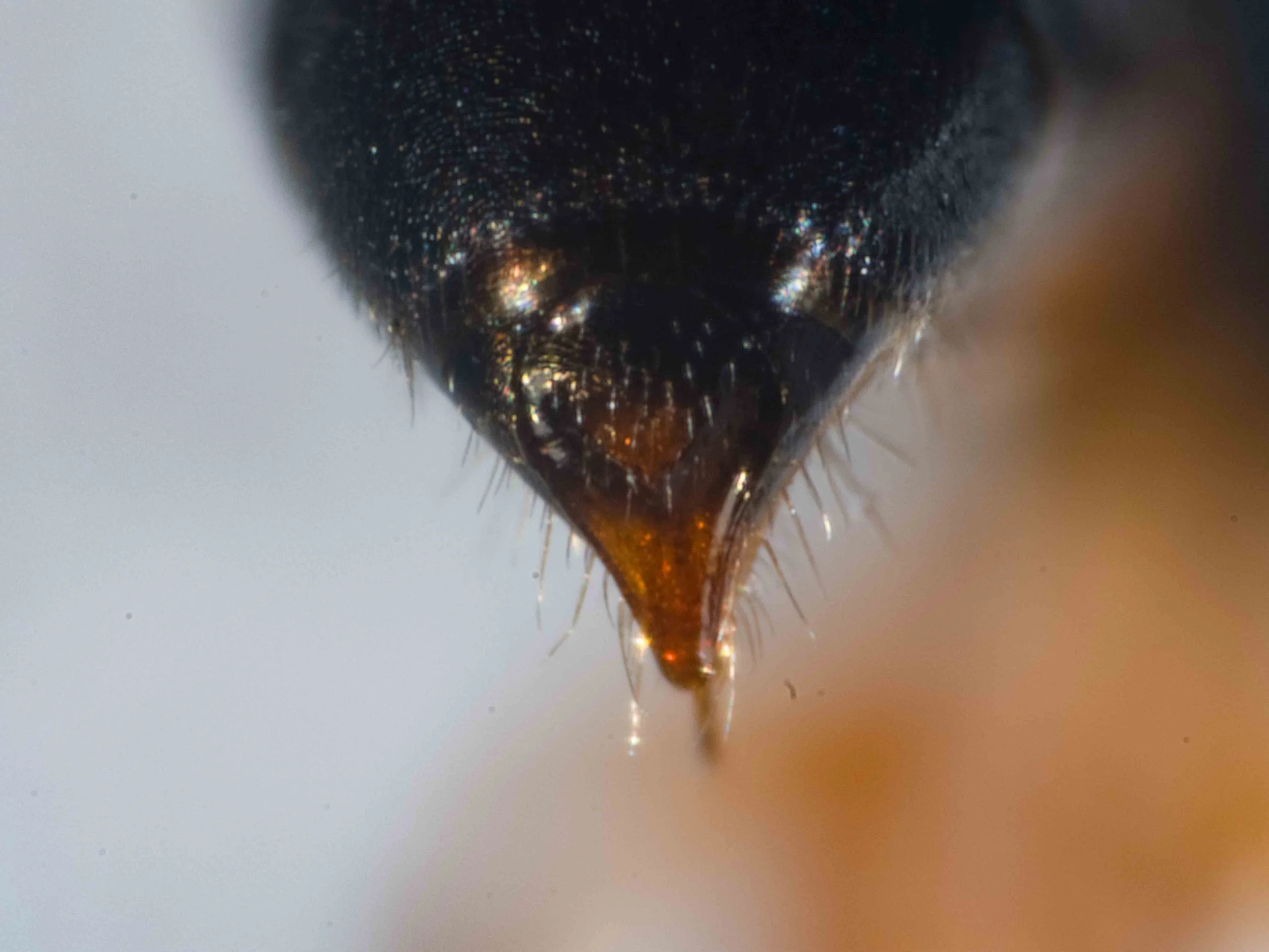
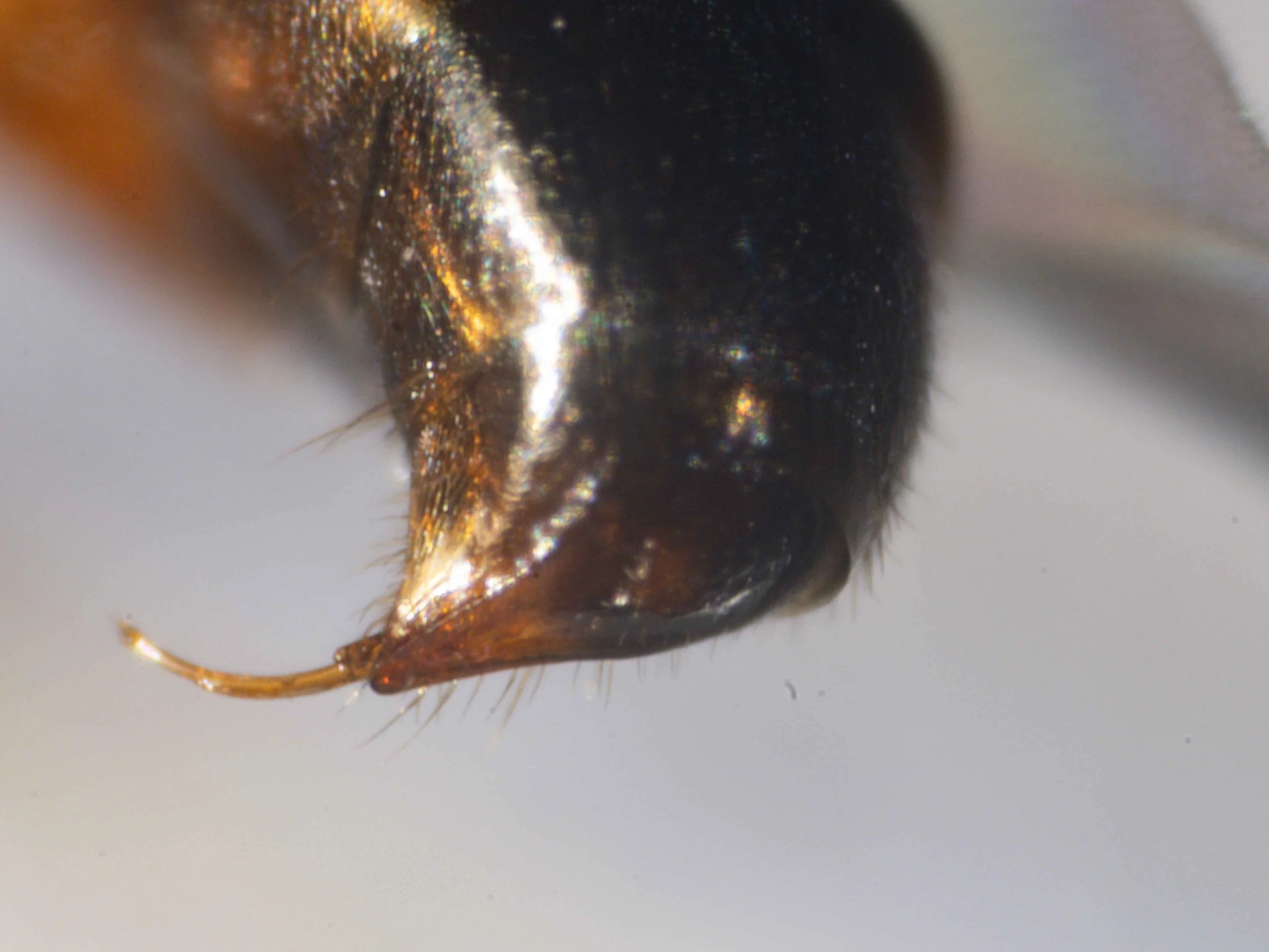
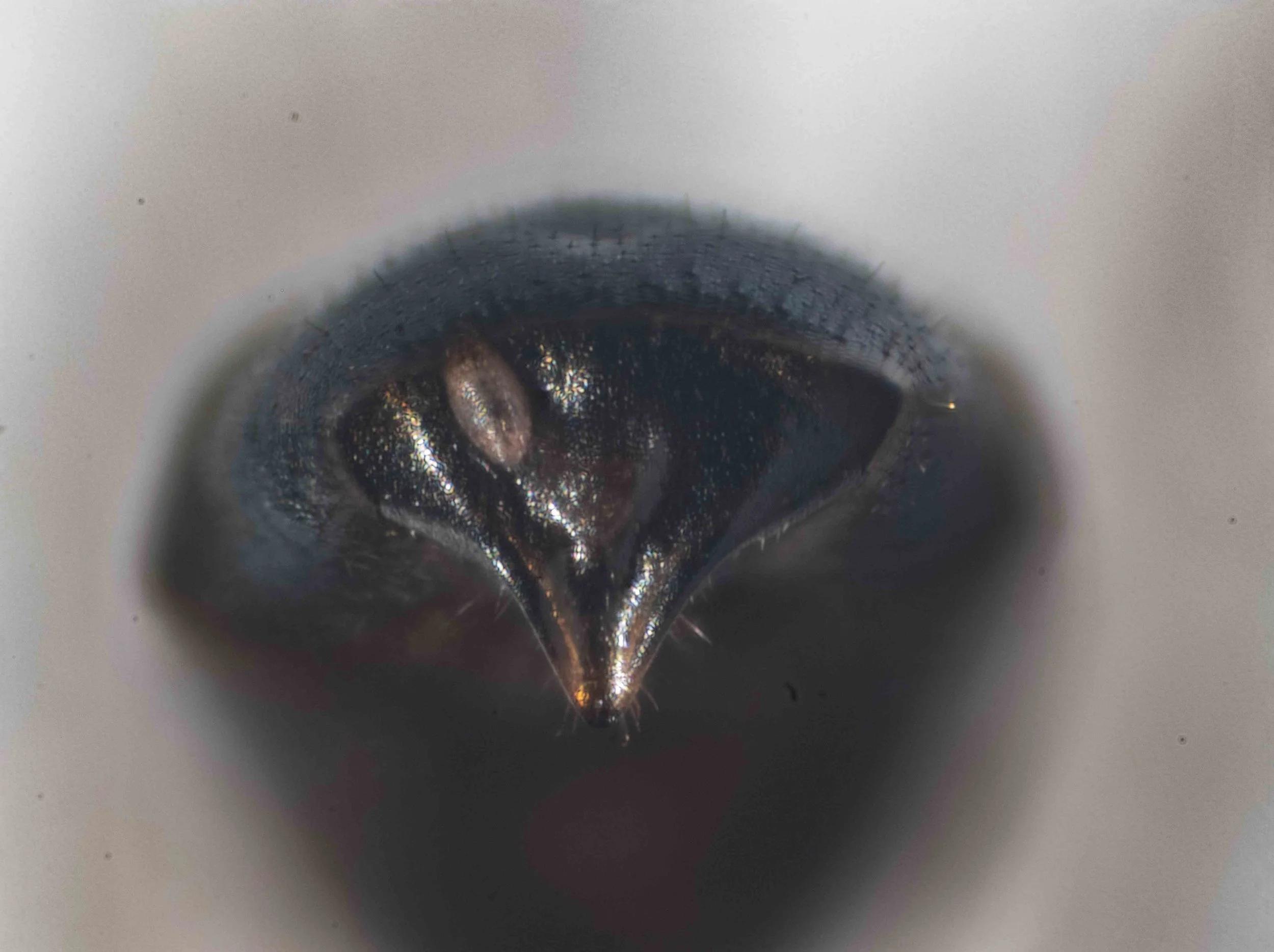
Podagritus of eastern Australia
The majority of Australia’s Podagritus species were described by Leclercq (1955, 1957, 1970, 1998), with just six new species added since 1998, all from Western Australia (Pulawski 2023, 2025). In preparing the summary table below I am therefore relying heavily upon Leclercq’s most recent revision (Leclercq 1998).
Of the 36 Australian species of Podagritus currently described, 15 species are known to occur in eastern Australia (QLD, NSW, ACT, Vic, Tas or southeastern SA - in which I’ve included Adelaide, but not so far north as Lake Eyre).
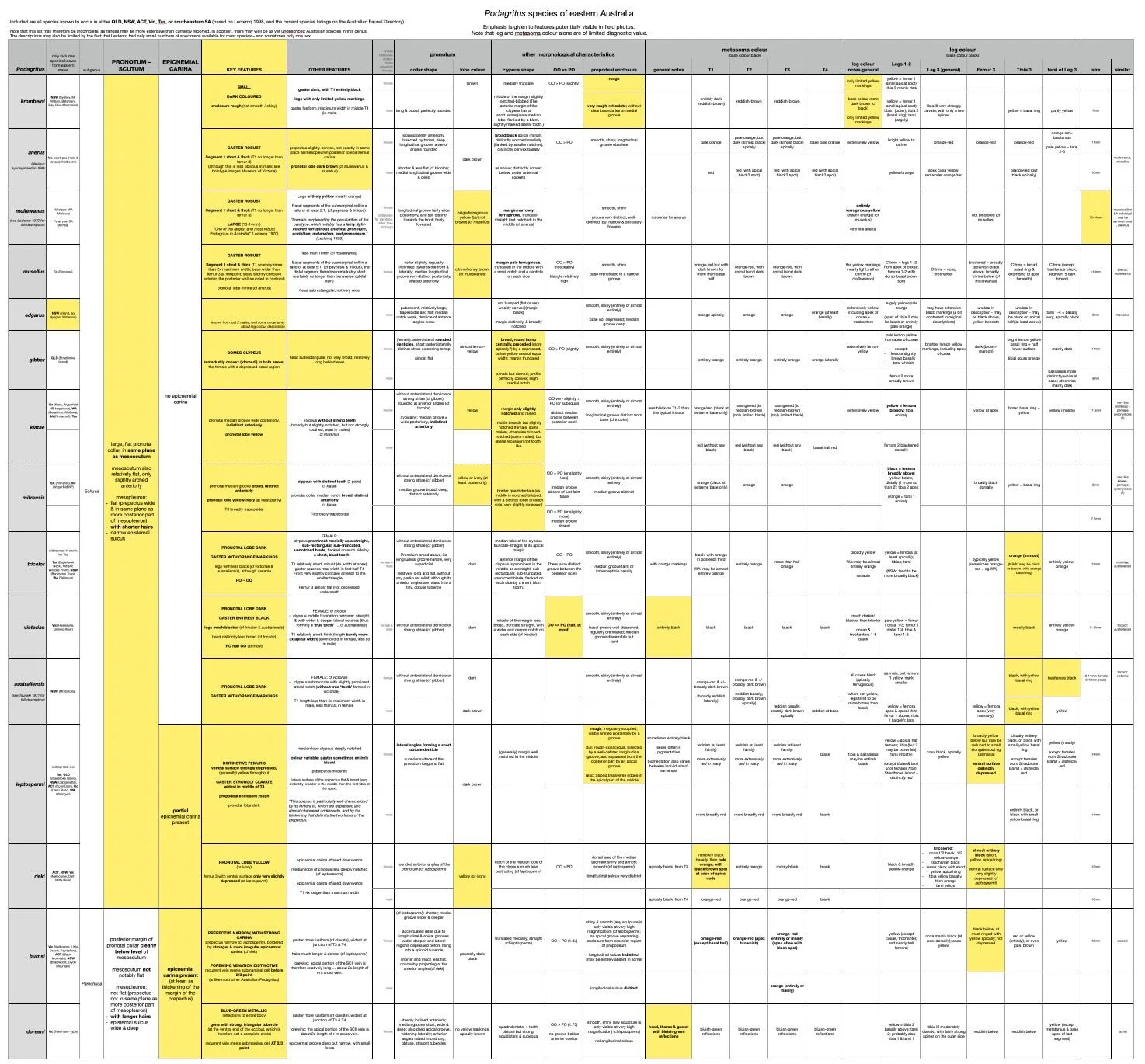
Click to open/download as pdf (<400kb)
As is my usual practice, this matrix will be updated as I apply it to specimens and images – noteably, the iNaturalist dataset.
As a first trial, I’ve identified our local species: Podagritus leptospermi
Quite straightforward it was too! It helps that this is one of the largest and most distinctive species in the genus.
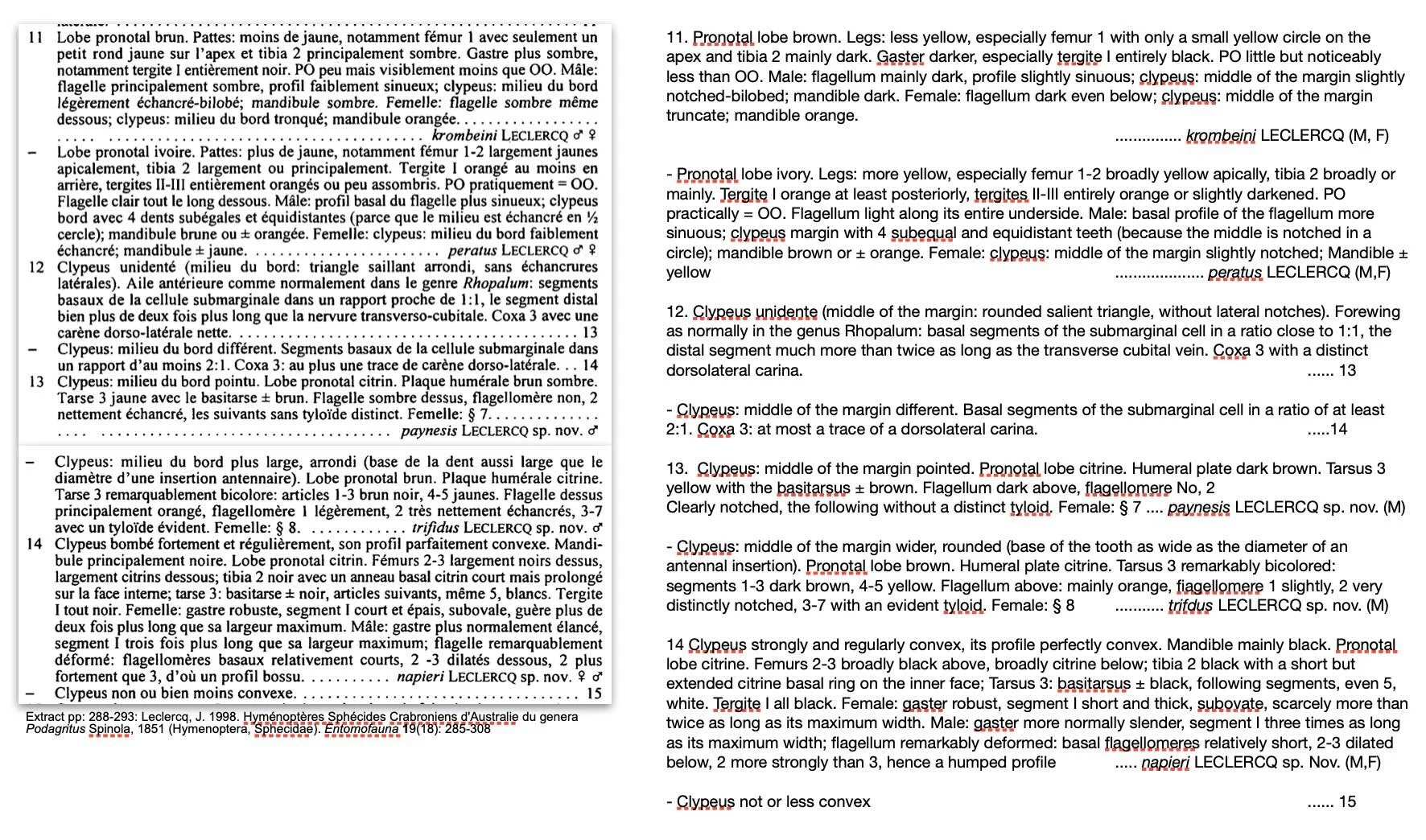
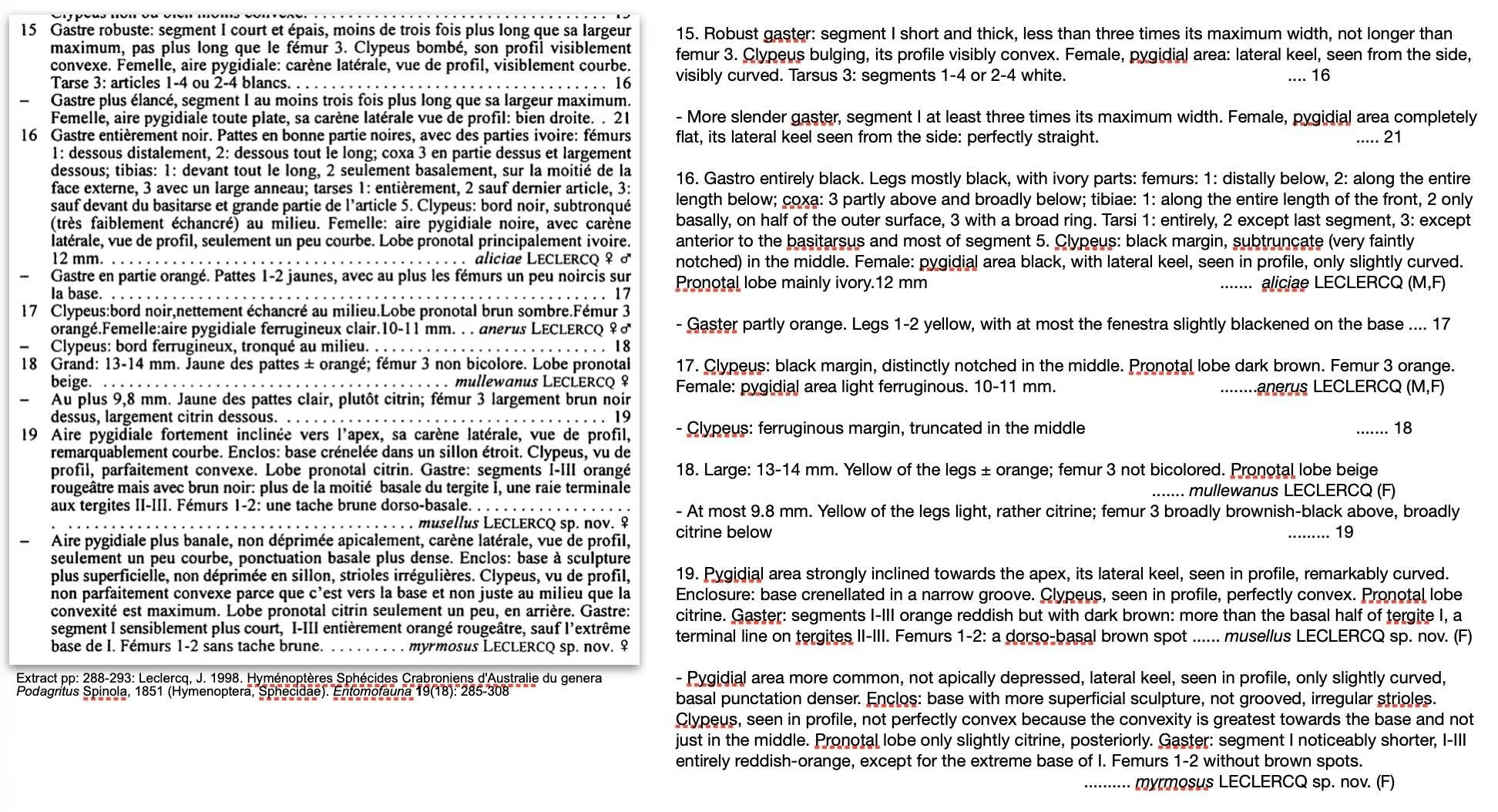
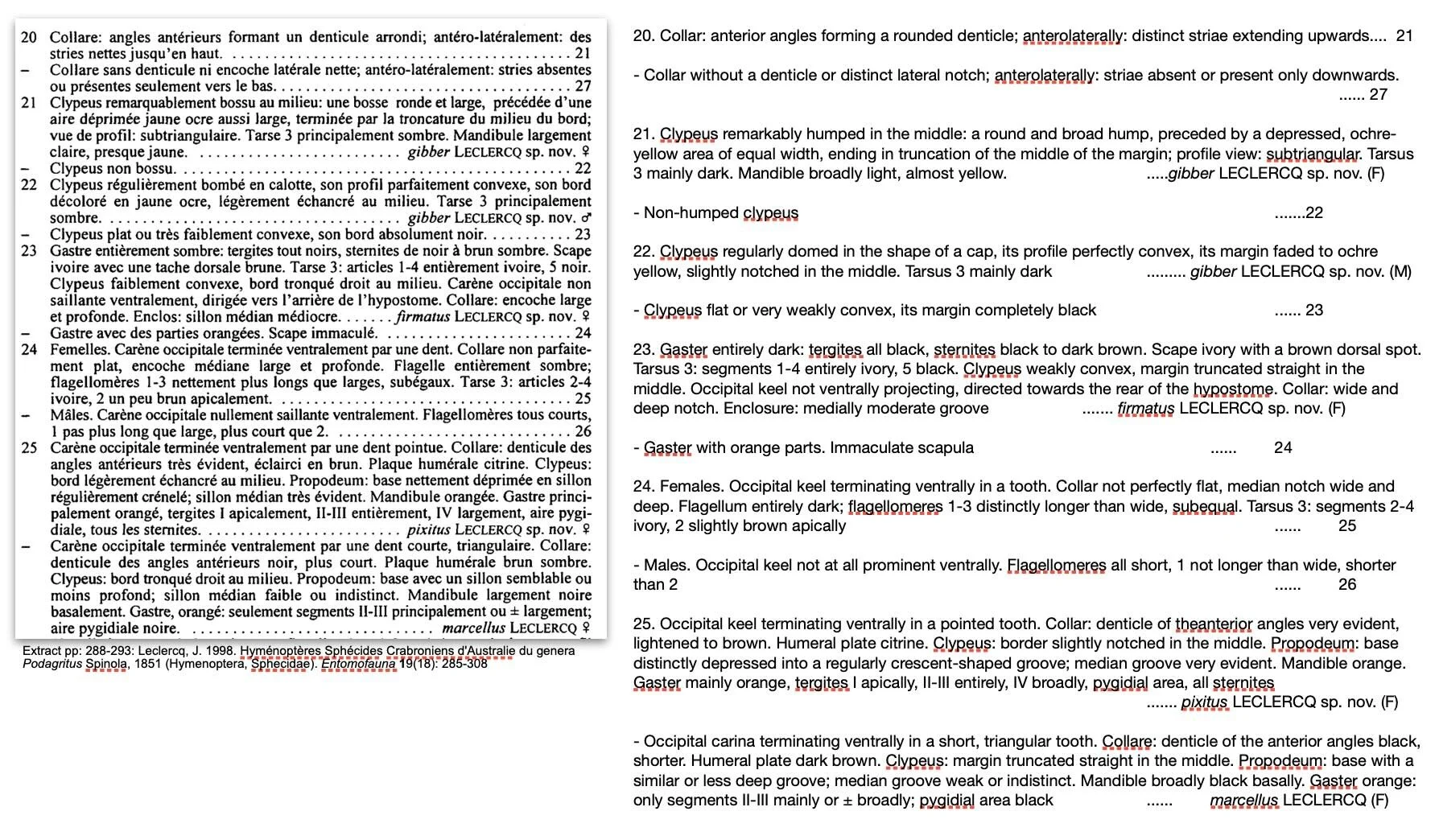
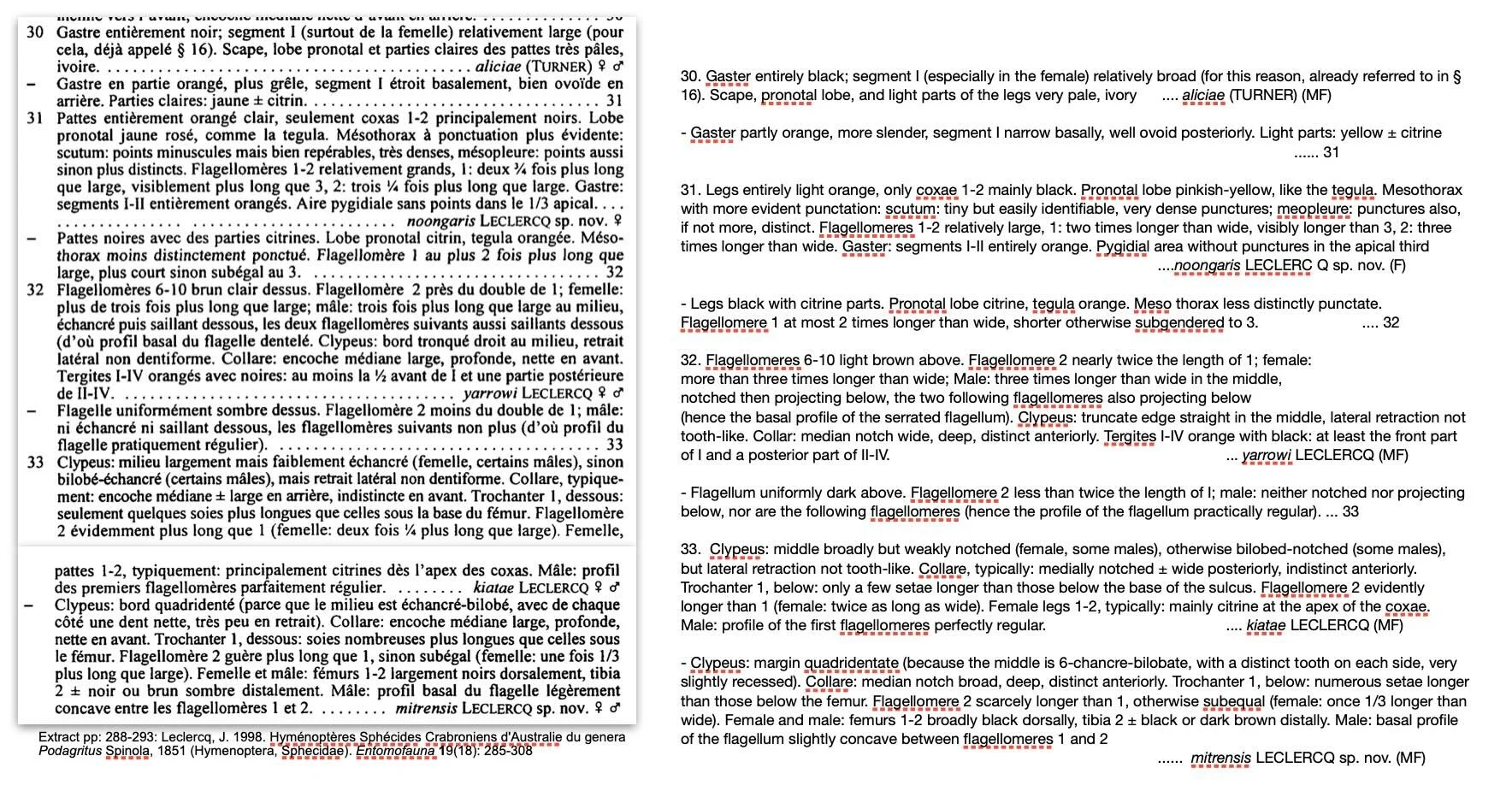
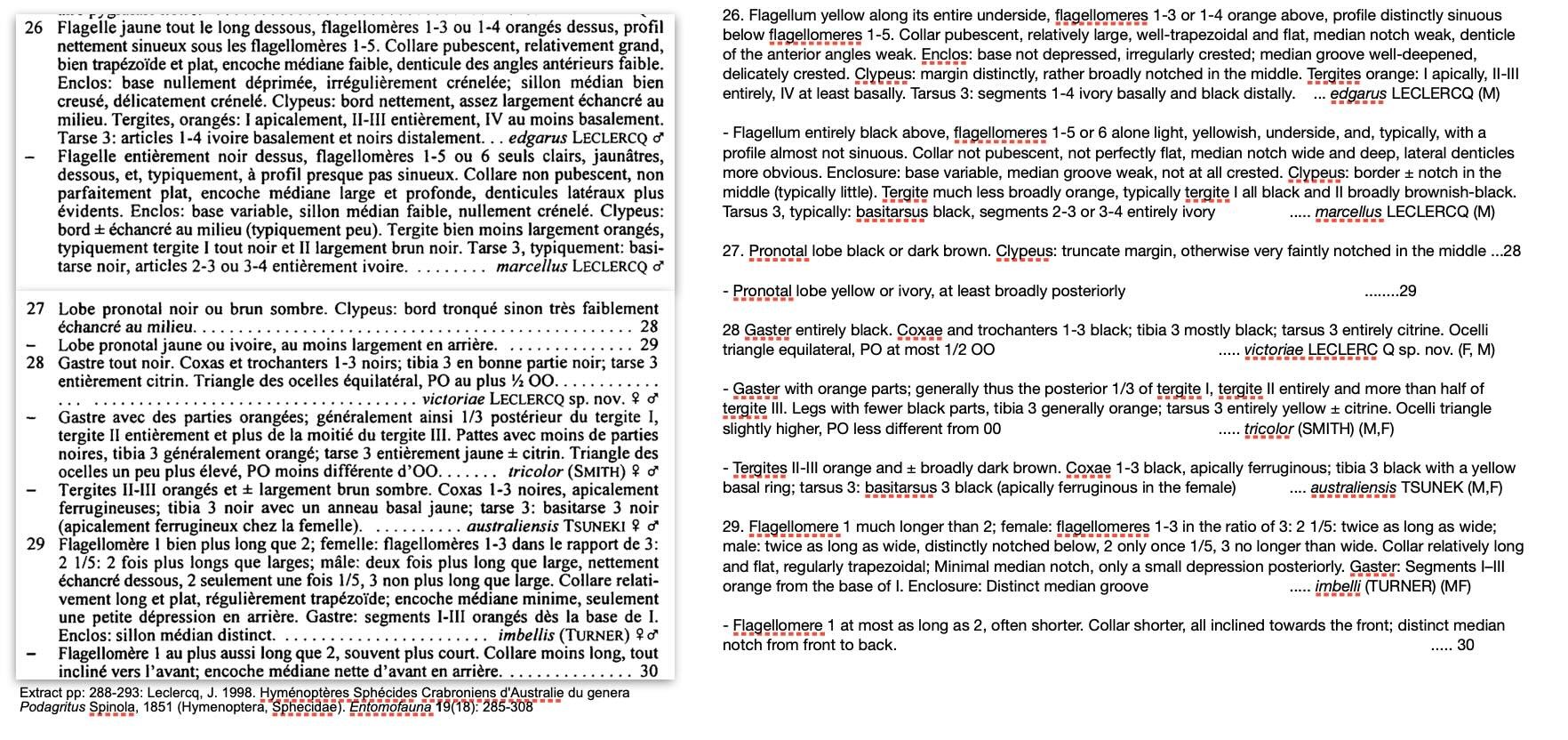
The images below demonstrate the use of the matrix and also Leclercq’s 1998 key to Australian species (copies of which are included in the ‘Bits & pieces’ section).
I’ve kept this to the minimum needed for positive species ID. A separate page will include a more comprehensive suite of characters for P. leptospermi (see link below). And of course I’ve shown this species as illustration of many generic features in the panels above.
Podagritus leptospermi
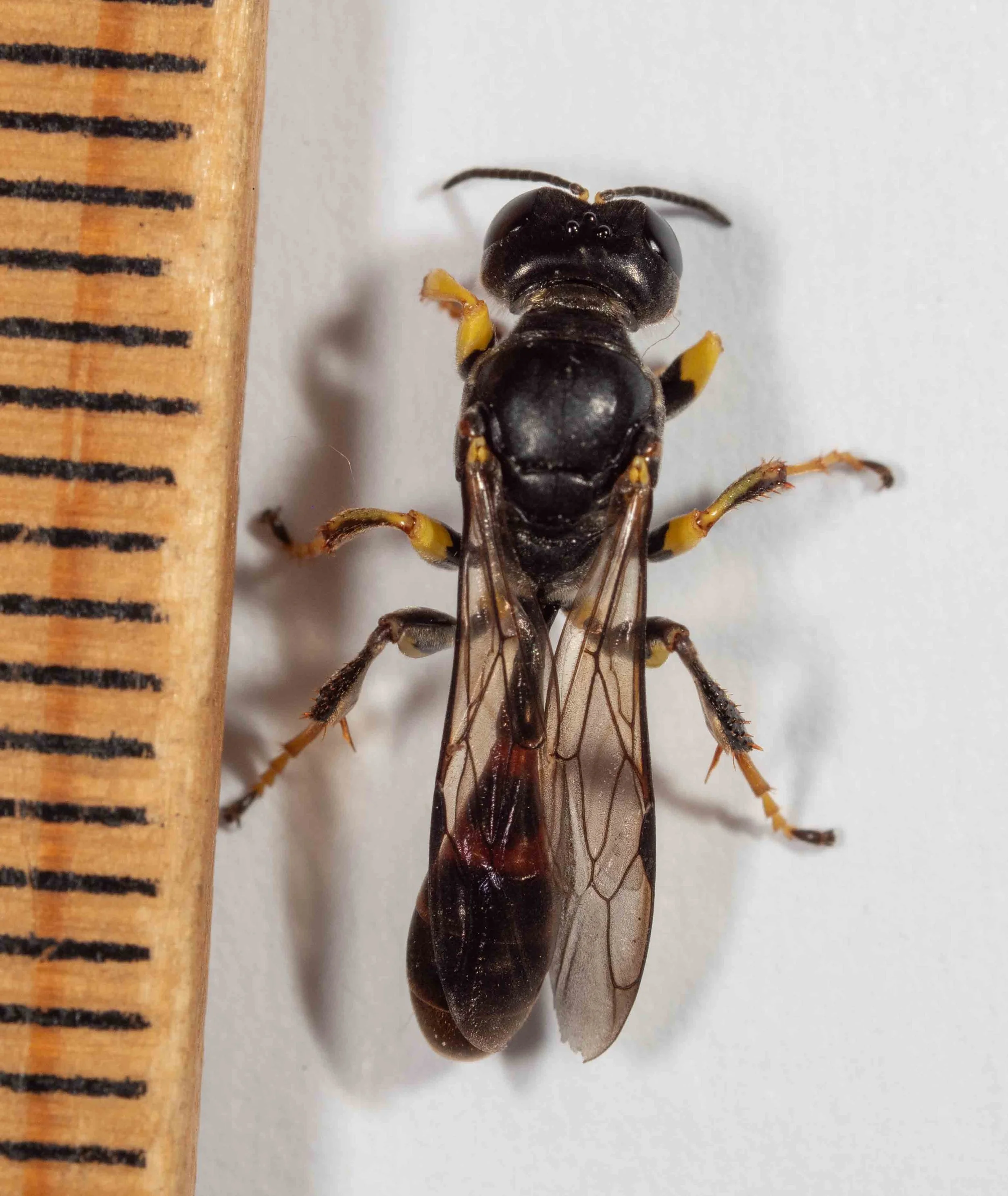
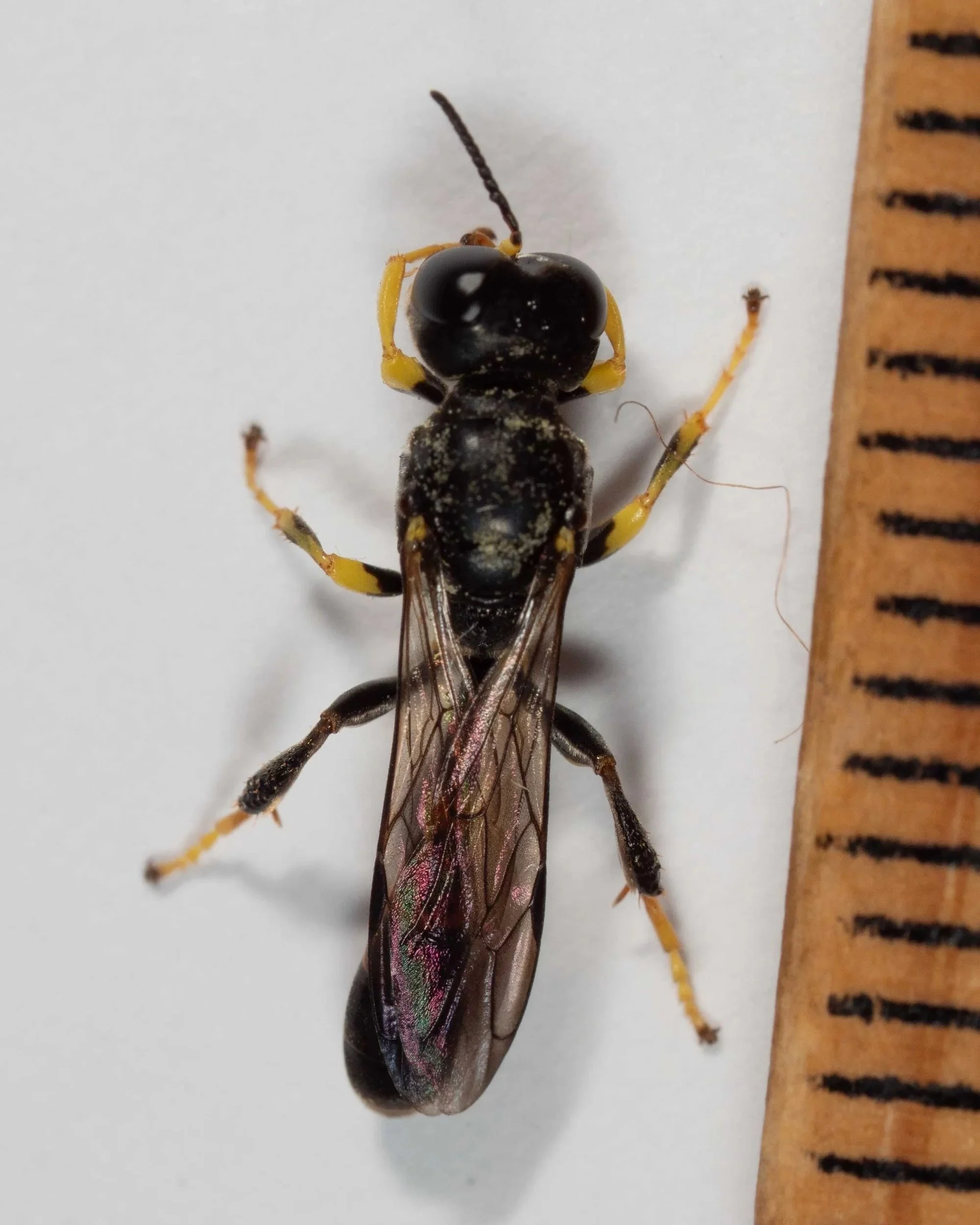
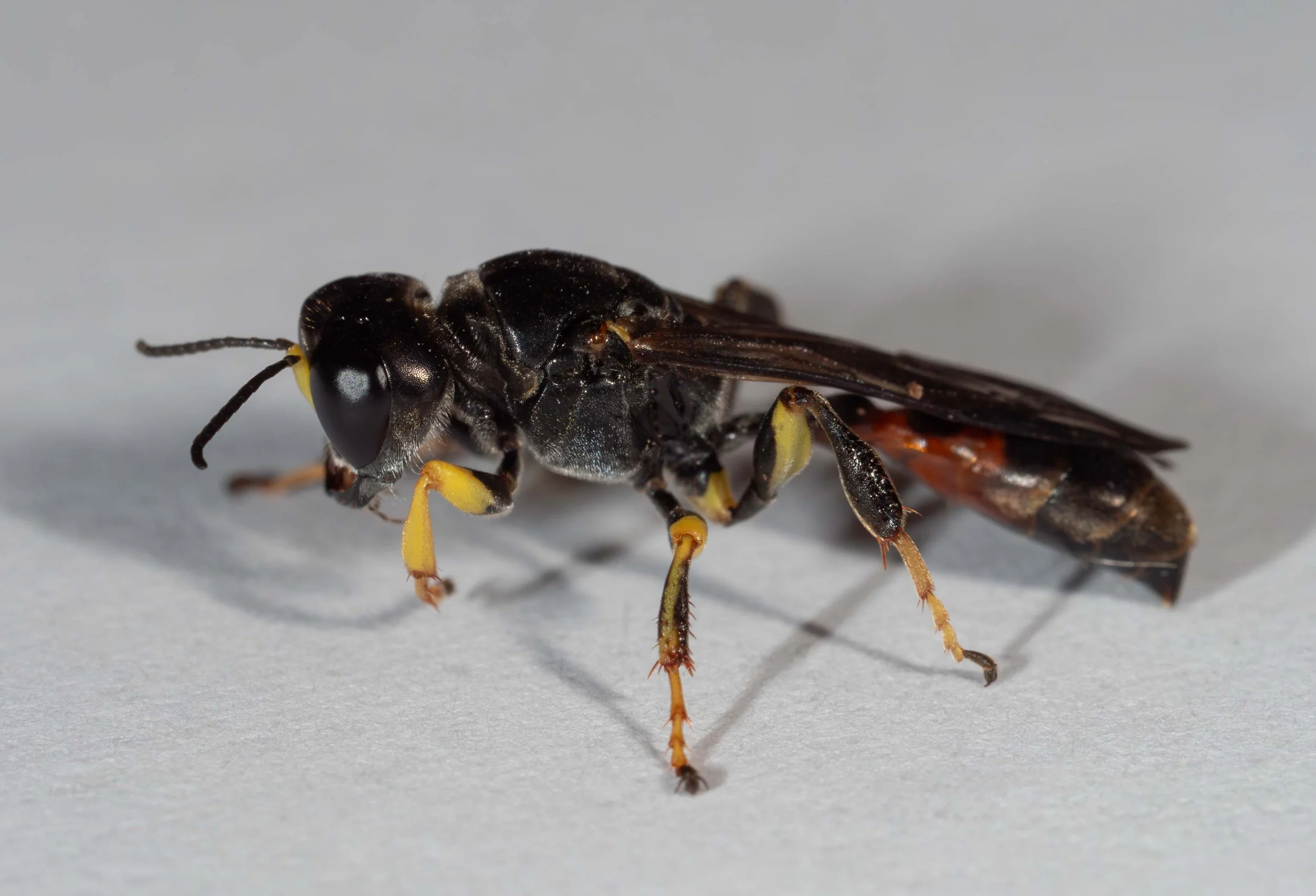
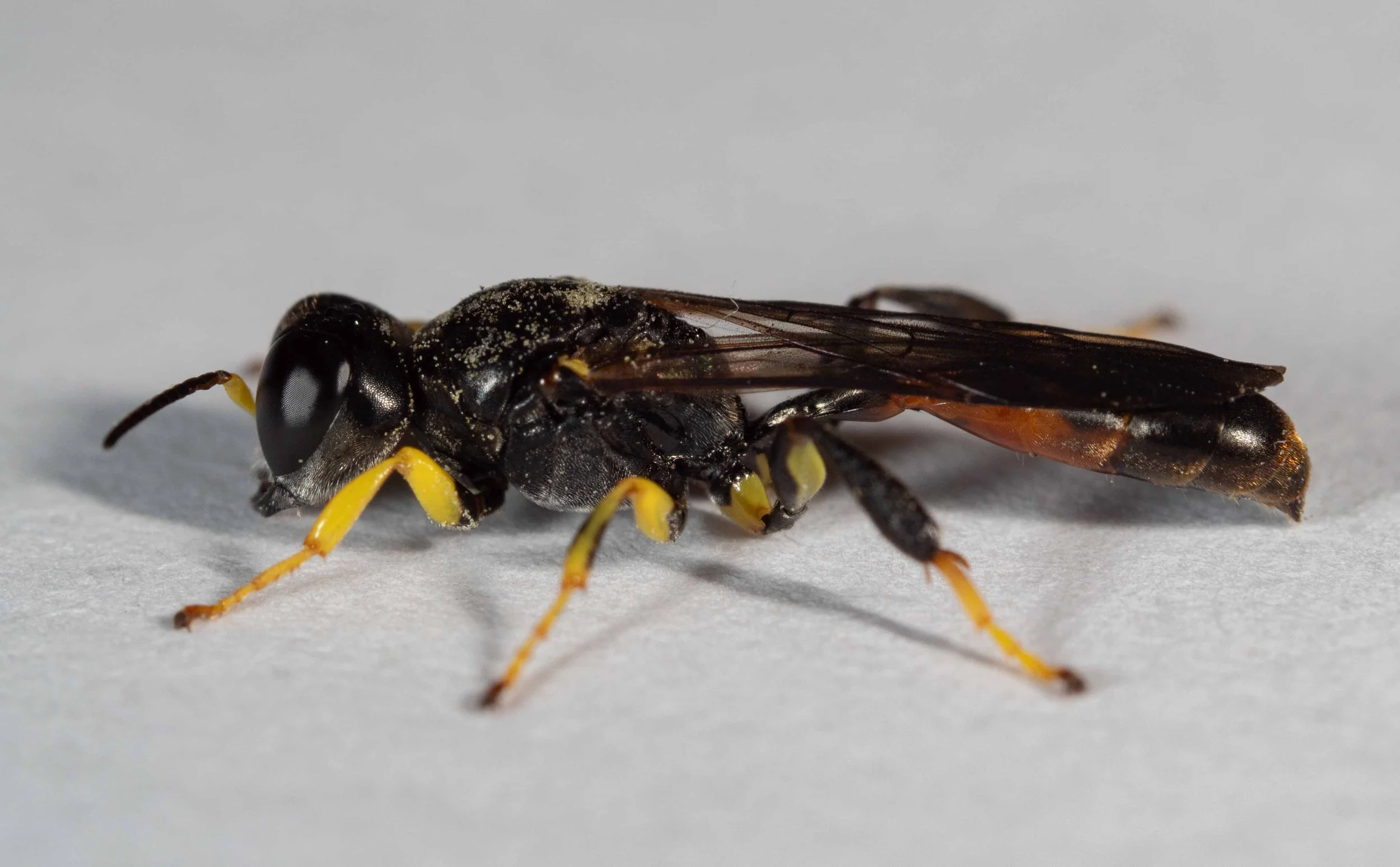
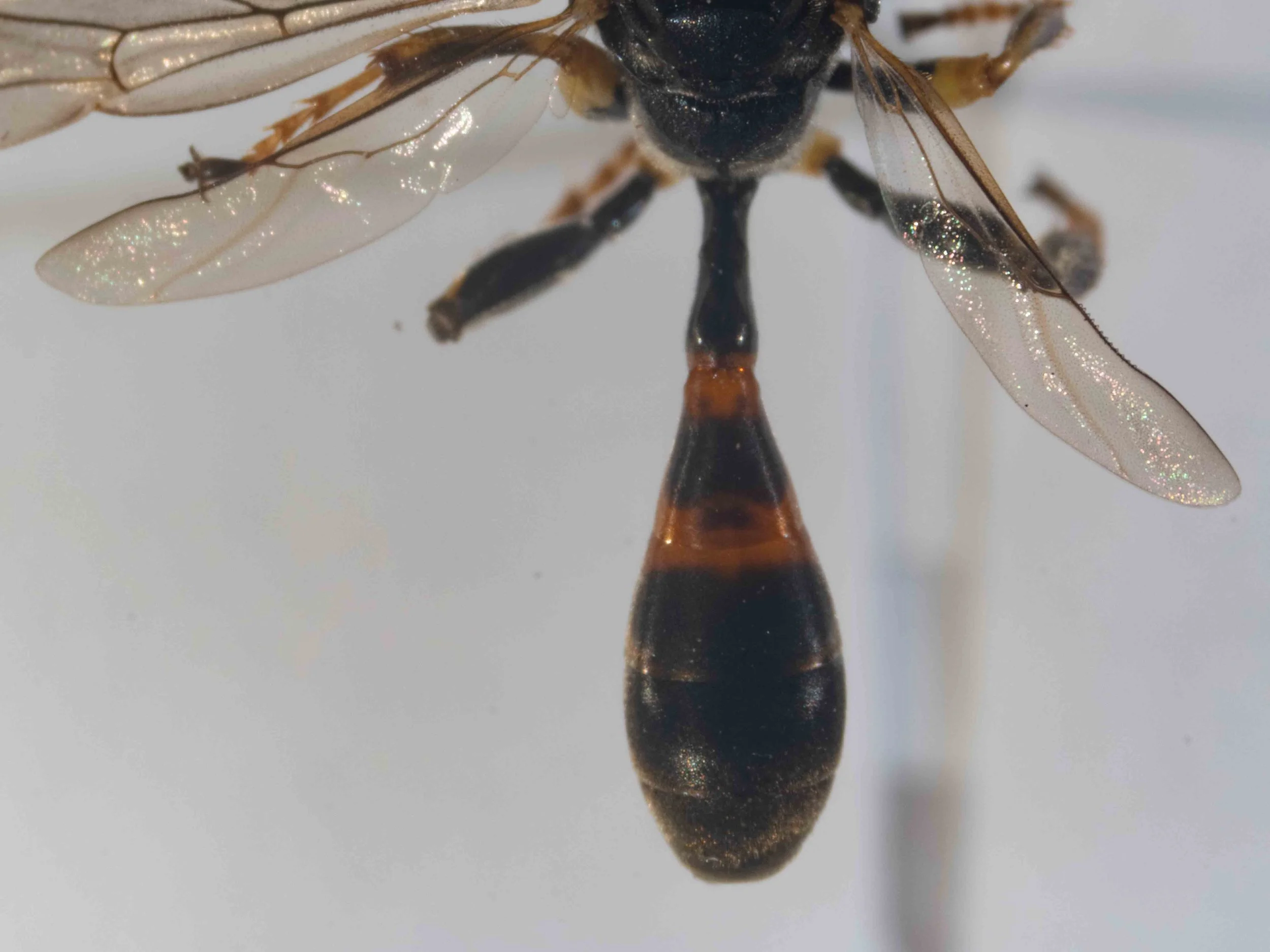
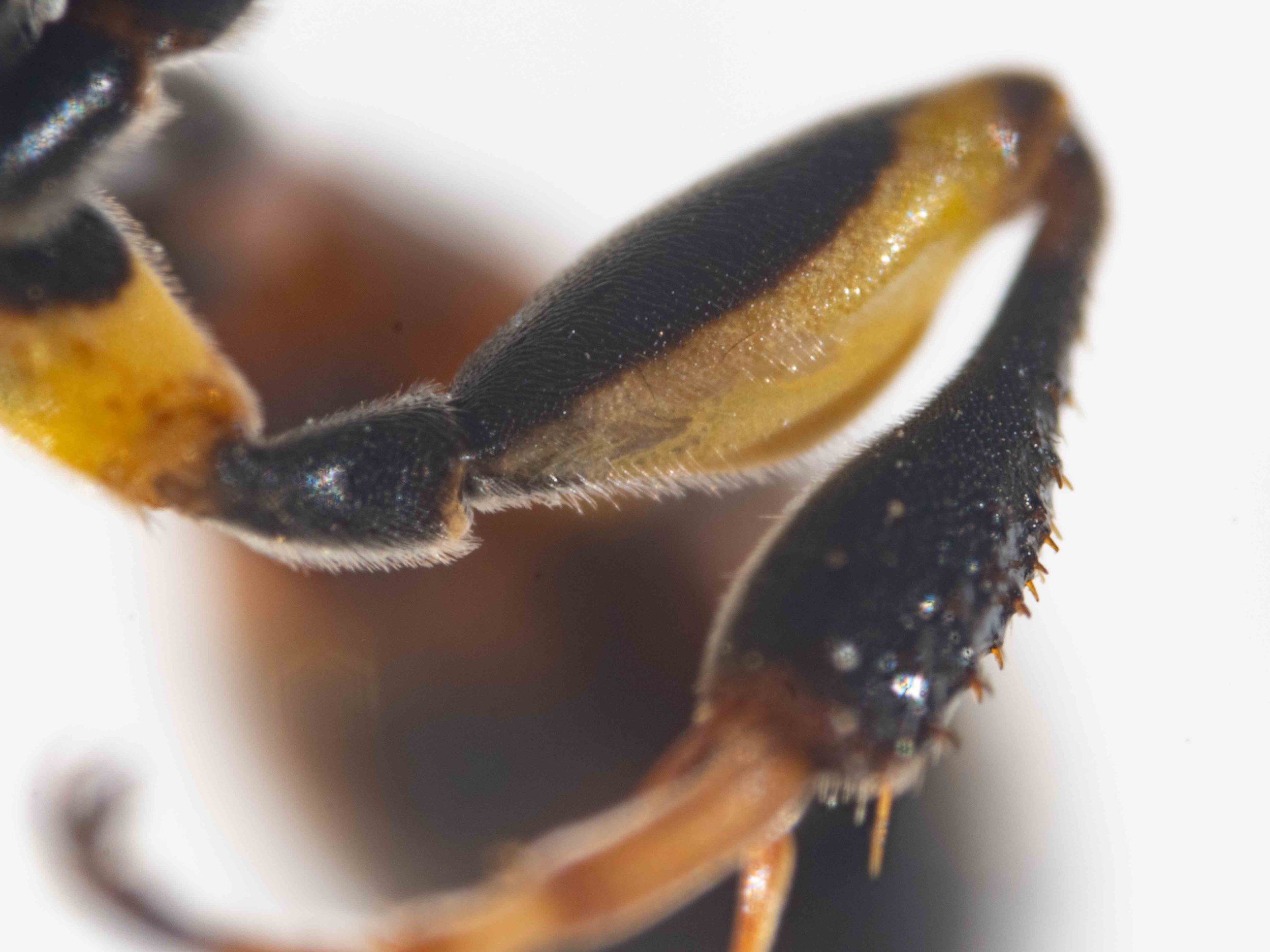
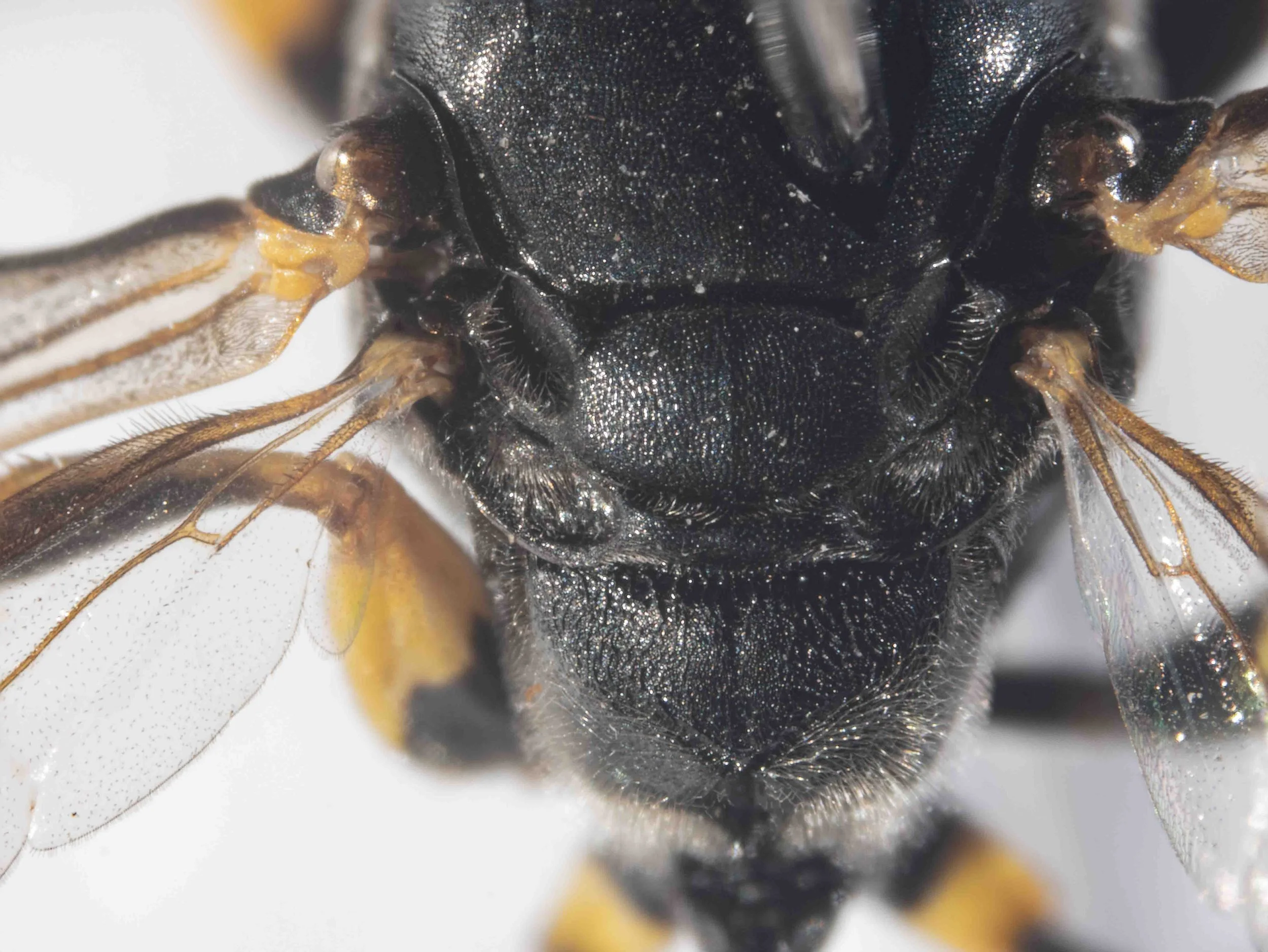
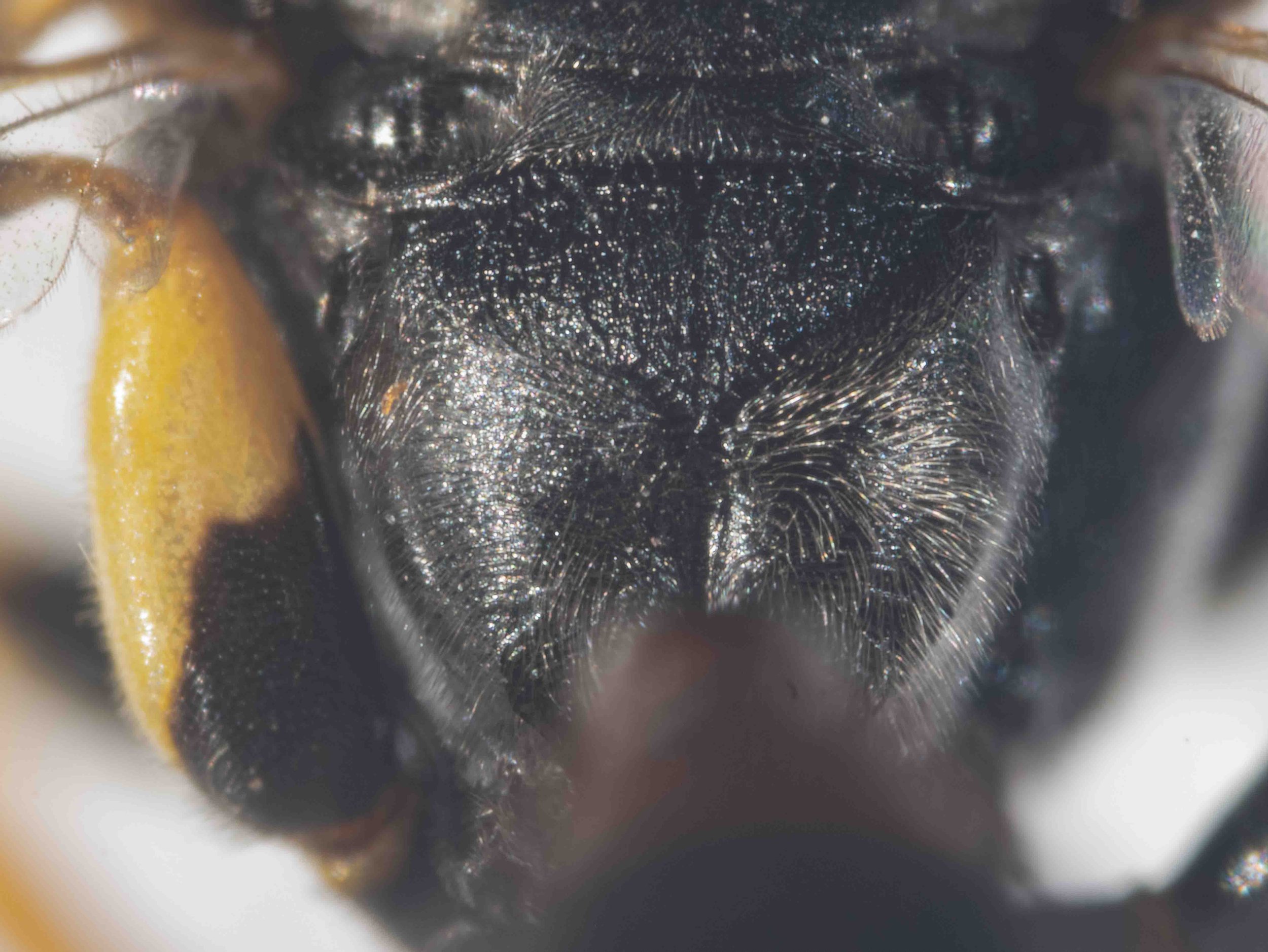
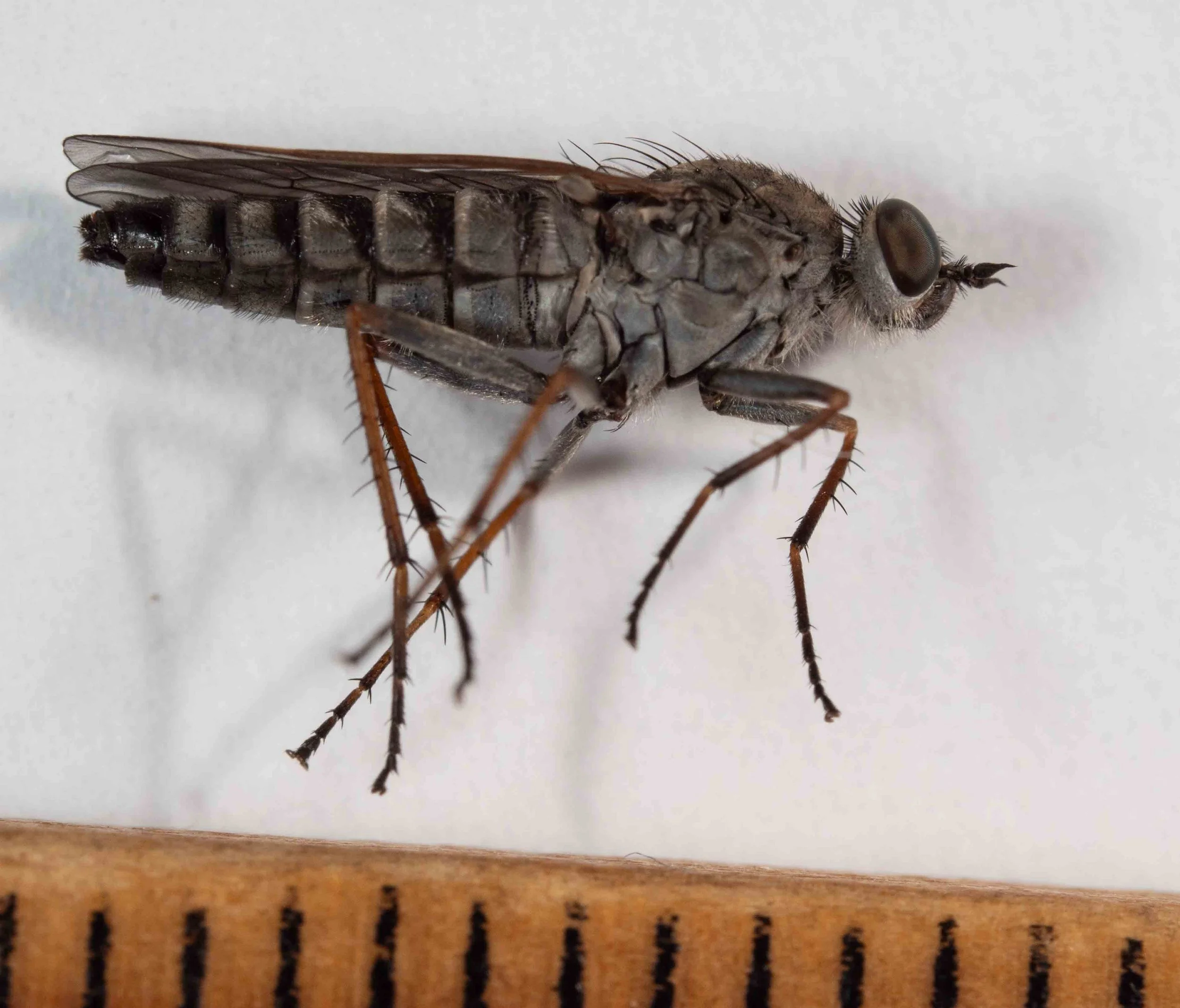
Podagritus leptospermi is one of the best studied of Australia’s Podagritus, in terms of its biology (Evans & Matthews 1971). It is a ground-nester, an ACT population found preying on a range of flies, including Anabarynchus (Therevidae). And Anabarynchus also seems to be their favoured prey here in the forest.
More about the nesting behaviour of our local Podagritus in a later blog post.
Bits & pieces
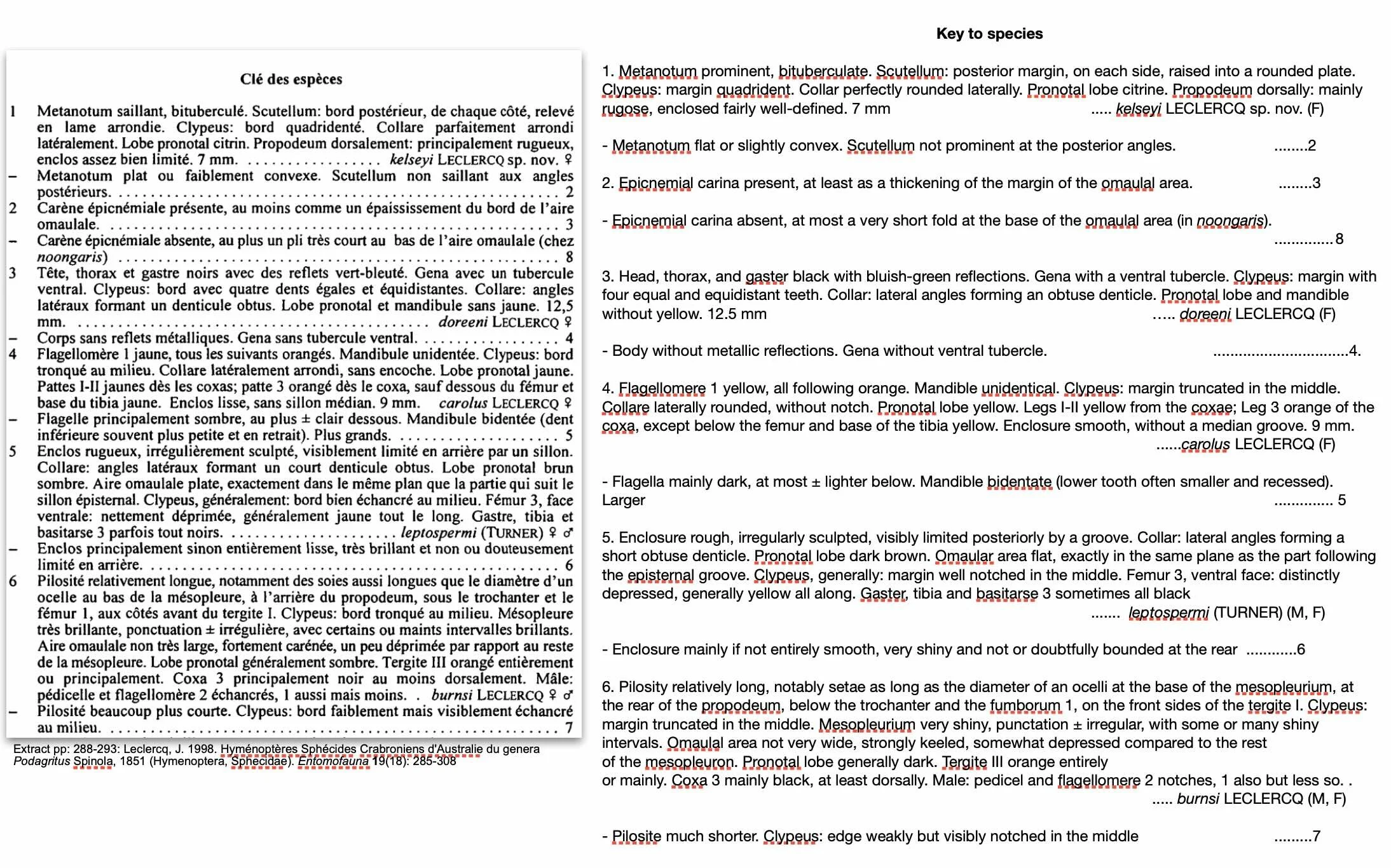
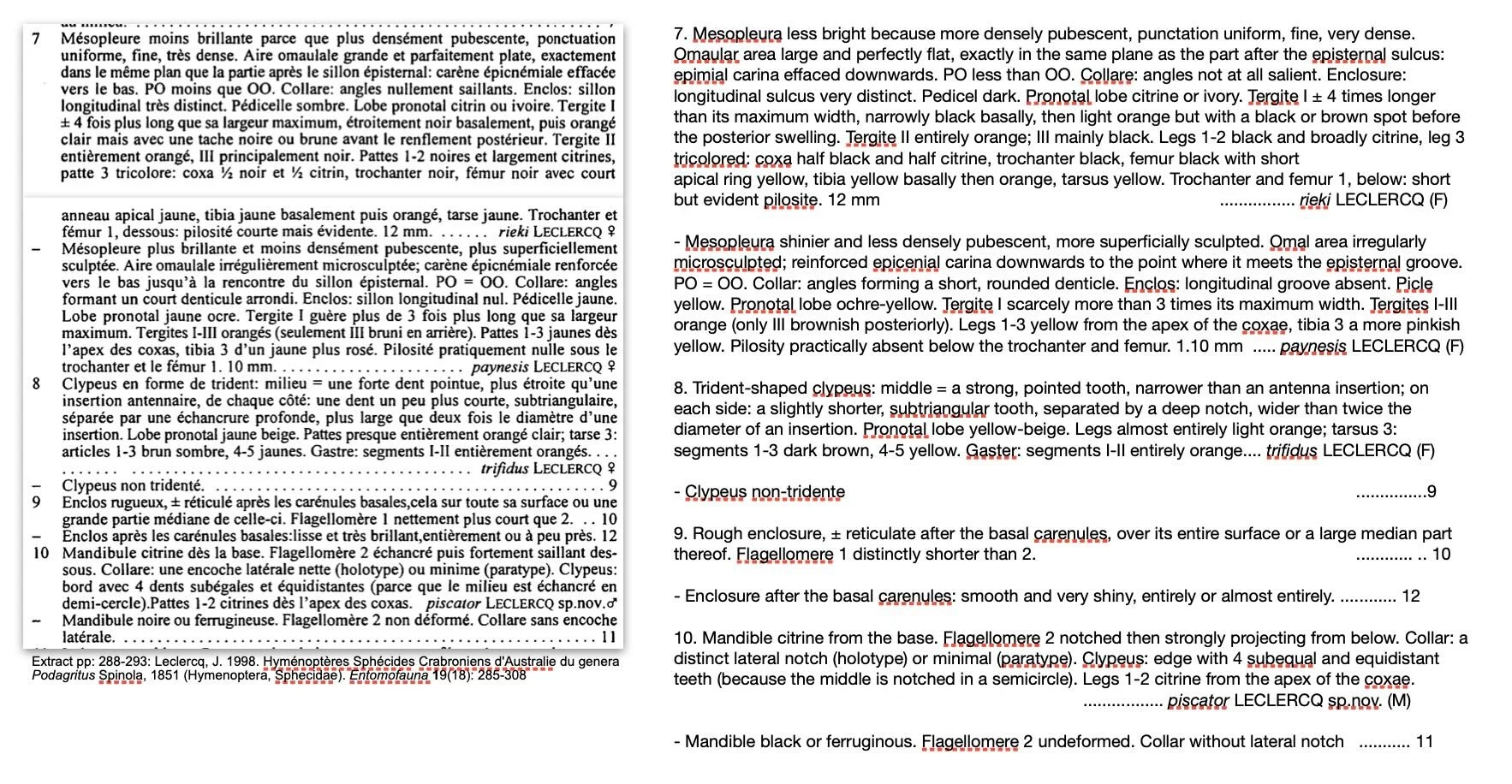
Key to Australian Podagritus species (Leclercq 1998)
As with all Leclercq’s publications, the key is in French. I’ve added an English language translation, albeit a bit rough in places.
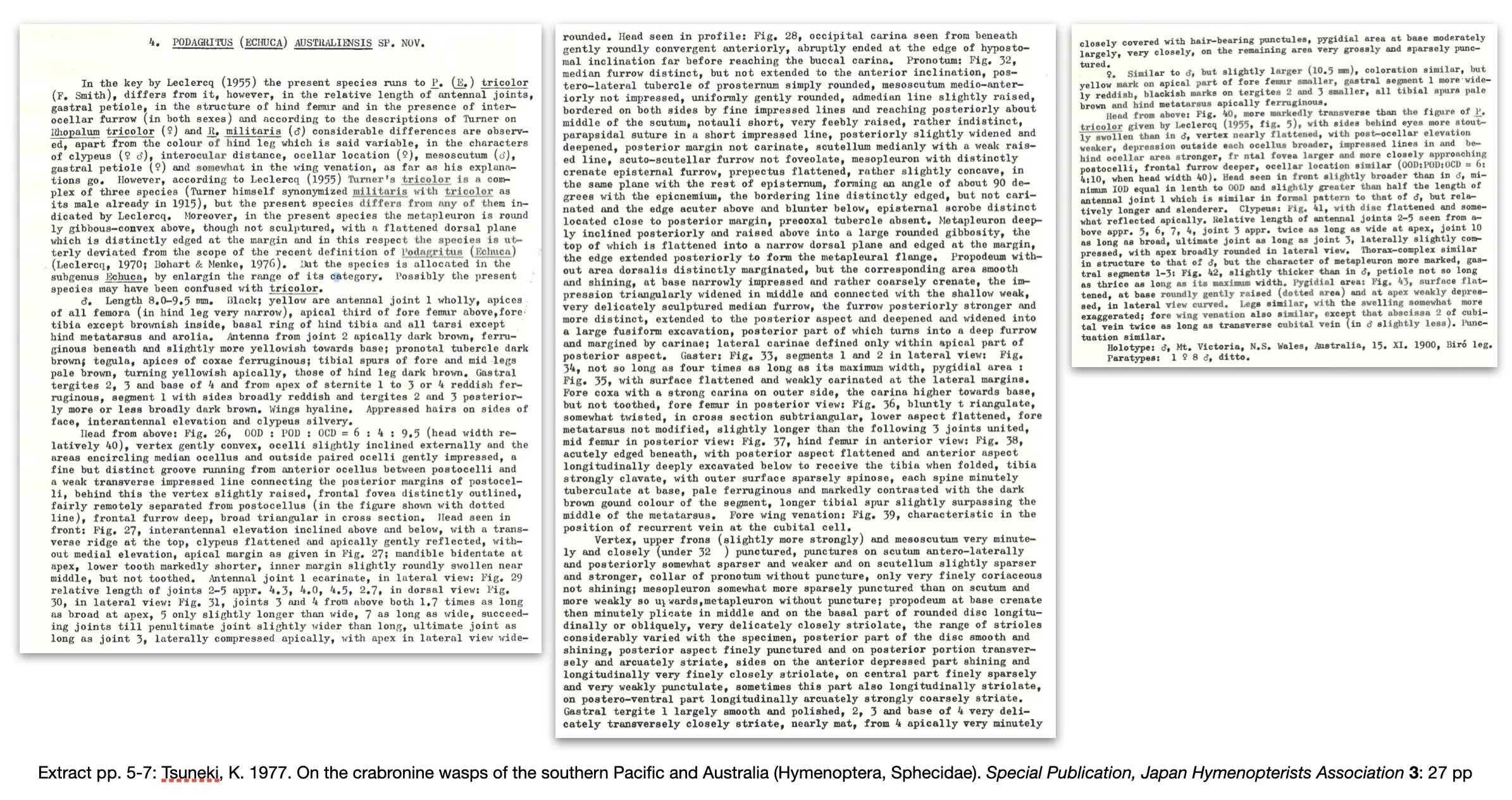
Other extracts
A collection of relevant images, diagrams and extracts from the literature.
Reference specimens
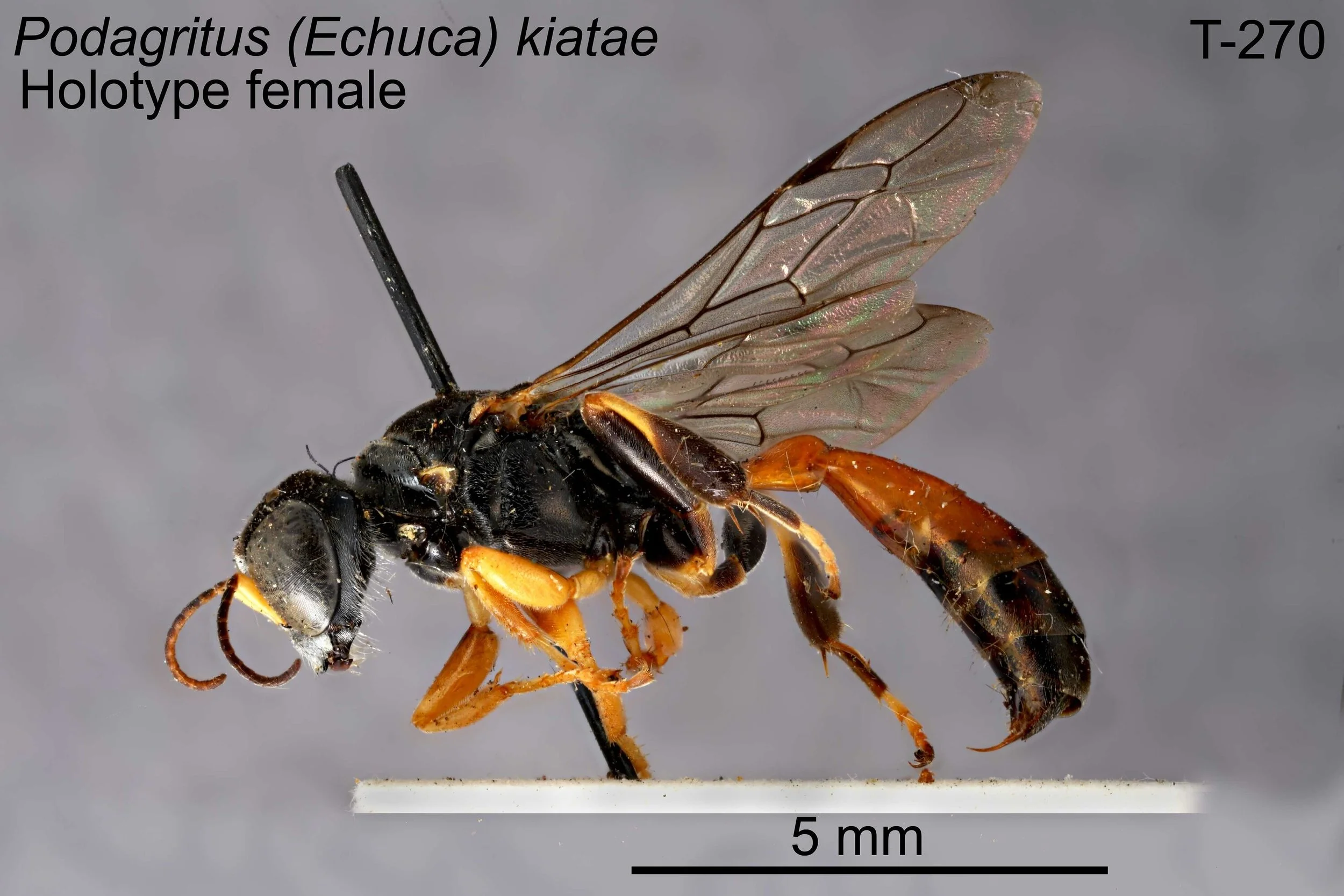
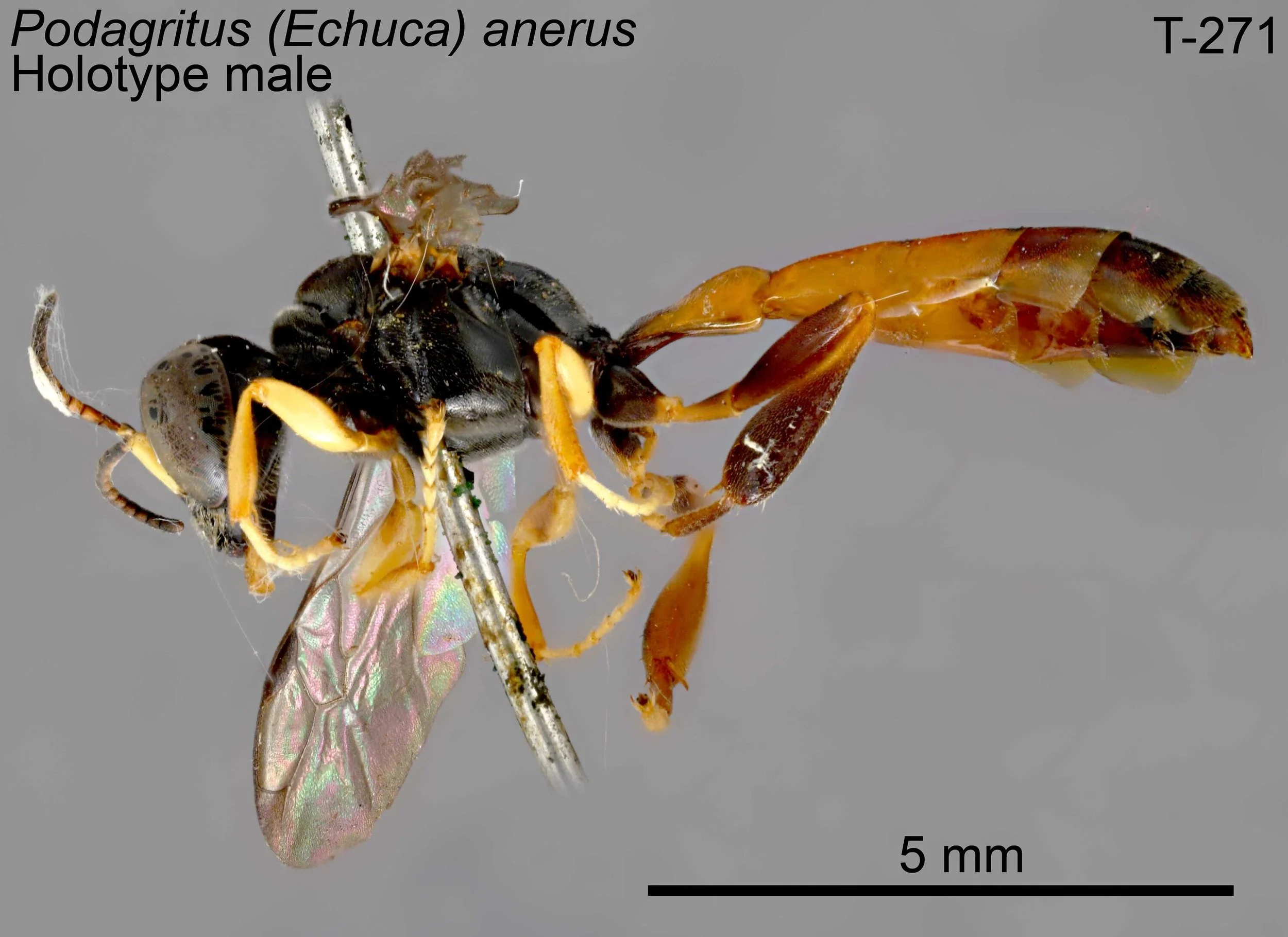
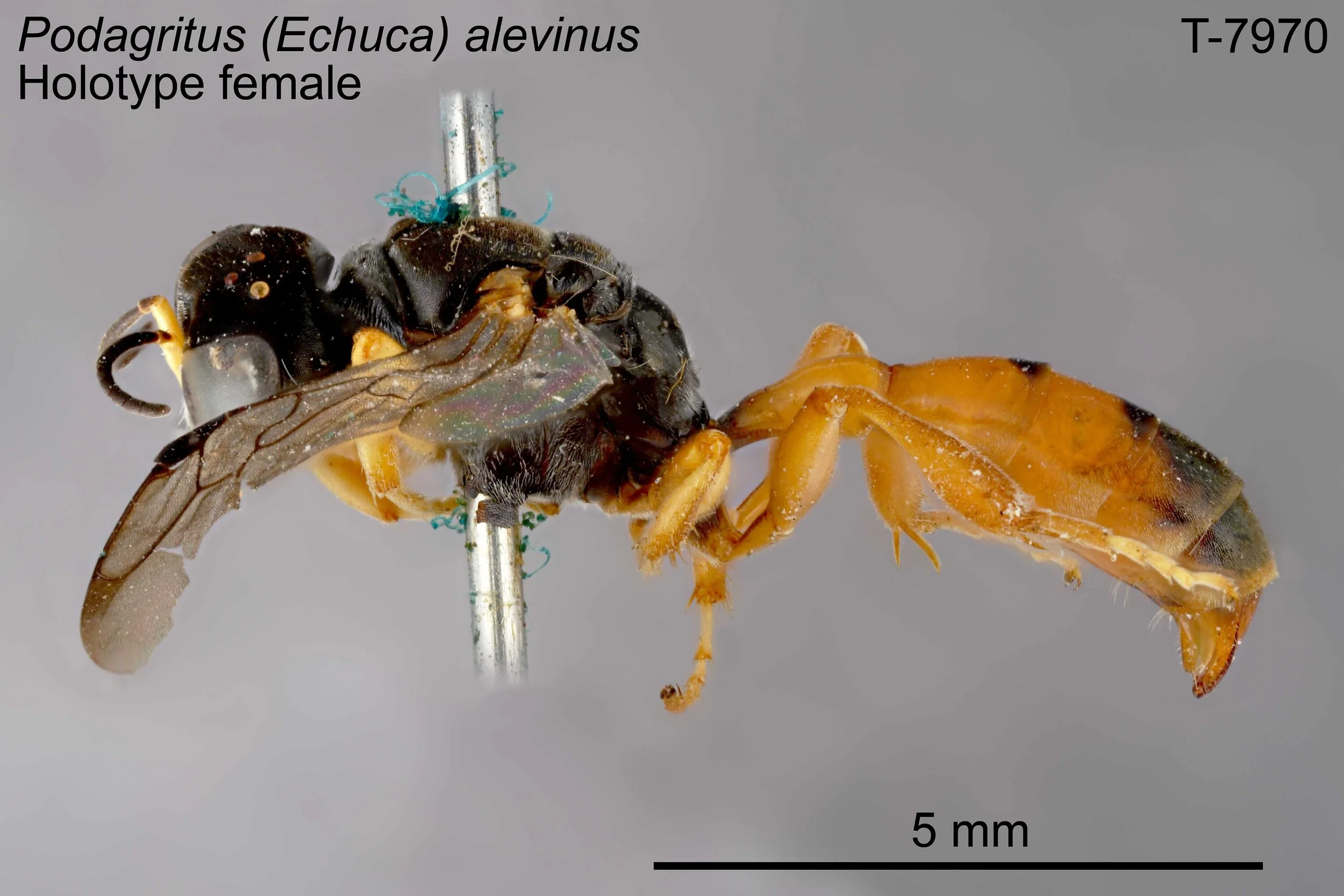
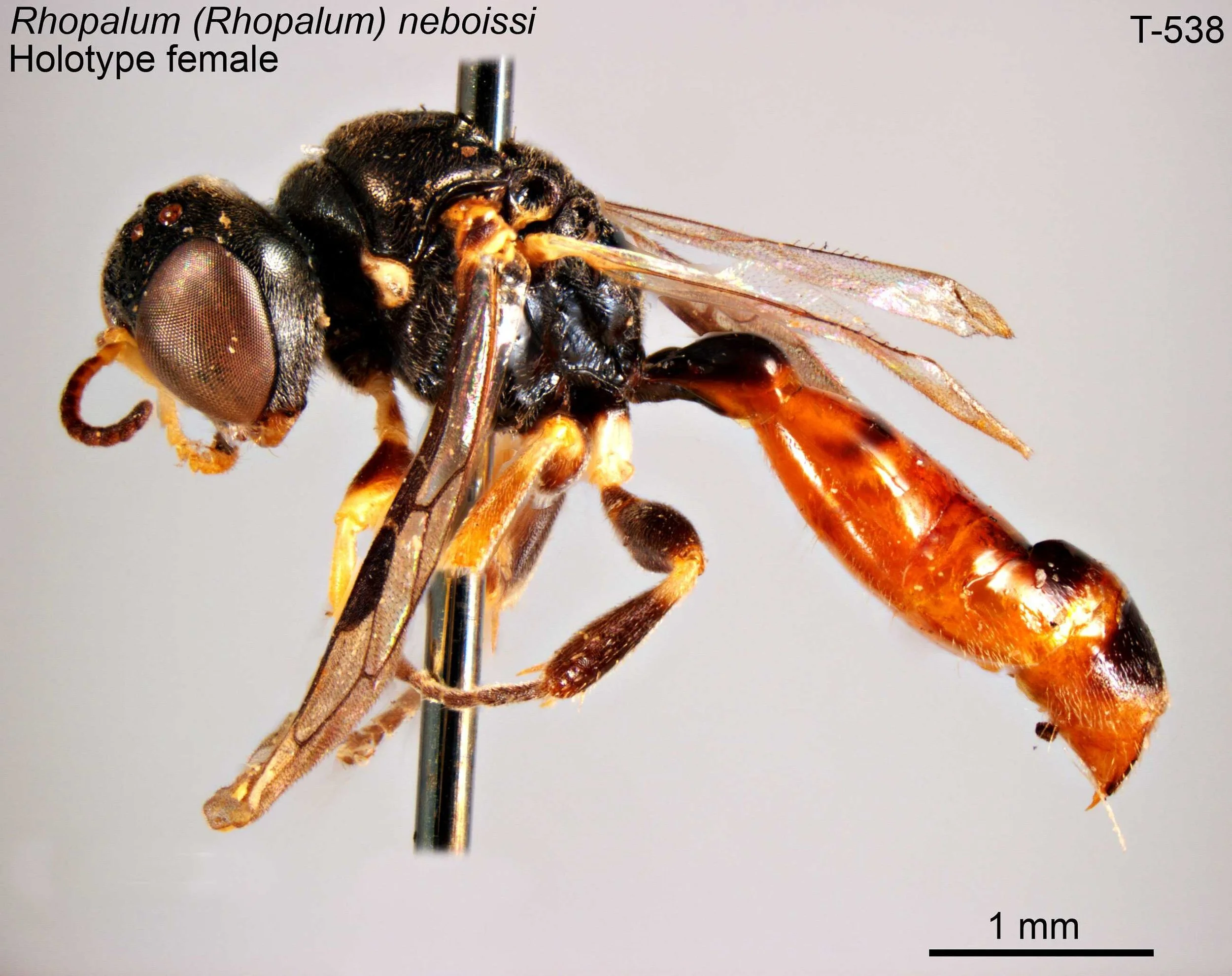
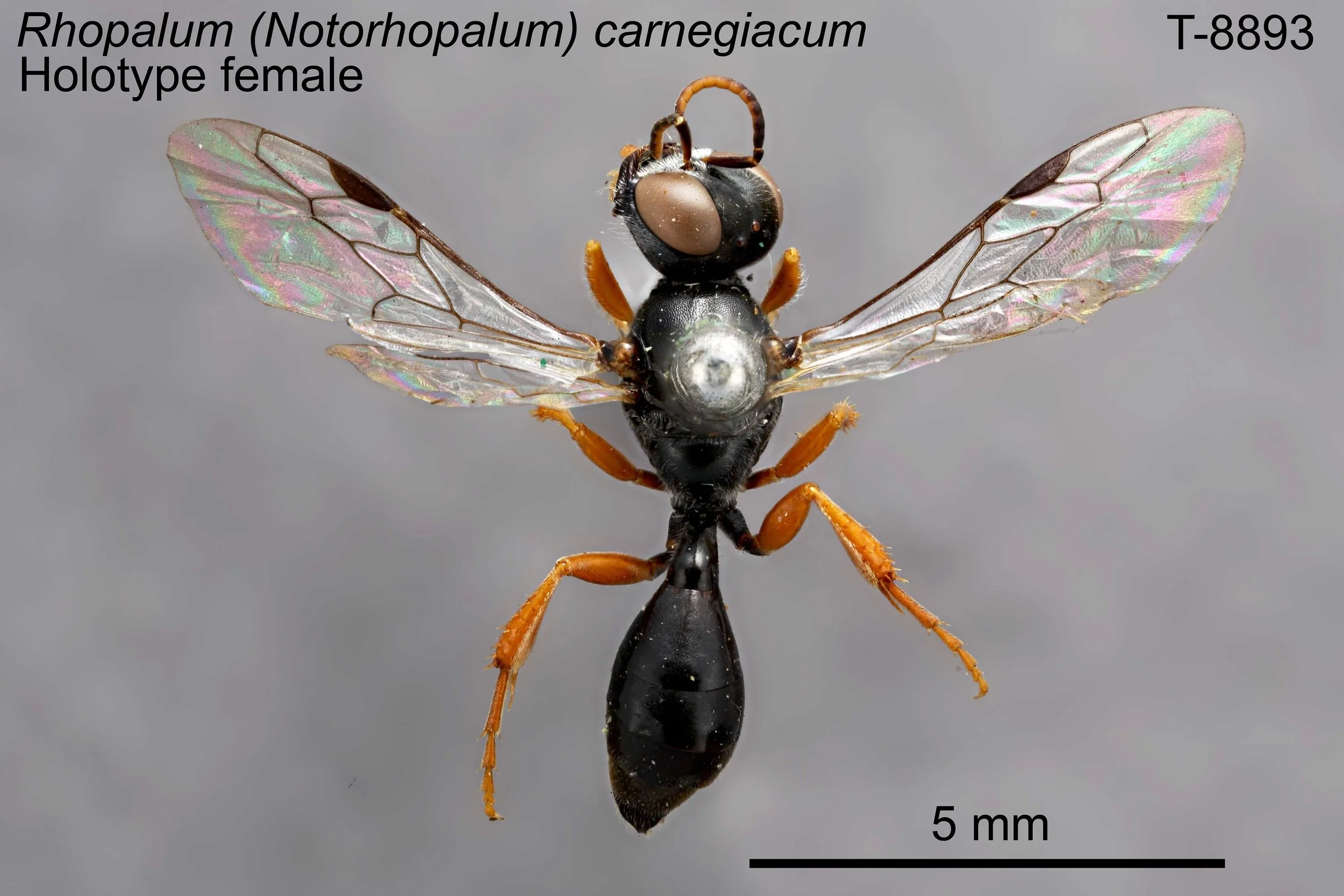
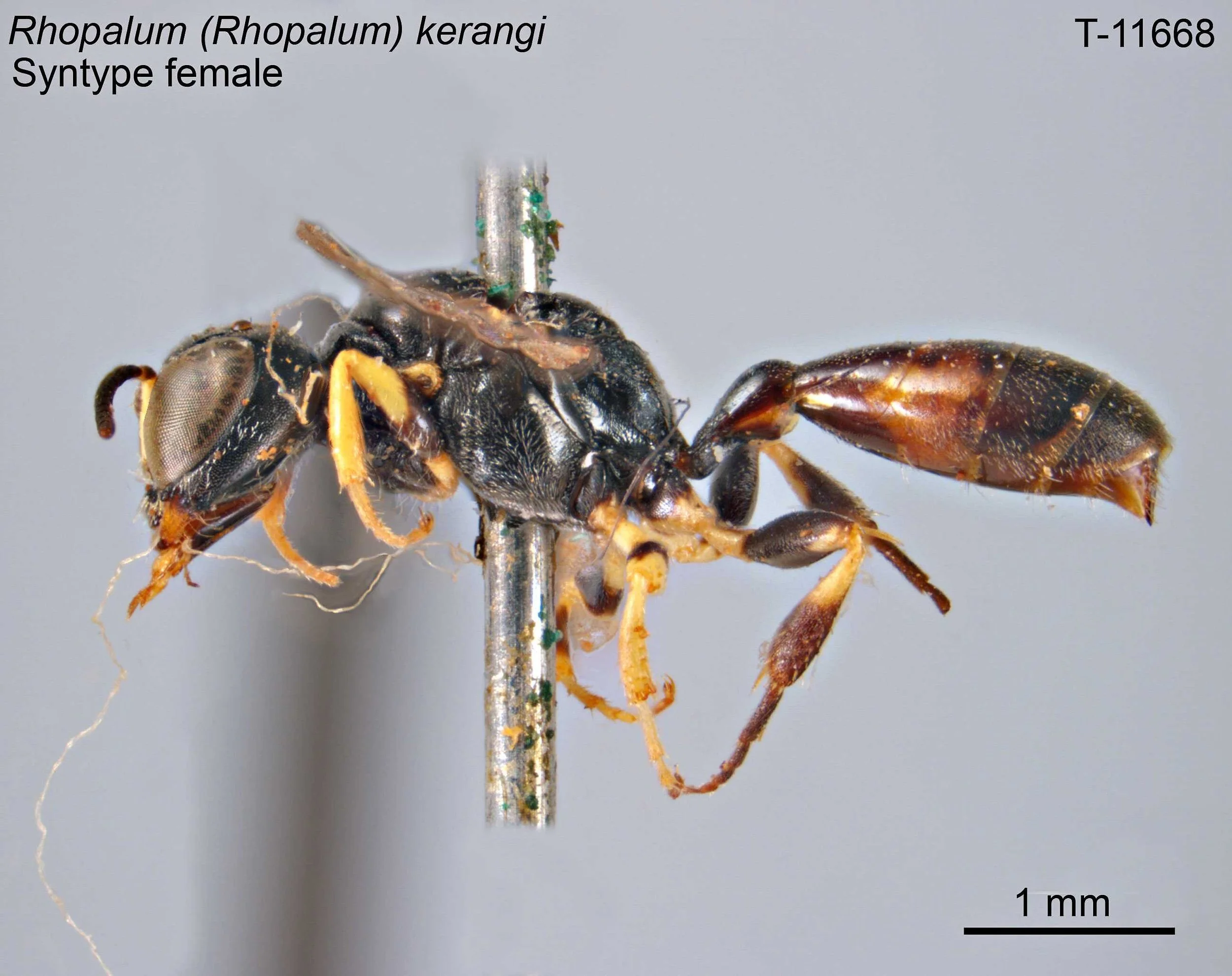
Identified specimens held in museum collections, including holotypes images, where the images are accessible online. Several Rhopalum specimens are included (species known from eastern states), further highlighting the similarity between the two genera.
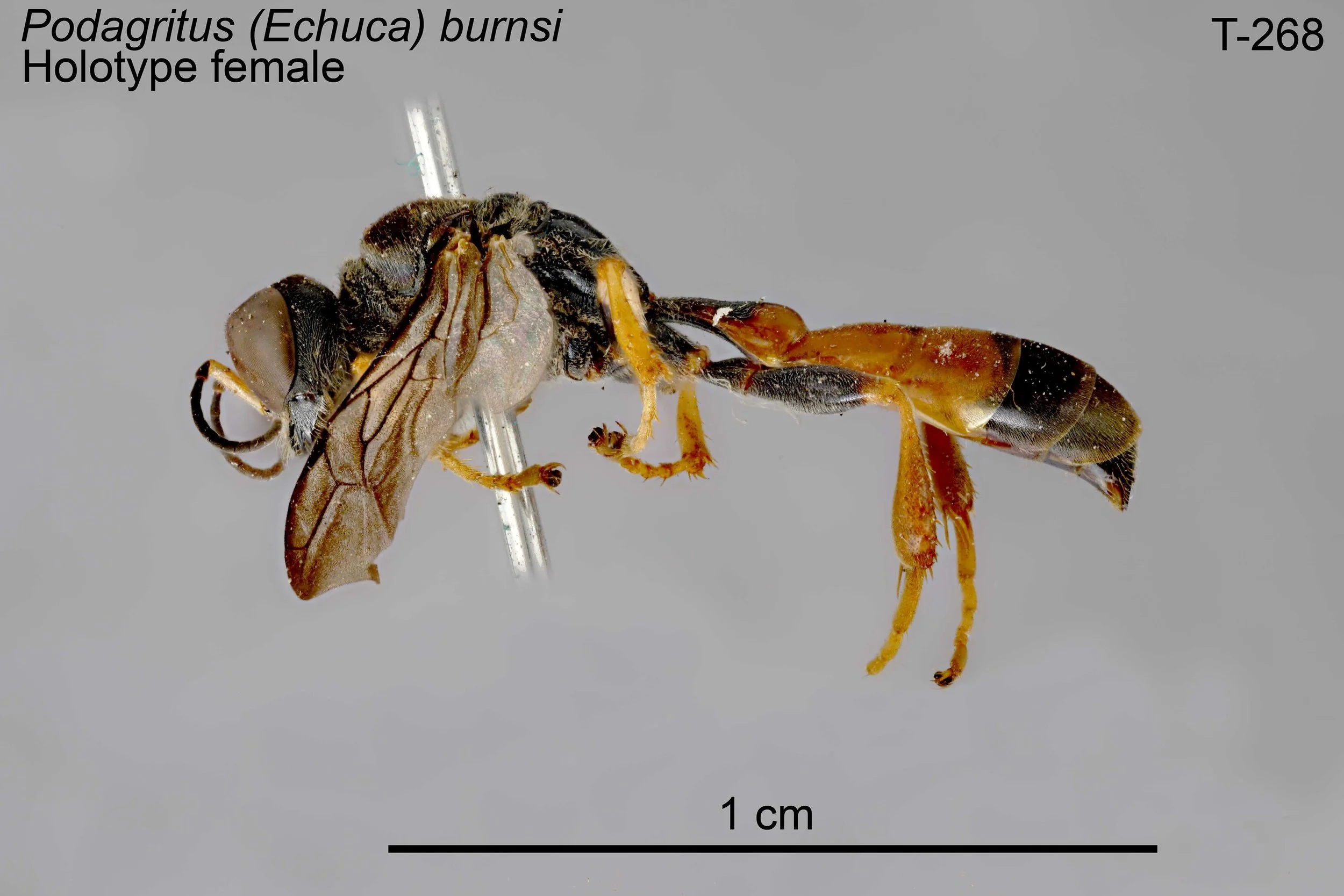
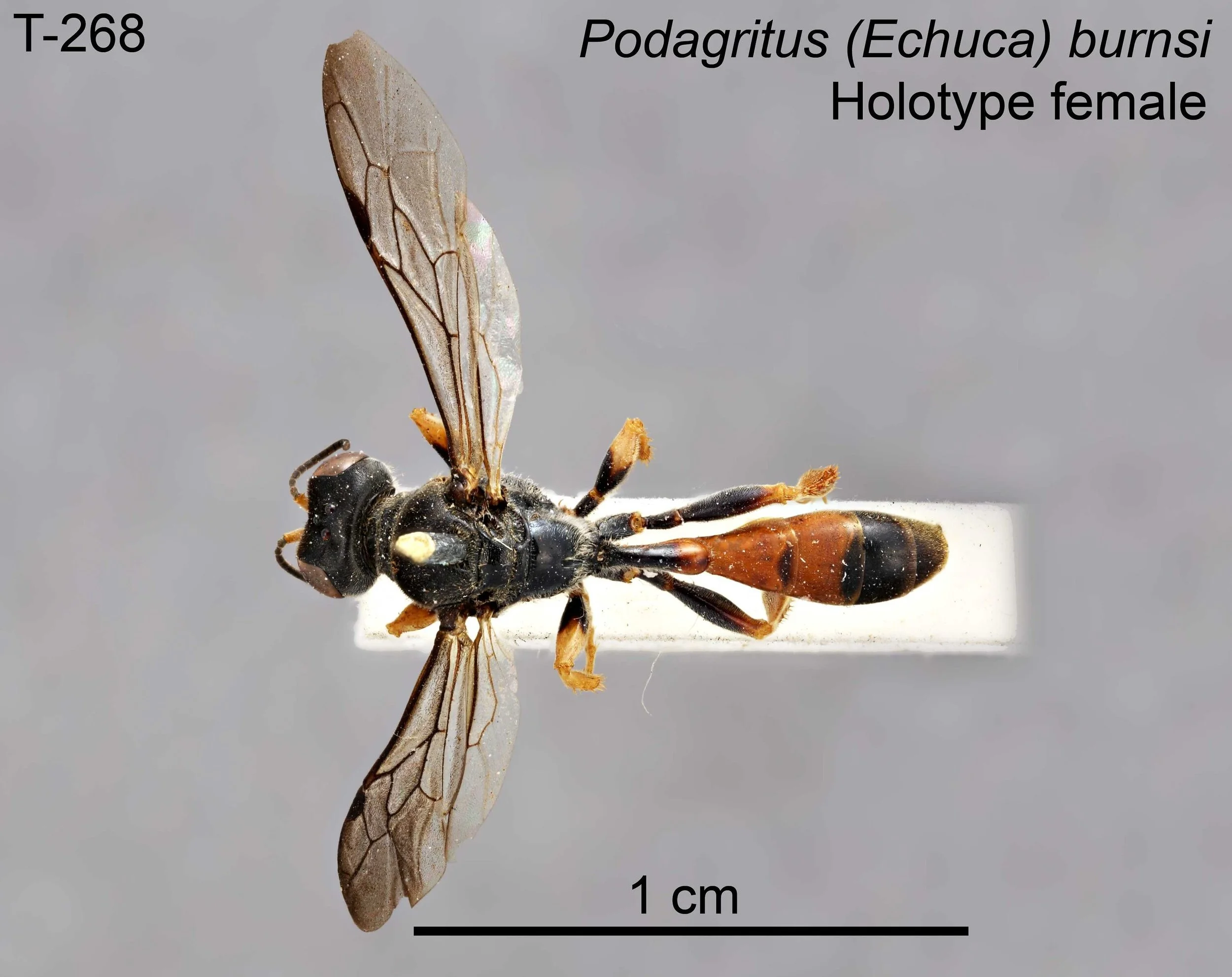
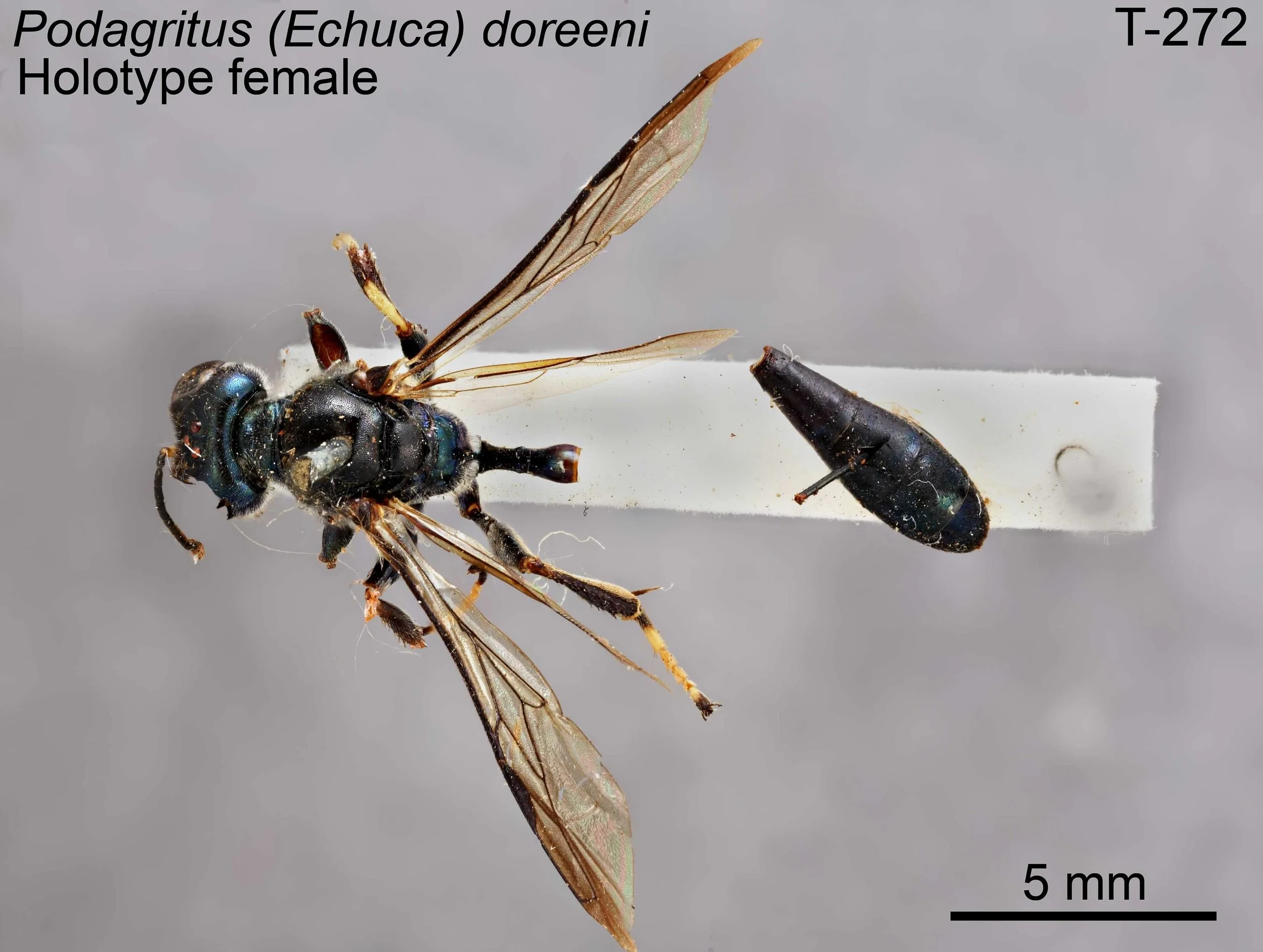
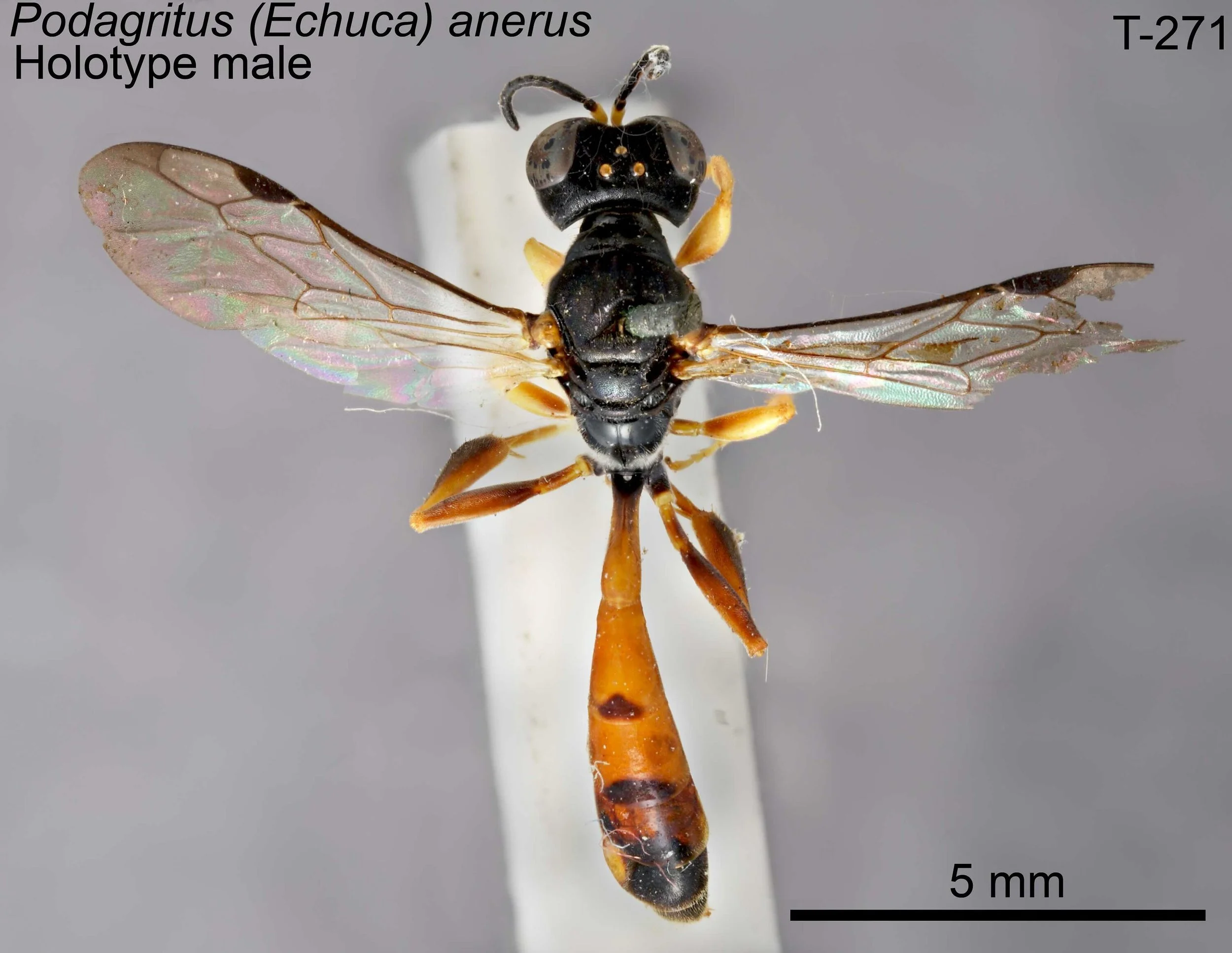
Select species, in detail
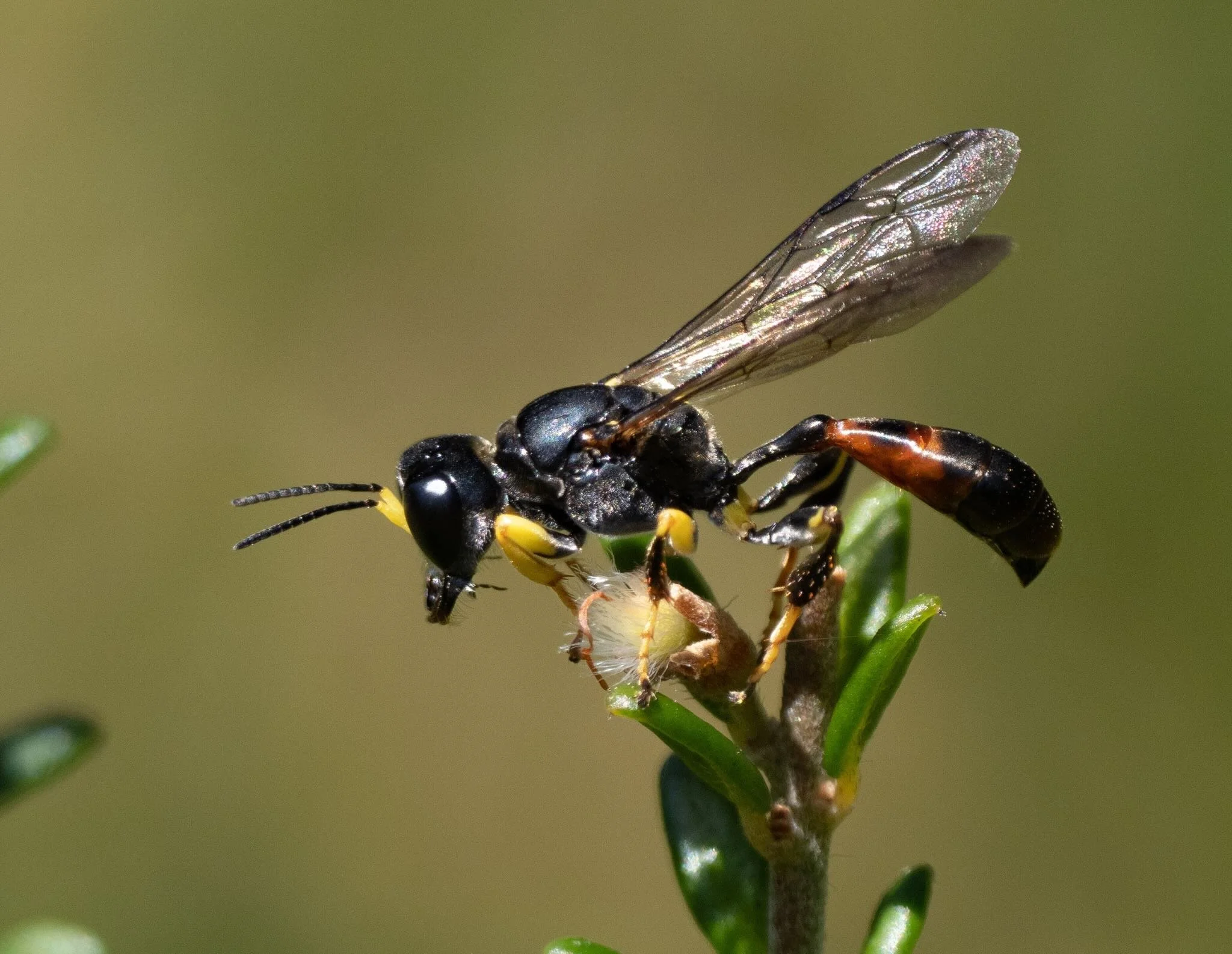
As opportunities arise, I take a closer look at individual species within this genus.
References
Bohart, R.M. & Menke, A.S. 1976. Sphecid Wasps of the World: A generic revision. University of California Press, Berkeley … available for access or download from Internet Archive
Evans, H.E. & Matthews, R.W. 1971. Notes on the prey and nests of some Australian Crabronini (Hymenoptera: Sphecidae). Journal of the Australian Entomological Society 10: 1-4
Leclercq, J. 1955. Révision des Podagritus (Spinola, 1851) australiens (Hym. Sphecidae, Crabroninae). Bulletin et Annales de la Société Royale Belgique d'Entomologie 91: 305-330
Leclercq, J. 1957. Recherches systématiques et taxonomiques sur le genre Podagritus. I. Sur onze espèces australiennes et une espèce des îles Fidji. Bulletin de l'Institut Royal des Sciences Naturelles de Belgique 33(15): 1-7
Leclercq, J. 1957. Recherches systématiques et taxonomiques sur le genre Podagritus. II. Introduction à l'étude des espèces sud-américaines et révision des sous-genres Echucoides et Echuca. Bulletin de l'Institut Royal des Sciences Naturelles de Belgique 33(22): 1-23
Leclercq, J. 1970. Quelques Podagritus d'Australie et d'Amérique du Sud (Hymenoptera Sphecidae, Crabroninae). Bulletin des Recherches Agronomiques de Gembloux ns 5: 271-280
Leclercq, J. 1998. Hyménoptères Sphécides Crabroniens d'Australie du genera Podagritus Spinola, 1851 (Hymenoptera, Sphecidae). Entomofauna 19(18): 285-308
Pulawski, W.J. 2023. Two new western Australian species of the wasp genus Podagritus Spinola, 1851 (Hymenoptera: Crabronidae) that prey on bees. Australian Entomologist 50(2): 121–130
Pulawski, W.J. 2025. Four new species of Podagritus from Western Australia and redescription of Podagritus noongaris Leclercq (Hymenoptera: Crabronidae). Zootaxa 5737(2): 219–234
Sann, M. et al. 2018. Phylogenomic analysis of Apoidea sheds new light on the sister group of bees. Evolutionary Biology 18:71 https://doi.org/10.1186/s12862-018-1155-8
Tsuneki, K. 1977. On the crabronine wasps of the southern Pacific and Australia (Hymenoptera, Sphecidae). Special Publication, Japan Hymenopterists Association 3: 27 pp
This is a workbook page … a part of our website where we record the observations and references used in making species identifications. The notes will not necessarily be complete. They are a record for our own use, but we are happy to share this information with others.