
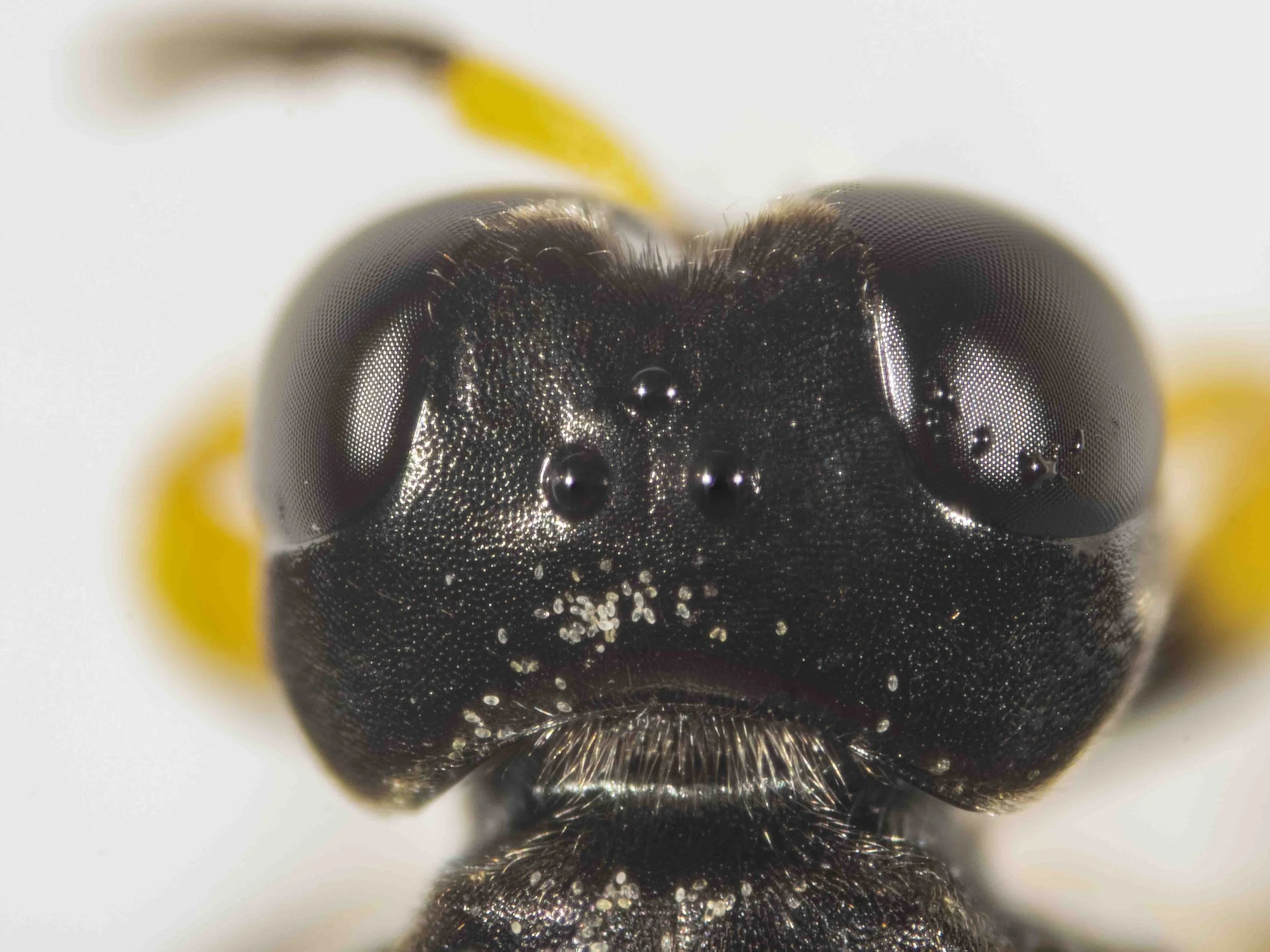
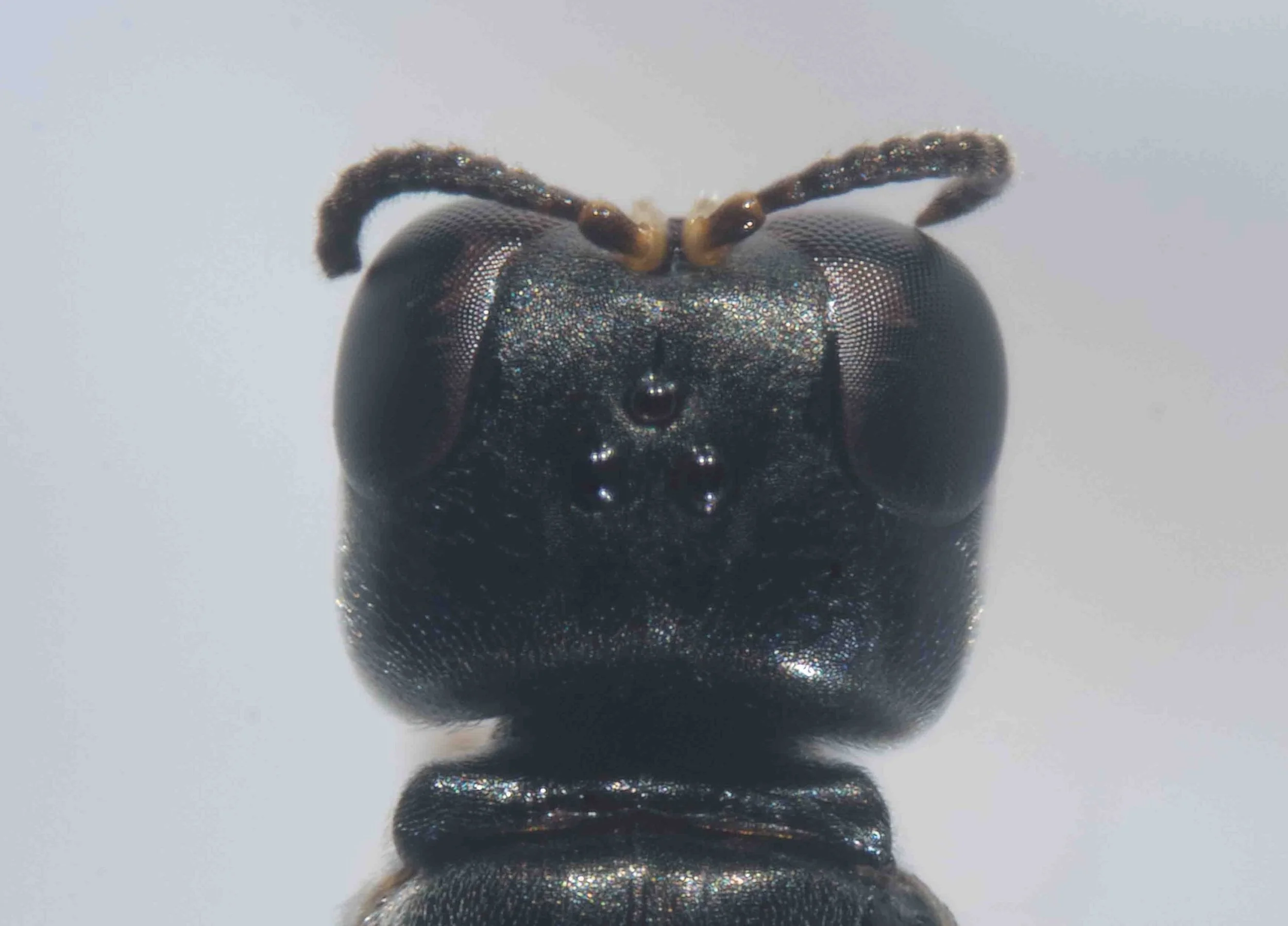
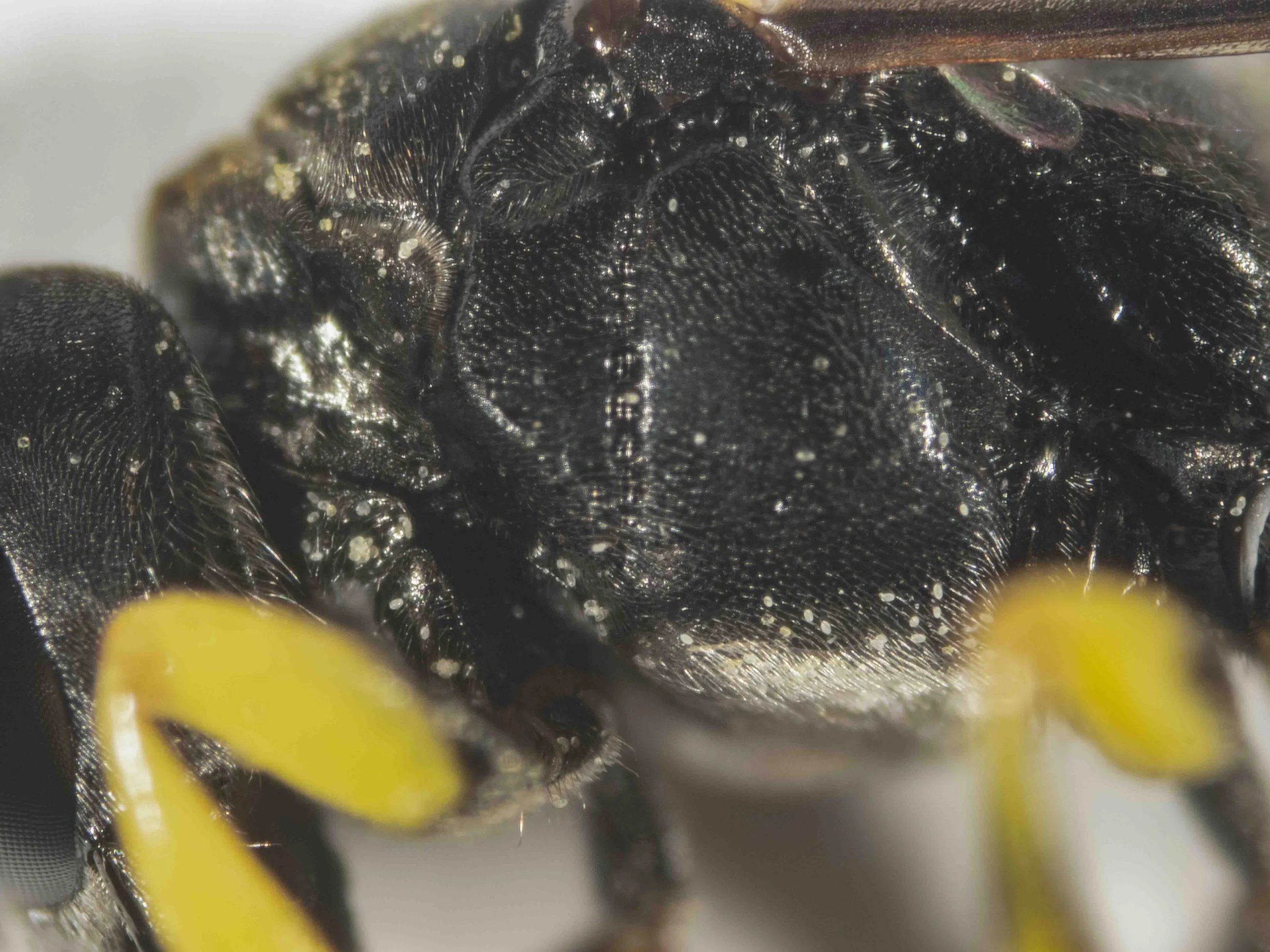
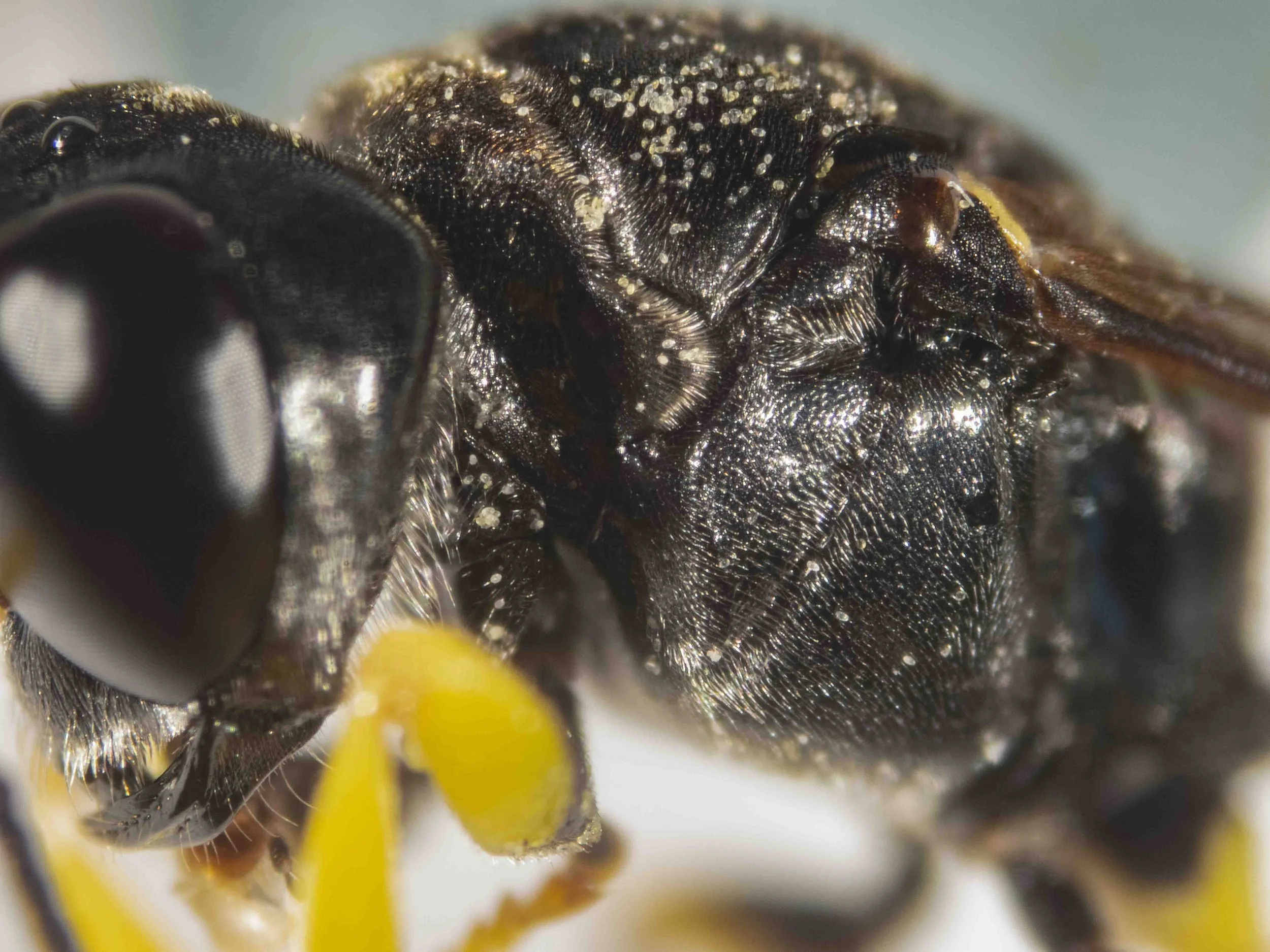
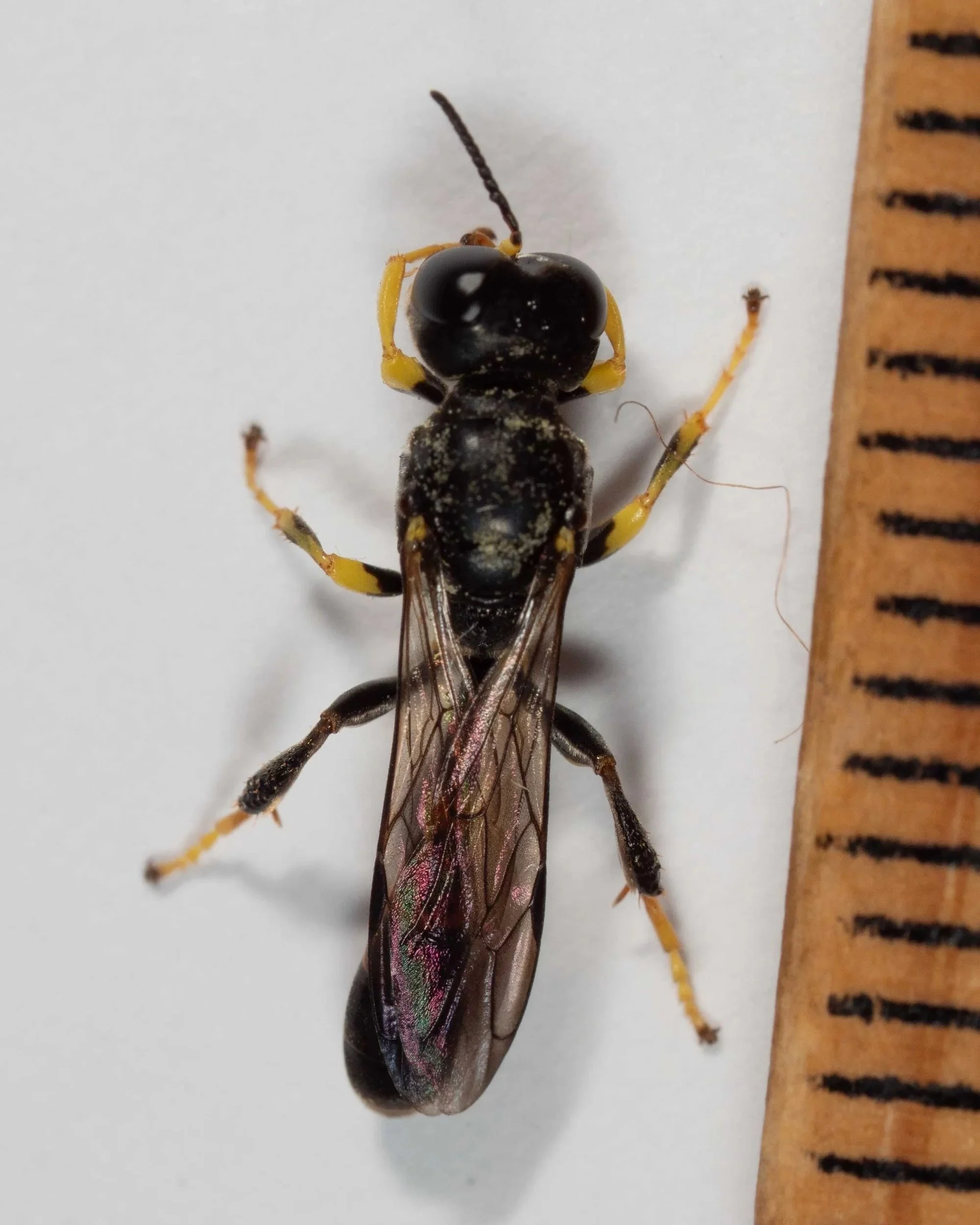
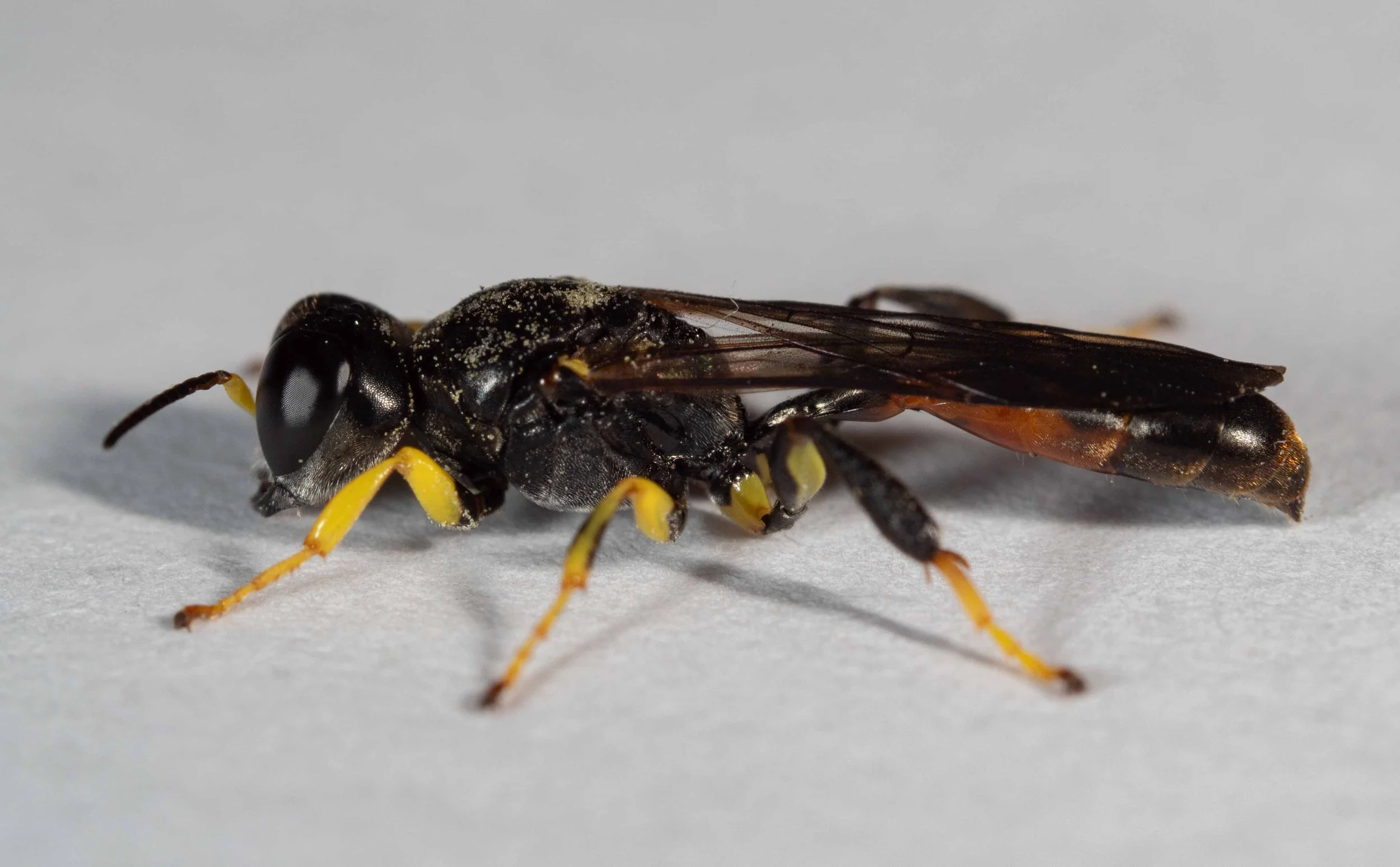
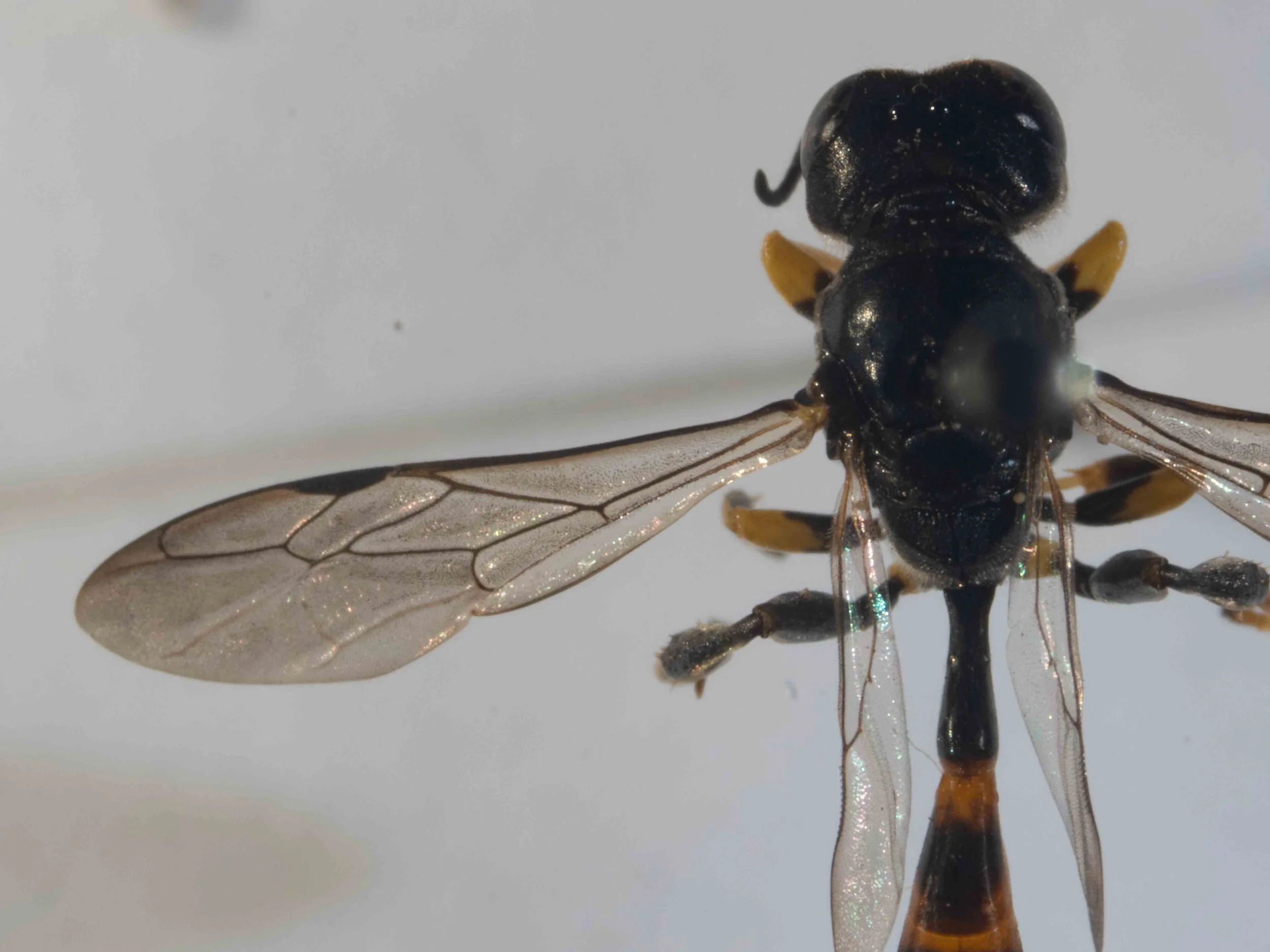
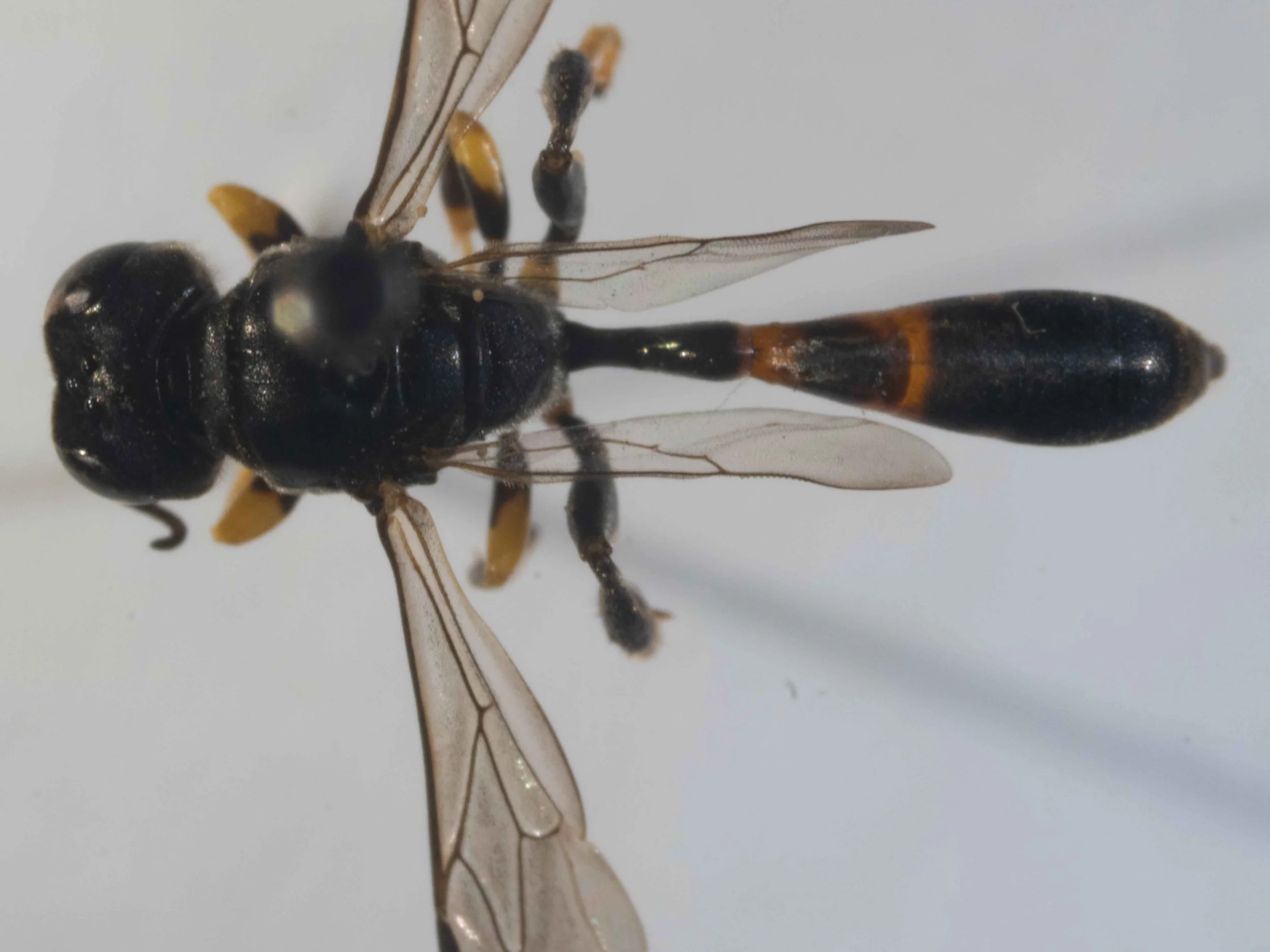
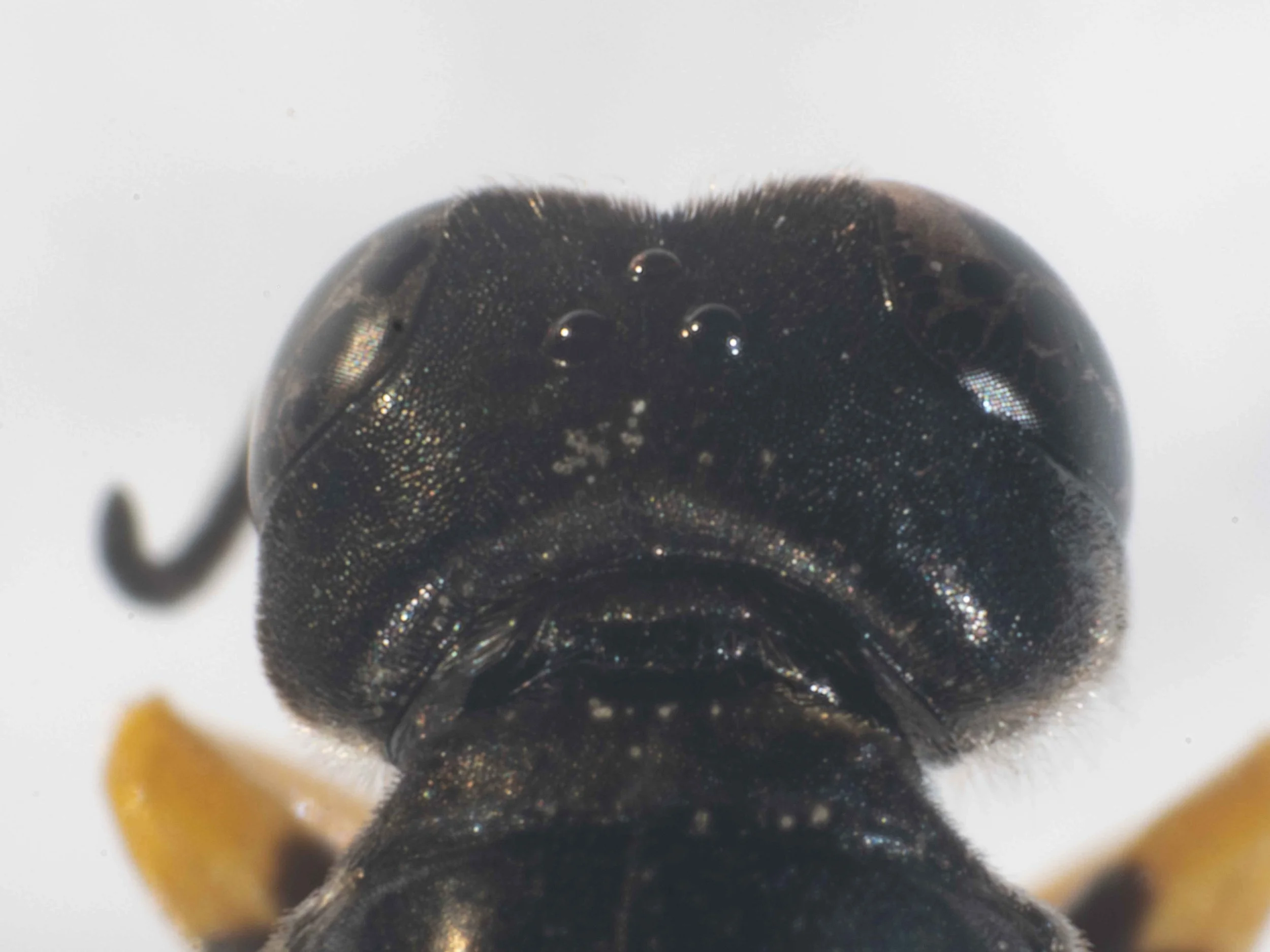
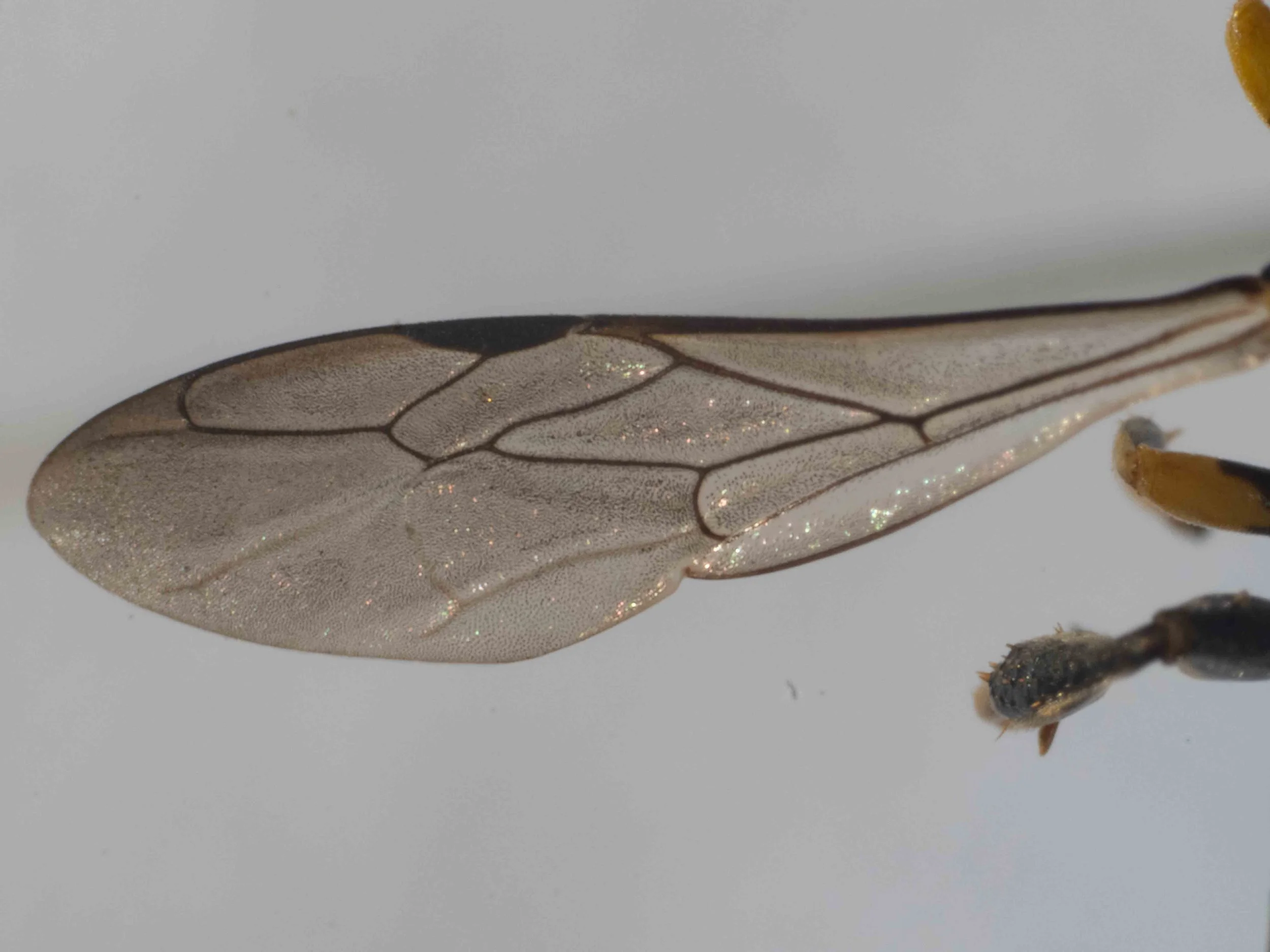
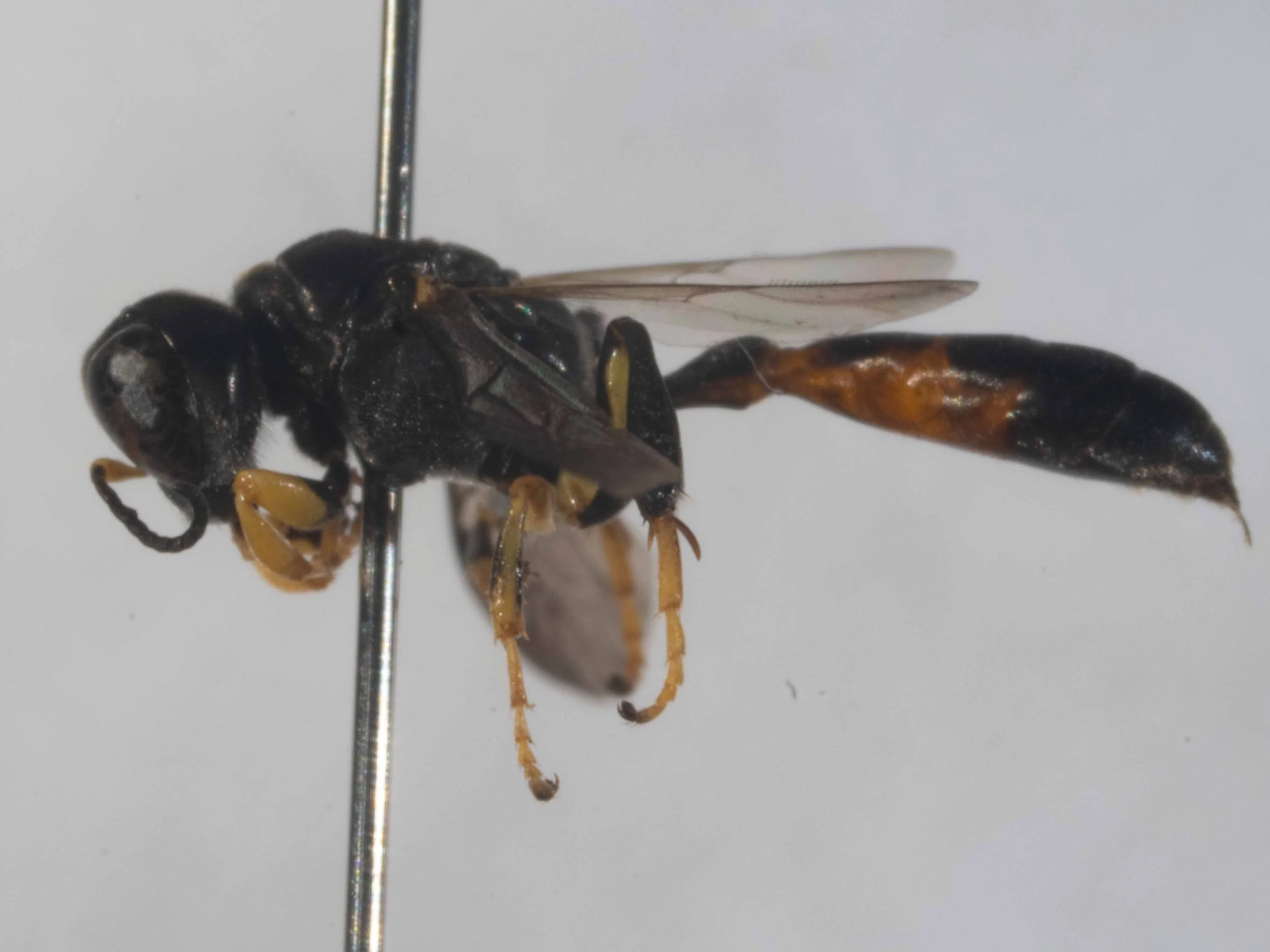
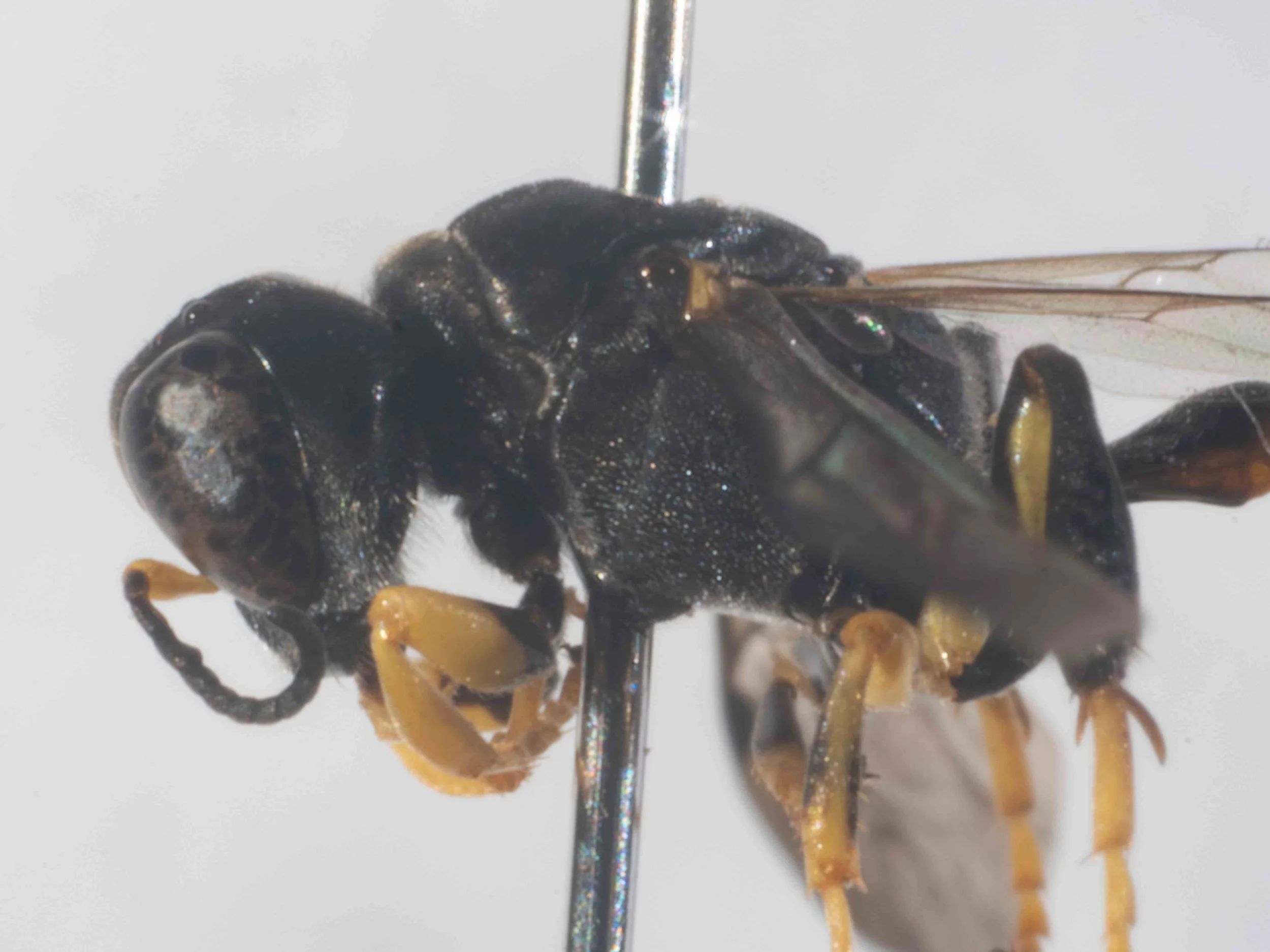
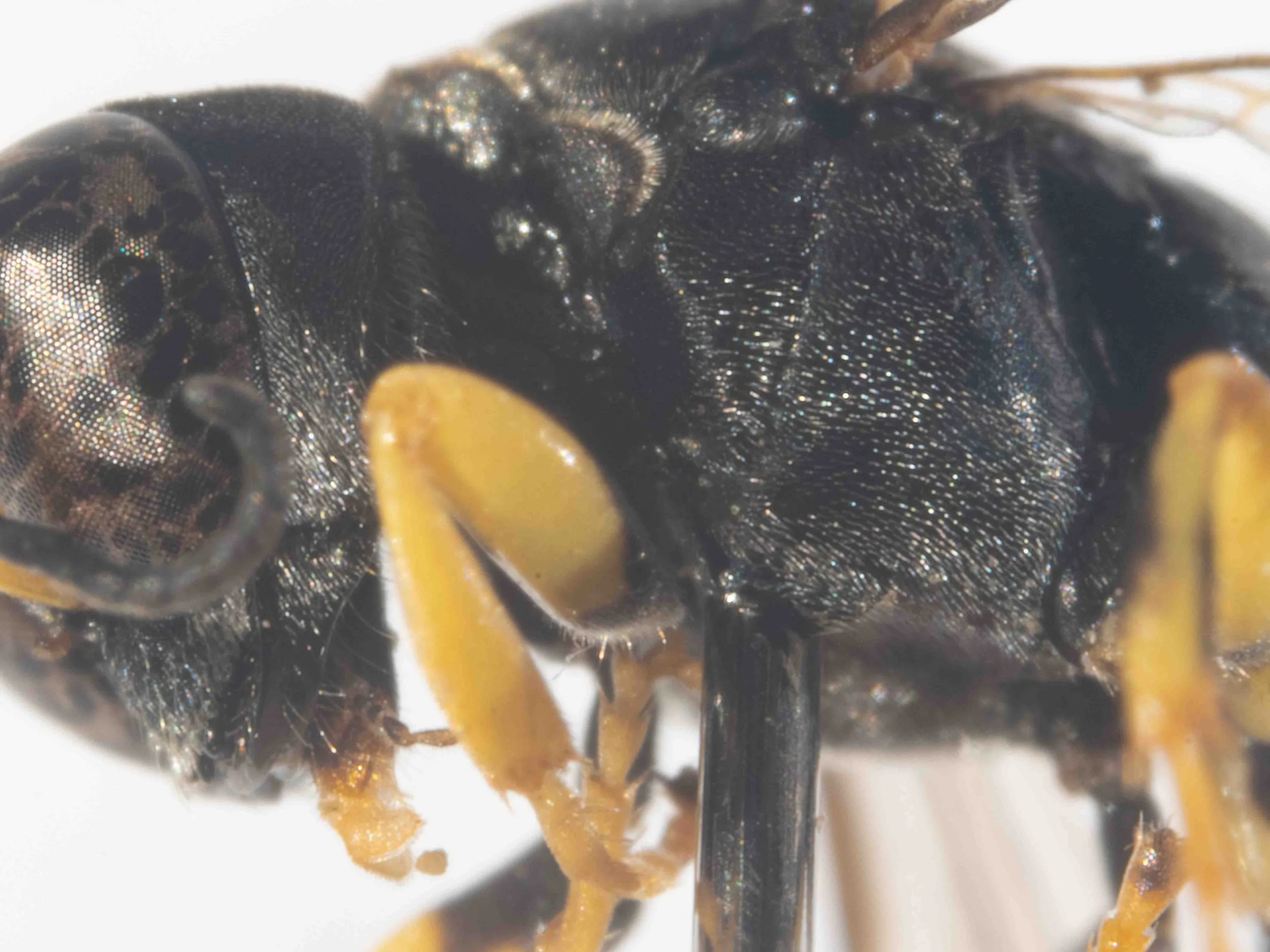
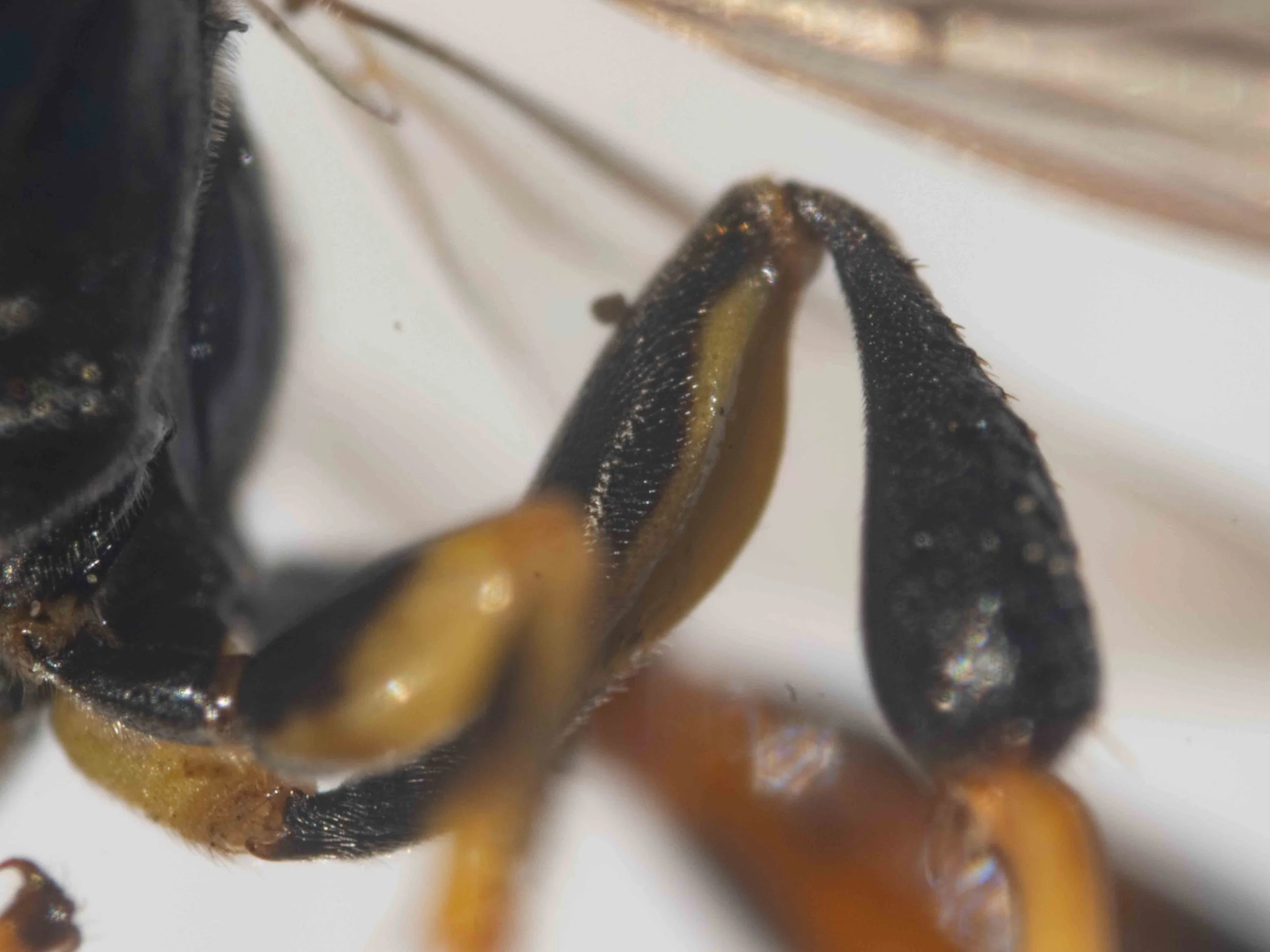
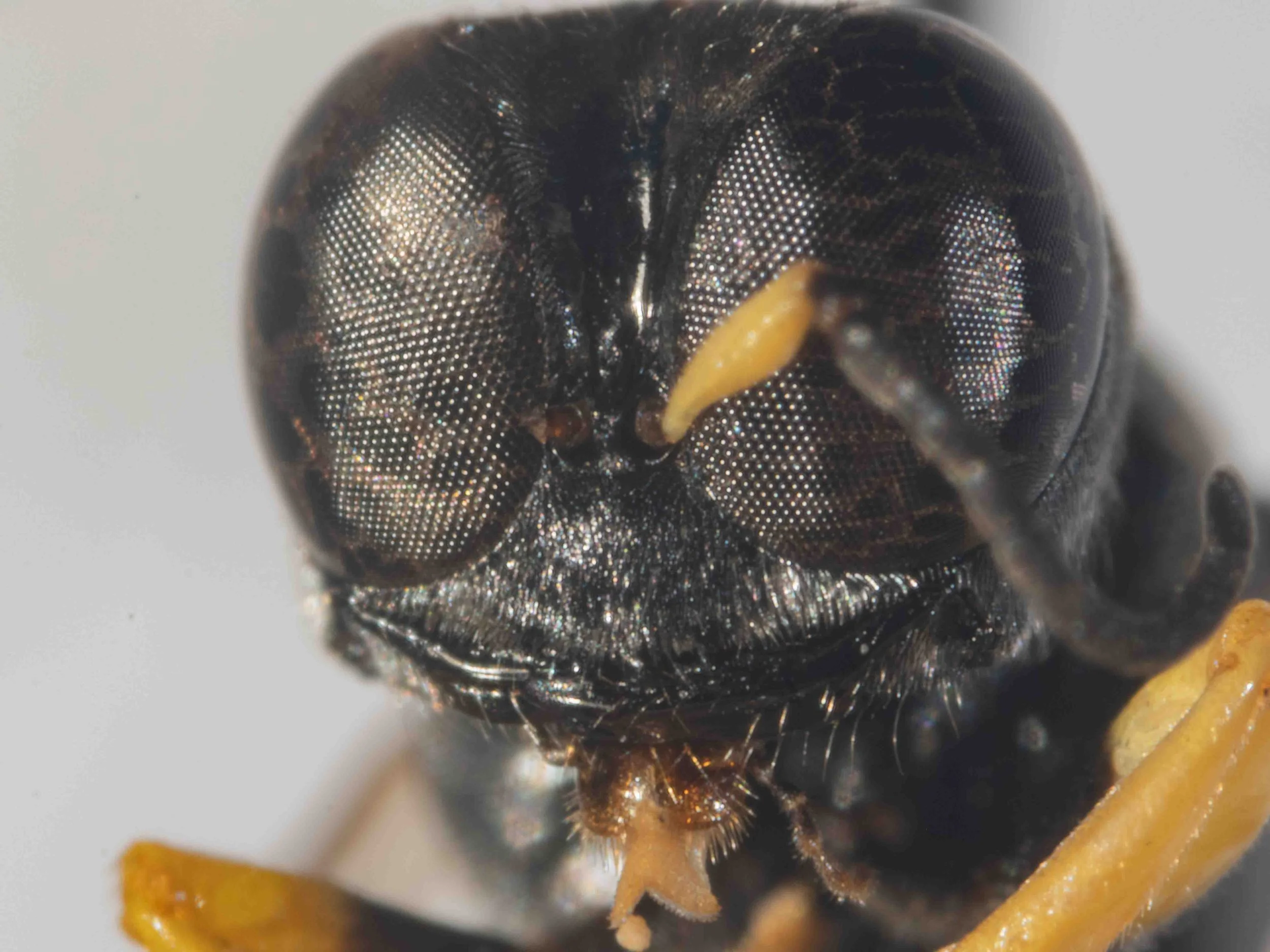
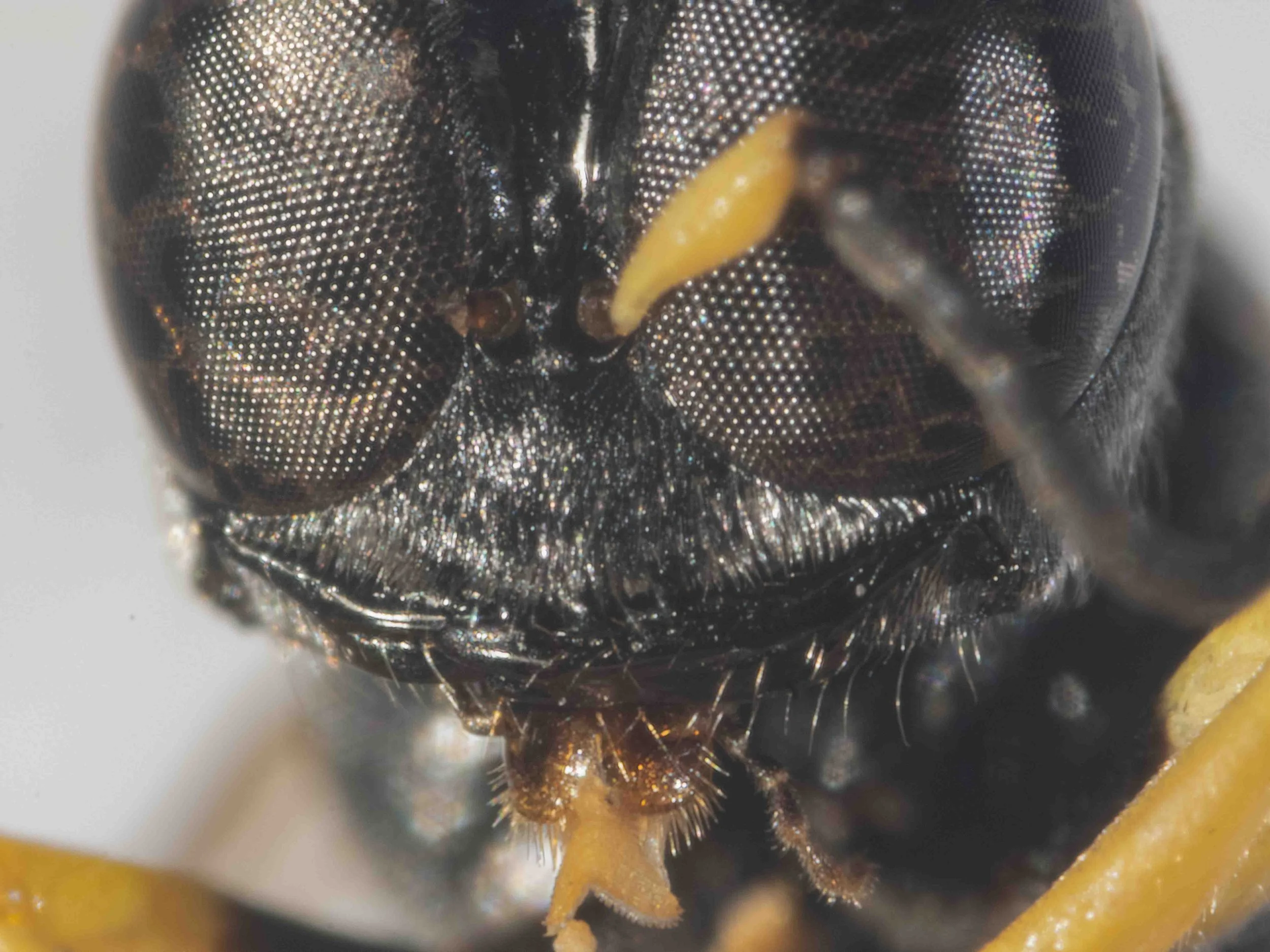
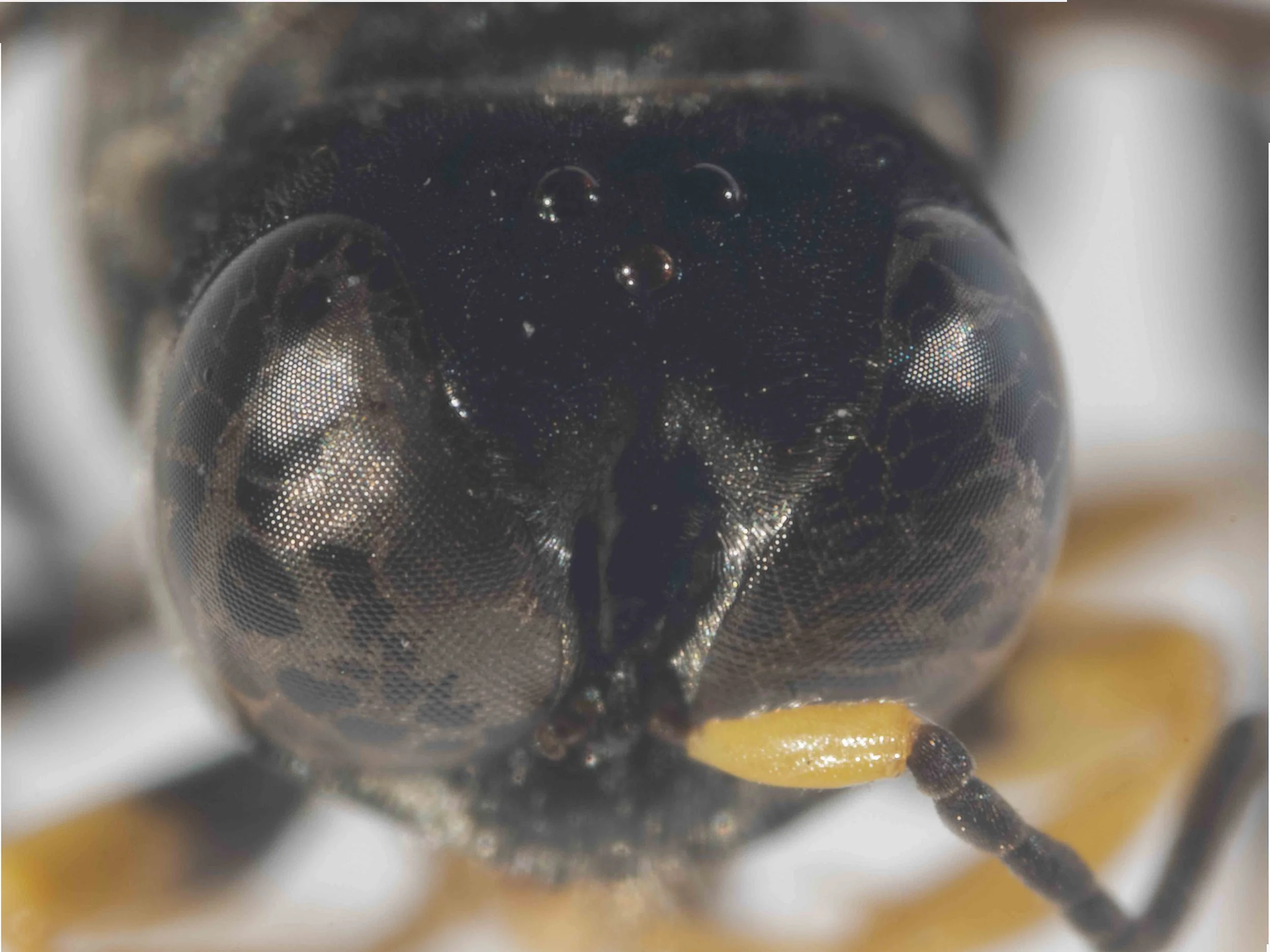
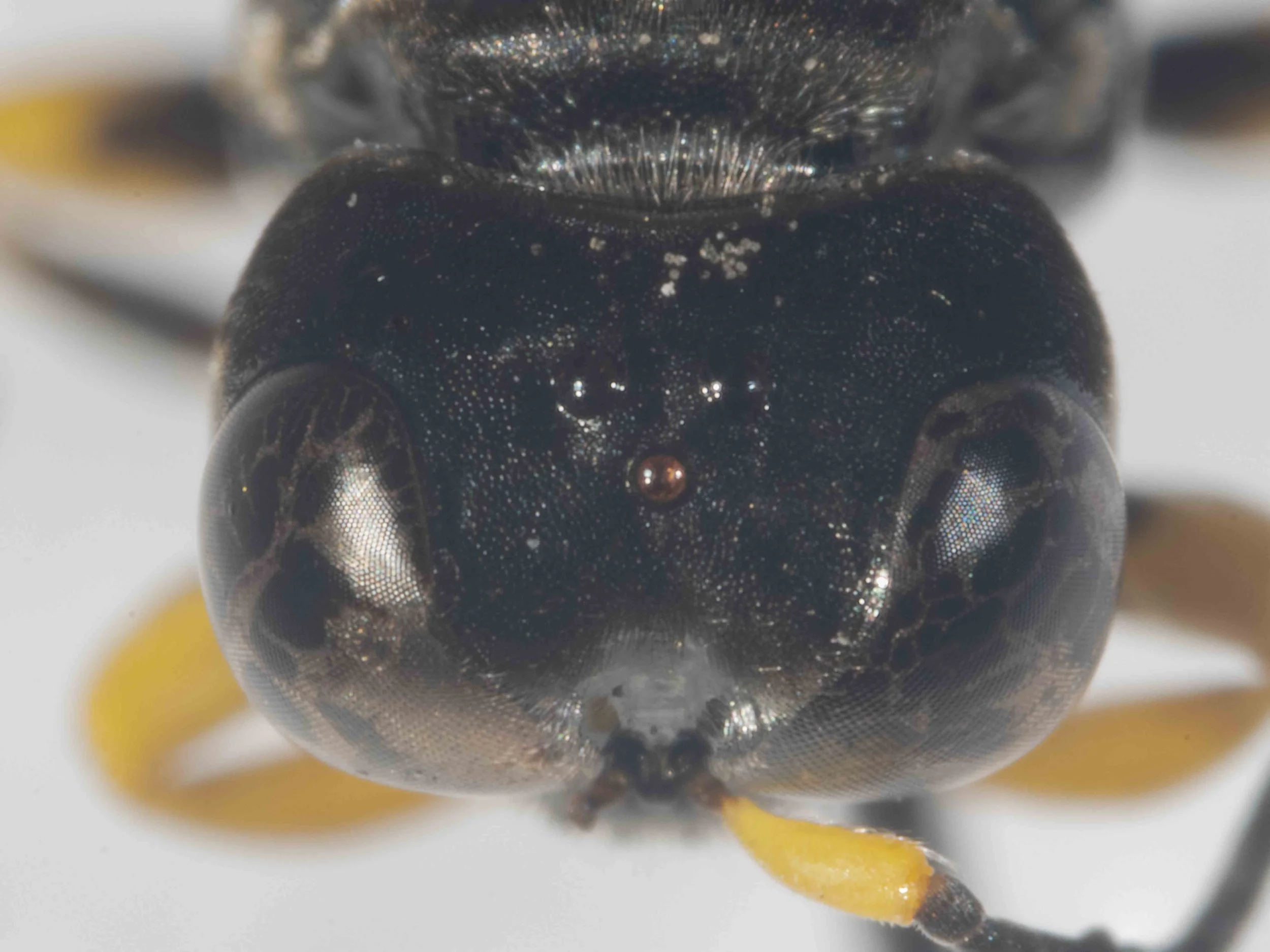
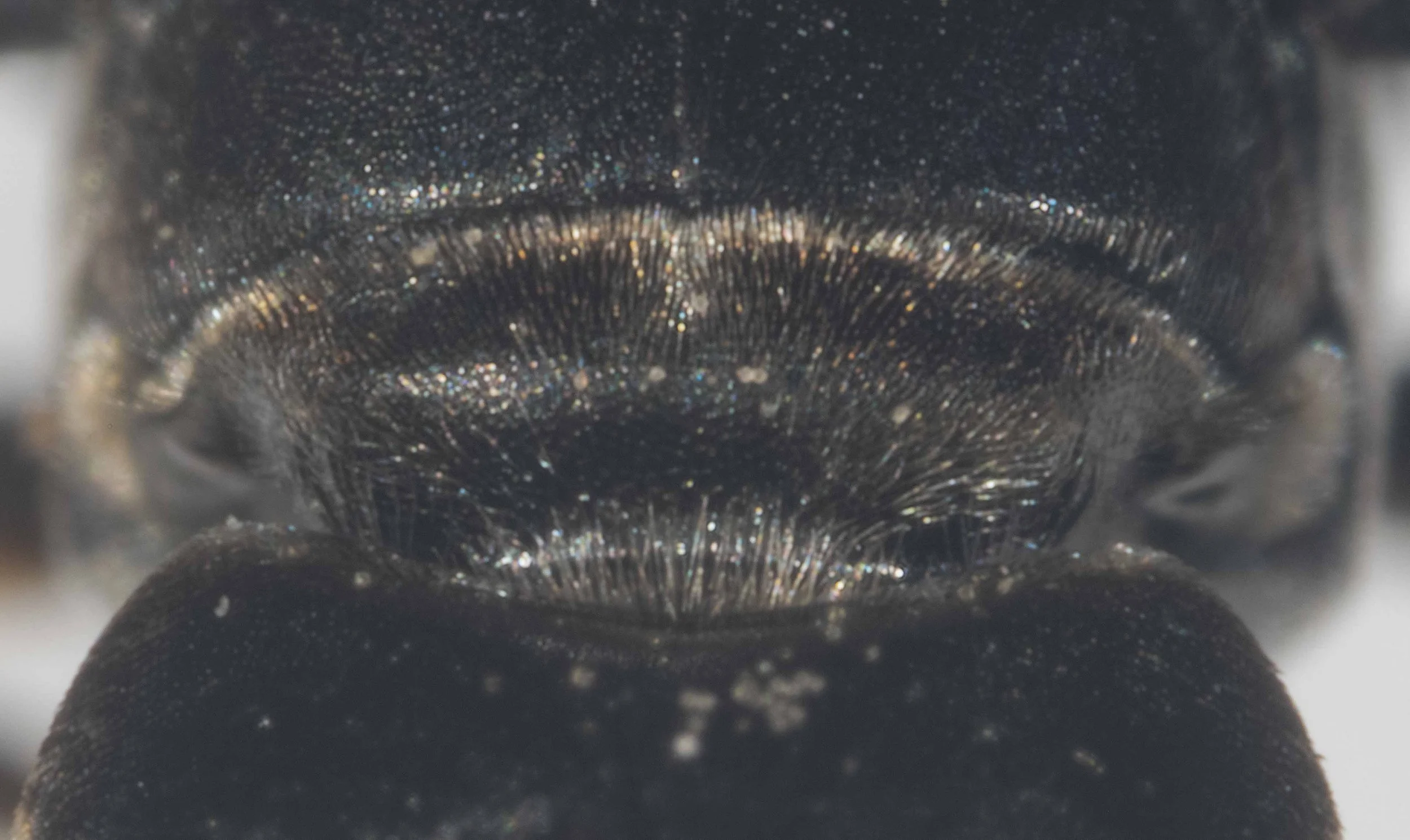
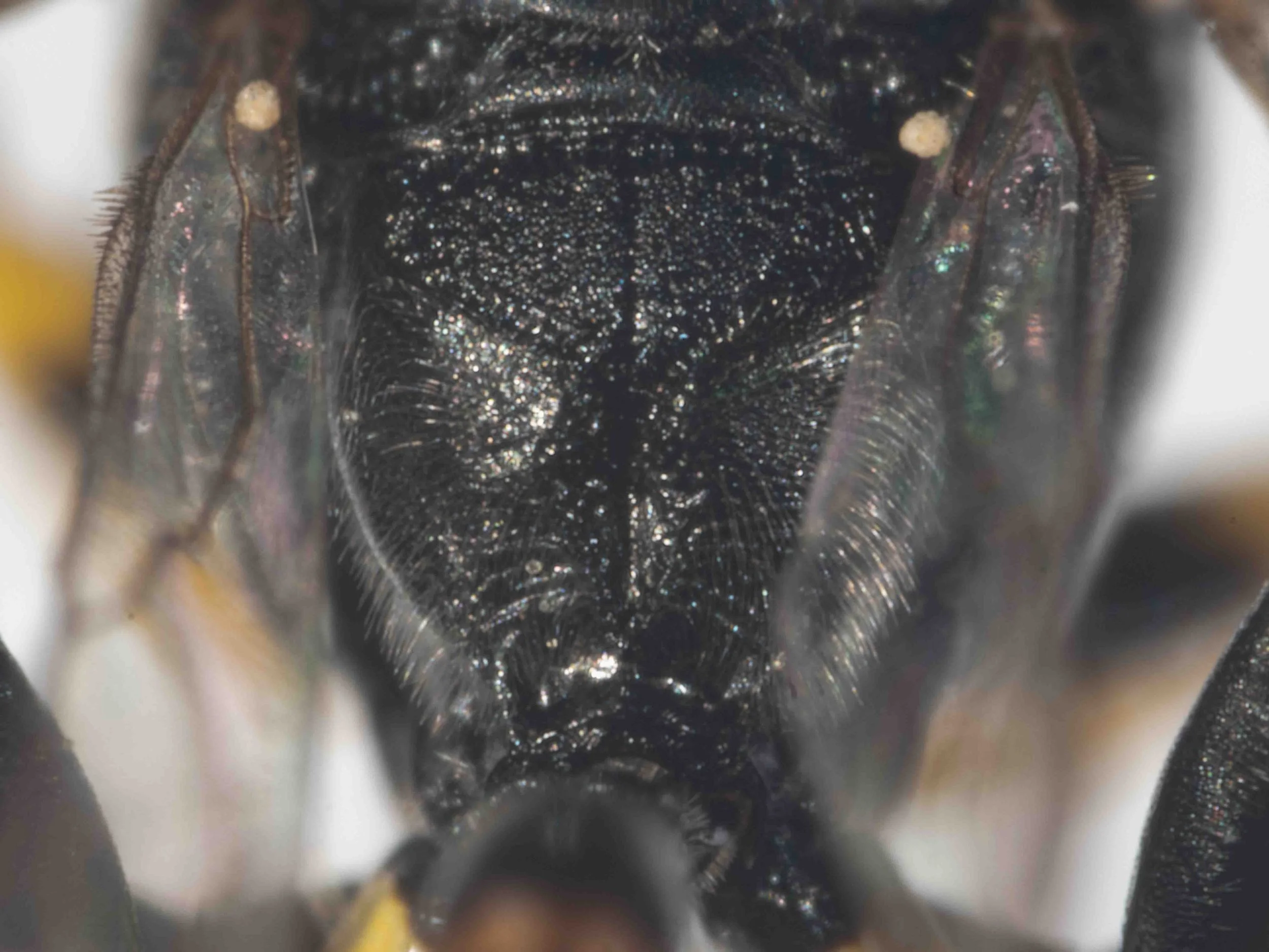
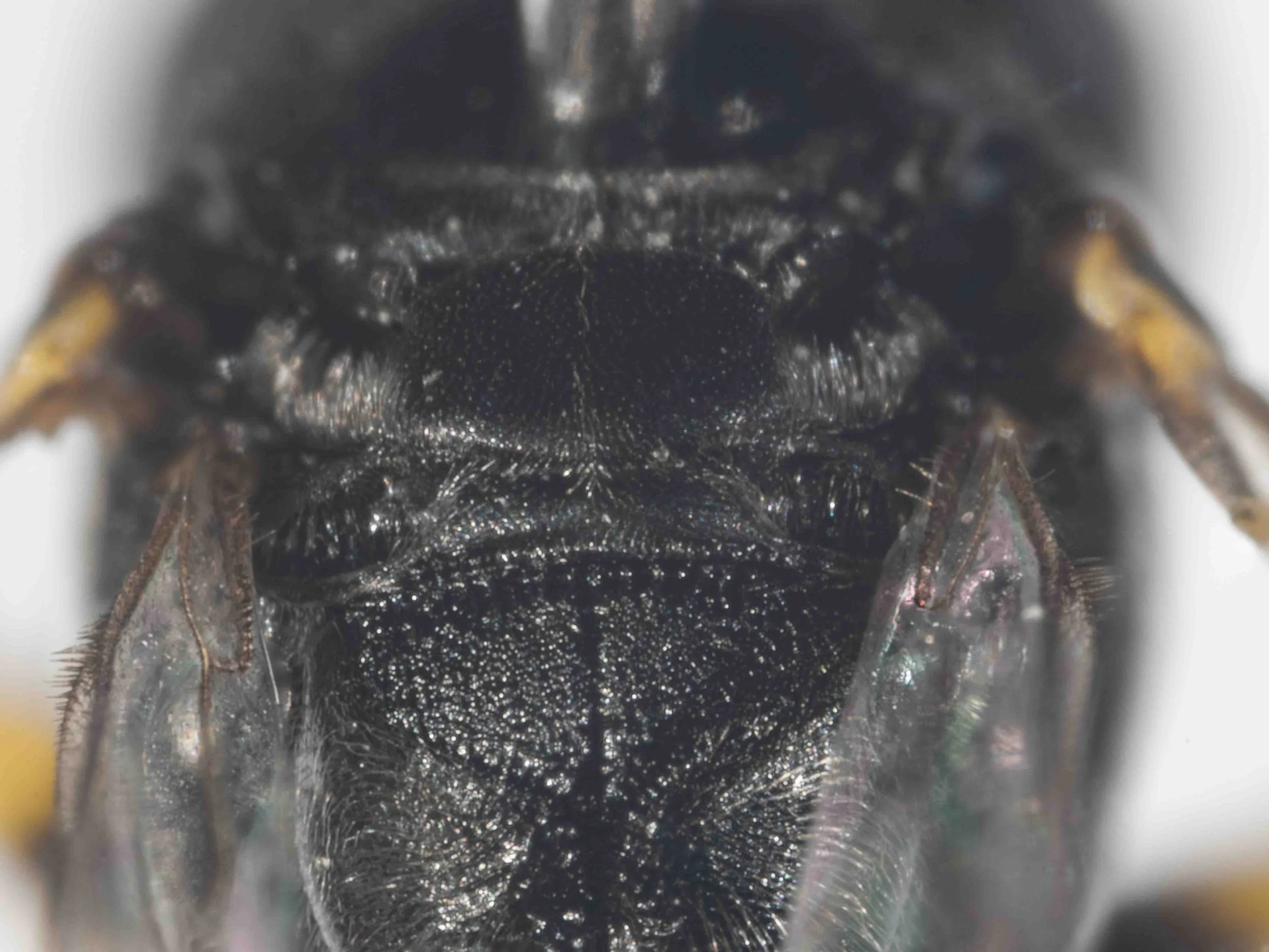
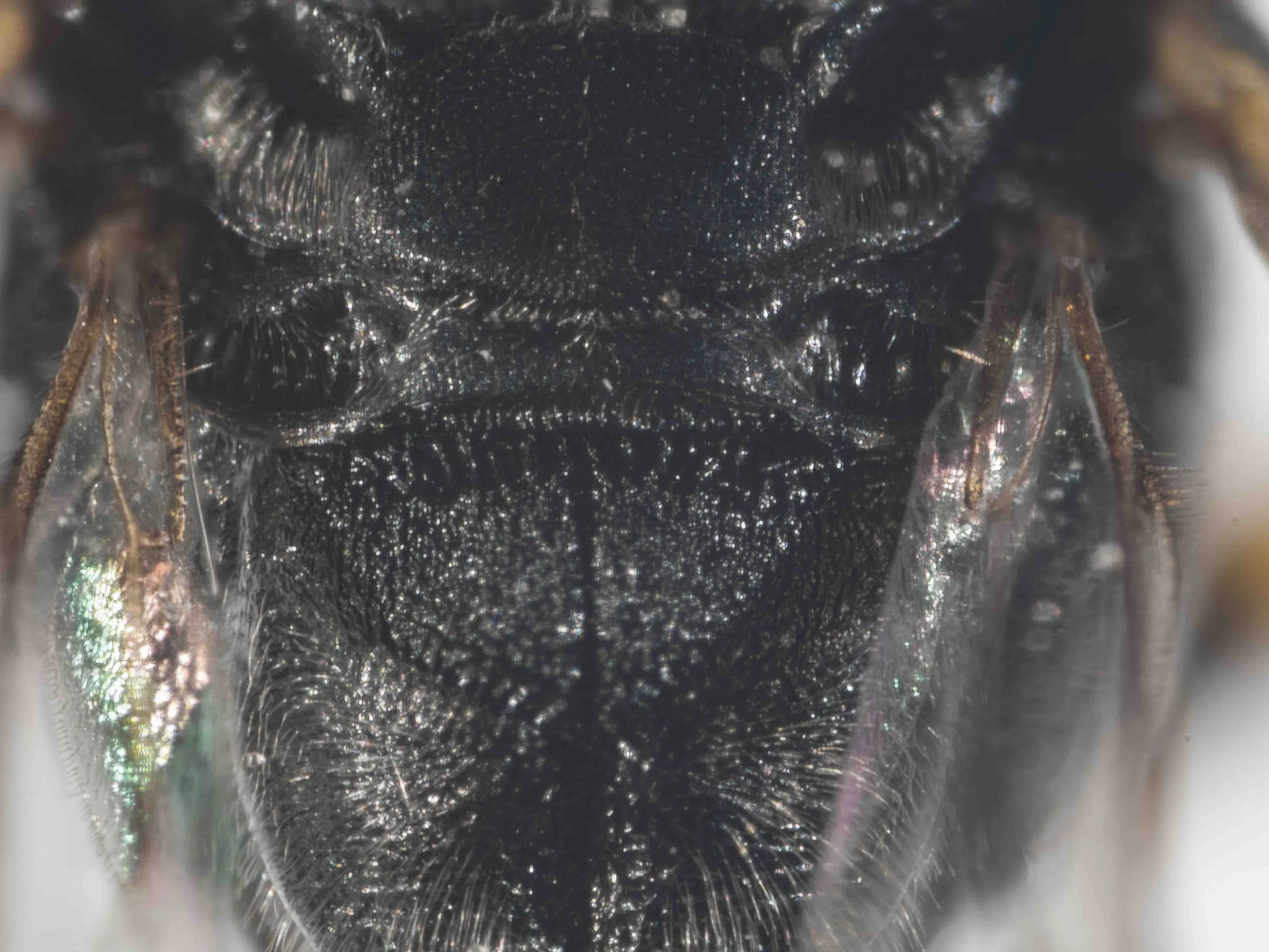
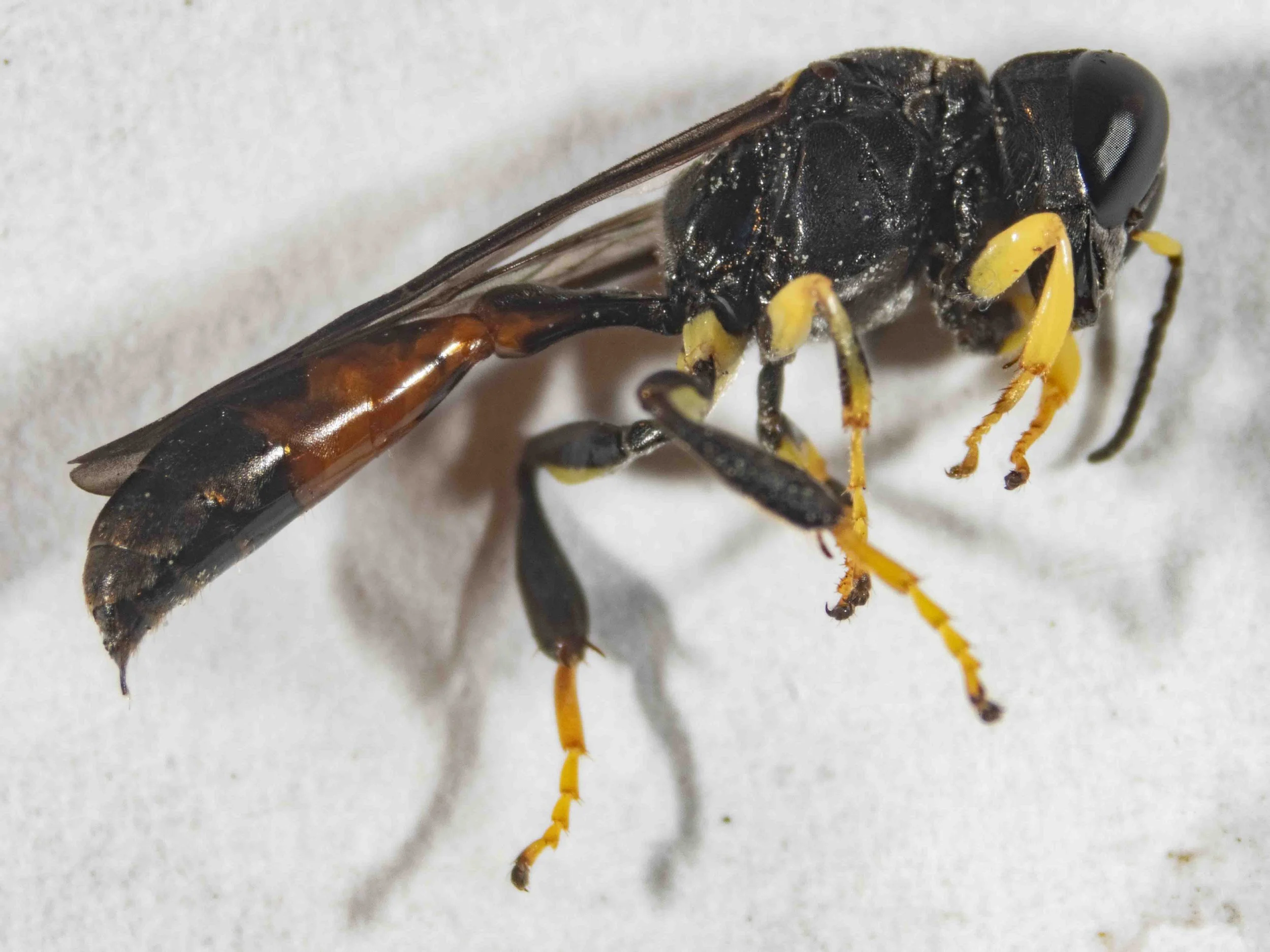
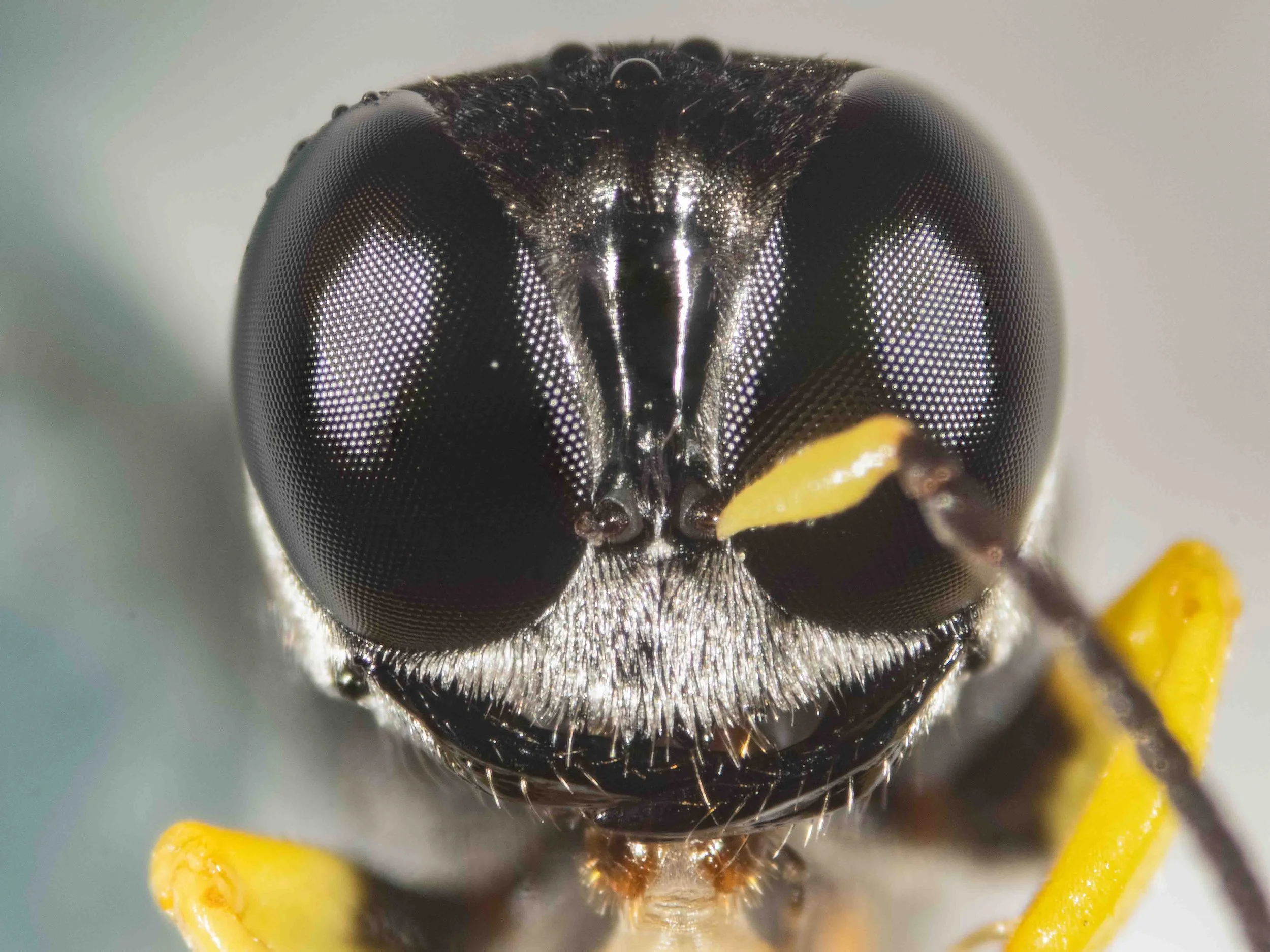
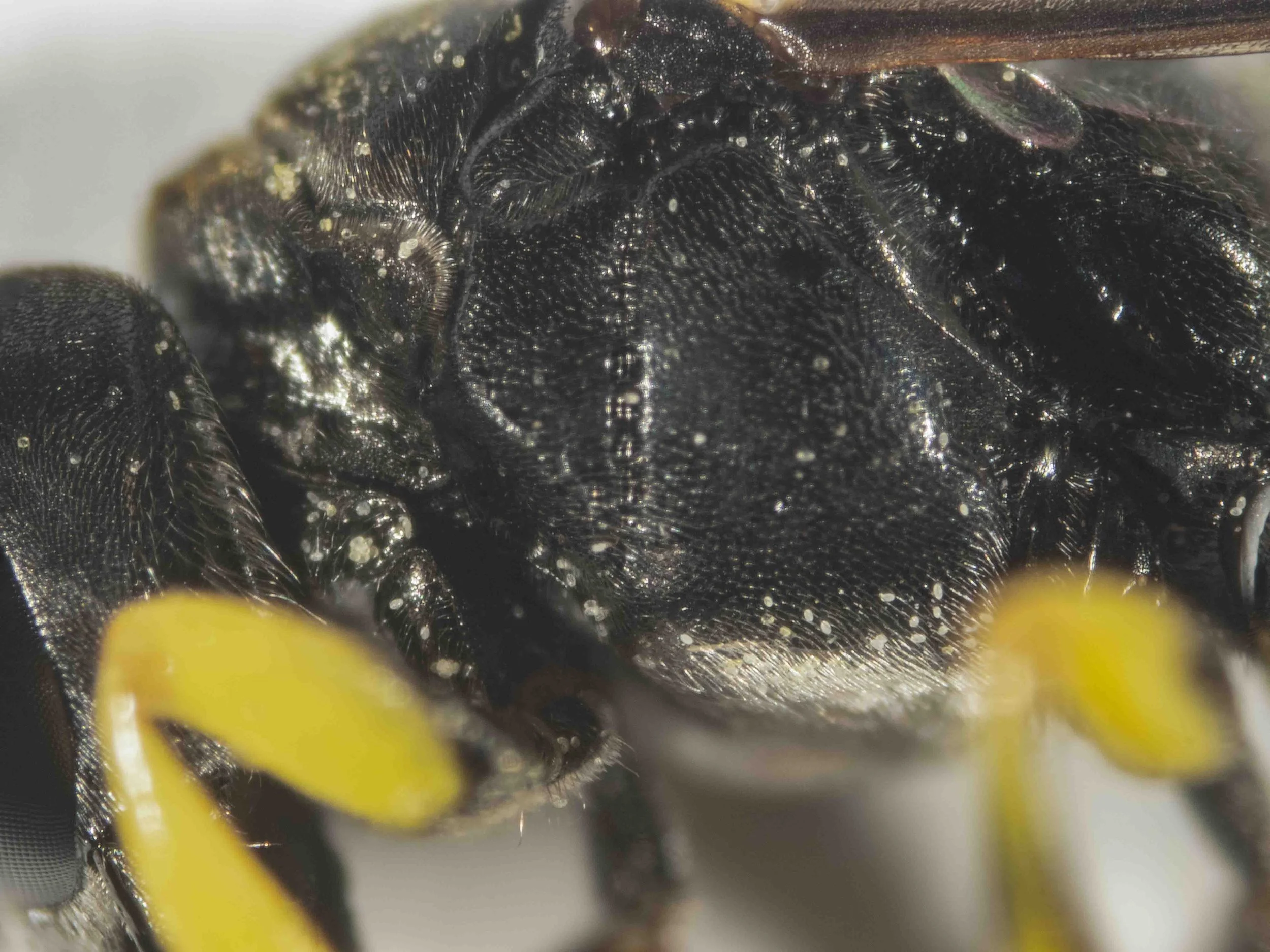
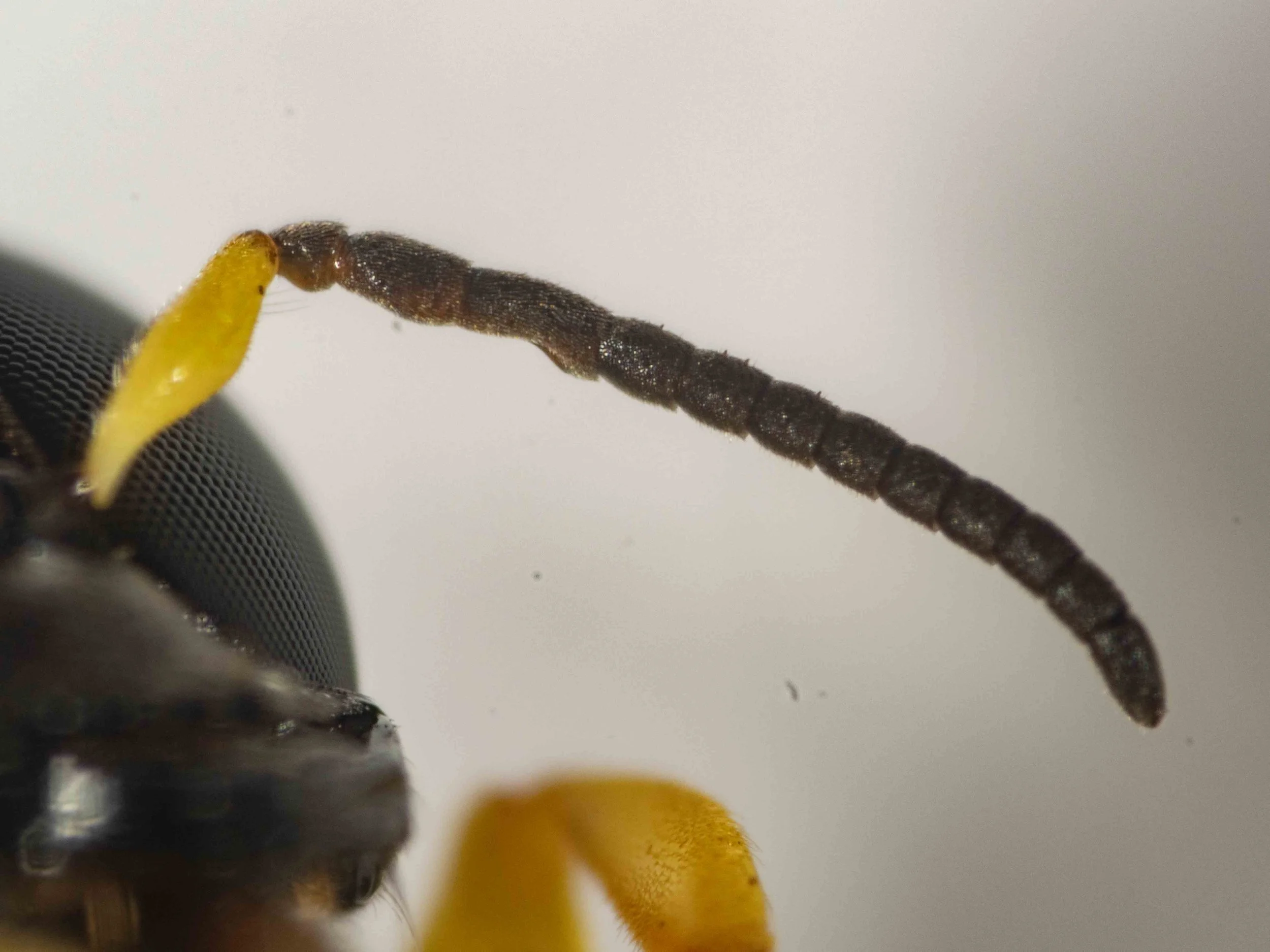
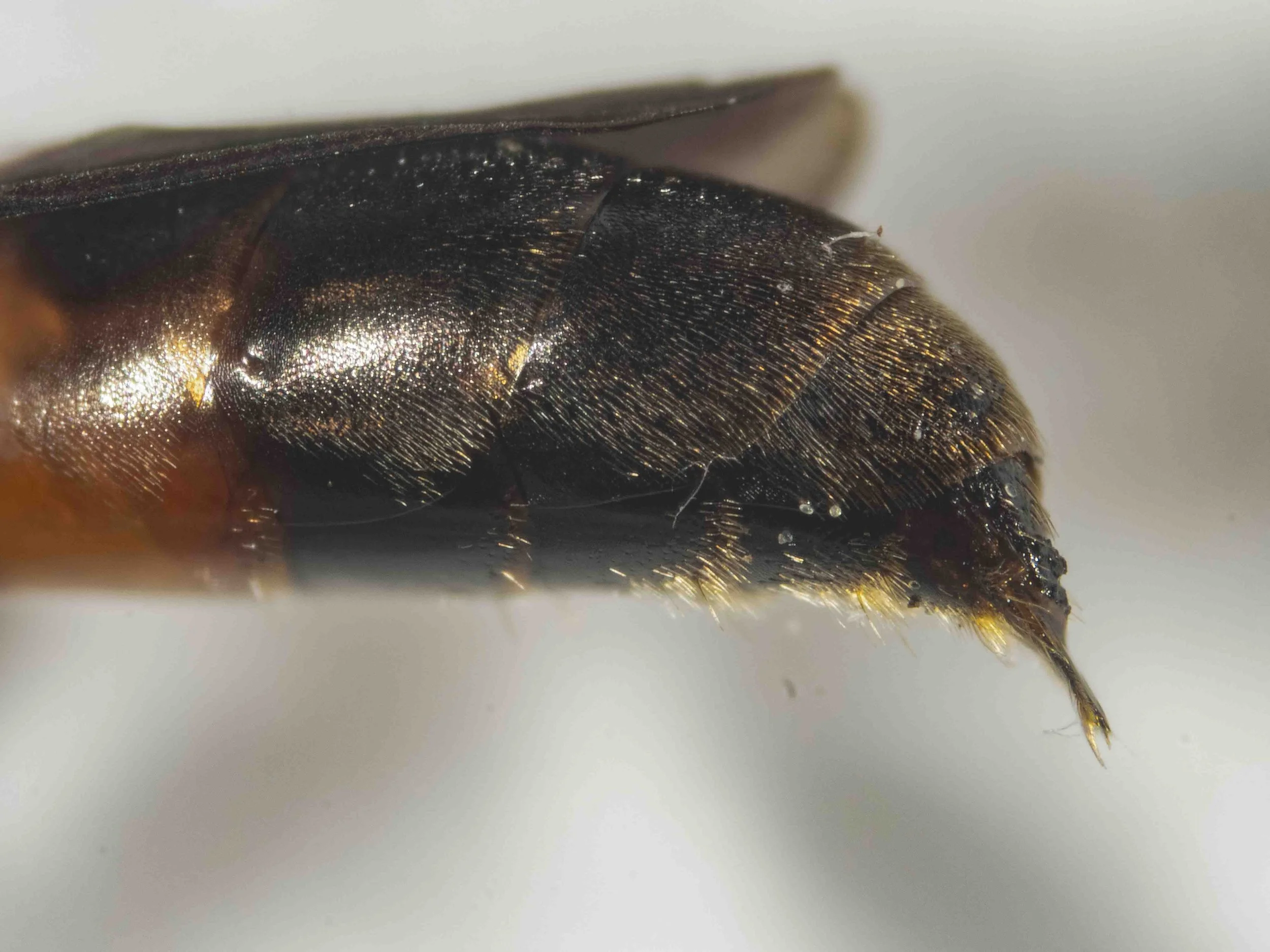
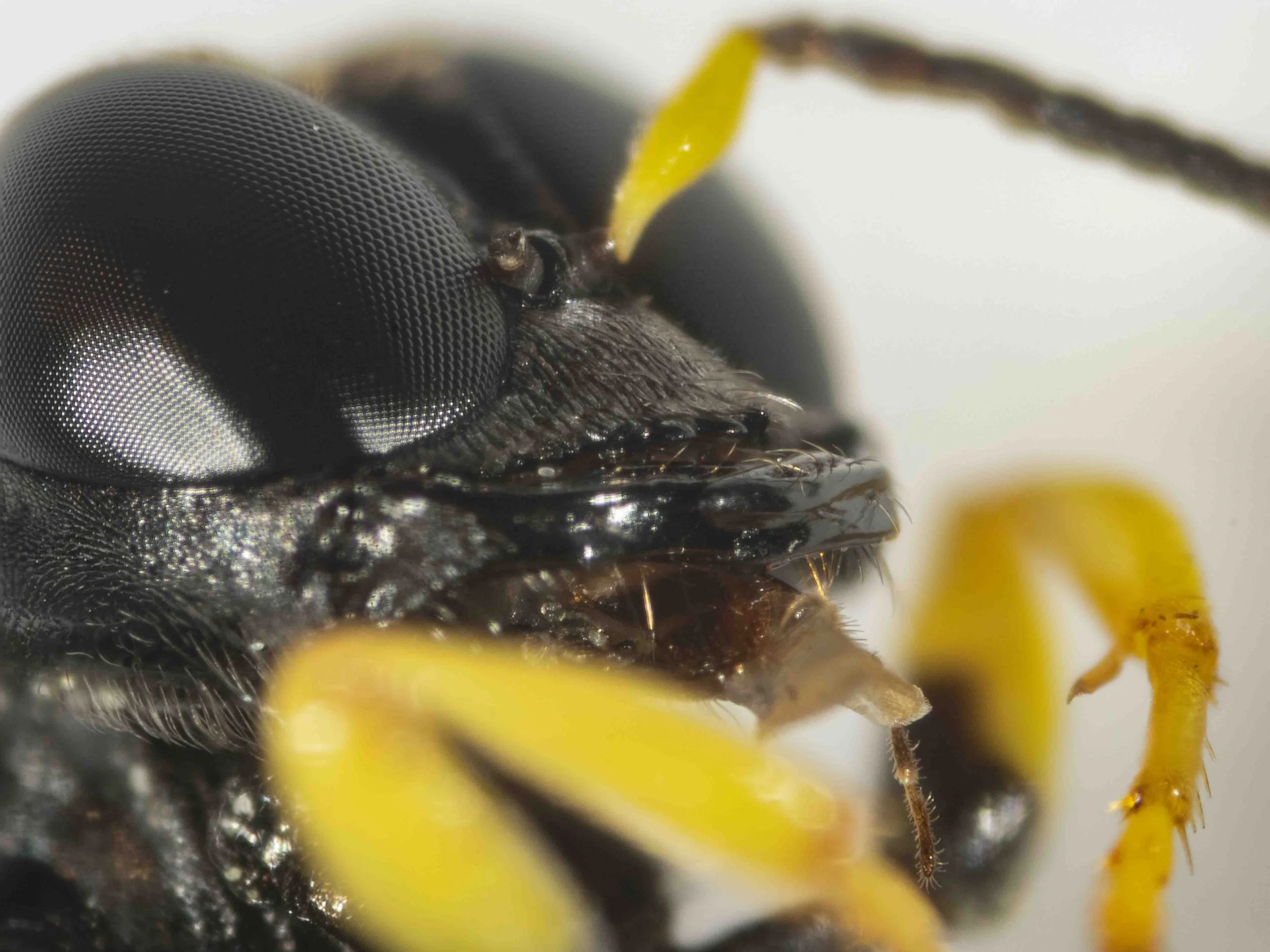
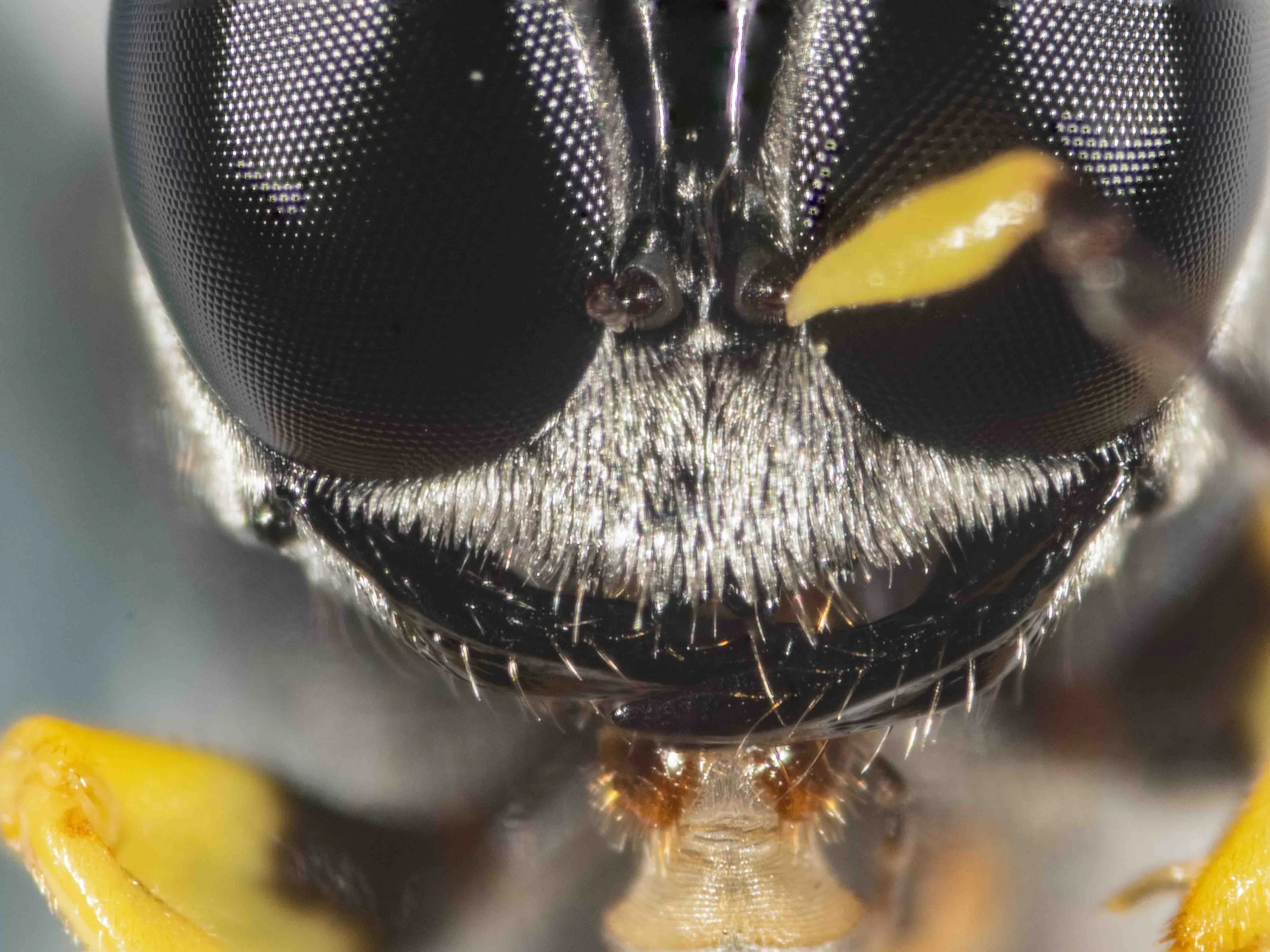
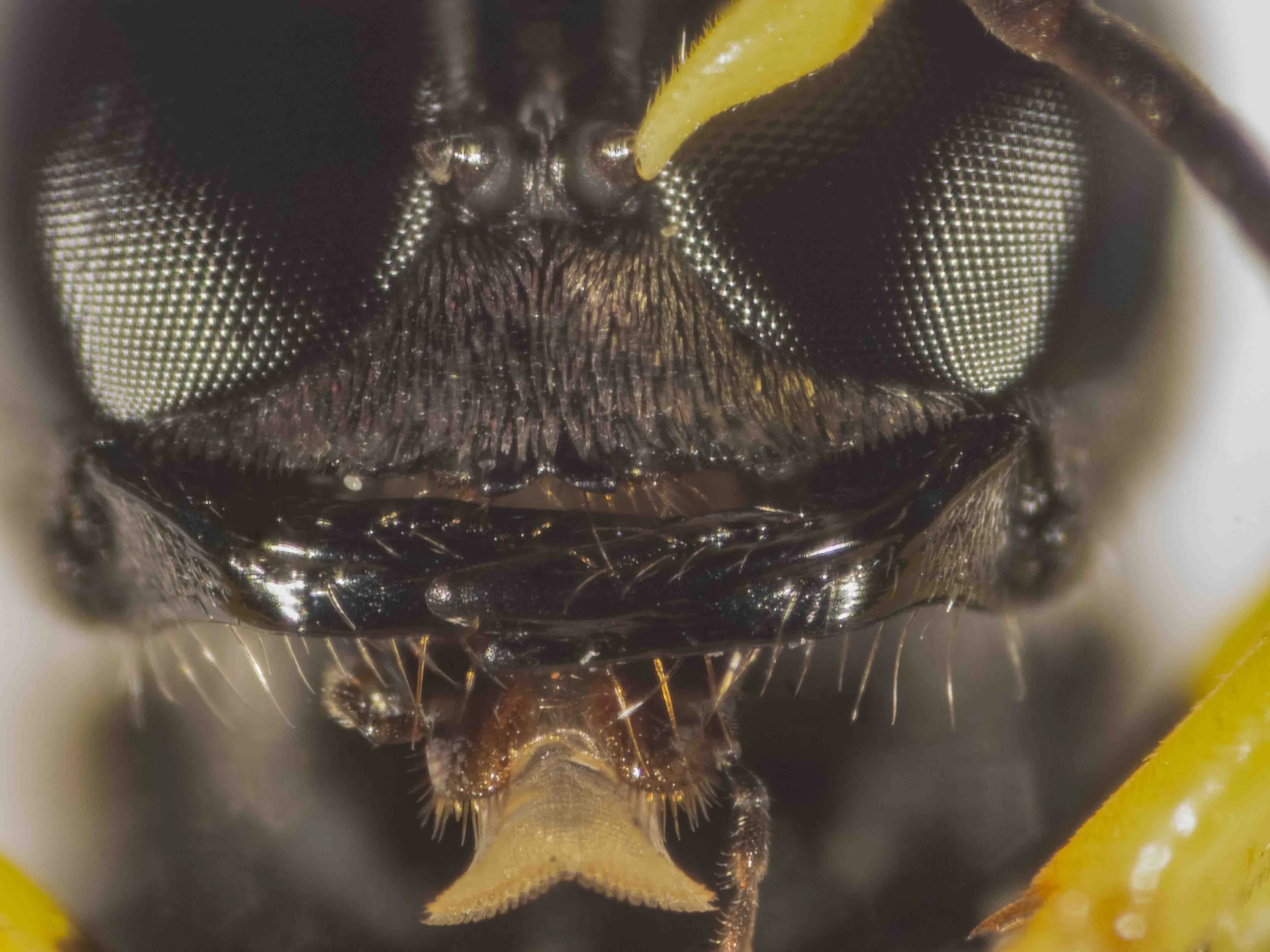
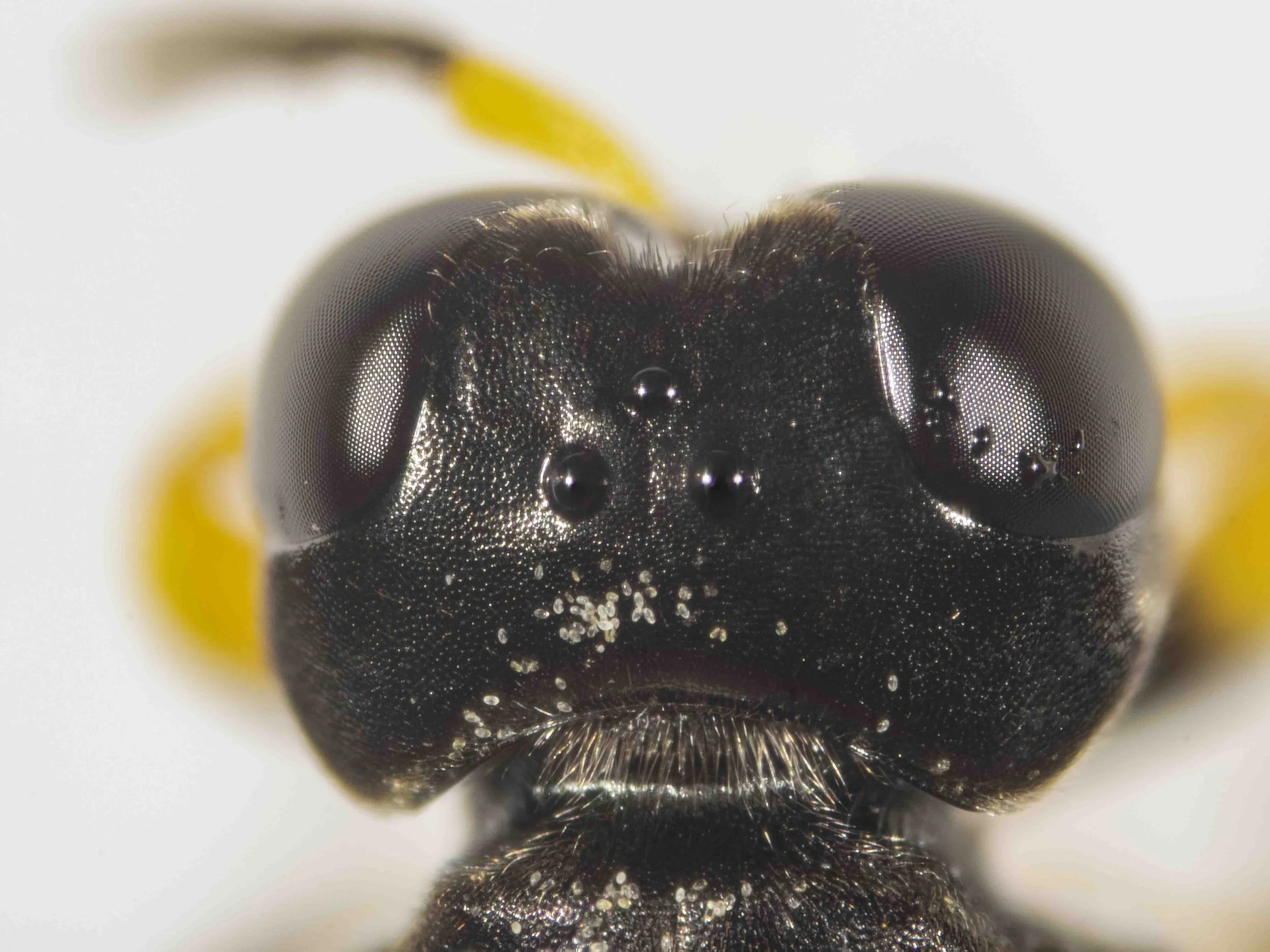
Podagritus leptospermi
Rhopalum sp.
Podagritus leptospermi
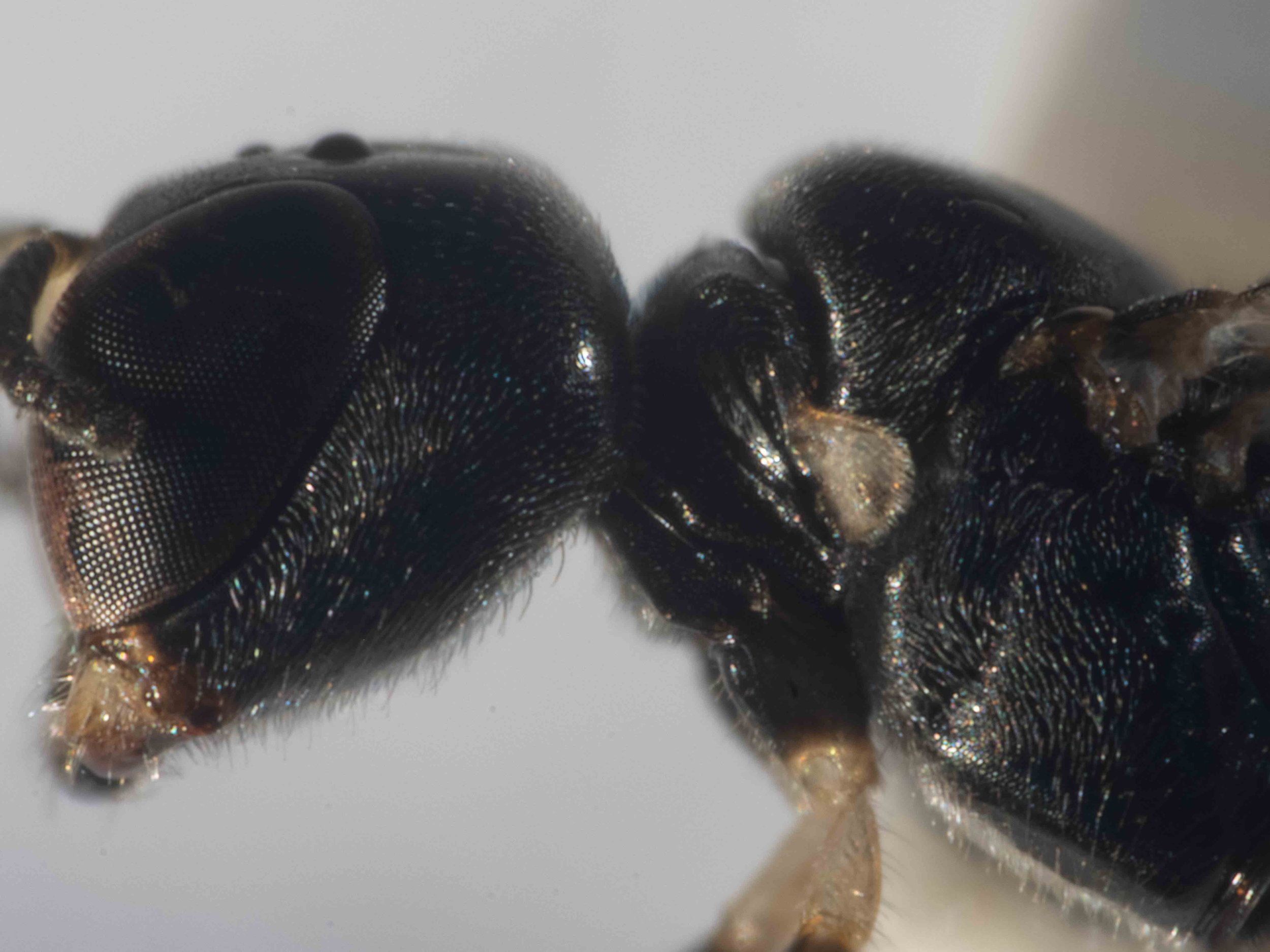
In this species, Leclercq notes the thickening that delimits the two faces of the prepectus. From this angle it is quite apparent.
Podagritus leptospermi
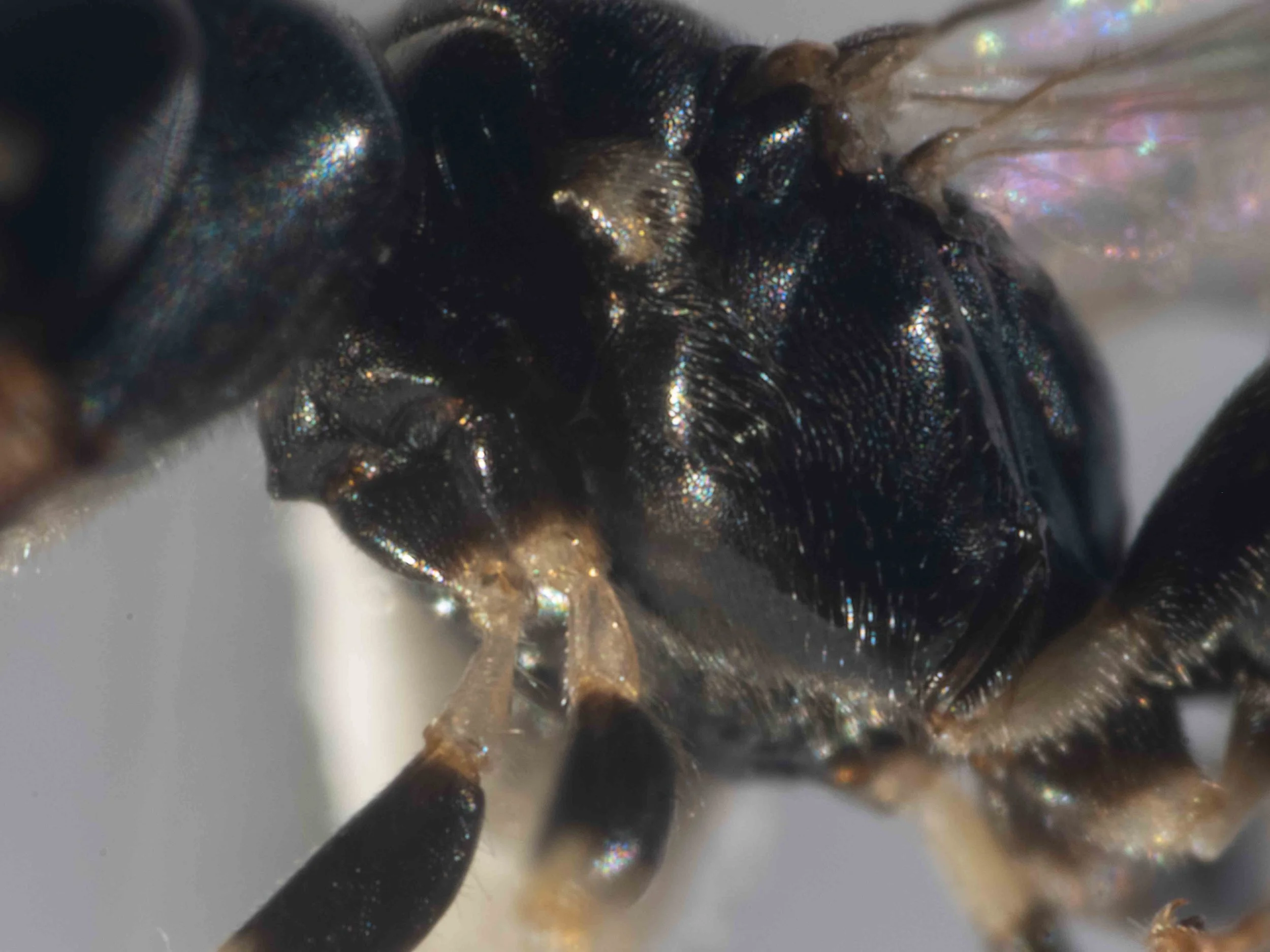
Compare this to the previous image. The two planes of the prepectus are visible in both, but from this angle the absence of a strong epicnemial carina is more apparent. The thickened edge in the position of the postspiracular carina is clear, but the omaulus is not.
Rhopalum sp.
In this direct lateral view I’m tempted to think the prepectus flat, with a distinct anterior edge.
Rhopalum sp.
This is the same specimen as in the previous image, but now viewed anteroventrally. The rounded shape of the prepectus is more evident.
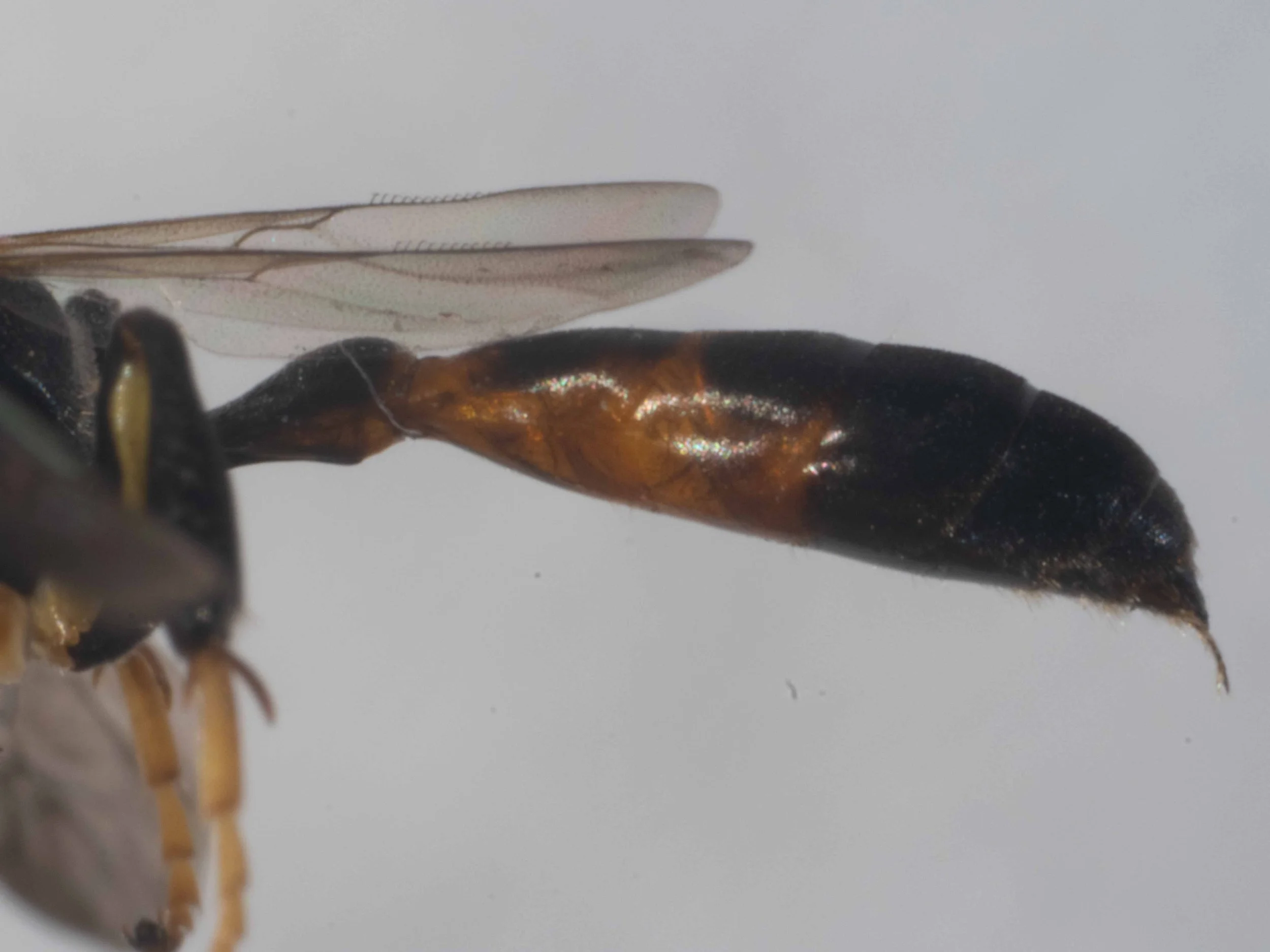
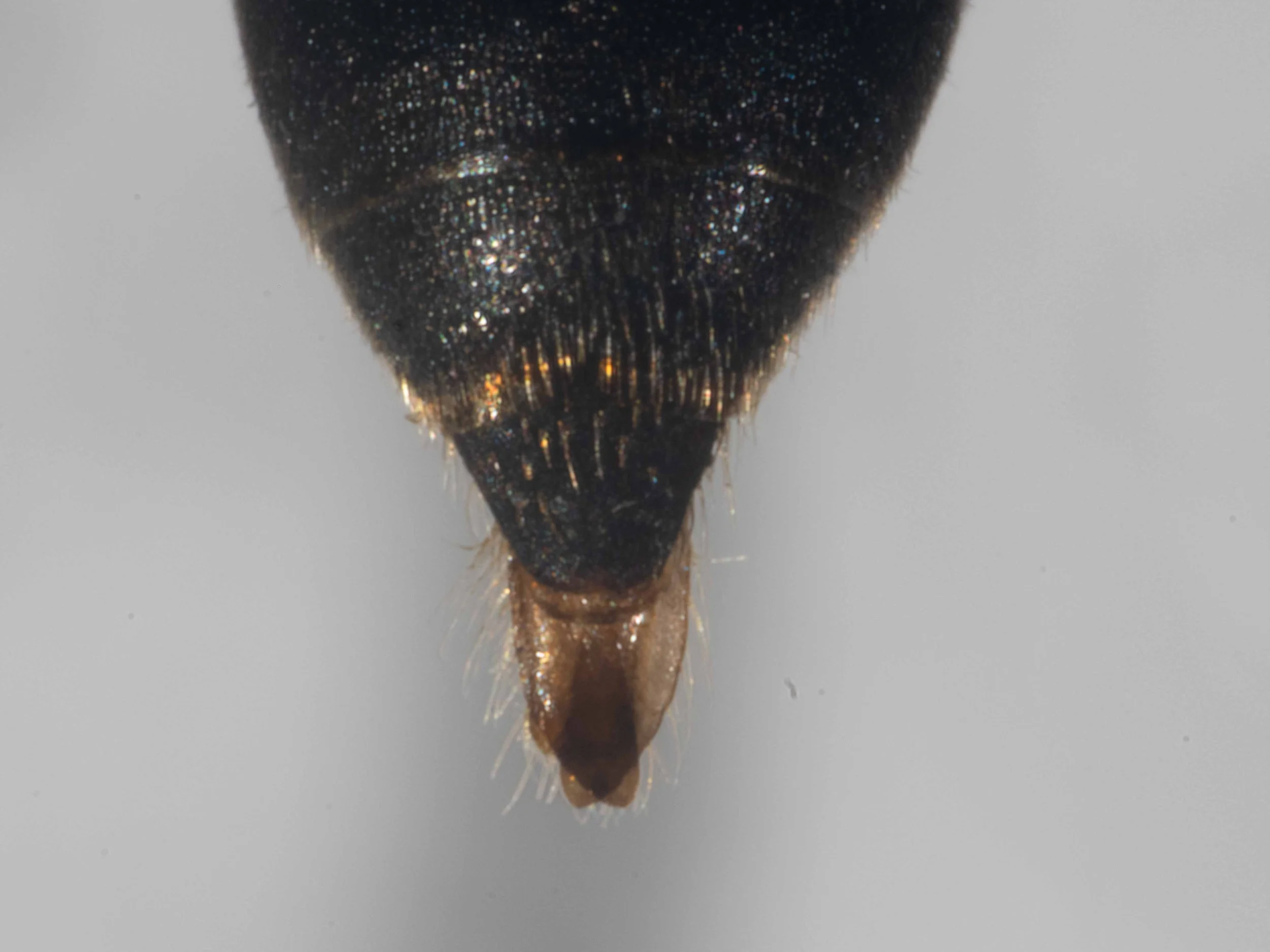
Podagritus leptospermi
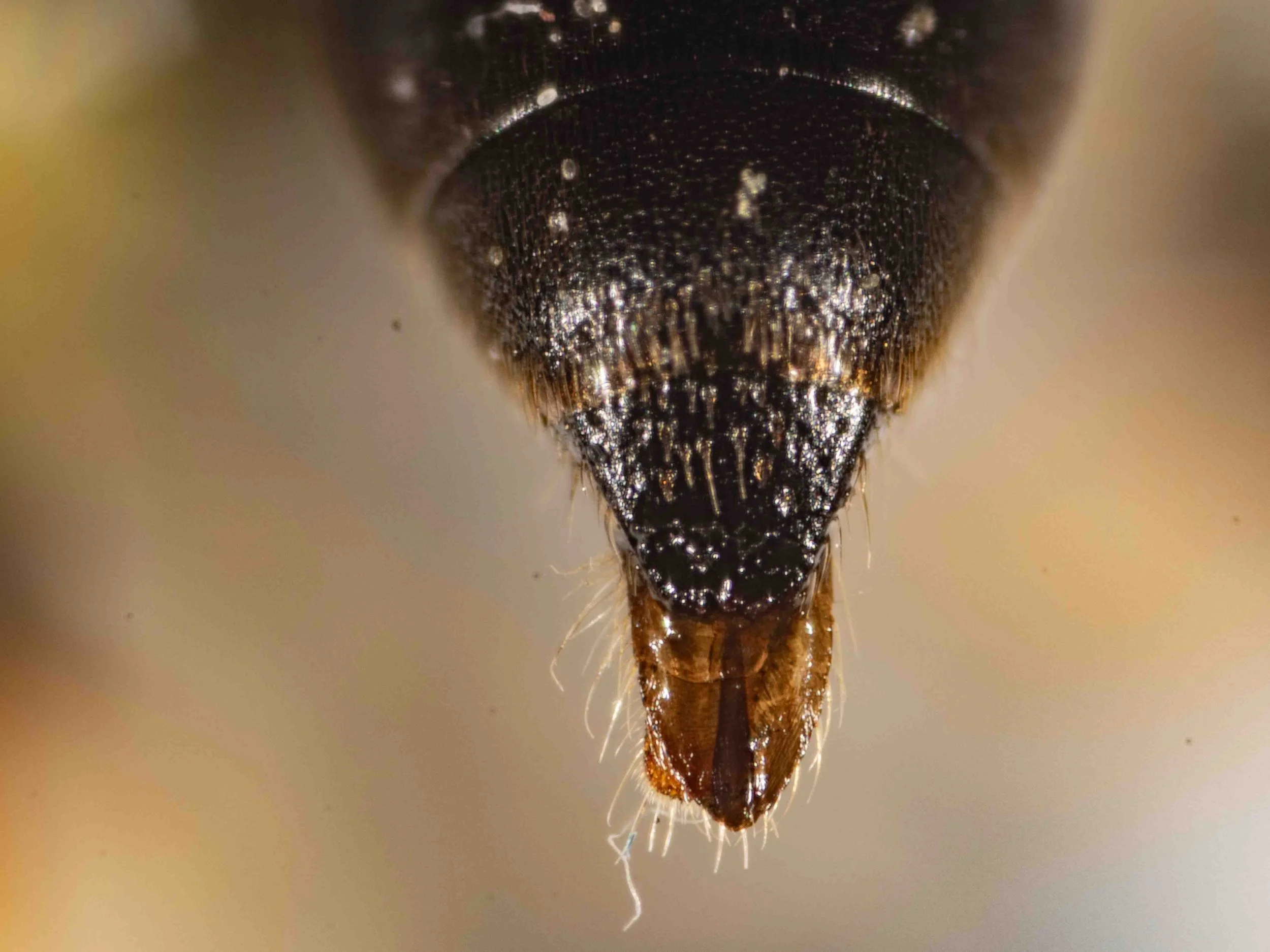
The shape of the pygidial plate also differs between males and females. In this image the male genitalia can be seen protruding beyond the pygidium. This is quite common after death.
Rhopalum sp.
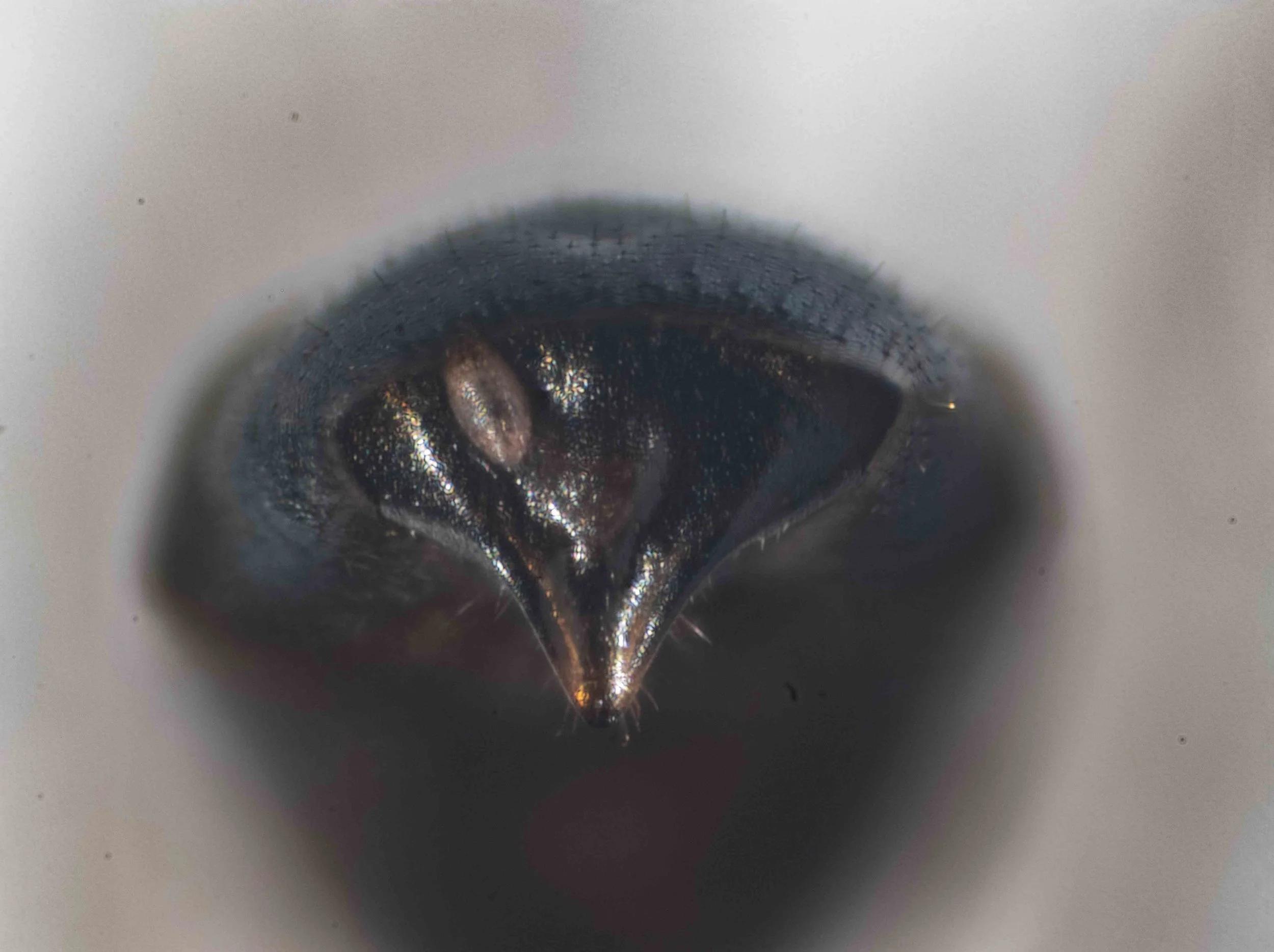
No sign of a flattened or edged region on the terminal tergum – i.e. no pygidial plate.
I presume the pair of large, lateral structures are part of the male genitalia. The parameres / gonostyle I guess..
[The small ovoid object I suspect is a parasite of some type]
Femur 3: strongly depressed ventral surface; broadly yellow.
Pronotal lobe: dark.
Leg 3: tibia entirely black.
Body length: 11mm