A travel story
November 24th-29th, 2025
Most people visit Yamba on the north coast of NSW for the surf, the sun, or the boating. For us it was time to catch up with family. And to seek out some of our favourite animals – wasps, sawflies, flies … etc.
I confess that my top priority was the sand wasps, both Bembix and Bembecinus. And I was in luck!
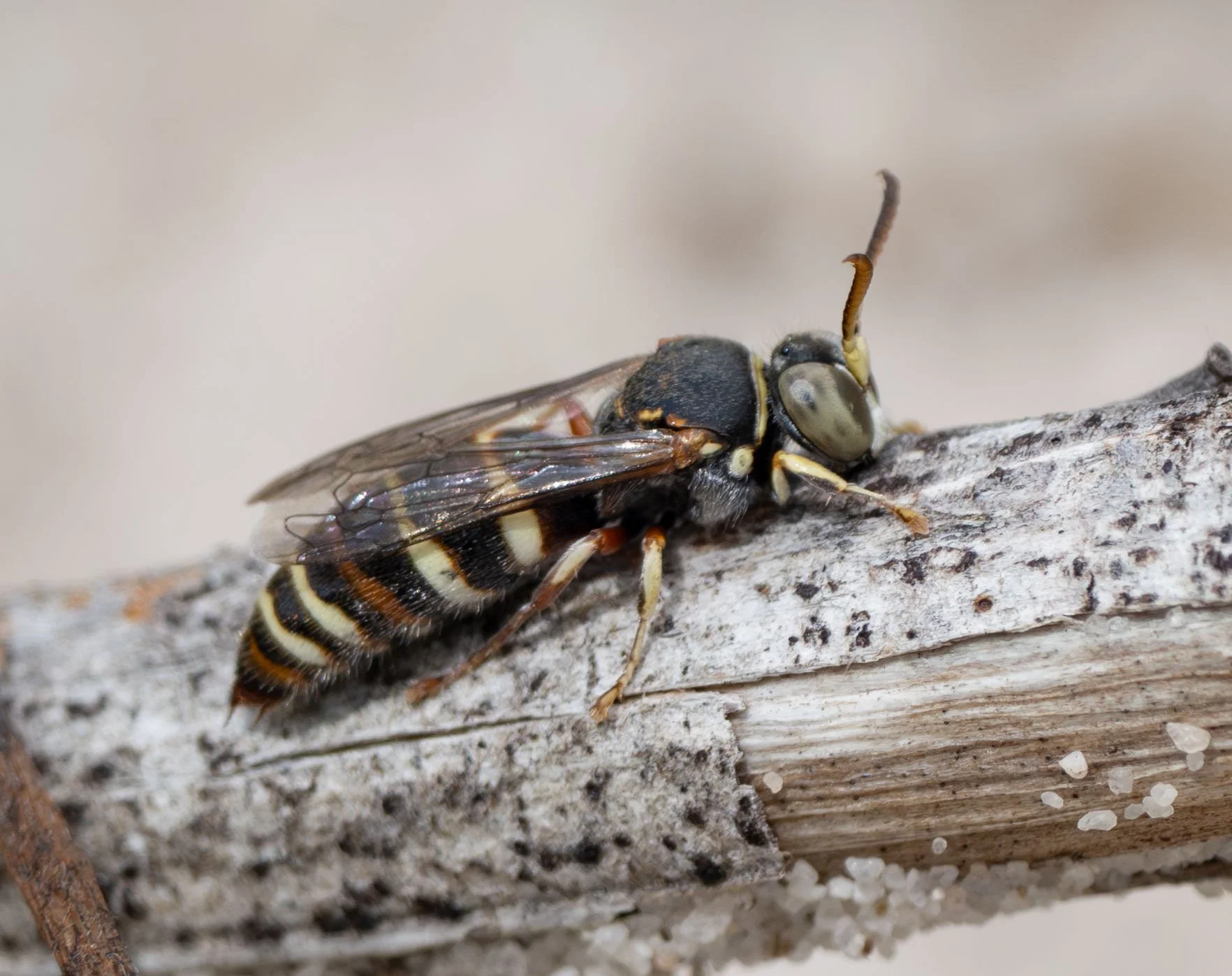
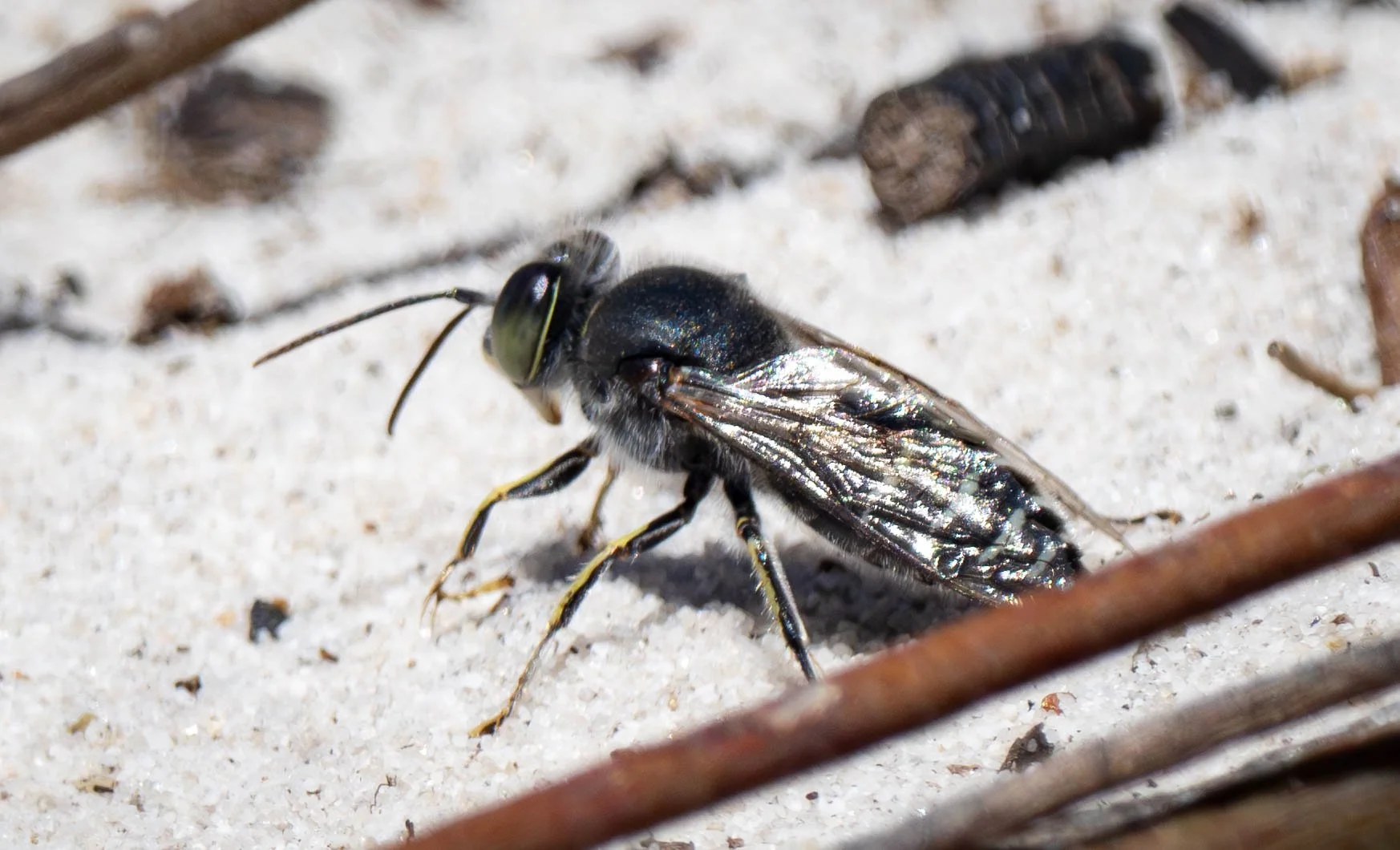
We went seeking sand wasps along a sandy track in heathland … and sure enough, these small male Bembecinus were patrolling the same short stretch as in previous seasons. Indeed, on day 1 of our searching I struggled to spot a female. The males would zip about in low flight, then return to favoured perches atop sticks or small rocks.
Bembecinus sp. (male)
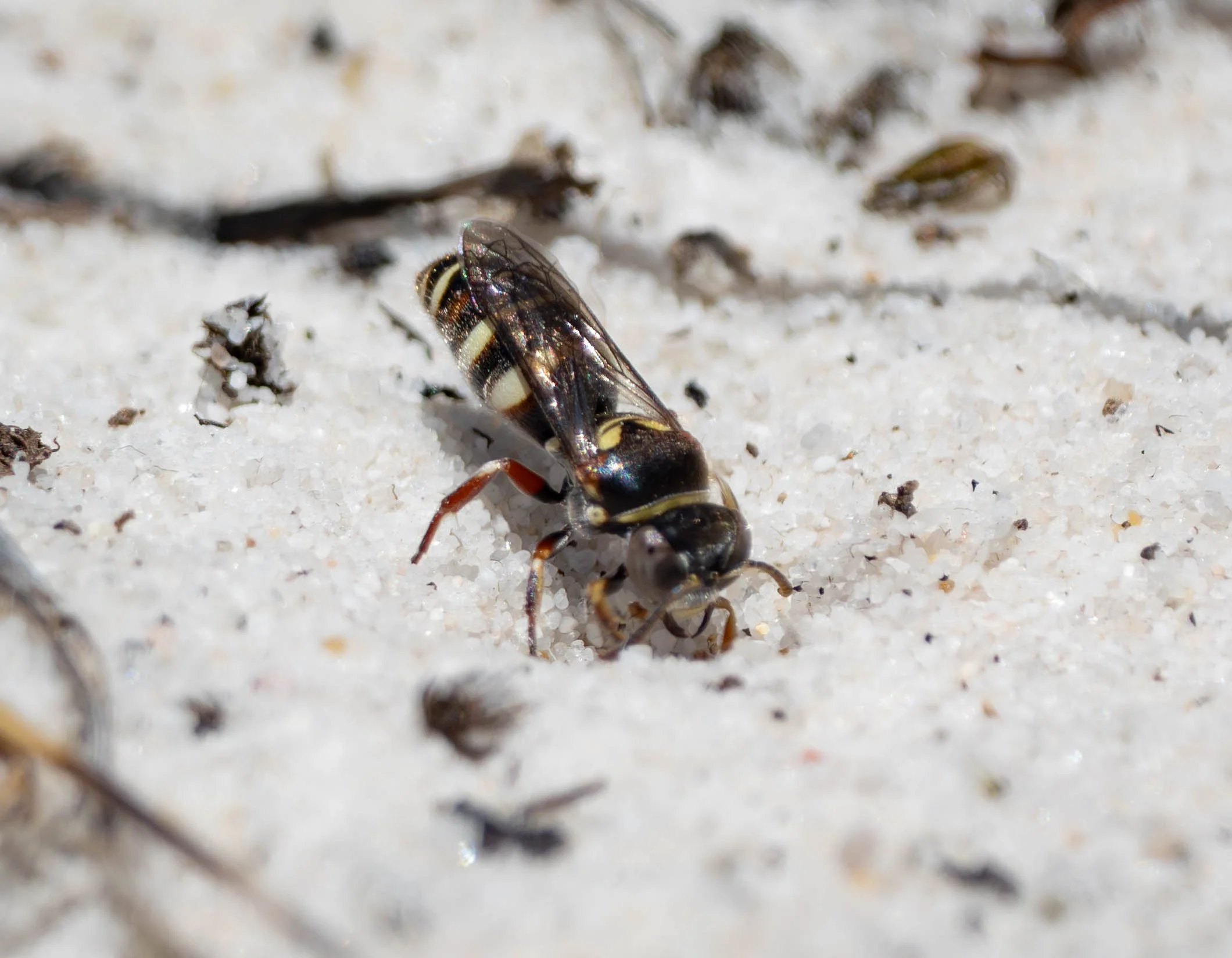
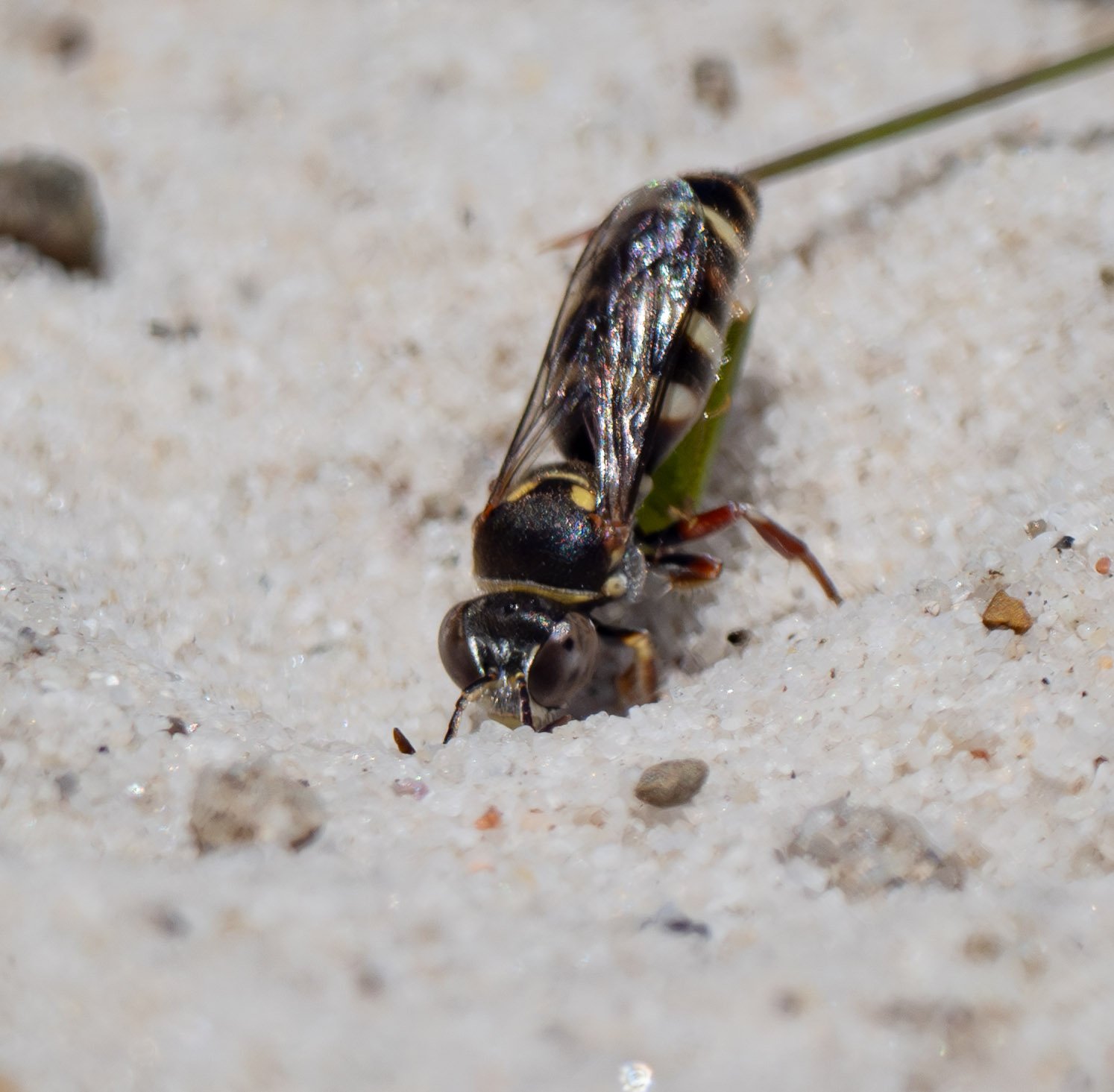
The same site two days later … under cloudless skies in the heat of late morning … and female Bembecinus were out in force. Huge numbers, but largely confined to one section of the track. This is clearly a favoured nesting site, and they were digging with intent.
Bembecinus sp. (female)
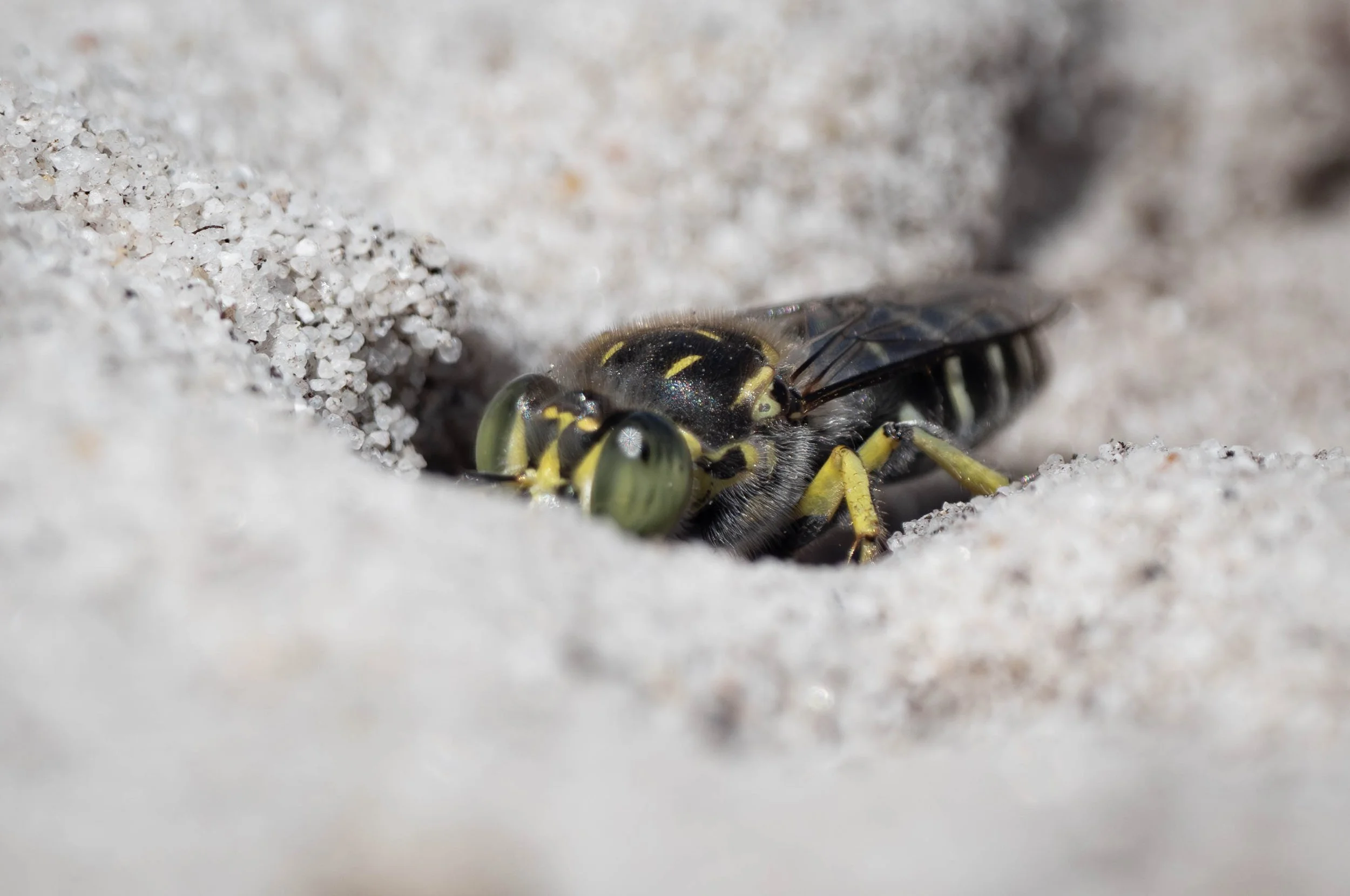
Bembix … the genus I was most keen to see! While I’ve yet to confirm the species ID, but I’m confident it will be one of those I’m seeking.
Bembix sp. (female)
Another Bembix, and with more extensive yellow markings … but most likely the same species. In this genus, the extent of the pale markings on the mesoscutum (the ‘back’) can vary significantly. Particularly so if this is the species I think it is (more about that later).
Bembix sp. (female)
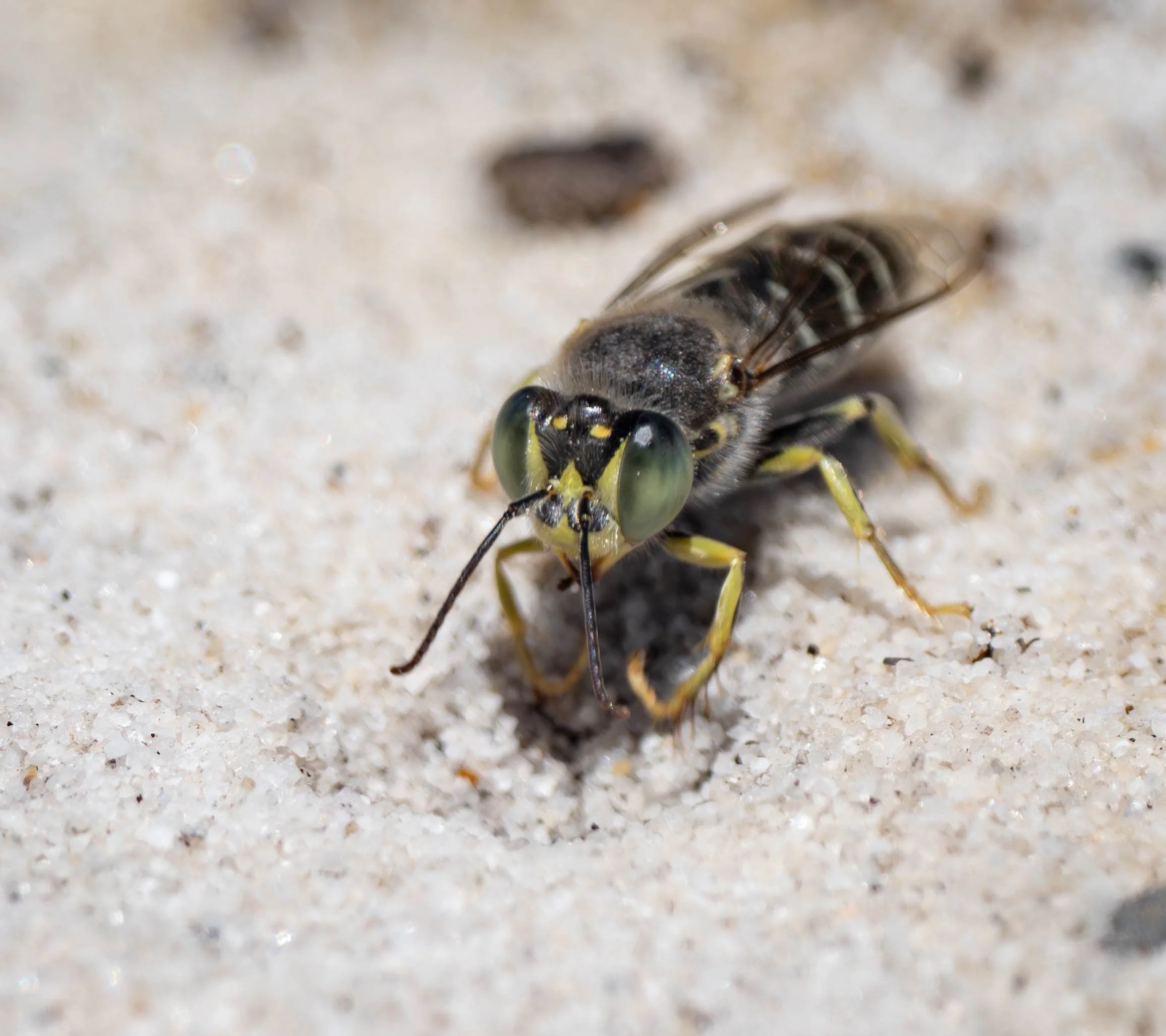
Male Bembix were also present, mostly flying in patrol and only rarely landing.
Bembix sp. (male)
Bembecinus specialise in hunting leafhoppers, progressively feeding their larvae throughout development.
Bembecinus sp. (female)
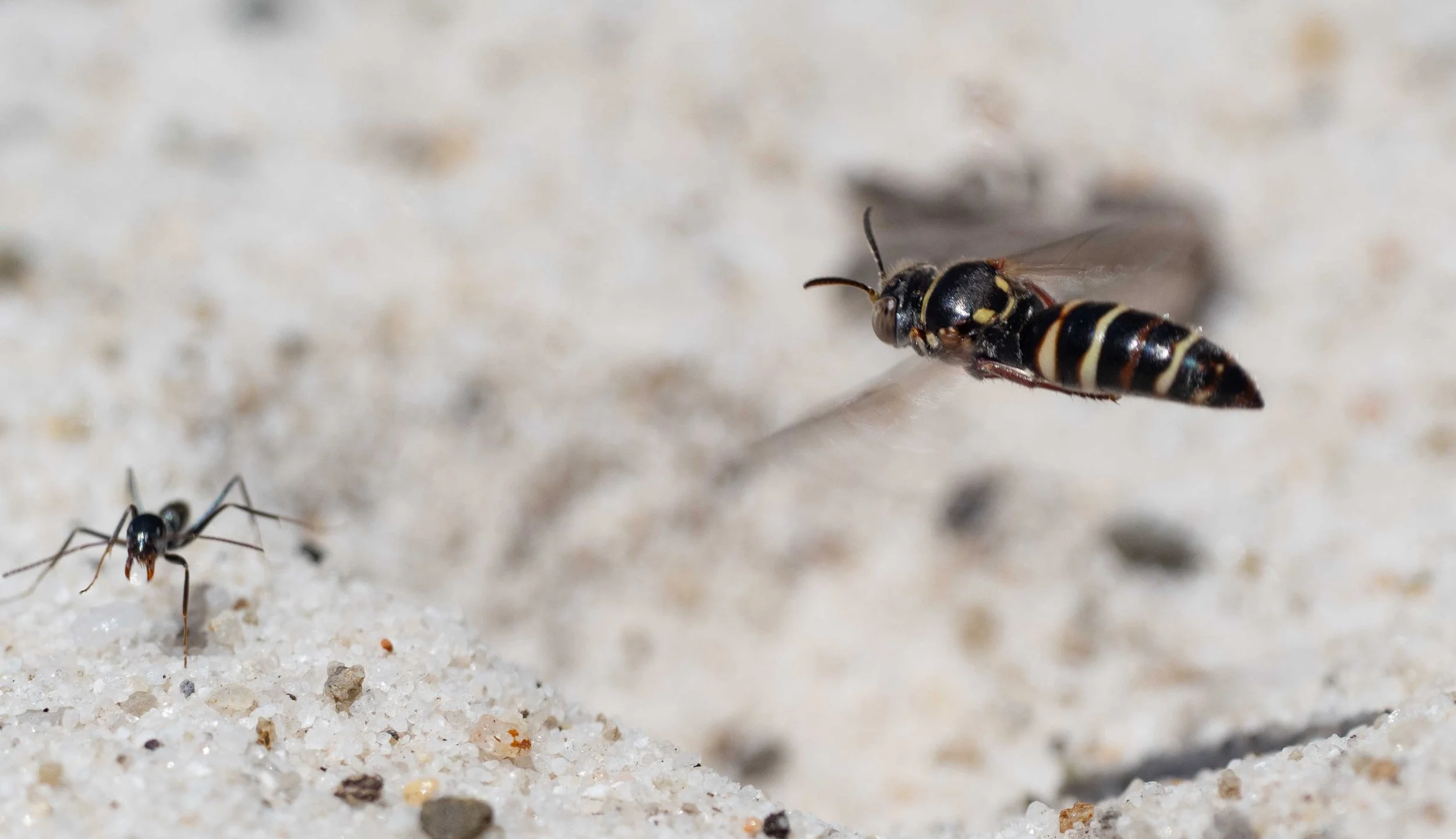
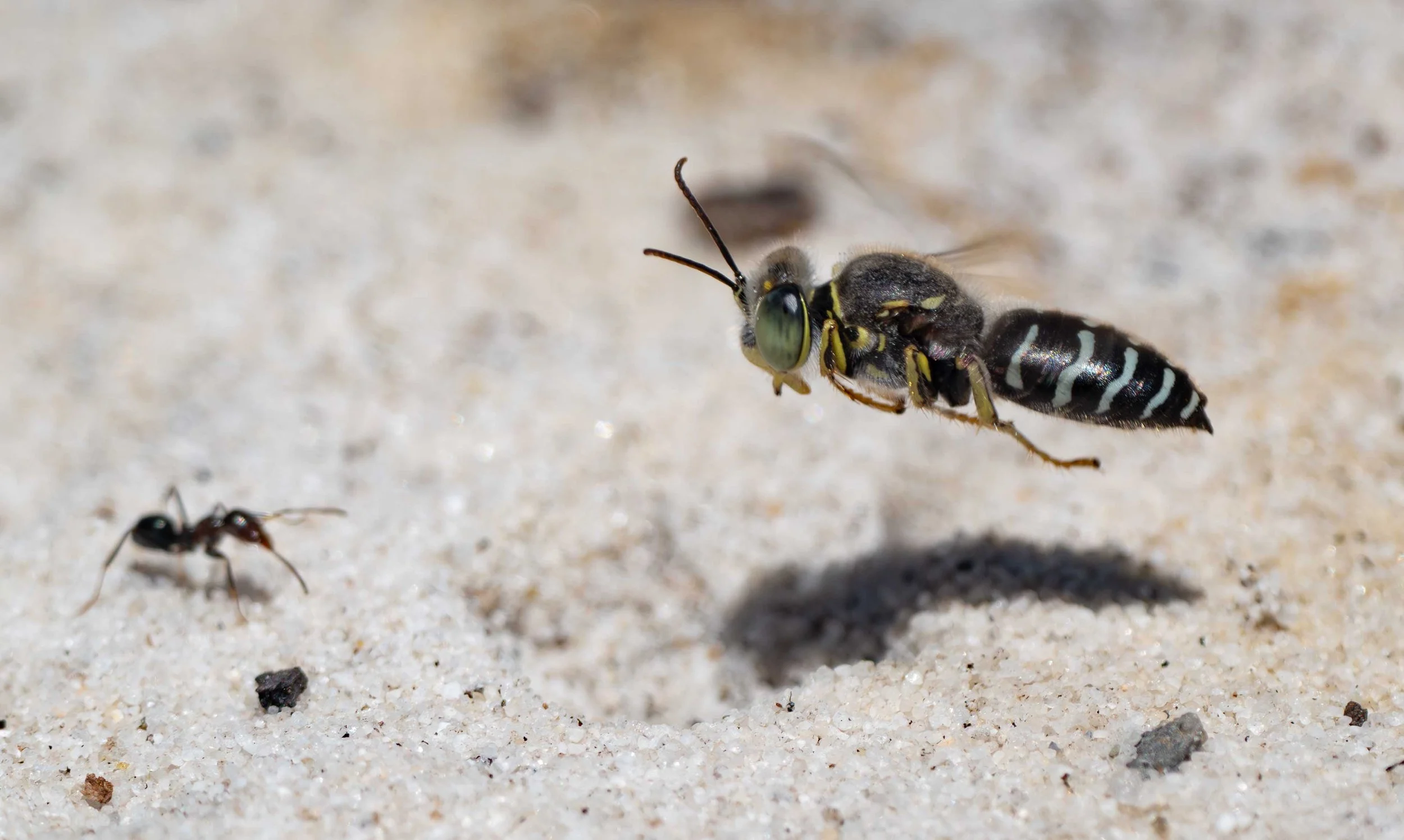
Ants are the bane of nesting sand wasps, quick to investigate every new excavation in the sand. And the wasps aren’t happy about it.
Bembecinus sp. (female)
Although the wasps take flight when confronted, they do their best to intimidate the curious ants.
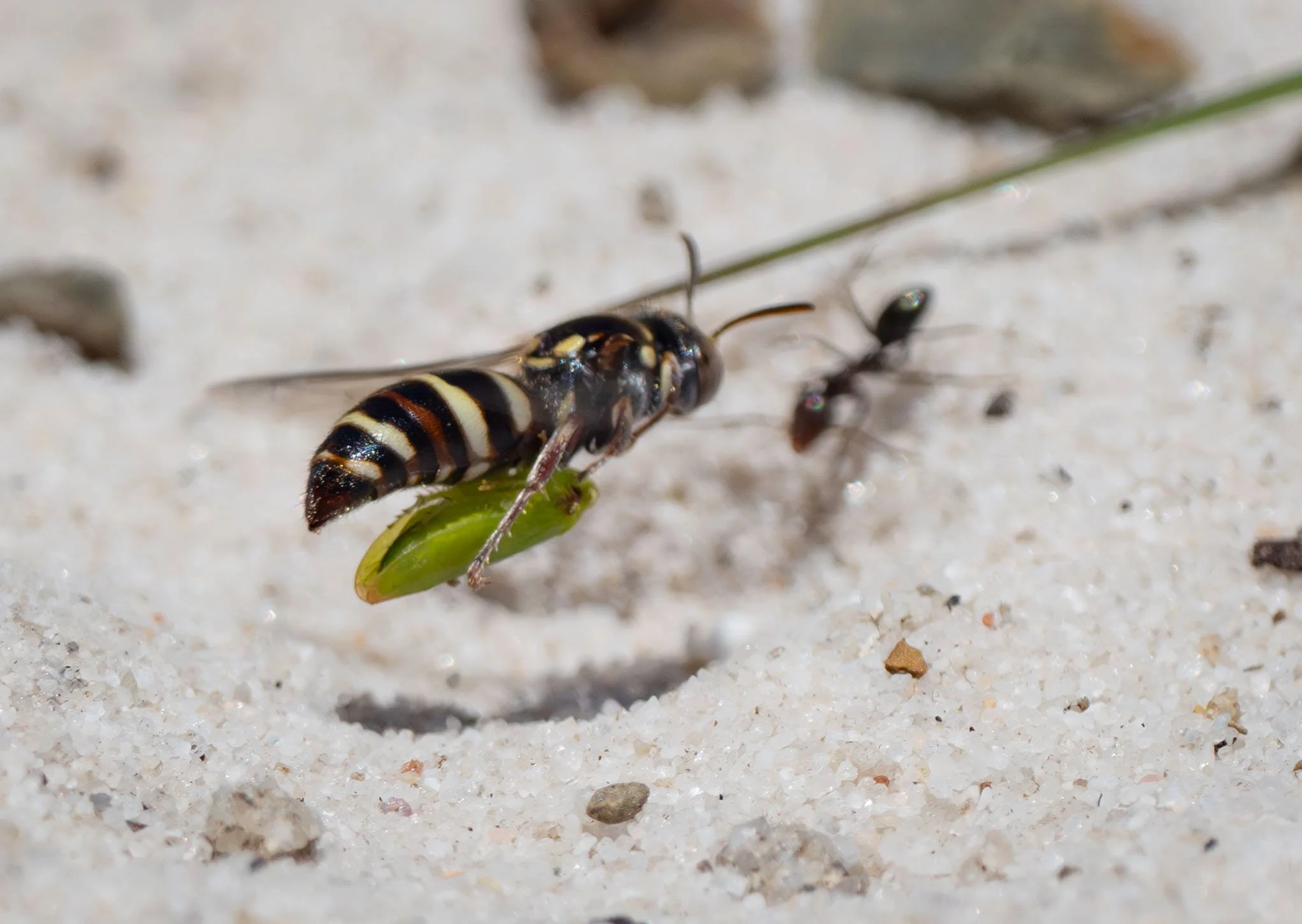
Bembix are typically much larger than Bembecinus, and this was certainly the case for the two species sharing this nesting area. The ants in this and the previous photo provide a sense of scale.
Bembix sp. (female)
Before delivering her catch to her burrow, this wasp first had to face down a marauding ant. She did. Eventually. After several attempts. The ants are no doubt ready to grab any prey that the wasps leave unattended. I know from watching their antics elsewhere that the are indeed fast-acting opportunists!
Bembecinus sp. (female)
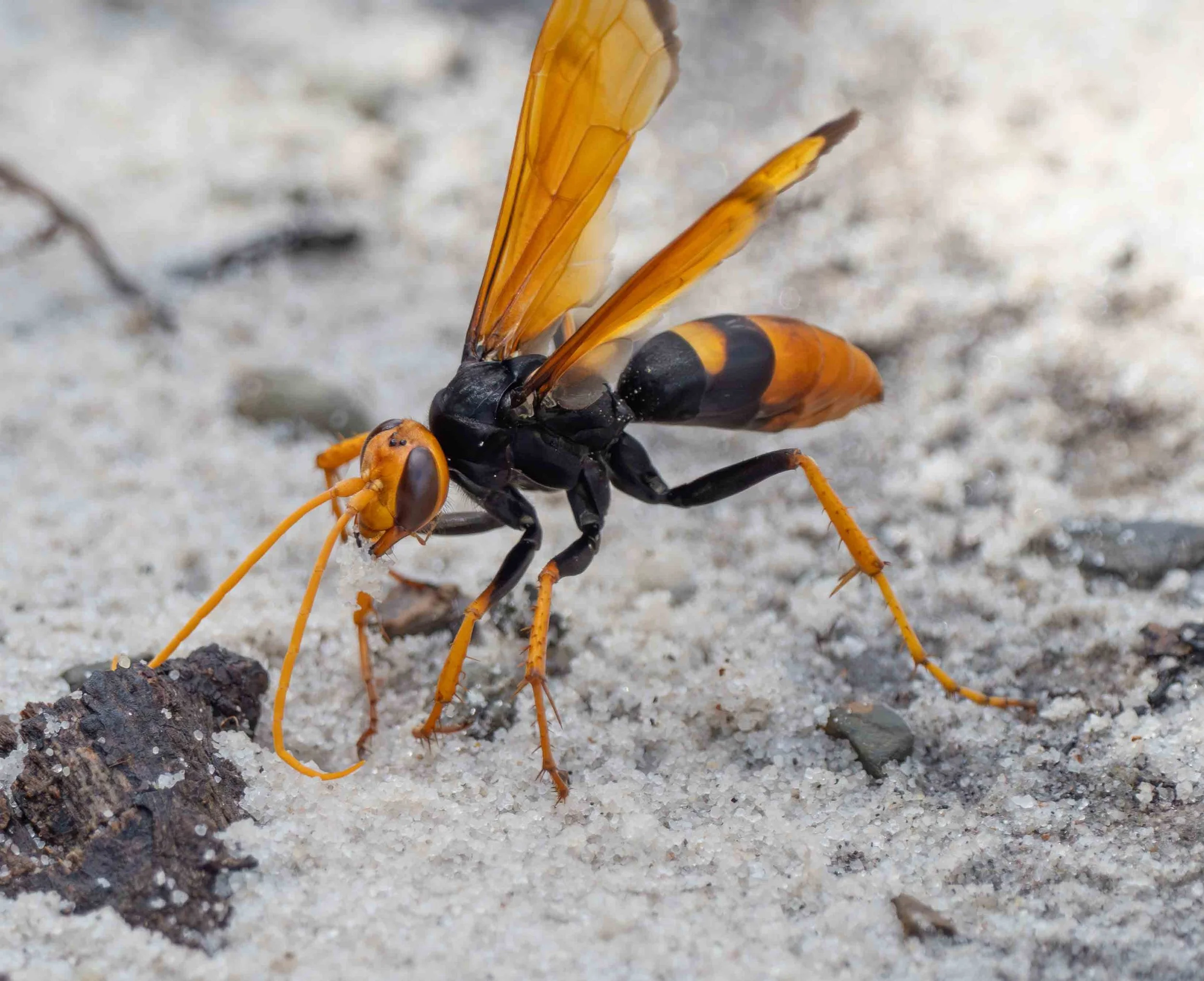
The sandy track favoured by the sand wasps was also the nesting ground for these large, eye-catching spider wasps. Although we didn’t see any hauling prey, they were certainly very actively digging in the sand. And the ants were as bothersome to ever! (see Paul’s video, below).
Heterodontonyx bicolor (female)
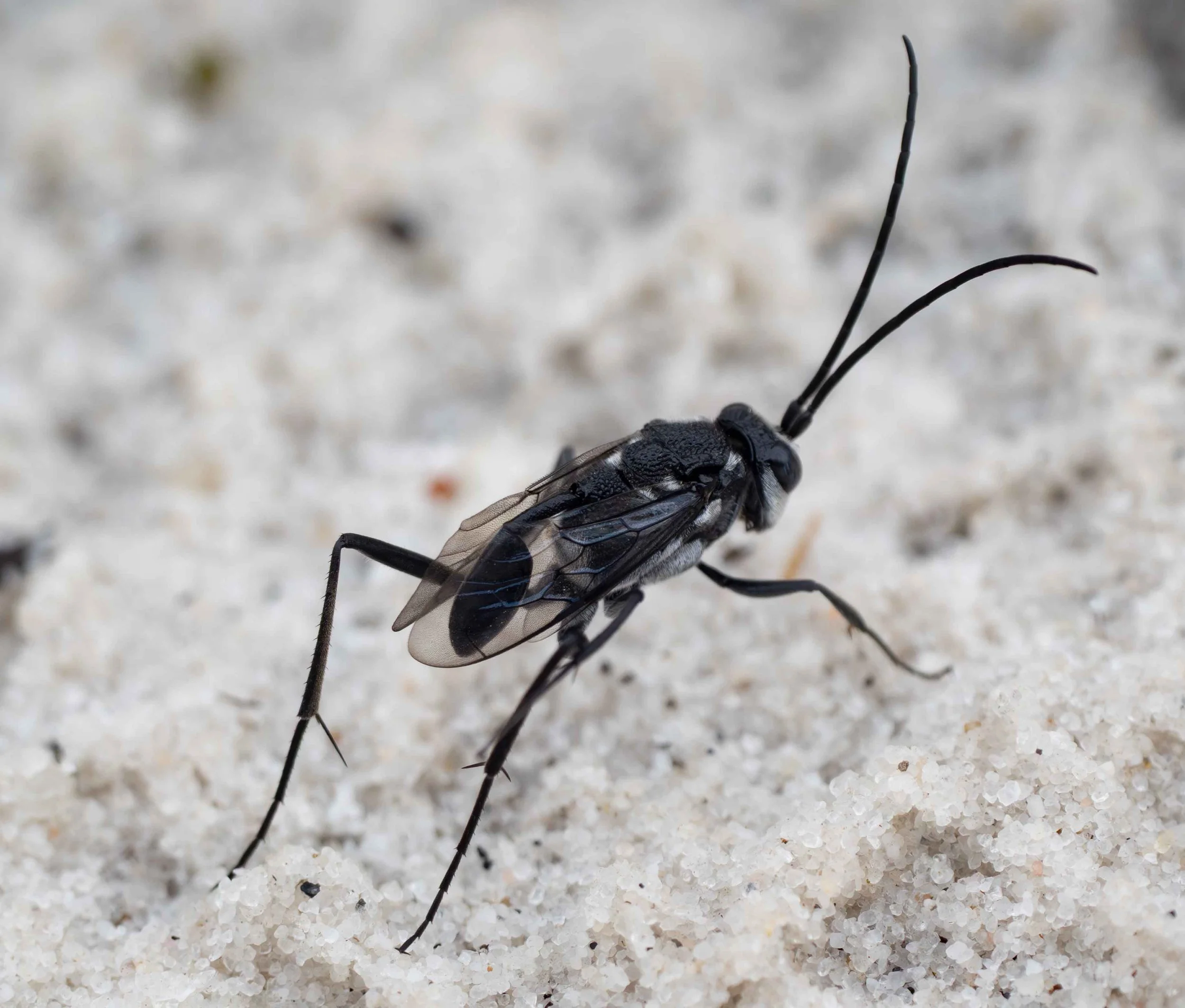
For a hatchet wasp, this was a big one! The distinctive shape of the metasoma (abdomen) makes identification to family quite straightforward, but beyond that … don’t know.
Wasps in this family are solitary parasites of cockroach ootheca (egg cases).
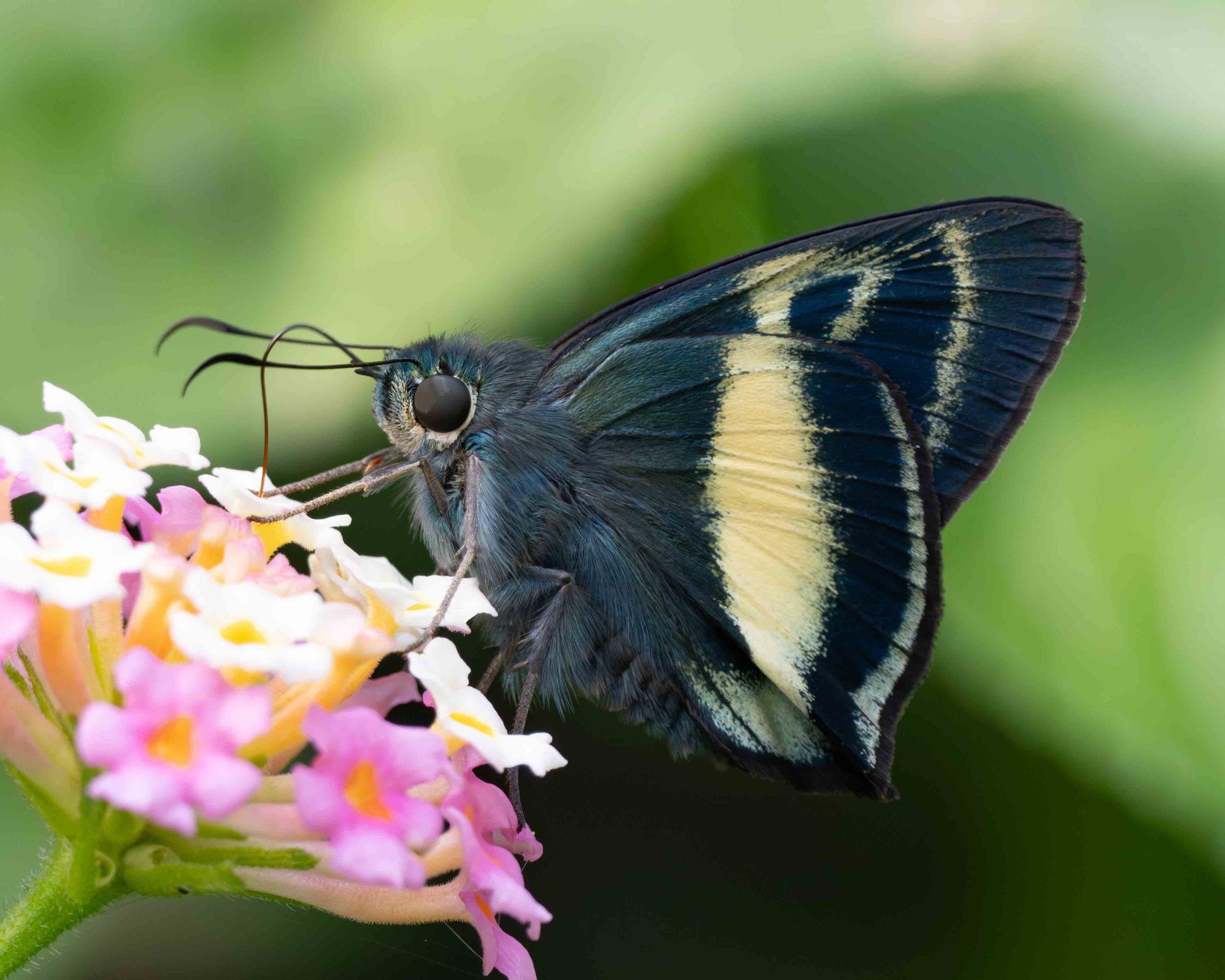
It’s not everyday we get a new butterfly species for our life list! And a pretty one, at that. The' ‘Green Awl’ is a generally uncommon species, with a limited distribution … and we were near the southernmost extent of its range. The host plant for their larvae is Mucuna gigantea (the ‘sea bean’), a distinctive tropical vine with massive pods and seeds. The adults feed at tubular flowers – such as lantana – taking advantage of that particularly long proboscis.
Hasora discolor
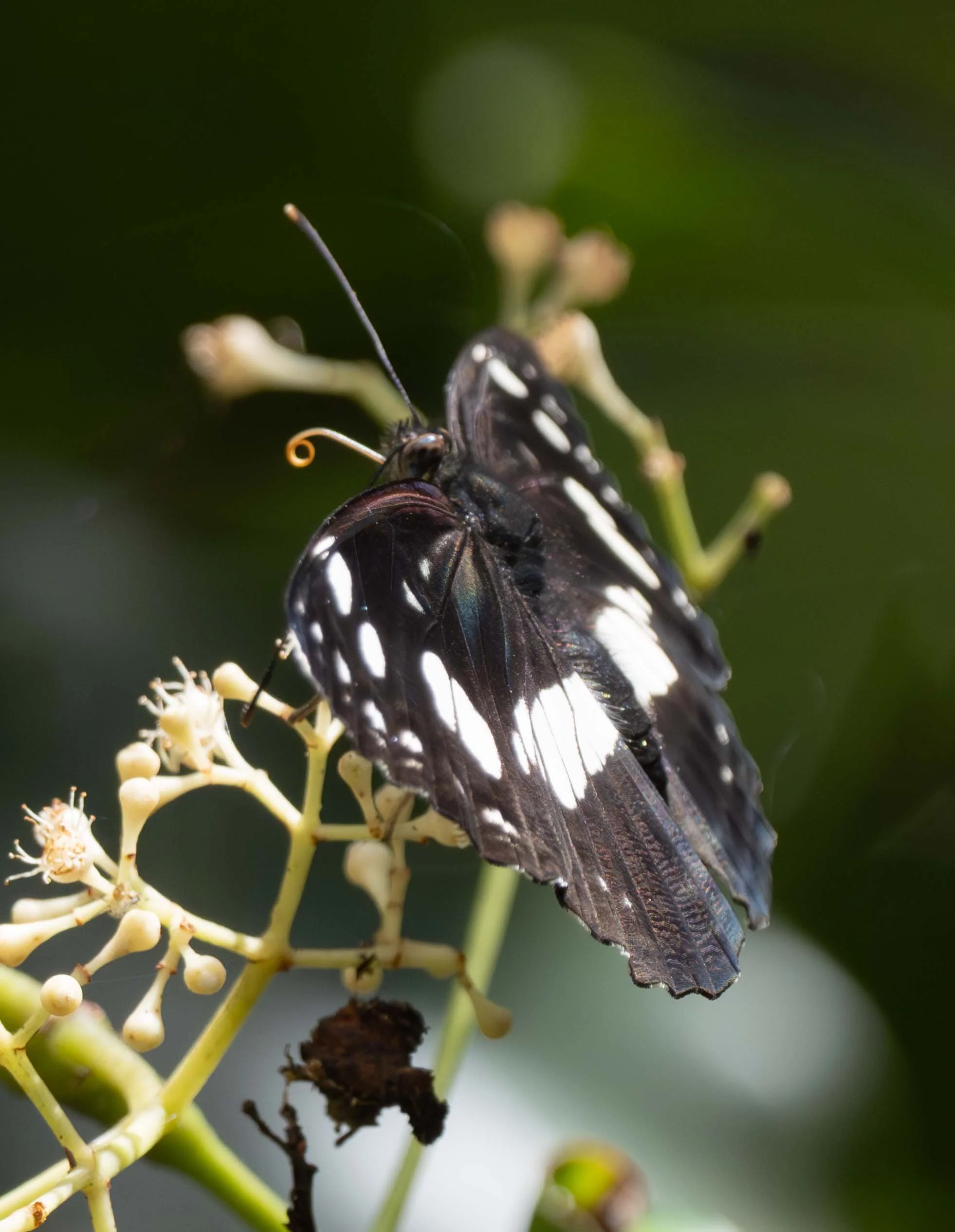
Another first for us! The ‘White-banded Plane’ is widespread in the eastern tropics, but not particularly common. The gliding flight, with wings held perfectly flat, is a distinctive feature of the ‘aeoplane’ butterflies (subfamily Limenitinae).
Phaedyma shepherdi
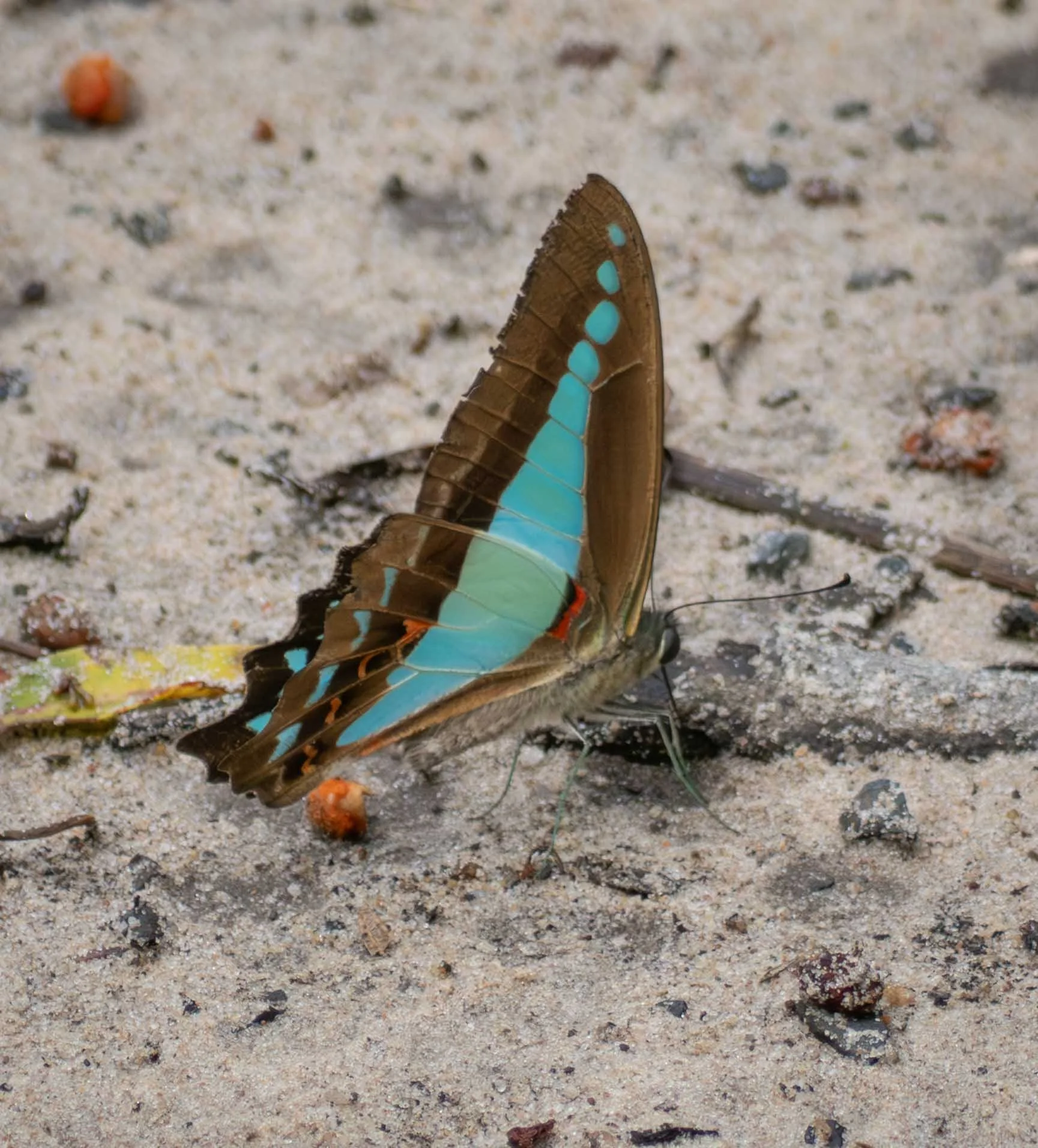
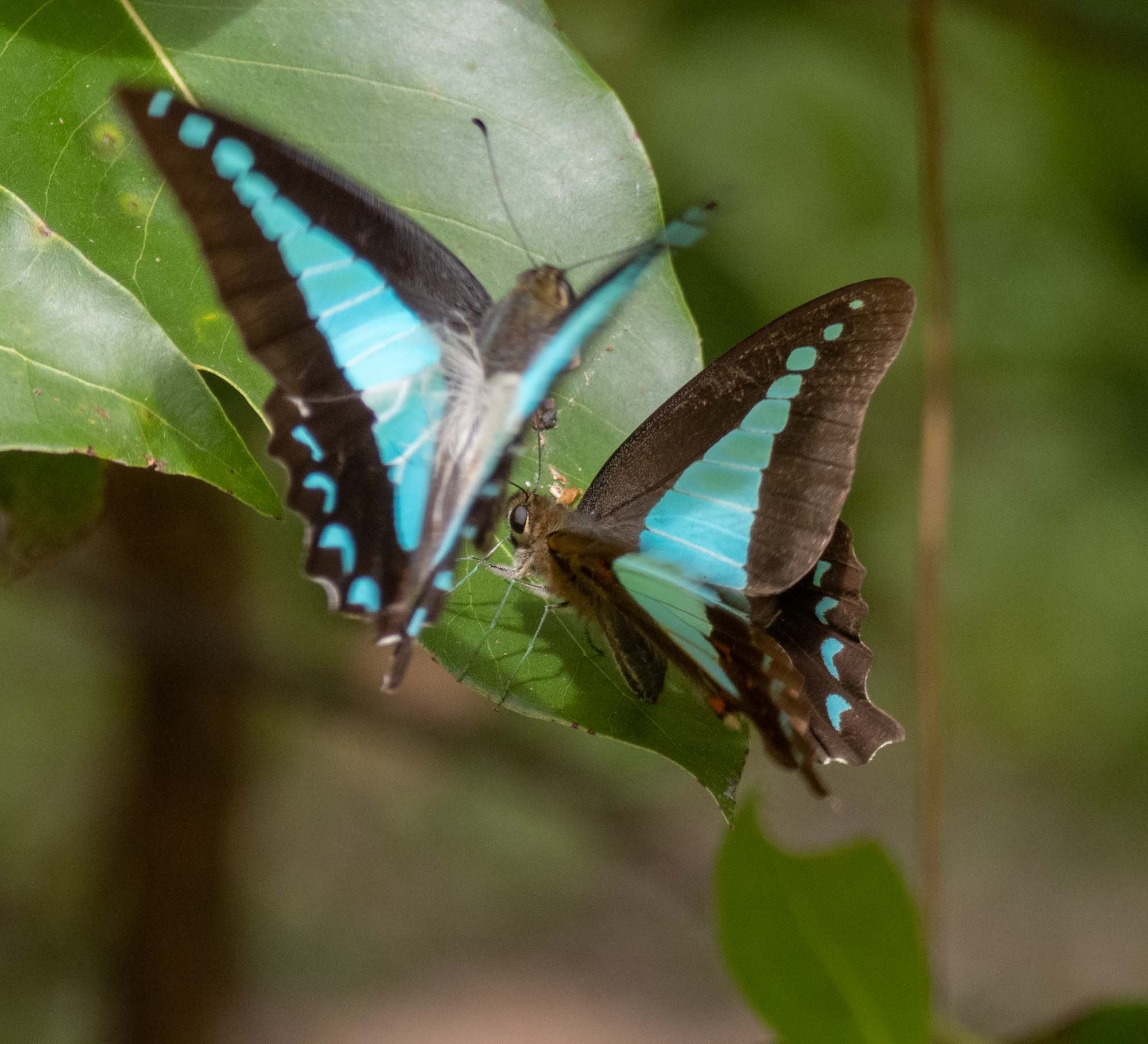
Yet another rainforest species, the aptly named ‘Blue Triangle’. This one was intently lapping at the moist sand not far from an ocean beach, no doubt attracted by the salt.
Graphium choredon
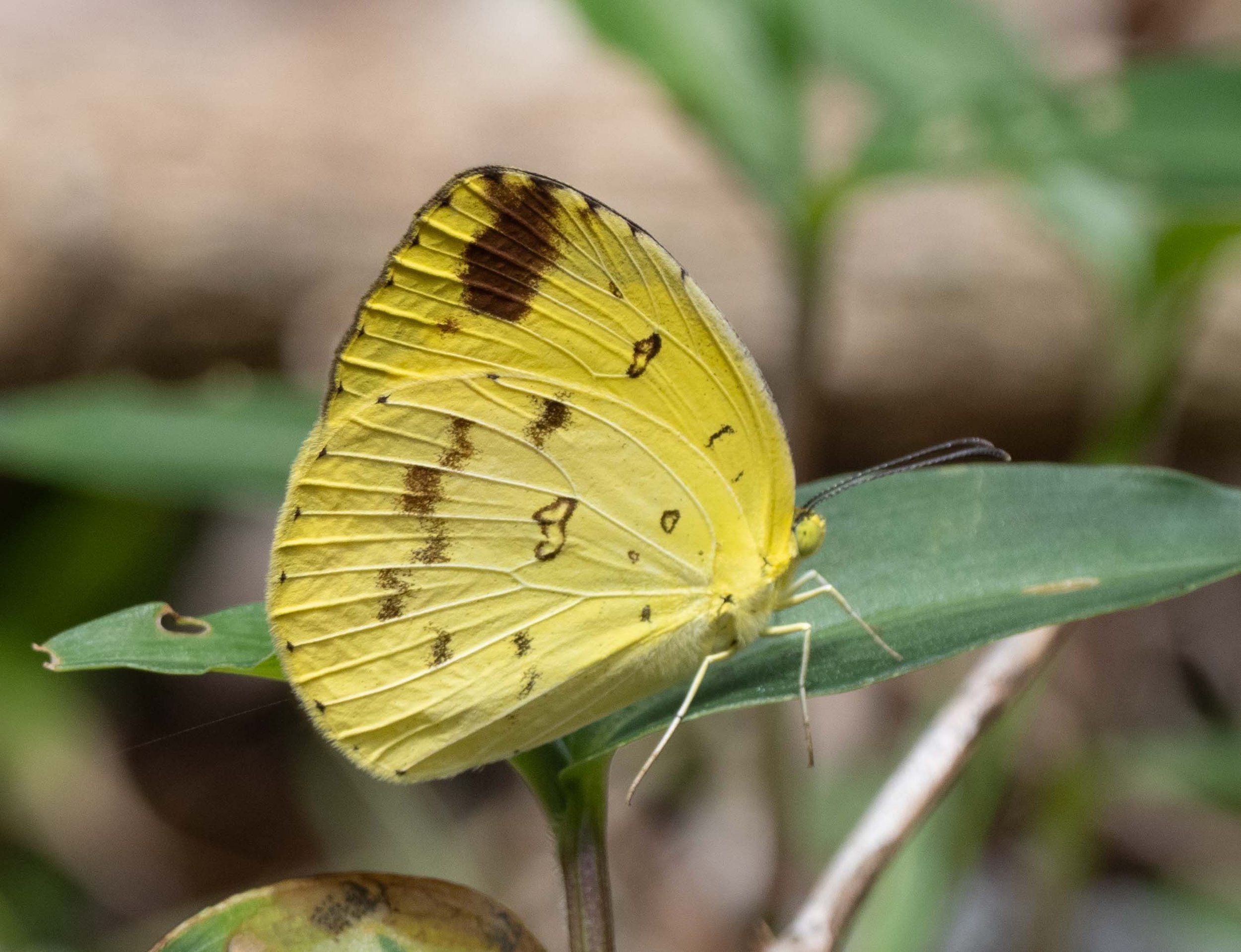
A very common species across northern Australia, in ‘good years’ the migrants dispersing well down the coast of northern NSW.
Eurema hecabe
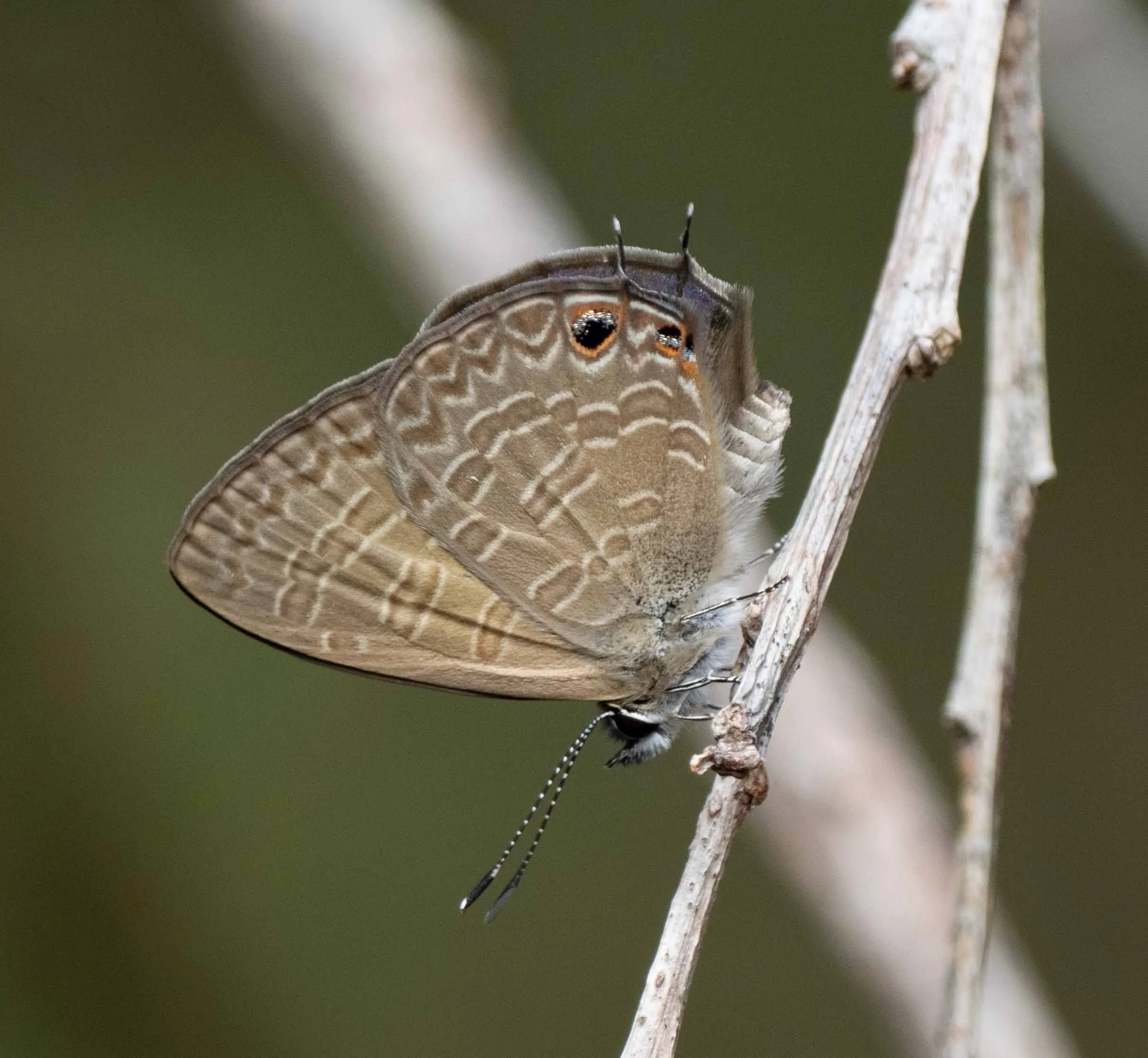
Common and widespread … but not seen south of Sydney, so another bonus for our trip up north.
Nacaduba berenice
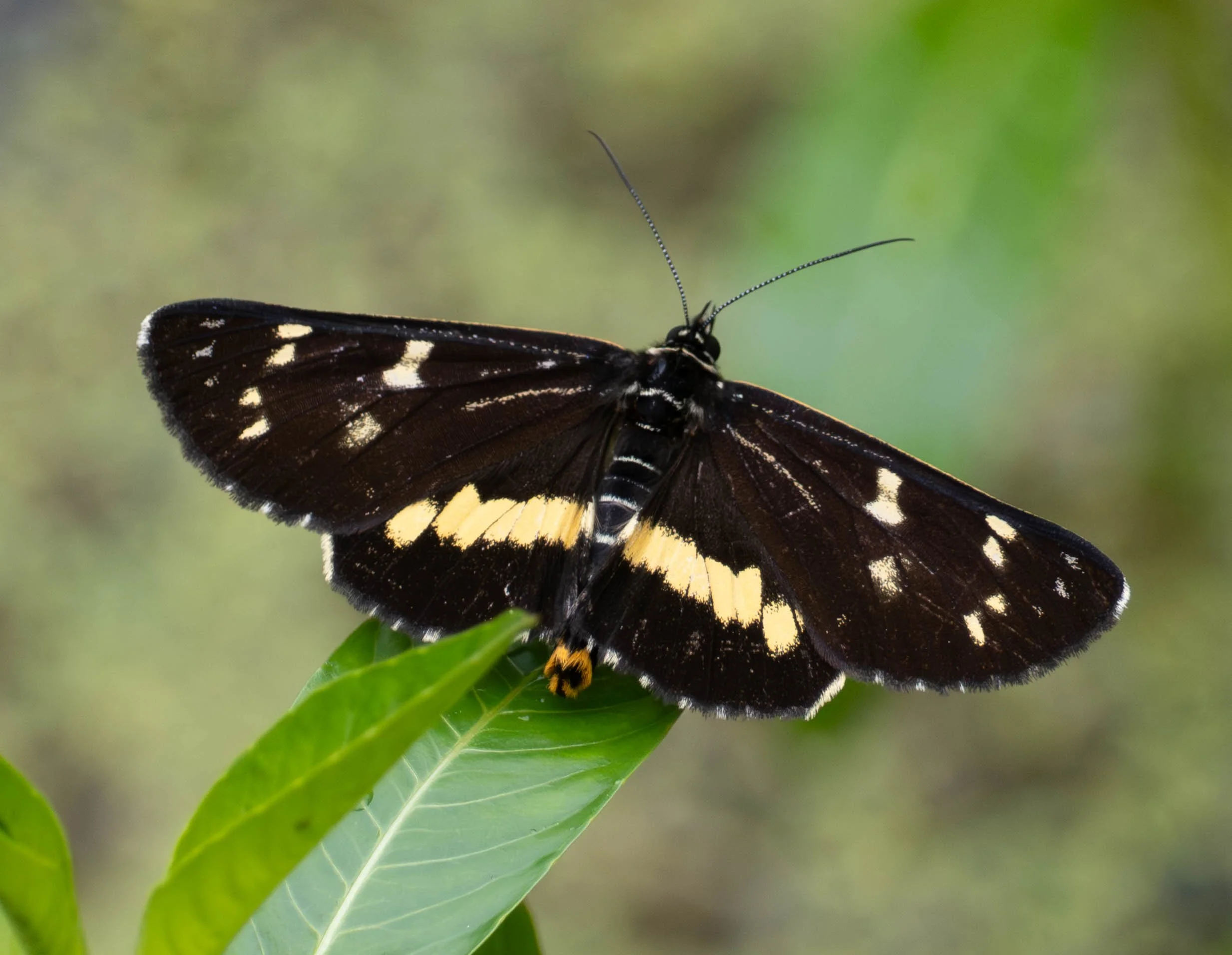
A large, day-flying moth that could easily be mistaken for a butterfly. These were numerous in the rainforest where we were staying.
Cruria synopia
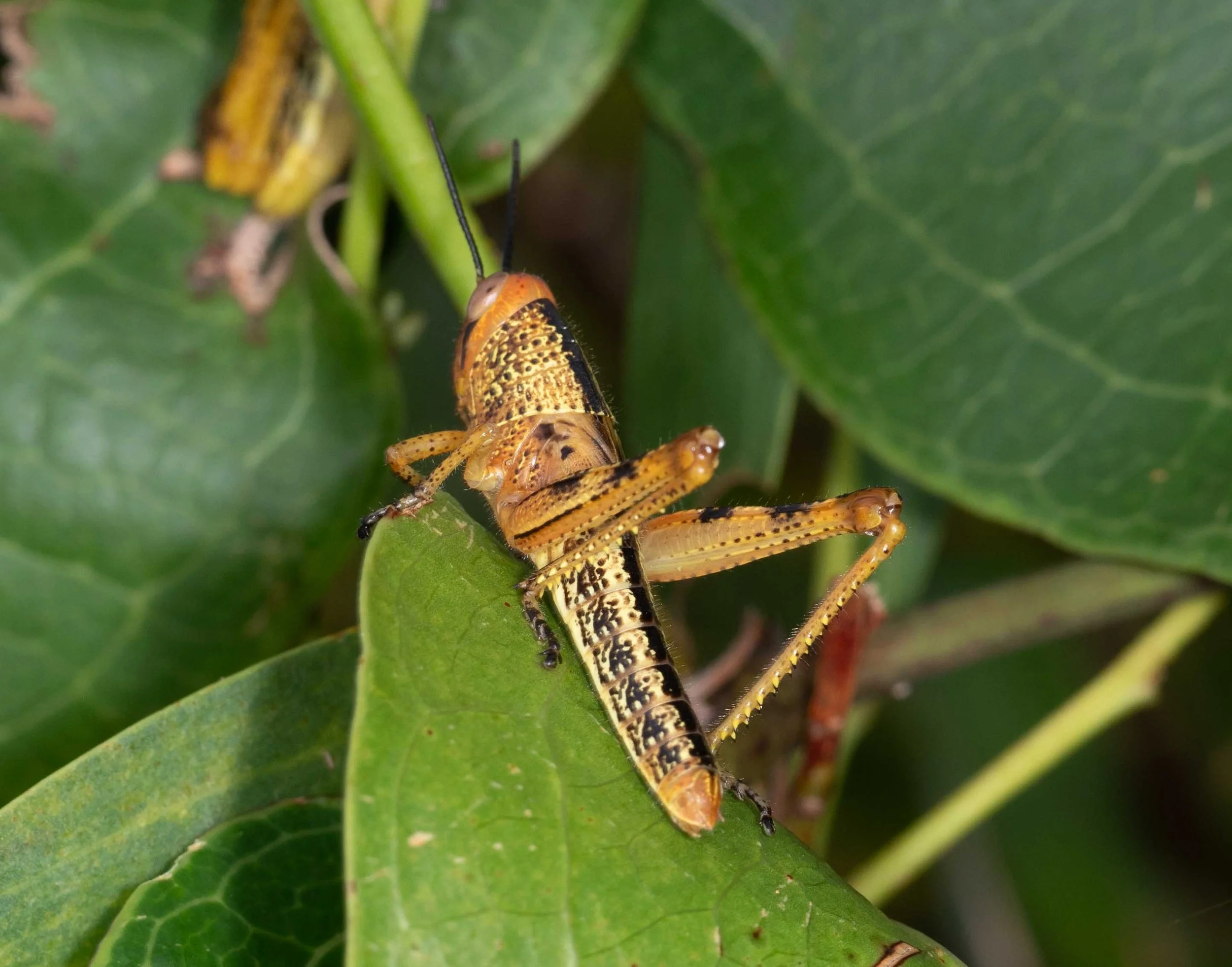
These colourful grasshoppers were so numerous in patches of vegetation that the sound of them hopping from leaf to leaf was enough to catch our attention. That is, if their brilliant colours hadn’t already stopped us in our tracks!
Valanga irregularis (nymph)
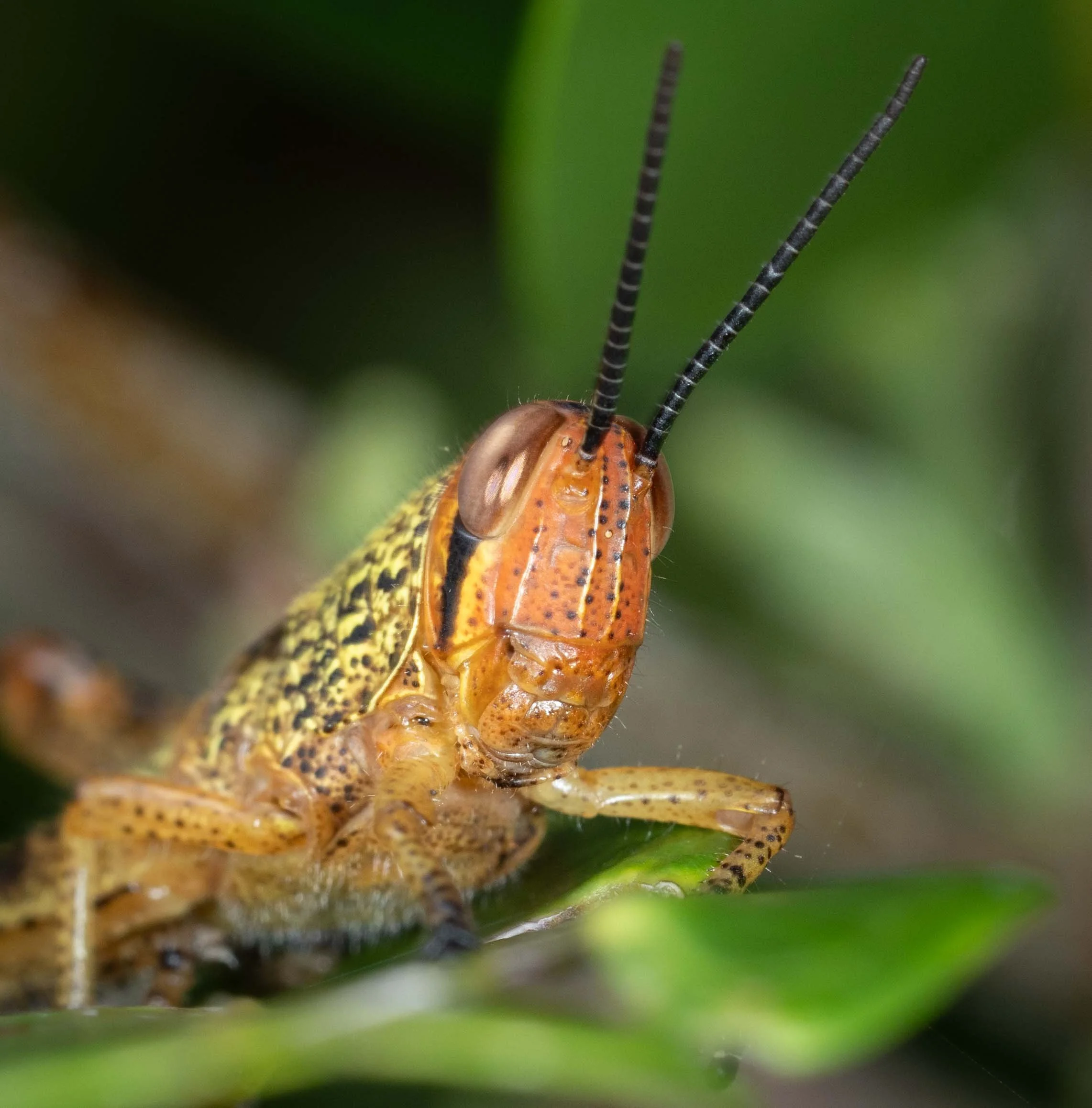
This Valanga species is called the ‘Giant Grasshopper’. By late summer, having reached the adult stage, they’ll be about 70mm long. Australia’s largest species of grasshopper! These were nymphs, however, and so less gigantic.
Valanga irregularis (nymph)
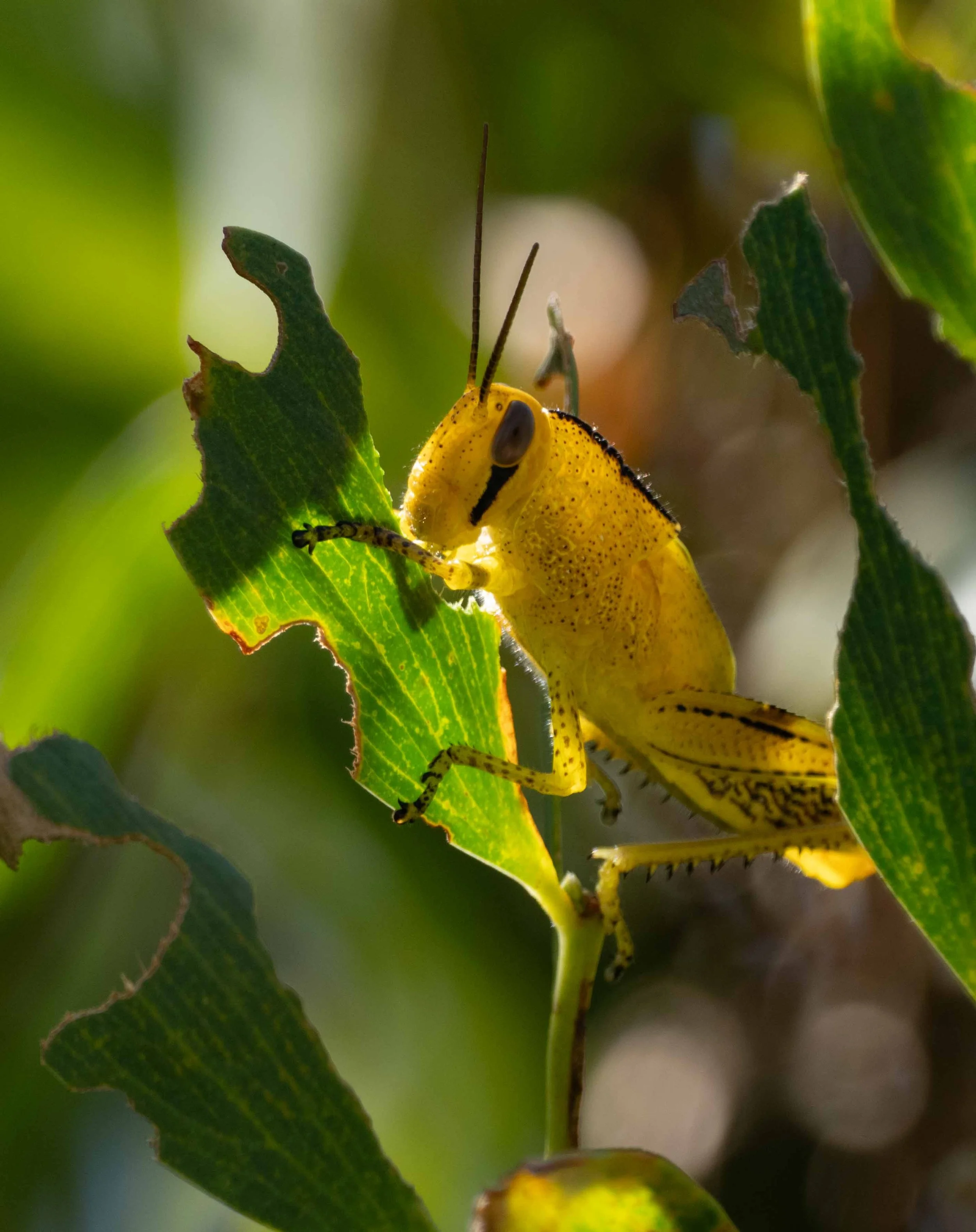
Amidst the hoards of tapestry-coloured Valanga we occasionally spotted a bright yellow grasshopper munching on the leaves. Despite some superficial similarities, this species belongs to a different genus. Adults are much less colourful than these brilliant nymphs.
Austracis proxima (nymph)
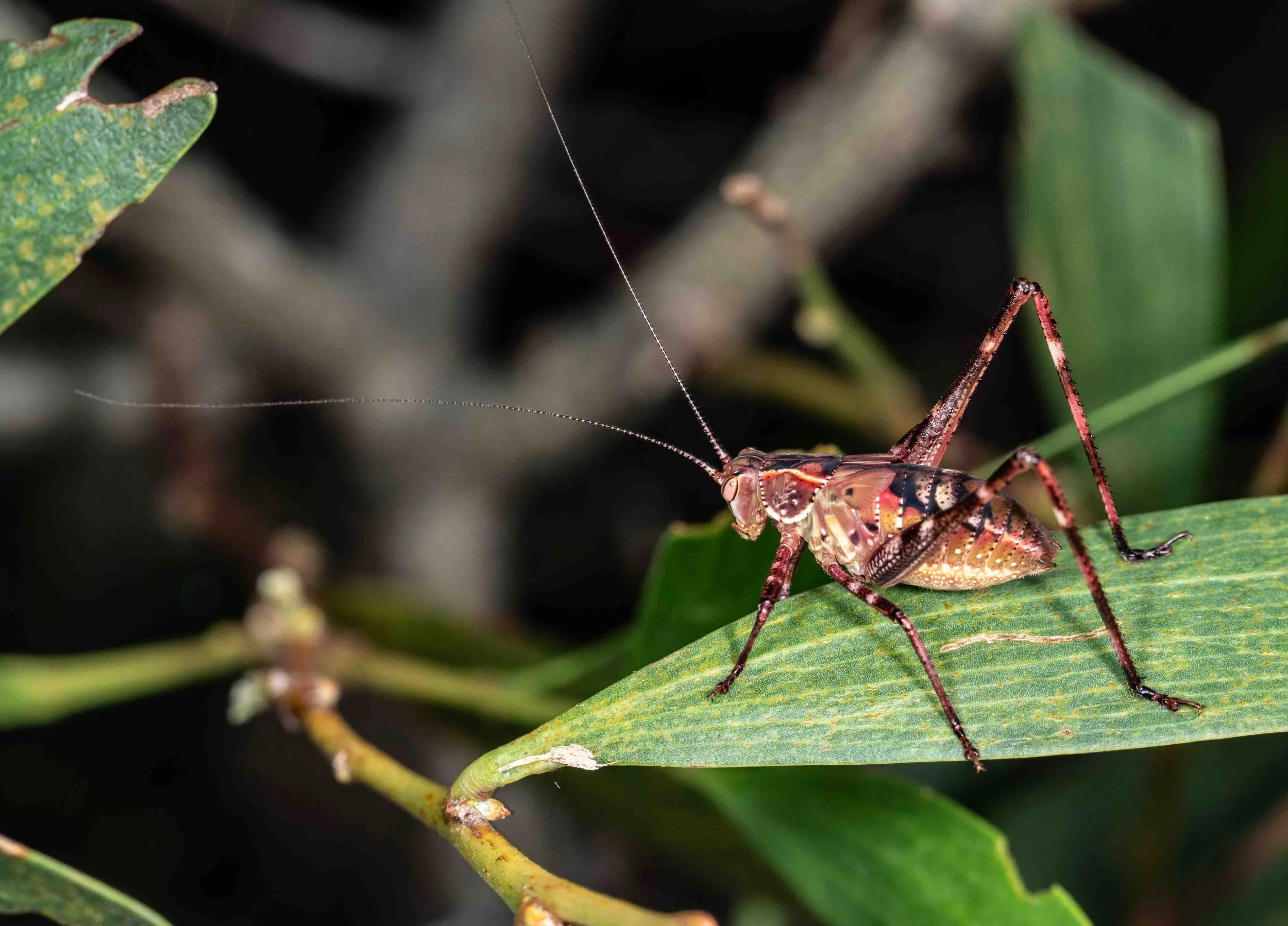
Among hundreds of grasshoppers along this stretch of heathland track, we also sighted a few katydids. And this colourful nymph was arguably the most spectacular!
Caedicia marginata (nymph)
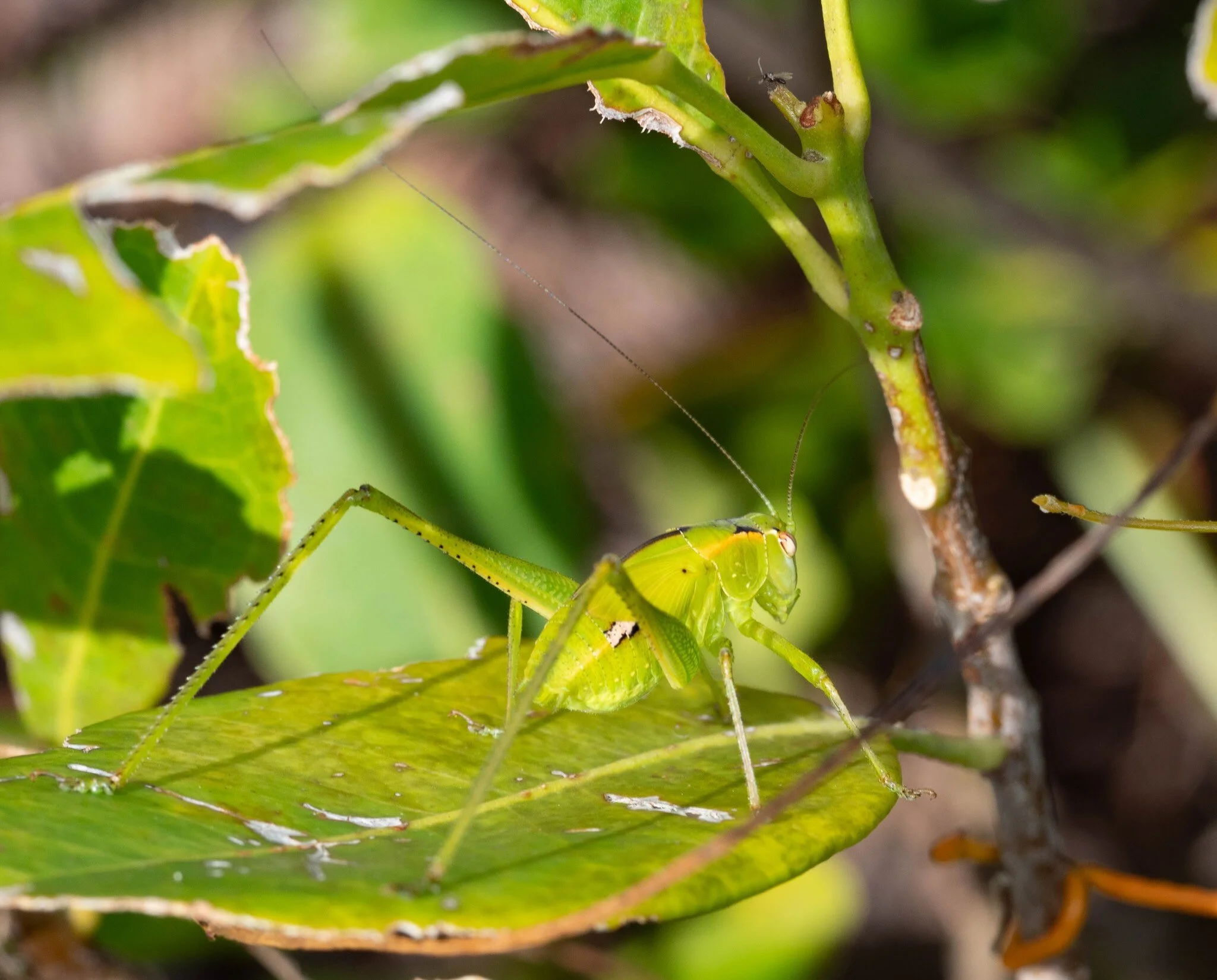
Insects that go through nymphal stages during their development often radically change in shape and colour. This is most likely the same species as the crimson nymph we found nearby. Note too the larger wings. These increase in size with each successive moult.
Caedicia marginata (nymph)
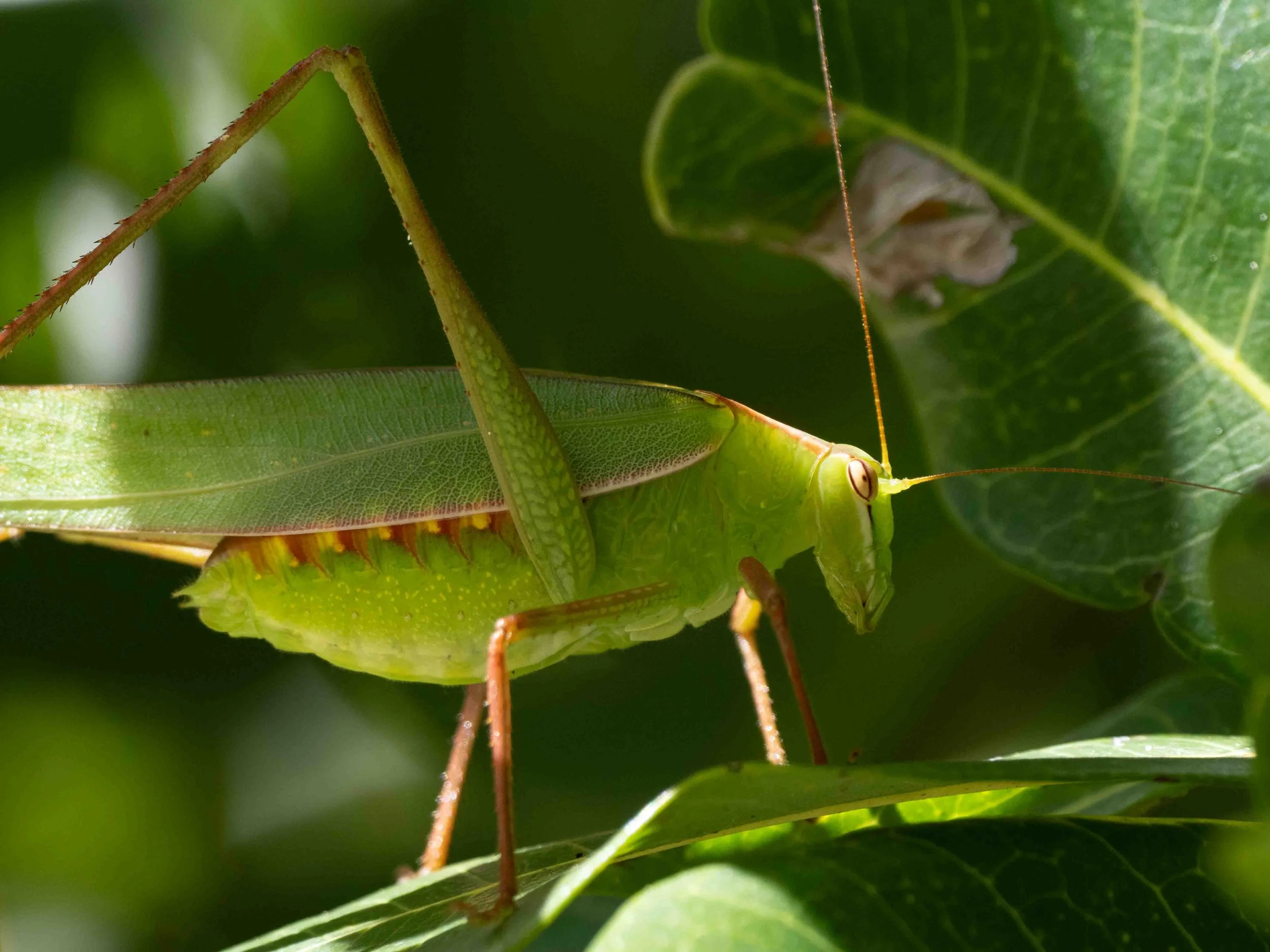
Fully grown, with long wings. And now it can fly!
Caedicia marginata (adult)
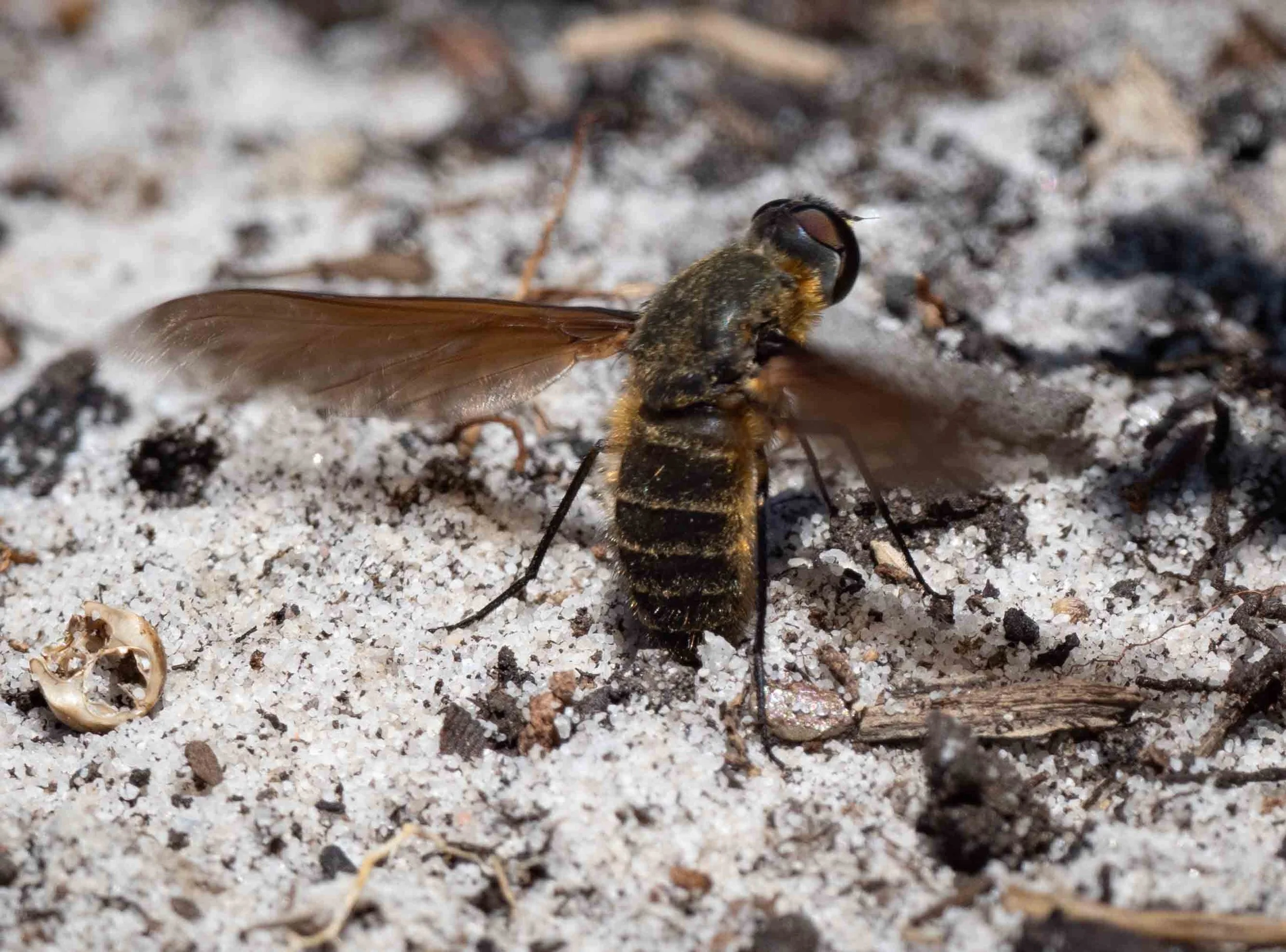
Bee flies such as this one gather sand into a chamber at the end of the abdomen - sand which will then coat their sticky, thin-shelled eggs. This sandy coating protects and probably camouflages the eggs when they are dropped onto the sand.
Comptosia sp.
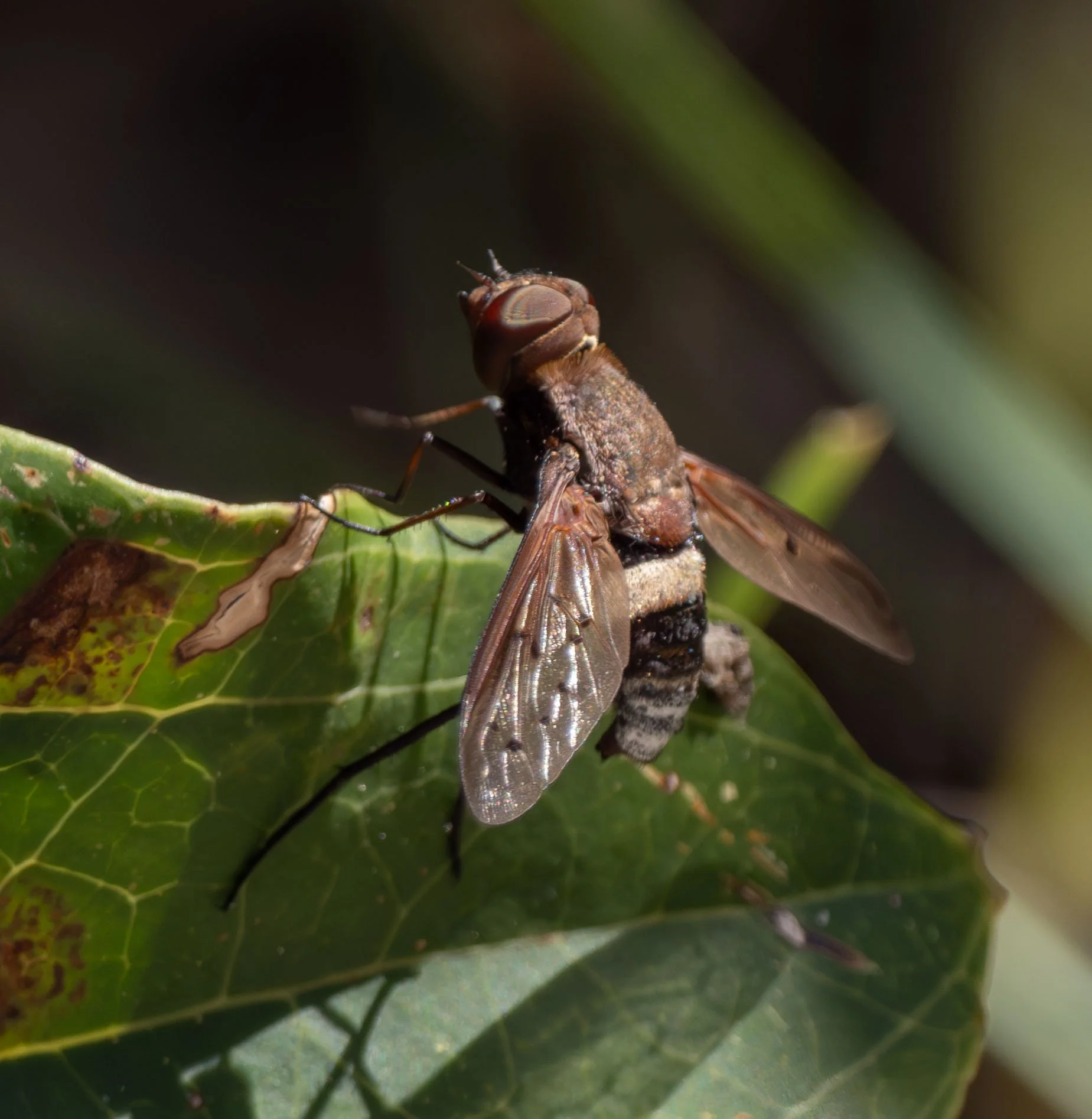
Yet another bee fly. A huge one! And yet another species we’ve not seen before.
Ligyra are known parasitoids of ground-nesting wasps … so the nearby sand wasp larvae are probably among their local hosts.
Ligyra sp.
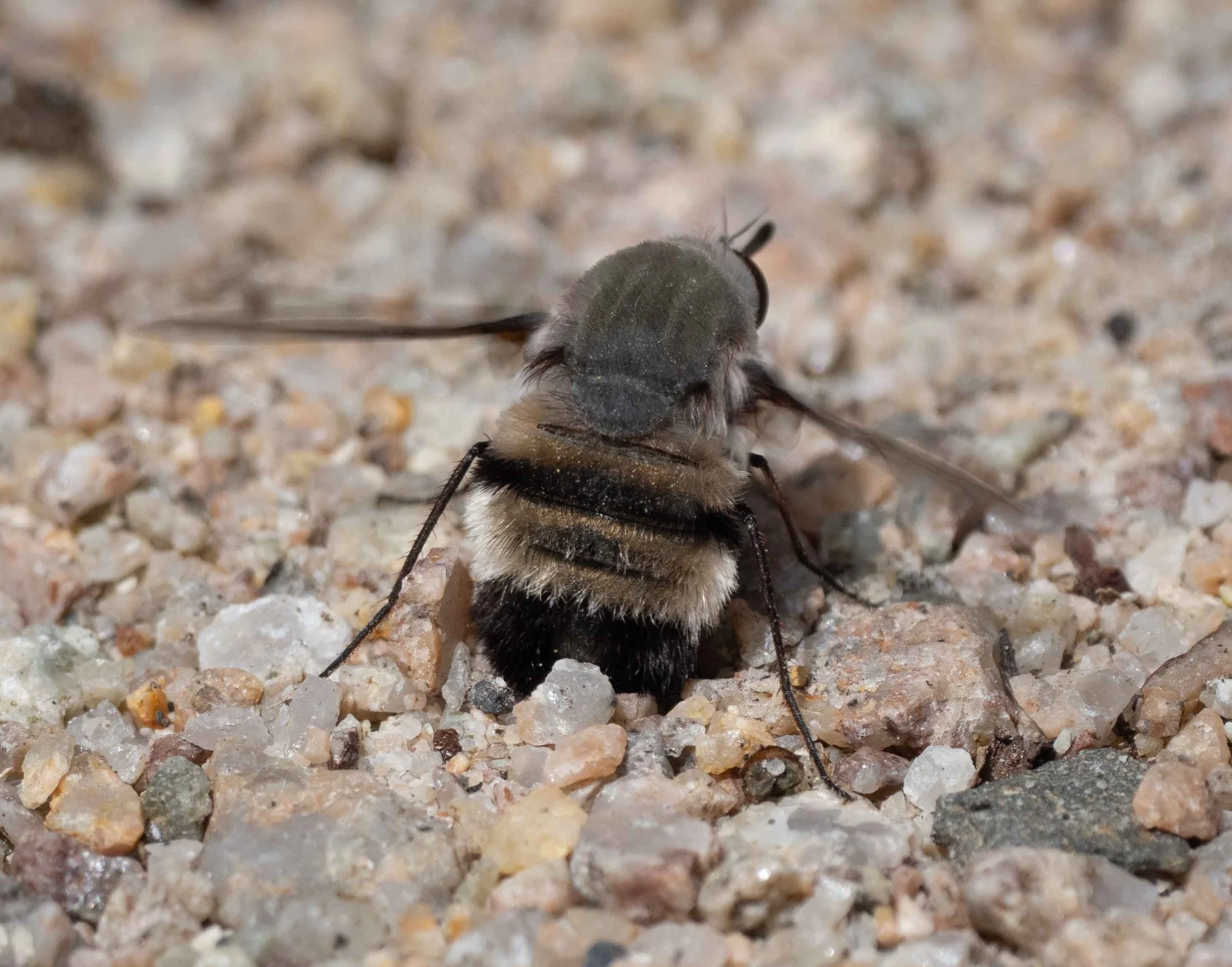
Very like a species we get at home. And yet another parasite of ground-nesting bees and wasps.
Meomyia sp.
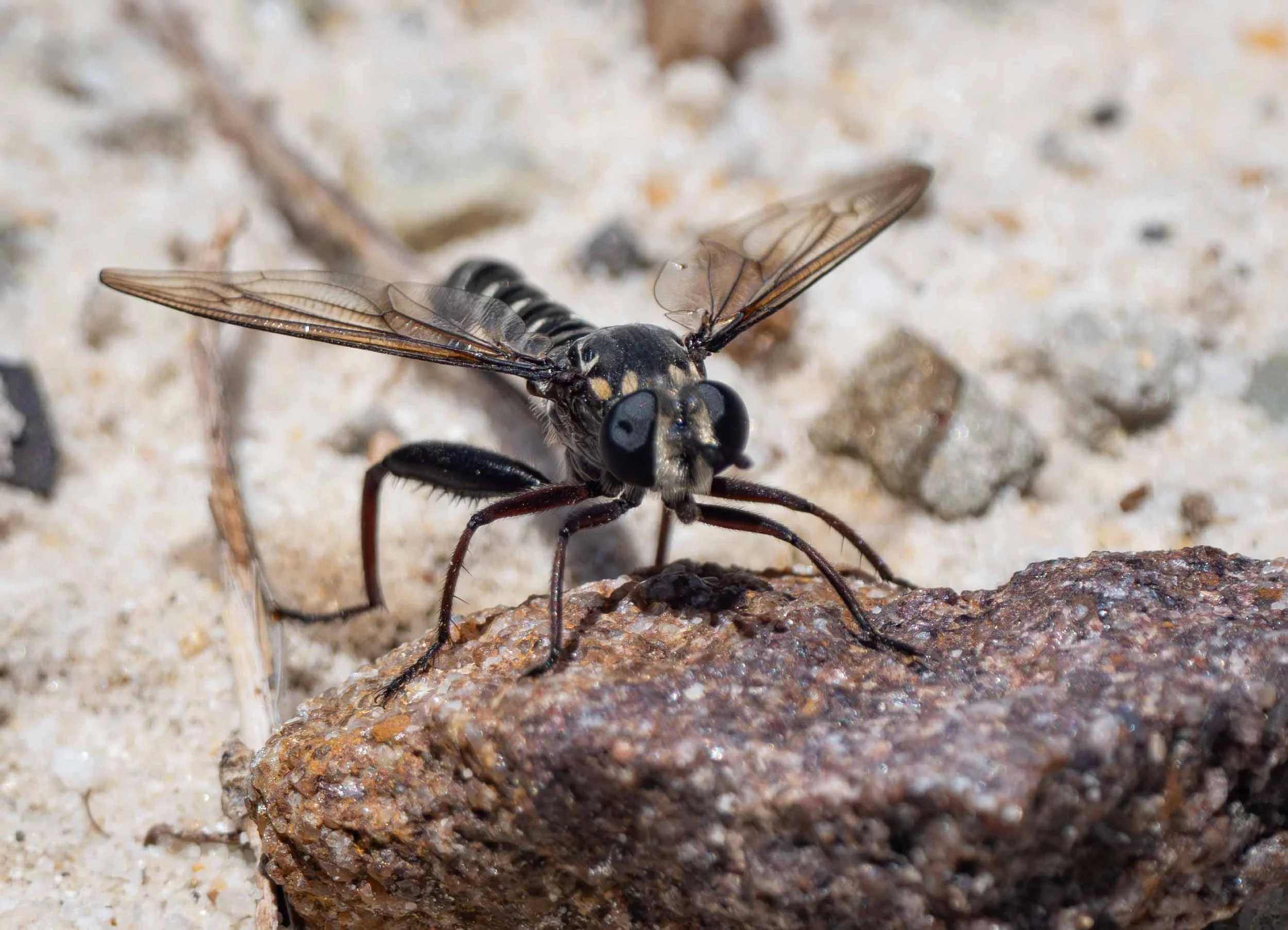
Despite its large size and rather ferocious, dragonfly-like appearance, this ‘Mydas fly’ adult is not a hunter. Eggs are dropped in the sand, where the larvae develop into active predators. Just one more problem for the nesting sand wasps to contend with!
Militinus sp.
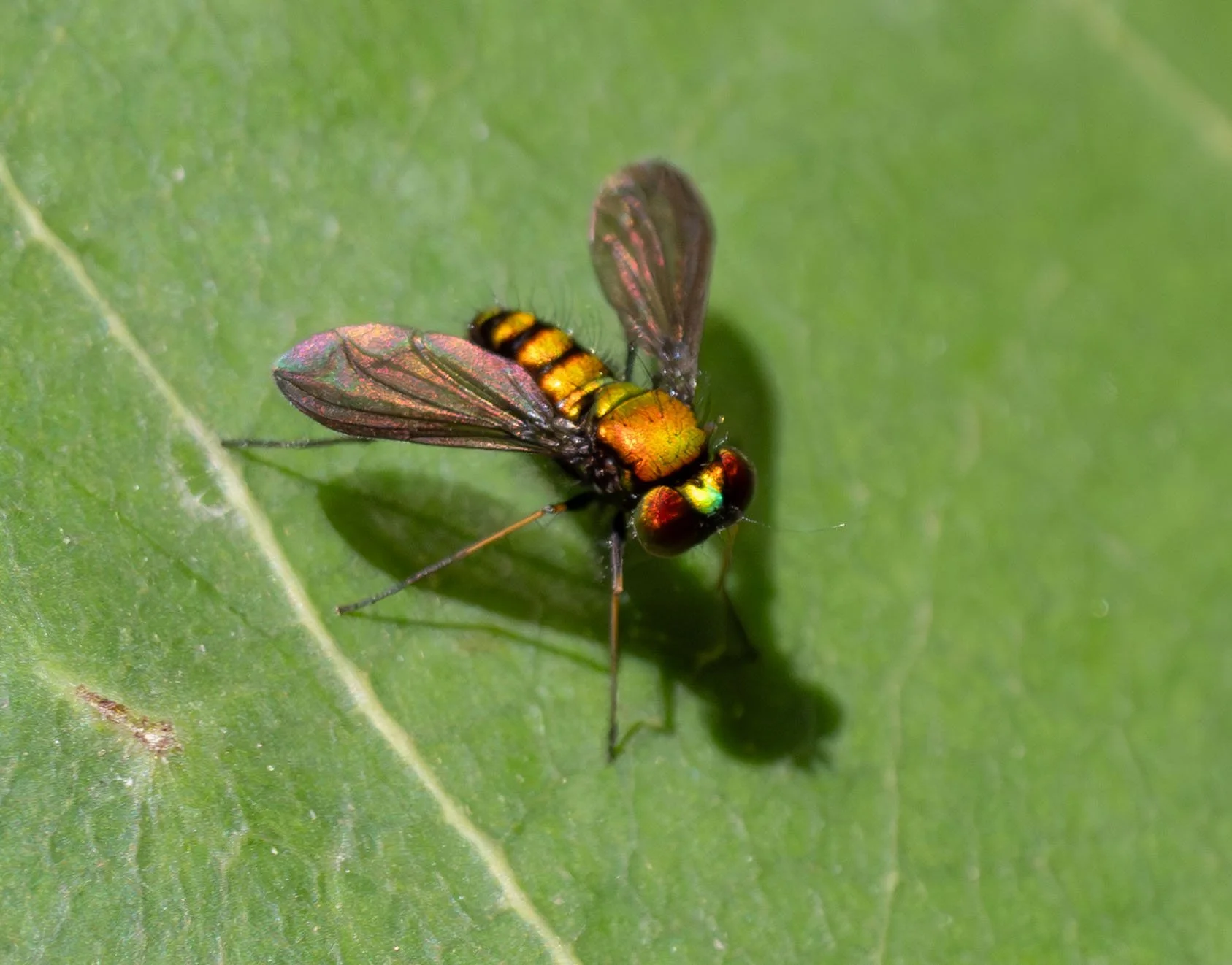
Not all flies are drab. Small, brilliantly metallic flies such as this are a familiar sight to most gardeners. They are predators, feeding on soft-bodied prey such as springtails and tiny worms.
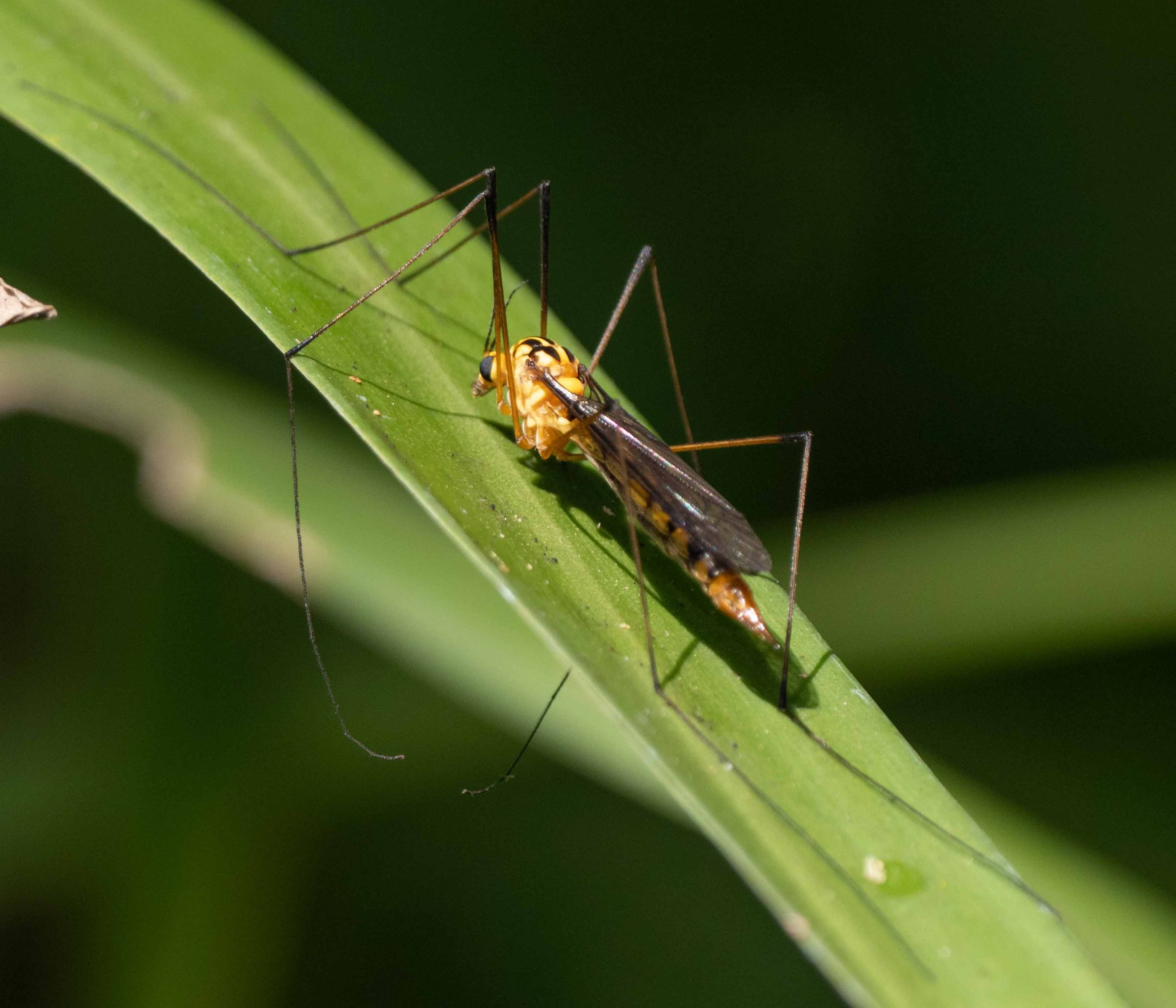
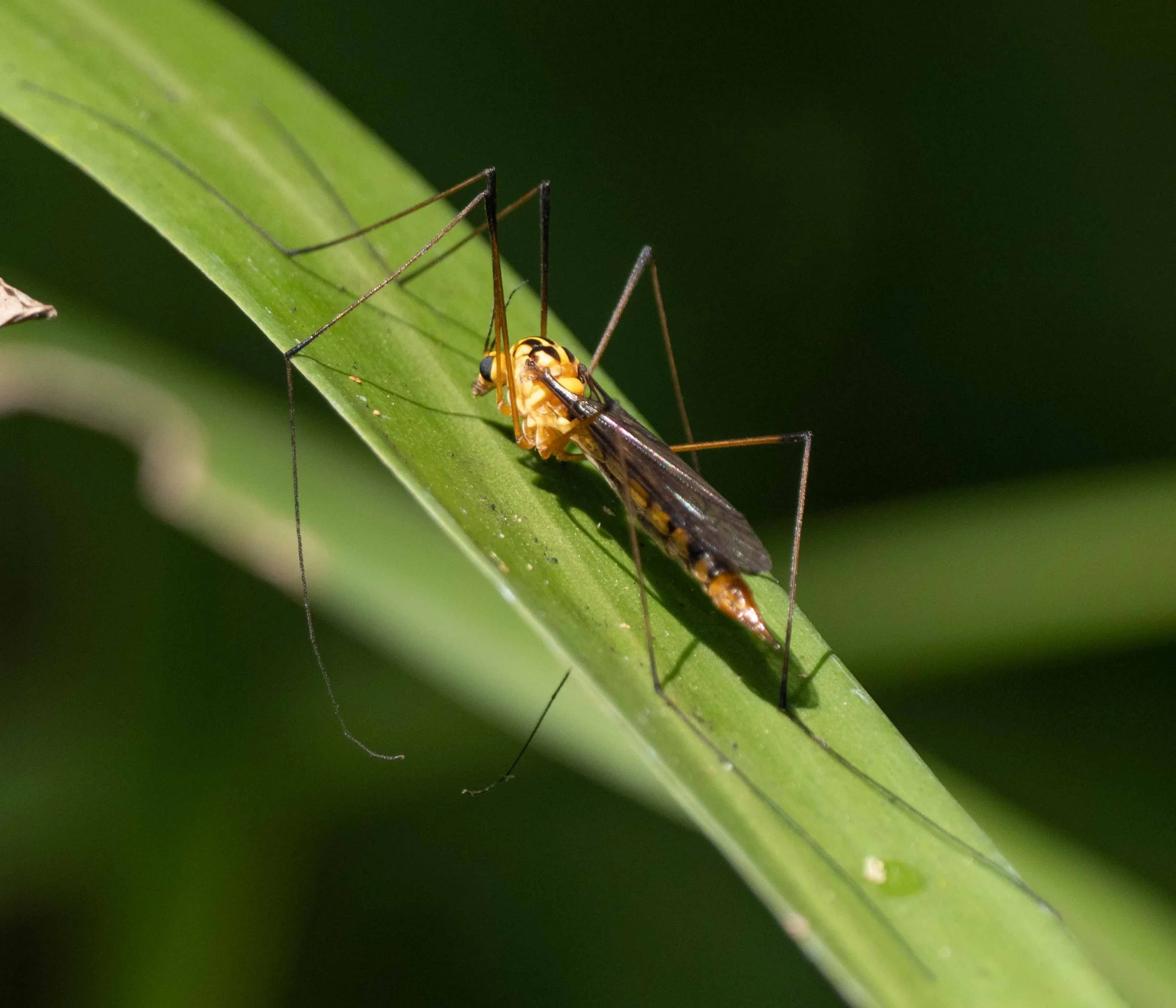
Another colourful fly, this one a ‘crane fly’ – a huge family of delicate, long-legged flies found in most humid environments. I came across a large number of these tiger-striped ones gathering on low plants at the edge of the rainforest.
Nephrotoma sp.
Finally, back to those large spider wasps. In this short video, Paul captures the bizarre vibrations of this digging female’s body as she tamps down the excavated sand with her abdomen. And yet another one of those pesky ants.
Note: the video speed is in real-time. She really did vibrate her entire body so fast it was almost a blur!
Just a few days in Yamba … and we found the sand wasps I was seeking, plus a few other interesting insects in the heathland and nearby stands of littoral rainforest.
A couple of weeks visiting family provides us with the excuse to prowl the varied natural habitats of this nature-rich part of northern NSW.
31st July to 12th August, 2023
During a short stay with family on the edge of rainforest in northern NSW we uncover a vast array of unfamiliar insects.
At Yamba in northern NSW, we are treated to views of a nesting pair of Eastern Ospreys - up close!