1
2
3
4
5
6

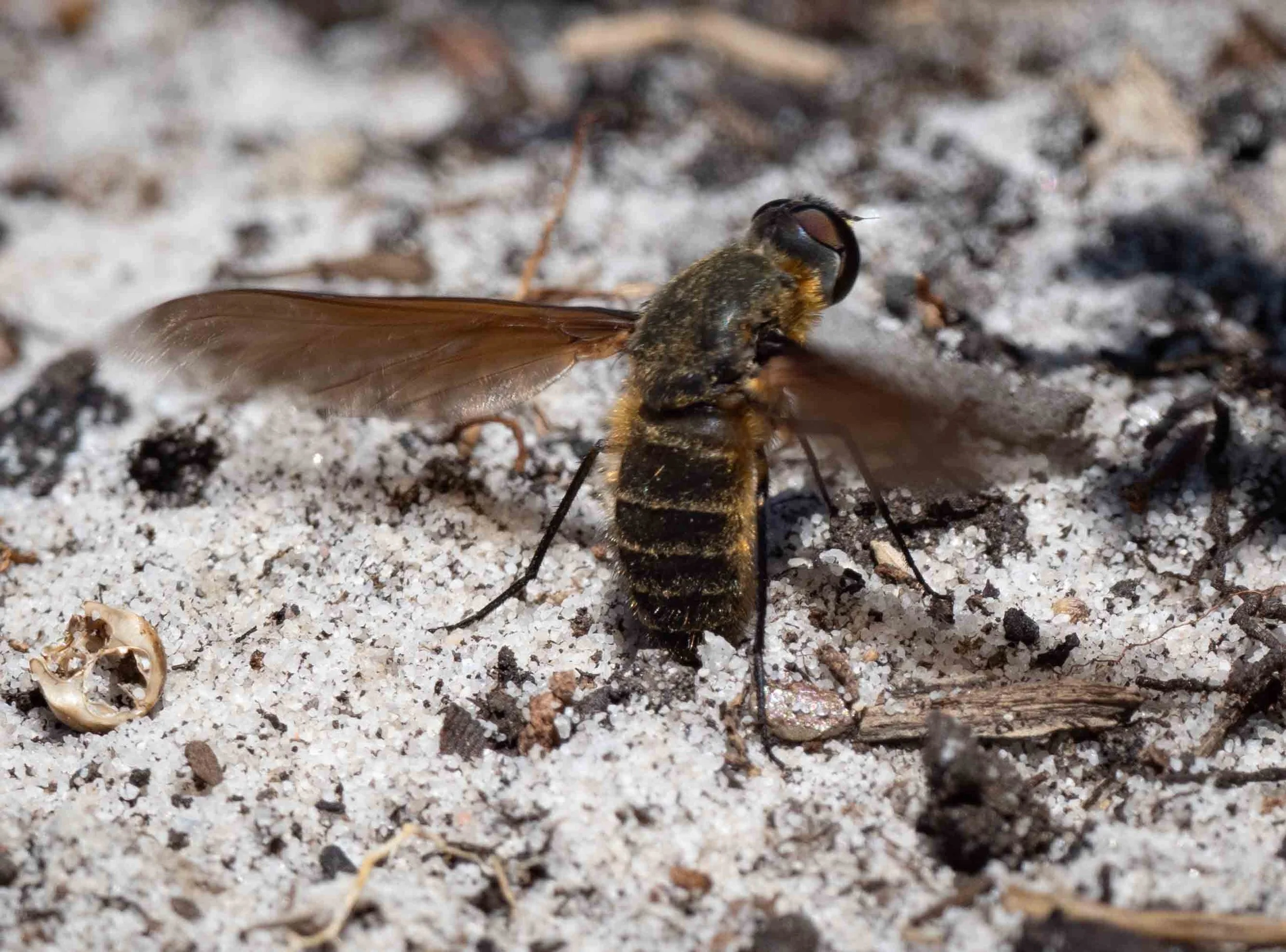
Bee flies such as this one gather sand into a chamber at the end of the abdomen - sand which will then coat their sticky, thin-shelled eggs. This sandy coating protects and probably camouflages the eggs when they are dropped onto the sand.
Comptosia sp.
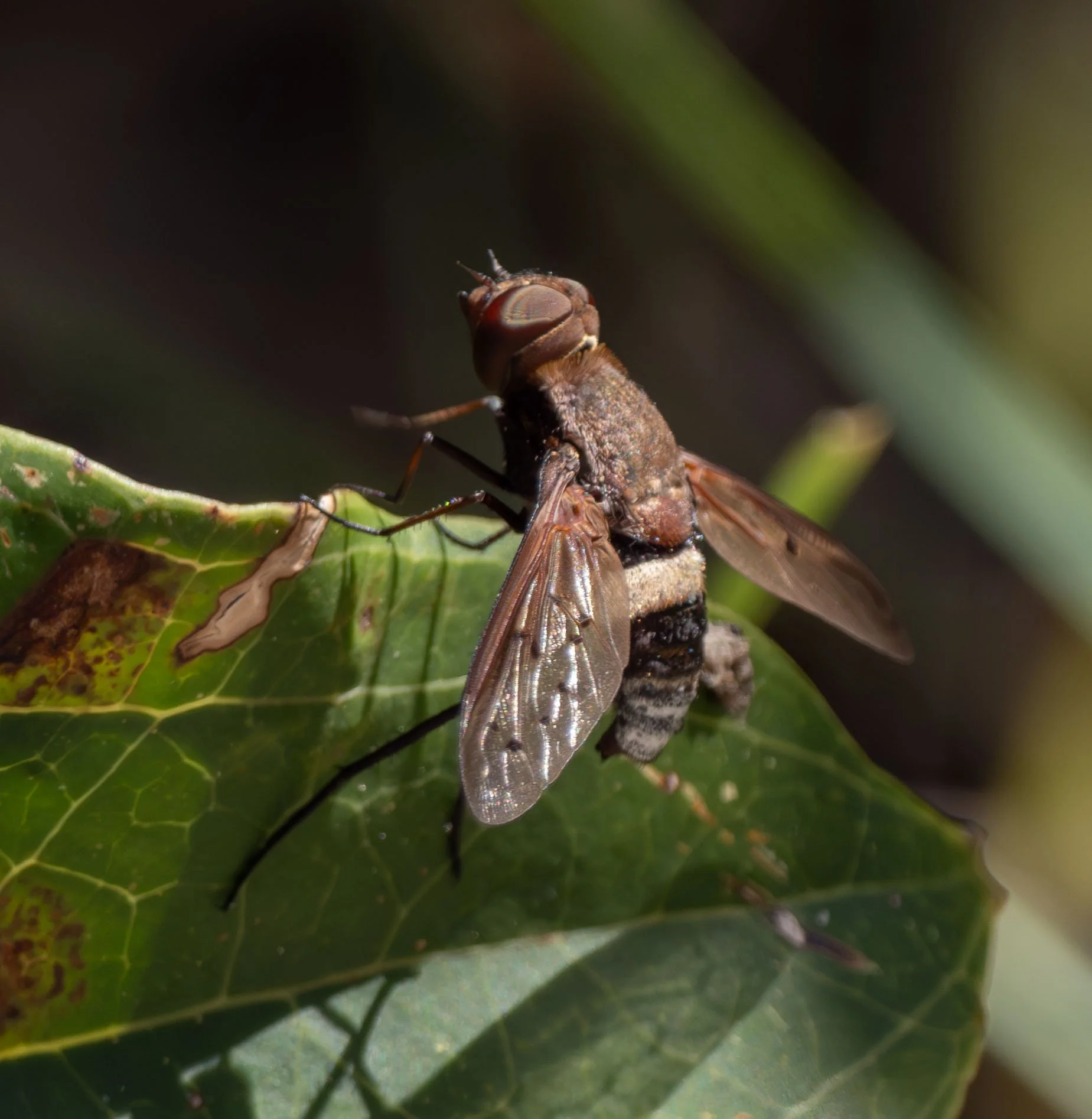
Yet another bee fly. A huge one! And yet another species we’ve not seen before.
Ligyra are known parasitoids of ground-nesting wasps … so the nearby sand wasp larvae are probably among their local hosts.
Ligyra sp.
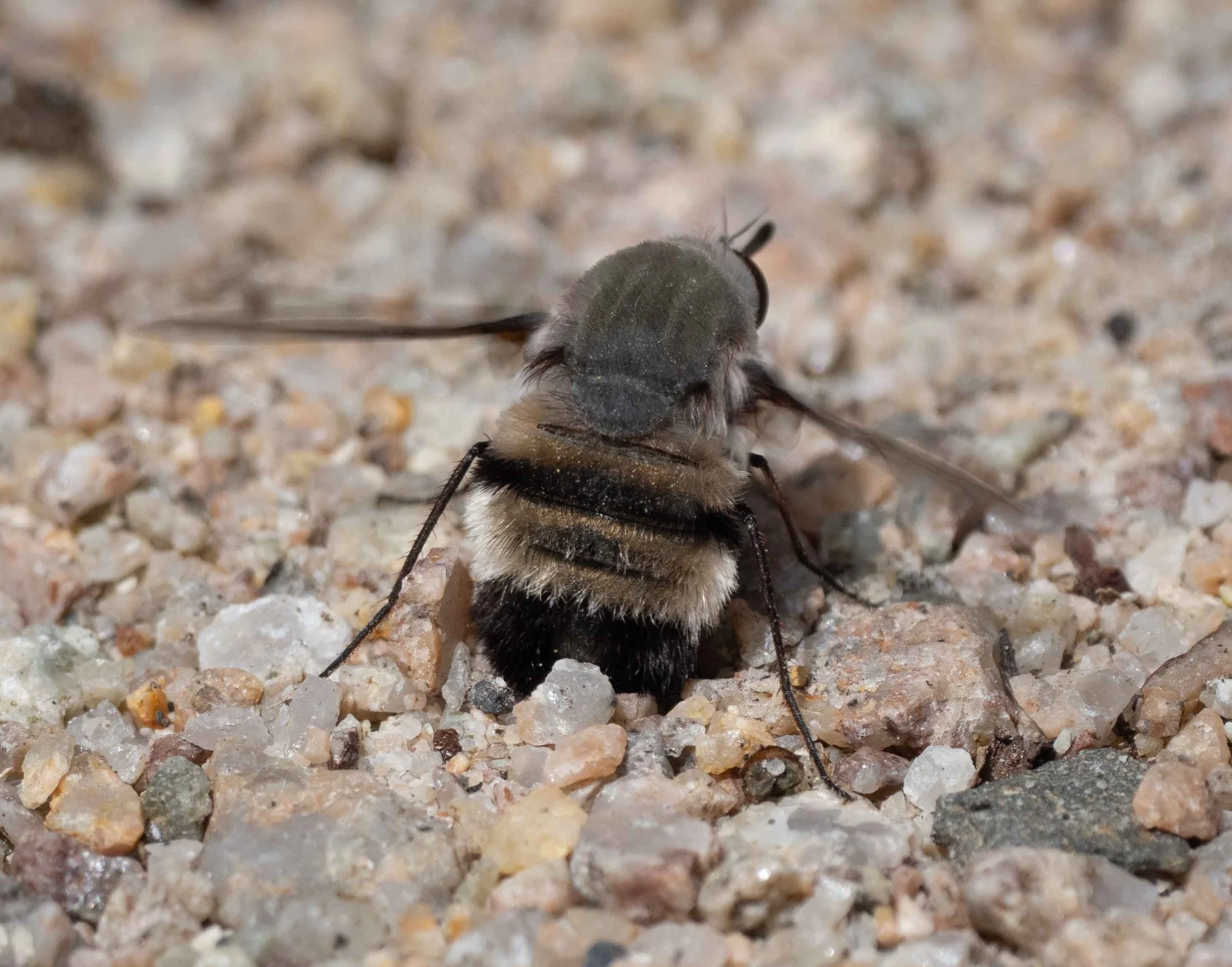
Very like a species we get at home. And yet another parasite of ground-nesting bees and wasps.
Meomyia sp.
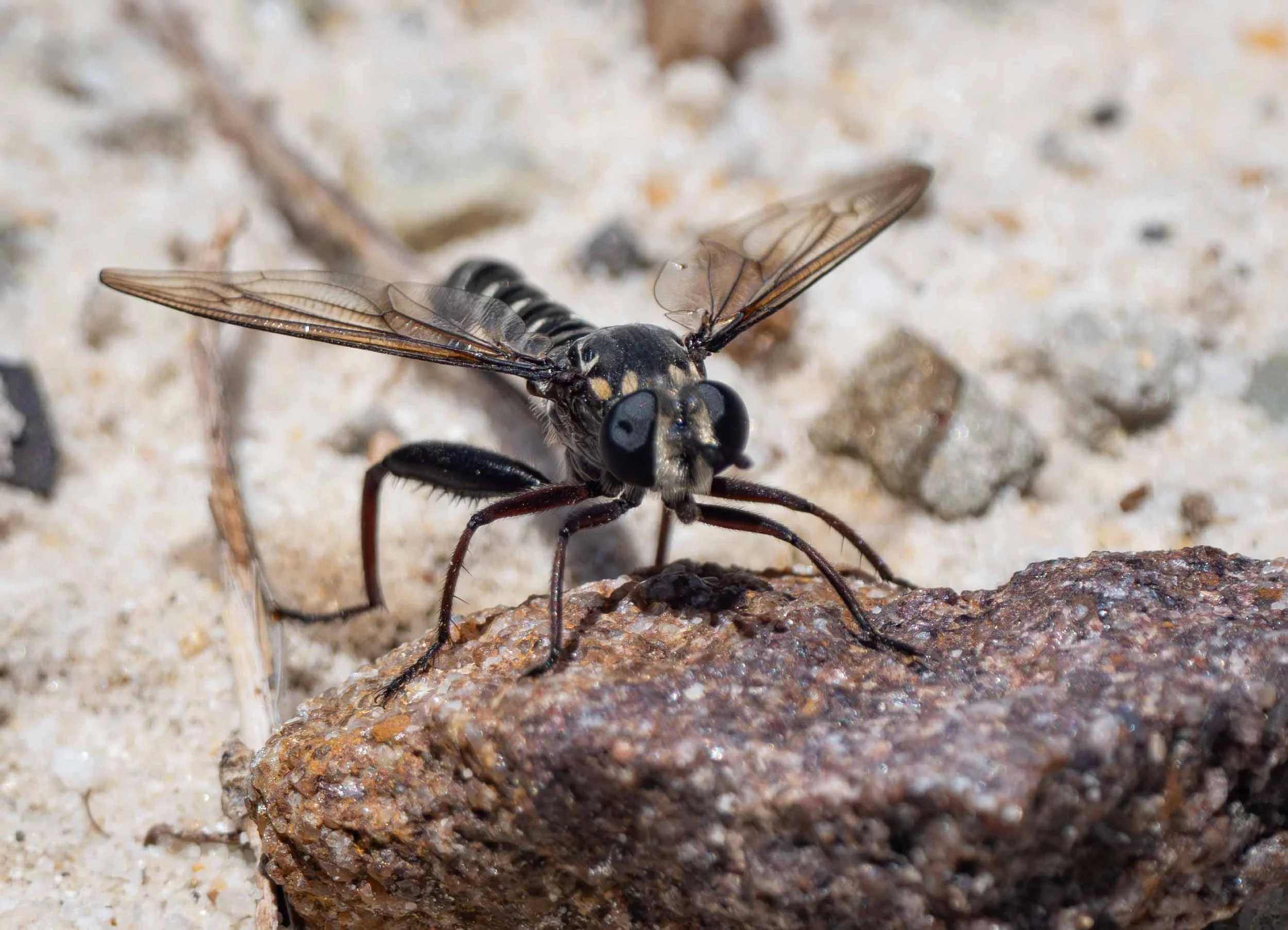
Despite its large size and rather ferocious, dragonfly-like appearance, this ‘Mydas fly’ adult is not a hunter. Eggs are dropped in the sand, where the larvae develop into active predators. Just one more problem for the nesting sand wasps to contend with!
Militinus sp.
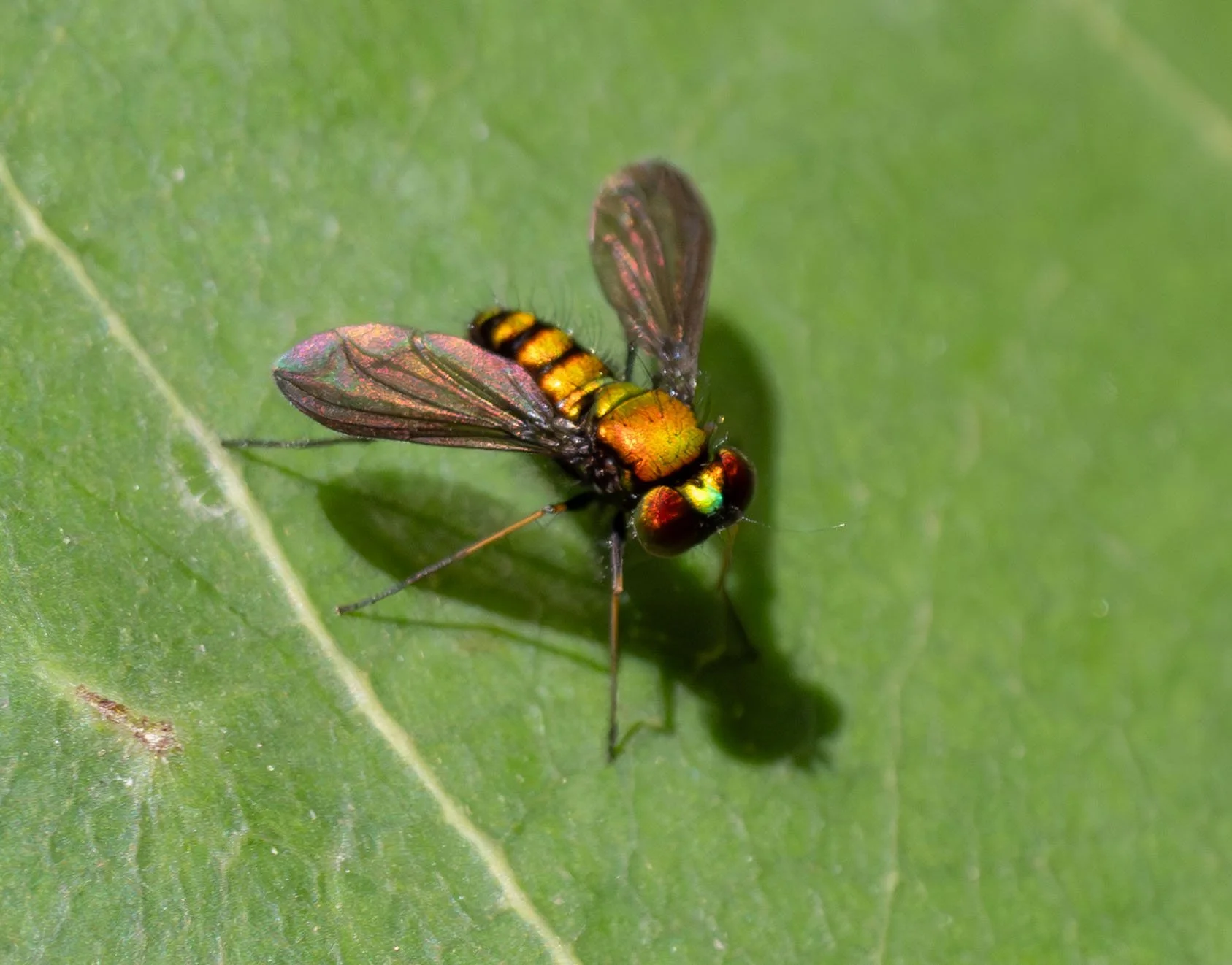
Not all flies are drab. Small, brilliantly metallic flies such as this are a familiar sight to most gardeners. They are predators, feeding on soft-bodied prey such as springtails and tiny worms.
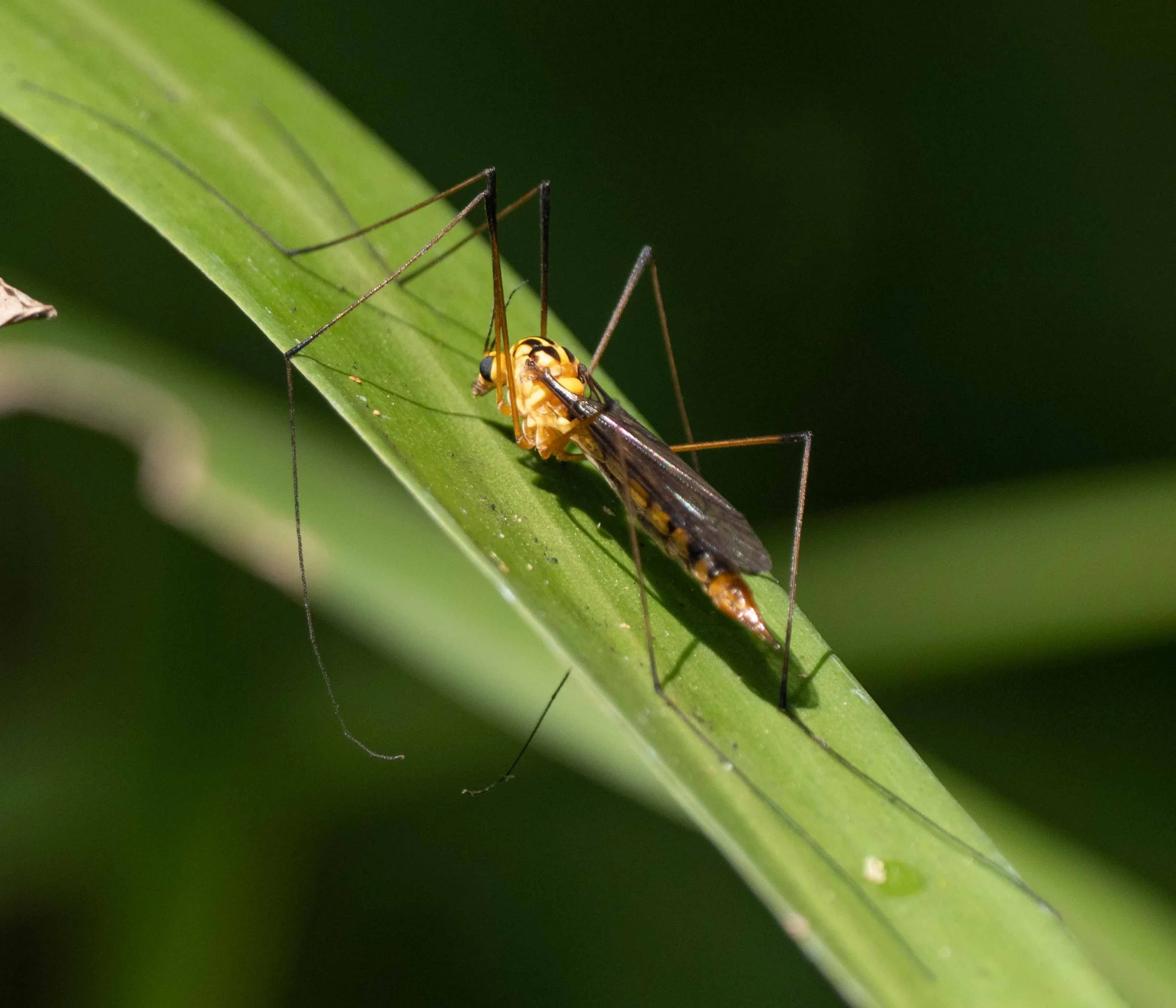
Another colourful fly, this one a ‘crane fly’ – a huge family of delicate, long-legged flies found in most humid environments. I came across a large number of these tiger-striped ones gathering on low plants at the edge of the rainforest.
Nephrotoma sp.