1
2
3
4
5
6
7
8
9

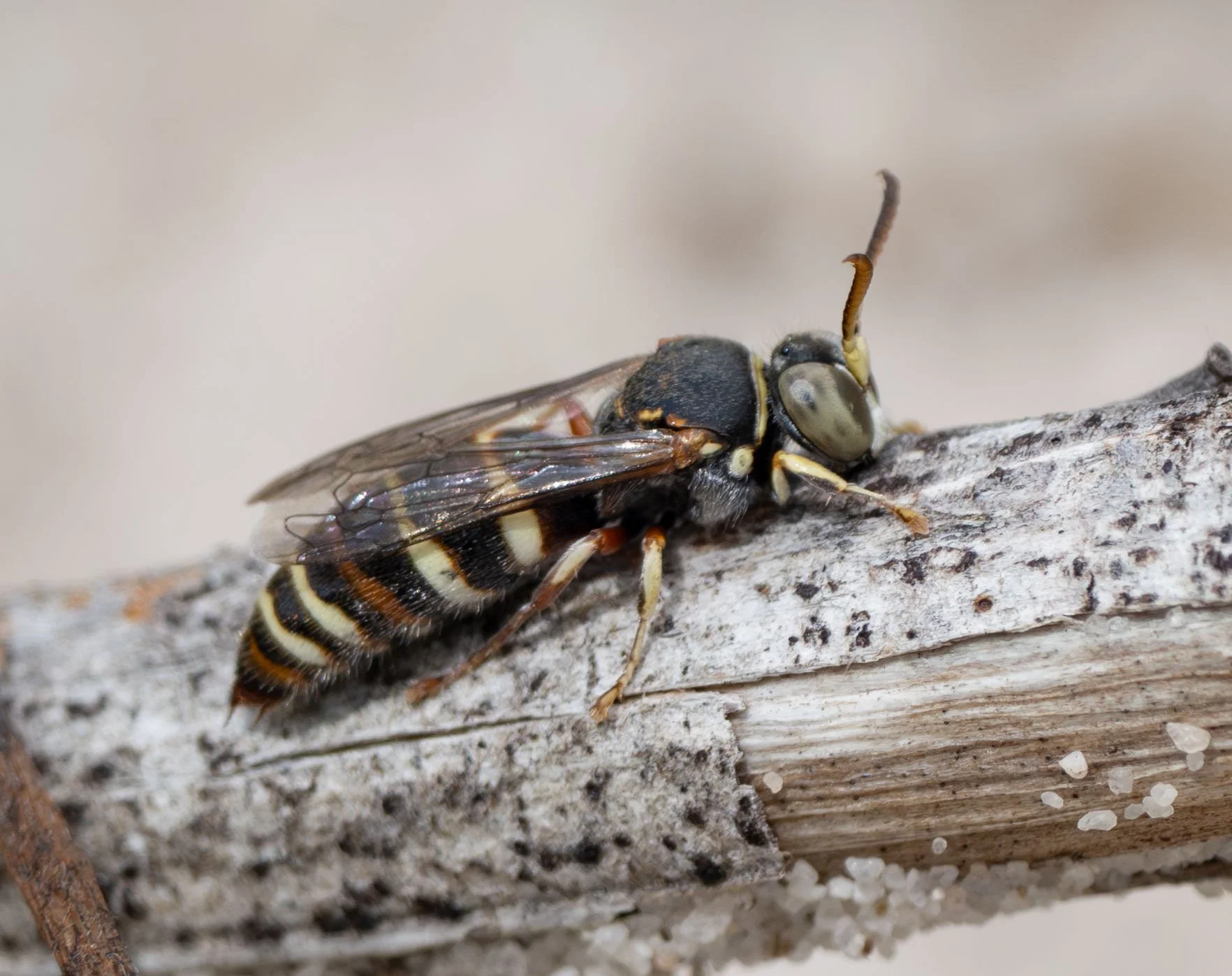
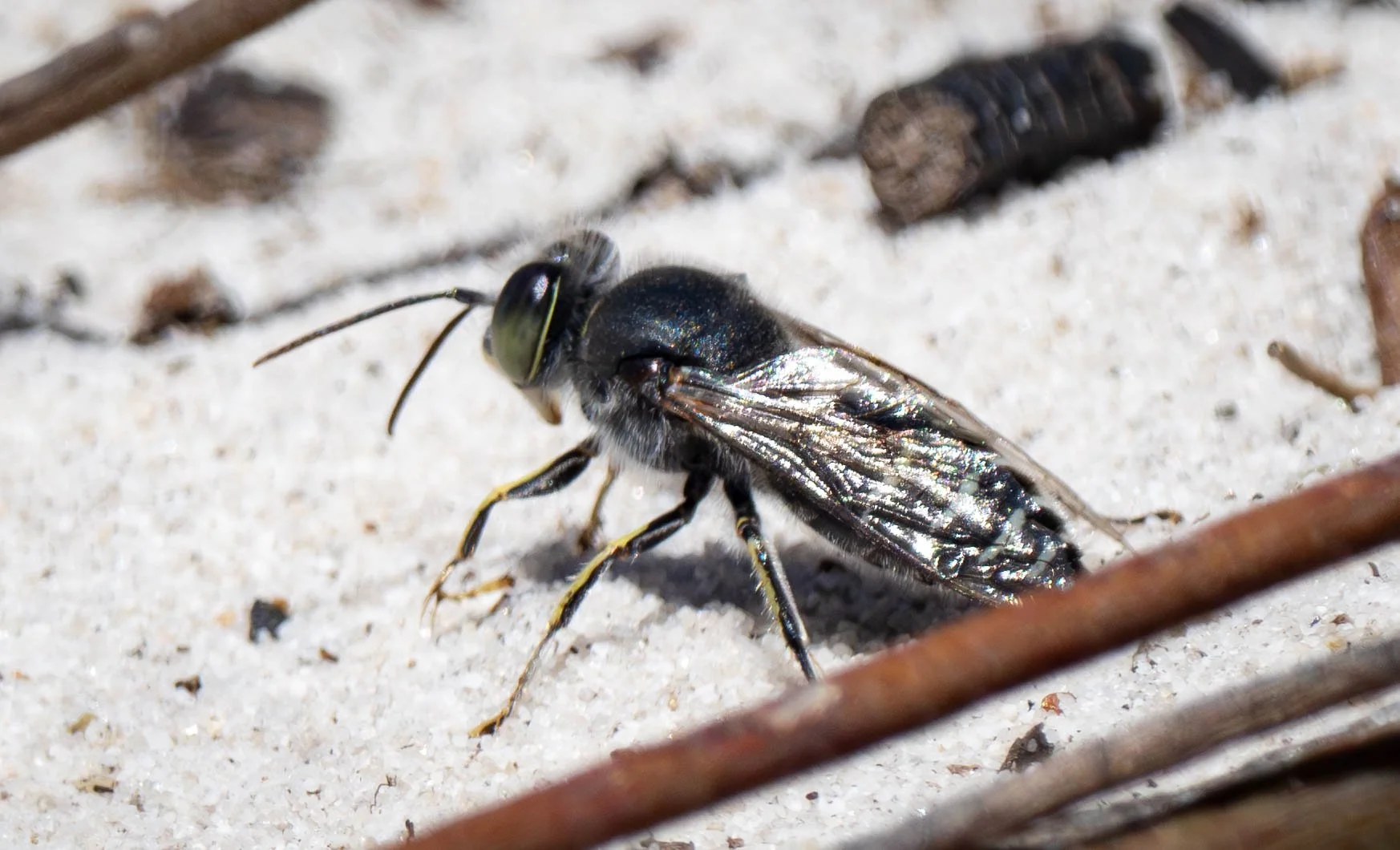
We went seeking sand wasps along a sandy track in heathland … and sure enough, these small male Bembecinus were patrolling the same short stretch as in previous seasons. Indeed, on day 1 of our searching I struggled to spot a female. The males would zip about in low flight, then return to favoured perches atop sticks or small rocks.
Bembecinus sp. (male)
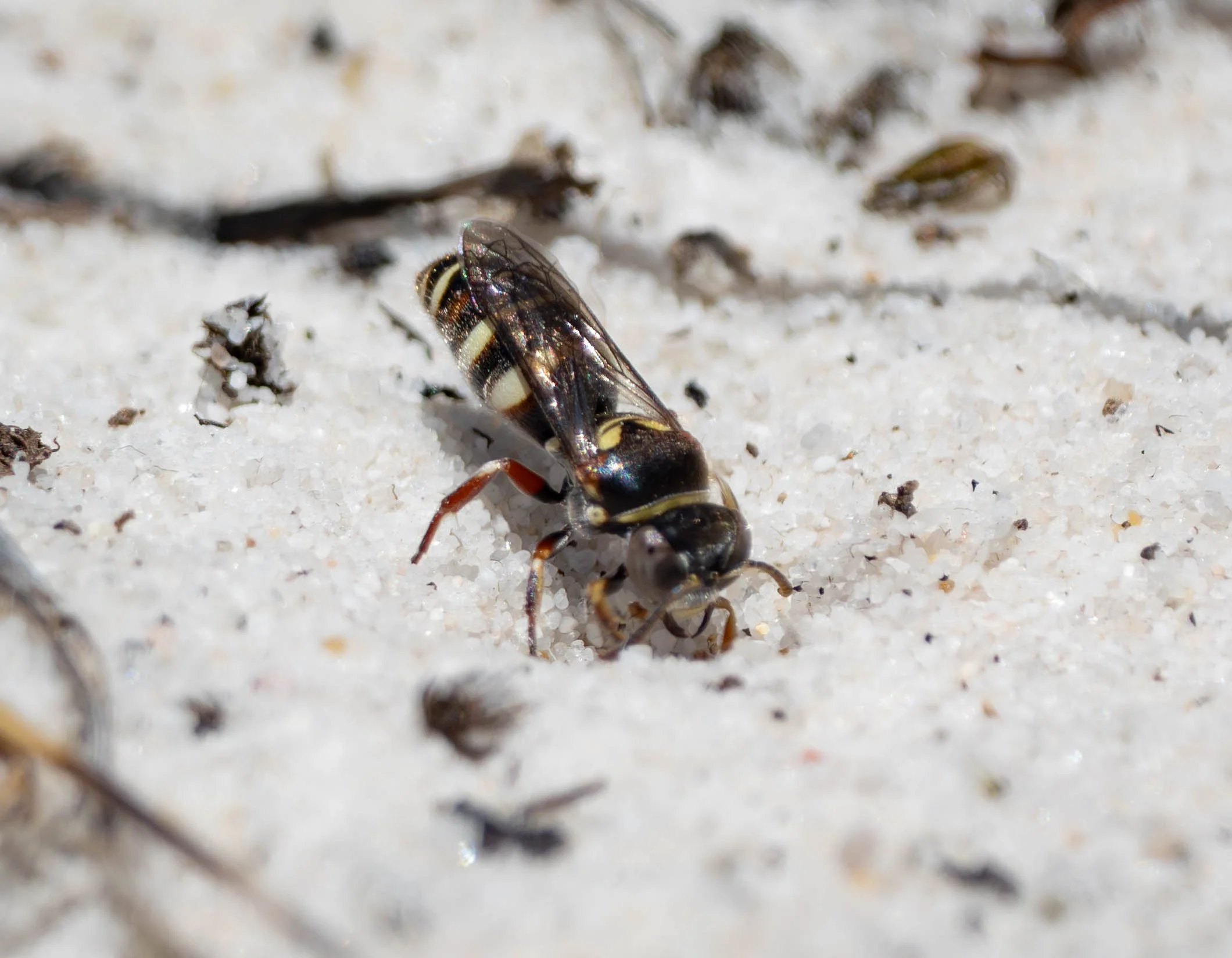
The same site two days later … under cloudless skies in the heat of late morning … and female Bembecinus were out in force. Huge numbers, but largely confined to one section of the track. This is clearly a favoured nesting site, and they were digging with intent.
Bembecinus sp. (female)
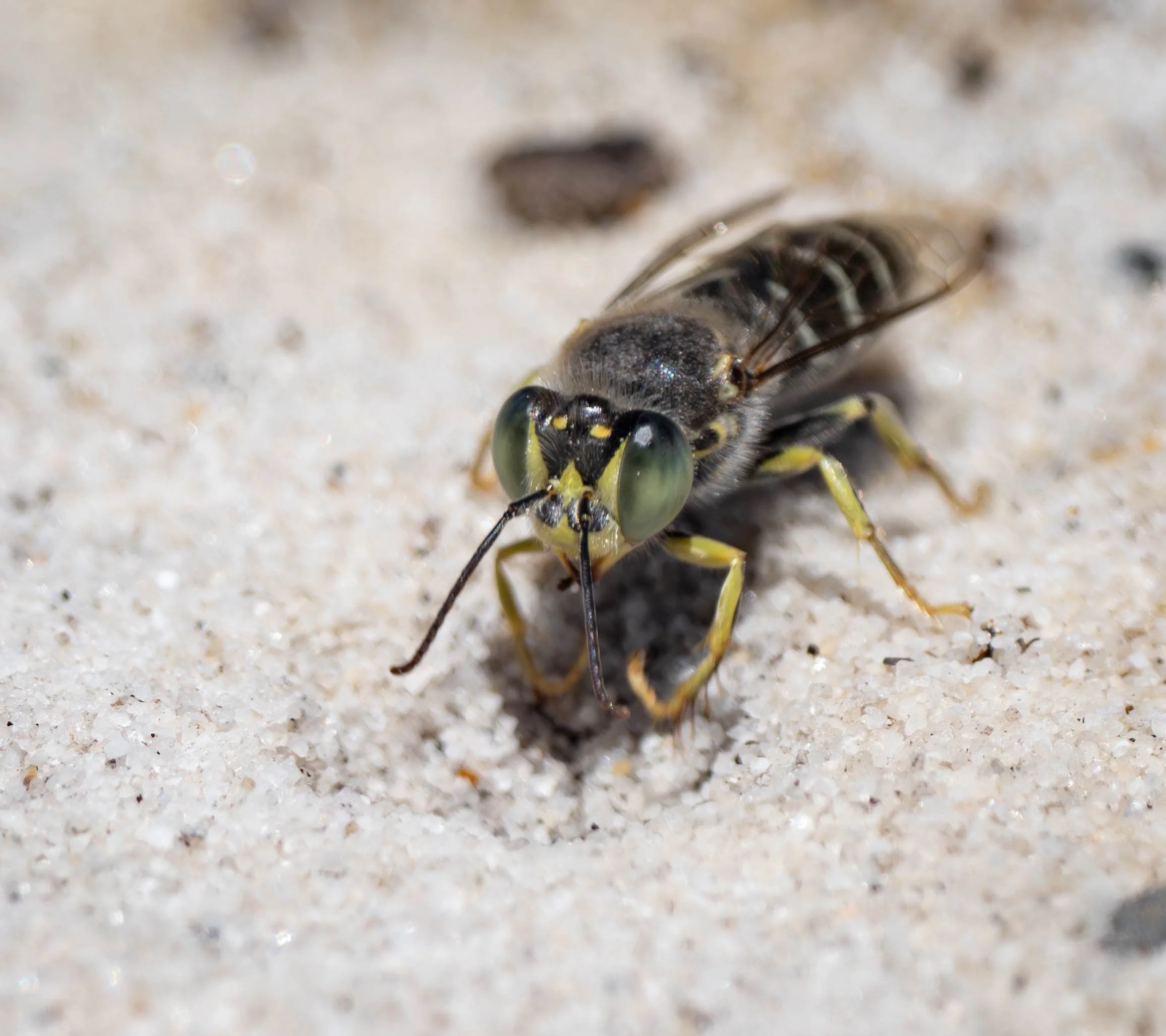
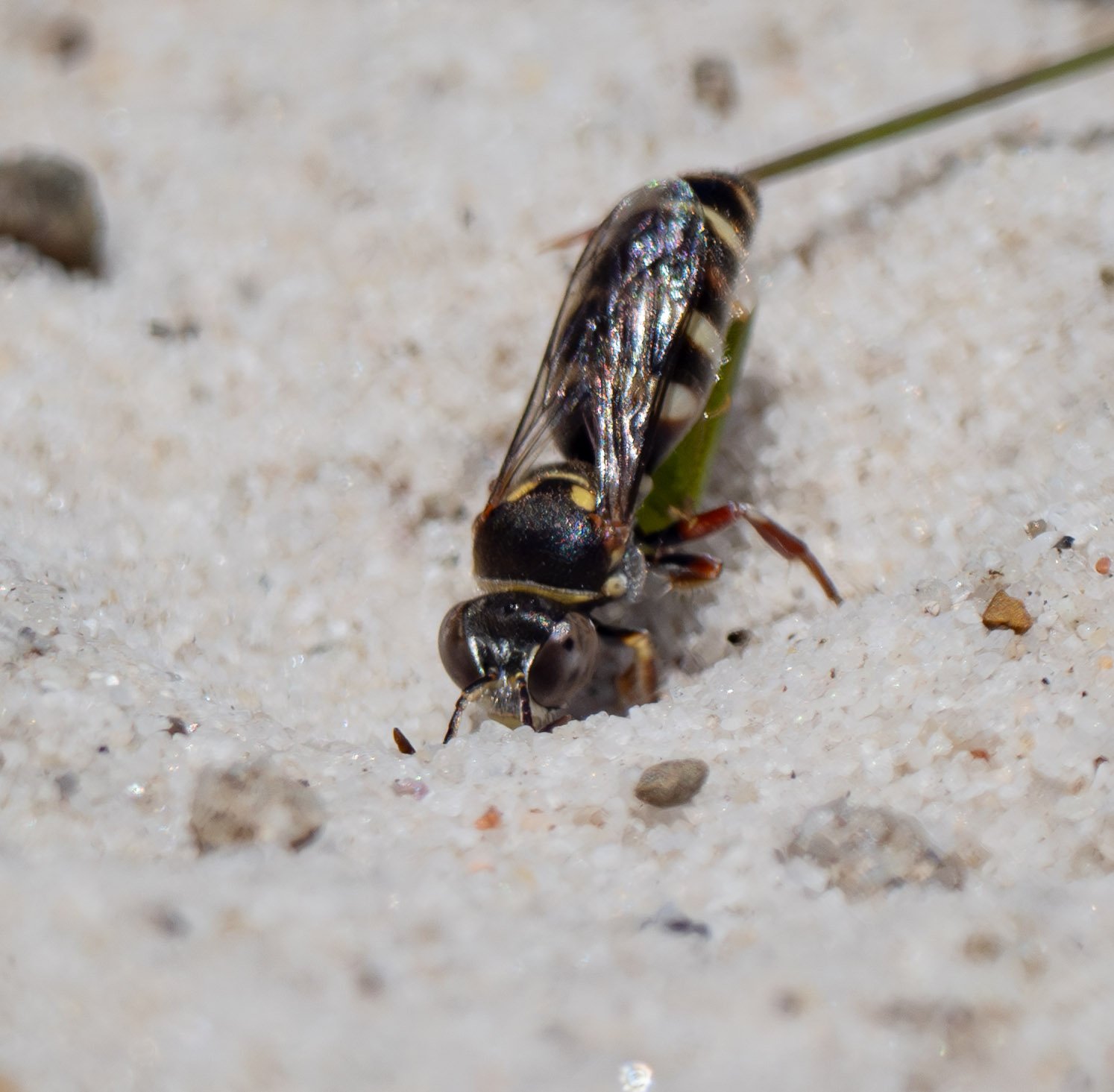
Bembix … the genus I was most keen to see! While I’ve yet to confirm the species ID, but I’m confident it will be one of those I’m seeking.
Bembix sp. (female)
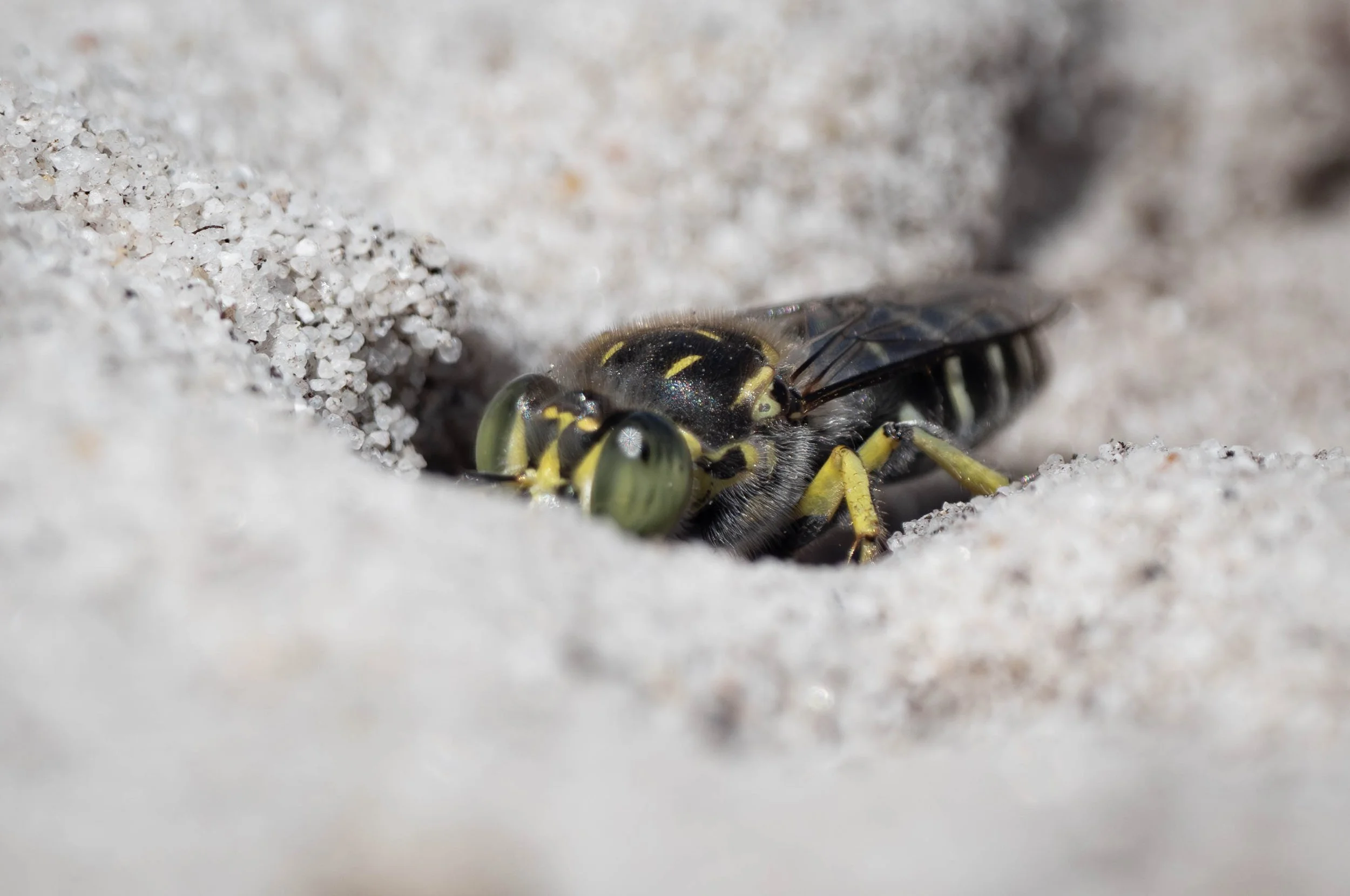
Another Bembix, and with more extensive yellow markings … but most likely the same species. In this genus, the extent of the pale markings on the mesoscutum (the ‘back’) can vary significantly. Particularly so if this is the species I think it is (more about that later).
Bembix sp. (female)
Male Bembix were also present, mostly flying in patrol and only rarely landing.
Bembix sp. (male)
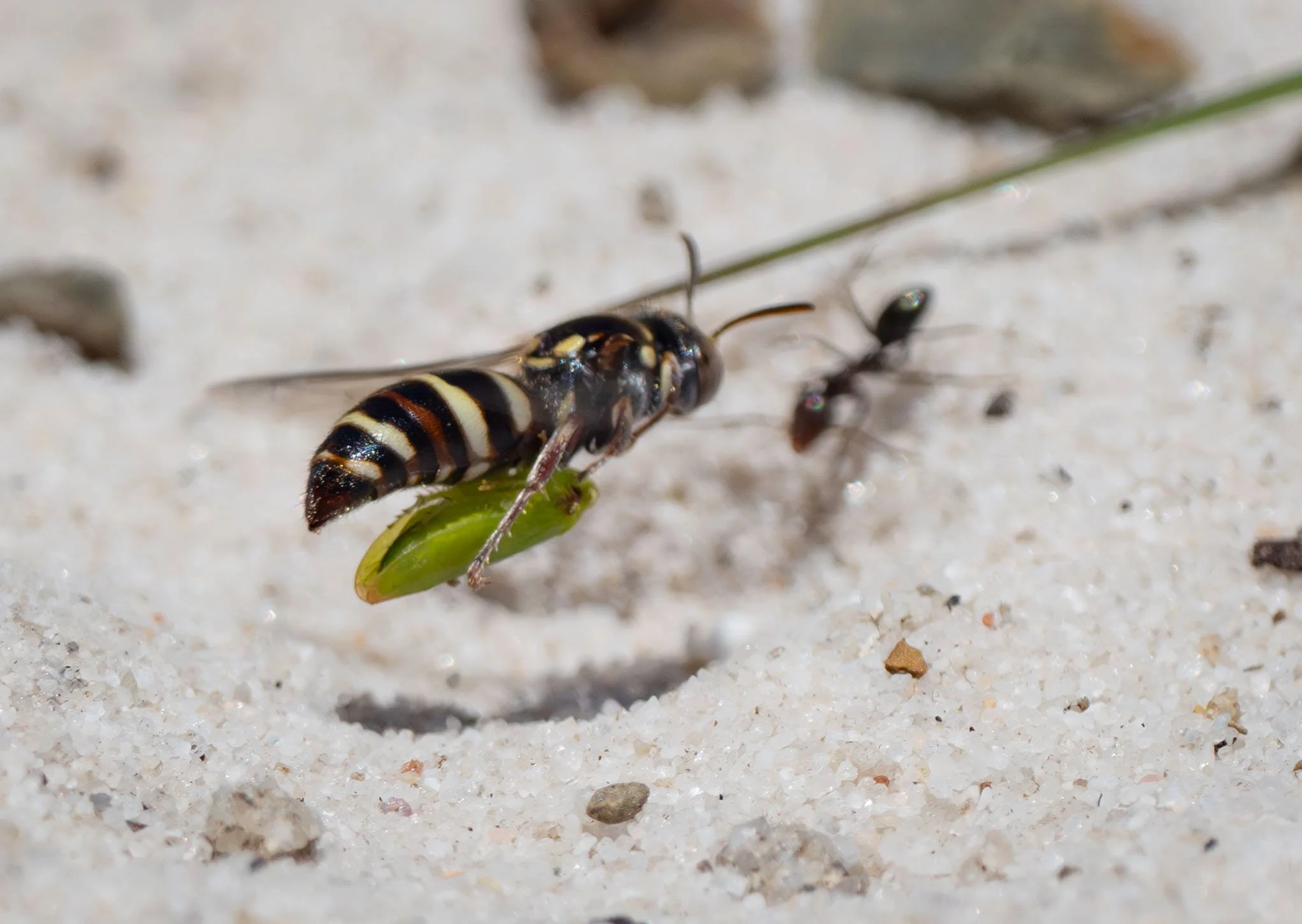
Bembecinus specialise in hunting leafhoppers, progressively feeding their larvae throughout development.
Bembecinus sp. (female)
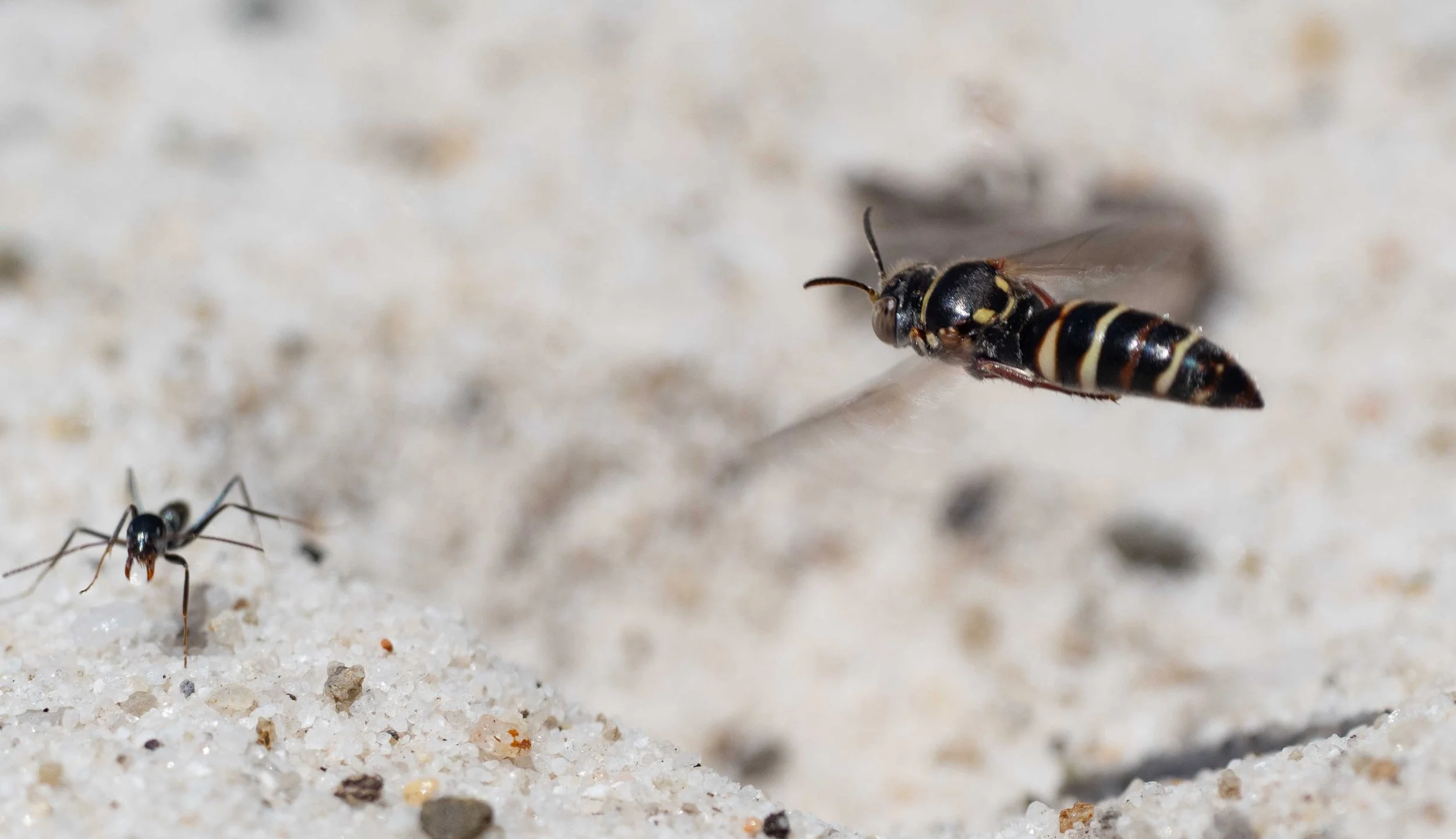
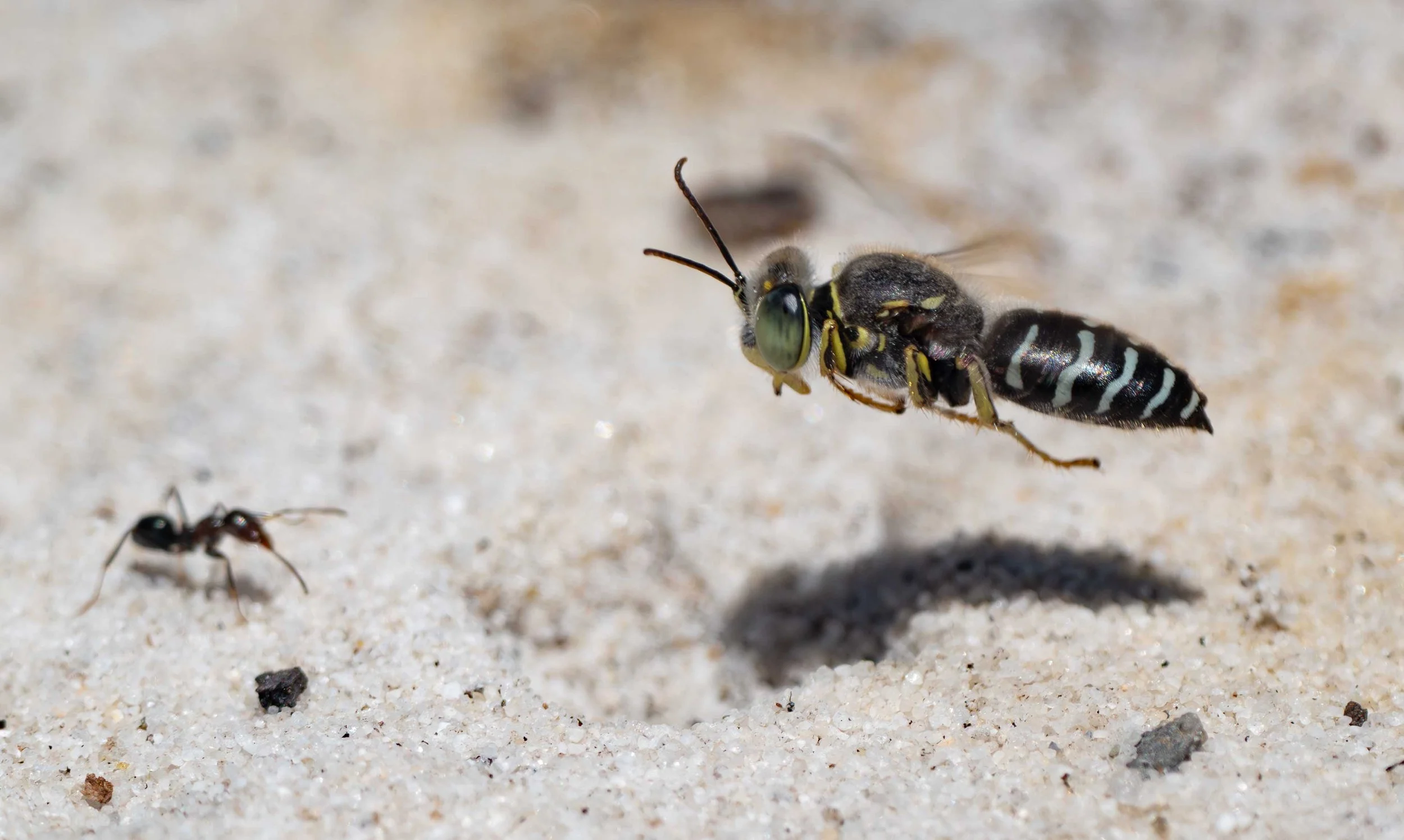
Ants are the bane of nesting sand wasps, quick to investigate every new excavation in the sand. And the wasps aren’t happy about it.
Bembecinus sp. (female)
Although the wasps take flight when confronted, they do their best to intimidate the curious ants.
Bembix are typically much larger than Bembecinus, and this was certainly the case for the two species sharing this nesting area. The ants in this and the previous photo provide a sense of scale.
Bembix sp. (female)
Before delivering her catch to her burrow, this wasp first had to face down a marauding ant. She did. Eventually. After several attempts. The ants are no doubt ready to grab any prey that the wasps leave unattended. I know from watching their antics elsewhere that the are indeed fast-acting opportunists!
Bembecinus sp. (female)