1
2
3
4
5
6
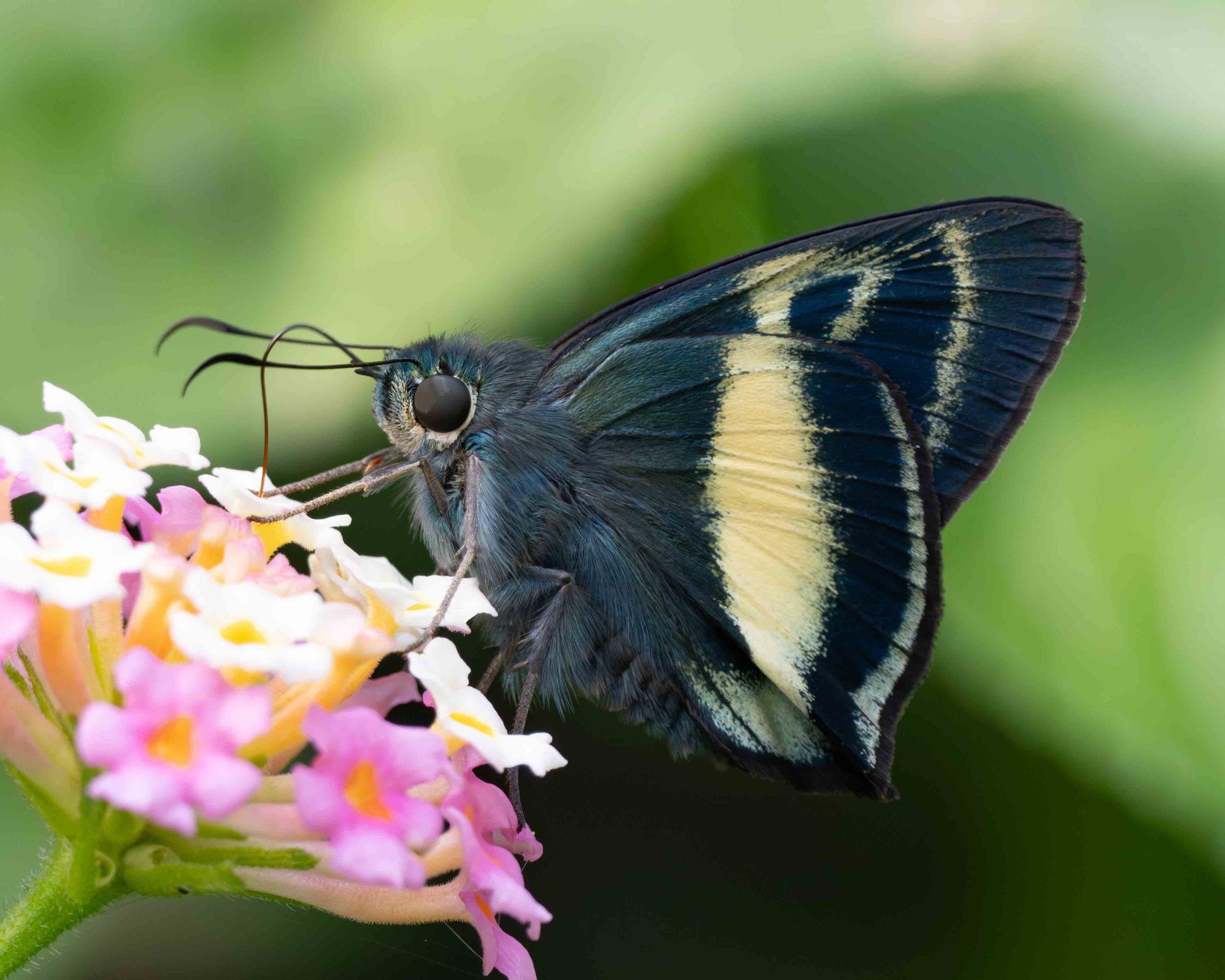
It’s not everyday we get a new butterfly species for our life list! And a pretty one, at that. The' ‘Green Awl’ is a generally uncommon species, with a limited distribution … and we were near the southernmost extent of its range. The host plant for their larvae is Mucuna gigantea (the ‘sea bean’), a distinctive tropical vine with massive pods and seeds. The adults feed at tubular flowers – such as lantana – taking advantage of that particularly long proboscis.
Hasora discolor
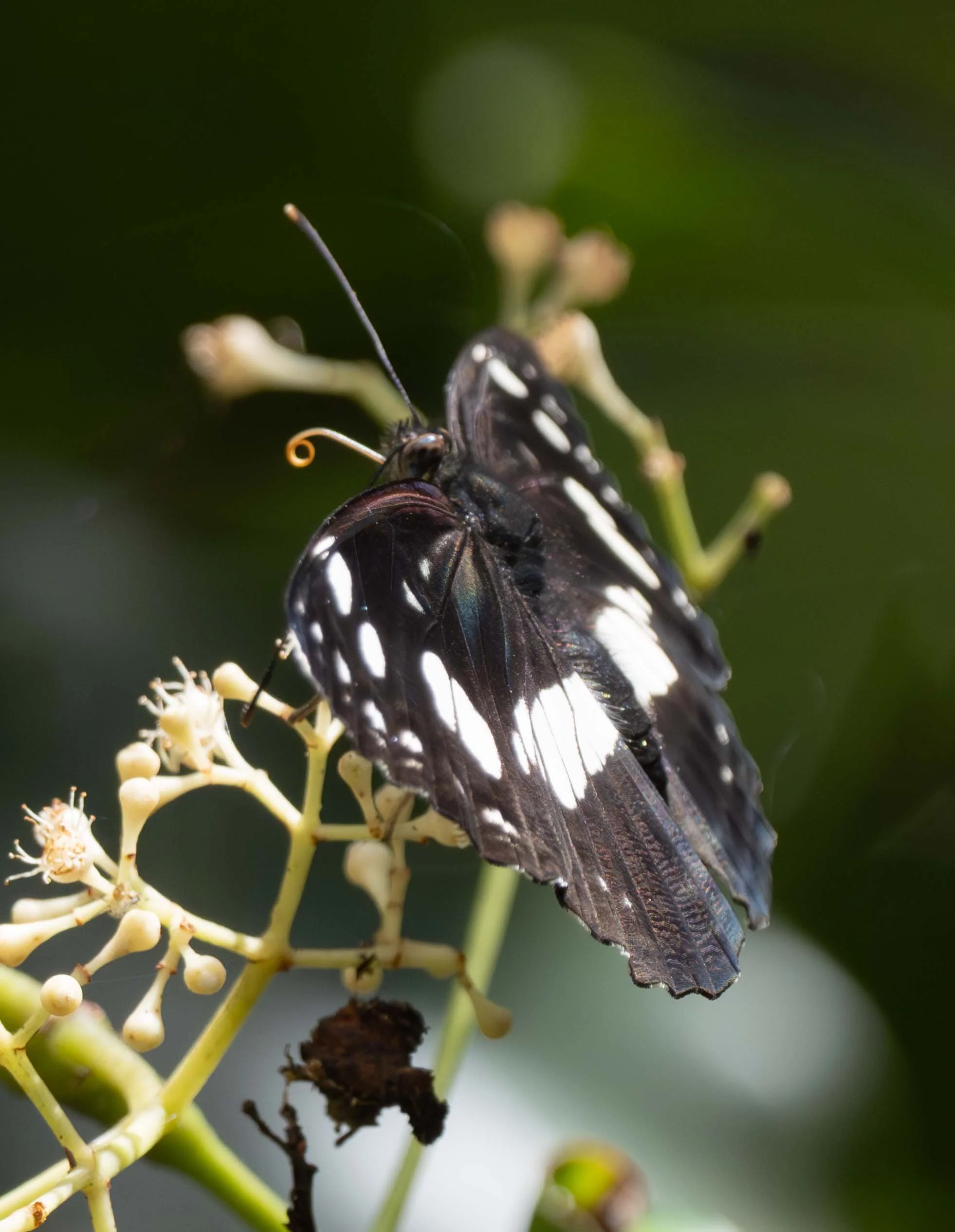
Another first for us! The ‘White-banded Plane’ is widespread in the eastern tropics, but not particularly common. The gliding flight, with wings held perfectly flat, is a distinctive feature of the ‘aeoplane’ butterflies (subfamily Limenitinae).
Phaedyma shepherdi
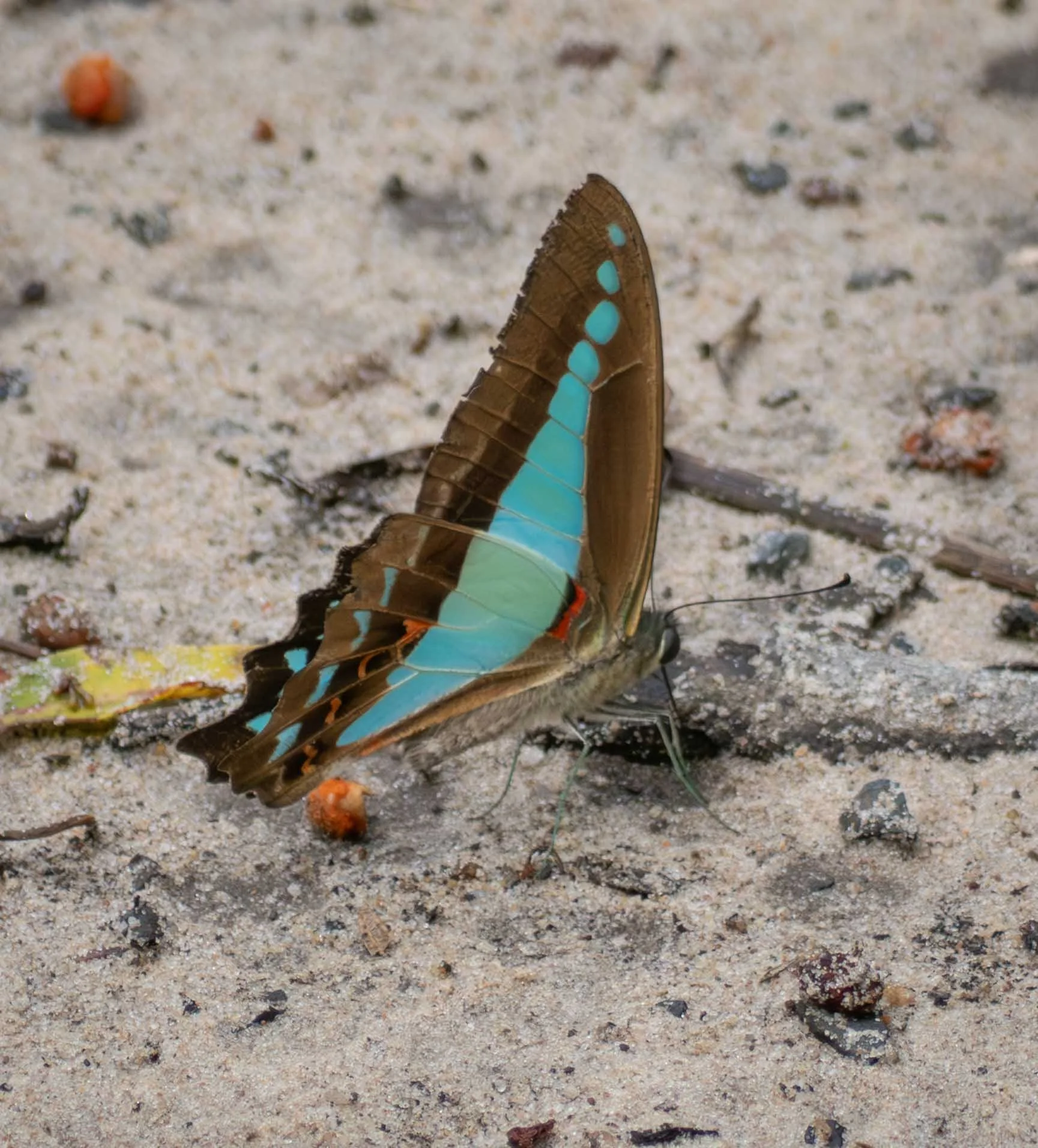
Yet another rainforest species, the aptly named ‘Blue Triangle’. This one was intently lapping at the moist sand not far from an ocean beach, no doubt attracted by the salt.
Graphium choredon
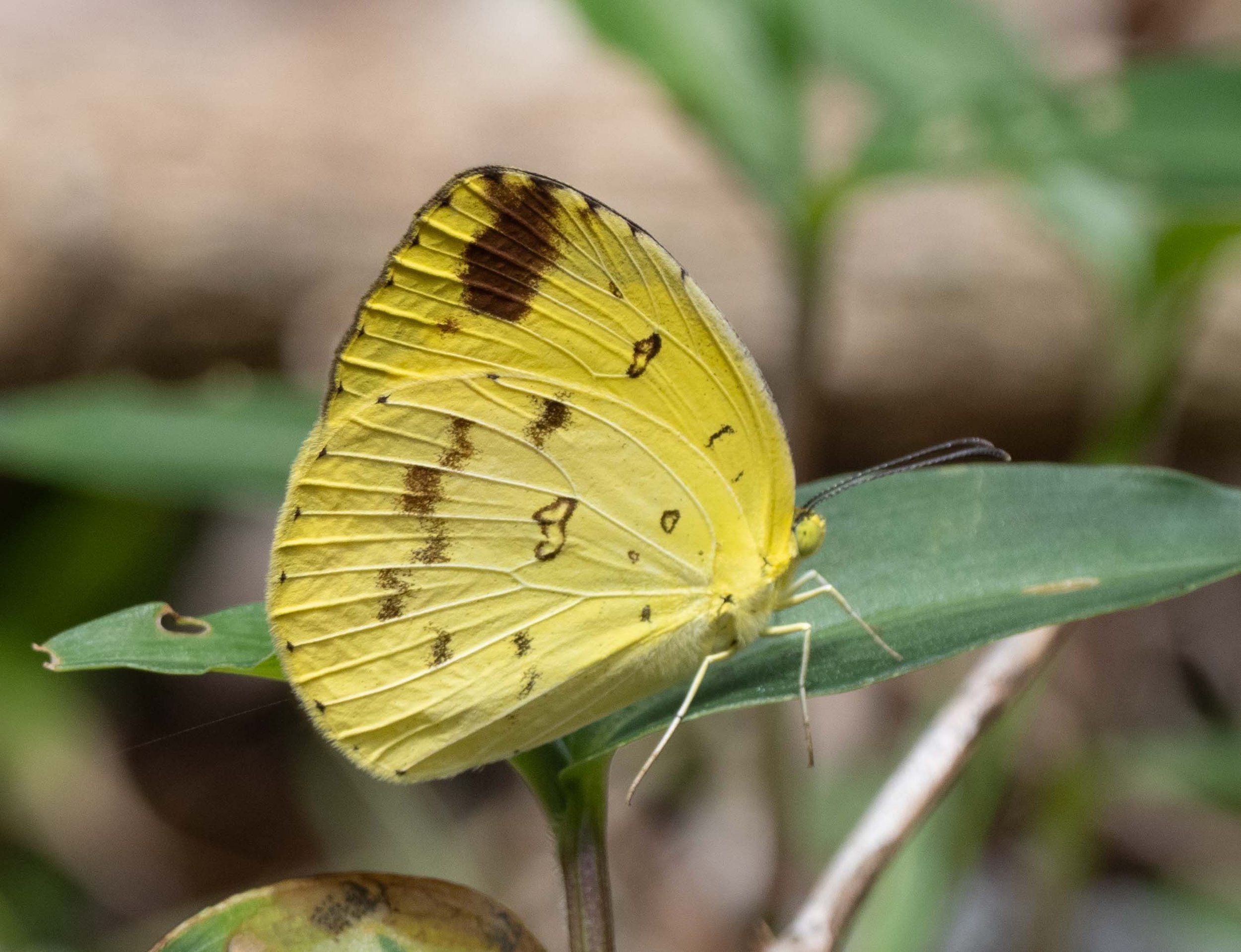
A very common species across northern Australia, in ‘good years’ the migrants dispersing well down the coast of northern NSW.
Eurema hecabe
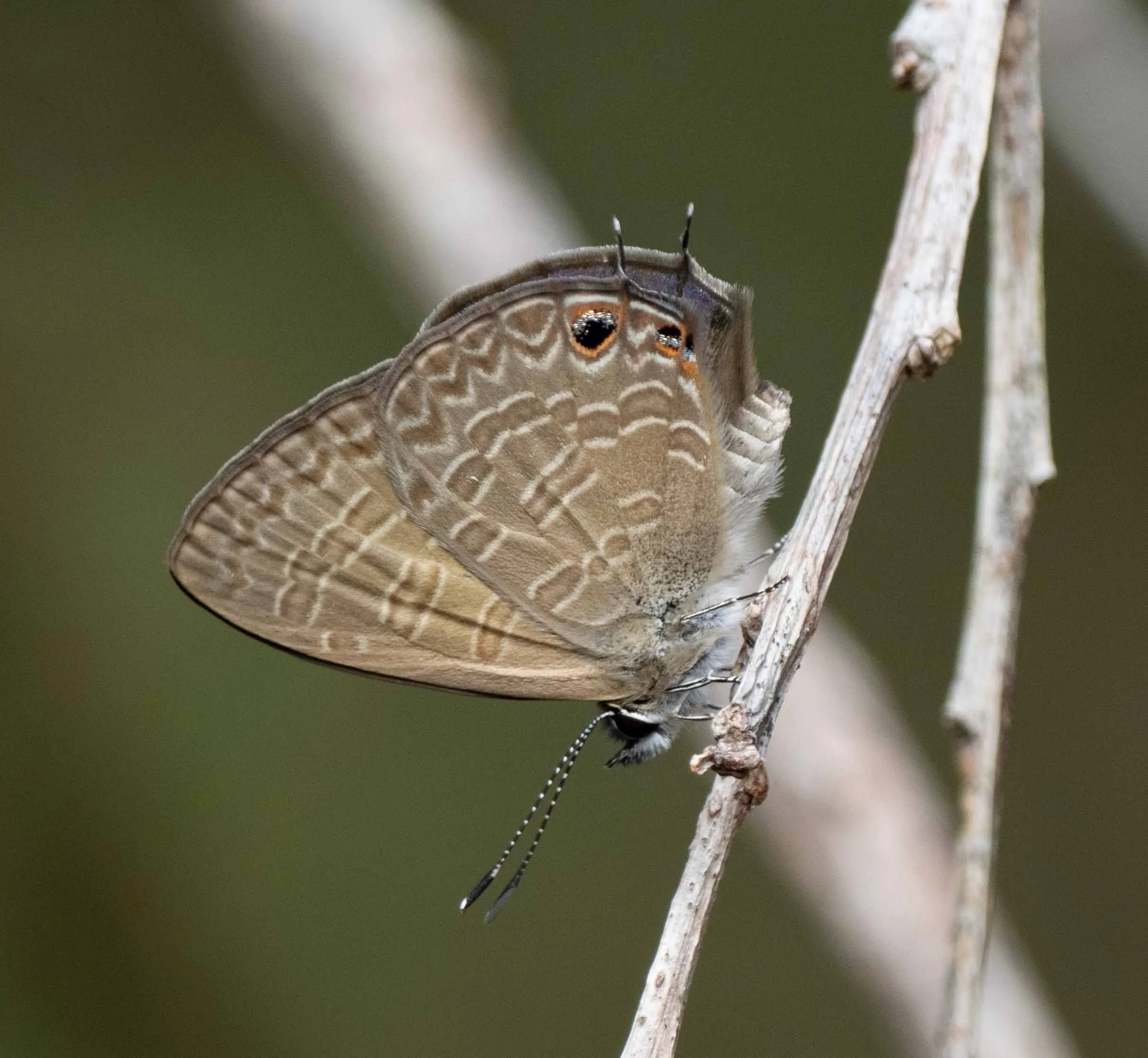
Common and widespread … but not seen south of Sydney, so another bonus for our trip up north.
Nacaduba berenice
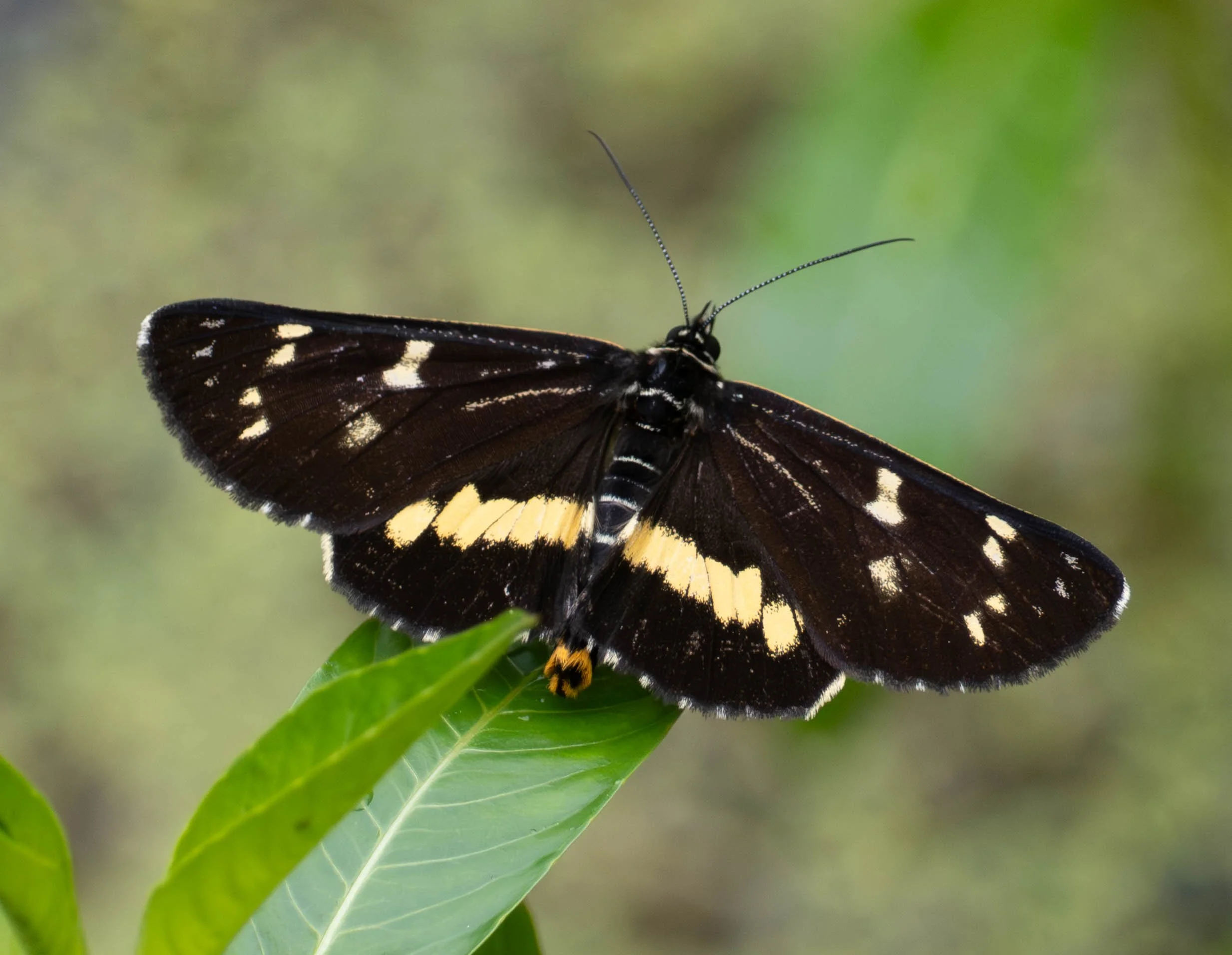
A large, day-flying moth that could easily be mistaken for a butterfly. These were numerous in the rainforest where we were staying.
Cruria synopia