Workbook
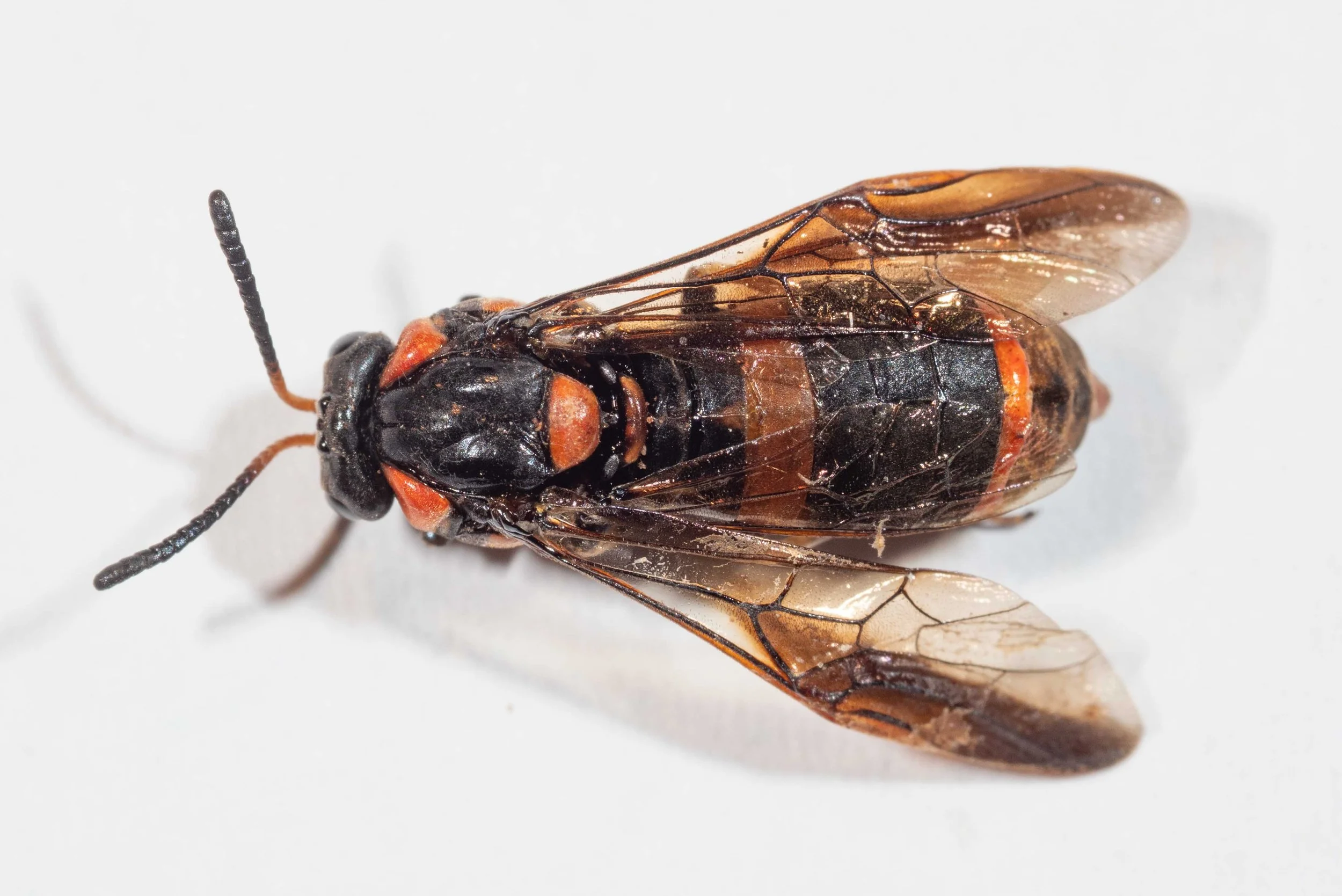
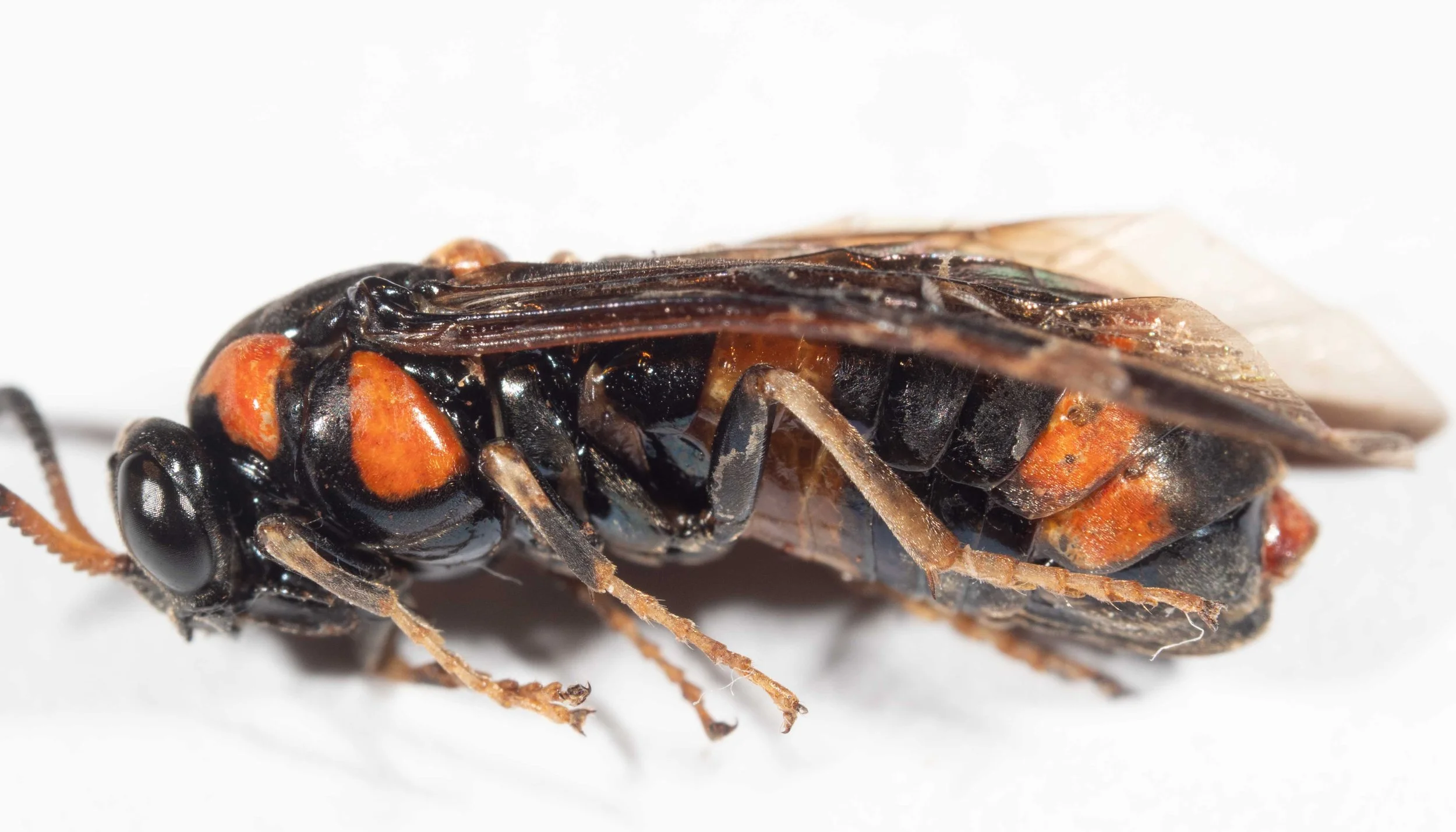
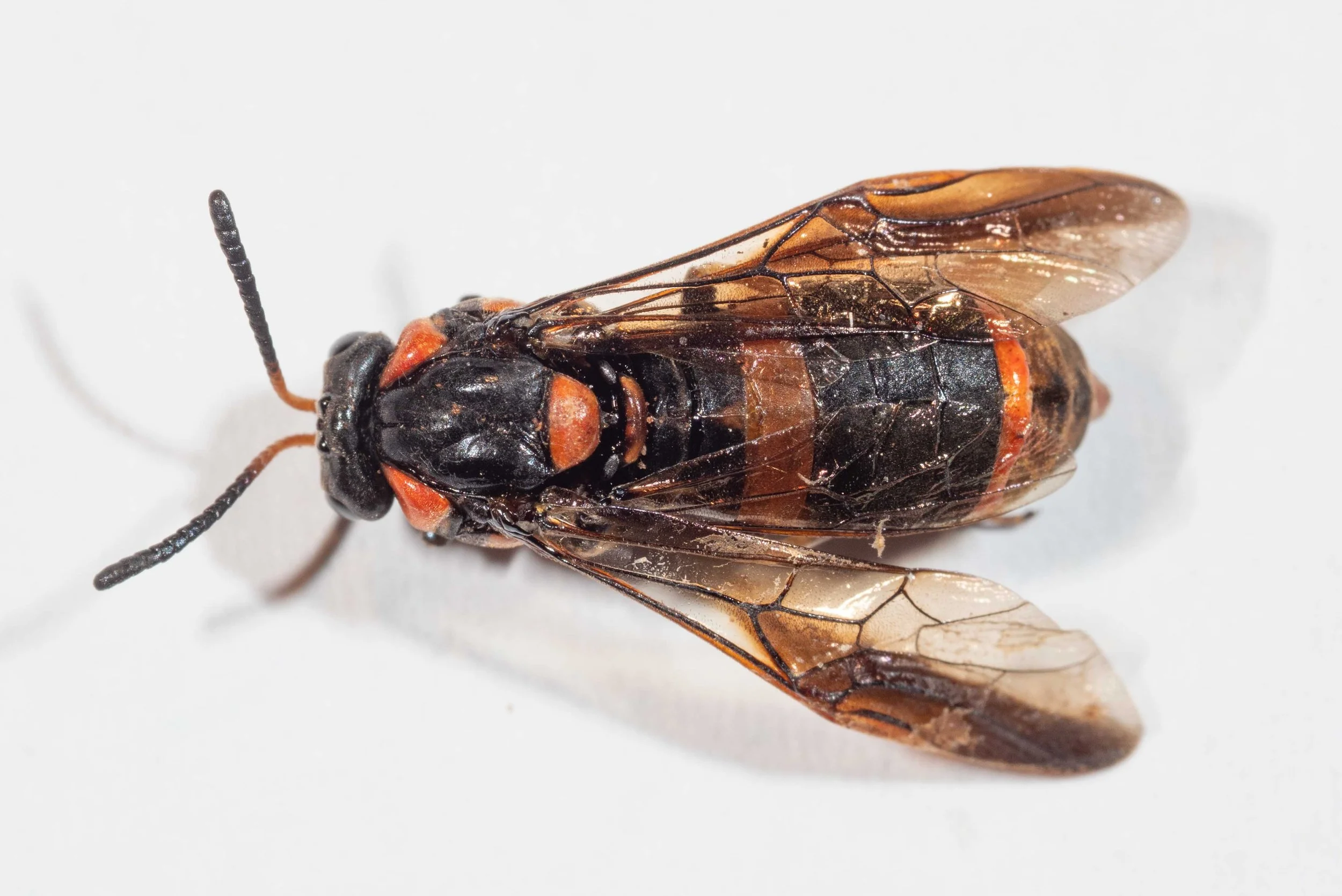
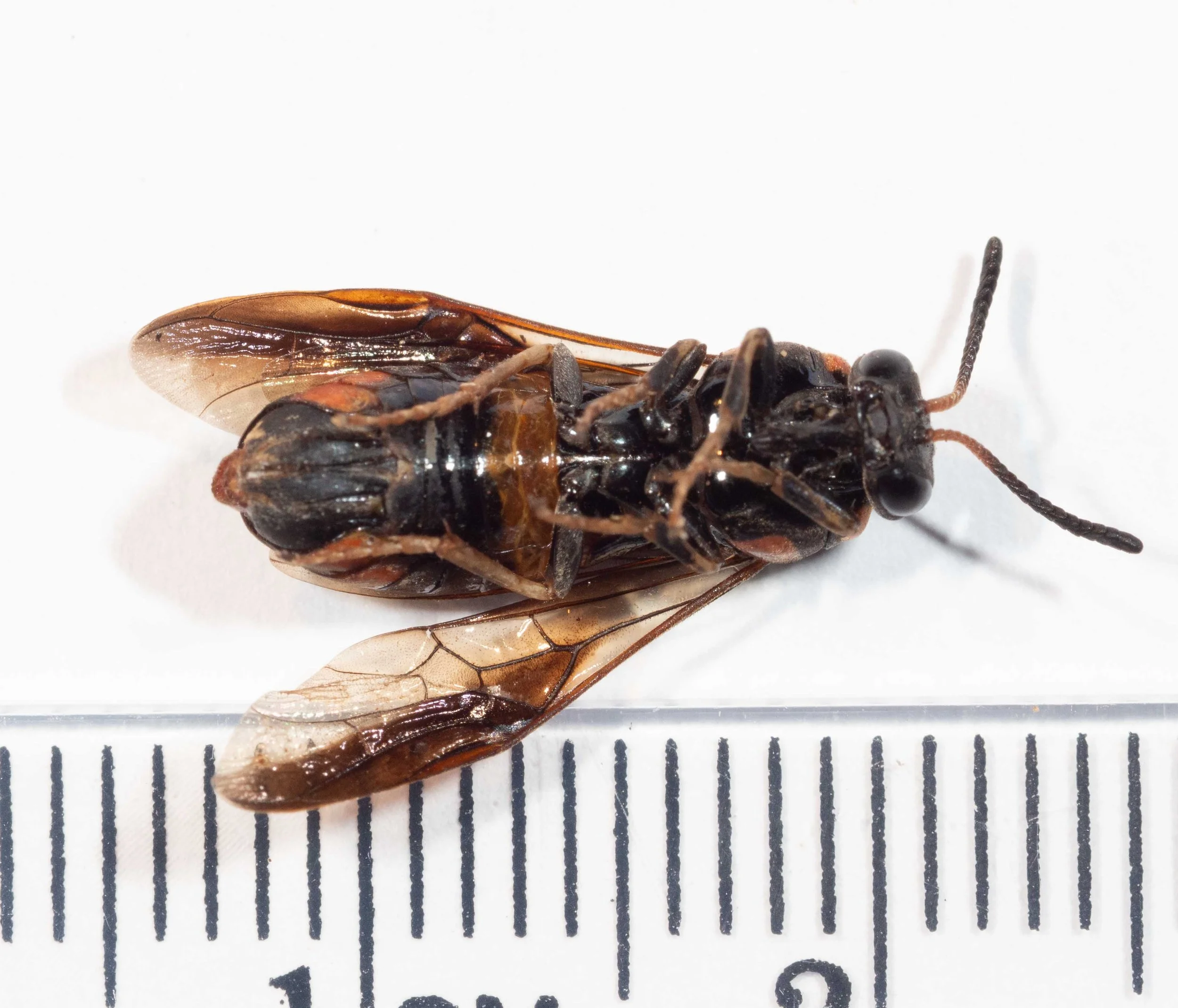
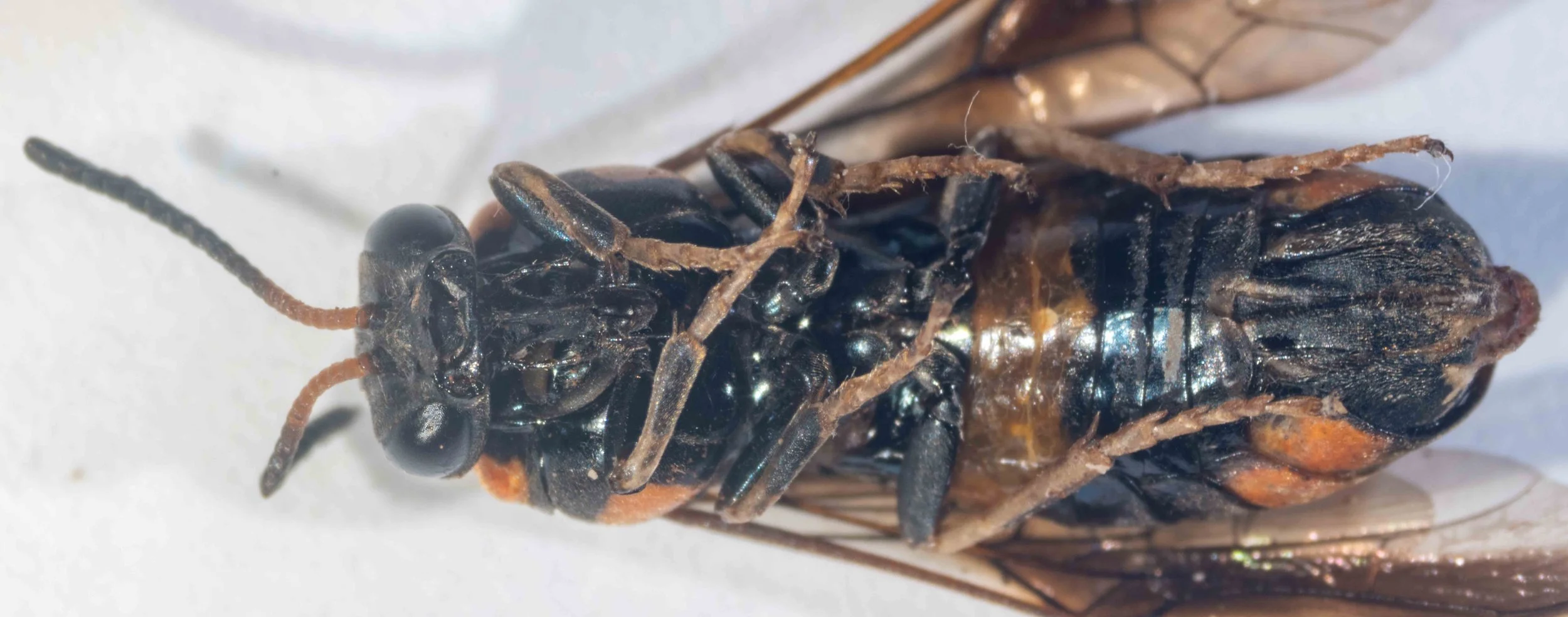
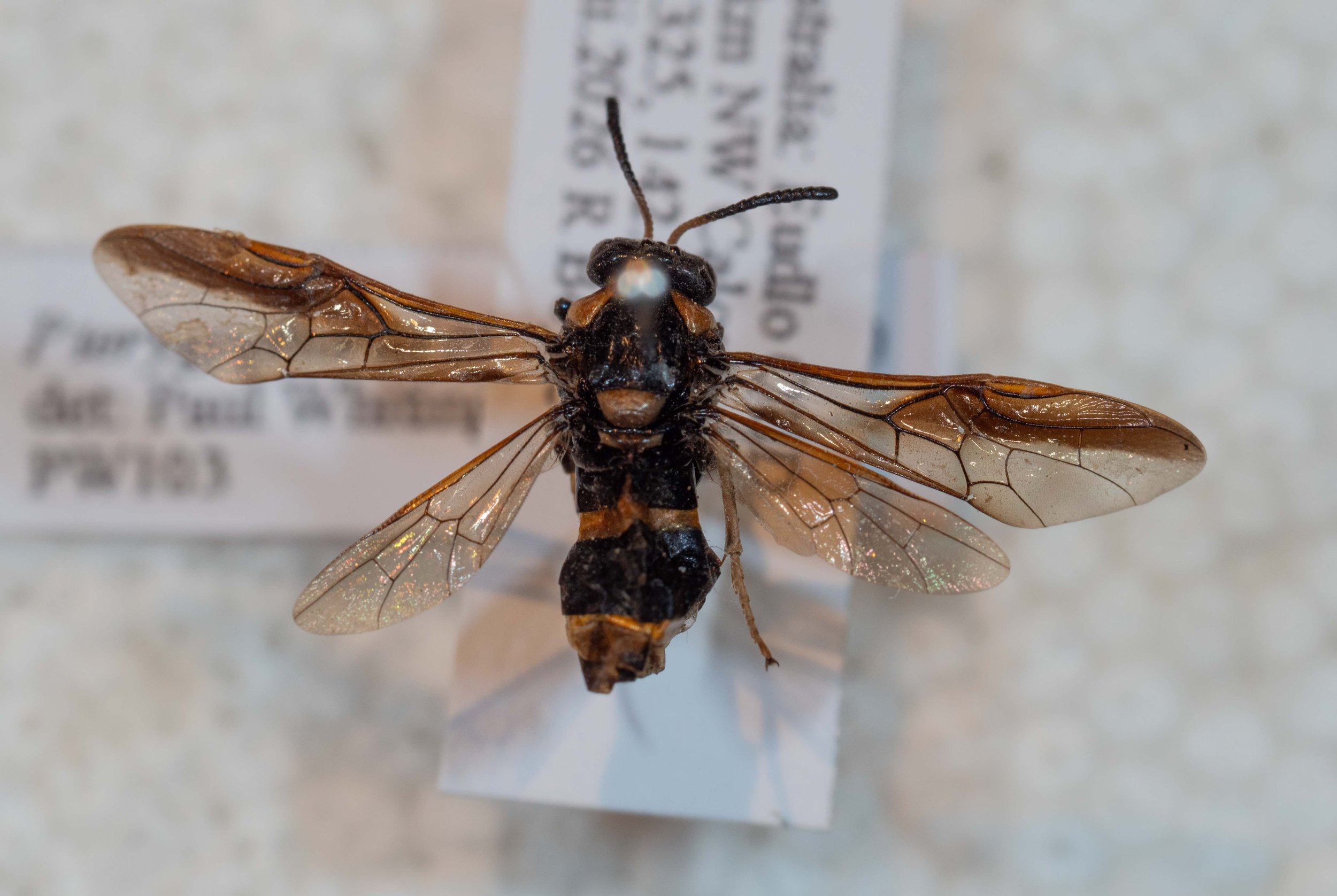
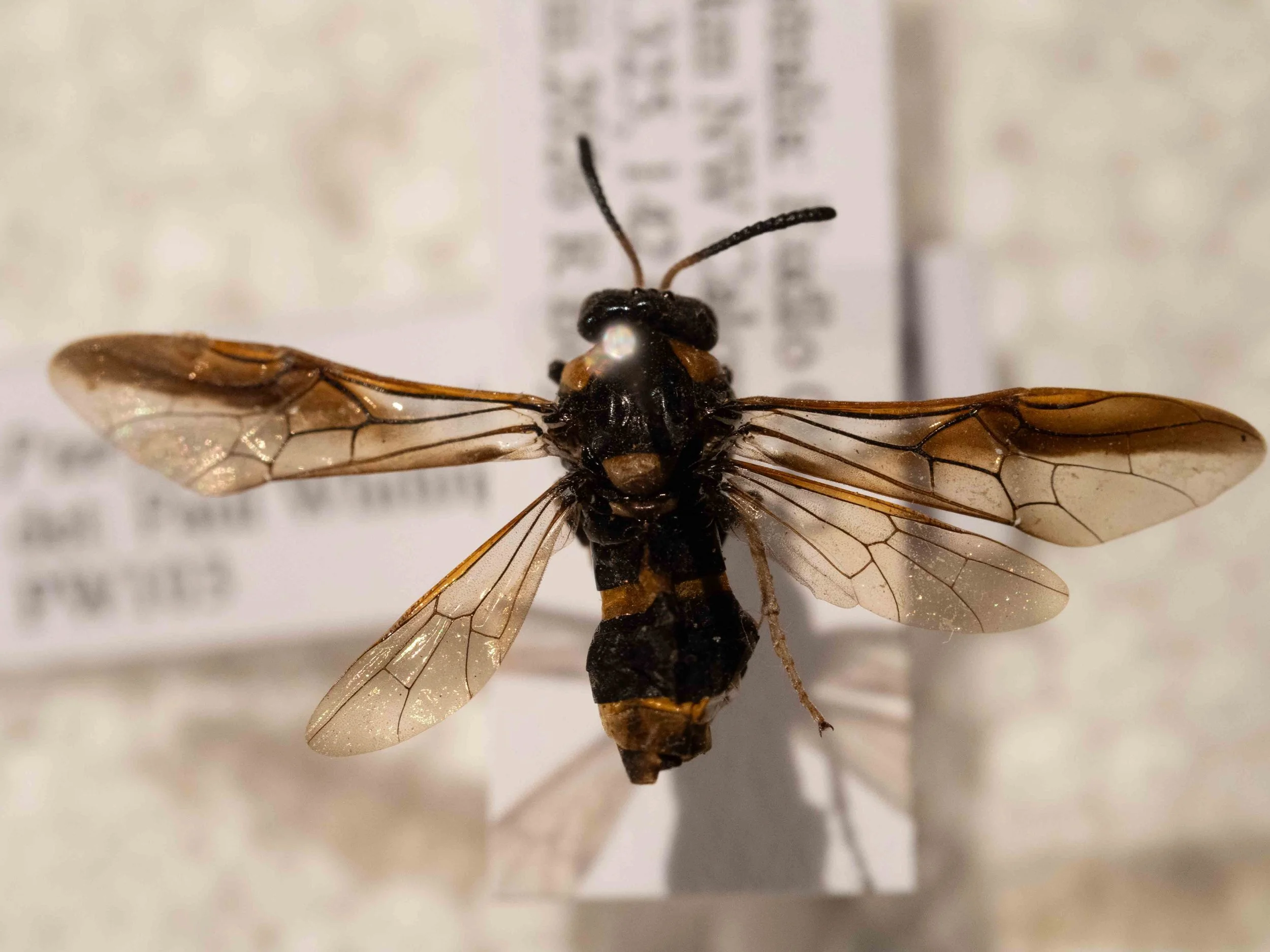
Detailed description of an adult female Pterygophorus sp. raised by Rhianna Boyle from larvae collected at her home on the hinterland of the Sunshine Coast, Qld (collection #PW103)
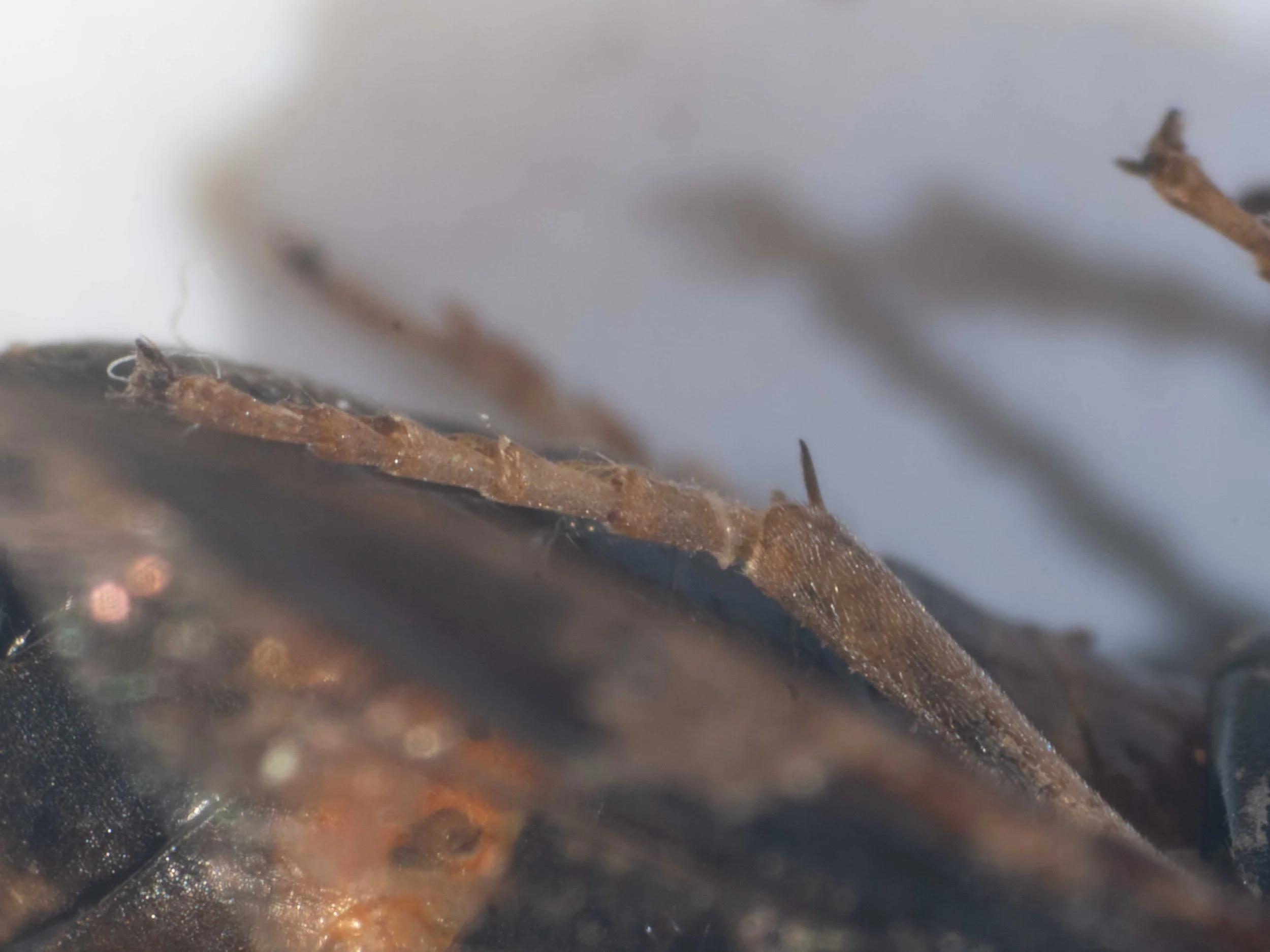
Left hind leg was removed from this specimen for DNA barcoding by Erinn Fagan-Jeffries.
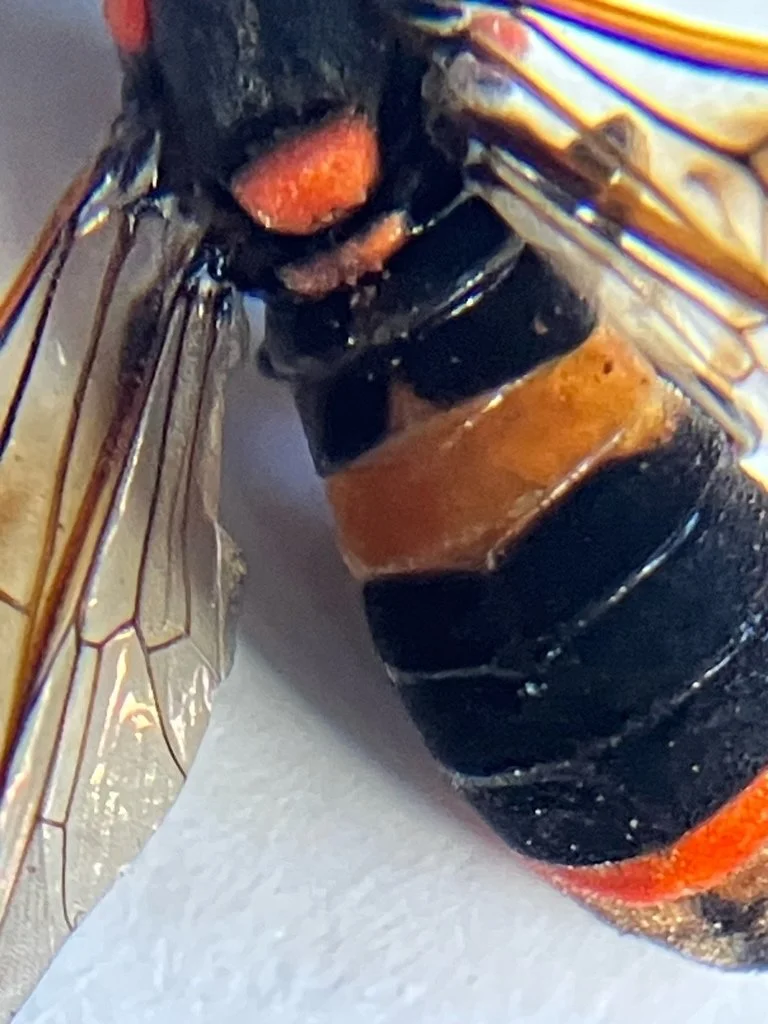
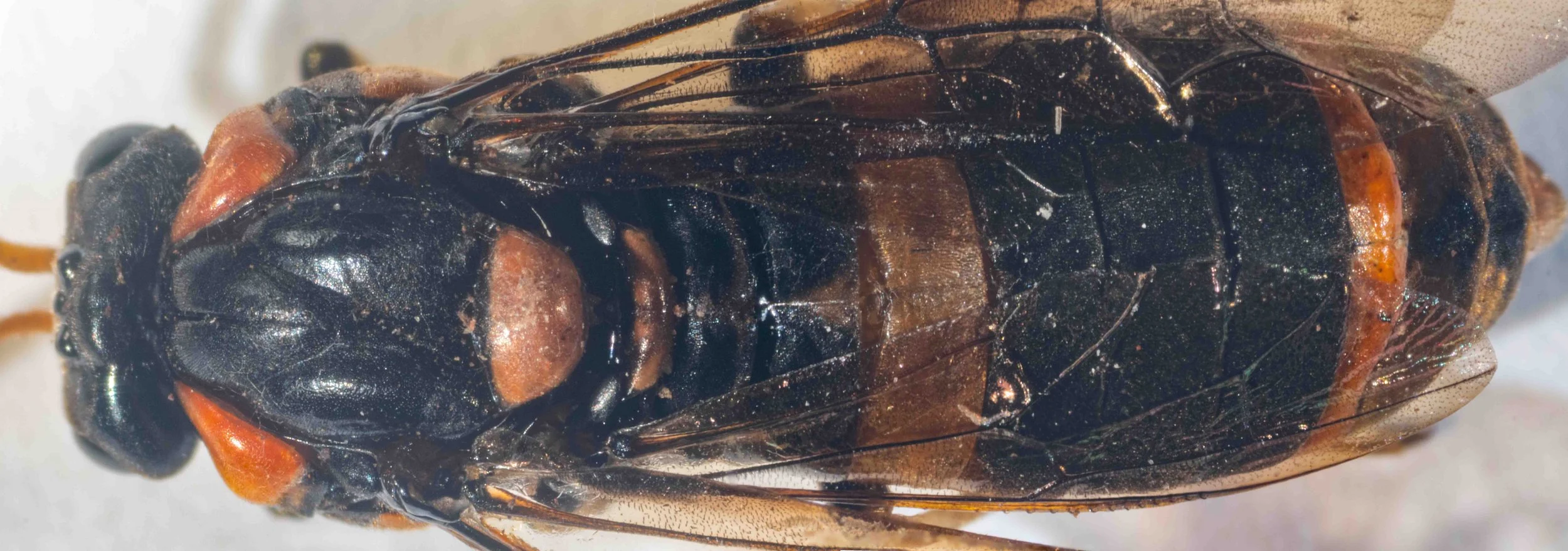
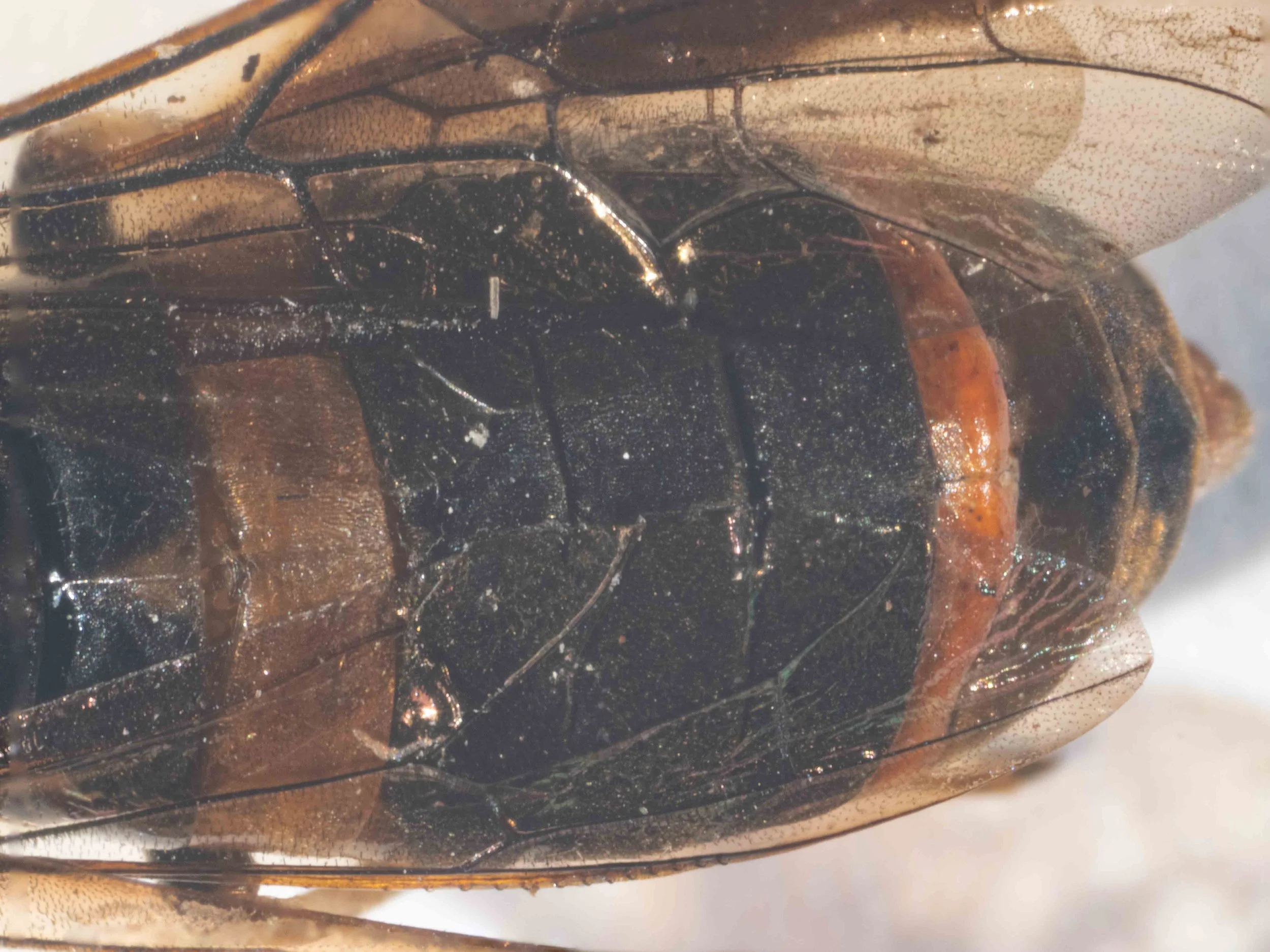
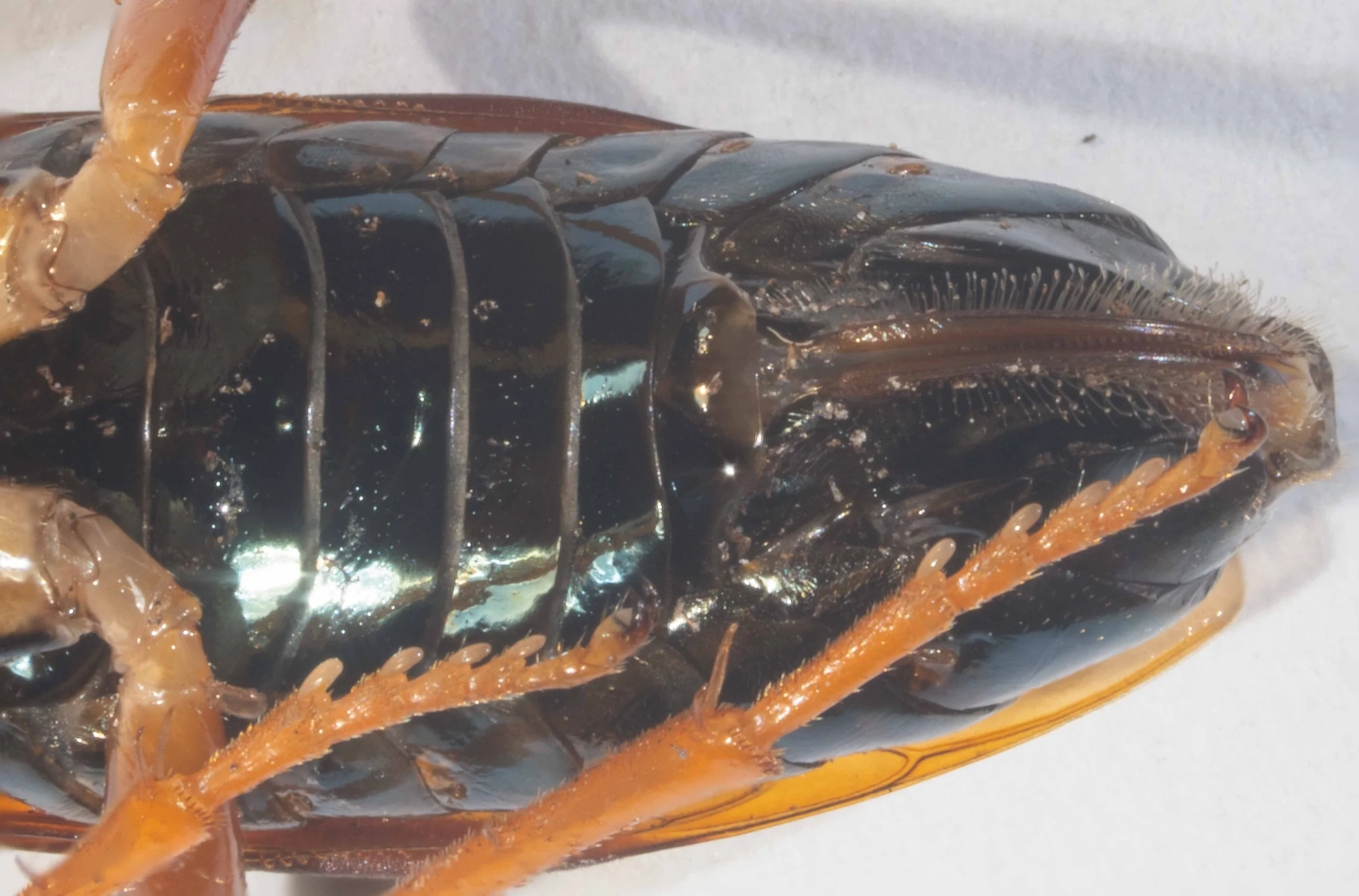
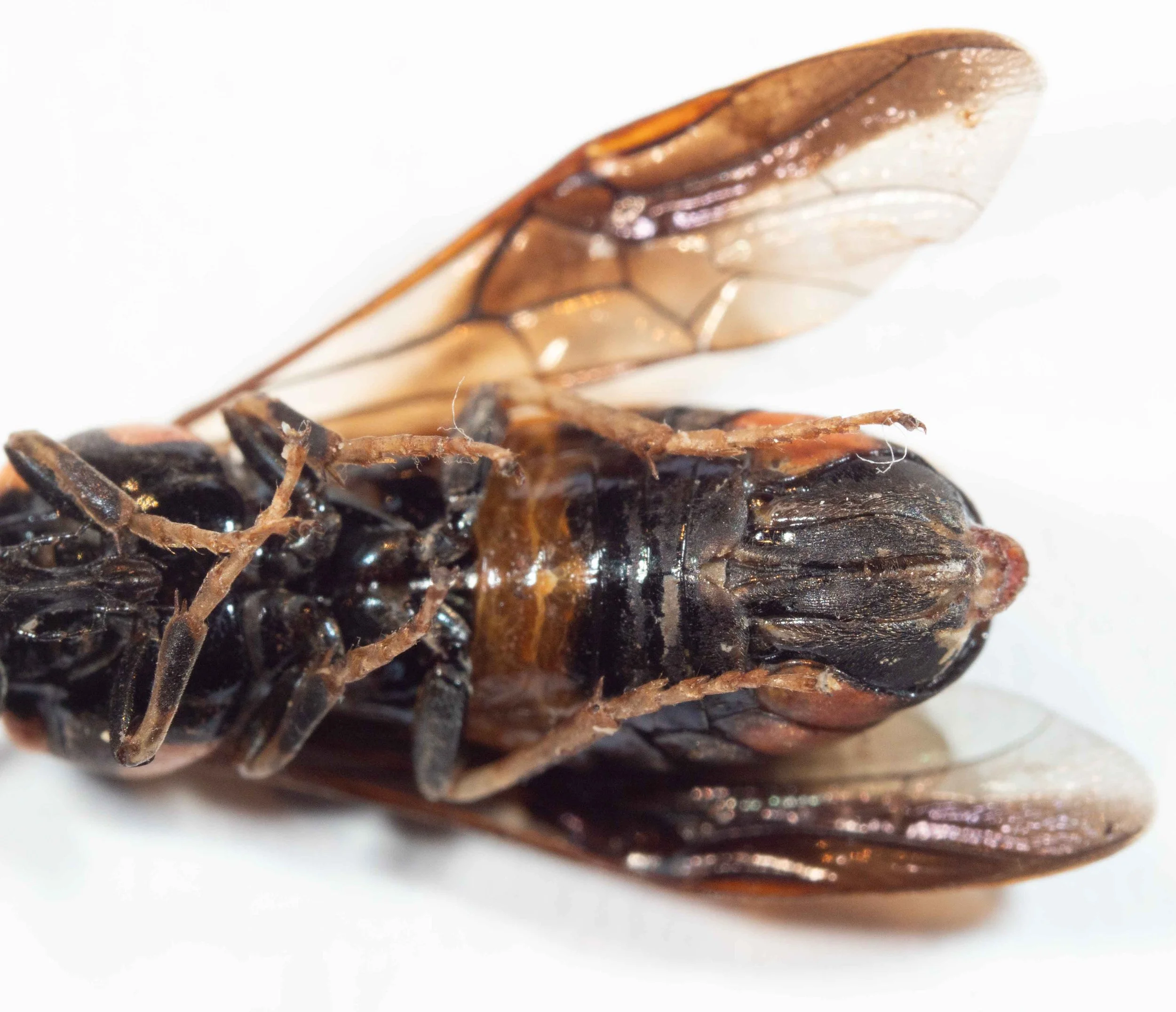
anterior pale orange band expands onto sternum 3, making a complete band around segment 3, and partially into sternum 4
posterior orange band expands to ventral border of T7 and fills lateral region of T8 to its ventral border
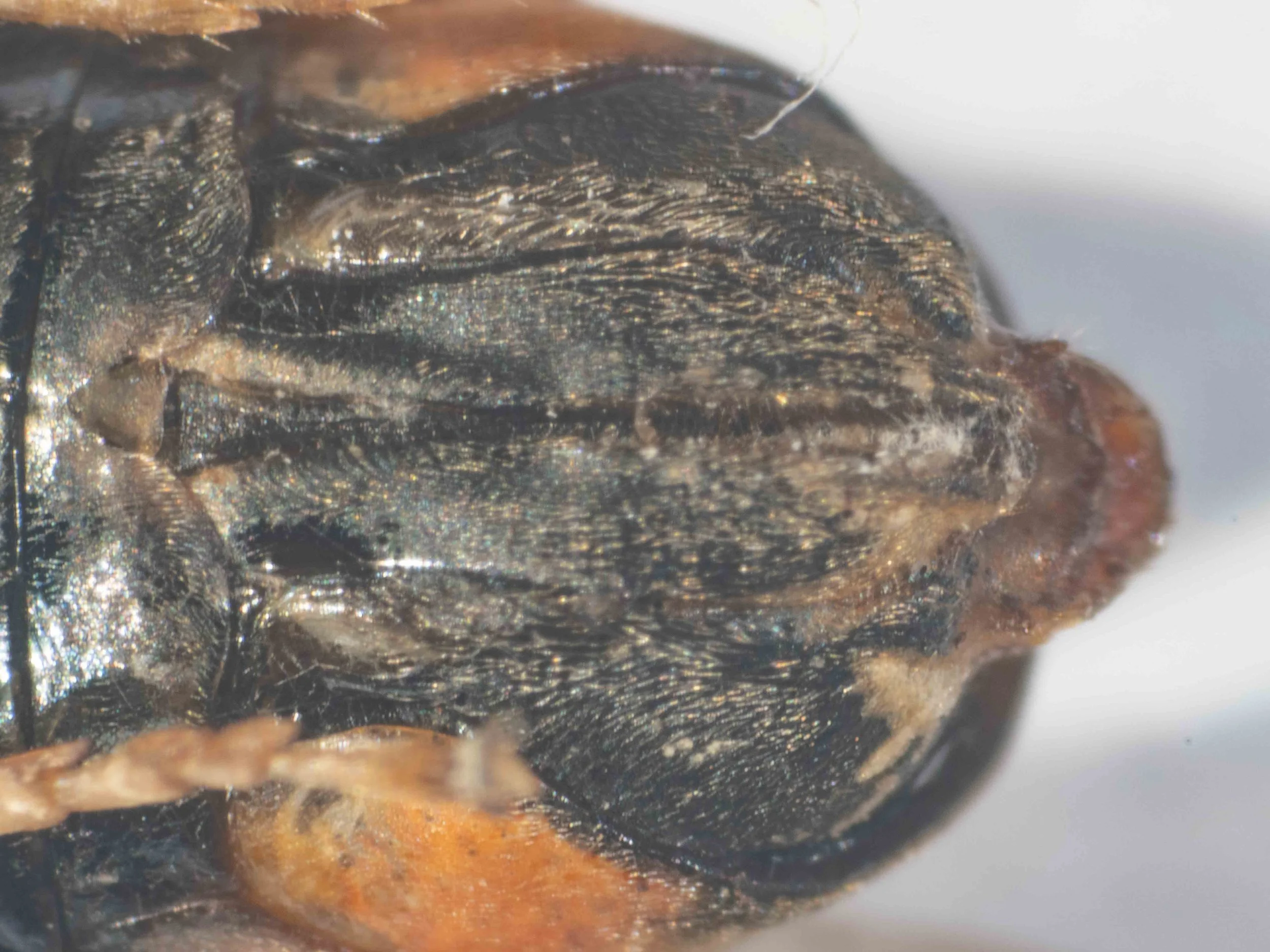
tergum 10 (pygidium) is orange
small orange cerci visible
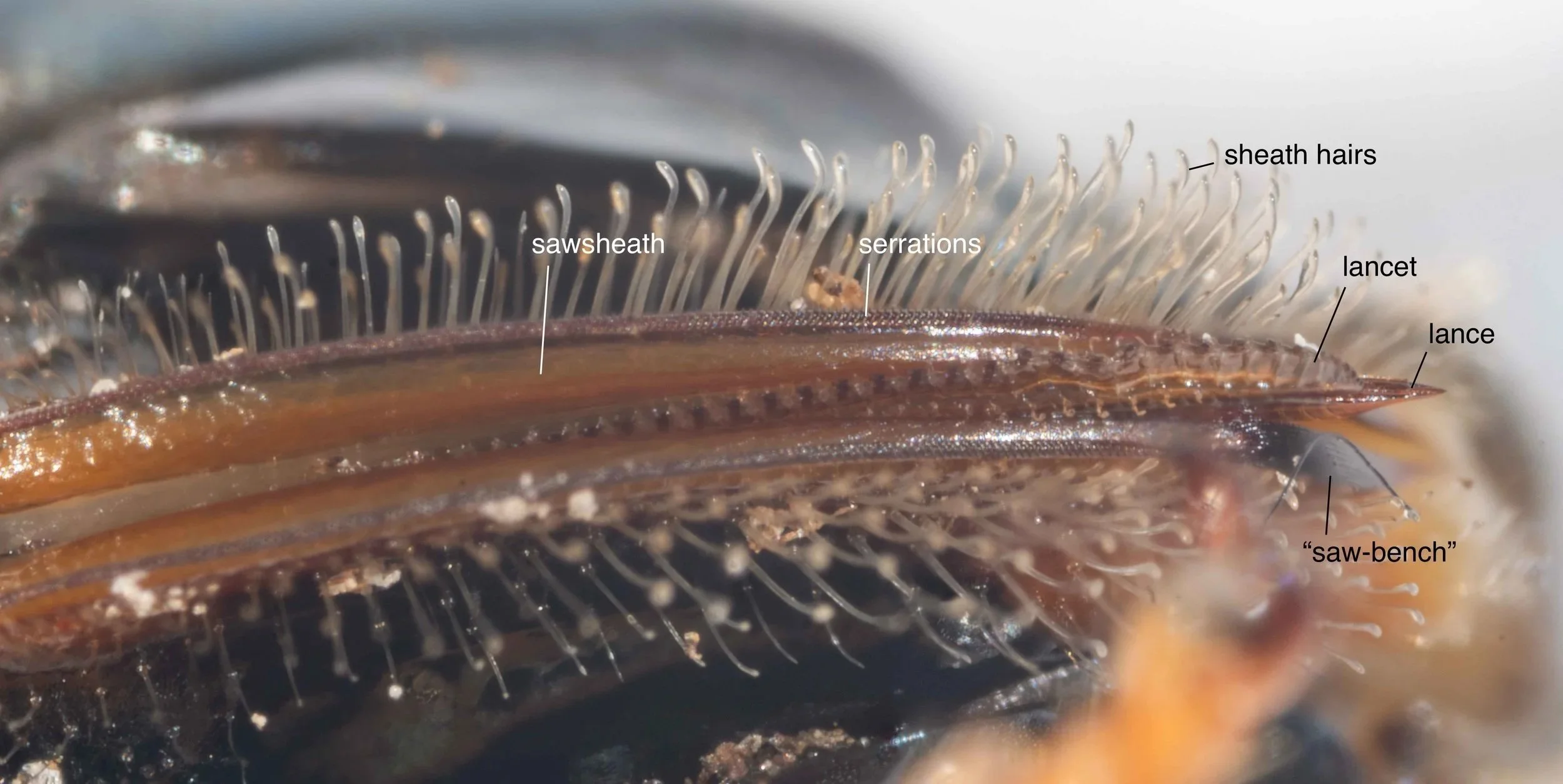
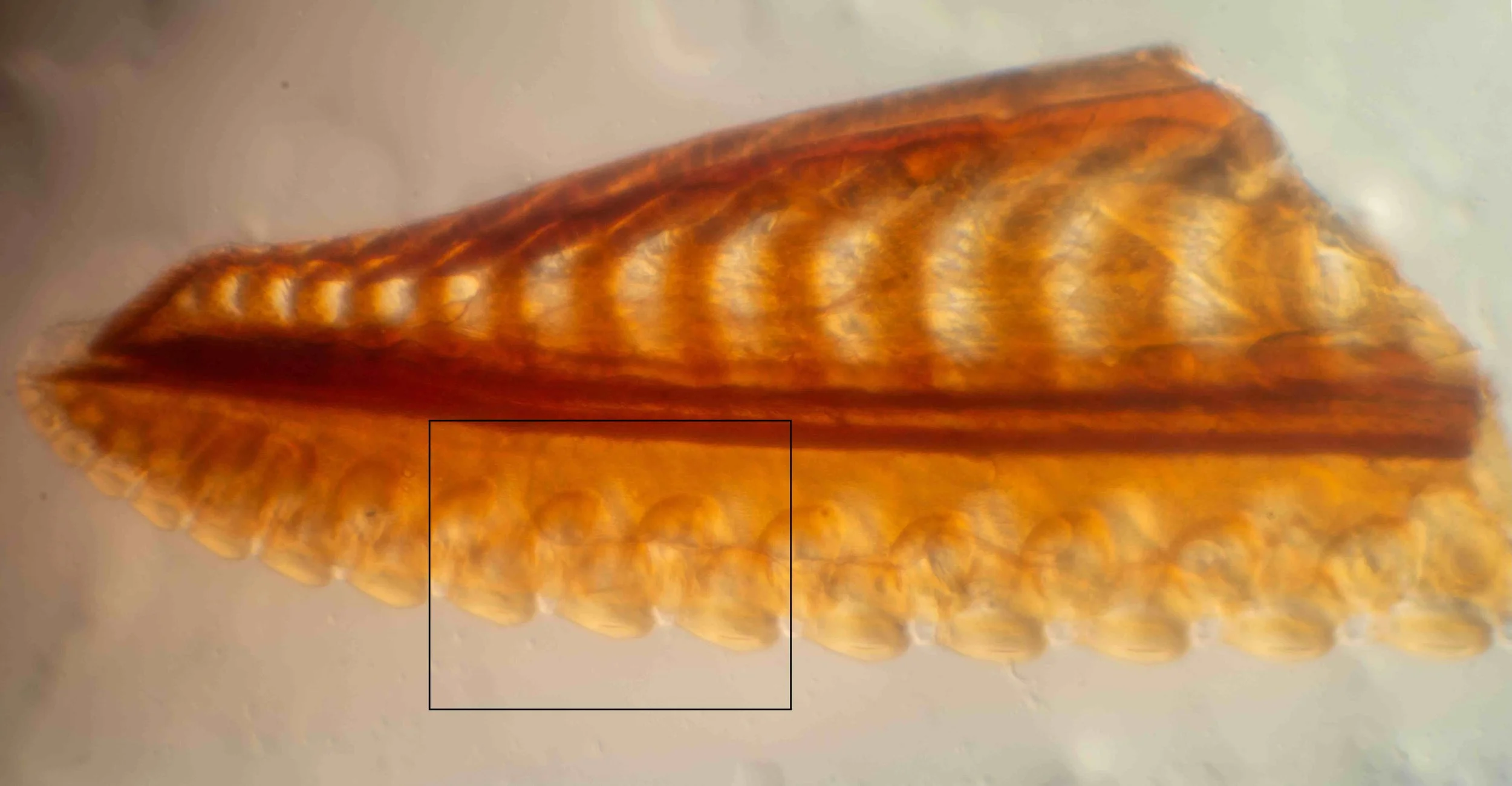
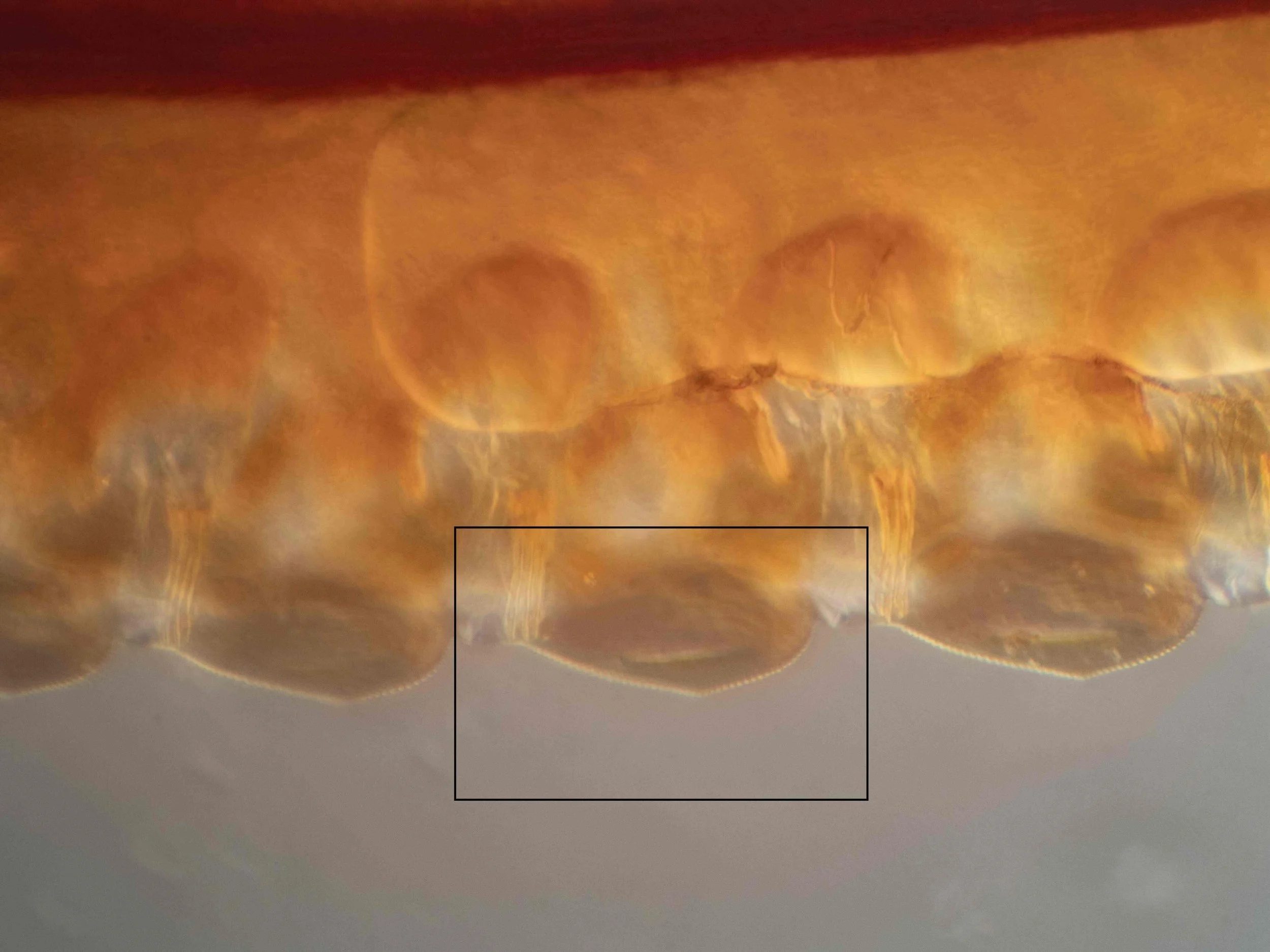
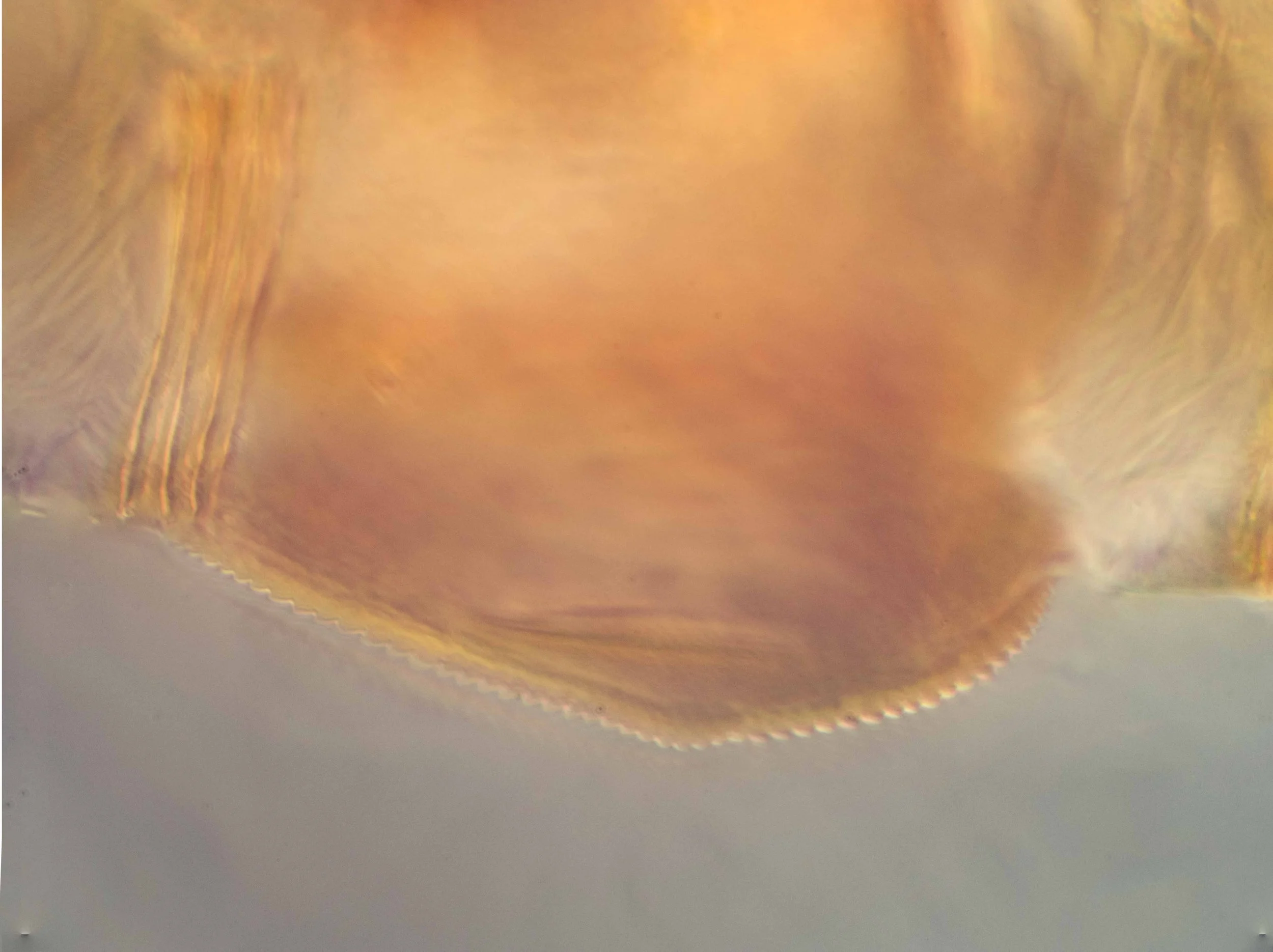
see next image for details of structures
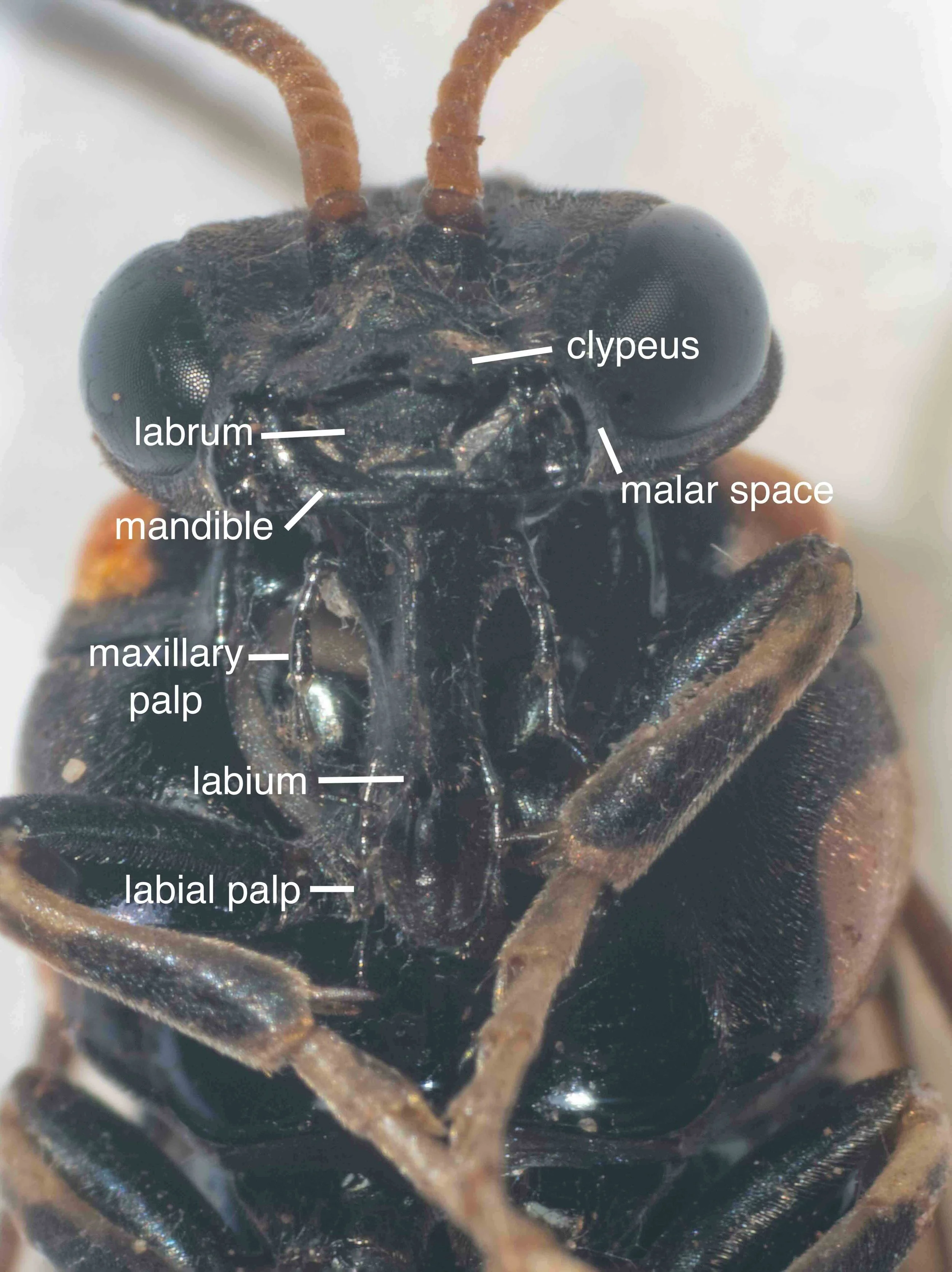
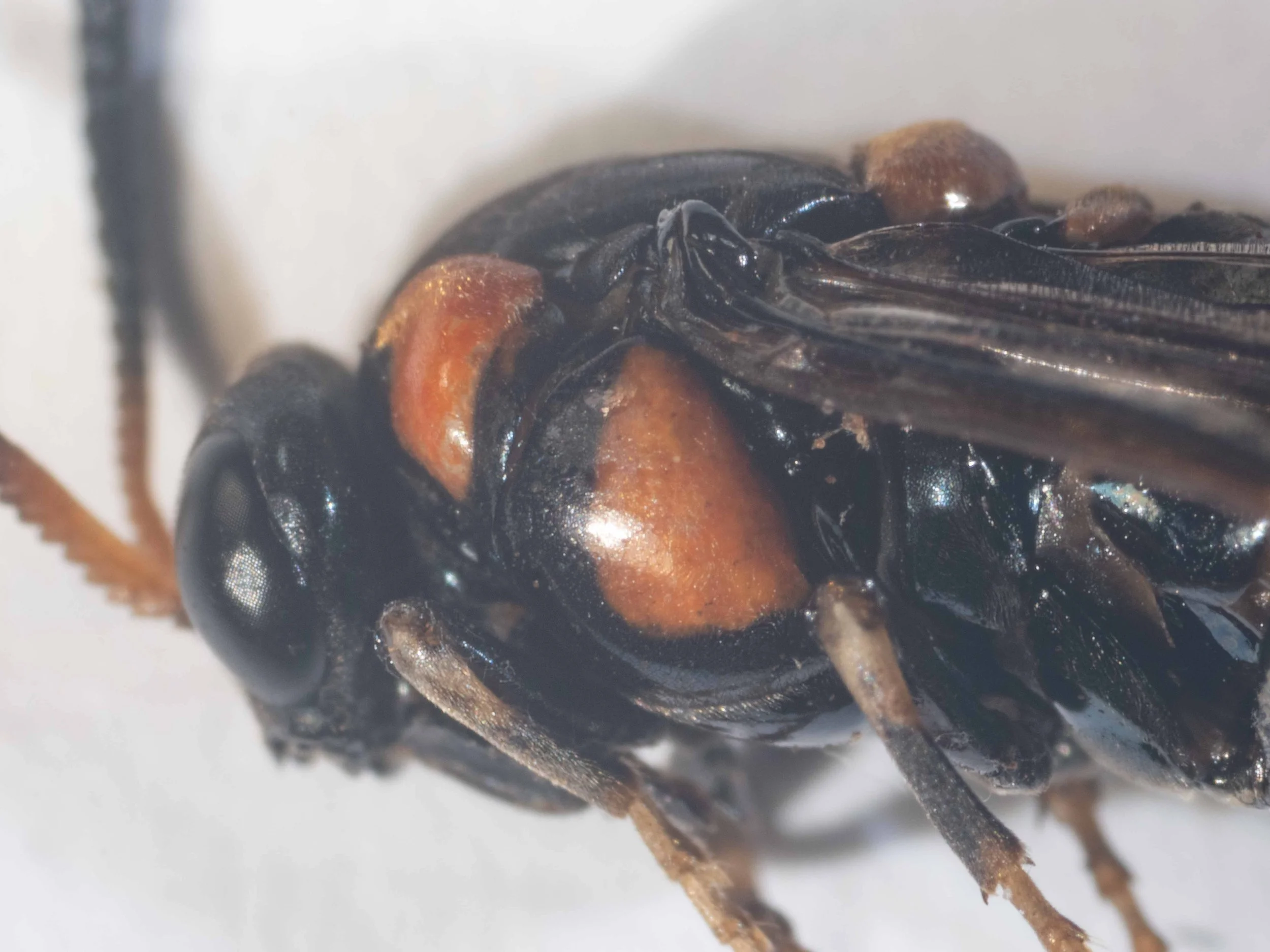
head black; short, fine pale pubescence (but hairs longer on face); shining, without punctures
distance between eyes in front subequal to length of eye (0.98)
breadth of clypeus no more than 2/3 length of eye (0.66)
22 antennomeres - scape and pedicel black; 8 basal flagellomeres pale orange; apical 12 black; pecten directed antero-ventrally on each flagellum, becoming longer in apical flagellomeres; most apical antennomere is clubbed
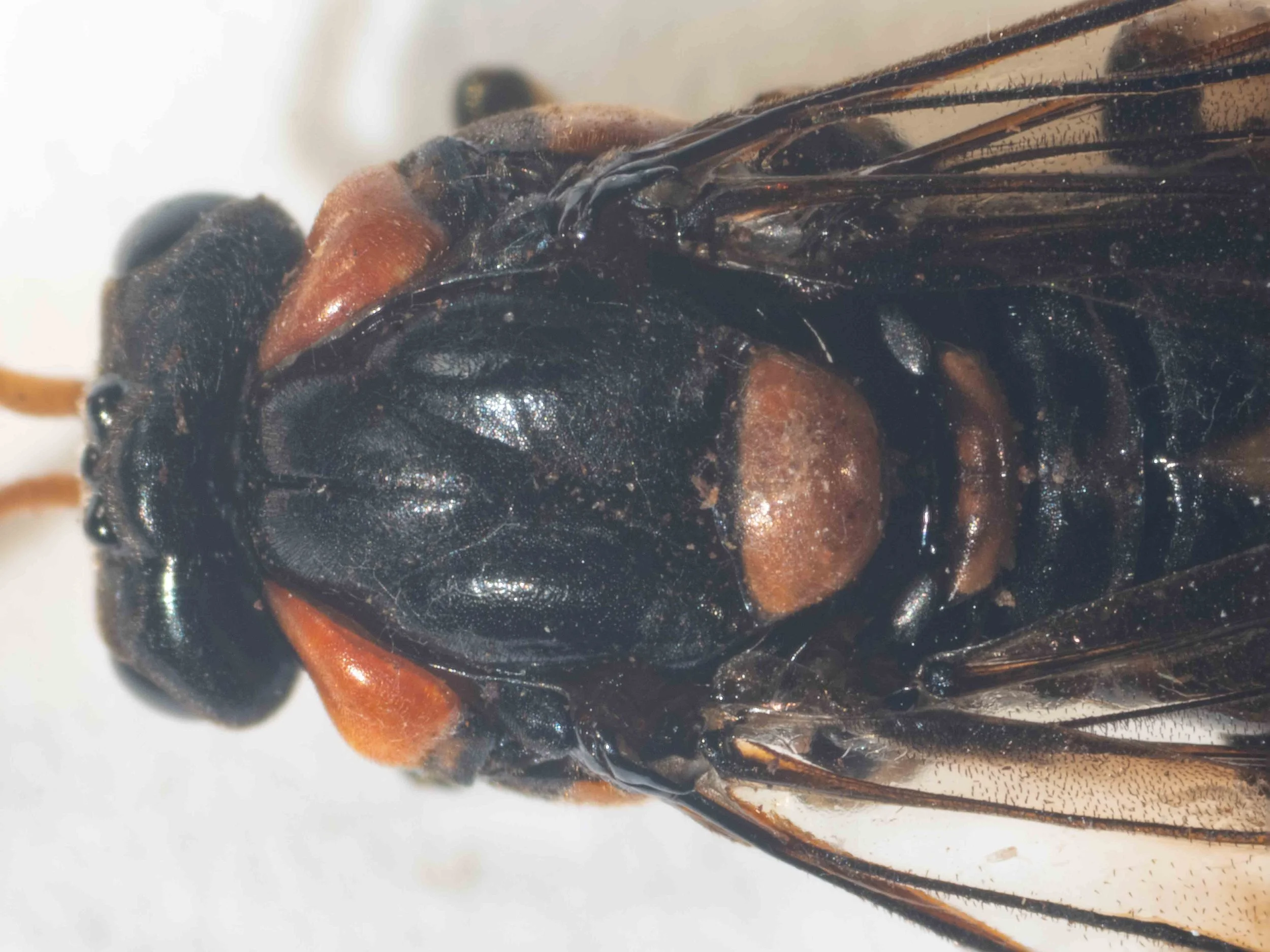
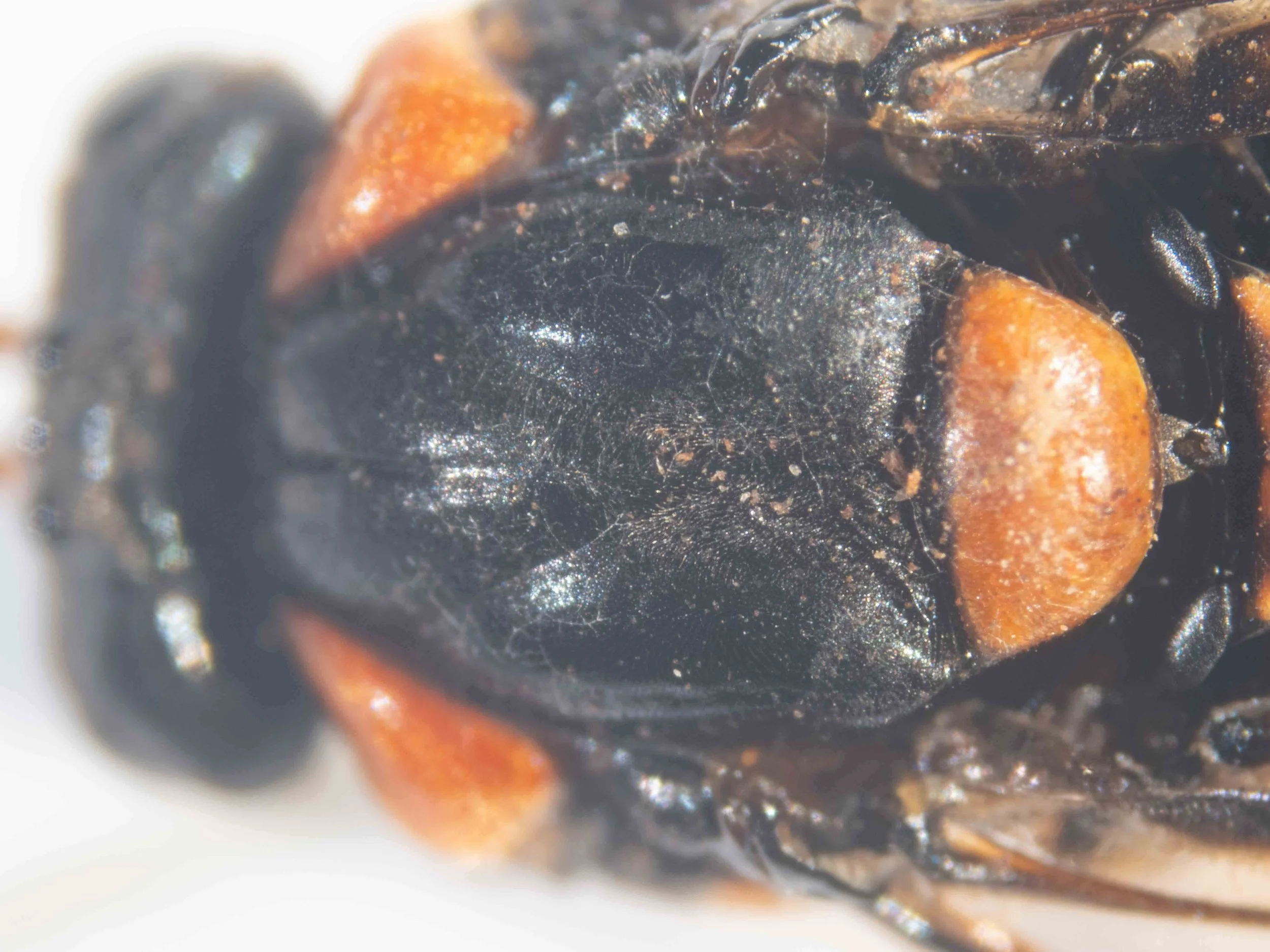
short, fine, pale pubescence over thorax
pronotum orange with black anterior border and black behind accessory furrow
accessory furrow on pronotum subparallel with side margin of pronotum
mesepisternum black with large central orange area
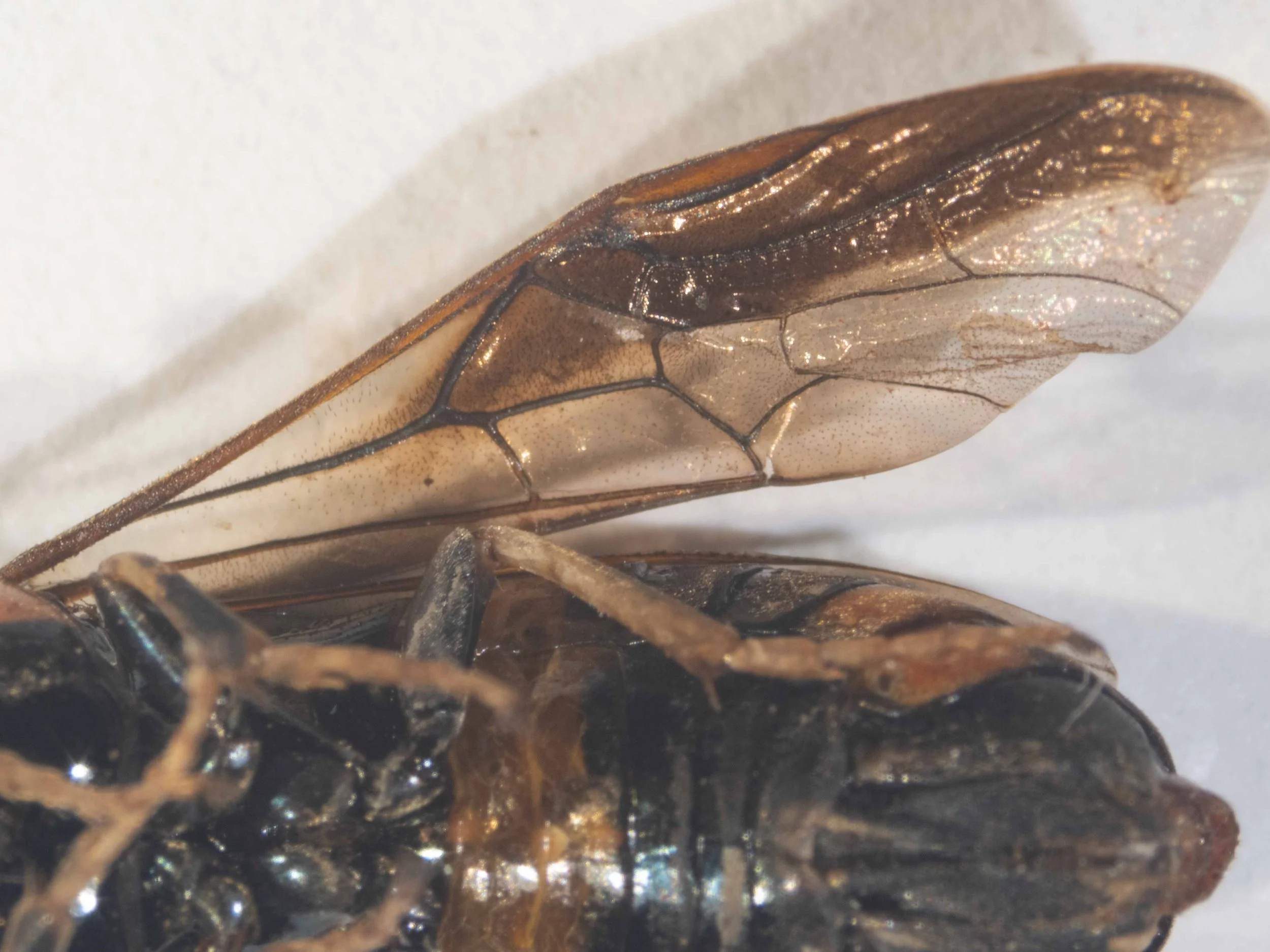
wing hyaline with dark brown band extending along anterior border to wing apex, covering radial and 1st cubital cells completely and part of 2nd and 3rd cubital and 1st discoidal cells
costa and stigma yellowish-brown
venation black in anterior and basal regions, dark brown in posterior and apical regions
Summary:
This female is a good match to Pterygophorus cinctus. There are only minor differences (colour of hind tibia, number of serrulae on saw teeth, exact number of antennomeres) to the description by Benson (1938) and to other specimens I have collected at Wonboyn and Bellingen.
It differs in key diagnostic features from other Pterygophorus spp. P. insignis, P. facielongus and P. turneri, as detailed on this notes page.
This is a workbook page … a part of our website where we record the observations and references used in making species identifications. The notes will not necessarily be complete. They are a record for our own use, but we are happy to share this information with others.