
Rhopalum diversity (Crabronini)
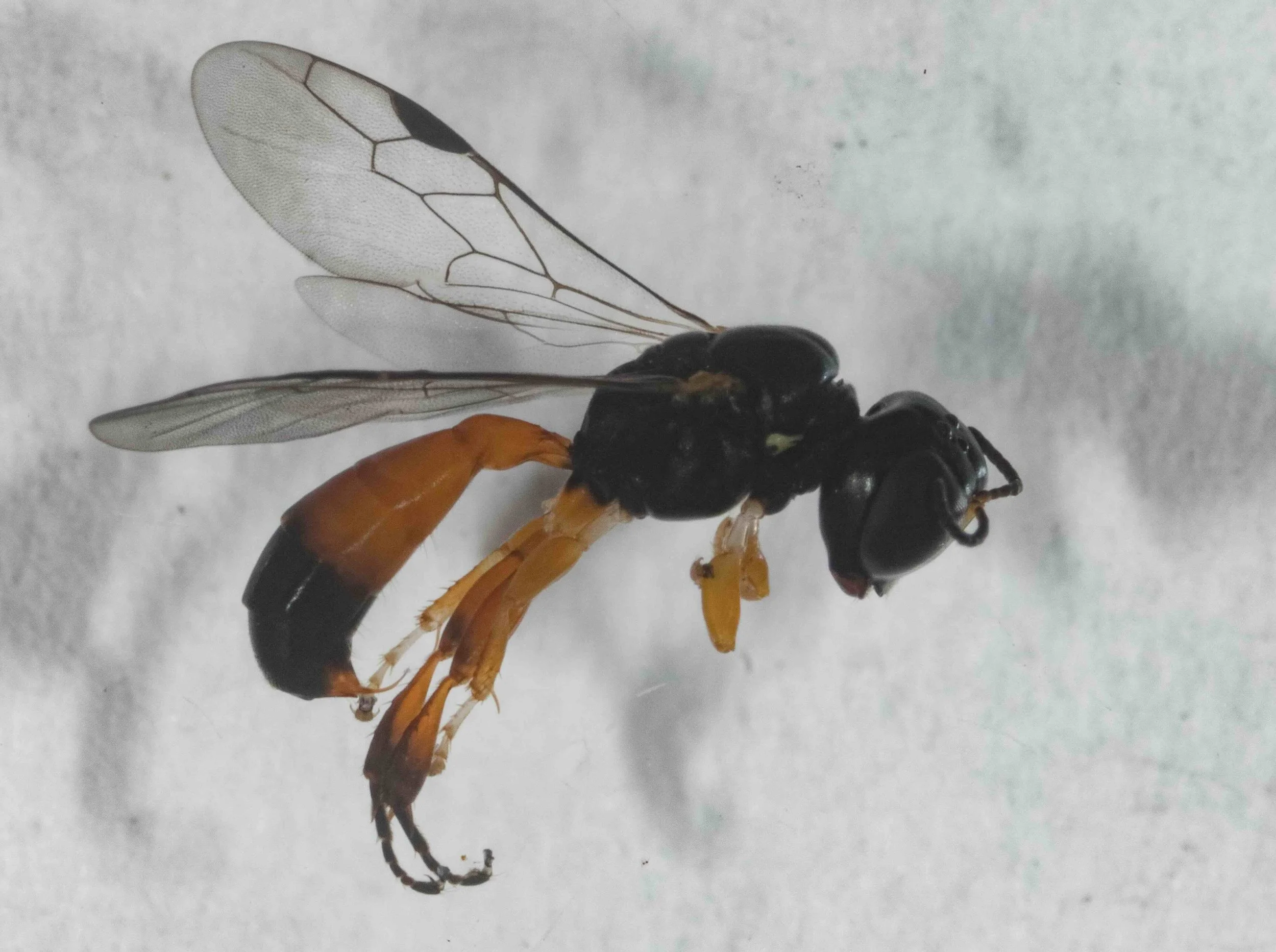
Workbook
Until recently, we had recorded just a single species of Rhopalum here in the forest. We have made detailed observations of the nesting habits of Rhopalum coriolum over several years, and have a publication in preparation. I assumed there would be other Rhopalum species out there, escaping our notice due to their small size contributing.
The Malaise trap program we commenced in January 2026 as part of IBOL project provides our first glimpse into the diversity of small insects. The crabronids are, of course, my personal targets of interest, and numerous Sericophorus and Rhopalum are turning up in the collections. Here’s a look at the Rhopalum diversity.
Note that all these specimens are destined for CBG in Canada, where they will be barcoded and added to the BOLD database. I look forward to seeing what that genetic analysis reveals about their identities.
Recognising Rhopalum
First, a few notes on diagnostics for this genus. And it’s a surprisingly tricky one!
There are currently nearly 100 described Rhopalum species in Australia, with additional undescribed specimens in collection (Pulawski 2010). Leclercq is responsible for the majority of that work, including the most recent review and key to species (Leclercq 1997).
It is worth noting the close similarity between Rhopalum and Podagritus. For a more detailed discussion of this, see my notes on Podagritus:
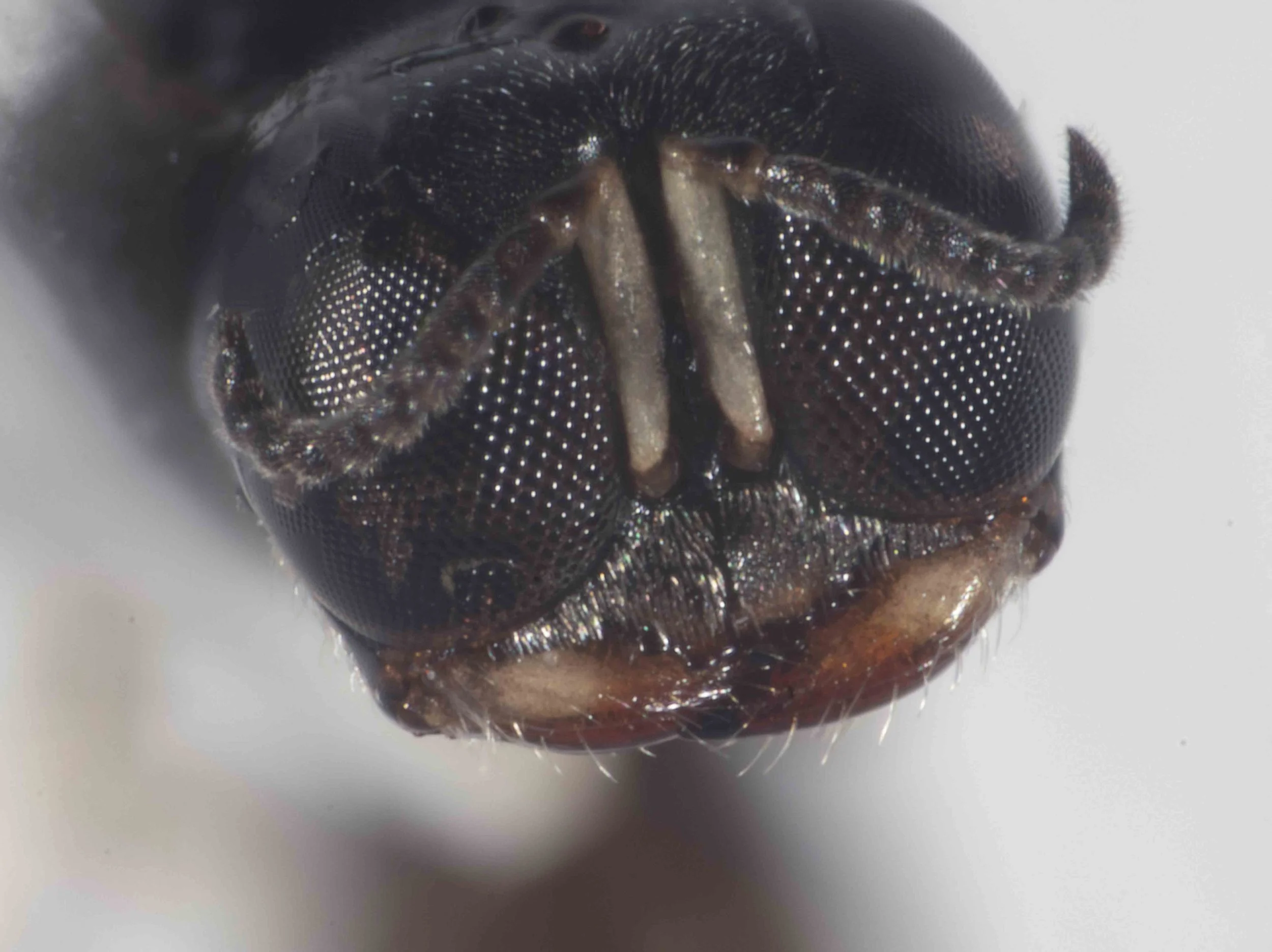
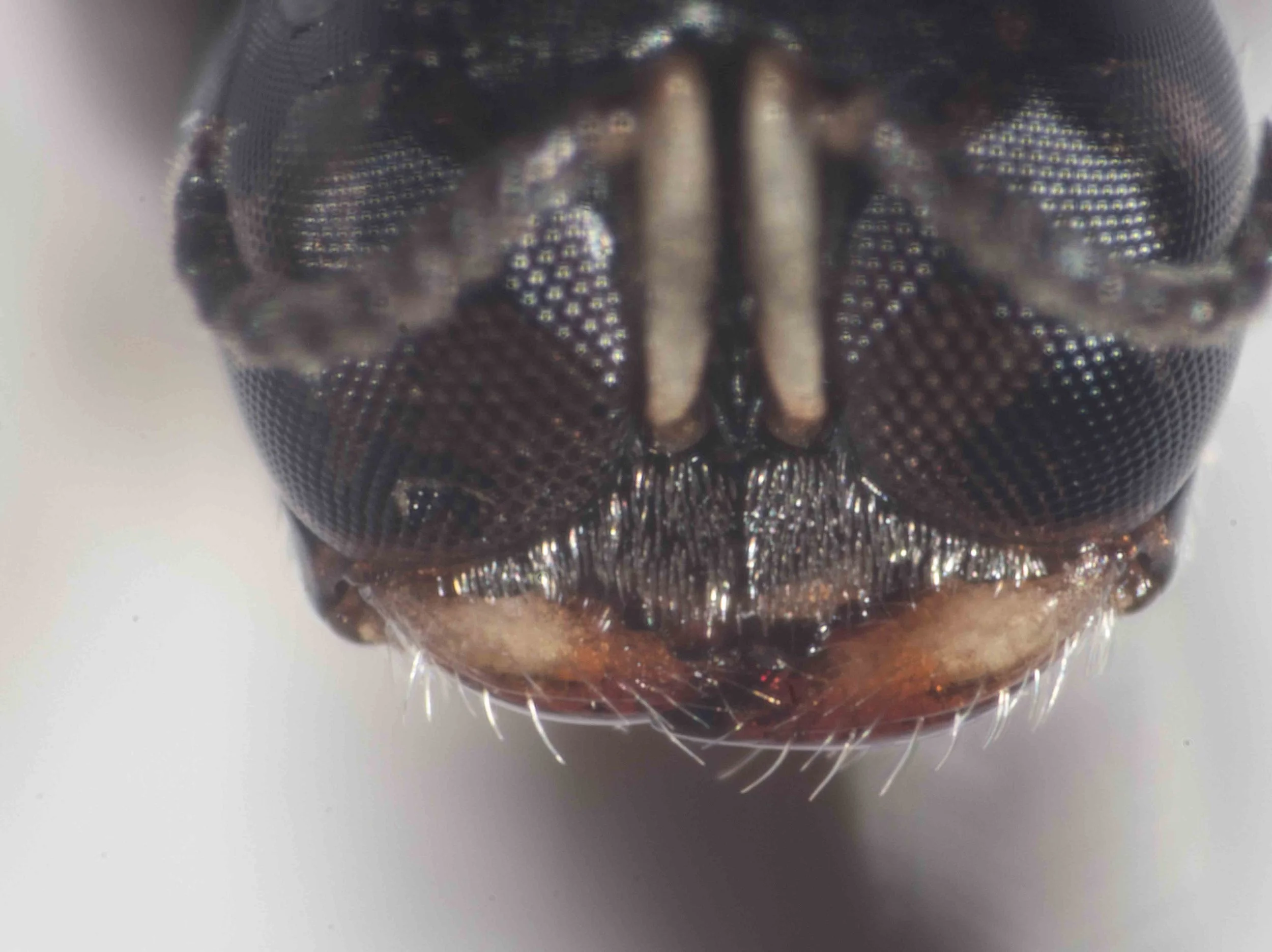
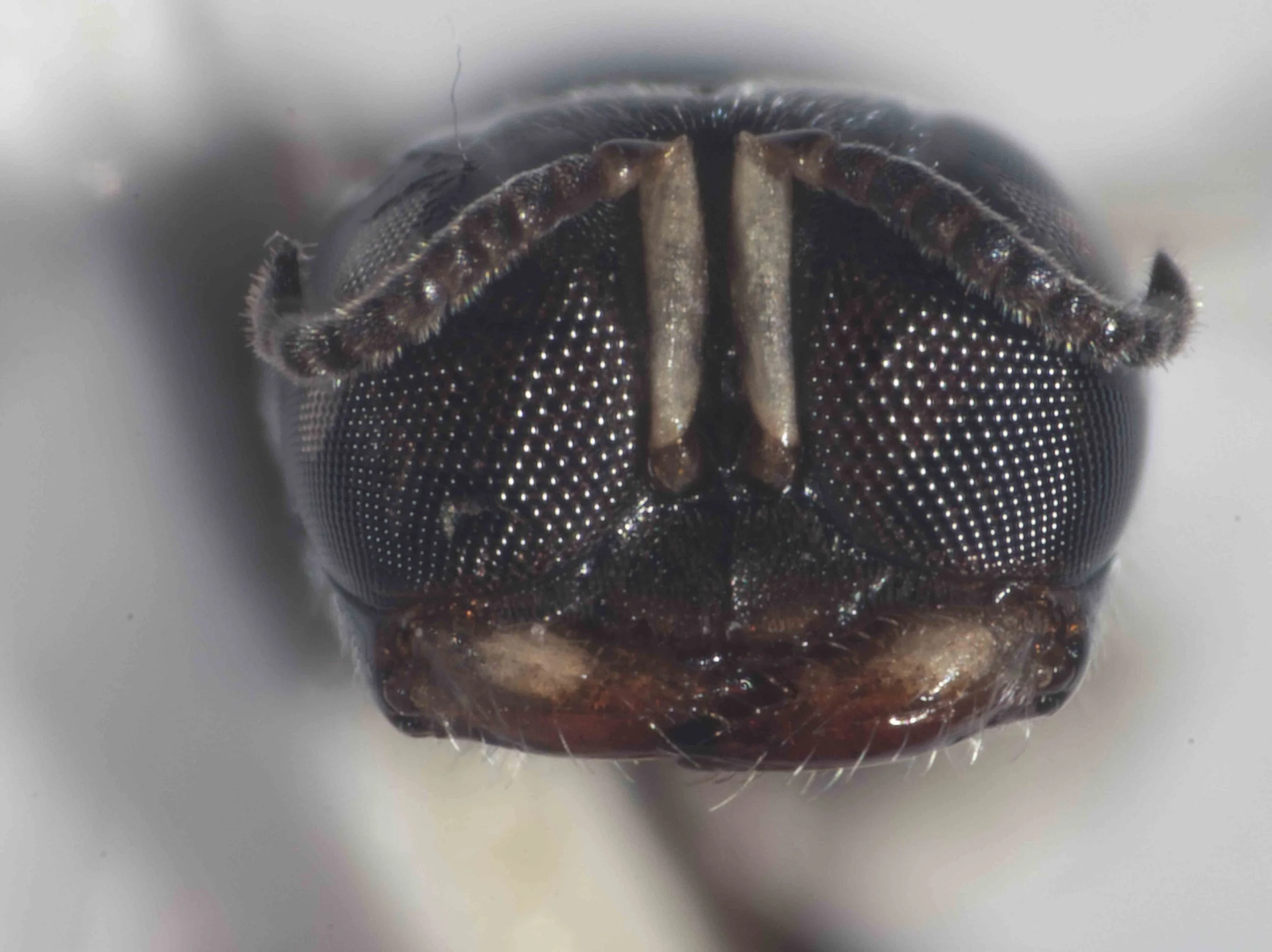
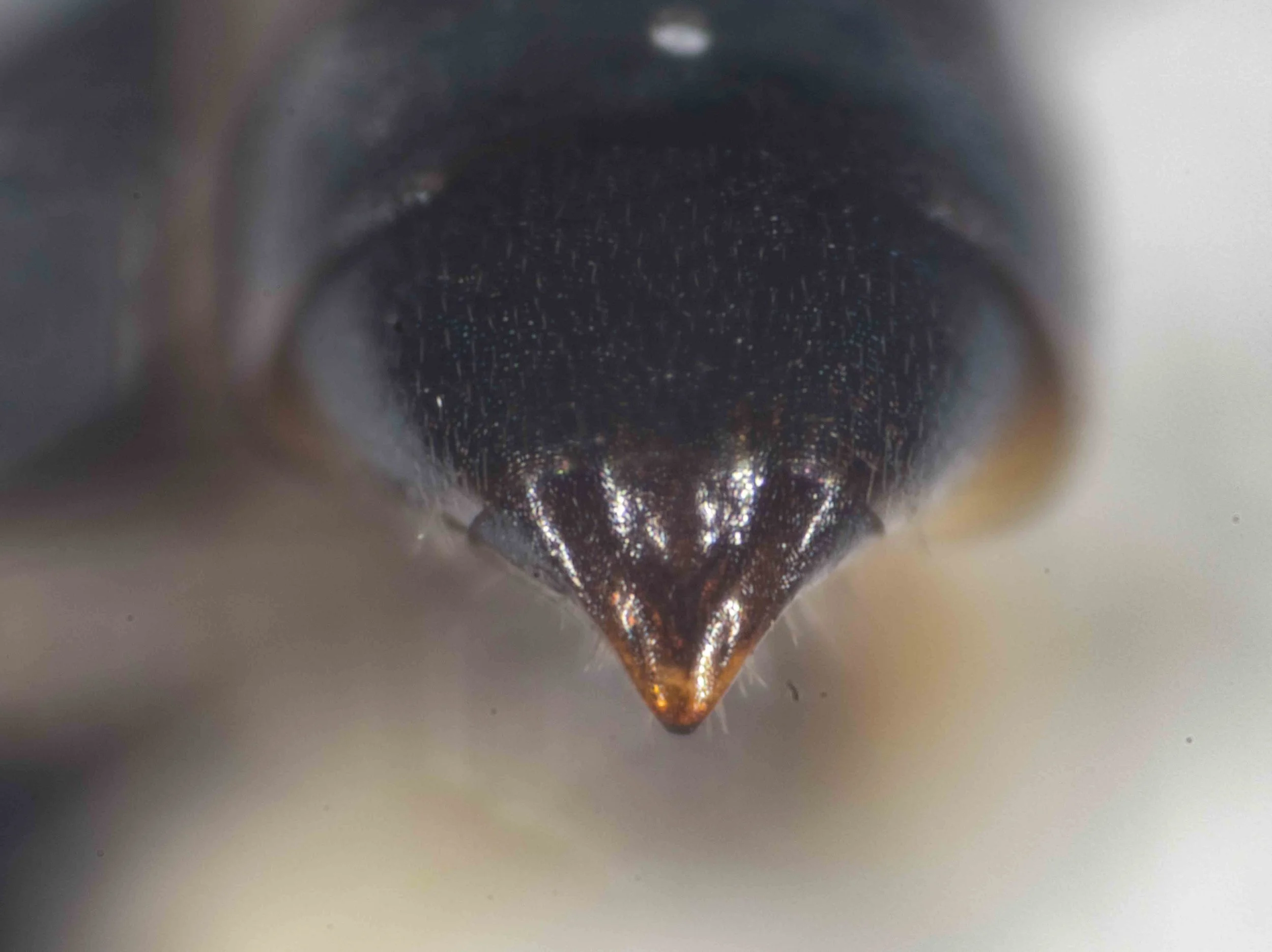
Rhopalum are small wasps, typically black with relatively few colour markings. Species distinctions largely rely upon subtle differences in shape (e.g. pronotal angles; clypeus margin; interantennal space), although there are more obvious clues too (e.g. head width; metasoma shape).
Ilustrating local diversity
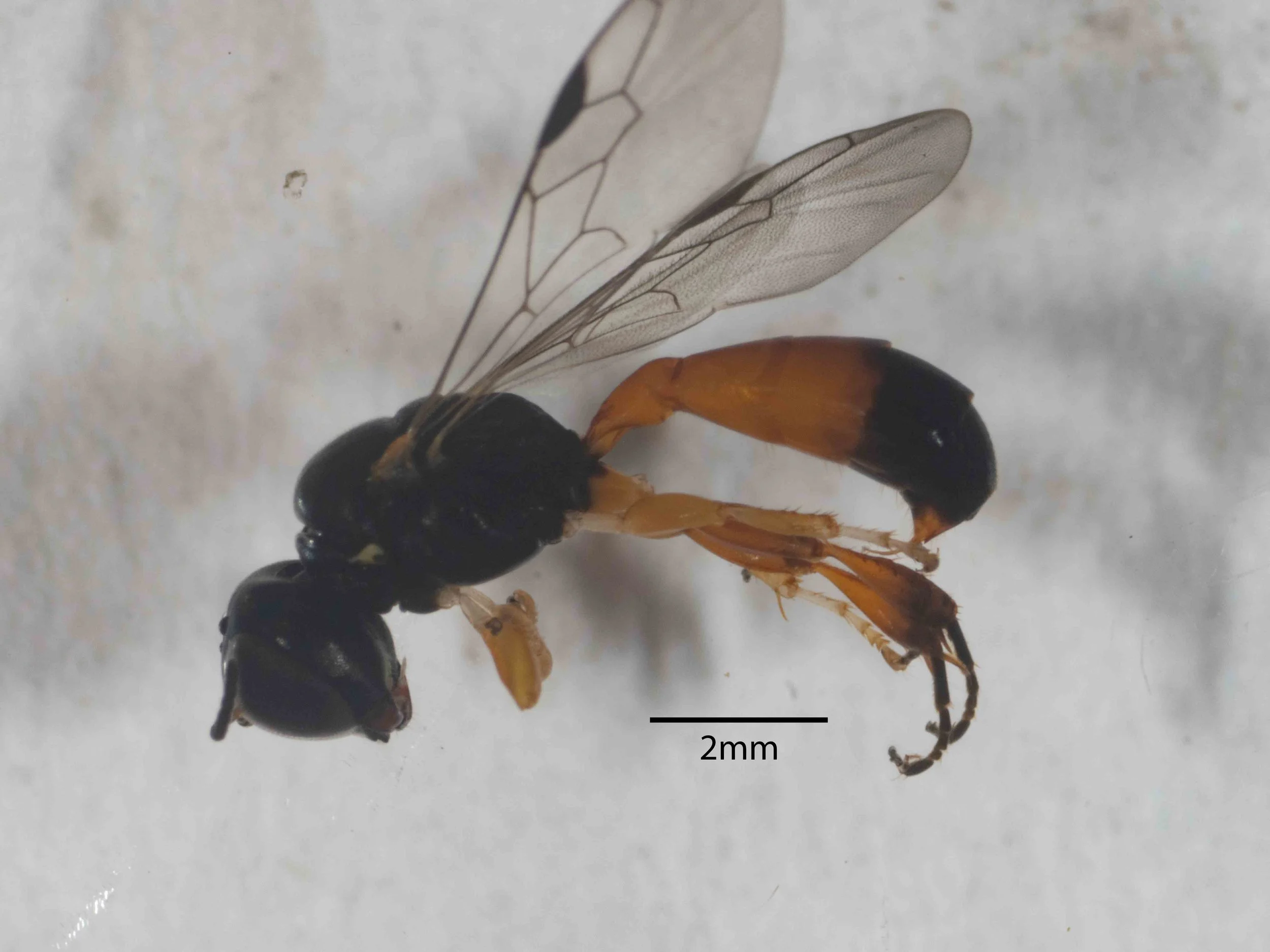
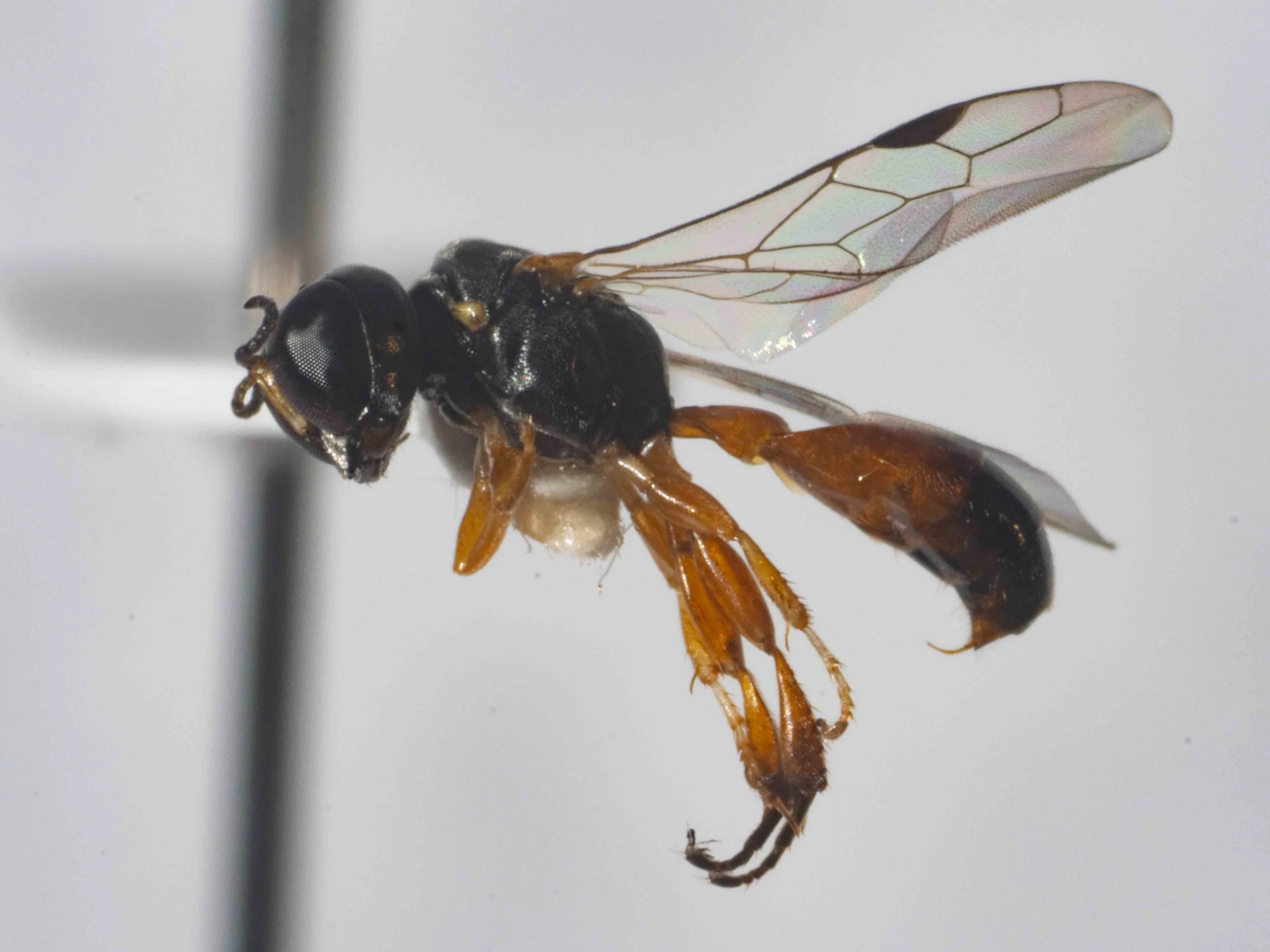
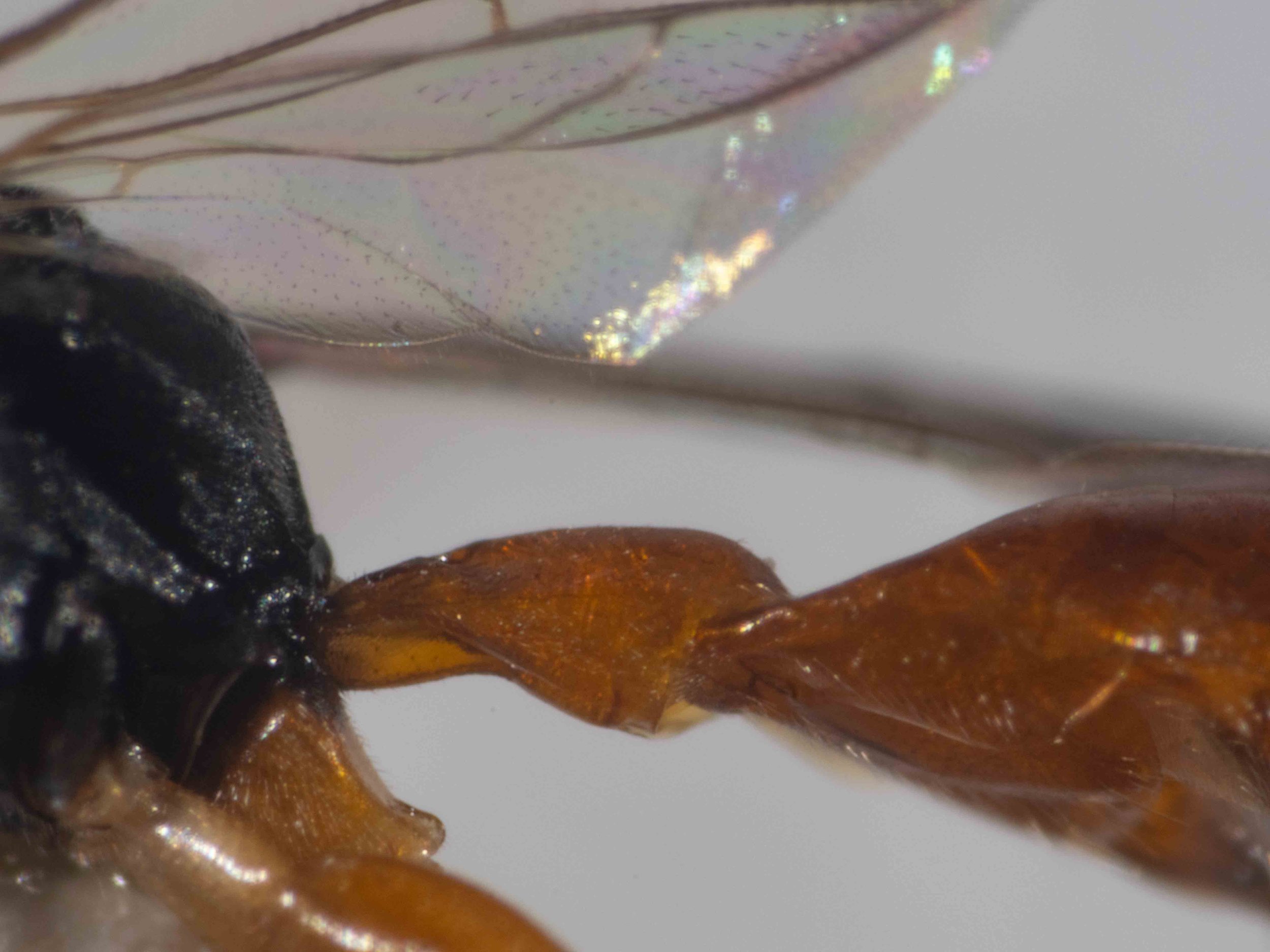
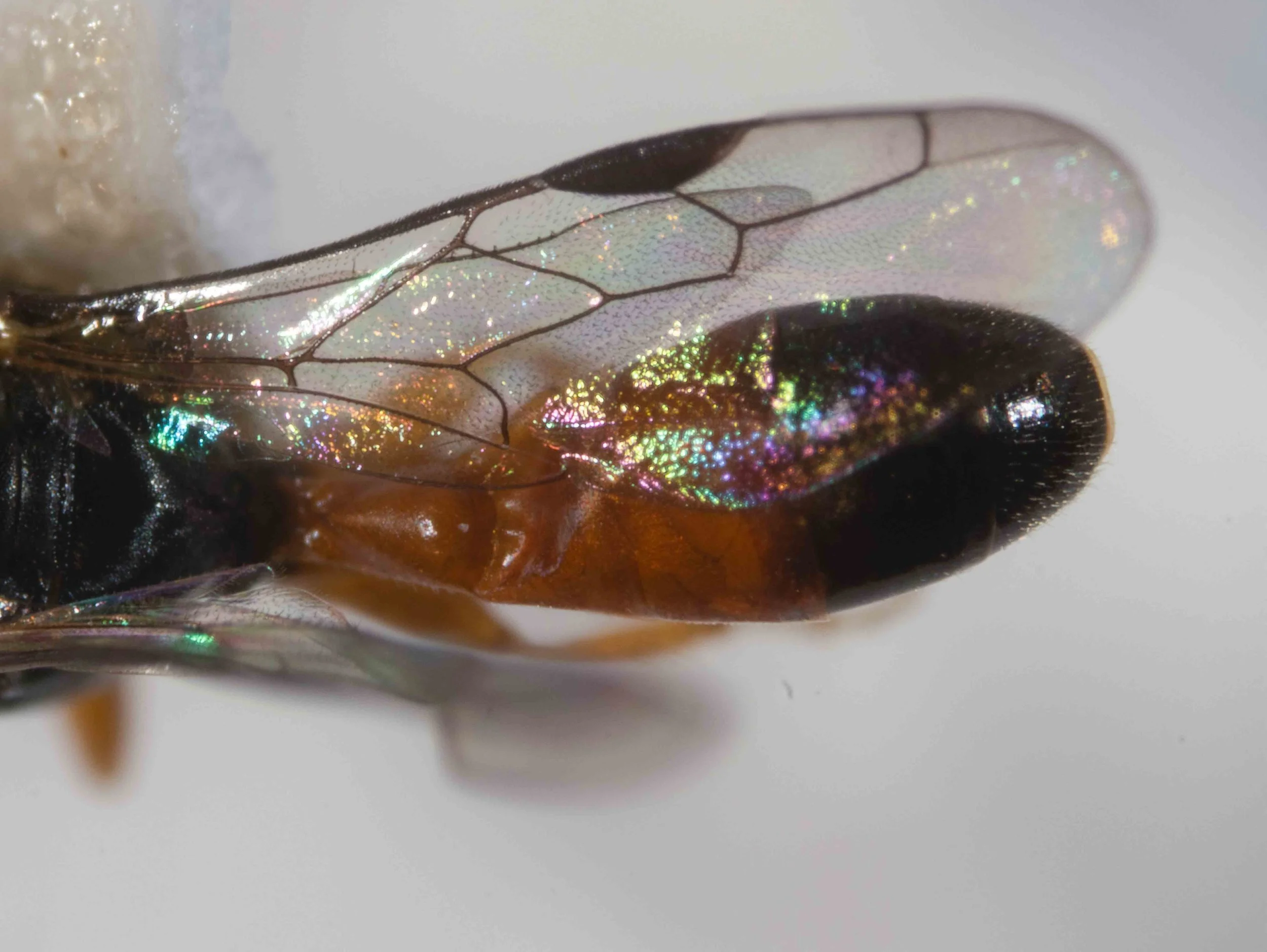
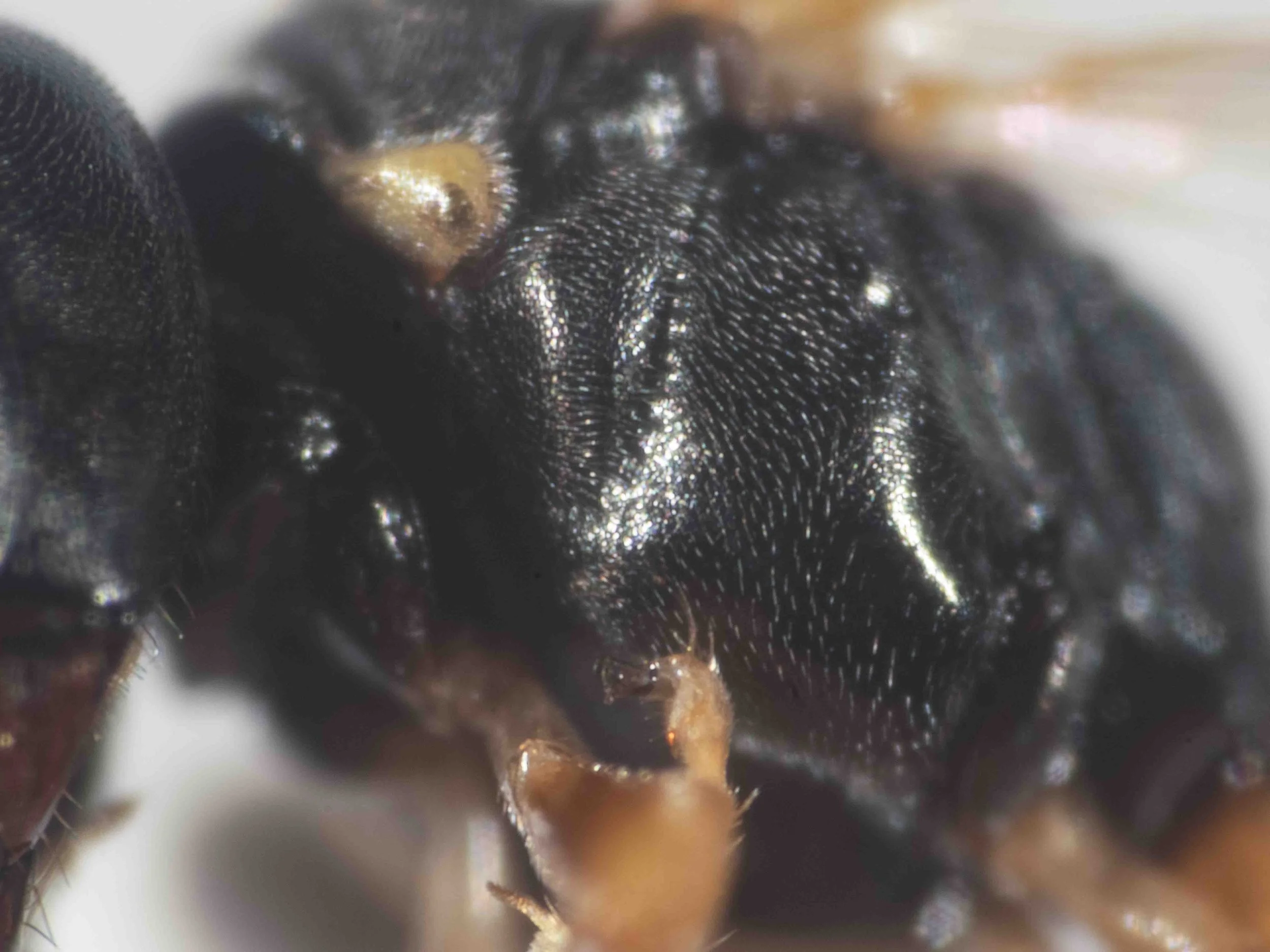
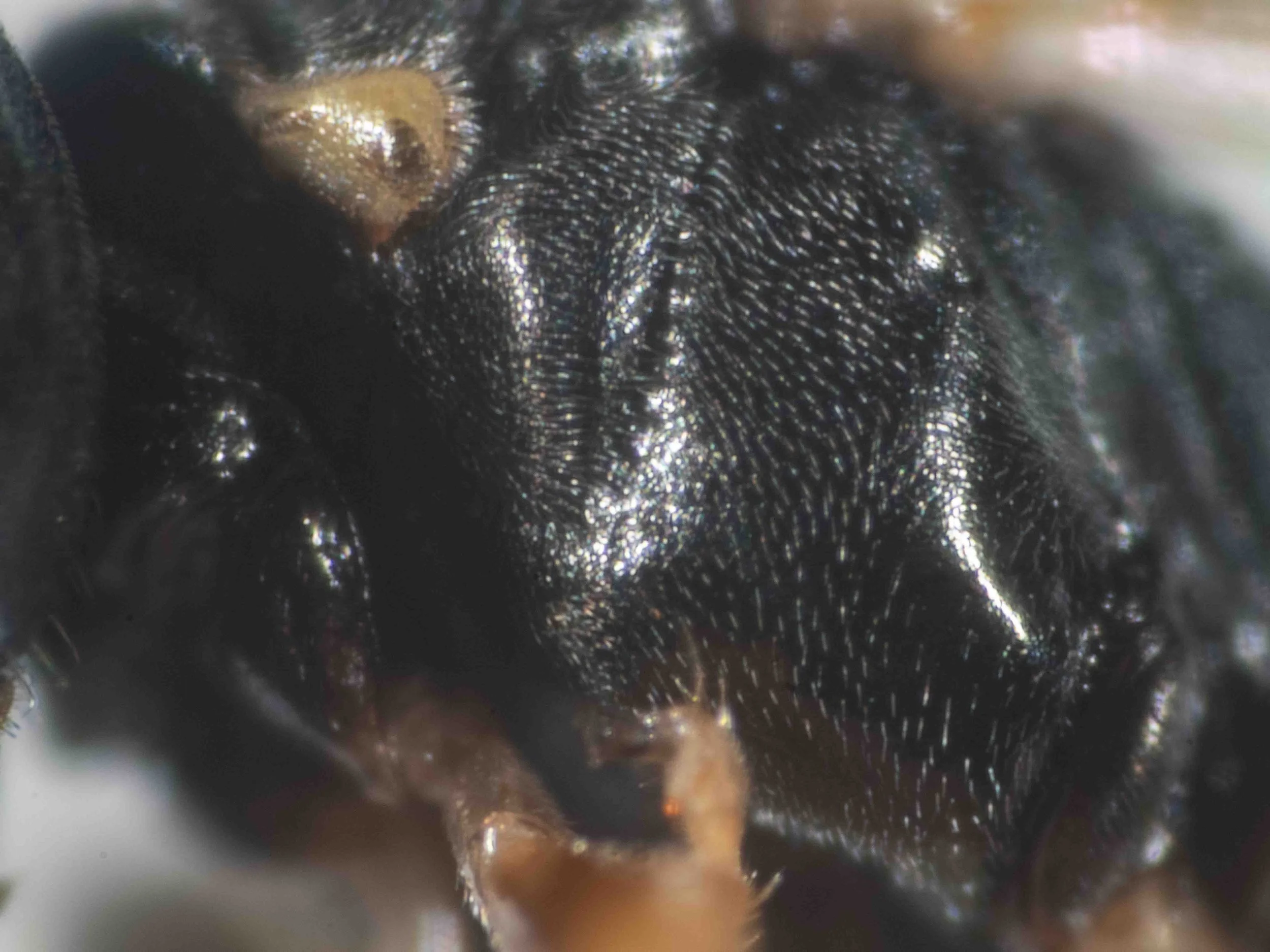
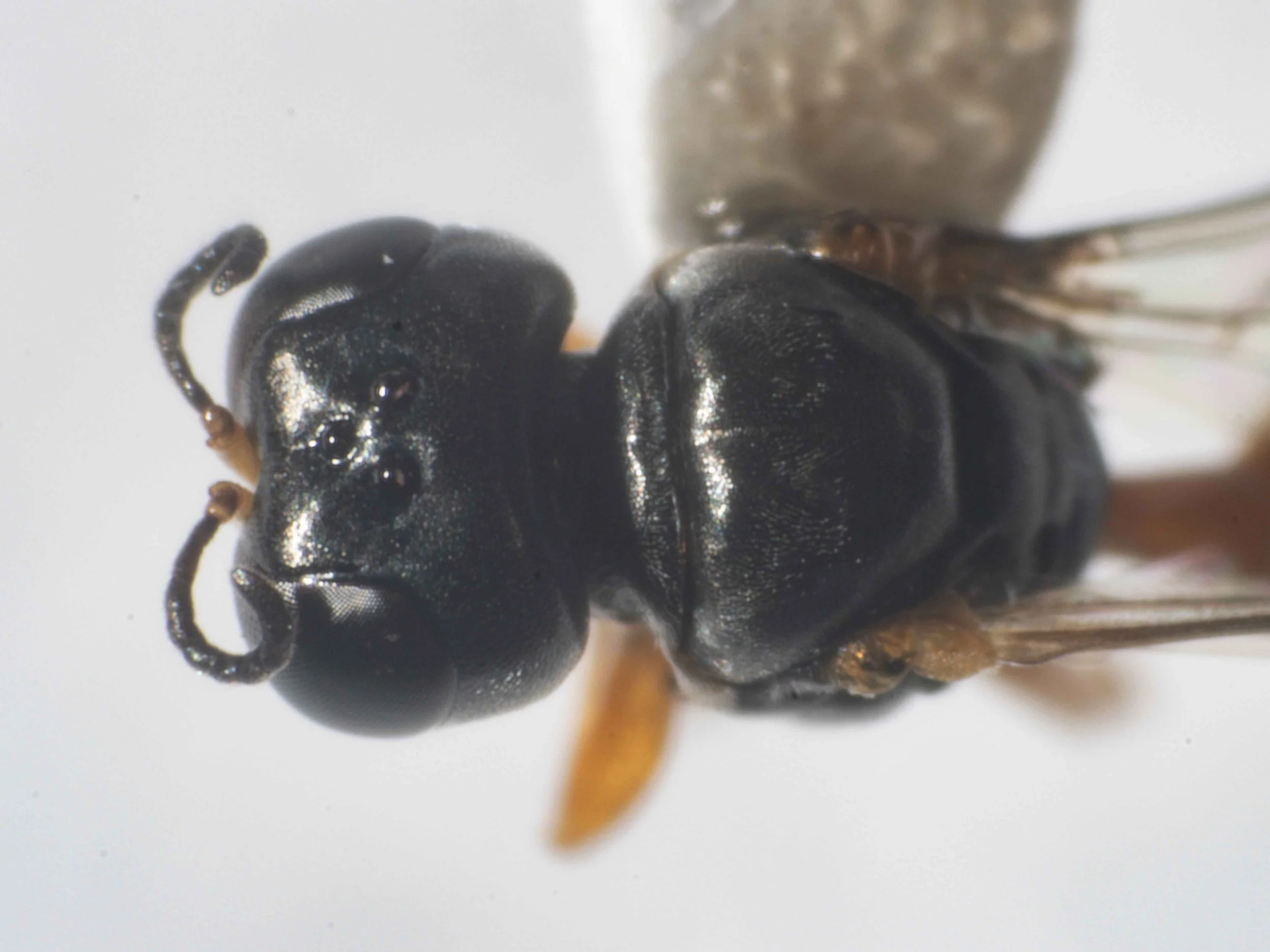
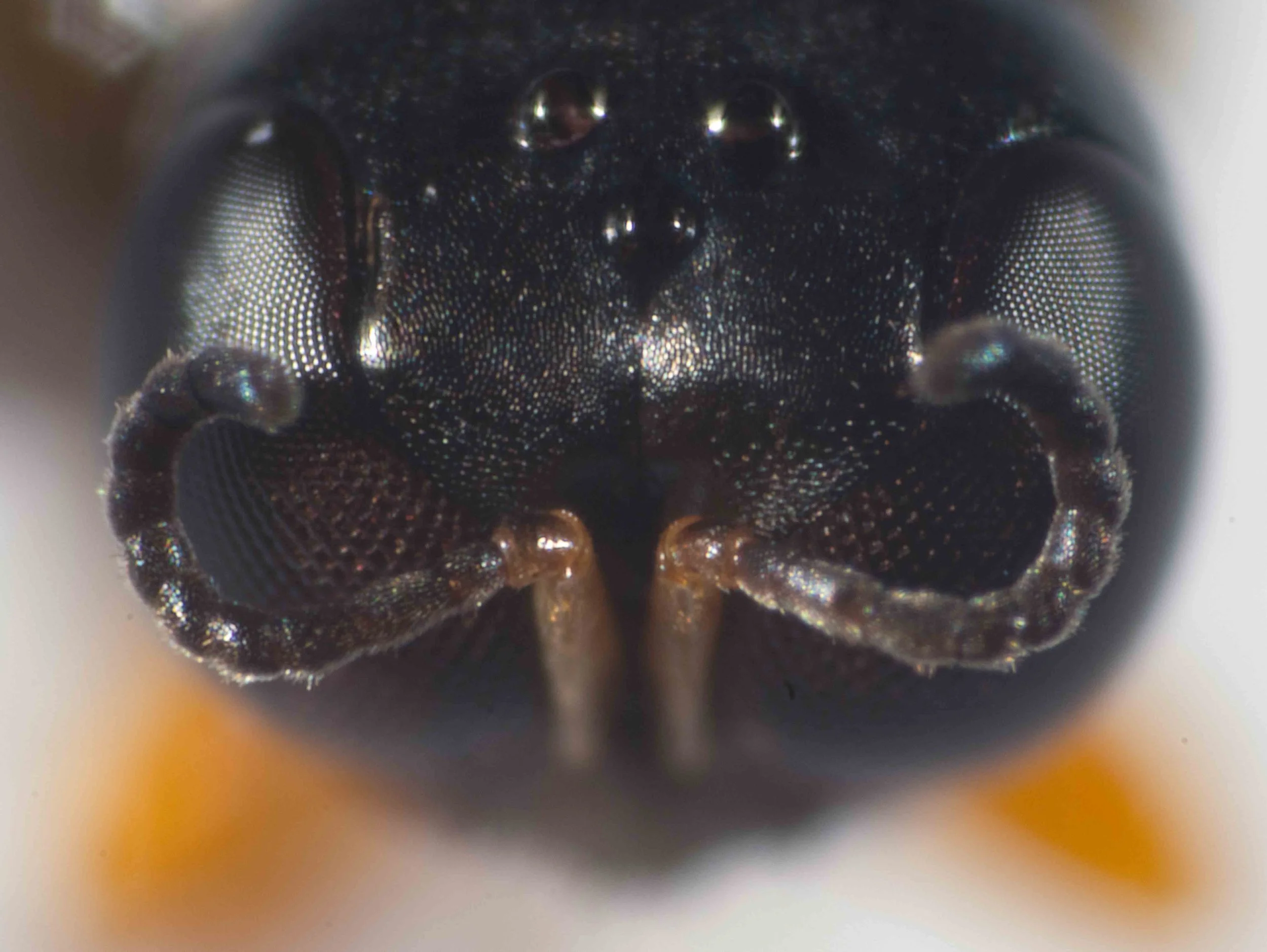
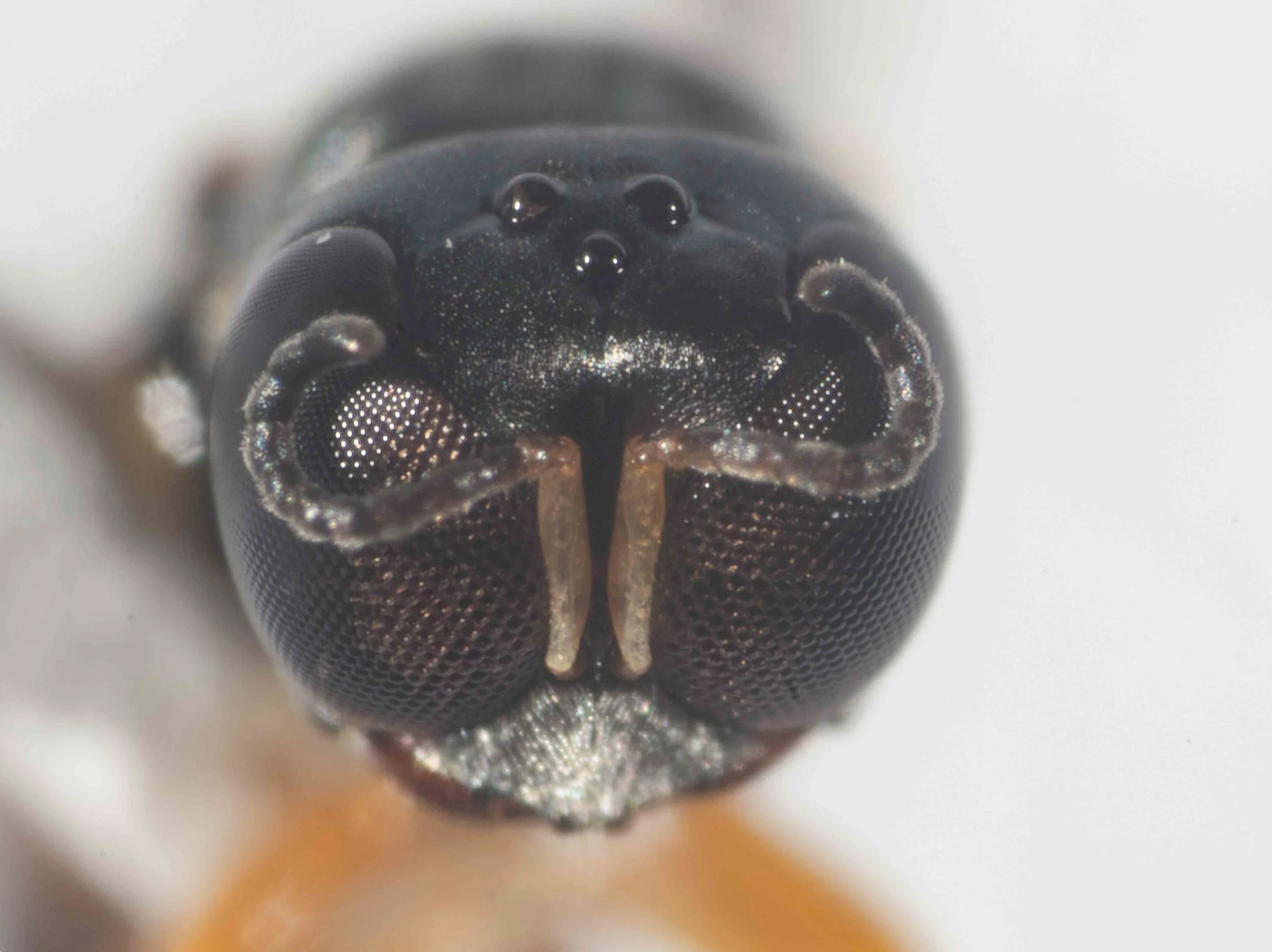
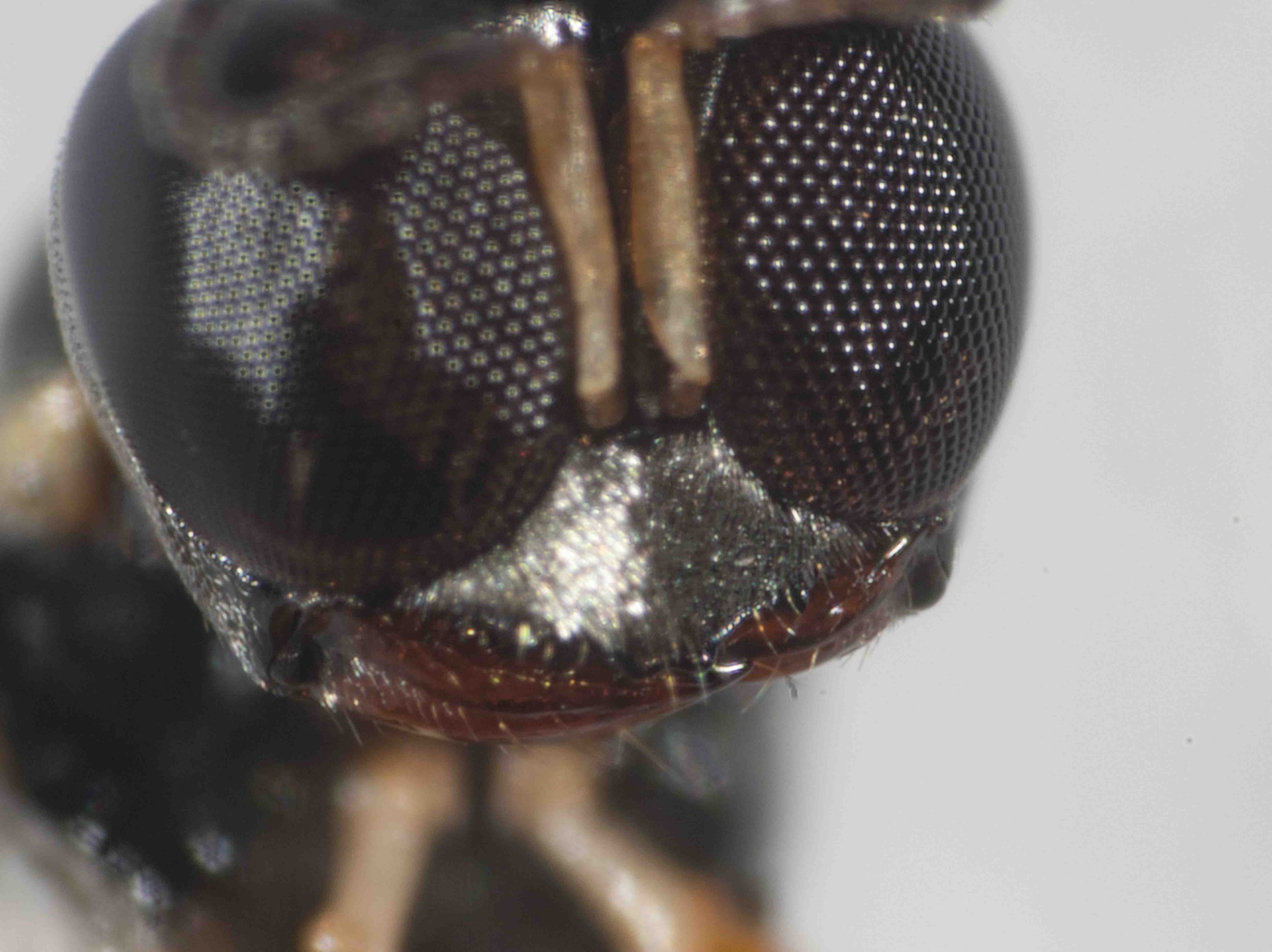
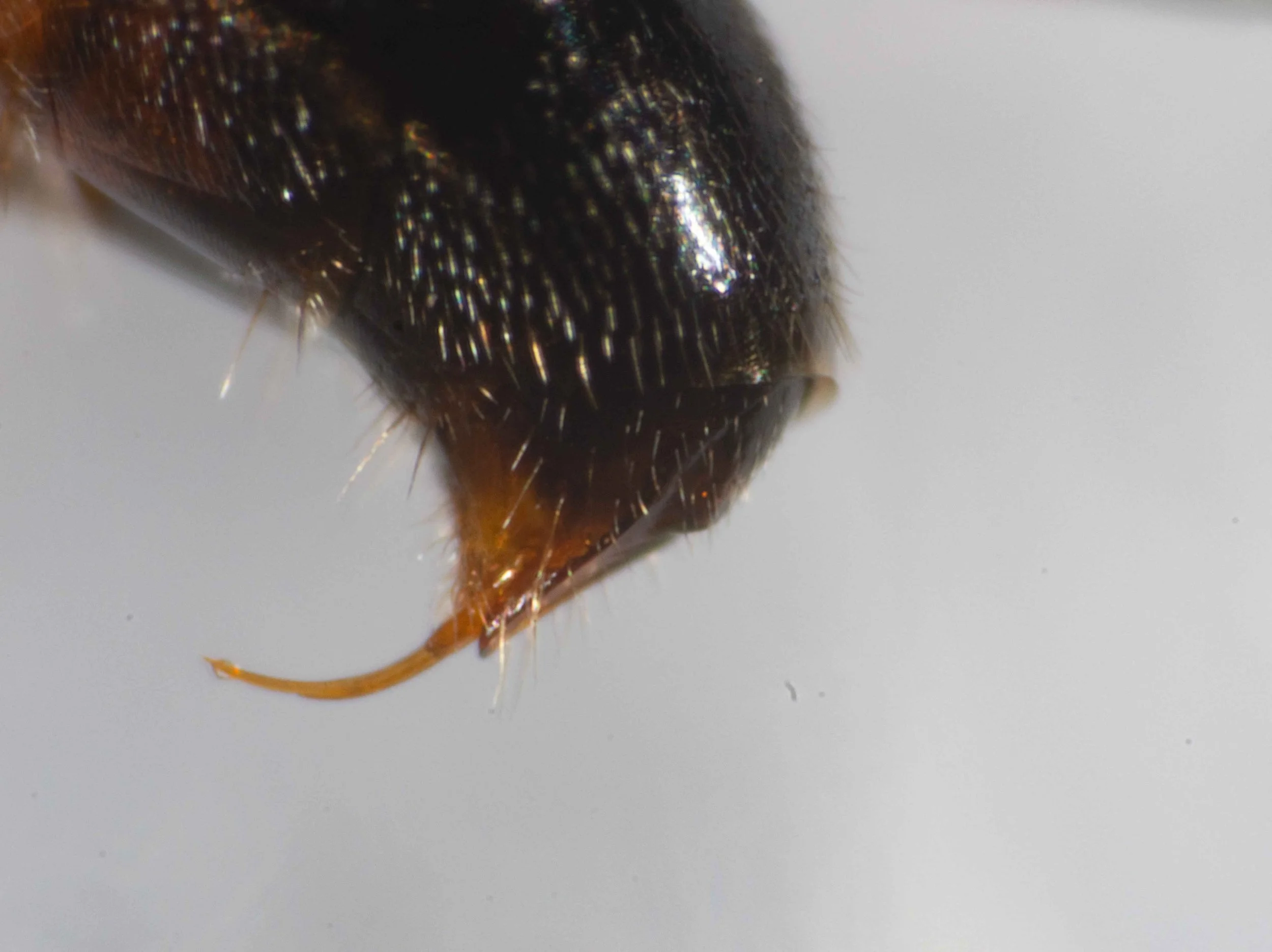
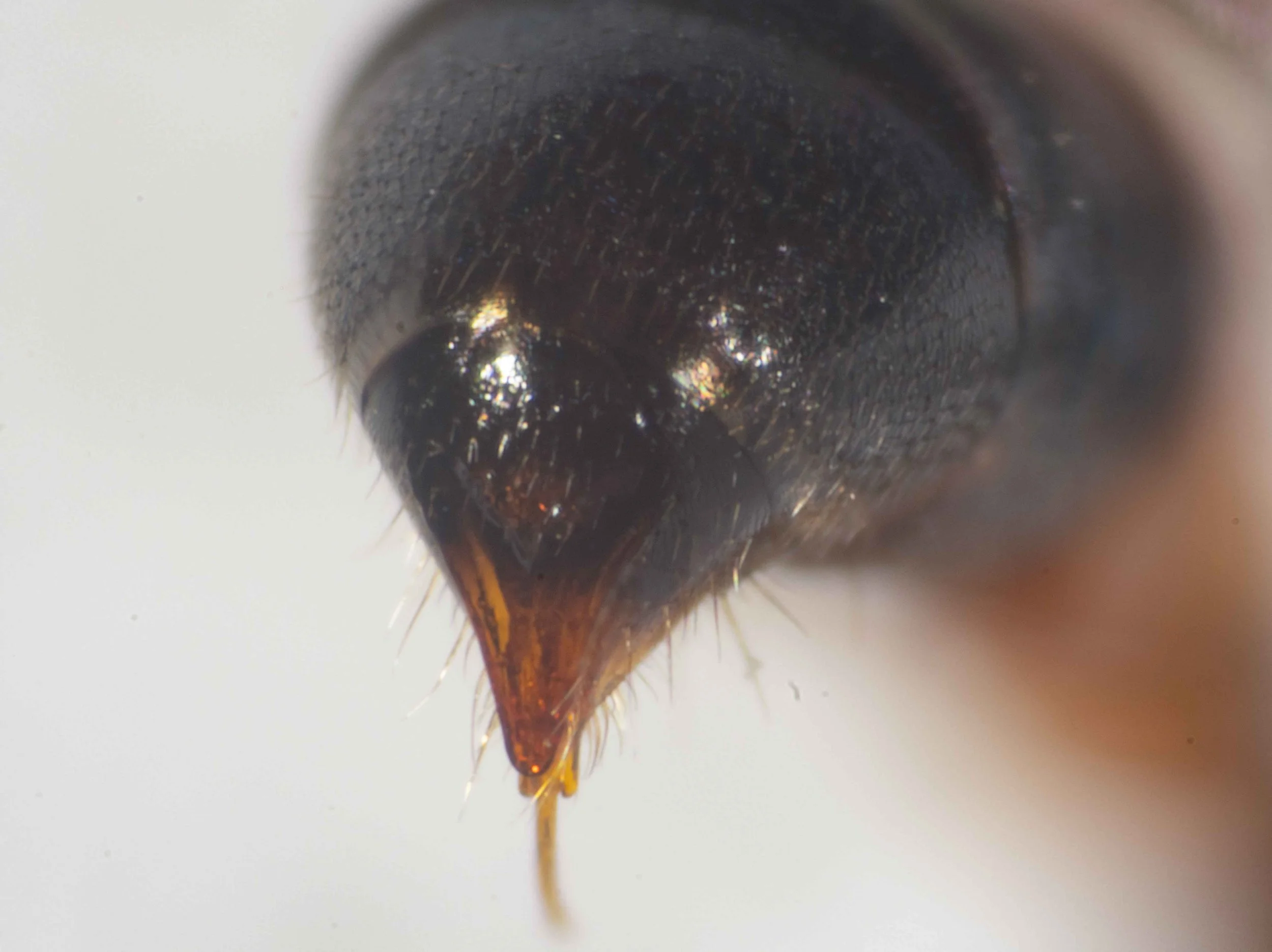
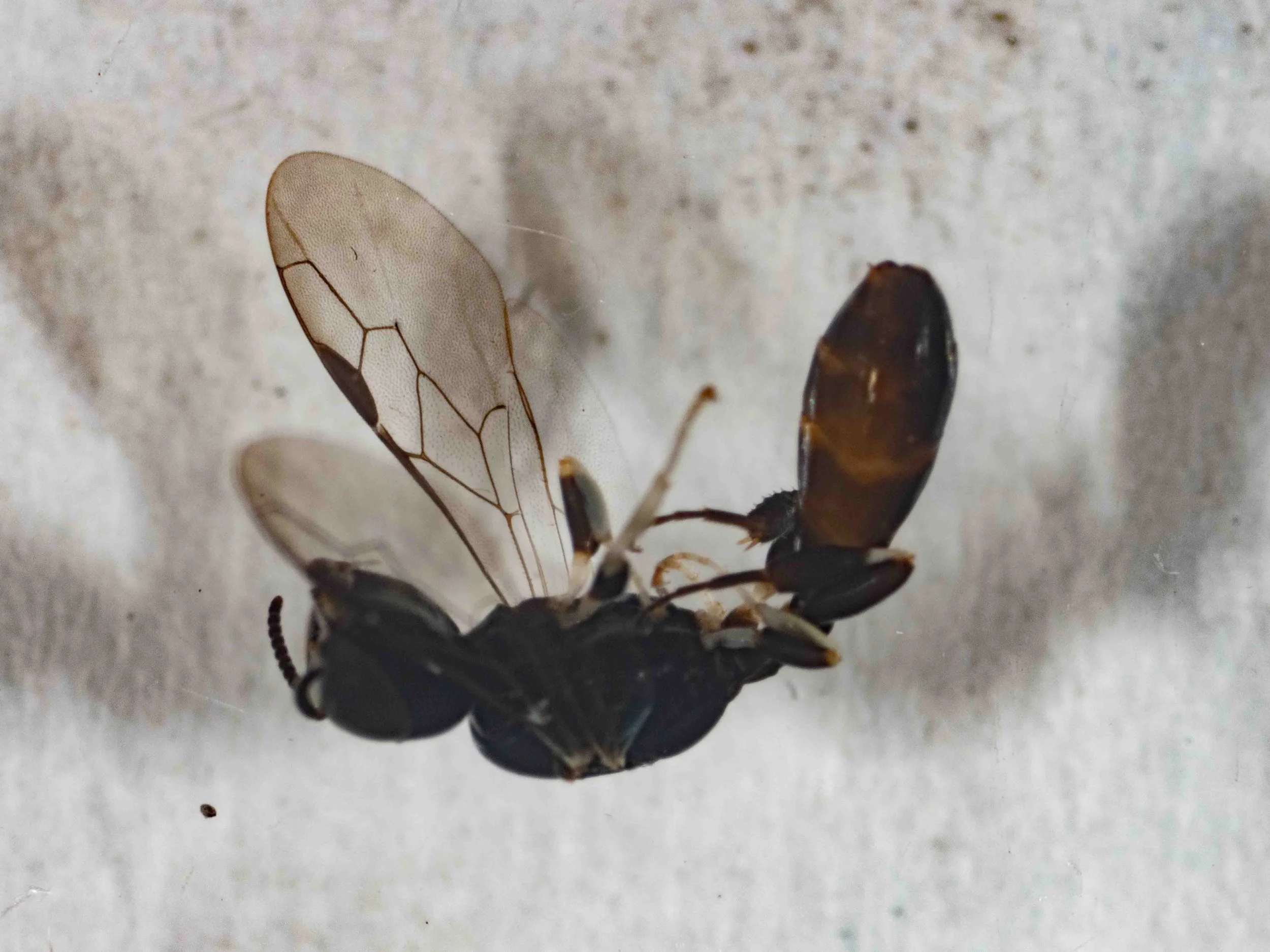
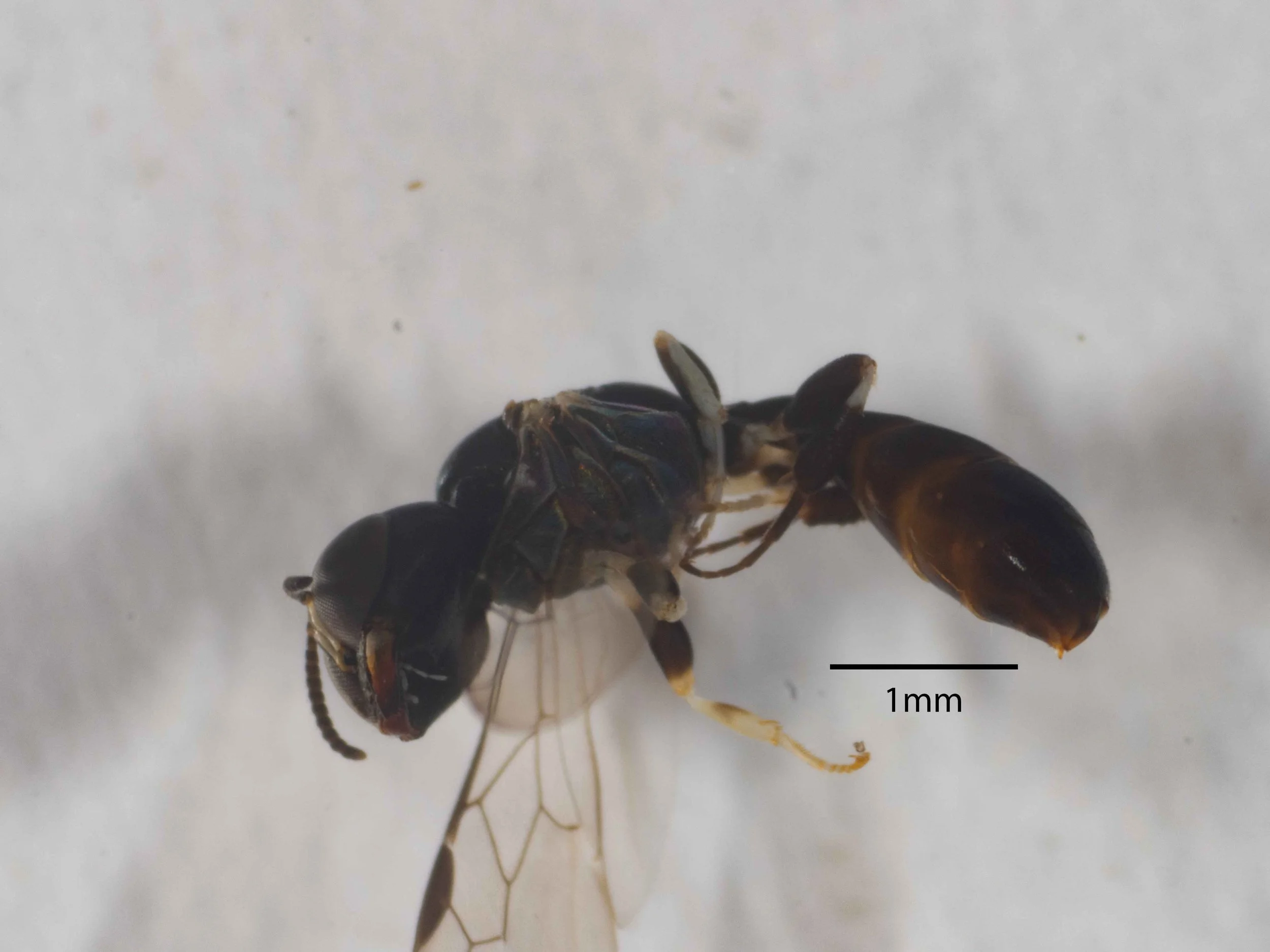
Based on my reckoning, the following specimens meet the criteria for Rhopalum. I admit that some had me stumped for a while. Not all have the slender, strongly clavate gaster I am familiar with from Rhopalum coriolum. Yet taken in combination with features including mesopleural structure, pronotum shape, and small size, Rhopalum seems the best fit. And given the large size of this genus, such diversity is to expected.
All the following were collected here in the forest. They will be matched to their BOLD records when that data becomes available.
Specimen #004
(BOLD sample ID: CBG-B33497-G03)
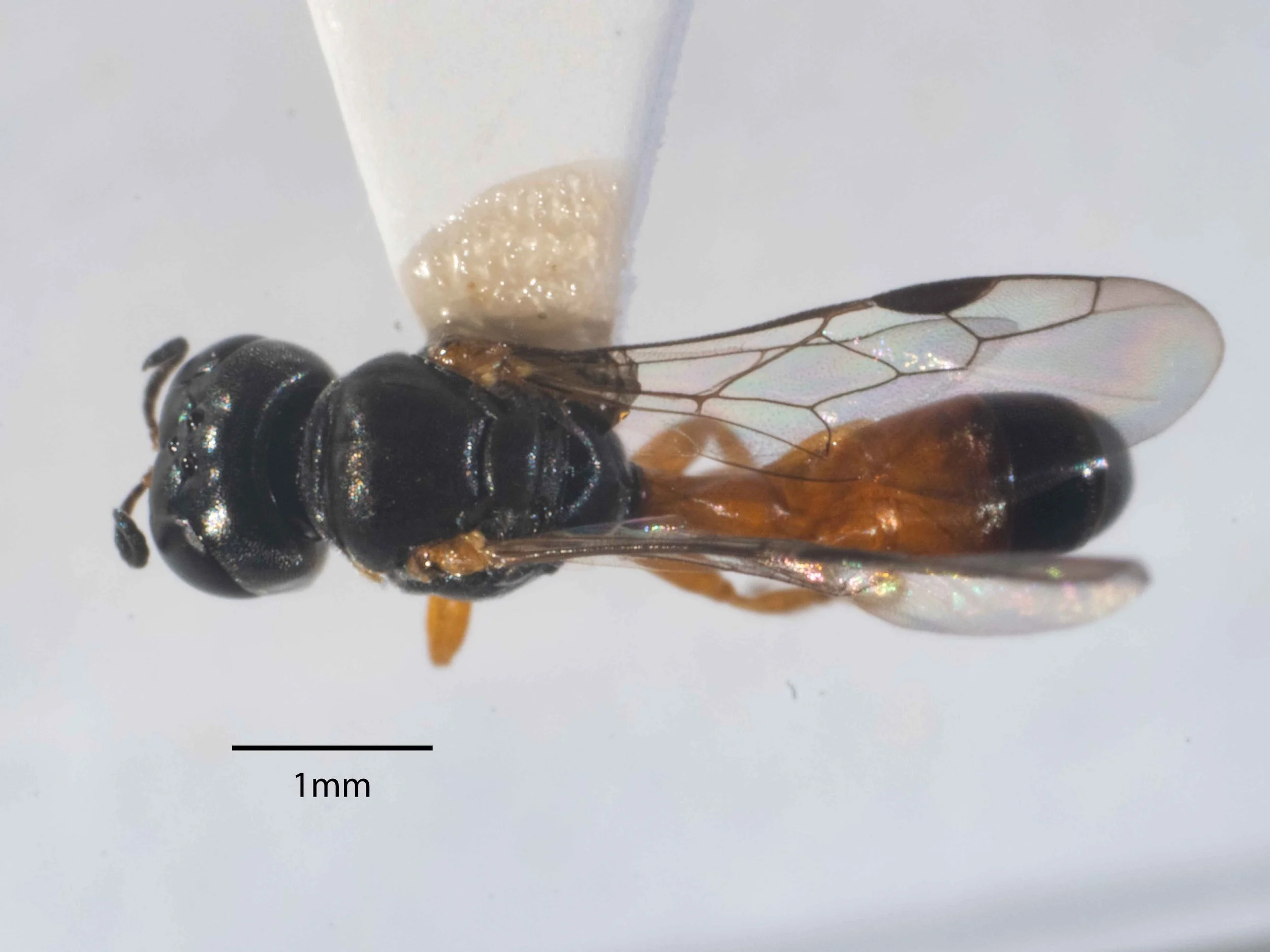
Specimen #005
(BOLD sample ID: CBG-B33497-G02)
BIN: BOLD:AES8952
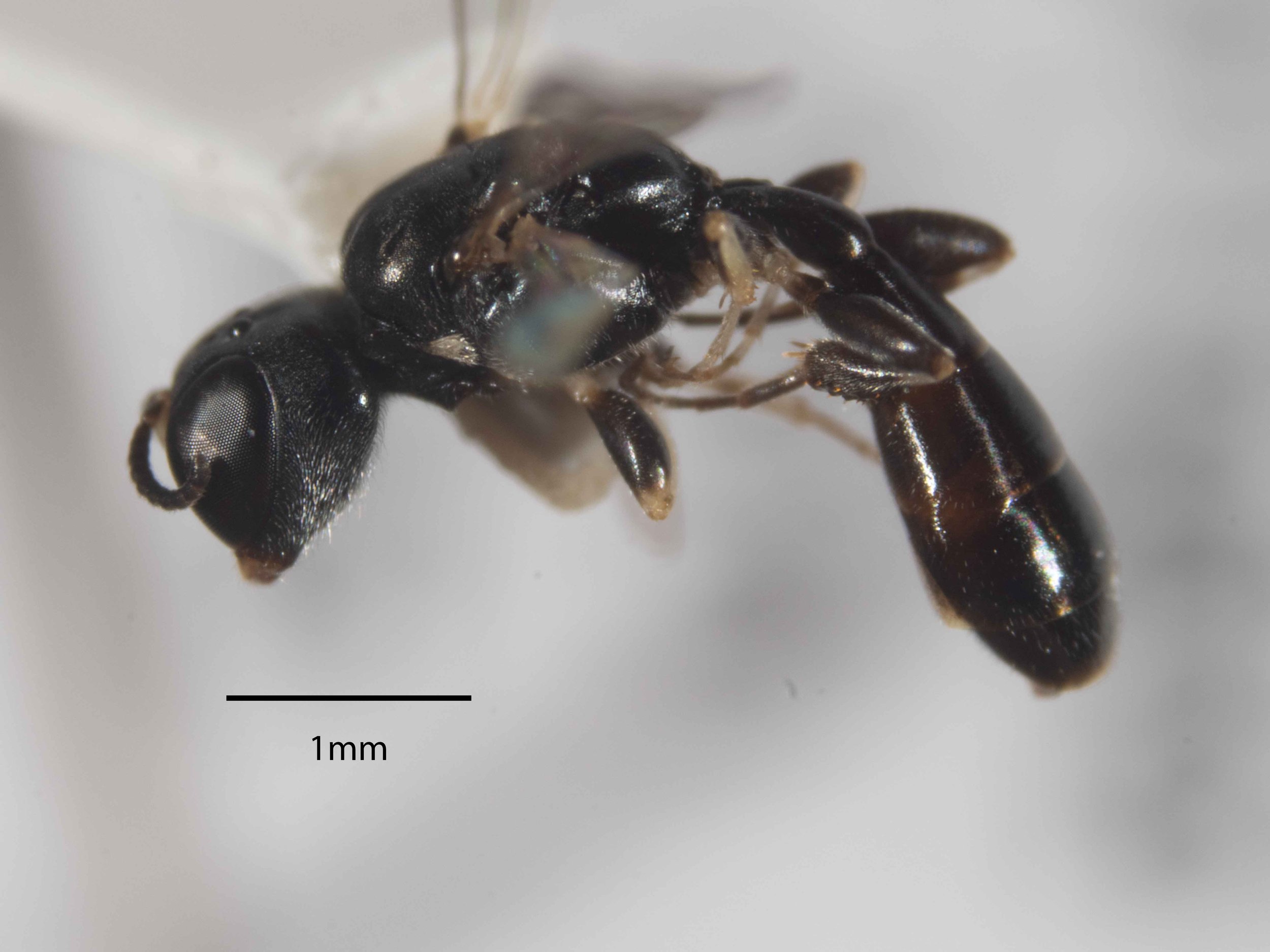
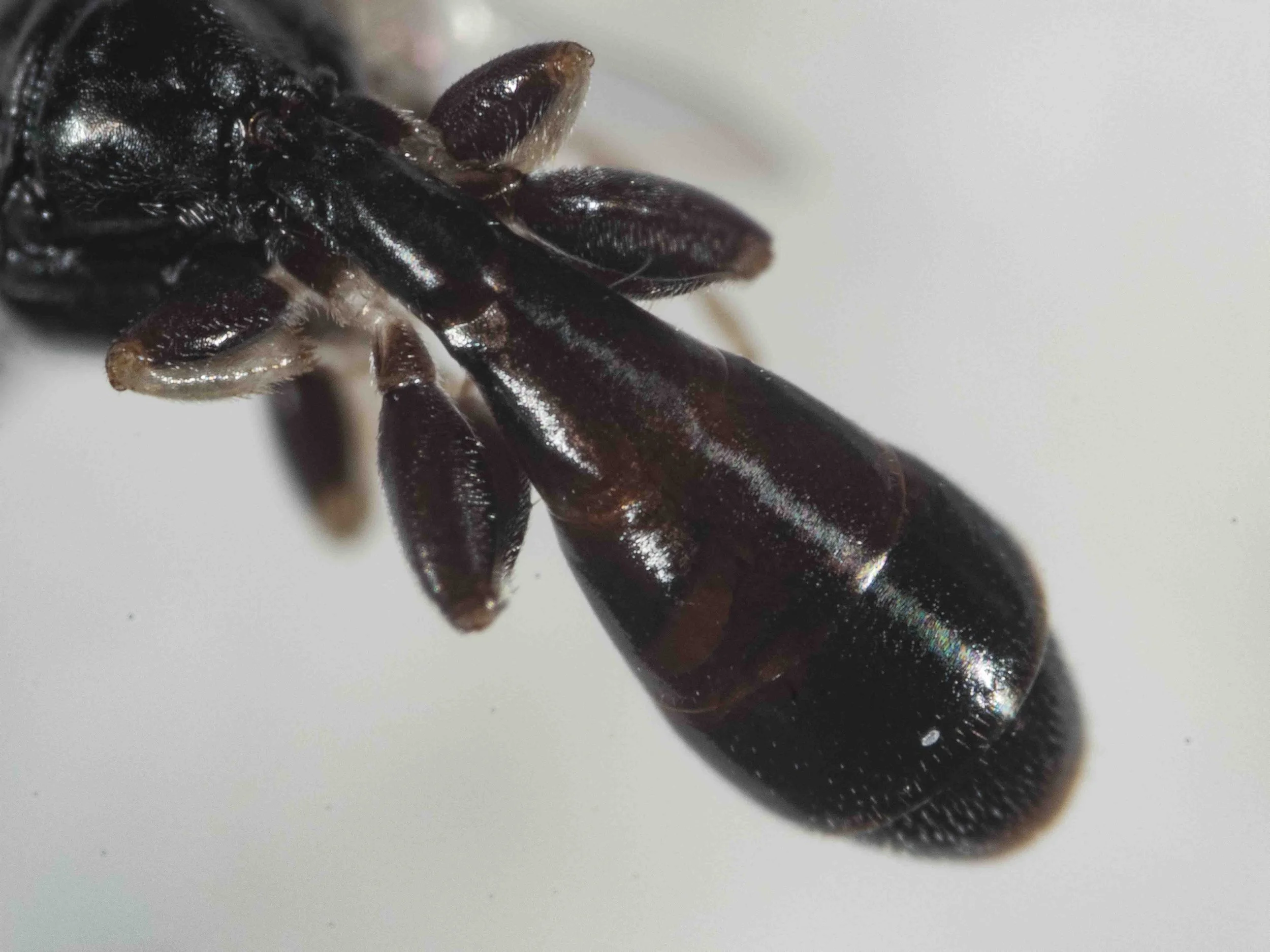
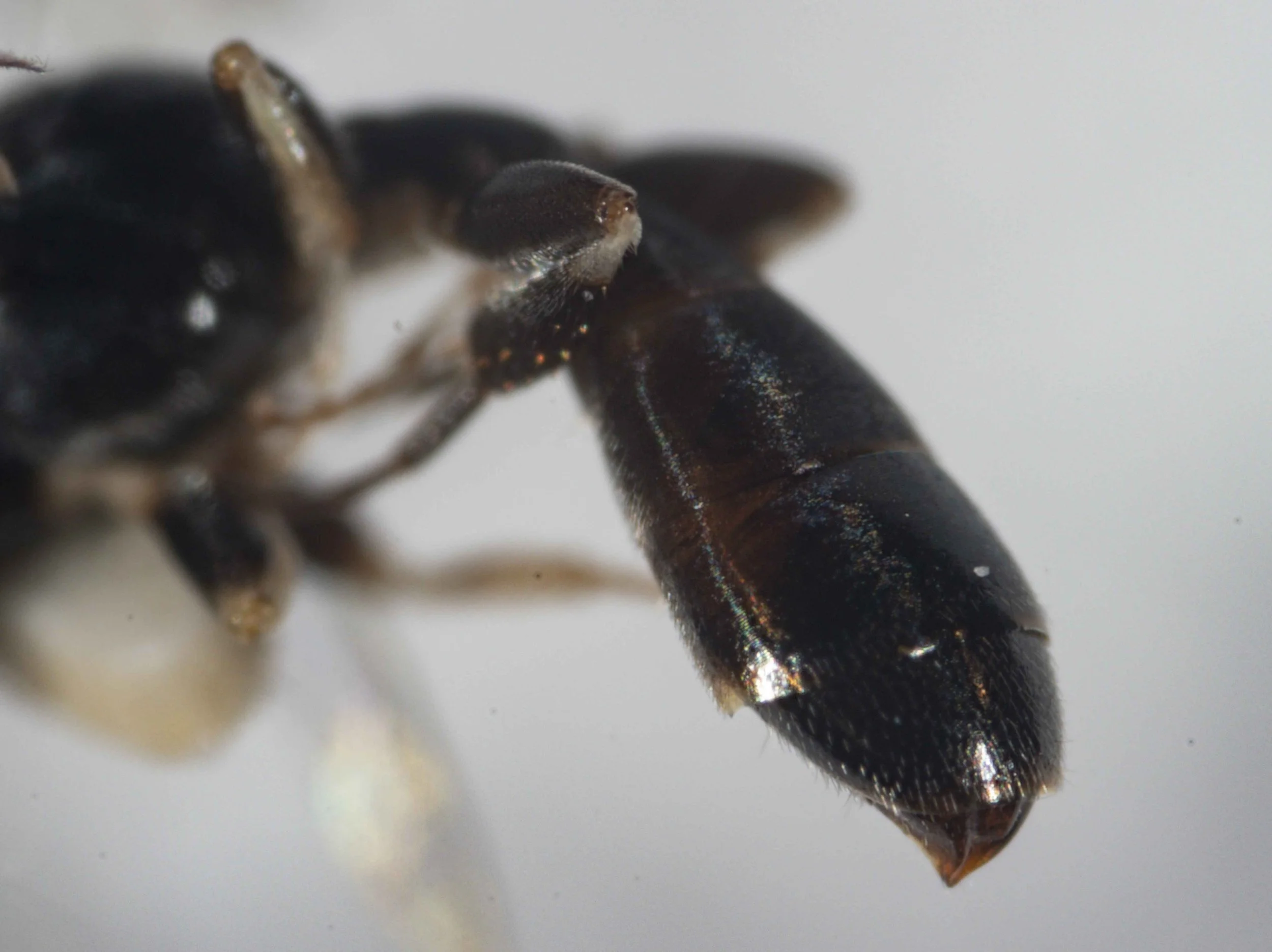
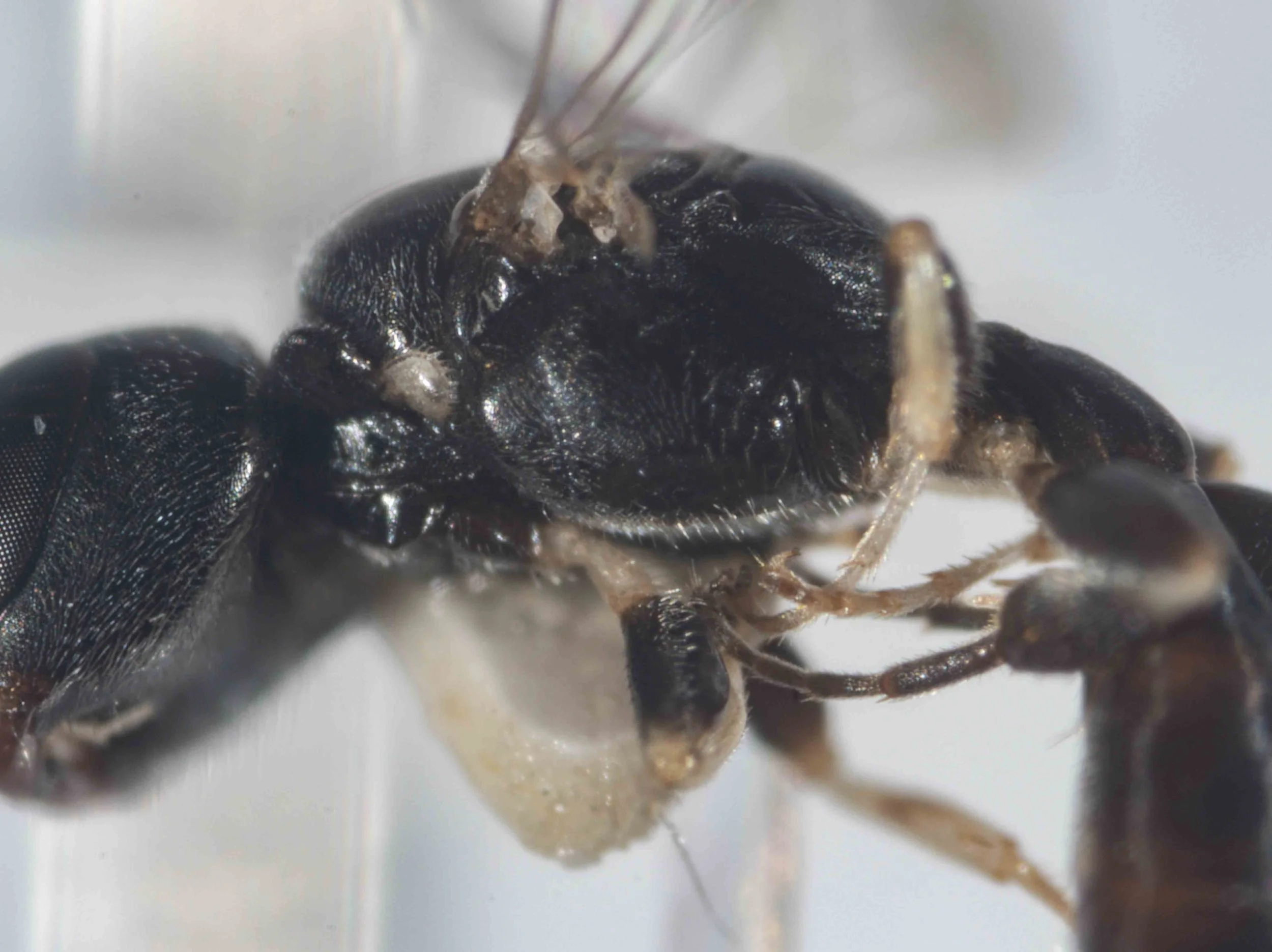
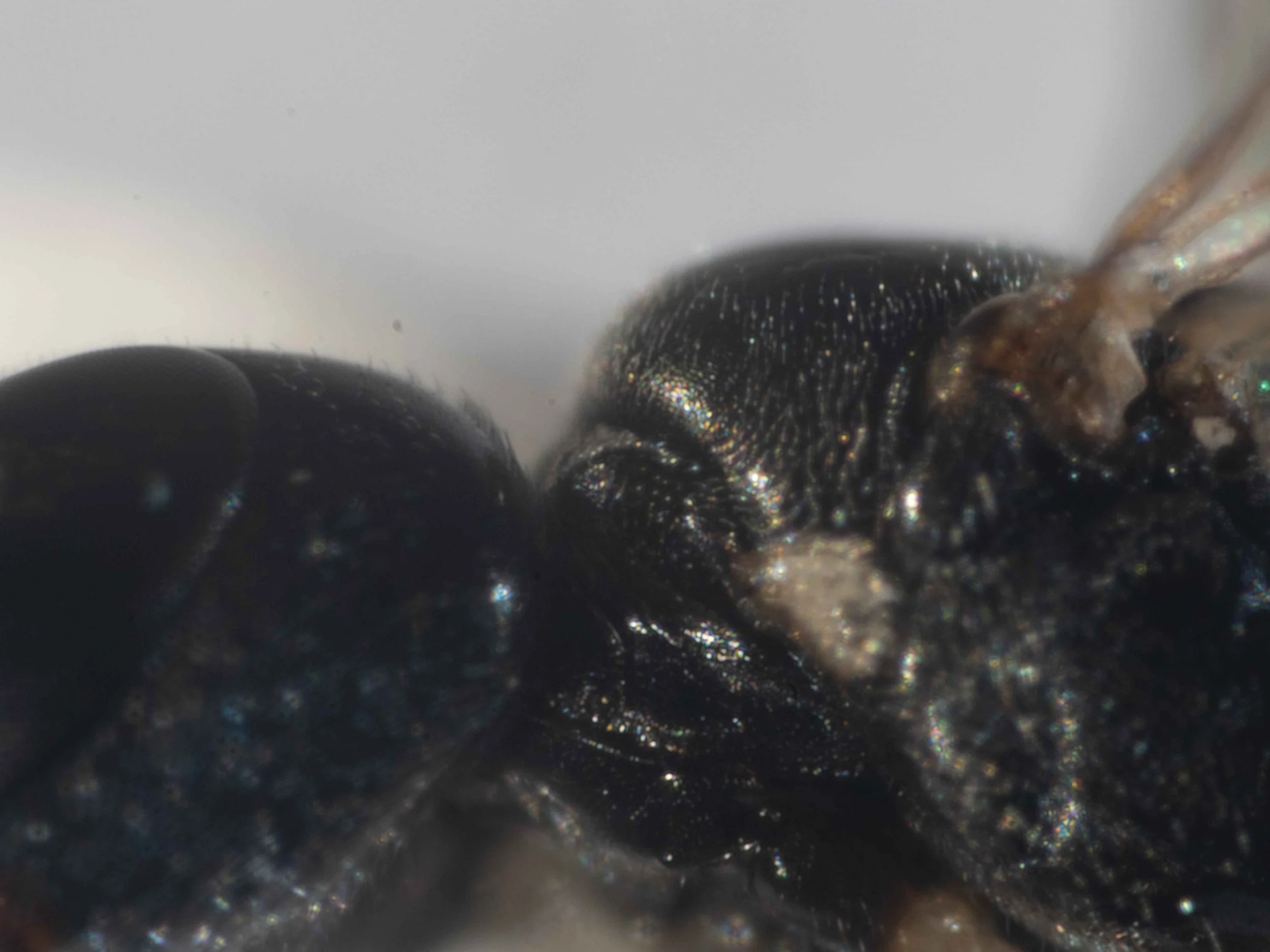
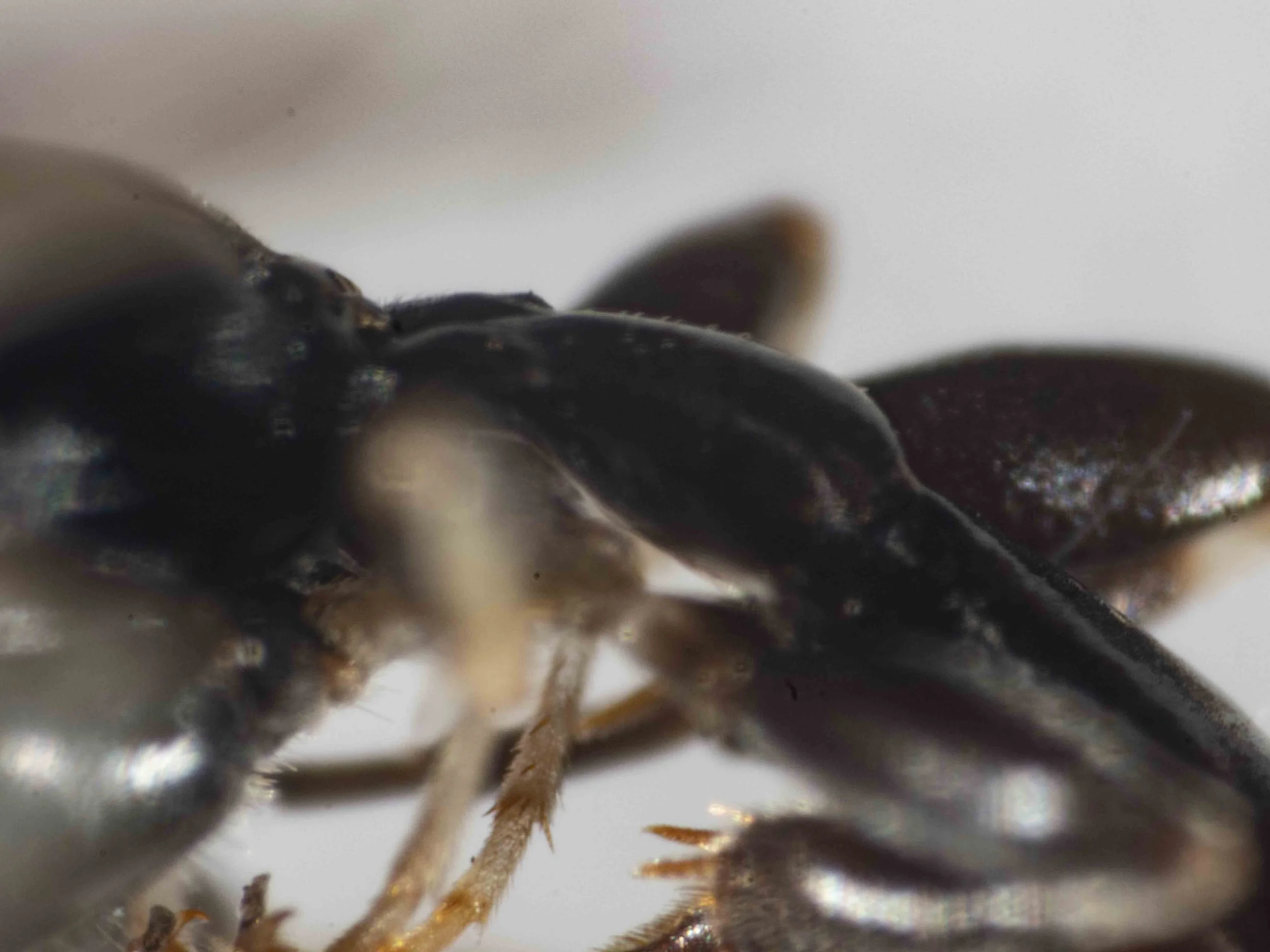
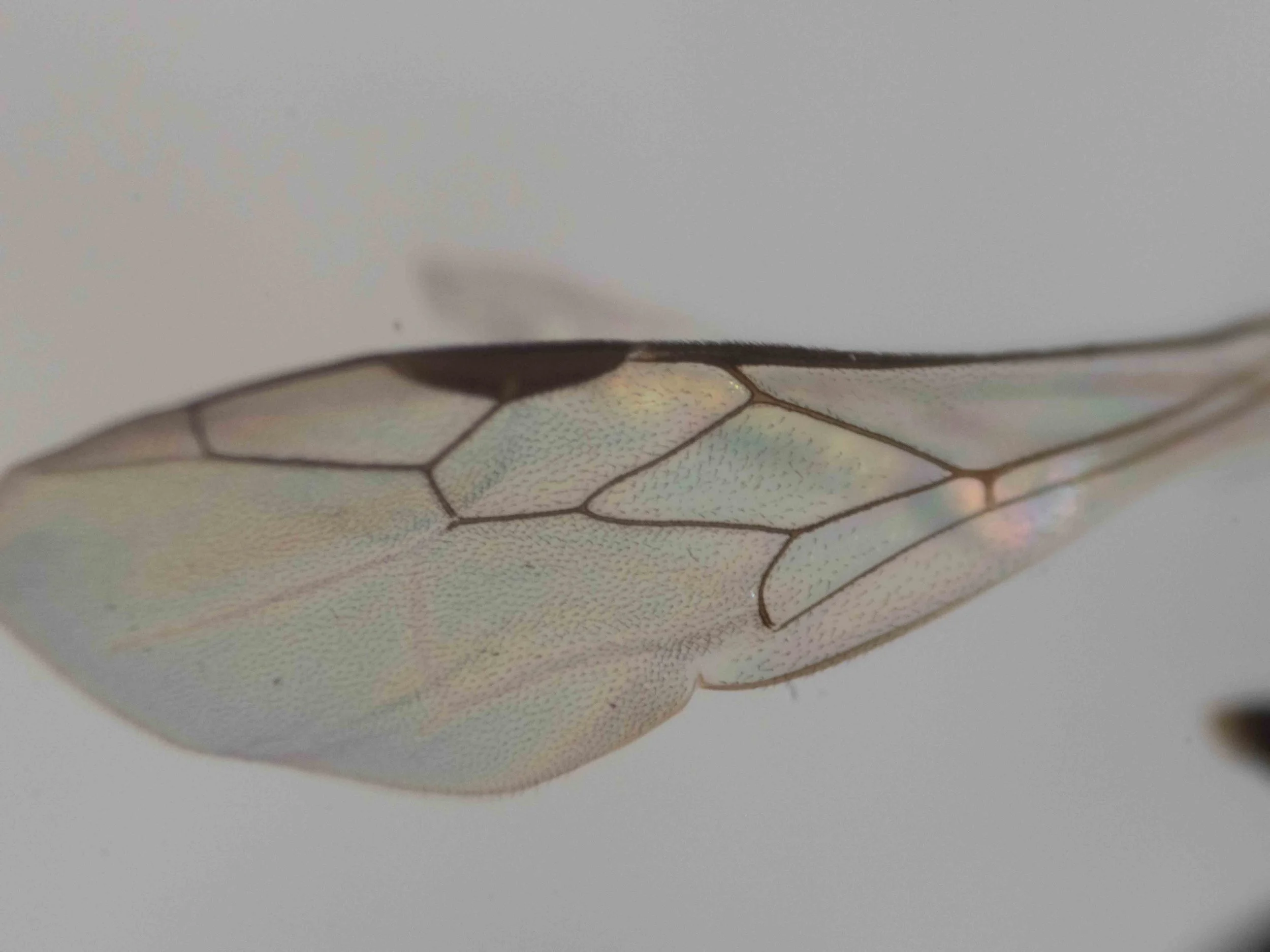
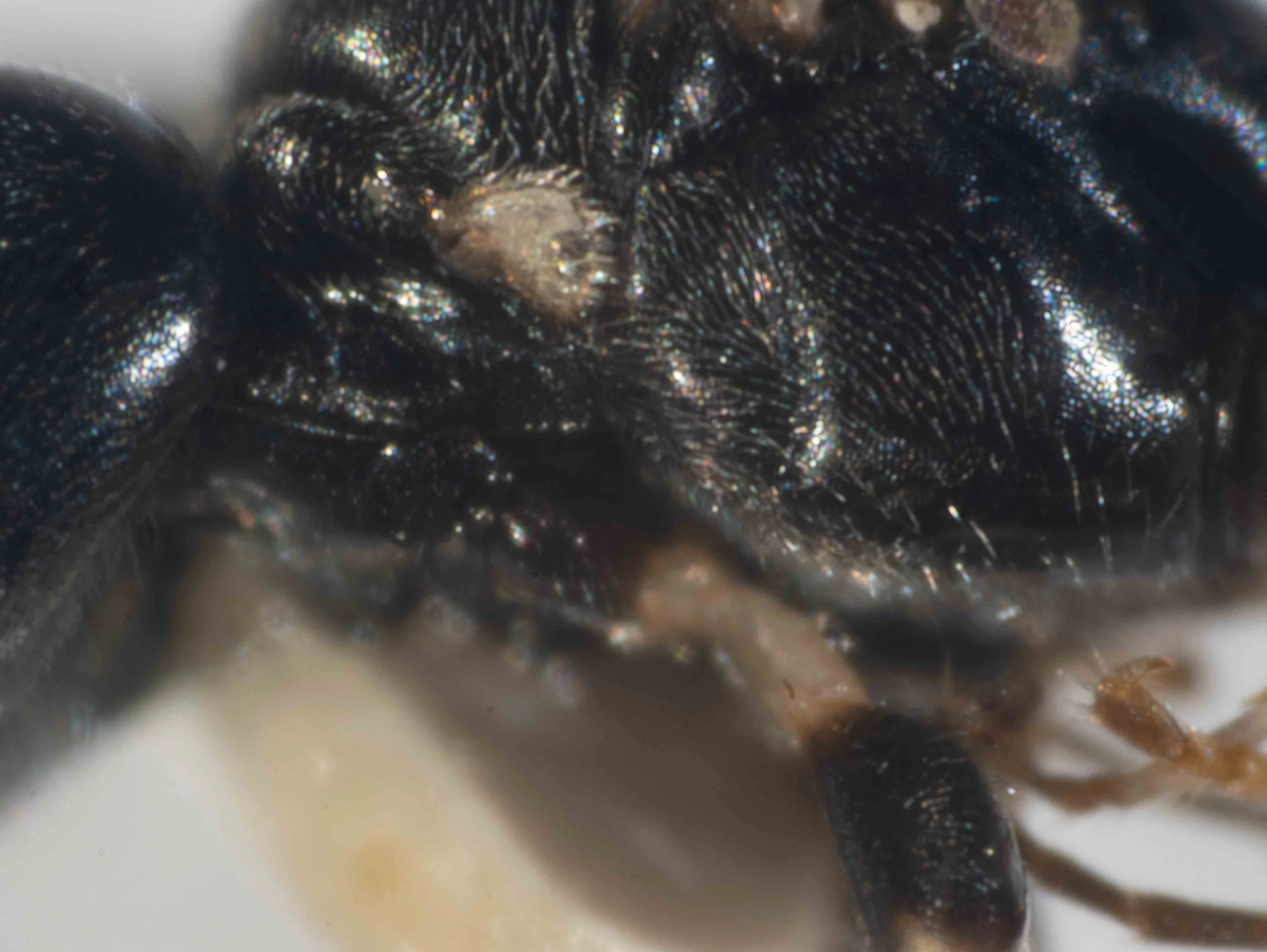
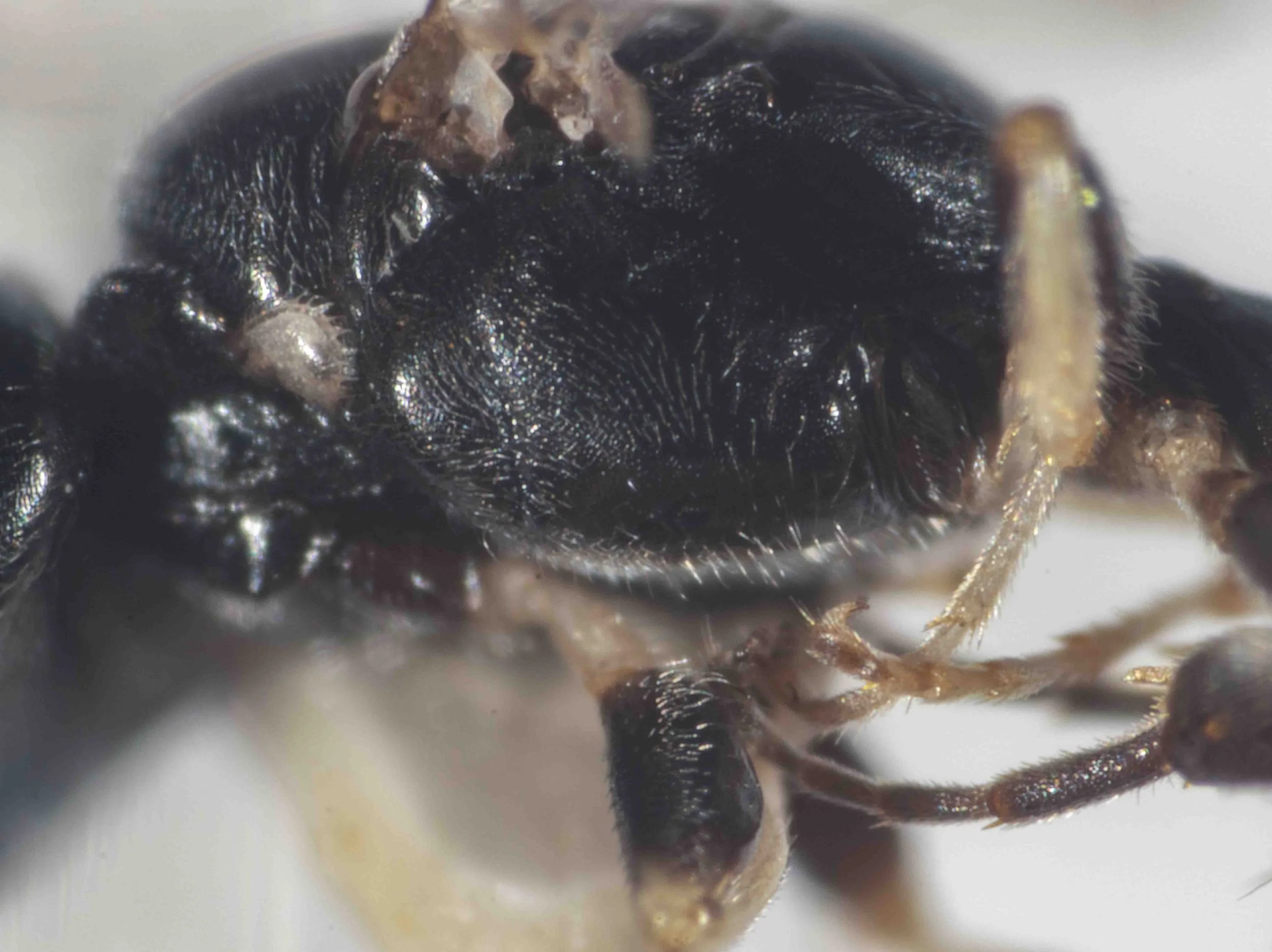
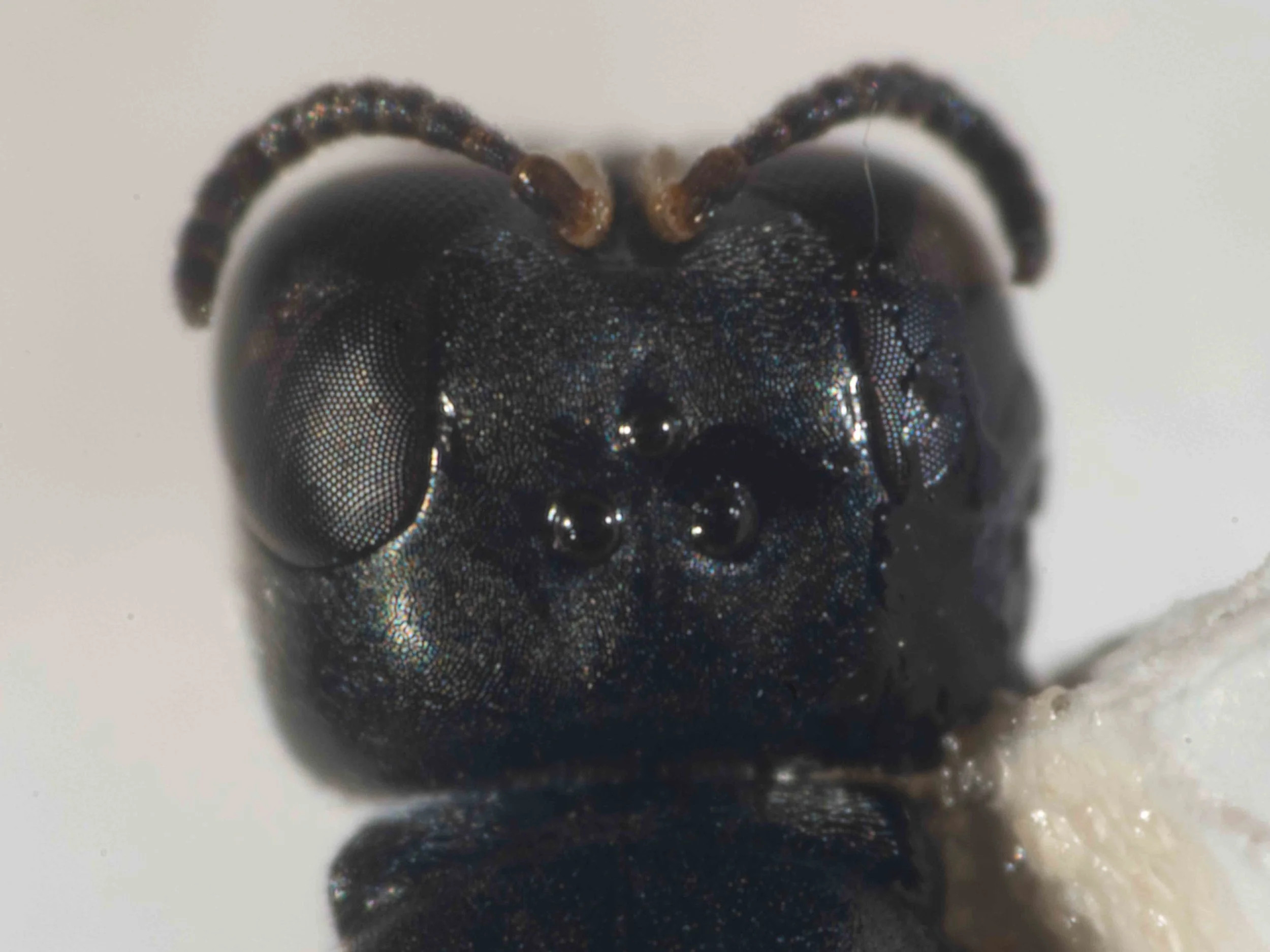
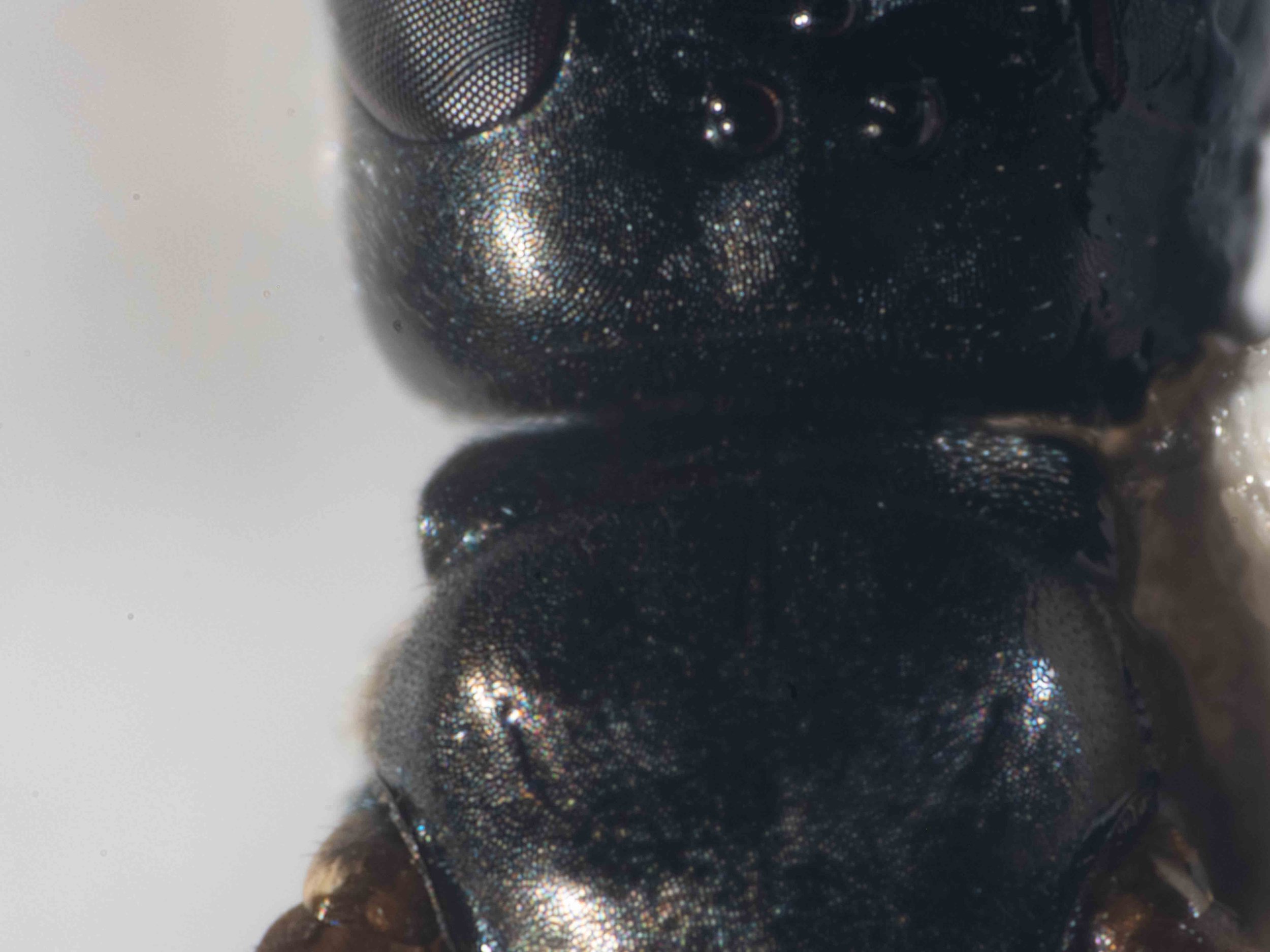
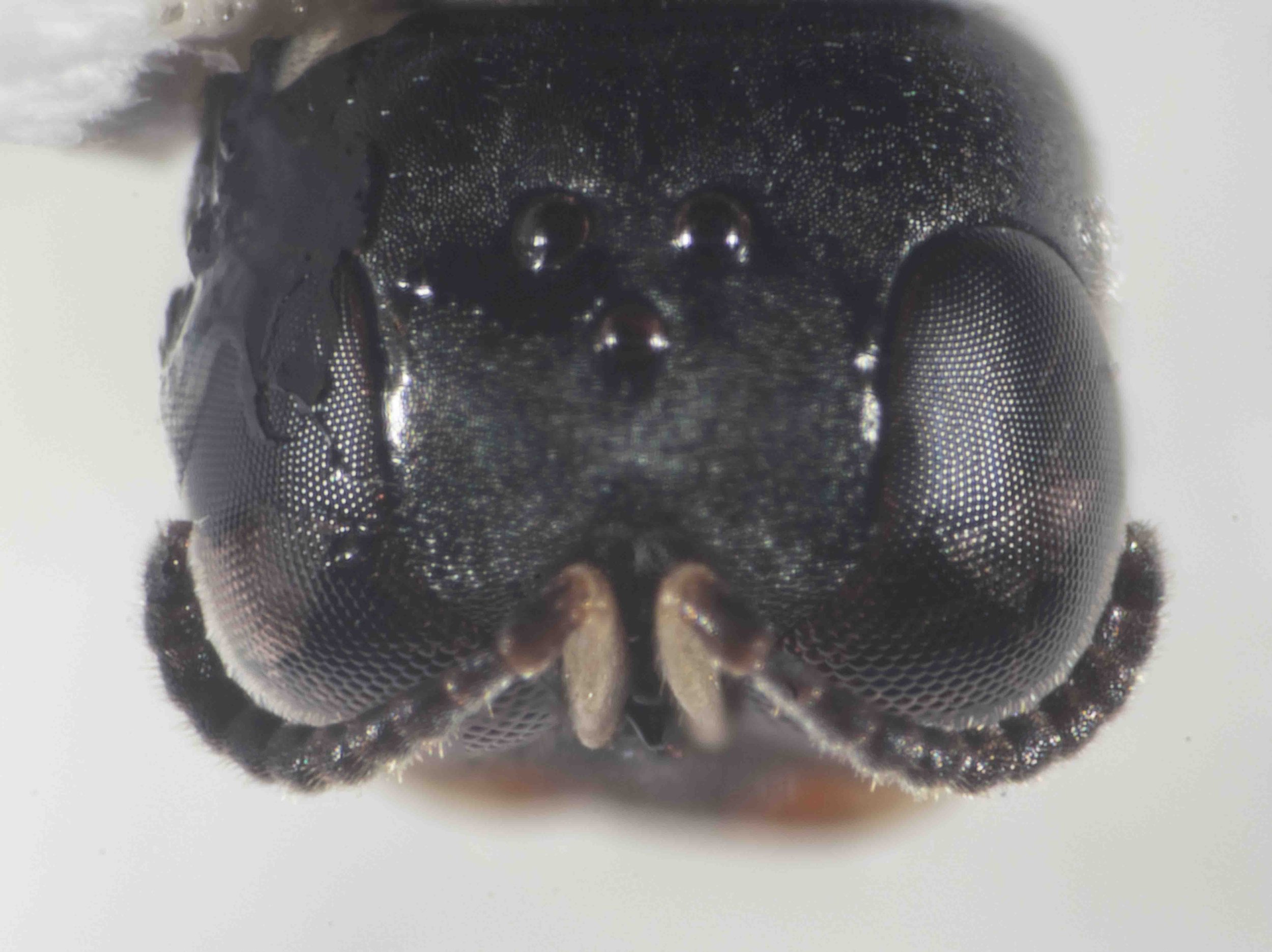
Specimen #020
(BOLD sample ID: CBG-B33497-H04)
BIN: BOLD:AES8952
Same species as specimen #005 (ie same BIN)
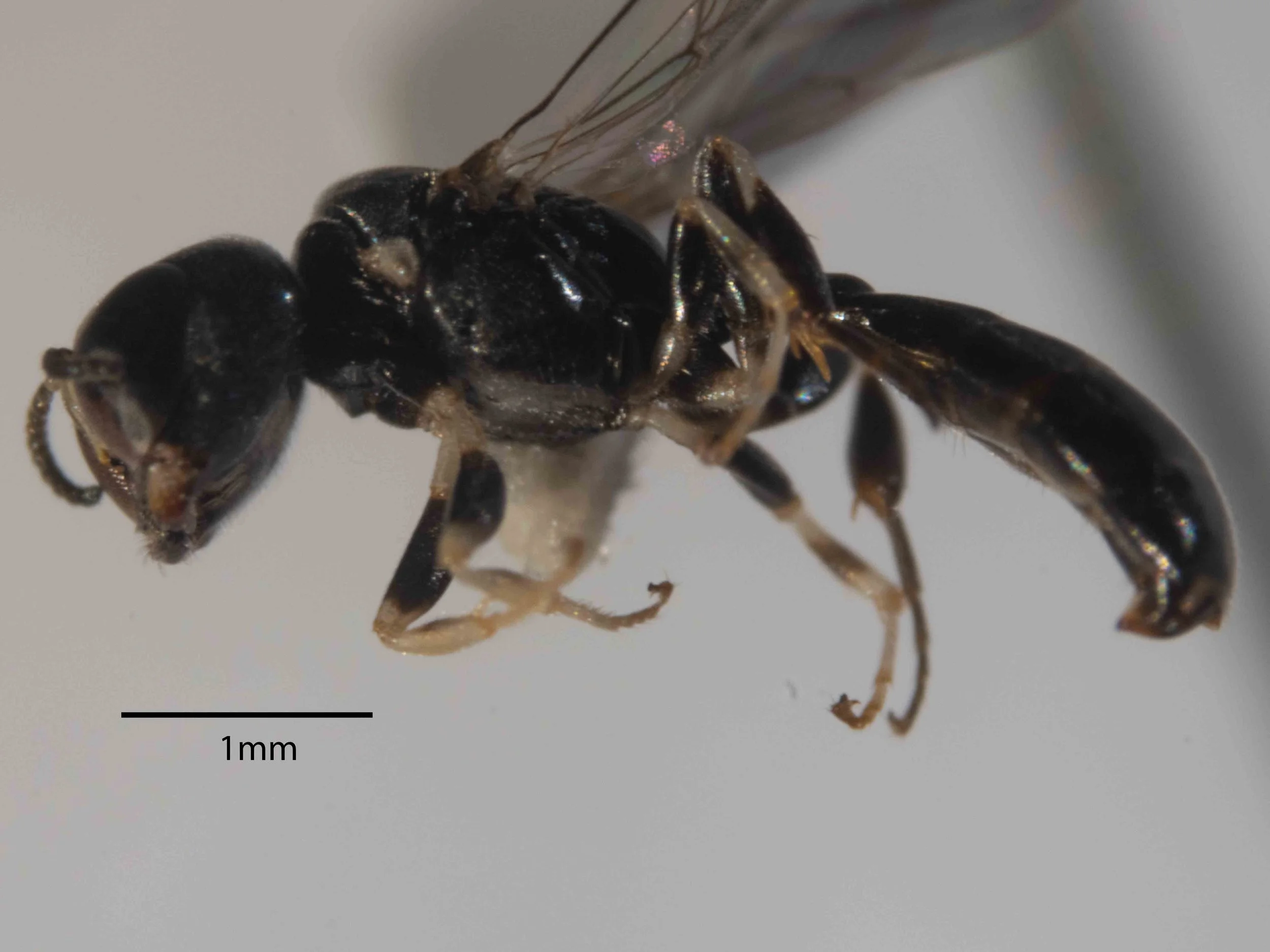
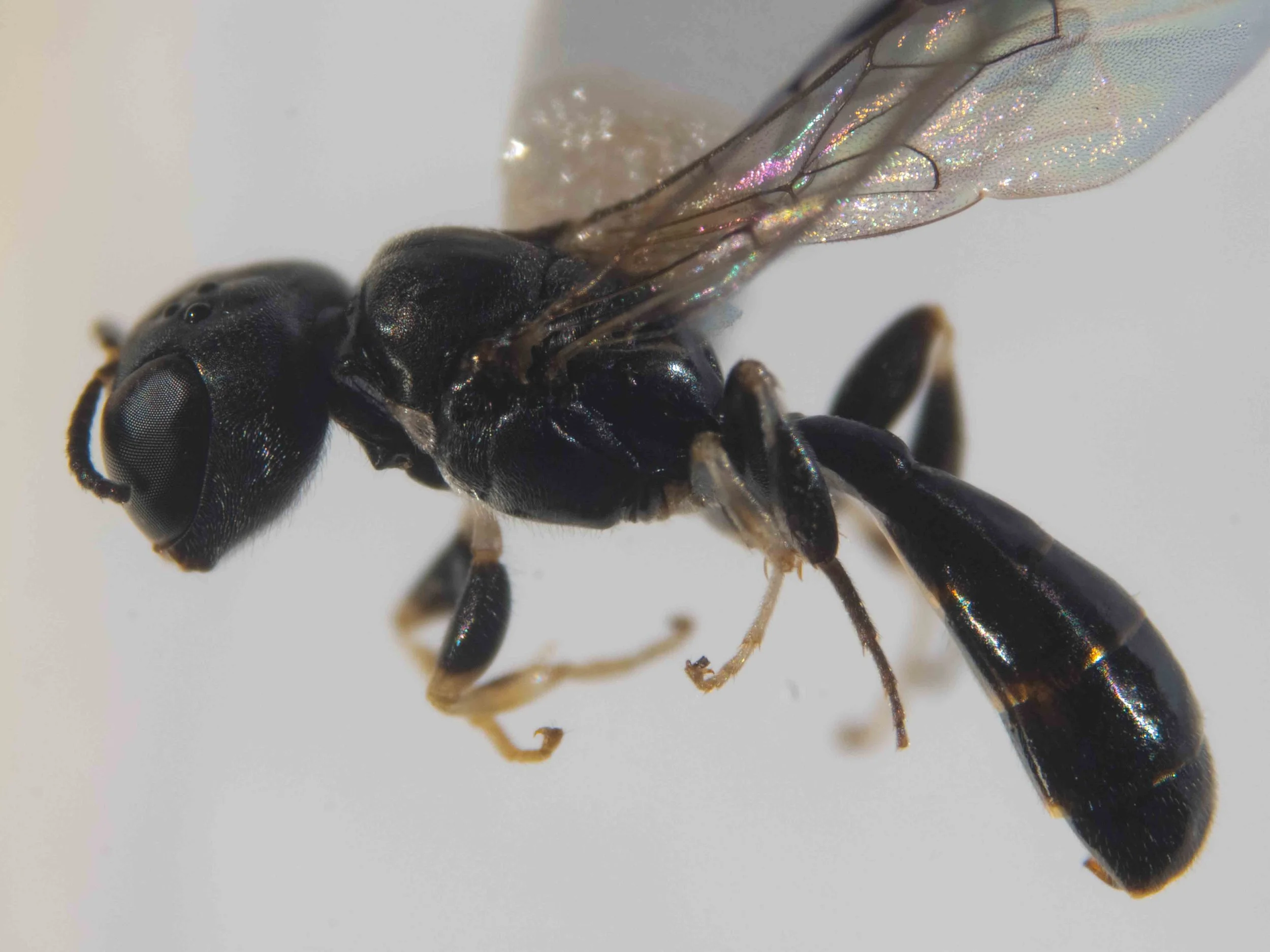
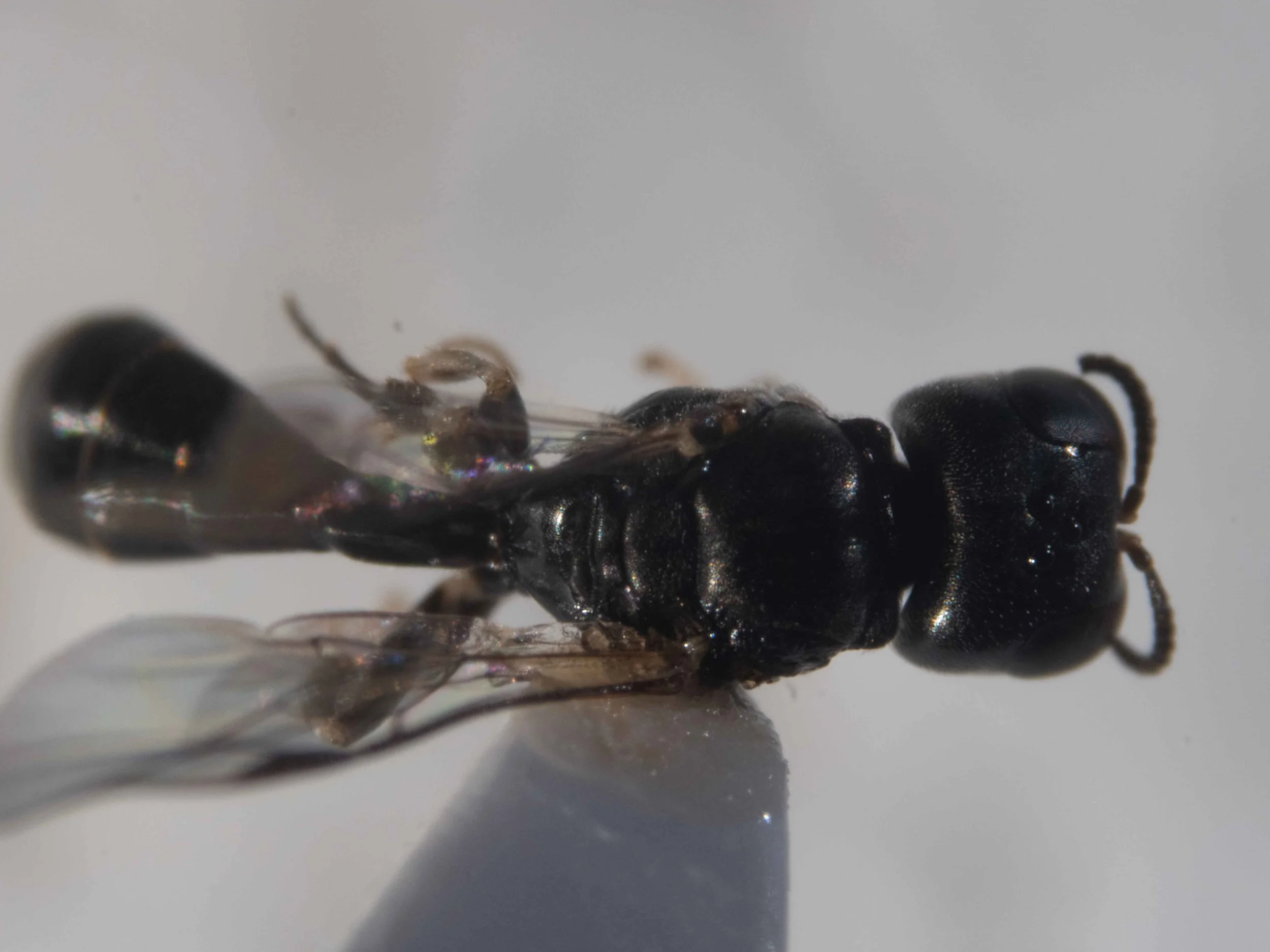
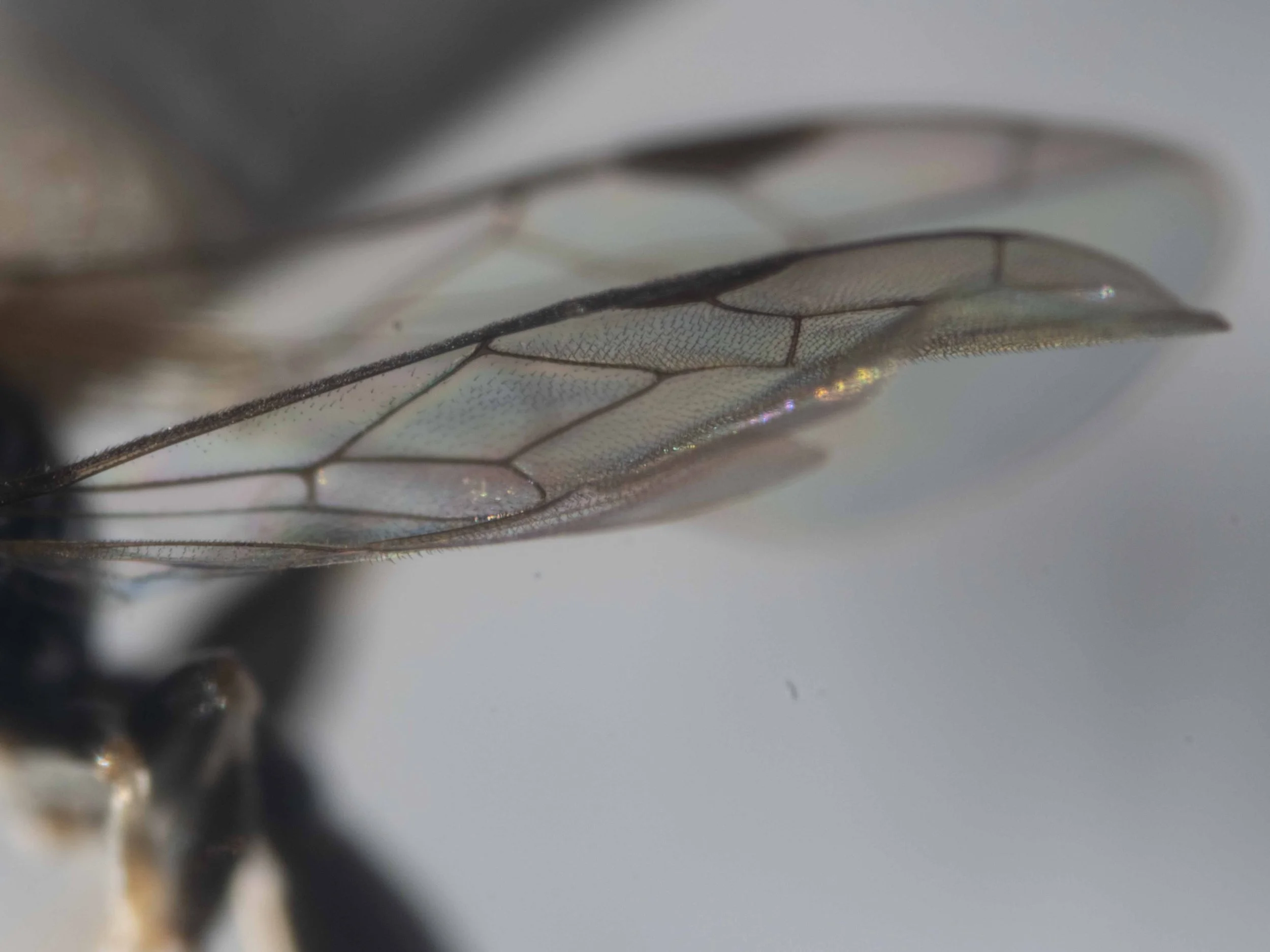
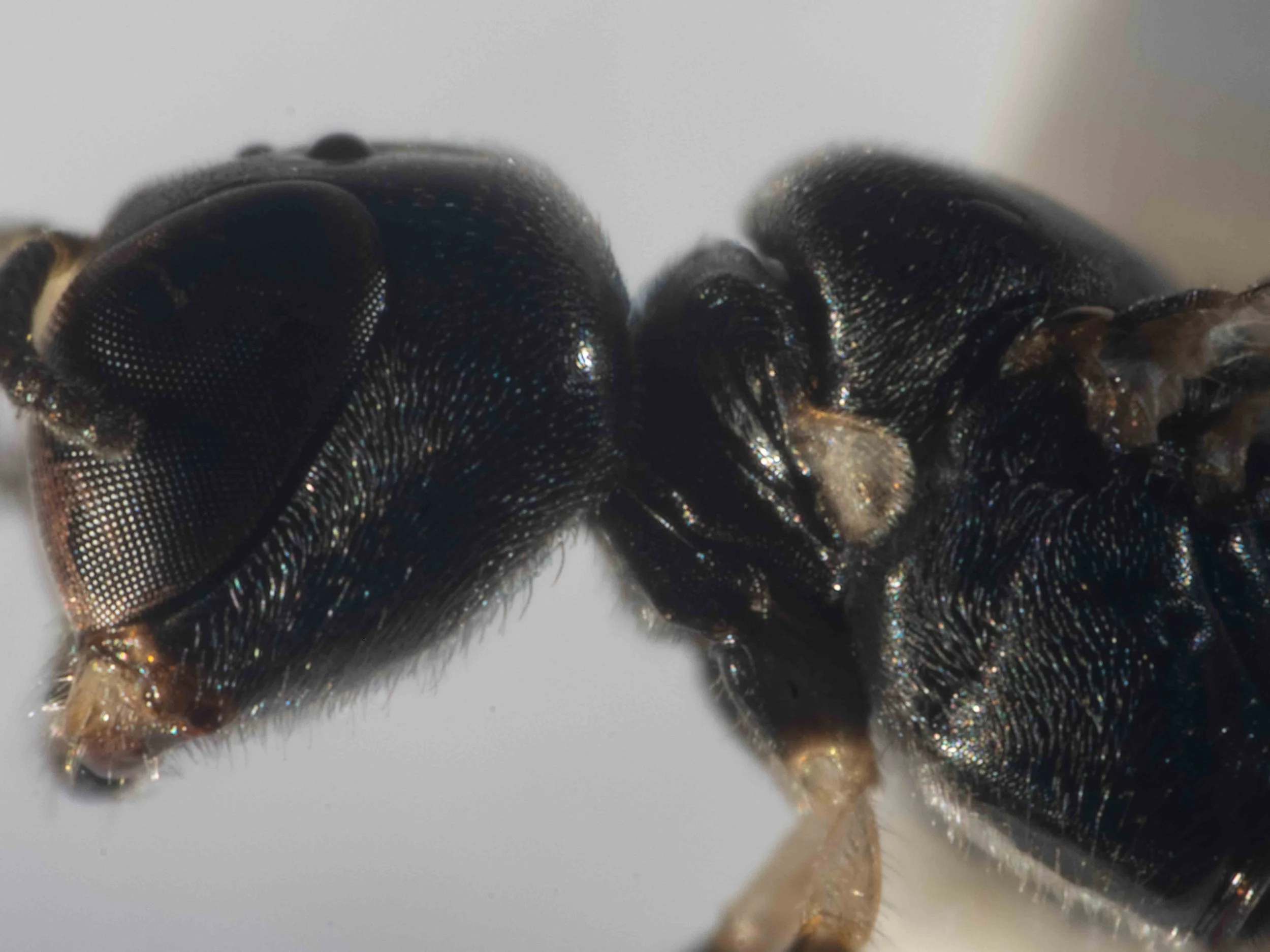
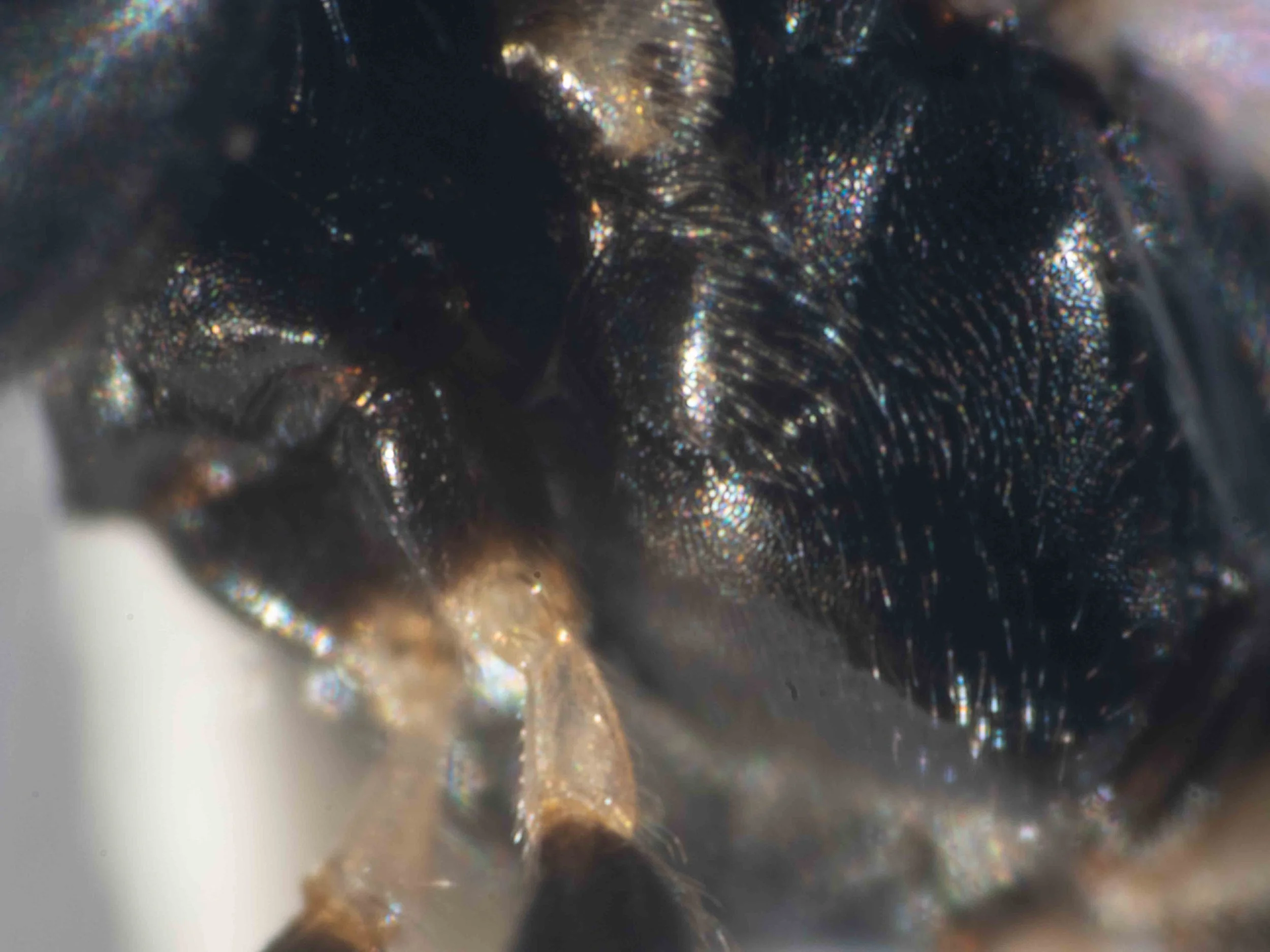
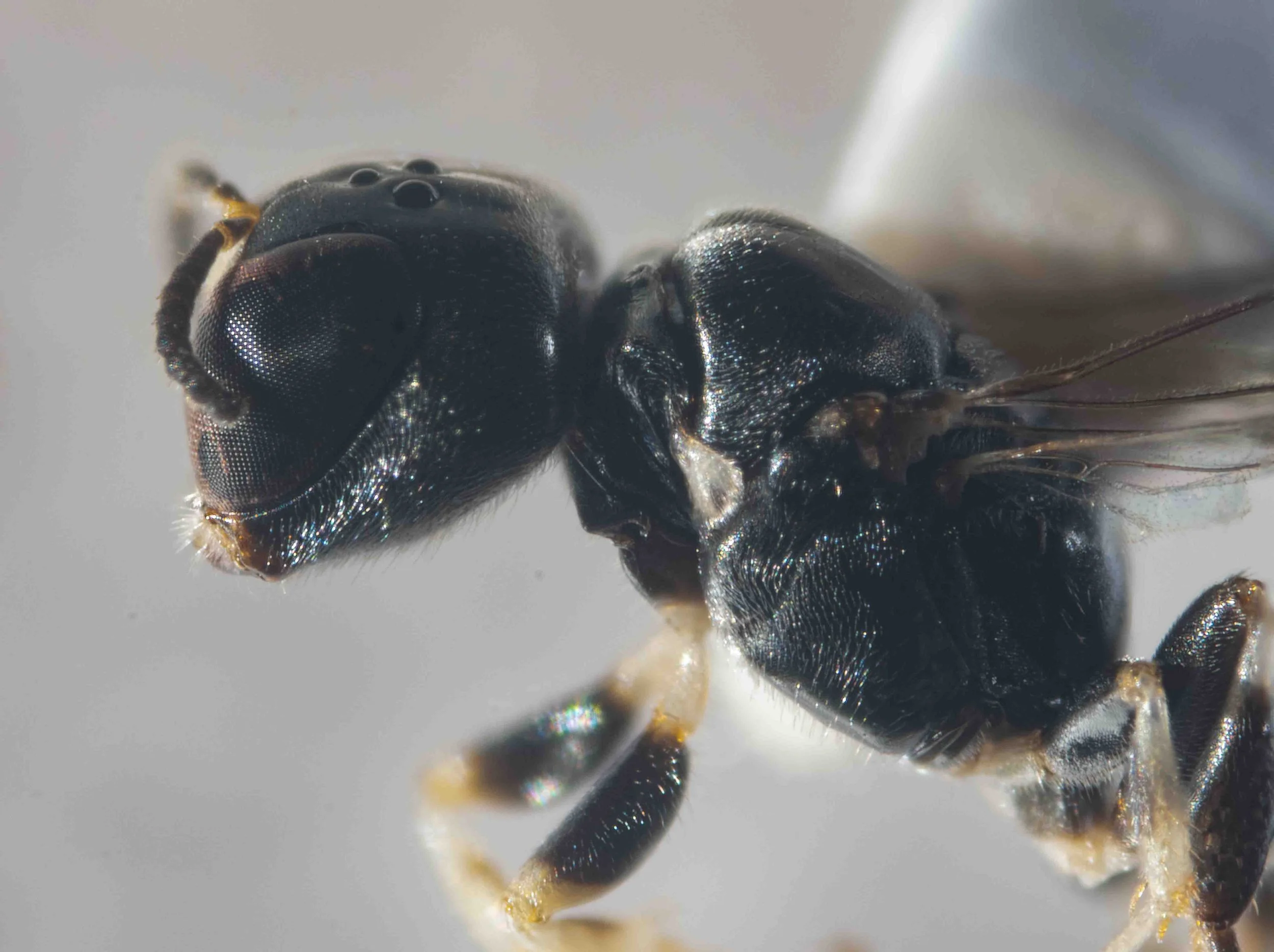
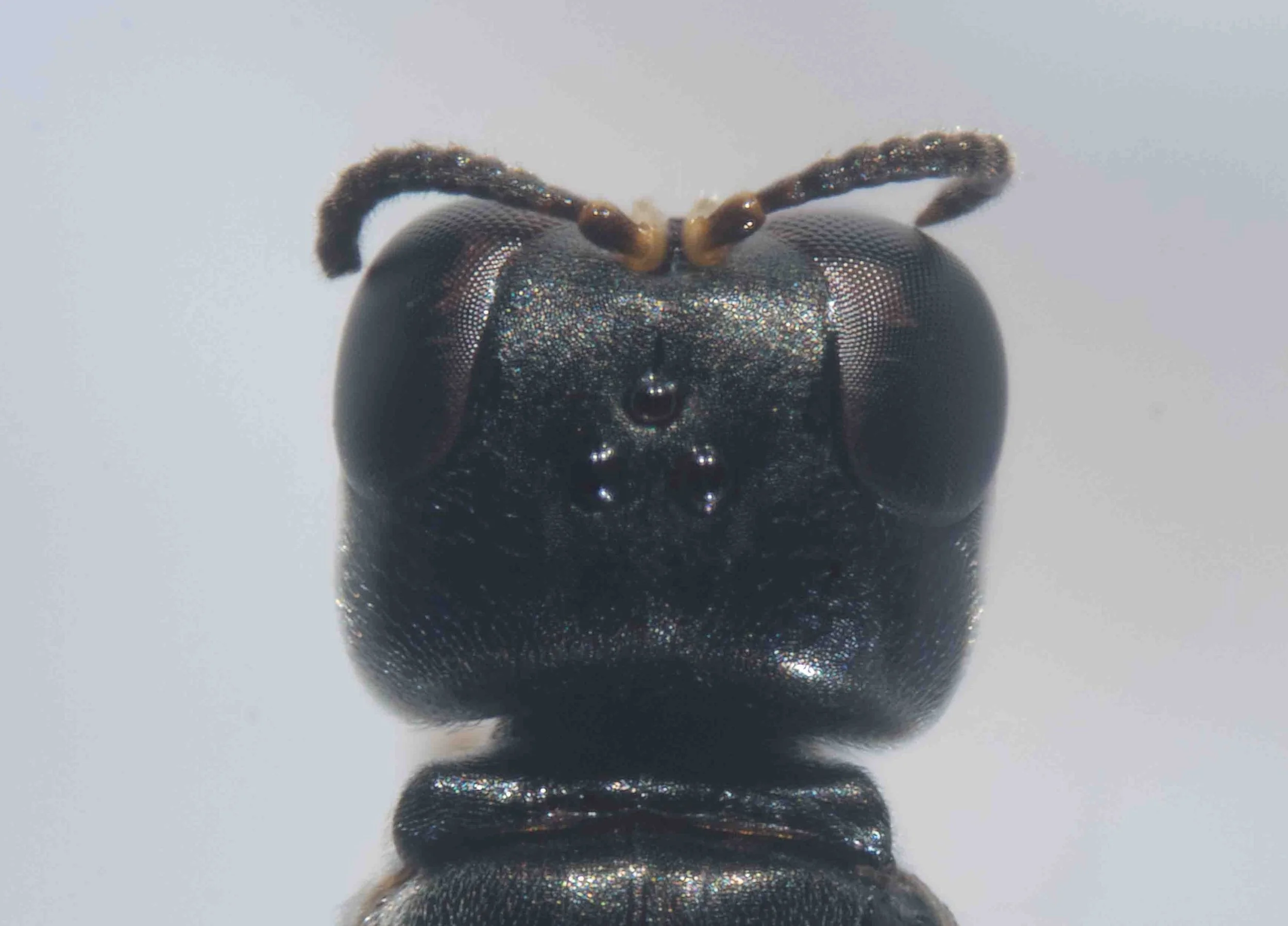
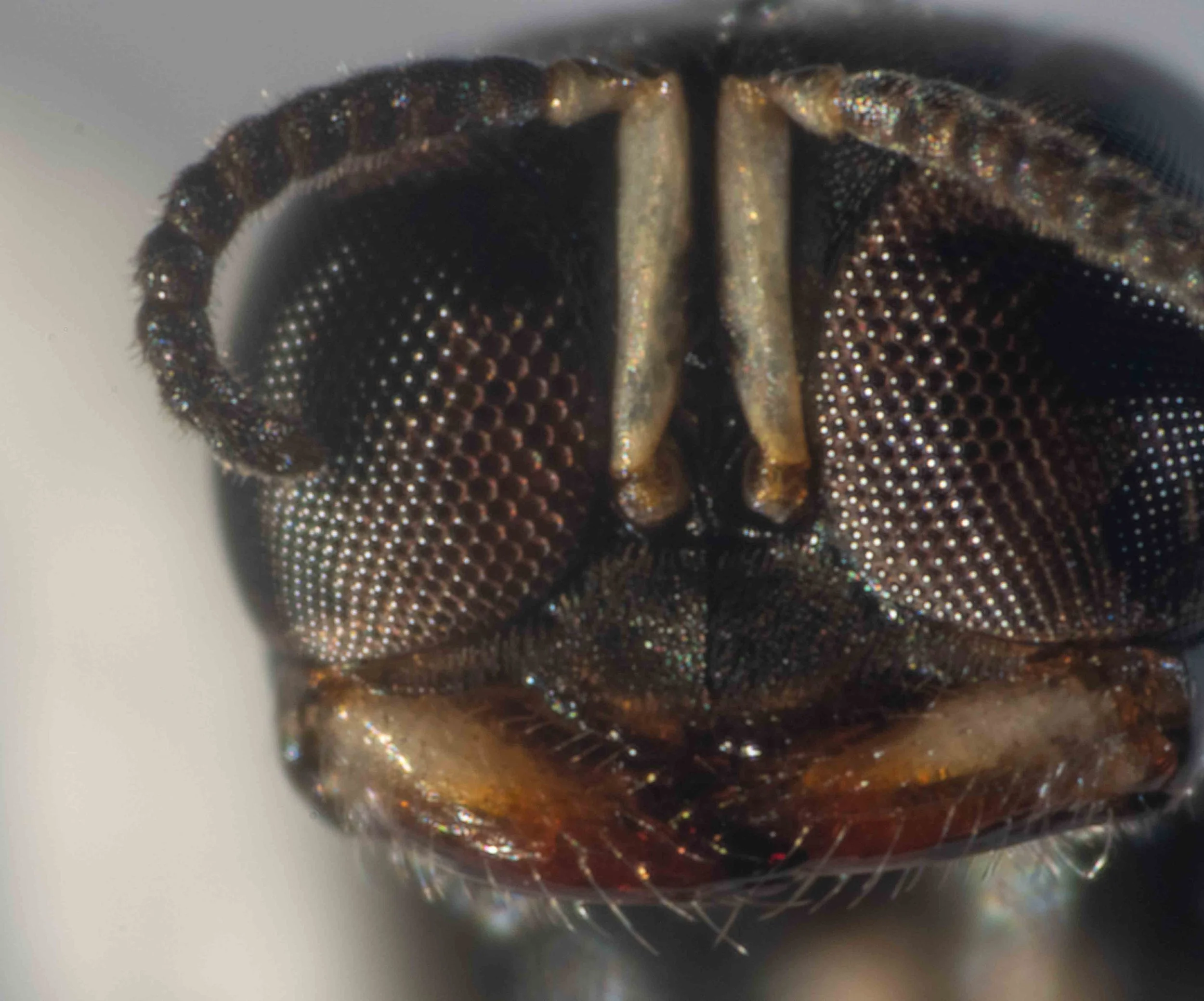
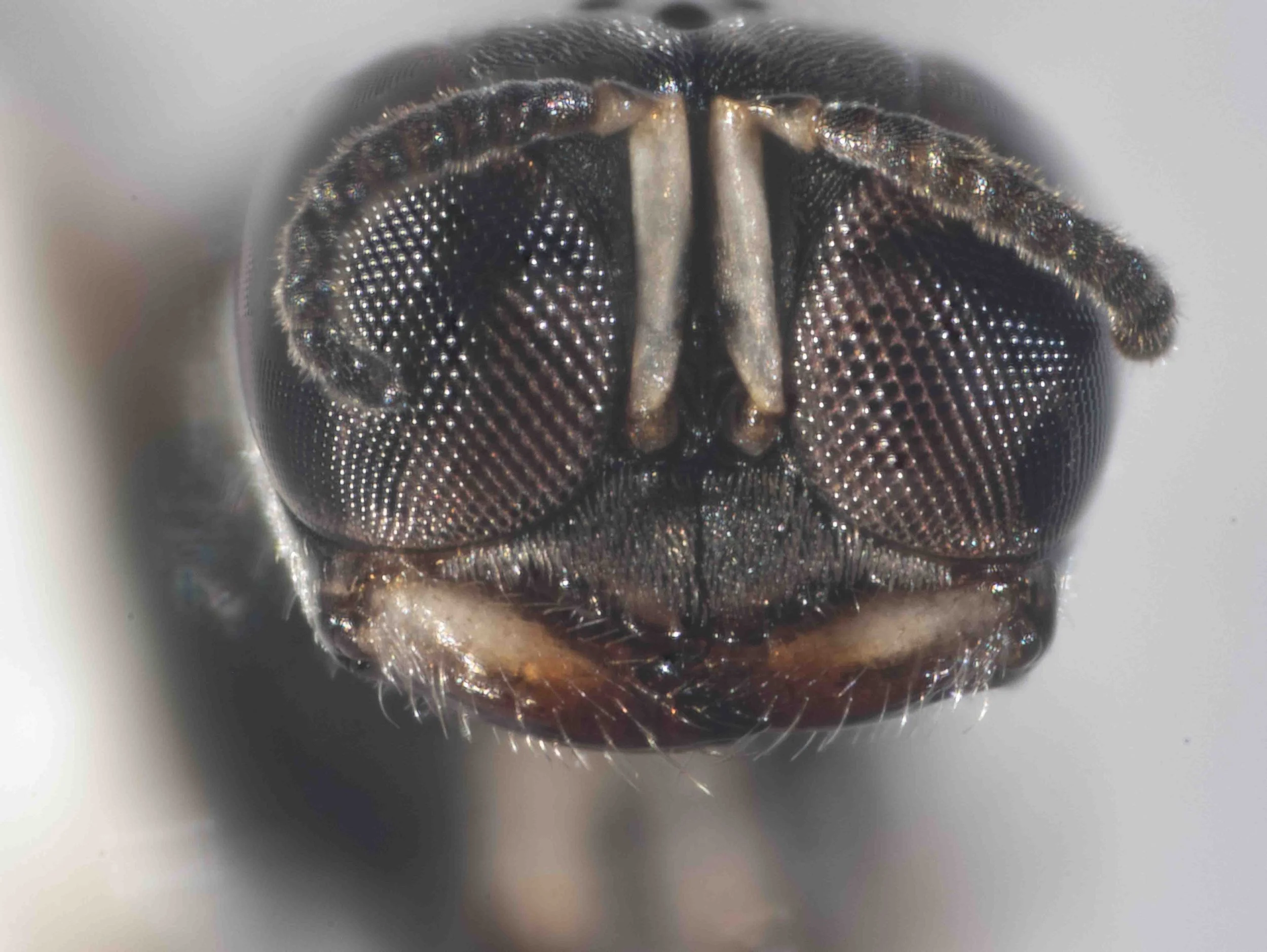
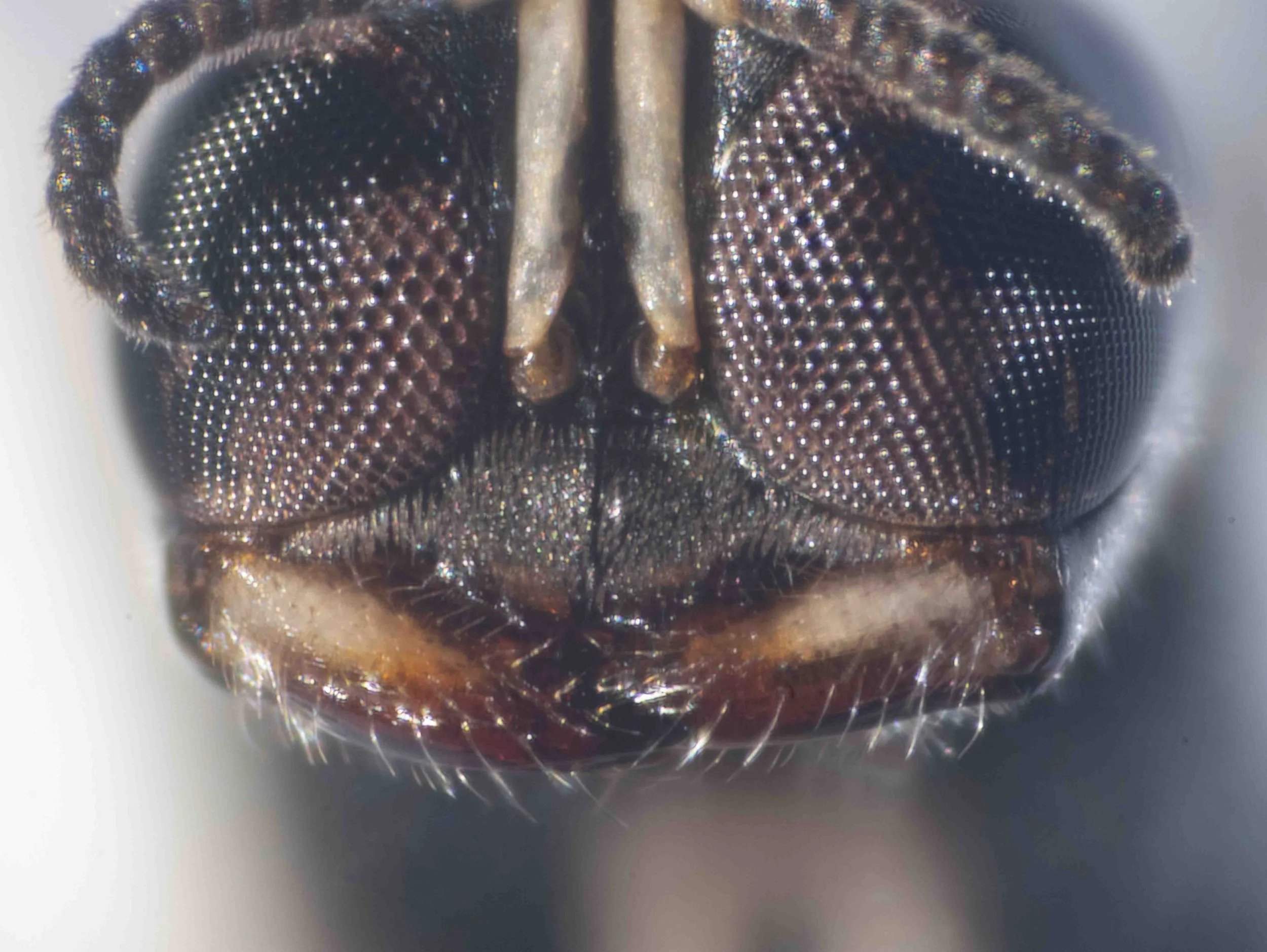
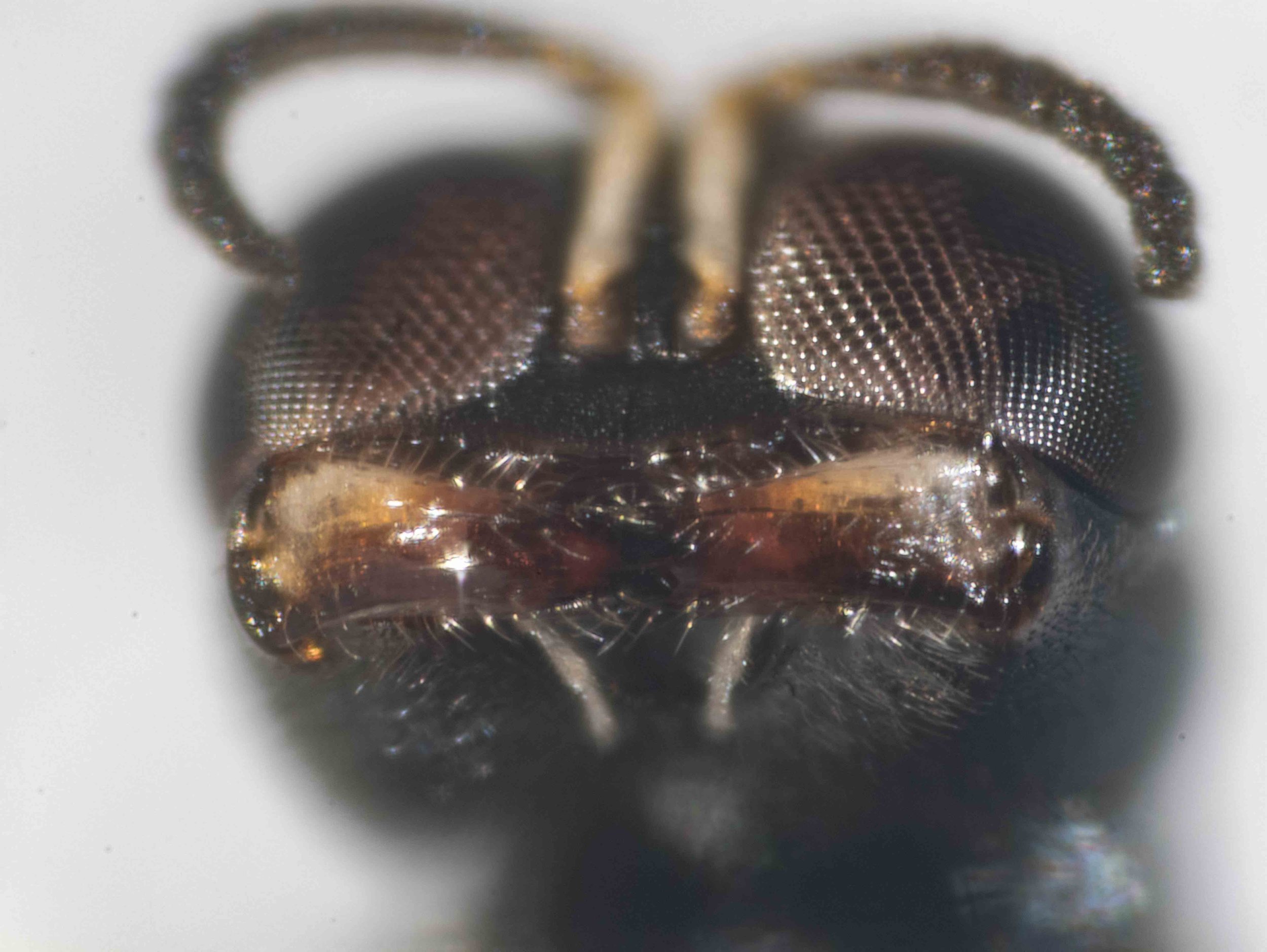
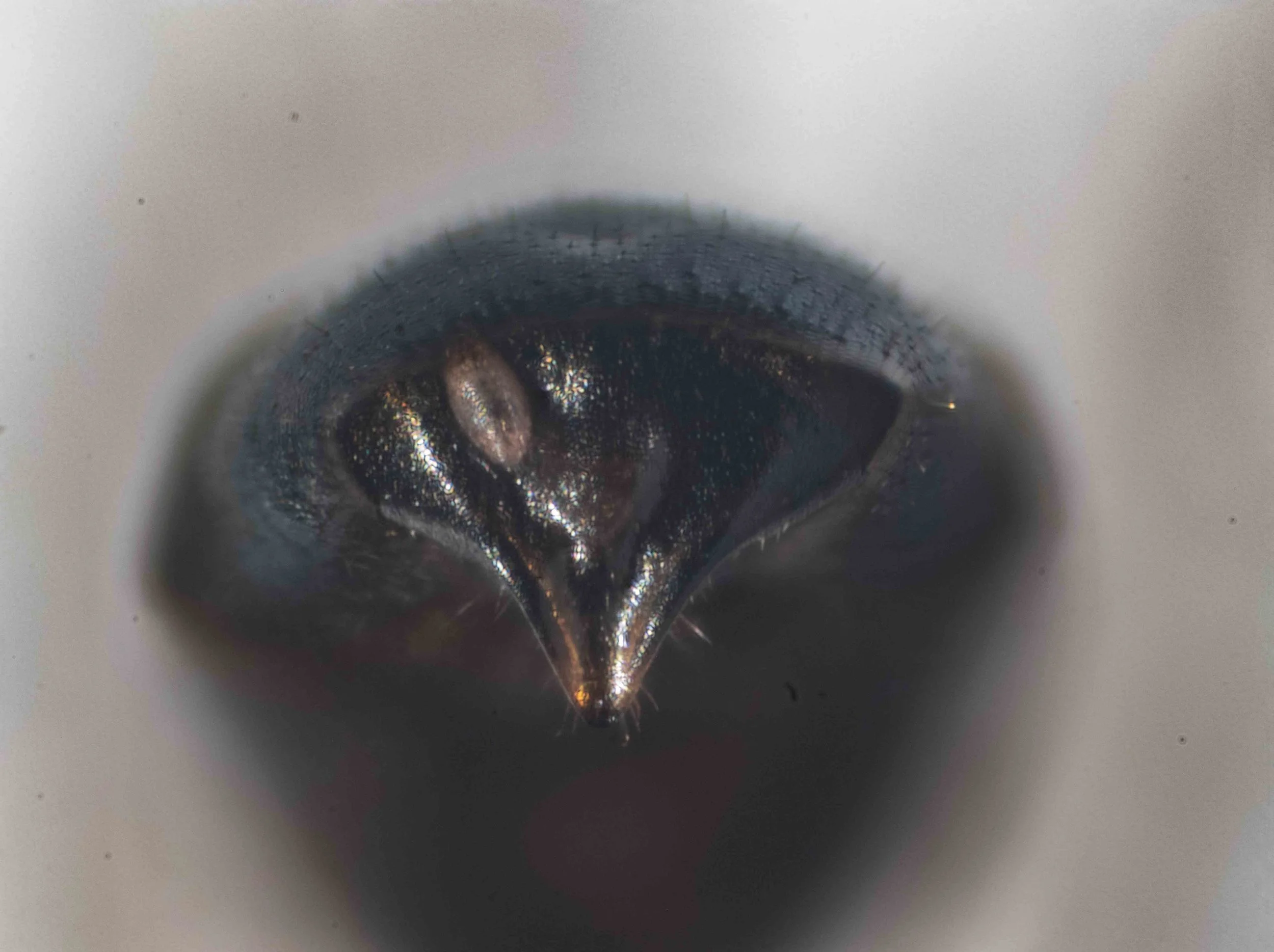
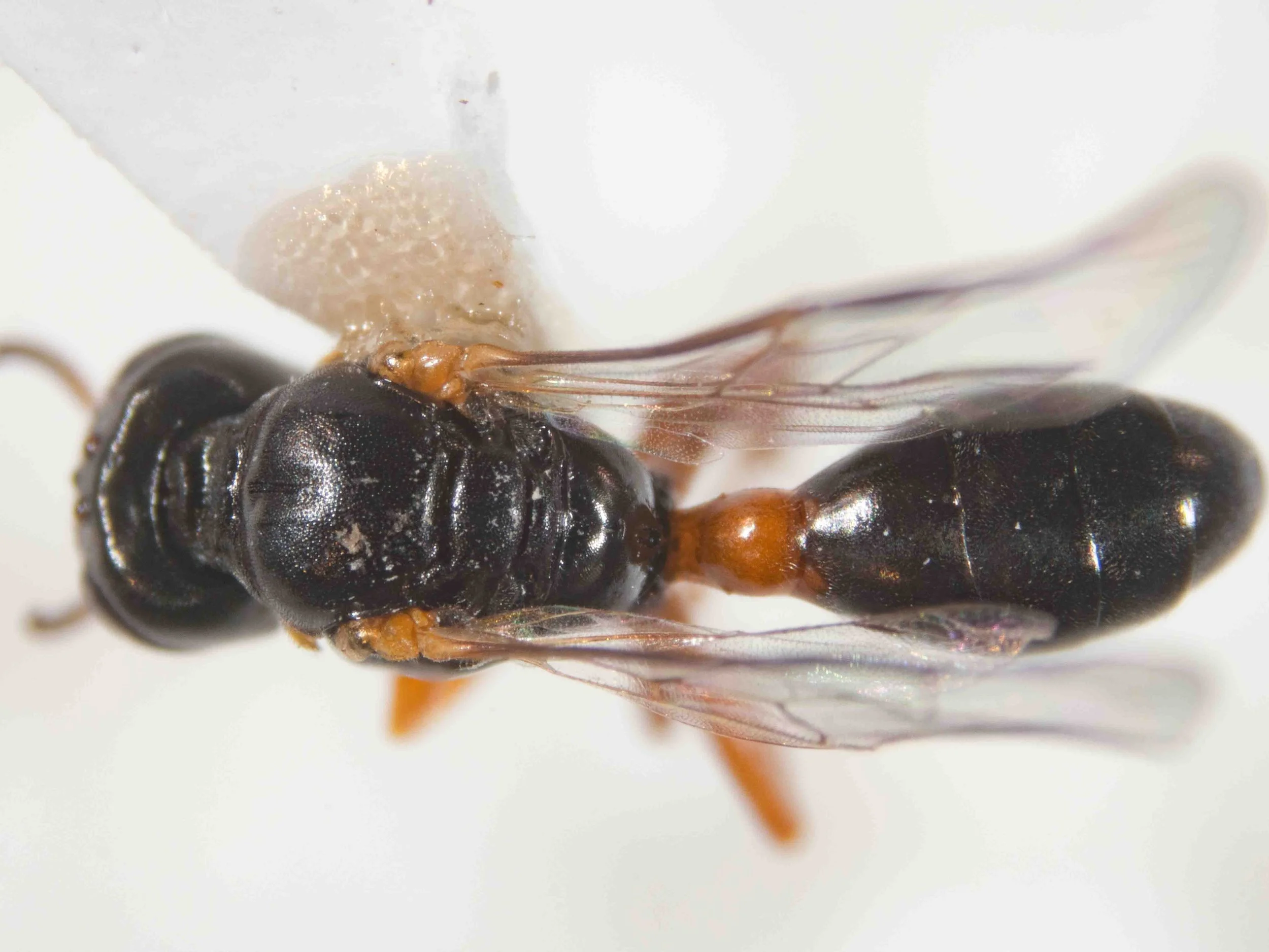
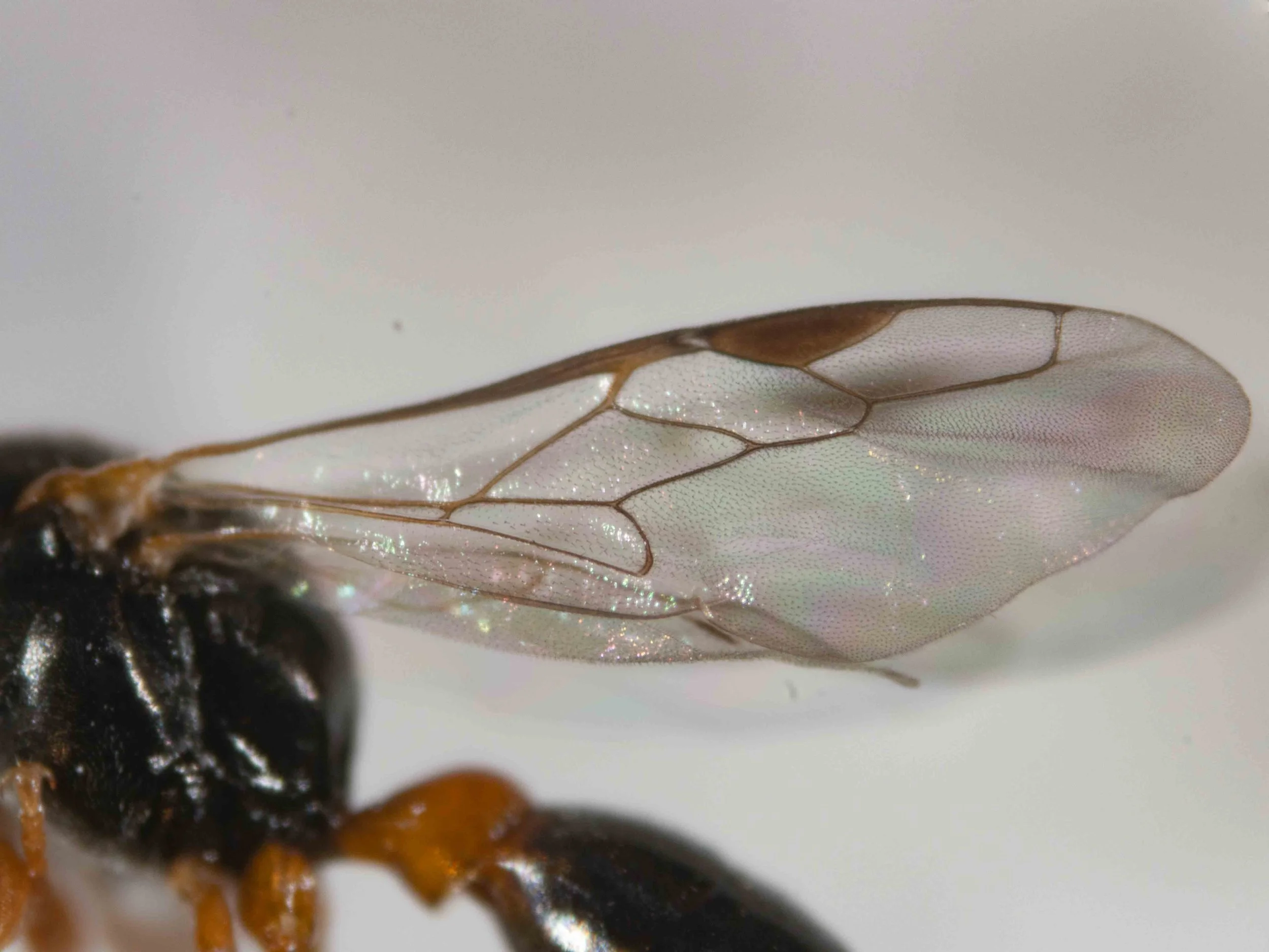
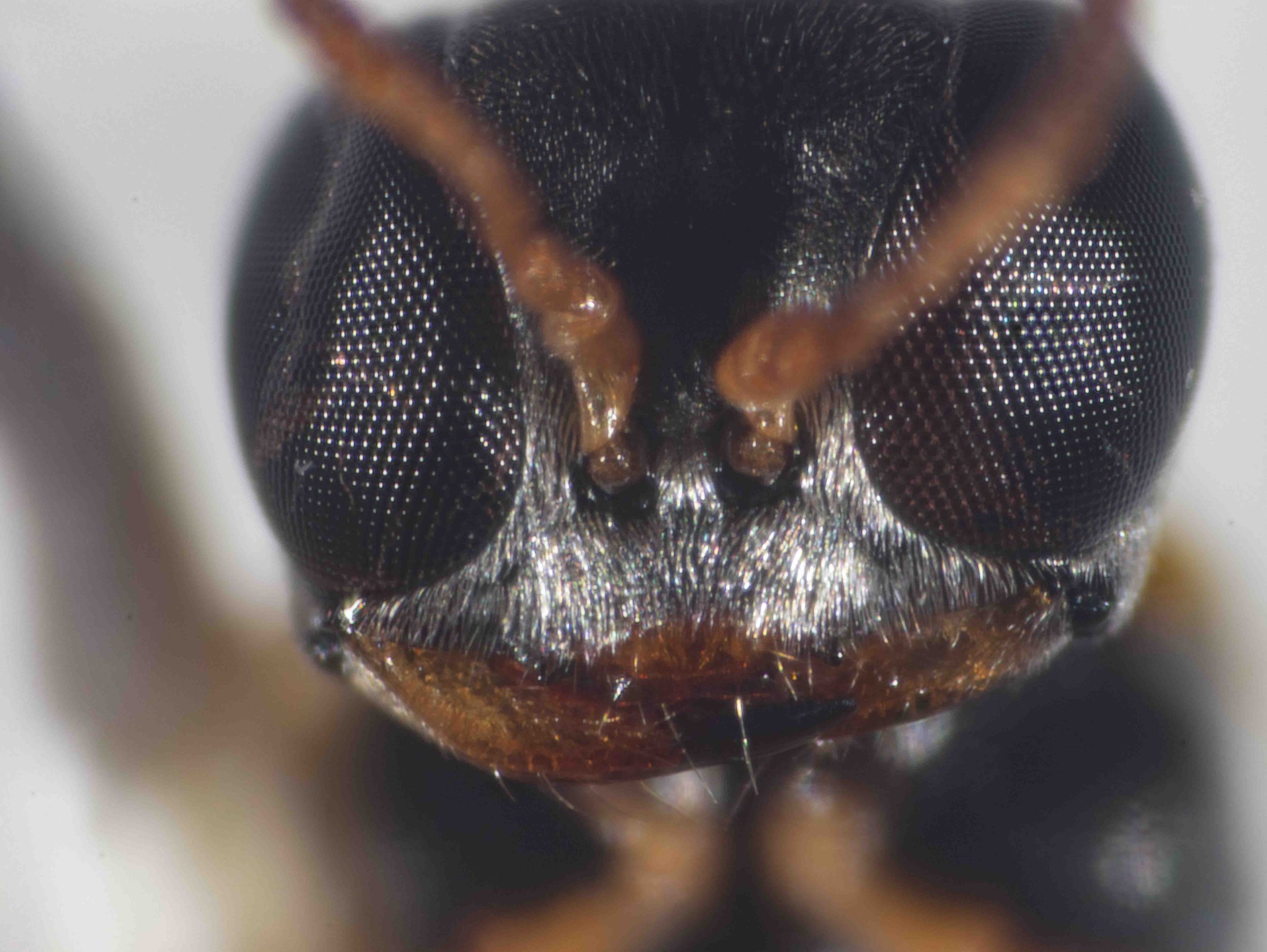
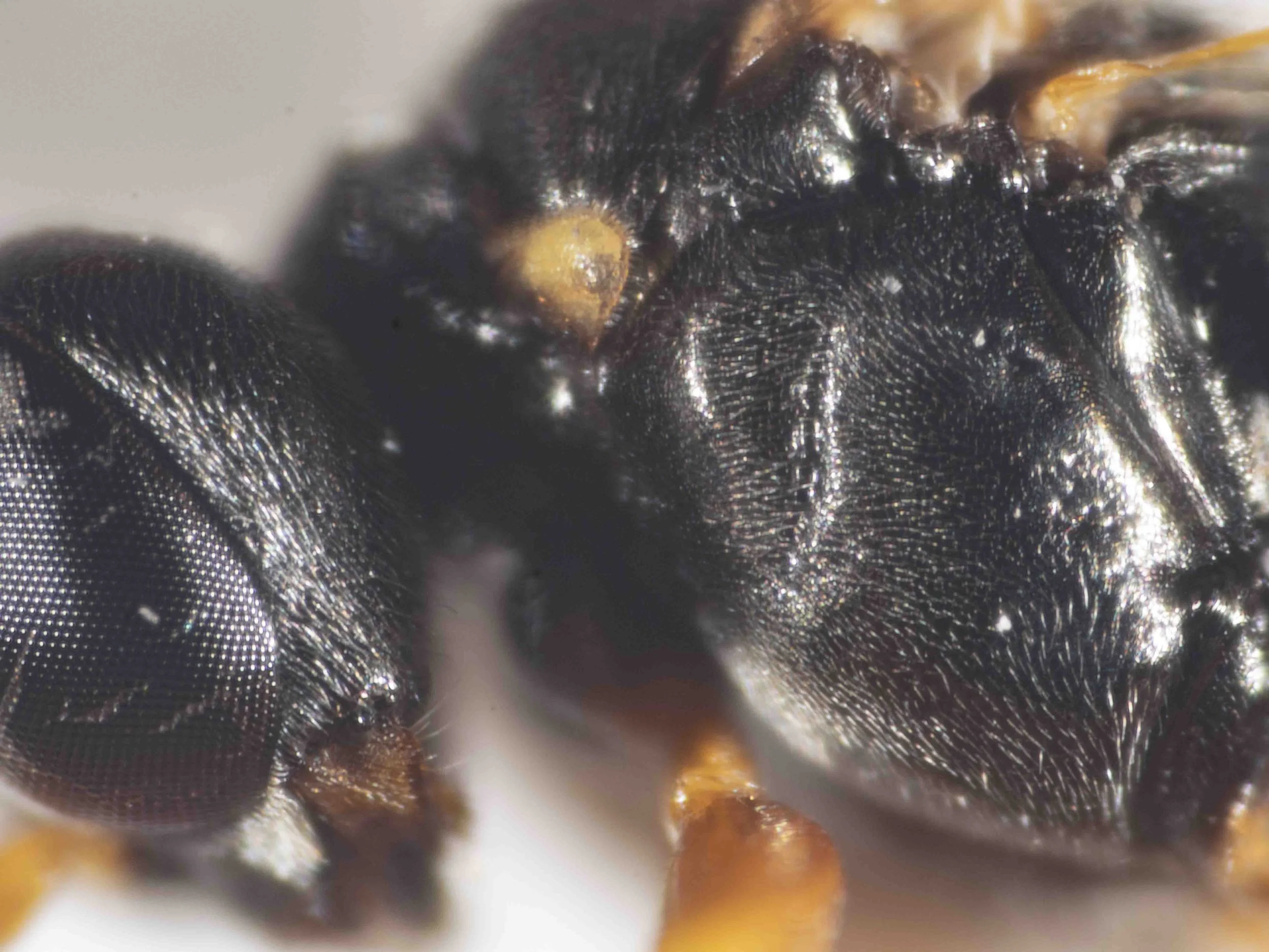
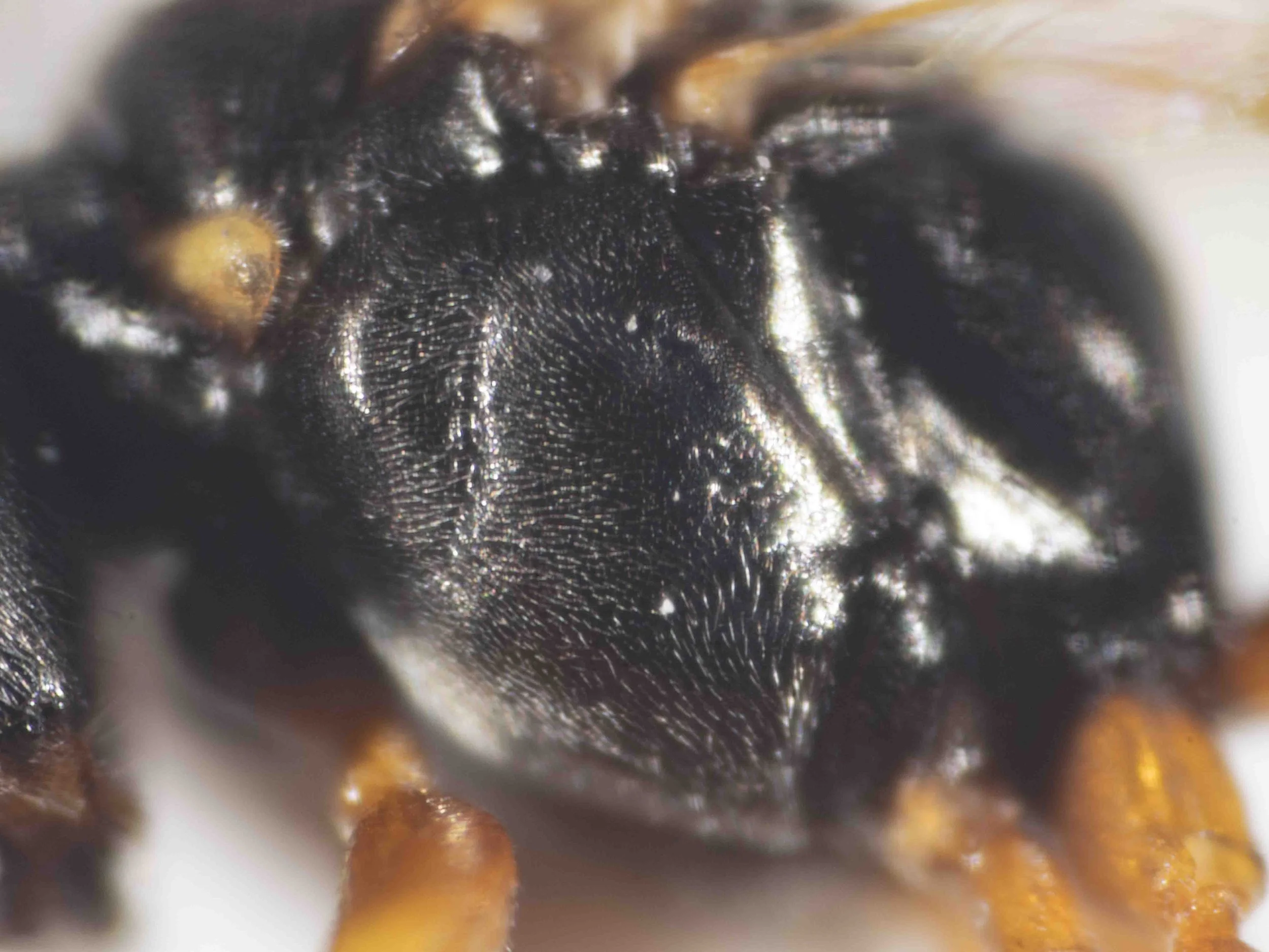
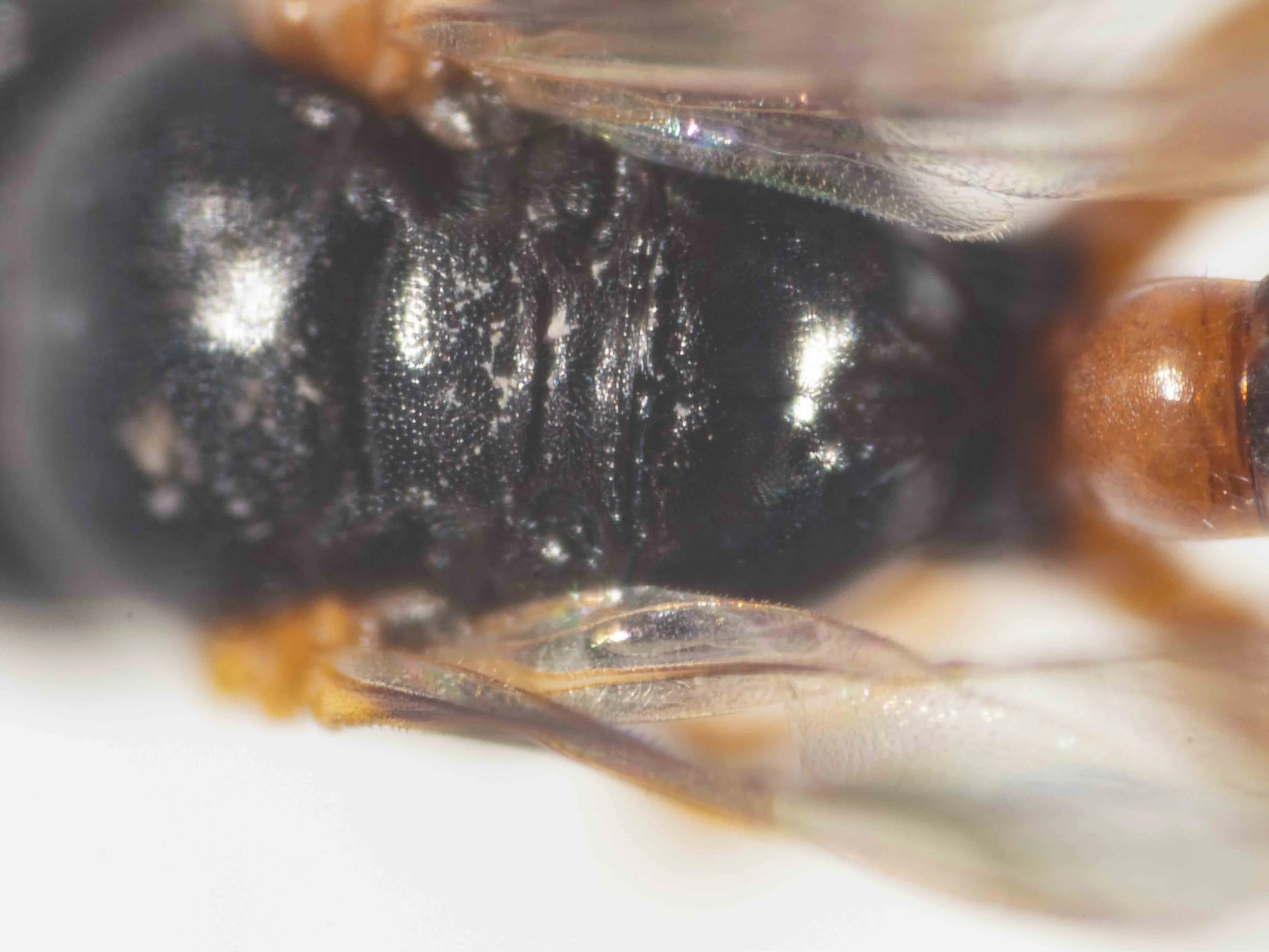
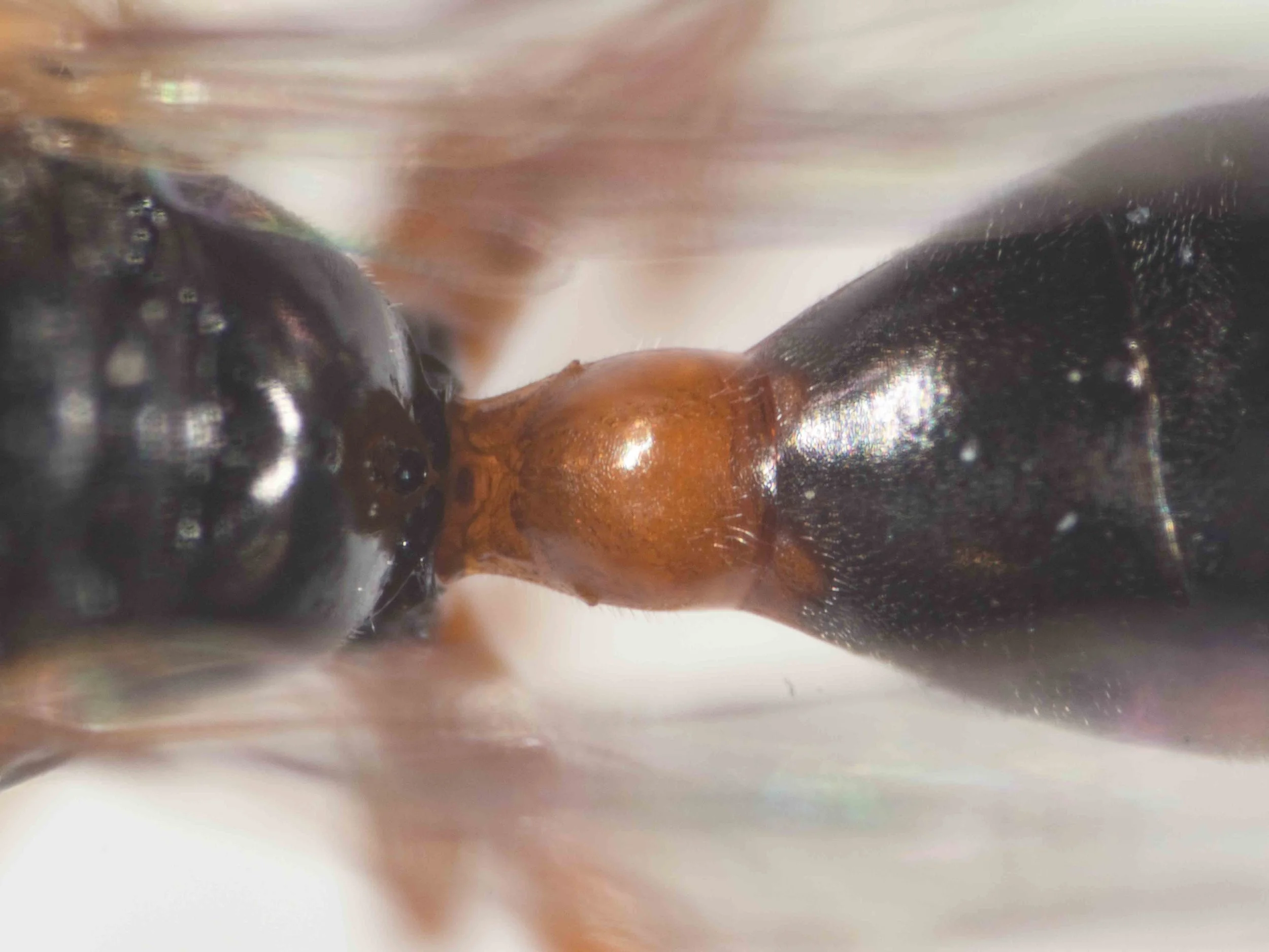
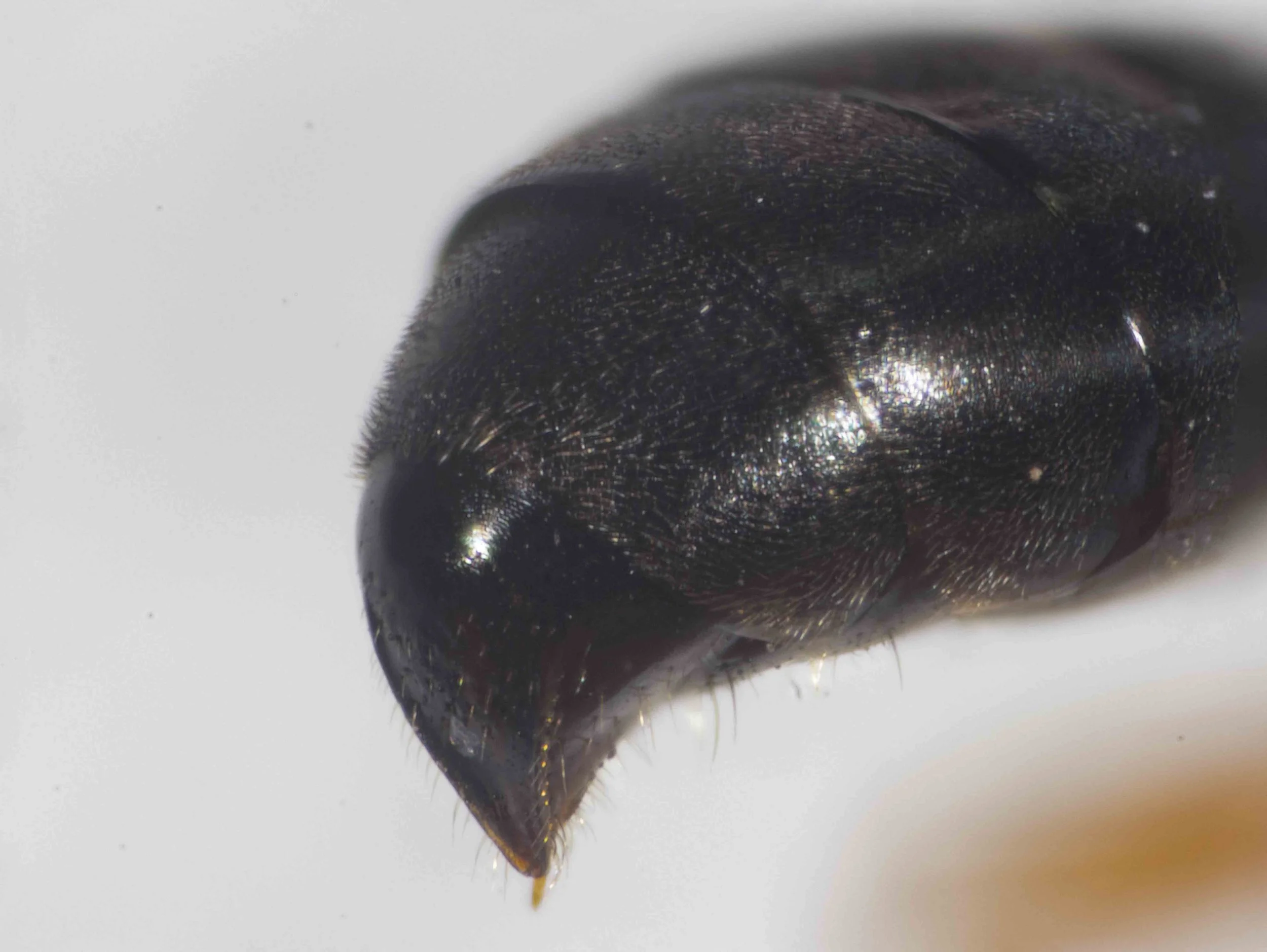
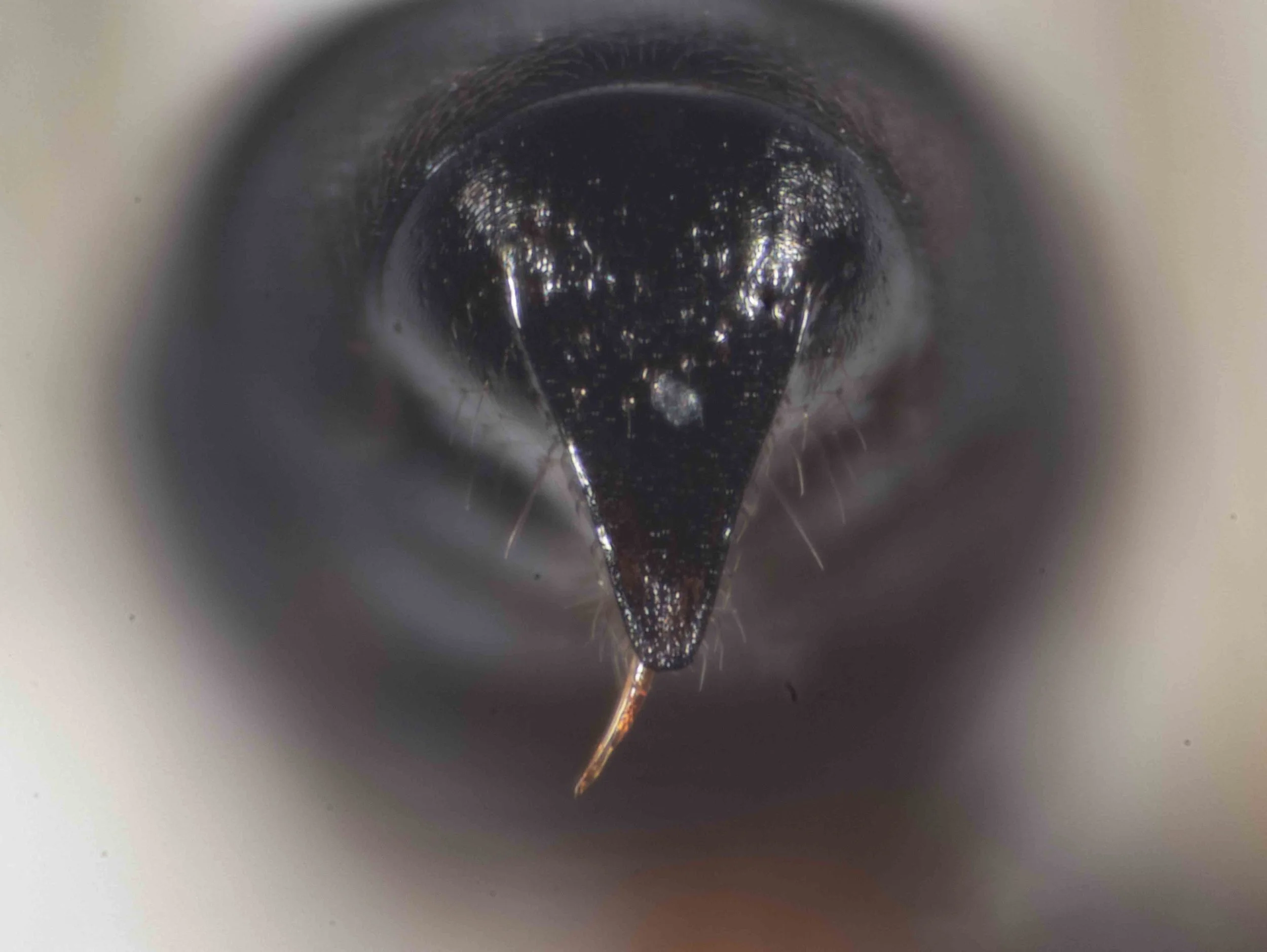
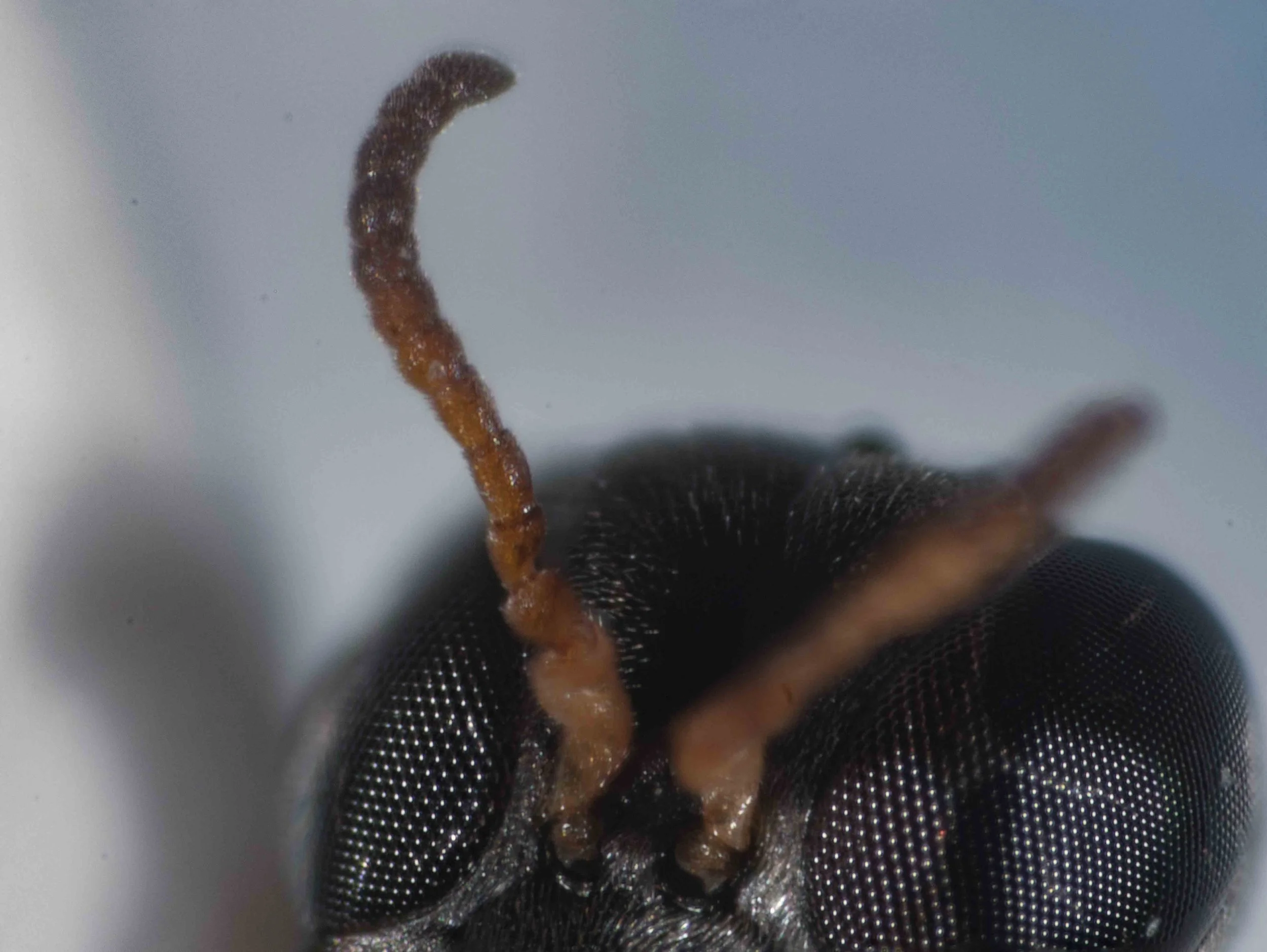
Specimen #015
This is a very unusual one. I was convinced it was Pseudoturneria, based on the gaster shape. But there is clearly no epicnemial keel. The prepectus is rounded, as for Rhopalum.
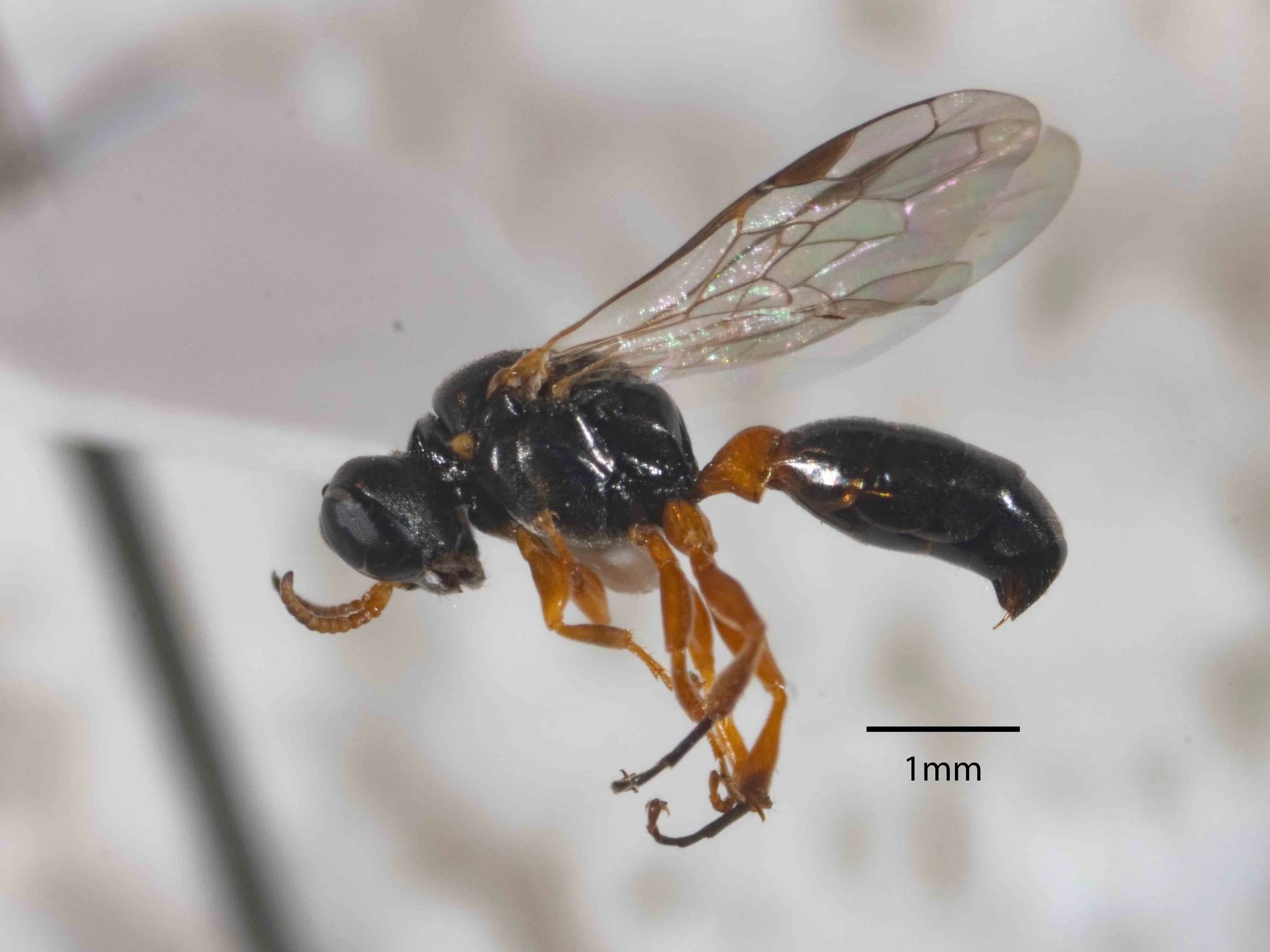
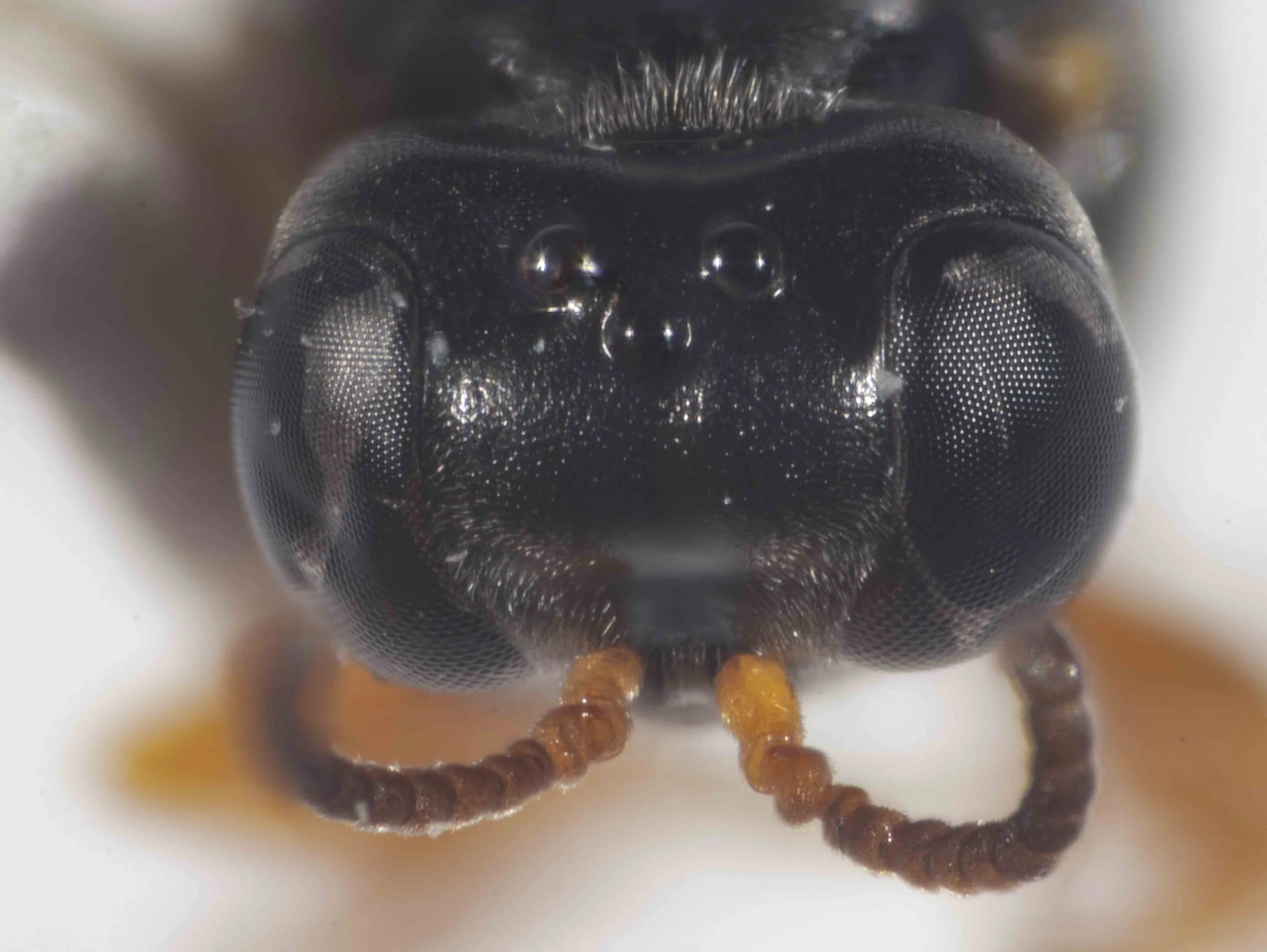
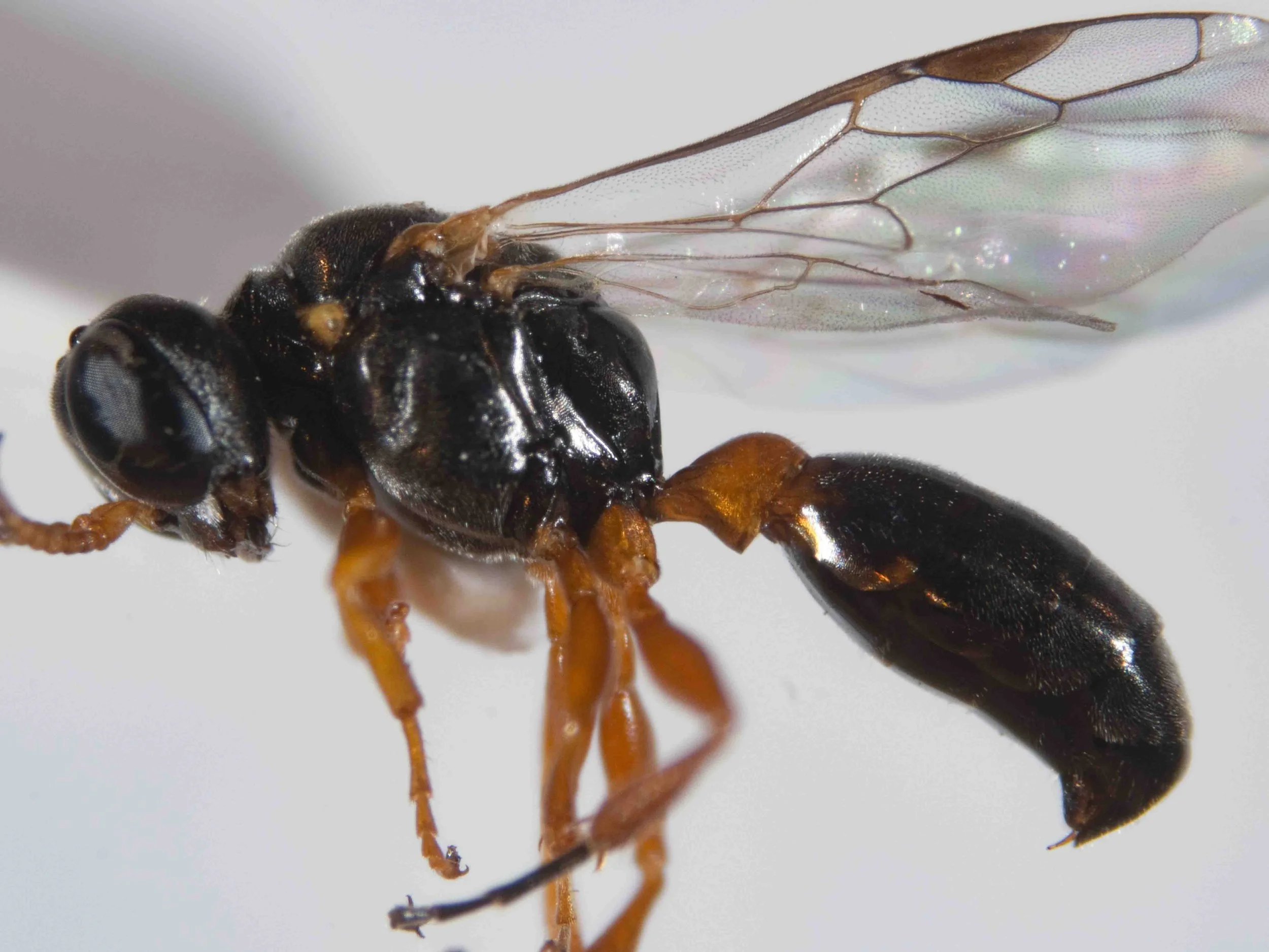
References
Leclercq, J. 1957. Le genre Rhopalum (Kirby, 1829) en Australie. Bulletin et Annales de la Société Entomologique de Belgique, 93 (VII/VIII): 177-232 (available here)
Leclercq, J. 1997. Hyménoptères Sphécides Crabroniens d'Australie, du genre Rhopalum Stephens, 1829. Notes Fauniques de Gembloux, 32: 3-101 (available here)
Pulawski, W.J. 2010. Rhopalum nasale, a new species from Australia (Hymenoptera: Crabronidae). Journal of Hymenoptera Research 19: 139-143
This is a workbook page … a part of our website where we record the observations and references used in making species identifications. The notes will not necessarily be complete. They are a record for our own use, but we are happy to share this information with others.