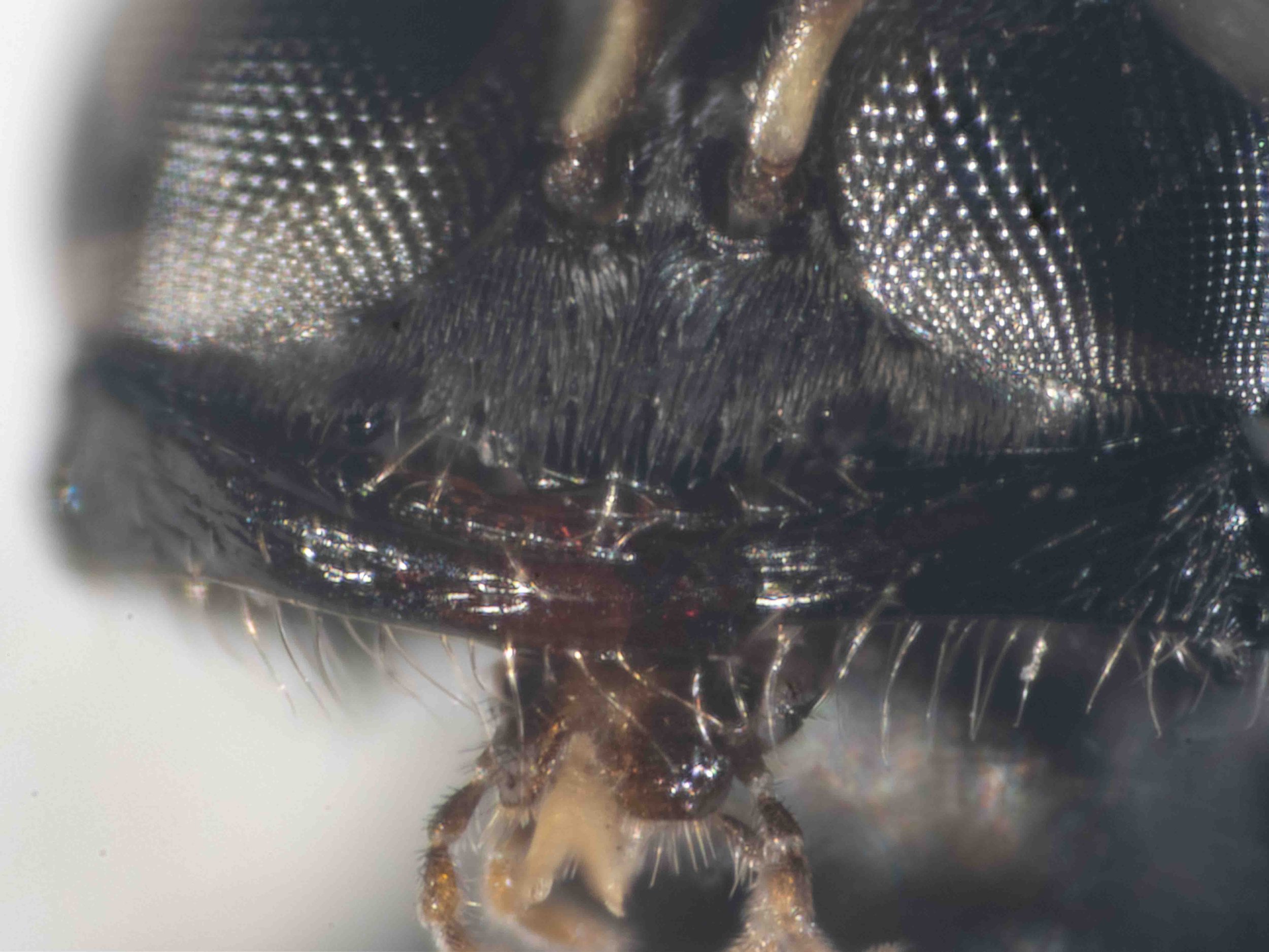
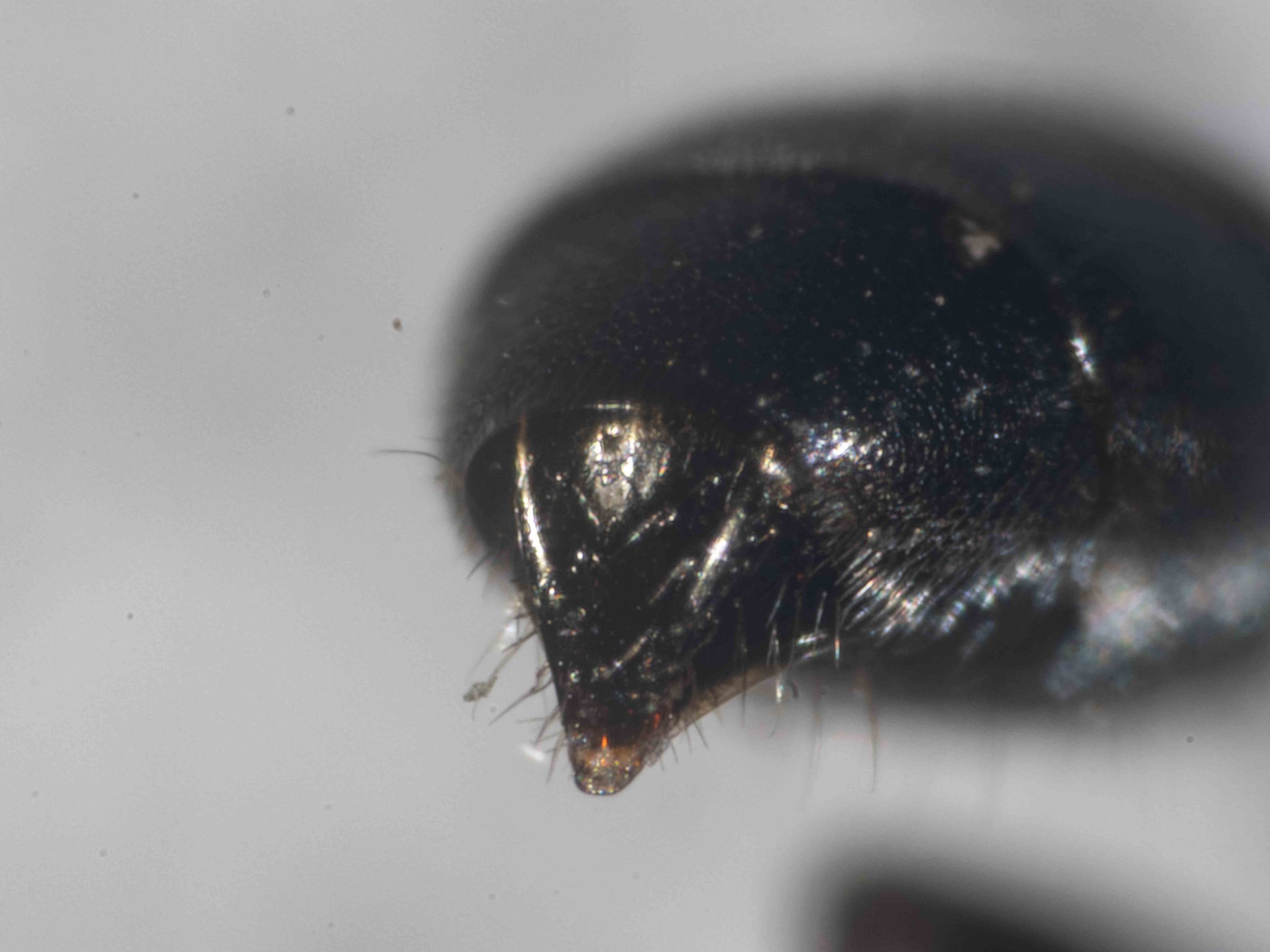
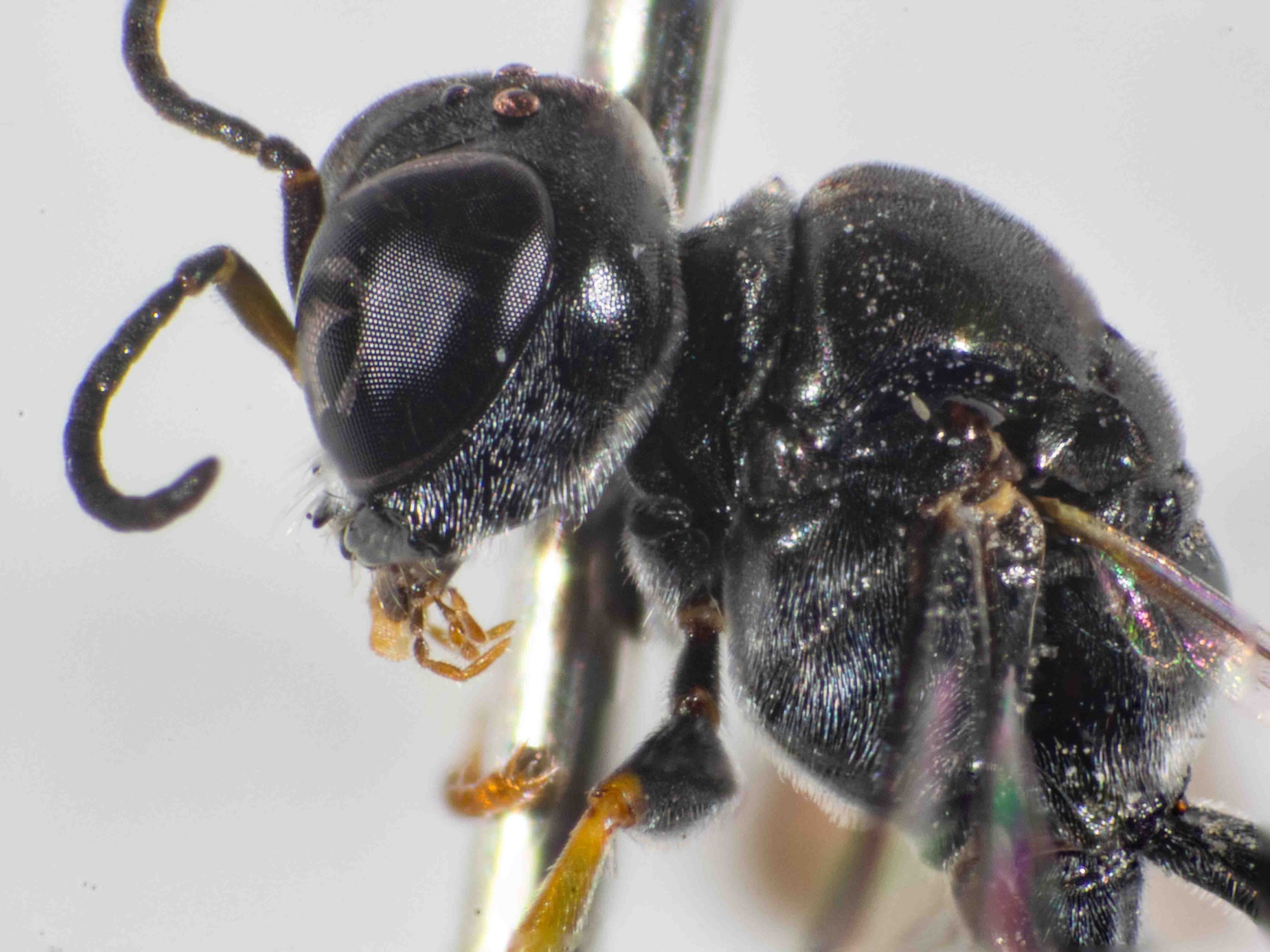
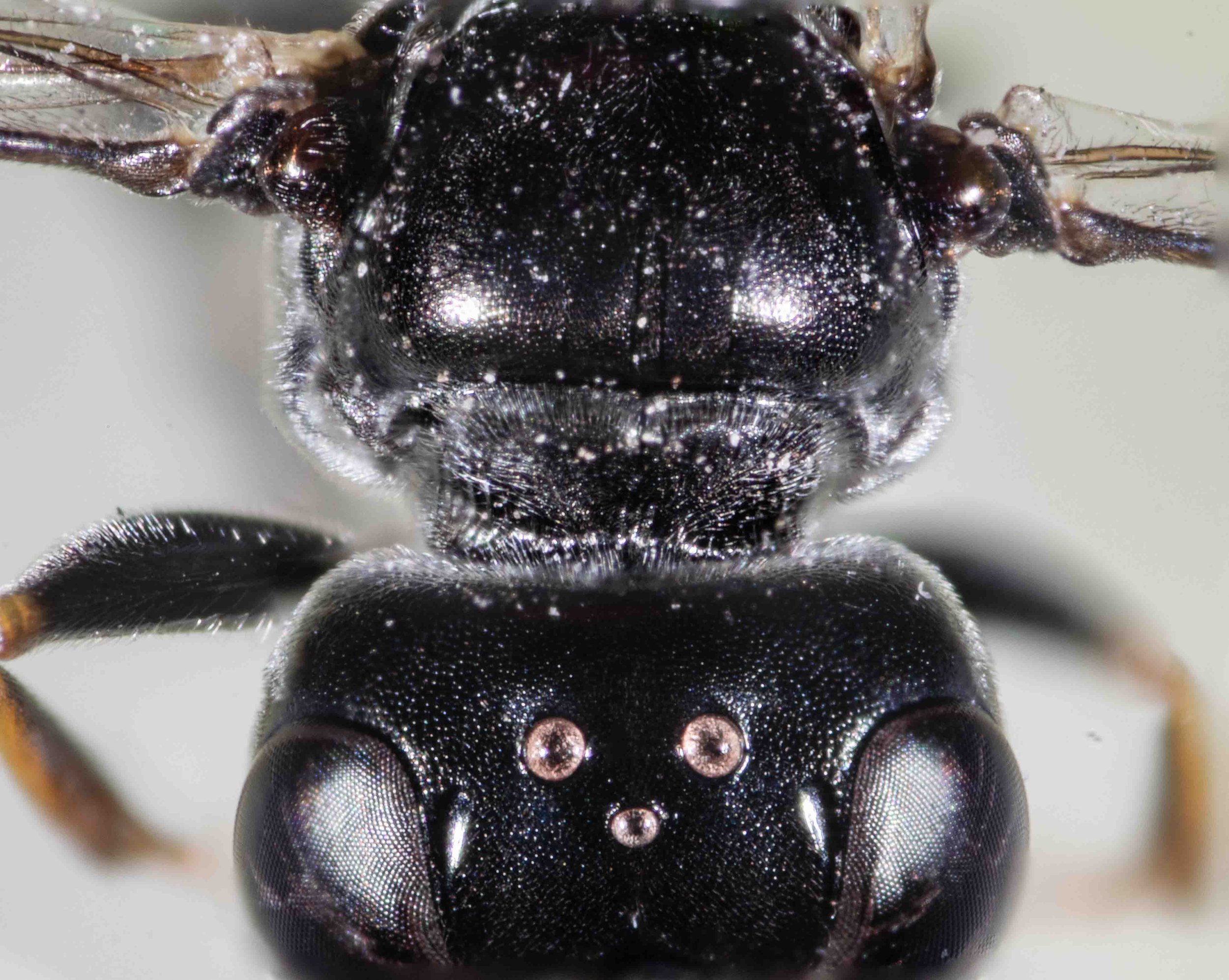
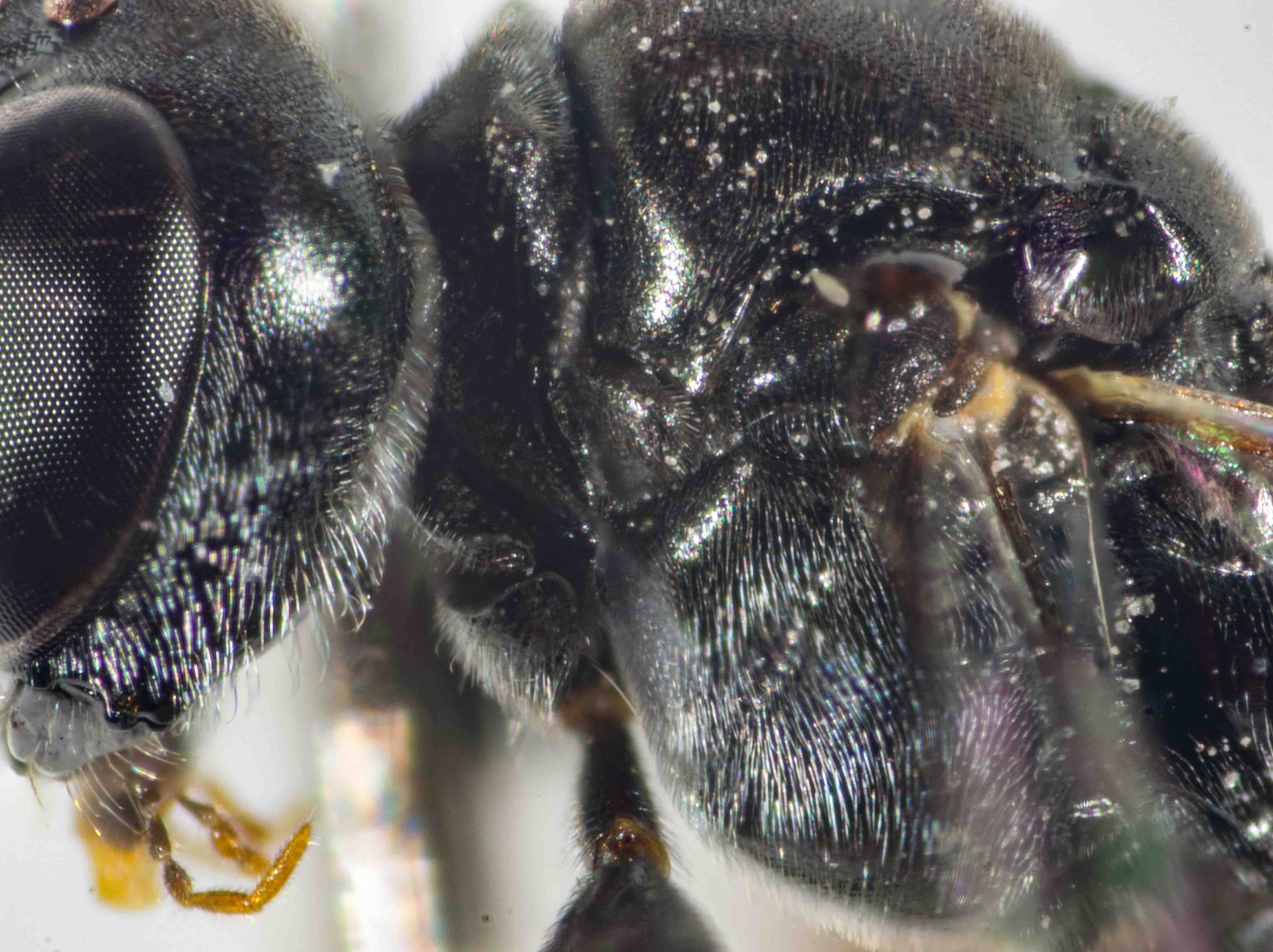
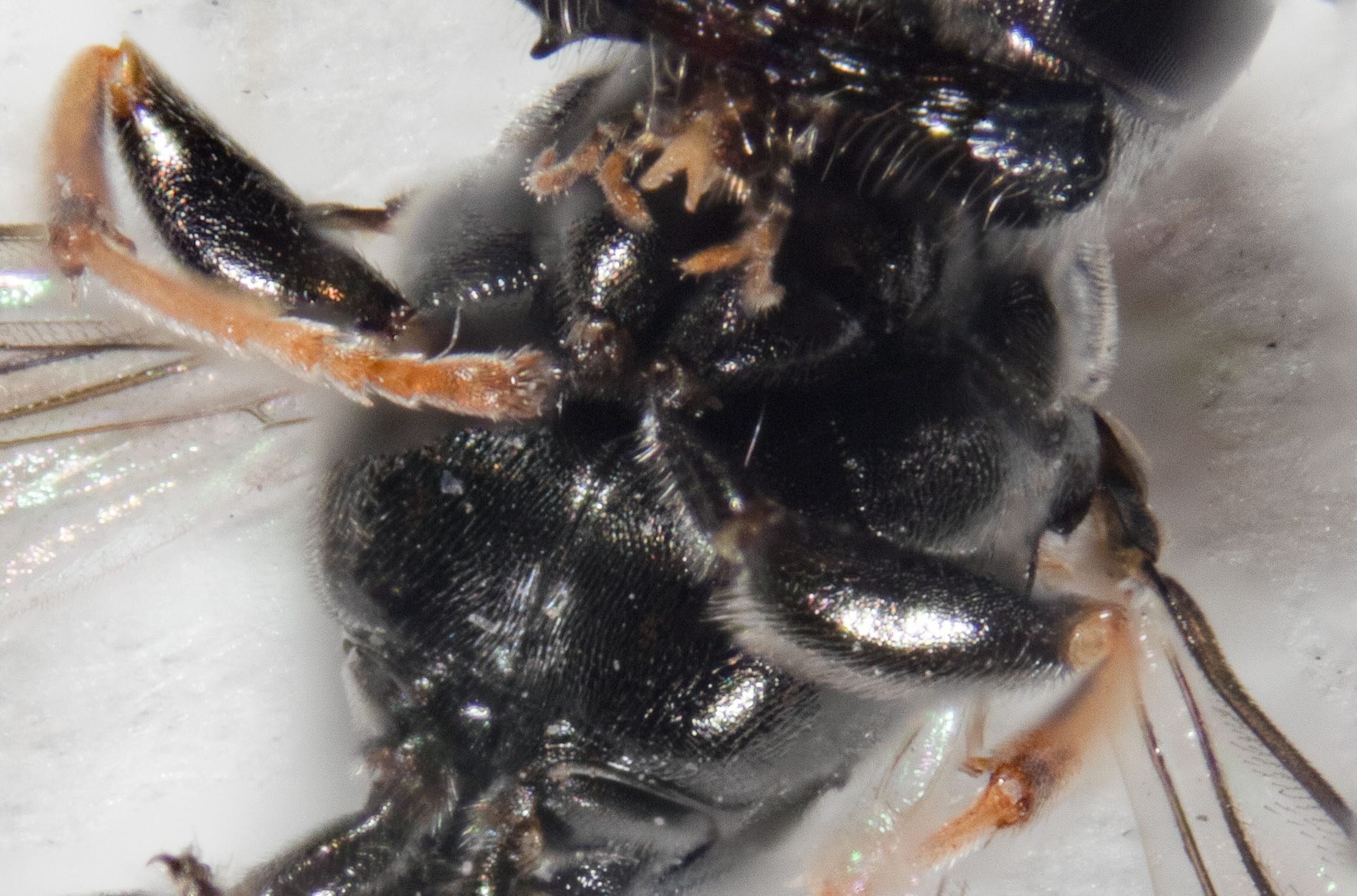
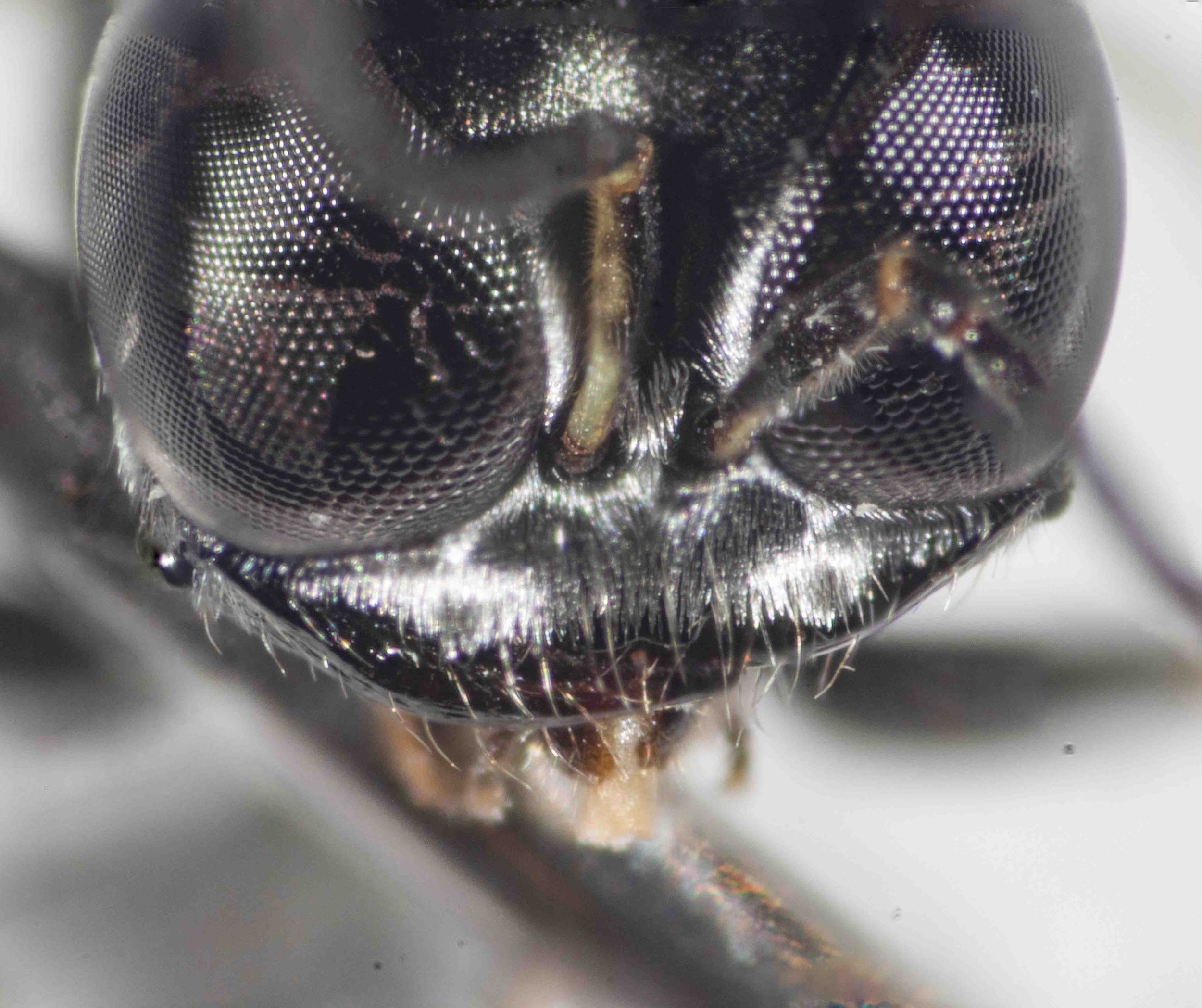
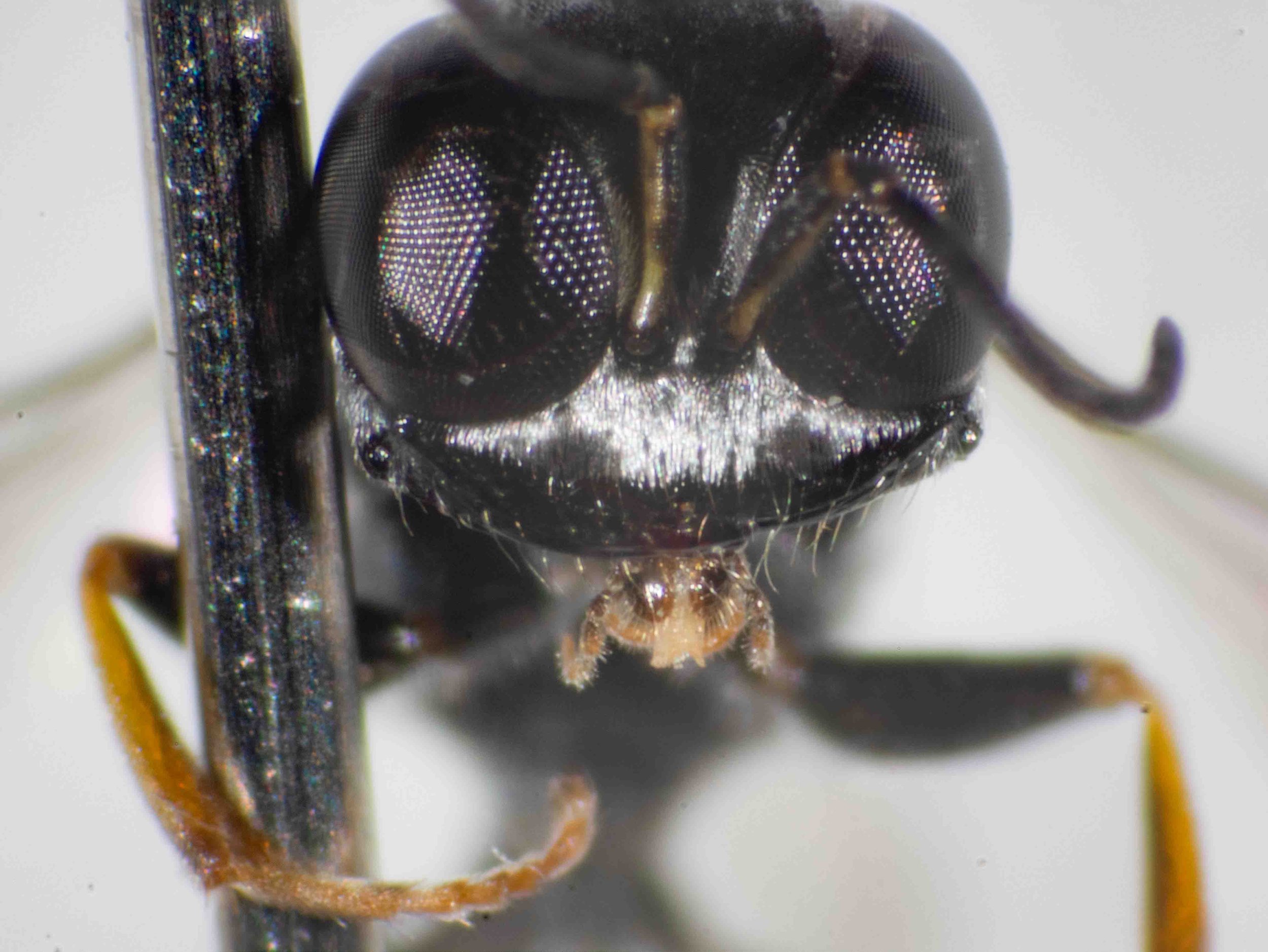
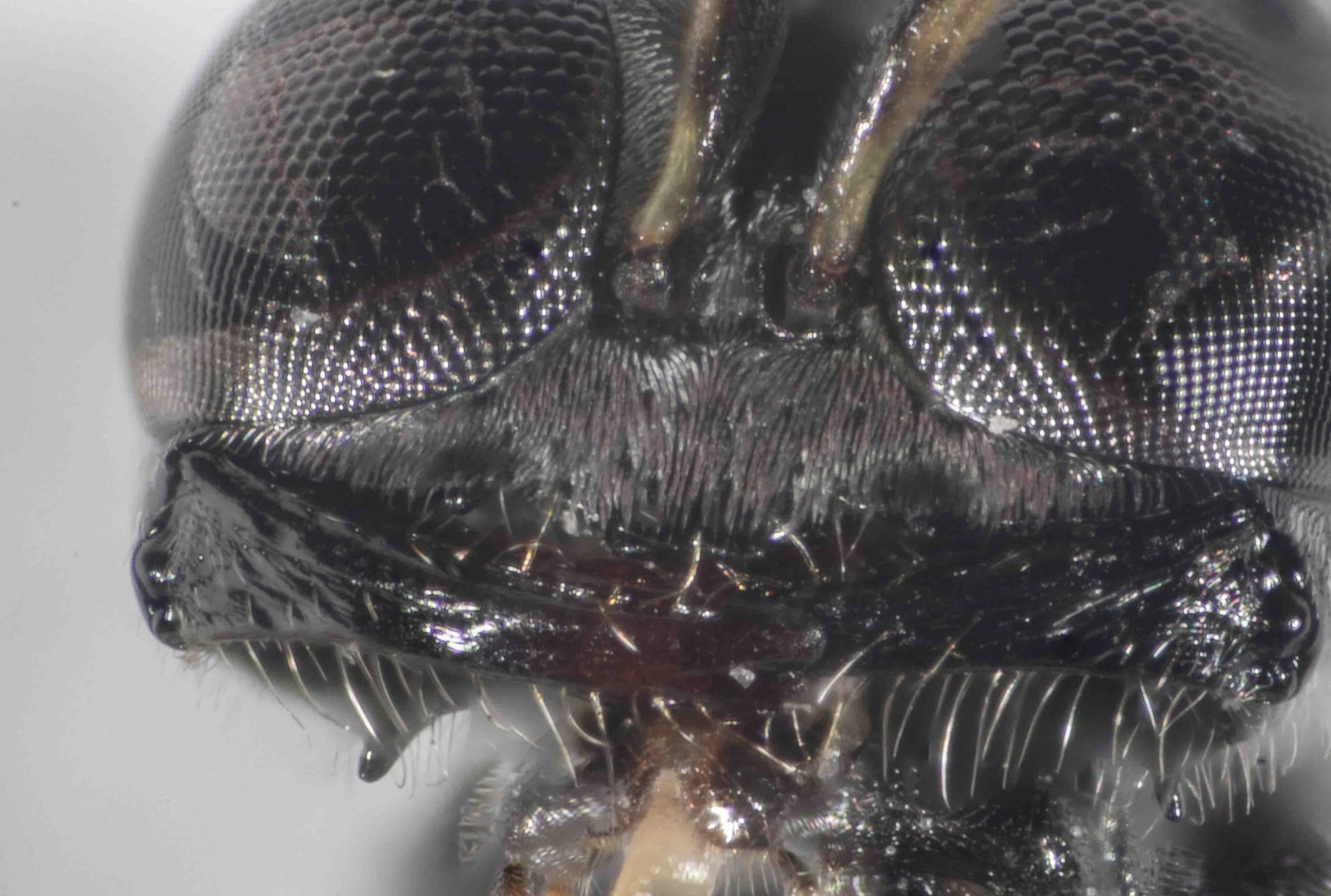
scapal basin
Key to species groups
Step 1: Scapal sinus without a denticle or process, apart from the inter-insertional projection ……… –> 2
(not Lower scapular sinus with denticle or carinate process independent of the inter-insertional structure)
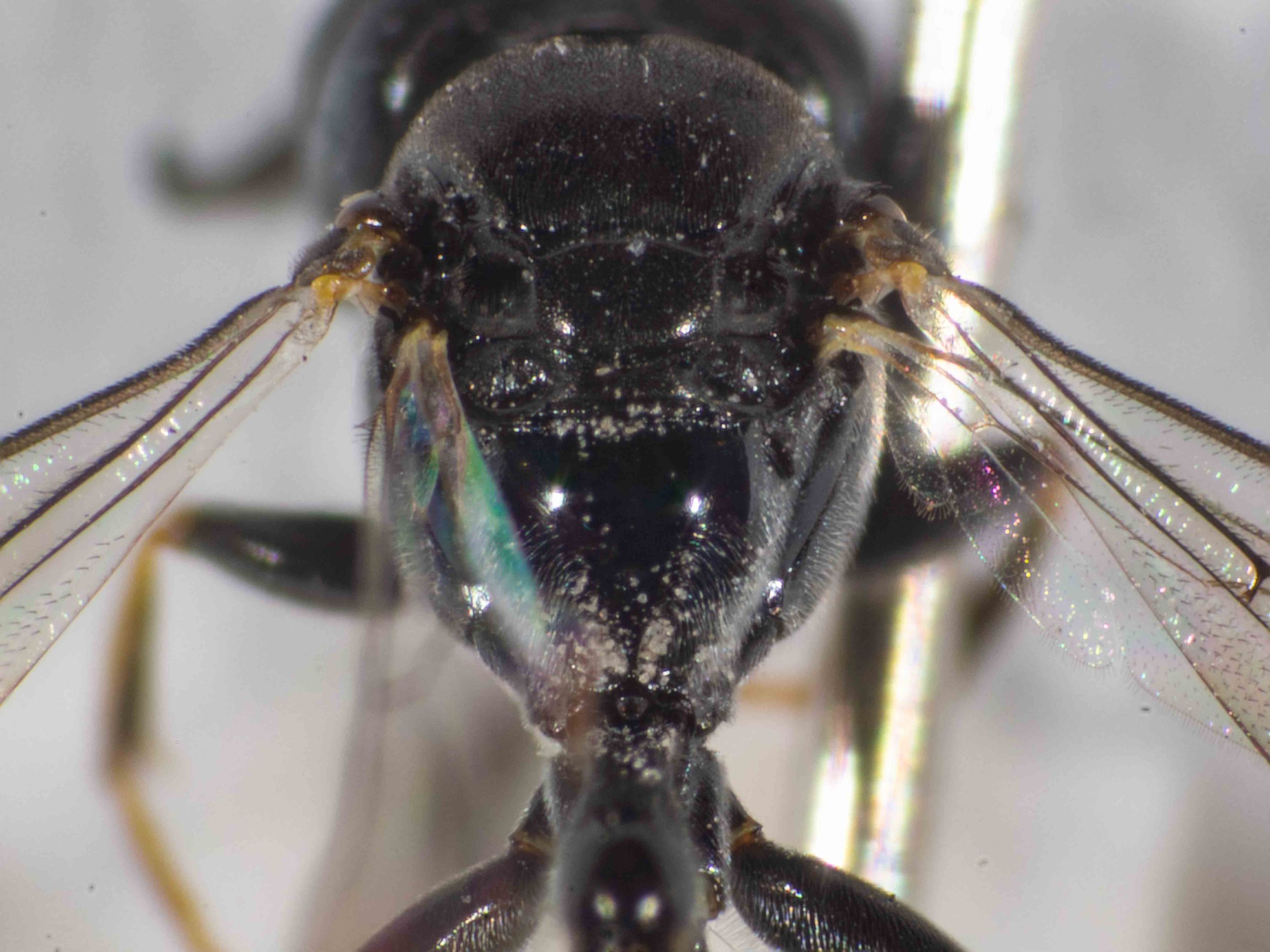
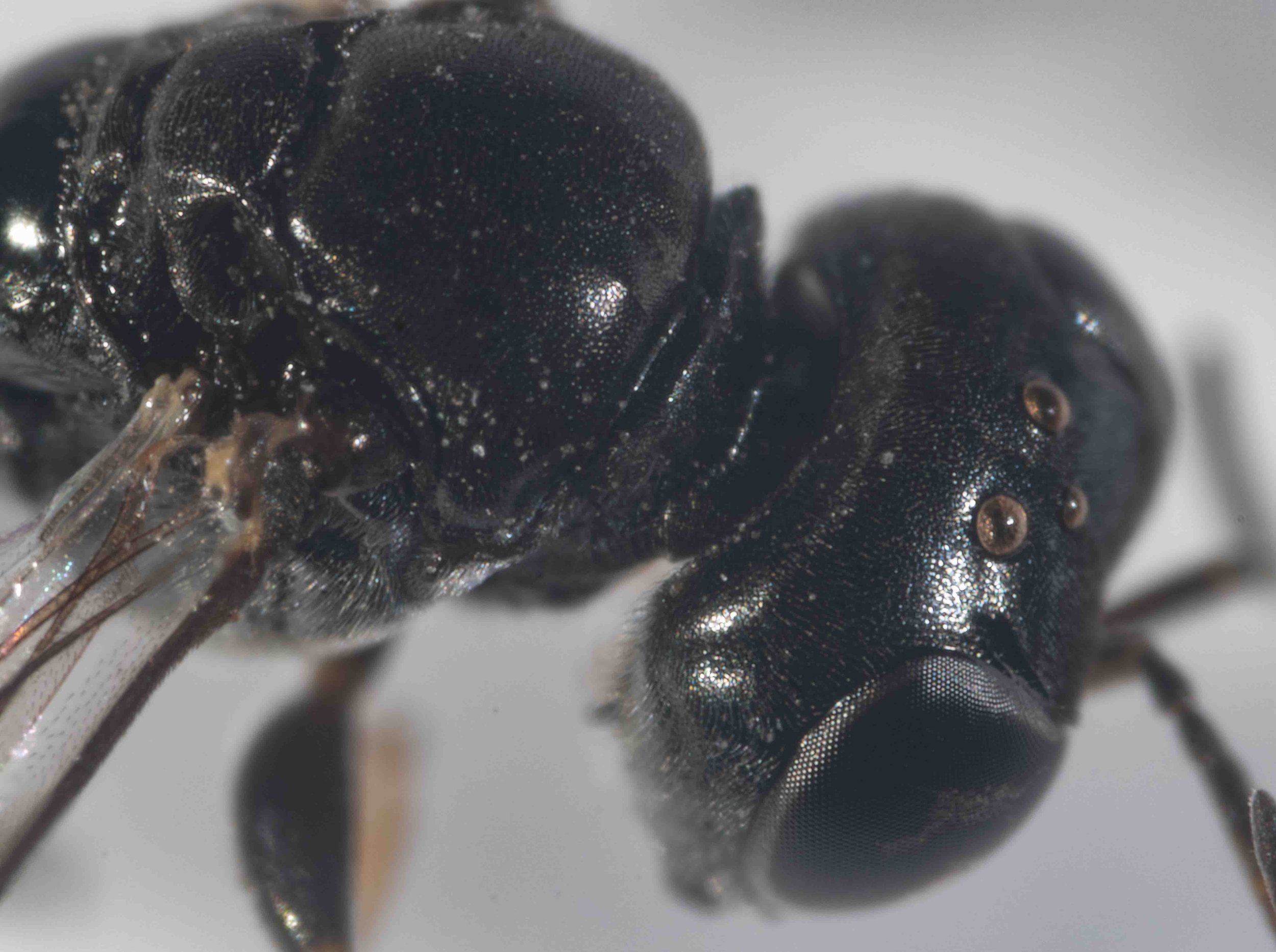
propodeum
Key to species groups
Step 2: Propodeum - dorsal surfaces very incompletely separated from lateral surfaces; stigmatic carina generally absent or indistinct ….. –> 4
(notdorsal surface completely separated from the lateral surfaces by a keel that passes under the stigma; lateral surfaces with a distinct stigmatic keel)
forewing venation
re first option for Key Step 6:
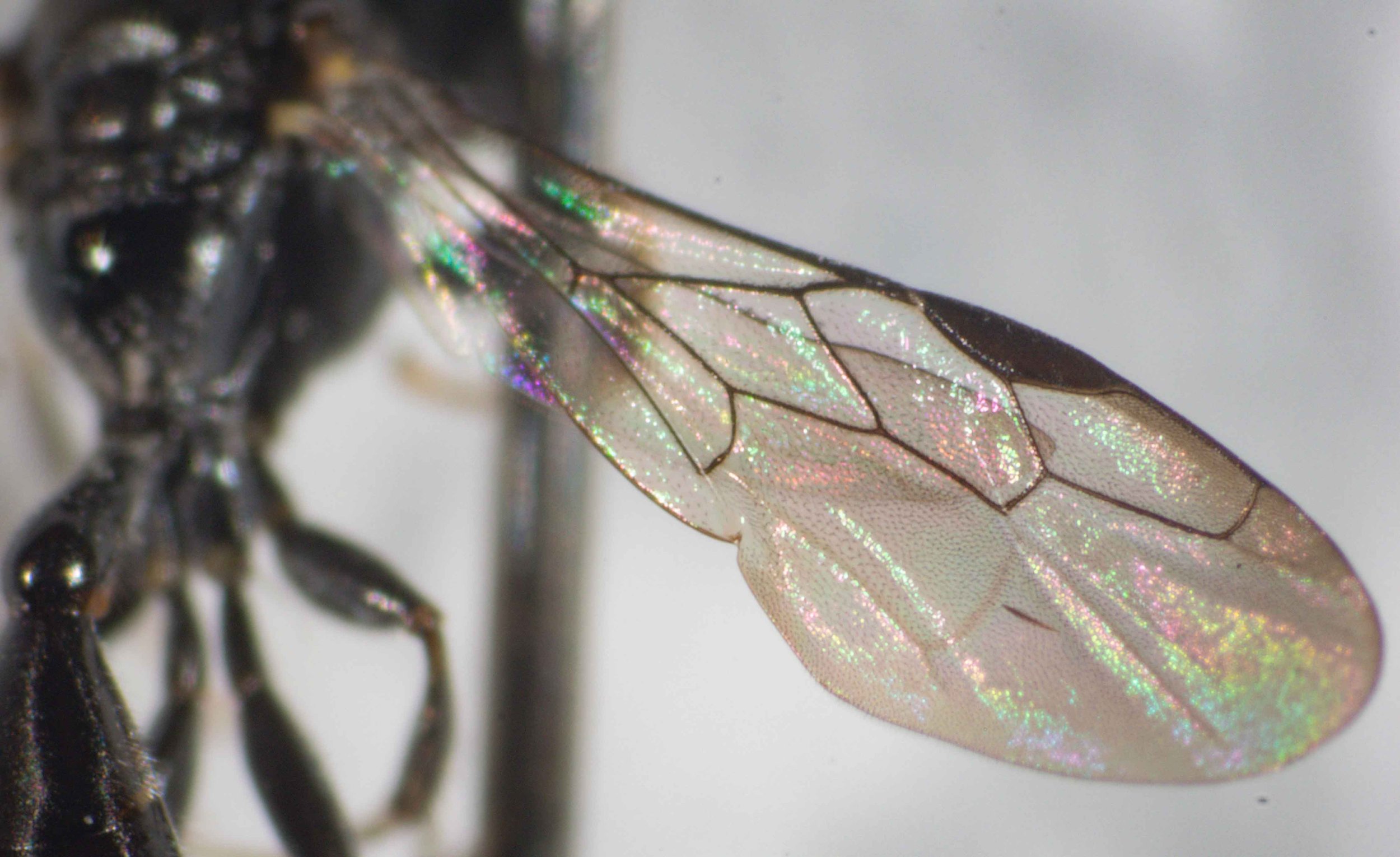
The shape of the marginal cell does not match the description for Group clavipes, nor the illustration at Fig. 106 (see ‘Bits & pieces’ section for excerpt).
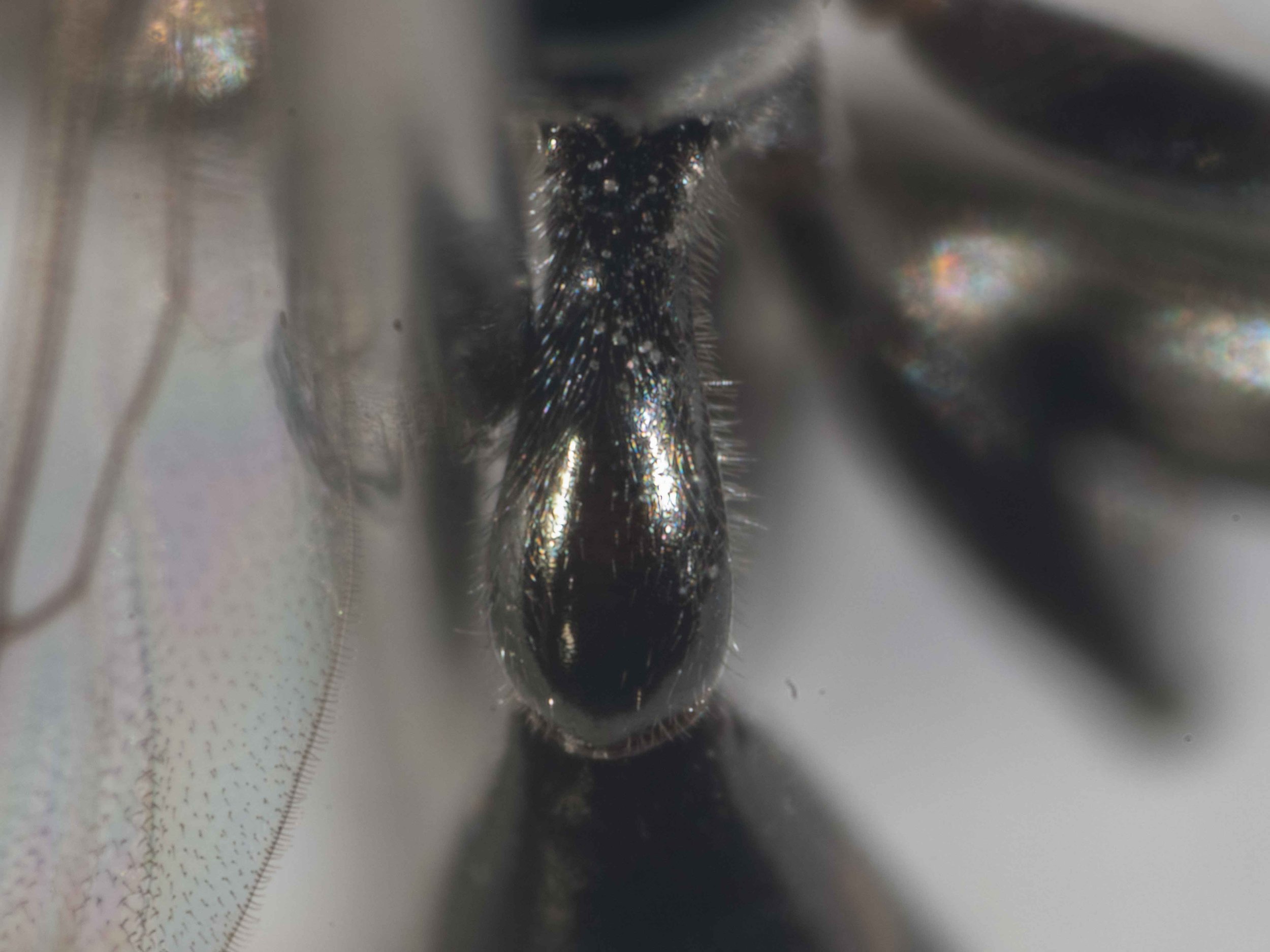
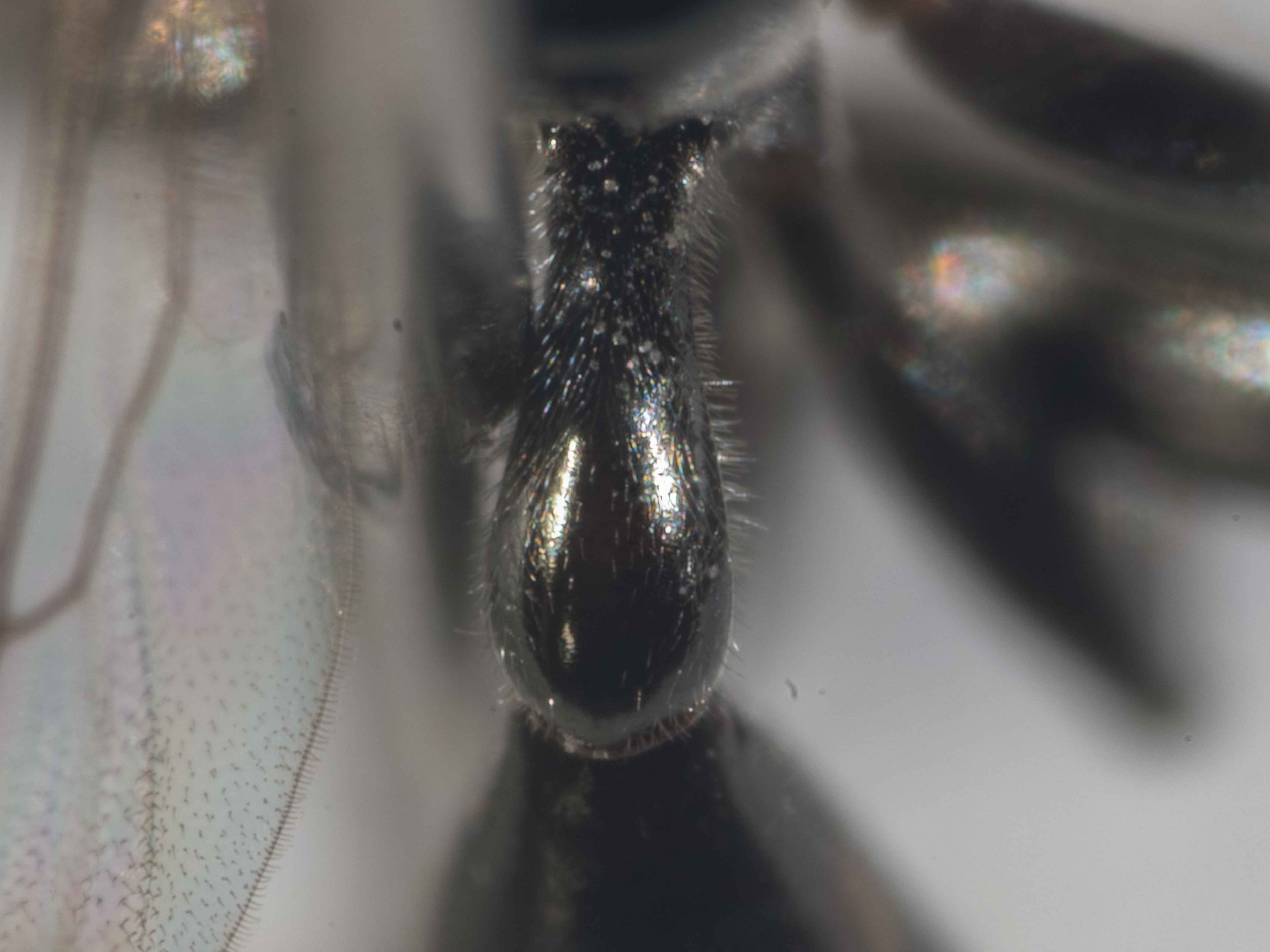
segment I metasoma (dorsal)
re second option for Key Step 6:
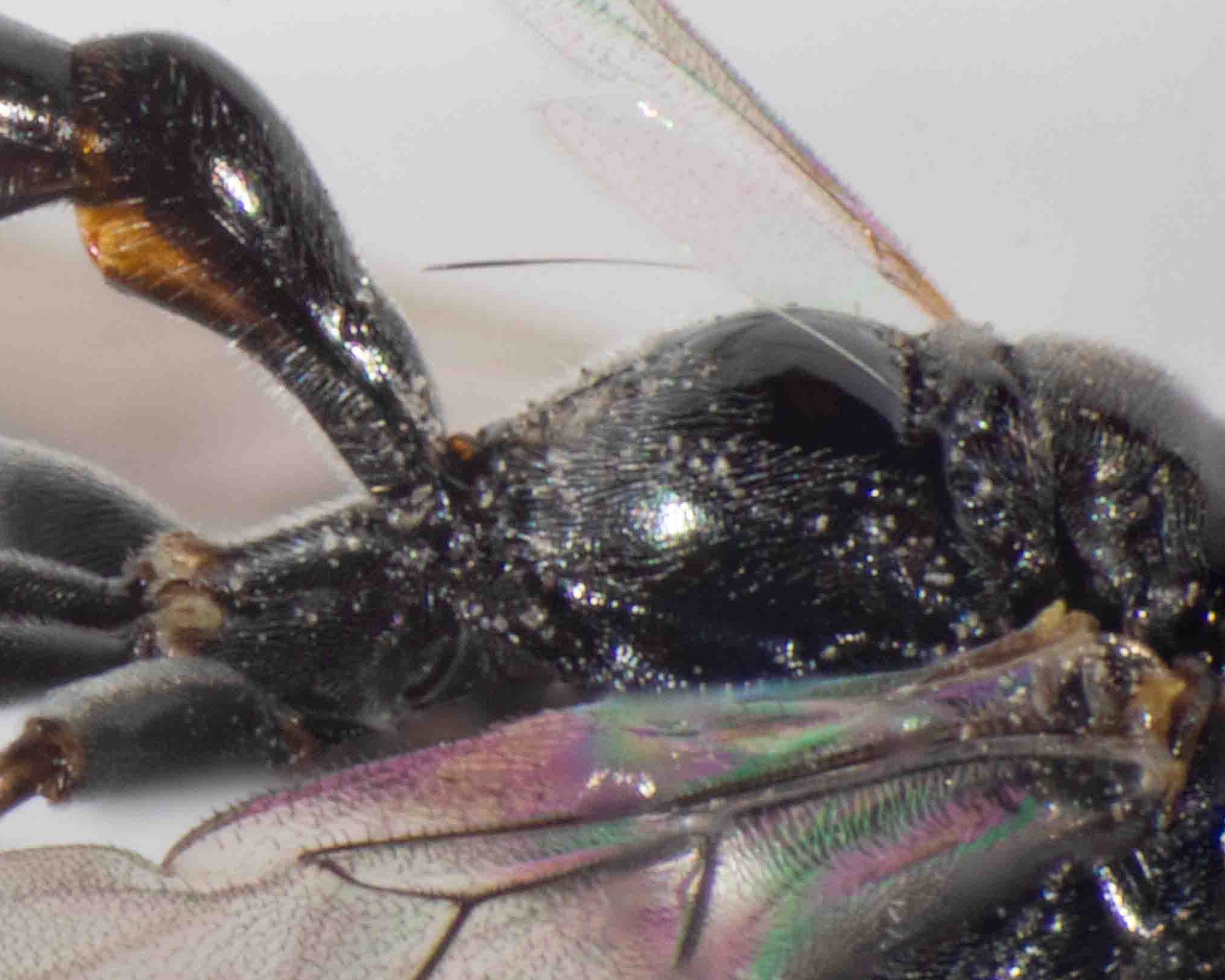
The shape of the first gastral segment is not subrectangular. And it is distinctly ovoid posteriorly. This therefore procludes moving on to Step 7.
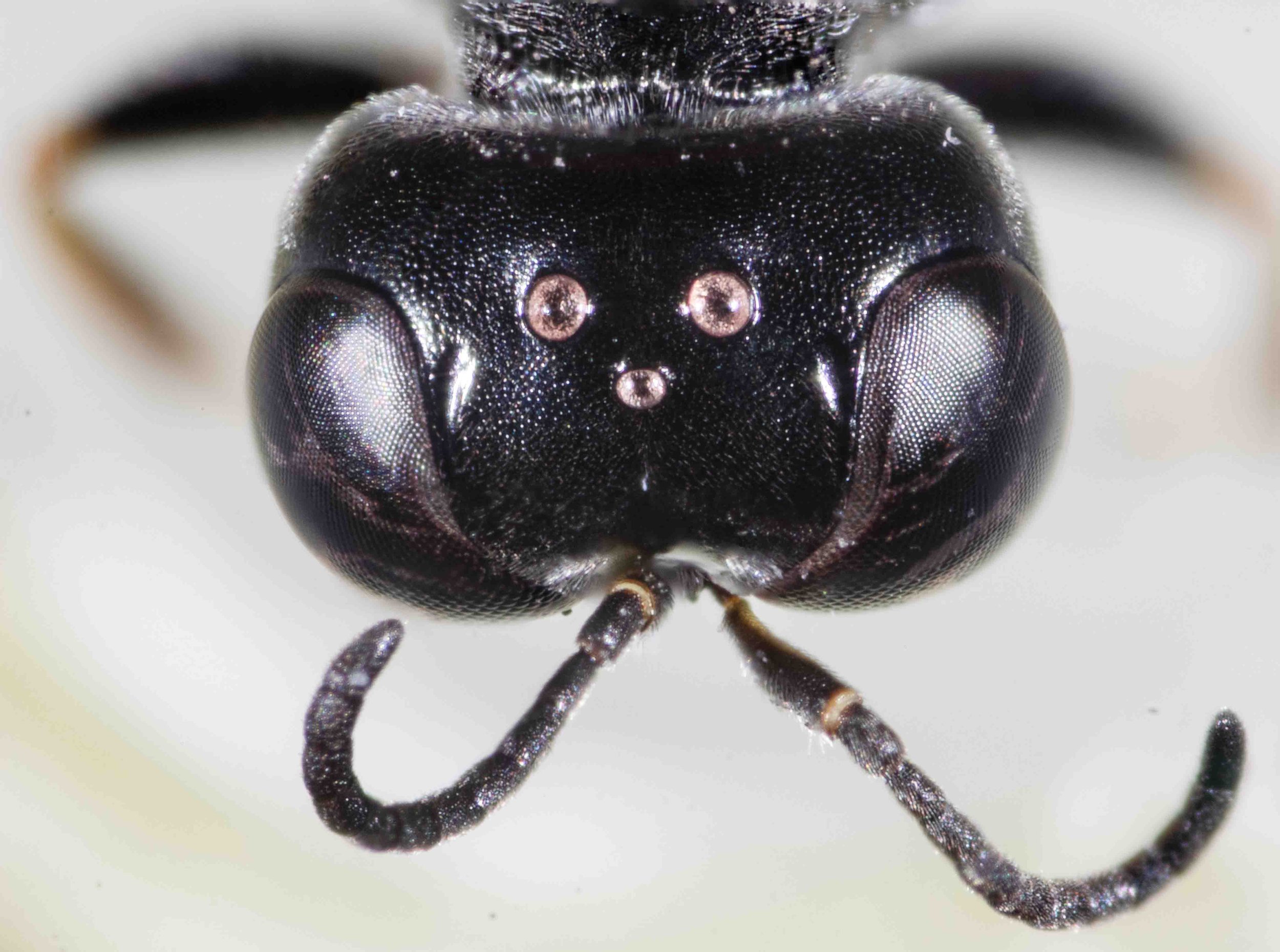
inter-antennal space
Key to species groups
Step 8: space between the antennal insertions without protrusion; insertions separated by an entirely pubescent, flat space
(not with a compressed, non-pubescent, very distinct projection) … 11
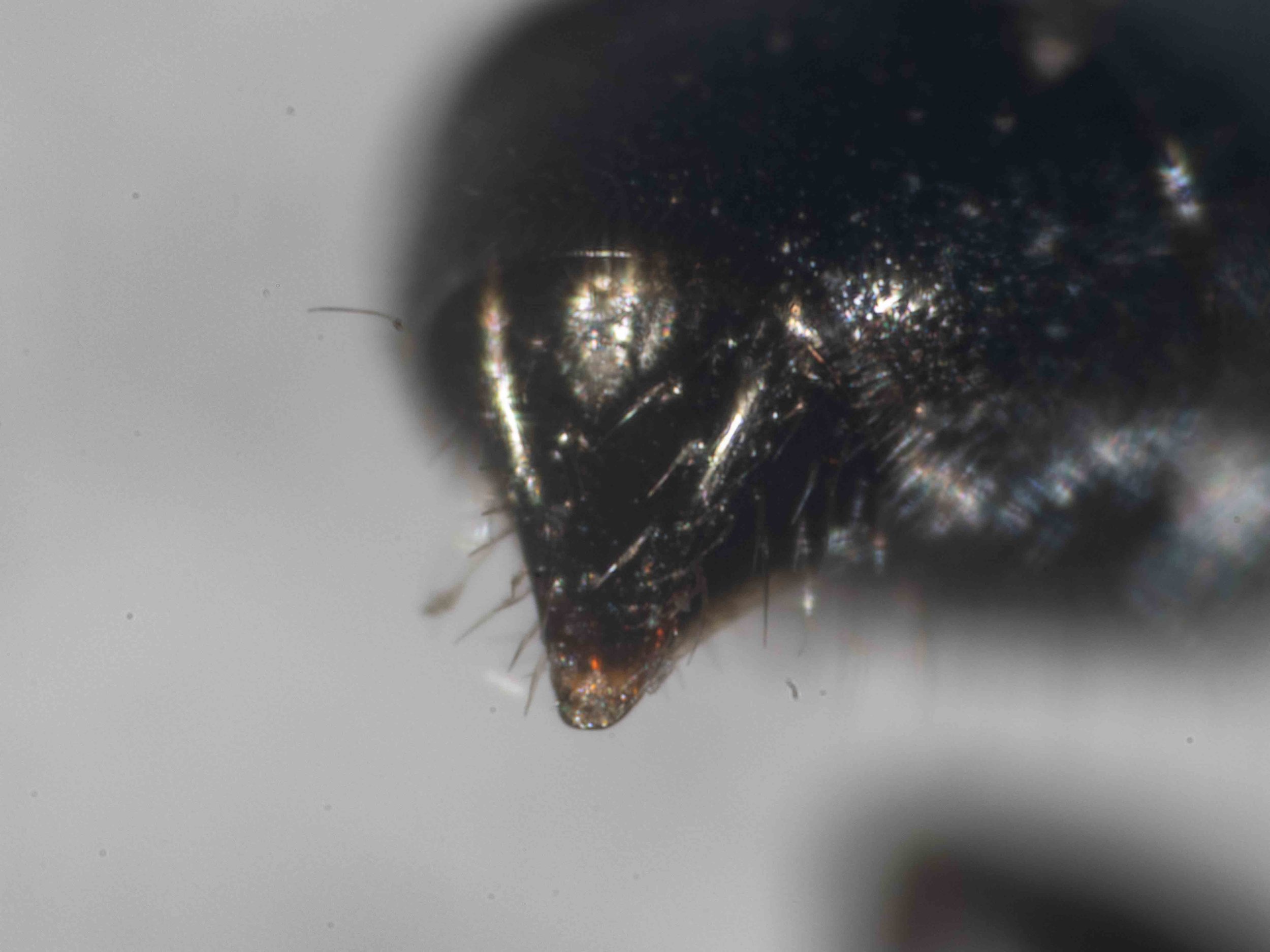
pygidial plate punctation
Key to species groups
Step 11: Pygidial area not punctate posteriorly, almost entirely glabrous with just a few bristles … –> 12
(not densely punctate and with adpressed setae)
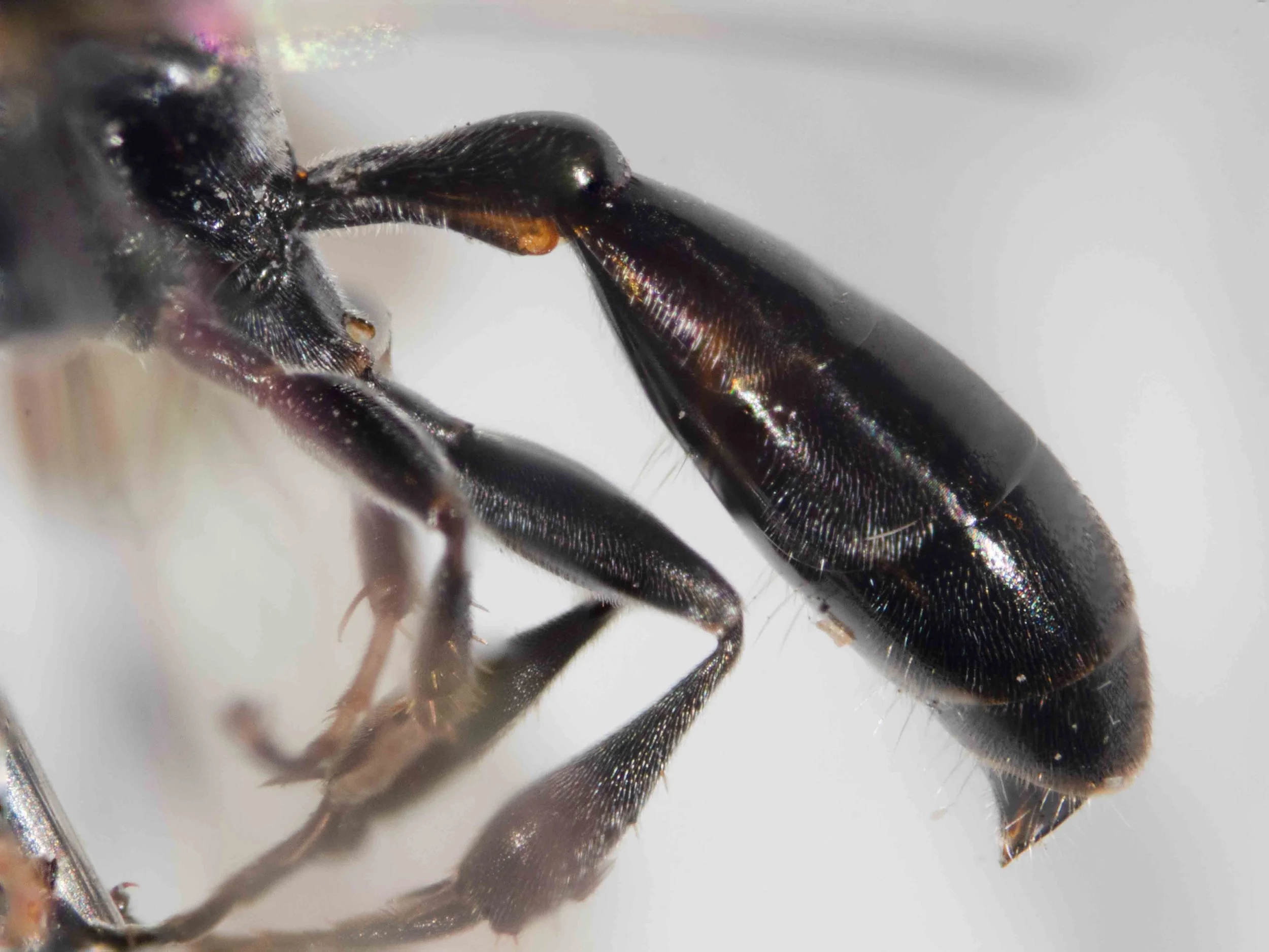
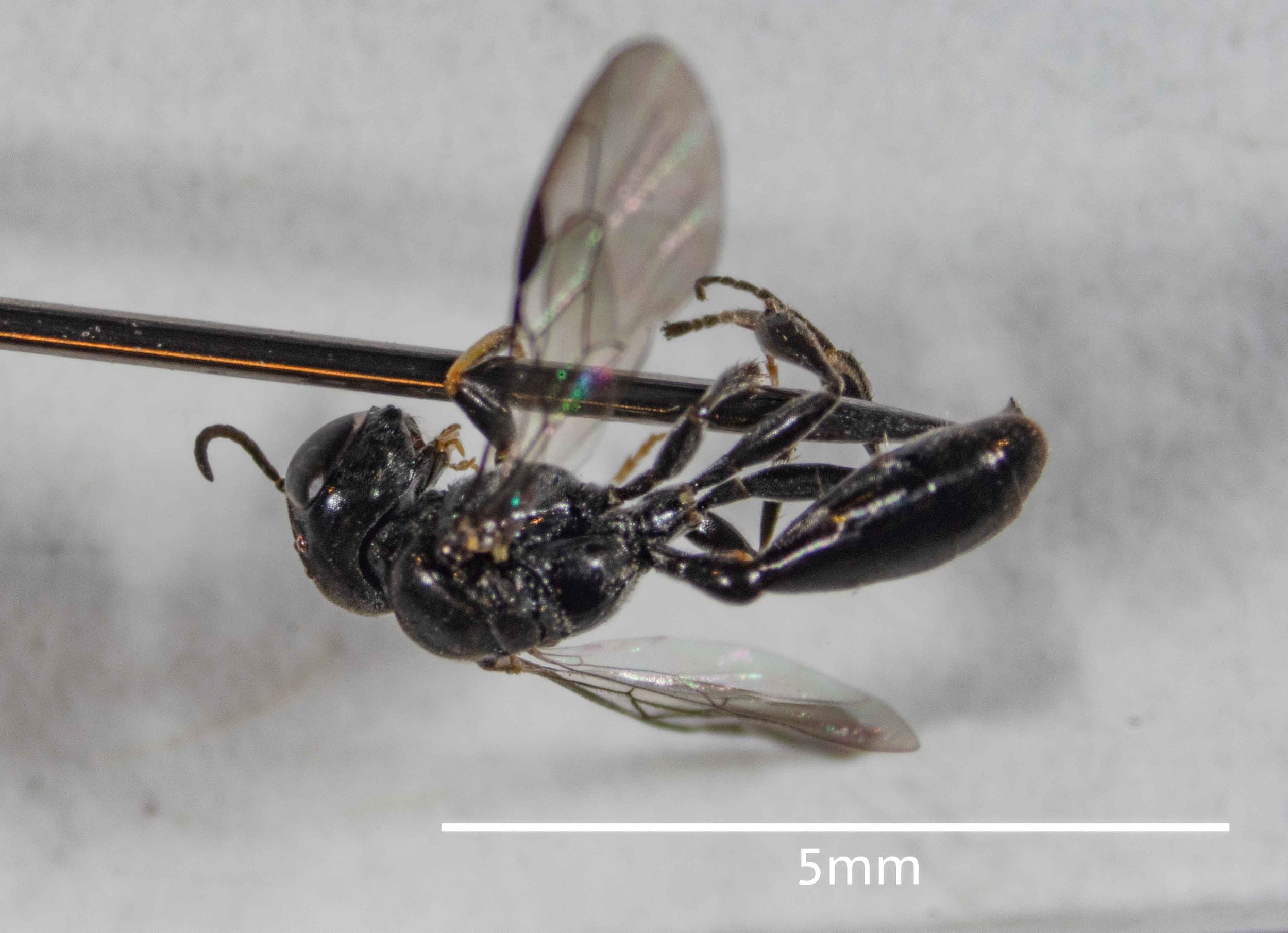
metasoma shape
Key to species groups
Step 12: Gaster pedunculate … –> 14
(notwith sessile or subsessile gaster)
Step 14: Female pygidial area triangular, flat, and with straight sides … 16
(not with pygidial area very long, very narrow; and not with segment I of metasoma trapezoid)
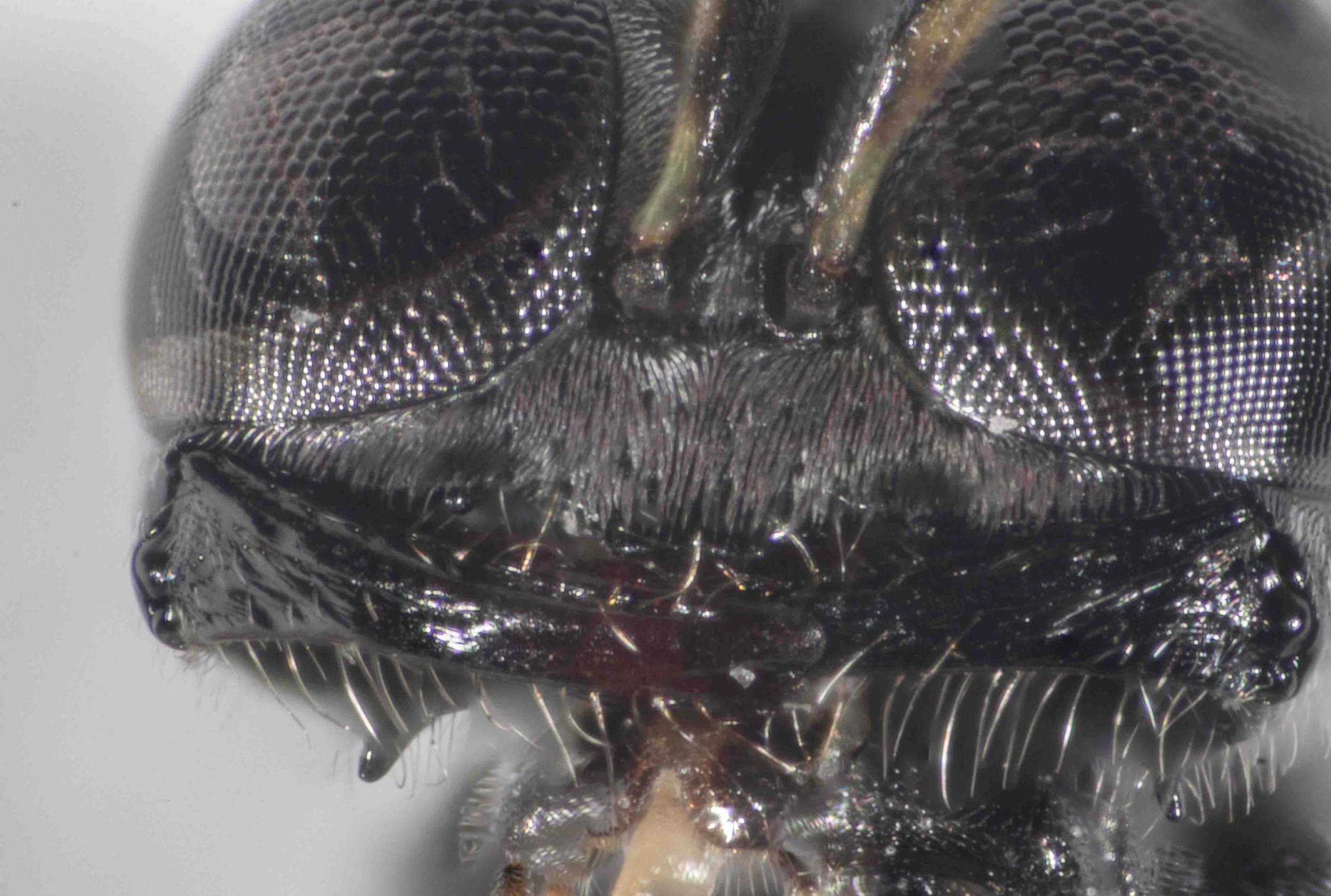
mandible
Key to species groups
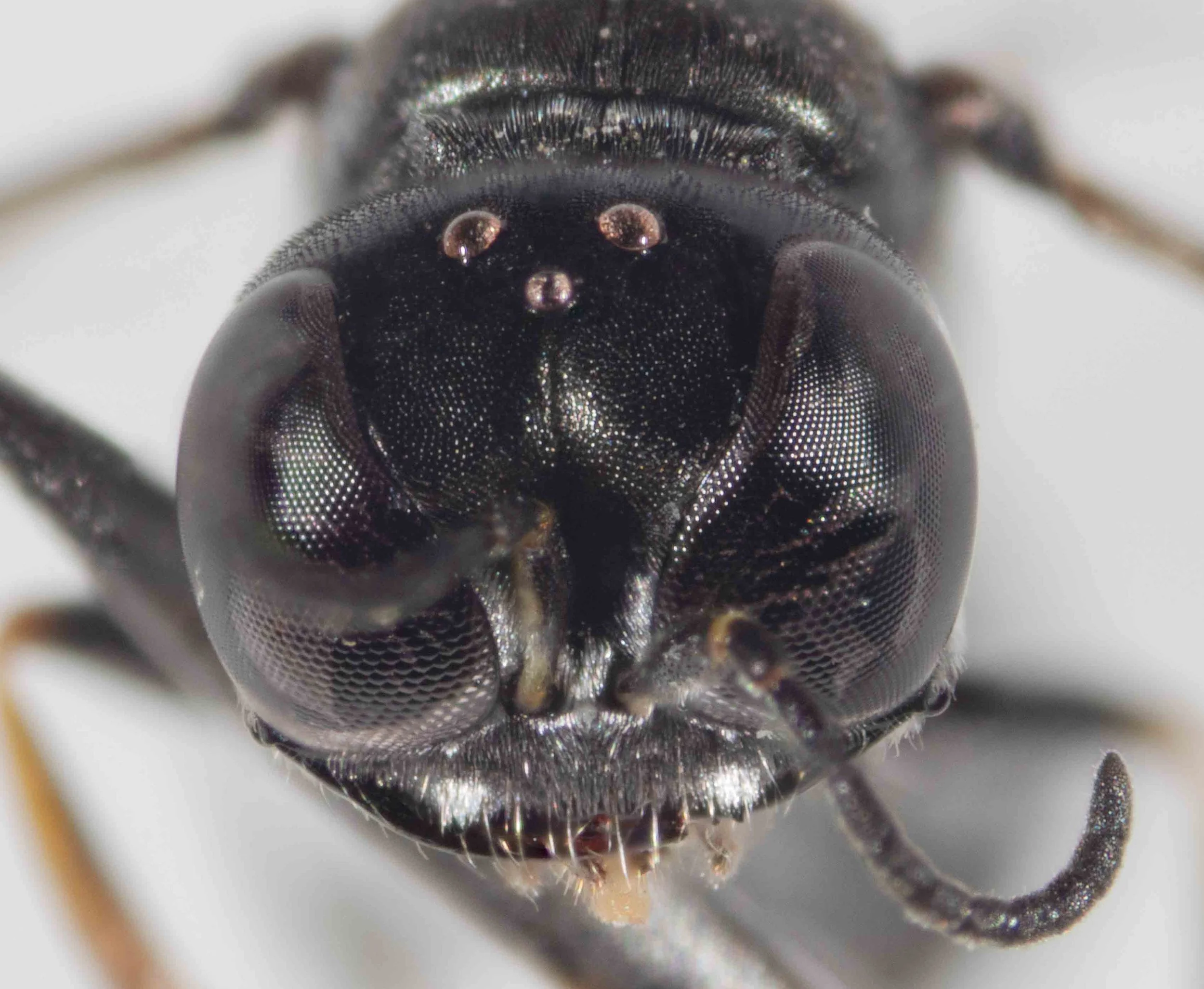
Step 16: Mandible with single strong tooth, plus a recessed lower tooth* … –> 17
(notbidentate)
* it is somewhat unclear whether this should be considered bidentate
Key step 2
Pygidial area rimmed, partly smooth, with some distinct punctures –> to Step 20
Key step 20
Genae black, including near mandibular socket. Gaster and thorax also entirely black/dark –> to Step 22
Key step 22
Pronotal collar not laterally dilated into conical tubercles (as it is in R. etiratum) –> to Step 23
Key step 23
Prepectus rounded: omaulal area not in two perfectly perpendicular flat planes –> to Step 29
Key step 23
Front femur elliptical, not suddenly enlarged at base (as it is in R. etiratum). –> to Step 29
Key steps 29 & 30
Gaster black, legs extensively black. not with extensive orange colouration (as in R. transiens & species group coarctatum) –> to Step 32
Key step 32
Space between antennal insertions setose and without protrusion –> to Step 34
Key step 32
Propodeum shiny –> to Step 34
Key step 34
Gaster pedunculate, not sessile or subsessile –> to Step 41
Key step 41
Head much wider than long (not subsquare), with definite punctation –> to Step 42
Key steps 41 & 42
41. Mesoscutum with punctations, not smooth & shiny –> to Step 42
42. Scutellum similarly sculptured, not striated –> to Step 43
43. Punctures on mesoscutum relatively dense, without large smooth intervals –> to Step 51
Key step 43
Mandible black, not ivory or yellow. Scape extensively black, not entirely pale –> to Step 51
Key steps 51 & 52
51. Mandible apparently bidentate, with the lower tooth shorter and recessed –> (to Step 59) … I have elected to follow Step 52*
* In Leclercq’s 1957 key to species group the ‘unidentate’ option included the caveate ‘rarely with a trace of a very recessed lower tooth’
52. Mandible black, without light citrine or ivory markings –> to Step 53 (Group variitarse)
Key step 53
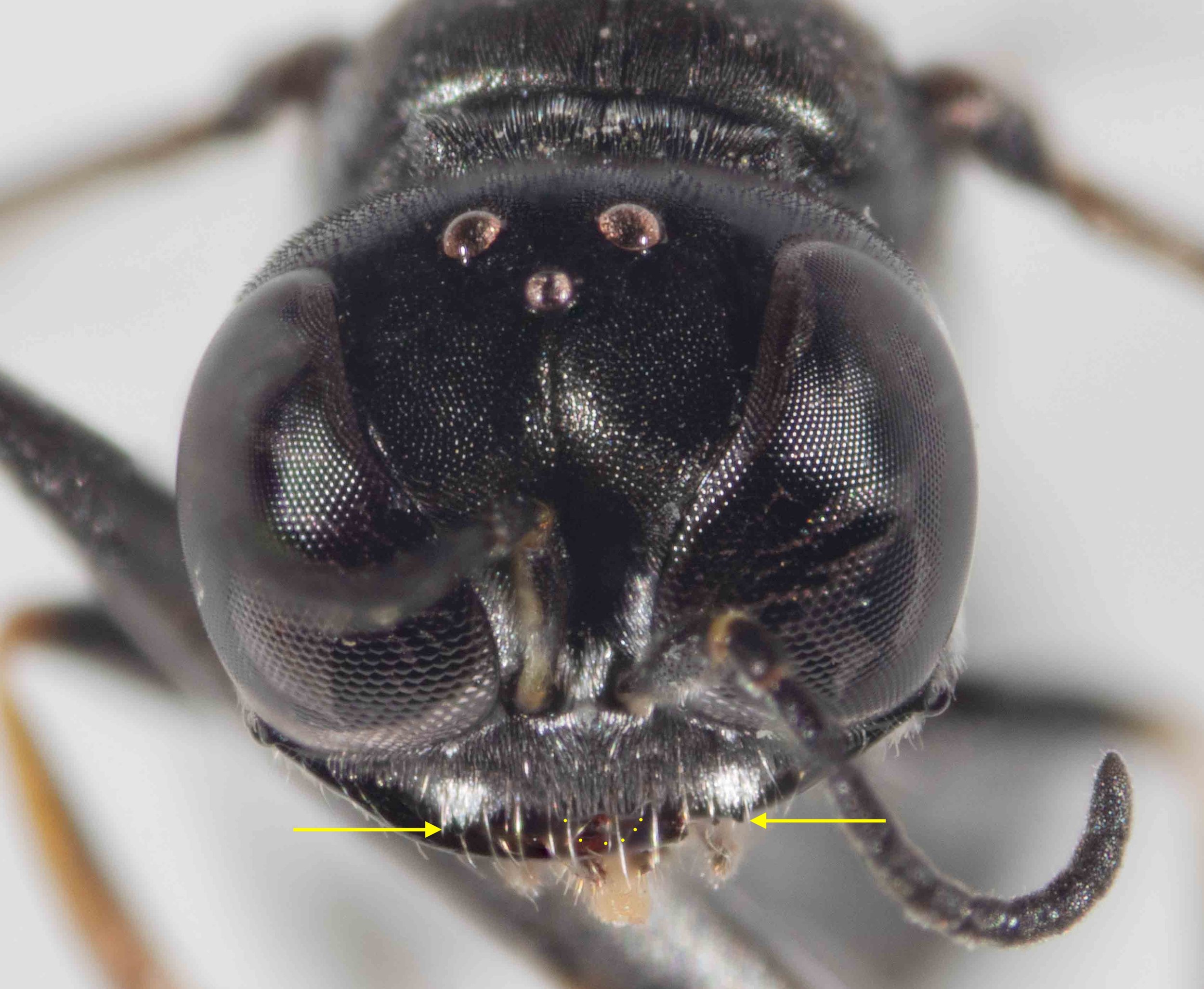
Clypeus margin subtruncate medially (dotted region), with prominent tooth on each side (arrows). Lateral teeth longer than the middle margin = R. coriolum
Key step 53
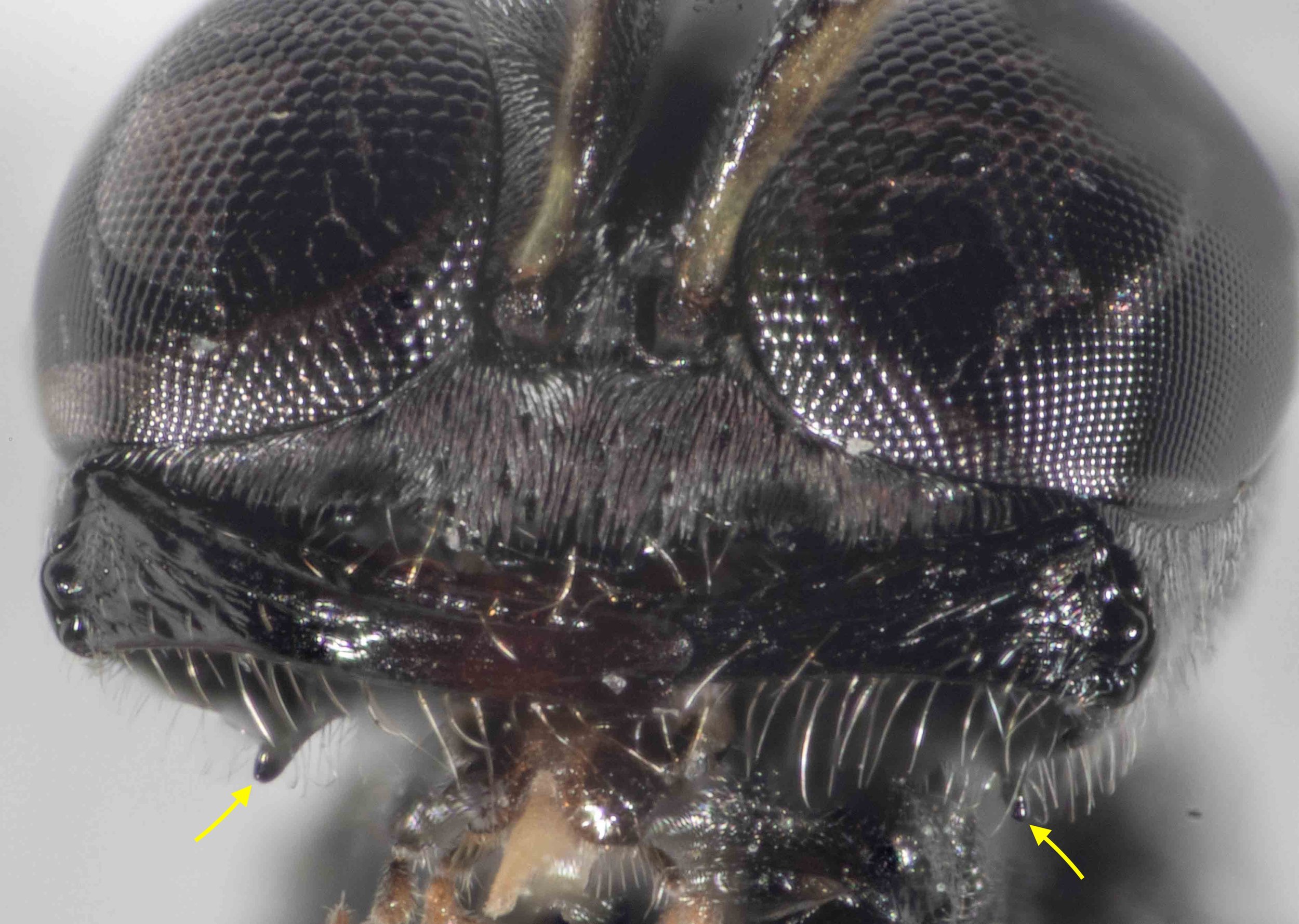
Occipital carina ending ventrally in a denticle (arrows) = R. coliolum