
Bembix trepida (Bembicini)
Workbook
From a mystery box
The history of this specimen is something of a mystery. It is part of a small collection of pinned insects, stashed away in a research laboratory at ANU … unclaimed and unwanted. It was passed onto me by a friend who well knew my fascination of wasps, and I happily took custody!
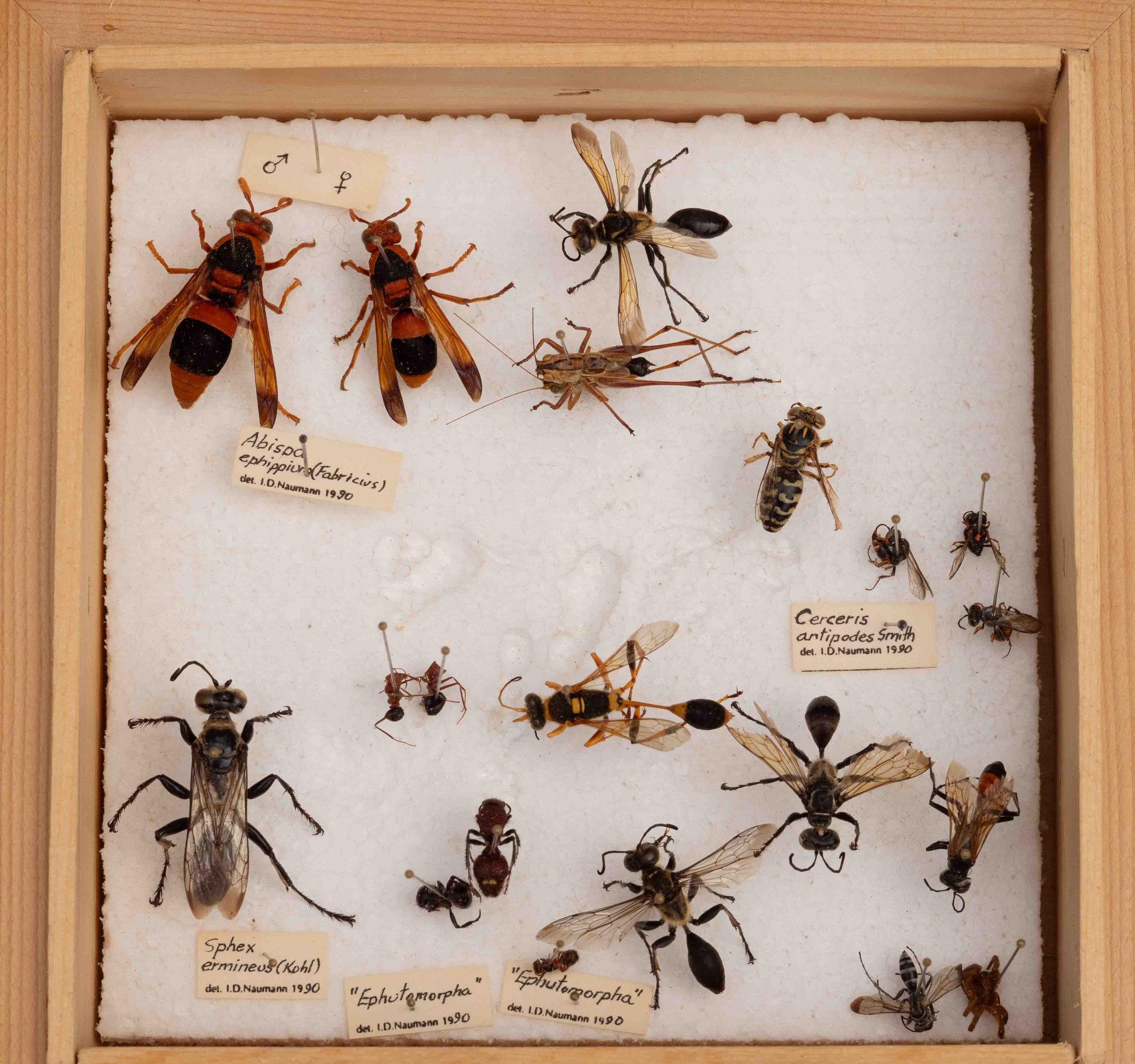
Gift from a friend … a mystery box of insects, provenance uncertain.
There are 12 insect species in the box, some pinned alongside what must be their prey (e.g. a pompilid alongside the remains of a spider). While only five specimens are labelled, they hold a clue as to the collection’s age – each species name is followed by “det. I.D. Naumann 1990”. I can only assume that the collector was a colleague (or perhaps student) of Ian Naumann’s. But I can be pretty confident that the specimens are all at least 36 years old!
So … back to Bembix.
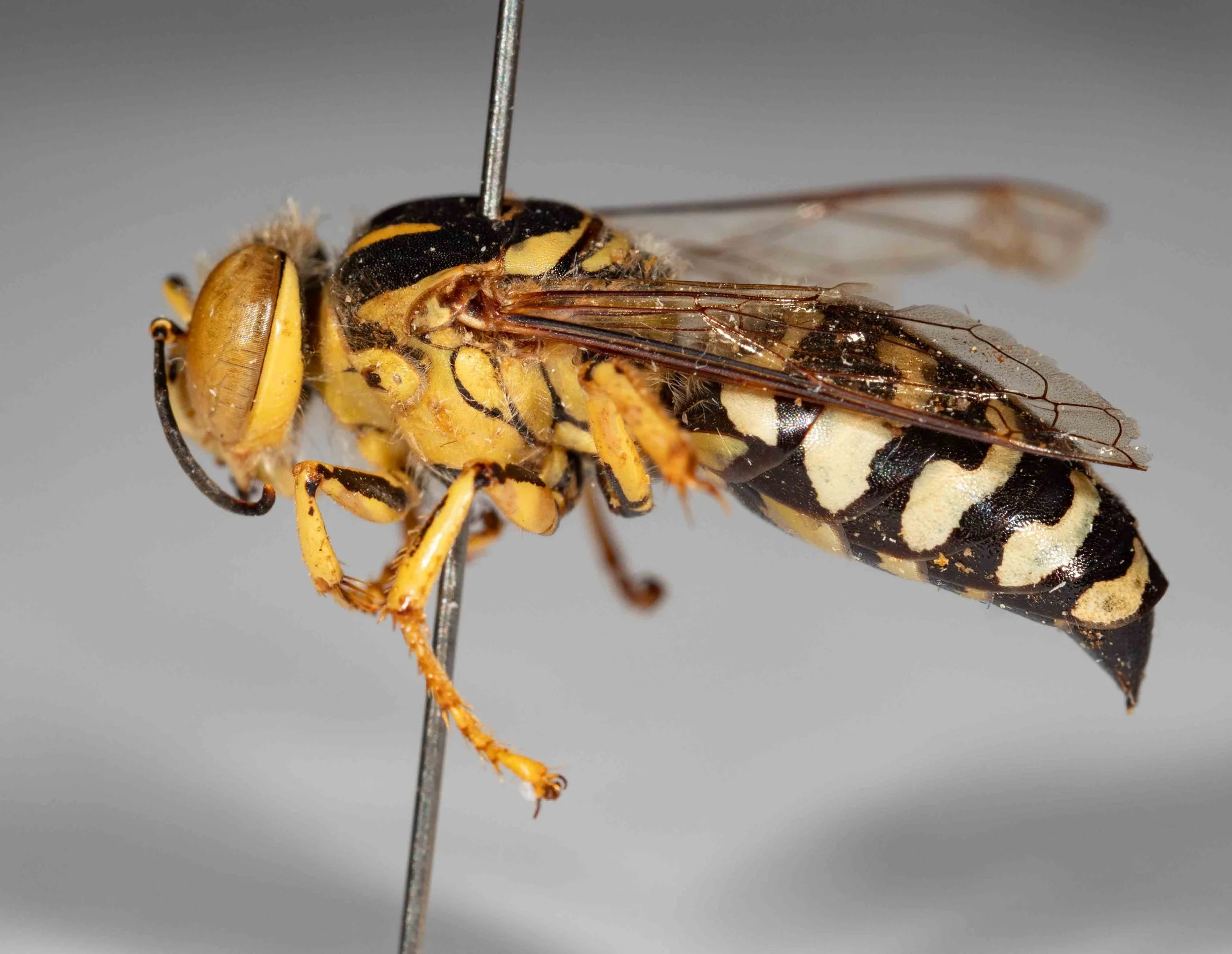
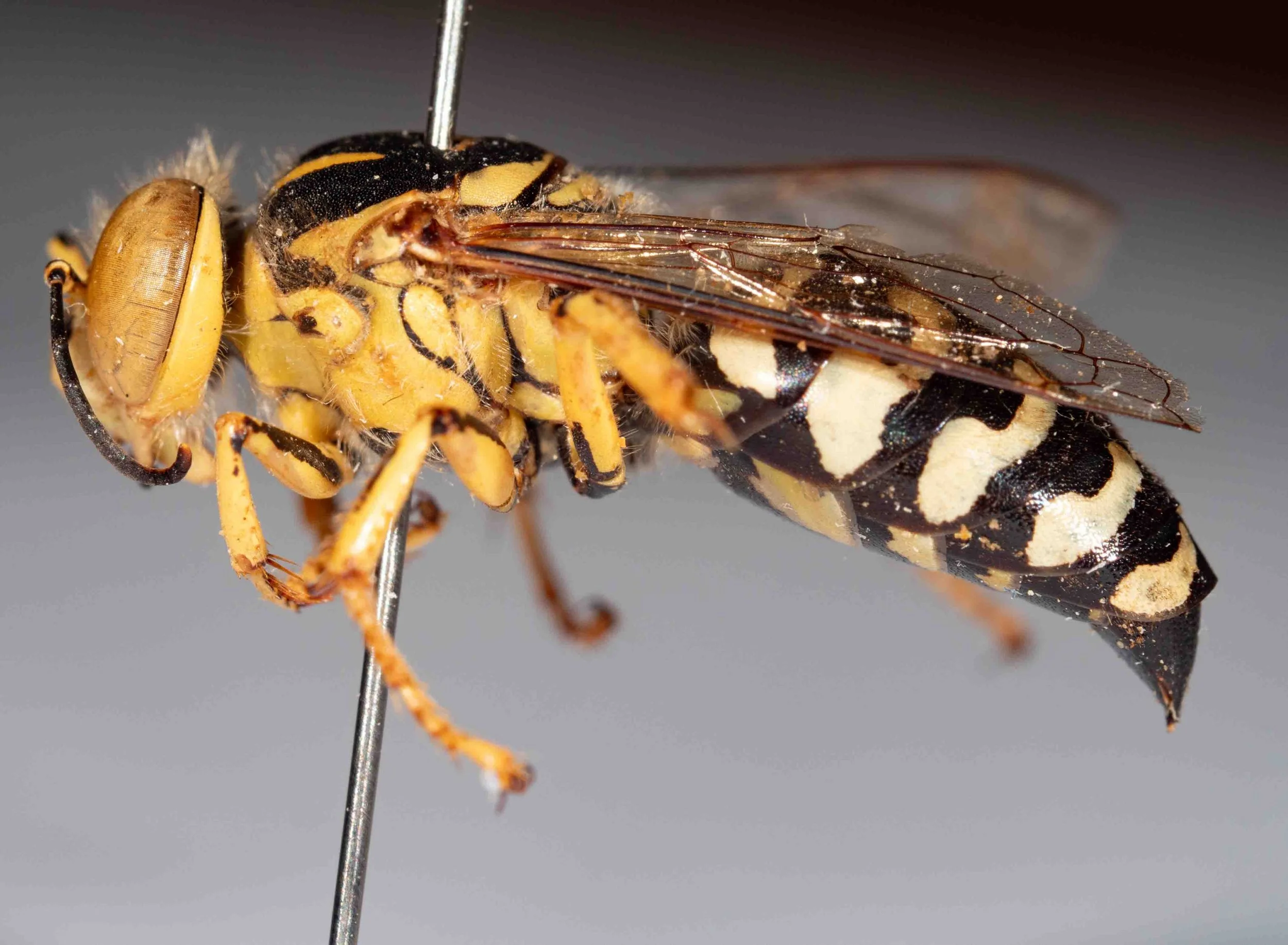
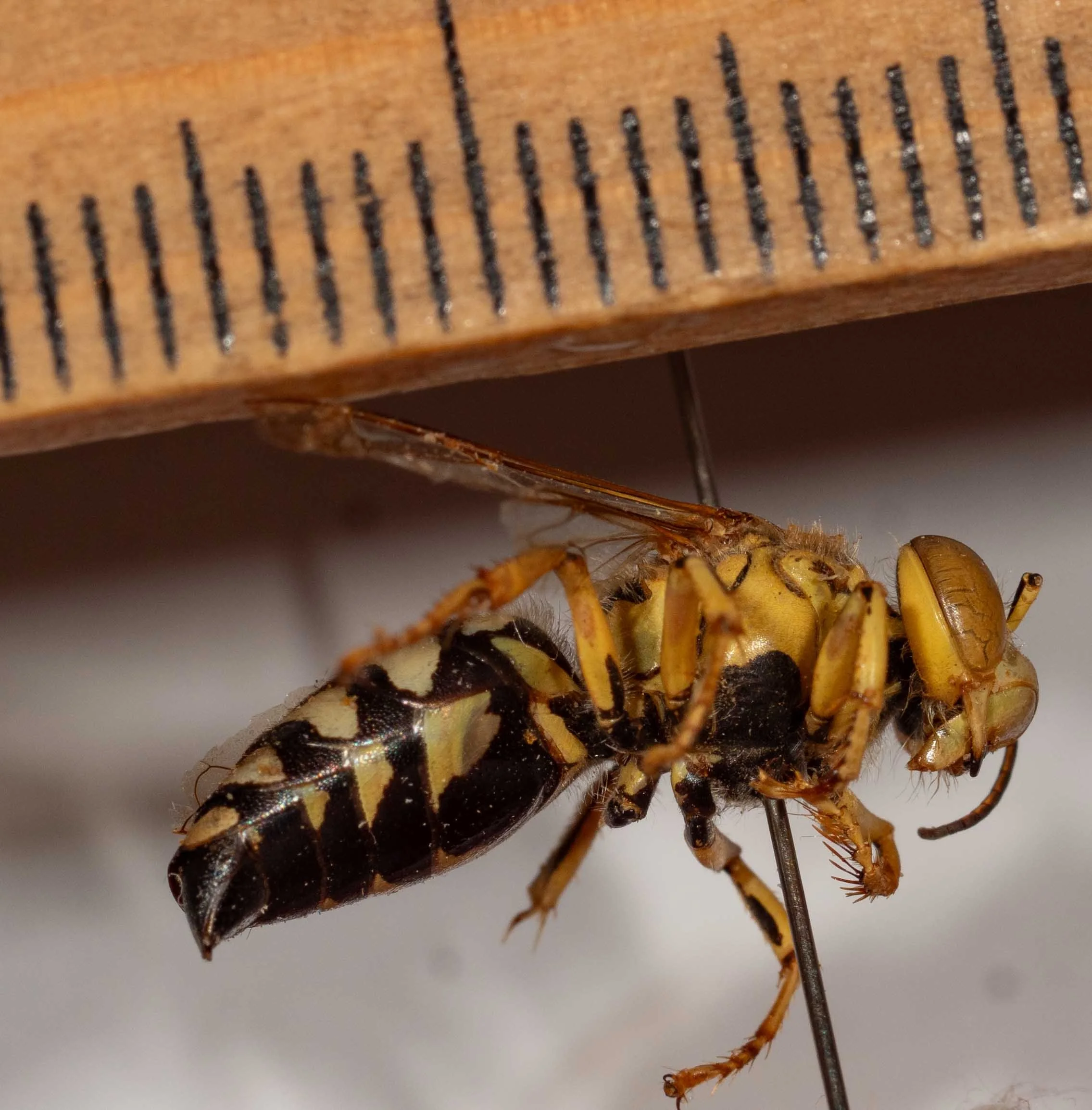
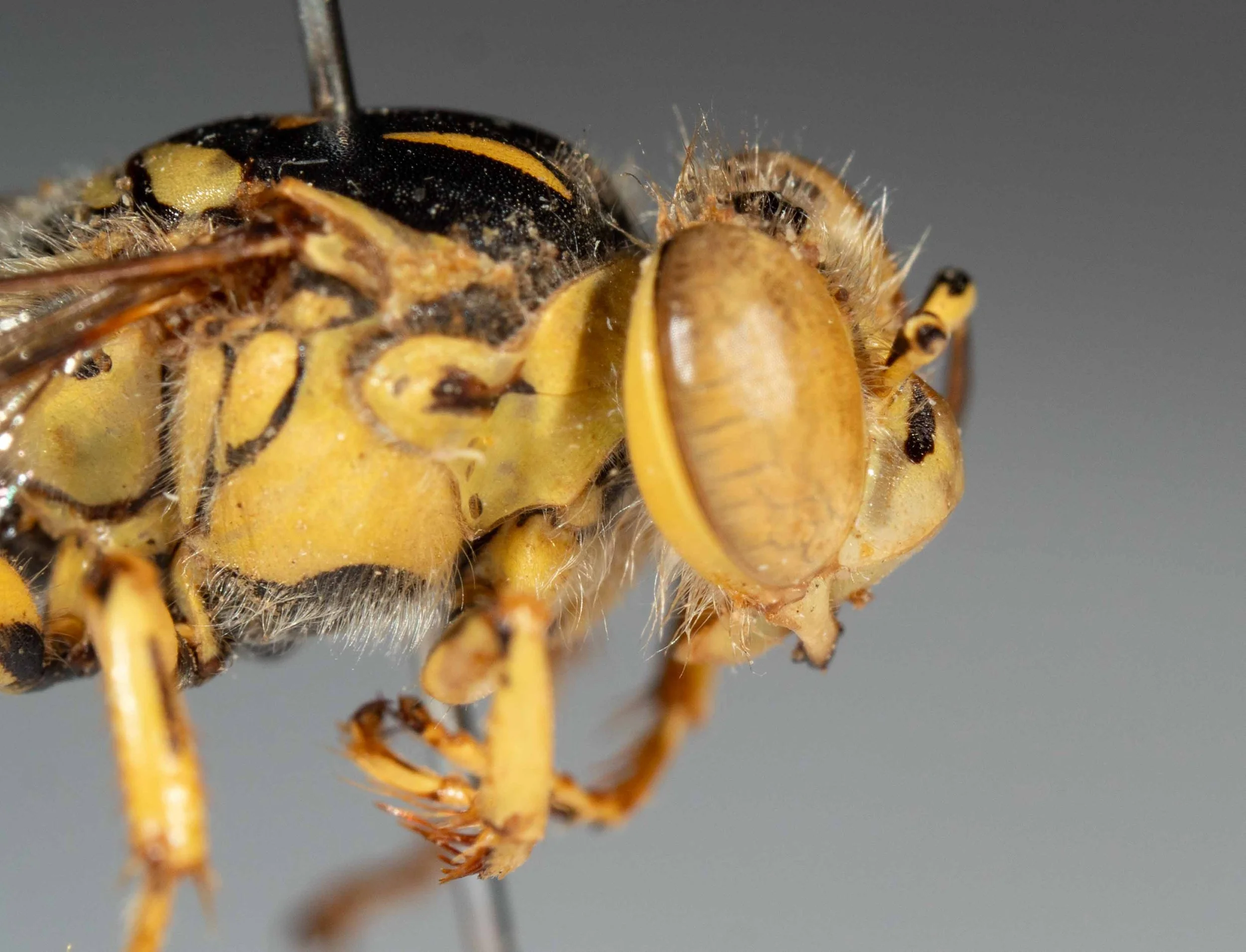
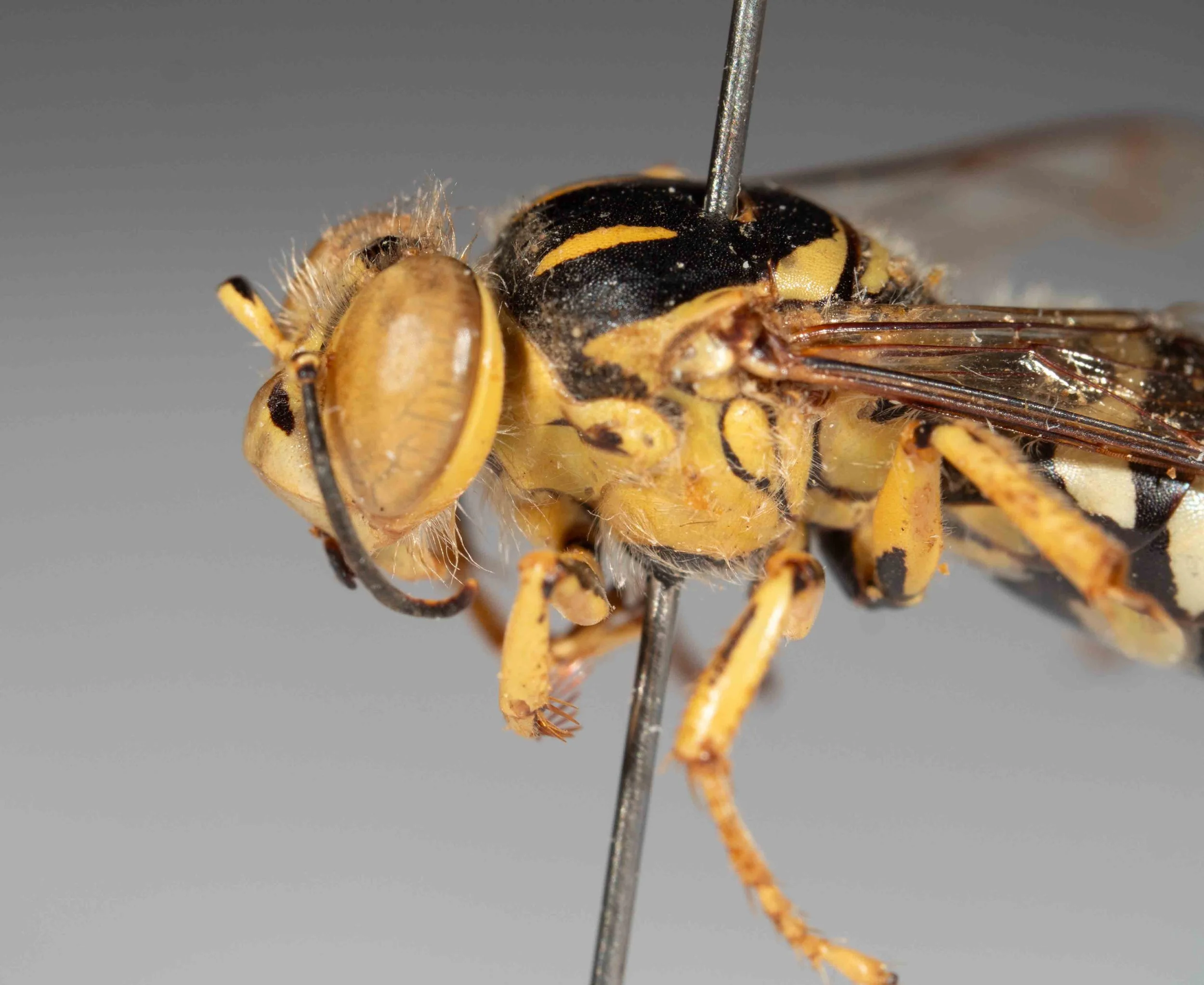
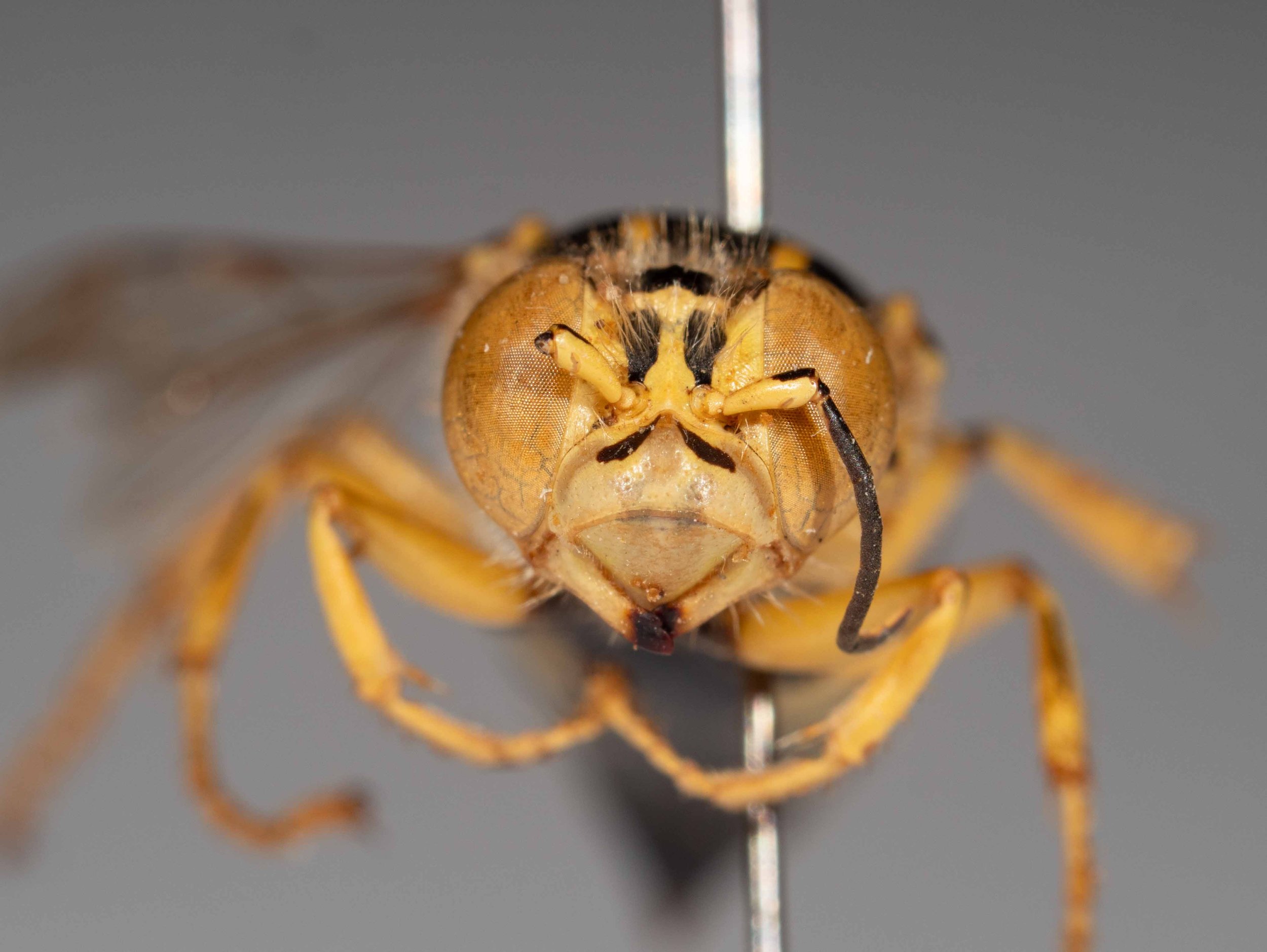
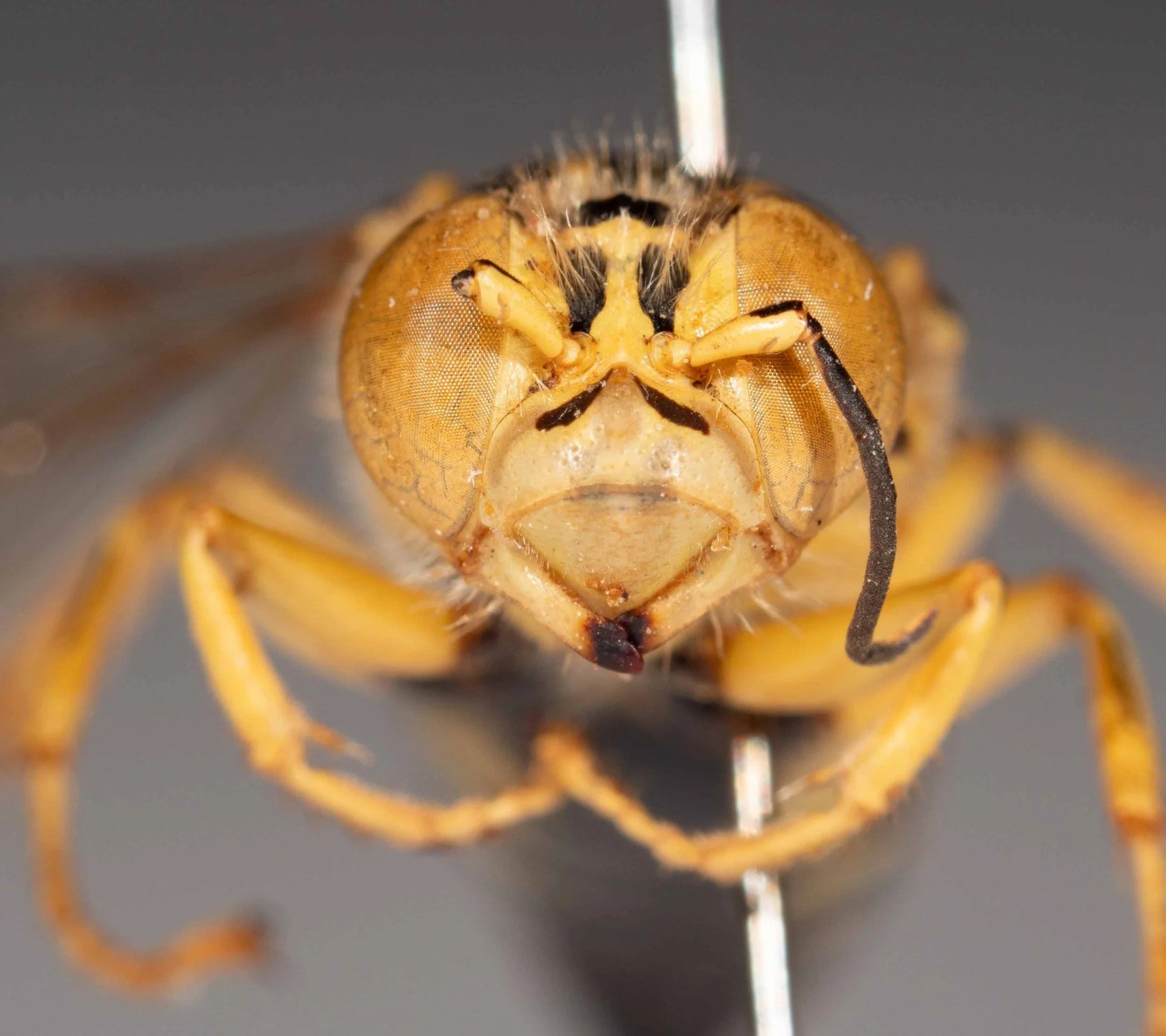
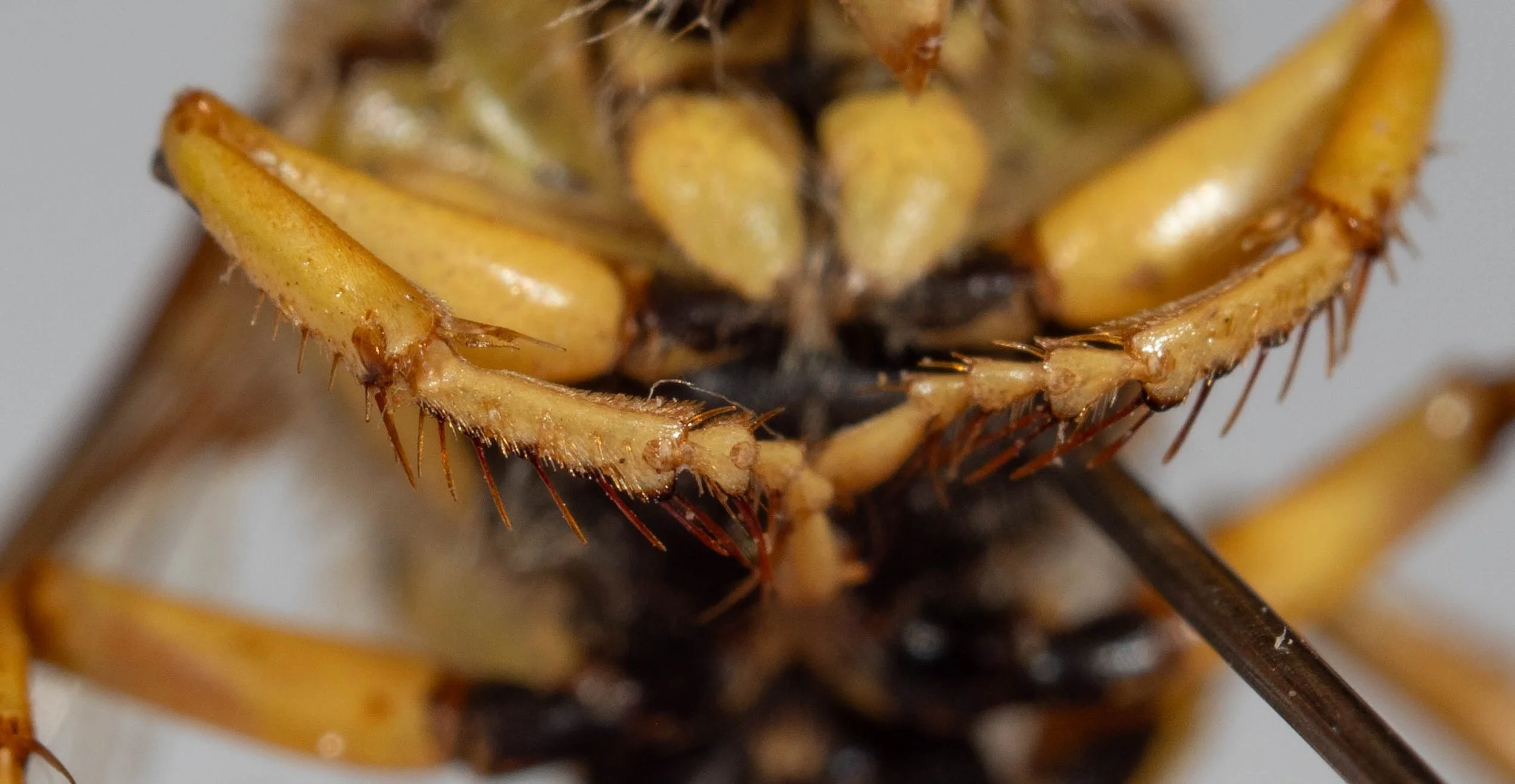
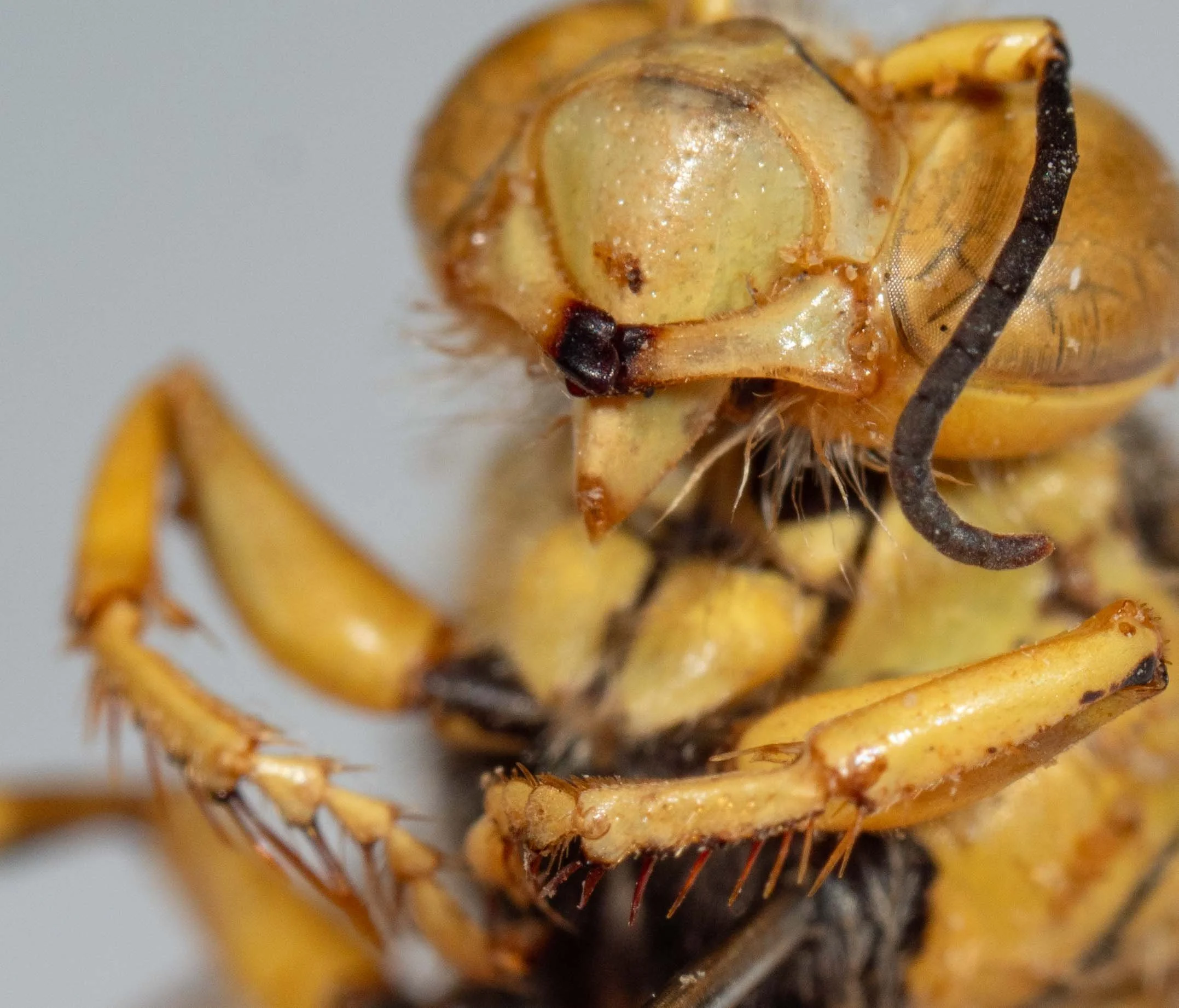
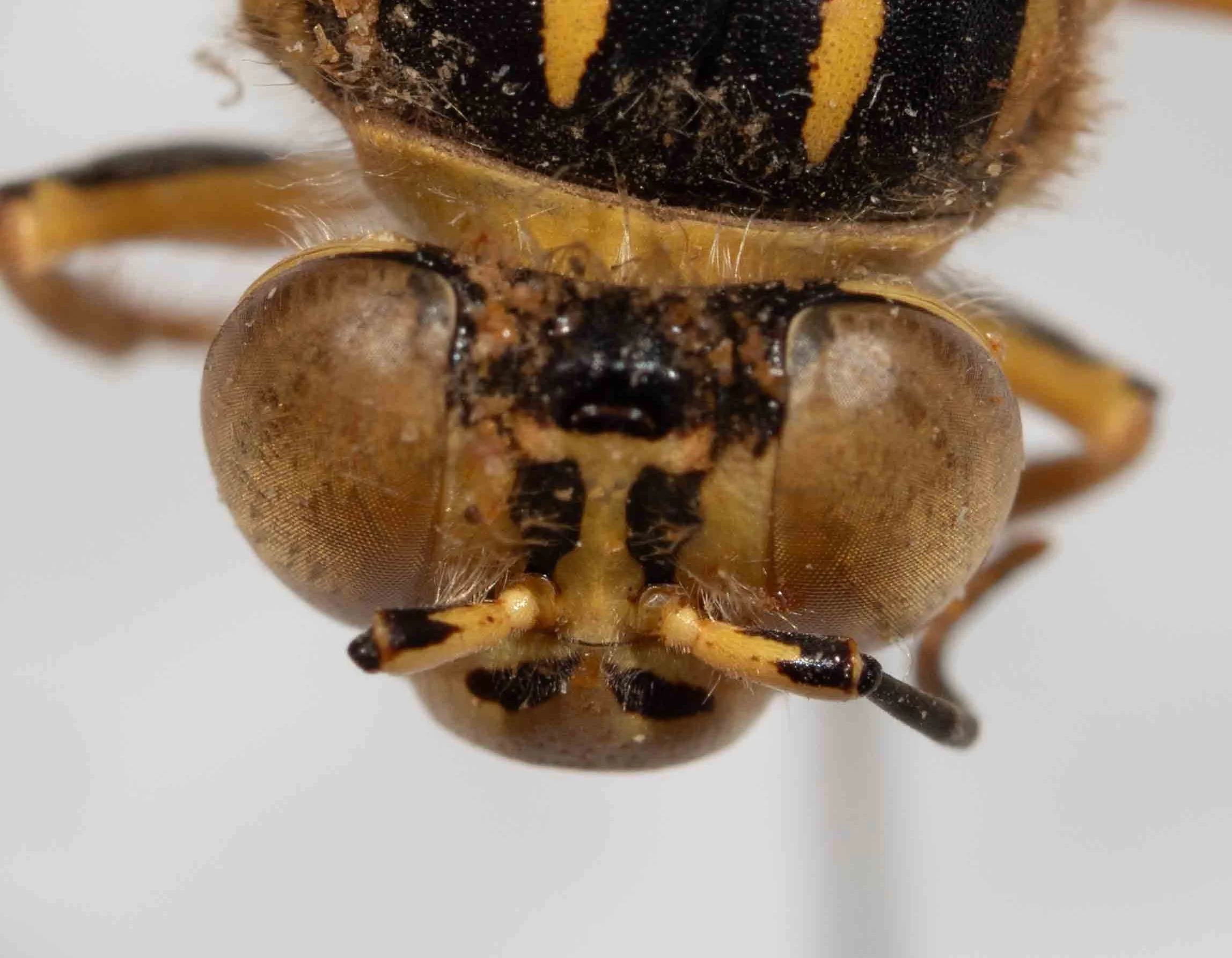
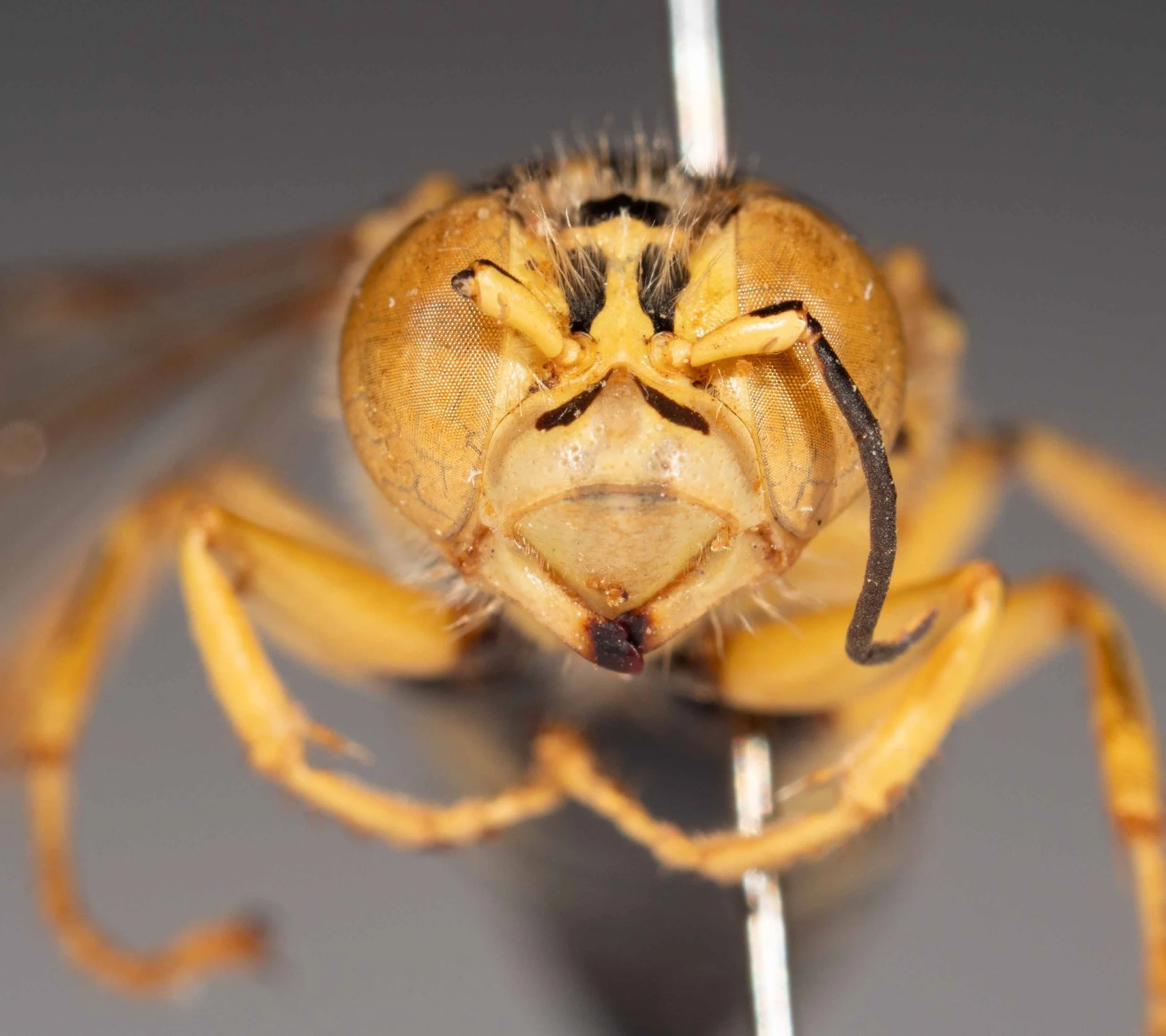
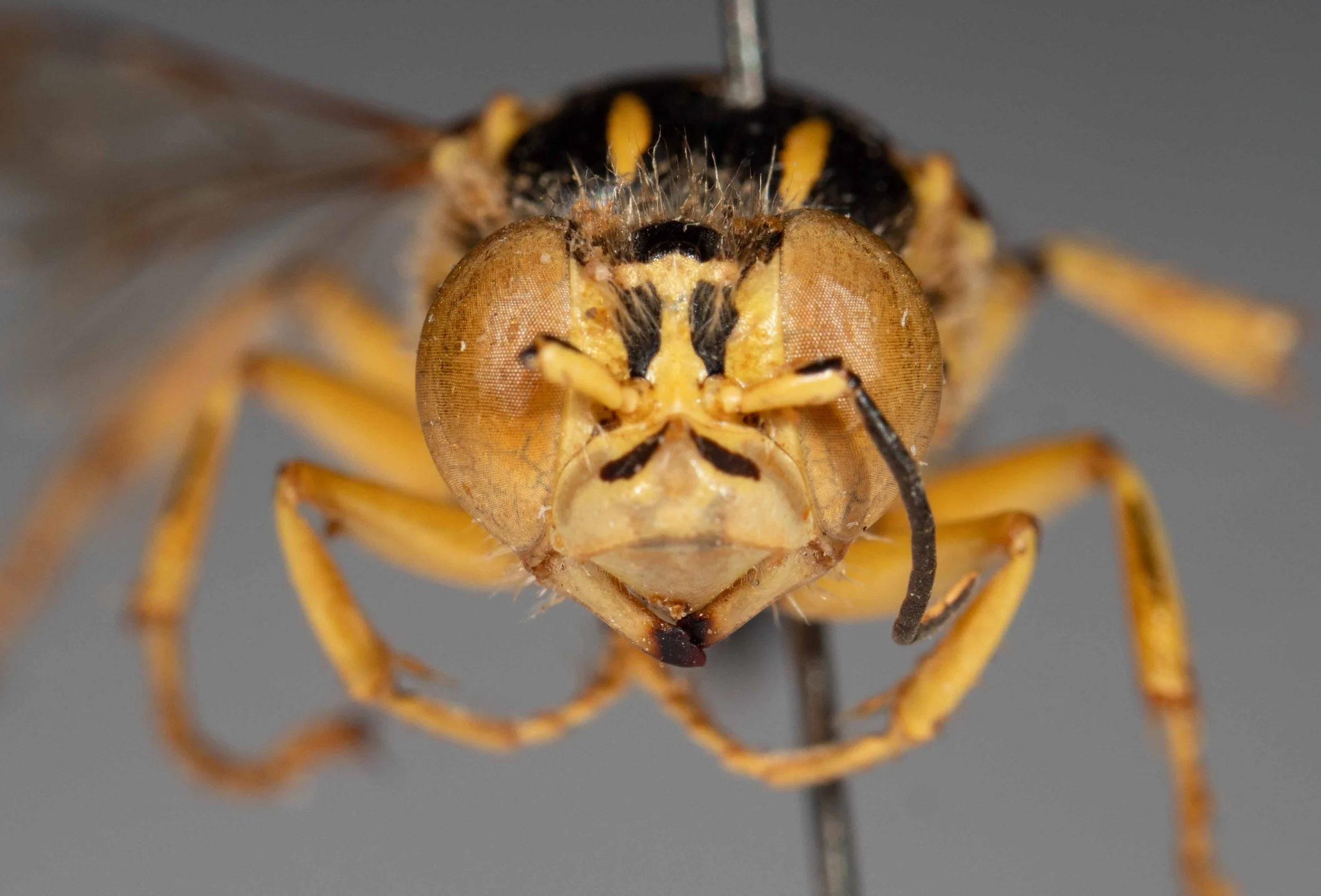
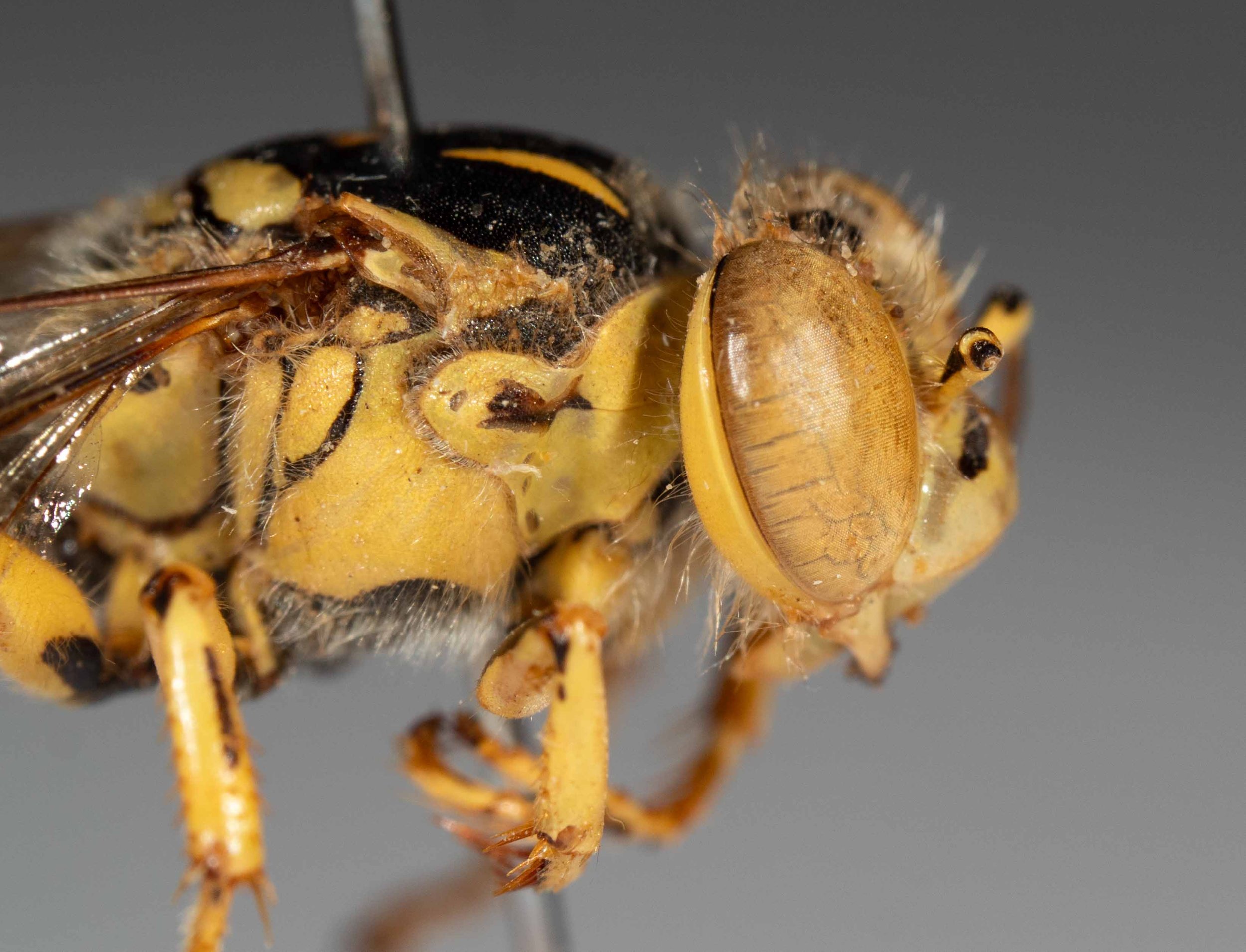
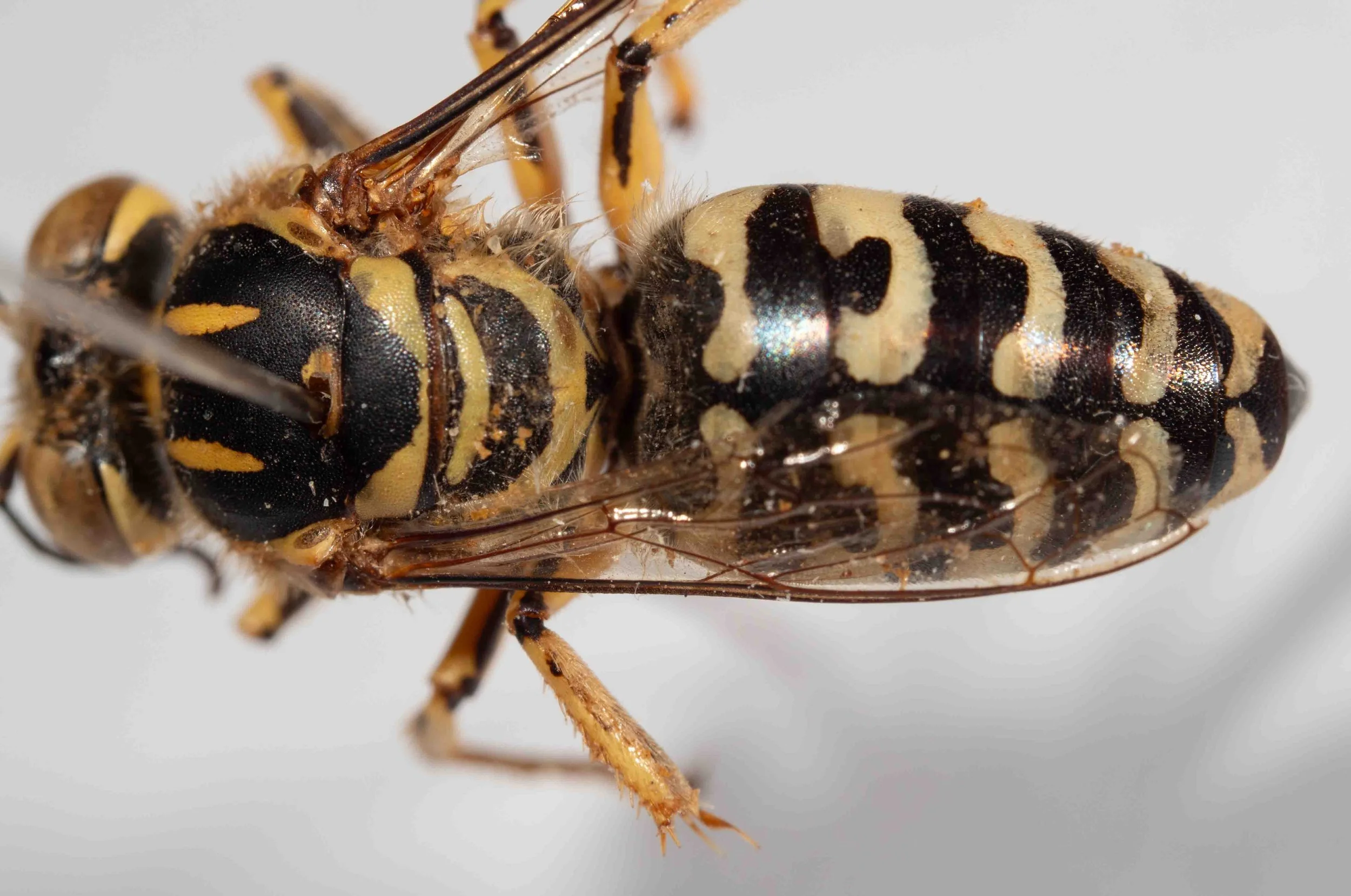
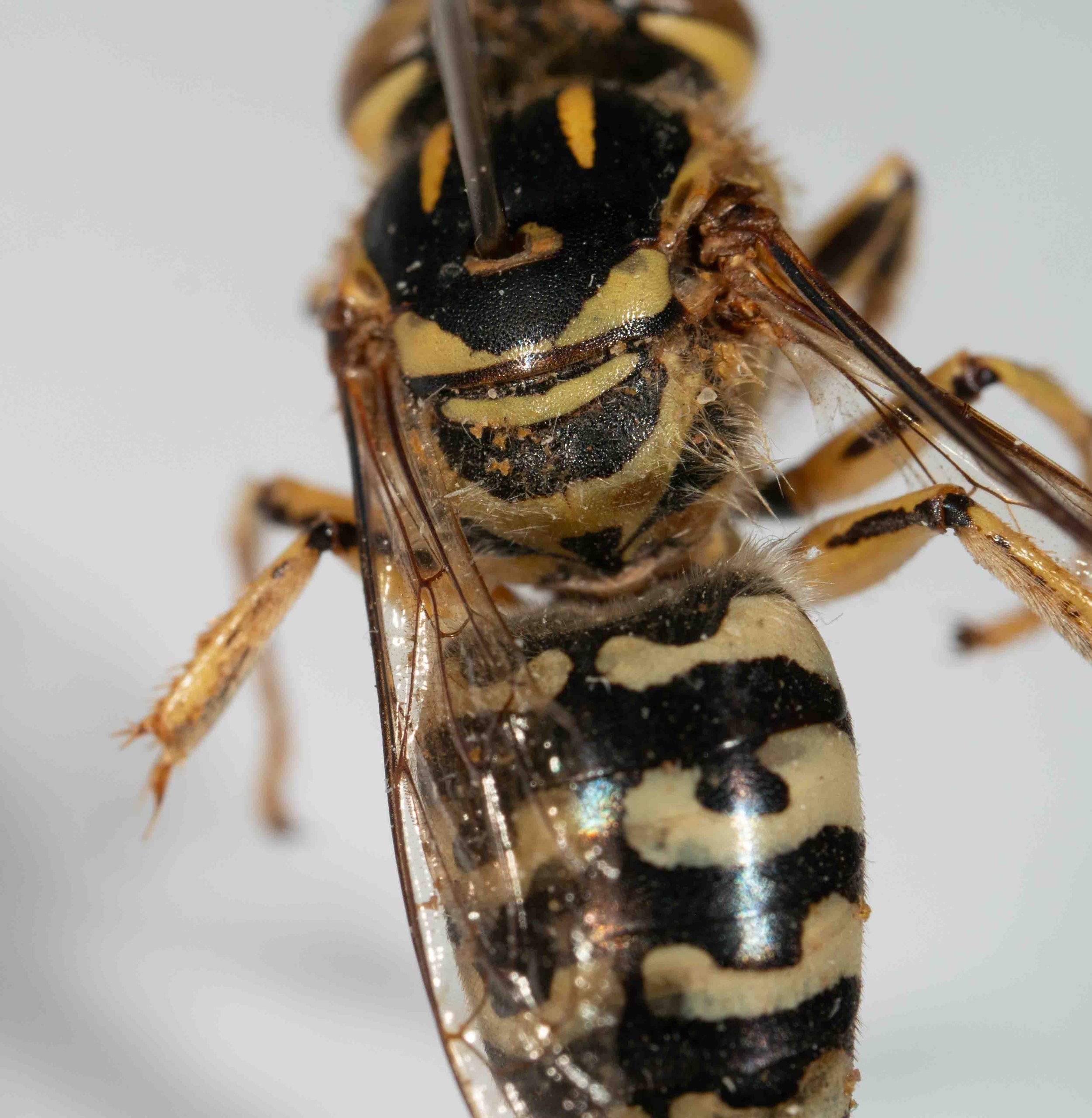
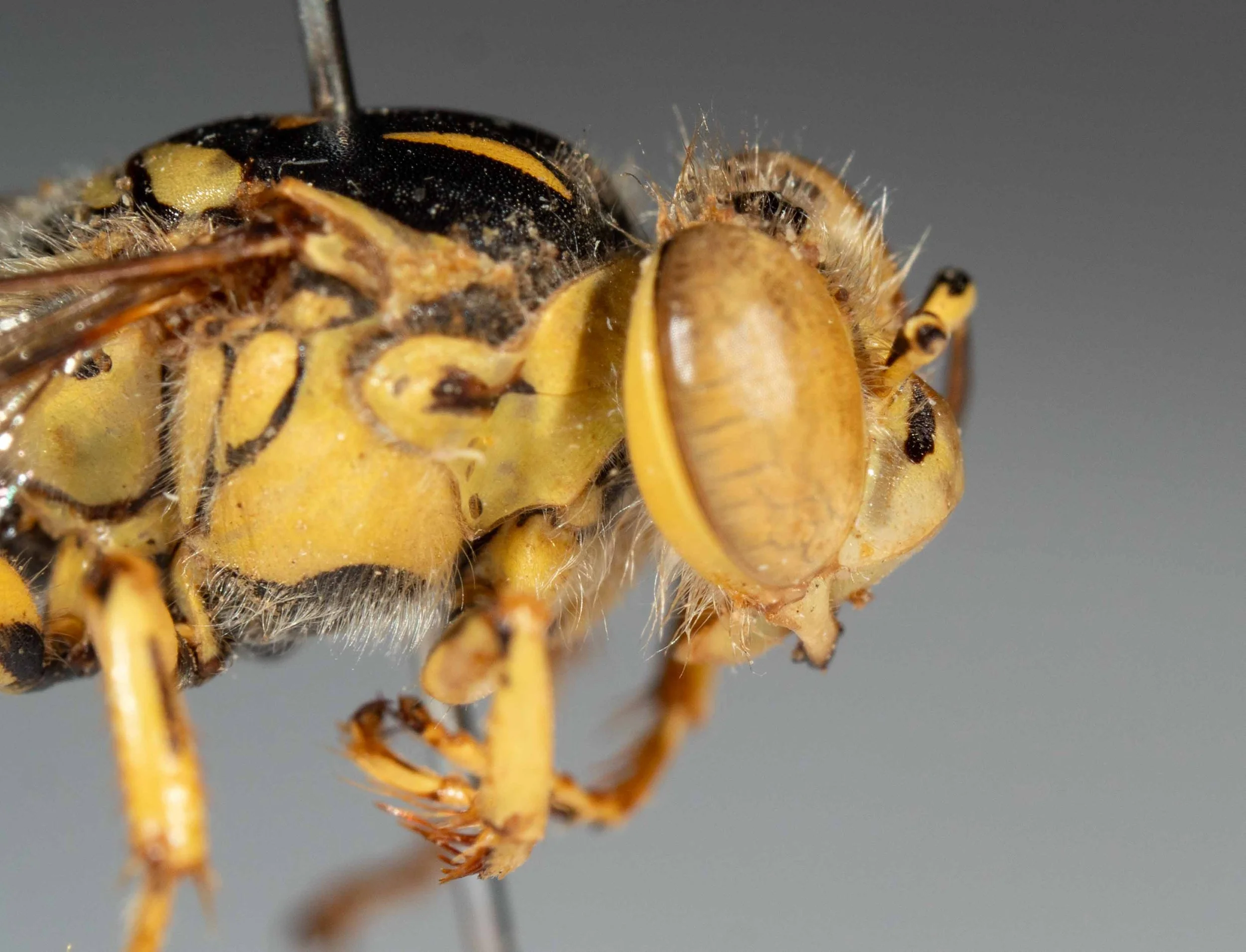
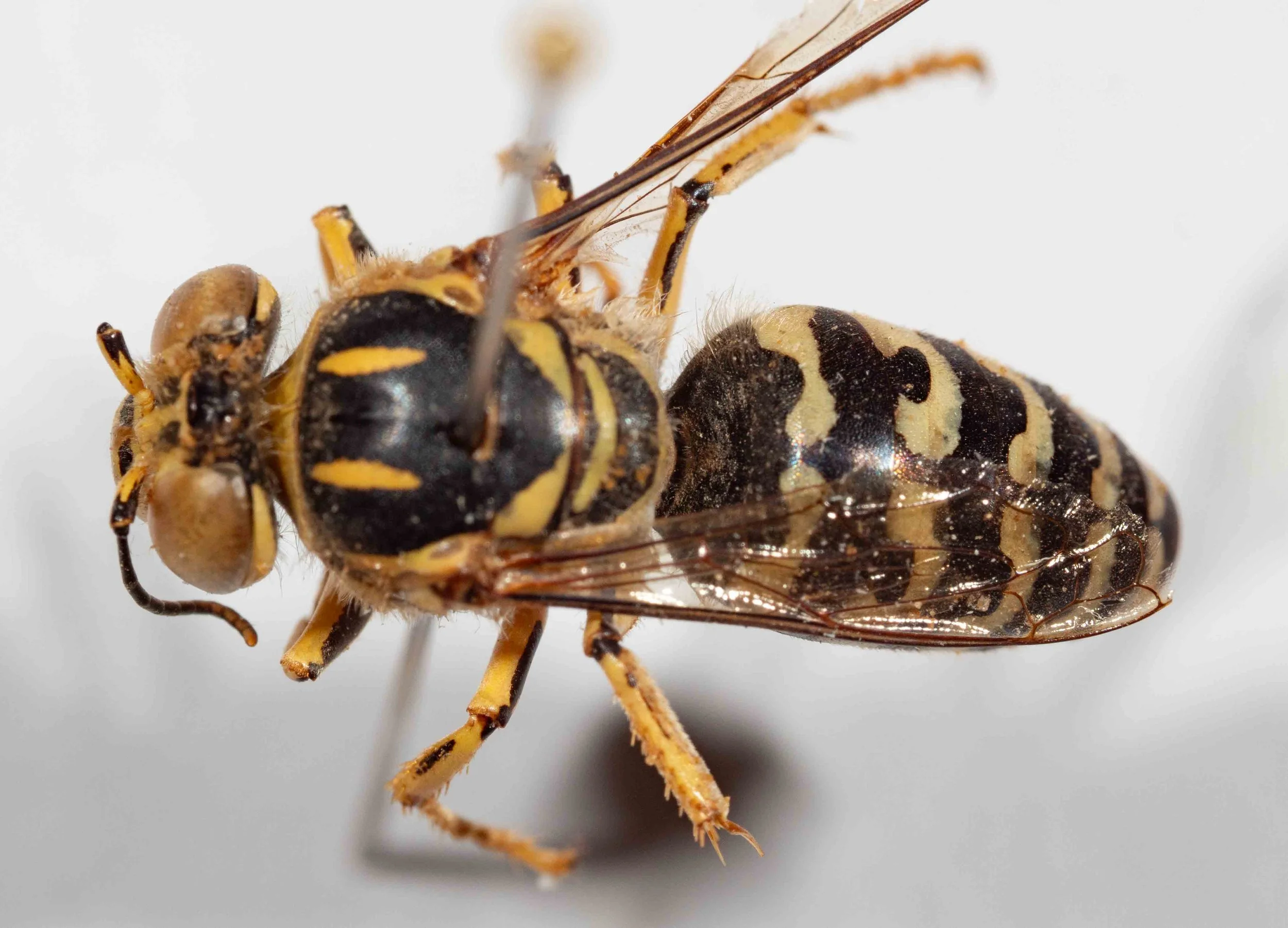
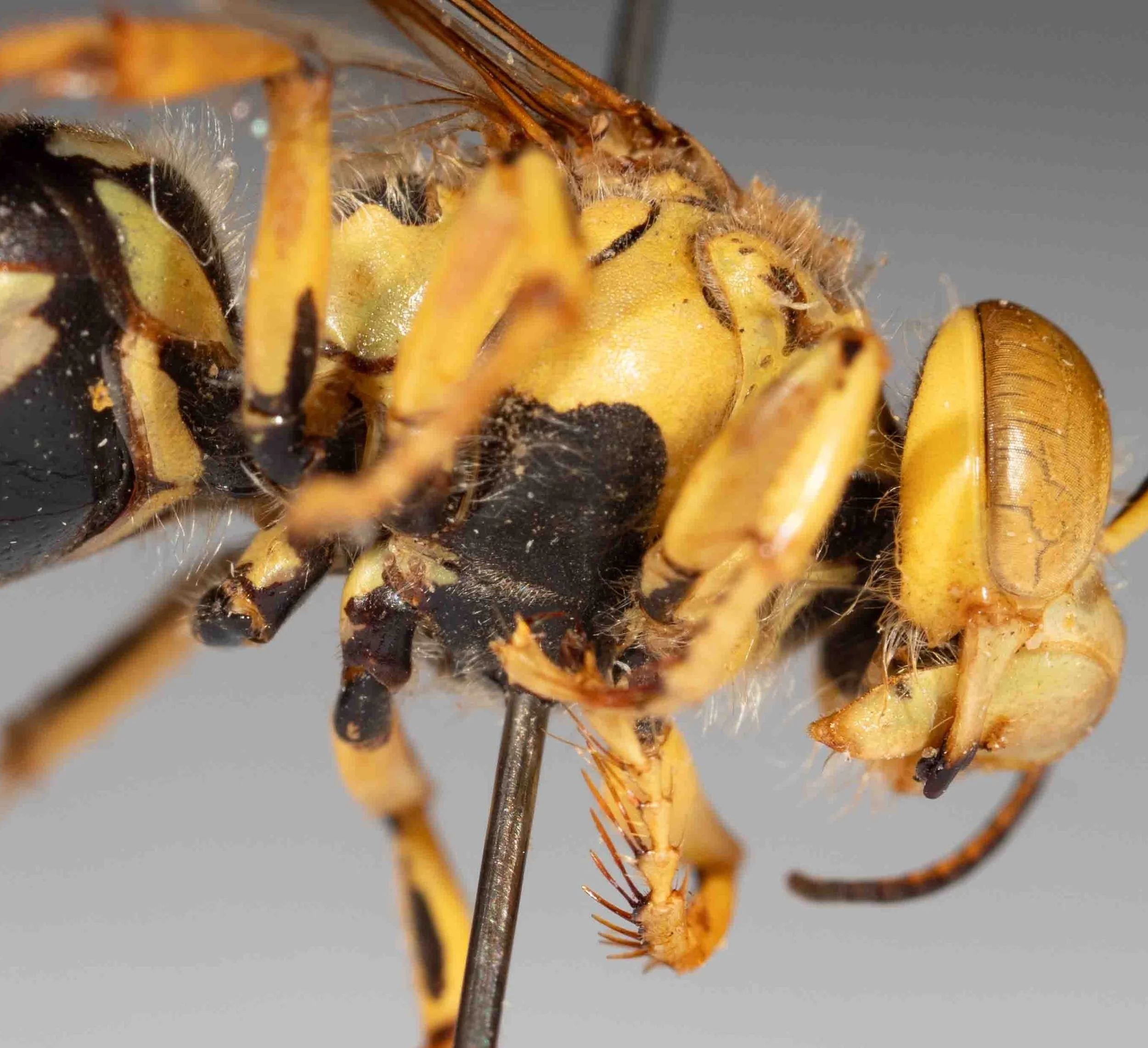
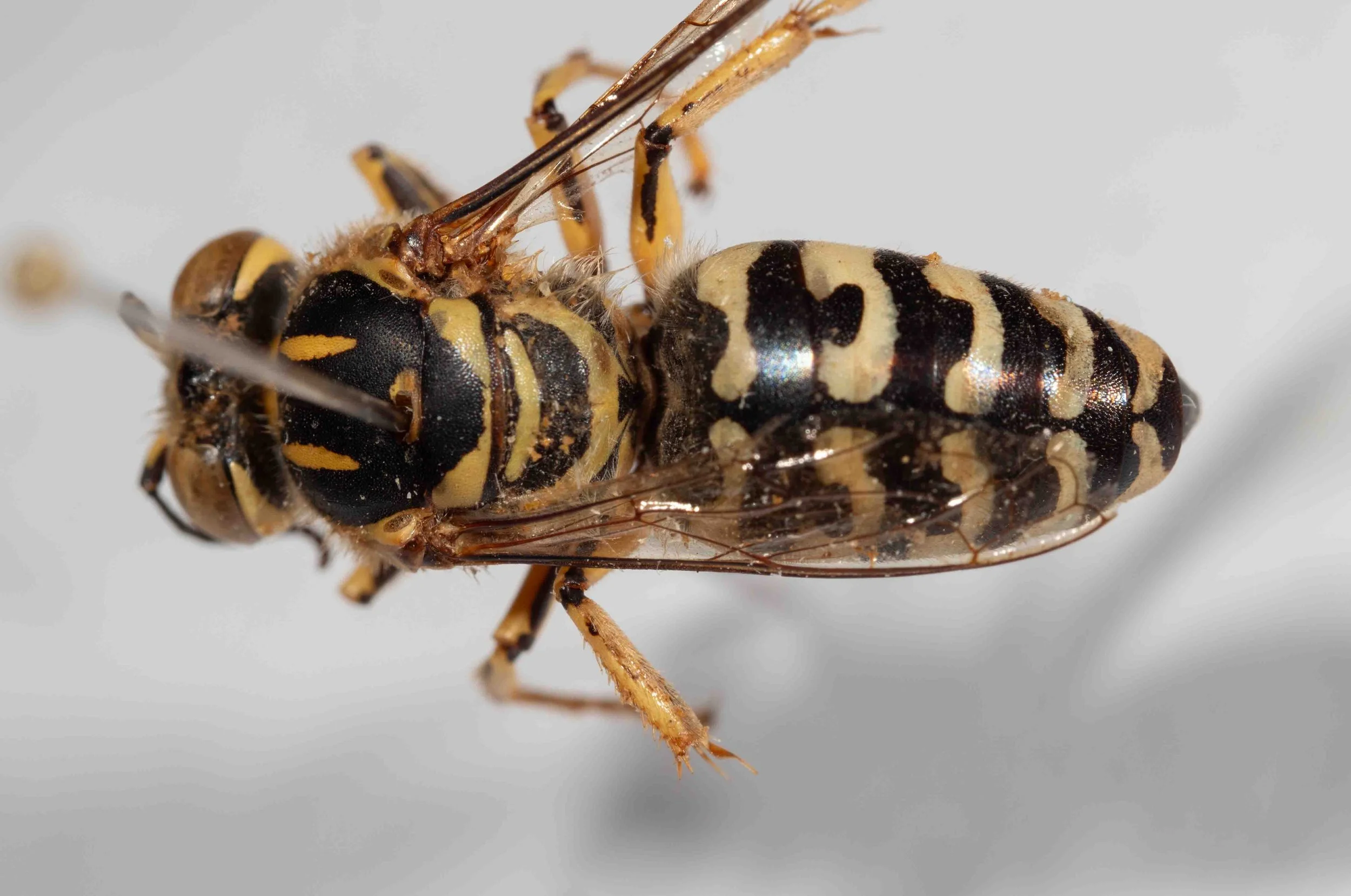
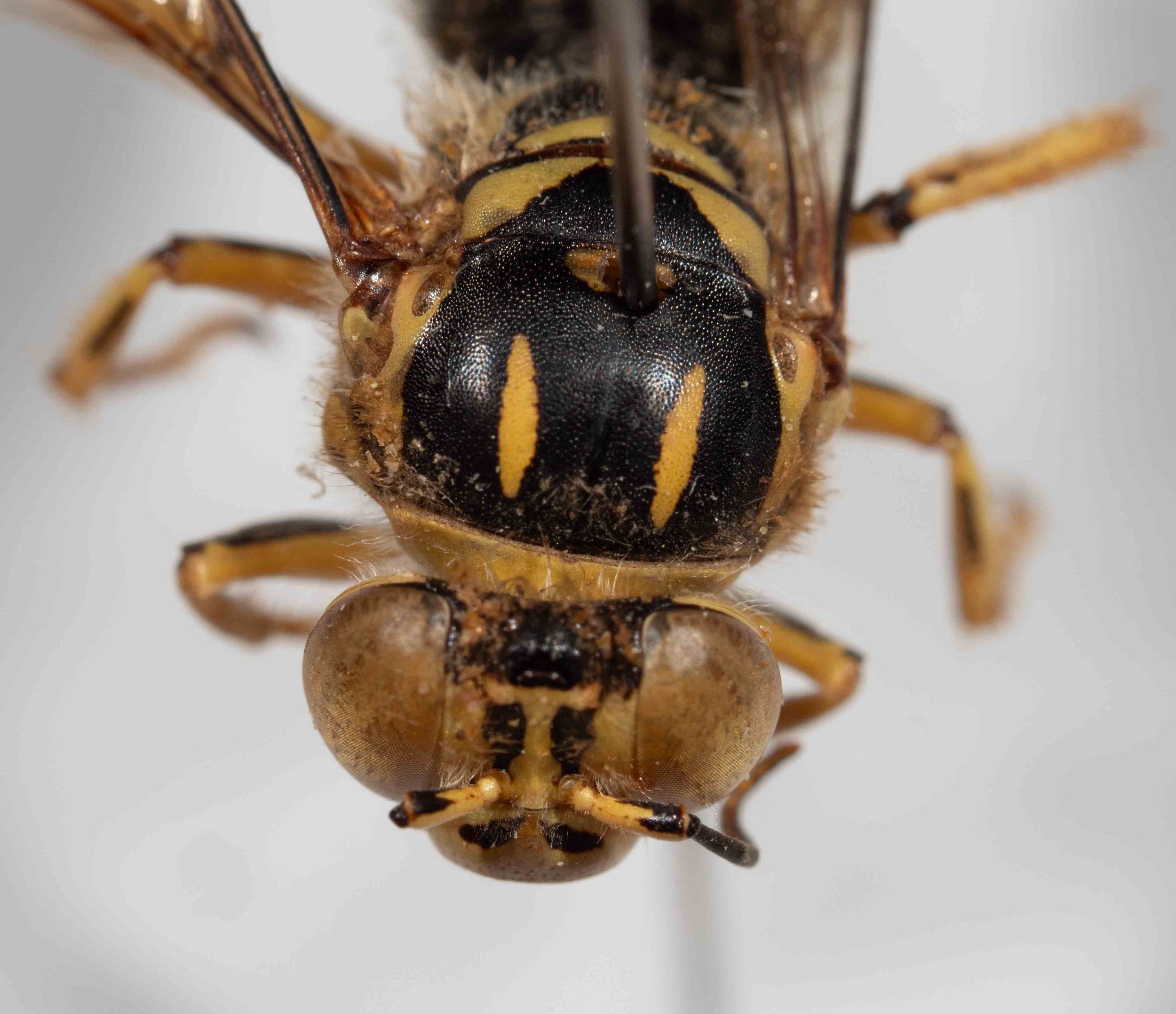
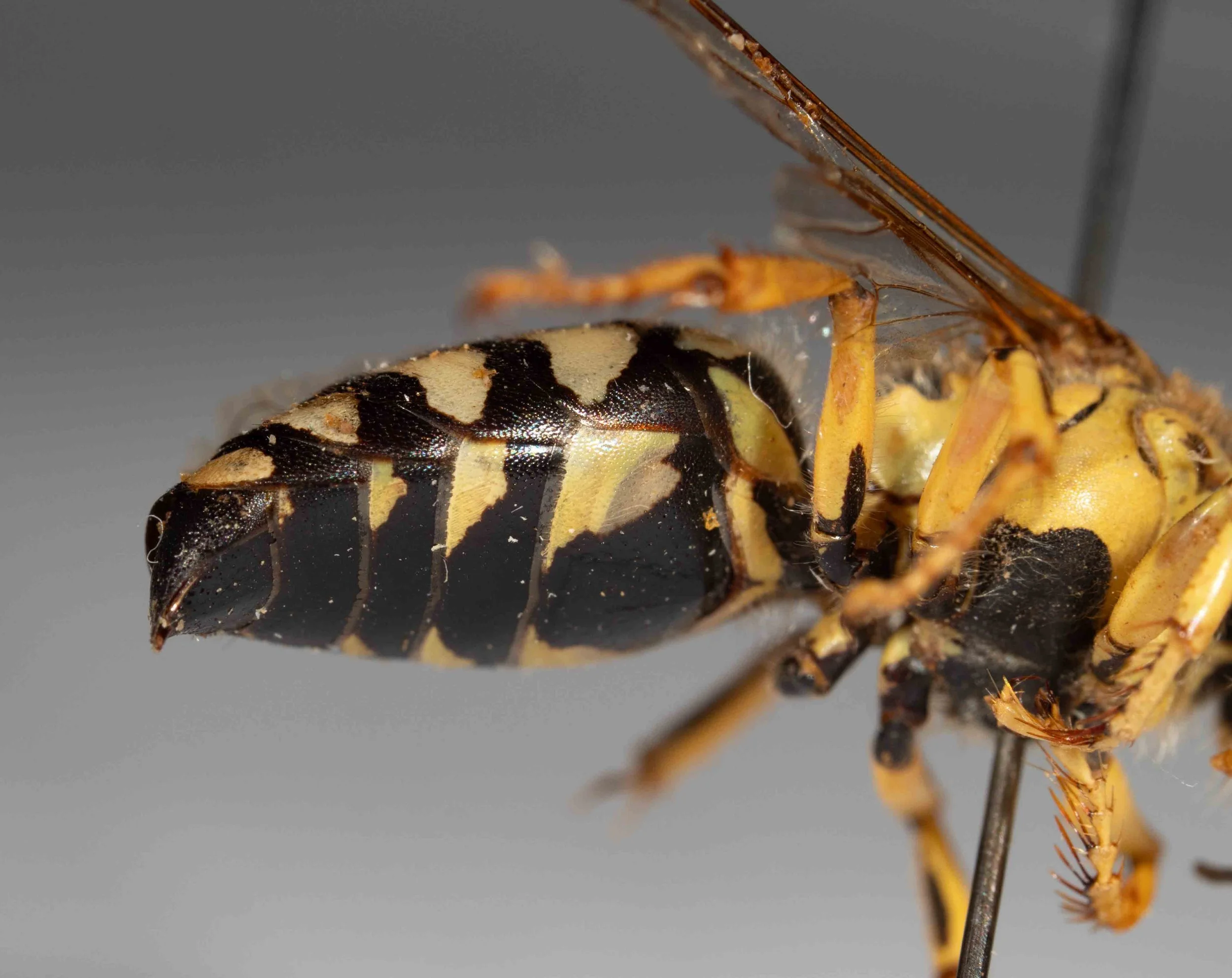
The box contains a single, unlabelled Bembix. And now that I’ve had a close look at her, I’m quite confident of the identity – Bembix trepida.
Bembix trepida
This large, brightly coloured species is described by Evans & Matthews (1973) as “one of the most abundant species in southeastern Australia." (p, 116). It favours hard-packed sand, such as dirt roads and picnic areas, for nesting, where it may aggregate with B. furcata and other crabronids such as Cerceris or Sericophorus.
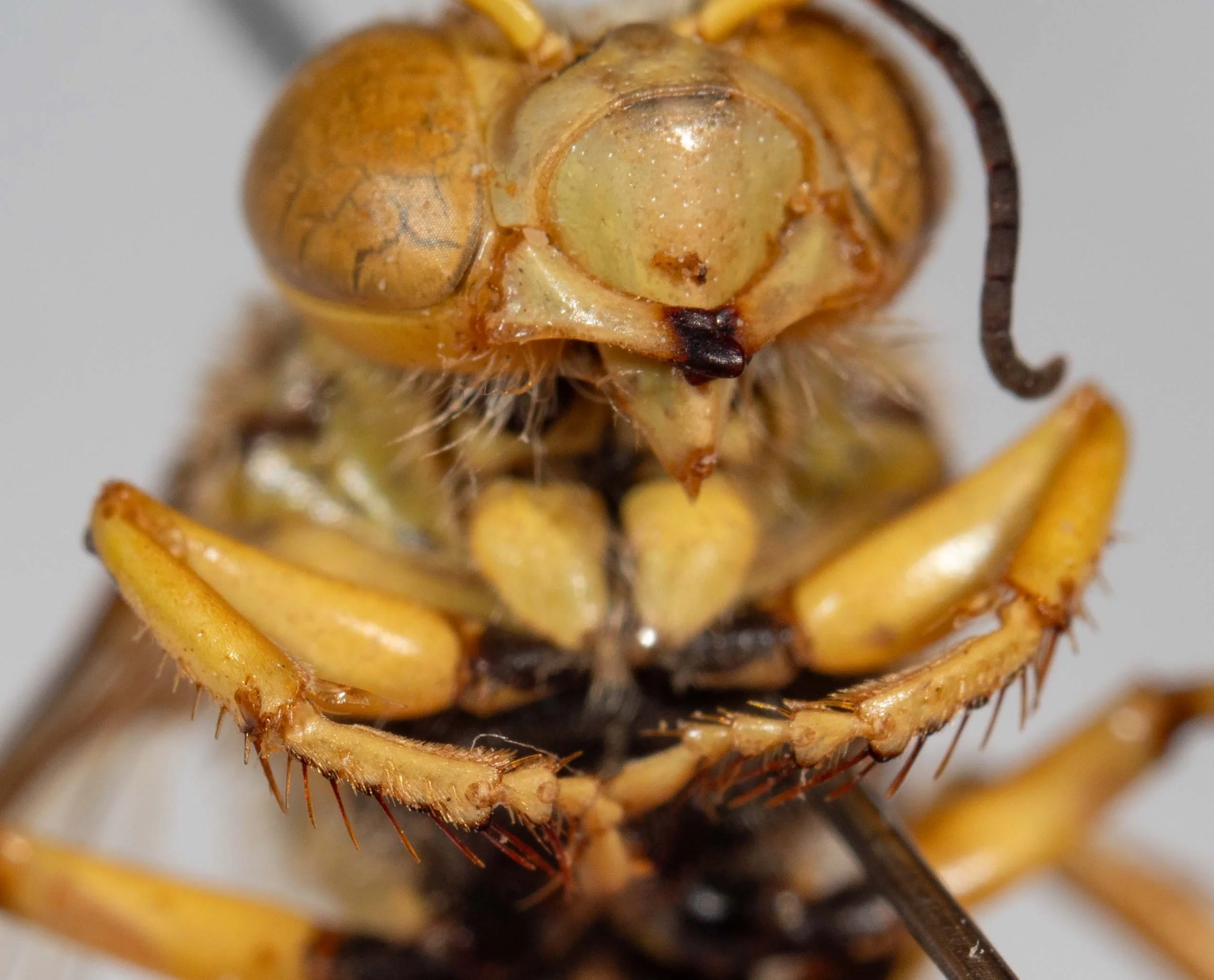
The morphological features of B. trepida are listed in the summary table on the Bembix page.
Comparing the specimen to that list of features, I’m convinced this is indeed B. trepida.
Reference
Evans, H.E. & Matthews, R.W. 1973. Systematics and Nesting Behavior of Australian Bembix Sand Wasps. Memoirs of the American Entomological Institute, Number 20.
This is a workbook page … a part of our website where we record the observations and references used in making species identifications. The notes will not necessarily be complete. They are a record for our own use, but we are happy to share this information with others.