
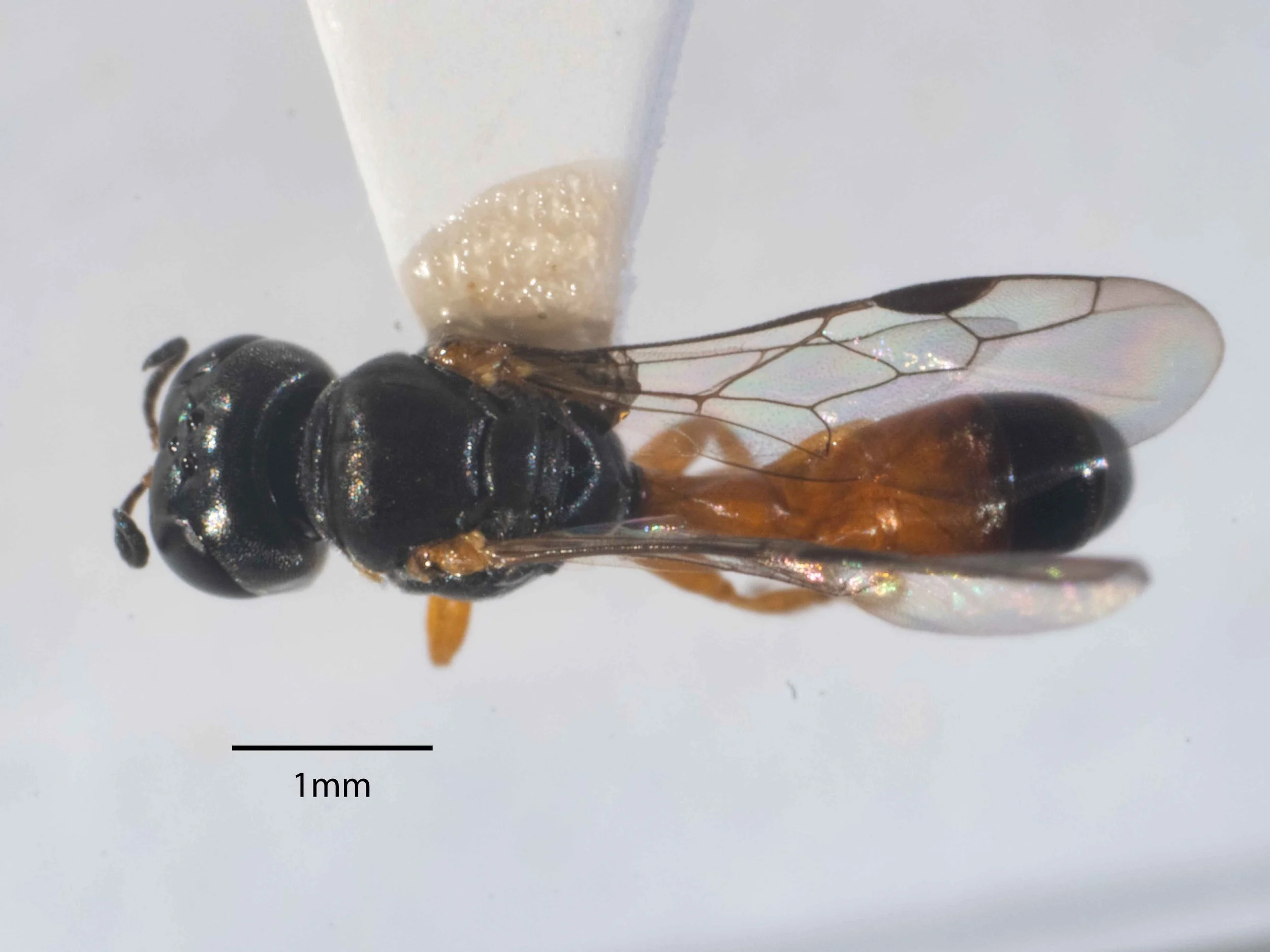
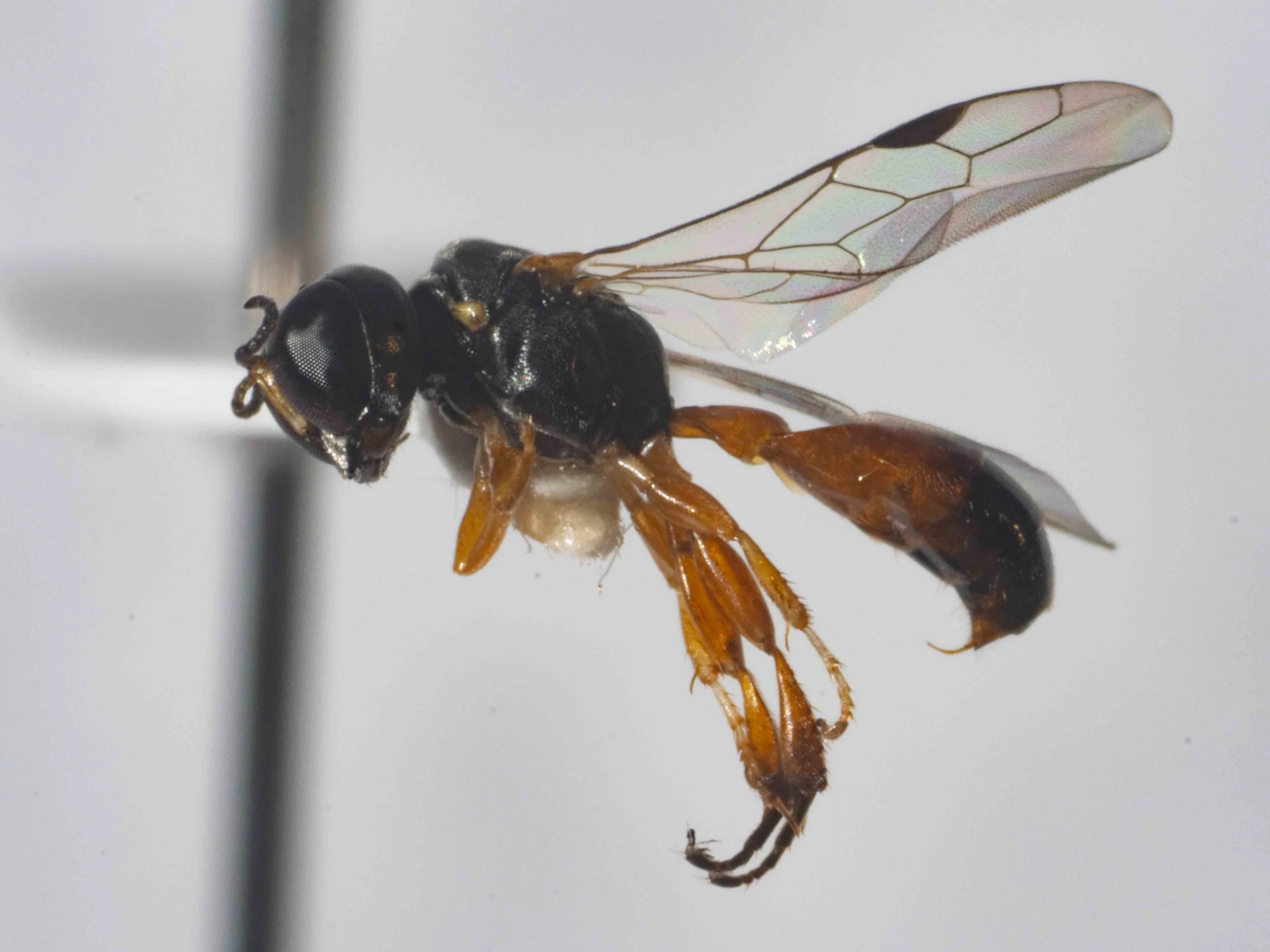
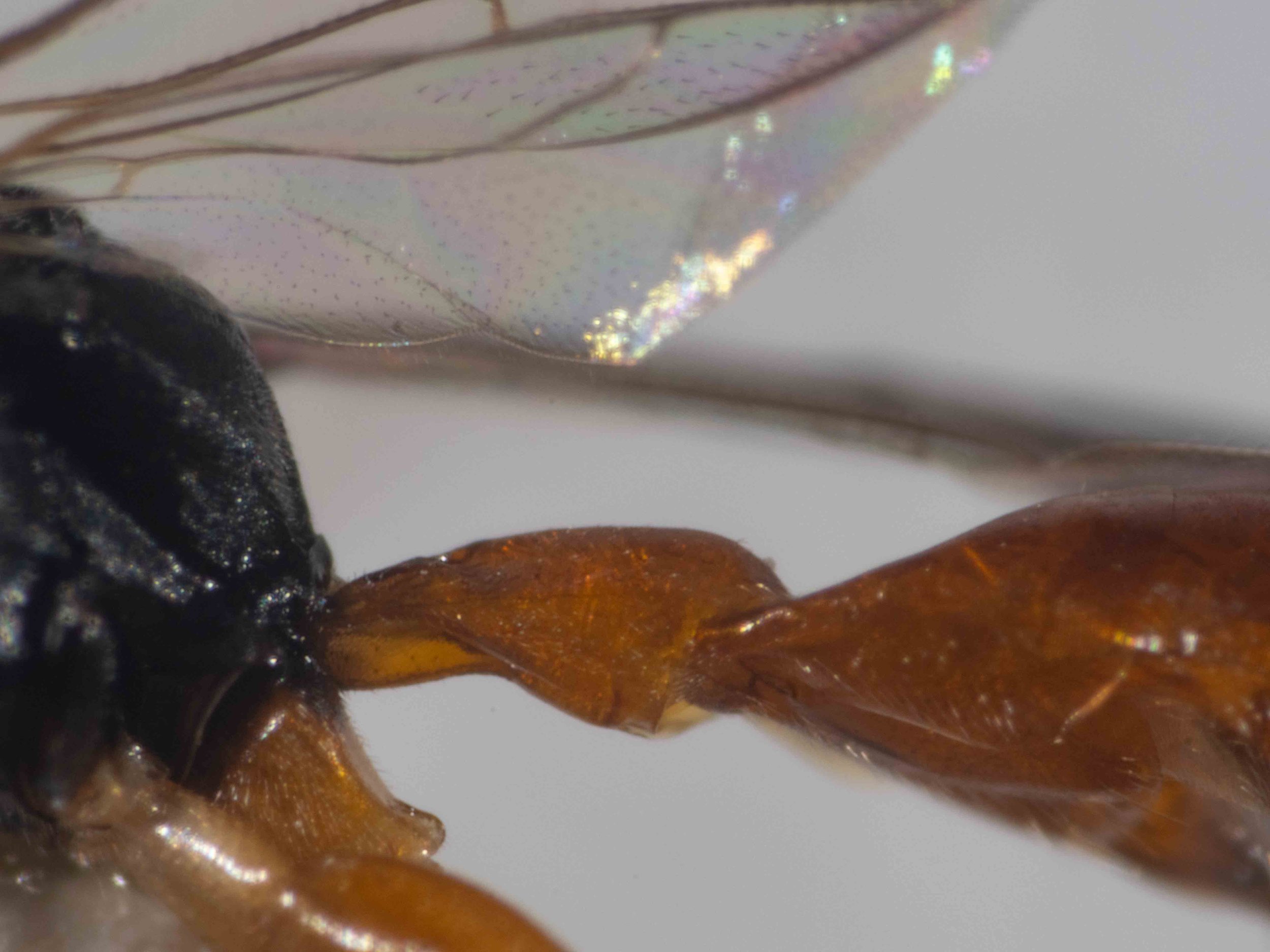
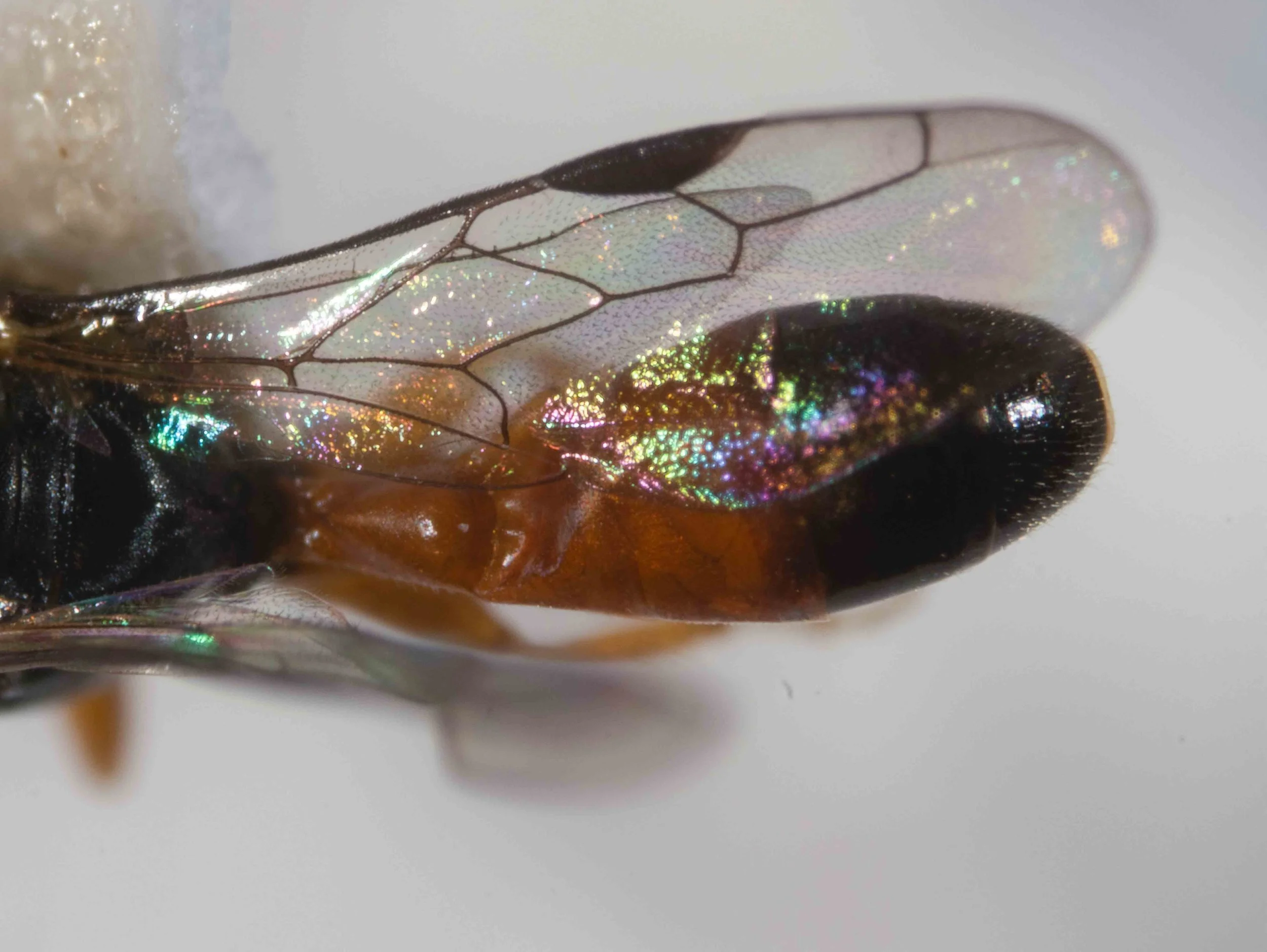
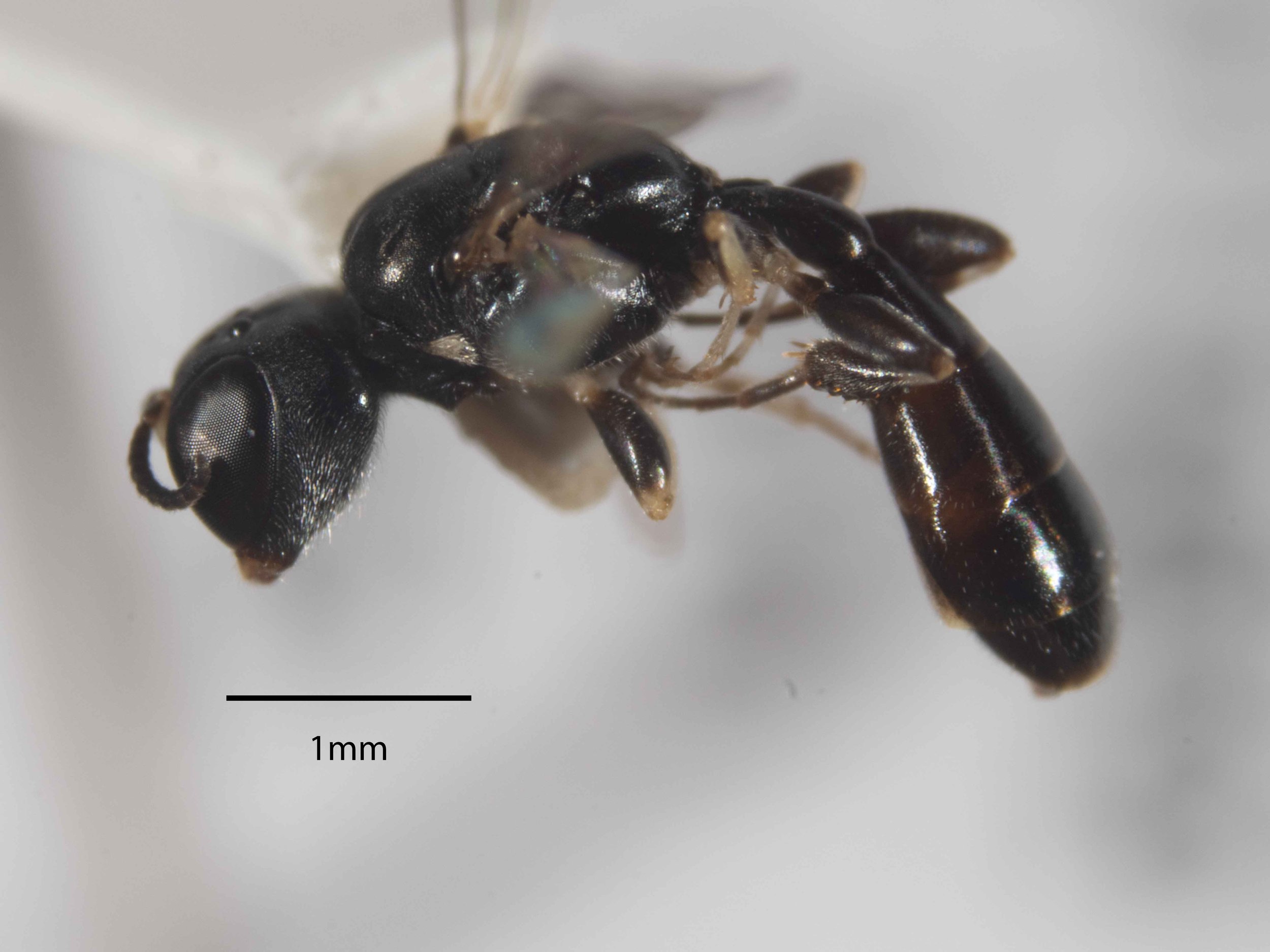
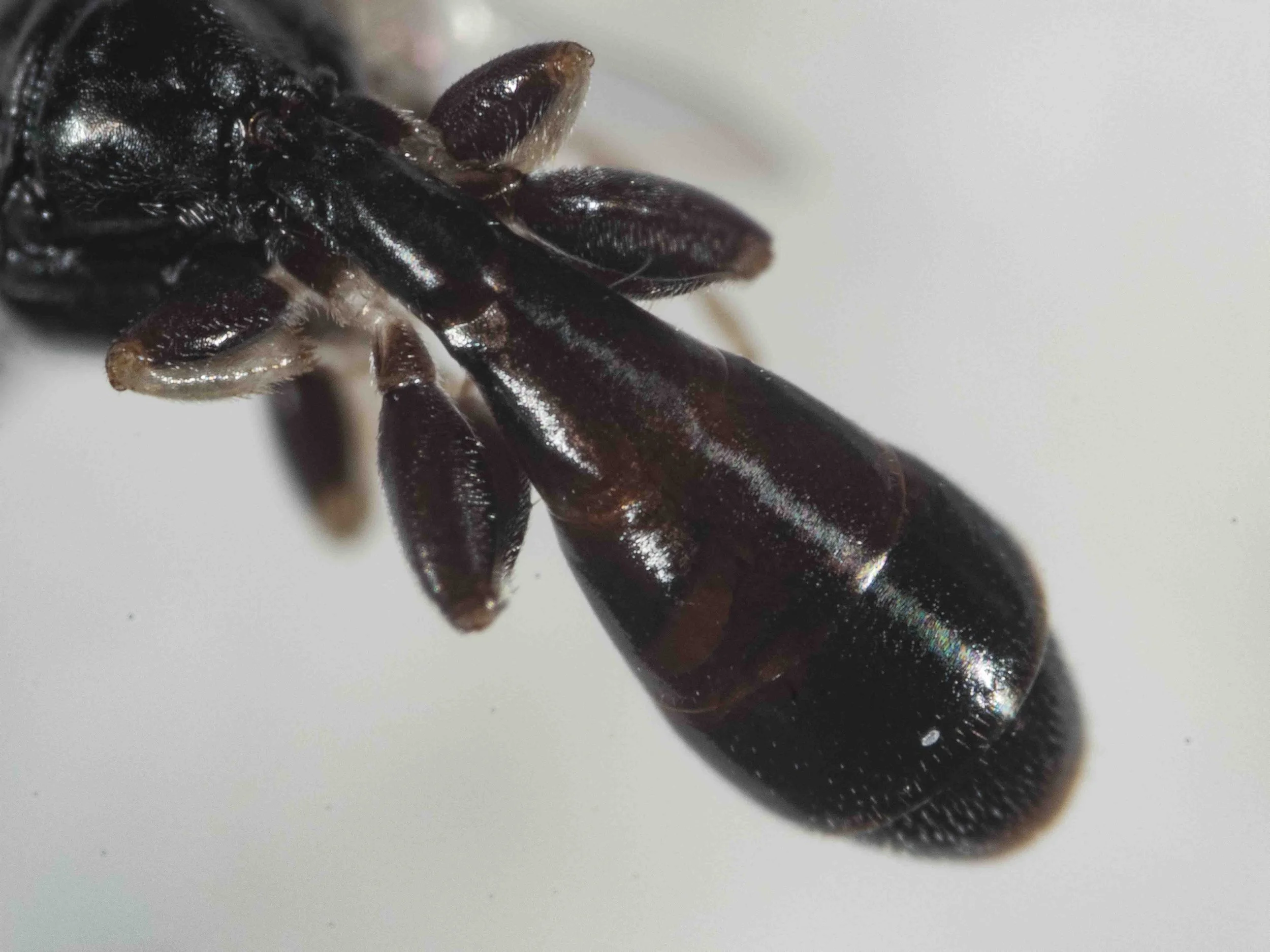
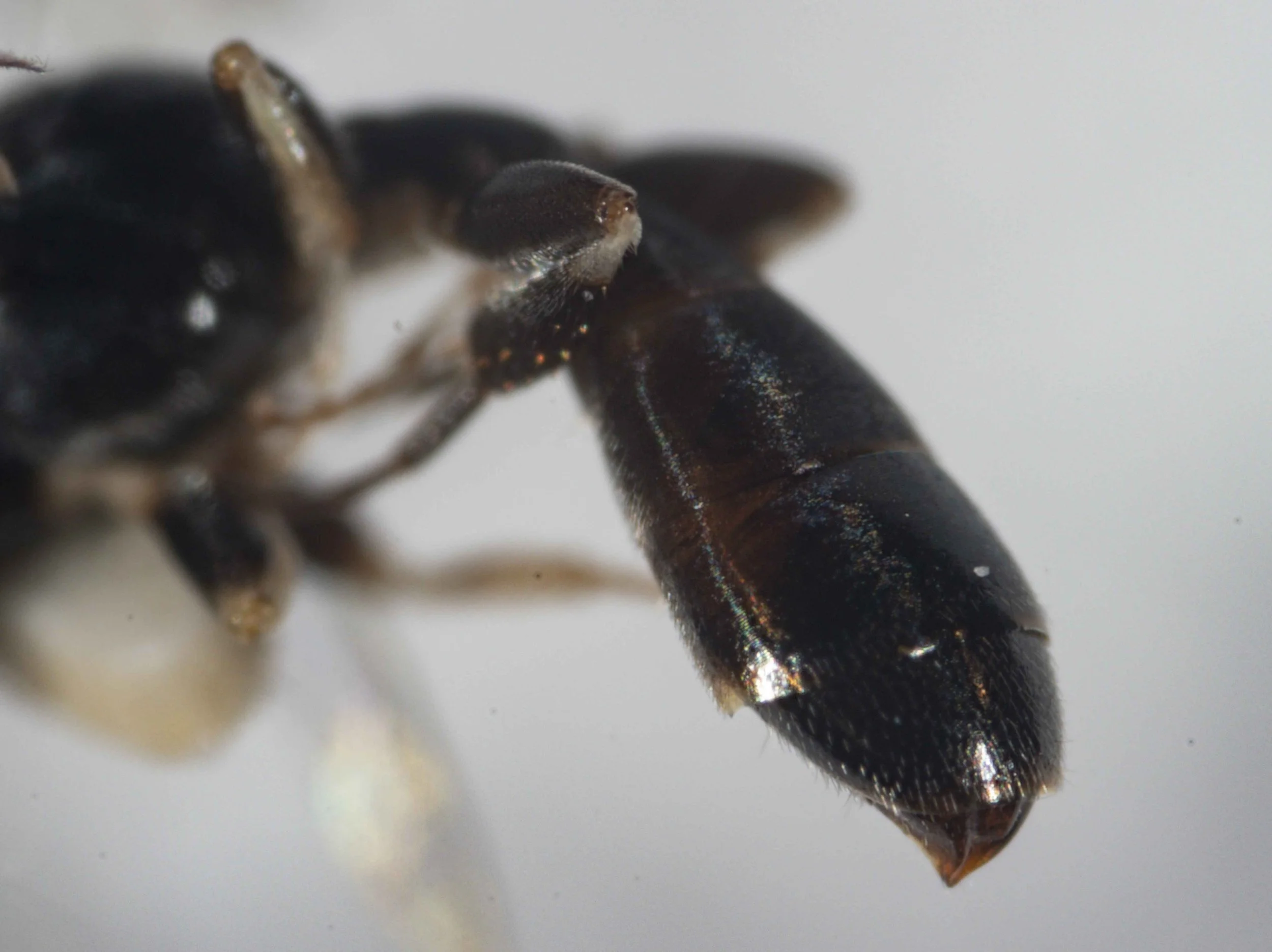
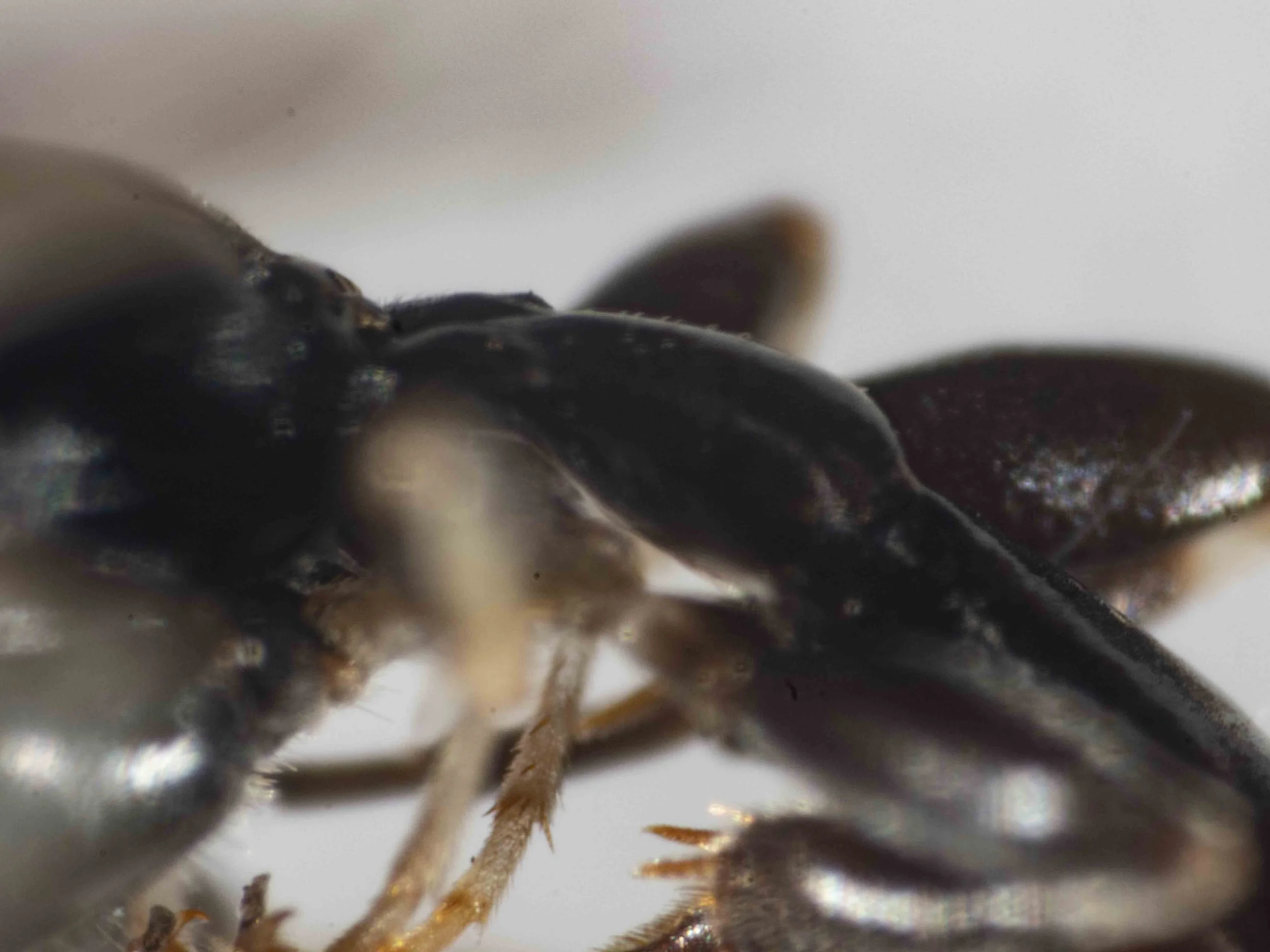
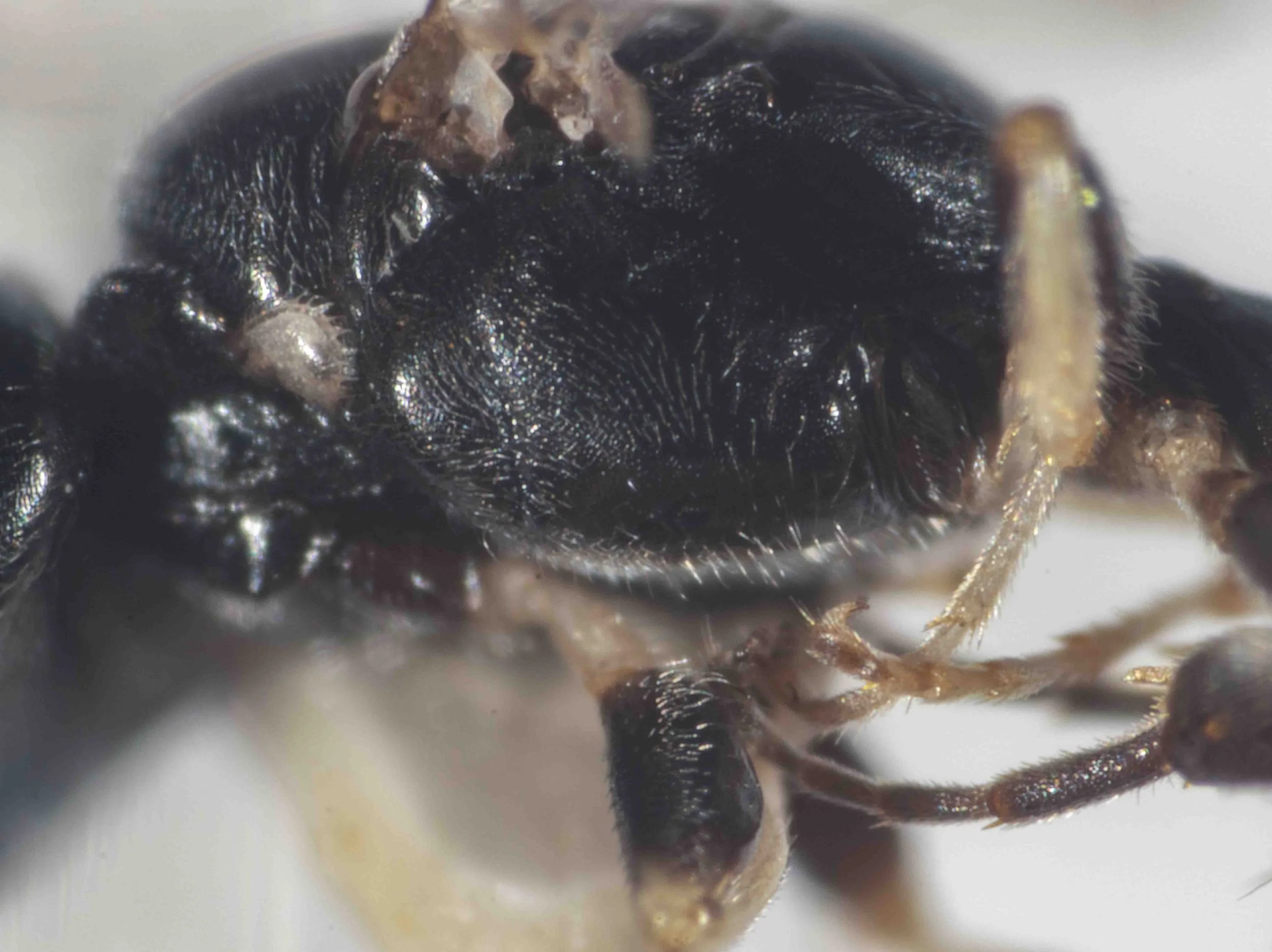
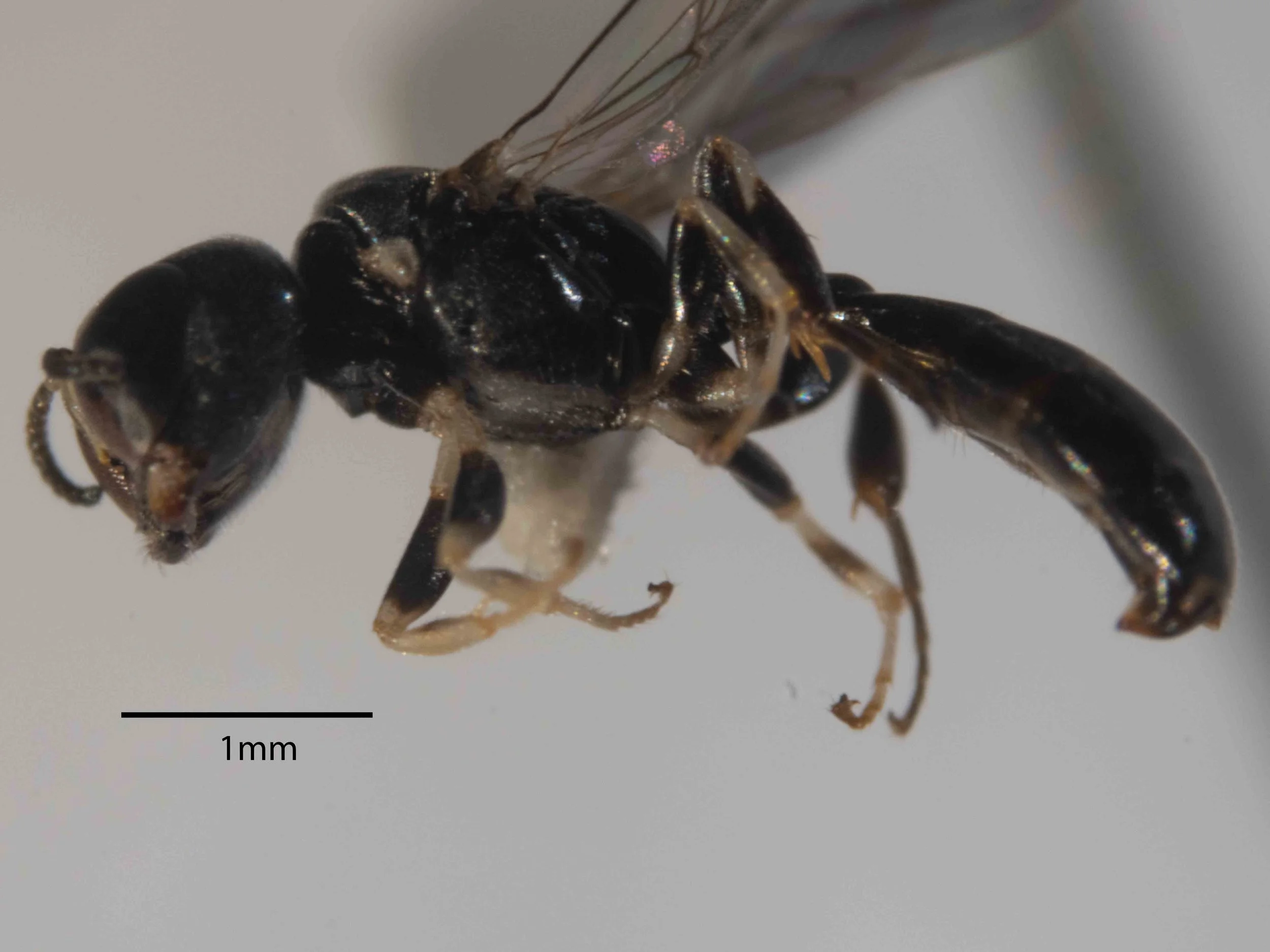
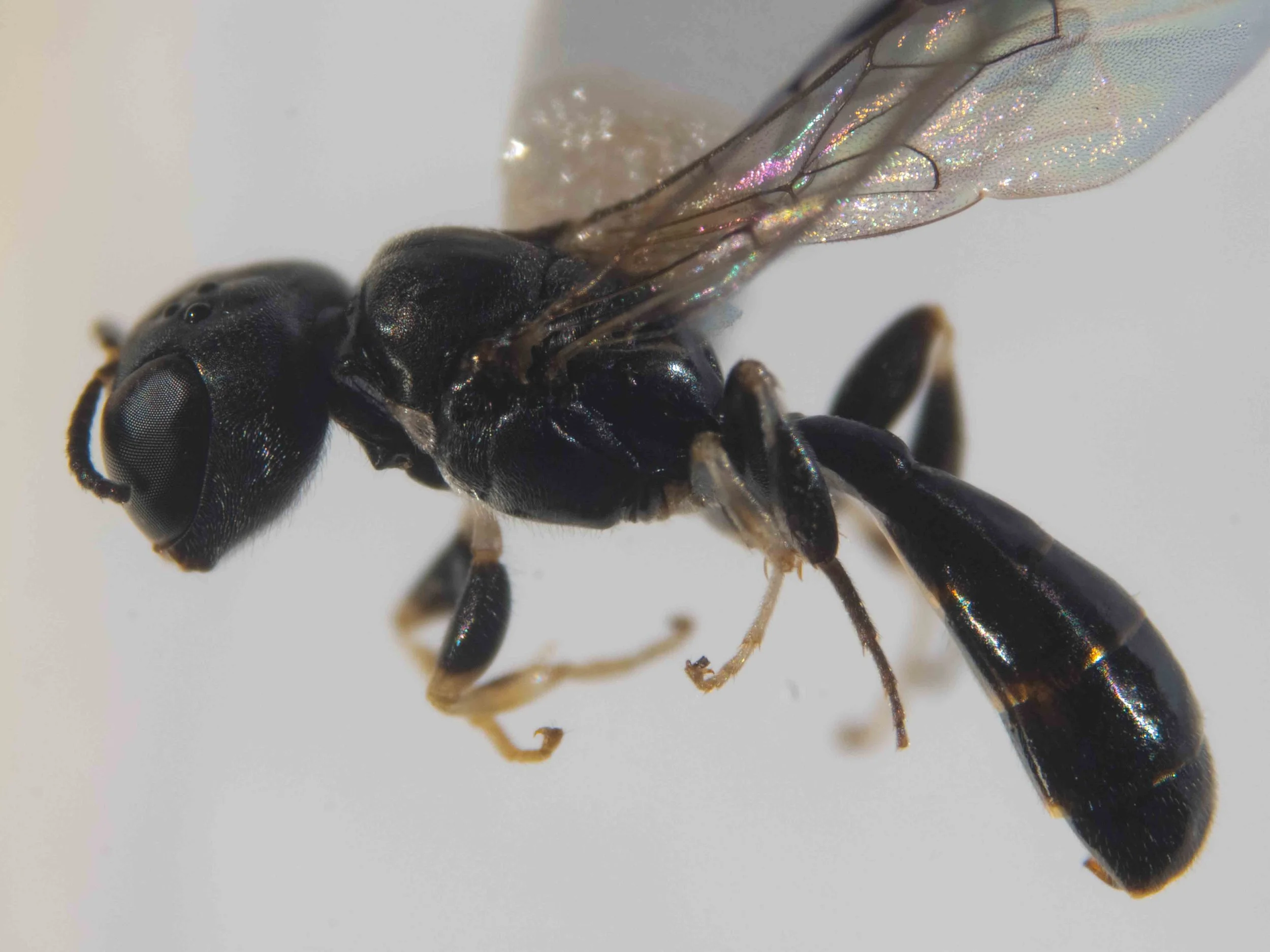
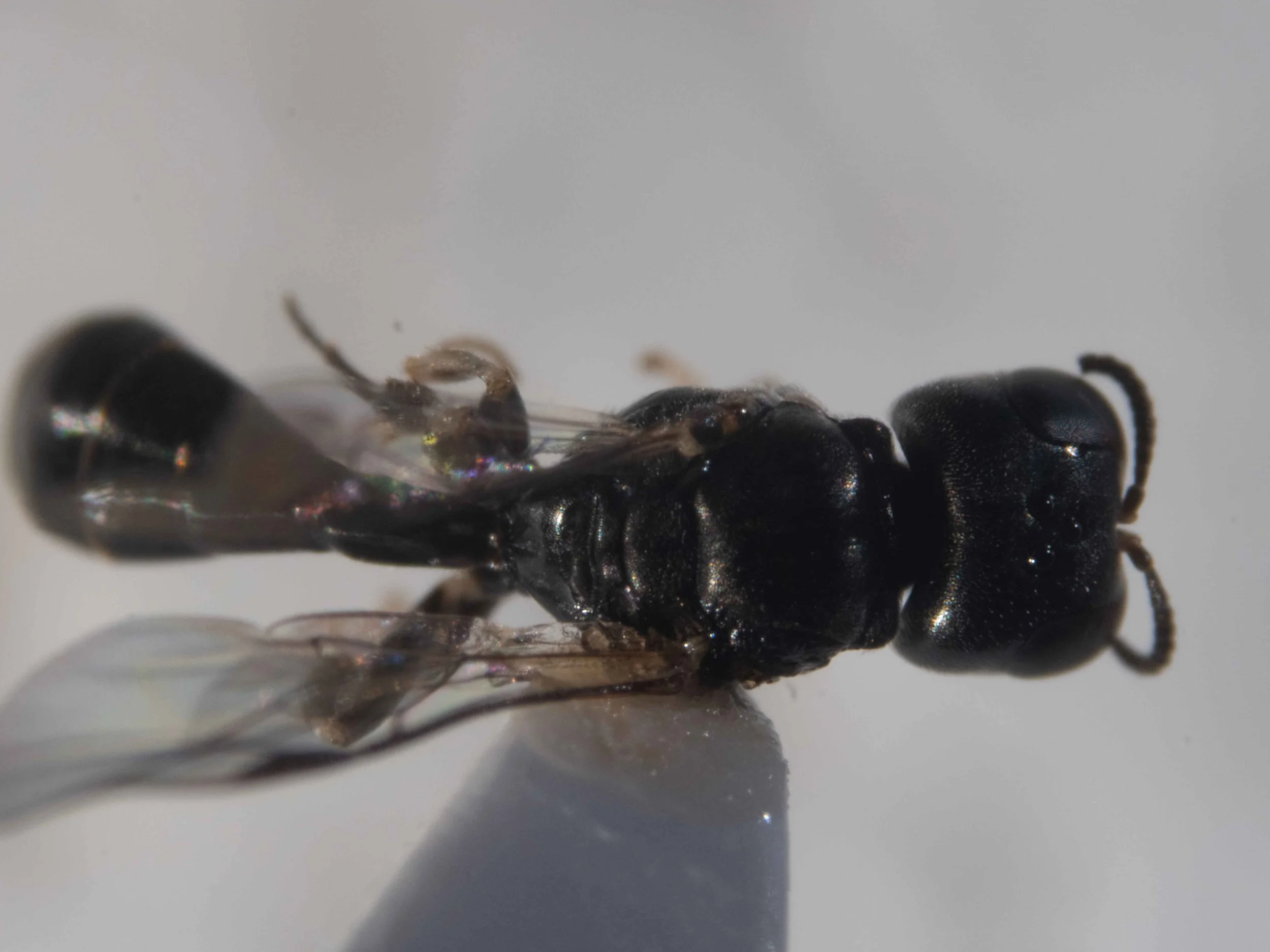
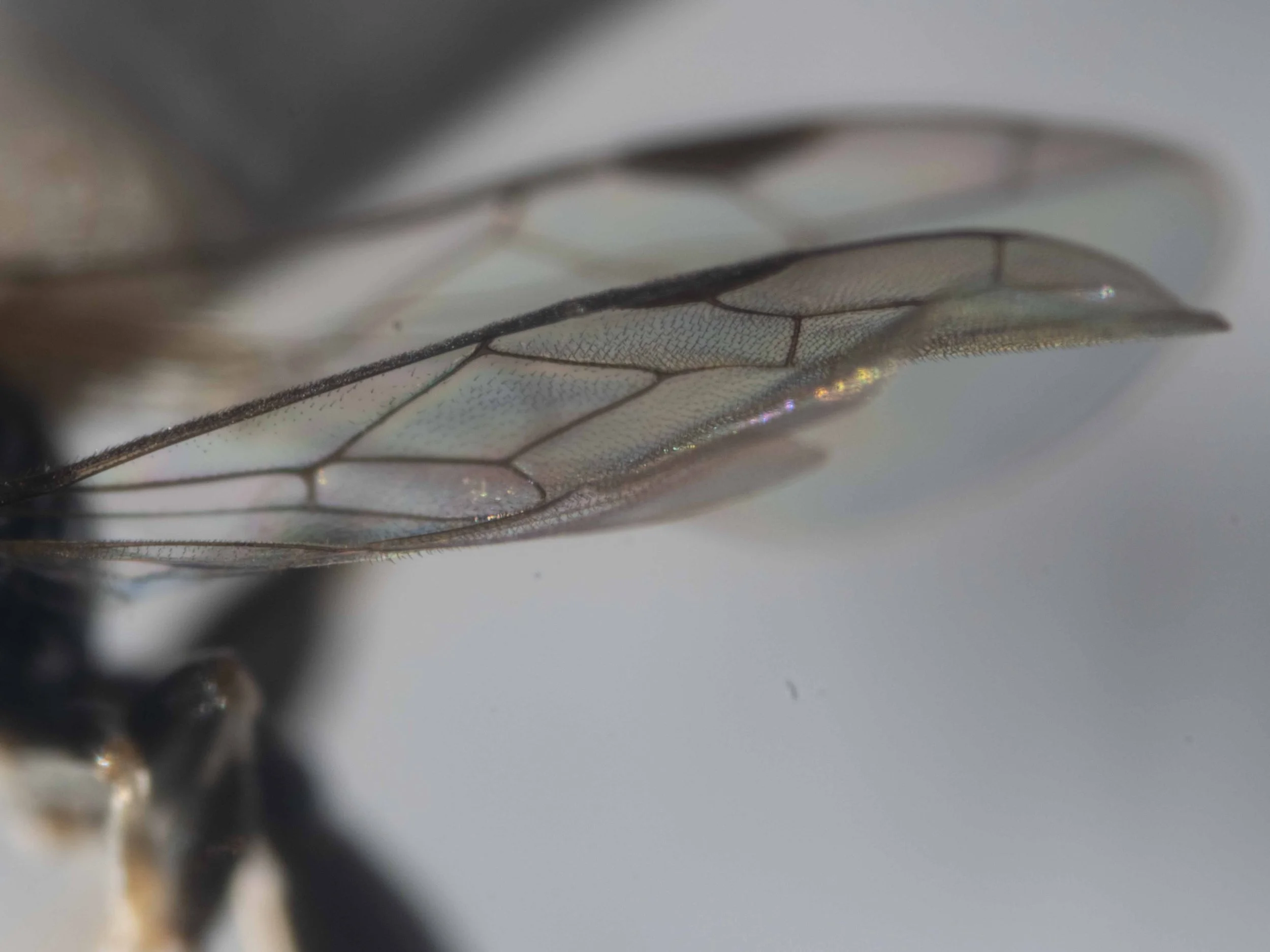
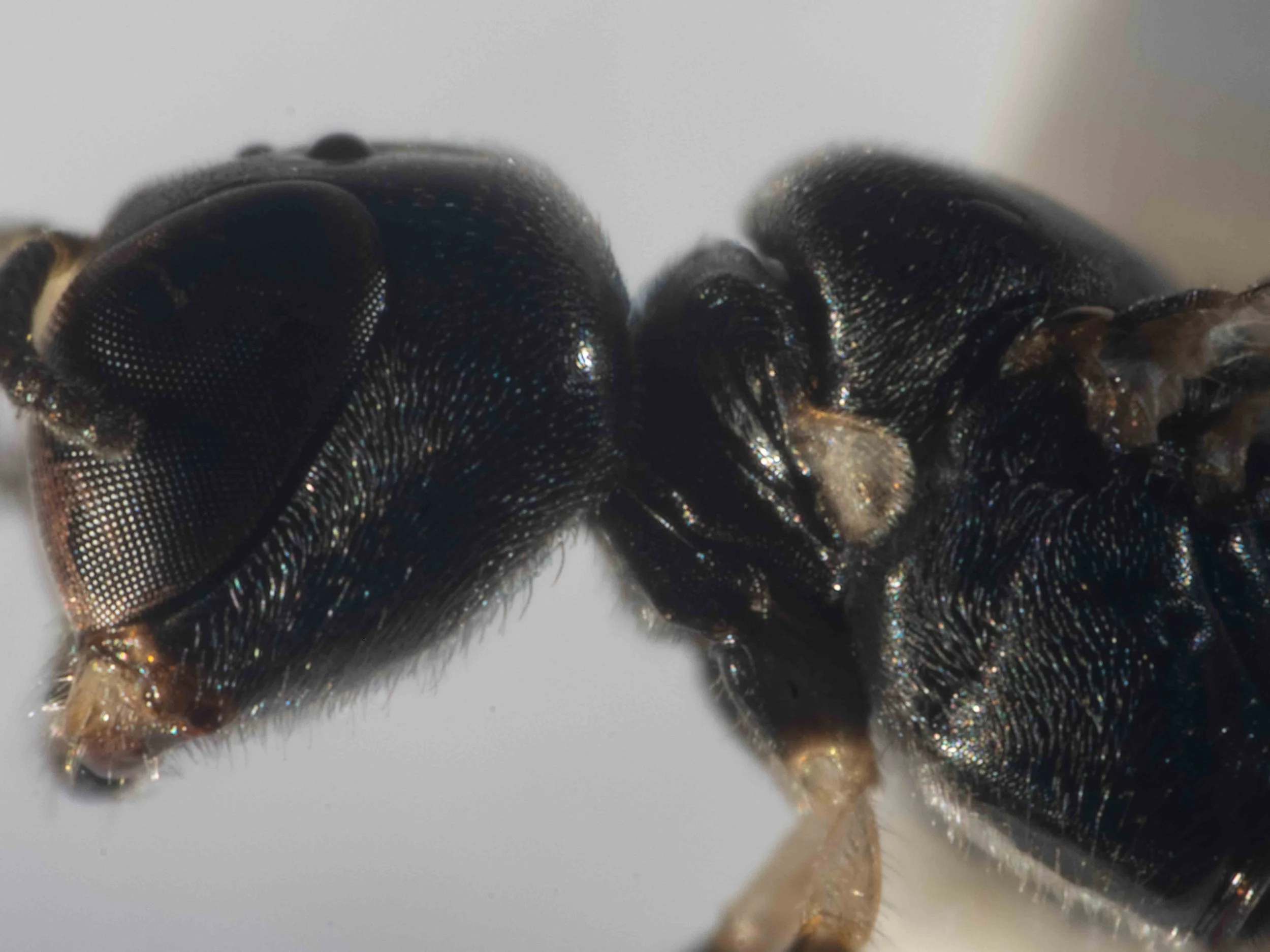
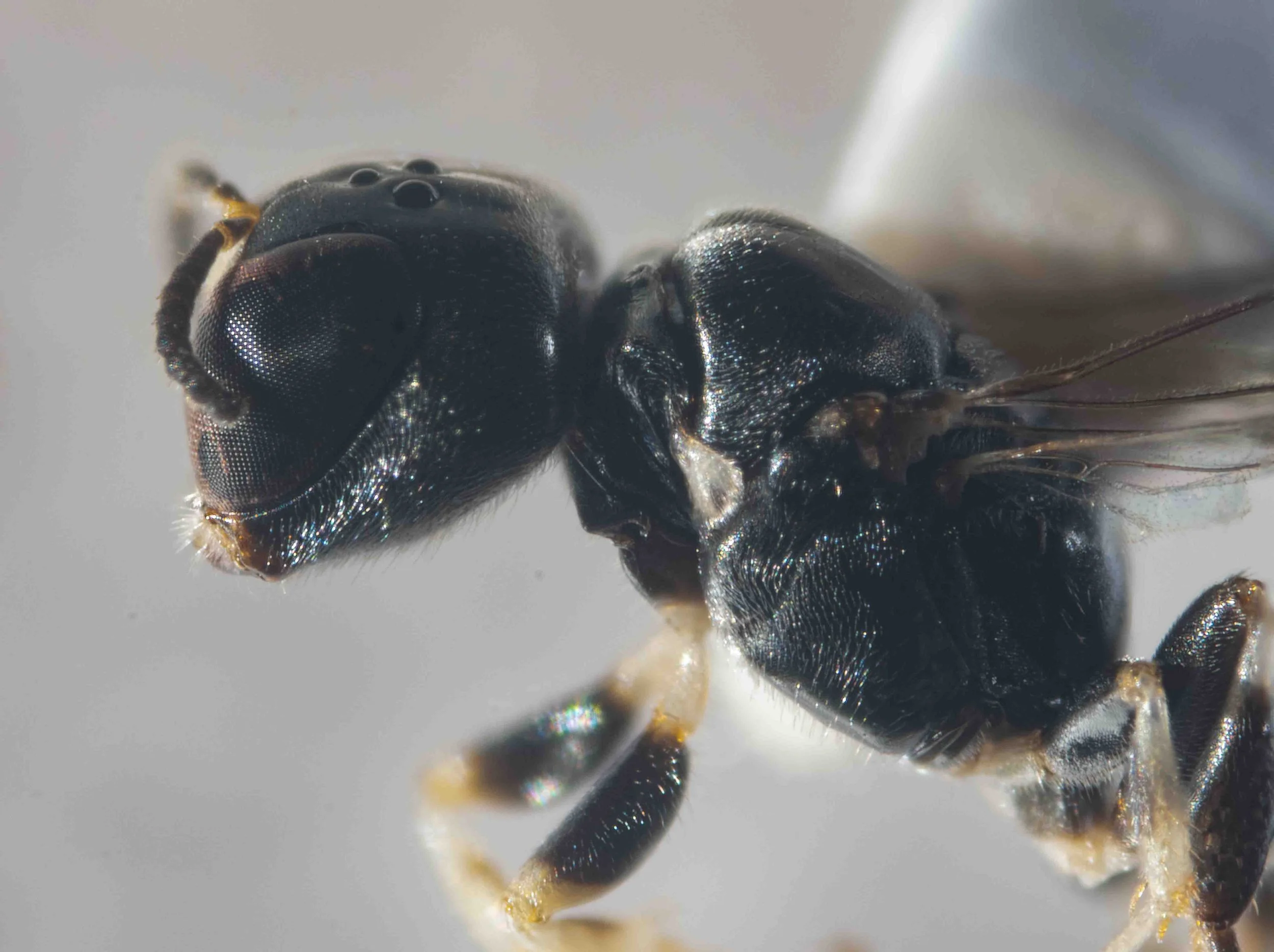
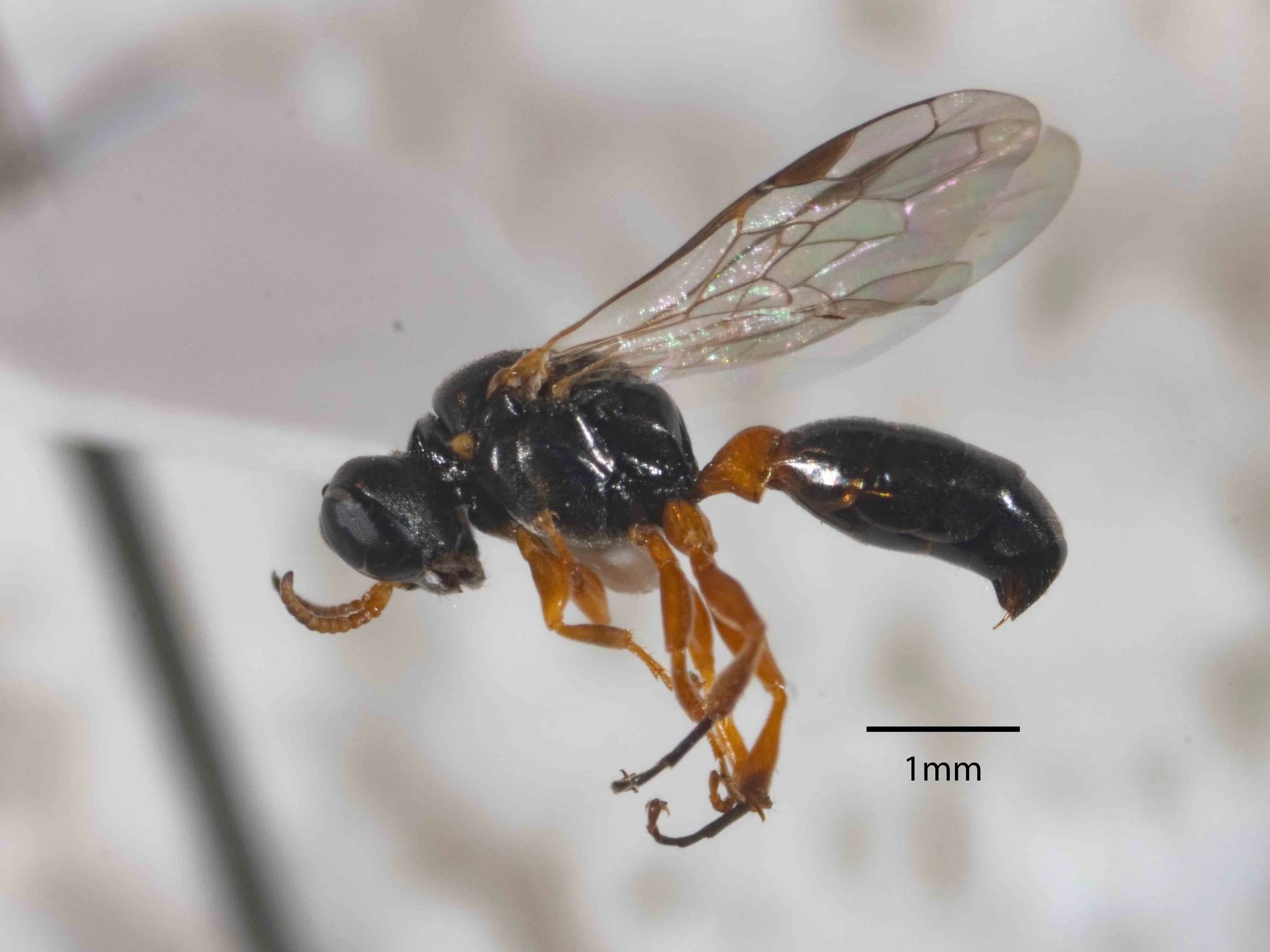
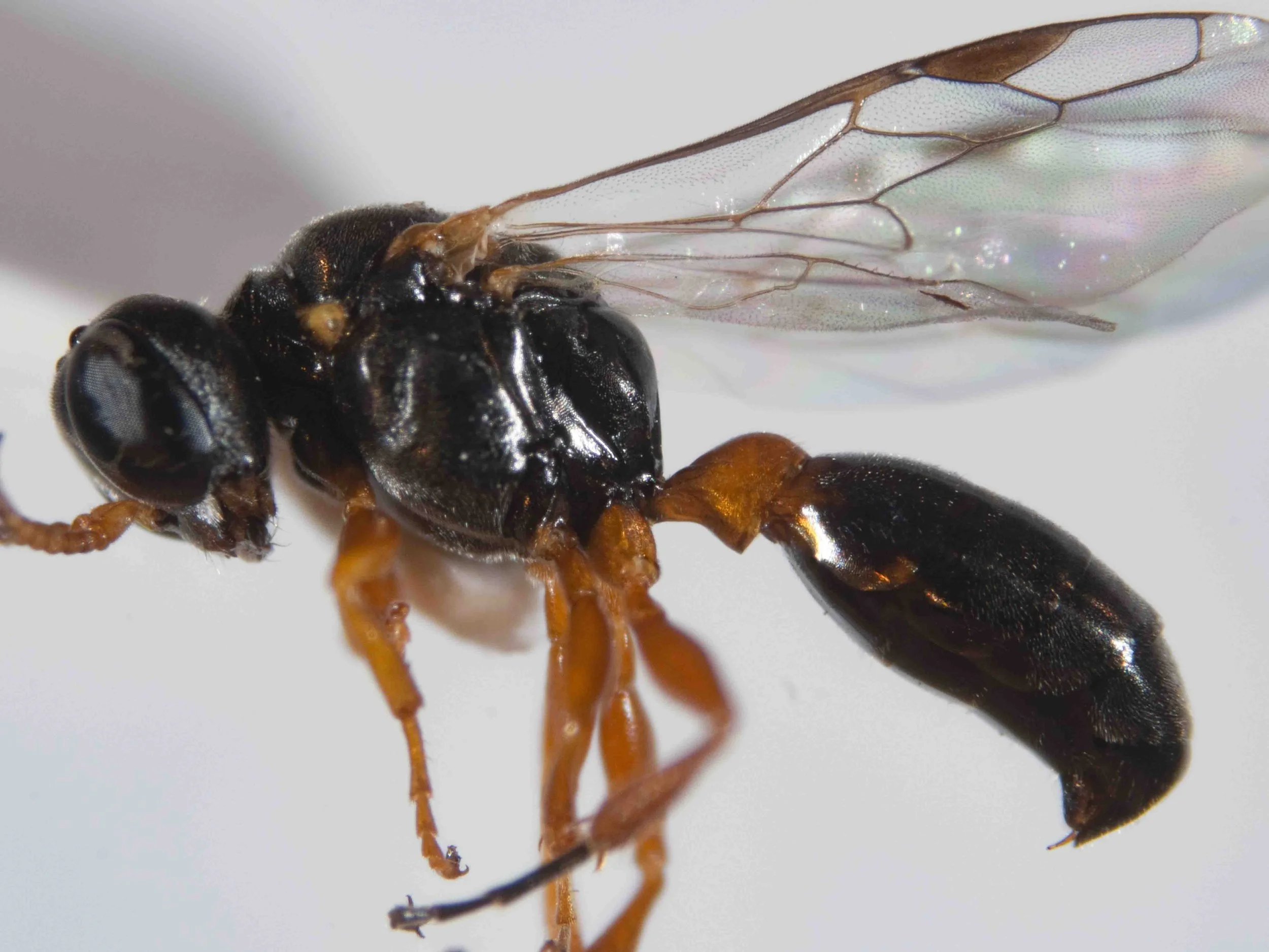
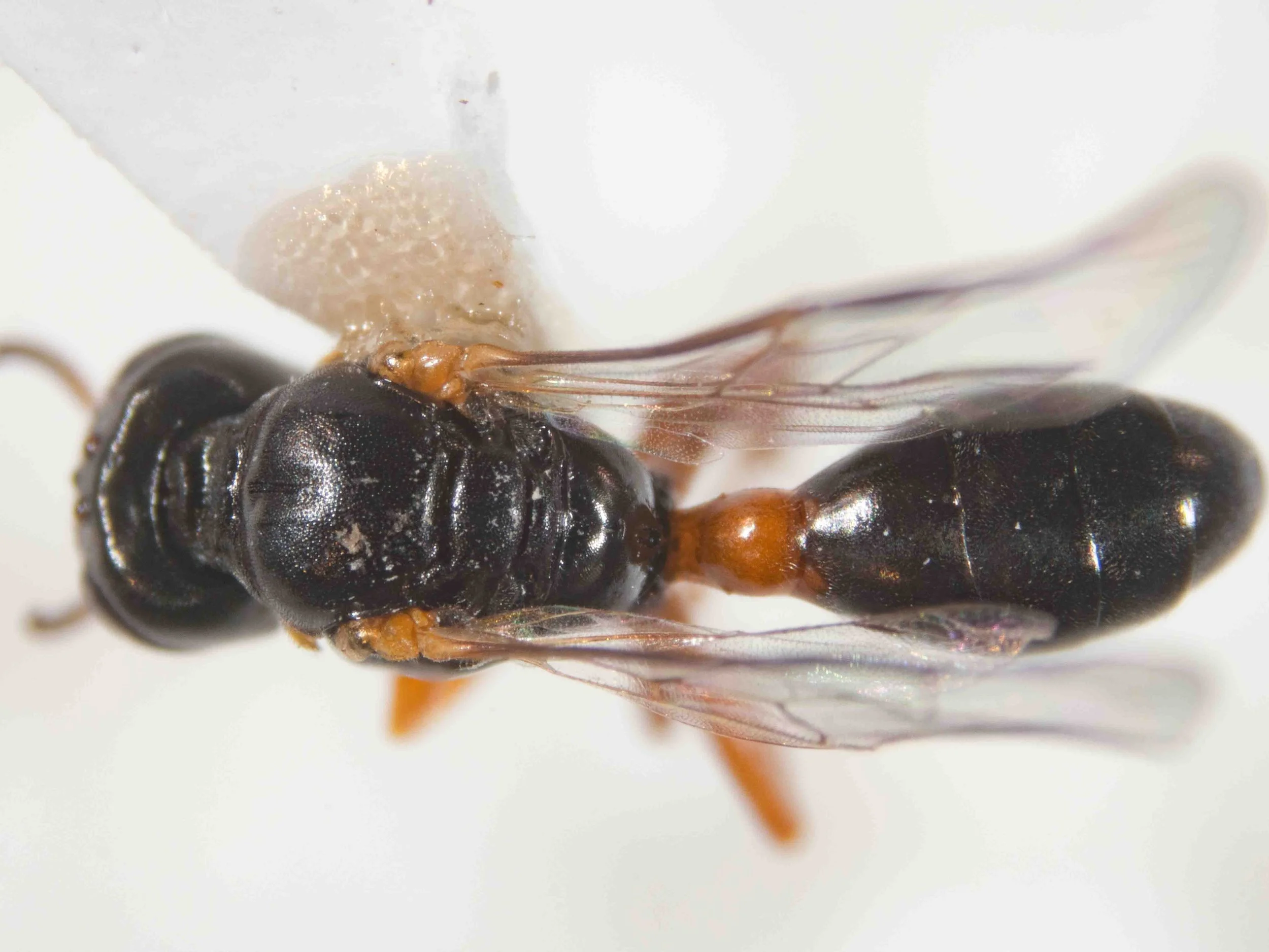
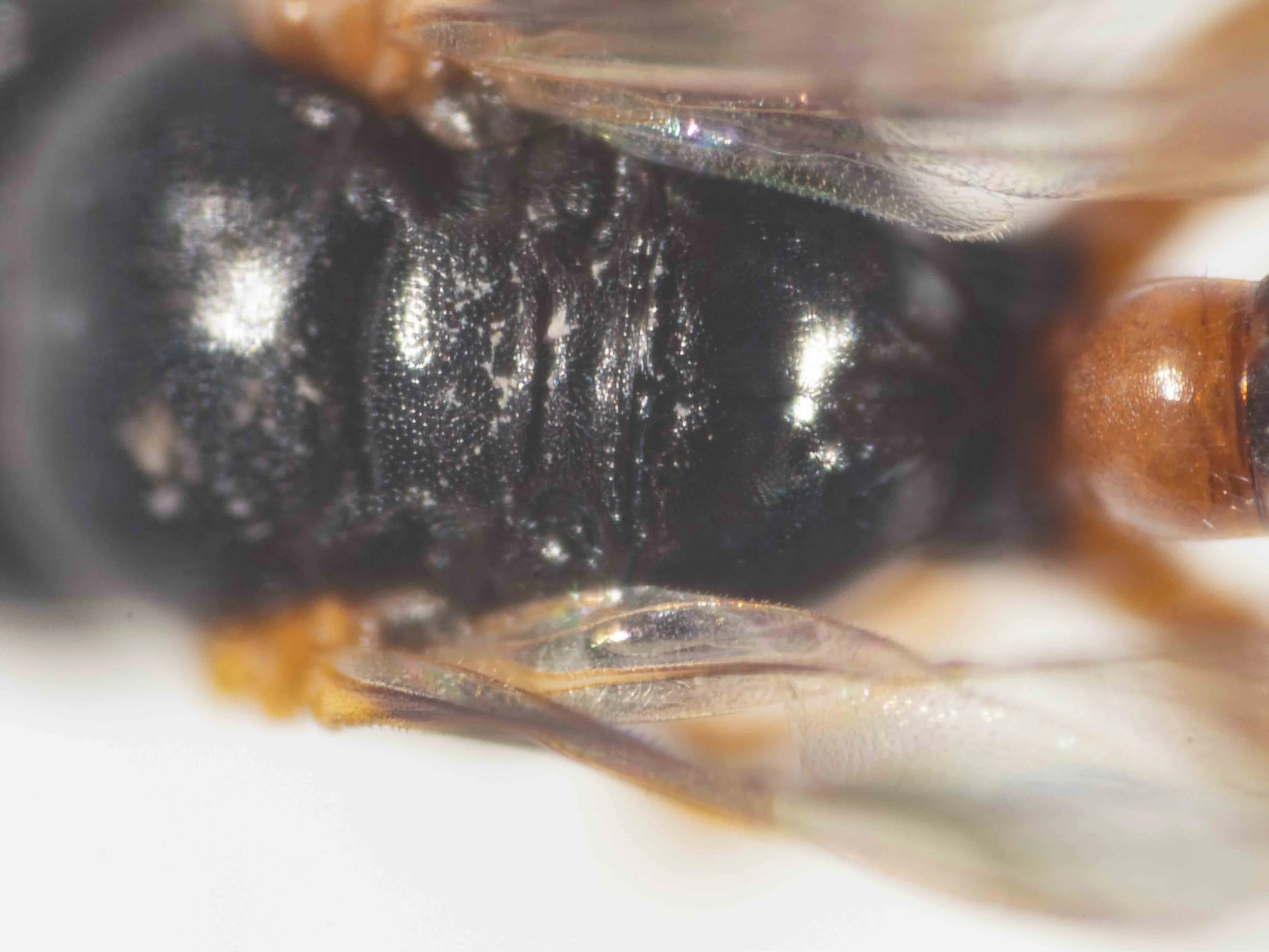
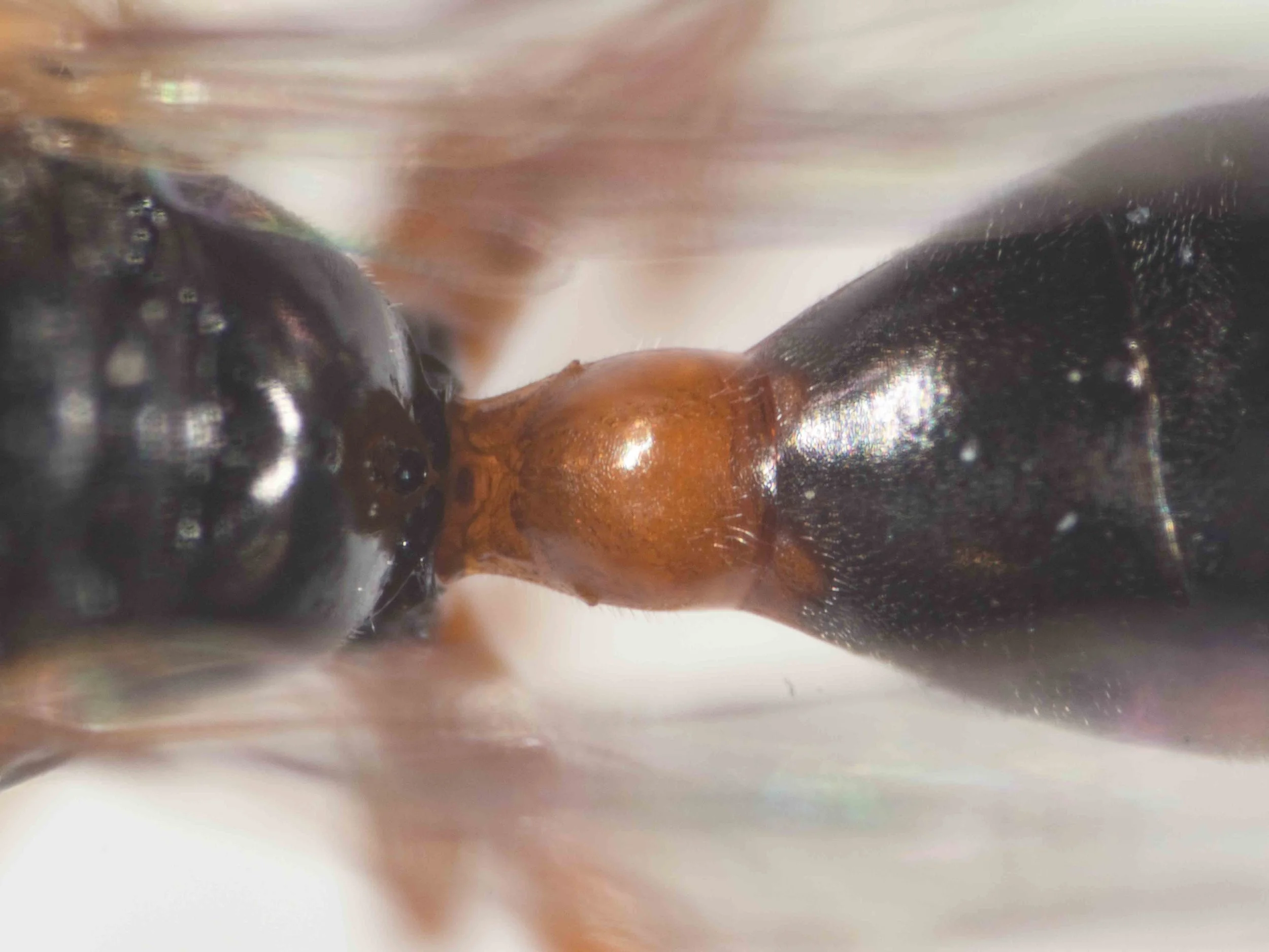
Gaster: pedunculate; clavate (widest at T4)
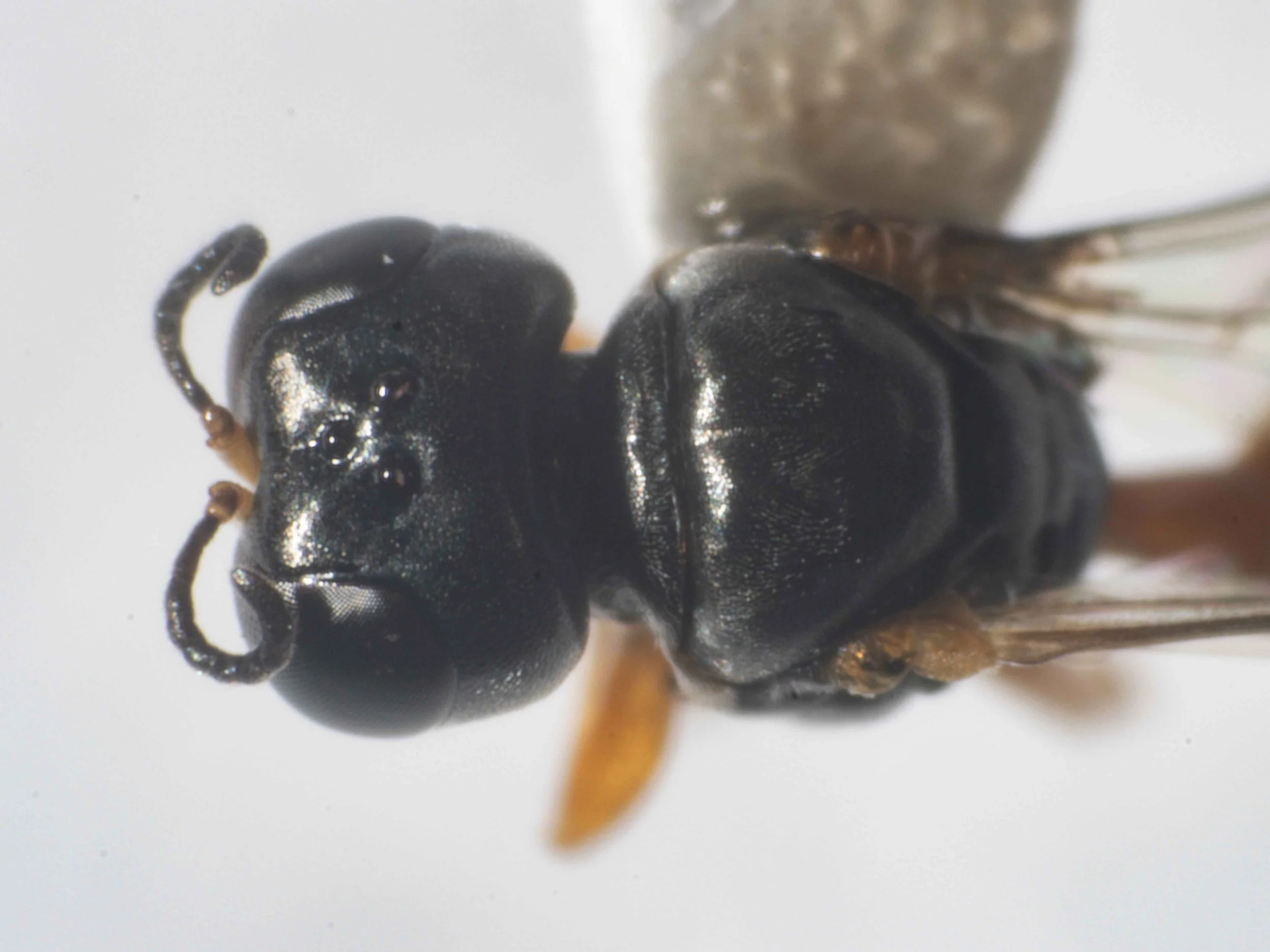
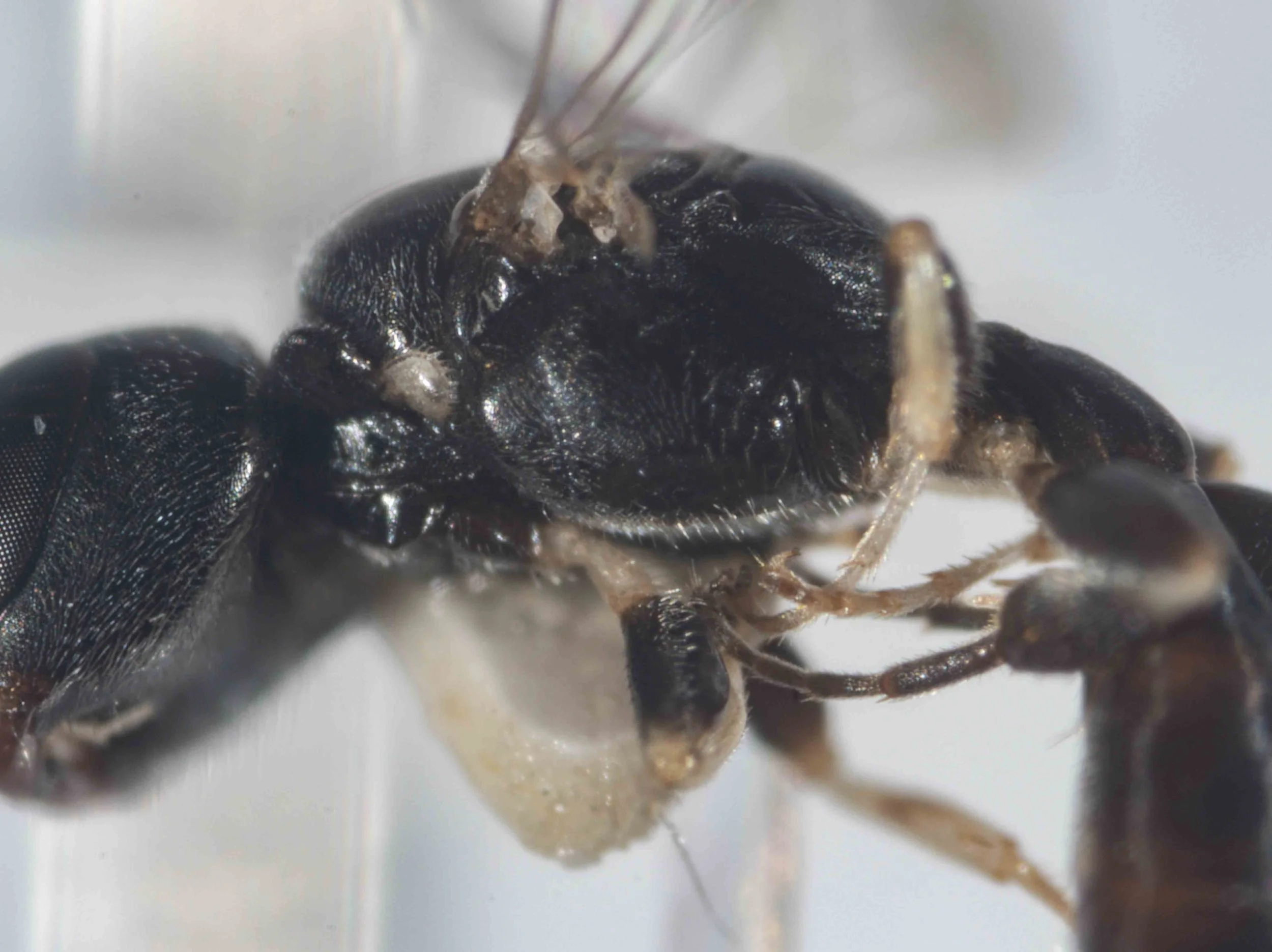
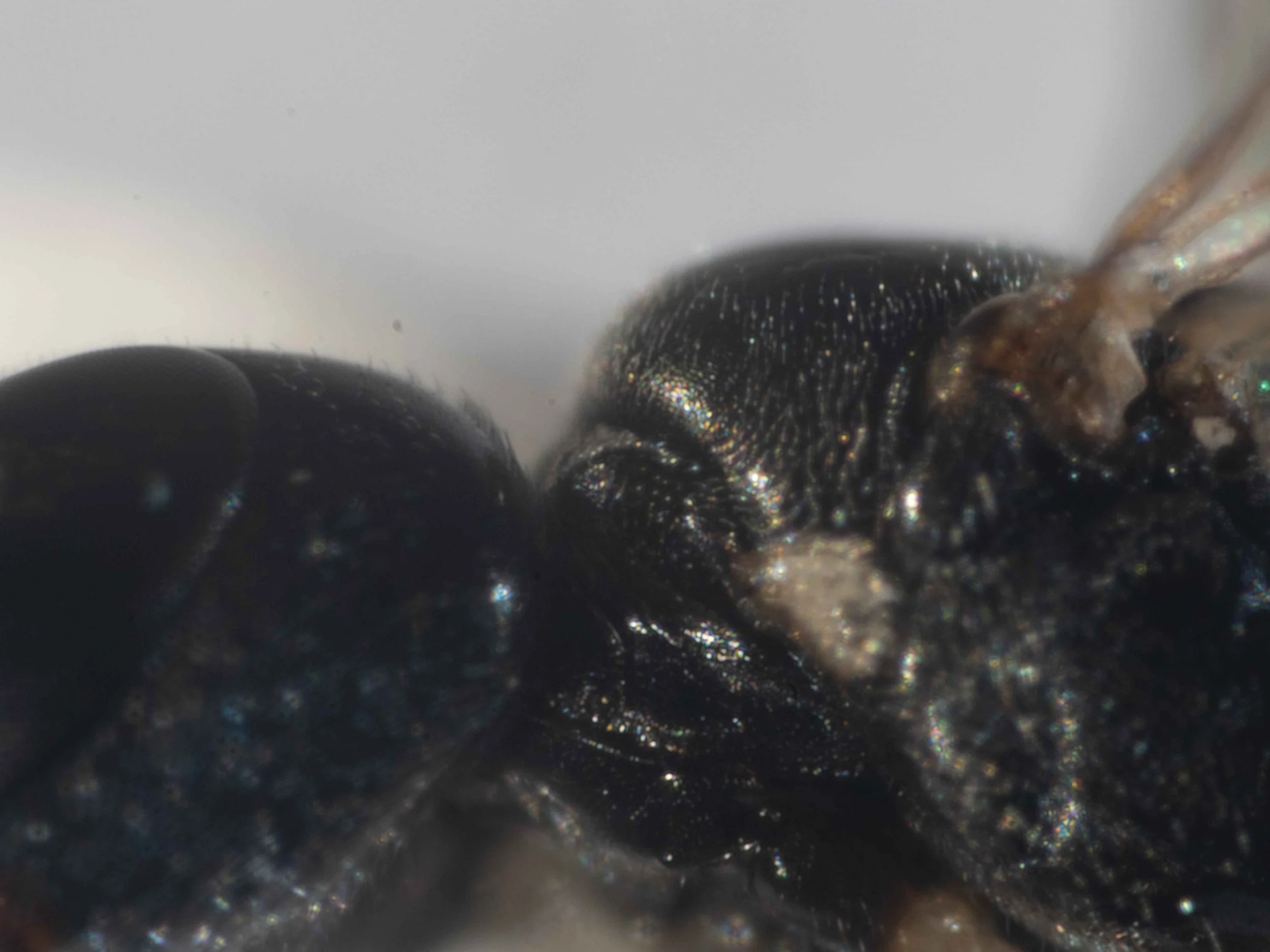
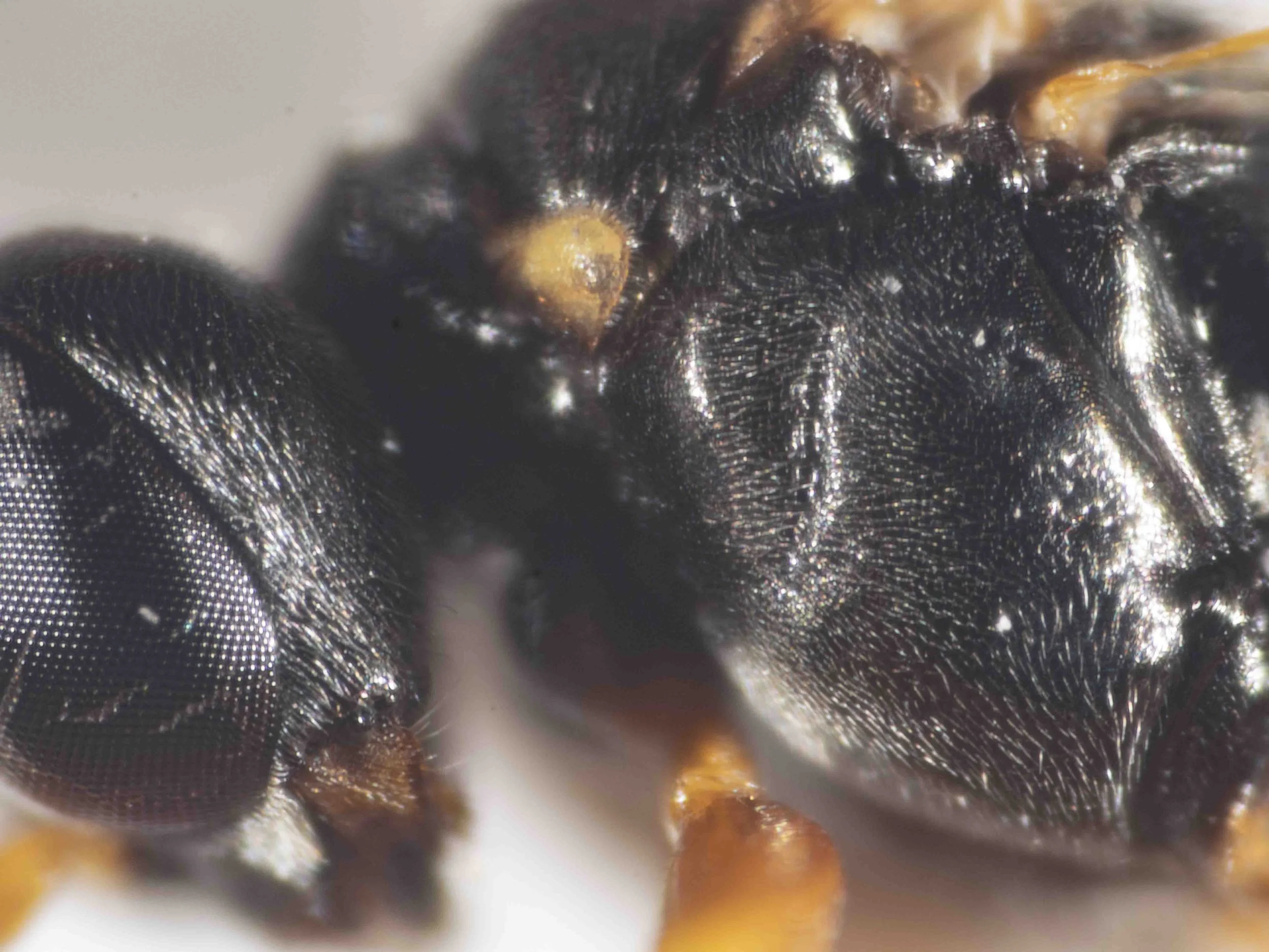
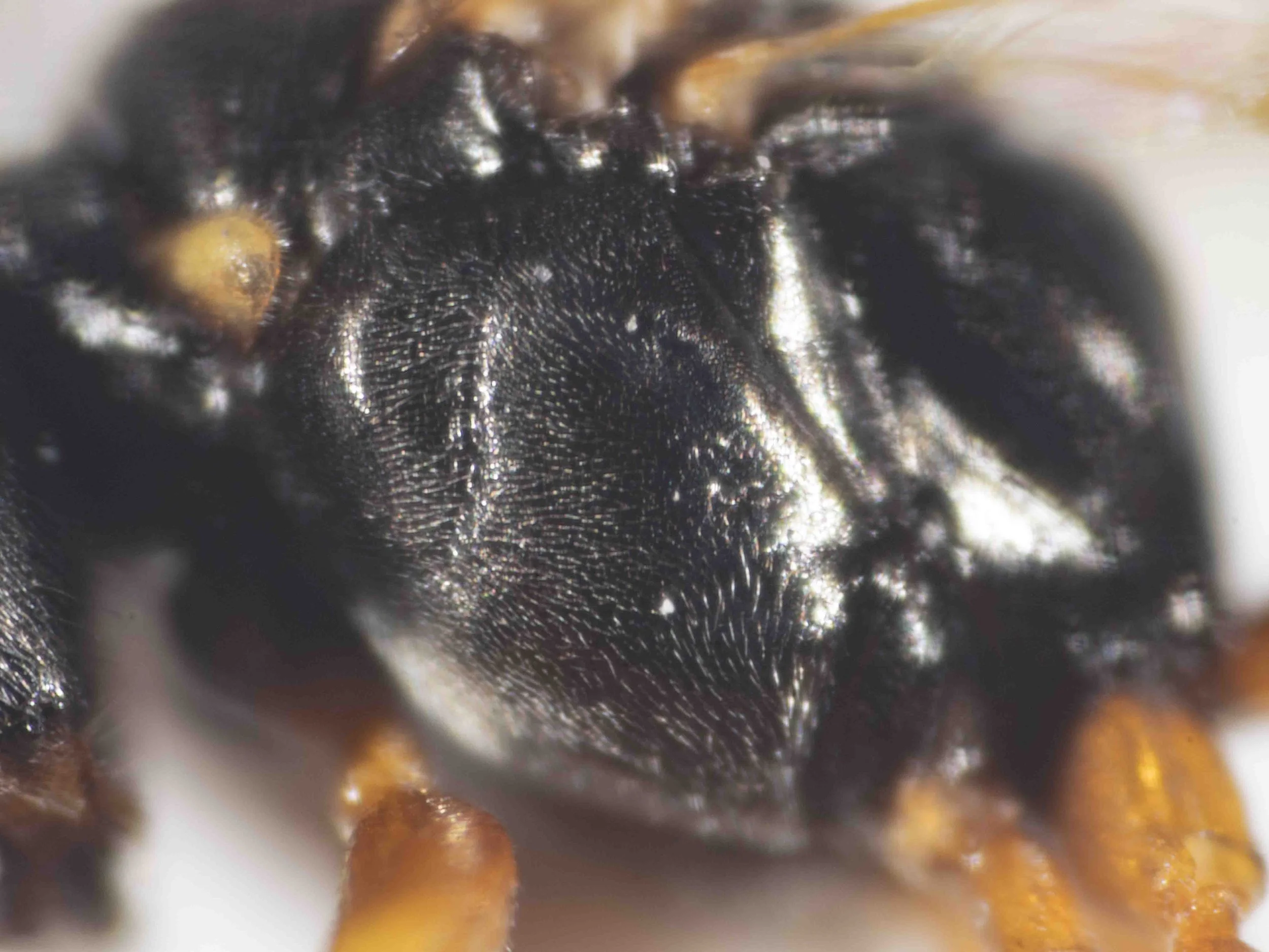
Scutum high, rounded, arched forward
First gastral segment: pedunculate; nodose; without dorsoposterior spine (cf Notocrabro)
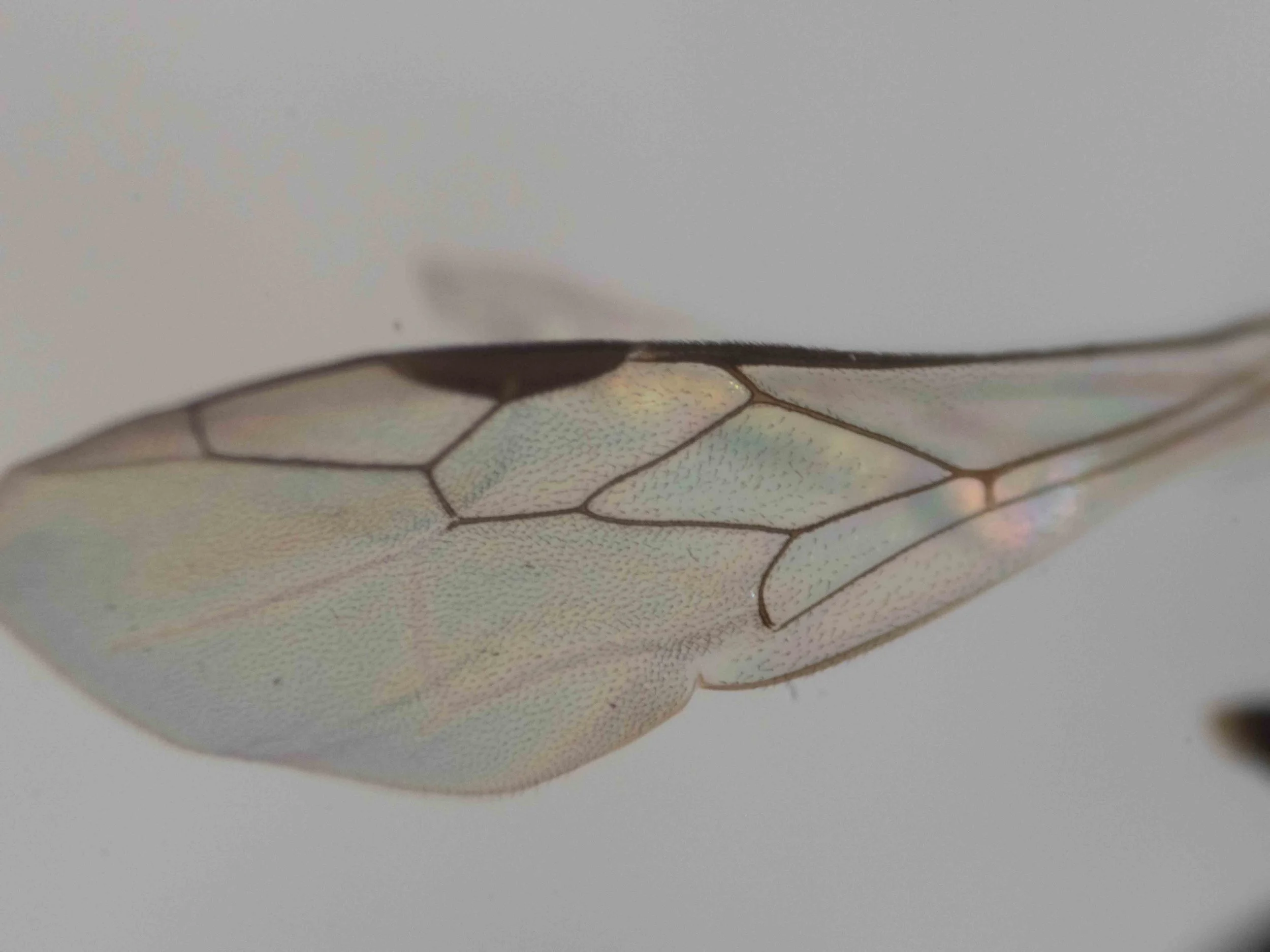
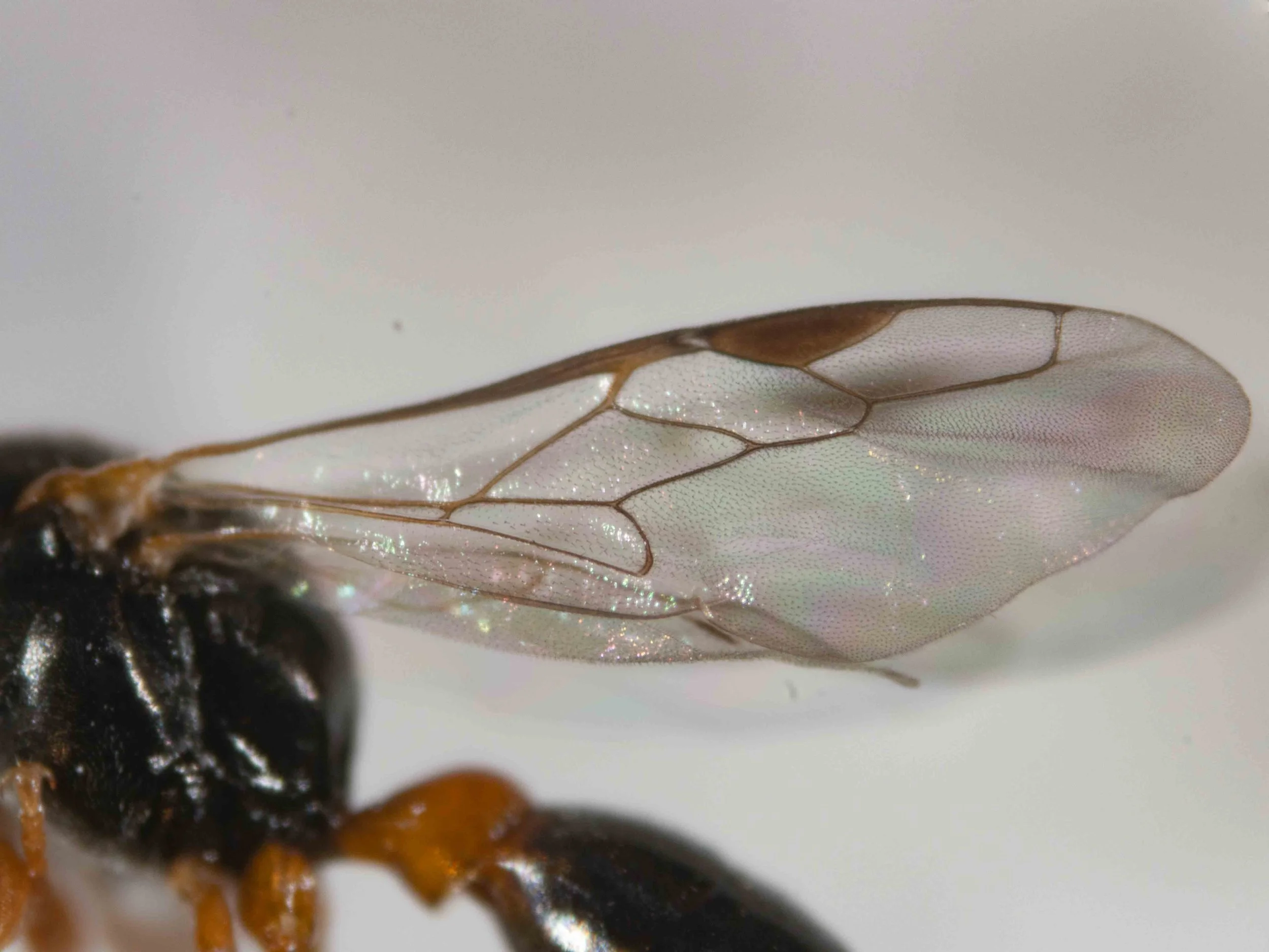
Forewing venation: single submarginal cell; recurrent vein meets submarginal cell near middle (ratio of basal to apical segments ~ 5:4)
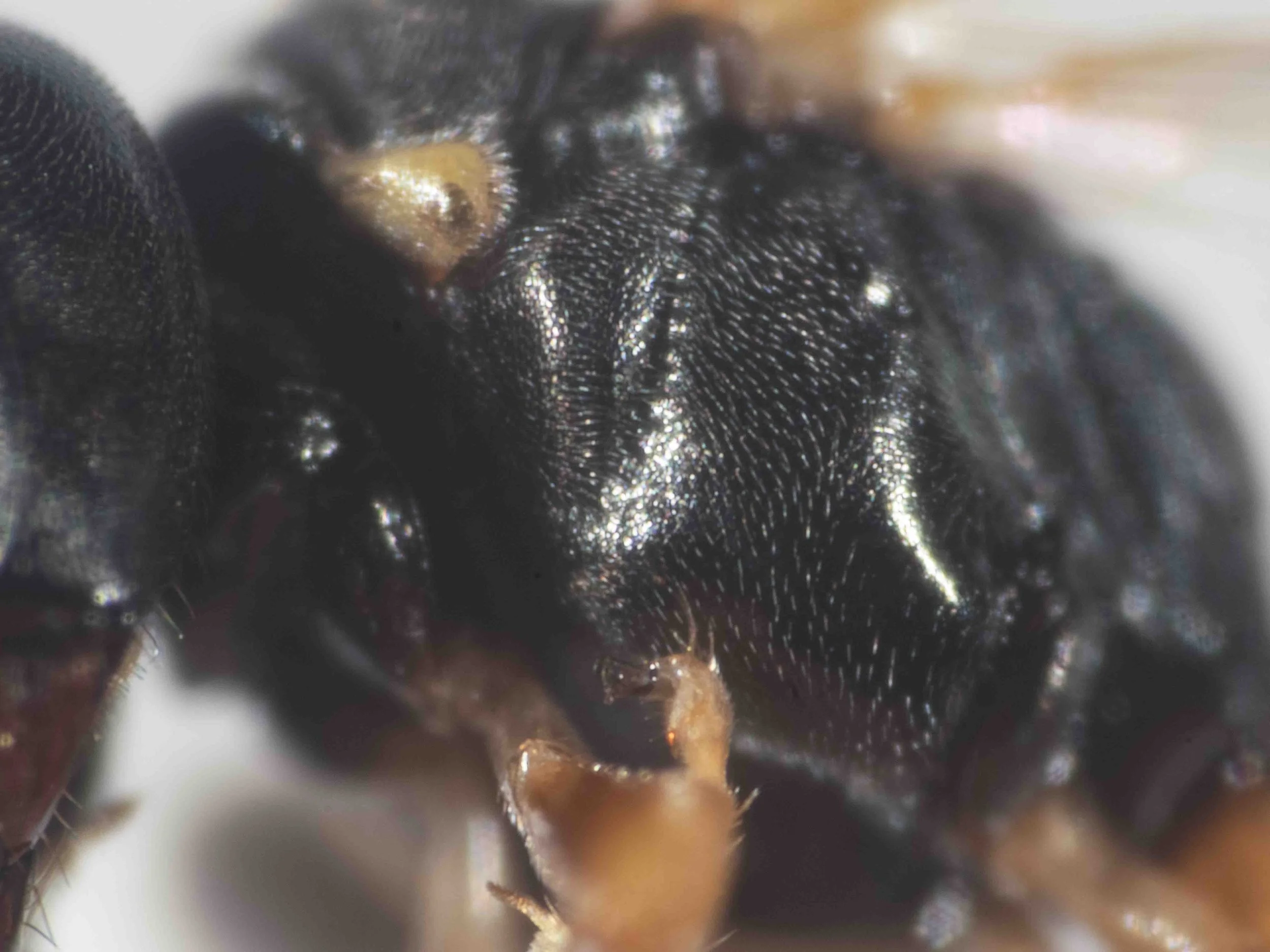
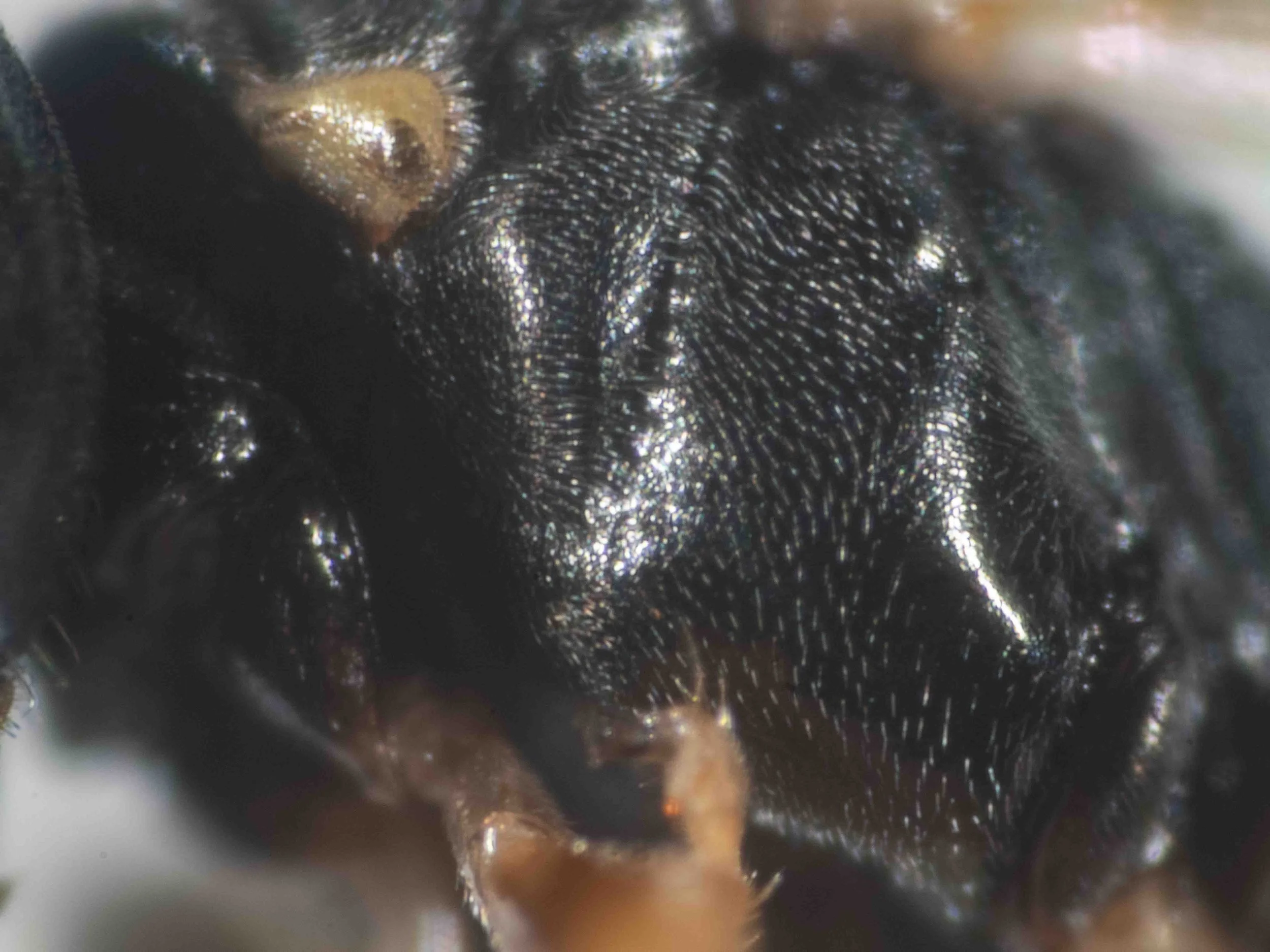
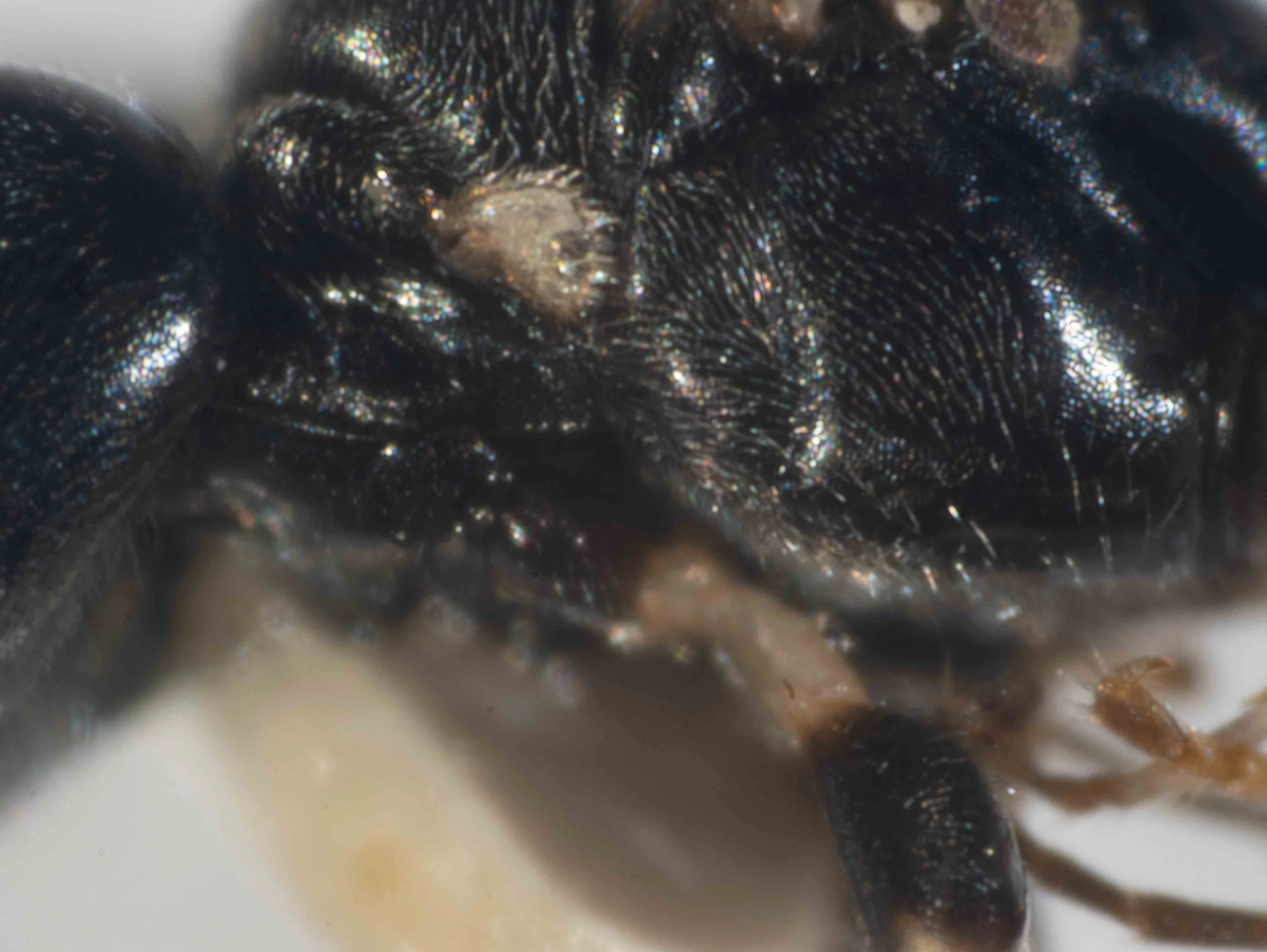
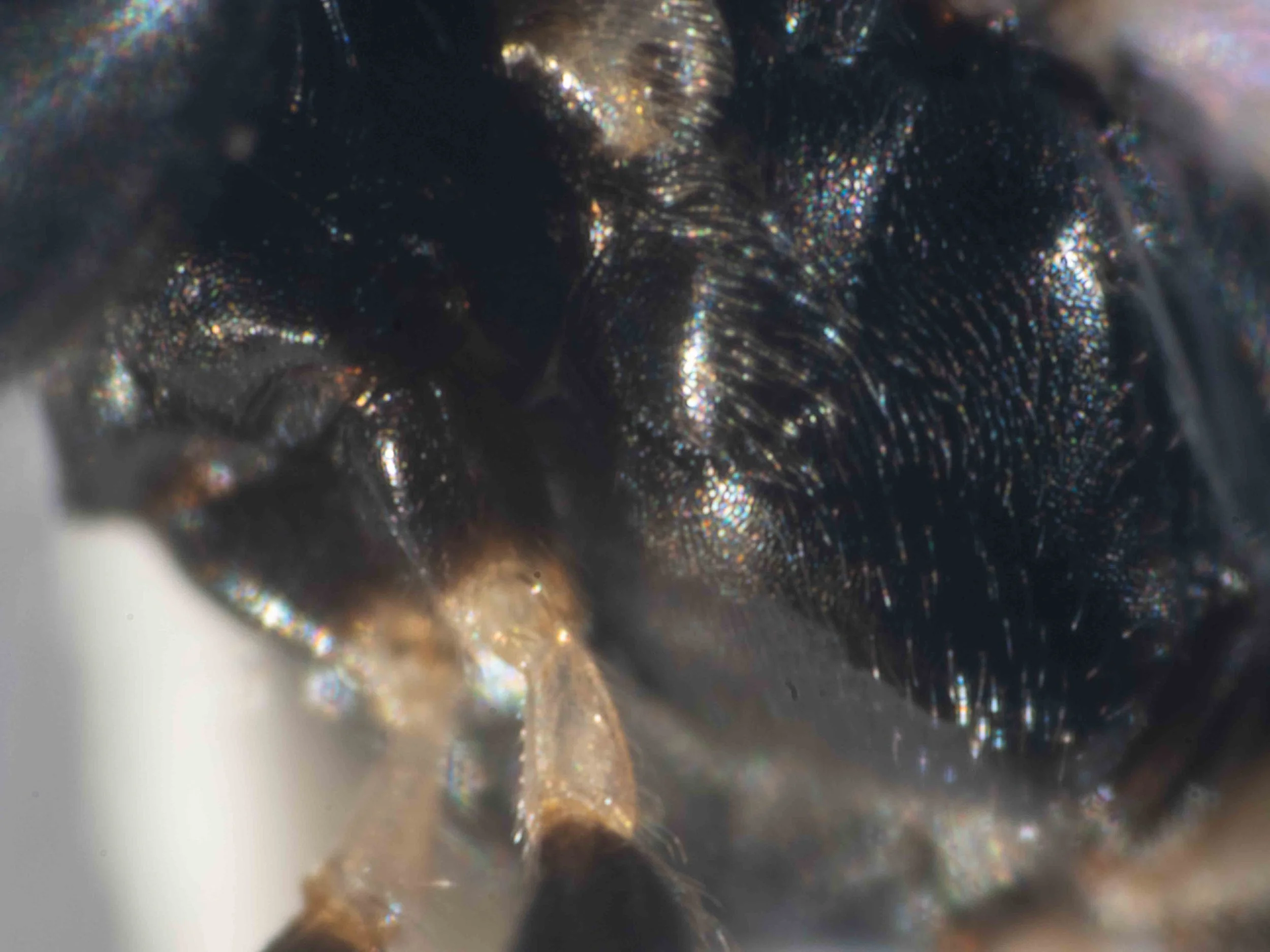
Prepectus: area rounded (although anterior & lateral planes distinct); epicnemial carina entirely absent
Verticaulus absent
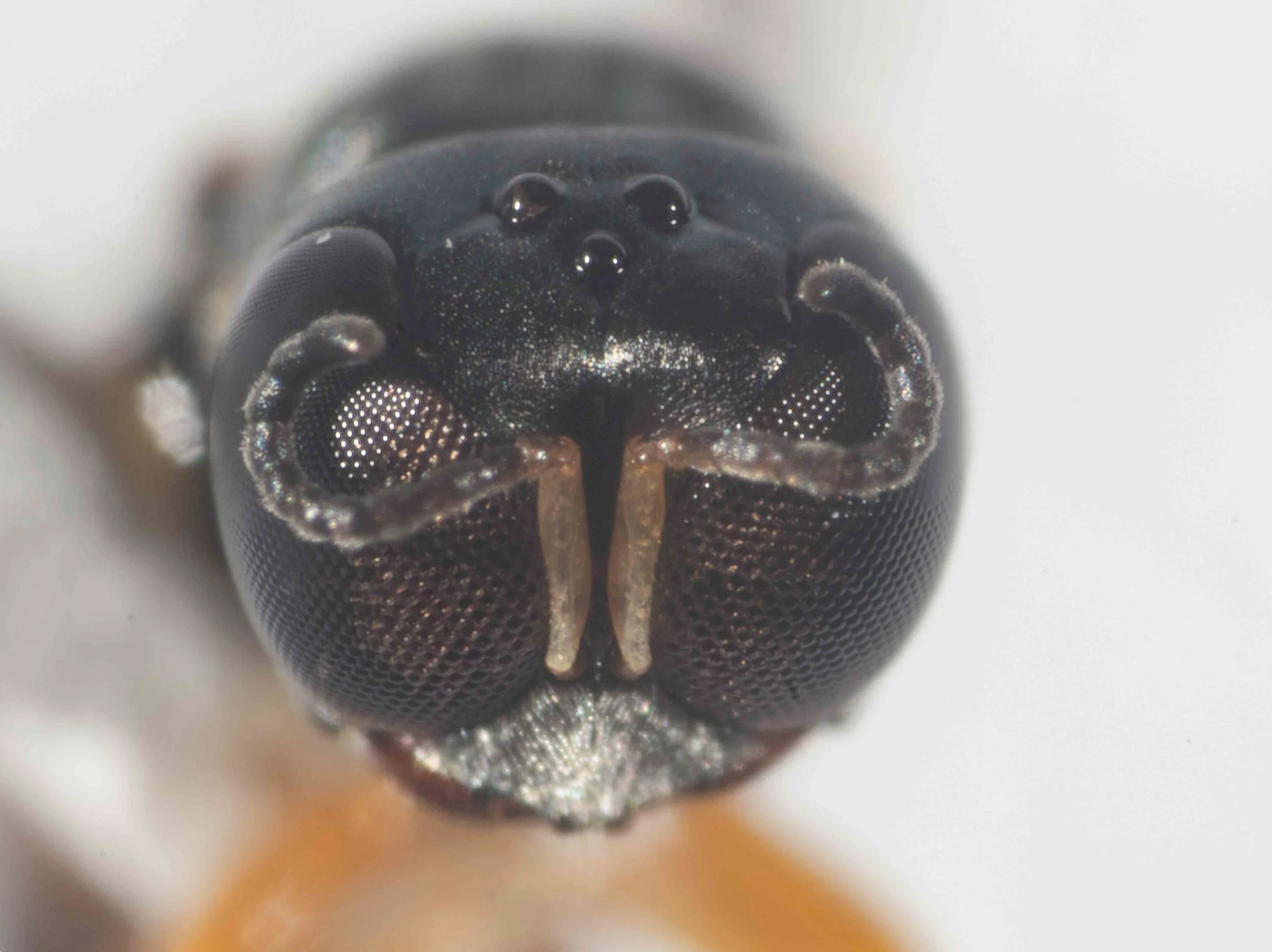
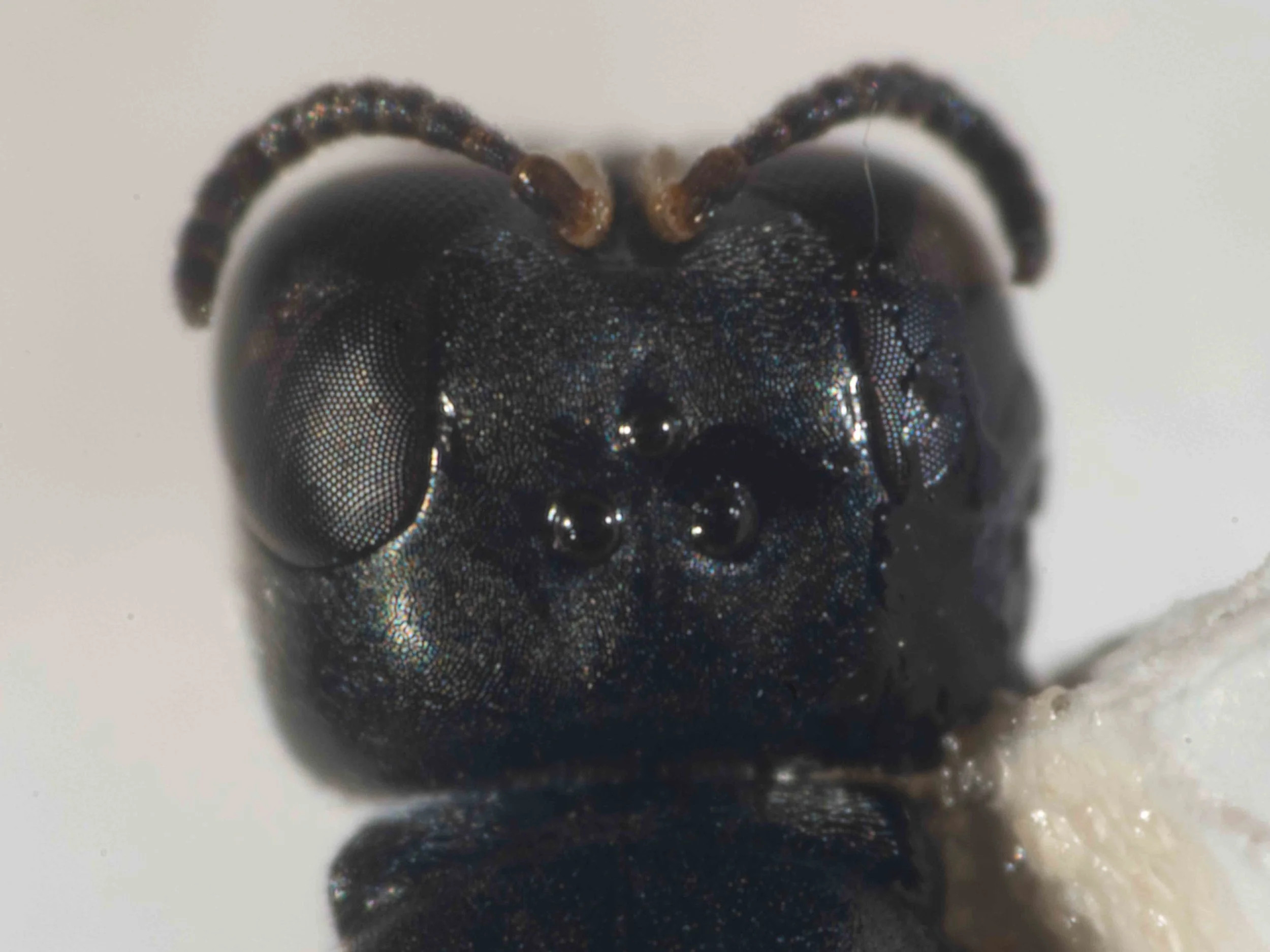
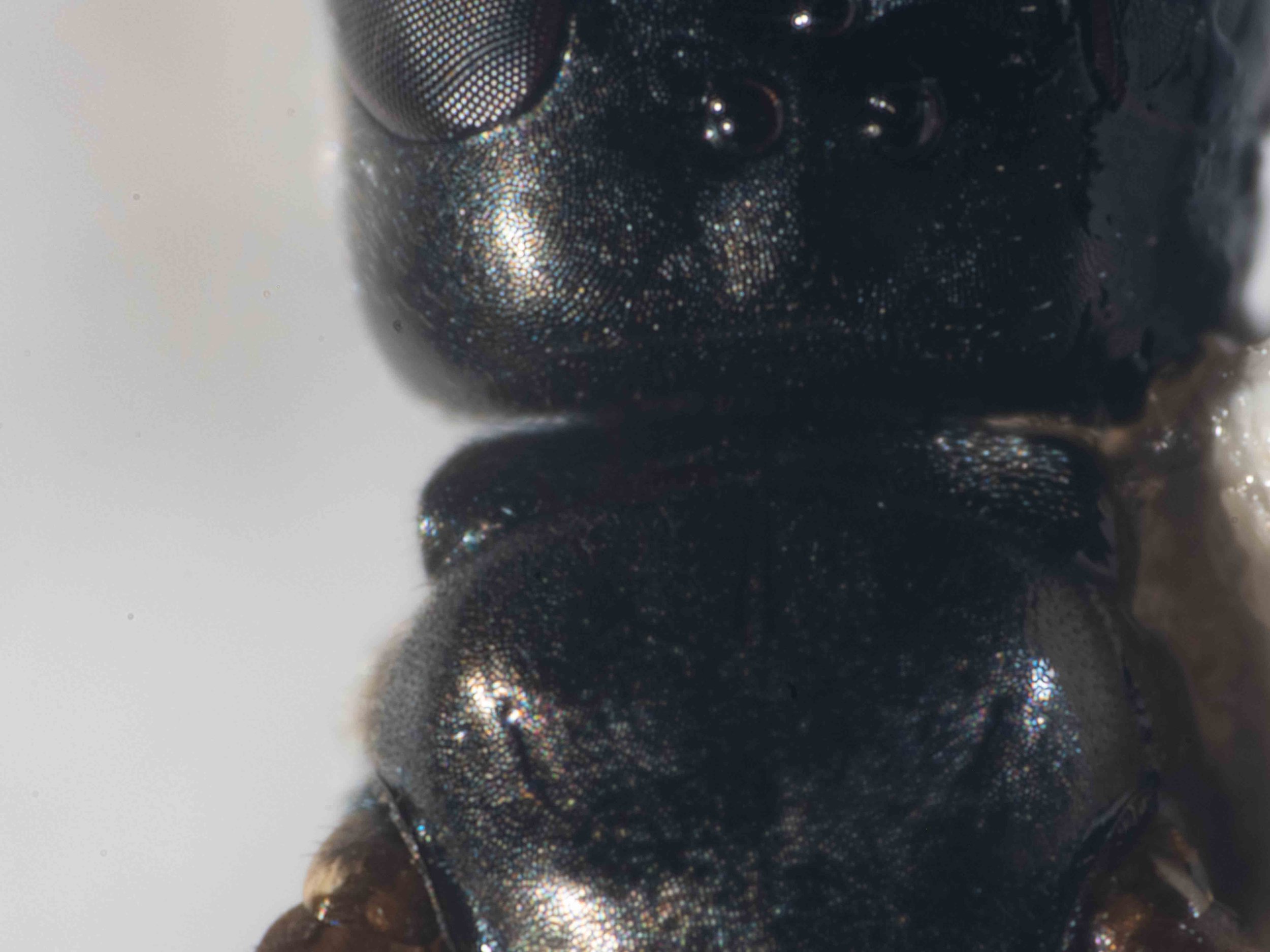
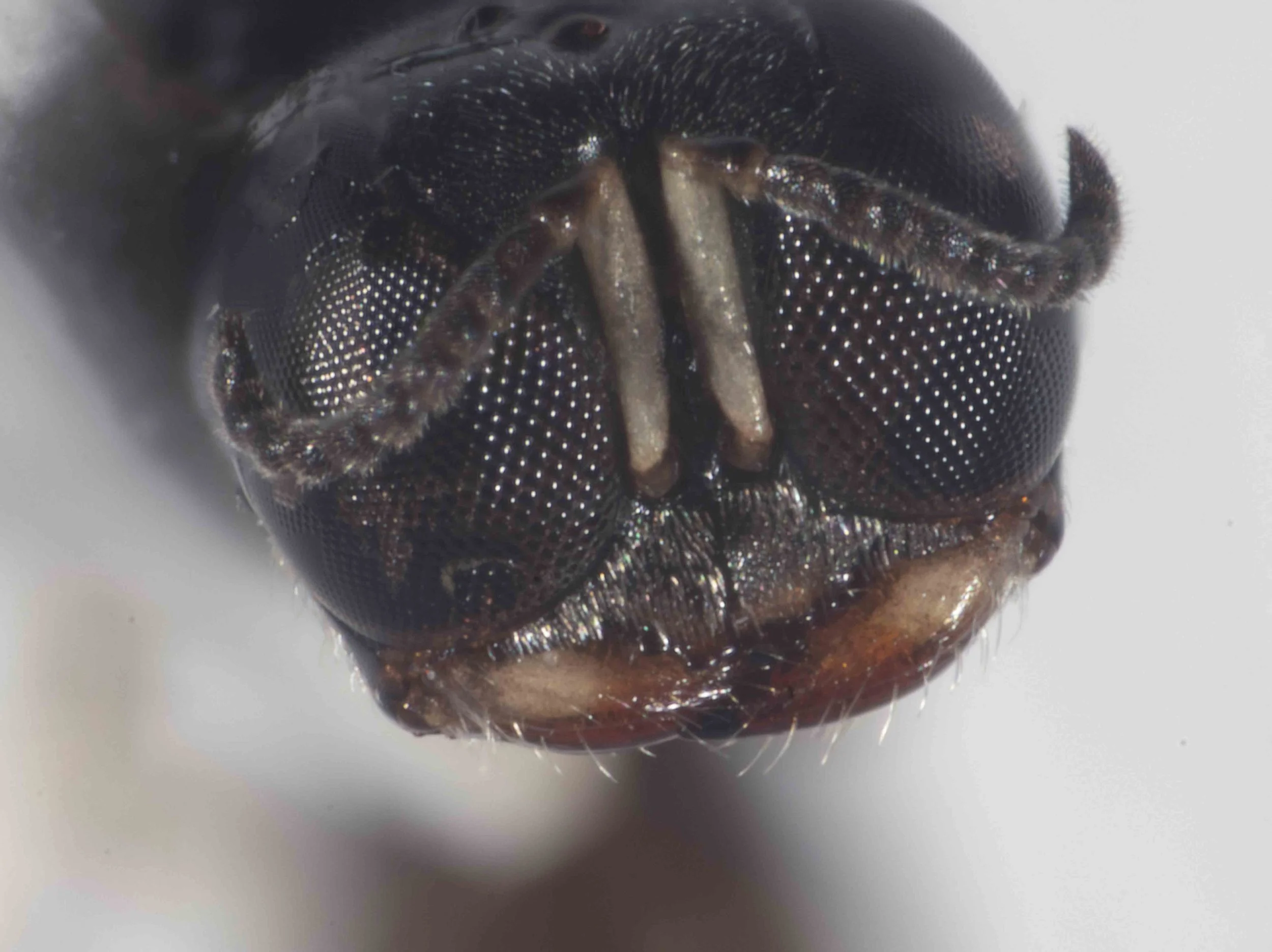
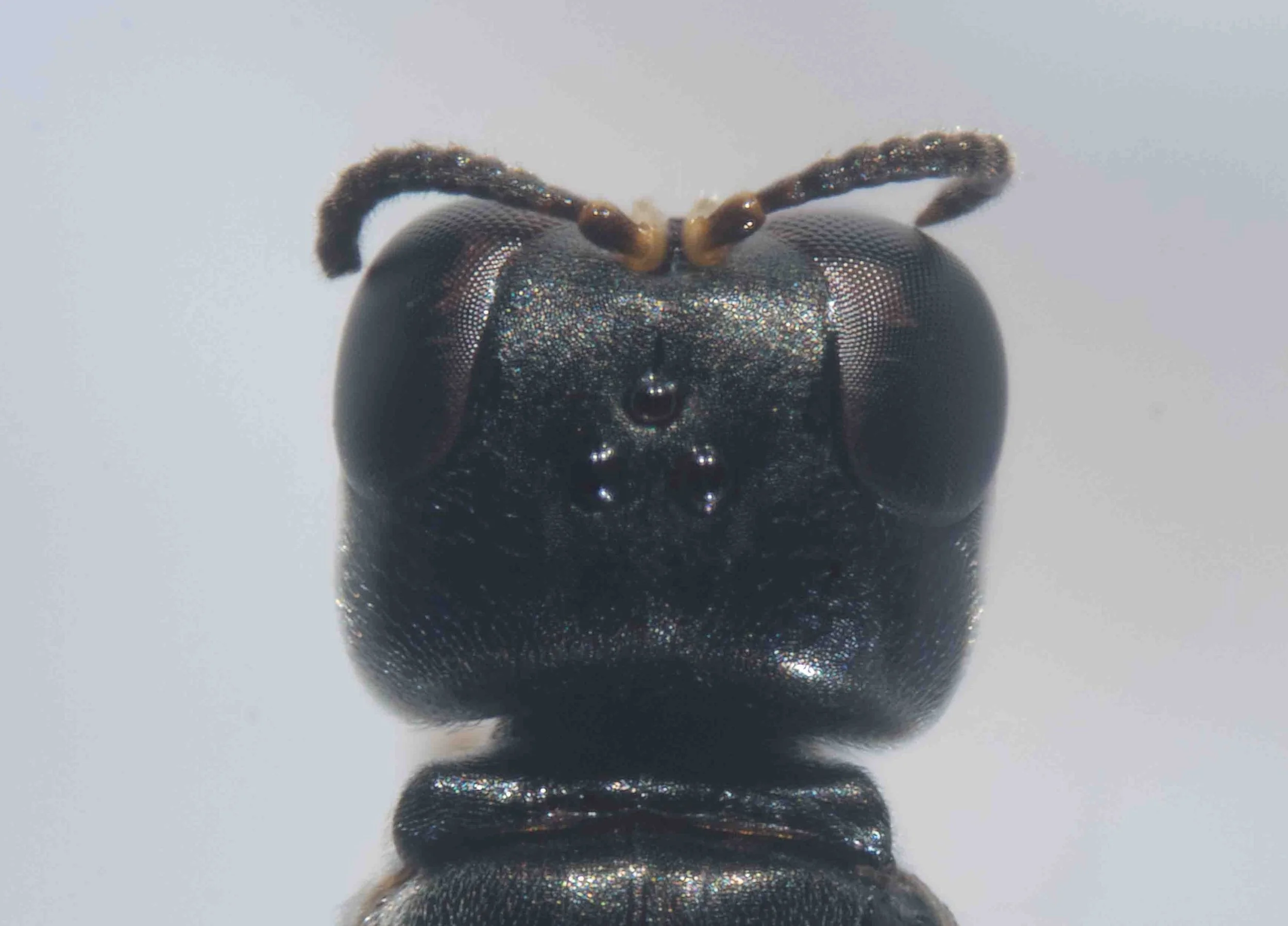
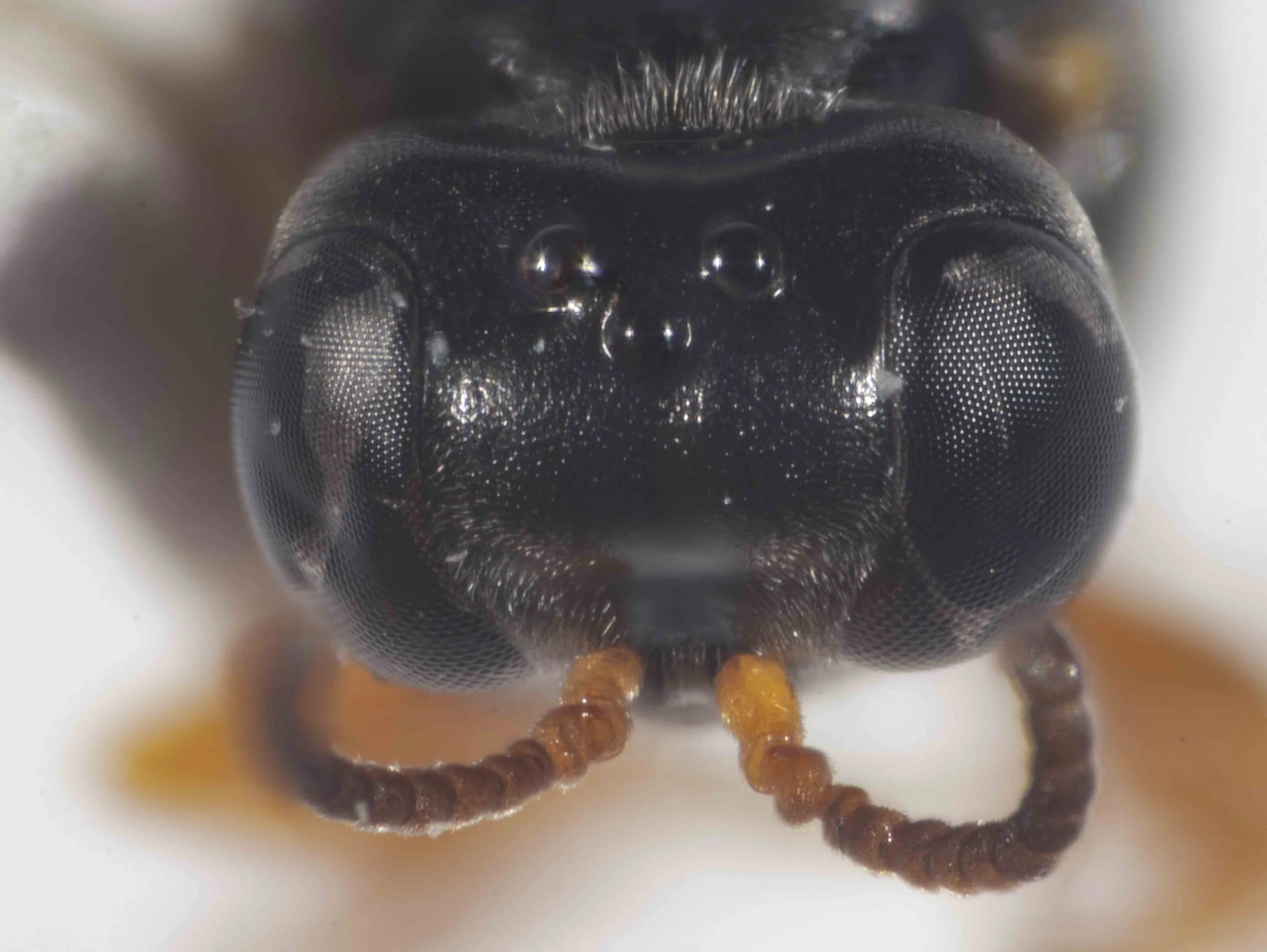
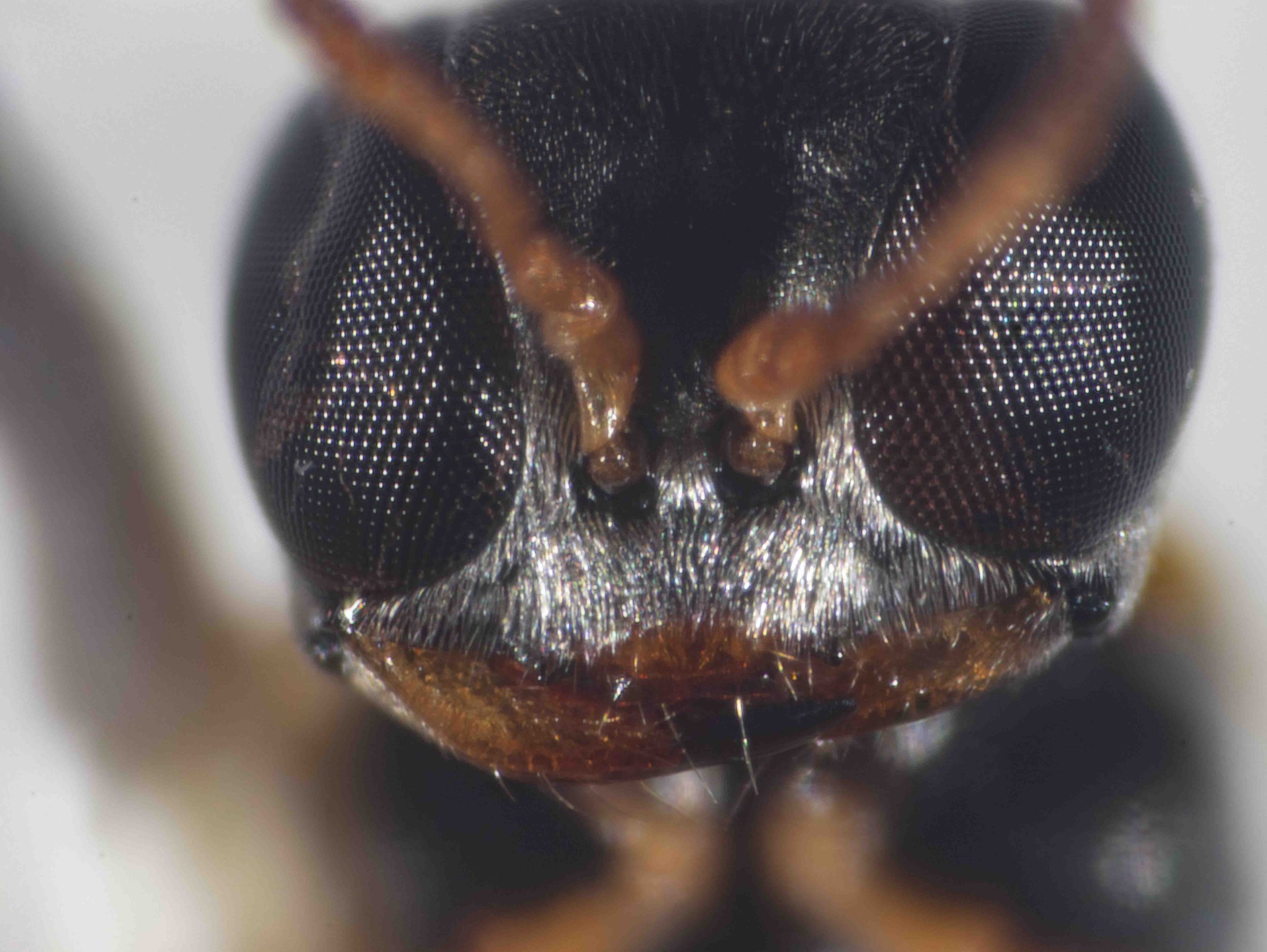
Head shape: subquadrate (in dorsal view)
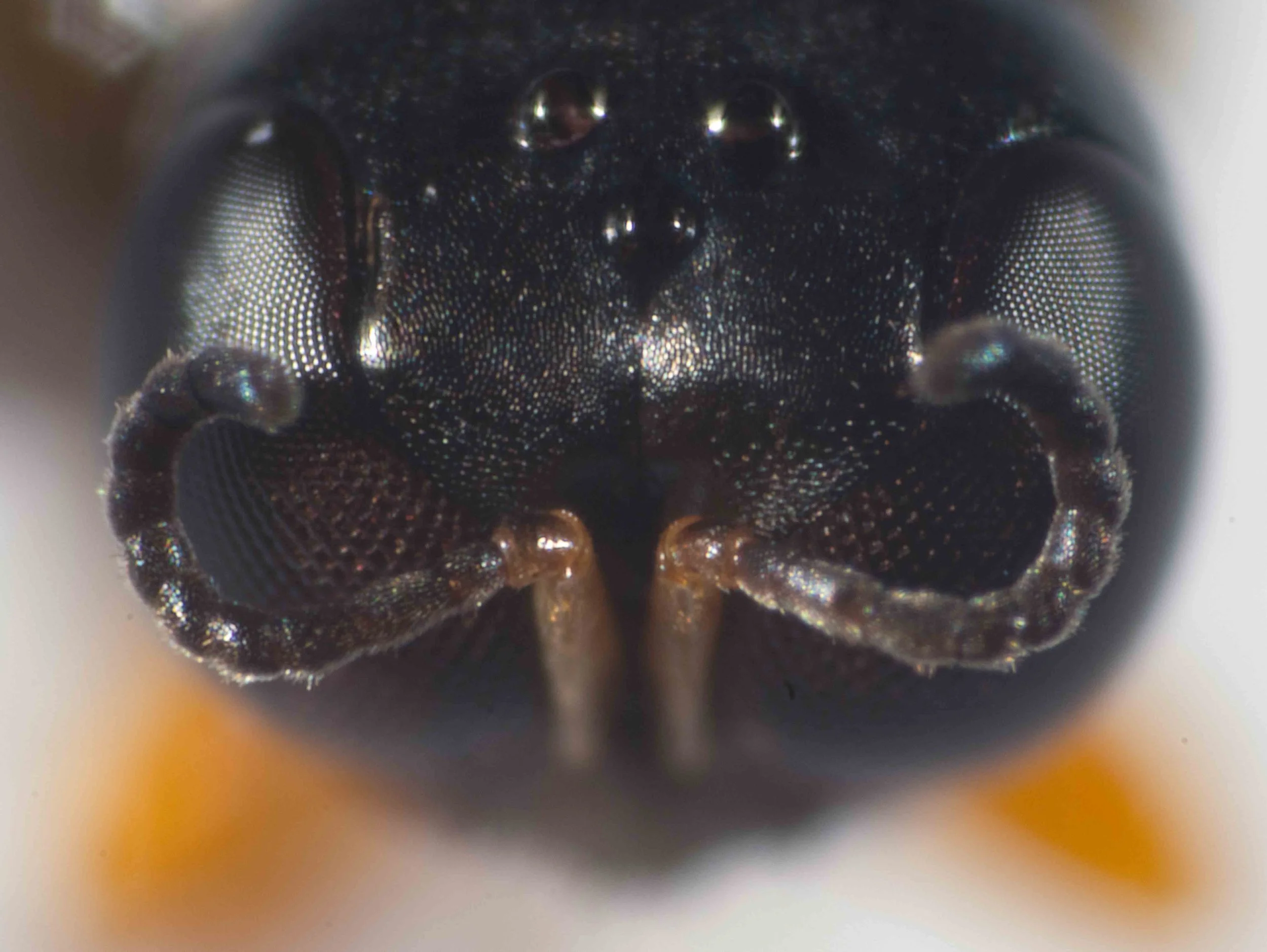
Ocelli arrangement: subequilateral triangle
Note PO < OO, potentially useful in species identification.
Orbital fovea: distinct
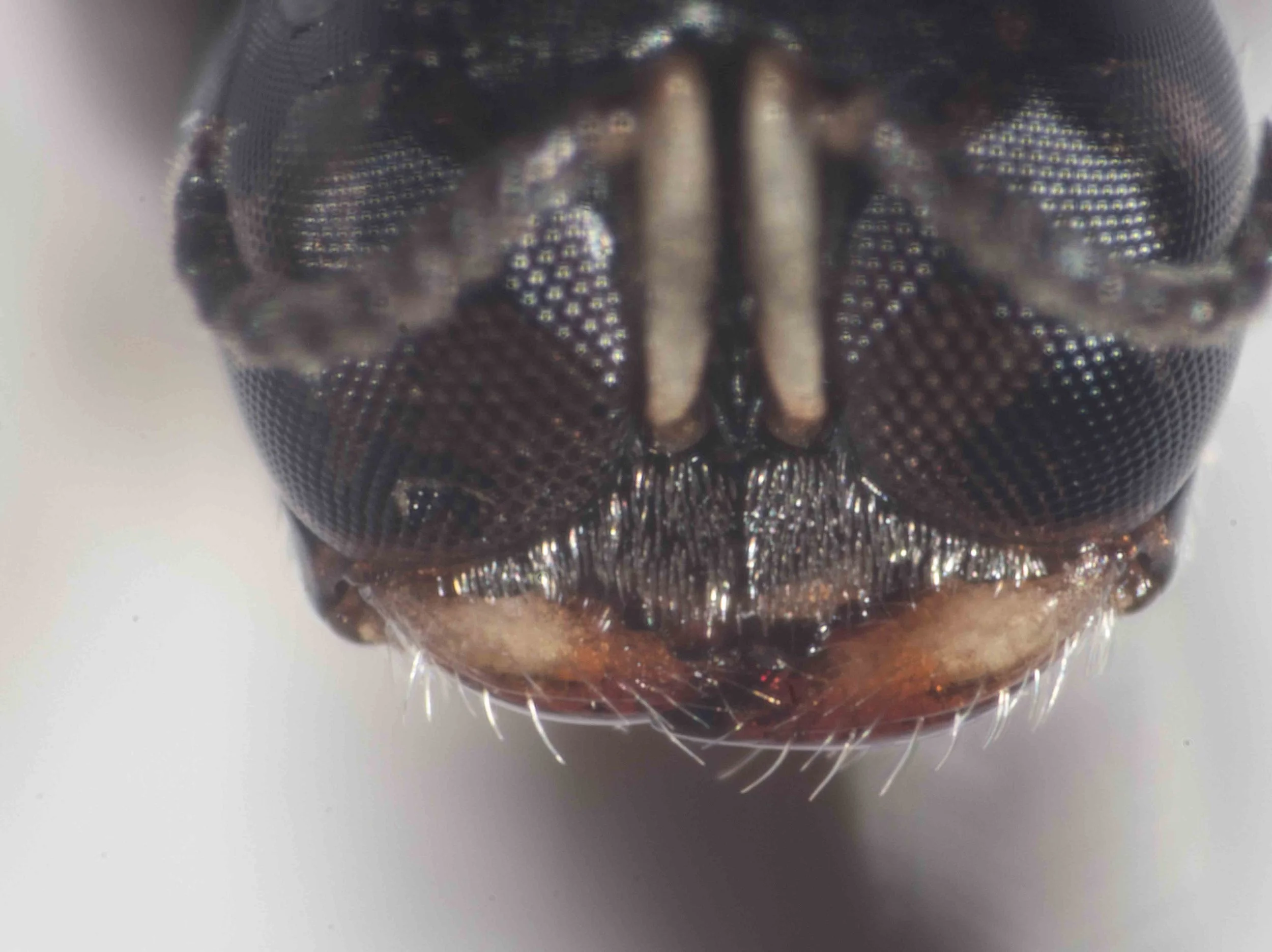
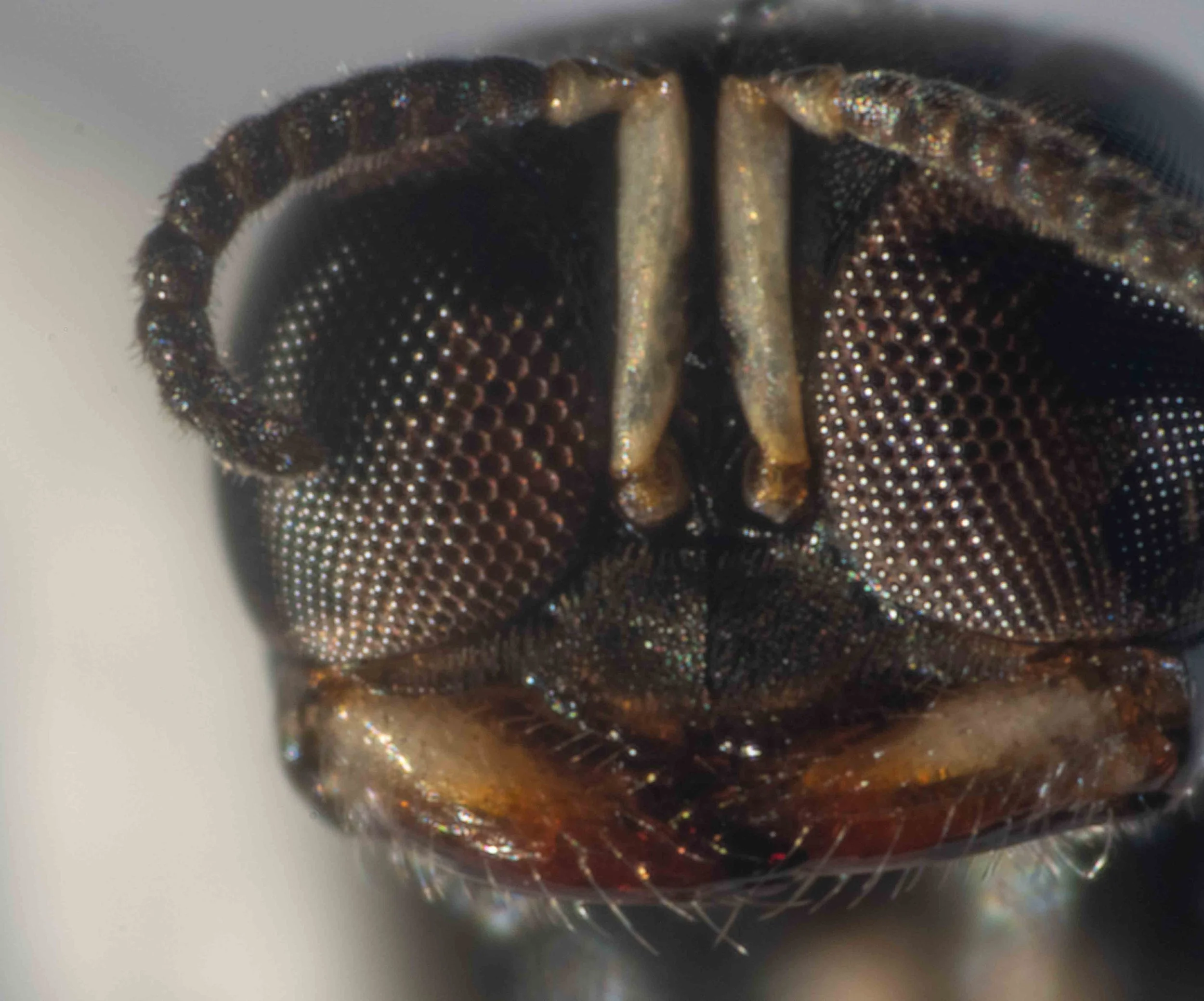
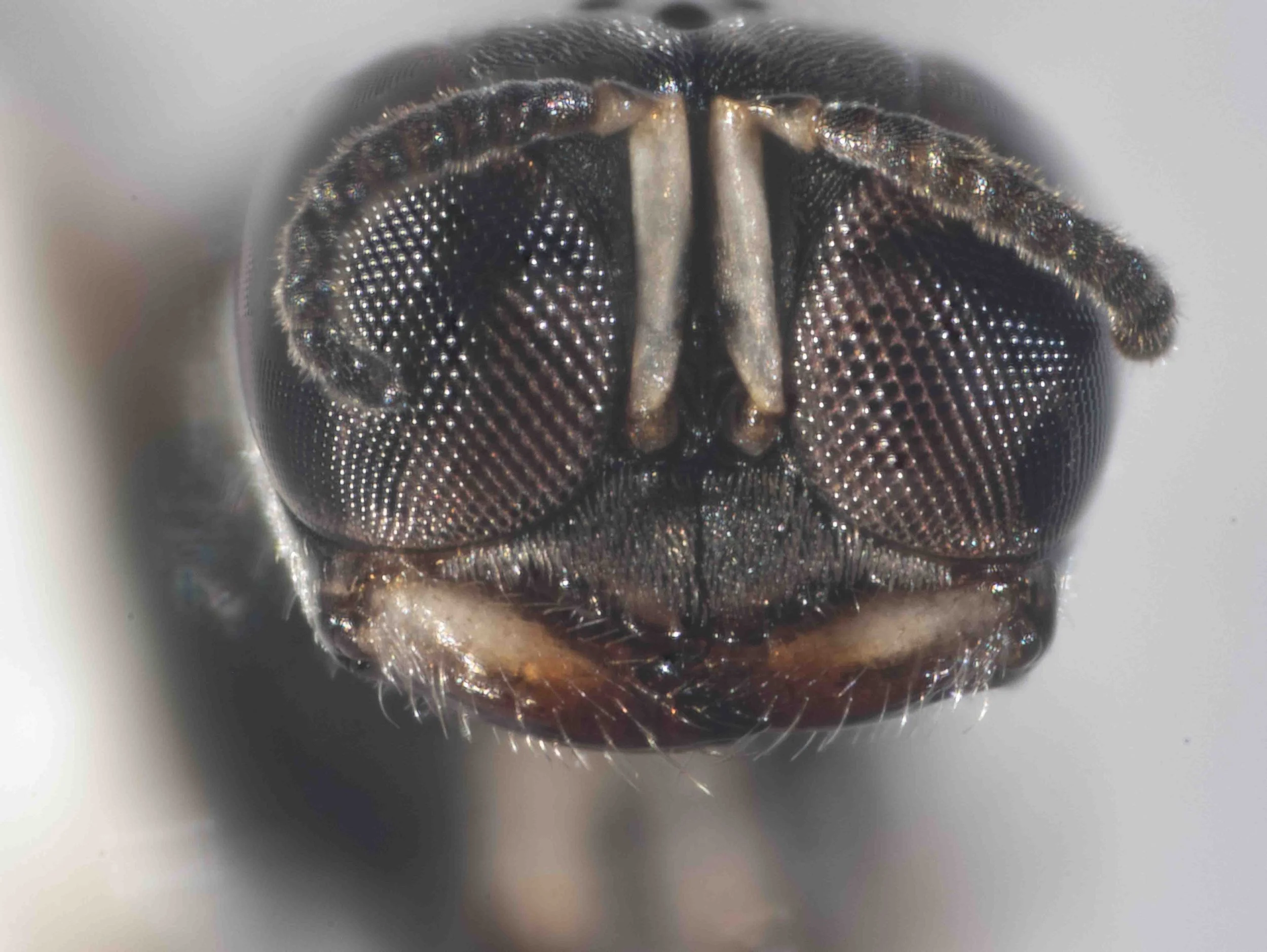
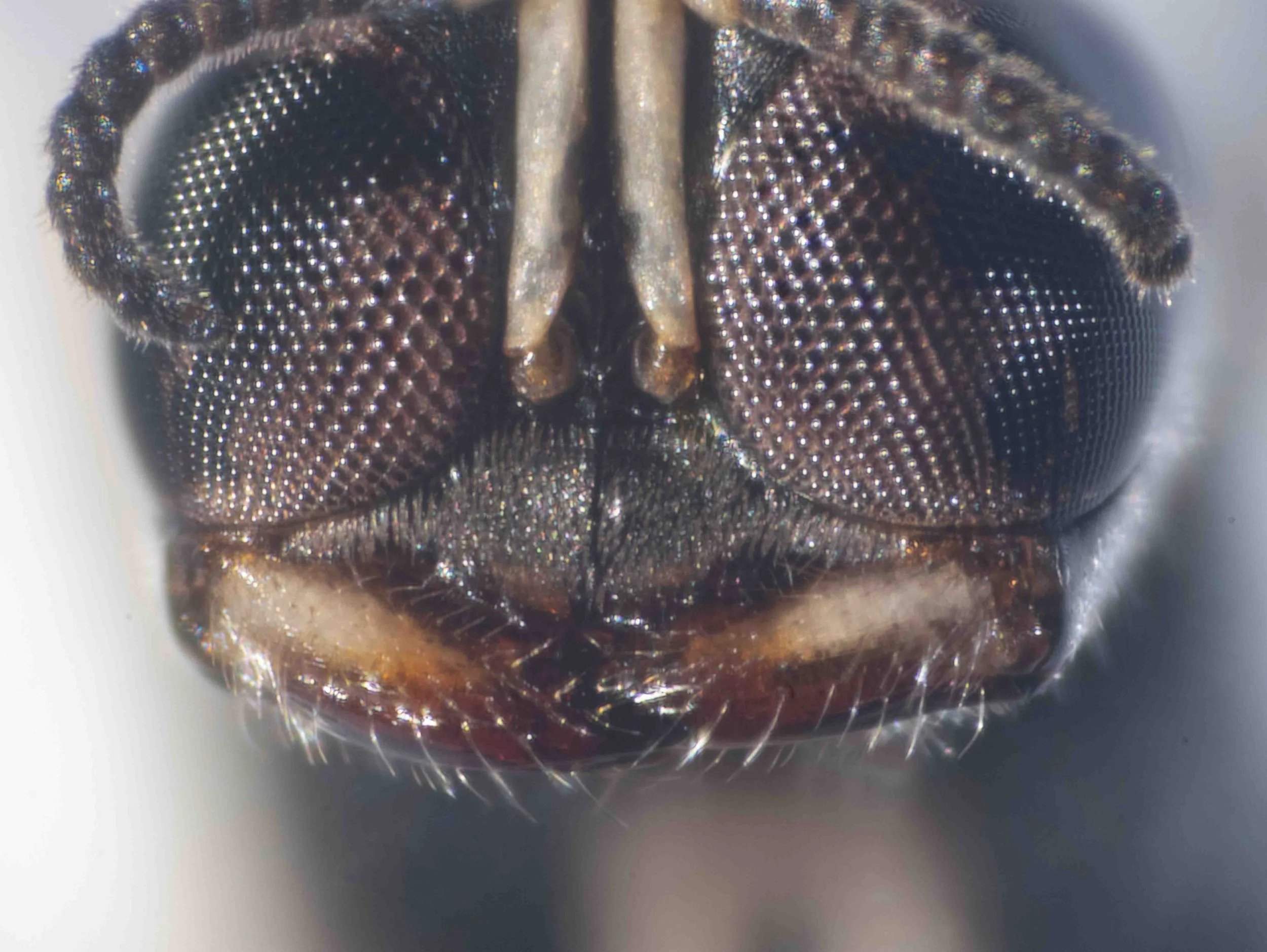
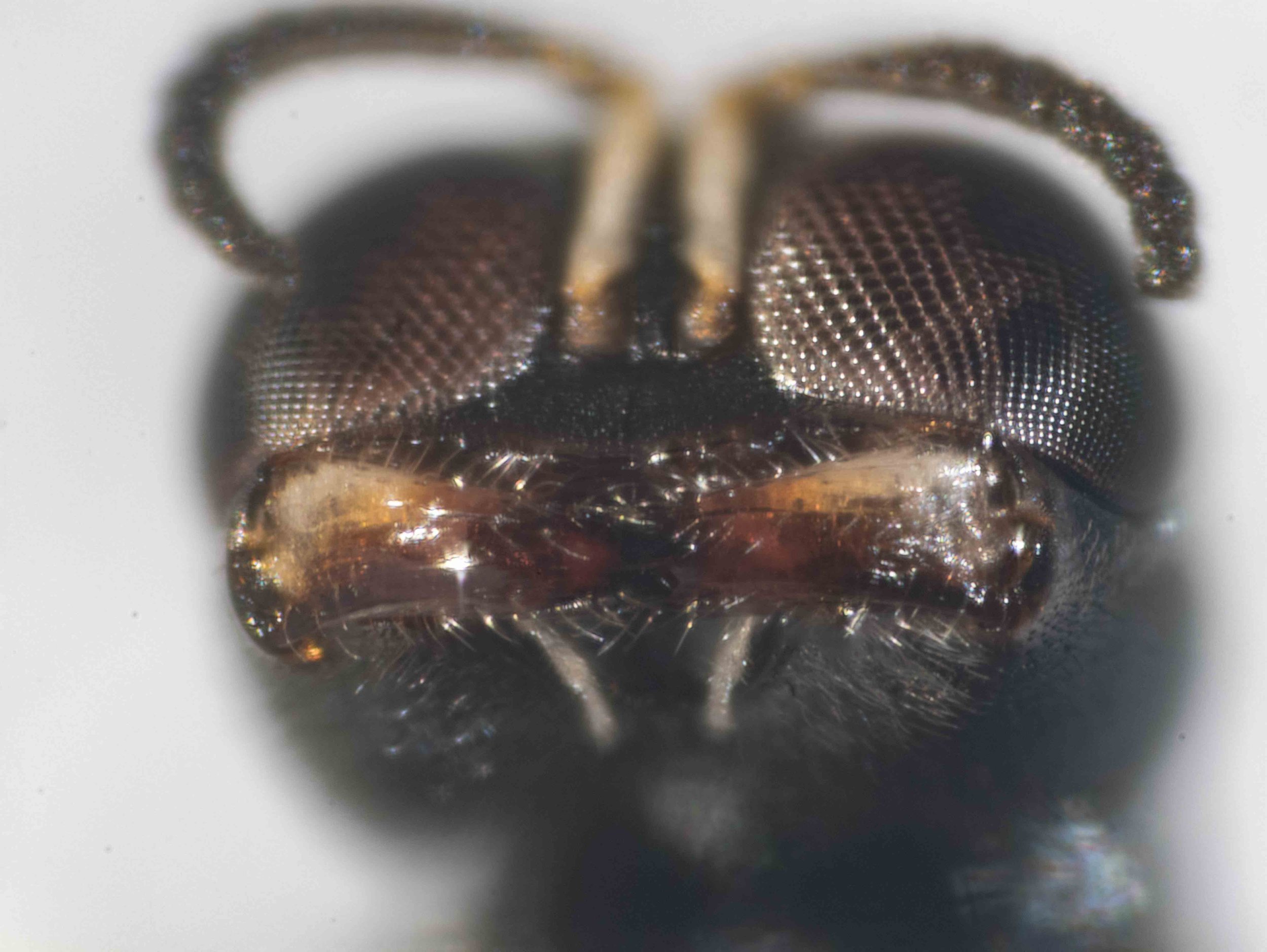
Scapal basin: without dorsal carina
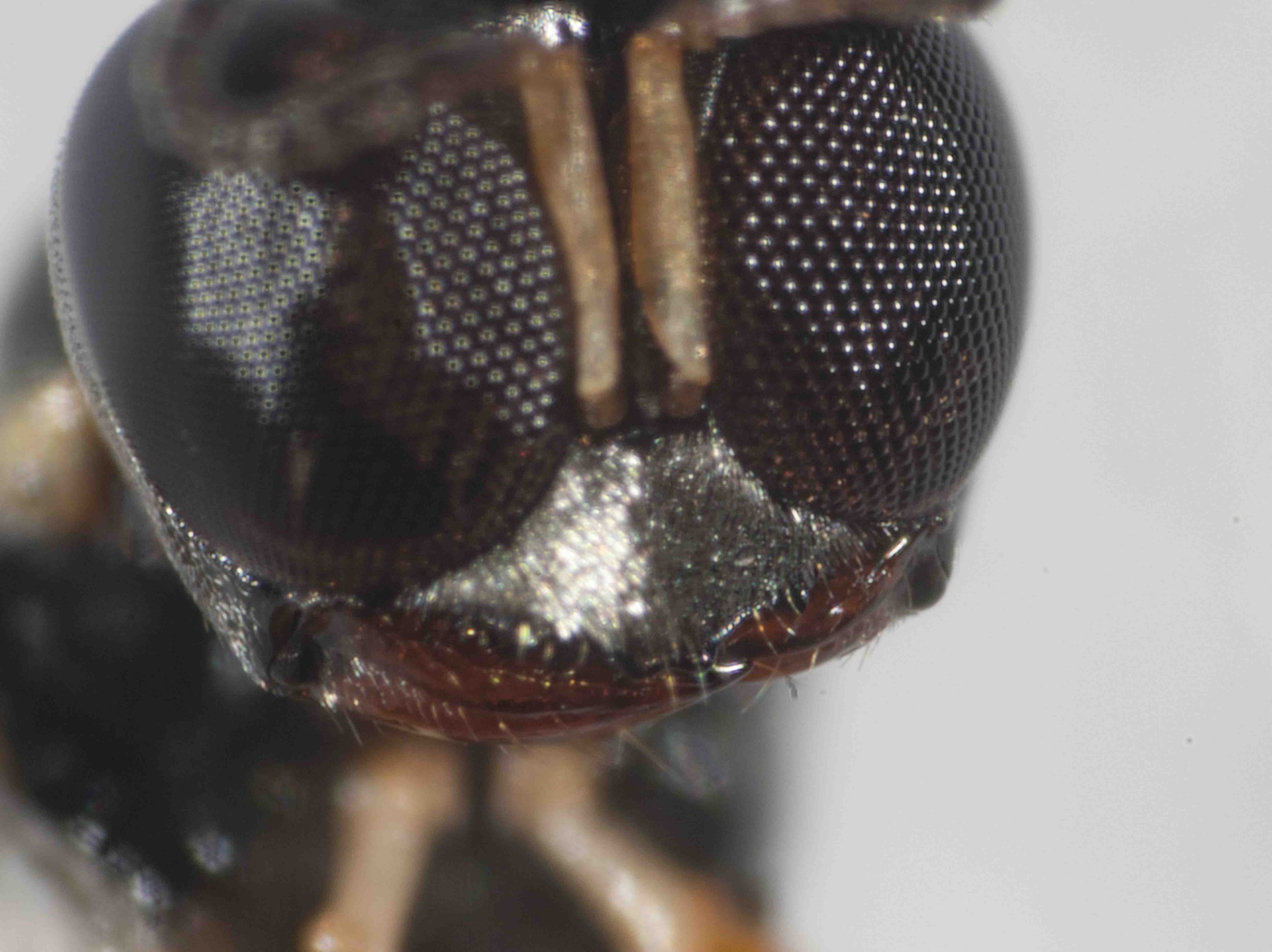
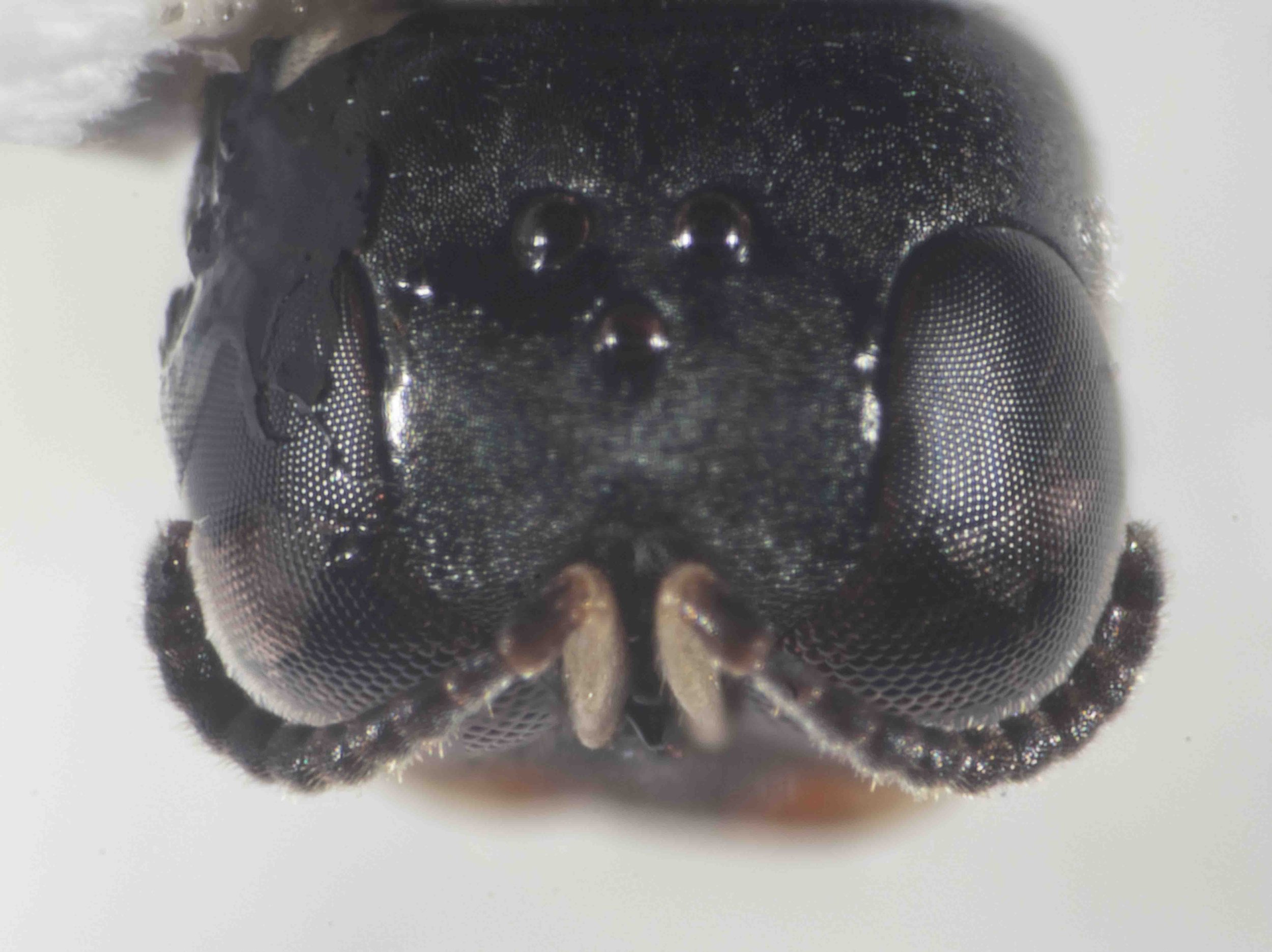
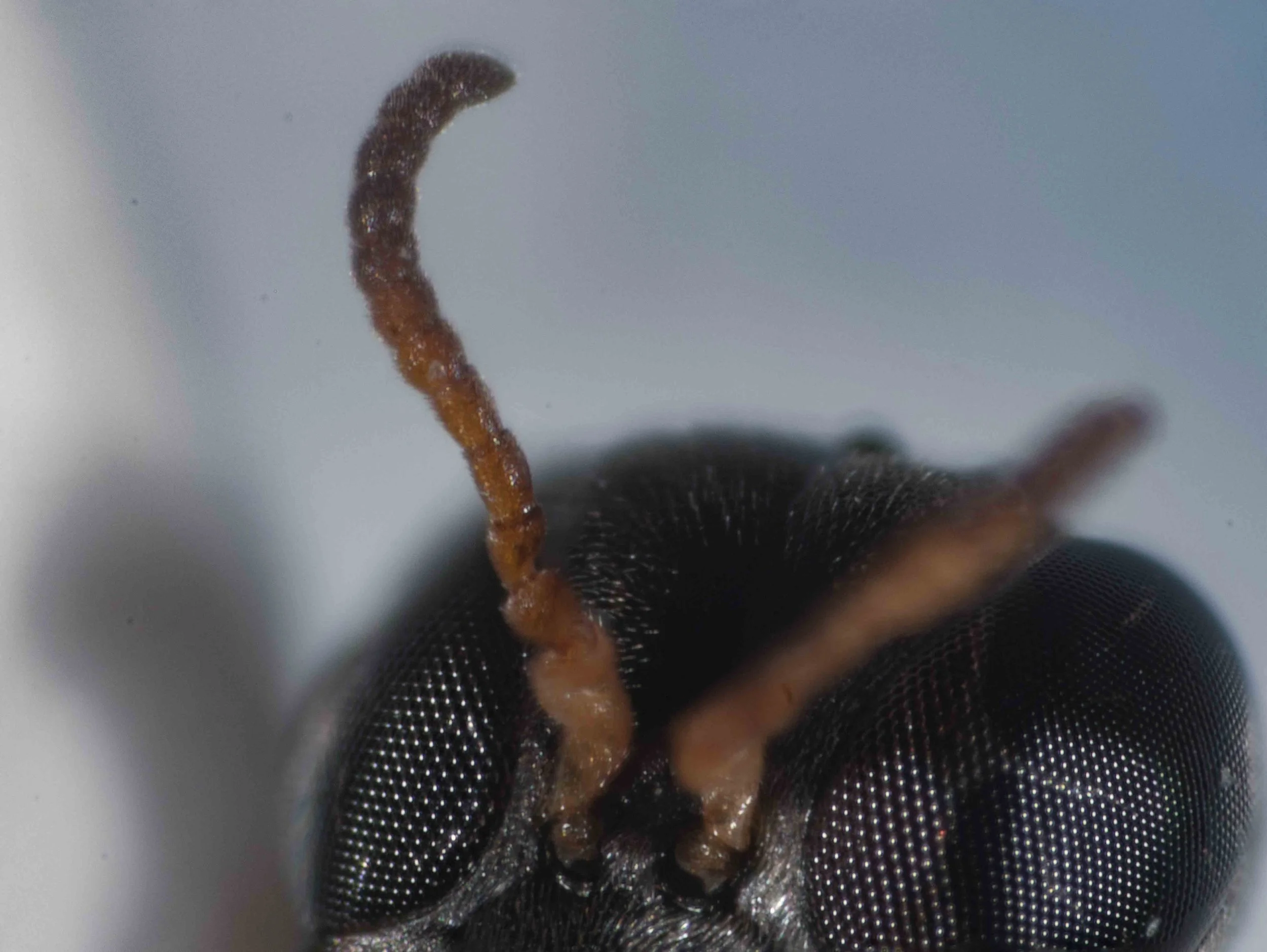
Female: 10 flagellar segments
Scapal basin: without dorsal carina
Note the clypeus shape … potentially helpful in species identification.
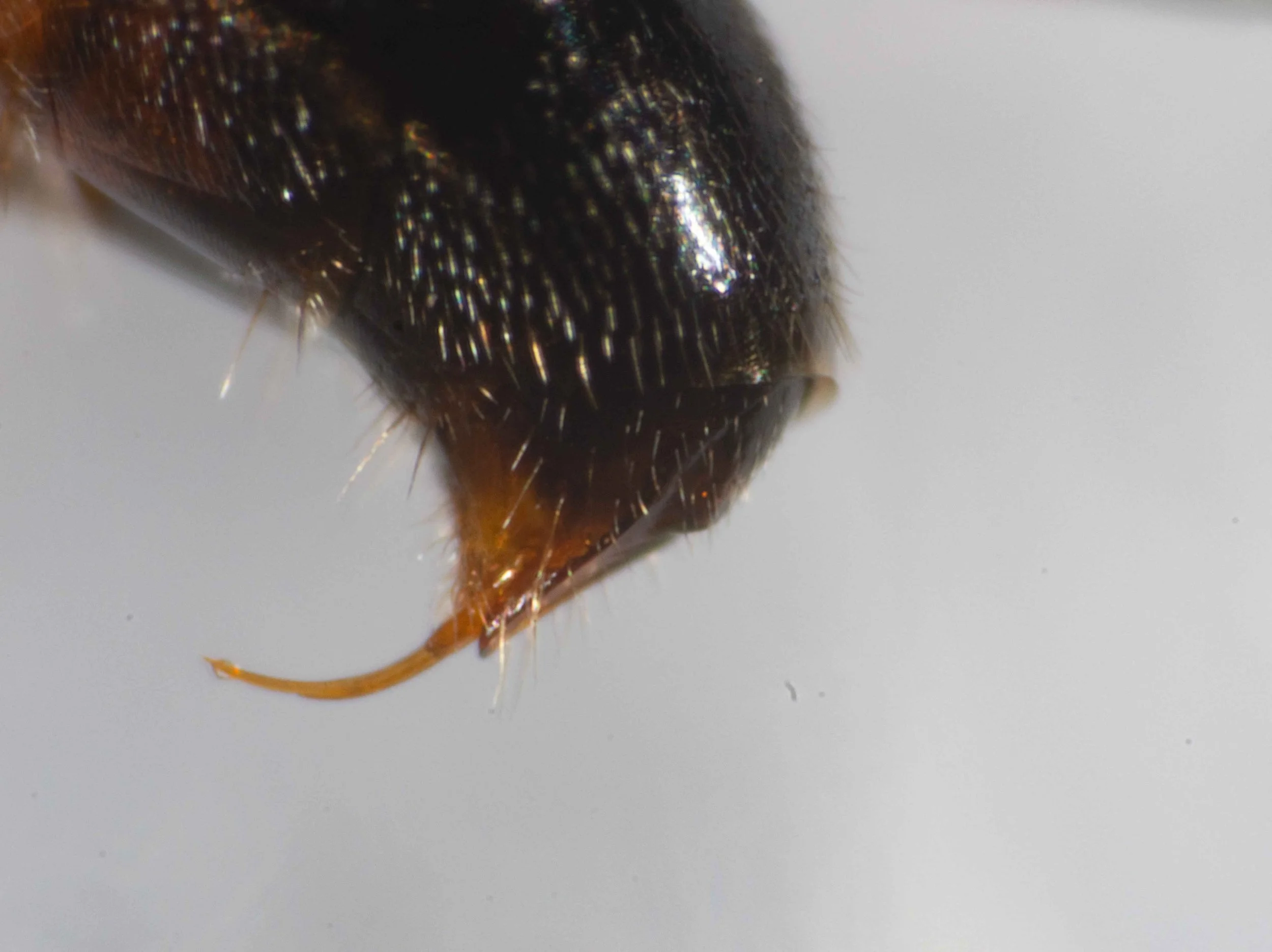
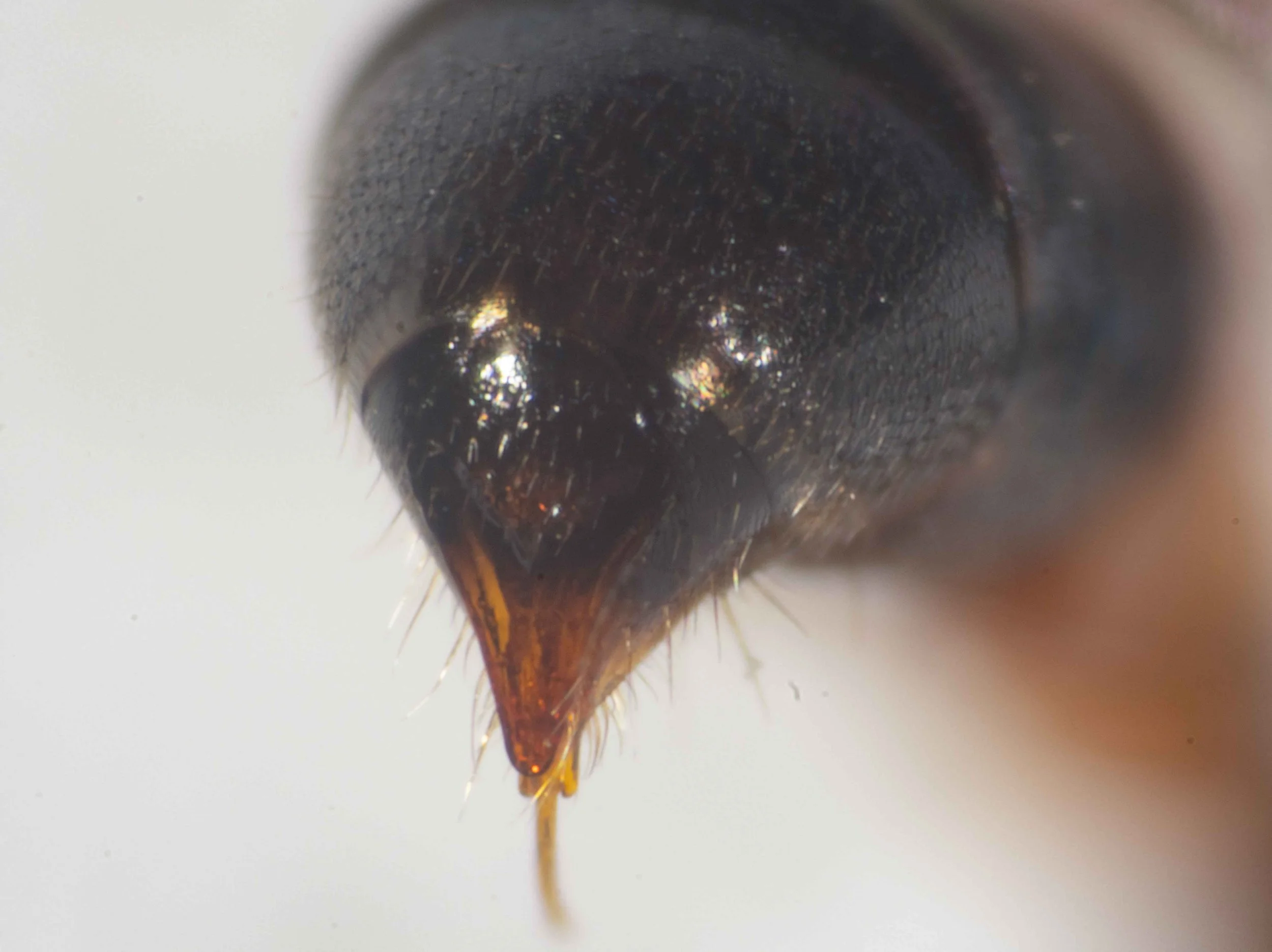
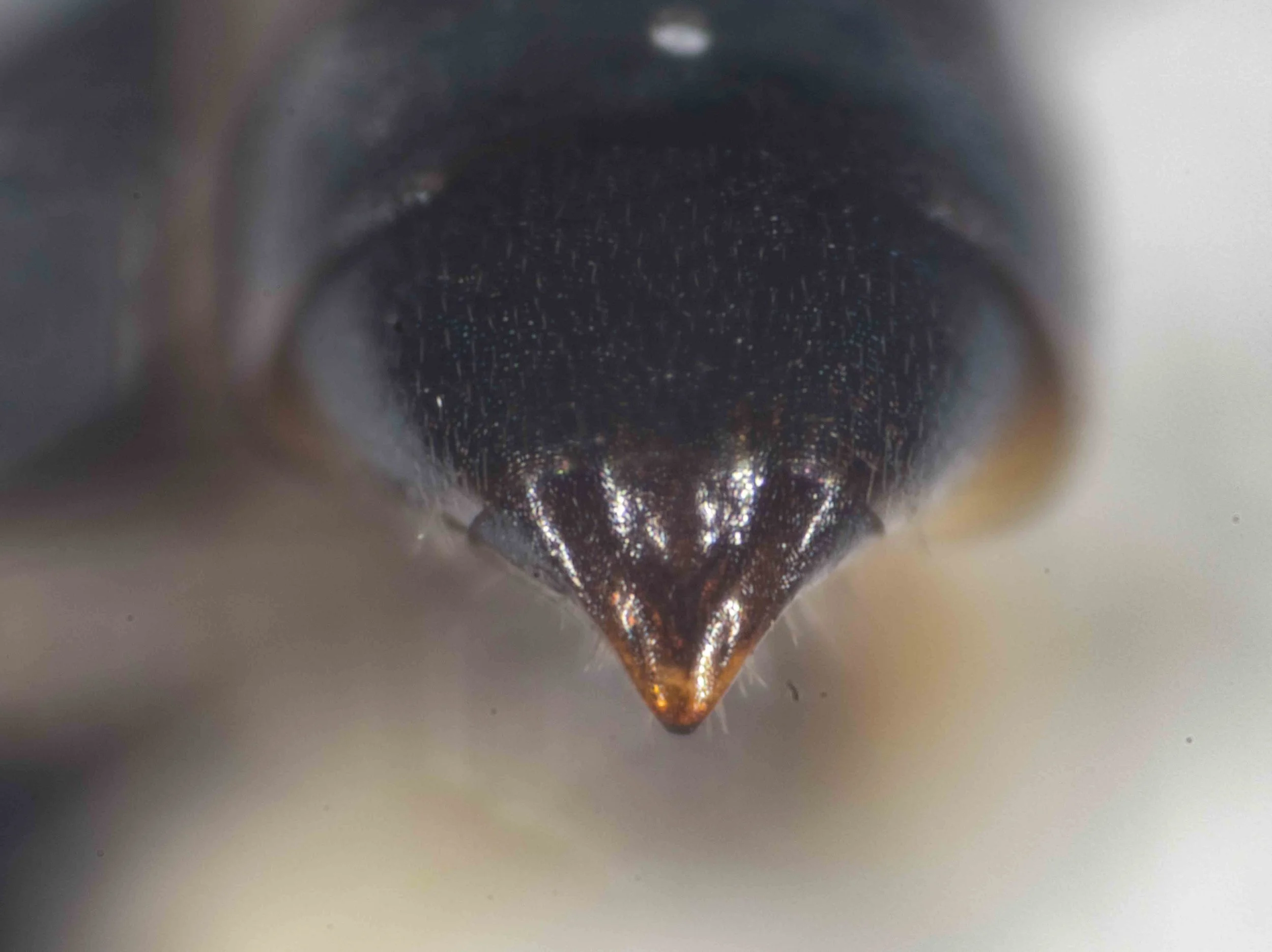
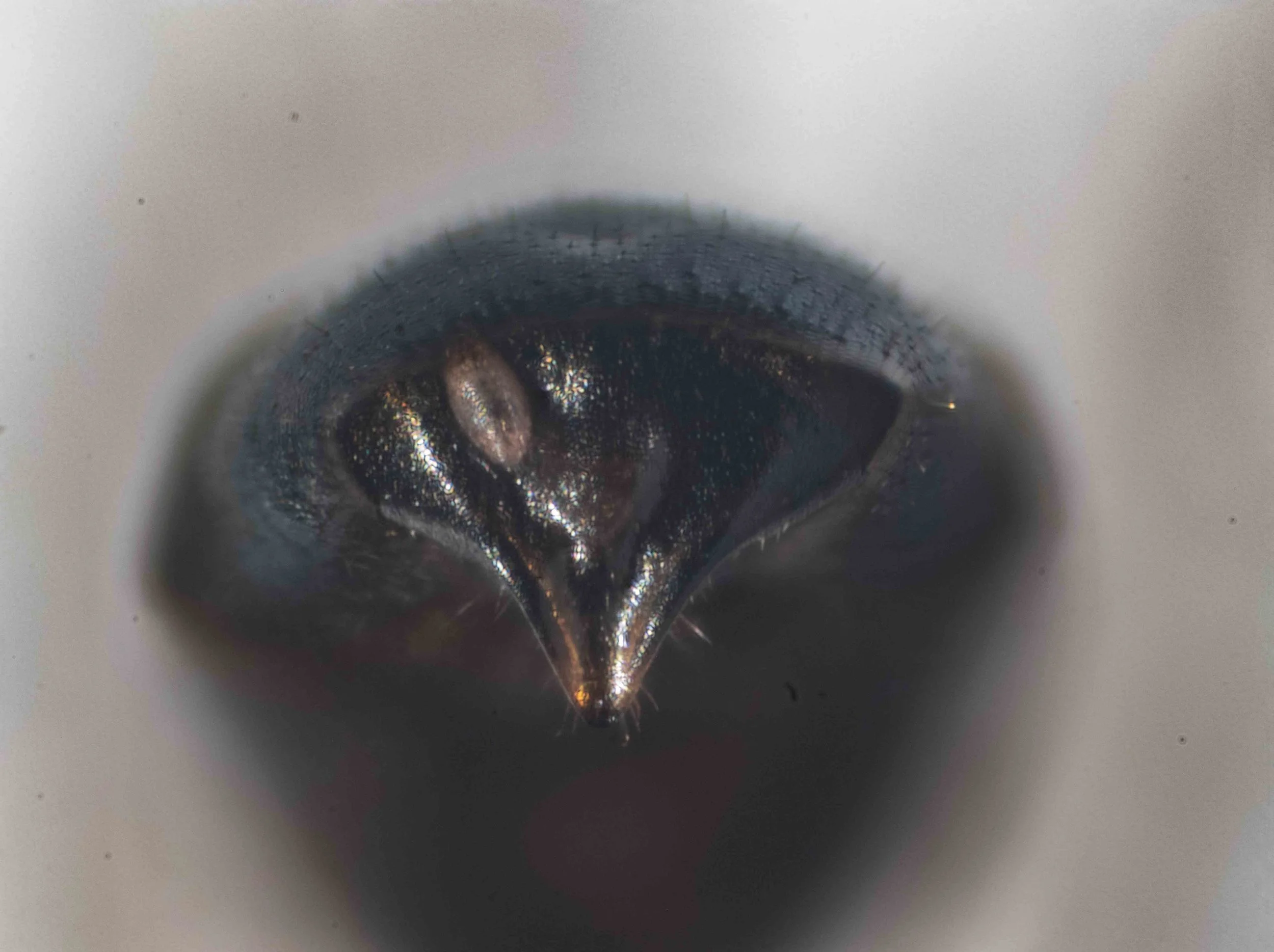
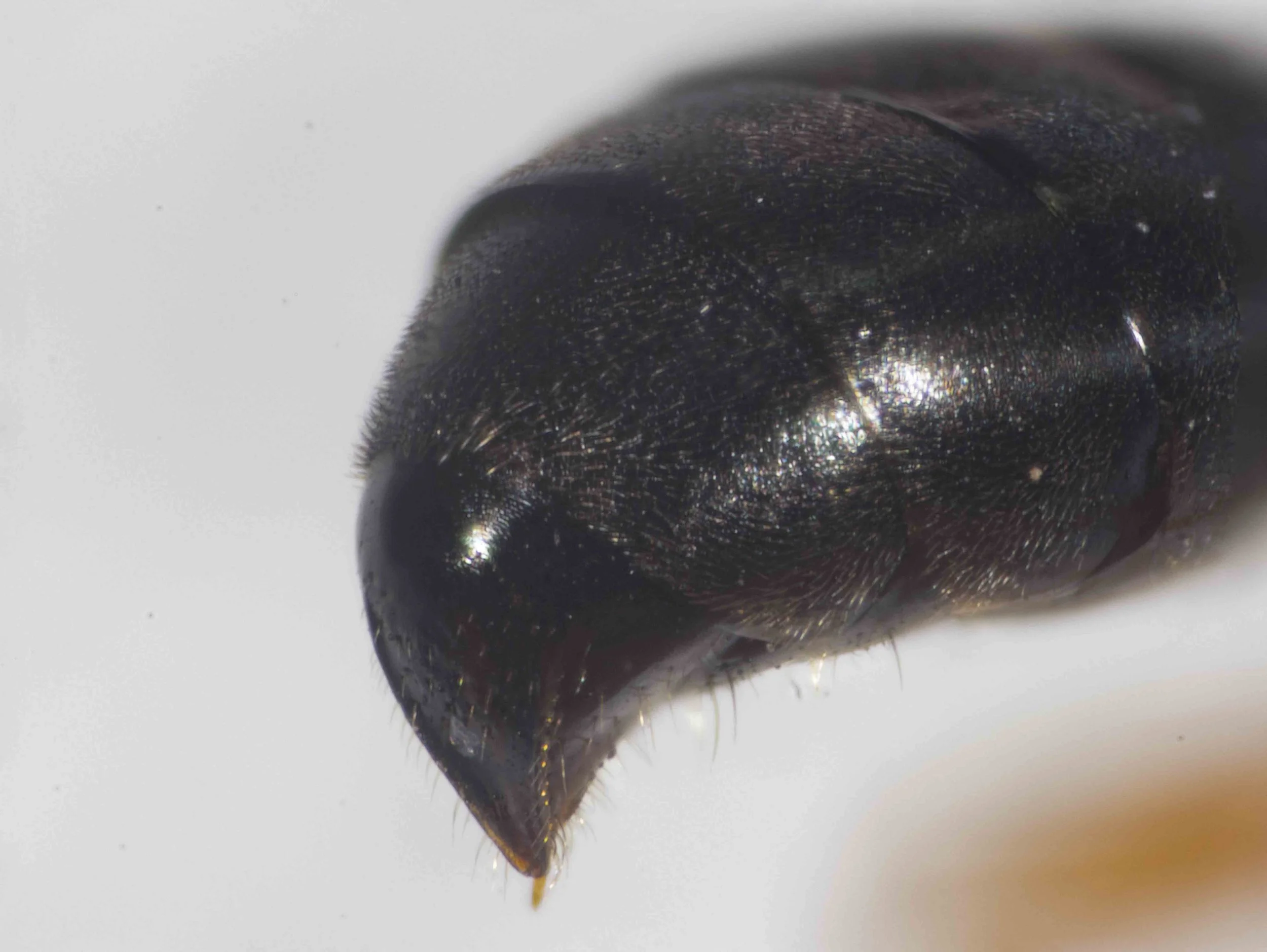
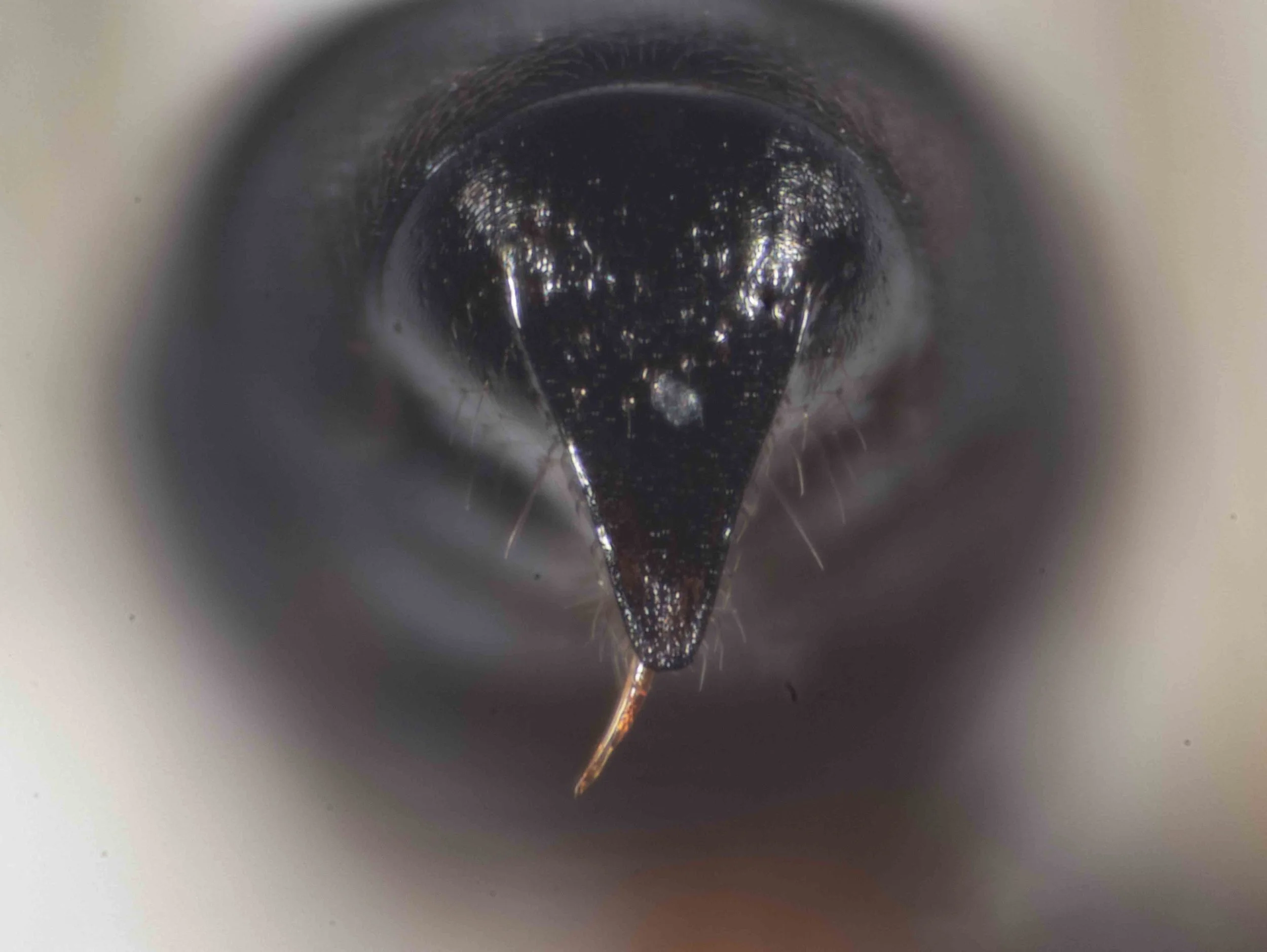
Pygidial plate: present
Pygidial plate: apparently impunctate; shiny.
Note the concave apical half and the domed mediobasal region, potentially helpful in species identification.
Size ~ 5mm
Gaster: pedunculate; clavate (widest at T4)
Gaster: clavate (widest at T4)
Scutum higher than pronotal collar, rounded anteriorly
First gastral segment: pedunculate; weakly nodose when viewed laterally
Forewing venation: single submarginal cell; recurrent vein meets submarginal cell beyond middle (ratio of basal to apical segments ~ 5:3)
Prepectus: area rounded; epicnemial carina entirely absent
Verticaulus: absent
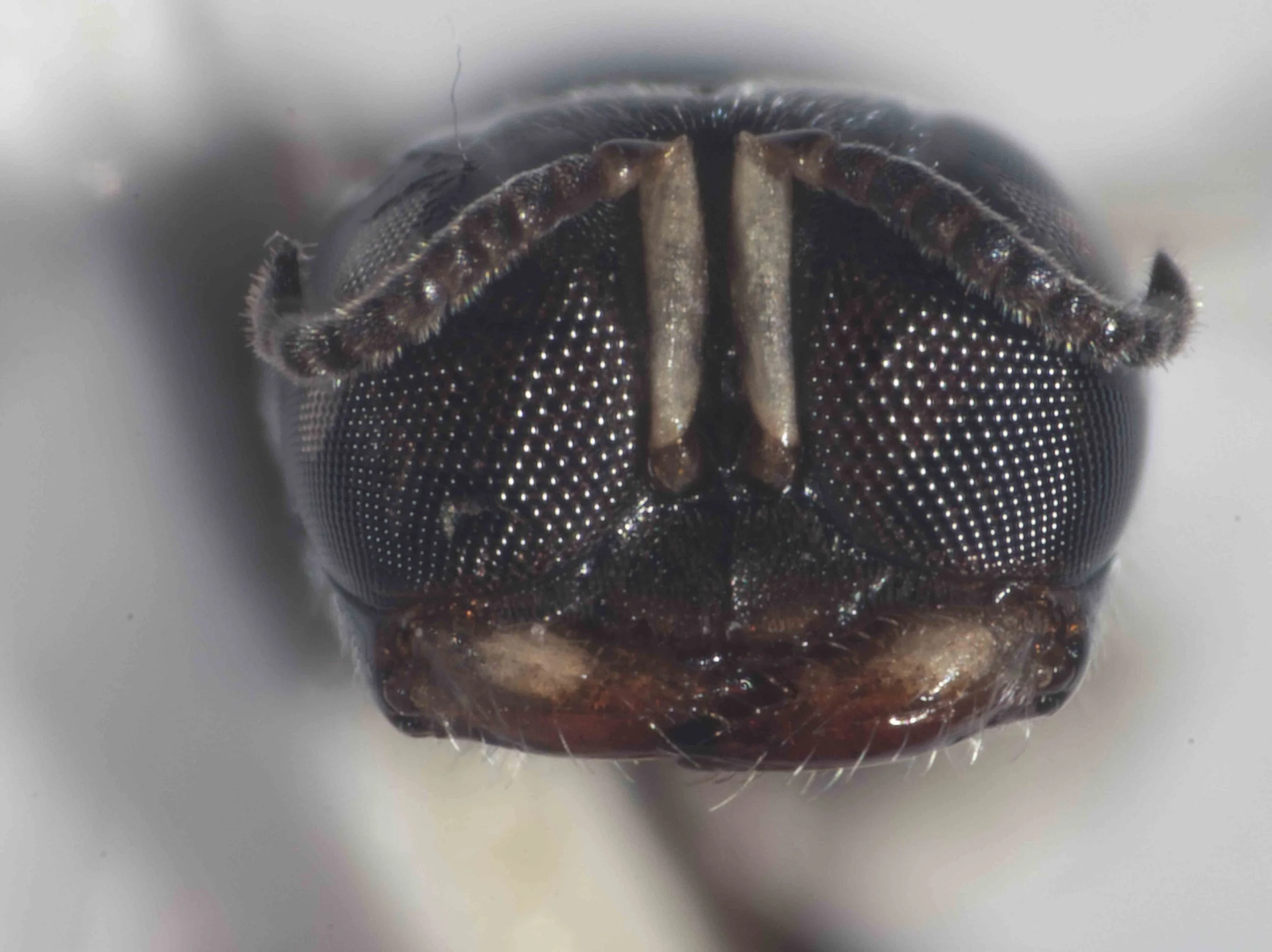
Head shape: quadrate
Ocelli arrangement: equilateral triangle
Note large VOL (distance from posterior ocelli to rear of vertex), potentially relevant to species identification.
Note: pronotal corner shape … may be useful for species level identification
Orbital fovea: small, indistinct
Scapal basin: without dorsal carina
Female: 10 flagellar segments
Note clypeus shape … potentially helpful for species identification
Note clypeus shape and mandible width shape plus colour … potentially useful in species identification
Note mandible shape … potentially useful in species identification
Pygidial plate: impunctate
Size ~5mm (perhaps slightly larger)
Gaster: pedunculate; clavate (widest at T4)
Gaster: pedunculate (first segment weakly nodose when viewed laterally); clavate (widest at T4)
Head shape: quadrate
Gaster: pedunculate
Note: pronotal corners prominent … may be helpful for species level identification
Forewing venation: single submarginal cell; recurrent vein meets submarginal cell beyond middle (ratio of basal to apical segments ~3:2)
Scutum higher than pronotal collar, rounded anteriorly
Prepectus: area rounded; epicnemial carina entirely absent
Verticaulus: absent
Head shape: quadrate
Ocelli arrangement: equilateral triangle
Note large VOL (distance from posterior ocelli to rear of vertex), potentially relevant to species identification.
Note clypeus shape … potentially helpful for species identification
Note clypeus & mandible shape … potentially useful in species identification
Note mandible shape … potentially useful in species identification
Pygidial plate: impunctate
Note: the pale structure is probably a parasite (stylops?)