Workbook
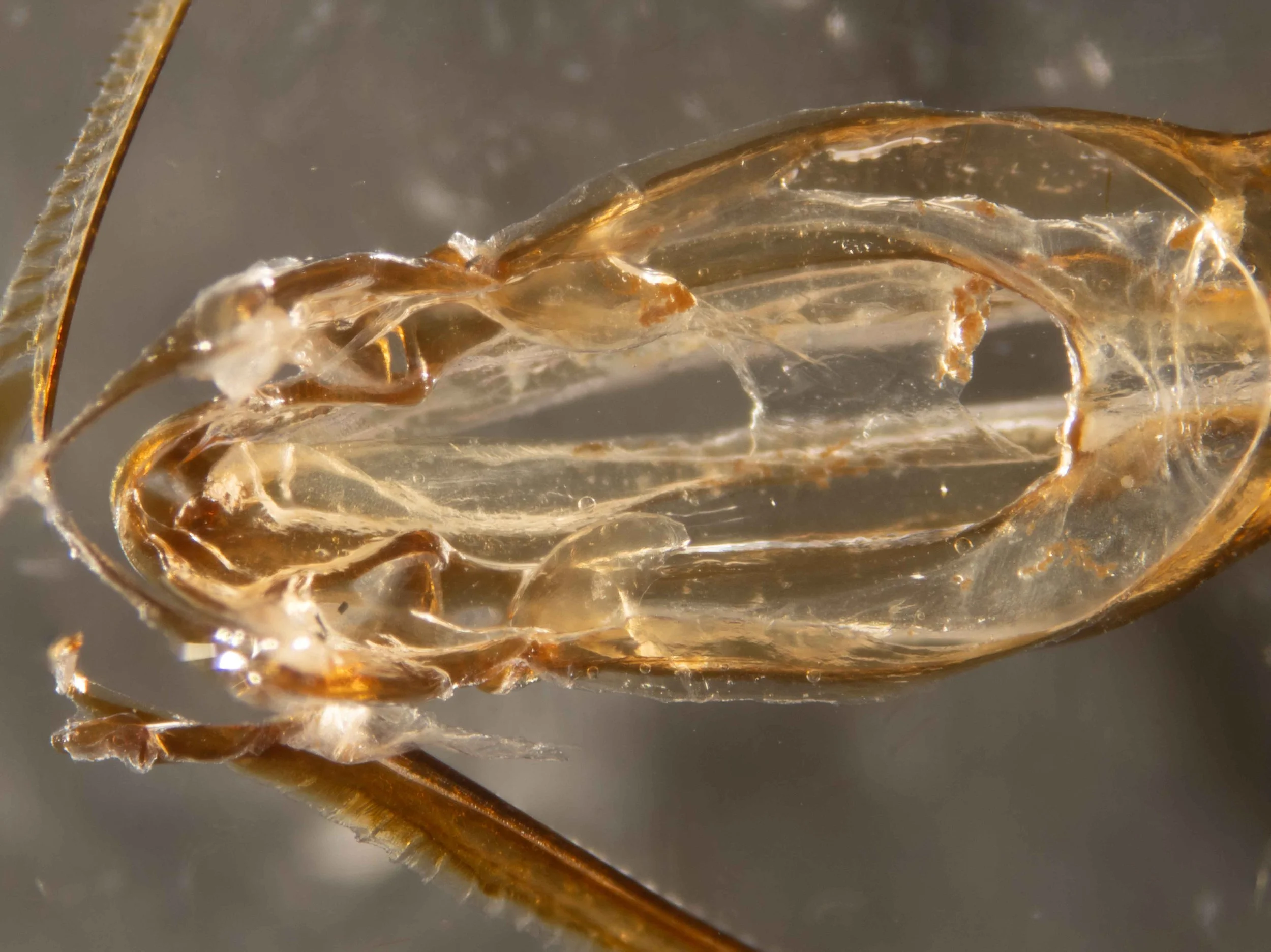
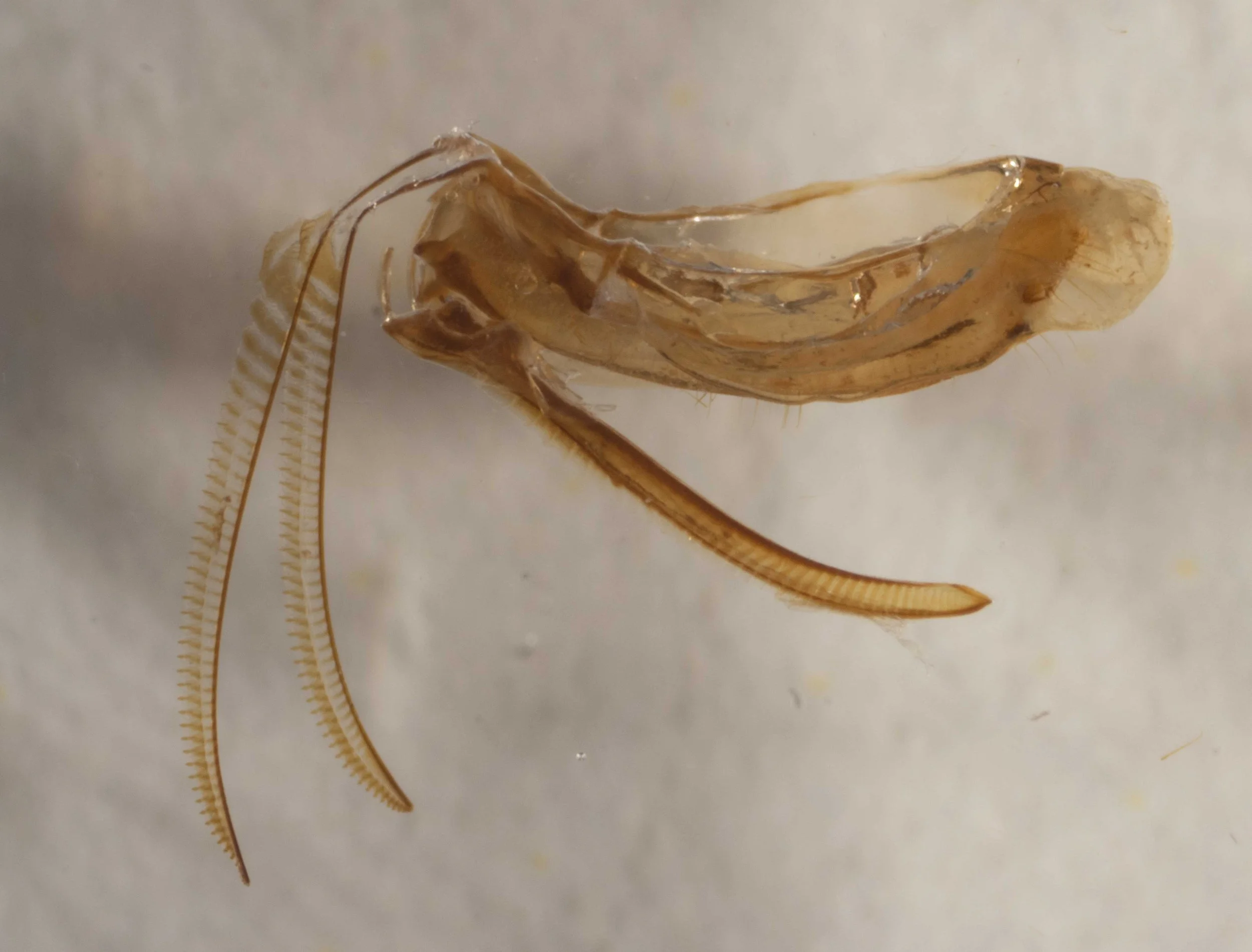
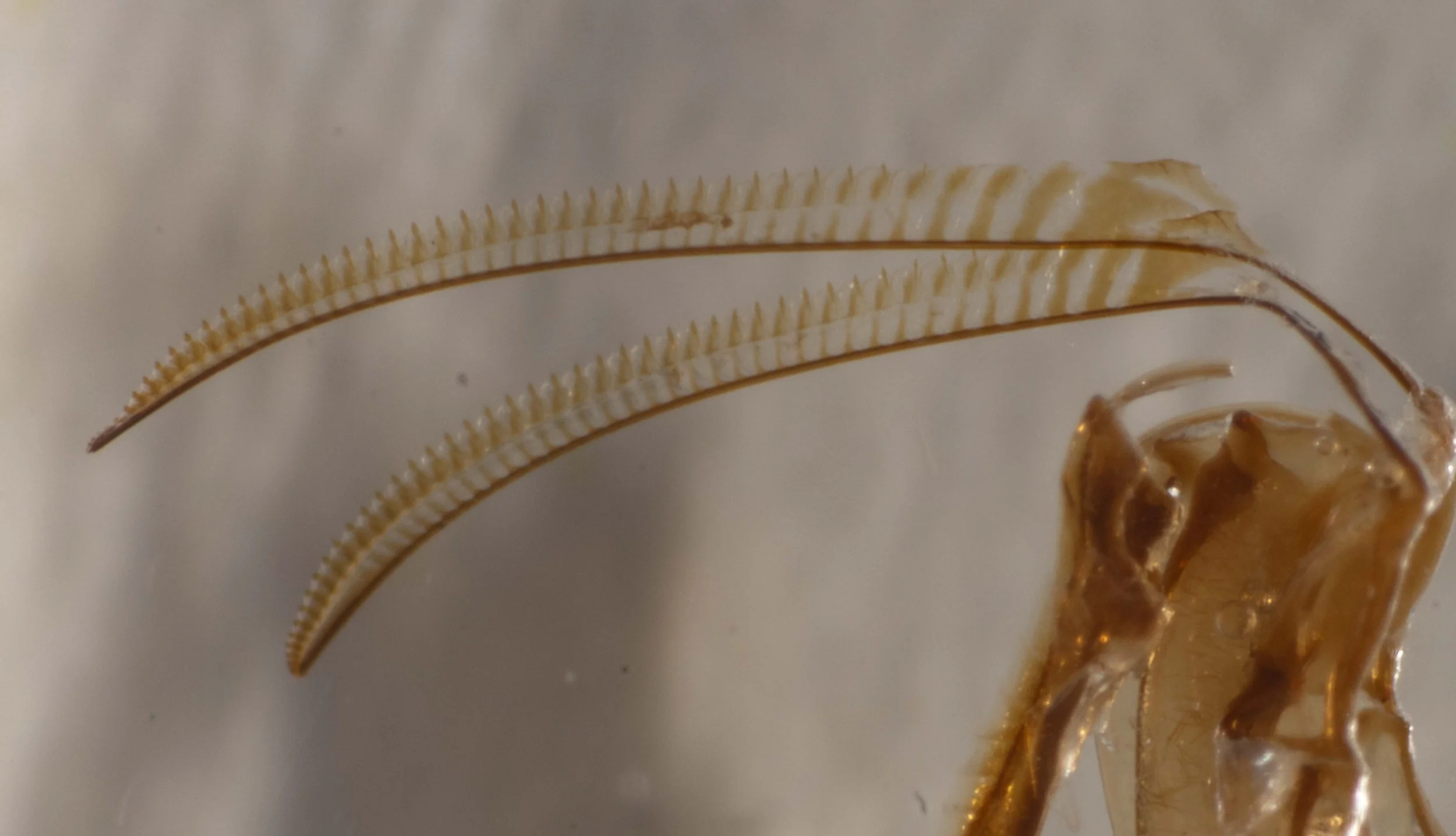
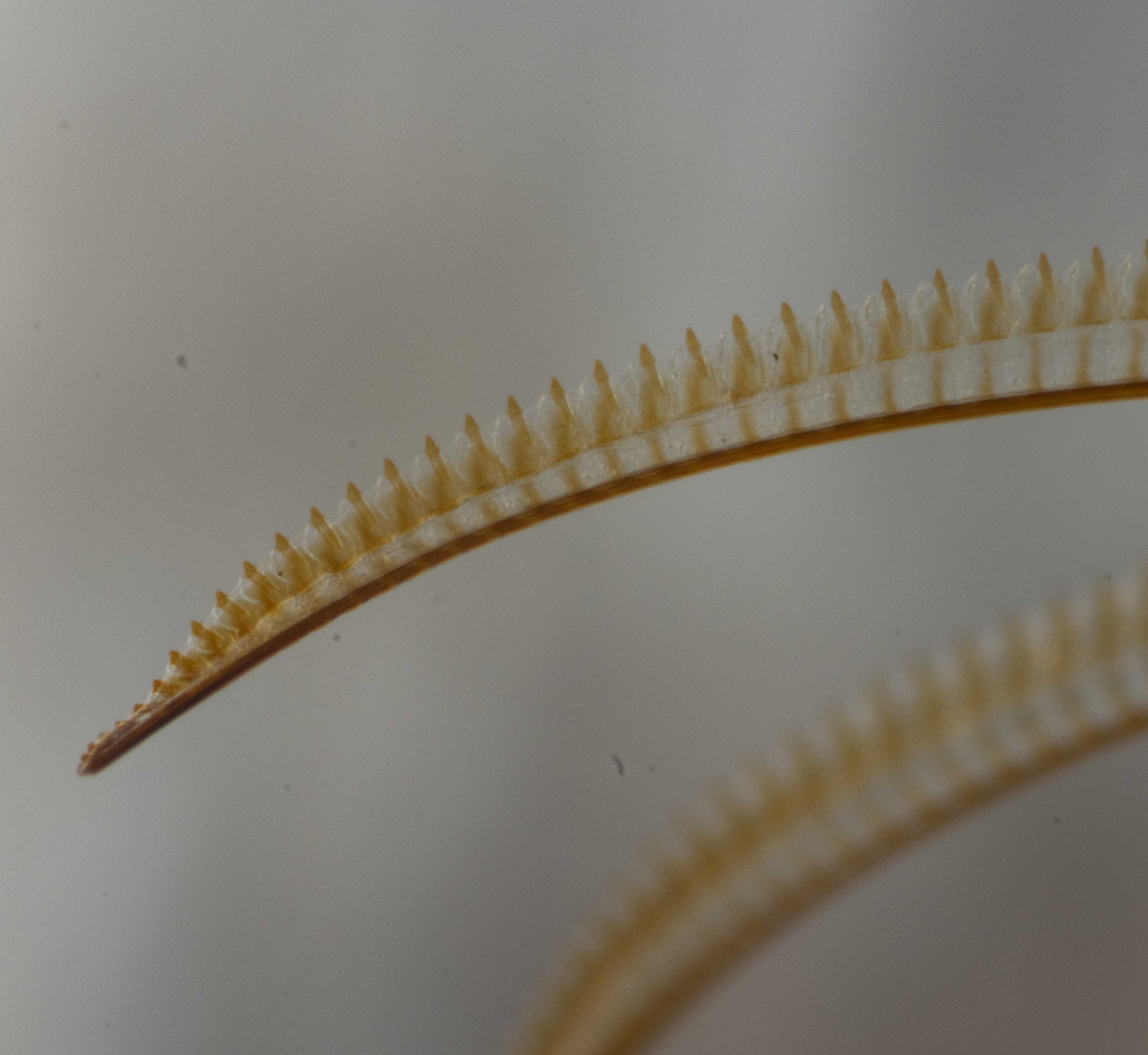
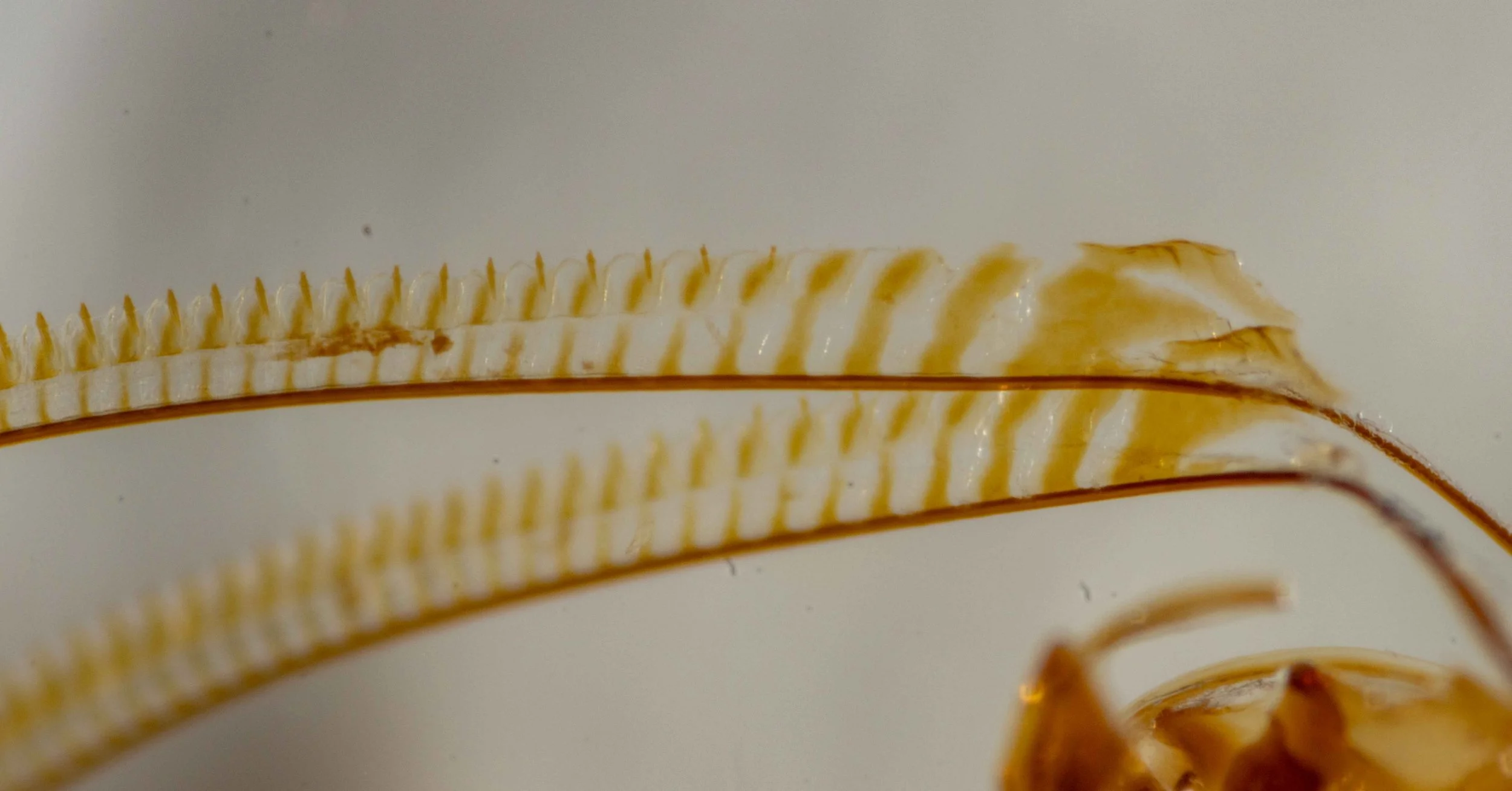
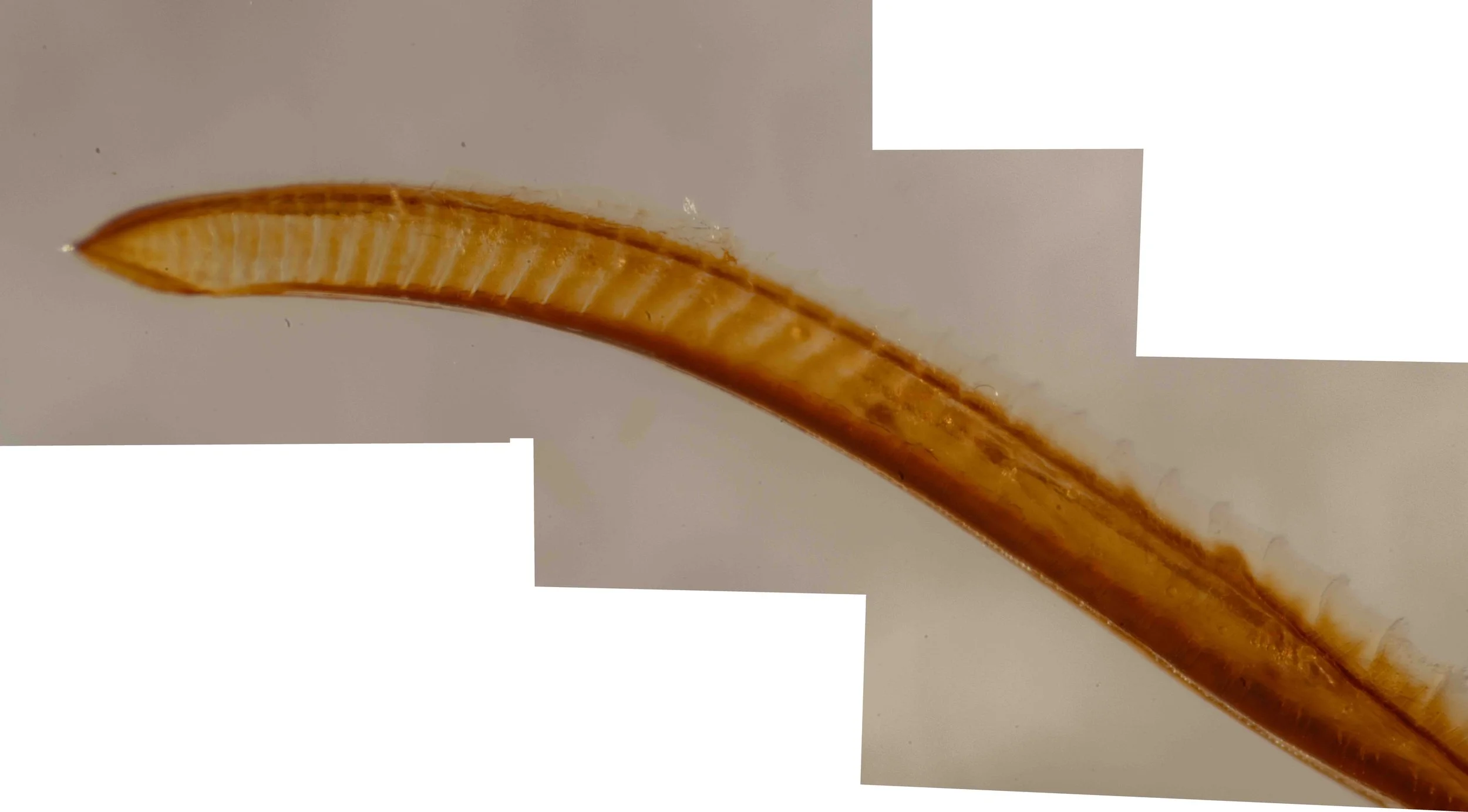
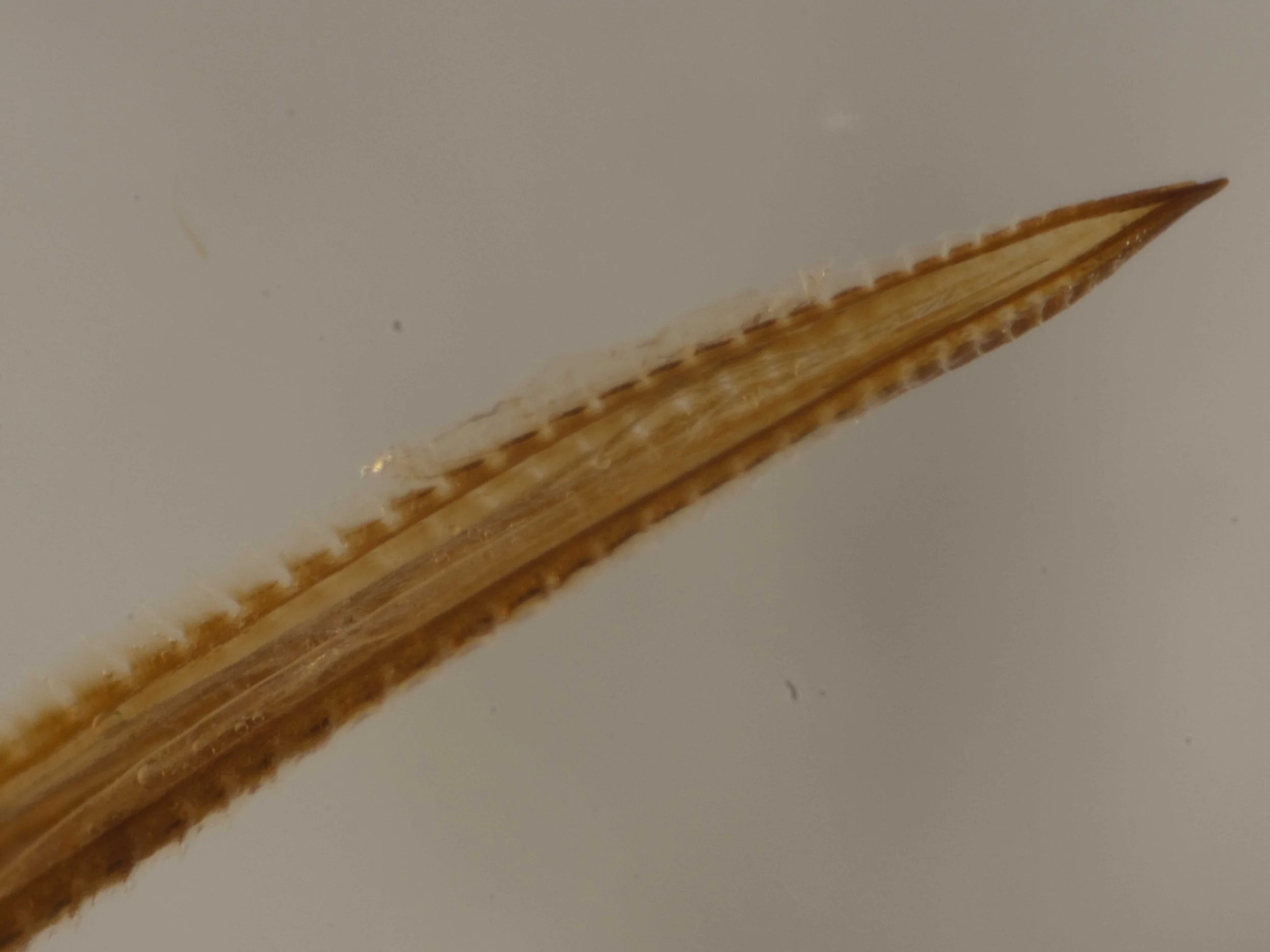
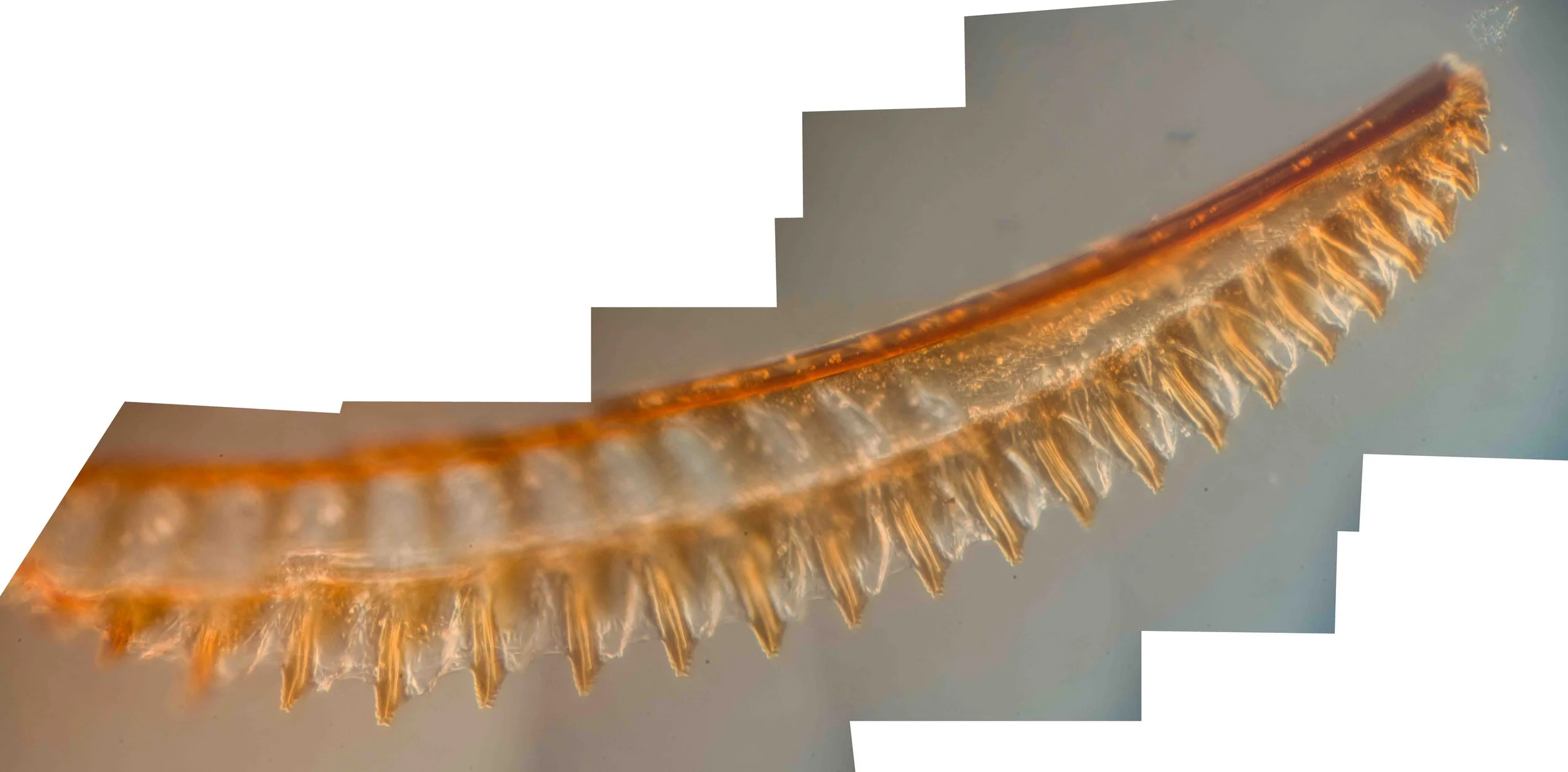
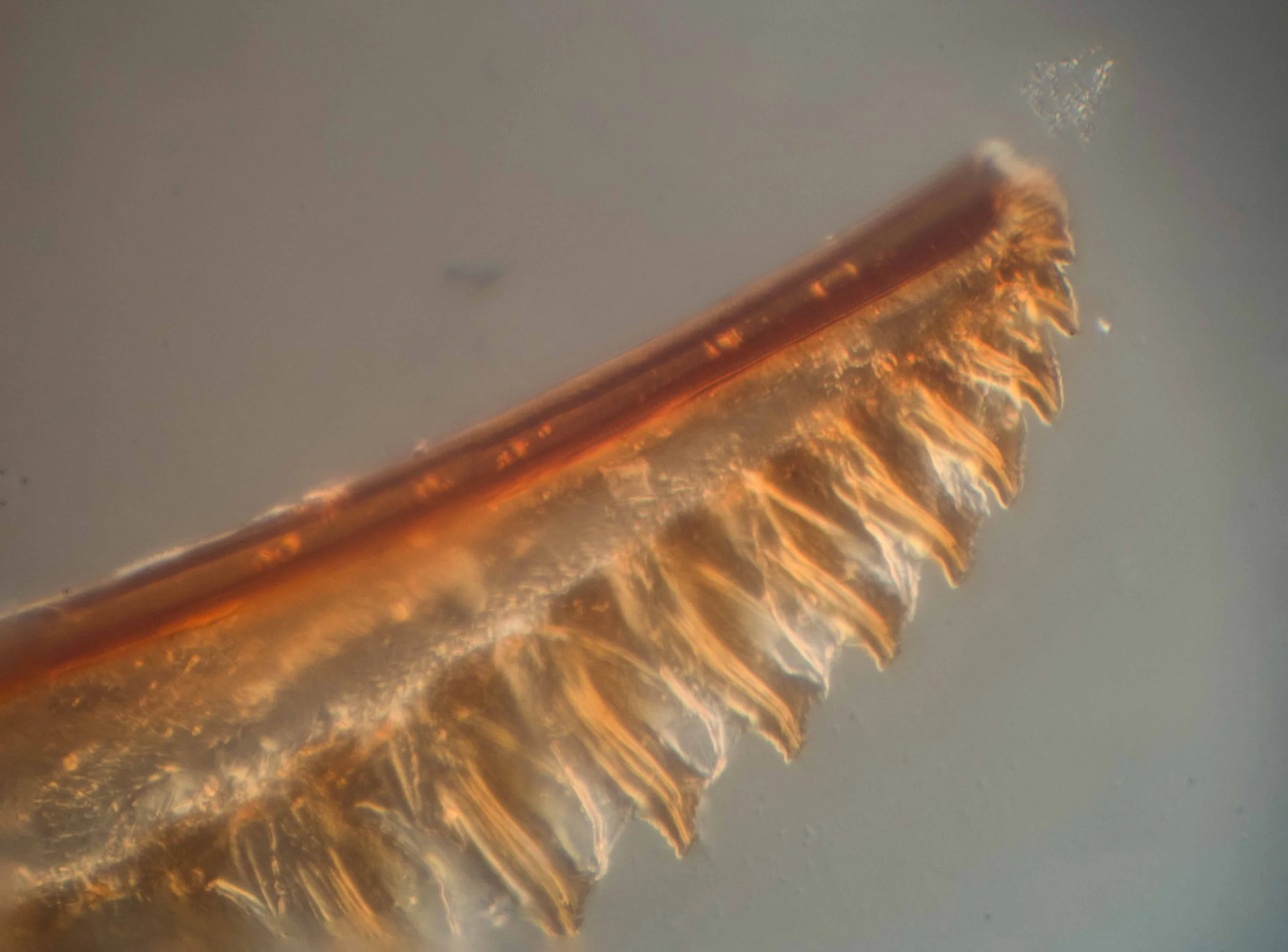
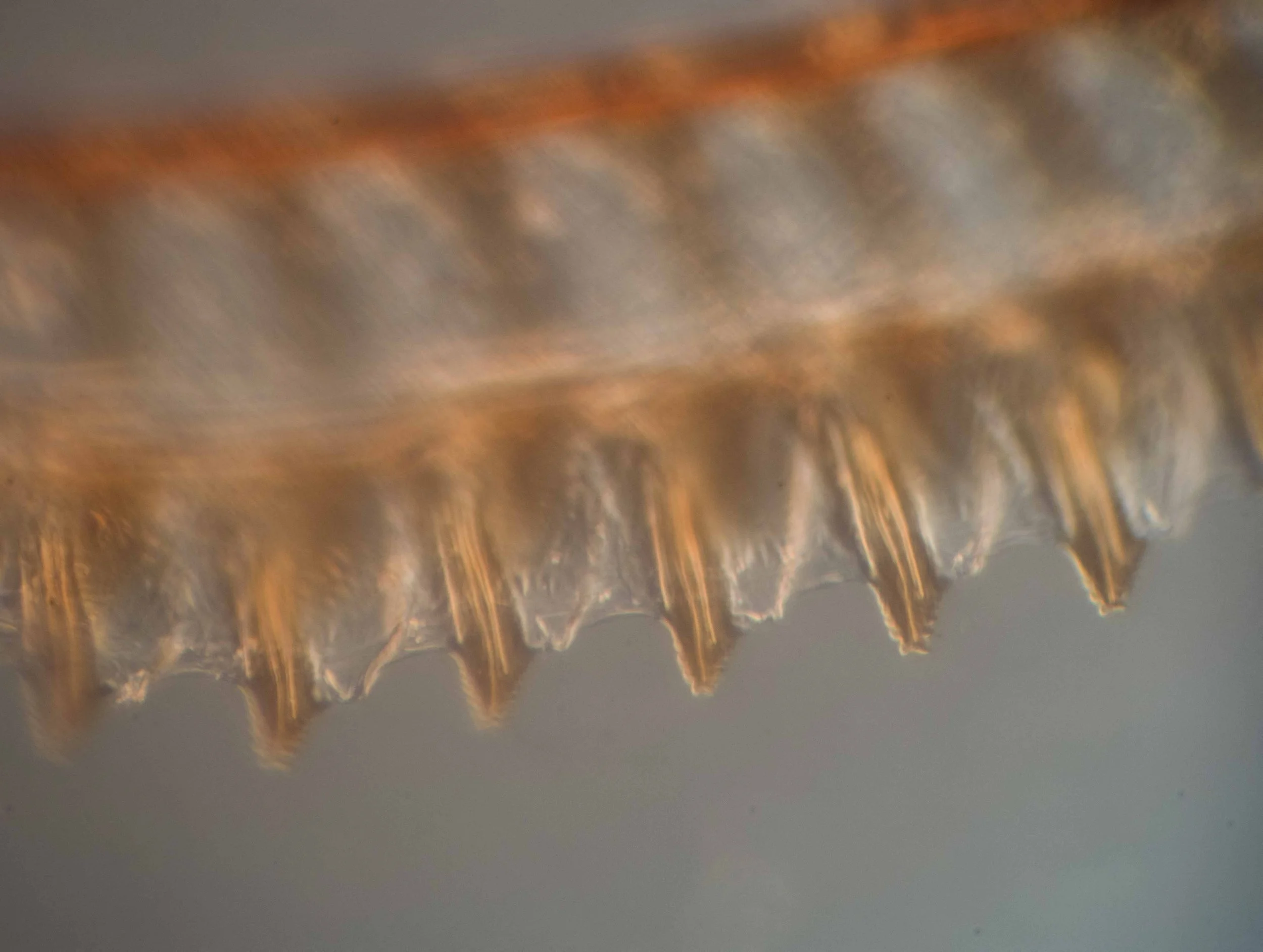
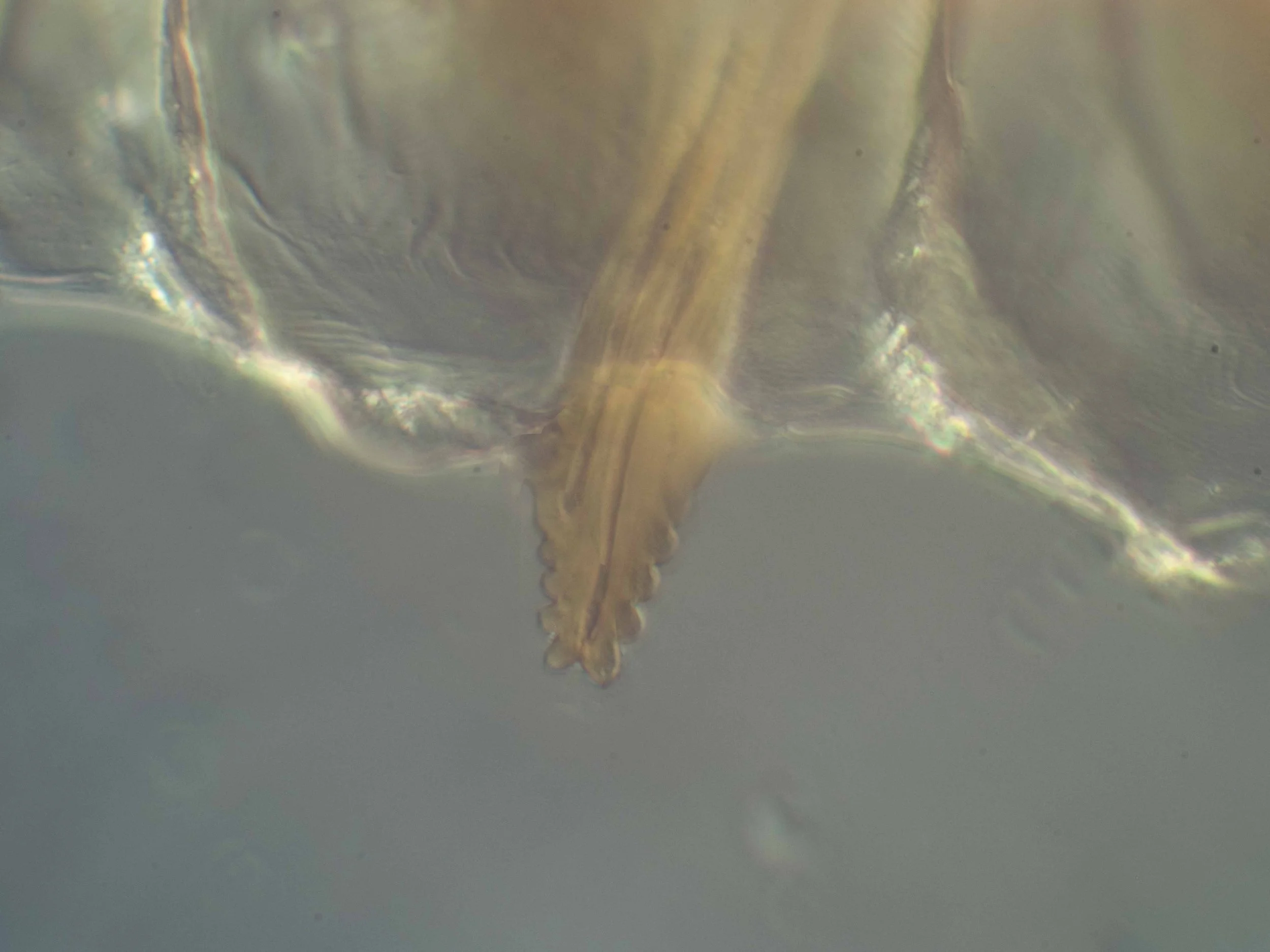
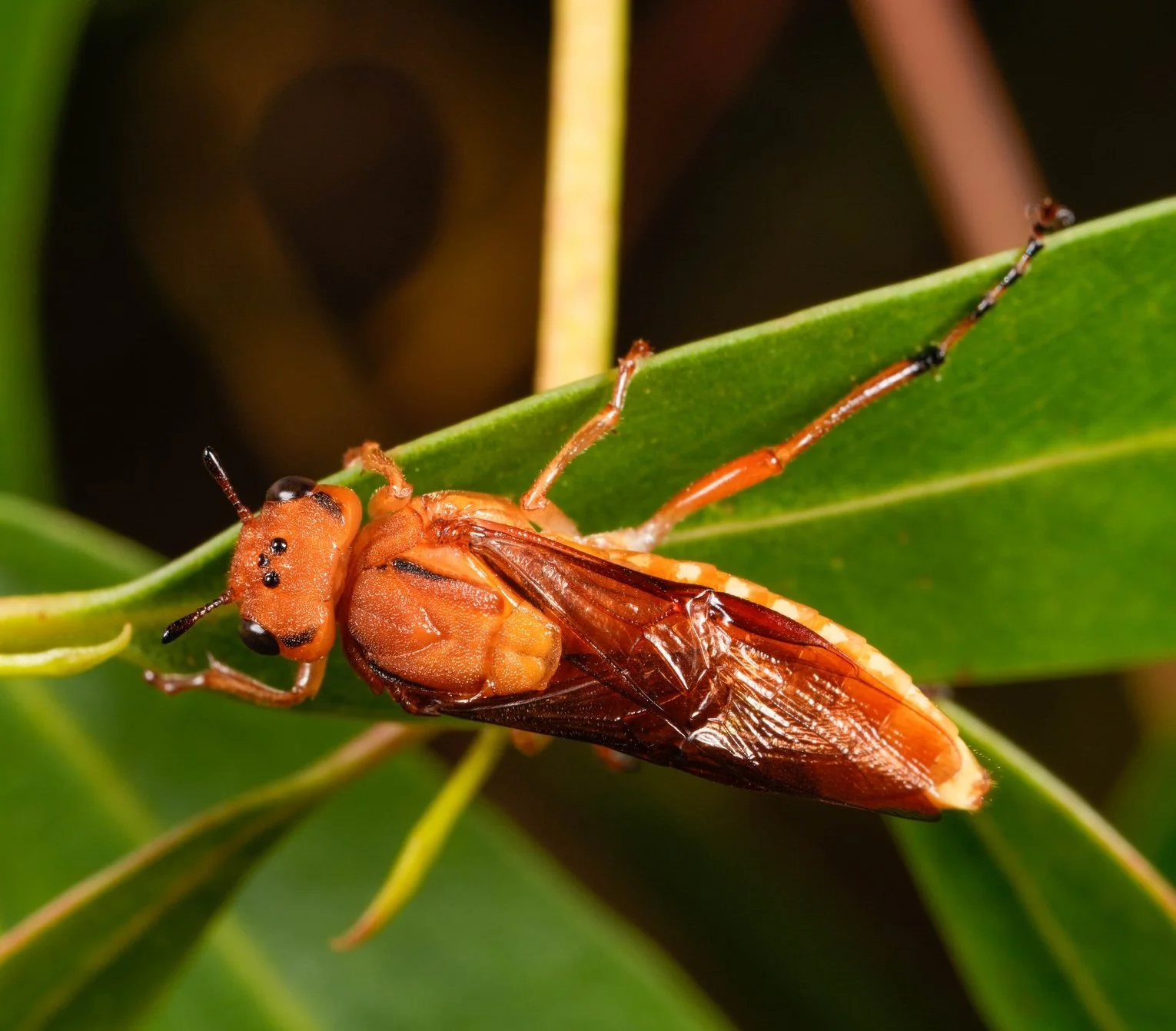
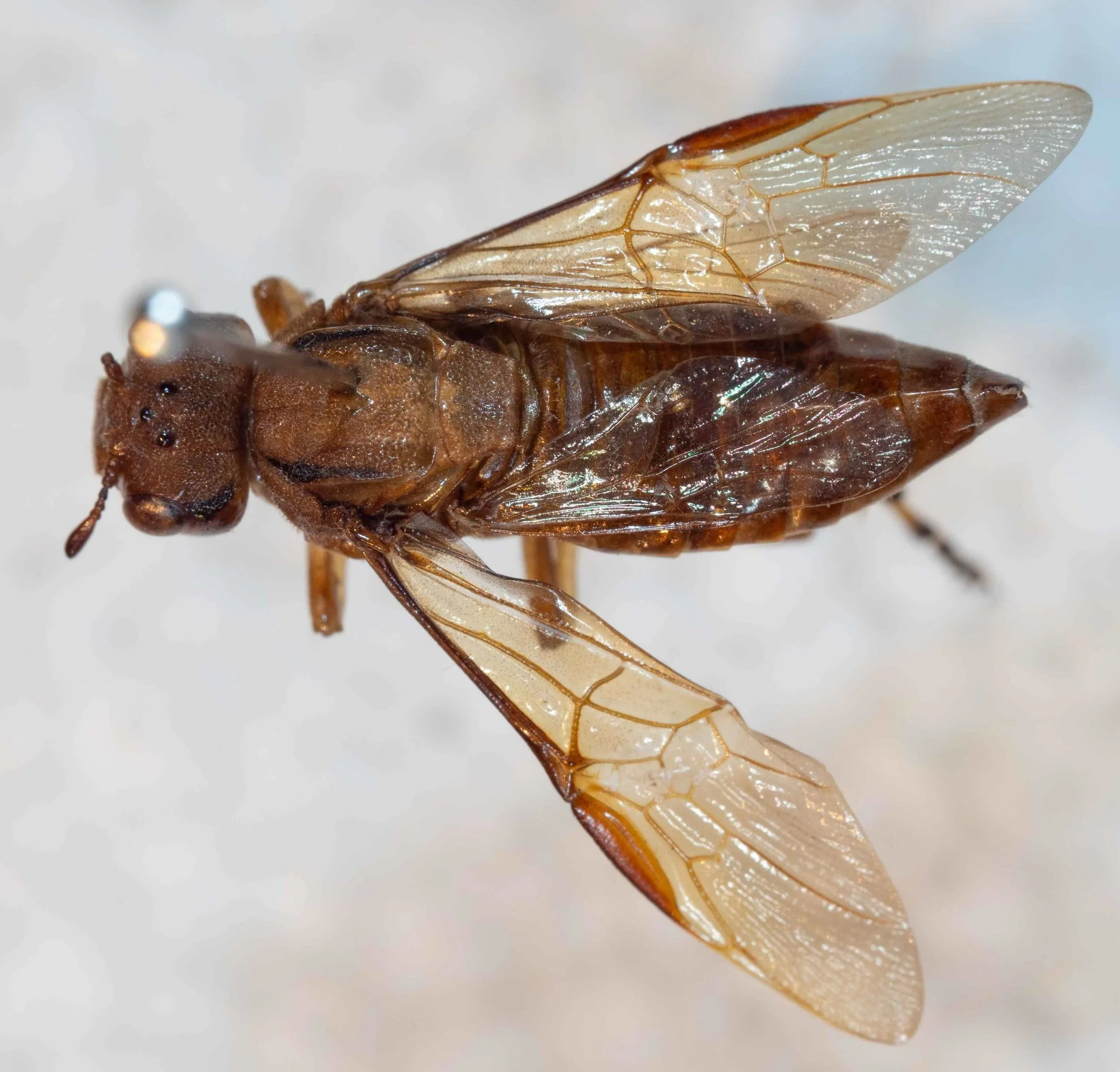
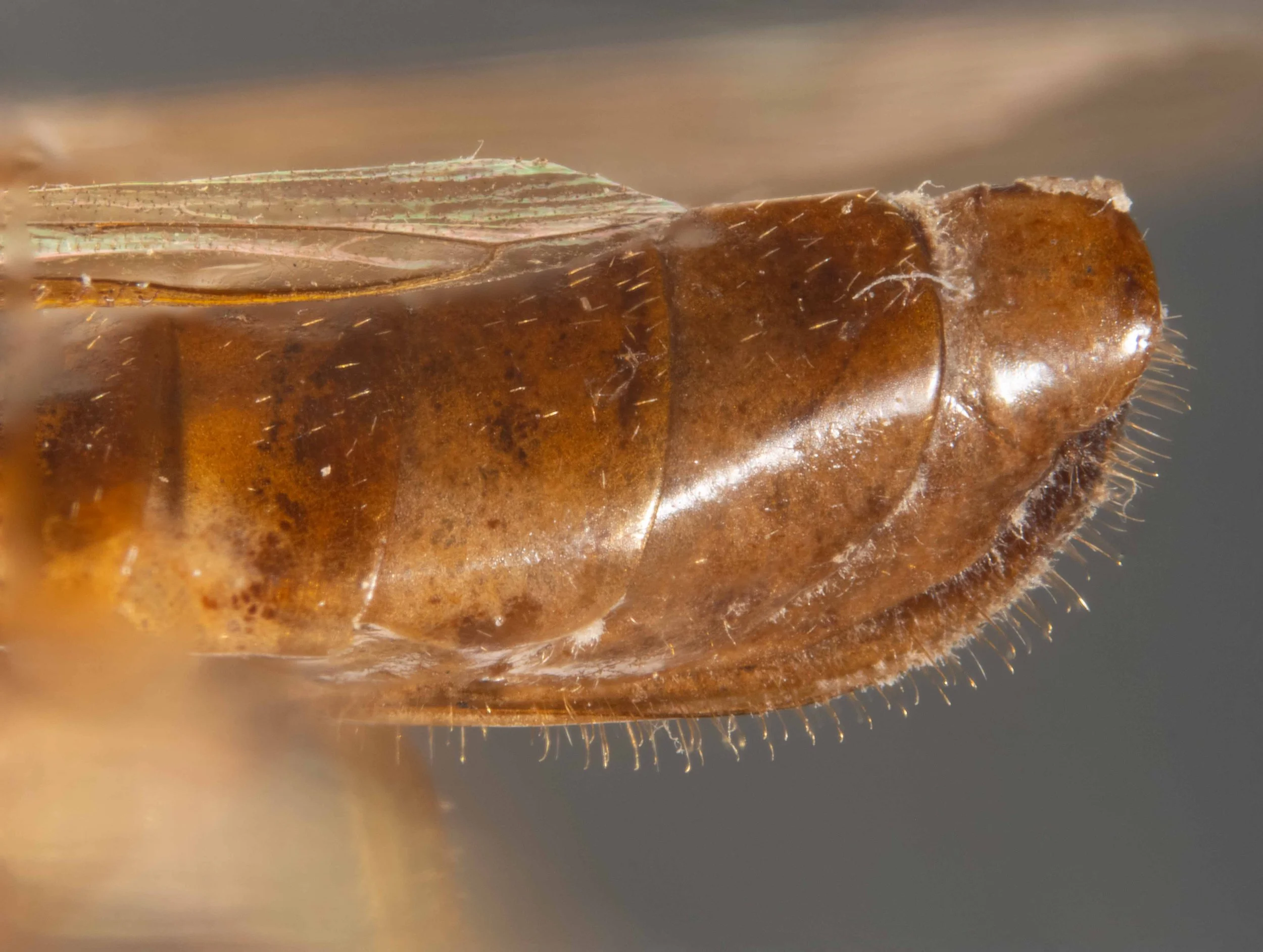
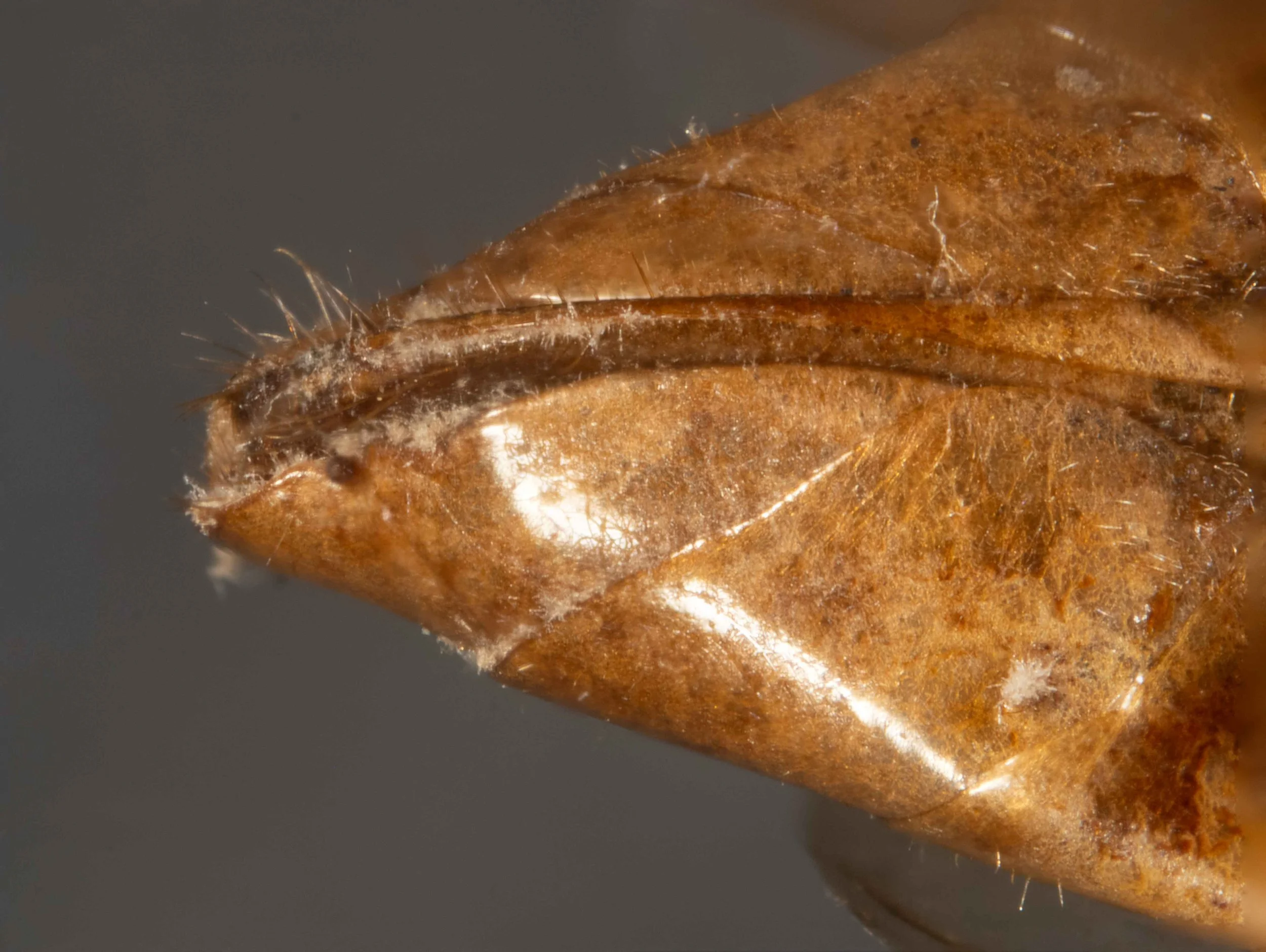
This notes page shows detailed images of specimens of an adult female Pseudoperga lewisii, collected in the field by two iNaturalists:
Jenny Emeny at her property at Cudgee, near Warrnambool, VIC (see this iNaturalist observation)
James Peake near Frankston North, VIC (see this iNaturalist observation).
Many thanks to Jenny and James for donating these specimens for analysis.
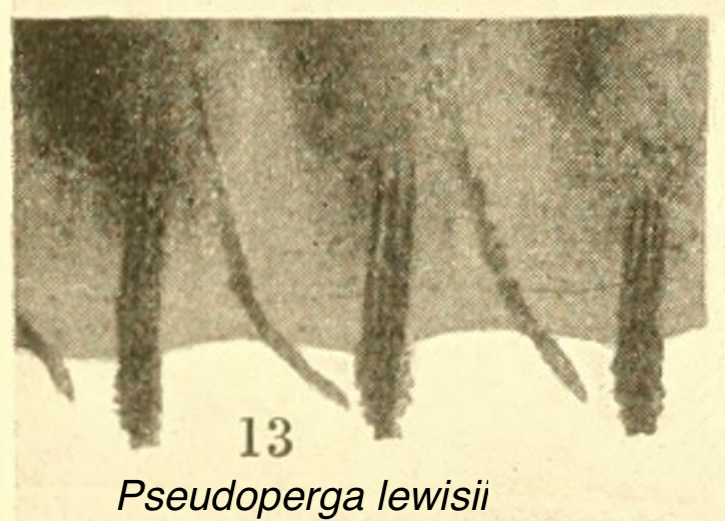
Notes accompanying these images were taken from Westwood (1836, 1880) and Benson (1939) as well as iNaturalist observations. The latter reveal variation in features which were not apparent in the small number of type specimens used for the original descriptions.
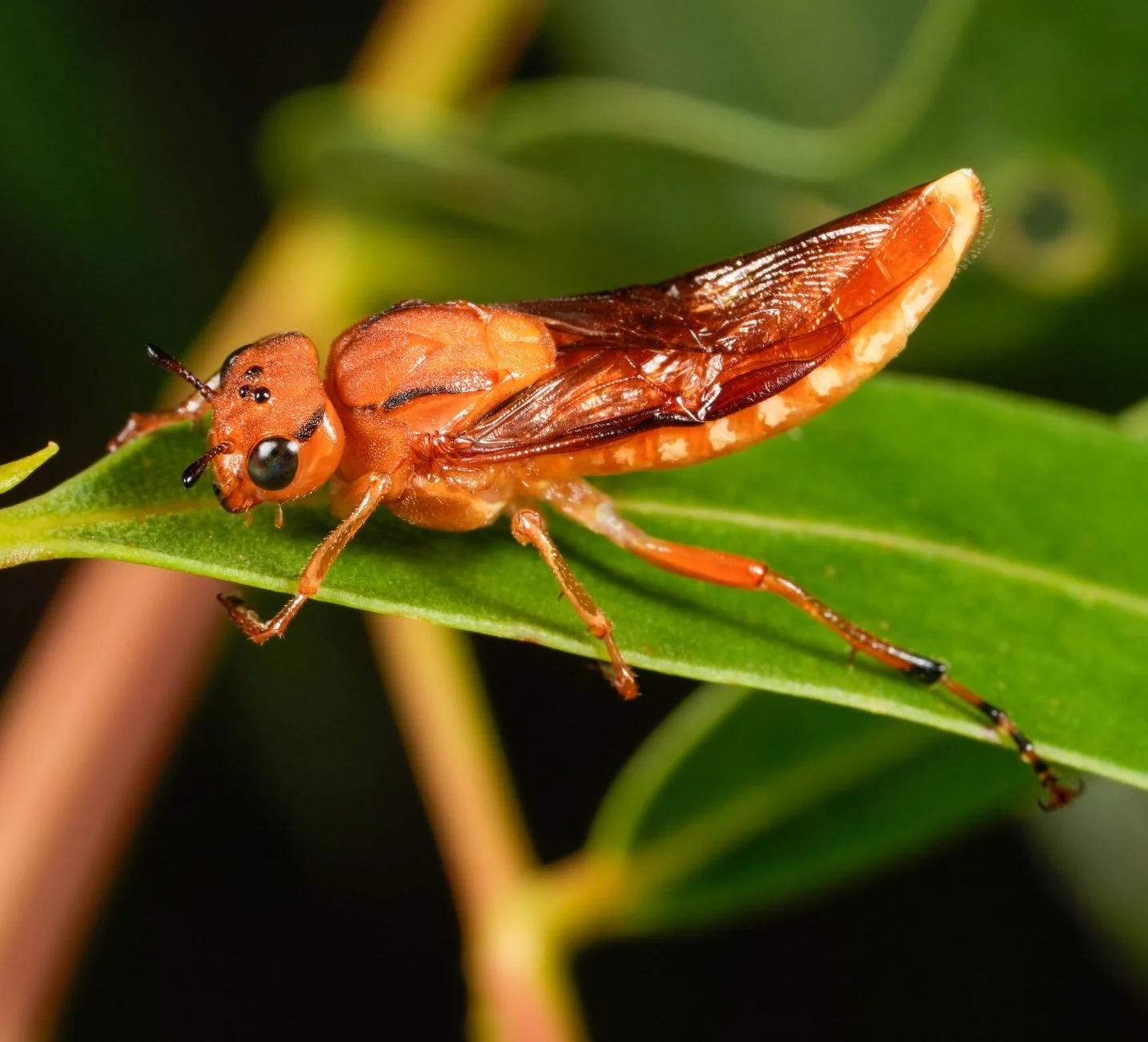
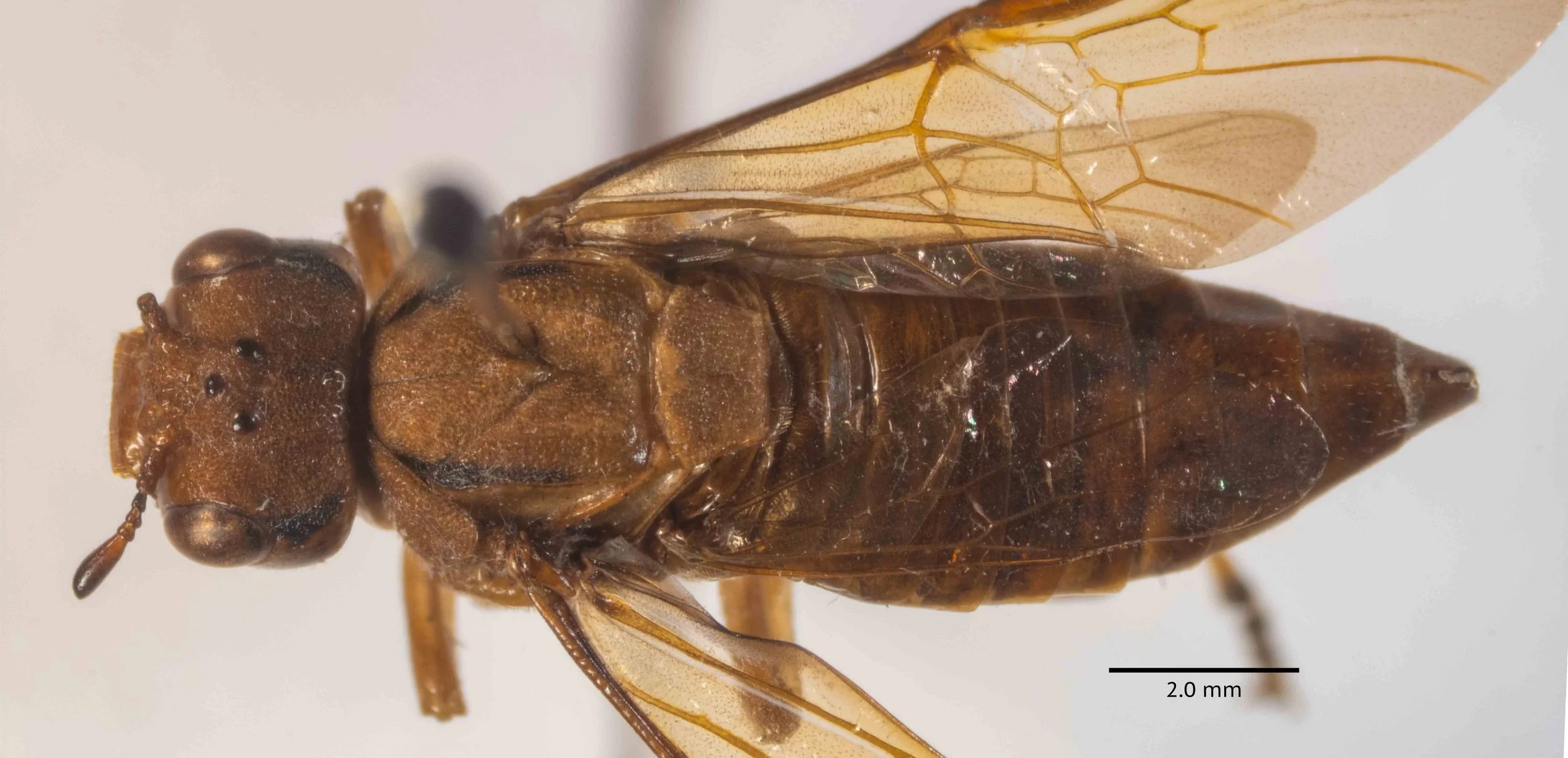
Female from Jenny Emeny, Cudgee VIC
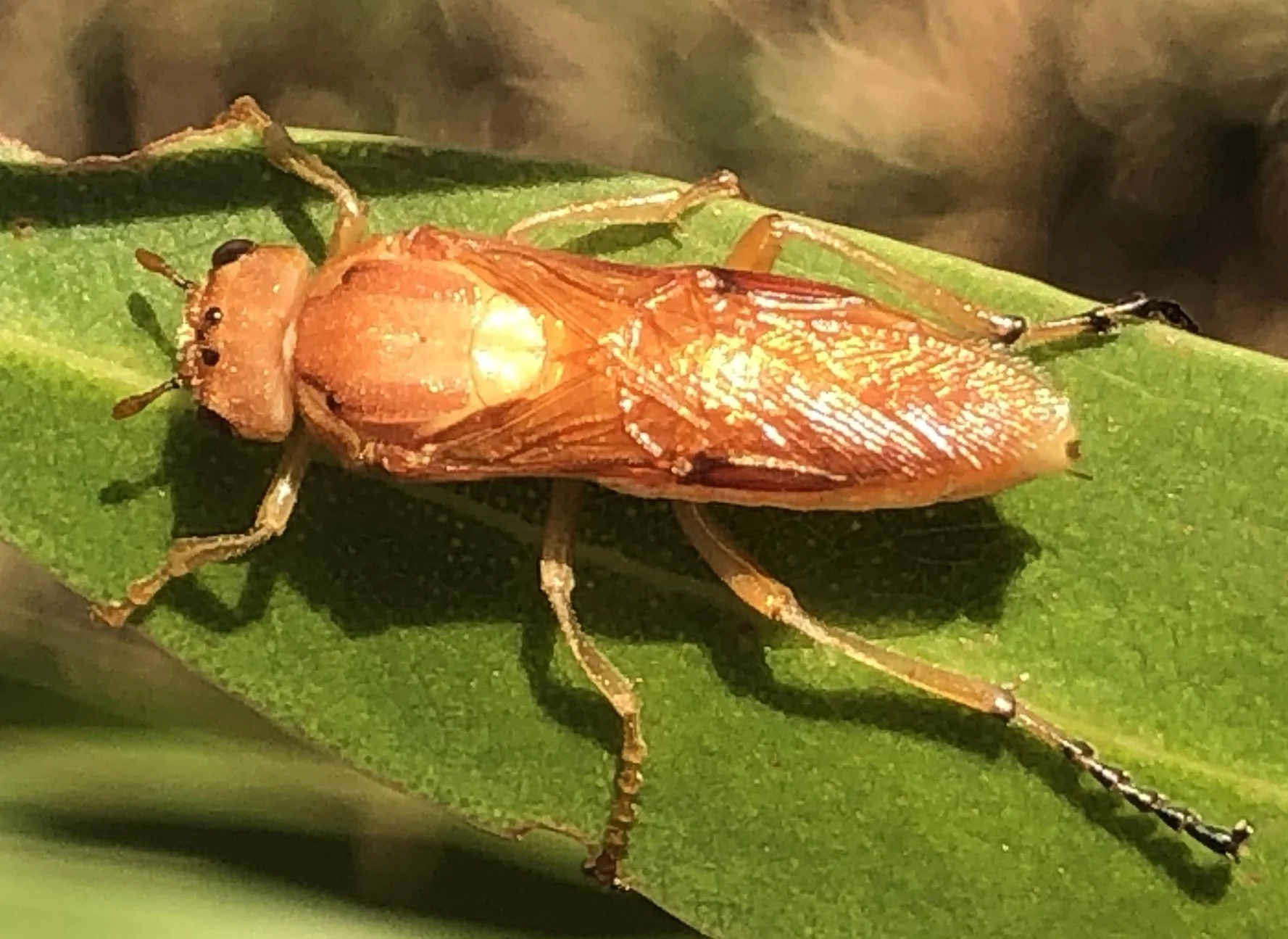
iNaturalist observation - @jemeny
- female above dark yellow-orange
- antenna pale (can be partially dark but never solid black)
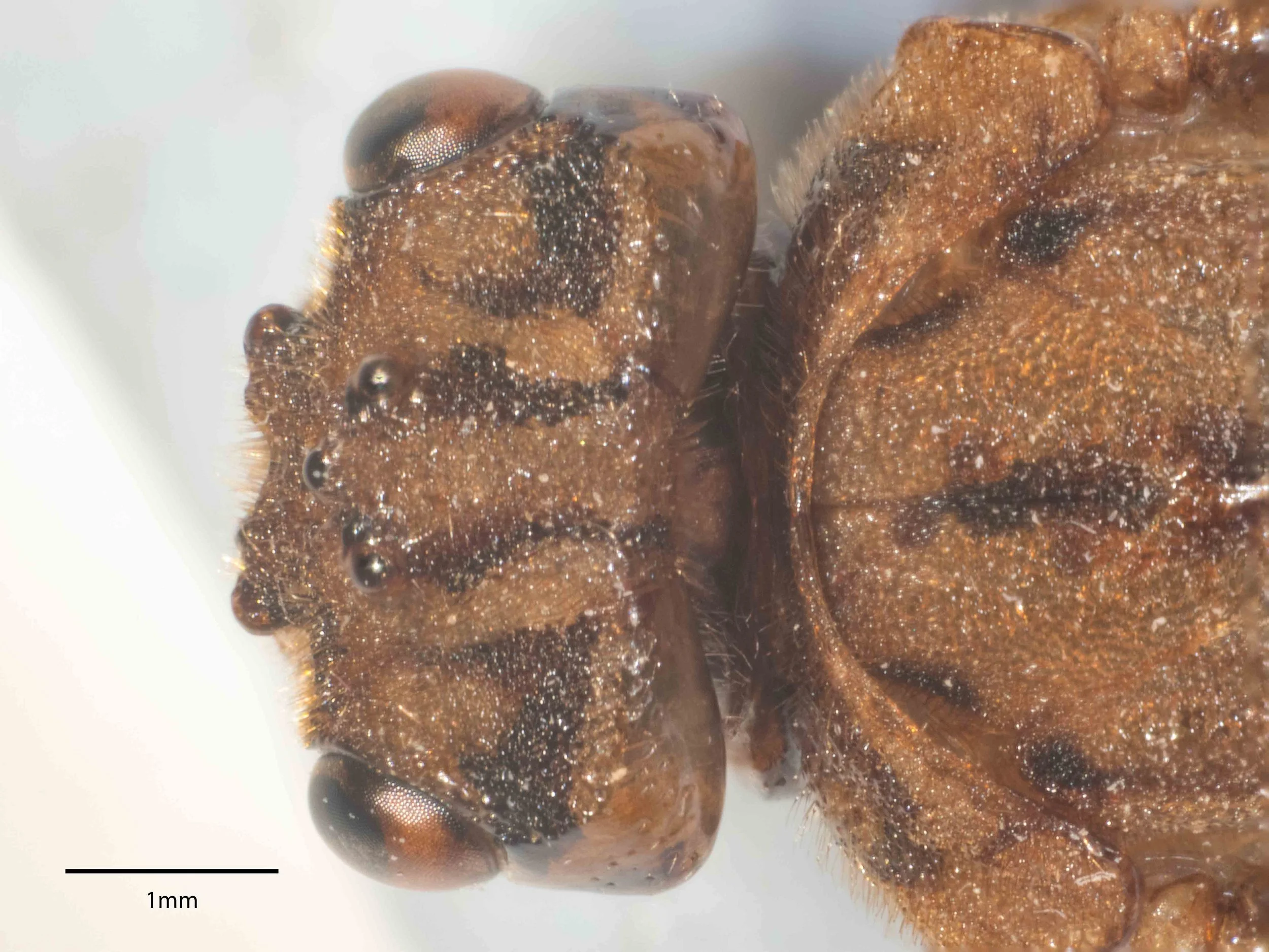
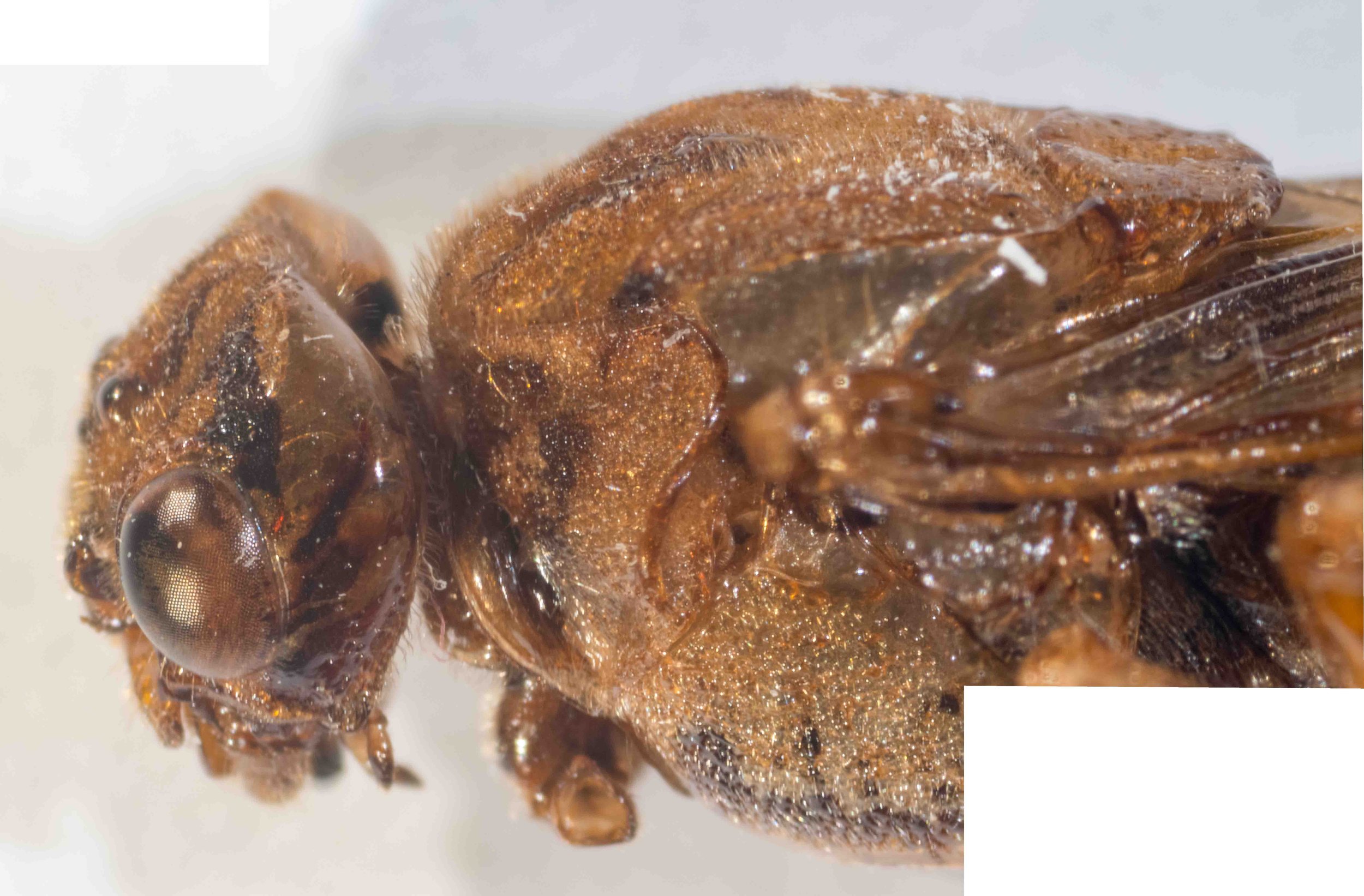
- head and thorax above with a dark line on each side (head line not evident in this specimen)
- head large, quadrate, nearly equalling thorax in breadth
- stigma large
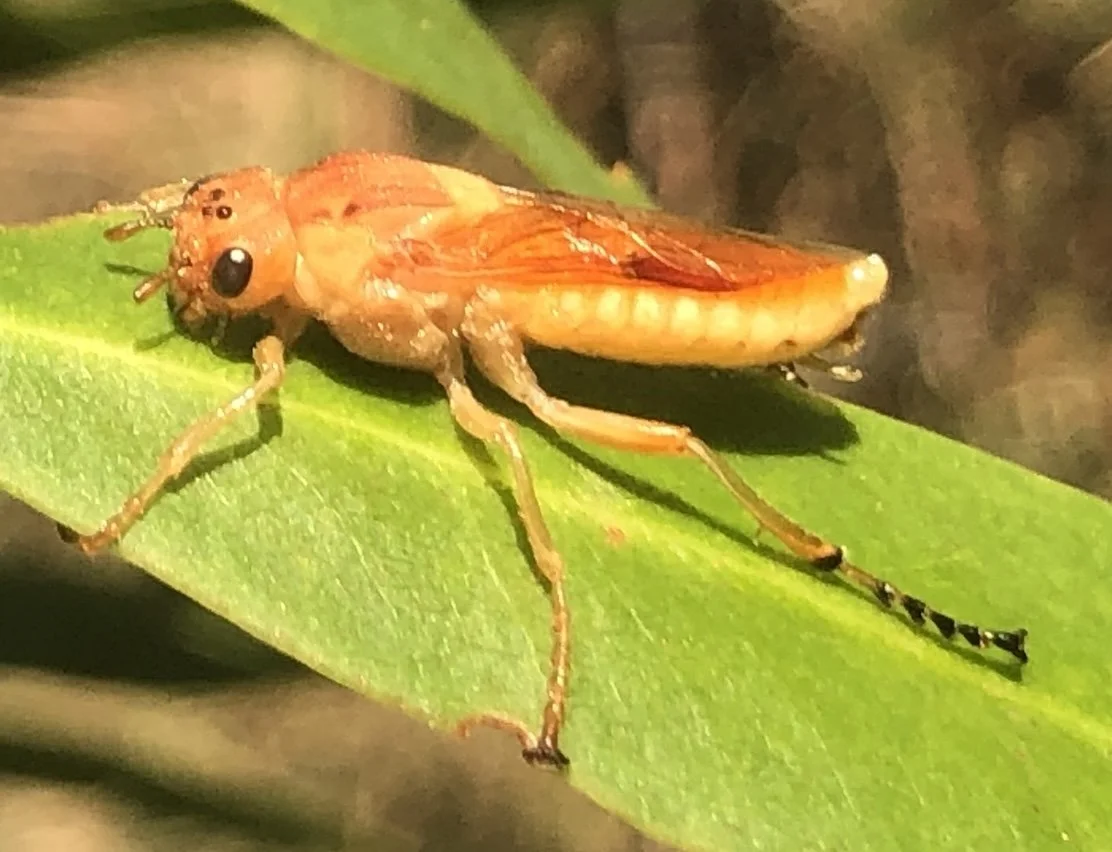
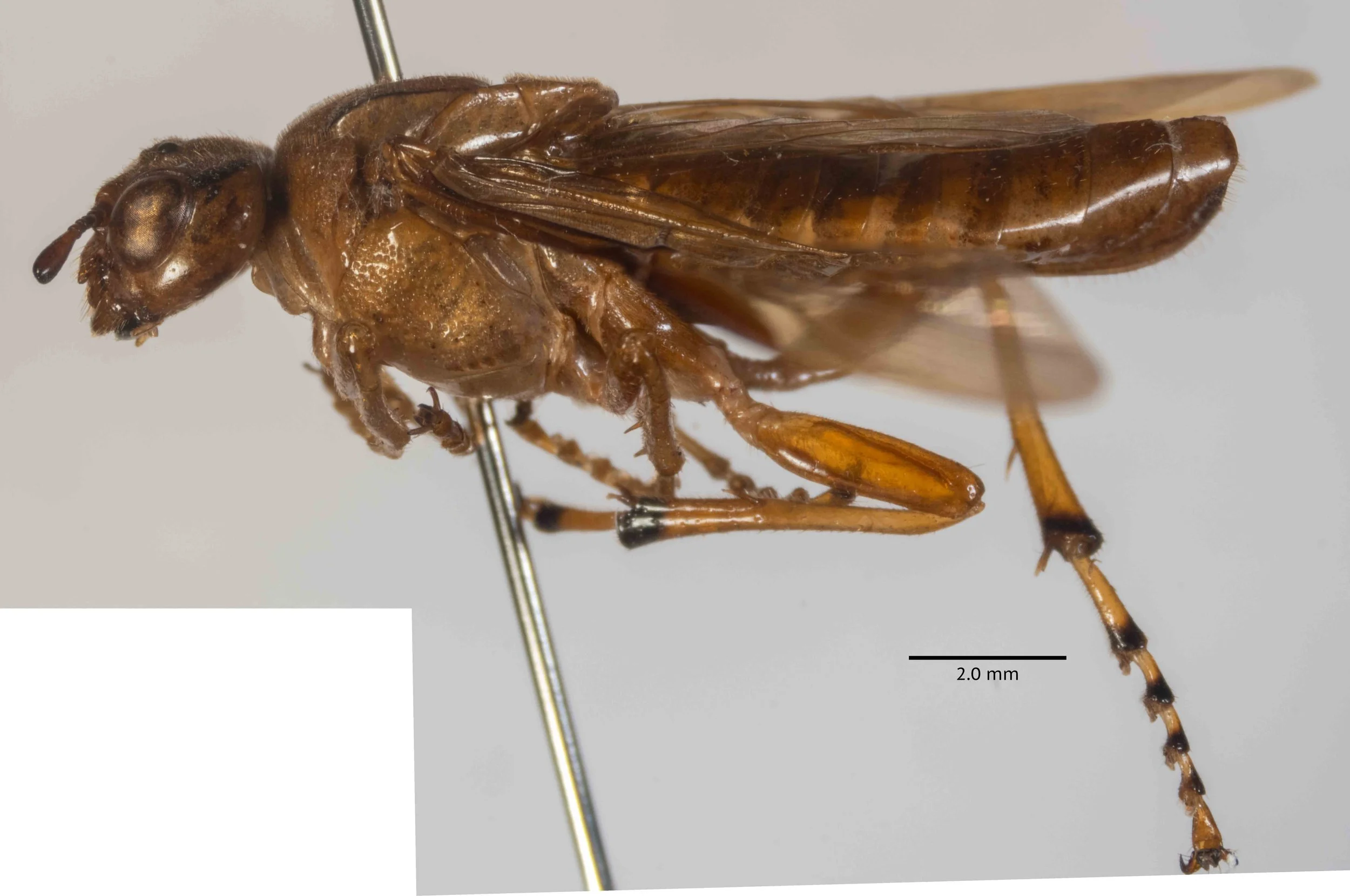
iNaturalist observation - @jemeny
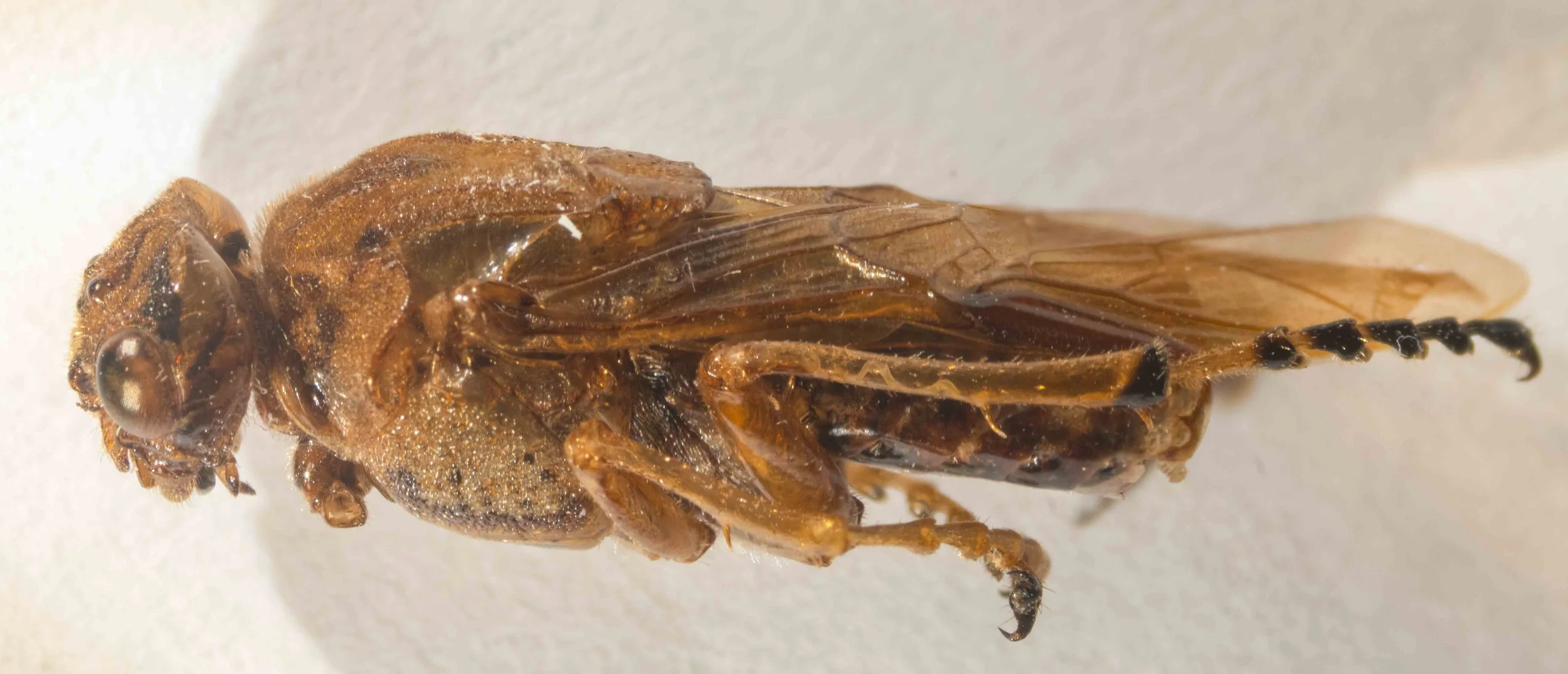
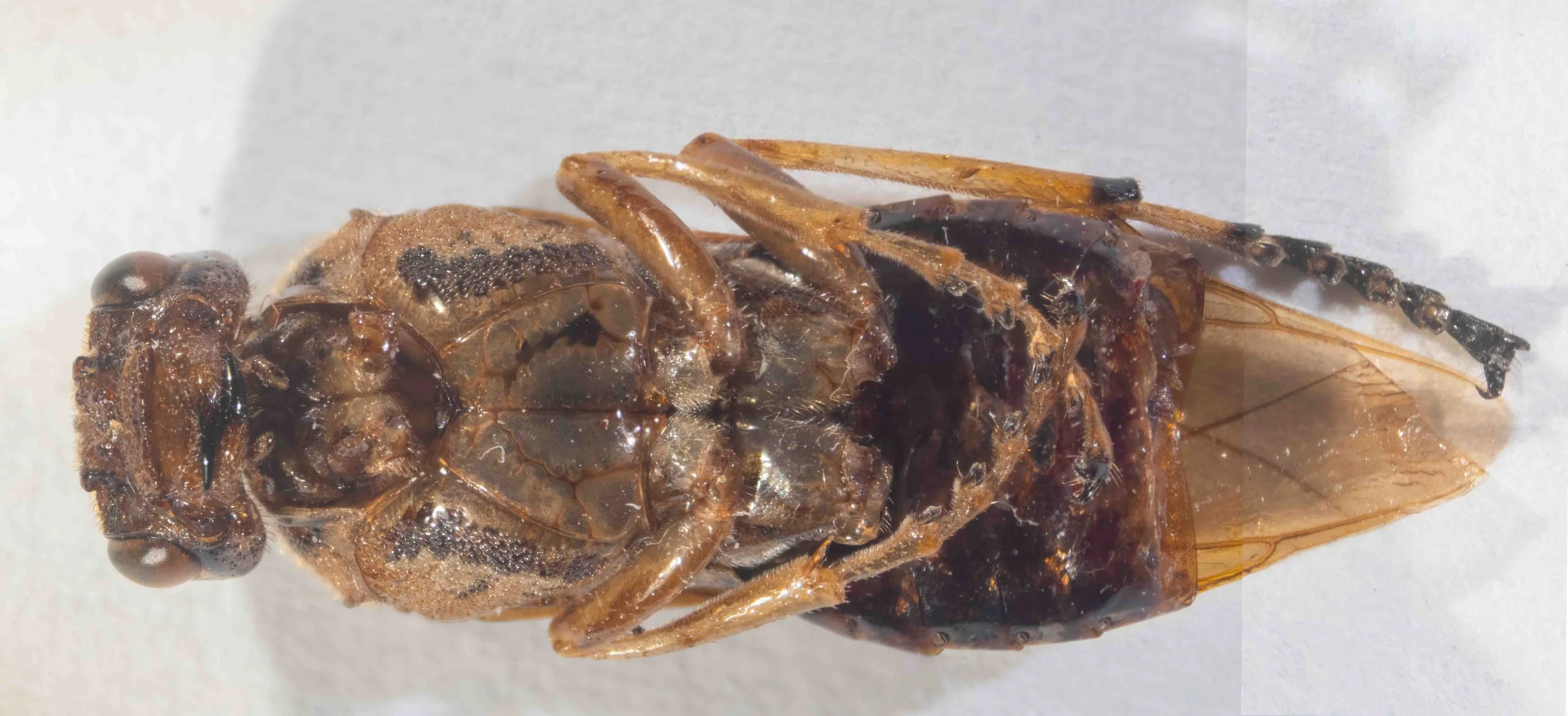
- body yellow below
- mid and hind legs (only hind legs here) with apex of tibia, apex of first joint and nearly the whole of the subsequent joints of tarsi black
- stigma large, almost linear and narrow
- dorsum of abdomen uniformly yellow-orange, lacking dark marks
- white blotches on lateral edges of all terga
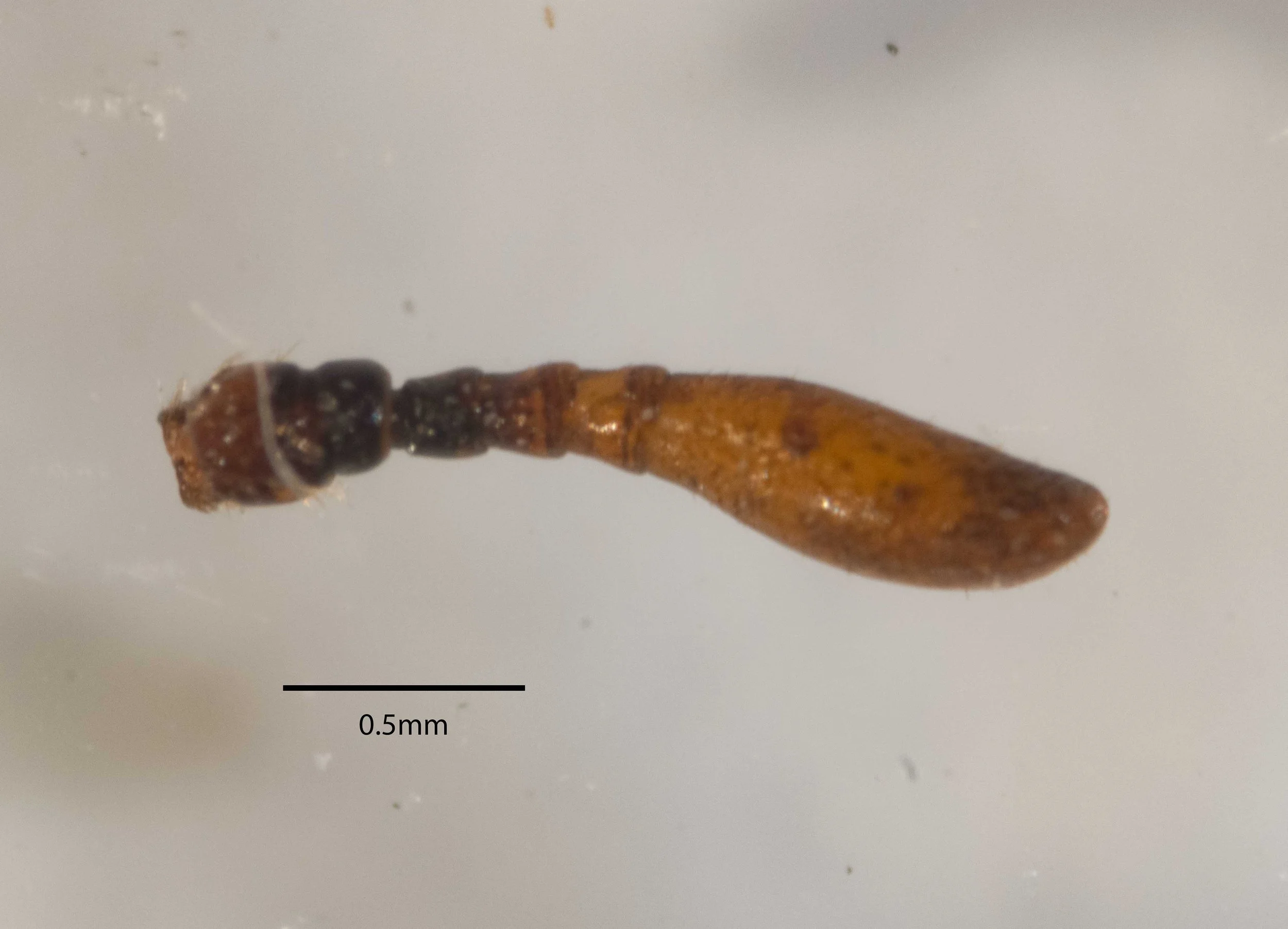
- antenna clavate; club longer than preceding 3 segments; first joint subglobular; second shortest; third, fourth and fifth cylindric, and of equal length; sixth large, elongate, ovate, and longer than the 3 preceding joints taken together
- longer than front margin of clypeus (1.9mm vs 1.6mm), longer than distance between insertions (1.9mm vs 1.3mm), not longer than head (1.9mm vs. 2.4mm)
Female from James Peake, North Frankston VIC
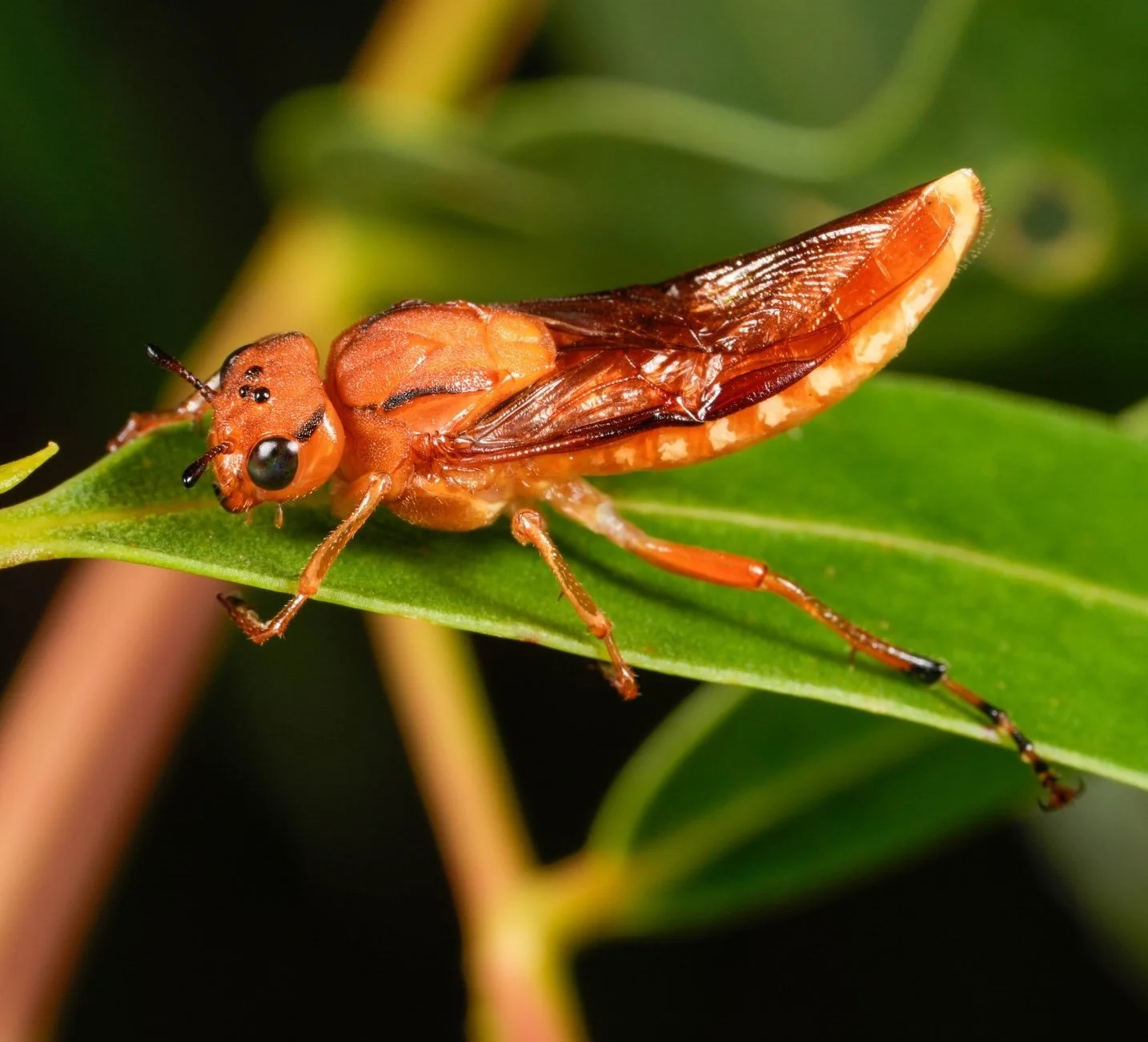
iNaturalist observation - @jimbobo
- body above and below orange
- antenna reddish-brown, club black (not solid black)
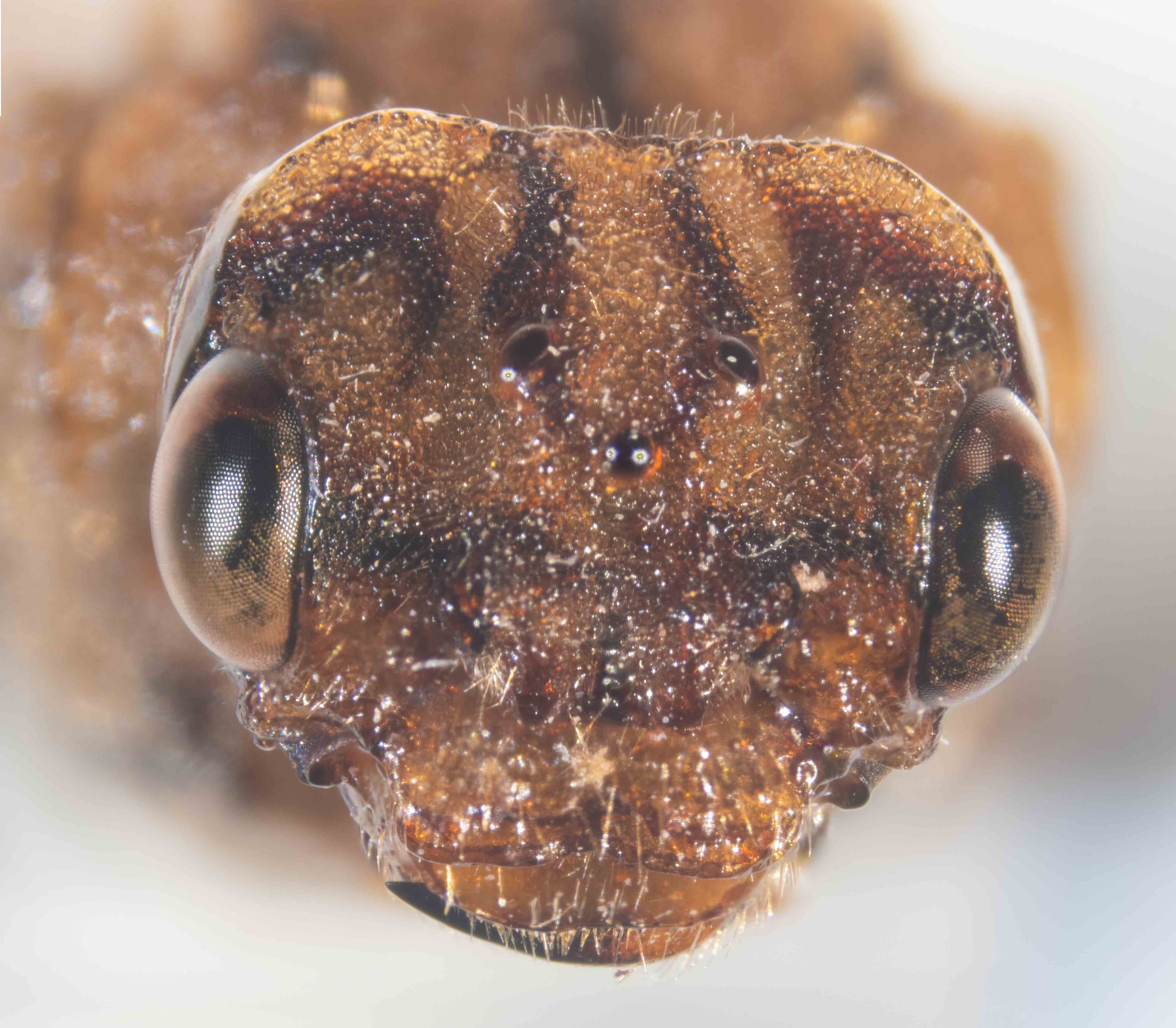
- head and thorax above with a dark line on each side
- dorsum of abdomen uniformly yellow-orange, lacking dark marks
- white blotches on lateral edges of all terga
- all legs orange, hind legs with apex of tibia and all tarsomeres black
- stigma large, almost linear and narrow
iNaturalist observation - @jimbobo
- body above orange
- antenna reddish-brown, tip of club black (not solid black)
- head and thorax above with a dark line on each side
- white blotches on lateral edges of all terga
- all legs orange, hind legs with apex of tibia and all tarsomeres black
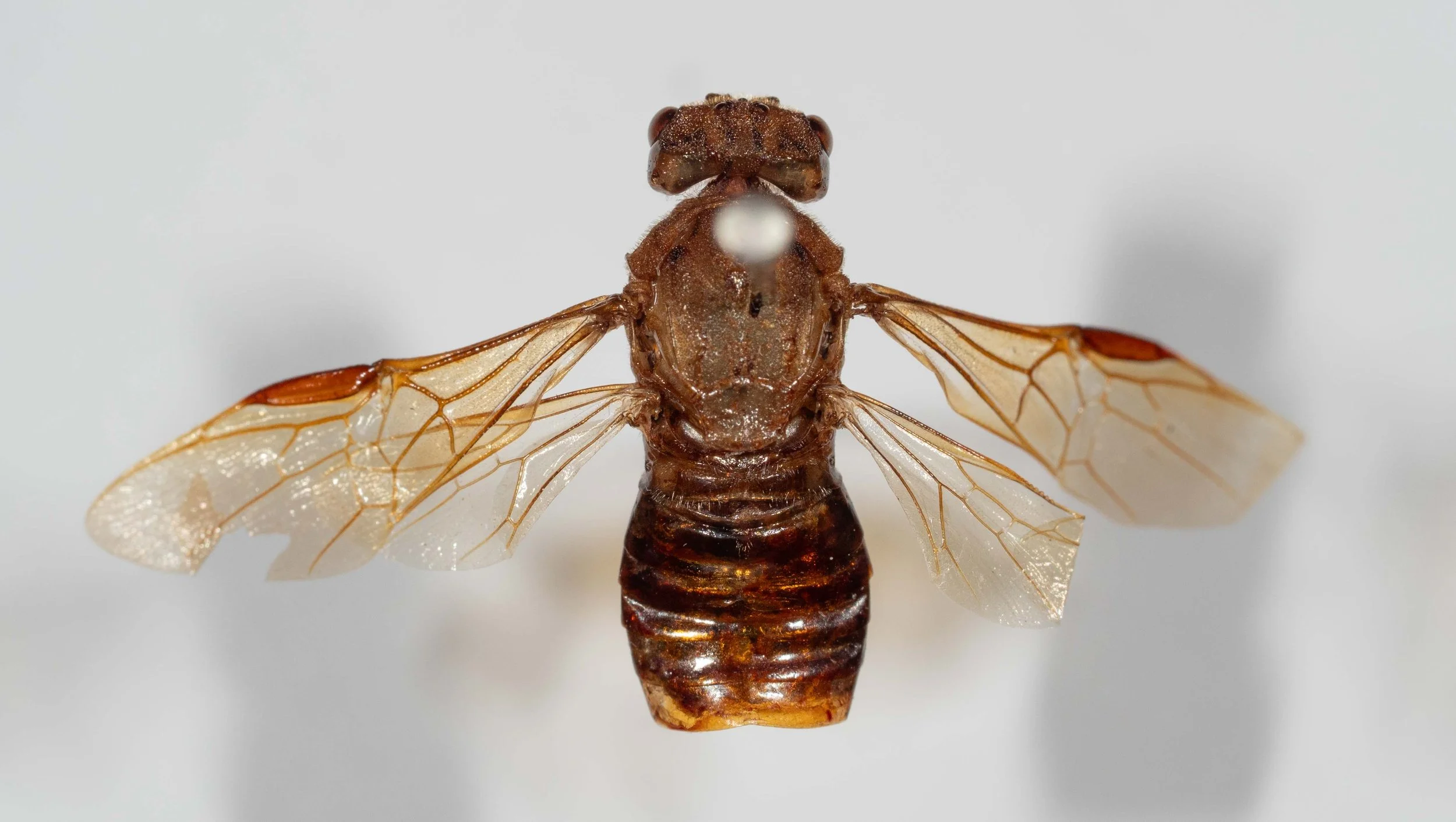
body length 14.8mm
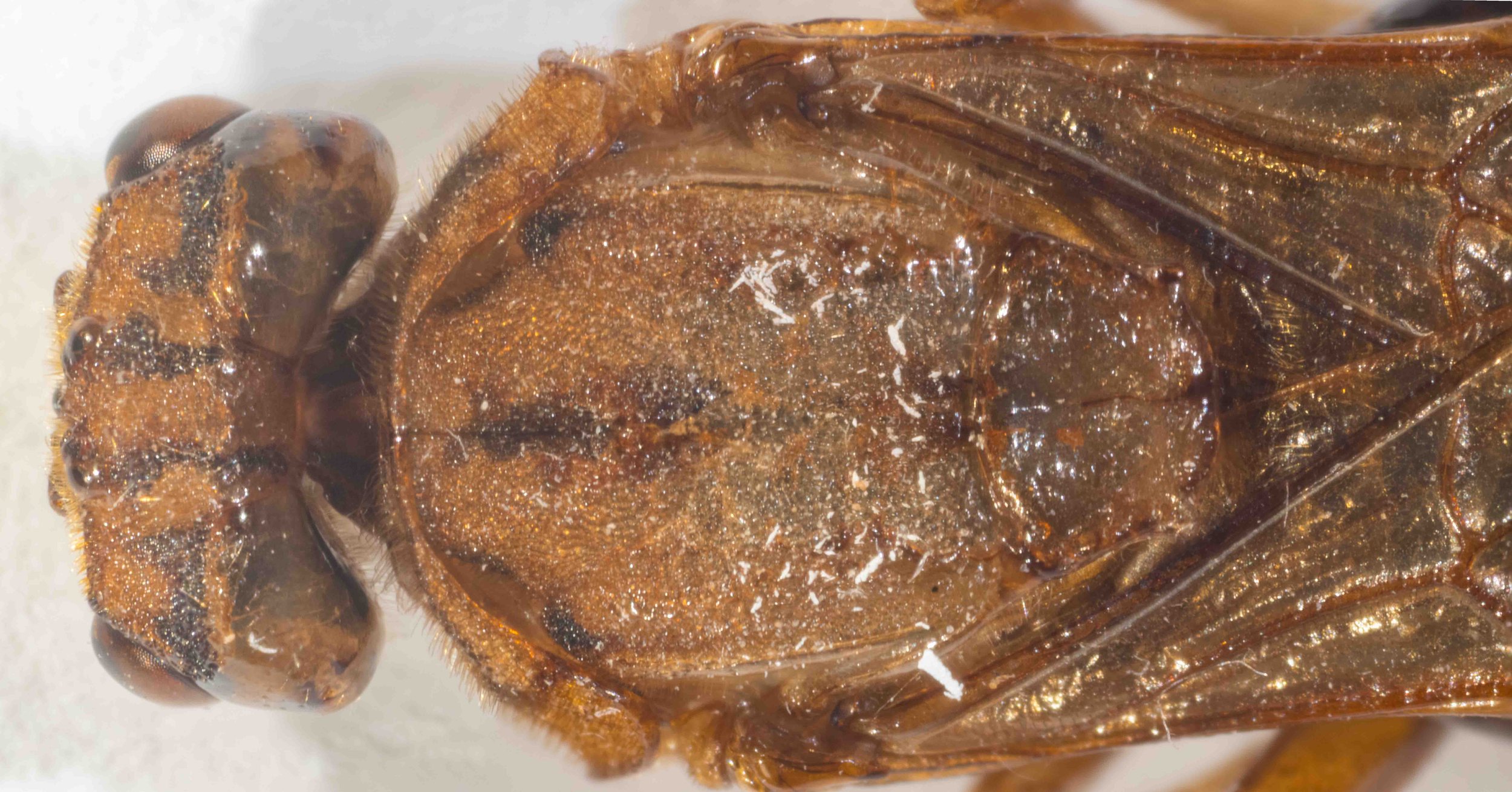
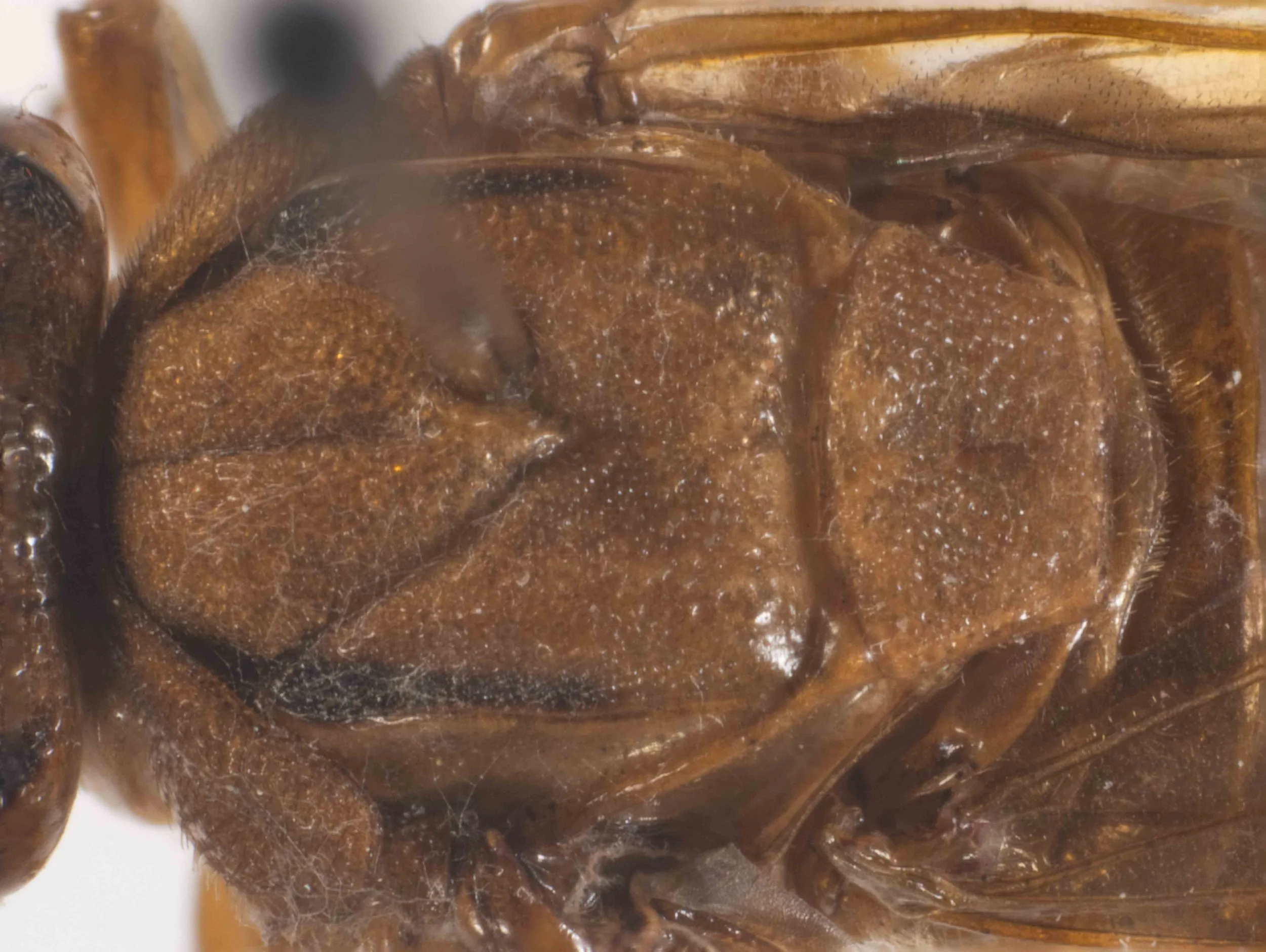
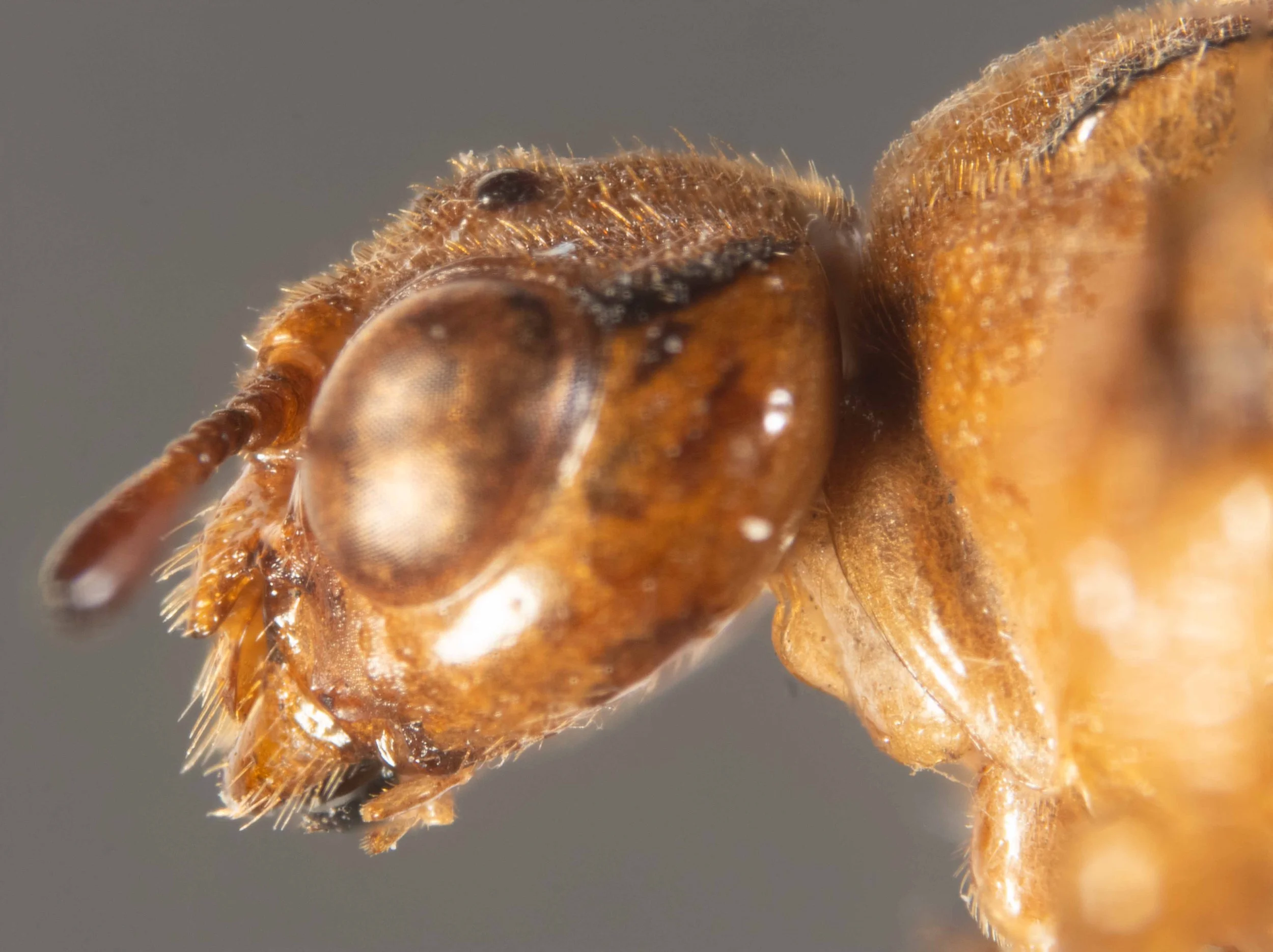
- head and thorax above with a dark line on each side
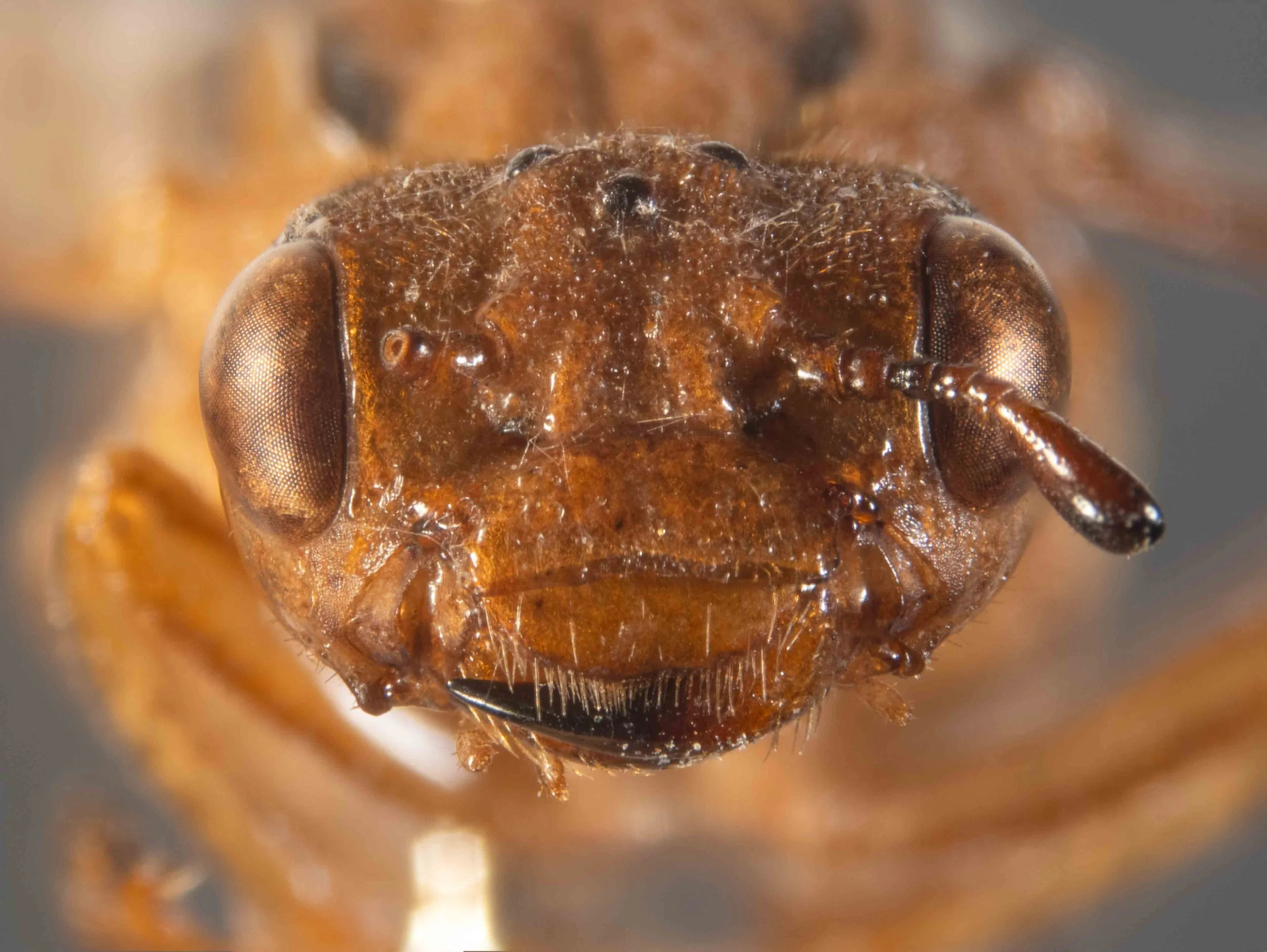
- head large, quadrate, nearly equalling thorax in breadth
- furrows separating anterior and lateral lobes of mesoscutum shallow
- upper part of head without any shining interspaces among punctures
- scutellum anteriorly rounded; hind lobes obliquely truncated, short
- dorsum of abdomen dark brown
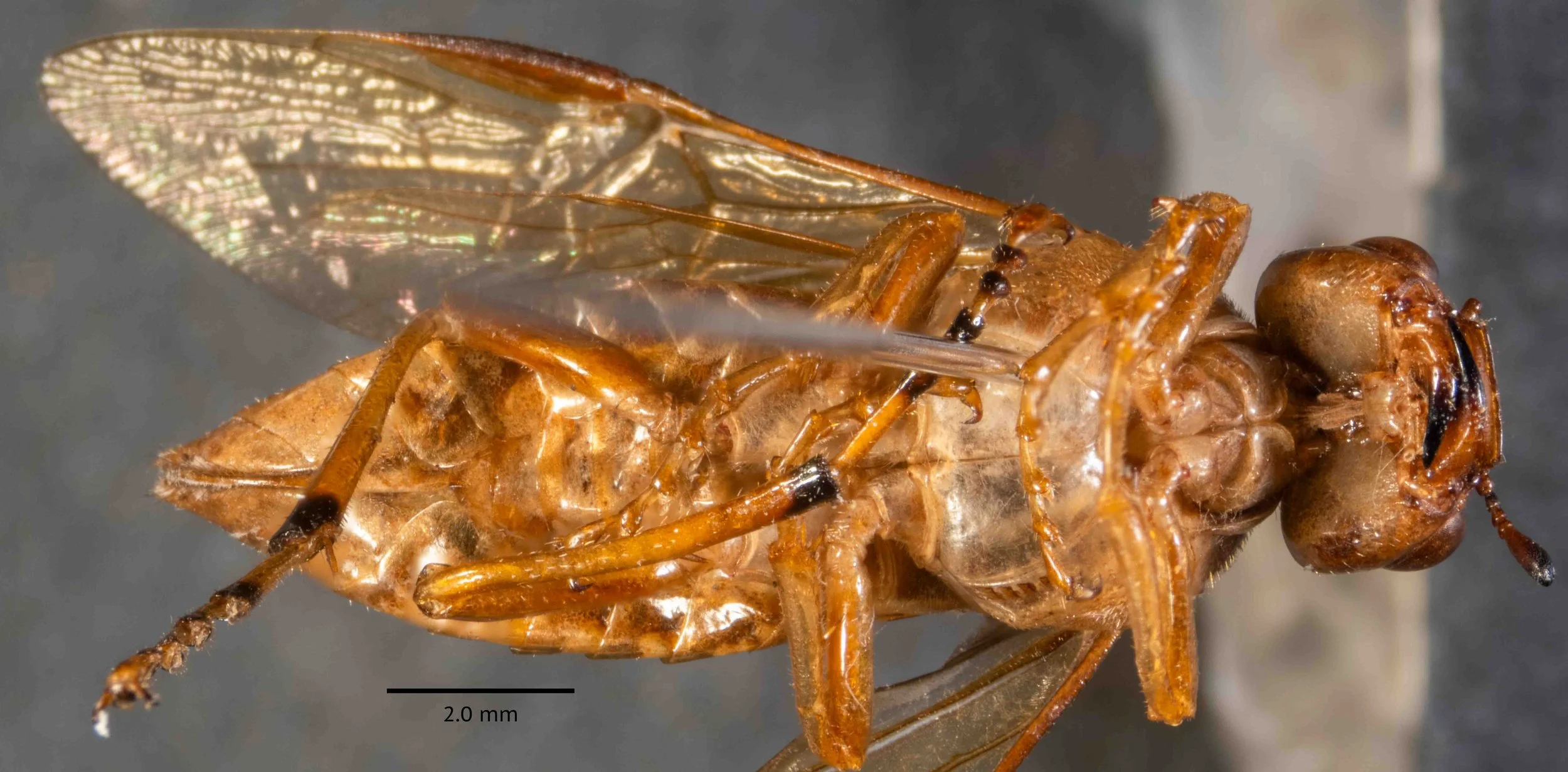
habitus, ventral view, body length 14.3mm
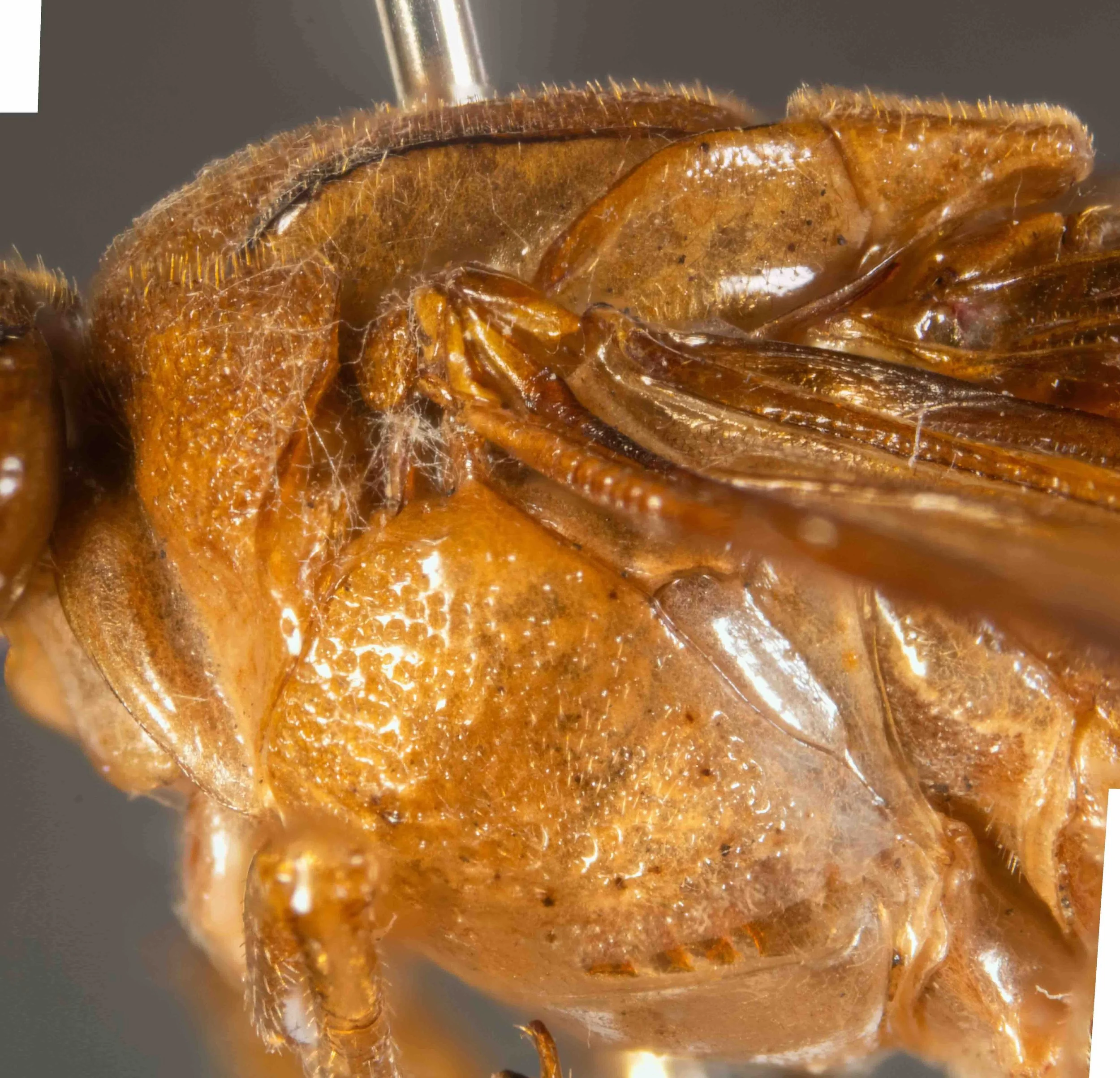
- body yellow-orange below
- hind legs with apex of tibia, apex of first joint and nearly the whole of the subsequent joints of tarsi black
- all other legs, orange in all segments
- labial, maxillary palps yellow
- base of mandibles orange
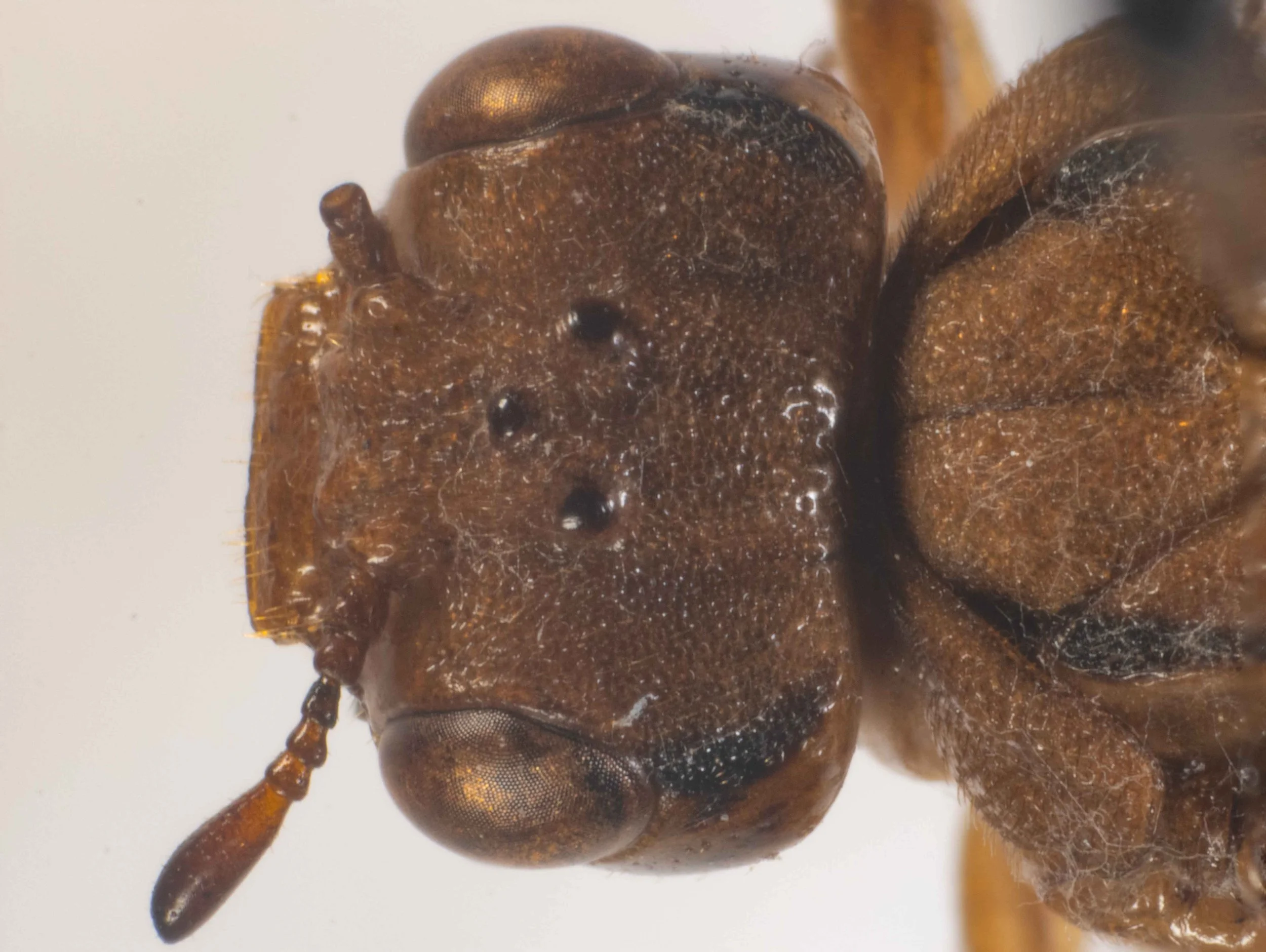
- upper part of head without any shining interspaces among punctures
- antenna clavate; first joint subglobular; second shortest; third, fourth and fifth cylindric, and of equal length; sixth (club) large, elongate, ovate, and longer than the 3 preceding joints taken together
- longer than front margin of clypeus, longer than distance between insertions, not longer than head
References
Benson, R.B. (1939) A revision of the Australian sawflies of the genus Perga Leach, sens. lat. (Hymenoptera, Symphyta). The Australian Zoologist 9: 324-357.
Westwood, J.O. (1836) P. 234 in postscript to Lewis, R.H., Case of maternal attendance on the larva by an insect of the tribe of Terebrantia, belonging to the genus Perga, observed at Hobarton, Tasmania. Transactions of the Entomological Society of London 1: 232-234.
Westwood, J.O. (1880) A monograph of the sawflies composing the Australian genus Perga of Leach. Proceedings of the Zoological Society of London 1880: 359-379.
This is a workbook page … a part of our website where we record the observations and references used in making species identifications. The notes will not necessarily be complete. They are a record for our own use, but we are happy to share this information with others.