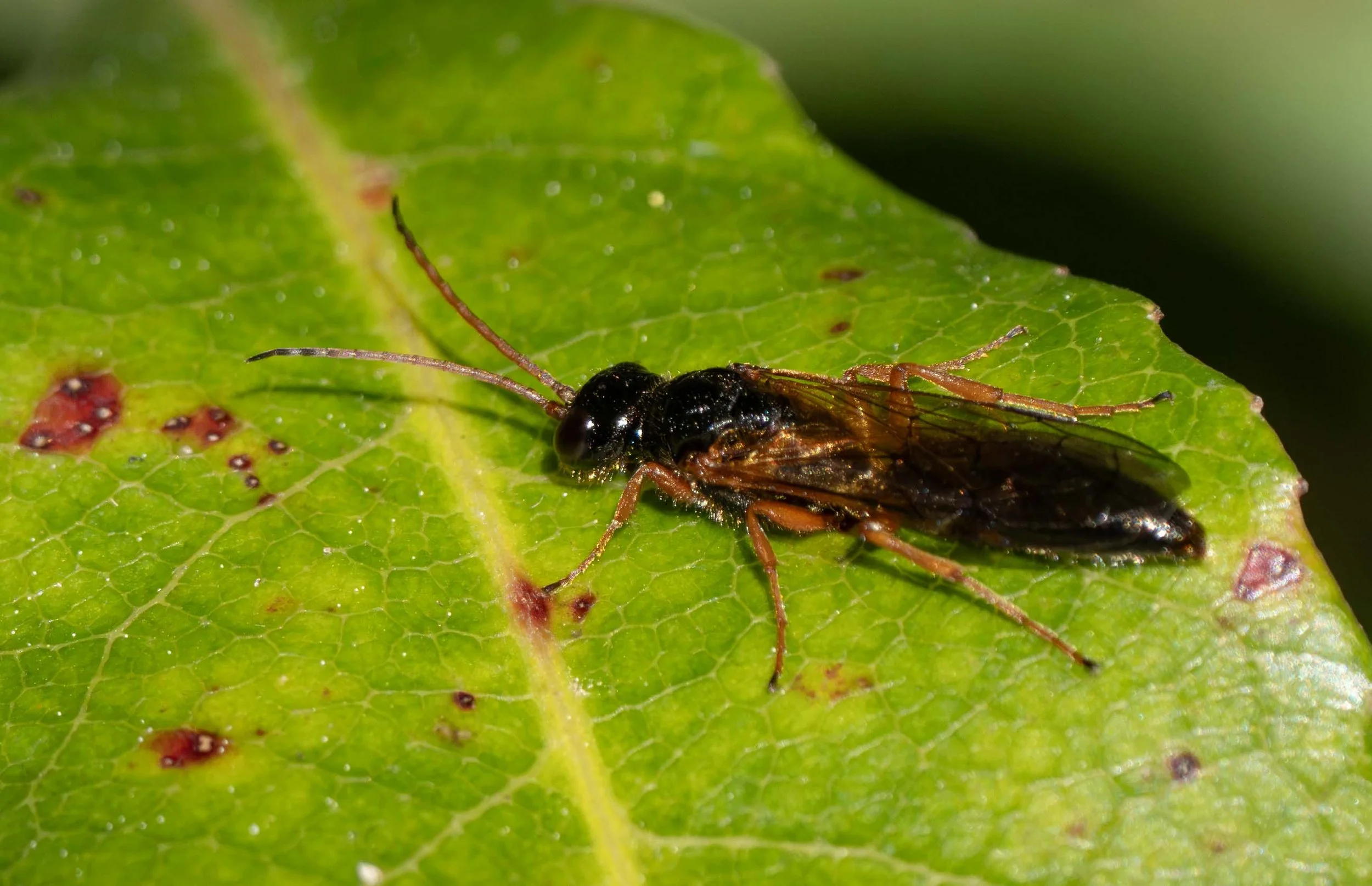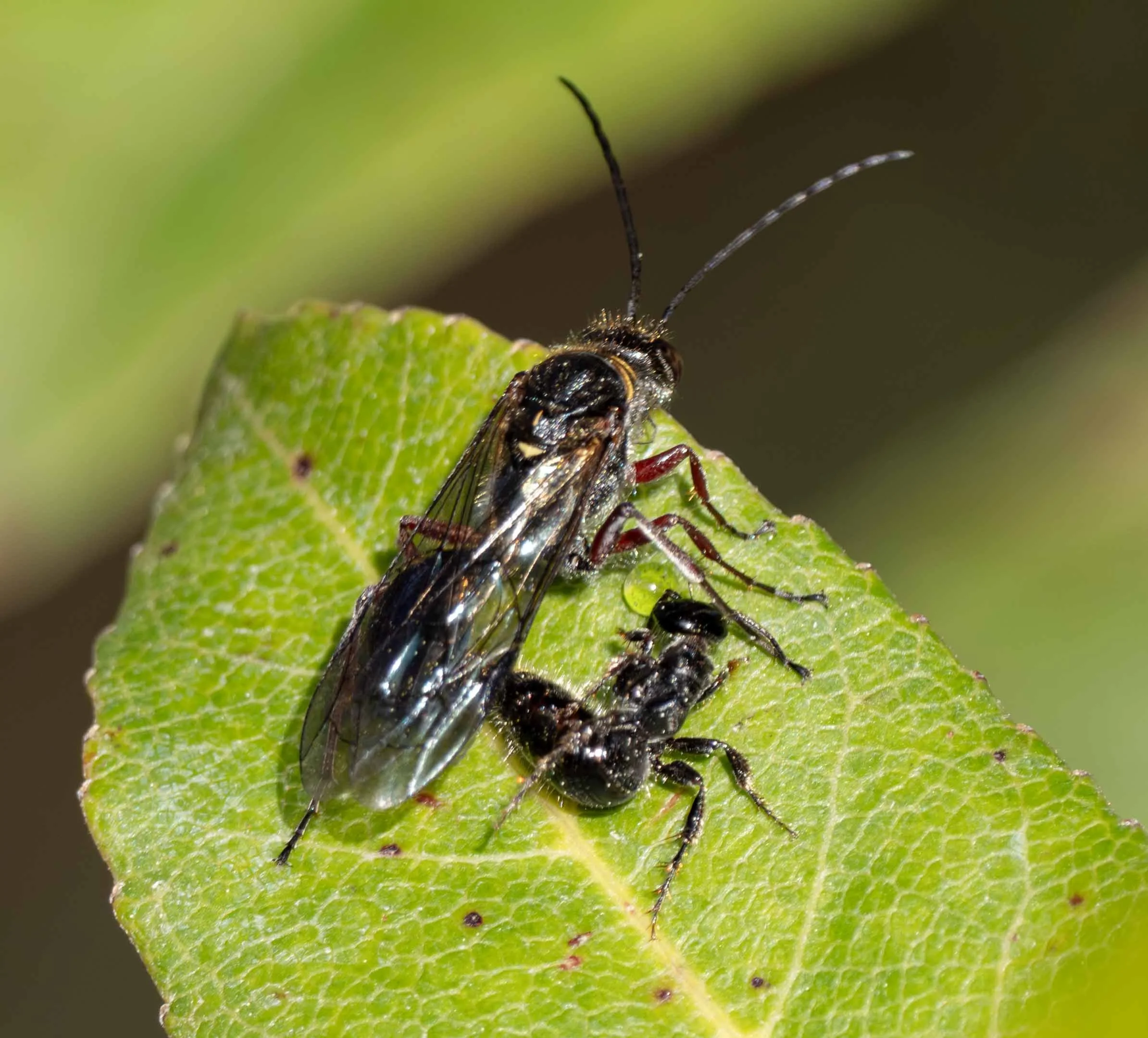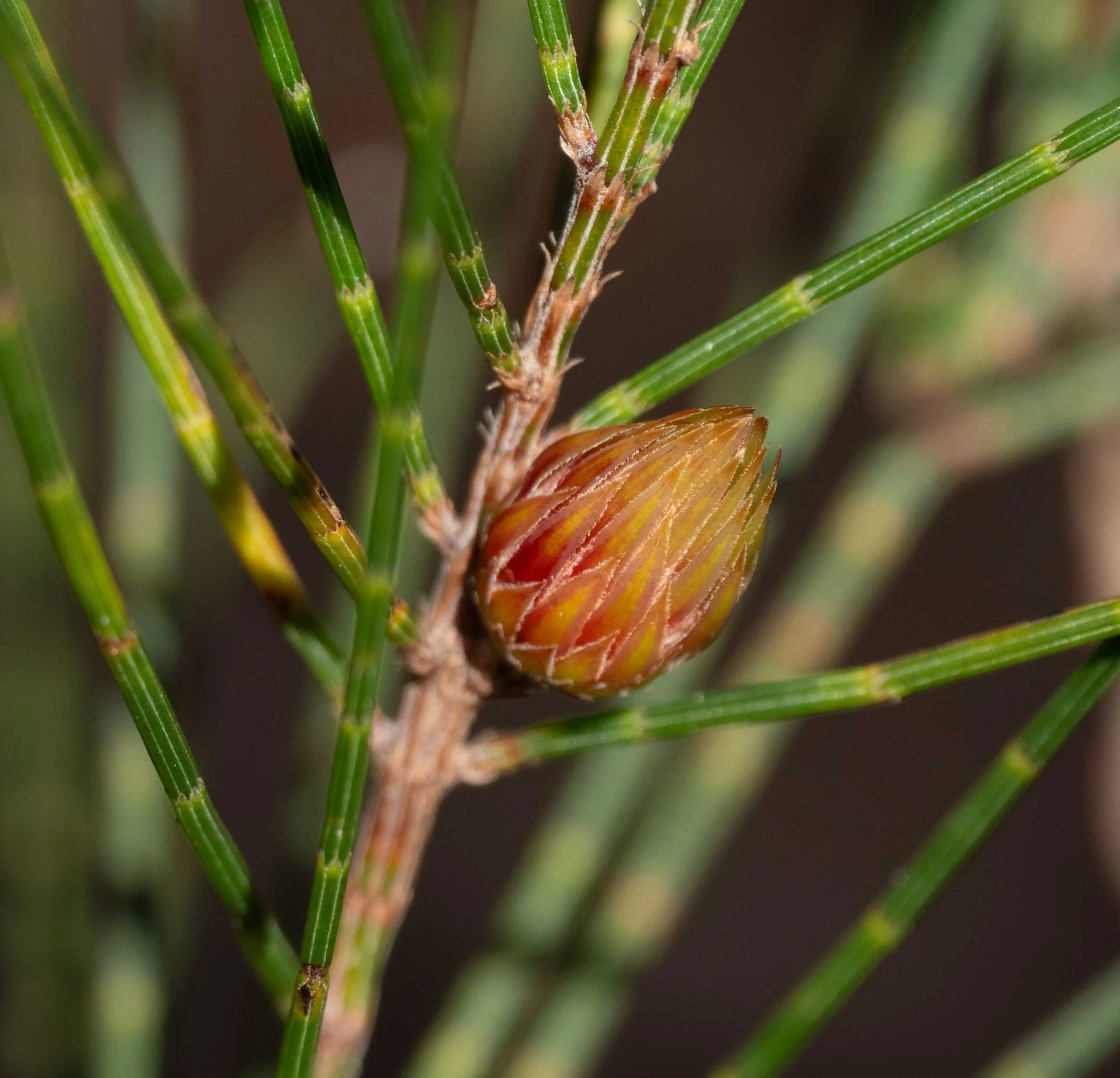
The advent of spring

Forest life awakens during August, and by early September is rapidly gaining pace. Each year we marvel at the transformation. While many of the participants in the drama are now well known to us, there is always something new to learn. This season has already presented us with some surprises … a tiny moth of a type we’ve never seen before, and the discovery of nesting reed bees.
First, the bees
For me, the return of the bees signals the advent of spring.
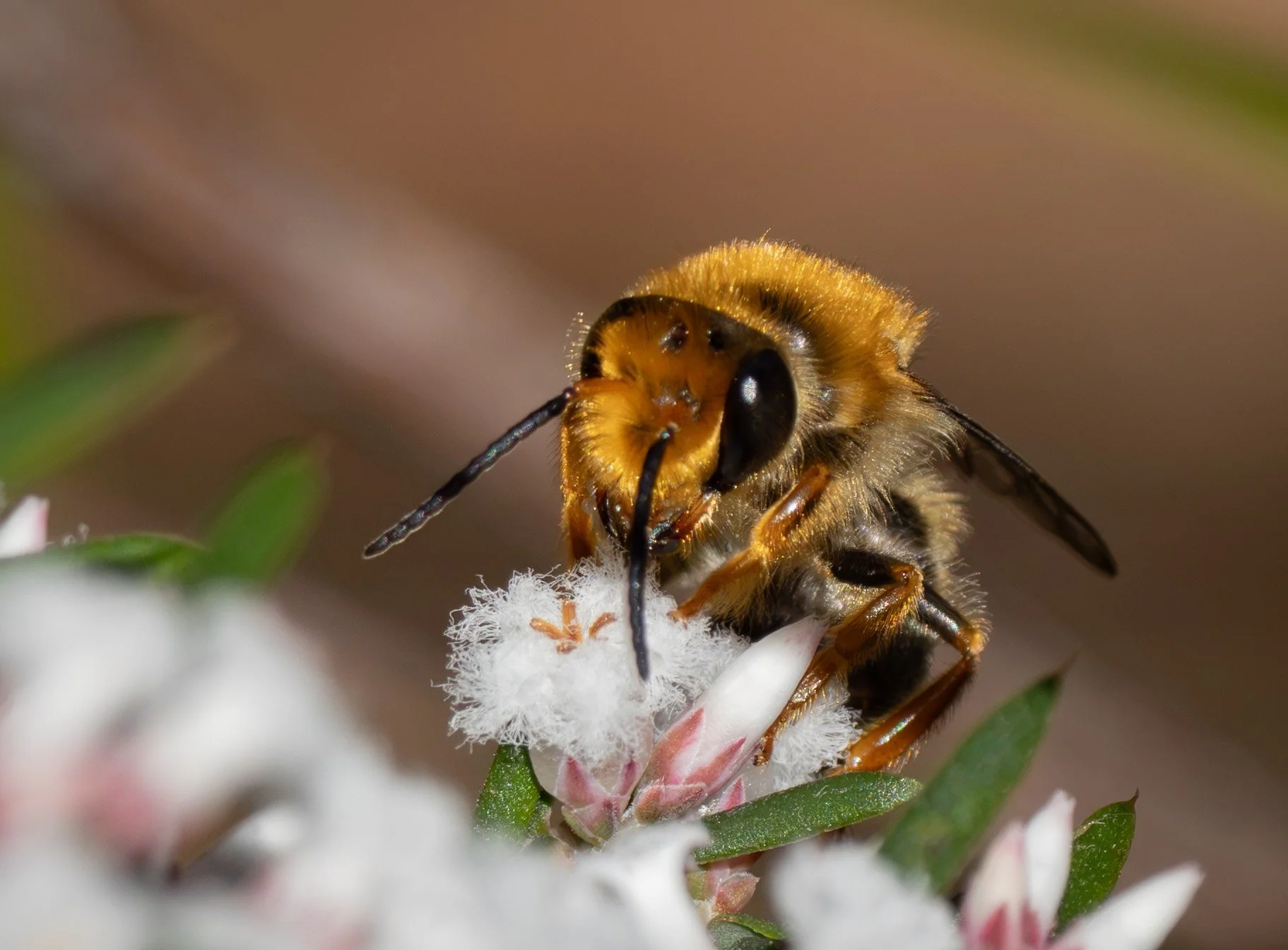
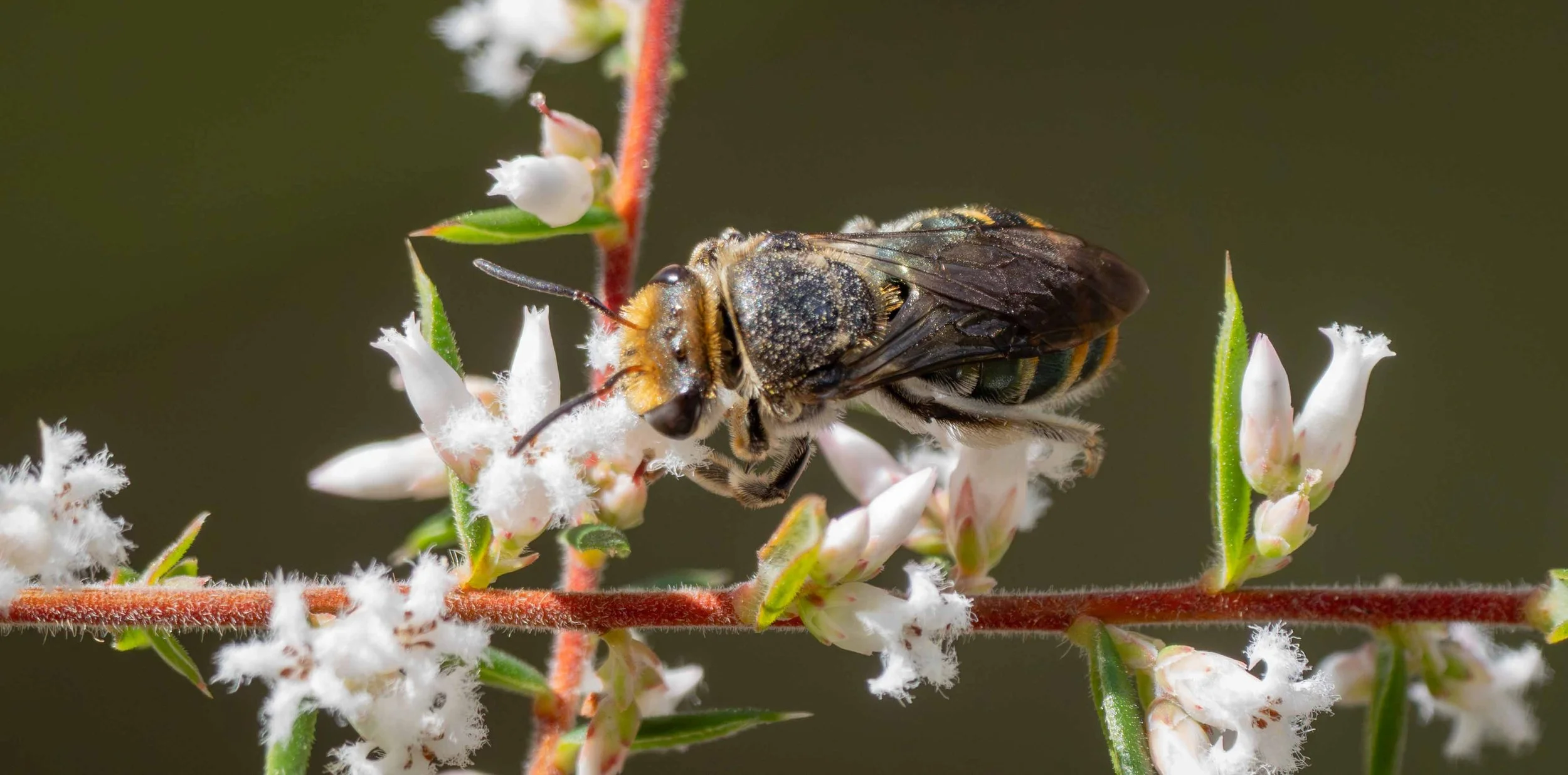
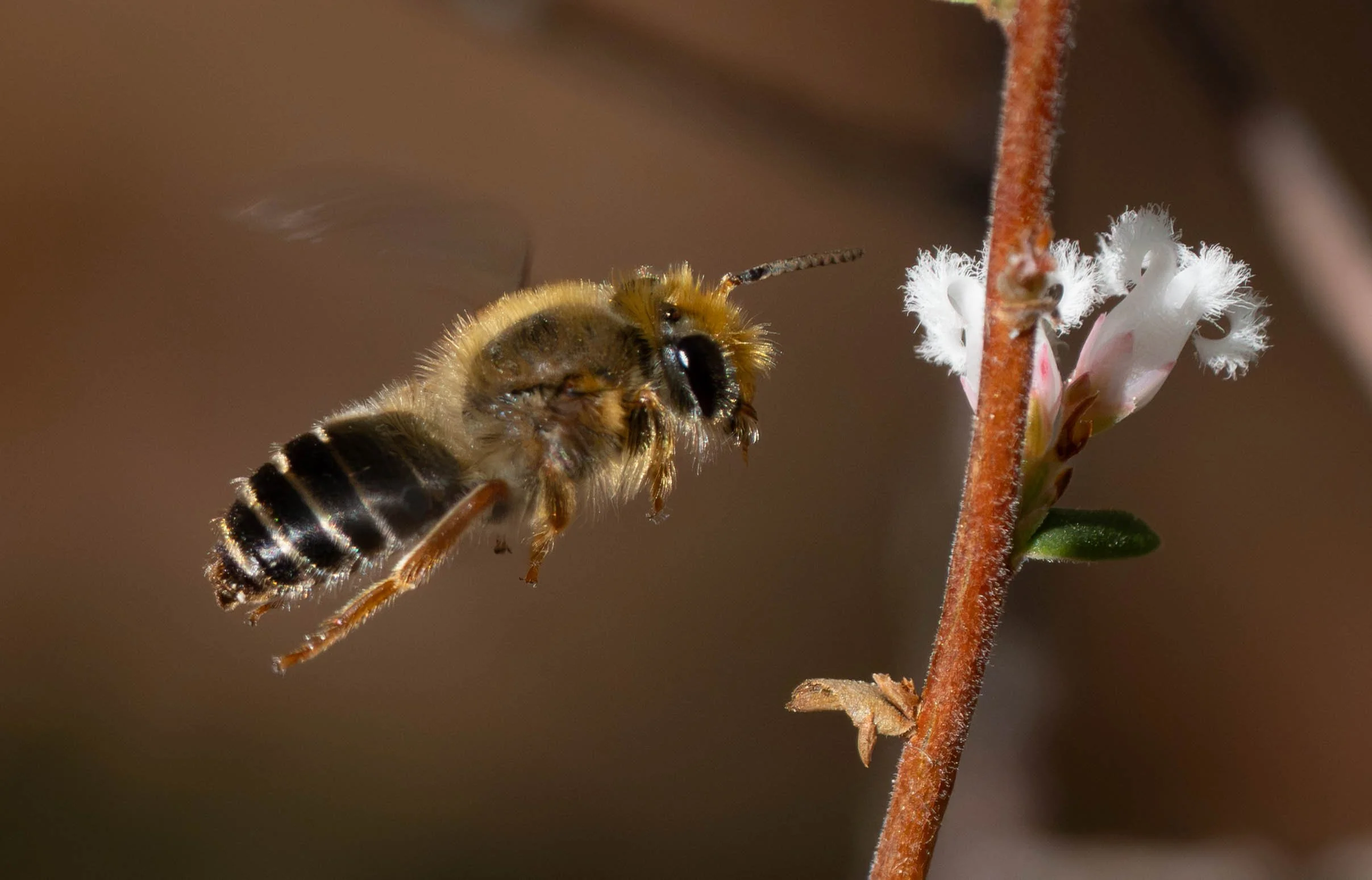
These are among the very first bees to make an appearance each spring. It’s typically lone males I spot first, patrolling patches of low-growing flowers. In early August there are still few other insects in flight.
Trichocolletes orientalis [7th August]
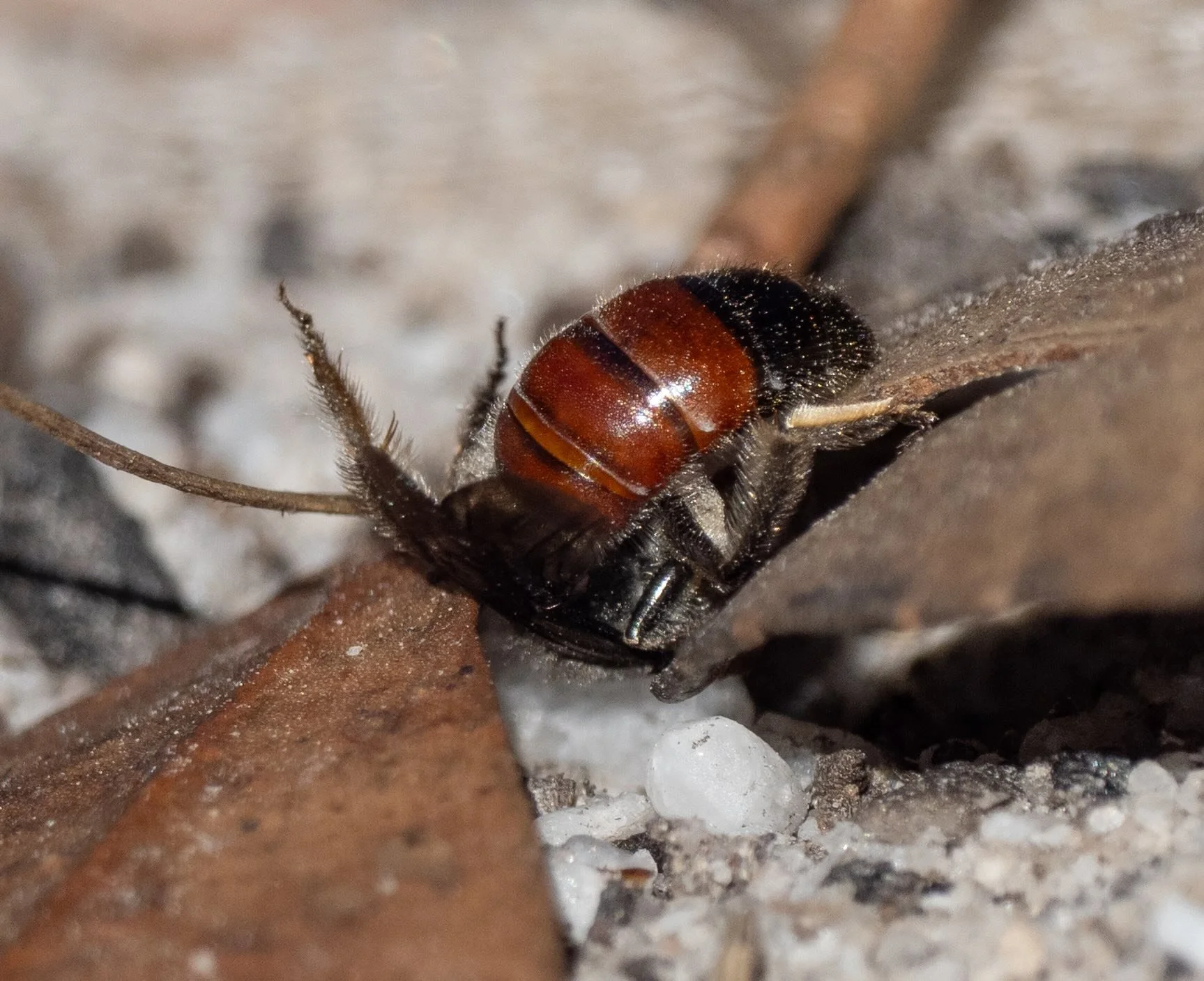
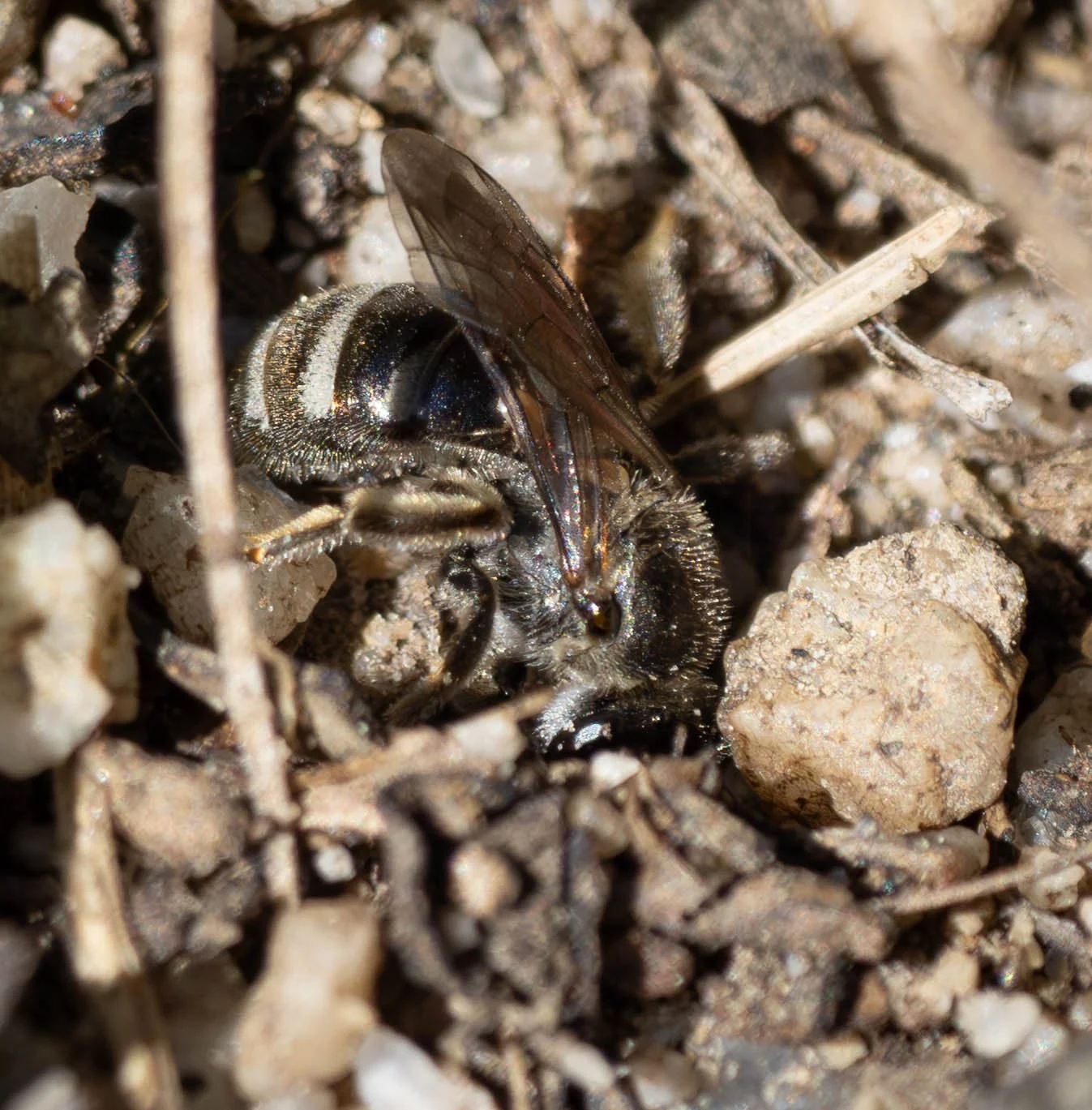
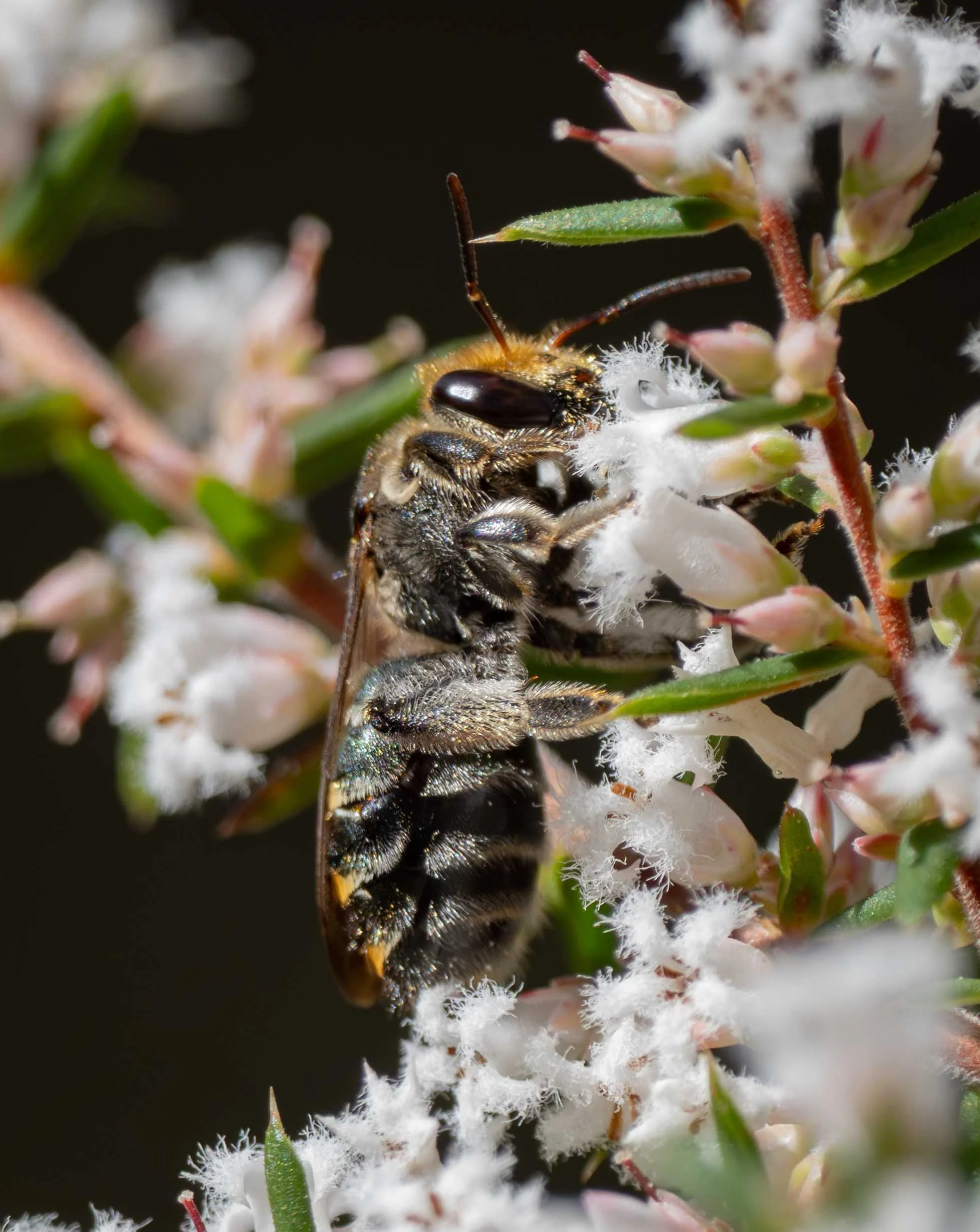
Another bee making an early appearance, although perhaps a rather brief one. She would have spent the winter below ground, as a resting adult or pupa, and this may have been one of her first excursions for the season. Within seconds of this shot she disappeared underground, and there was little further activity at the site for many days.
Lasioglossum (Parasphecodes) [8th August]
Within two weeks of my first sighting, a group of these small(ish) bees are actively provisioning their nests. The ground is firm-packed sand and small gravel, relatively bare of vegetation.
Lasioglossum (Parasphecodes) [21st Aug]
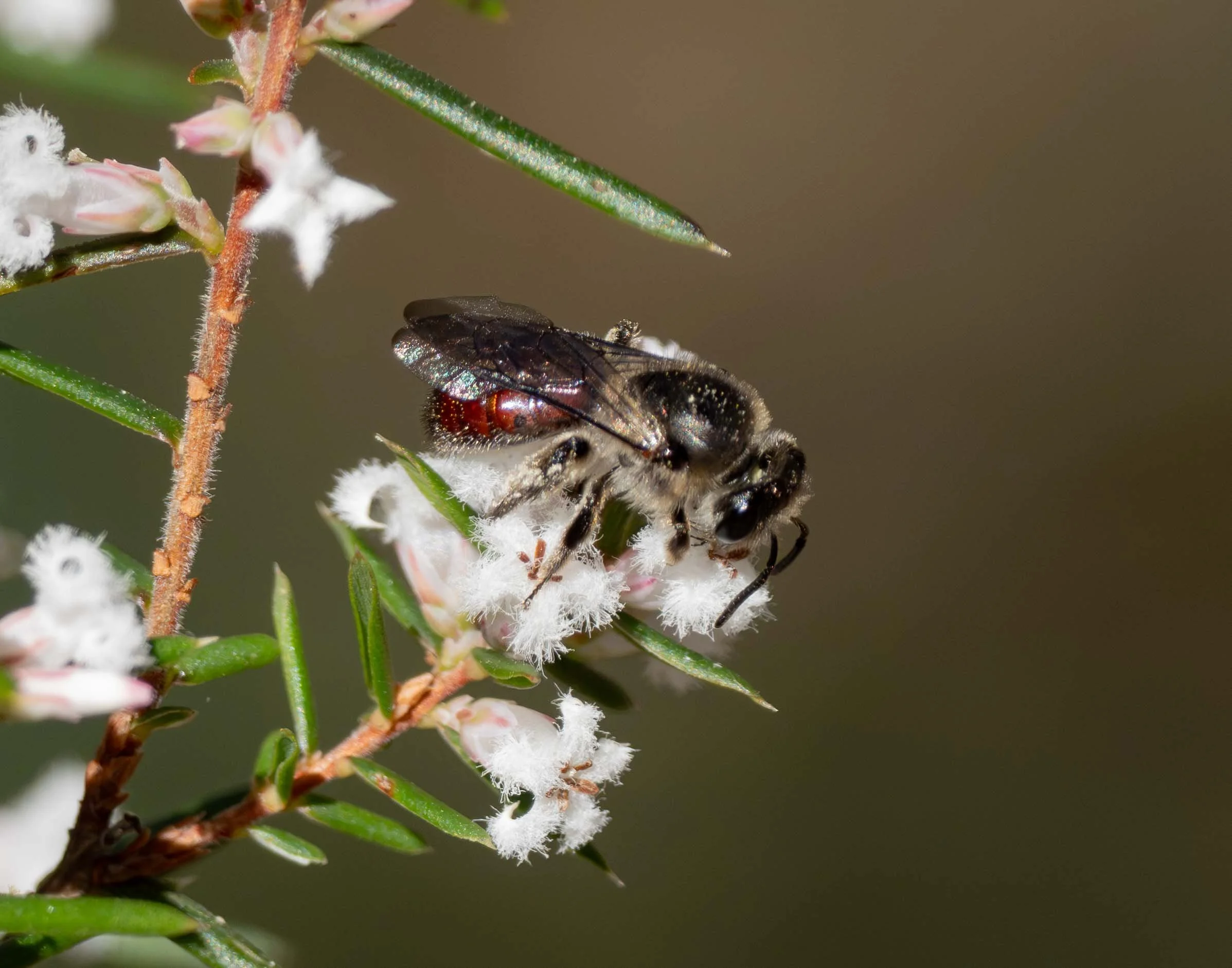
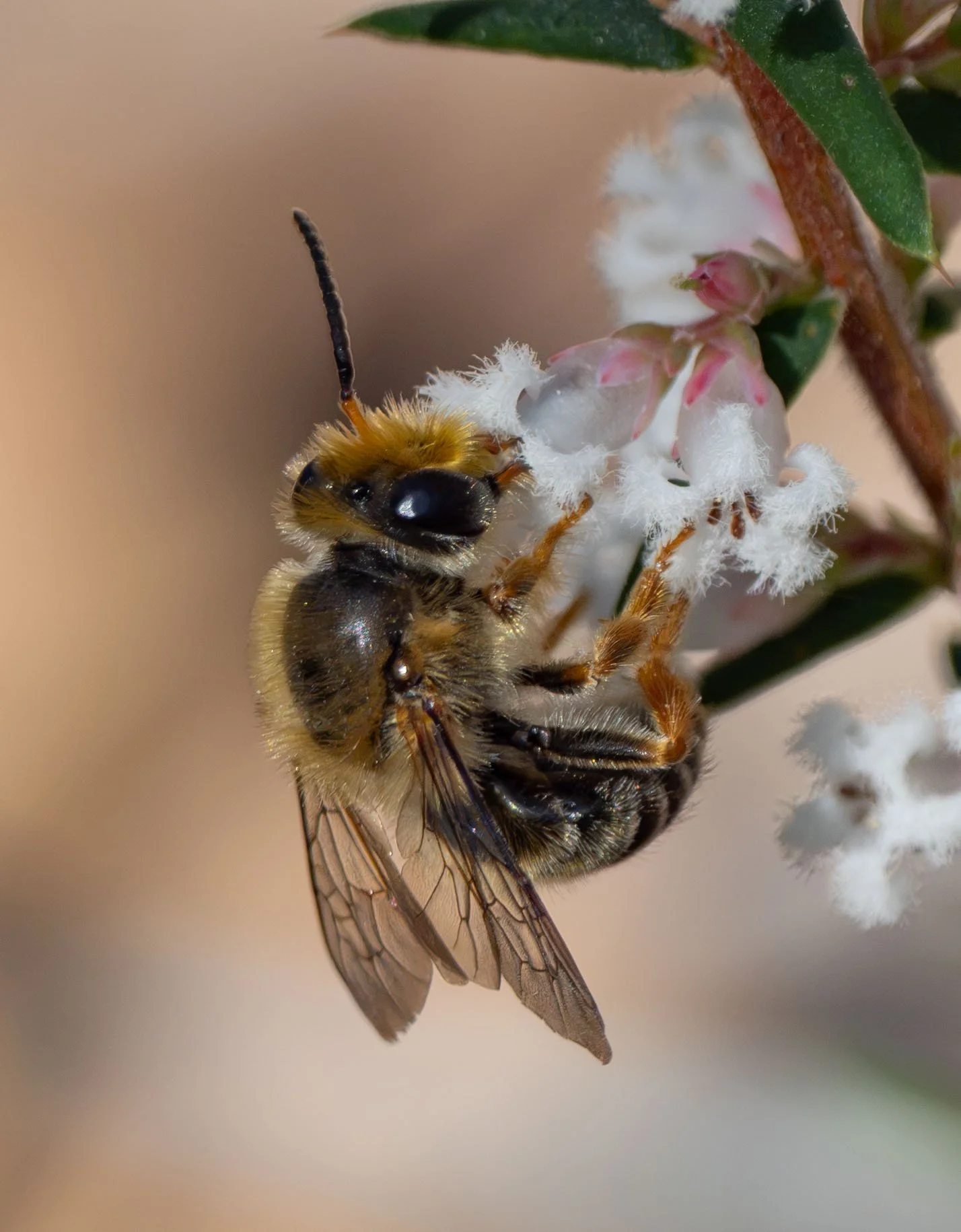
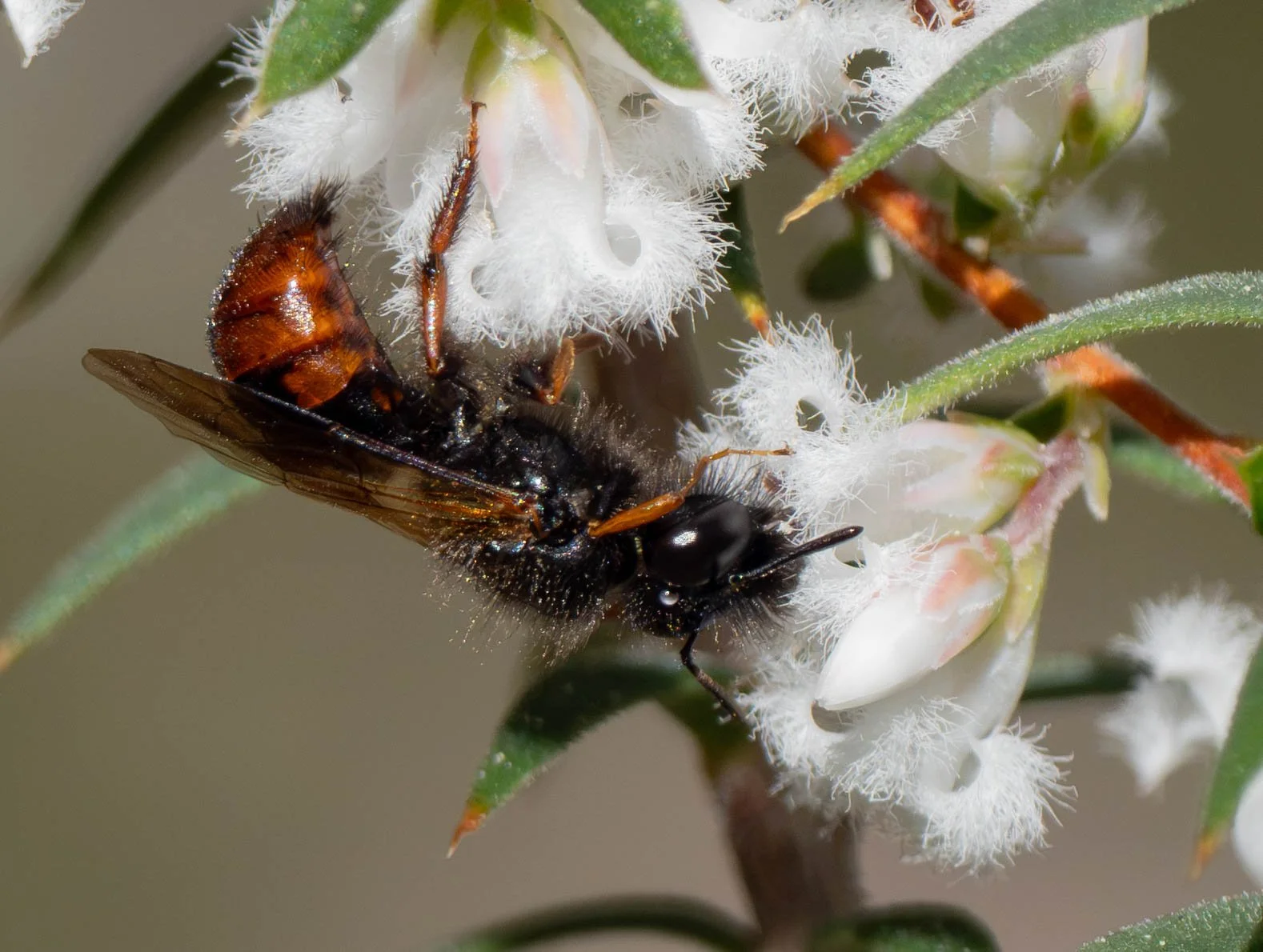
The small, fuzzy white flowers of Styphelia ericoides are a magnet for insects. The plants start to bloom in July, but for several weeks the principal visitors are small flies. Then, quite suddenly, Exoneura appear.
Exoneura [21st Aug]
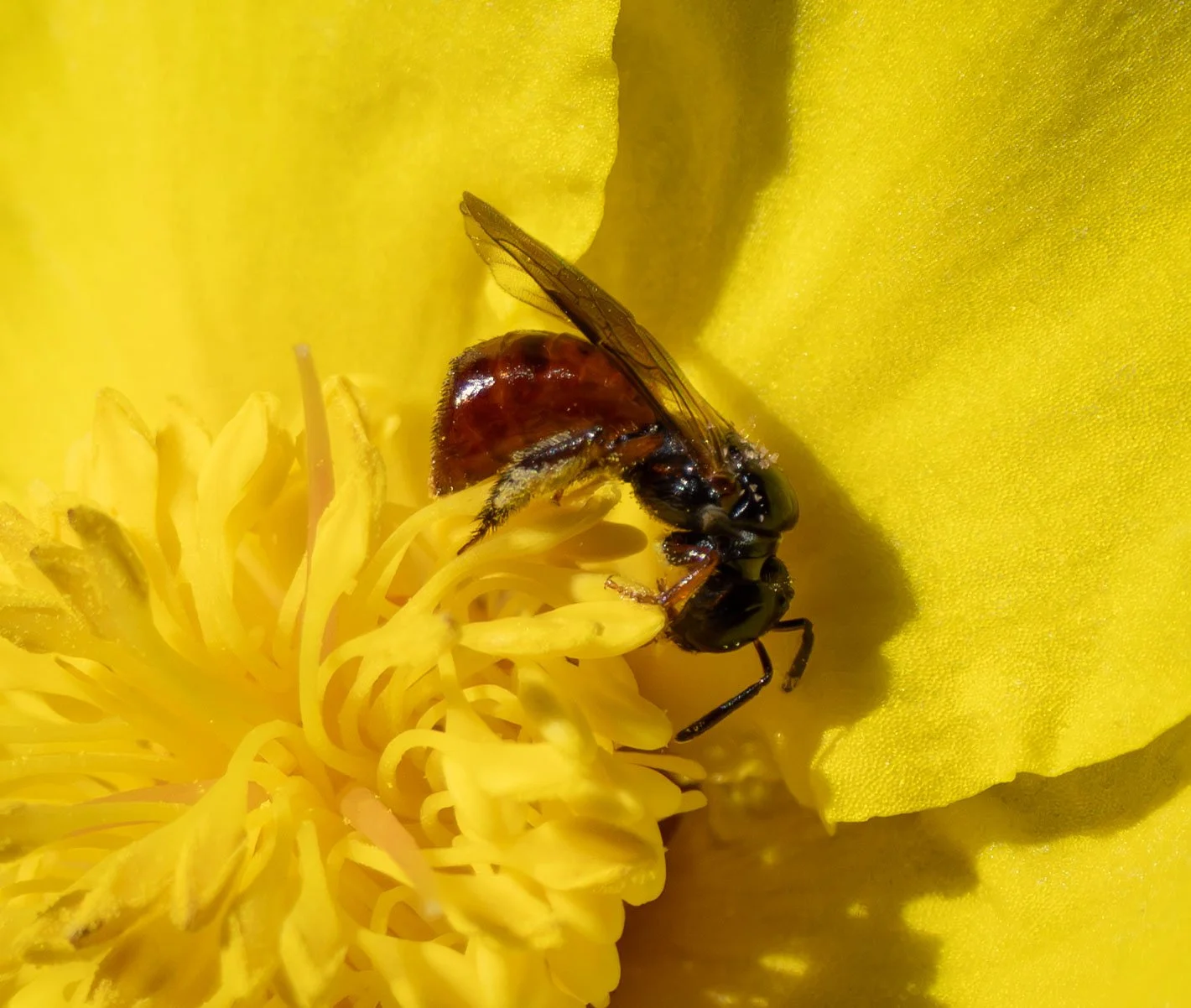
While the densely-flowering patch of Styphelia is certainly popular among the Exoneura, they are not fussy feeders. The large, bright yellow flowers of Hibbertia dentata are a good source of pollen … for those bees capable of shaking it loose from anthers. Hibbertia flowers produce no nectar, so the bees must shop elsewhere for that.
Exoneura [21st Aug]
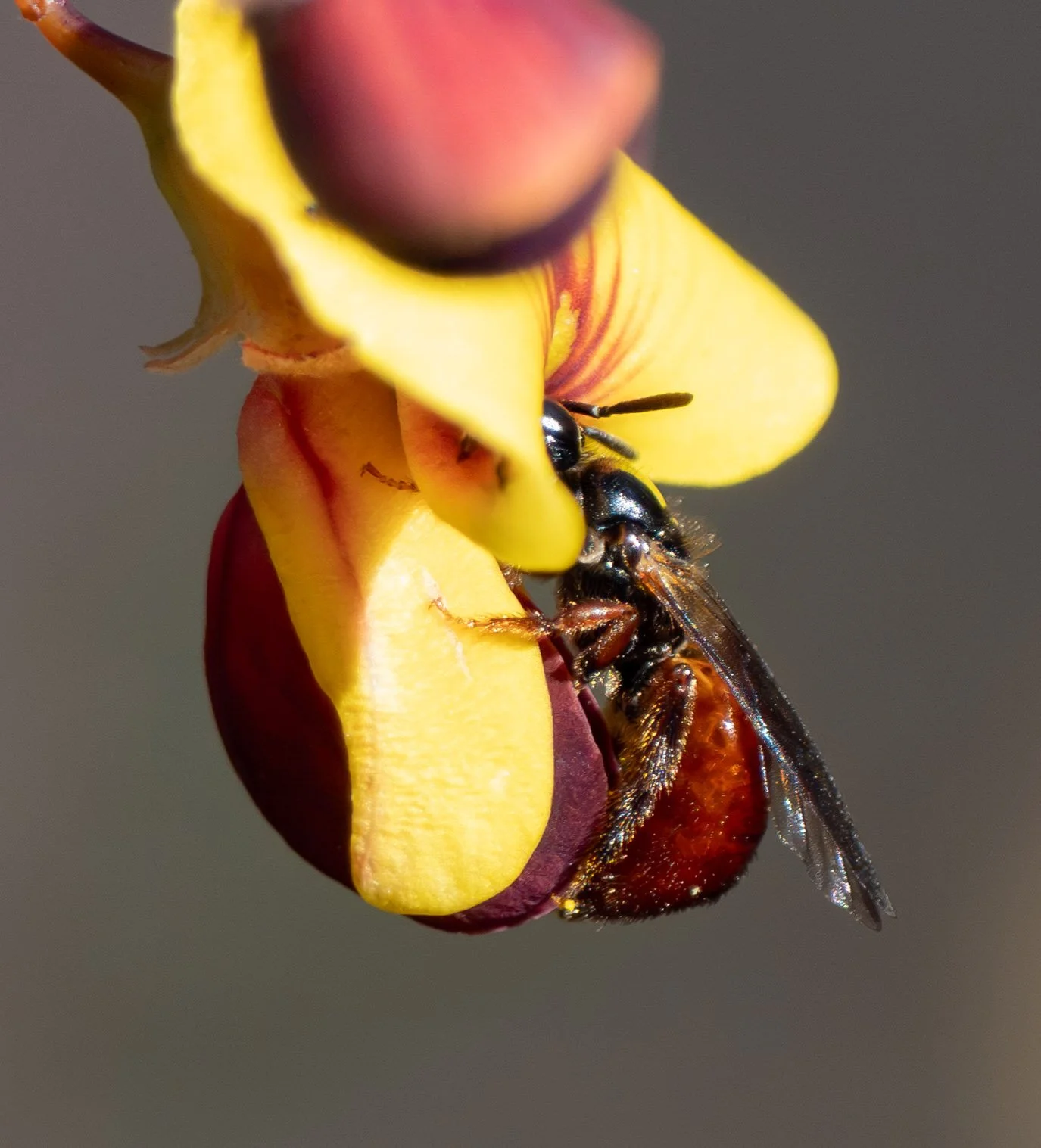
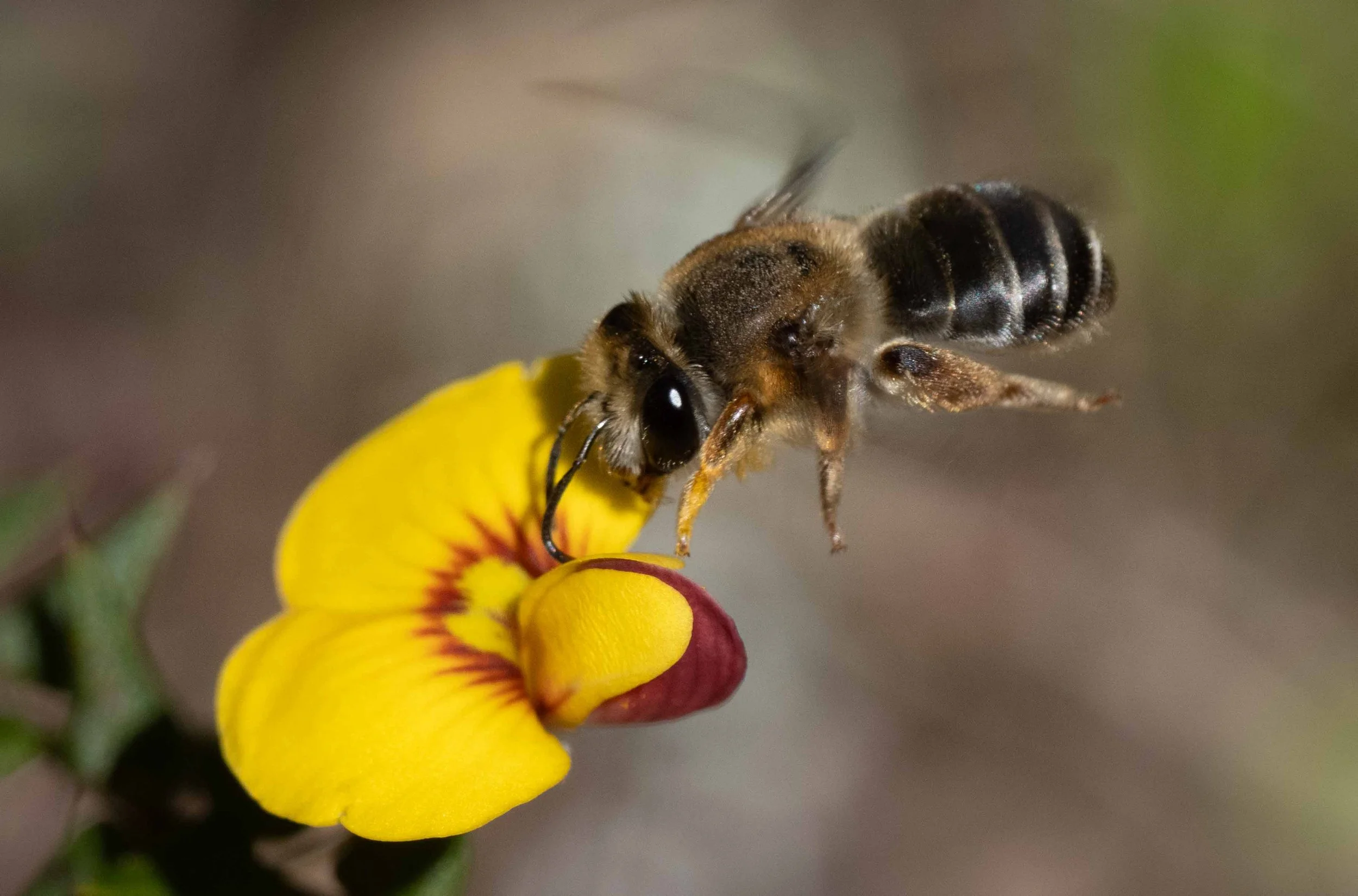
Pea flowers are a good source of both nectar and pollen … for bees strong enough to access it. This is one of the larger species of Exoneura here locally. As she reaches into the flower with her head and long tongue to reach the nectar, she also spreads the lower petals of the flower to expose the pollen-laden anthers.
Exoneura [28th Aug]
When gathering pollen, bees tend to move between flowers and plants of the same species. This is why even generalist bees can be highly effective pollinators. And why it can be to the plants’ advantage to grow in clusters and to flower synchronously. Here in the forest, the ‘busiest’ Styphelia plants are those growing in close association.
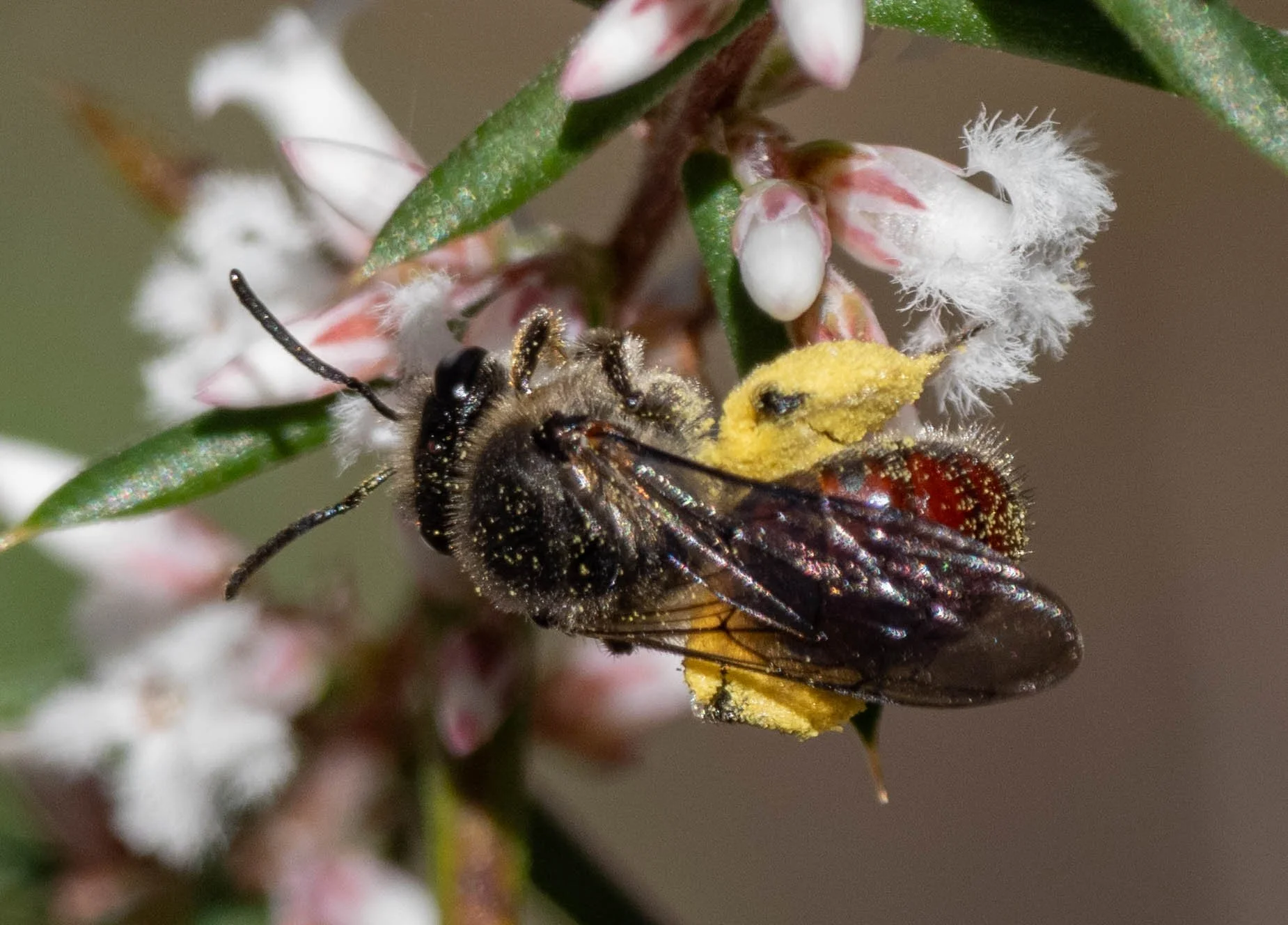
Leioproctus (Leioproctus) [27th Aug]
Such a huge pollen load, and bright yellow too! I suspect that this female has been visiting nearby Hibbertia. While I guess it is possible that she harvested all this from the tiny flowers of Styphelia, it seems more likely she’s been elsewhere and is now just stopping by for some nectar.
Leioproctus (Leioproctus) [27th Aug]
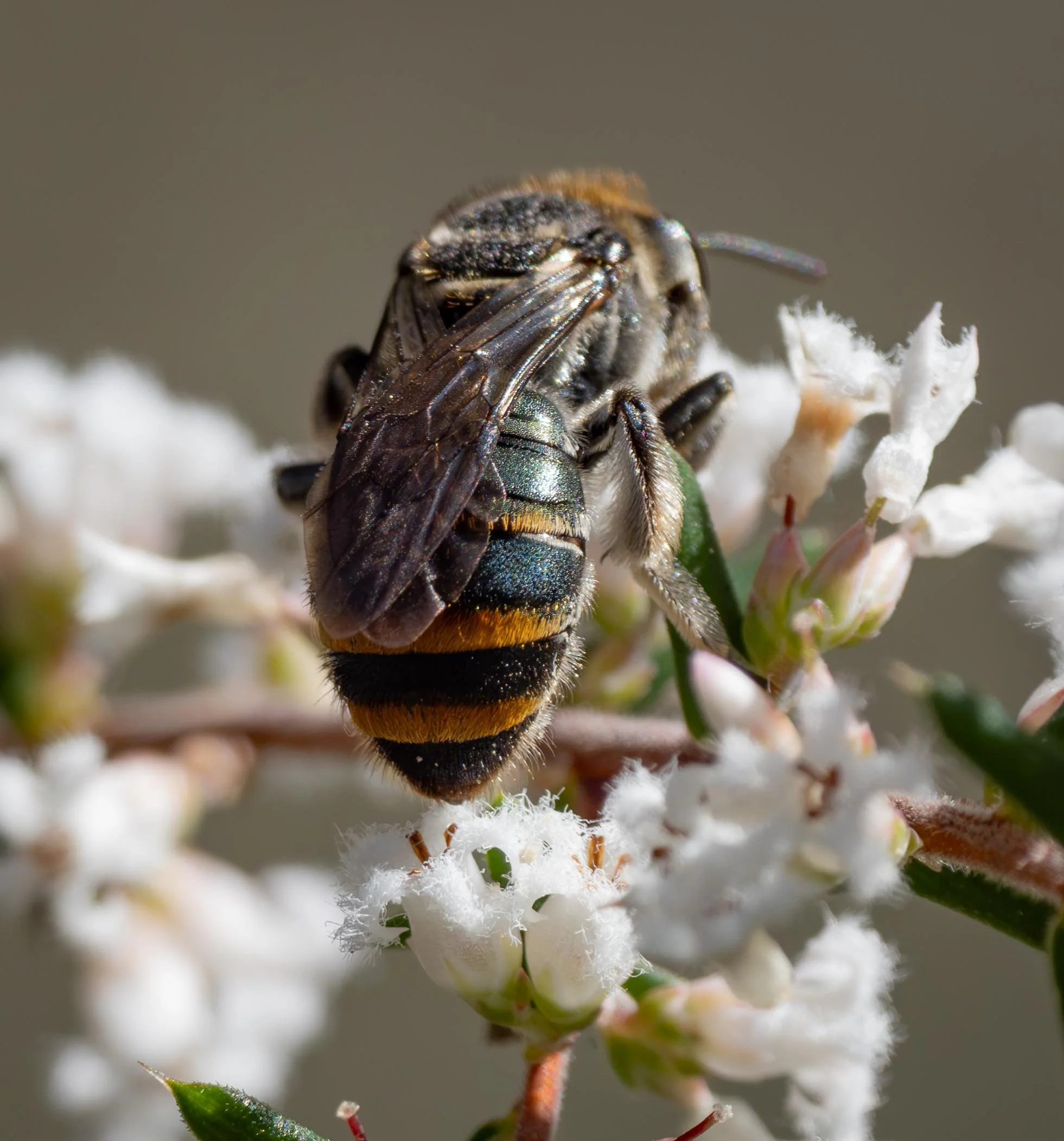
Most bees in the family Halictidae are generalists, so they’re not restricted to the flowering time of any particular plant. Indeed, we see pollen-laden Lasioglossum throughout spring and summer months.
Lasioglossum (Chilalictus) [27th Aug]
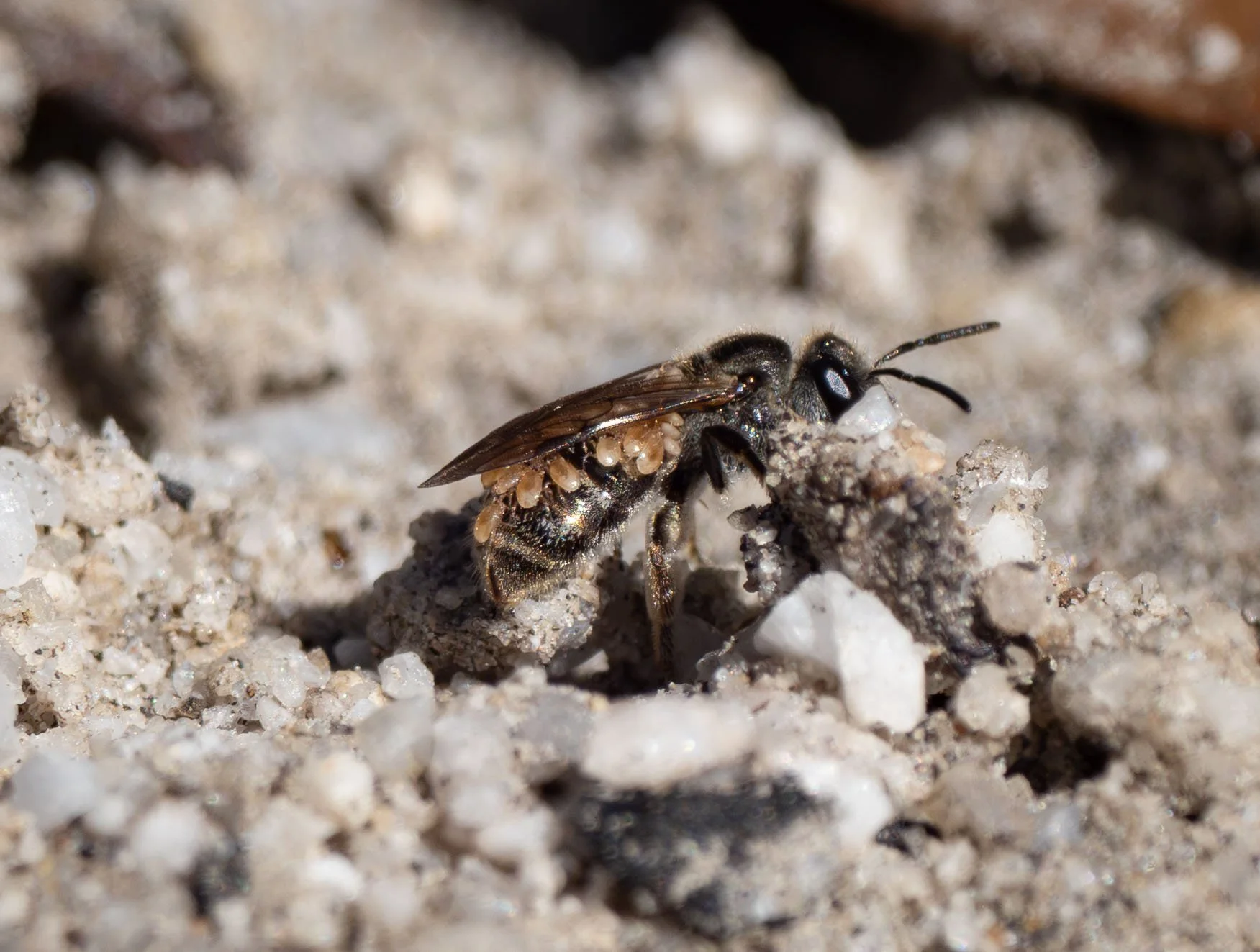
Ground-nesting is the norm among halictid bees. This female was actively digging into the coarse sand and gravel, probably in the initial stages of nest construction. Hard work in a such a substrate. Note too the mites attached to the base of her abdomen, largely concealed here by the wings.
Lasioglossum (Chilalictus) [29th Aug]
It is common for bees to carry mites … although this is a particularly large load, of relatively large mites!
Such mites are generally harmless to the host bee, and are merely hitching a ride from her natal home to the new nest she will soon establish. There they will dismount, moult, and begin to feed. Depending on the mite species, they may feed on bee waste products, rob the larval food stash, or even take blood from bee larvae. The bee-mite relationship is often mutualistic. Some native bees have even evolved specialised areas on their bodies to accommodate these little hitchhikers (Walter et al. 2002).
These are not the infamous Varroa mites currently making headlines, and I’ve read that Varroa are indeed unlikely to transfer to native bees (Houston 2018).
Lasioglossum (Chilalictus) [27th Aug]
Distinguishing female from male bees is easy if the bee is carrying a pollen densely packaged on the back legs or beneath the body. Males are never involved in nest provisioning. In this photo, the clues are a little more subtle. She has no pollen payload, but the back legs are noticeably hairy. These specialised hairs (‘scopae’) are used in pollen transport.
Trichocolletes orientalis [29th Aug]
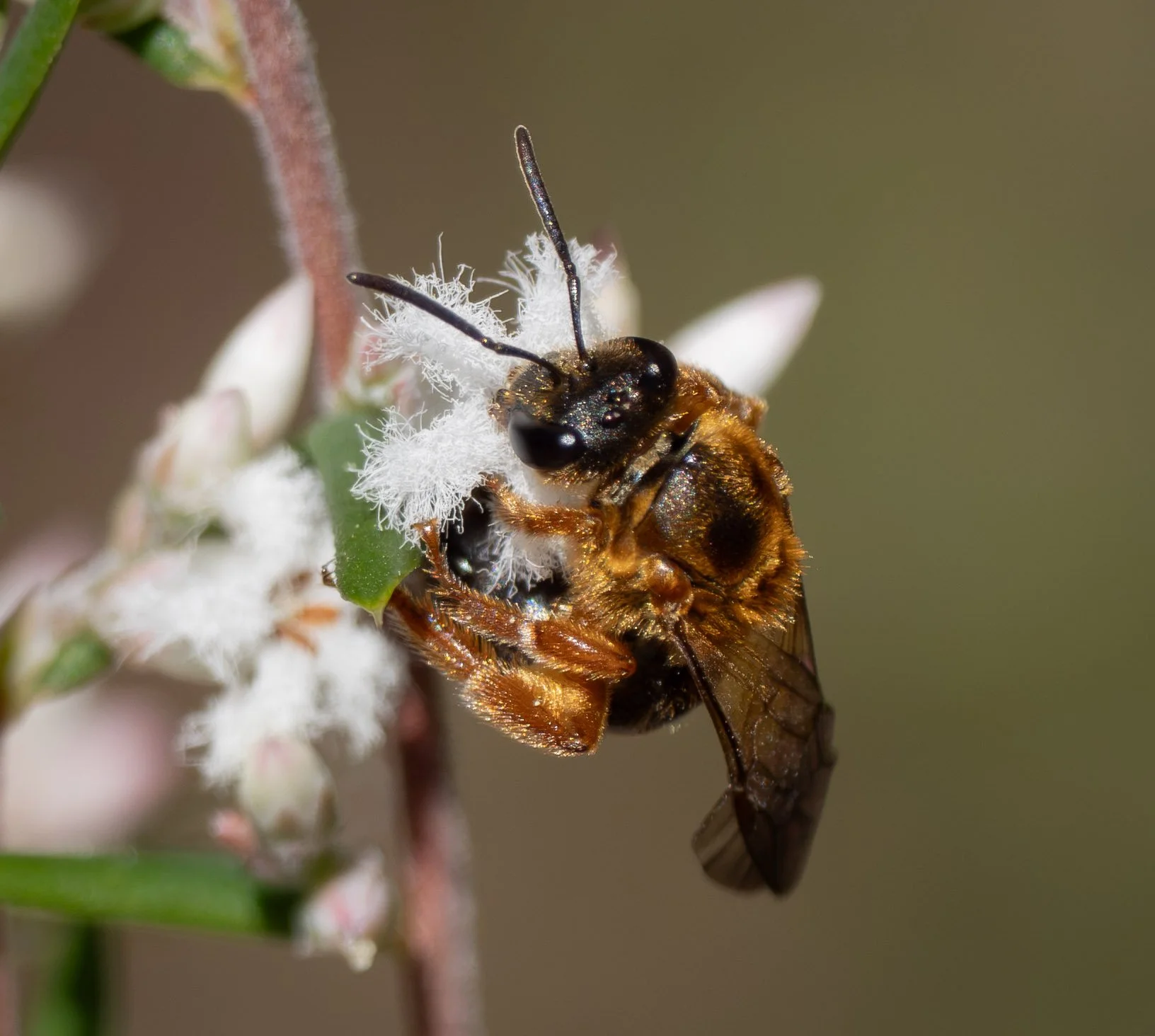
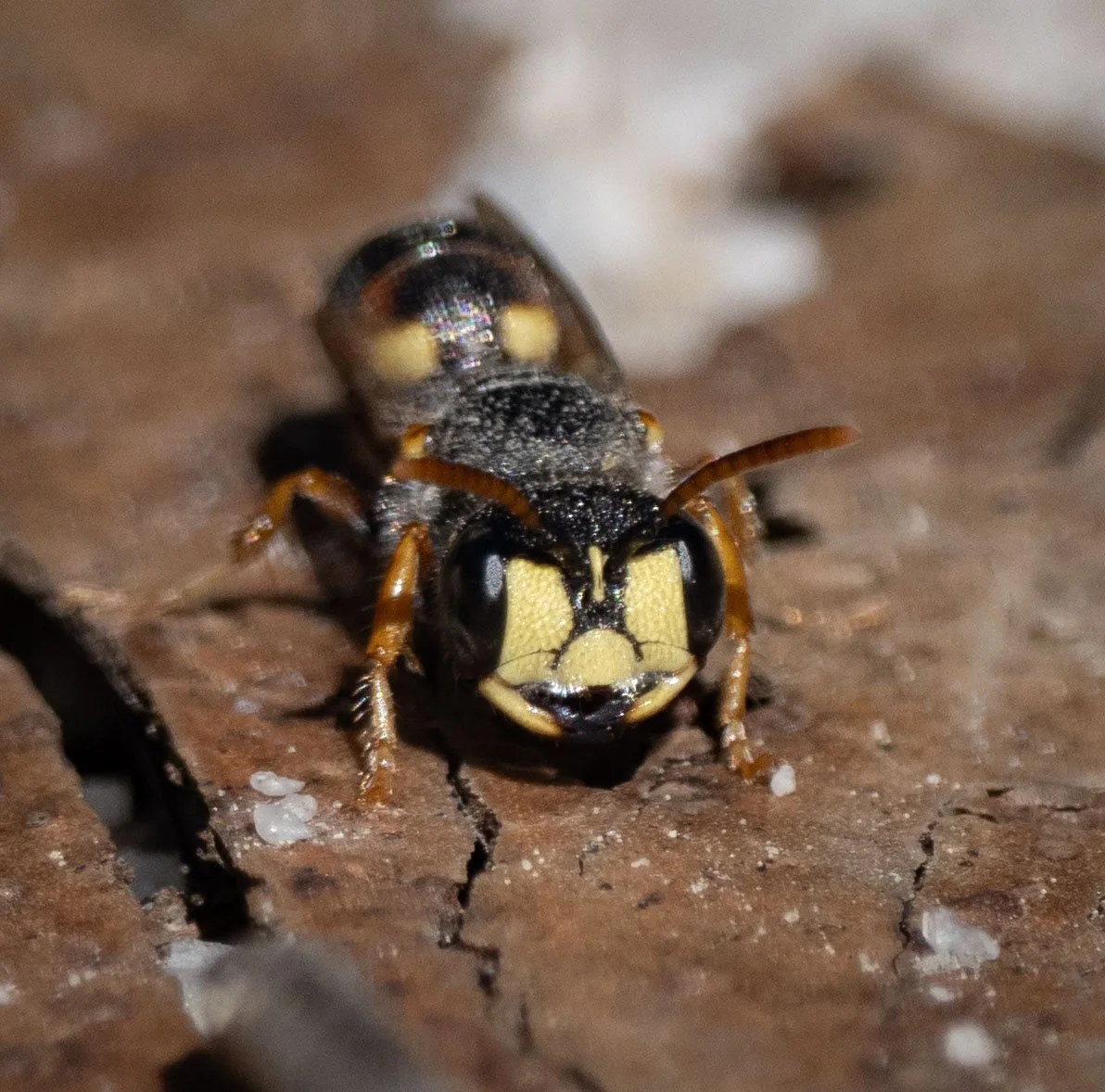
Note the lack of ‘scopal hairs’ on the back legs of this male Trichocolletes, and compare them with the female in the previous photo. Other clues include the number of visible abdominal segments (7 rather than 6) and, in this species, the brilliant golden hair tufts on the face.
Trichocolletes orientalis [3rd September]
Male Trichocolletes have been on the wing for weeks now, and it’s starting to show on some individuals. This one is getting rather bald on the back (thorax), has ragged wings, and is down to a single antenna!
Trichocolletes orientalis [3rd September]
My first sighting of this species for the season, and my only one so far. These large, showy bees are hard to miss, so I doubt I’m simply overlooking them. The orange faces of females peering from their nest burrow openings along our sandy tracks are a common sight throughout summer. I suspect this female is newly emerged, and has yet to start nesting.
Lipotriches australica [1st Sept]
The long, shining scopal hairs on the back legs confirm that this is a female.
Compare the size of this bee with the little Exoneura and other bees visiting to same plants. Lipotriches dwarfs the tiny Styphelia flowers.
Lipotriches australica [1st Sept]
A novel species! Well, nearly. Initially I thought this was my first ever sighting of this rather stunning, golden-haired bee, and identification had me stumped. But it turns out that I’ve photographed the same species before – just once, on 9th September 2024.
Lasioglossum (Parasphecodes) waterhousei (?) [2nd Sept]
I don’t see many male Exoneura, and with good reason. The sex ratio in bees of this tribe tends to be skewed towards females. When these goggle-eyed, hairy-faced bees turn up, I know I have a male.
Exoneura robusta (?) [2nd Sept]
Other unusual features of these males are their tarsi (the end segments of the legs). The front tarsi are particularly long, and the basal segment of the hind tarsus is swollen. When I noticed these males for the first time (mid Sept 2023), they were swarming around the flowers … a behaviour associated with attracting females. My 3 sightings this year have each been of individual males, feeding. I’m keeping a close eye out for mating swarms though!
Exoneura robusta (?) [2nd Sept]
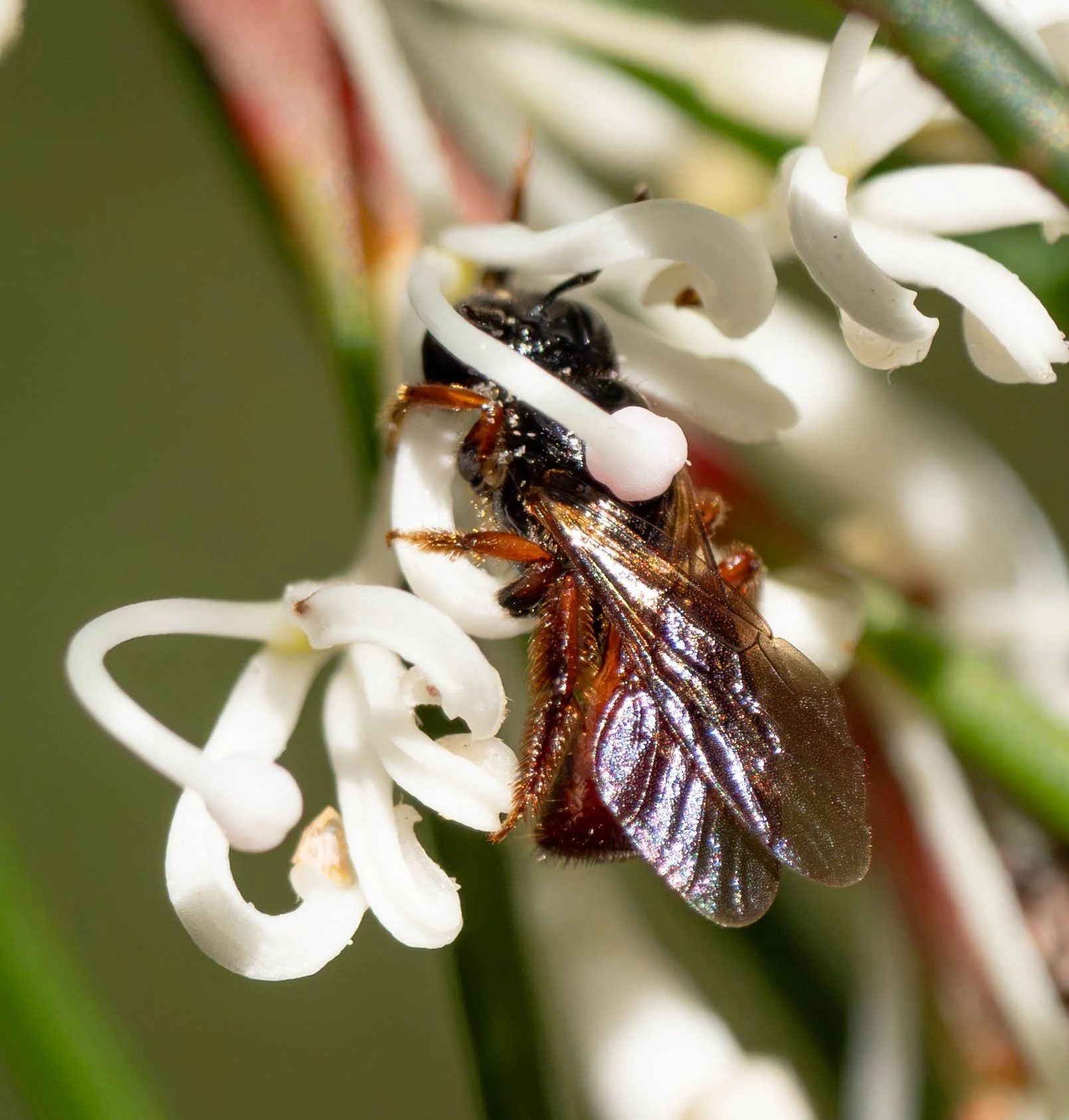
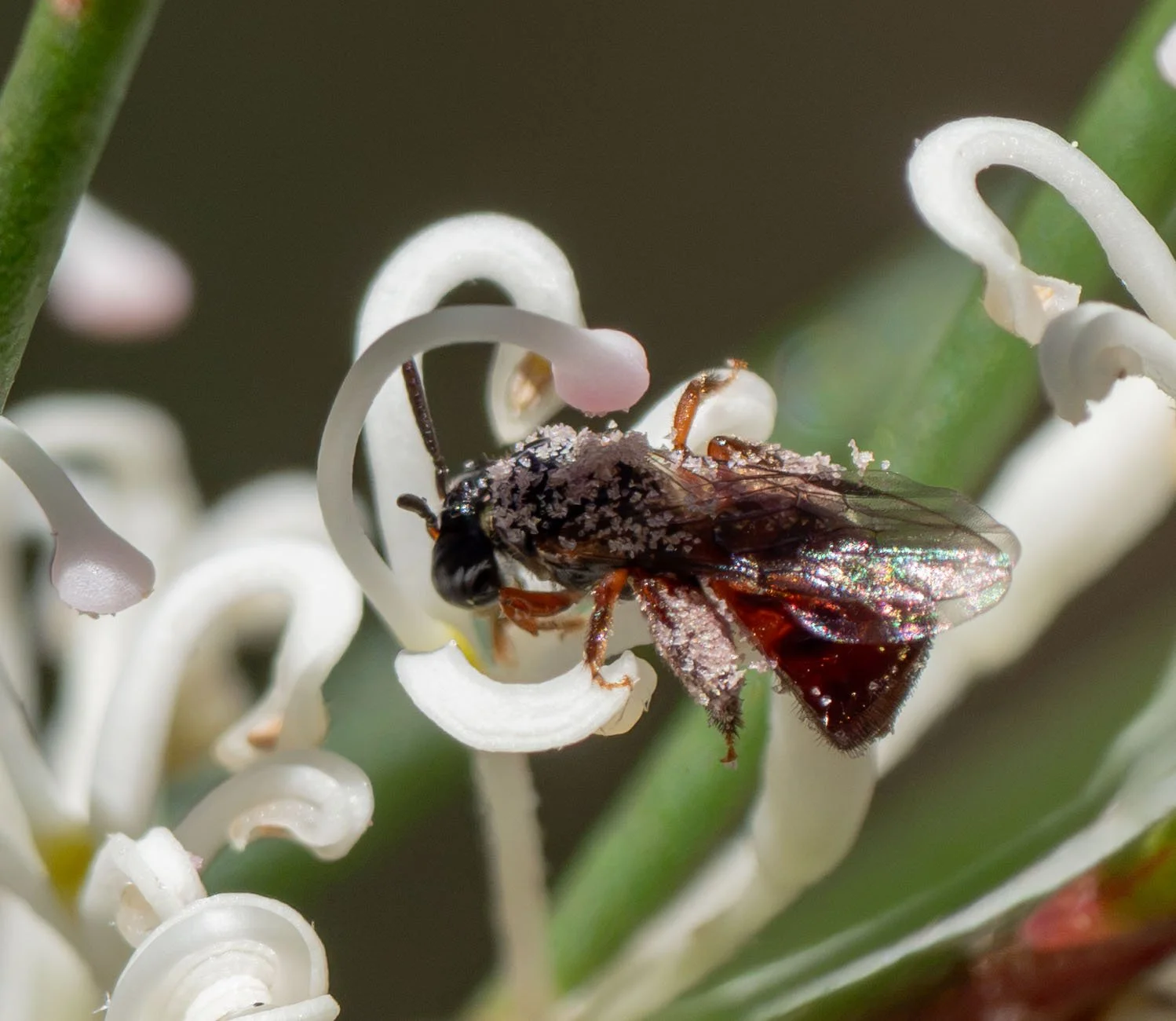
Like most Proteaceae, Hakea flowers have a specialised method of pollen dispersal. The anthers burst before the flower actually opens for insect visitors. The pollen grains are picked up by the end of the stylus (stigma), and only then does the flower open. The stigma is positioned such that insects visiting for a nectar drink receive a dab of sticky pollen on the back.
Exoneura [1st Sept]
Pink pollen!!
This female will groom the grains from her back, moving it to the hairs of her hind legs for transport.
Exoneura [29th Aug]
The flowering of Hakea macraeana has long puzzled me. The drooping branches are certainly eye-catching when festooned with delicate white flowers, as they are now. Yet insect visitors are relatively few – to the point where I’ve sometimes wondered about the identity of the plant’s pollinators. I wonder no more!
Exoneura [29th Aug]
The most numerous bees we see are the little, red-bodied Exoneura. As their common name of ‘reed bees’ suggests, they nest in the pithy stems of reeds or other dead plant material. Yet despite years of prowling the forest in pursuit of nesting wasps and bees, I had never found an Exoneura nest … until this week!
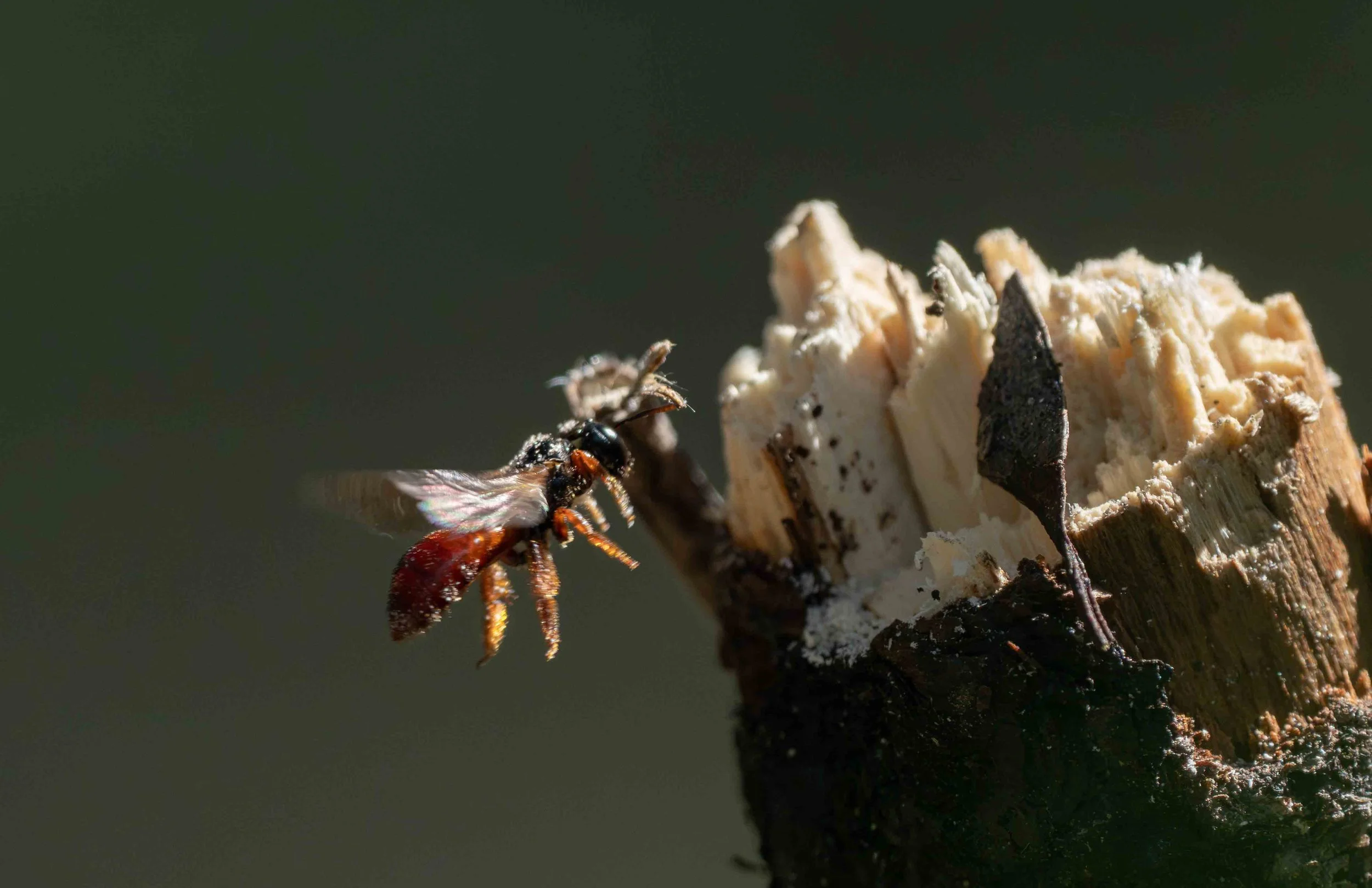
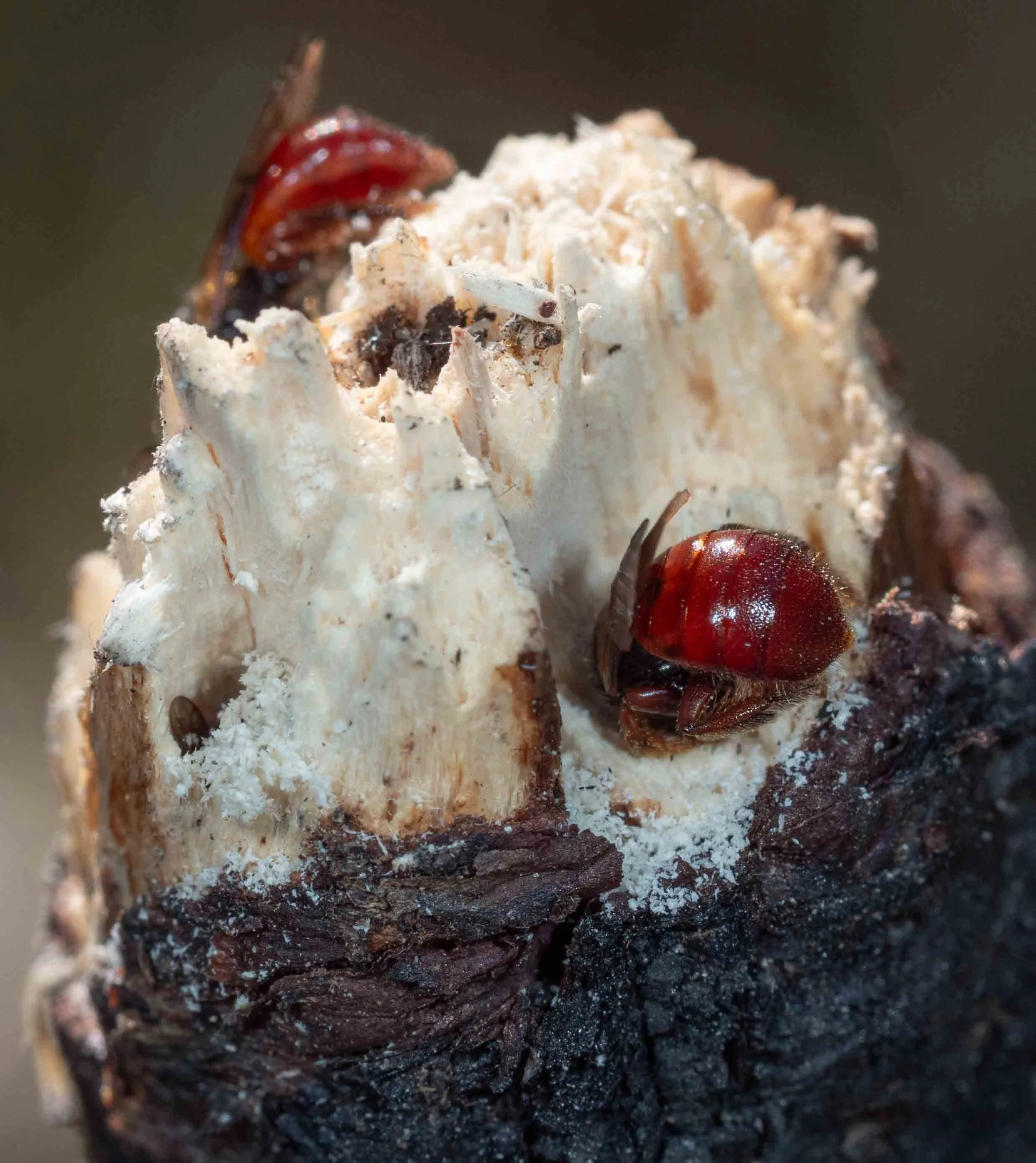
Several Exoneura flying about the broken ends of a dead Persoonia stem caught my attention. The plant was killed by the fire 6 years ago. Although still standing, it snapped in half some months back, exposing the relatively soft inner wood.
Exoneura (robusta?) [3rd Sept]
The bees were clearly digging into the wood, the discarded frass collecting on the surface. This high level of surface activity suggests that nesting is in its early stages. Established nests consist of a burrow many centimetres long, with a small diameter opening guarded – indeed, blocked – by a single bee.
Exoneura (robusta?) [3rd Sept]
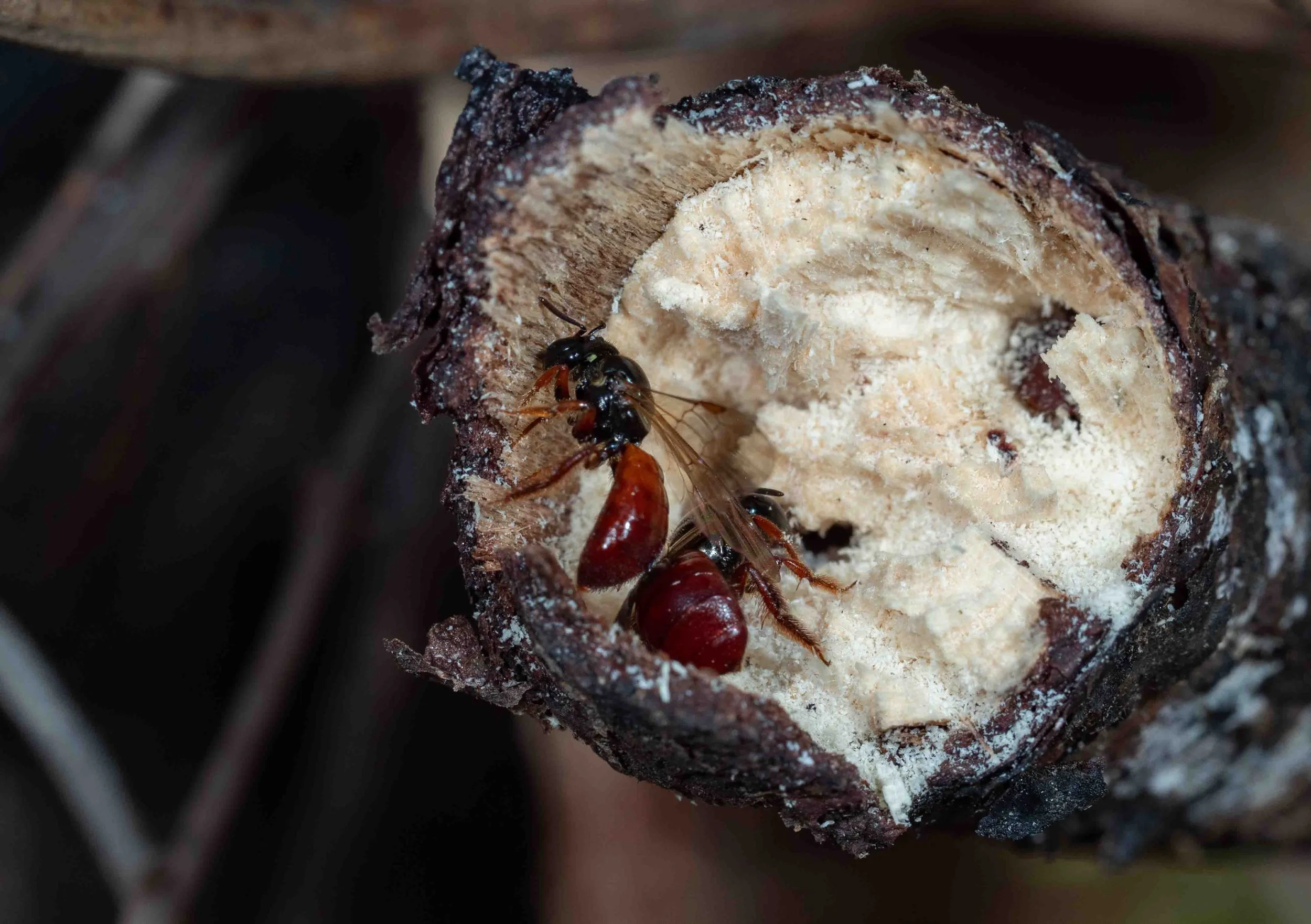
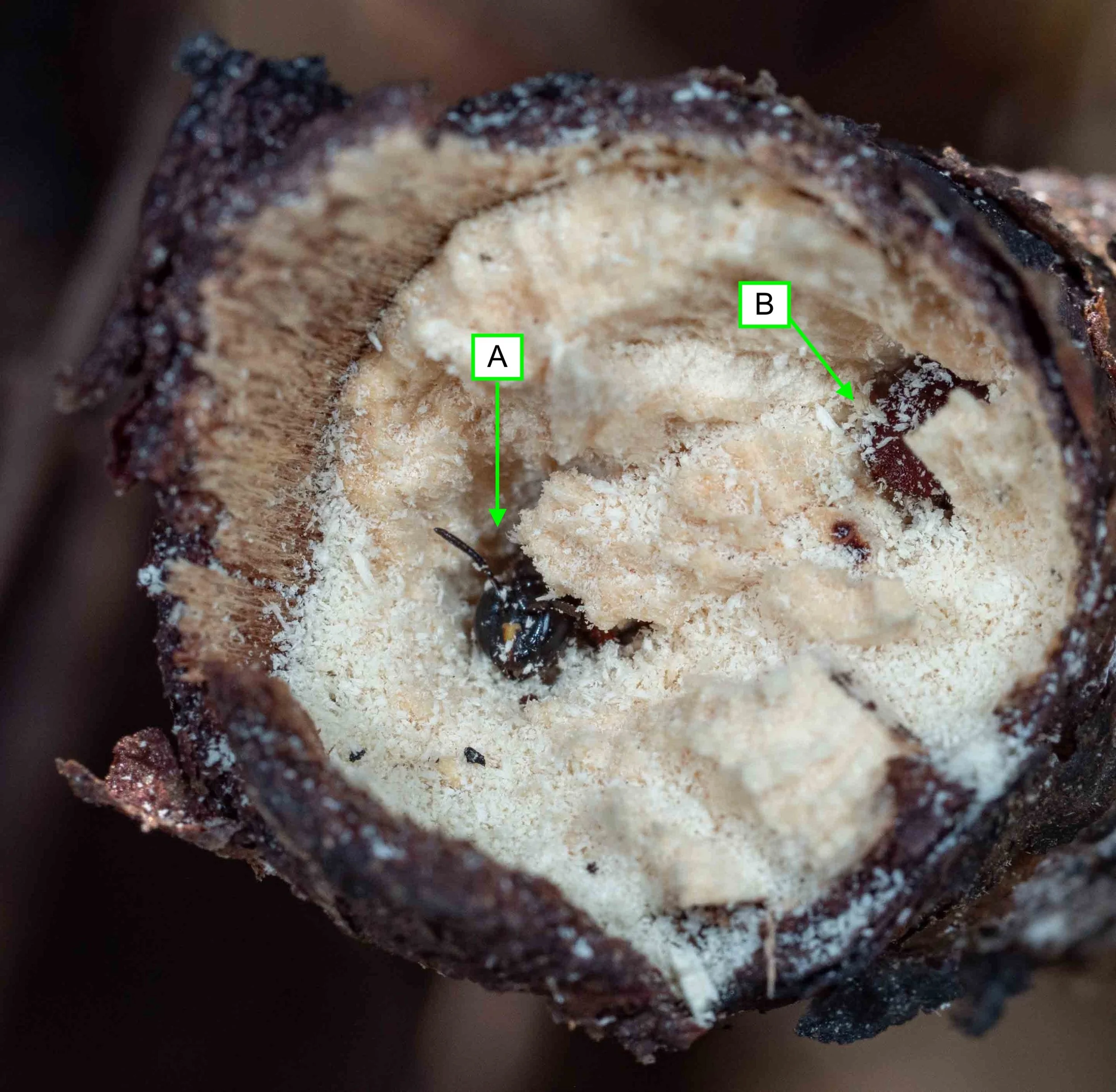
Each of the two broken stem ends had two burrows. And at times there was more than one bee per burrow!
Exoneura are among the most extensively studied of Australian bees due to the diversity of social behaviours they exhibit. So it comes as no great surprise to find multiple females involved at this single nesting site. What is less clear, however, is exactly what is happening in this case.
Exoneura (robusta?) [3rd Sept]
There was no sign of provisioning – further support for my theory that I caught the nesting action at the very beginning.
Unlike many native bees, Exoneura actively feed their larvae throughout development. If this was an established nest containing developing young, I would expect to see these females returning with pollen loads. Their legs are pollen-free.
Exoneura (robusta?) [3rd Sept]
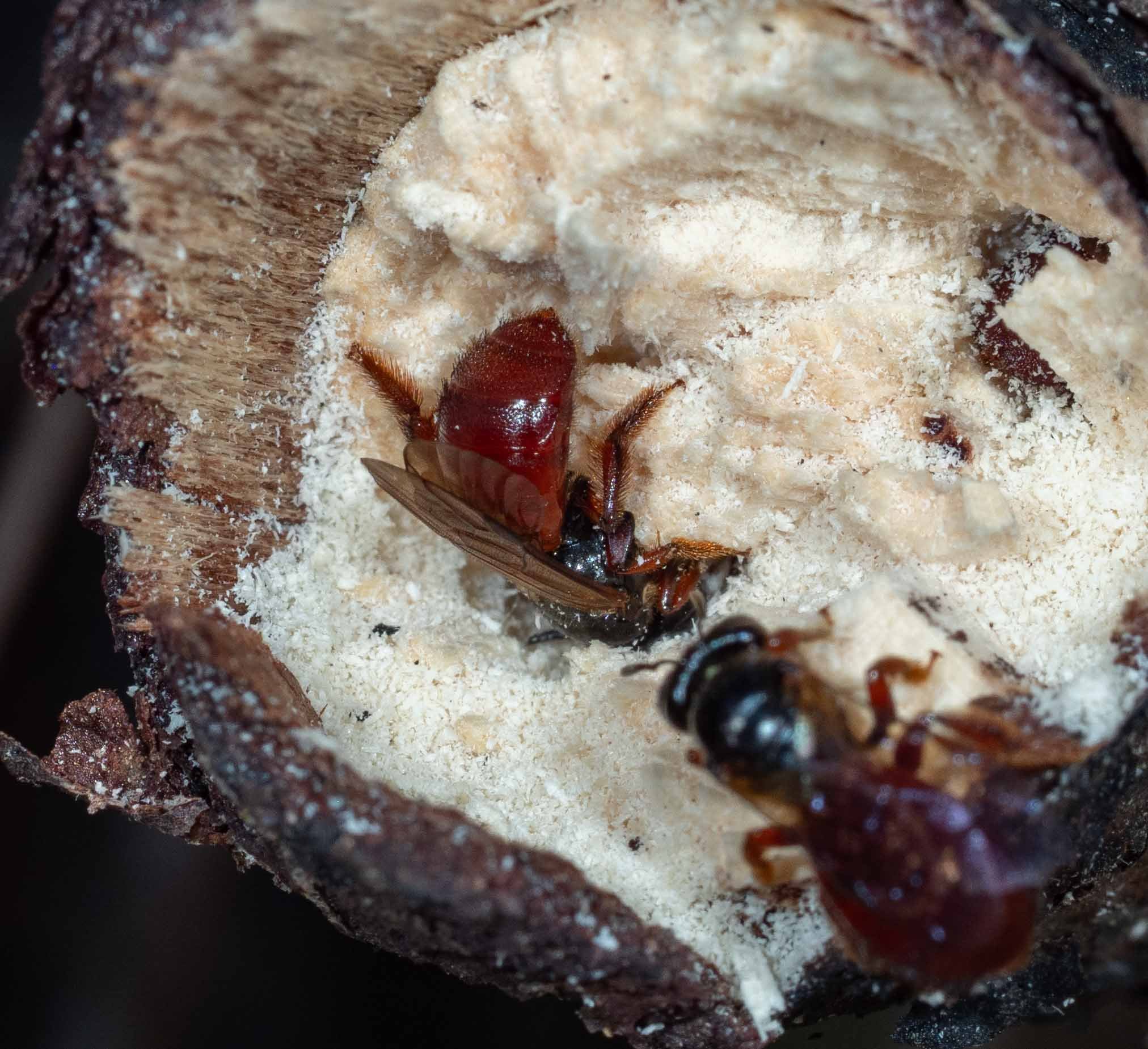
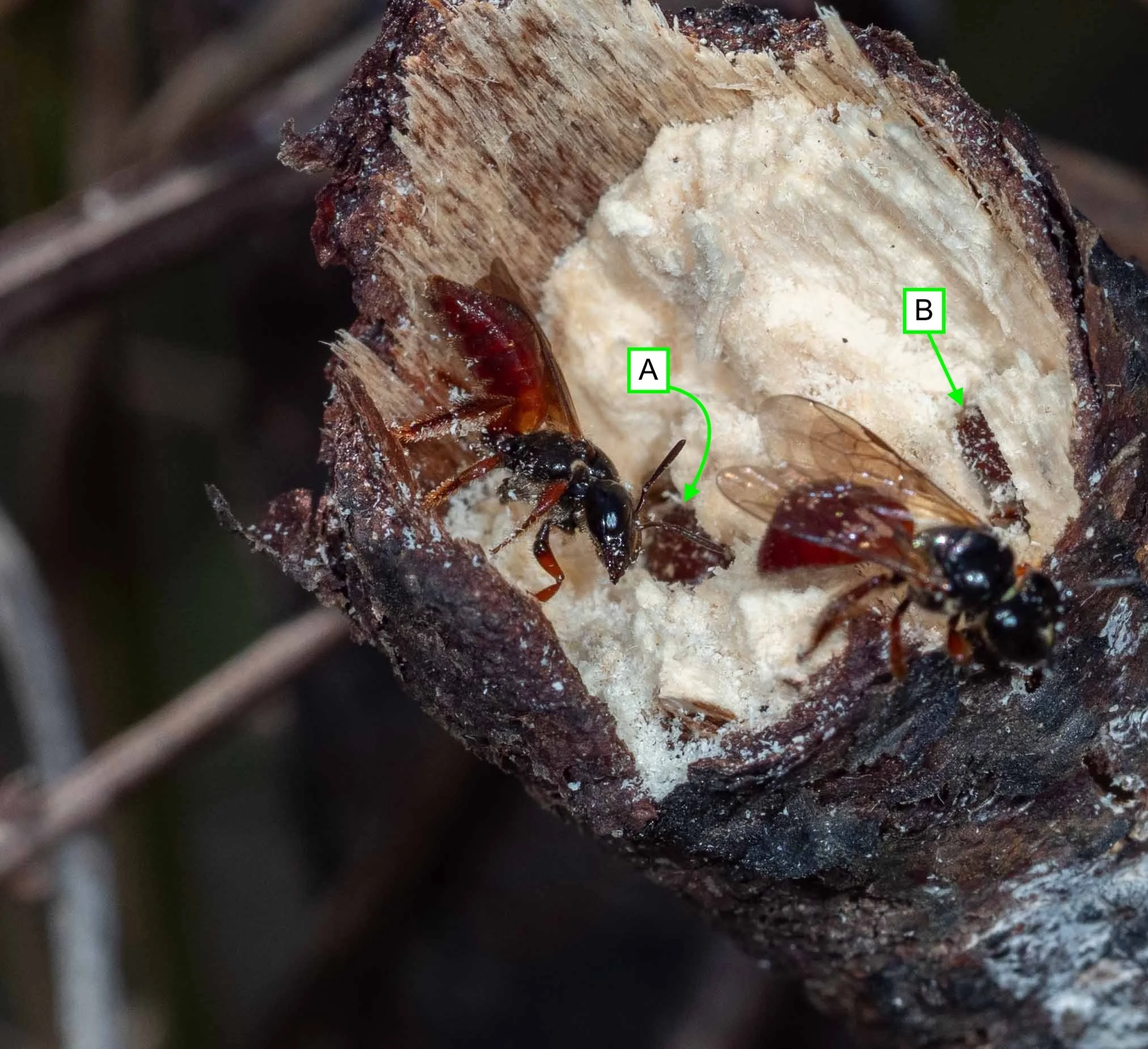
The two burrows in this stem (marked A & B) are both occupied. In each case, the entrance is blocked by a single bee. The guard in burrow A shows her face, while the one in burrow B is ‘head-down, bum up’.
It is common for Exoneura to block their burrows with the flattened end of the abdomens. Such guarding has been proven effective against parasites and marauding predators … particularly ants.
Exoneura (robusta?) [3rd Sept]
A third bee arrives and shows a lot of interest in burrow A.
Exoneura (robusta?) [3rd Sept]
A fourth bee lands … and ‘Bee #3’ appears to challenge her. Note the open mandibles and raised abdomen.
Exoneura (robusta?) [3rd Sept]
Bee #4 departs.
So … there is some level of contest here. But what is less clear is the relationship between Bee #3 and the bee already resident in burrow A. Are they competing for the site, or are they collaborating?
While some Exoneura females will go it alone when founding a nest, others will work together with their sisters or even invite unrelated females to join. And it has been shown that nests housing multiple females are more successful in the long run (Zammit et al. 2008).
Exoneura (robusta?) [3rd Sept]
I hope to learn more about the nesting habits of our local Exoneura over the coming weeks and months. Unless the stem completely collapses, I should have time. Female Exoneura tend to be long-lived, remaining reproductively viable for a year or more, and larval development is protracted, typically taking several months at least (see Michener 1965 & Bernauer et al. 2021).
Beyond bees
Of course, it’s not all about the bees. Wasps are making an appearance – including some of my favourite locals – along with a variety of other eye-catching insects and plants.
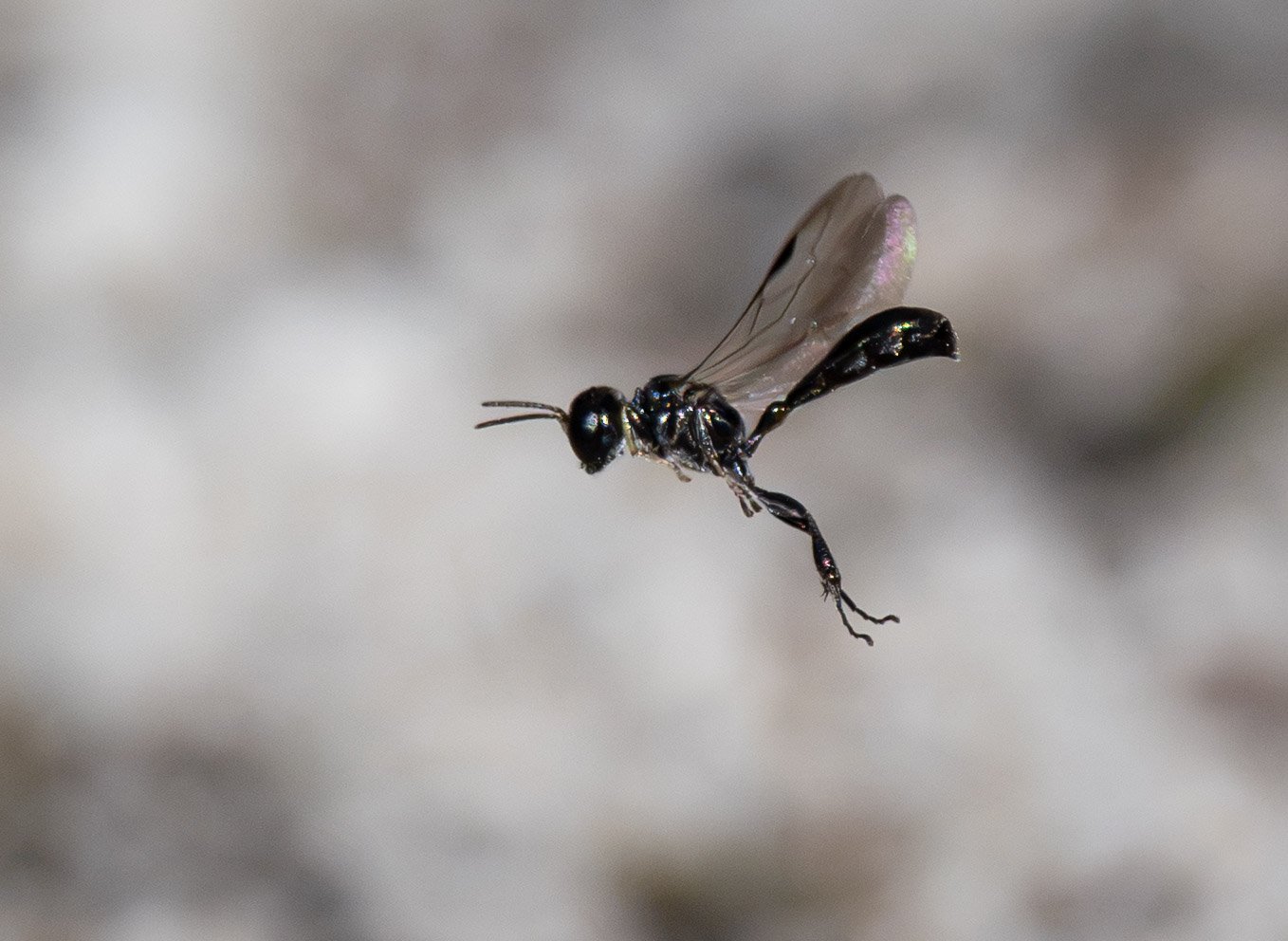
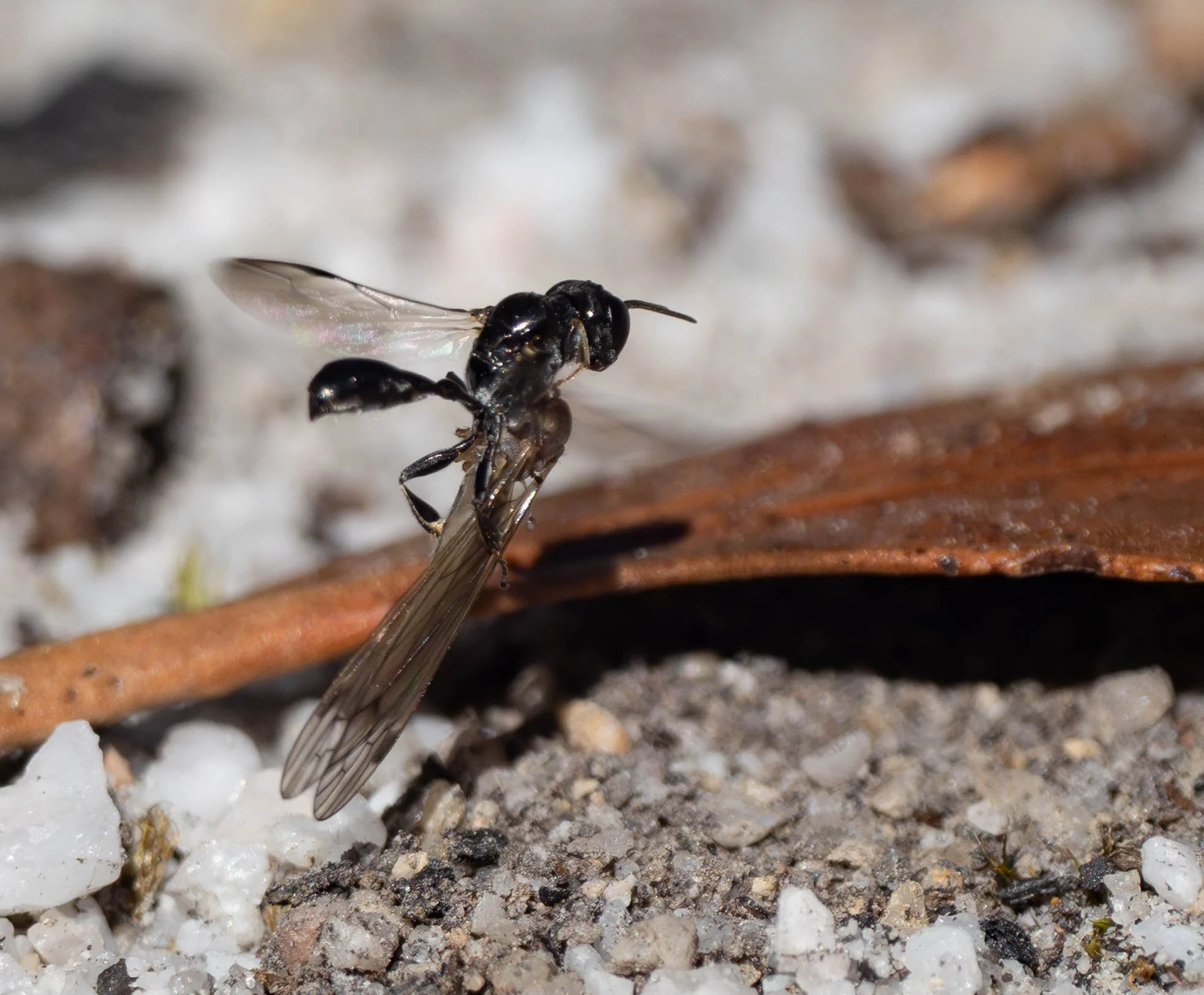
The first sightings of the season … and we have been on the lookout! These tiny, slender wasps are now actively nesting in their usual patch of dirt.
This is a species we’ve come to know well, having closely monitored their nesting activites over the past five seasons. We have recently prepared a manuscript (currently undergoing peer review) describing this in detail … so it’s rewarding to see them back again, and behaving just as they have in the past.
Rhopalum coriolum [26th Aug]
Within days of first appearing, the females are actively stocking their underground nests. They hunt small flies, paralysing them before flying them to the burrow. With crane flies like this one, the wasps routinely cut off the long legs … no doubt to simplify transport.
These wasps are not around for long. By mid-late September the adults will be gone, leaving their larvae tucked away underground.
Rhopalum coriolum [31st Aug]
Another very familiar crabronid has started to make an appearance. This female Cerceris would have emerged last Autumn, and since then has been resting in her natal burrow. She may return there for a time, and perhaps even use that burrow to house her own young. Alternatively, she will find a suitable spot nearby and excavate a new nest.
By mid summer this patch of sand will get very busy. Each year the clustered burrows of Cerceris share the patch with nesting Lipotriches, small Lasioglossum, and others.
Cerceris antipodes [3rd Sept]
Flower wasps are one of the most obvious, numerous and diverse families of insects in the forest each summer. Already the males are making their presence known, flying rapidly along insect ‘flight paths’ and gathering when they detect an emerging female.
Eirone [29th Aug]
Female flower wasps look nothing like their male counterparts. They’re flightless, typically smaller … and totally dependent on the male to access food.
During mating, the male either carries the female to flowers so she can access the nectar directly, or he delivers her a droplet he gathered earlier. Here he has released a sticky drop onto the leaf and positioned himself so she can reach it – all while remaining firmly coupled.
Thynninae [28th Aug]
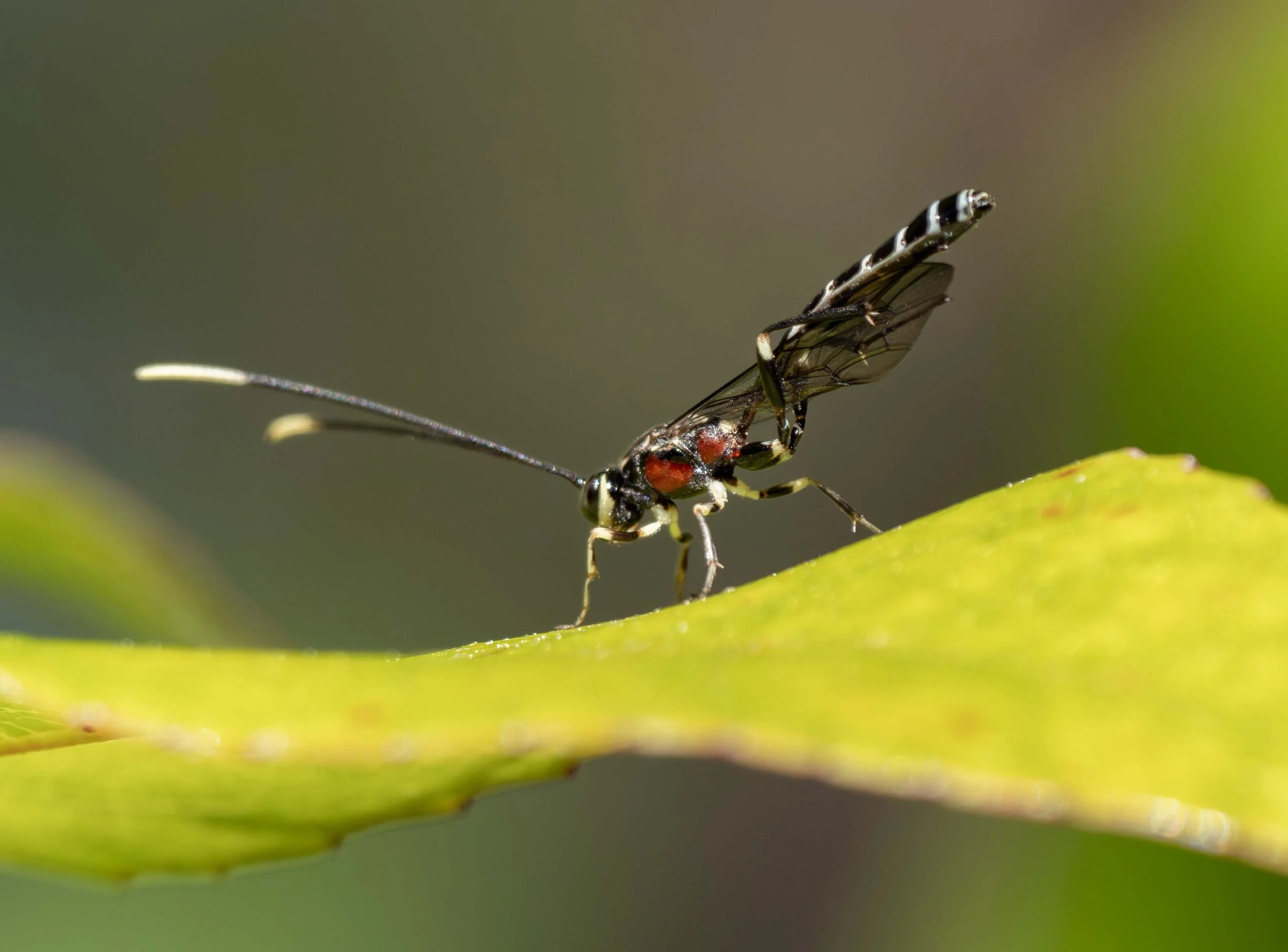
Parasitic wasps come in a bewildering array of sizes, colours, and shape. This strikingly colourful one is relatively large, and caught my attention while it groomed atop a shiny leaf.
When seeking insects, glossy green leaves are a good place to look (second only to flowers, of course). Many types of insects favour such leaves as perches while grooming, and perhaps while warming themselves in the sun.
Labena (?) [27th Aug]
https://inaturalist.ala.org.au/observations/396604196
Yet another ichneumonid grooming on a leaf.
Gavrana (?) [27th Aug]
https://inaturalist.ala.org.au/observations/396605379
Yet another large, colourful ichneumonid.
Dusona (?) [27th Aug]
https://inaturalist.ala.org.au/observations/396603072
Not all shiny leaves make good perches. These sundews are highly effective traps for small insects.
Drosera auriculata [29th Aug]
This small species is the first butterfly to appear in any numbers so far this season.
Erina hyacinthina [29th Aug]
Flower-feeding flies can carry serve as pollinators too, although huge ones like this tabanid are unlikely to be very efficient for flowers this small.
Scaptia (?) [27th Aug]
https://inaturalist.ala.org.au/observations/396603073
This is only the second time I’ve spotted one of these strikingly-coloured drone flies. And the previous time? … 29th August 2022, feeding on Styphelia ericoides!
Odyneromyia spadix [2nd Sept]
https://inaturalist.ala.org.au/observations/396625395
Looking deceptively like the female cones of this Allocasuarina sapling, this is a gall housing a female ‘bug’ (Hemiptera). She will spend her life inside, producing tiny offspring that will eventually crawl out and disperse.
Cylindrococcus spiniferus [29th Aug]
Older galls are arguably even more plant-like. Some of our Allocasuarina saplings carry a surprisingly large load of these long-lived bugs.
Cylindrococcus spiniferous [3rd Sept]
I couldn’t resist including a few of the orchids in bloom recently.
Pterystylis pedunculata [31st Aug]
Local Indigofera flowering is now well underway, and will reach its peak mid September … if past flowering times are any guide these days.
Indigofera australis [31st Aug]
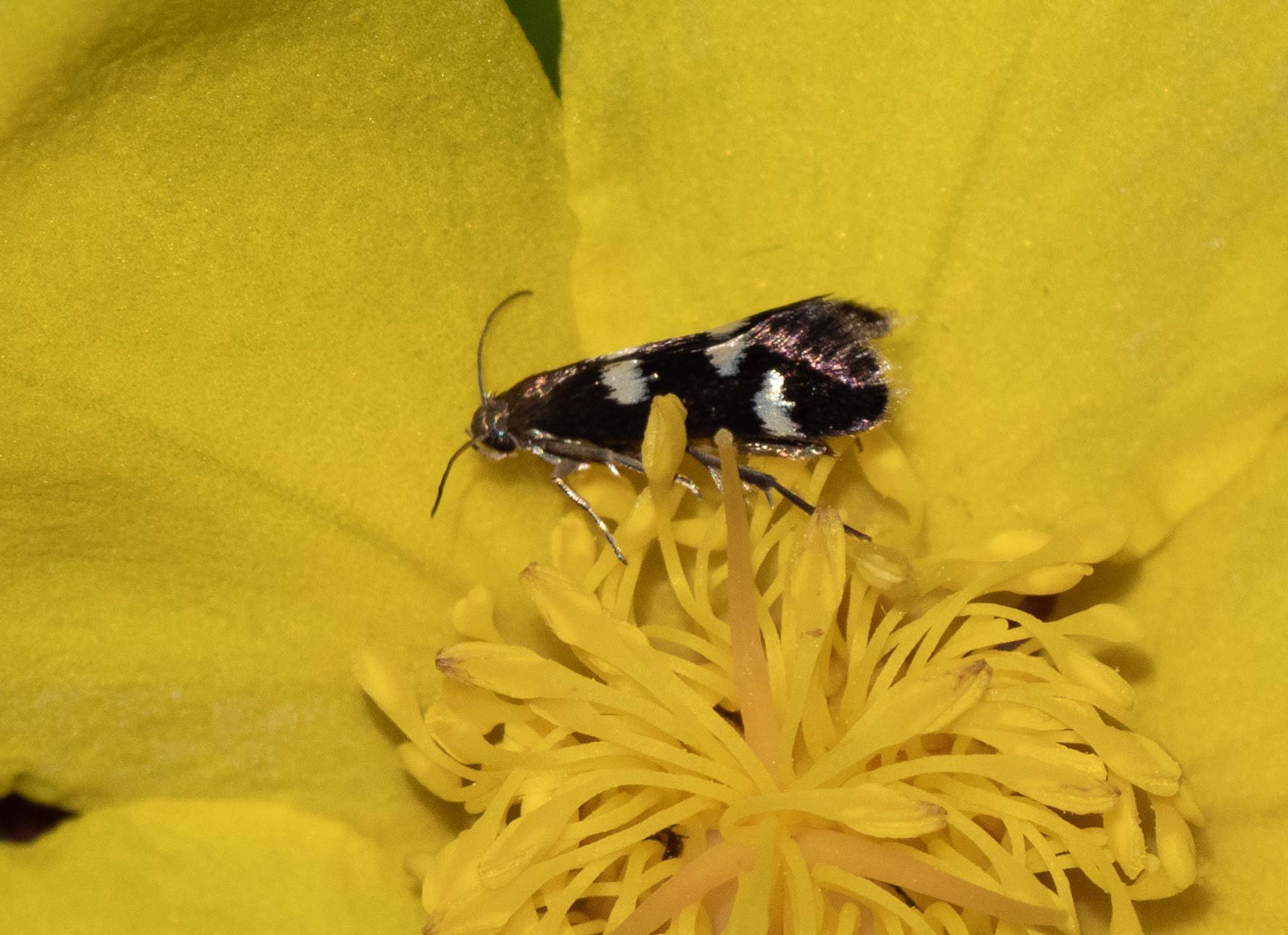
This tiny moth might not look too exciting, but it is the ‘big news find of the week’ for us. This is the first home record we have for this family of moths – ever. And we have recorded a lot of moth species! At last count, 692 species from 43 families (50% of Australia’s 86 listed moth families). And now we can add an unknown species of 44th family – Heliozelidae, commonly called Shield-bearing Moths.
With a large dose of optimism, after discovering the identity of our first sighting we went searching … and found one! Hanging about the Hibbertia flowers, in the sun, in the same part of the forest.
We plan to deposit it at ANIC next time we visit Canberra.
undescribed genus [29th Aug]
https://inaturalist.ala.org.au/observations/396624111
https://inaturalist.ala.org.au/observations/397107961
The bushscape
The images above give the impression that we see only the small things. Not true at all. The forest landscape is the backdrop, and one we never take for granted. Right now, it is truly glorious. The flowering of the Hakea and Styphelia is spectacular.
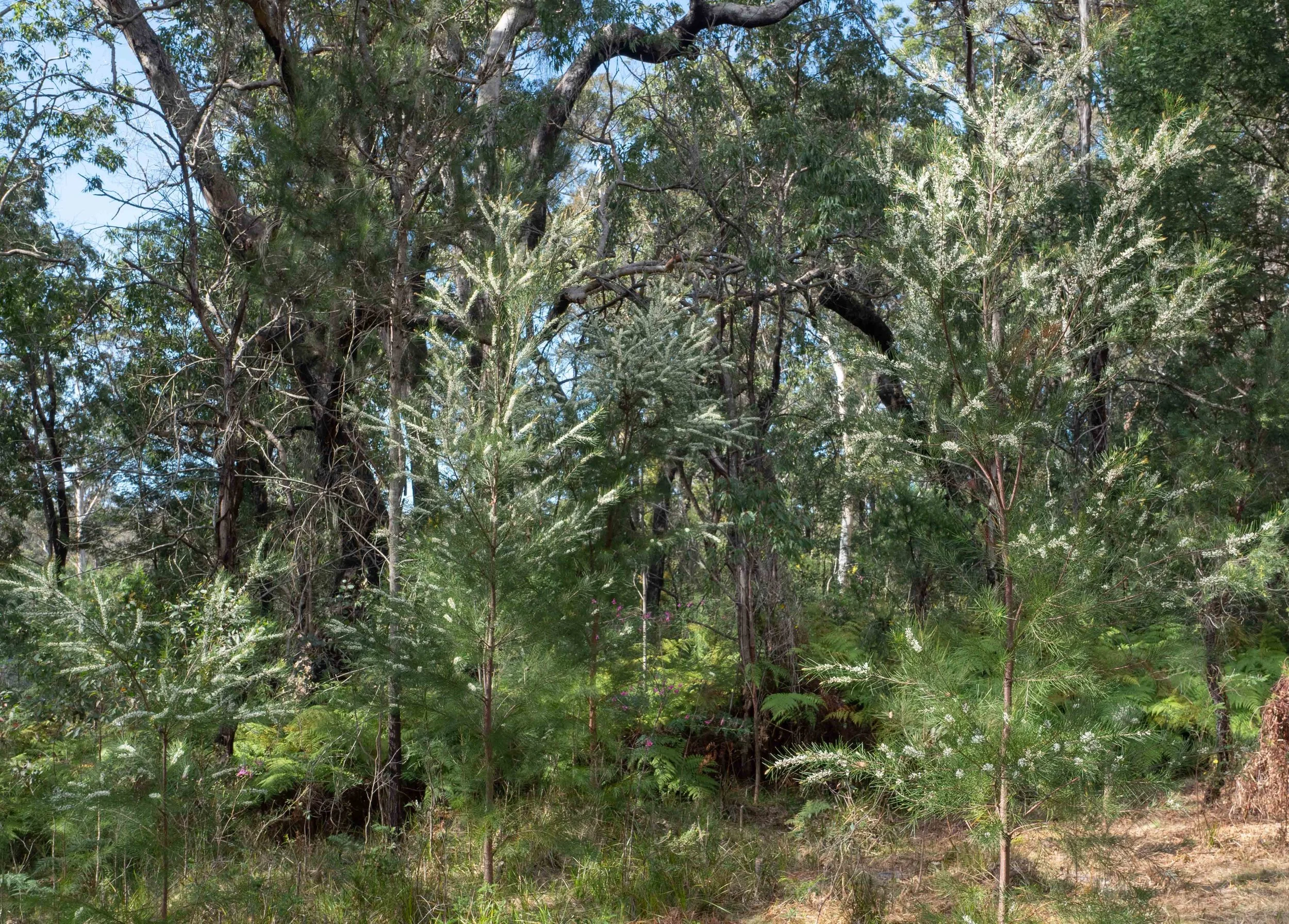
For just a couple of weeks each year, the Hakea macraeana puts on a show. This species is not common, and is confined to the coast and nearby ranges of southern NSW. We are near its southern limit. The species is killed by fire, regrowth slow and entirely dependent upon seed stores. We are delighted to have this species thriving, and flowering so spectacularly. [2nd September 2026]
Despite the low rainfall of recent months, the bush remains green. For now. We are bracing ourselves for the effects of the ‘Super El Nino’ event – a long, hot and dry period ahead, through summer and beyond.
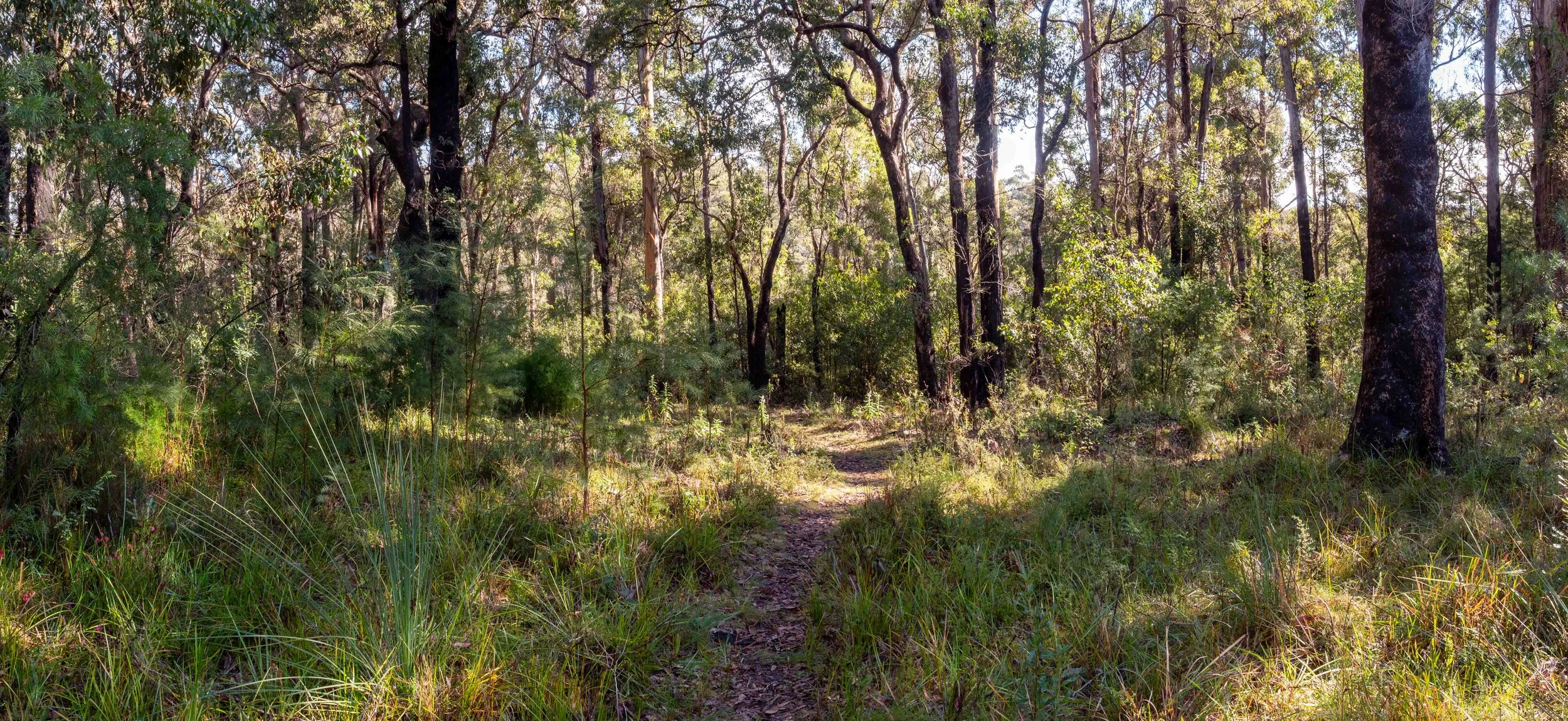
{18th August 2026}
References and readings
Bernauer, O.M., Cook, J.M. & Tierney, S.M. 2021. Nesting biology and social organisation of the allodapine bee Exoneura angophorae (Hymenoptera: Apidae): montane environmental constraints yield biased sex allocation yet phenology is unhindered. Insectes Sociaux 68, 337-349
Houston, T. 2018. A Guide to Native Bees of Australia. CSIRO Publishing, Clayton South, Vic.
Michener, C.D. 1965. The life cycle and social organization of bees of the genus Exoneura and their parasite, Inquilina (Hymenoptera: Xylocopinae). Mi. Paper 45.
Walter, D.E., Beard, J.J., Walker, K.L. & Sparks, K. 2002. Of mites and bees: A review of mite-bee associations in Australia and a revision of Raymentia Womersley (Acari: Mesostigmata: Laelapidae), with the description of two new species of mites from Lasioglossum (Parasphecodes) spp. (Hymenoptera: Halictidae). Australian Journal of Entomology 41, 128-148
Zammit, J., Hogendoorn, K. & Schwarz, M.P. 2008. Strong constraints to independent nesting in a facultatively social bee: quantifying the effects of enemies-at-the-nest. Insectes Sociaux 55, 74-78
Other valuable resources
Abbott, P. 2022. Native Bees of the ACT and NSW South Coast: A spotter’s guide. Peter Abbott.
Jacobi, B. 2025. Native Bees of Australia: A comprehensive guide. Reed New Holland Publishers.