1
2
3
4
5
6
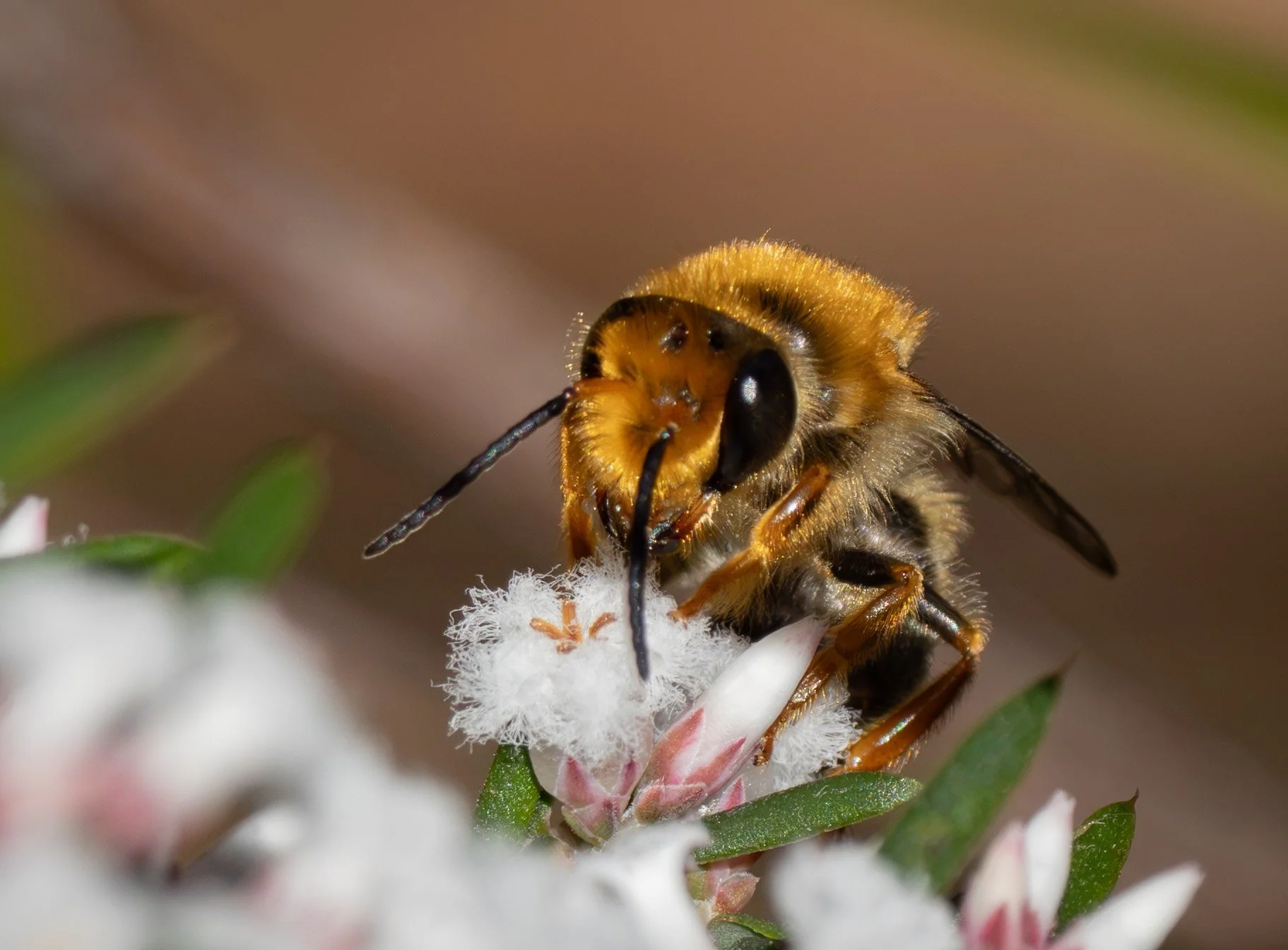
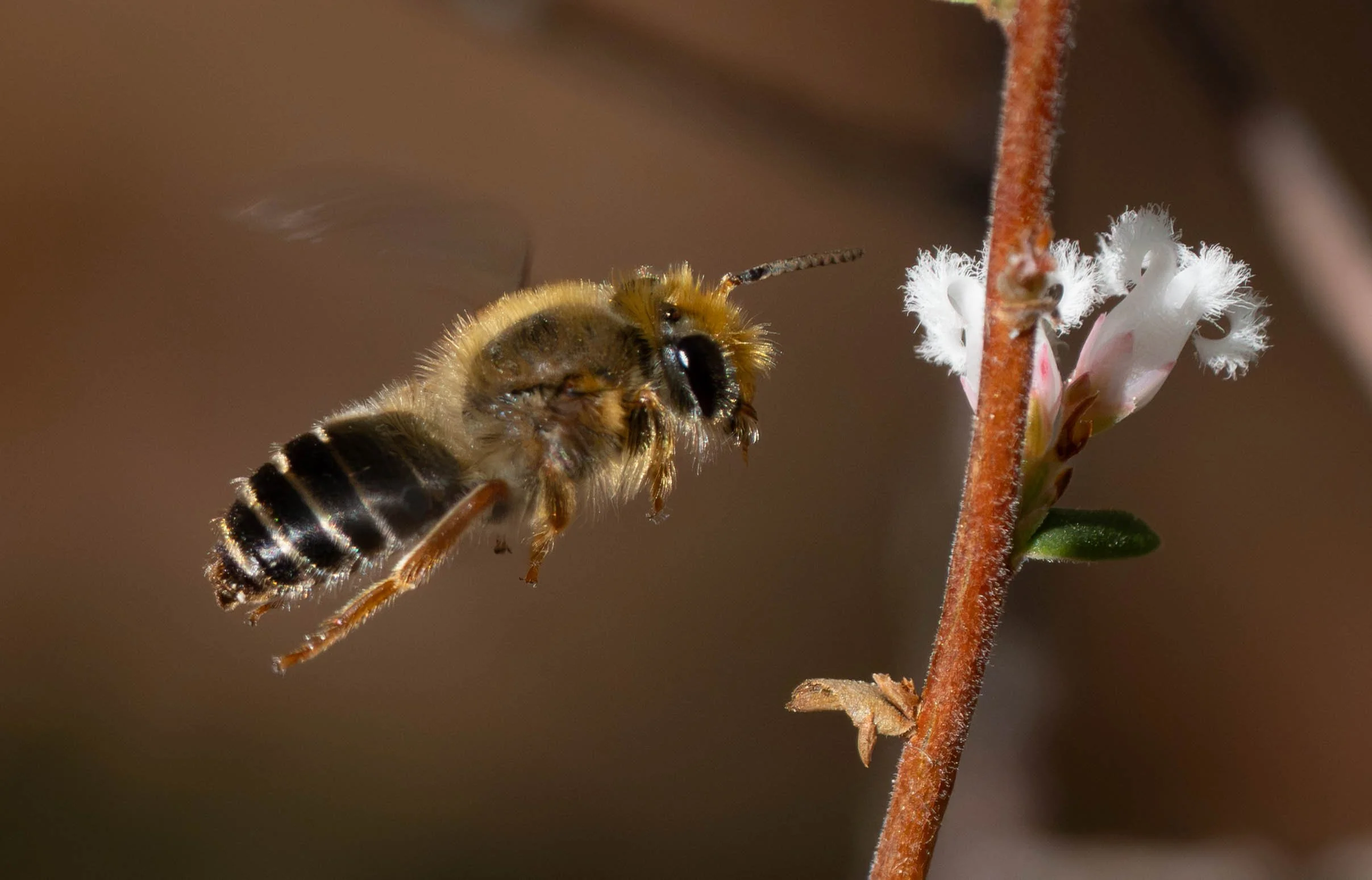
These are among the very first bees to make an appearance each spring. It’s typically lone males I spot first, patrolling patches of low-growing flowers. In early August there are still few other insects in flight.
Trichocolletes orientalis [7th August]
When gathering pollen, bees tend to move between flowers and plants of the same species. This is why even generalist bees can be highly effective pollinators. And why it can be to the plants’ advantage to grow in clusters and to flower synchronously. Here in the forest, the ‘busiest’ Styphelia plants are those growing in close association.
Leioproctus (Leioproctus) [27th Aug]
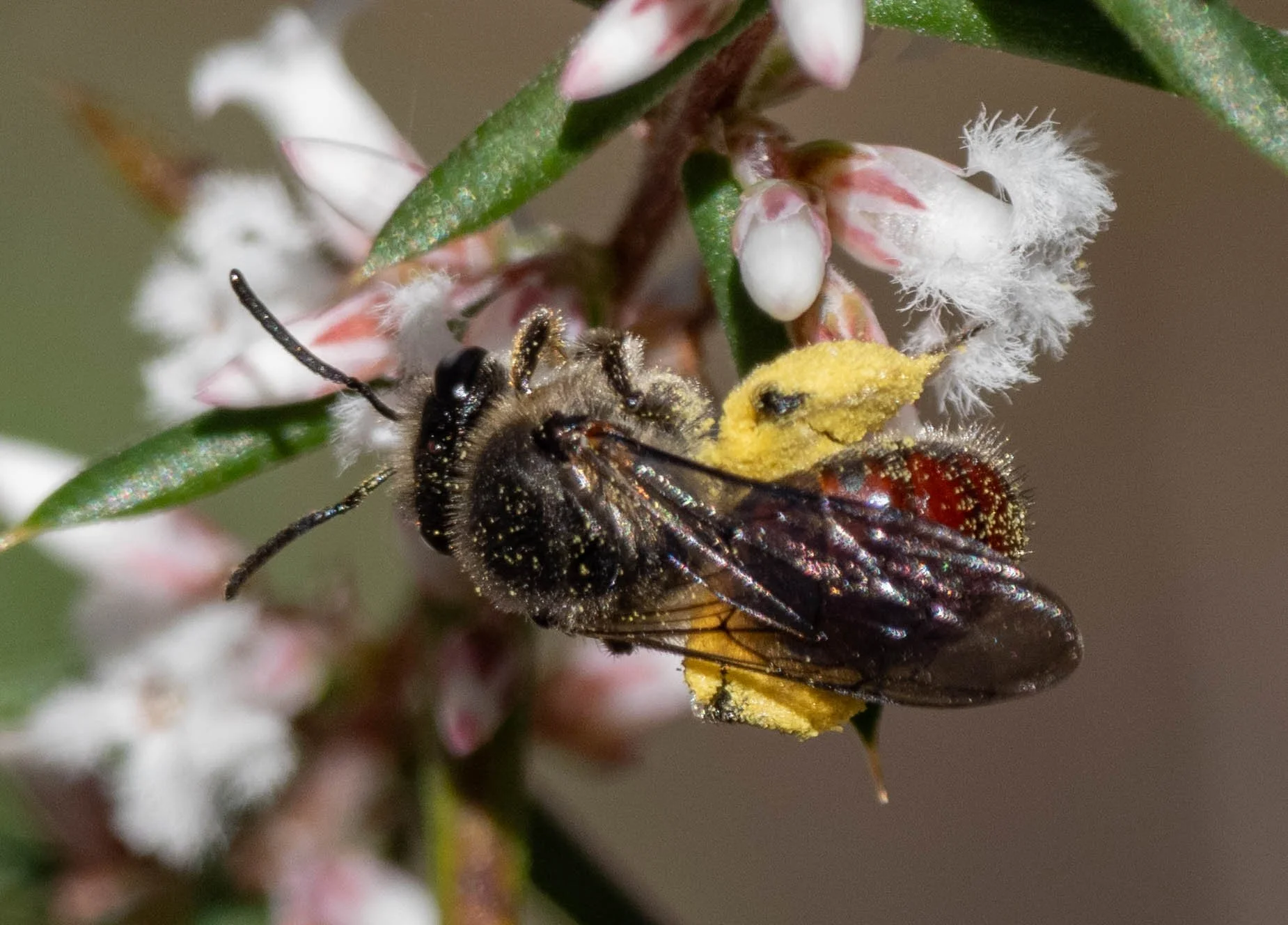
Such a huge pollen load, and bright yellow too! I suspect that this female has been visiting nearby Hibbertia. While I guess it is possible that she harvested all this from the tiny flowers of Styphelia, it seems more likely she’s been elsewhere and is now just stopping by for some nectar.
Leioproctus (Leioproctus) [27th Aug]
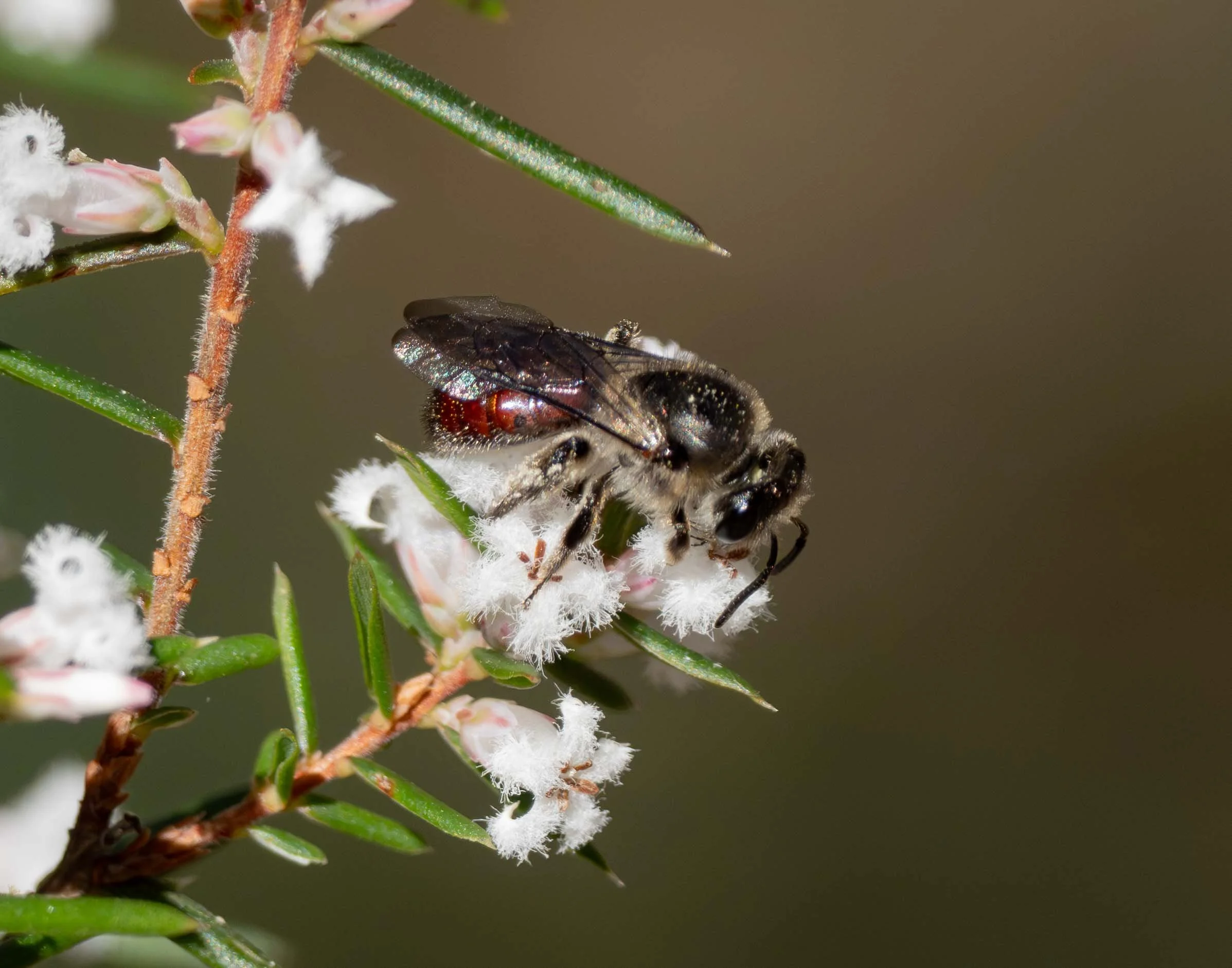
Distinguishing female from male bees is easy if the bee is carrying a pollen densely packaged on the back legs or beneath the body. Males are never involved in nest provisioning. In this photo, the clues are a little more subtle. She has no pollen payload, but the back legs are noticeably hairy. These specialised hairs (‘scopae’) are used in pollen transport.
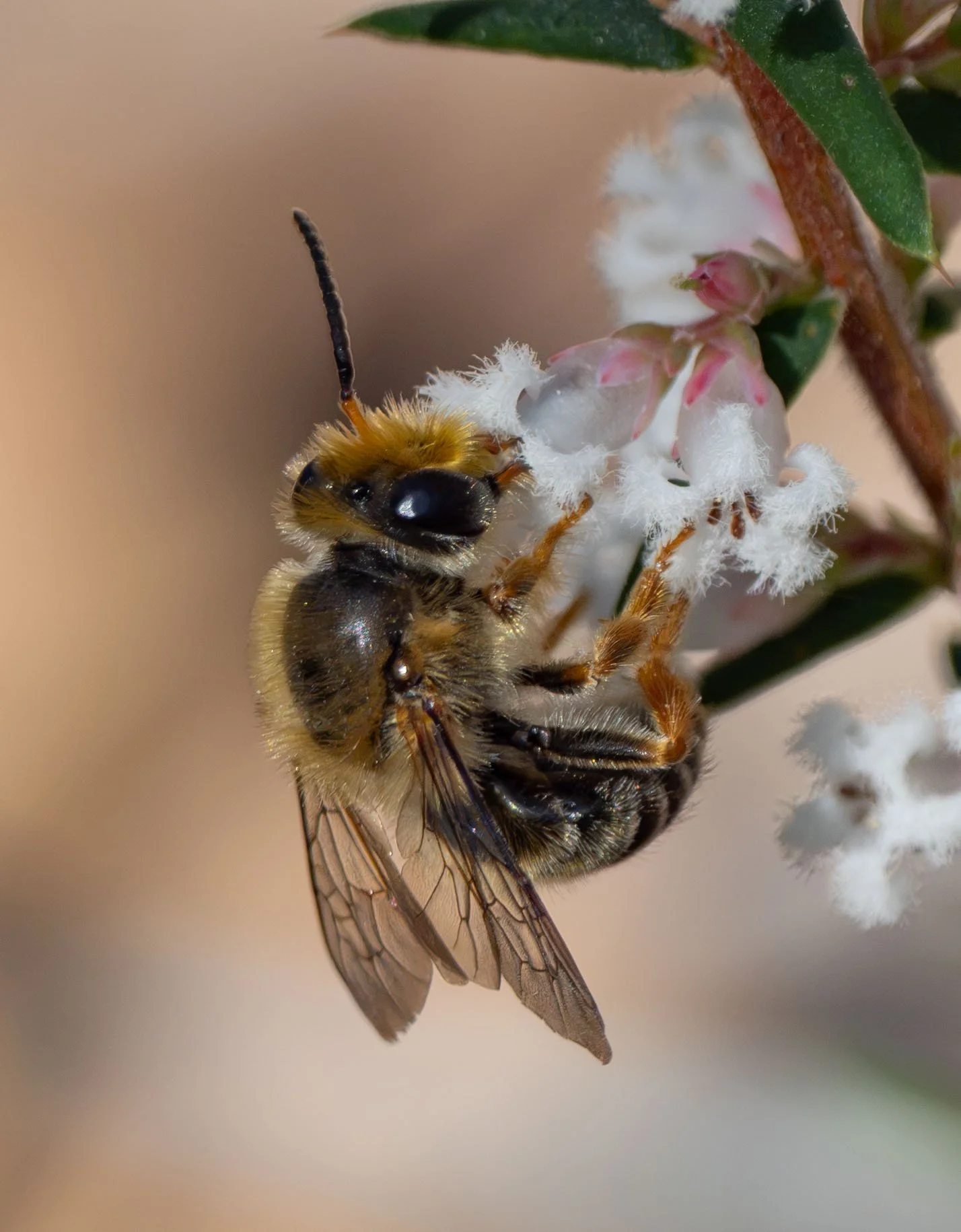
Trichocolletes orientalis [29th Aug]
Note the lack of ‘scopal hairs’ on the back legs of this male Trichocolletes, and compare them with the female in the previous photo. Other clues include the number of visible abdominal segments (7 rather than 6) and, in this species, the brilliant golden hair tufts on the face.
Trichocolletes orientalis [3rd September]
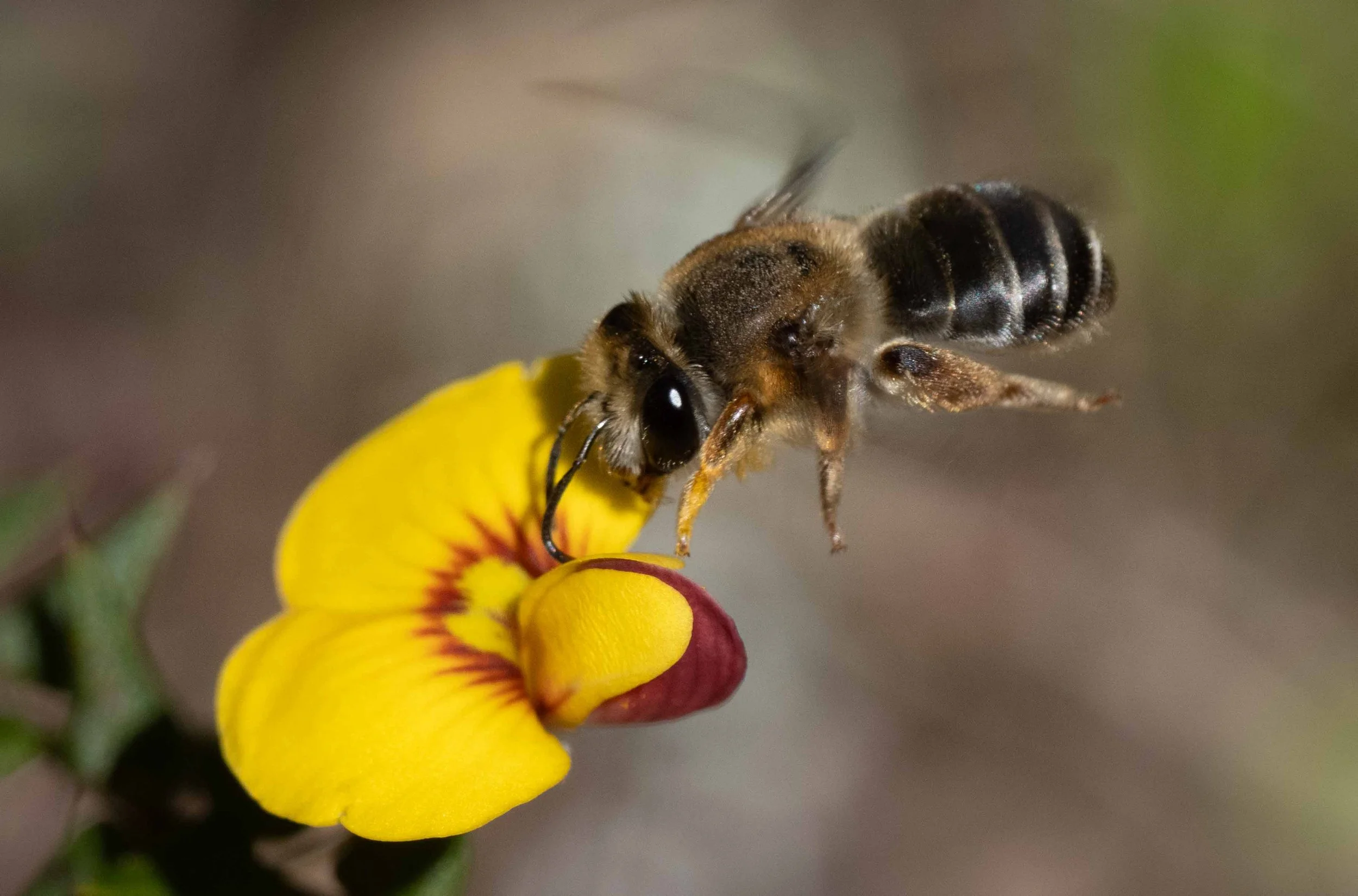
Male Trichocolletes have been on the wing for weeks now, and it’s starting to show on some individuals. This one is getting rather bald on the back (thorax), has ragged wings, and is down to a single antenna!
Trichocolletes orientalis [3rd September]