![Within two weeks of my first sighting, a group of these small(ish) bees are actively provisioning their nests. The ground is firm-packed sand and small gravel, relatively bare of vegetation. Lasioglossum (Parasphecodes) [21st Aug]](https://images.squarespace-cdn.com/content/v1/58ec80a8d2b857fe42e4f603/1788502058457-1538IWAFXOXH9MO48Q36/P8210267.jpg)
![Most bees in the family Halictidae are generalists, so they’re not restricted to the flowering time of any particular plant. Indeed, we see pollen-laden Lasioglossum throughout spring and summer months. Lasioglossum (Chilalictus) [27th Aug]](https://images.squarespace-cdn.com/content/v1/58ec80a8d2b857fe42e4f603/1788502309355-RG1UFW0V7O0432OZXU6R/P8270598.jpg)
1
2
3
4
5
6

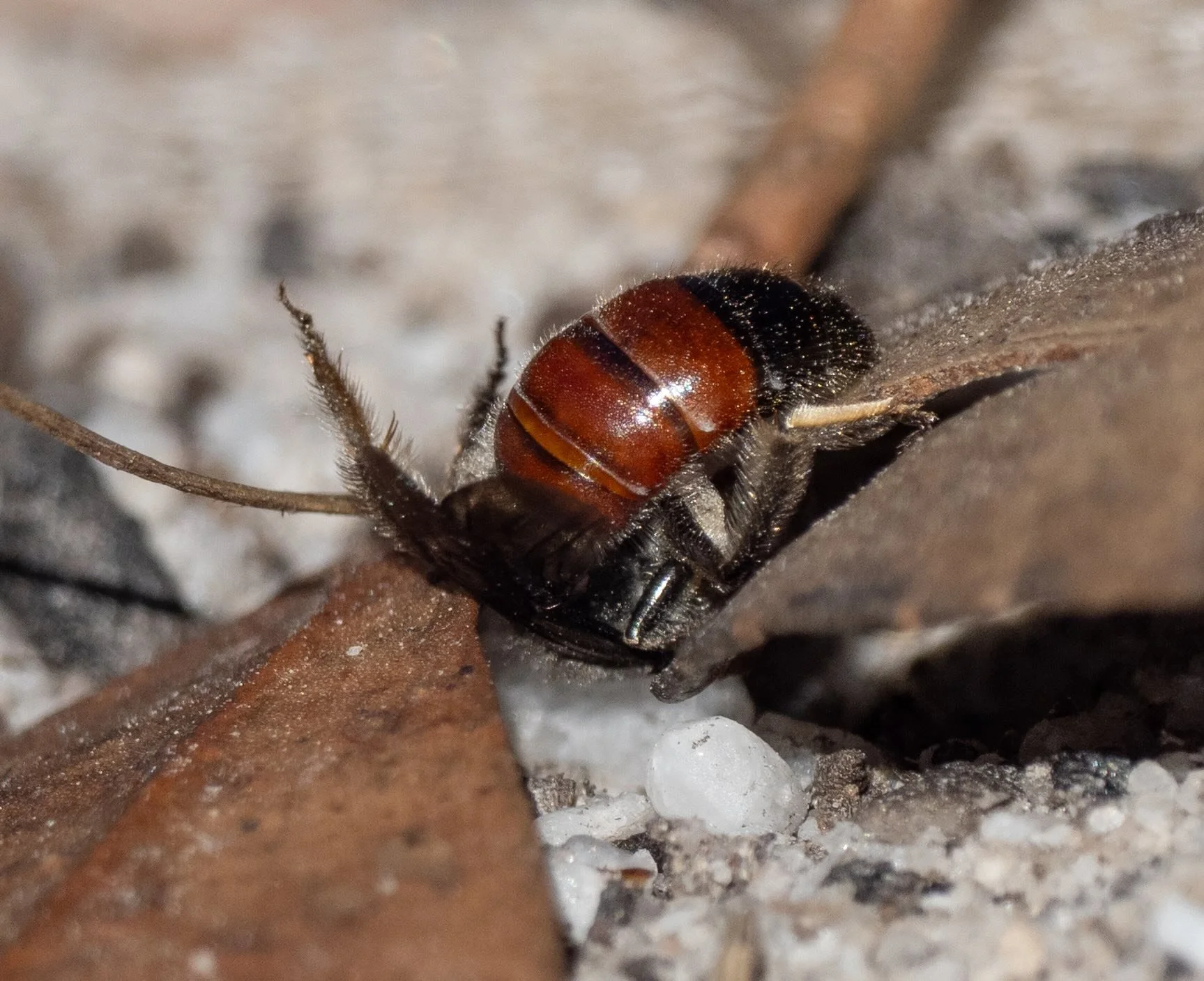
Another bee making an early appearance, although perhaps a rather brief one. She would have spent the winter below ground, as a resting adult or pupa, and this may have been one of her first excursions for the season. Within seconds of this shot she disappeared underground, and there was little further activity at the site for many days.
Lasioglossum (Parasphecodes) [8th August]
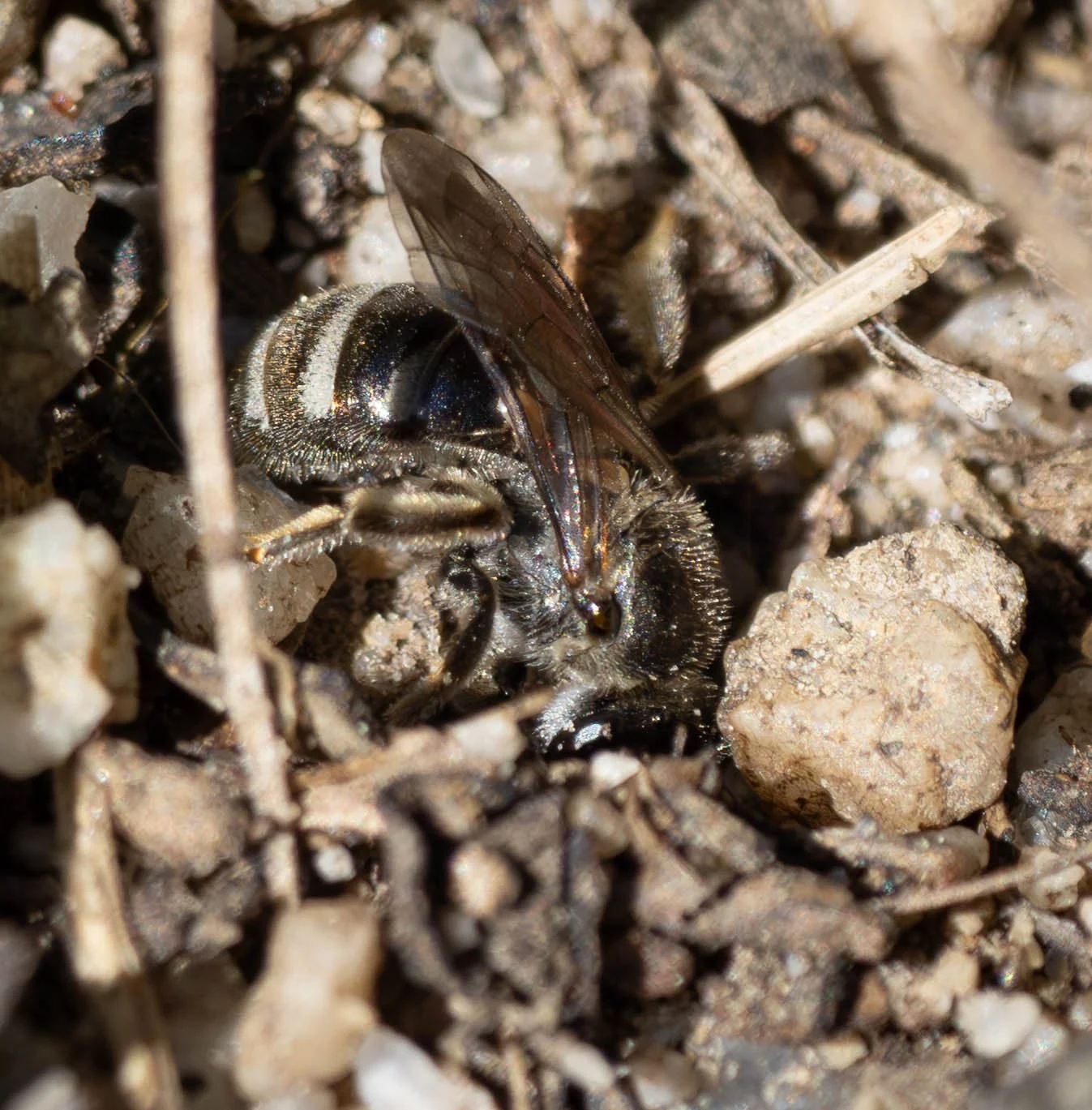
Within two weeks of my first sighting, a group of these small(ish) bees are actively provisioning their nests. The ground is firm-packed sand and small gravel, relatively bare of vegetation.
Lasioglossum (Parasphecodes) [21st Aug]
Most bees in the family Halictidae are generalists, so they’re not restricted to the flowering time of any particular plant. Indeed, we see pollen-laden Lasioglossum throughout spring and summer months.
Lasioglossum (Chilalictus) [27th Aug]
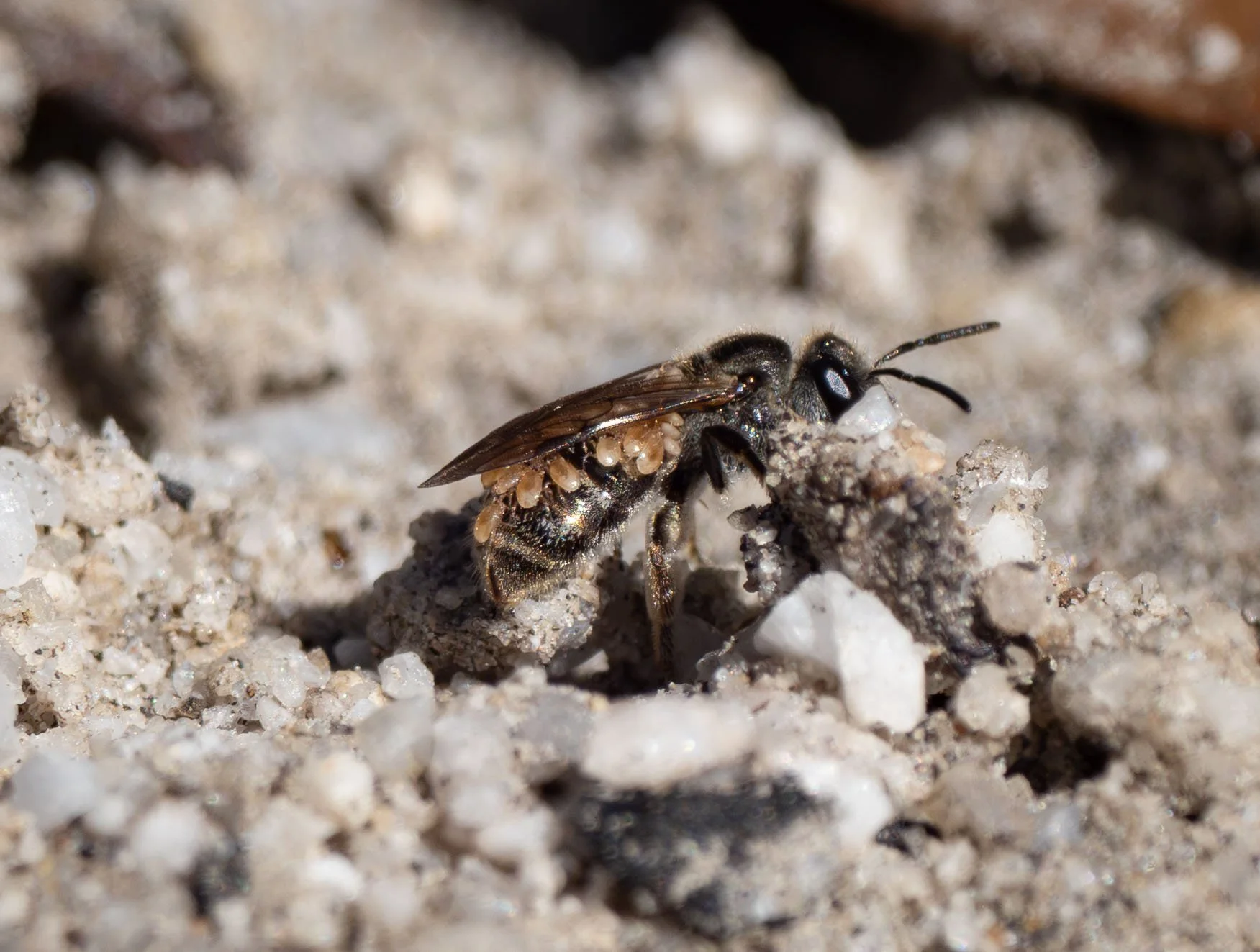
Ground-nesting is the norm among halictid bees. This female was actively digging into the coarse sand and gravel, probably in the initial stages of nest construction. Hard work in a such a substrate. Note too the mites attached to the base of her abdomen, largely concealed here by the wings.
Lasioglossum (Chilalictus) [29th Aug]
It is common for bees to carry mites … although this is a particularly large load, of relatively large mites!
Such mites are generally harmless to the host bee, and are merely hitching a ride from her natal home to the new nest she will soon establish. There they will dismount, moult, and begin to feed. Depending on the mite species, they may feed on bee waste products, rob the larval food stash, or even take blood from bee larvae. The bee-mite relationship is often mutualistic. Some native bees have even evolved specialised areas on their bodies to accommodate these little hitchhikers (Walter et al. 2002).
These are not the infamous Varroa mites currently making headlines, and I’ve read that Varroa are indeed unlikely to transfer to native bees (Houston 2018).
Lasioglossum (Chilalictus) [27th Aug]
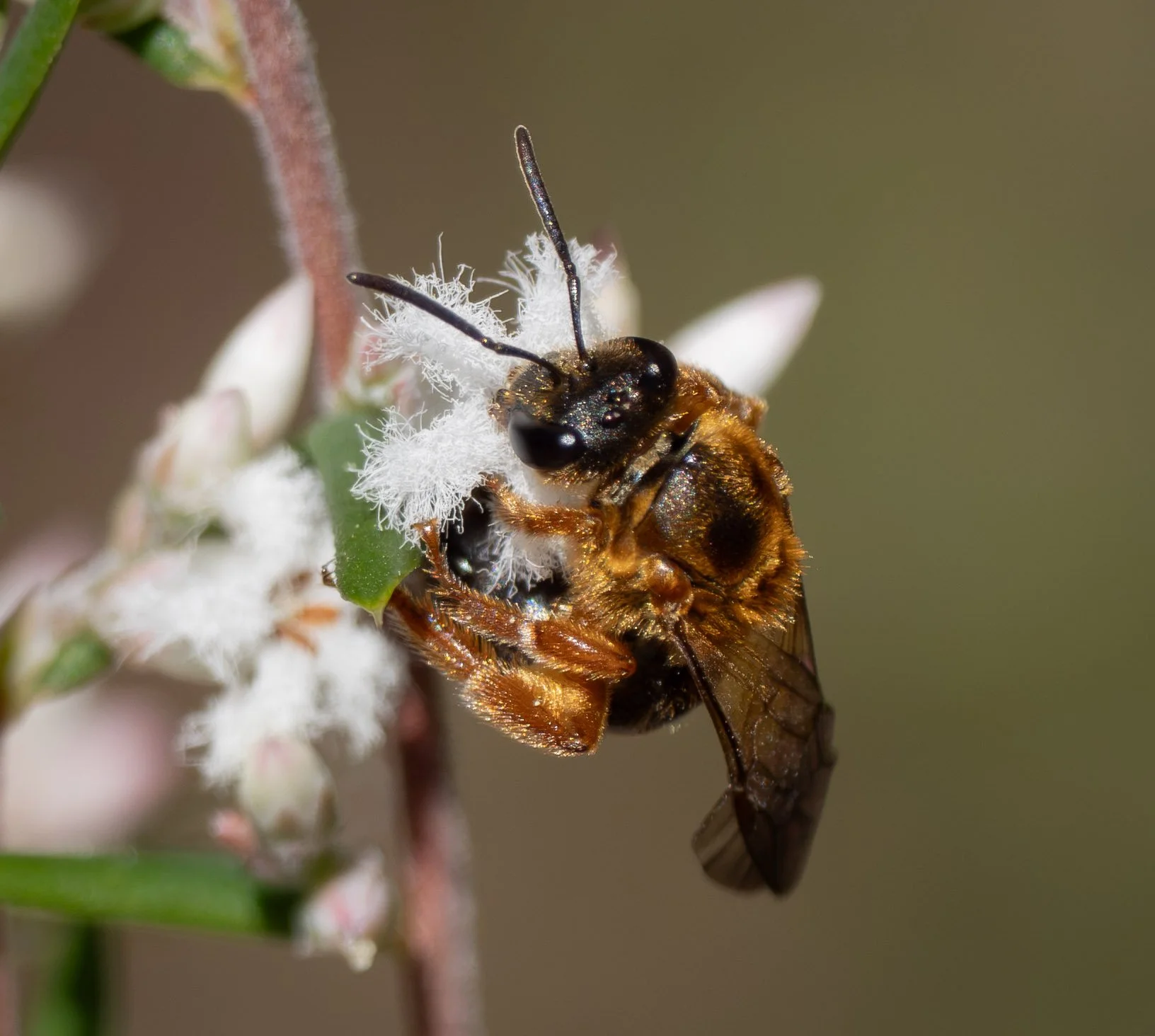
A novel species! Well, nearly. Initially I thought this was my first ever sighting of this rather stunning, golden-haired bee, and identification had me stumped. But it turns out that I’ve photographed the same species before – just once, on 9th September 2024.
Lasioglossum (Parasphecodes) waterhousei (?) [2nd Sept]