
Bembix littoralis (Bembicini)
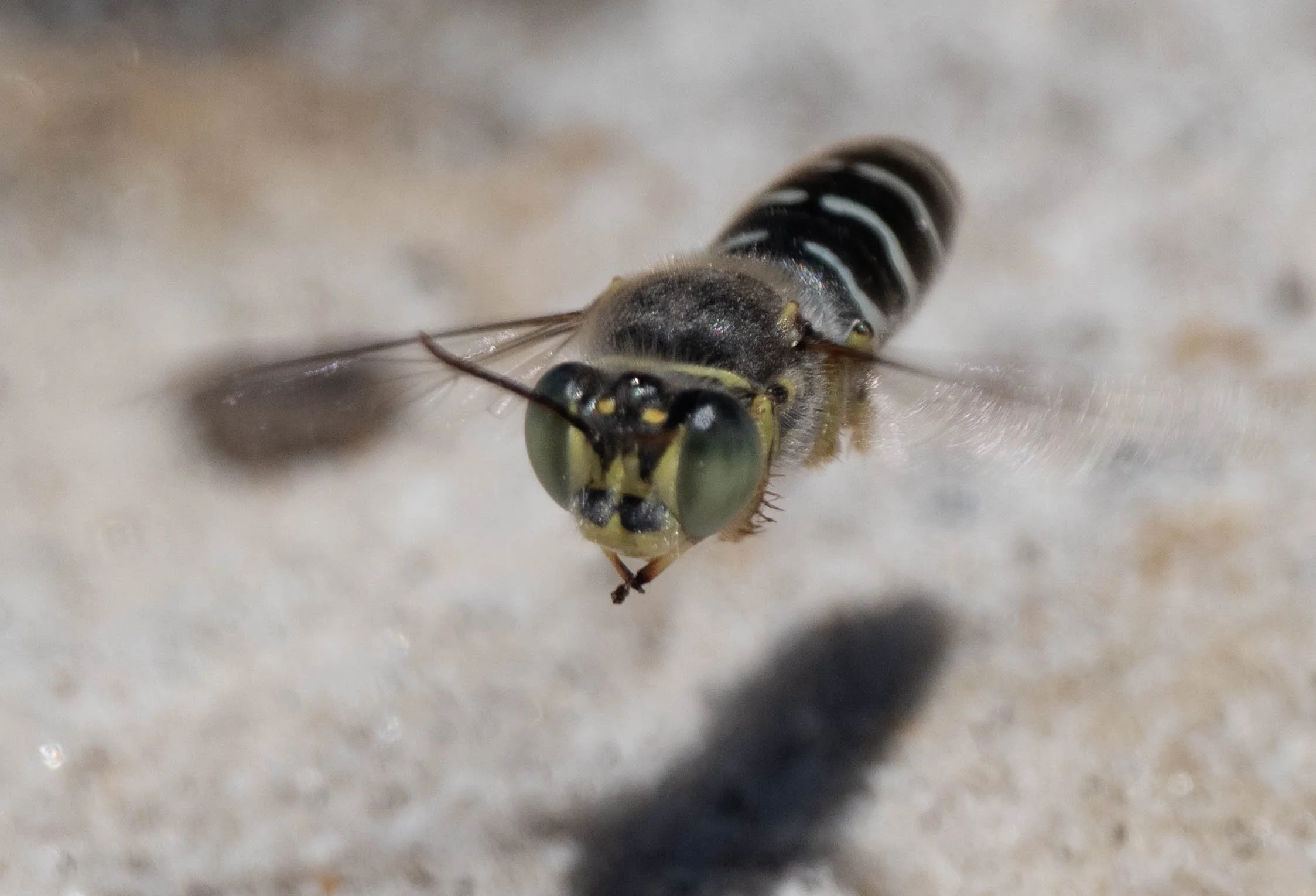
Workbook
Bembix littoralis is widespread and relatively common – but until now I’ve not been confident identifying them from field photos. For two reasons.
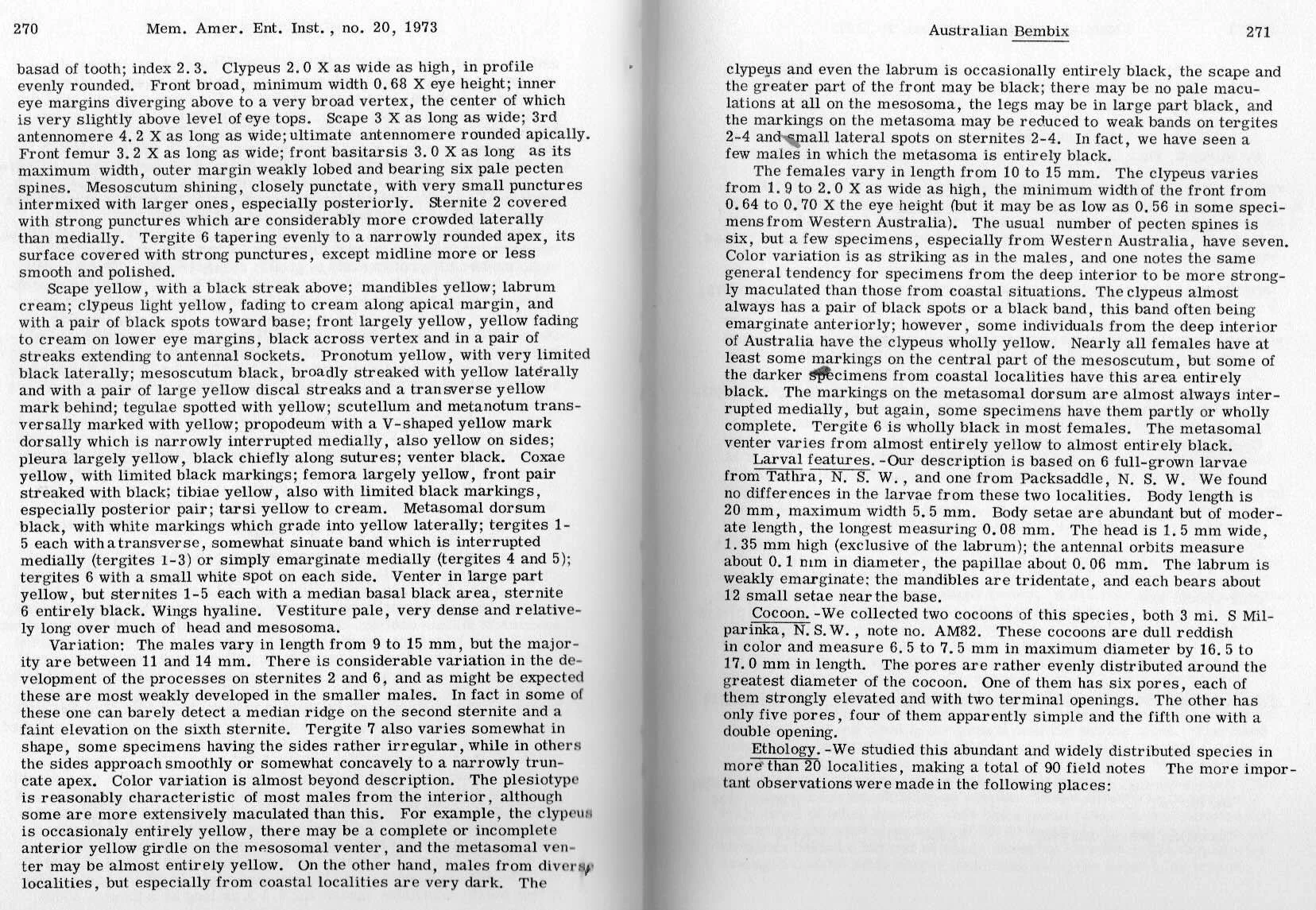
First, the colour pattern is of limited use. In their seminal monograph of Australian Bembix species (Evans & Matthews 1973), the authors noted that for Bembix littoralis “color variation is almost beyond description” (p. 270).
Second, the species is rather generalist in terms of morphology. The front basitarsi are not expanded, and nor is the clypeus particularly distinctive. These two structural clues – both of which have proven diagnostic for some other species – are somewhat ambiguous when it comes to B. littoralis.
So I have been looking forward to getting my hands on a specimen, in the hope that close examination of fine structural details will shed some light. With a reliably identified reference I will be better able to recognise B. littoralis from field photos. Hopefully.
Bingo! A recent trip to the north coast of NSW. A set of field photos. And a female specimen collected. So here goes!
The following analysis is based on Evans & Matthews (1973).
Look-alike species
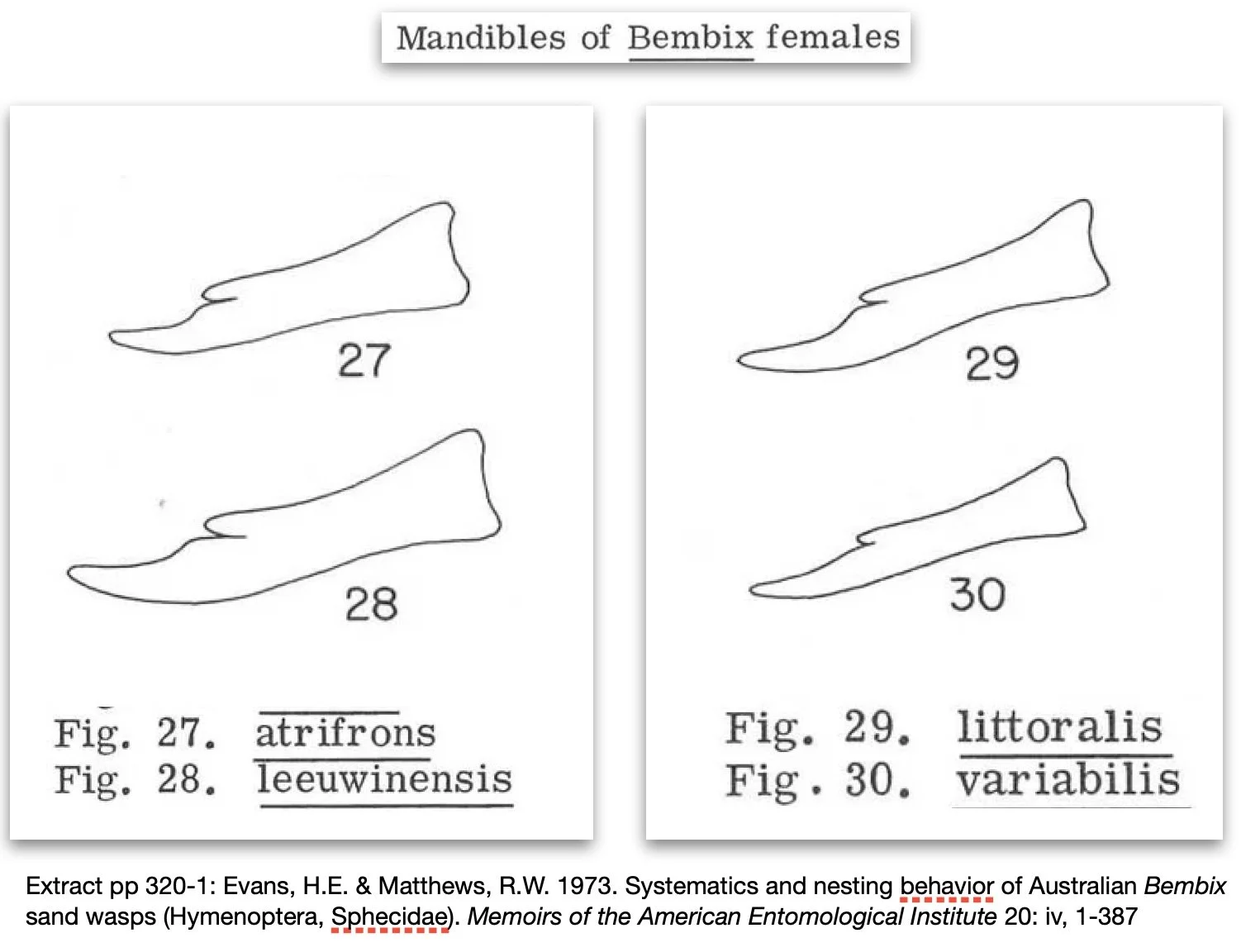
Evans & Matthews (1973) emphasise the similarities between females of B. littoralis, B. variabilis, and B. musca. Indeed, their key to females provides two pathways based on mandible shape: one terminates in B. littoralis and B. variabilis, the other B. littoralis and B. musca. I take it from this that mandible shape is somewhat variable and/or difficult to assess with confidence … and that will certainly be the case from field photos. Thankfully, at each terminus colour pattern comes to the rescue, including the colour pattern of the clypeus.

The table below shortlists key features for each of these three species. In addition, I include B. furcata and B. lamellata as both are common here in the south-east and the females have markings quite similar to dark variants of B. littoralis and B. variabilis. Also, the males of B. littoralis, B. lamellata and B. musca are very alike … but more about males later in this post. For now, the focus is on the females.
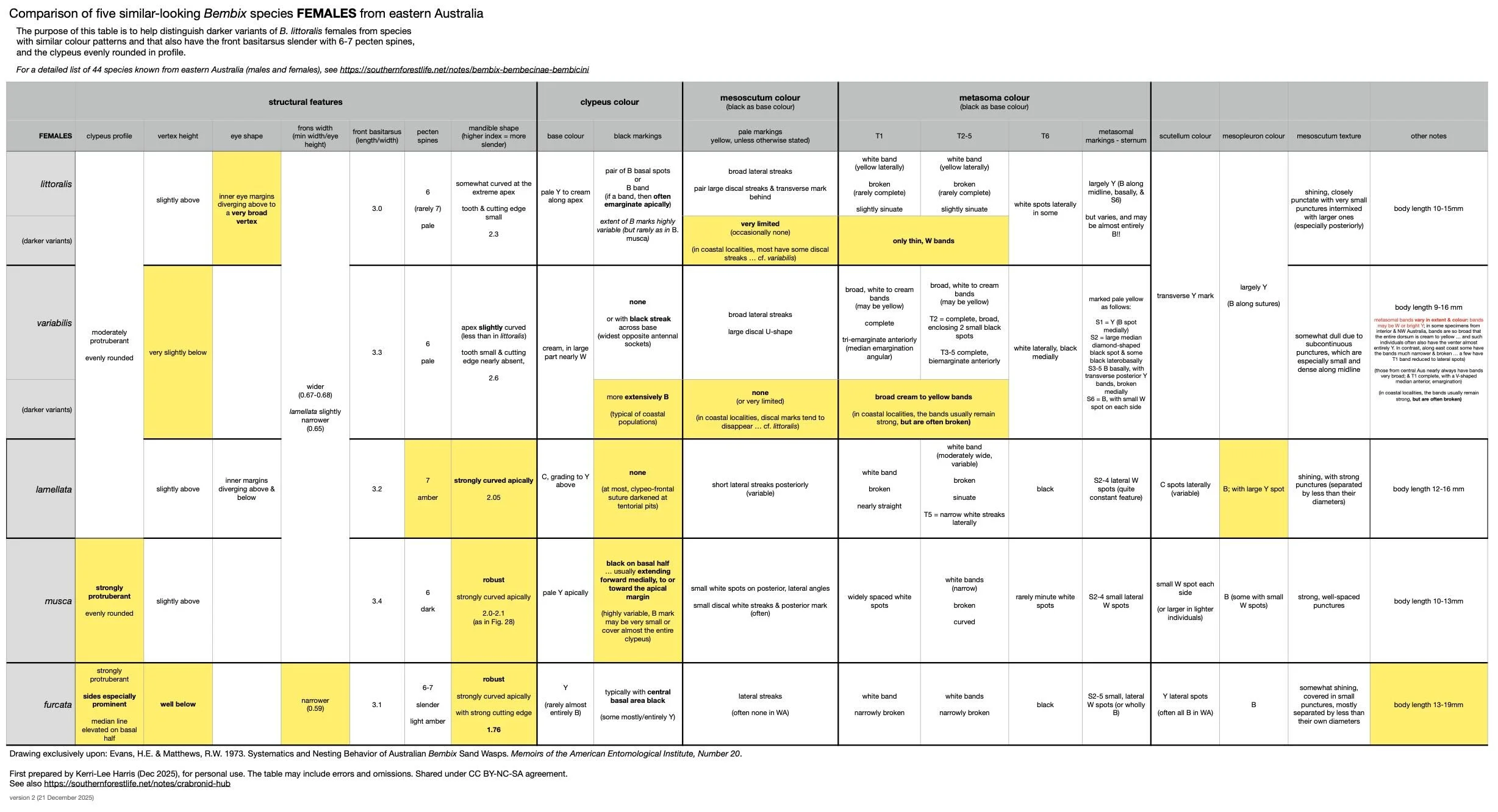
click image to open/download latest version as pdf (<100kb)
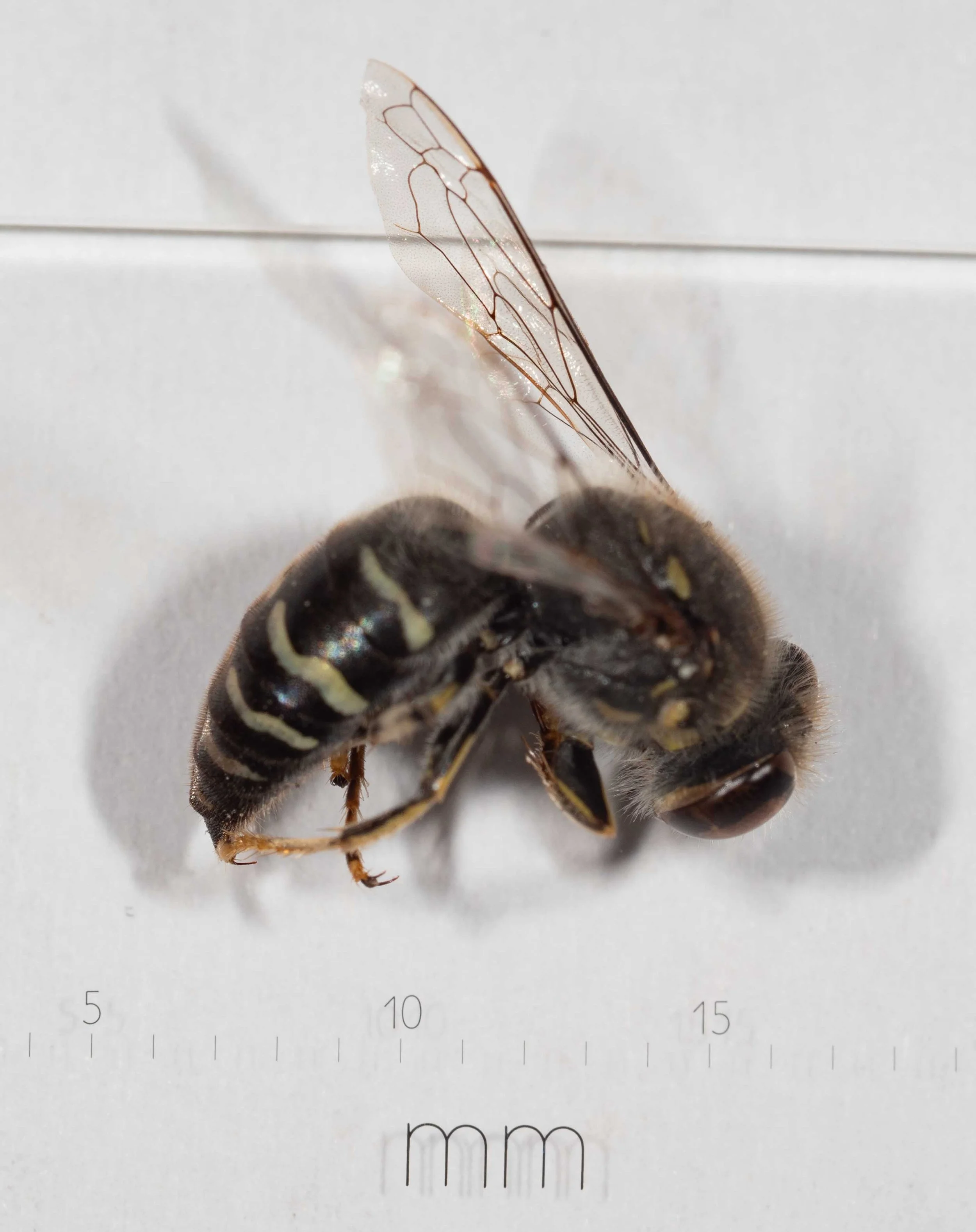
A female Bembix littoralis
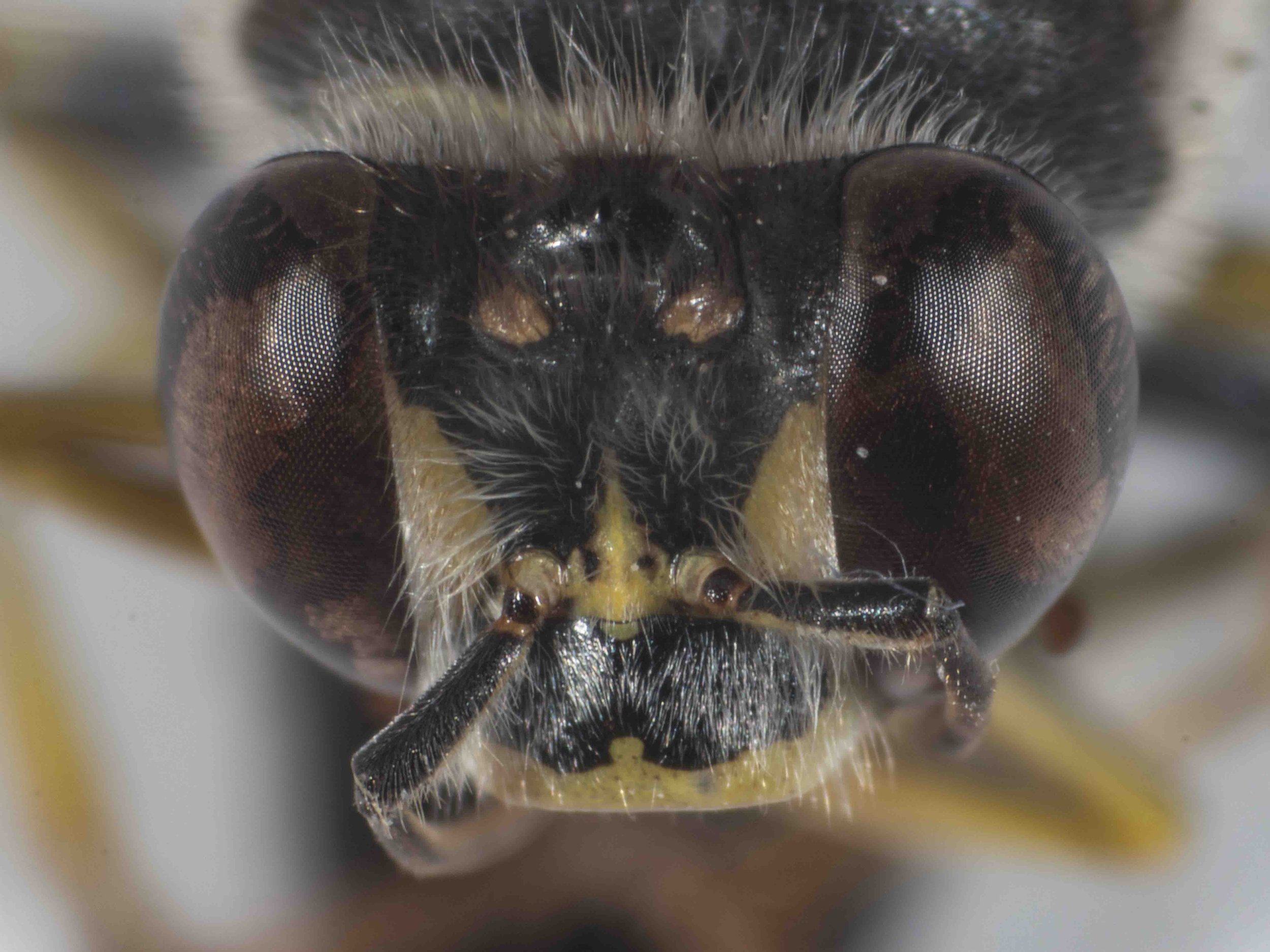
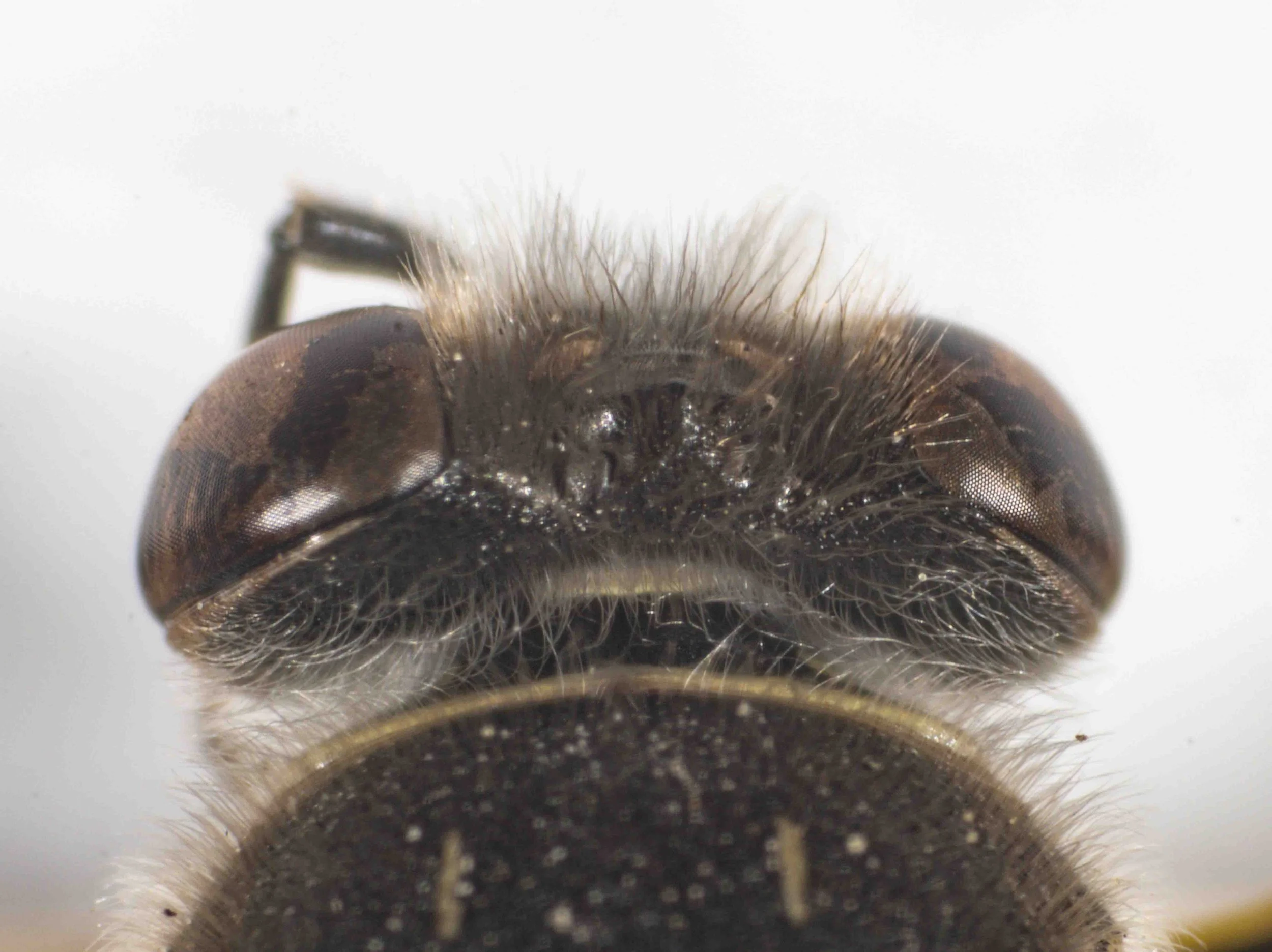
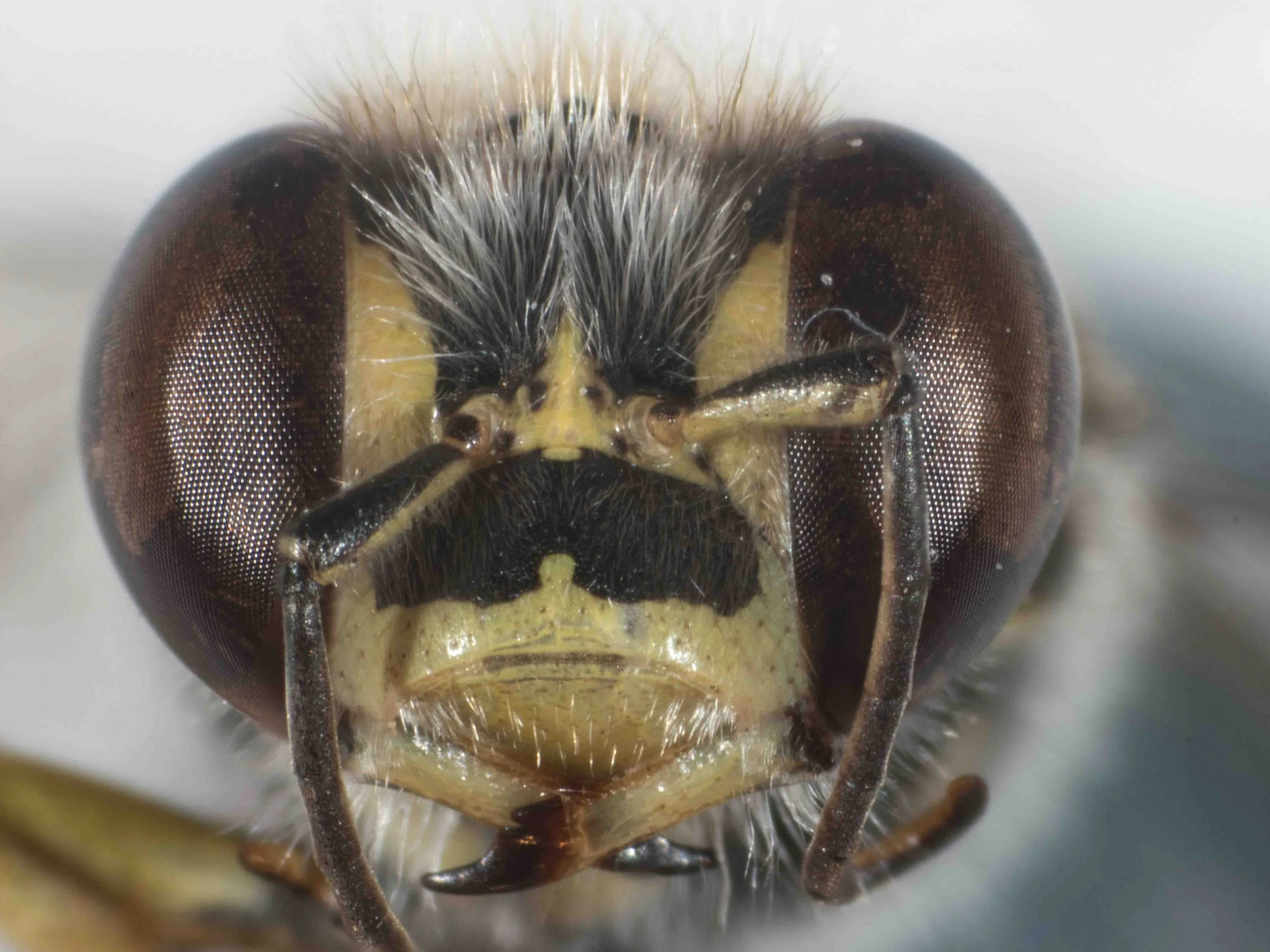
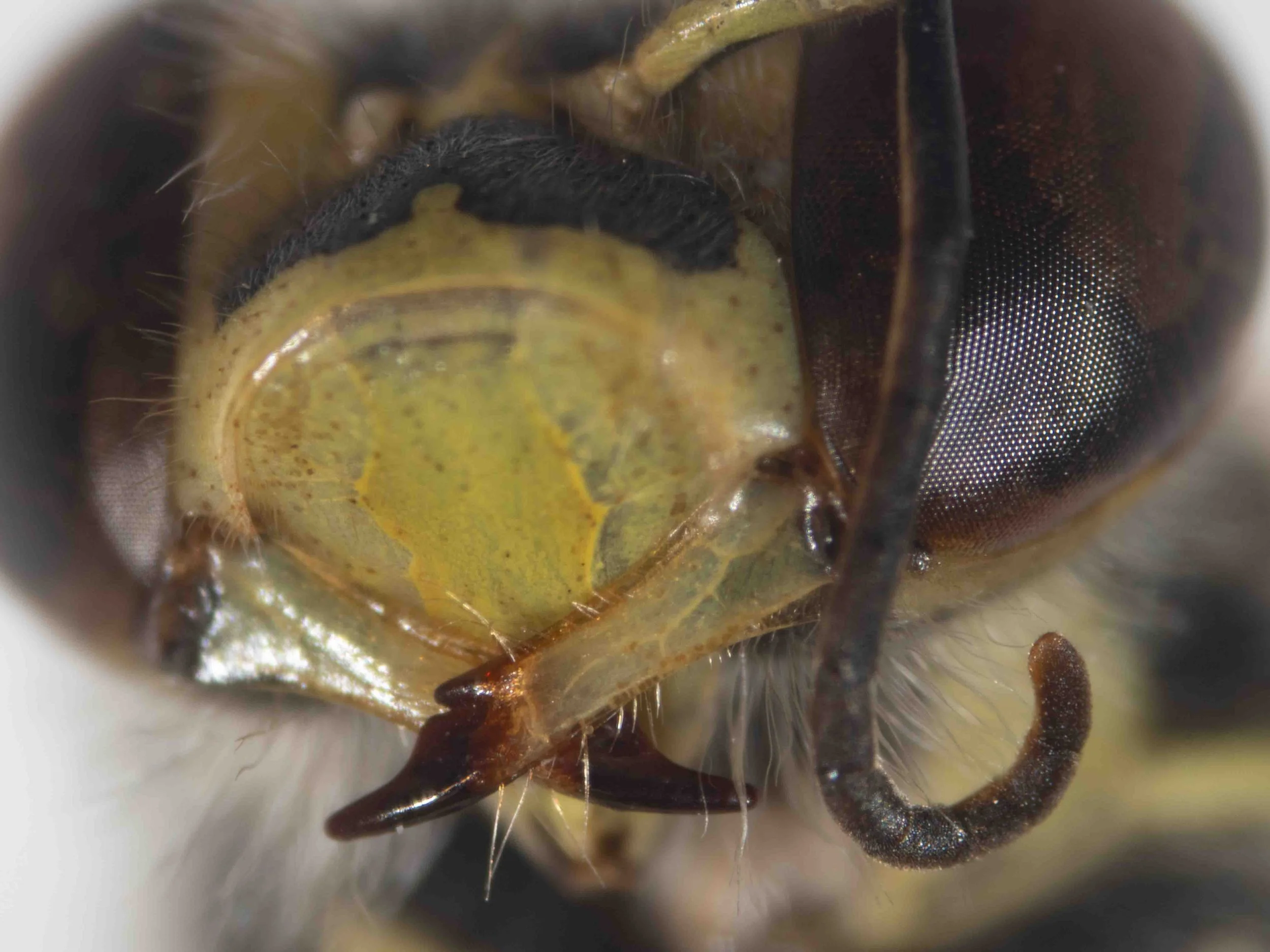
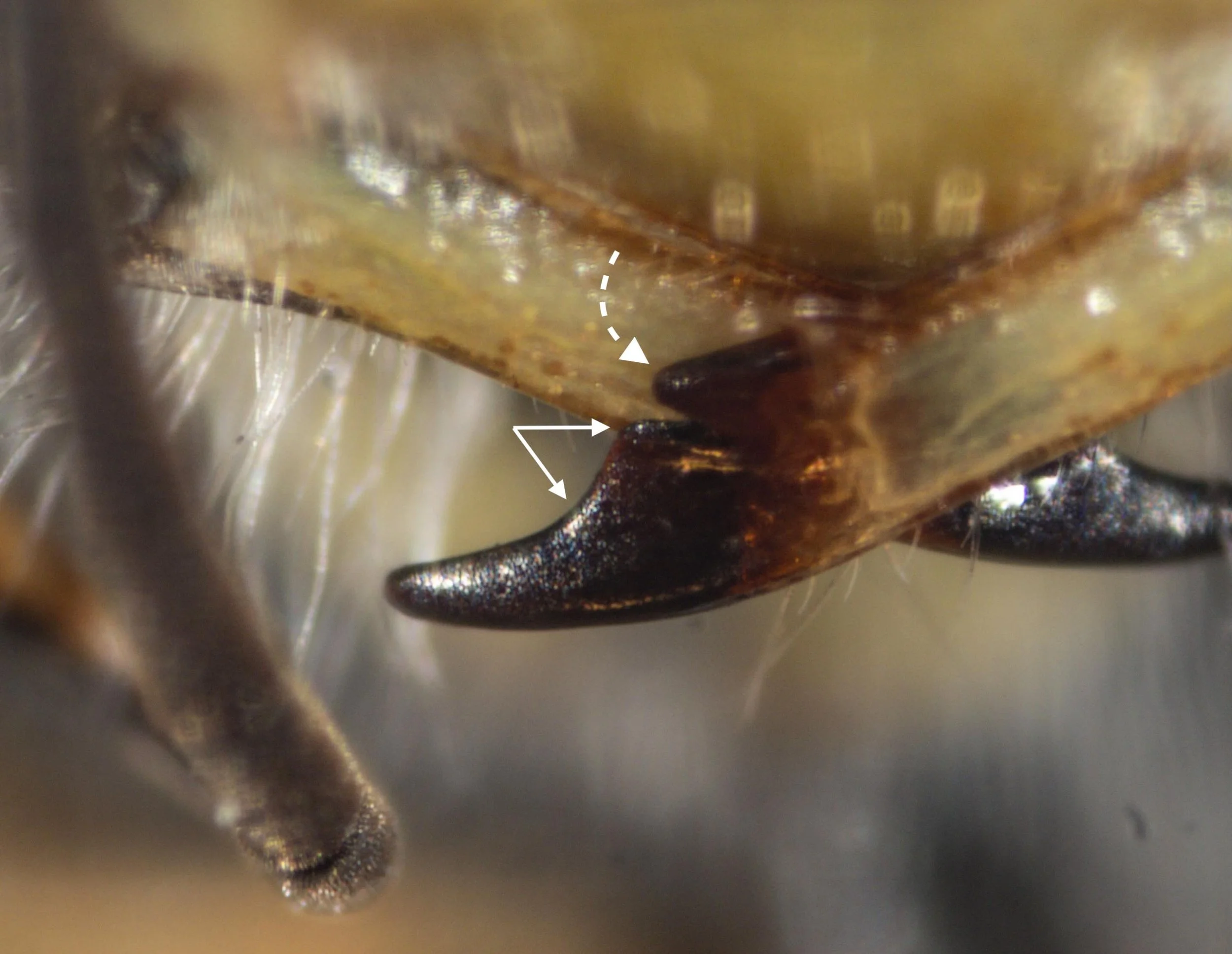
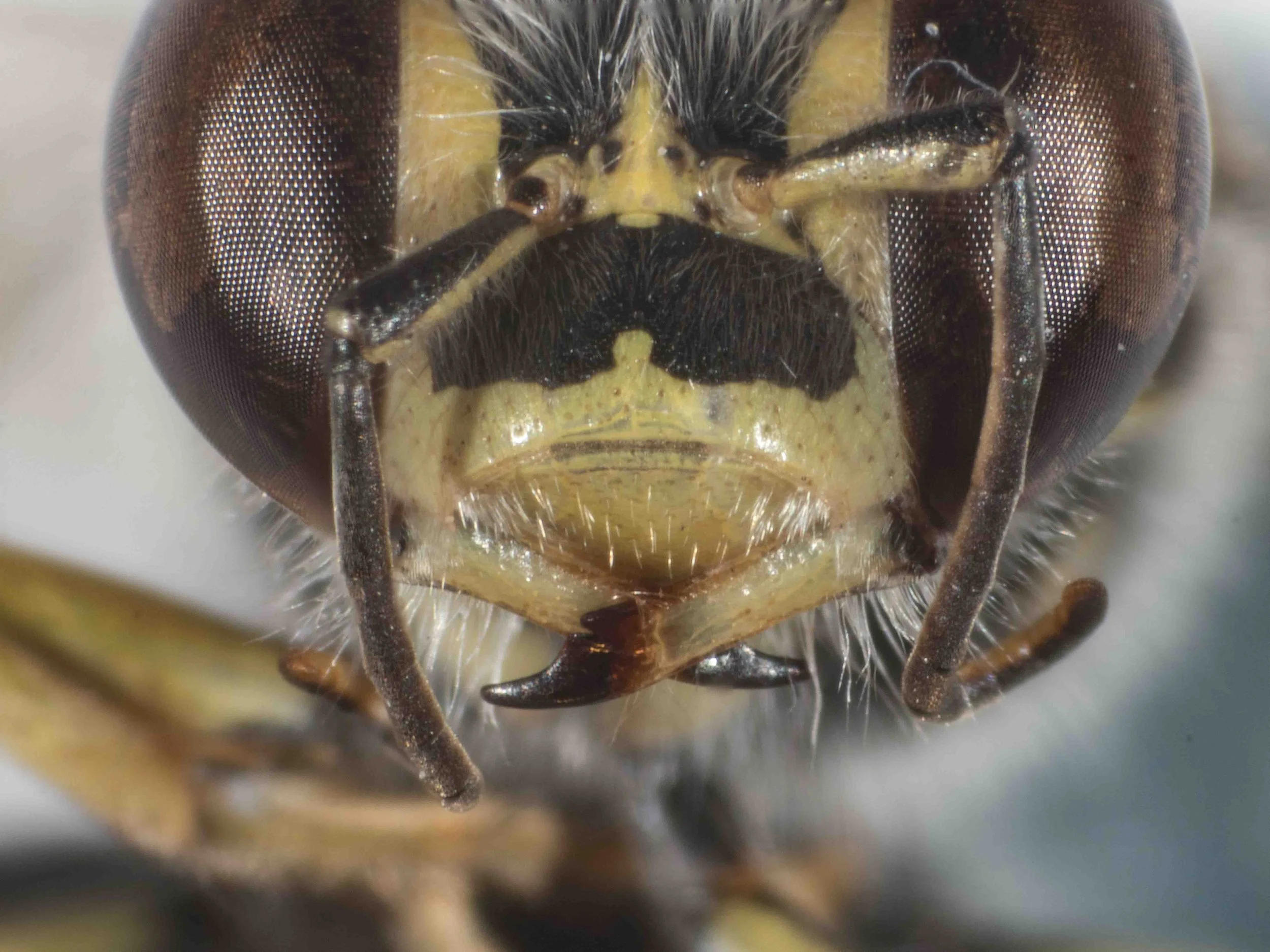
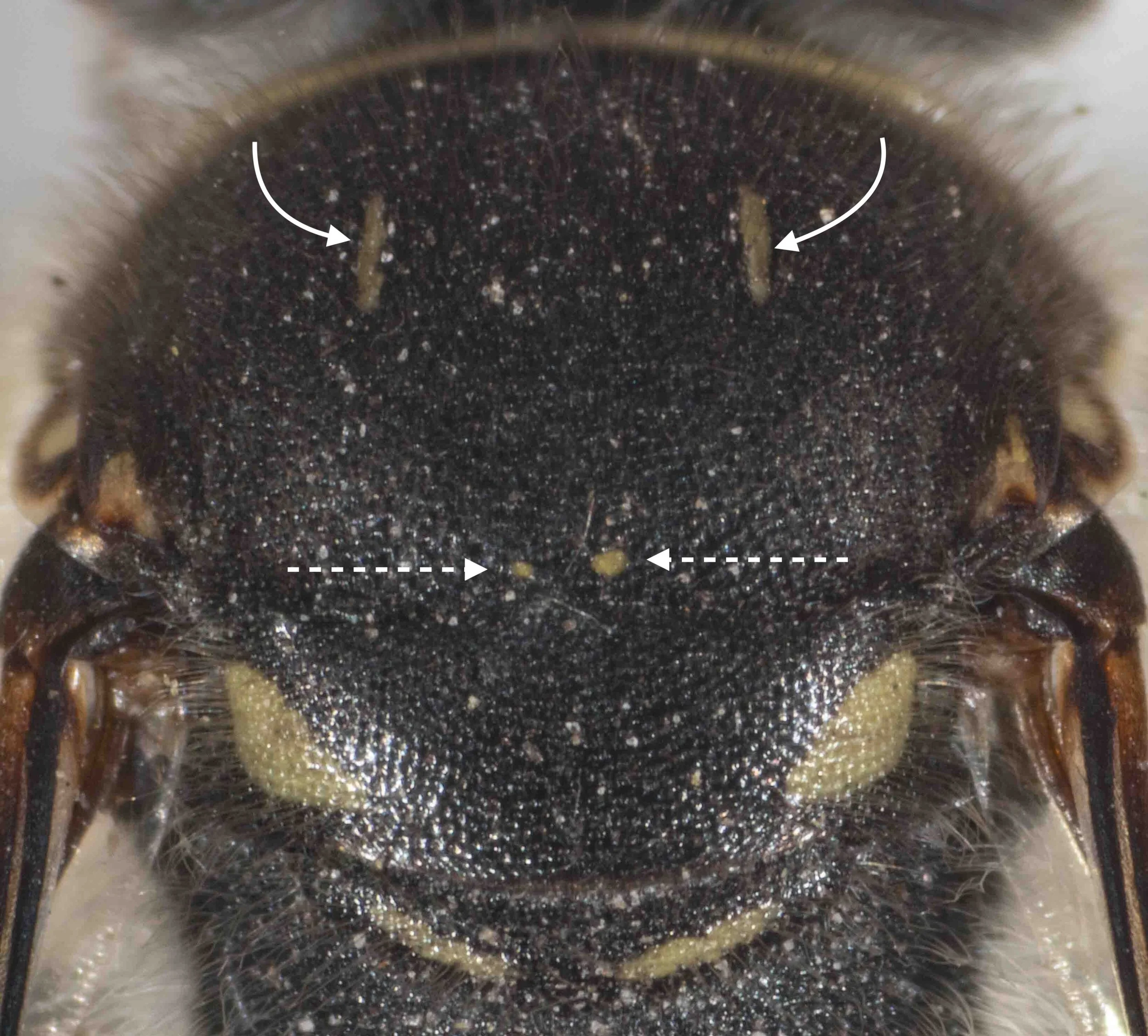
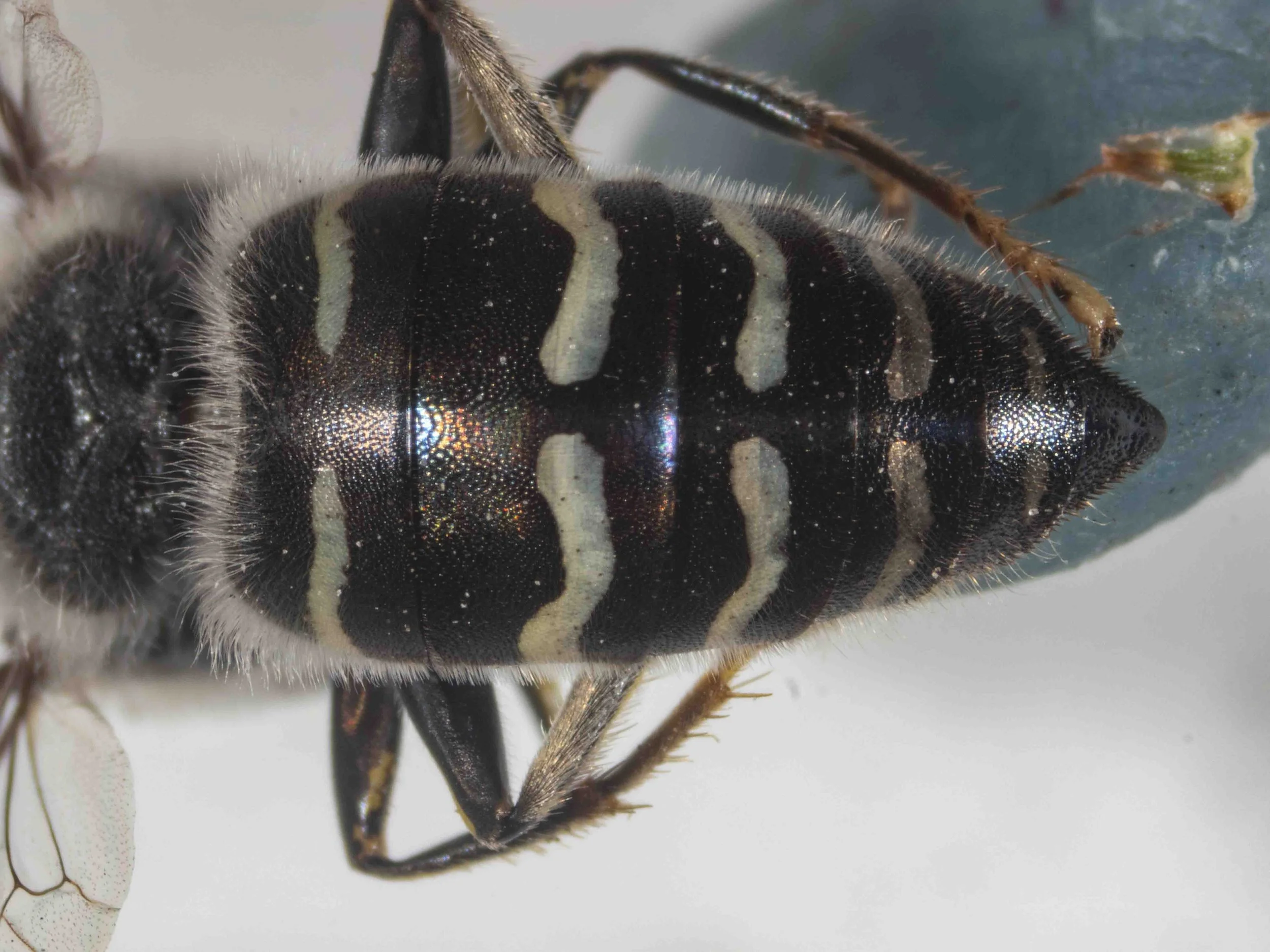
On the basis of the distinguishing features list in the above table, I’m convinced that 2511M is indeed B. littoralis. In particular:
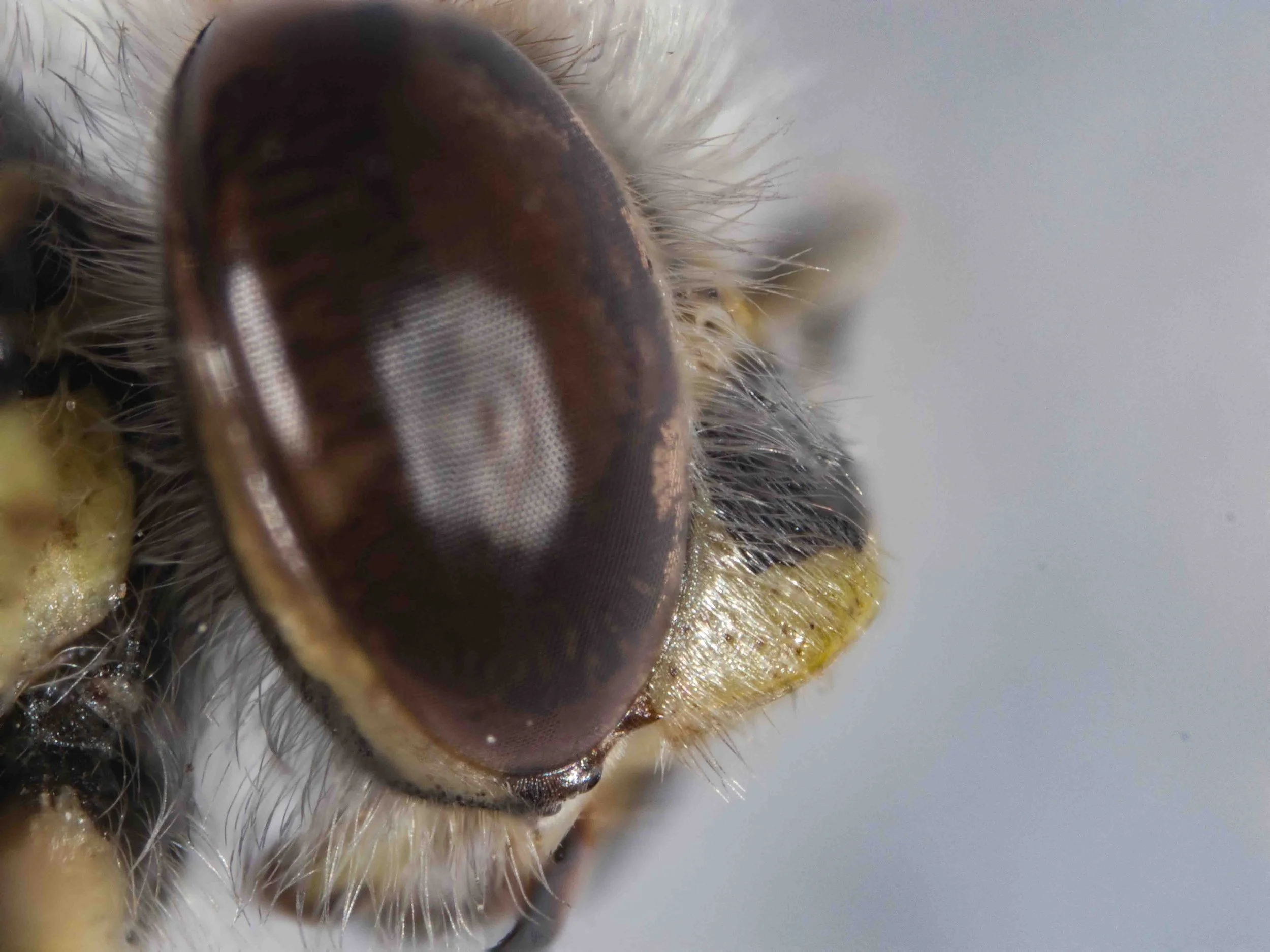
the high and very broad vertex;
the shape of the mandible;
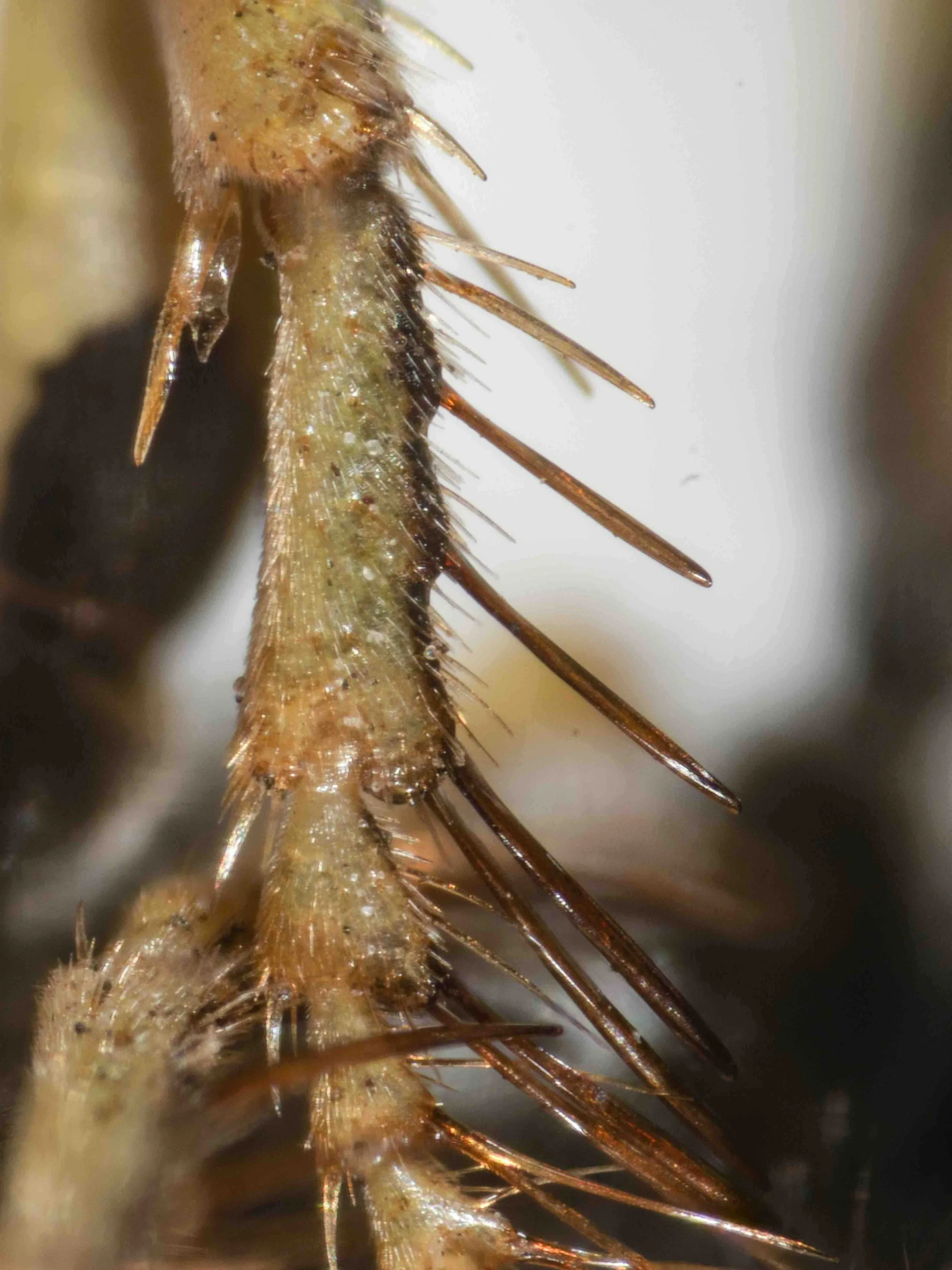
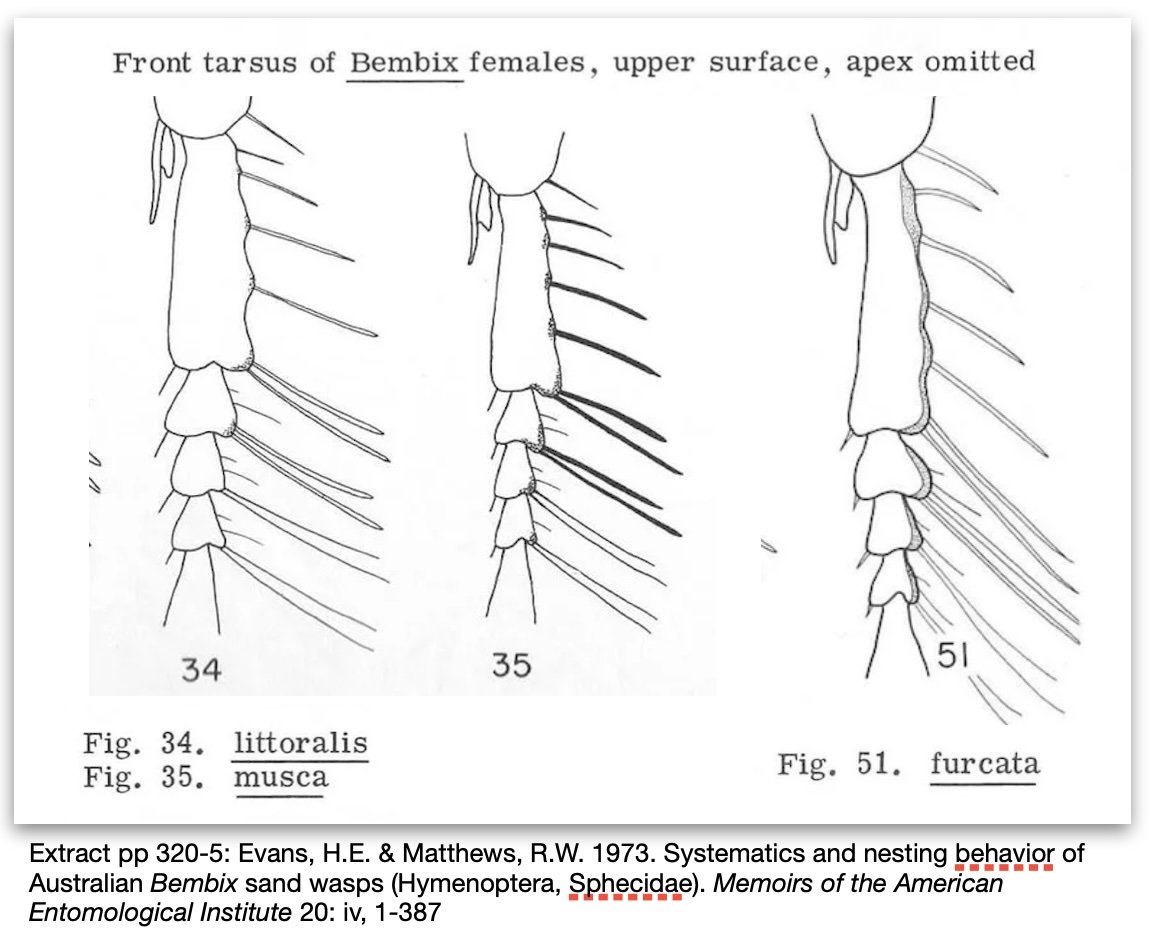
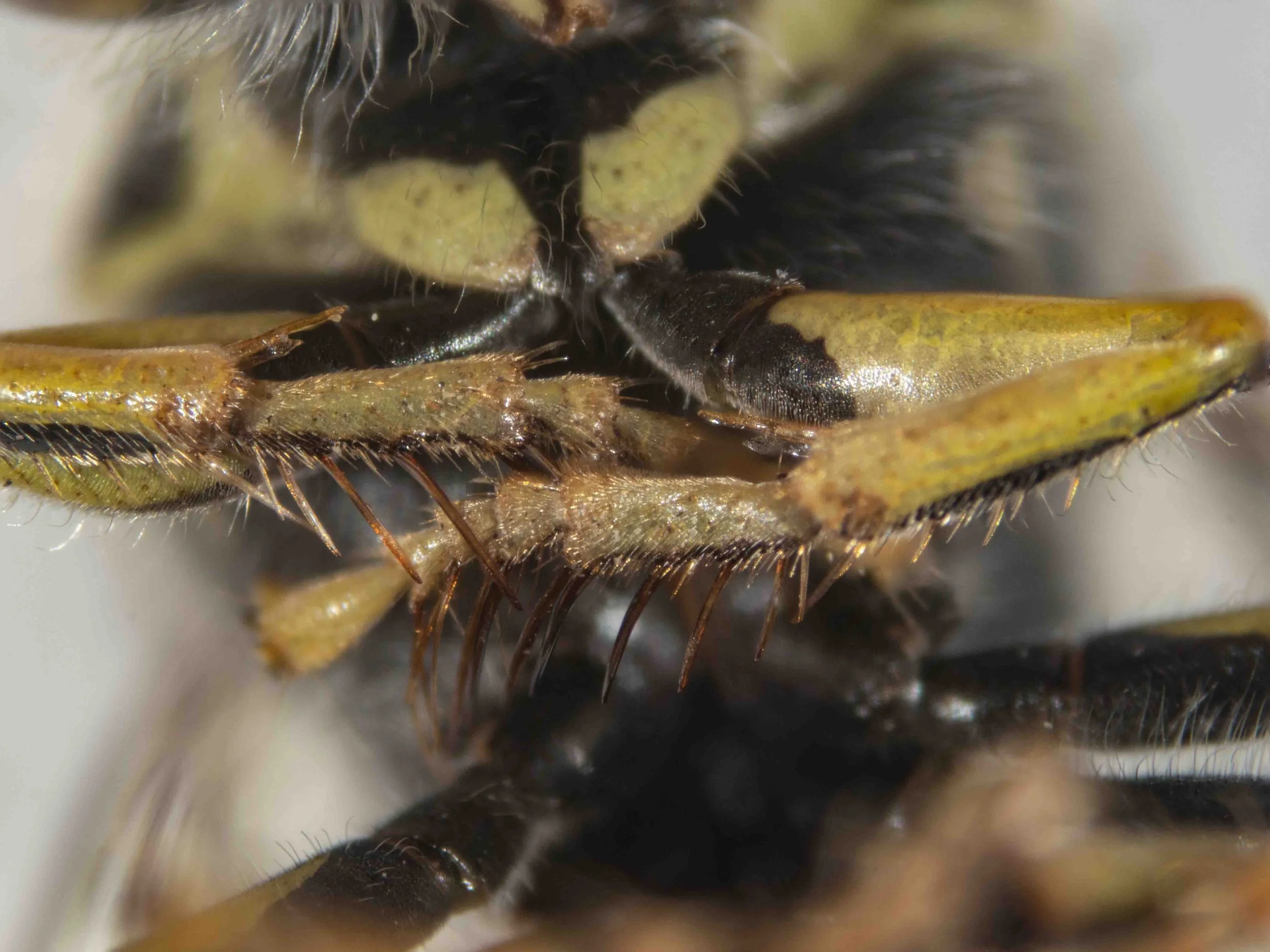
the length of the basitarsus;
the colour of the clypeus; and
the combination of mesosomal markings with metasomal band width.
B. littoralis females… in the field
The next step: to what extent can these features be seen in field photos?
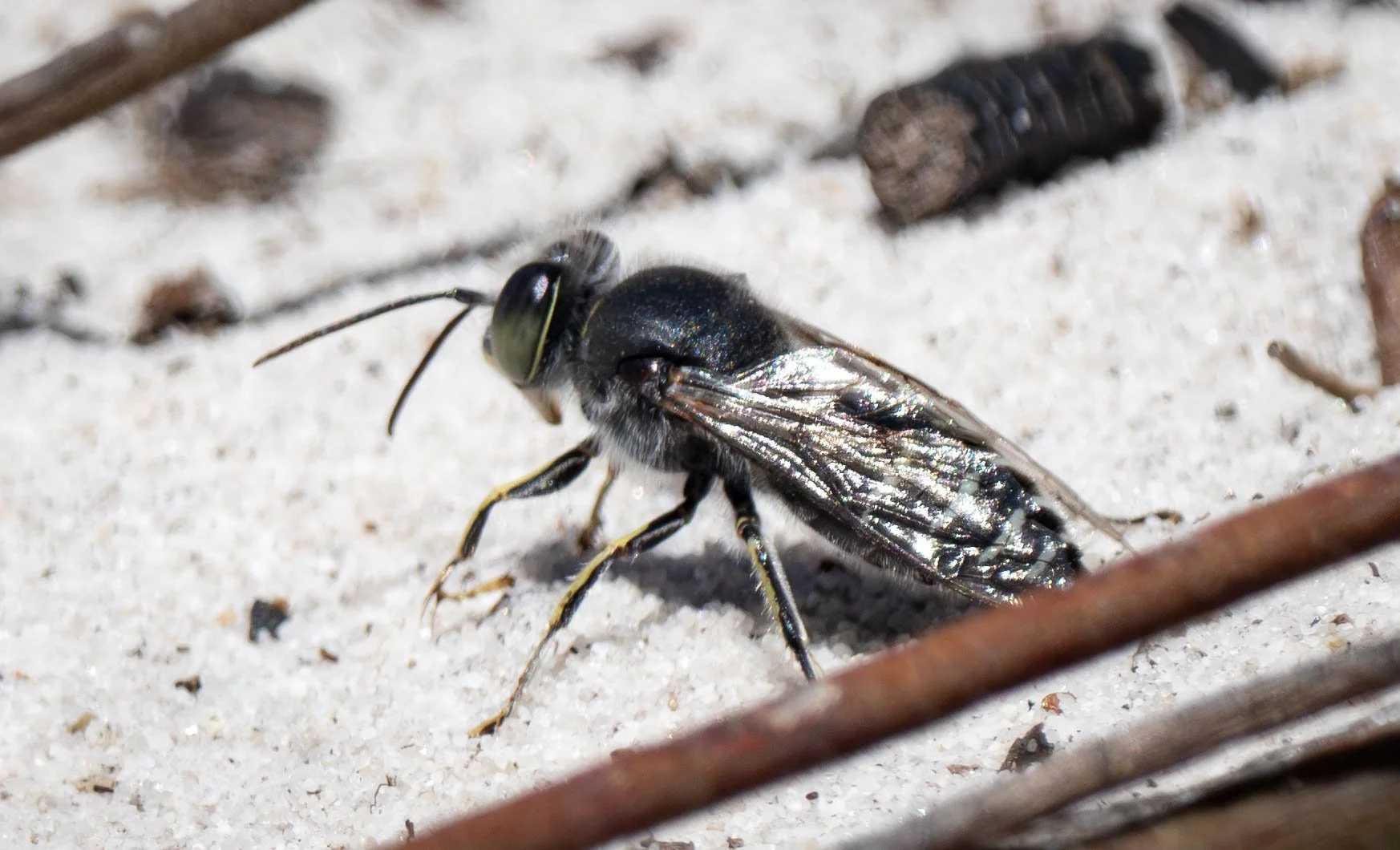
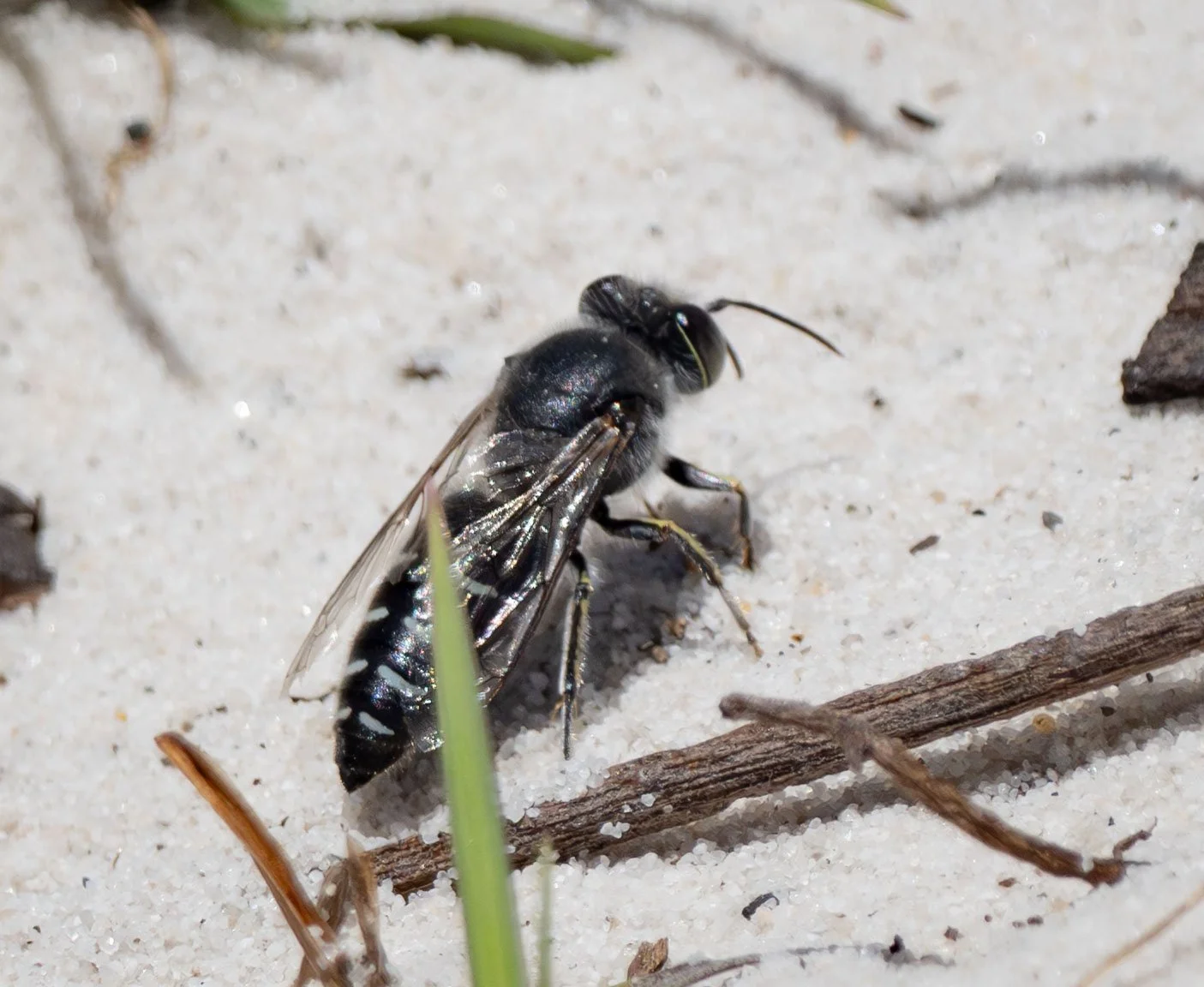
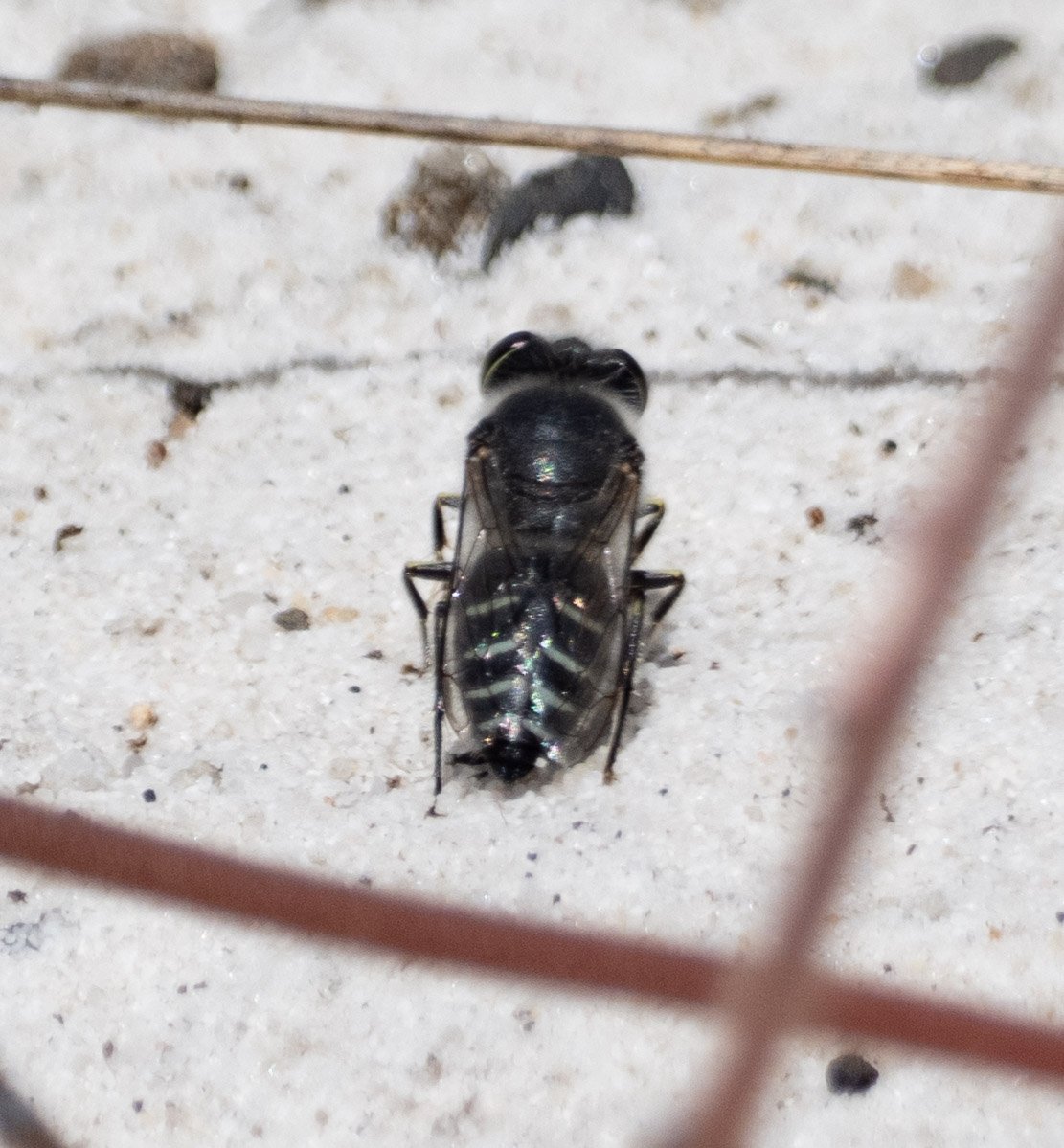
Fortunately, I have live field shots of 2511M, as well as several other individuals nesting in the same place, at the same time.
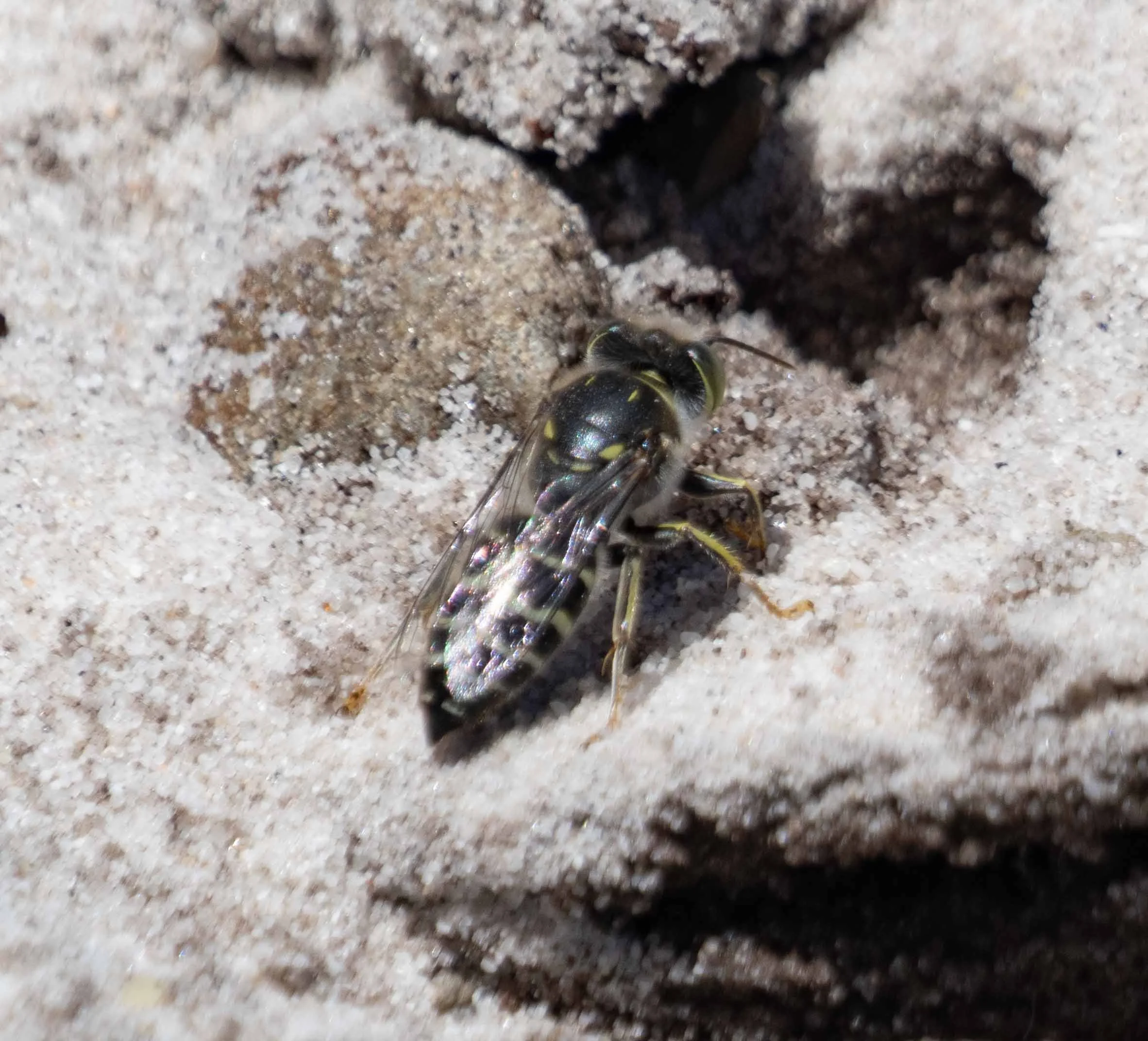
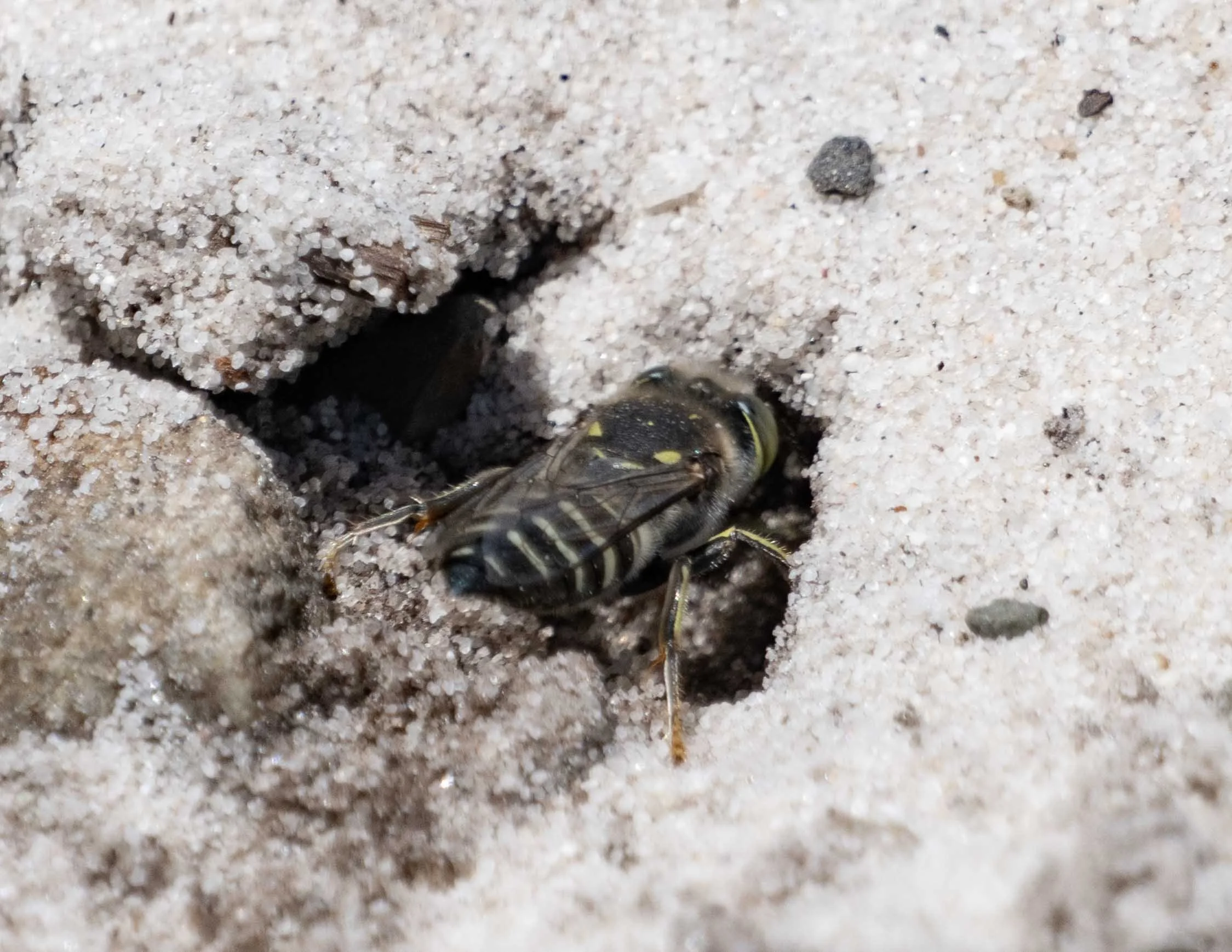
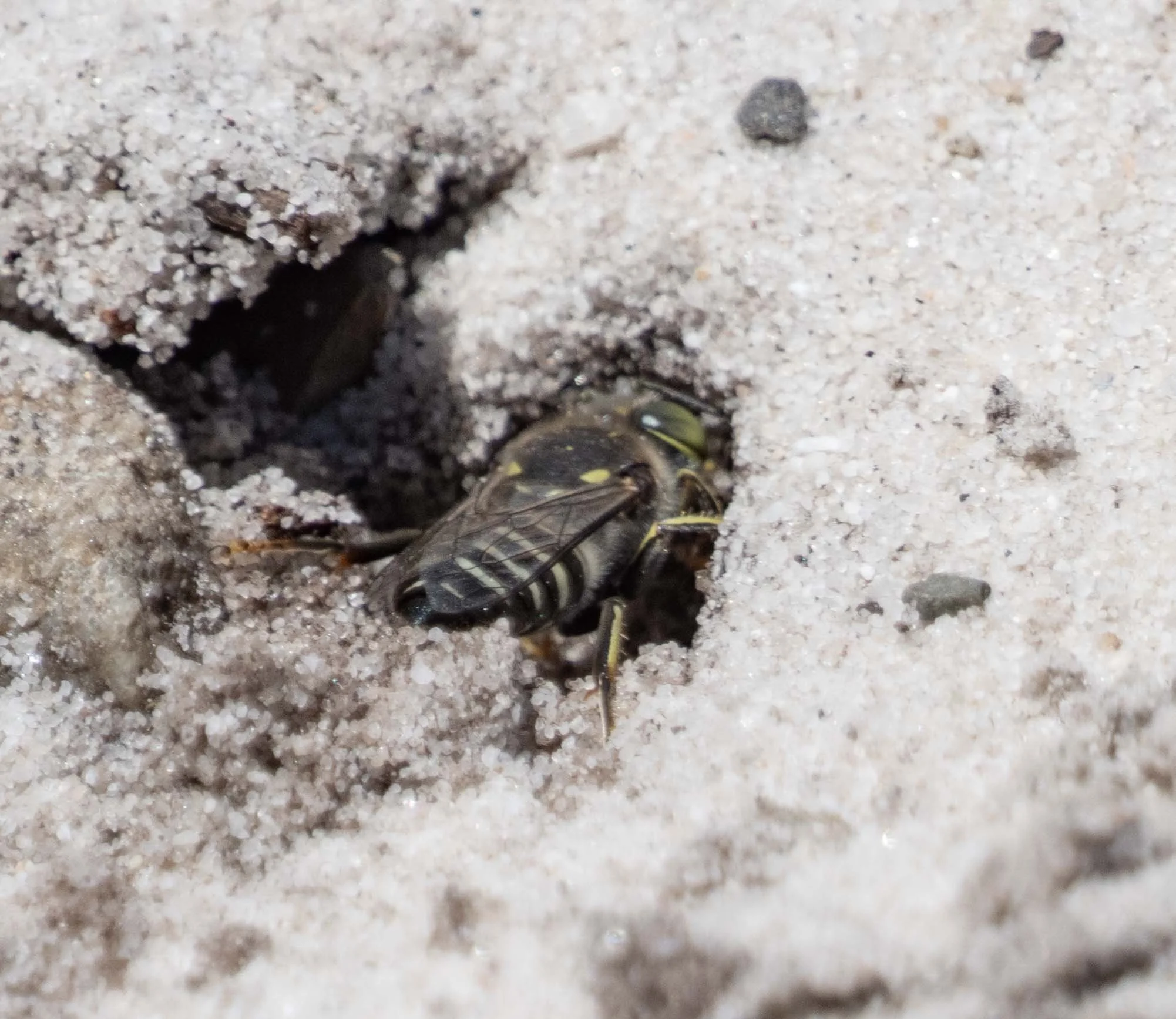
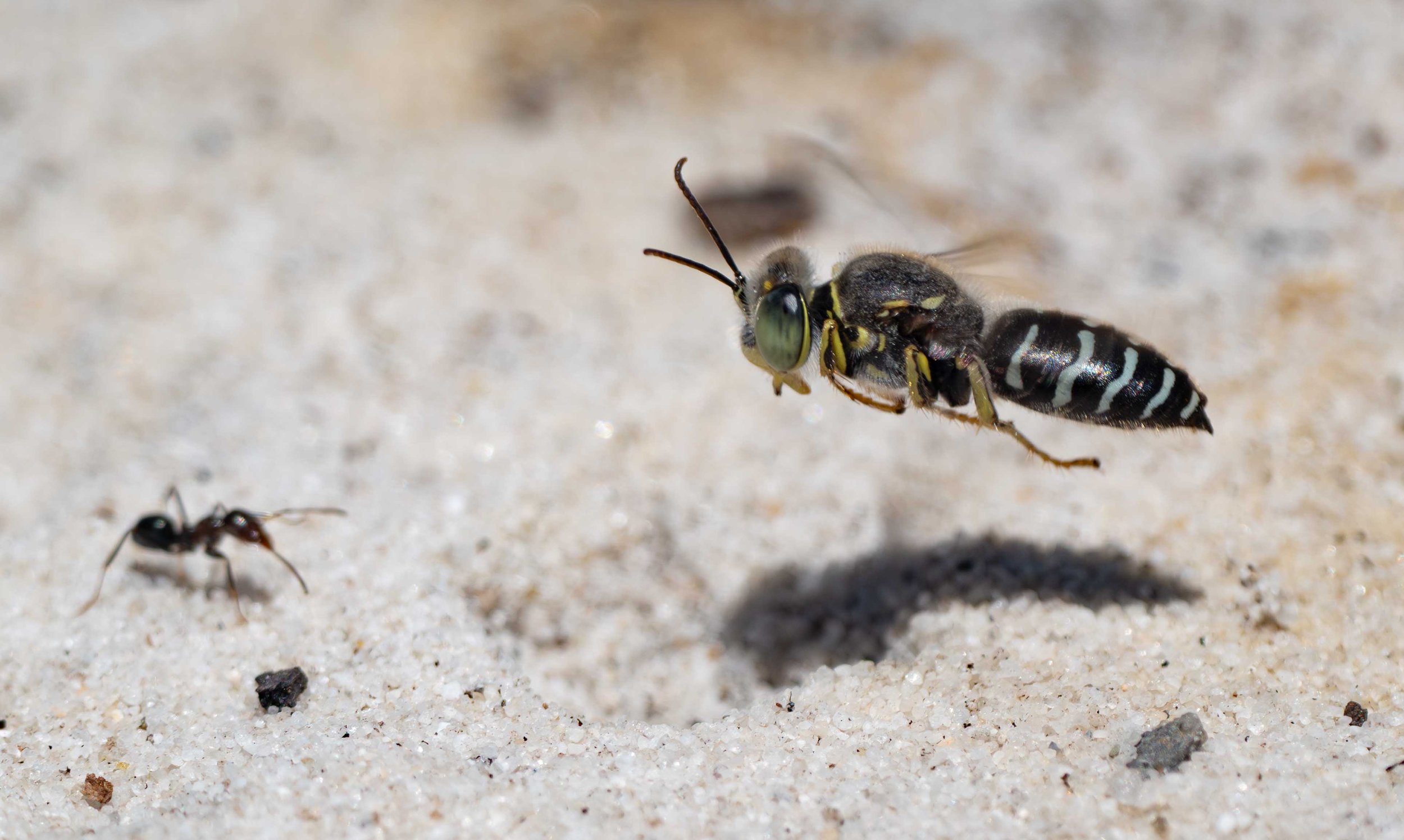
Another female, digging nearby … and battling with the opportunistic ants. Note here the apparent absence of discal markings on the mesoscutum and the different shape of the black markings on the clypeus.
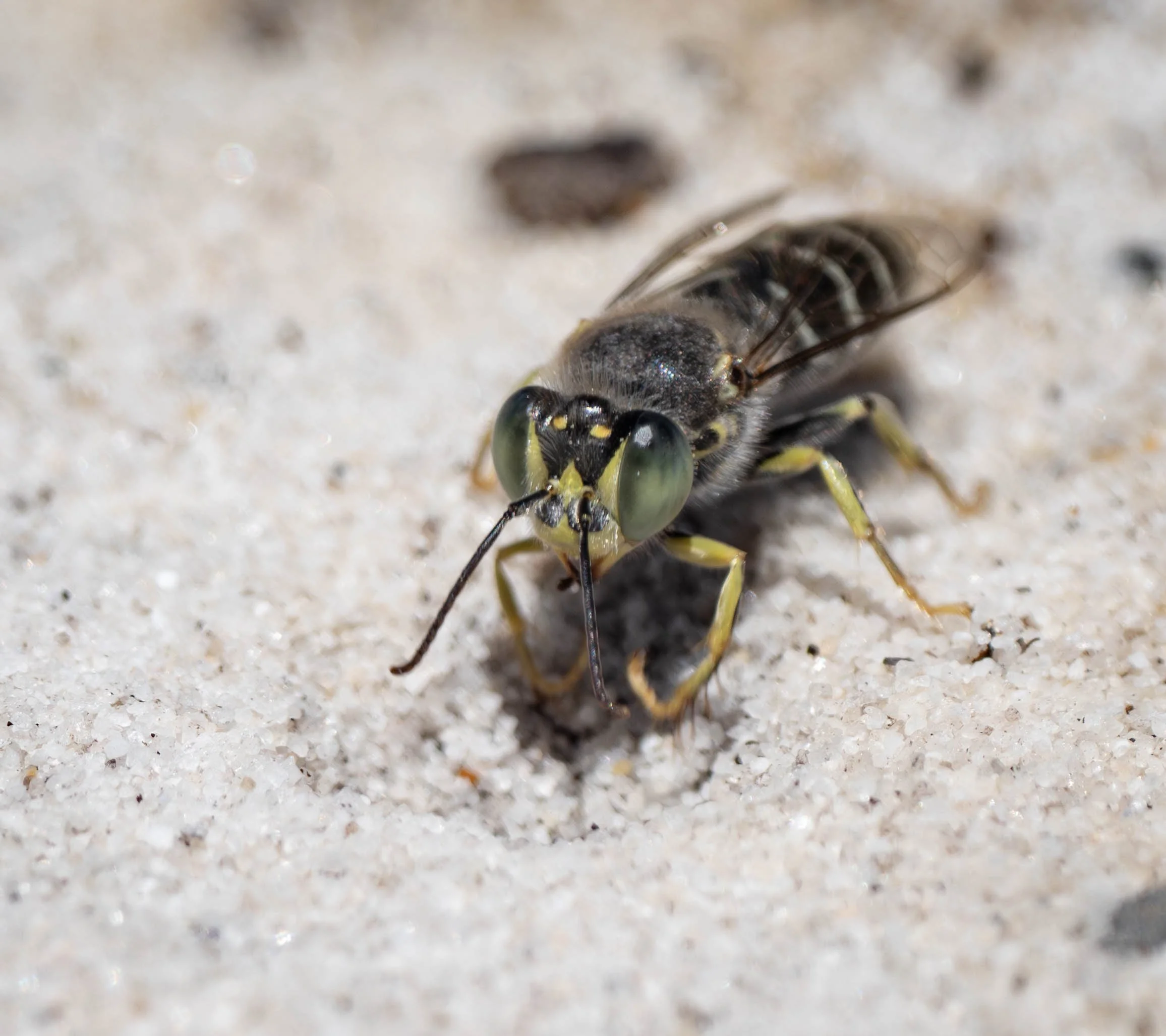
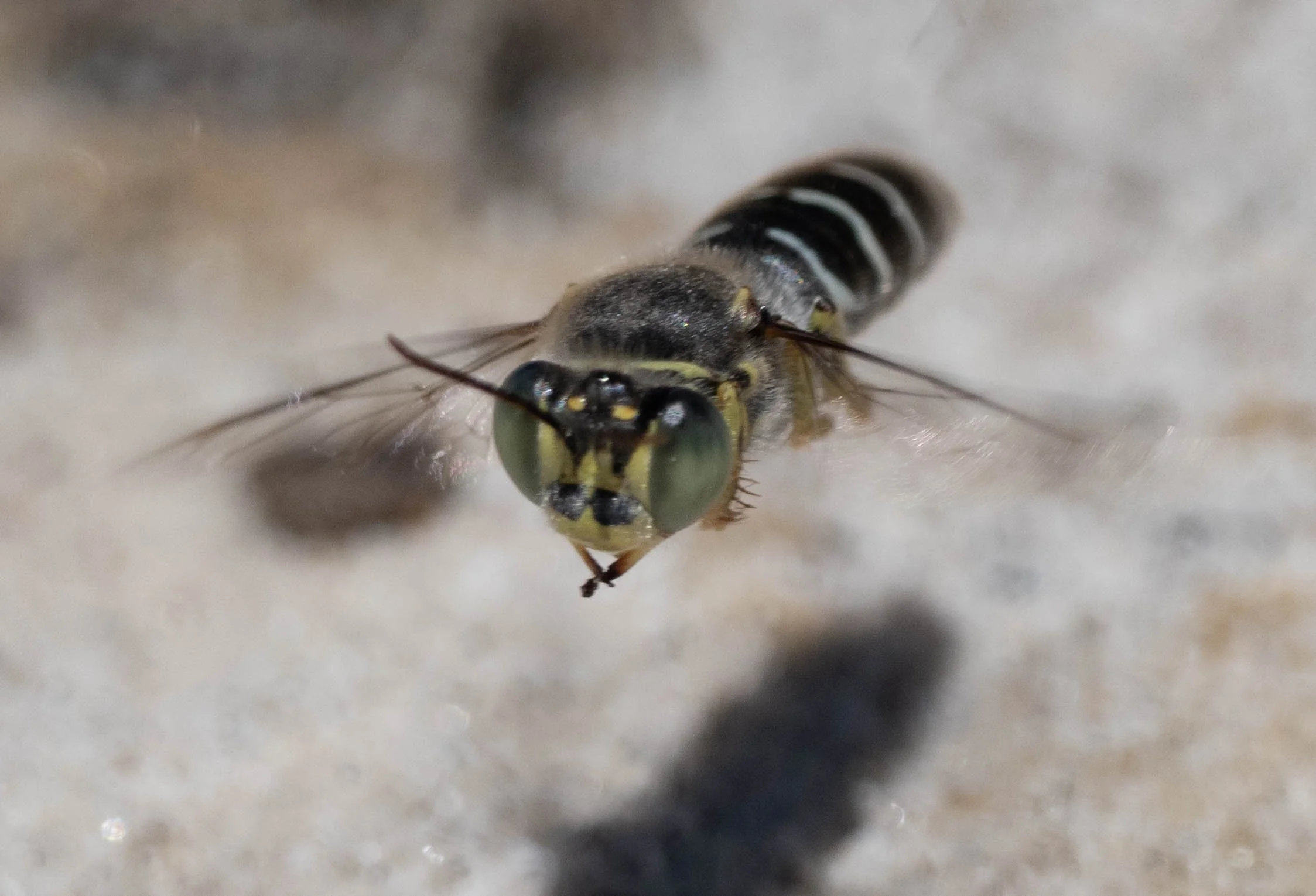
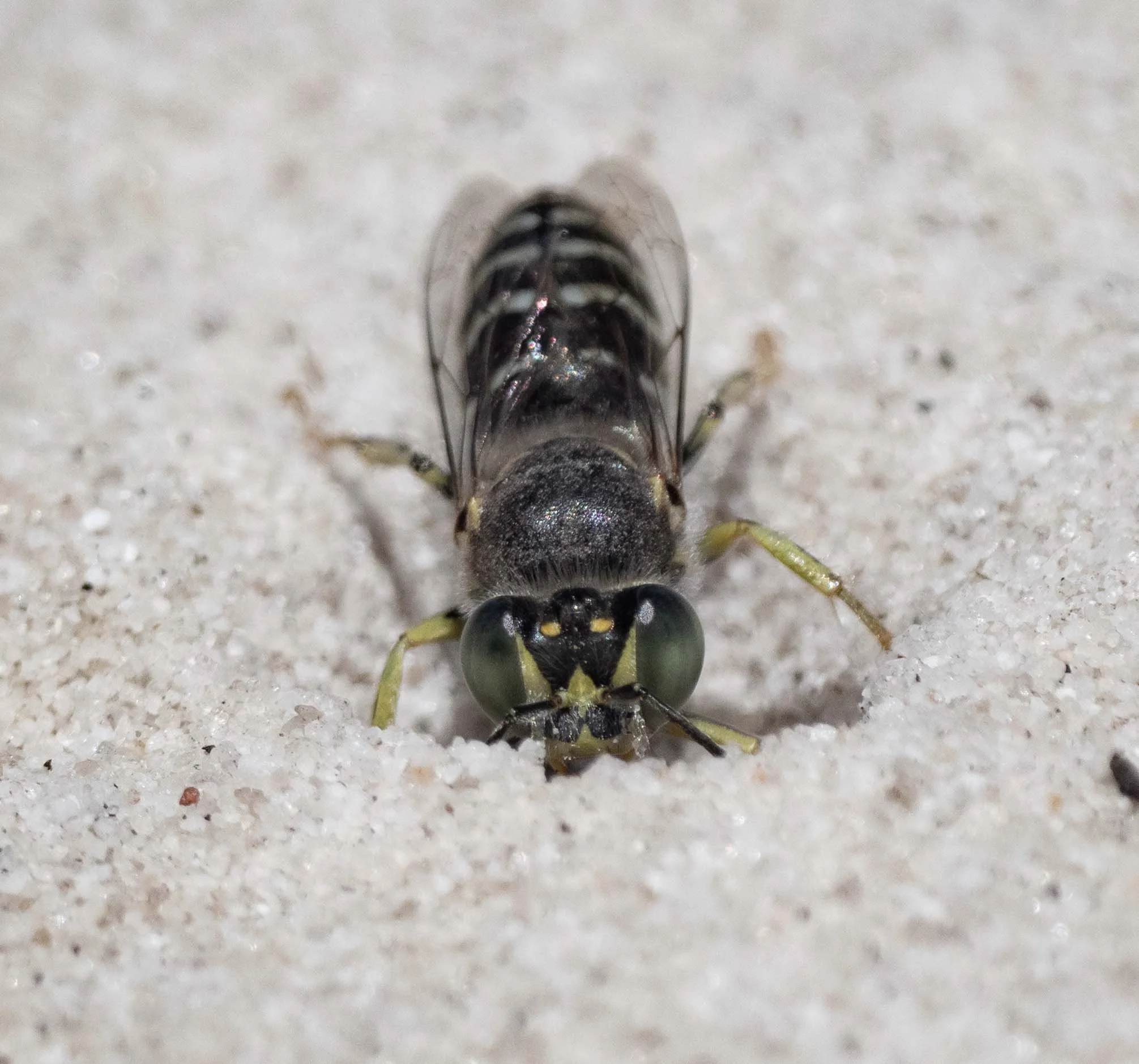
Wasp 04 is clearly a different individual! The yellow discal markings on the mesoscutum are more extensive and brighter than in 2511M.
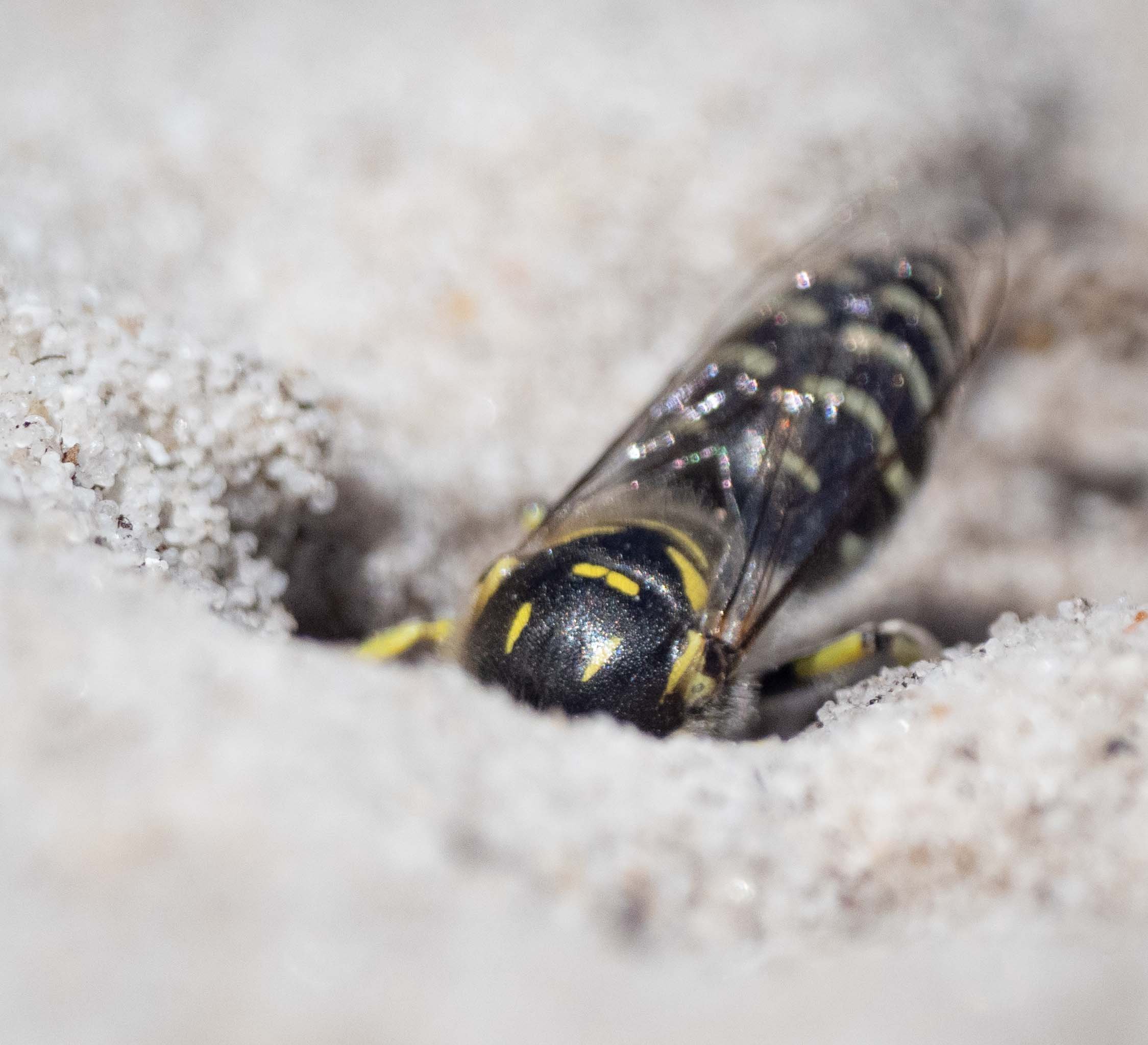
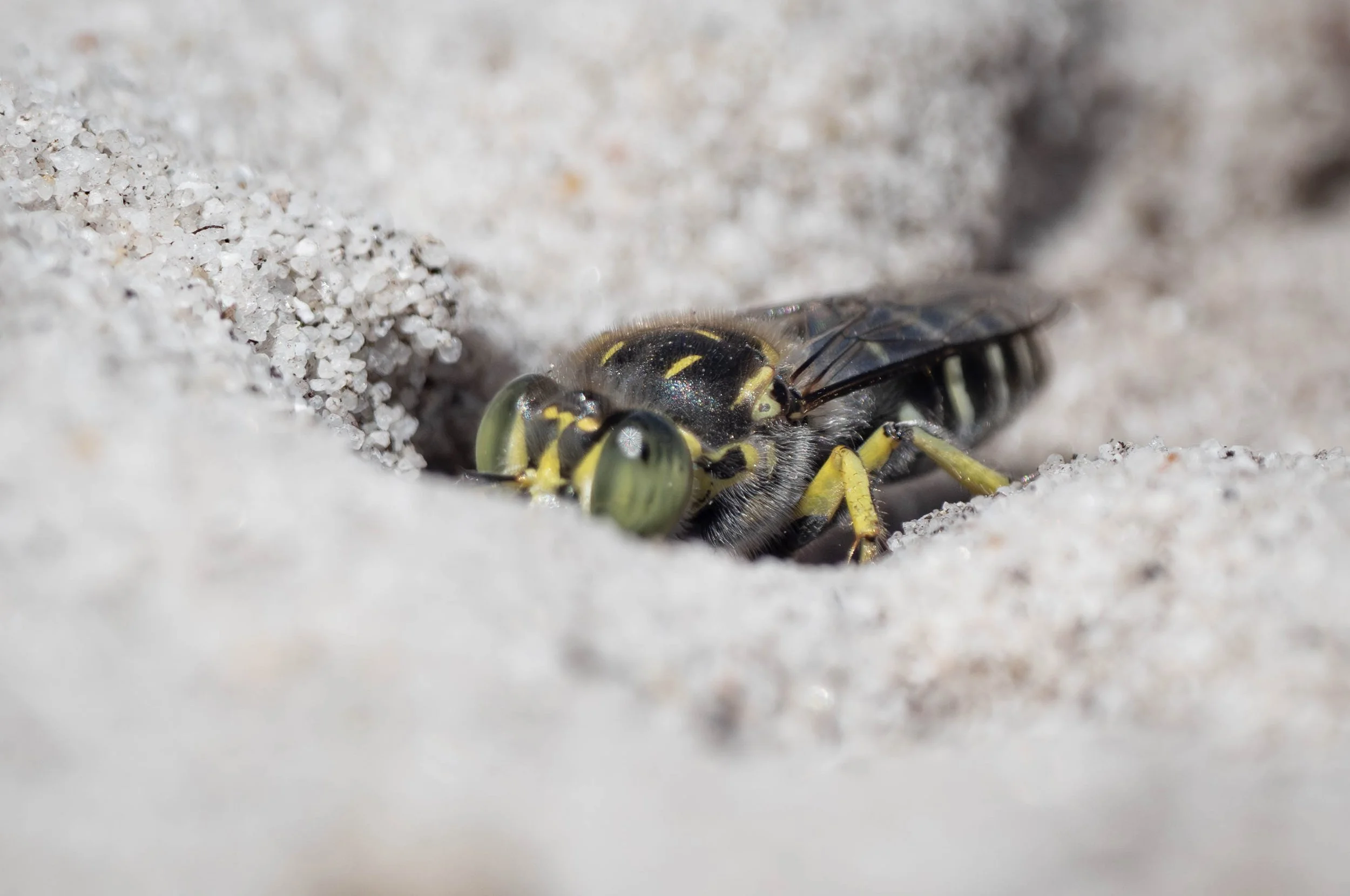
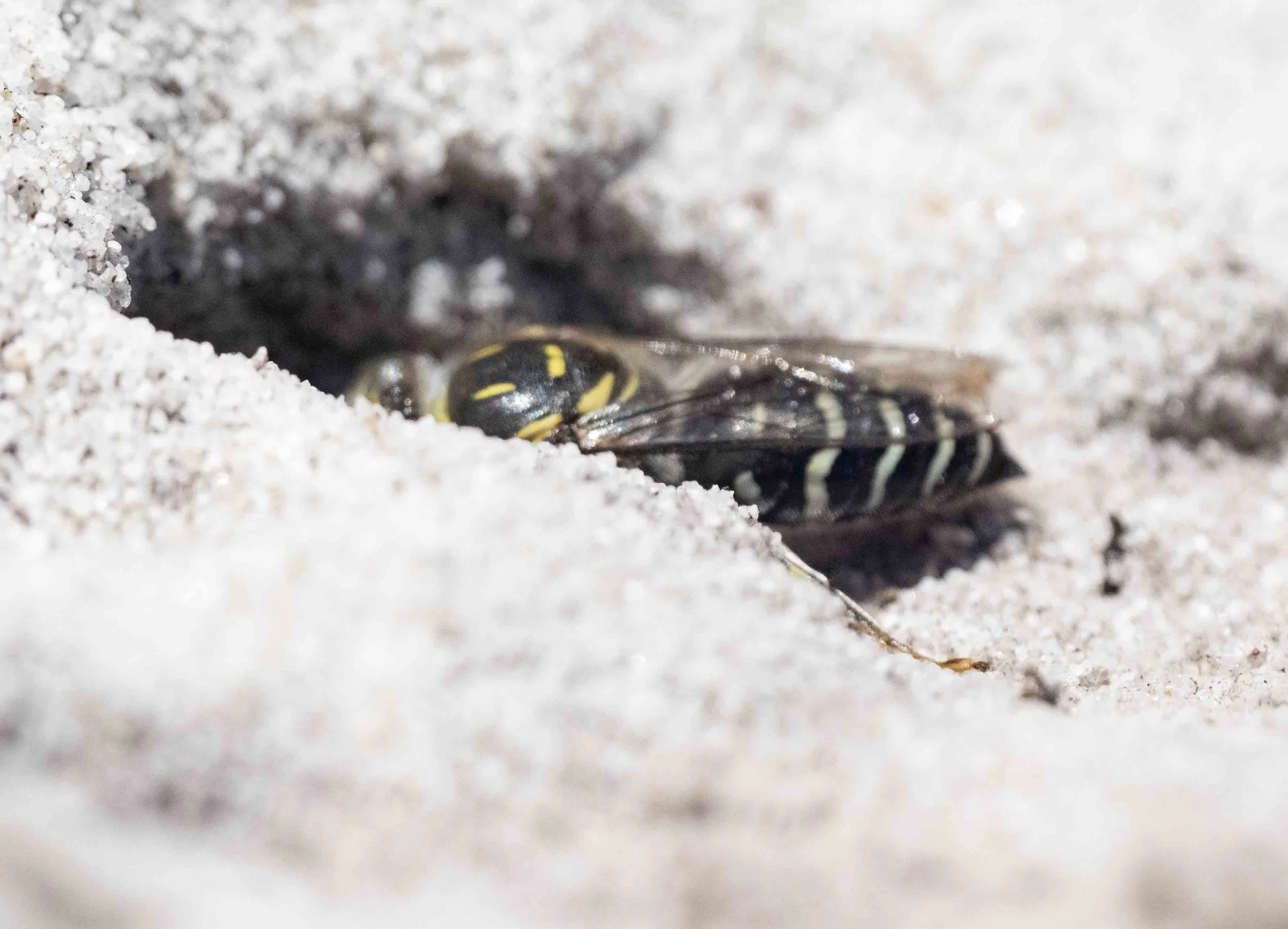
I’m comfortable calling 05 B. littoralis, but this is based in large part upon the proximity of others such as 01 (and, of course, 2511M).
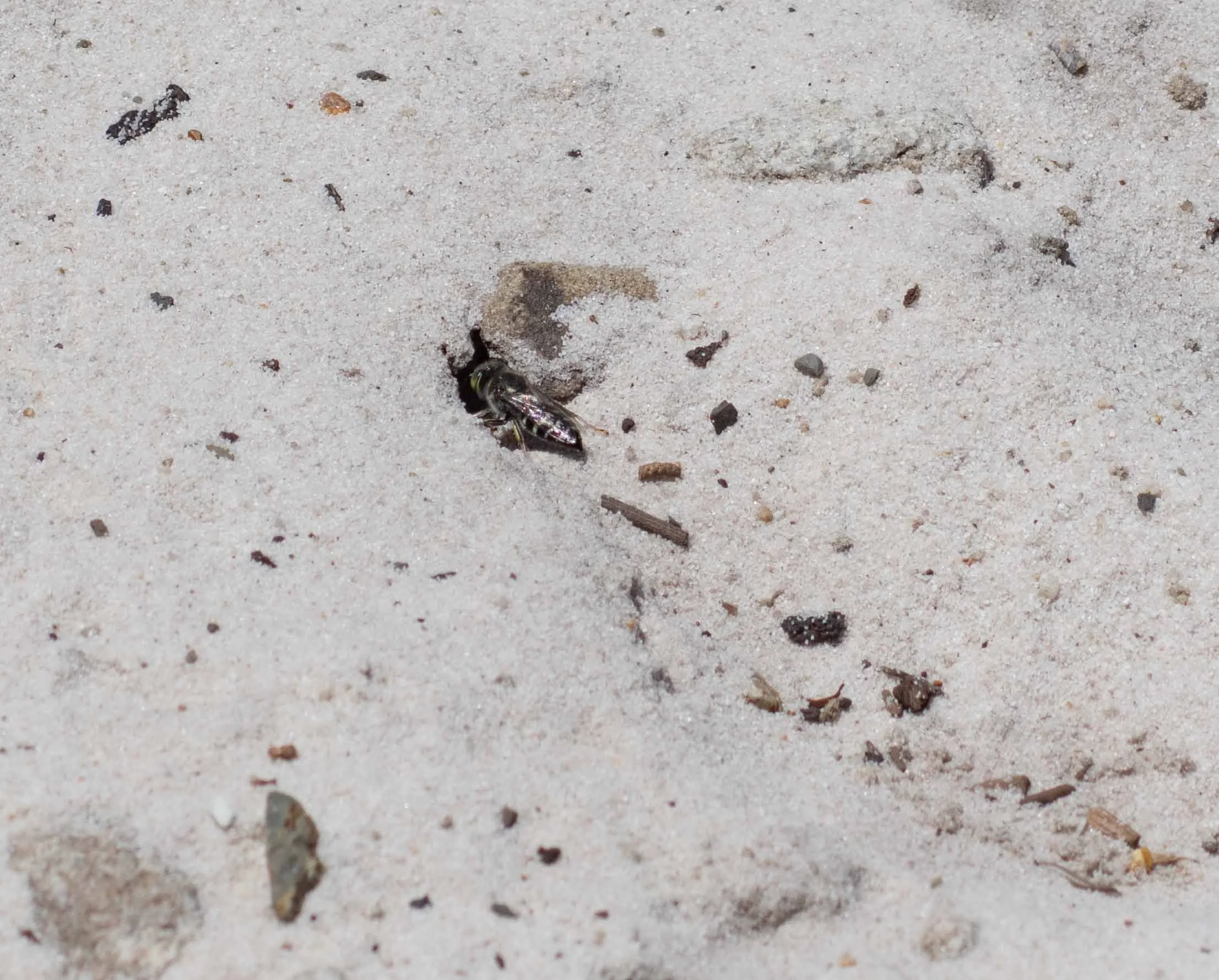
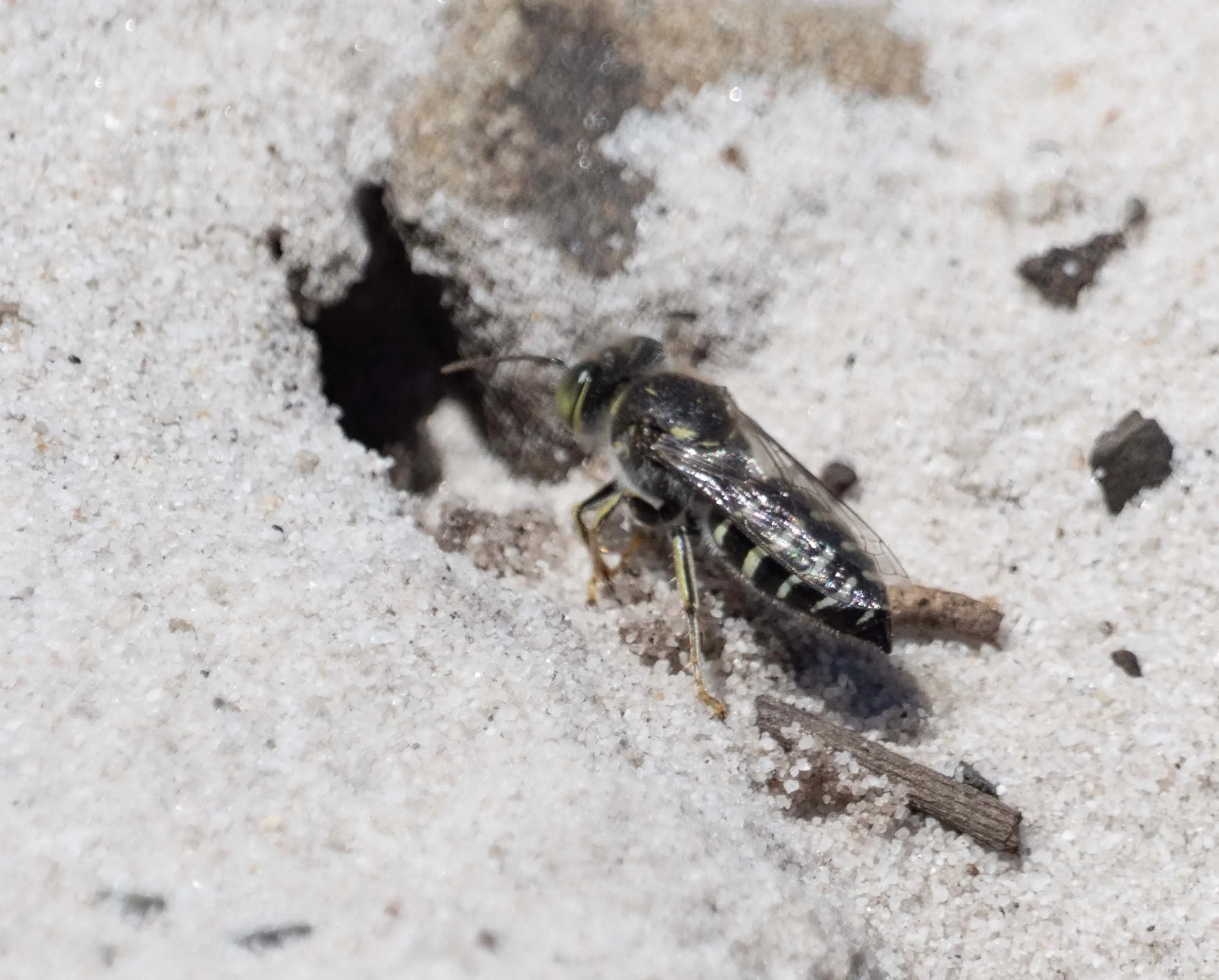
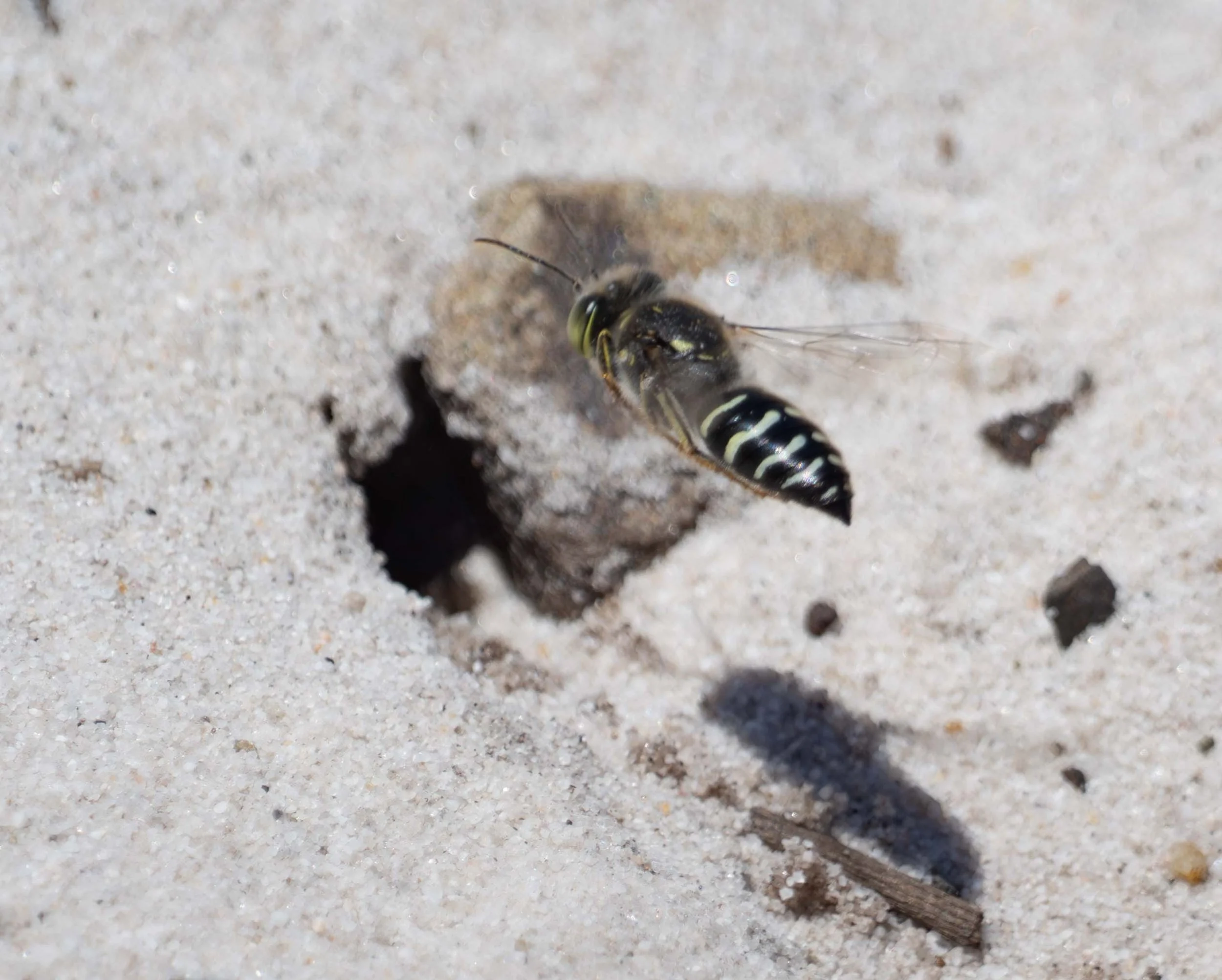
If I had just this one set of images of 05, in isolation, I would hesitate. True … the colour pattern and high vertex are consistent with B. littoralis, and the vertex certainly does look wide. But some doubt would remain.
For example, B. musca is similar in vertex height and some individuals have metasomal patterning this extensive (although most do not). The clypeus shape and colour would differentiate the two. Or B. lamellata, also with very similar metasomal markings and a largely black mesosoma. A count of pecten spines would help, but it is the clypeus colour that would be definitive. And these are not the only possibilities, at least ‘on paper’.
What about the males?
There were a few males patrolling the nesting area alongside 2511M and neighbouring females. I didn’t collect a male, and managed only very limited photos. And it pays to be cautious about inferring identity based on association alone.
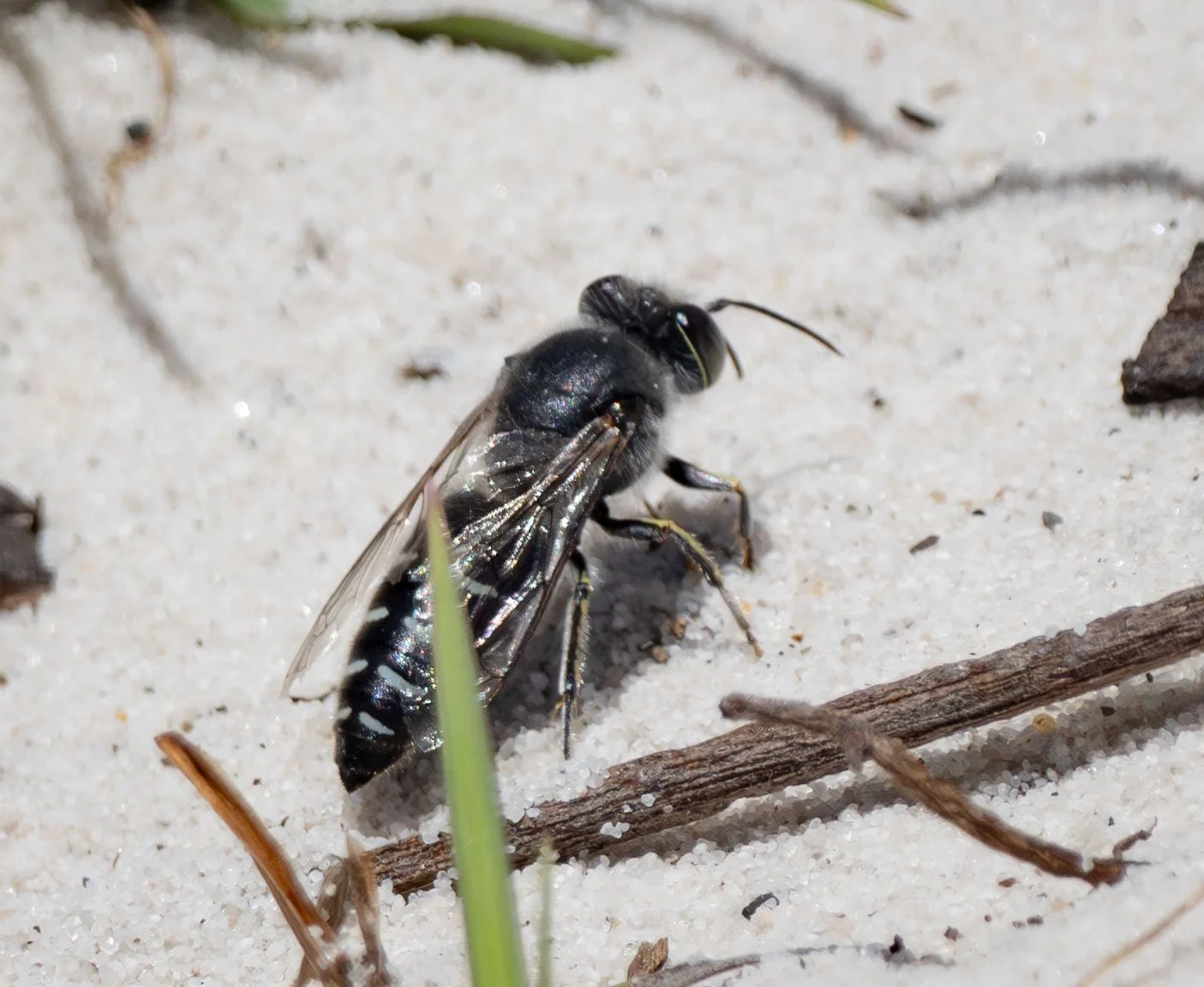
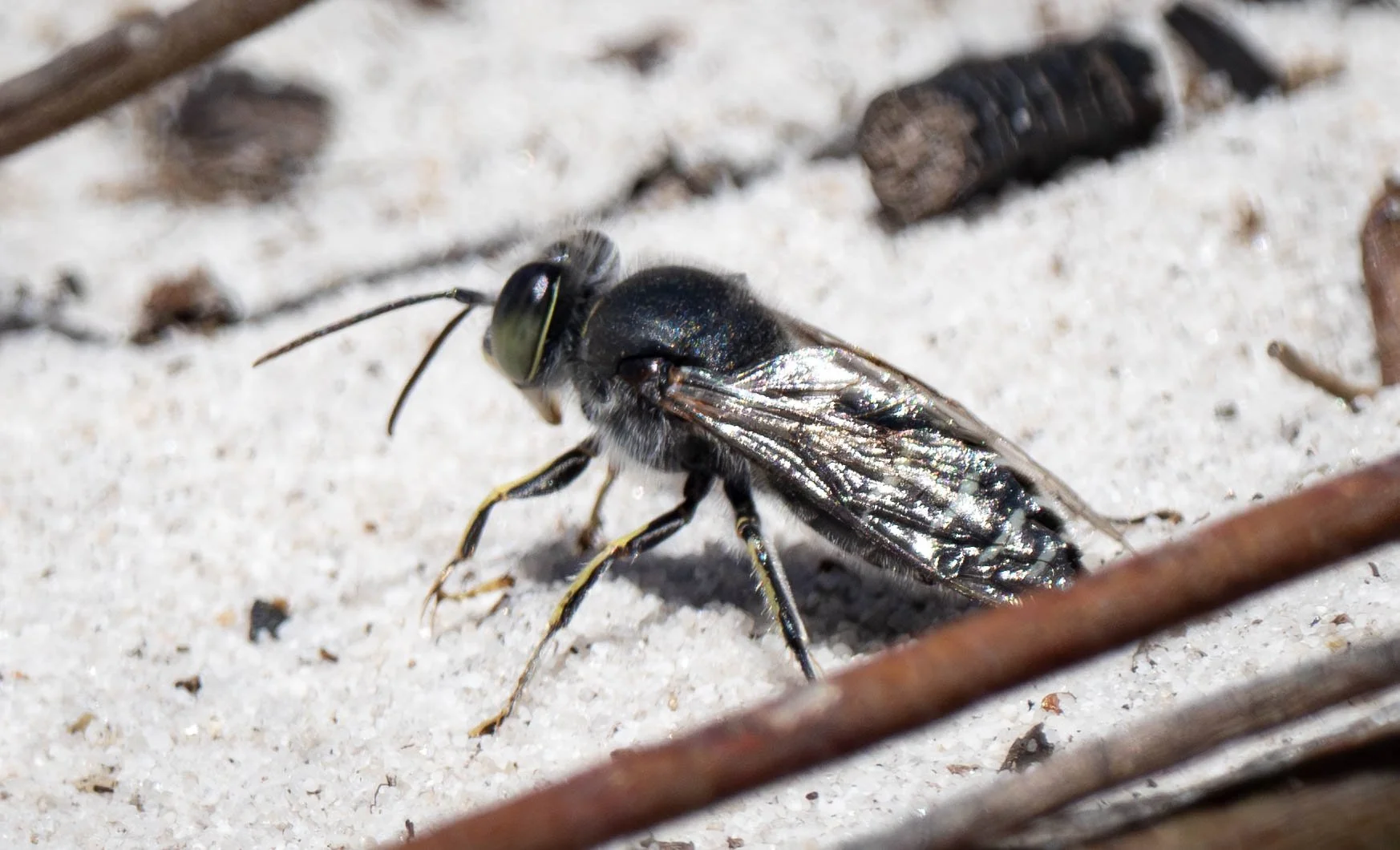
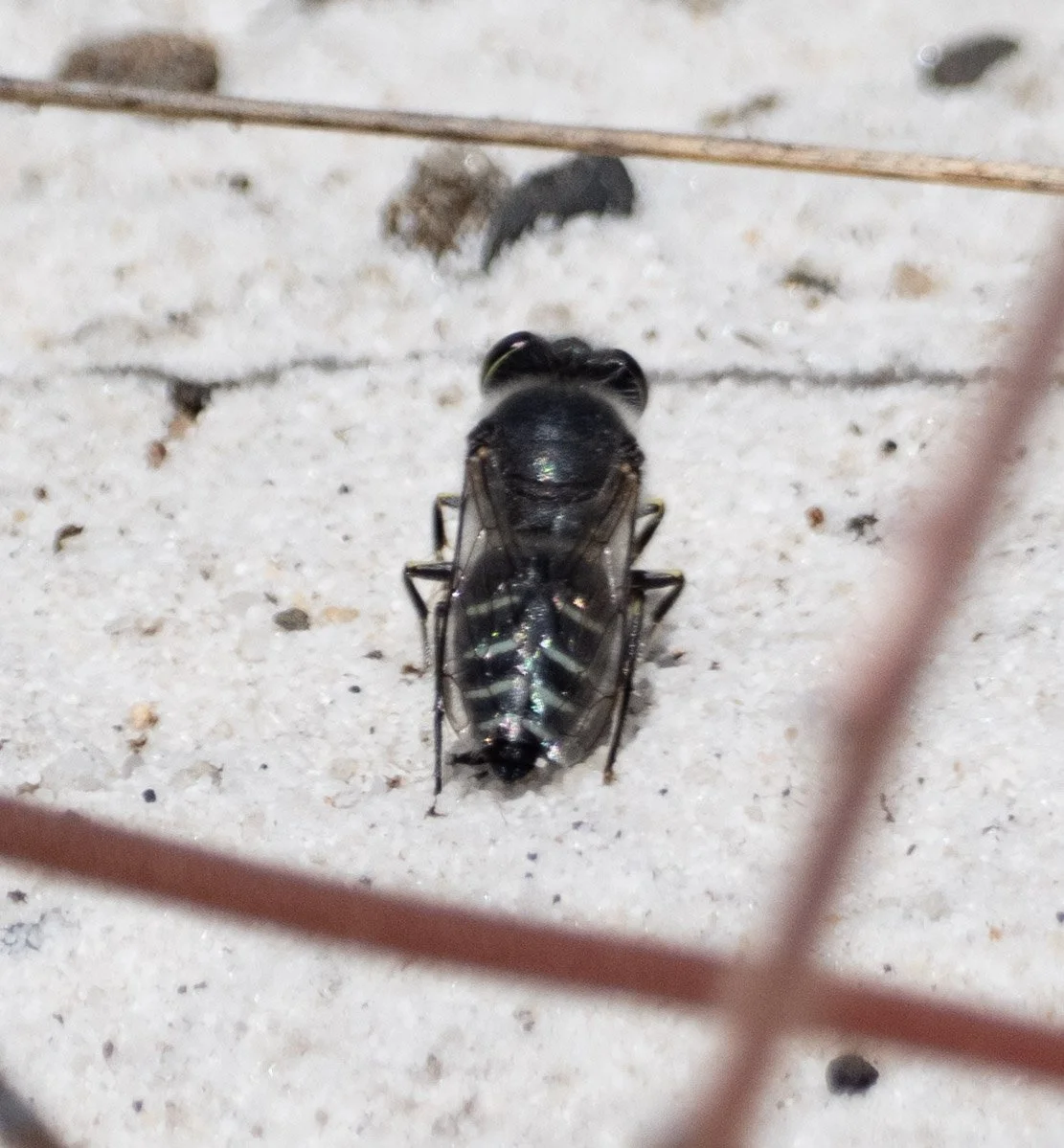
The males of several different Bembix species are coloured like B. littoralis: generally dark, with narrow and broken white metasomal bands. These include such common east coast species as B. lamellata, B. musca, B. trepida, and B. furcata. We can safely exclude B. variabilis, as the males of that species have much broader metasomal bands.
And it is not unusual for different species of Bembix to nest alongside one another. For example, nesting associations between B. littoralis and B. variabilis are known from coastal locations, and B. musca has been recorded nesting not far from B. littoralis aggregations (albeit with B. musca preferring firmer soil).
The table below compares key features for several candidate species. Note that this is not exhaustive, and in the absence of other evidence (such as location or association with females) I would always refer to the full species table.
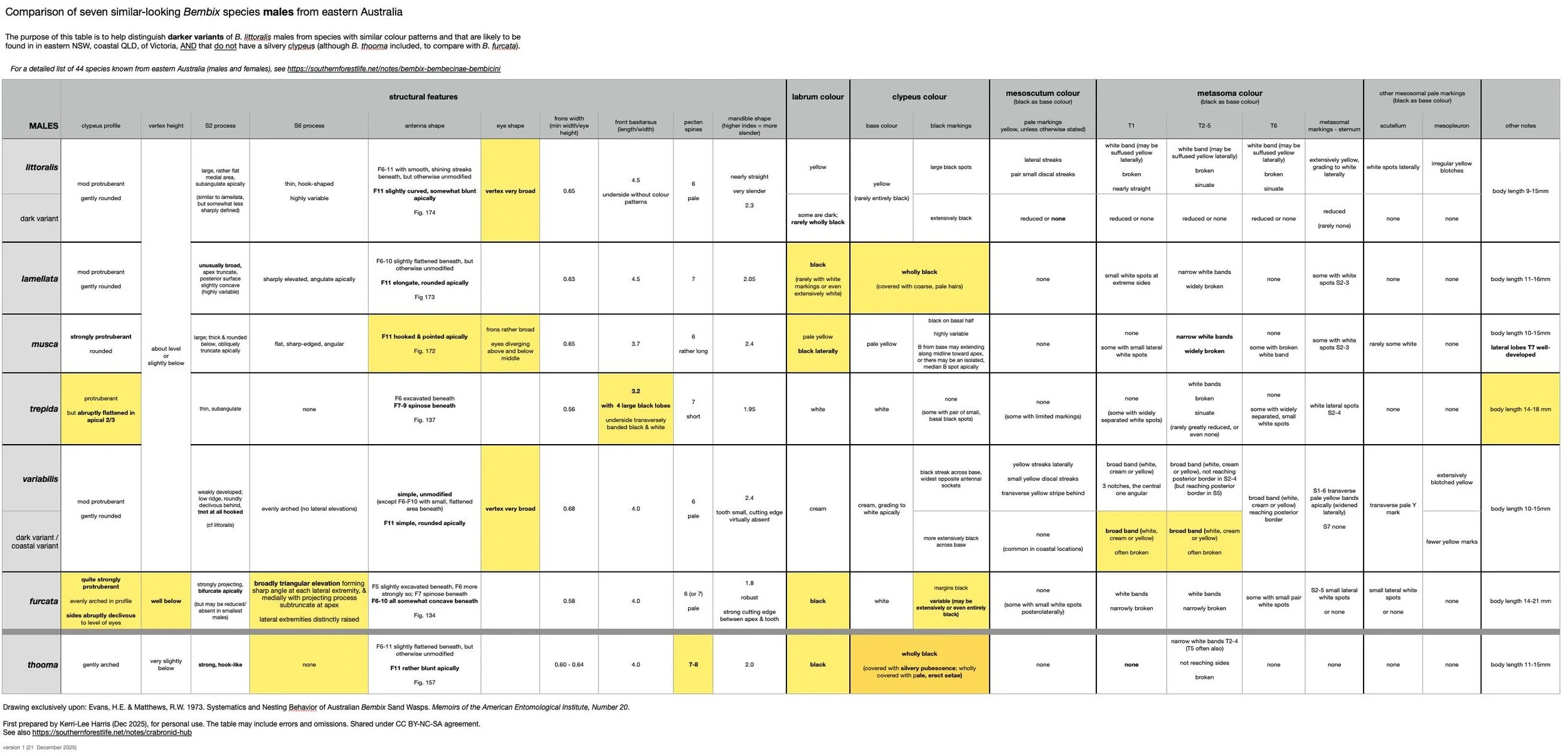
click image to open/download latest version as pdf (<200kb)
In their key, Evans and Matthews (1973) separate B. variabilis and B. littoralis on the basis of the structure of S6 … a character often of limited use in field photos. However, the banding pattern on the metasoma should suffice, as these are much broader in B. variabilis. The shape of the apical antennomere helps distinguish B. musca males from both B. littoralis and B. lamellata. At the final step of the key, clypeus colour again becomes relevant.
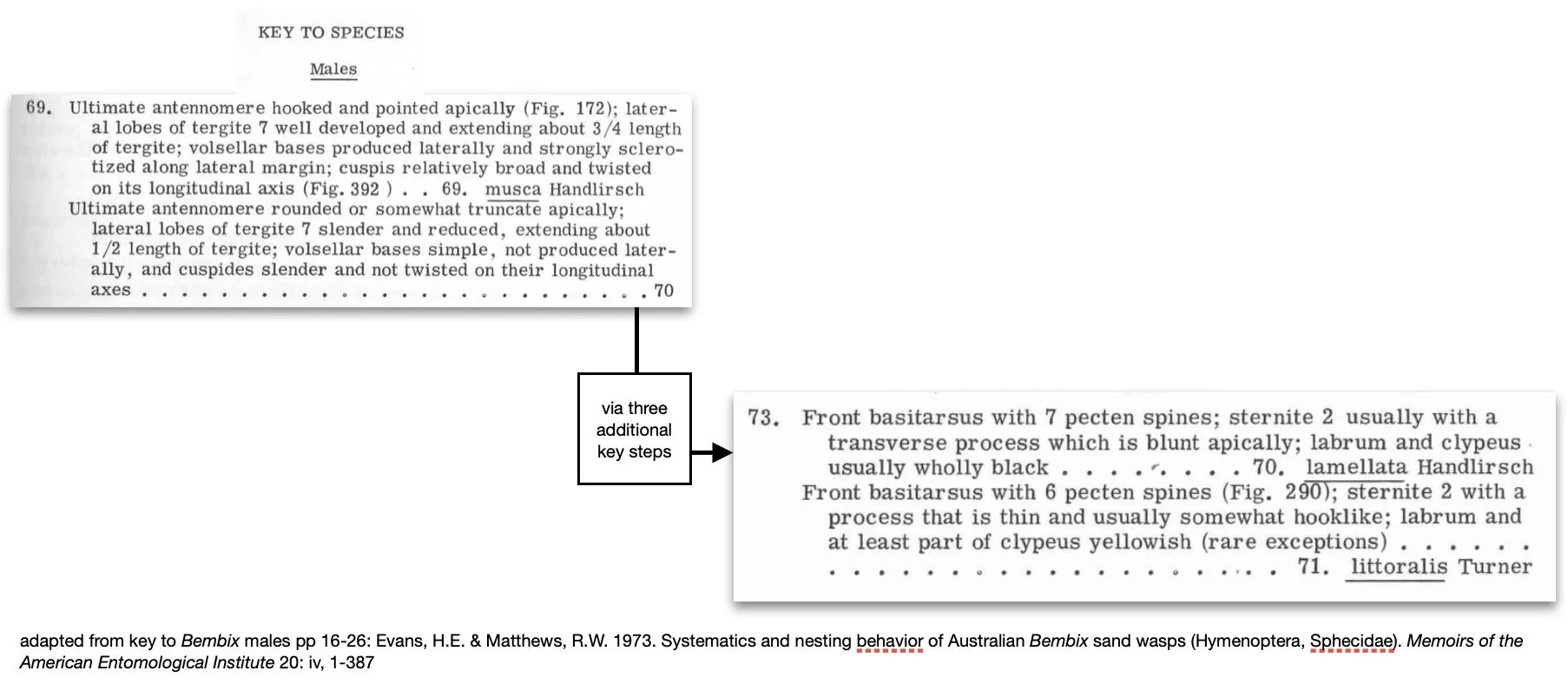
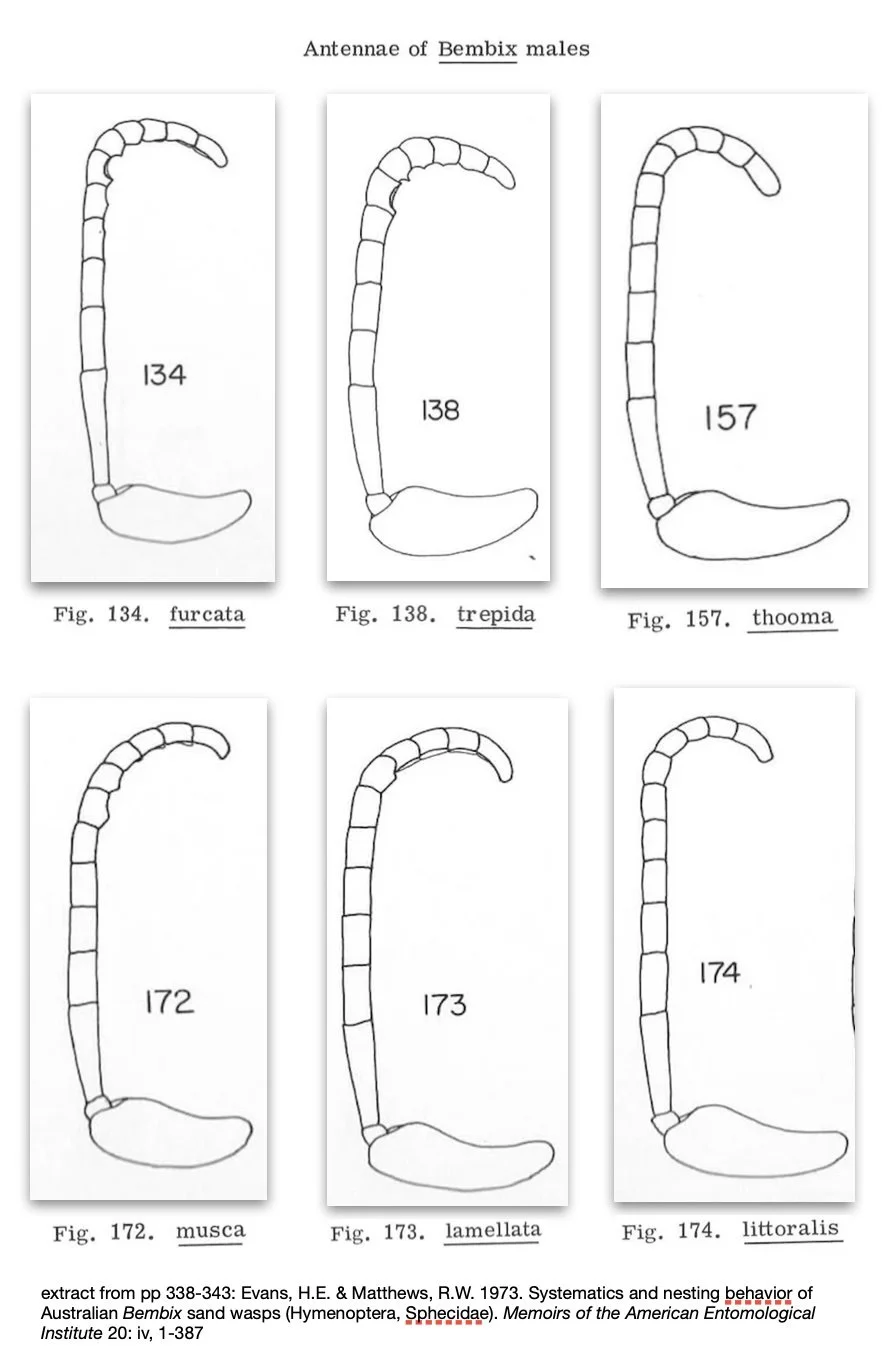
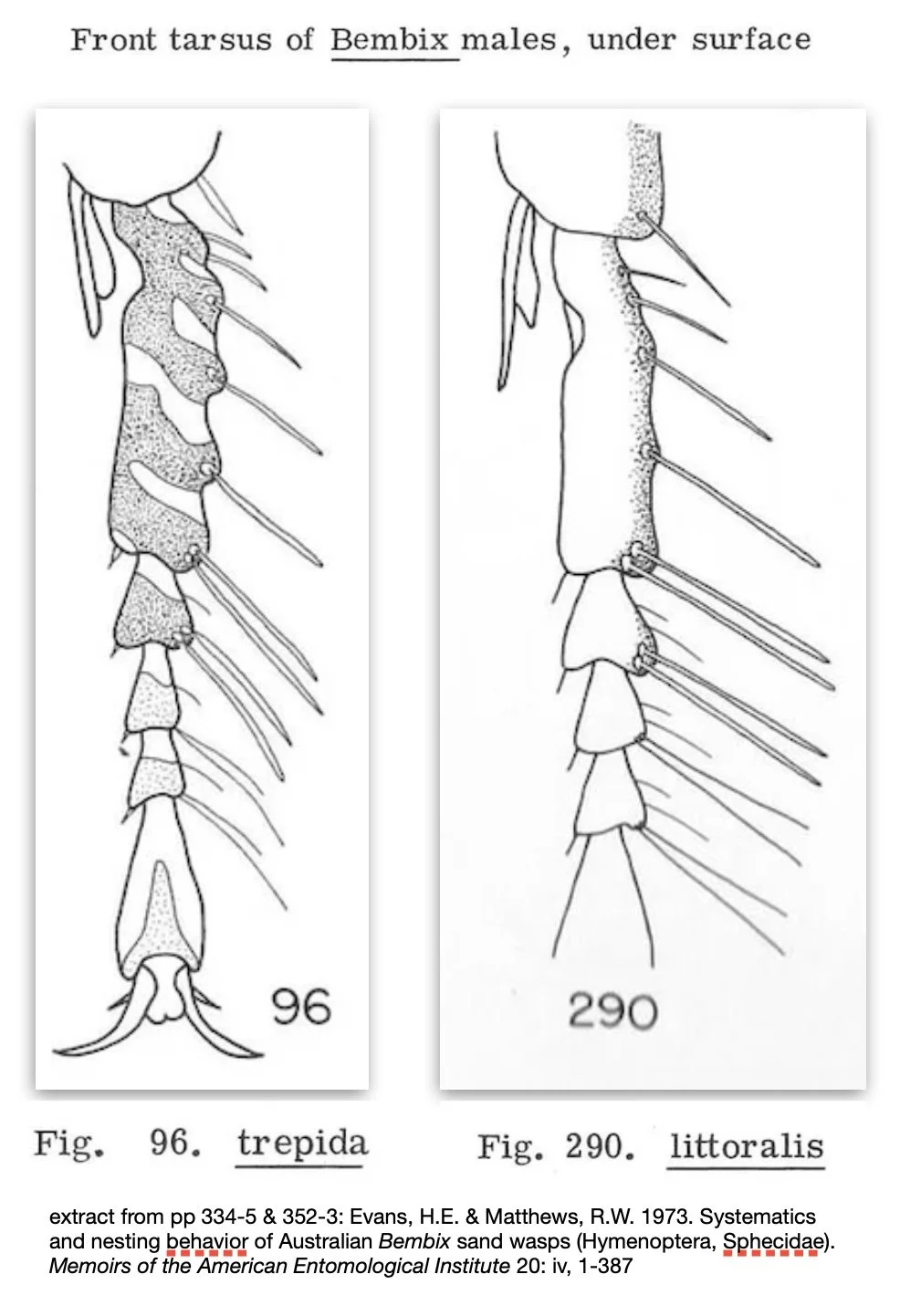
So despite the limited aspects we captured in our photos, I am comfortable calling Wasp 03 to species – B. littoralis
2511M: additional aspects
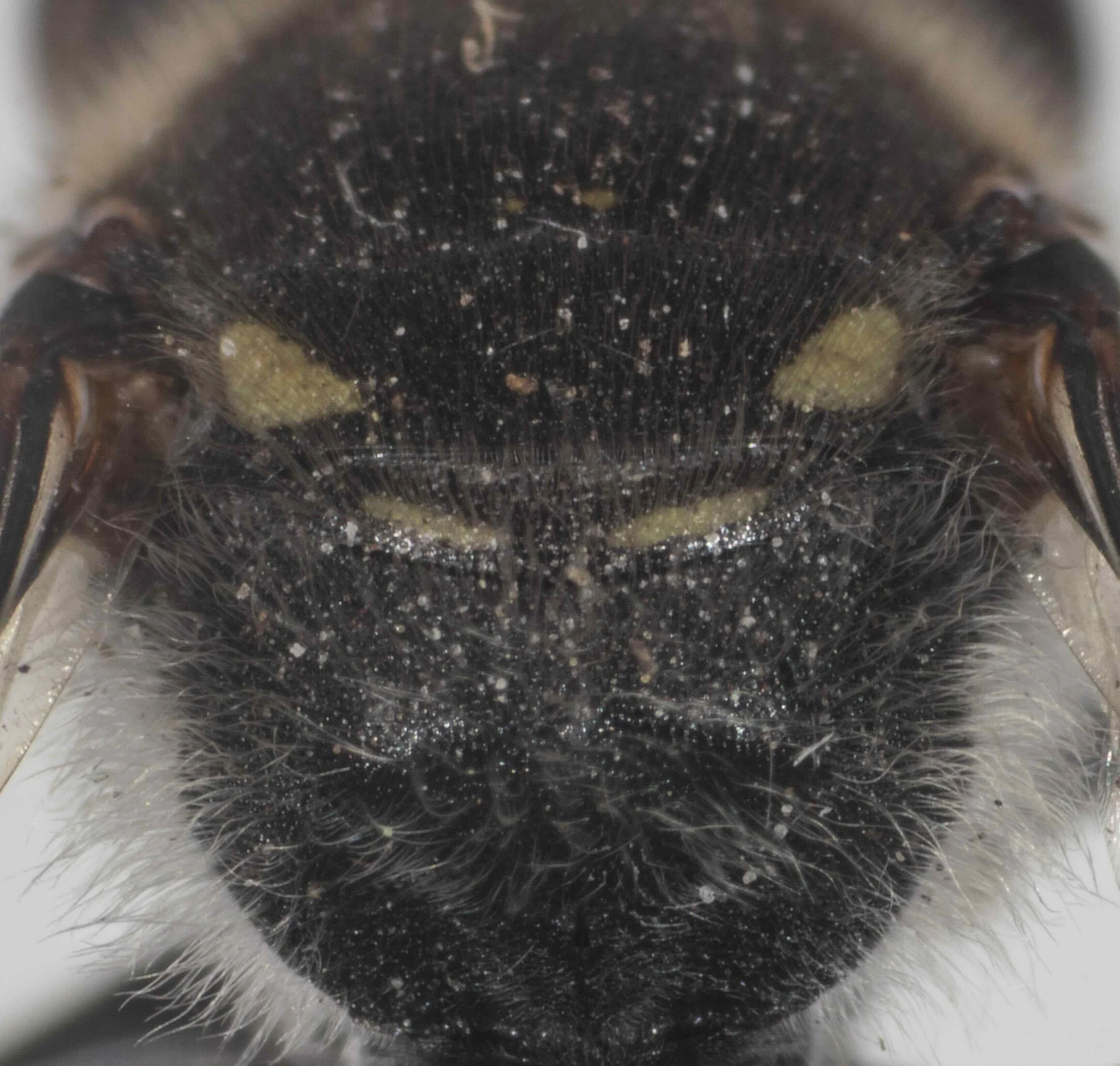
An advantage of having a specimen at hand is that you can cross-check against the full description of your candidate species. So although I’m confident that 2511M is B. littoralis, the images below complete the picture. Note that 2511M is a recognised ‘dark variant’, so I expect many pale maculations included in the type description to be missing.
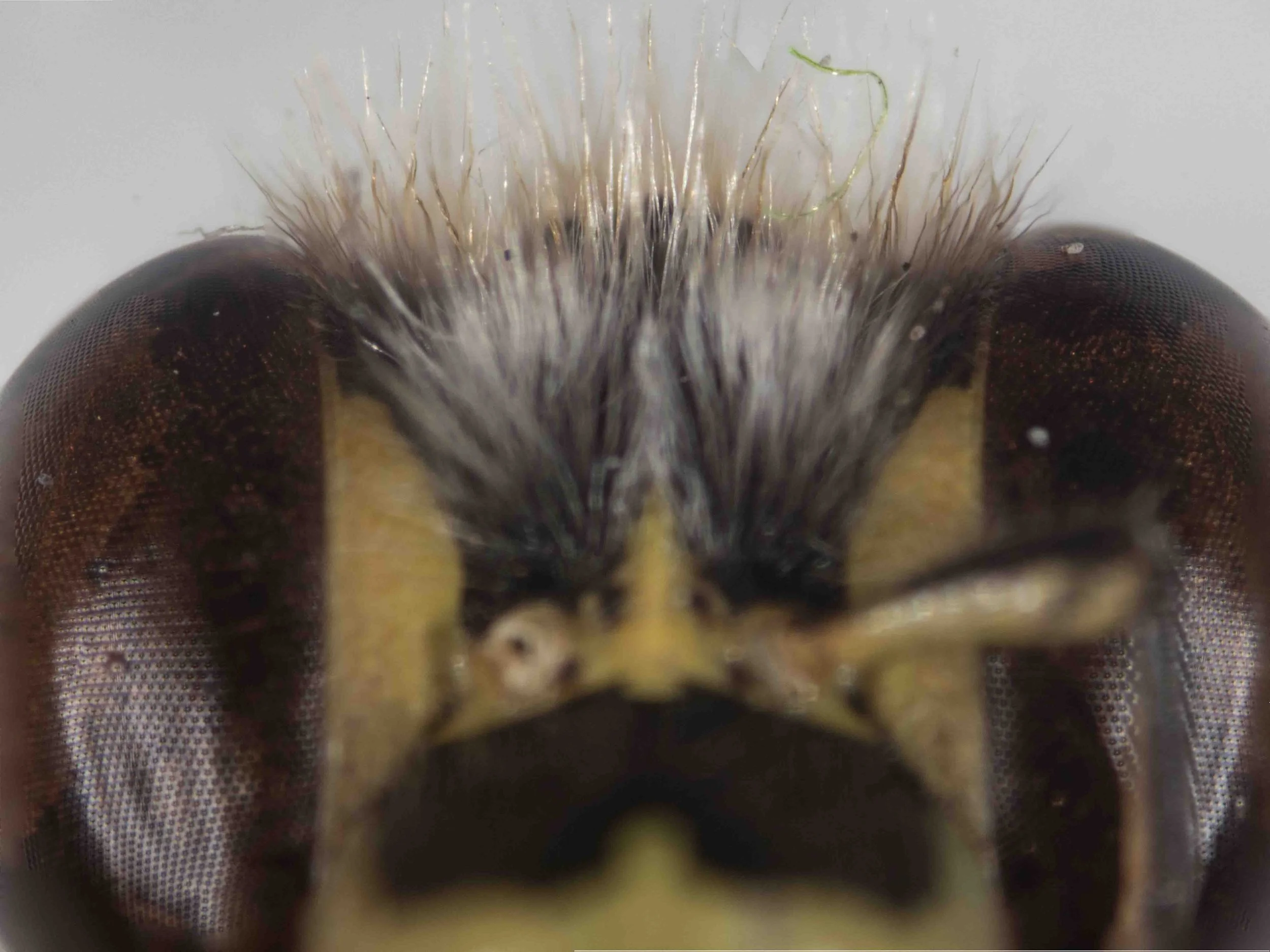
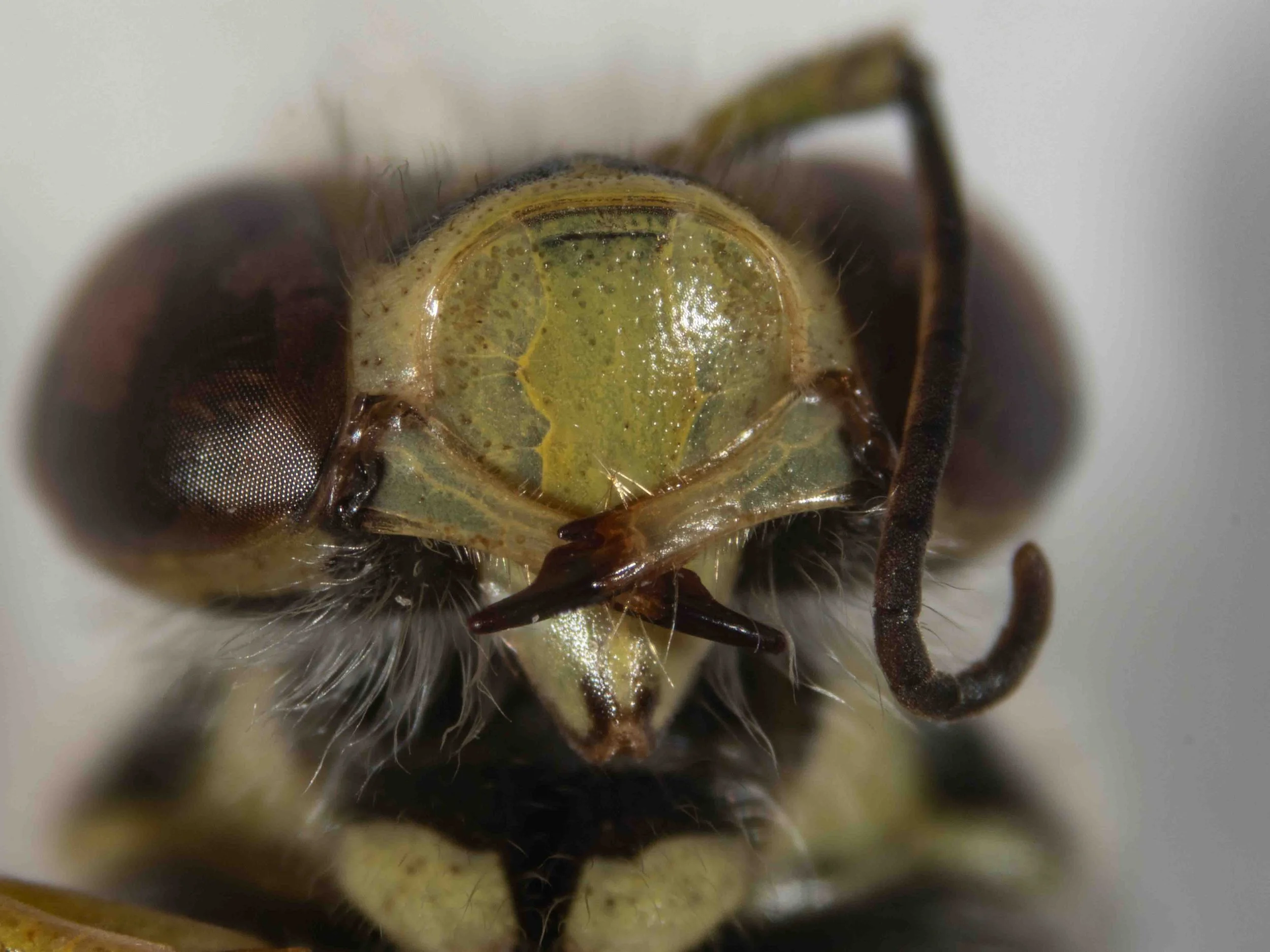
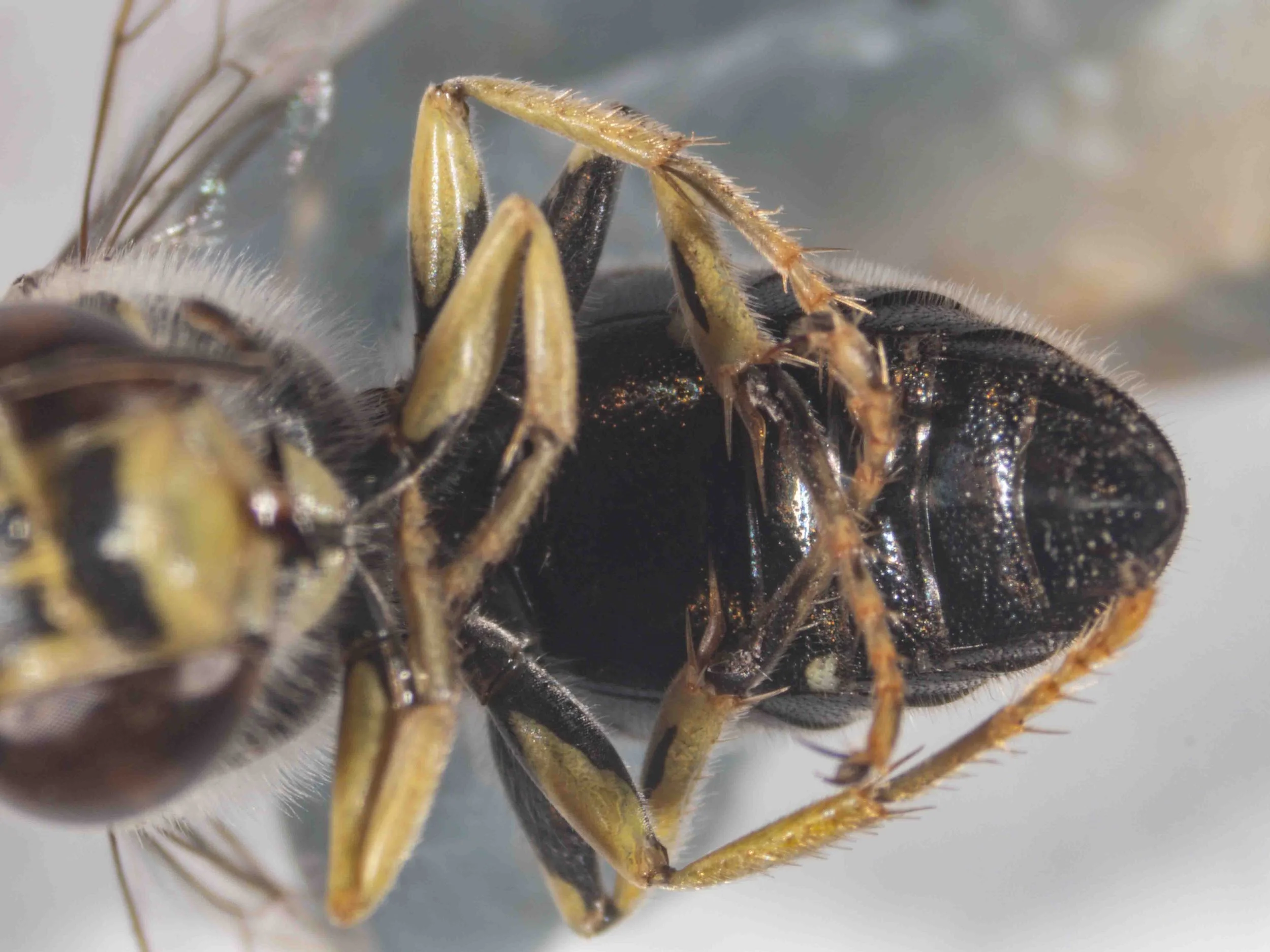
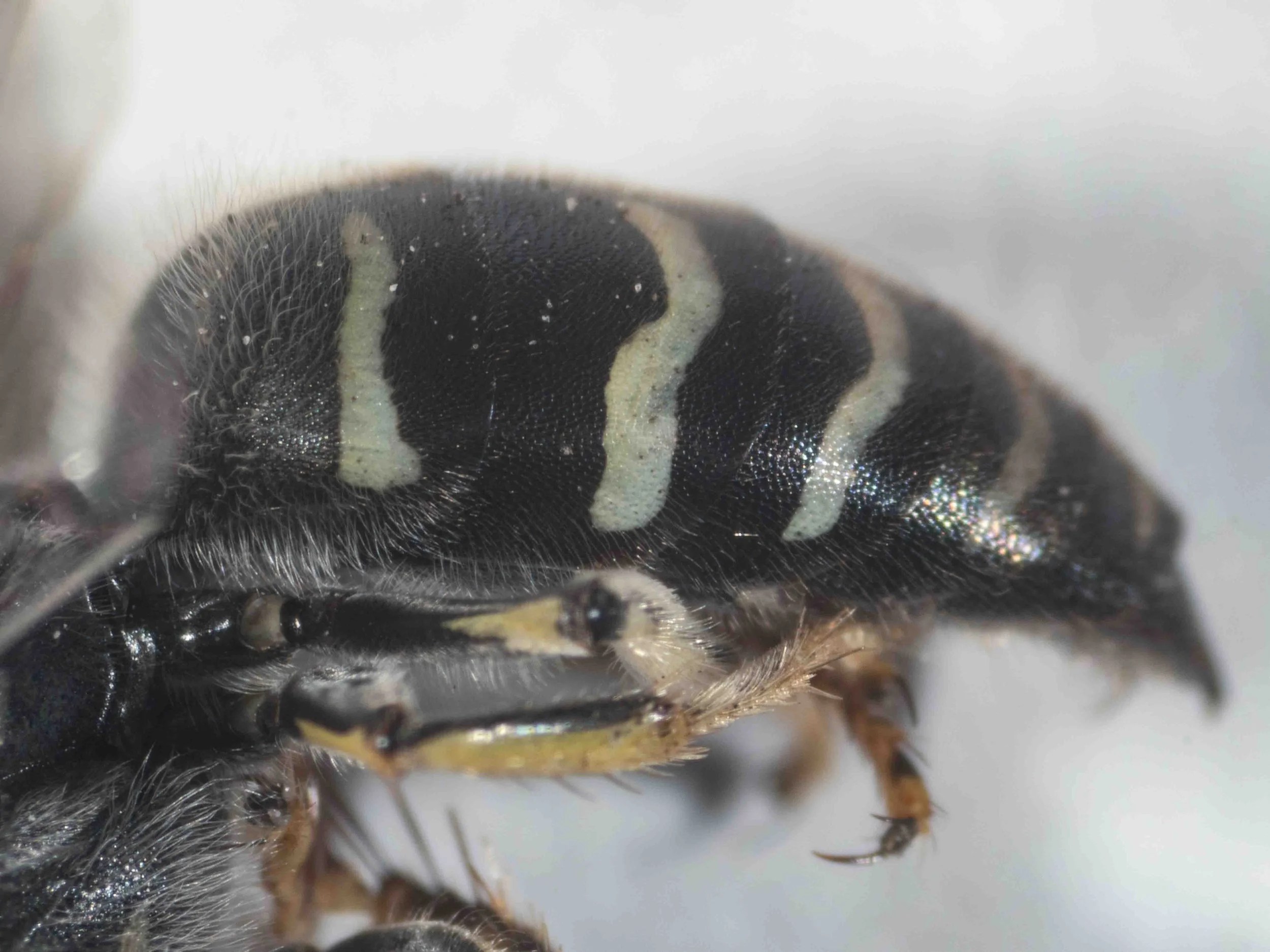
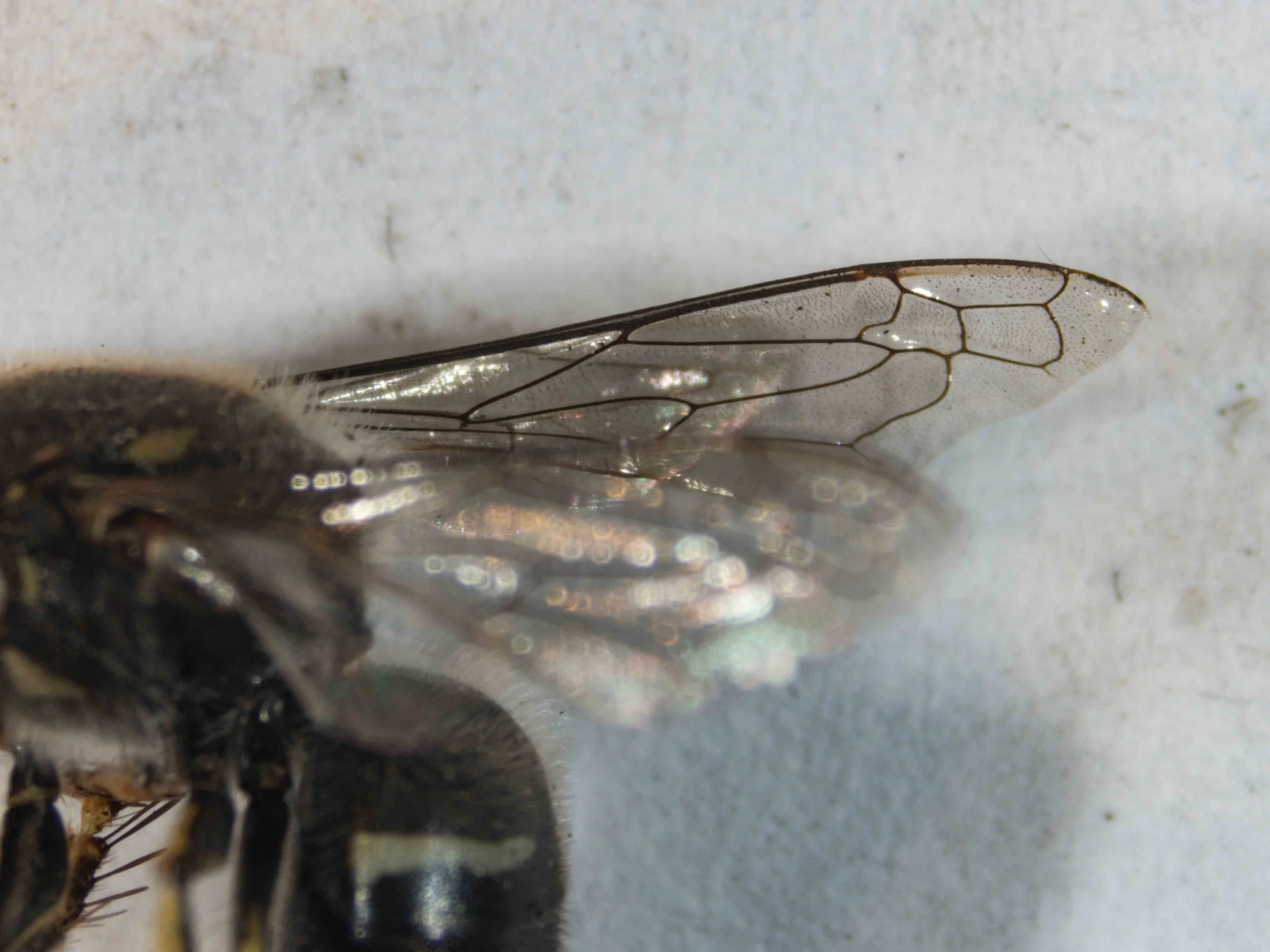
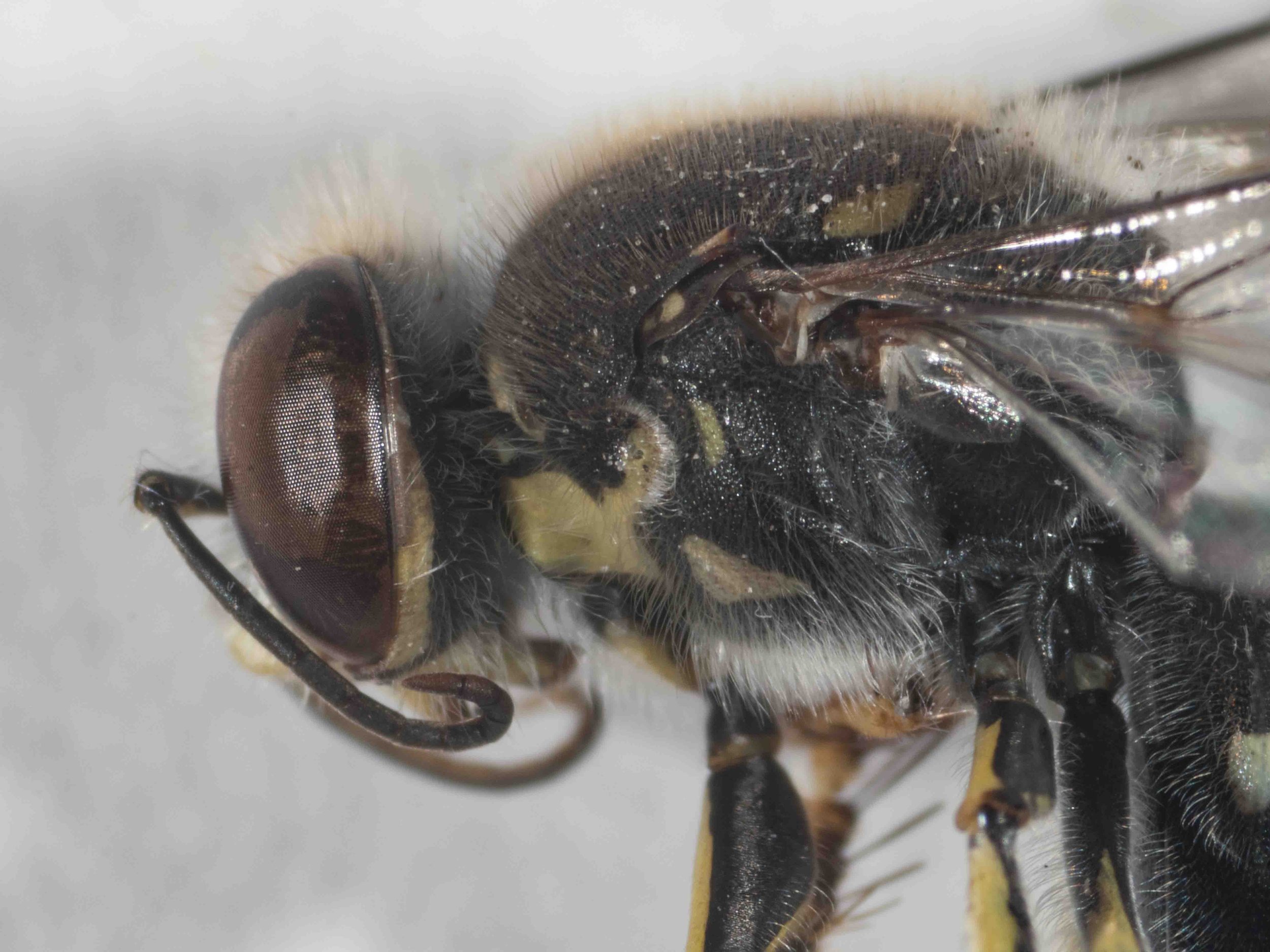
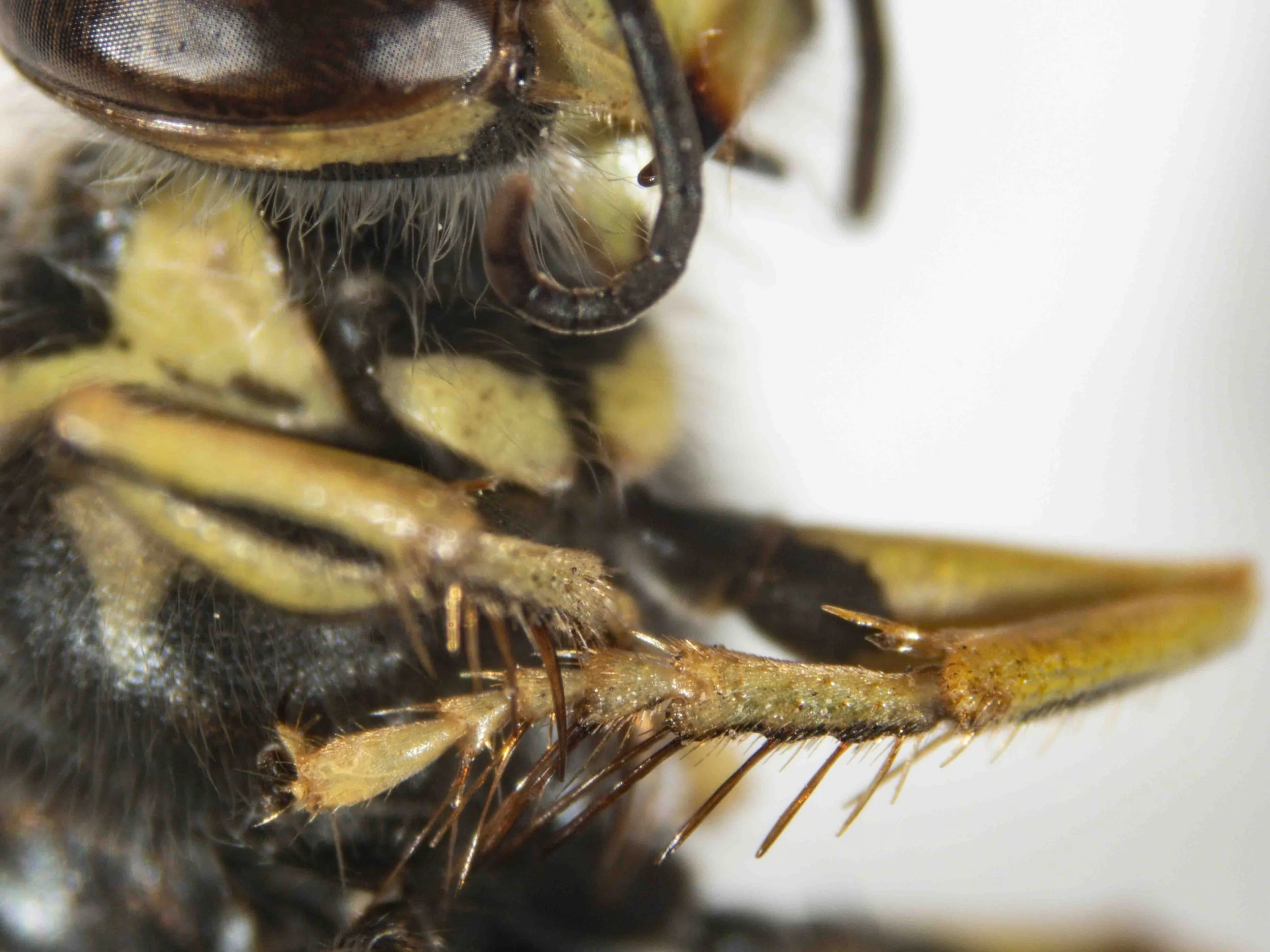
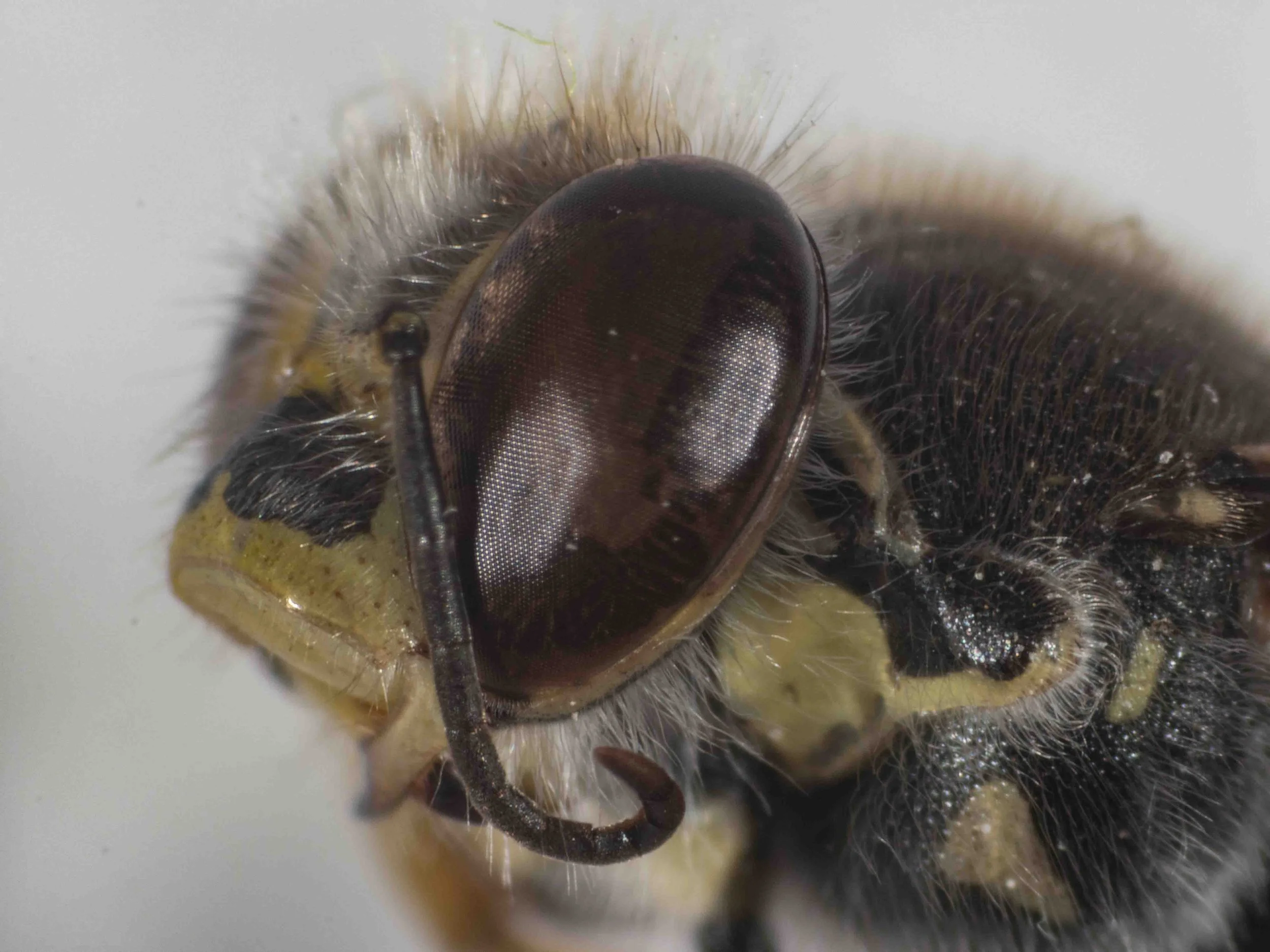
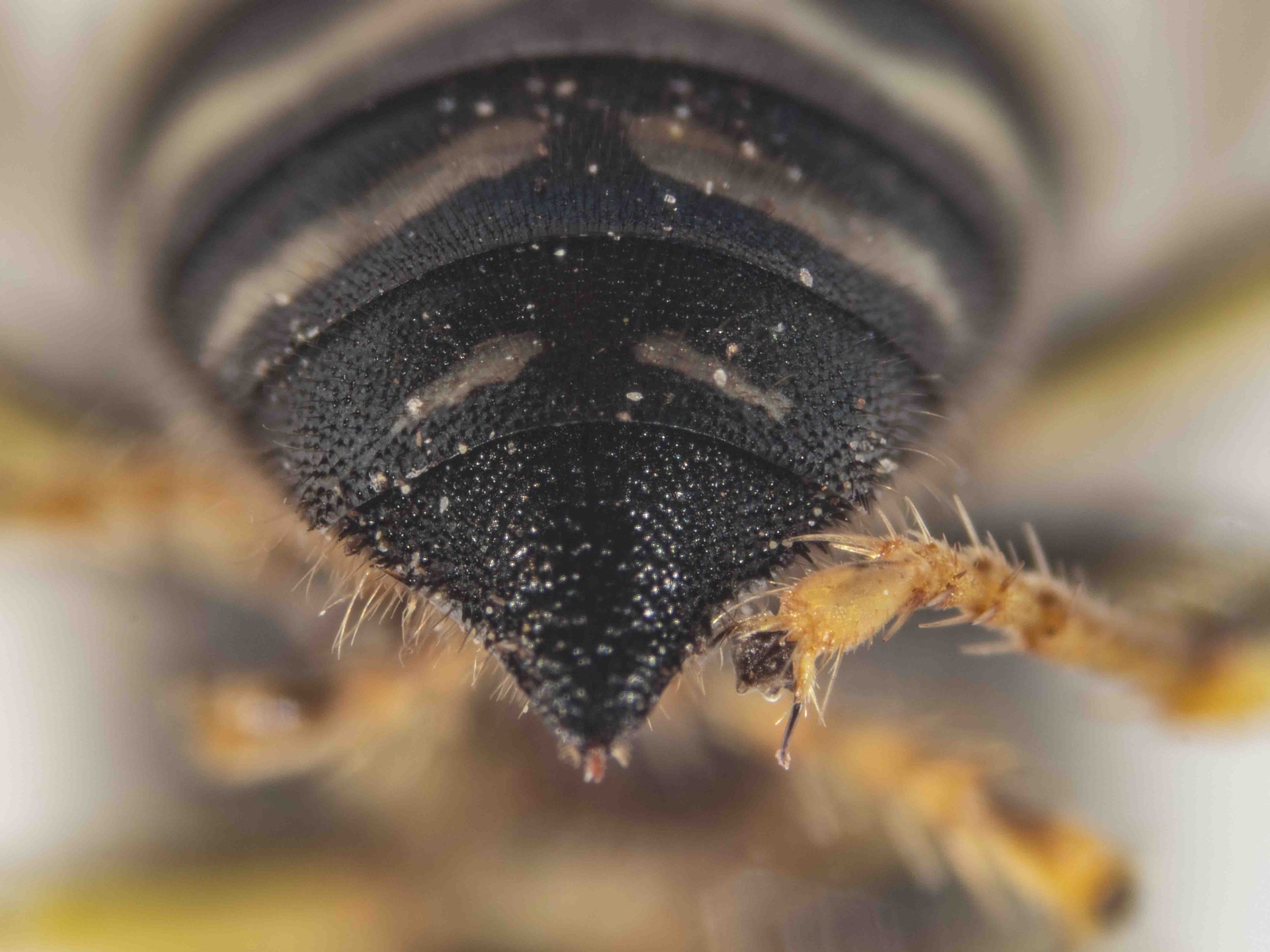
Bits & pieces
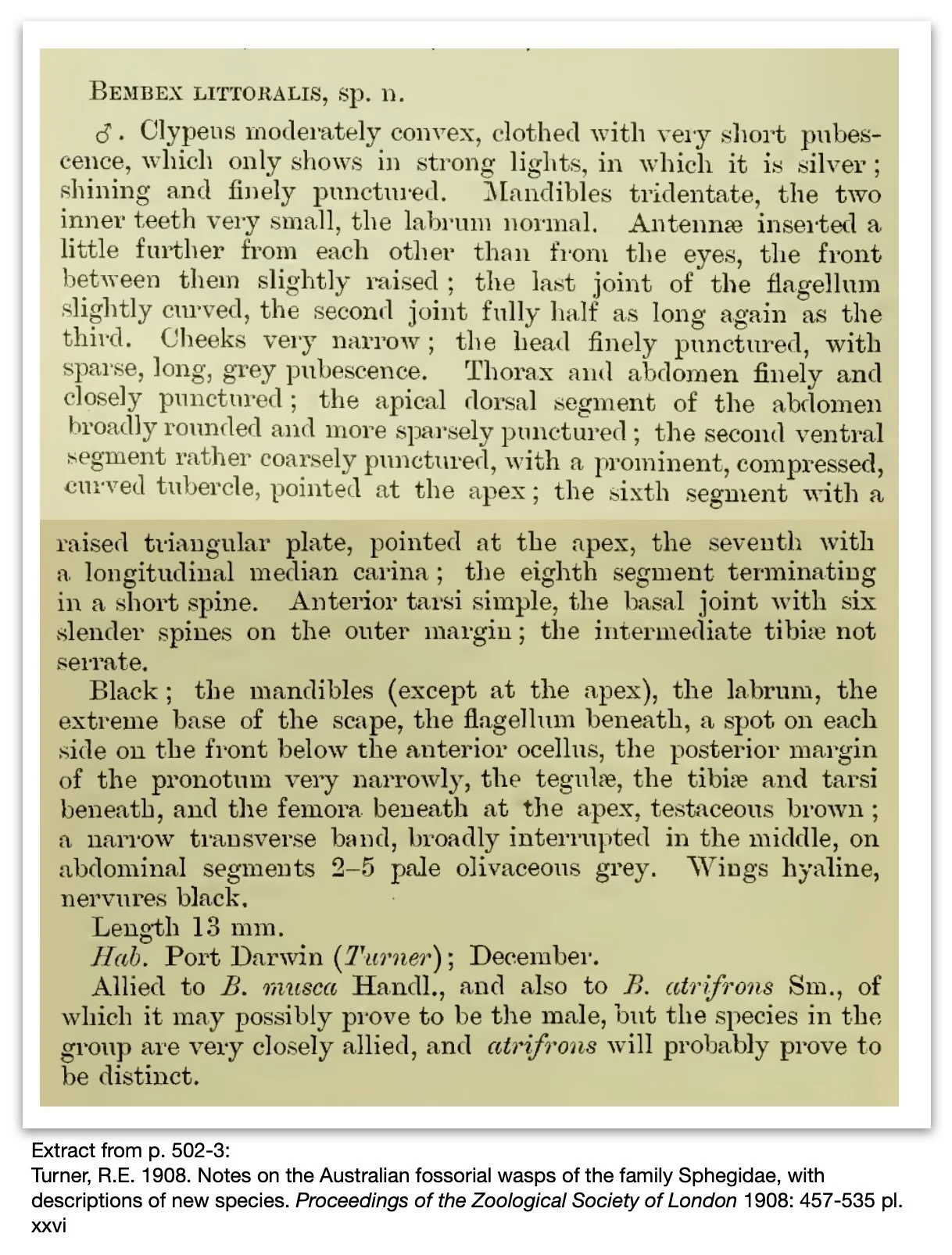
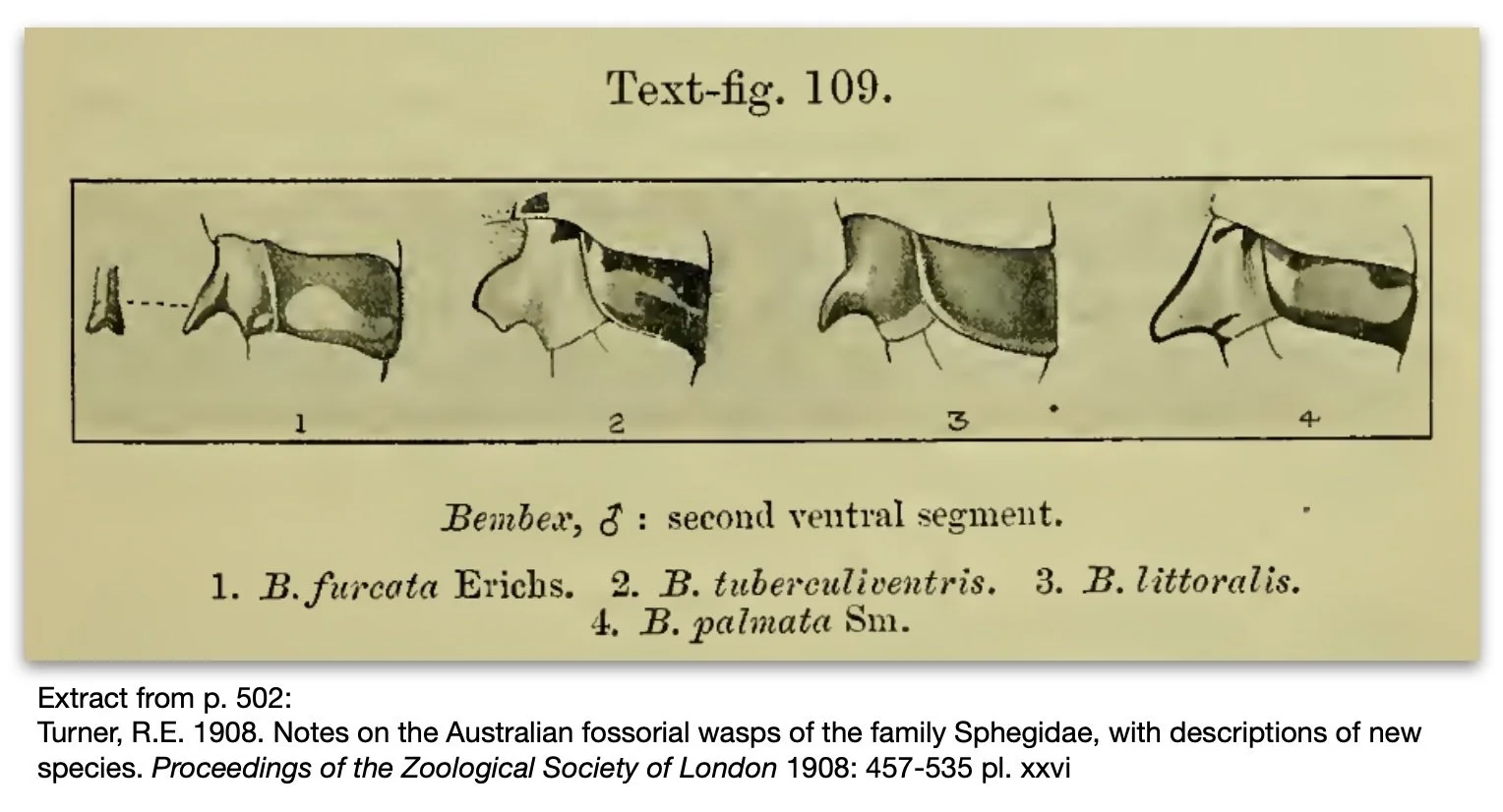
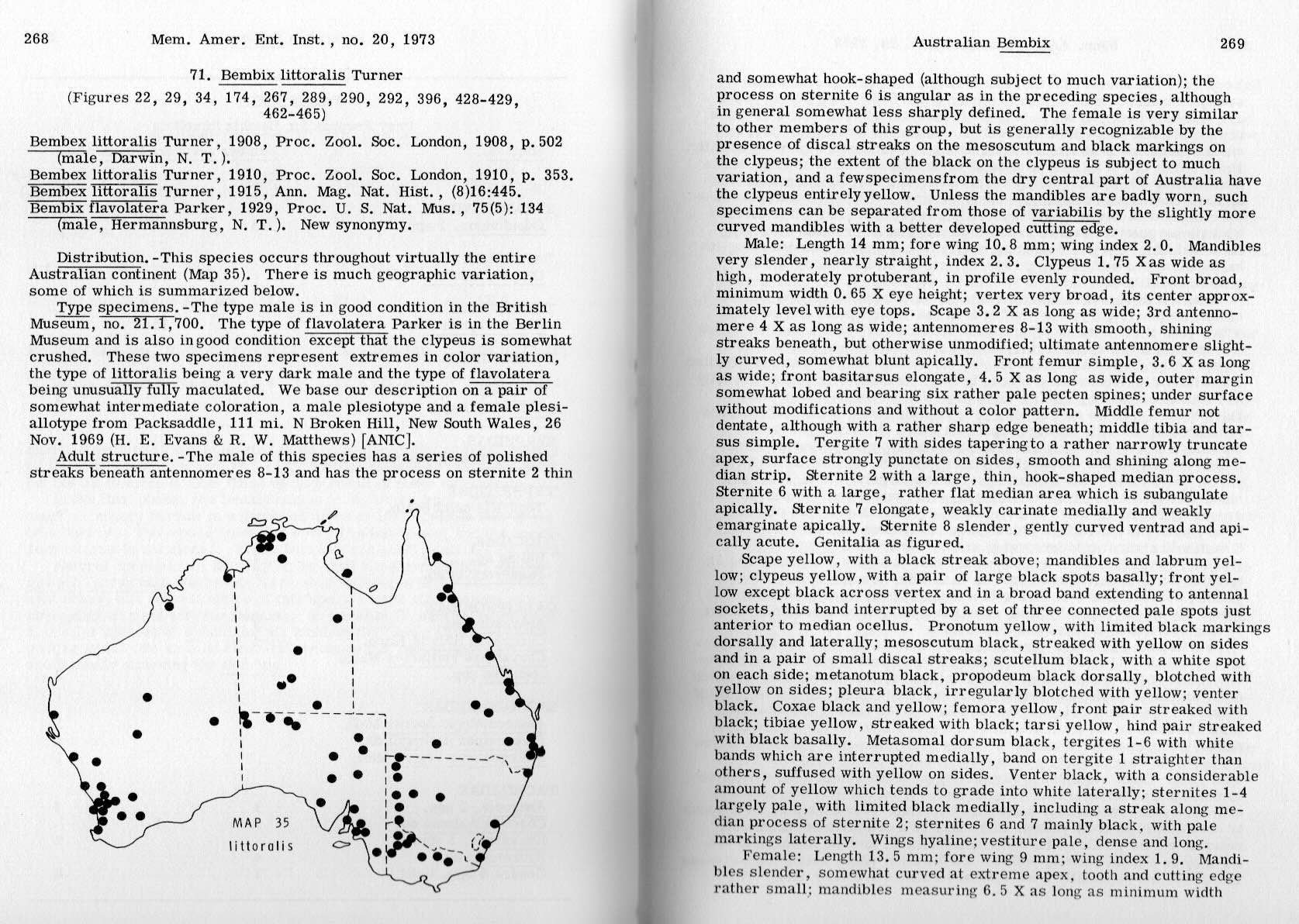
Just a few extracts from the relevant literature. For the complete key to species and related figures, see the main Bembix notes page
References
Evans, H.E. & Matthews, R.W. 1973. Systematics and nesting behavior of Australian Bembix sand wasps (Hymenoptera, Sphecidae). Memoirs of the American Entomological Institute 20: iv, 1-387
Turner, R.E. 1908. Notes on the Australian fossorial wasps of the family Sphegidae, with descriptions of new species. Proceedings of the Zoological Society of London 1908: 457-535 pl. xxvi
This is a workbook page … a part of our website where we record the observations and references used in making species identifications. The notes will not necessarily be complete. They are a record for our own use, but we are happy to share this information with others.