
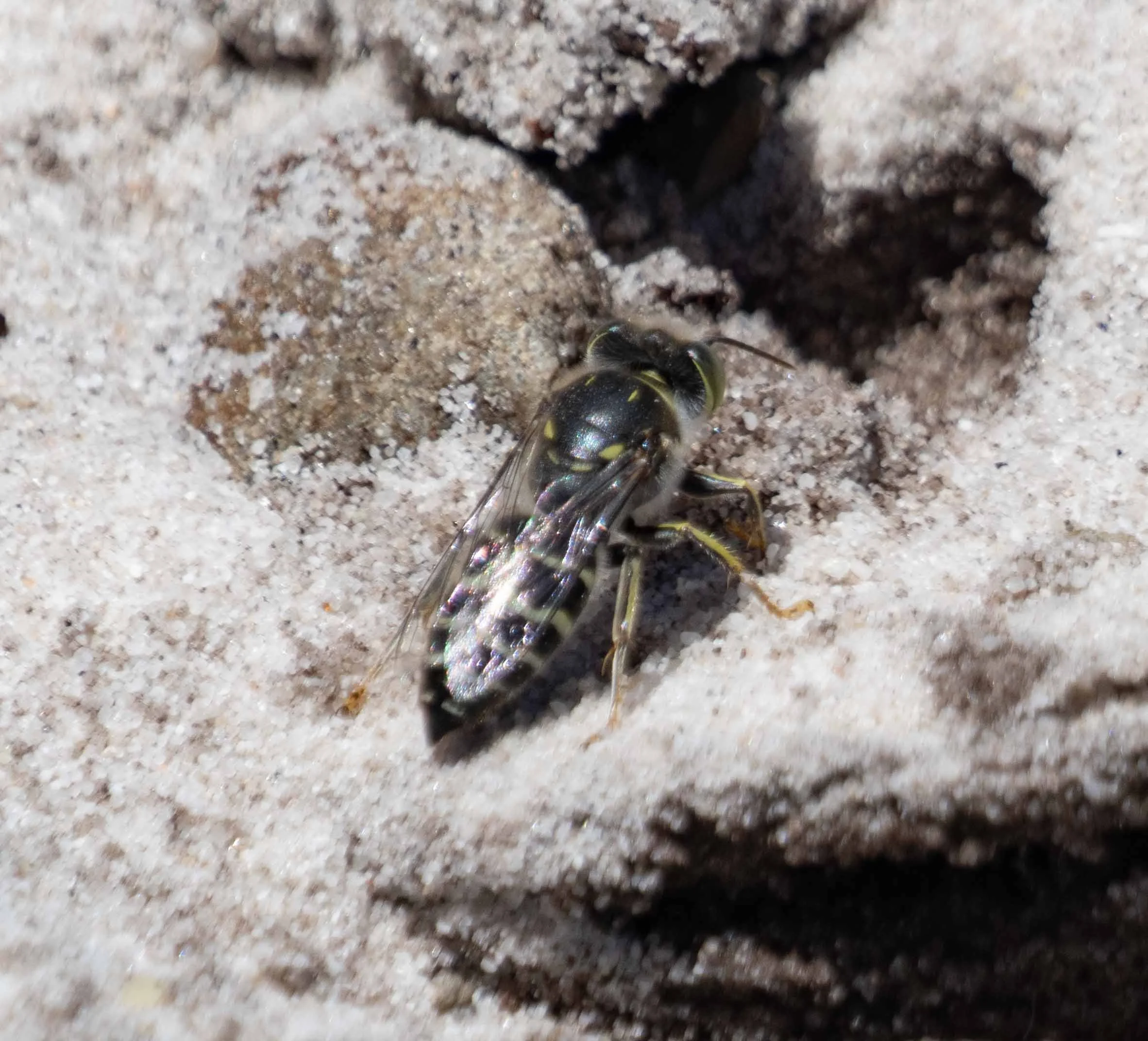
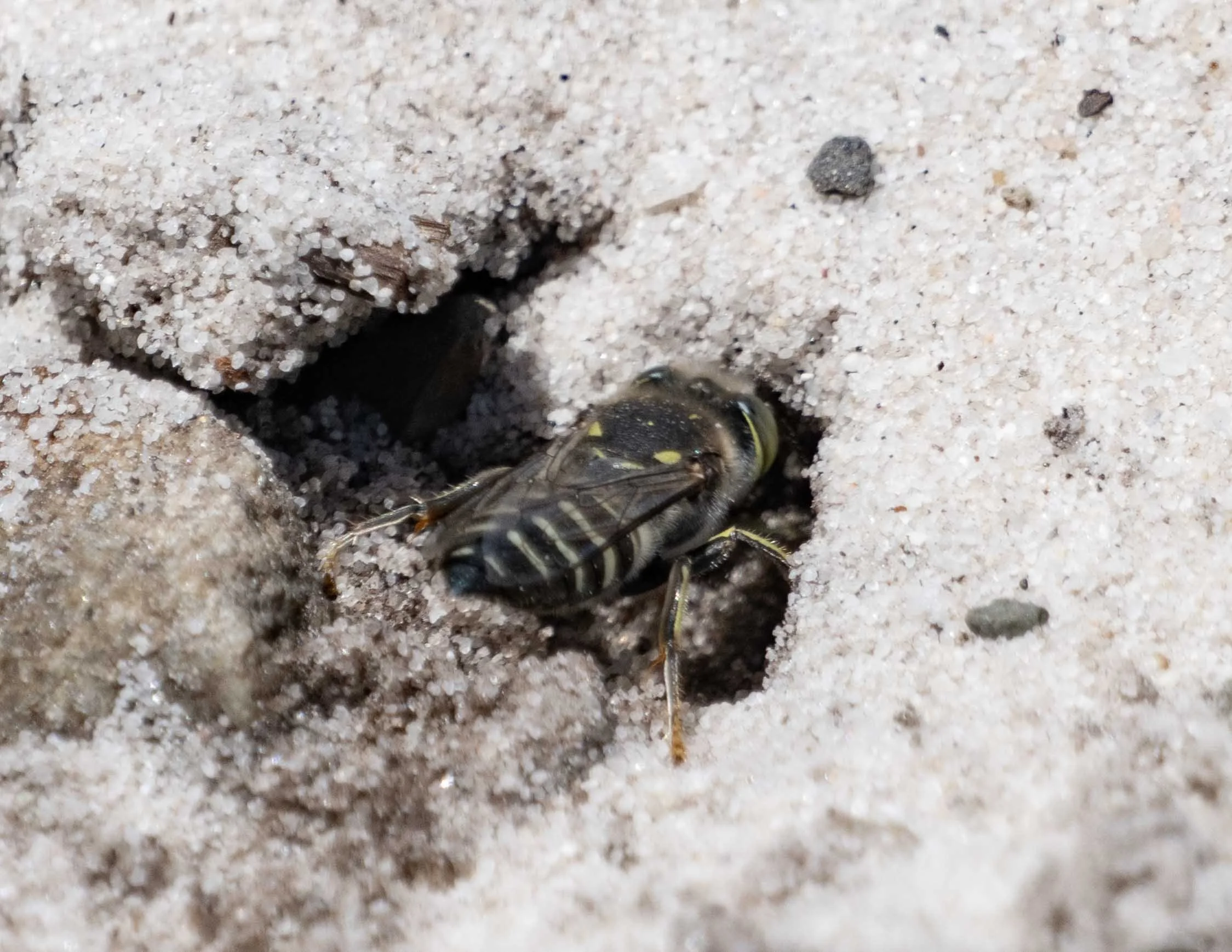
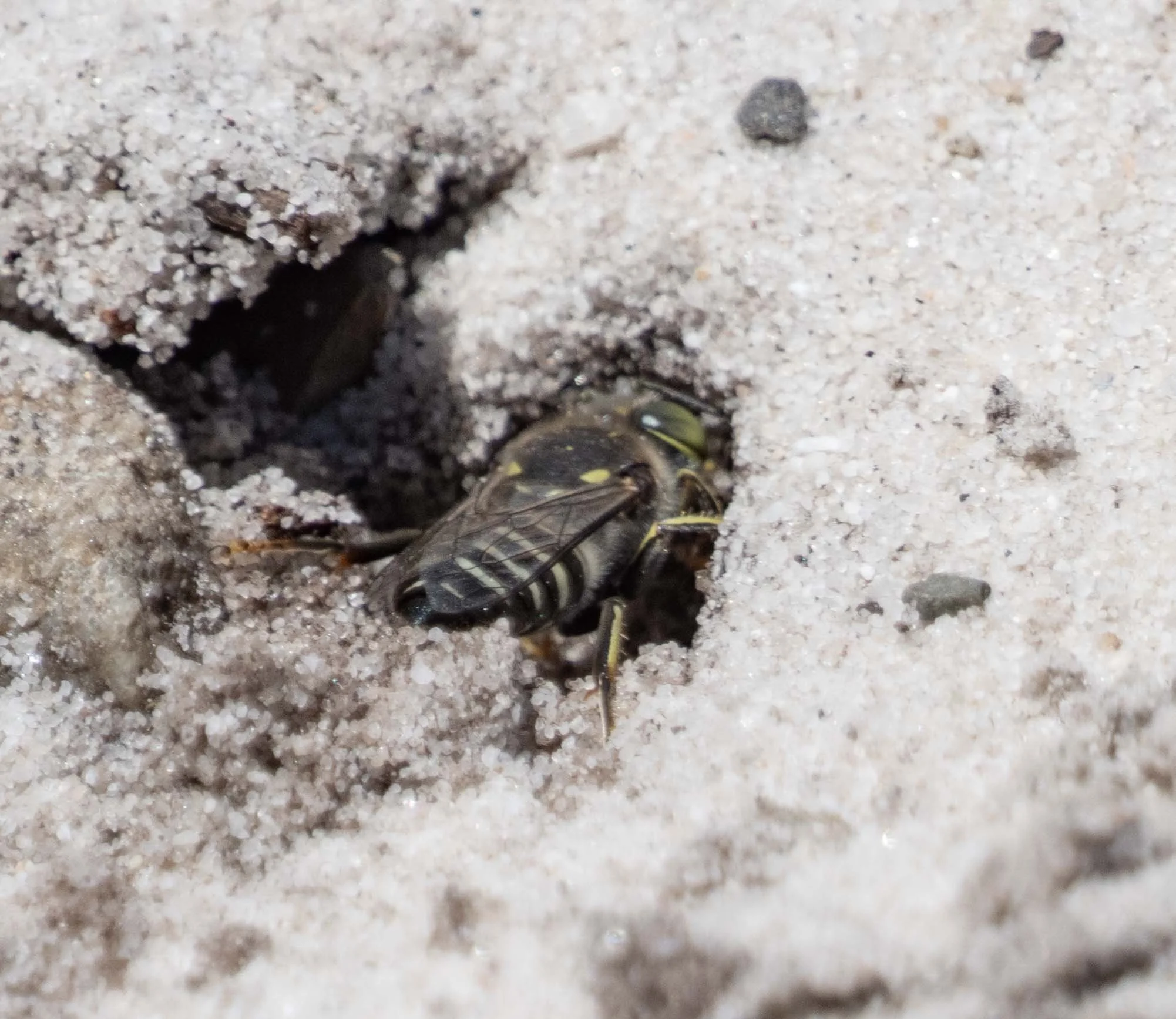
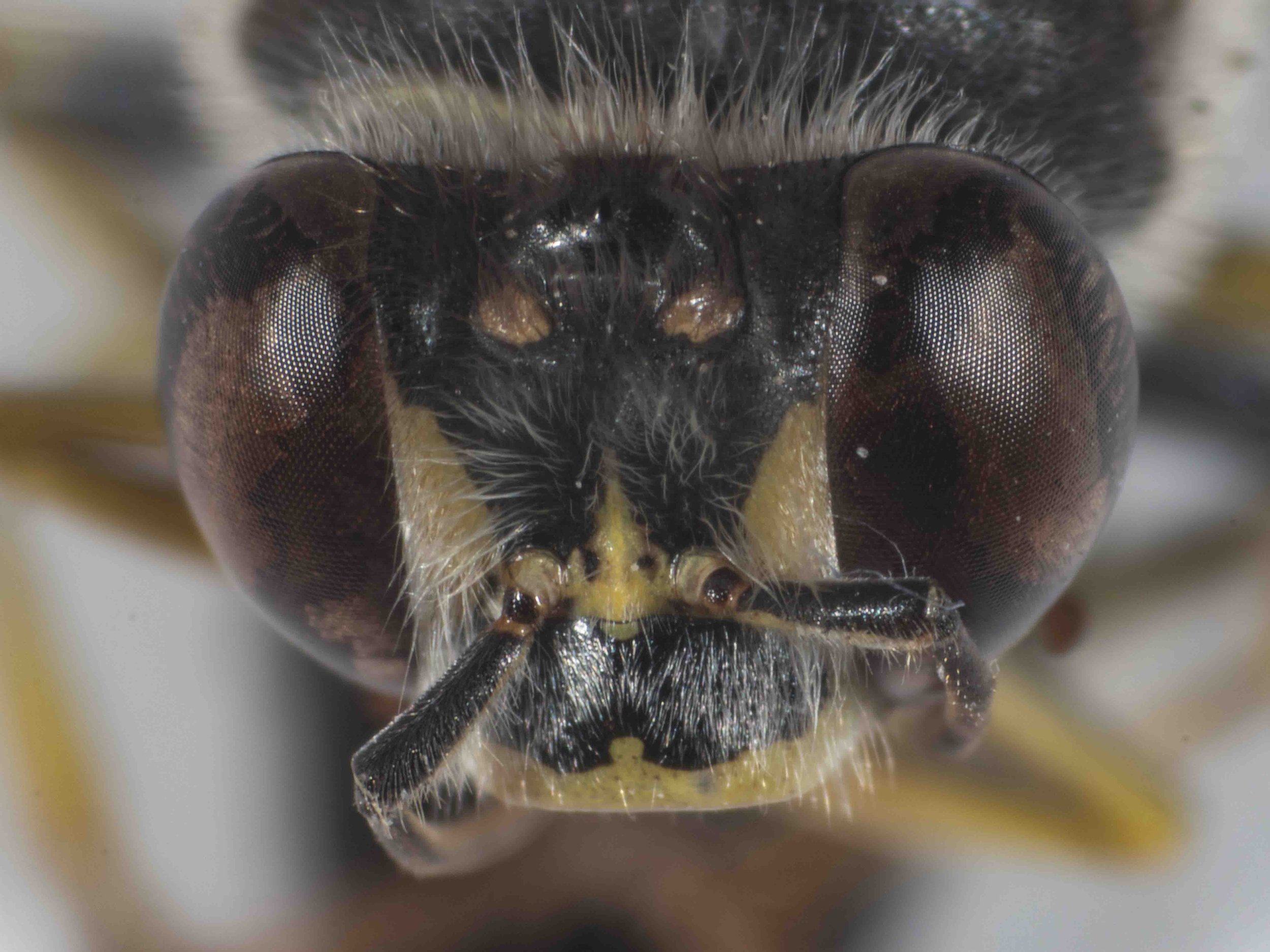
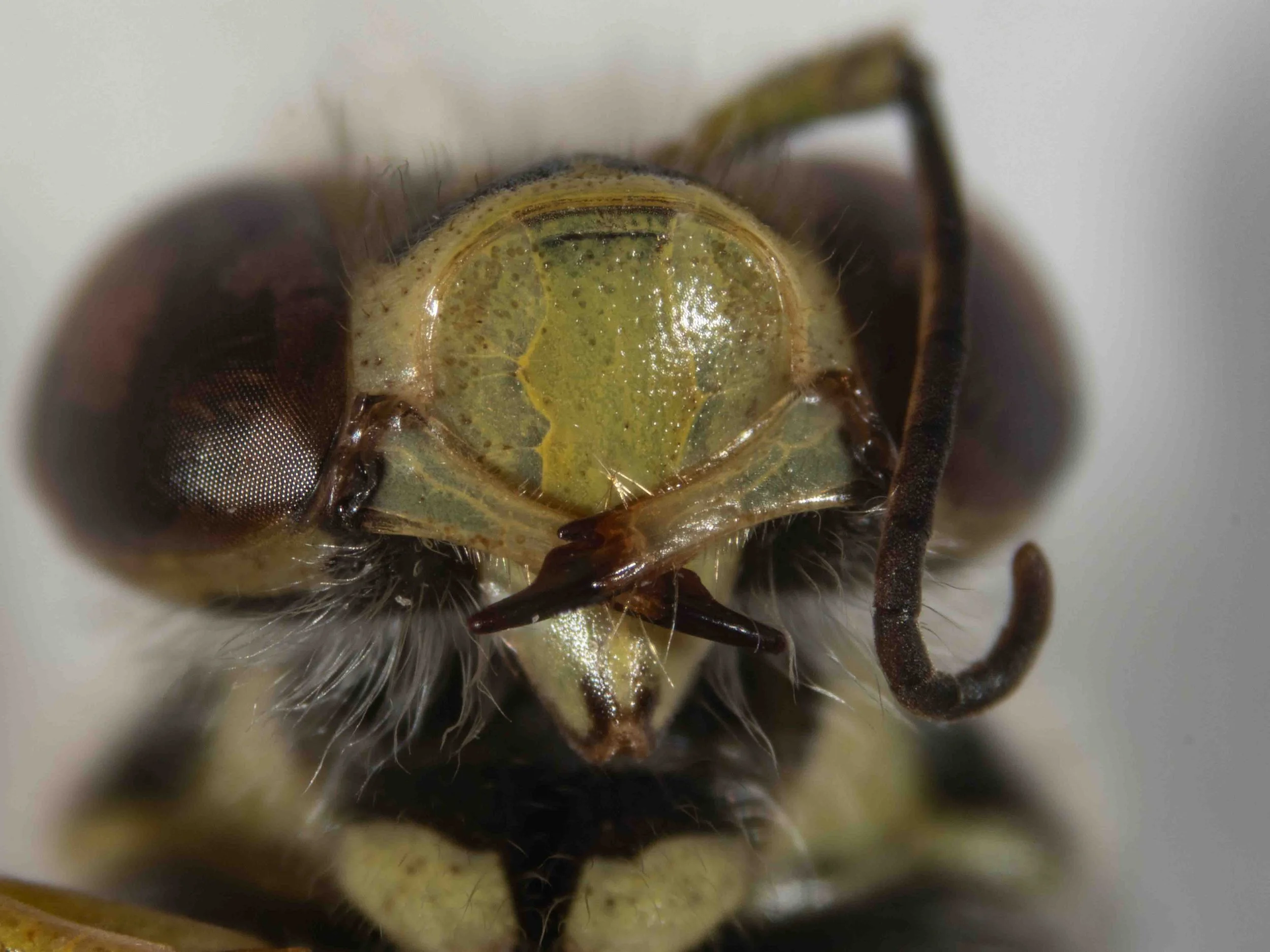
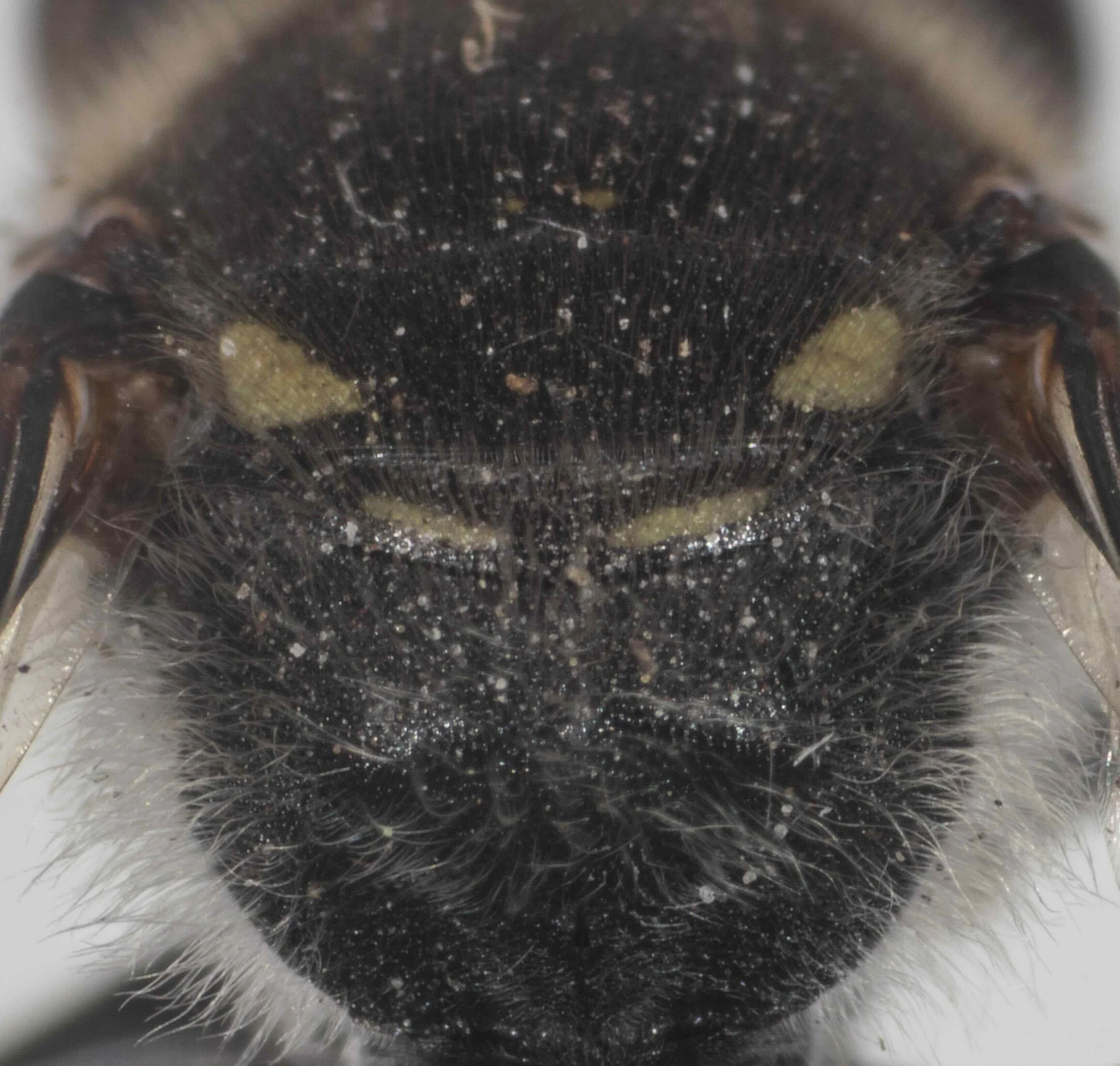
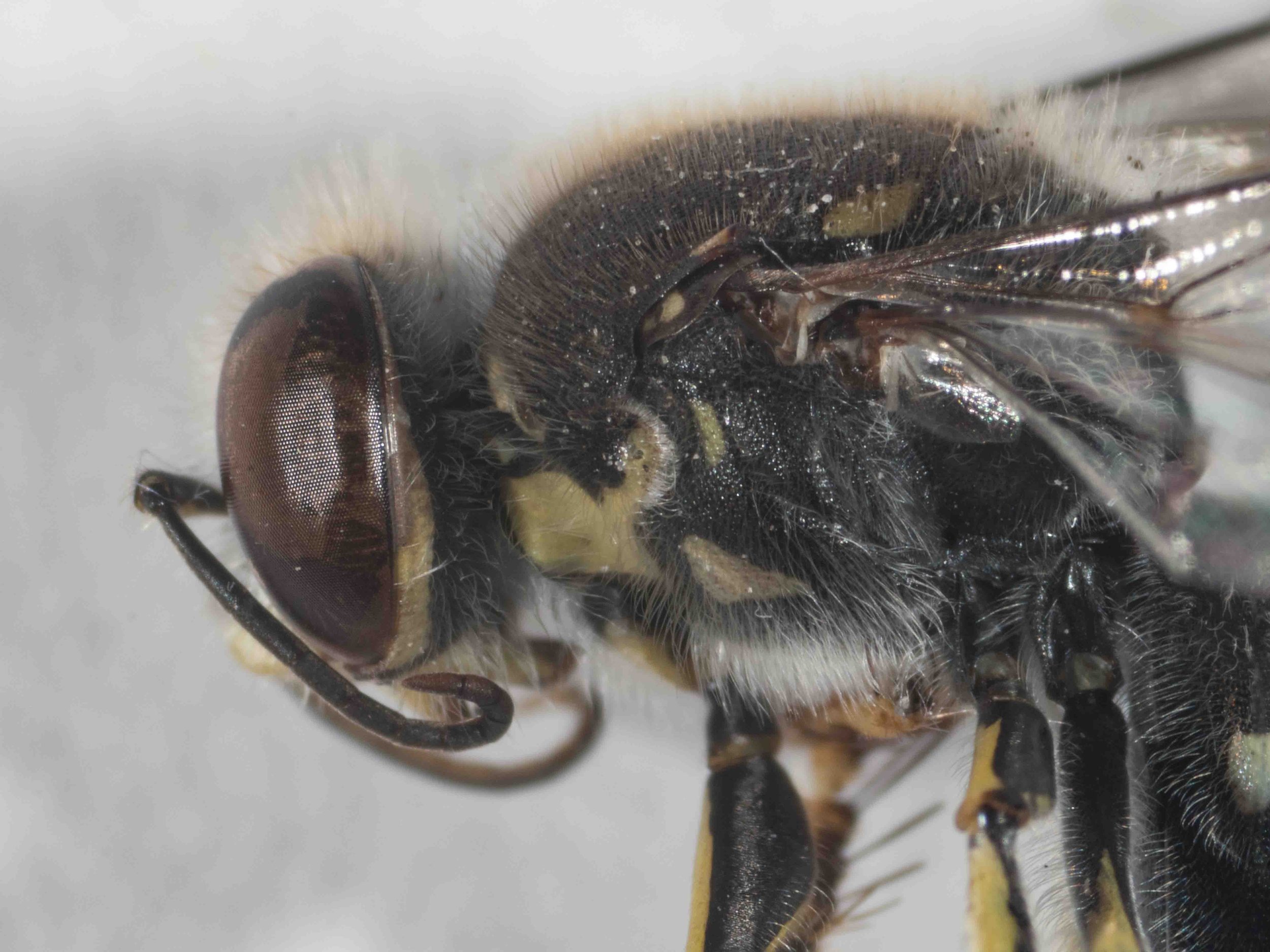
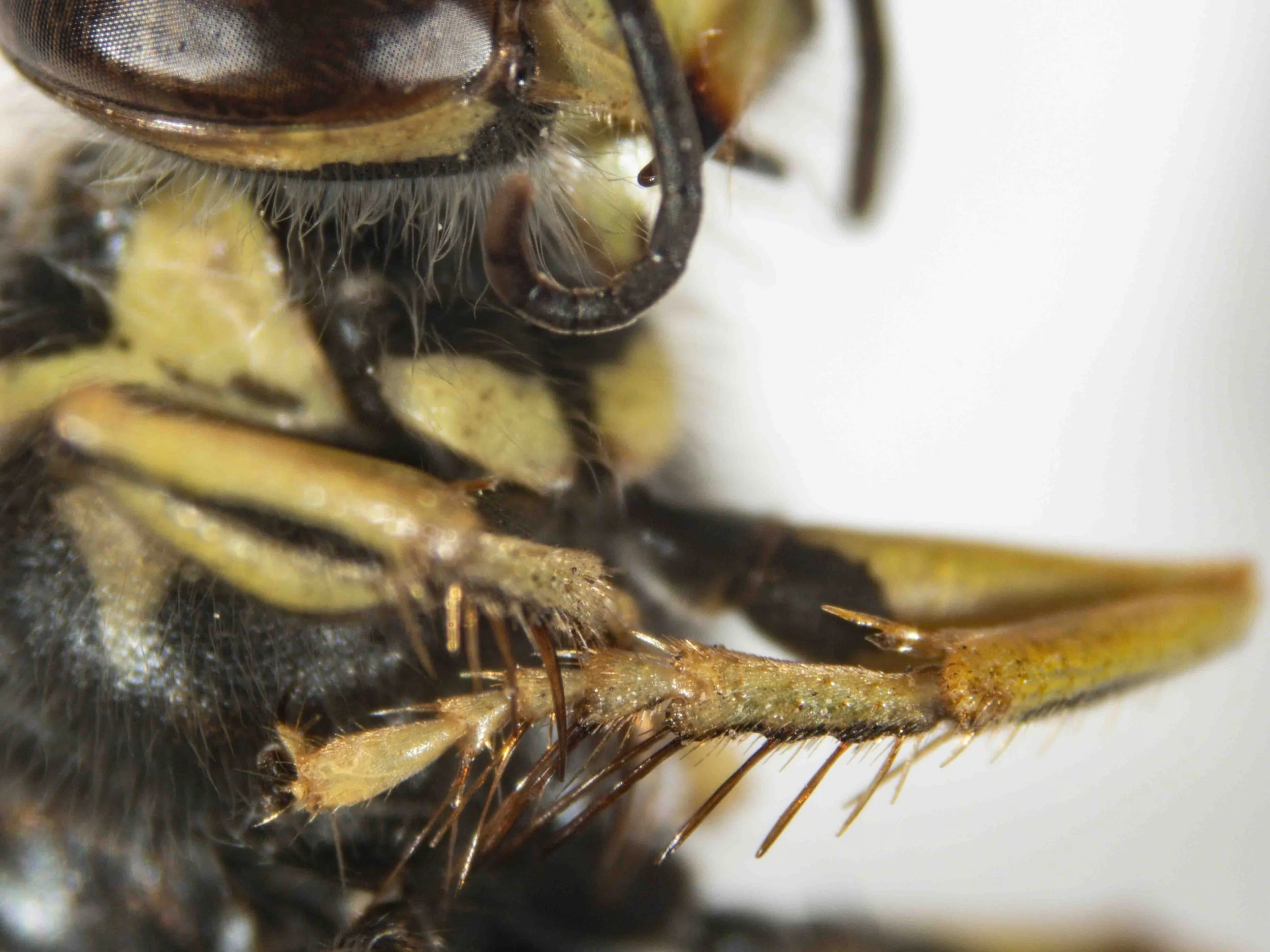
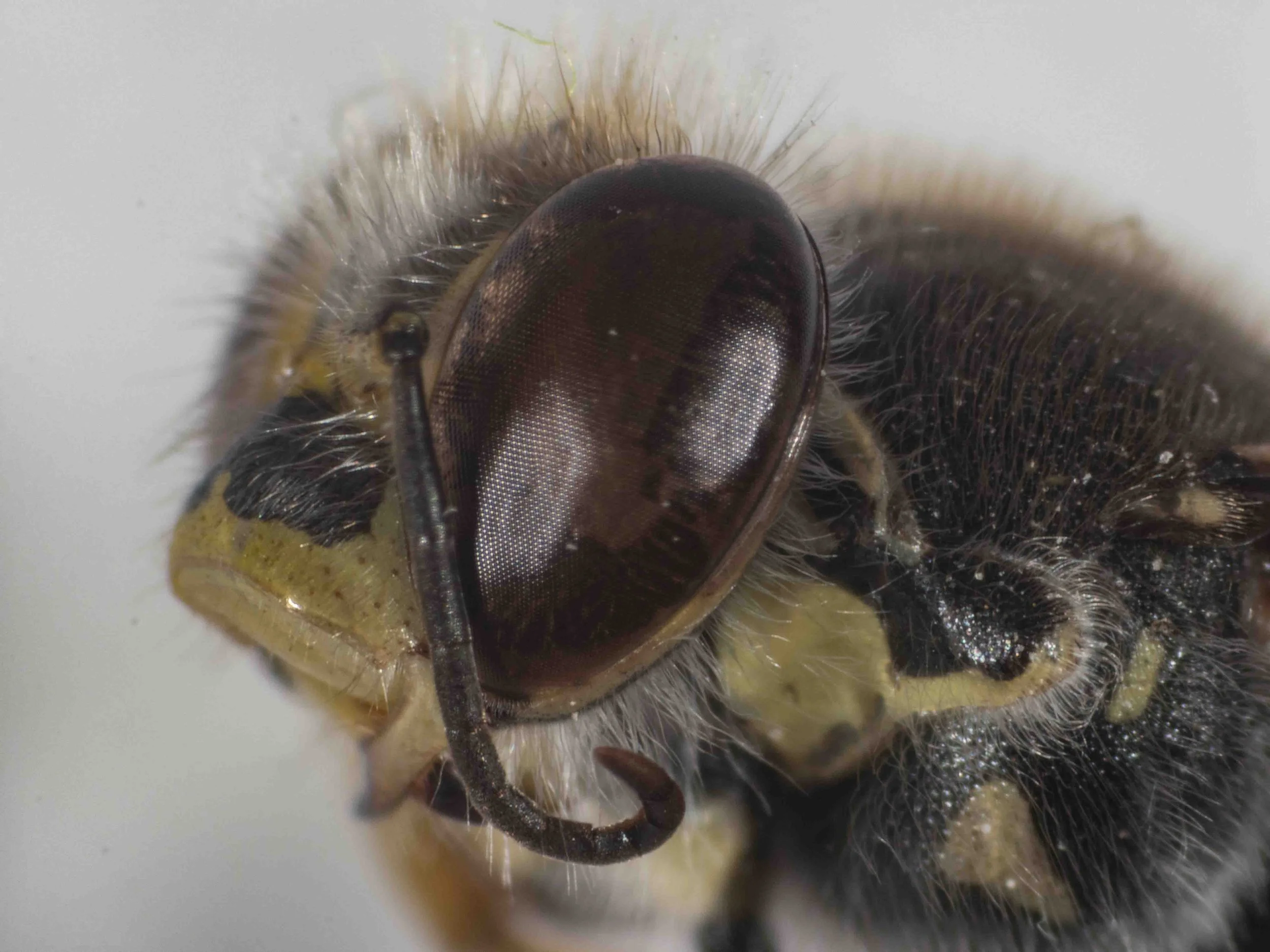
- broad vertex, high centrally
- small discal marks on mesoscutum
- vertex high (at least as high as eyetops)
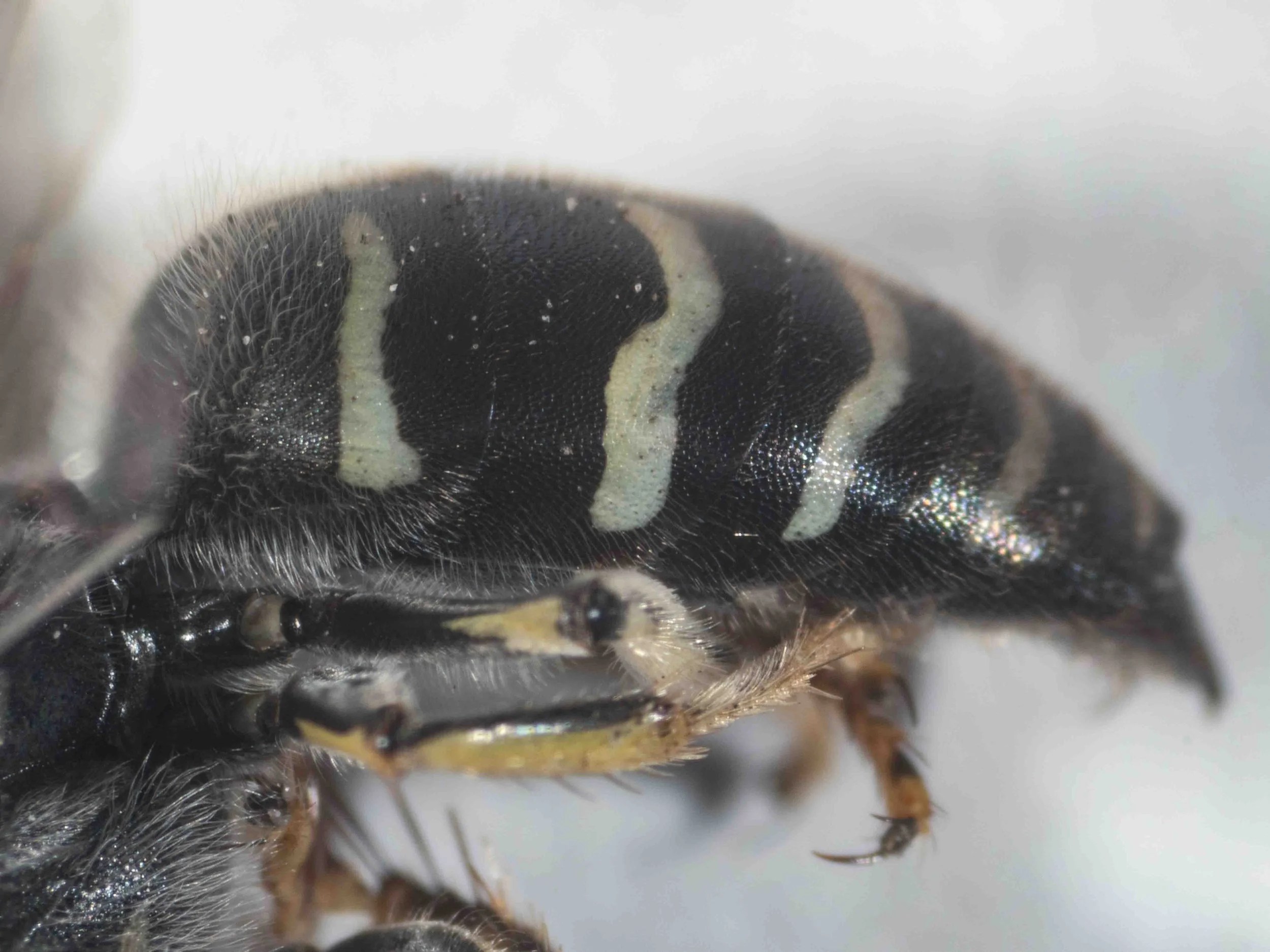
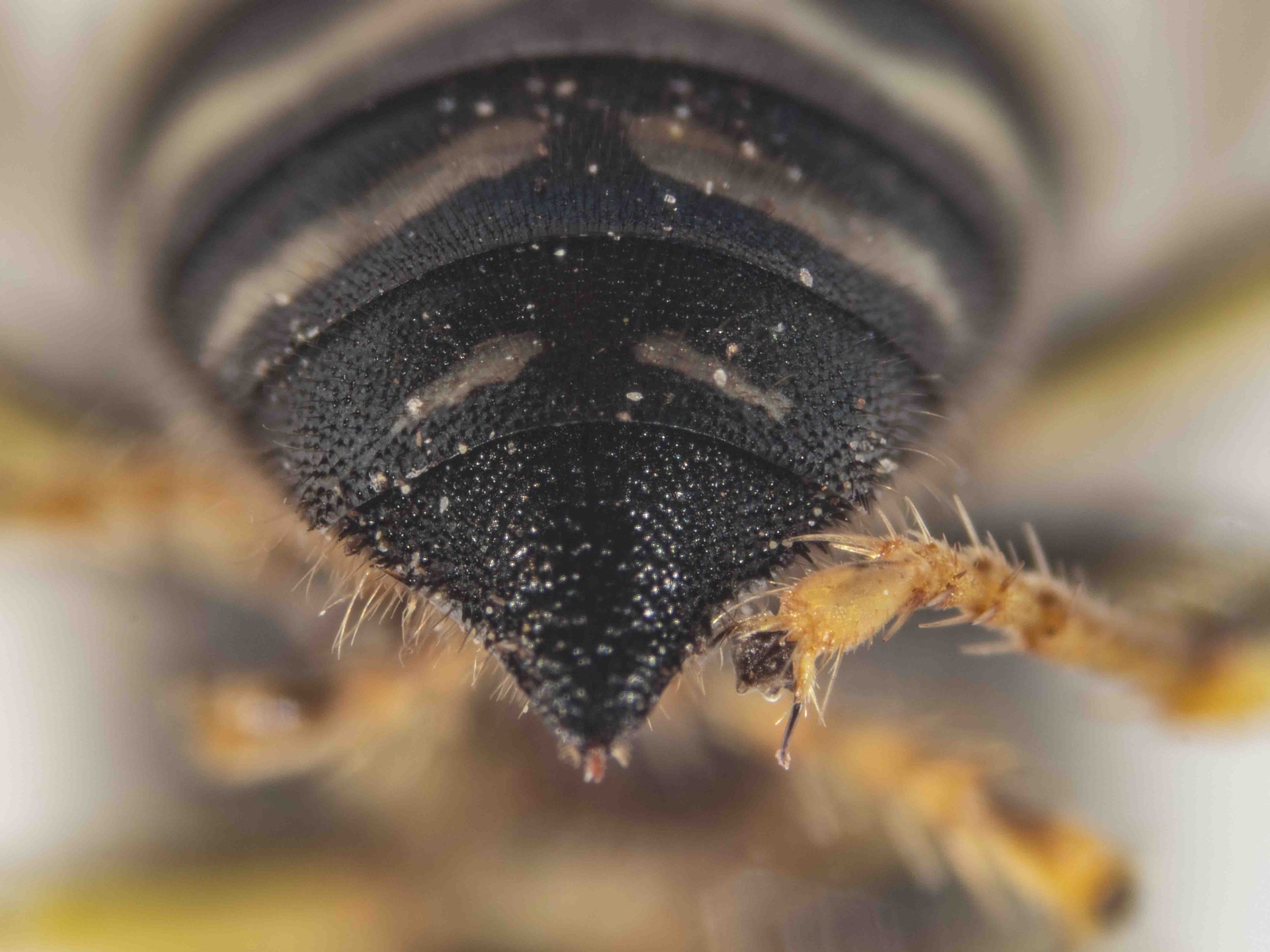
- white bands on metasoma narrow, broken, slightly sinuate
- T6 black
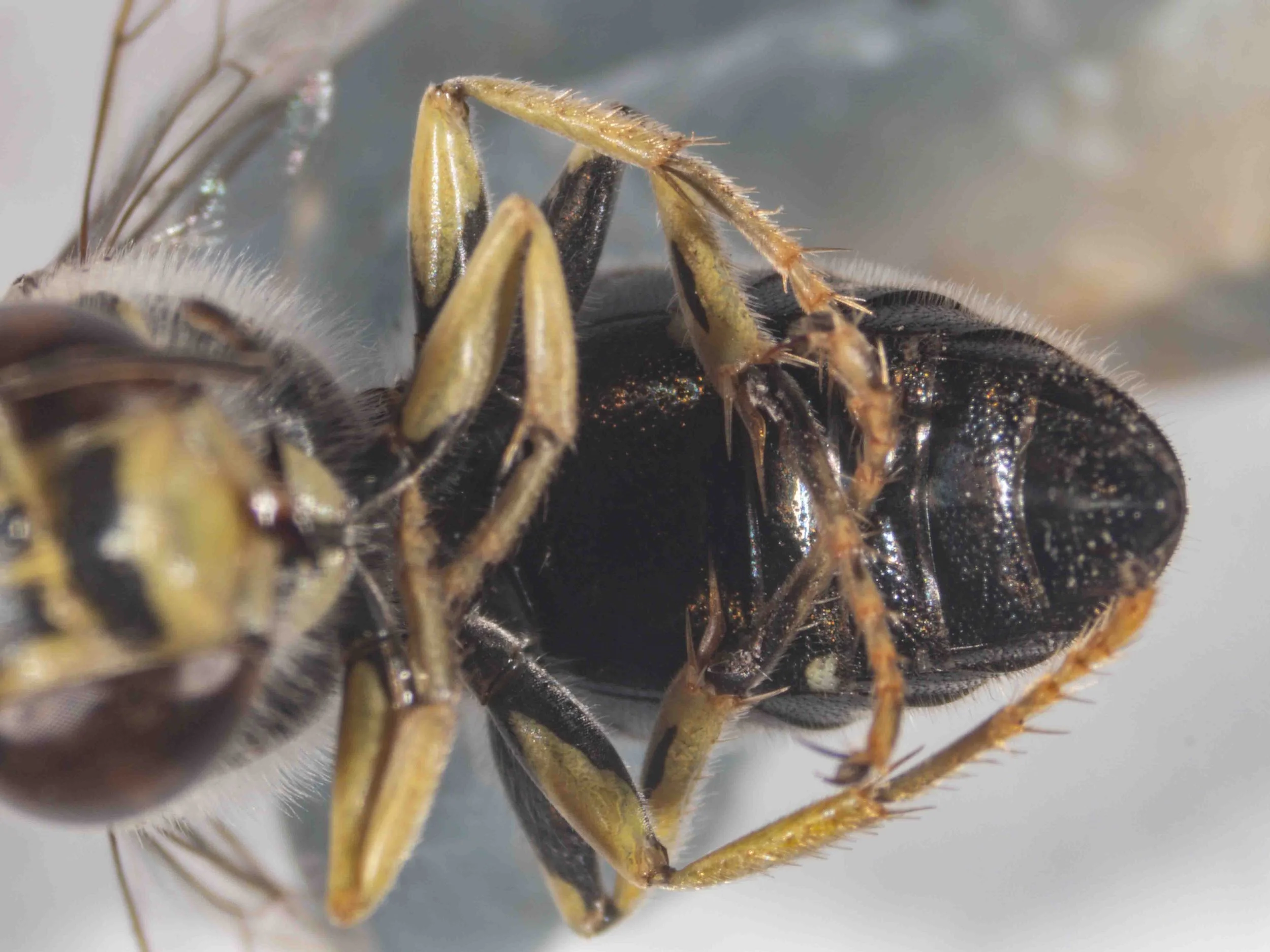
- small white lateral markings on S2 and S3 (at least)
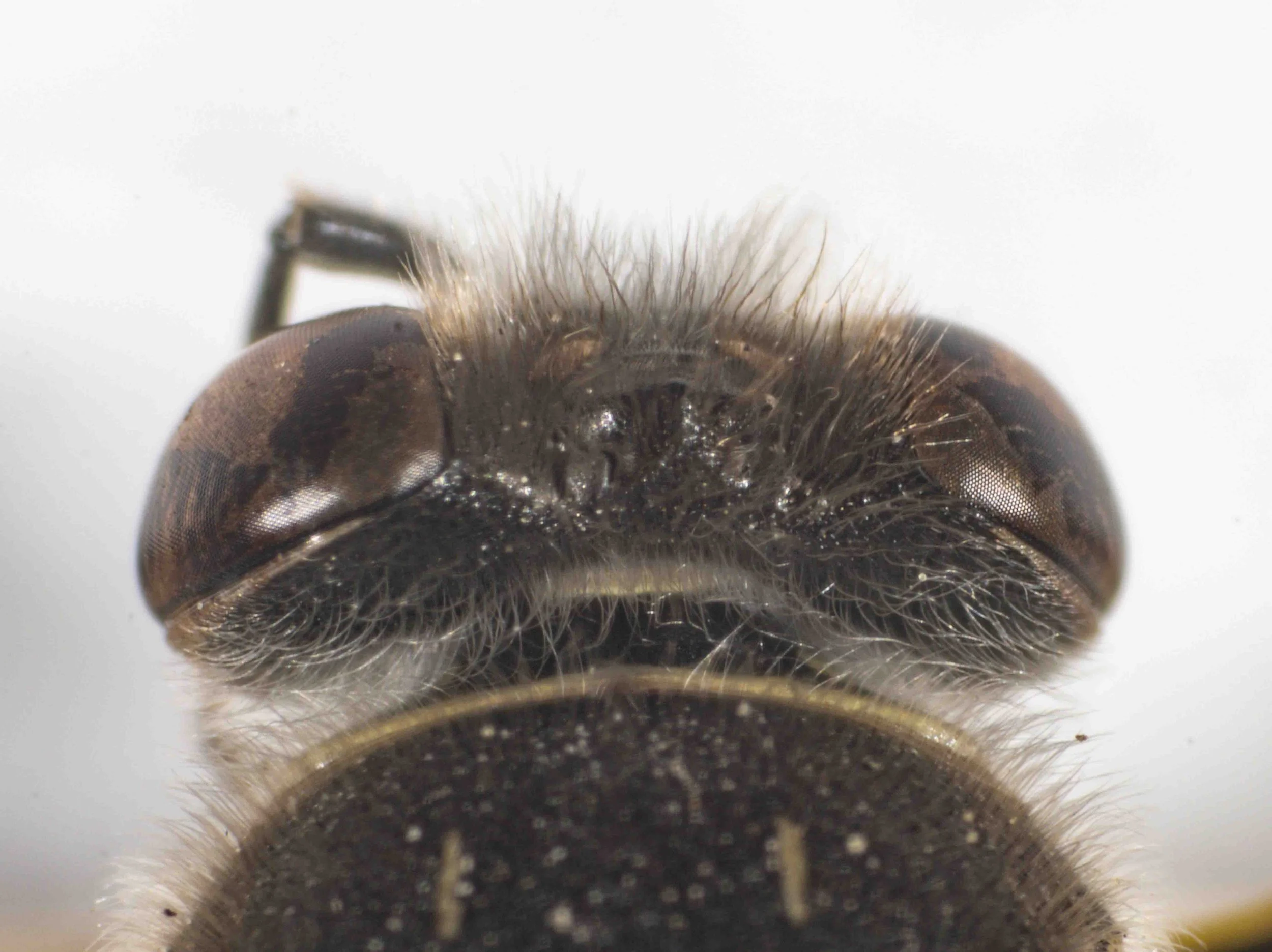
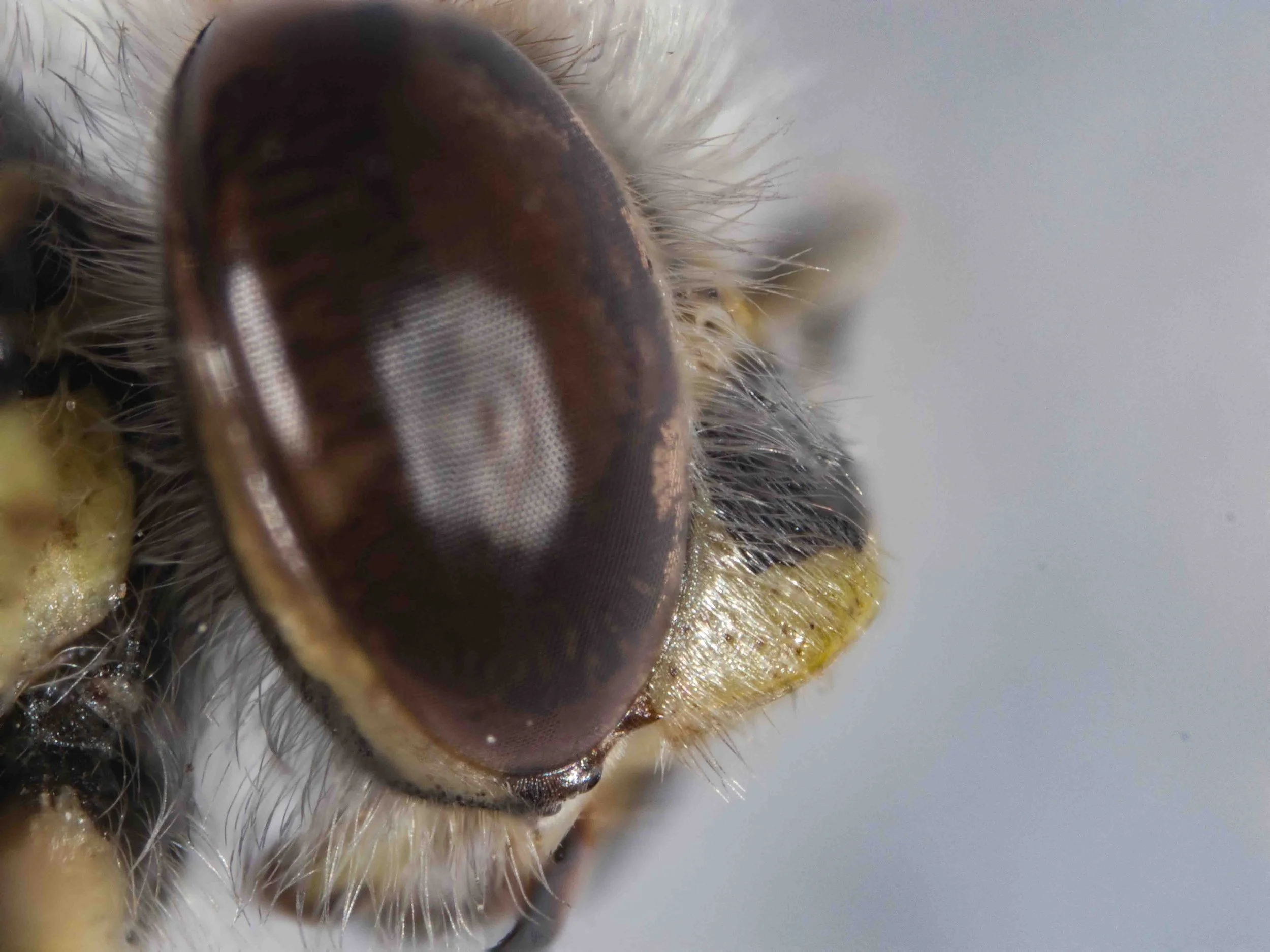
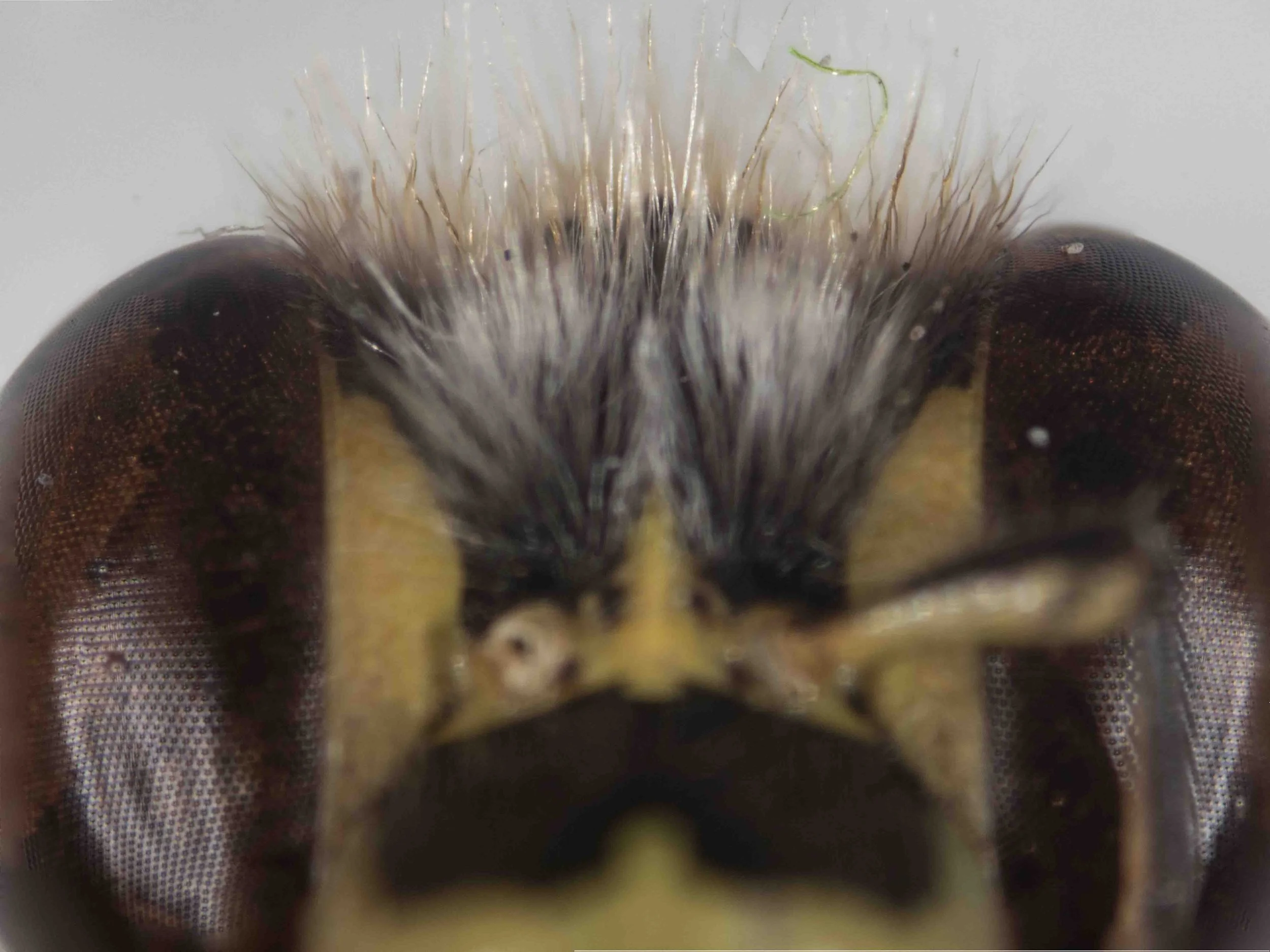
vertex broad
The inner eye margins diverge above, the vertex therefore very broad.
Note that the width of the frons is roughly the same in B. littoralis, B. variabilis and B. musca females. However, only in B. littoralis does the very broad vertex get a special mention by Evans & Matthews (1973).
hairy head
Although not a key diagnostic feature, B. littoralis females “vestiture pale, very dense and relatively long over much of head and mesosoma” (p. 270, Evans & Matthews 1973). Well that fits!
Note too the broad vertex when viewed from this angle.
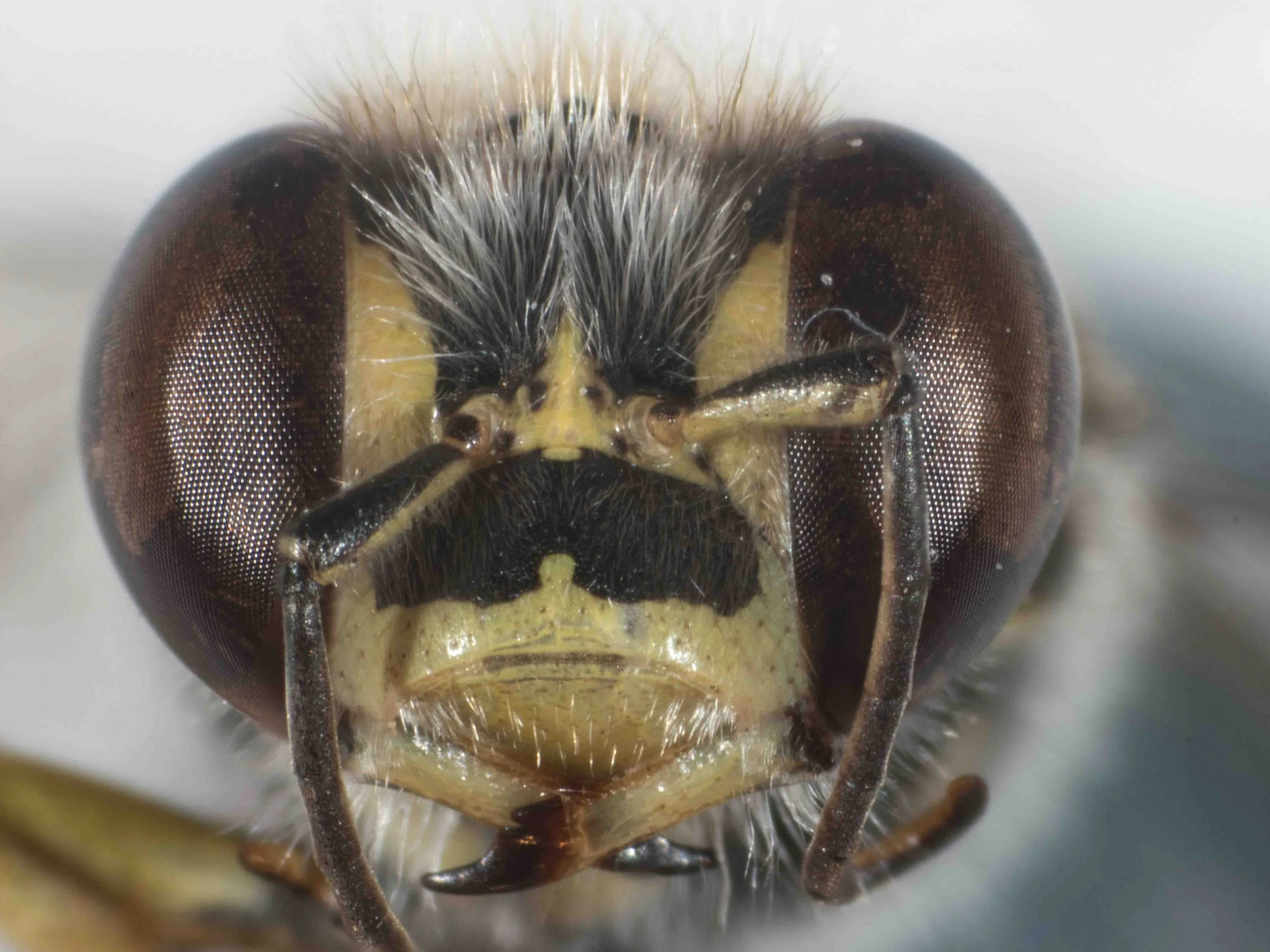
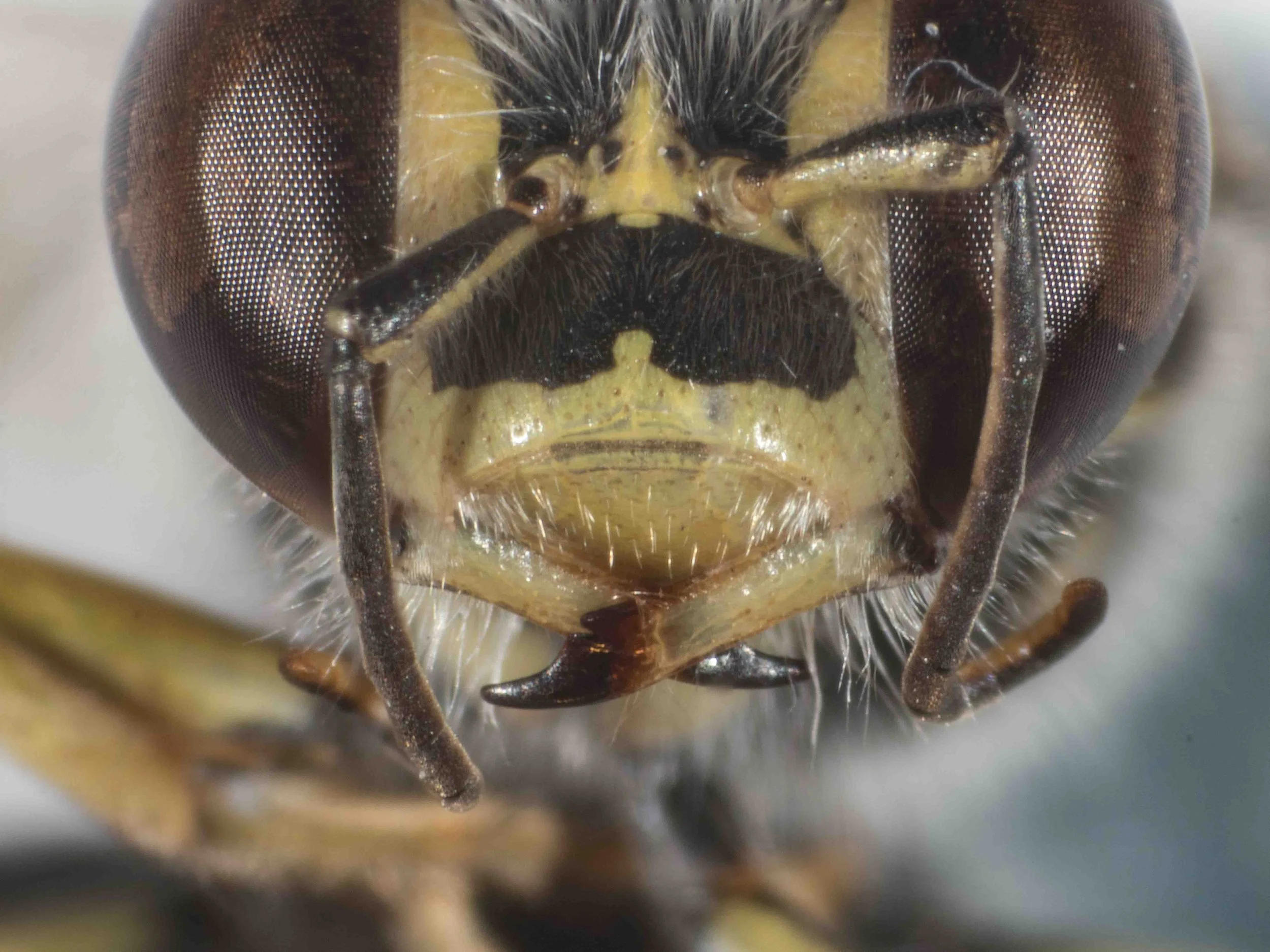
vertex high
The centre of the vertex is clearly higher than the eyetops, when viewed frontally.
Note that in B. variabilis, the vertex is slightly below the eyetops (and in B. furcata it is much lower still).
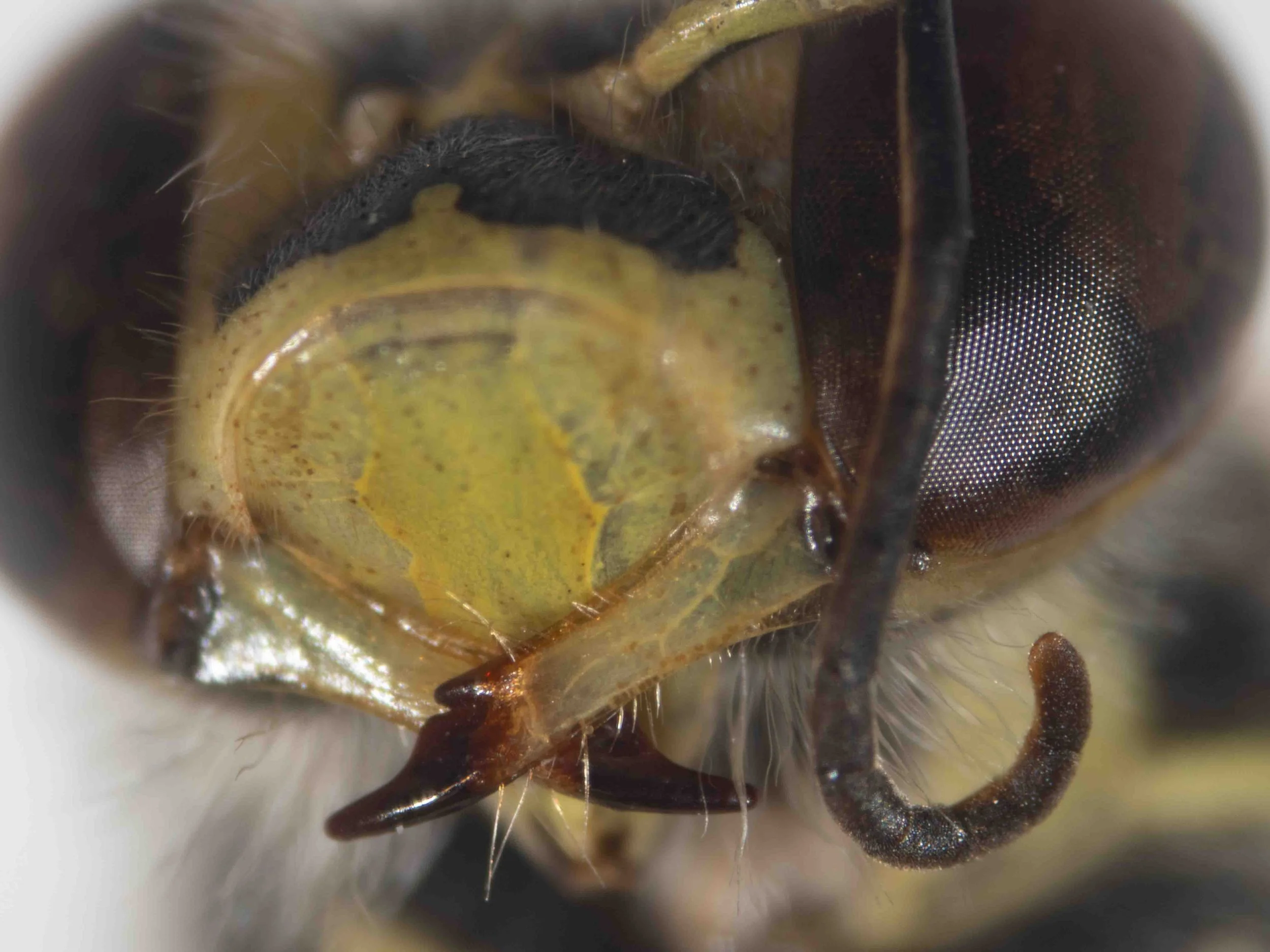
mandible shape
The mandible is slender, somewhat curved at the extreme apex but otherwise relatively straight. This shape is typical of Bembix that nest in very friable sand.
Compare this with the figures from Evans & Matthews.
The length to width ratio is about 6 (compared to the 6.3 reported for B. littoralis and 7.0 for B. variabilis).
(In this image, one antenna has been removed. It shows a single focal plane, with no stacking, to support accuracy of measurement.)
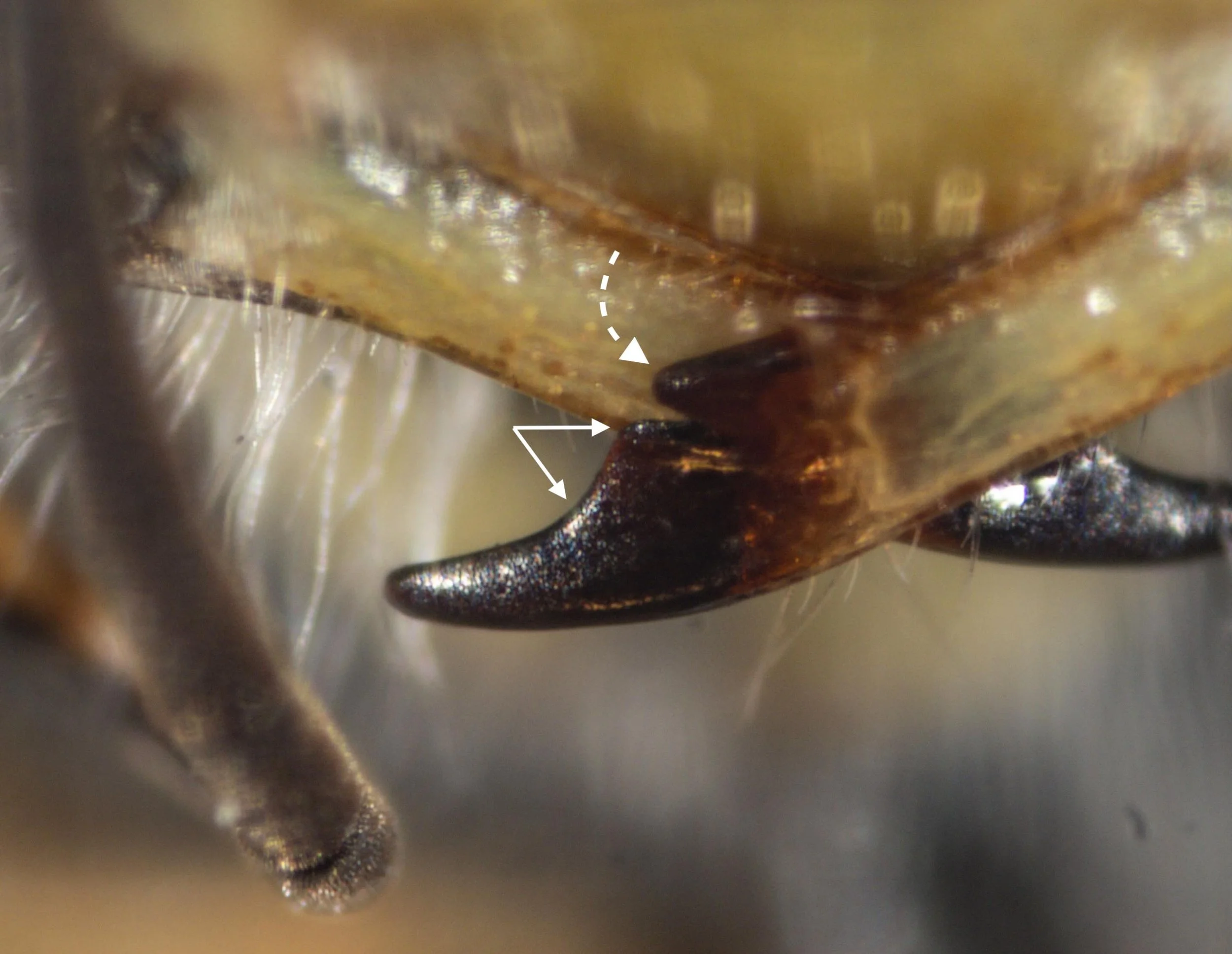
mandible shape
The tooth is small (dotted arrow), as is the cutting edge (solid arrows). In B. variabilis the cutting edge is essentially absent.
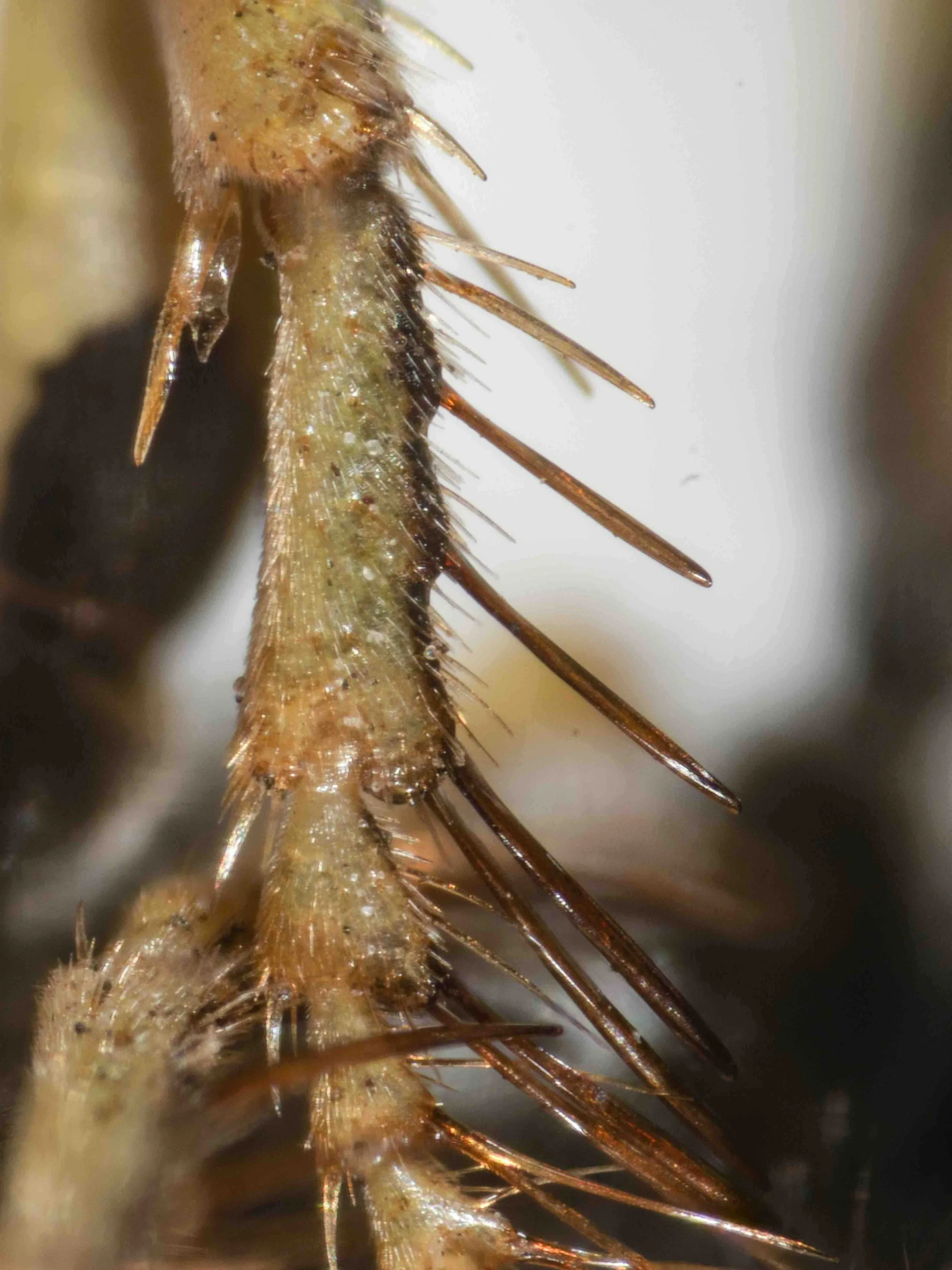
front basitarsus shape
The front basitarsus is weakly lobed, and bears 6 pecten spines. The smaller, basal spines are pale, while the strong apical ones are amber in colour.
The length to width ratio is 3.0 … exactly as reported for B. littoralis. Note that in B. variabilis the front basitarsus is more slender, with a ratio of 3.3.
left leg, frontal view, tibia at top
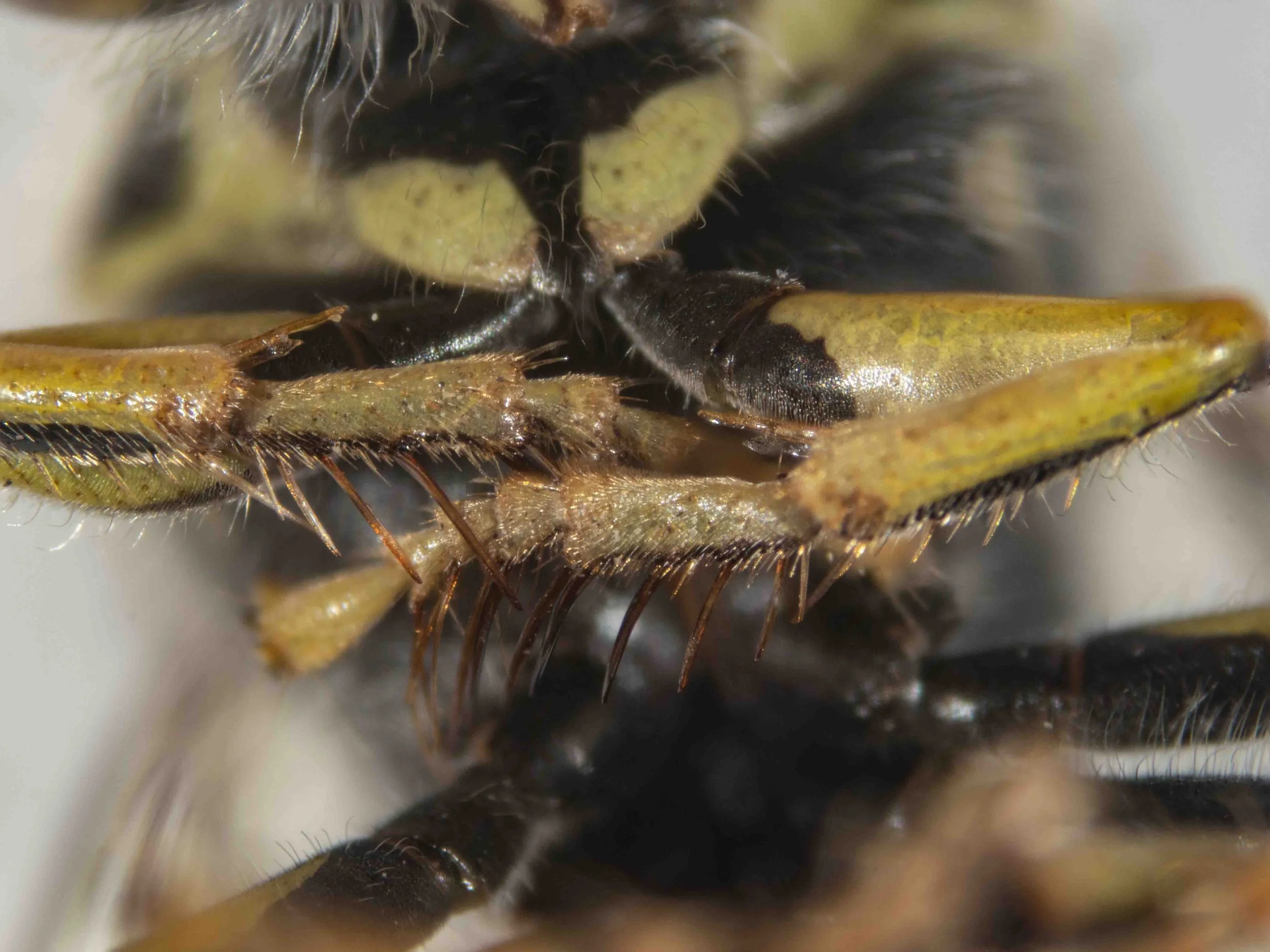
front basitarsus colour
Initially the colour of the front basitarsus made me question the identity as B. littoralis. The blackened margin to the basitarsus is not mentioned in their description of B. littoralis (Evans & Matthews 1973) but is a described feature of B. musca, B. variabilis and B. lamellata. However I am now convinced that this is simply another aspect of the additional melanisation of such ‘darker variants’. Specimen 2511M is consistent with B. littoralis in too many other, diagnostic features (including vertex height, mandible shape, and clypeus colour).
clypeus shape in profile
The clypeus is protruberant and smoothly rounded. That is, there is no abrupt flattening of the apex as seen in species such as B. trepida and B. tuberculiventris.
Note that this general shape is shared by all members of the Littoralis species group (B. lamellata, B. littoralis, & B. variabilis) and also B. musca, although the latter is more strongly protruberant.
[antenna on right removed in order to better view the clypeus]
clypeus colour (& shape)
A broad black band at the base of the clypeus, with an emargination at the apical midline. This is one of the differences between B. musca and B. littoralis. In B. musca, the black band extends forward medially, towards the apex.
Note too the lack of any lateral prominences or medial ridge, both of which are features of B. furcata.
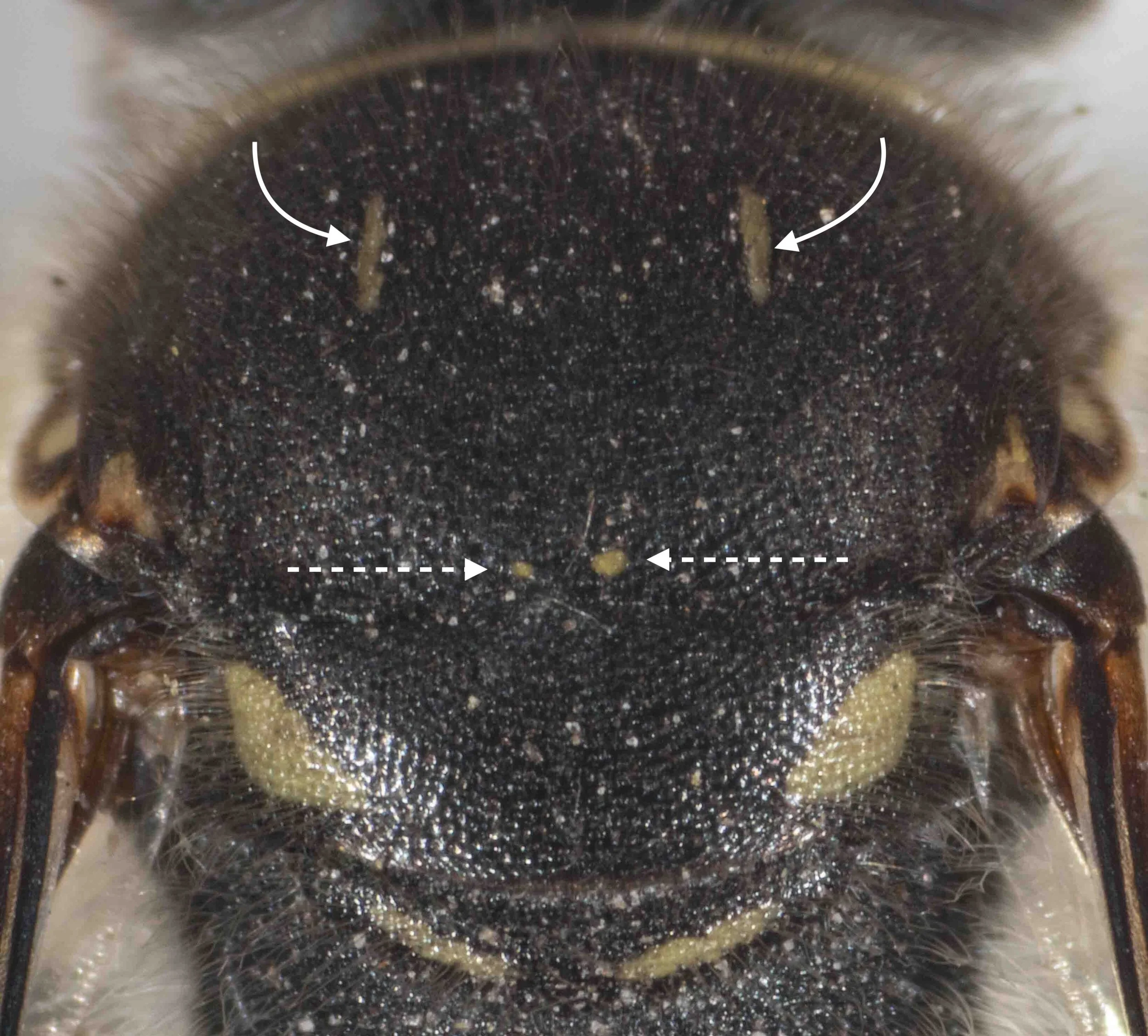
mesoscutum colour
The discal marks are small (solid, curved arrows), and there is just a couple of traces of the posterior mark (dotted, straight arrows).
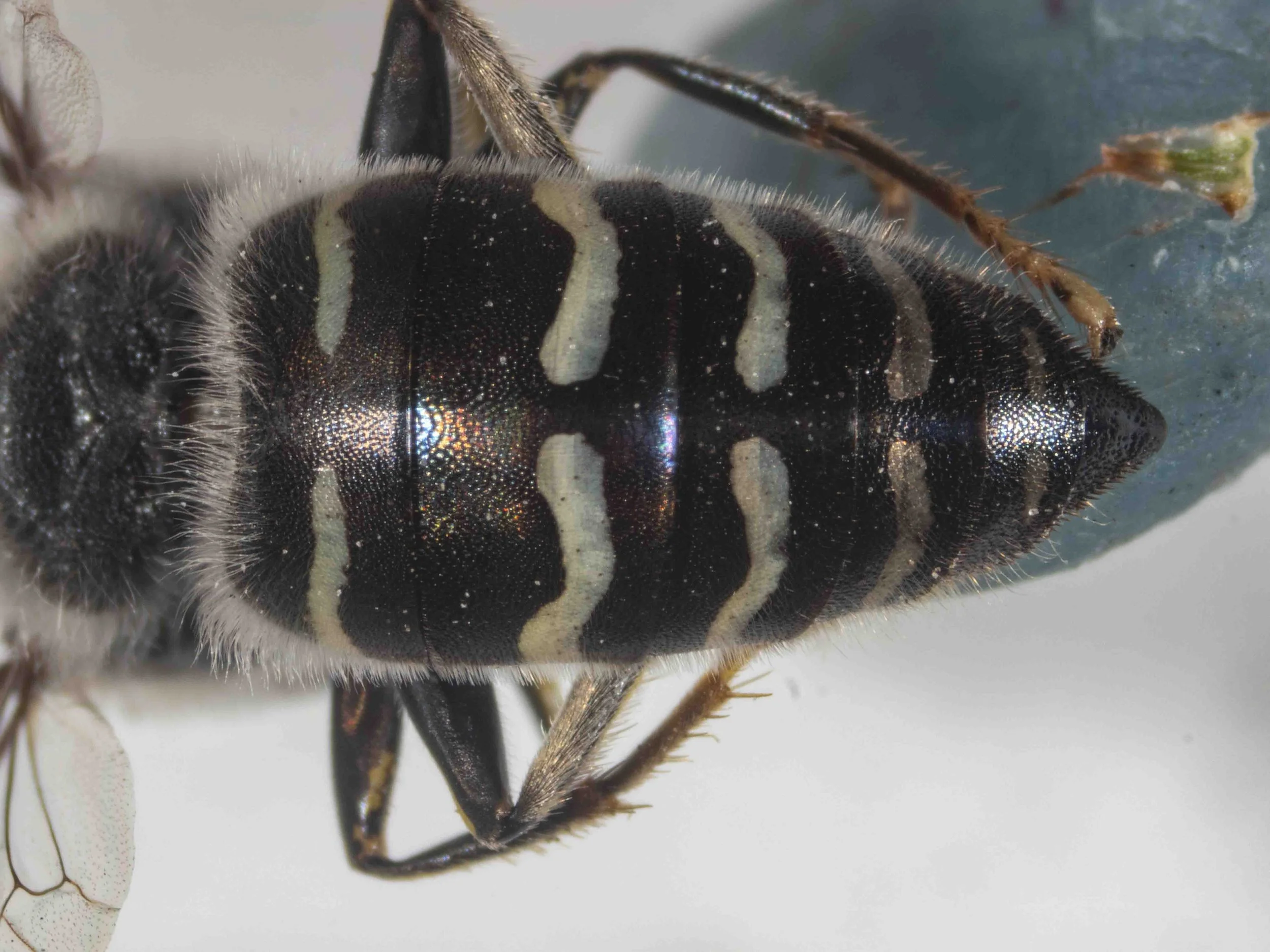
metasoma colour pattern
Thin, broken, slightly sinuate white bands on T1-T5. T6 is entirely black.
Note that in combination with the very limited markings on the mesoscutum, this is entirely consistent with descriptions of dark variants of B. littoralis. In contrast, B. variabilis with limited mesoscutum markings have much broader metasomal bands.
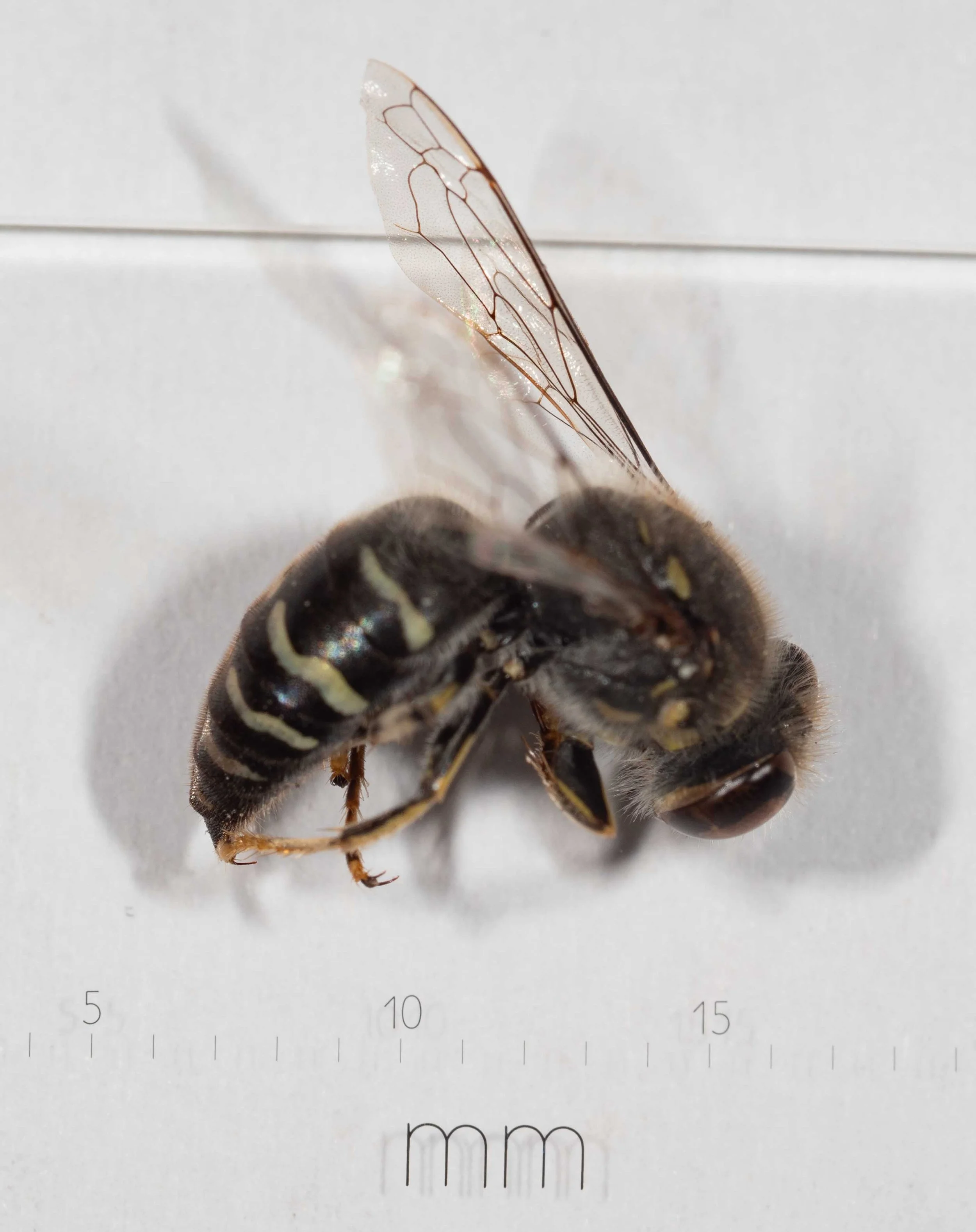
size
Consistent with B. littoralis:
- overall body length 12-13mm
- forewing length 9mm
frons
Consistent with Bembix:
- eyes essentially parallel, diverging (usually slightly) above and below
Consistent with B. littoralis:
- upper front (frons) covered in long, erect, pale hairs
labrum & mandibles
Consistent with Bembix:
- labrum prominent and long
Consistent with B. littoralis:
- labrum and mandibles pale (yellow, in this case)
[labrum cream in type specimen]
sternites
- sternite 2 with strong punctures
- small pale spot at one side of S3 (suggesting a more extensive pattern of pale / yellow markings in lighter variants)
metasoma
Consistent with Bembix:
- gaster sessile, with T1 nearly as broad as T2
Bands appear white, in contrast to Type in which they grade into yellow laterally. Again, this variation accords with that reported for the species.
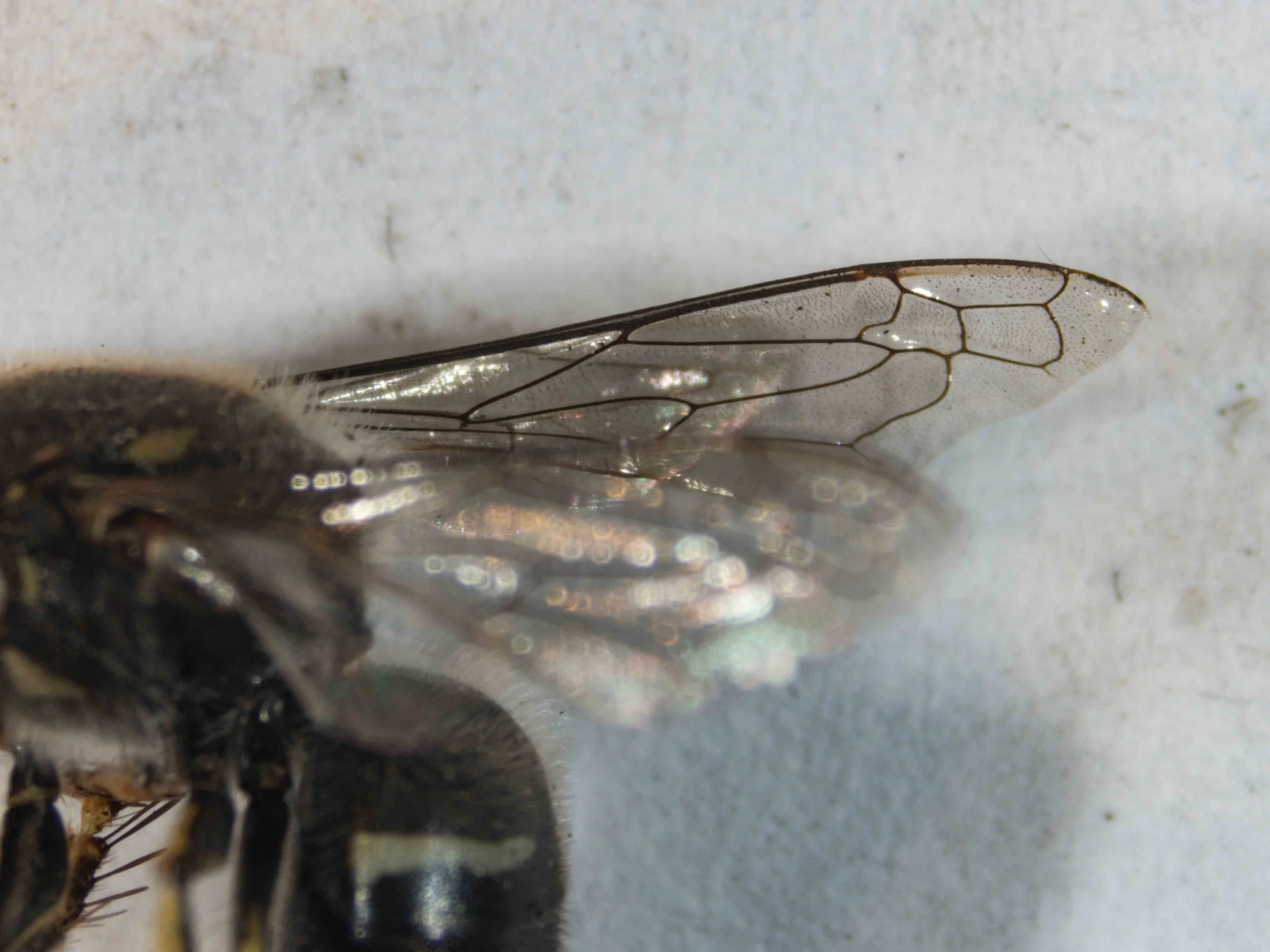
forewing venation
Consistent with Bembix:
- forewing media diverging slightly before cu-a
- 3 submarginal cells
- SCI greatly elongated before stigma
- SCII four-sided, and not petiolate
- veinlet between SCI & SCII crooked
Evans & Matthews found “no noteworthy differences in wing venation among Australian species” (p. 10)
other mesosomal markings
As with the mesoscutum, pale markings elsewhere on the mesosoma are limited. In more heavily marked B. littoralis individuals, there are transverse yellow marks on the scutellum and metanotum, and the propodeum is extensively yellow. In 2511M, there are just a pair of lateral spots on the scutellum, a thin broken band on the metanotum, and the propodeum is entirely black.
Such extensive melanisation is known in B. littoralis. Although Evans & Matthews didn’t specifically mention the range of colour variation for the scutellum, propodeum, etc, they did state that in some males from coastal locations “there may be no pale maculation at all on the mesosoma” and that in females “colour variation is as striking as in males” (p. 271).
pronotum & pleura colour
Consistent with B. littoralis:
- base colour of pronotum & mesopleuron yellow
However, the type female had only limited black markings: laterally on the pronotum; along sutures of the pleuron. The more extensive dark marks here I attribute to intraspecific variation … the degree of which this species is well known for!
front legs
Consistent with B. littoralis:
- front basitarsus bearing pecten spines
- coxae yellow, with limited black markings
- front femora largely yellow, streaked black
- tibiae yellow, also with limited black markings
- tarsi pale (yellow in this case)
clypeus / head hair covering
Consistent with B. littoralis:
- clypeus in profile evenly rounded
- vestiture pale, very dense and relatively long over much of head and mesosoma
pygidium (T6)
Consistent with B. littoralis:
- tergite 6 tapering evenly to a narrowly rounded apex, its surface covered with strong punctures “except midline more or less smooth and polished” (p. 270).