
Perginae larvae batch 5
Workbook
This is the fifth collection of Perginae larvae which I am aiming to rear through to adult stage.
My goal is to obtain female Perga dorsalis adults for COI barcoding in order to determine whether Perga dorsalis and Perga affinis individuals identified morphologically have different barcodes.
Collection of larvae at home, December 6th
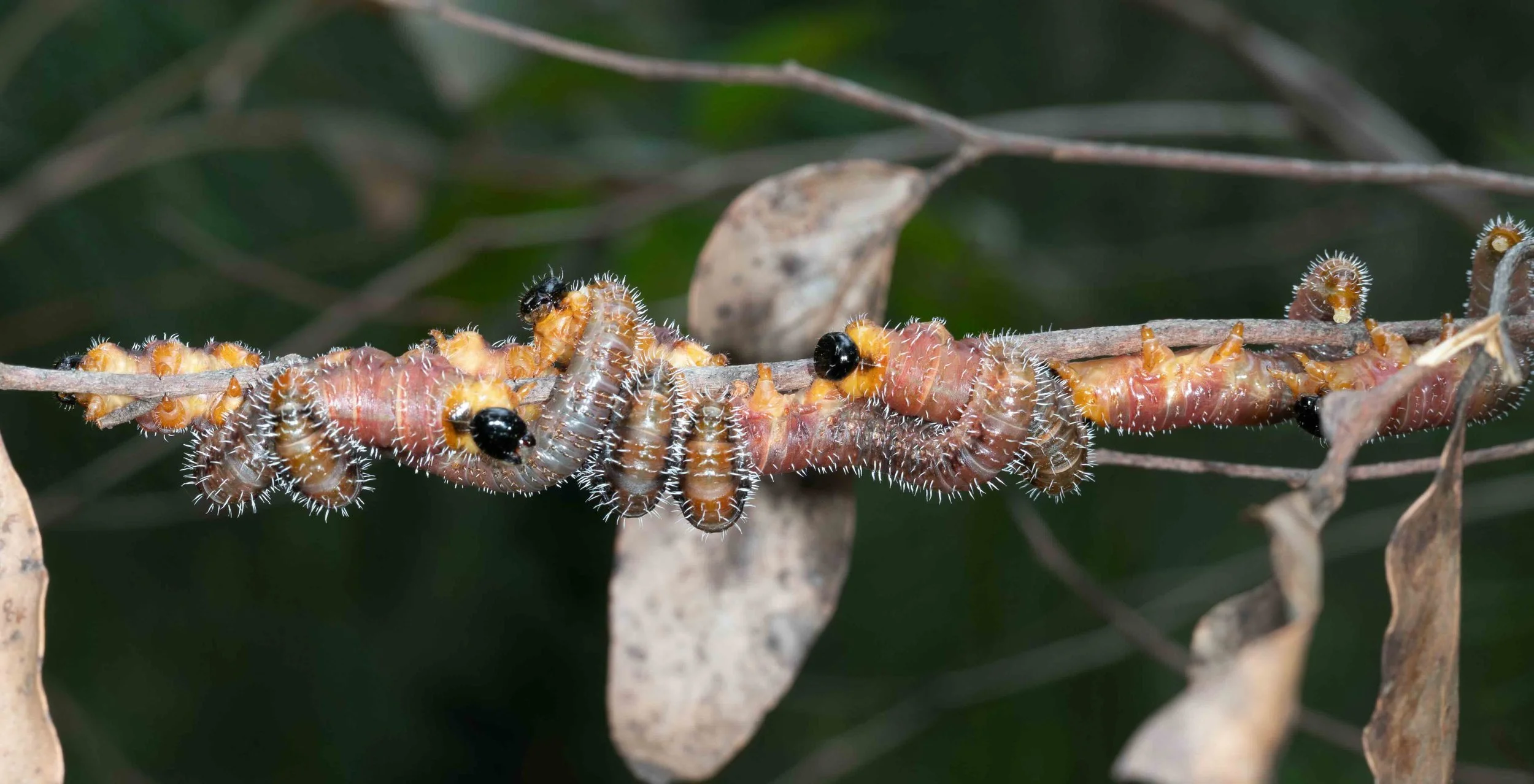
On 20th November we spotted a clutch of 12-13 Perginae larvae in an upper branch of the same eucalyptus sapling (probably E. globoidea) from which we collected the clutch 4 larvae. At the same time, I saw a clutch of 5 larvae in an Allocasuarina sapling immediately behind the eucalypt sapling. See photos below.
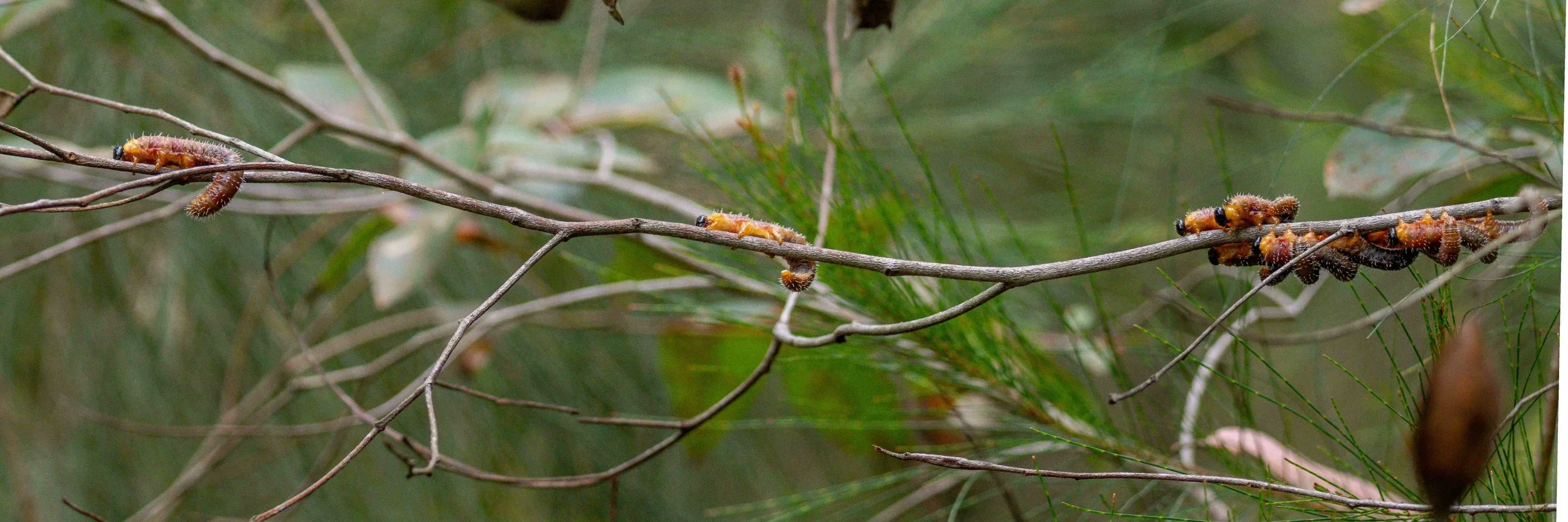
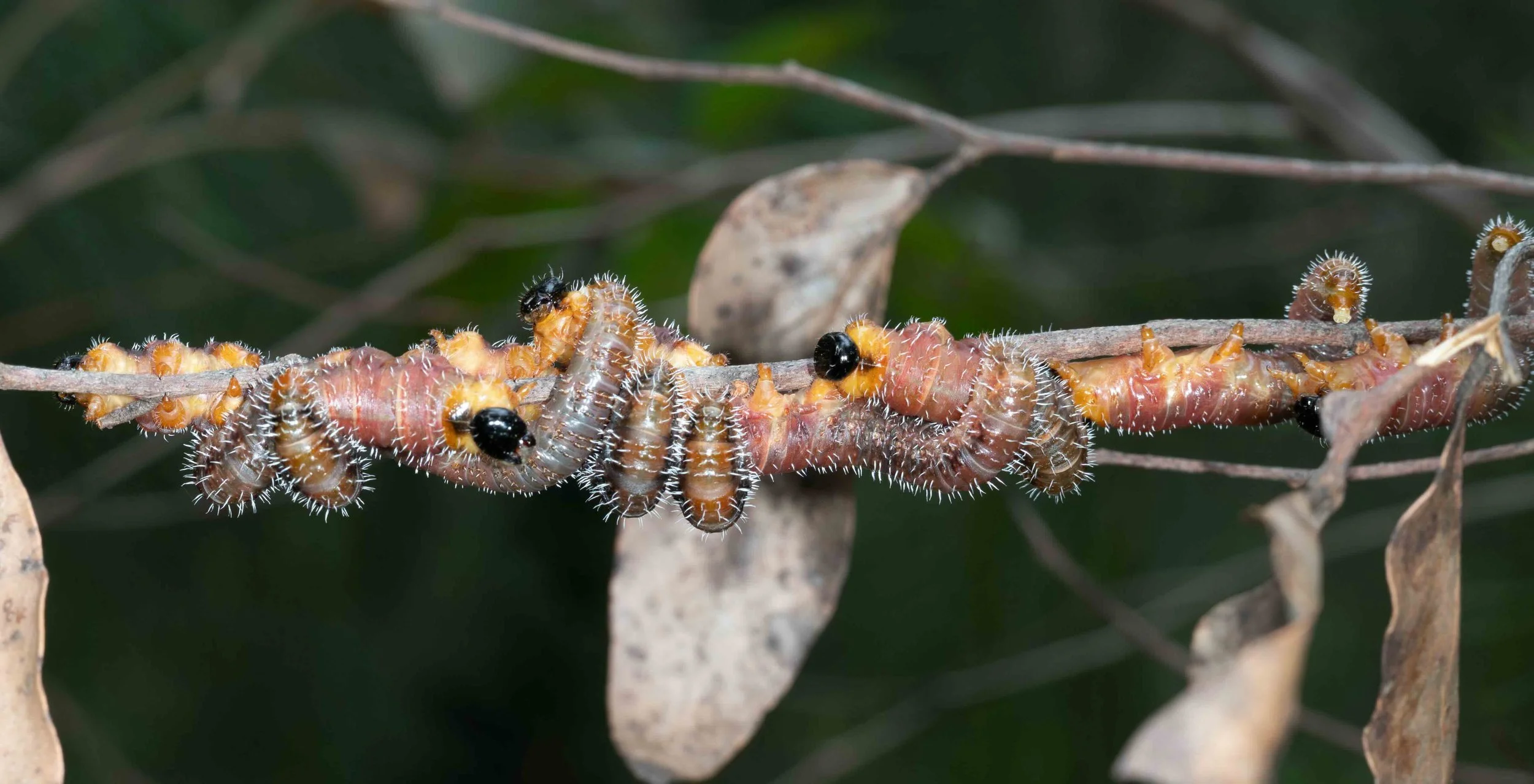
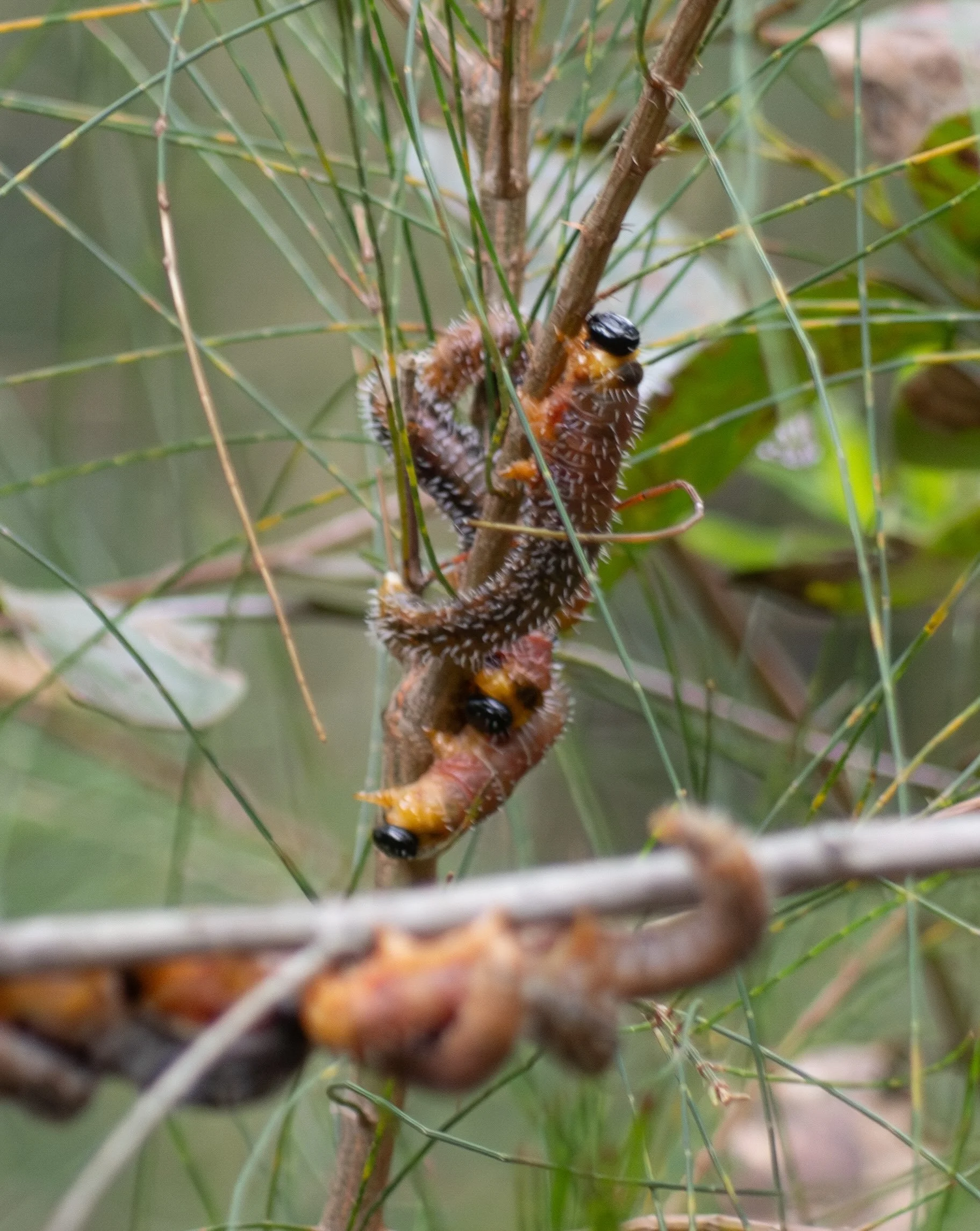
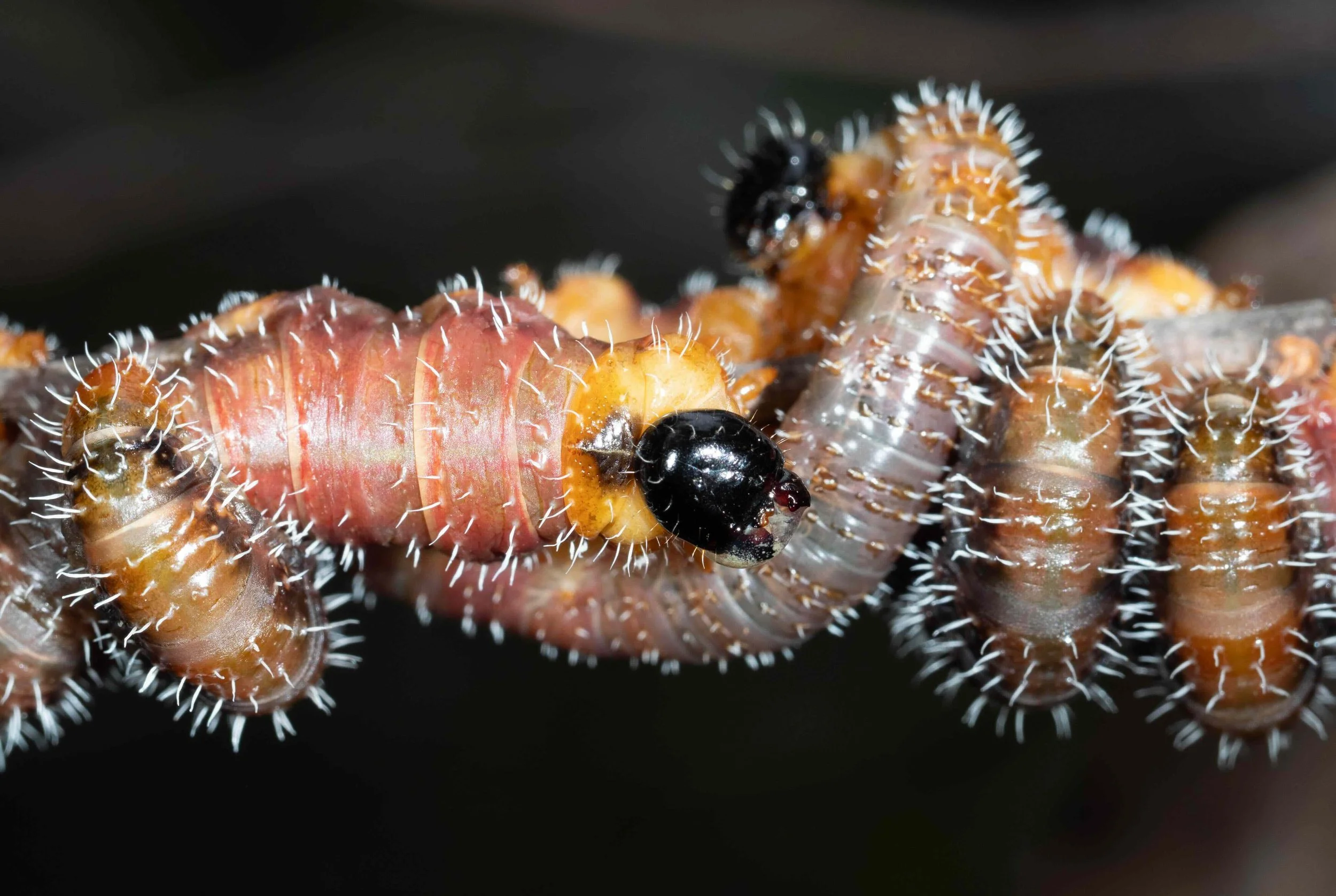
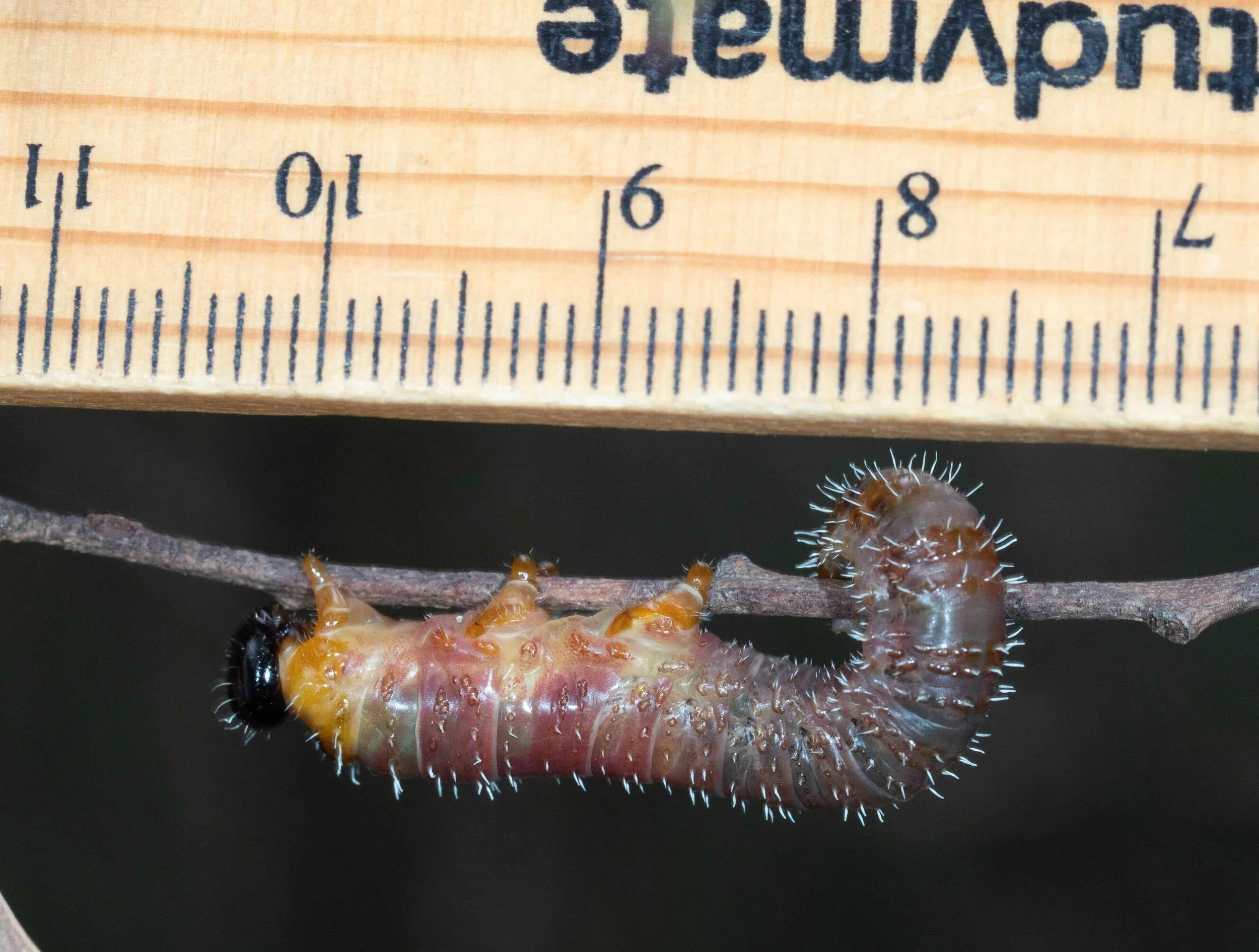
As we were just about to head off to Yamba, we decided to collect these only after we returned home.
On arriving home on 2nd December, initially we couldn’t find these larvae. However, I sighted 3 again on 5th December, high up on the trunk of the sapling. A corpse of a larva was in the Allocasuarina sapling.
We collected these larvae and transferred them to a metal cage. They grouped together quickly and began feeding on the vegetation on their branch.
Kerri found another larva (shown below) high up on the trunk of the same eucalypt on 6th December. We added it to the other 3 larvae.
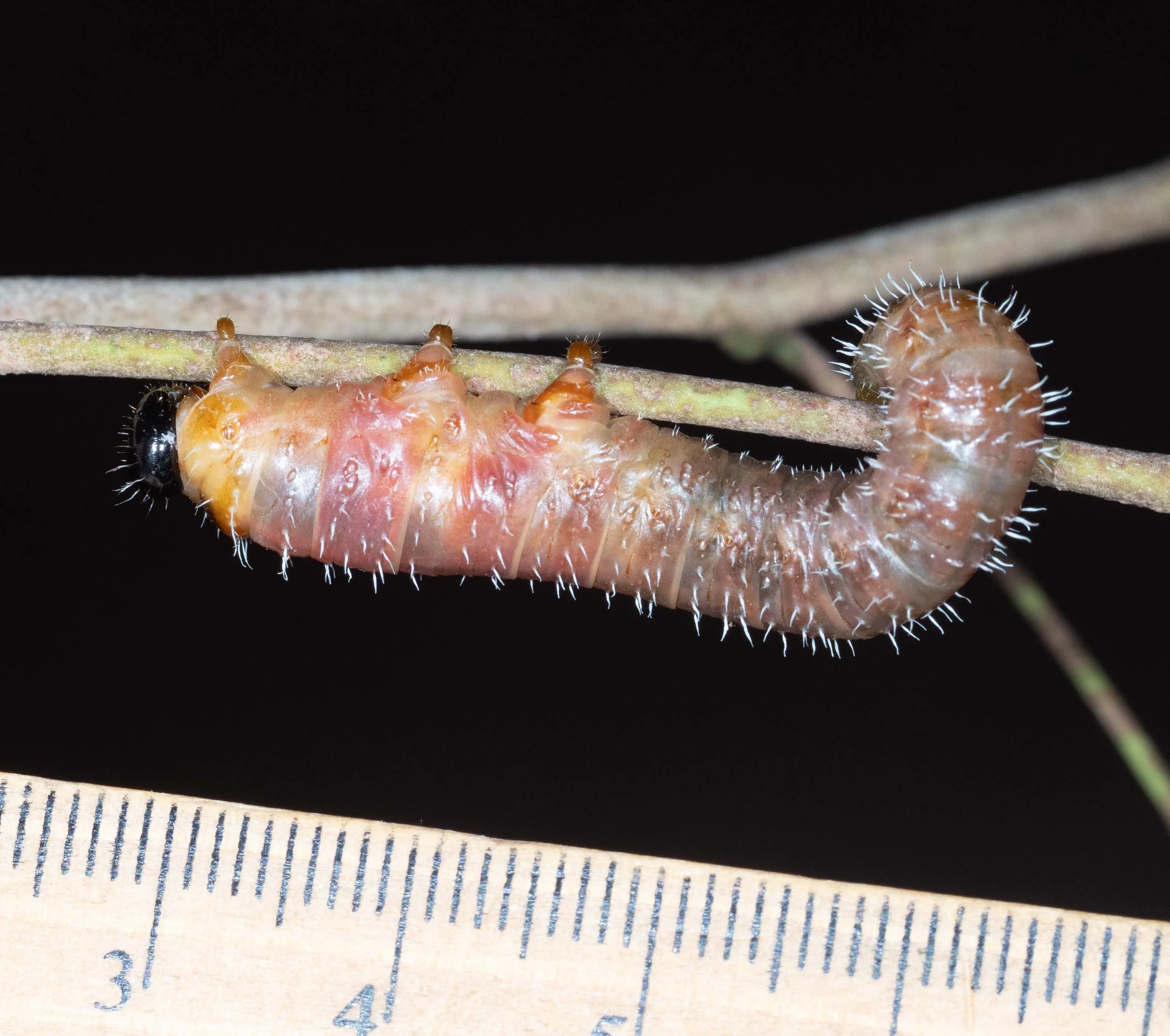
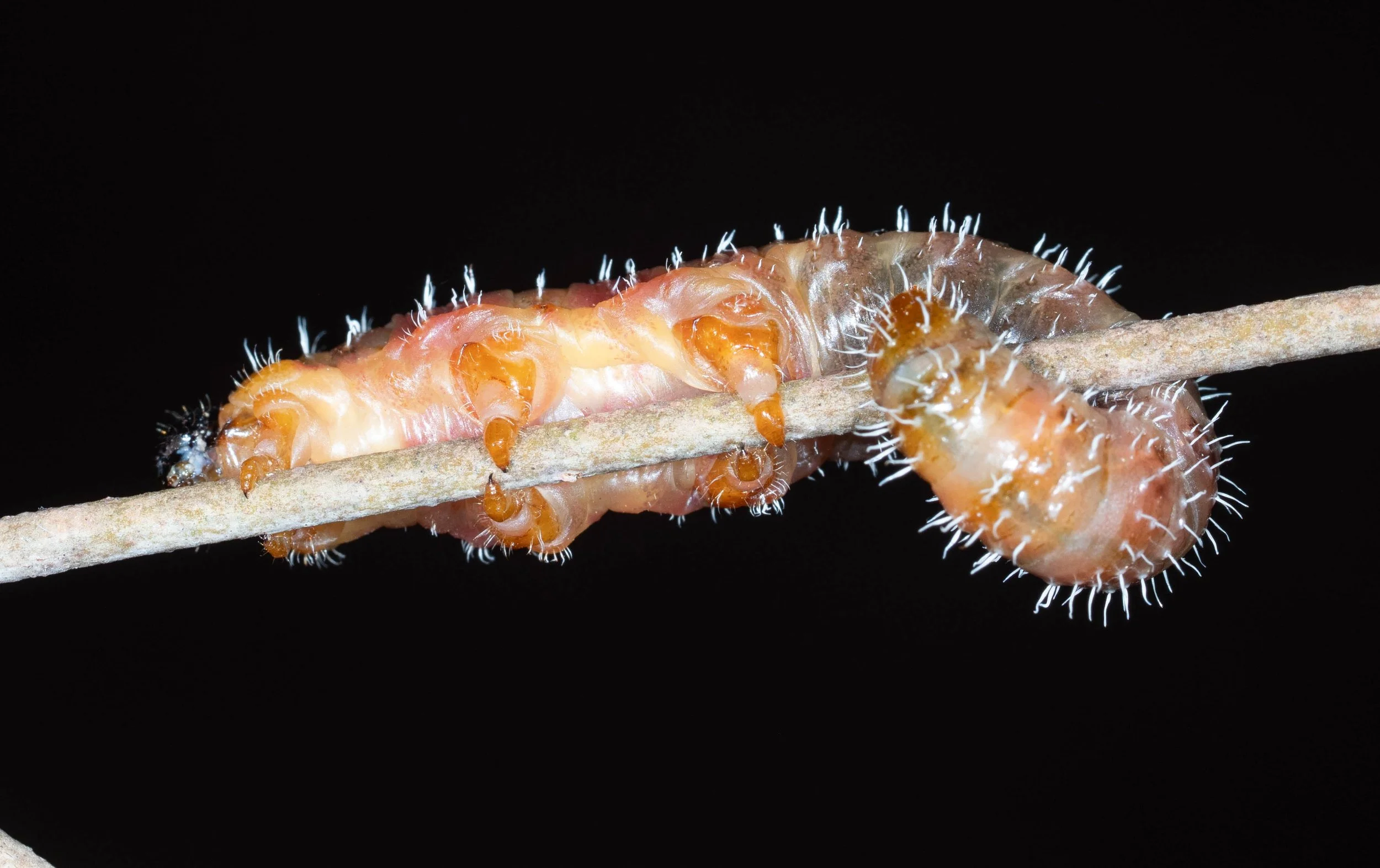
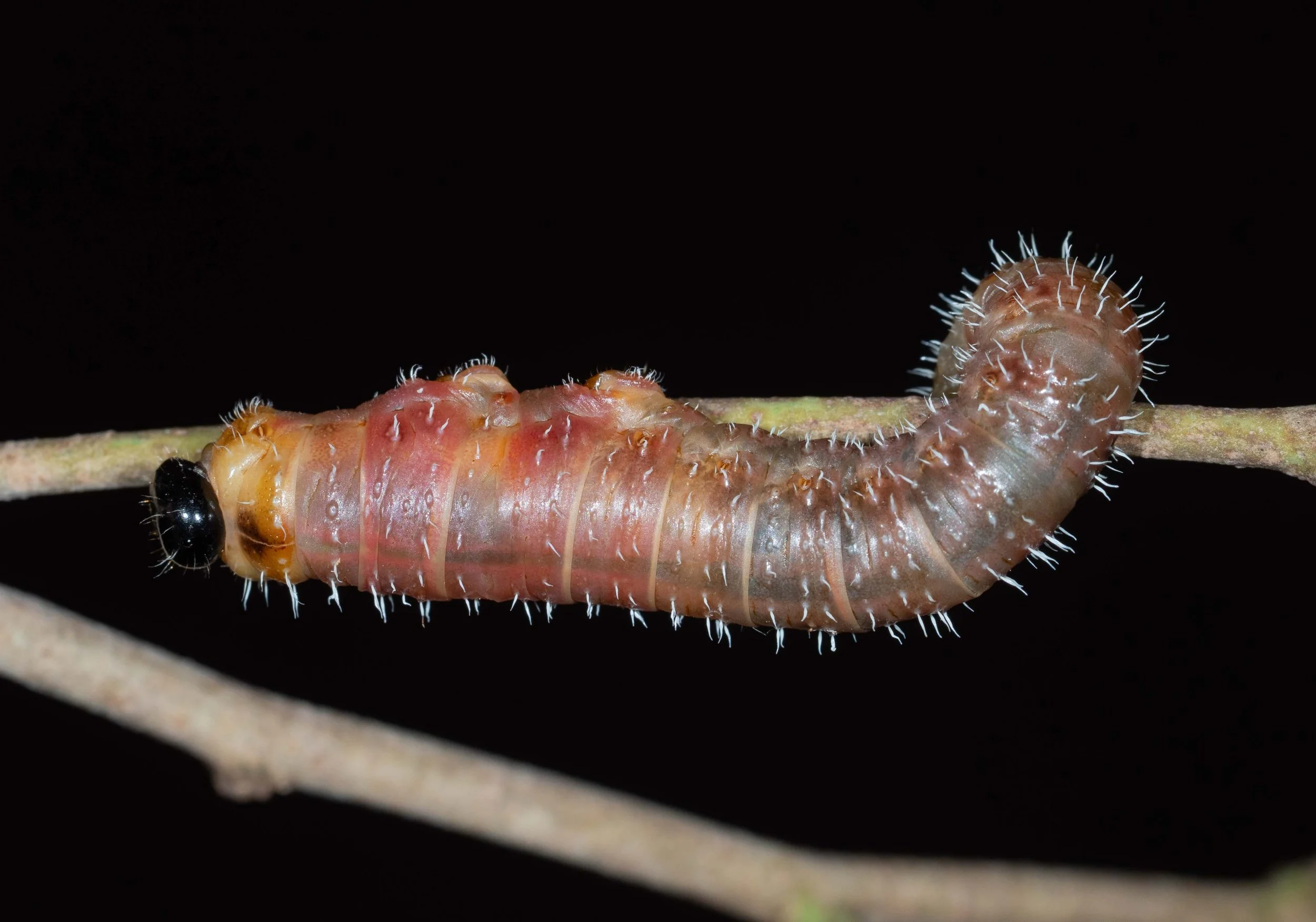
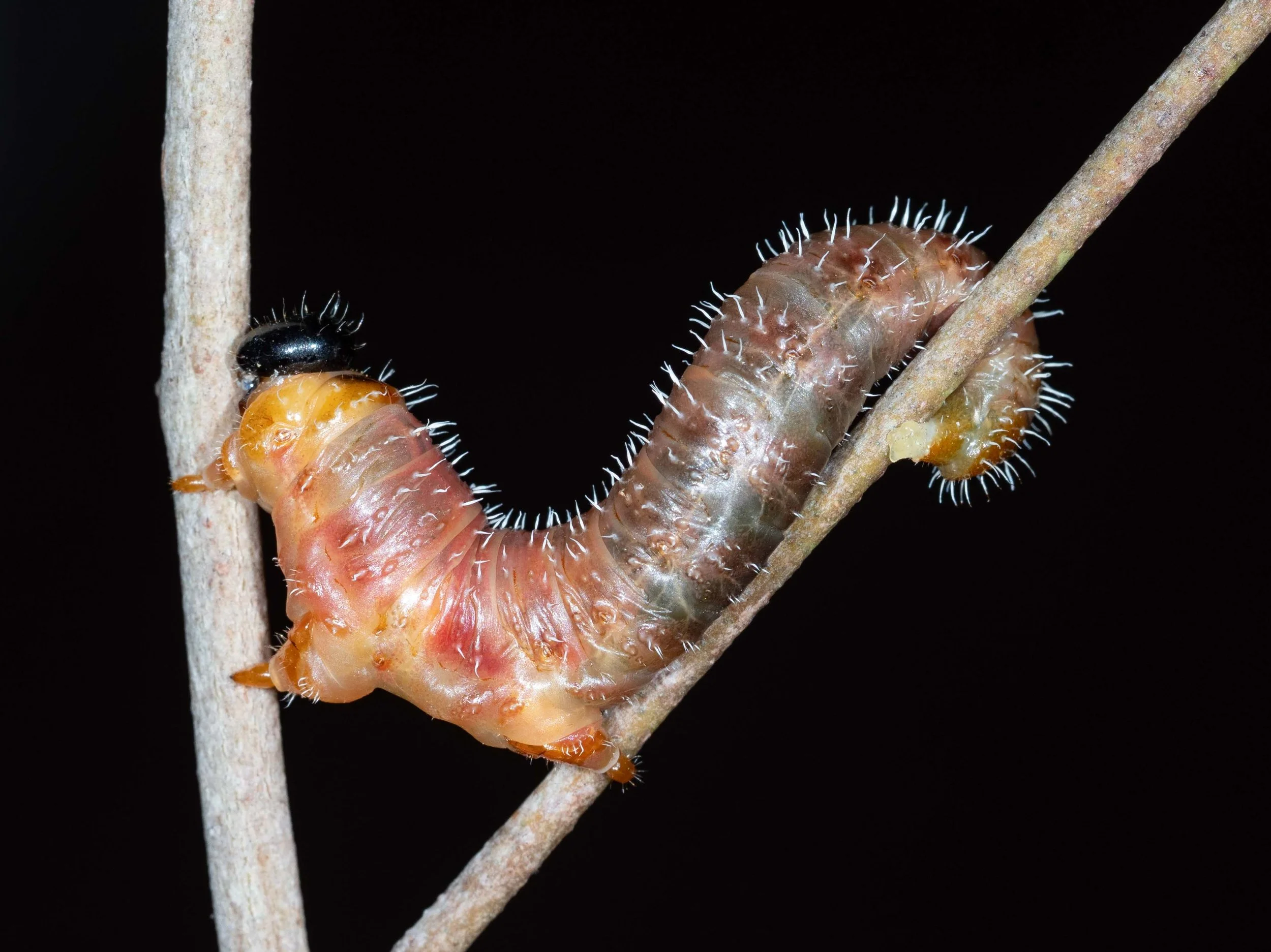
8th December, morning
All 4 of the larvae have come together in a single cluster on a leaf. They have been feeding actively as evidenced by the bite marks on the leaf and the amount of frass in the bottom of the cage.
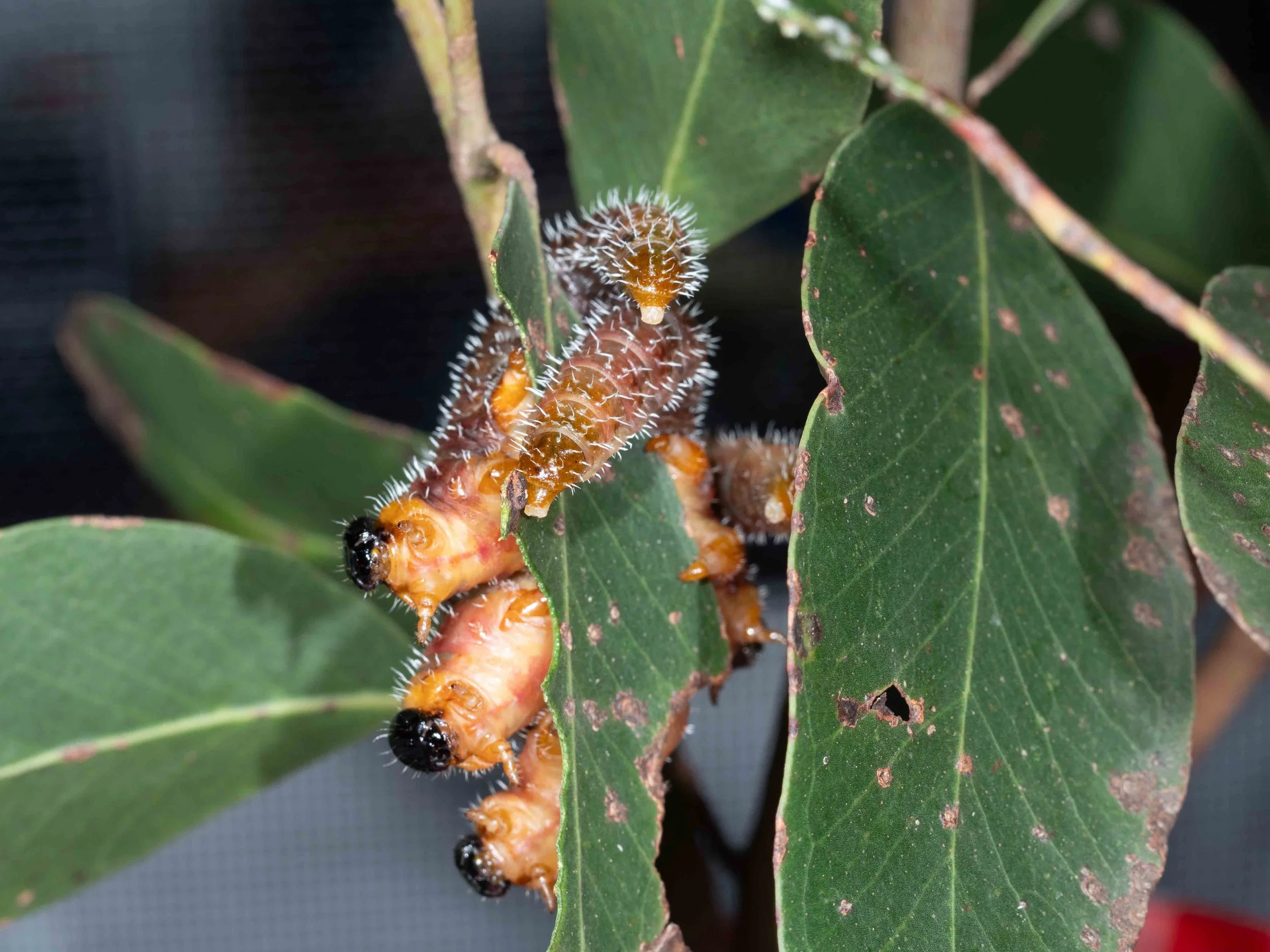
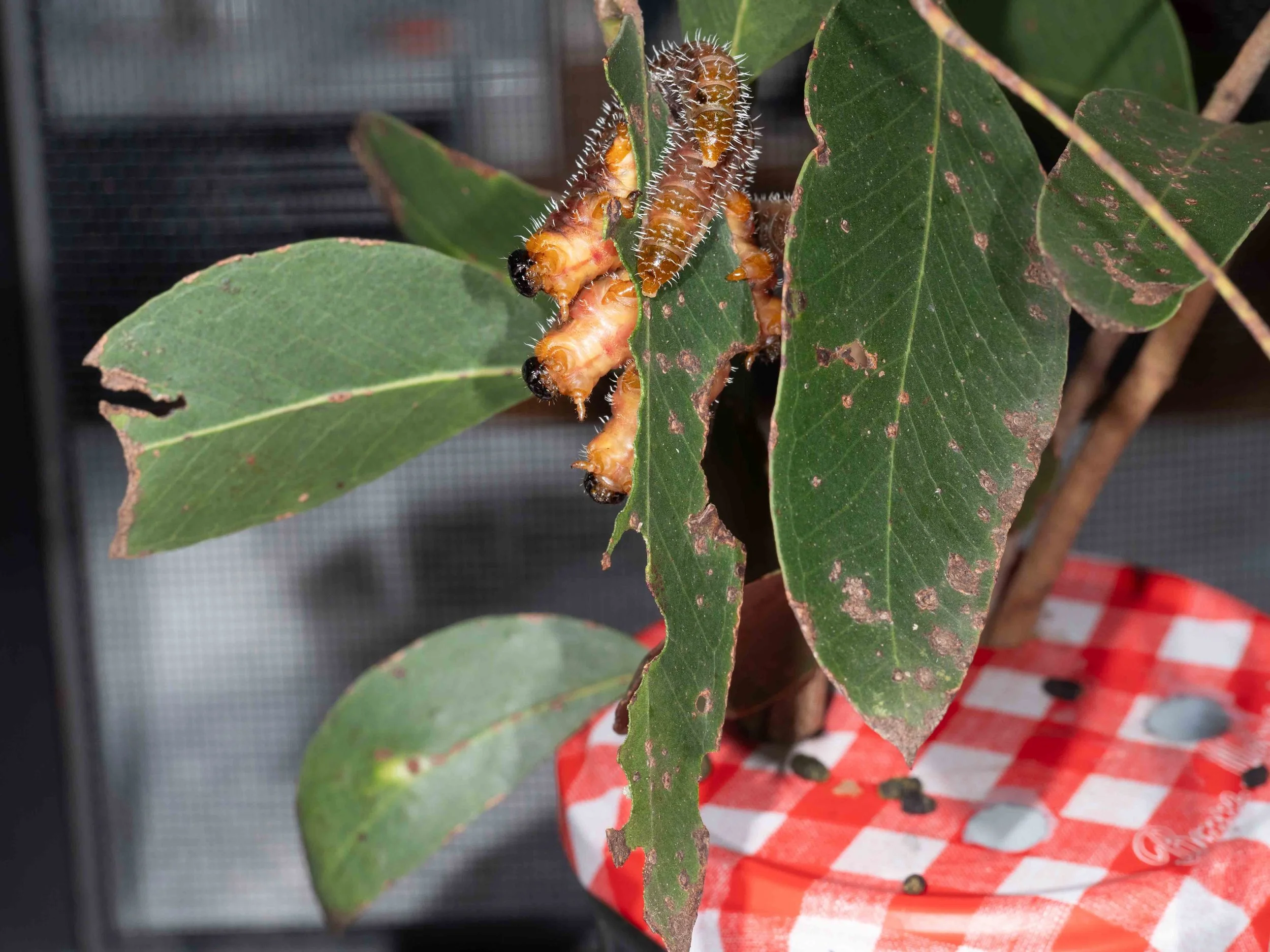
13th December morning
All 4 larvae continuing to feed actively overnight. Cluster either in one or two groups. Longest larva (last one to be added to culture, shown below) is 42mm long.
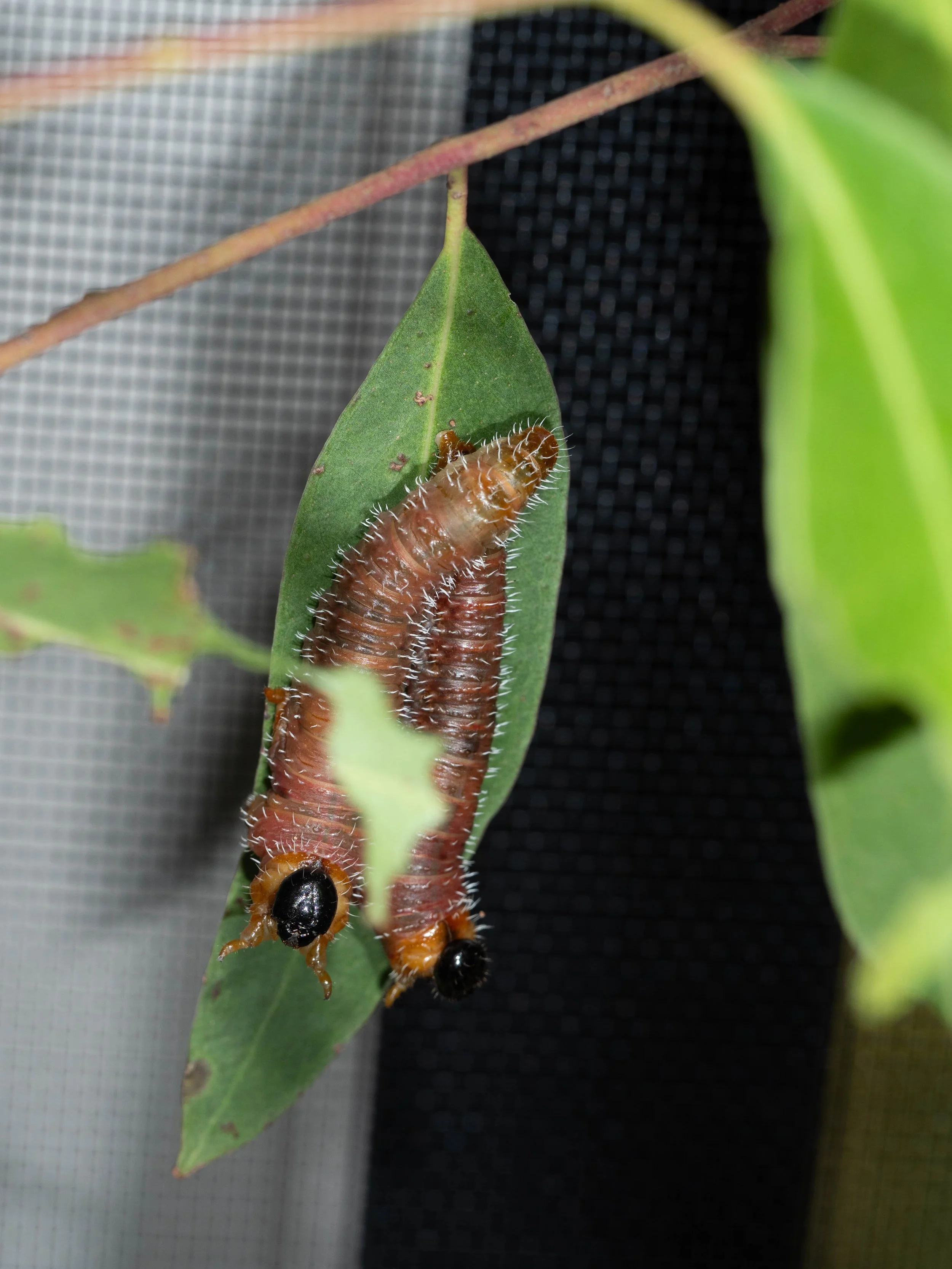
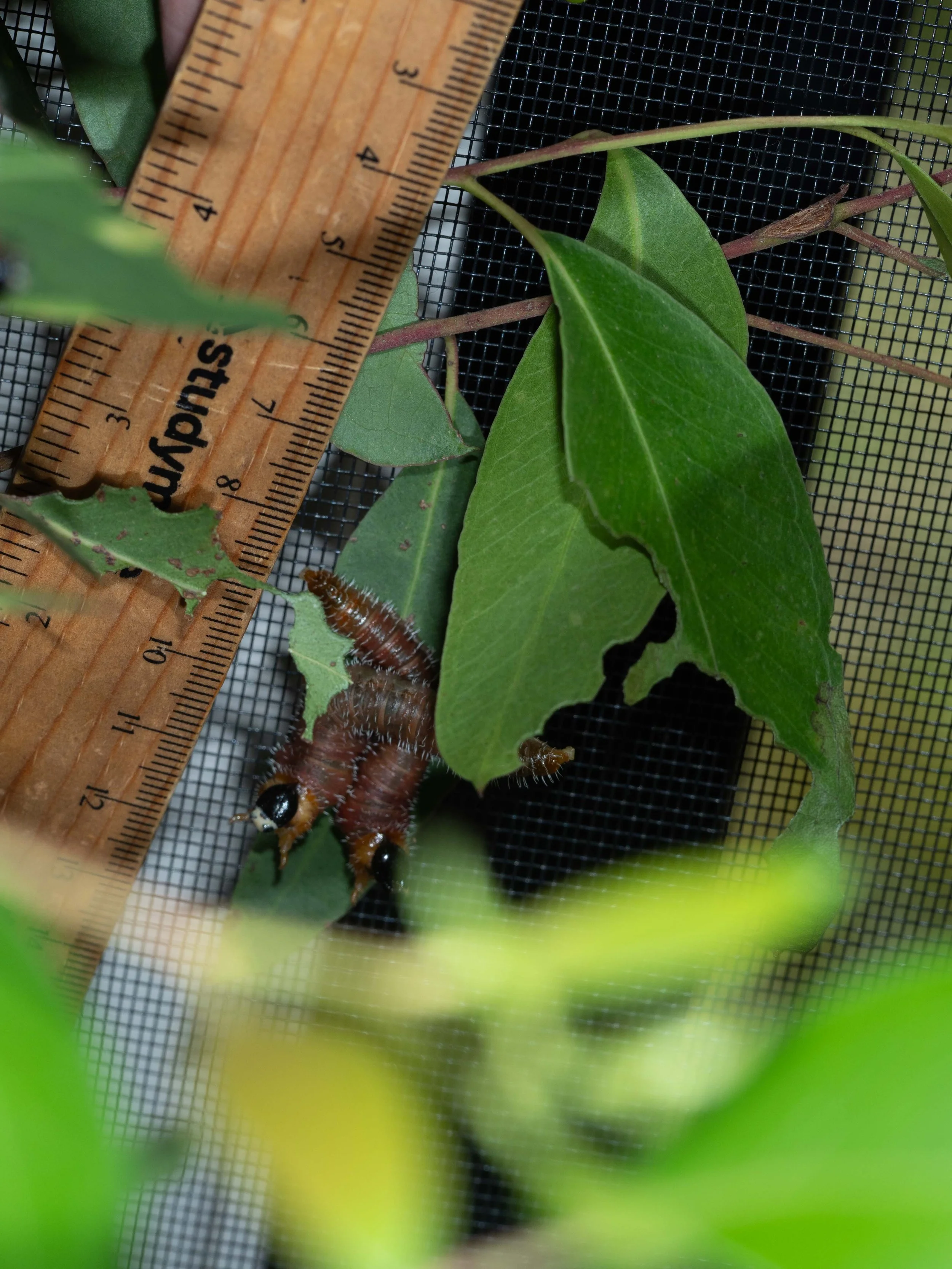
15th December morning
All 4 larvae in cluster
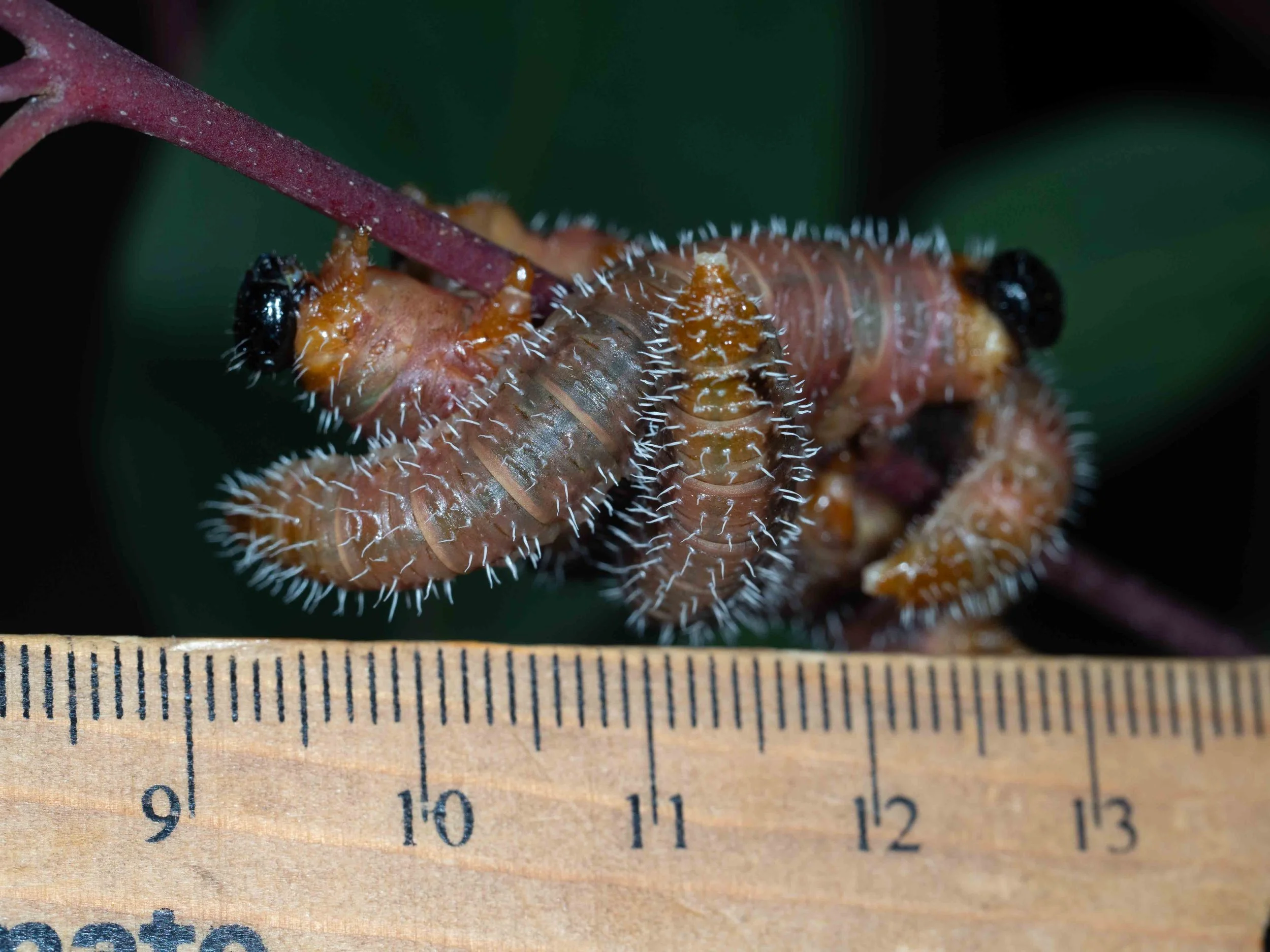
17th December evening - 18th December morning
One larva found crawling around on bottom of cage. The next day we moved it into a plastic box with peat moss and vermiculite.
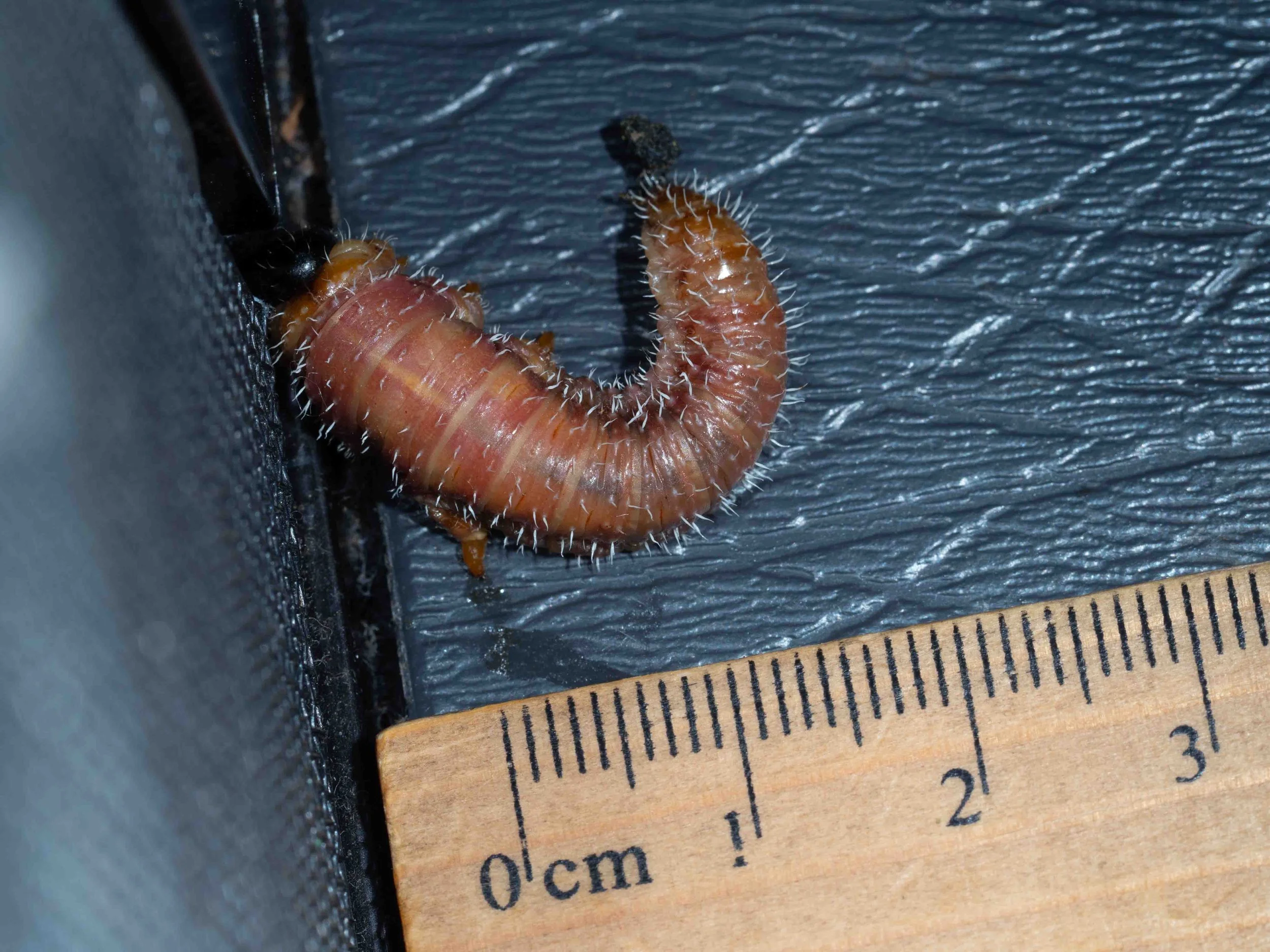
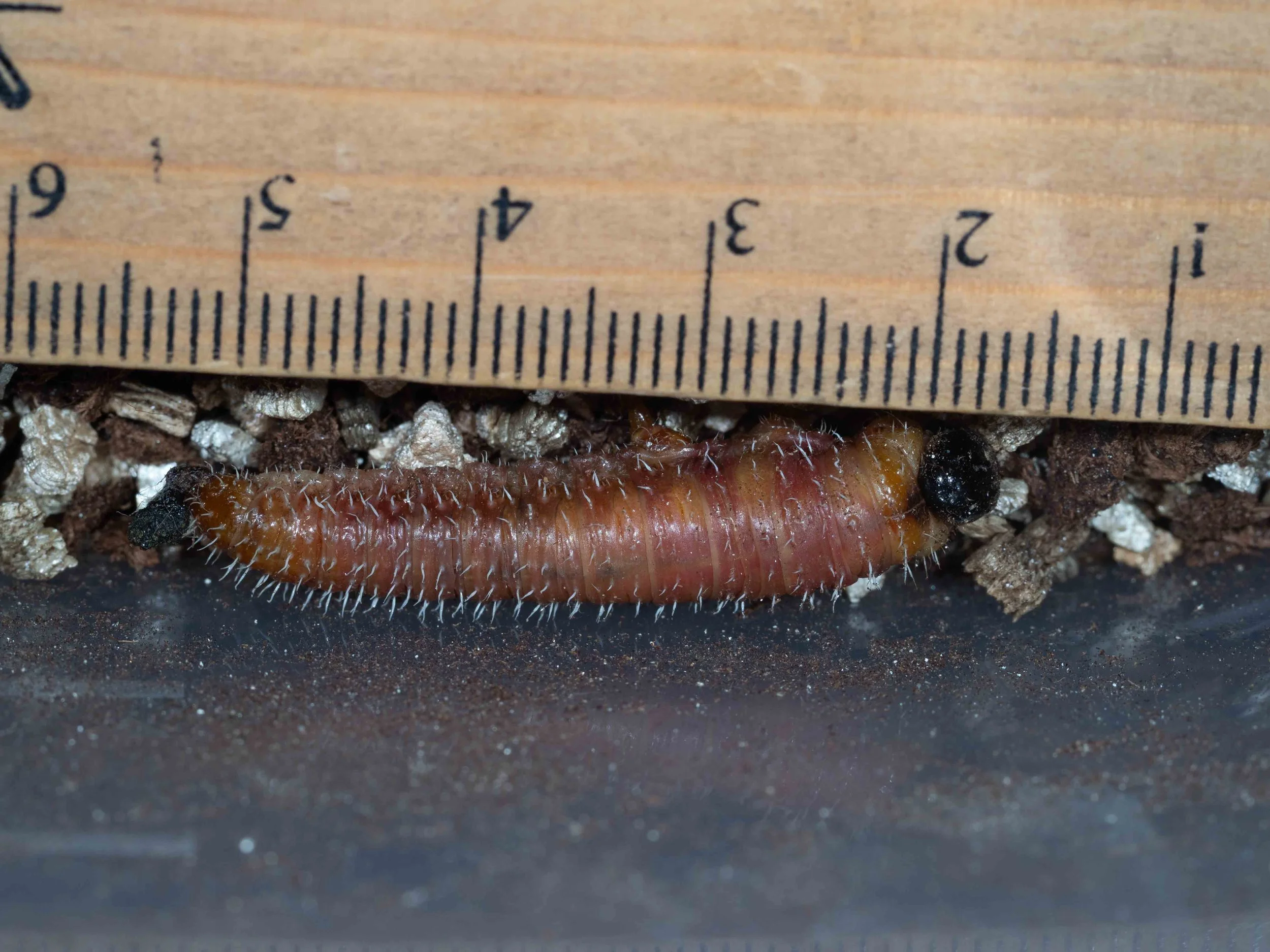
It crawled around on the surface of the medium. We placed a piece of wood in the box. After a while the larva started to dig into the medium alongside the wood, apparently pressing its body against it as it dug down.
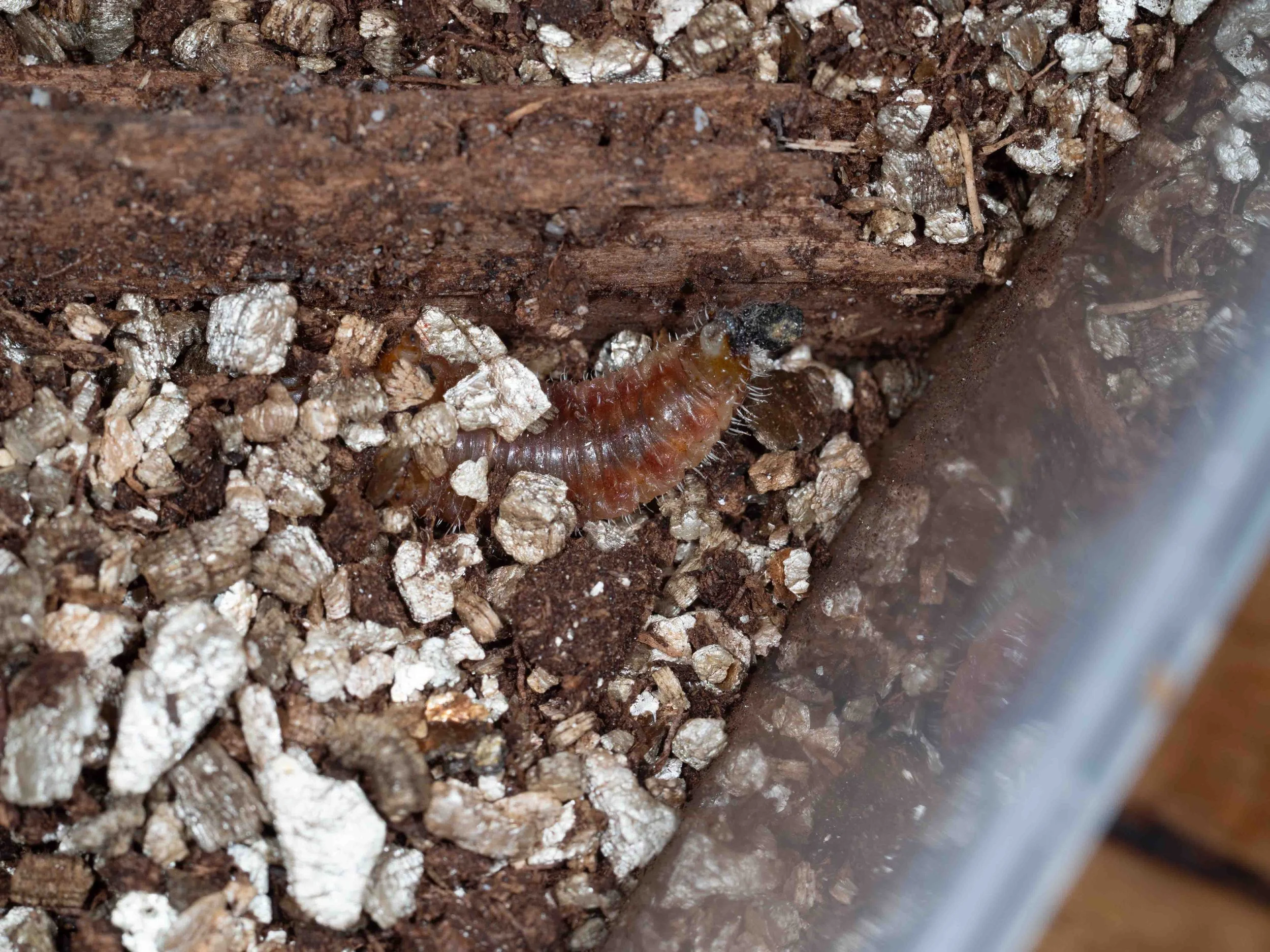
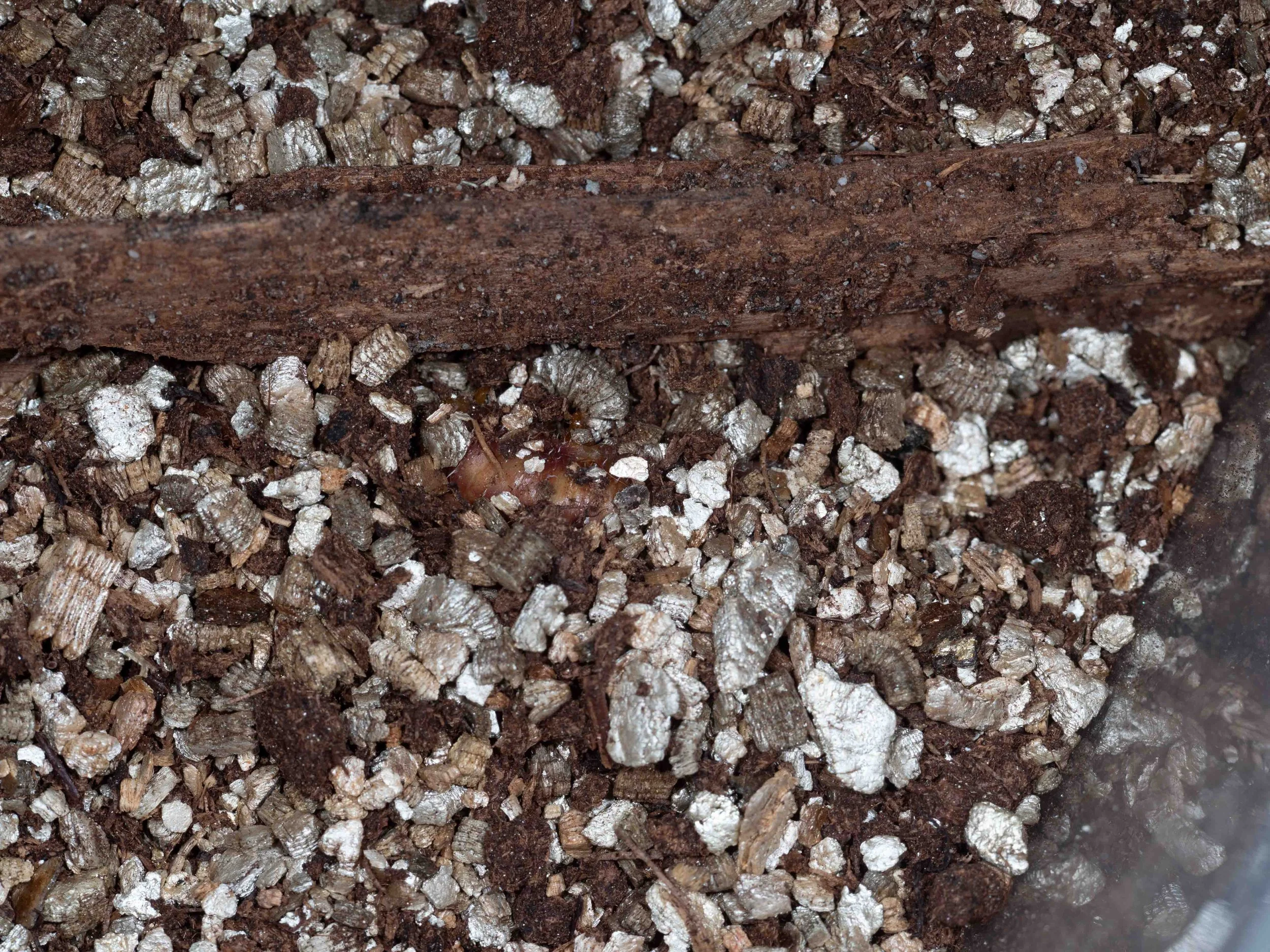
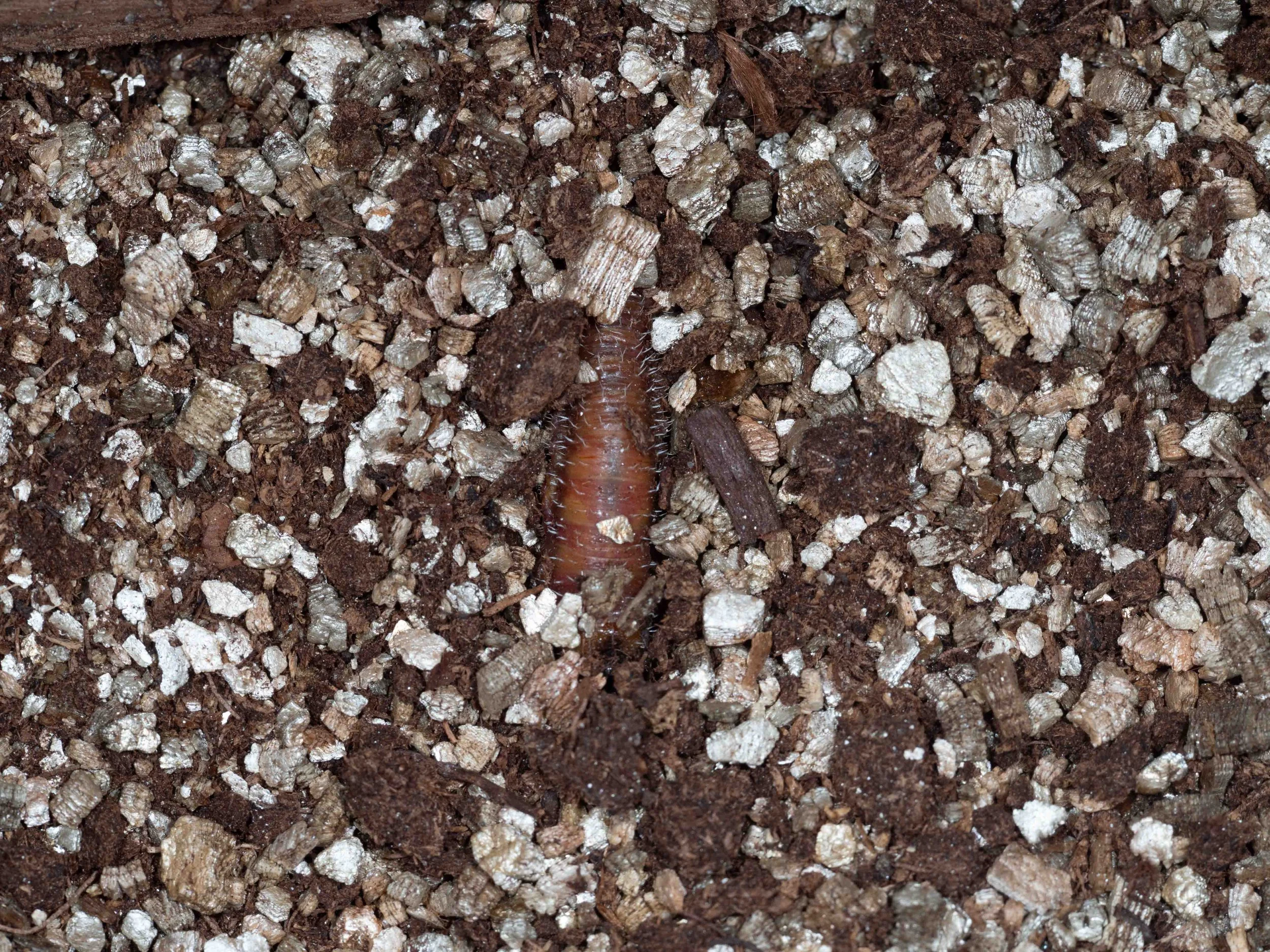
It disappeared after several minutes and has not been sighted since.
18th December afternoon
Another larva seen crawling around on the bottom of the cage.
We moved it into the plastic box. It crawled around on the surface, sometimes over the surface of the piece of wood, but didn’t attempt to bury itself.
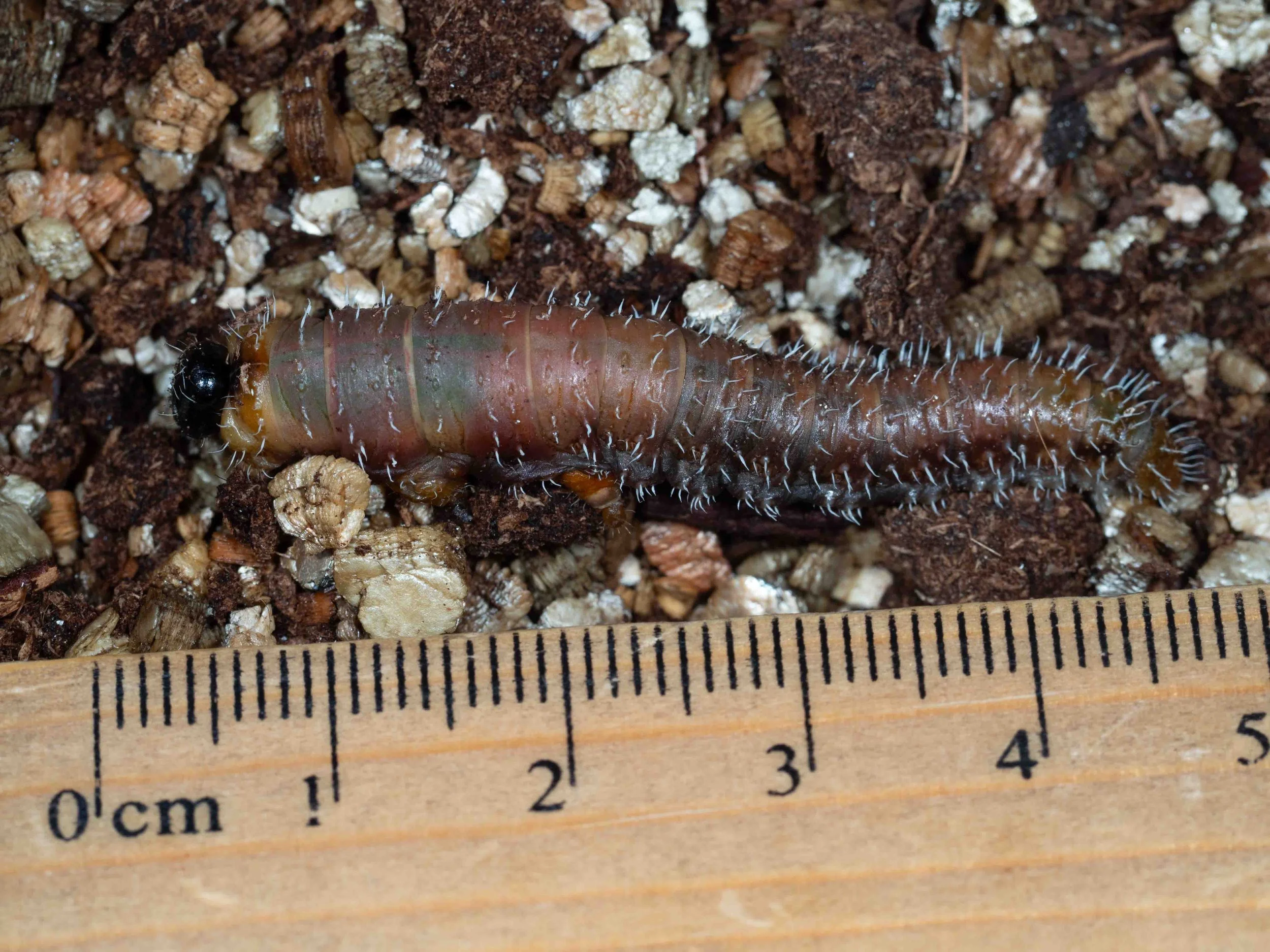
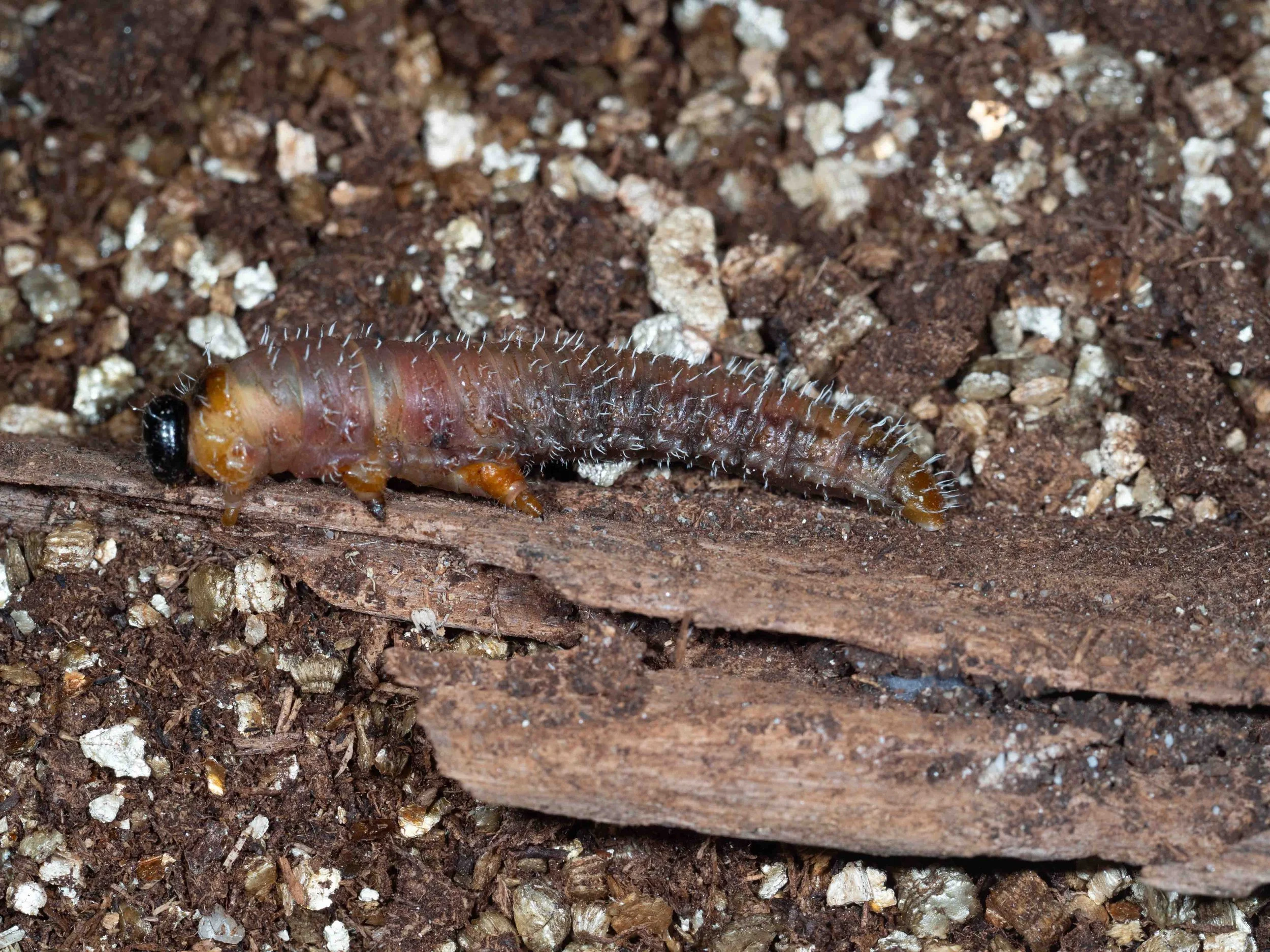
We put some vegetation into the tank, which the larva began feeding on. So we then moved it back into the cage with the other 2 larvae. It rejoined those larvae and all 3 are feeding normally.
20th December
One larva was found wandering around on the bottom of the cage, so we put it back into the plastic box holding the larva that had gone to ground. After a day or so, it also went to ground and hasn’t reappeared.
The two larvae left in the cage continued to feed normally, being supplied with fresh vegetation occasionally.
23rd December
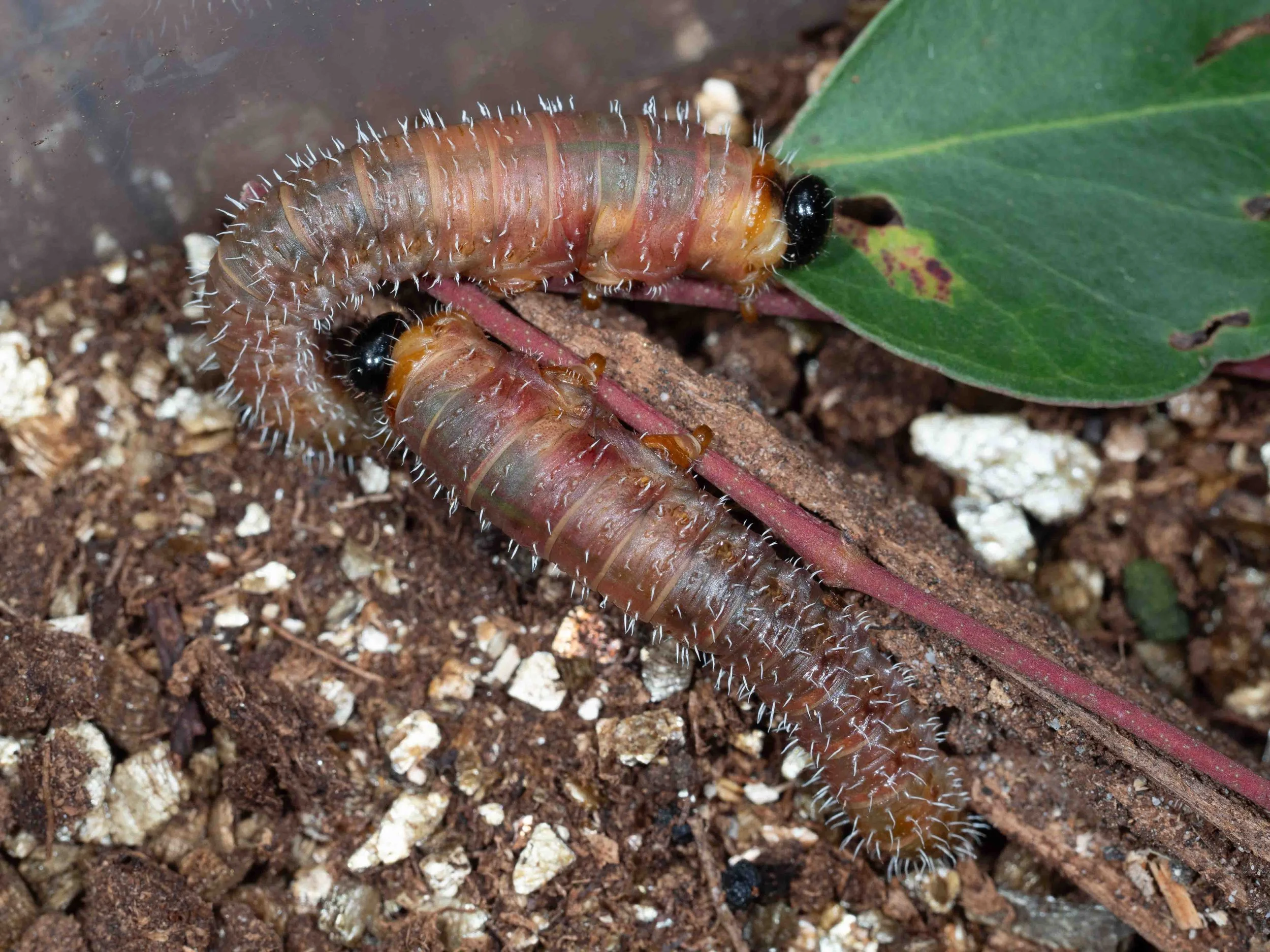
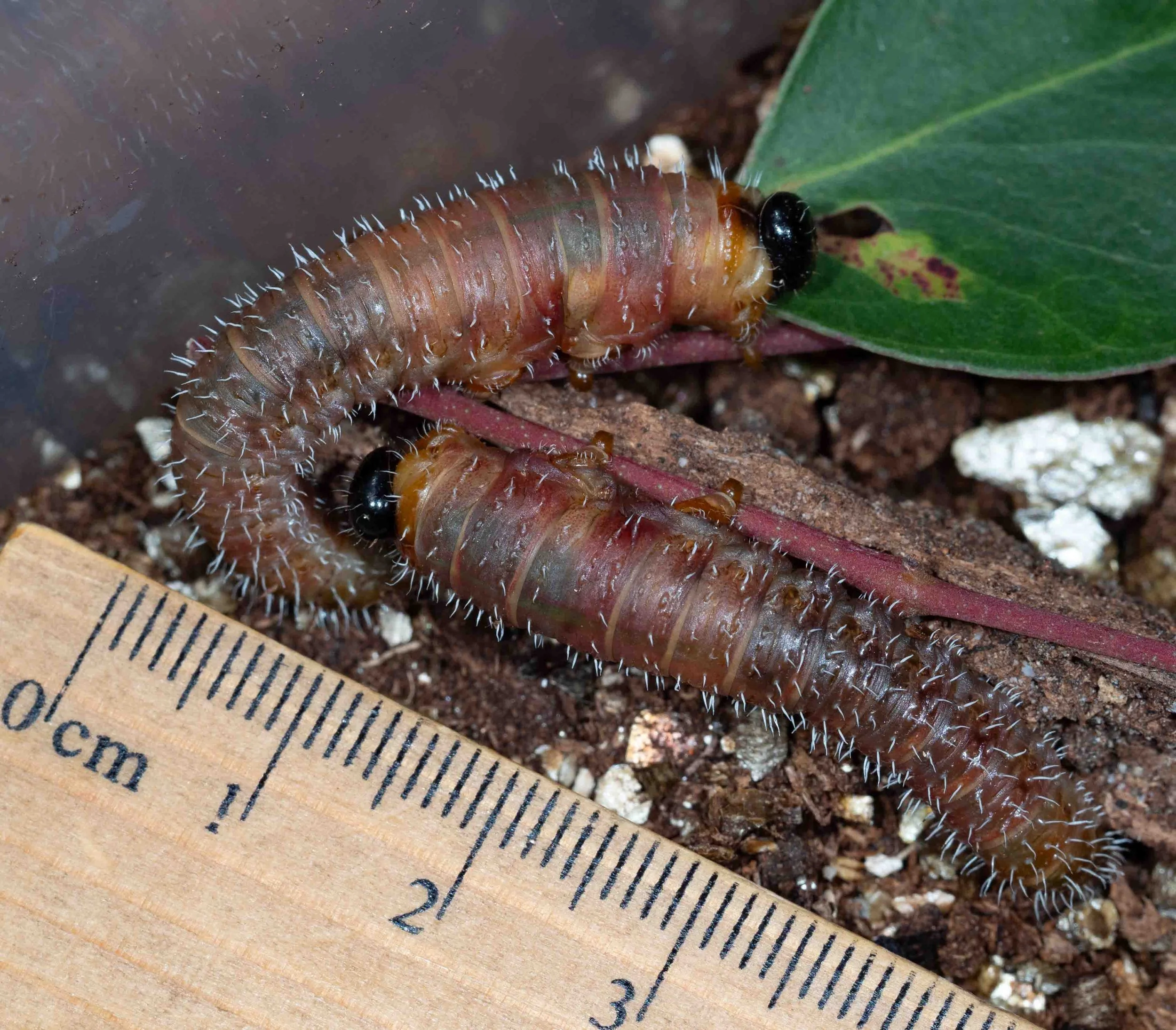
The two remaining larvae in the cage were unsettled and we moved them to the tub. However they showed no signs of digging and when fresh vegetation was placed in the tub, they crawled onto it and started feeding. (photos below). We returned them to the cage with a branch of fresh leaves and they continued to feed.
1st January
The pair in the cage still feeding well, sometimes together, sometimes separately. No sign of the two larvae that went to ground previously.
3rd January
One larva went to floor. Transferred to tub, by 7:00pm it had buried itself.
11th January
Last larva in cage found curled at bottom of cage, moved to tub. No sign of digging after several hours, still curled up.
Fixed as a voucher specimen in 100% ethanol. #PW075
12th April
Soil removed from tub, found 3 intact pupal cases. Held in plastic box.
This is a workbook page … a part of our website where we record the observations and references used in making species identifications. The notes will not necessarily be complete. They are a record for our own use, but we are happy to share this information with others.