
Nitela sp. (Miscophini)
Workbook
Update: 26th Aug 2026
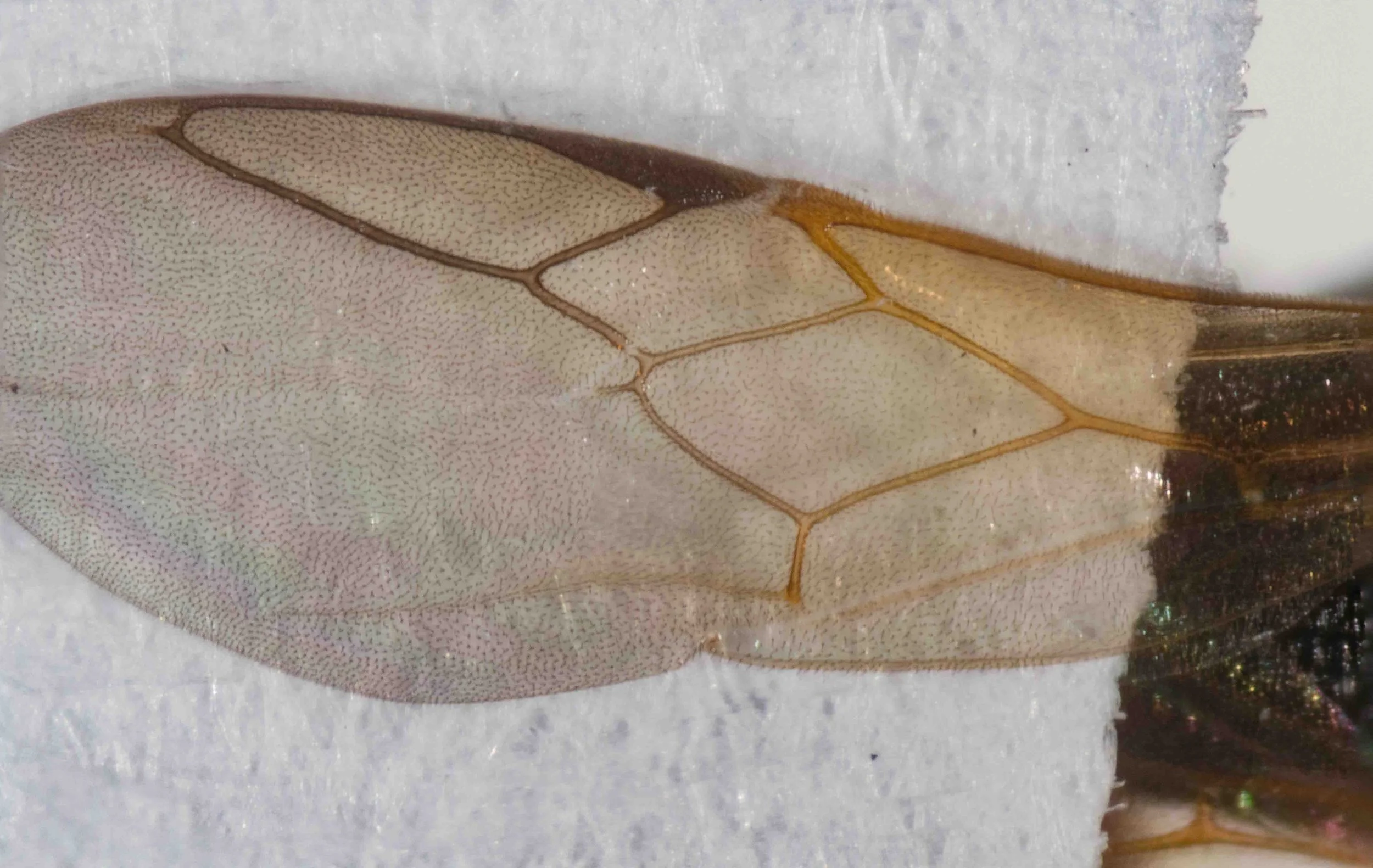
Yesterday I examined the ANIC collection* of N. kurandae, and can confirm that the venation of that species differs from specimen #2605A.
In N. kurandae, the recurrent vein meets the submarginal cell at towards the distal end of the cell, or is almost interstitial in some specimens (as described by Turner 1908).
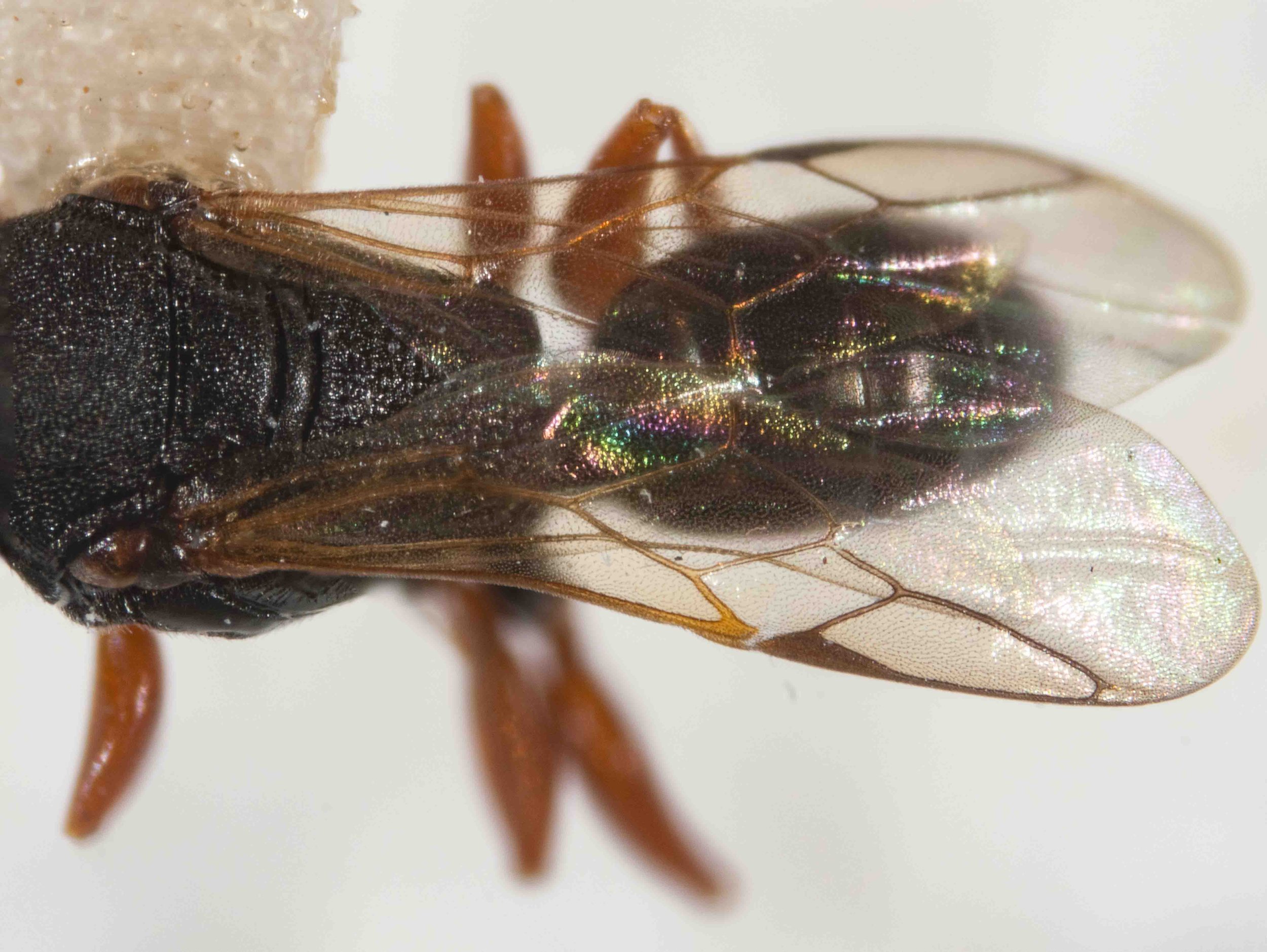
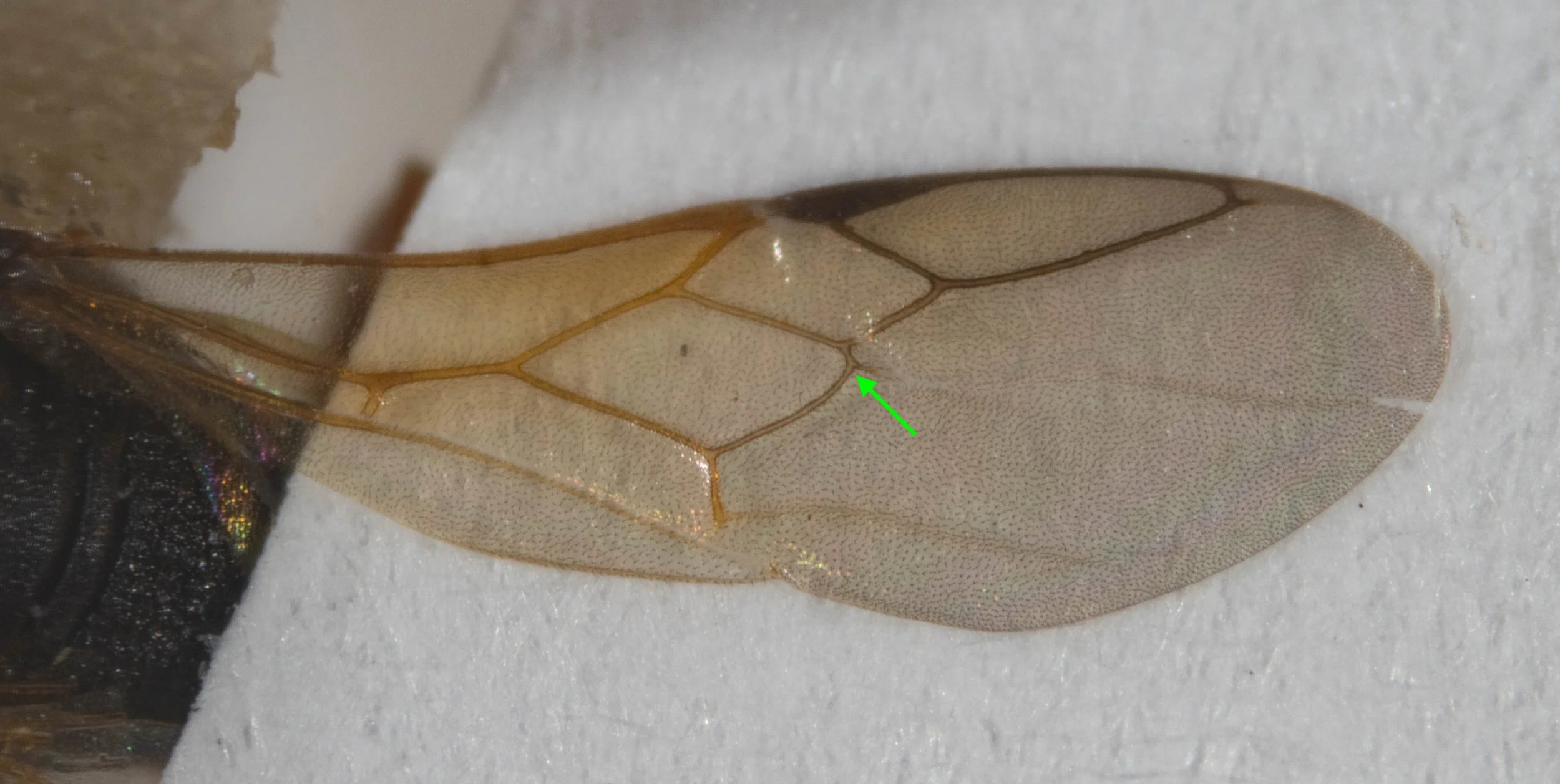
In contrast, the recurrent vein of #2605A bears an obvious ‘stub of vein’ just before its junction with the submarginal cell. As such it appears to meet a vestige of SC2. This is not the case in N. kurandae.
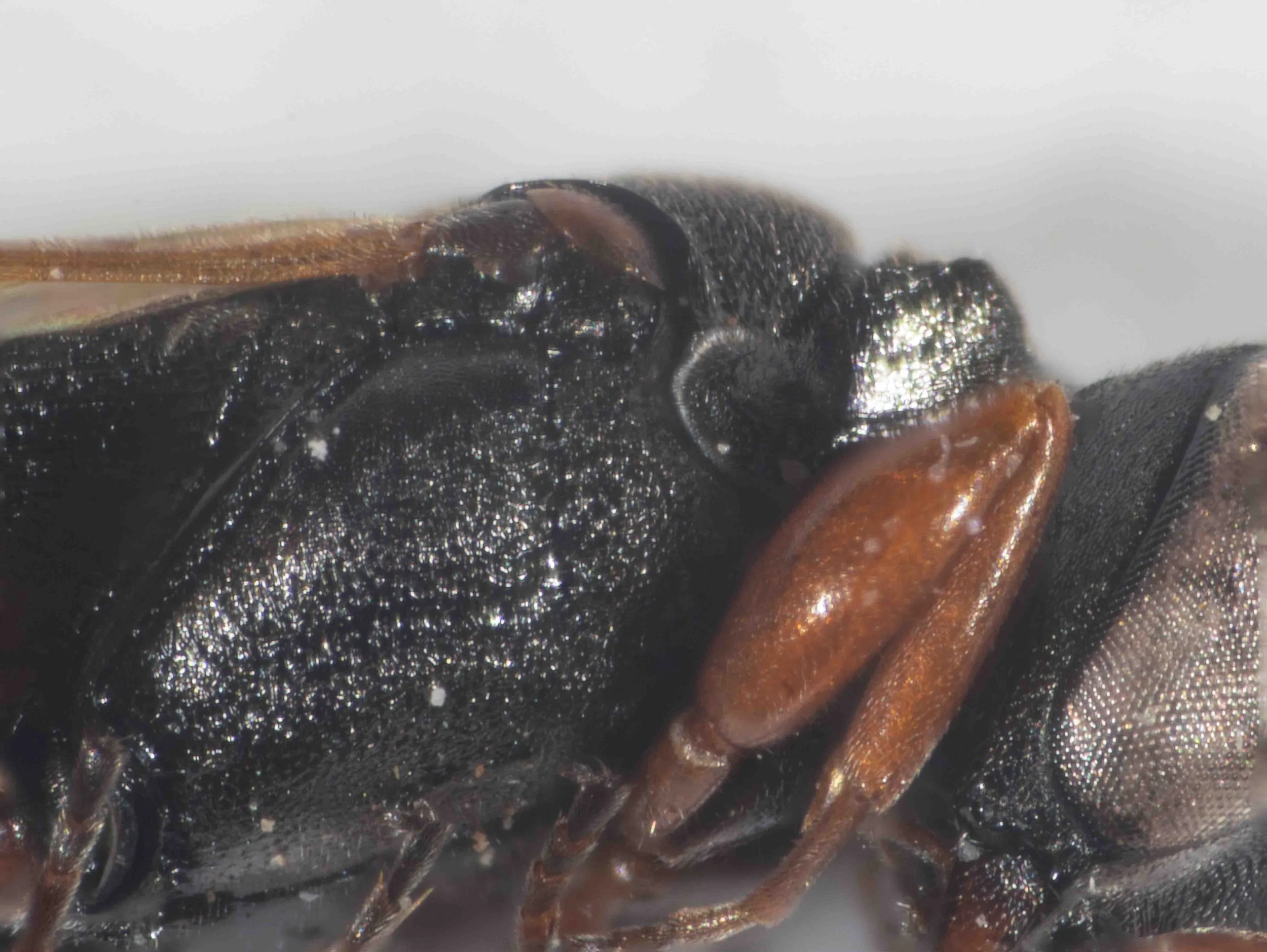
One further note: Turner described a ‘faint median carina’ on the propodeum. I could not detect this in the N. kurandae specimens, nor do I see it in #2605A.
*Although the N. kurandae holotype is in BNHM, the ANIC collection includes one specimen which R. Matthews determined in 1999 after direct comparison with the holotype.
I also checked the N. elegans specimens, including the holotype, and the scape, pedicel, and flagellum is entirely black in all of them.
The ANIC collection of Nitela includes several undescribed species, and some of these have a colouration like that of #2605A. On my next visit to ANIC, I will take a closer look at these specimens. There may well be a match to #2605A amongst them.
A fellow iNaturalist contributor, Lachlan Copeland, observed these fast-moving wasps in northern NSW on several occasions during autumn 2026. The colour suggests N. kurandae, but as I’m still coming to grips with this genus I was keen to take a closer look.
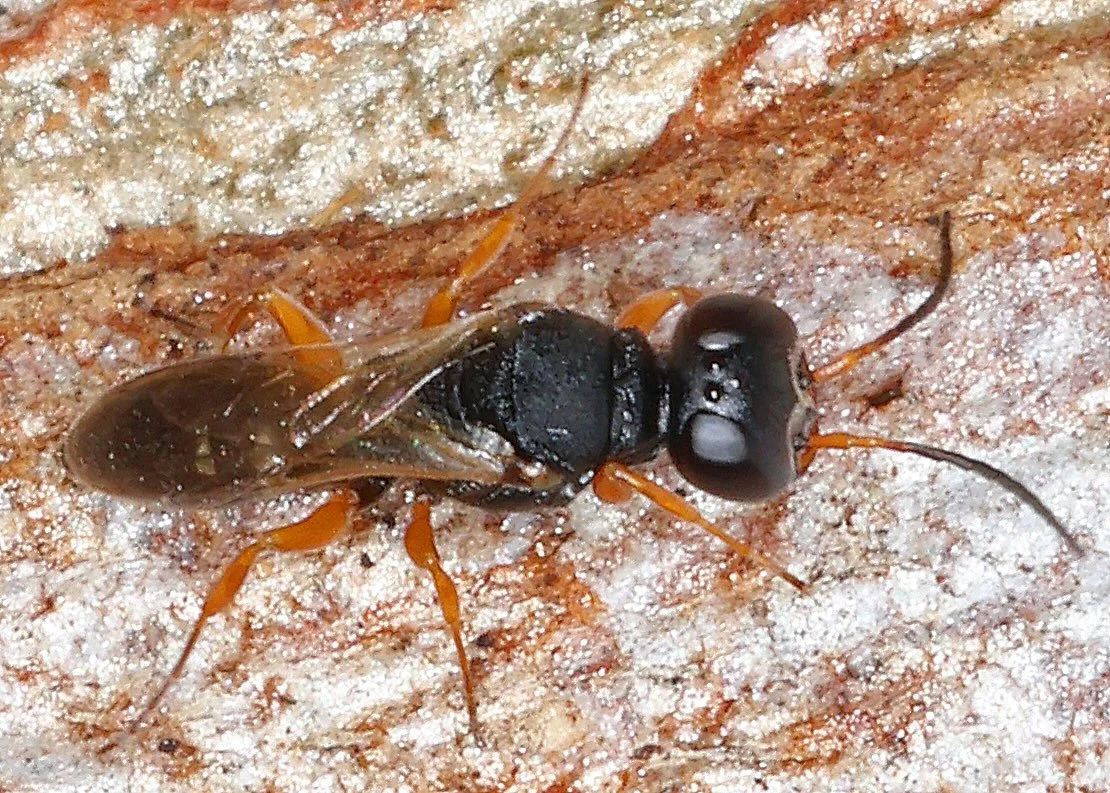
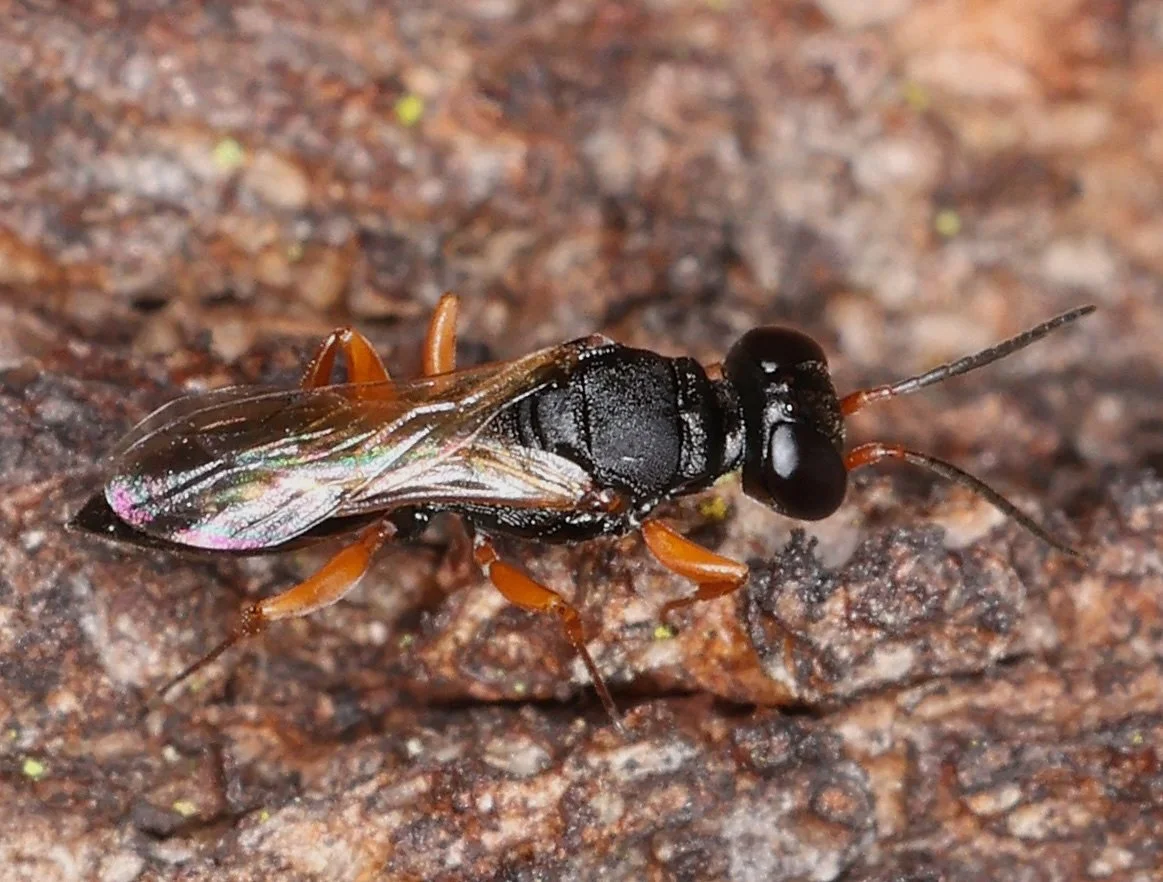
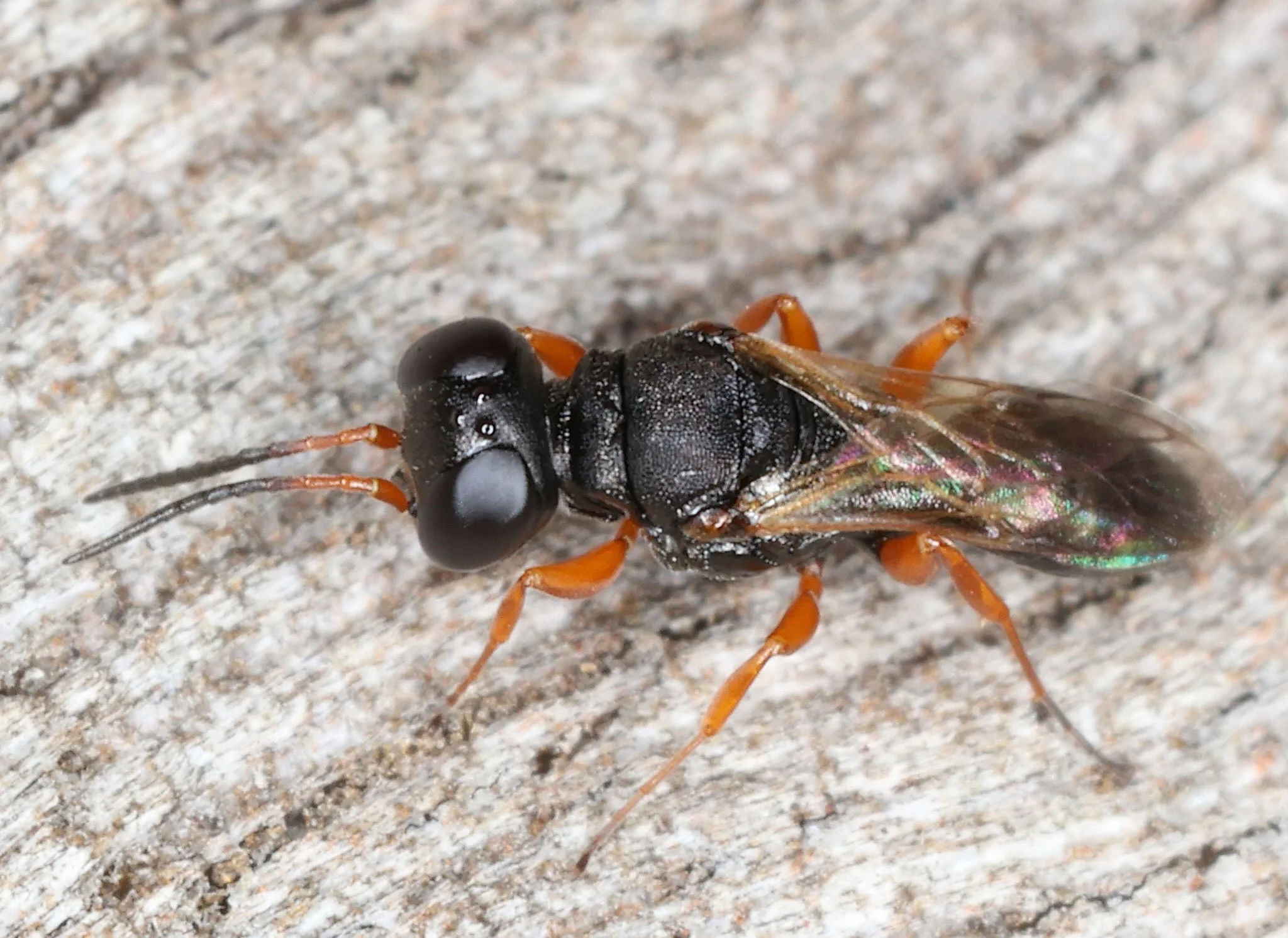
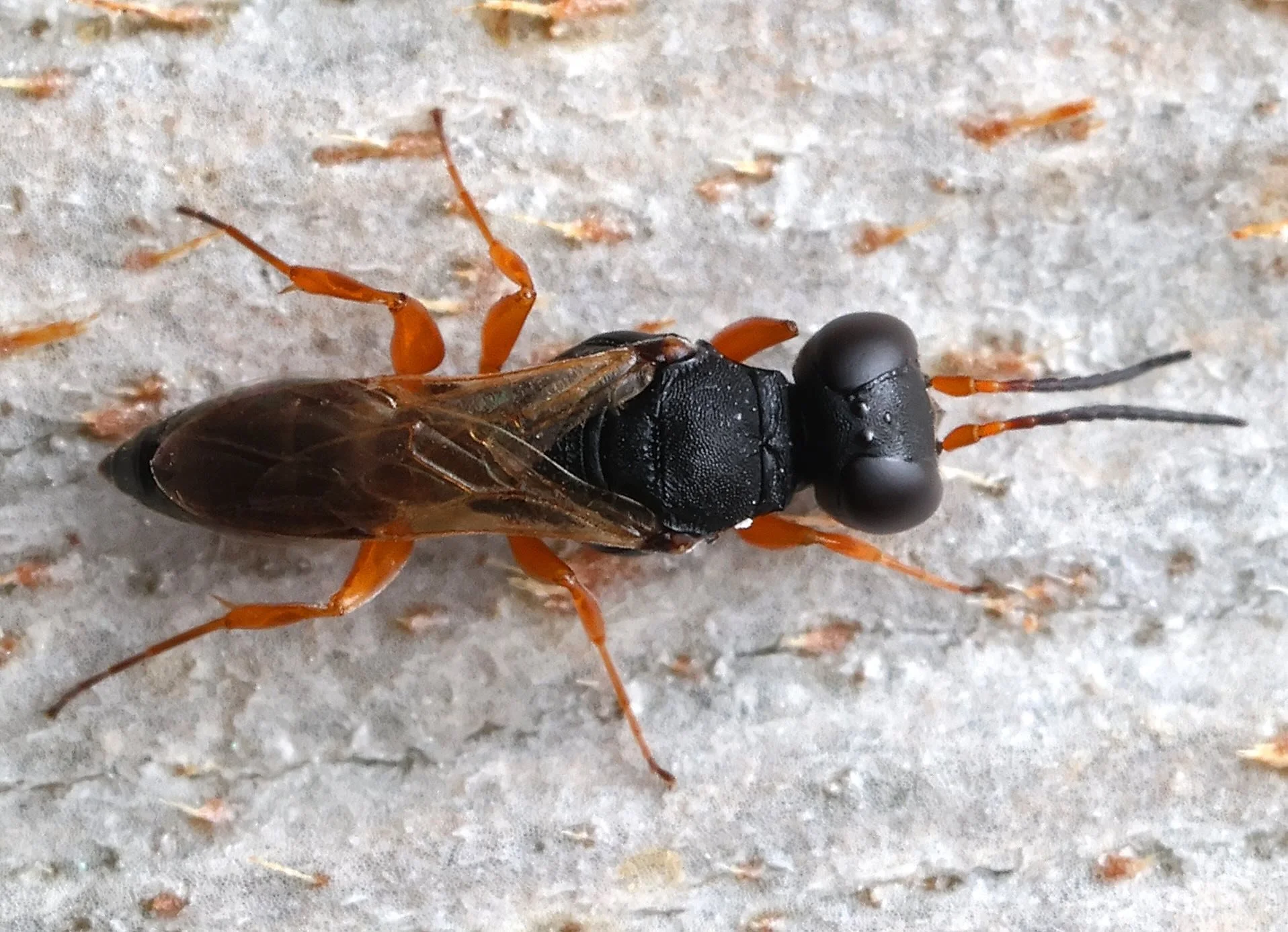
Despite wasp activity rapidly declining as winter approached, Lachlan succeeded in catching one female on 12th May … and kindly sent it on to me (specimen ID 2605A).
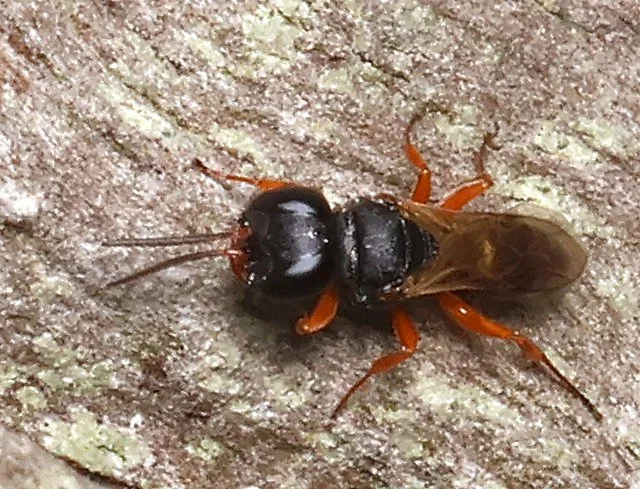
Lachlan Copeland grabbed this single shot before collecting the wasp - specimen 2605A. 12th May, 2026, Moonee Beach, NSW.
The closest described species is Nitela kurandae
Comparing the specimen to descriptions of the four named species of Nitela in Australia, I can exclude all but N. kurandae. In particular:
forewing venation excludes Auchenophorus (based on the open subdiscoidal cell)
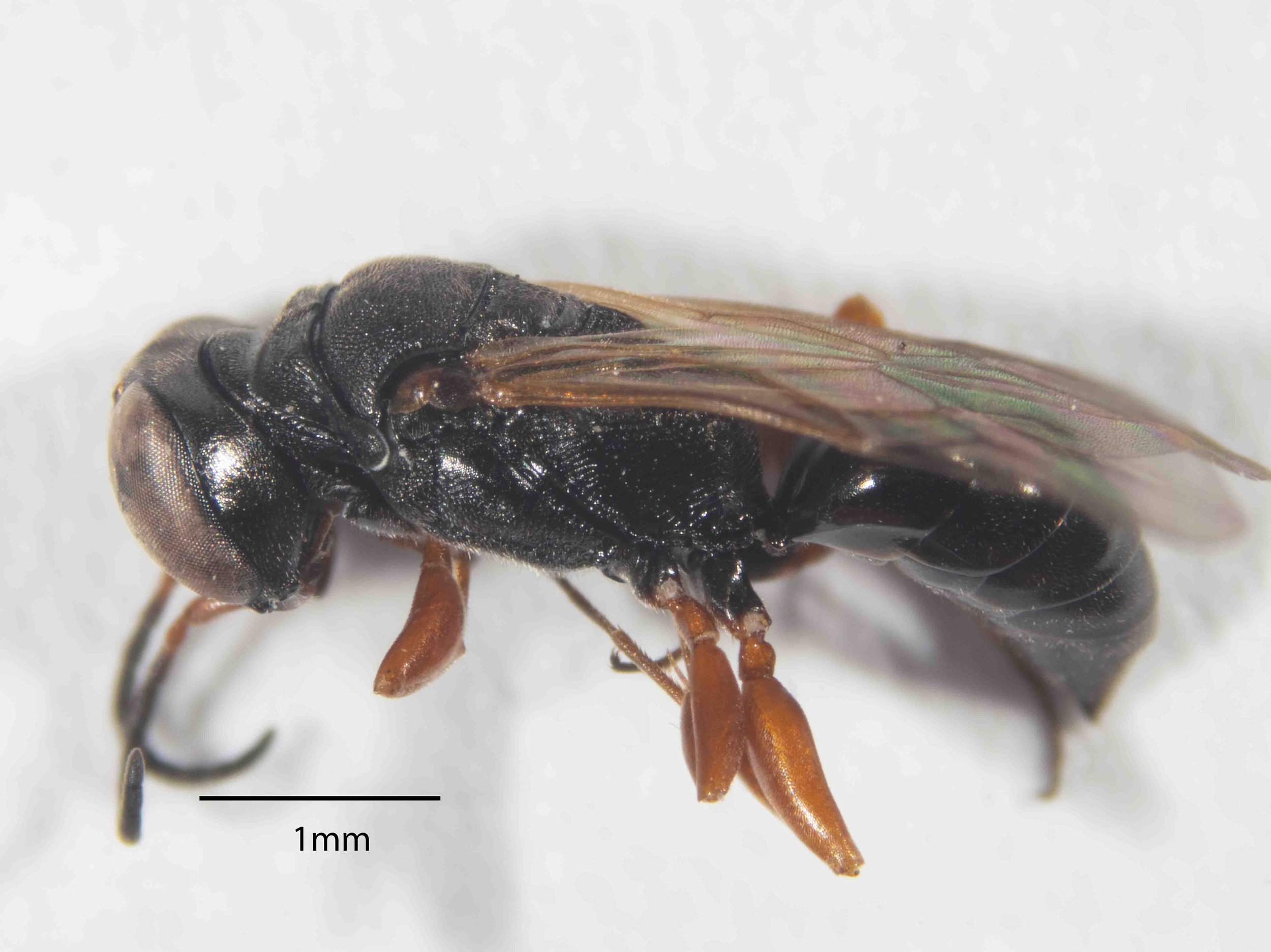
legs pale/coloured, not extensively black (unlike N. australiensis)
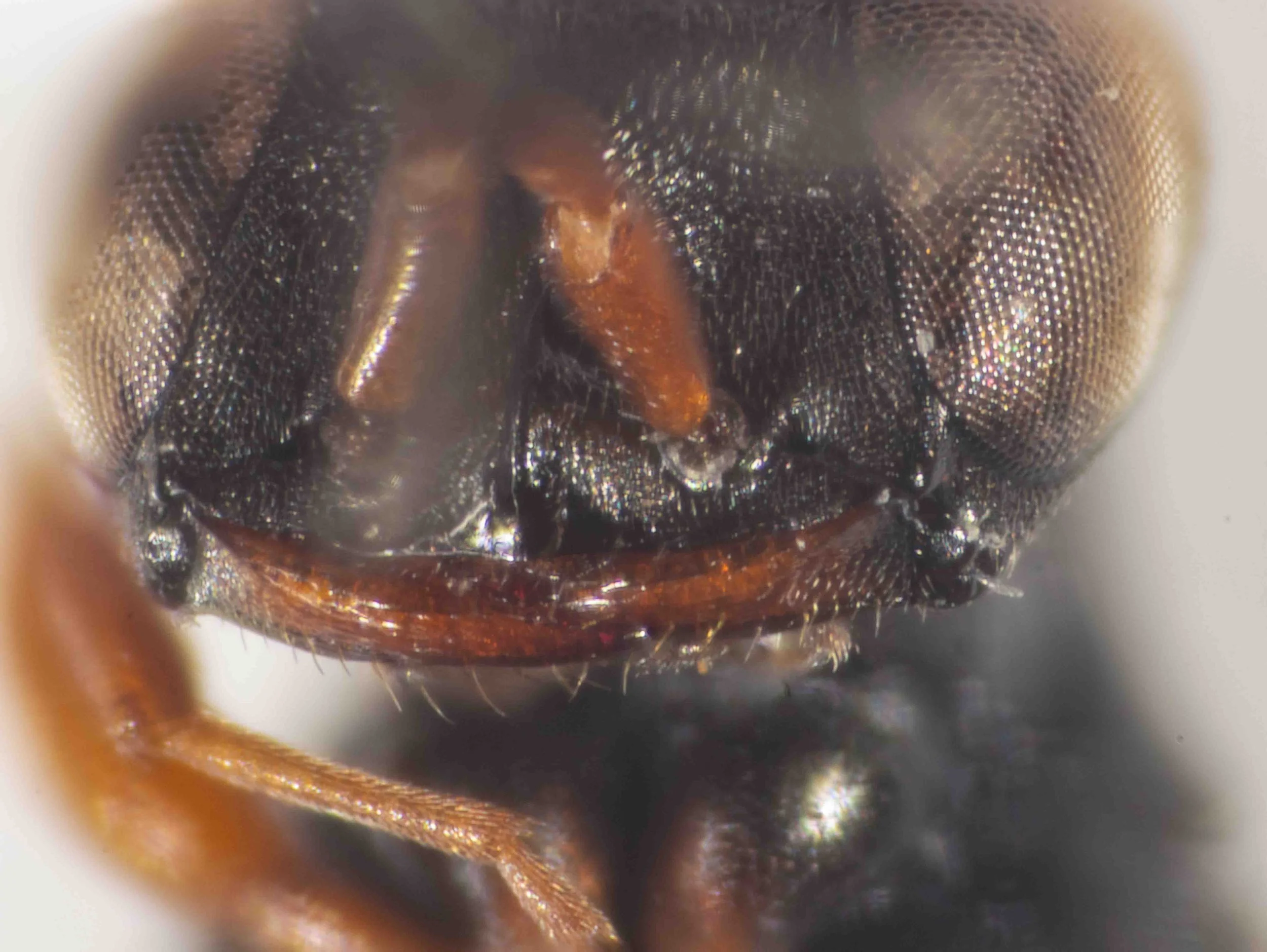
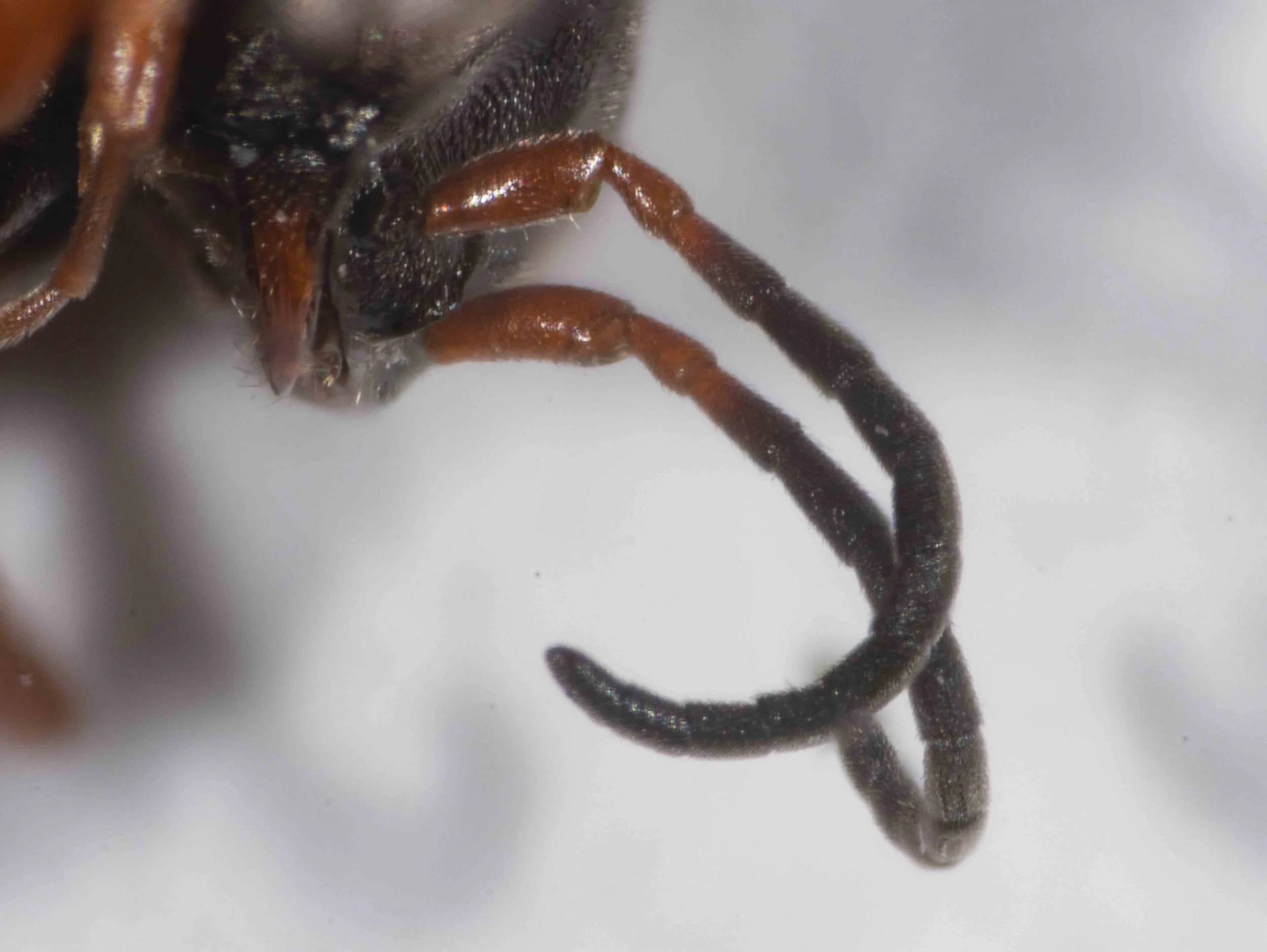
scape pale/coloured, not black (unlike both N. australiensis and N. elegans)
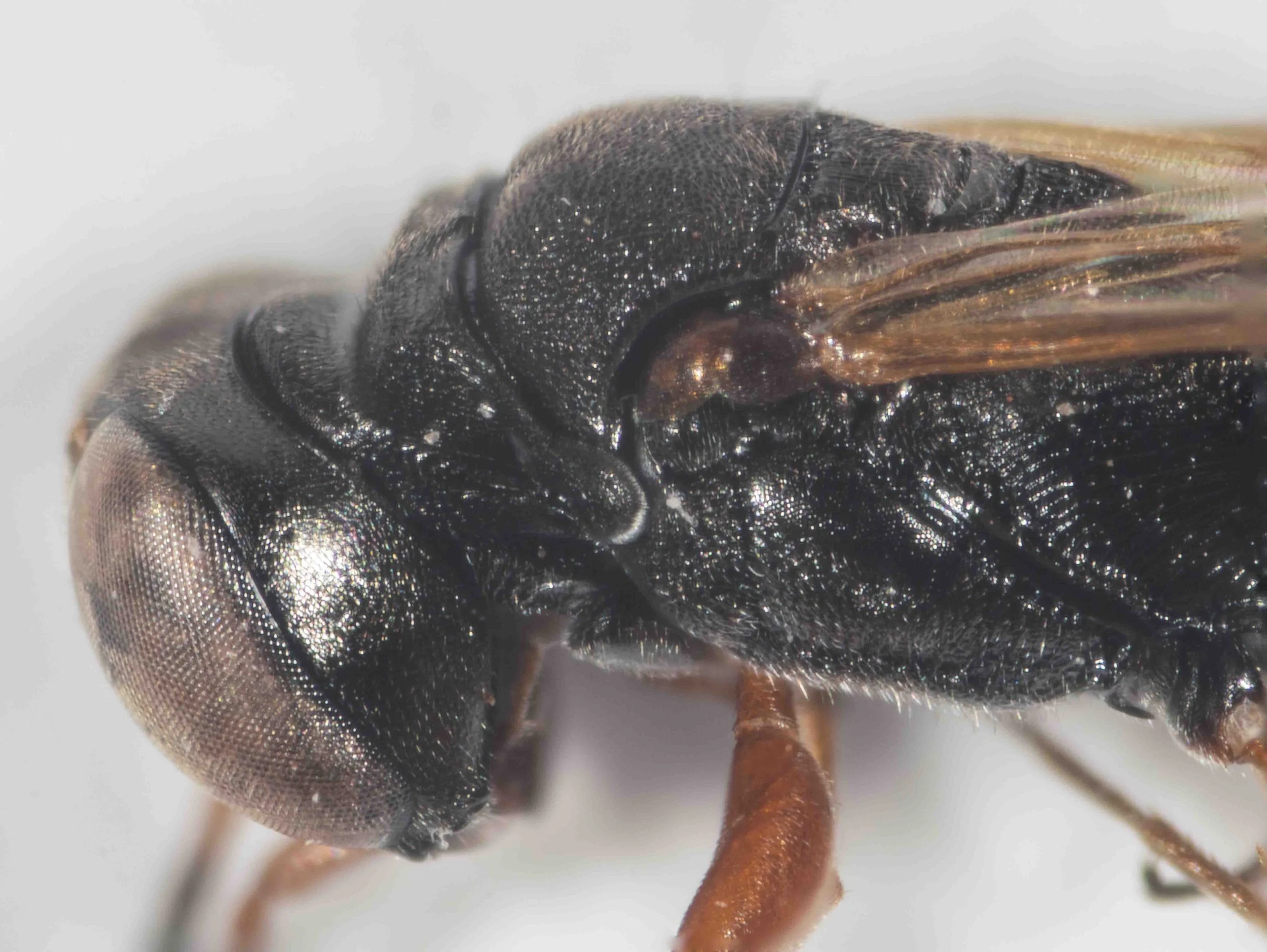
pronotal lobes reach tegulae (unlike N. sculpturata)
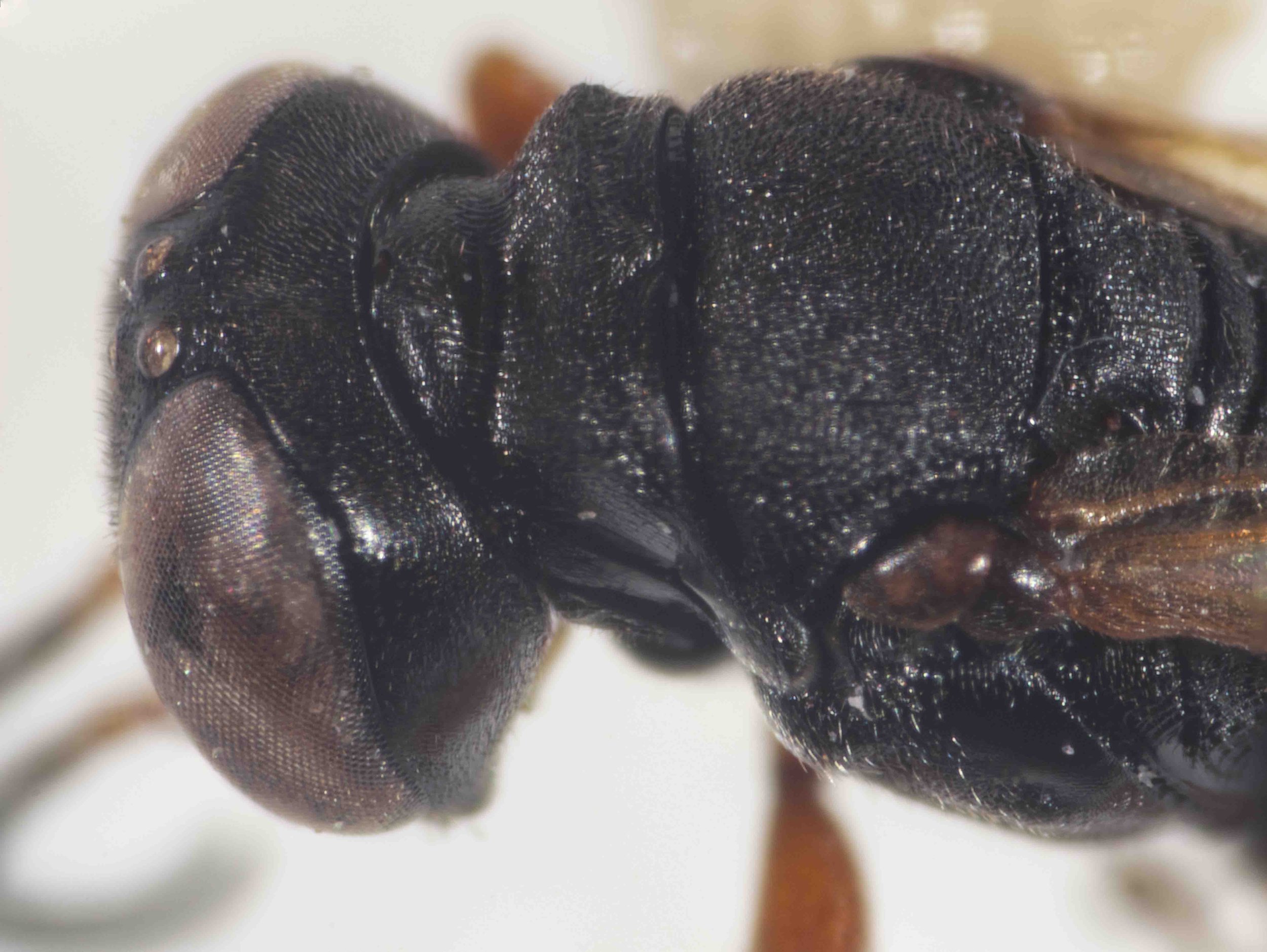
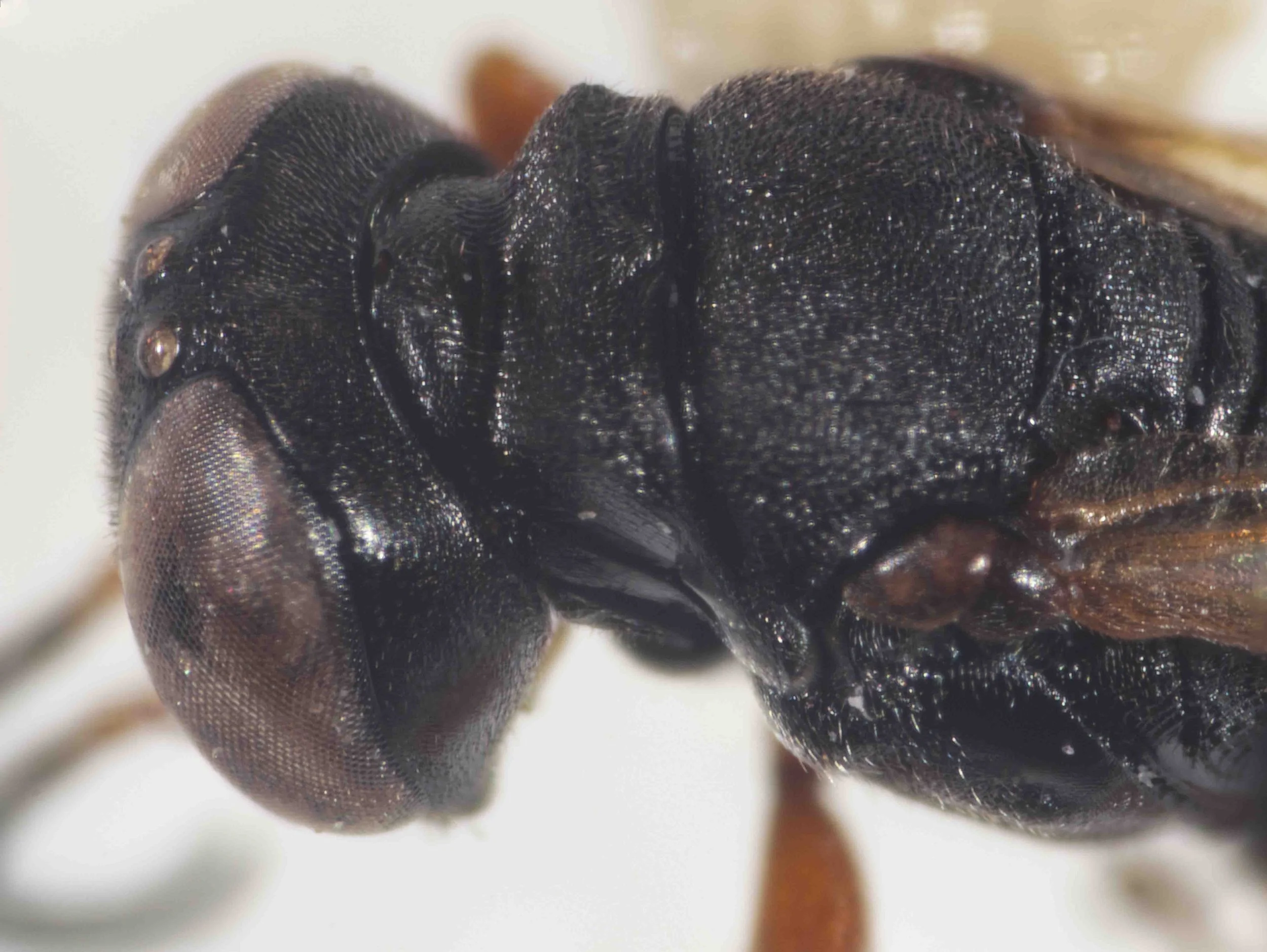
frons finely sculptured, almost smooth (unlike N. sculpturata and N.elegans)
scutum/mesonotum finely sculptured (unlike N. sculpturata)
But just how closely does it match N. kurandae?
The N. kurandae holotype is in the British Natural History Museum (BNHM) and although there are nine specimens listed in ANIC, online images are unavailable (yet, anyway).
So without ready access to verified specimens, I am reliant upon Turner’s written description of the holotype female from 1908.
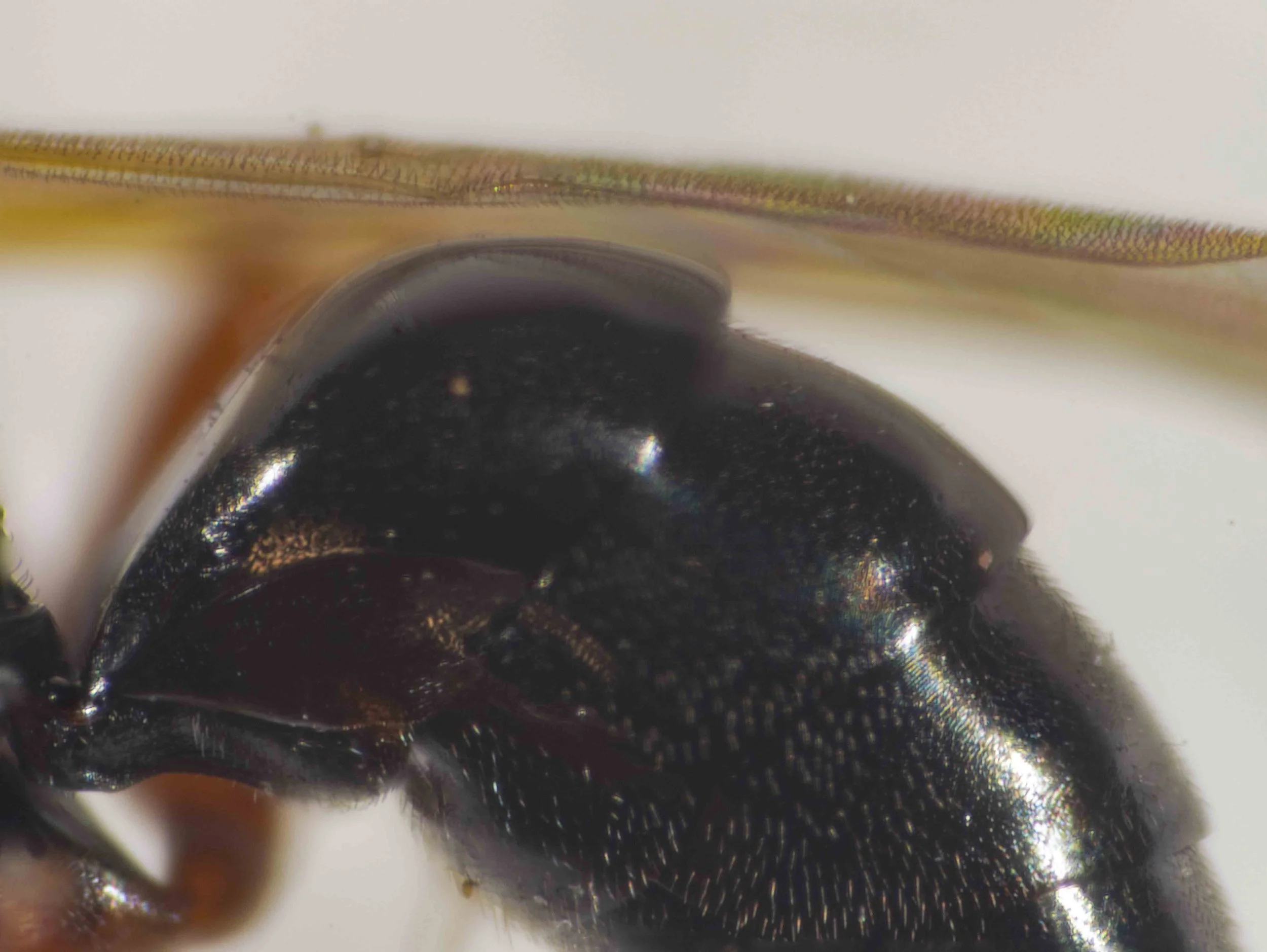
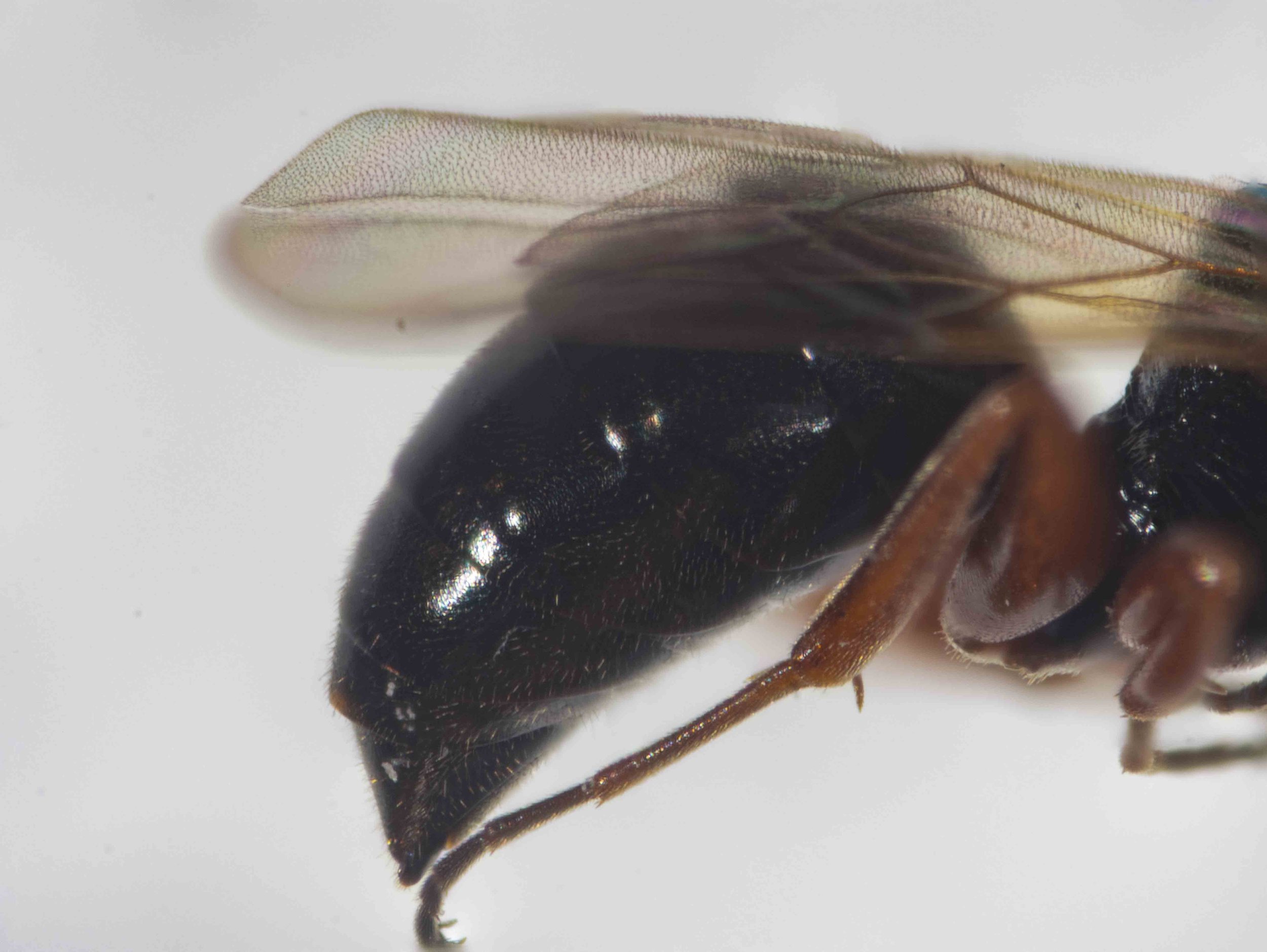
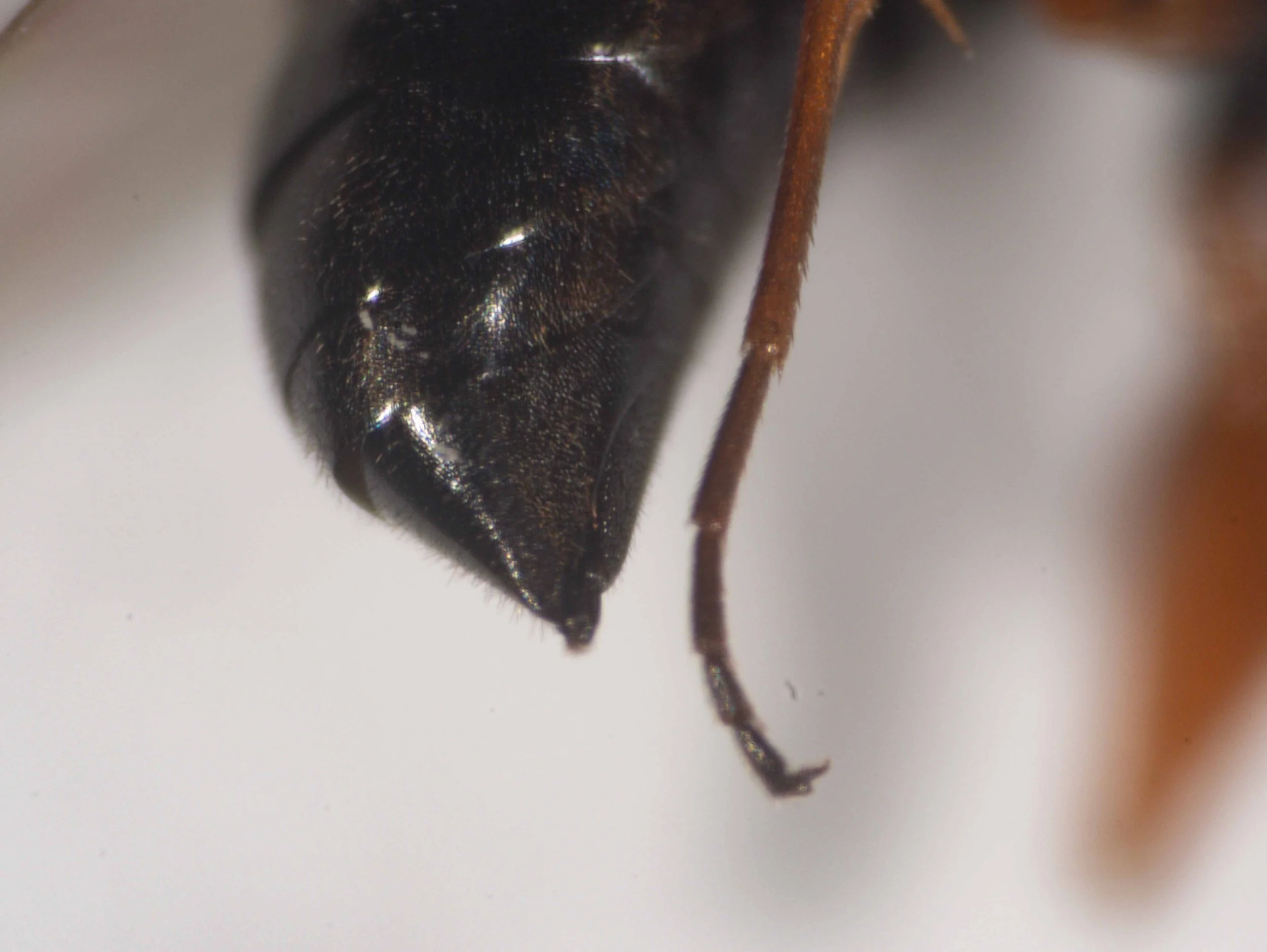
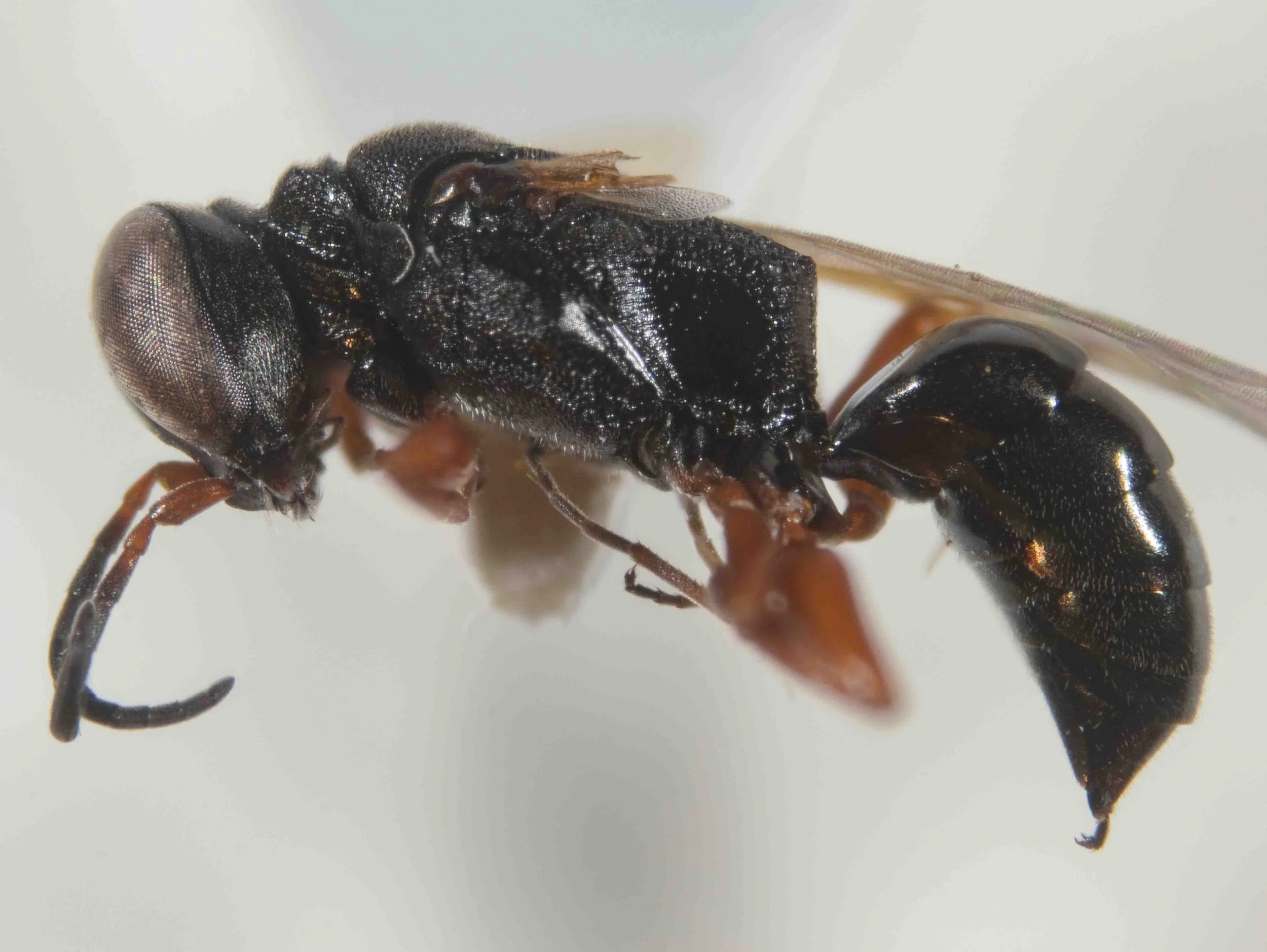
The following gallery presents a stepwise comparison of 2605A with the features included in Turner’s description of N. kurandae.
Nitela kurandae (original description) Turner 1908
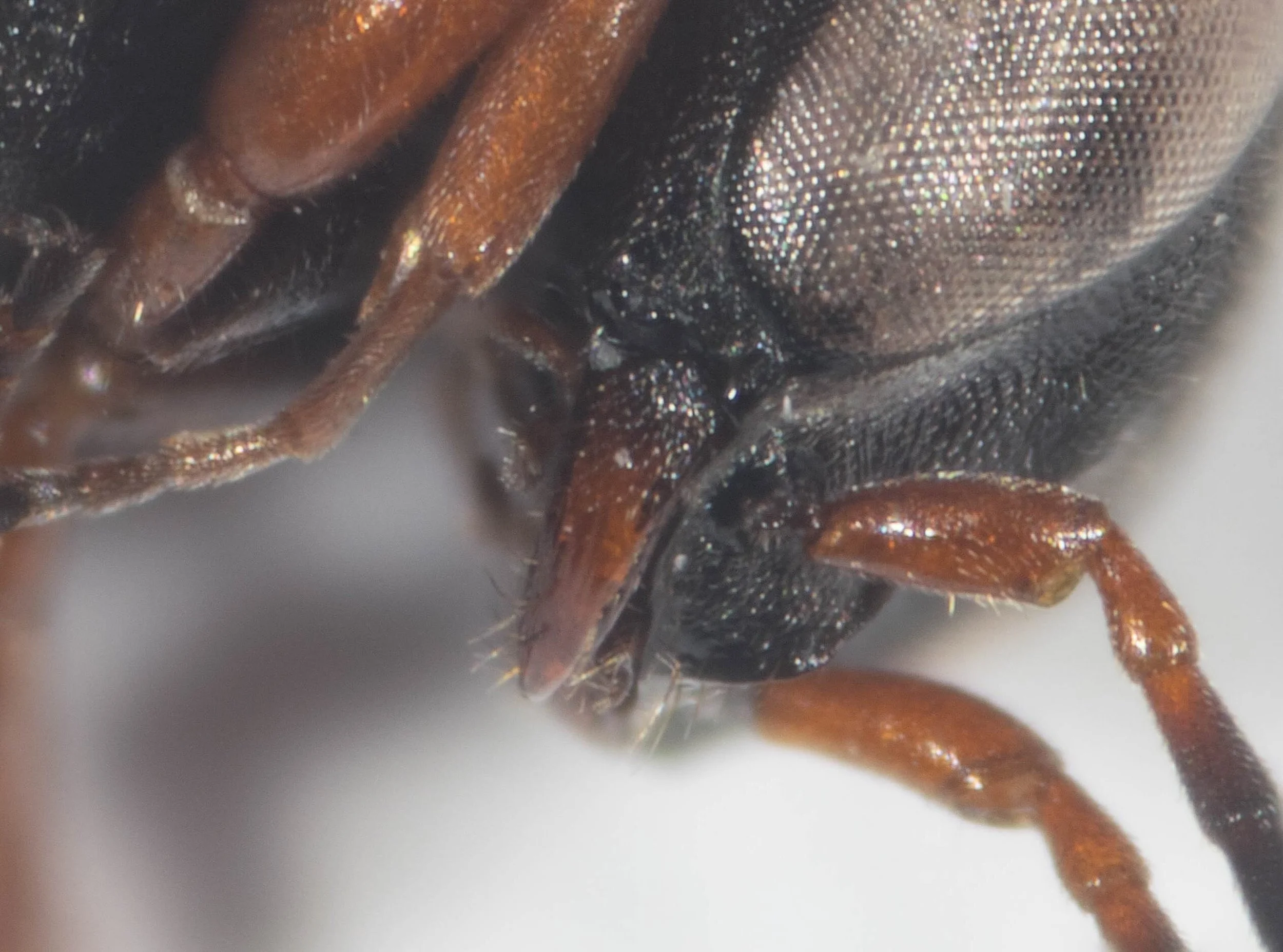
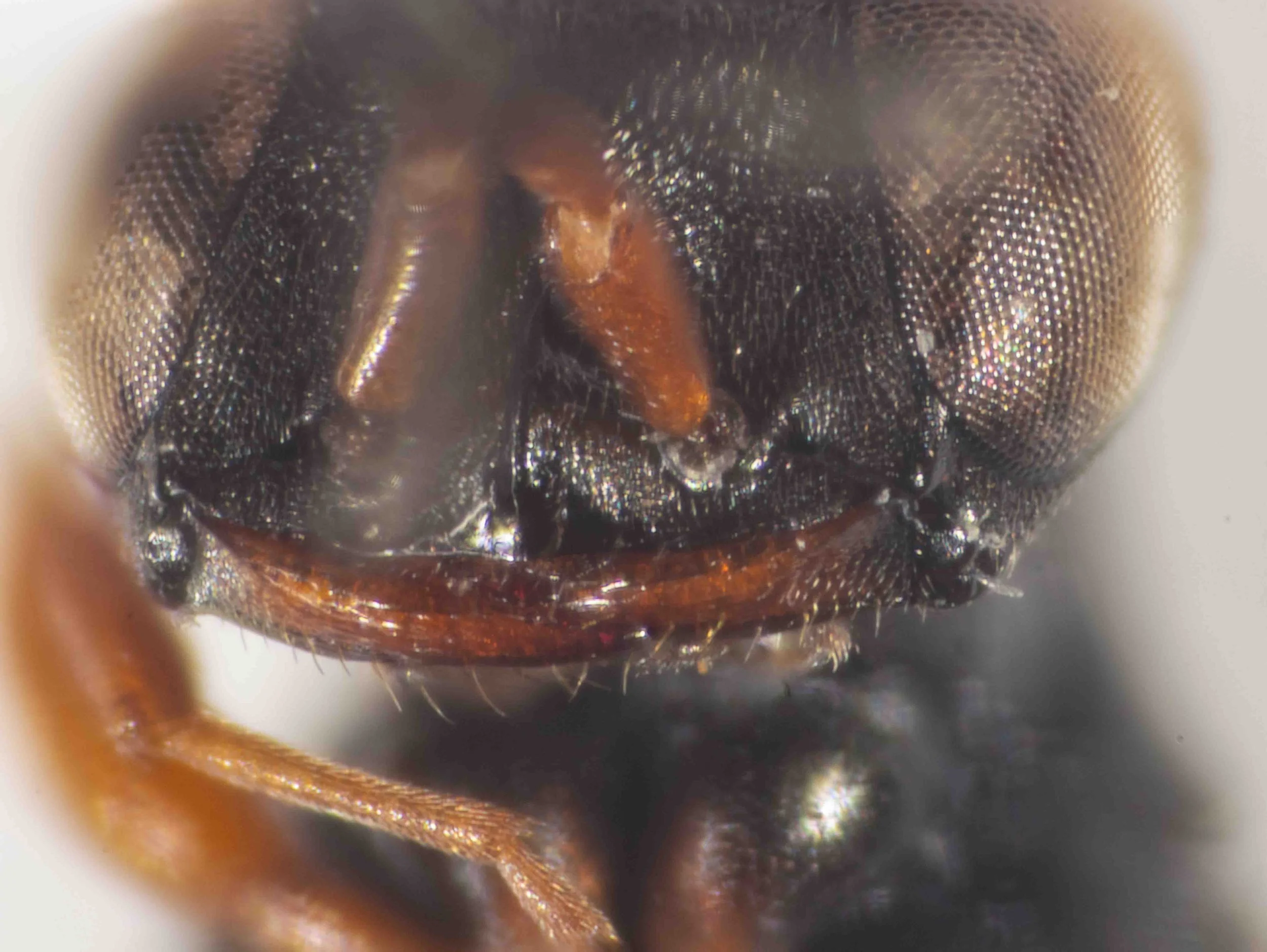
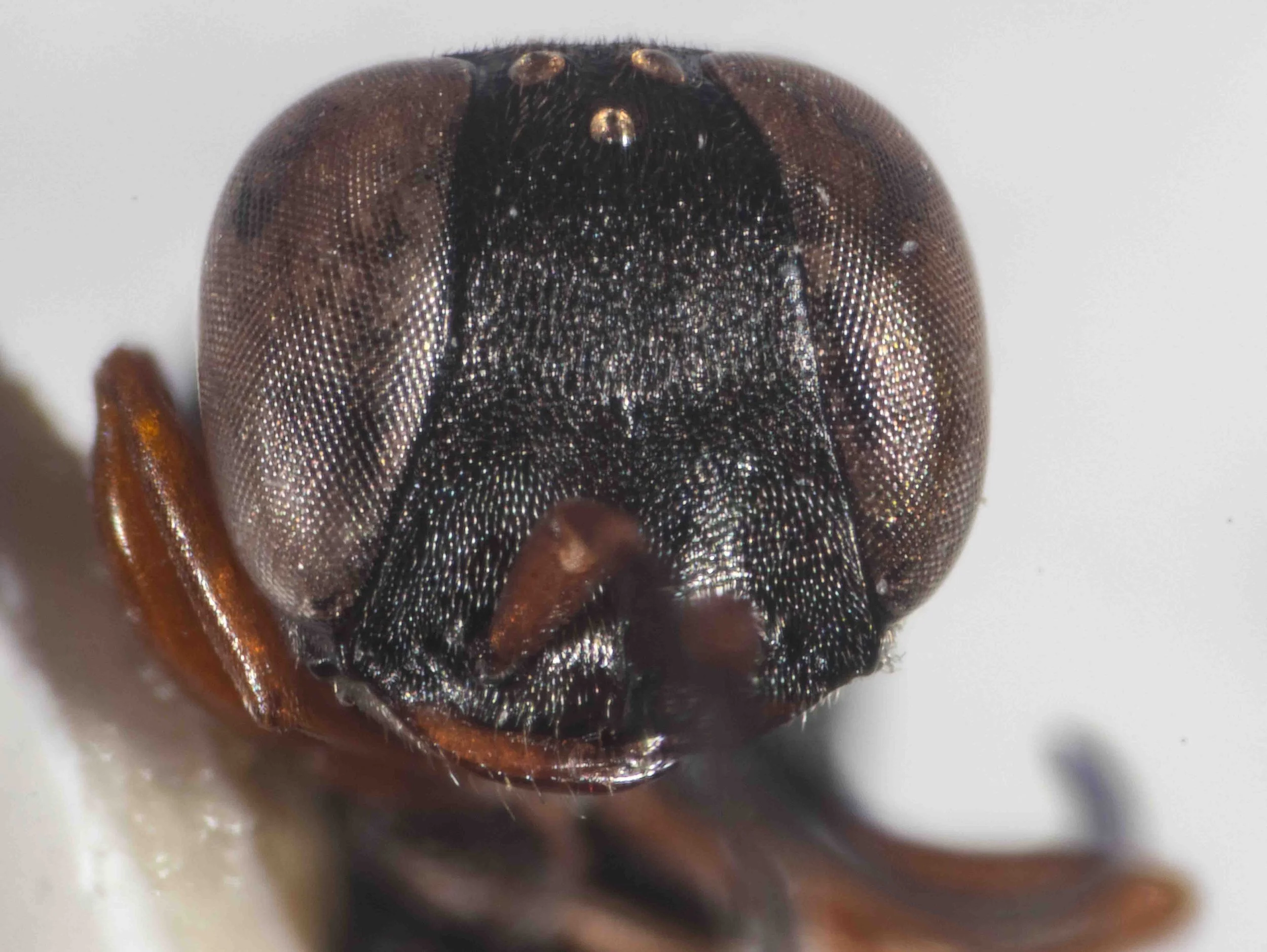
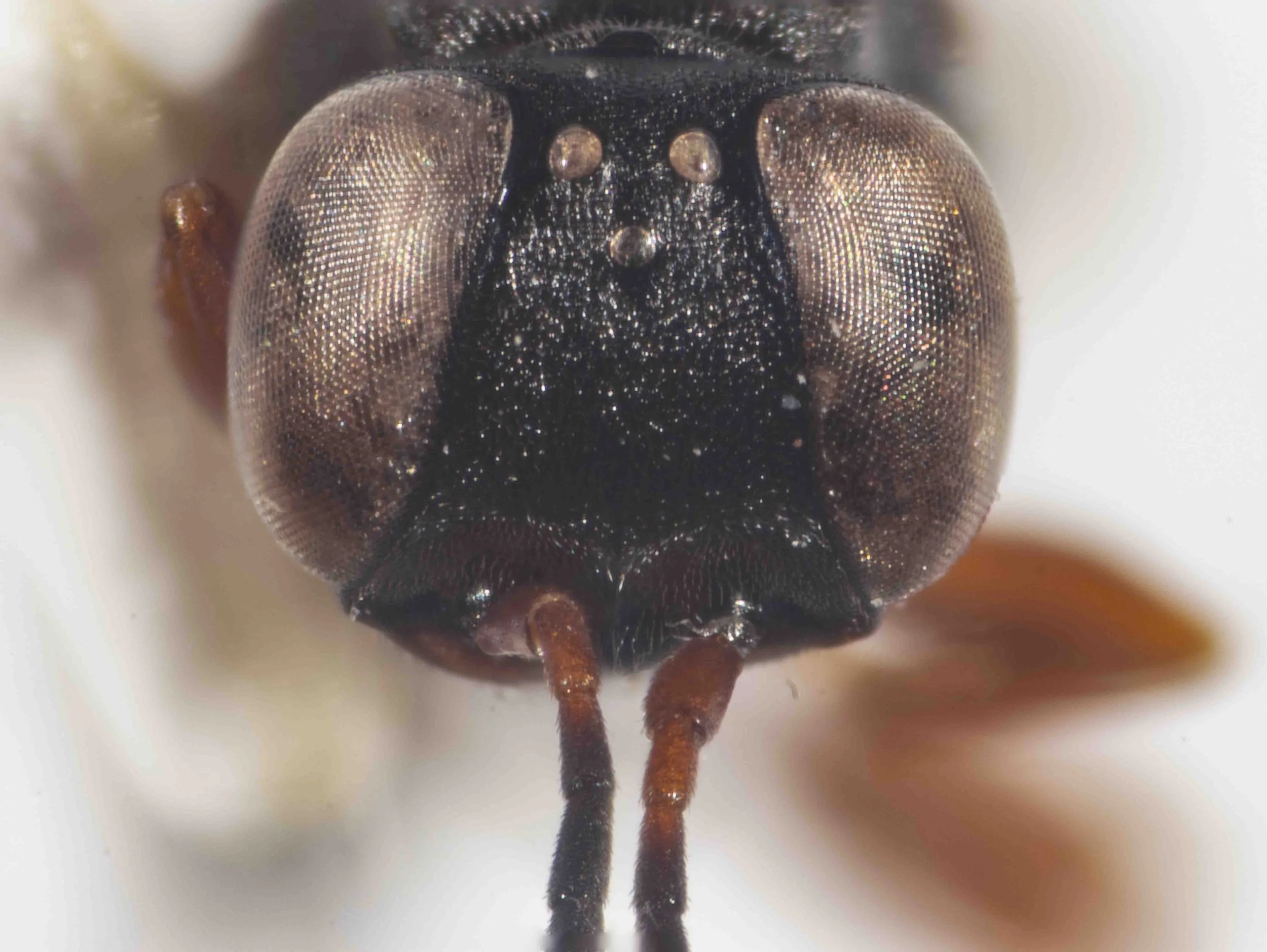
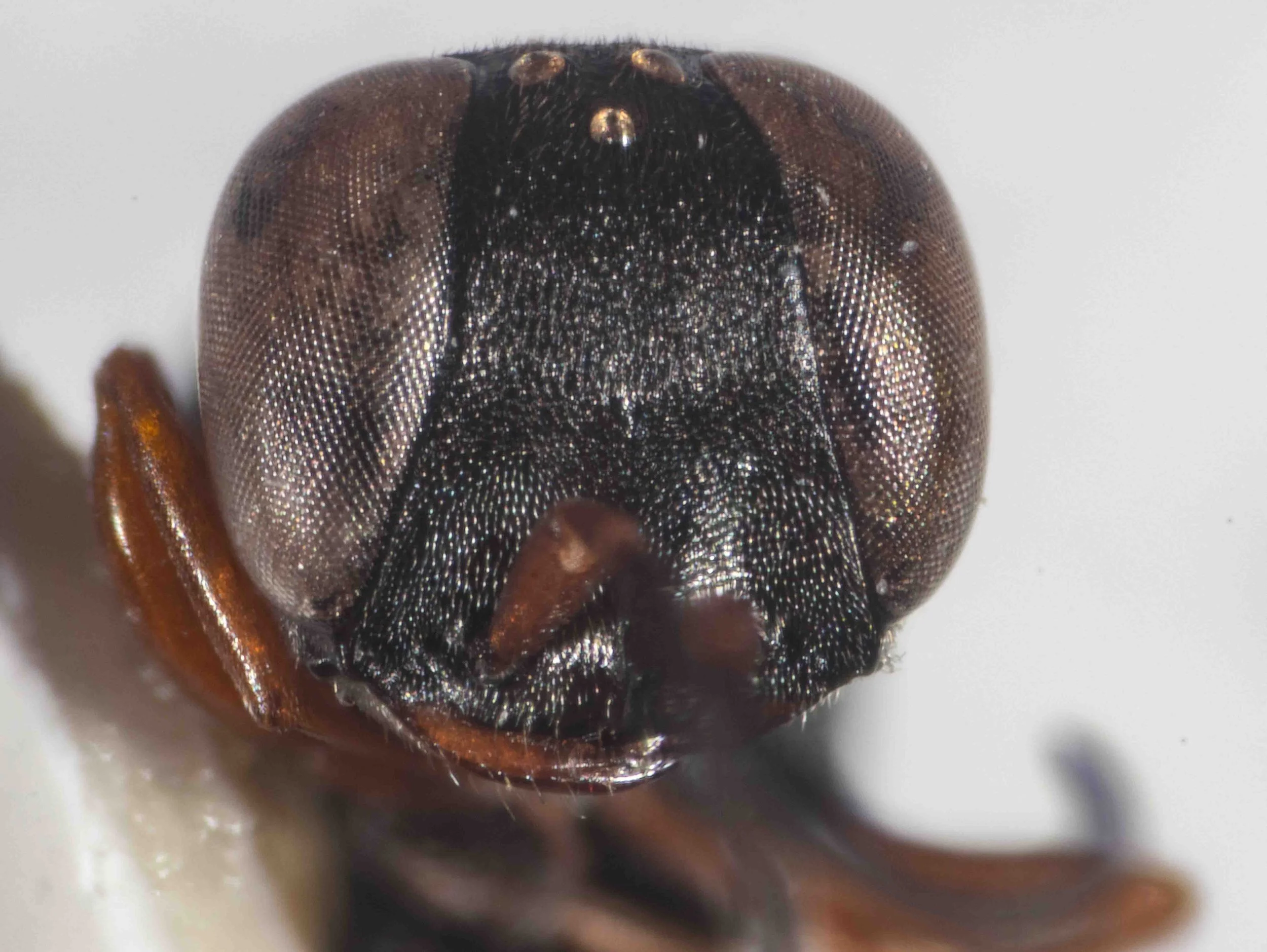
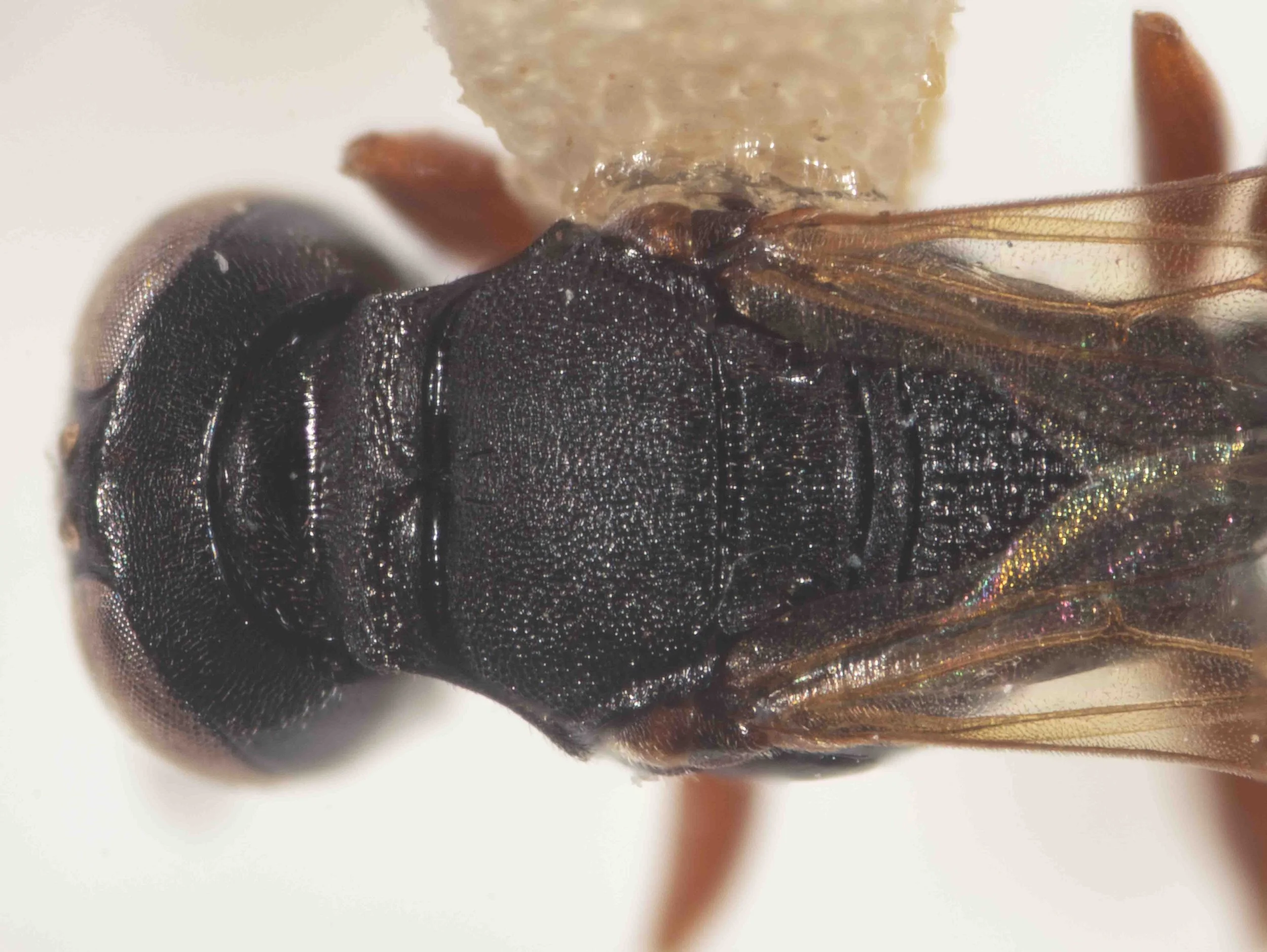
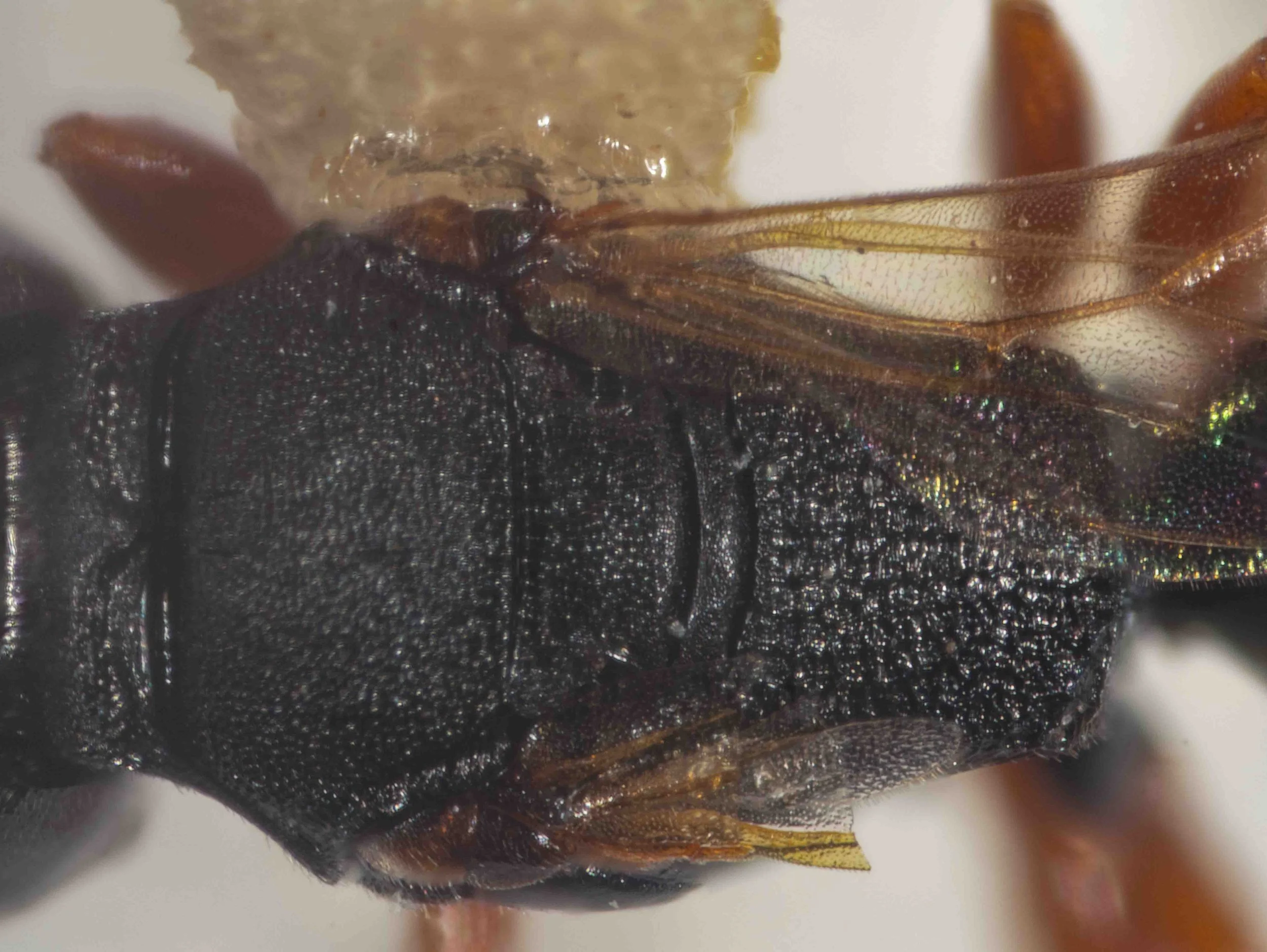
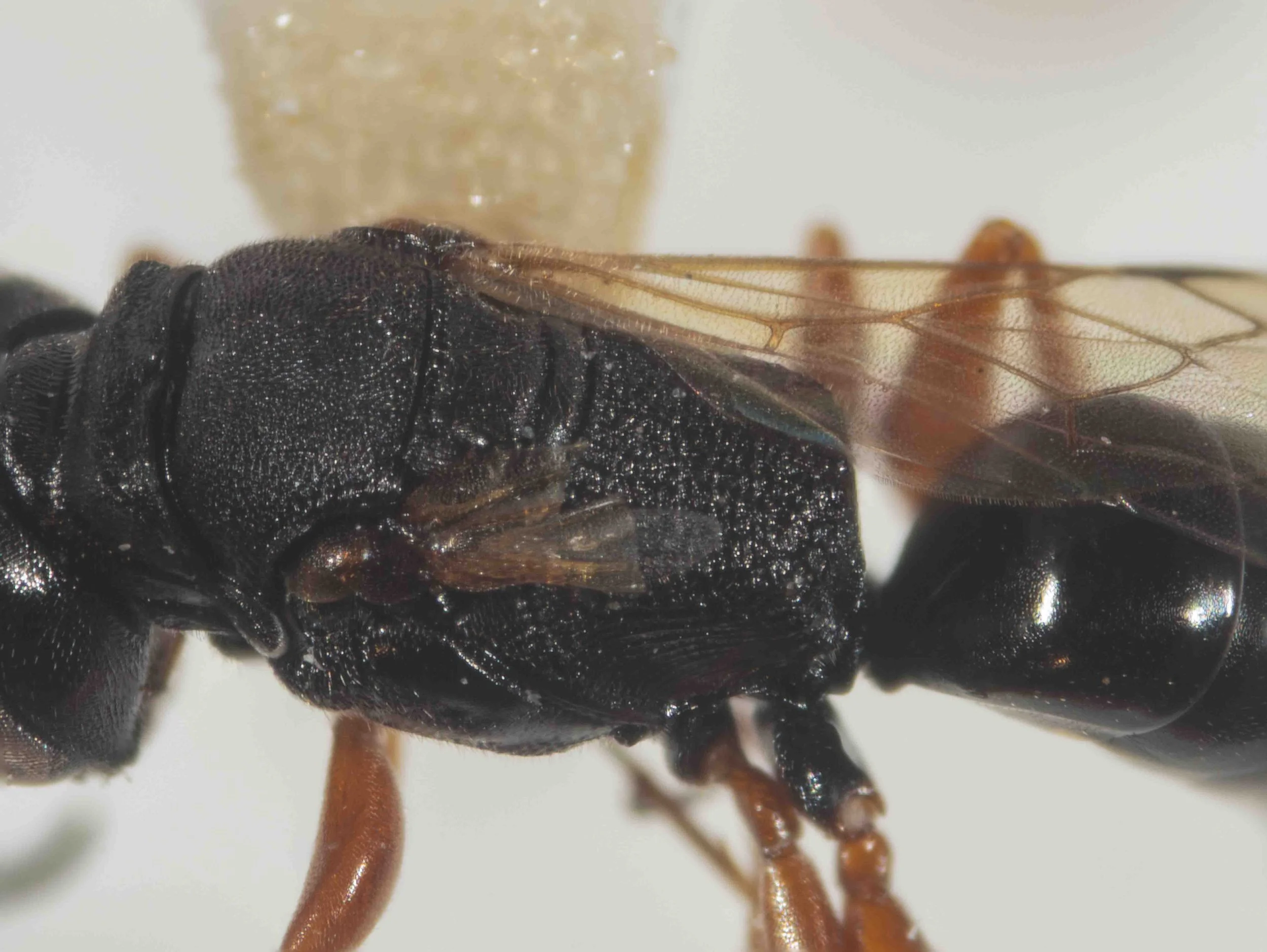
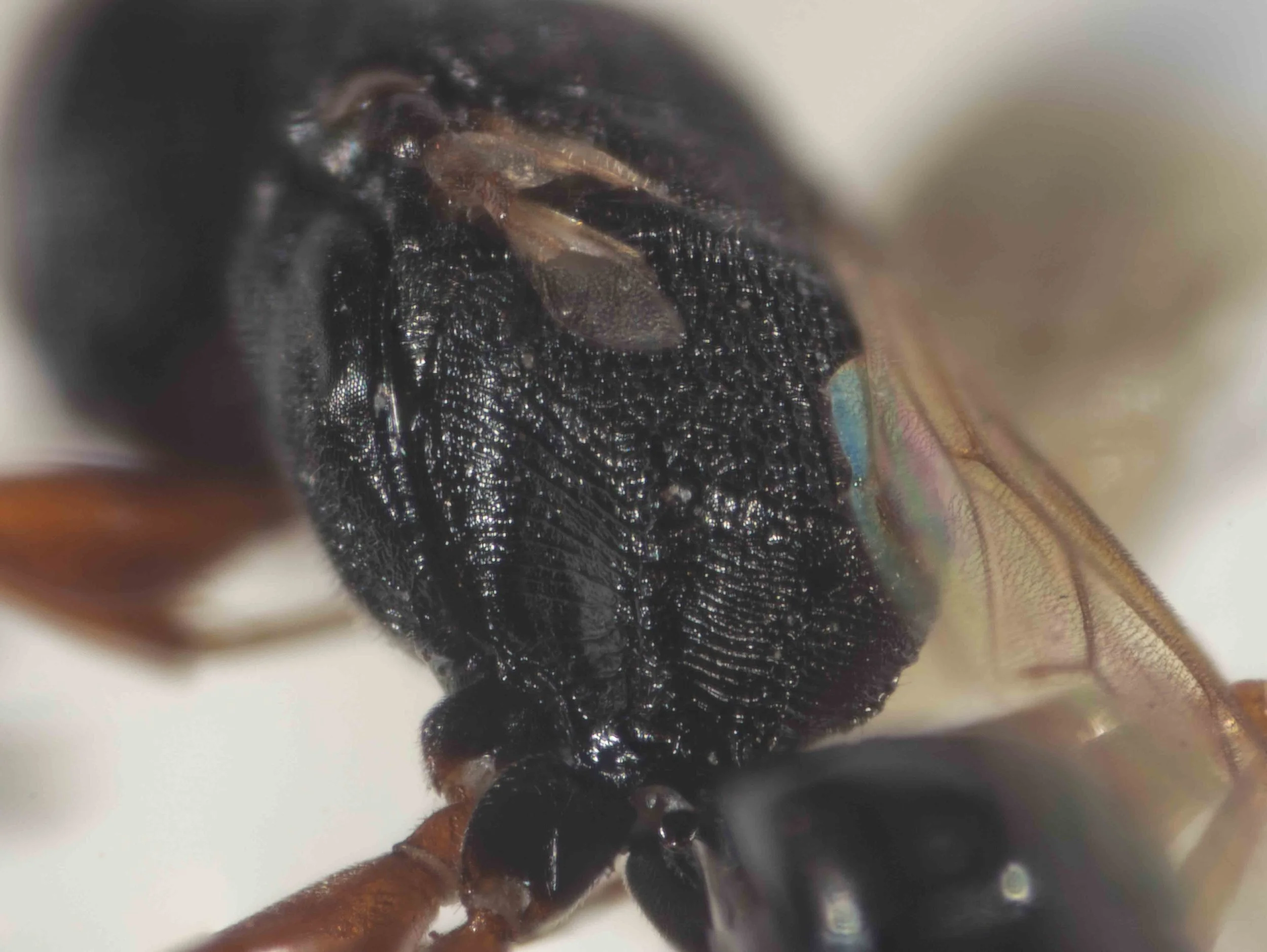
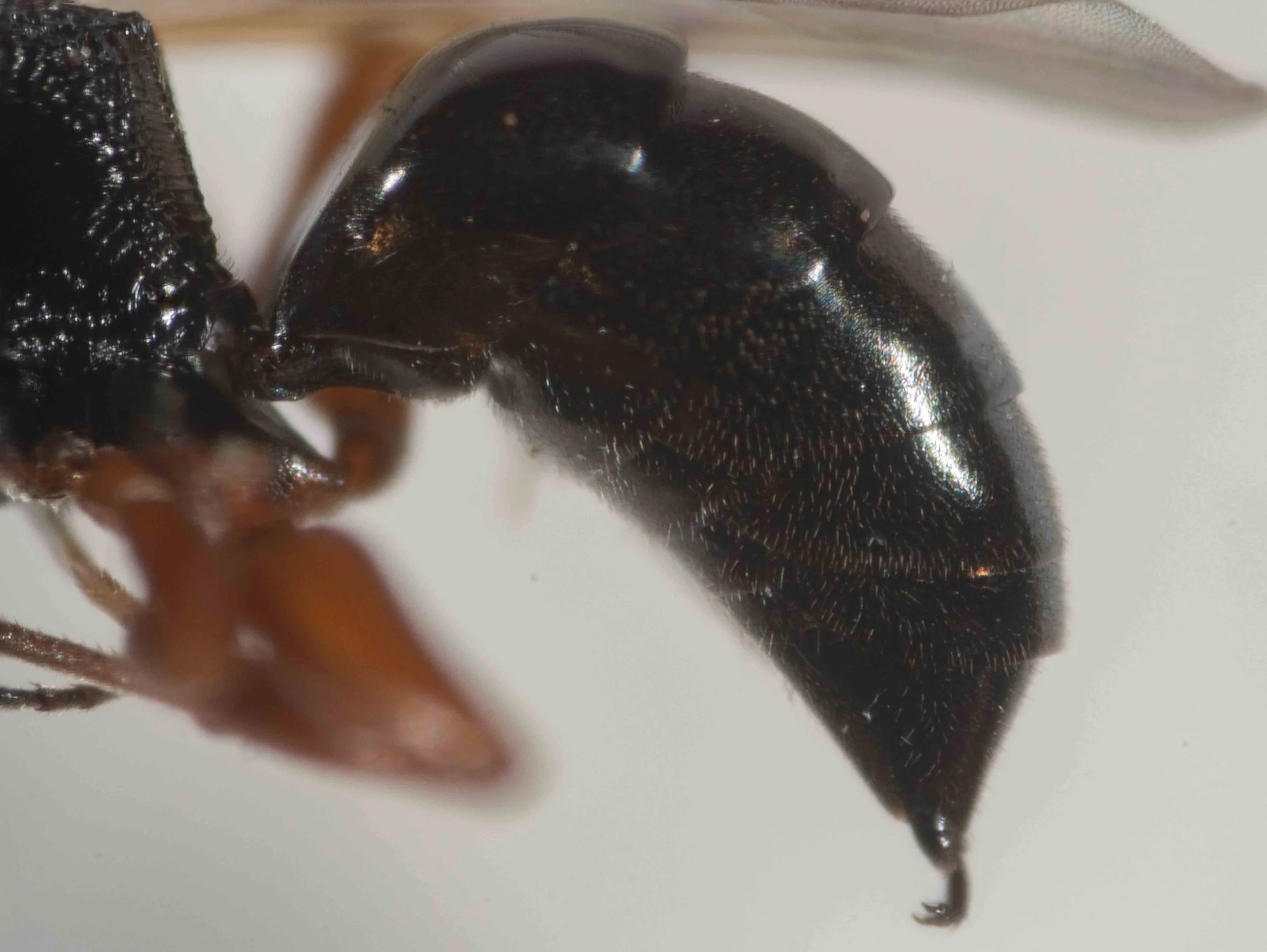
Not N. elegans, despite the many similarities
The most recently described Nitela species, N. elegans (Matthews 2000) is very similar to Turner’s original description of N. kurandae (1908). Matthews notes the key differences being the frons sculpture (“much more rugose” p. 43) in N. elegans, and the antennal colour (“scapes and basal half of flagellum are entirely black” p. 43). Given that Matthews had access to the Nitela collection of ANIC (which includes 9 specimens labelled as N. kurandae), we can accept antennal colour and frons sculpture as robust indicators of species difference.
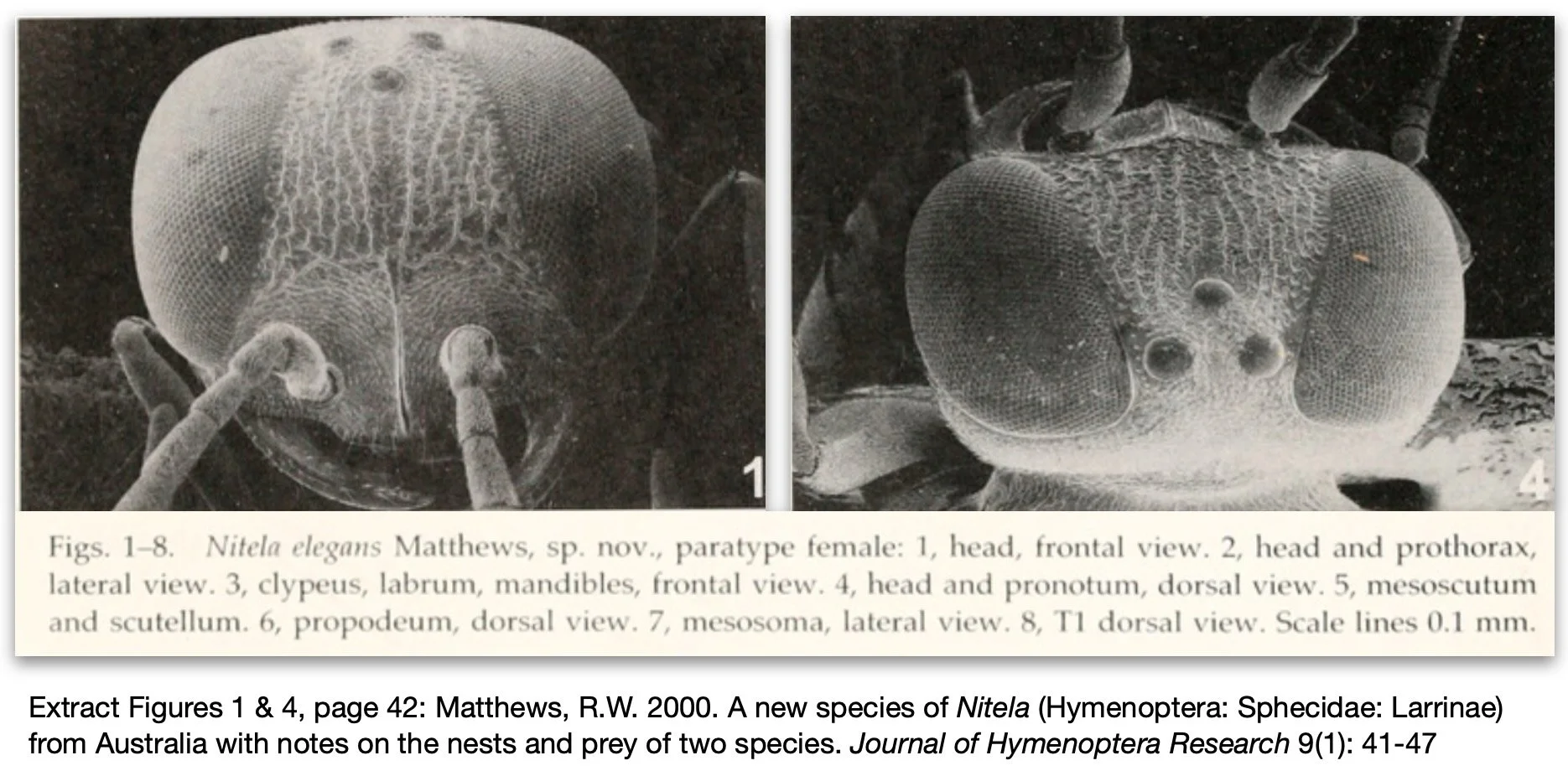
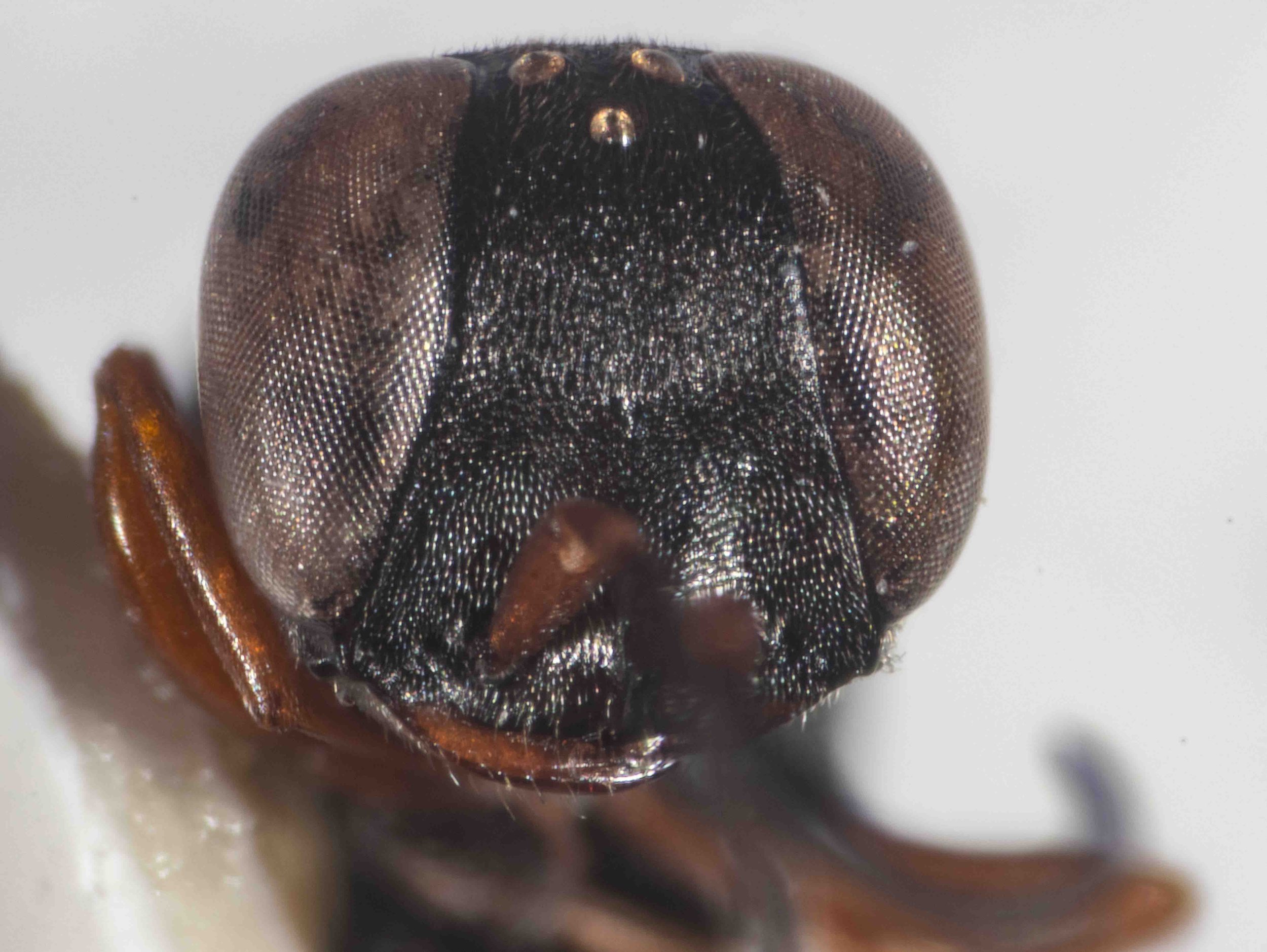
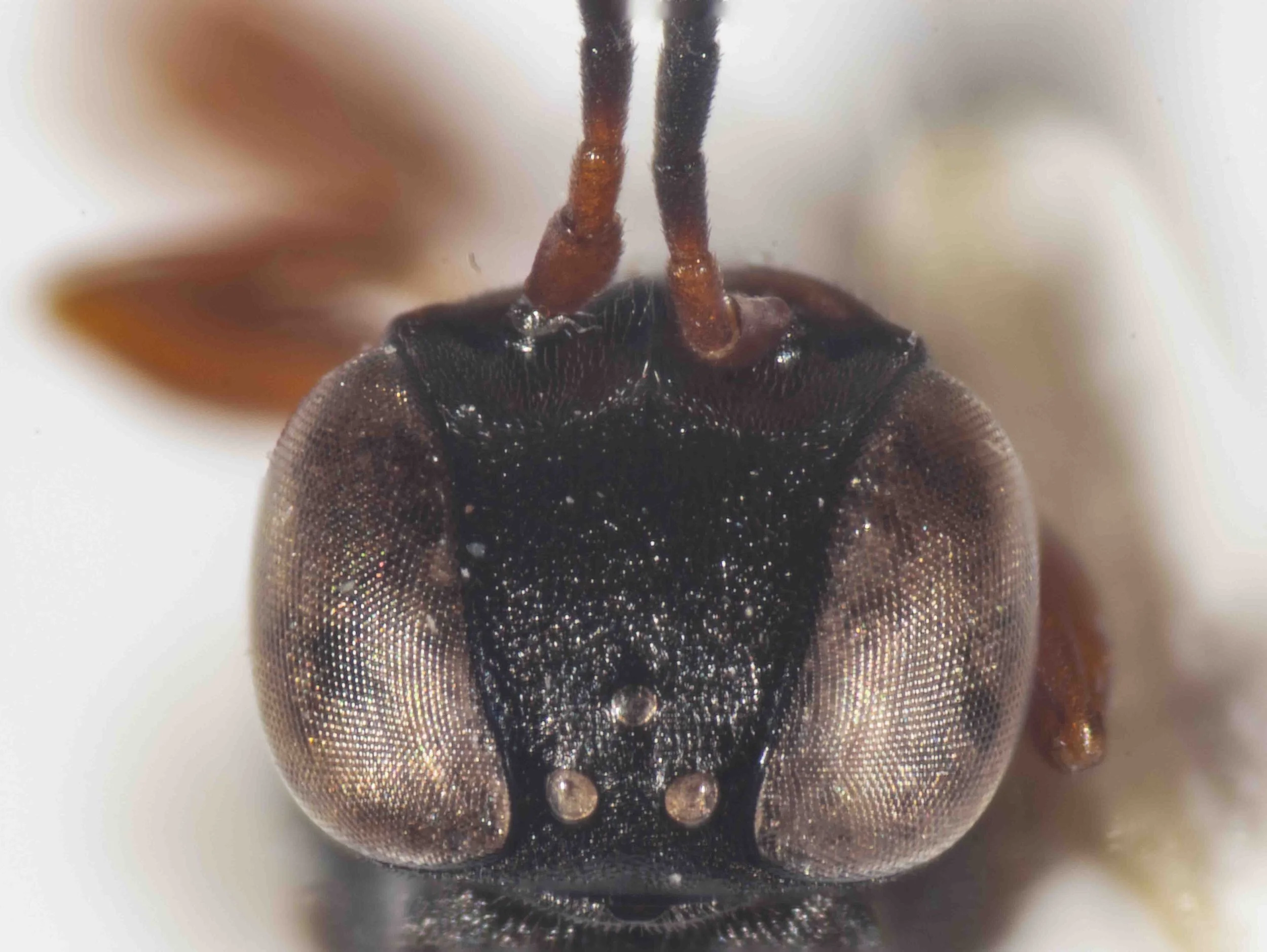
Looking through images on iNaturalist, I found one that is a good match for N. elegans. And it was collected in Canberra … as were the type specimens of N. elegans.
Such distinctive forewing venation!
The position of the recurrent vein is quite strikingly. It is not what I would normally consider to be “almost interstitial with the transverse cubital nervure” (Turner 1908 p. 509).
In #2605A, the recurrent vein meets what appears to be the vestiges of the second submarginal cell.
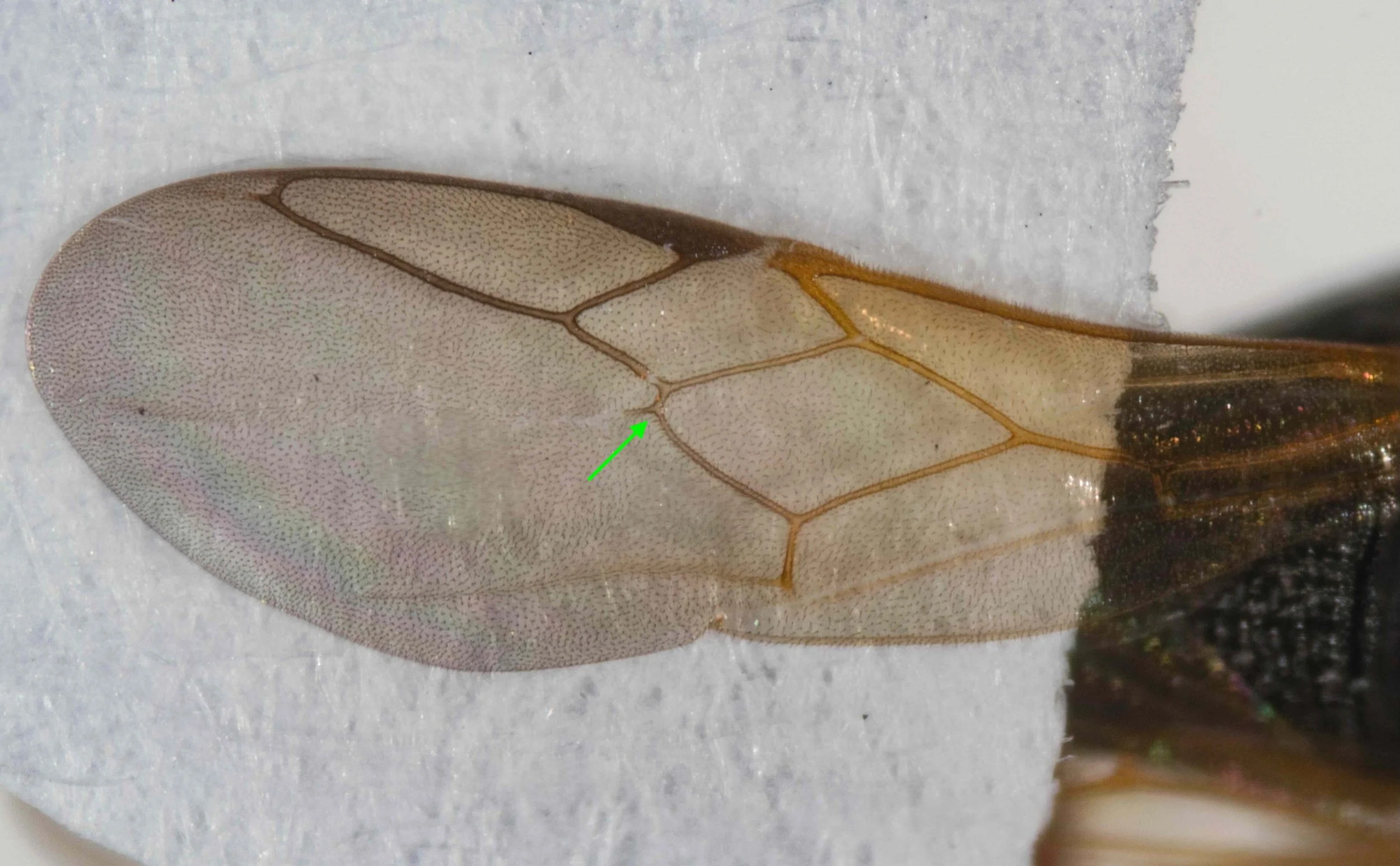
What does ‘almost interstitial’ look like?
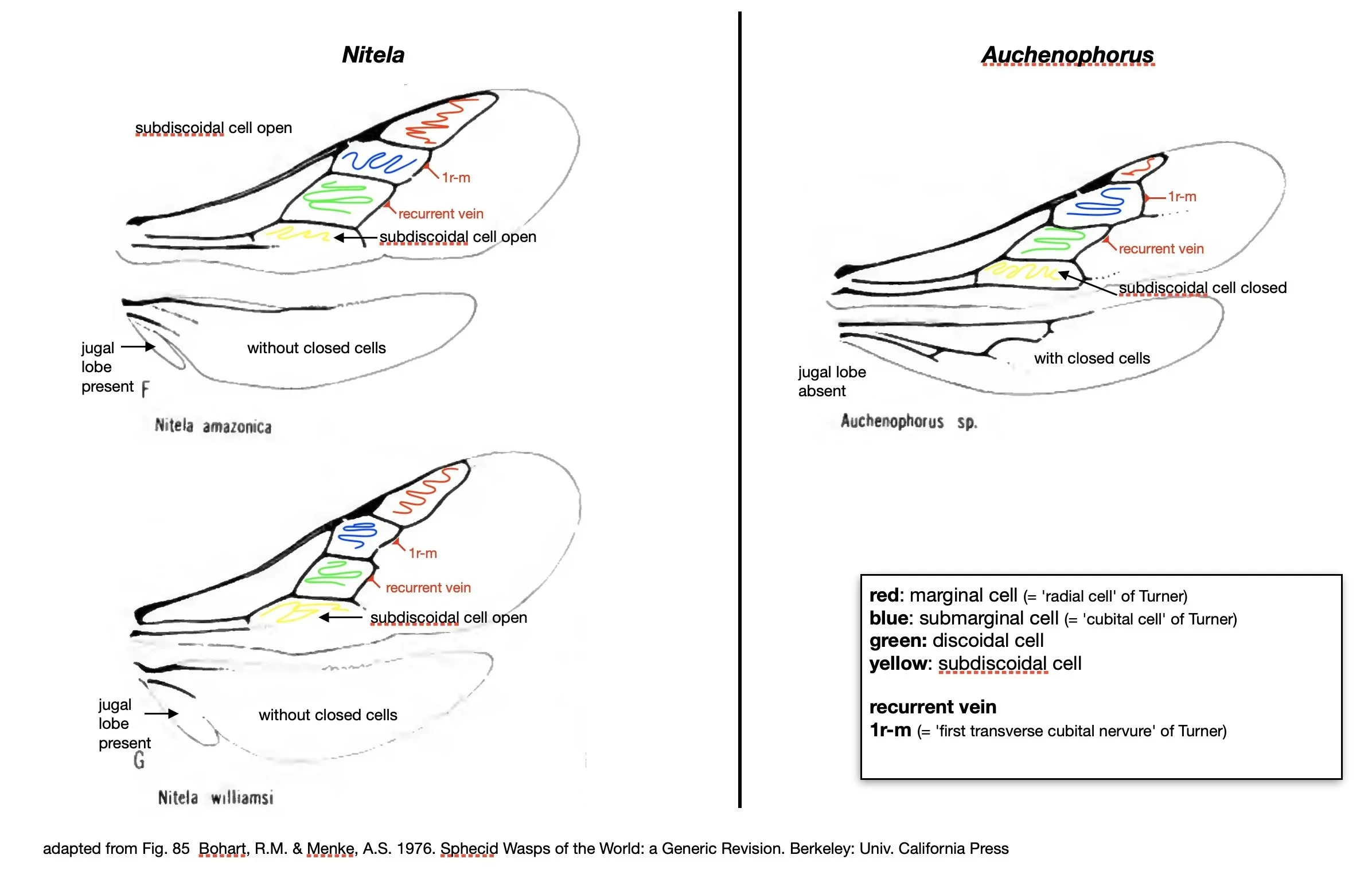
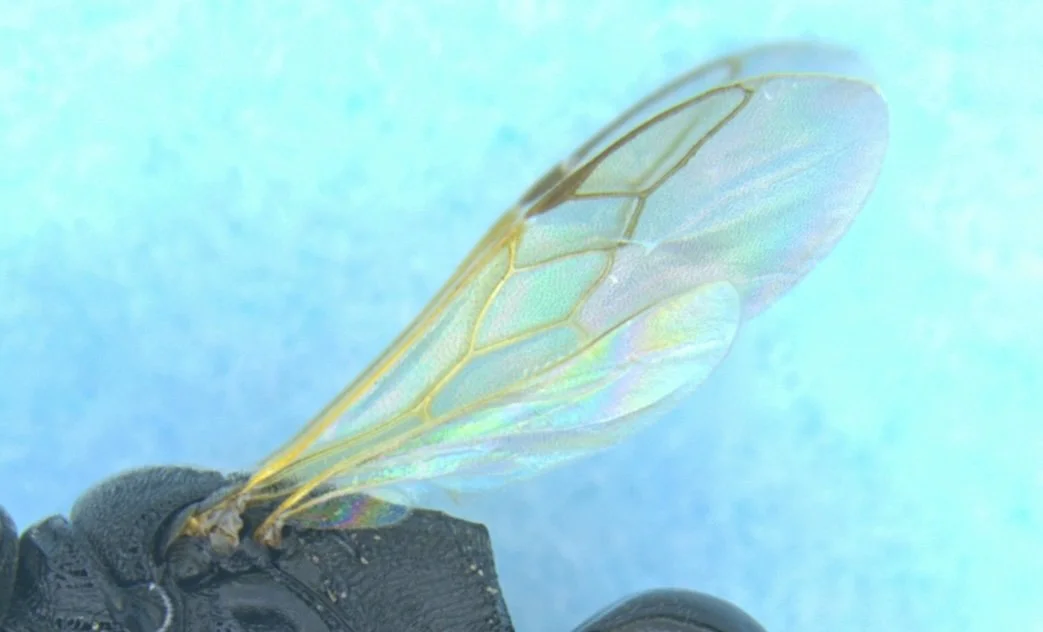
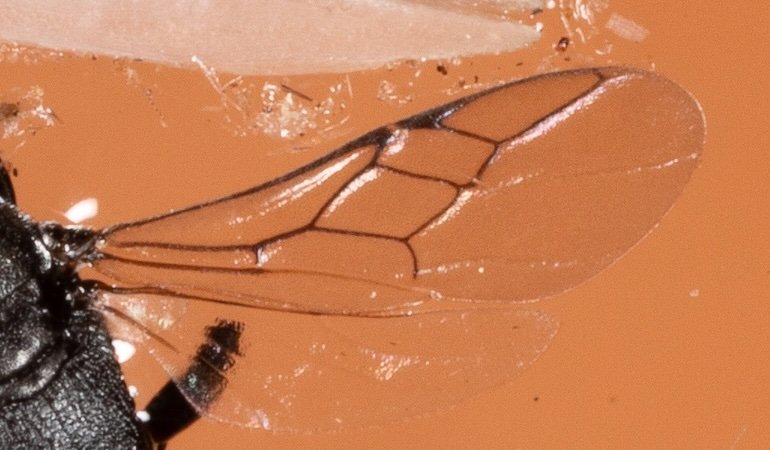
In many Nitela, the recurrent vein meets the submarginal cell just before the apex, or is directly aligned with (‘interstitial’) the 1r-m vein (= ‘transverse cubital vein’). Such is the case for many Australian species.
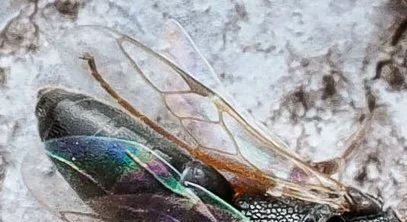
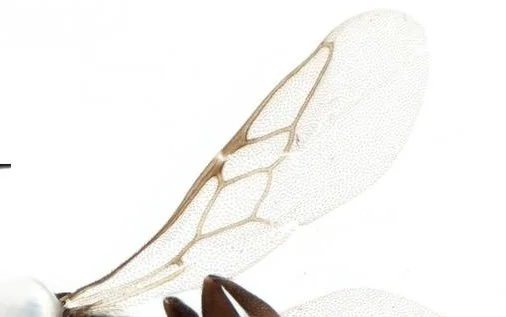
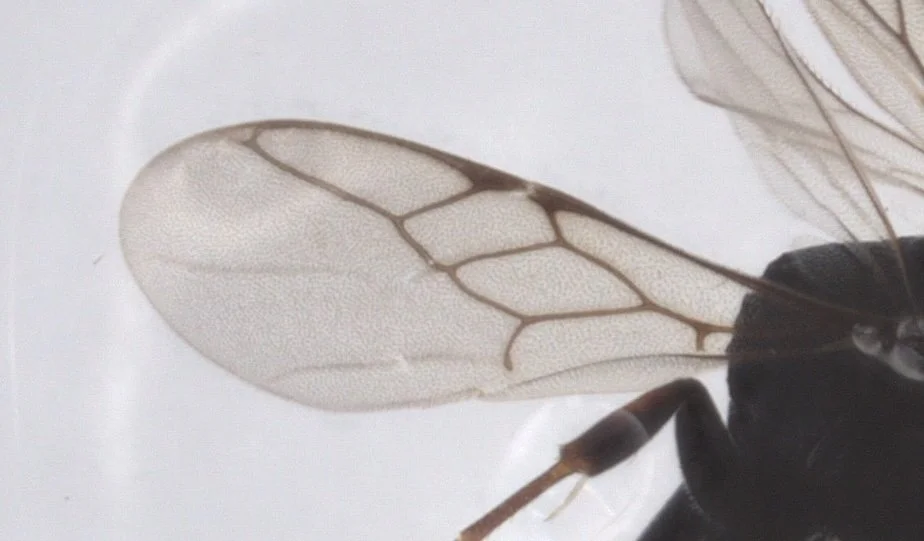
While atypical, the venation of #2605A is not unique amongst Nitela
In some Nitela (e.g. N. williamsi from Malaysia; some species from Canada), the recurrent vein has a “stub of vein just before its junction with submarginal cell” (Li, Li and Ma 2025).
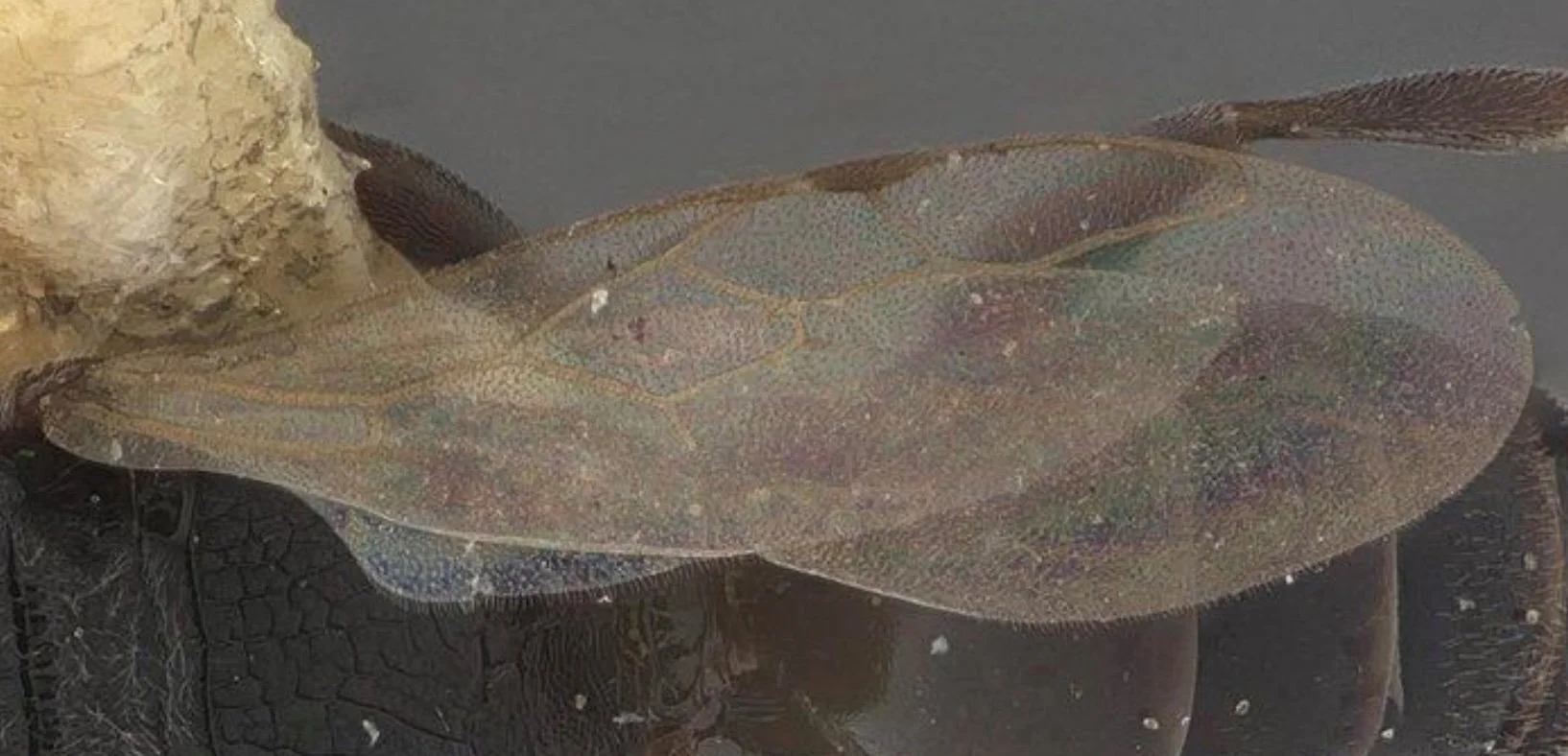
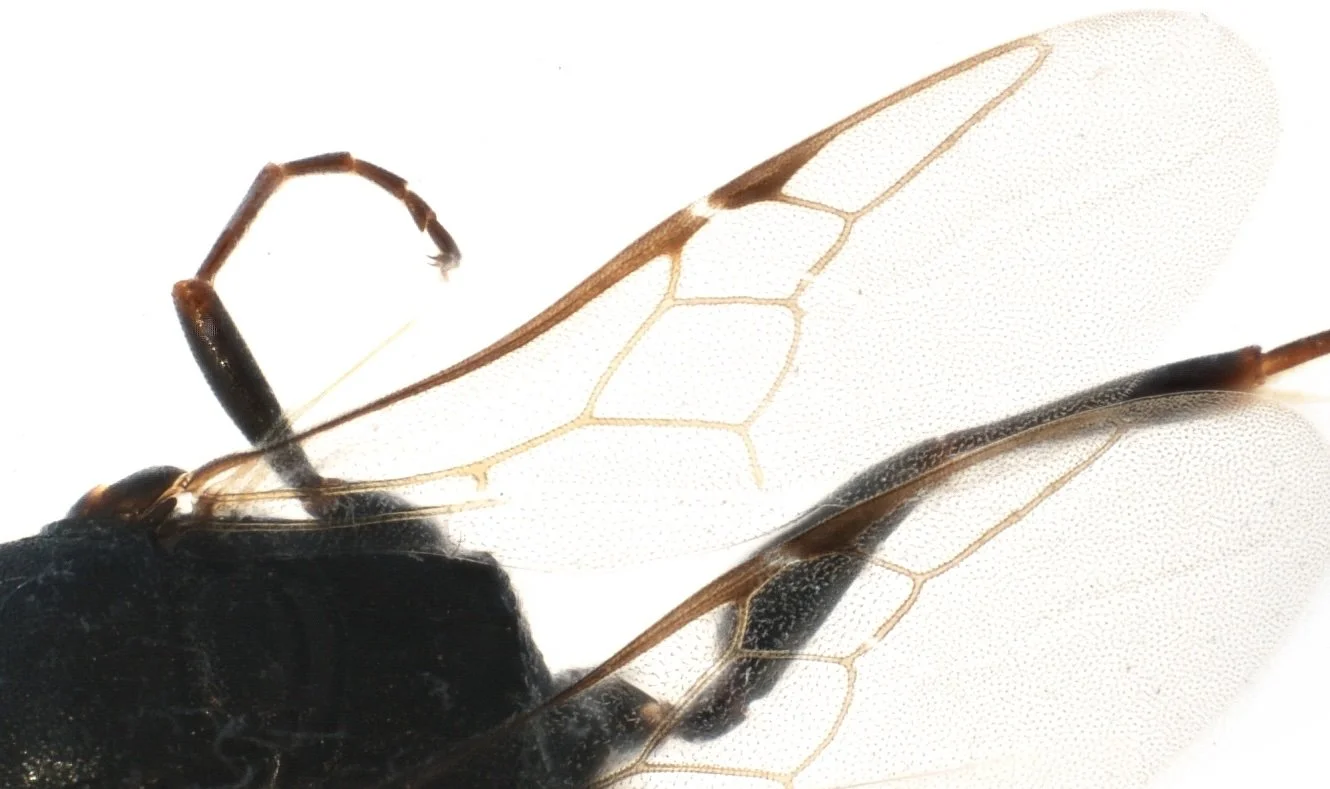
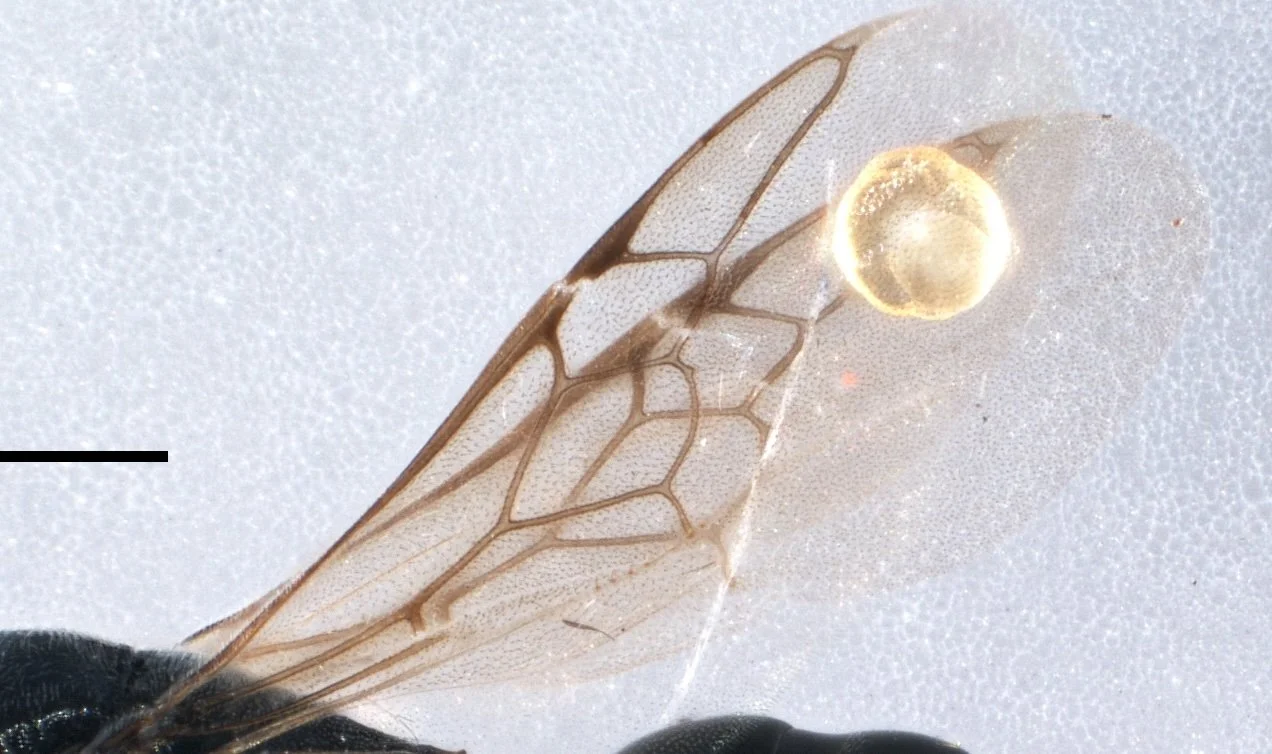
I really need to see the wings of a verified N. kurandae specimen! It is possible that, despite the similarities to Turner’s description of N. kurandae, 2605A is in fact an undescribed species. (see update from 26th August, 2026 at top of this page).
Undescribed species … and DNA barcodes
There are known to be additional Nitela species in Australia, beyond the four currently described. Matthews (2000) states: “Material in the Australian National Insect Collection (ANIC) in Canberra suggests that there are several undescribed species of Nitela in Australia, but most are represented by only one or two specimens.” (p. 41).
DNA evidence also points to the existence of more than four species. Although there are currently just 16 Australian Nitela specimens identified among the public records on BOLD, these fall out into 10 barcode groupings (‘BINS’) … suggesting 10 distinct species.
Of particular note, among those BOLD records with associated images, none are a match for 2605A. The following two are the closest – both with orange legs – yet there are clear differences: the forewing venation in both, and the scape/antennal colour in BIN AAW5203.
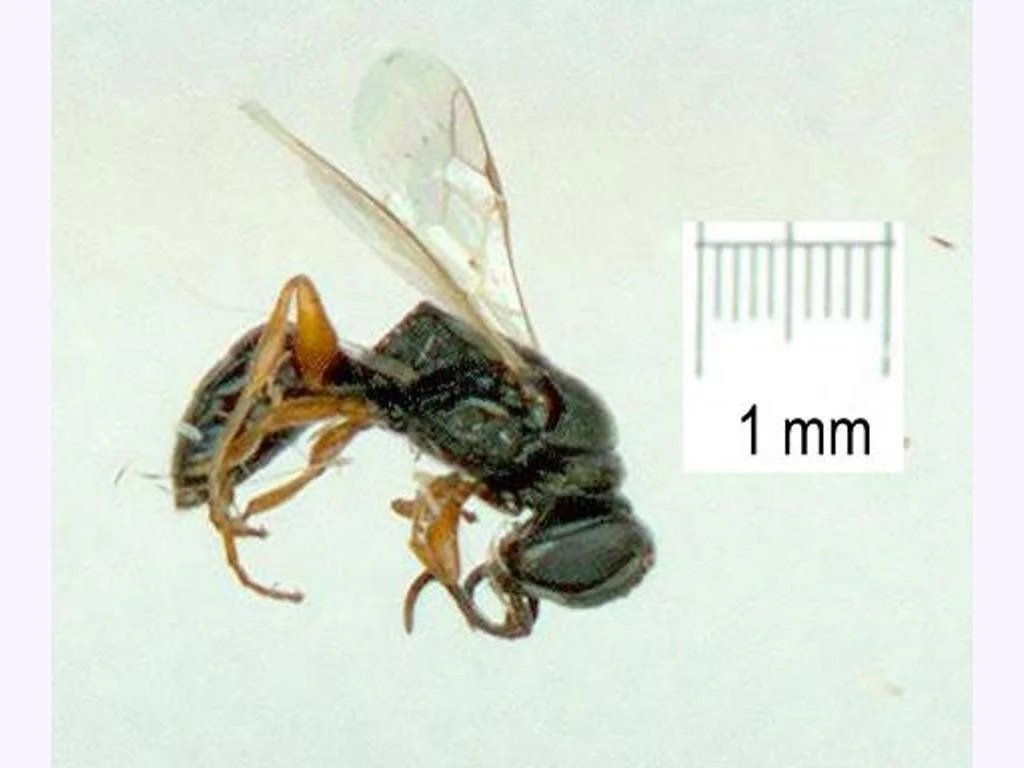
Nitella sp.BOLD specimen gvc17307-1L BIN ID: BOLD:AAW5203. Collected September 2011 near Townsville, QLD. Photography: Graeme V. Cocks. Collector: G. V. Cocks. Specimen Identification: Paul D.N. Hebert
Nitella sp. BOLD specimen CBG-A26097-H06 BIN ID: BOLD:AFW7699. Collected December 2023 at Hat Head, NSW. Photography: CBG Robotic Imager. Collector: P.Hebert. Specimen Identification: Paul D.N. Hebert
Another ‘next step’: submit 2605A to BOLD for barcoding.
Location and distribution
All current museum records for N. kurandae are from Queensland, primarily the northern coast. The collection site for 2605A is much further south, in coastal northern NSW. However, it is not uncommon for QLD species to extend into northern NSW, so the collection location alone is insufficient evidence. Indeed, Nitela species may be widely distributed, as is the case for N. australiensis which is widespread throughout Australia (Matthews 2000).
A quick word about colouration in dried insects
Note that once dried, the colour of the legs and antennae is much less intensely orange than it is in life. This is true for many/most insects, and I mention it only to highlight one of the challenges with comparing species descriptions based on museum material with images of live individuals. The ‘pale ferruginous’ of Turner’s Nitela kurandae (1908) may well appear bright orange in life.
References
Li C., Li Q., Ma L. 2025. Six new species of the genus Nitela Latreille (Hymenoptera, Crabronidae) from China, with a key to the Oriental species. Journal of Hymenoptera Research 98: 871-896. https://doi.org/10.3897/jhr.98.172249
Matthews, R.W. 2000. A new species of Nitela (Hymenoptera: Sphecidae: Larrinae) from Australia with notes on the nests and prey of two species. Journal of Hymenoptera Research 9(1): 41-47
Turner, R.E. 1908. Notes on the Australian fossorial wasps of the family Sphegidae, with descriptions of new species. Proceedings of the Zoological Society of London 1908: 457-535
This is a workbook page … a part of our website where we record the observations and references used in making species identifications. The notes will not necessarily be complete. They are a record for our own use, but we are happy to share this information with others.