
Nitela & Auchenophorus (Miscophini)
Workbook
Nitela is a cosmopolitan genus, while Auchenophorus is endemic to Australia. They are somewhat alike (forewing with single submarginal cell and single discoidal cell; mesopleuron with hypersternaulus) although the details of the wing venation are diagnostic to genus. Given that many field images will not provide sufficient detail of the wings, the best approach is at species level. There are just seven described Australian species: 4 Nitela; 3 Auchenophorus.
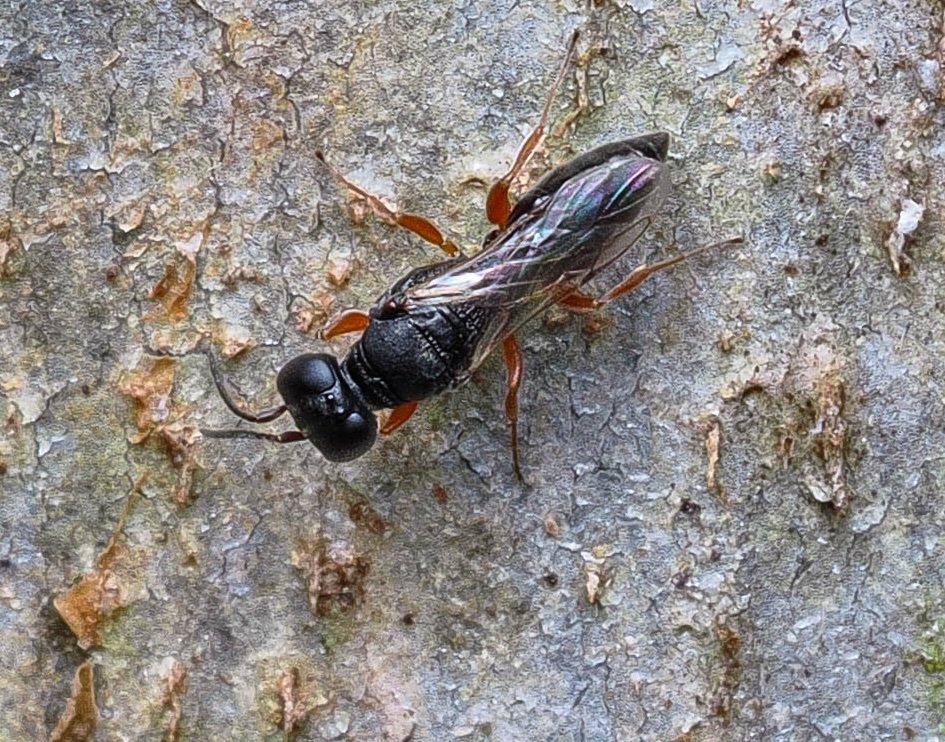
Cover image: photo courtesy of Ged Tranter, inaturalist sighting https://inaturalist.ala.org.au/observations/246455304
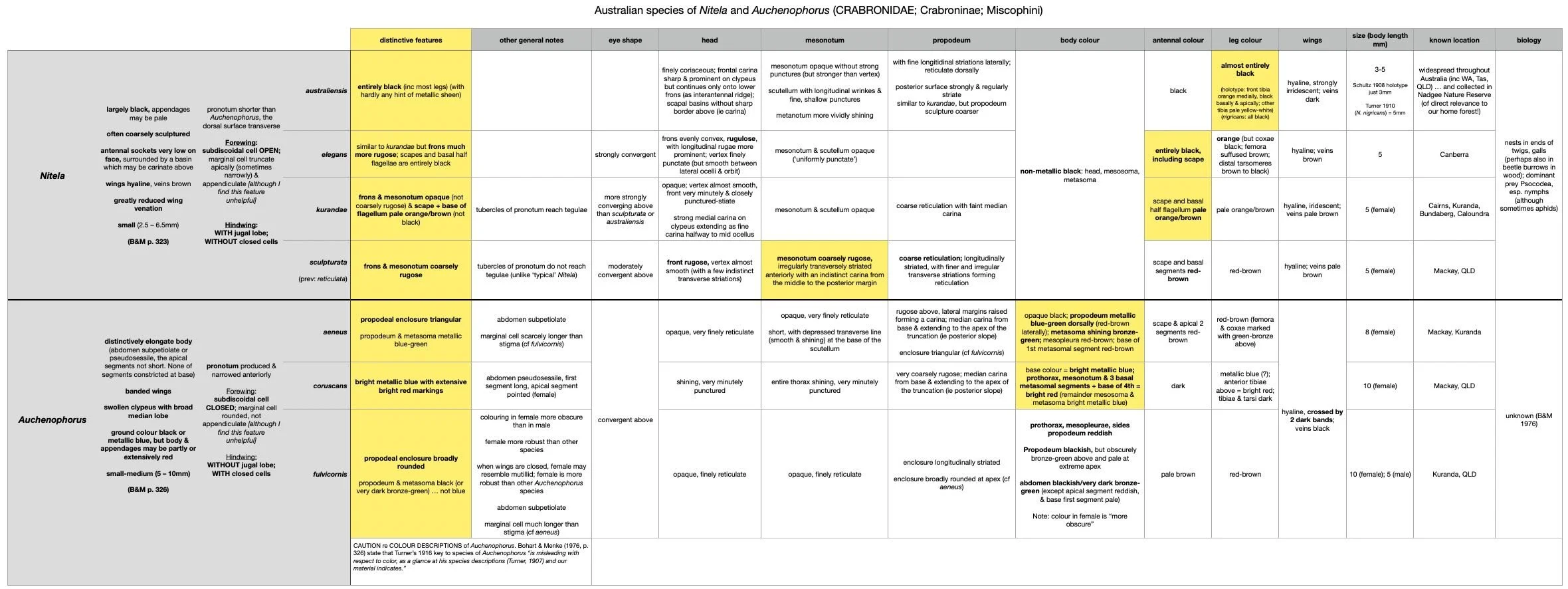
click image to view / download latest version as pdf (< 200kb)
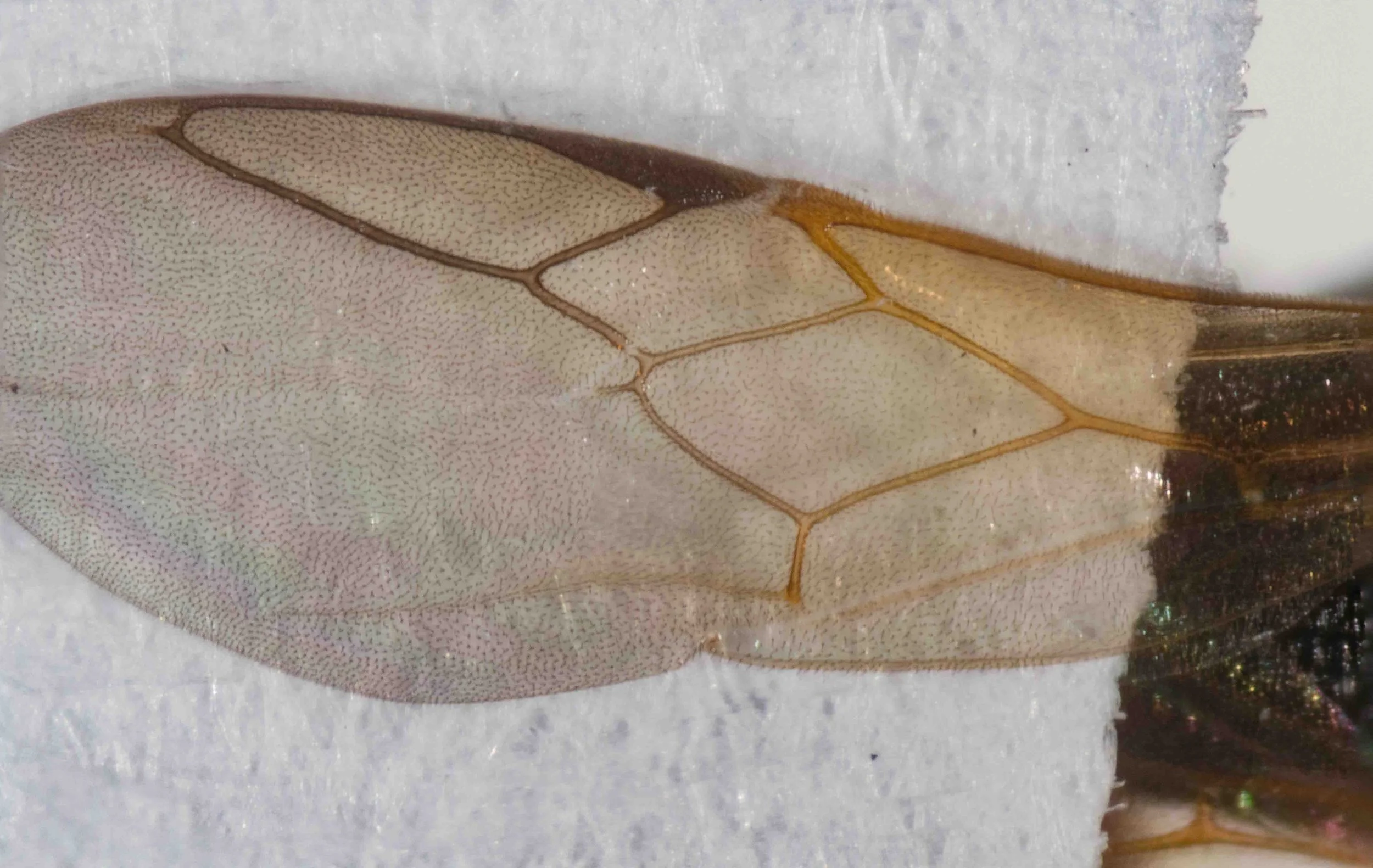
Temporarily stranded in a water bath, this image nicely displays the diagnostic features of Nitela, including:
Based on the colour pattern, this looks a match for Nitela australiensis
Image courtesy of Kristi Ellingsen … https://inaturalist.ala.org.au/observations/331867358
forewing with single submarginal cell, single discoidal cell;
forewing with open subdiscoidal cell (although there is just a trace of a vein posteriorly);
hind wing lacking any closed cell; and
pronotal collar with medial prominence.
Bits & Pieces

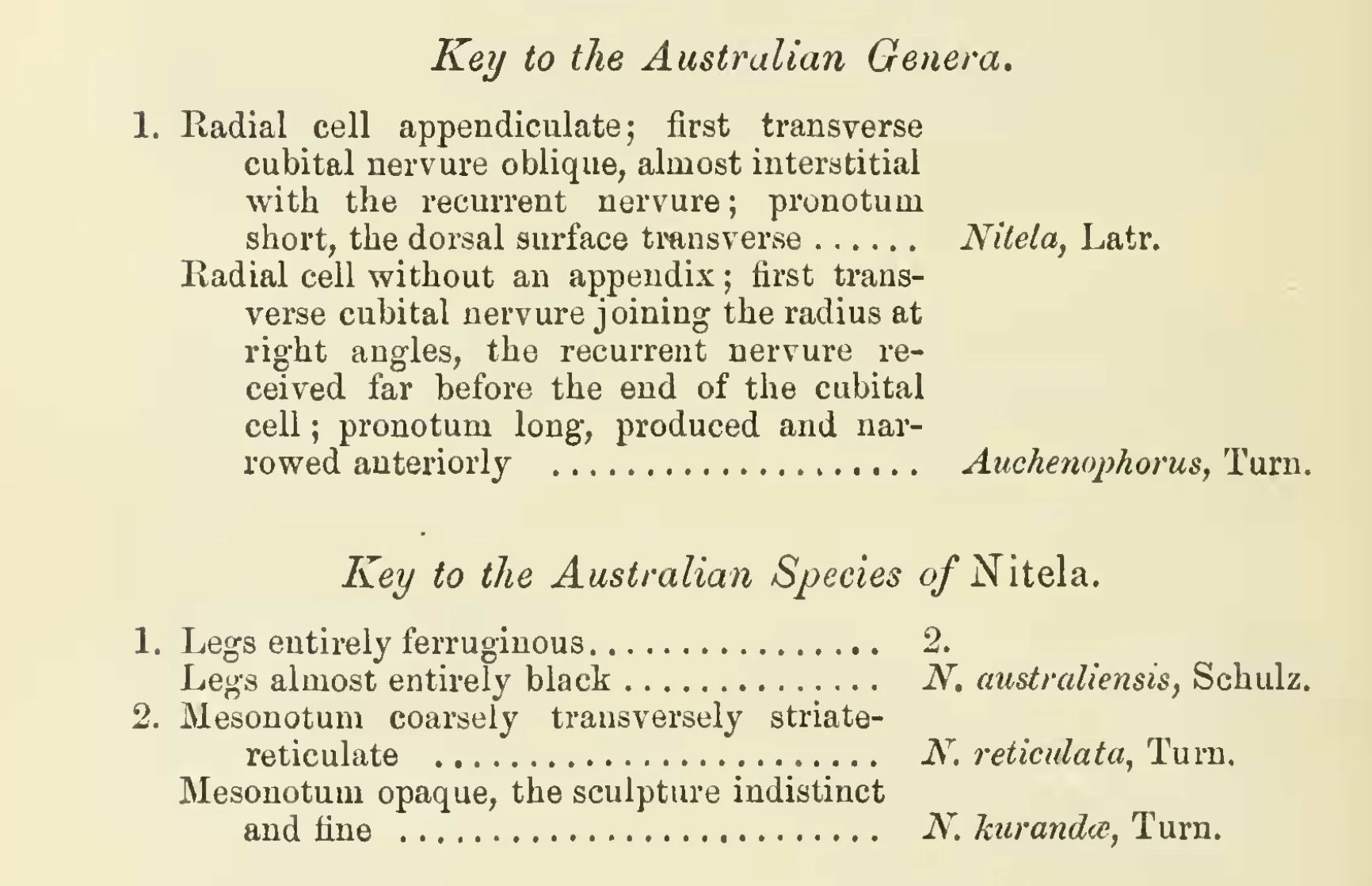
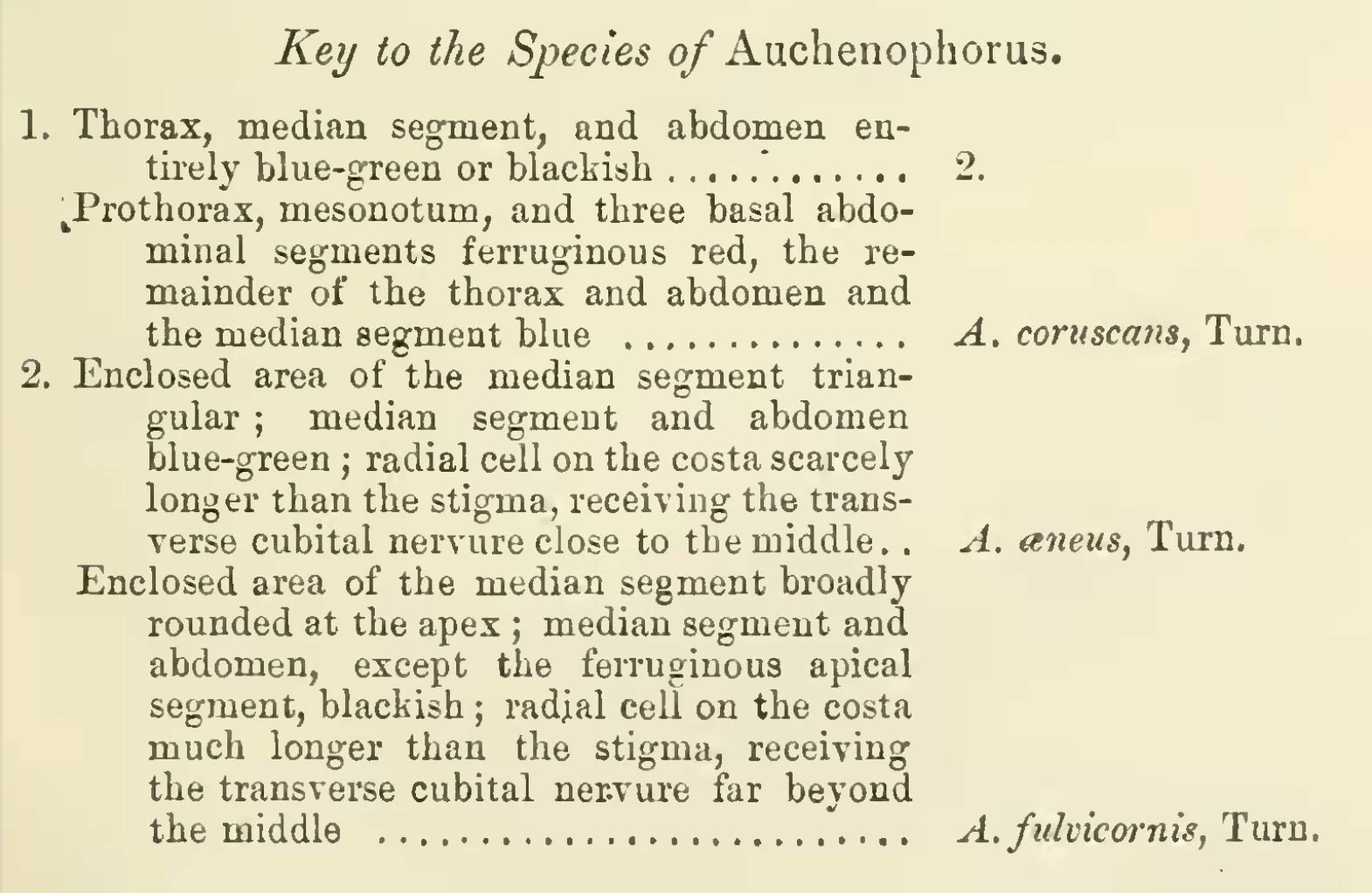


* note: according to Bohart & Menke (1976, p. 326), Turner’s 1916 key to species of Auchenophorus “is misleading with respect to color, as a glance at his species descriptions (Turner, 1907) and our material indicates.”
Individual specimens or species
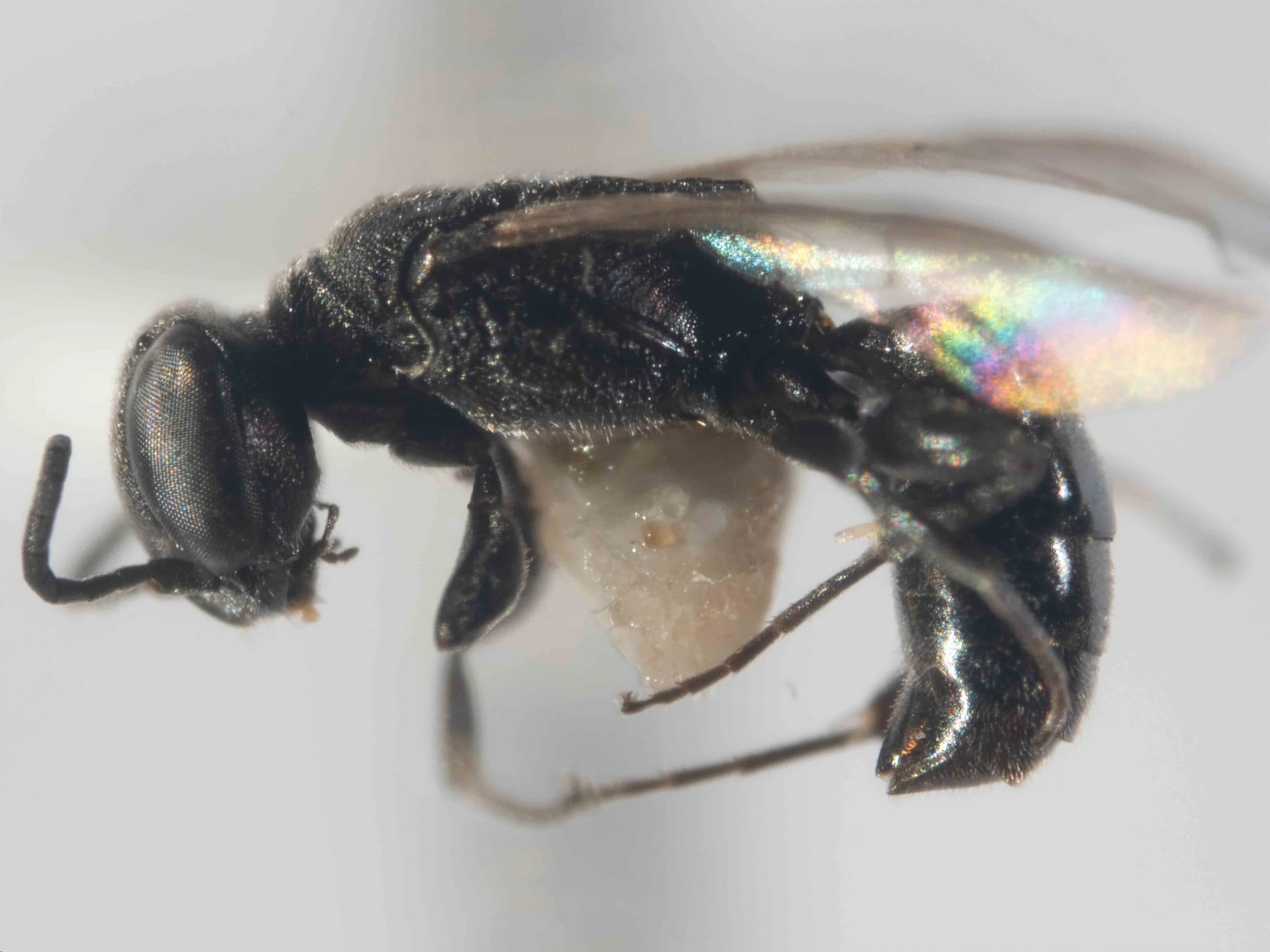
As opportunities arise, I take a closer look at individual specimens.
References
Bohart, R.M. & Menke, A.S. 1976. Sphecid Wasps of the World: a Generic Revision. Berkeley: Univ. California Press
Matthews, R.W. 2000. A new species of Nitela (Hymenoptera: Sphecidae: Larrinae) from Australia with notes on the nests and prey of two species. Journal of Hymenoptera Research 9(1): 41-47
Turner, R.E. 1907. New species of Sphegidae from Australia. Annals and Magazine of Natural History 7 19: 268-276
Turner, R.E. 1908. Notes on the Australian fossorial wasps of the family Sphegidae, with descriptions of new species. Proceedings of the Zoological Society of London 1908: 457-535
Turner, R.E. 1916. Notes on fossorial Hymenoptera, xxiv. On the genus Nitela Latr. Annals and Magazine of Natural History 8 18: 343-345
This is a workbook page … a part of our website where we record the observations and references used in making species identifications. The notes will not necessarily be complete. They are a record for our own use, but we are happy to share this information with others.