
Diamma bicolor (specimen #061)
Workbook
Collected in Malaise trap (GMP66367) during the week 3rd to 10th Oct. 2026 (specimen ID #061)
Diamma bicolor
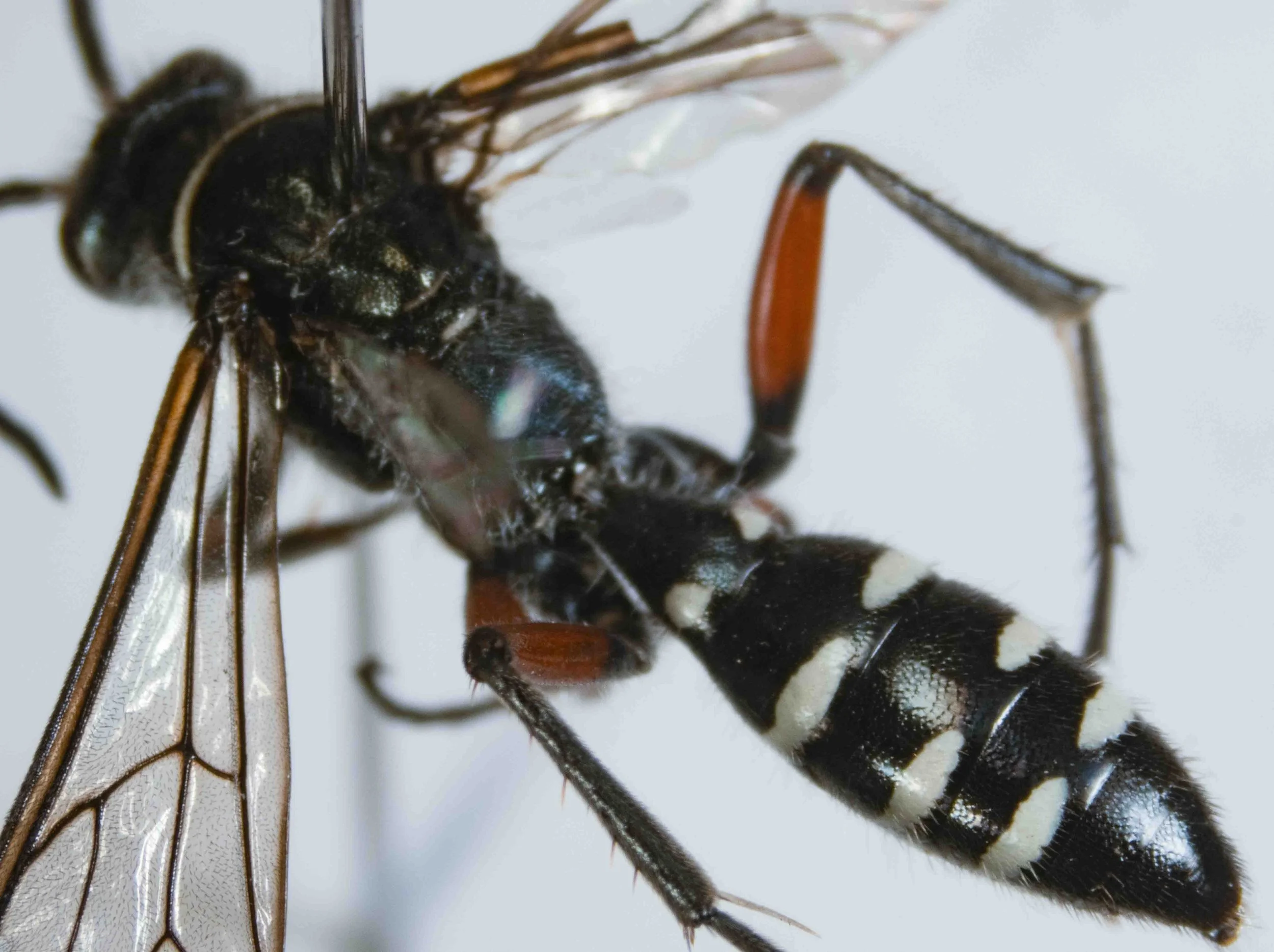
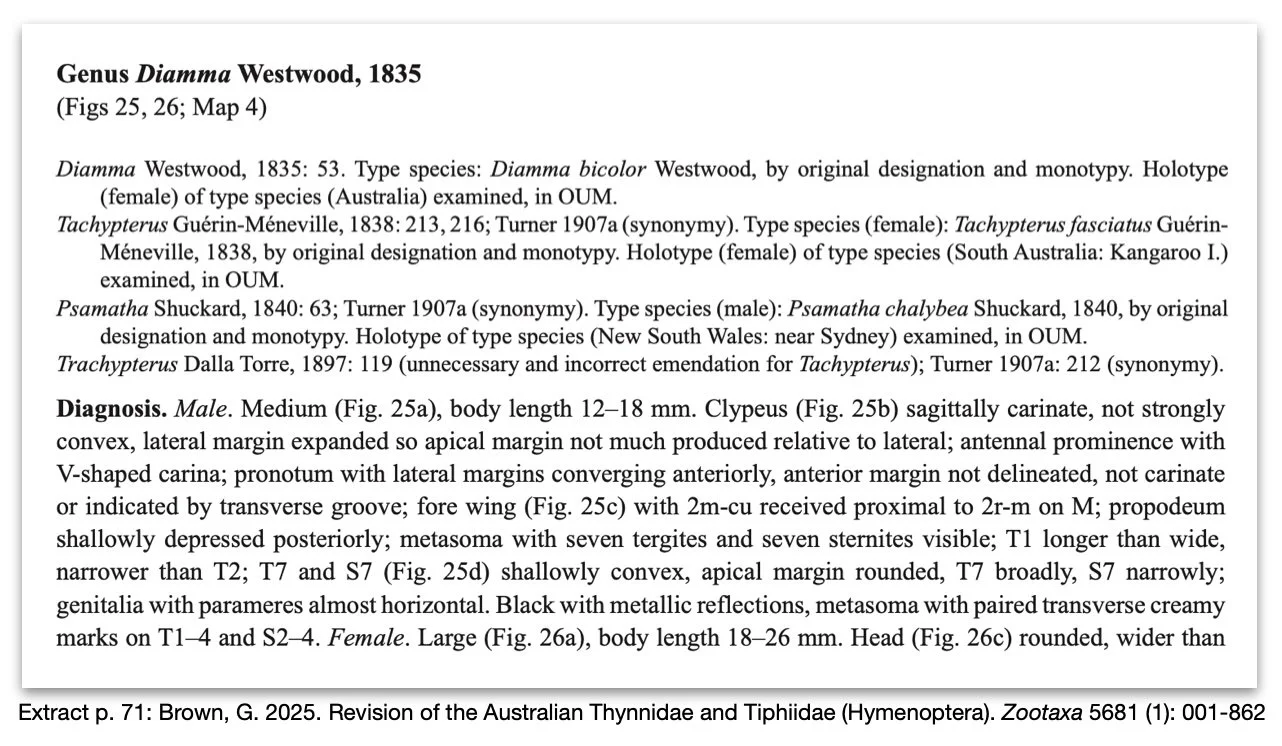
Having worked through the various options, I am confident that this is Diamma bicolor. It readily meets the diagnostic criteria described by Brown (2025).
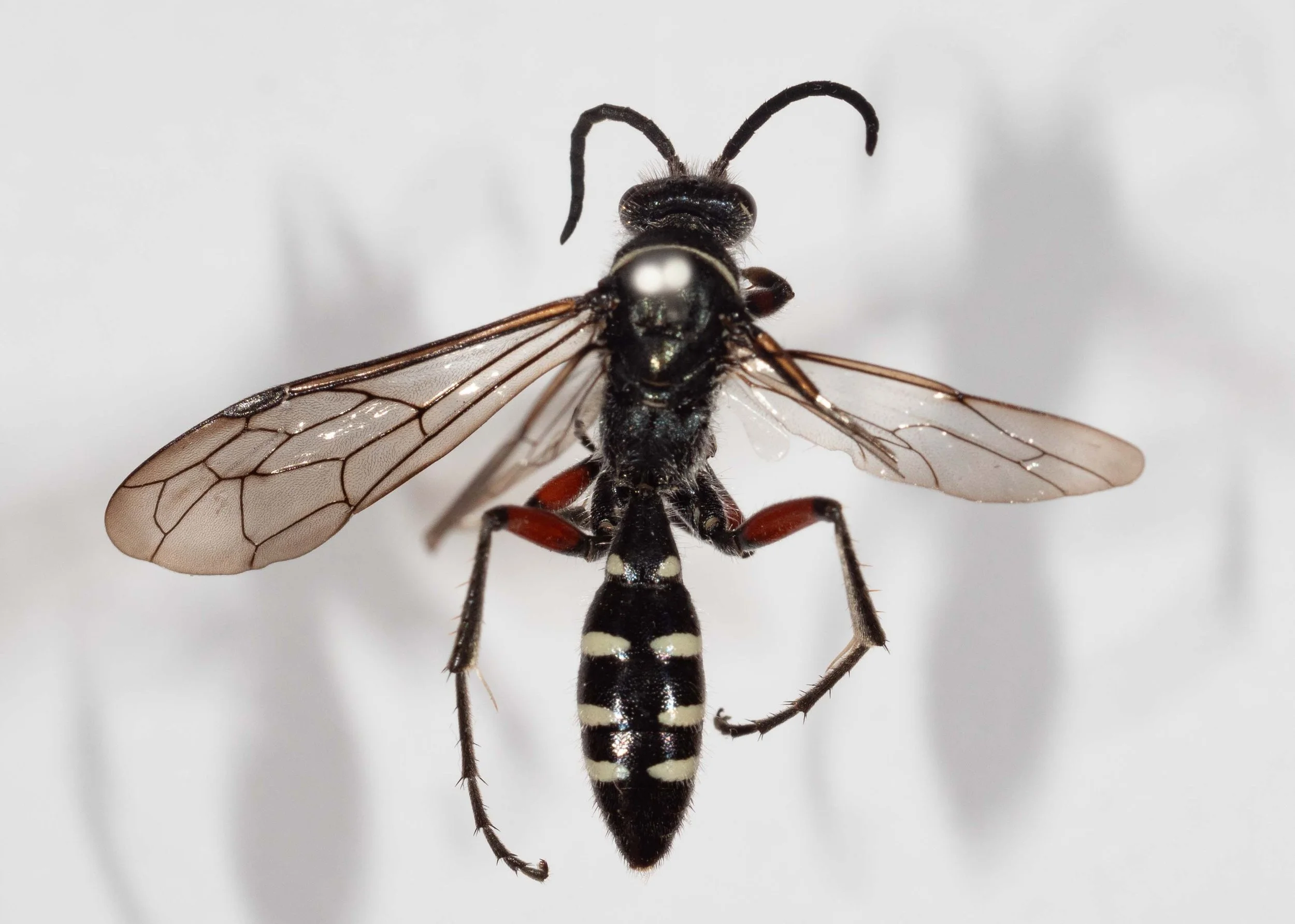
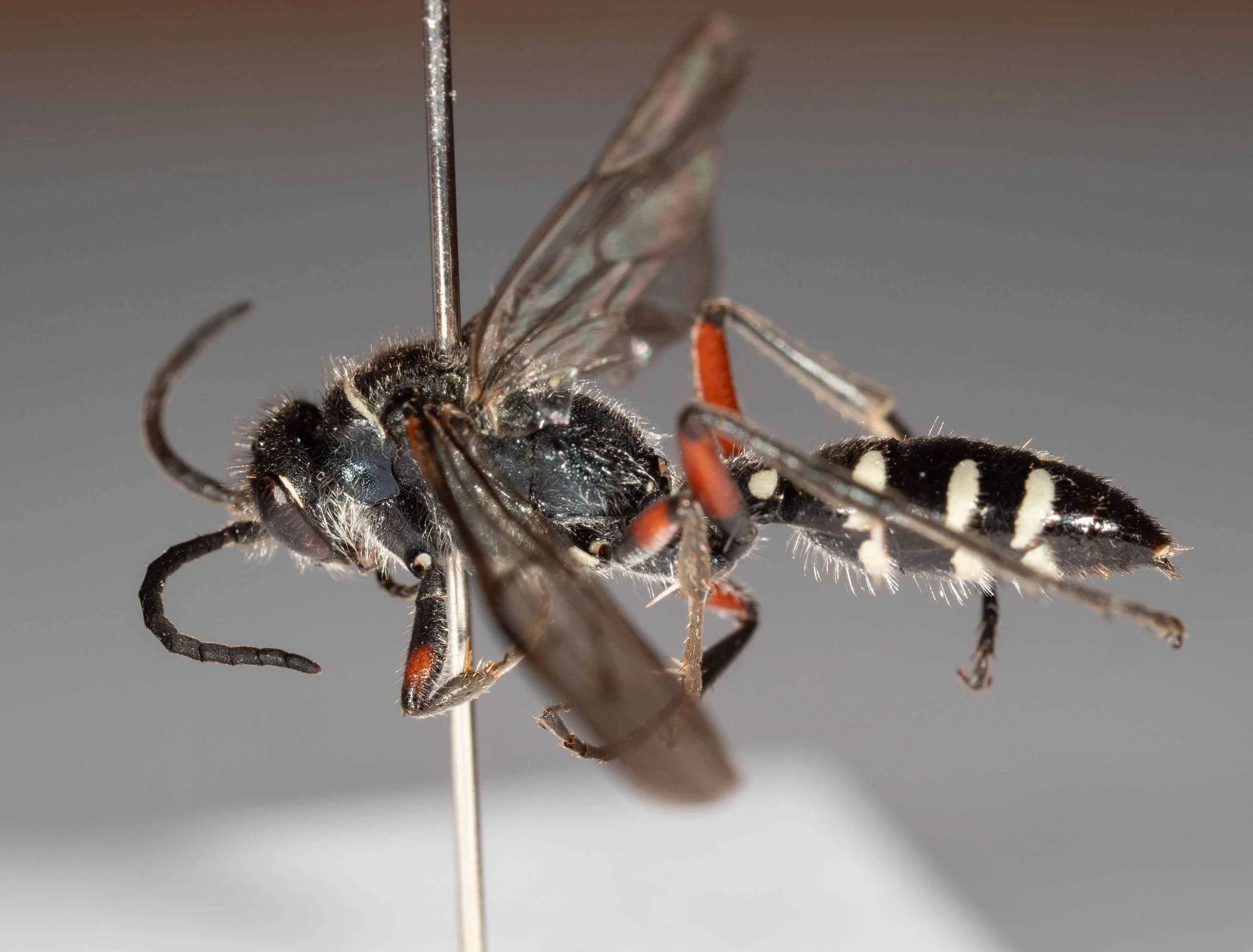
This is not a species we commonly sight when wandering about the forest, so it has surprised us to find them turning up regularly in the Malaise traps this spring.
The colour of specimen #061 differs from the images shown in Brown (2025). However, as the species is known to be variable in size and colour (Brown 2025), I have no reason to doubt the identification.
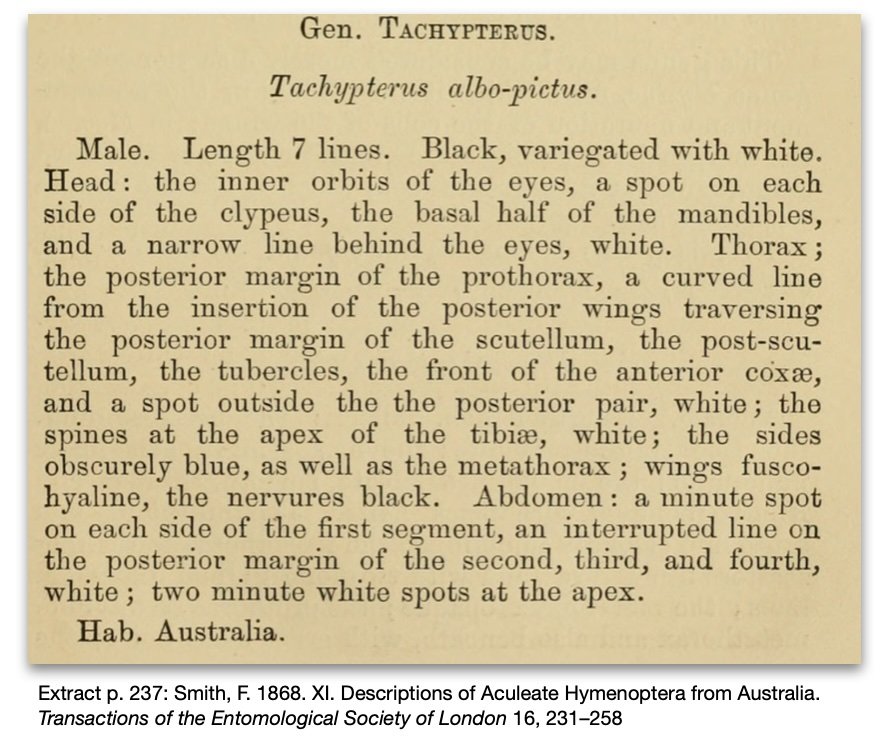
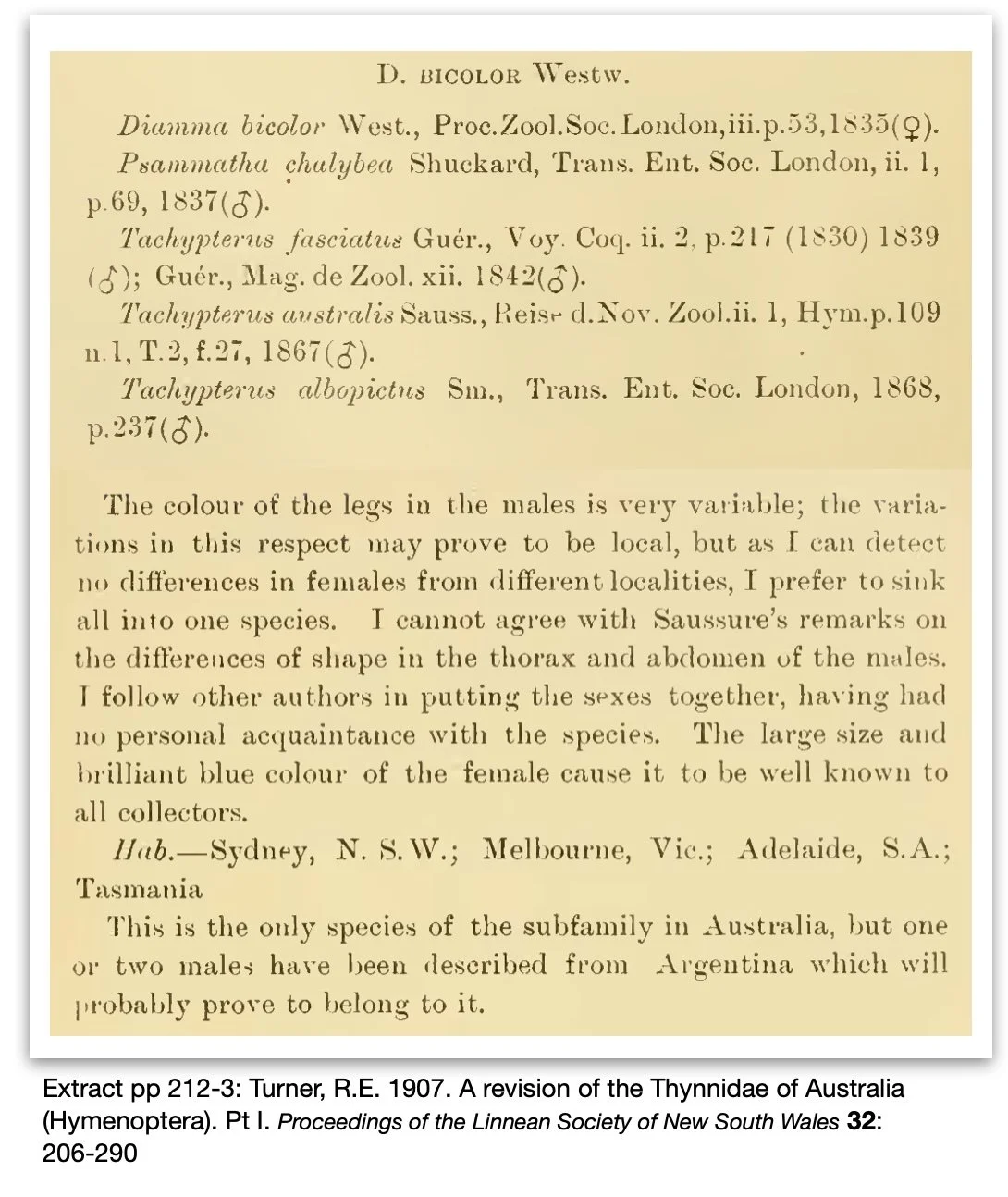
As further support, I note that our local specimens (#061, #043, and numerous others we have examined) are a very good match for the colour pattern of Tachypterus albopictus (Smith), which was subsequently synonymised with D. bicolor (Turner 1907).
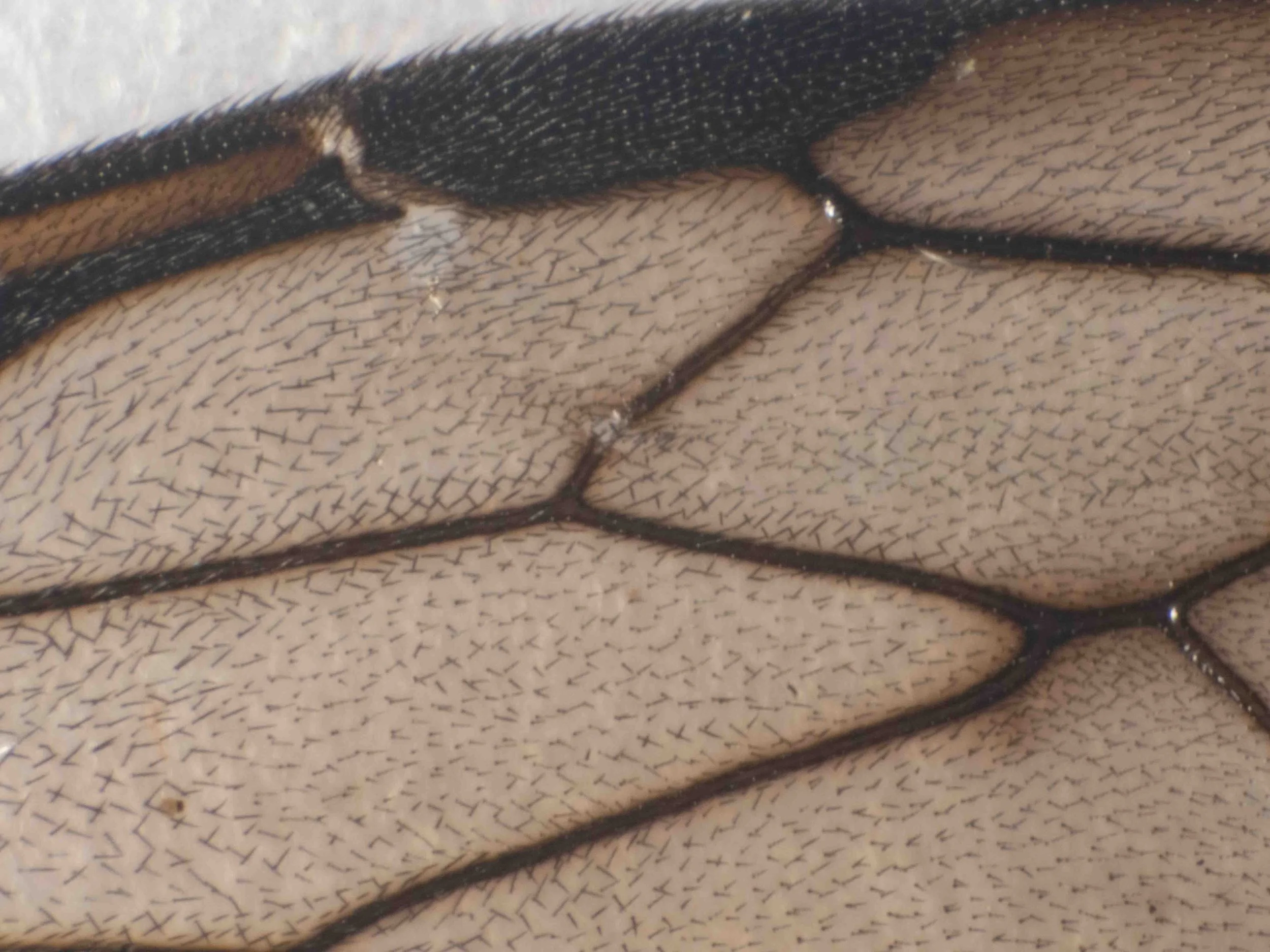
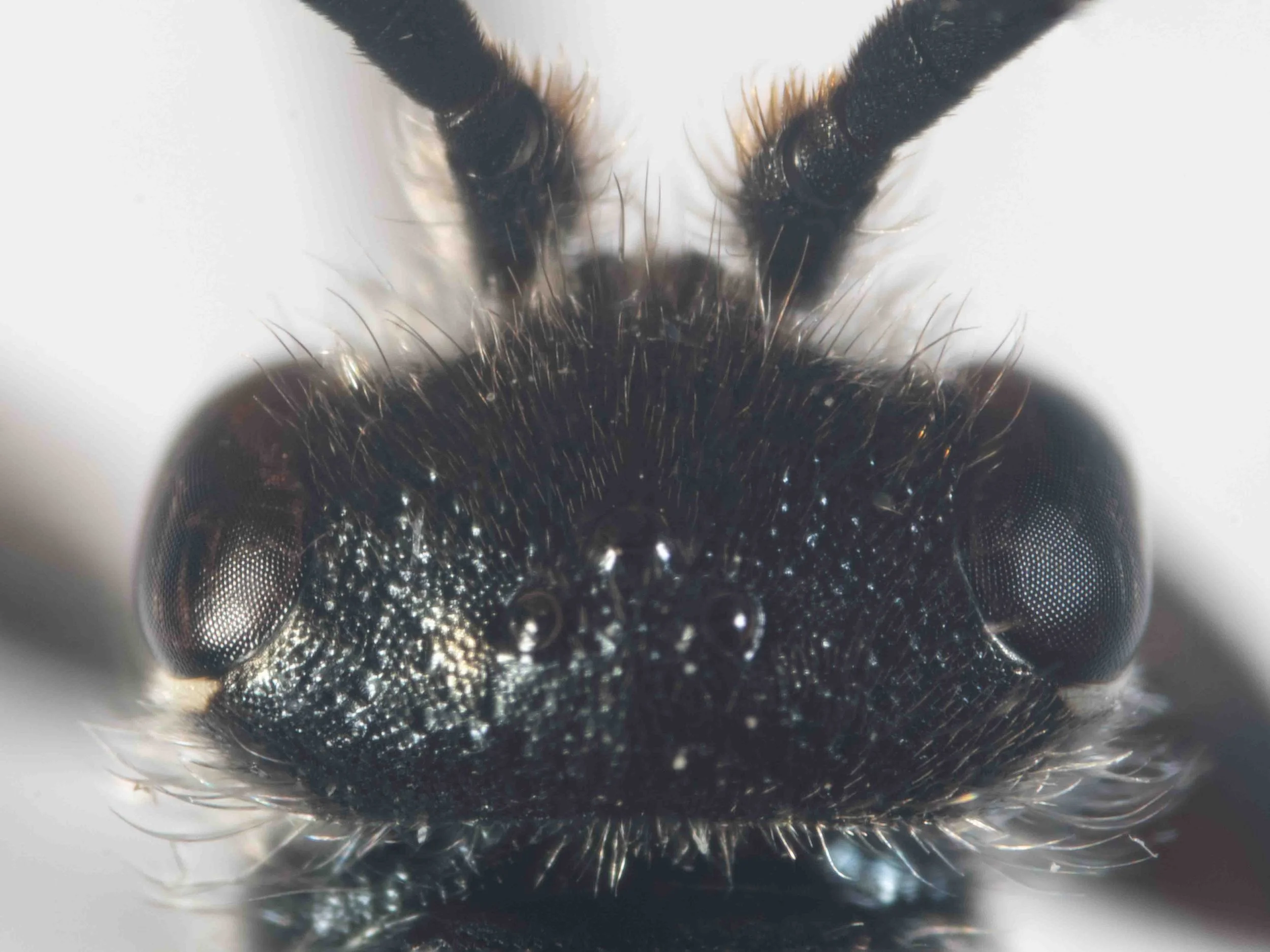
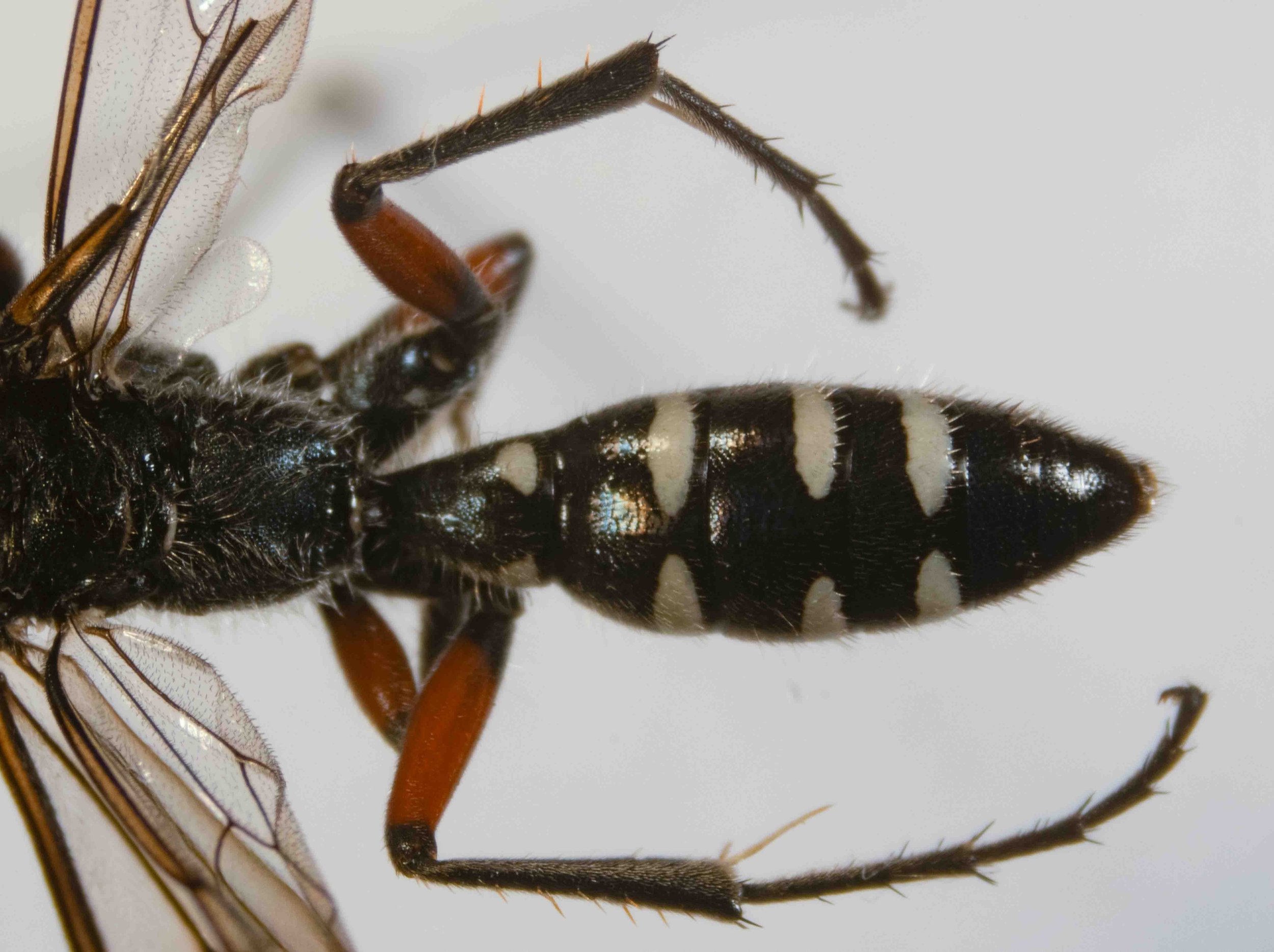
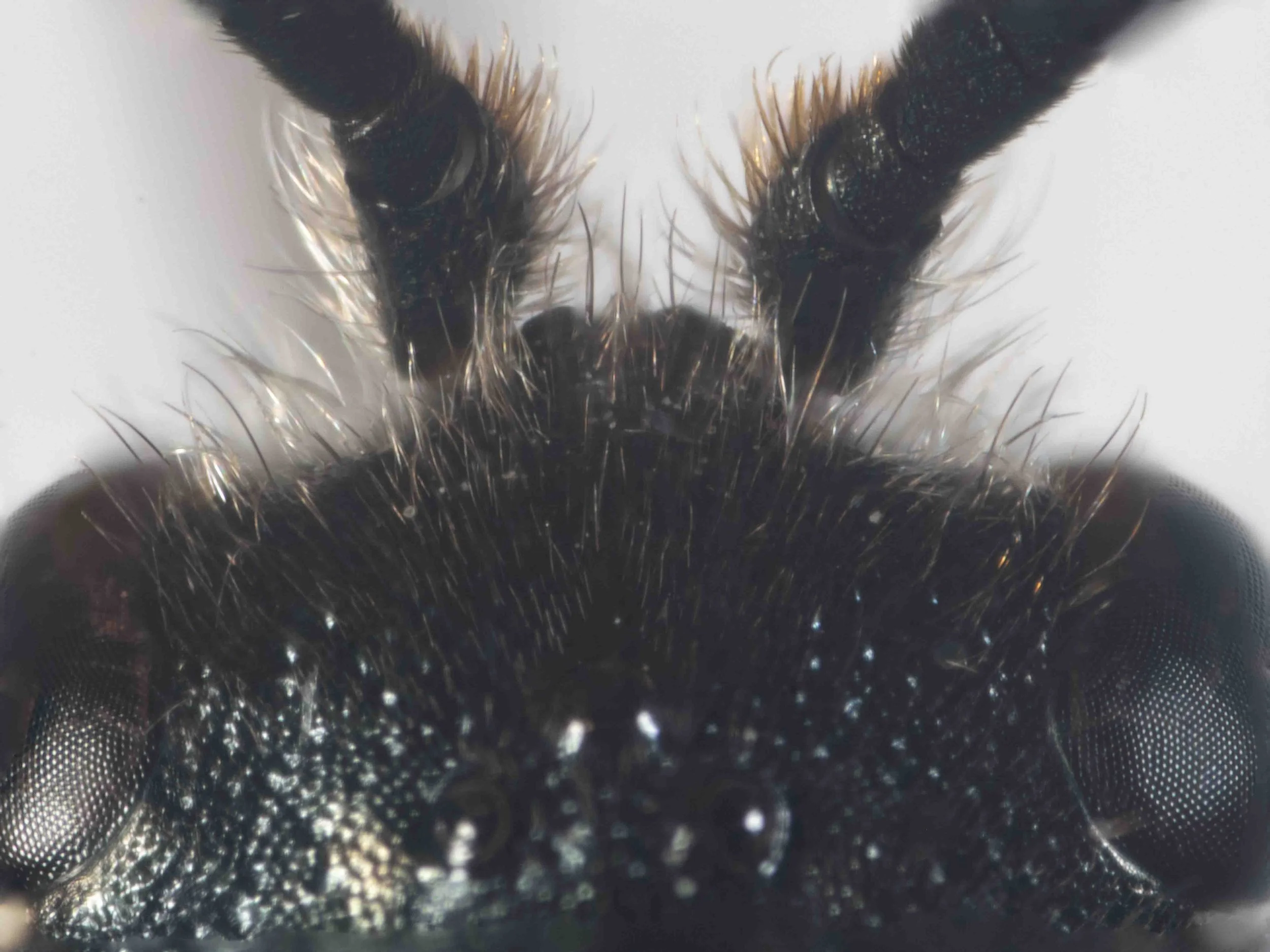
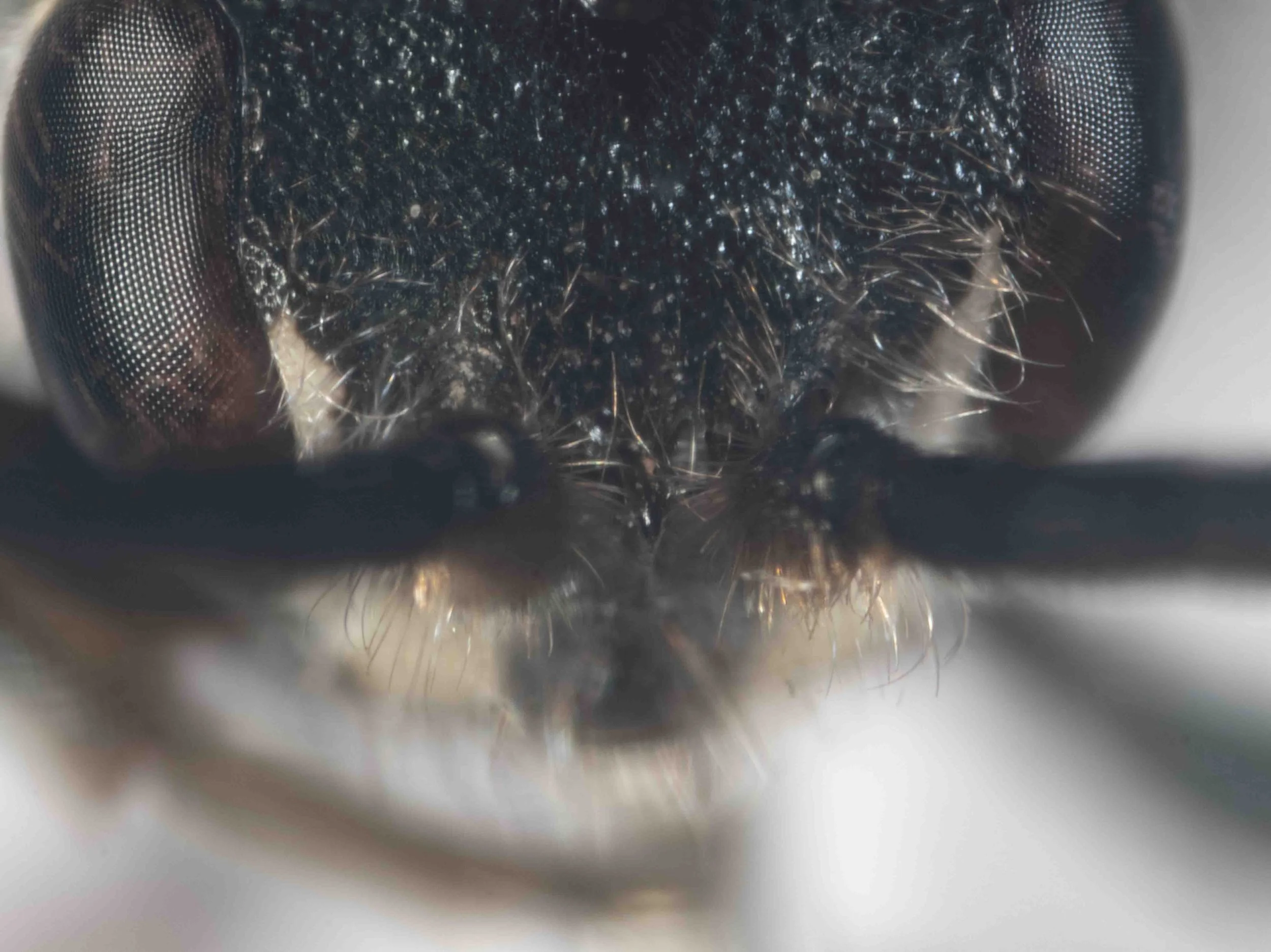
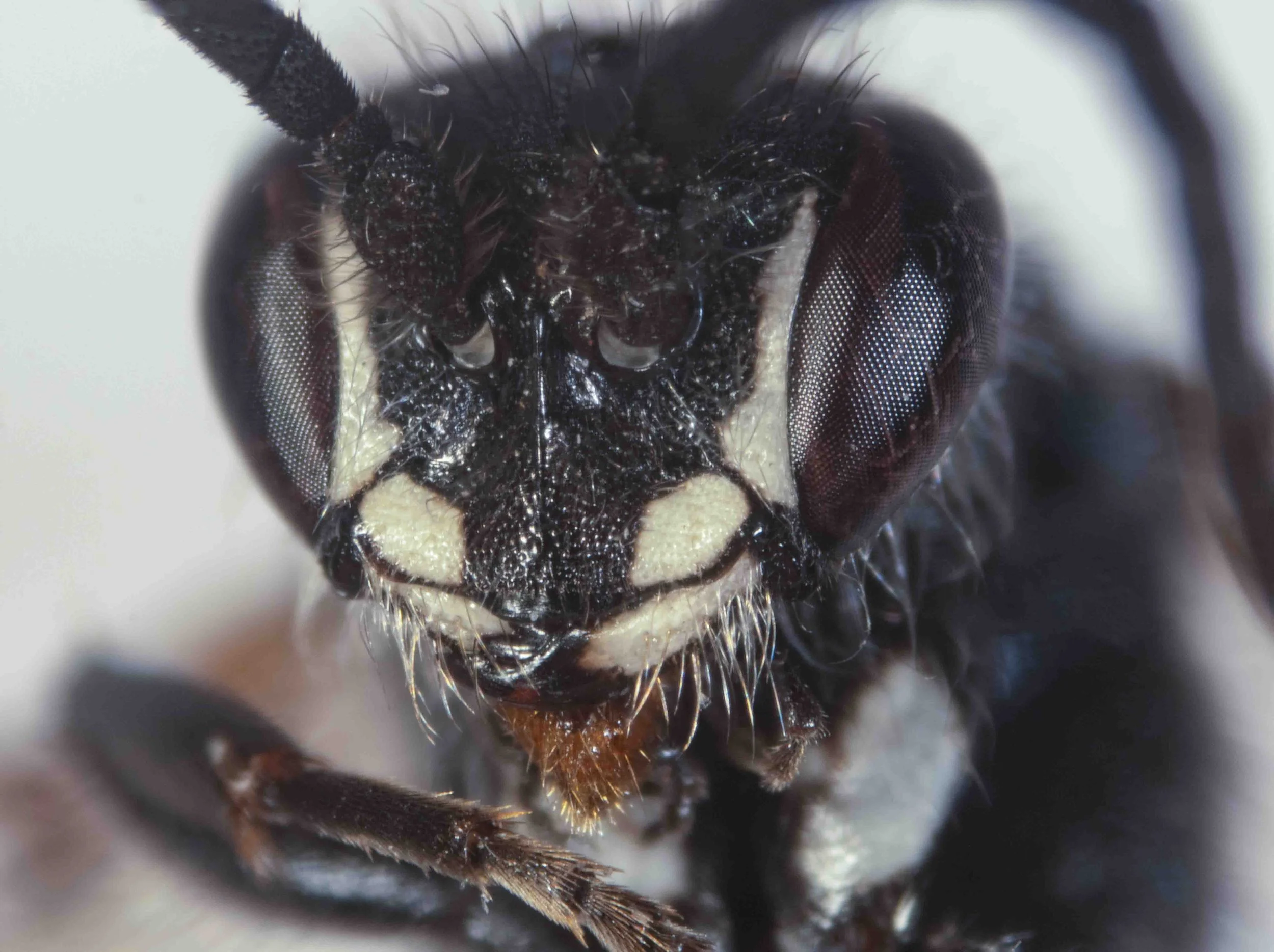
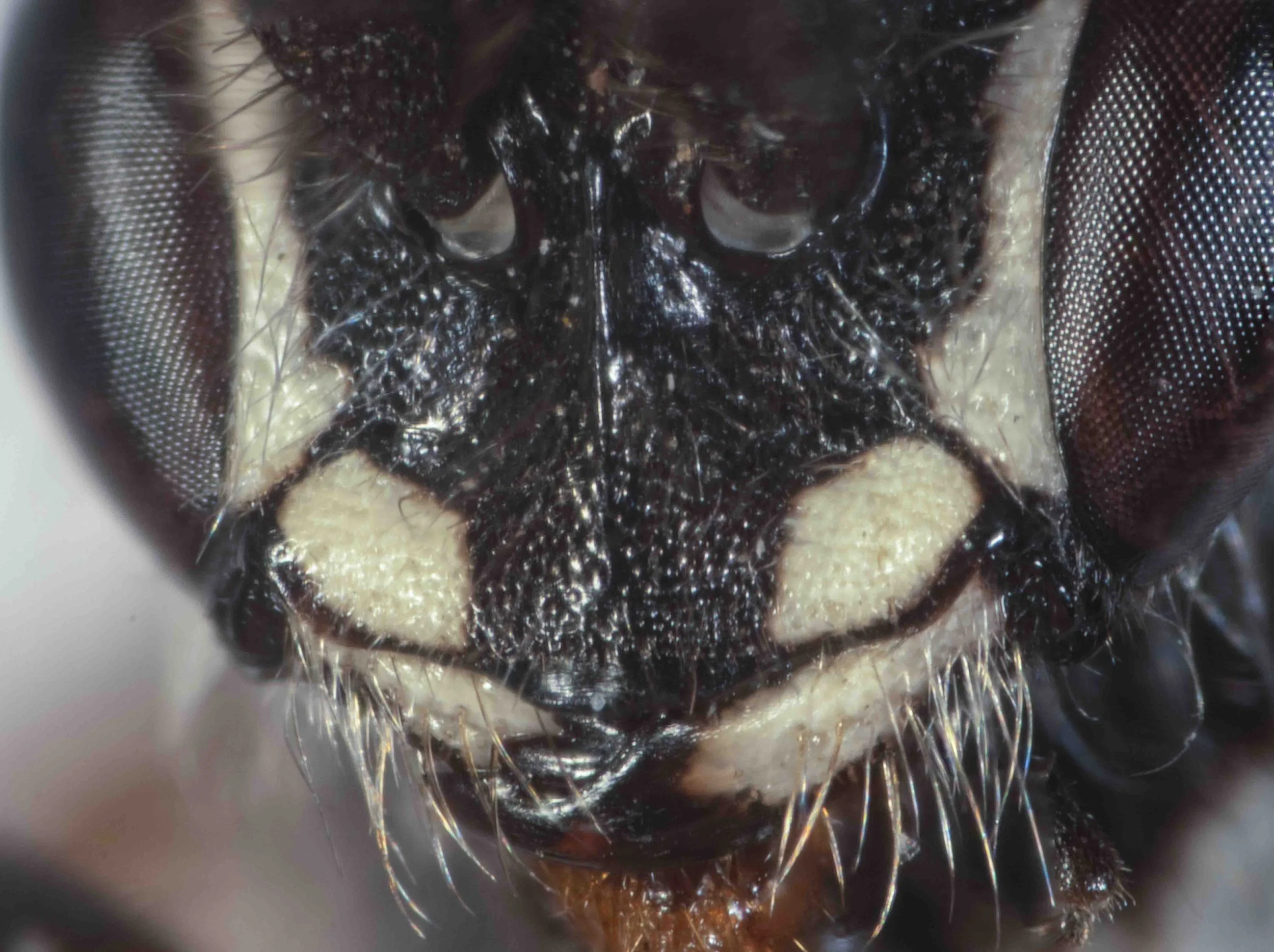
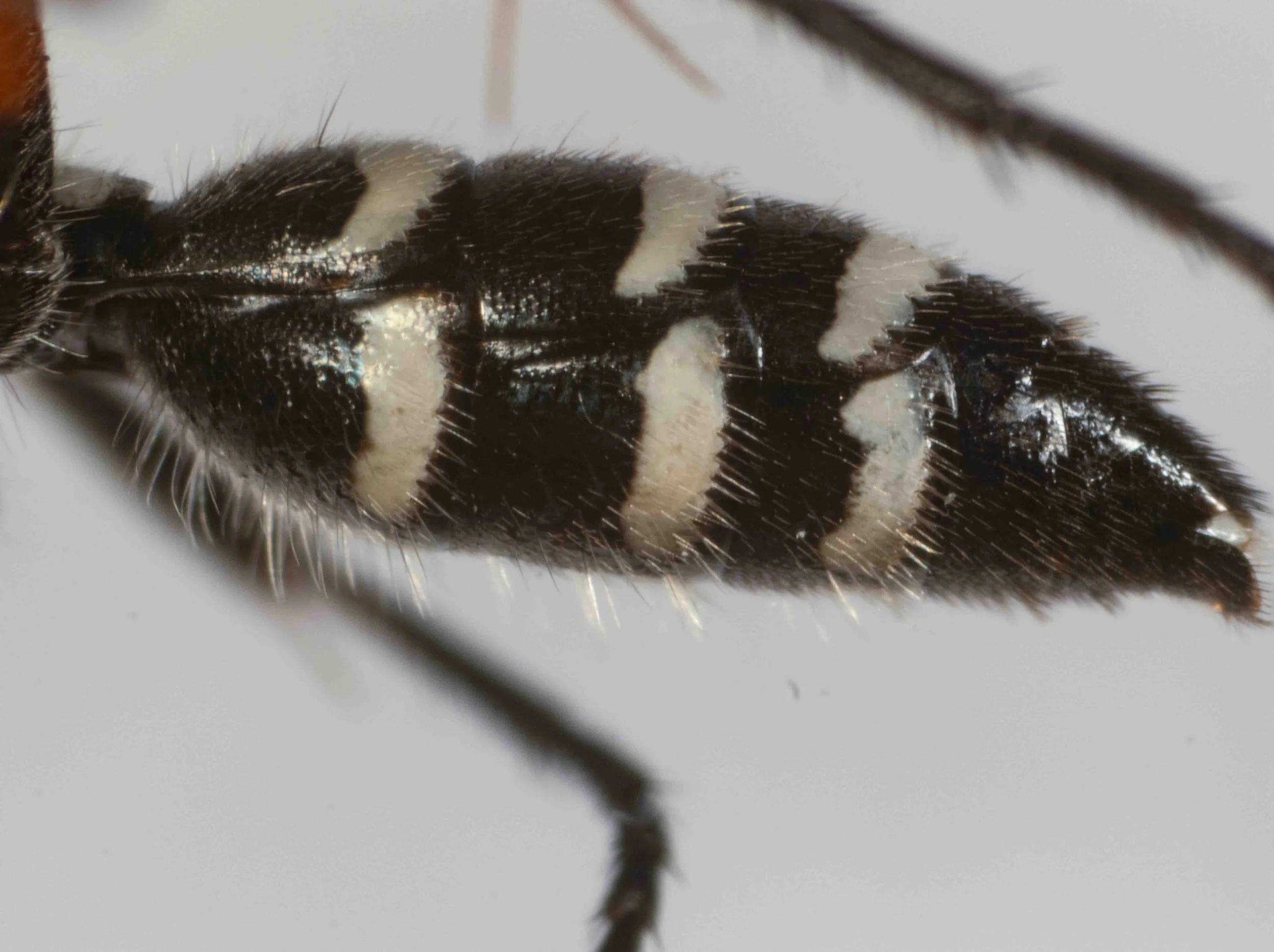
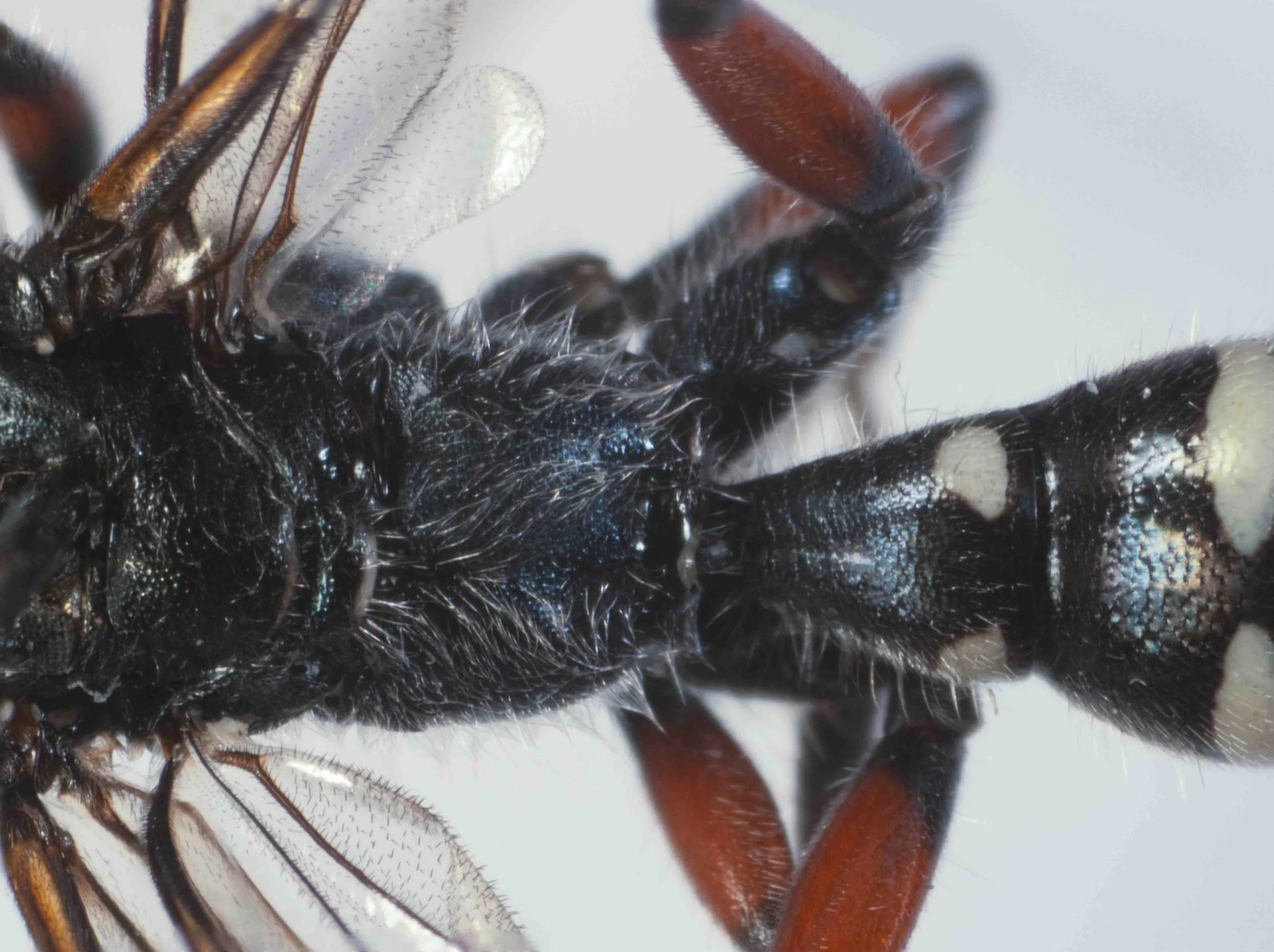
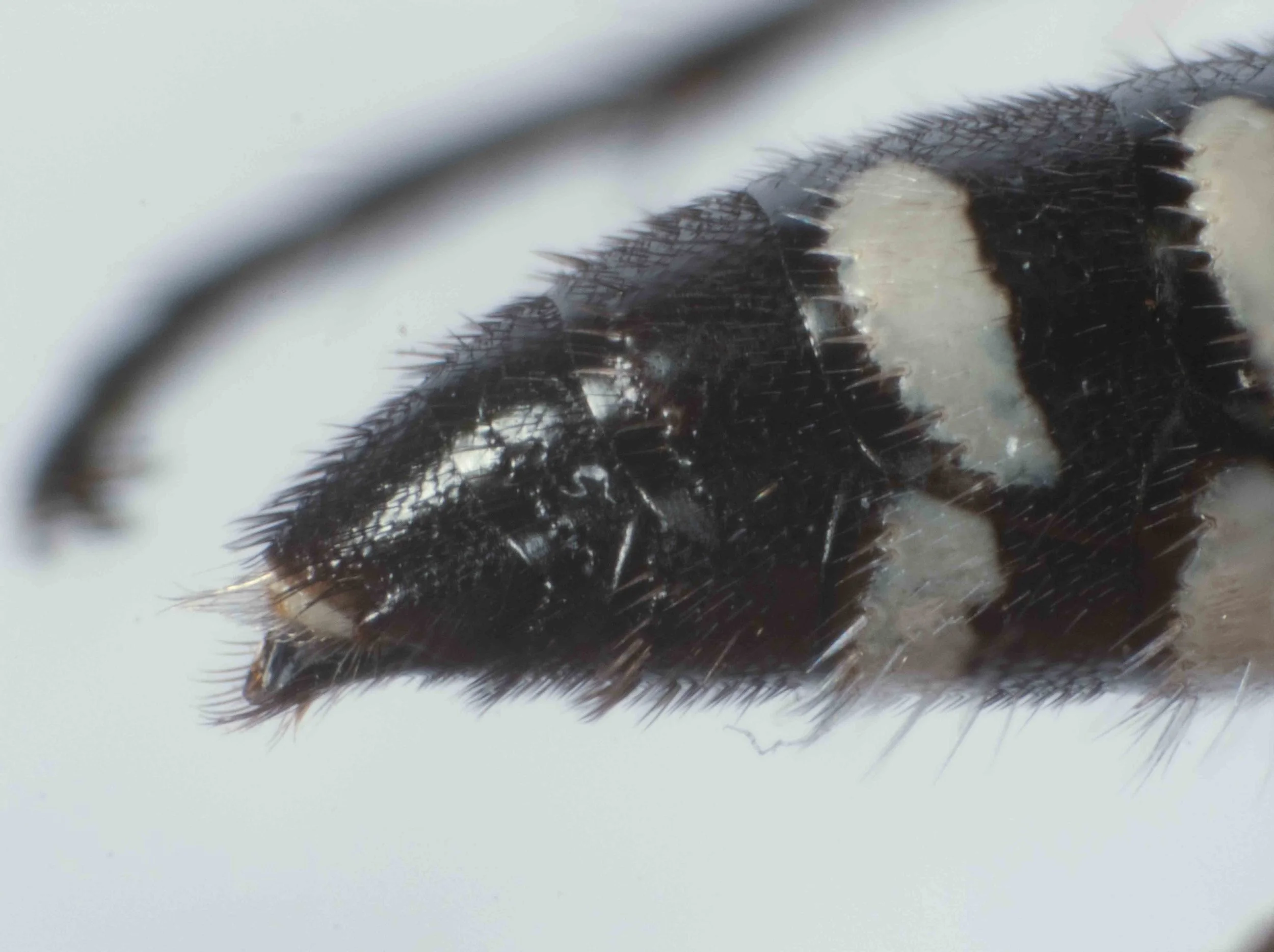
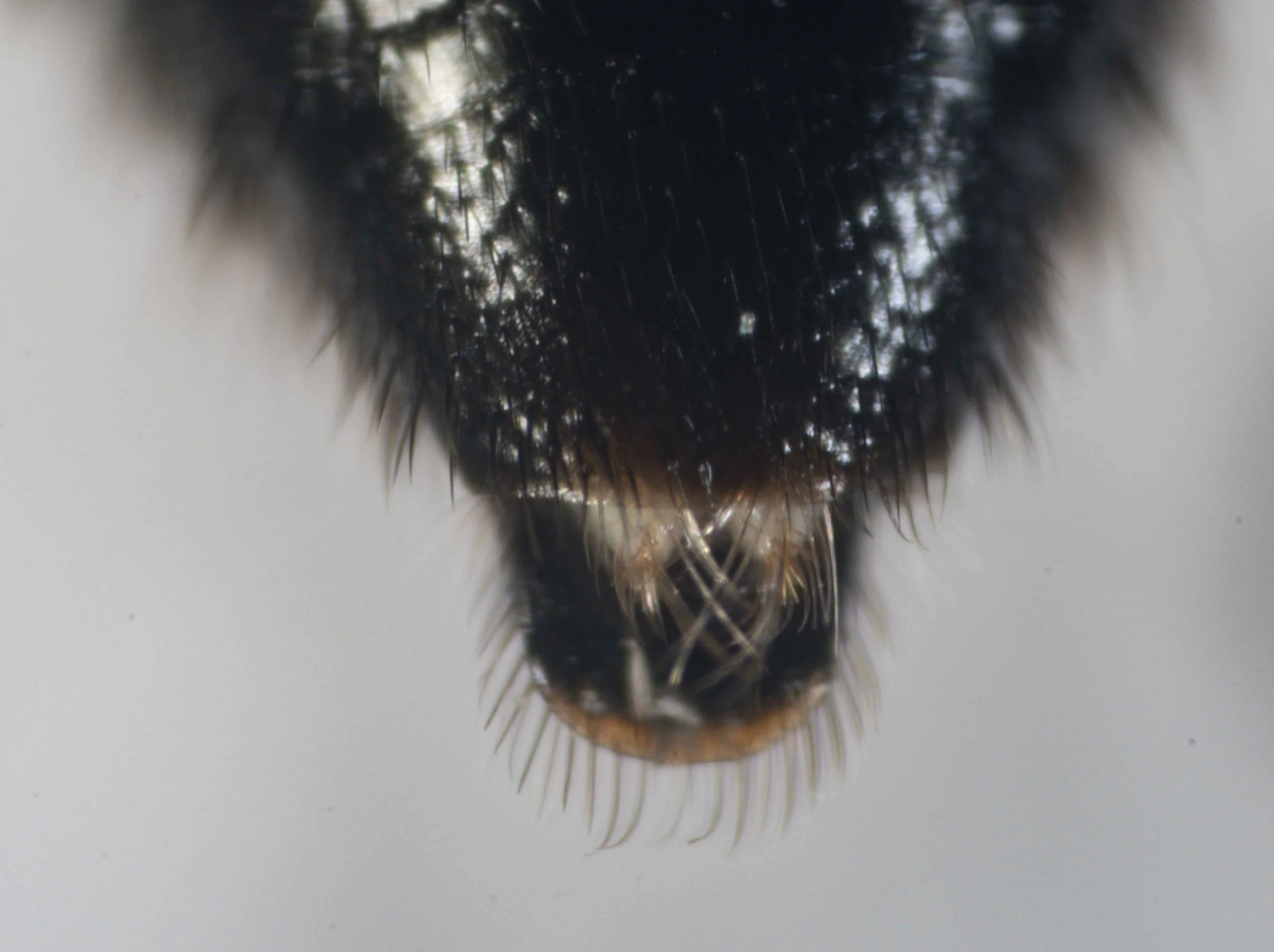
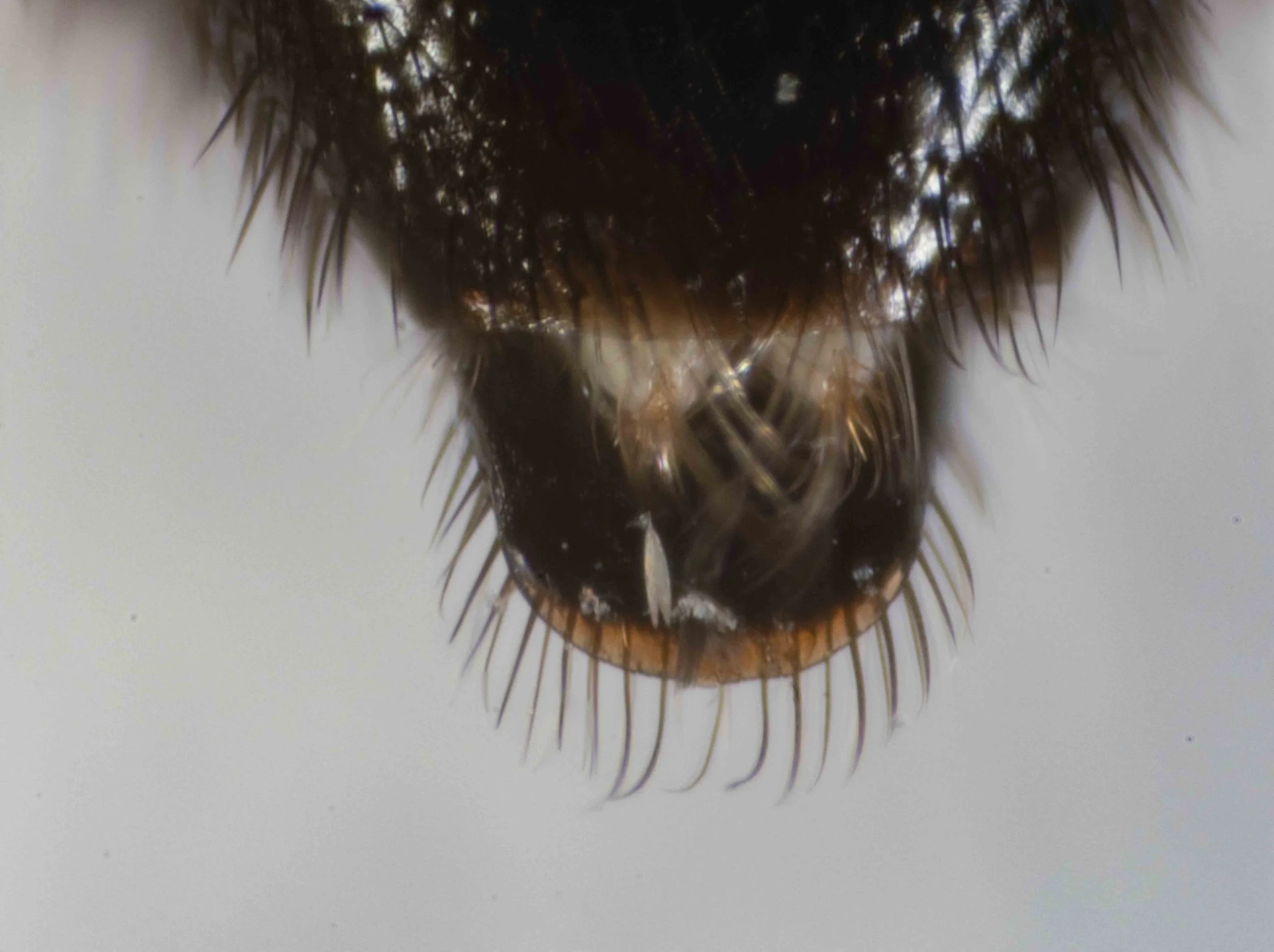
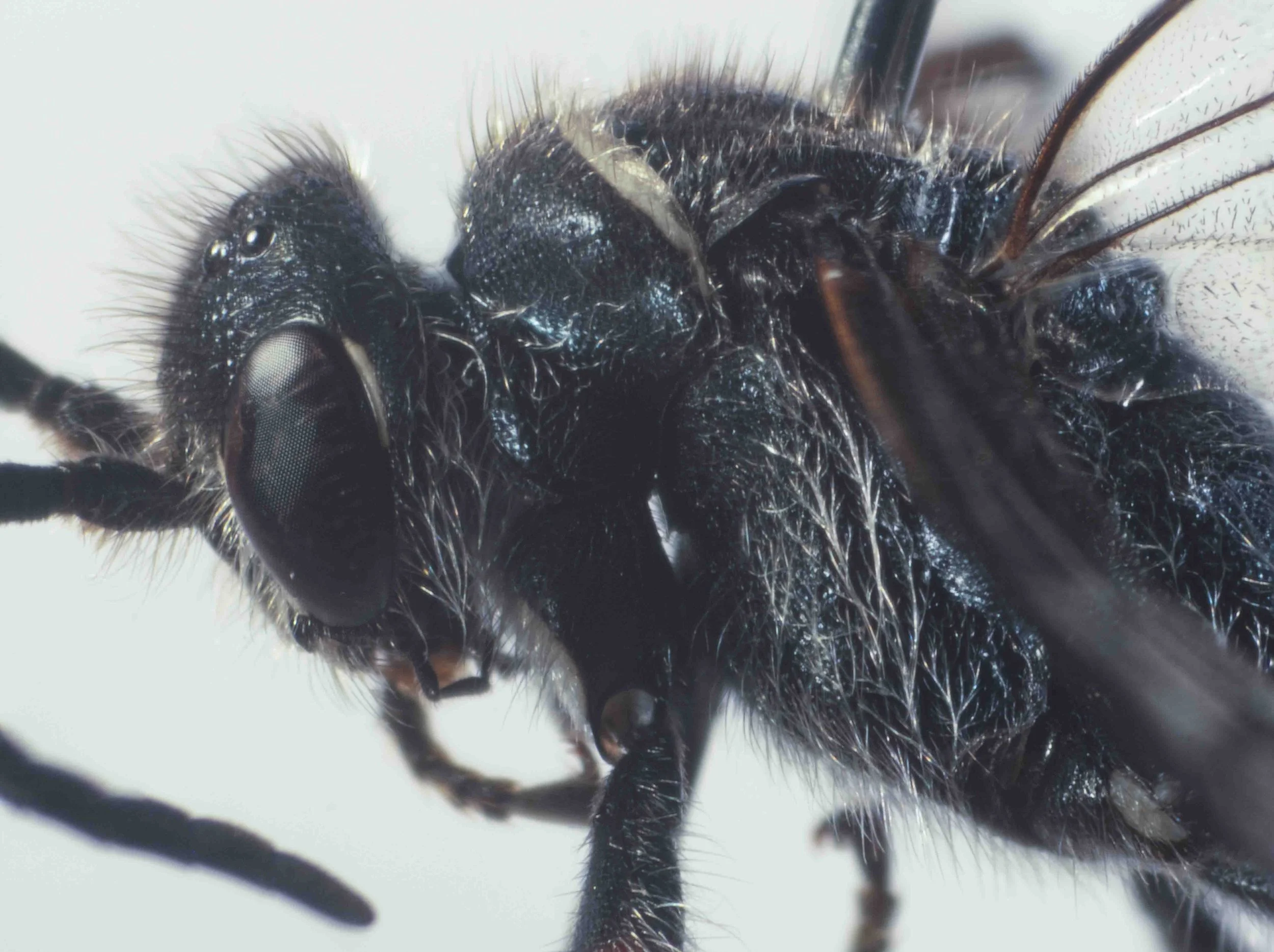
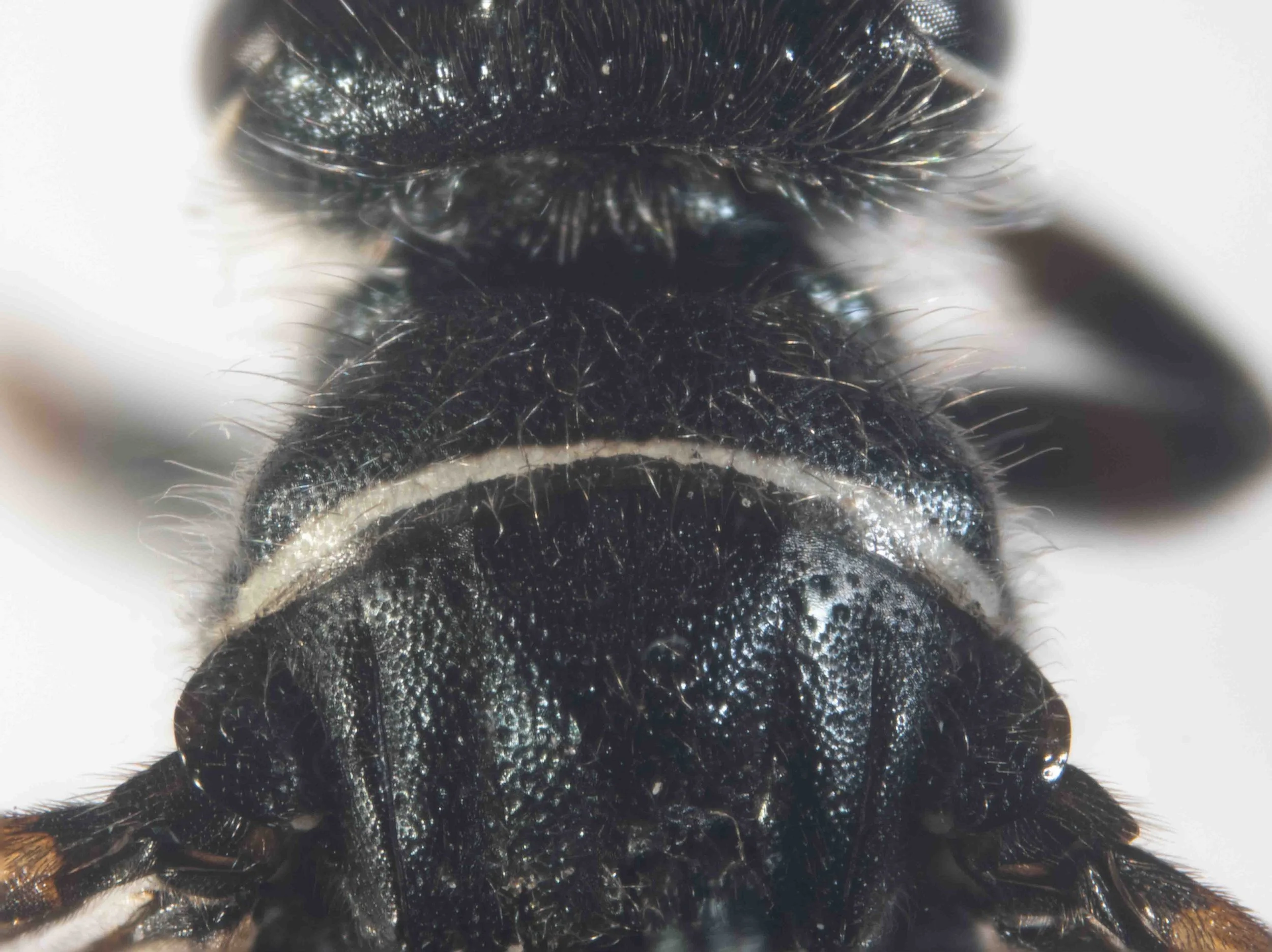
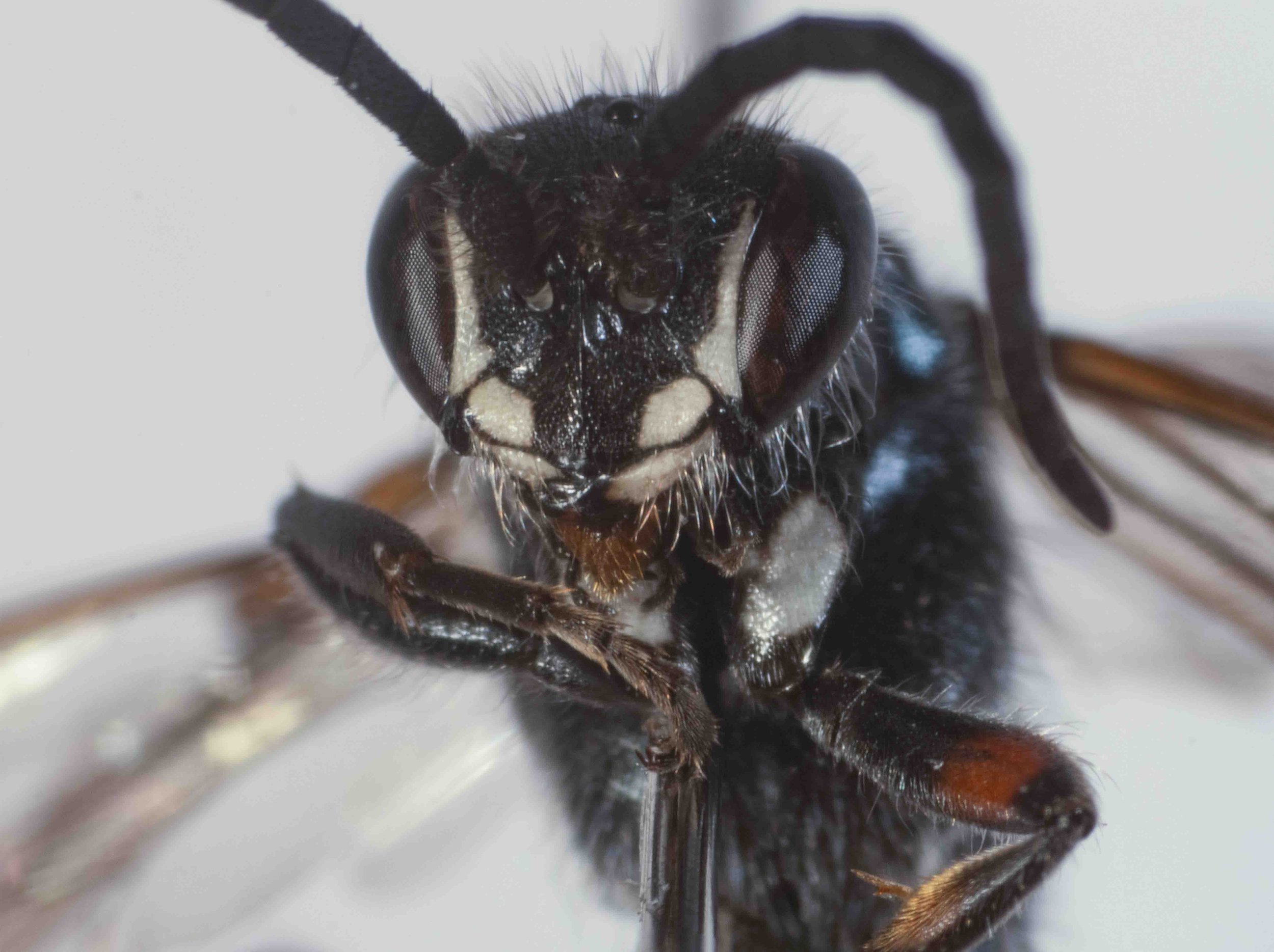
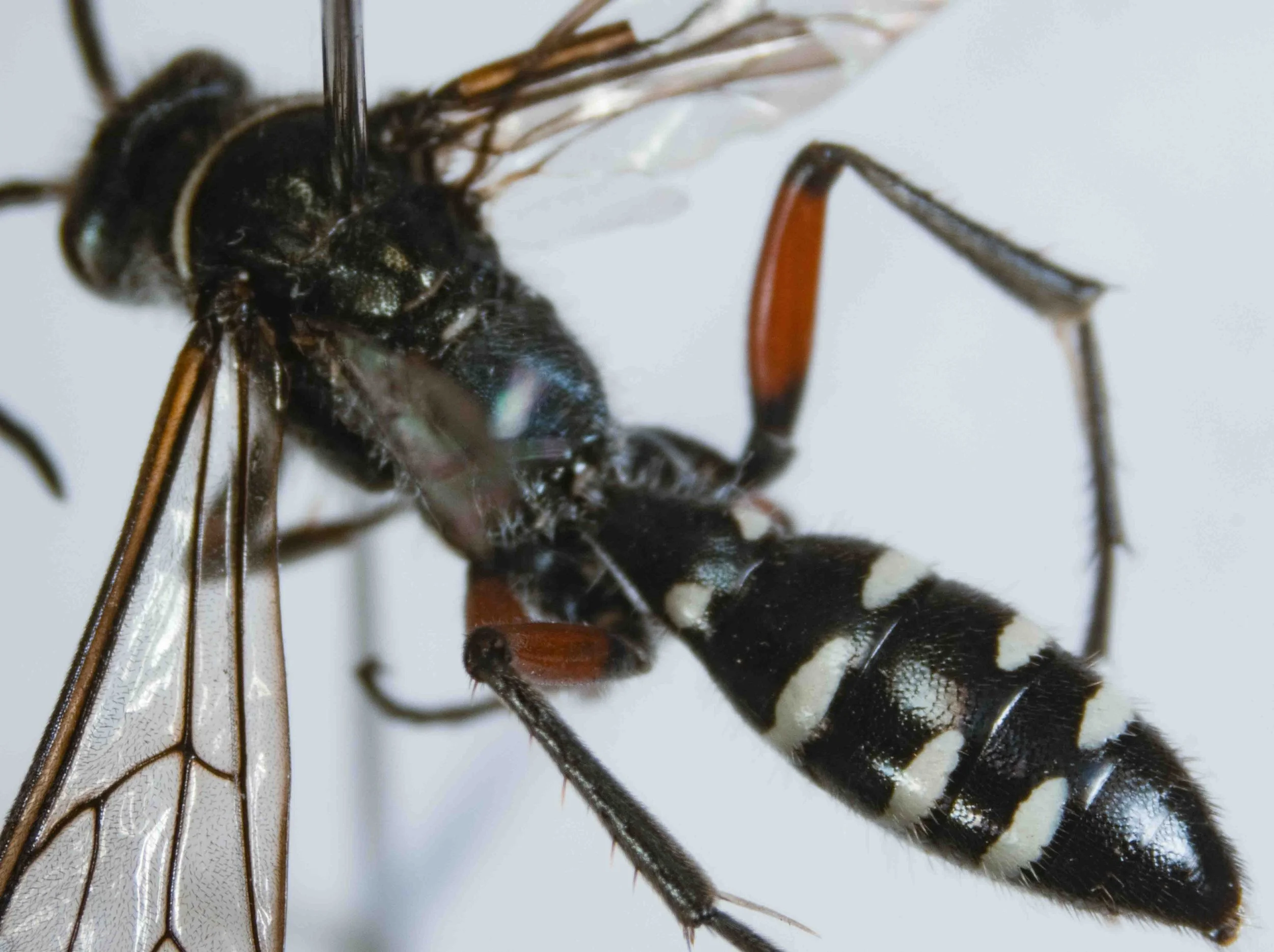
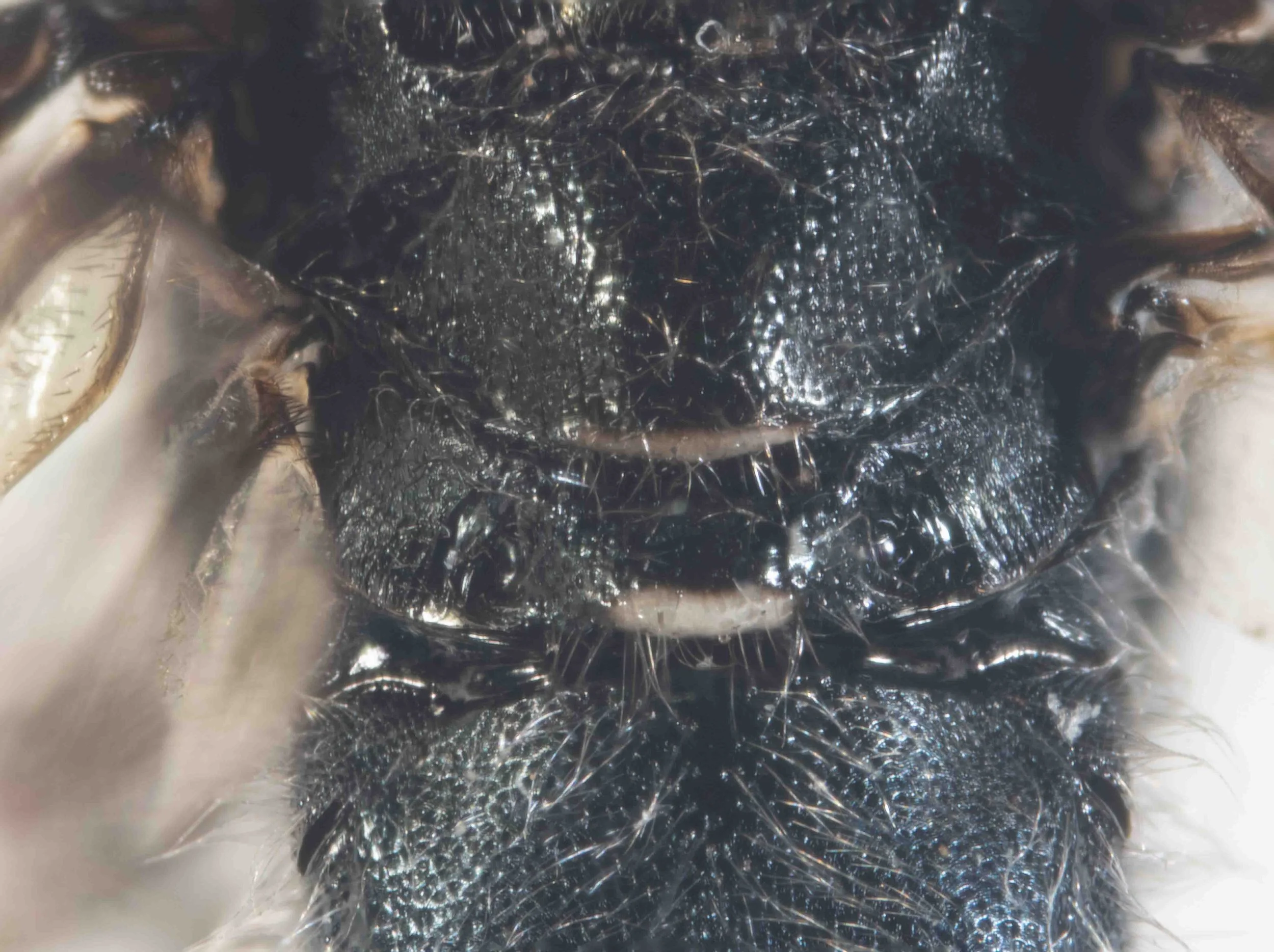
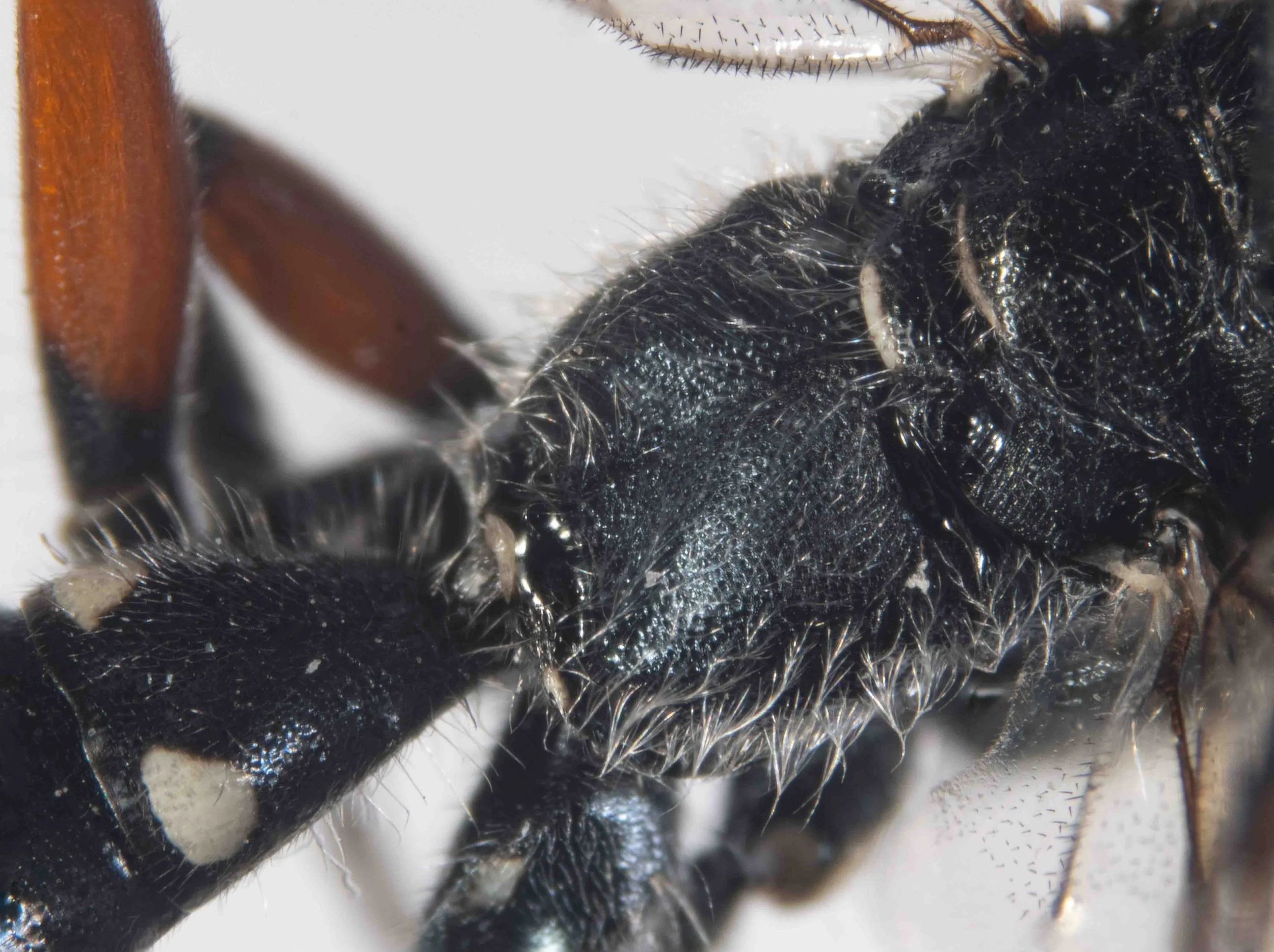
The following is my justification for excluding other options among the Thynnidae and Tiphiidae.
Diamminae: Diamma bicolor
Family THYNNIDAE, based on:
3 submarginal cells & frons produced above antennal sockets (so not Tiphiidae: Tiphiinae)
Subfamily DIAMMINAE, based on:
frons produced above antennal sockets (so NOT Anthoboscinae)
hypopygium NOT long, narrow, modified into single upturned hook (so NOT Myzininae)
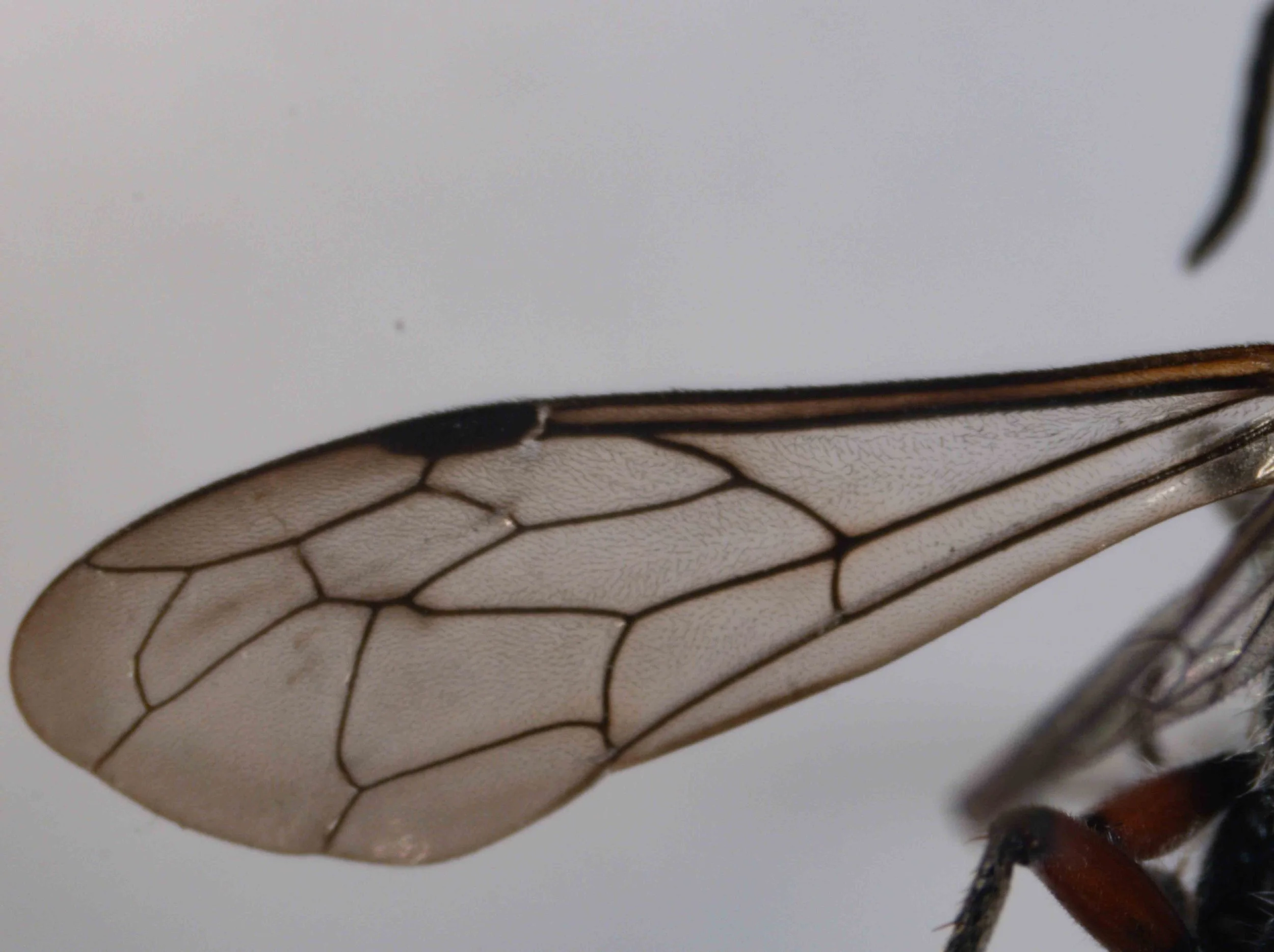
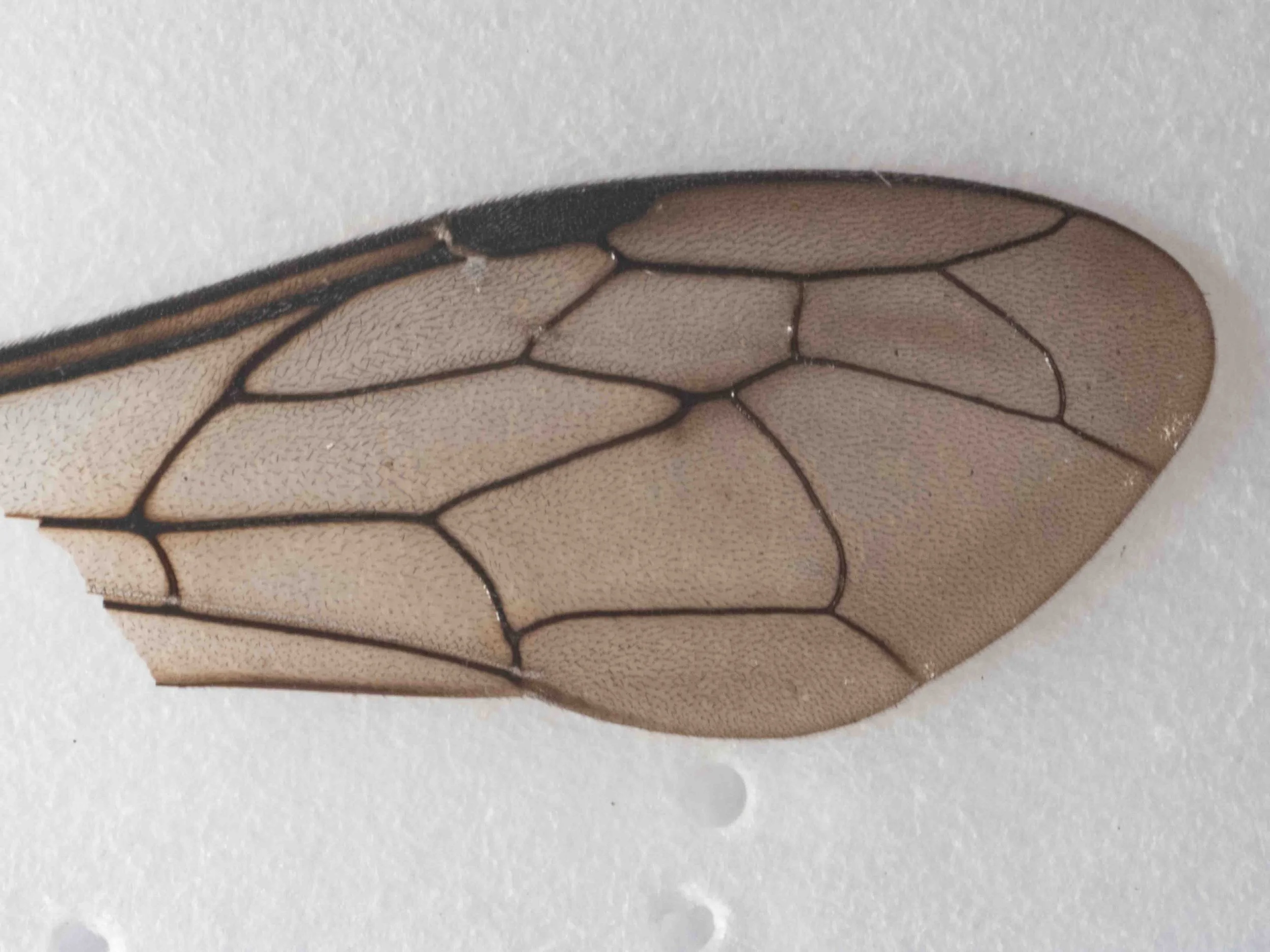
forewing with 2m-cu meeting SCII (so NOT Thynninae)
Diamminae includes just a single species, Diamma bicolor.
References
Brown, G. 2025. Revision of the Australian Thynnidae and Tiphiidae (Hymenoptera). Zootaxa 5681 (1): 001-862 https://doi.org/10.11646/zootaxa.5681.1.1
This is a workbook page … a part of our website where we record the observations and references used in making species identifications. The notes will not necessarily be complete. They are a record for our own use, but we are happy to share this information with others.