
Megalyra rufipes (specimen 084)
Workbook
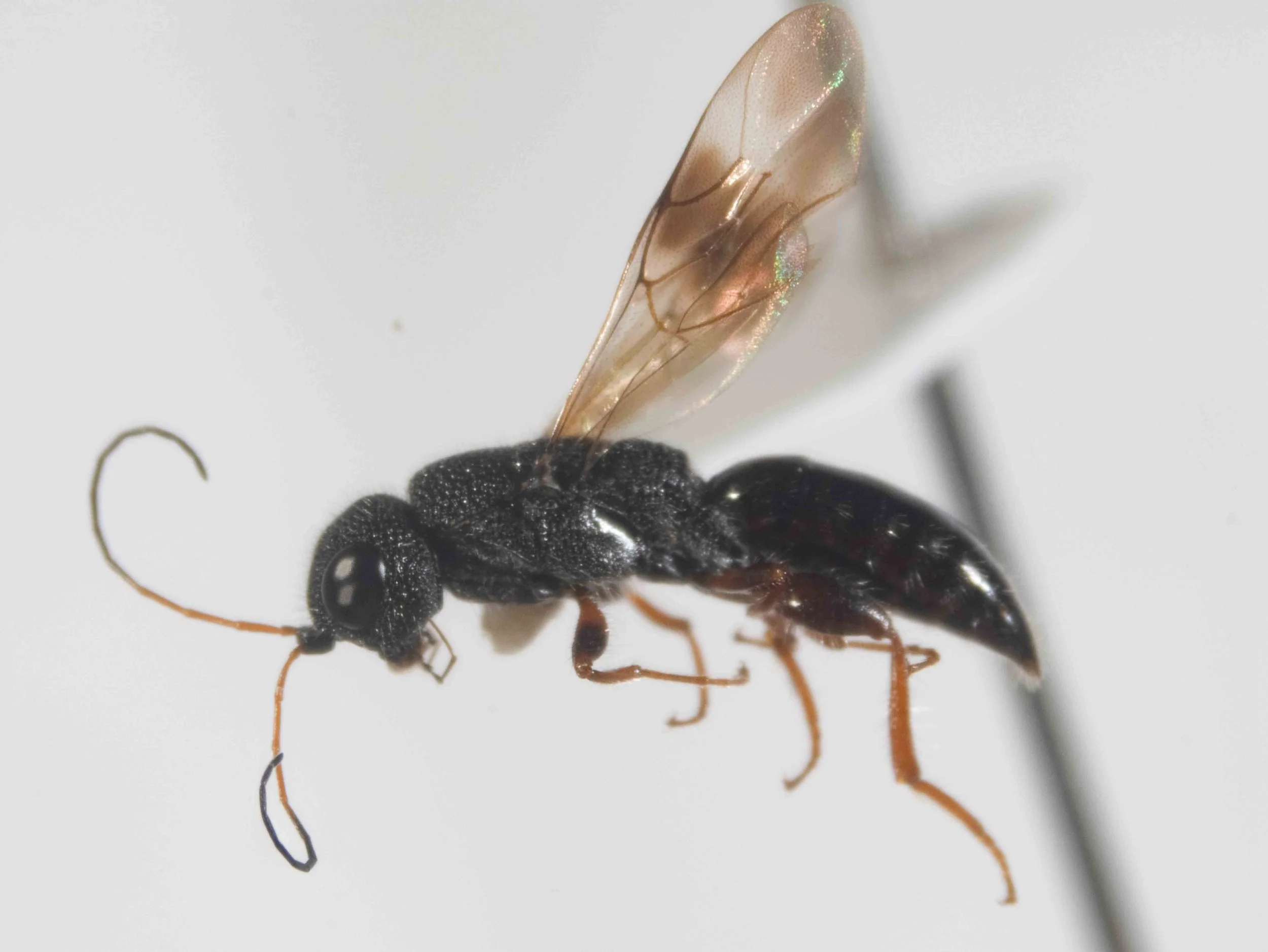
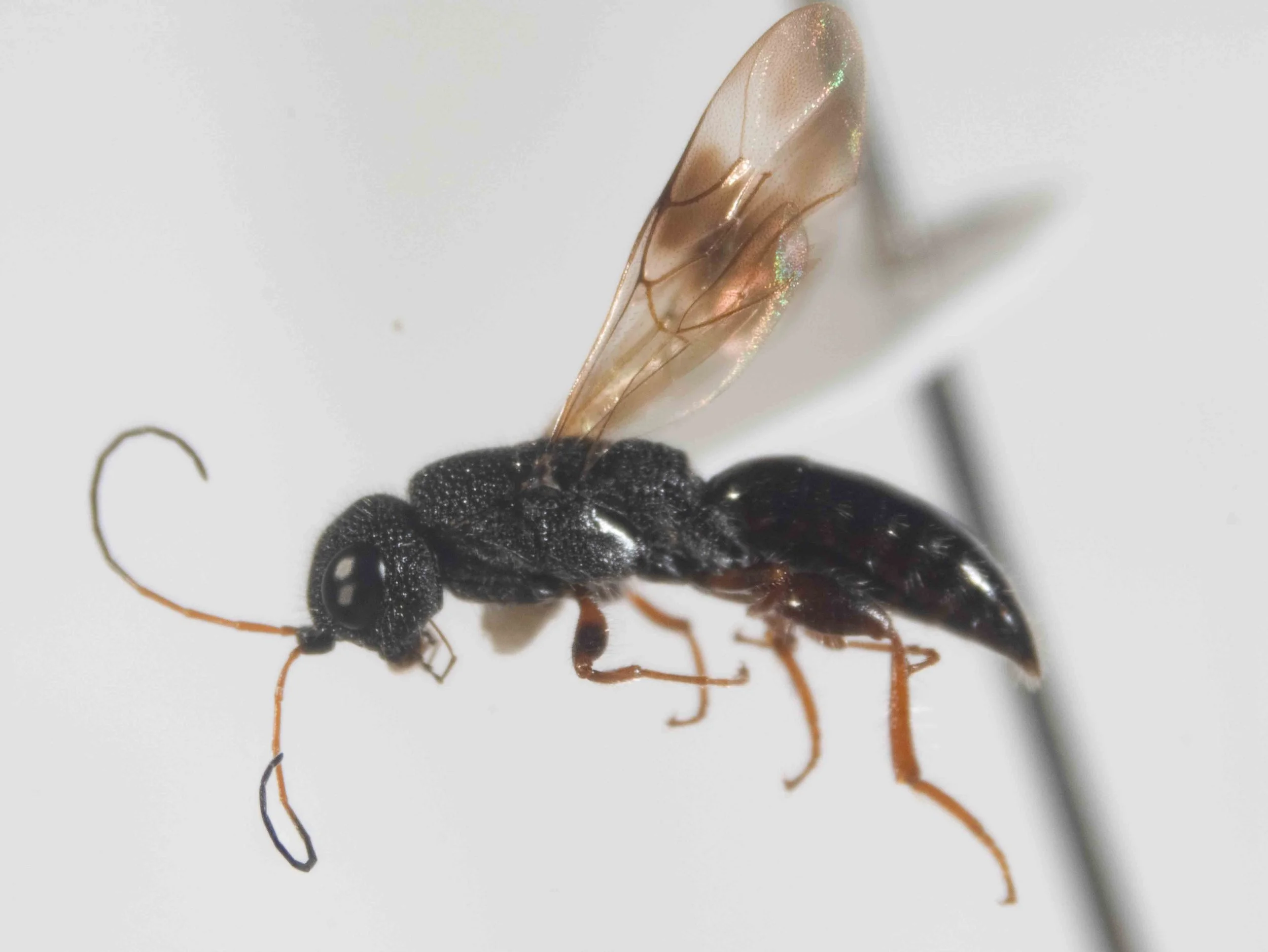
Specimen #084 collected in Malaise trap (GMP 66424) during the week 7th-14th November 2026.
Megalyra
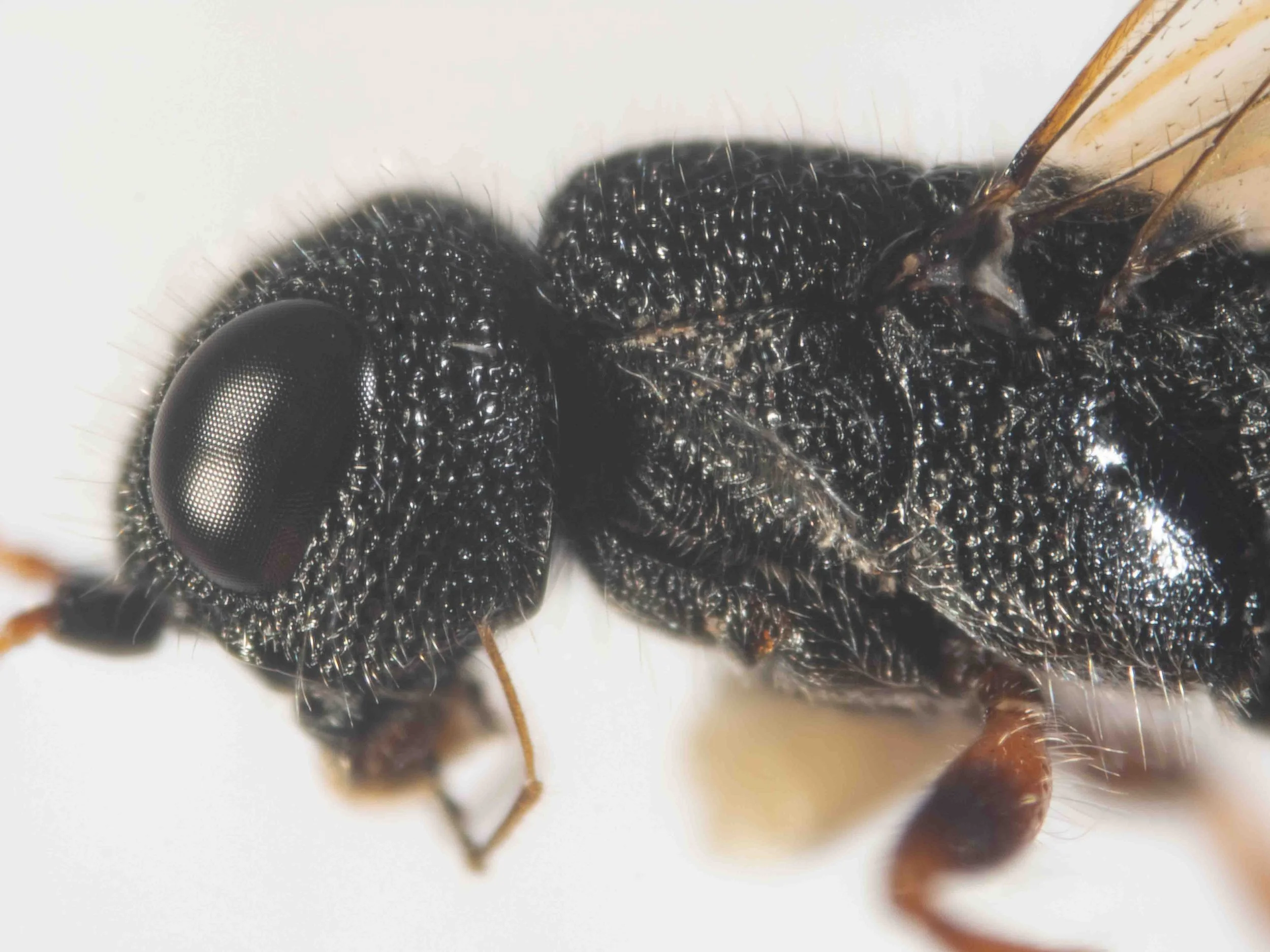
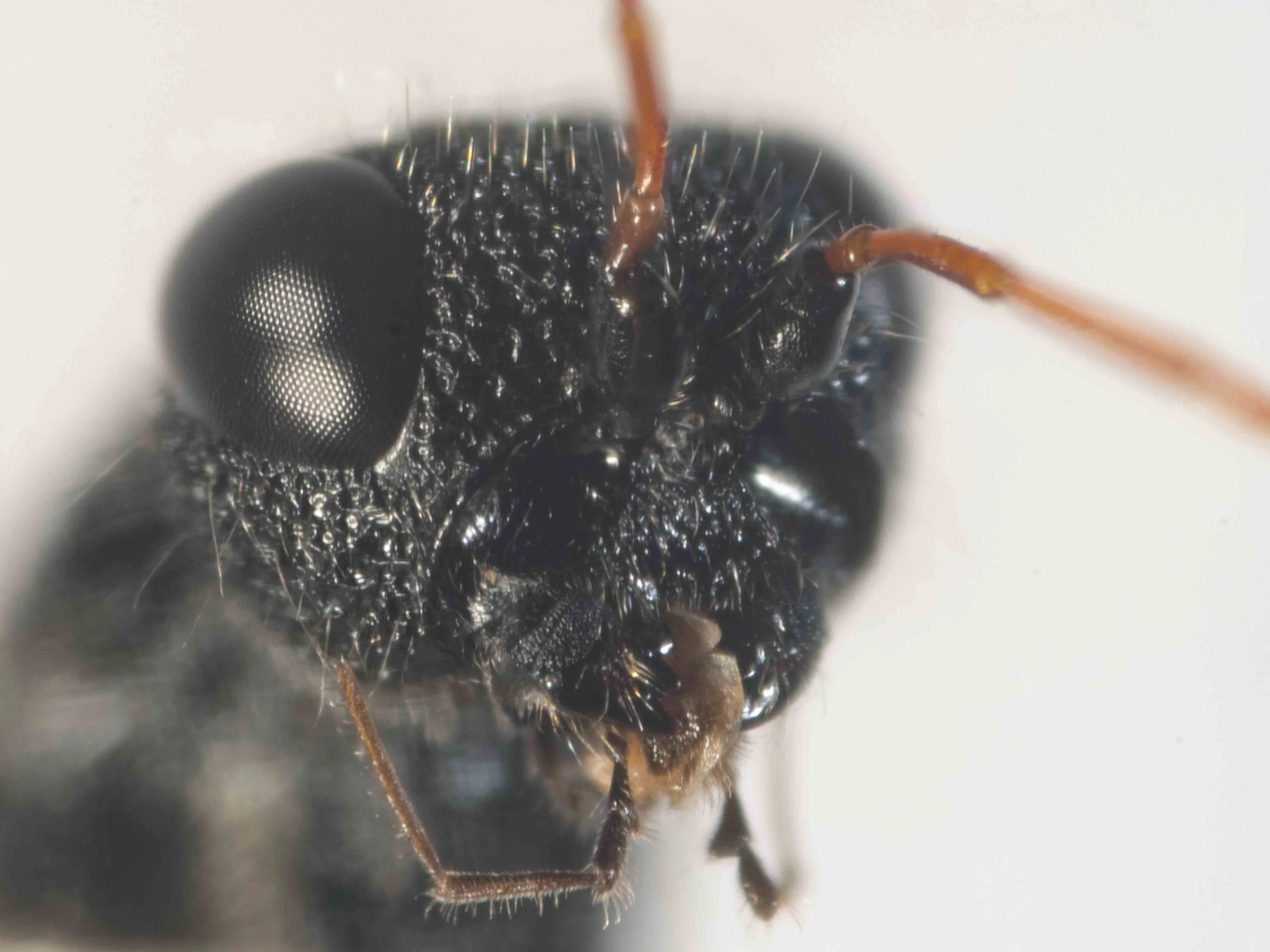
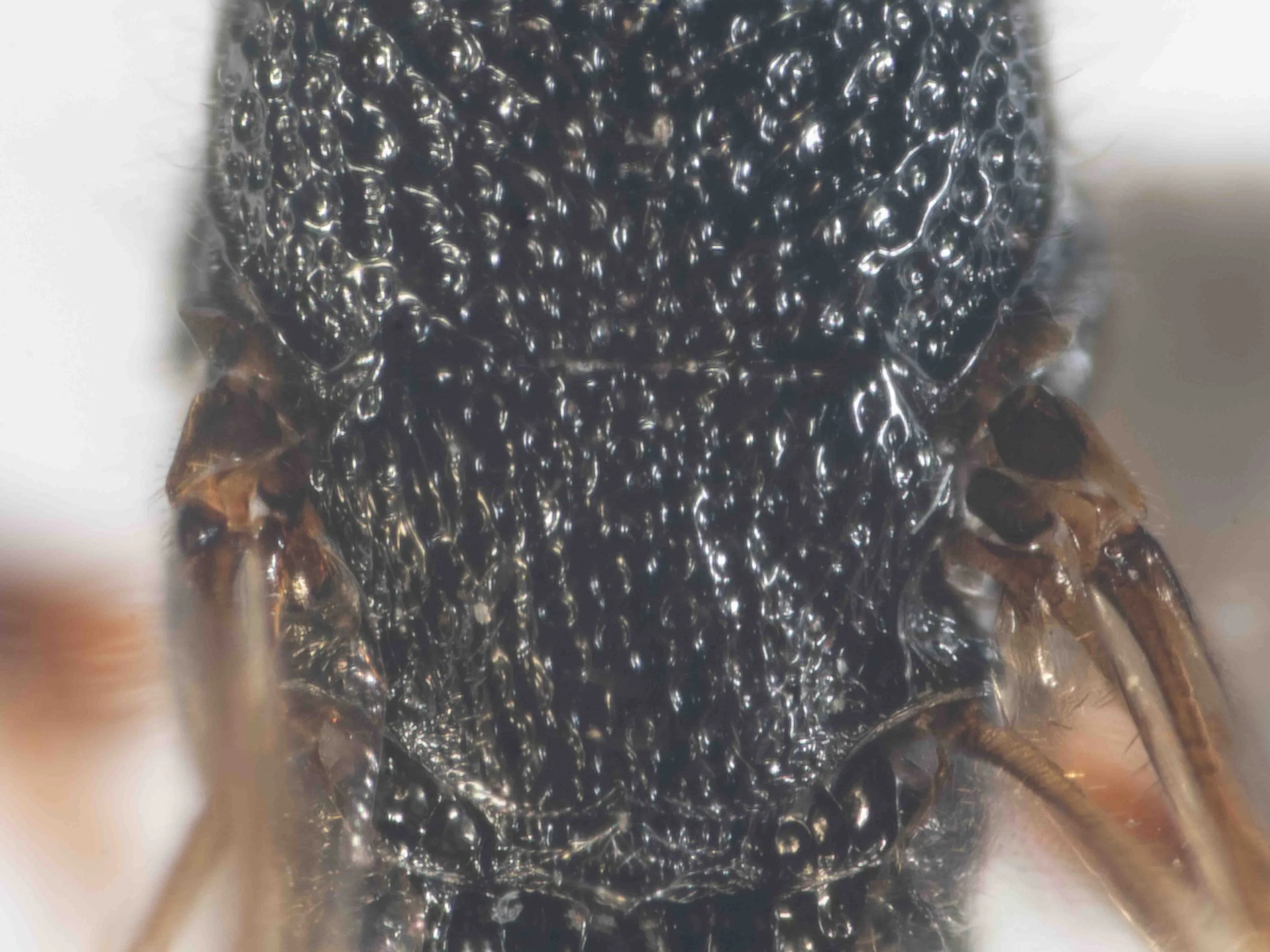
Specimen #084 clearly meets the diagnostic criteria for Megalyridae (of which Australia has just one genus, Megalyra), including:
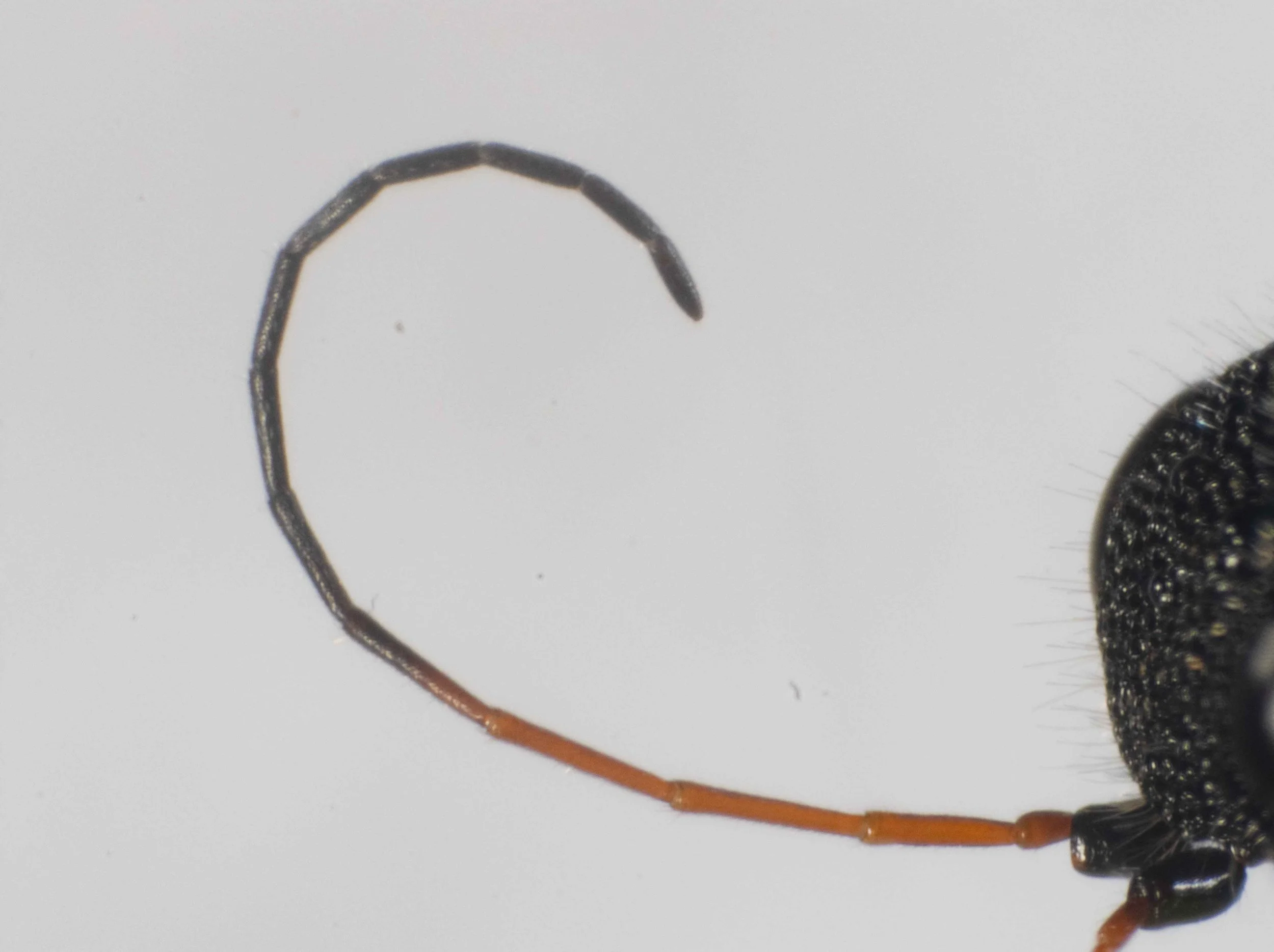
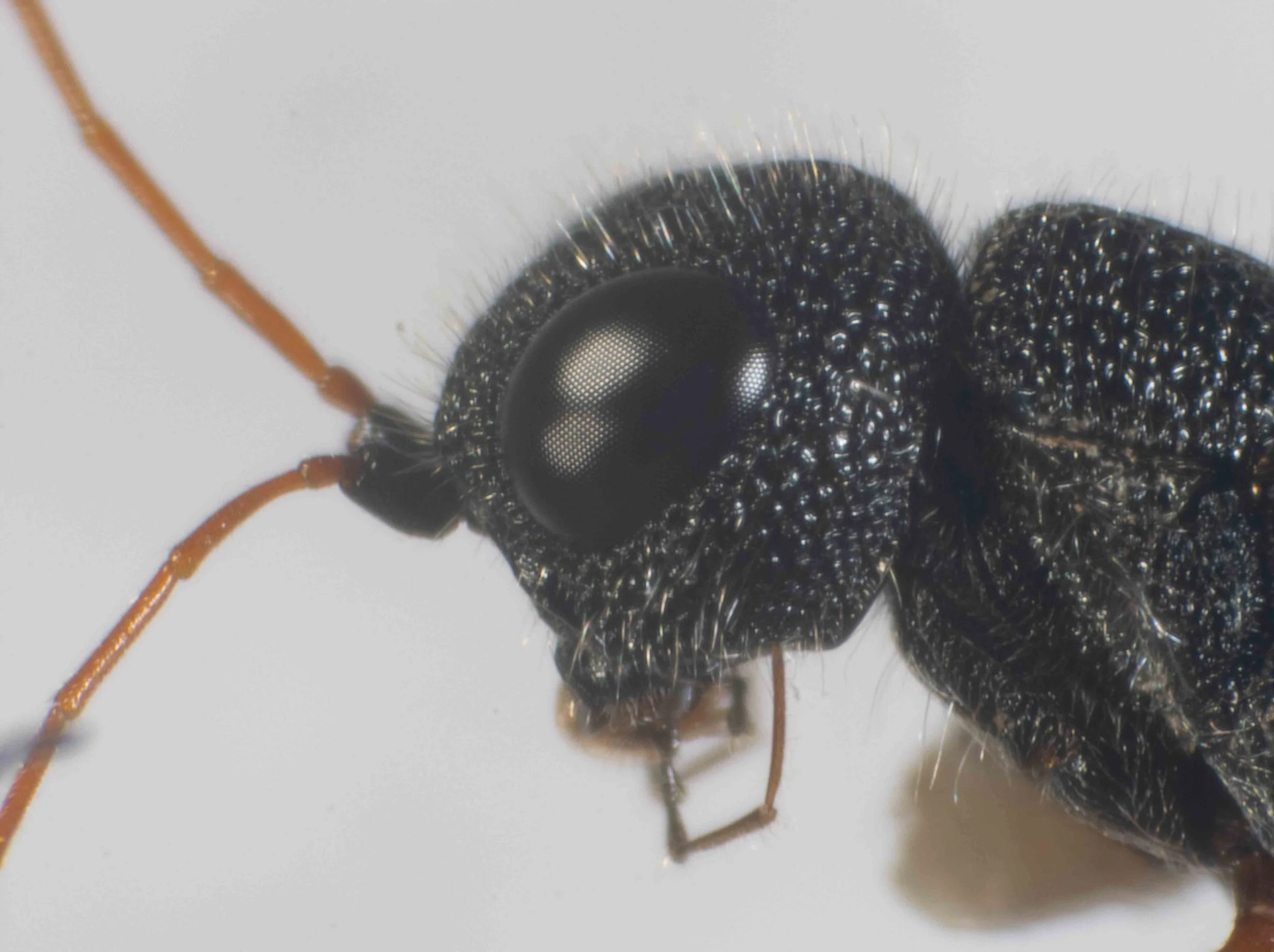
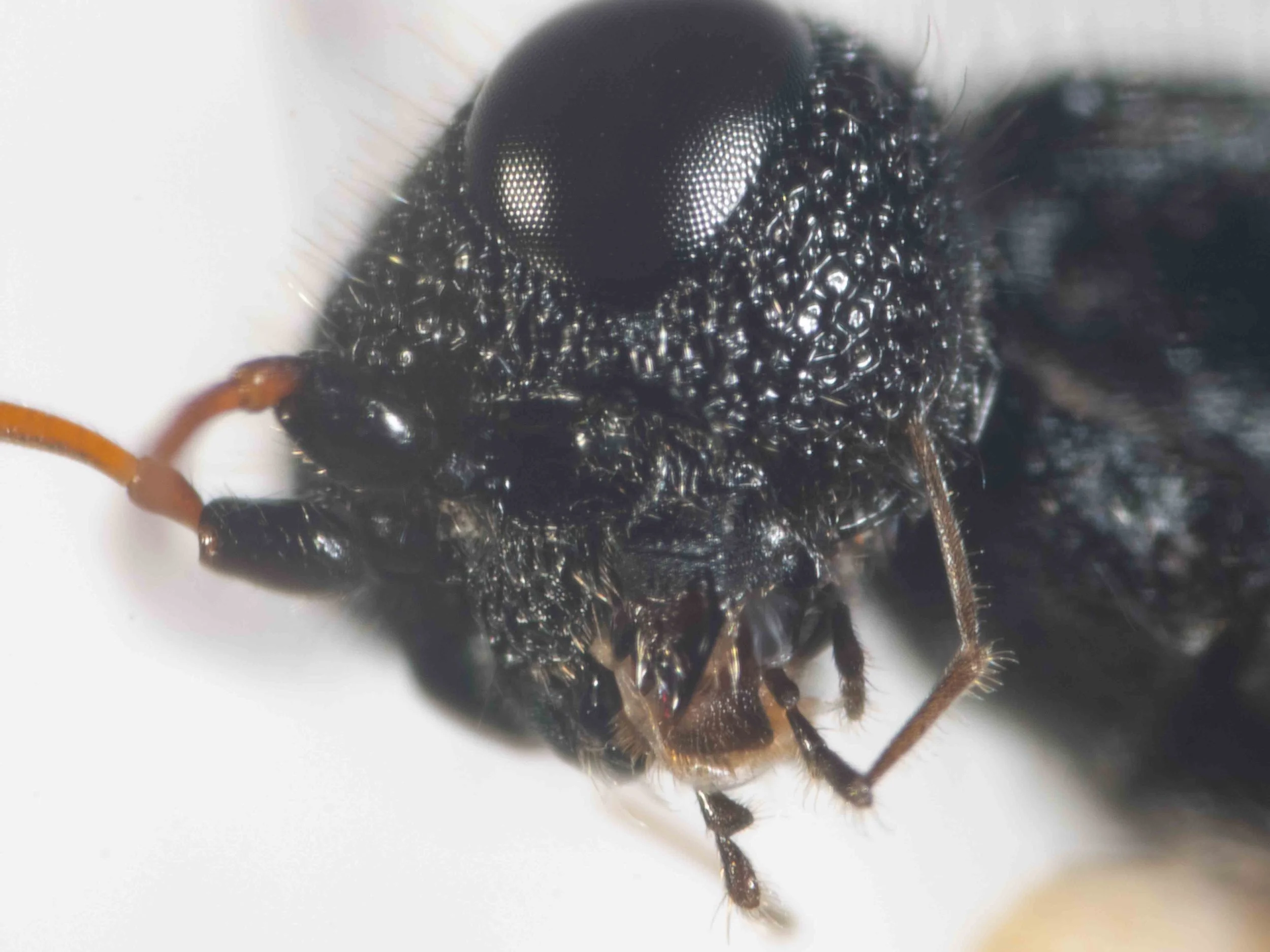
antennae with 14 segments (usually filiform)
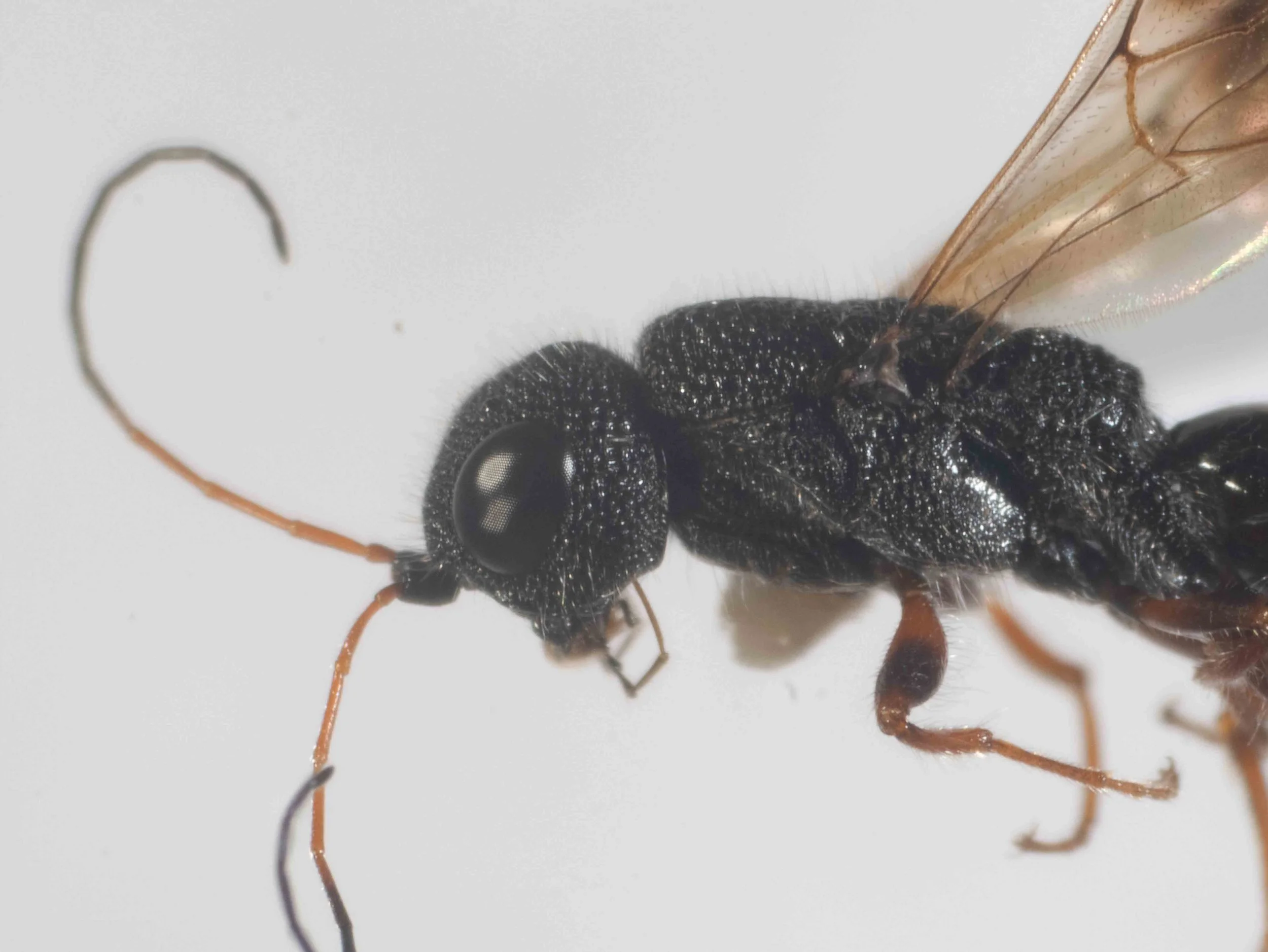
subantennal groove present
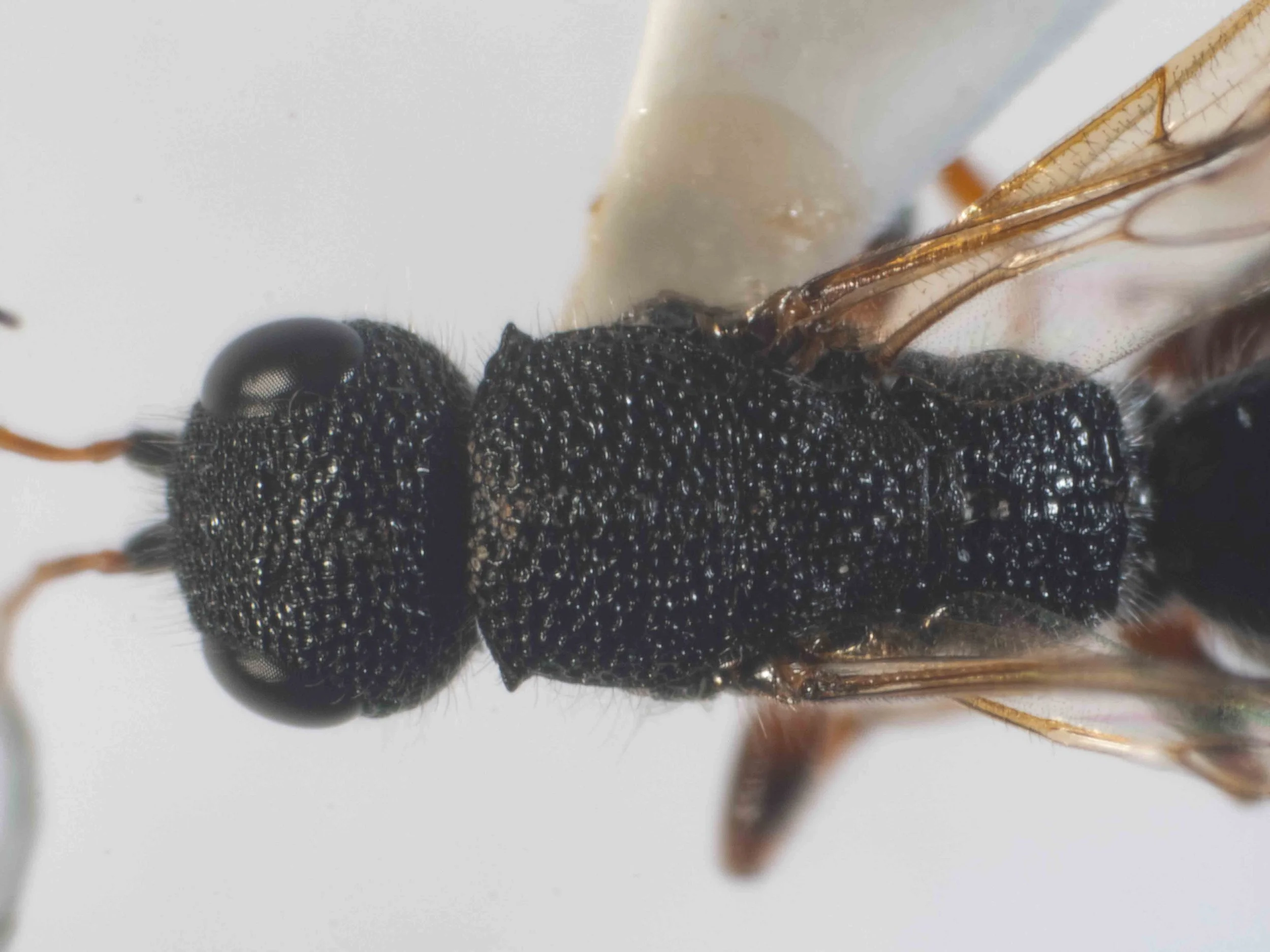
pronotum reduced anteromedially (i.e. no visible dorsal region), extensive laterally
independent prepectus absent (replaced by or perhaps fused with pronotal cuticle)
axillae of scutellum large, contigous or narrowly separated
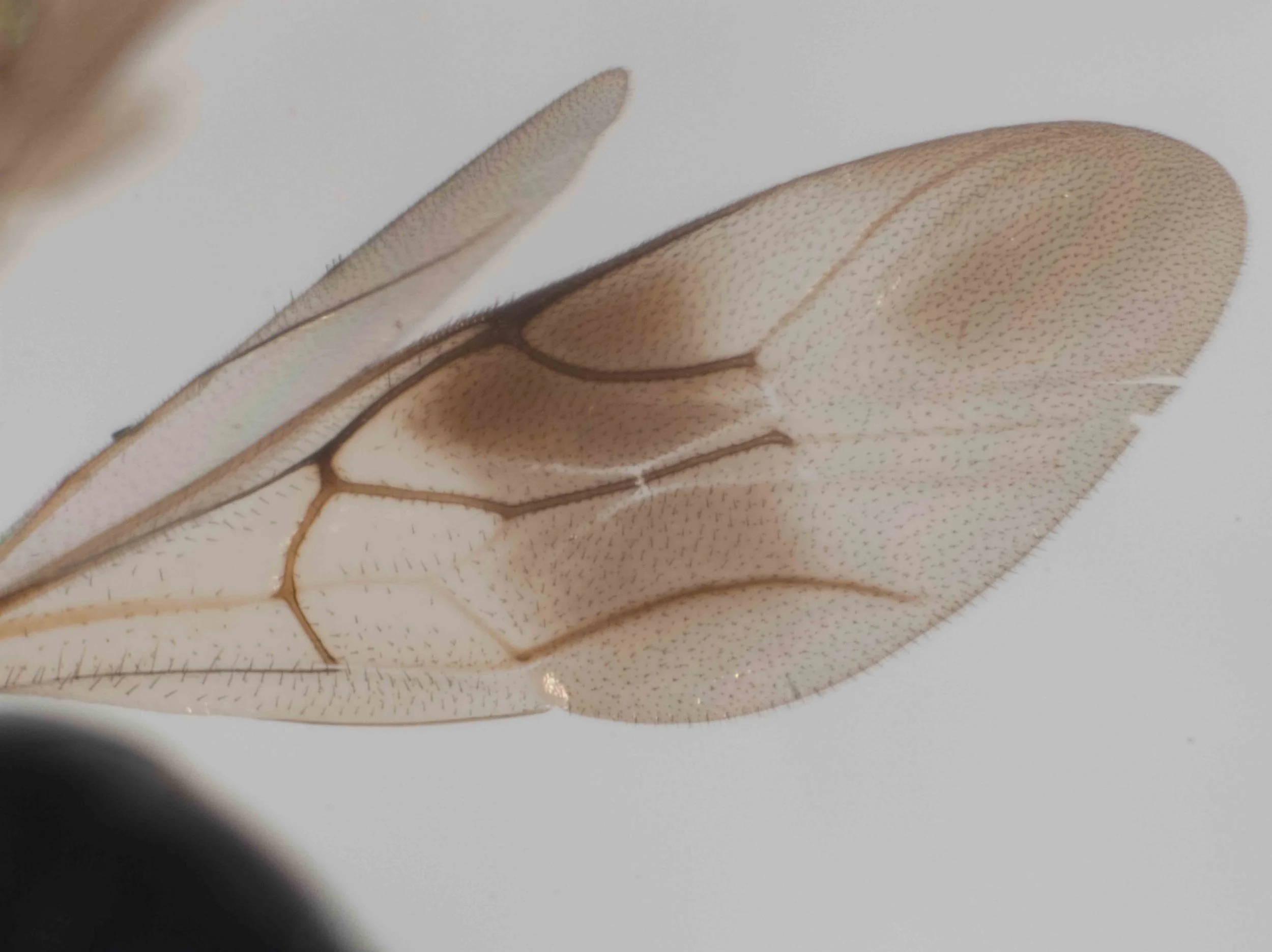
forewing with stigma reduced or absent, costal cell present
hind wing venation reduced
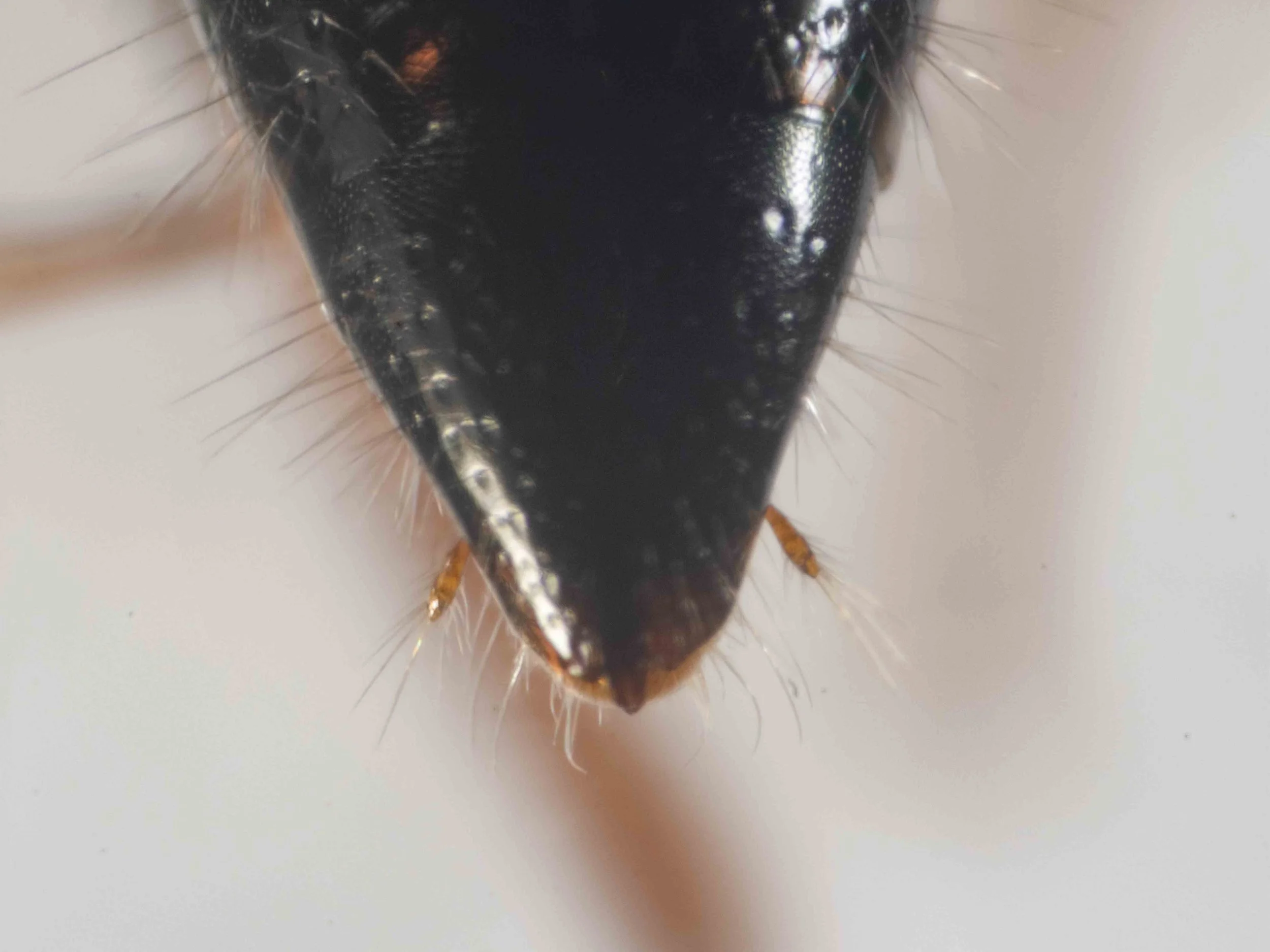
cerci digitiform
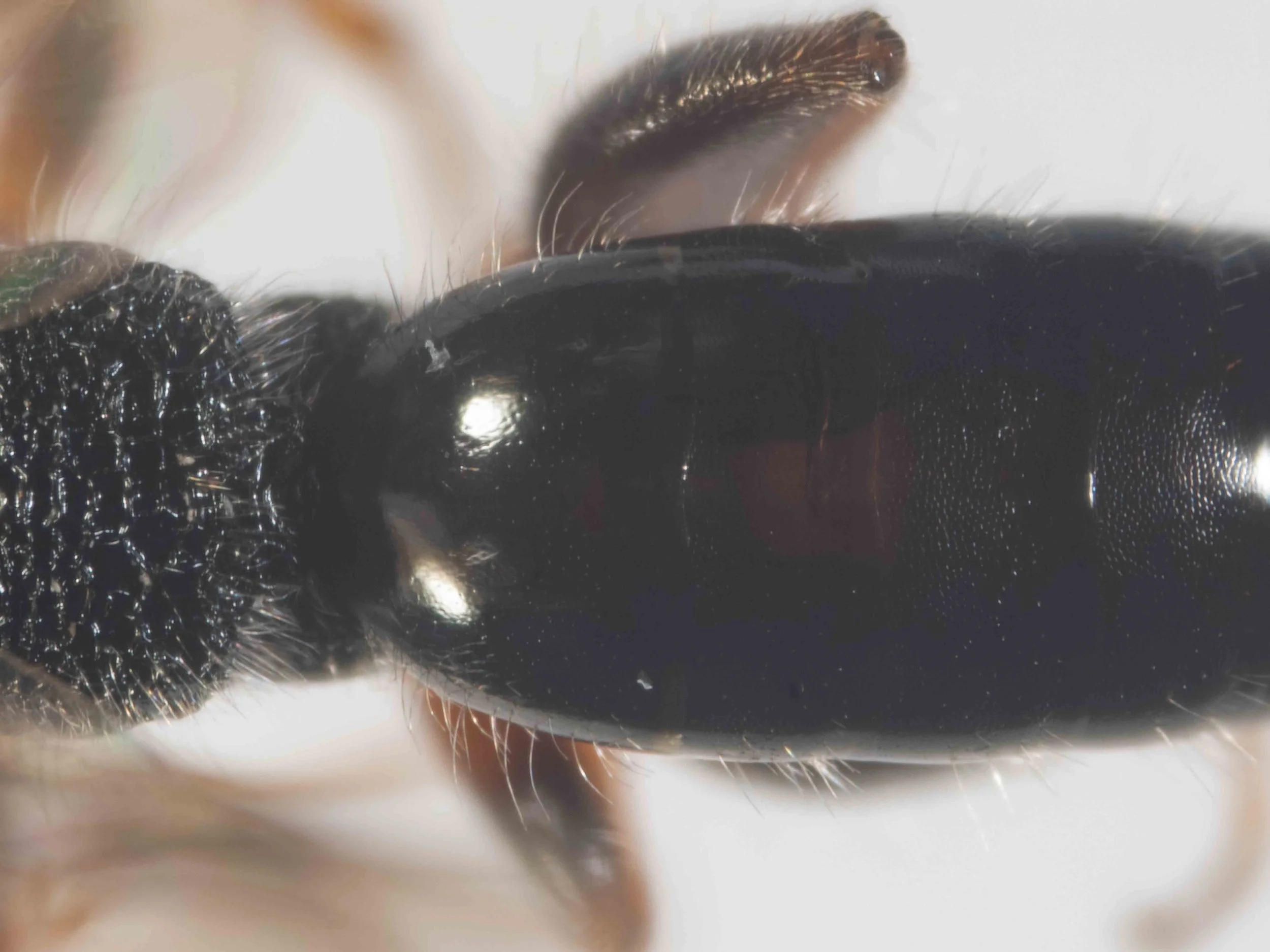
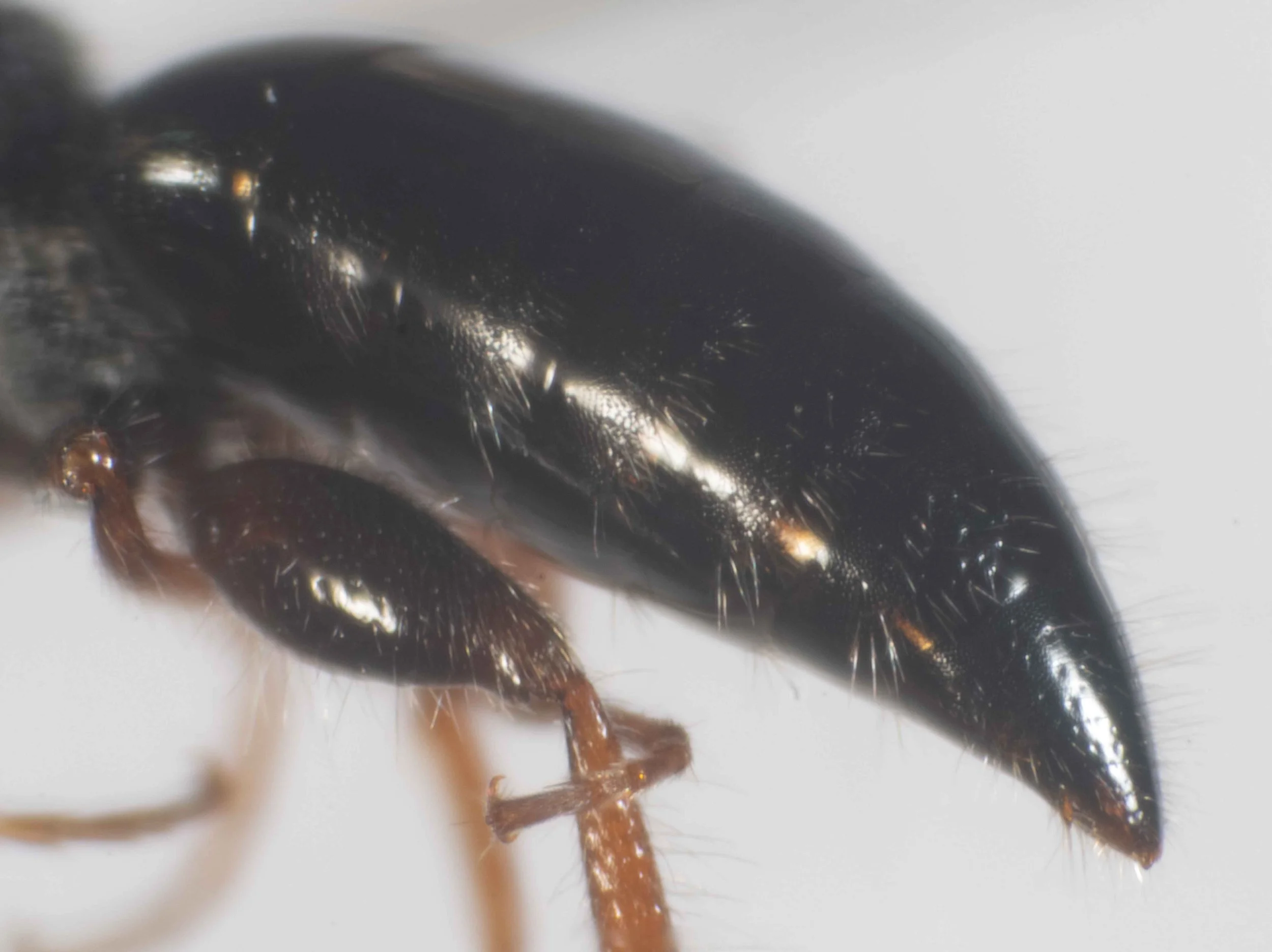
metasoma anteriorly broad
Megalyra rufipes (or near)
Based on Shaw’s 1990 revision, the closest species match is Megalyra rufipes. The distinguishing features include:
body entirely black
presence of costal vein and filiform shape of antennae excludes minuta species group
dark medial band on forewing
small size (7mm) excludes many of the other dark-banded species (including fascipennis group) (M. rufipes males range 6.8–10.7mm)
head shape in profile with flattened frons projecting above antennal sockets, and lower face slightly protruberant
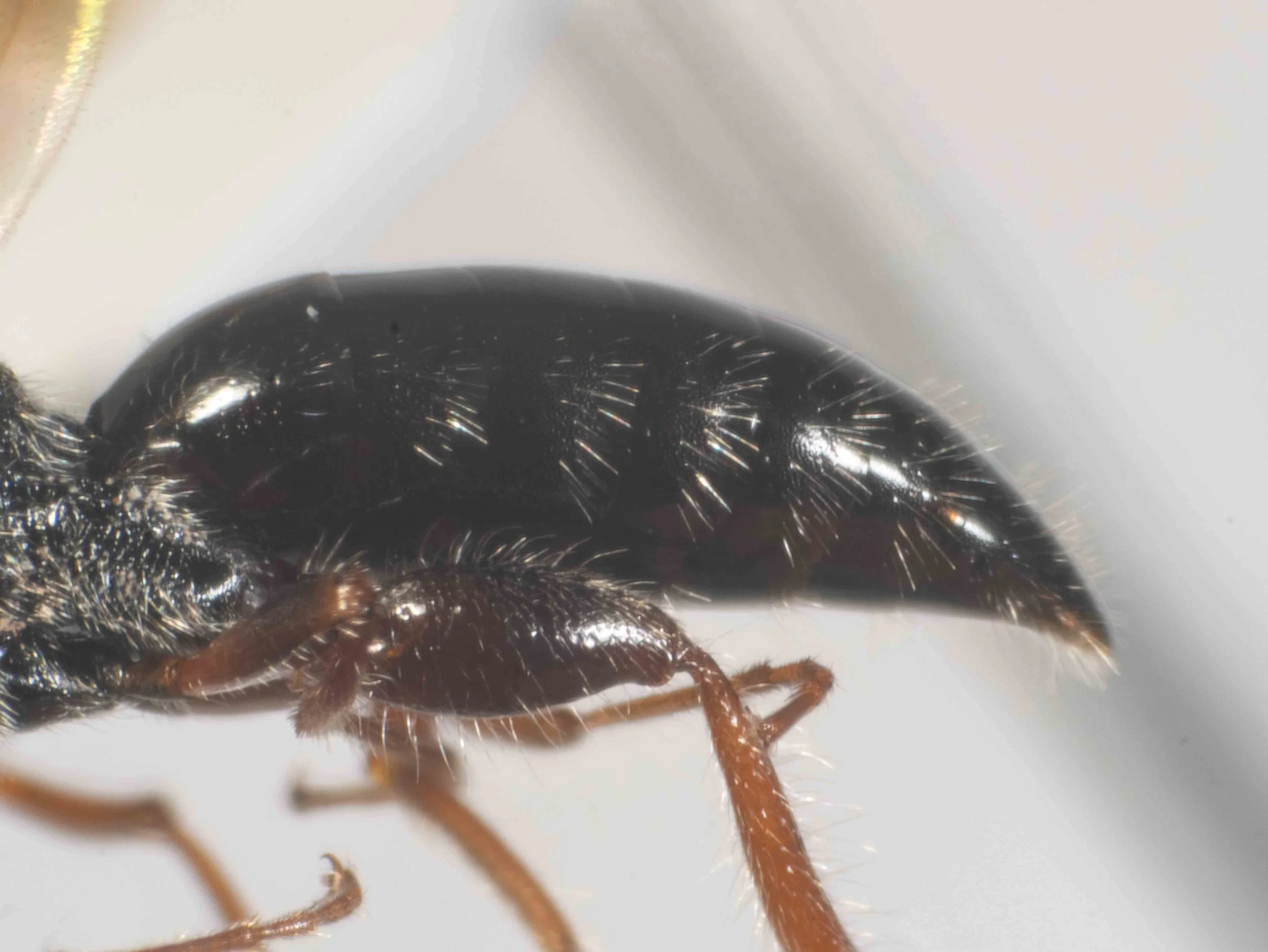
setae not forming patches or obscuring surface sculpture
setae on T2 – T6 laterally in rows, not patches
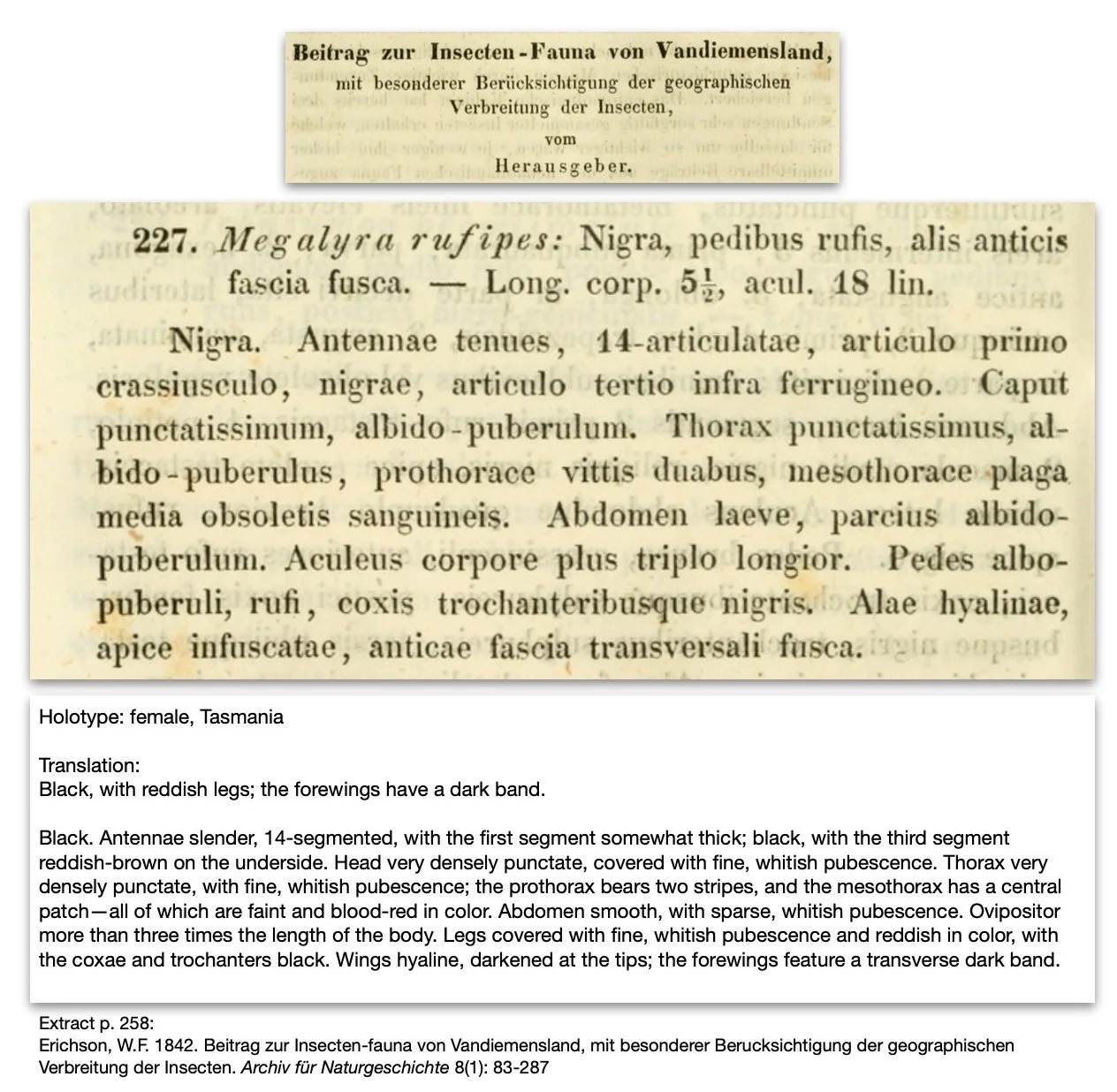
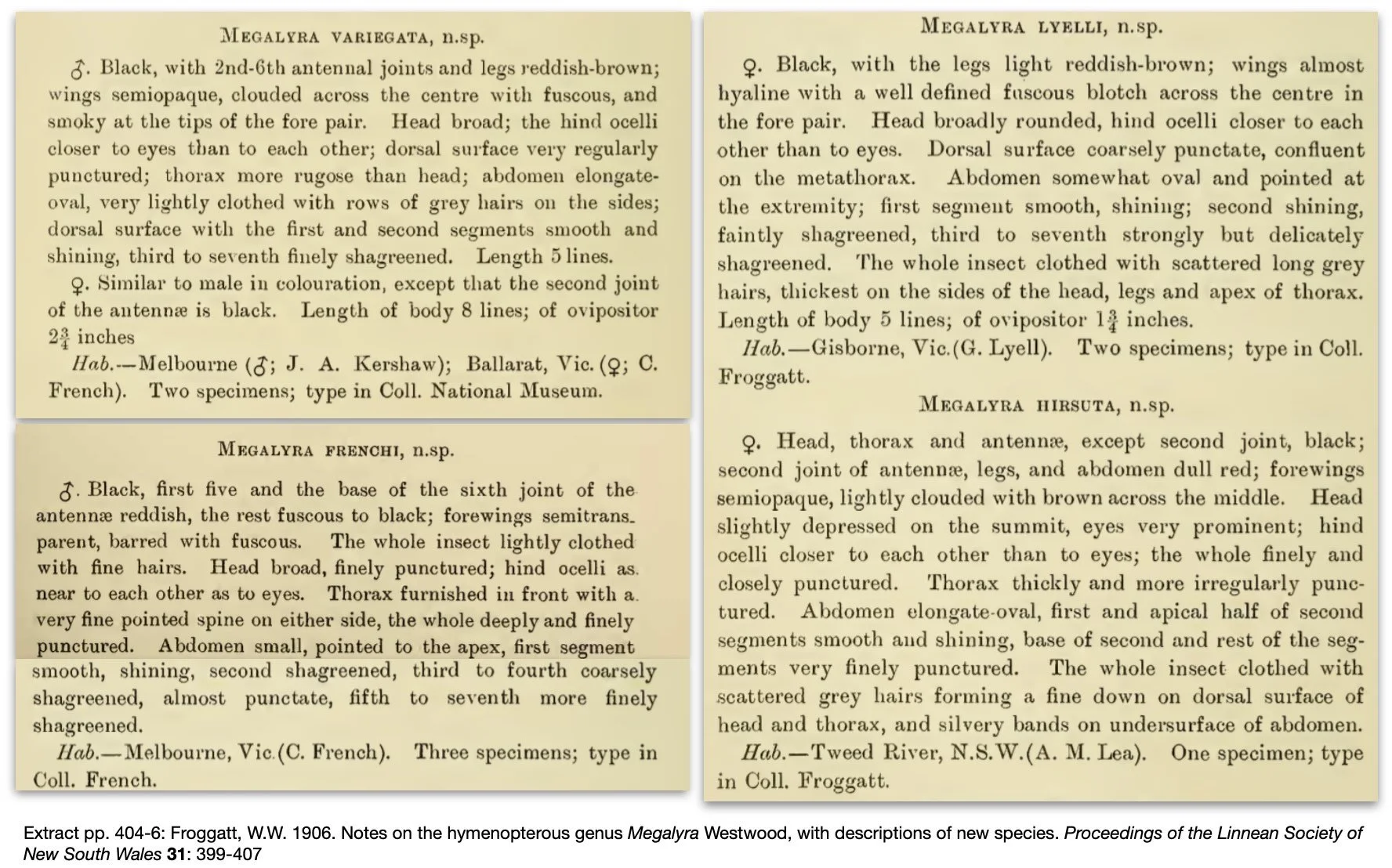
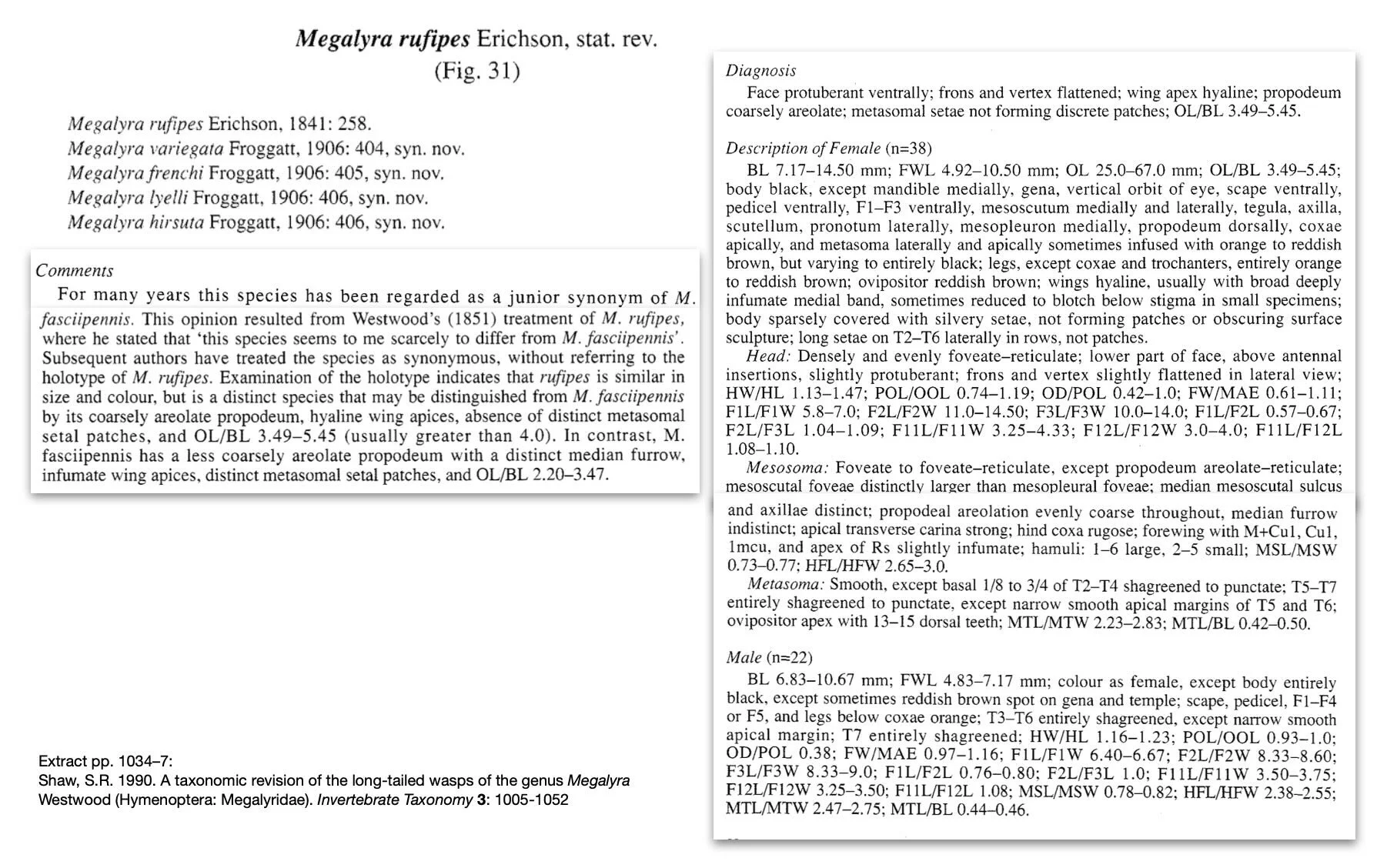
There are some differences between #084 and Shaw's description (Shaw 1990). However, these are likely to be within species variation, and are consistent with features of species subsequently synonymised with M. rufipes. In particular:
forewing with slight infuscation apically – M. variegata male is “smoky at the tips” (Froggatt 1906) [Shaw’s diagnosis includes “apex hyaline”]
antenna with pedicel and flagellomeres 2-5 orange, scape black – M. variegata male with “2nd-6th antennal joints … reddish-brown” (Froggatt 1906); M. frenchi male with “first five and the base of the sixth joint of the antennae reddish” (Froggatt 1906) [Shaw’s description of the male includes “scape, pedicel, F1–f4 or F5 … orange”]
Reference
Shaw, S.R. 1990. A taxonomic revision of the long-tailed wasps of the genus Megalyra Westwood (Hymenoptera: Megalyridae). Invertebrate Taxonomy 3: 1005-1052
This is a workbook page … a part of our website where we record the observations and references used in making species identifications. The notes will not necessarily be complete. They are a record for our own use, but we are happy to share this information with others.