
Levothynnus gracilis (specimen #052)
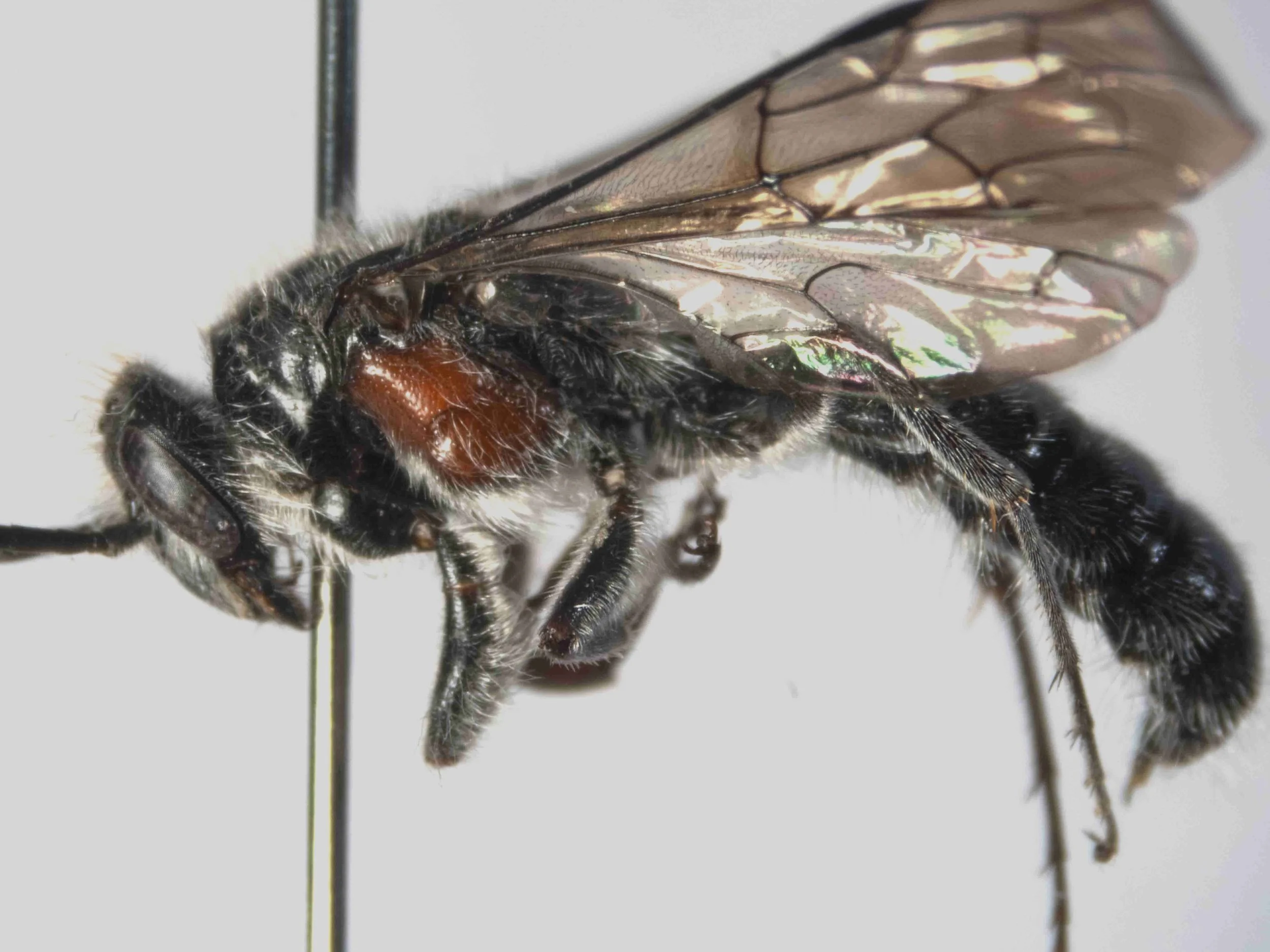
Workbook
Collected in Malaise trap (GMP 66417) during the week 19th–26th Sept 2026 (specimen ID #052).
THYNNINAE: Thynnini: Levothynnus
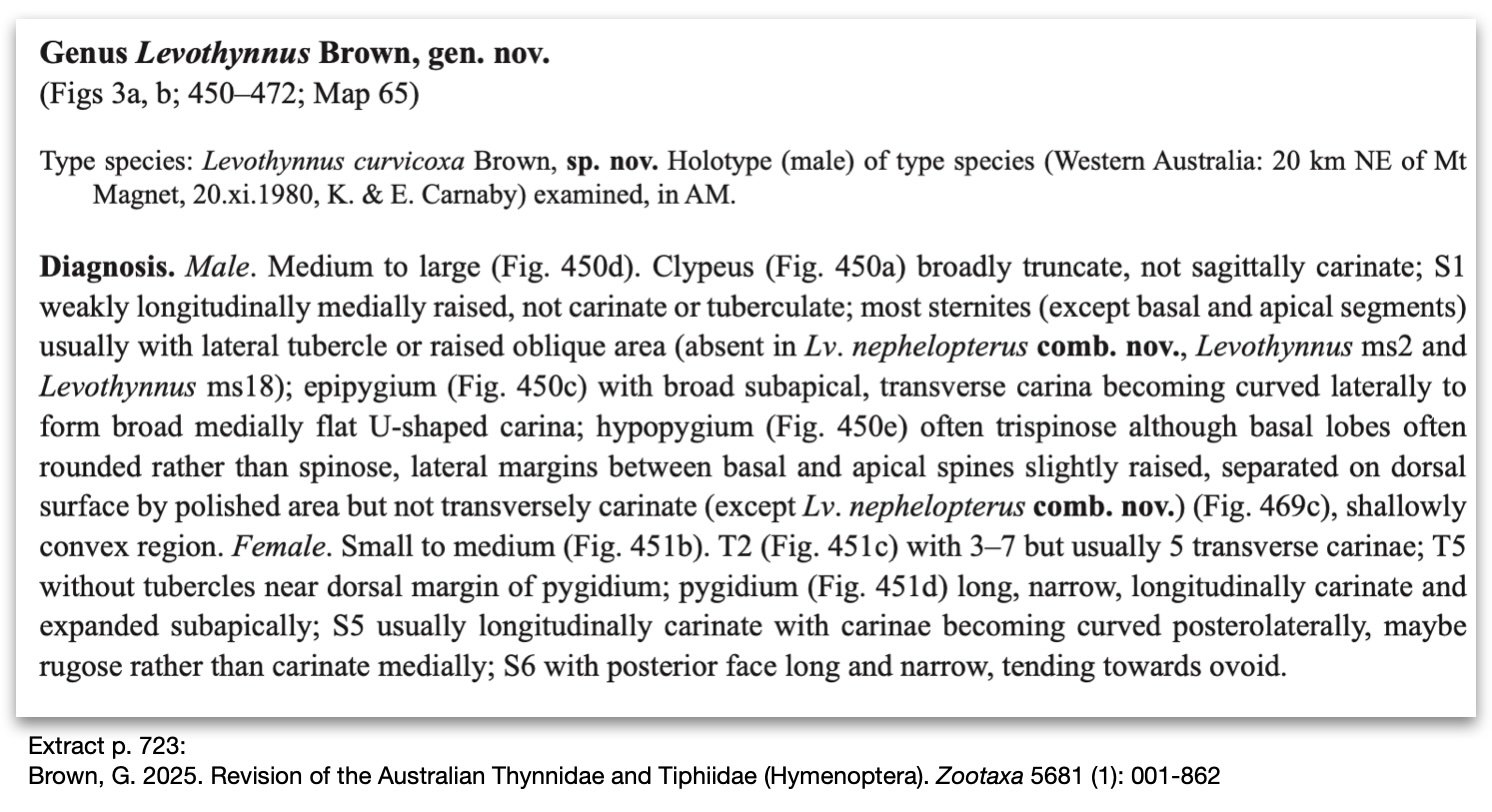
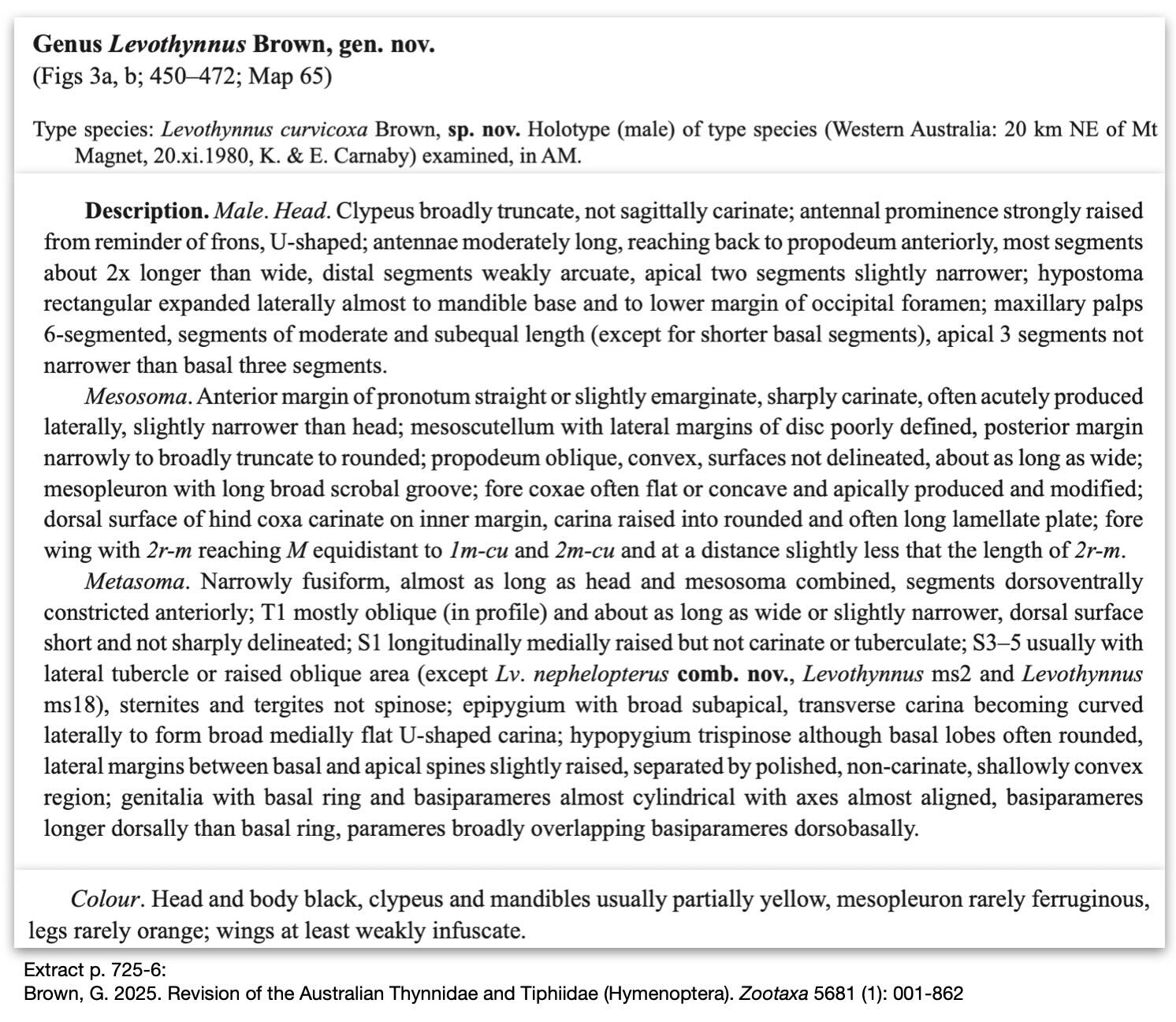
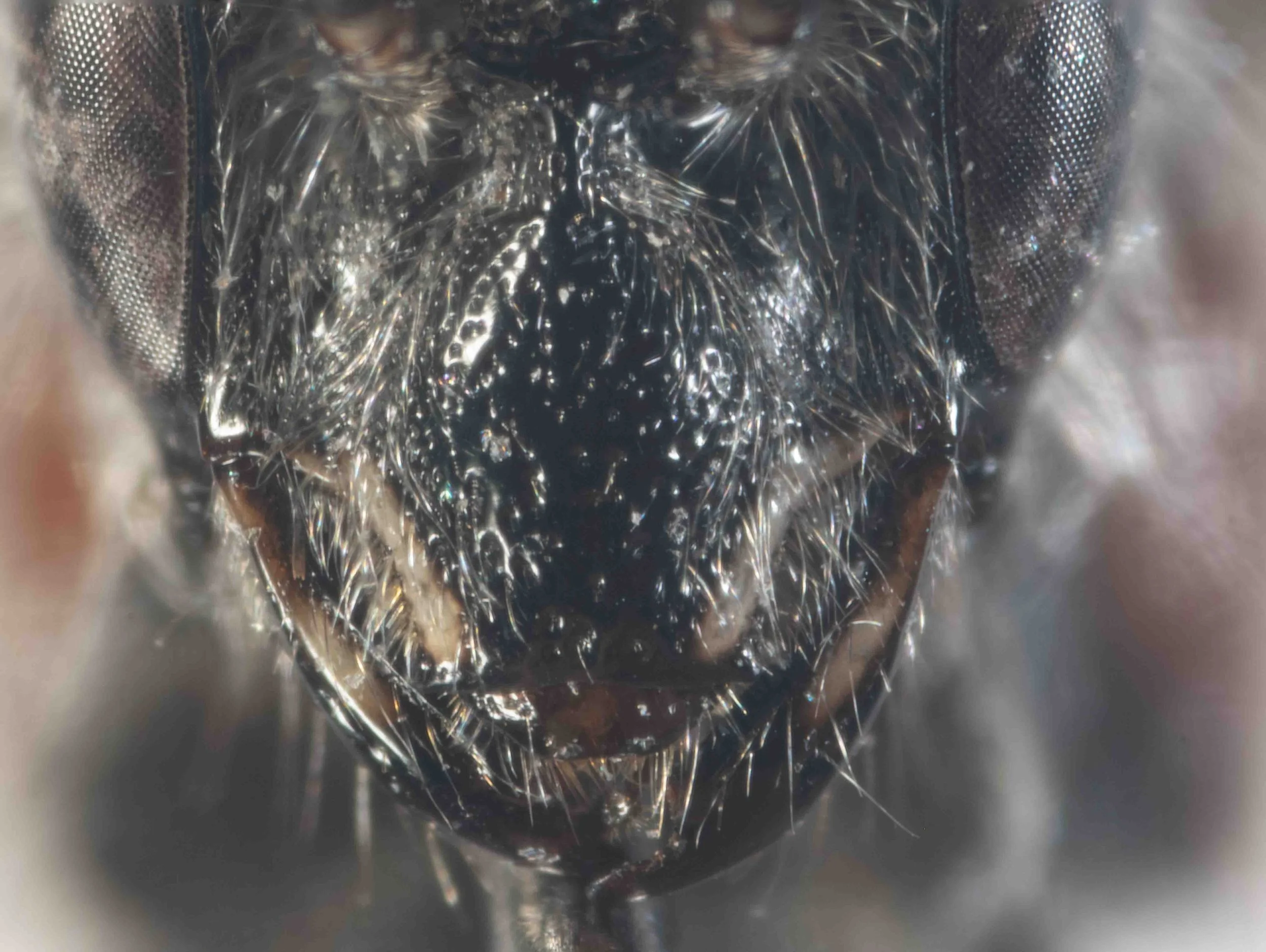
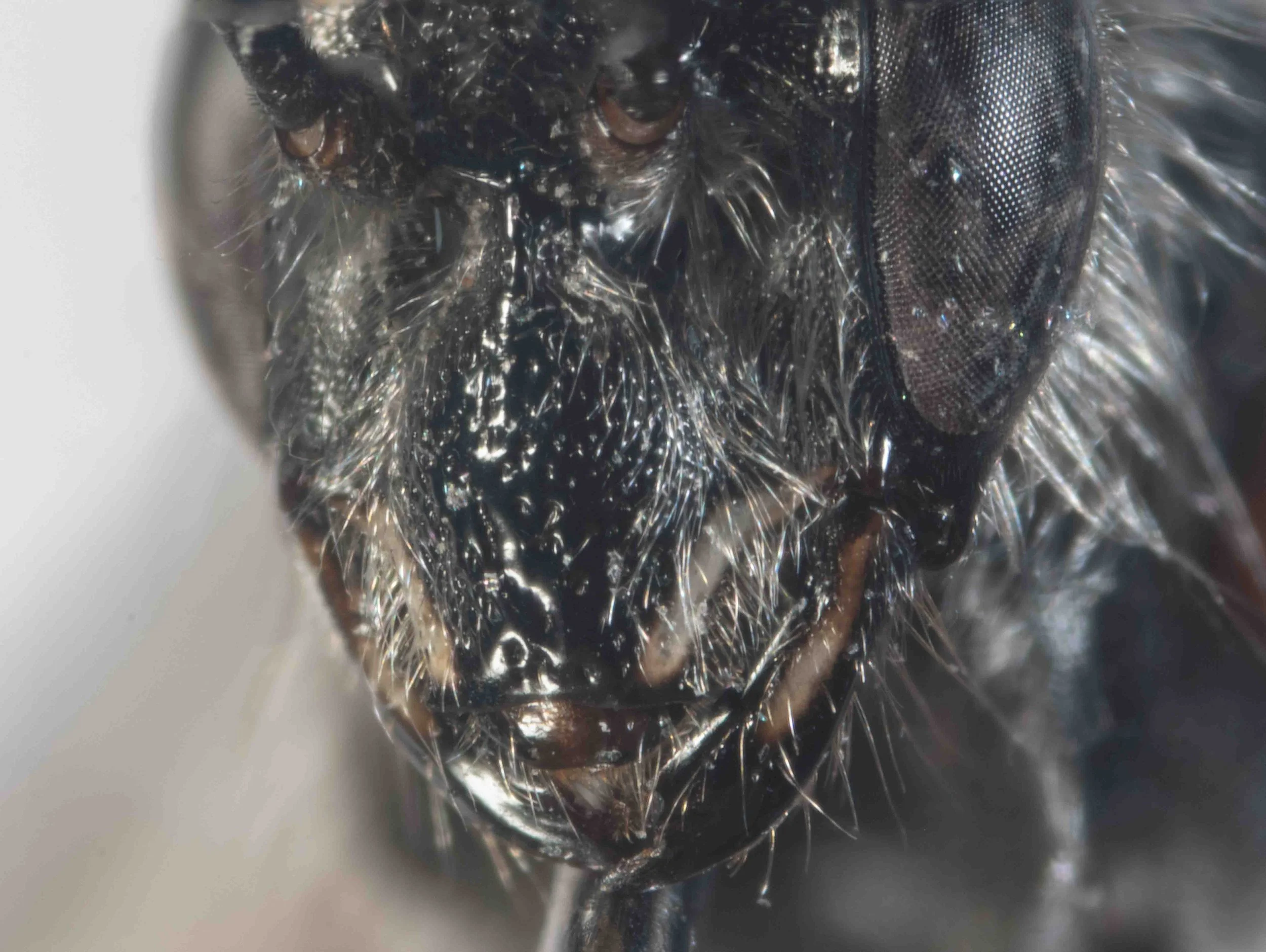
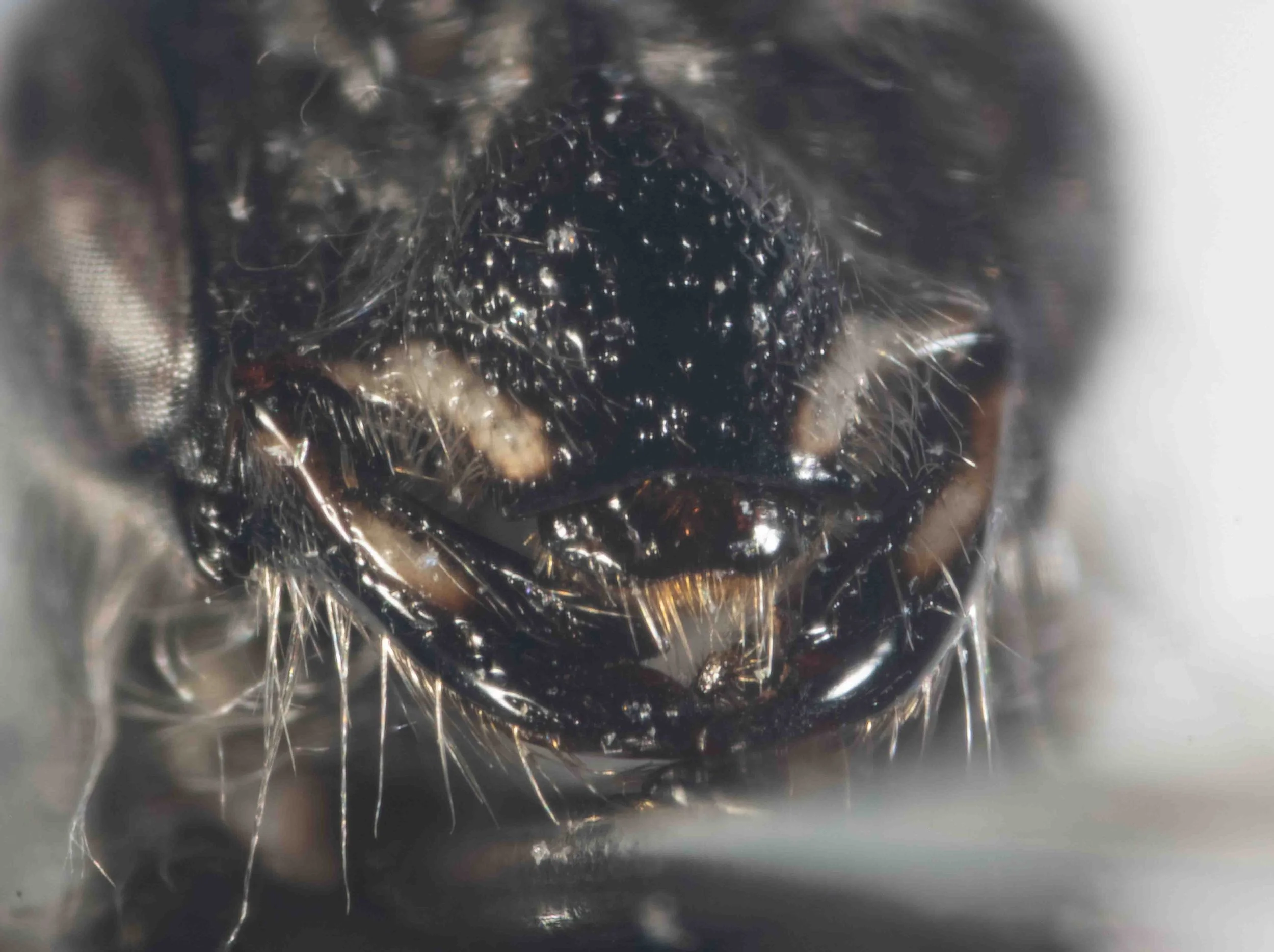
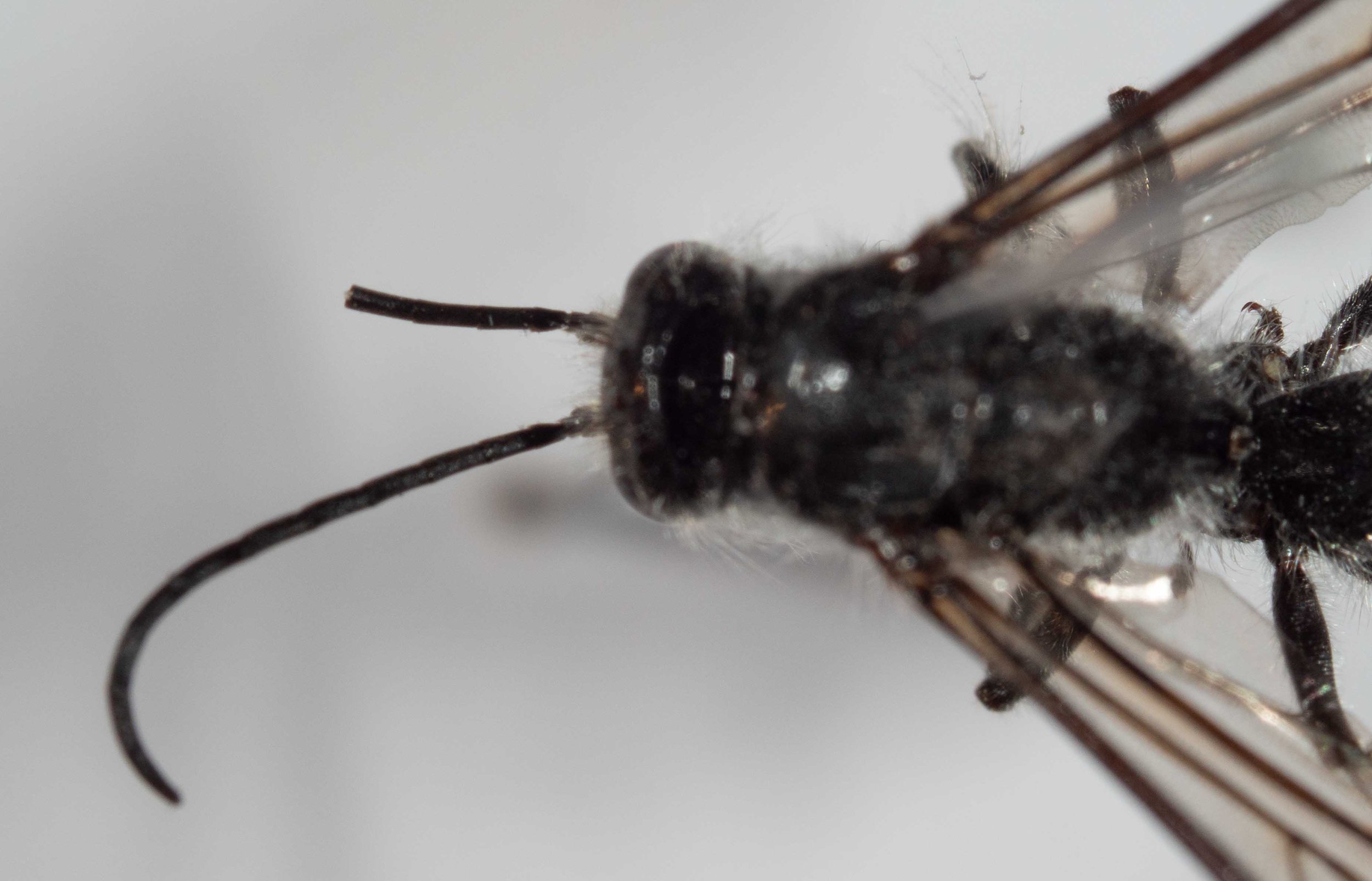
Having worked through the various options, I am confident that this is Levothynnus. The genus is known from our local region, and meets the diagnostic criteria described by Brown (2025).
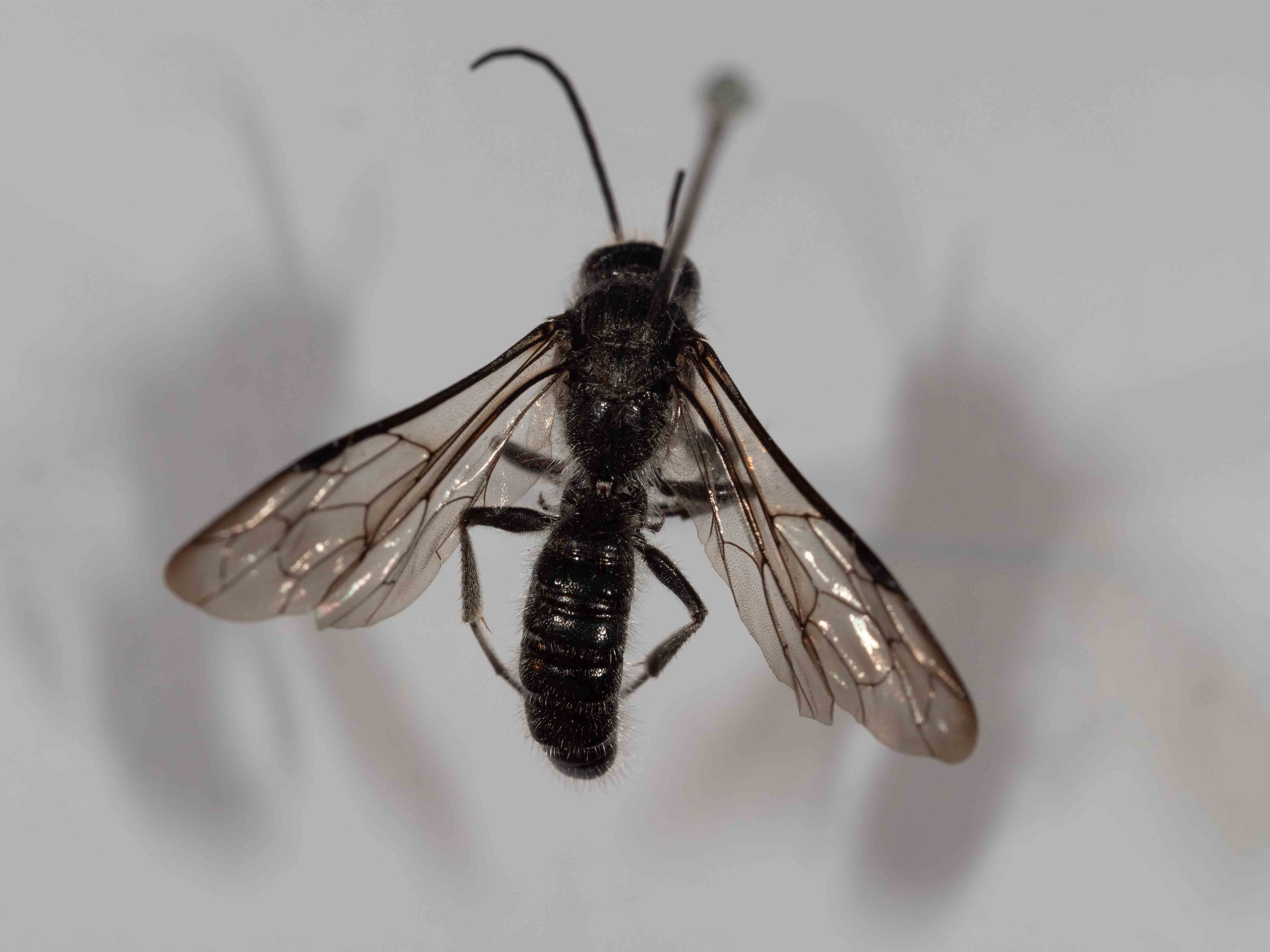
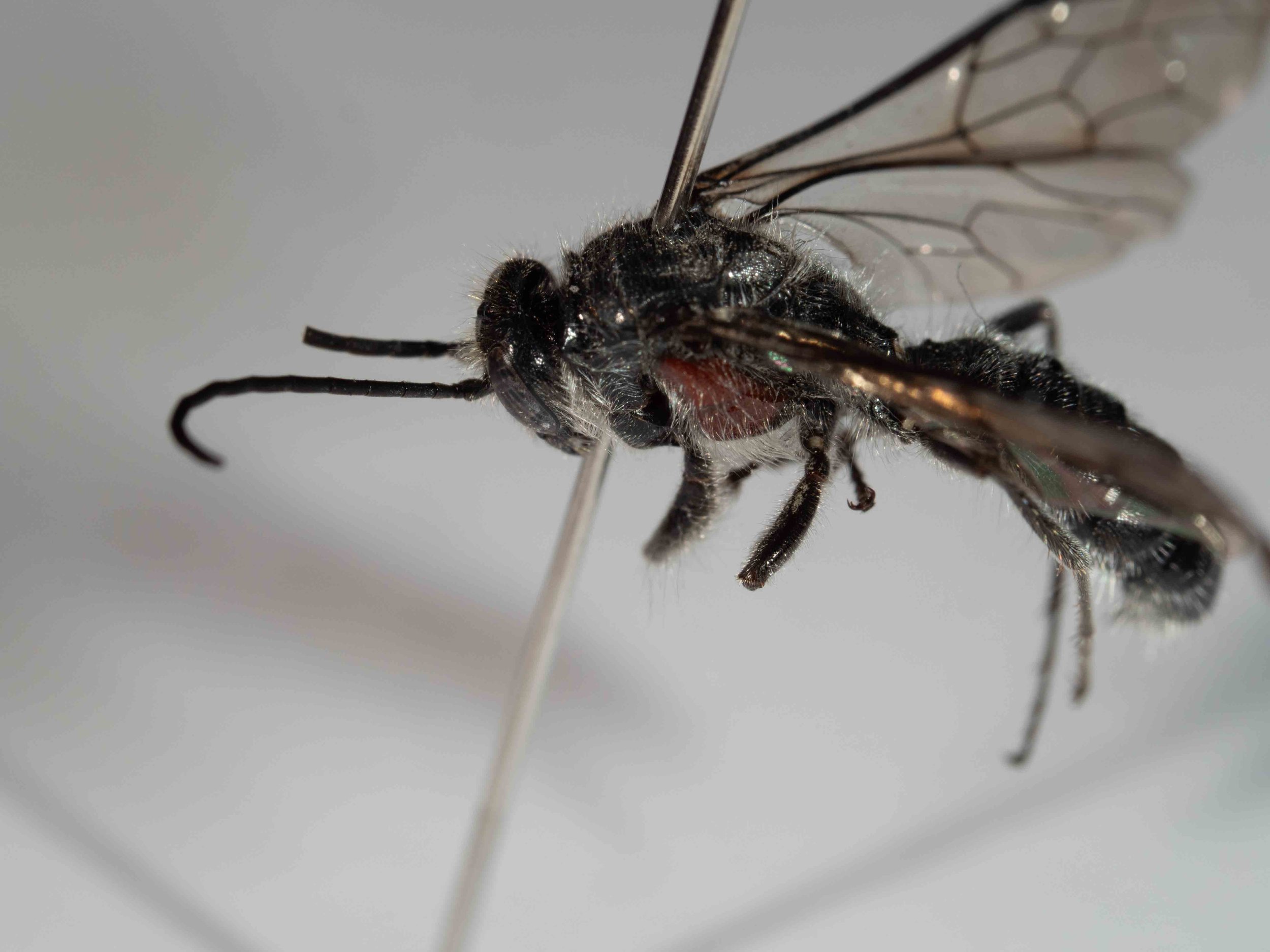
Levothynnus gracilis
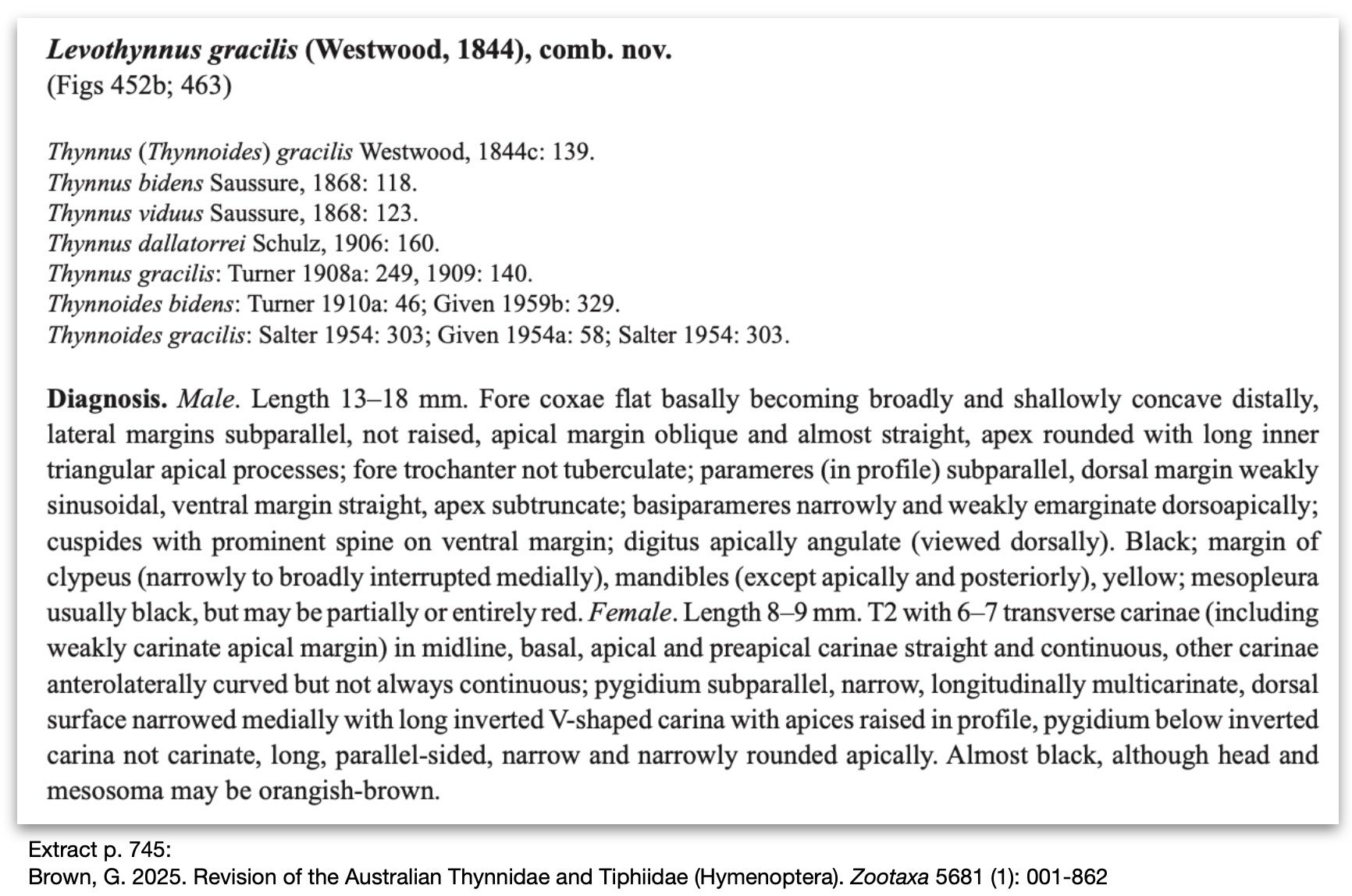
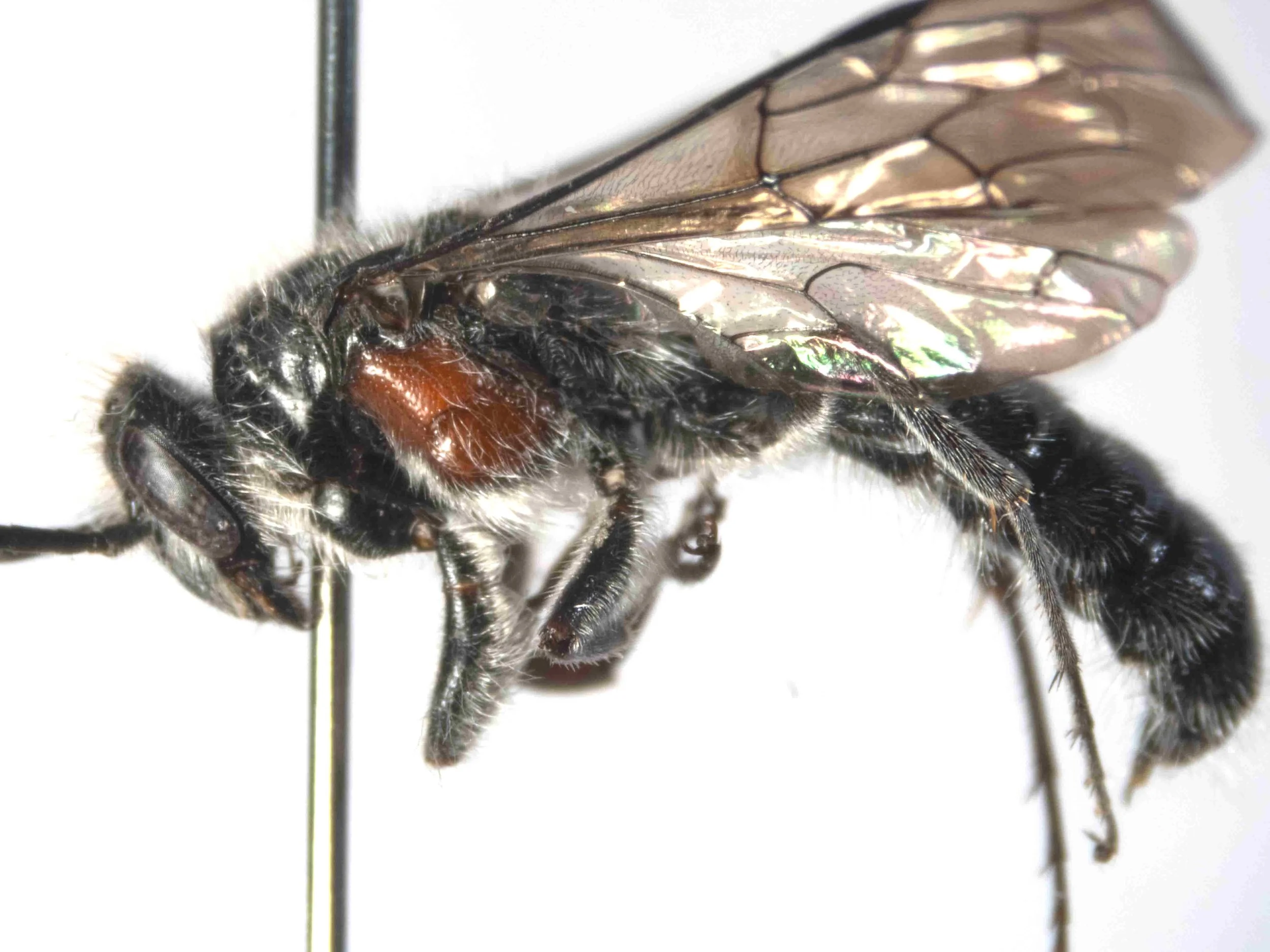
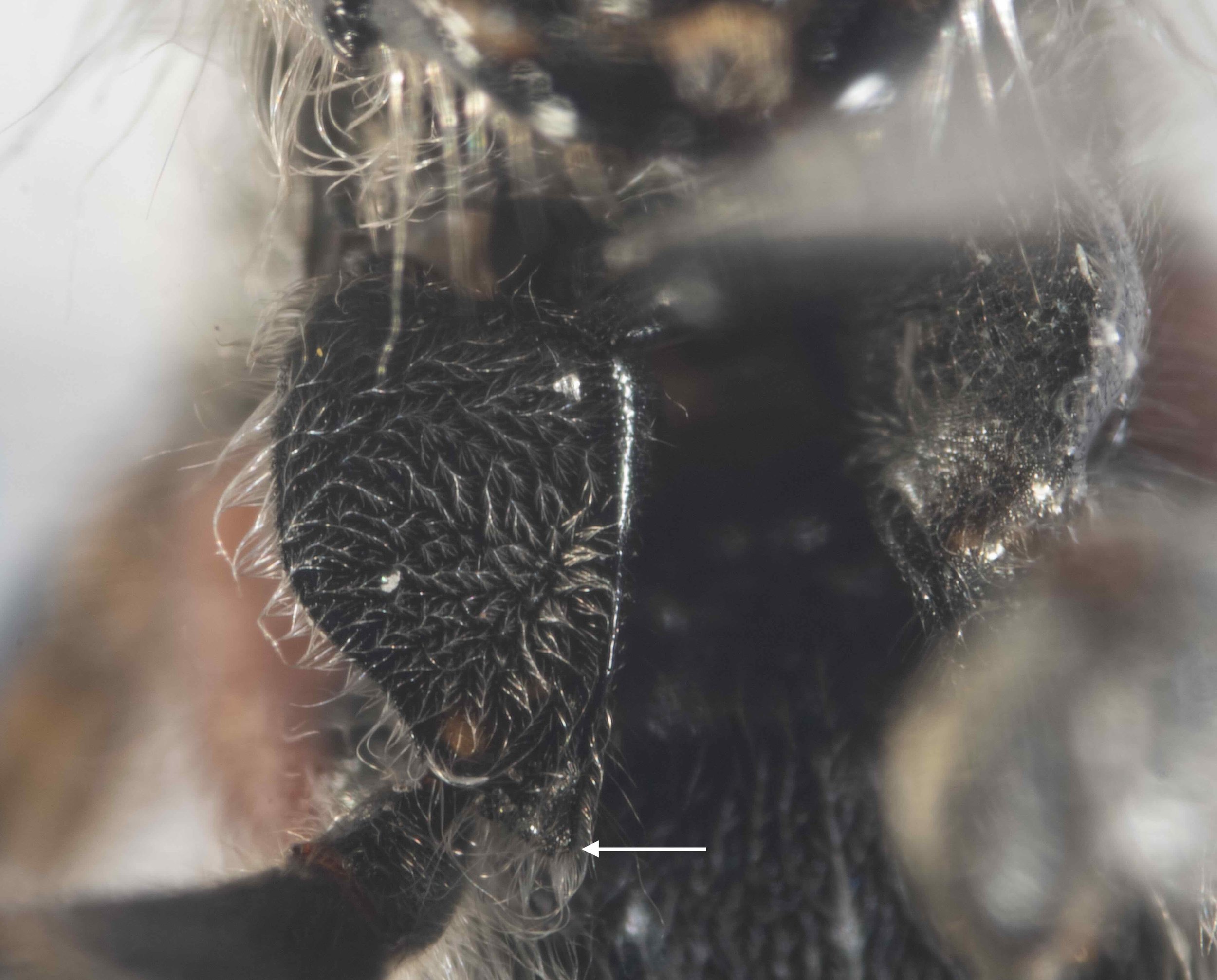
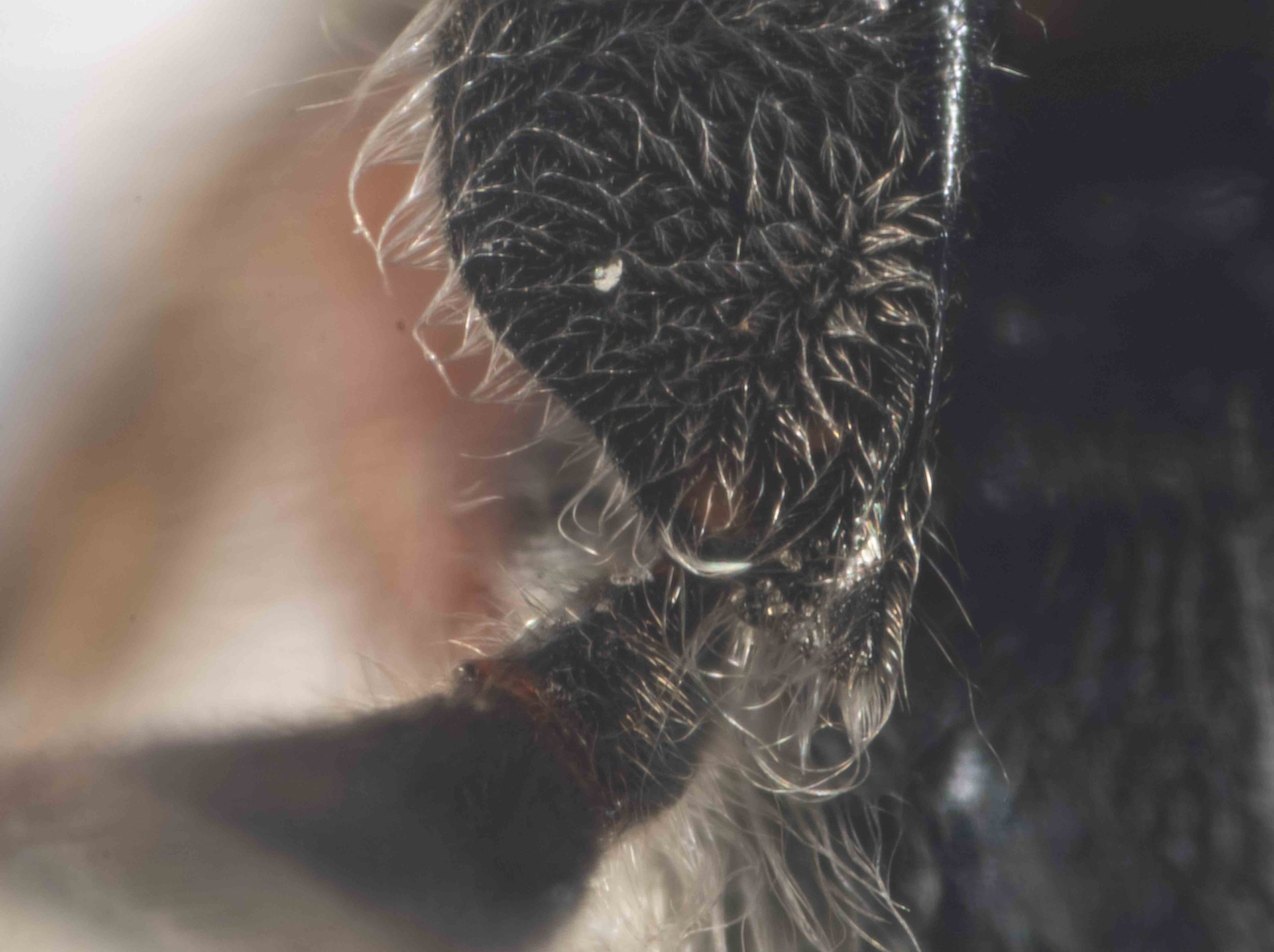
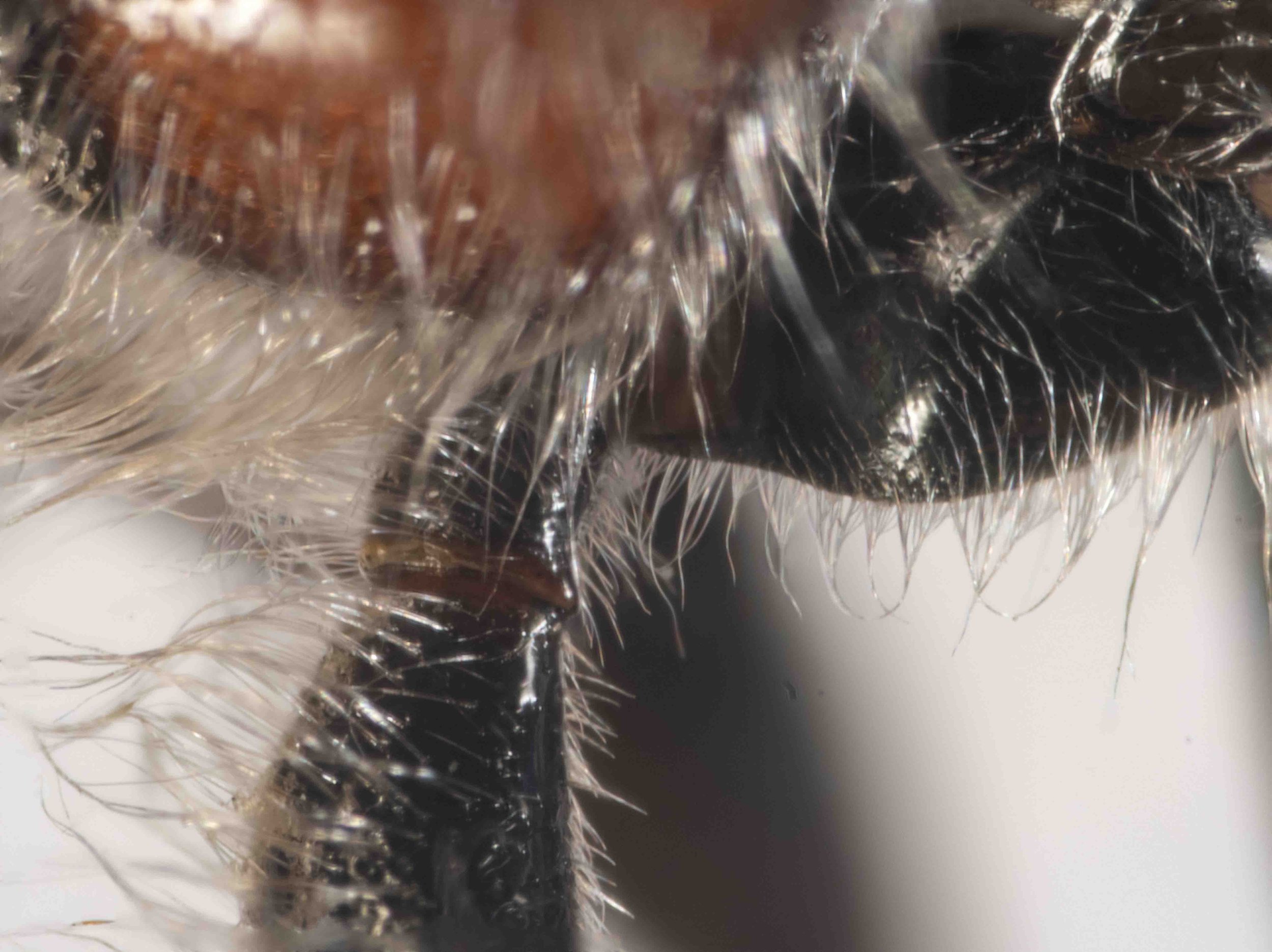
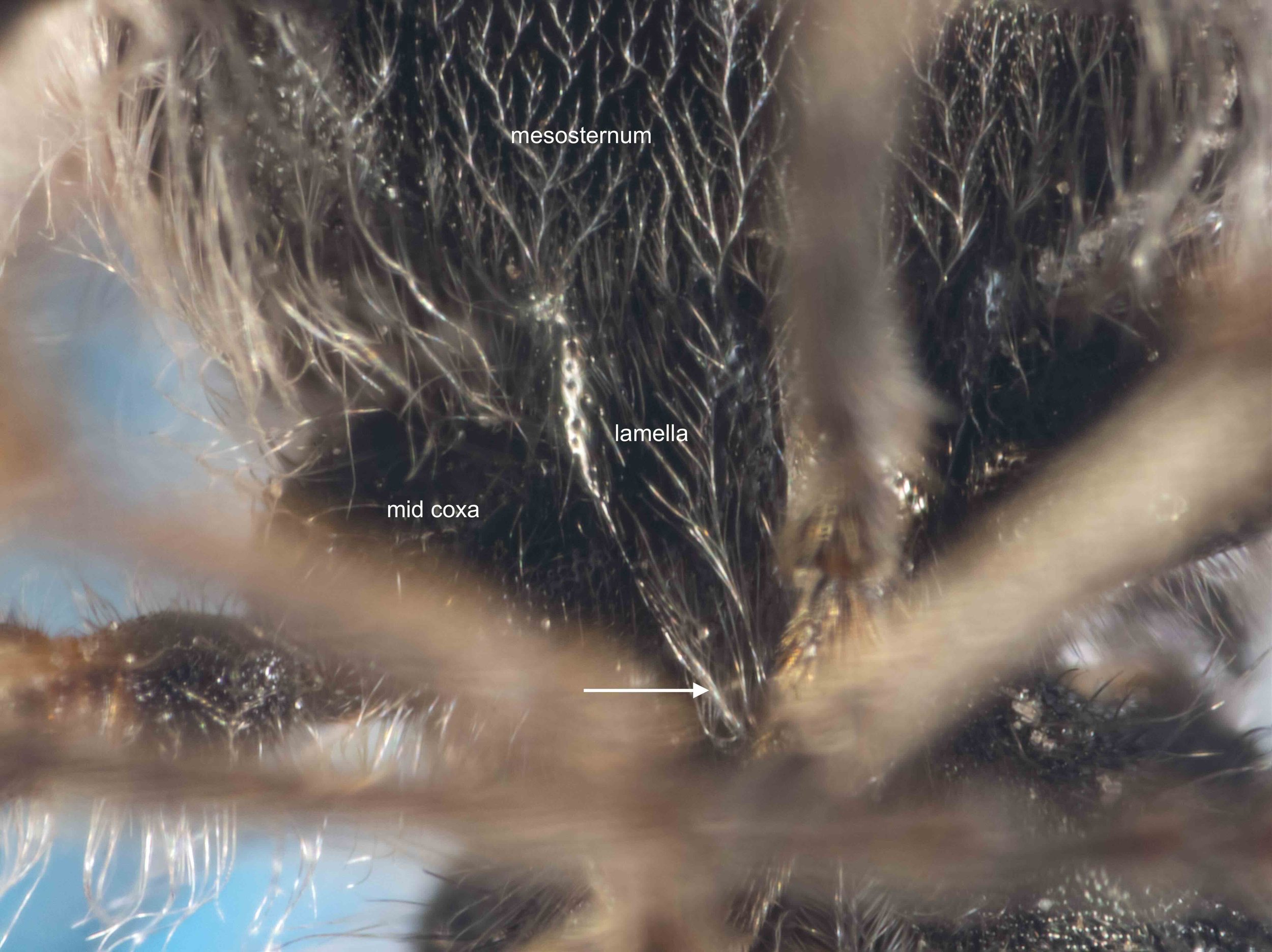
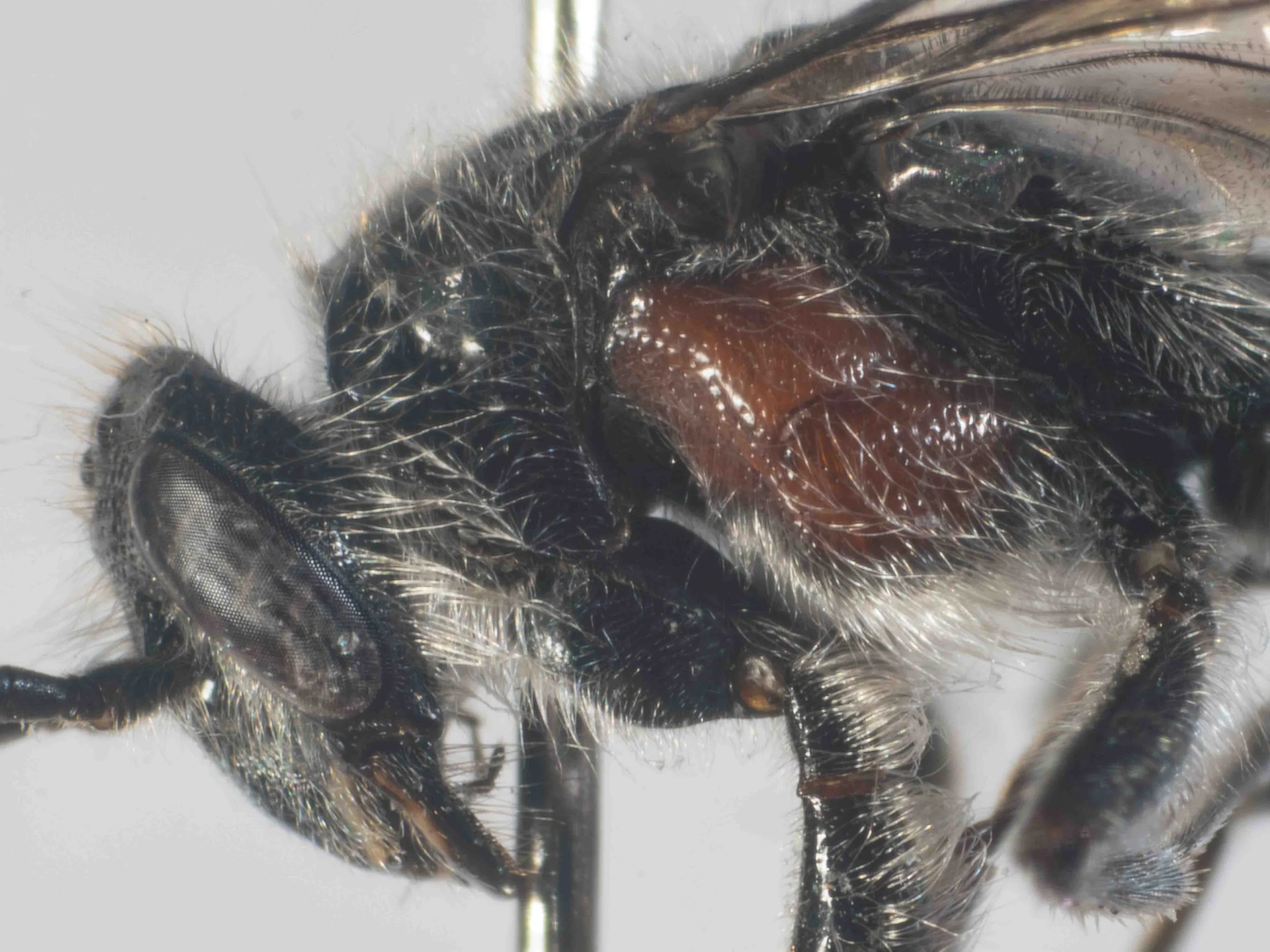
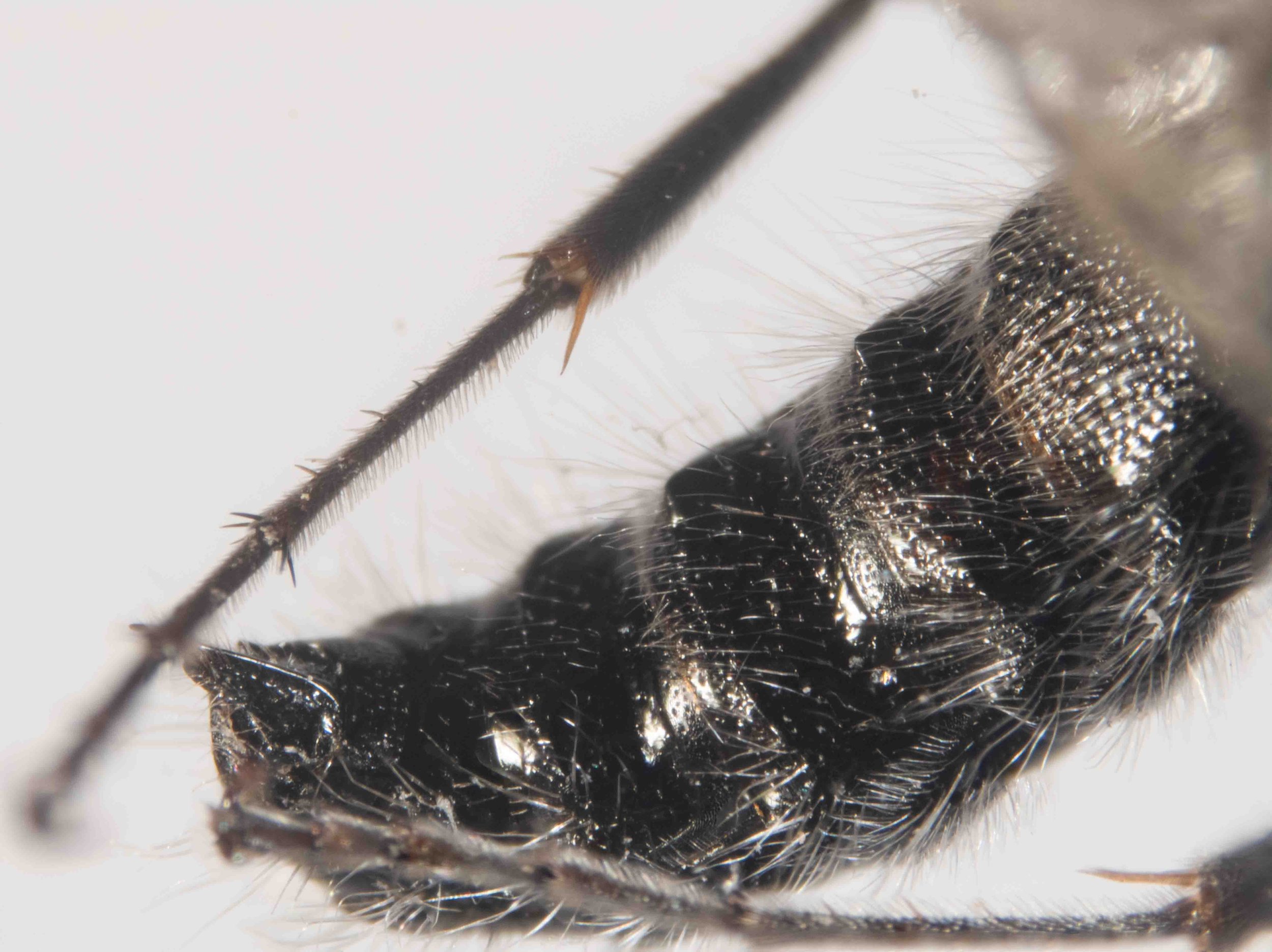
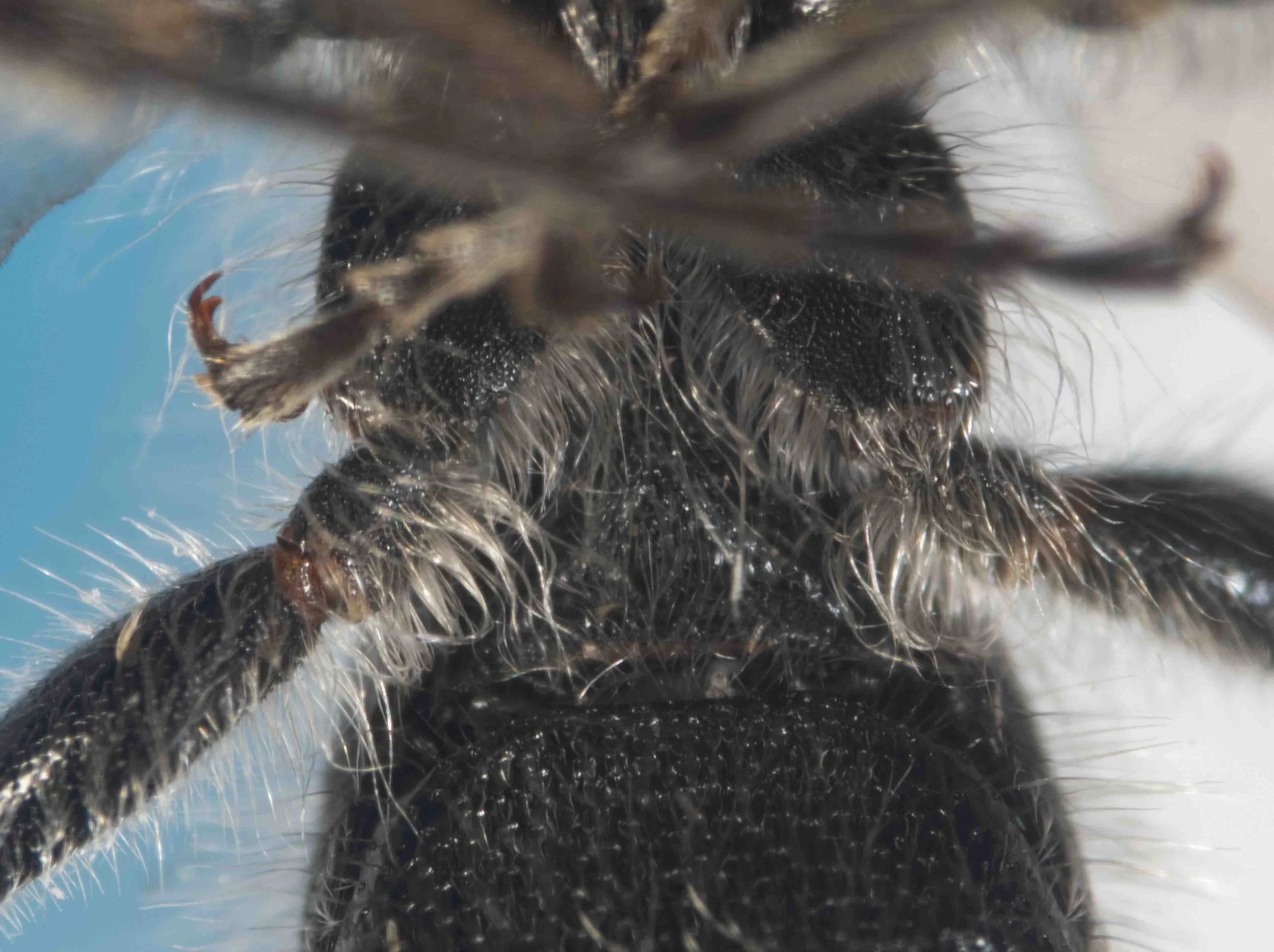
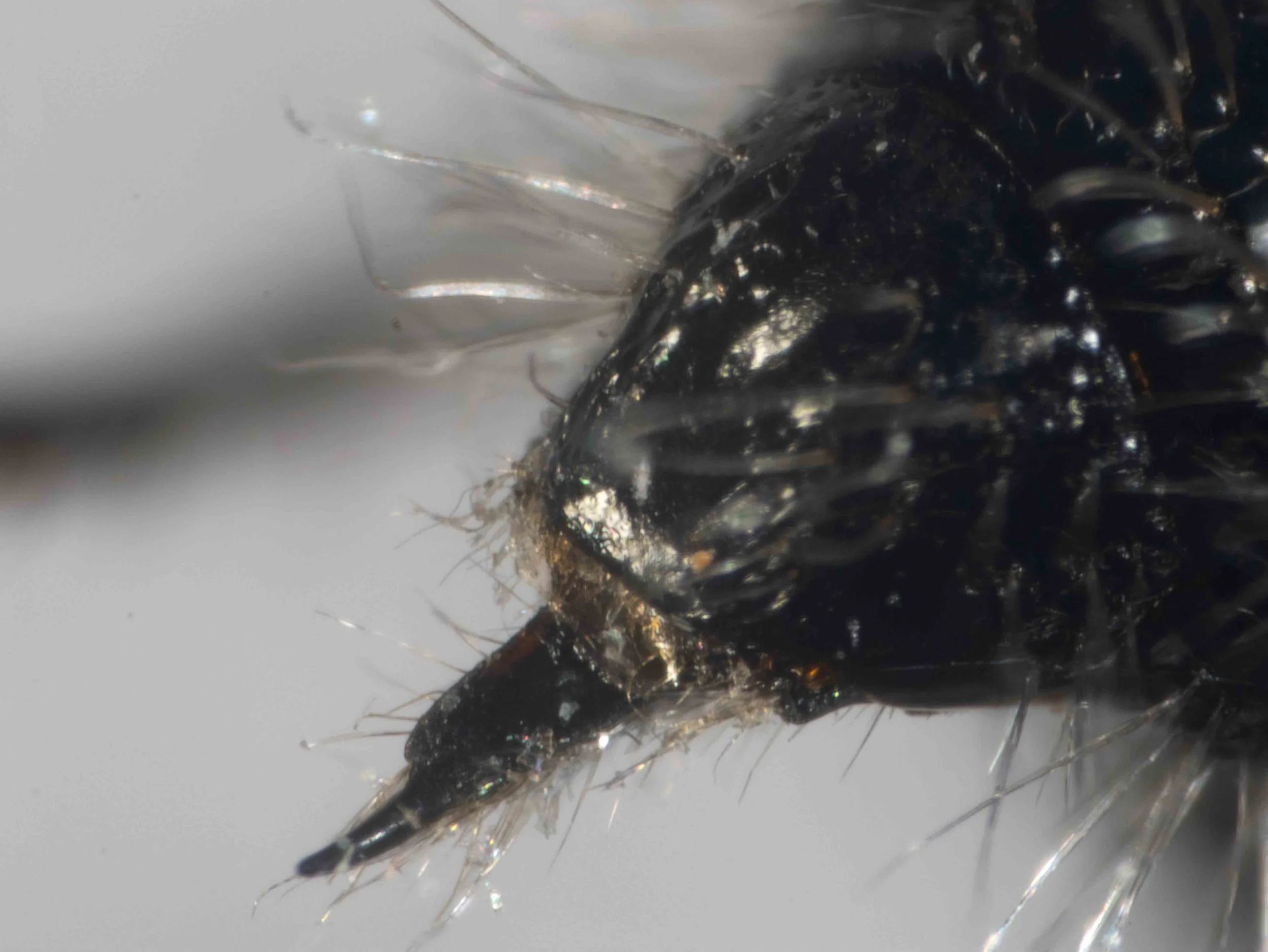
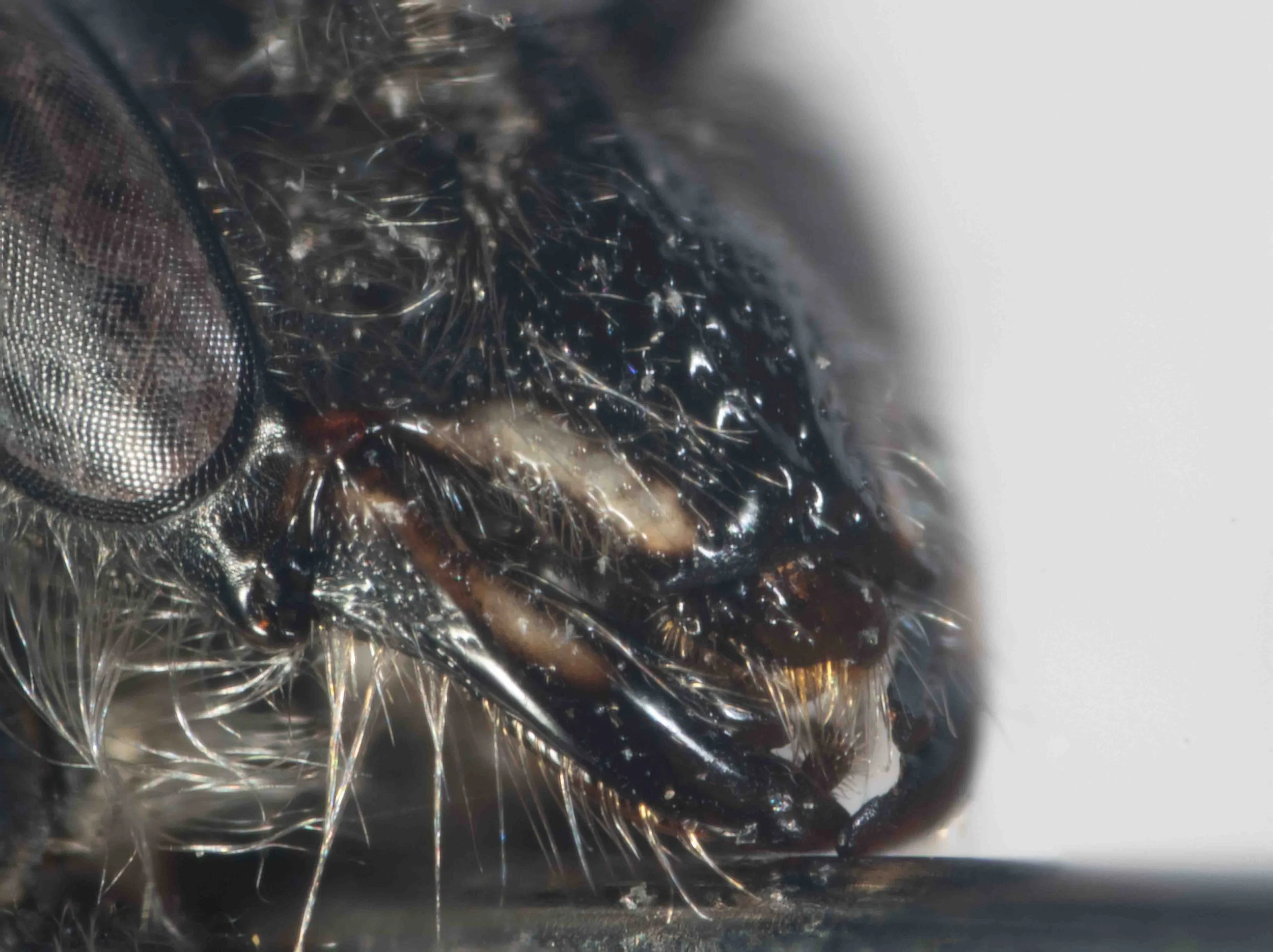
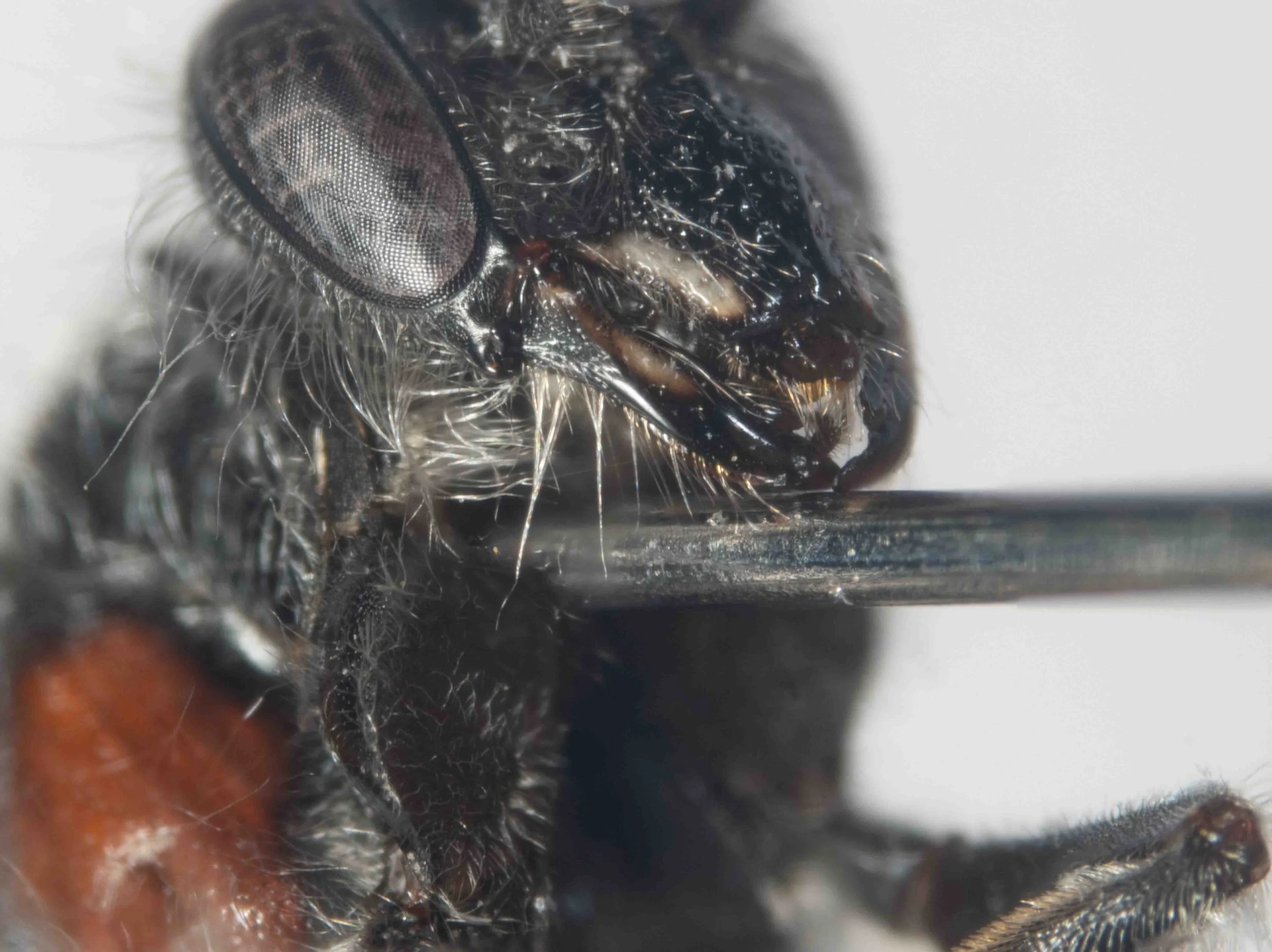
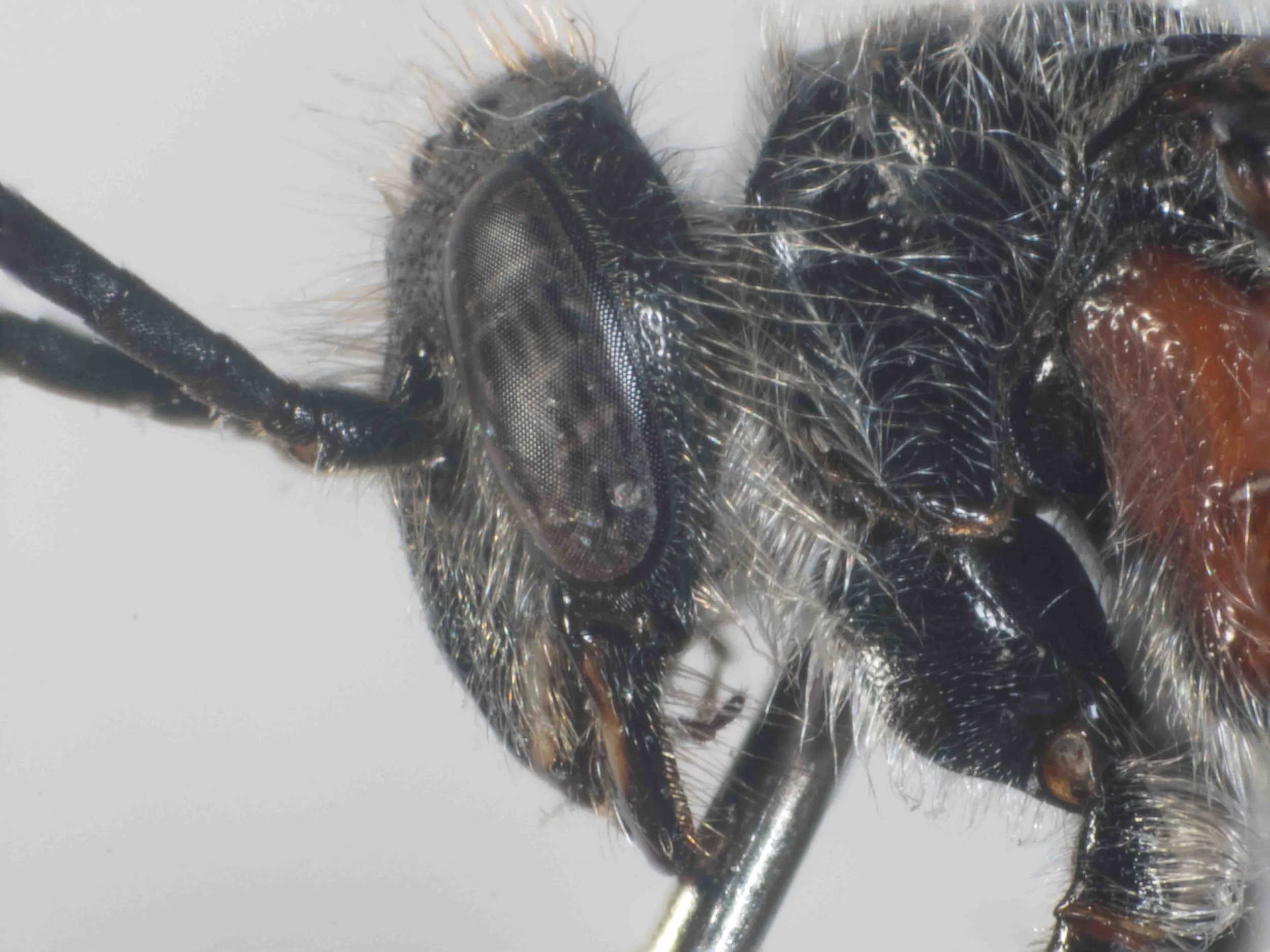
Specimen #052 is a very good match for Levothynnus gracilis, a widespread species known to occur in our local area (including Nadgee Nature Reserve and Genoa). A key distinguishing feature is the shape of the front coxae. While the mesopleura is extensively red in #052, Brown notes that in L. gracilis this varies between individuals: “mesopleura usually black, but may be partially or entirely red” (p. 745, Brown 2025).
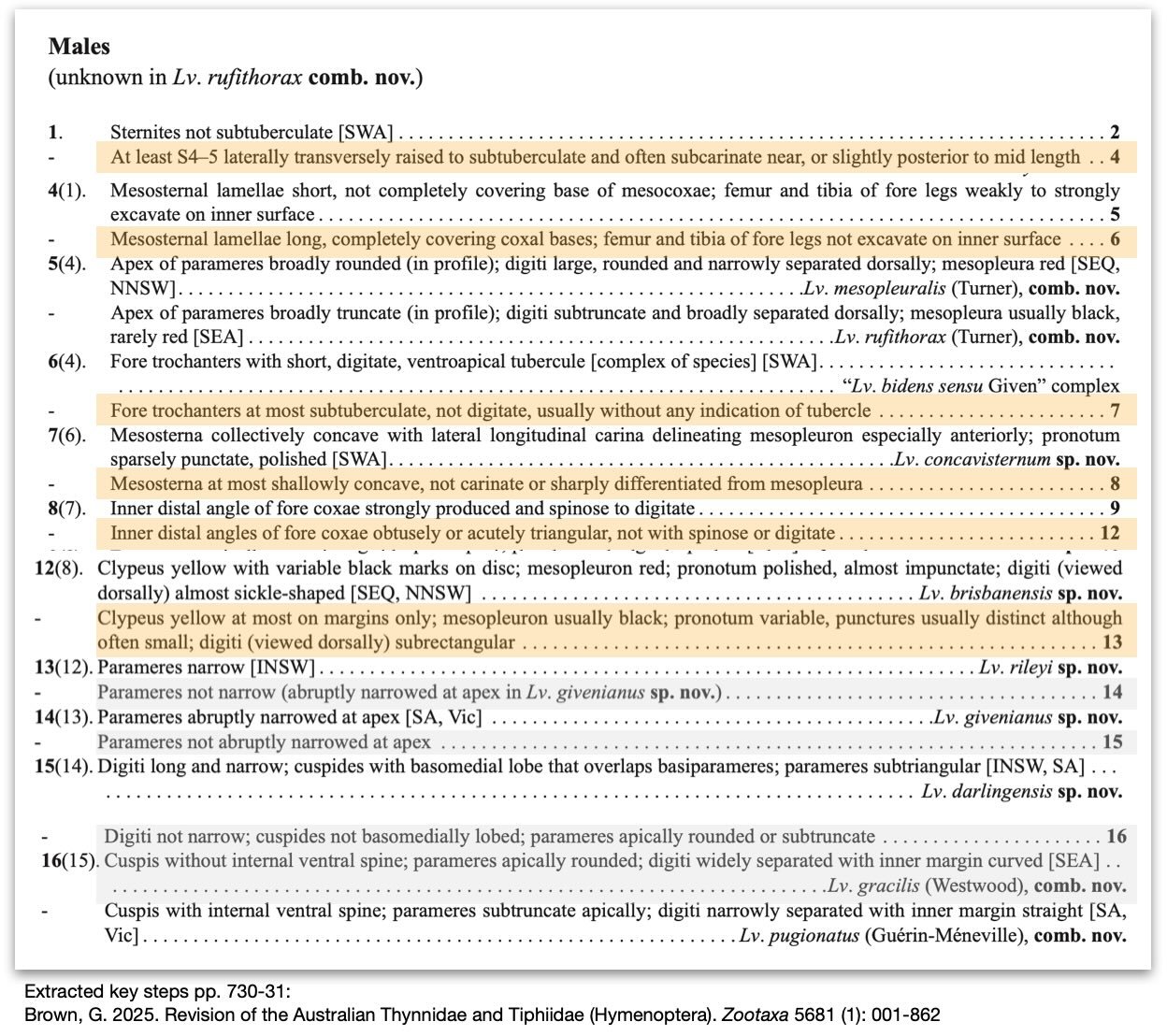
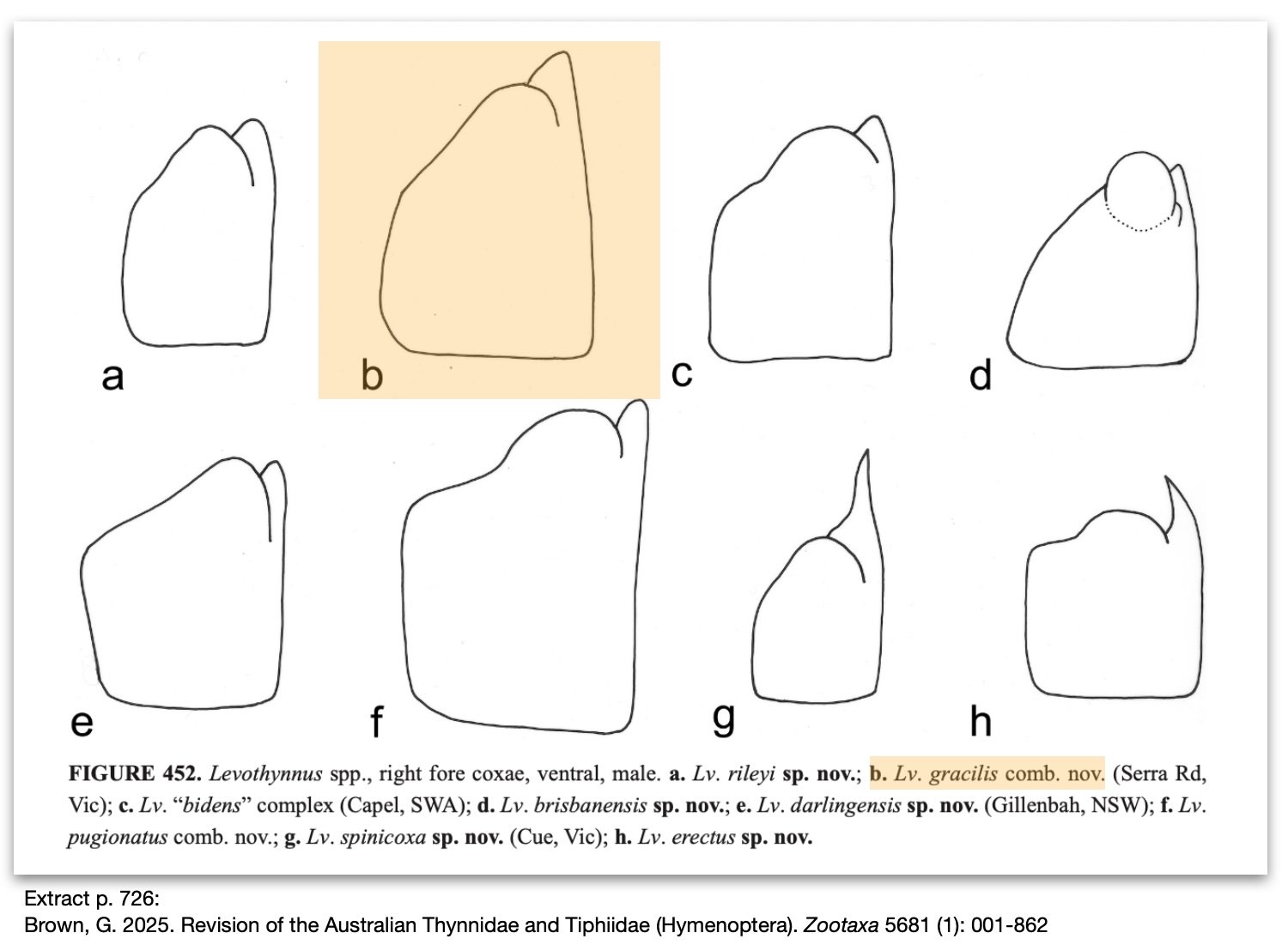
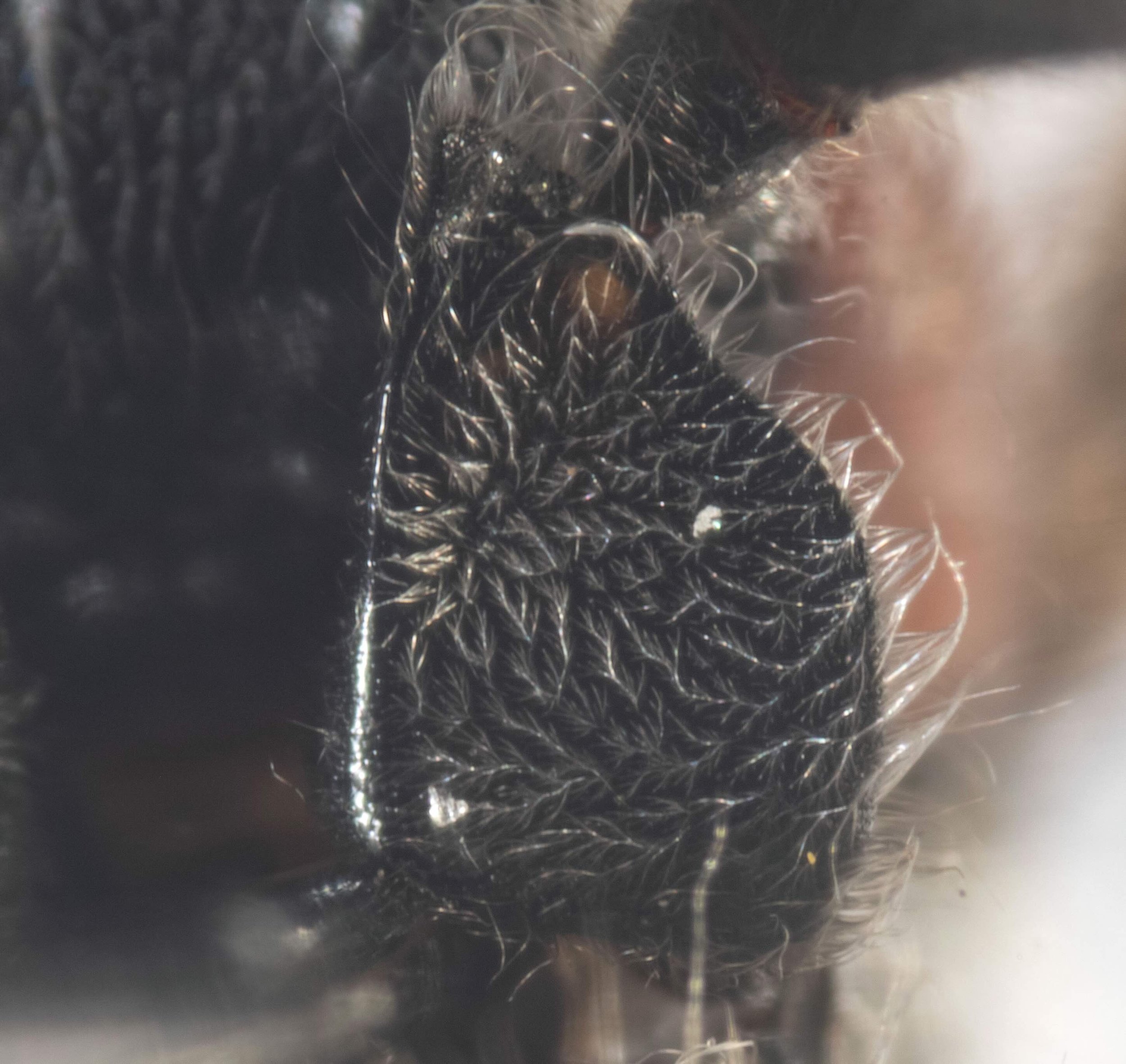
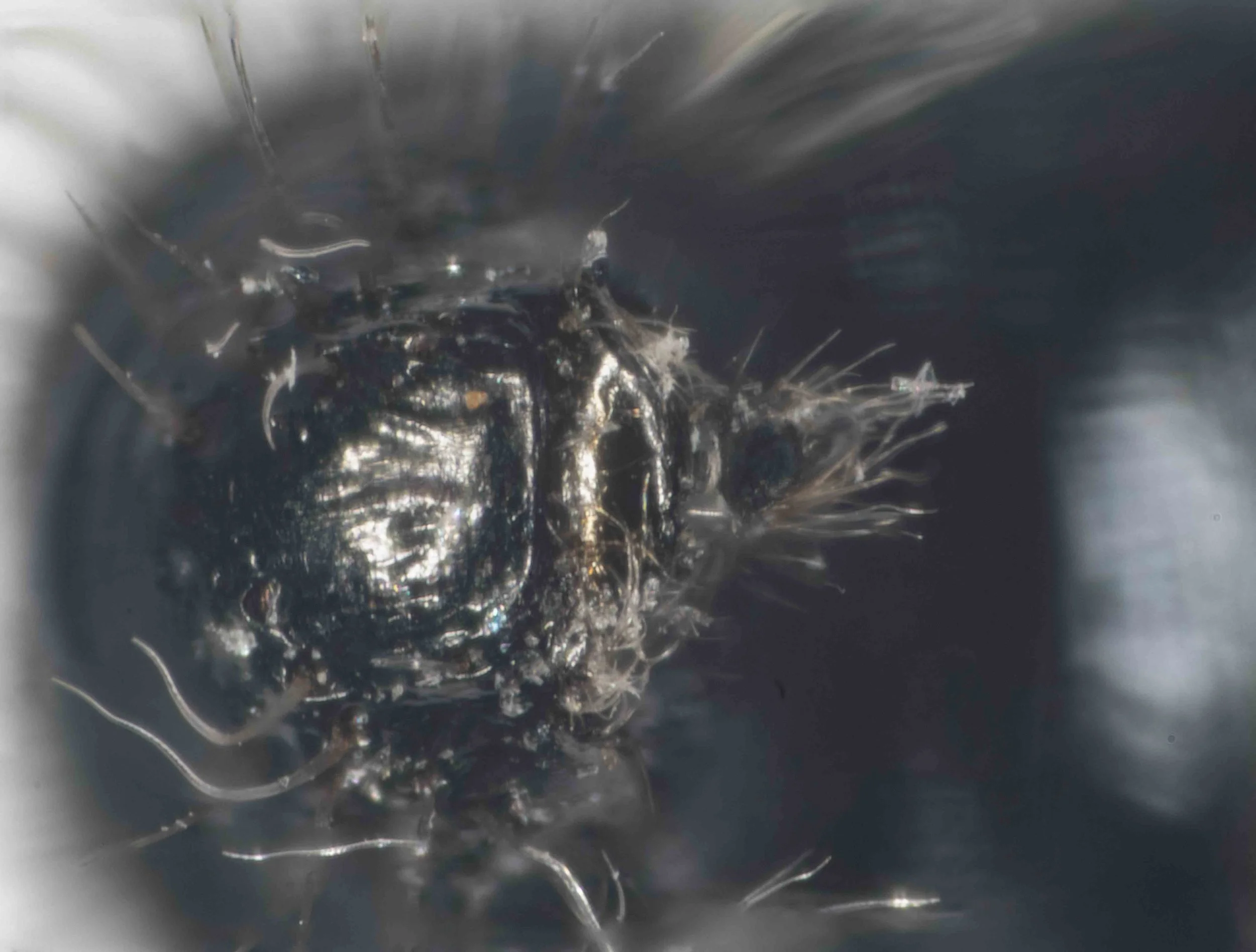
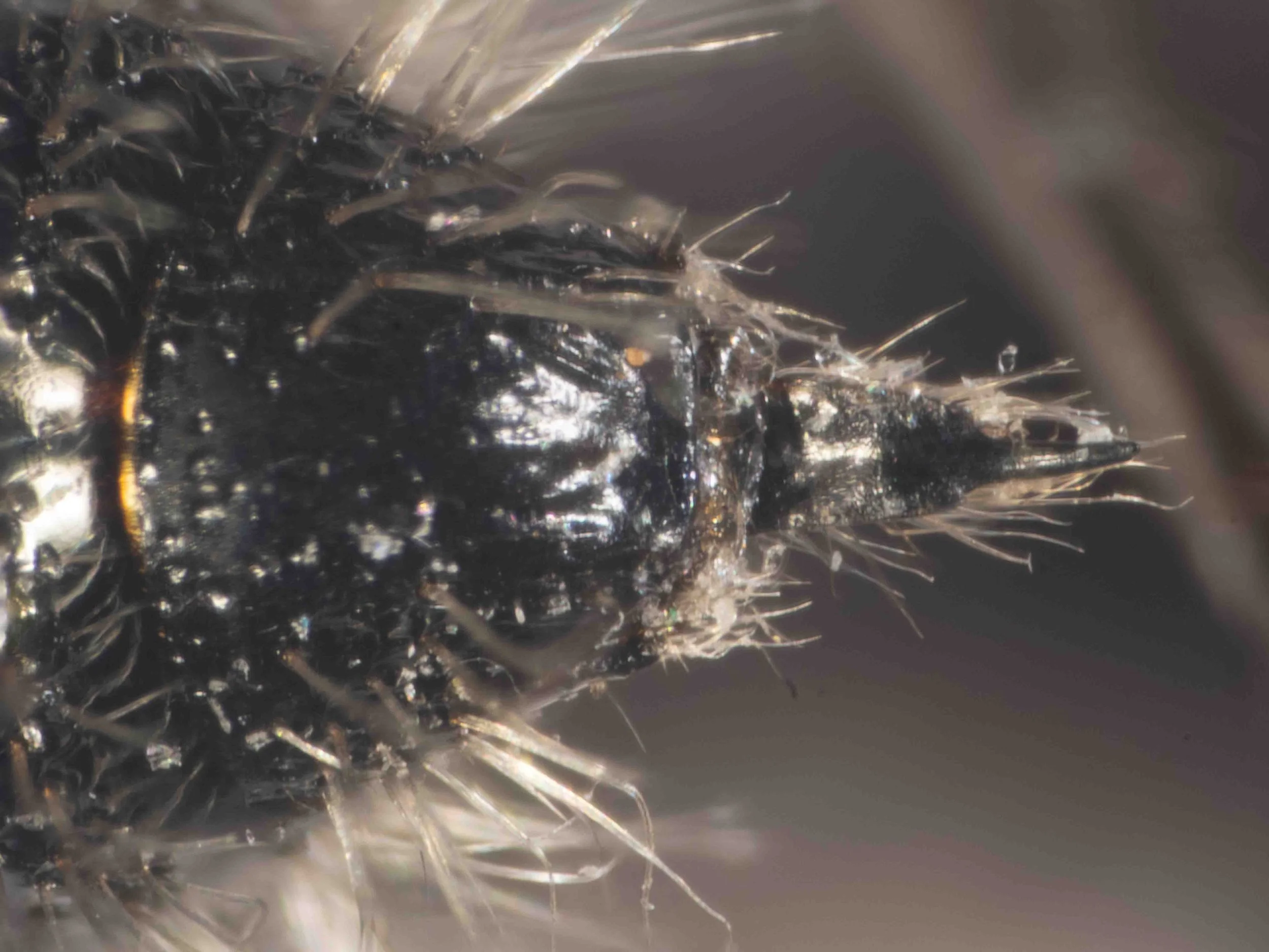
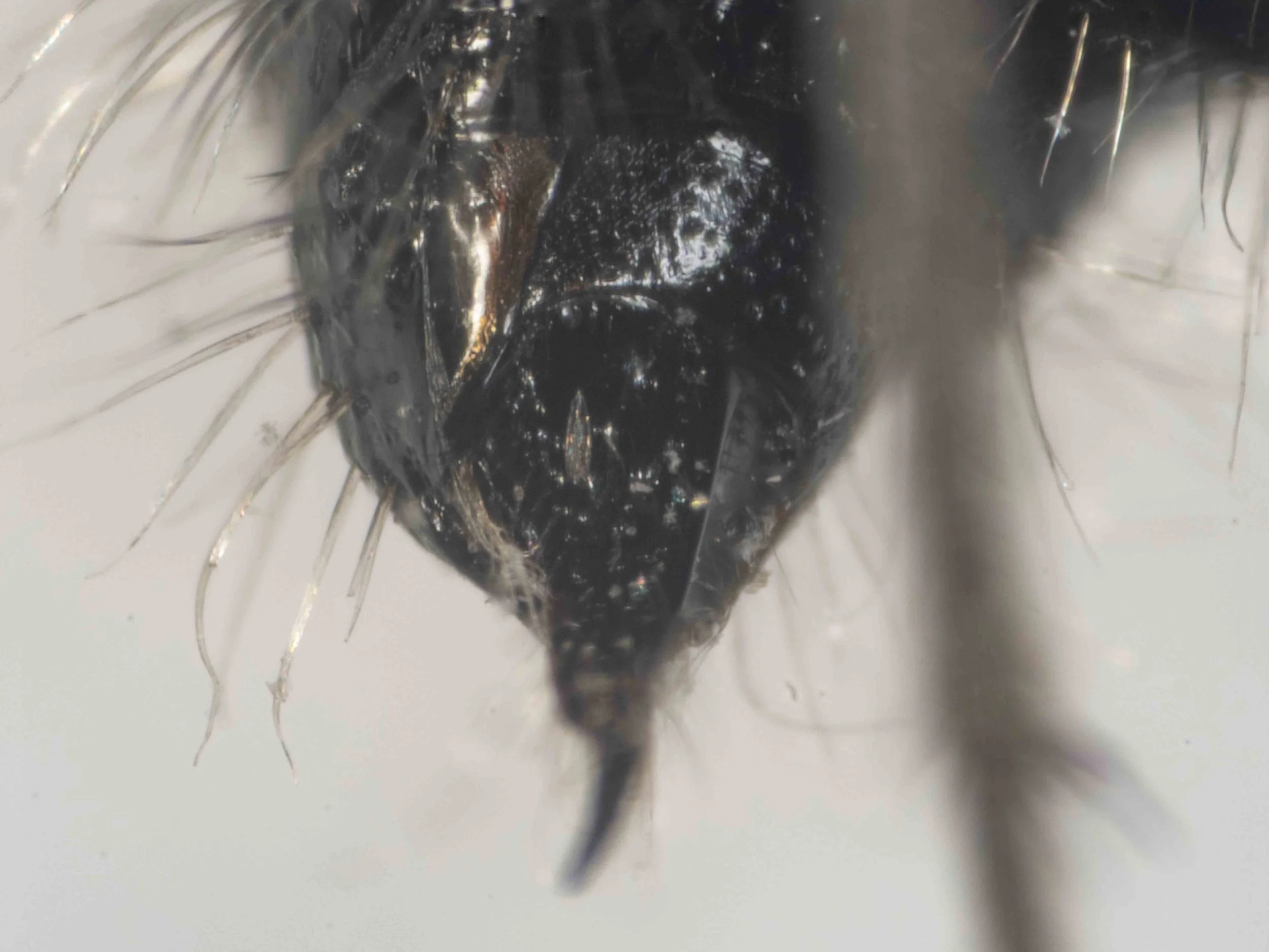
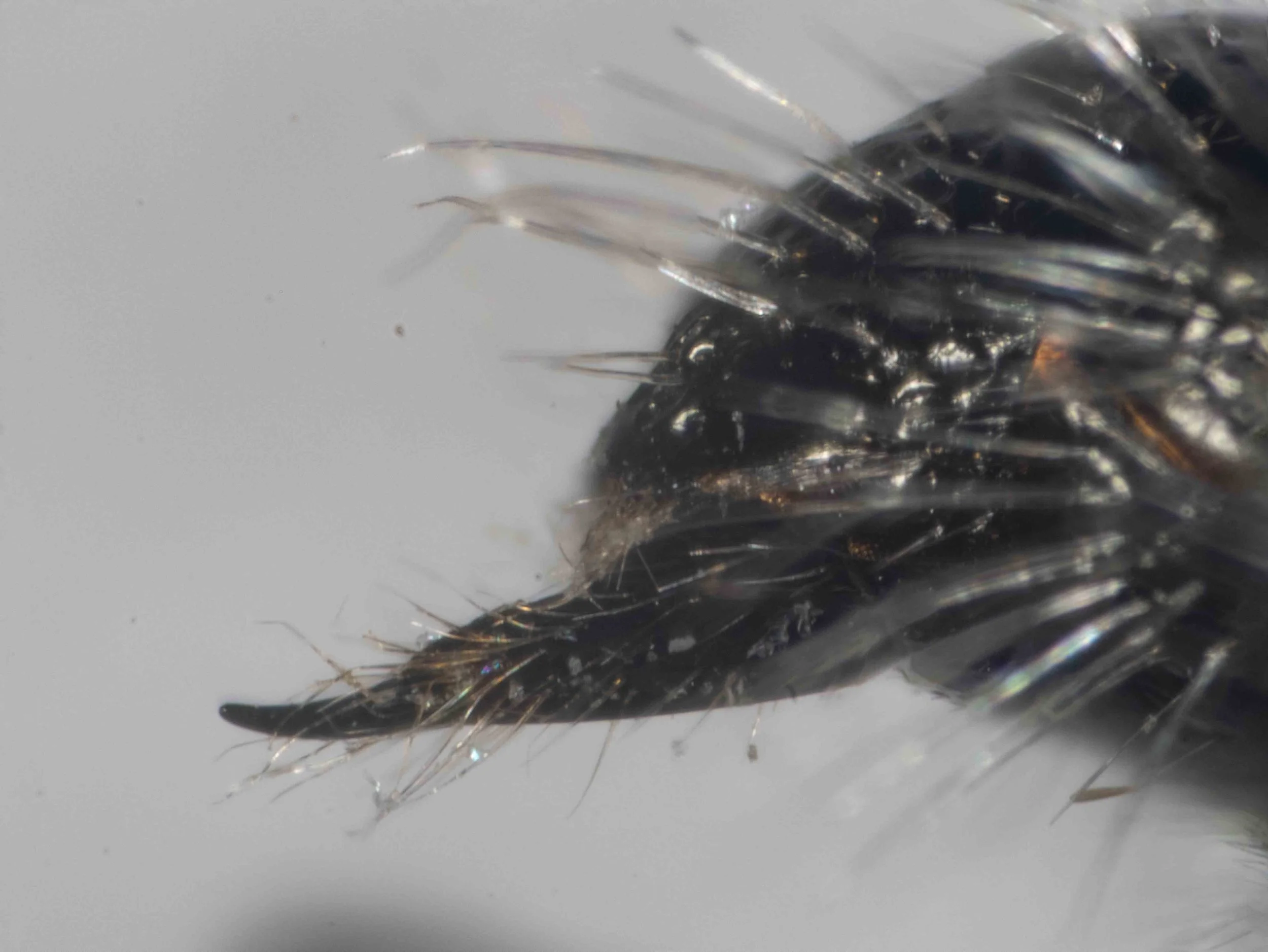
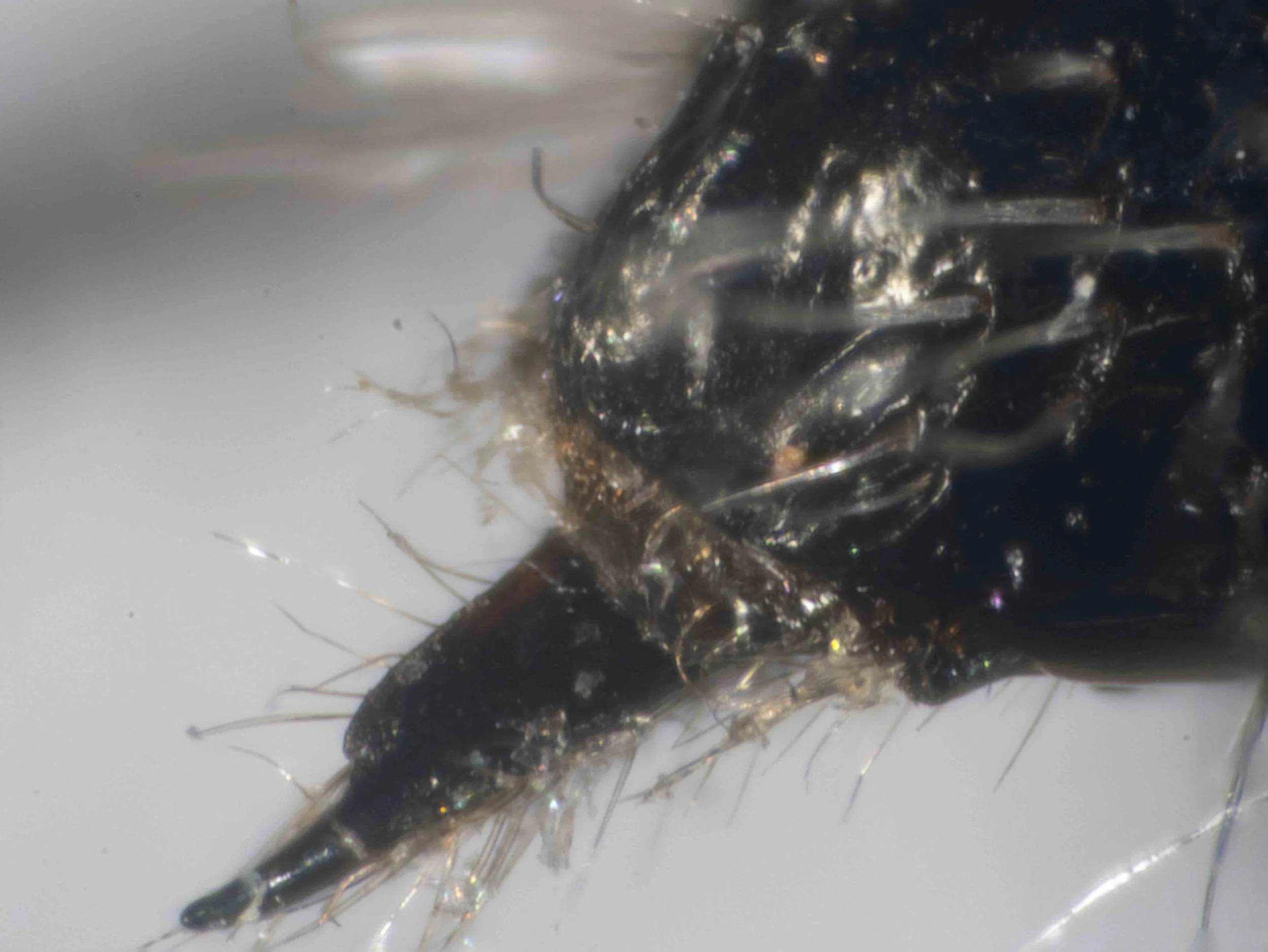
There are several key steps (above) which rely upon dissection of the genitalia. As I have not examined the parameres, cuspis or digiti in detail, I have to also consider the following candidate species: L. rileyi; L. givenianus; L. darlingensis; L. pugionatus.
I can exclude three of these on the basis of clear differences in the shape of the front coxae: L. rileyi; L. darlingensis; L. pugionatus. I also think it unlikely that #052 is L. givenianus, as although that species is very like L. gracilis (including the shape of the fore coxae, and the red mesopleuron), it is known only from the SA-Vic border (eg. Bordertown, Horsham).
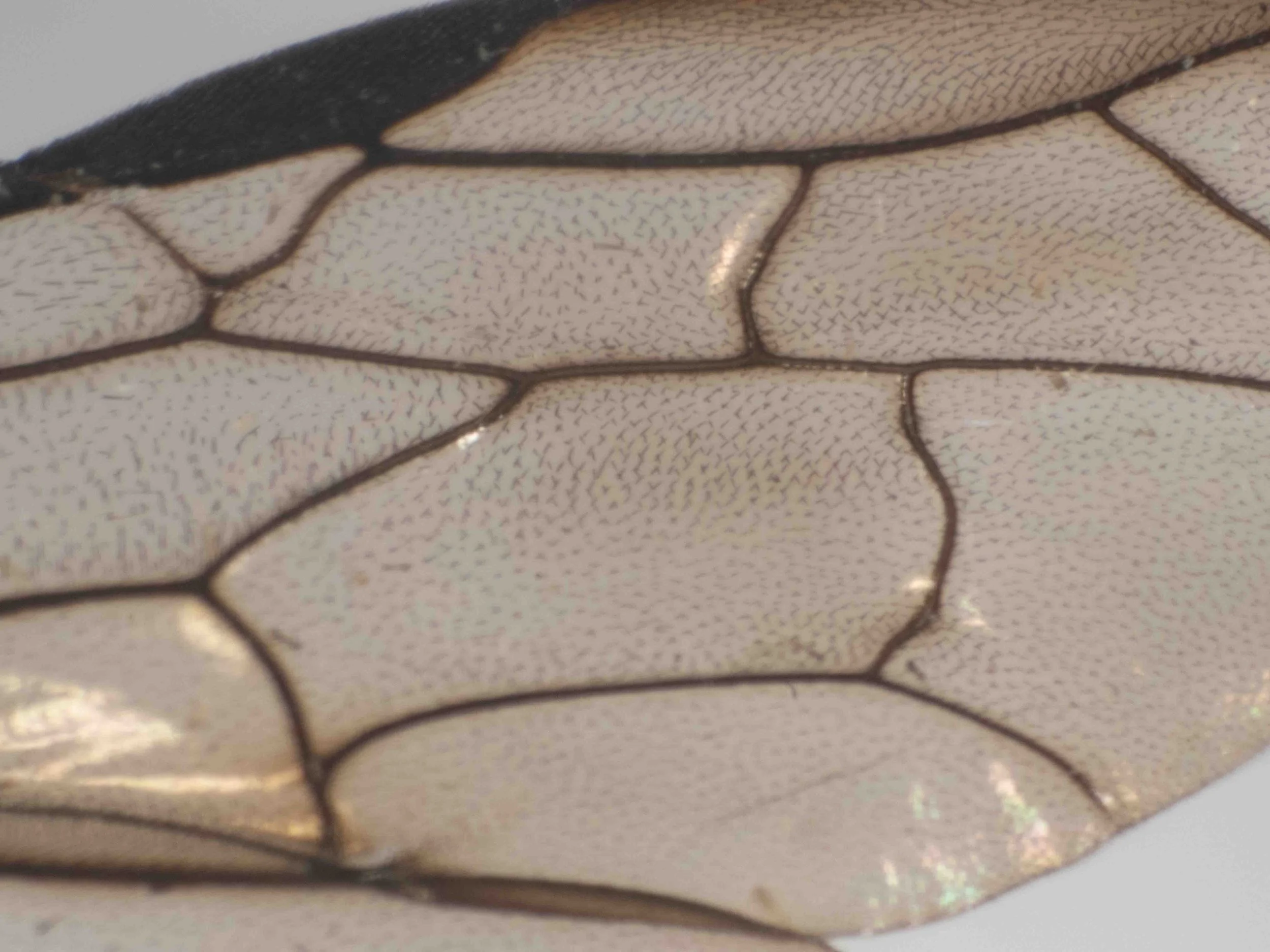
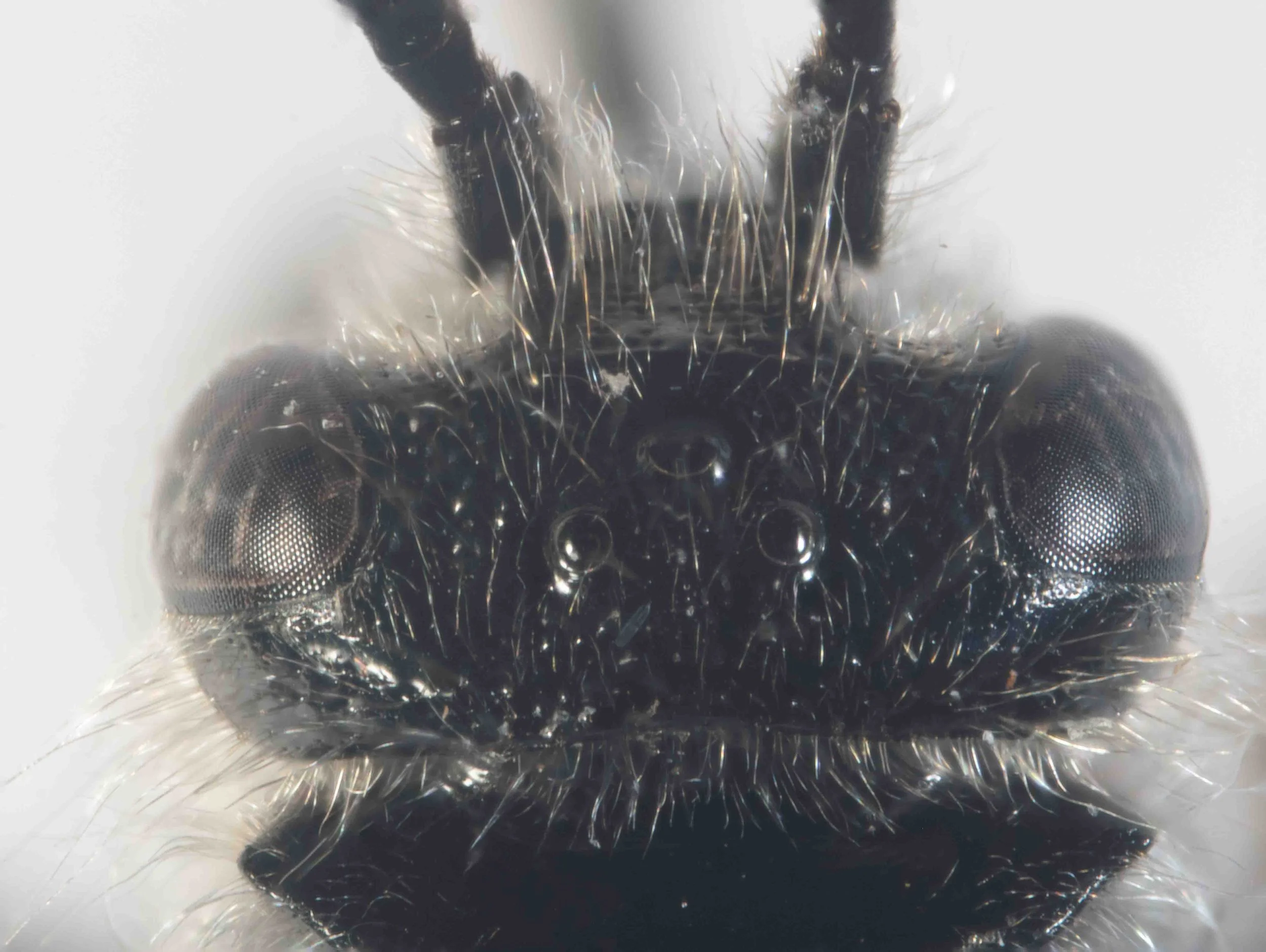
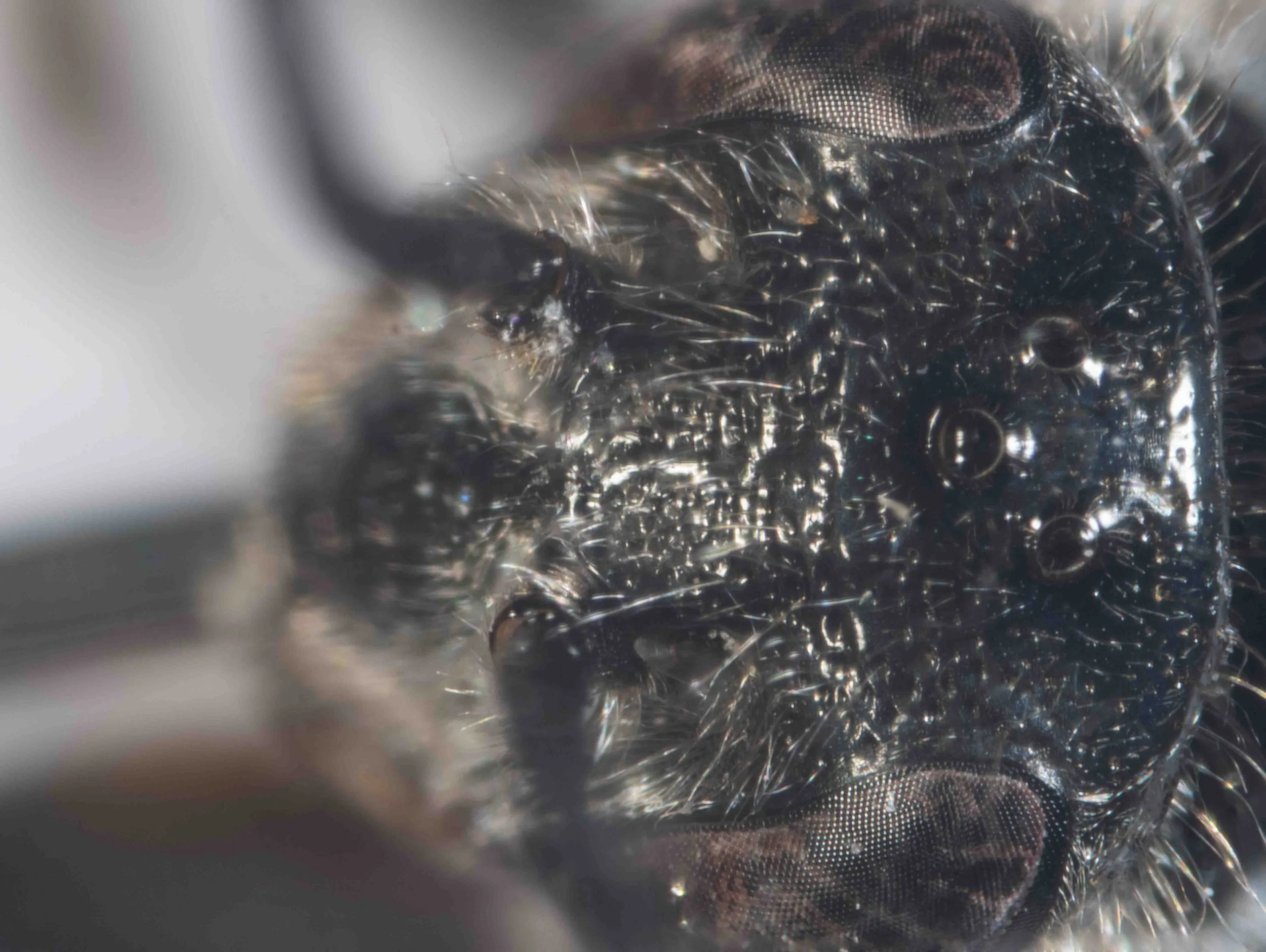
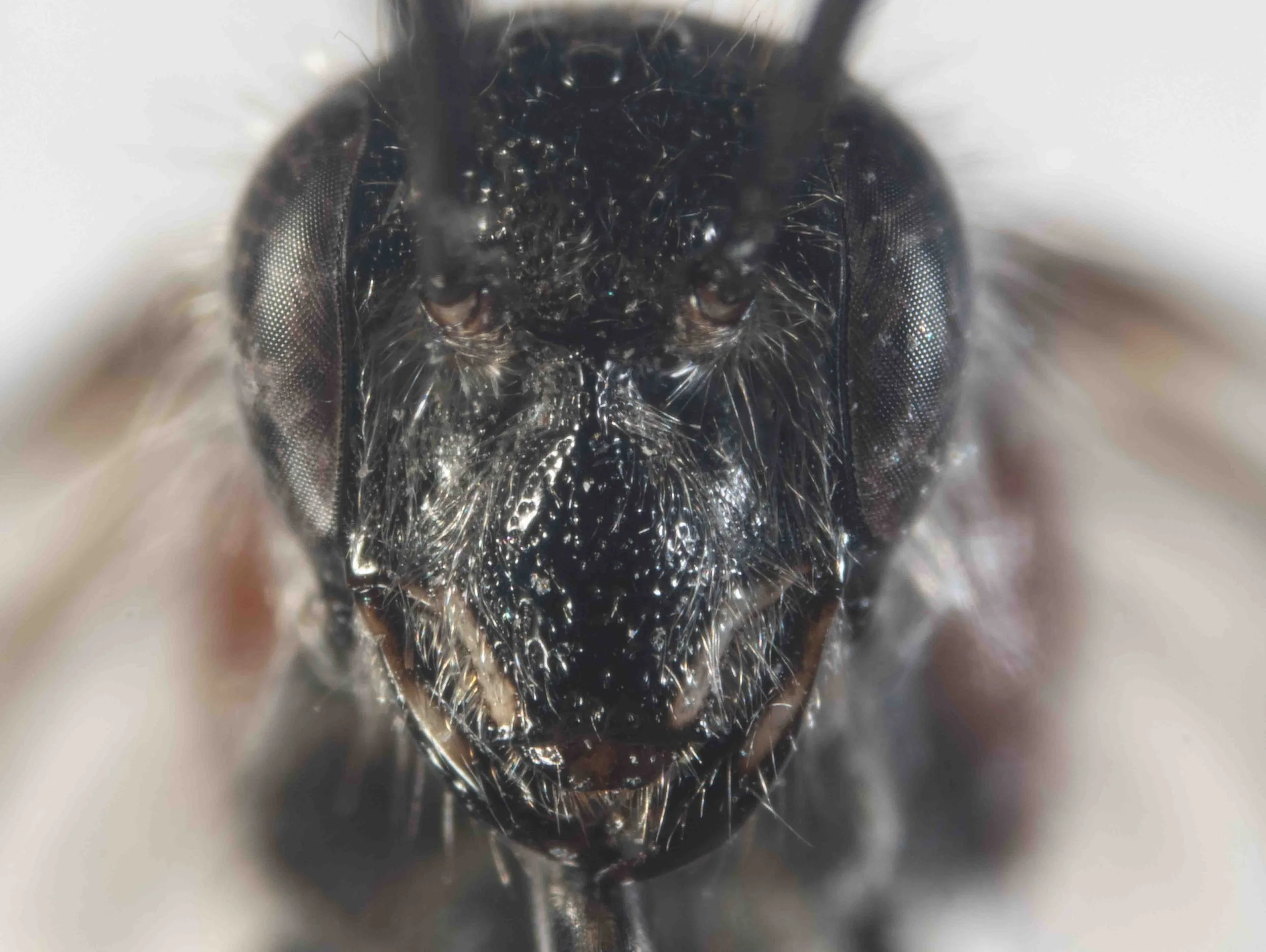
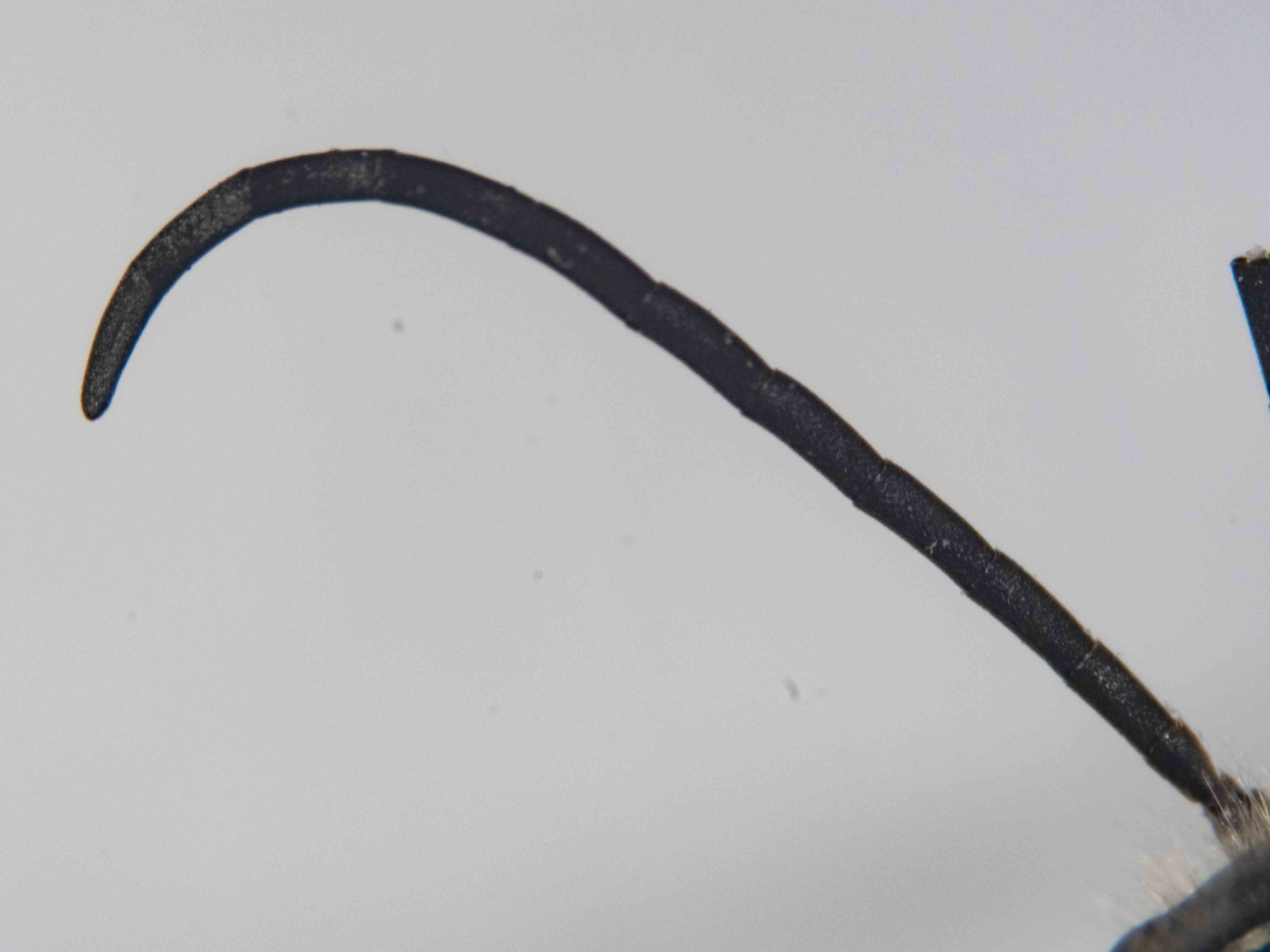
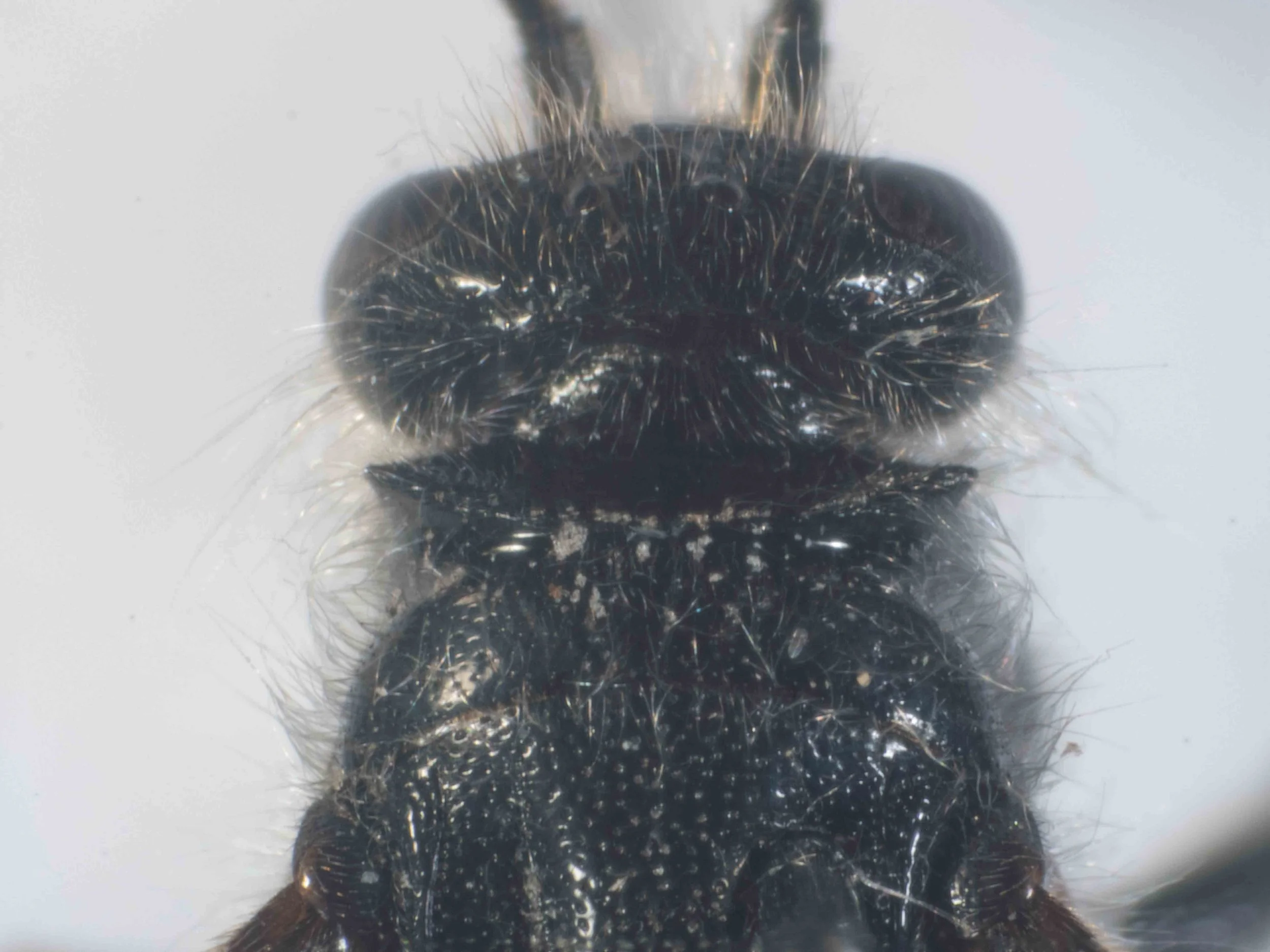
The following is my justification for excluding other options among the Thynnidae and Tiphiidae.
Thynninae: Thynnini
Family THYNNIDAE, based on:
3 submarginal cells & frons produced above antennal sockets (so not Tiphiidae: Tiphiinae)
Subfamily THYNNINAE, based on:
frons produced above antennal sockets (so NOT Anthoboscinae)
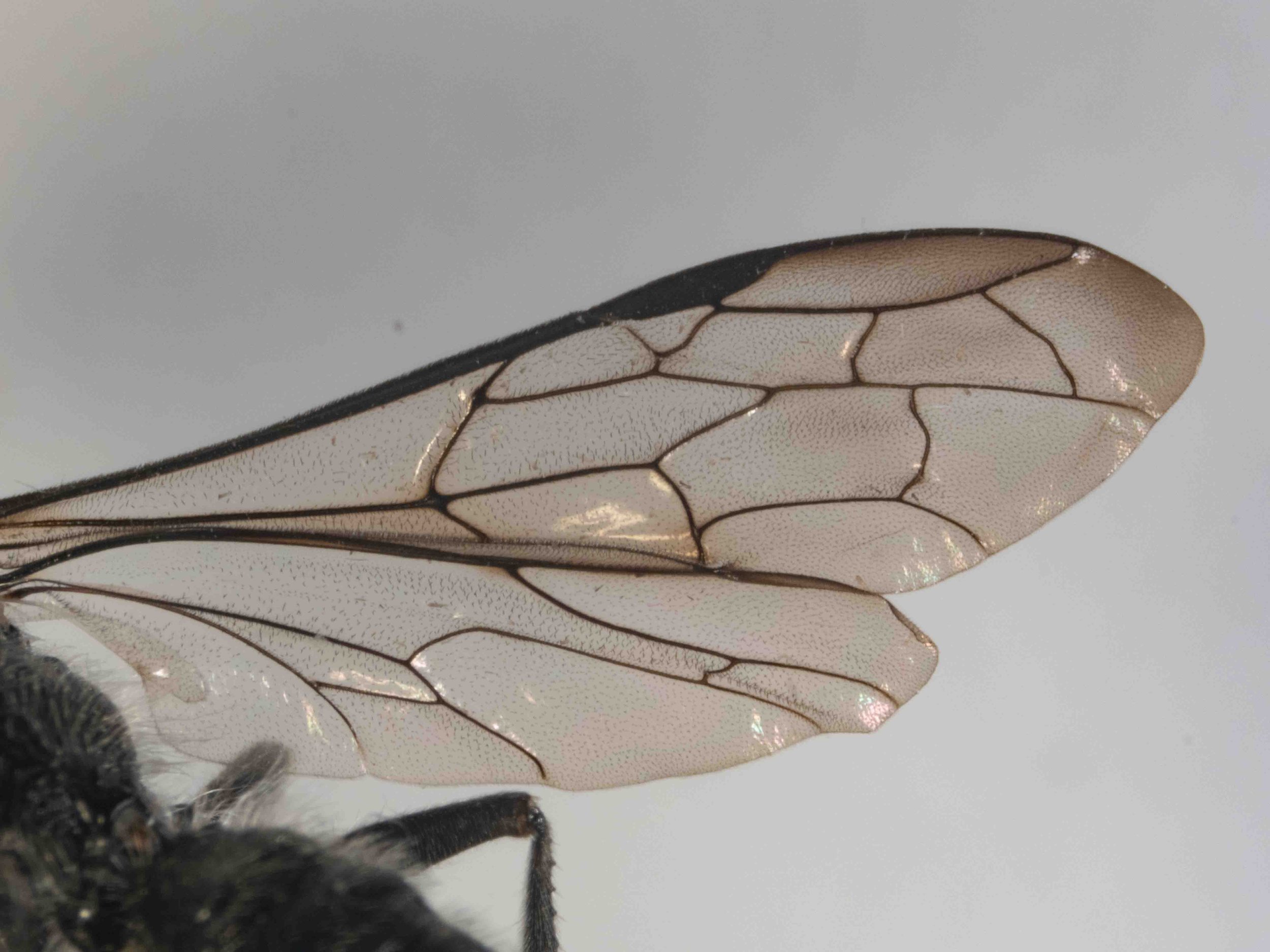
forewing with distinct 1r vein (so NOT Myzininae)
forewing with 2m-cu meeting SCIII (so NOT Diamminae)
Tribe either Thynnini or Tachynomyini, based on:
forewing with distinct 1r vein (so NOT Iswaroidini)
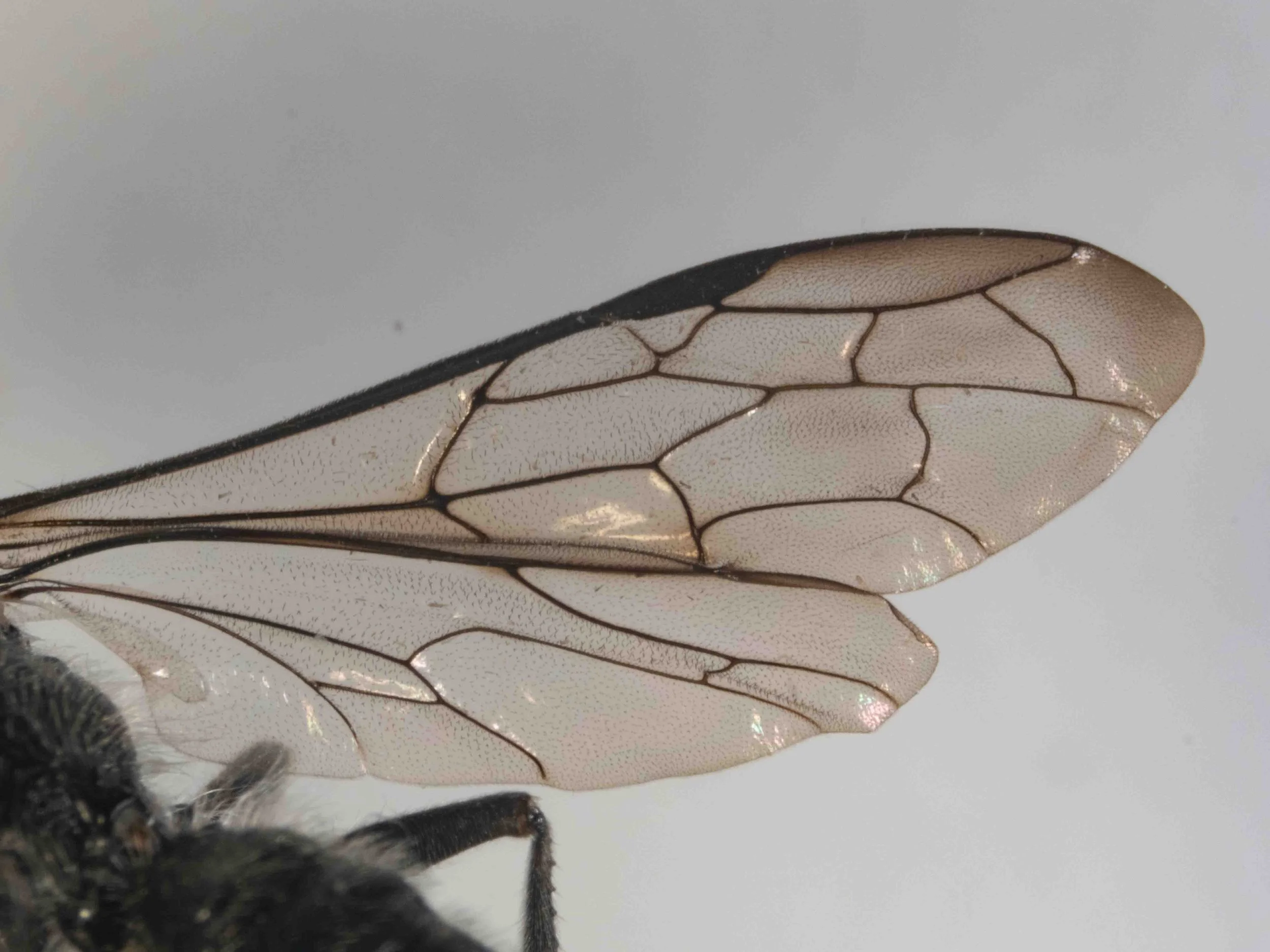
3rd interval of M distinctly shorter than 2nd (generally unlike Thynnini), although longer than half length of 2r-m (which is consistent with Thynnini)
3rd interval of M longer than half length of 2r-m (so NOT Iswaroidini, Agriomyini)
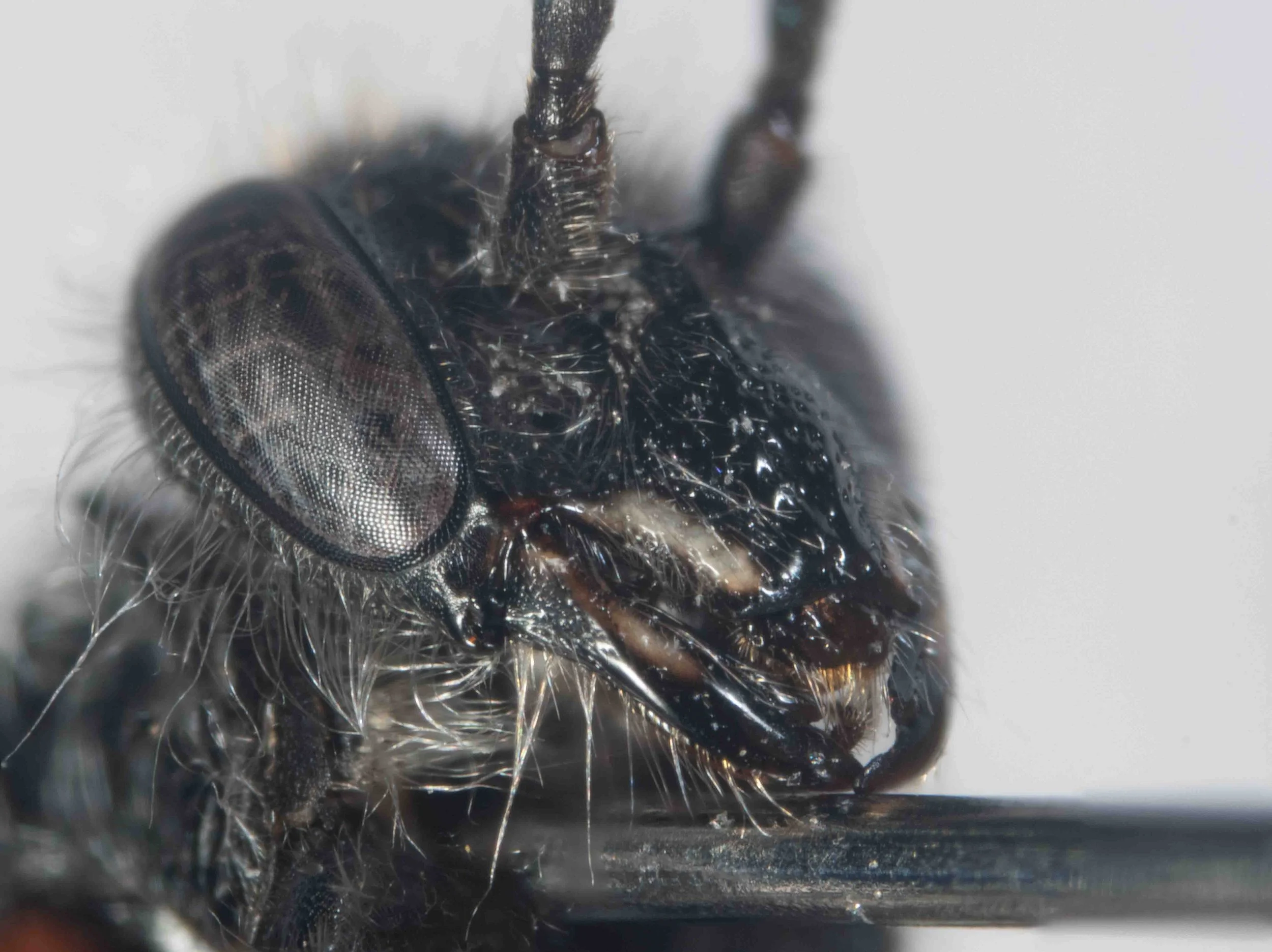
clypeus broadly truncate (unlike Iswaroidini, Agriomyini)
clypeus without sagittal carina (trace present basally only) (so NOT Rhagigasterini)
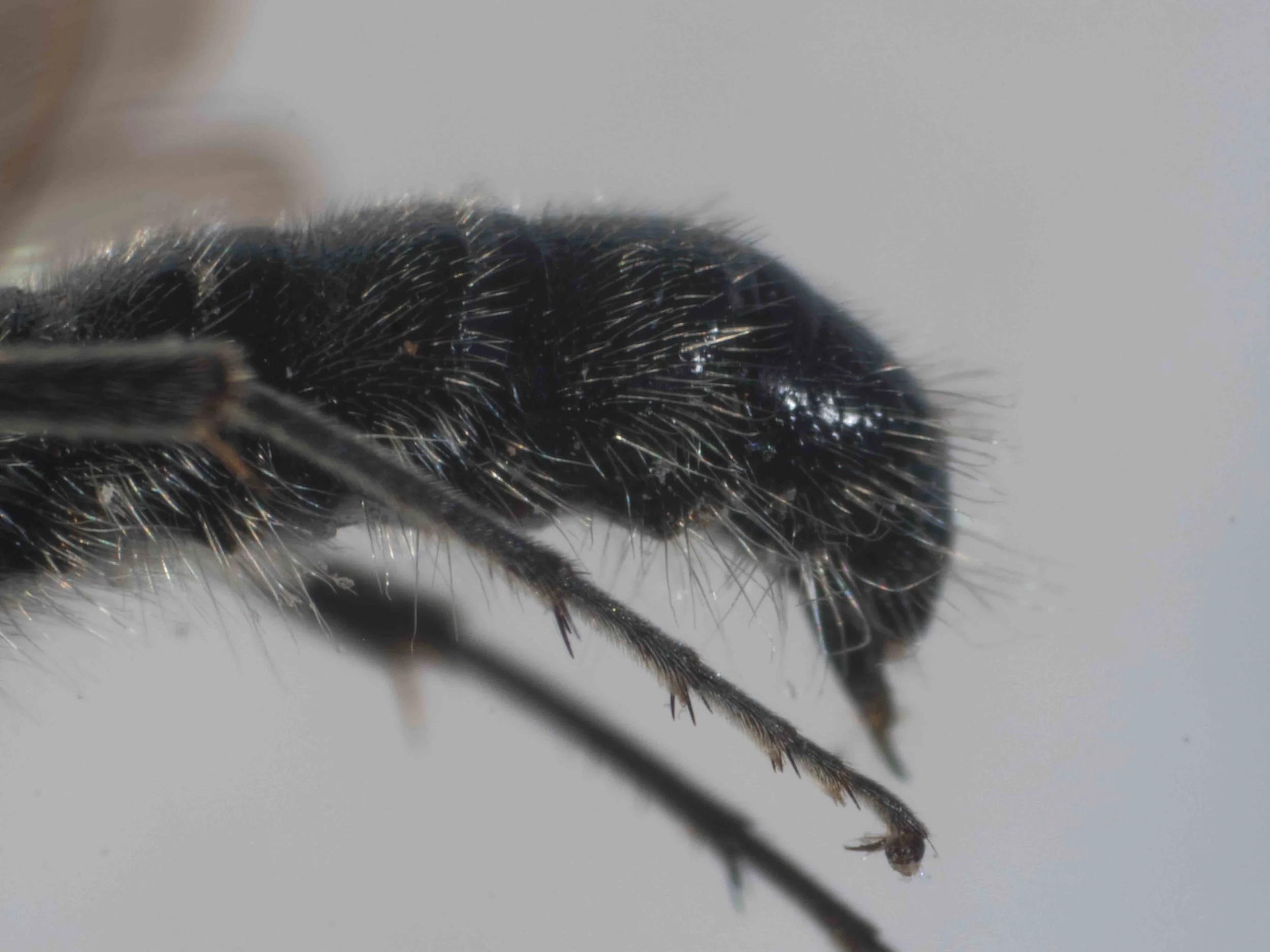
apical spine of hypopygium only weakly upturned (so NOT Rhagigasterini)
Working through genera for each of Thynnini and Tachynomyini, #052 was found to be a convincing match with Levothynnus (Thynnini).
References
Brown, G. 2025. Revision of the Australian Thynnidae and Tiphiidae (Hymenoptera). Zootaxa 5681 (1): 001-862 https://doi.org/10.11646/zootaxa.5681.1.1
This is a workbook page … a part of our website where we record the observations and references used in making species identifications. The notes will not necessarily be complete. They are a record for our own use, but we are happy to share this information with others.