
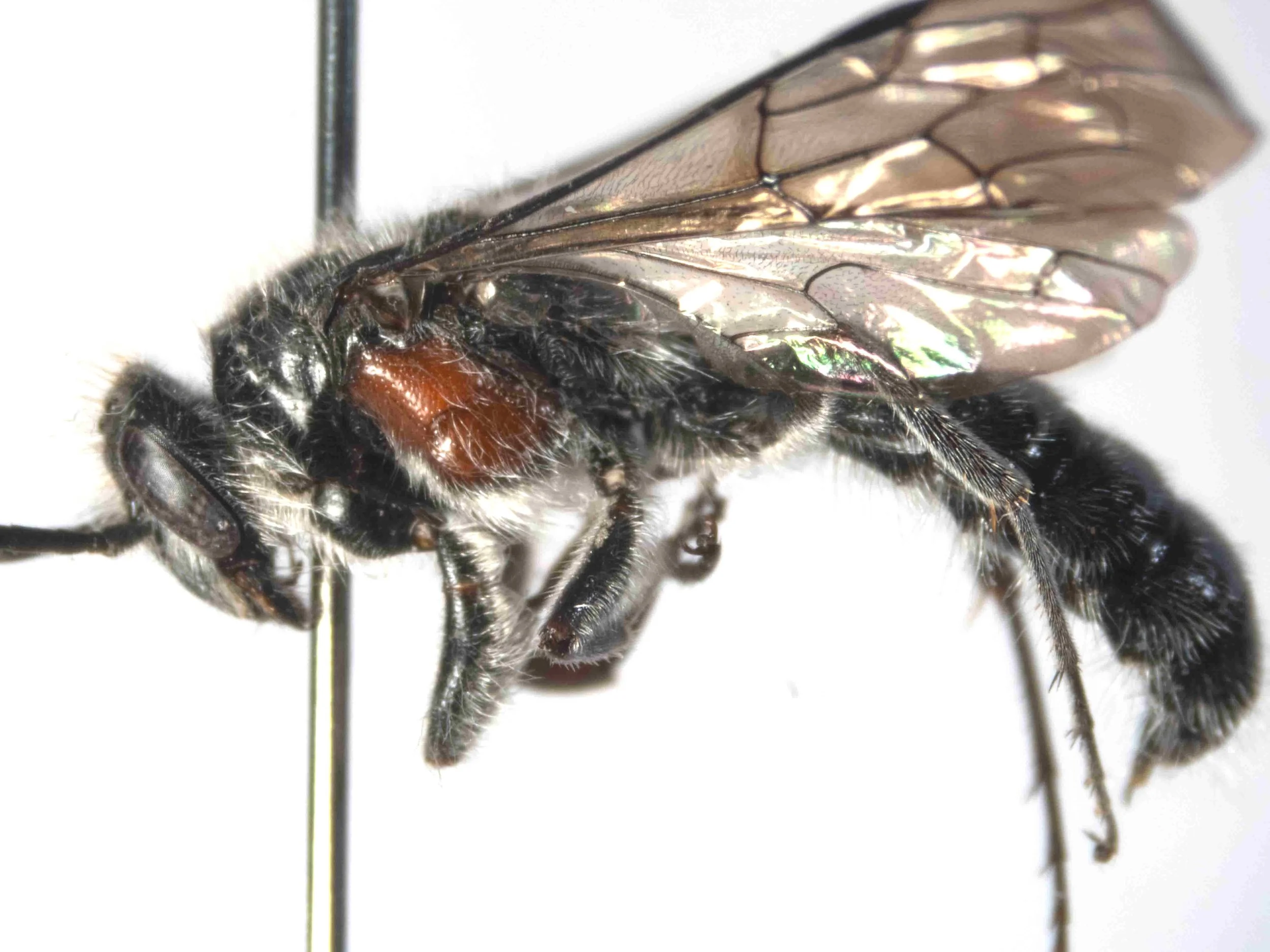
head-body length 12mm
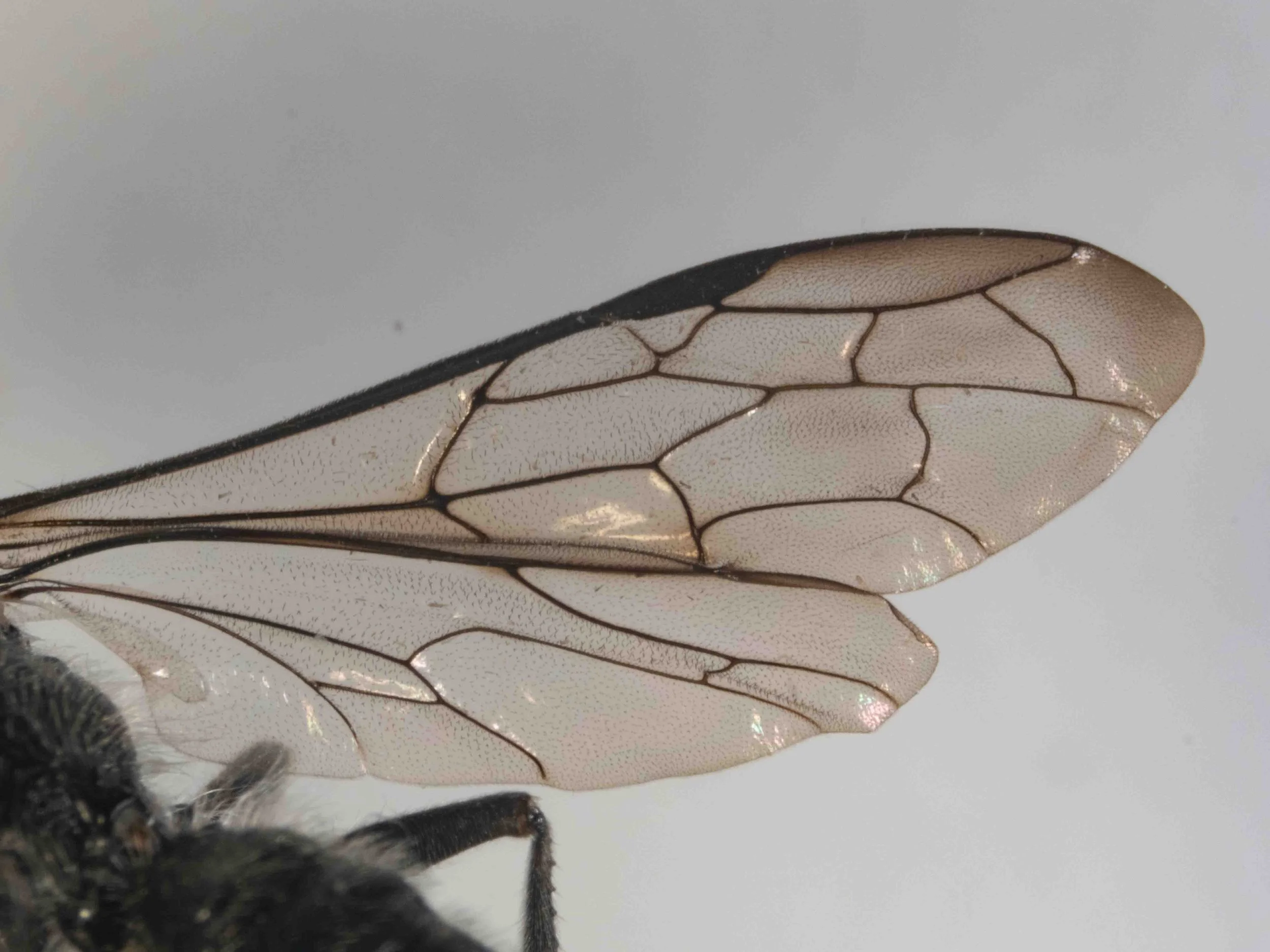
forewing
forewing with distinct 1r
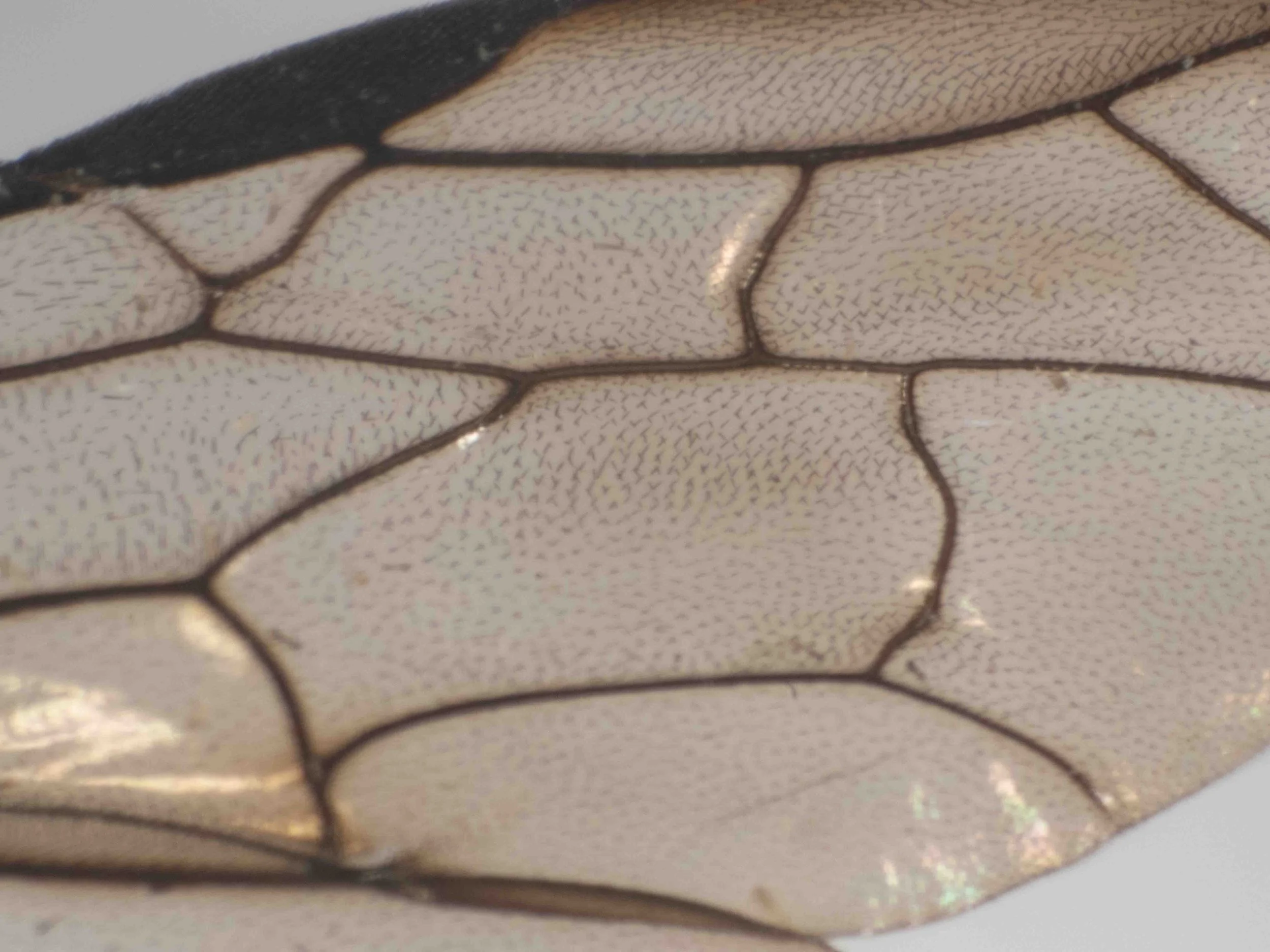
forewing (detail)
3rd interval of M distinctly shorter than 2nd, but longer than half length of 2r-m
(note: the genus description for Levothynnus describes the 2nd and 3rd intervals as ‘subequal’)
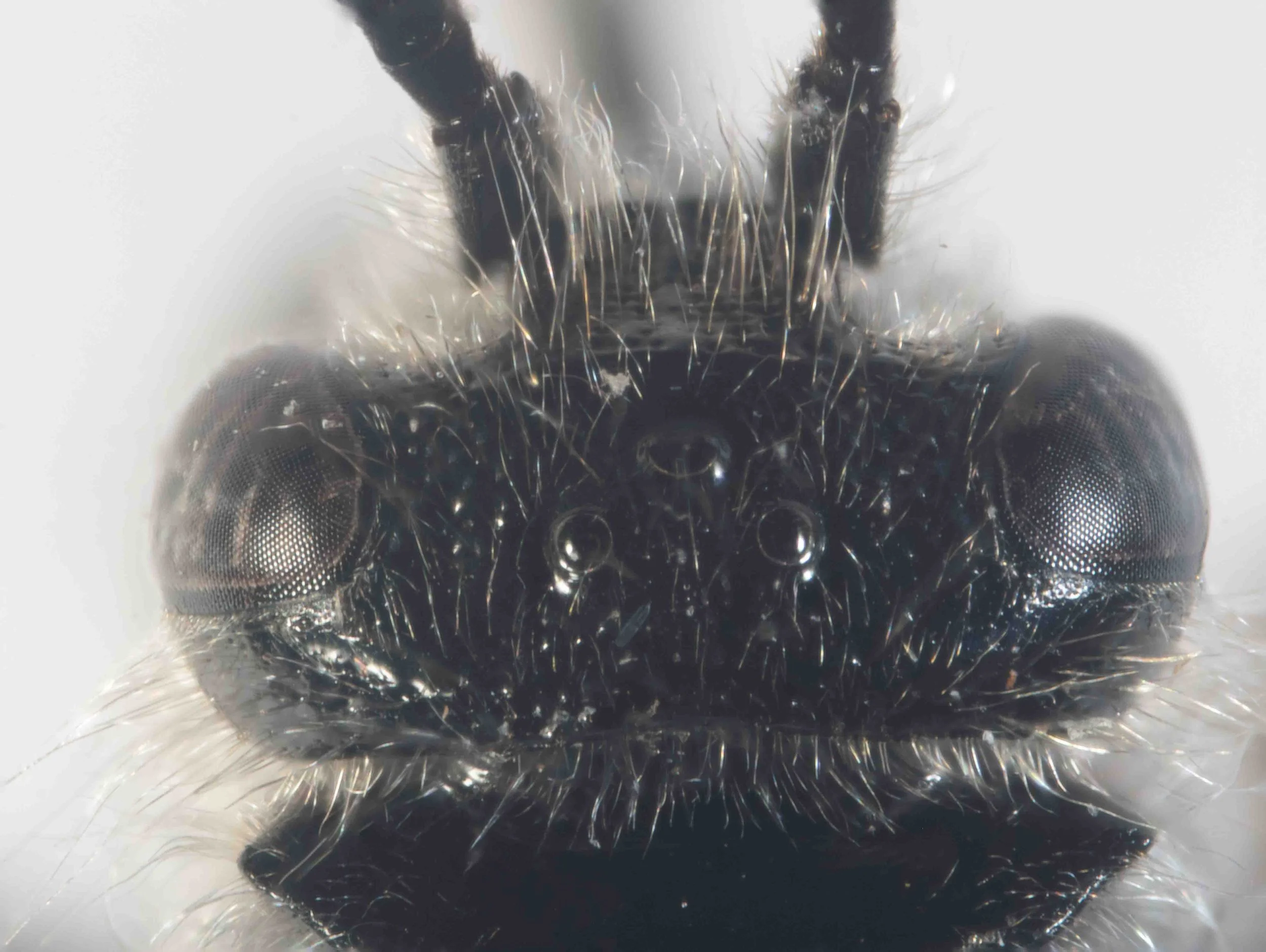
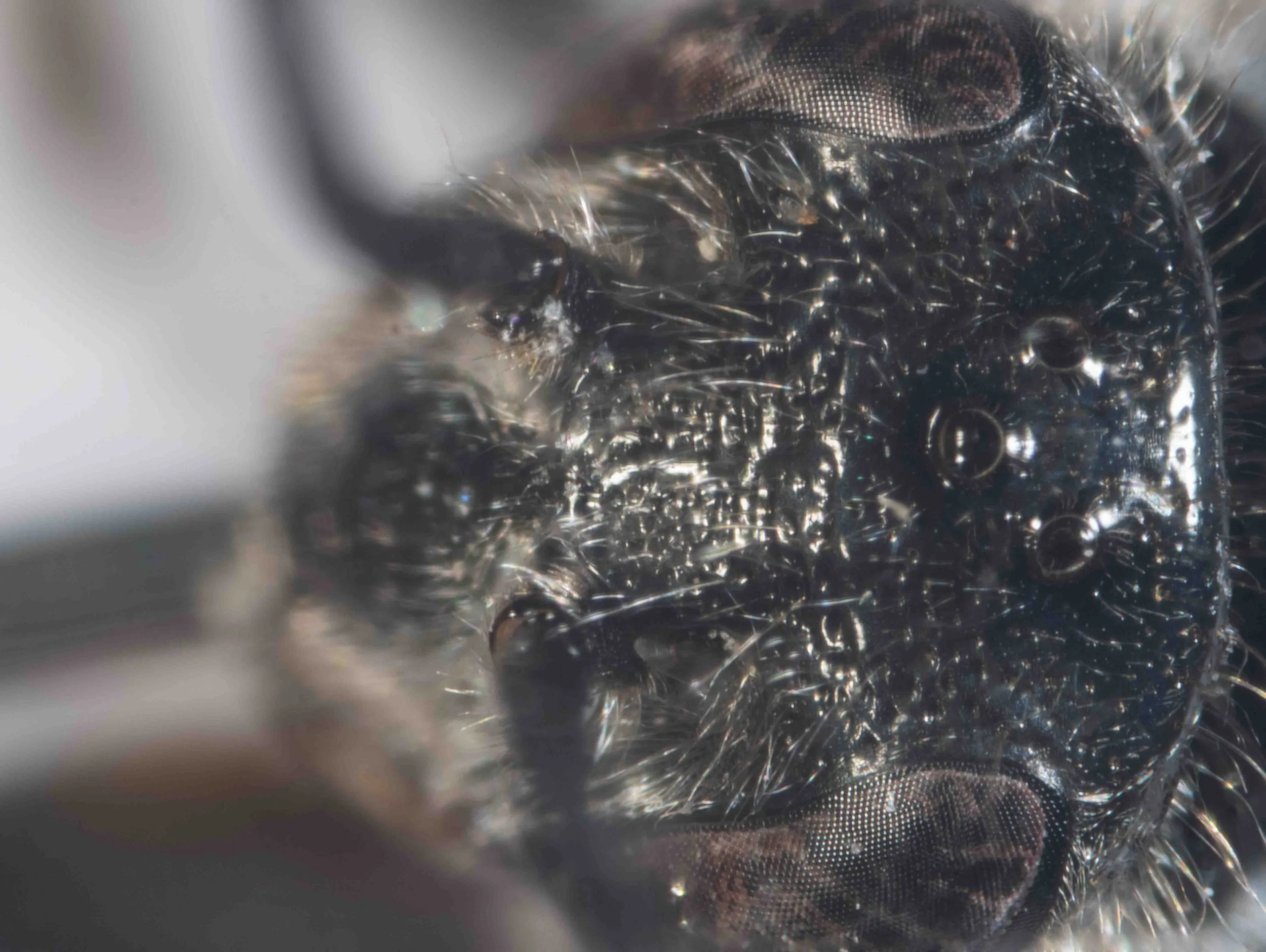
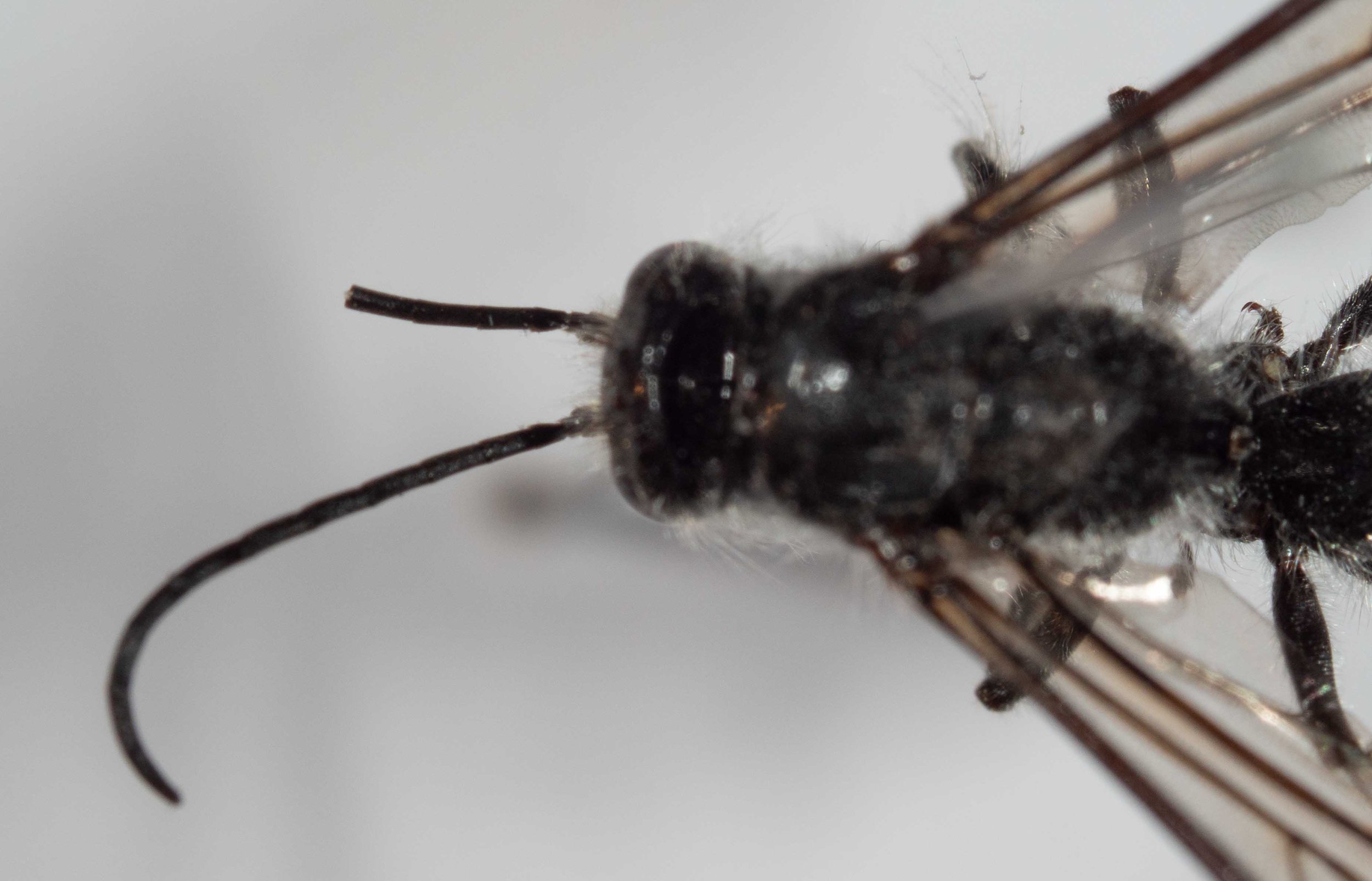
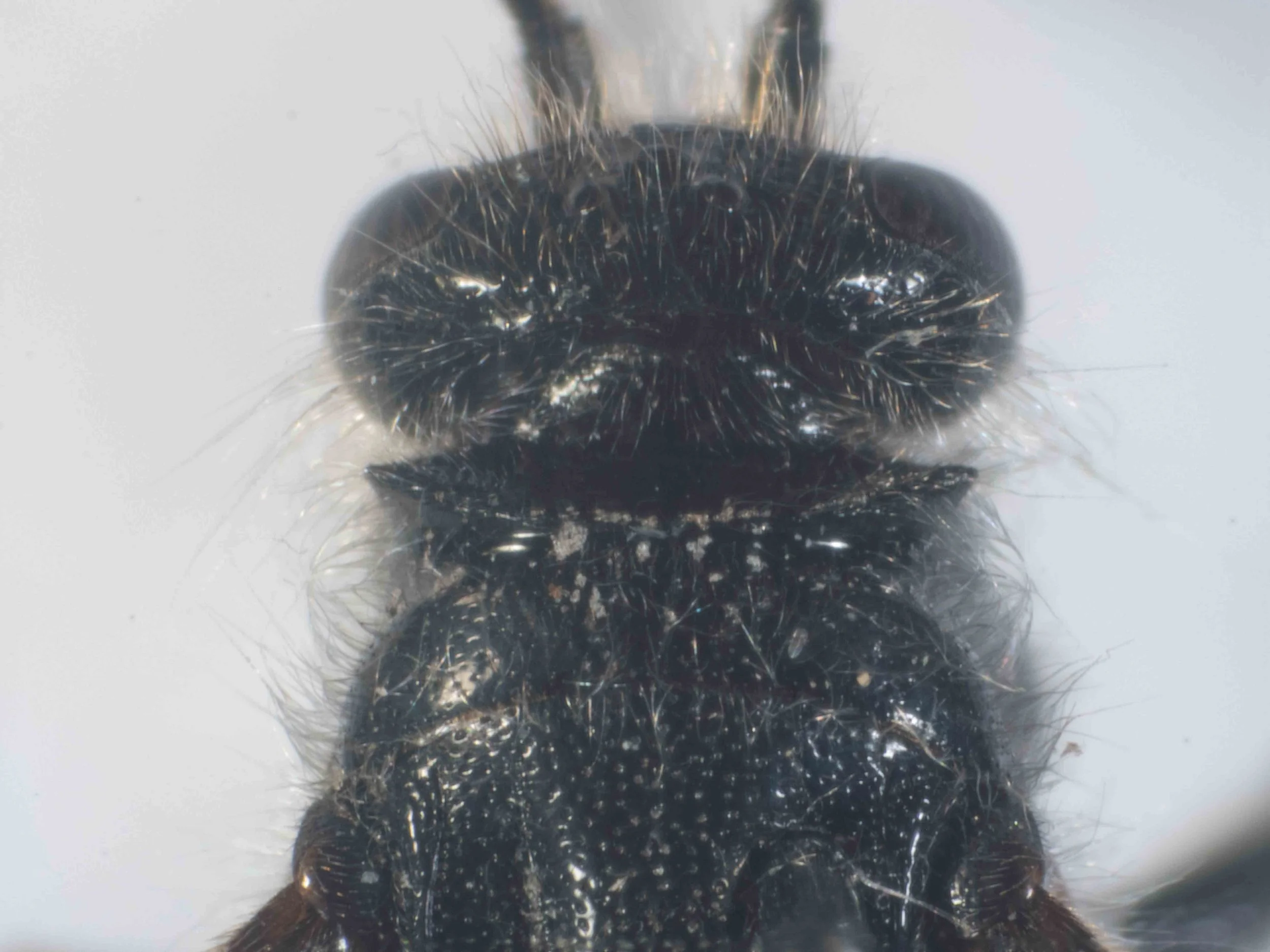
head (dorsal view)
antennal prominence strongly raised above rest of frons
antennal prominence (frontodorsal view)
antennal prominence delineated by transverse and lateral carinae (so U-shaped from this angle)
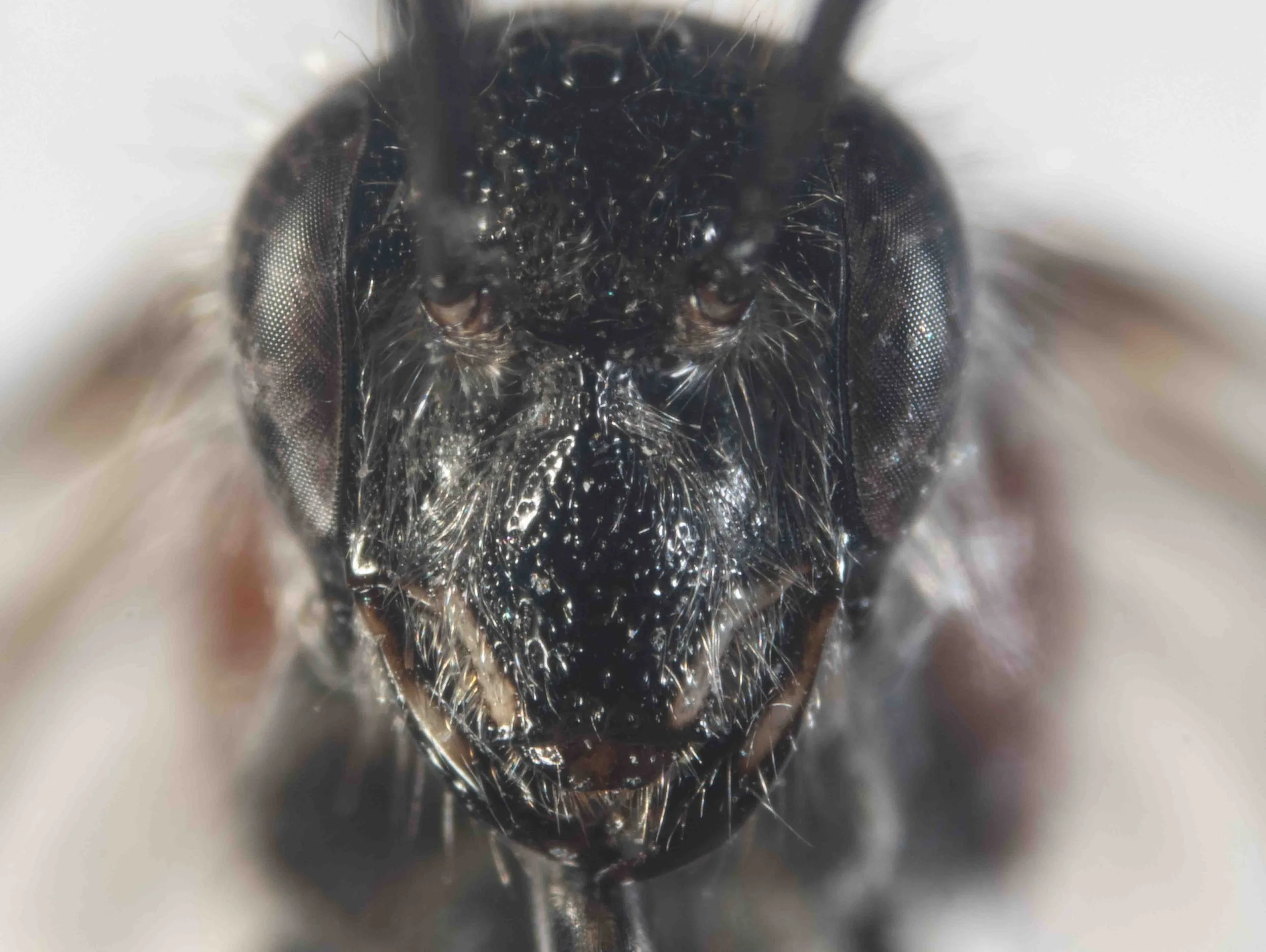
antennal prominence (frontal view)
antennal prominence with short, vertical carina below (so broadly Y shaped in frontal view)
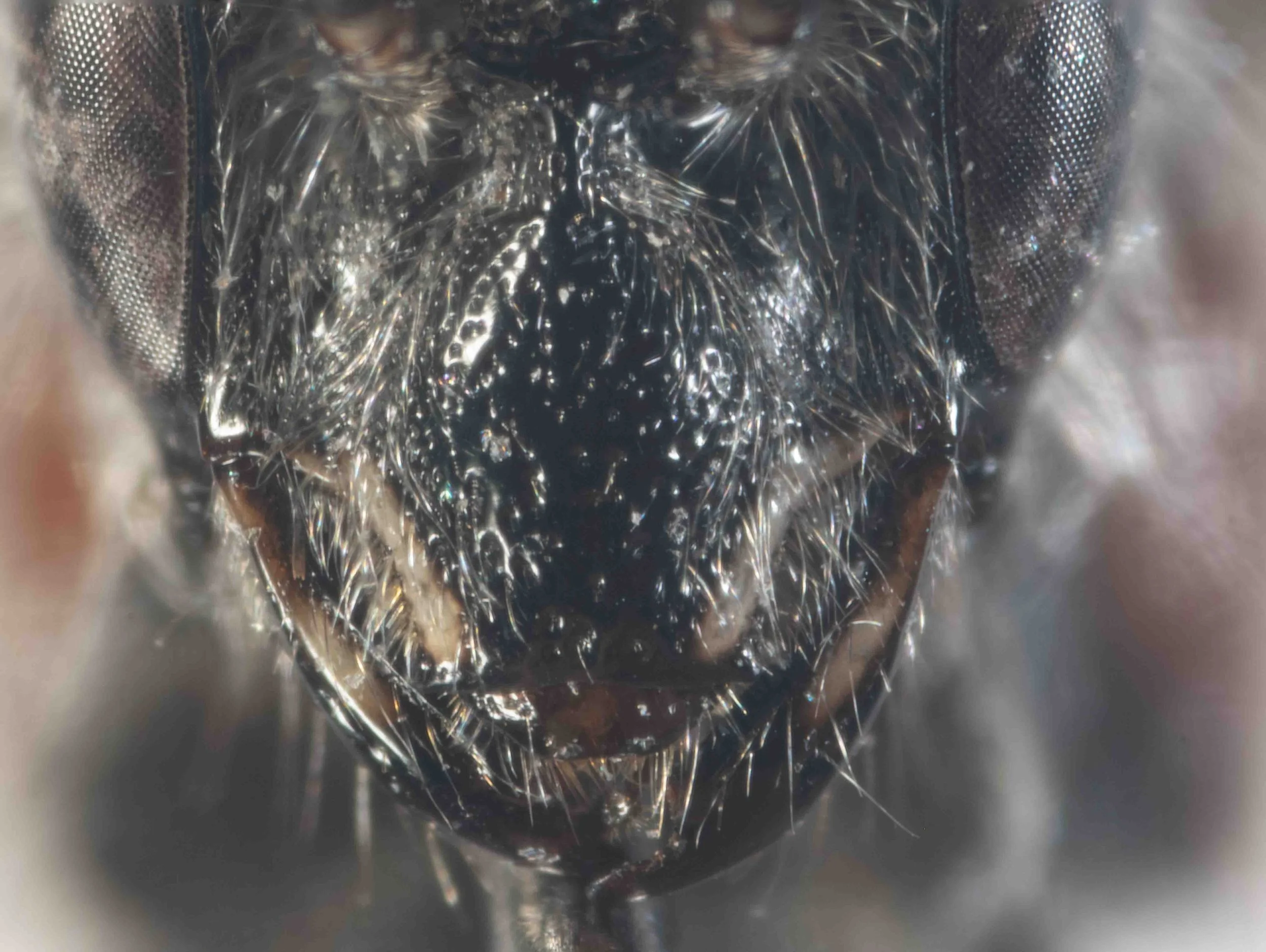
clypeus (frontal view)
clypeus long, broadly truncate apically, without sagittal carina
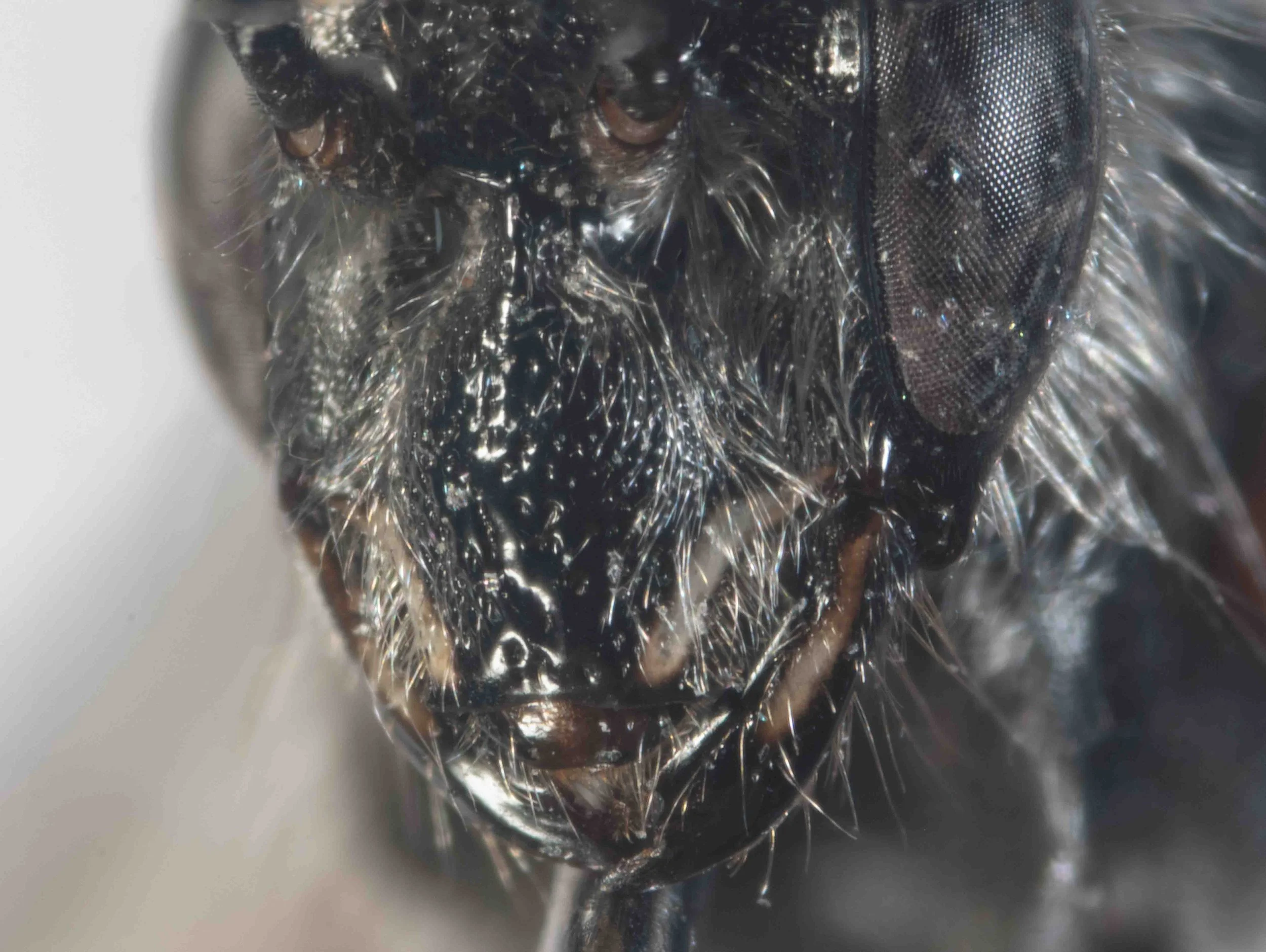
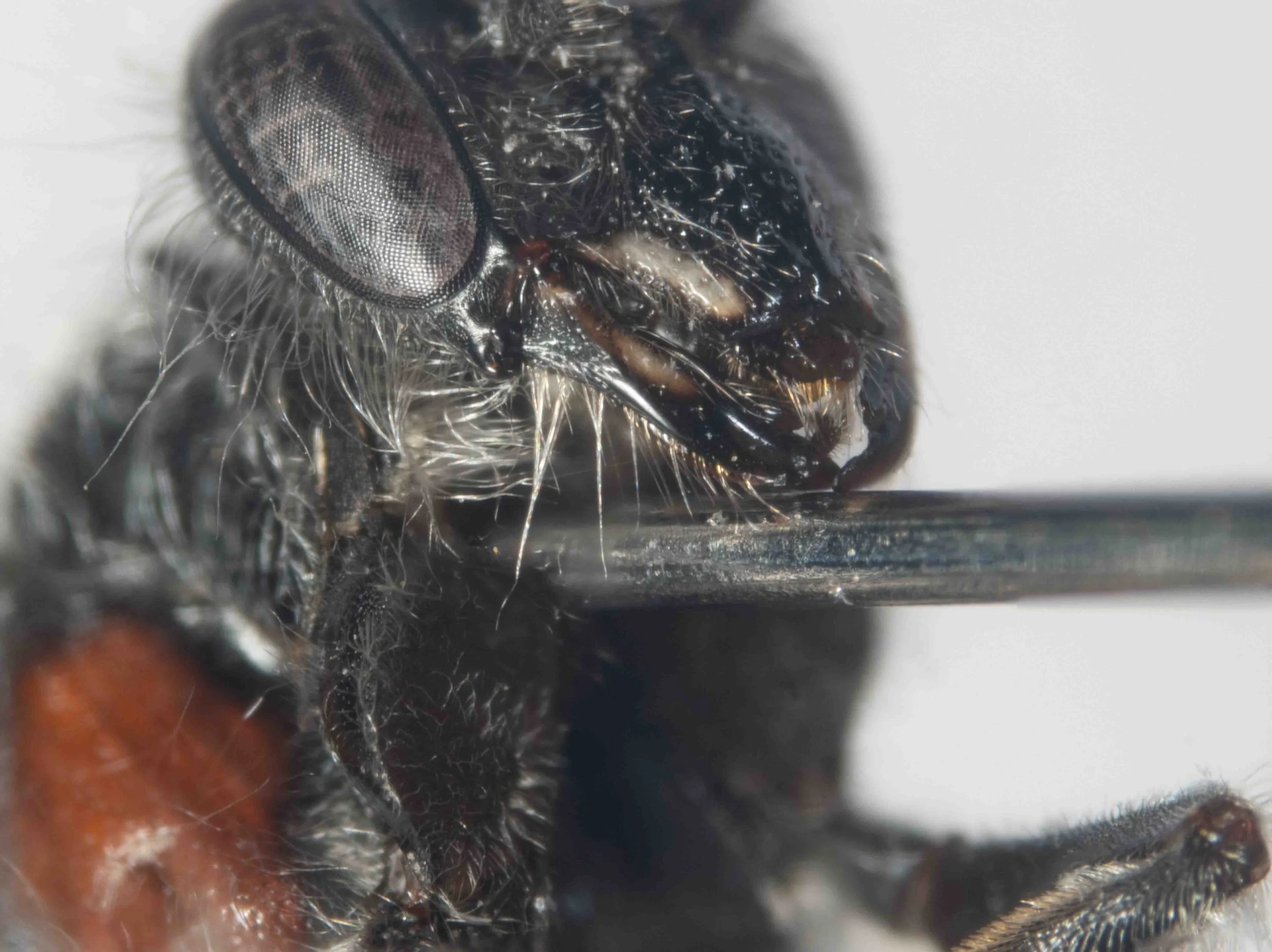
clypeus (frontolateral view)
clypeus long, moderately convex, without sagittal carina
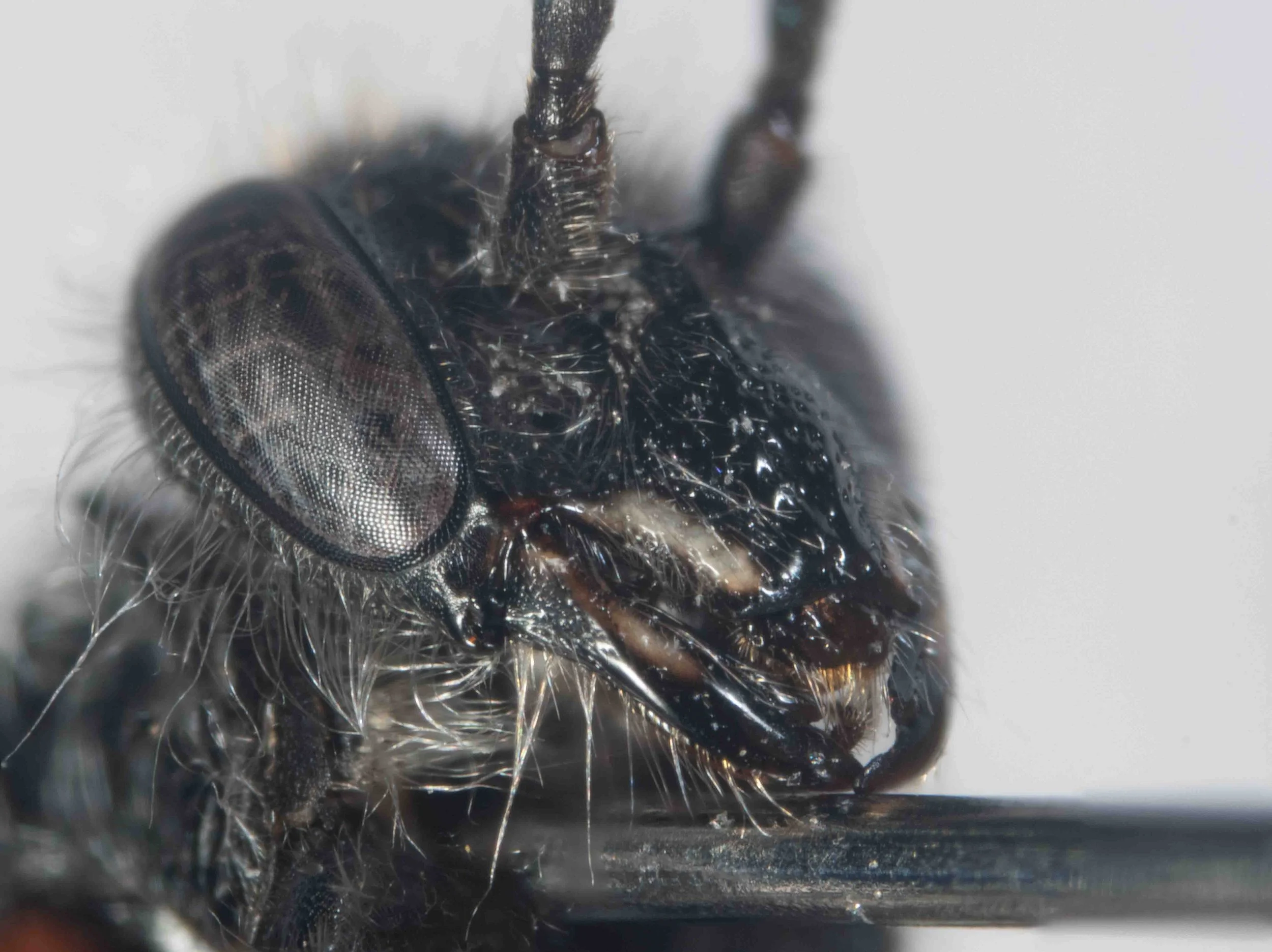
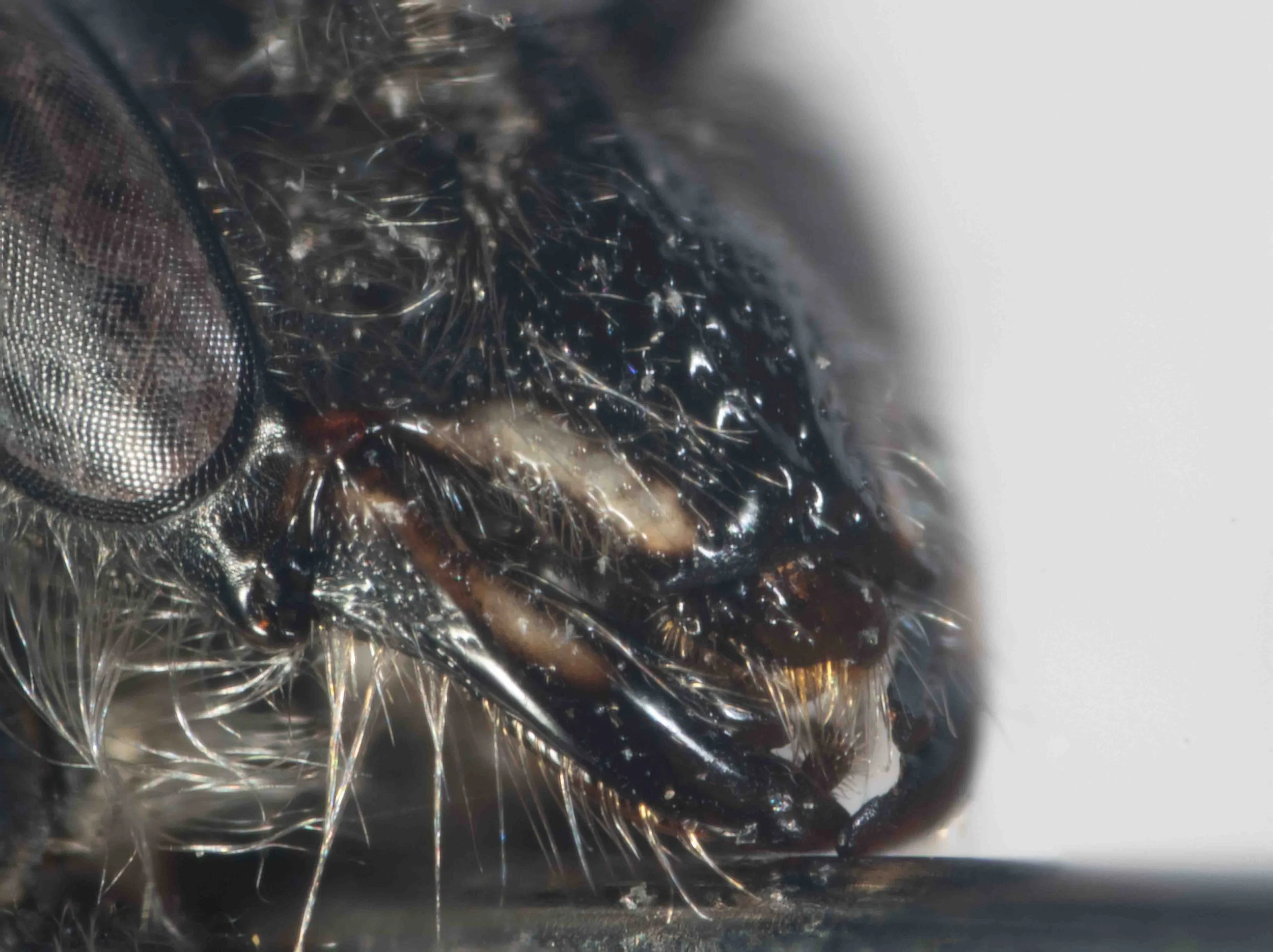
clypeus & labrum (anteroventral view)
clypeus: broadly truncate apically; black, with narrow pale stripes near lateral margins (but not extending across apical margin)
mandibles: black, with small pale marks not reaching either the base nor the apex
antennal length
antennae moderately long, reaching back to propodeum
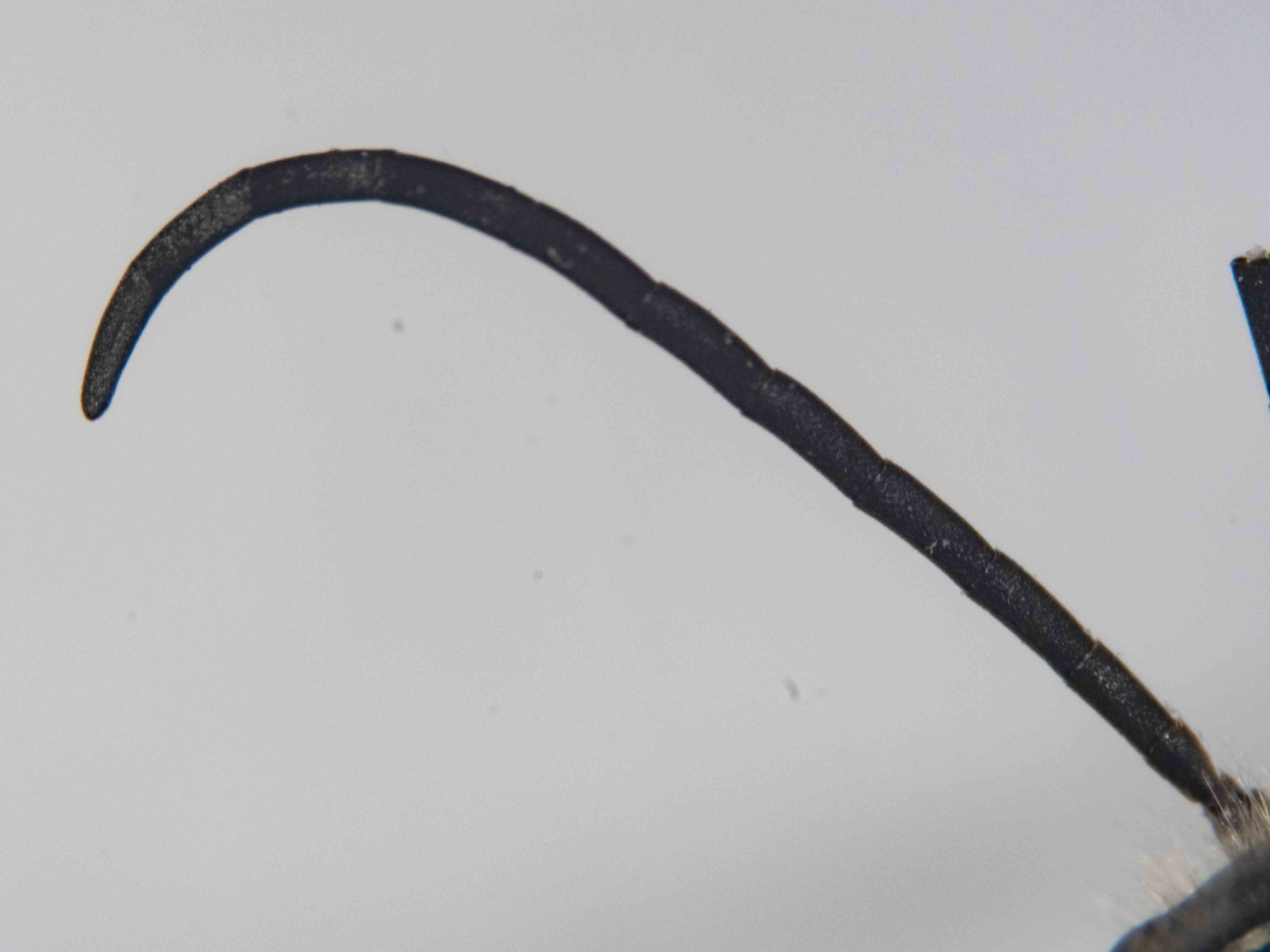
antenna
most antennal segments long, more than 2x longer than wide
pronotum (dorsal view)
pronotum: relatively long mid dorsally; slightly narrower than head; anterior margin slightly curved, sharply carinate, acutely produced laterally
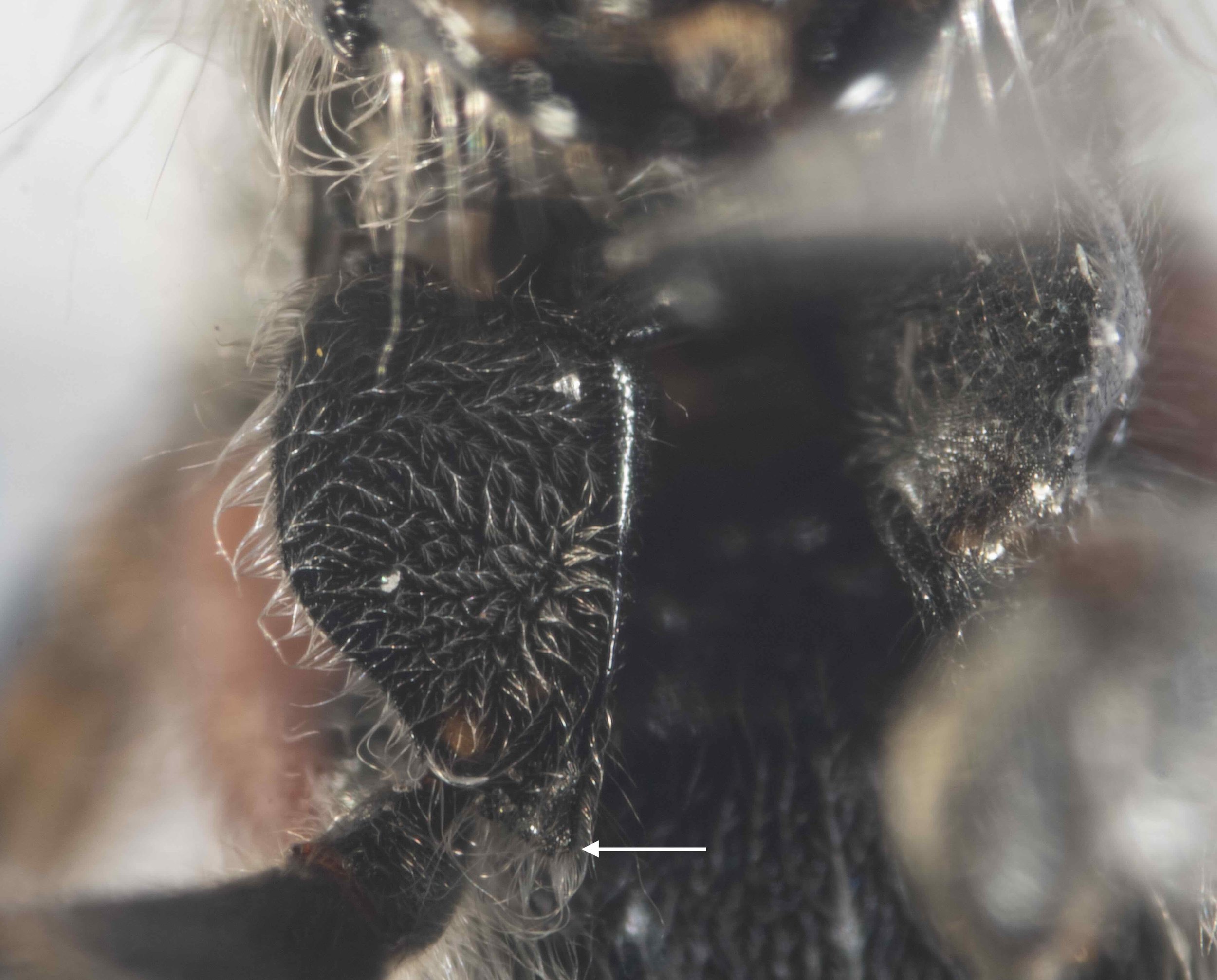
fore coxa (ventral view)
fore coxae flat, very slightly concave but without raised edges
apex rounded, with long, inner triangular process (arrow indicates tip of triangular process)
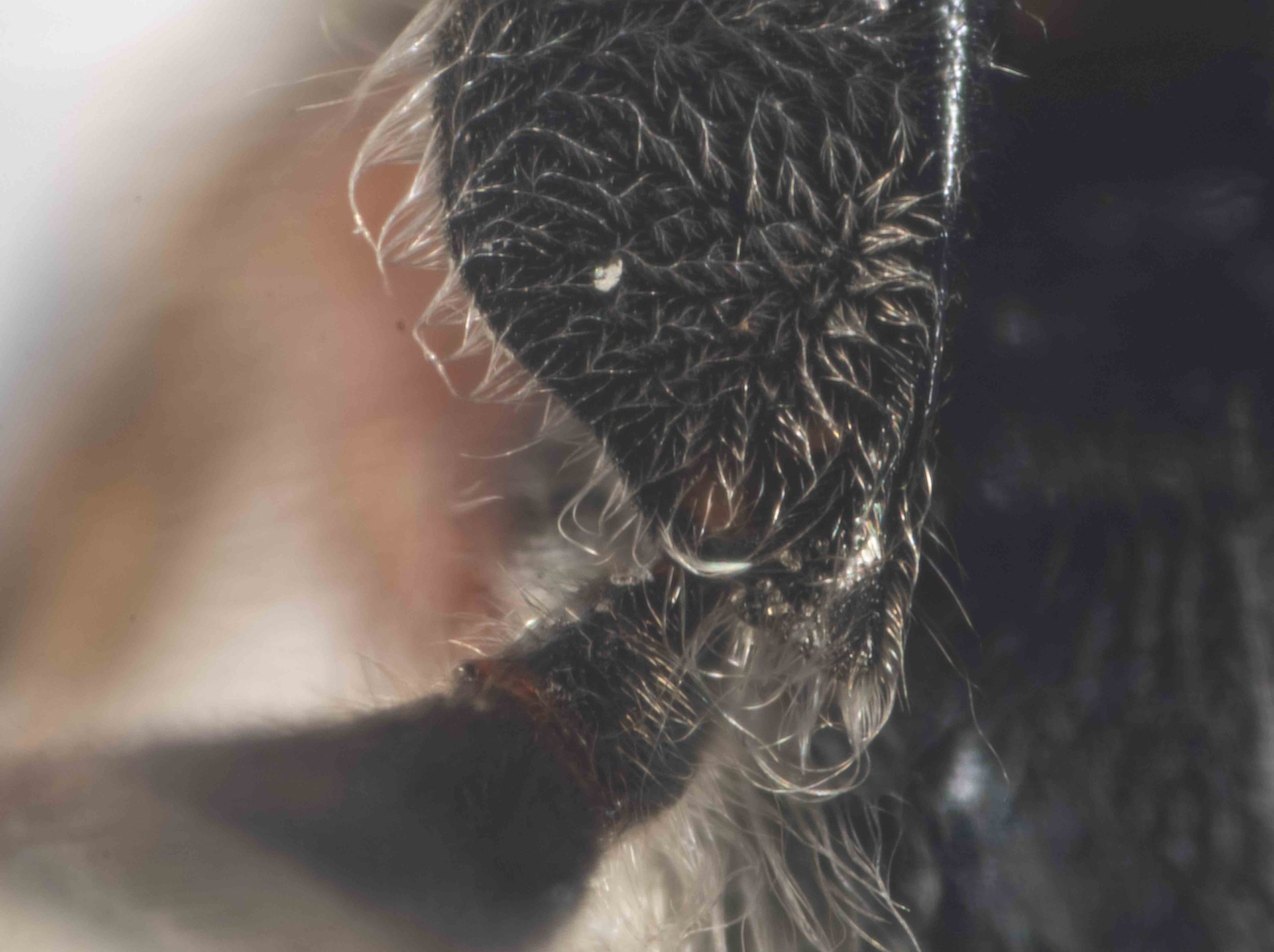
fore coxa (vental view)
apex rounded, with long, inner triangular process
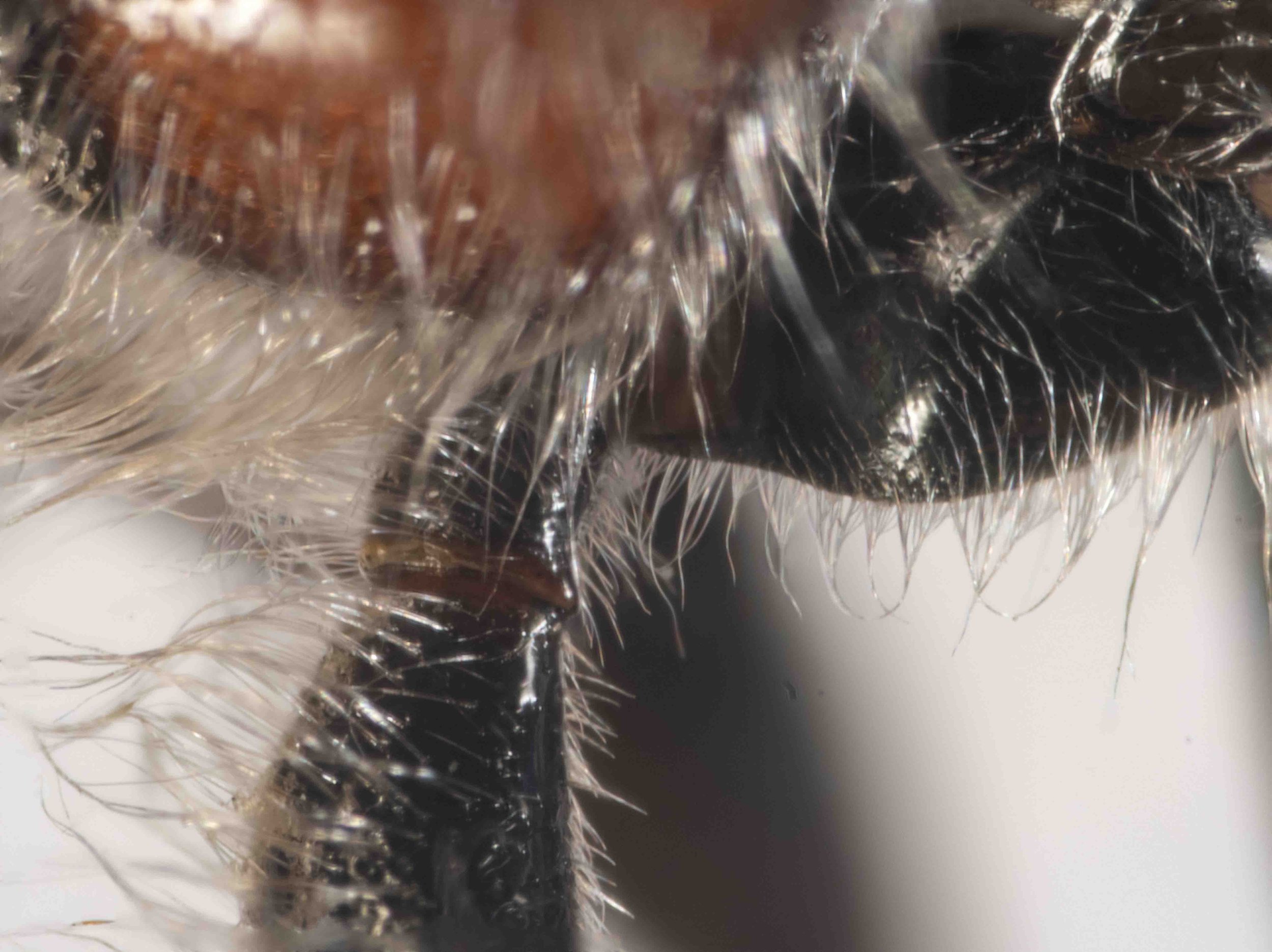
fore trochanter (lateral view)
without digitate, ventrolateral tubercle (see Key step 6)
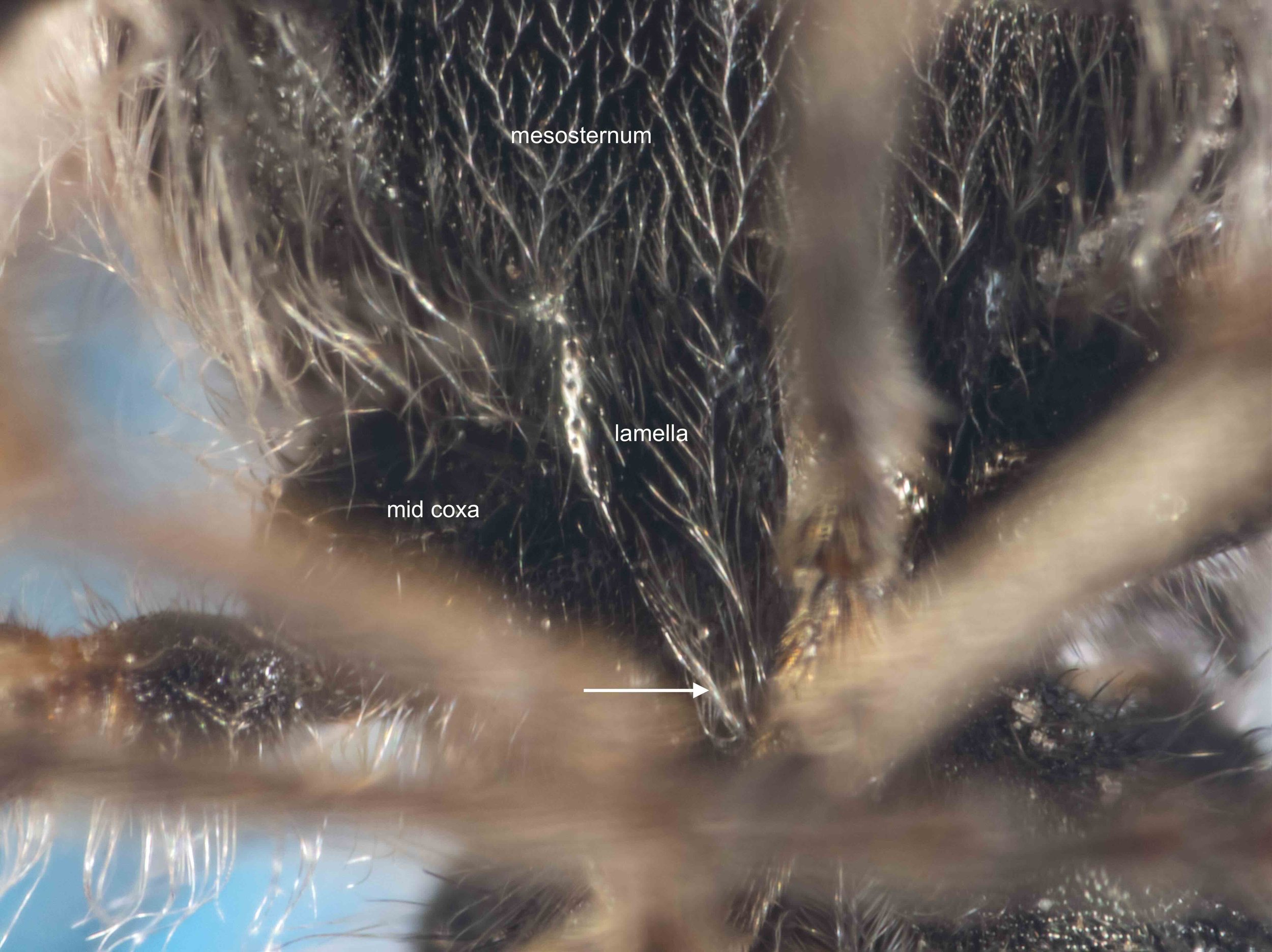
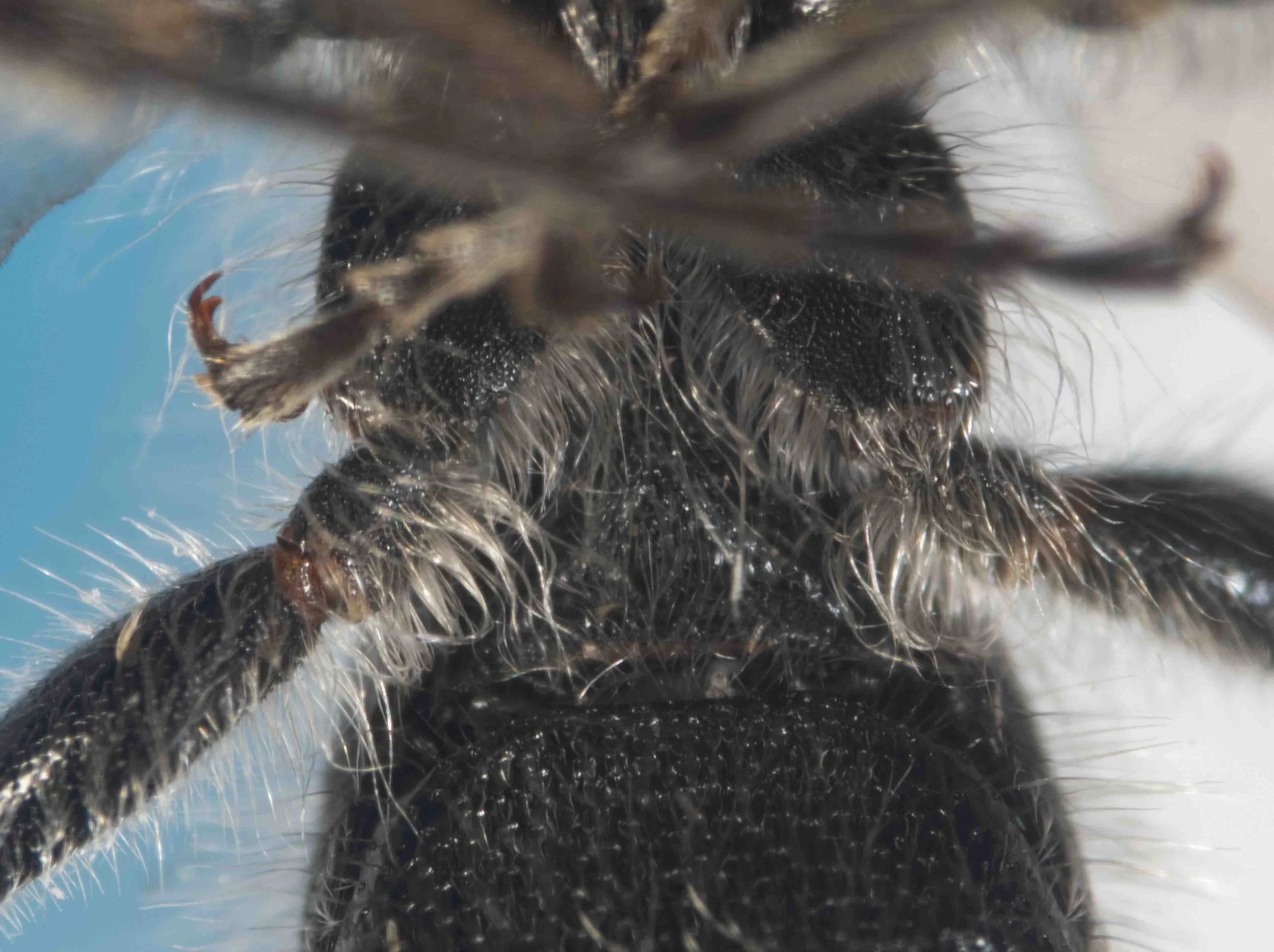
mesosternal lamella (ventral view)
mesosternal lamella long (arrow indicates posterior tip), completely covering base of mid coxa (see Key step 4)
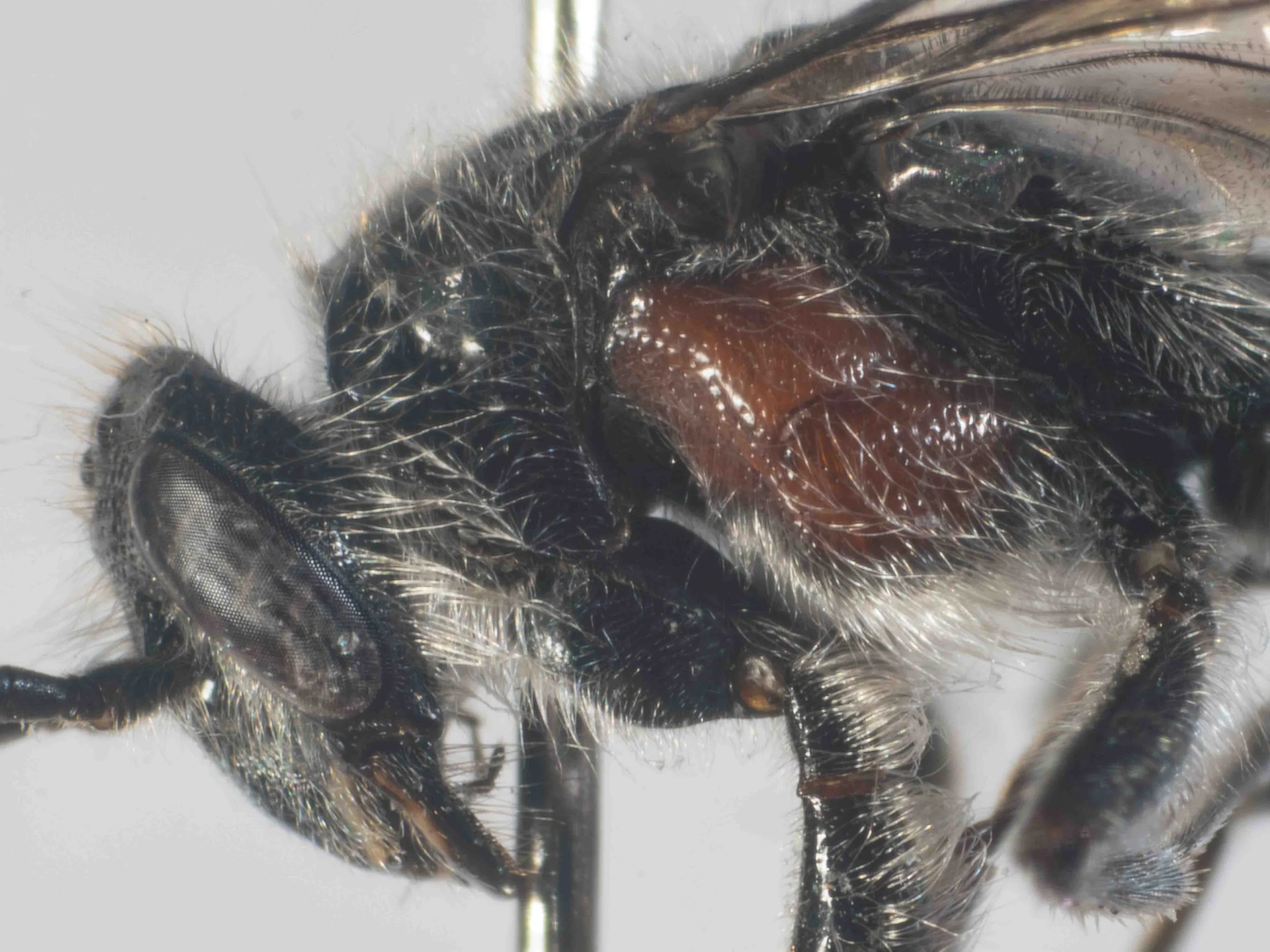
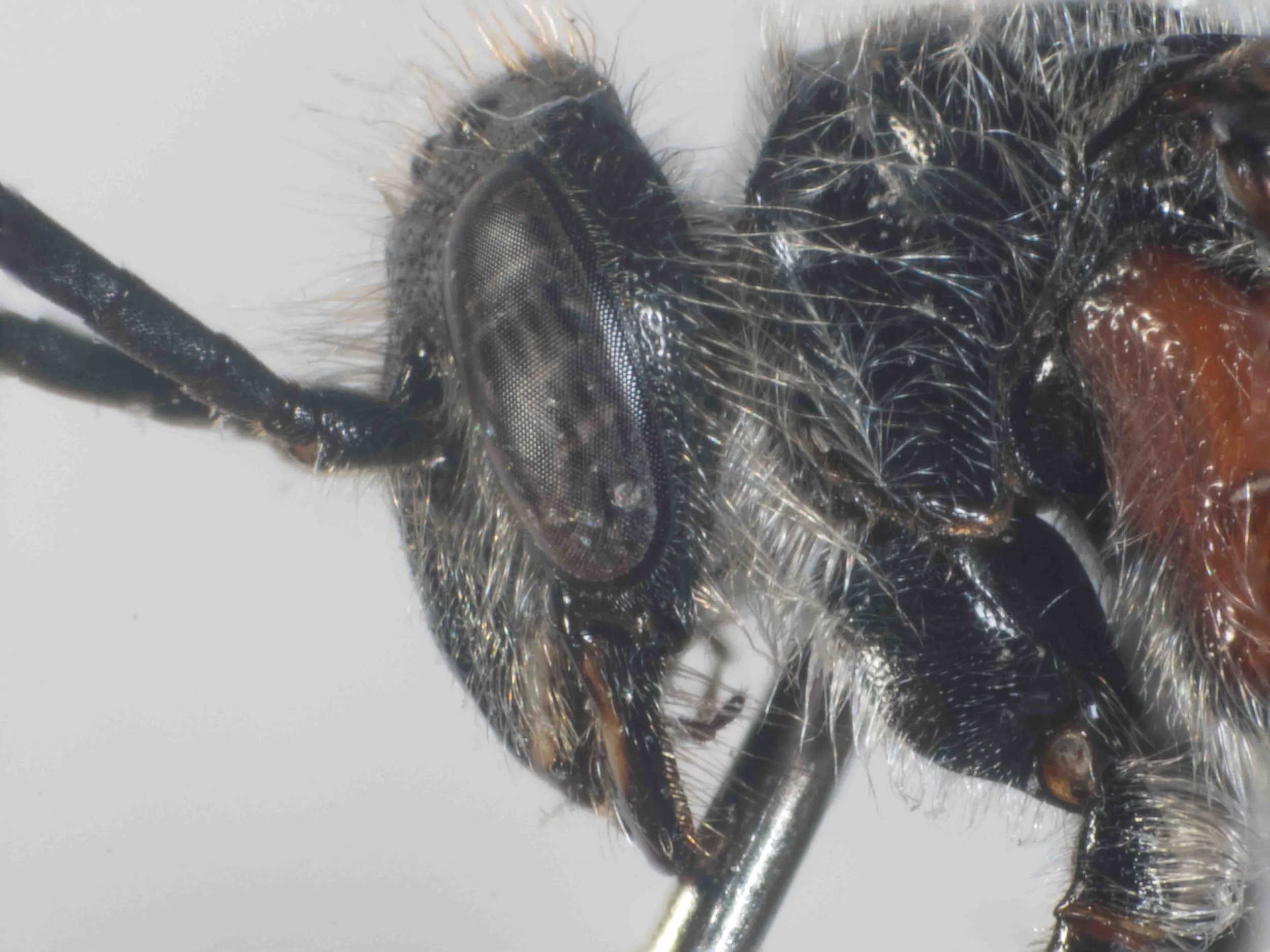
mesopleuron (lateral view)
mesopleuron extensively red, with long broad scrobal groove
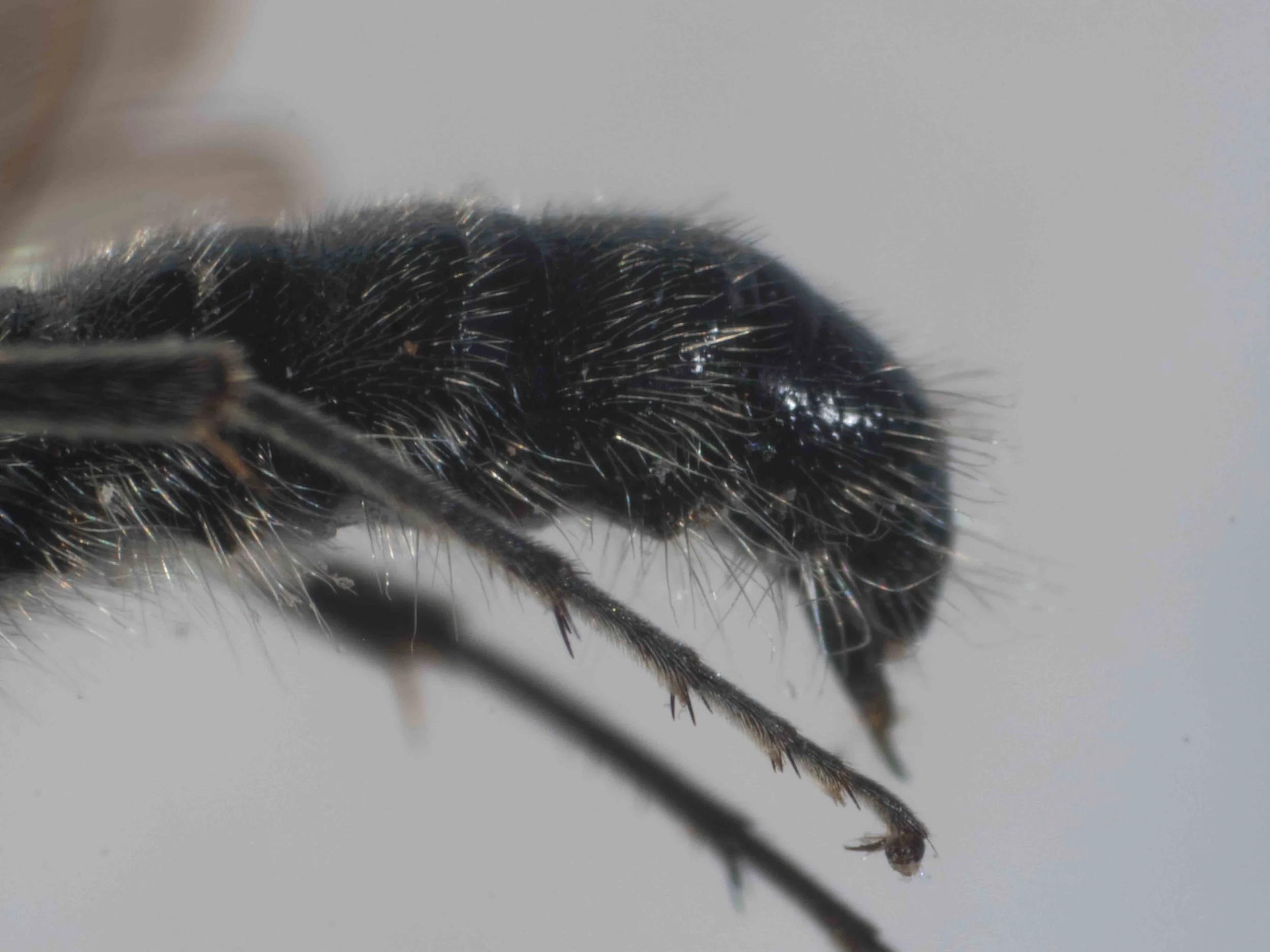
posterior metasoma (lateral view)
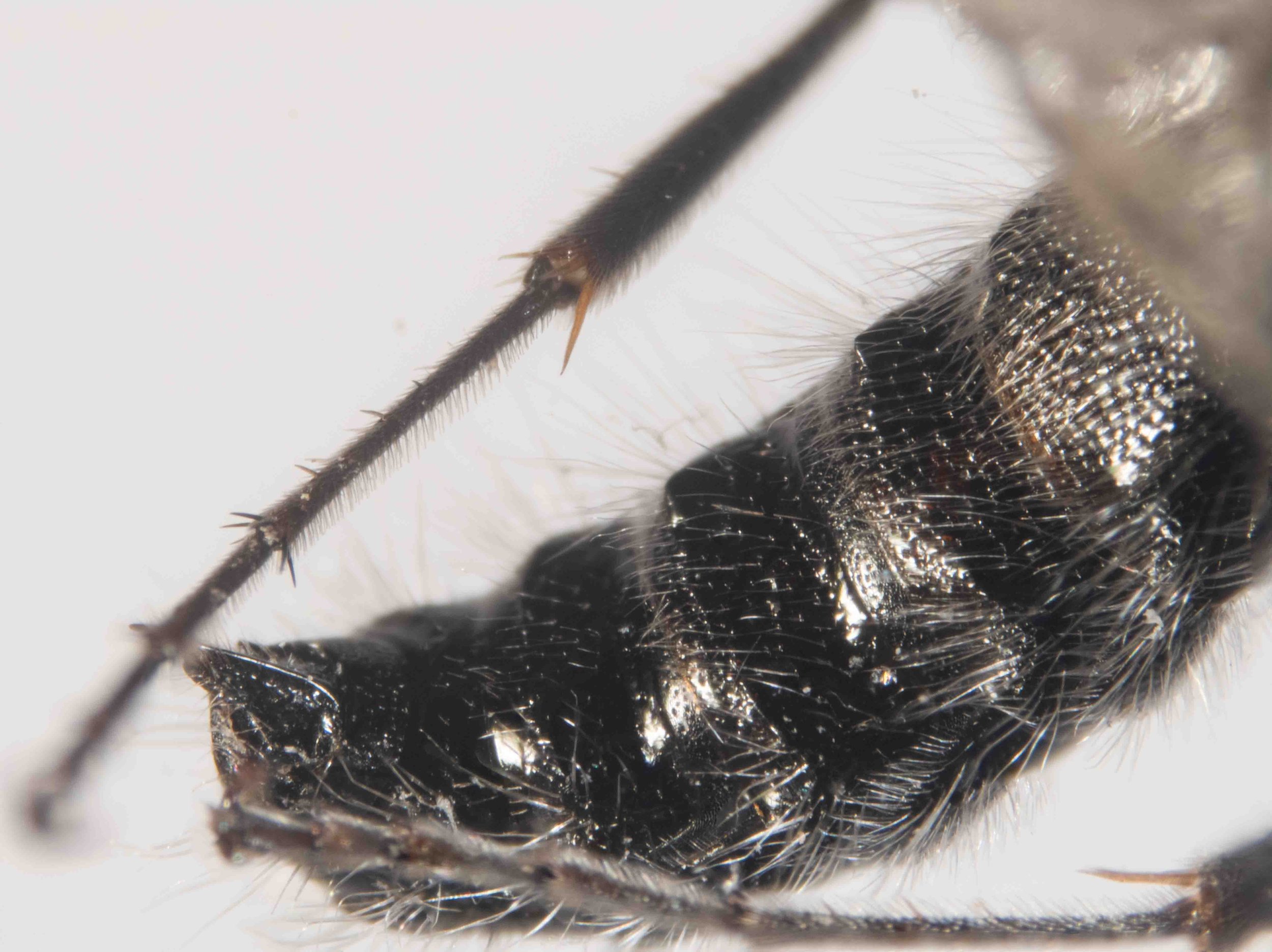
metasoma (ventrolateral view)
S3-S5 with raised oblique area
sternites not spinose
S1 (ventral view)
S1 longitudinally medially raised but not carinate or tuberculate
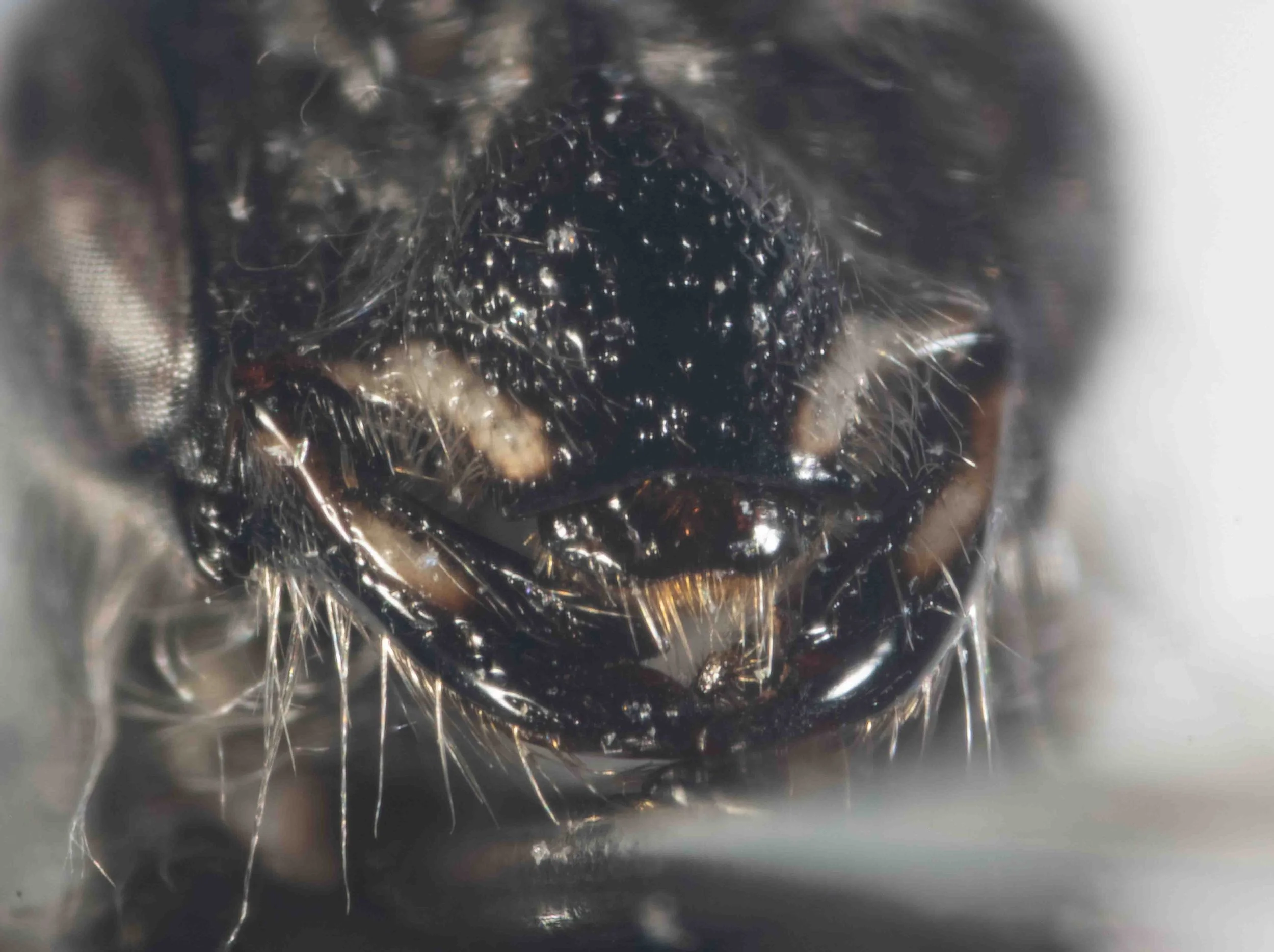
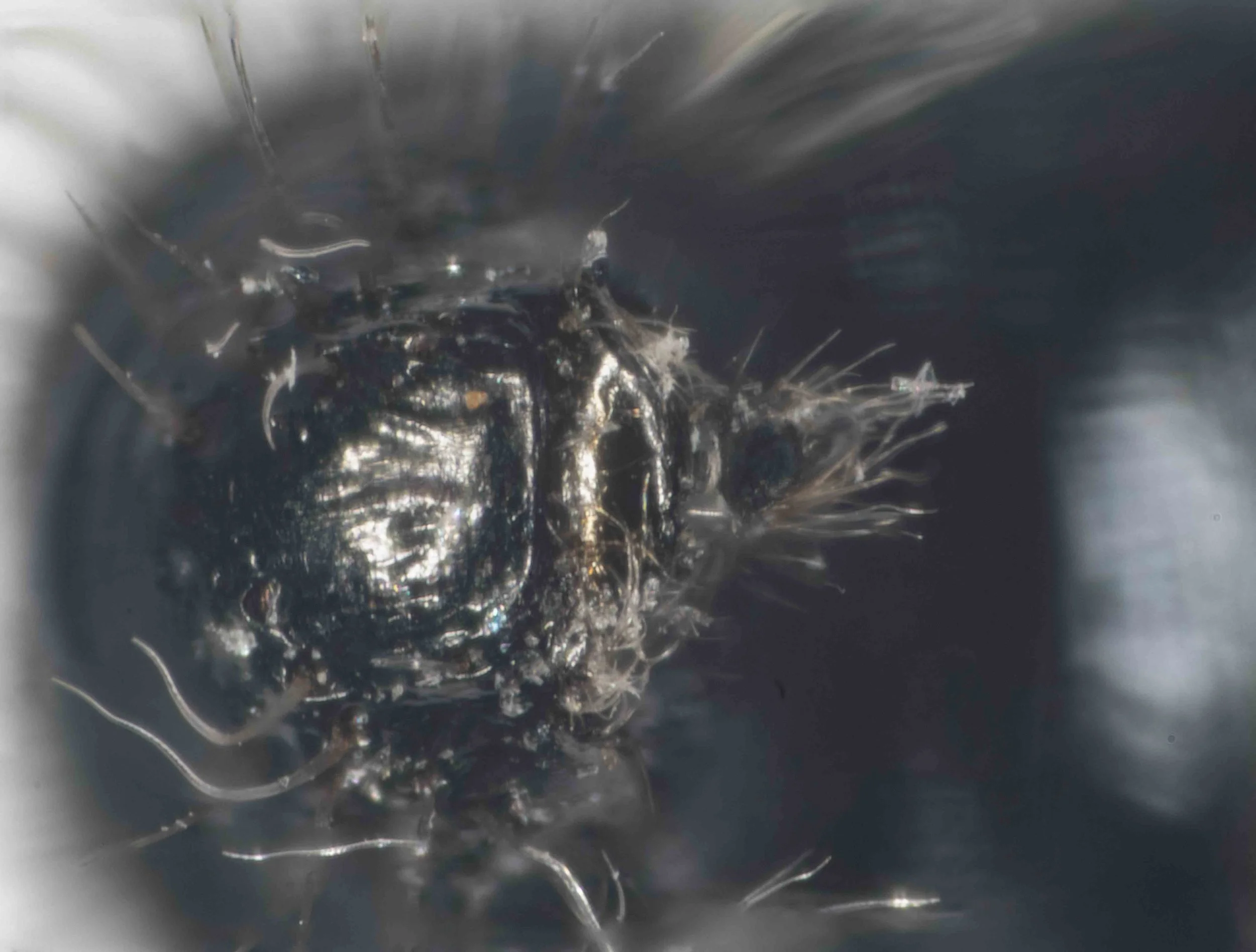
epipygium (posterodorsal view)
“broad, subapical, transverse carina becoming curved laterally to form broad, medially flat U-shaped carina” (Brown, 2025, p. 723 … from genus diagnosis)
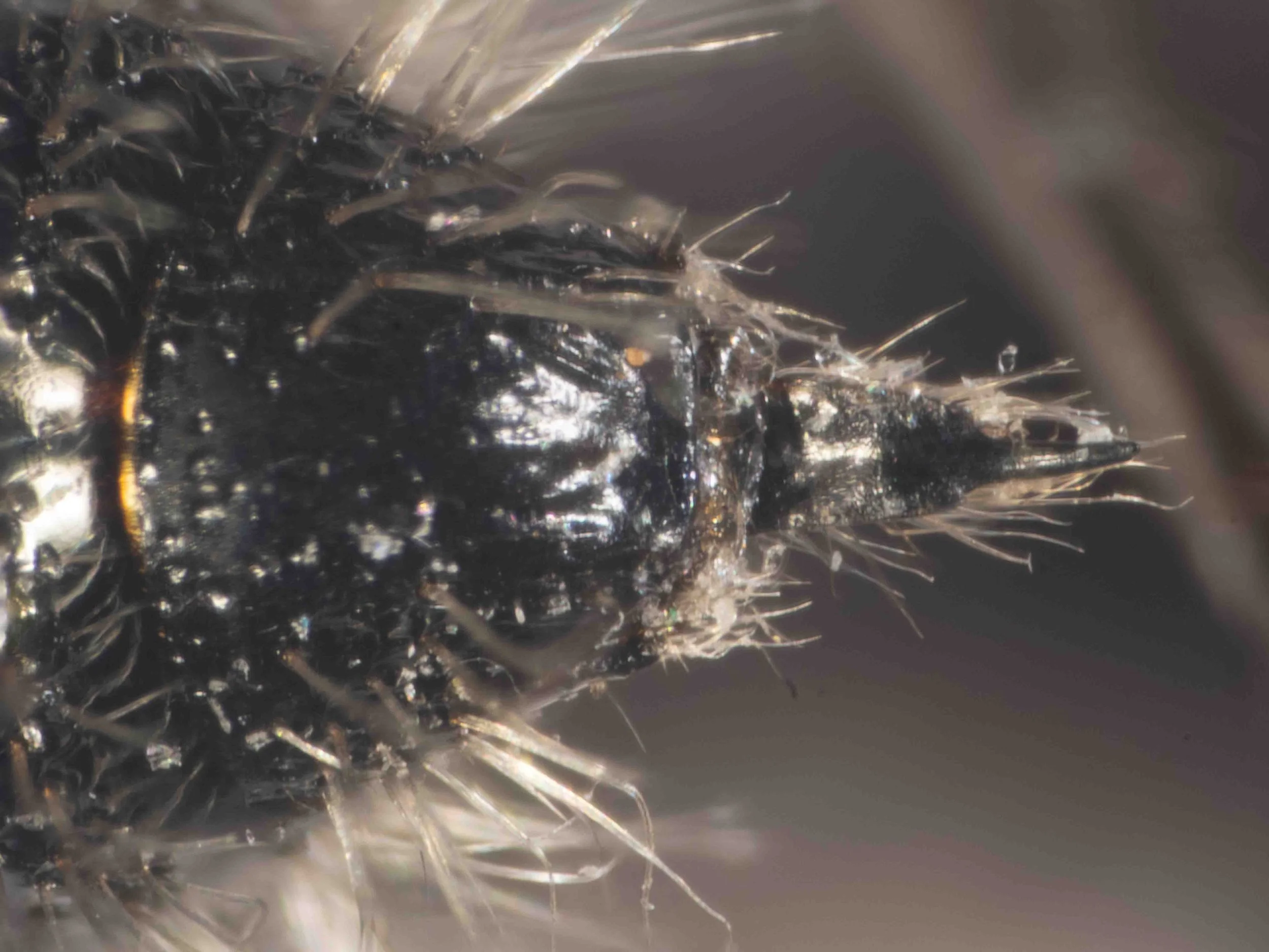
epipygium (dorsal view)
“broad, subapical, transverse carina becoming curved laterally to form broad, medially flat U-shaped carina” (Brown, 2025, p. 723 … from genus diagnosis)
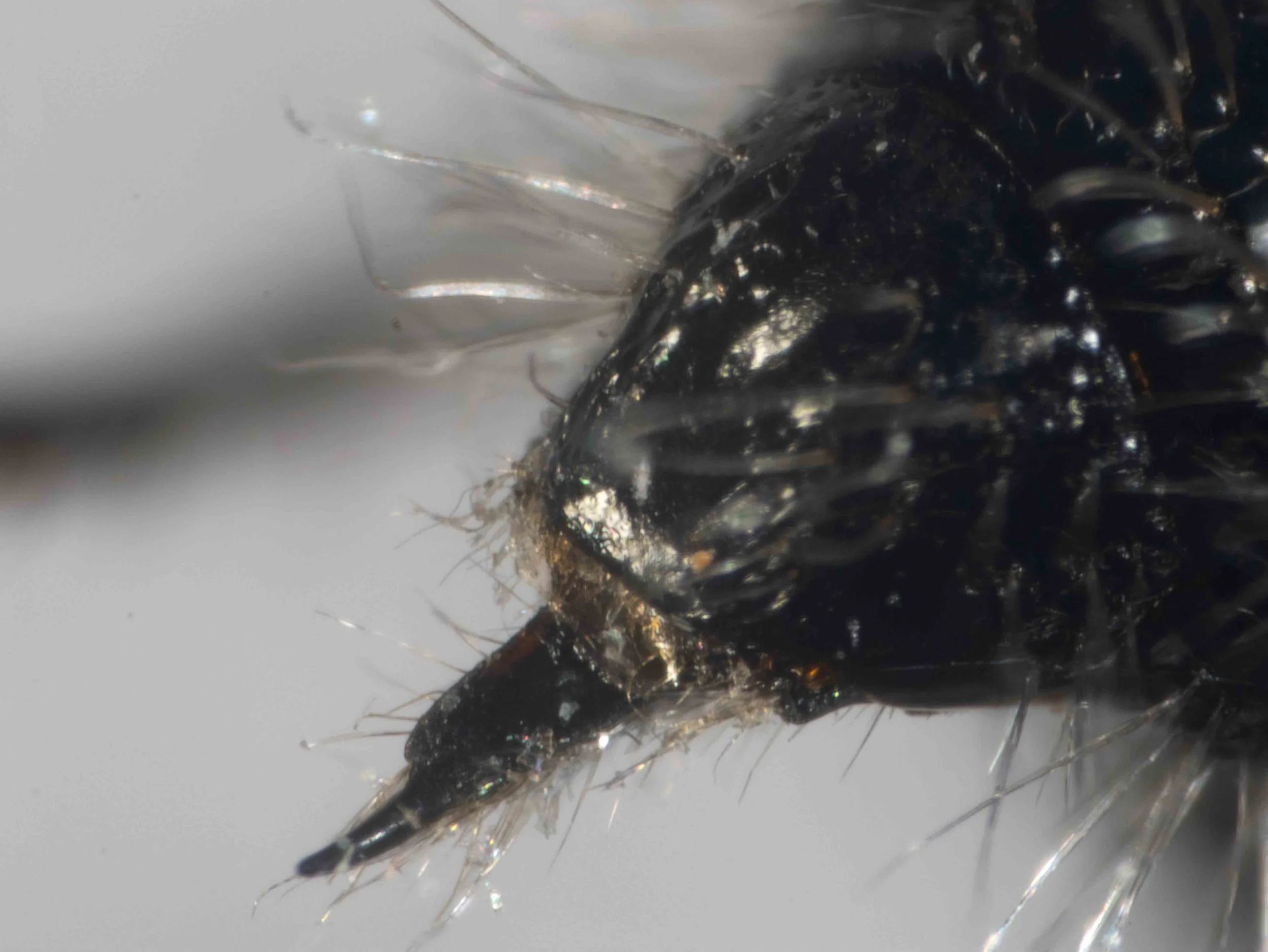
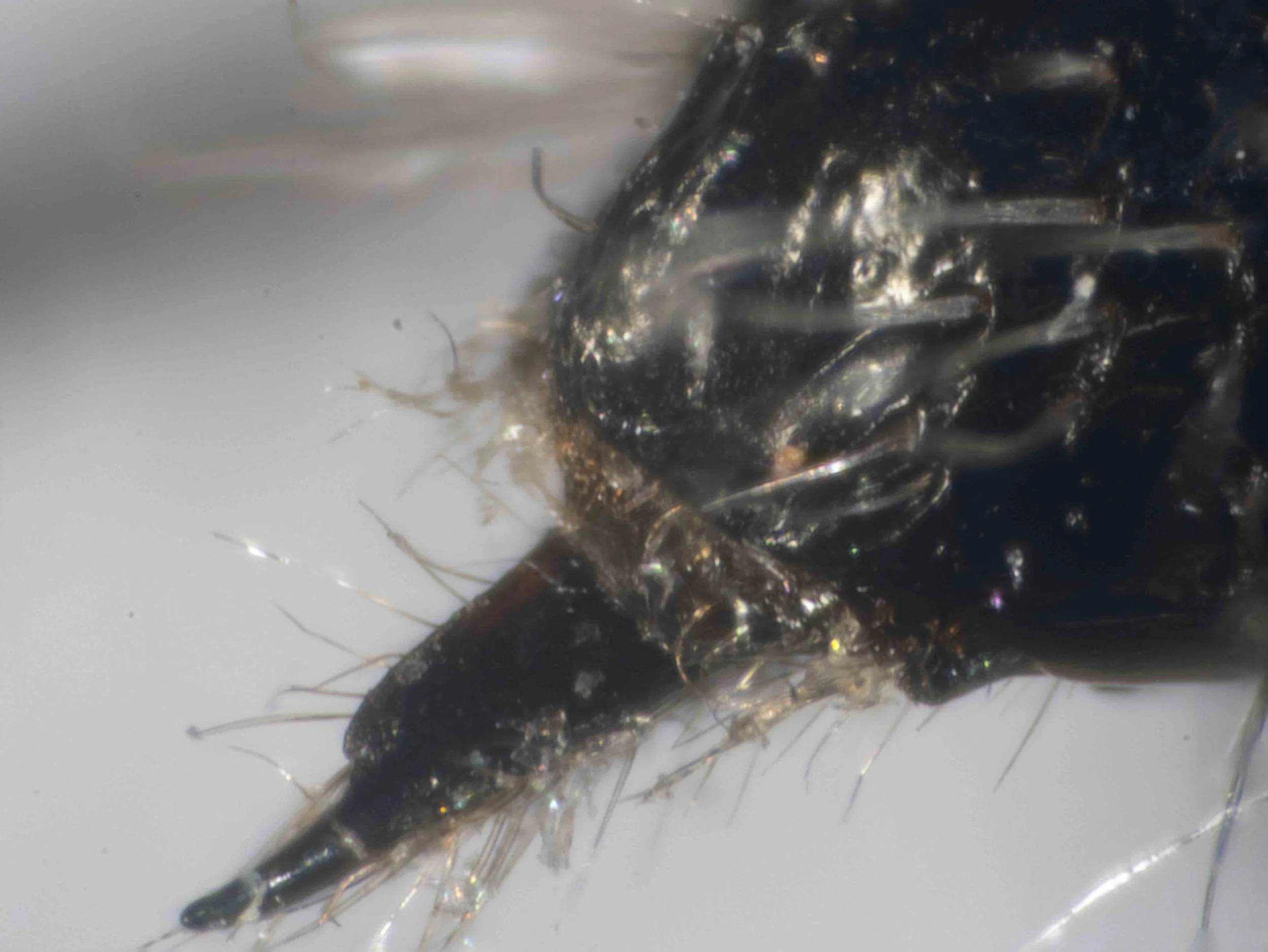
terminalia (dorsolateral view)
“hypopygium trispinose although basal lobes often rounded, lateral margins between basal and apical spines slightly raised, separated by polished, non-carinate, shallowly convex region” (Brown, 2025 p. 725 … from genus description)
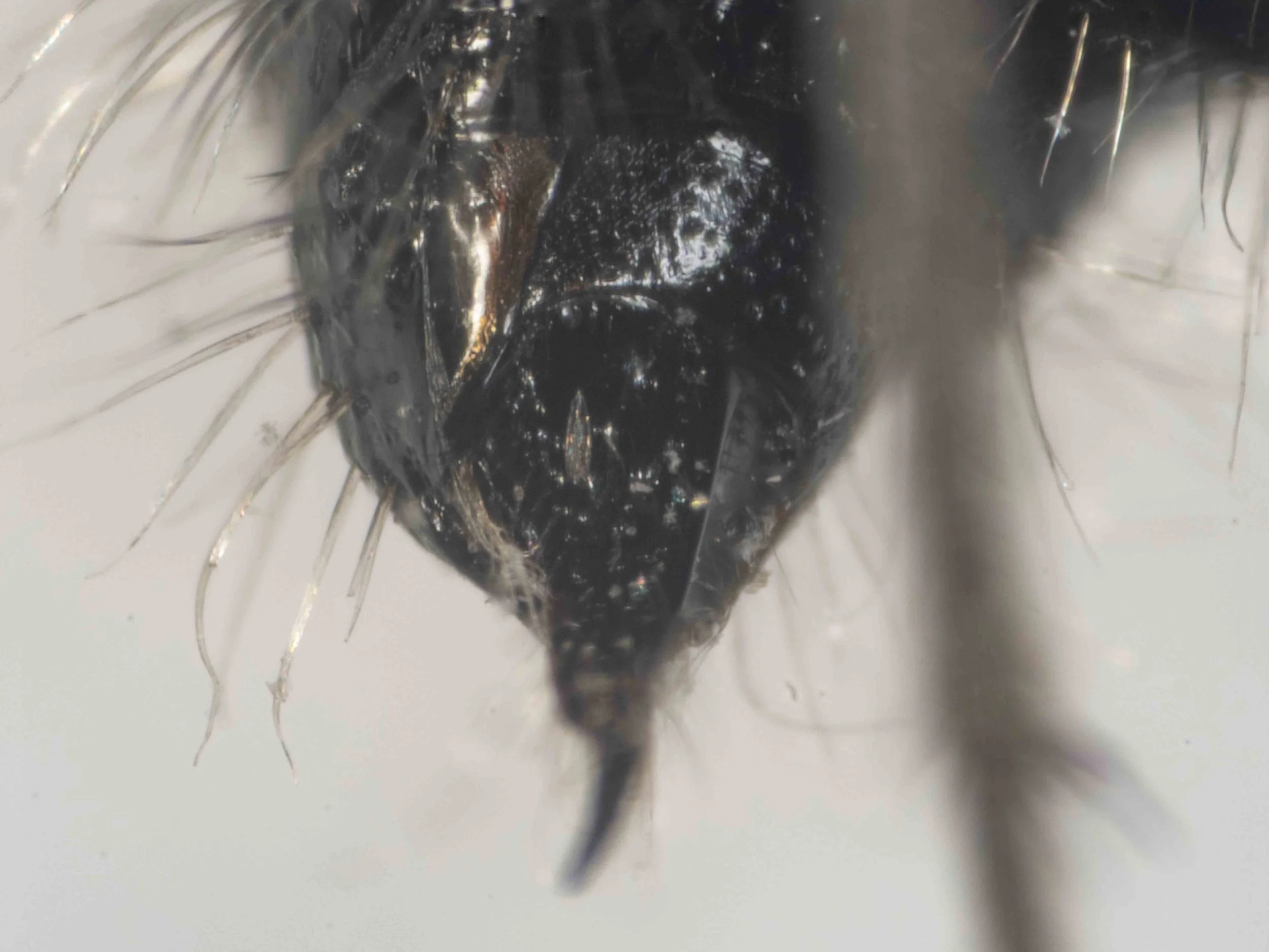
hypopygium (ventrolateral view)
apical spine continuous with carina along ventral midline
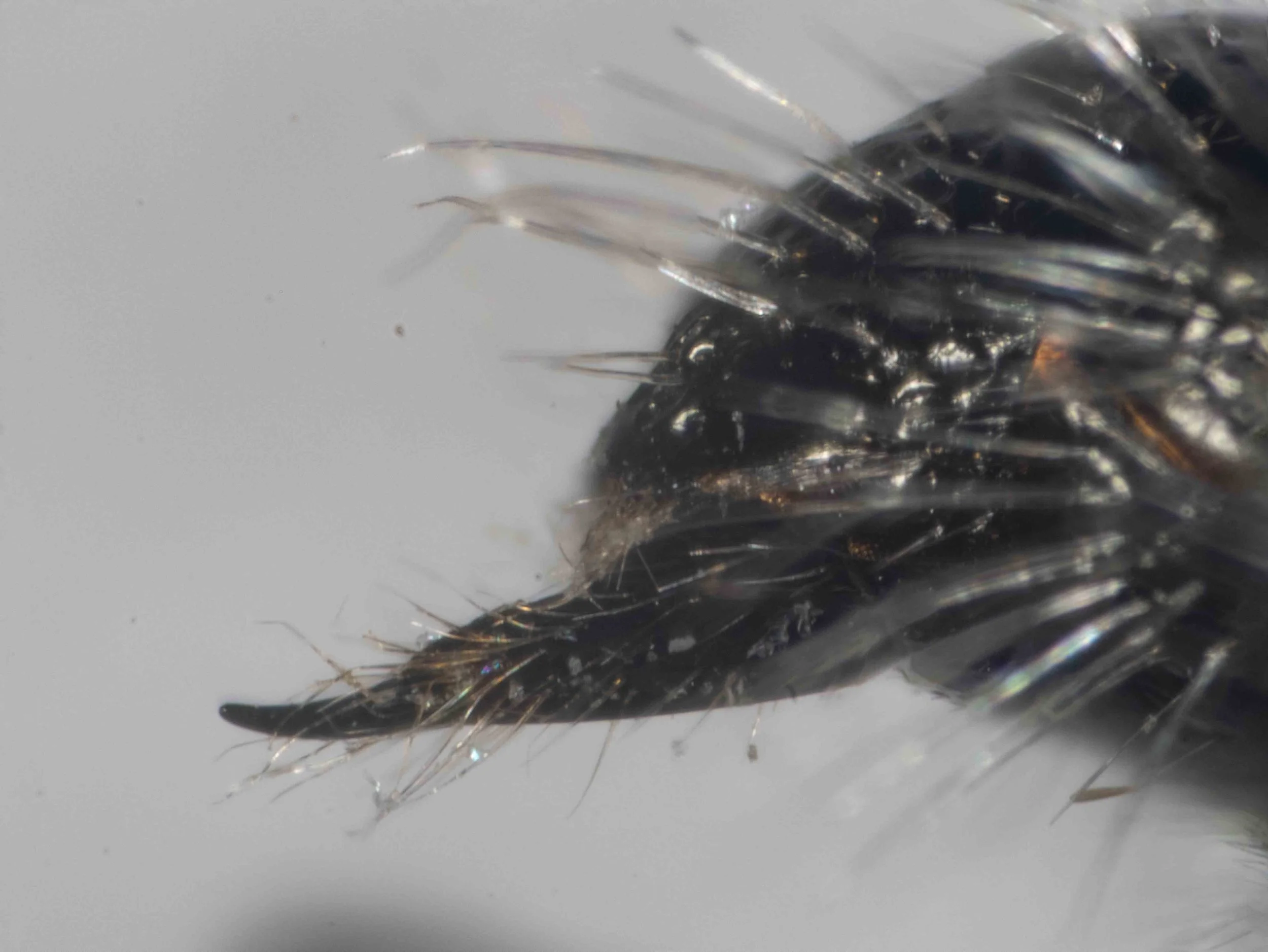
hypopygium (lateral view)
lateral margins raised, apical spine slightly upturned