
Perginae larvae batch 4

Workbook
This is the fourth collection of Perginae larvae which I am aiming to rear through to adult stage.
My goal is to obtain female Perga dorsalis adults for COI barcoding in order to determine whether Perga dorsalis and Perga affinis individuals identified morphologically have different barcodes.
Collection of larvae at home, October 9th
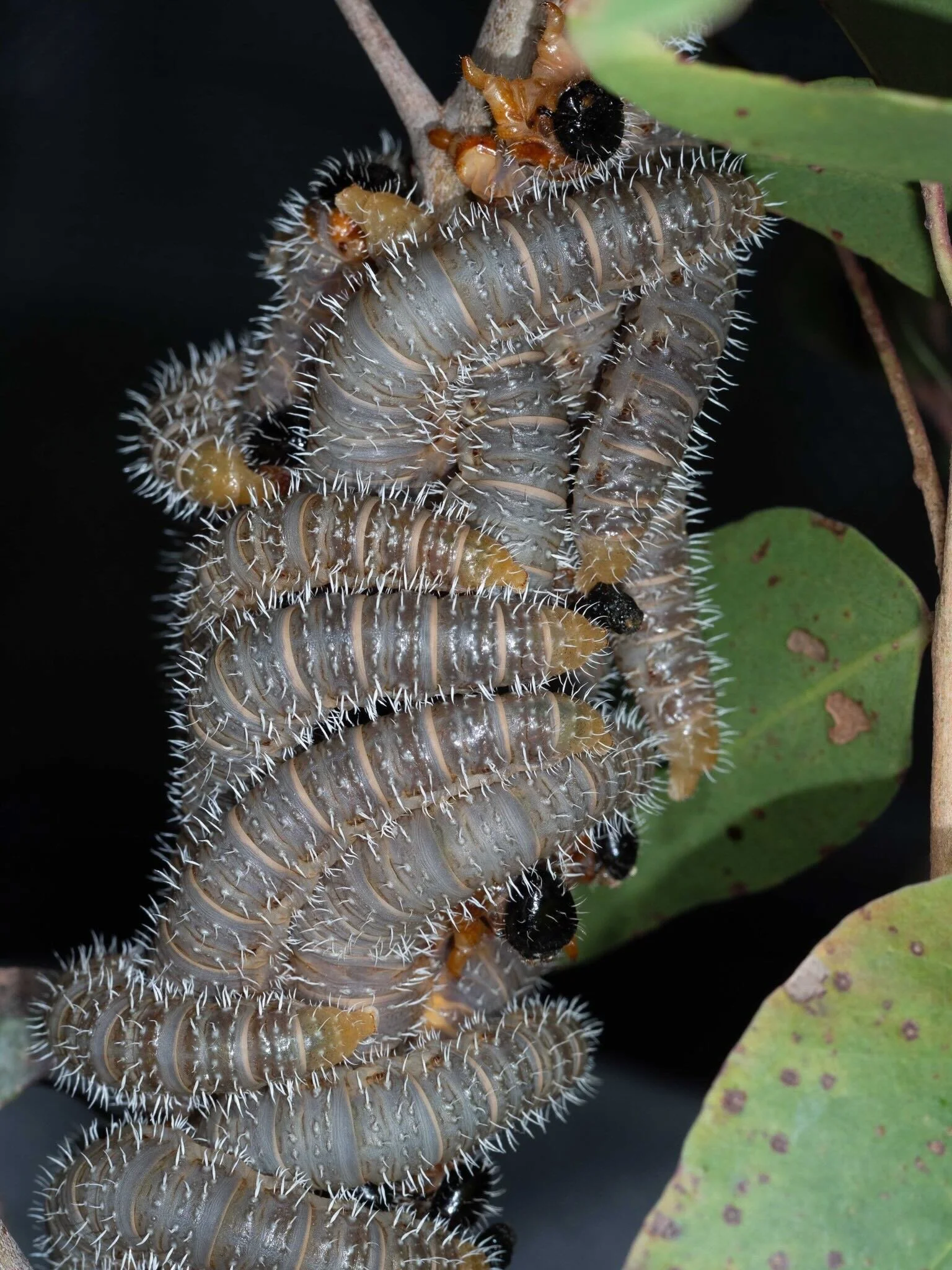
A large cluster (at least 20) of larvae was found in an upper branch of a juvenile eucalypt (probably E. globoidea), just behind the biolytix irrigation area. They were around 5cm long and a distinctive grey colour.
They were collected as an intact clump on their day-roost branch and transferred to a metal cage with dead leaf litter in the bottom.


11th - 31st October
The larvae showed a regular pattern of activity over this time period, clustering together in one or two quiescent clumps by around 9am, then dispersing in the afternoon to feed overnight. They appeared to feed actively.
Care was taken when adding fresh vegetation to leave the larvae on their existing branch(es) and to retain a proportion of the former branches in the cage. The logic is to keep chemical cues on the branches which the larvae may be using to maintain contact with each other.
On morning of 31st October, the top layer of ground medium/debris was removed and a full bag of peat moss and some vermiculite added.
1st November
6:30am - 3 loose clusters present on vegetation in same sites as on the previous day
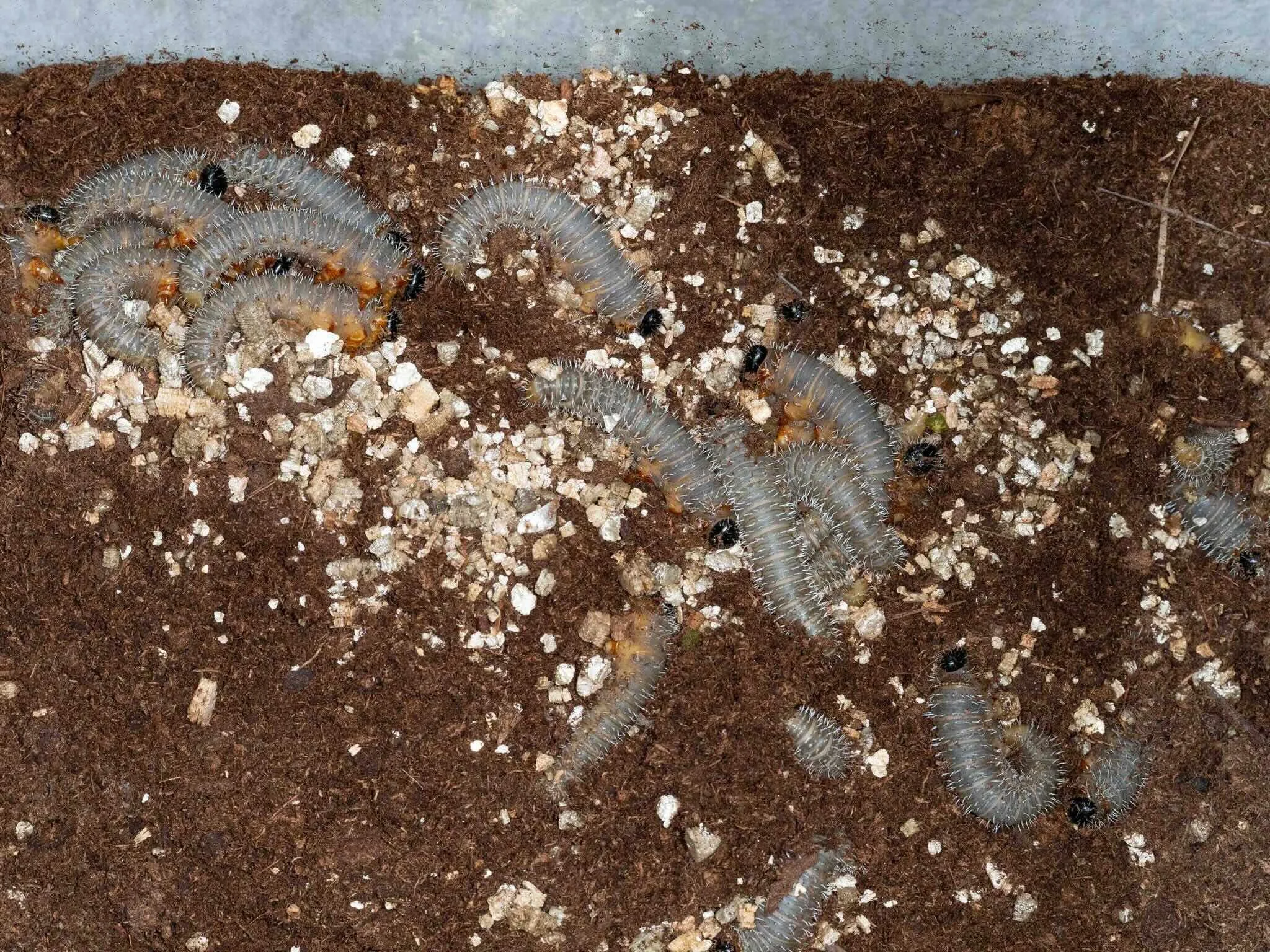
8:40am - all larvae have buried themselves in the medium in the bottom of the cage. The larvae were moved to a terrarium along with the medium they were clustered on.
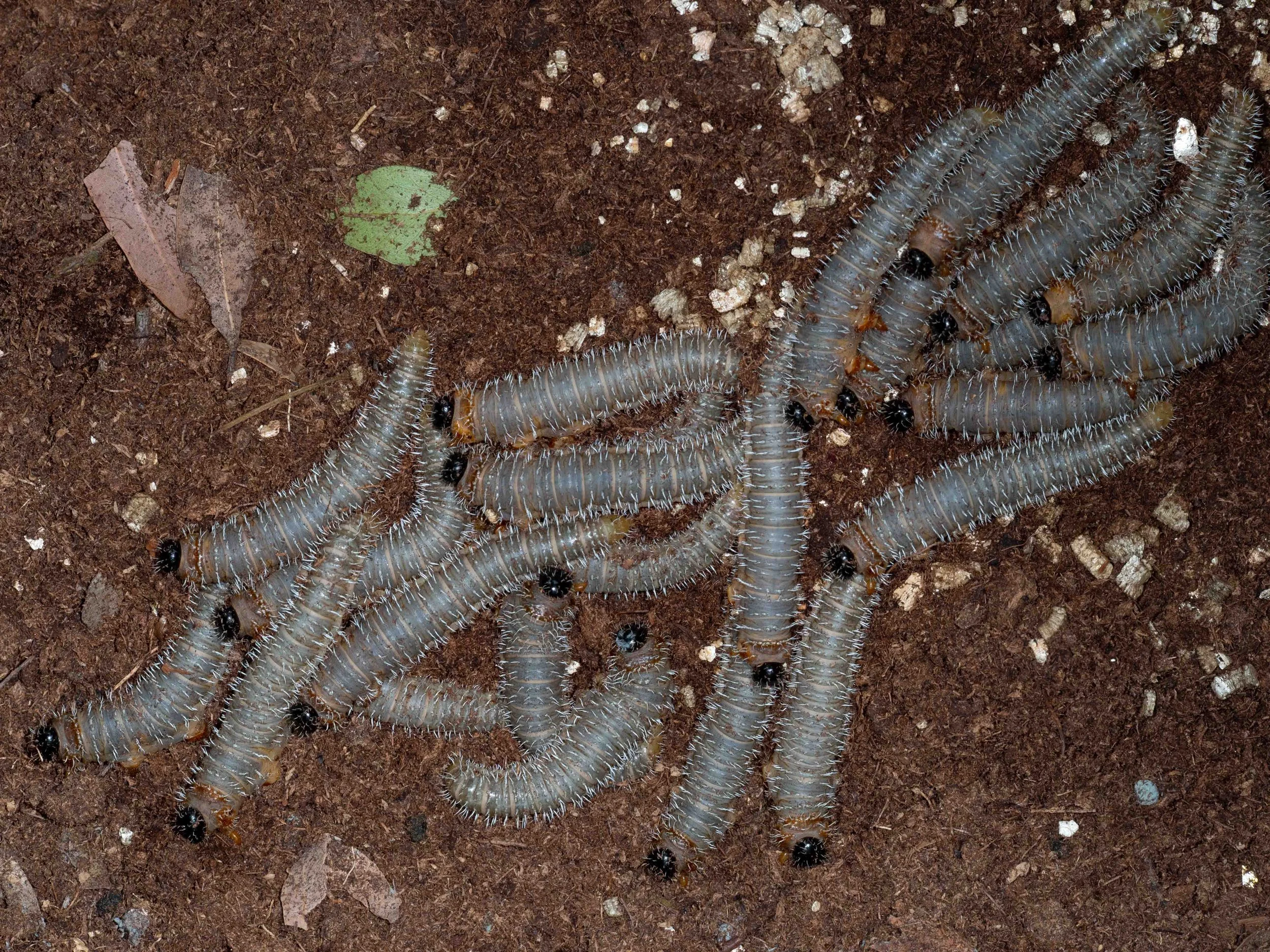
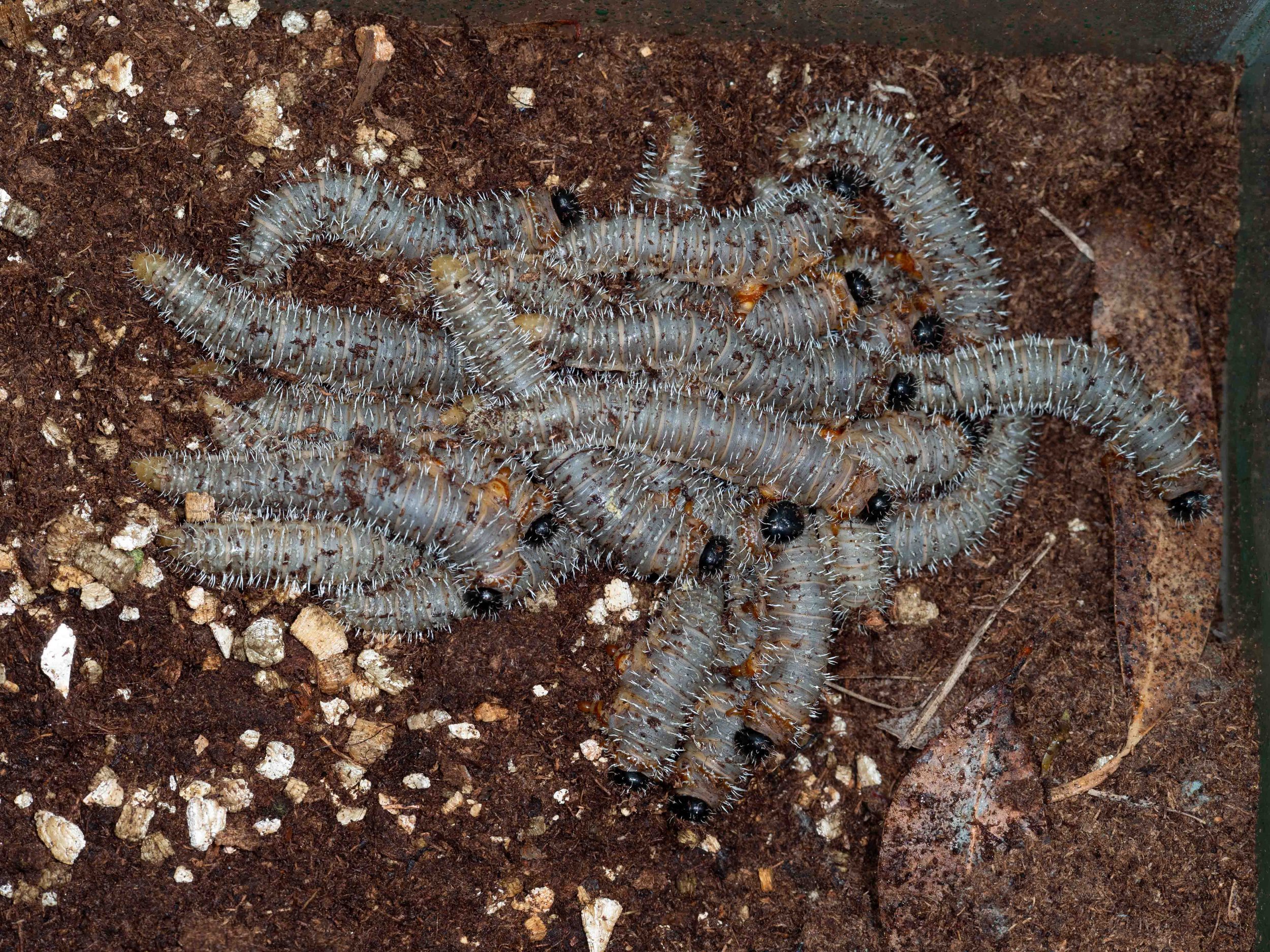
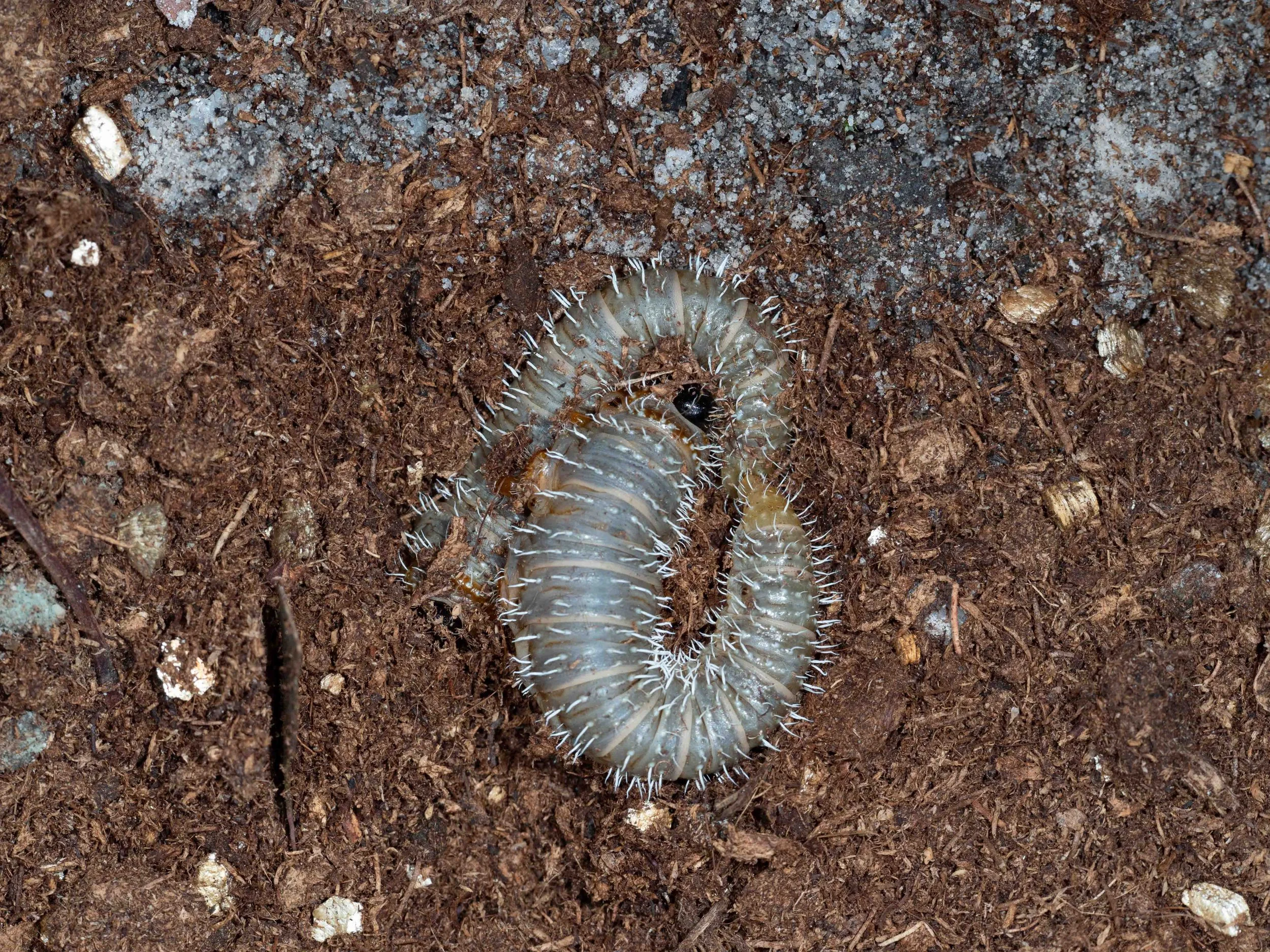
9:30am - the larvae had aggregated on the surface as a coherent mass and were tapping each other vigorously. 23 individuals counted. second photo
12:00pm - the larvae had clustered into a motionless clump in a corner of the tank. About half were visible on the surface, the others were presumably beneath them, perhaps starting to dig down?
2nd November
6:20am - a clump of larvae present in the same corner of the tank, with about 10 visible in the top layer.
8:30am - the entire clump (counted more than 20) had moved to the front of the tank on the surface but then subsequently moved to the back corner.
10:15am - the larvae were clustered but still active, moving to different corners of the tank
11:52am - the clump of larvae formed a tight rosette, with the central larvae digging into the soil - photo
12:00pm - only 8 larvae visible on the surface
12:25pm - now just 3 visible on surface
12:50pm - now just 1 on surface, another half buried
1:17pm - just the same single larva present on surface. It contined to move around the tank on the surface, tapping in an agitated fashion.
1:50pm - we buried the larva in peat moss at the site where the clump had disappeared. Within minutes it had dug itself out and was continuing to wander around the tank.
2:30pm - the lost larva was removed and placed in 90% ethanol for a voucher specimen.
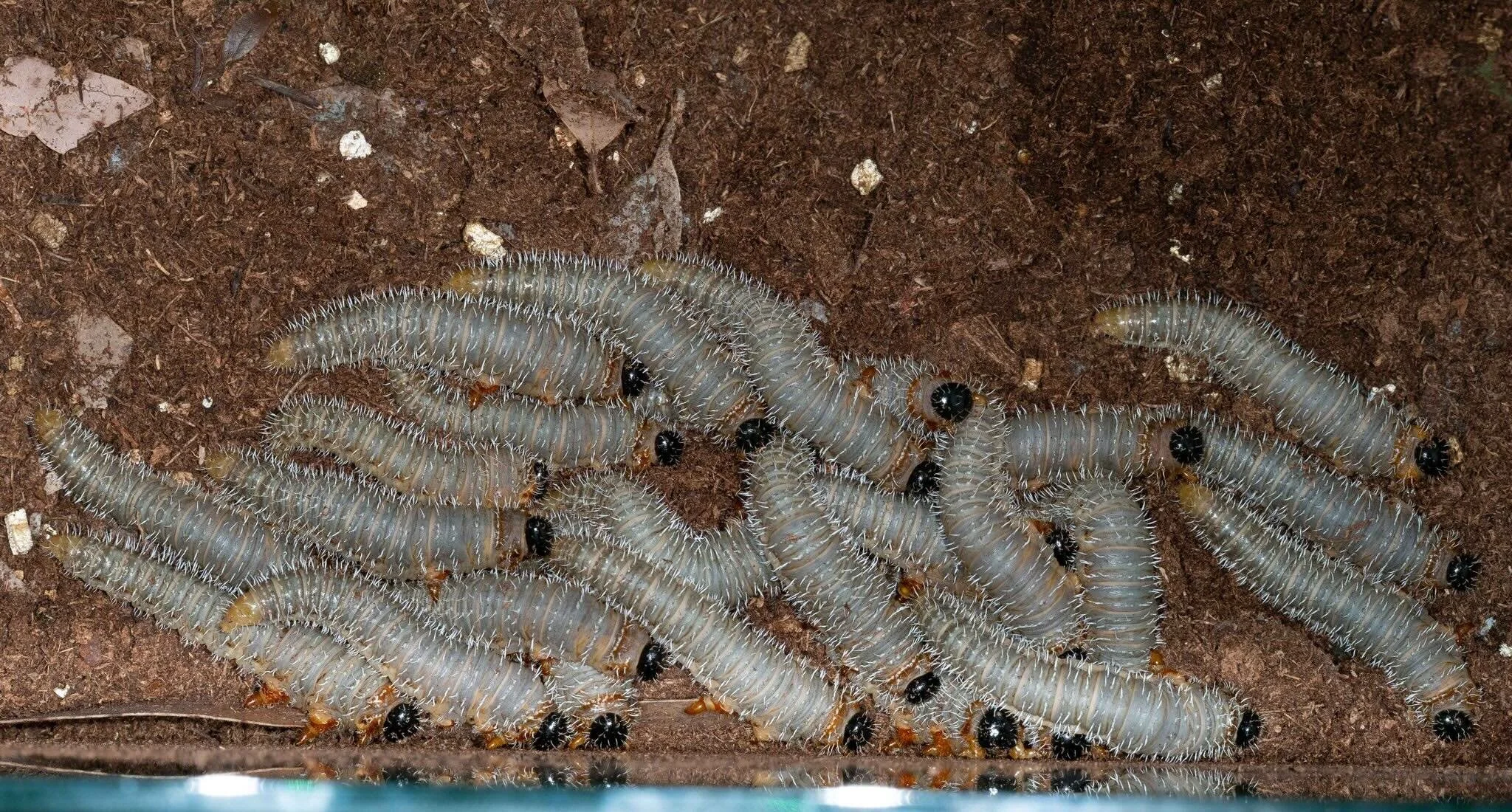
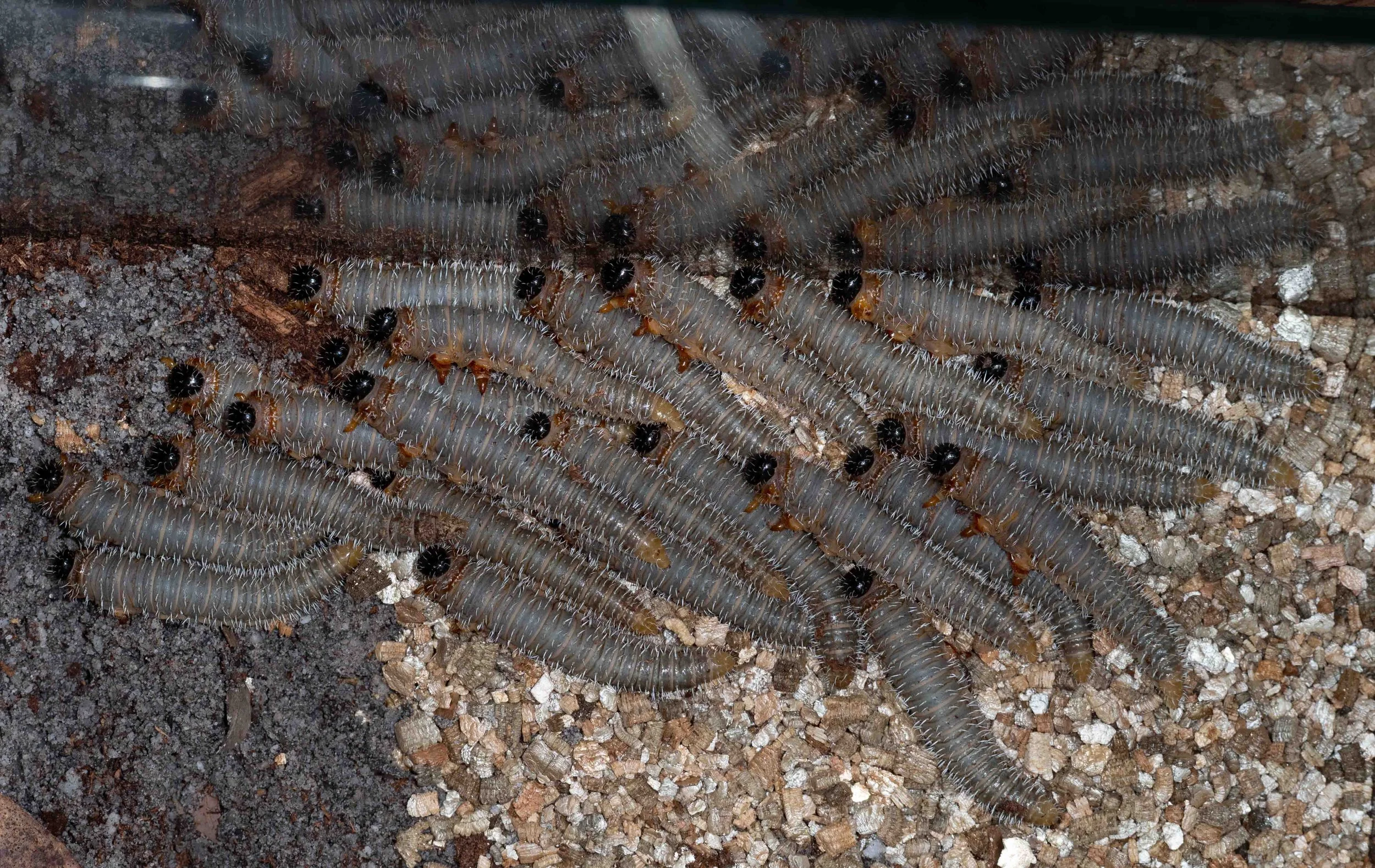
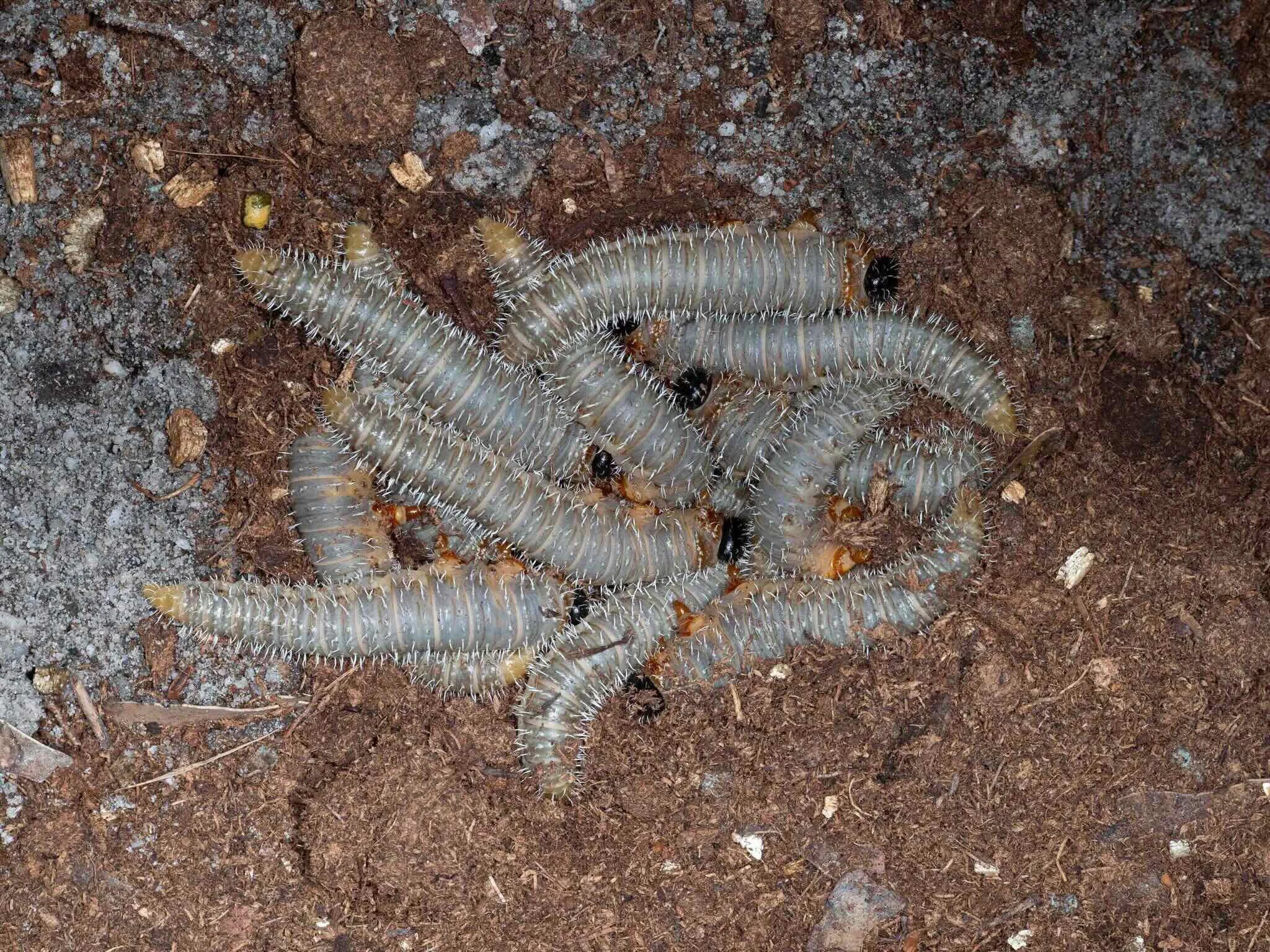
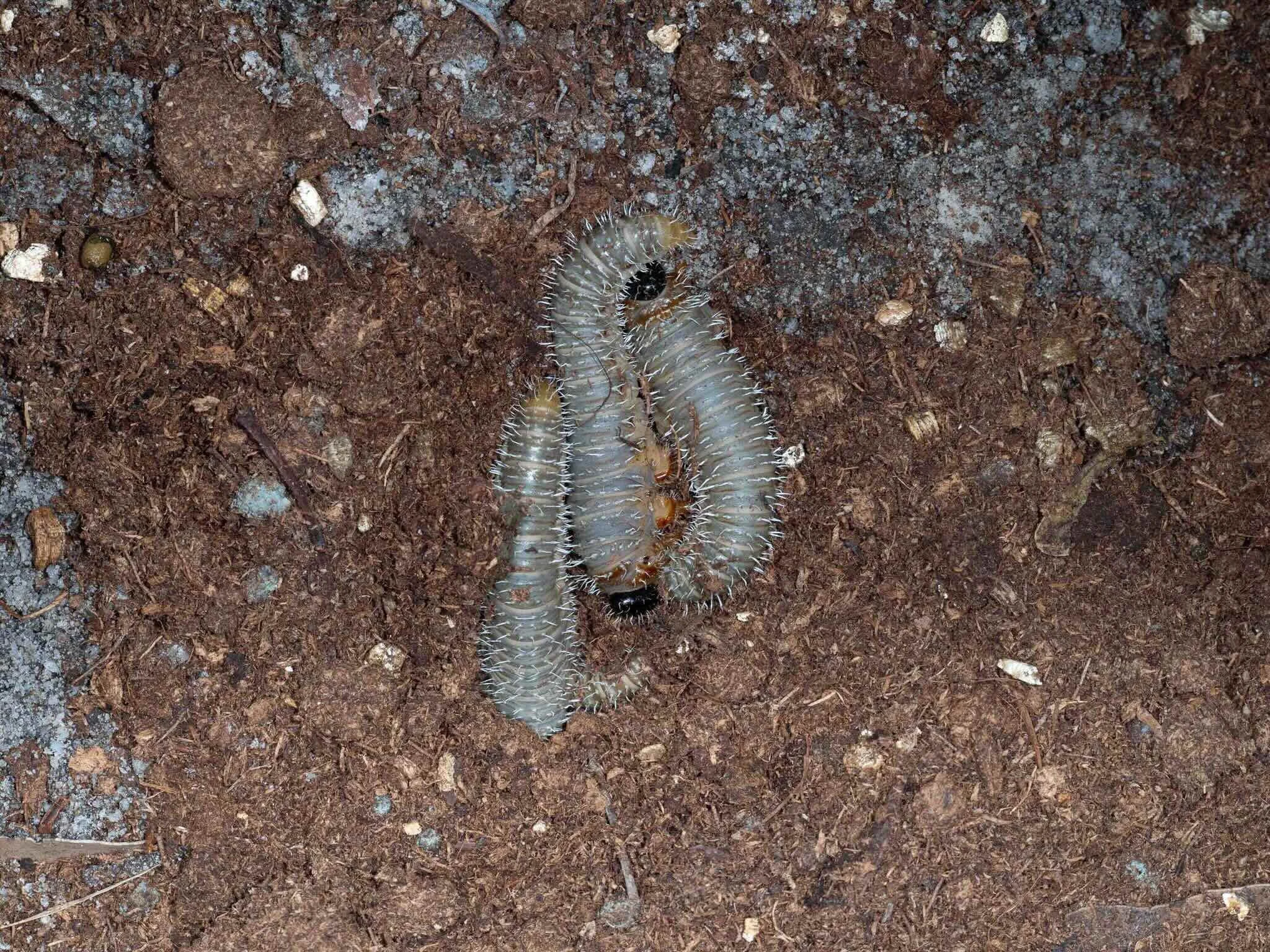
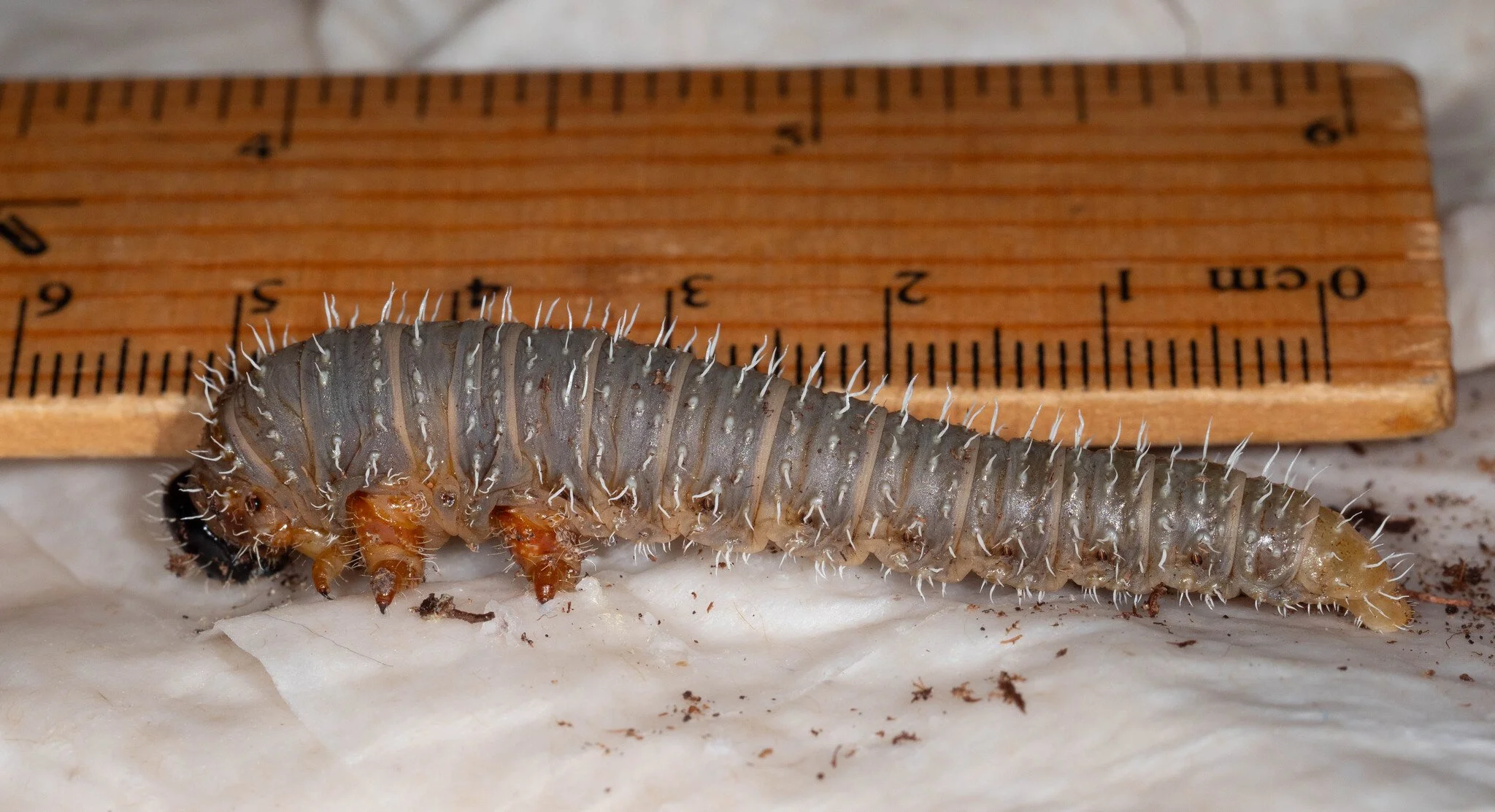
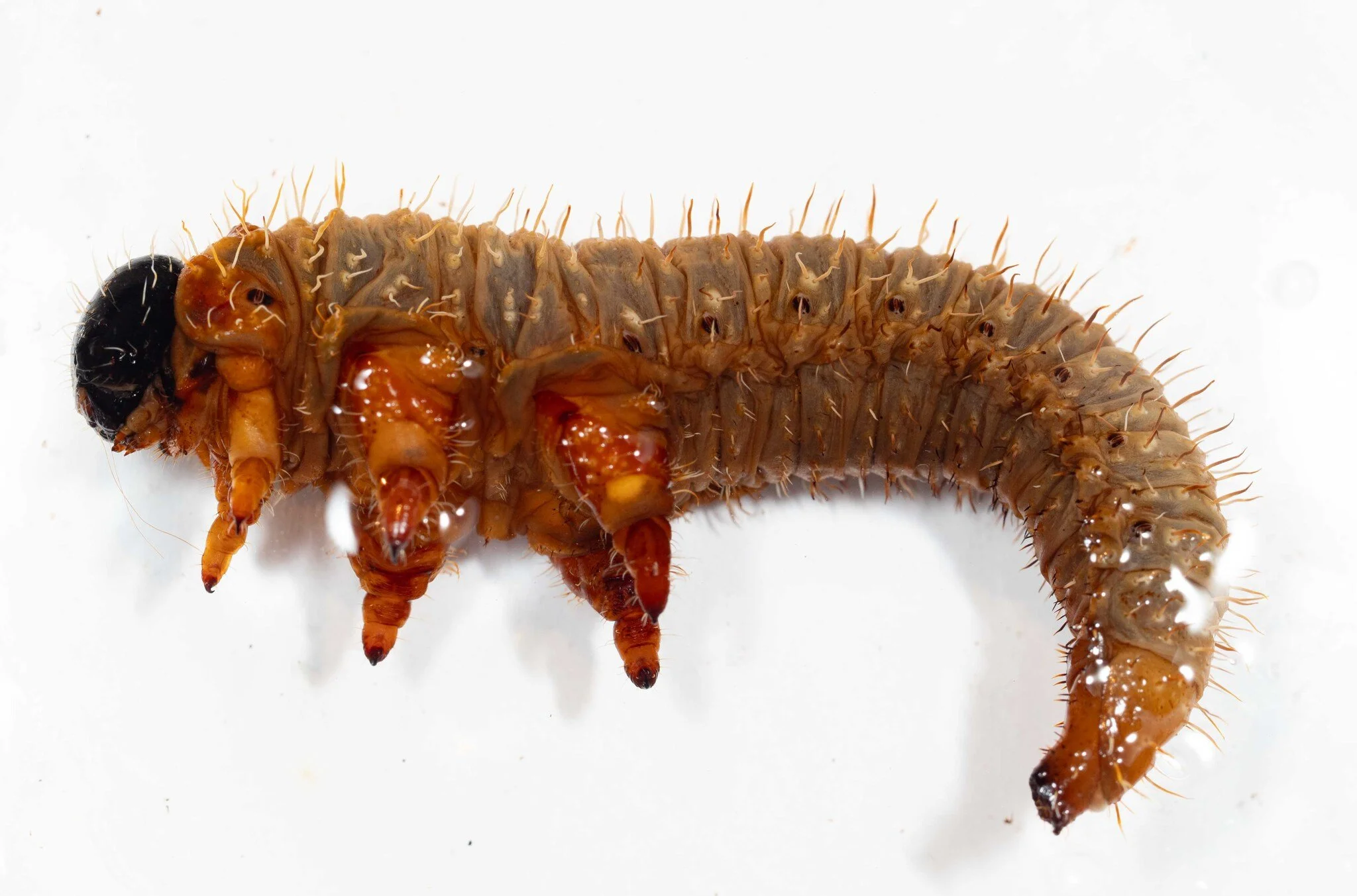
17th February
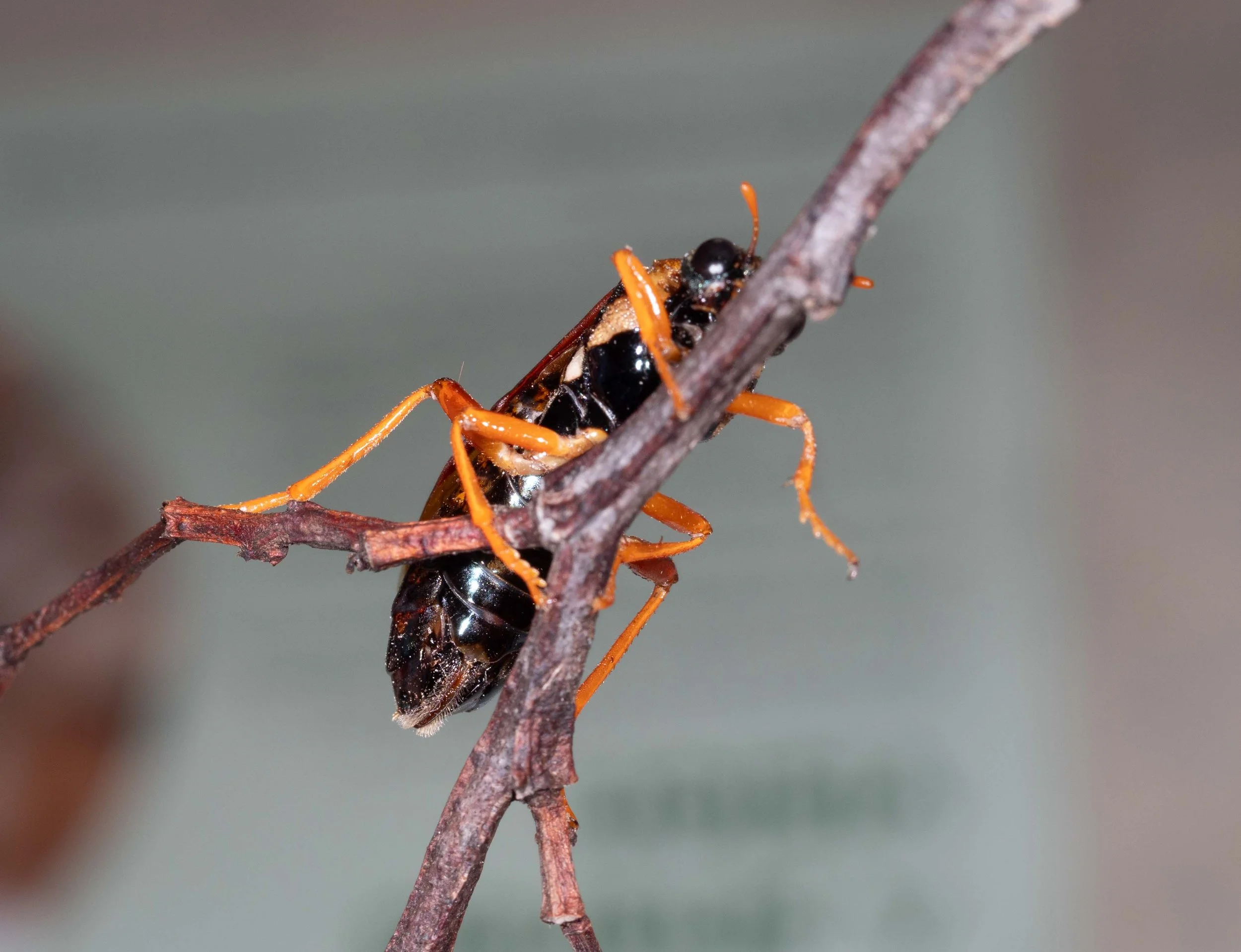
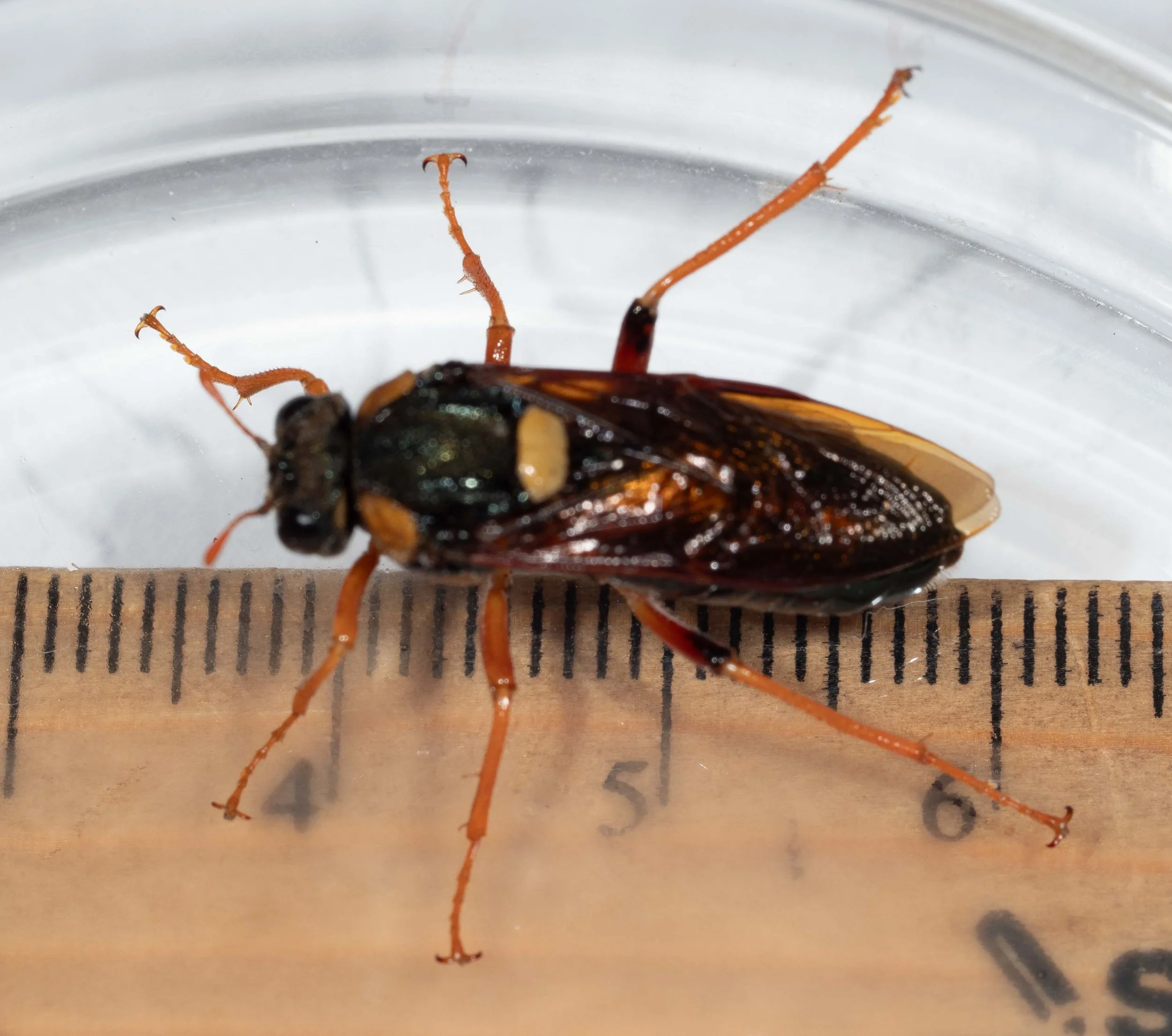
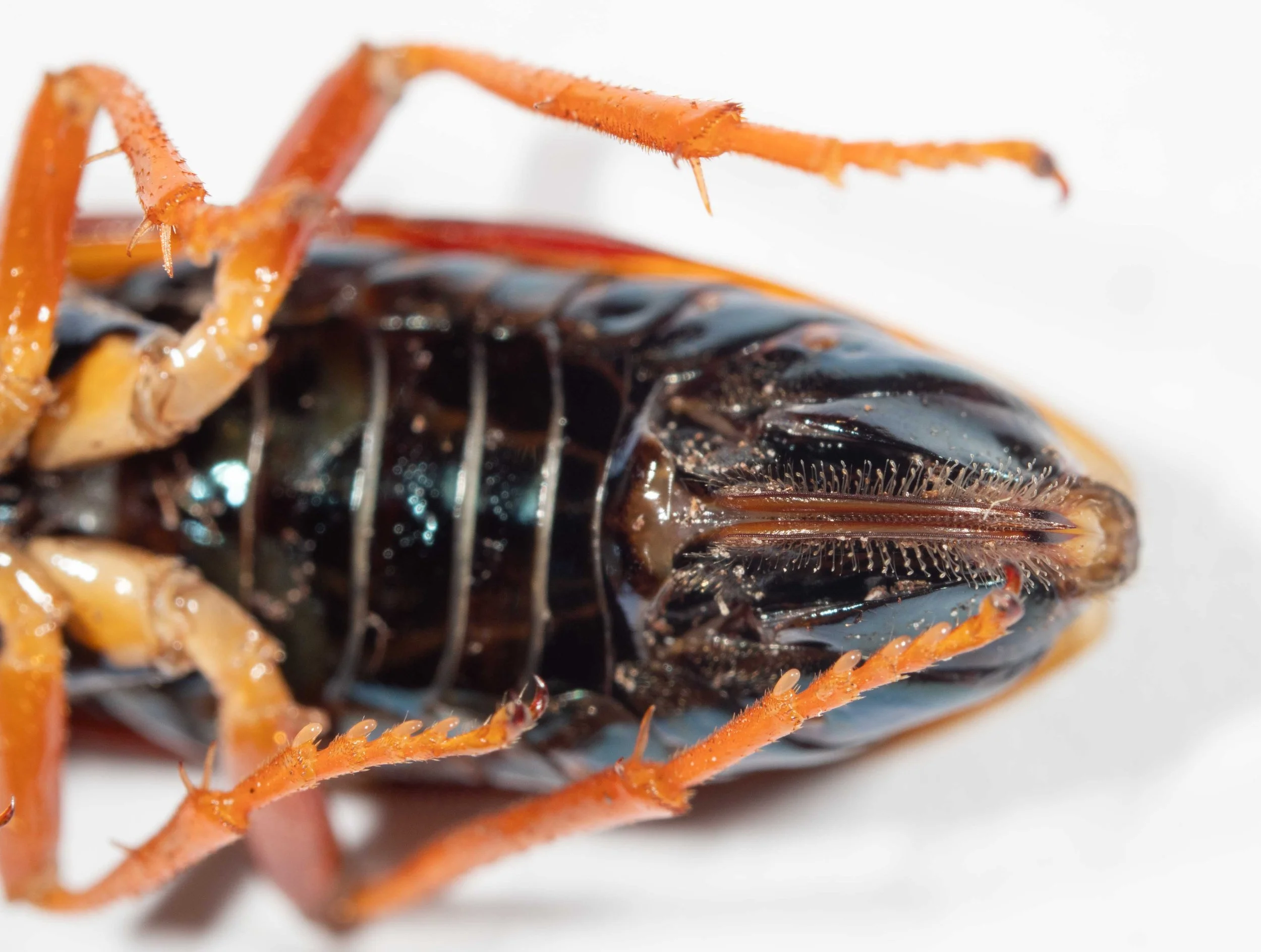
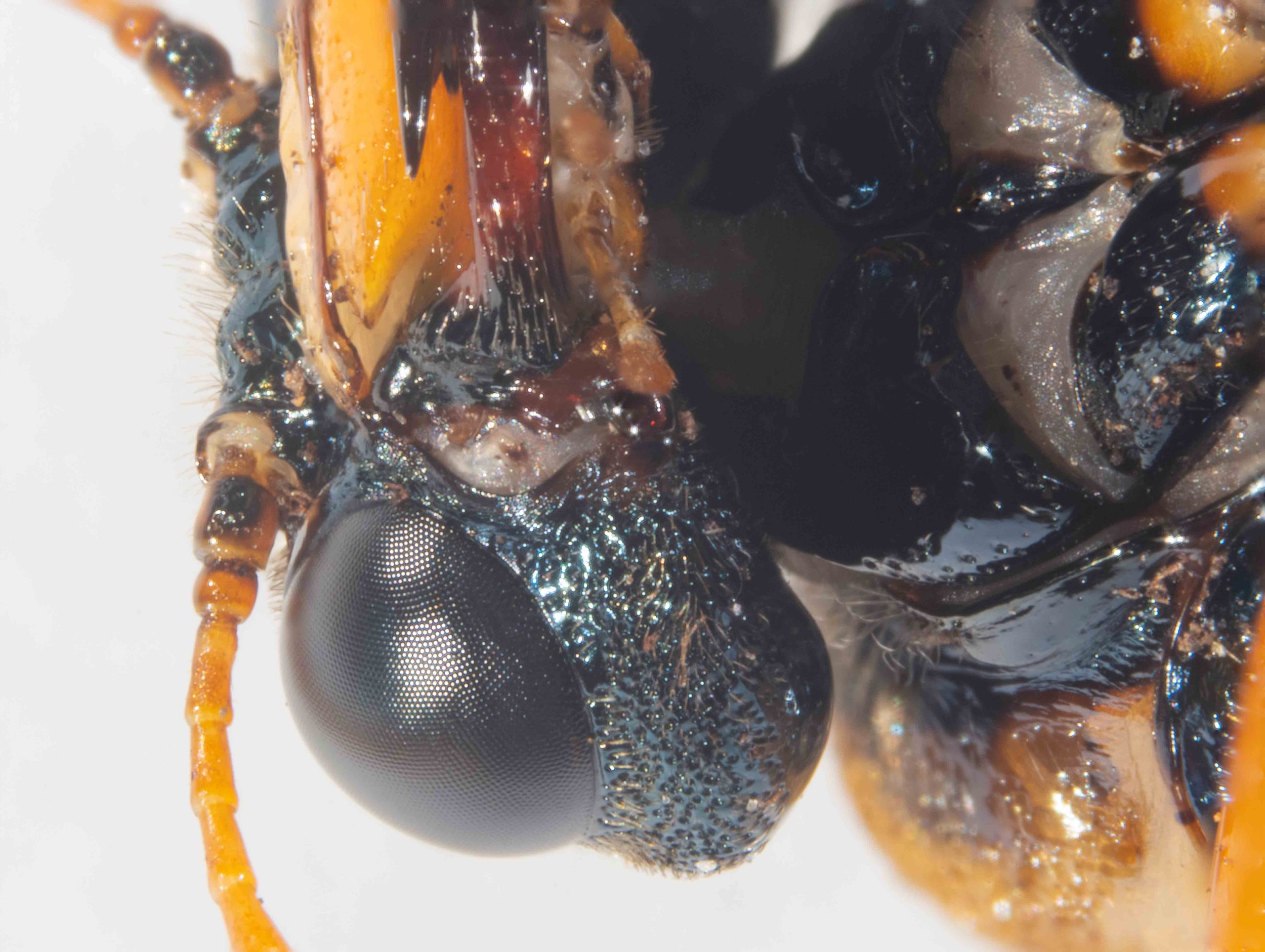
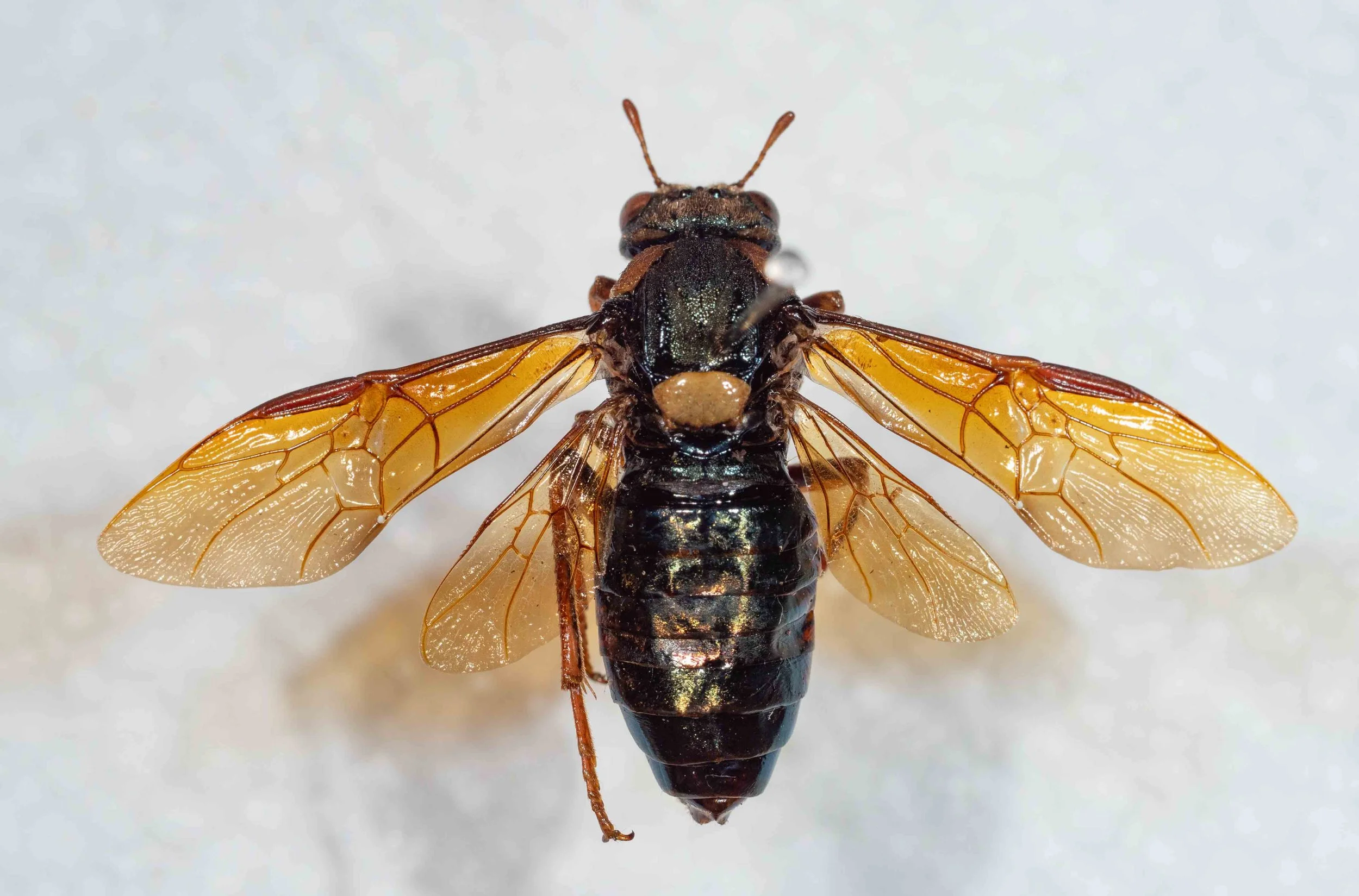
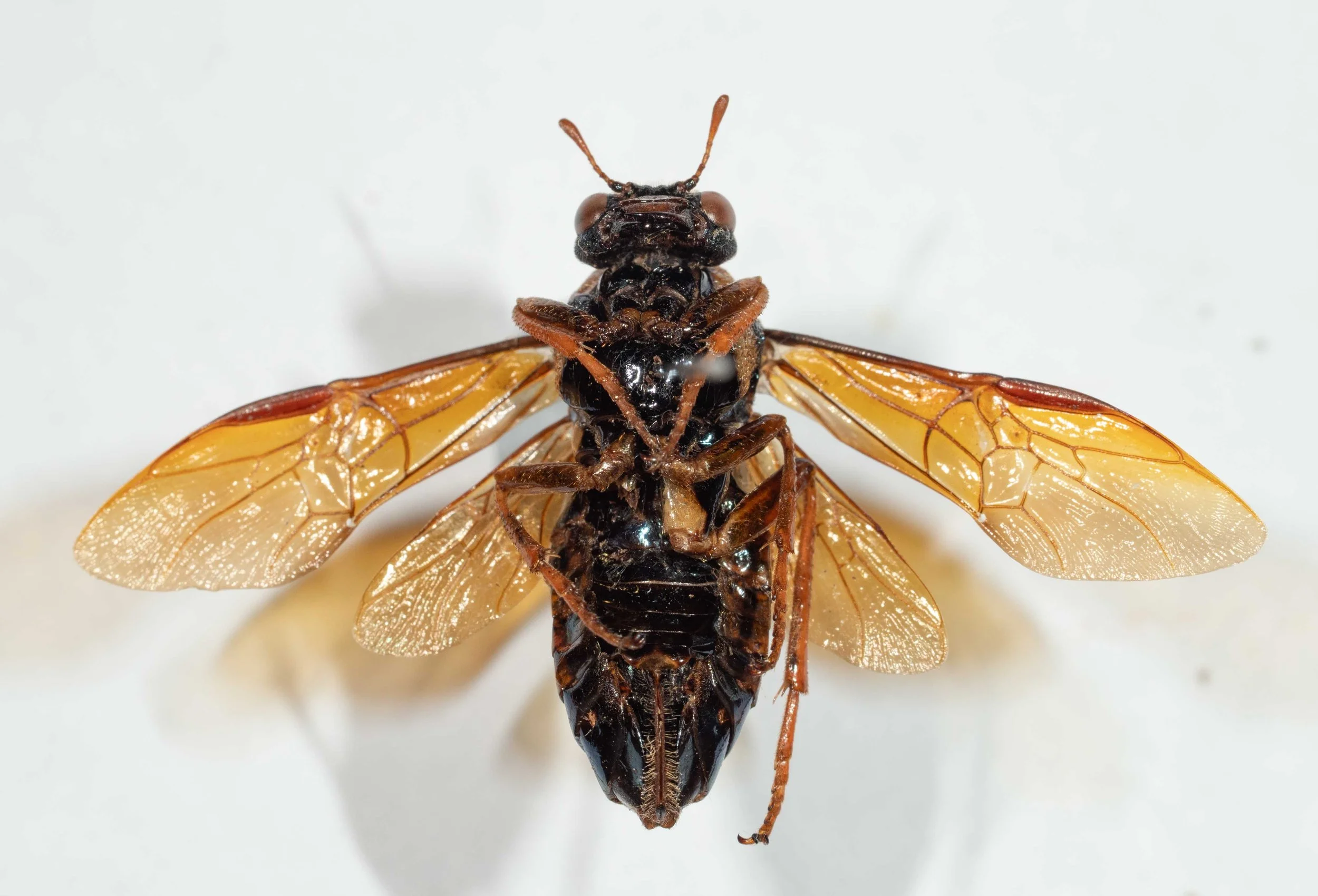
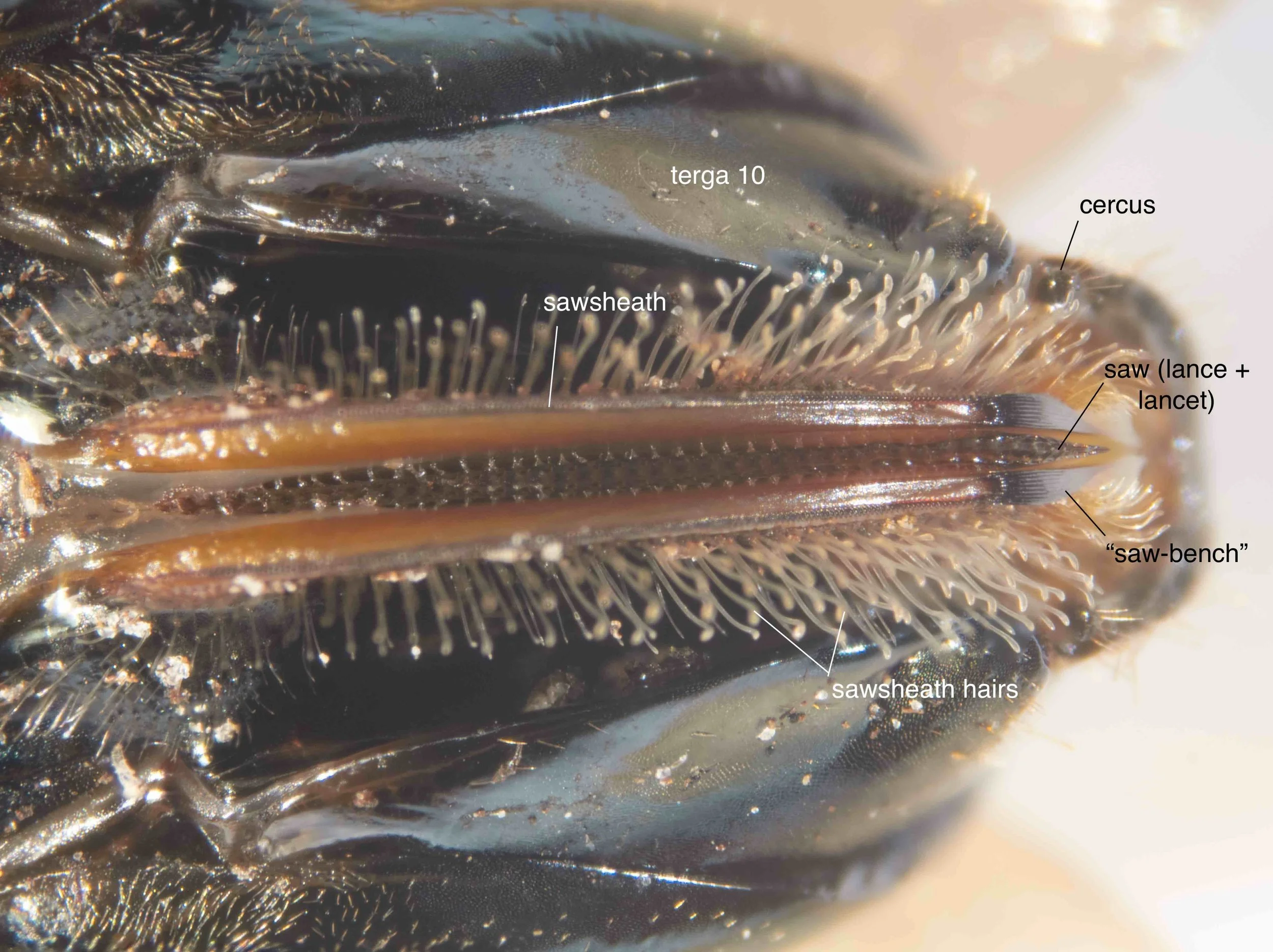
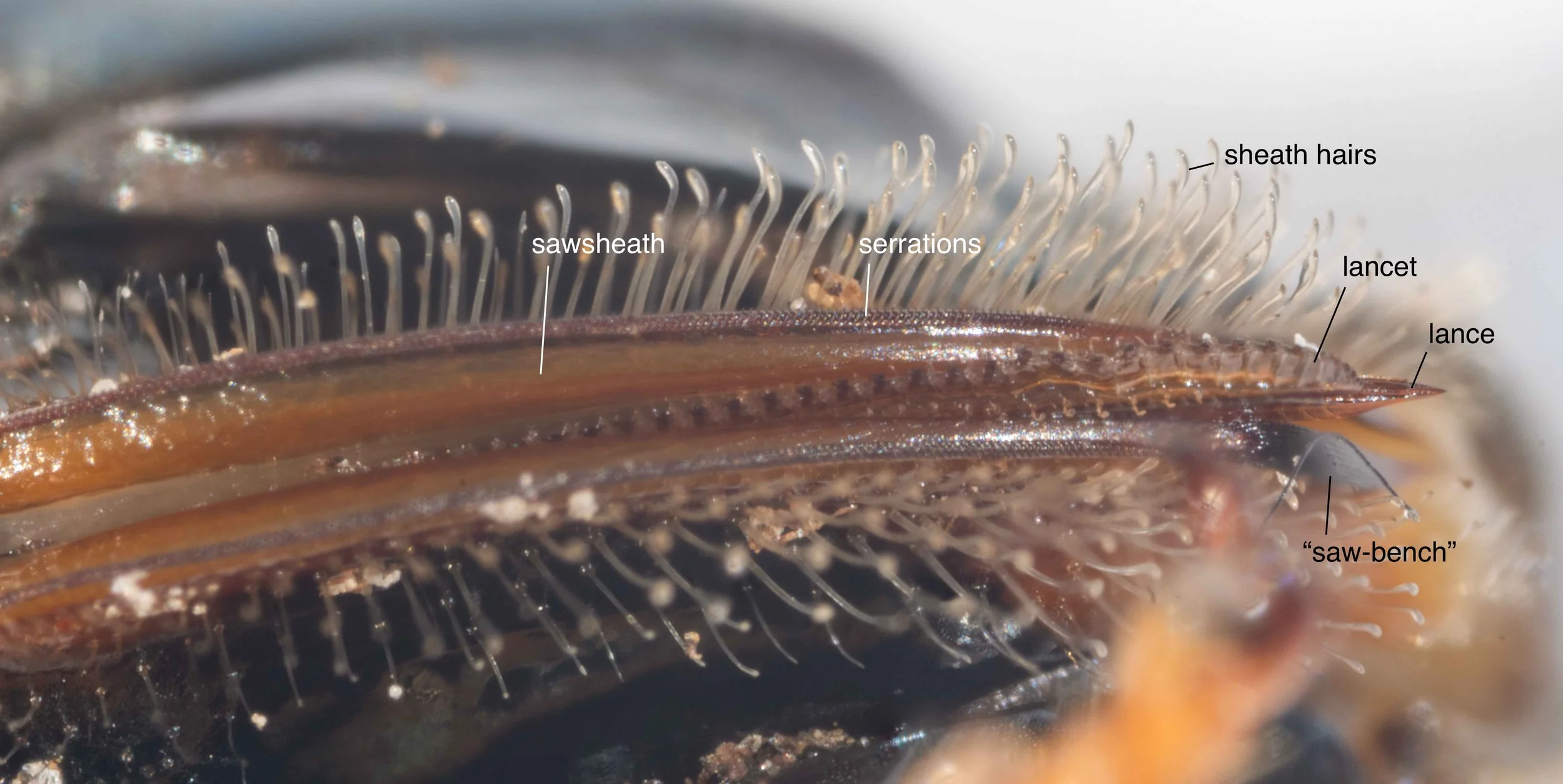
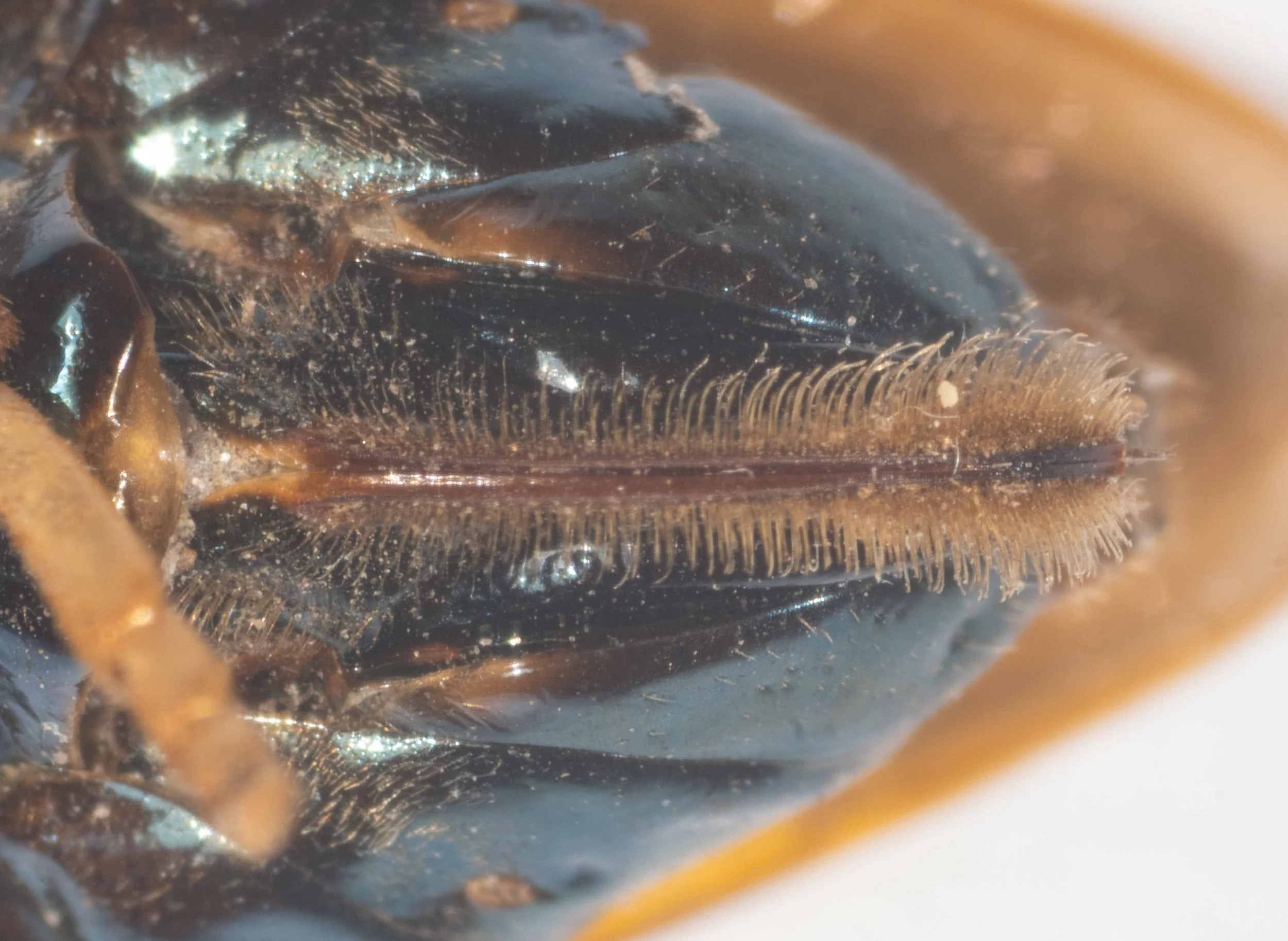
10:05am First adult seen in tank, in back corner, crawling around, having emerged sometime after 7:00am. iNaturalist observation. Collection number #PW100. Pupal duration = 107 days. Sawsheath hair morphology indicates ID of Perga dorsalis.
Images of living insect
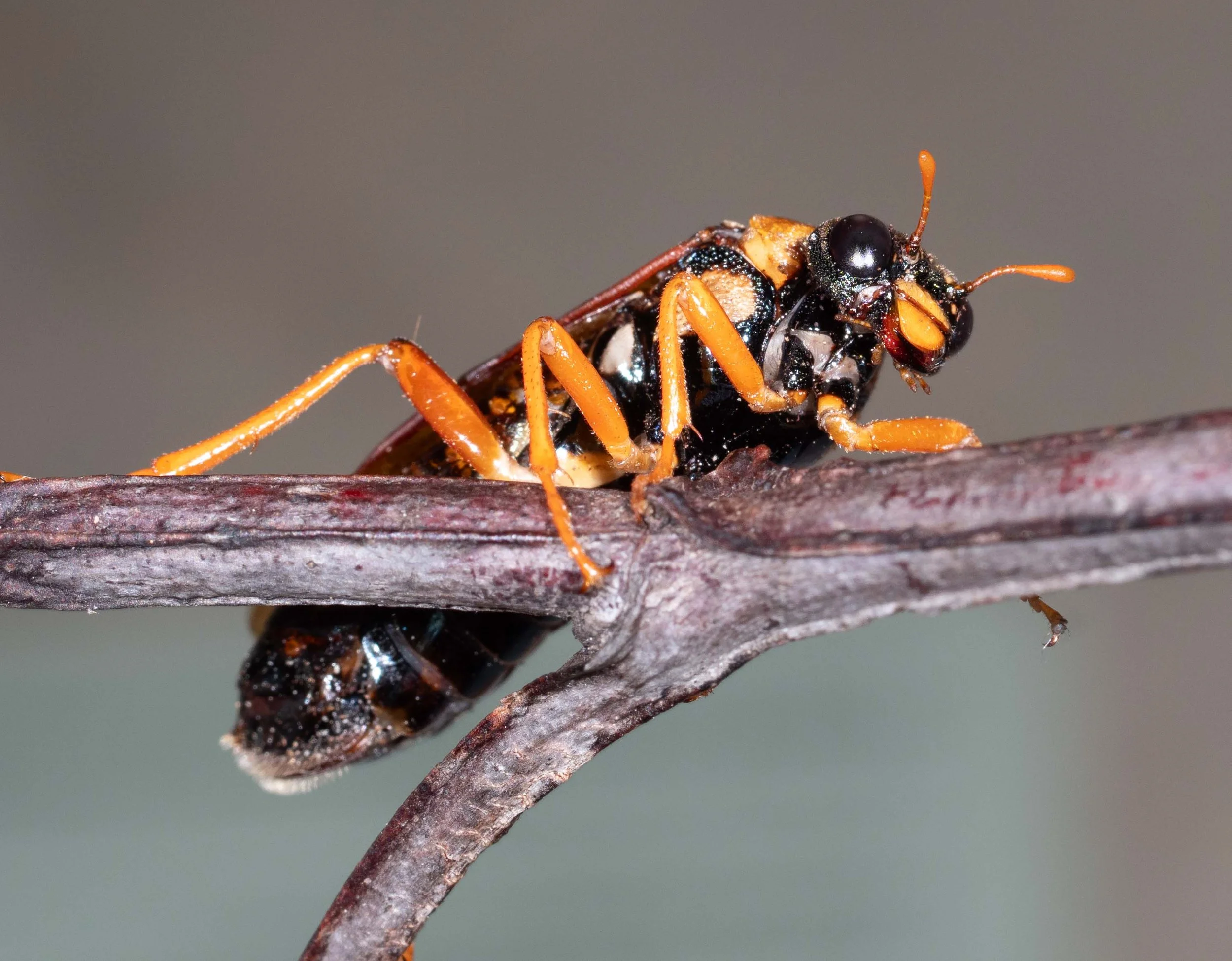
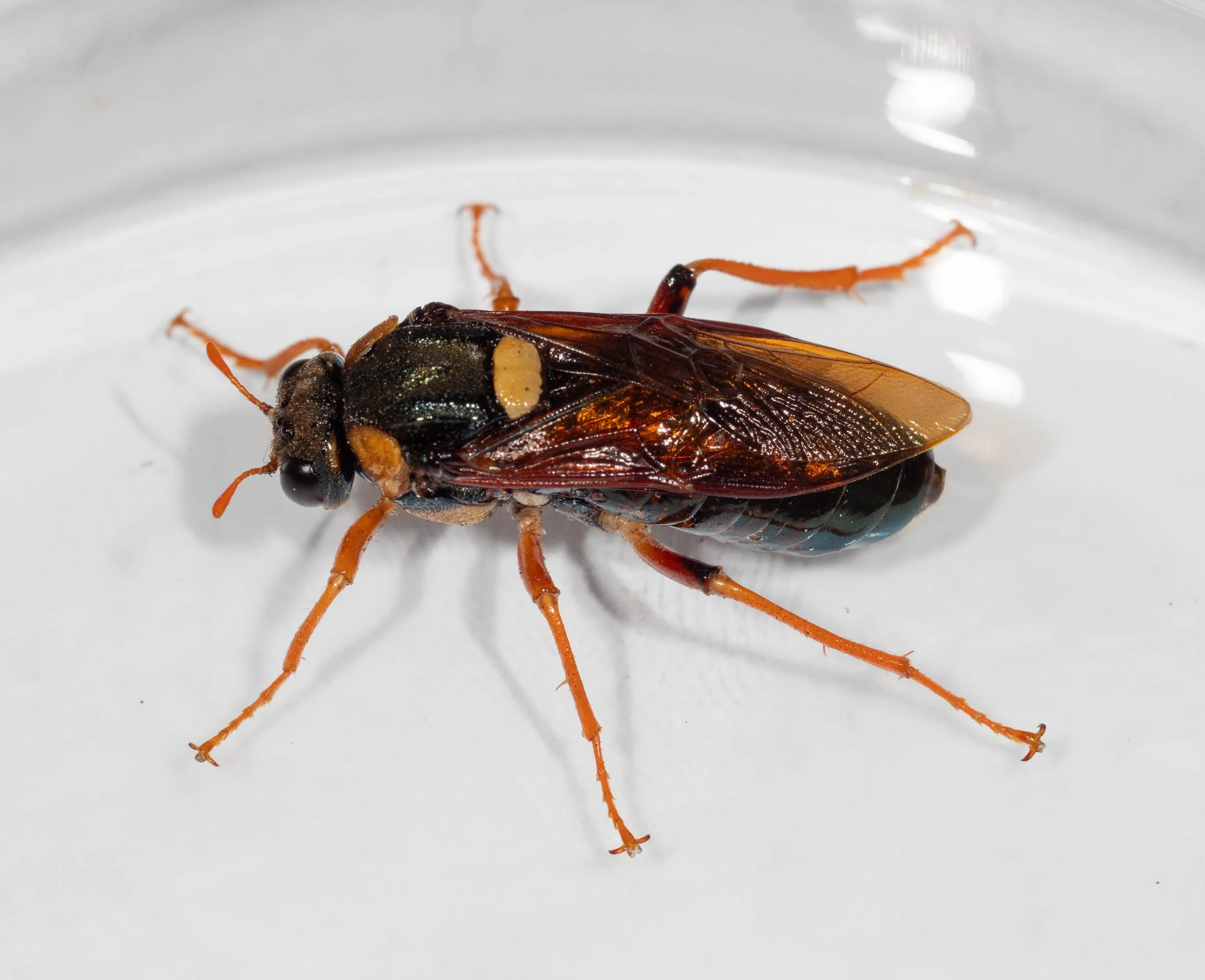
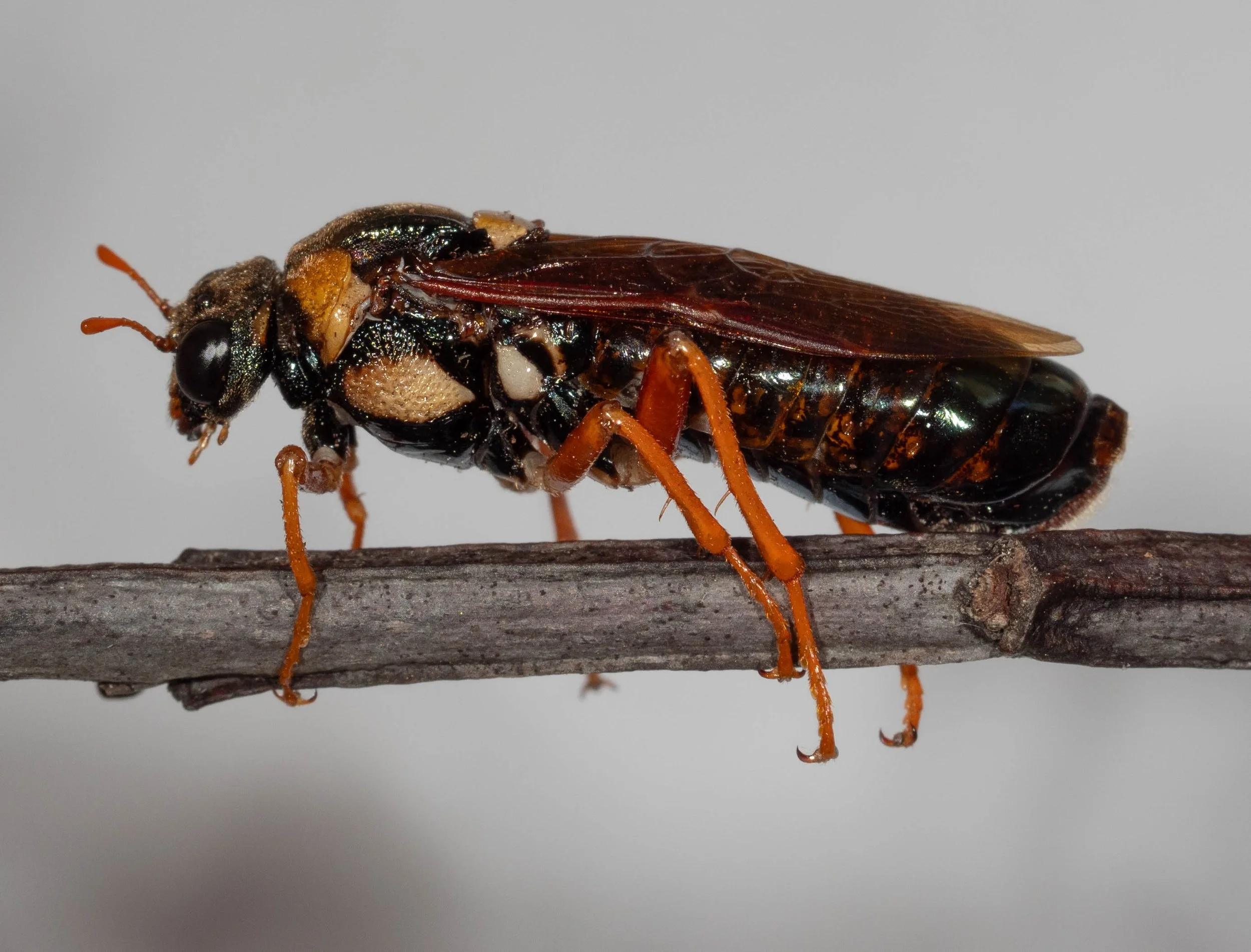
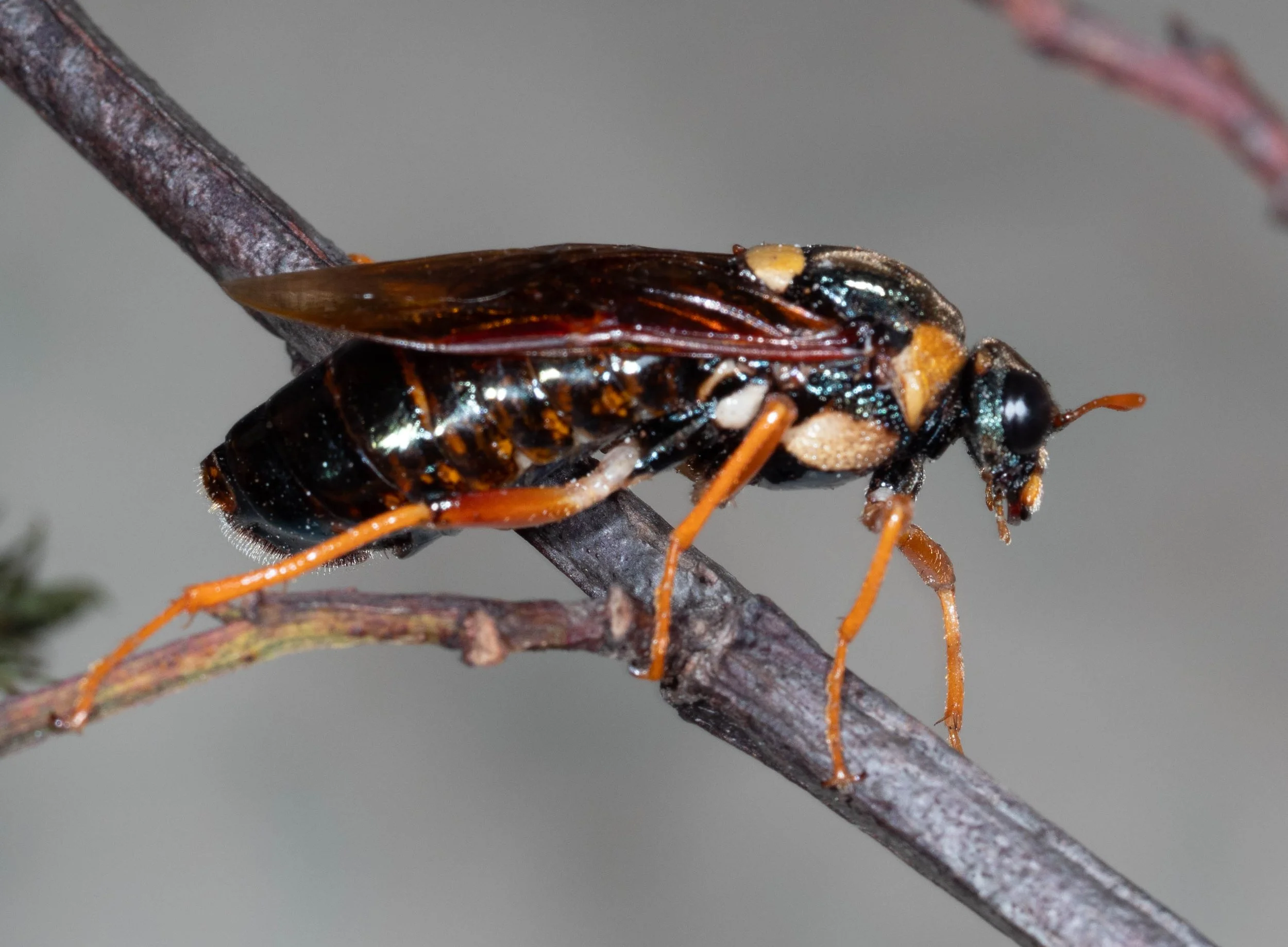
Additional images
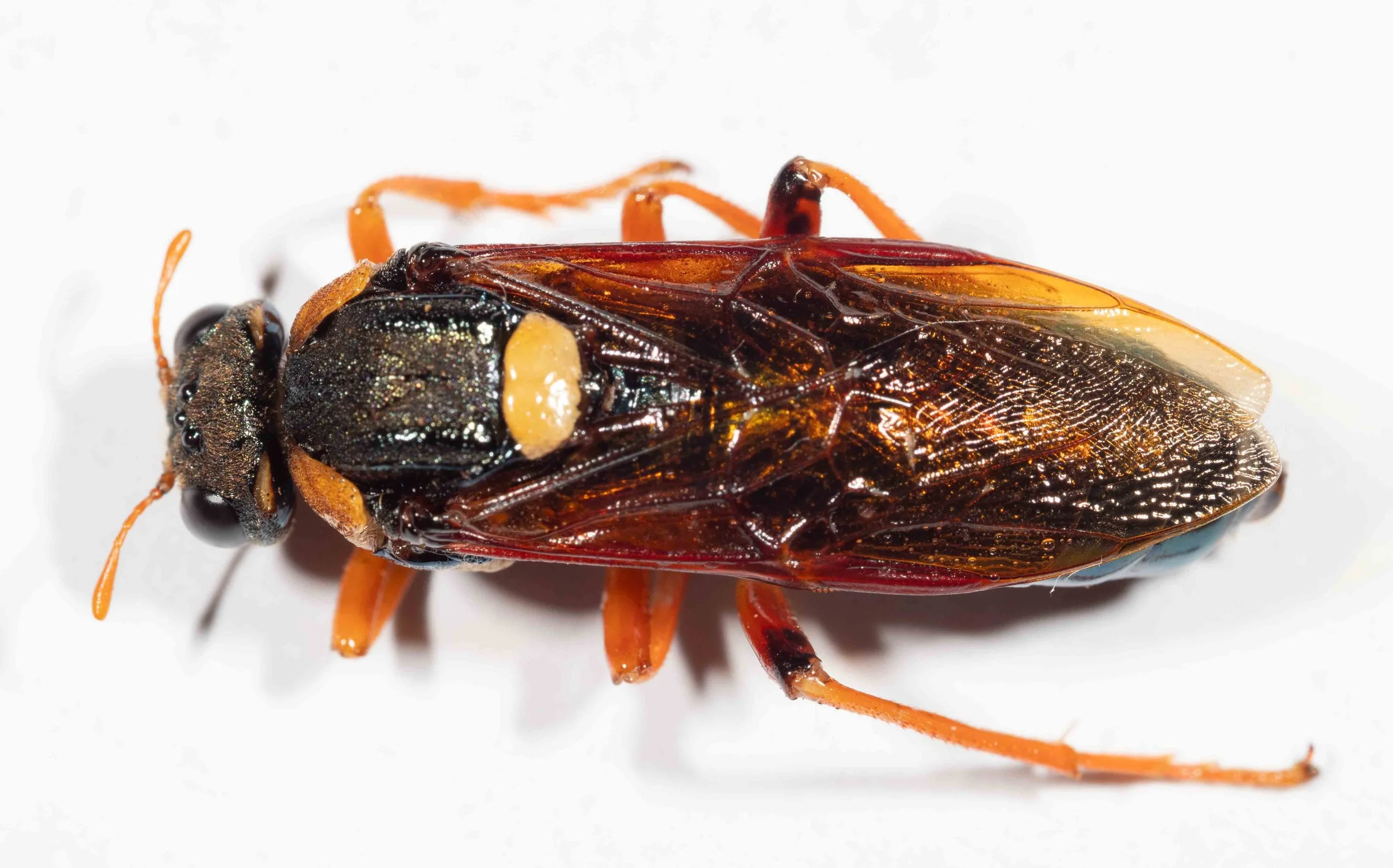
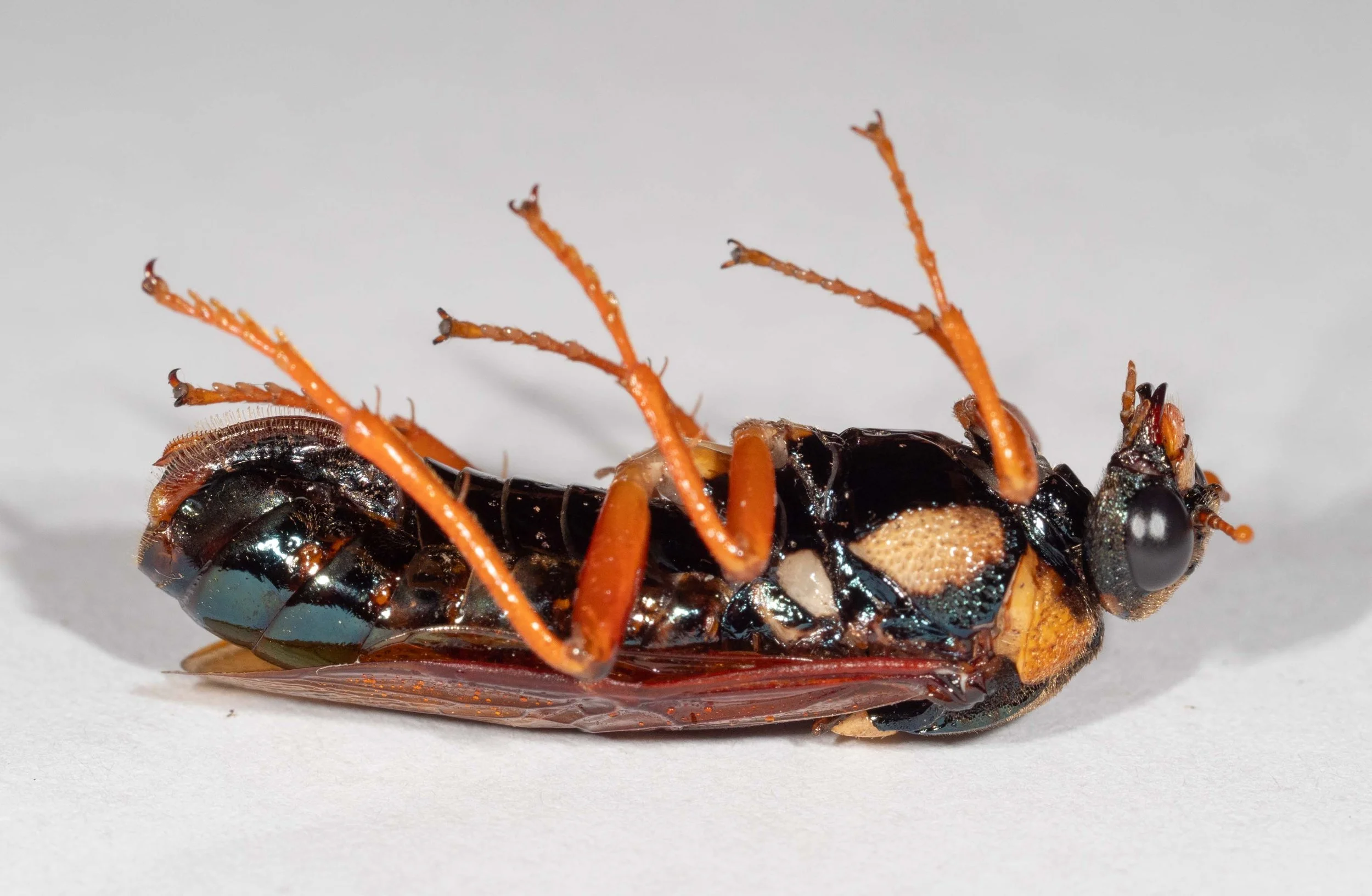
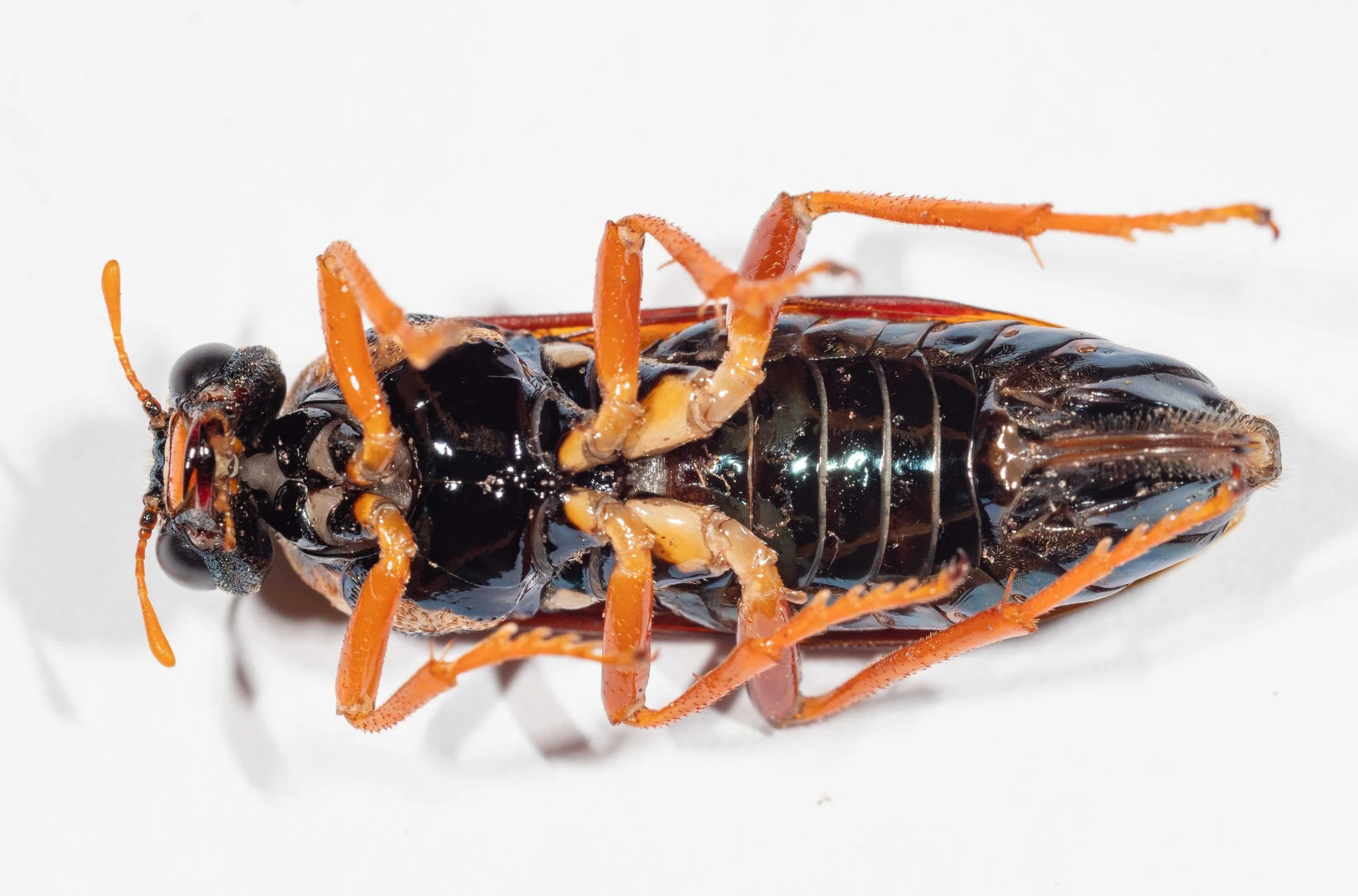
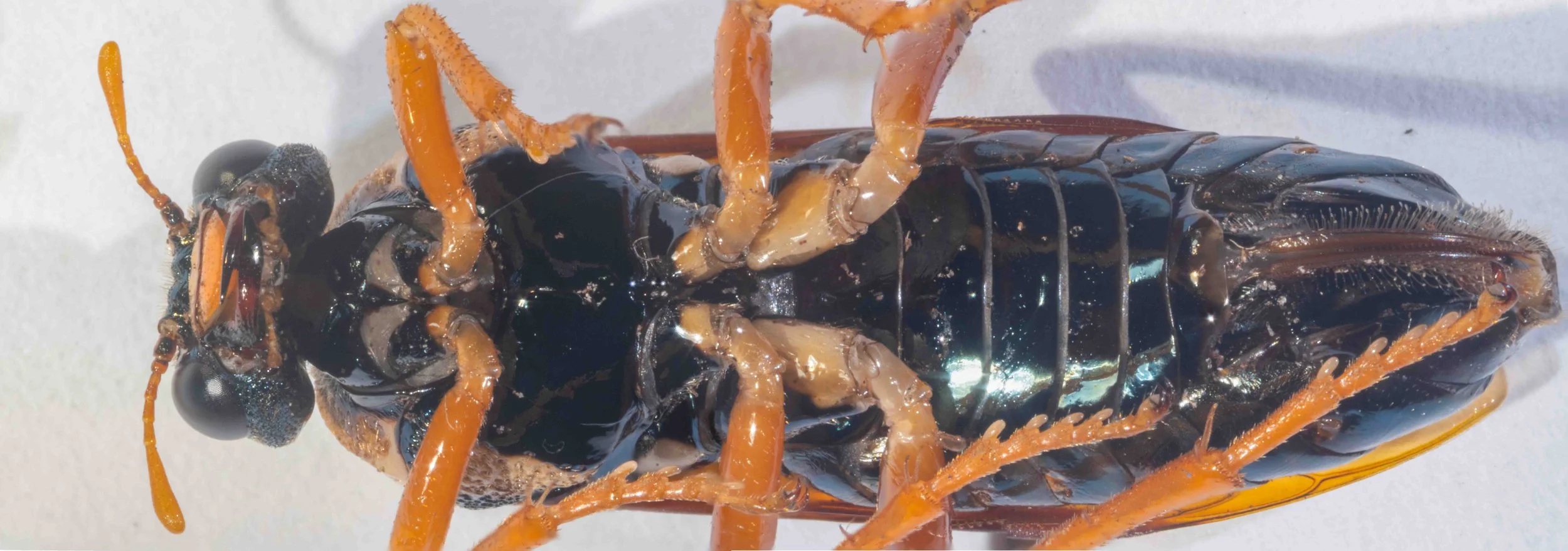
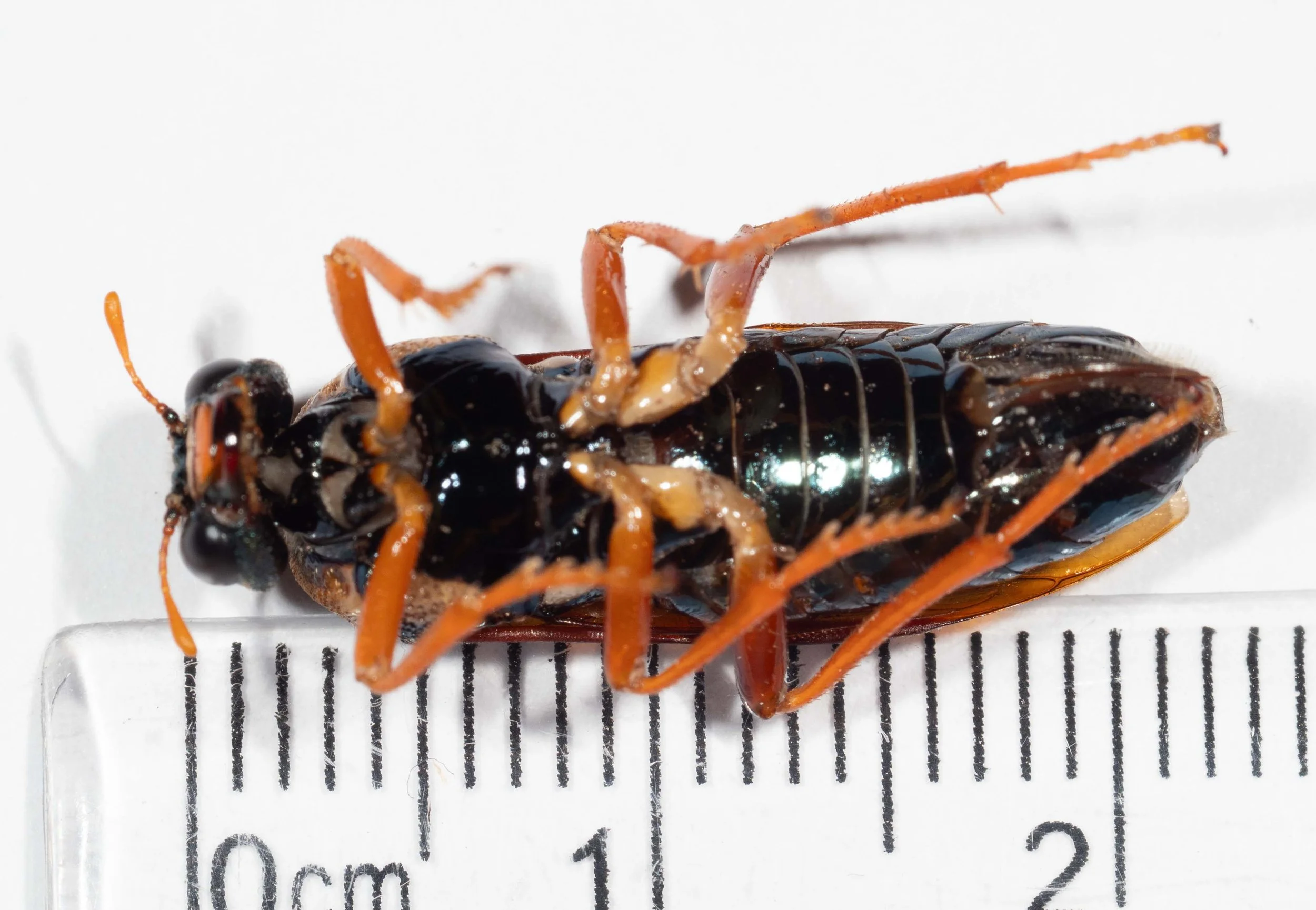
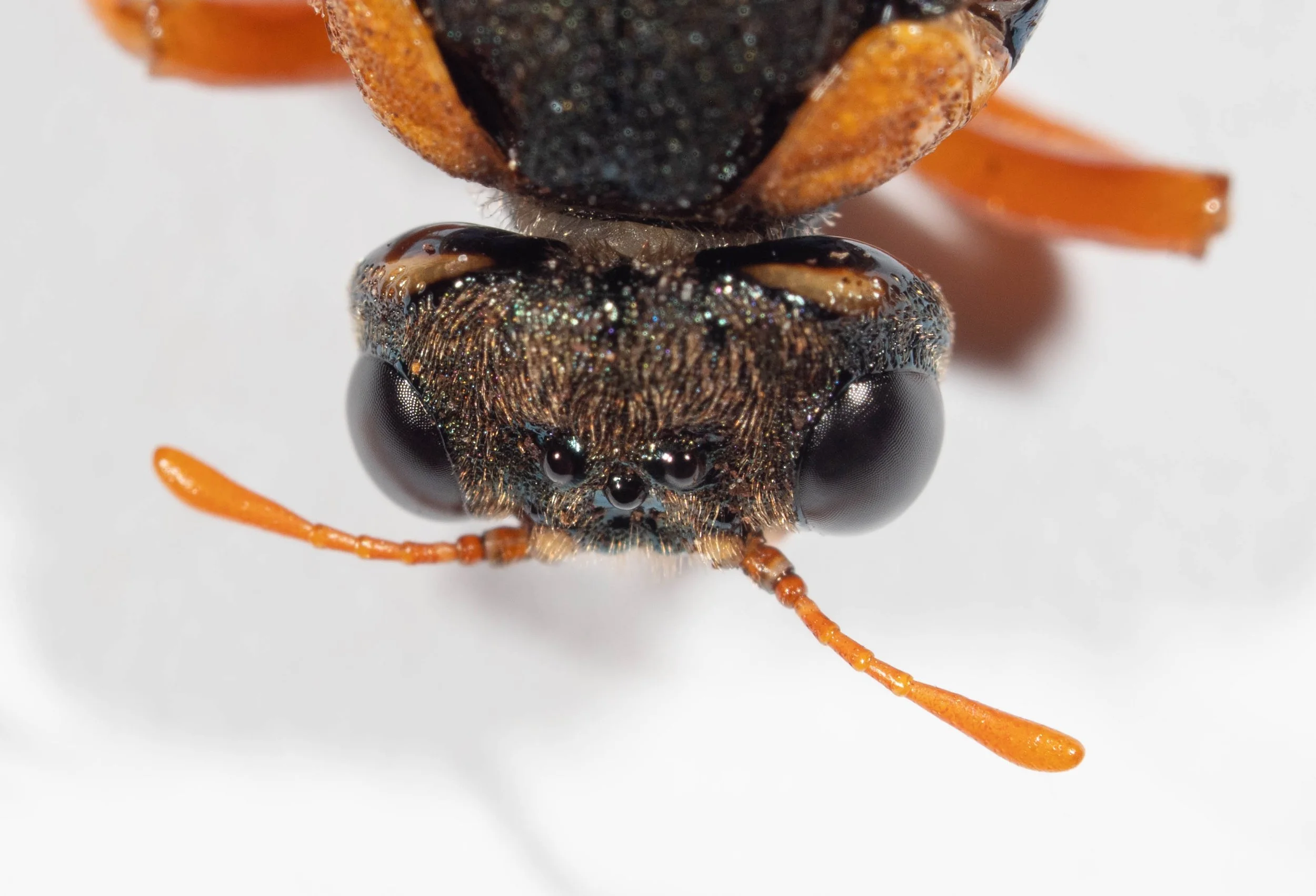
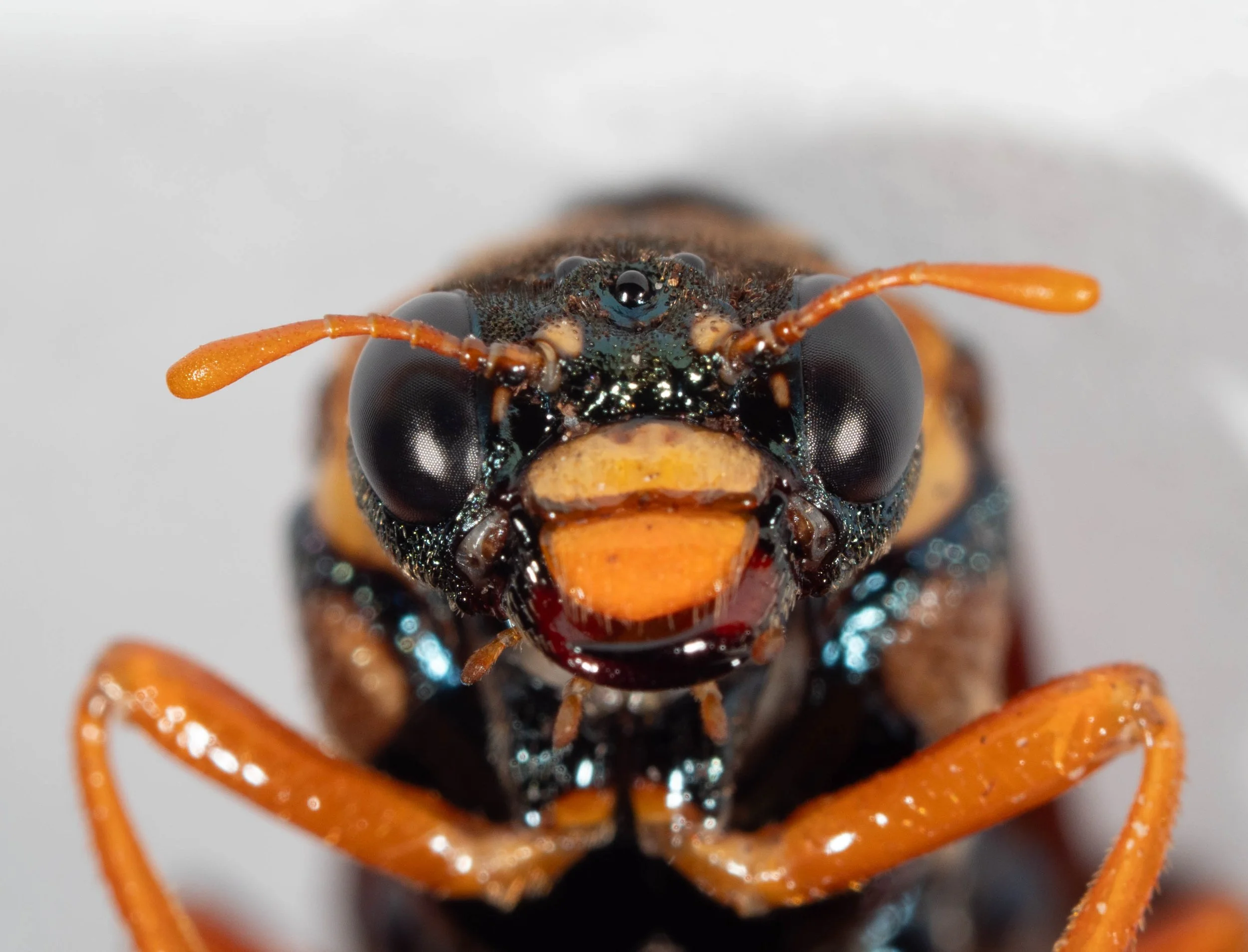
Images of pinned insect
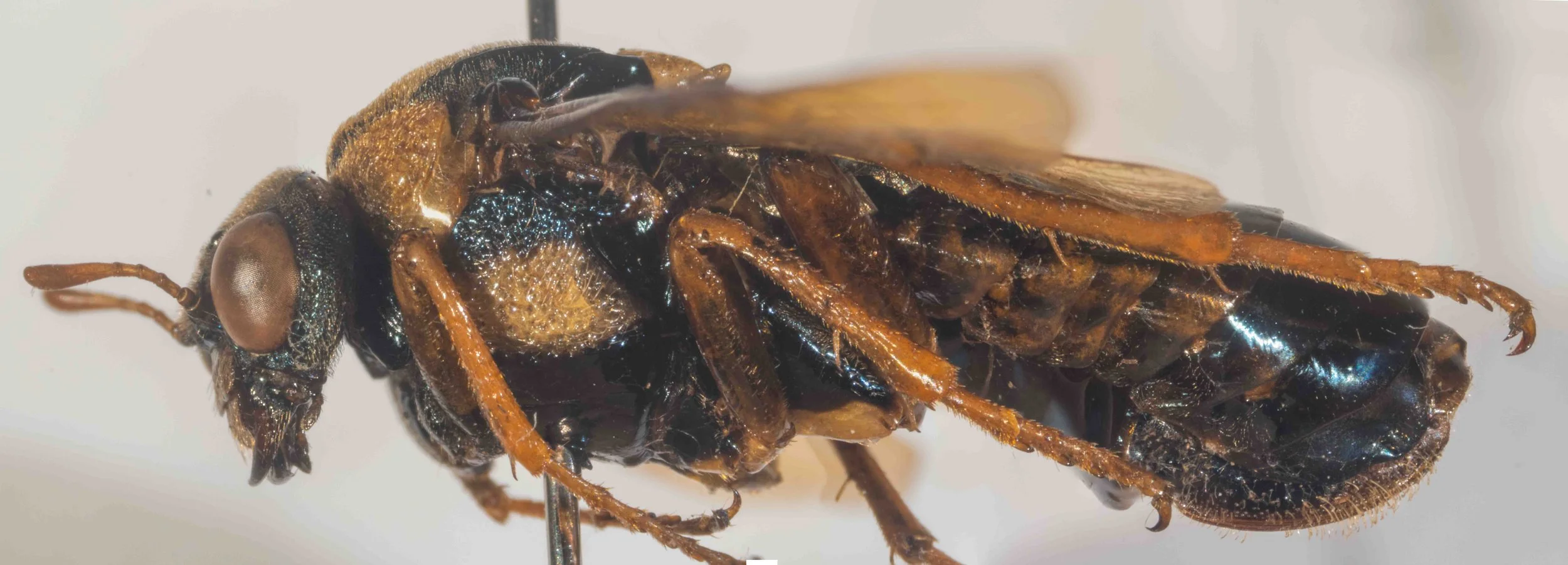
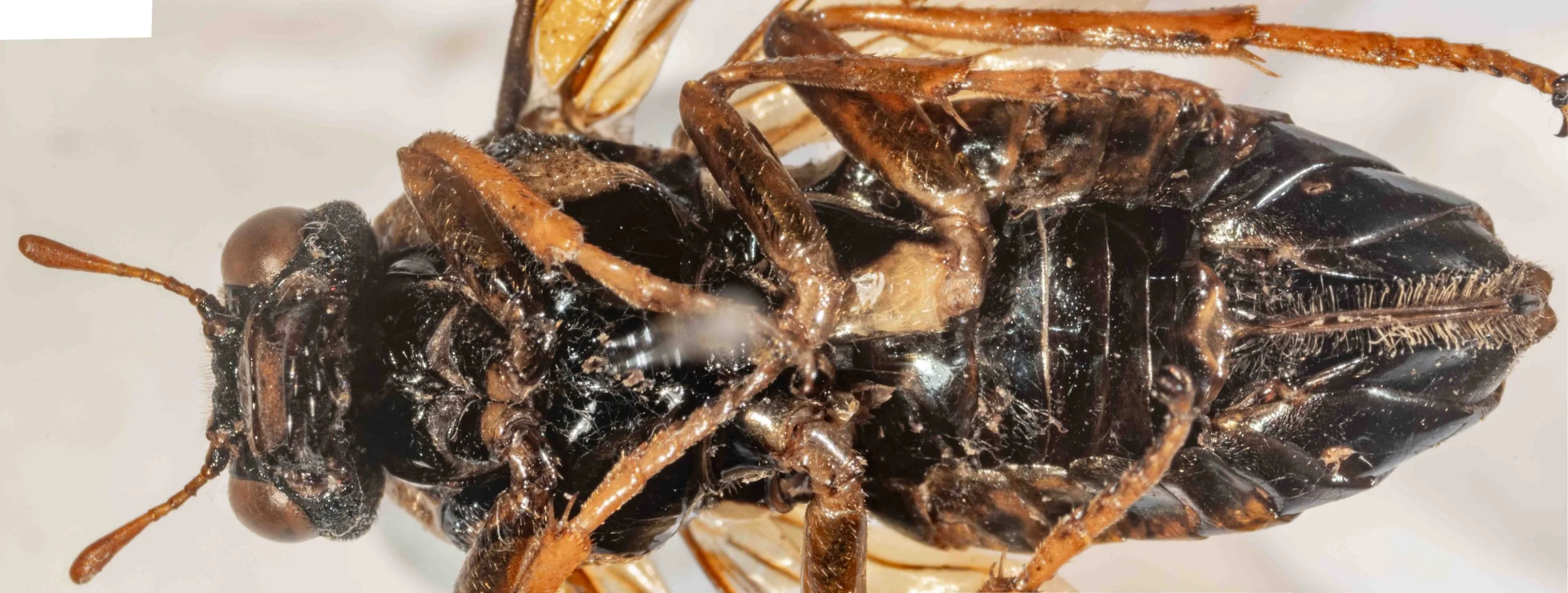
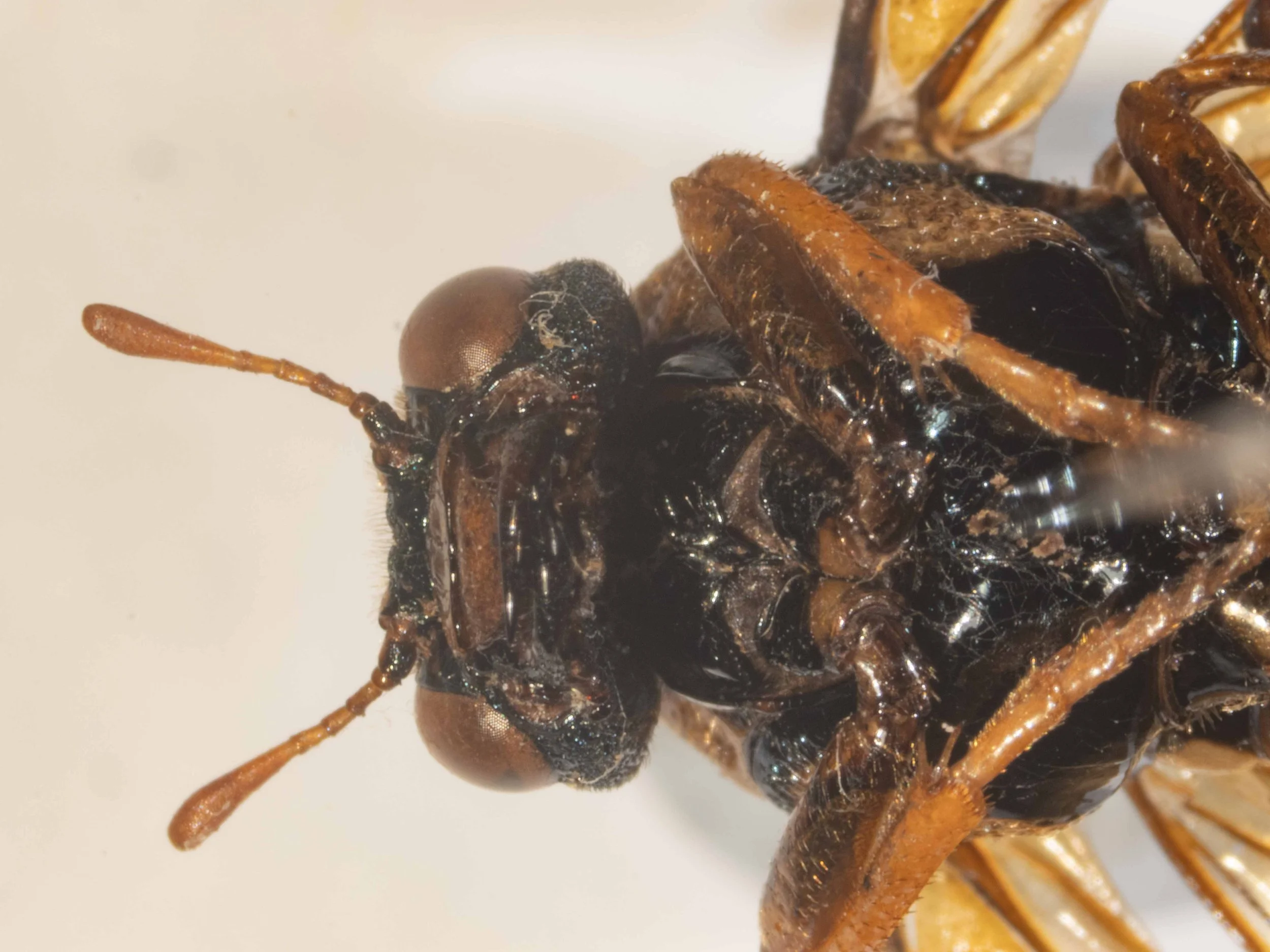
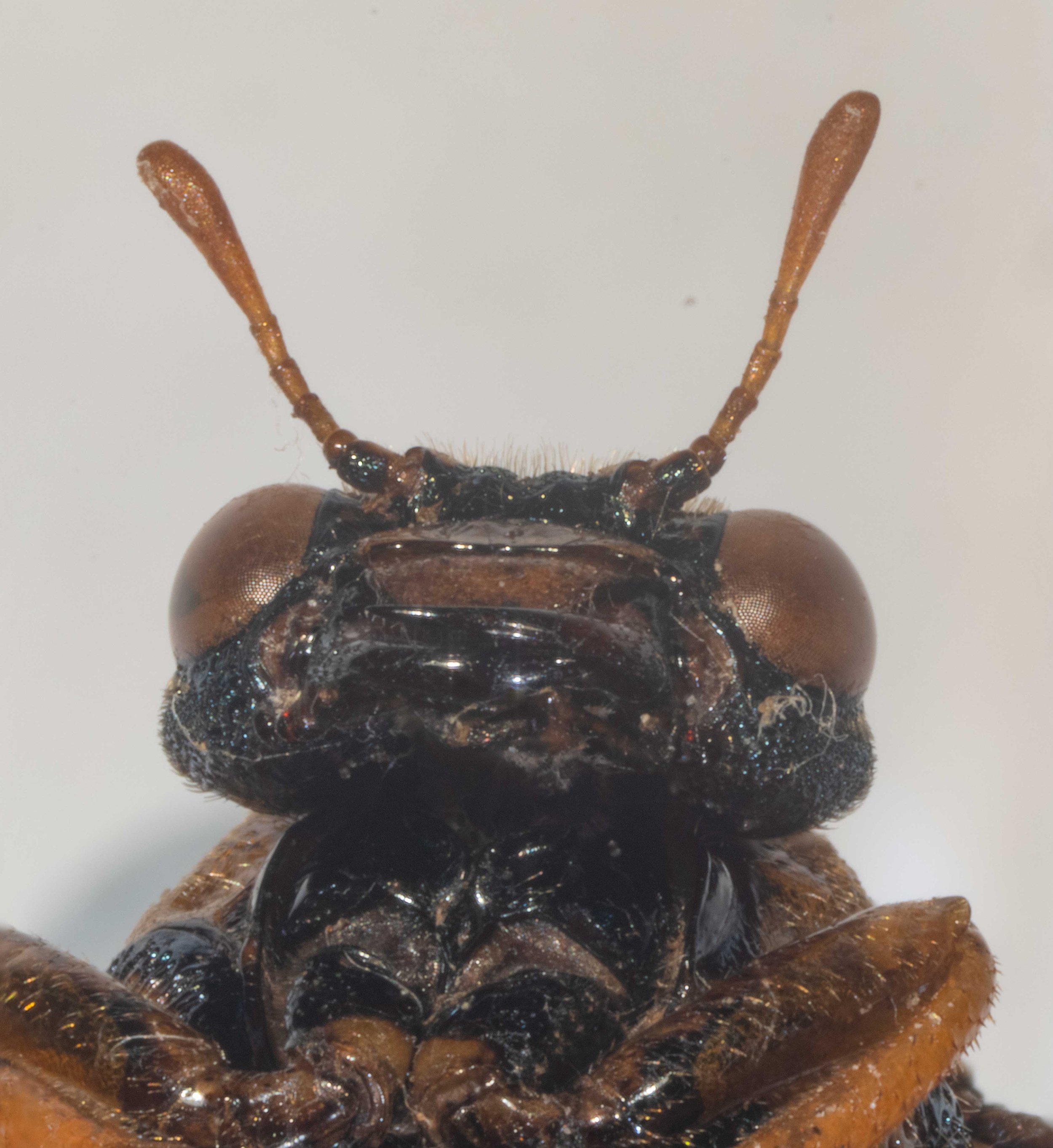
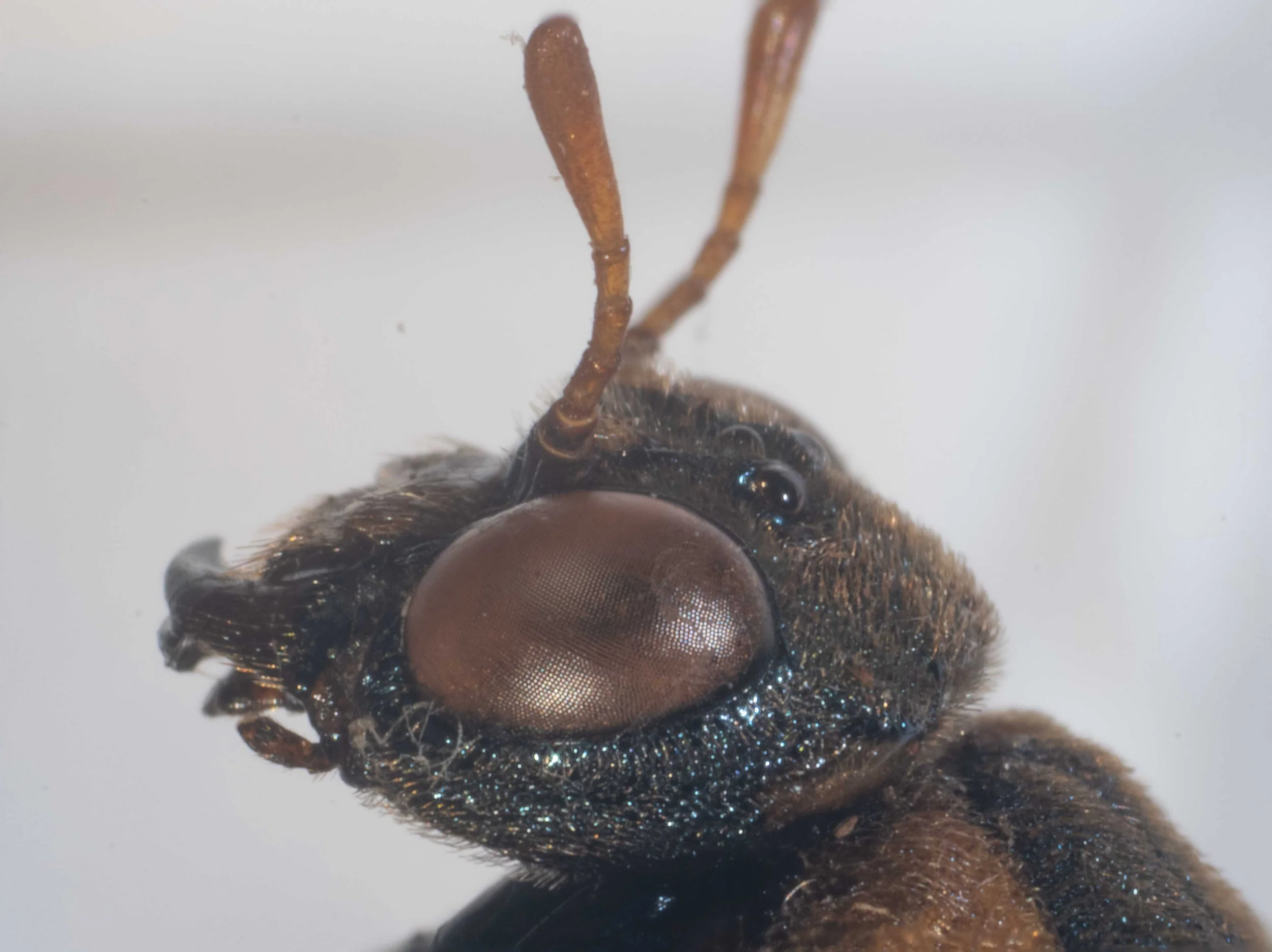
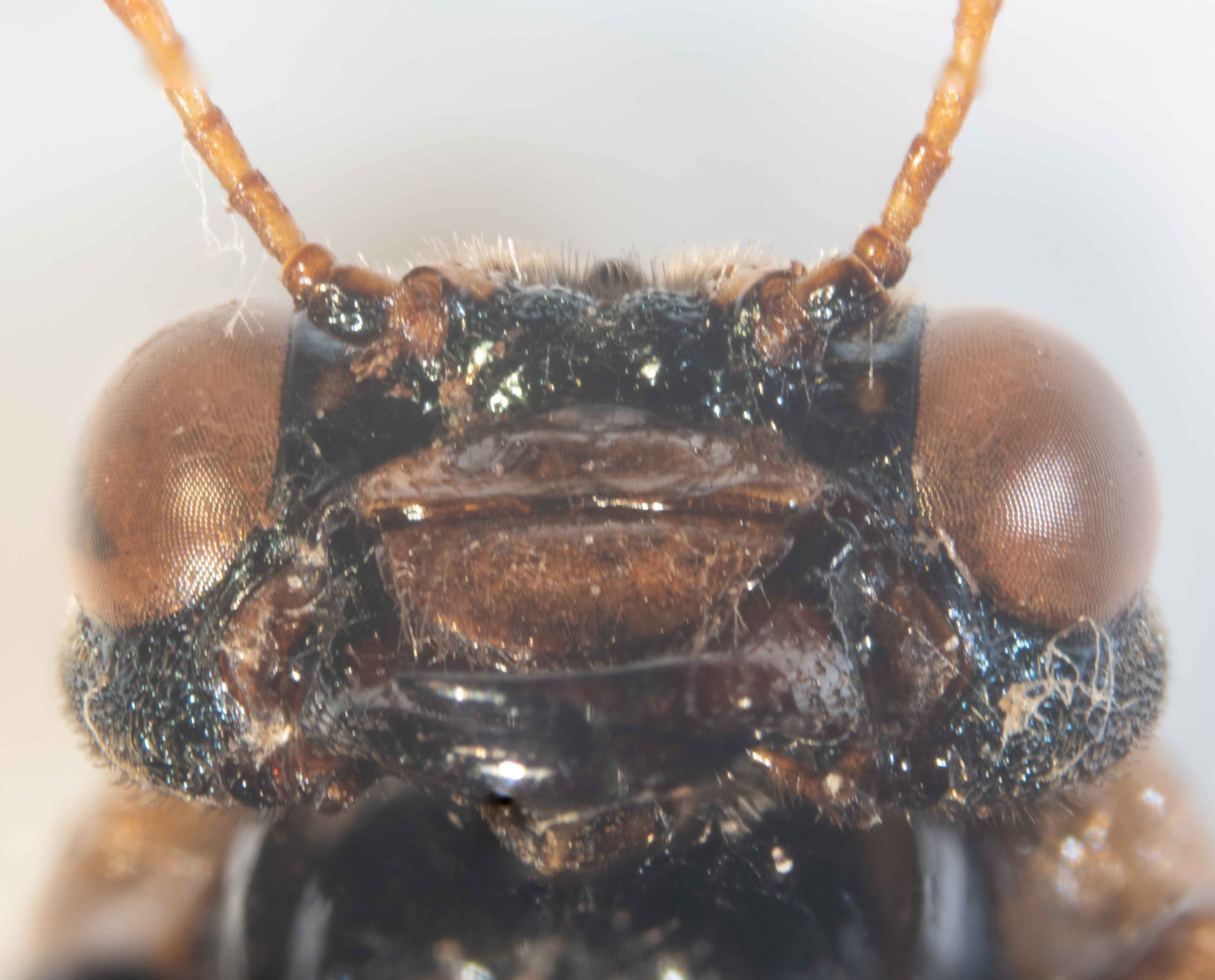
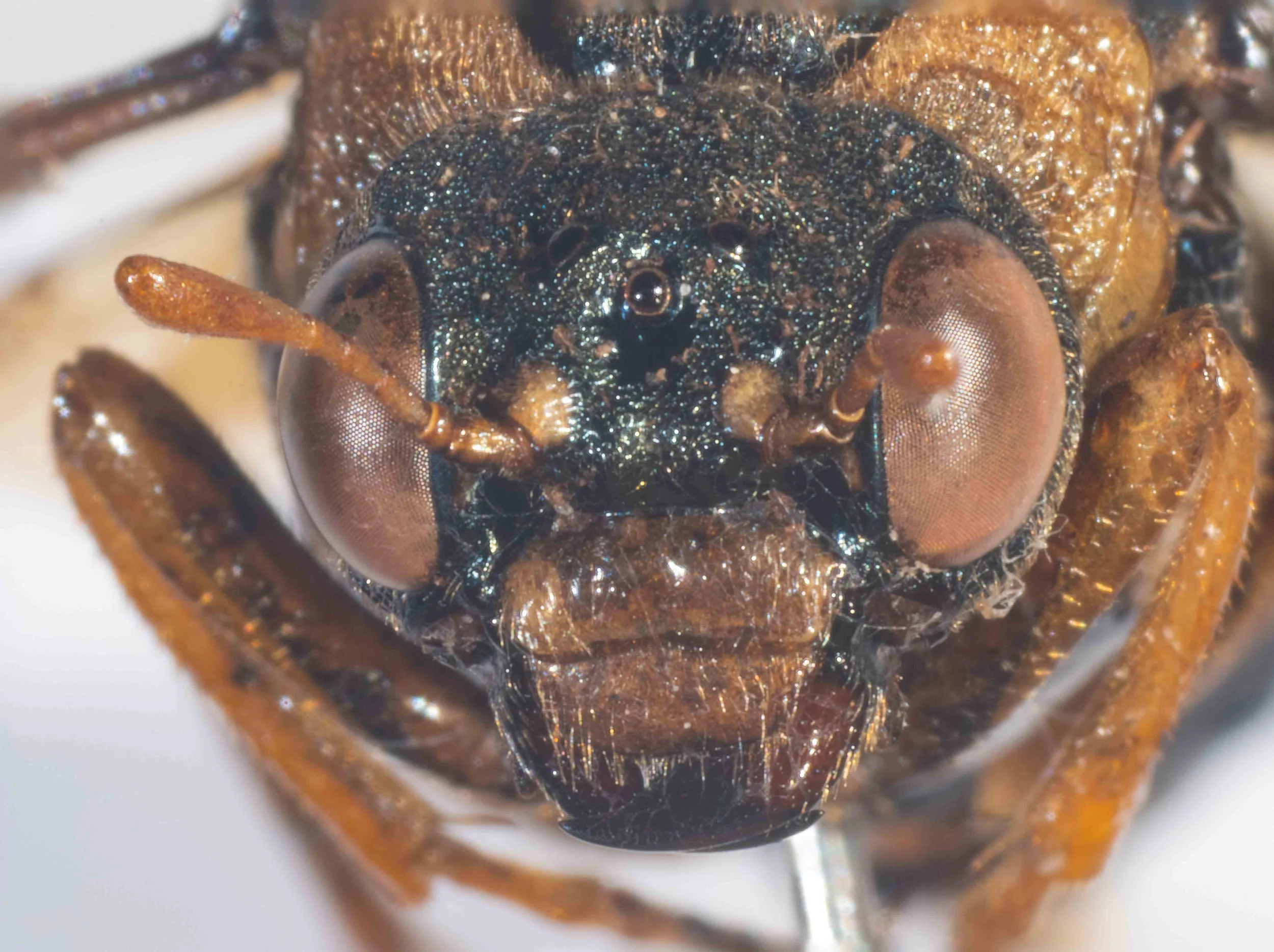
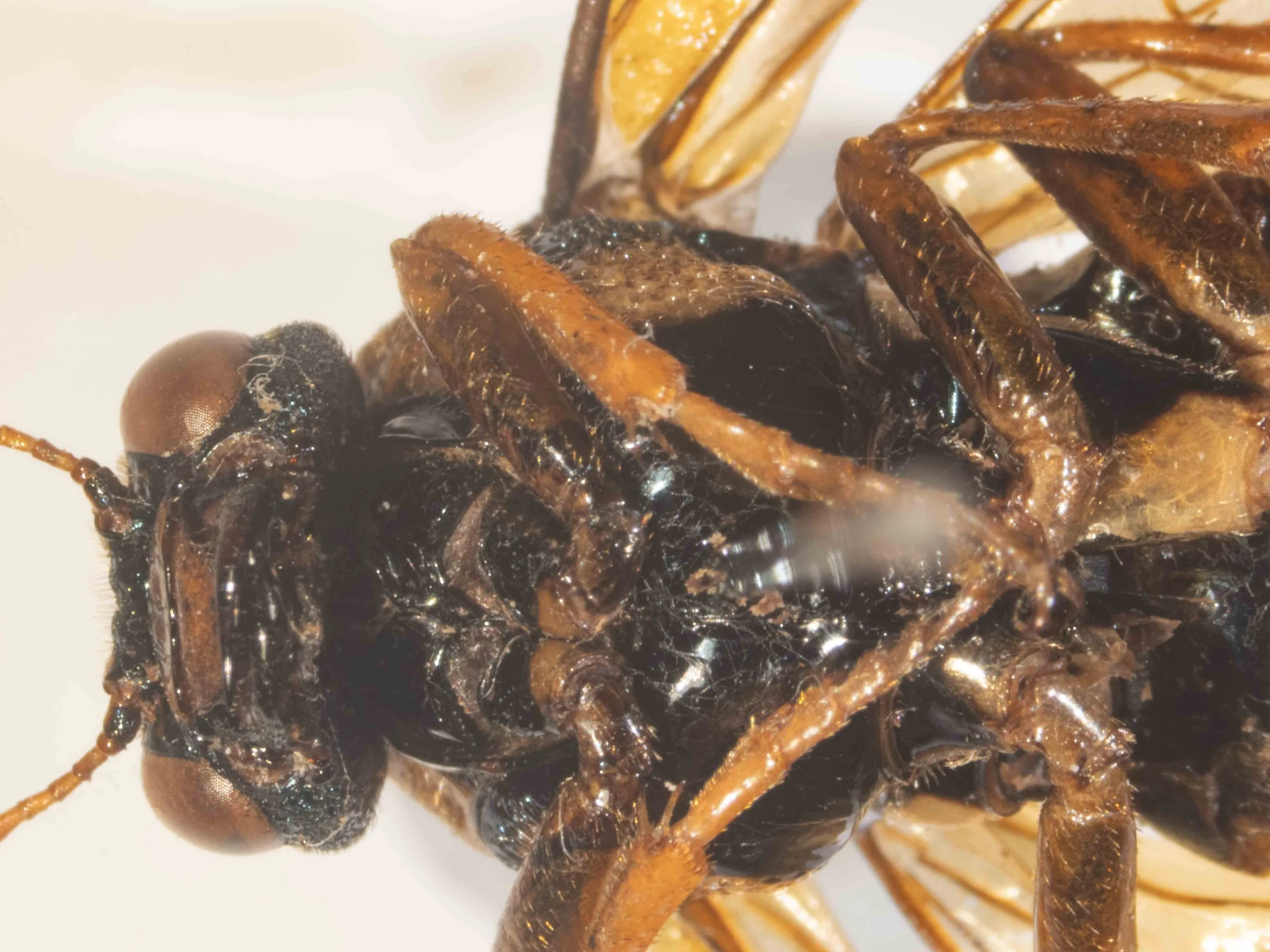
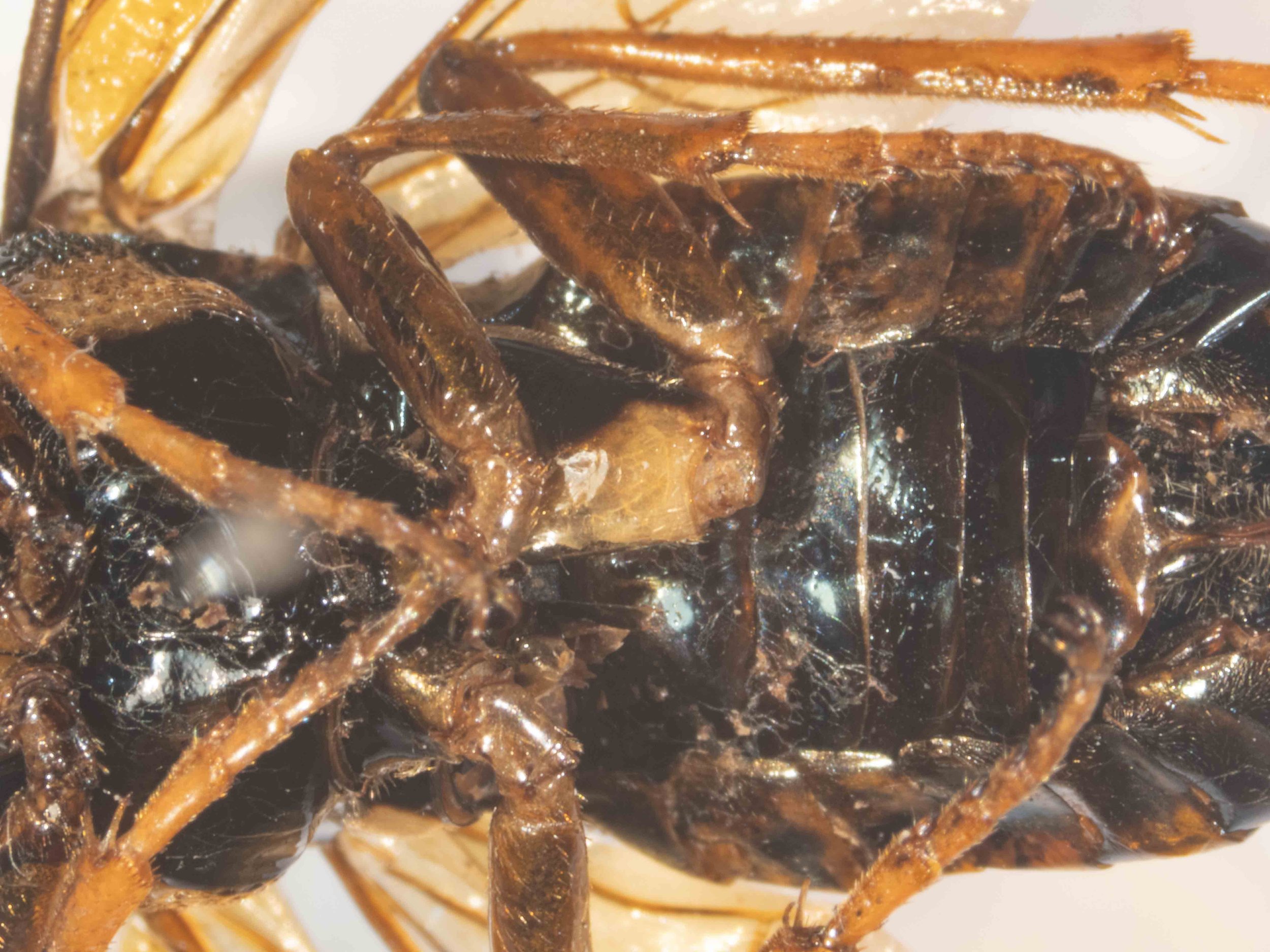
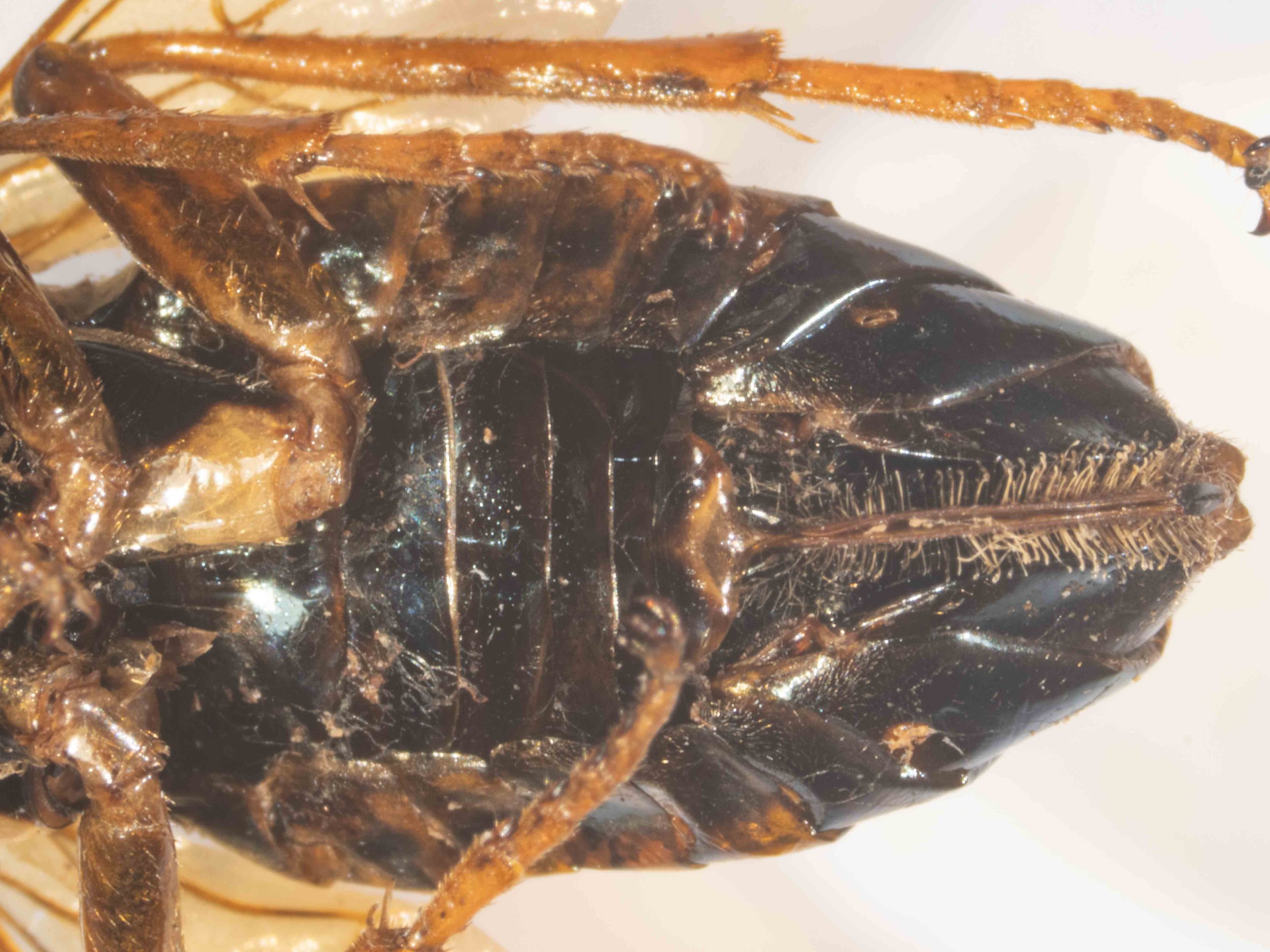
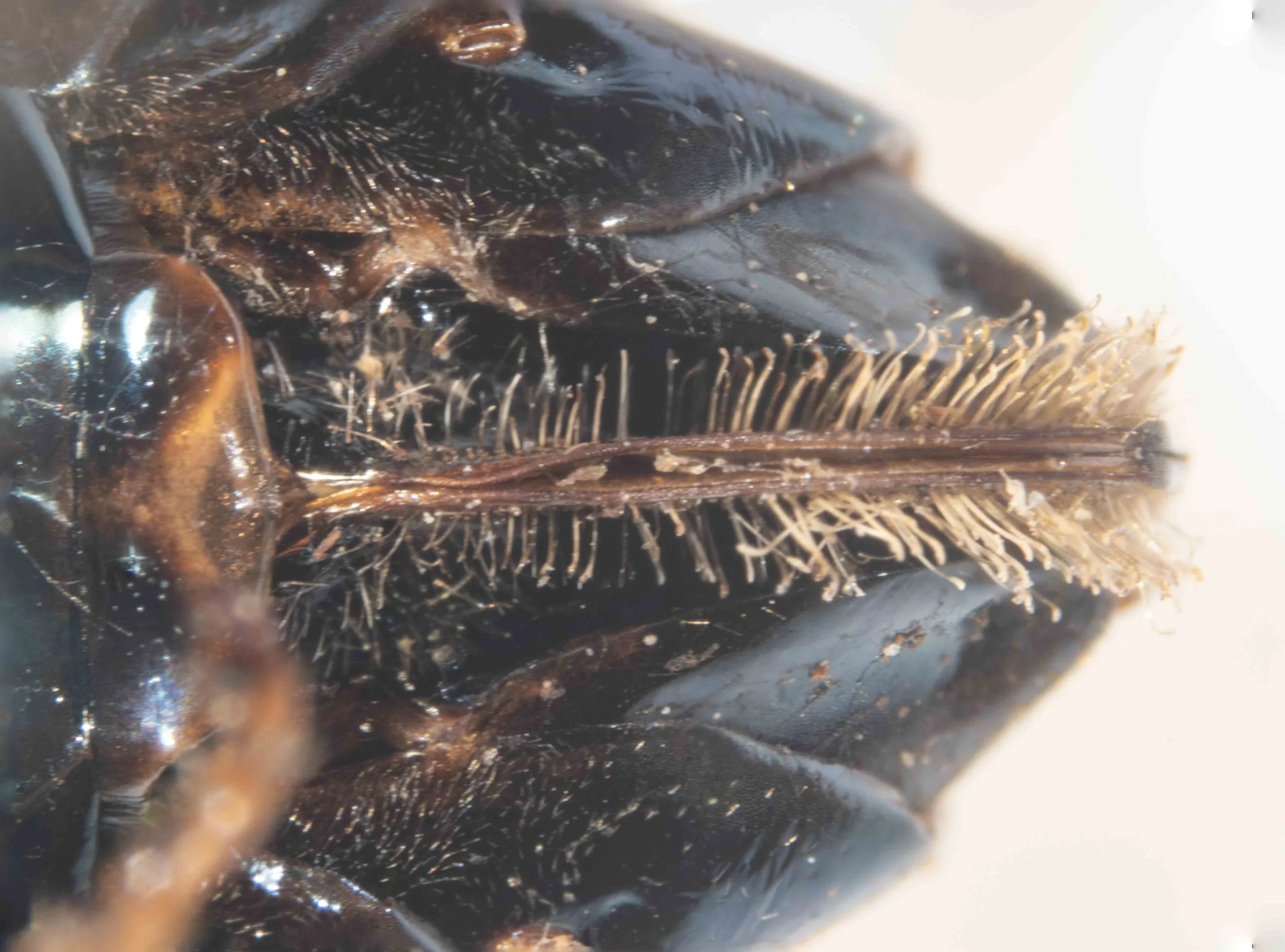
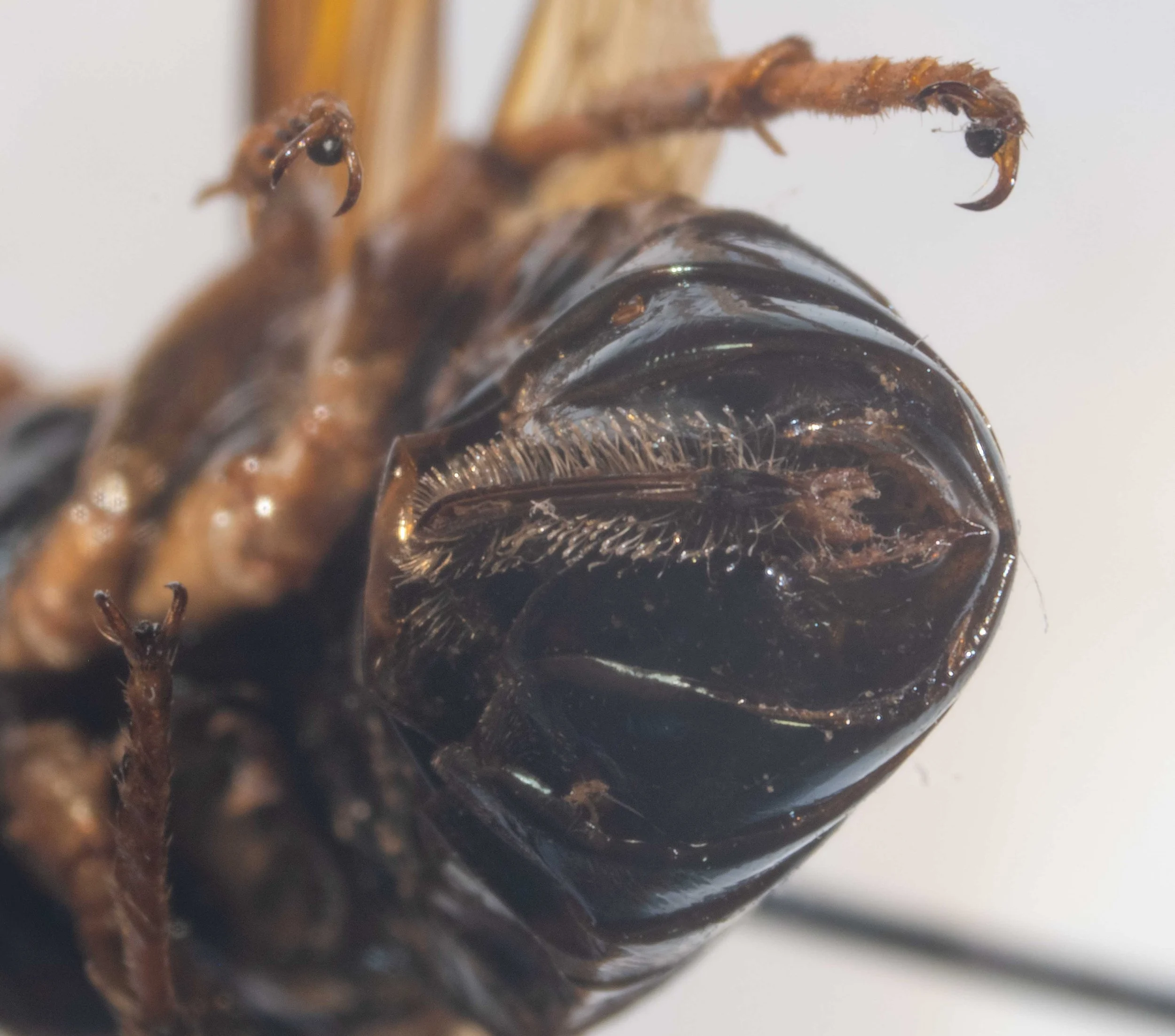
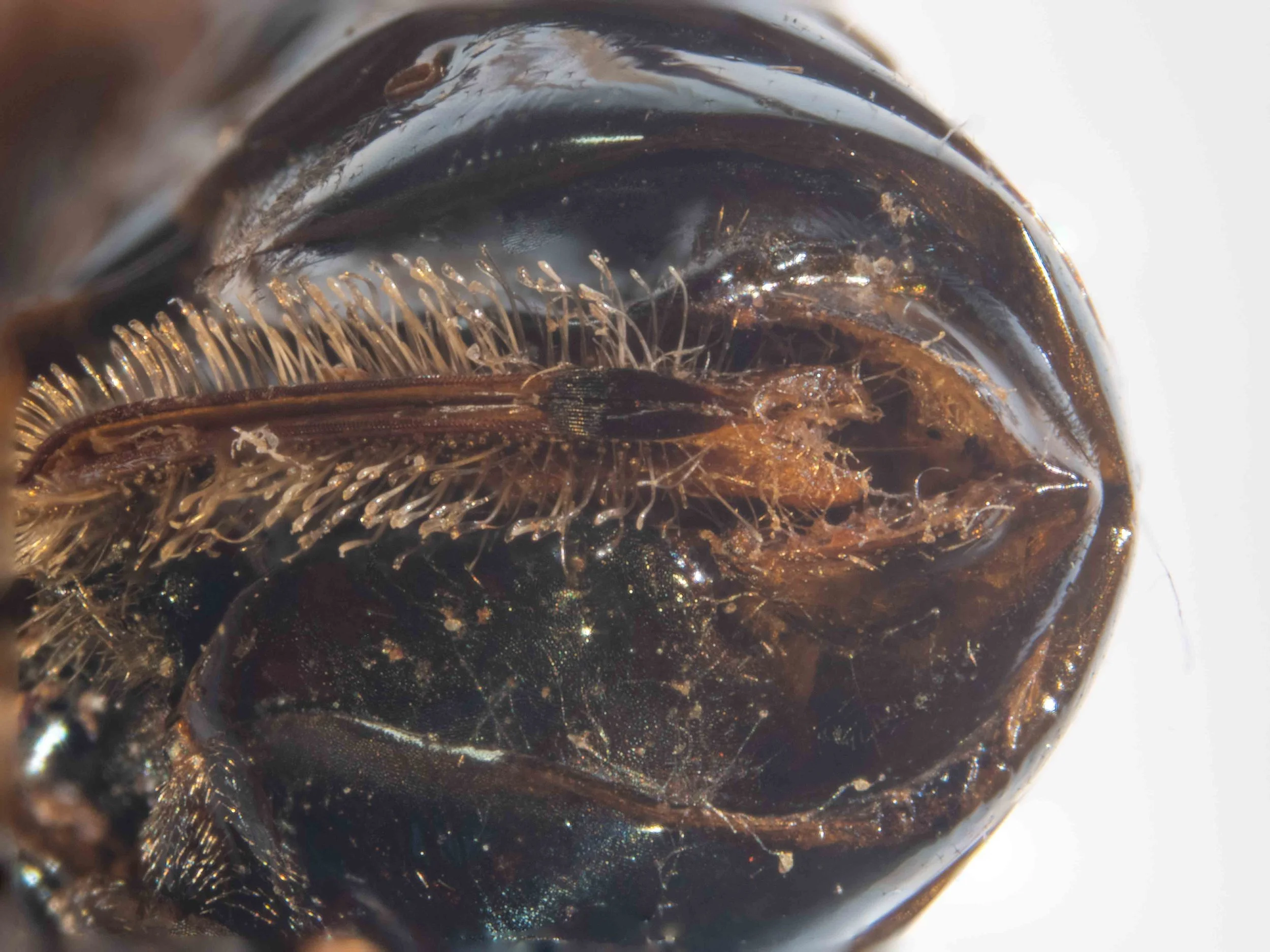
Sawsheath imaged at high magnification - shows sheath hair morphology described for Perga dorsalis (Benson, 1939; Riek, 1961)
video of #PW100 after removal from rearing tank - producing a loud distress? call
Hind leg removed from this specimen, mailed to Erinn Fagan-Jeffries on 16/3/26 for DNA barcoding. No reply received yet.
Whole pinned #PW100 specimen sent to BOLD on 9/10/2026 for DNA barcoding.
12th April 2026
Having seen no further adults since the #PW100 female eclosed on 17th February, I decided to search for pupae in the tank. I removed soil by hand around the site where the larvae had buried themselves and found a compact mass of puparia, tightly joined to one another.
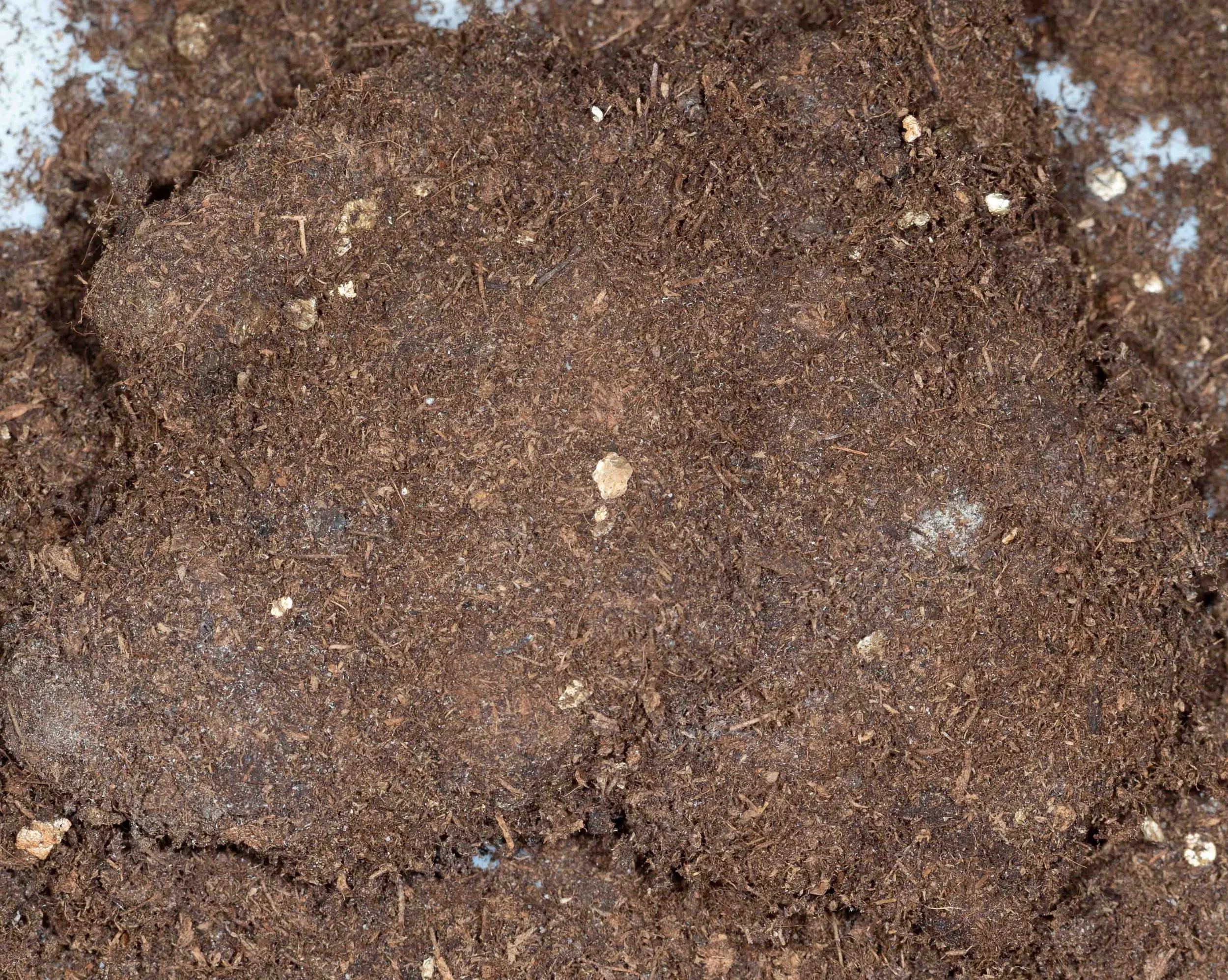
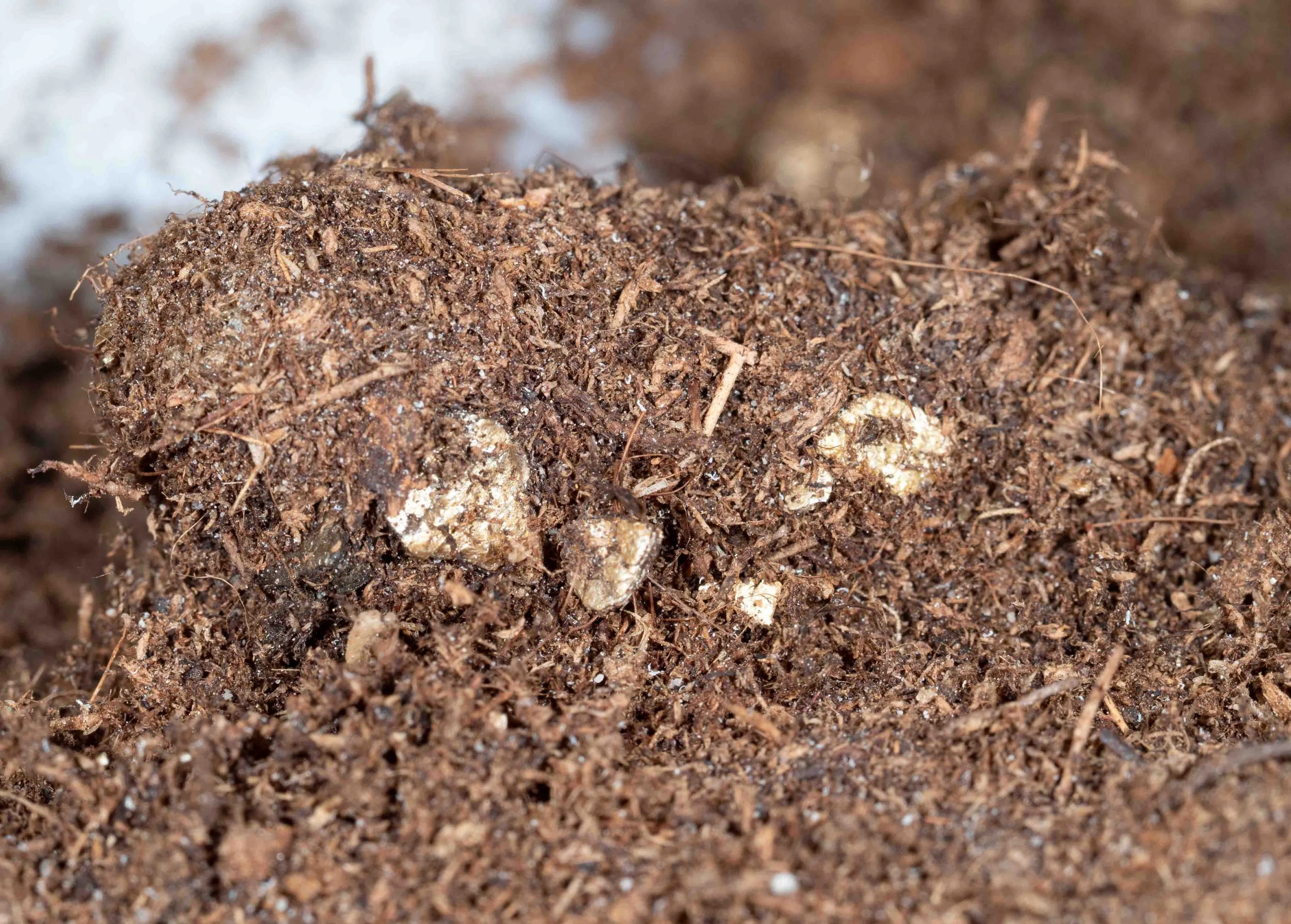
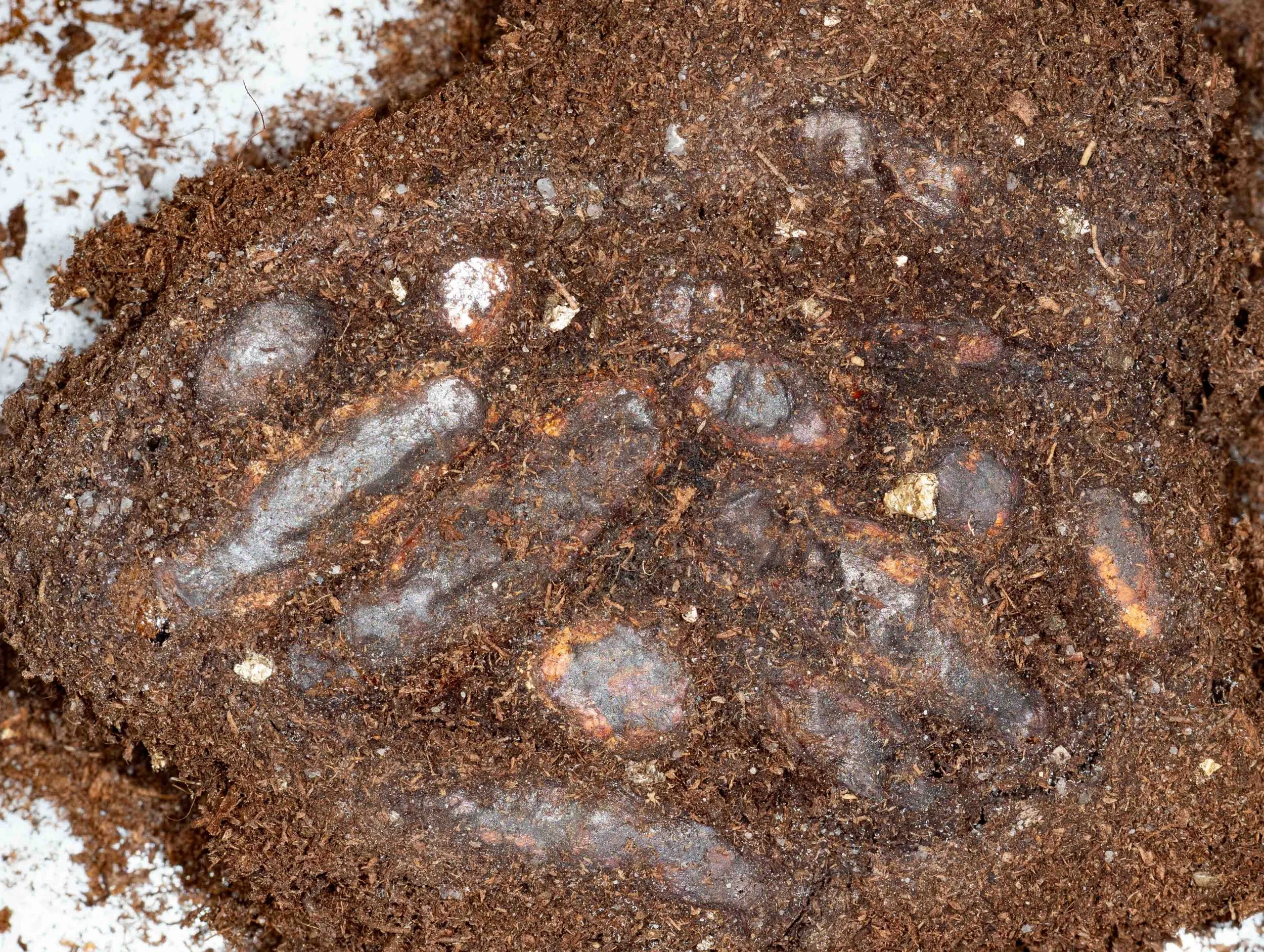
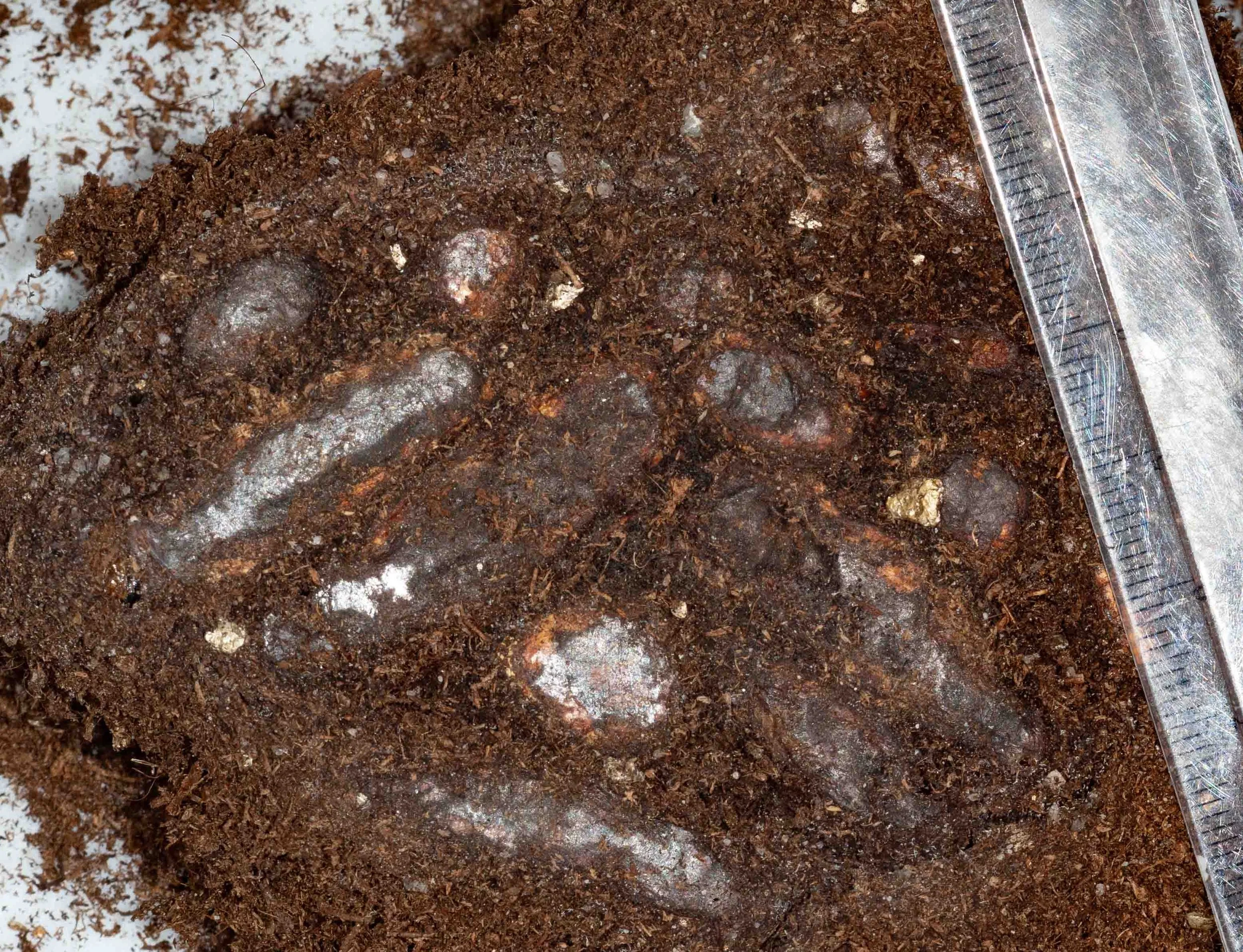
I presume these puparia contain prepupae which have entered diapause. Carne (1962) states that “a variable proportion of a clutch may remain in diapause for up to 4 years. The prepupa is substantially smaller than the final instar larva and differs in its bluish grey colour, lack of body hairs, abdominal process, and an oesophageal diverticulum.
The prepupal stage is followed after diapause by the subpupal stage. This is characterised by atrophy of the legs, by relaxation of the body muscles so that the insect lies straight instead of curved by a general lightening of body colour, and by cessation of response to pressure stimuli. The stage persists for 7-10 days at 21°C before pupation supervenes.
The pupa lies head uppermost in its cocoon. When first formed it is pale bluish grey but rapidly darkens as pigmentation of the underlying adult structures proceeds. Emergence of the adult occurs on the 12-17th day at 21°C. Pupae can be sexed rapidly, as the form of the adult genitalia is closely simulated by the folds of the pupal skin.”
Cluster of puparia placed in terrarium.
References:
Benson, R.B. 1939. “A revision of the Australian sawflies of the genus Perga Leach, sens. lat. (Hymenoptera, Symphyta)”. The Australian Zoologist 9: 324-357. “ Biodiversity Heritage Library link.
Carne, P.B. 1962. “The characteristics and behaviour of the saw-fly Perga affinis affinis (Hymenoptera). Australian Journal of Zoology 10: 1-34.
Riek, E. F. 1961. “The distribution and inter-relationships of Perga affinis Kirby and Perga dorsalis Leach (Hymenoptera, Symphyta)”. Proc. Linnean Soc. NSW 86, 237-240. Biodiversity Heritage Library link.
This is a workbook page … a part of our website where we record the observations and references used in making species identifications. The notes will not necessarily be complete. They are a record for our own use, but we are happy to share this information with others.