Workbook
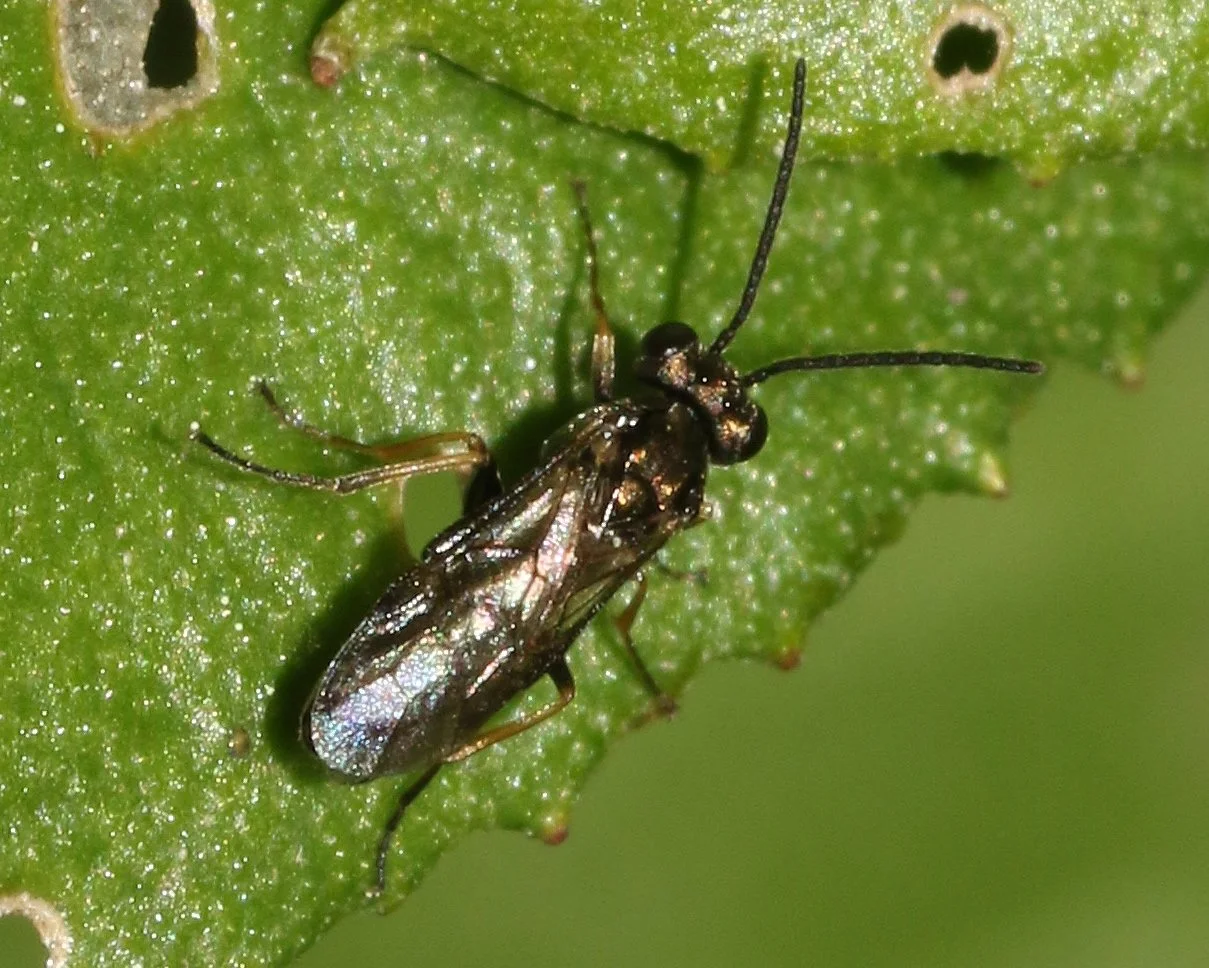
Detailed description of an adult female Diphamorphos apicalis, collected by Matt Campbell at his property at Jerralong Junction VIC, near Morwell. This is the first iNaturalist observation of this species.
Matt found that this tiny sawfly associates closely and apparently preferentially with Goodenia ovata, resting on the leaves of this plant. A cluster of a large number of individuals was observed on several occasions. When disturbed, they flew off in a swarm before settling on a nearby Goodenia ovata plant. They always chose that species and were never seen on any other plants in the area.
Living insect shown in this iNaturalist observation.
Following images show the living and euthanised insect.
Notes accompanying these images were taken from the original description of this species by Forsius (1927) as well as Matt’s iNaturalist observations. I have noted in square brackets [] where features of this insect differ from the Forsius description. The holotype is in the South Australian Museum, Adelaide. I plan to ask Ben Parslow the SAMA insect curator to send me photos of that specimen for comparison with the present insect.
Features of the 4 described Diphamorphos spp. are compared on this notes page.
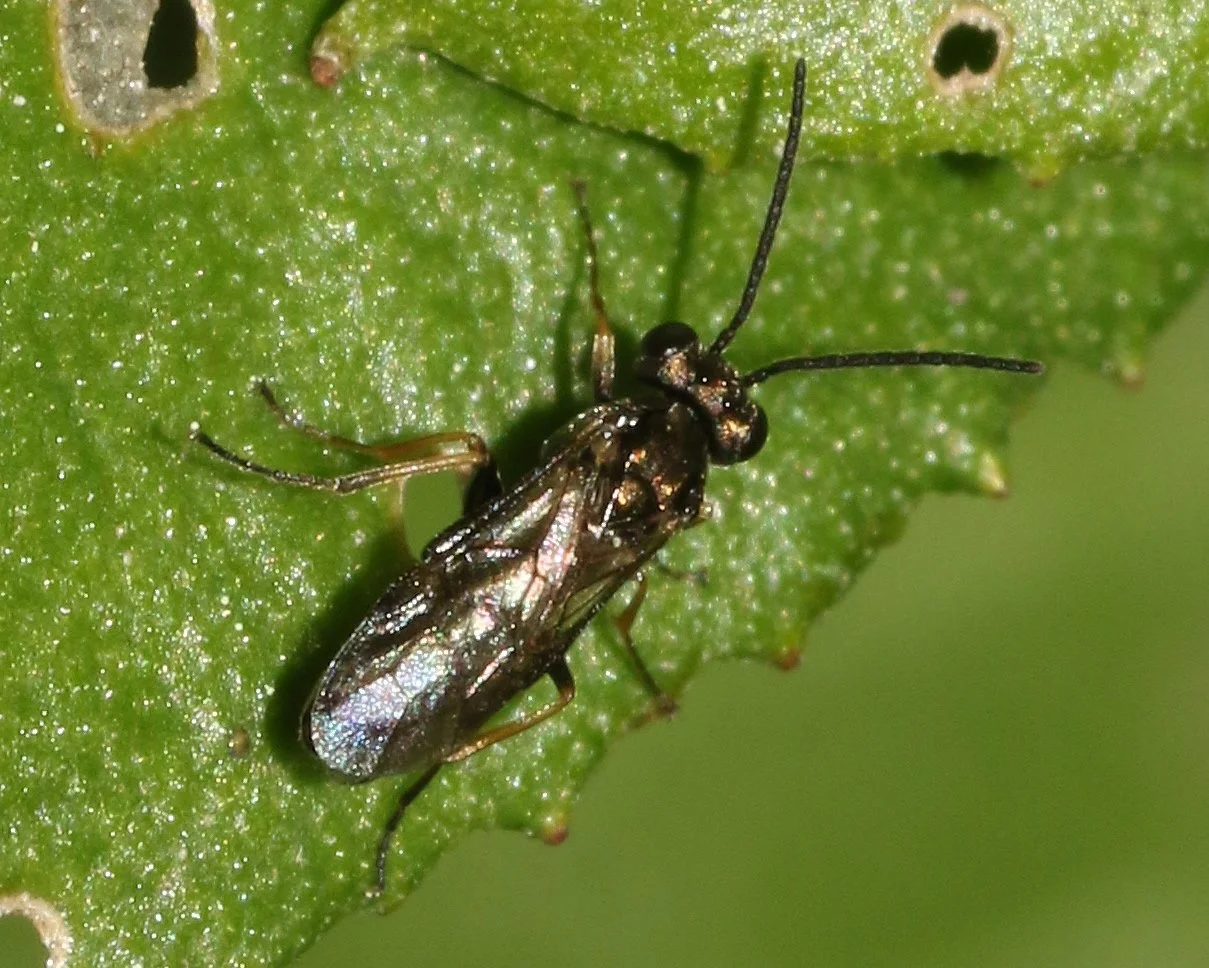
iNaturalist observation - @mattcampbellaus
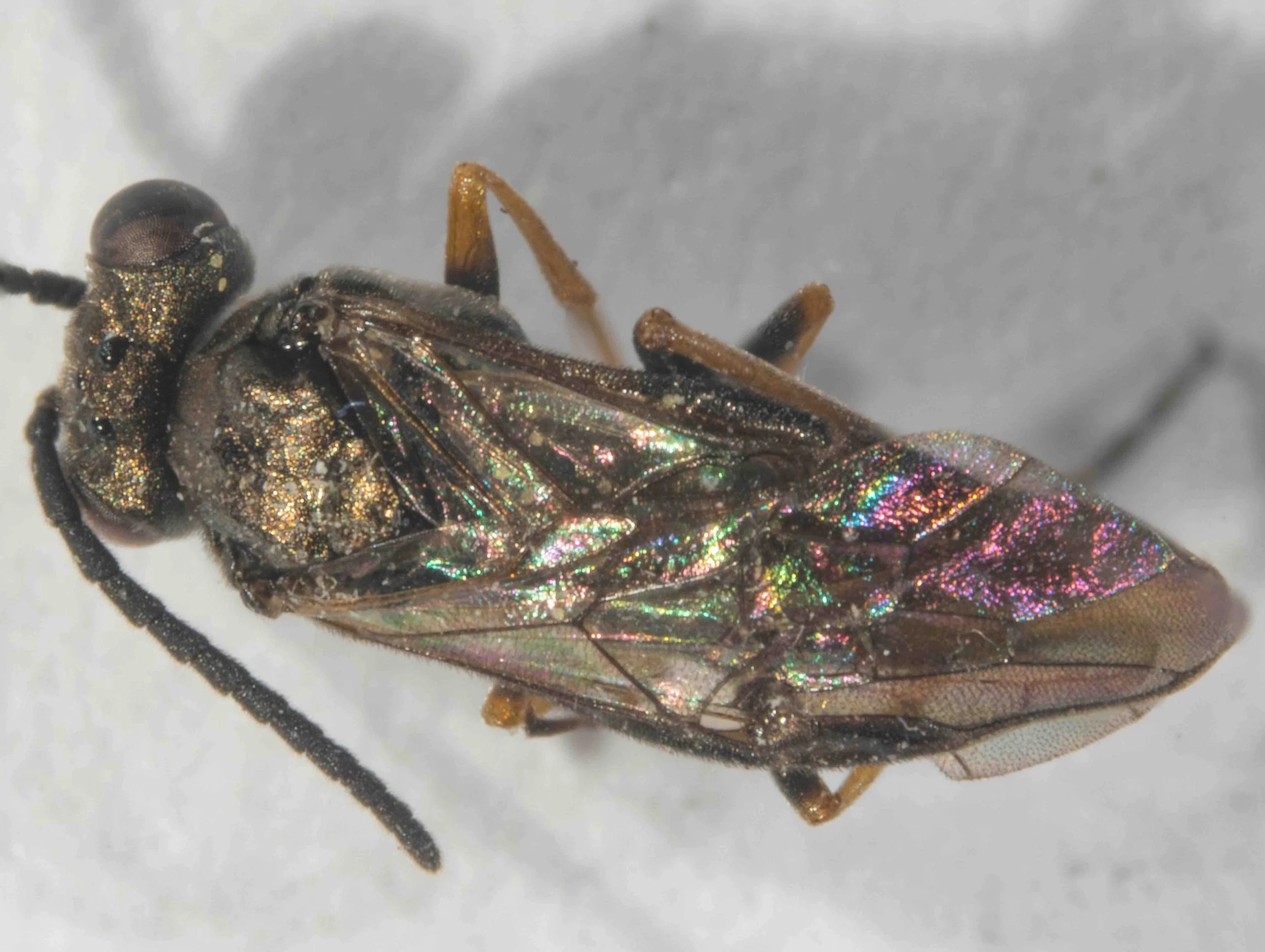
female viewed from above
- head, thorax, abdomen piceous (glossy, dark brownish-black)
- head as broad as thorax, finely and closely punctured
- antennae black, 14-segmented, as long as abdomen
- hind tarsi shorter than tibia
- legs pale yellow, except femora below and tips of hind tibiae and tarsal joints brownish
- head finely and closely punctured, with fine and short hairs, slightly shining
- antennae as long as abdomen, 14-segmented
- thorax dorsally almost flat, thinly covered with some fine, short and pale hairs, finely and closely punctured, shining
- parapsidal furrows shallow, middle furrow only apparent in front
- scutellum moderately elevated, with some scattered punctures
- front wings with costa a little thickened before stigma; stigma moderately broad, apically pointed; base of costa yellowish, stigma and nerves piceous [some nerves dark brown in this insect]
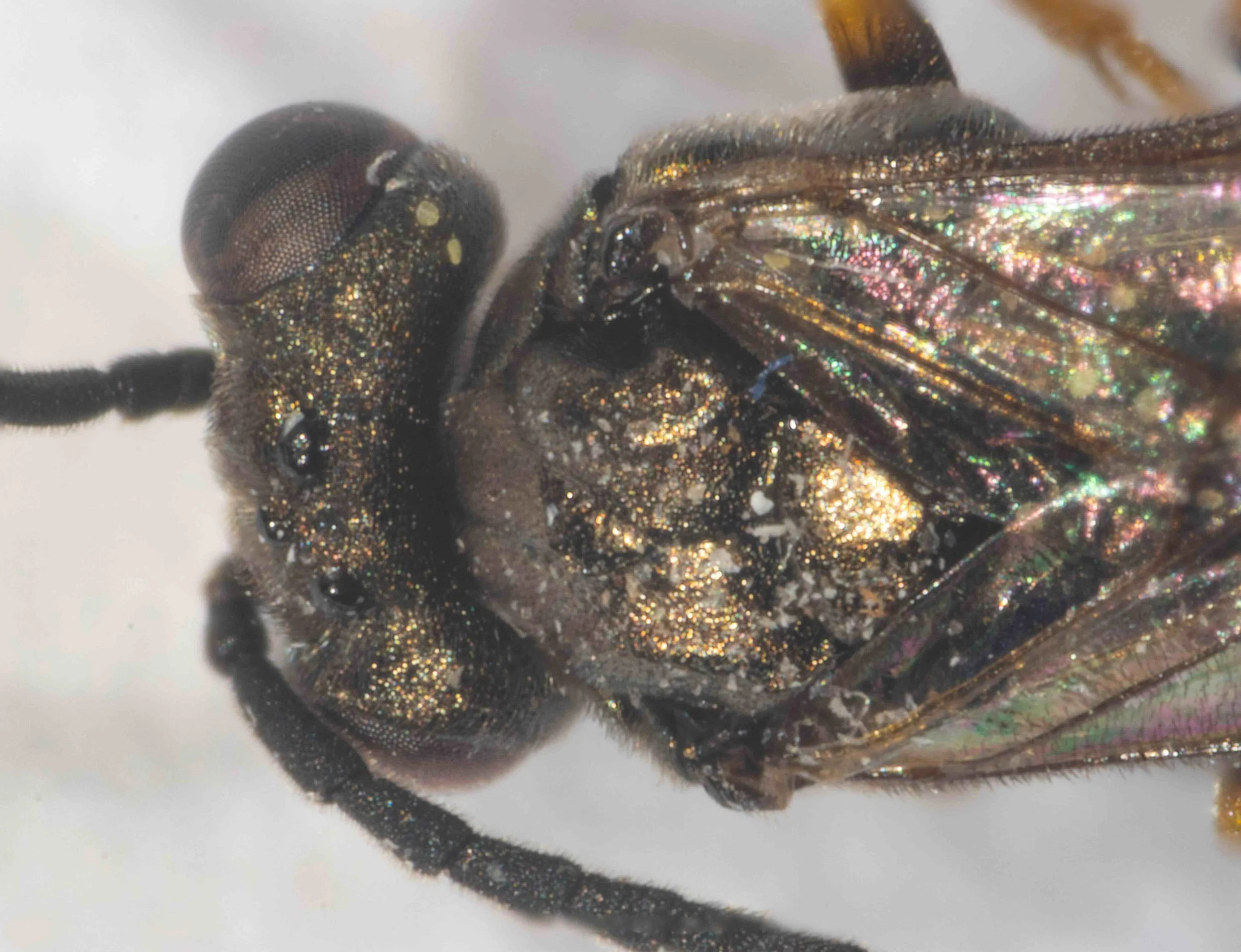
- head finely and closely punctured, with fine and short hairs, slightly shining
- vertex about 4X as broad as long
- thorax dorsally almost flat, thinly covered with some fine, short and pale hairs, finely and closely punctured, shining
- parapsidal furrows shallow, middle furrow only apparent in front
- scutellum moderately elevated, with some scattered punctures
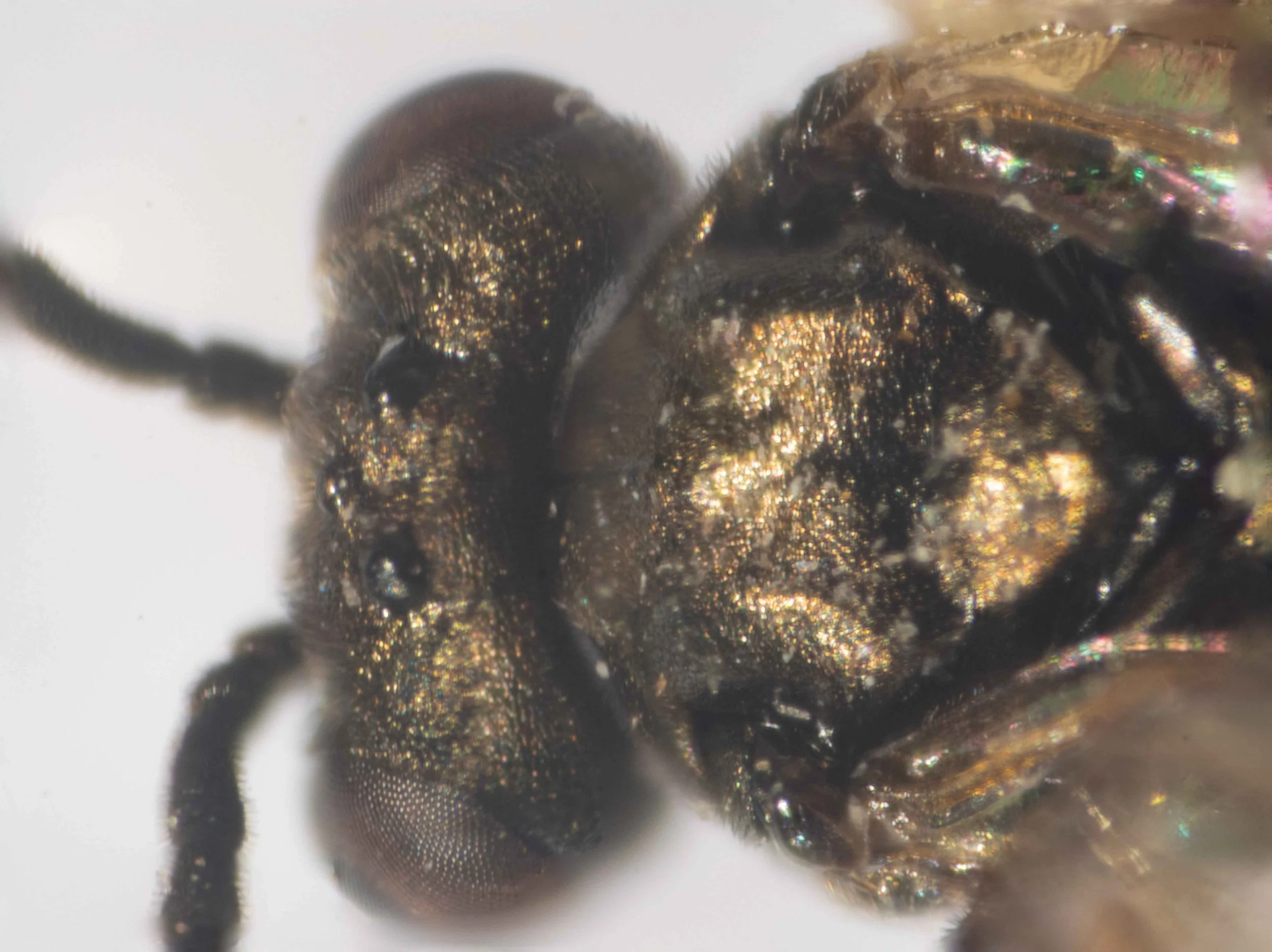
insect on card
- head finely and closely punctured, with fine and short hairs, slightly shining
- vertex about 4X as broad as long
- ocelli in a low triangle; postocellar line about as long as the ocellocular and ocellocciiptal lines
- thorax dorsally almost flat, thinly covered with some fine, short and pale hairs, finely and closely punctured, shining
- parapsidal furrows shallow, middle furrow only apparent in front
- scutellum moderately elevated, with some scattered punctures
- rear sides of middle lobes of mesonotum and hind margin of scutellum more or less pale brownish (not evident in this specimen)
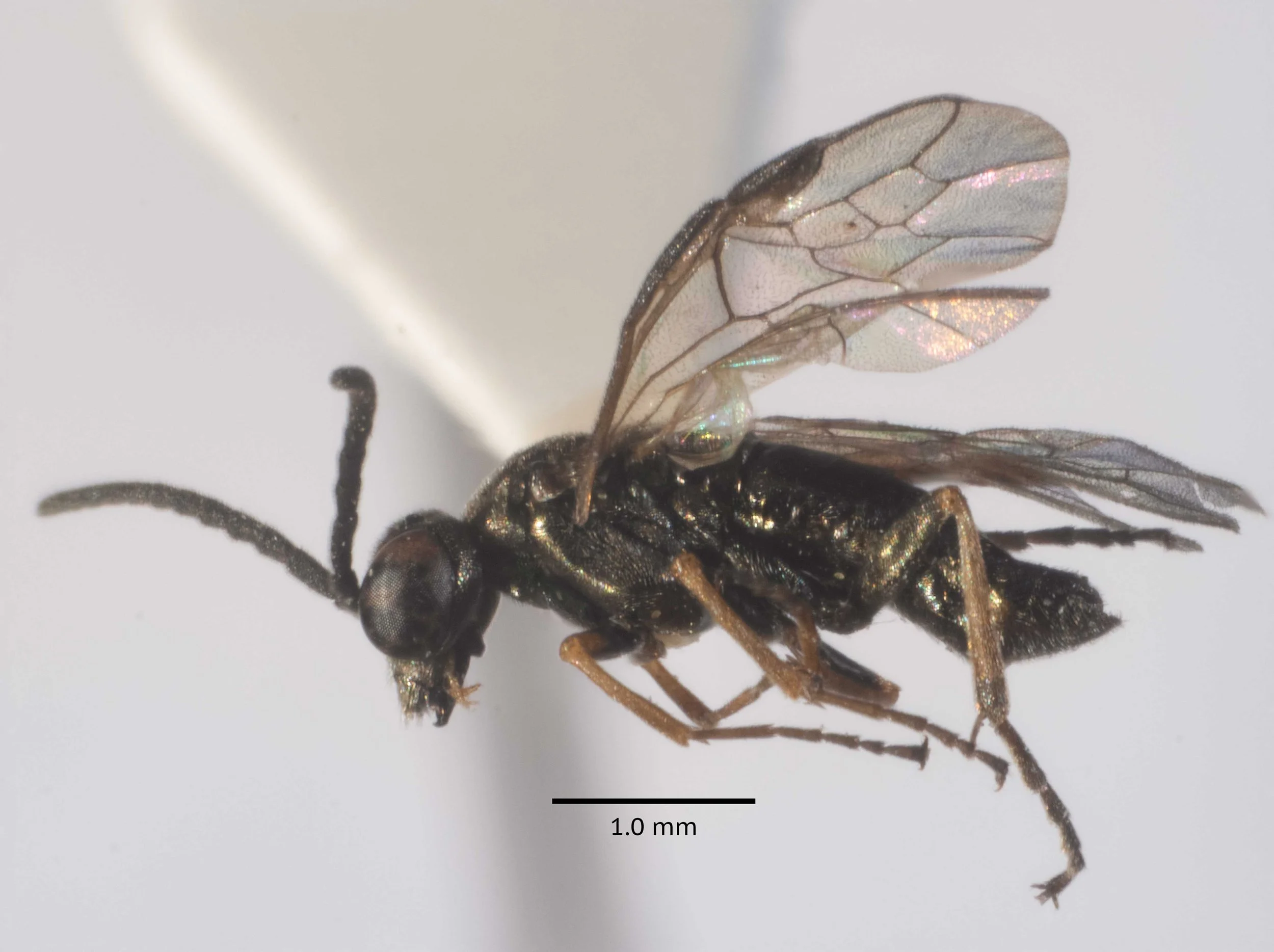
lateral view of carded insect
- body length 3.75 mm
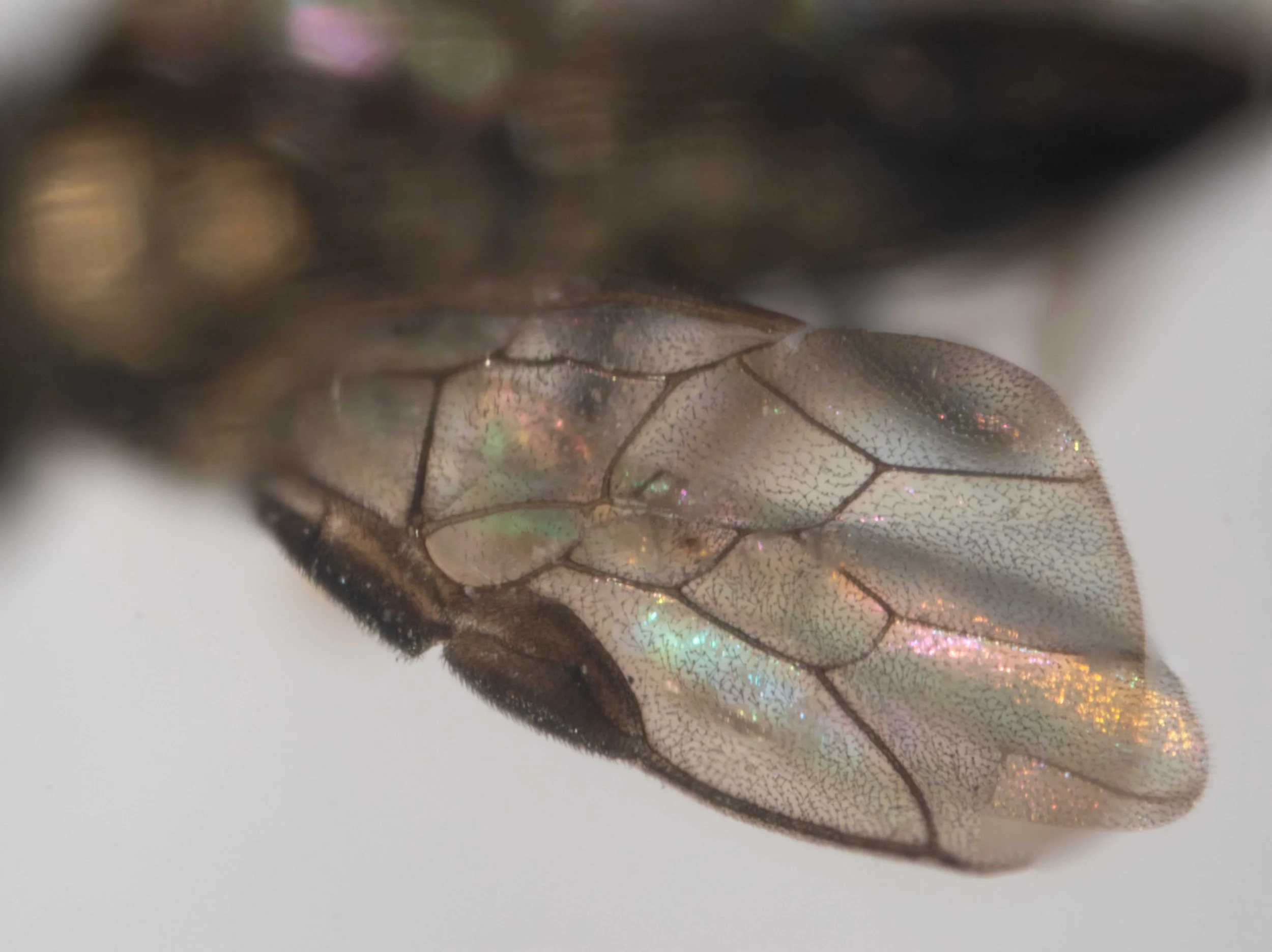
- fore wings with the costa a little thickened before the stigma; stigma moderately broad, apically pointed; radial cell with a very short appendix; first transverse cubital nerve with a gap in the middle [not the case in this specimen]
- thorax dorsally almost flat, thinly covered with some fine, short and pale hairs; piceous
- superior part of pleurae more or less pale brownish [same piceous colour throughout pleurae in this specimen, except for reflection on anterior edge]
- legs pale yellow; lower side of fore and mid femora, upper and lower sides of hind femur, tips of hind tibiae and tarsal joints brownish
- legs with the hind tarsi shorter than the tibiae
- hind basitarsus as long as three following joints together [a little shorter in this specimen]
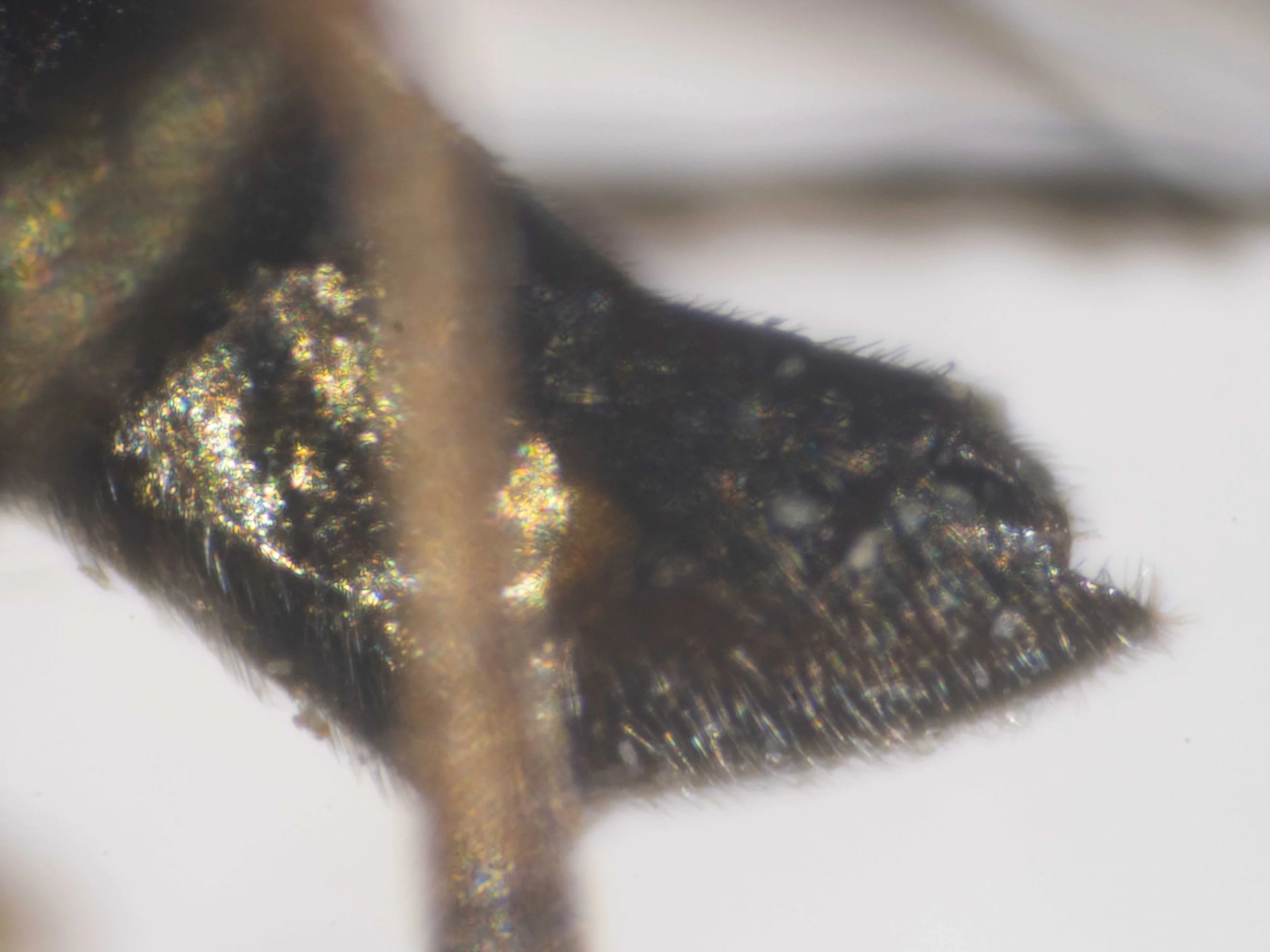
- sheath from the side broadly rounded with nearly straight apex; apically with long, curved hairs
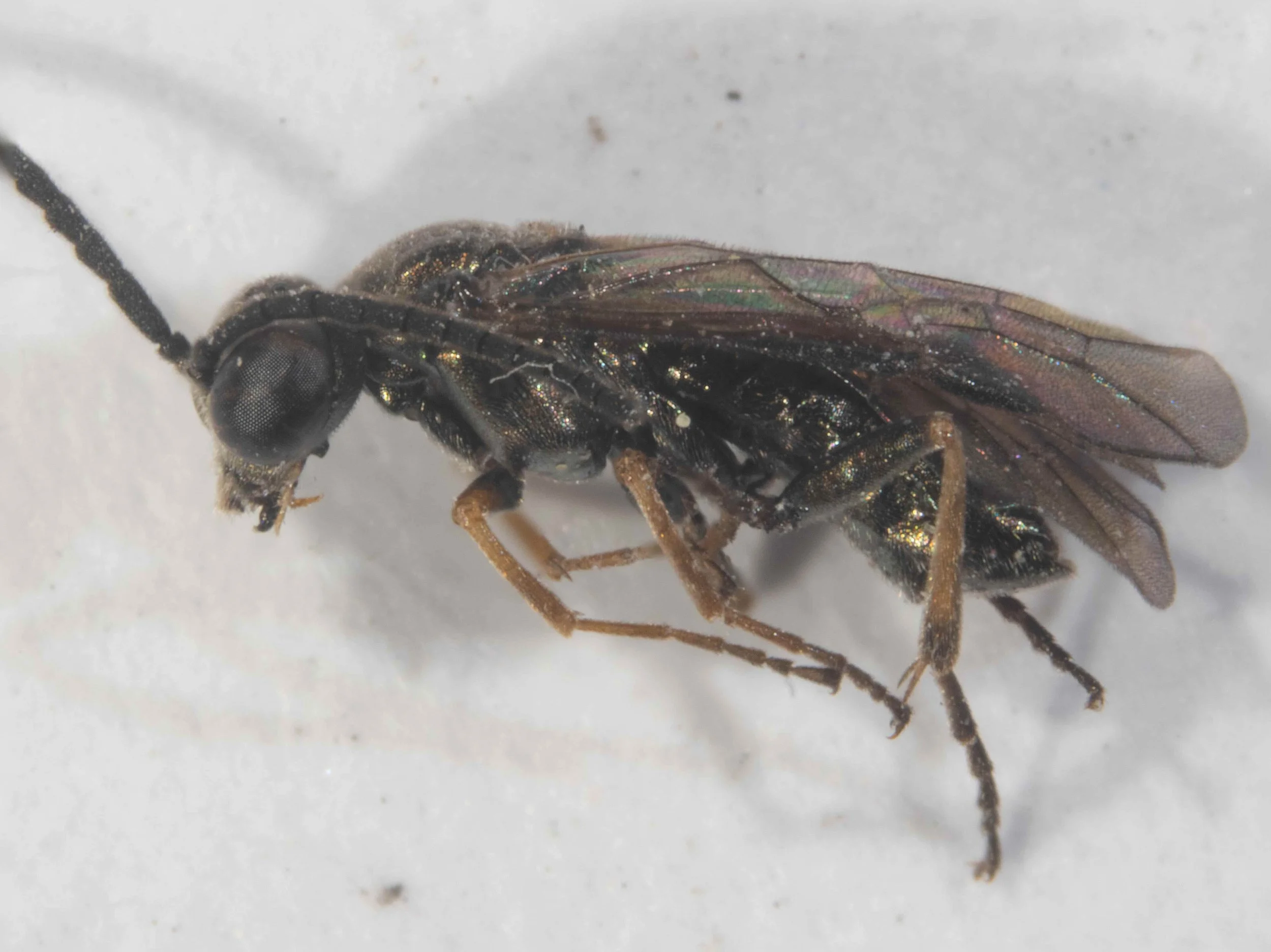
uncarded specimen
- wings hyaline; base of costa yellowish, stigma and nerves piceous
- thorax dorsally almost flat, thinly covered with some fine, short, and pale hairs, finely and densely punctured, shining
- angles of pronotum, tegulae rear sides of middle lobes of mesonotum, hind margin of scutellum and superior part of pleurae more or less pale brownish [these regions are piceous in this insect with shining, cupreous reflections]
- legs orange with base of fore and mid femora, whole of hind femora, apex of hind tibia and fore and mid tarsomeres and all hind tarsi black
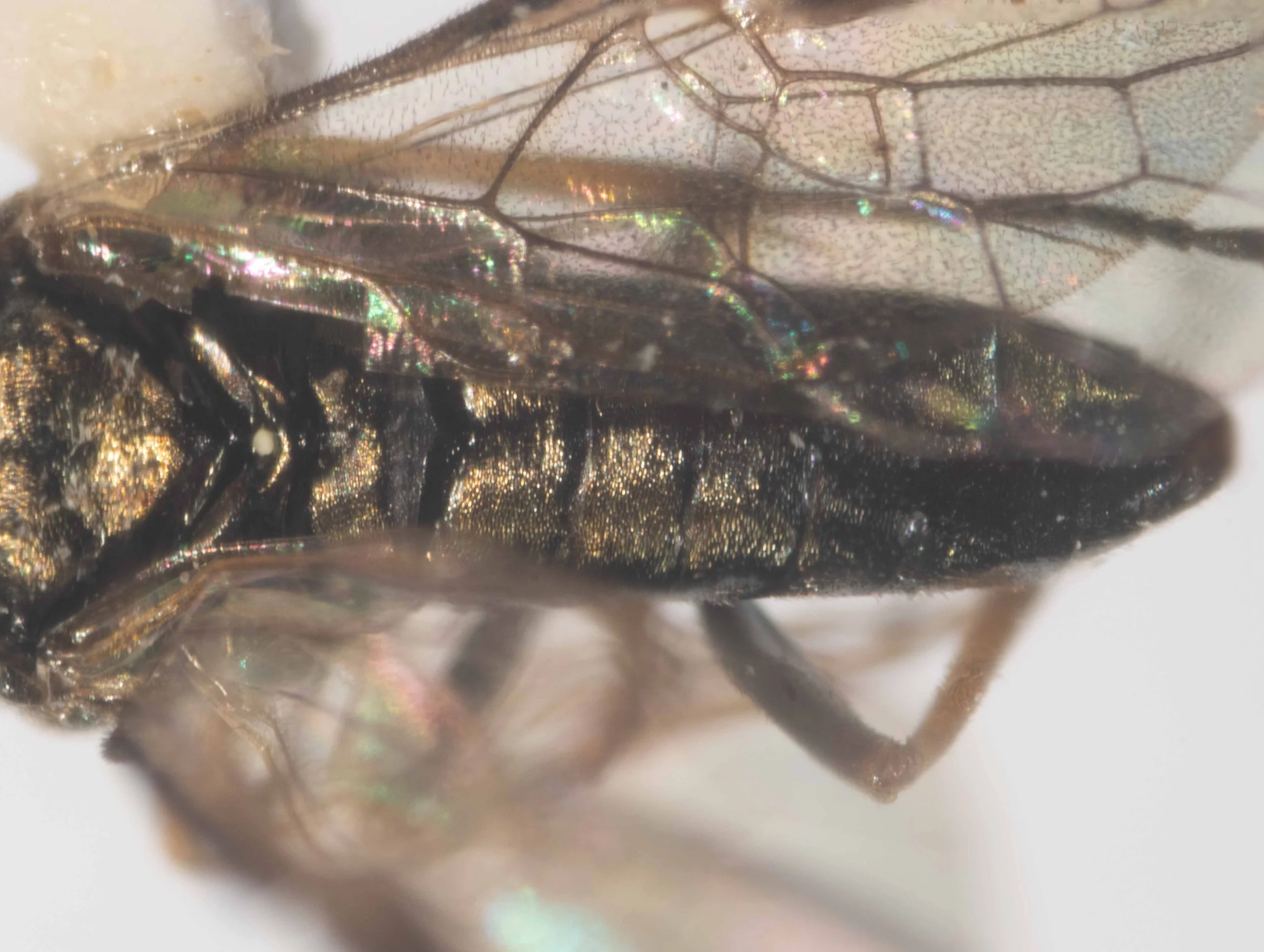
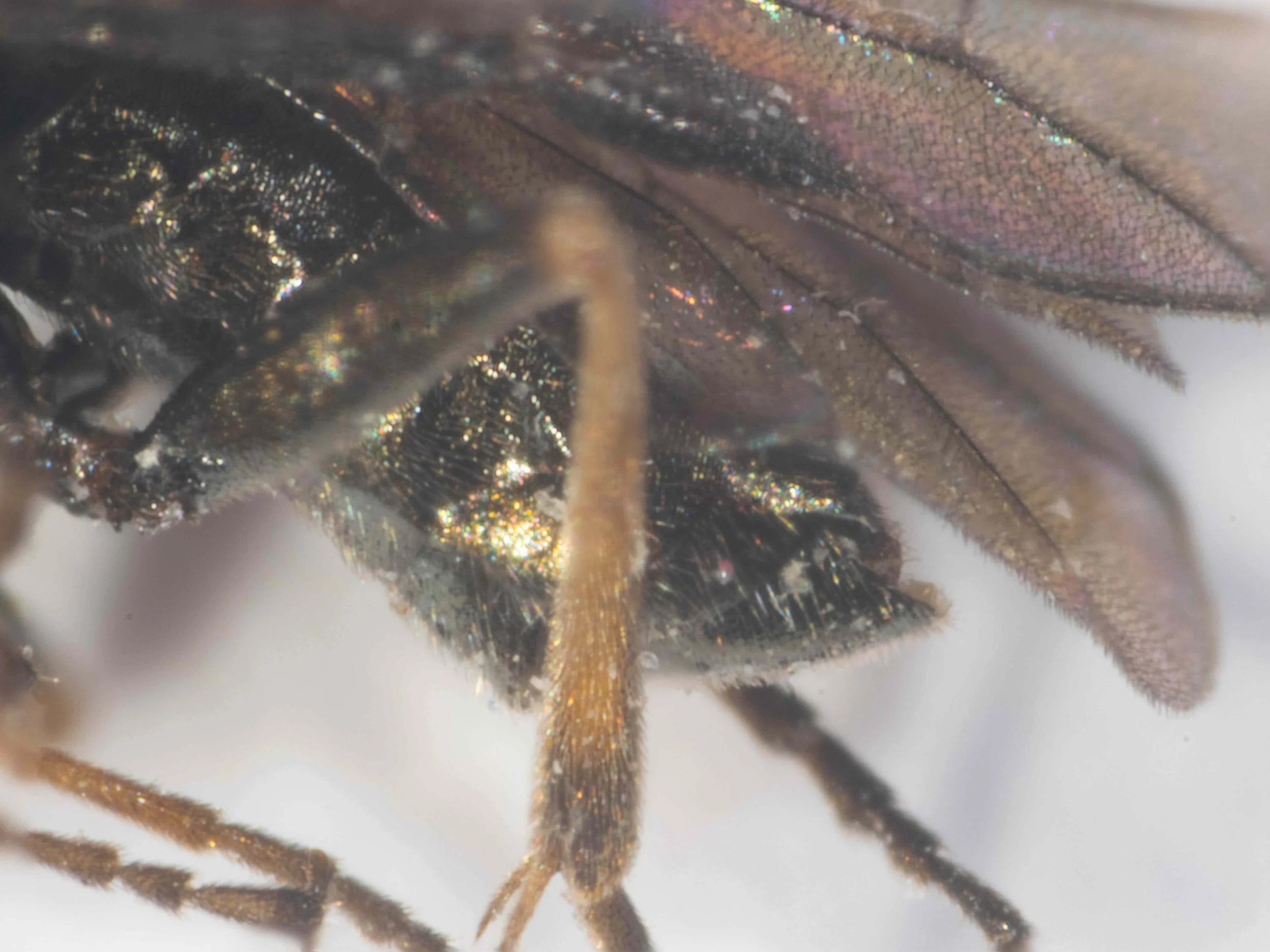
lateral view of thorax and abdomen of carded specimen
- thorax piceous
- angles of pronotonum, tegulae and upper part of pleurae more or less pale brownish [solid piceous in this specimen, apart from golden reflections from some parts]
- abdomen dark piceous with rear parts of segments more or less pale brown [not evident in this specimen]; very finely sculptured, shining
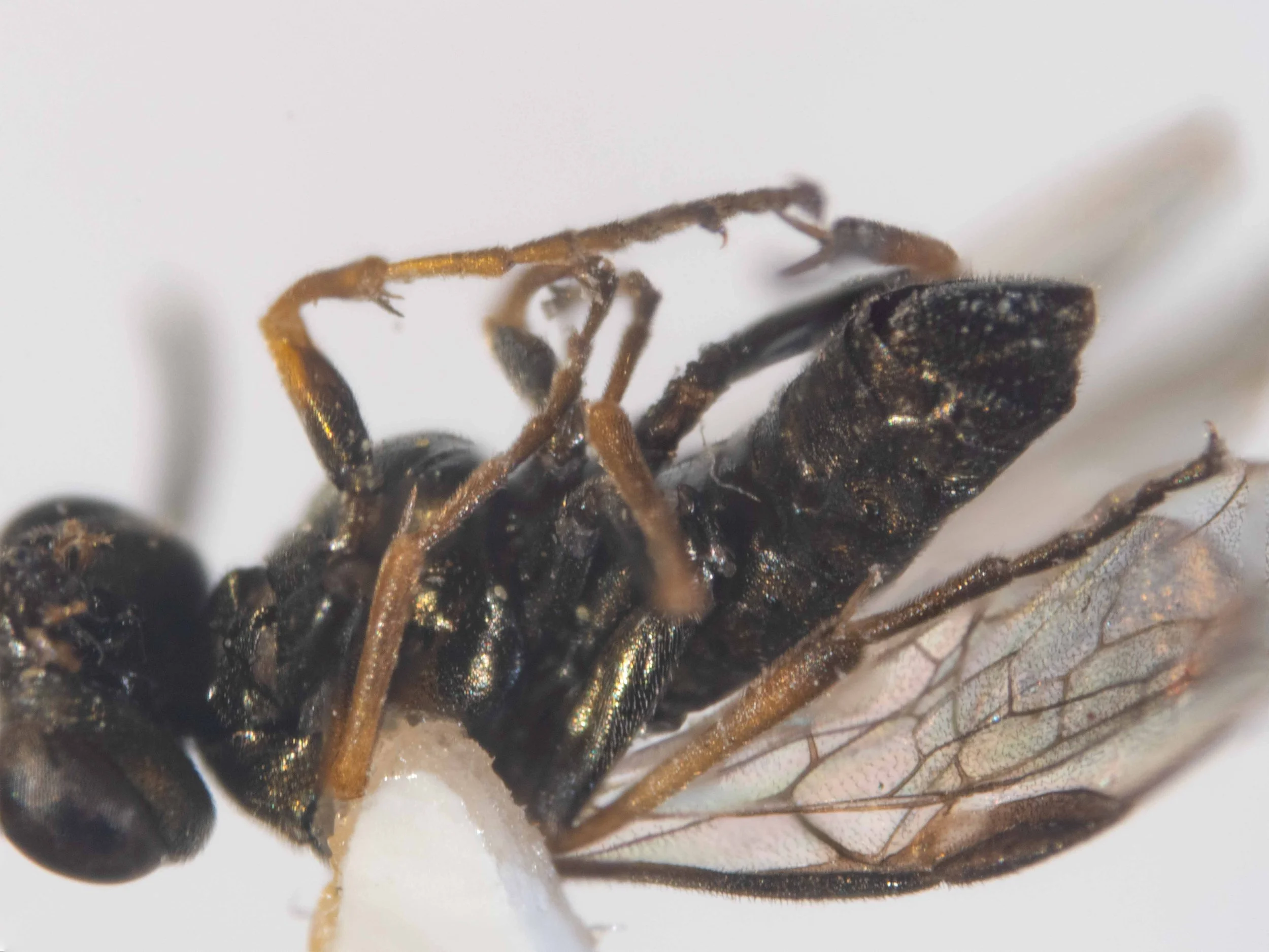
latero-ventral view of carded insect
- abdomen dark piceous, very finely sculptured, shining
- tip of coxae, trochanters and legs pale yellow [coxae solid black in this specimen; femora below, tips of hind tibiae and tarsal joints brownish [black in this specimen]
ventral view of carded insect
- eyes slightly converging downwards
- antennae 14-15 articulated [13 antennomeres in this specimen], tapering towards apex and inserted close to clypeus
- pedicel as long as scape, third joint as long as 4+5 [somewhat shorter in this specimen], intermediate joints thickened apically, about as long as on the apex broad [somewhat longer than broad in this specimen]
- malar space very narrow
- base and middle of mandibles and palpi whitish yellow
- abdomen dark piceous, very finely sculptured, shining
- tip of coxae, trochanters and legs pale yellow [coxae solid black in this specimen; femora below, tips of hind tibiae and tarsal joints brownish [black in this specimen]
- antennae as long as abdomen, 14-segmented, tapering towards apex and inserted close to clypeus
- pedicel as long as scape; third joint as along as 4 + 5 [somewhat shorter here]; intermediate joints thickened apically, about as long on the apex broad [somewhat longer here]
- tip of coxae, trochanters and legs pale yellow [orange here] with coxae, hind femur, basal region of fore and mid femora and tips of hind tibiae and tarsal joints brownish [piceous here]
- wings hyaline
ventral view of carded insect
- antennae 14-15 articulated [13 antennomeres in this specimen], tapering towards apex and inserted close to clypeus
- pedicel as long as scape, third joint as long as 4+5 [somewhat shorter in this specimen], intermediate joints thickened apically, about as long as on the apex broad [somewhat longer than broad in this specimen]
- malar space very narrow
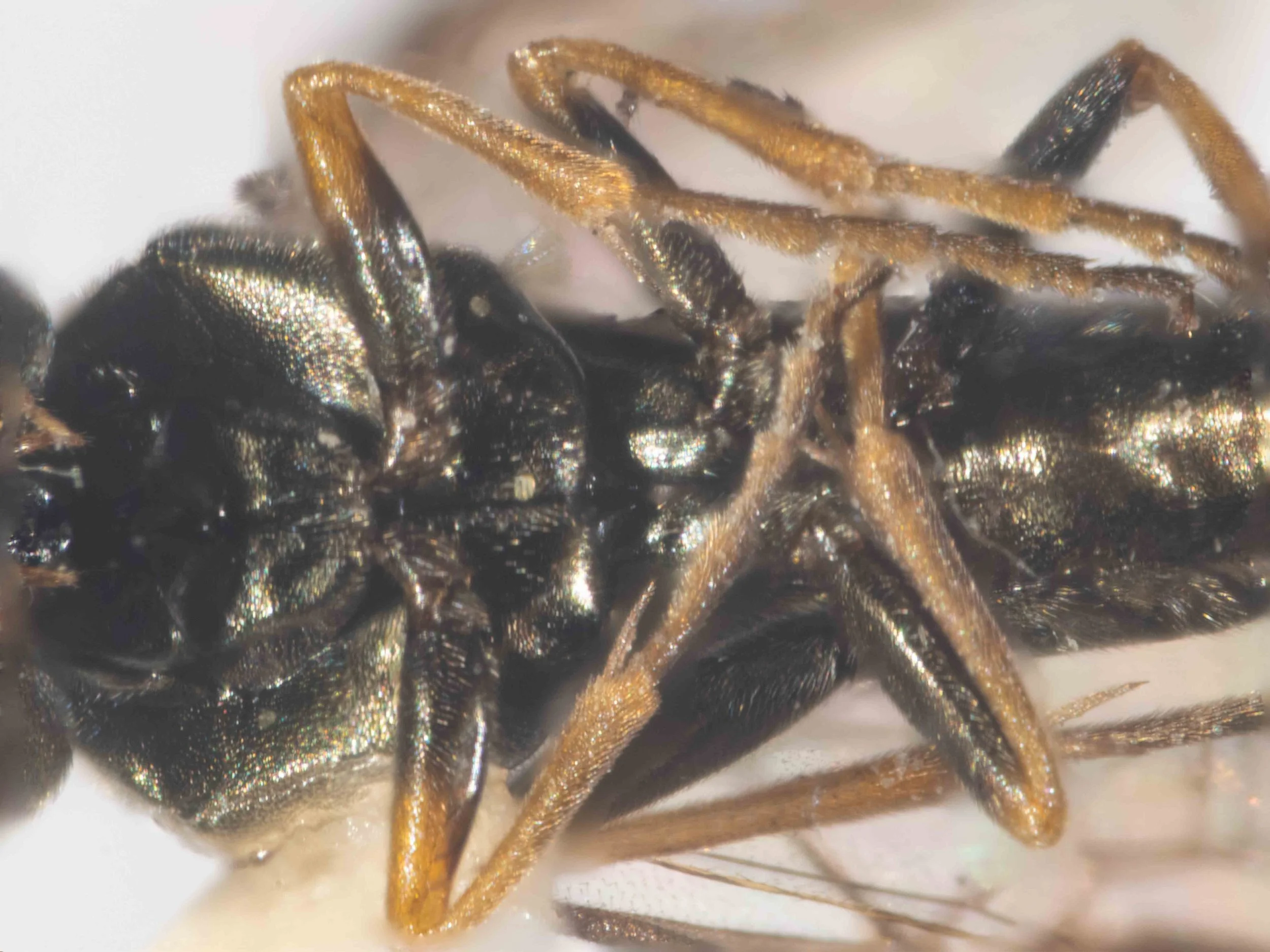
ventral view of thorax and abdomen of carded insect
- abdomen dark piceous, very finely sculptured, shining
- tip of coxae, trochanters and legs pale yellow [coxae solid black in this specimen; femora below, tips of hind tibiae and tarsal joints brownish [black in this specimen]
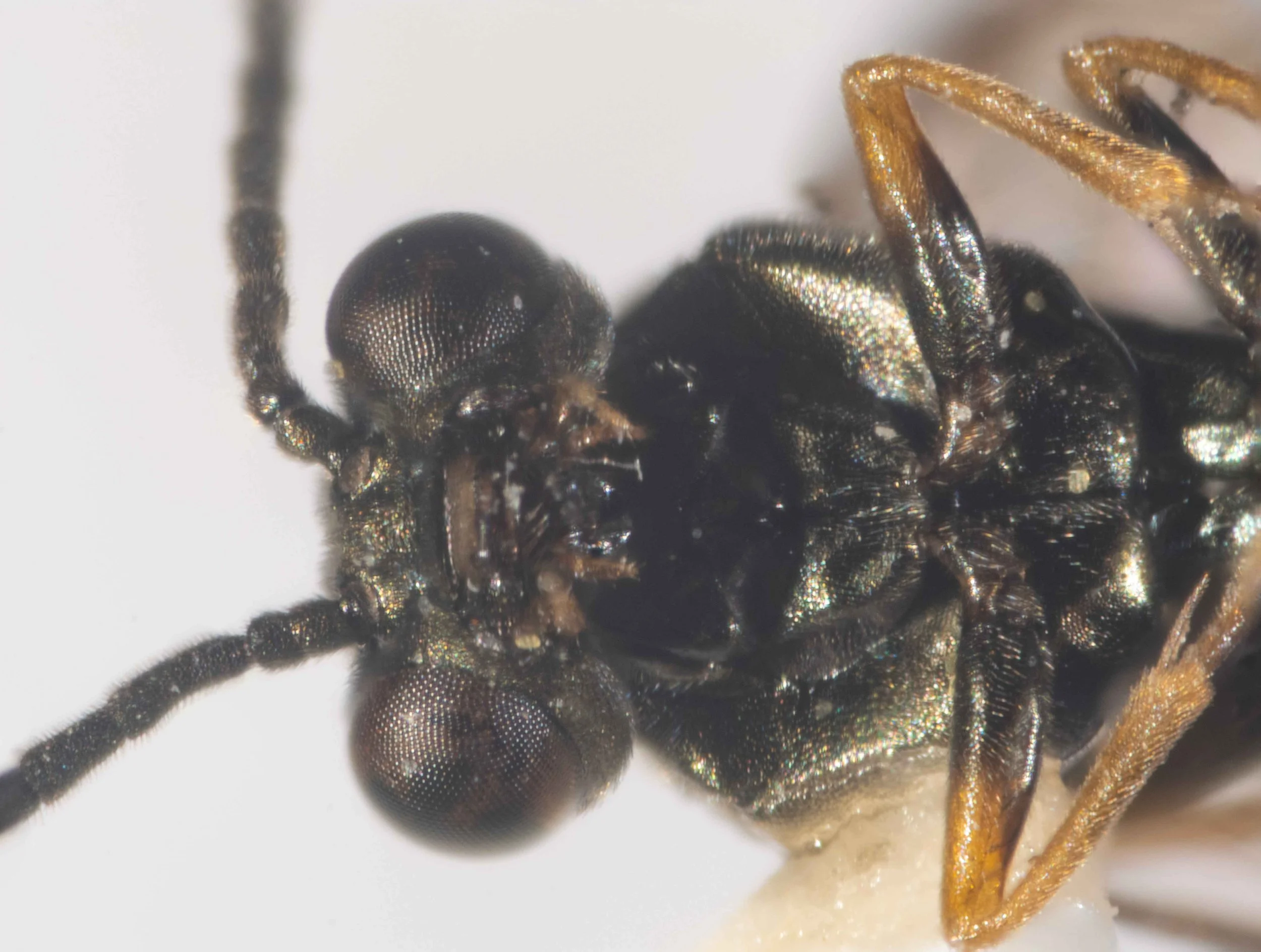
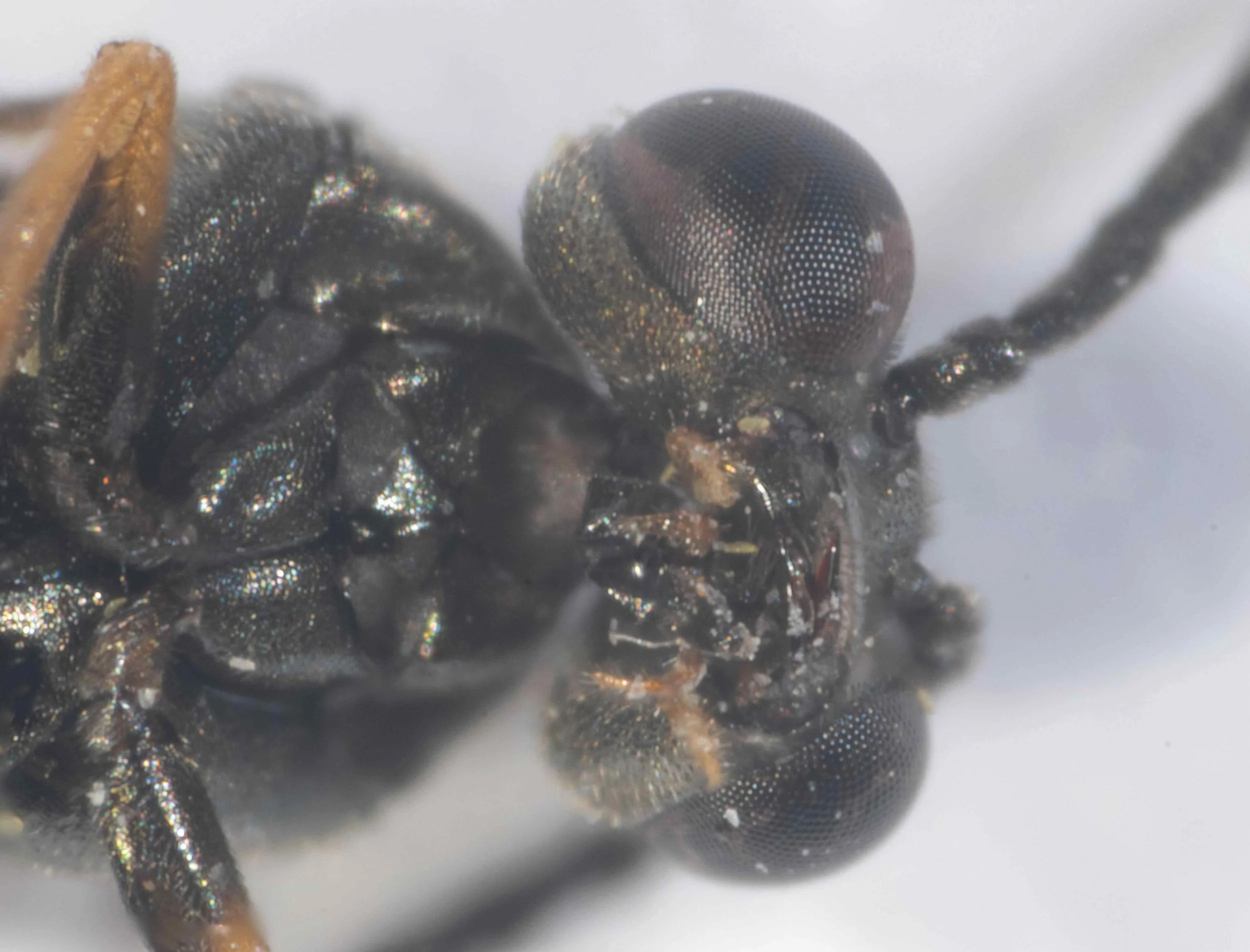
ventral view of head and thorax of carded insect
- labrum, base of mandibles and palpi yellow; otherwise head piceous with fine and short hairs
- eyes slightly converging downwards
- malar space very narrow
- antennae inserted close to clypeus
- fore coxae, base of fore femur piceous; trochanter, apex of fore femur orange
- labrum, base of mandibles and palpi yellow; otherwise head piceous with fine and short hairs
- eyes slightly converging downwards
- malar space very narrow
- antennae inserted close to clypeus
- fore coxae, base of fore femur piceous; trochanter, apex of fore femur orange
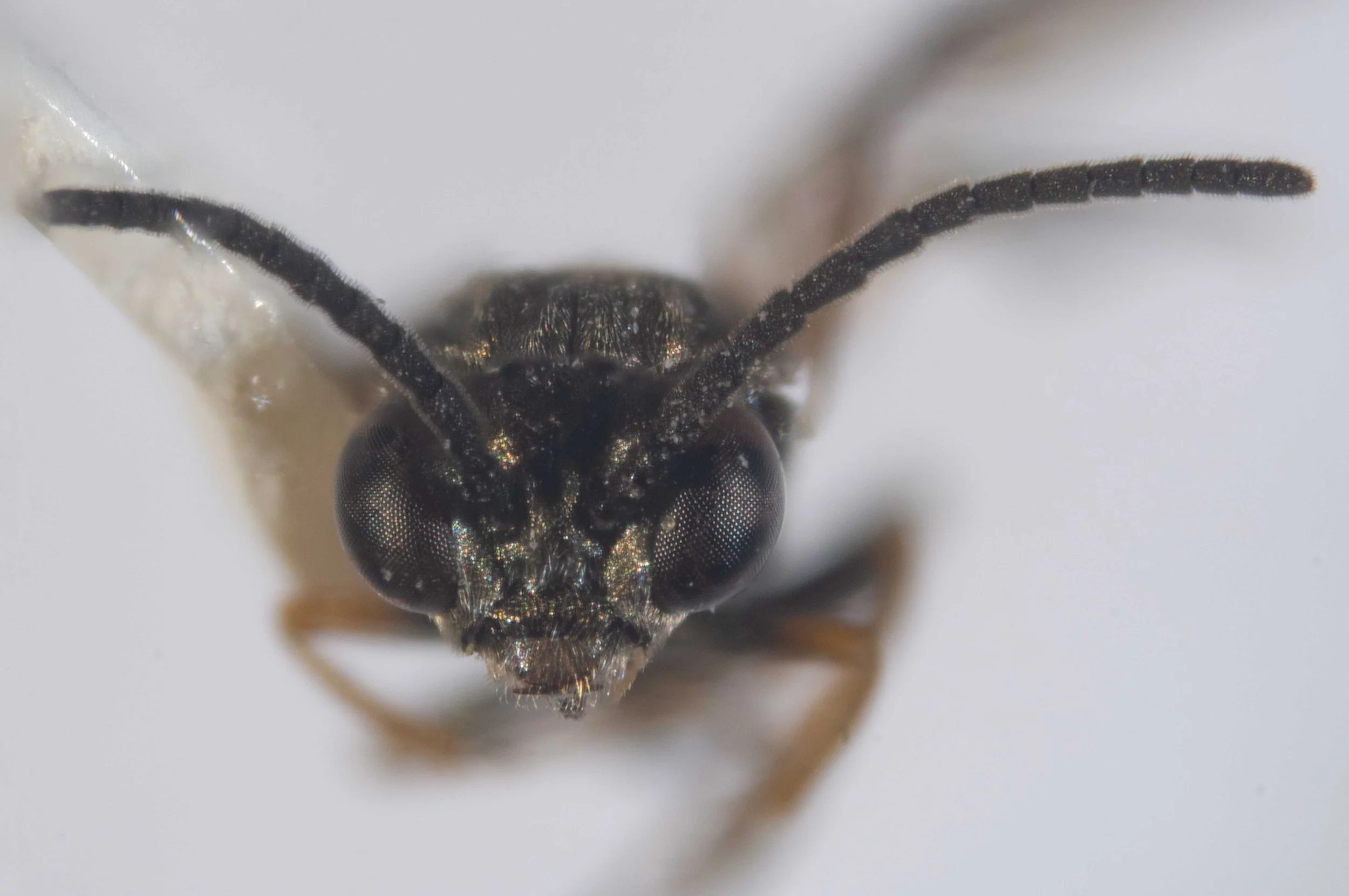
frontal view of carded insect
- labrum, base of mandibles whitish yellow; otherwise head piceous with fine and short hairs
- eyes slightly converging downwards
- frontal area distinct, but not much elevated, in the middle slightly depressed and laterally limited by not very deep furrow
- below the anterior ocellus a fine impression which reaches to the median fovea
- median fovea is small and rounded
- clypeus apparently short, above and laterally separated from the frons by distinct furrows; anterior margin nearly truncate, but apparently rounded
- labrum long, semicircular
- malar space very narrow
- antennae inserted close to clypeus
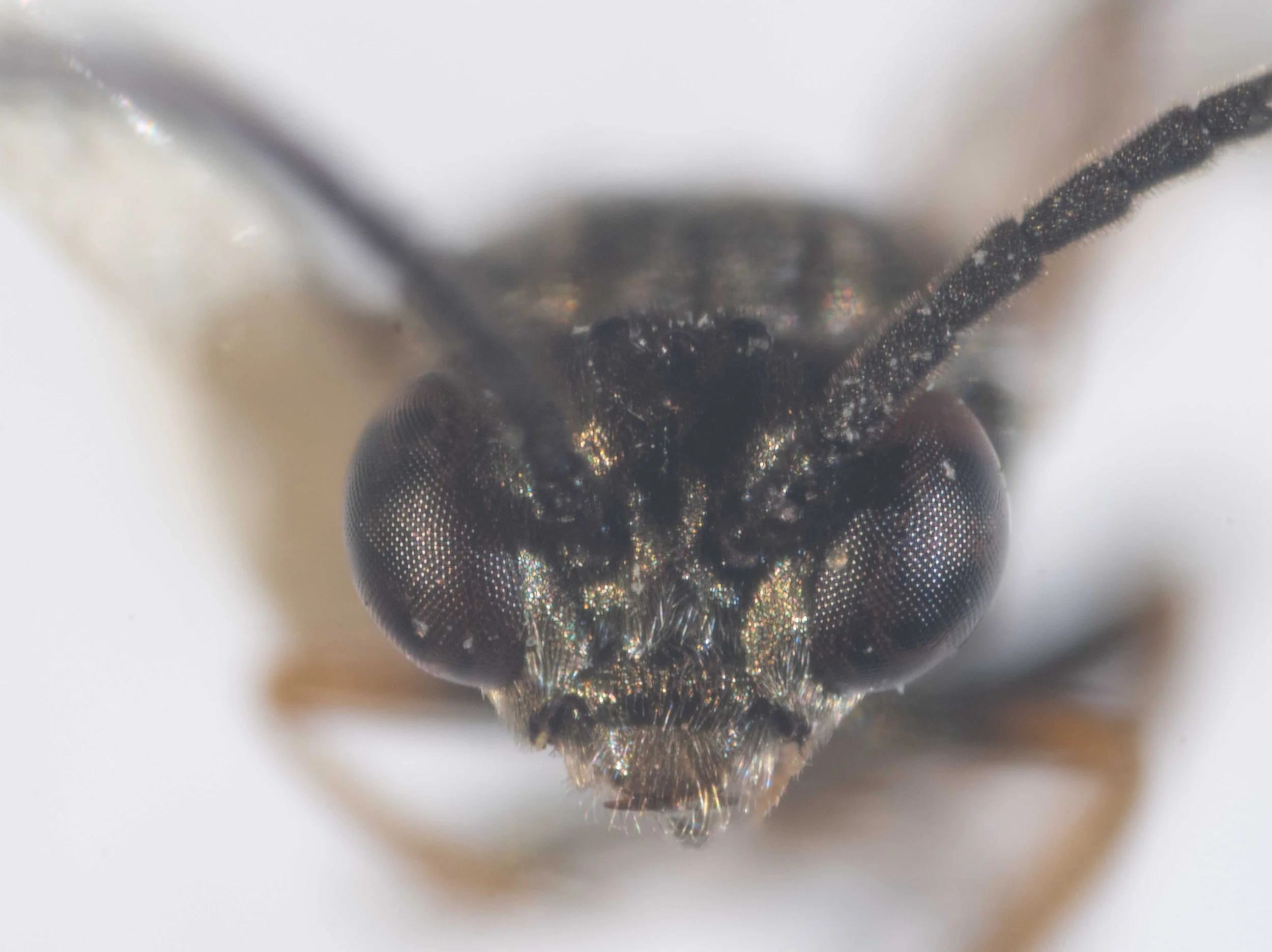
frontal view of carded insect
- labrum, base of mandibles whitish yellow; otherwise head piceous with fine and short hairs
- eyes slightly converging downwards
- frontal area distinct, but not much elevated, in the middle slightly depressed and laterally limited by not very deep furrow
- below the anterior ocellus a fine impression which reaches to the median fovea
- median fovea is small and rounded
- clypeus apparently short, above and laterally separated from the frons by distinct furrows; anterior margin nearly truncate, but apparently rounded
- labrum long, semicircular
- malar space very narrow
- antennae inserted close to clypeus
References:
Forsius, R. (1927) On some sawflies from the Australian region (Hymenoptera Tenthridinidae). Records of the South Australian Museum 3: 283-308 (pp. 286-287).
This is a workbook page … a part of our website where we record the observations and references used in making species identifications. The notes will not necessarily be complete. They are a record for our own use, but we are happy to share this information with others.