
Pterygophorinae larva hub
Workbook
Pterygophorinae larva hub
This page serves as a hub for information about identification, rearing and biology of Pterygophorinae larvae.
Genus Lophyrotoma
General information:
Macdonald (1993) reports that species in the genus Lophyrotoma leave the host plant and enter the soil, where they form a simple cocoon of soil particles and silk, which lacks internal compartmentalisation.
Lophyrotoma analis
Schmidt (2006) lists the following food plants for L. analis:
Emex australis, Muehlenbeckia sp., Rumex sp.
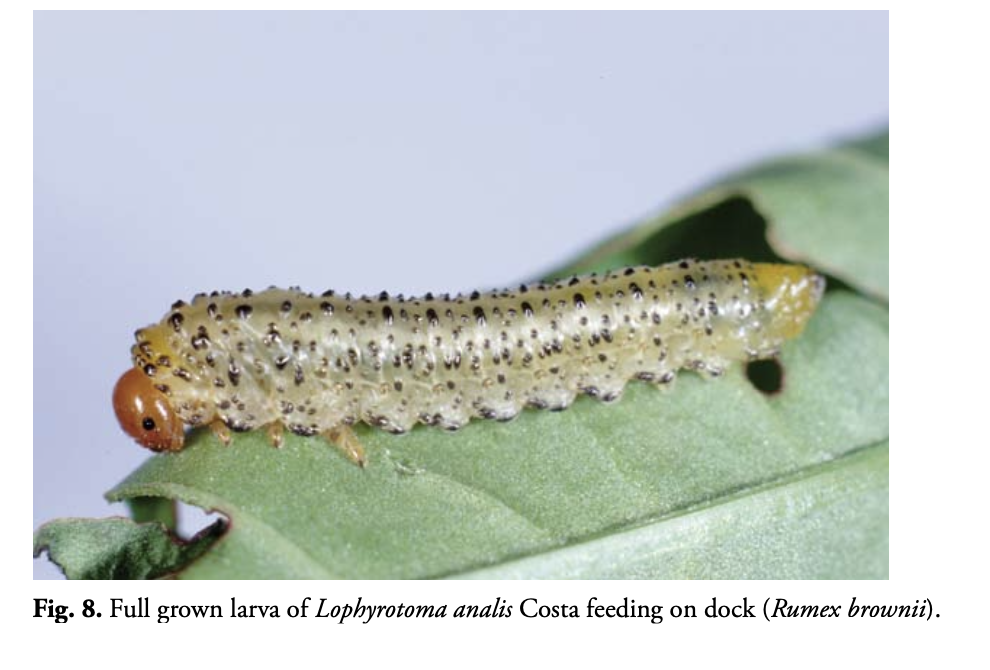
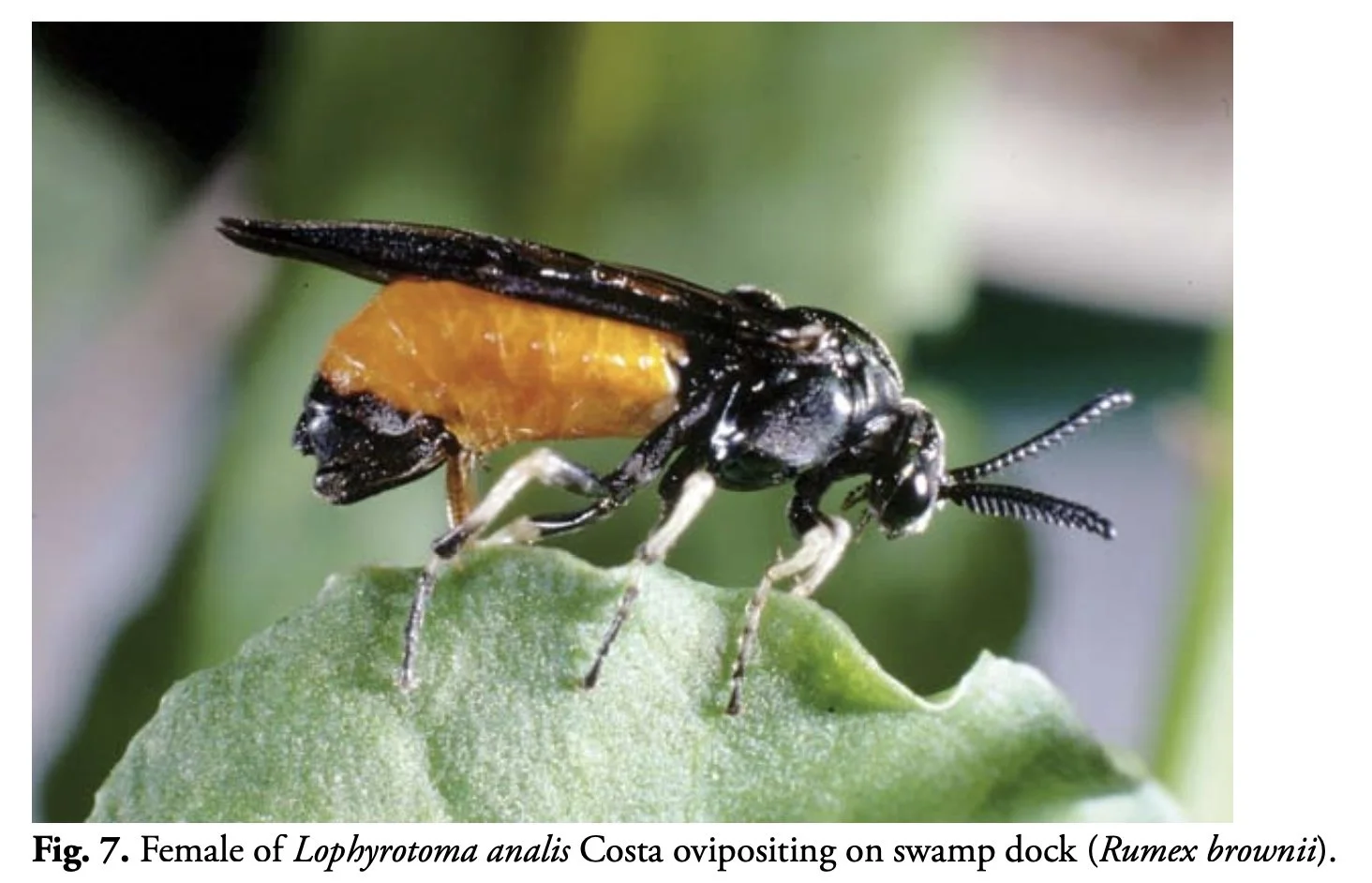
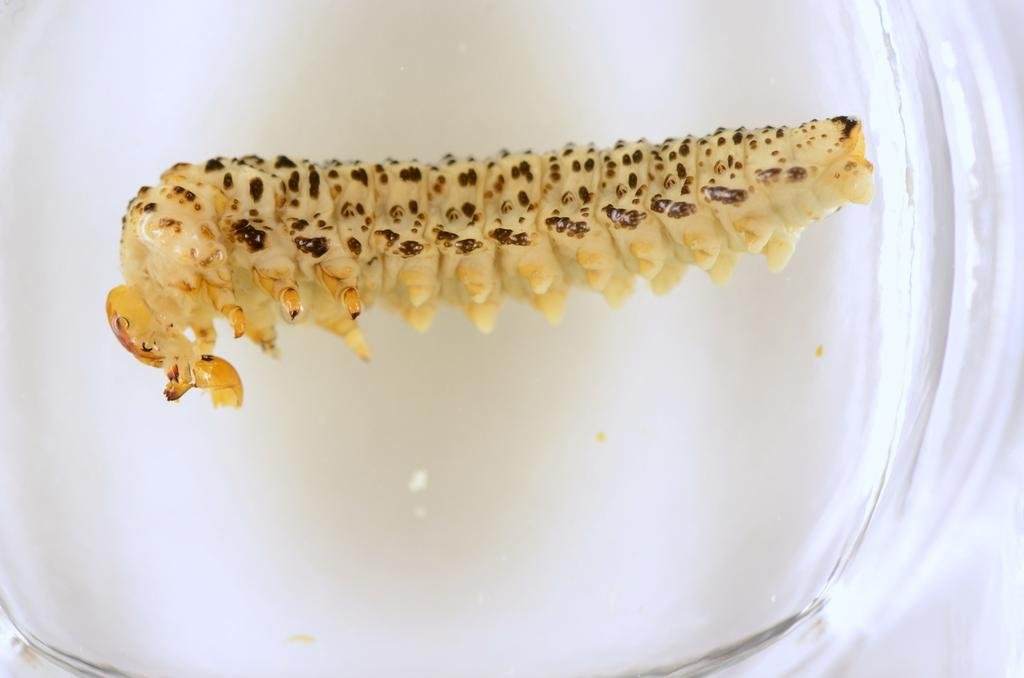
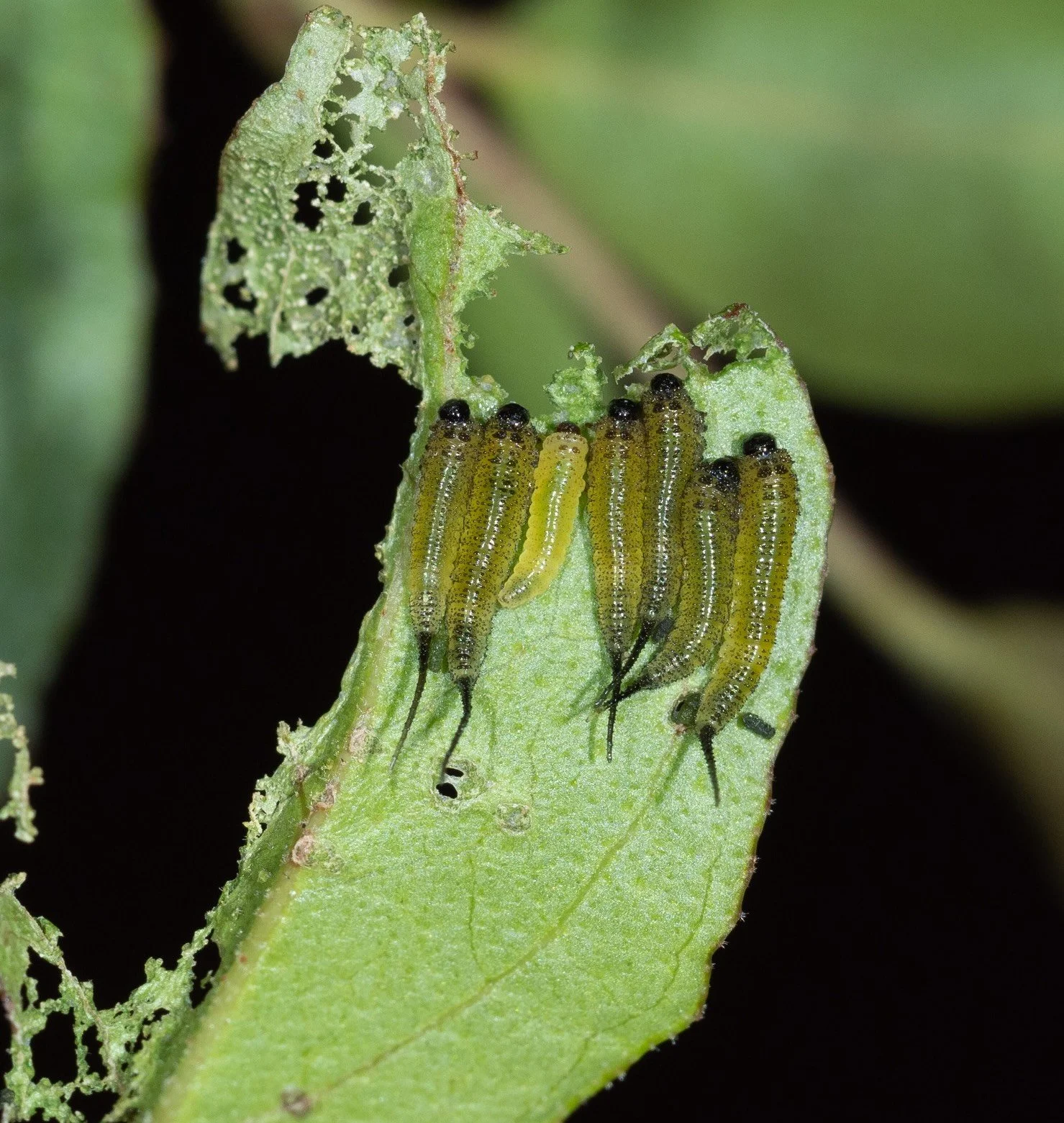
from Schmidt et al. (2006)
Lophyrotoma analis is polyvoltine in the Brisbane area and in suitable habitats larvae can be found almost all year except for a short period in winter. After completing their development the larvae enter the soil and prepare a cocoon where they develop to the adult stage within 13–22 days. Males lived for 6 to 10 days and females 3 to 9 days with access to water and honey.
Females place their eggs into the leaf margin of their host plant. The eggs are laid singly, not in clusters as in species of the subfamily Perginae, although a leaf may receive several eggs. Note: L. analis appears to be exceptional in this regard. All other Lophyrotoma spp. appear to lay eggs in clusters (see below).
When a female is placed on a dock leaf it almost invariably starts immediately to examine the surface with its ovipositor tip, by bending the abdomen. It then uses the antennae to examine the leaf surface and moves to the leaf margin where it usually starts ovipositing at once (Fig. 7).
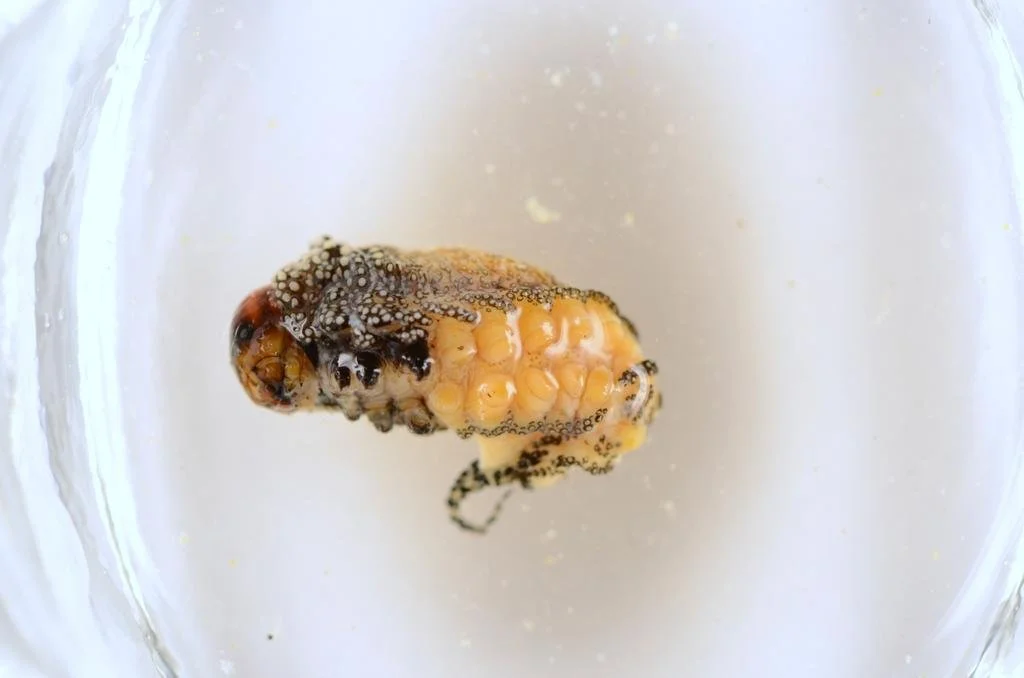
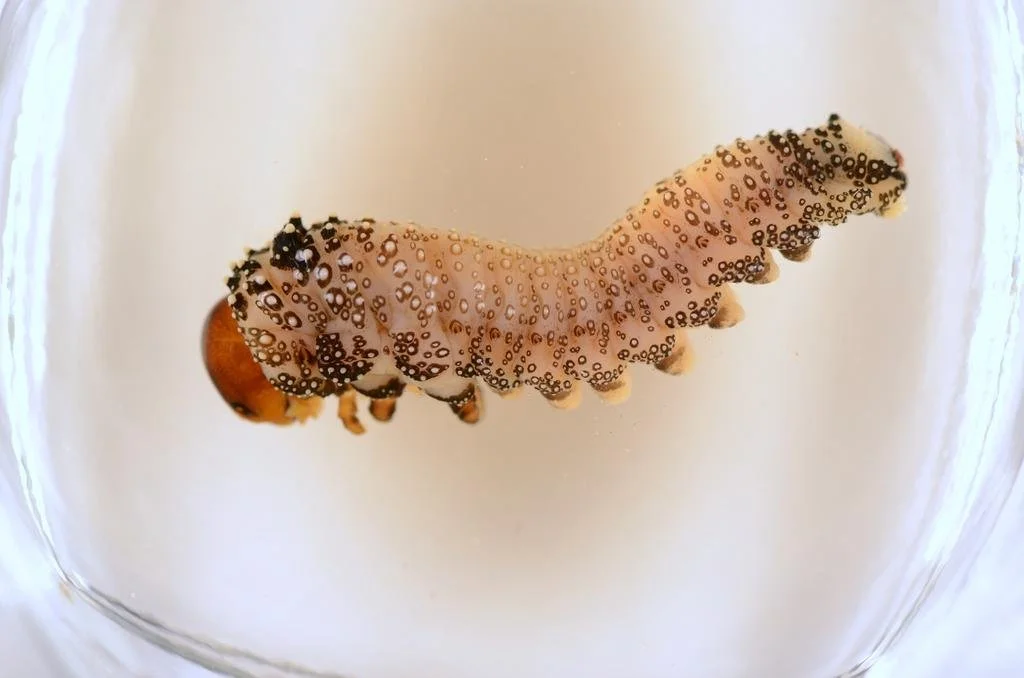
The larvae are morphologically similar to the larvae of the family Argidae. The body is laterally broadened ventrally and lacks any apical or dorsal appendages (Fig. 8).
The head is orange-brown and the body has a whitish appearance and the internal organs and gut contents shine through the translucent cuticle, giving the larva a slightly greenish colour. Only the first thoracic segment dorsally apex differ in colour, being more or less yellow. The entire body is covered with black spots (Fig. 8)
iNat observation from remco showing Lophyrotoma analis ovipositing along leaf edge
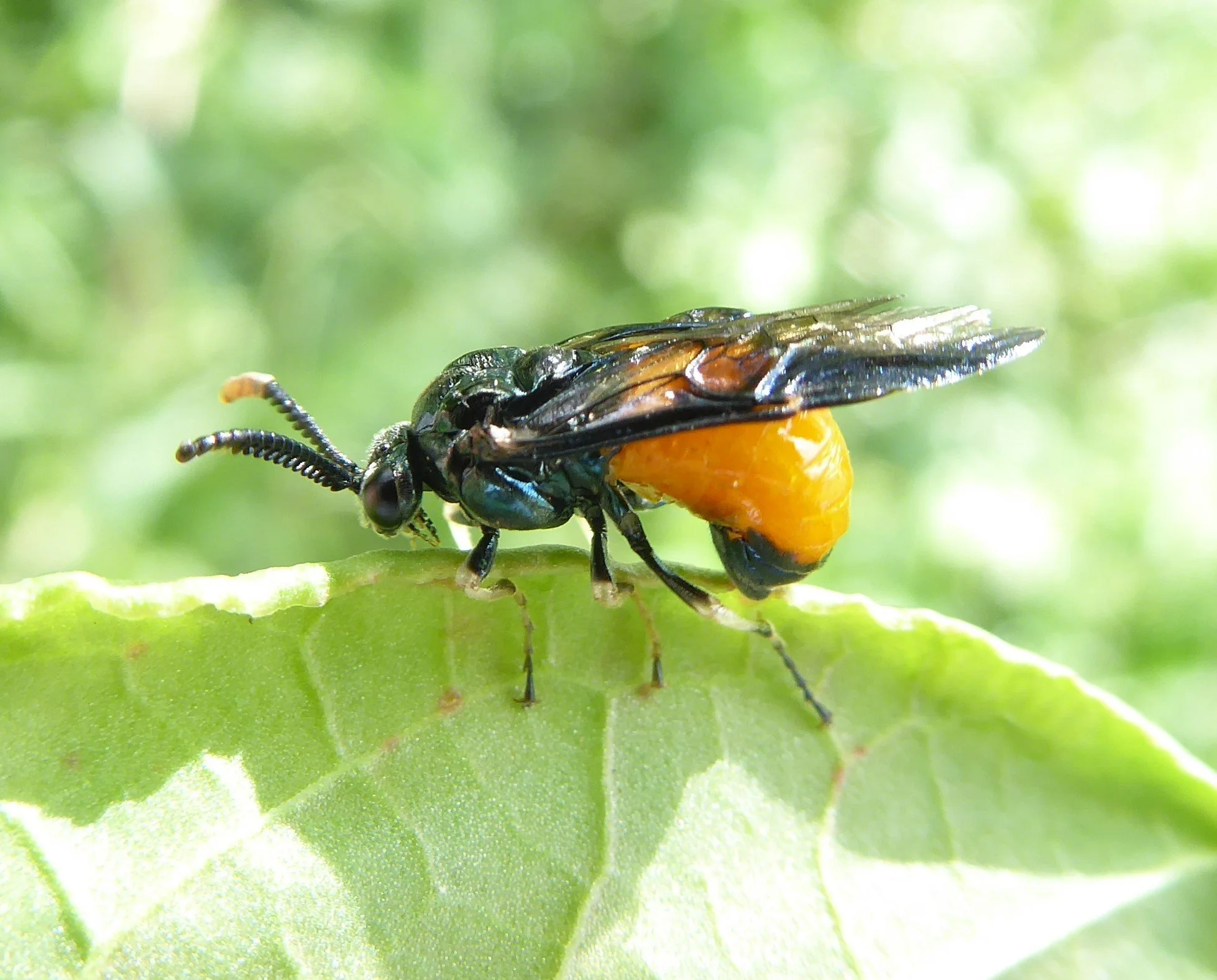
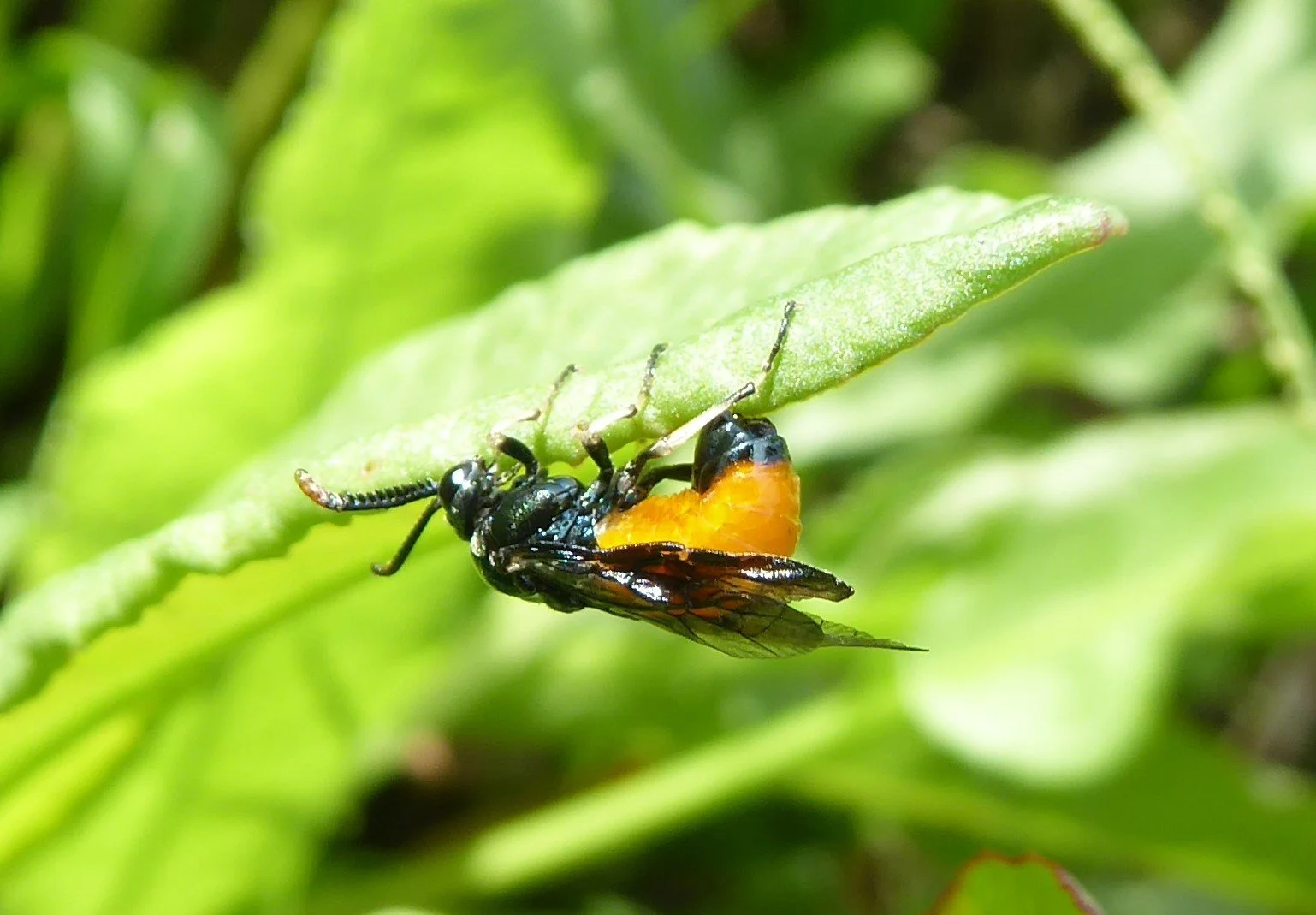
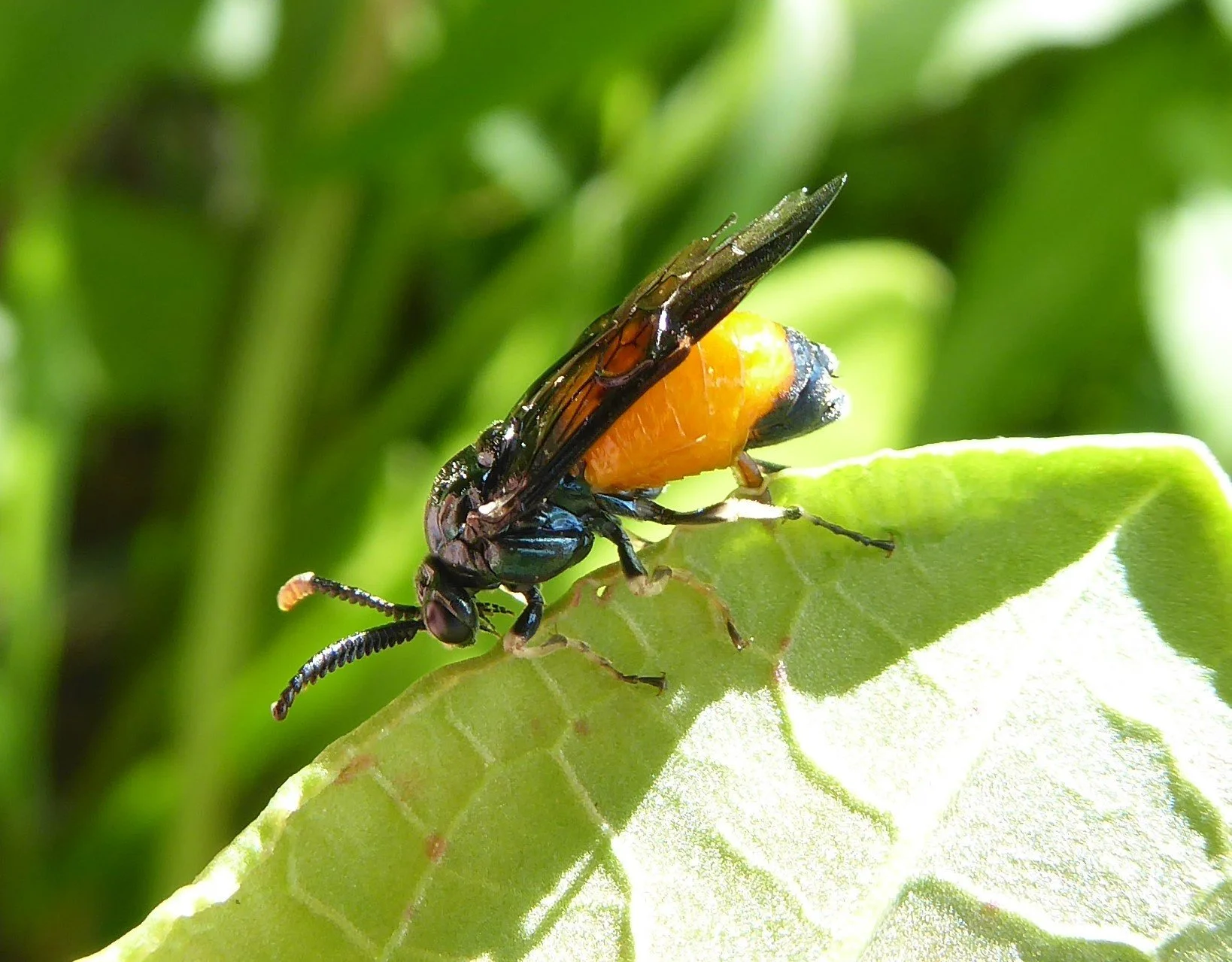
iNat observation by coddiwompler shows Lophyrotoma analis ovipositing along the leaf margin. The process is displayed in the following image sequence extracted from the movie she made (shown below this panel).
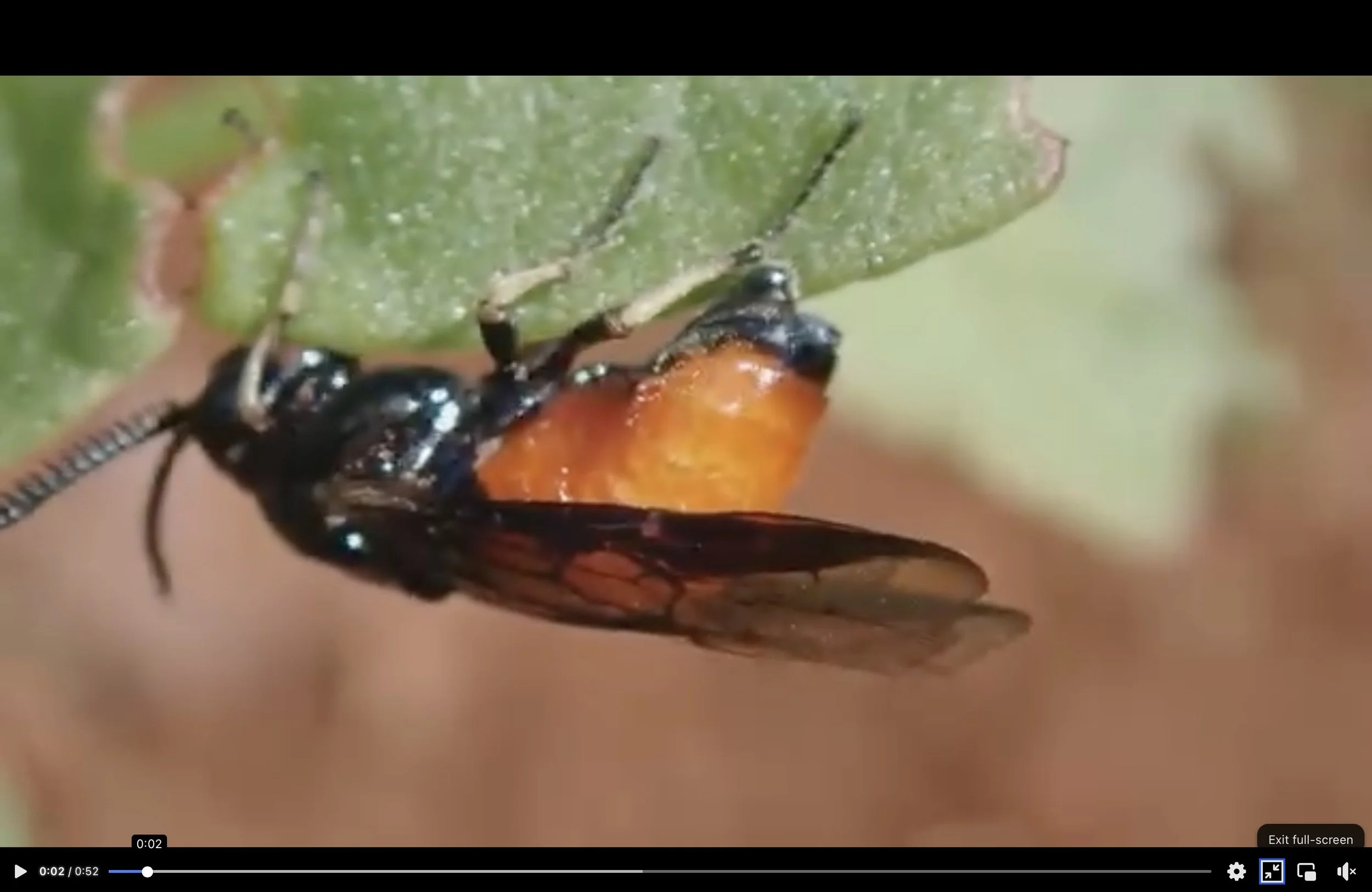
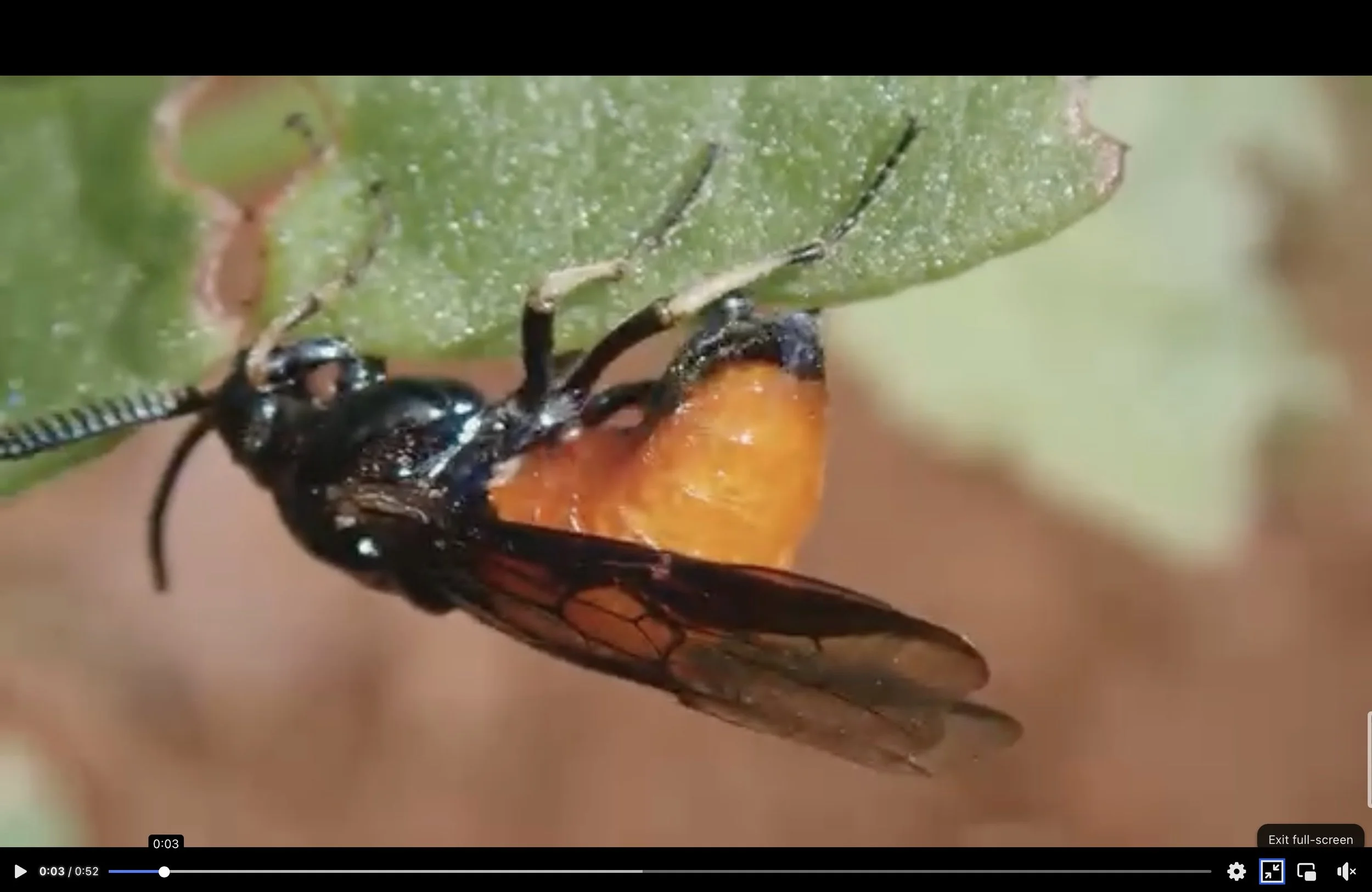
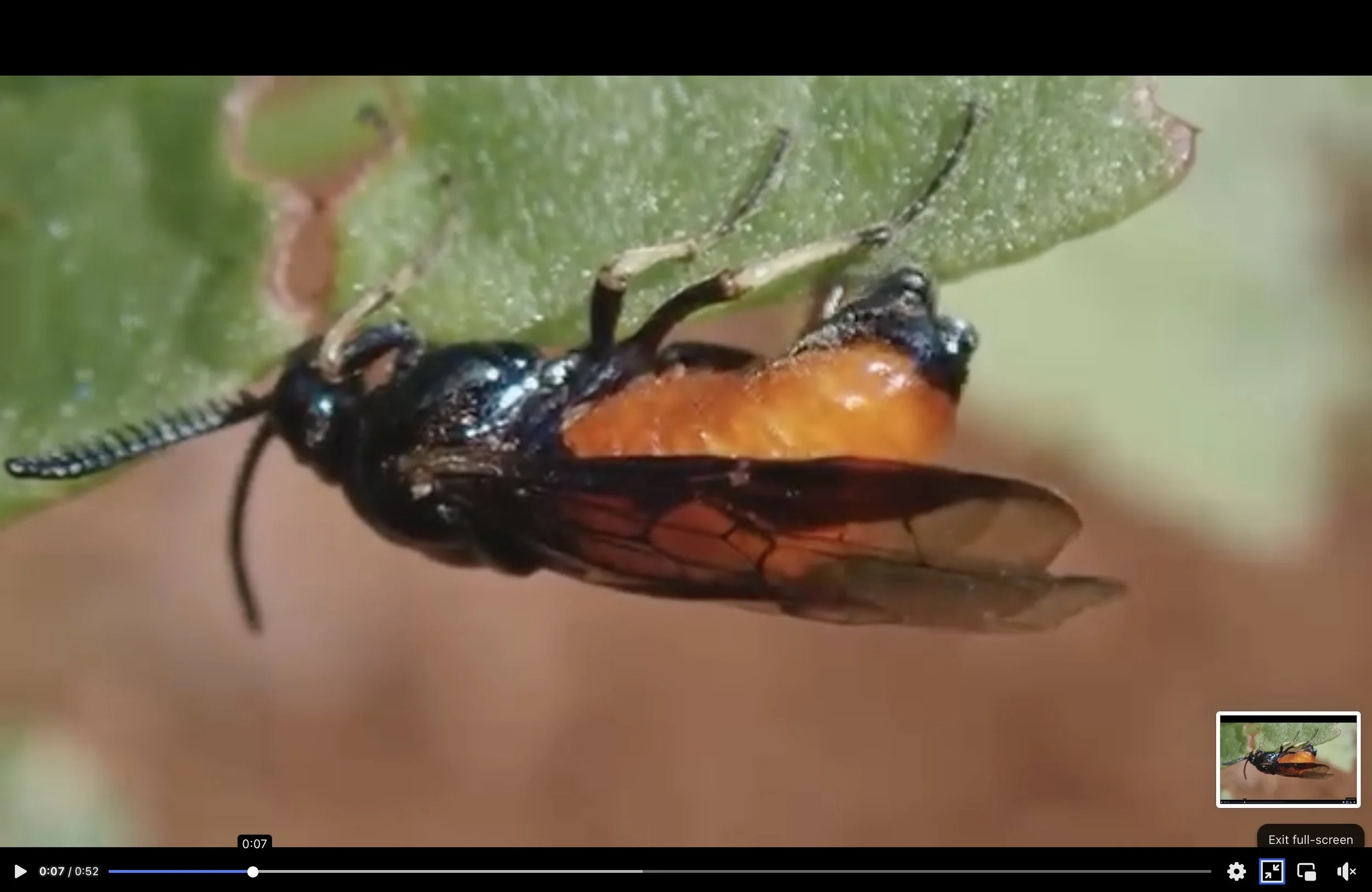
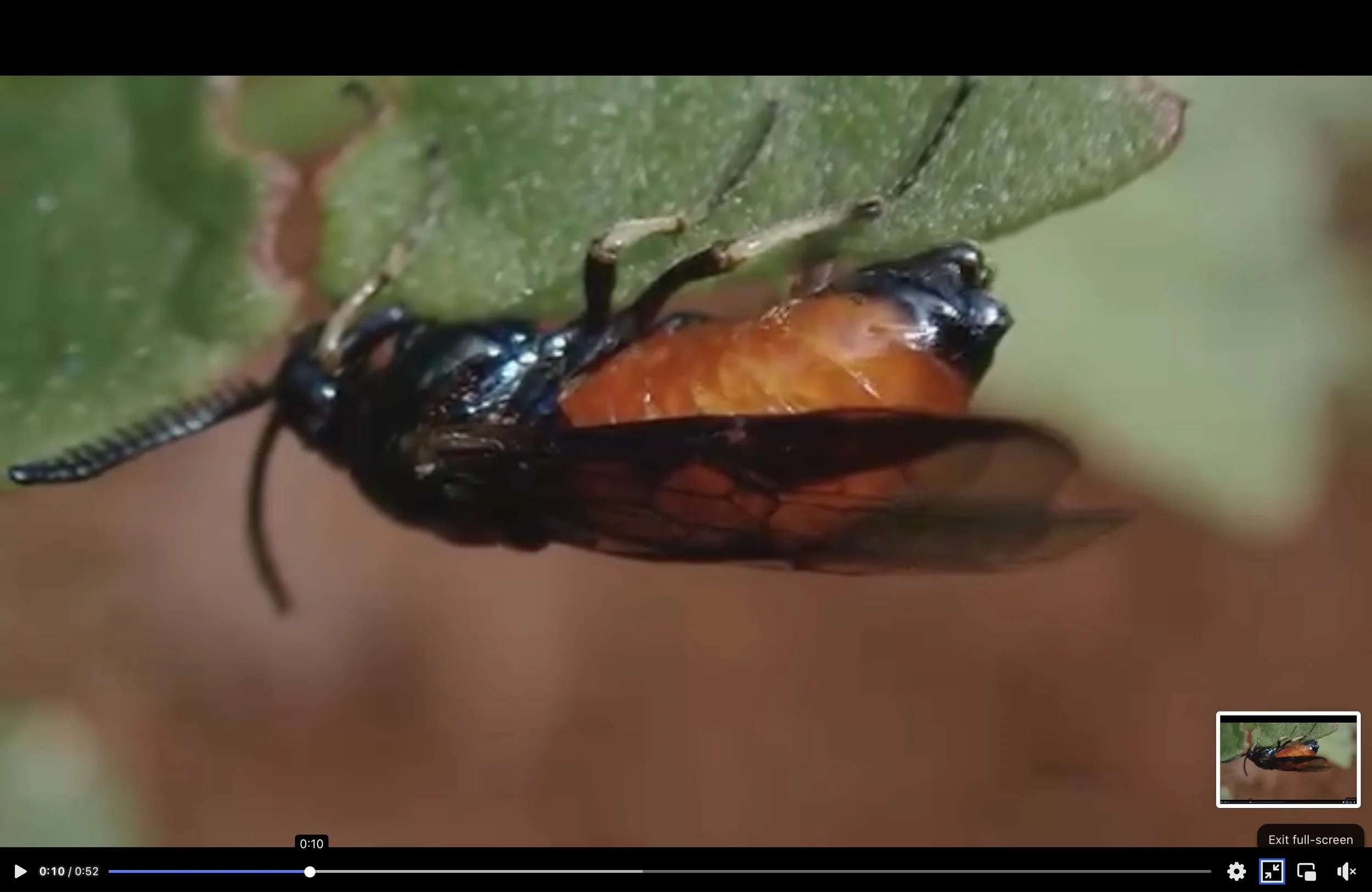
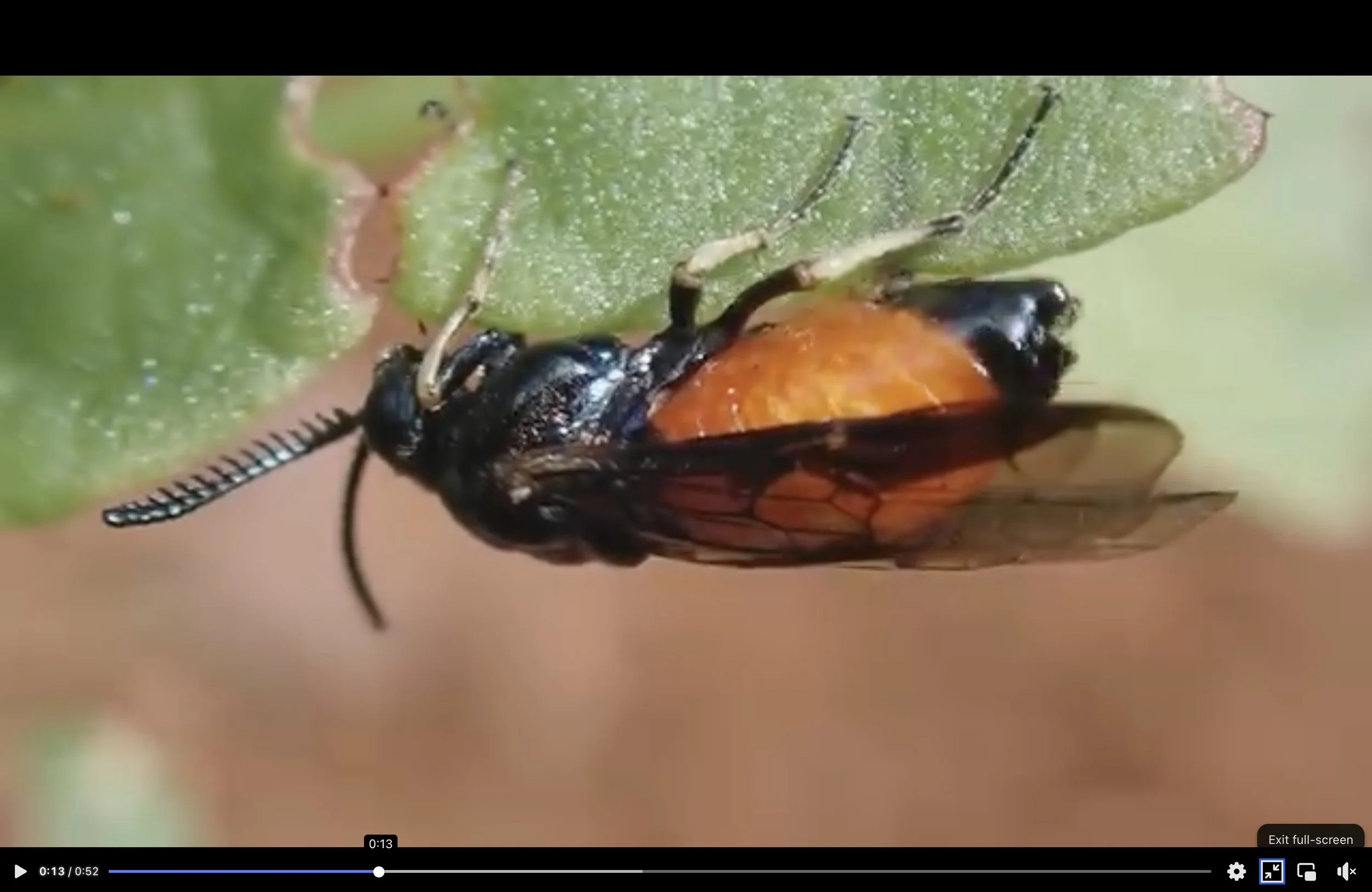
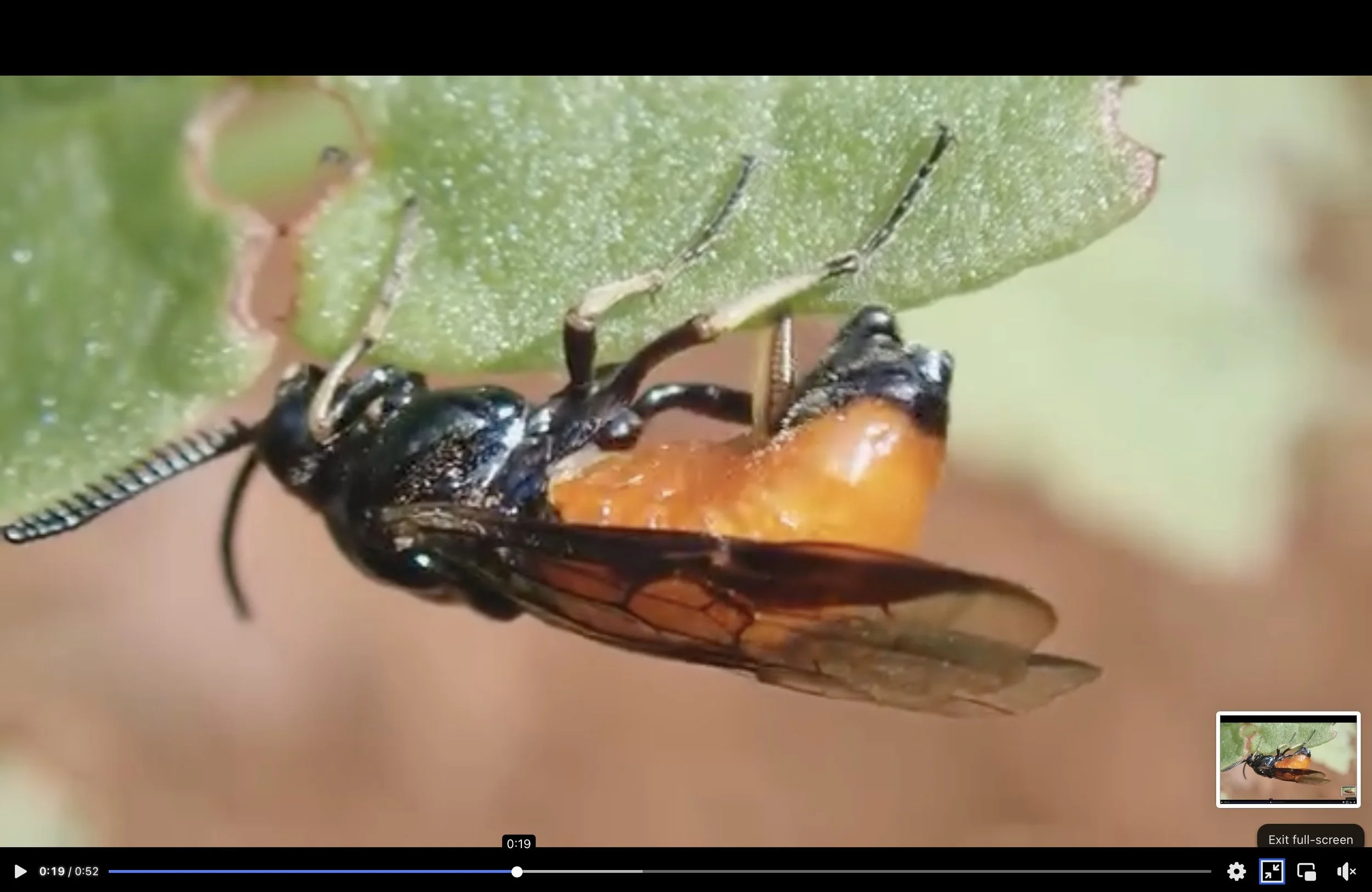
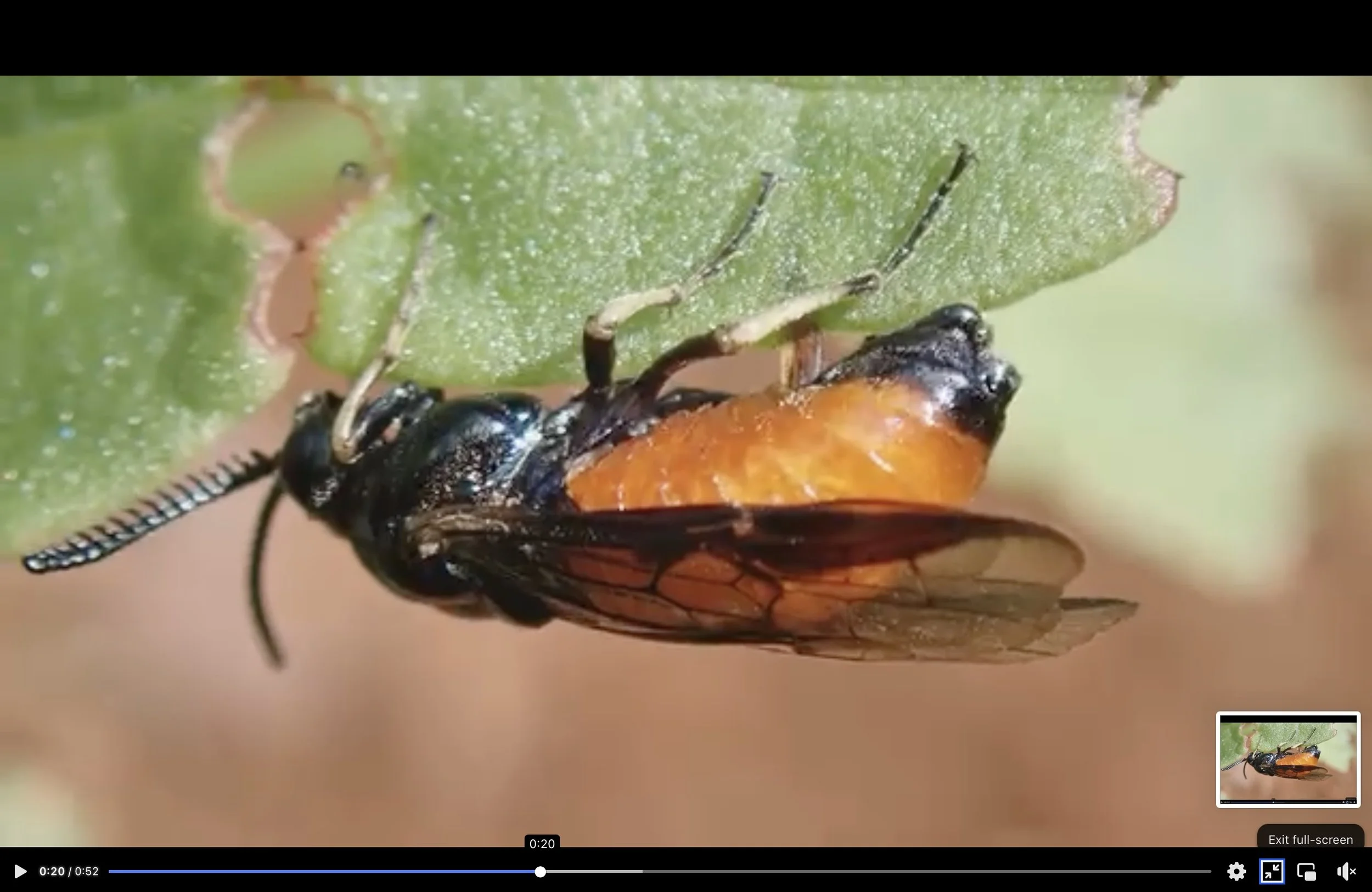
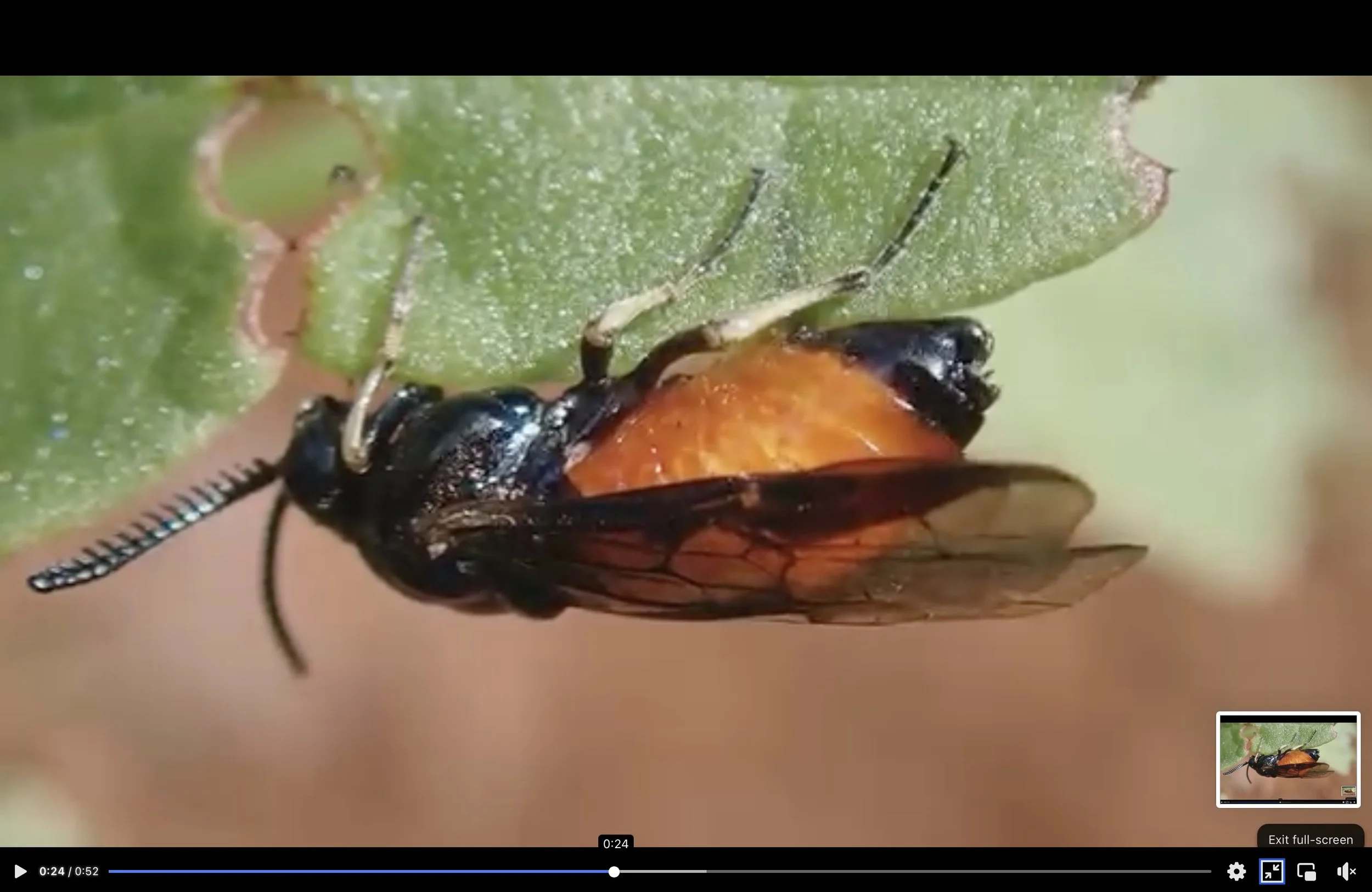
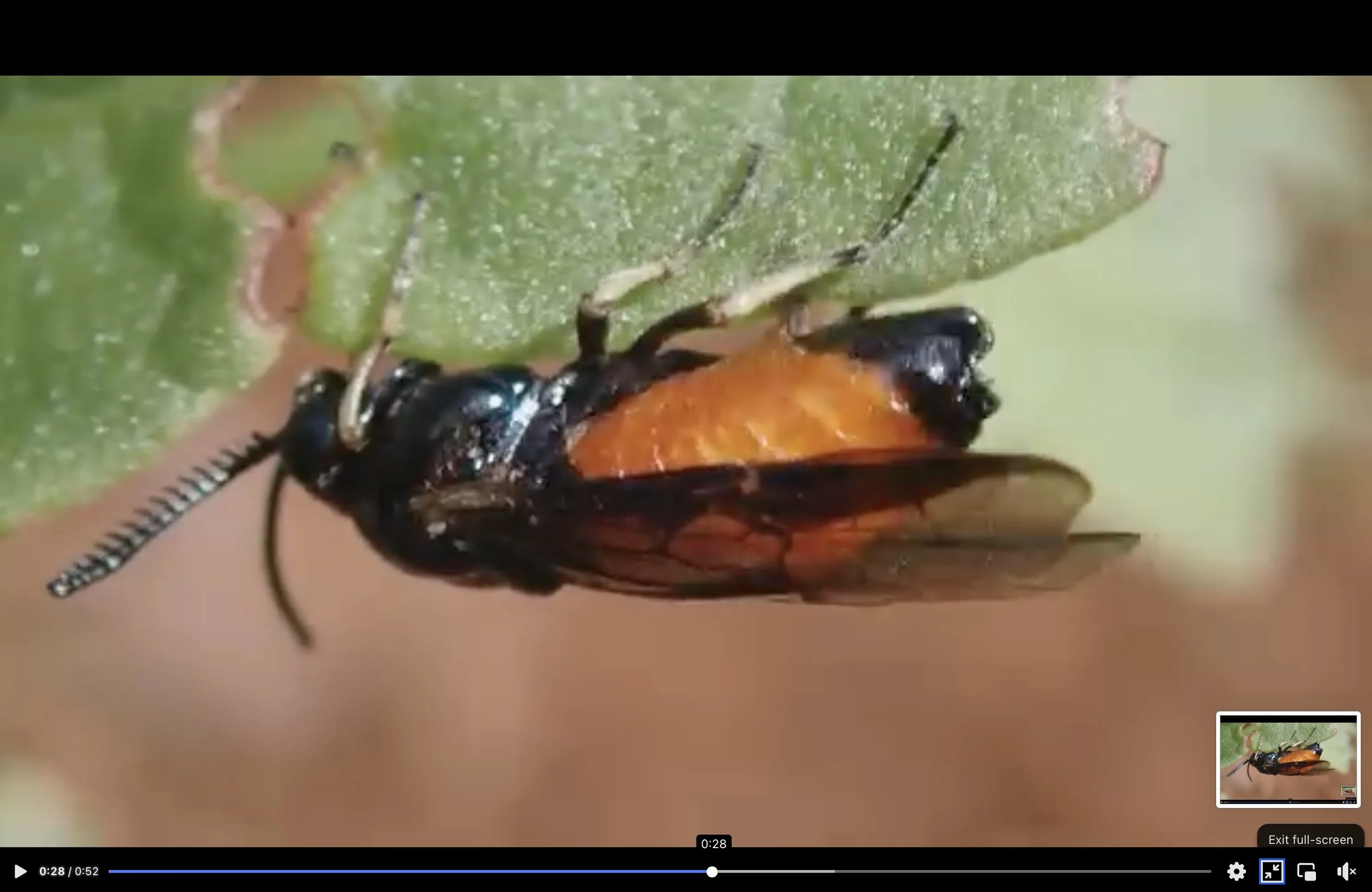
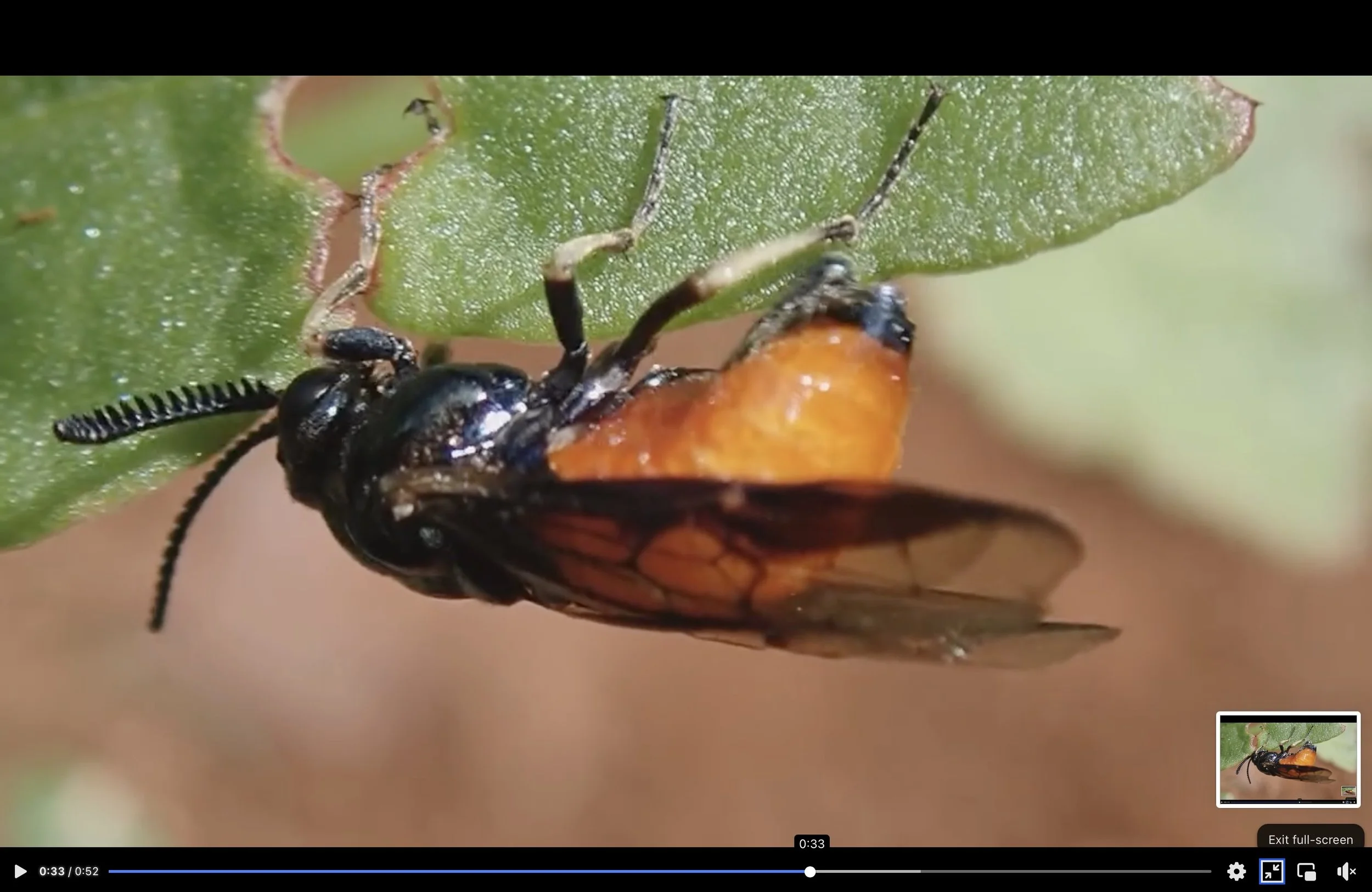
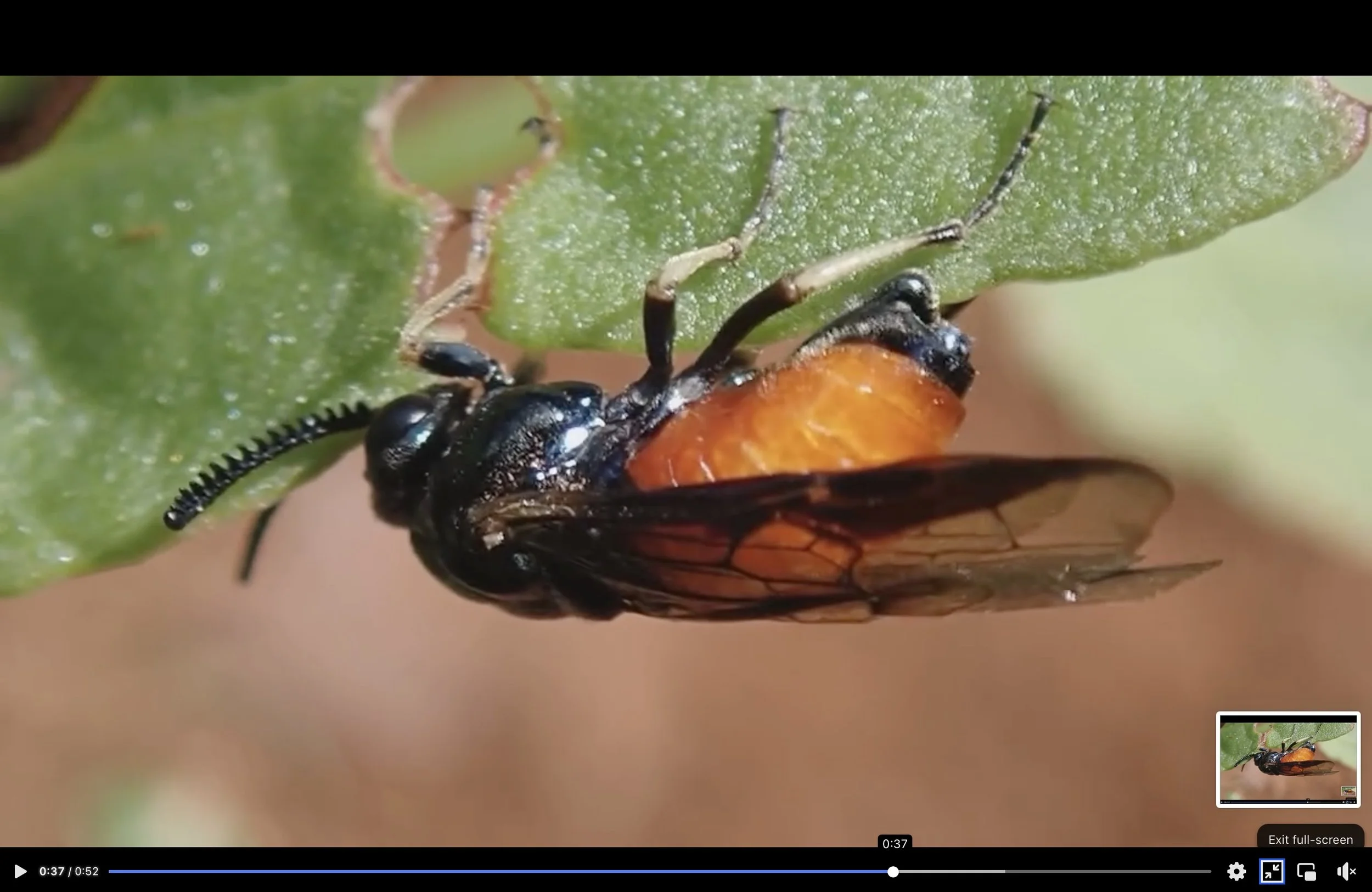
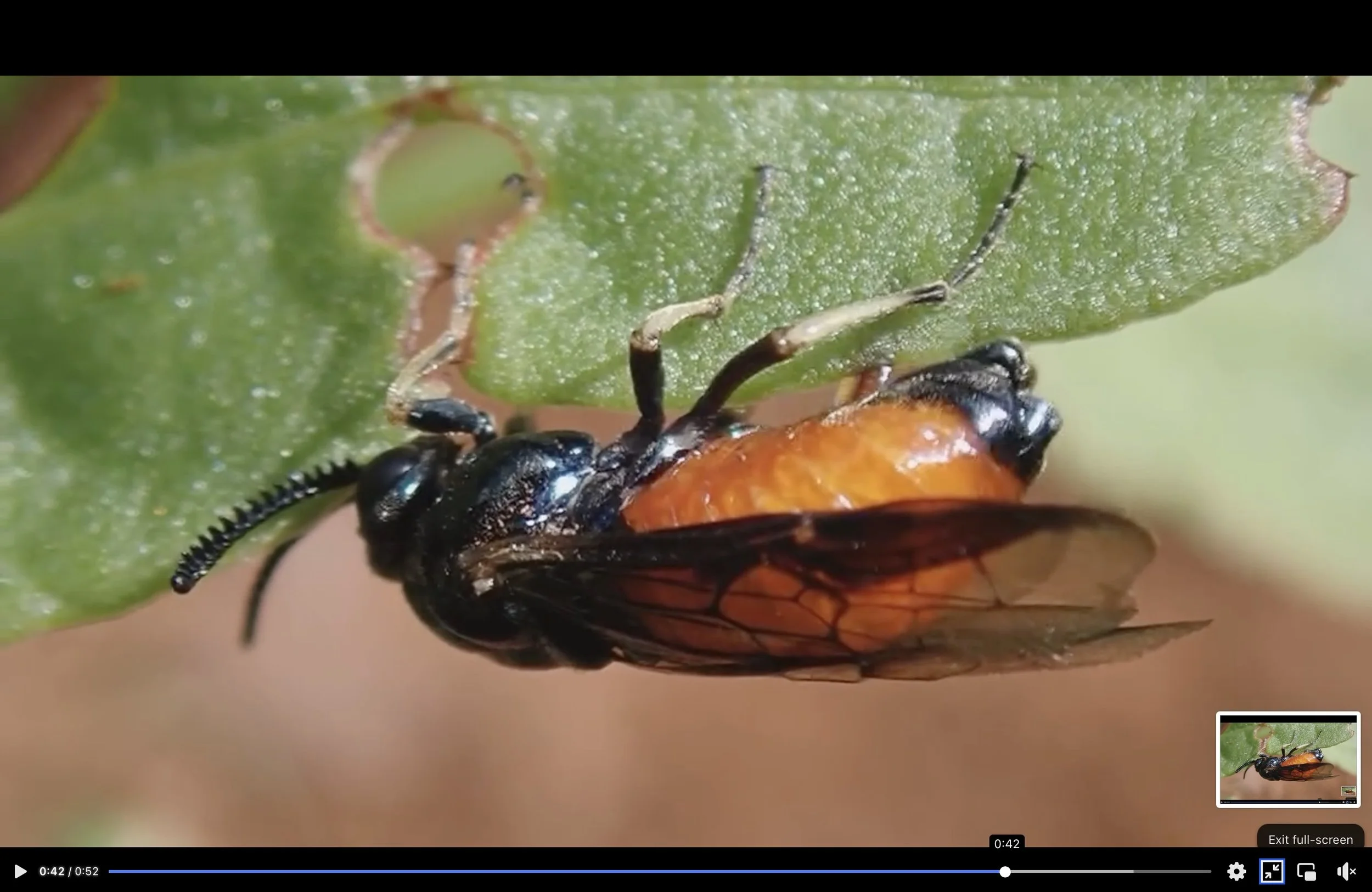
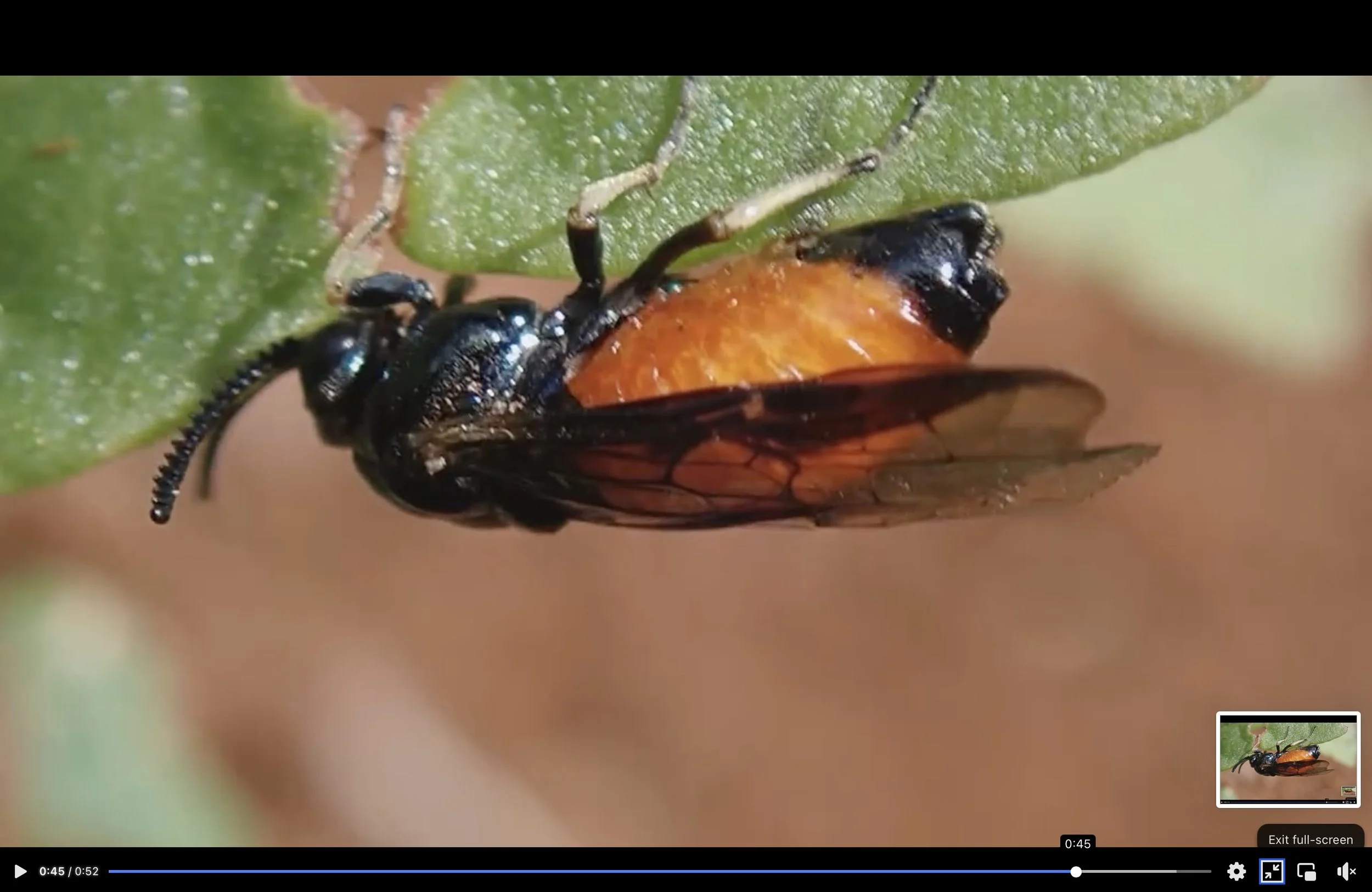
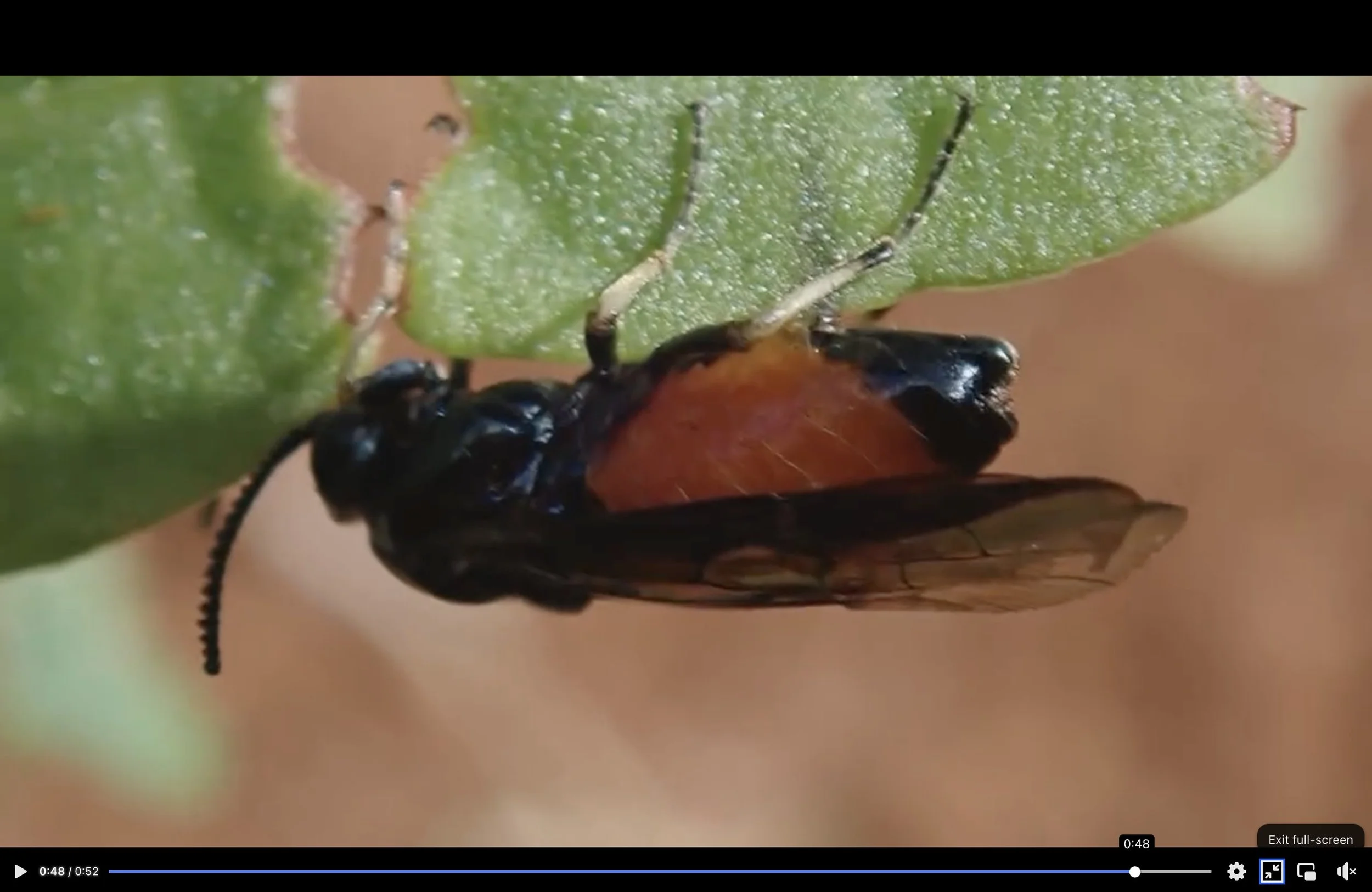
Movie of the oviposition event (can also be viewed on YouTube). Click to stop the action at any point.
Lophyrotoma cygna
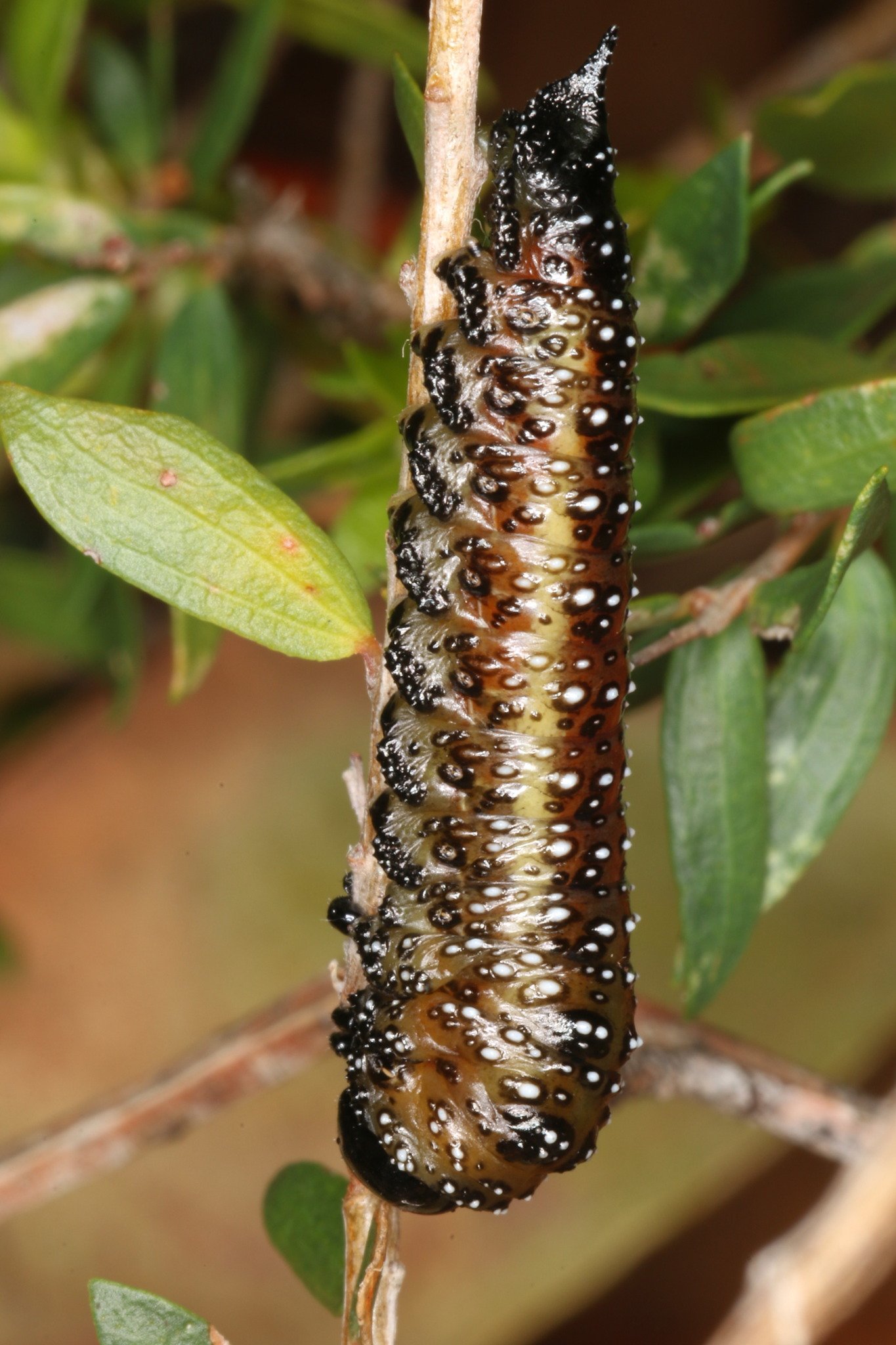
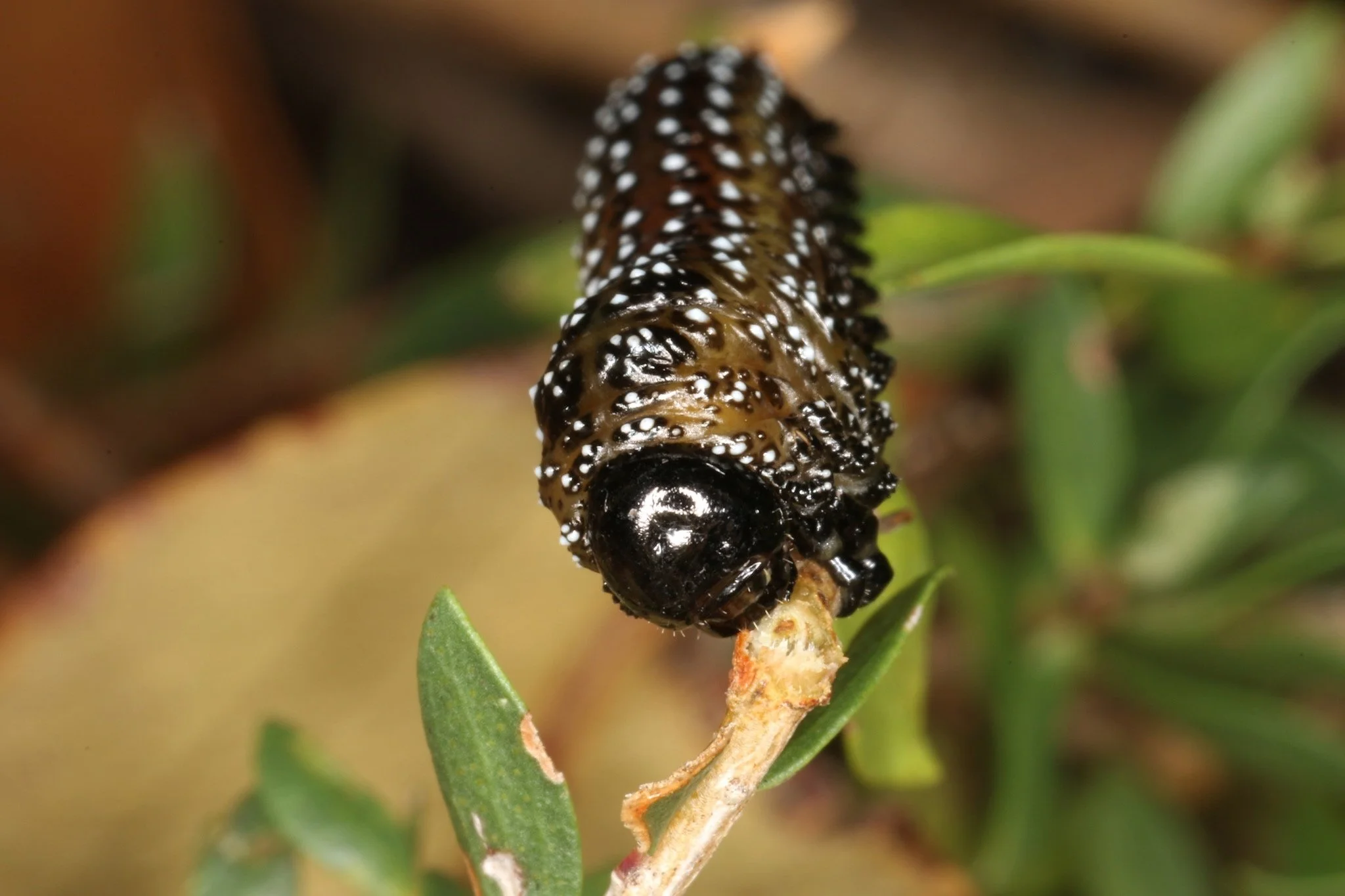
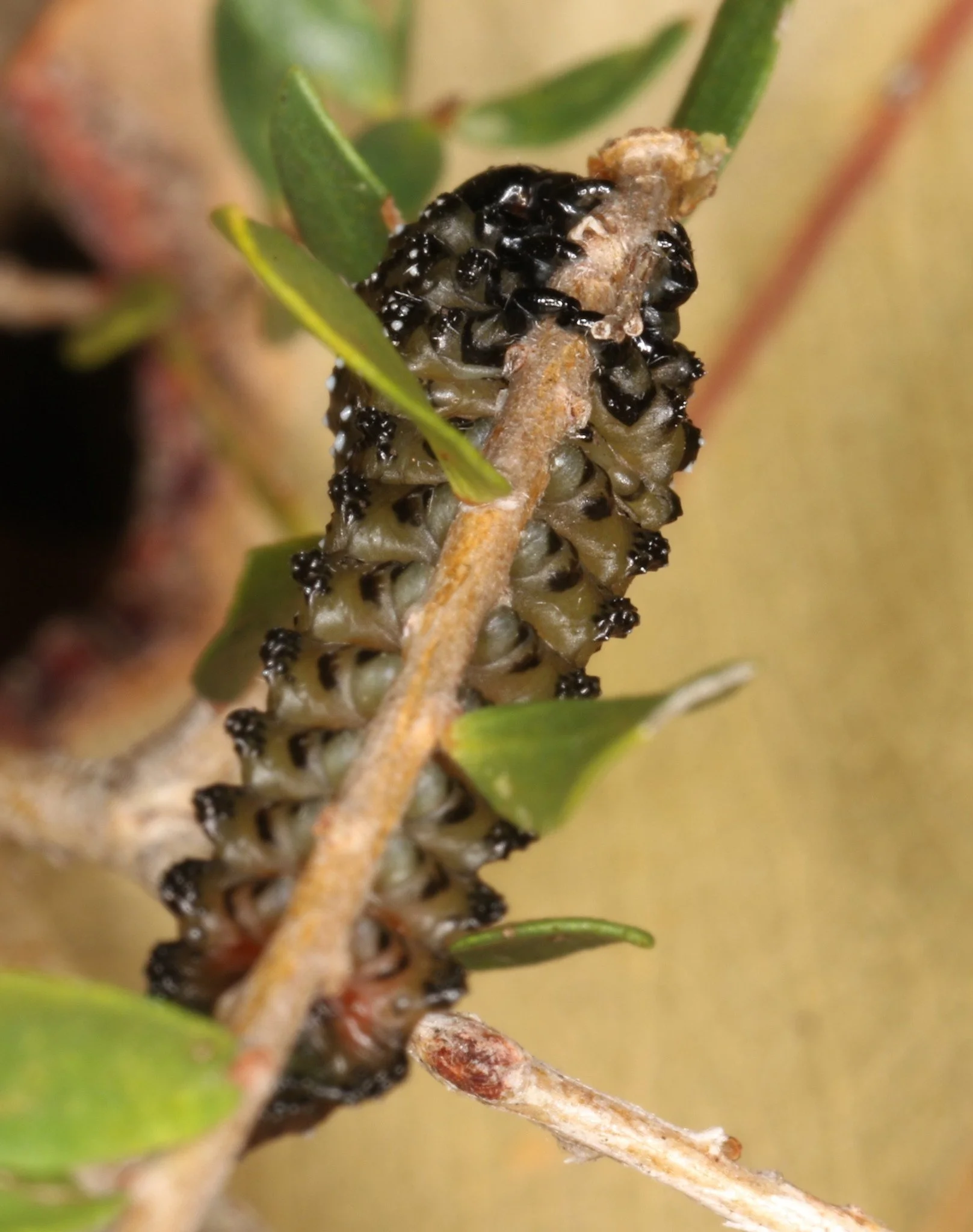
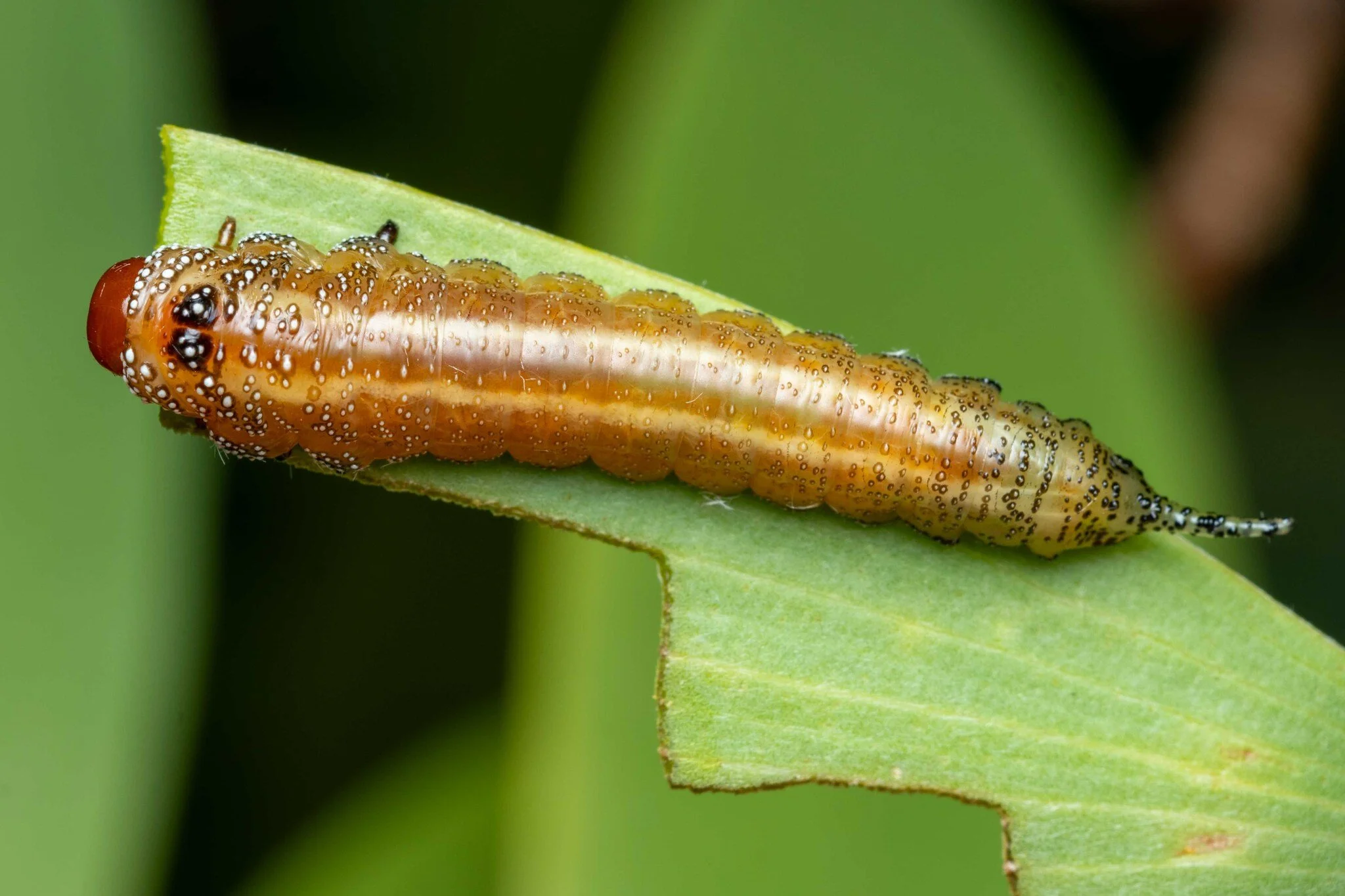
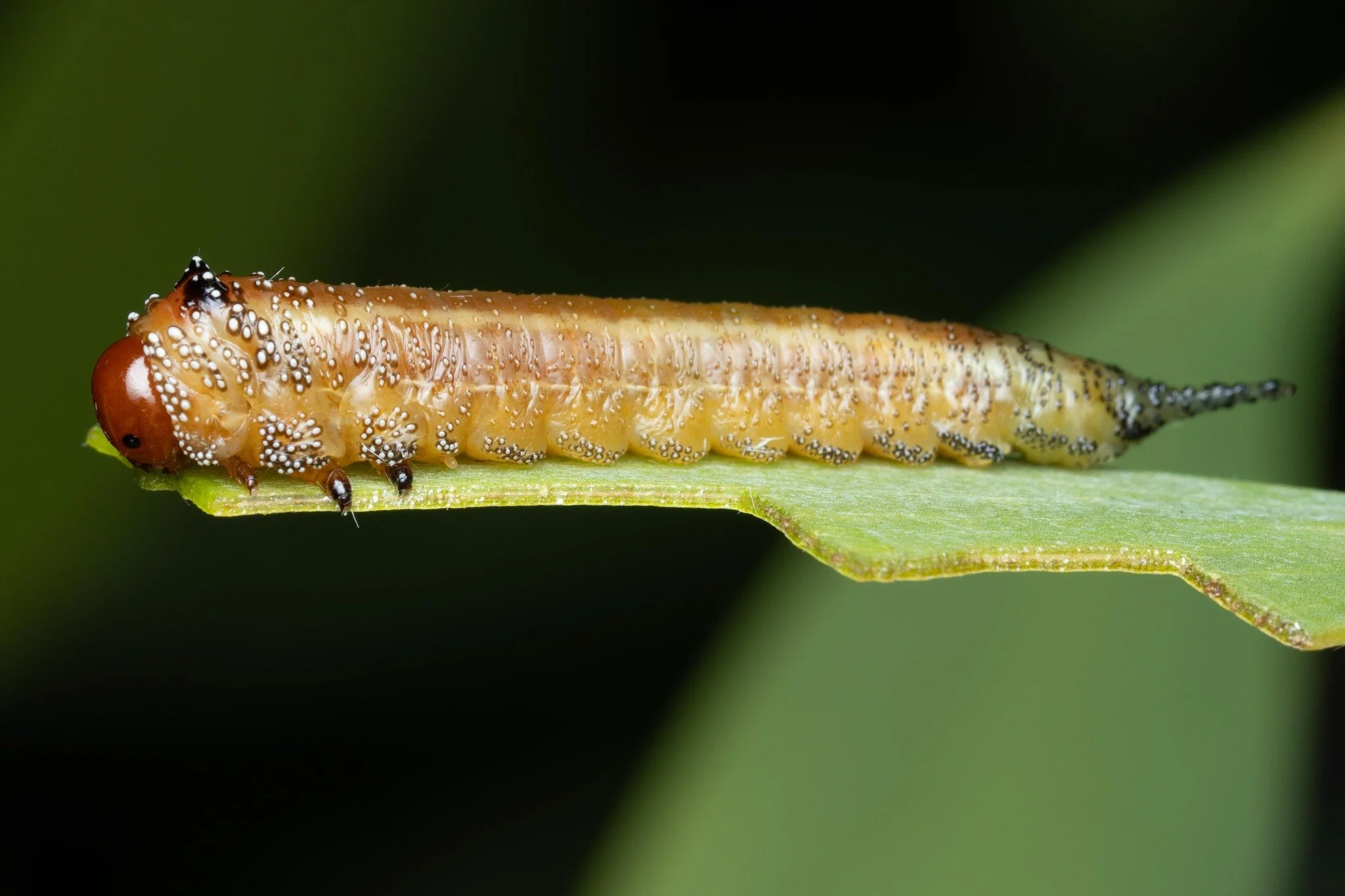
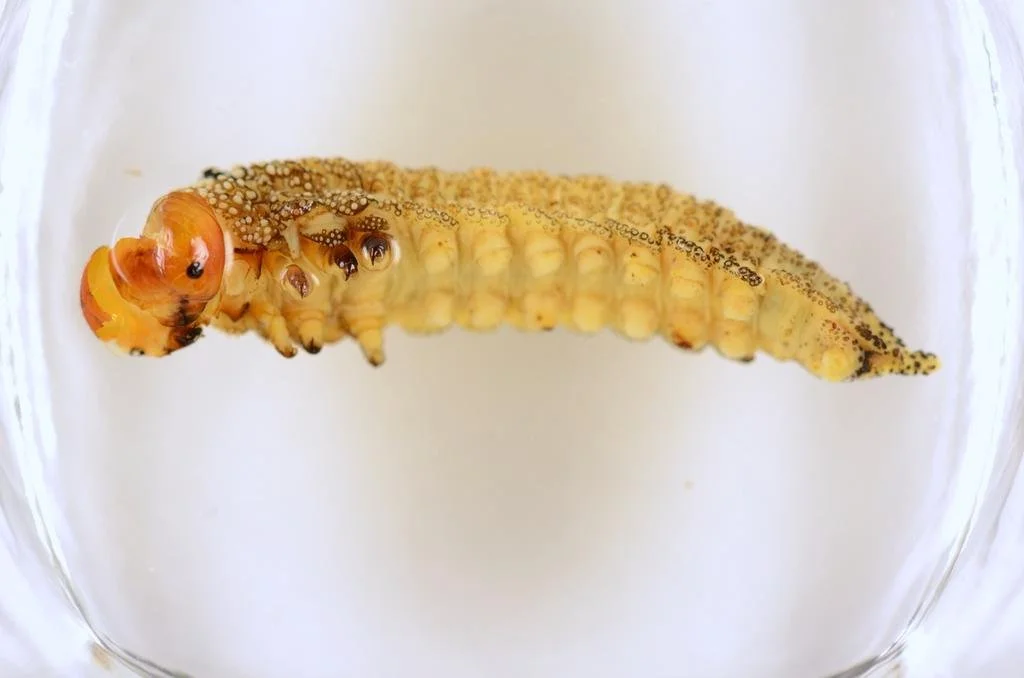
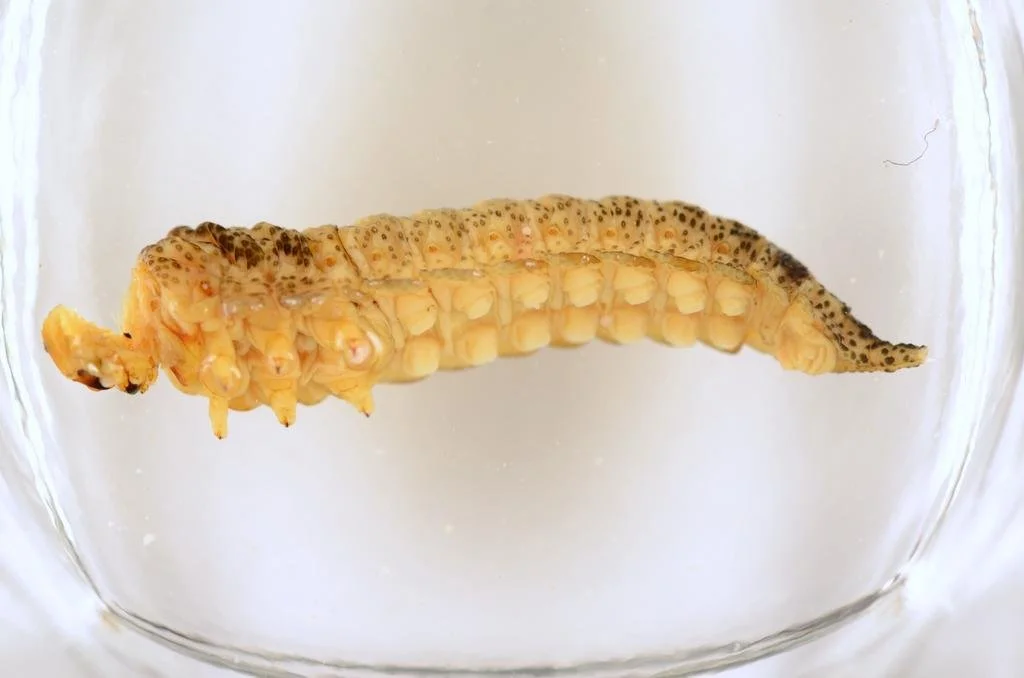
Following panel of photos from iNaturalist observation by kirrrkus in Margaret River area, WA.
Good candidate for L. cygna based on fact that only other Pterygophorinae larvae in WA are L. zonalis and L. analis, which can be excluded based on location, morphology and host plant.
Lophyrotoma interrupta
Schmidt (2006) reports the following as food plants for L. interrupta: Angophora floribunda, Corymbia gummifera, C. maculata, E. camaldulensis, E. crebra, E. grandis, E. intermedia, E. melanophloia, E. moluccana, E. nicholii, E. obliqua, E. ovata, E. populnea, E. siderophloia, E. viminalis, Leptospermum sp.
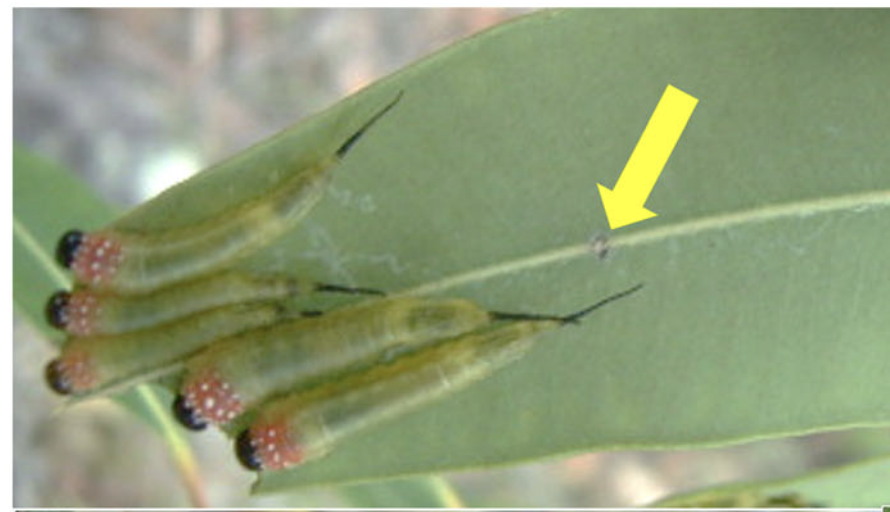
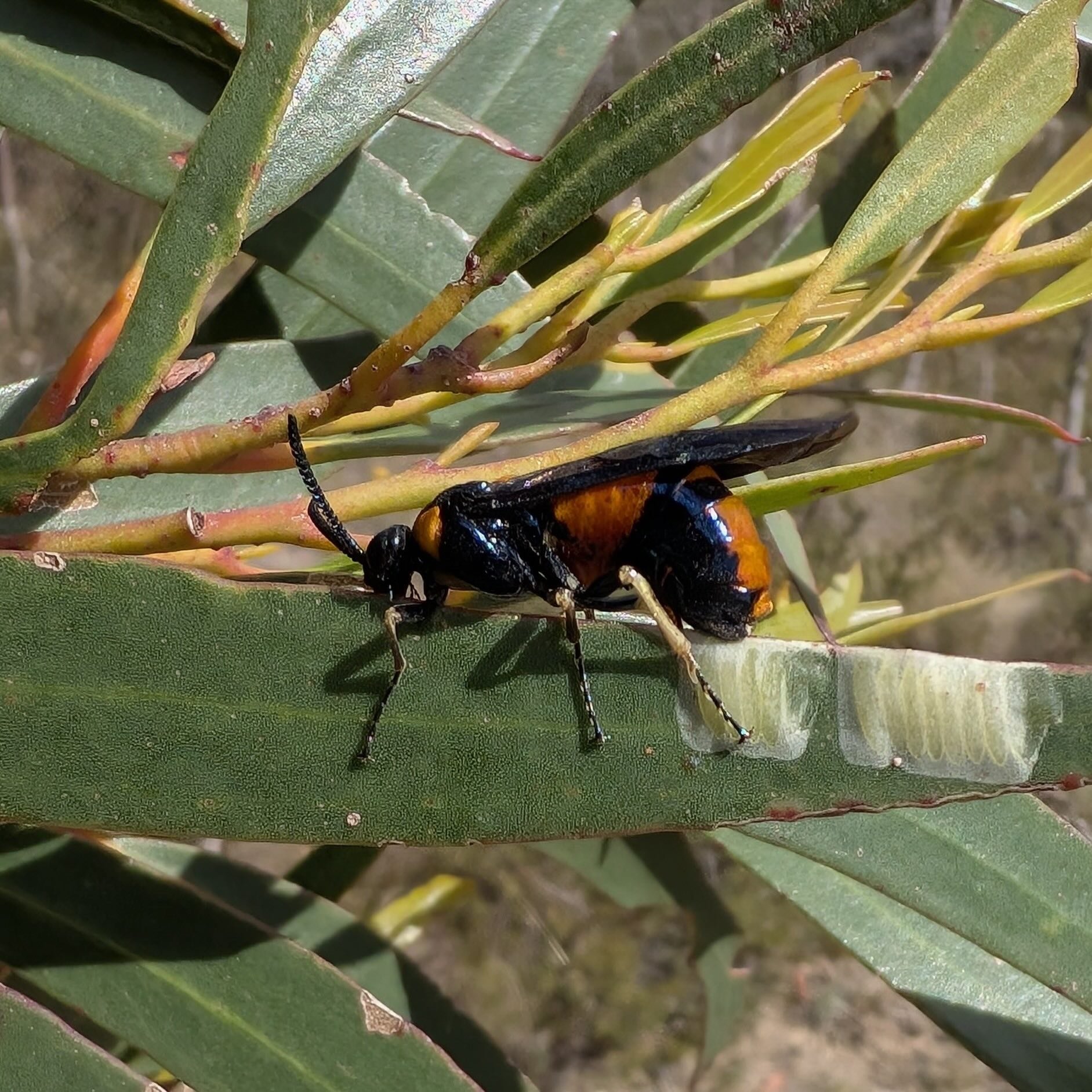
Lophyrotoma leachii
iNaturalist observations show L. leachii ovipositing on the margin of eucalypt leaves. The eggs are laid in a cluster.
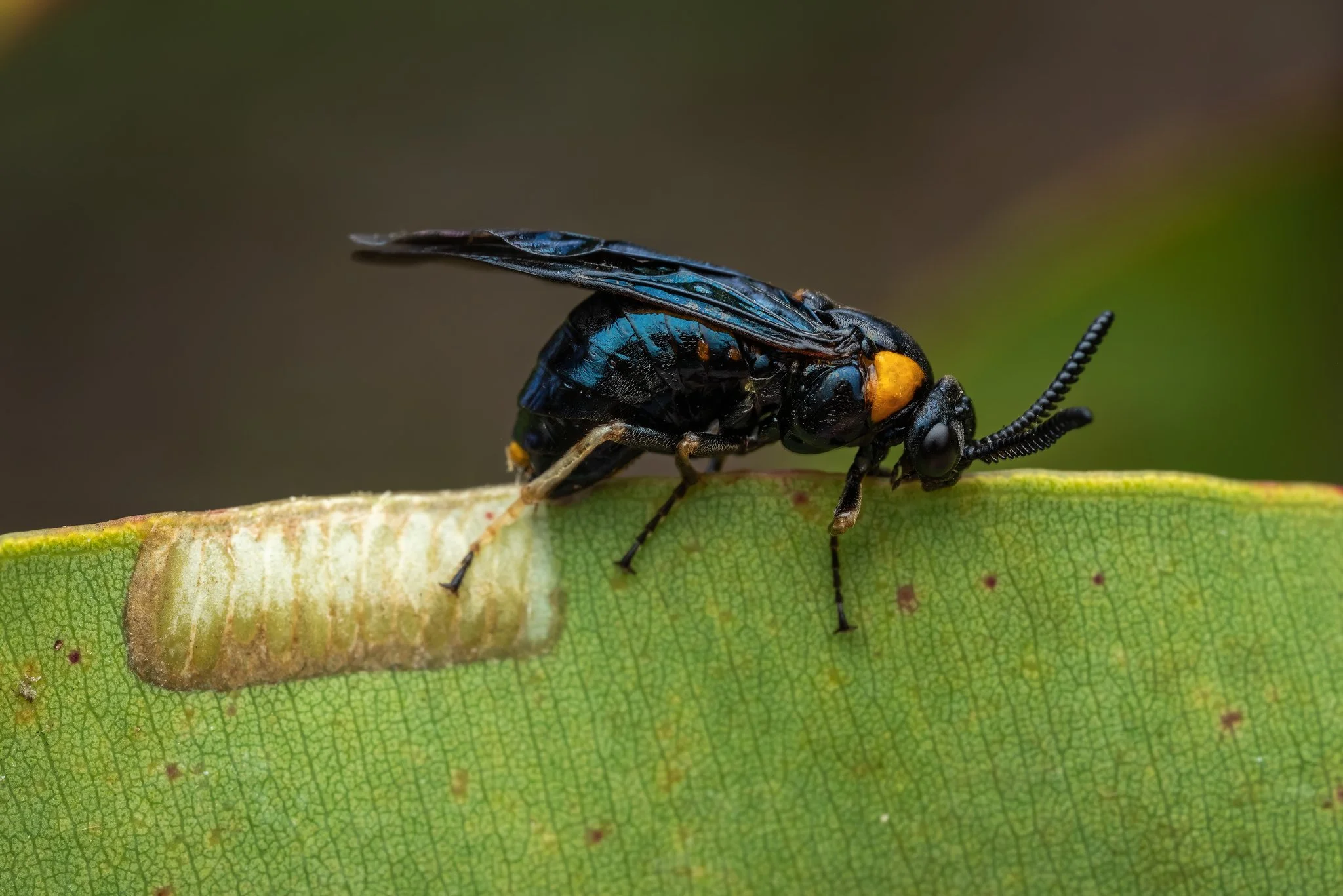
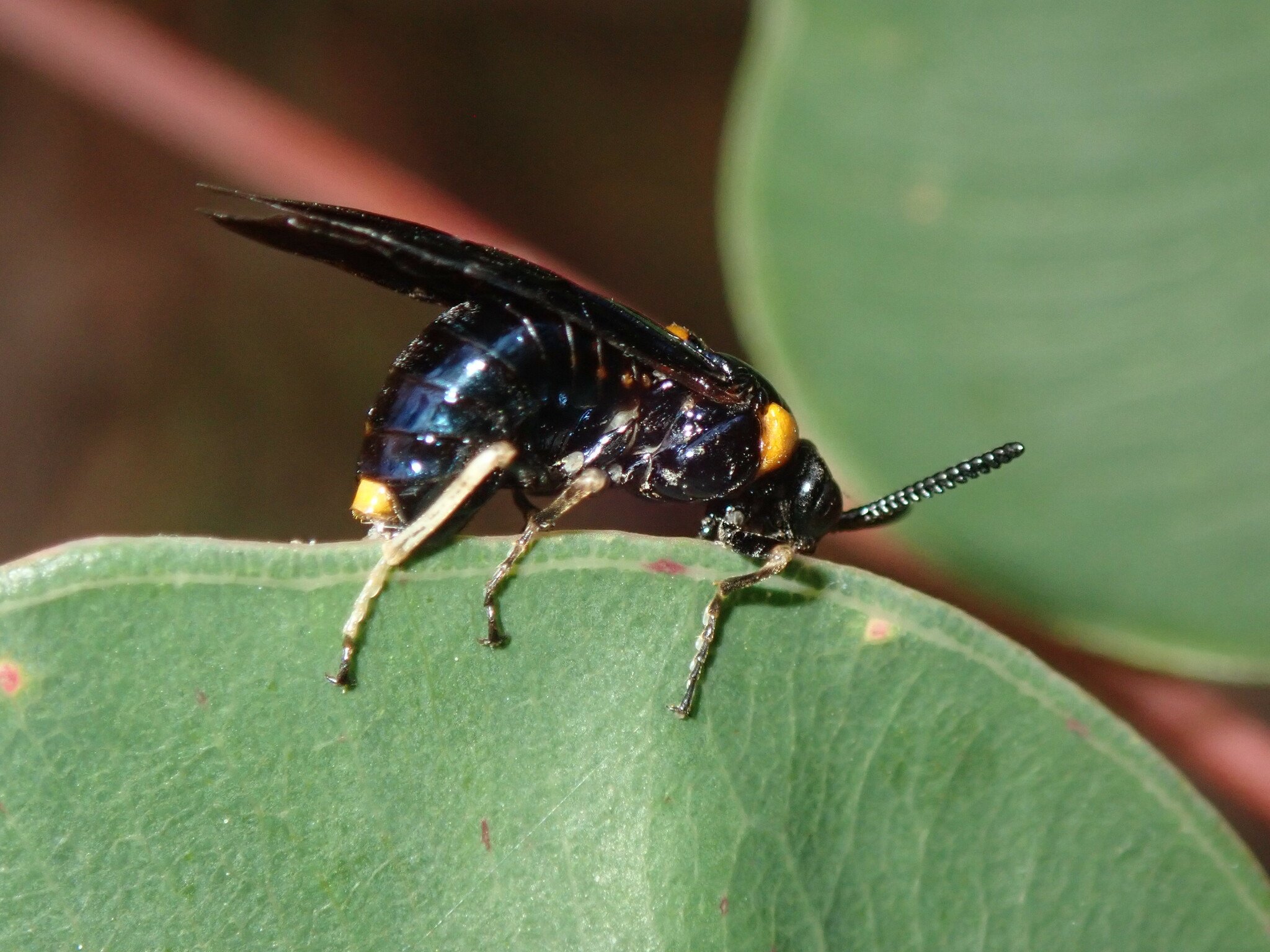
Lophyrotoma zonalis
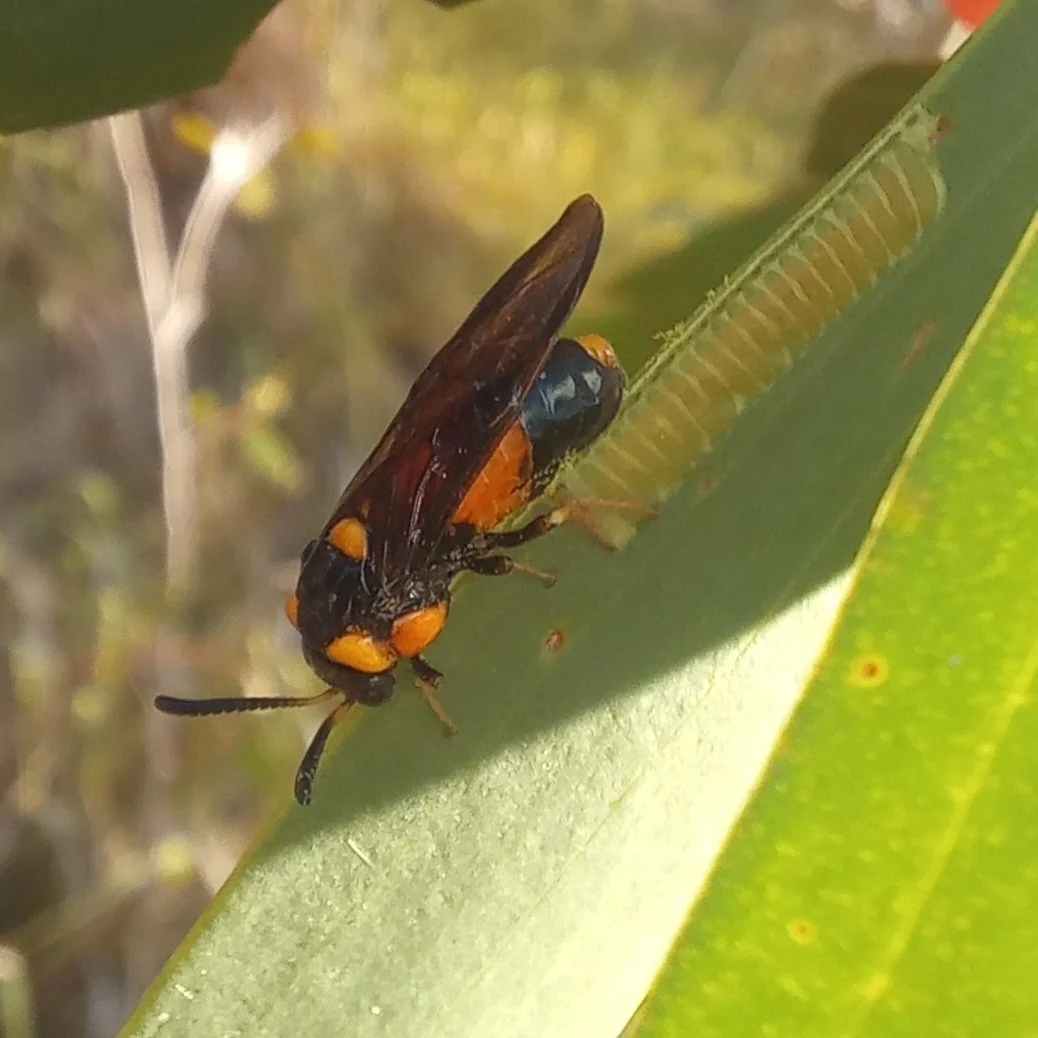
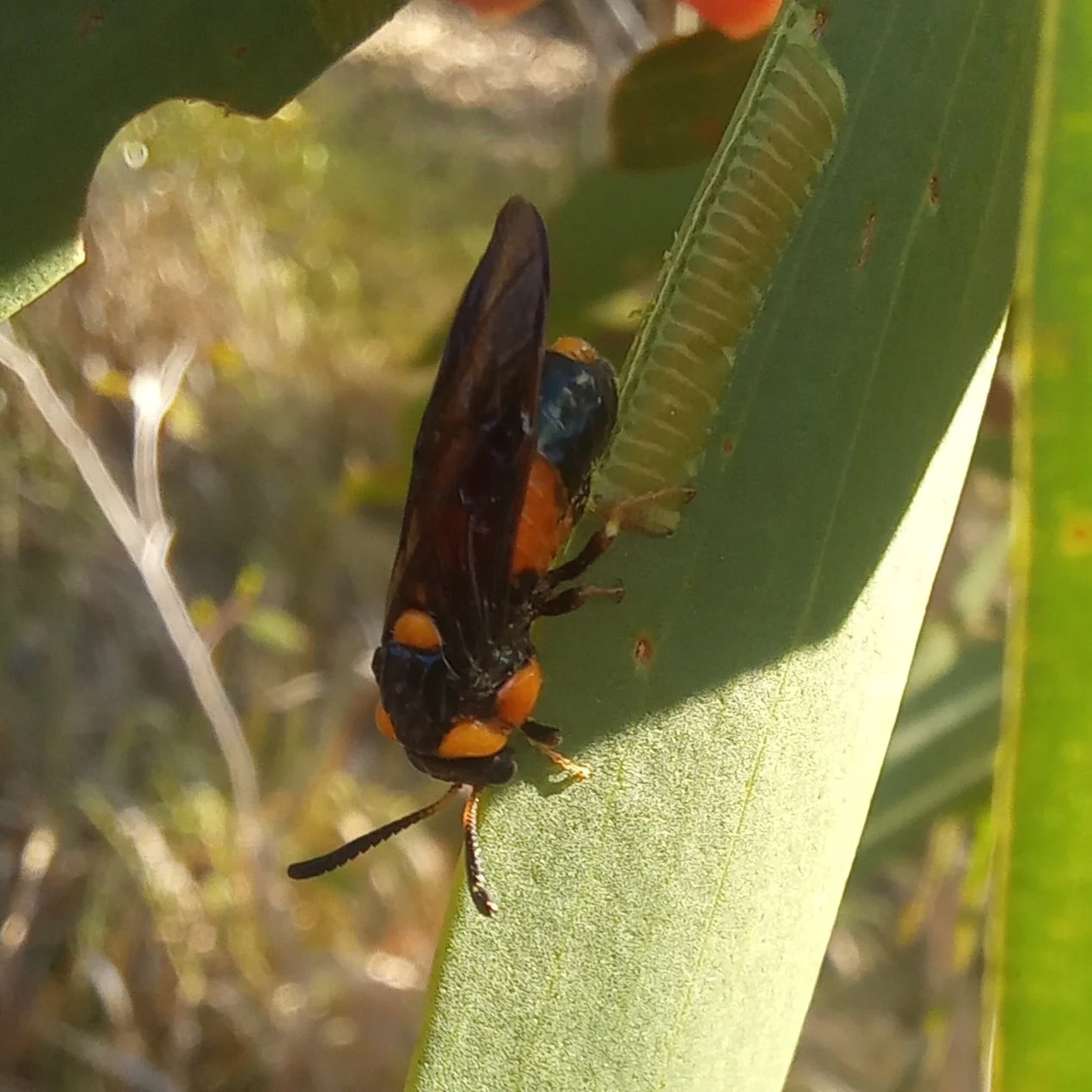
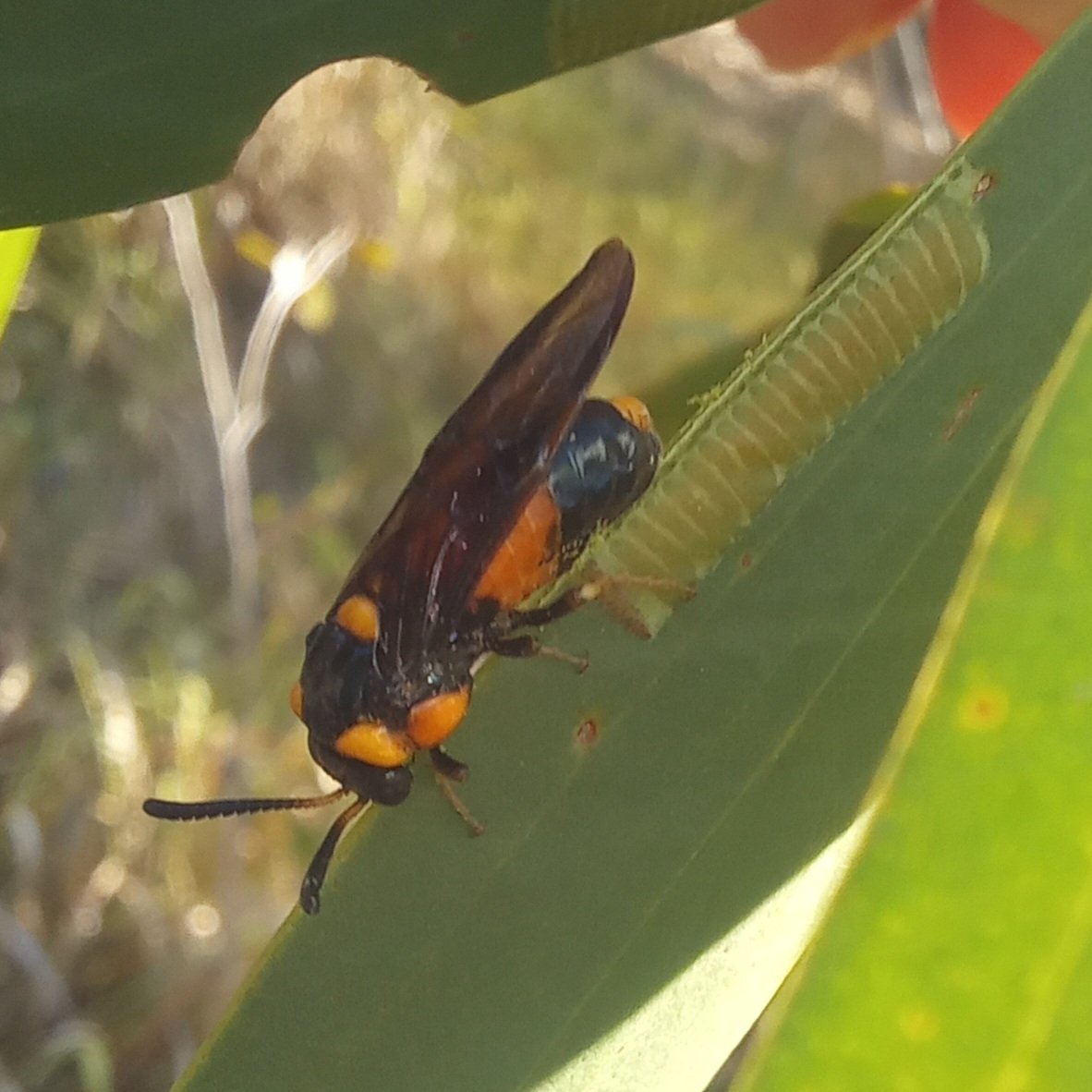
iNaturalist observation by francytee of L. zonalis ovipositing into edge of Melaleuca leaf. Extended saw pushed into leaf is visible in all photos. Eggs are laid in a cluster.
Burrows & Balciunas (1997) state that “P. zonalis embryonic period is 3-4 weeks (but may be longer in winter) and larval development through perhaps 10 instars takes 5 weeks. The larvae burrow into the thick, papery bark of Melaleuca spp. and form holes in the outer bark layers. Pupation takes 20-23 days (range 17-52 days). Adults emerging from a given batch may be all males or all females or a mix. Reproduction is parthenogenetic and females may begin ovipositing within 2 days of becoming adults. The female inserts her ovipositor into leaf tissue in a line along the leaf margin, laying 20-30 eggs. Females can lay up to 6 batches of eggs. Emergence from eggs is highly synchronised and the larvae begin feeding at the tip of the leaf in a feeding front. After consuming that leaf they move to another and reform a front. After several moults they disperse and feed individually. The female does not feed and dies within 4-6 days”.
Pterygophorus cinctus
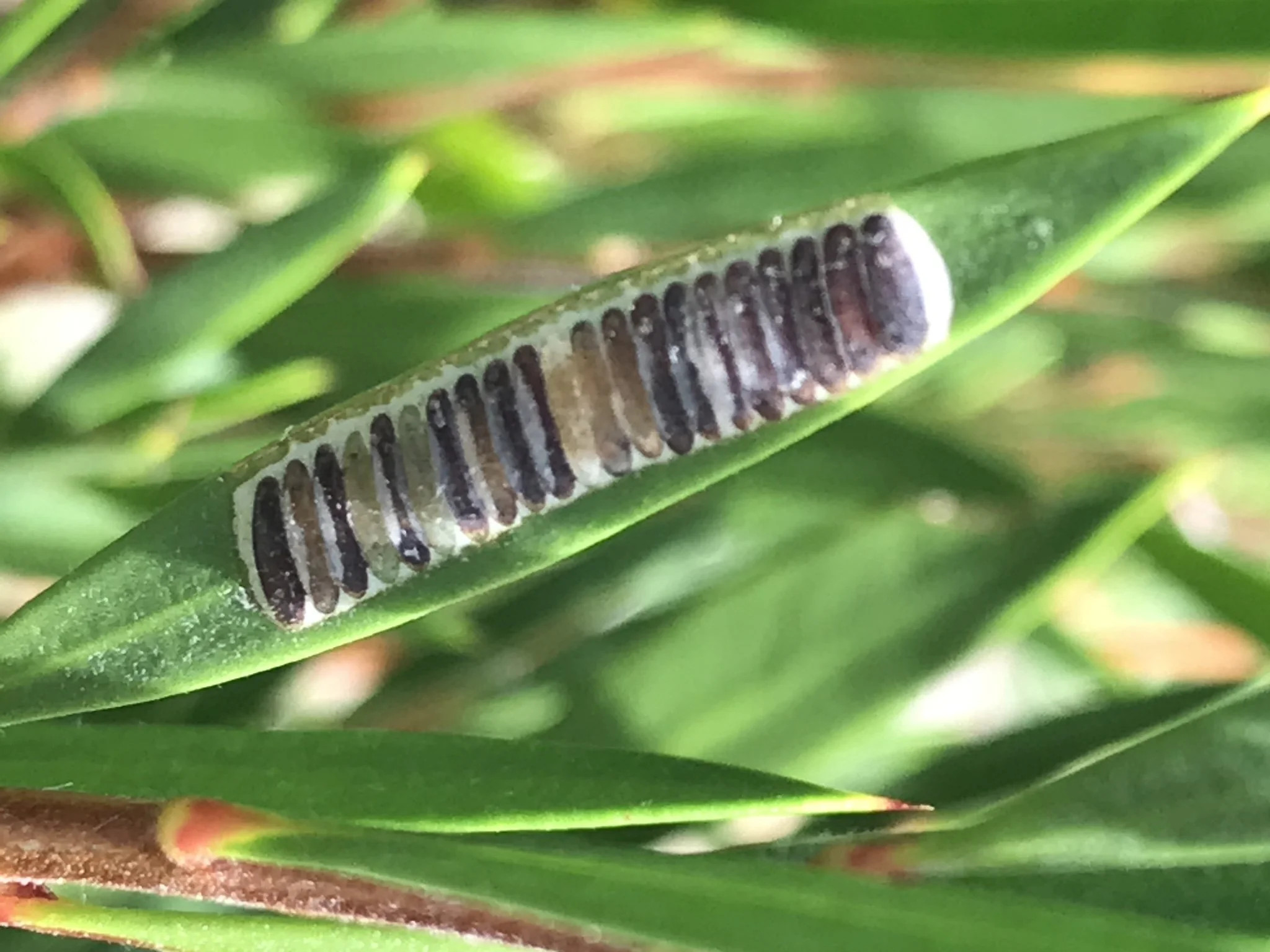
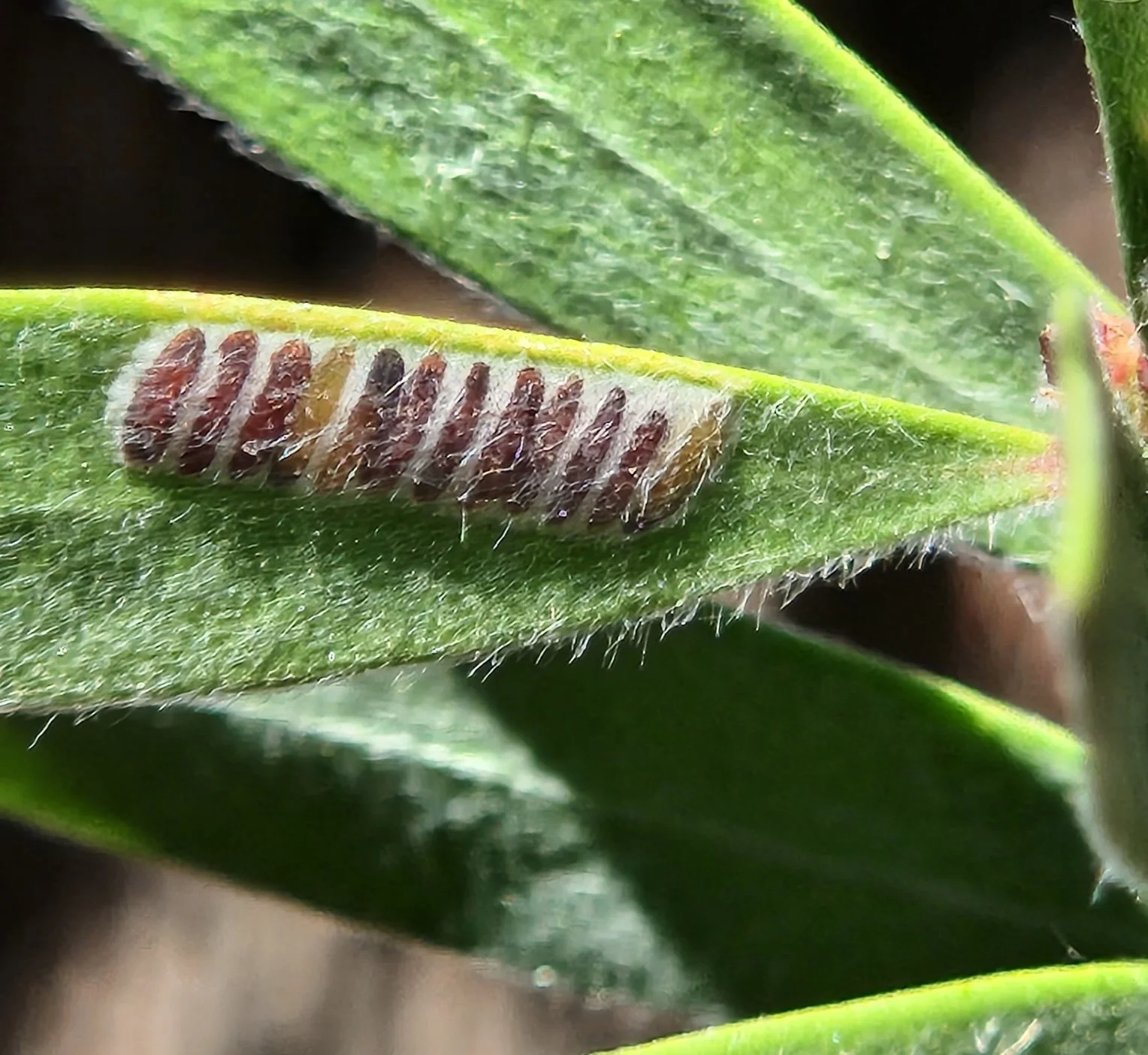
The following images from this iNat observation by jenncxoxo show a female P. cinctus laying eggs into the margin of a Callistemon leaf. Eggs are laid in clusters, not individually.
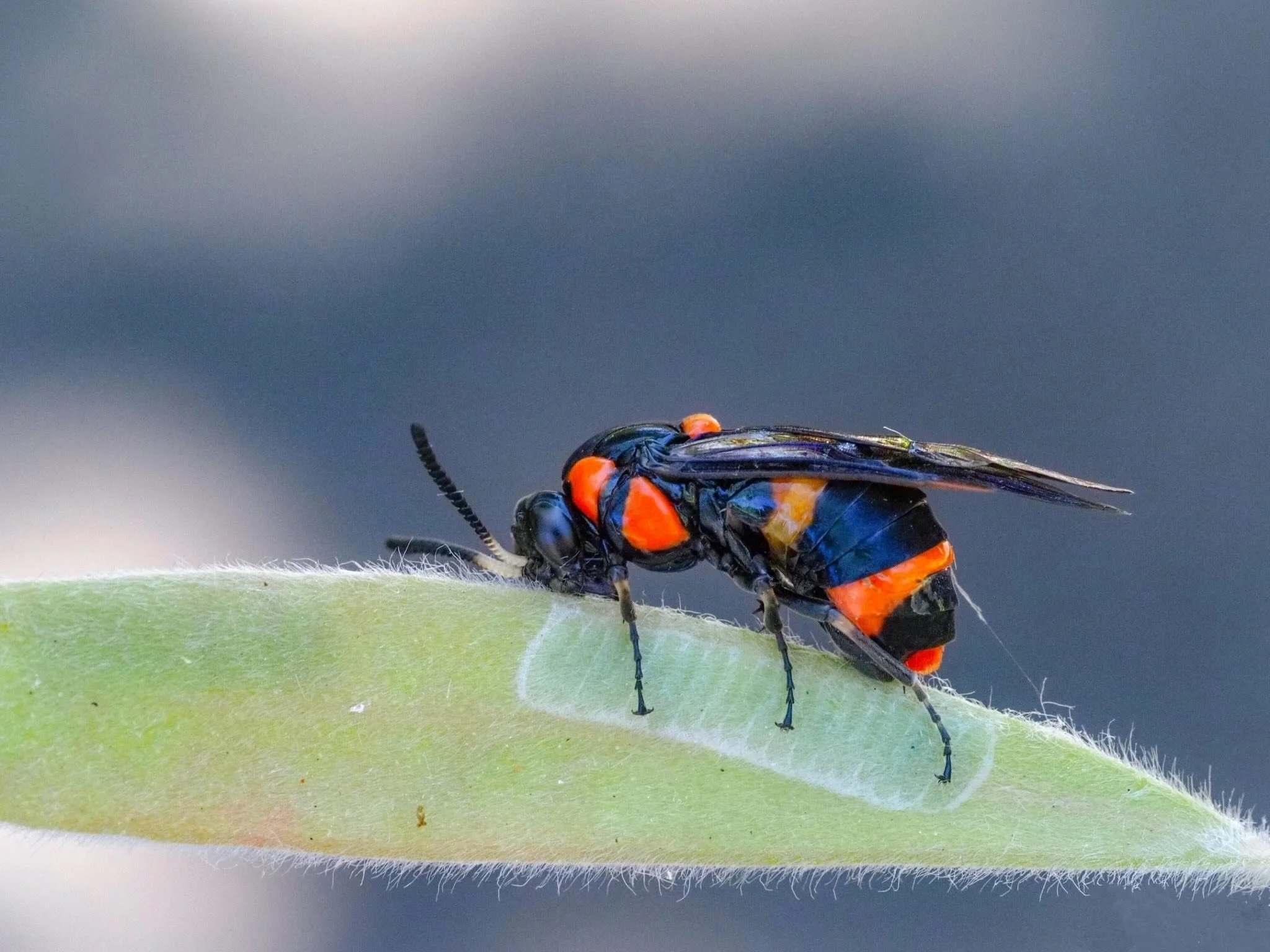
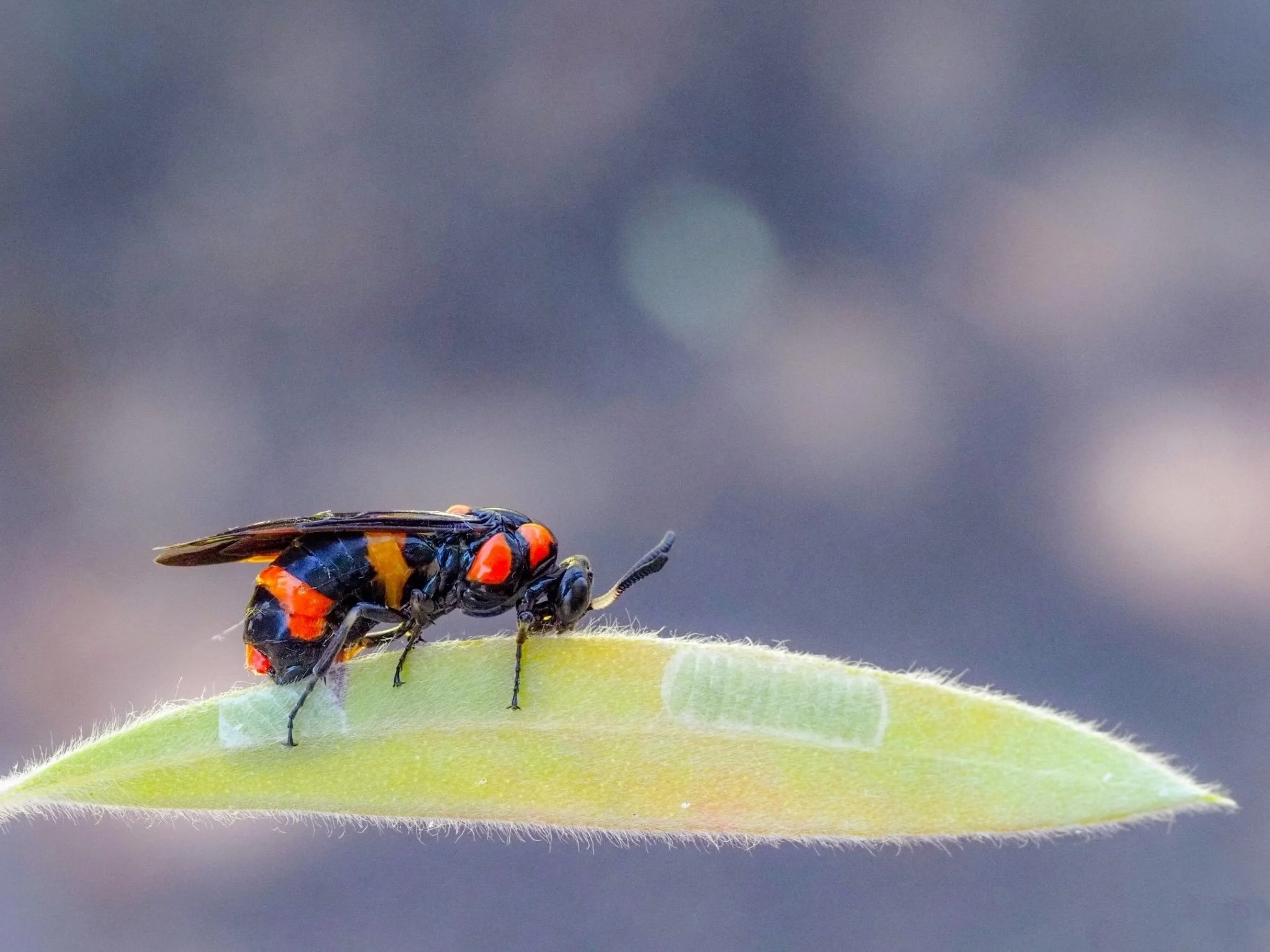
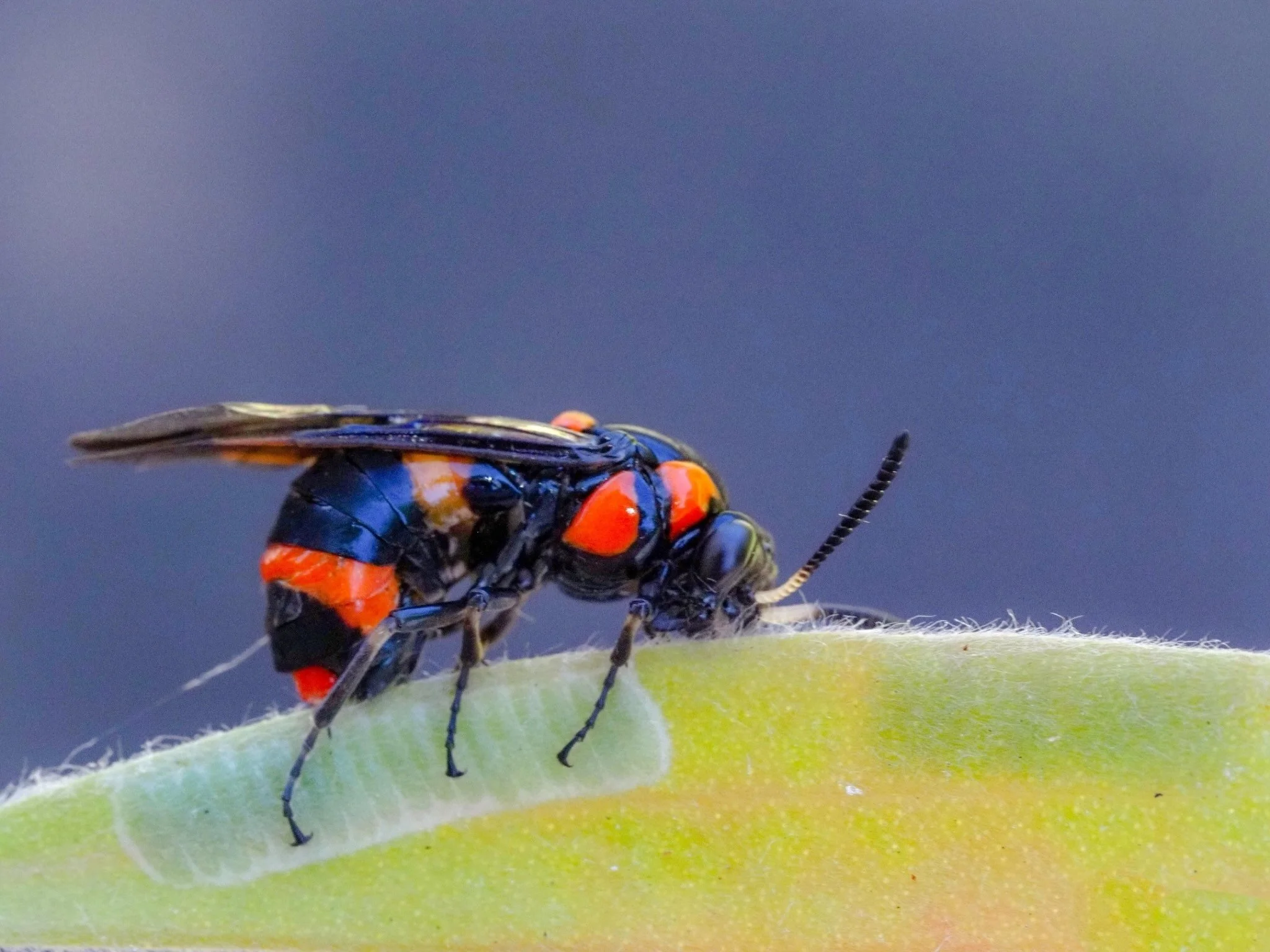
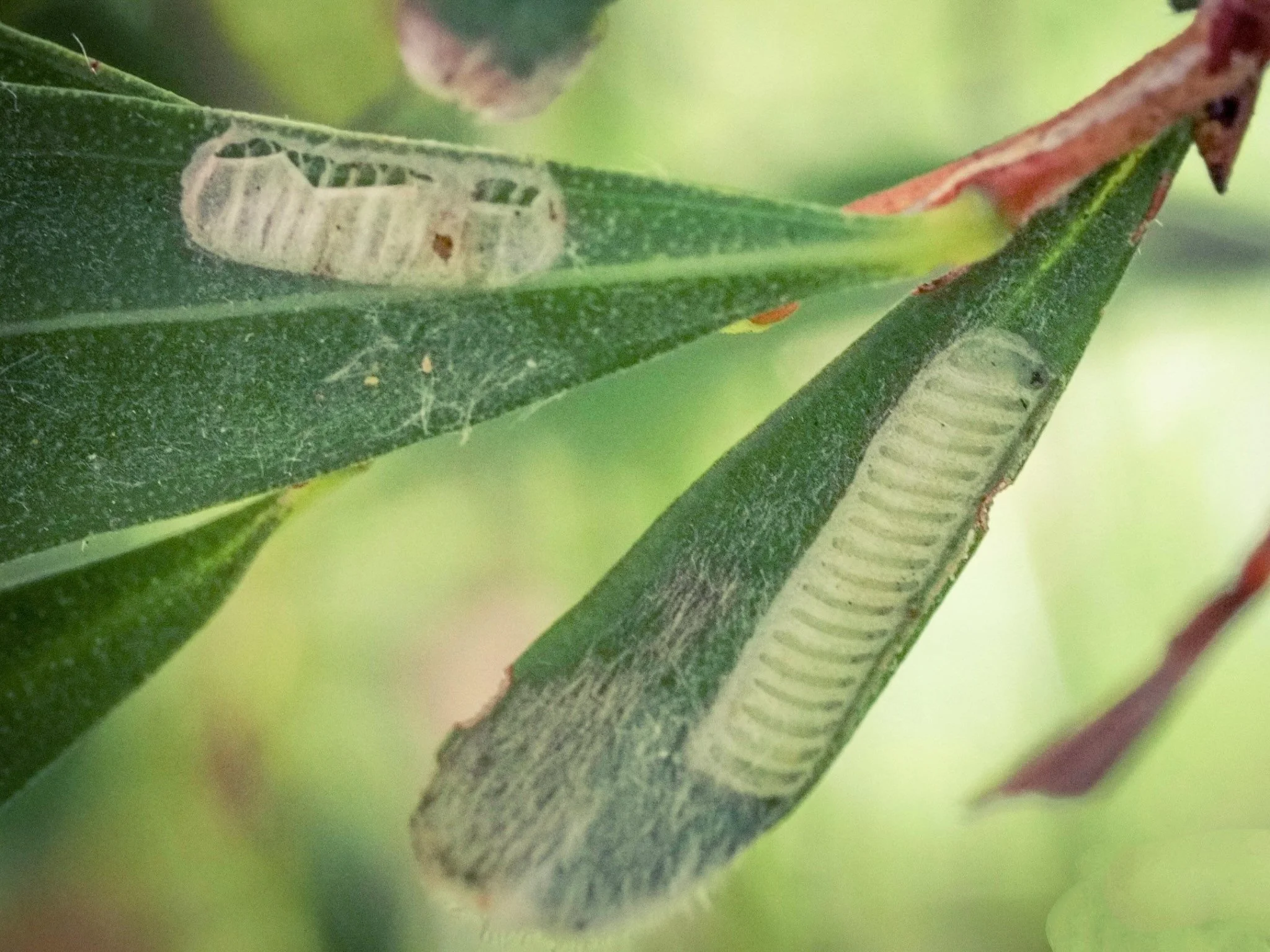
Clutches of eggs on Callistemon leaves are shown below. One clutch in the left photo has hatched. The embryos become coloured as they grow older.
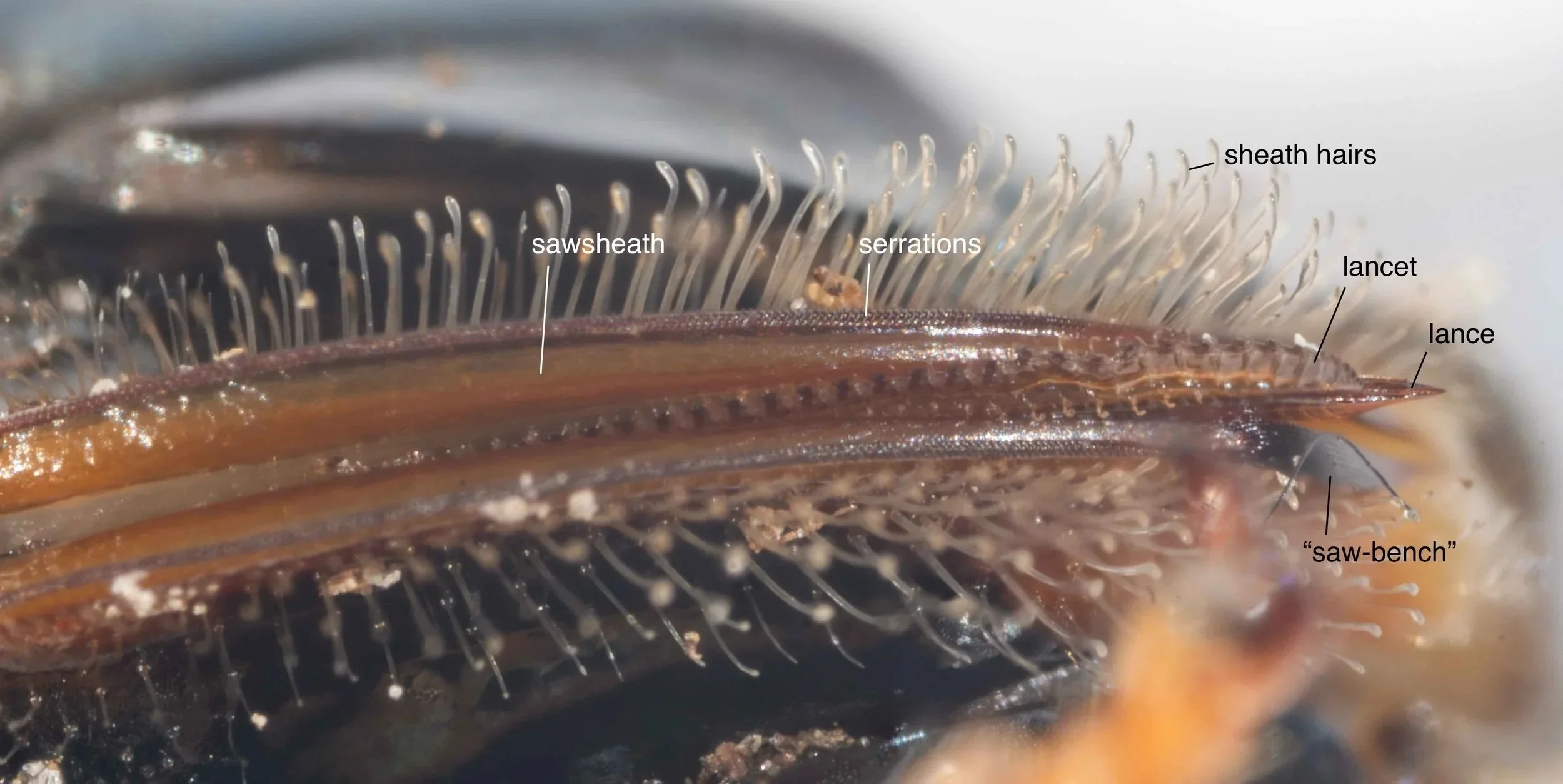
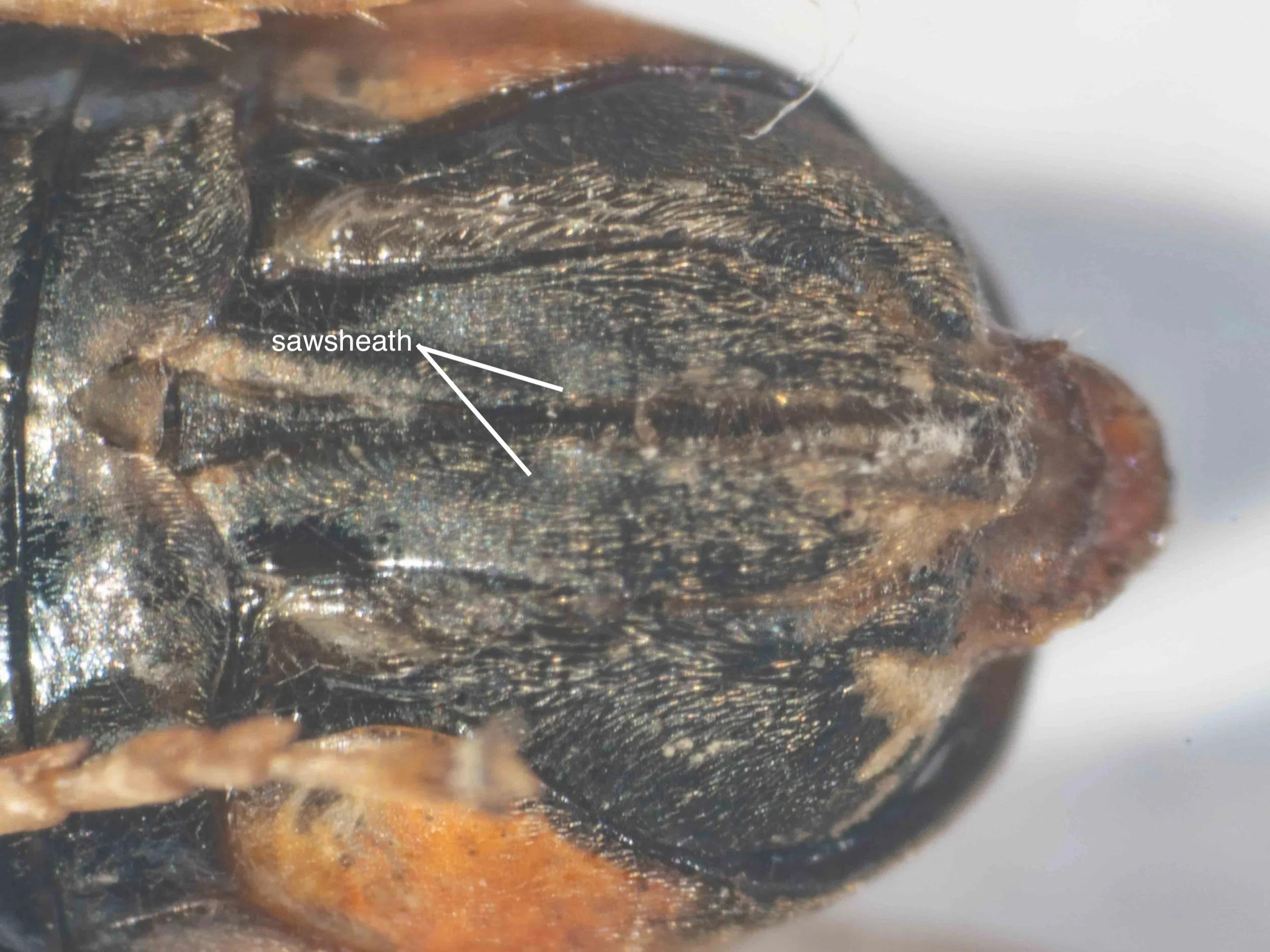
P. cinctus, like other Pterygophorinae, apparently uses the sawsheath just as a brace to steady the abdomen while straddling the narrow leaf margin. It does not perform the role of the pergid sawsheath, which removes the waxy layer on the epidermis of the leaf prior to oviposition. As a result, it lacks the serrations found in pergids as well as the hairs which sweep away abraded material - see photos below.
Pterygophorus insignis
Schmidt (2006) lists the food plants of P. insignis as Callistemon sp., Leptospermum sp. and Melaleuca armillaris.
Purcell & Goolsby (2005) report following pupal periods at these locations: Chelmer (Brisbane) 66 days; Coolum (Sunshine Coast) 13-17 days, 86 days, 69 days; Fitzgibbon (Brisbane) 16-40 days, 80-81 days; Burpengary (Brisbane) 51 days; Poona NP (Maryborough) 68 days.
Pterygophorus turneri
Larvae shown below with a distinctive black dorsal projection from prothoracic segment and green body colour with yellow longitudinal stripes are candidates for Pterygophorus turneri.
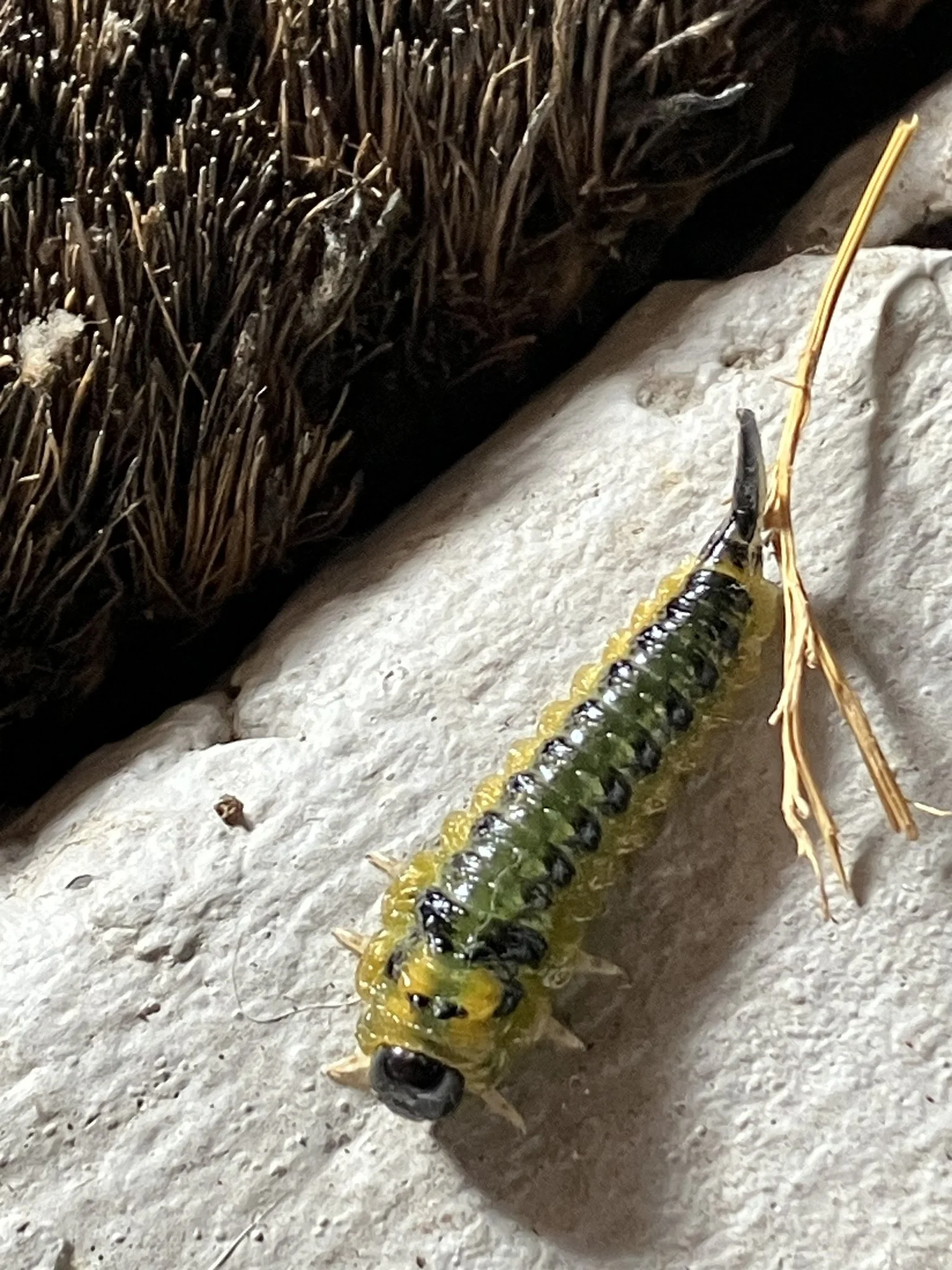
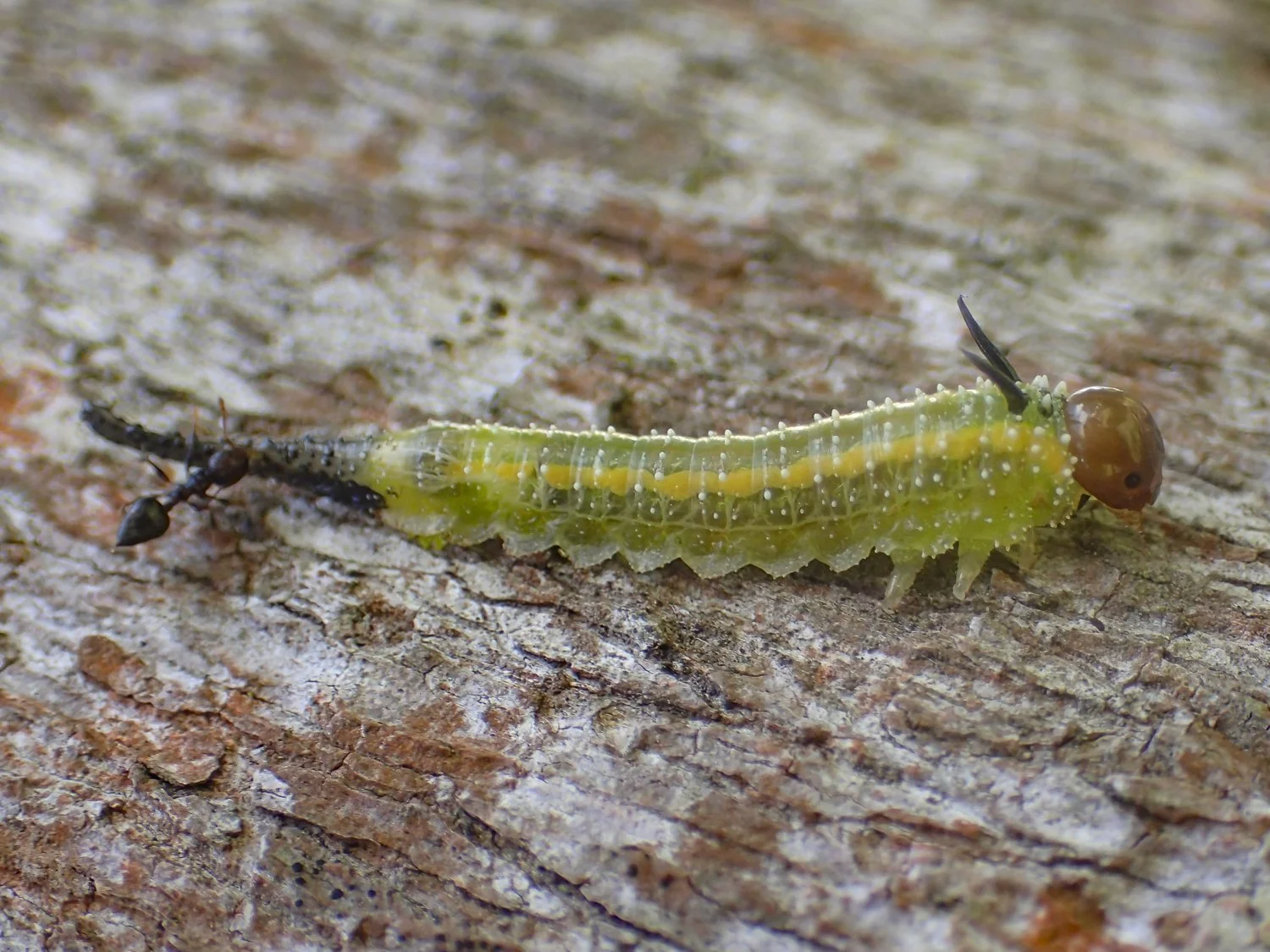
Schmidt (2006) lists the food plant of P. turneri as Syzygium francisii.
Rearing captive Pterygophorinae larvae
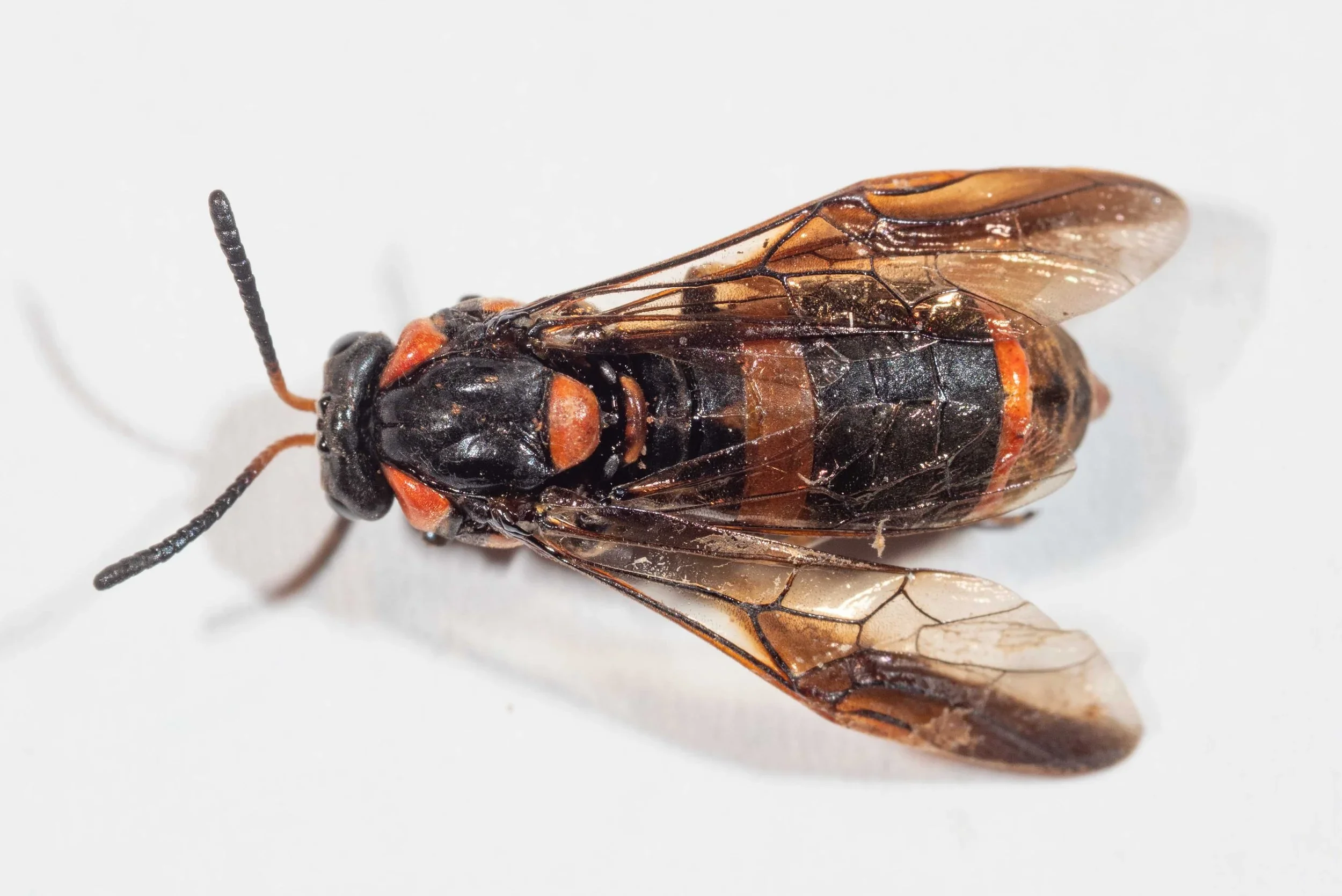
brooks70 has successfully reared P. cinctus larvae through to adults - see iNat observation and Notes page. Larvae were fed on cut foliage from their host tree - a Melaleuca cultivar.
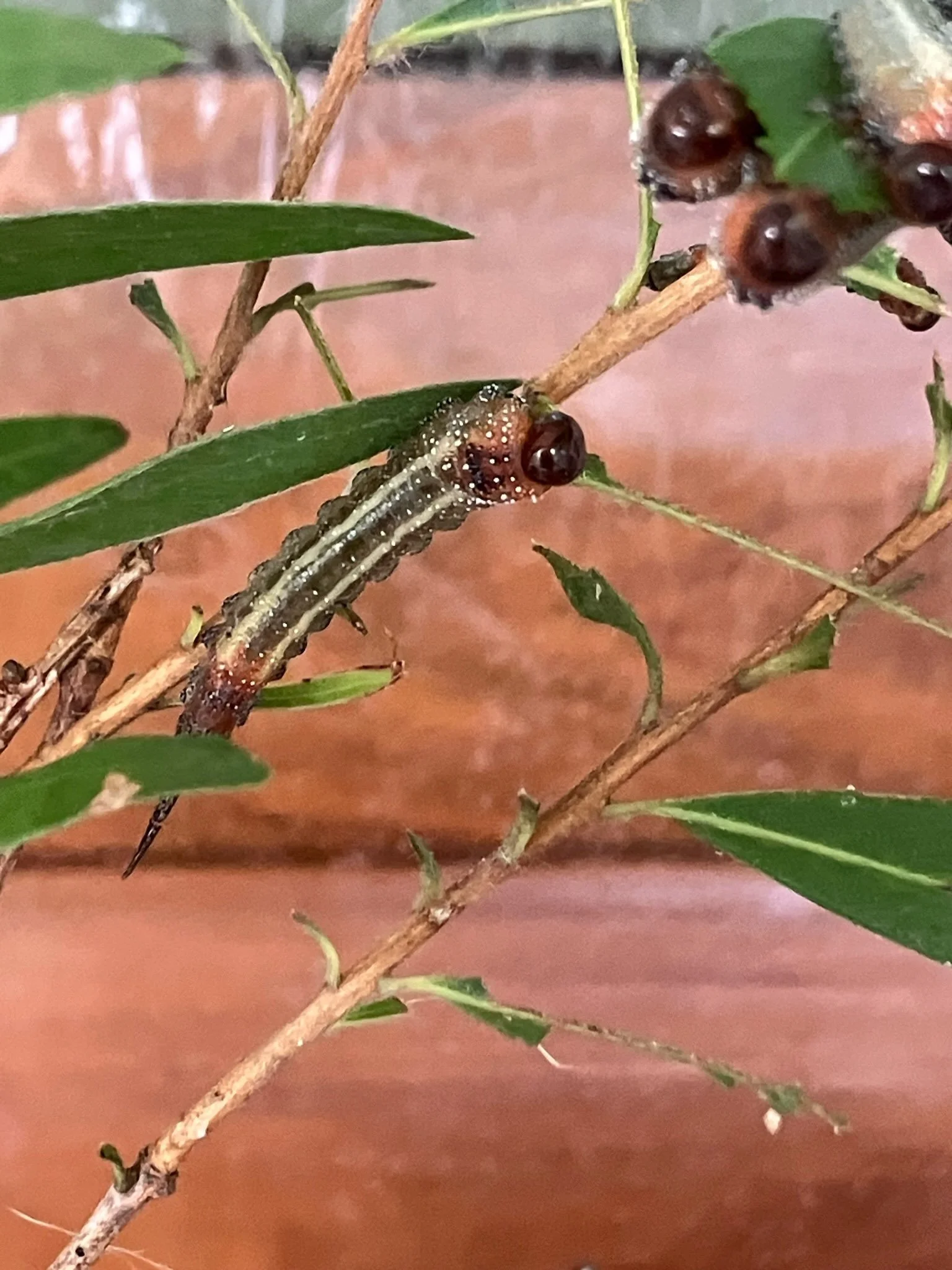
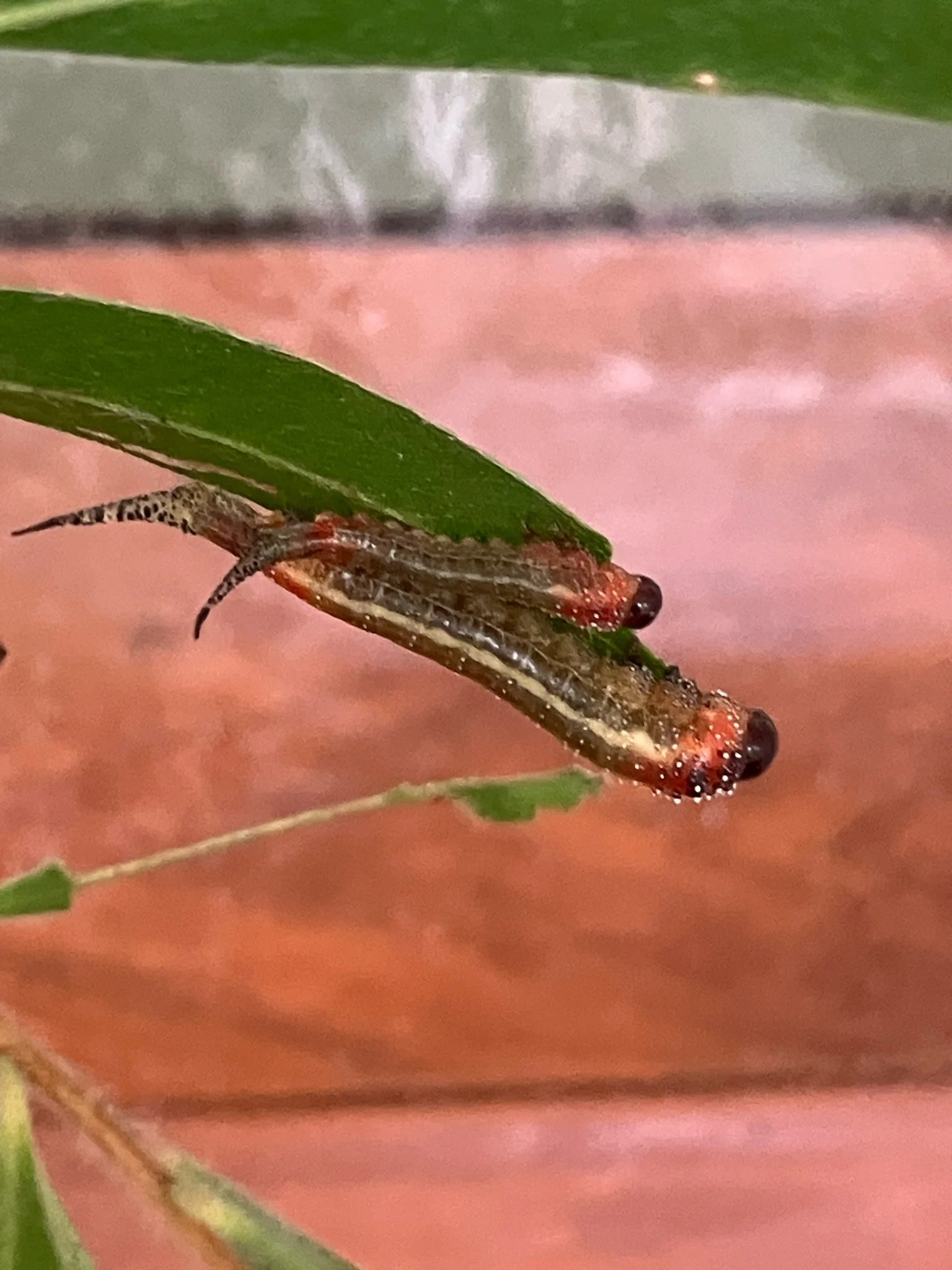
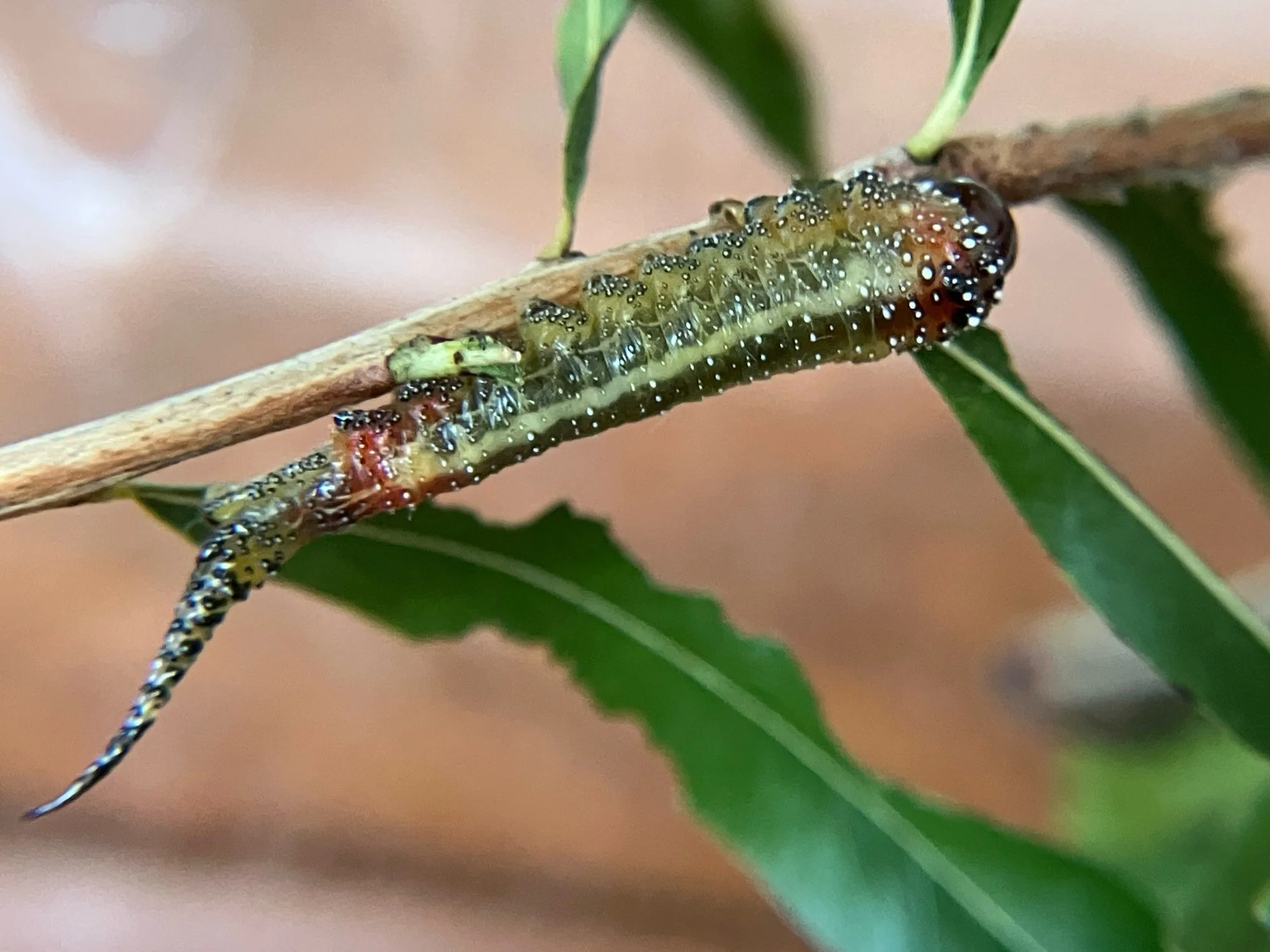
Larvae pupated in a Allocasuarina log over a 35 day period. Pupation took place largely at night.
Females, one of which is shown here, eclosed between 47 and 52 days later.
Tips from the literature
Notes from Benson (1938)
Froggatt (1890) records larvae of P. cinctus, P. interruptus as feeding on Leptospermum. He states that P. cinctus is one of the commonest species about Sydney.
“The larva of this saw-fly is of a dull greenish colour, the head black, the thoracic segments broad, the remaining segments tapering to a point, with the anal segment prolonged into a long slender tail-like appendage curved over the back when feeding; all the segments are covered with small black tubercles which are thickest on the basal ones. They vary much in colour from pale yellow to very dark green consequent on their frequent moulting. They feed on the leaves of Leptospermum in April and May, and, unlike the larvae of Perga, do not form social clusters, but scattered ; they feed during the day, and trust to are their colour and remarkable resemblance to the twigs to which they cling to escape detection. Some larvae taken at the end of April at Rose Bay were placed in a jar ; they showed no signs of going into the soil at the bottom like those of Perga, but the following week noticed boring holes into the cork covering the jar. Upon placing some pieces of dead wood in the jar they betook themselves to these and all of them had disappeared, soon closing the entrance of their tunnels with the wood they excavated in forming the chambers. On examining the wood three months afterwards I found that they made no cocoons, but the sides of the chambers occupied were black and shining ; the larva itself had become much shorter, and the anal tail had disappeared. The first perfect saw-flies came out in the first week of September, and I have now a number of the larvae of this, and of what I believe to be two other species of this which feed upon the leaves of Eucalyptus.”
Roberts (1932) records P. analis larvae feeding by day on various Eucalyptus spp. preferring E. melanophloia; he states that when the leaves of this tree are stripped, the larvae attach any plant near by, but that he did not believe eggs were laid in the other Eucalyptus spp. except perhaps E. siderophlia and E. crebra. The larvae are social when young, but they become solitary when they grow larger, yet the cocoons are sometimes massed together into a conglomerate in the soil.
Mrs. Radford collected larvae of what I call P. analis on Rumex sp. in SA.
R.E. Turner caught P. leachii mostly on a species of Eucalyptus, while P. uniformis feeds on a creeper in the jungle.
Notes from Macdonald, J.A. & Ohmart, C.P. (1993)
“As in the Perginae, female Pterygophorinae emerge from pupation with mature egg complements and proceed to search for suitable oviposition sites. Females have not been observed to engage in the preoviposition behavior of cuticle removal on leaves as rows of eggs are laid into the leaf margin rather than the leaf midrib, as seen in the Perginae (Fig.18.3). Females are short-lived despite the fact they have been observed feeding on nectar and are often collected on flowers. Larvae hatch some weeks after oviposition, and the newly emerged larvae aggregate at the tip of the leaf. Feeding involves skeletonizing the leaf, and "row-type" feeding behavior, as described for Neodiprion pratti banksianae Rohwer (Ghent, 1958), has been observed. In species of Pterygophorous, larvae continue this type of feeding behavior until the third instar, when aggregations disperse and larvae feed singly. However, larvae of some Lophyrotoma species maintain their larval aggregations and continue the row-type feeding behavior throughout the remaining larval instars.
Pterygophorine larvae appear to pass through six instars, as in the Perginae, although this matter is confused by the fact that in the Pterygophorinae the last larval ecdysis (i.e., molt to the prepupal stage) occurs while the larvae are on the foliage of the host plant. The nonfeeding prepupal stage then proceeds to find a suitable pupation site. The prepupal stage is quite different in appearance to the larva and is a nonfeeding stage. Nevertheless, these two life stages appeared to have been confused in the past.
The pupation site for the two genera in the Pterygophorinae have been found to differ. Species of Pterygophorus have been observed to pupate within timber or bark, in some cases, the bark of the host plant. The prepupae form a cell within the timber or bark. The entrance hole is sealed by the formation of a septum (sometimes two), and the cell is lined with a resinlike material but is lacking silk (Fig. 18.4). Species in the genus Lophyrotoma, on the other hand, leave the host plant and enter the soil, where they form a simple cocoon of soil particles and silk, which lacks internal compartmentalization (Fig. 18.5).
The prepupal stage in the Pterygophorinae, like the prepupal stage in the Perginae, involves a pause in development and serves to provide the over-wintering life stage for most species. However, some species are multivoltine, and pupation may be completed in a little over a week.
Host plants for Pterygophorinae larvae
from Schmidt. (2006)
Lophyrotoma
L. analis - Emex australis, Muehlenbeckia sp., Rumex sp.
L. cyanea - Eucalyptus radiata
L. interrupta - Angophora floribunda, Corymbia gummifera, C. maculata, E. camaldulensis, E. crebra, E. grandis, E. intermedia, E. melanophloia, E. moluccana, E. nicholii, E. obliqua, E. ovata, E. populnea, E. siderophloia, E. viminalis, Leptospermum sp.
L. leachii - creeper in rainforest
L. zonalis - Melaleuca dealbata, M. leucadendra, M. quinquenervia, M. viridiflora
Pterygophorus
P. cinctus - Leptospermum sp.
P. insignis - Callistemon sp., Leptospermum sp., Melaleuca armillaris
P. turneri - Syzygium francisii
References:
Benson, R.B. (1938) A revision of the genus Pterygophorus Klug, sensu lato, with the description of two new genera (Hymenoptera, Symphyta) Annals and Magazine of Natural History 1: 610-625.
Burrows, D.W. & Balciunas, J.K. (1997) Biology, distribution and host-range of the sawfly, Lophyrotoma zonalis (Hym., Pergidae), a potential biological control agent for the paperbark tree, Melaleuca quinquenervia. Entomophaga 42: 299-313.
Macdonald, J.A. & Ohmart, C.P. (1993) Life history strategies of Australian pergid sawflies and their interactions with host plants. in “Sawfly life history adaptations to woody plants.” Wagner, M.R. & Raffa, K.F. (eds). Academic Press.
Malagon-Aldana, L.A. et al (2021) Comparative anatomy of the larvae of argid sawflies (Hymenoptera:Argidae): a phylogenetic approach. Organisms Diversity & Evolution 21: 361-392.
Purcell, M. and Goolsby, J.A. 2005. Herbivorous insects associated with the paperbark Melaleuca quinquenervia and its allies: VI. Pergidae. Australian Entomologist 32: 37-48.
Schmidt, S. (2006) Checklist of the Pergidae (Hymenoptera: Symphyta) of Australasia In Blank, S., Schmidt, S. & Taeger, A. (eds), Recent Sawfly Research: Synthesis and Prospects. Goecke & Evers, Keltern, pp. 627-634.
Schmidt, S., Walter, G.H., Grigg, J. & Moore, C.J. (2006). Sexual Communication and Host Plant Associations of Australian Pergid Sawflies (Hymenoptera, Symphyta, Pergidae). In Blank, S., Schmidt, S. & Taeger, A. (eds), Recent Sawfly Research: Synthesis and Prospects. Goecke & Evers, Keltern.
Takeuchi, M. & Zalucki, M.P. (2022) Feeding behaviour in Australian gregarious Lophyrotoma sawflies (Hymenoptera: Pergidae). Austral Entomology 61: 494-504
This is a workbook page … a part of our website where we record the observations and references used in making species identifications. The notes will not necessarily be complete. They are a record for our own use, but we are happy to share this information with others.