The life of the Imperial Hairstreak

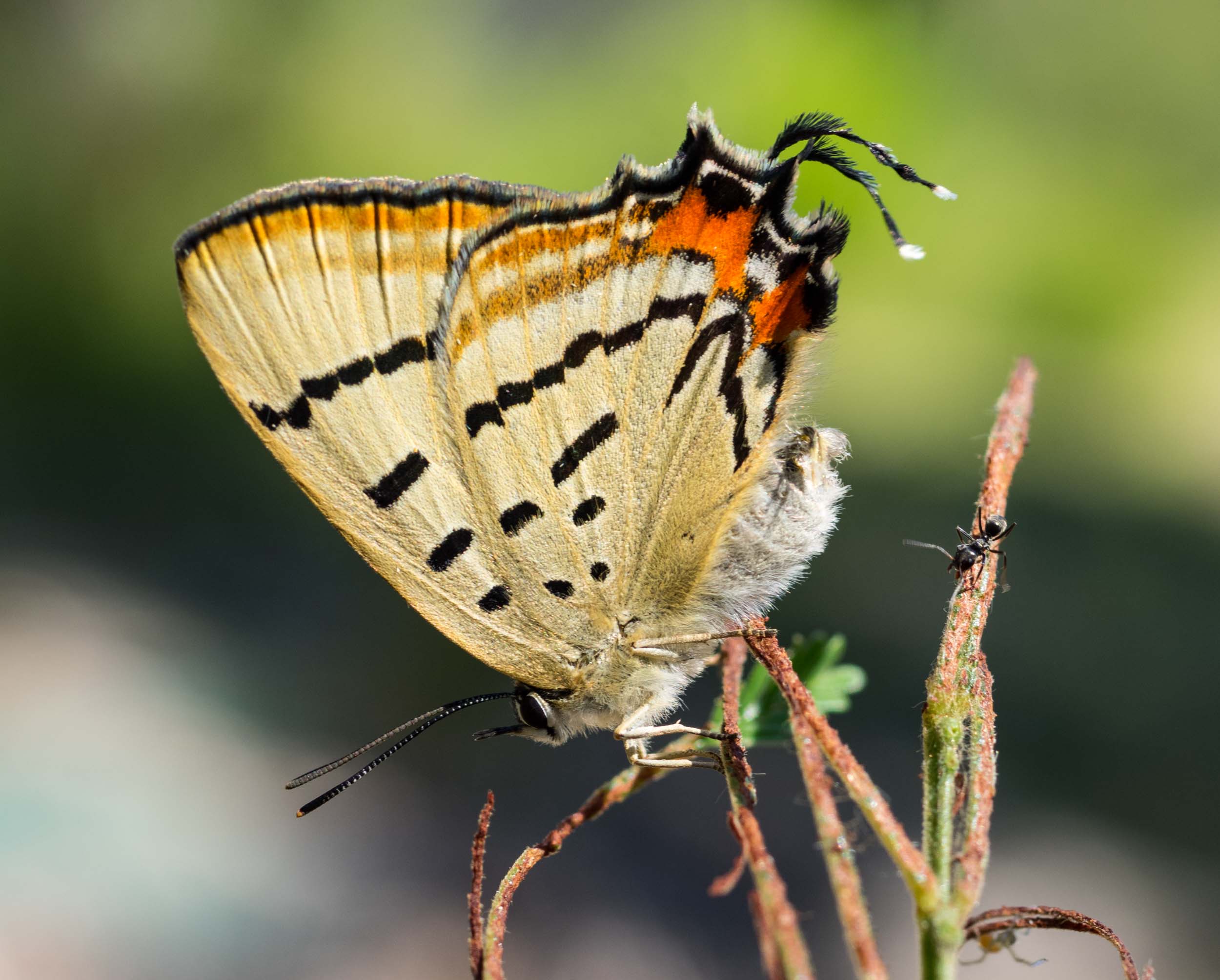
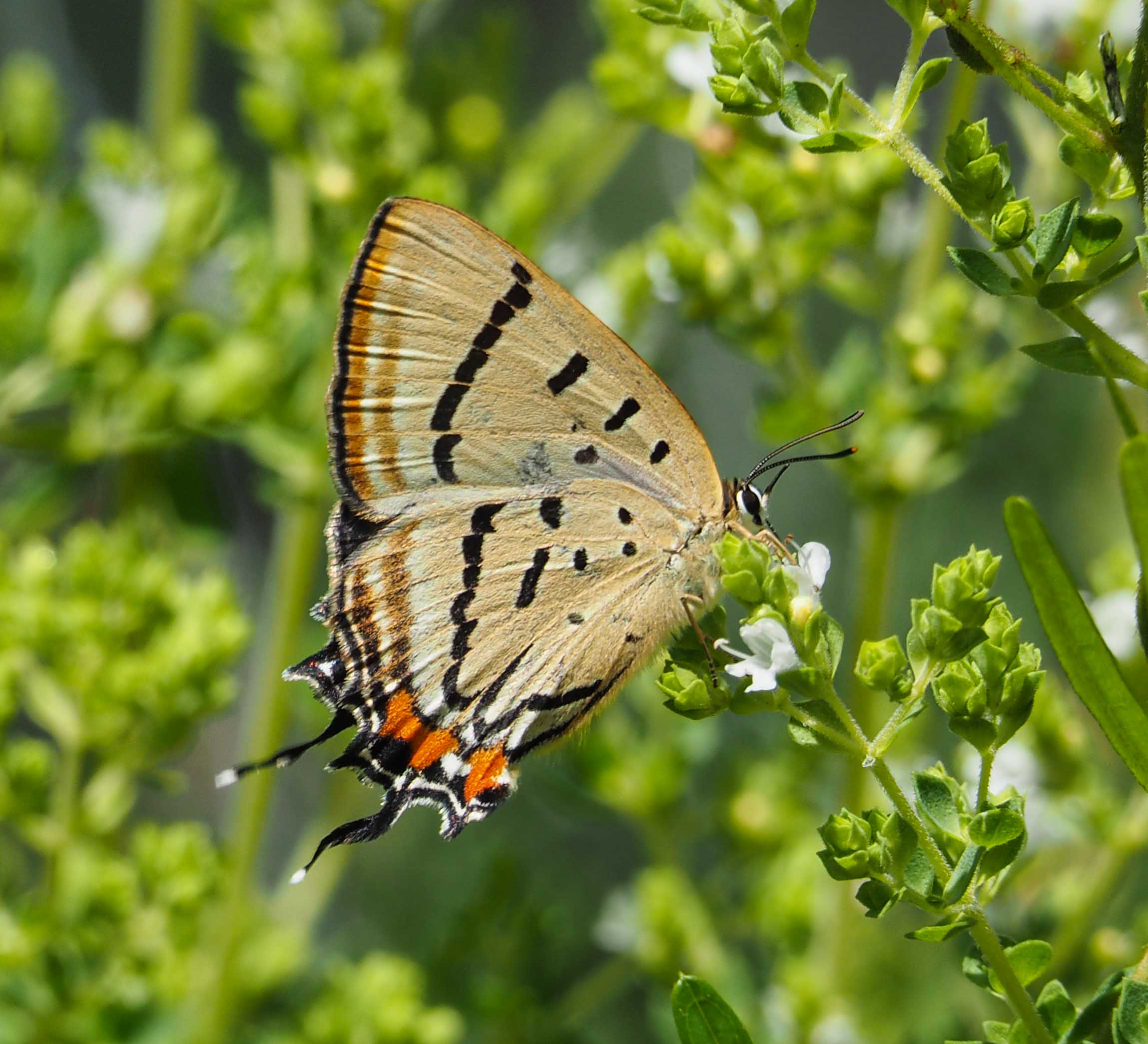
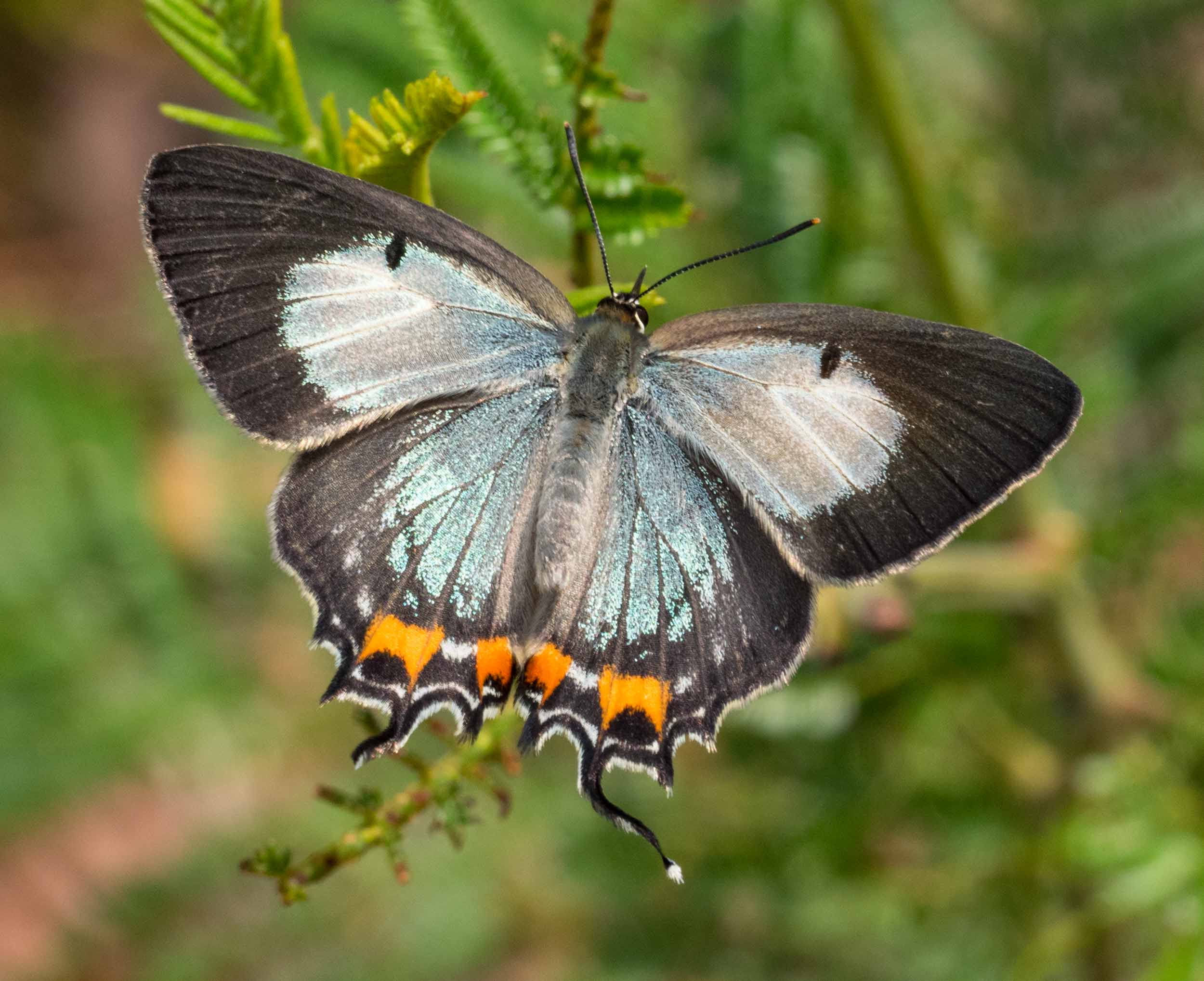
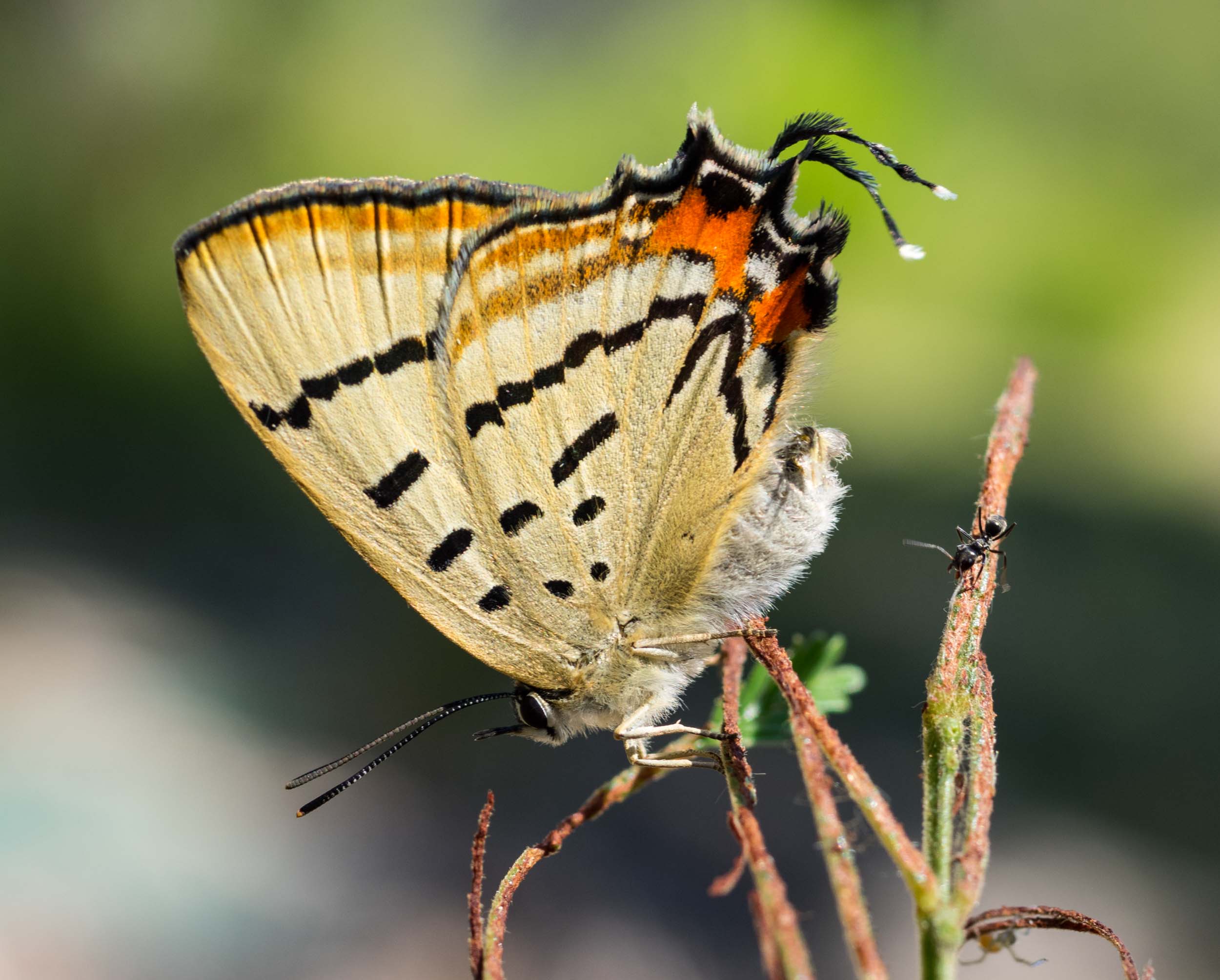
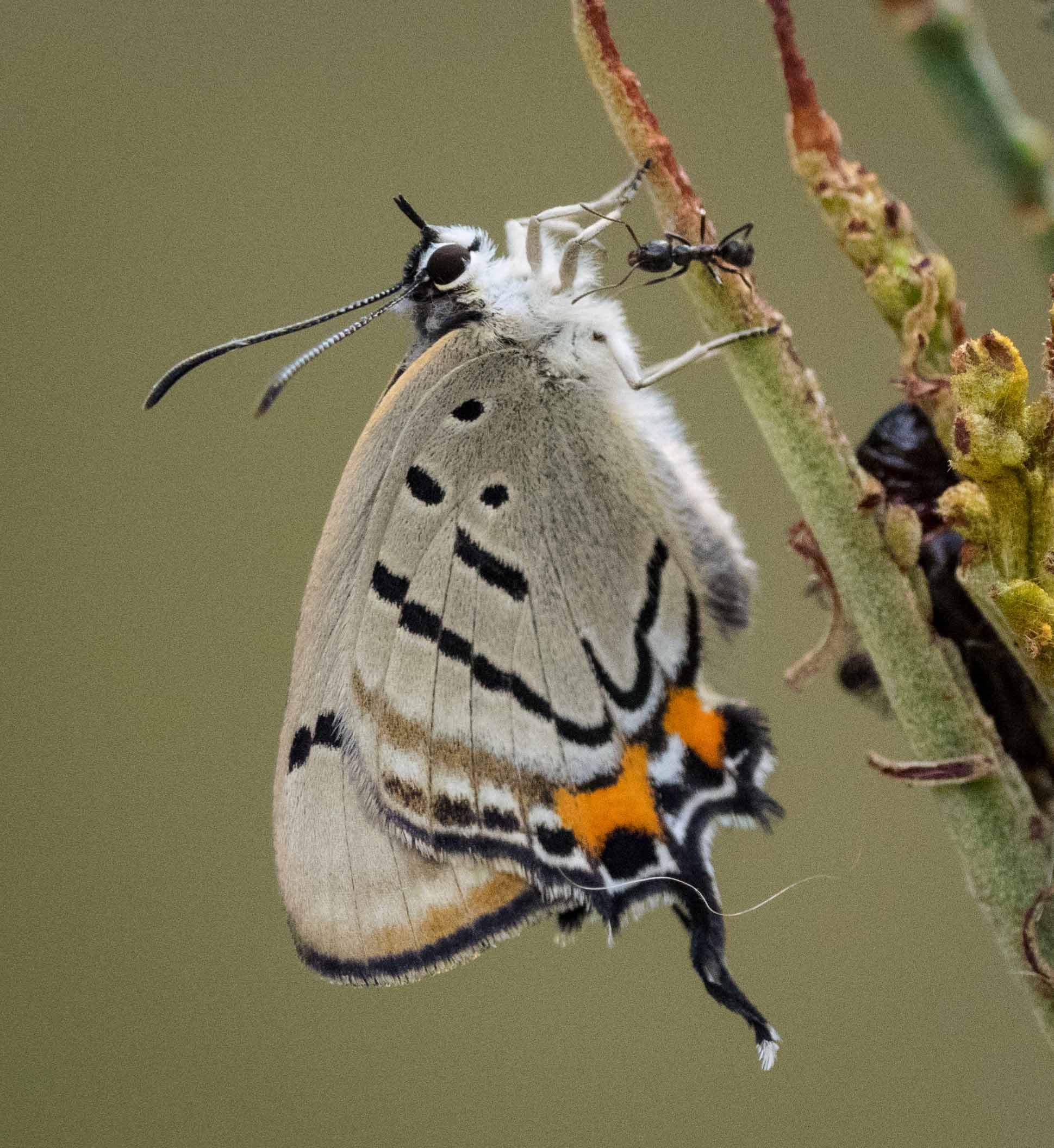
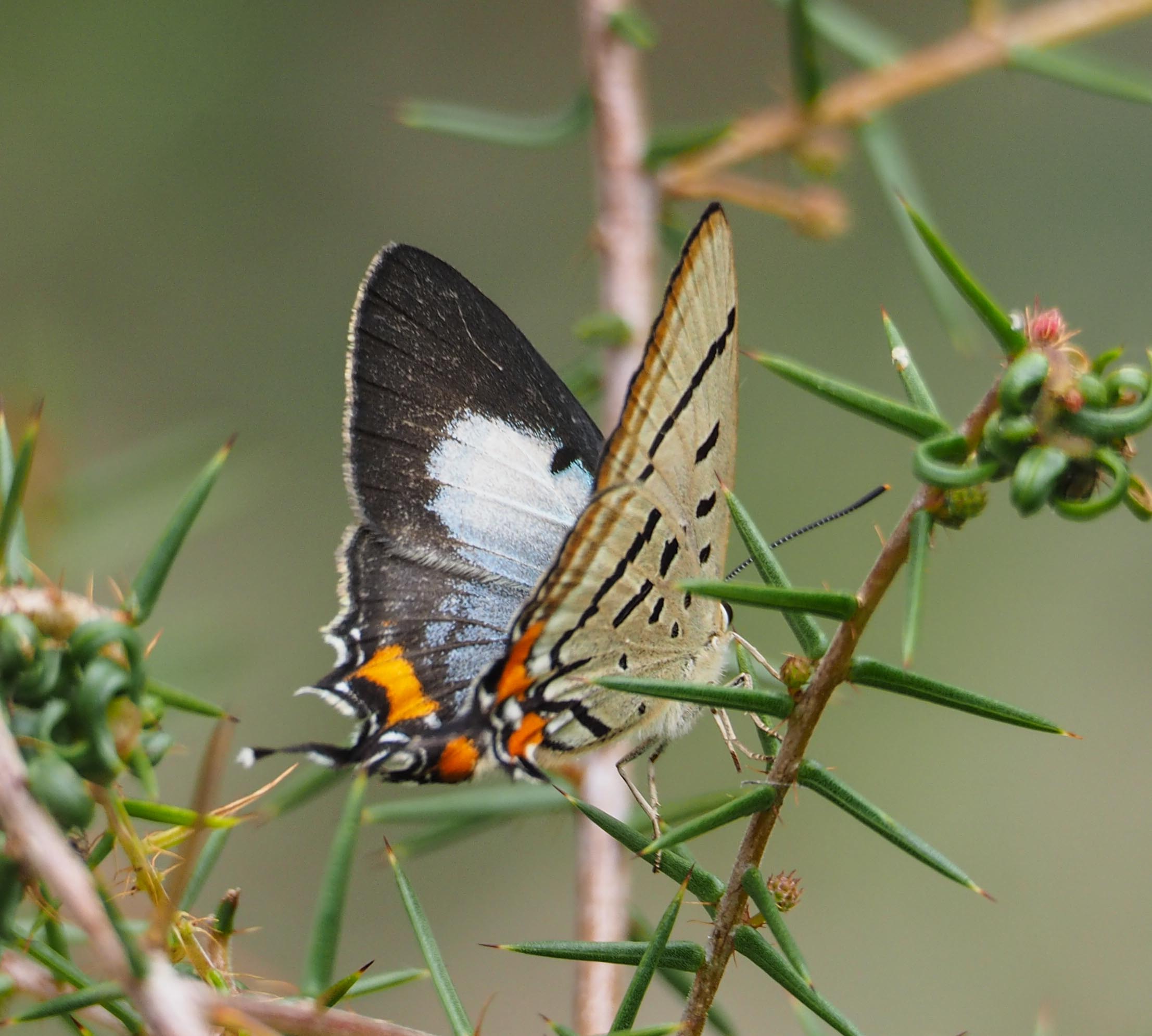
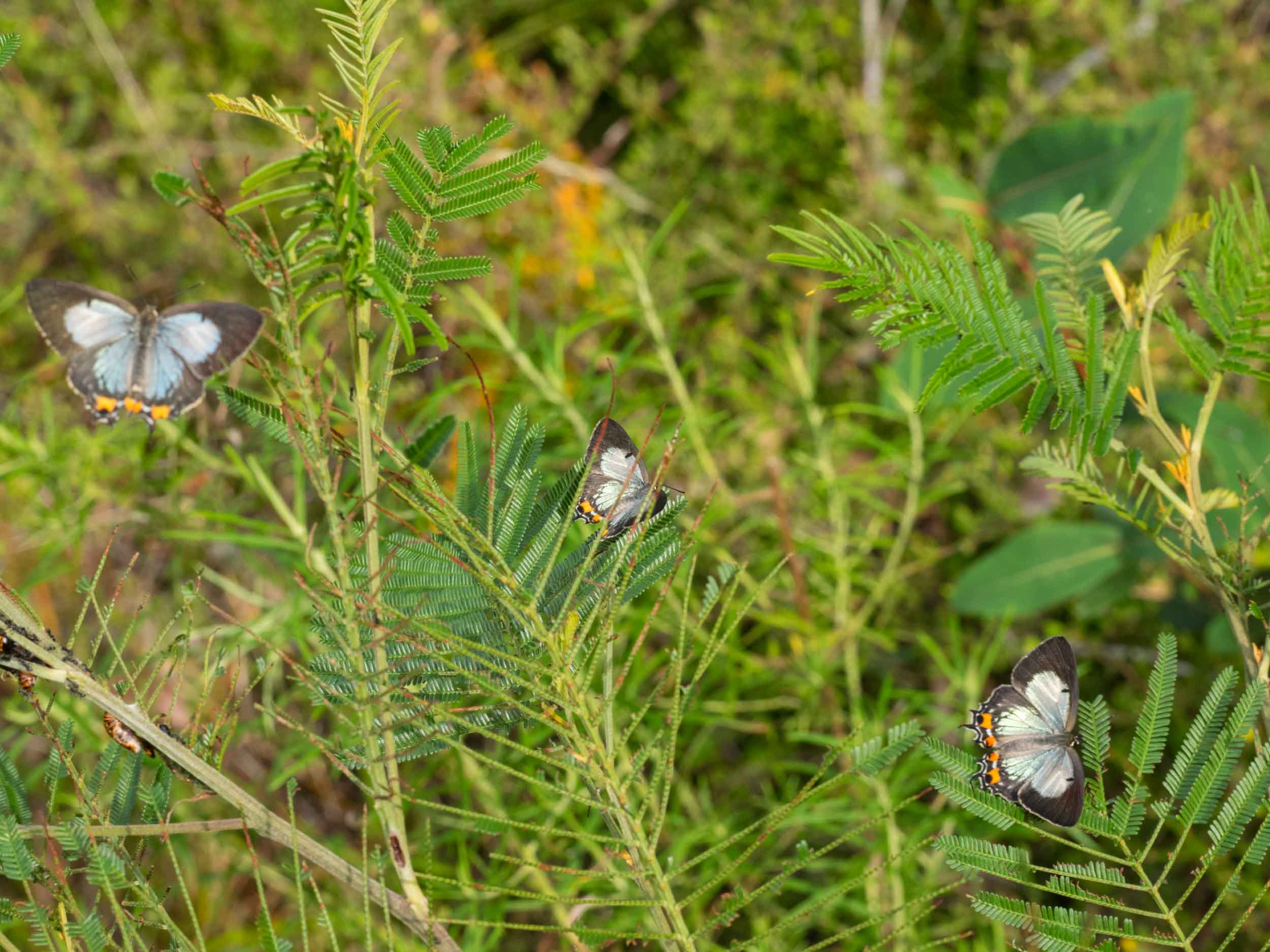
Adults of the Imperial Hairstreak butterfly (Jalmenus evagoras) appear on our block every year in early January. They make good subjects for photography as they fly low down and often perch for long periods after landing.
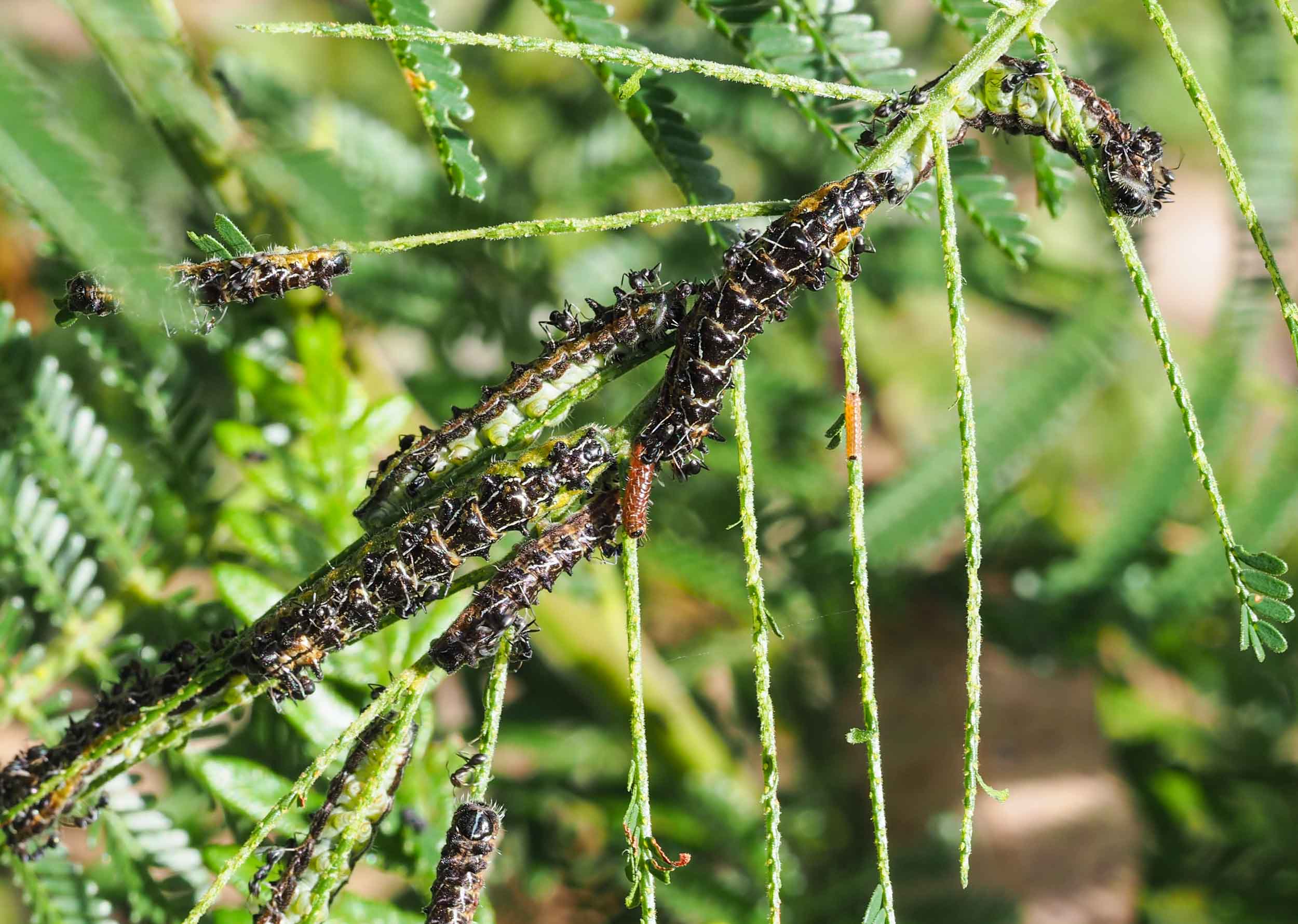
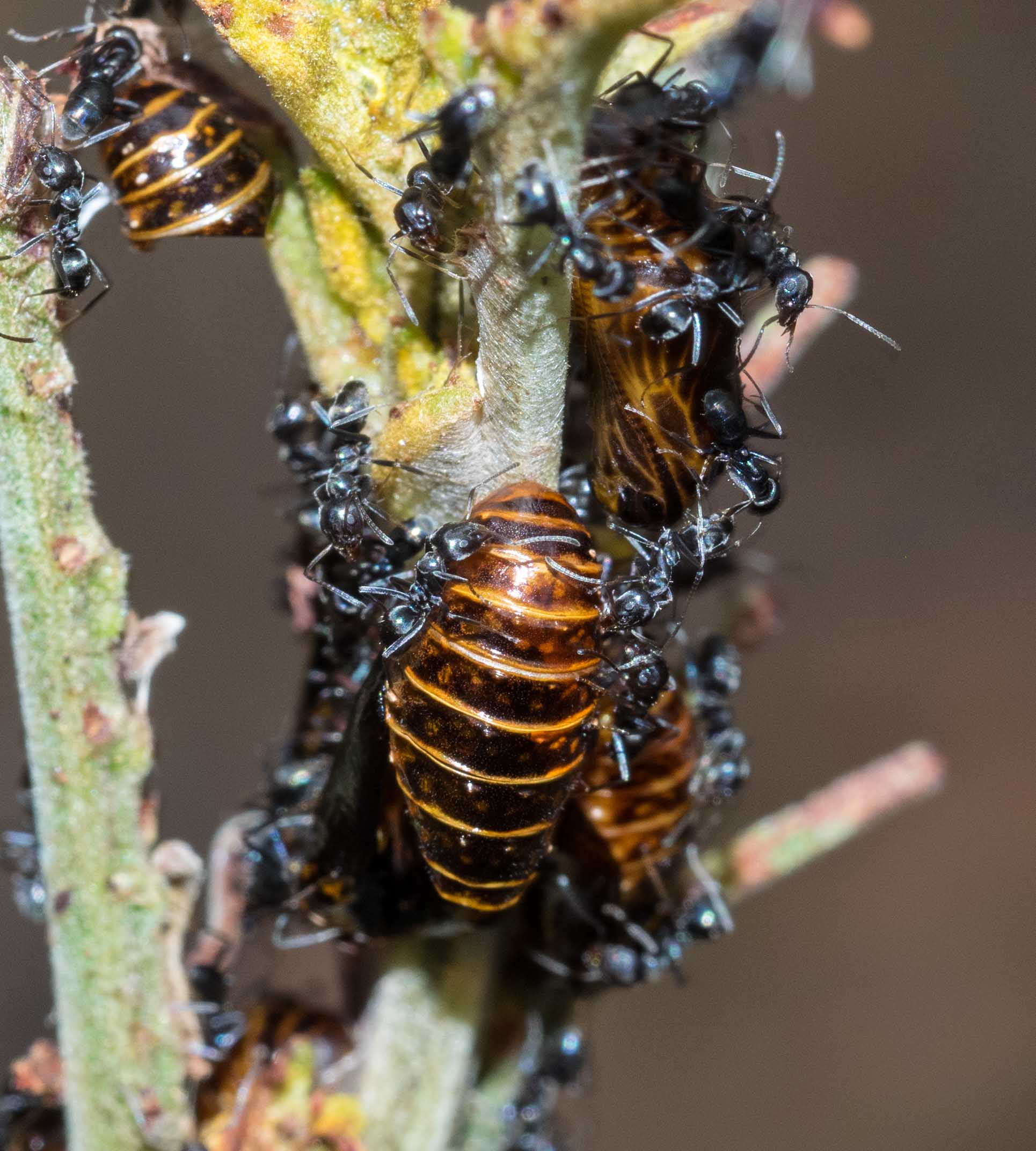
Several individuals are sometimes seen fluttering around a Black Wattle bush (Acacia mearnsii), which looks the worse for wear. This is because it is the host plant for the Imperial Hairstreak, whose larvae can be seen crawling over and devouring the leaves. Closer inspection reveals that the caterpillars as well as pupae are covered in ants of a particular species - Iridomyrmex rufoniger, the Black Tyrant ant. Orr and Kitching (2010) report that Iridomyrmex ants encourage the butterflies to lay eggs on their Acacia bush by "gently nibbling the tip of her abdomen as she probes the bark".
Jalmenus caterpillars attended by ants.
Jalmenus pupae attended by ants
Despite their somewhat menacing name, the ants are actually doing good things. They ward off wasps that seek to parasitise the Jalmenus larvae and pupae with their own larvae. In return, the caterpillars provide a food source to the ants in the form of honeydew secreted from glands on their back. It's a win-win relationship! Orr and Kitching (2010) describe how the larvae "produce sounds...that communicate either with other larvae or attendant ants, thus promoting group adhesion and attracting ants for protection when needed". Amazing stuff!
Jalmenus evagoras shows another interesting behavioural feature. Groups of males congregate at an Acacia bush on which pupae are about to eclose. Female pupae secrete pheromones, which attract the adult males. Immediately after the female crawls out of her pupal case, a male copulates with her. Not a virgin for very long! I was fortunate enough to witness this event and took a movie.
The female shown at the start of the movie had eclosed less than a minute before. A male appeared within 30 seconds and immediately started copulating with her. The pair remained joined for over half an hour. During that time the successful male had to ward off repeated attempts from other males to dislodge him.
References
Orr, A. and Kitching, R. "The Butterflies of Australia" Allen & Unwin. (2010)
More about moths - focussing on their diversity and biology
Ecosystem recovery as seen with moth eyes
A summary of post-fire recovery of our forest moths - a good proxy for ecosystem health
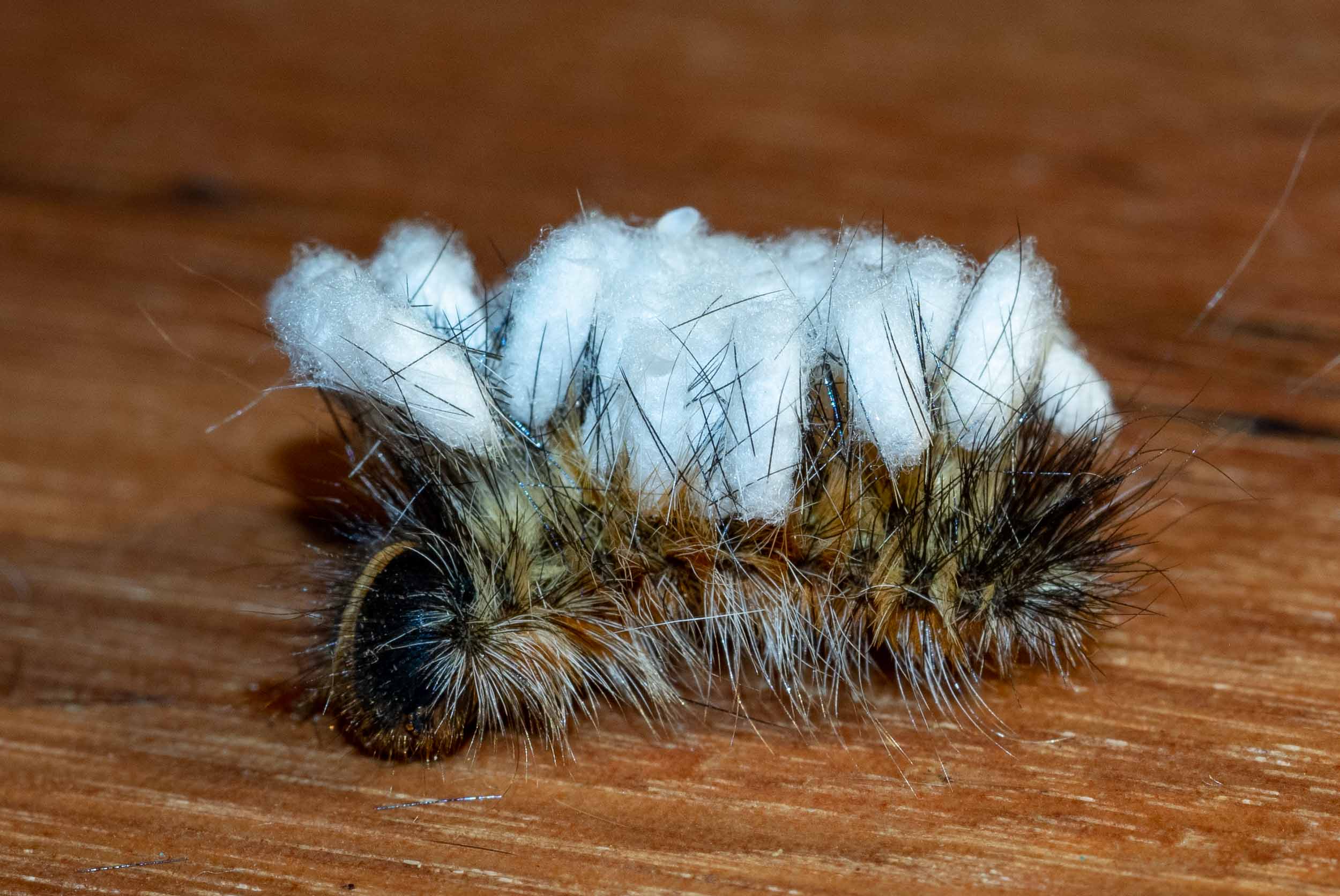
Ghost moth larvae took refuge deep in the soil as the fire swept through the forest, to emerge as adults 5 months later.
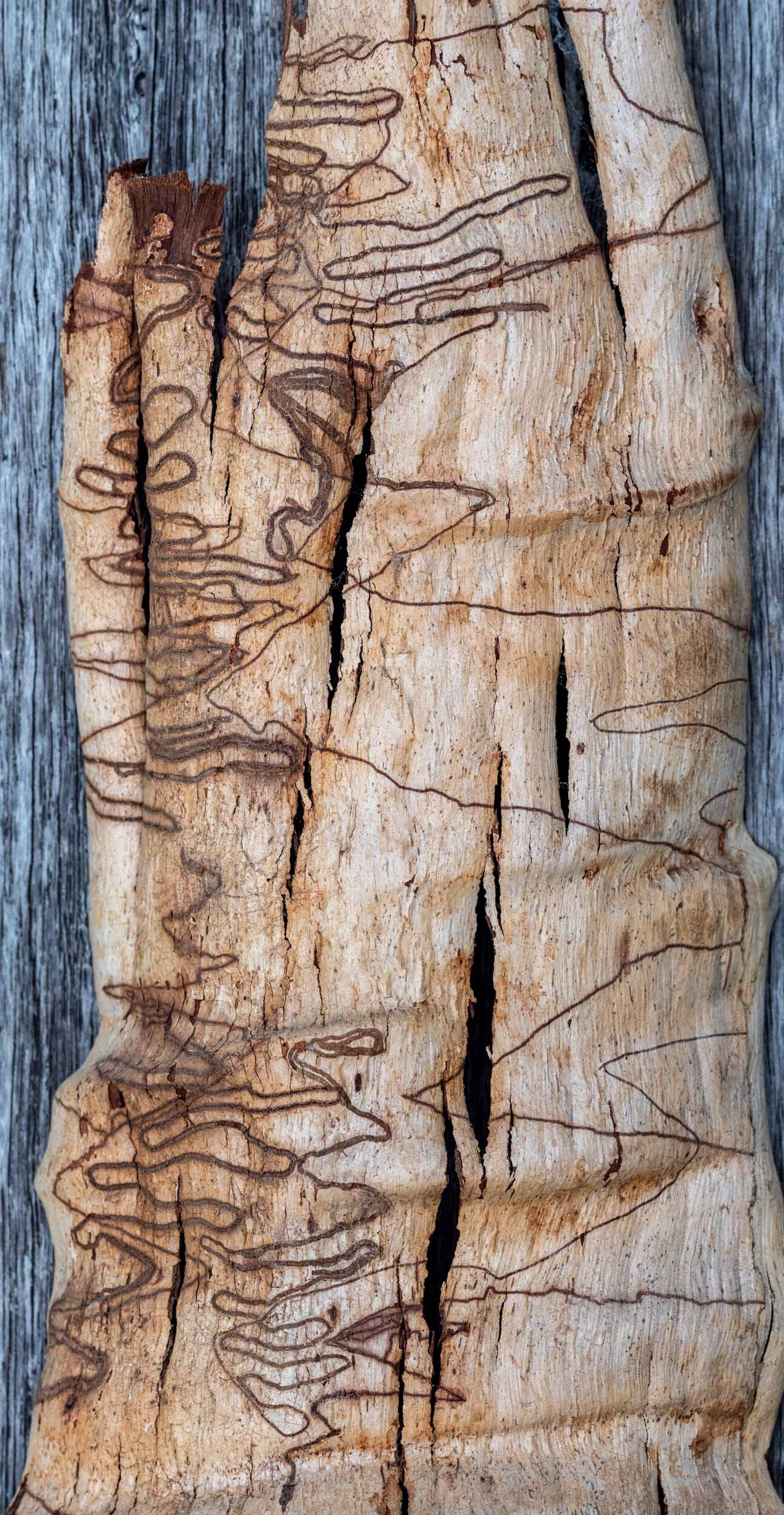
Under the cover of bark, an insect larva embarks on a long, circuitous journey that will lead to its transformation
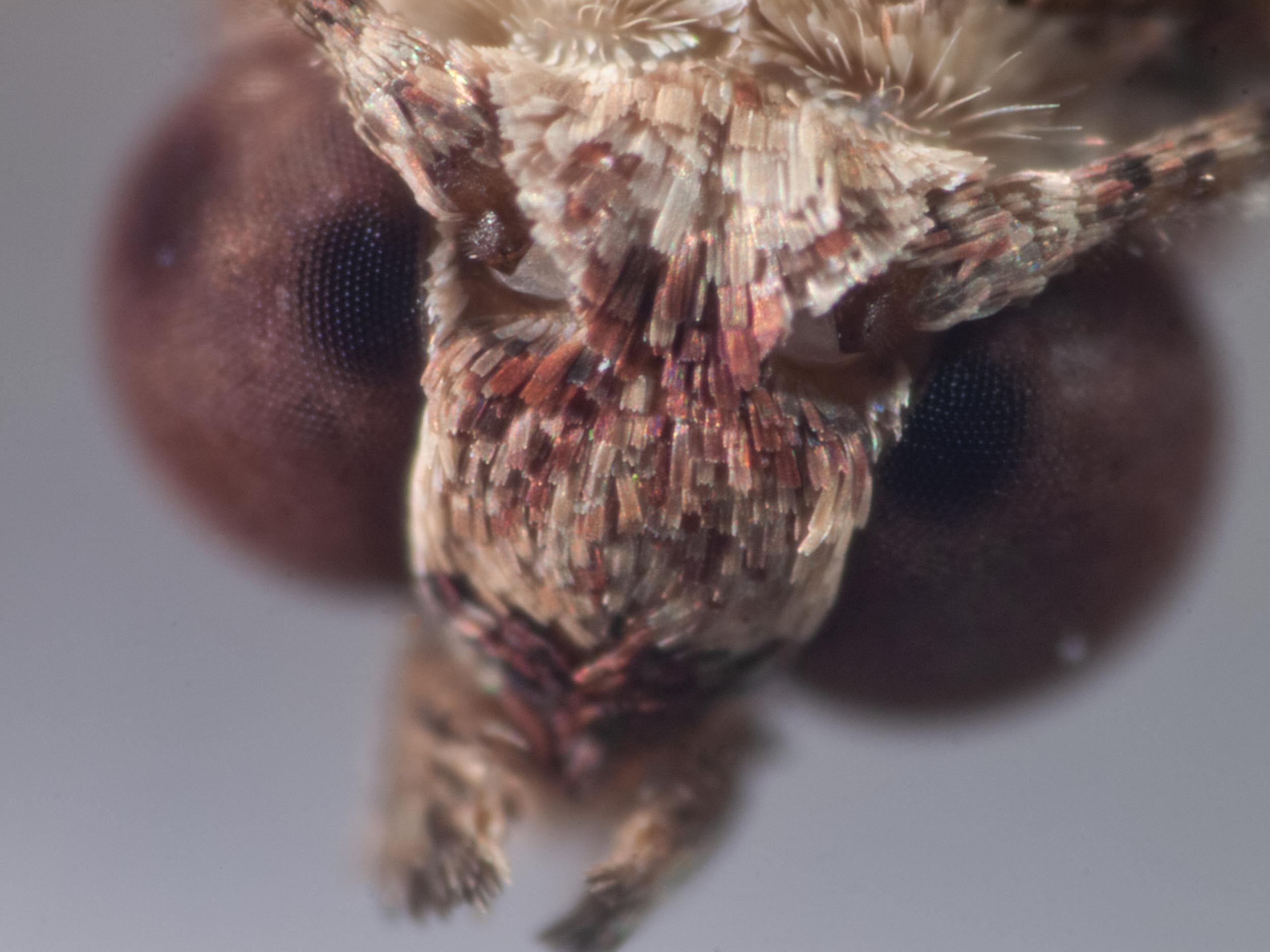
A moth’s face up close is surprisingly beautiful - and provides clues to the identity of its owner
A light trap in the forest during the dark of the moon draws hundreds of insects.
Rearing caterpillars to discover which moth species they belong to can bring surprises!
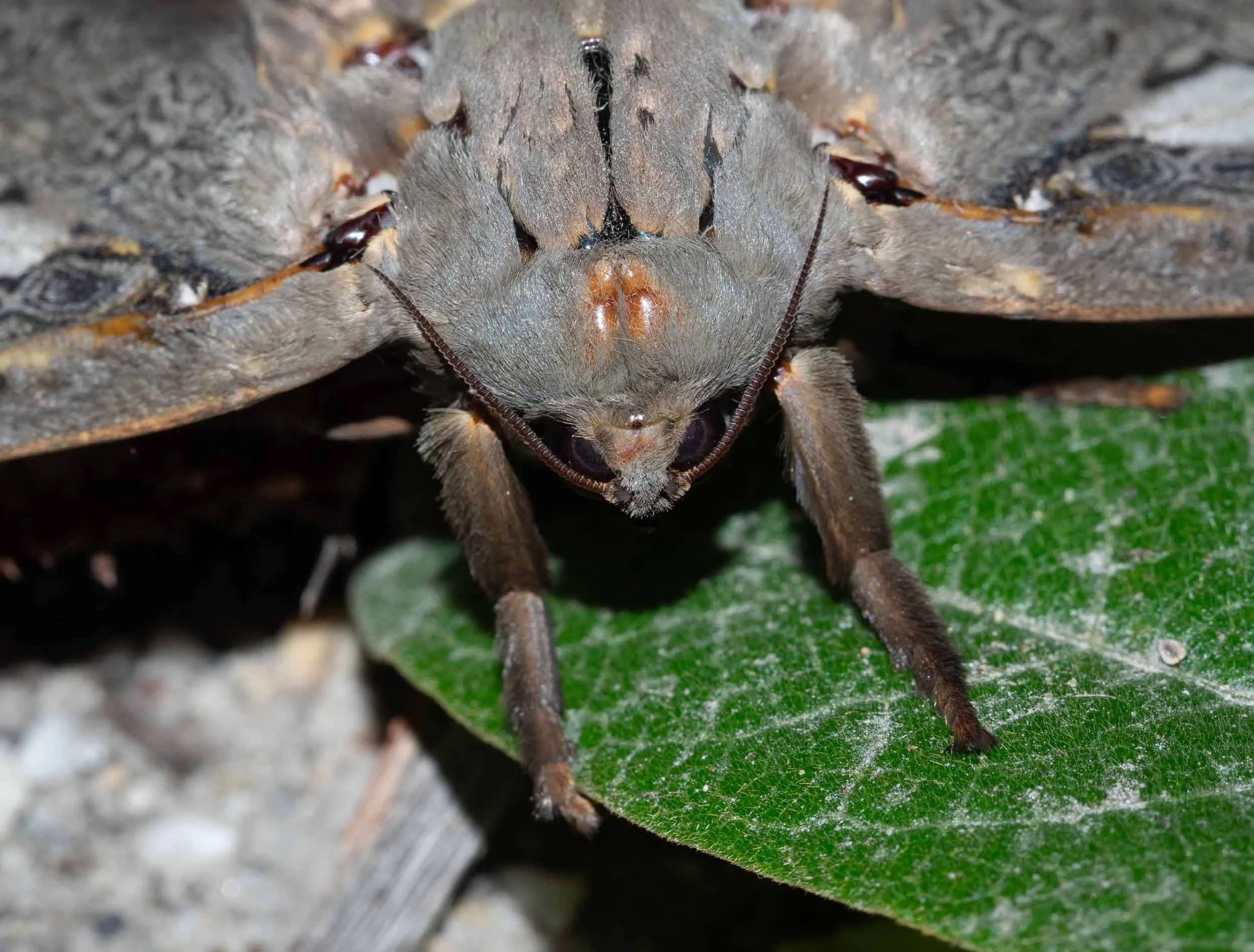
Autumn, rain, dark of the moon. The perfect conditions for ghost moths.
Heteronympha paradelpha
Perhaps the most conspicuous group of butterflies in the south are the 'browns'. The local forests are potentially home to at least a dozen species of browns, including this Spotted Brown.
Heteronympha paradelpha adults tend to appear here in quite large numbers for a short period - perhaps a week or so - in late Summer. As is the case for most browns, the larvae feed on grasses. Here the grass favoured is one of our common species, Microlaena stipoides.
Order: Lepidoptera; Family: Nymphalidae; Subfamily: Satyrinae (browns)
Photo taken in February
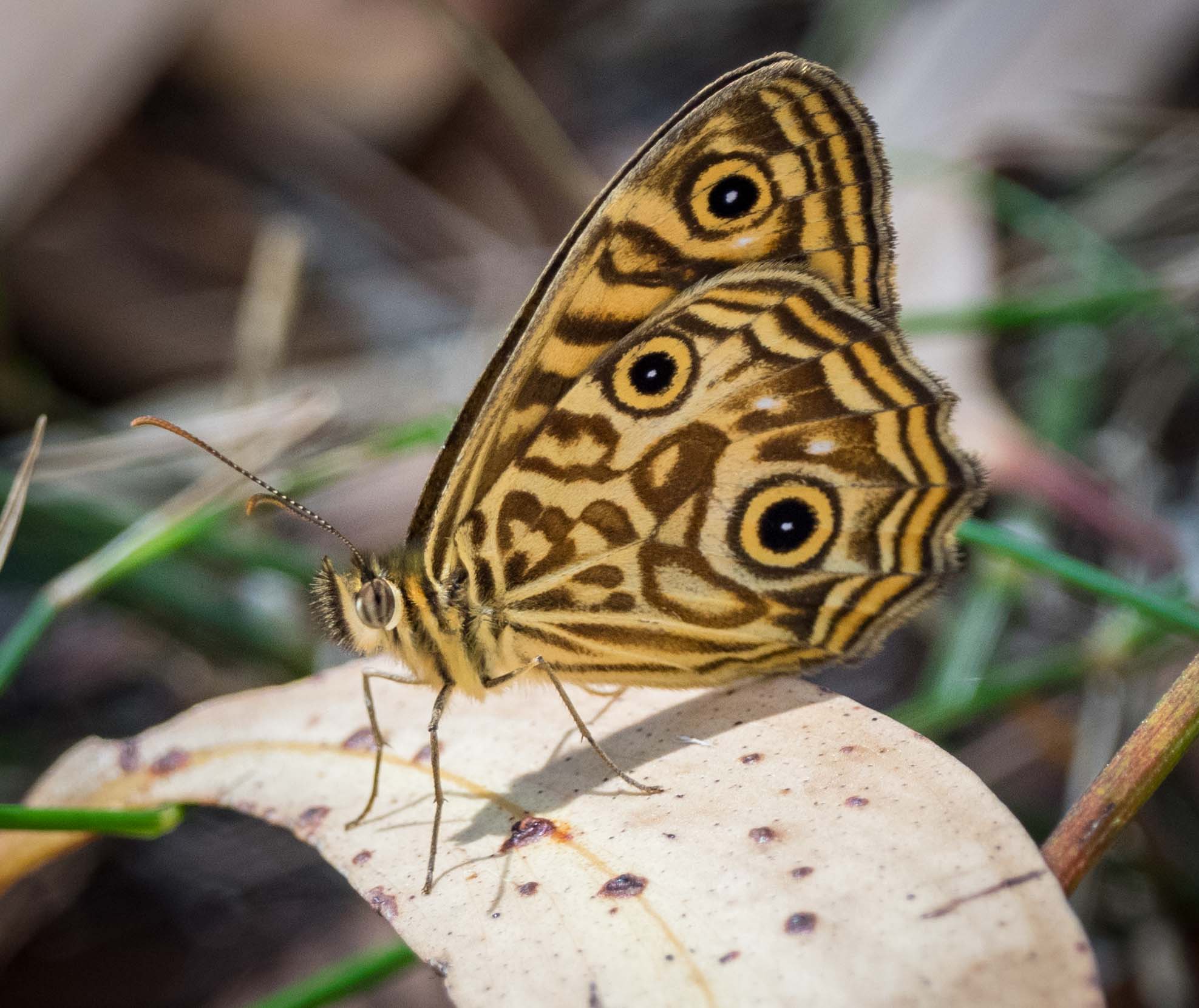
Geitoneura acantha
The upper wings of nearly all 'browns' are variously orange, brown and black. This can make identification a bit tricky. However, this 'forest brown' is unmistakable when it perches with closed wings - the pattern is striking and unique.
We do not see Geitoneura acantha in large numbers, which is perhaps surprising as one of their favoured food plants - Microlaena stipoides - is a common grass here.
Order: Lepidoptera; Family: Nymphalidae; Subfamily: Satyrinae (browns)
Photo taken in January
Hypocysta metirius
Common Ringlets have quite specific areas on the block that they favour and we can reliably find the adults there throughout the Summer. That they are so common here is a little surprising, as we are at the southern extremity of their distribution. Their range extends from the tip of Cape York all the way down the east coast - to us.
They fly low to the ground and land frequently, often with wings open. As with all browns, they are a favoured food of birds and lizards. The eye spots on the hind wings must help avoid attacks to their heads ... but the wings certainly suffer as a result. Most individuals are sporting bite and tear marks to the hindwings.
Order: Lepidoptera; Family: Nymphalidae; Subfamily: Satyrinae (browns)
Photo taken in March
Tisiphone abeona albifascia
The Swordgrass Brown is quite large and definitely striking, with a slow, lilting flight. We typically see only one or two at any one time.
Tisiphone are unlike most other species of browns, both in their colouration and in their host plants. Their larvae feed on Gahnia species, not grasses. Males patrol these sedges on the lookout for newly-eclosed females. There are five subspecies of Tisiphone aboena, each with a distinct appearance and distribution. The subspecies we see here, T.a.ablifascia, is the most southern and occurs across eastern Victoria.
Order: Lepidoptera; Family: Nymphalidae; Subfamily: Satyrinae (browns)
Photo taken in February
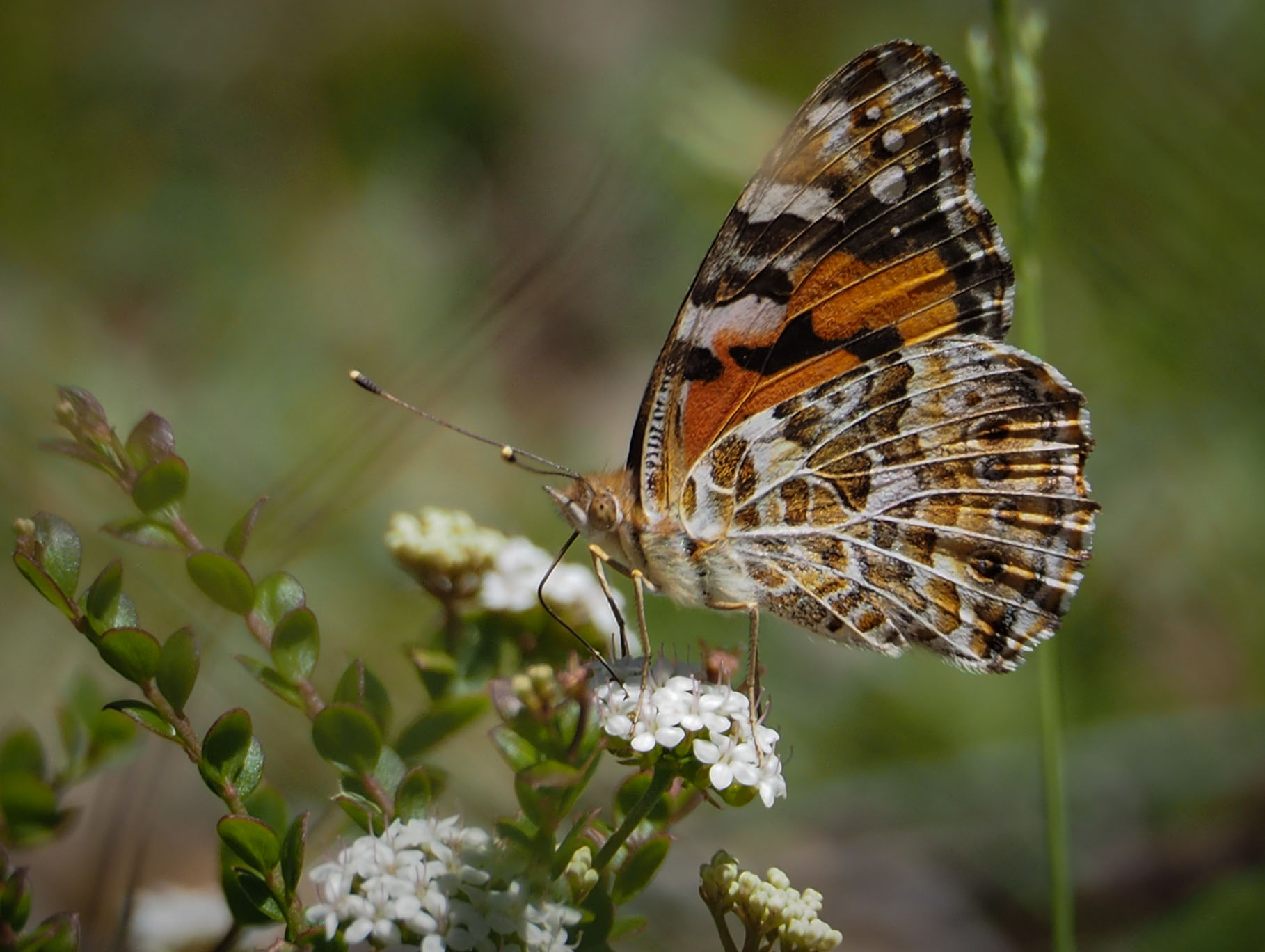
Vanessa kershawi
The territorial behaviour of males of this species is quite astonishing to witness. It is really not something I expected to see from a butterfly! A male will guard his chosen patch of low-growing forbs and aggressively chase off passing butterflies of any species - except, presumably, receptive females of his own species.
Order: Lepidoptera; Family: Nymphalidae; Subfamily: Nymphalinae (nymphs)
Photo taken in November
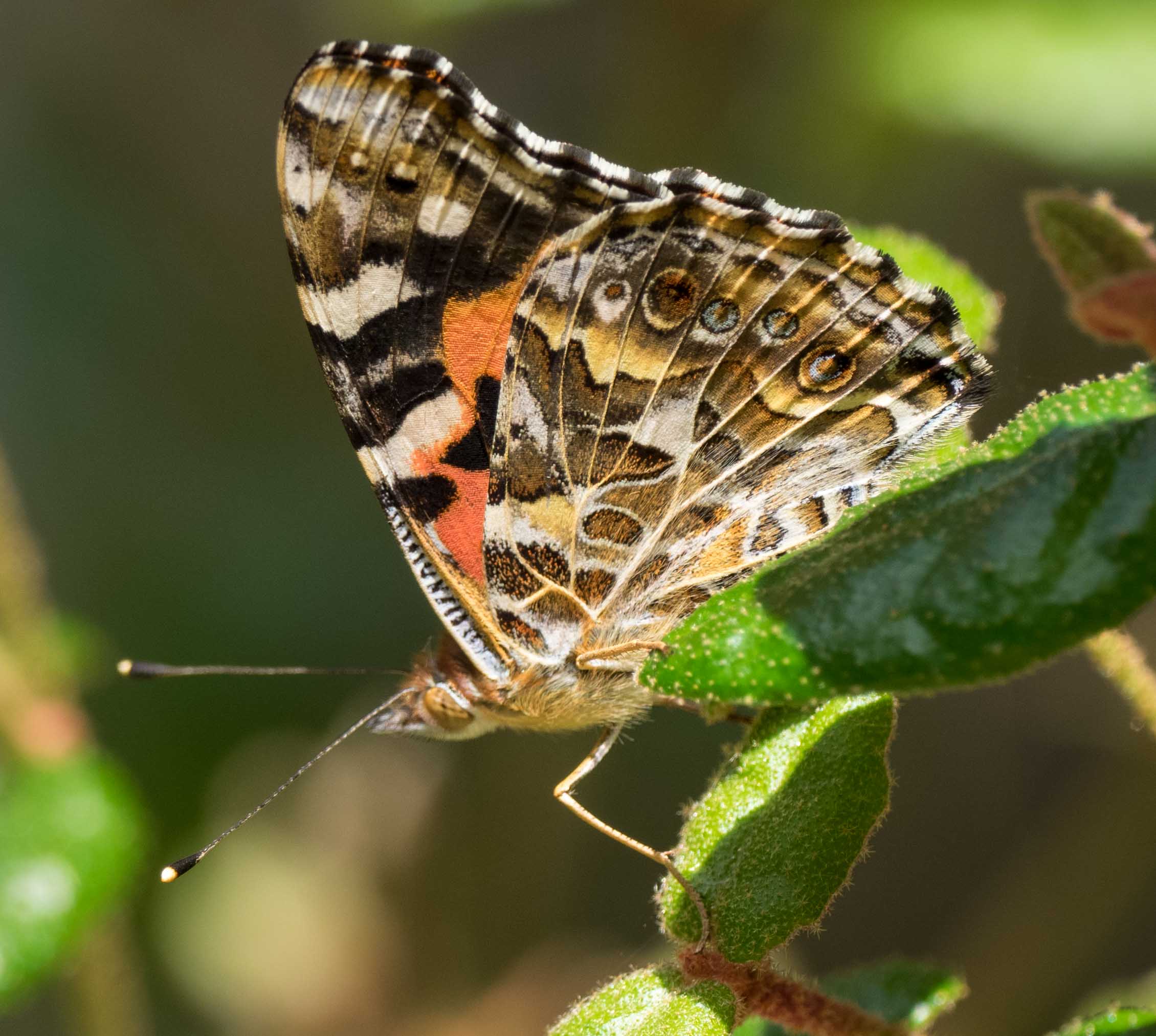
Vanessa kershawi
For a couple of years, Vanessa kershawi was by far our most numerous and conspicuous butterfly species on the block. The genus is renown for its migrations so, perhaps, in those years we just happened to be included in their flight path. They remain a significant part of the butterfly fauna every summer, but have not been such a dominant one in the past couple of Summers.
Order: Lepidoptera; Family: Nymphalidae; Subfamily: Nymphalinae (nymphs)
Photo taken in November
Vanessa kershawi
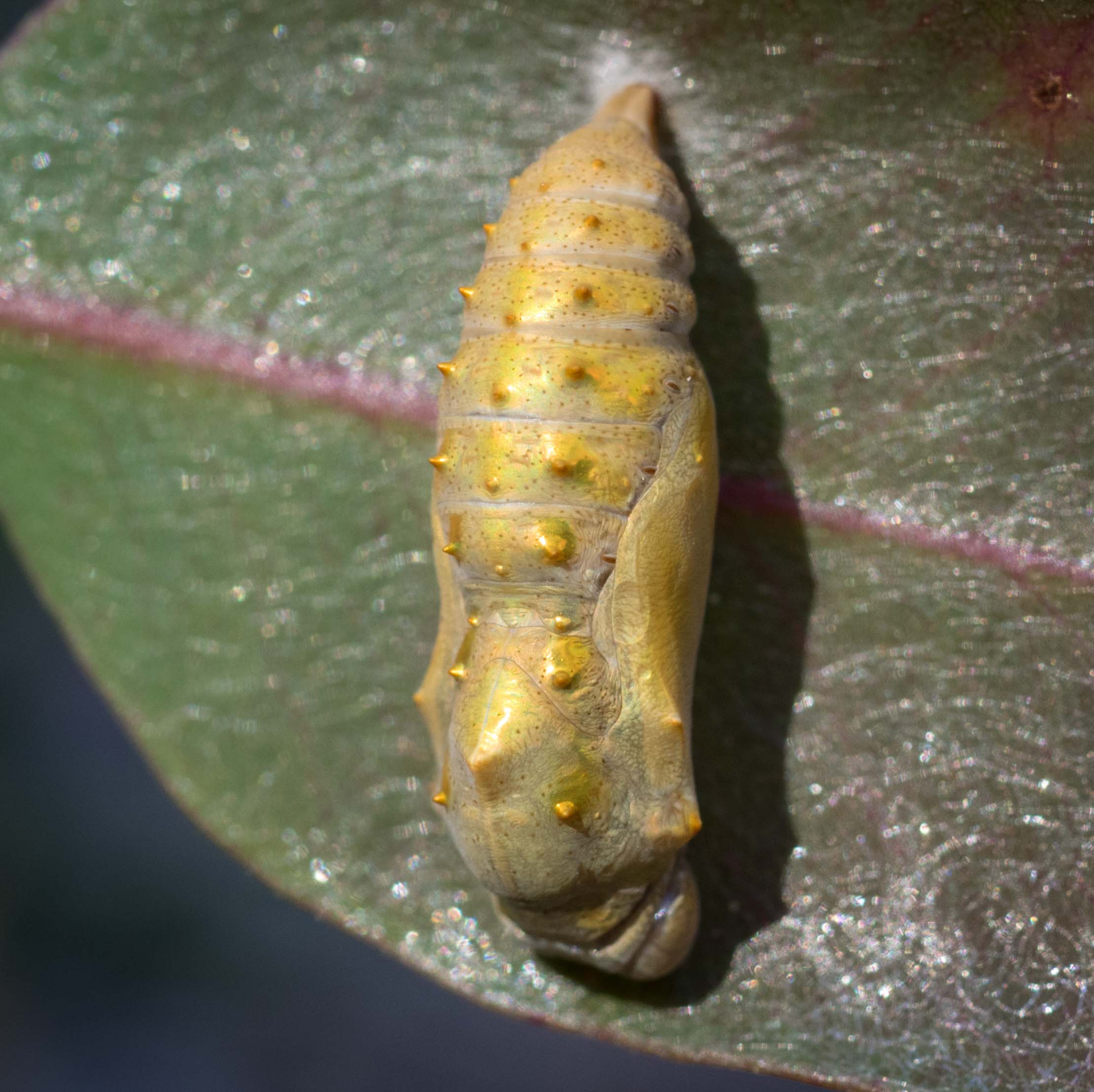
I discovered this stunningly gold chrysalis hanging on a small eucalypt seedling. Not knowing what it belonged to, I collected it - and three days later a perfect Vanessa kershawi emerged.
Order: Lepidoptera; Family: Nymphalidae; Subfamily: Nymphalinae (nymphs)
Photo taken in January
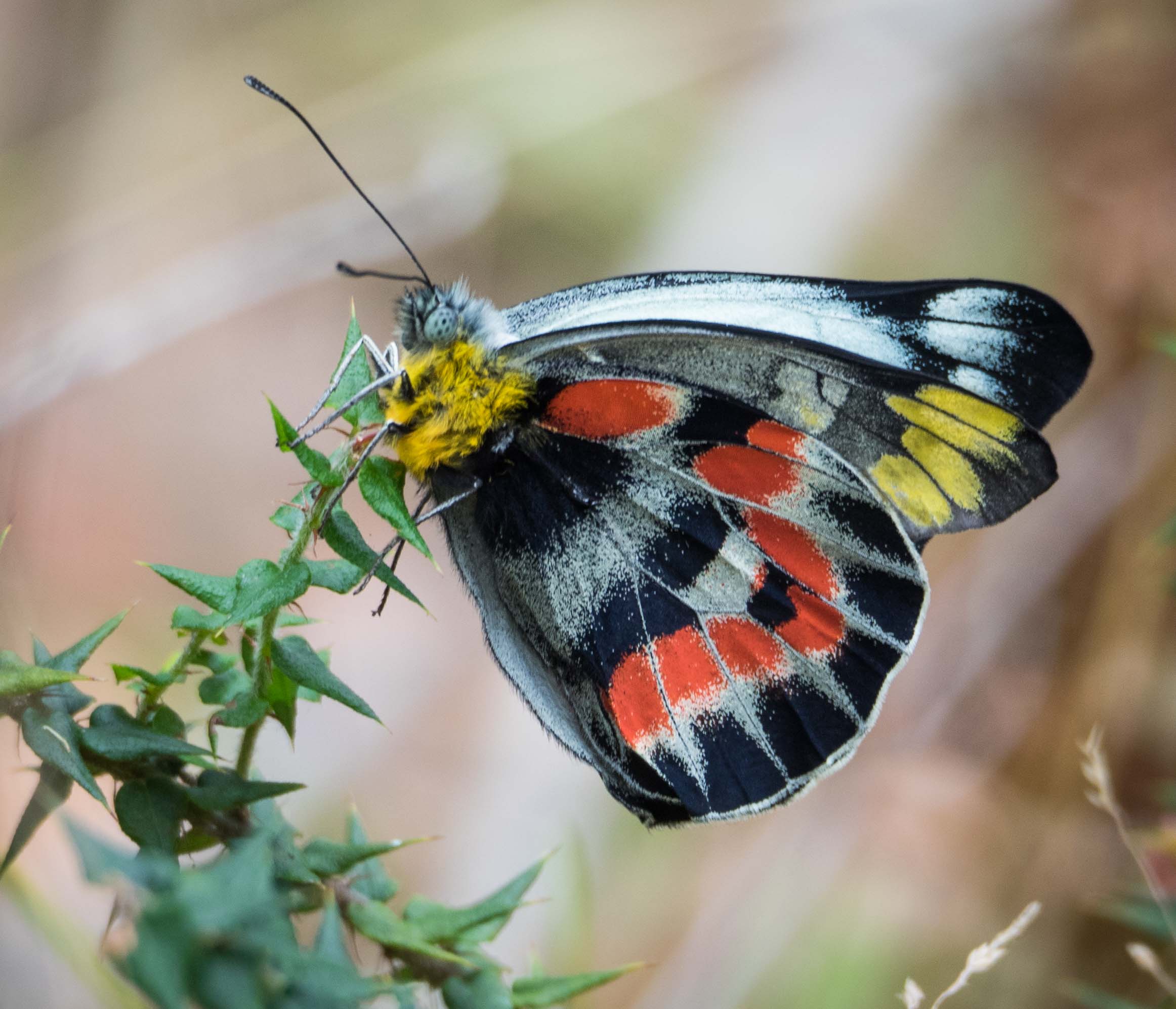
Delias harpalyce
This is a 'southern jezabel', a member of the family Pieridae. They are quite large butterflies but we usually only see them fleetingly, as they tend to fly high in the canopy.
Their larvae feed on mistletoe, so here in the forest they no doubt use the dominant mistletoe species, Amyema pendula (Drooping Mistletoe) - which tends to grow on high branches of the tallest trees, usually at least 20 metres up.
Delias harpalyce are reported to be distasteful and perhaps even toxic to vertebrates. Presumably the classic red-yellow colouration is aposematic, a warning to insectivorous birds.
Order: Lepidoptera; Family: Pieridae (whites & yellows)
Photo taken in January
Jalmenus evagorus
We tend to first notice this species when we spot a denuded Acacia sapling surrounded by butterflies. As is the case for many species within this family, Jalmenus evagoras has a well-studied association with ants. The feeding larvae and pupae are tended by Iridomyrmex ants in a commensal relationship.
The 'hairstreaks' belong to the very large and diverse butterfly family, Lycaenidae.
Order: Lepidoptera; Family: Lycaenidae (hairstreaks, coppers & blues)
Photo taken in January
Click here to see our blog in 'News & Stories' for more images and videos of the ant-larvae interactions, and the extraordinary mating behaviour of the butterflies.
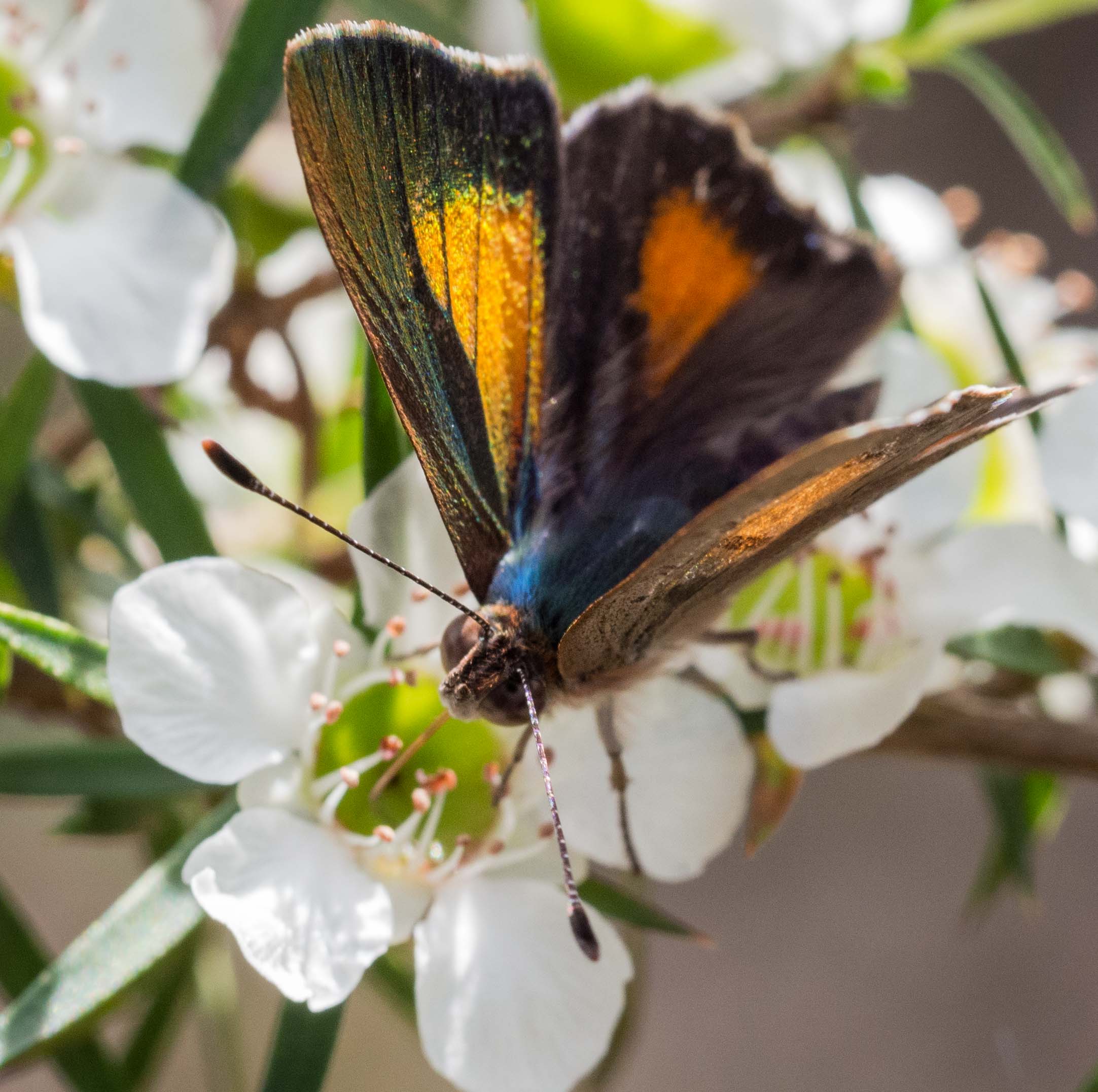
Paralucia aurifer
These tiny but brilliant butterflies almost glow in the sun. The larvae feed on Bursaria spinosa, a species with a limited distribution on the block. The spiny plant, in the same family as Pittosporum (Pittosporaceae), only grows on the rocky slopes leading down toward the river. The adults range more widely, feeding on flowering plants in all areas of the open forest.
Order: Lepidoptera; Family: Lycaenidae (hairstreaks, coppers & blues)
Photo taken in November