A rare spider find

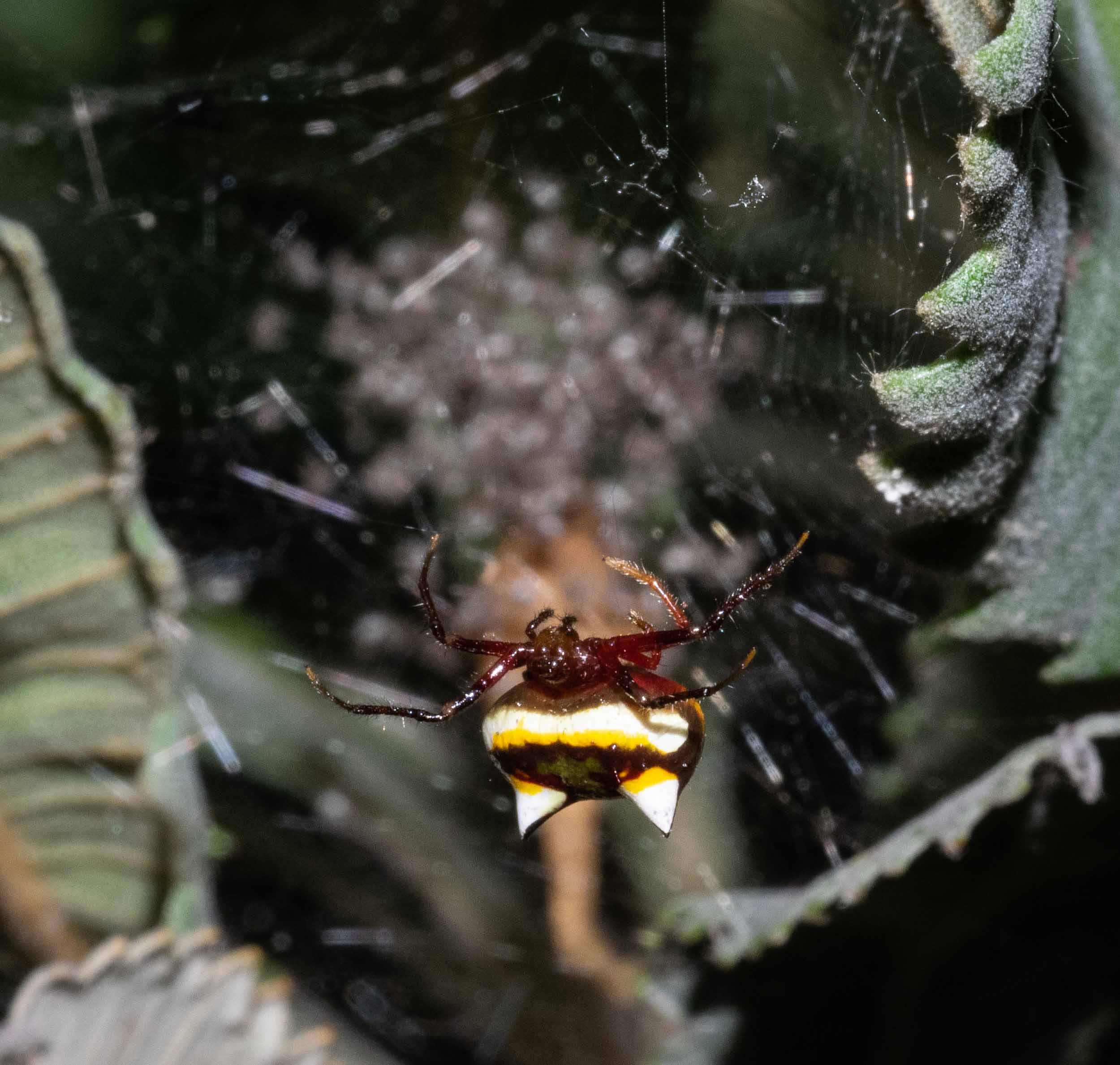
Wandering about the block one morning I noticed a small blob on the leaf of a low-growing bush. It turned out to be a tiny, weird spider I'd never seen before. I took a few photos and managed to disturb him just enough that he unpacked his legs and revealed a more typical spider shape.
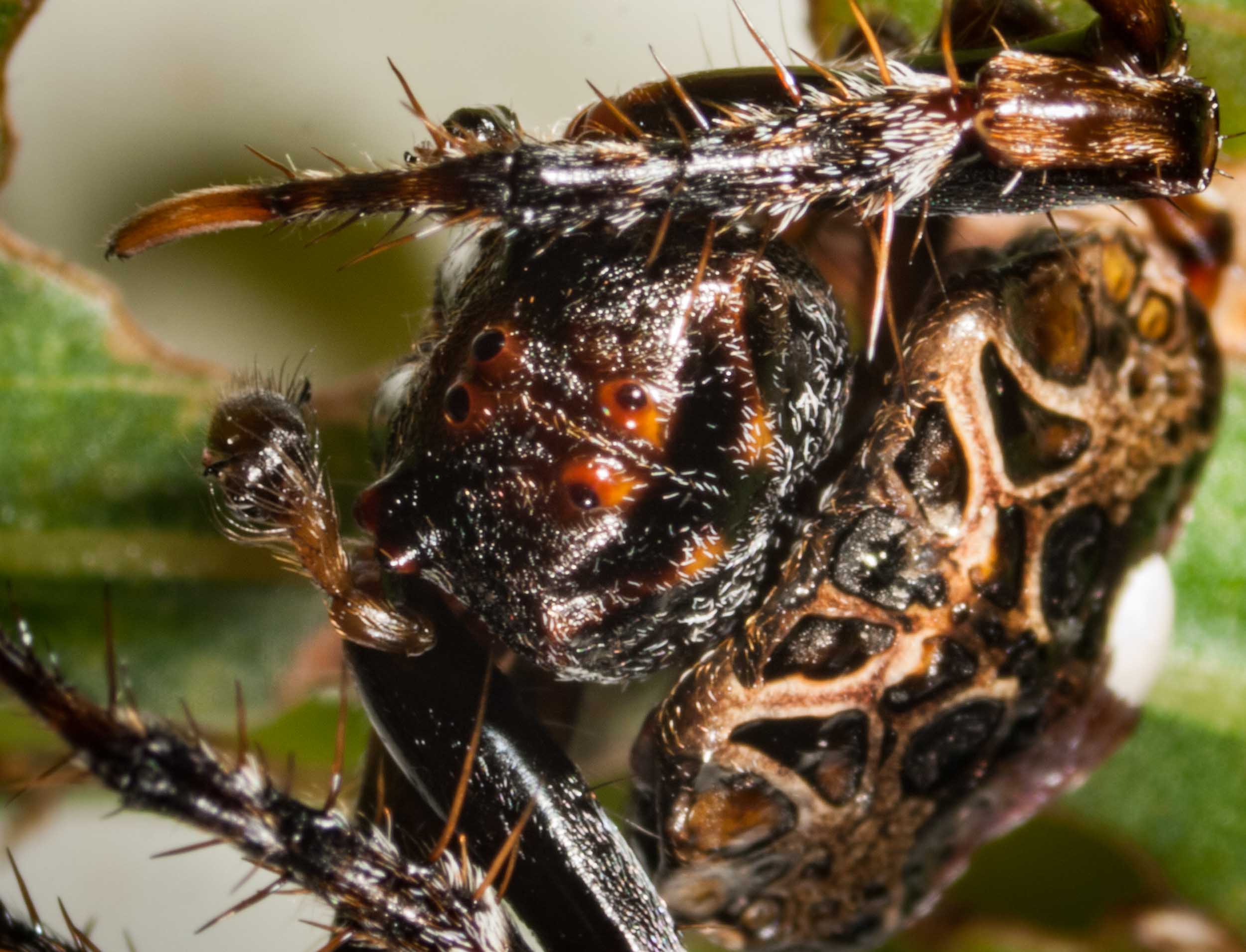
a male Arkys curtulus ('Bird-dropping Arkys')
After searching our usual resources to try and identify him, with no success, I decided to email Robert Whyte. Robert is a spider expert and has been developing 'A Field Guide to Australian Spiders' (since published by CSIRO).
I was thrilled when Robert replied immediately and enthusiastically. It seems I'd made a rather rare discovery - a male Arkys curtulus. They are highly cryptic and not many photographs of the males of this species exist. Neat!!
An ambush hunter, as are all members of the Arkyidae family
The pattern of coloured spots (the 'bird-poo' markings!) apparently varies greatly between individuals.
Long spines are typical of this spider family
Swollen pedipalps - give away that this is a male!
Feeling rather pleased with my observation skills, I very happily consented to the inclusion of my photos in the Field Guide. The book was launched in June 2017 - and this little Arkys features on page 118. An important inclusion to our library, of course!
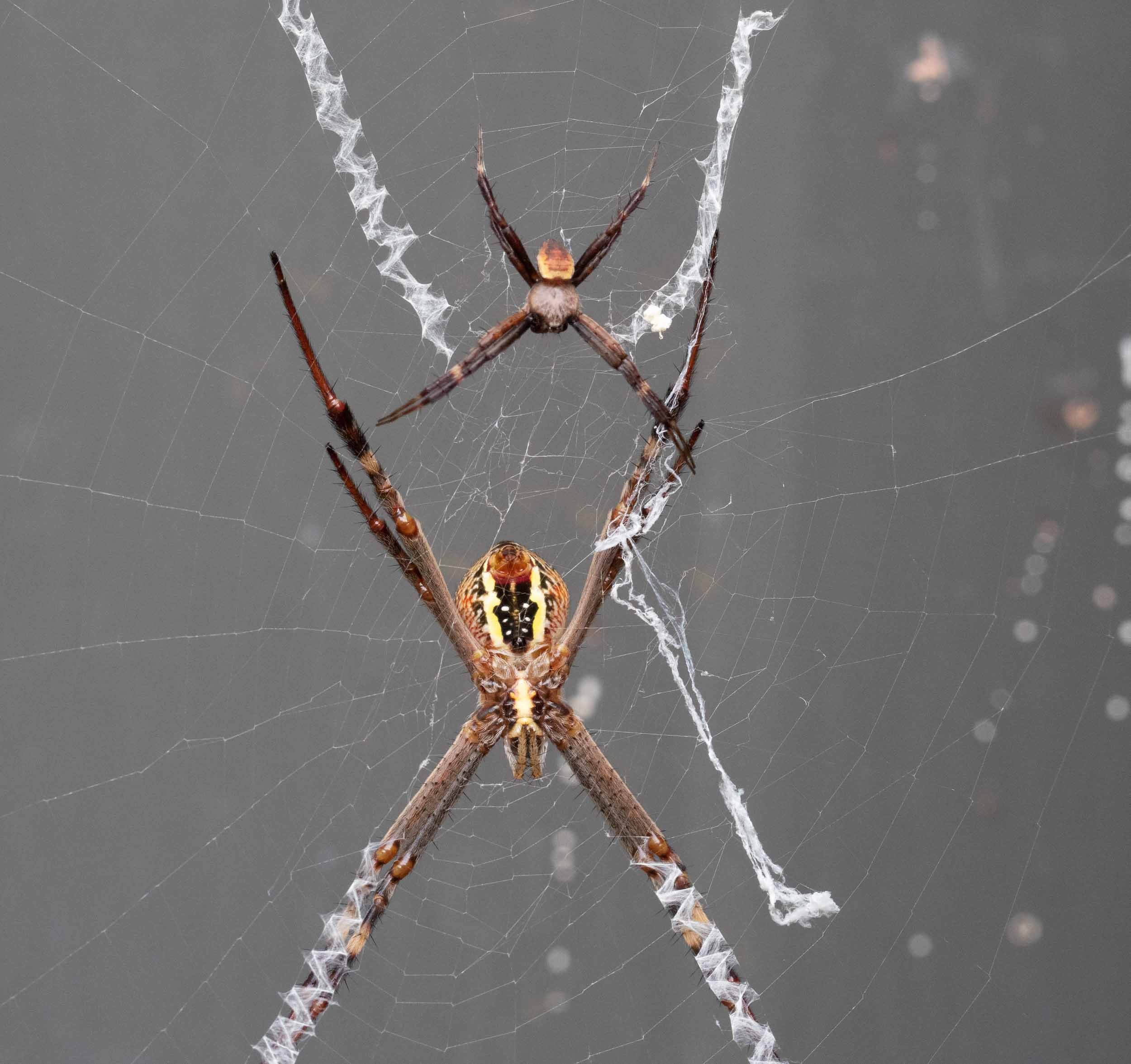
The engrossing spectacle of orb-weaver spider mating
The back story on the discovery and naming of a new species of funnel-web spider.
Finding hidden spiders is a challenge, and watching their behaviours day-after-day is fascinating.
Following an unidentified spider on her maternal journey.
Finding some new representatives of the spider taxon Mygalomorphae (Mygals, for short) leads me to discover more about this endearing group of animals.
On a rainy night, with Trapdoor and Funnel Web Spiders climbing the walls, it is a tiny white spider that catches my attention - and a large meal.
A resident Two-spined Spider has turned her Banksia home into a very busy nursery web.
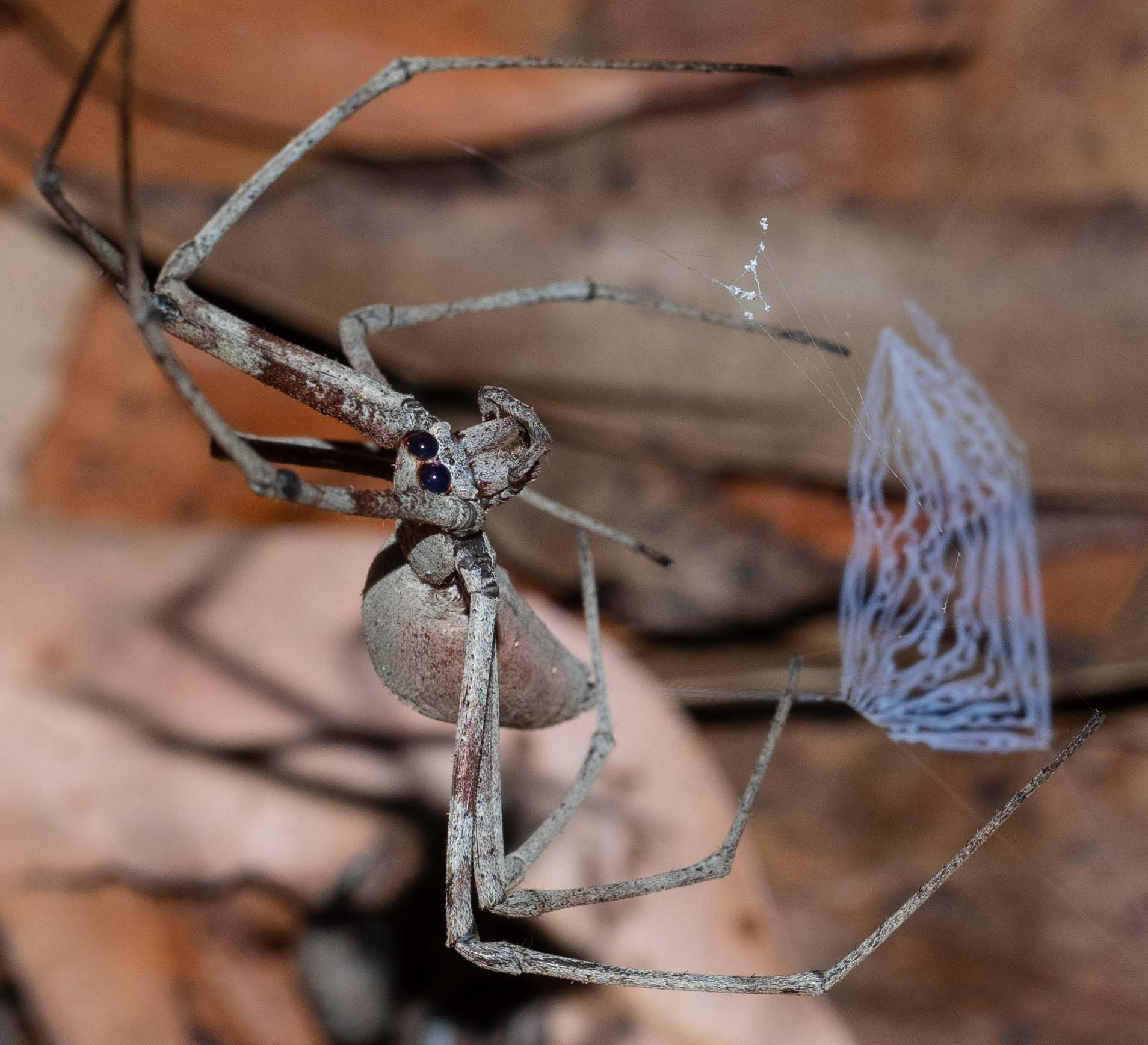
I rediscover the Ogre-faced Netcaster spider and her amazing method of trapping prey
Halloween has passed but this seems to be the week for spiders – of all kinds.
It's all happening out there on a warm Spring evening in the forest
We were lucky to witness a special event - a Netcaster Spider making her net.
Austracantha minax
Small it may be (8mm wide), but this orb-weaver has a striking shape and colouration. We often see this spider in groups, with their webs strung between low bushes or rushes, such as Lomandra.
Order: Araneae; Family: Araneidae (Orb-weavers); sub-group: Araneinae (classic orb-weavers)
Photo taken January
NOTE: Spiders belong to the class Arachnida, a totally separate arthropod class to the insects (class Insecta). But spiders are not the only arachnids. The spiders are grouped together in the order Araneae. We show representatives of two other orders - Trombidiformes and Scorpiones- toward the end of this image collection.
Austracantha minax
The expanded pedipalps show that this is a male. It is smaller than the female and has less prominent spines. This individual was not in a web, but roaming around low vegetation near the females.
Order: Araneae; Family: Araneidae (Orb-weavers); sub-group: Araneinae (classic orb-weavers)
Photo taken January
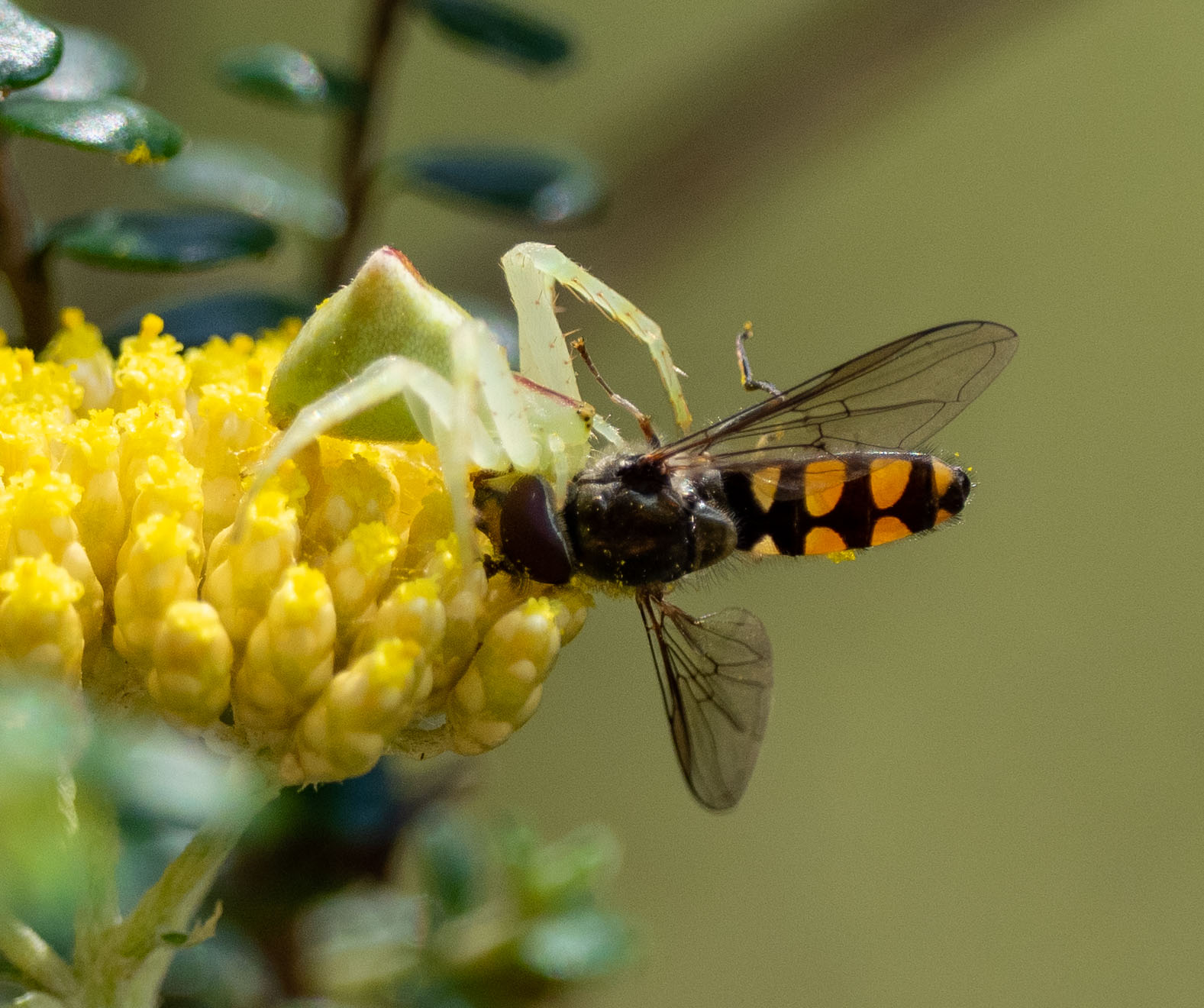
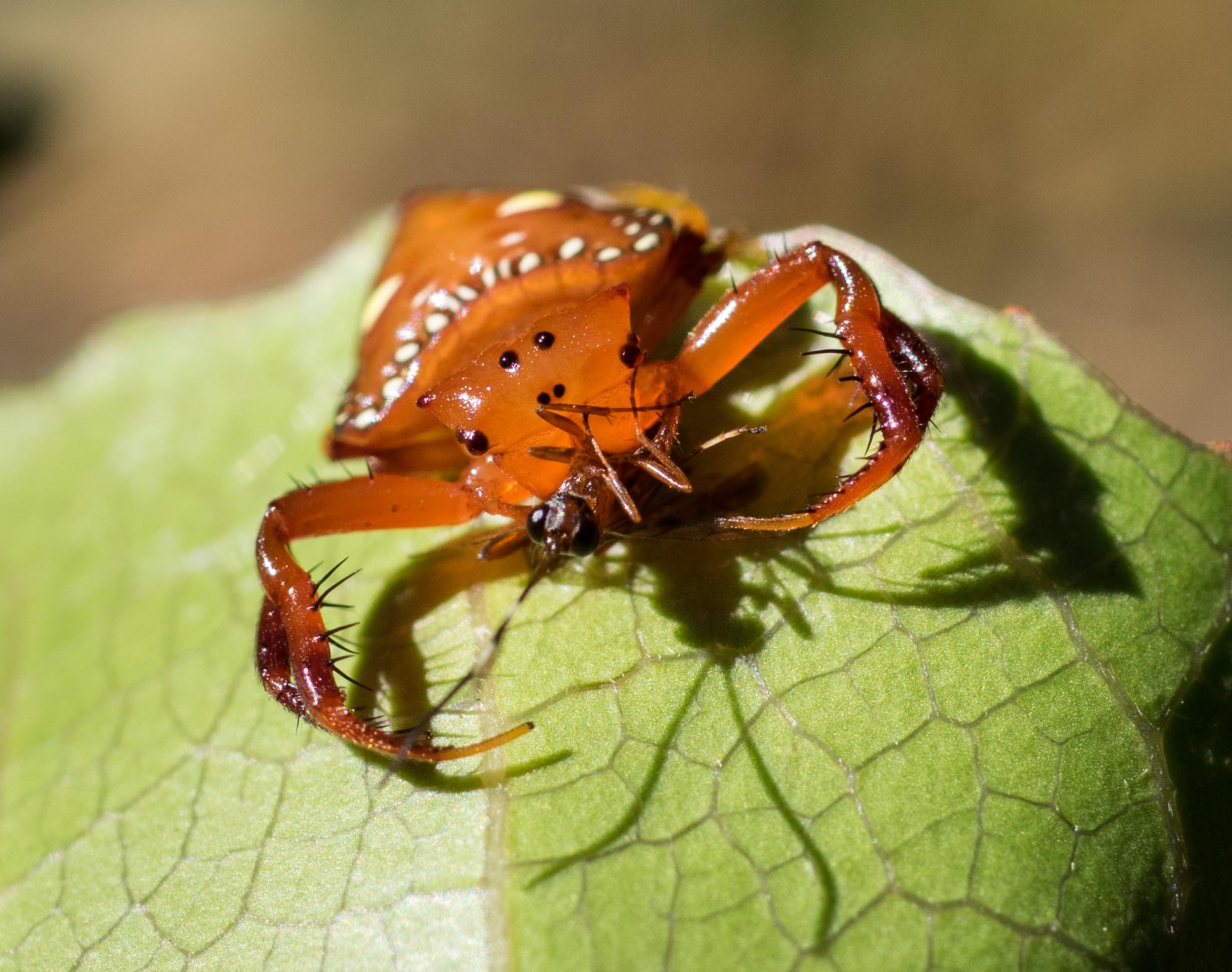
Arkys lancearius
This group of spiders evolved from orb-weavers, but abandoned the mode of prey capture typical of that group. Instead, they hunt by ambush - lurking in foliage then jumping on their prey and grasping it with their greatly enlarged forelegs, which bear inward pointing spines.
The spider shown here had recently mounted a successful attack on a wasp. Arks typically hunts at night, hiding in foliage during the day. This shot was taken in the early morning, so perhaps they take any chance that presents to secure a meal.
Order: Araneae; Family: Arkyidae (ambush hunters)
Photo taken in March
Maratus volans
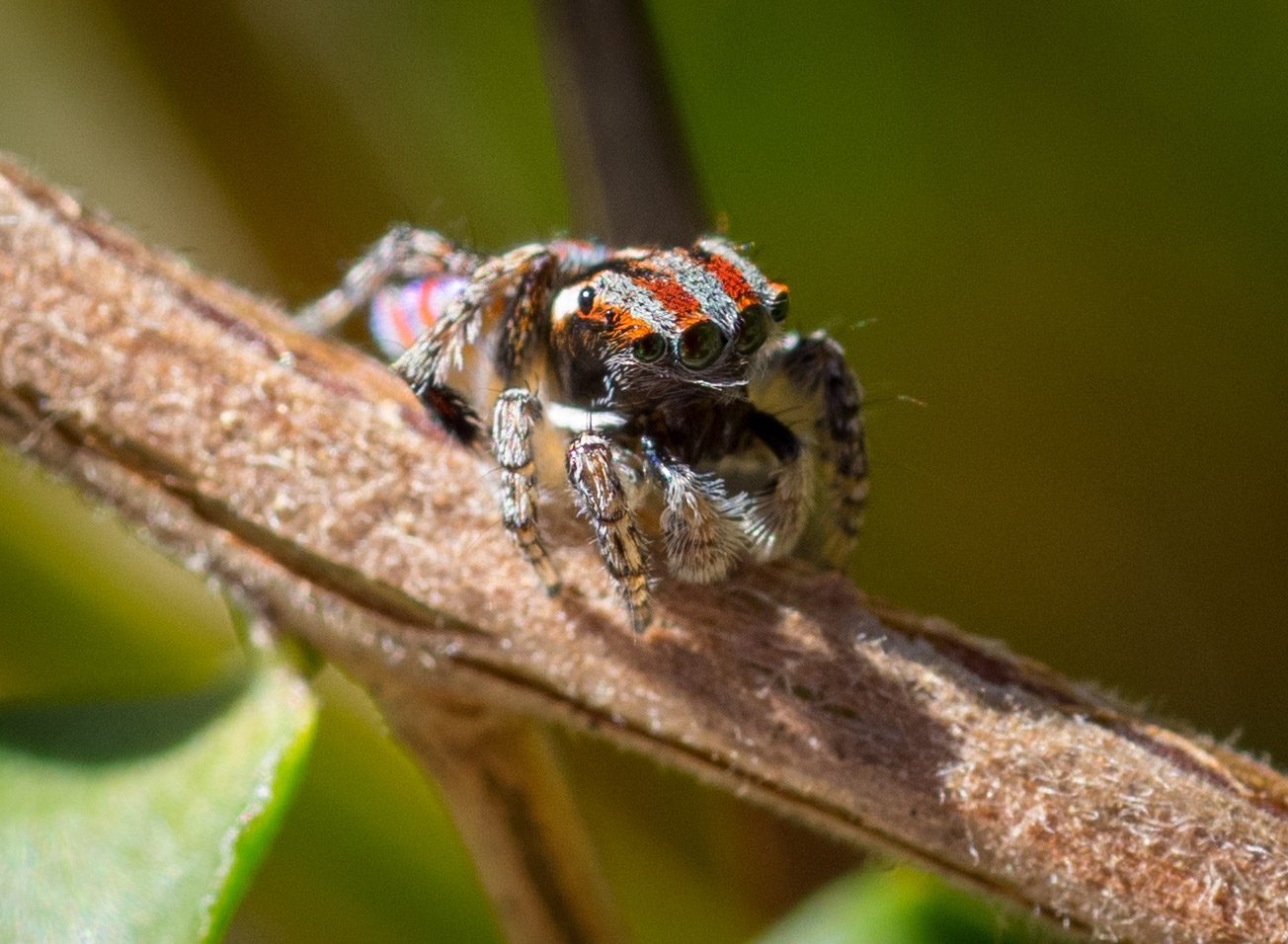
This beautiful, tiny (5mm long) spider belongs to the jumping spider family, Salticidae. As the name implies, this group of spiders catch their prey by stalking, leaping and pouncing on it. The name 'peacock' comes from the fact that this species raises the pair of brightly coloured flaps over the abdomen during courtship.
We see Maratus volans throughout the summer months, typically on low bushes and grasses.
Order: Araneae; Family: Salticidae (jumping spiders)
Photo taken November
Maratus volans
The pair of large, central eyes is a diagnostic character of jumping spiders - and one that adds to the popular appeal of this group.
Order: Araneae; Family: Salticidae (jumping spiders)
Photo taken October
These tiny predators are everywhere. This one was clearly guarding her nest, coming forward to check on me, but quickly disappearing again into this well-camouflaged little hide in the seed head of a sedge.
Order: Araneae; Family: Salticidae (jumping spiders)
Photo taken in November
As Robert Whyte and Greg Anderson say in their new book 'A Field Guide to Spiders of Australia':
"Jumping Spider Diversity - so many species, so little time" (p.224)
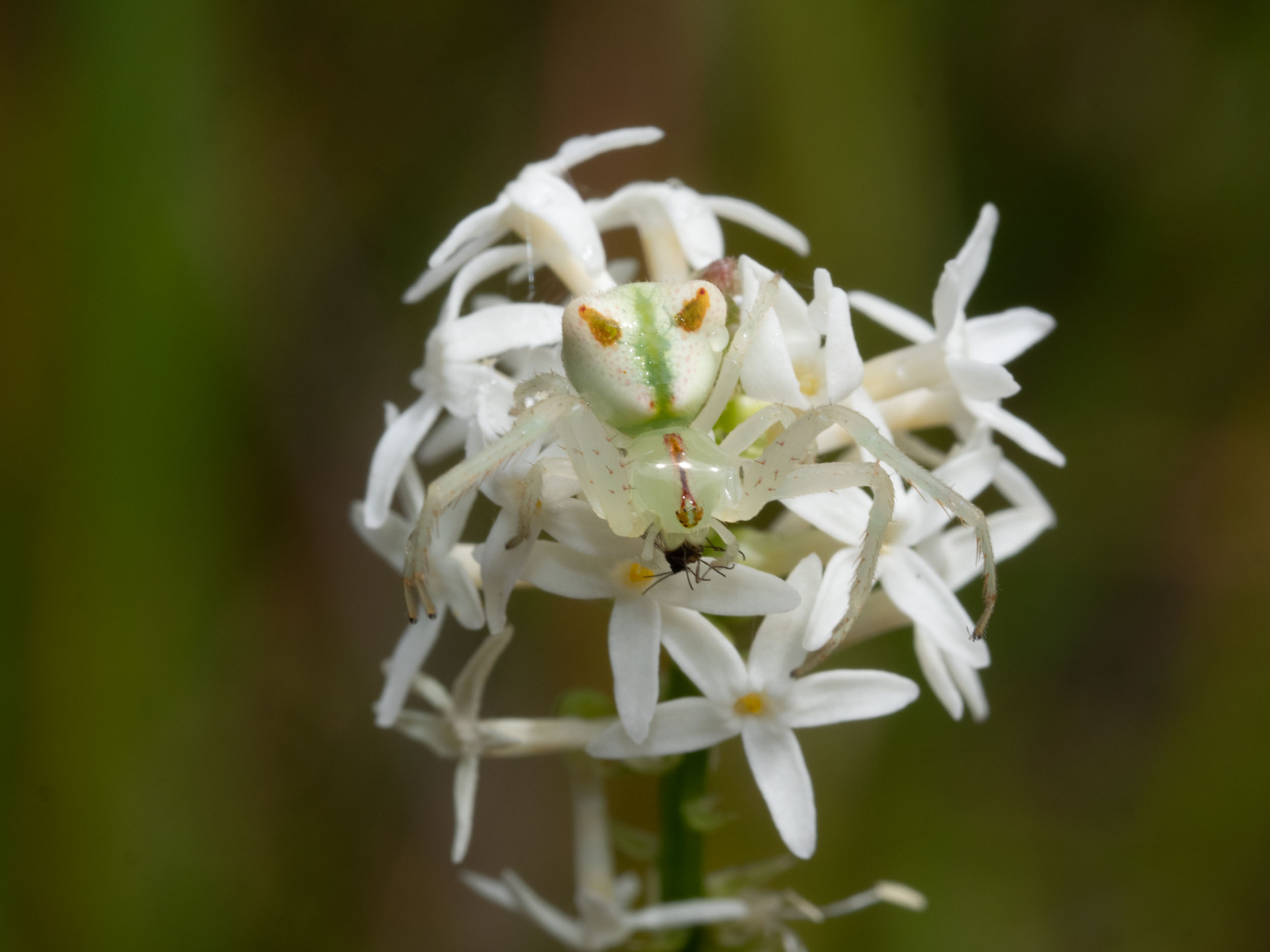
Australomisidia pilula (?)
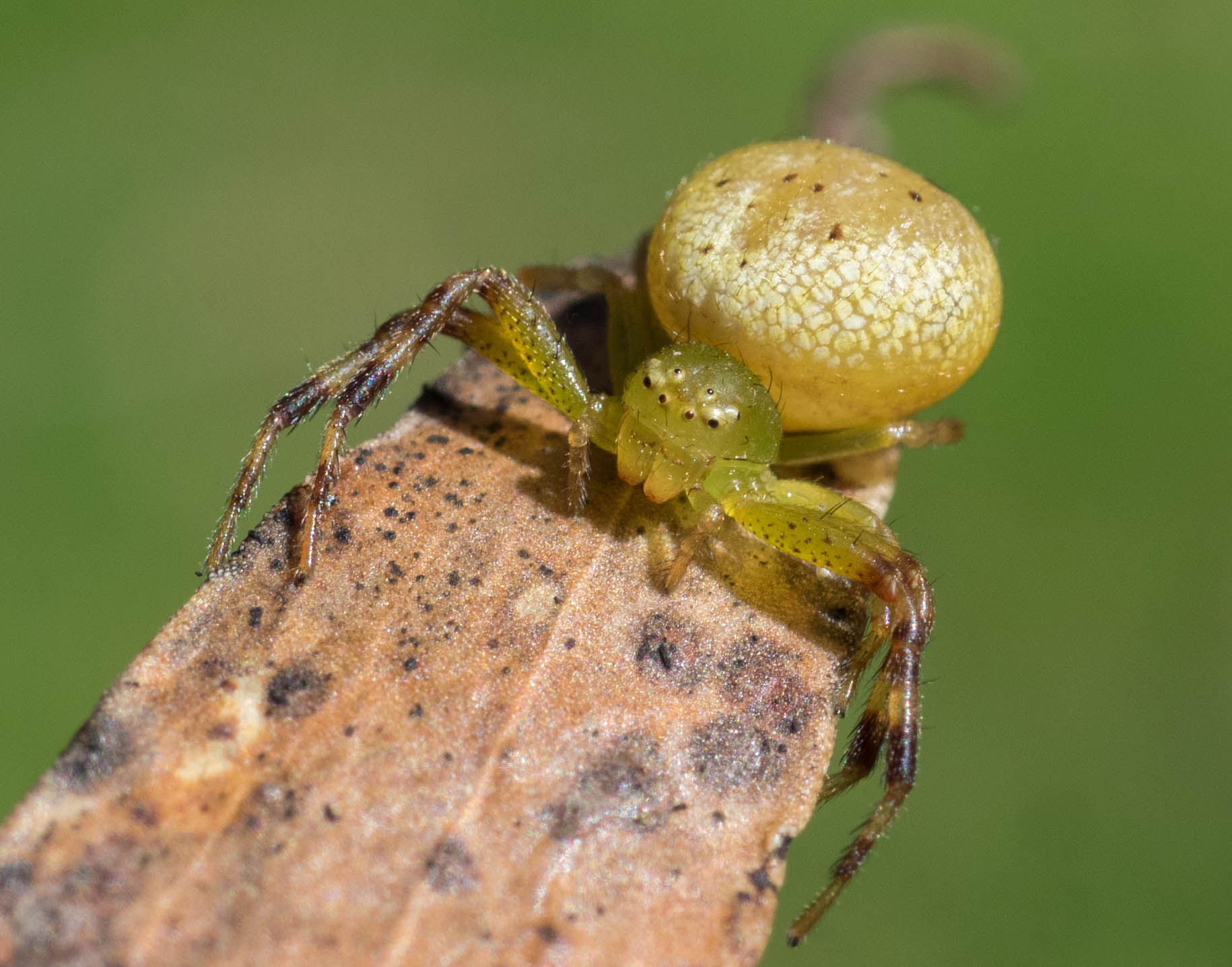
Small, colourful spiders that adopt a sit-and-wait hunting strategy are a photographer's delight. In Summer, you don't have to search the forest for long before you find an intriguing and tiny hunter, lurking in the vegetation.
Australomisidia pilula is an ambush hunter, like the Common Triangular Spider, but unlike the latter, Australomisidia hunts during the day. It is commonly found lurking amongst flowers. scuttling out when its prey approaches. It preys on insects and even other spiders.
Order: Araneae; Family: Thomisidae (crab spiders)
Photo taken in November
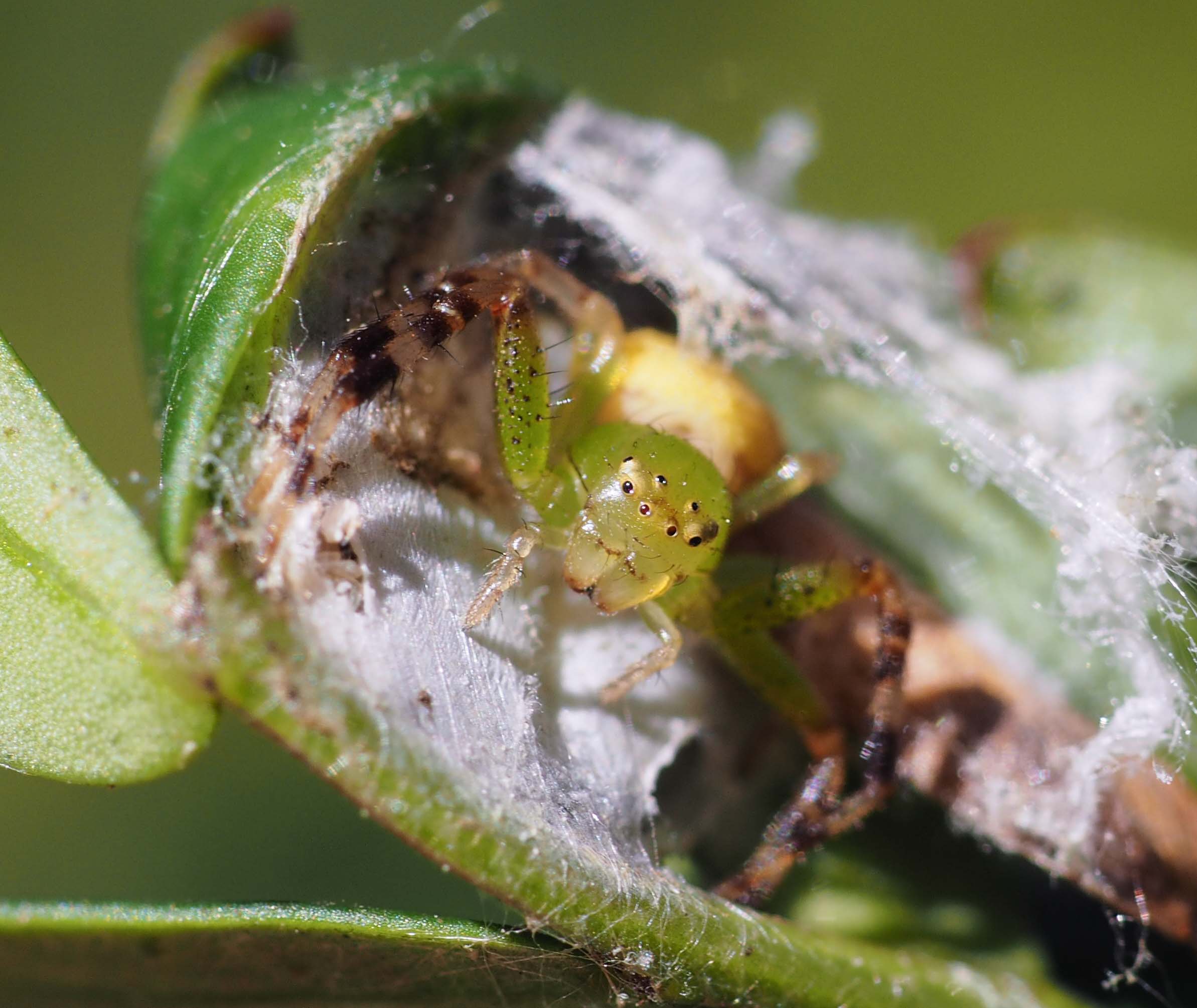
Australomisidia pilula
This female is guarding her brood of spiderlings, hidden inside a folded leaf, held together with silk.
Order: Araneae; Family: Thomisidae (crab spiders)
Photo taken in December
Stephanopis barbipes
These tiny ambush predators blend in beautifully with the leaf litter of their hunting ground.
Order: Araneae; Family: Thomisidae (crab spiders)
Photo taken in December
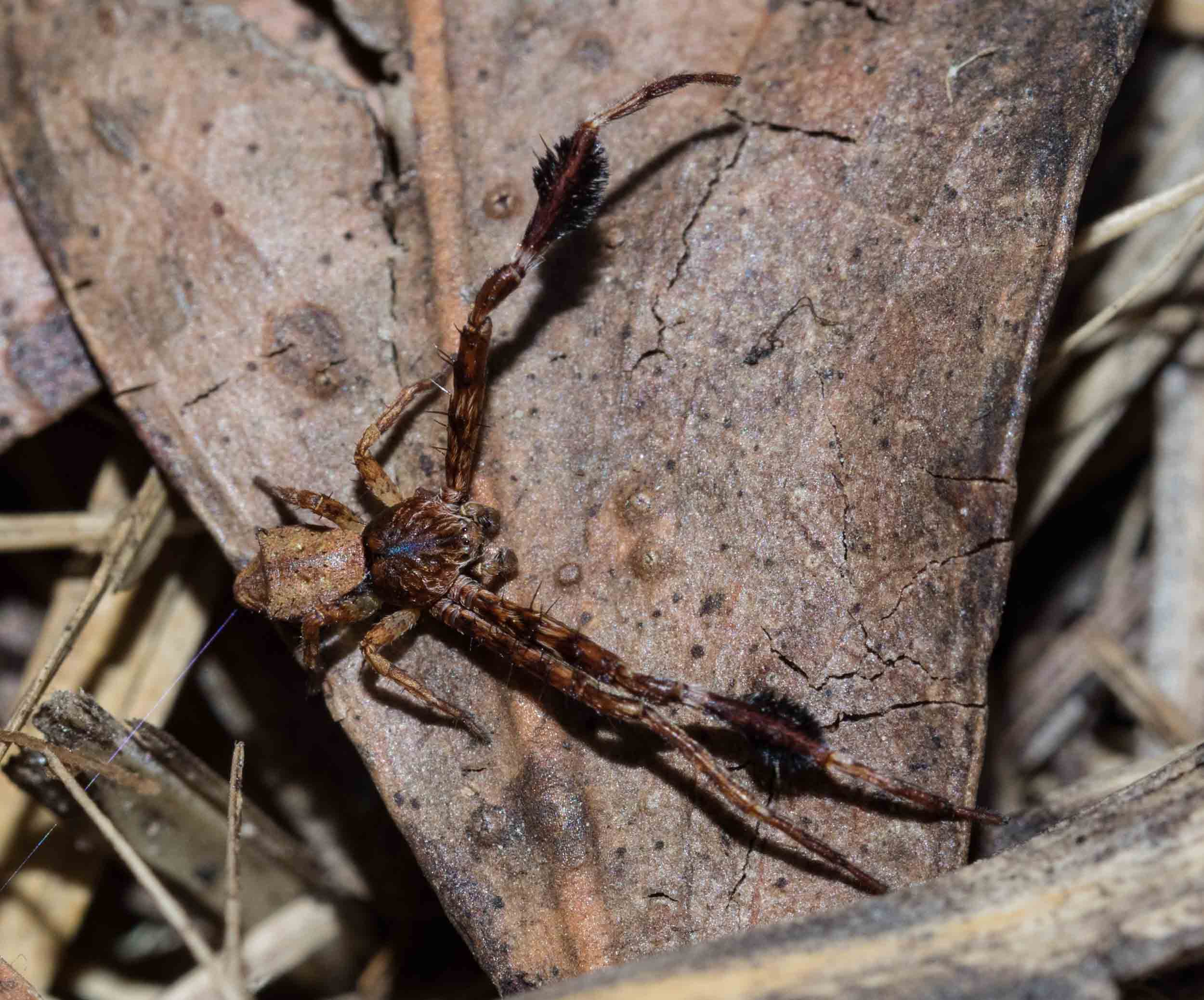
Stephanopis barbipes
Only the males have hairy legs! Presumably, therefore these 'beards' are involved in courtship.
Order: Araneae; Family: Thomisidae (crab spiders)
Photo taken in December
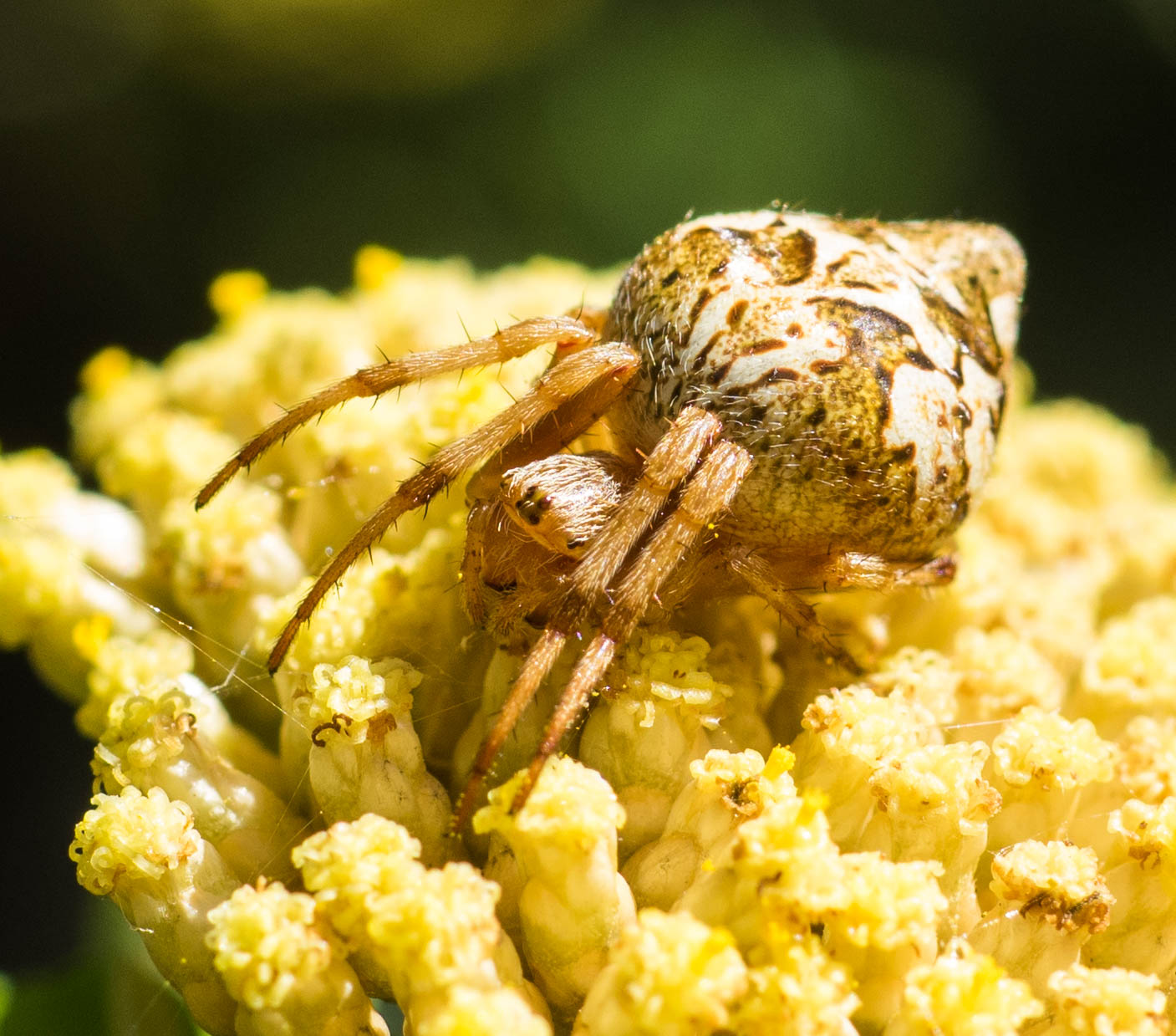
Araneus acuminatus (?)
Sitting atop this Ozothamnus flower head, the little hunter is beautifully camouflaged.
Order: Araneae; Family: Araneidae (Orb-weavers); sub-group: Araneinae (classic orb-weavers)
Photo taken in November
Araneus dimidiatus
In Spring and Summer there are folded leaves hanging suspended from scrappy-looking webs throughout the forest shrub layer. They are all spider retreats. Each leaf is rolled over and held with silk.
Here I have peeled open such a leaf in order to view the occupants. In this particular species, male and female spiders share the same retreat. The male appeared to actively guard the fat-bodied female, posturing and concealing her with his own body.
Many different spider species use curled leaf retreats.
During the day, the only sign of these spiders are their protruding leg tips. At night the spiders emerge to feed on insects trapped in a familiar orb web, woven in a low bush.
This is clearly an important food resource for many of the insectivorous birds. We see species such as the Yellow-faced Honeyeater systematically searching folded leaves, trying to extract the spiders inside. For a 'retreat', I often think the folded leaf actually advertises the spiders' presence!
Order: Araneae; Family: Araneidae (Orb-weavers); sub-group: Araneinae (classic orb-weavers)
Photo taken October