
Cleaning up - dipteran style

We spent the morning exploring the block with an 11 and 9 year old. Lucy caught this cool fly - a lauxanid, Sapromyza sp. It was quite cooperative and allowed me to take some very up close shots and video of it preening itself.


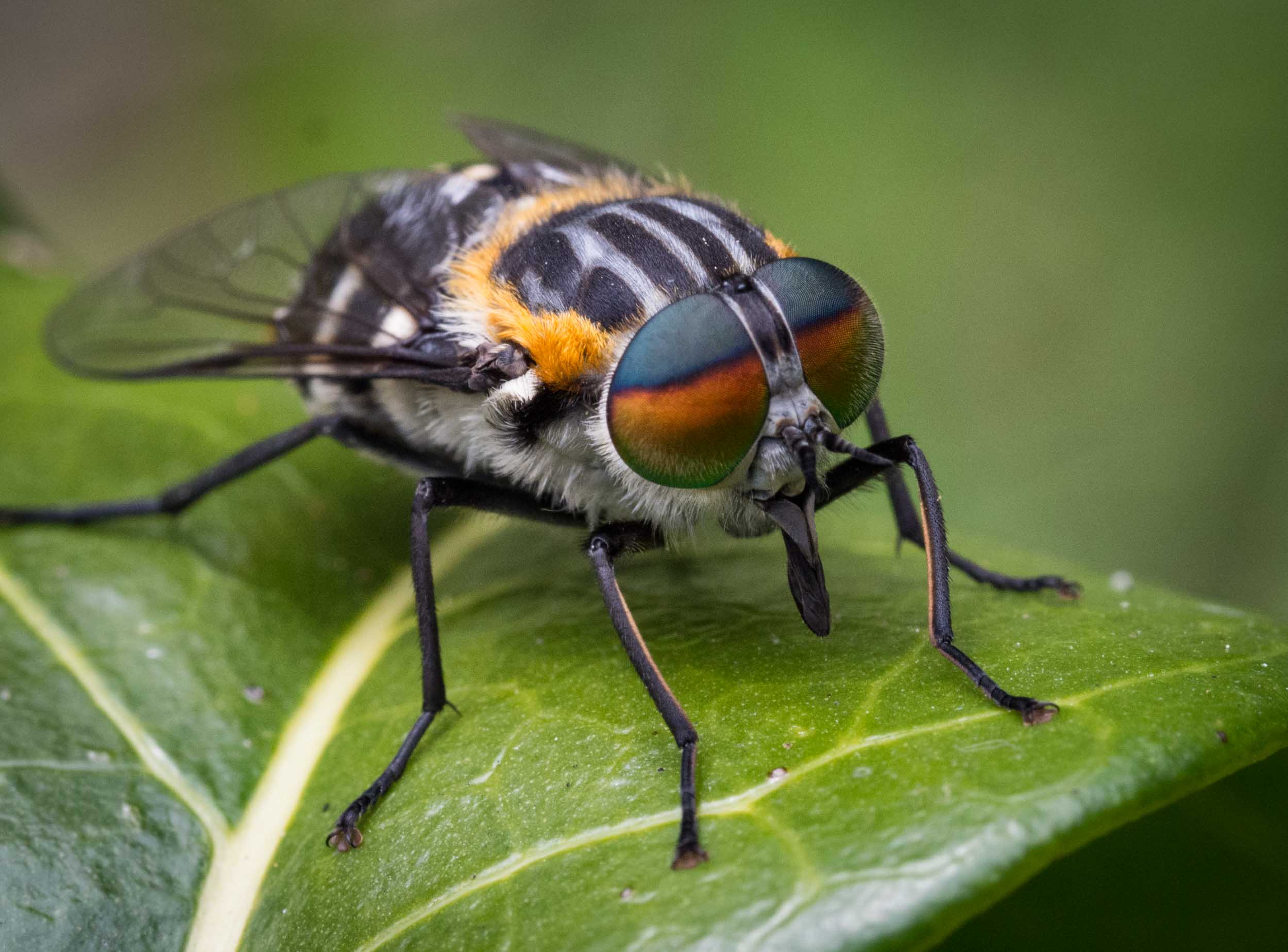
Scaptia auriflua
This fly belongs to the family Tabanidae, known in Australia as March Flies. March Flies are widely disliked because of their biting habit. In fact, only the females bite - the blood they extract is necessary for egg production. The males on the other hand feed exclusively on pollen and nectar.
In the attractive species shown here, Scaptia auriflua, both sexes are nectar feeders. So no need to be alarmed if you're approached by a March Fly with colourful eyes!
Order: Diptera; Family Tabanidae (March flies, horse flies)
Photo taken in October
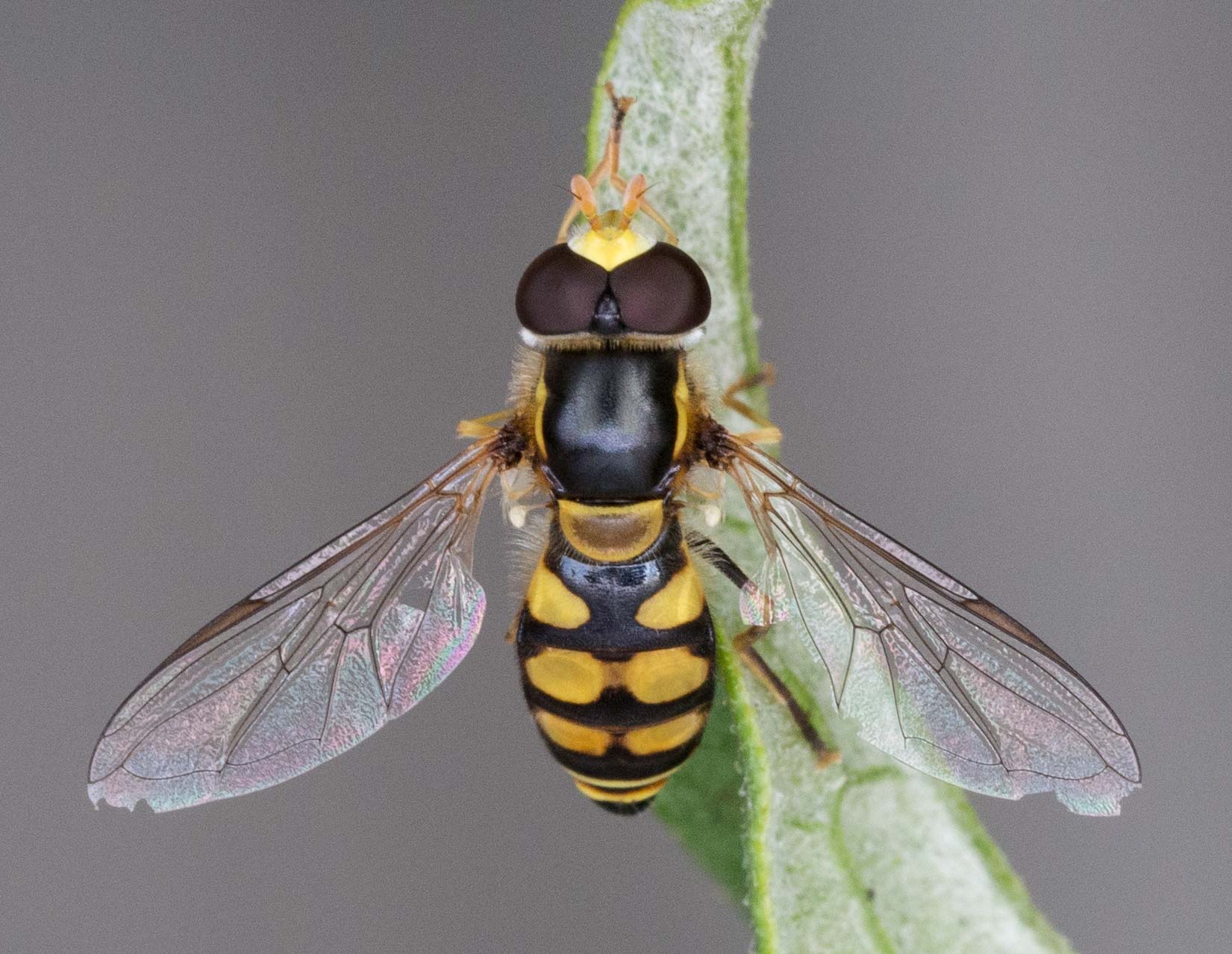
Simosyrphus grandicornis
Hover Flies are one of the most important pollinators here in the forest. We see them in large numbers, hovering near and taking nectar and pollen from flowers of a wide range of plant species.
Hover Flies play another important ecological role - their larvae feed on aphids.
Order: Diptera; Family: Syrphidae (hoverflies)
Photo taken in November

Meomyia sericans
The high-pitched buzzing of these attractive flies is a common sound in summer, particularly in areas of exposed, sandy soil. They often hover in place, motionless except for the blur of their wings.
We see them land on the sand and appear to burrow. It is likely that they are able to locate buried larvae, such as Sand Wasp larvae, and then lay an egg in the burrow of this would-be host. Reportedly, these flies are quite opportunistic in their choice of larval host.
The adults feed on nectar and may be important pollinators.
Order: Diptera; Family: Bombyliidae (bee flies)
Photo taken in October

Aleucosia sp.
The dark patterning on the outstretched wings of Aleucosia is like a work of art. These conspicuous insects appear in small numbers in Spring, and are often in mated pairs when we see them.
Like many insects, this coupled state lasts an extended time, presumably ensuring that the female remains unavailable to other males. If disturbed, they will fly a short distance and land, still coupled.
Order: Diptera; Family: Bombyliidae (bee flies)
Photo taken in October
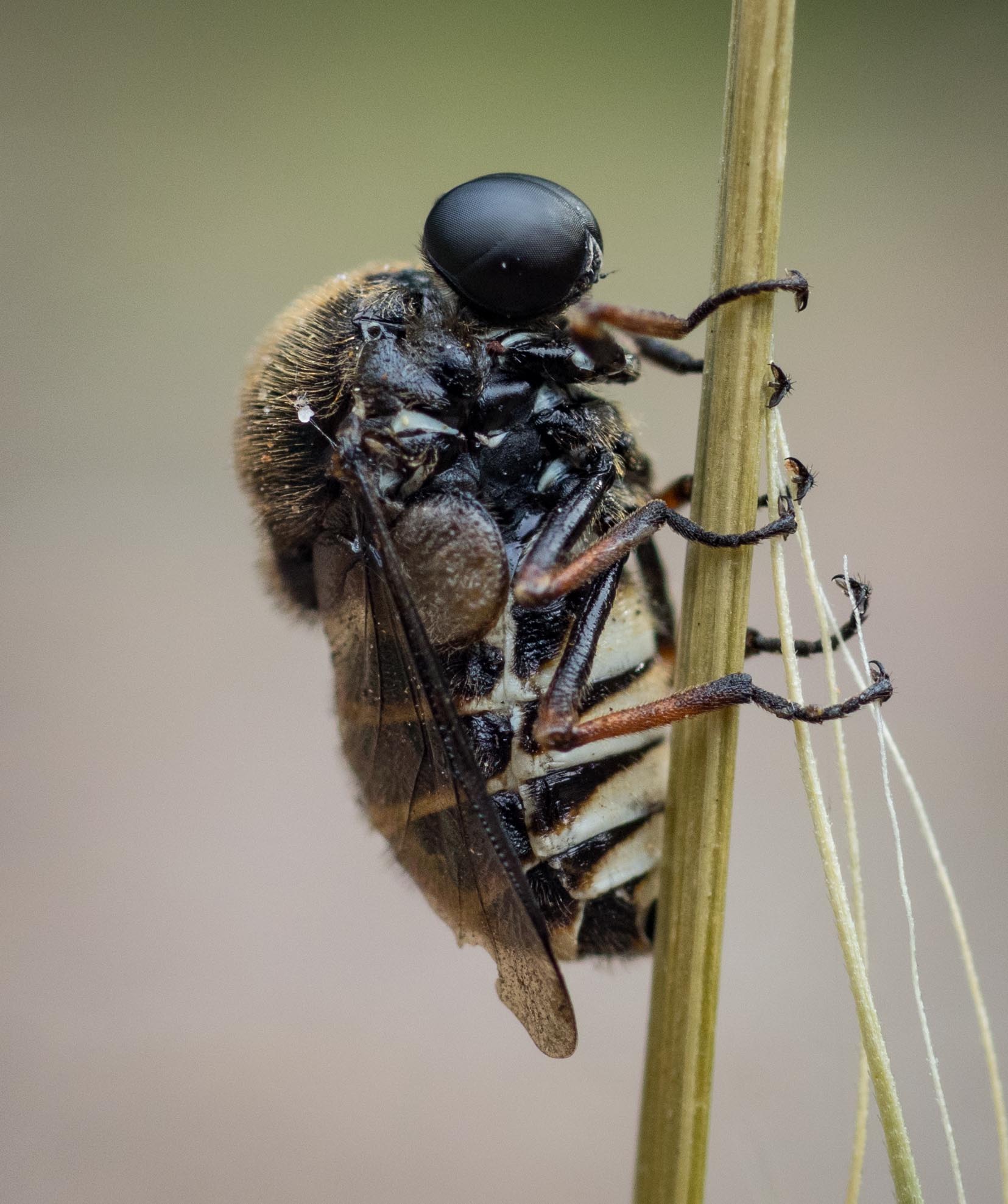
Ogcodes basalis
When I first noticed this insect clinging to a grass stem I thought something had eaten its head! These bizarre looking flies have grossly inflated bodies and small heads. Adding to their weird appearance is the fact that their eyes are fused together along the midline.
Flies in this family are apparently quite rare and their biology not well understood. They may be parasitoids of spiders.
Order: Diptera; Family: Acroceridae (small-headed flies)
Photo taken in November

Leptotarsus clavatus
So far we have seen recognised six distinct species of crane flies on the block, but there are doubtless more than that. We almost always see them on casuarina - either resting or mating.
Female crane flies mate almost immediately after they emerge from their pupal case. They lay their eggs in moist soil or in decaying wood. The larvae play an important role in the forest ecosystem, breaking down organic material and returning it to the carbon cycle. The adults don't do much except rest and mate. They drink water but don't feed at all.
Order: Diptera; Family: Tipulidae (crane flies)
Photo taken in January

Leptotarsus tortilis
The reason we so often see Crane Flies on casuarina, as here, may have less to do with the casuarina (although it does seem to afford good 'foot-holds') than with the fact that there is a pile of old, decaying wood and bark nearby. It is possible that the adults we are seeing have recently emerged from larvae in that wood.
Order: Diptera; Family: Tipulidae (crane flies)
Photo taken in November

Colepia sp.1
Robber Flies are generally large flies and are active predators, eating a wide range of other arthropods, such as beetles, flies, dragonflies, moths, spiders and bees. We have seen at least eight distinct species on the block to date but, as with the crane flies, that number will no doubt grow when we make a more systematic survey.
Robber flies take their prey in flight, pierce a soft part of the body with their sharp proboscis, and inject it with saliva containing neurotoxins and digestive enzymes.
Order: Diptera; Family: Asilidae (robber flies)
Photo taken in February
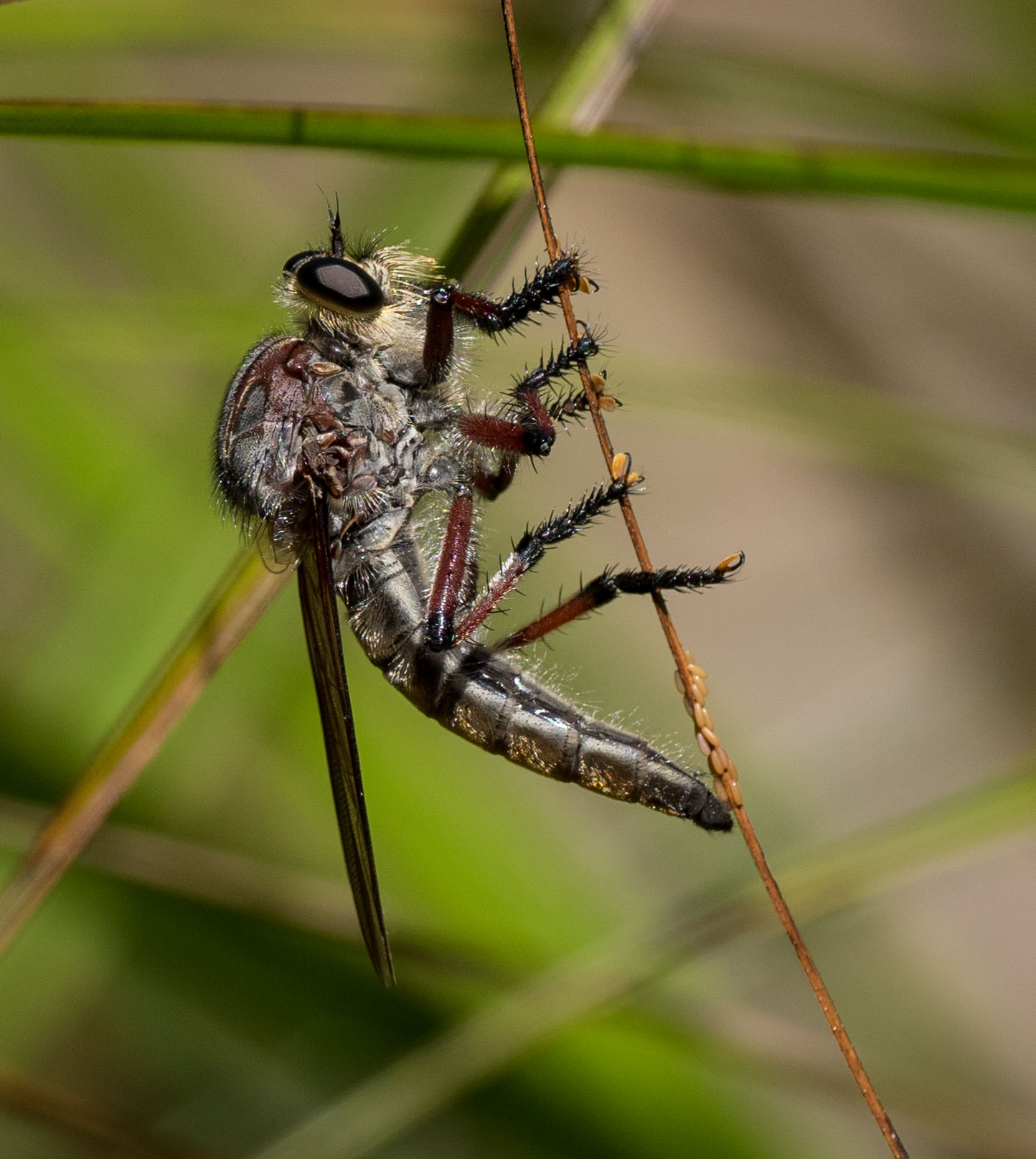
Colepia sp.2
This was the first time I'd come across an ovipositing Robber Fly. Normally we see these large predators either on the hunt or feasting on their catch. Instead, this female was slowly stepping her way backwards down a plant stem, gluing down a neat, tightly packed row of brown eggs as she went.
Order: Diptera; Family: Asilidae (robber flies)
Photo taken in January
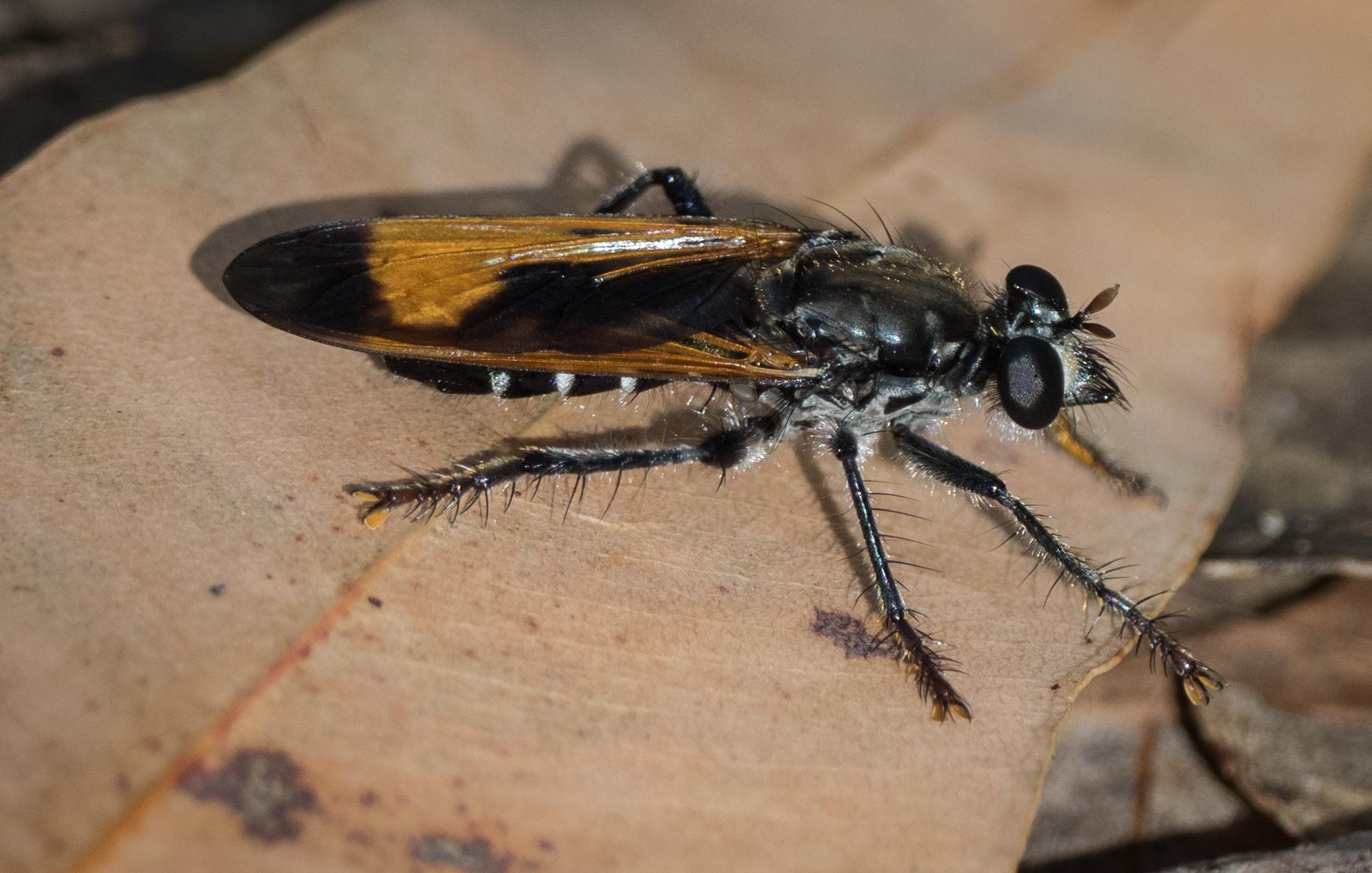
Orthogonis ornatipennis
These Robber Flies are quite different in appearance from the more 'typical' members of the family Asilidae. We see them here in January-February, often as mating pairs. This is the female - the male has a splendid golden 'moustache'.
Members of the genus are sometimes referred to as 'bee-like robber flies', perhaps due to their colouring.
Order: Diptera; Family: Asilidae (robber flies)
Photo taken in January