
Week in pictures

September 25th to October 1st, 2017
(including a wander in Ben Boyd NP)
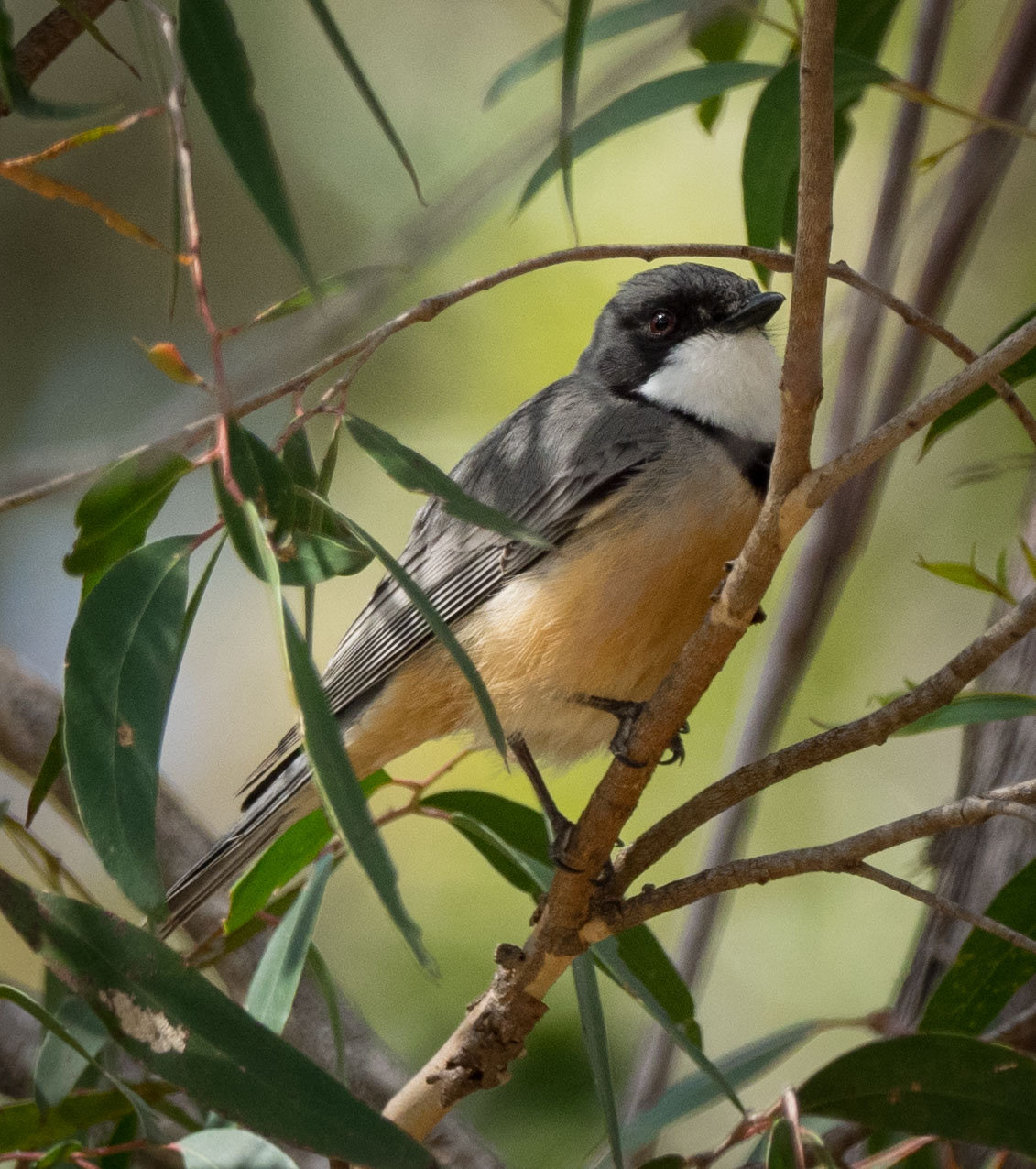
This week has seen yet another of the iconic Summer birds return to the forest. Rufous Whistlers have a large, musical repertoire so we always know when they're back.

I watched on as this old, battle-scarred male Swamp Wallaby devoured masses of newly-opened Indigofera flowers. (sigh). This is the same guy that we watched ripping into the flowering wattle last month.

This pretty species has been a common sighting for several weeks now. They fly to lights and so we often see them on the windows of the house. (I confess to laughing uproariously when Paul first showed me this photo).
Golden-fringed Emerald (Chlorocoma assimilis)
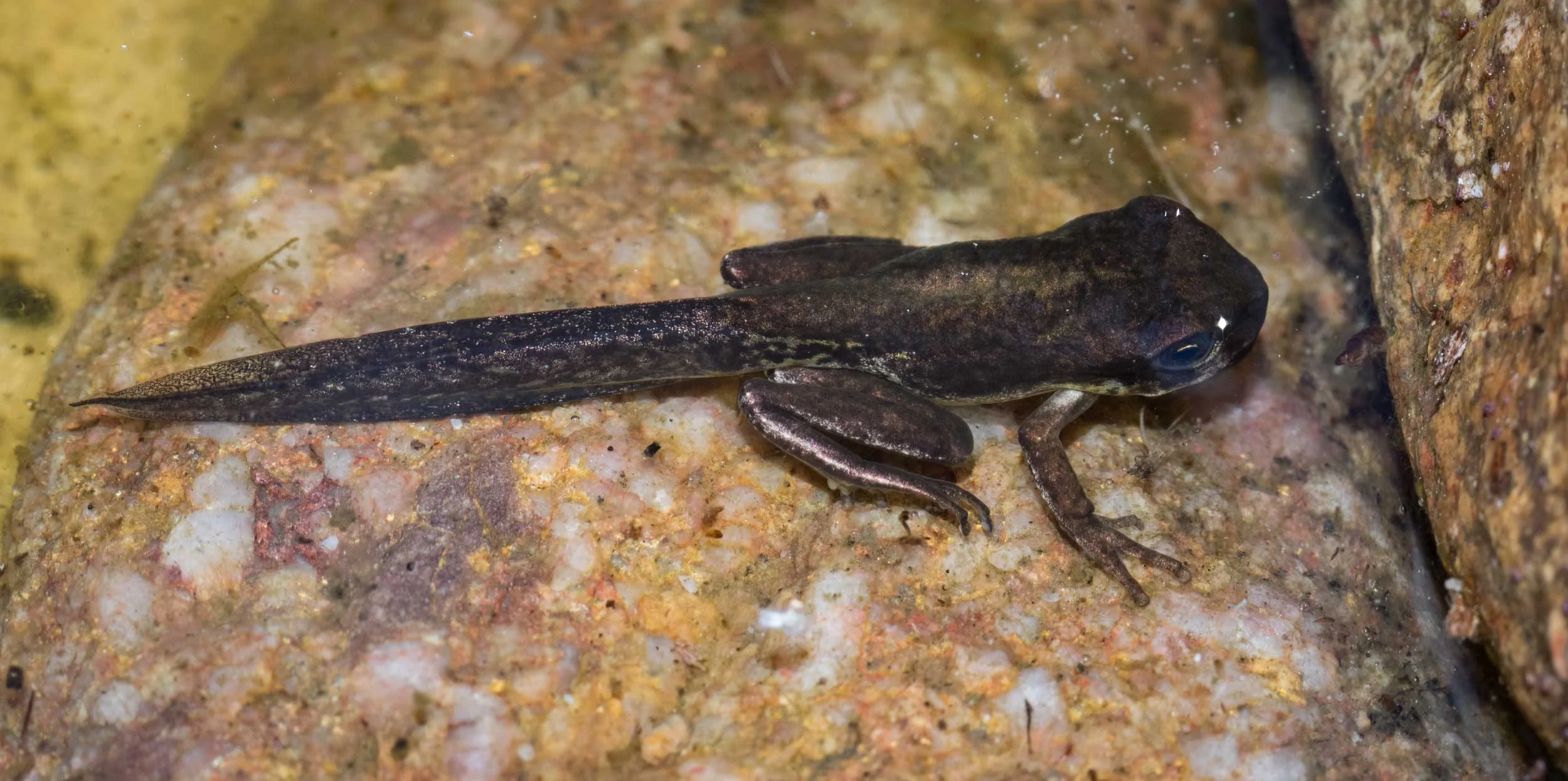
The frog pond is teeming with tadpoles of all sizes. And some are soon-to-be frogs! This is a Southern Brown Tree Frog (Litoria ewingii), the species we showed in detail in earlier tadpole blogs.

Pink Fingers orchids (Caladenia carnea) are perhaps our most common orchid species here in the forest, and they made their first appearance last week.

These two Superb Fairy Wrens found a patch of late afternoon sun in which to dry and preen their feathers. Some males are in full breeding plumage, but this one has a way to go yet.
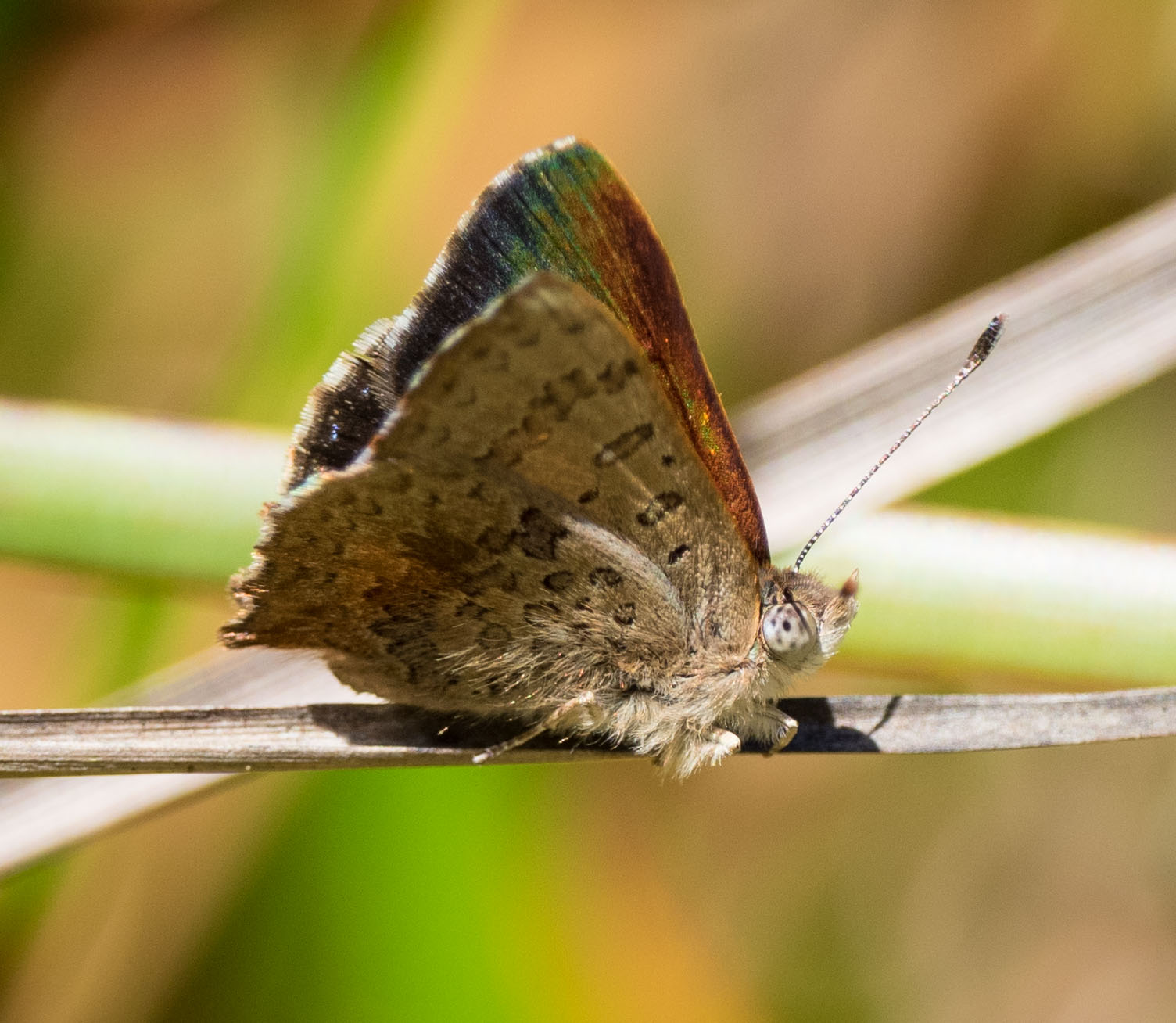
A male Bright Copper resting between bouts of aerial display. Whenever another male Paralucia aurifer arrives on site, the two spiral about one another in a contest for which the rules are unclear.

This is the first Yellow-spotted Blue butterfly I've seen this season. They'll soon be quite a common sight feeding on low-growing bushes and forbs.
(Candalides xanthospilos)


Whenever I check in on her during the day, this Tasmanicosa is peering out from her tunnel in the sandy soil. Perhaps she pounces on passing prey, although I imagine that at night she leaves the shelter and hunts in the open.

It was a special treat to see several of these tiny birds during a visit to Ben Boyd National Park this week.

The Green Cape heath in Ben Boyd National Park is apparently ideal habitat for orchids. There are a number of orchids that we've only seen at this location - including this one, Prasophyllum elatum, as well as the following two orchids.

Spotted Sun Orchid (Thelymitra ixioides) in all its glory at 12:03pm on the Green Cape heath.

Exactly the same plant at 2:23pm. Sun Orchid flowers only open when the sun is in the right position in the sky.

A rather prosaic common name for what is a spectacular orchid. Its scientific name Lyperanthus suaveolens is a bit classier.

Hybanthus vernonii is a member of the Violet (Violaceae) family. The apparently single petal gives the flower a striking appearance. In fact, it has 5 petals, but one is much longer than the other 4.
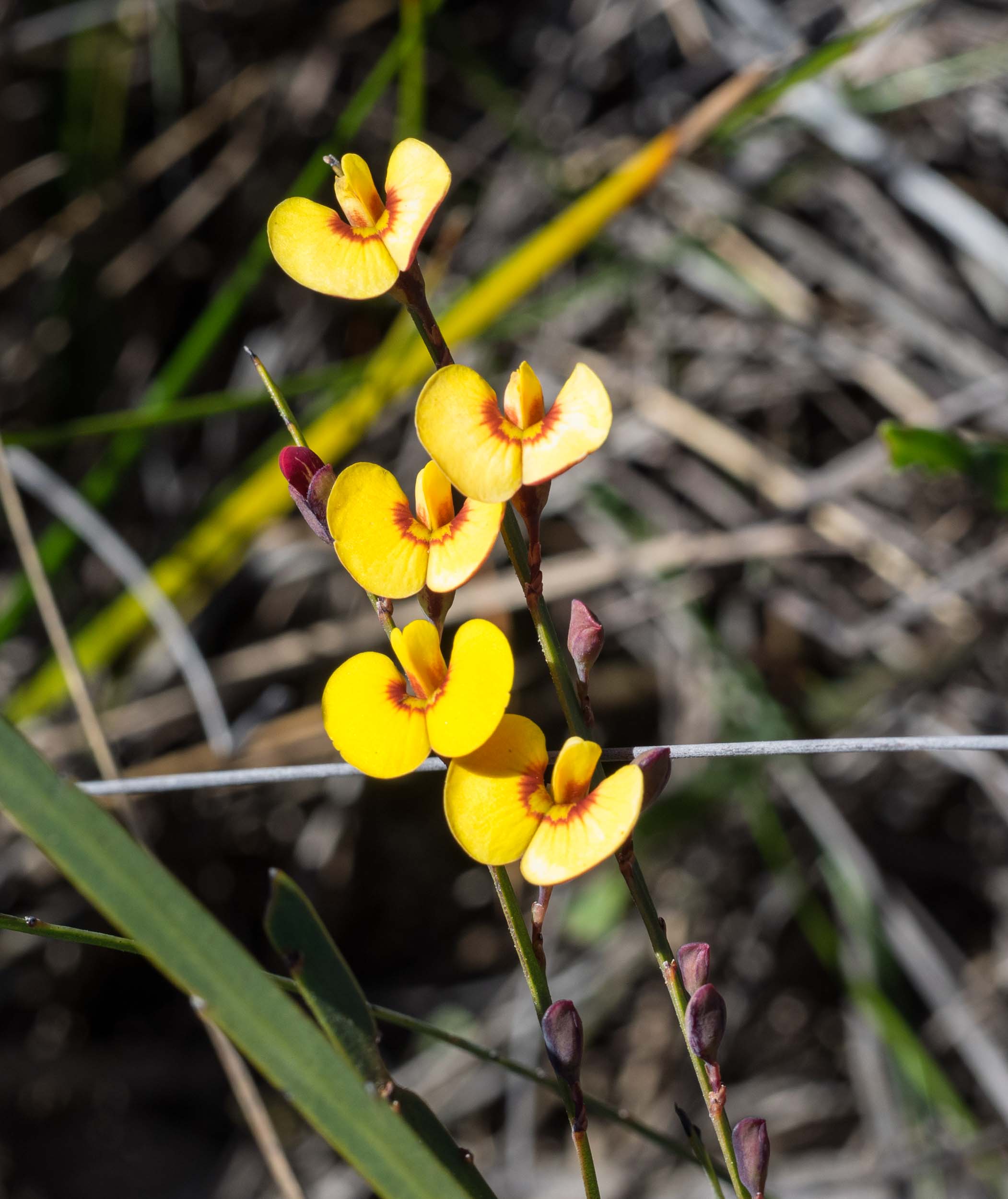
We have quite a few Bossiaea species at home. But this one, Bossiaea ensata, which we saw on the Green Cape heath, isn't amongst them. The leaves in this species have been reduced to tiny scales - a common strategy amongst plants growing in infertile, sandy soils to reduce water loss.

This showy plant - Dampiera stricta - belongs to the family Goodeniaceae. Another Green Cape heath species.