1
2
3
4
5
6
7
8
9
10
11
12
13
14

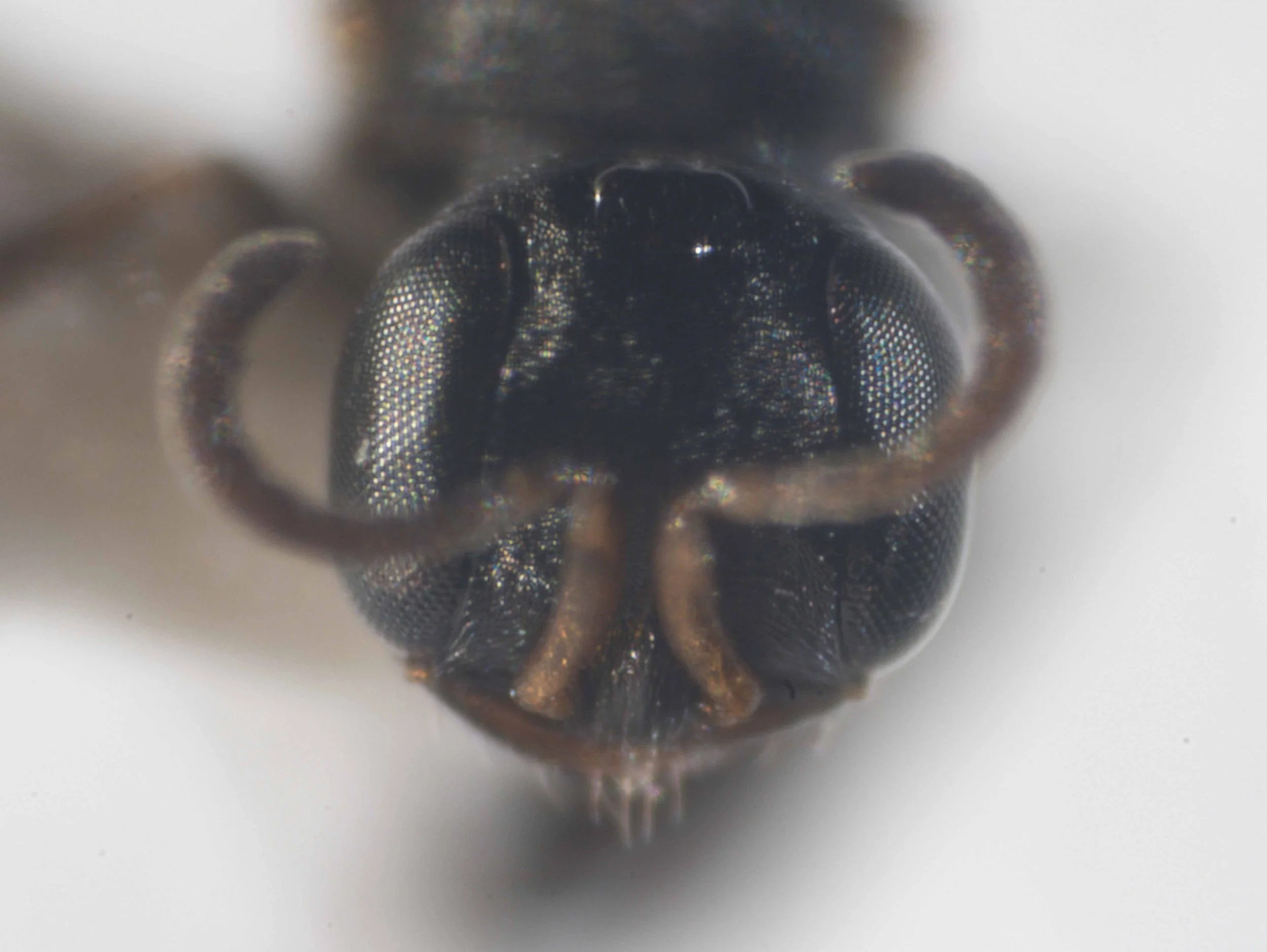
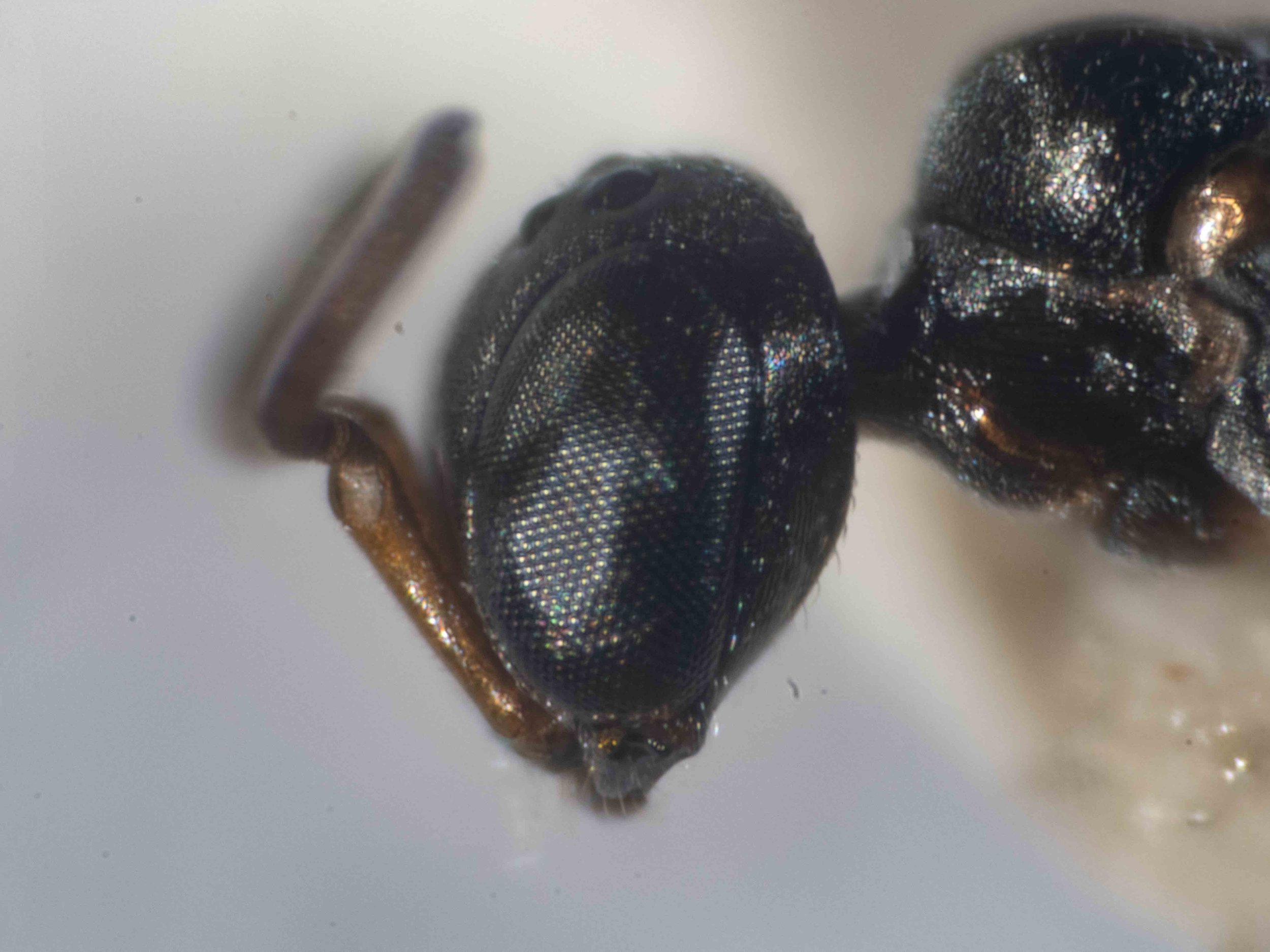
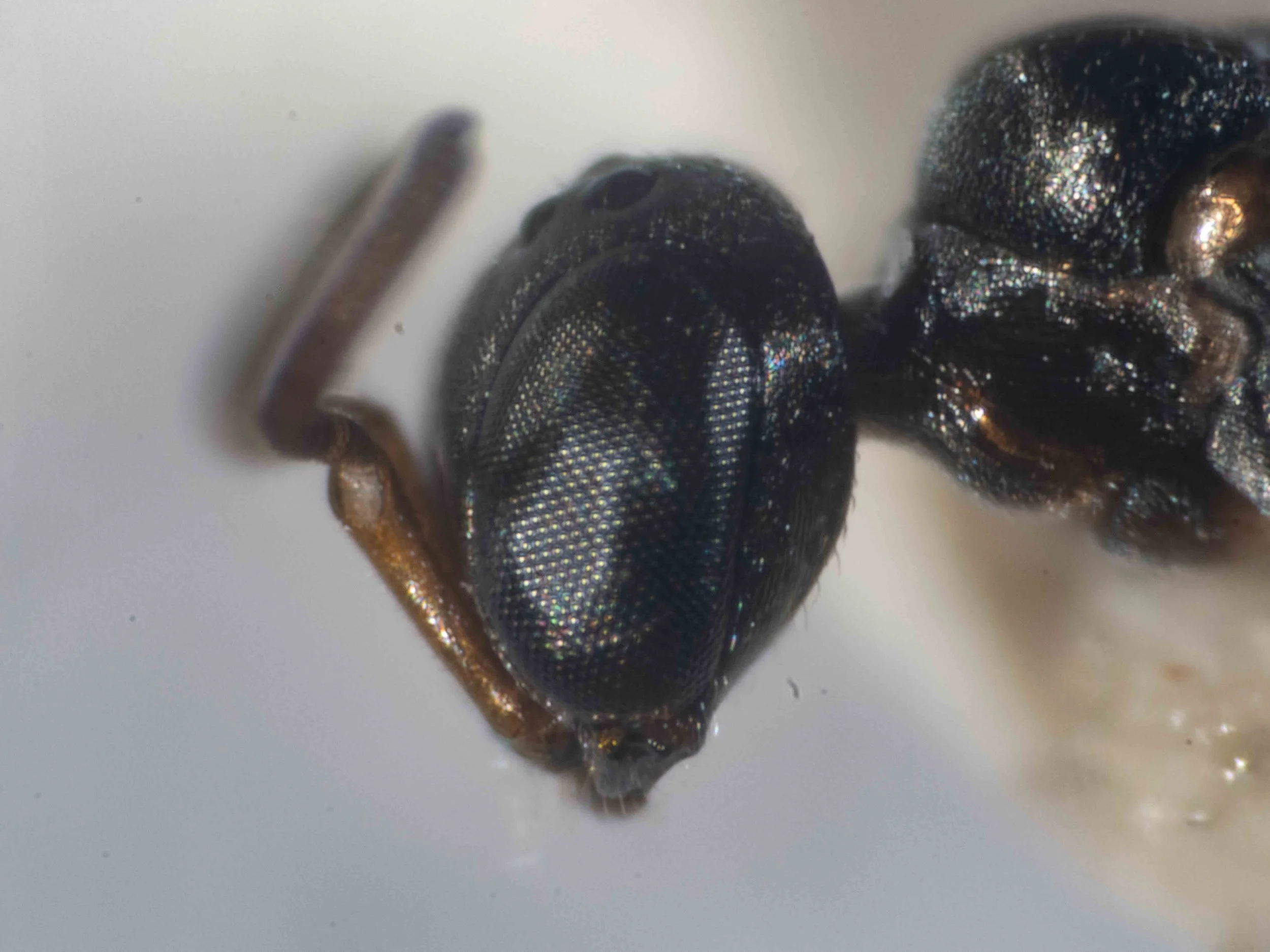
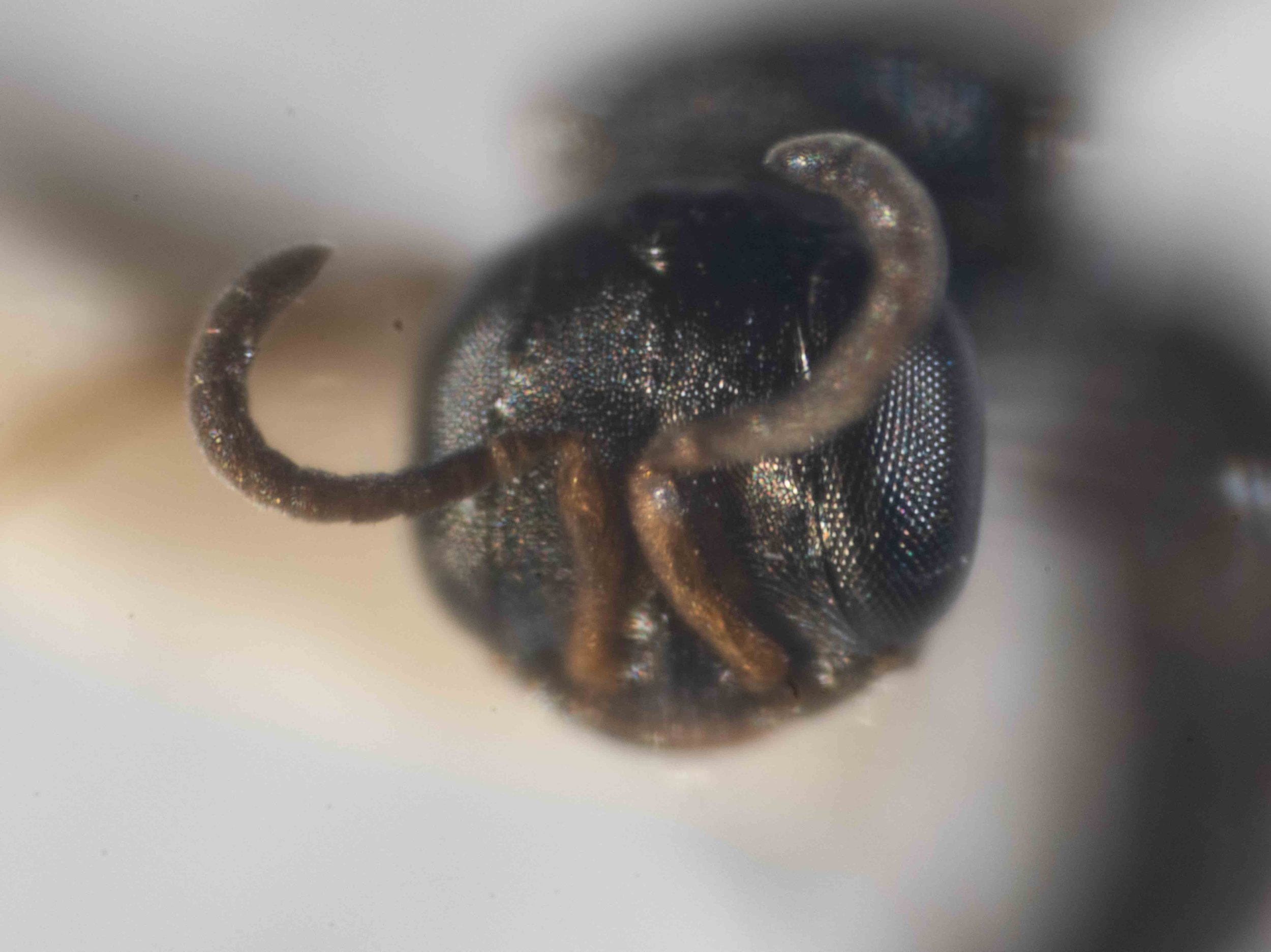
eyes entire, widely separated, slightly convergent above
The inner margins are entire (without emarginations/notches), and broadly separated. They are essentially straight, slightly convergent above.
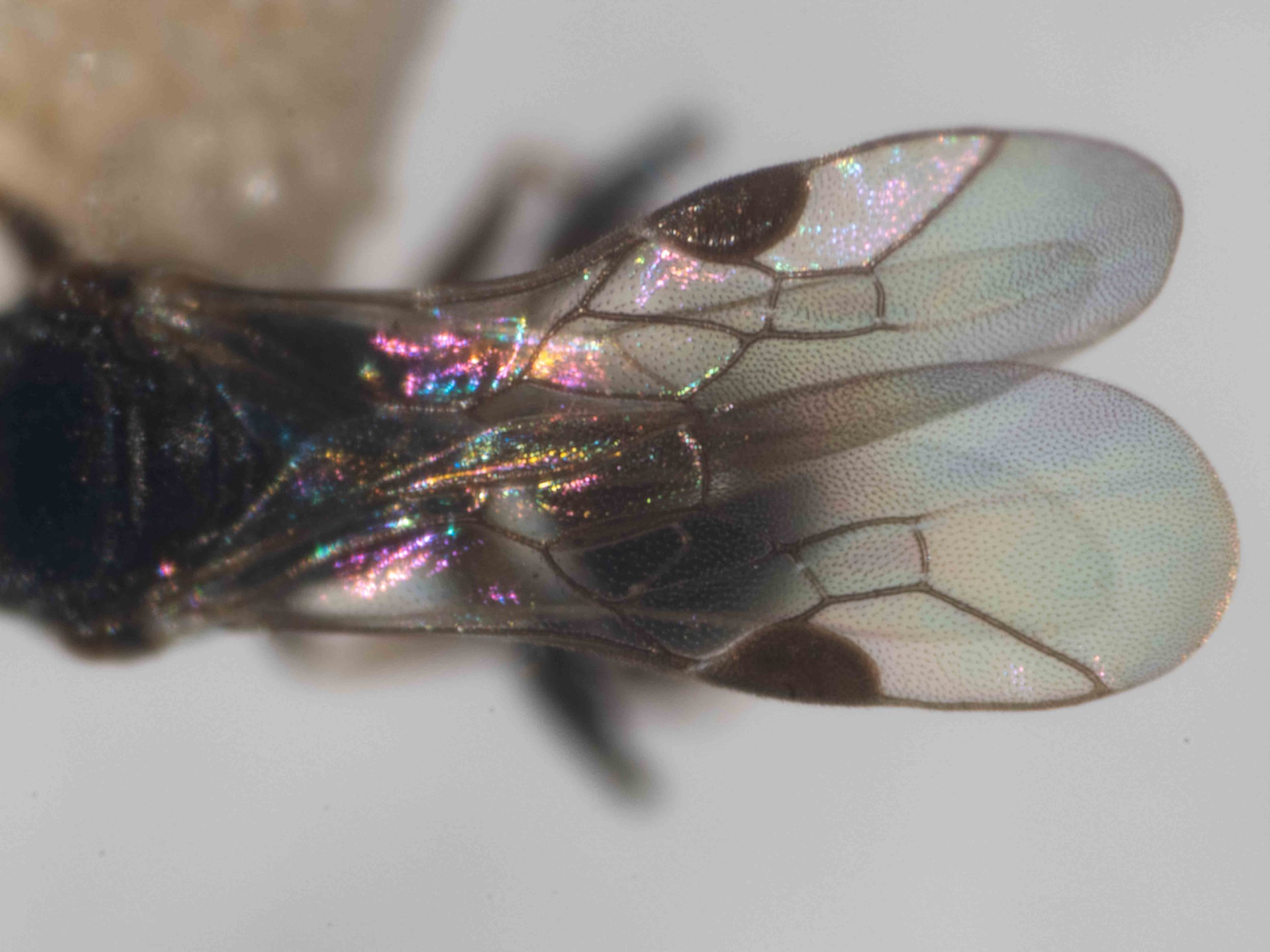
2 submarginal cells; enlarged stigma
This is in contrast with the majority of crabronids, which have either one or three submarginal cells.
The stigma is particularly large, covering about “half as much area as marginal cell” (p. 192 Bohart & Menke, 1976).
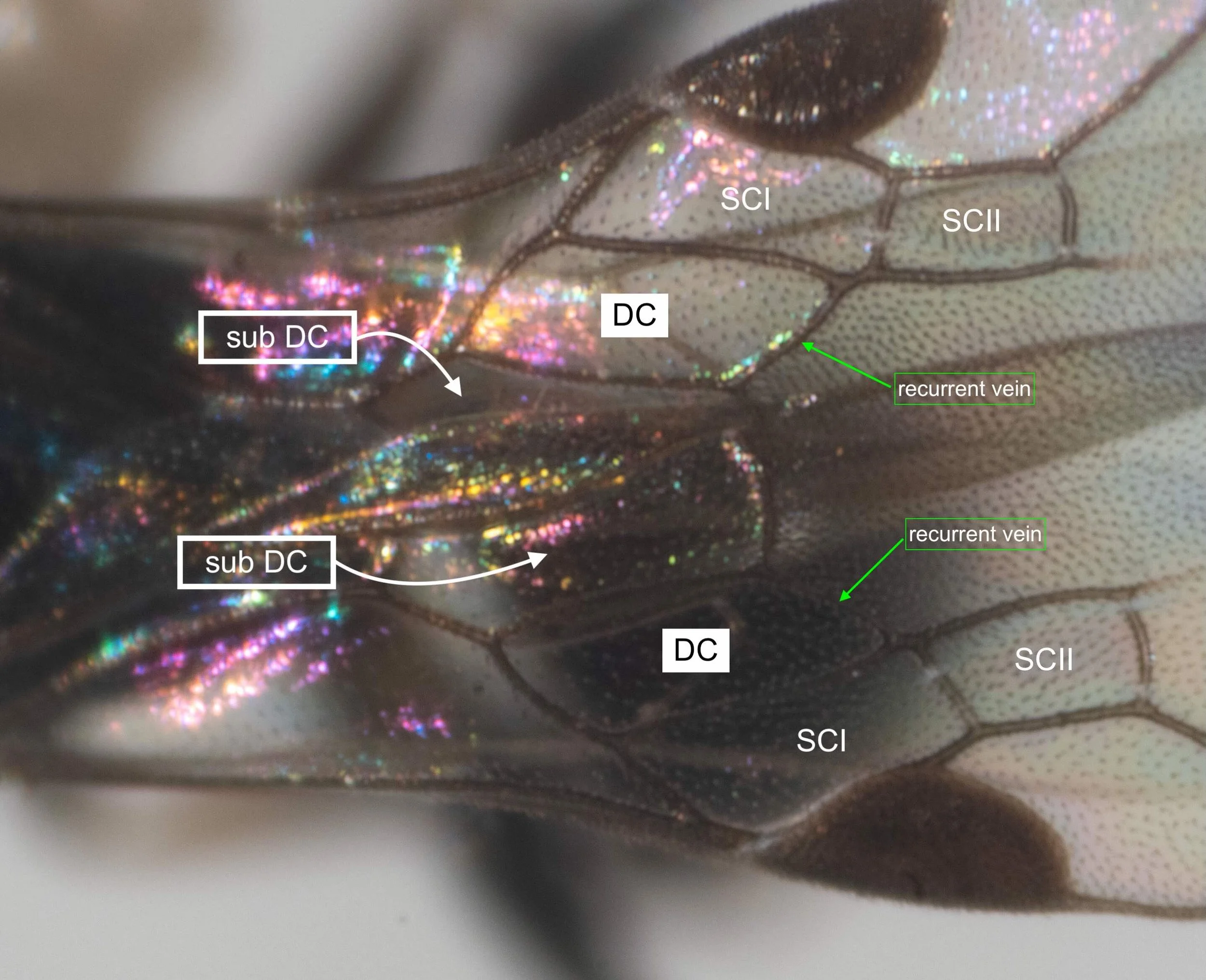
2 discoidal cells; 1 recurrent vein
Bohart & Menke refer to both the discoidal cell (DC) and subdiscoidal cells (sud DC) when they describe this arrangement as two discoidal cells and a single recurrent vein (p.186 & Fig. 41F in Bohart & Menke 1976).
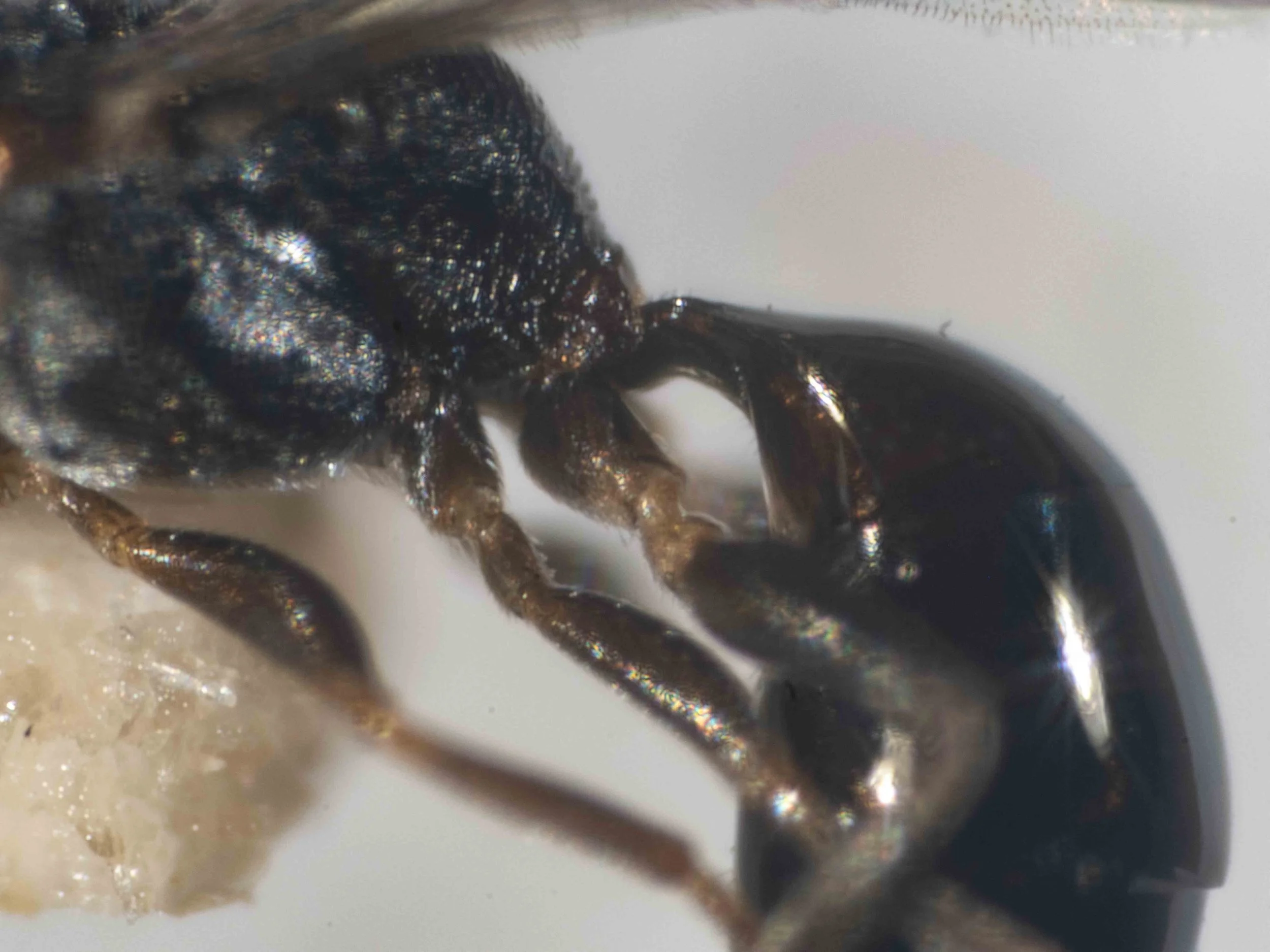
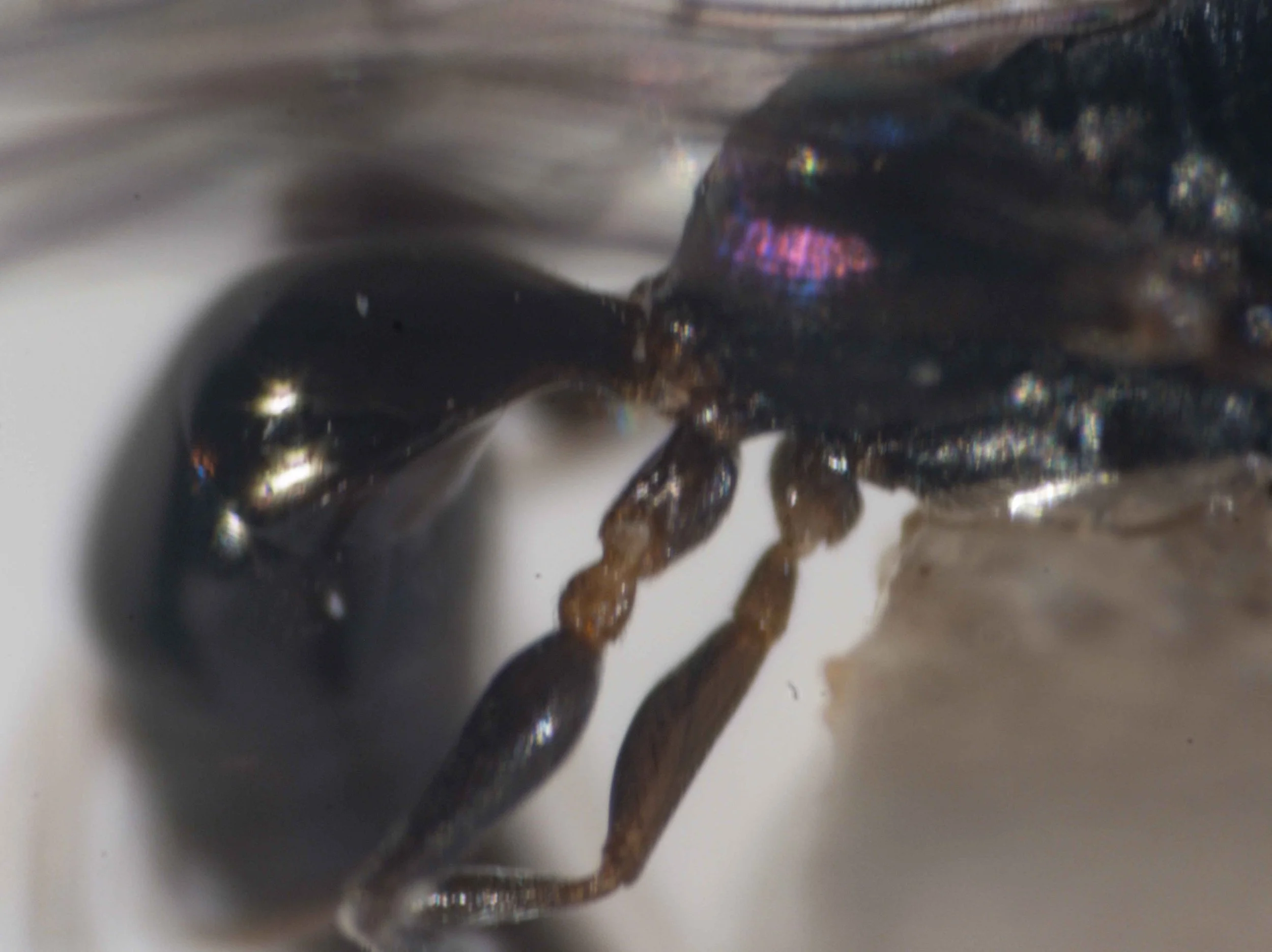
gaster with very short petiole
In lateral view, the base of the first gastral segment is obviously narrowed. This raises the question about whether it should be considered petiolate or sub-sessile. Note that many/most Australian species in the subtribe Spilomena have a sessile gaster.
A dorsal view is needed, to determine the length to width ratio of the petiole.
gaster with very short petiole
From a more dorsal perspective, the shape of the petiole is more apparent. It is clearly shorter than wide.
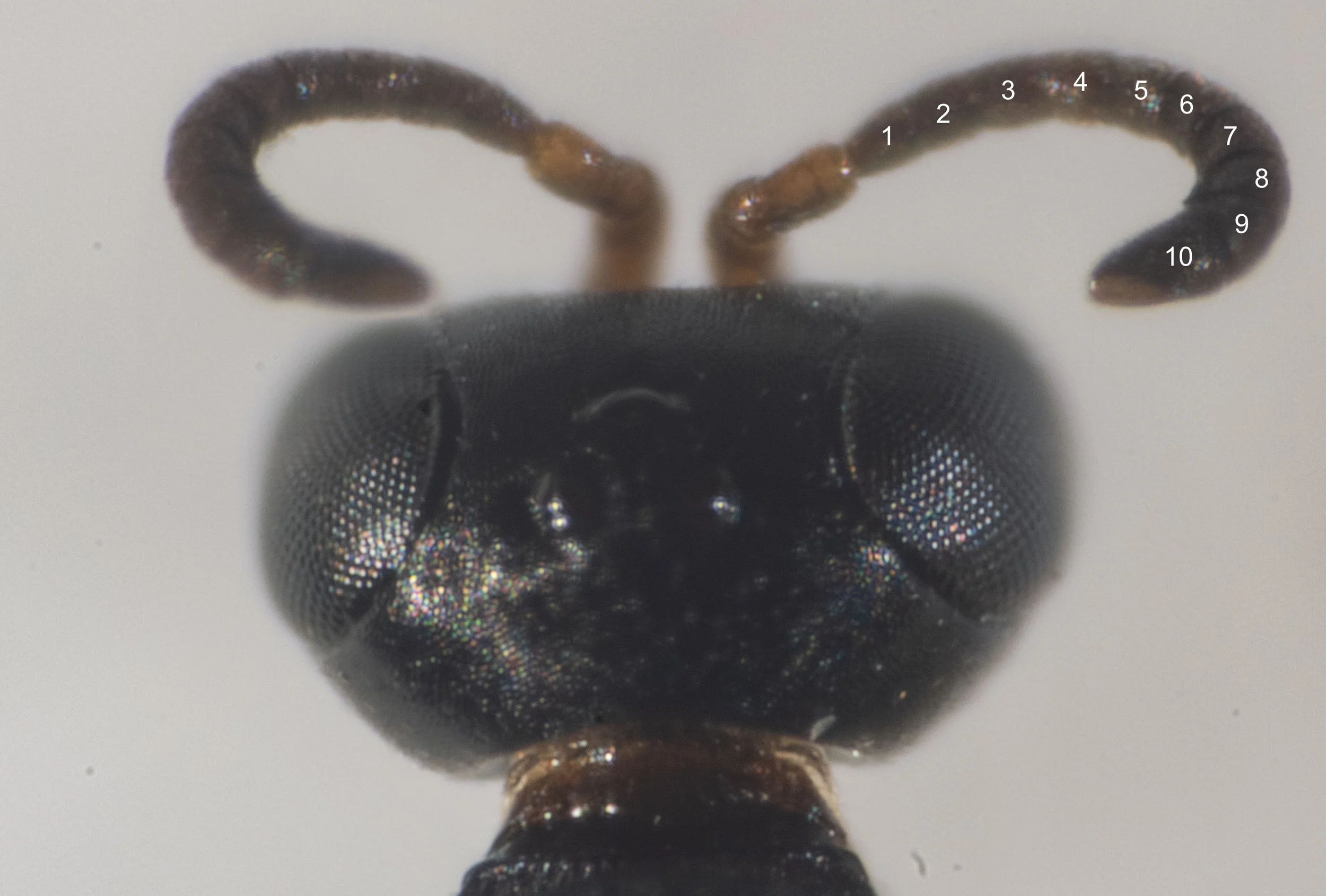
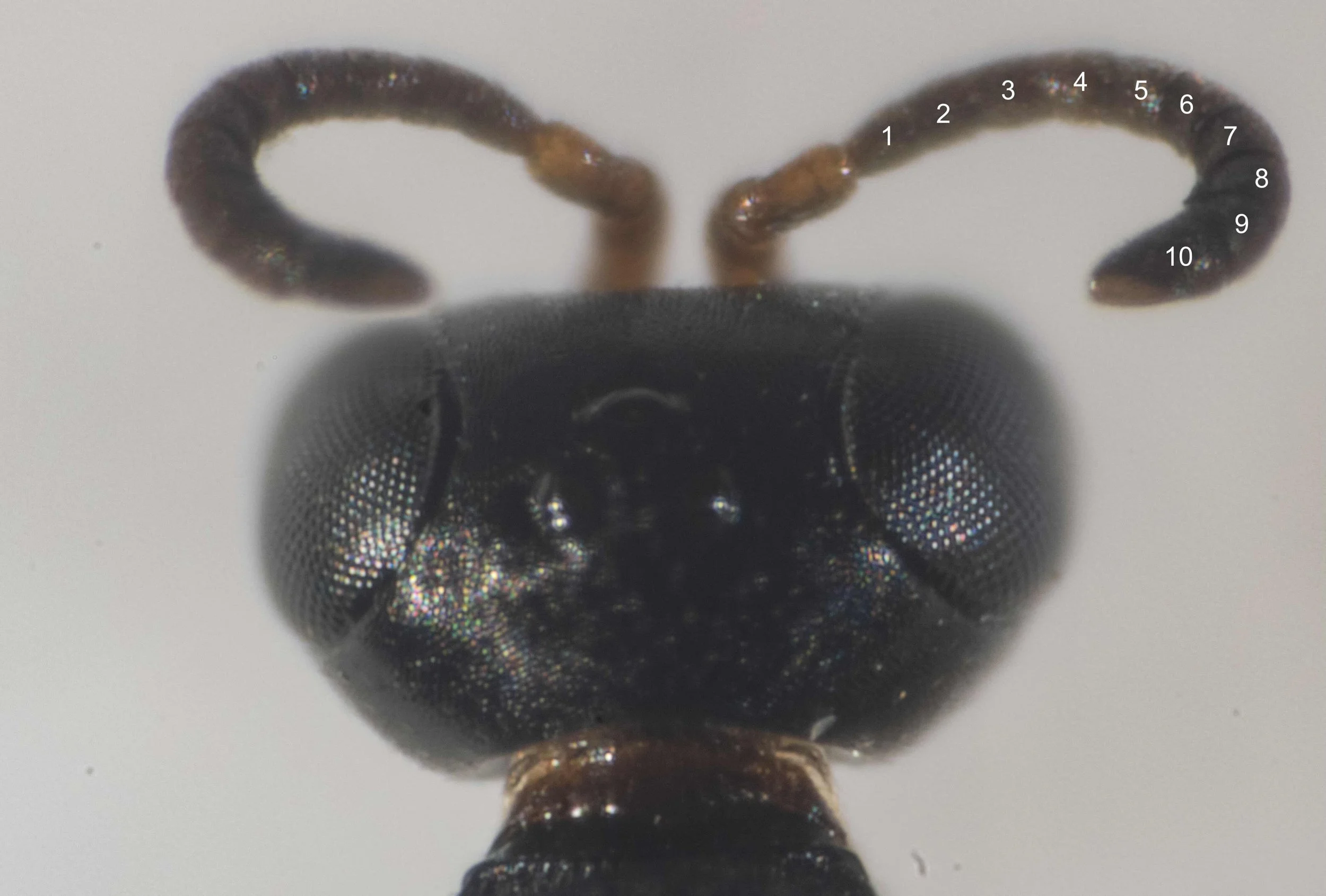
10 flagellar segments
Among Pemphredoninae genera, males have 11 segments in the flagellum. This specimen is therefore a female. Note that it presumably has just 6 visible tergites, but given the small size and orientation of the gaster it is hard to tell.
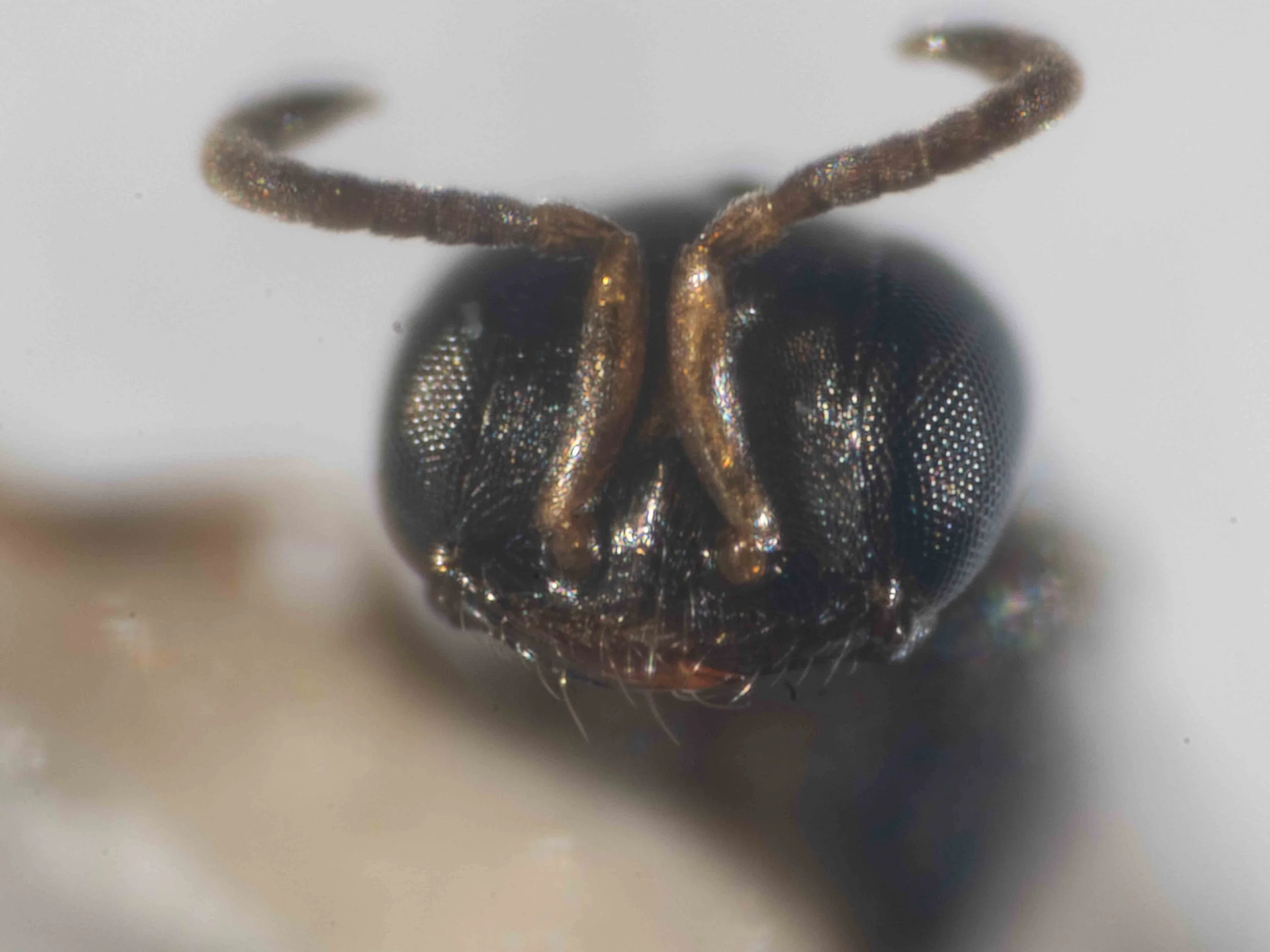
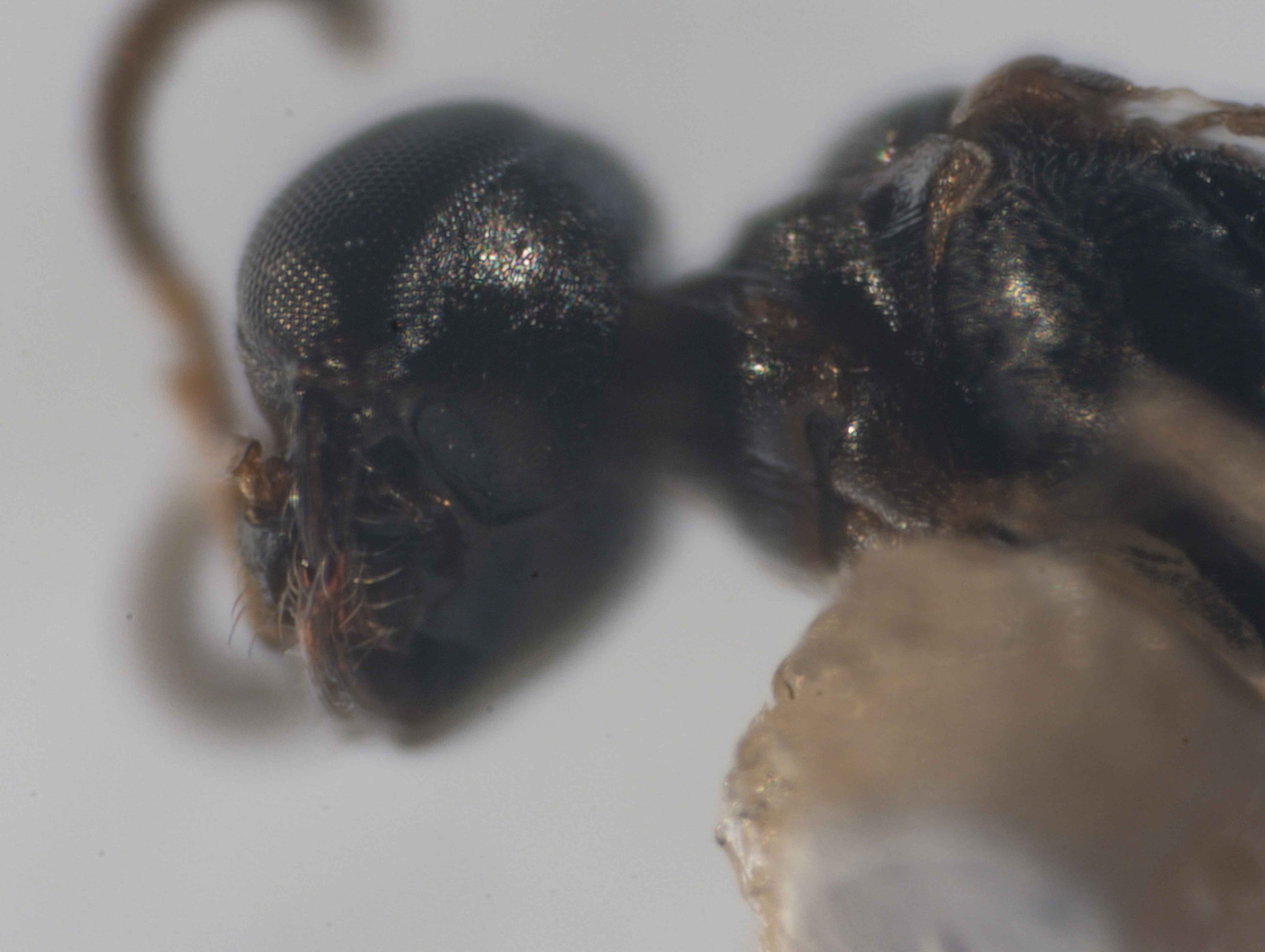
antennal set low; clypeus short & not densely silvered
This is characteristic of Pemphredonini, as distinct from Psenini.
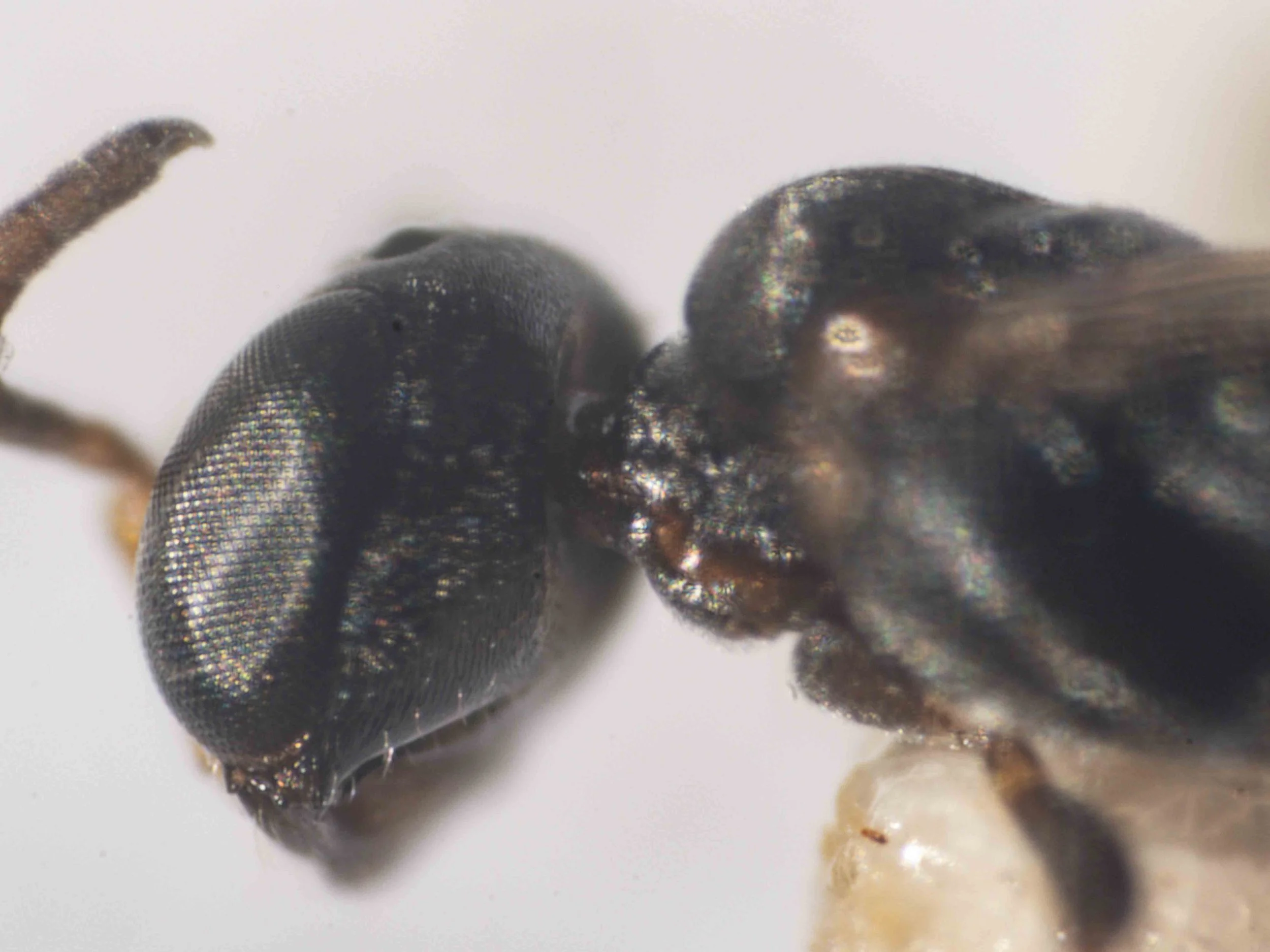
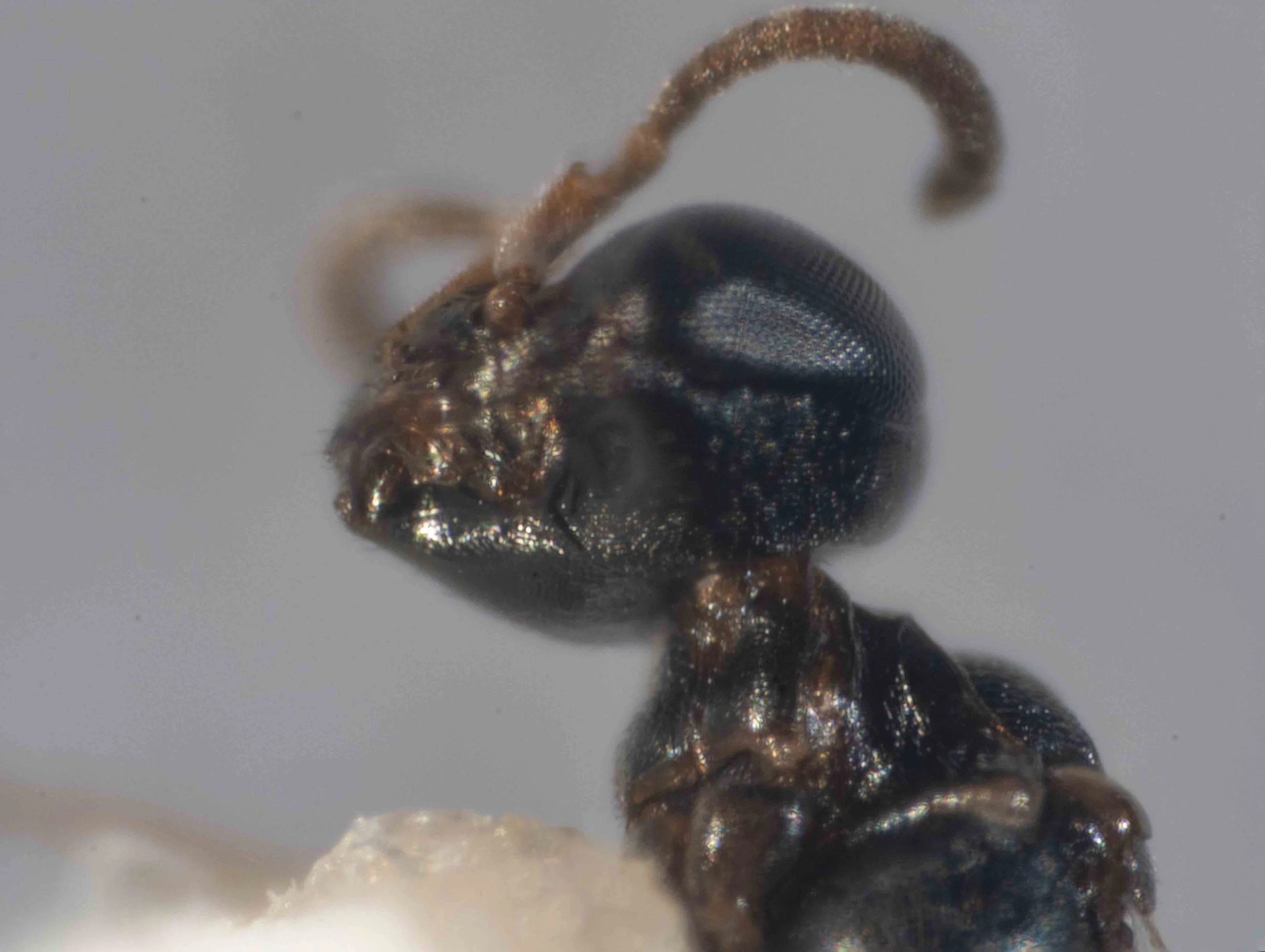
vertex declivous behind ocelli
In a comparison of key features, Ceratostigmus reads much like Spilomena. Notably, in Ceratostigmus the petiole is very short. However the shape of the head is distinctive. In Ceratostigmus the vertex is produced behind the ocelli. That is clearly not the case in specimen #016.