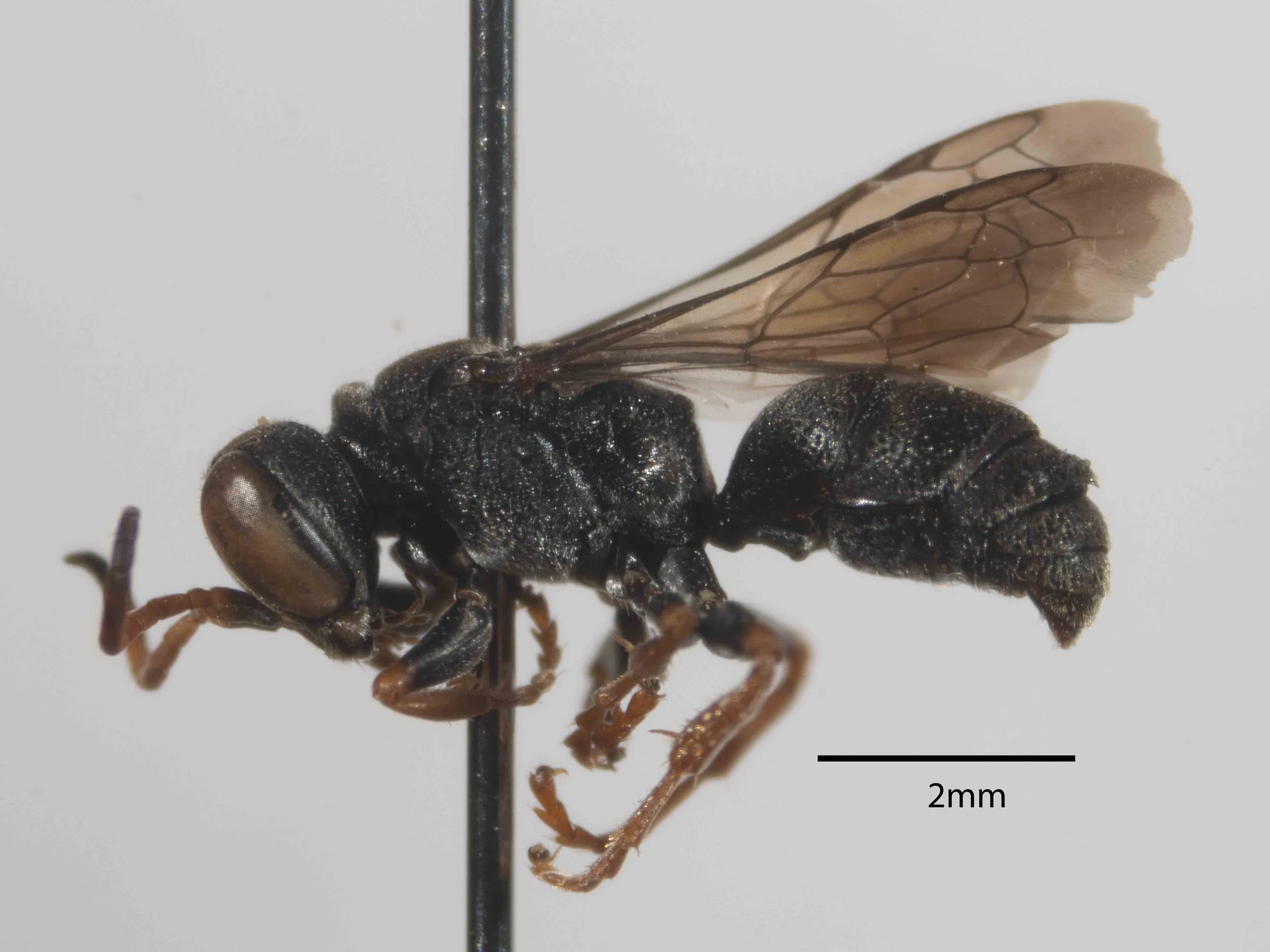
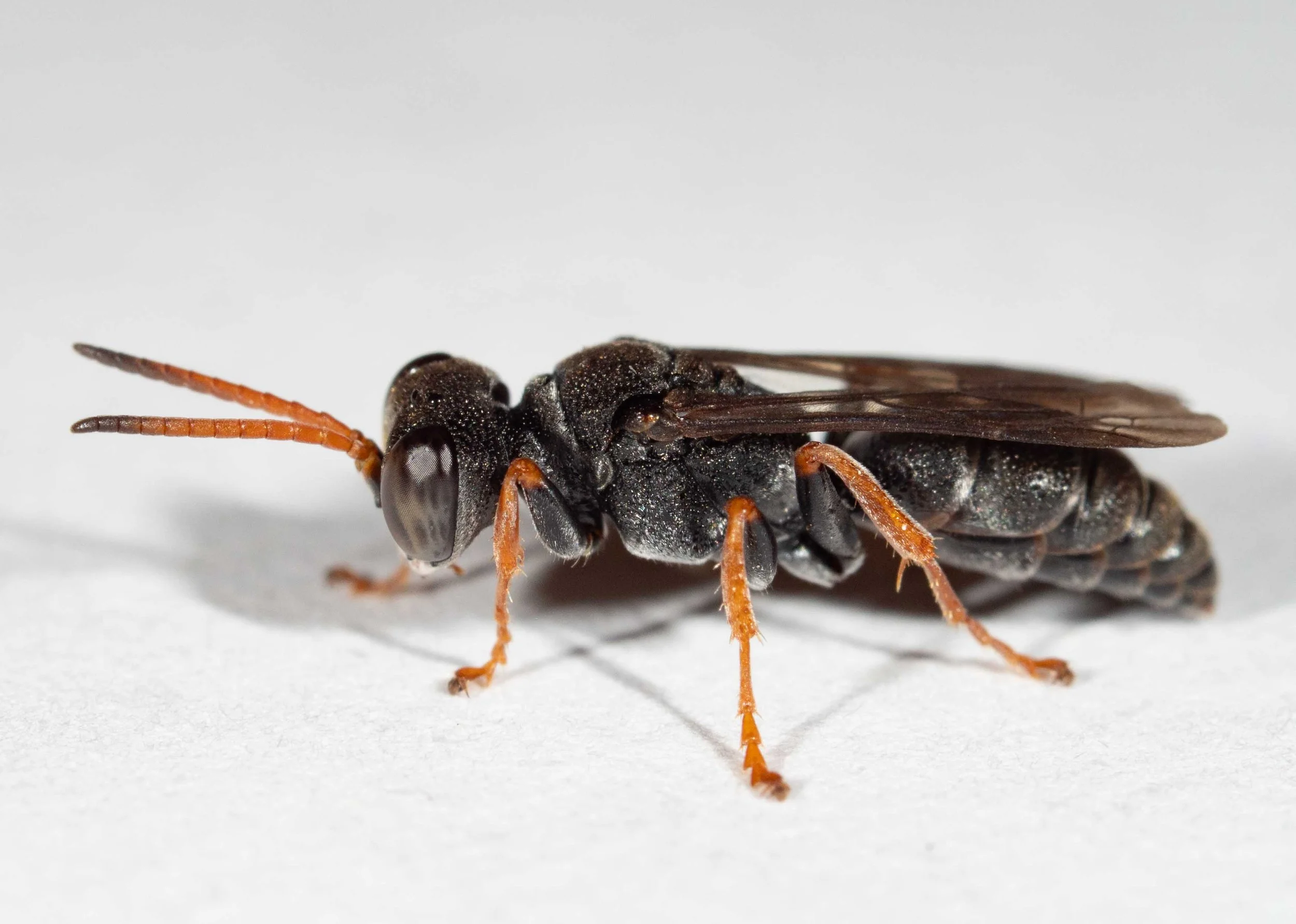
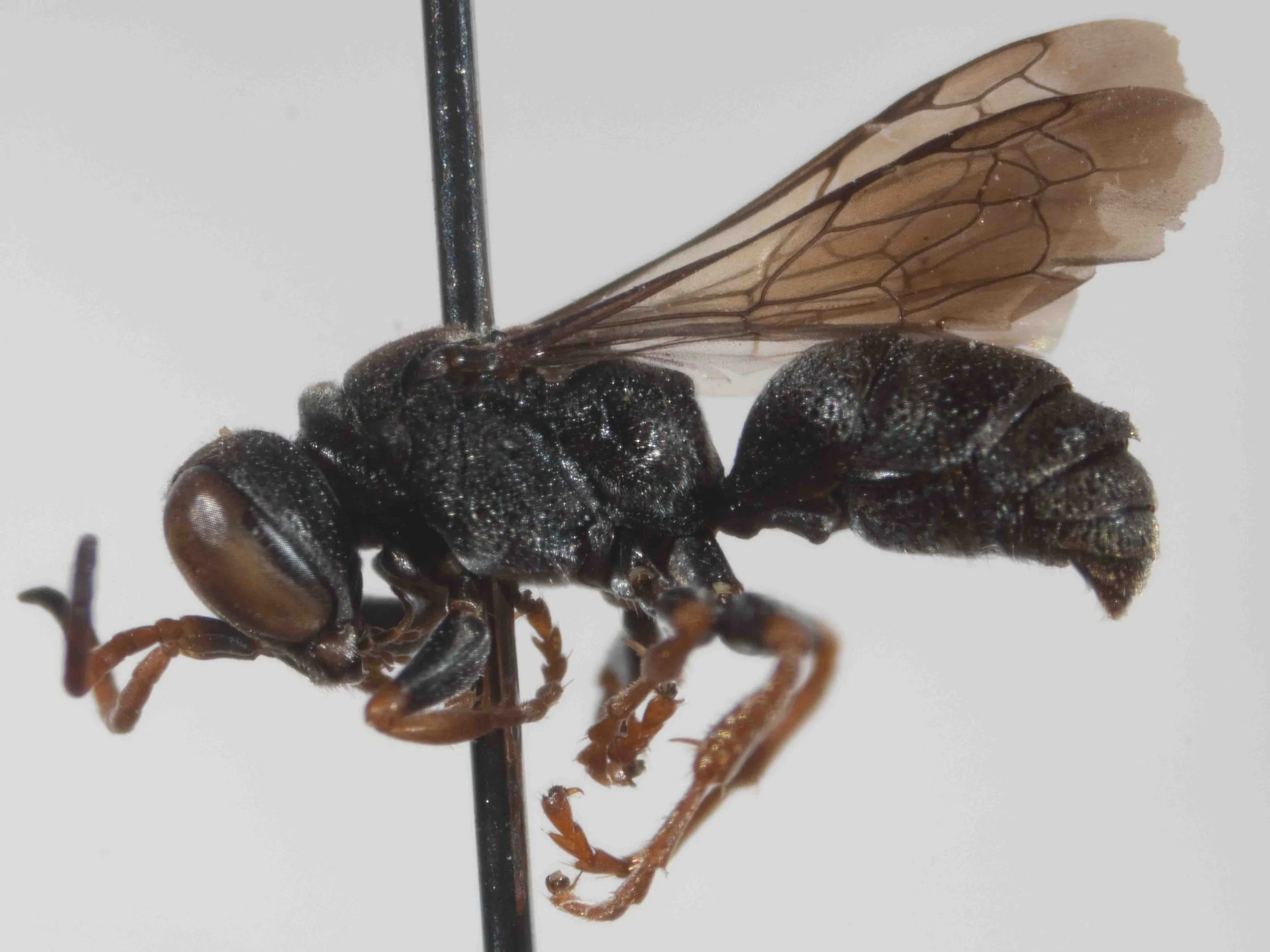
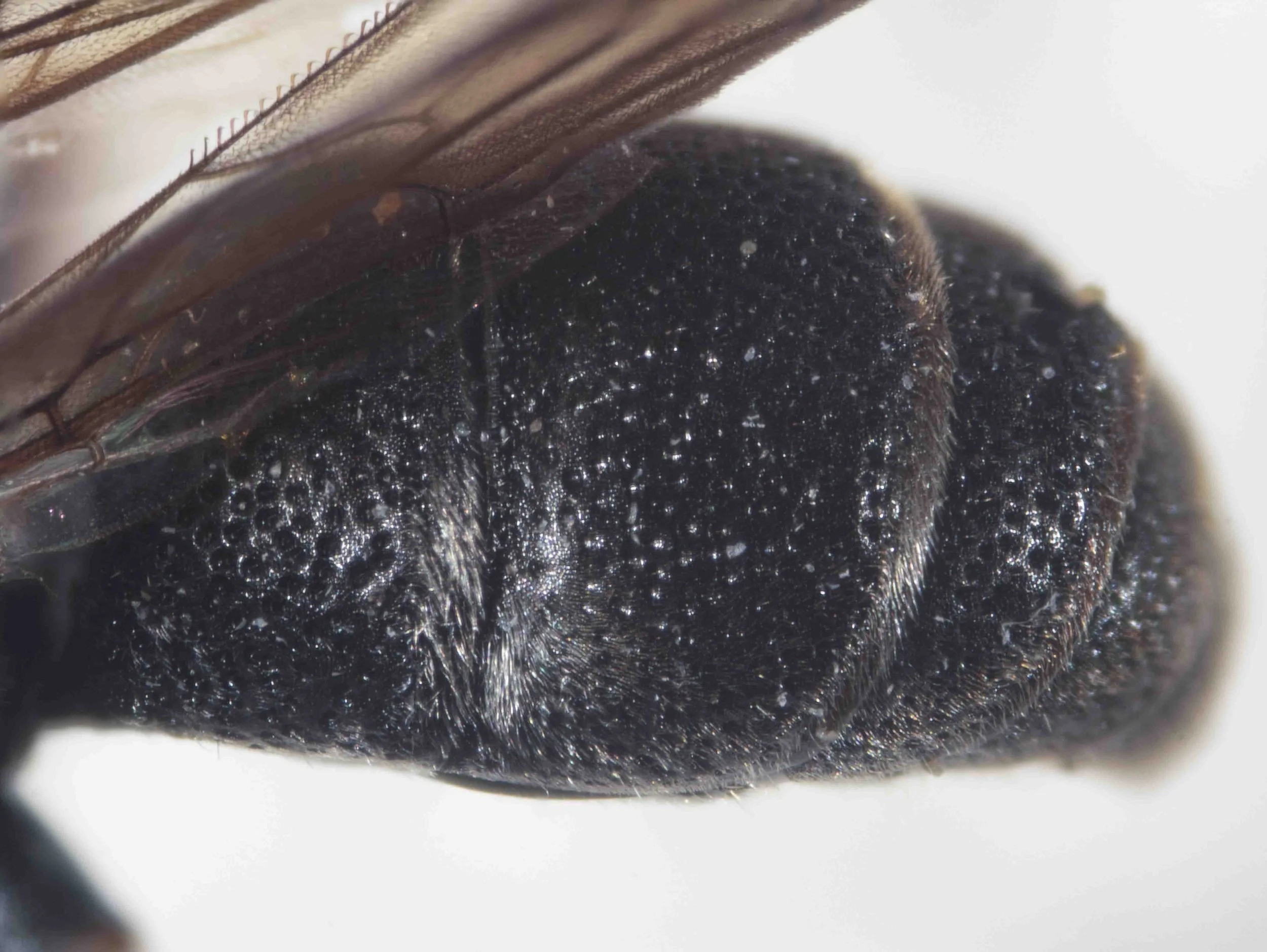
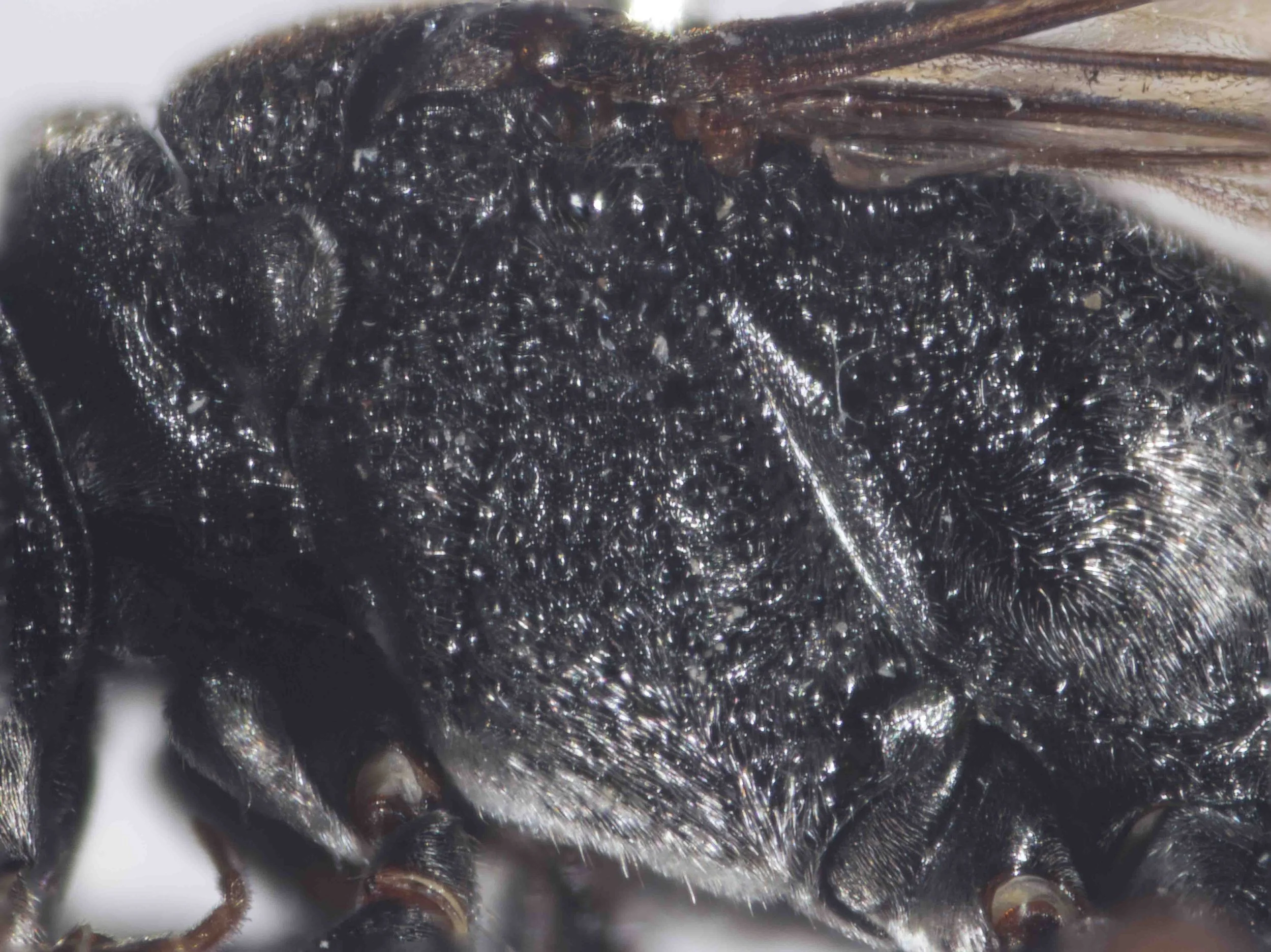
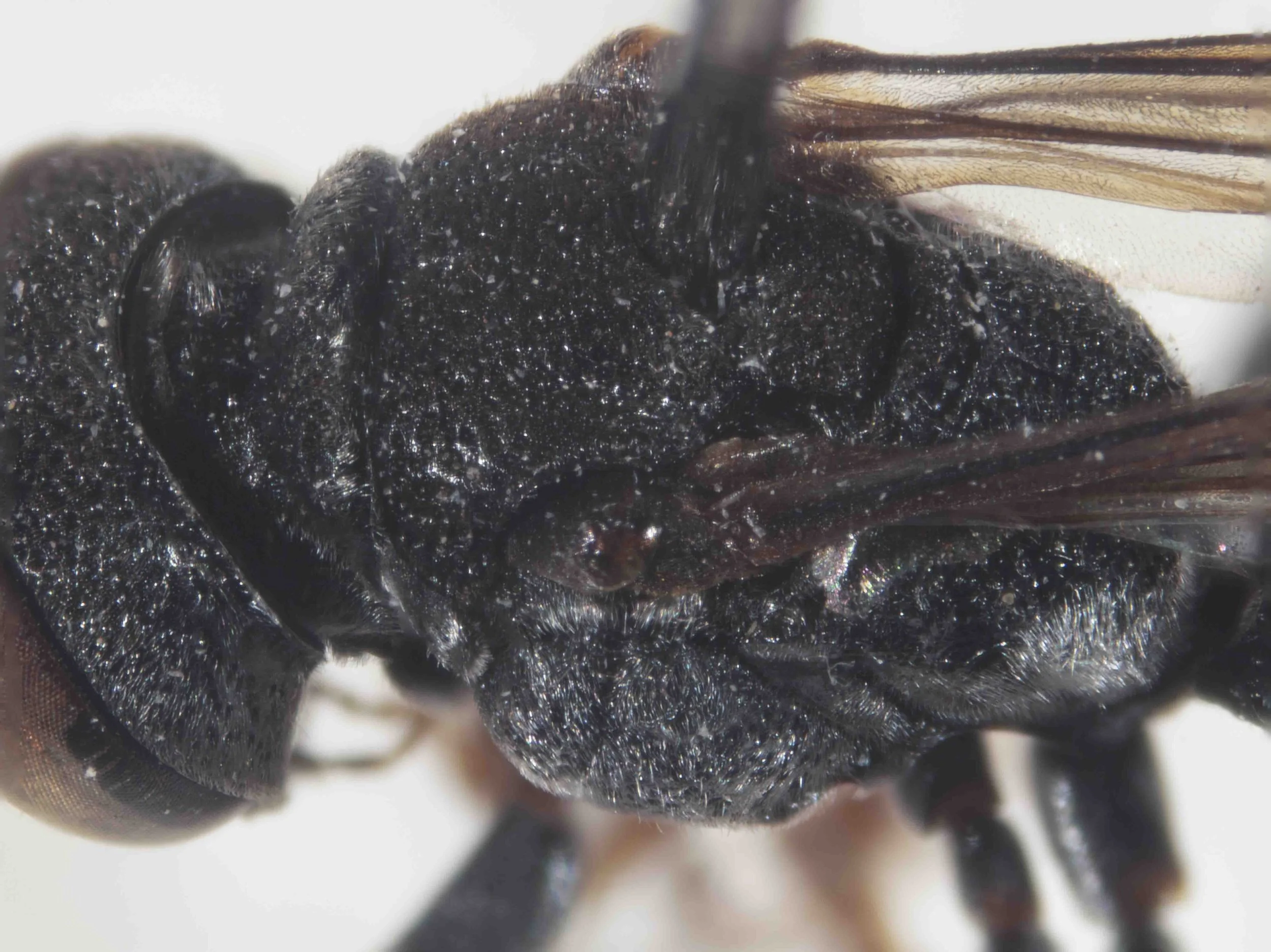
“Sternum I with a posteromedial prominence”
“Punctation stronger; deeper pits present …”
“Mainly black species” … (including: thorax & propodeum in the male)
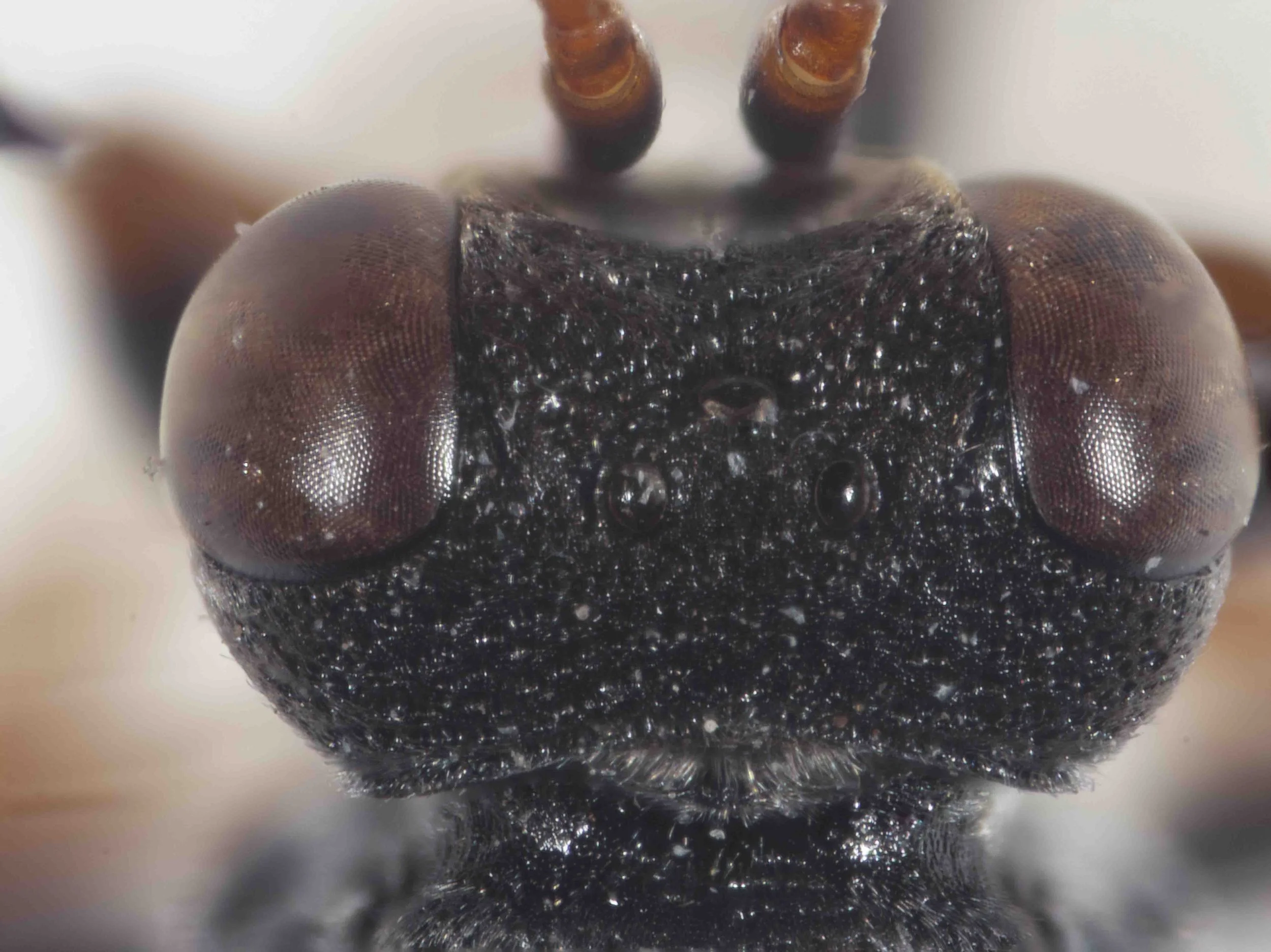
“No vault between lateral ocellus and inner orbita.”
“Sculpture on head, thorax and gaster very strong, punctures pit-like, very closely set”
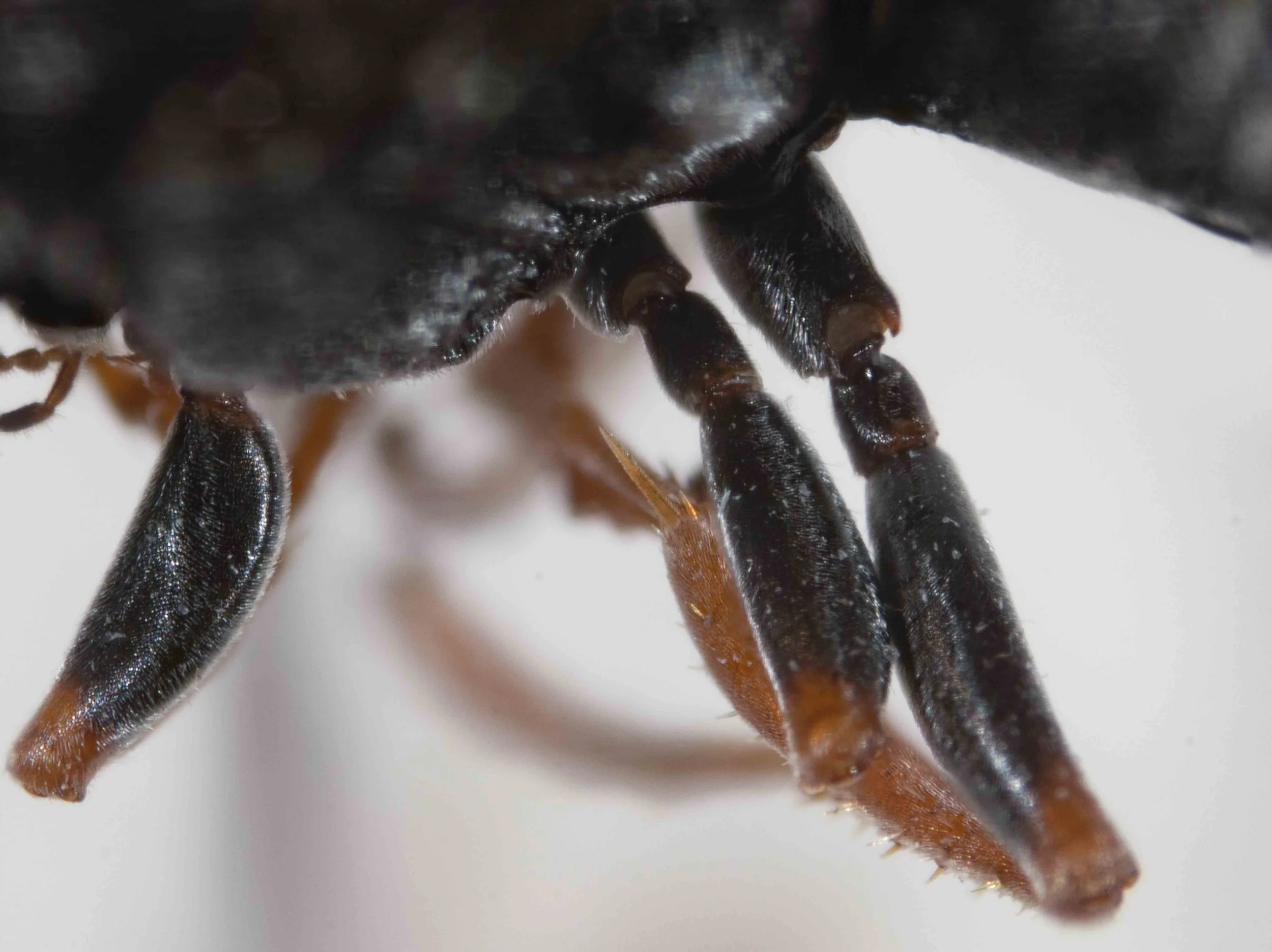
“Trochanters and proximal part of femora black or brownish.”
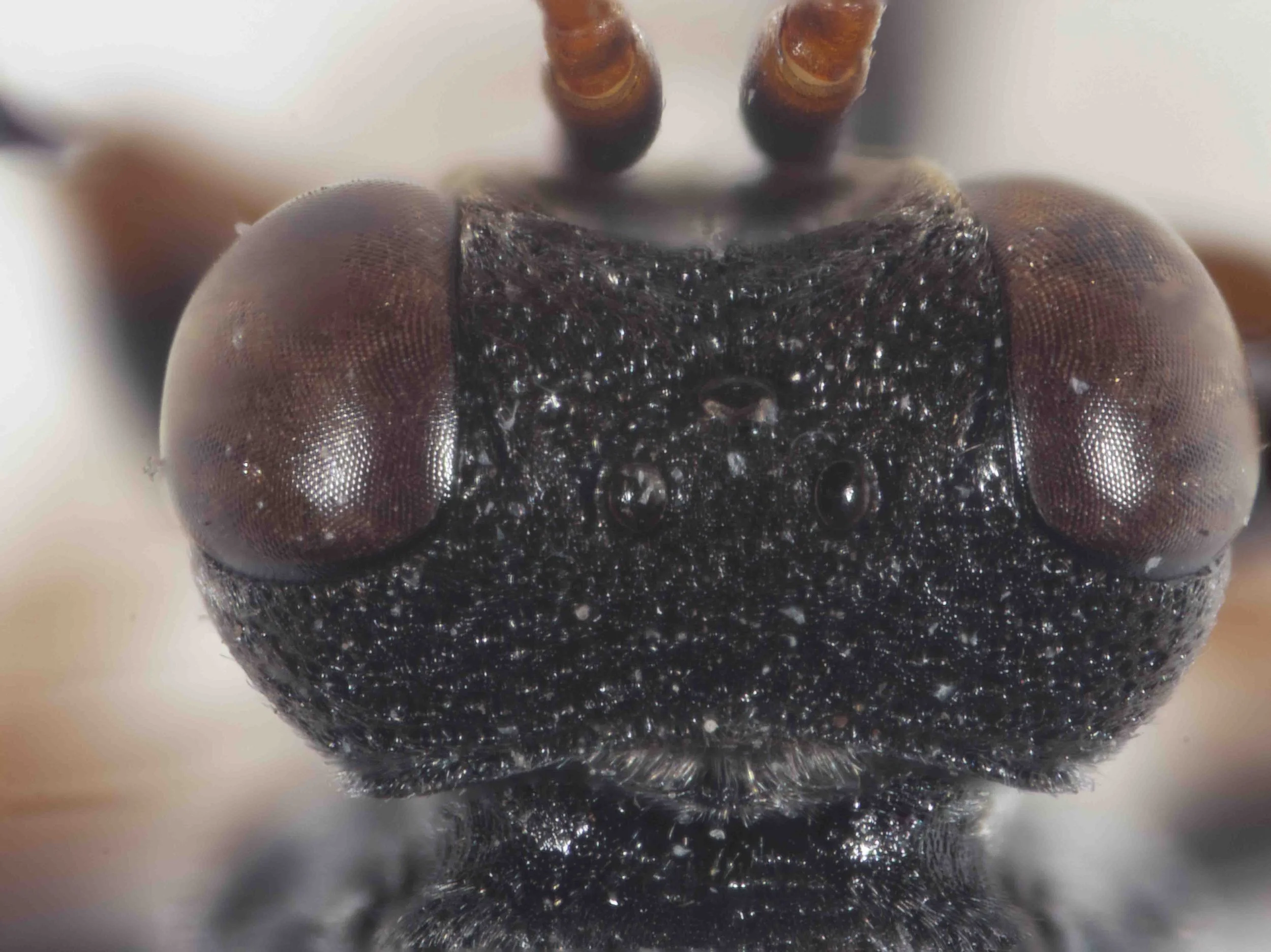
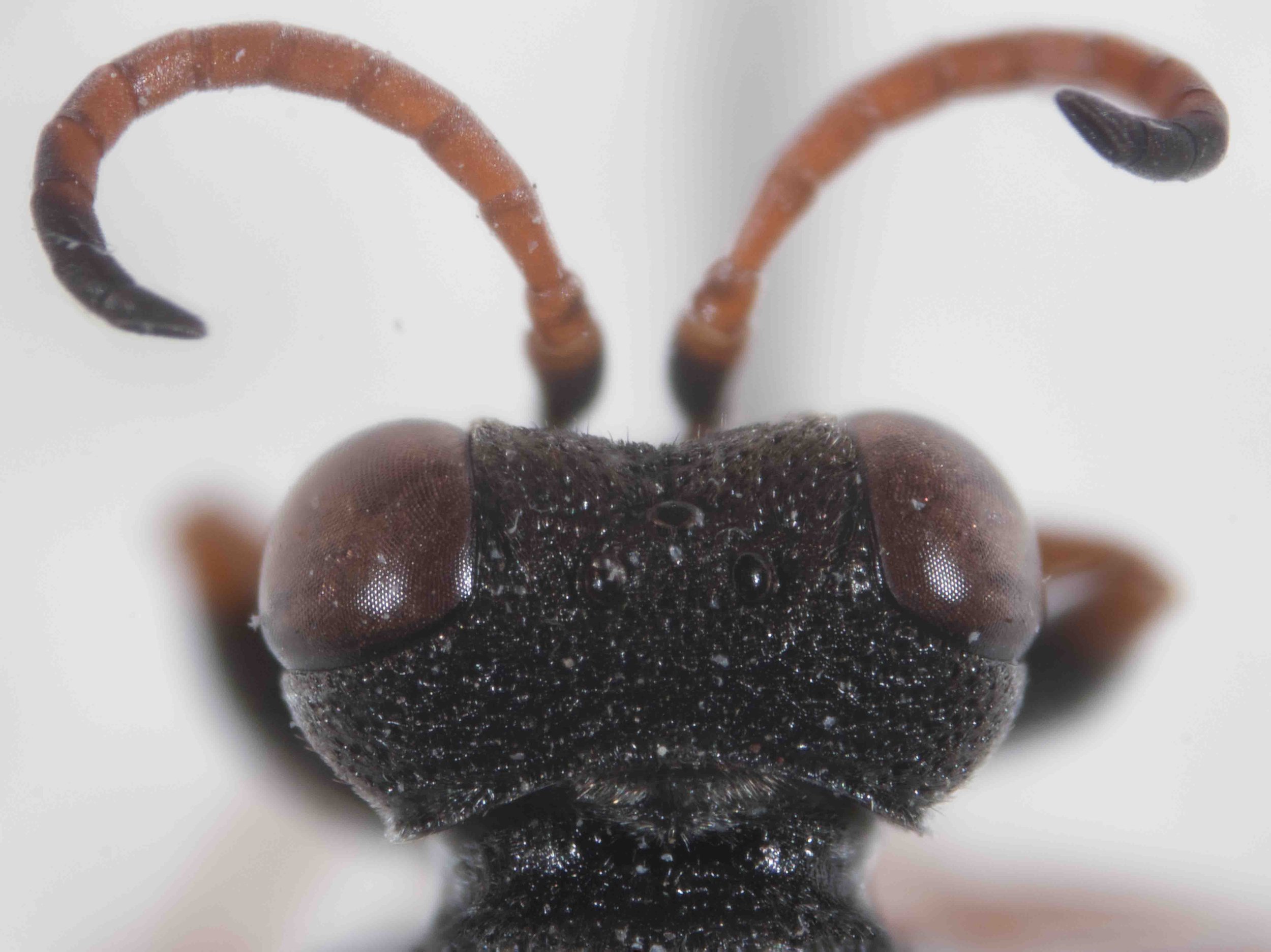
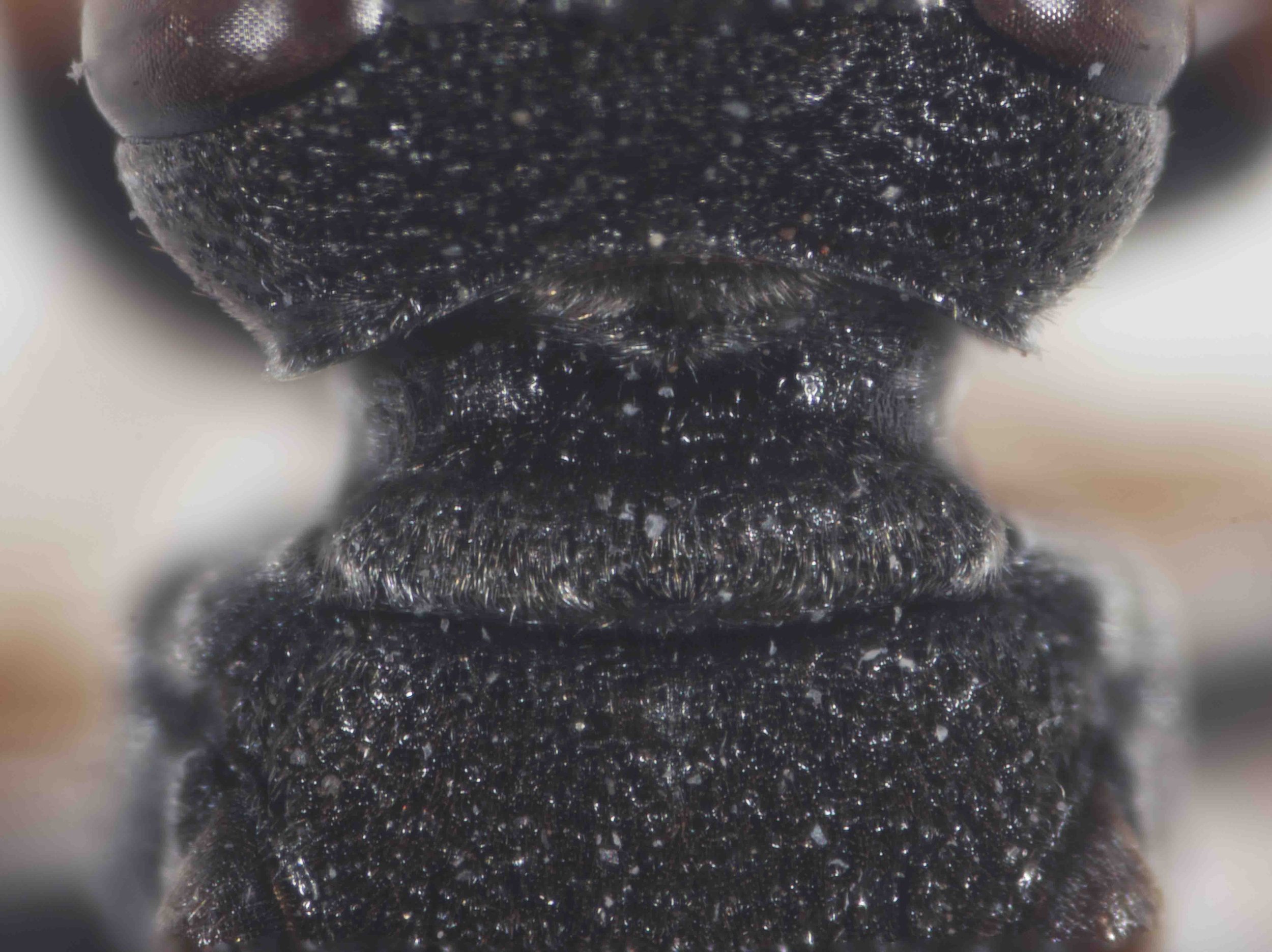
(this image: dorsal view, anterior to left)
“First gastral segment not elongate … , its yellowish ferrugineous markings much reduced, absent or replaced by a reddish ferrugineous colouring. Pubescence much sparser, only slightly golden, brassy or silvery, or indistinct.”
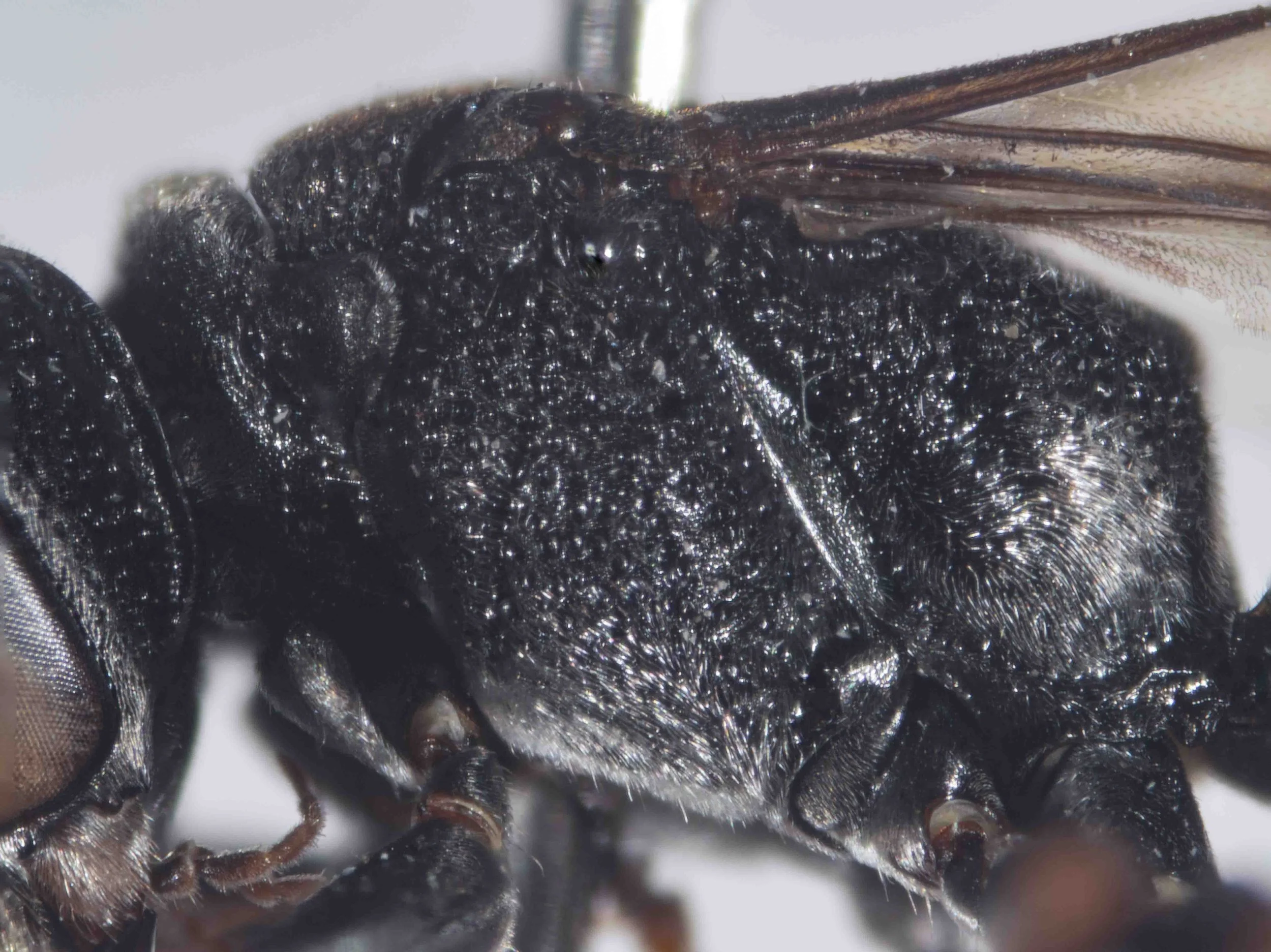
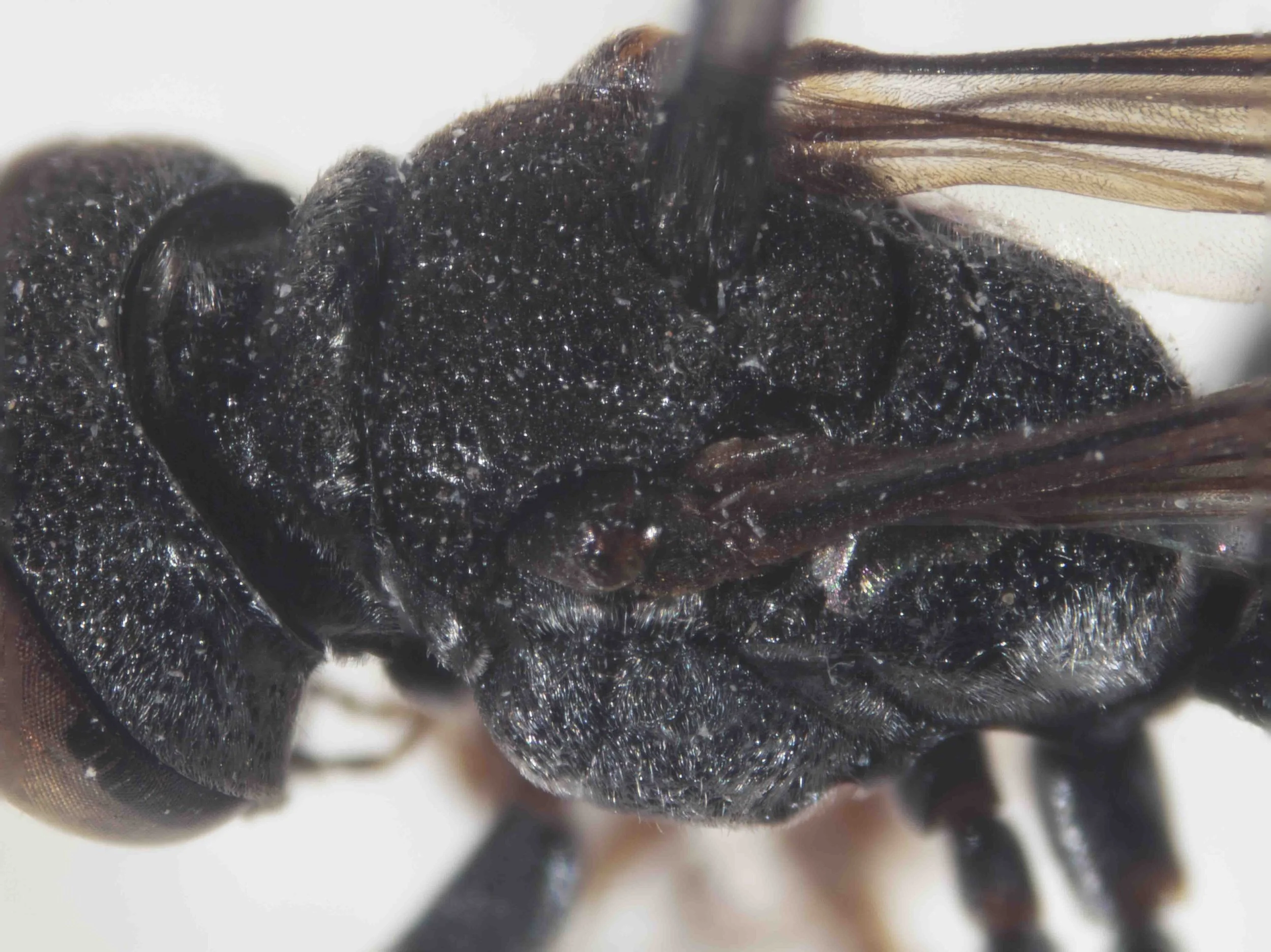
“Pronotal lobes rounded.” … “Mesopleuron with sparser, silvery or brassy pubescence.”
“Propodeal spines absent or very indistinct.”
“Tyloidea indistinct or absent.”
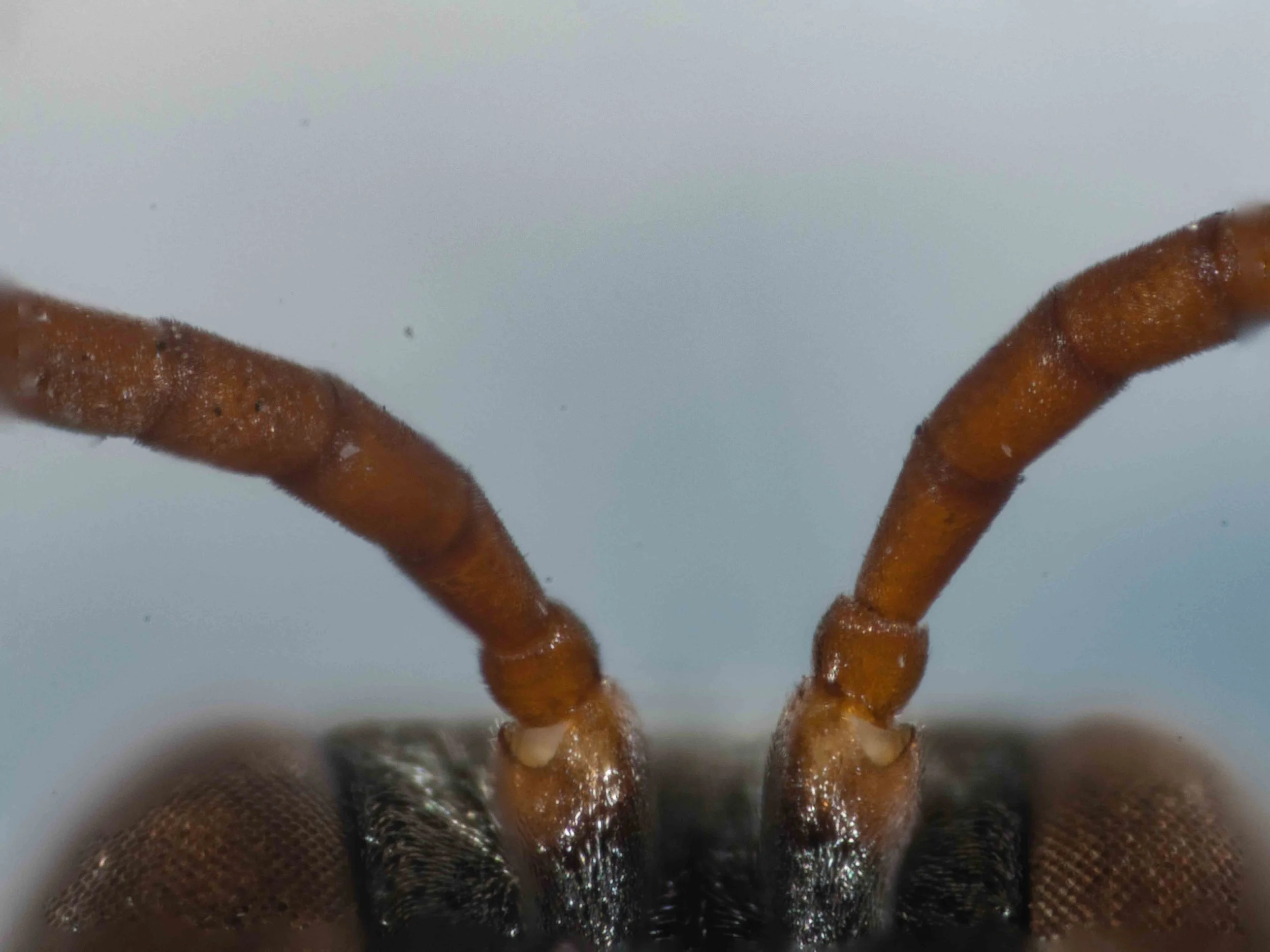
(this image: dorsal view scape, pedicel and proximal antennomeres)
[genus-level description: “Proximal flagellar segments with distinct tyoidea in some males. These segments with concave dorsal faces.”]
“Tyloidea indistinct or absent.”
(this image: ventral view scape, pedicel and proximal antennomeres)
[genus-level description: “Proximal flagellar segments with distinct tyoidea in some males. These segments with concave dorsal faces.”]
“Tyloidea indistinct or absent.”
(this image: dorso-lateral view scape, pedicel and proximal antennomeres)
[genus-level description: “Proximal flagellar segments with distinct tyoidea in some males. These segments with concave dorsal faces.”]
BODY LENGTH
Based on 16 specimens, Lomholdt gave the size range as 8-10mm.
2512C has a body length of ~7.5mm
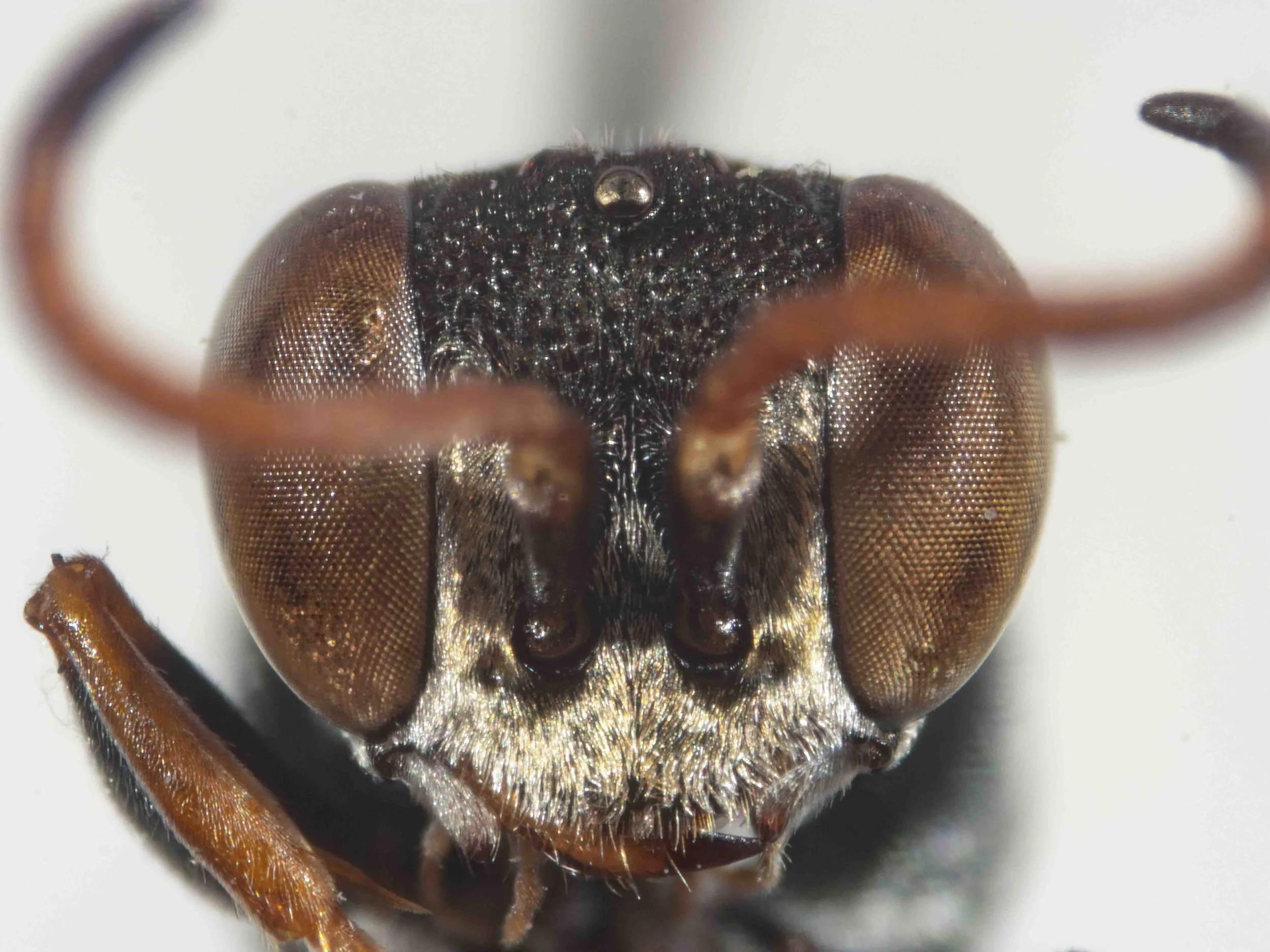
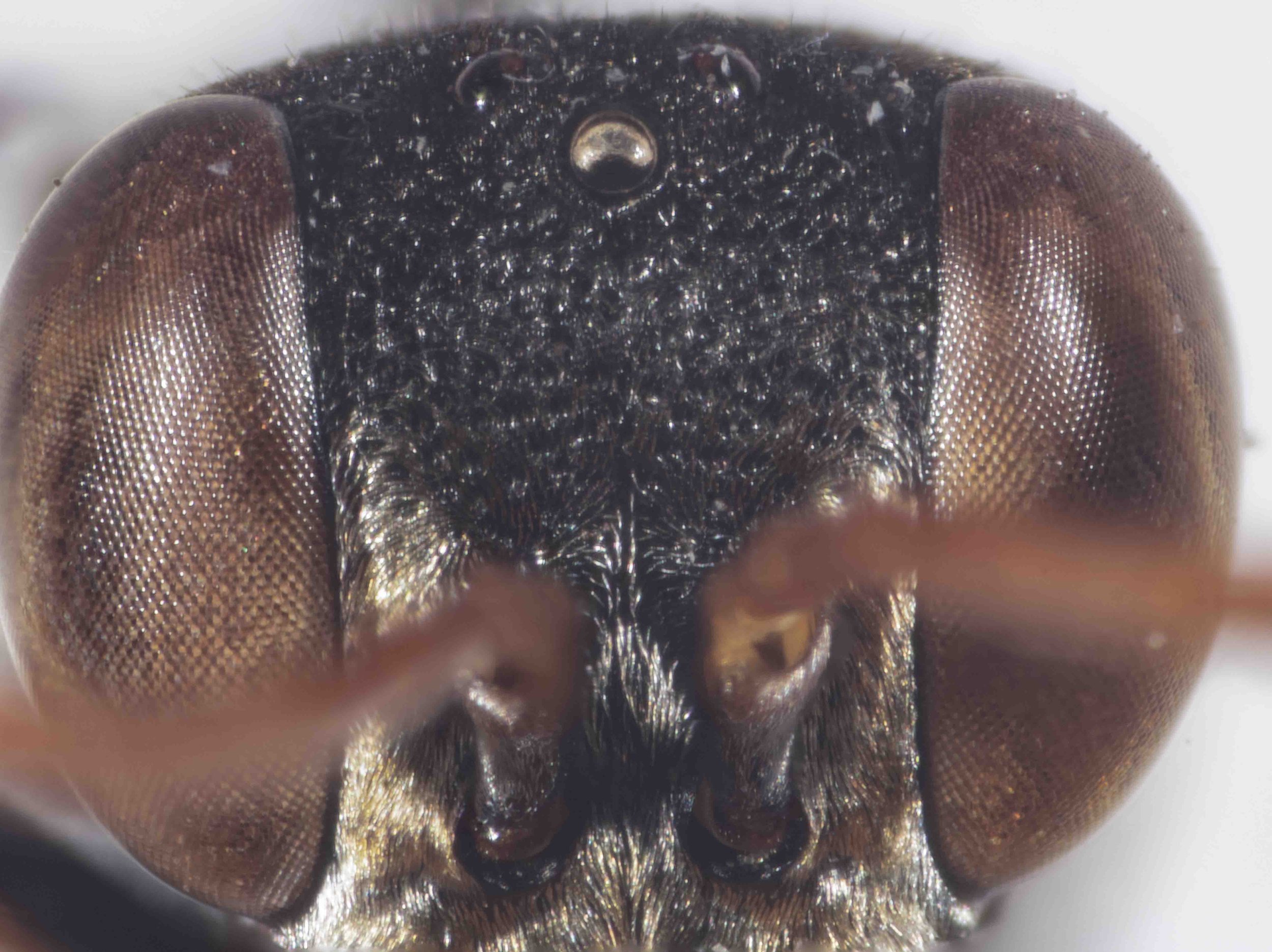
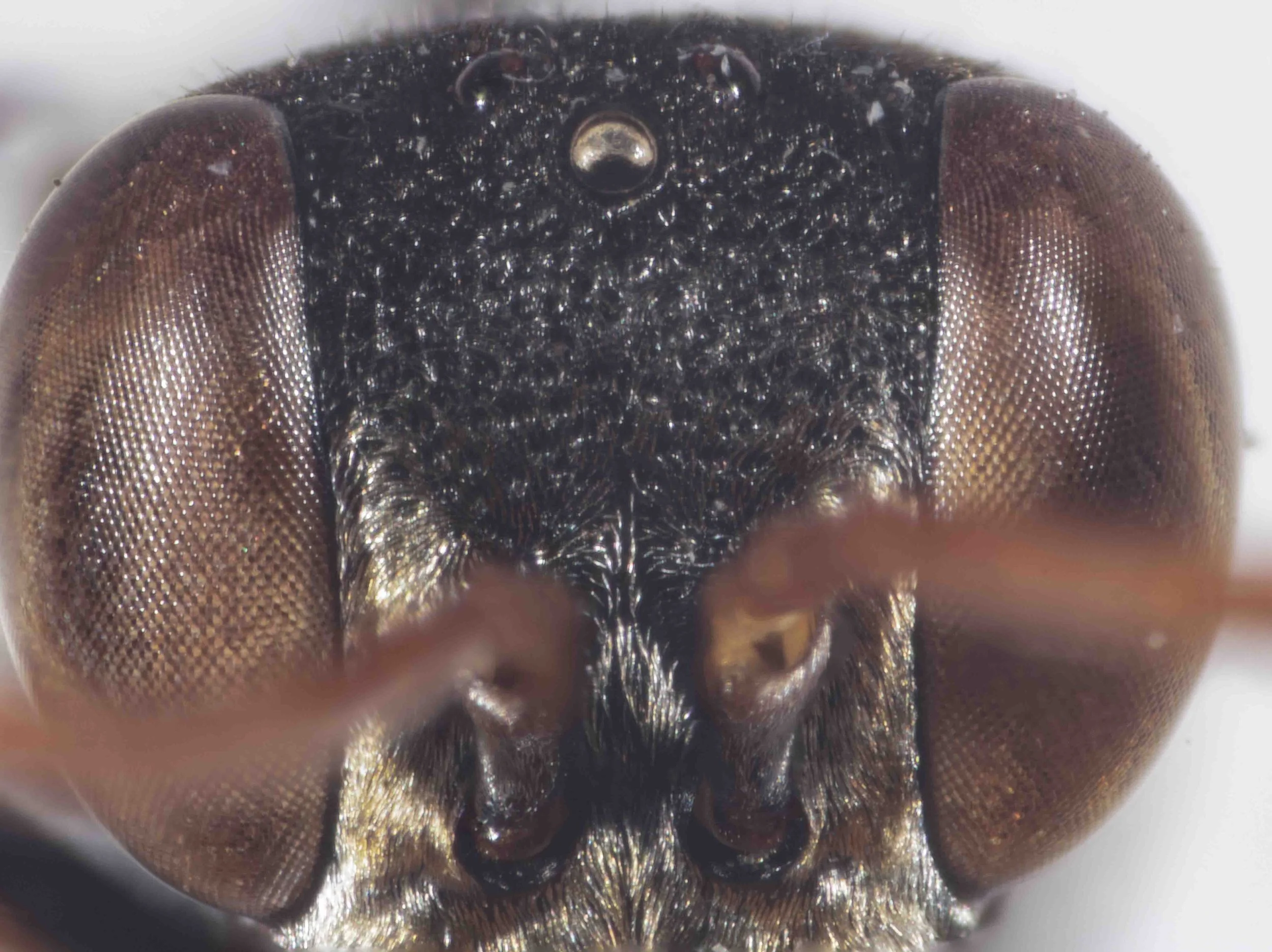
HEAD
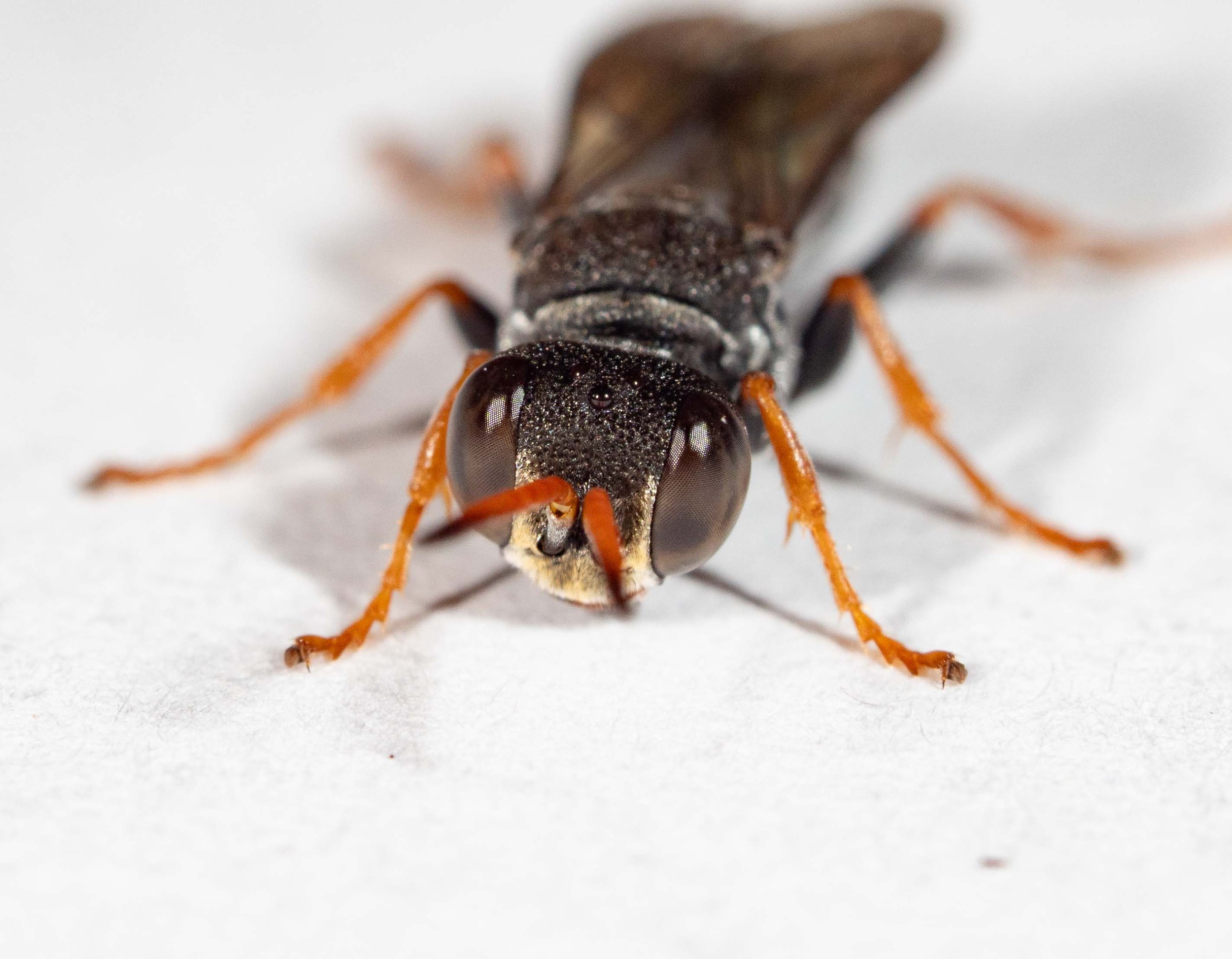
“Punctation on frons much denser and stronger, interstices narrower, micropunctation finer.” … “Frontal and clypeal pubescence much denser, brassy or slightly golden.”
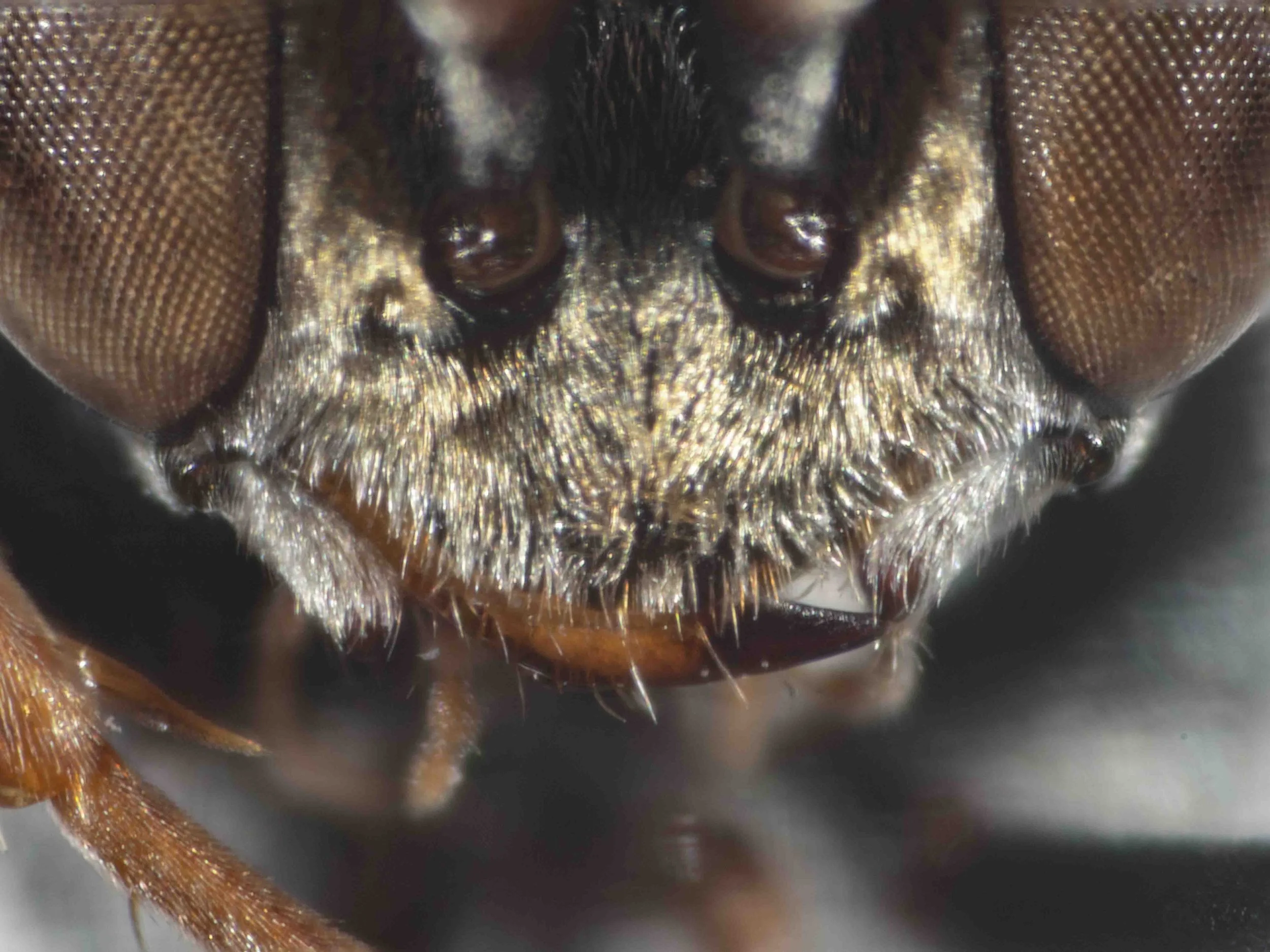
HEAD
“Frontal and clypeal pubescence much denser, brassy or slightly golden. Clypeal outline as in Fig. 32.”
HEAD
“Clypeal outline as in Fig. 32.”
HEAD
“Punctation on frons much denser and stronger, interstices narrower, micropunctation finer. Frontal line distinct in some specimens. Facial fovea absent.”
Note: There is a trace of a frontal line in the lower half of the frons of 2512C.
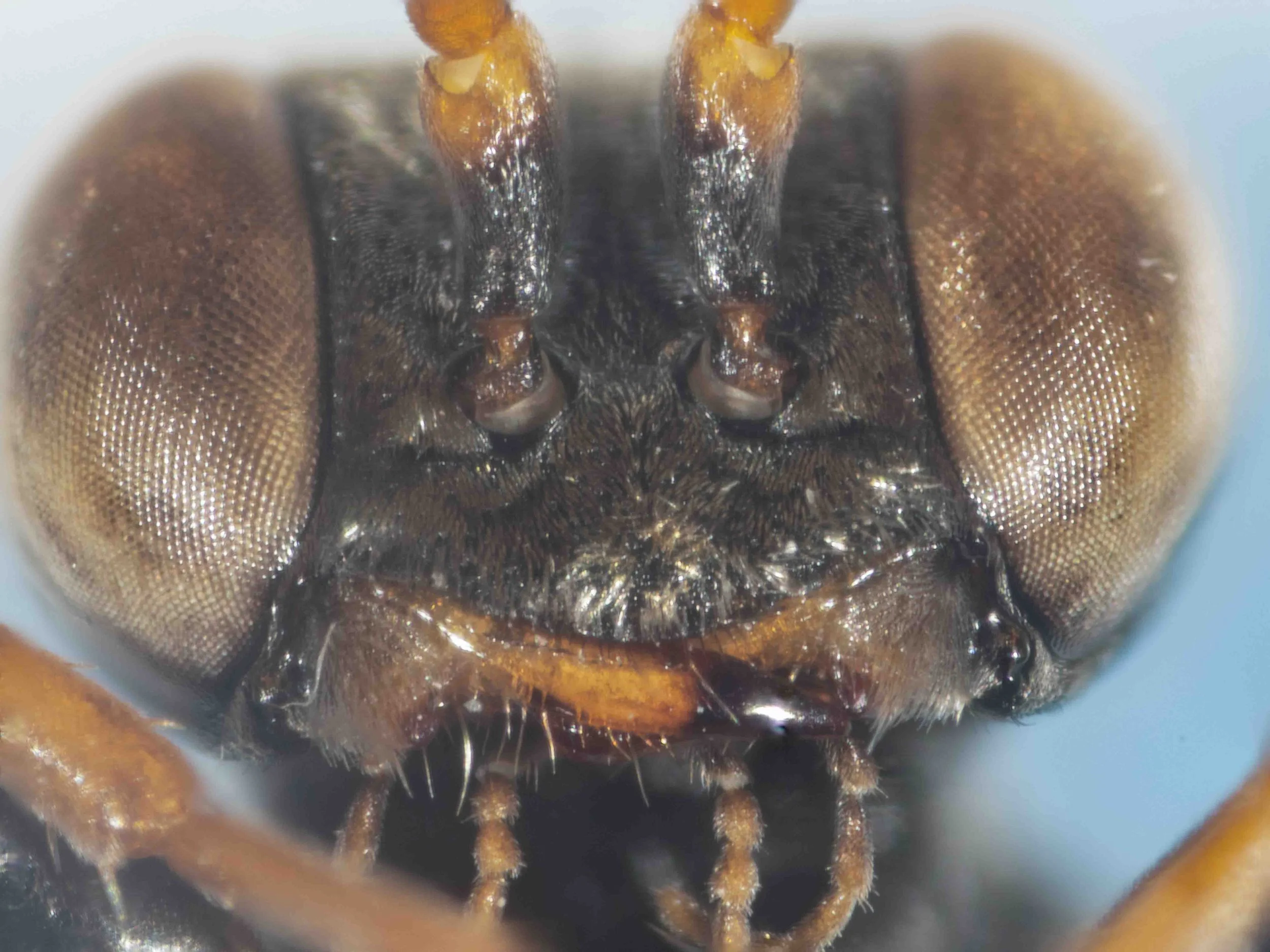
HEAD
“Facial fovea absent. Scapal basin deeper.”
Note: In this direct dorsal view I see evidence of narrow facial fovea, although they are indistinct.
HEAD
“Antennae long, first flagellomere almost twice as long as wide (15:8).”
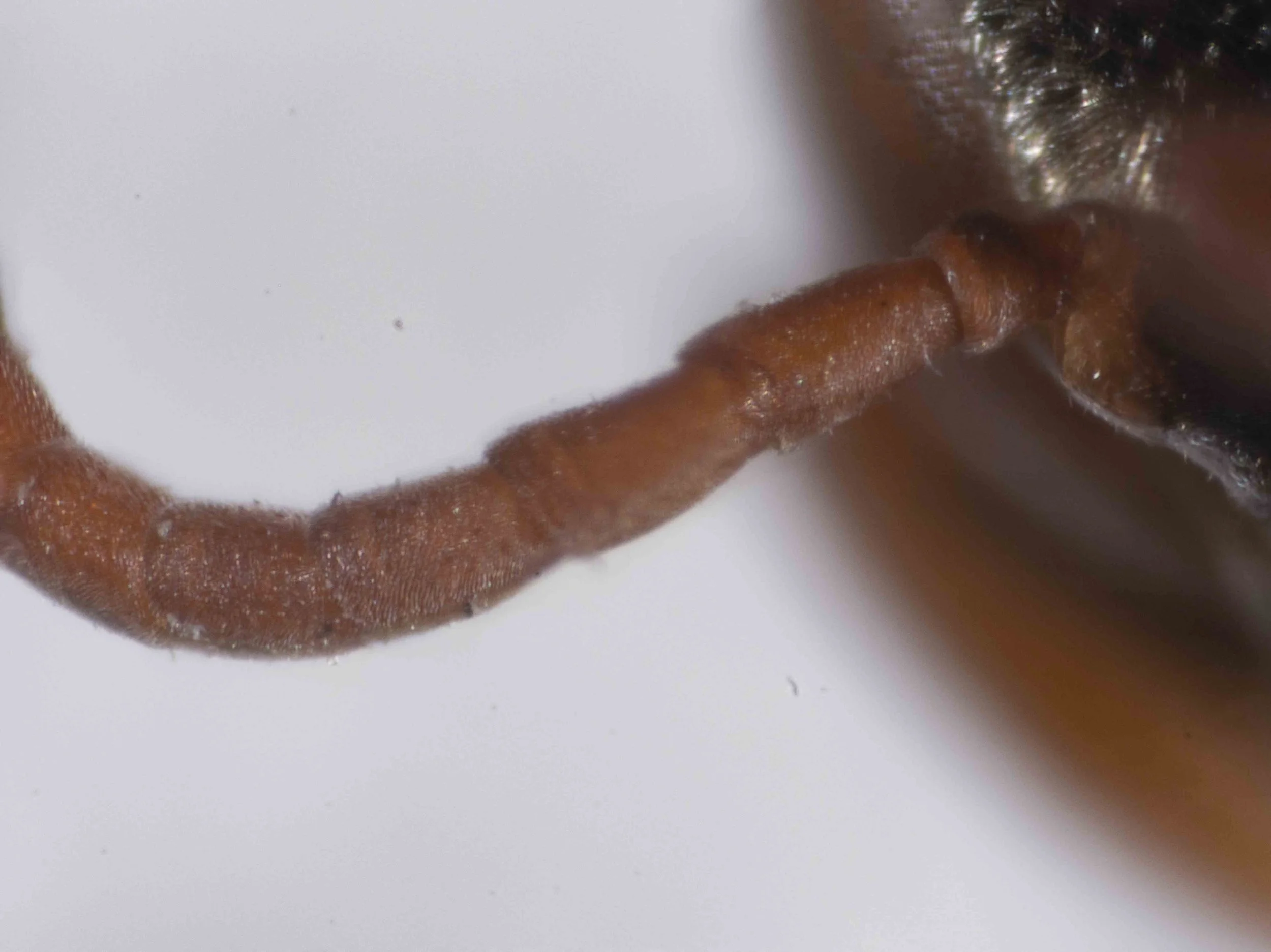
HEAD
“Antennae long, first flagellomere almost twice as long as wide (15:8). Proximal flagellar segments light ferrugineous ventrally to quite light ferrugineous. Tyloidea absent or only very slightly indicated. Proximal flagellar segments conical, slightly convex ventrally and concave dorsally in some specimens.”
(this image: dorso-lateral view scape, pedicel and proximal antennomeres)
Note: I see no evidence of tyloidea in 2512C.
HEAD
“Antennae long, first flagellomere almost twice as long as wide (15:8). Proximal flagellar segments light ferrugineous ventrally to quite light ferrugineous. Tyloidea absent or only very slightly indicated. Proximal flagellar segments conical, slightly convex ventrally and concave dorsally in some specimens.”
(this image: ventral view scape, pedicel and proximal antennomeres)
Note: I see no evidence of tyloidea in 2512C.
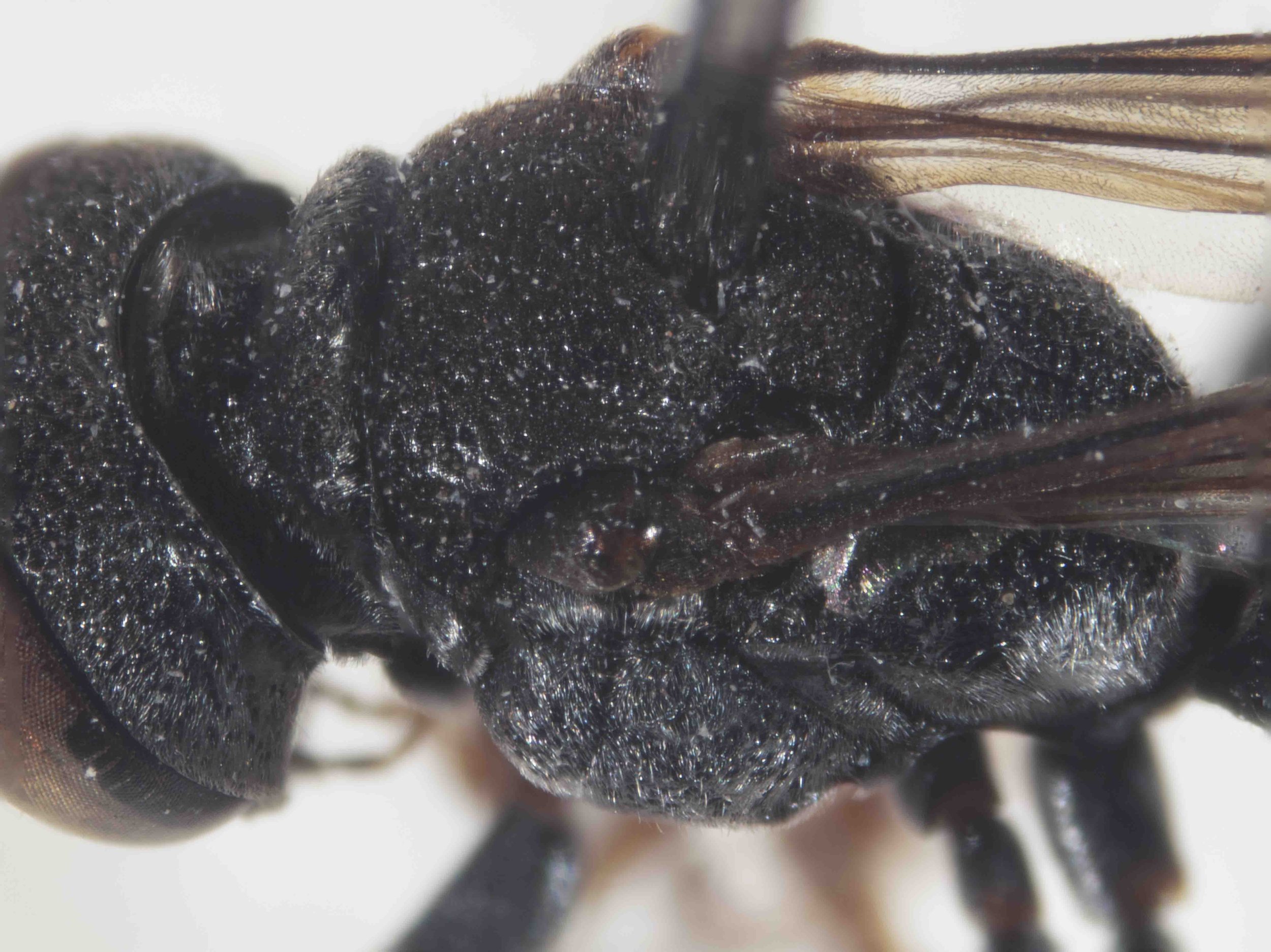
THORAX
“Median pronotal prominence very weak or absent.”
Note: I see no evidence of a median prominence in 2512C
THORAX
“Pronotal lobes slightly ferrugineous transparent in some specimens.”
Note: pronotal lobe entirely black in 2512C
THORAX
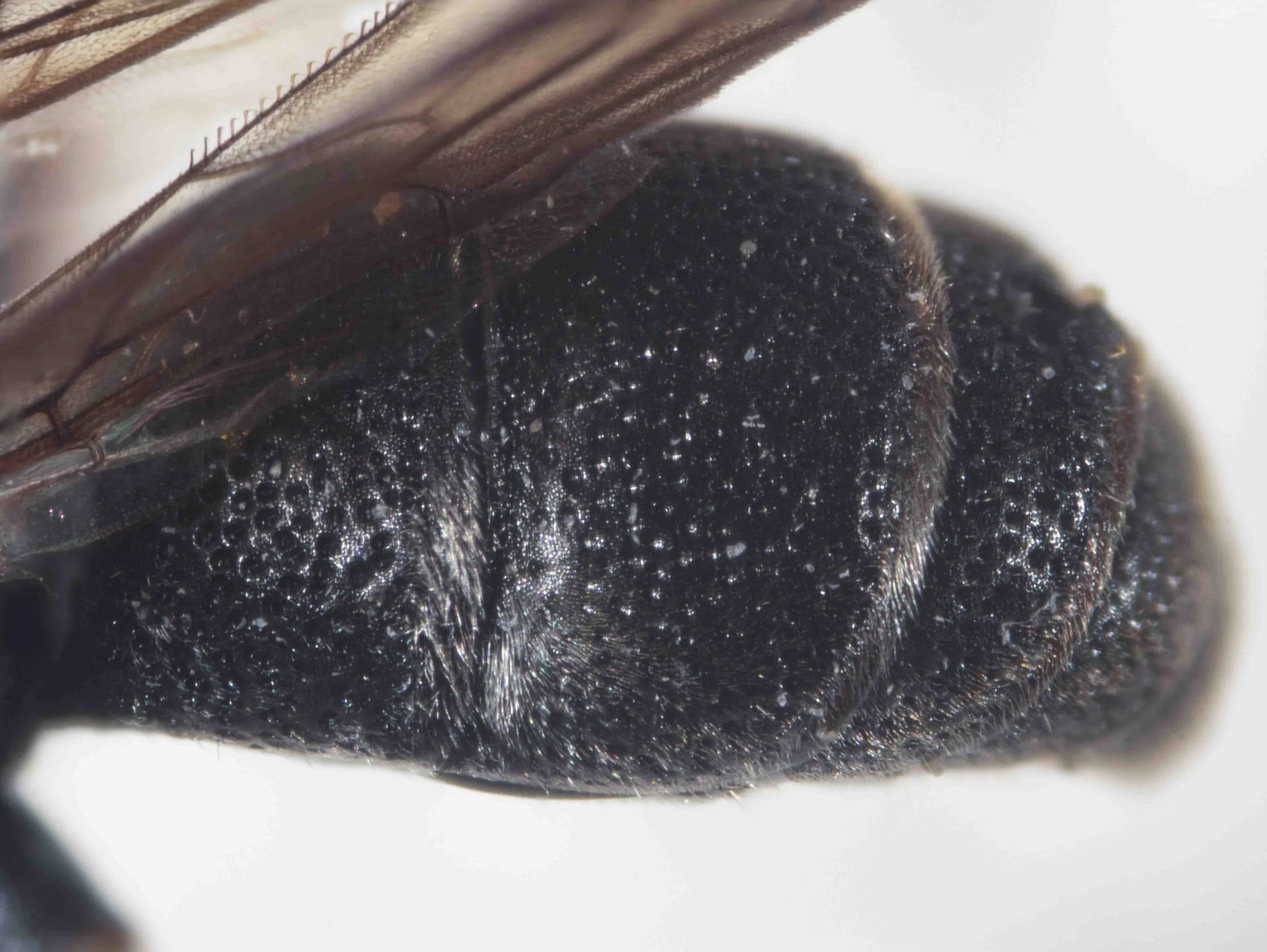
“Thoracic, propodeal, and gastral sculpture stronger and denser.”
GASTER
“Thoracic, propodeal, and gastral sculpture stronger and denser.”
LEGS
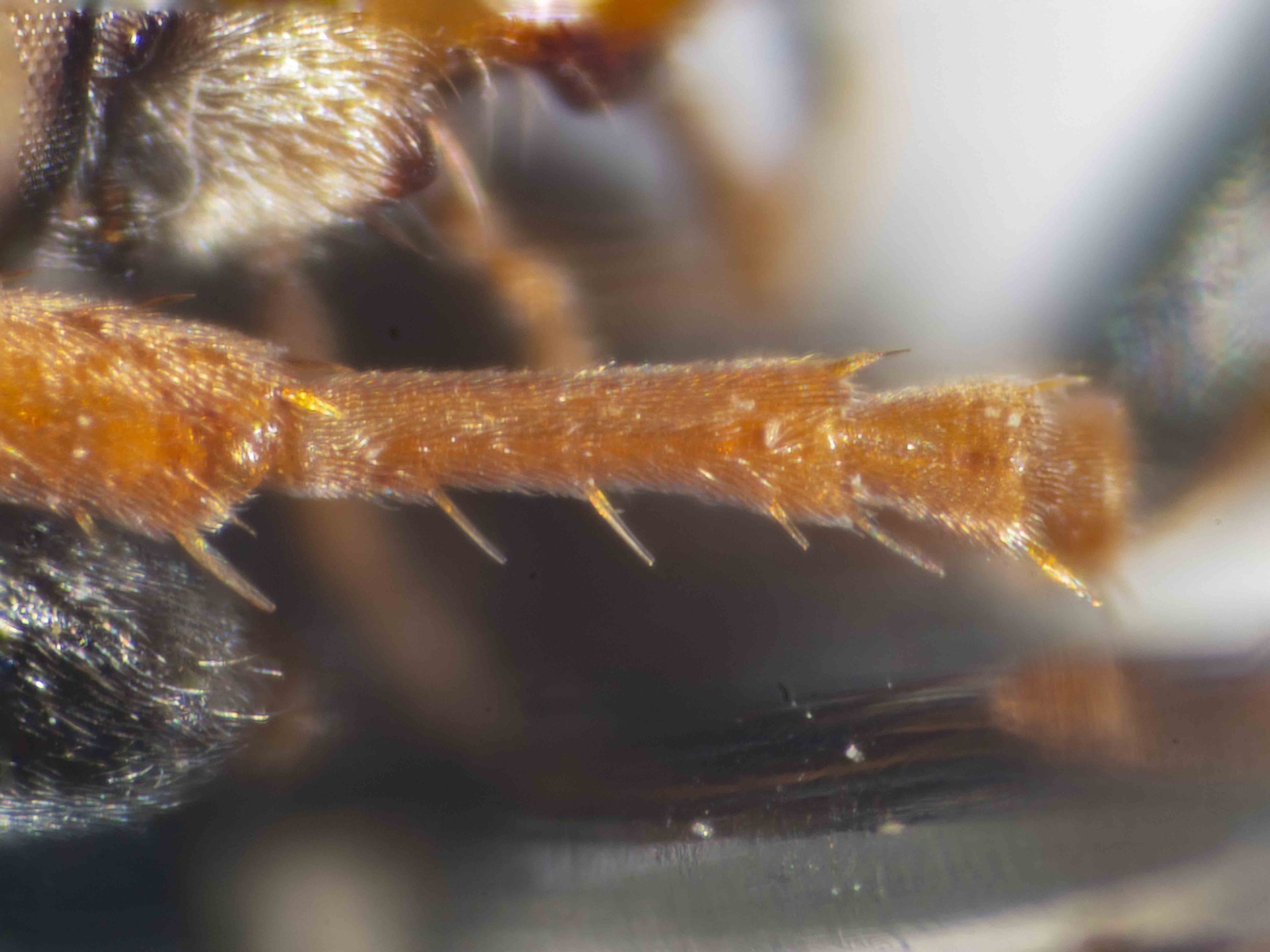
“Metatarsus I with 4-5 rake spines.”
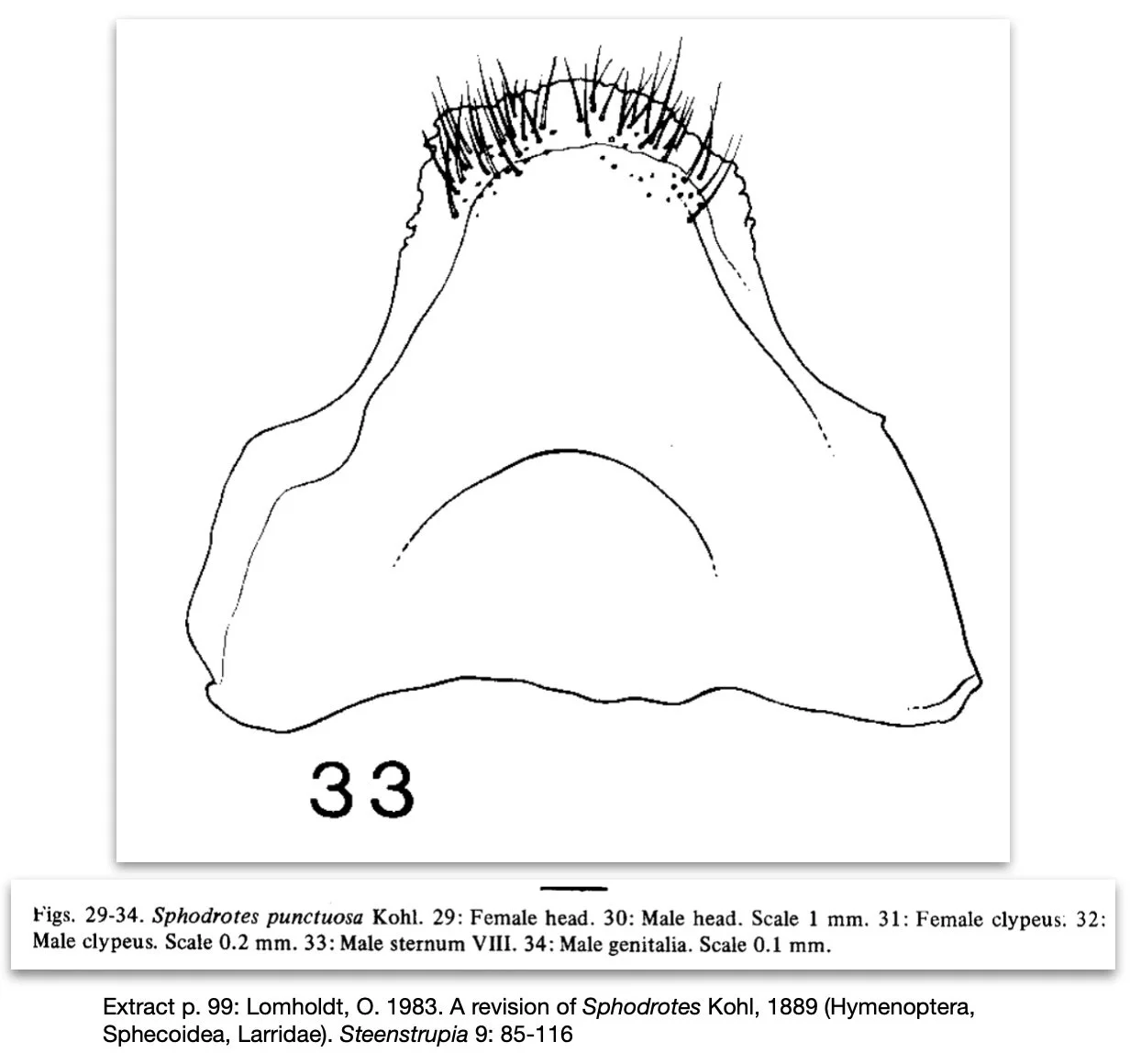
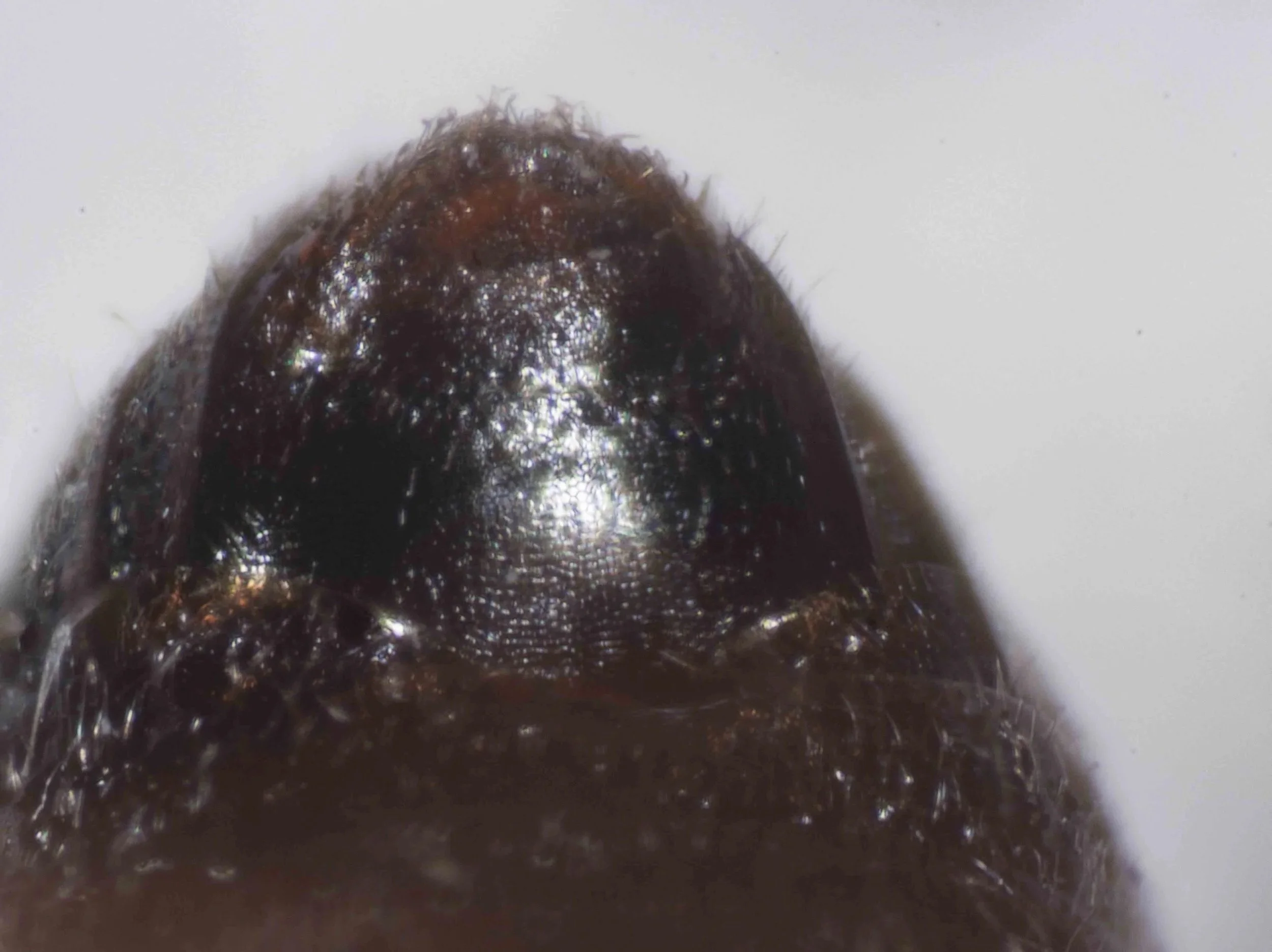
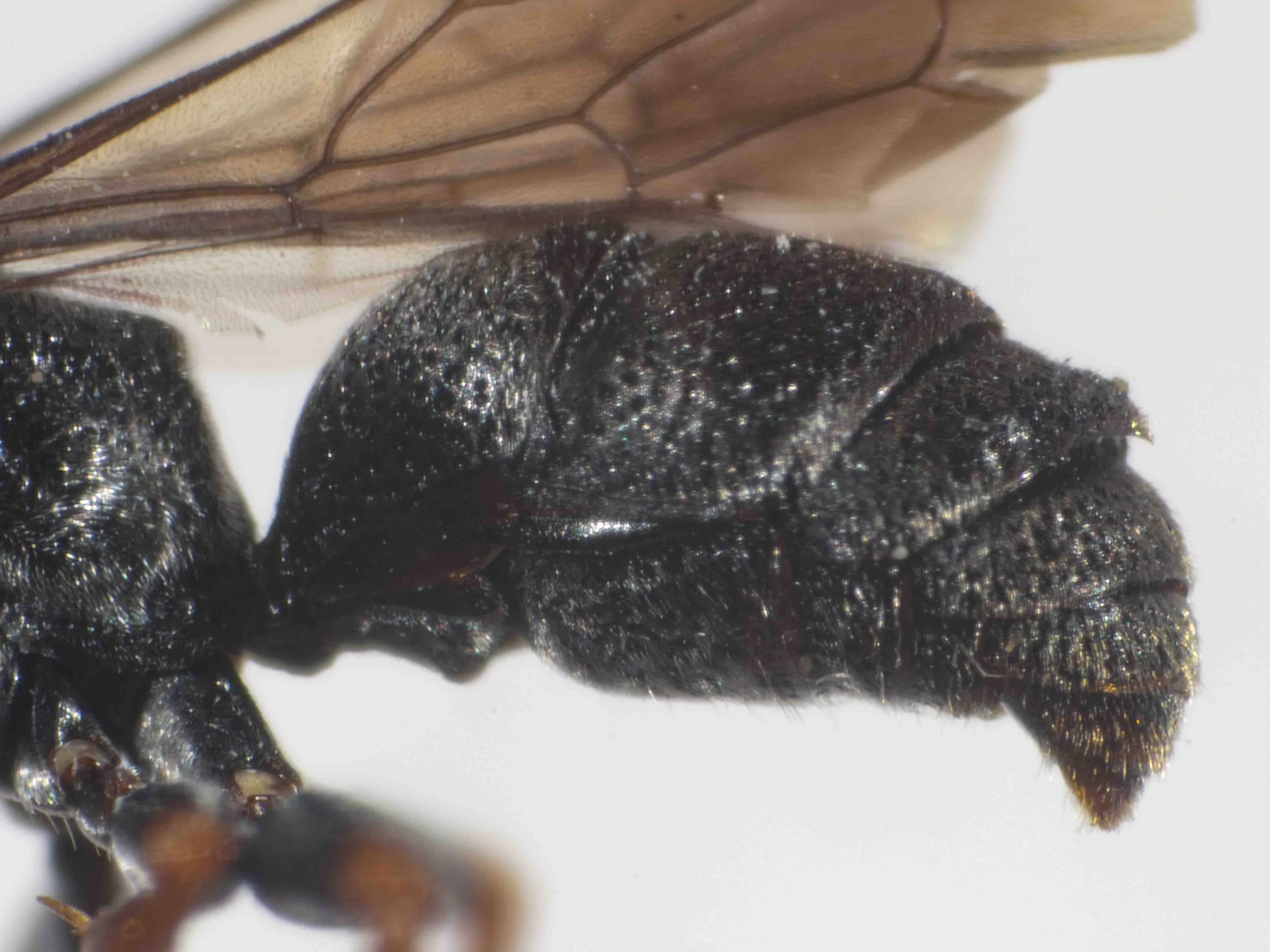
GASTER - sternum VIII
Compare sternum VIII to Fig. 33. Note, however, that the diagram shows the entire sclerite, dissected. In the intact gaster, only the apical portion is visible.