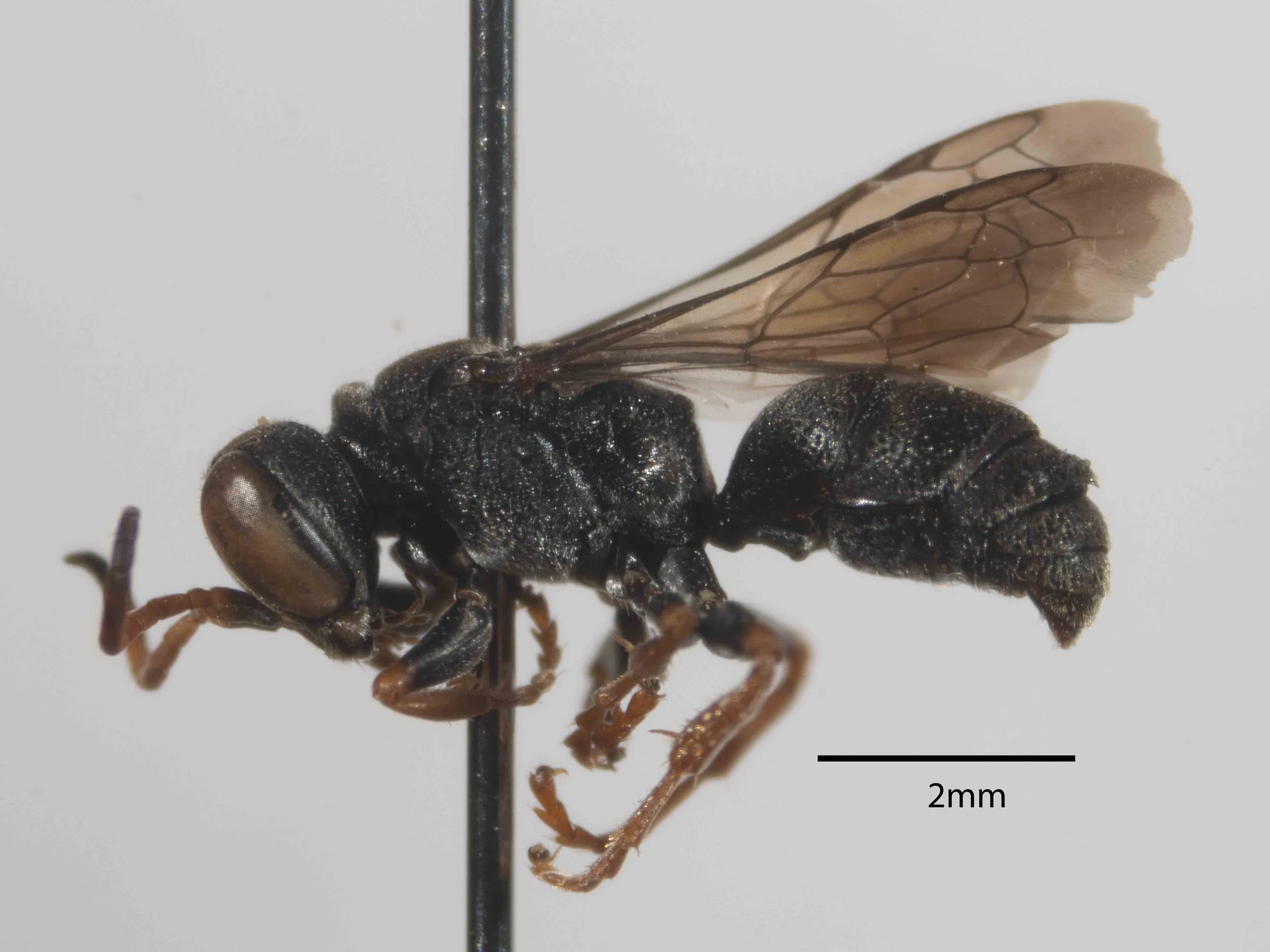
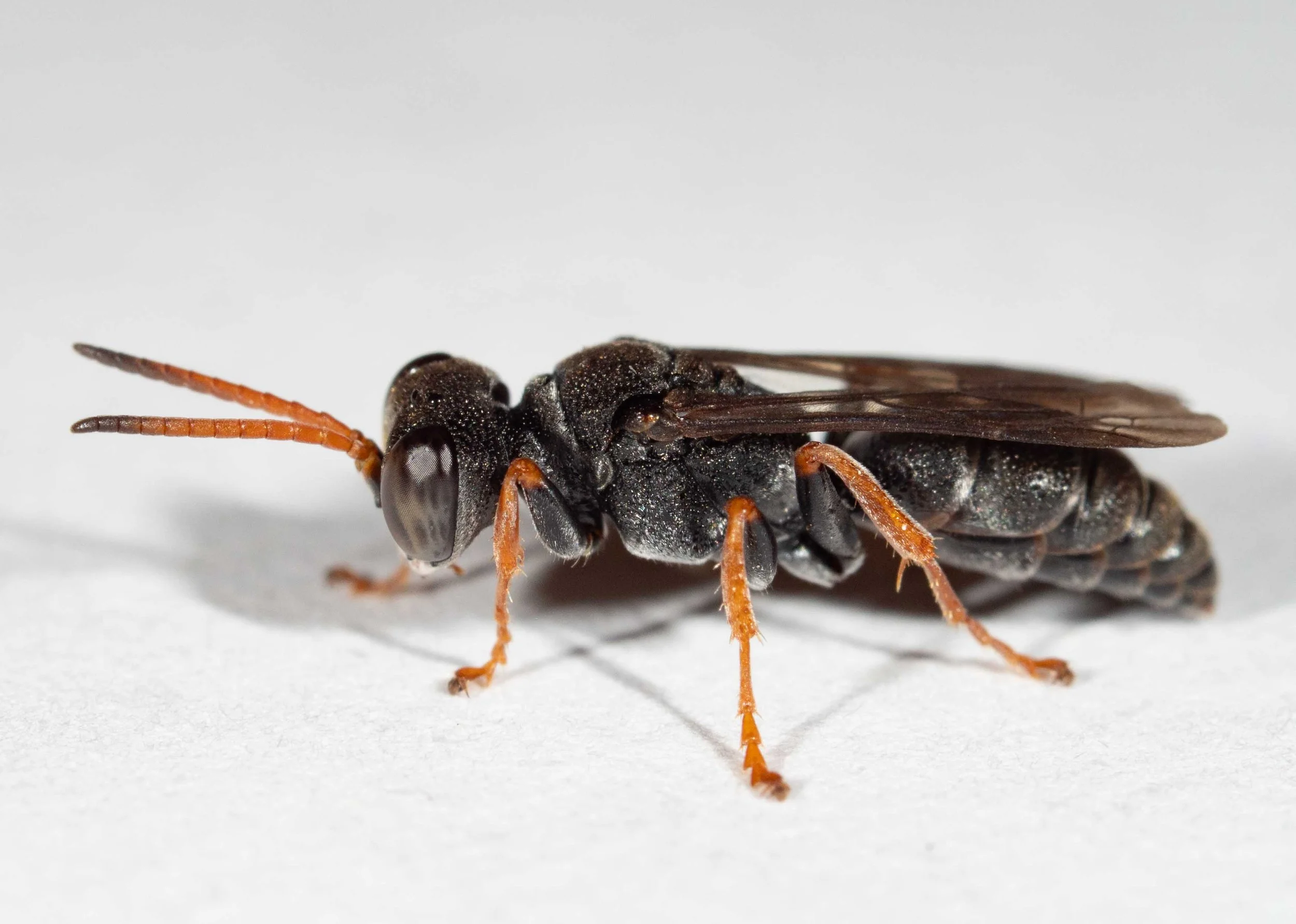
overall shape & size
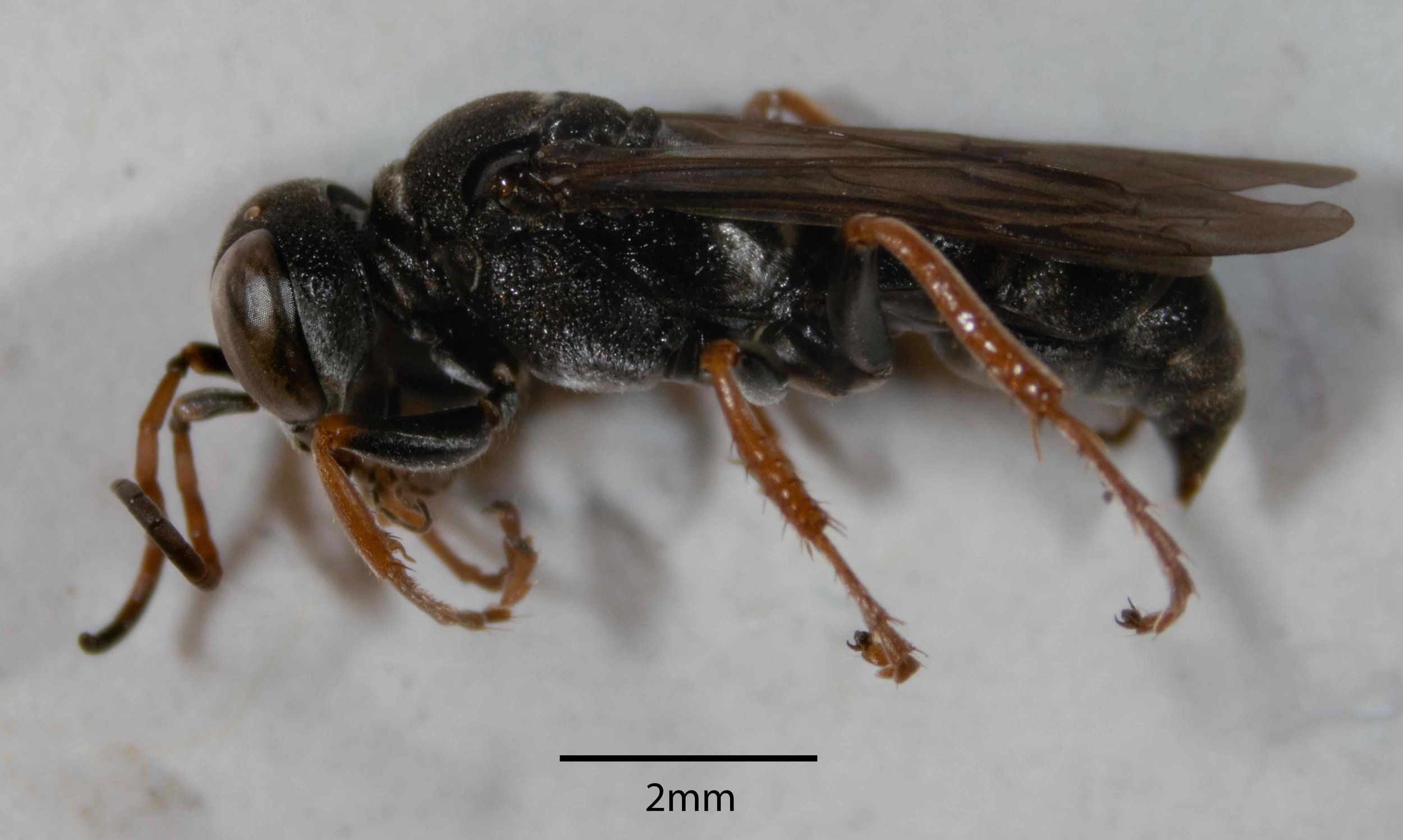
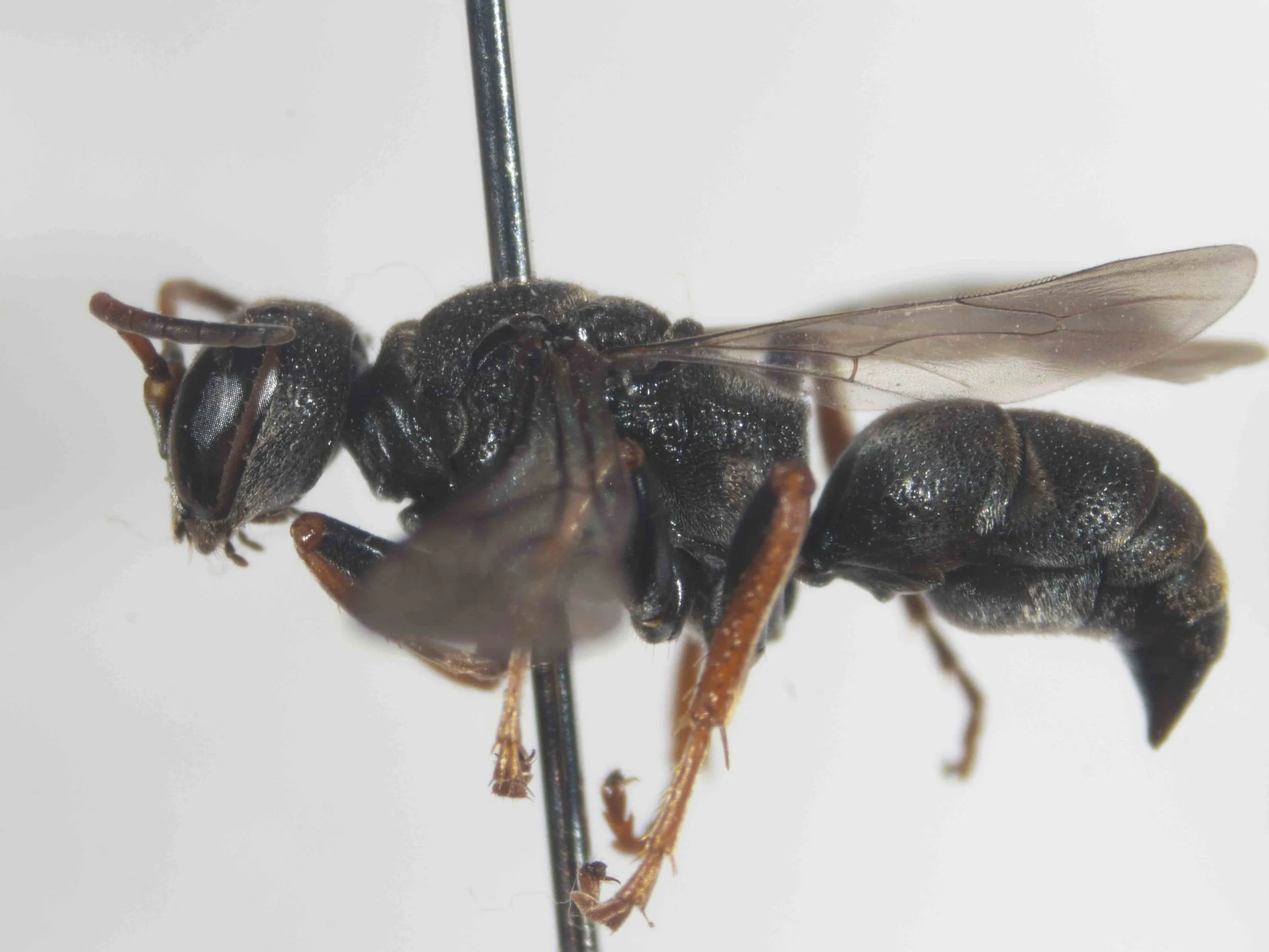
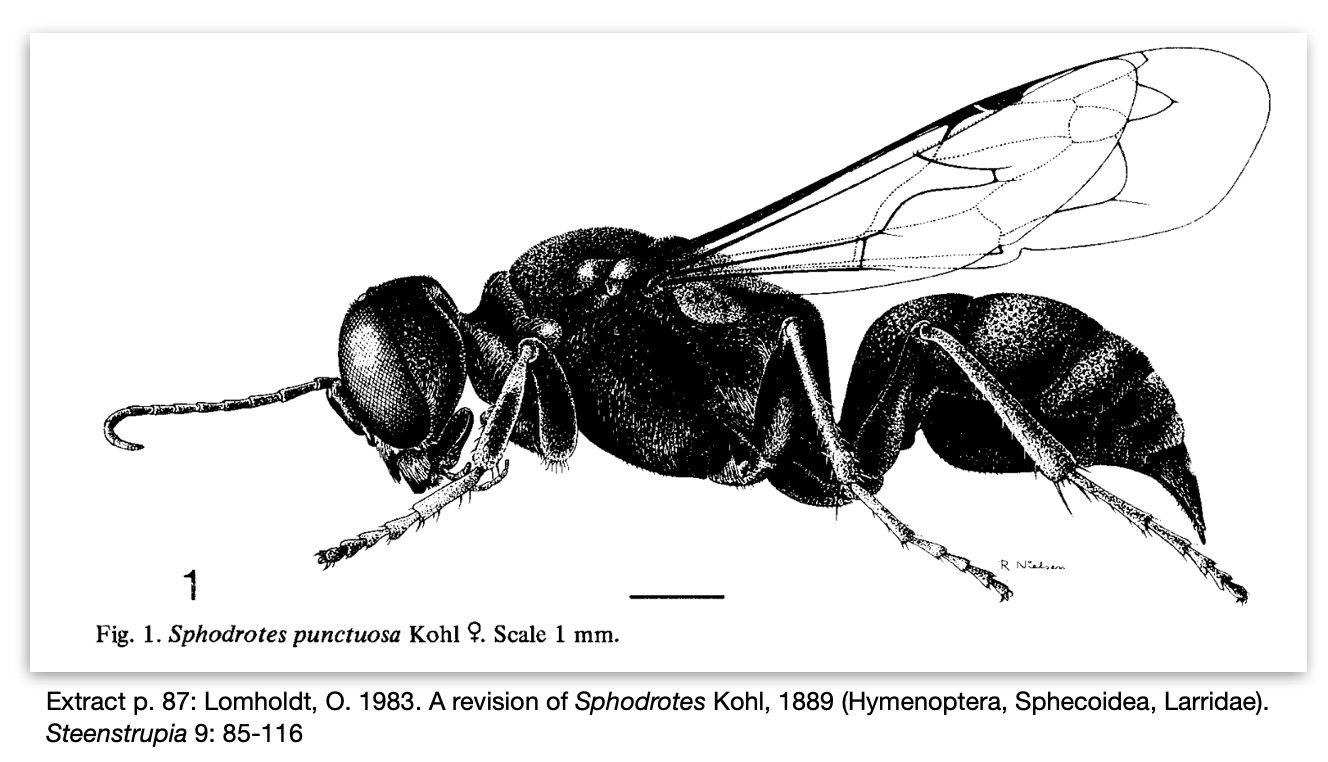
Sphodrotes punctuosa females:
9.5 – 12mm
overall shape & size
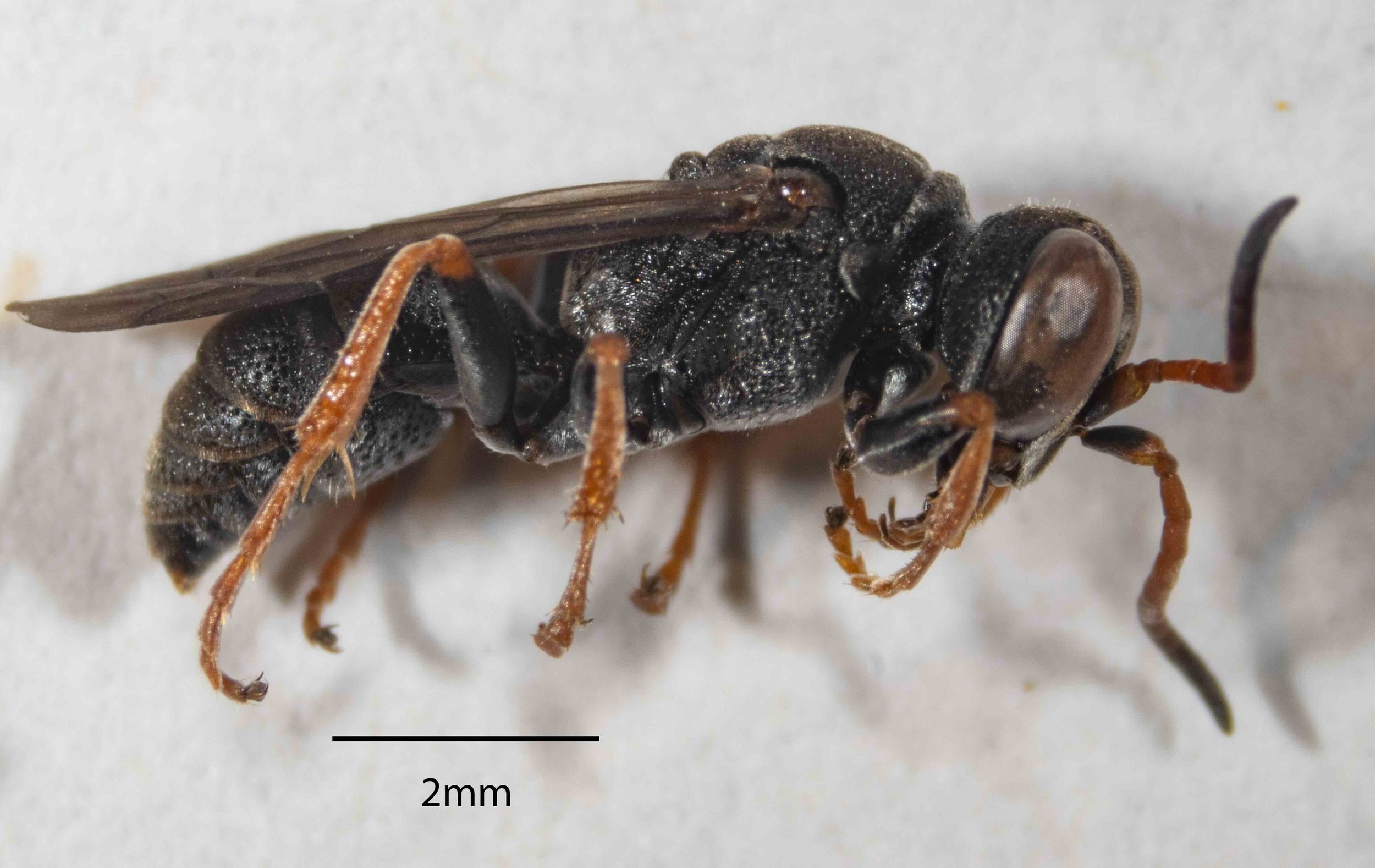
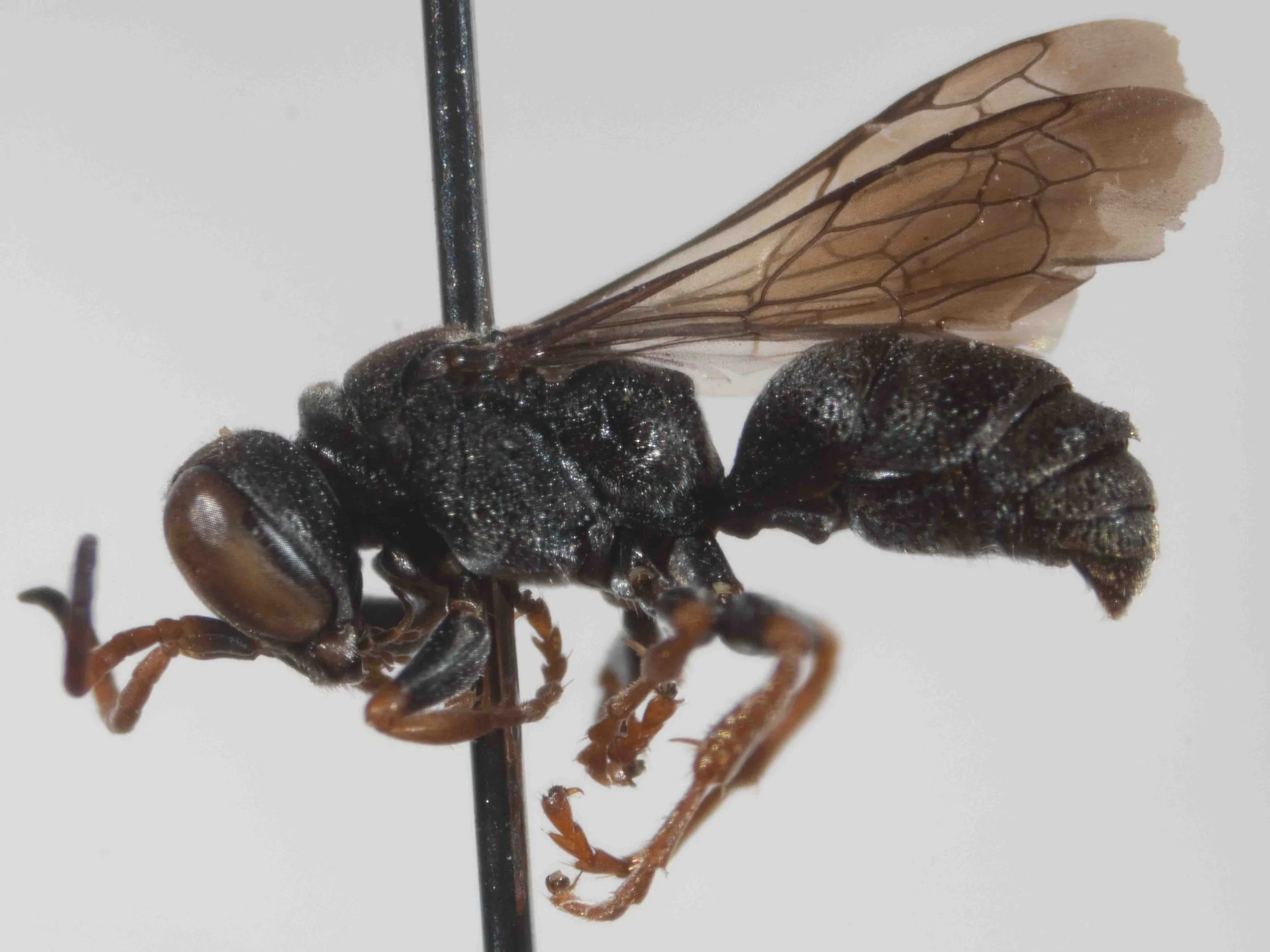
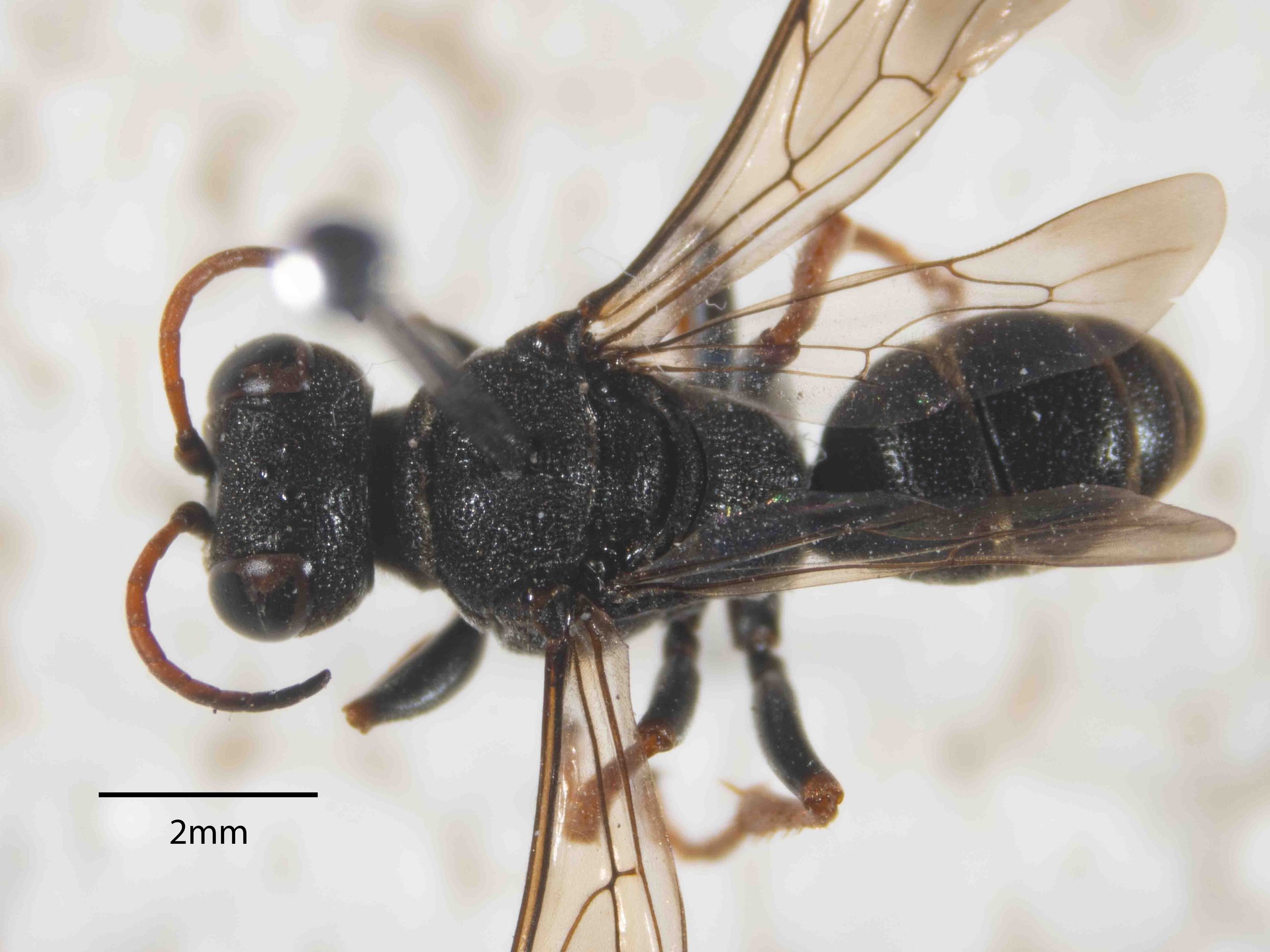
Sphodrotes punctuosa males:
Differing from females in …
Smaller head-body length (8 – 10mm); longer antennae
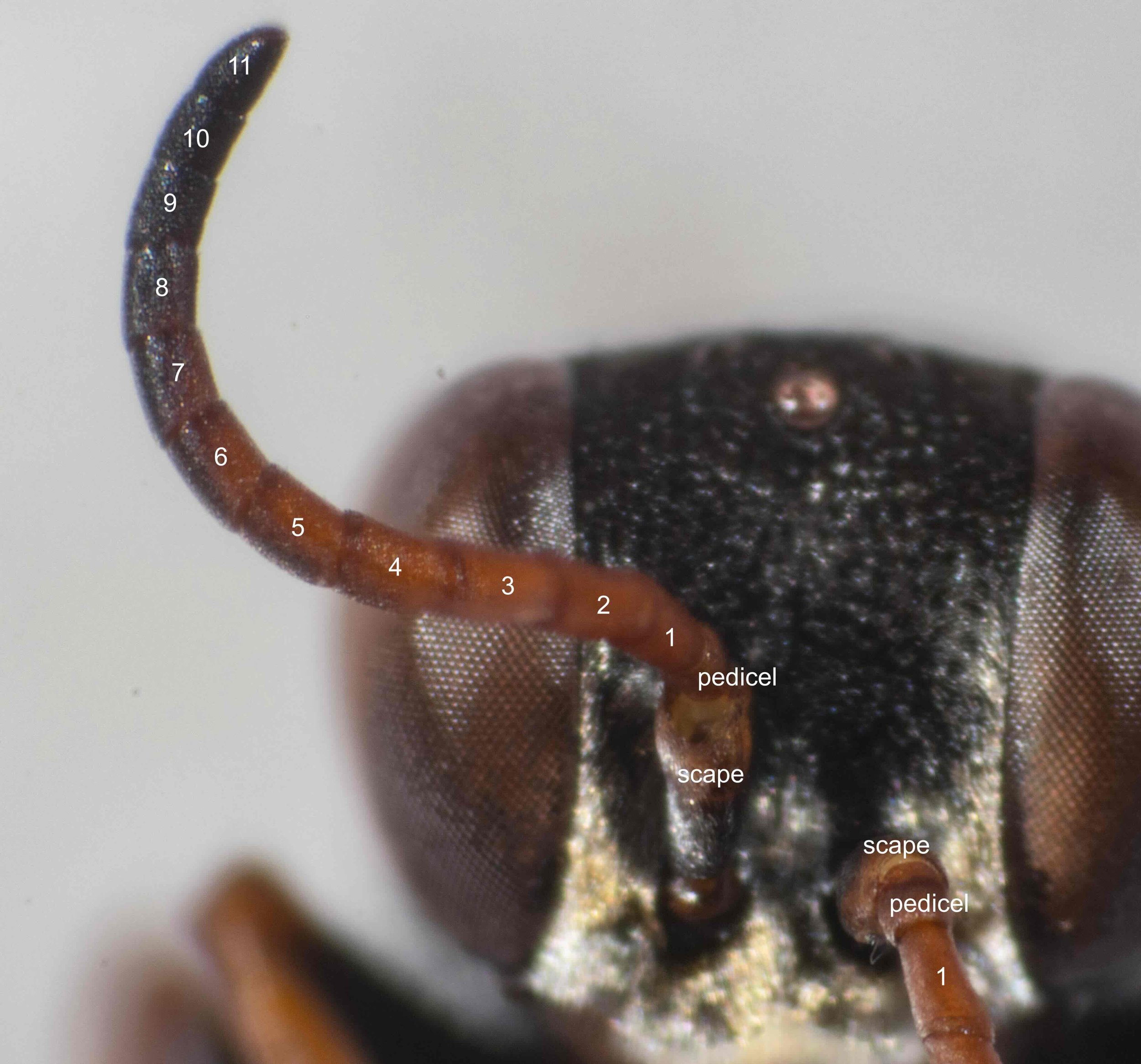
Note also that, as in many crabronids, males have an additional flagellar segment (11, cf. 10 in females) and an additional visible segment in the gaster (7, cf. 6 in females).
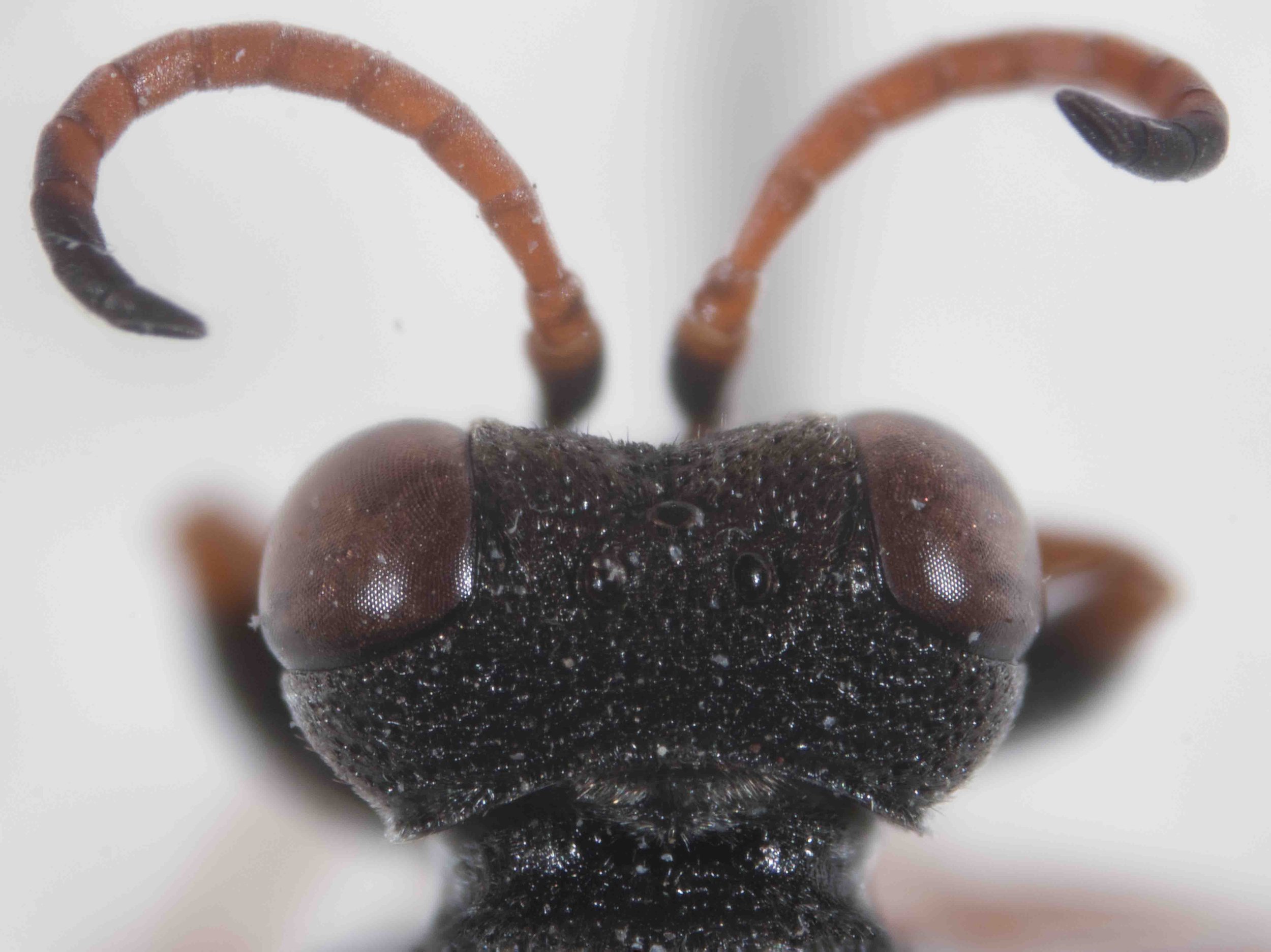
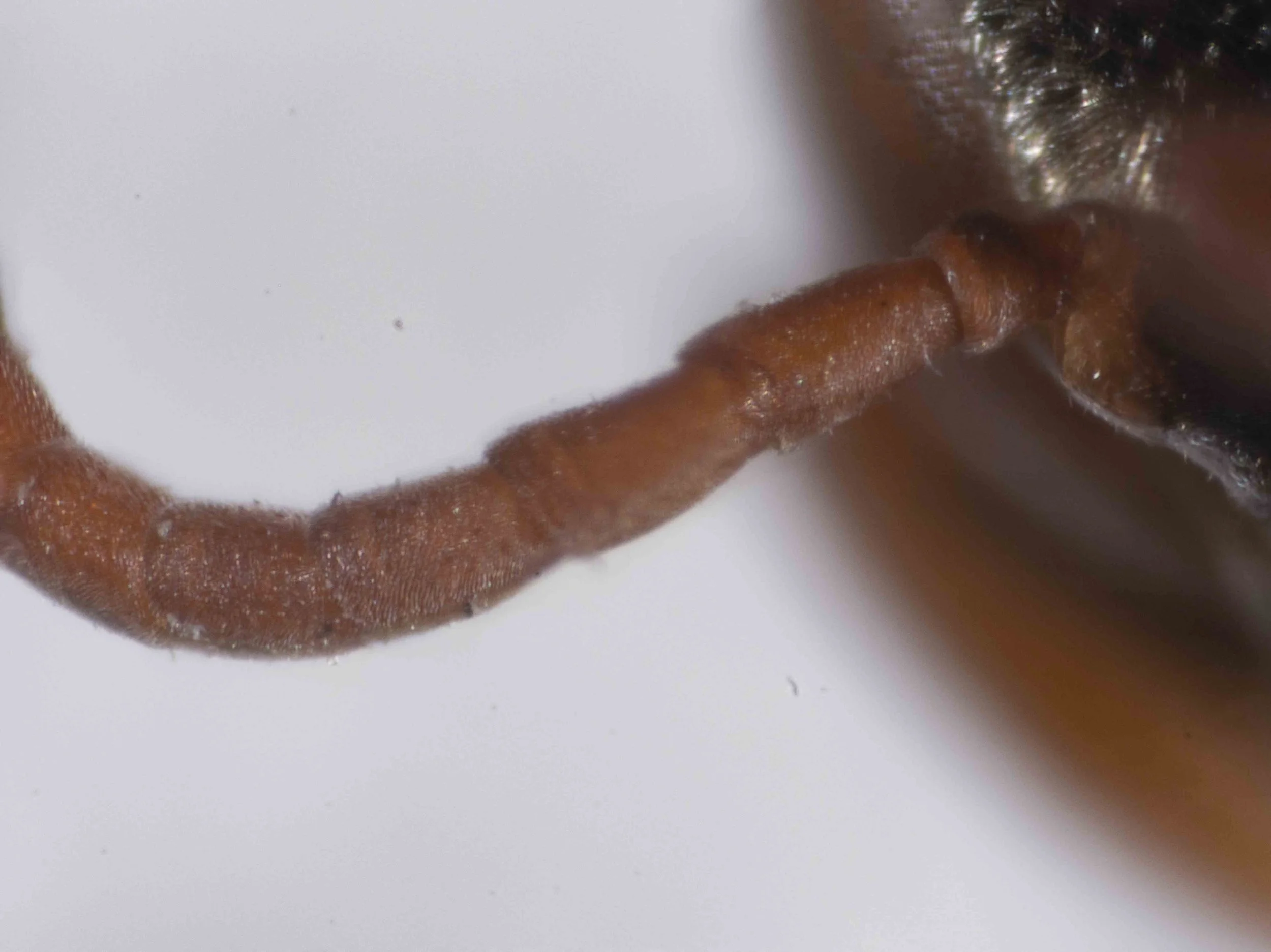
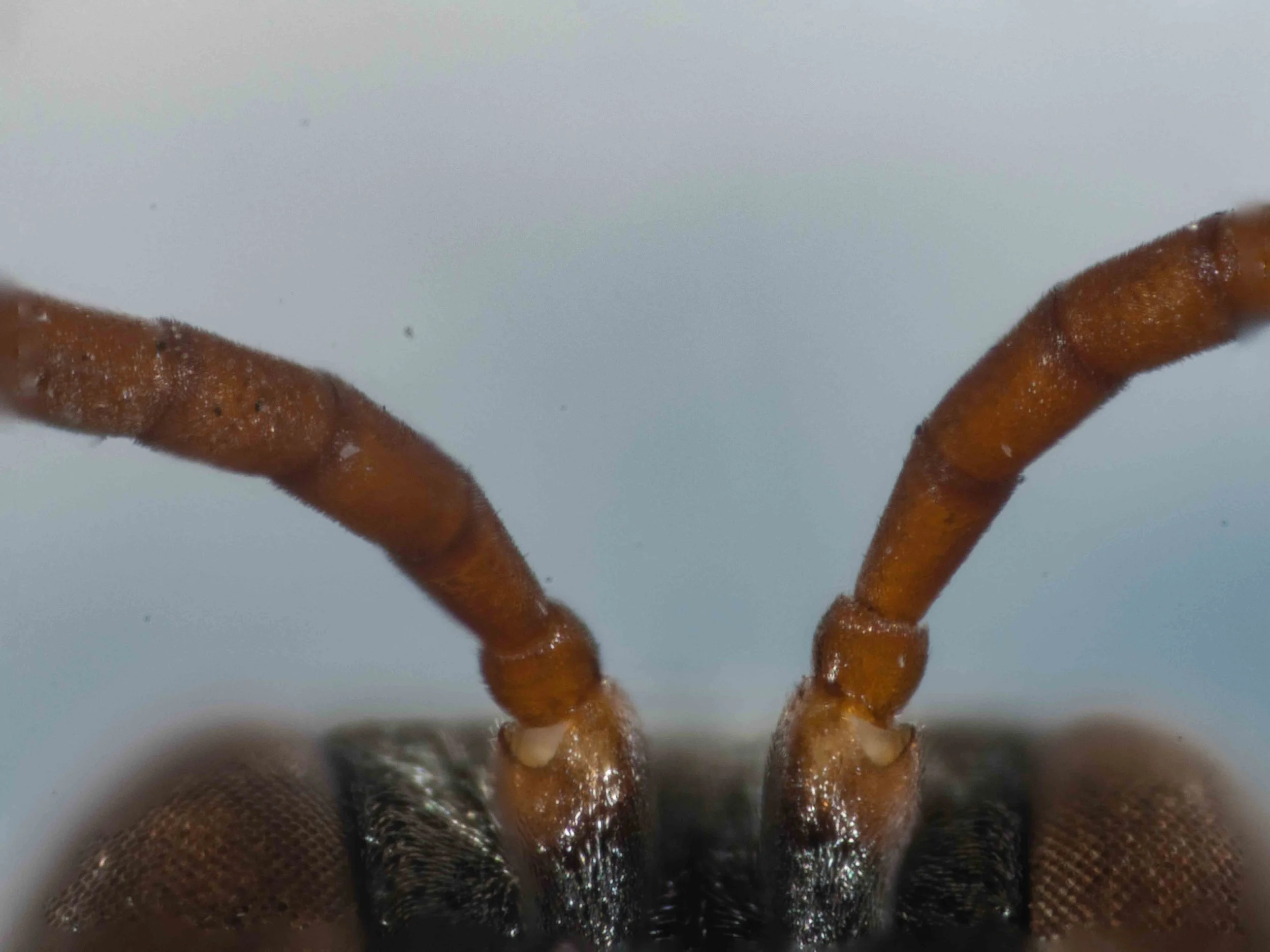
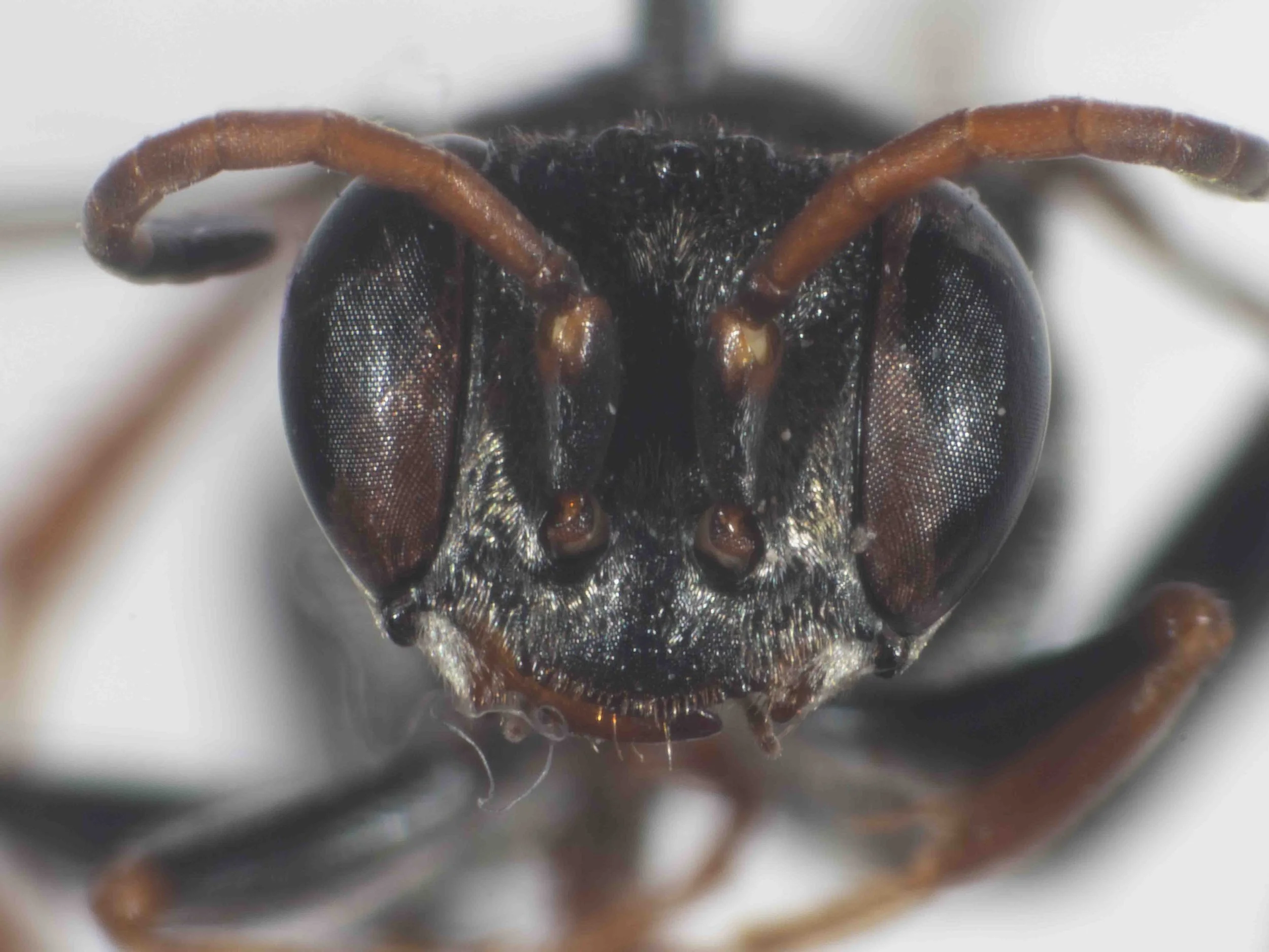
male antennae
As with nearly all members of the tribe Miscophini, male Sphodrotes have 11 antennal flagellomeres.
leg colour
Sphodrotes punctuosa females:
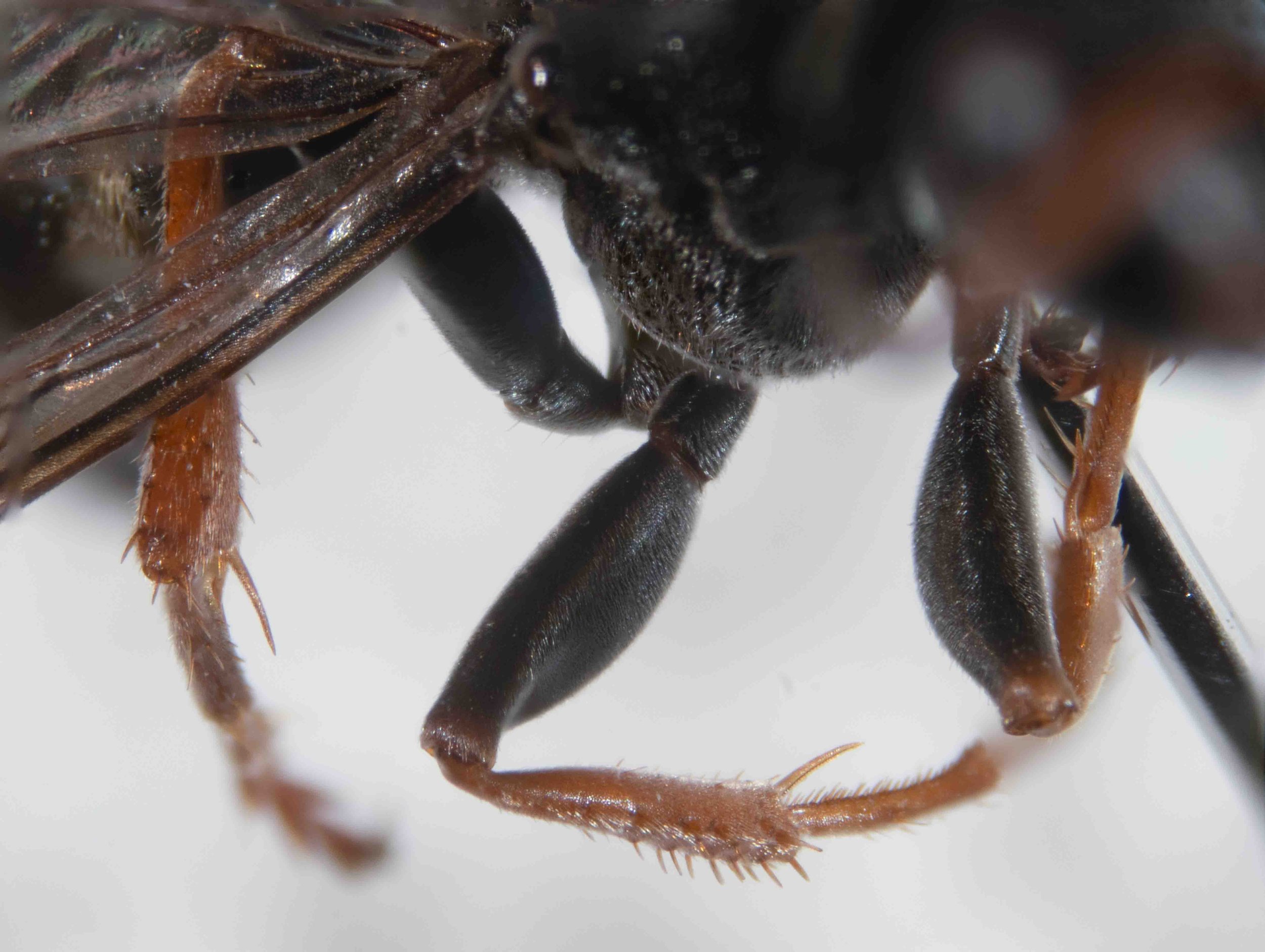
“Femora black with light ferrugineous apices. Tibiae and tarsi light ferrugineous.”
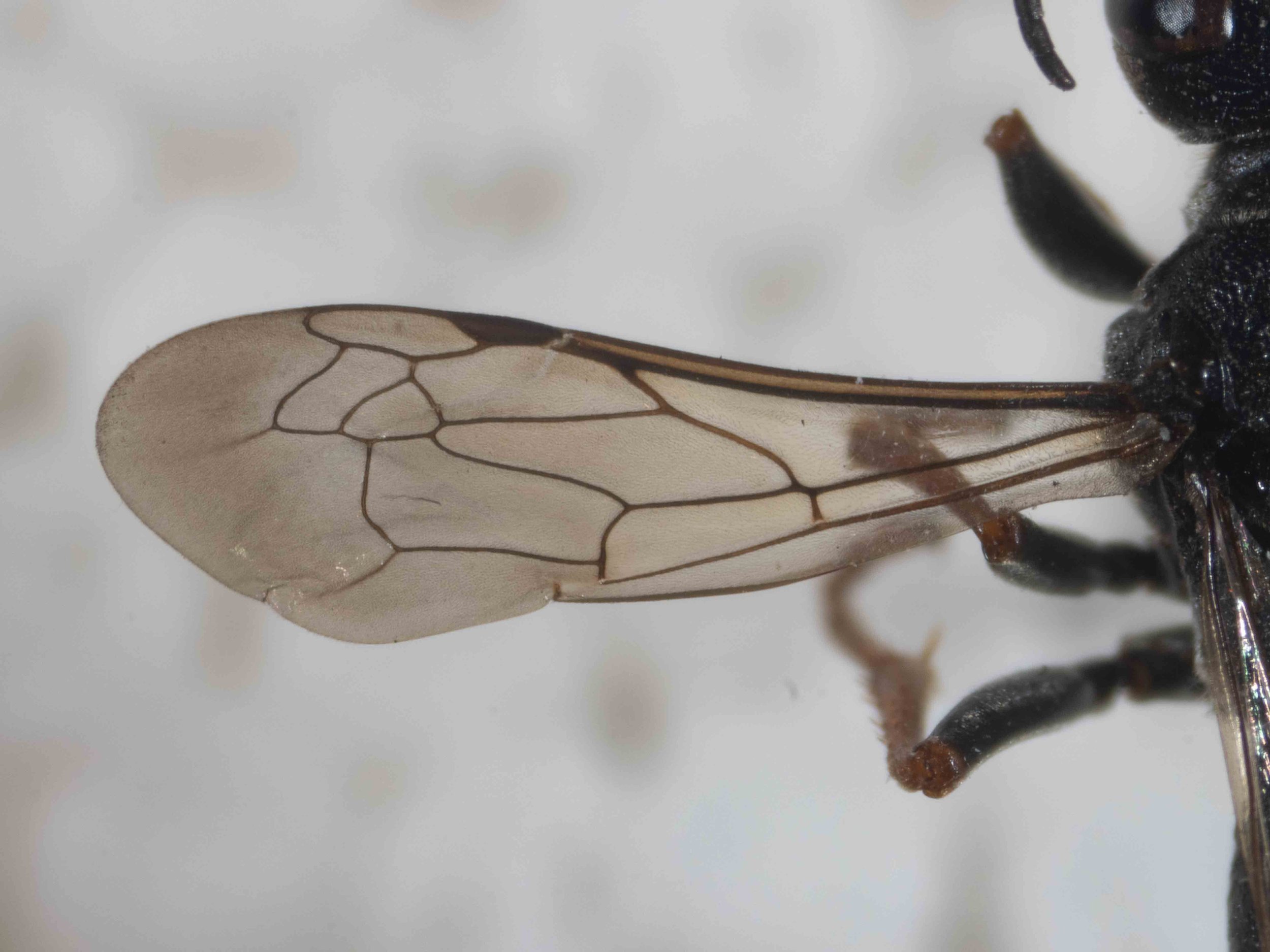
forewing venation
Sphodrotes species:
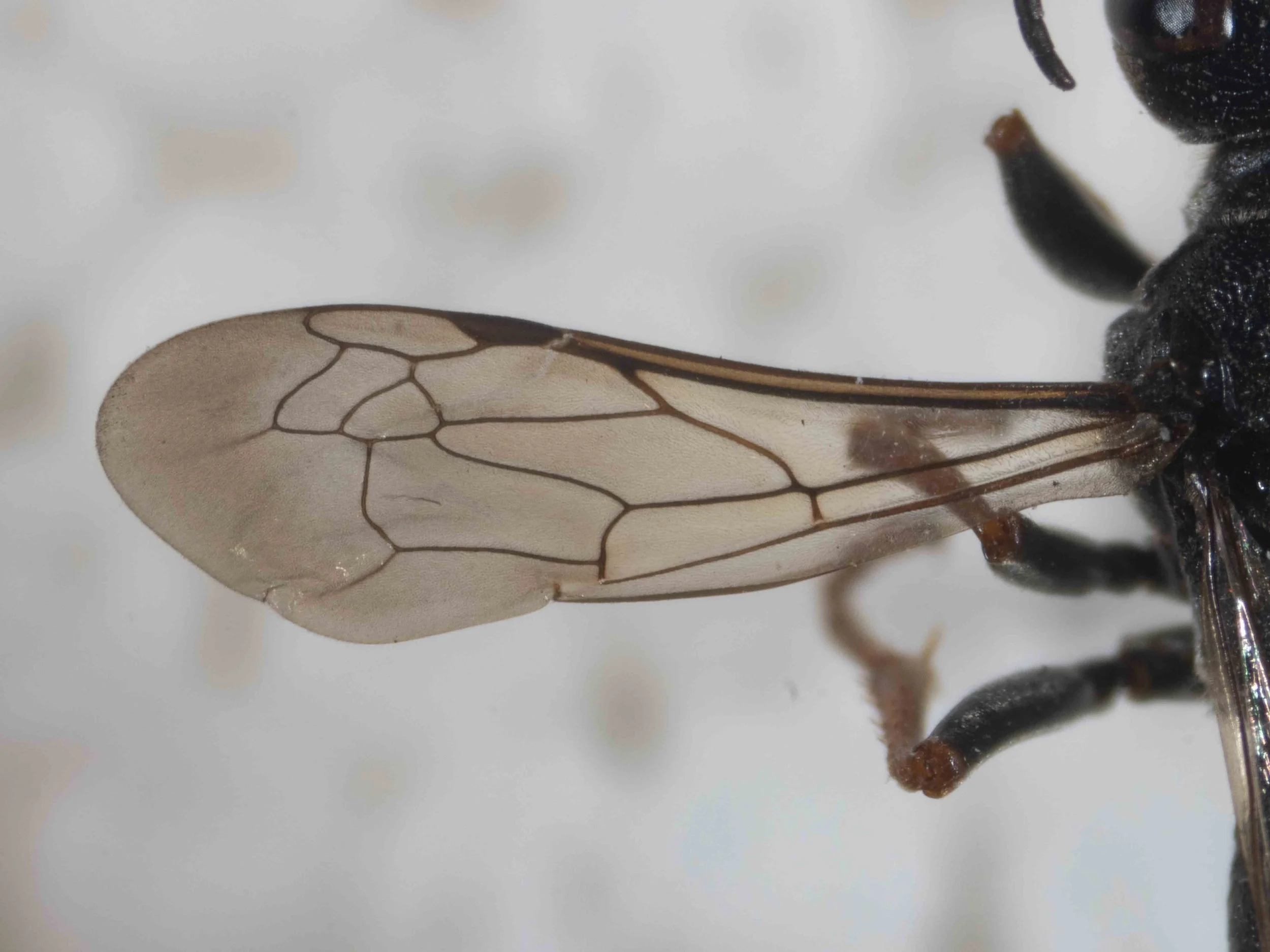
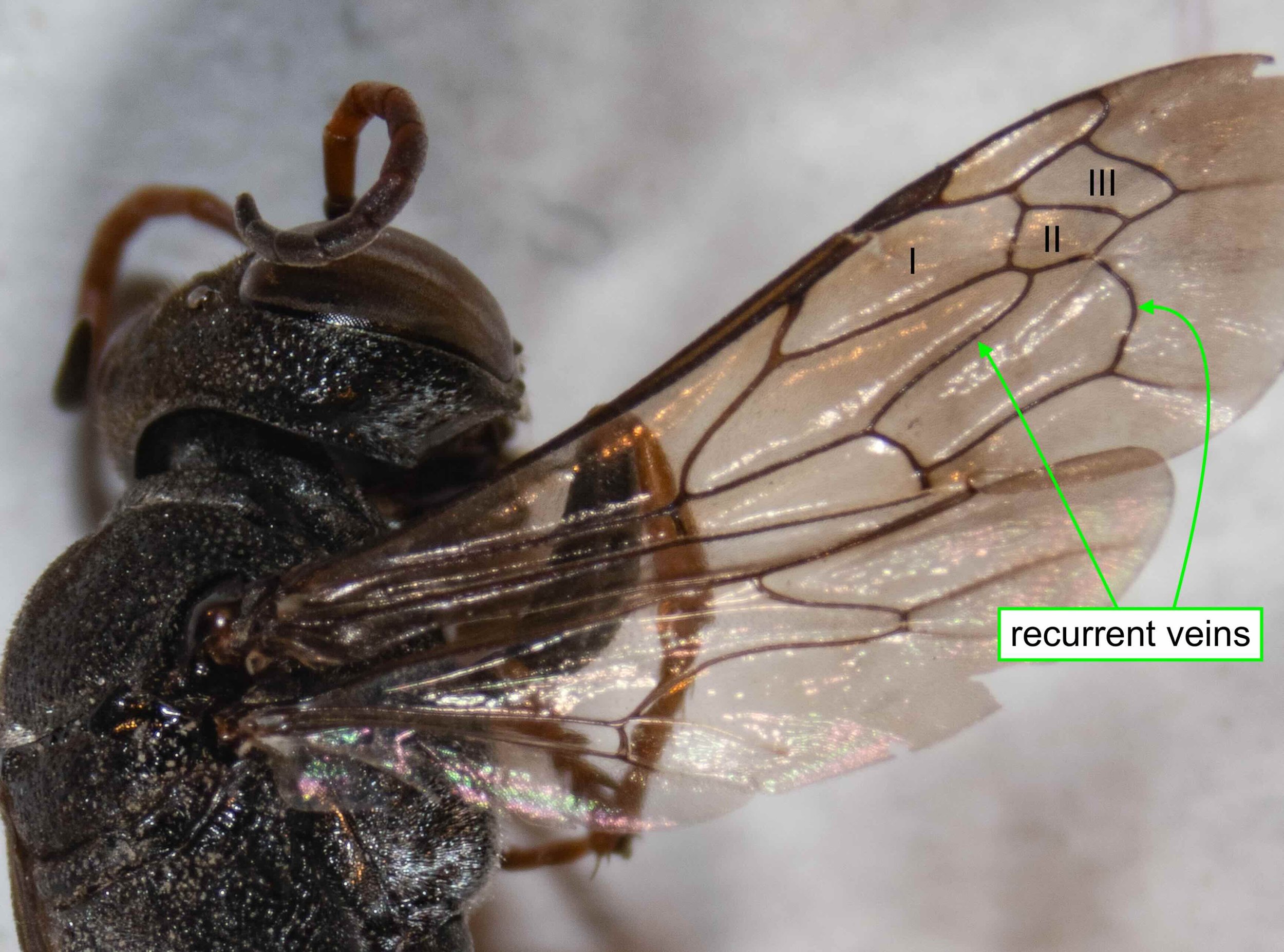
“Forewings with three submarginal cells of which the second is petiolate. Both recurrent veins received by the second submarginal cell, or the first being interstitial, or even joining first submarginal cell ni single specimens.” p.87
Sphodrotes punctuosa females:
“Wings slightly infumate.”
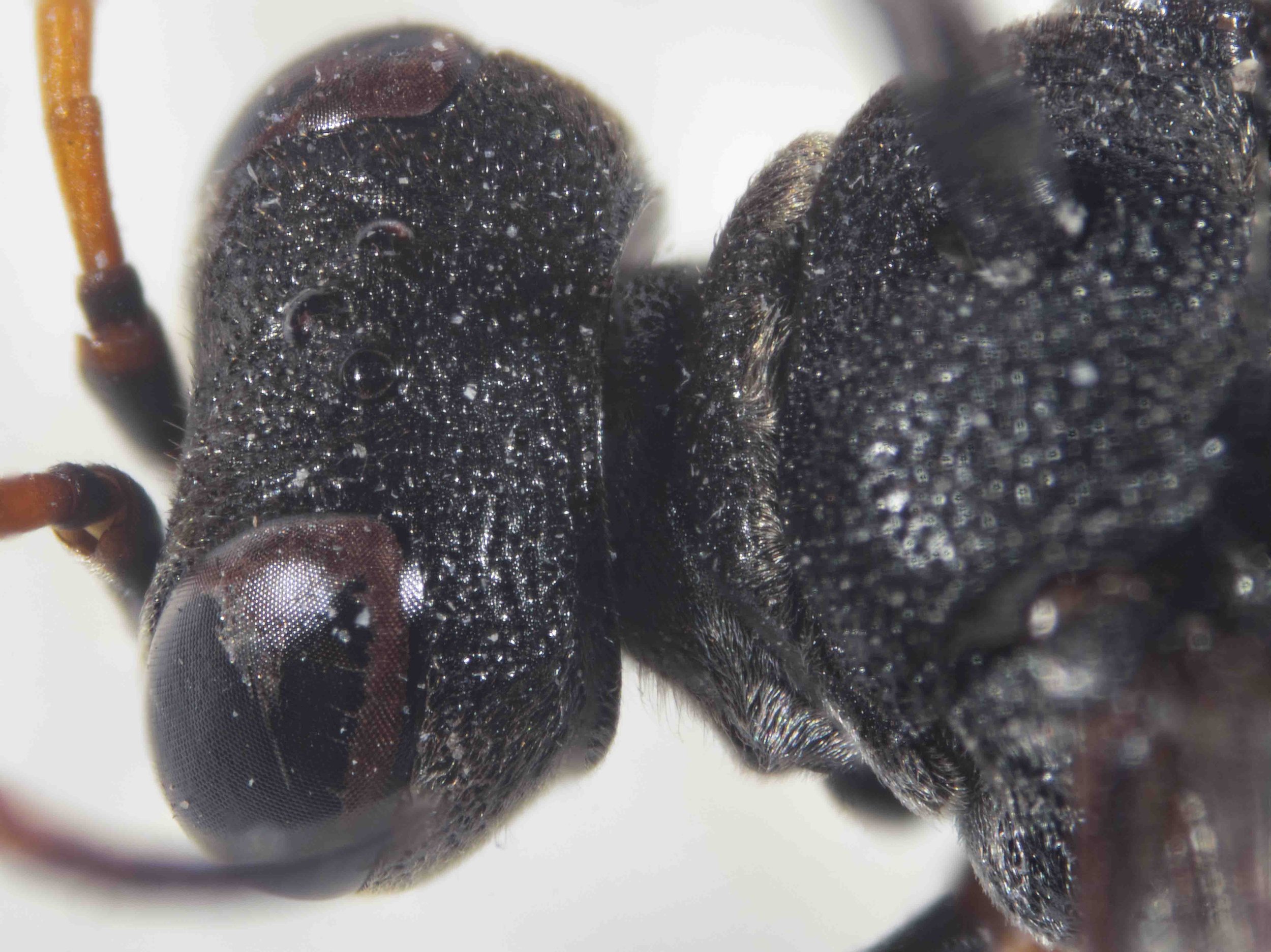
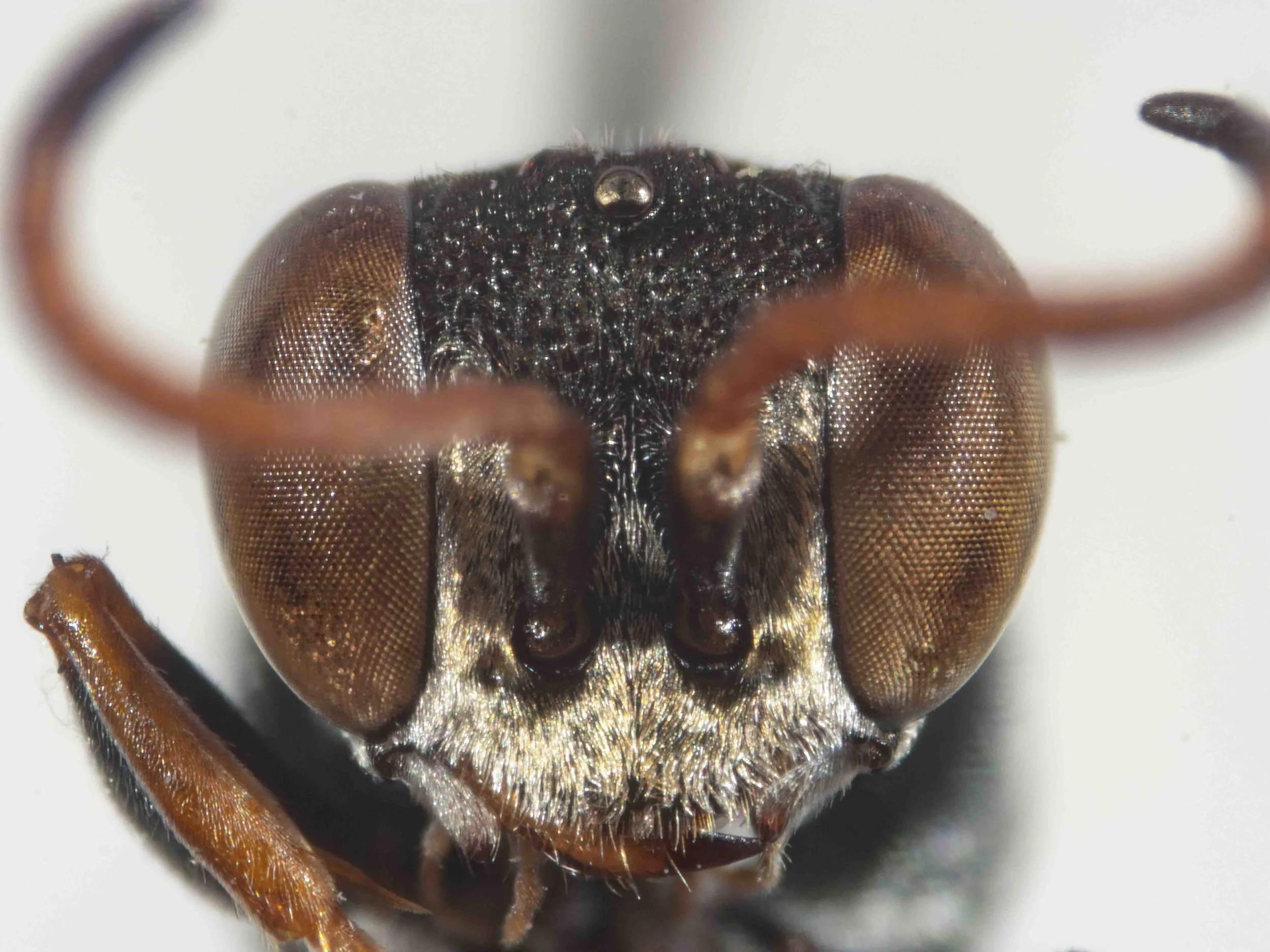
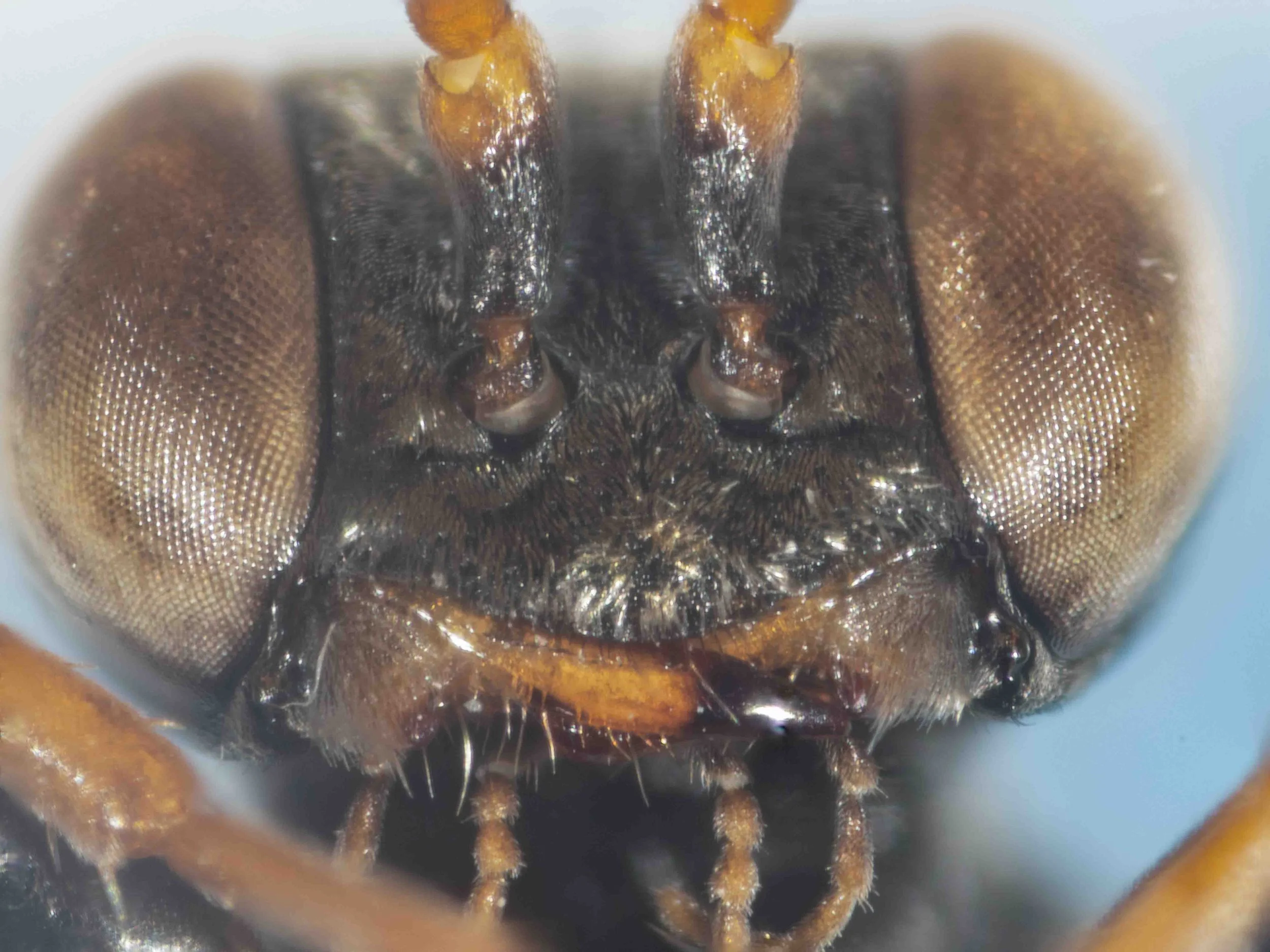
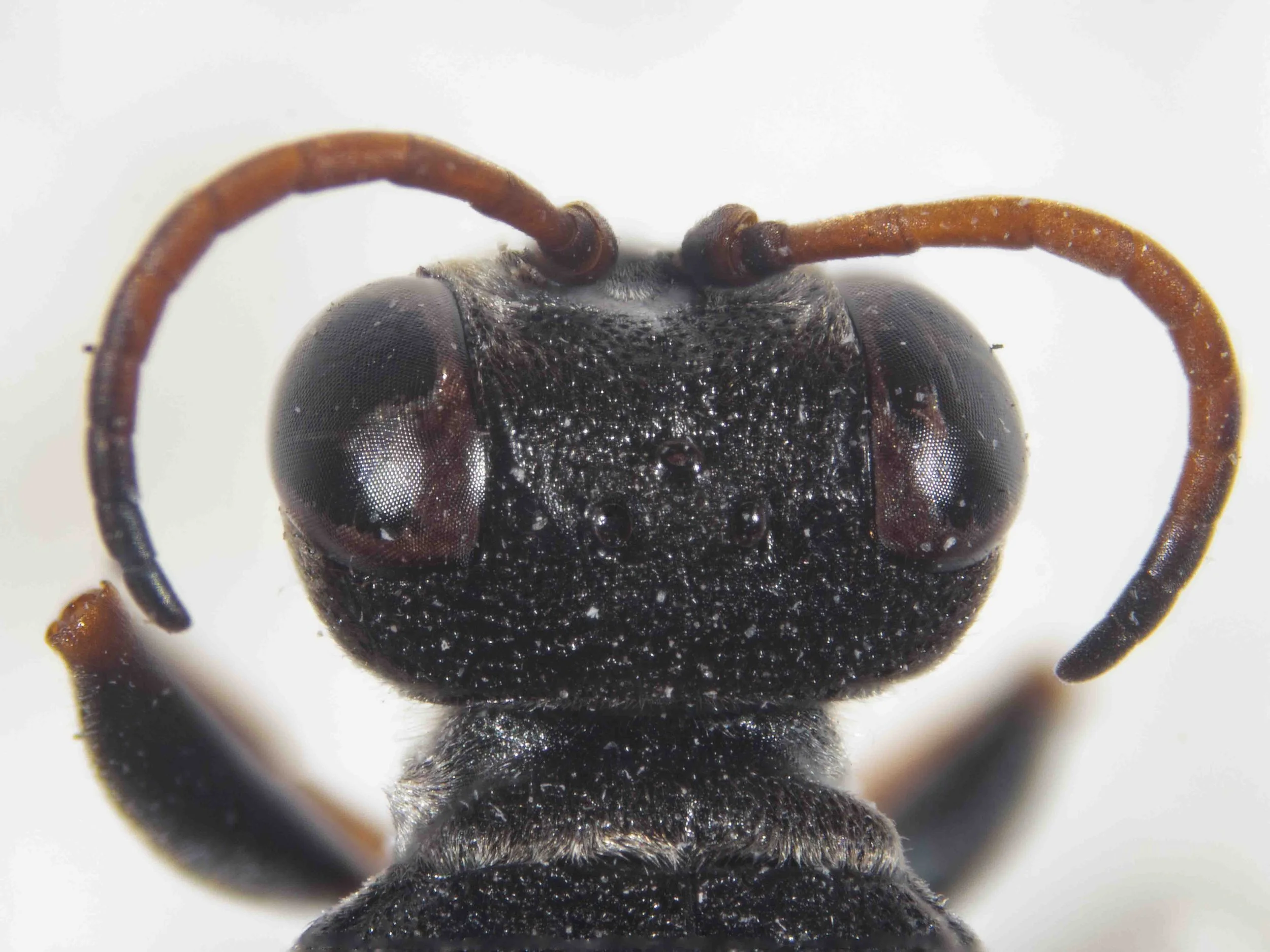
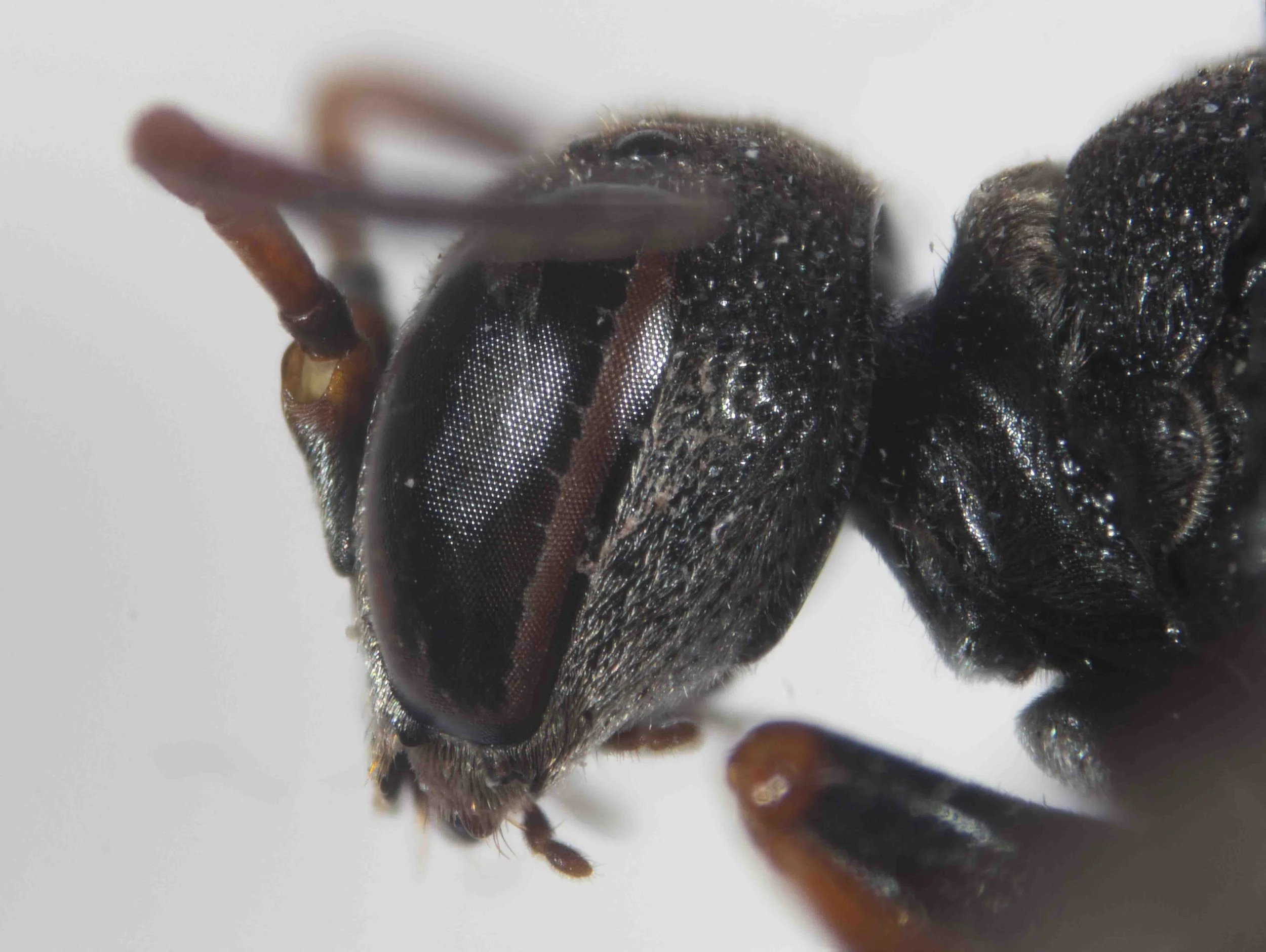
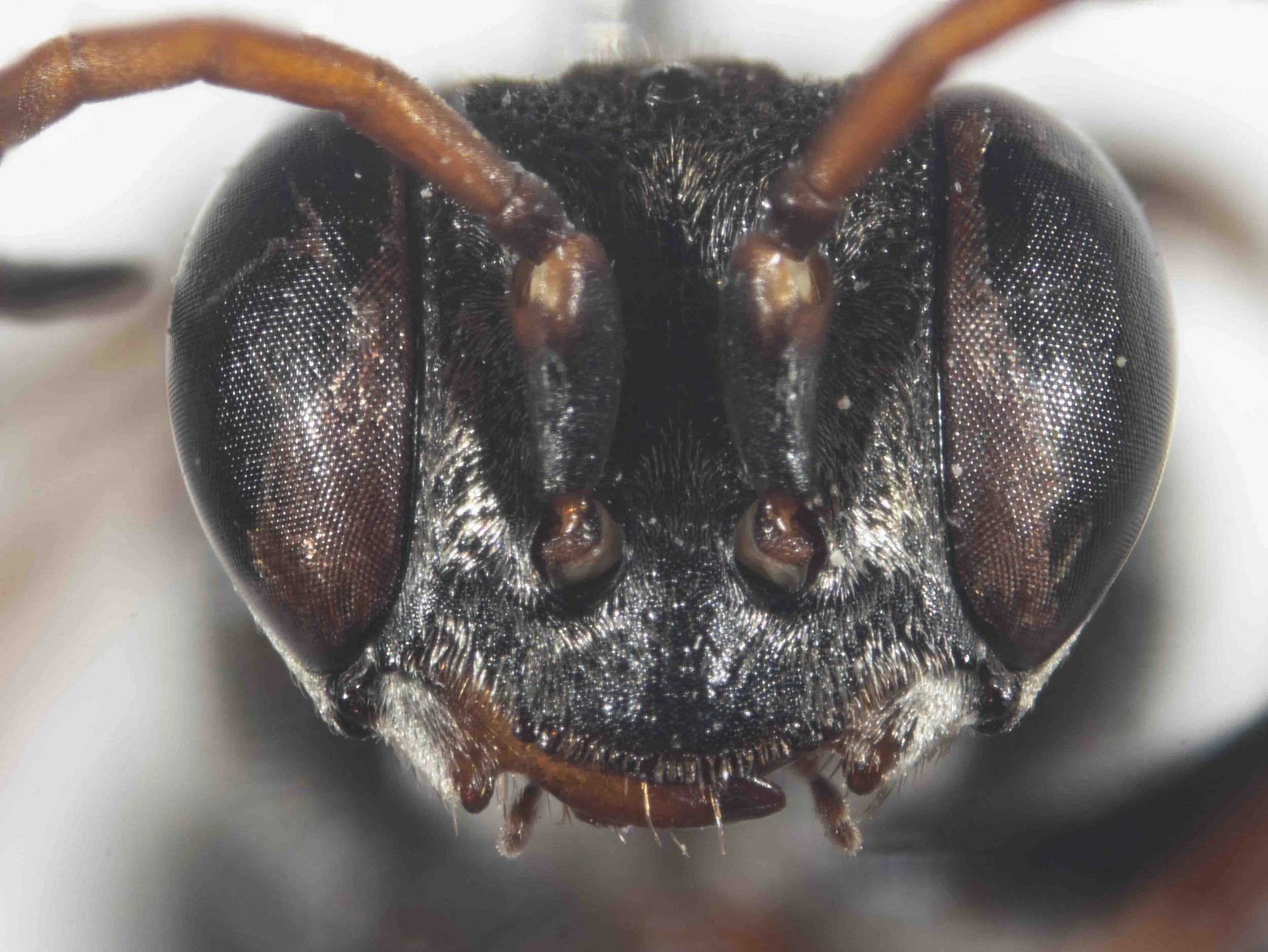
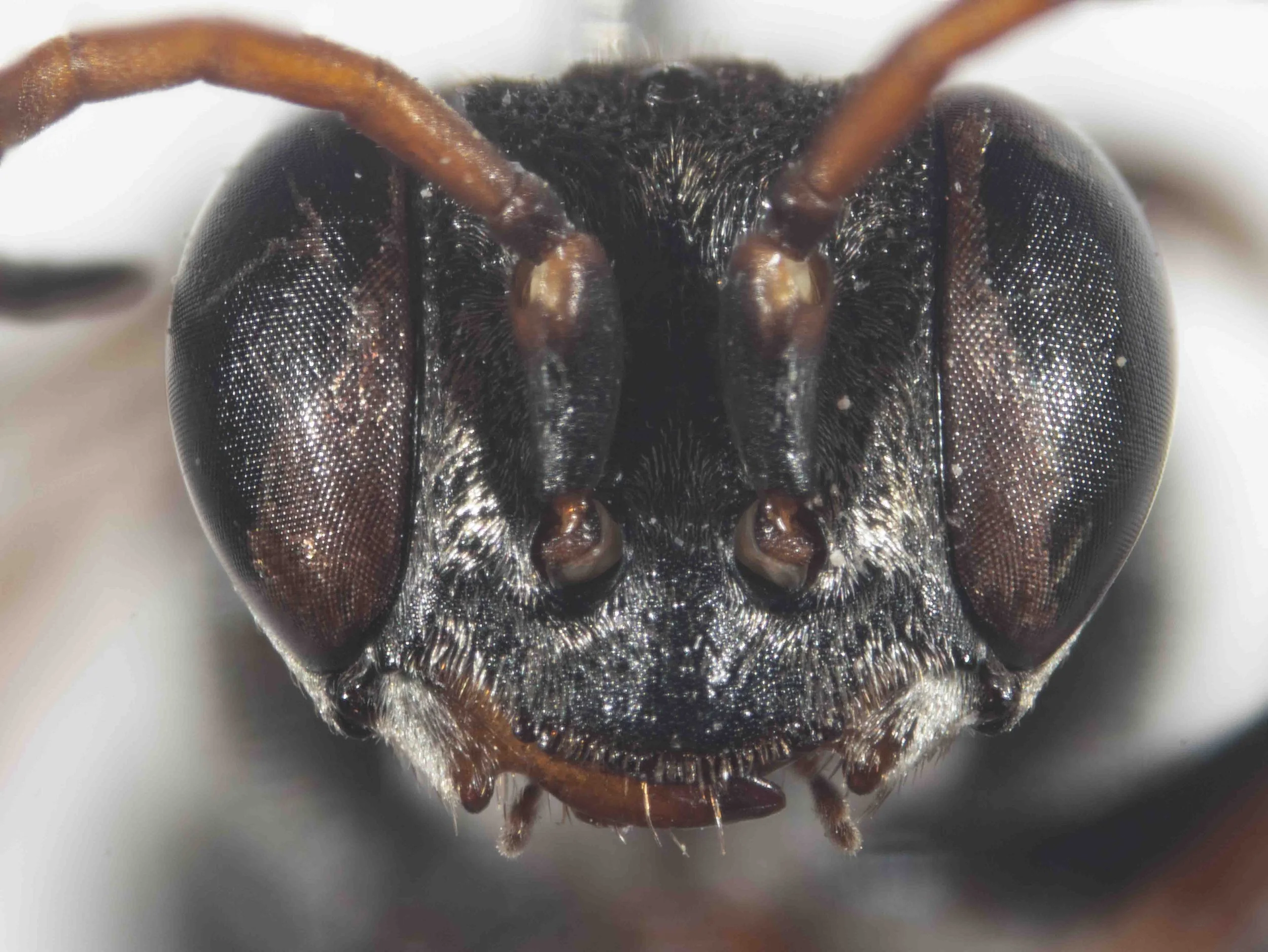
facial sculpture & pubescence
Sphodrotes punctuosa females:
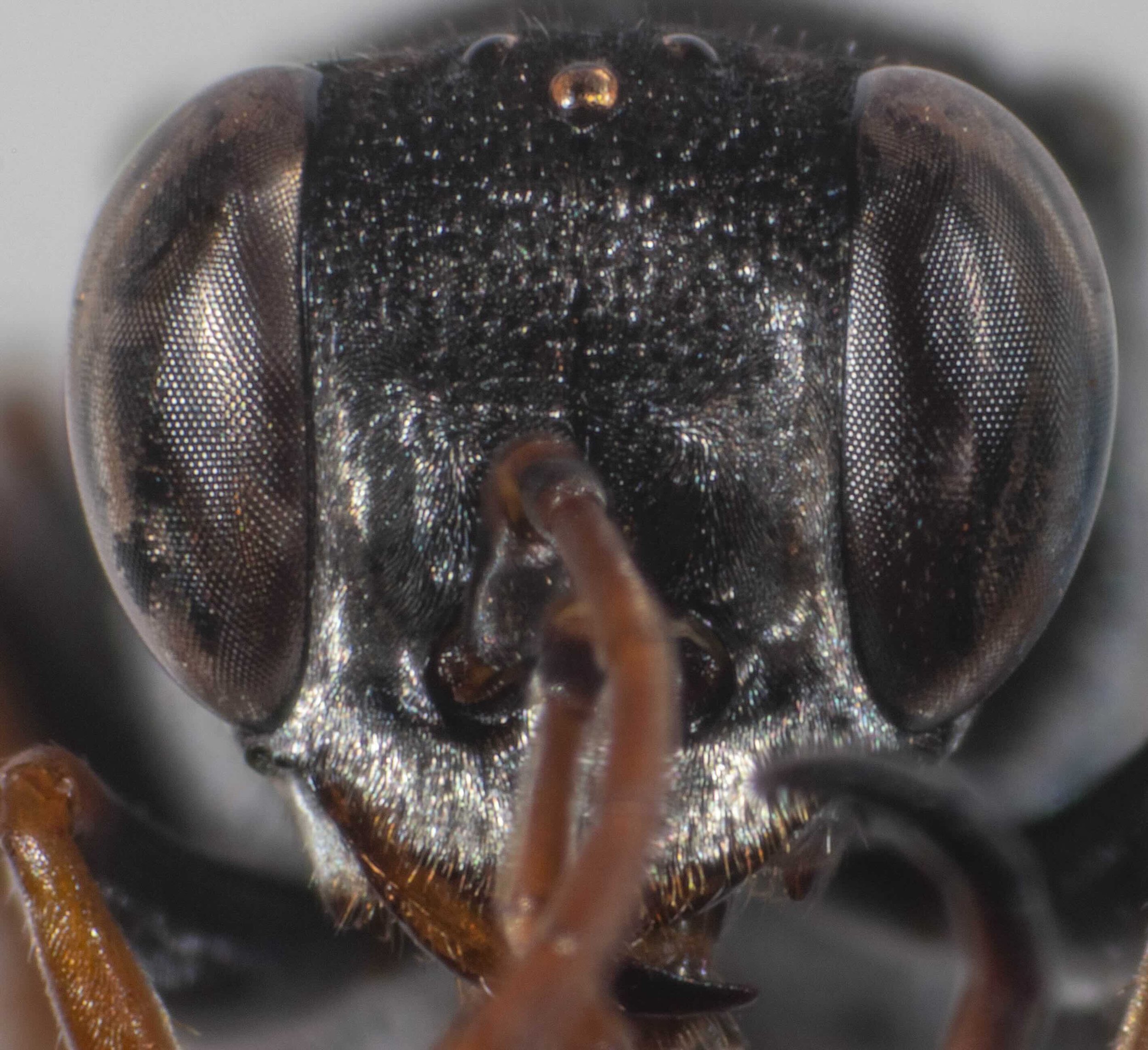
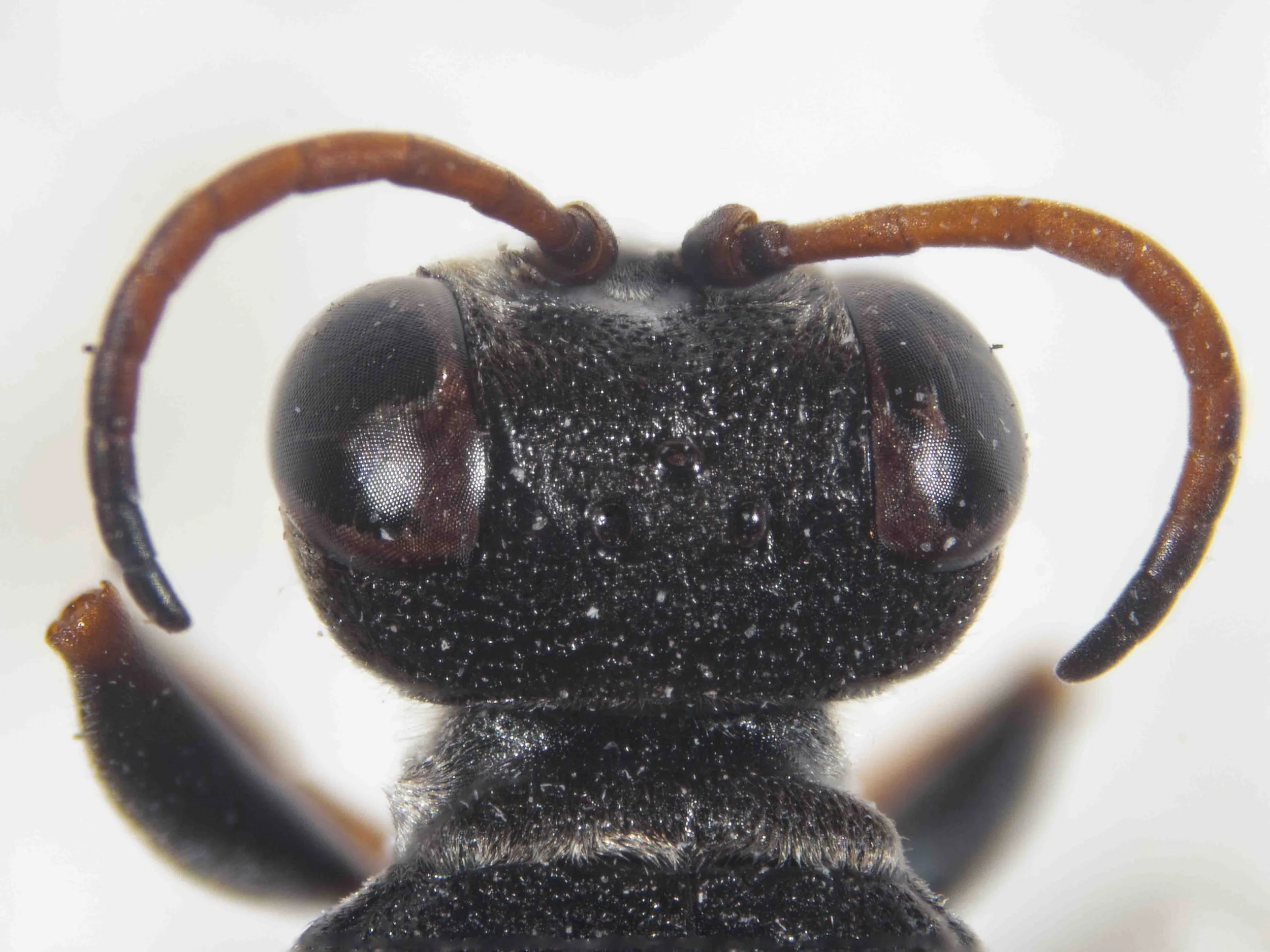
“Facial sculpture double, consisting of deep punctures separated by shining, finely and densely punctate interstices less than their diameter. Lower face with silvery pubescence of varying density. Frontal line absent or very indistinct.“
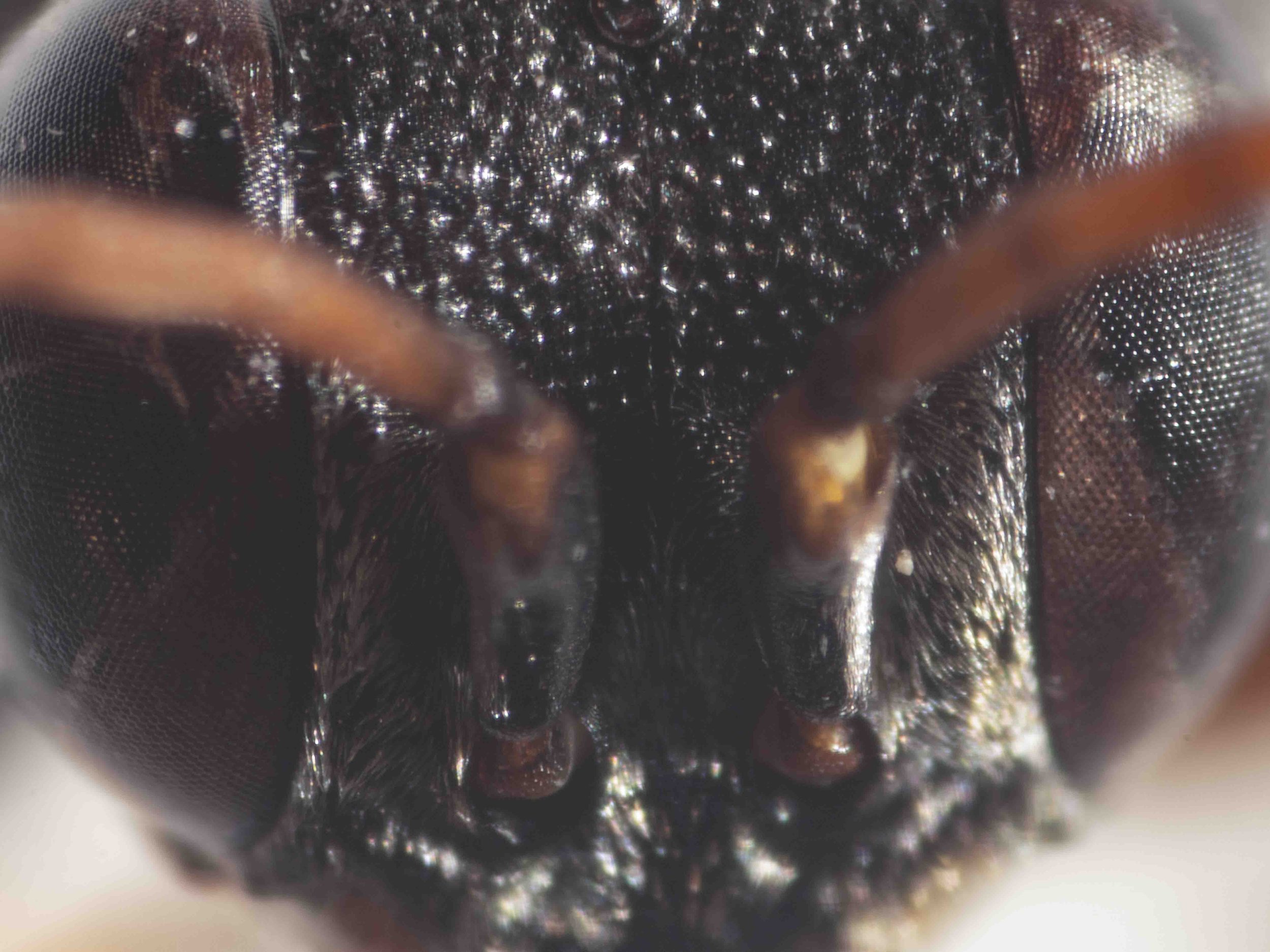
facial sculpture & pubescence
Sphodrotes punctuosa females:
“Facial sculpture double, consisting of deep punctures separated by shining, finely and densely punctate interstices less than their diameter. Lower face with silvery pubescence of varying density. Frontal line absent or very indistinct.“
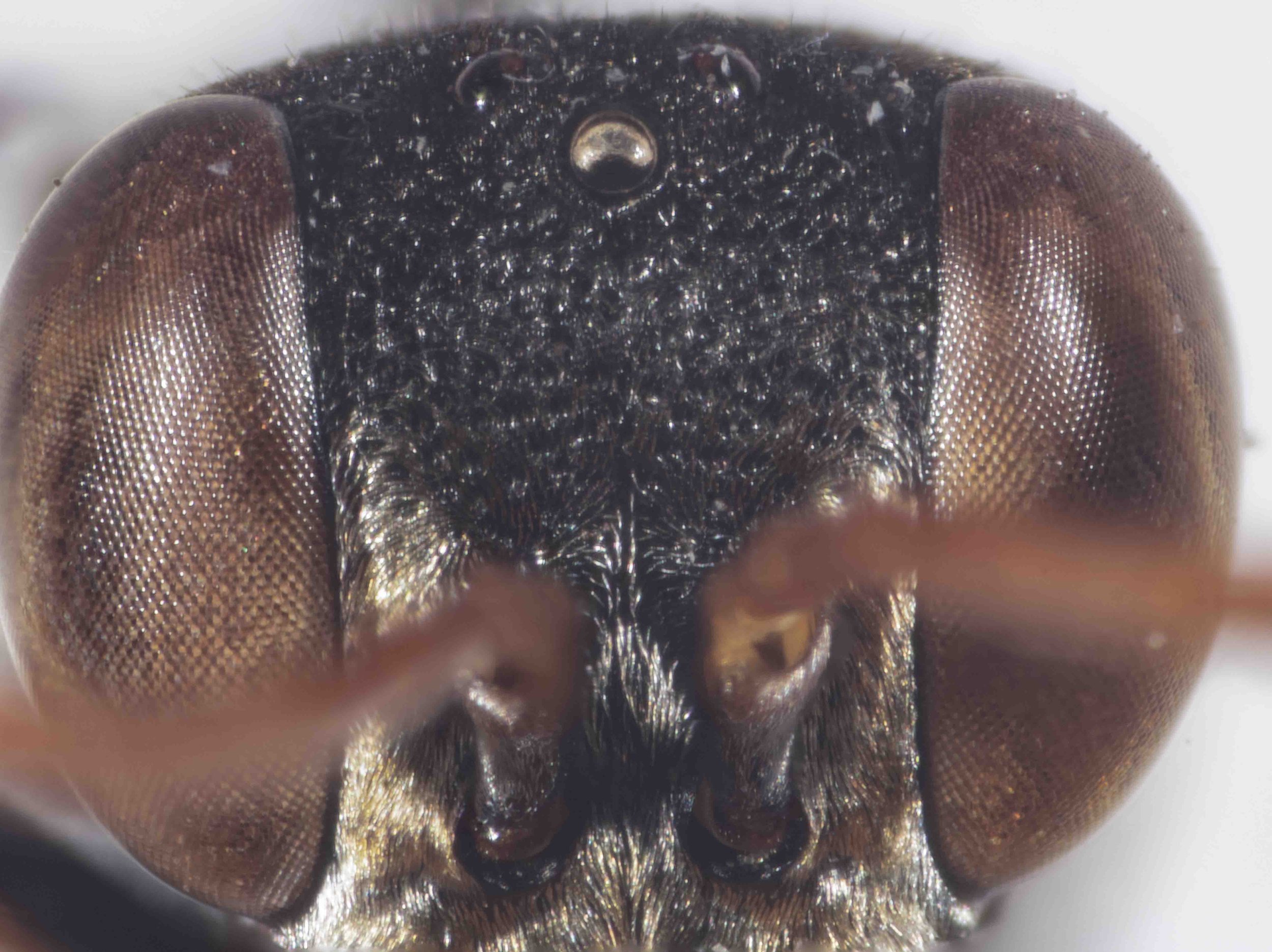
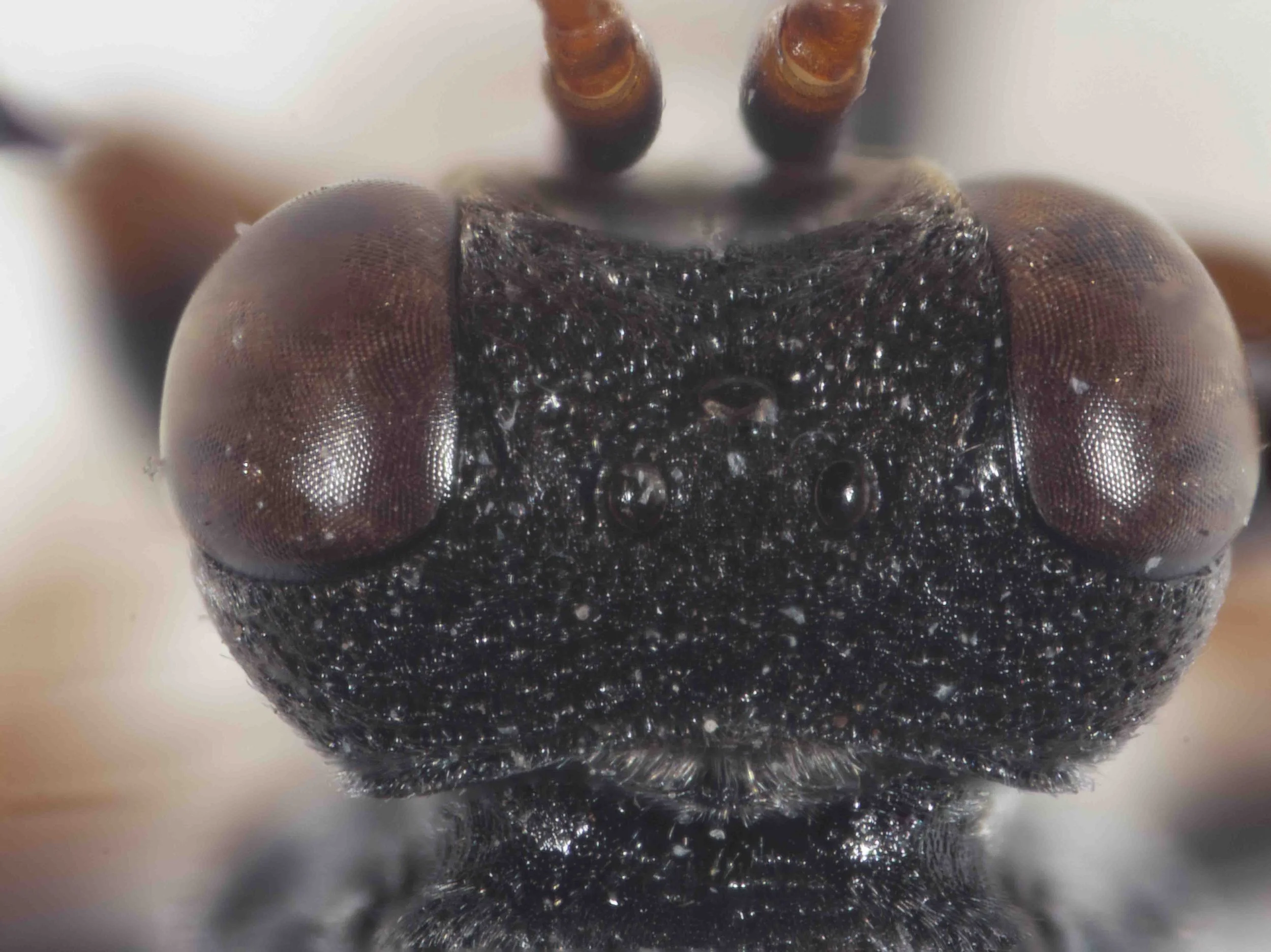
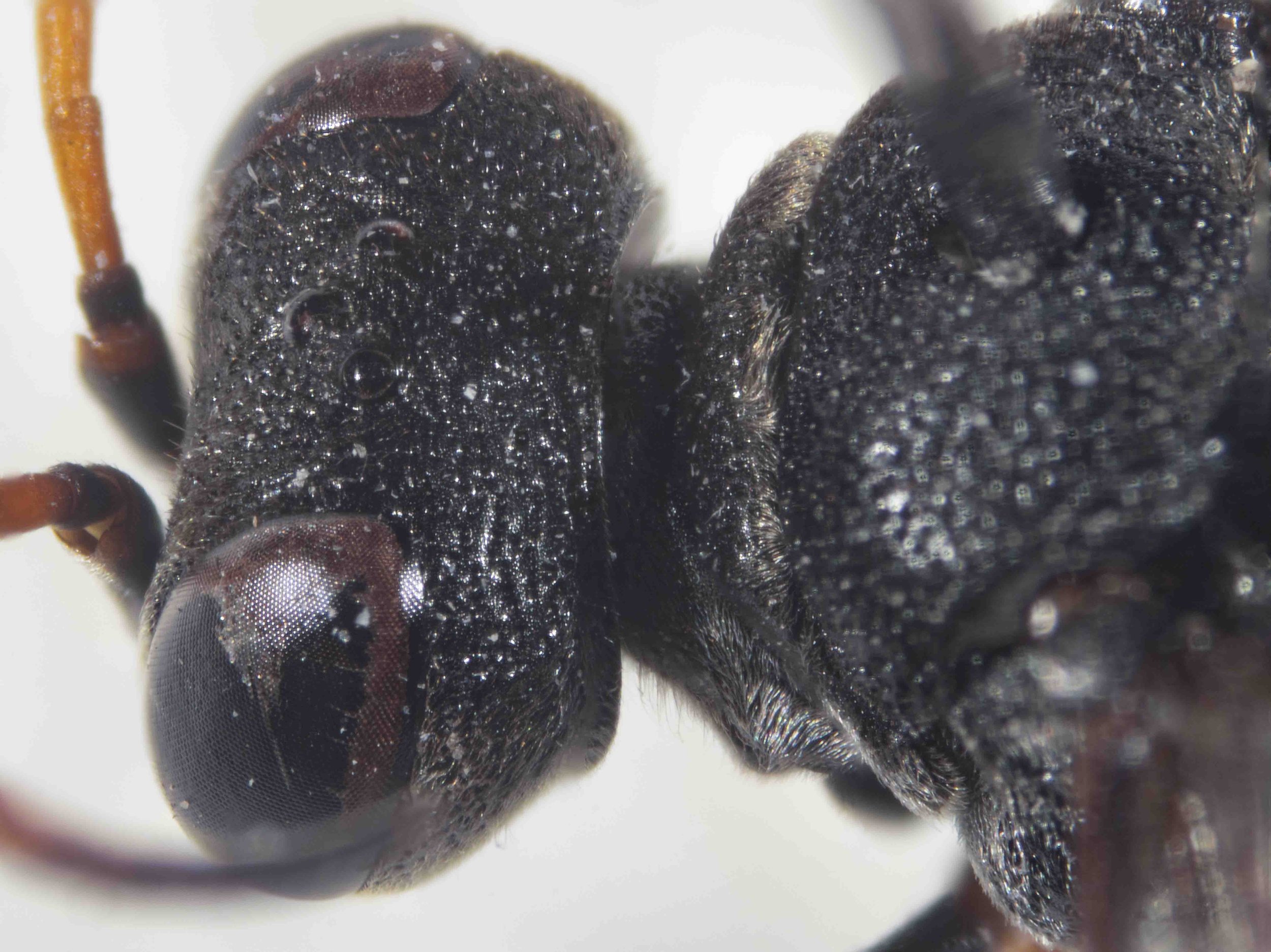
facial sculpture & pubescence
Sphodrotes punctuosa males:
Differing from females in …
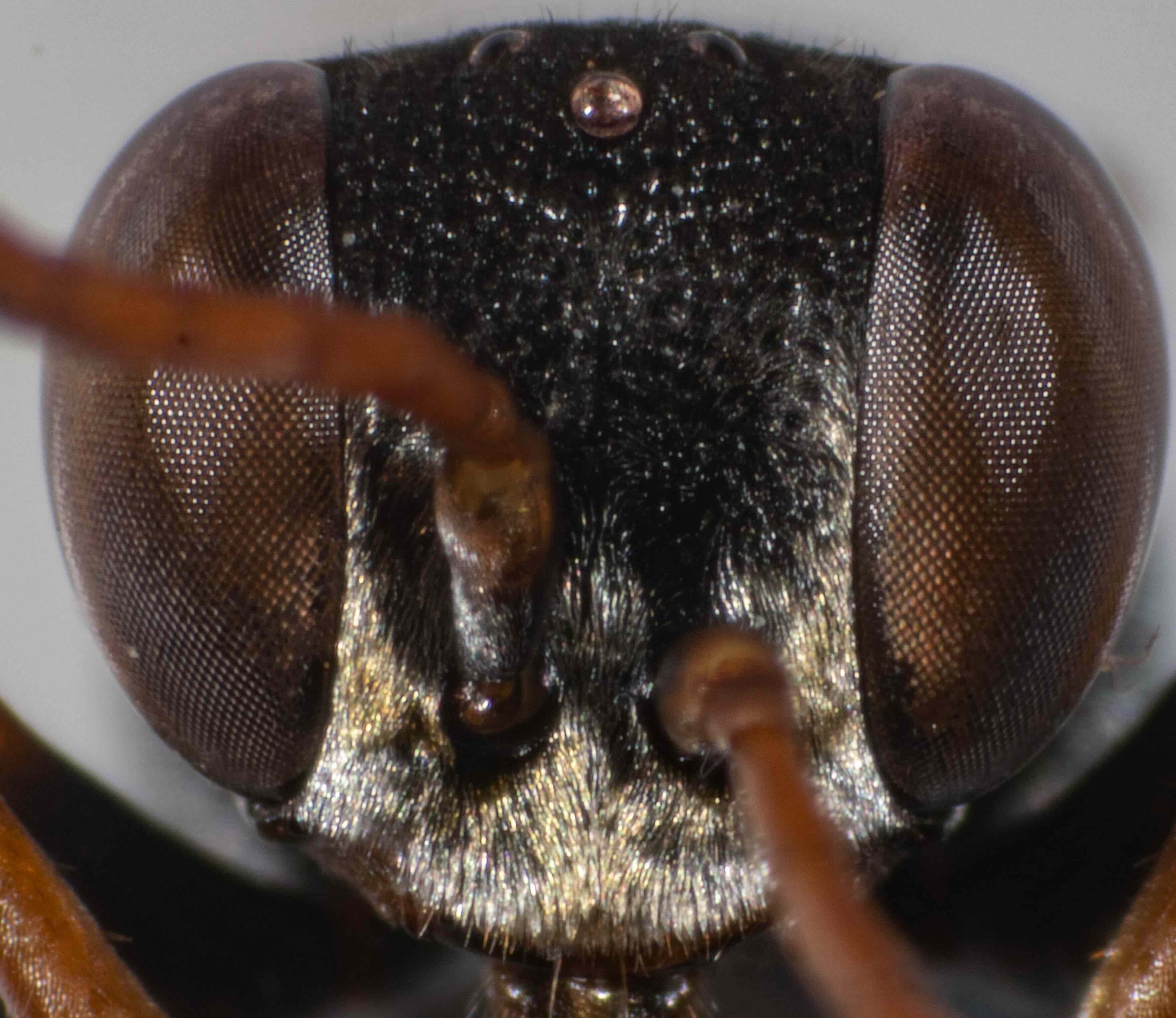
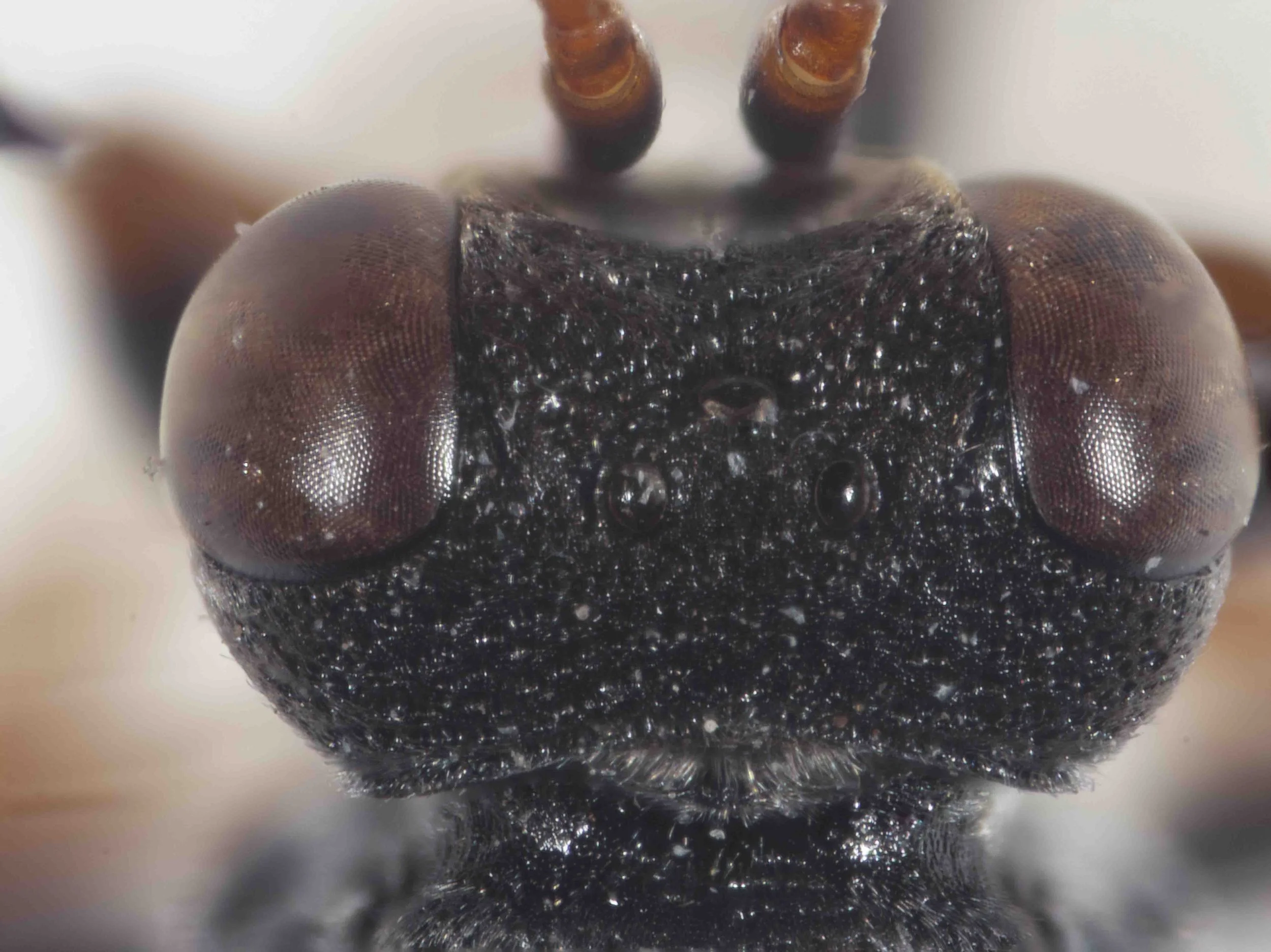
“Punctation on frons much denser and stronger, interstices narrower, micropunctation finer. Frontal and clypeal pubescence much denser, brassy or slightly golden.”
mandible colour & pubescence
Sphodrotes species:
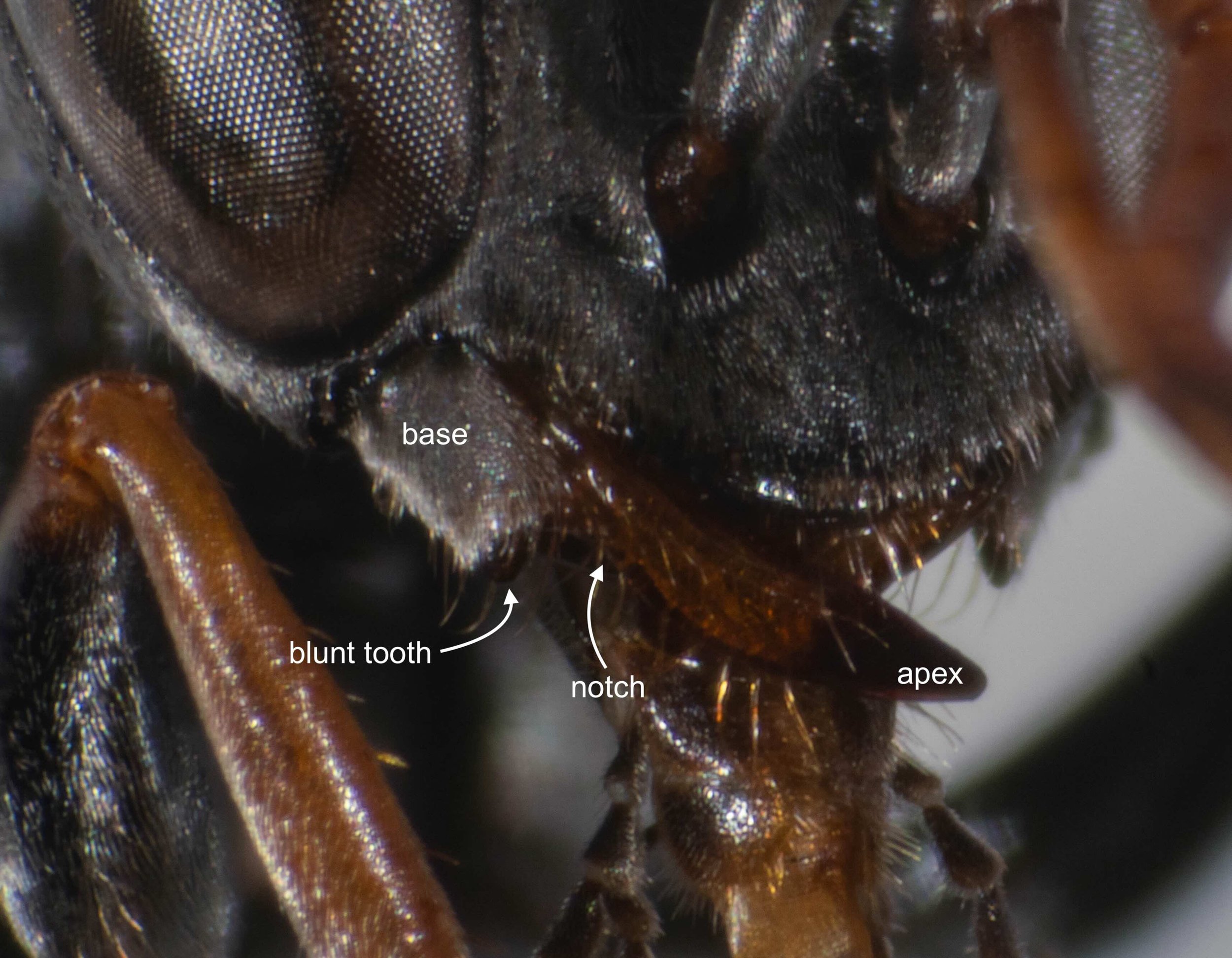
“Mandibles with externoventral notch, proximally delimited by a blunt tooth.” (p. 87)
Sphodrotes punctuosa females:
“Mandibles densely pubescent proximally, median part ferrugineously amber, apex black to dark ferrugineous.”
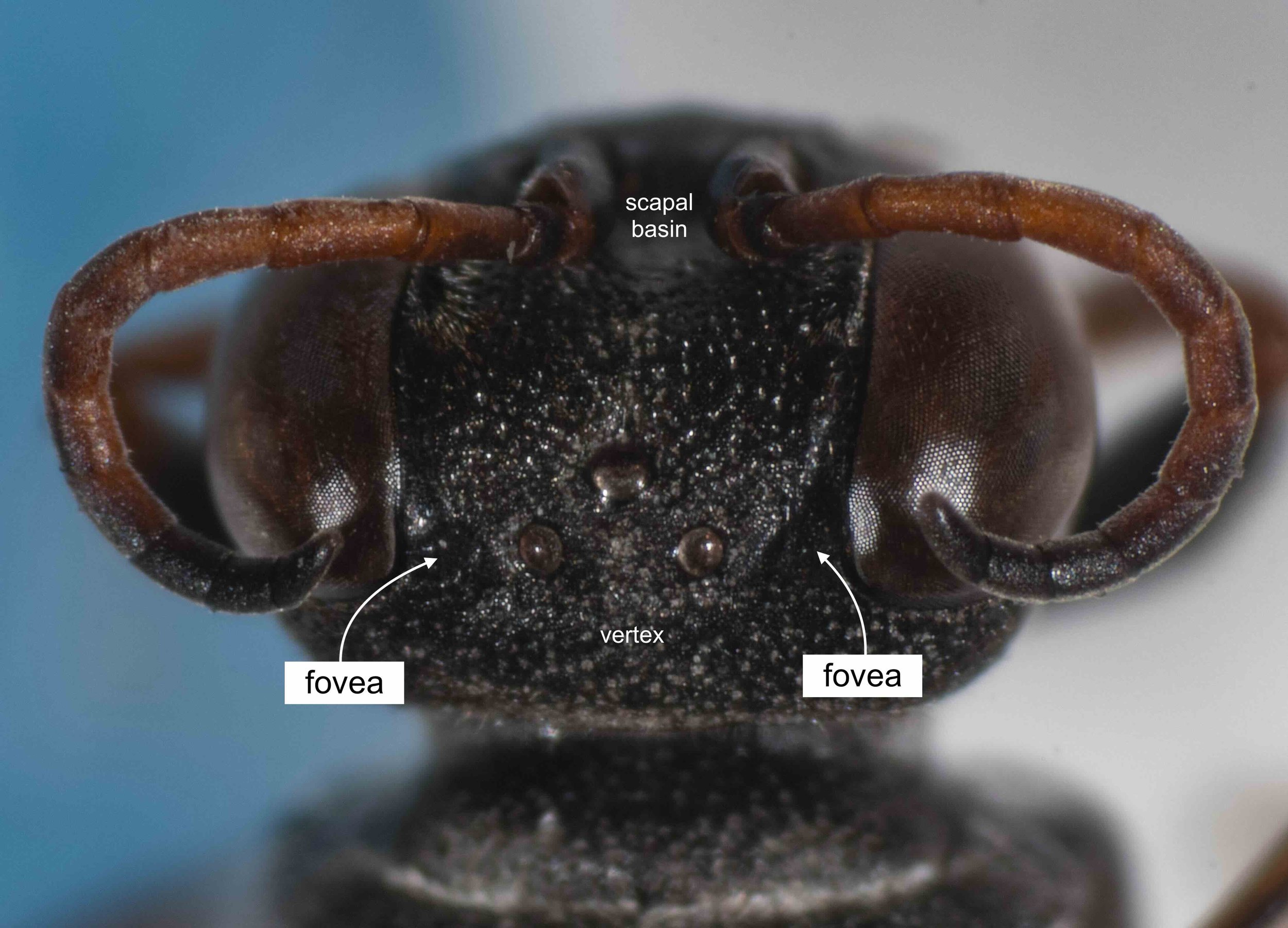
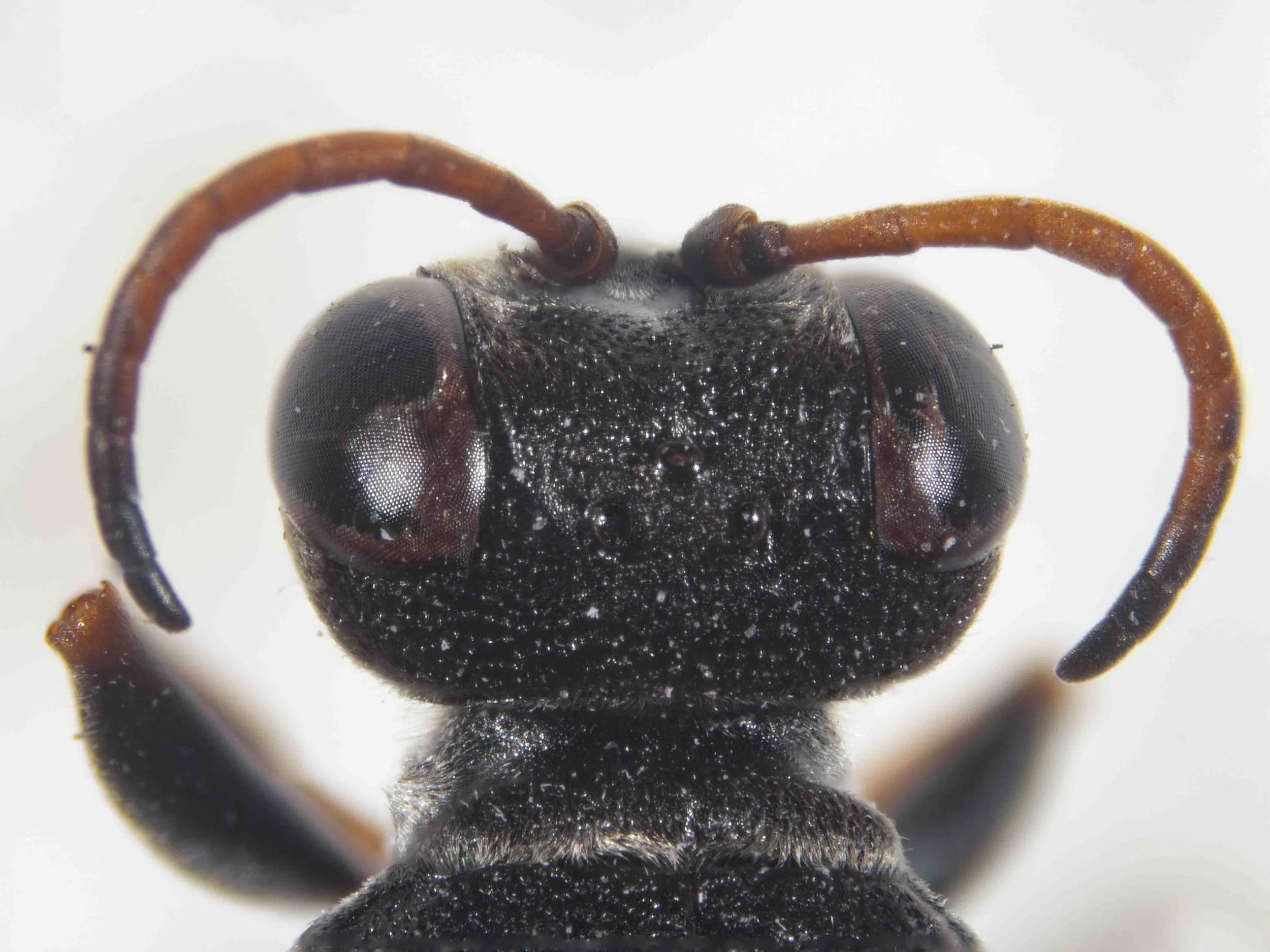
fovea; antennal colour
Sphodrotes punctuosa females:
“Facial foveae distinct, medially bordered by a longitudinal elevation.” “Antennal colour varying from almost quite dark brown or black to light yelowish ferrugineous.”
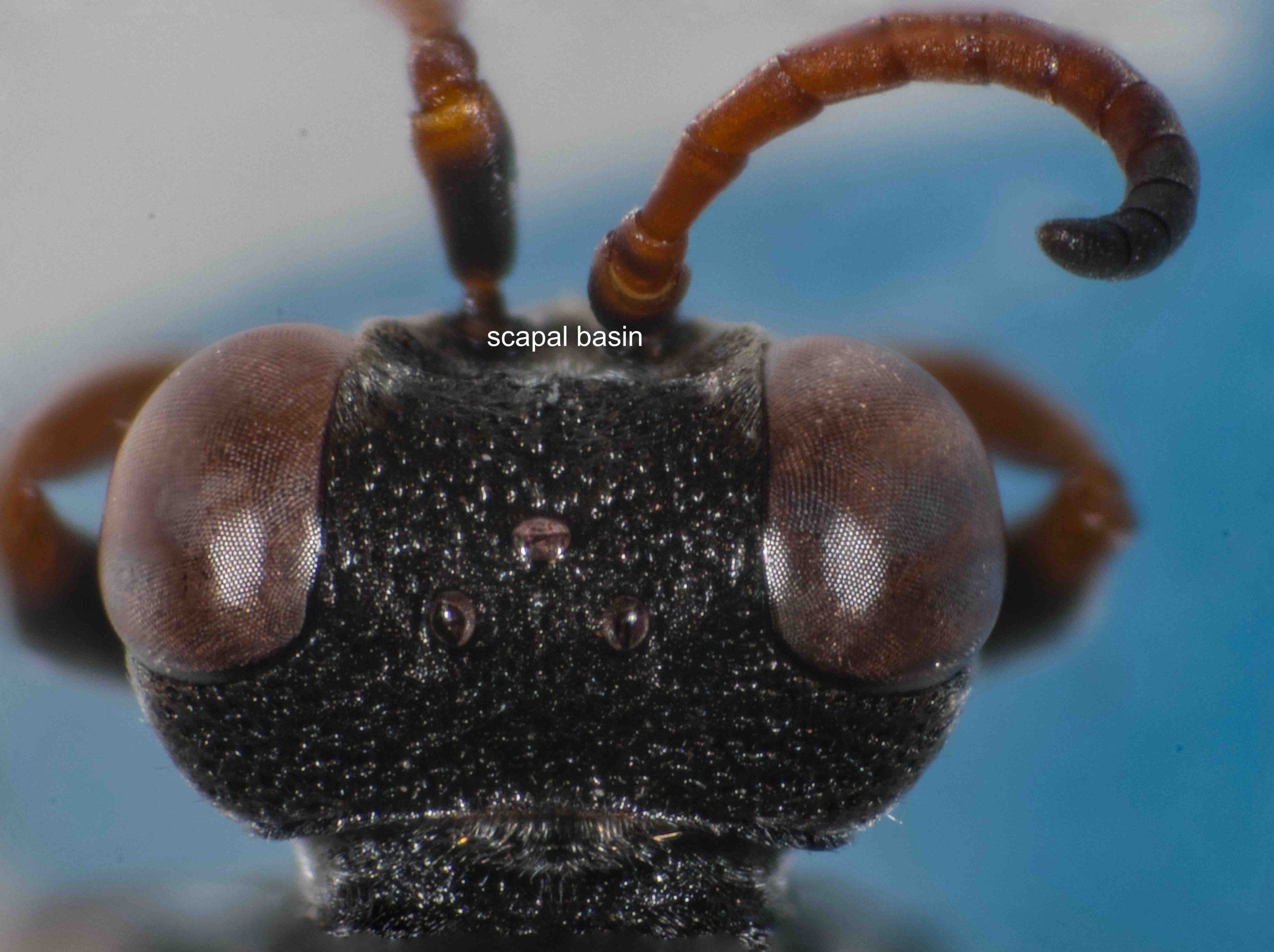
fovea & scapal basin; antennal colour
Sphodrotes punctuosa males:
Differing from females in …
“Facial foveae absent. Scapal basin deeper.” “Proximal flagellar segments light ferrugineous ventrally to quite light ferrugineous.”
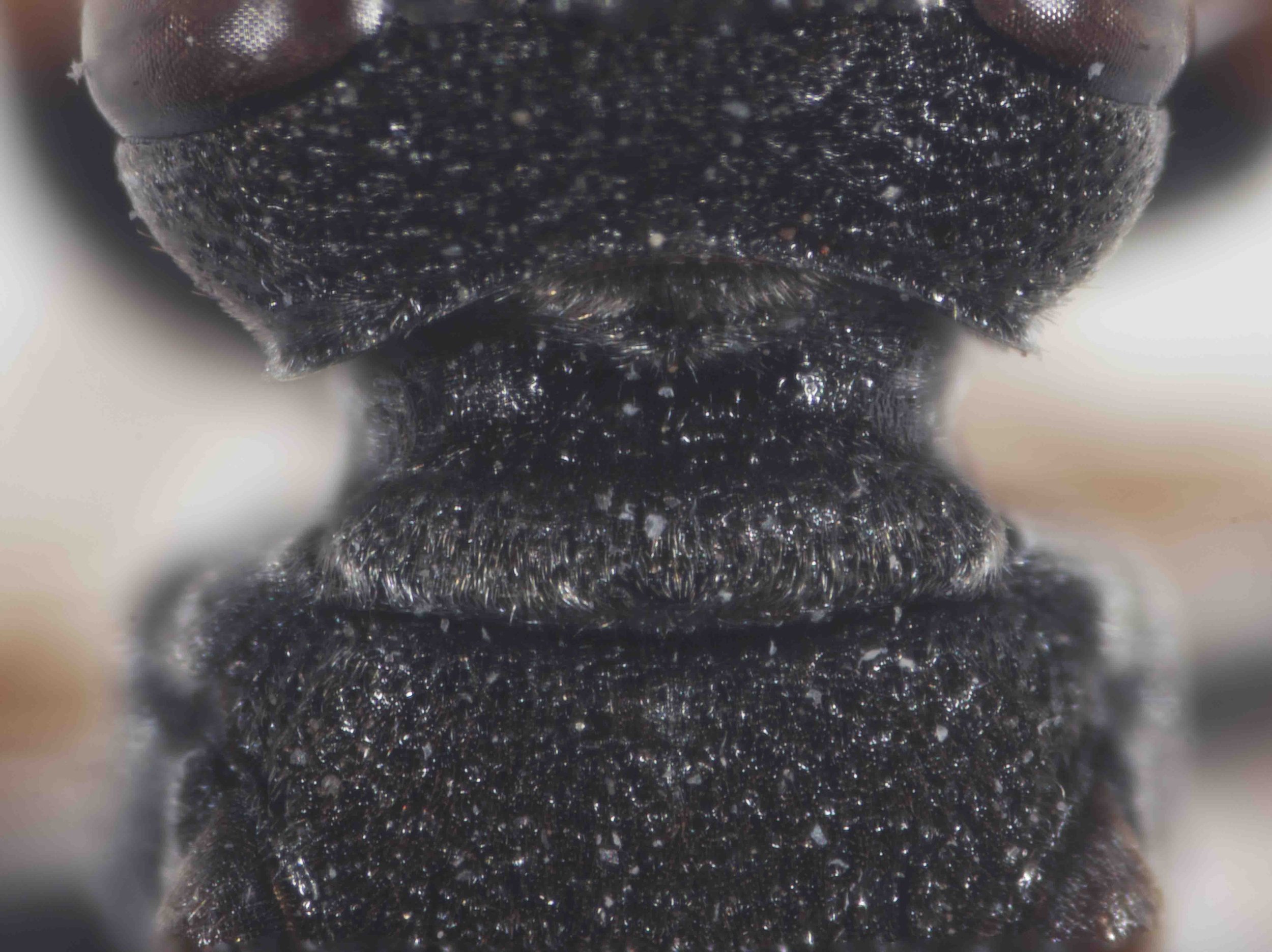
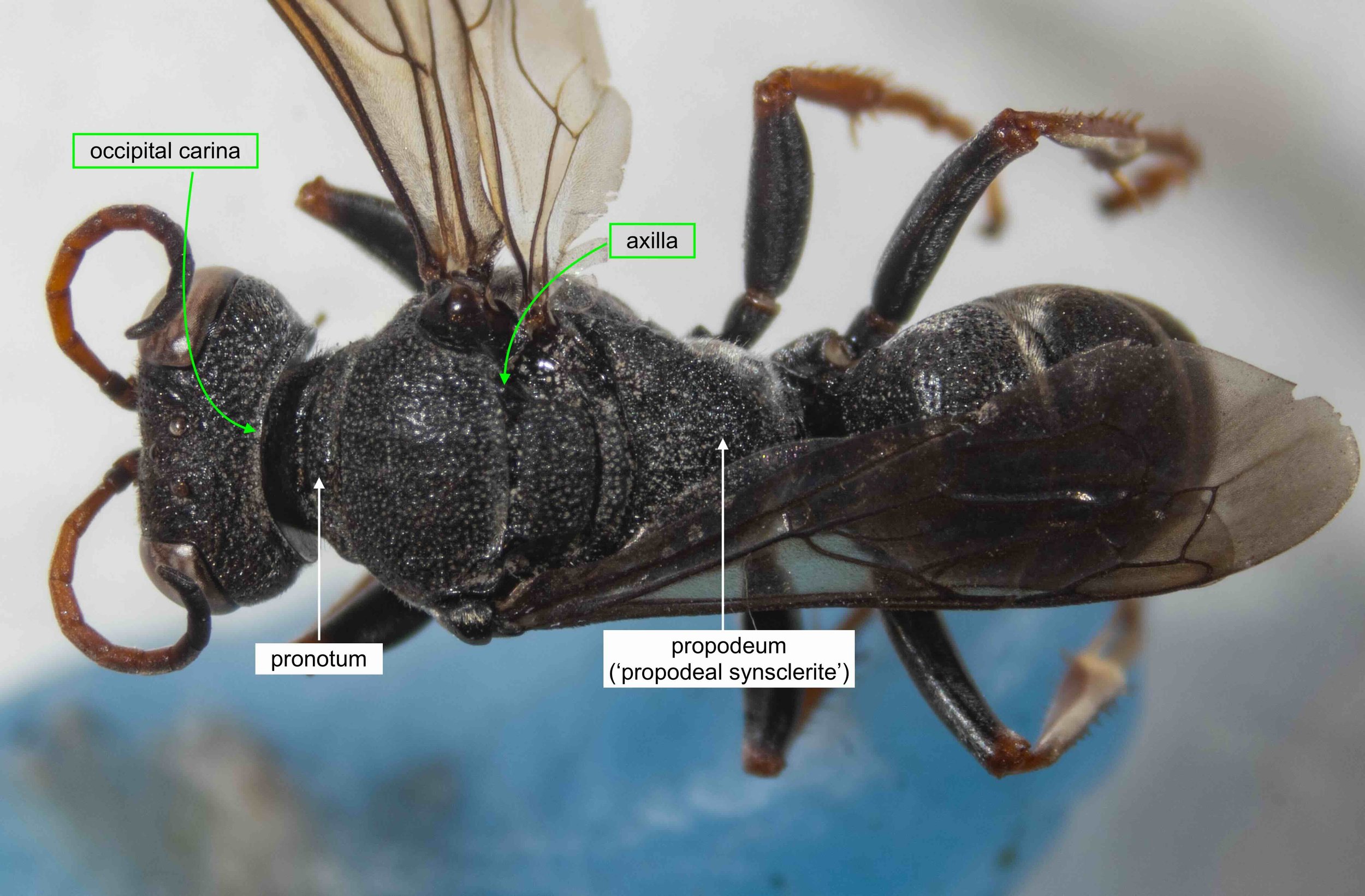
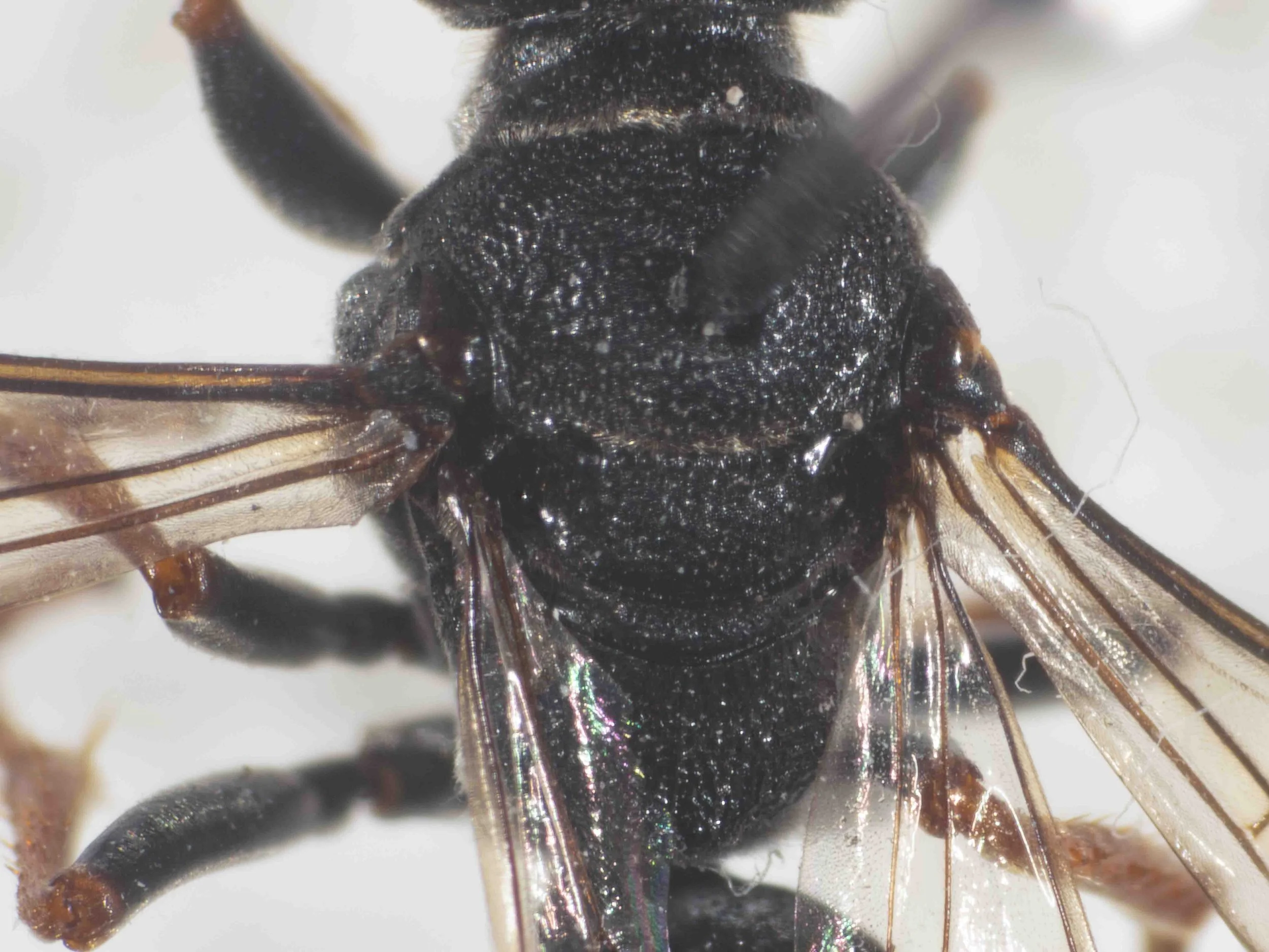
dorsal structures
Sphodrotes species:
“Pronotum short. Axillae shining smooth.”
“Propodeal synsclerite: Dorsal enclosure only indicated by a shallow, indistinctly pitted, groove.” (p.87)
Sphodrotes punctuosa females:
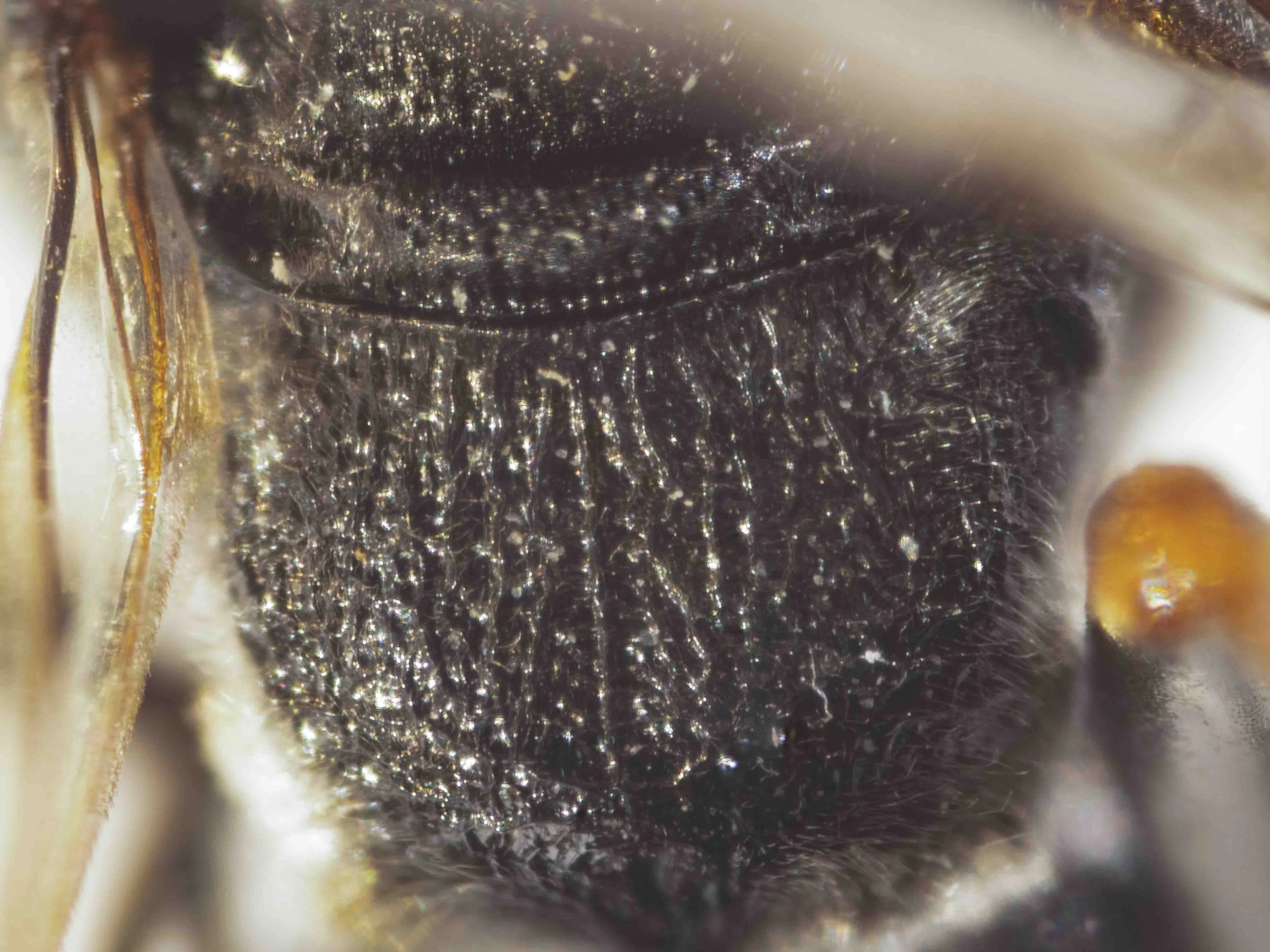
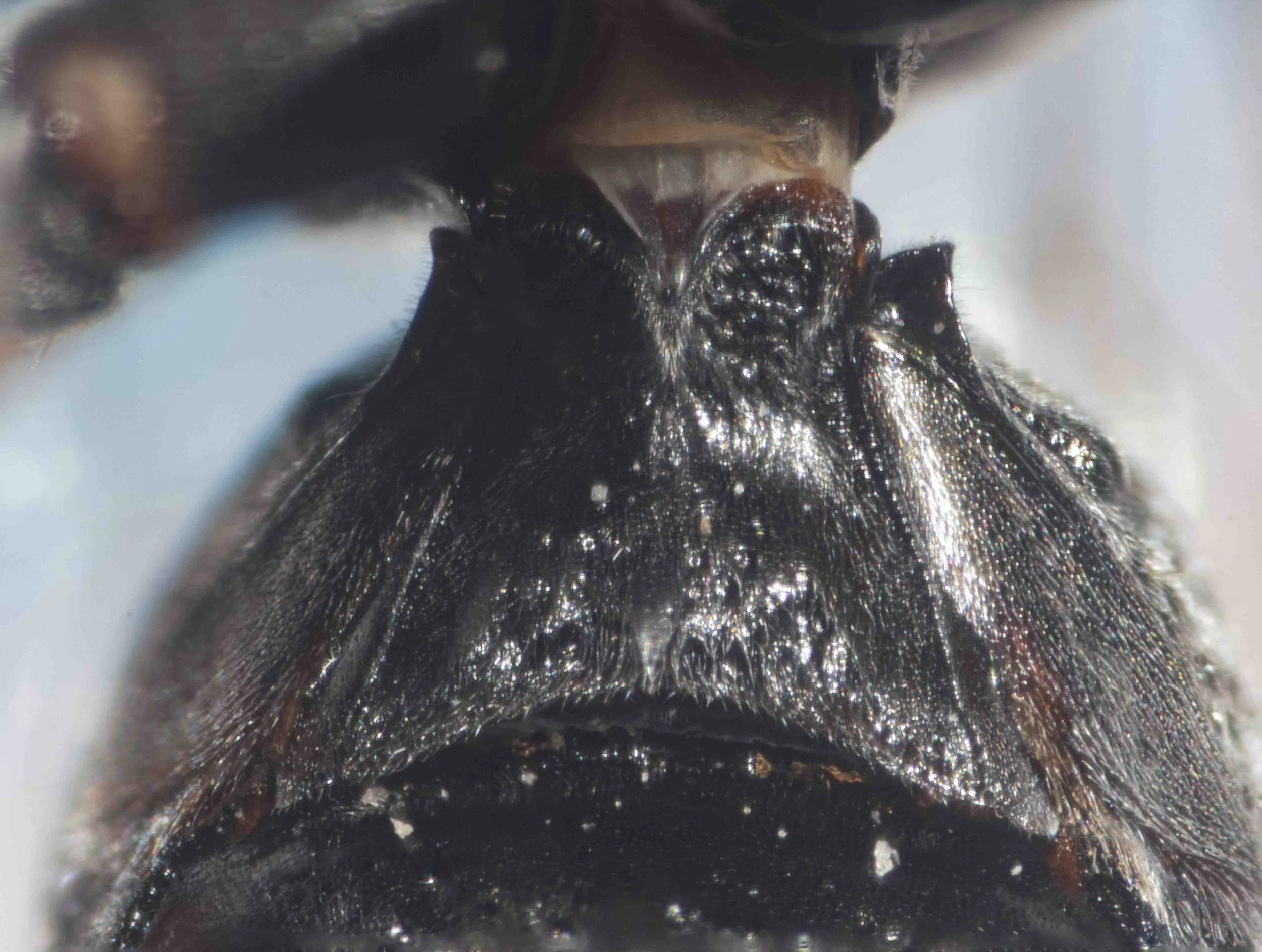
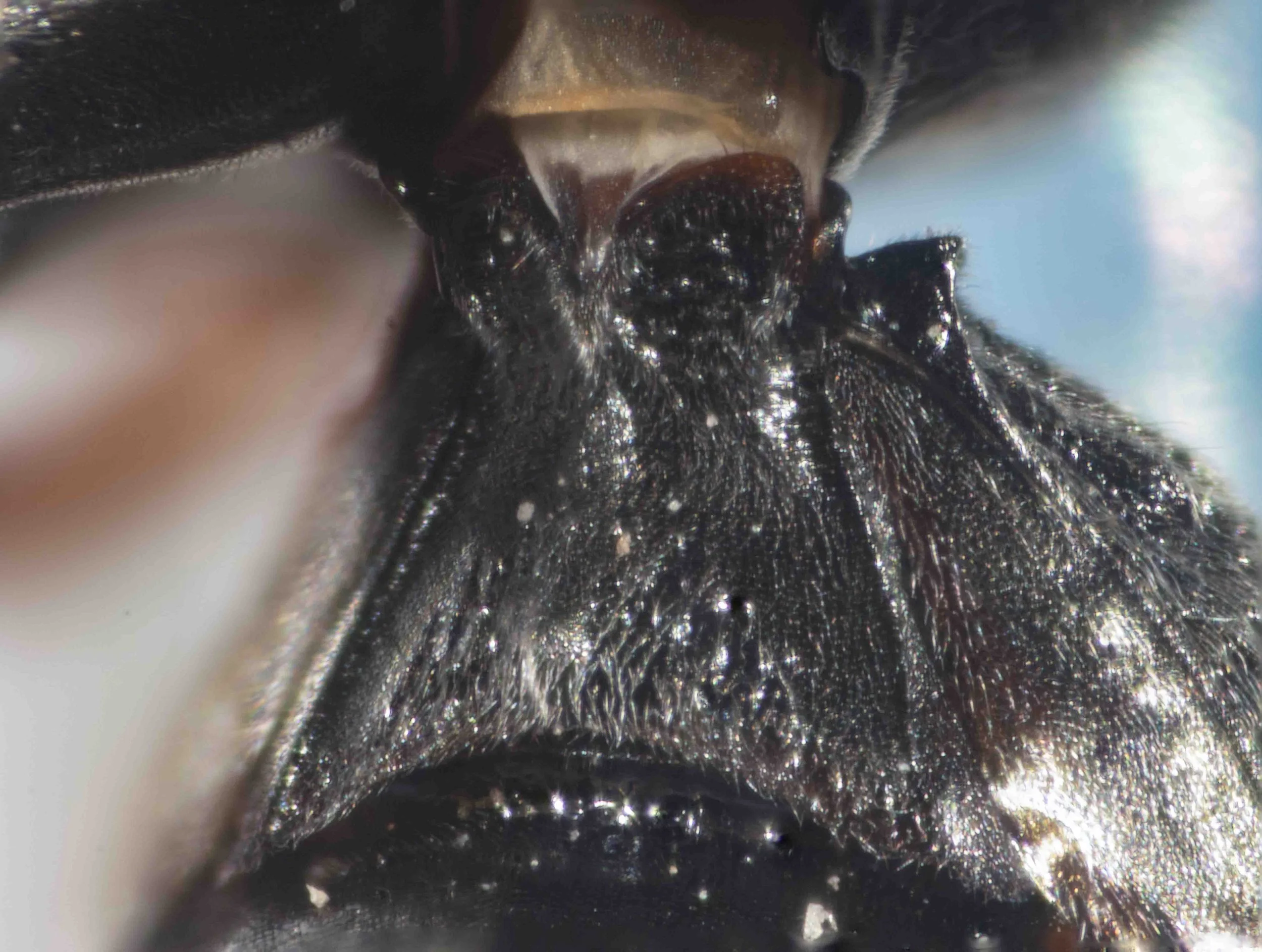
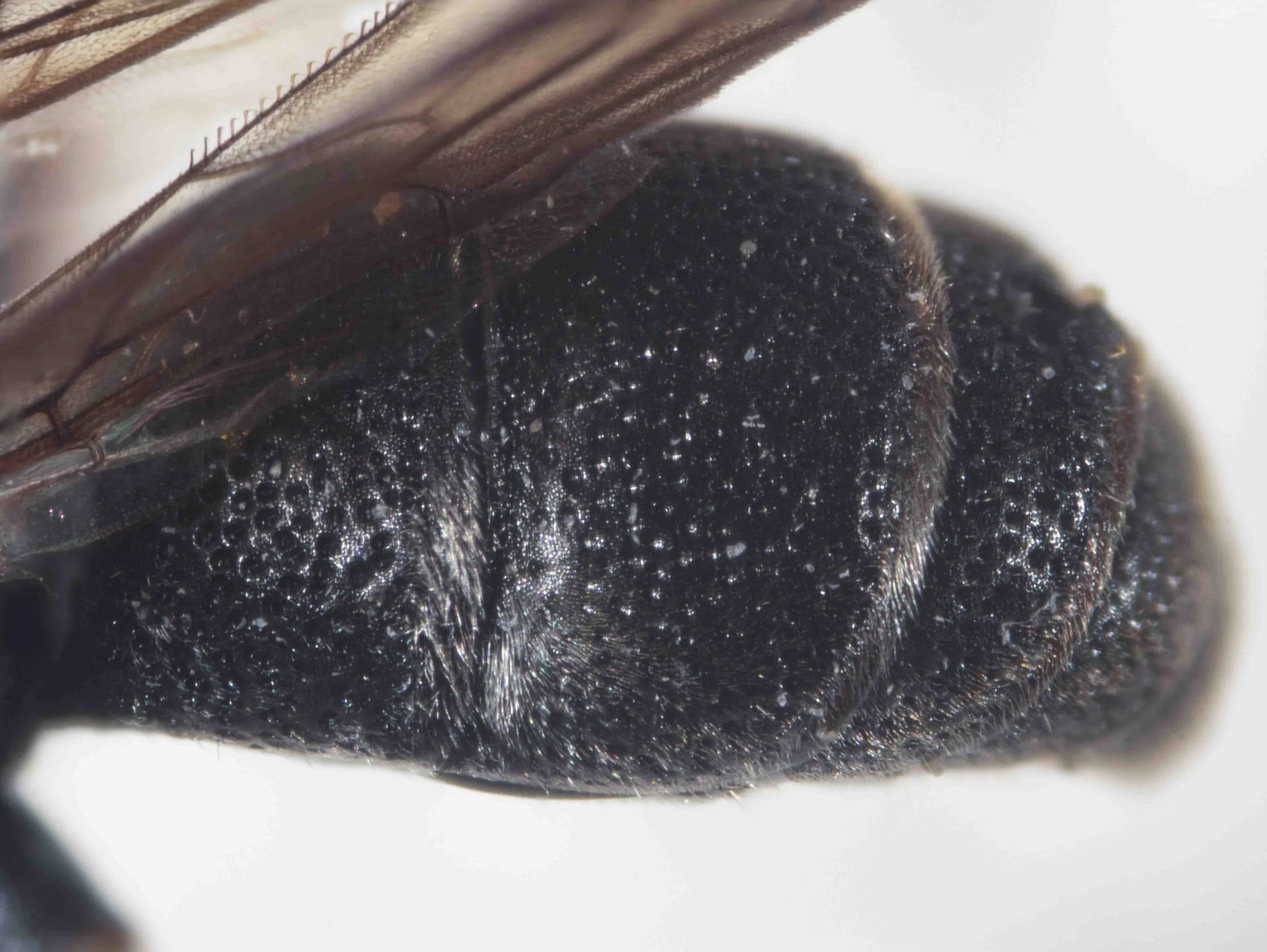
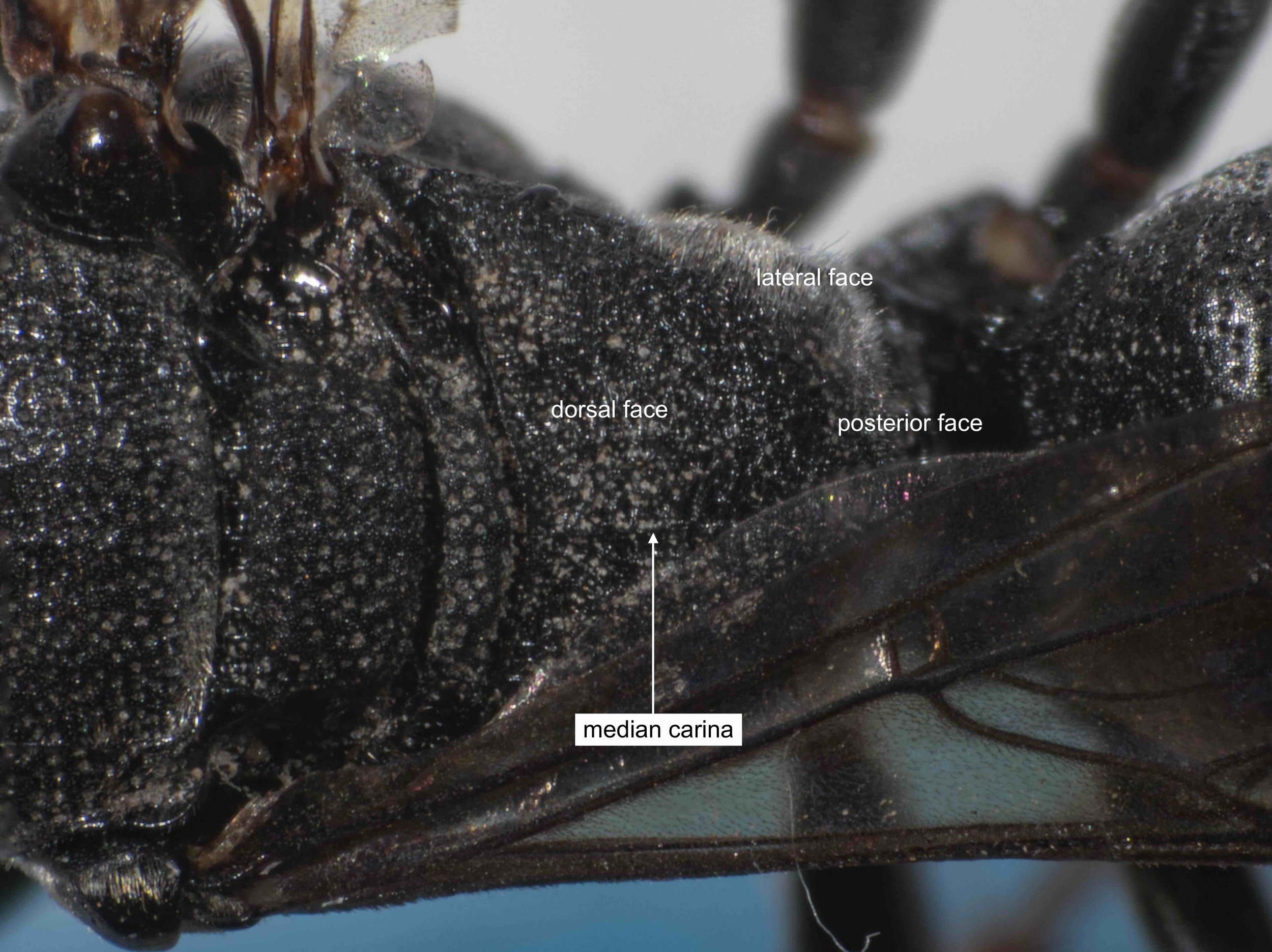
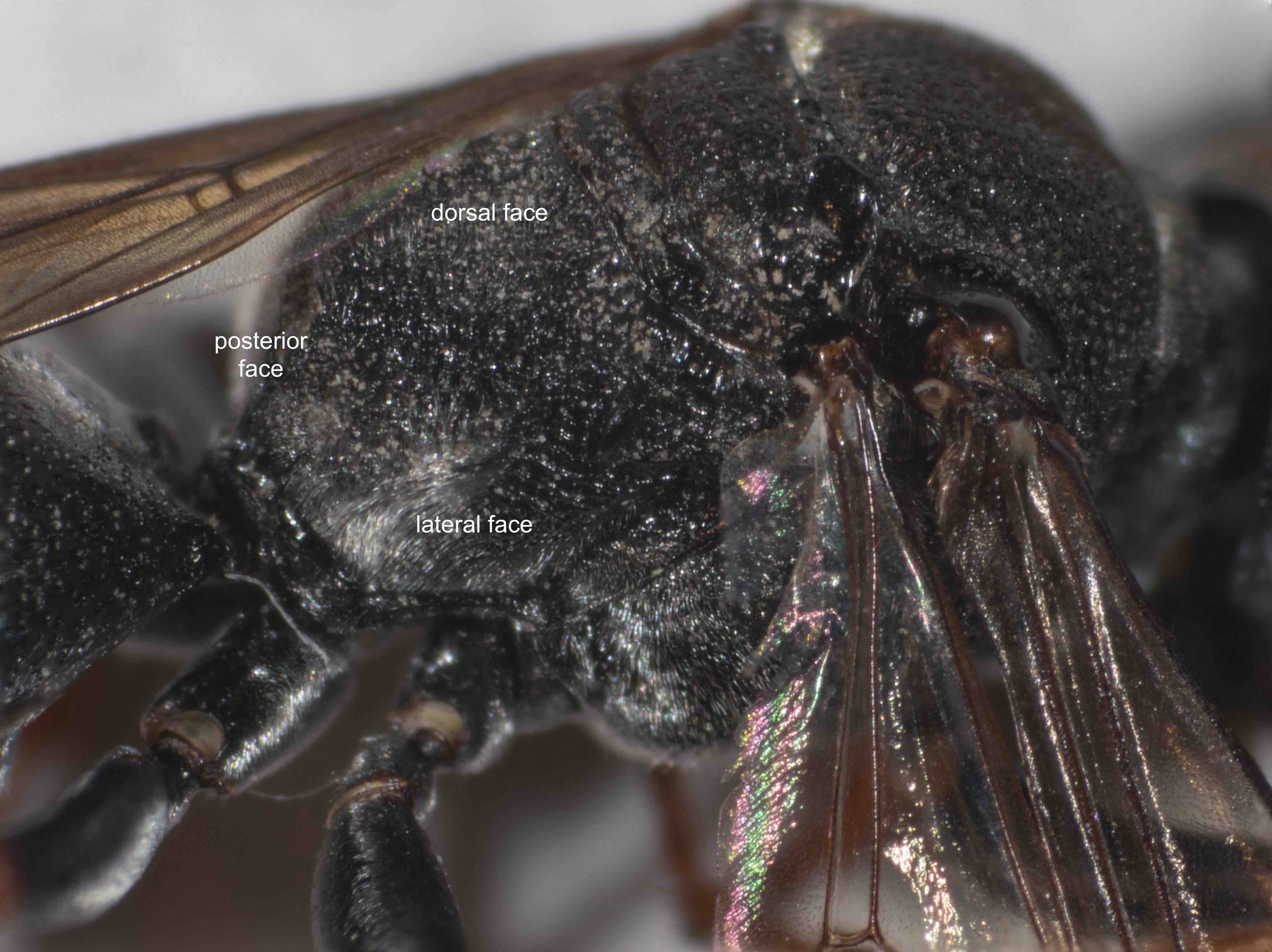
“Propodeum. Dorsal face with a weak, median carina (absent in some specimens), remaining surface strongly reticulate. Posterolateral areas with dense, silvery pubescence, teeth absent or only slightly indicated. Lateral faces coarsely striate medially. Posterior face with superficial, transverse striation.”
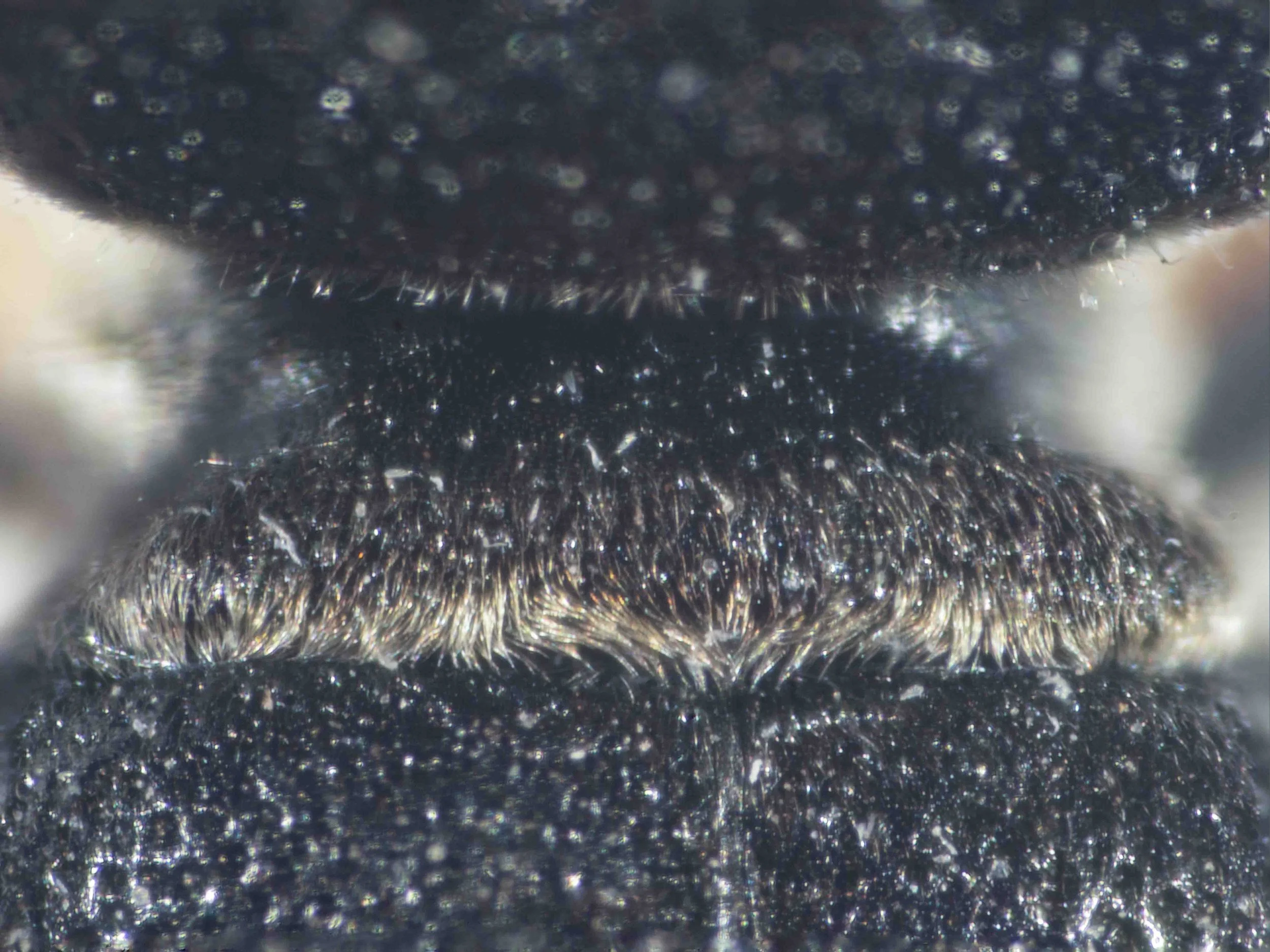
propodeum
Sphodrotes punctuosa females:
“Propodeum. Dorsal face with a weak, median carina (absent in some specimens), remaining surface strongly reticulate. Posterolateral areas with dense, silvery pubescence, teeth absent or only slightly indicated. Lateral faces coarsely striate medially. Posterior face with superficial, transverse striation.”
thorax & propodeum
Sphodrotes punctuosa males:
Differing from females in …
“Thoracic, propodeal, and gastral sculture stronger and denser.”
propodeum
Sphodrotes species:
“One or two posterolateral prominences usually present, less pronounced in males than in females.”
Sphodrotes punctuosa females:
“Posterolateral areas with dense, silvery pubescence, teeth absent or only slightly indicated. Lateral faces coarsely striate medially. Posterior face with superficial, transverse striation.”
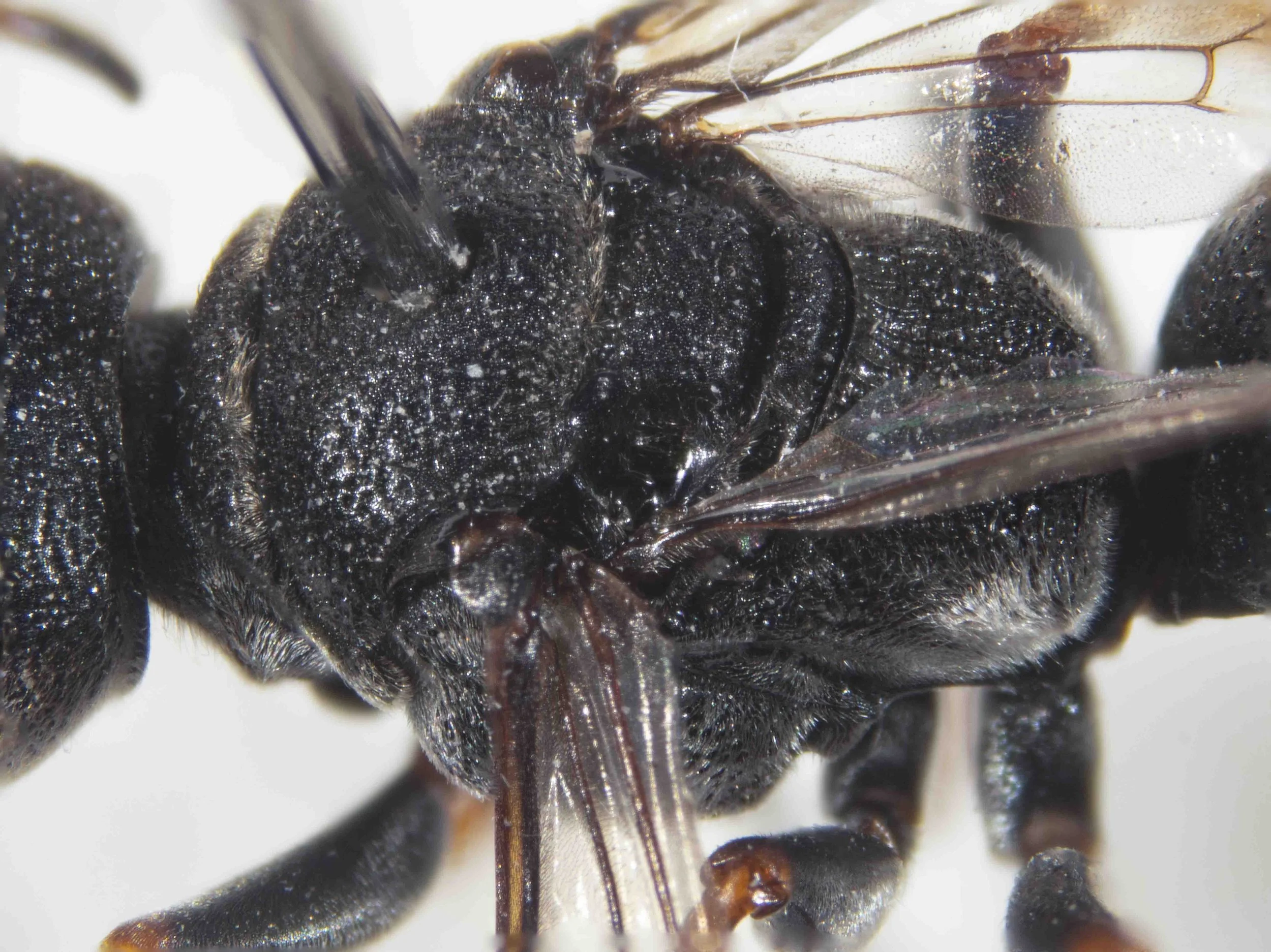
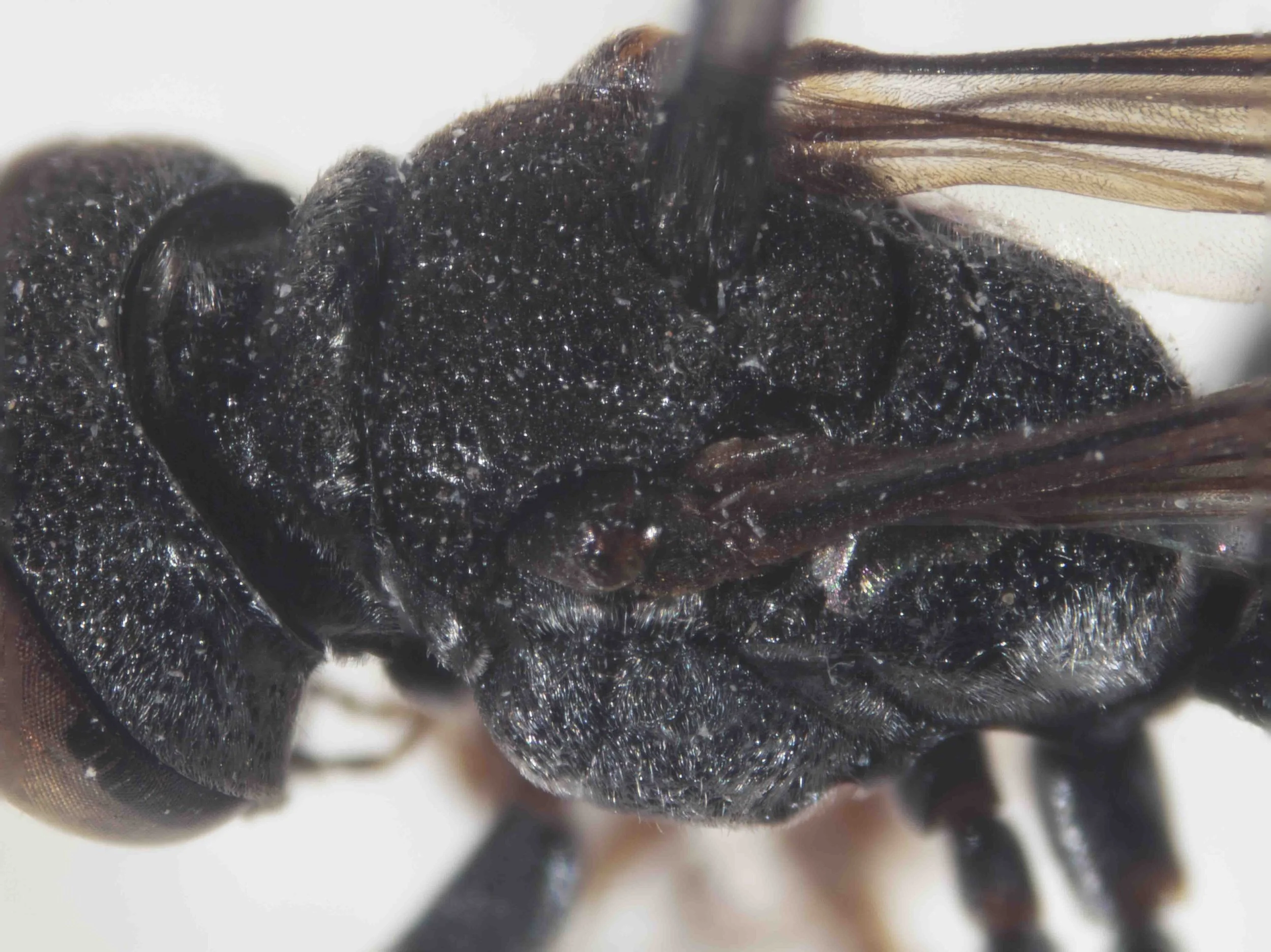
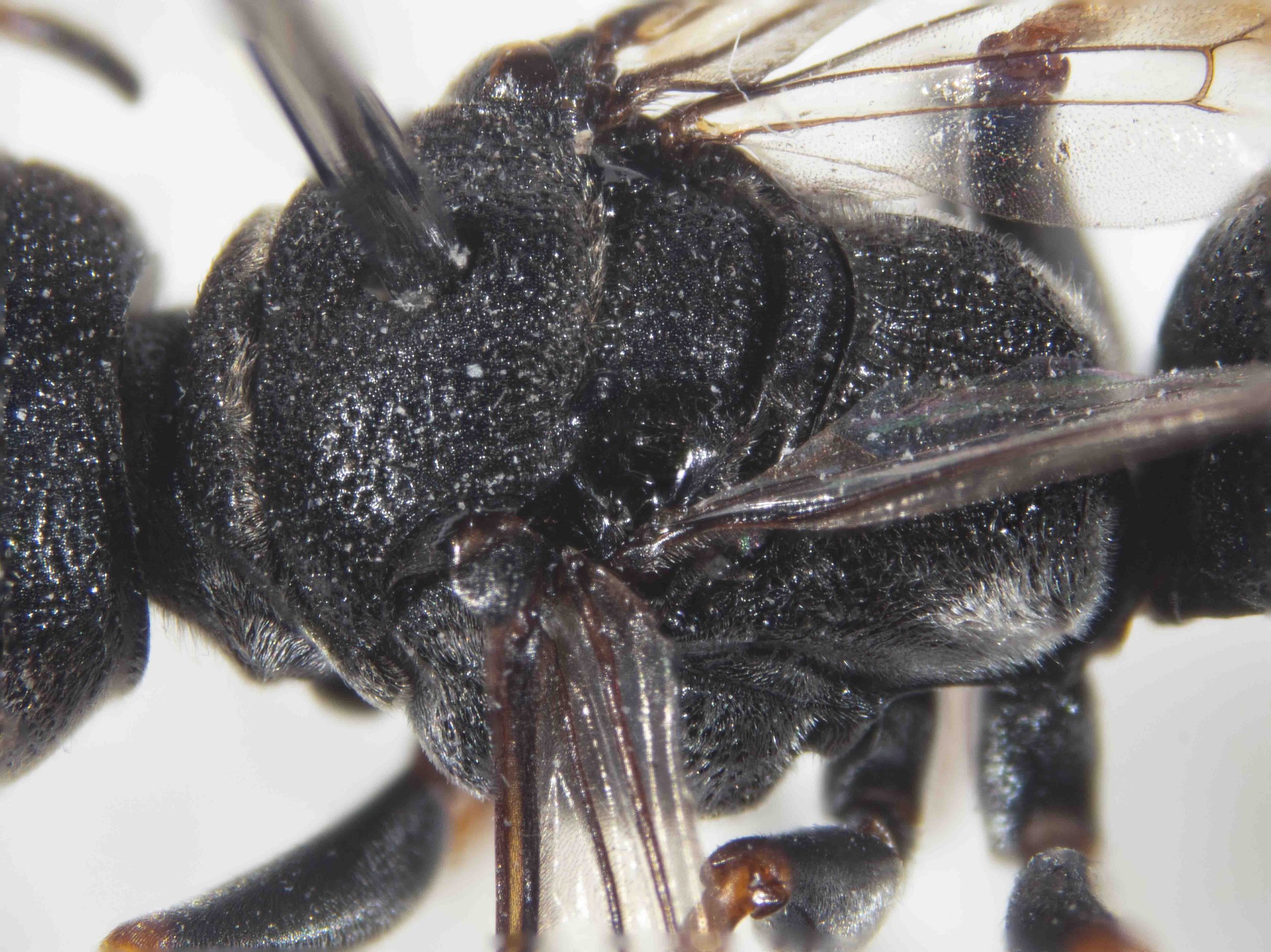
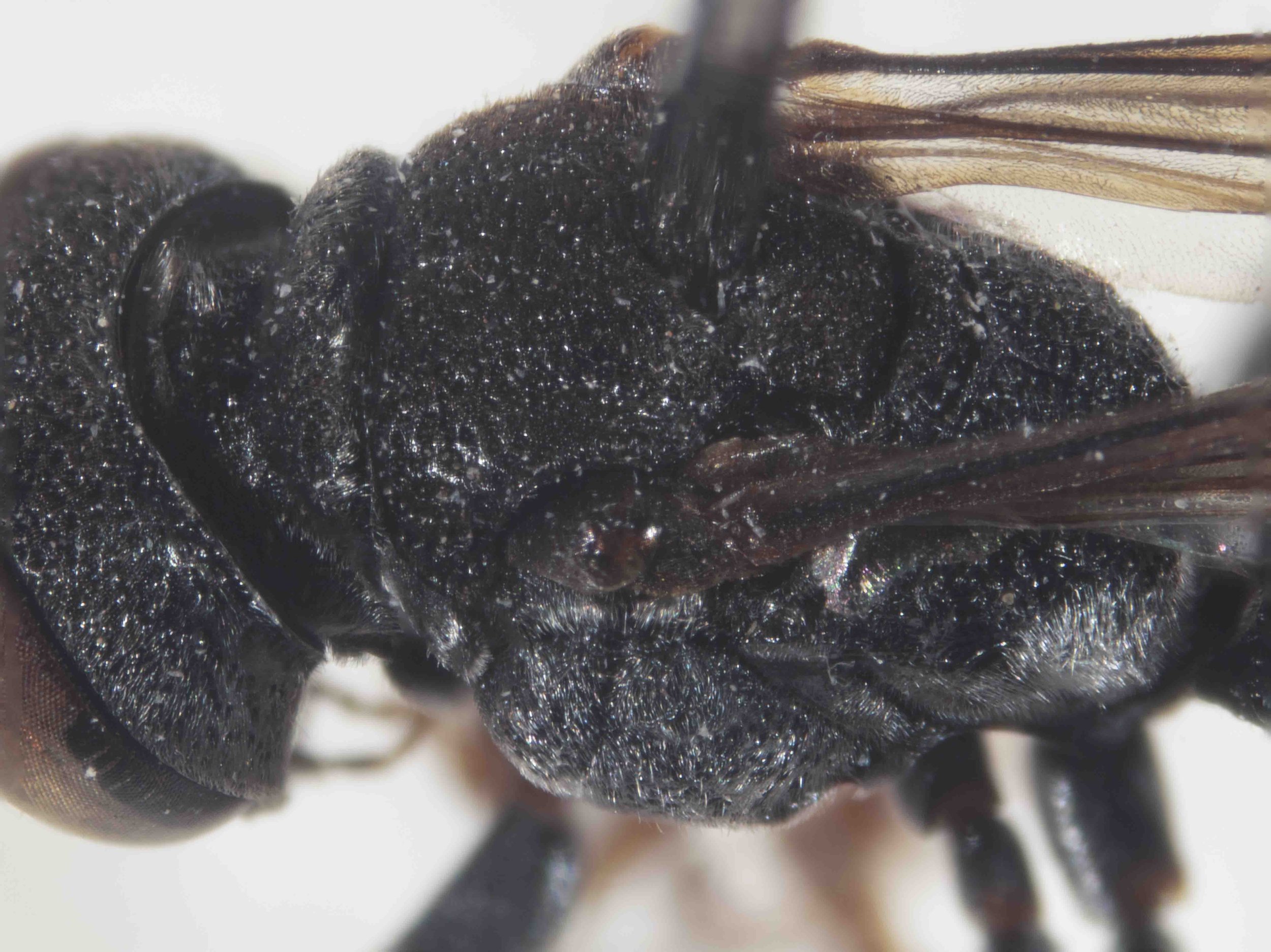
thorax black & densely punctate
Sphodrotes punctuosa females:
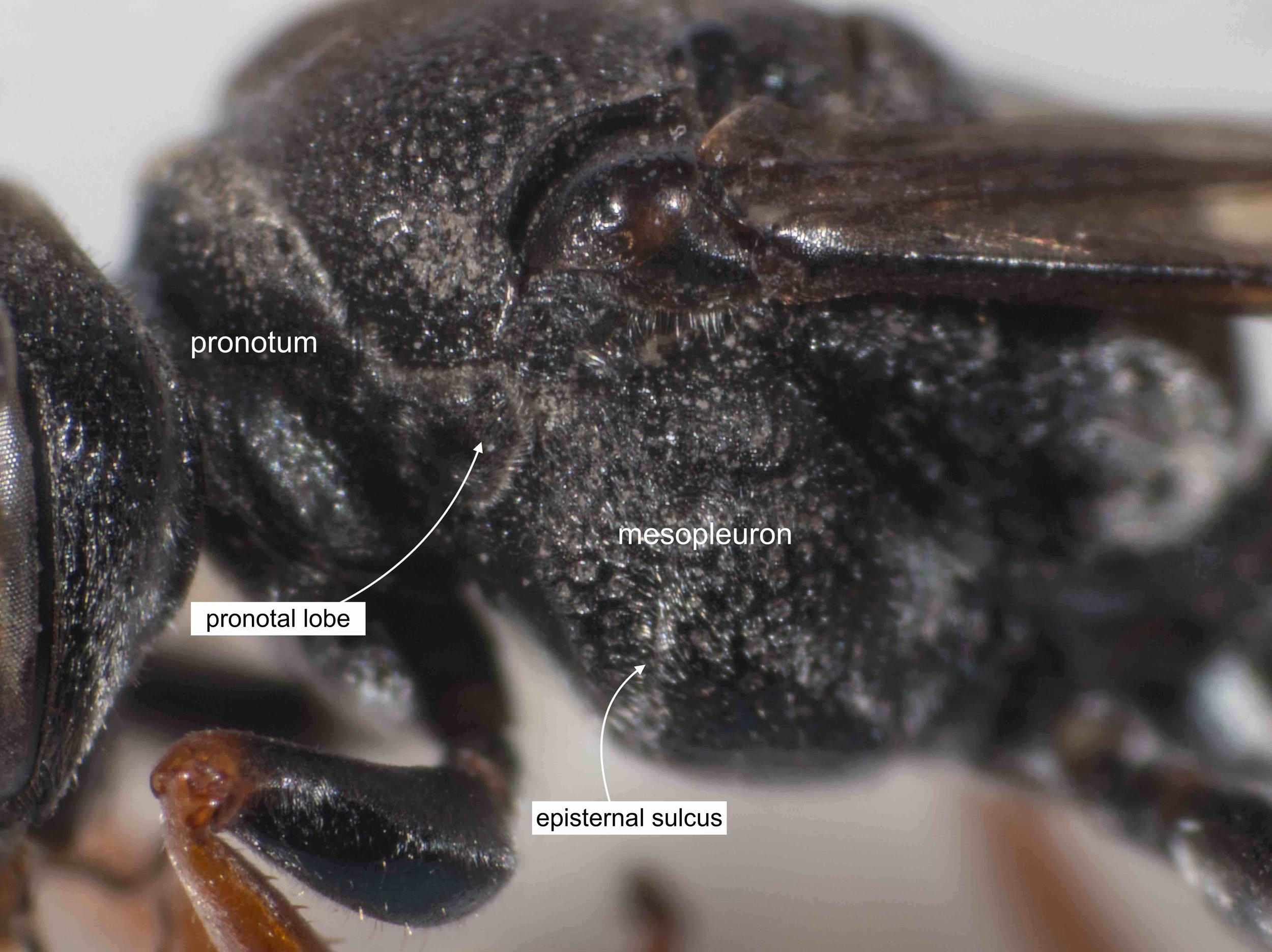
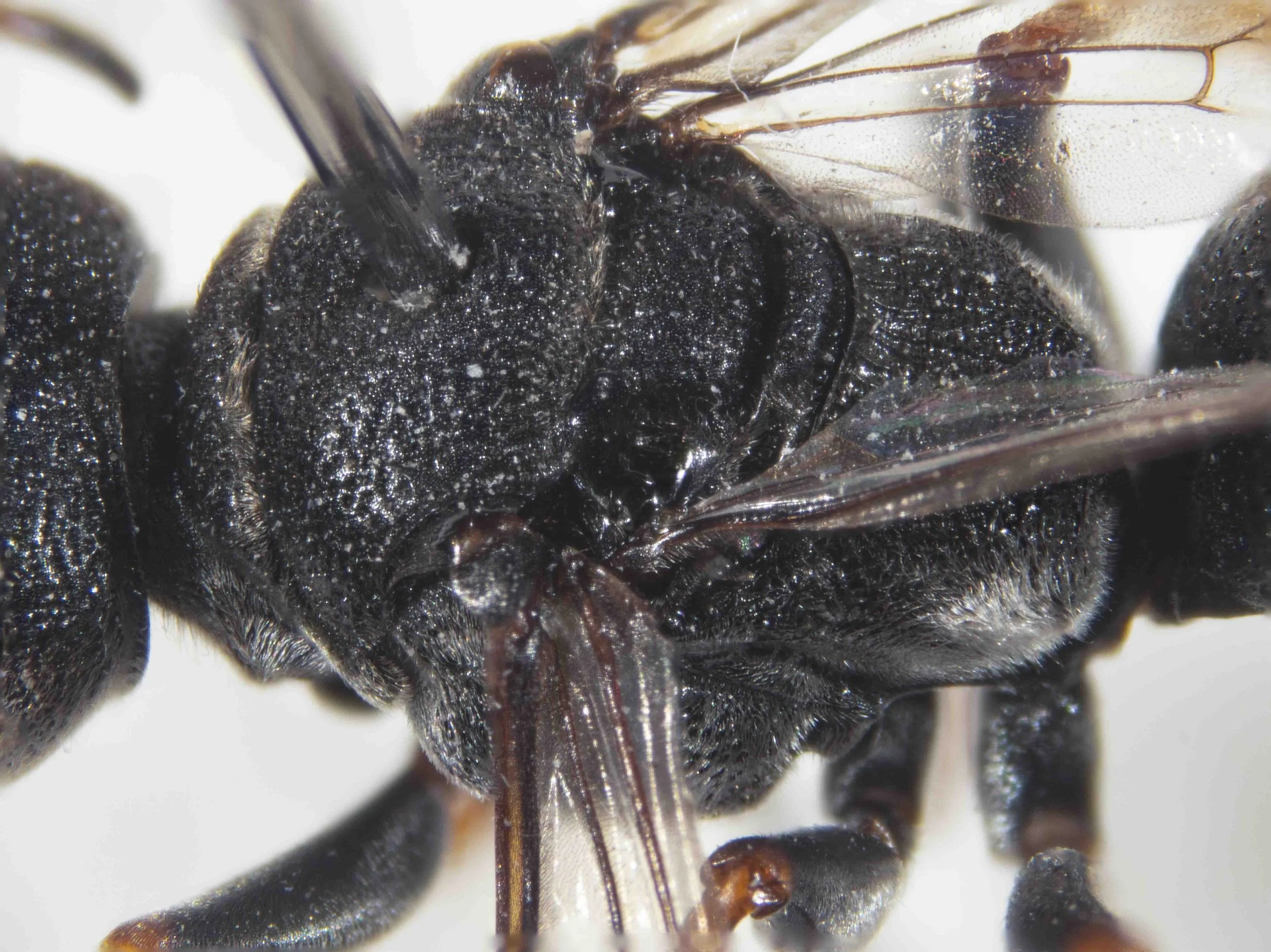
“Thorax, incl. pronotal lobes black, strongly and densely punctate, punctation on scutum not as strong as that of frons, interstices even, finely punctate.” “Anterodorsal mesopleuron very strongly sculptured, punctures pit-like. Episternal sulcus deep.” “Entire mesopleuron with thin greyish-white pubescence.”
thorax punctation
Sphodrotes punctuosa males:
Differing from females in …
“Thoracic, propodeal, and gastral sculture stronger and denser.”
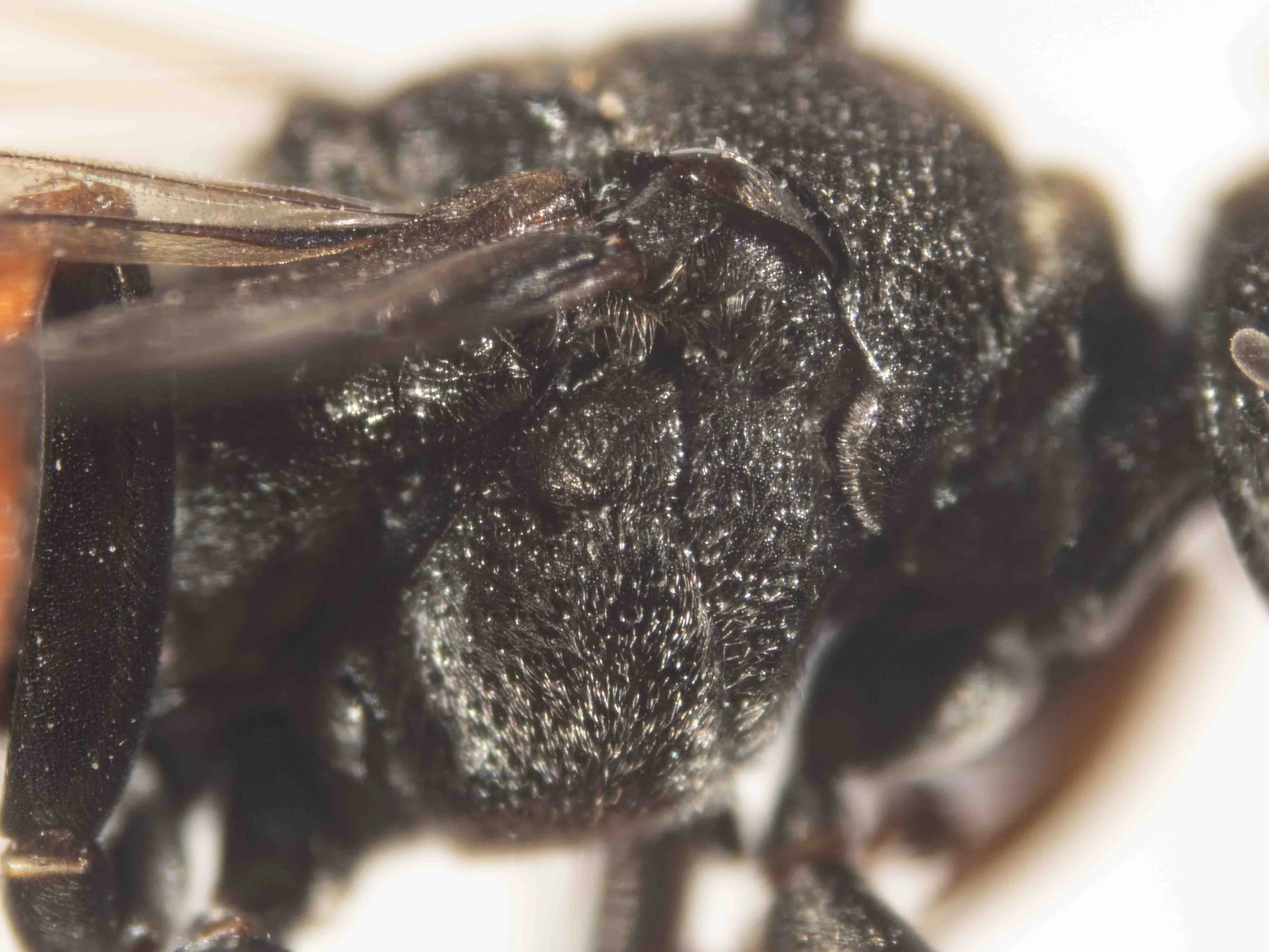
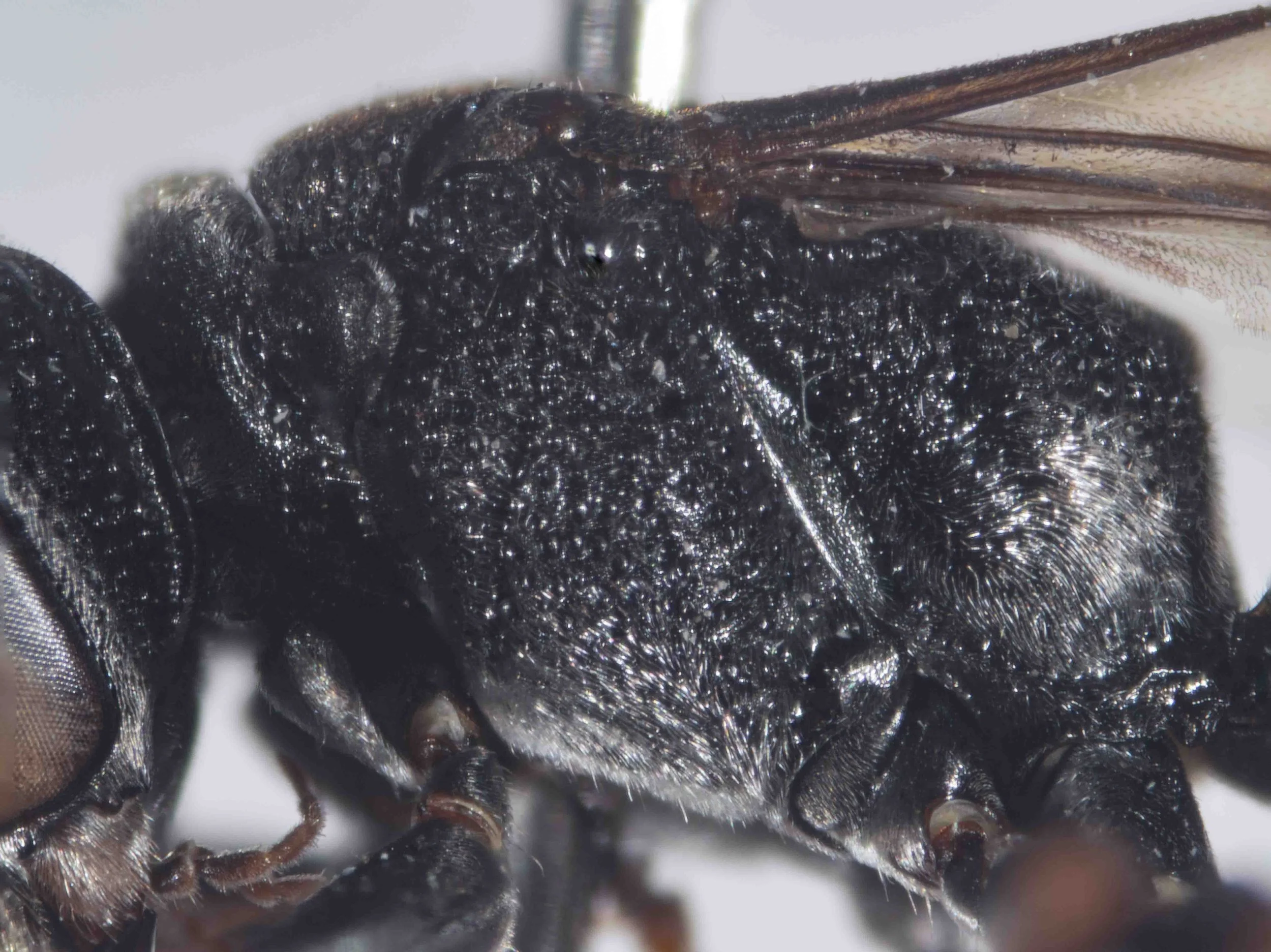
mesopleuron very strongly sculptured
Sphodrotes punctuosa females:
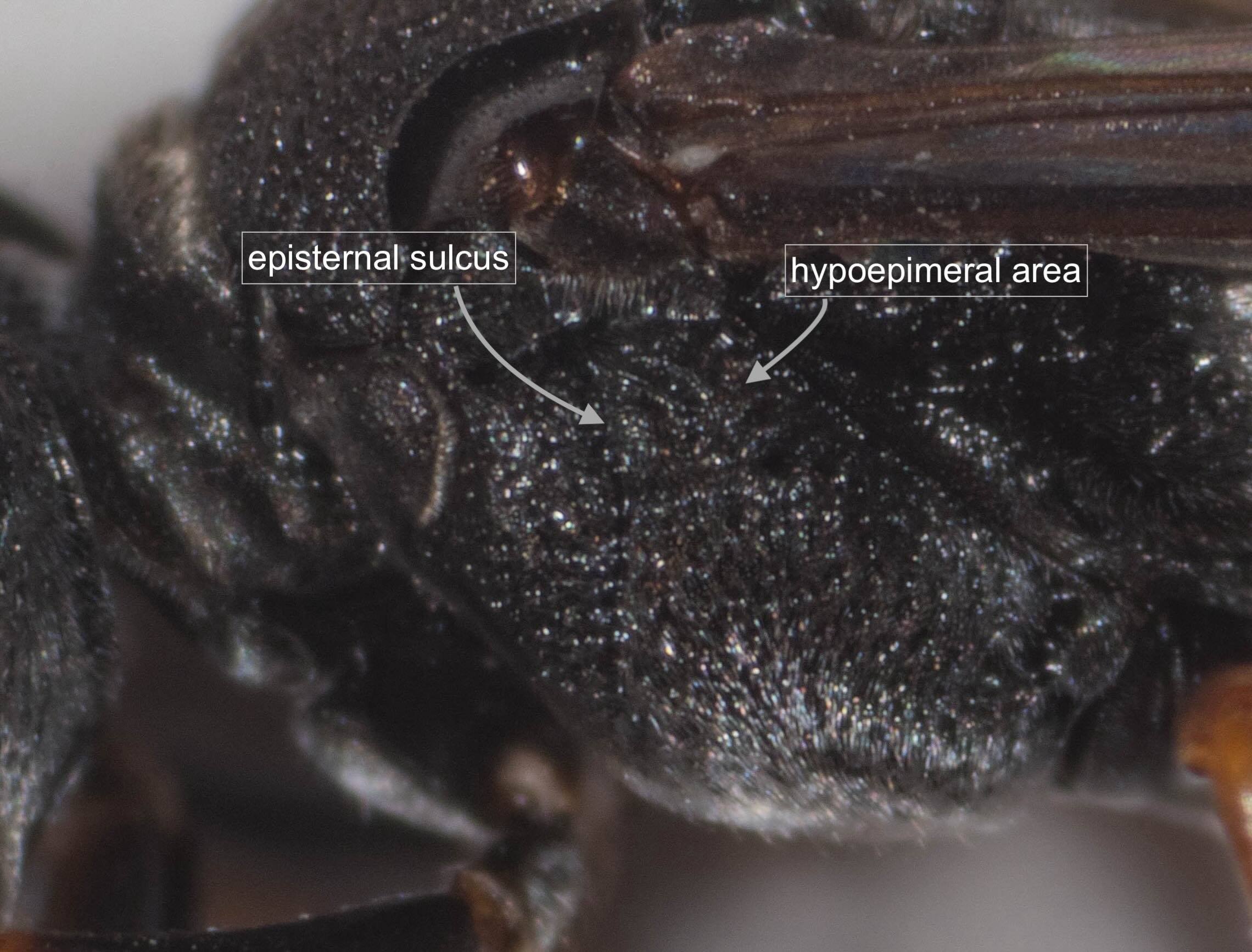
“Anterodorsal mesopleuron very strongly sculptured, punctures pit-like. Episternal sulcus deep. Hypoepimeral area with coarse, reticulo-striate sculpture. Entire mesopleuron with thin greyish-white pubescence.”
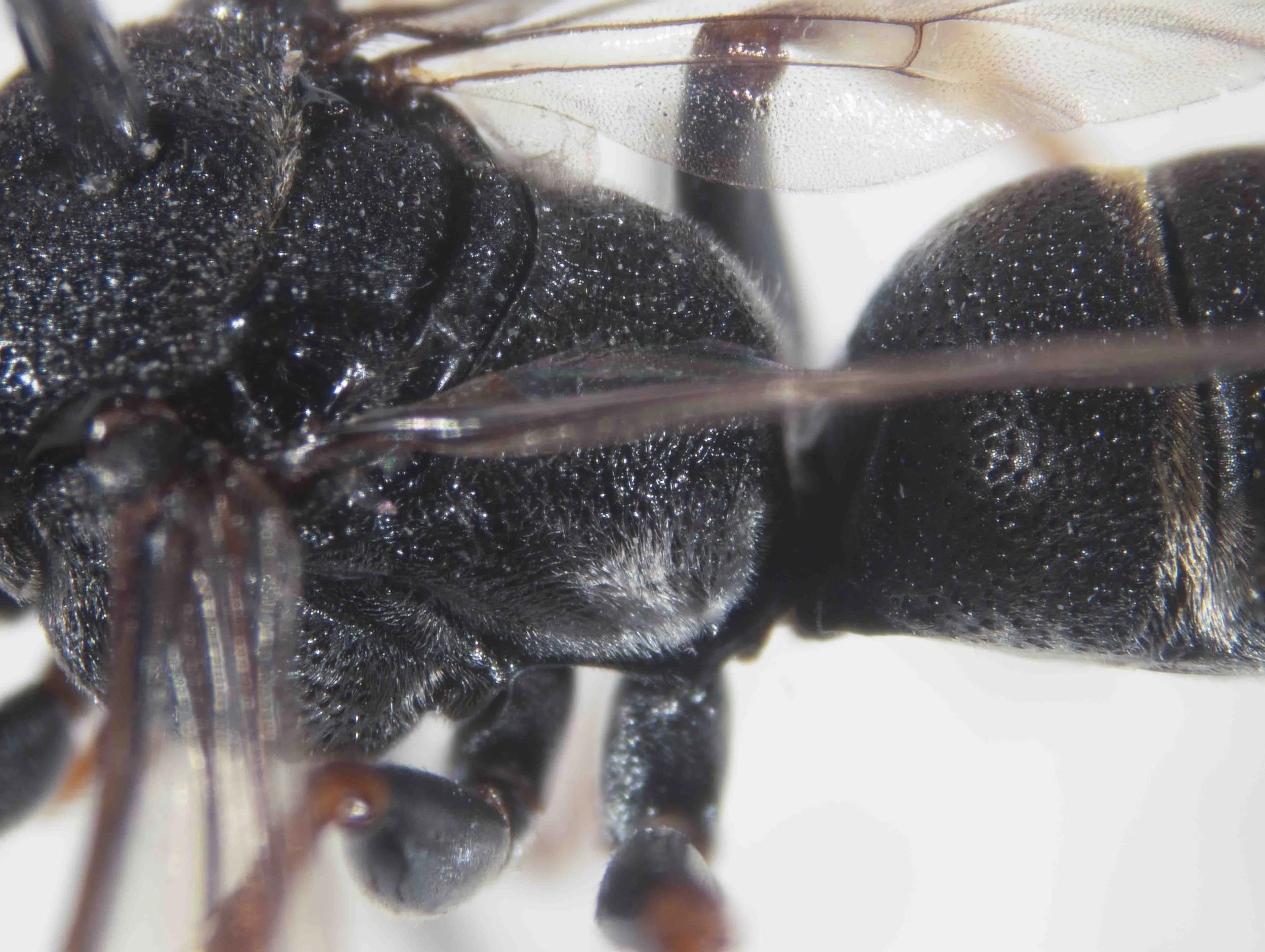
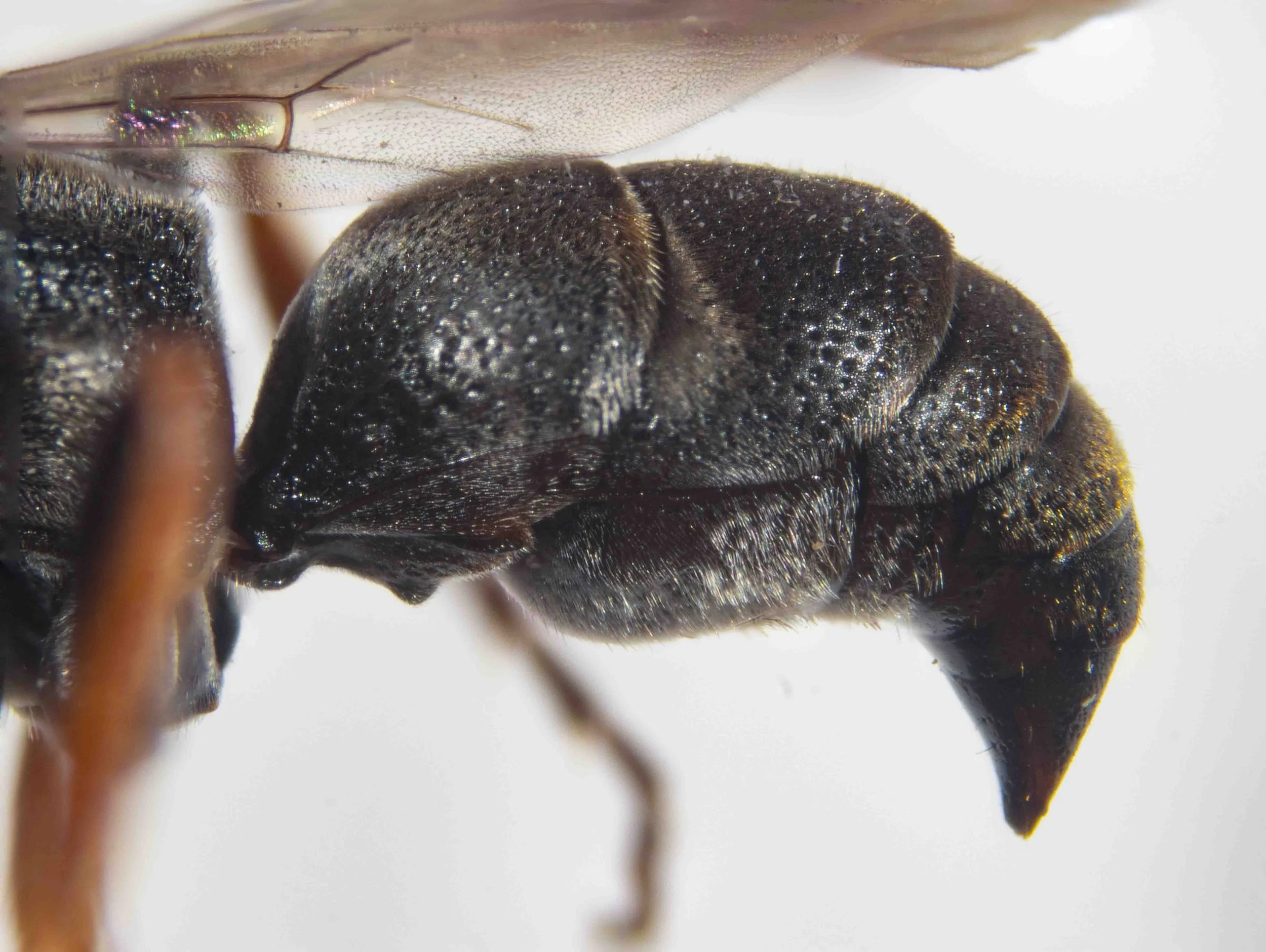
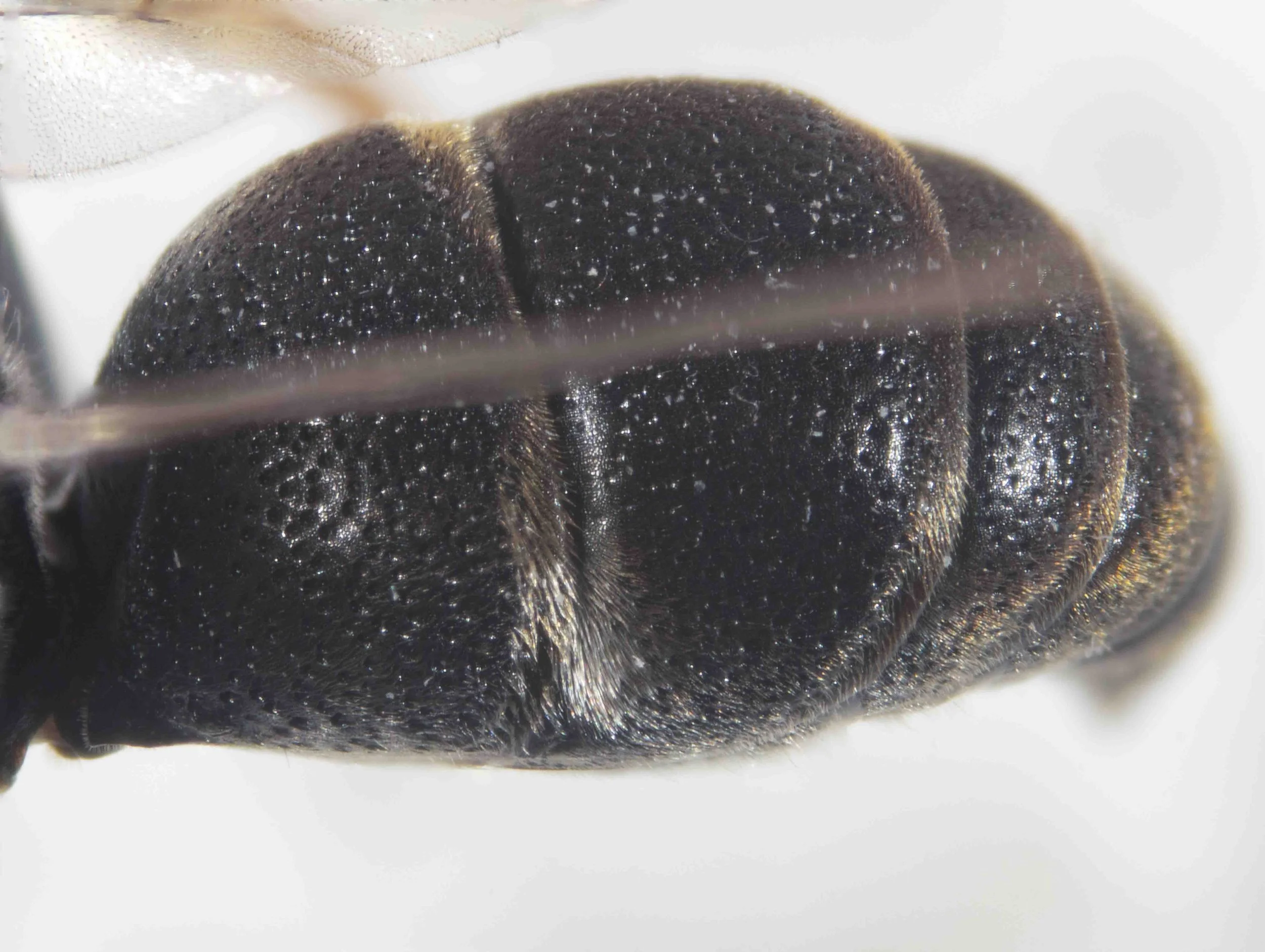
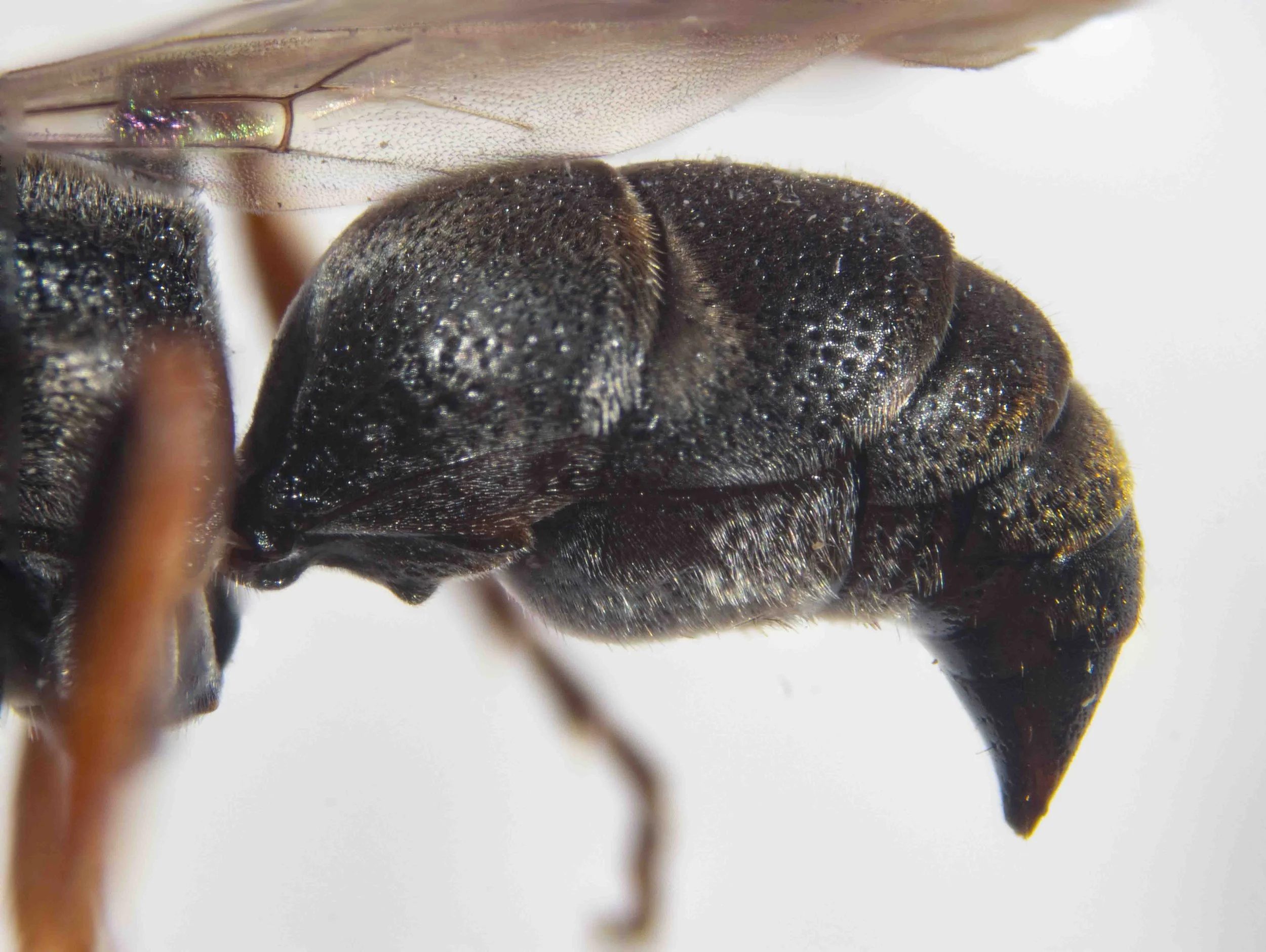
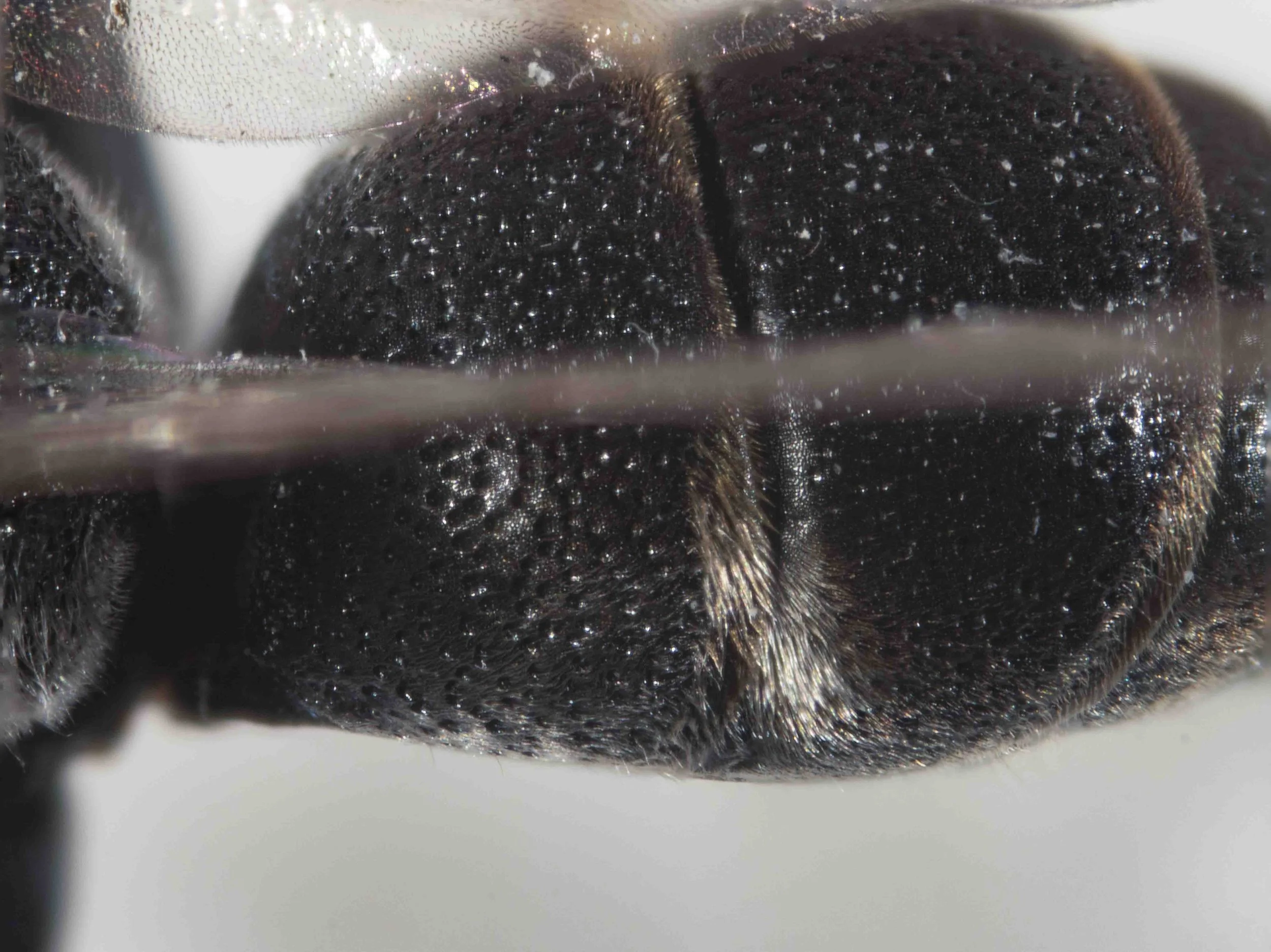
gaster black with limited pubescence
Sphodrotes punctuosa females:
“Gaster black, apical tergal margins slightly ferruginously transparent. Pubescence thin, silvery to slightly golden, forming fasciae on tergum I-III.”
first segment of gaster
Sphodrotes species:
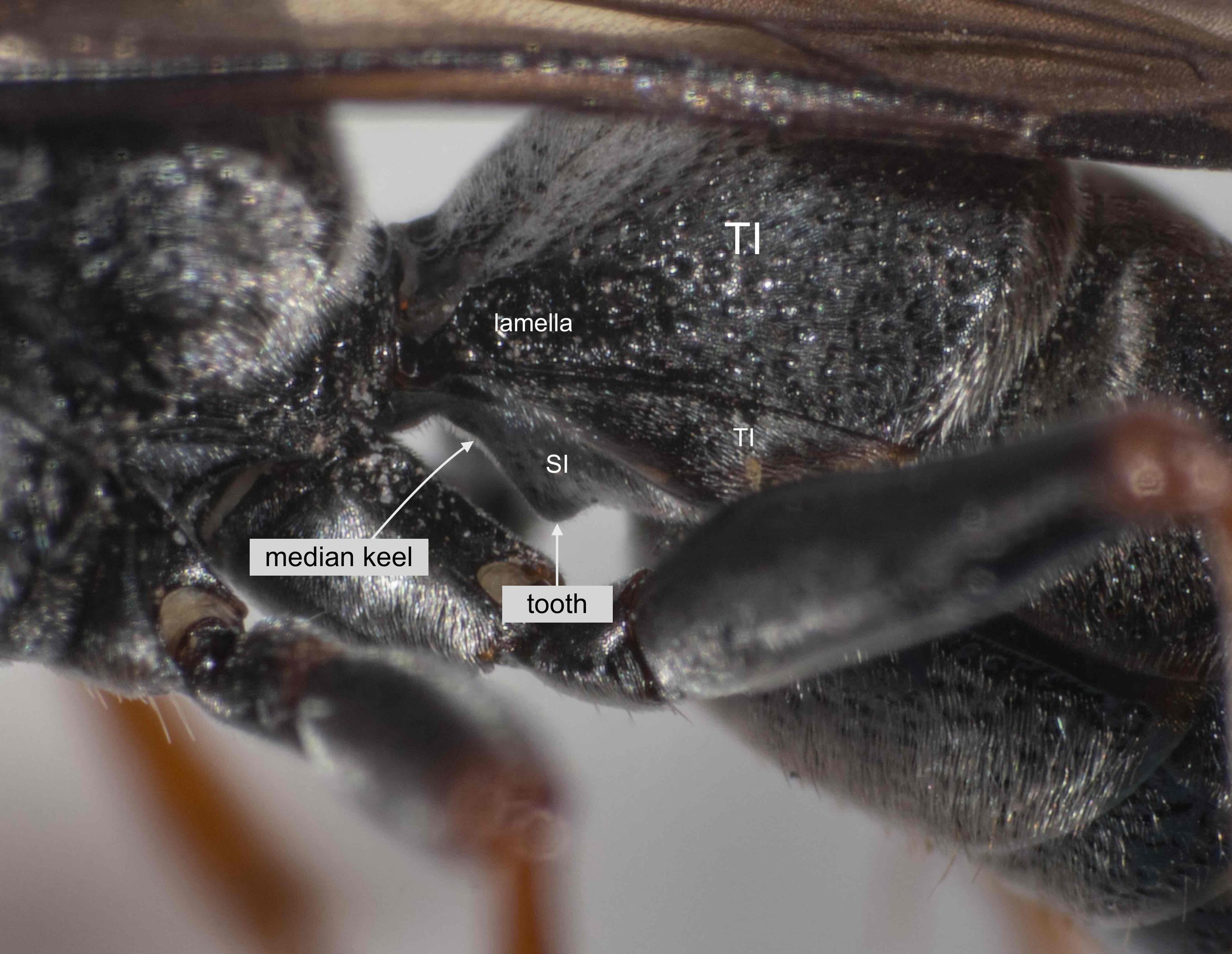
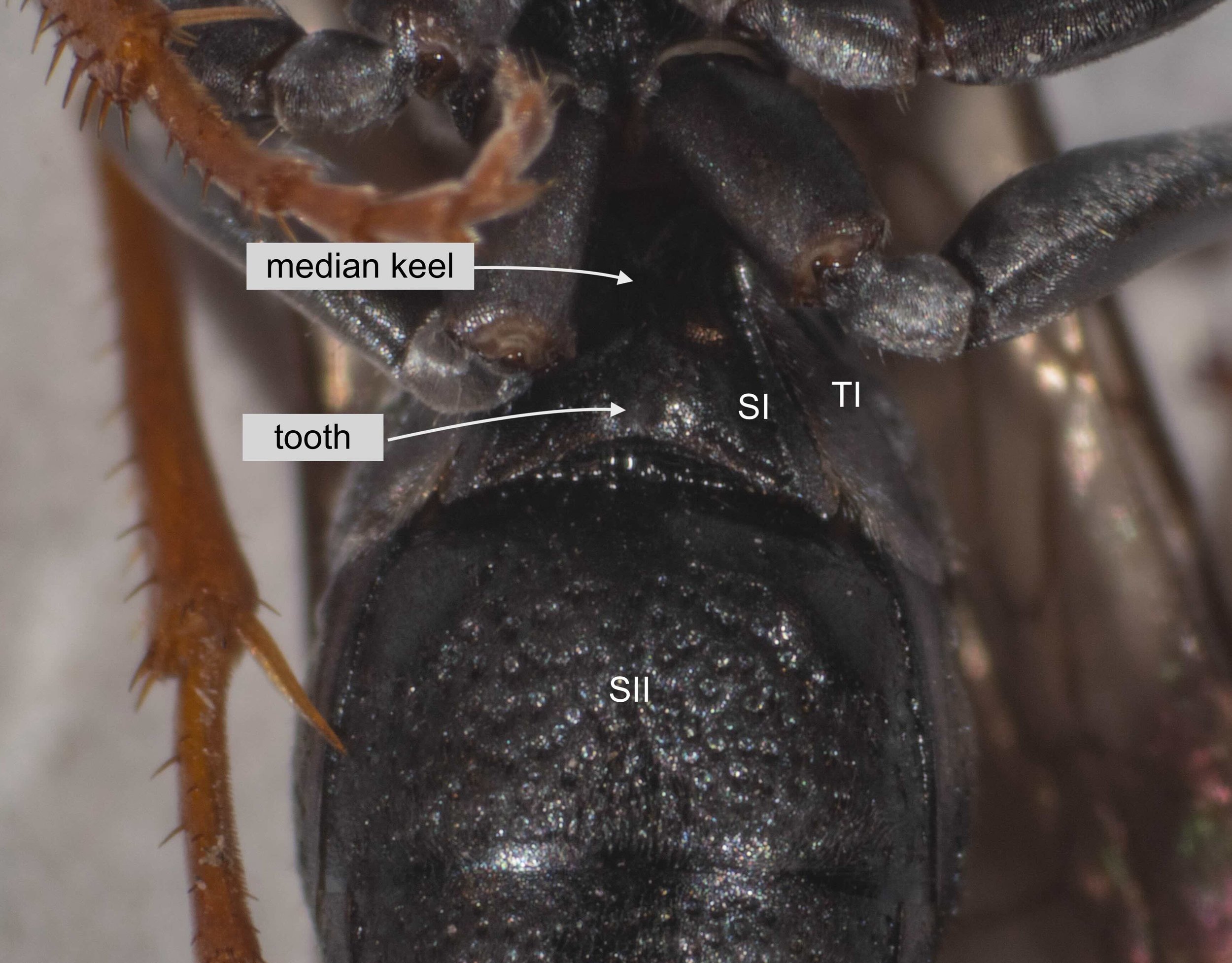
“Tergum 1 with a laterobasal, strongly raised, almost angularly projecting lamella. Sternum 1 (except in prima) with a median vault or carina terminating in a compressed tooth.” p.87
Sphodrotes punctuosa females:
“Sternum I with indistinct median keel, posterior tooth rather weak.”
first segment of gaster
Sphodrotes species:
“Sternum 1 (except in prima) with a median vault or carina terminating in a compressed tooth.” p.87
Sphodrotes punctuosa females:
“Sternum I with indistinct median keel, posterior tooth rather weak.”
first segment of gaster
Lomholdt makes no mention of male difference in the structure of SI.
gaster black with limited pubescence
Sphodrotes punctuosa females:
“Gaster black, apical tergal margins slightly ferruginously transparent. Pubescence thin, silvery to slightly golden, forming fasciae on tergum I-III.”
gaster punctation
Sphodrotes punctuosa males:
Differing from females in …
"Thoracic, propodeal, and gastral sculture stronger and denser.”
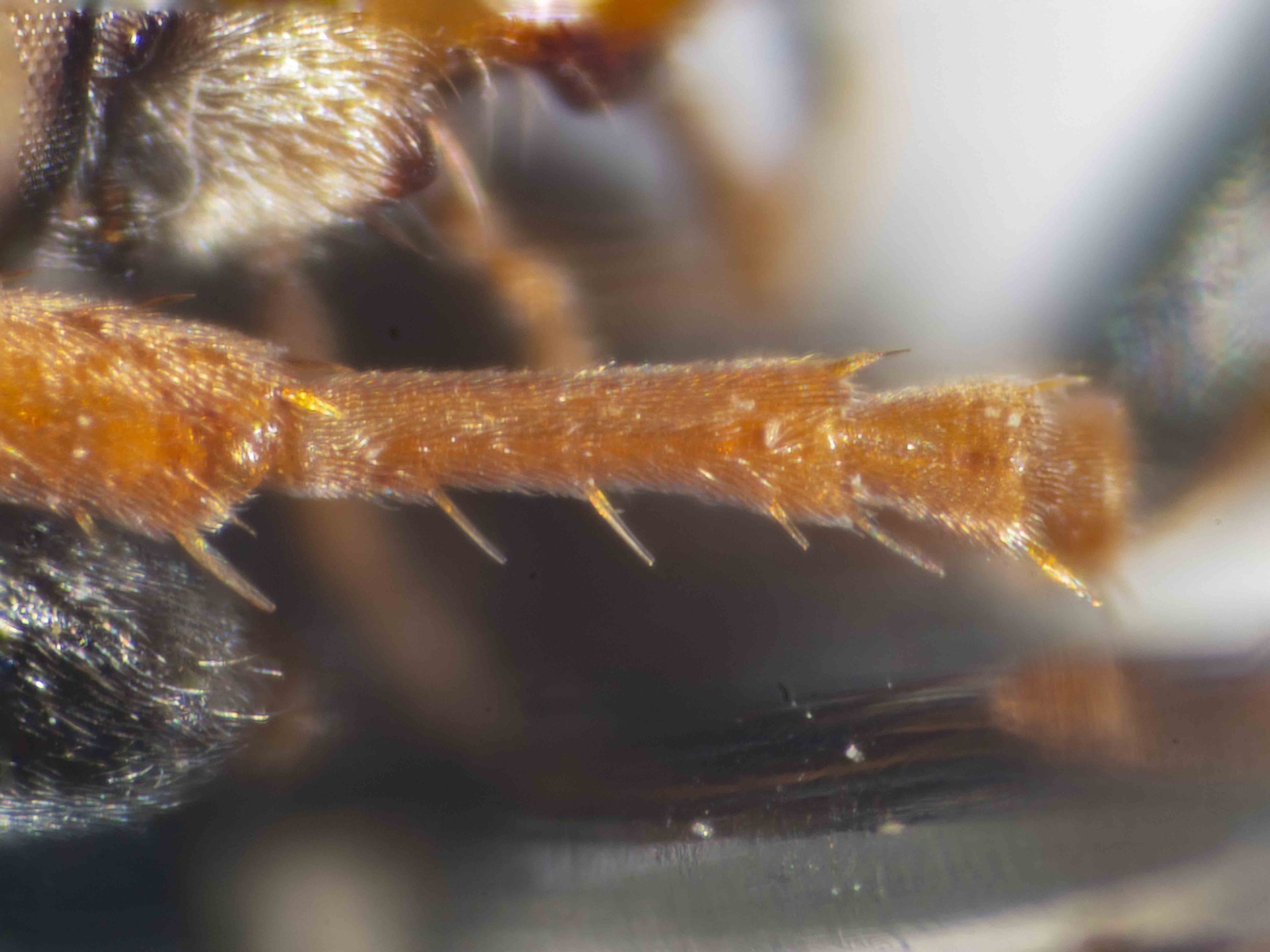
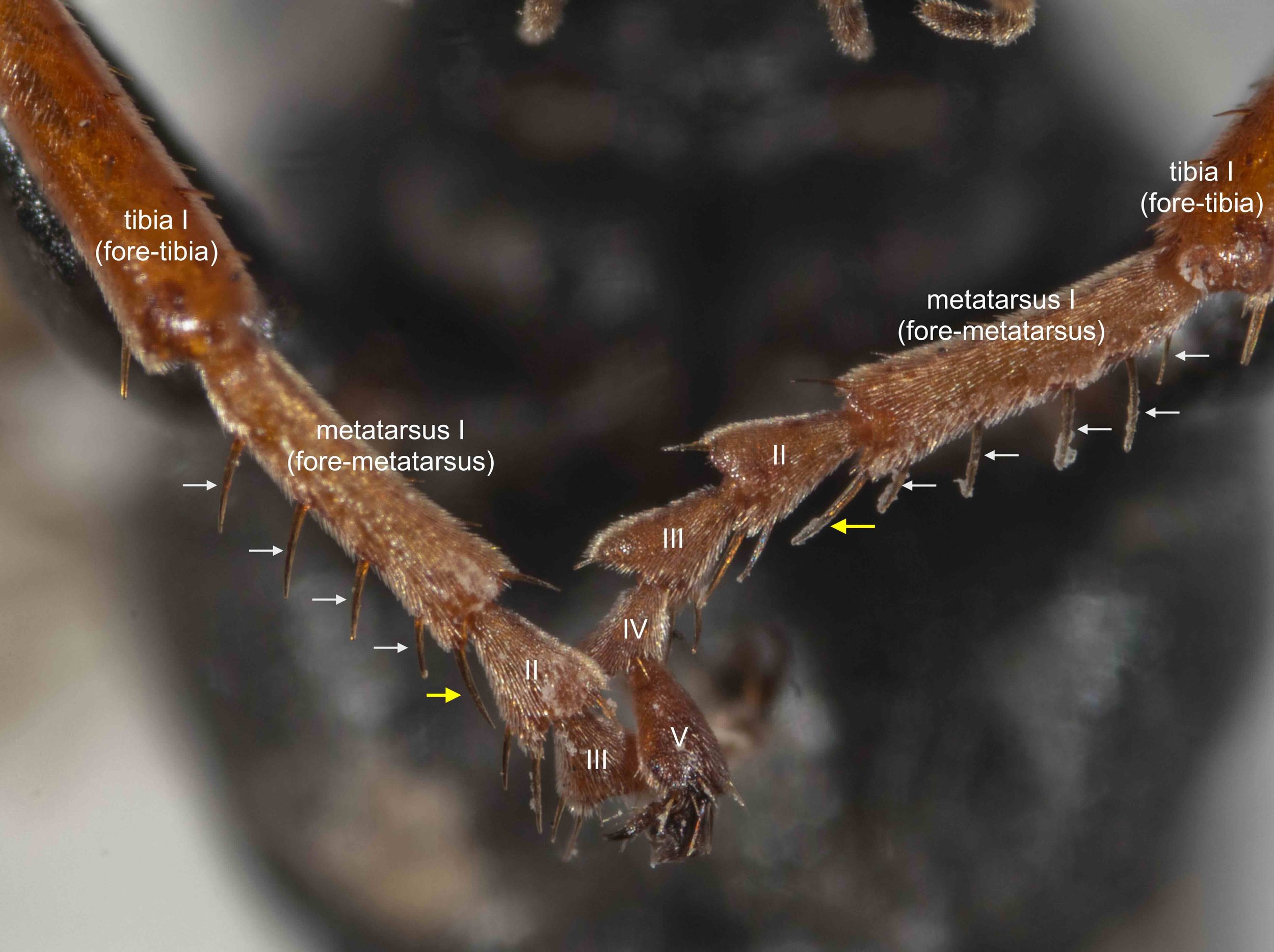
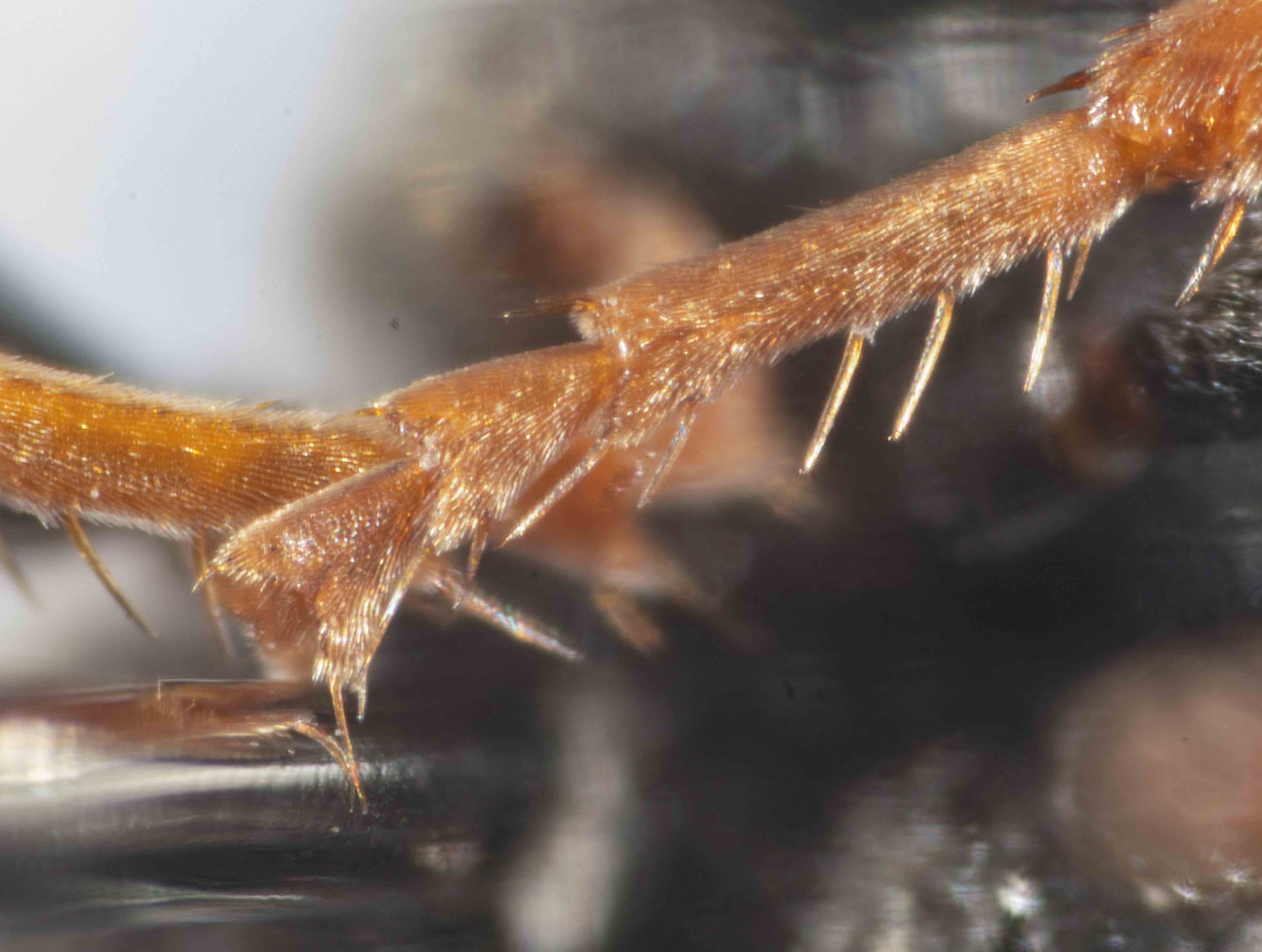
foreleg tarsal rake
Sphodrotes punctuosa females:
“Fore-metatarsus with 5-6 rake spines of which the distal one is distinctly shorter than the second tarsal segment.”
[arrows indicate spines; thicker, yellow arrow is the most distal spine]
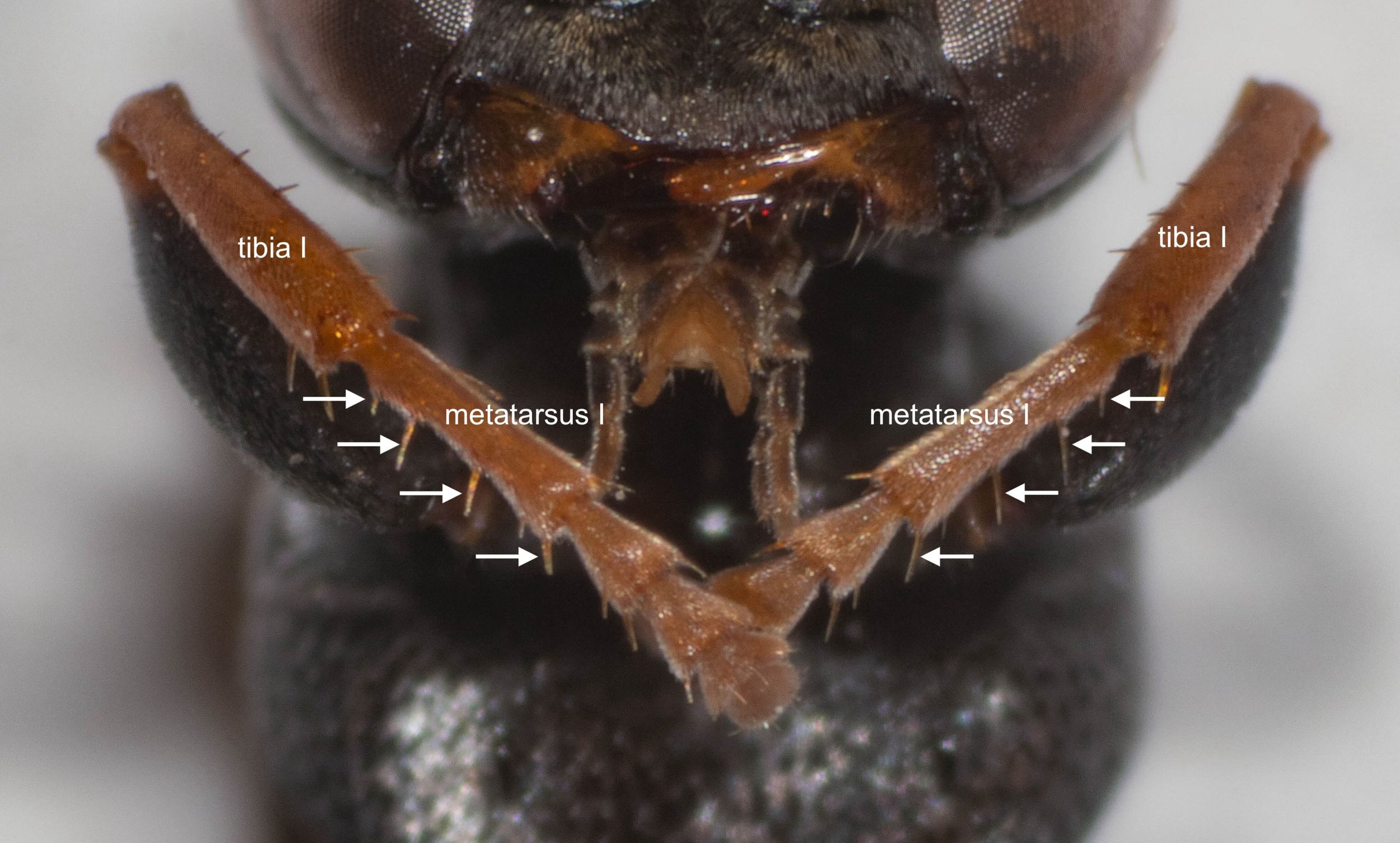
foreleg tarsal rake
Sphodrotes punctuosa males:
“Metatarsus I with 4-5 rake spines.”
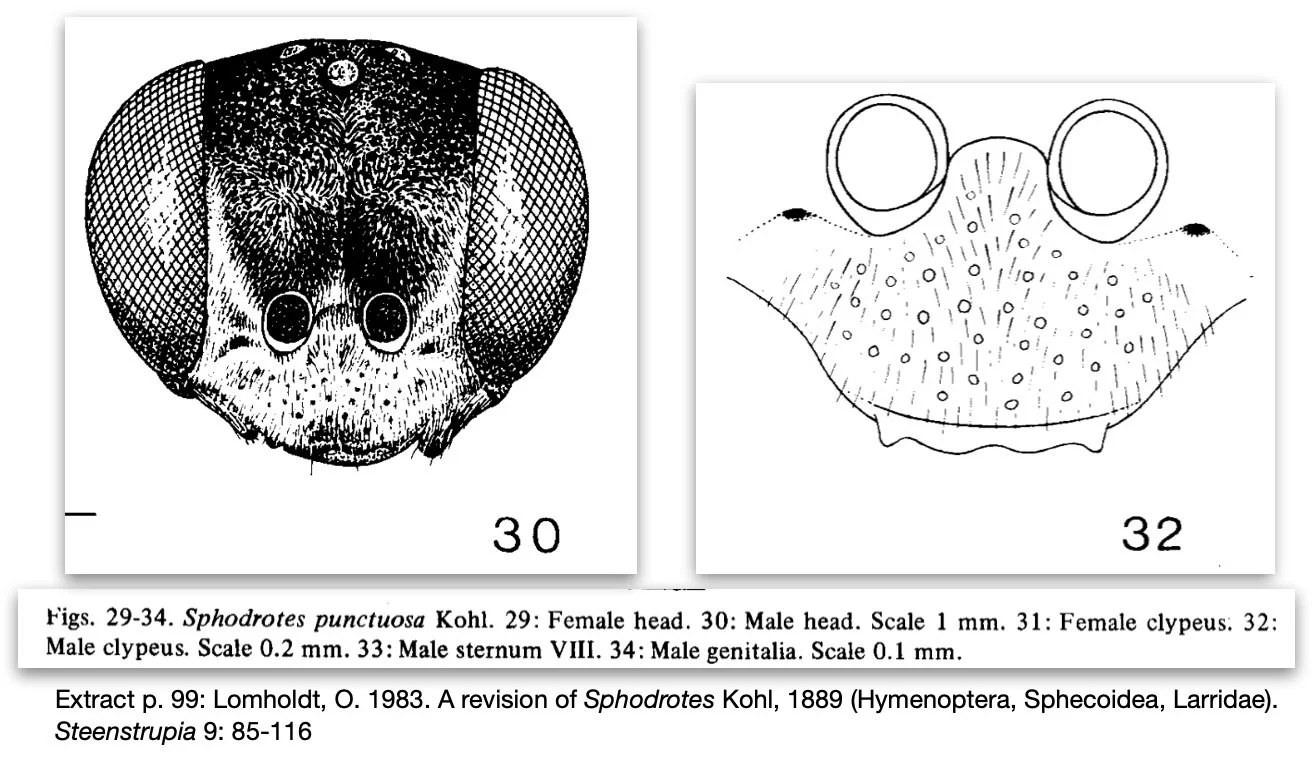
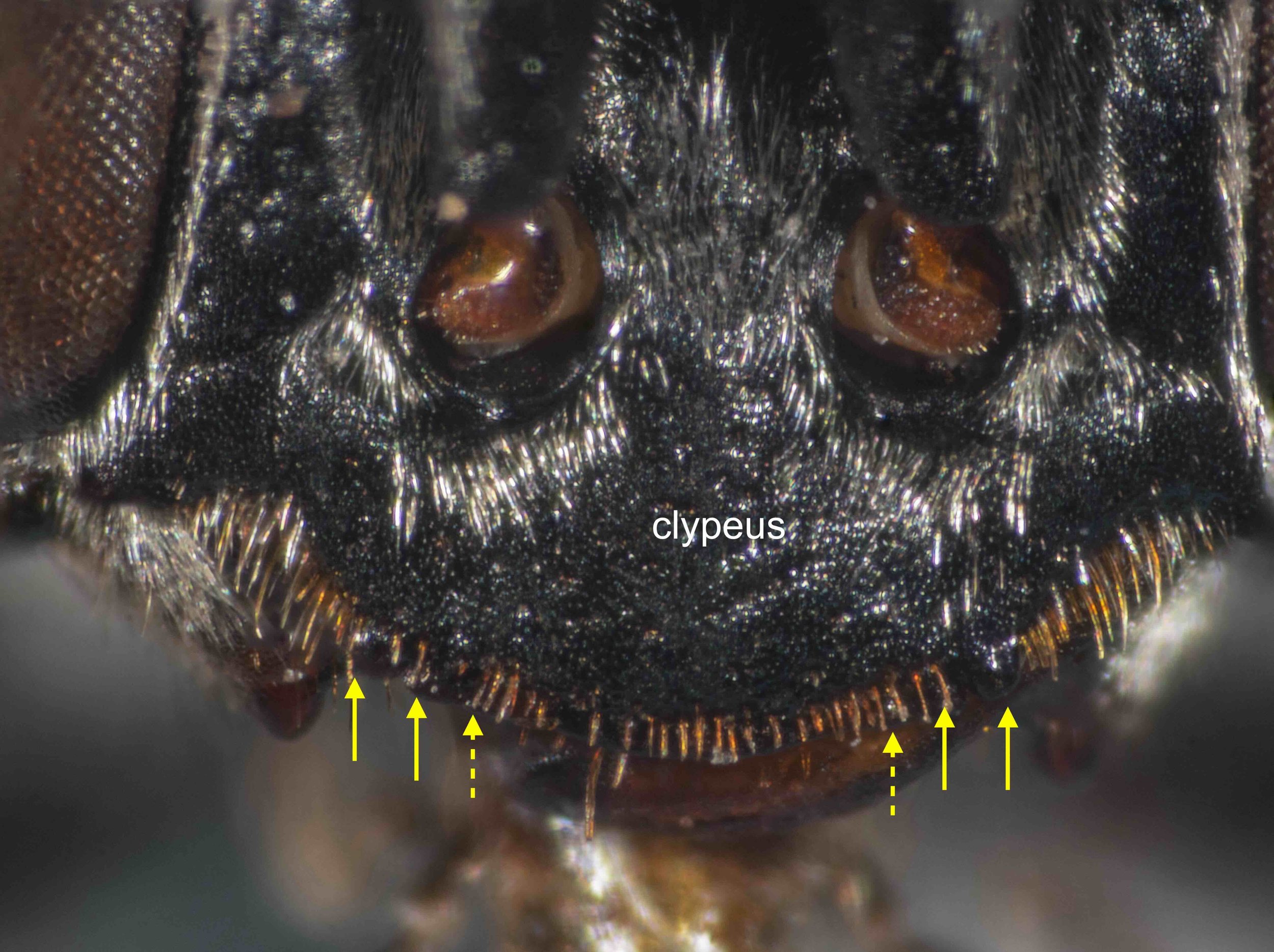
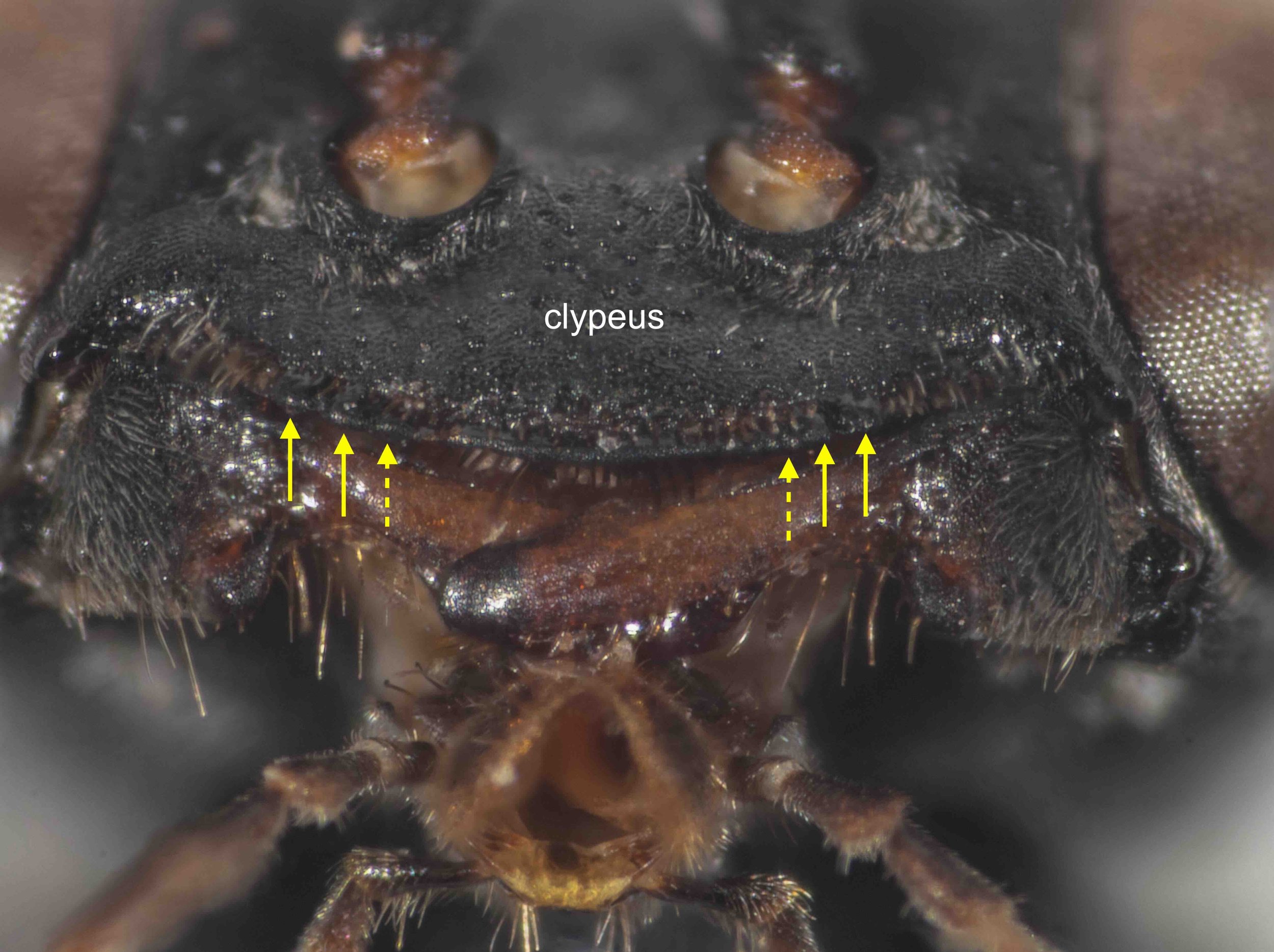
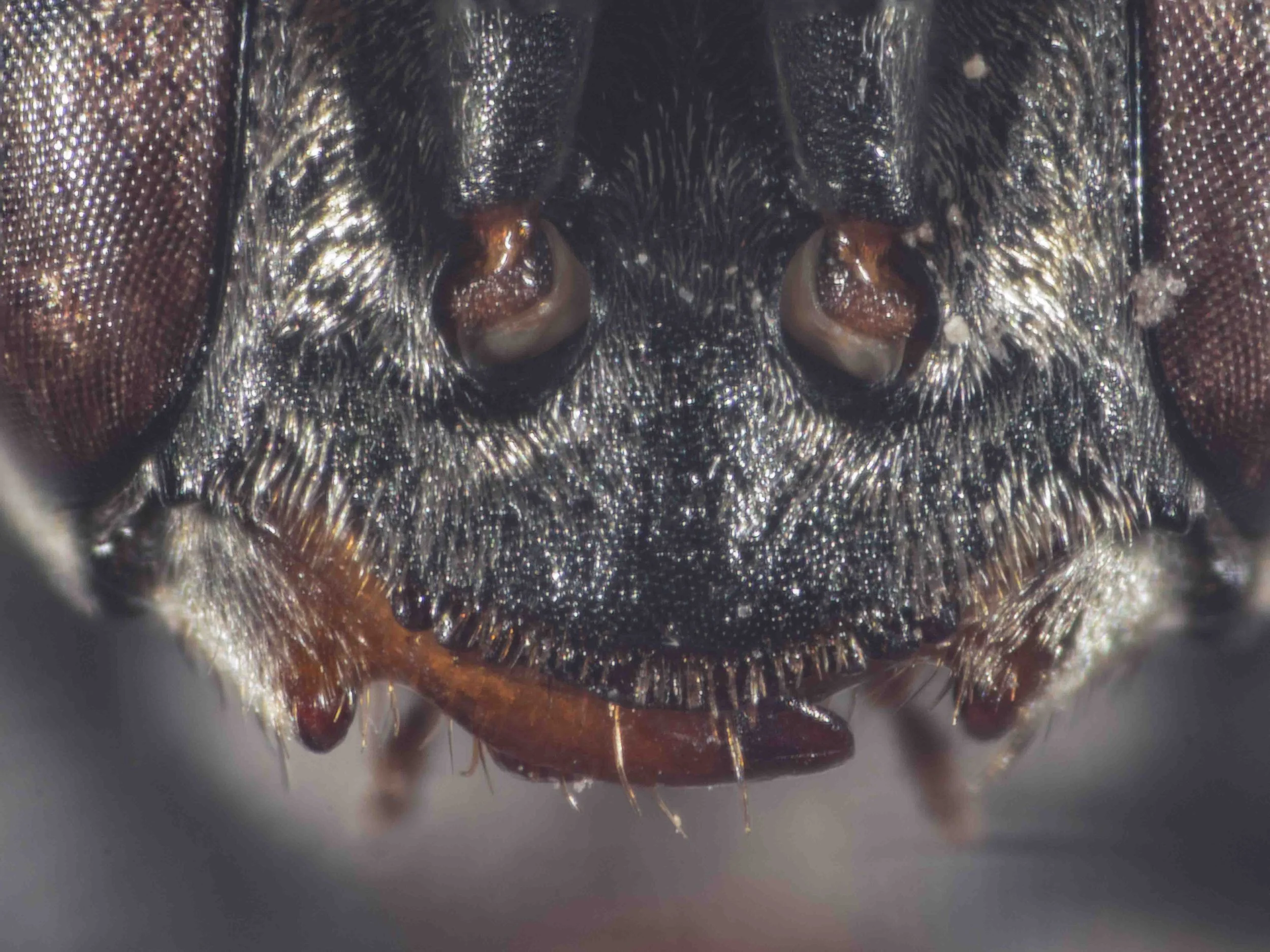
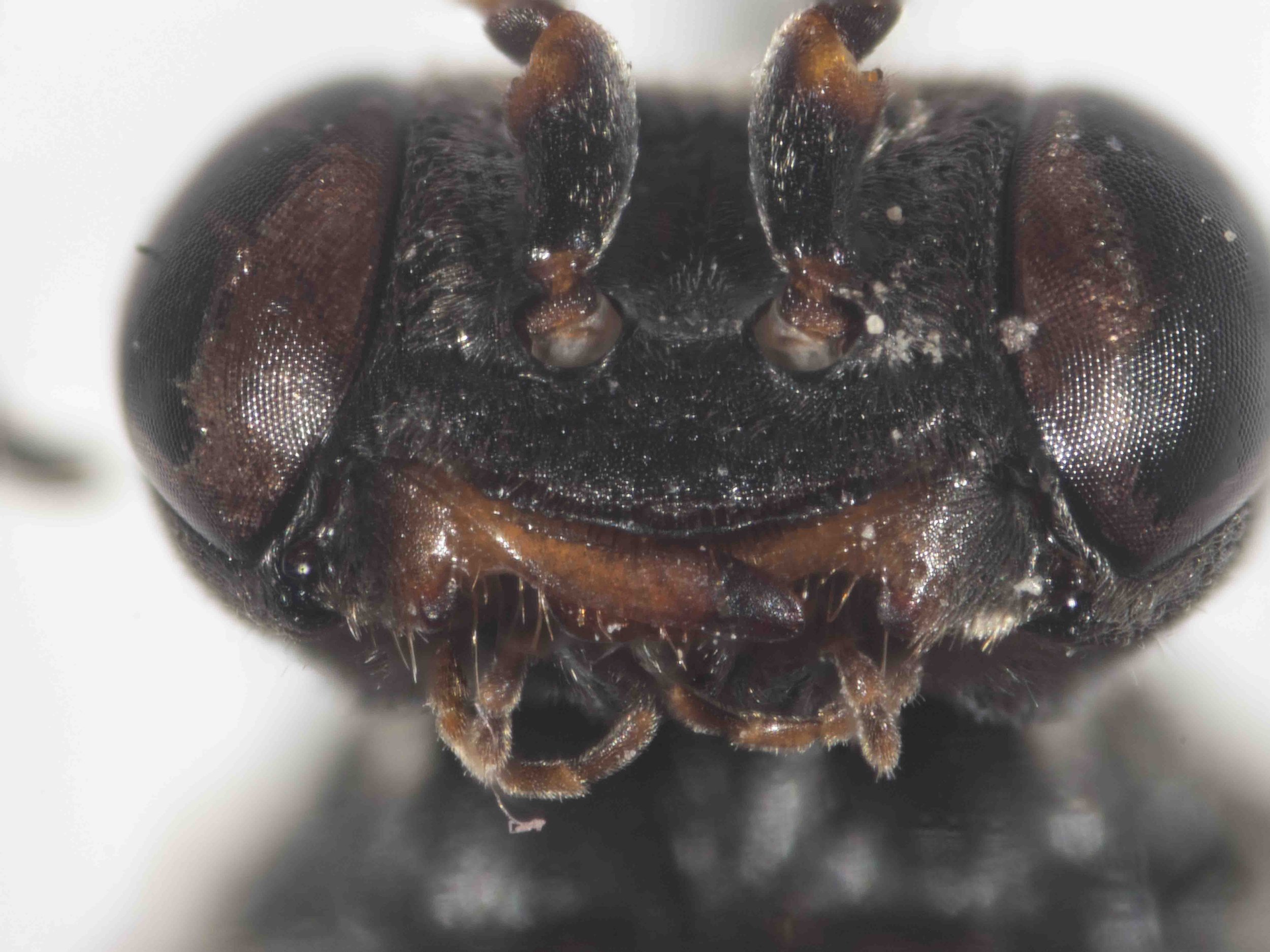
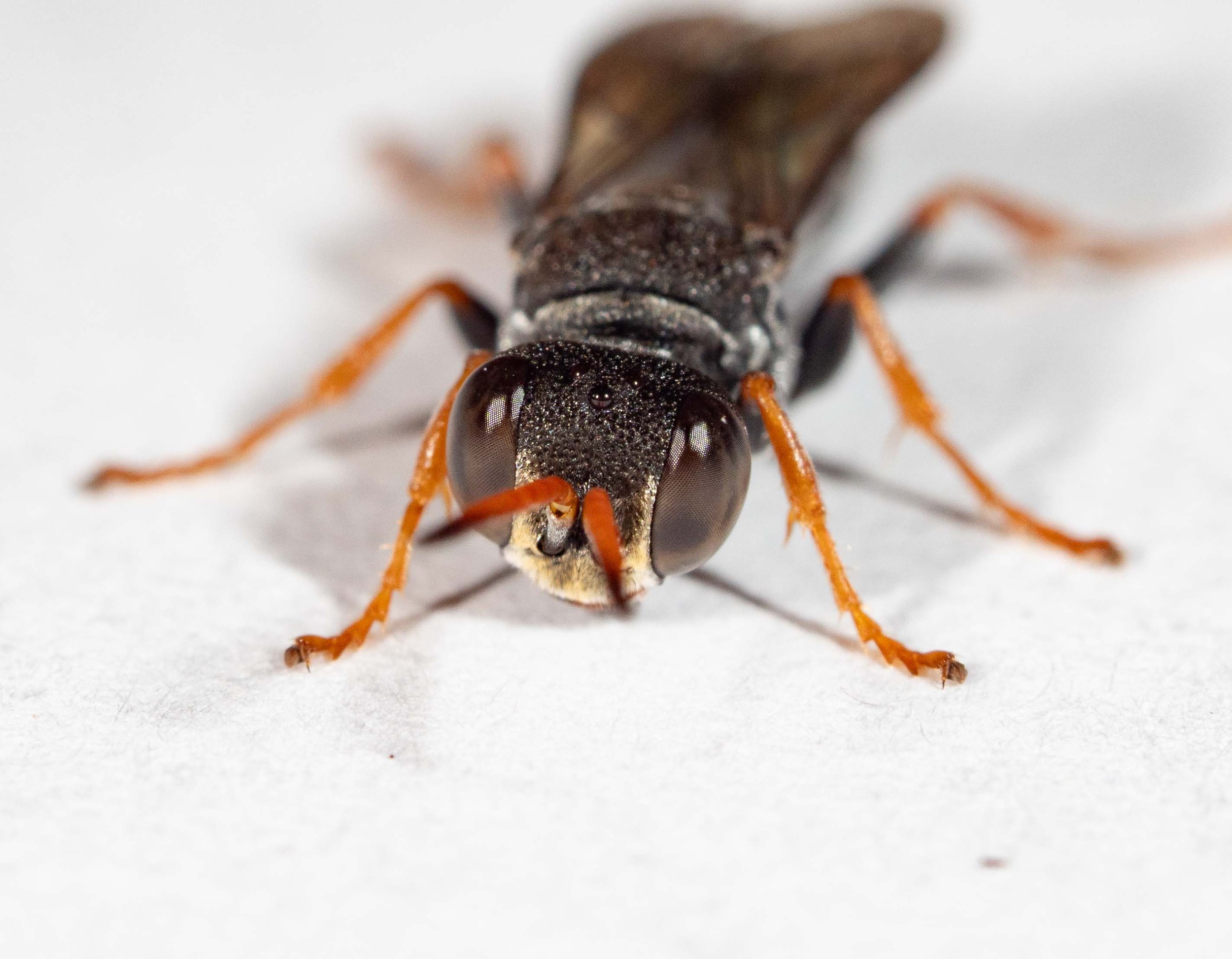
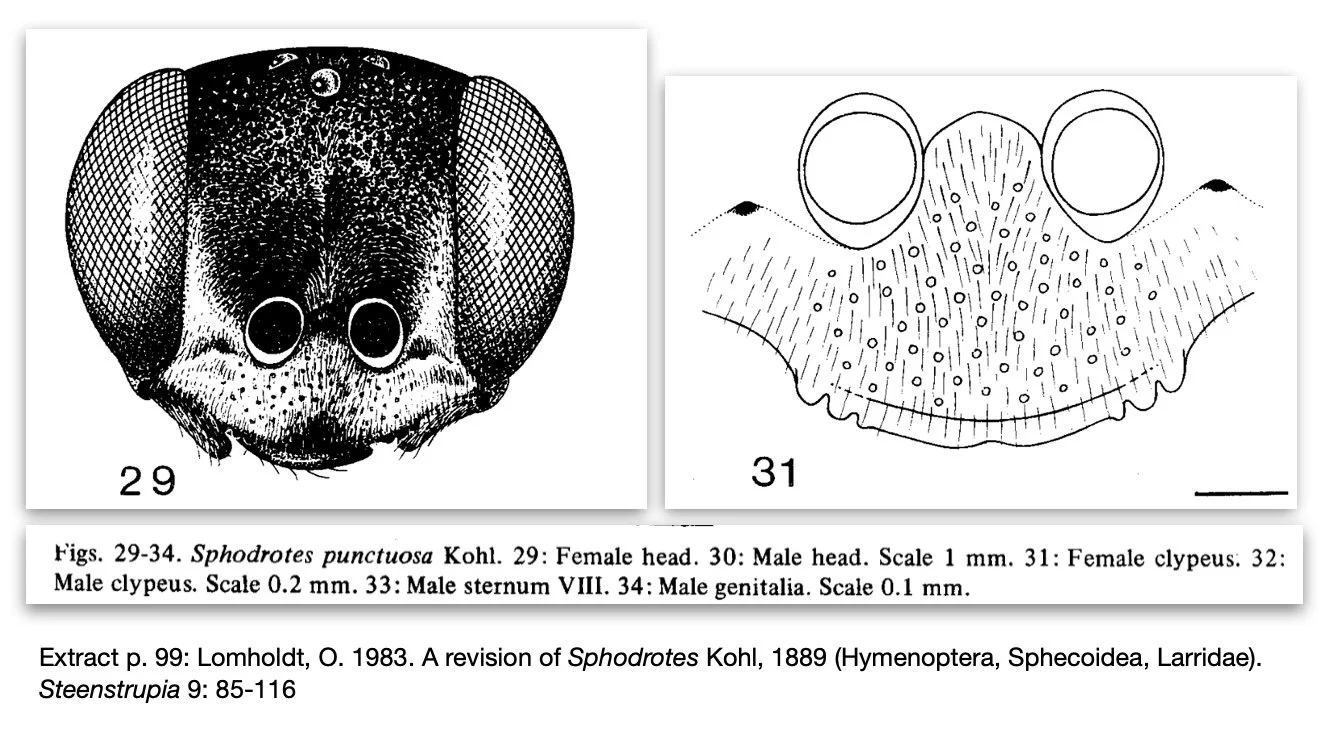
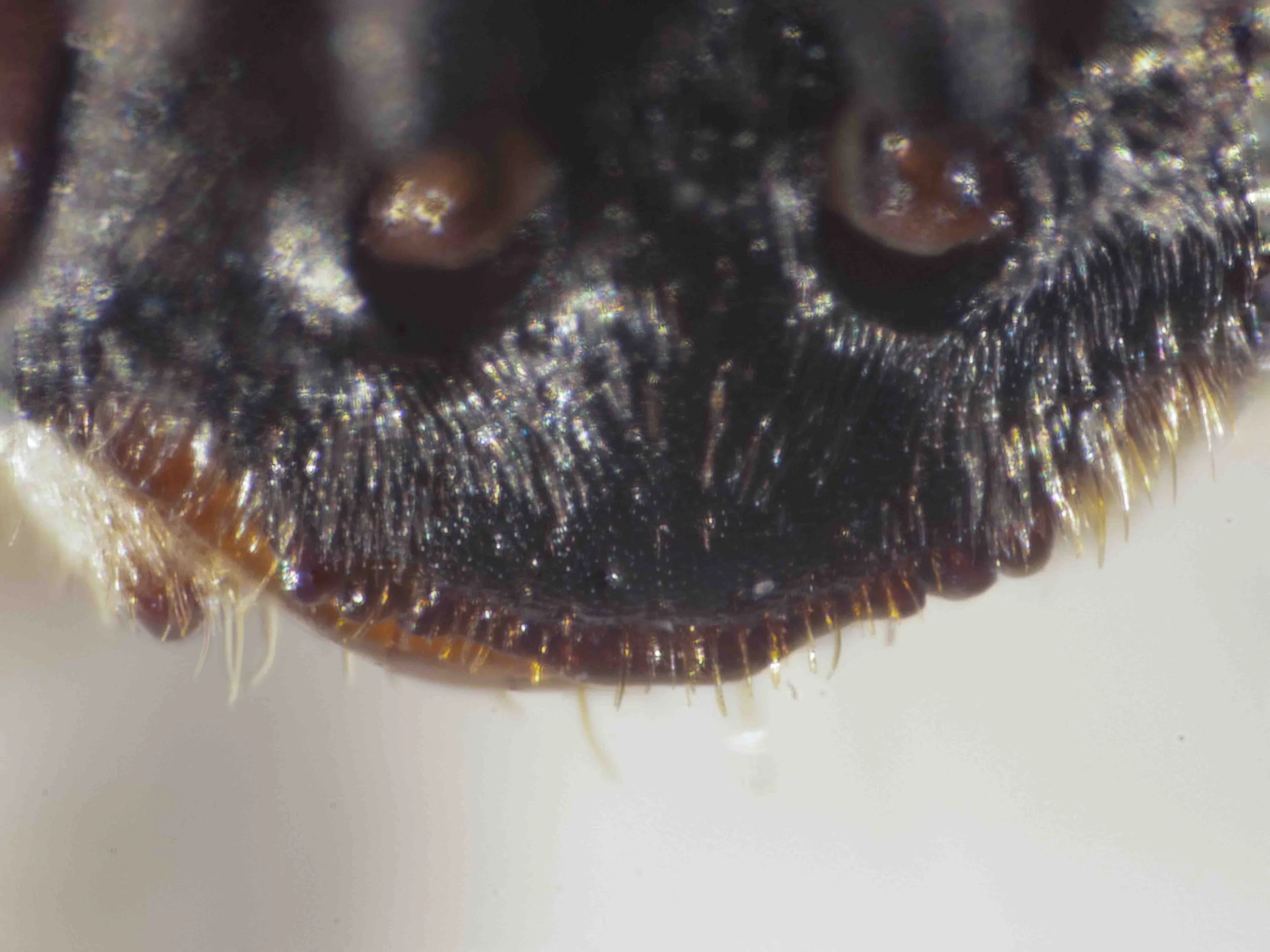
female clypeus (frontal view)
Sphodrotes punctuosa females:
“Clypeal outline (Fig. 31), the three lateral teeth distinct, median emargination very shallow or absent.”
The arrows indicate the lateral teeth, with the innermost (dotted arrow) difficult to see beneath the fringing setae.
female clypeus (more ventral view)
Sphodrotes punctuosa females:
“Clypeal outline (Fig. 31), the three lateral teeth distinct, median emargination very shallow or absent.”
The arrows indicate the lateral teeth, with the innermost (dotted arrow) difficult to see.
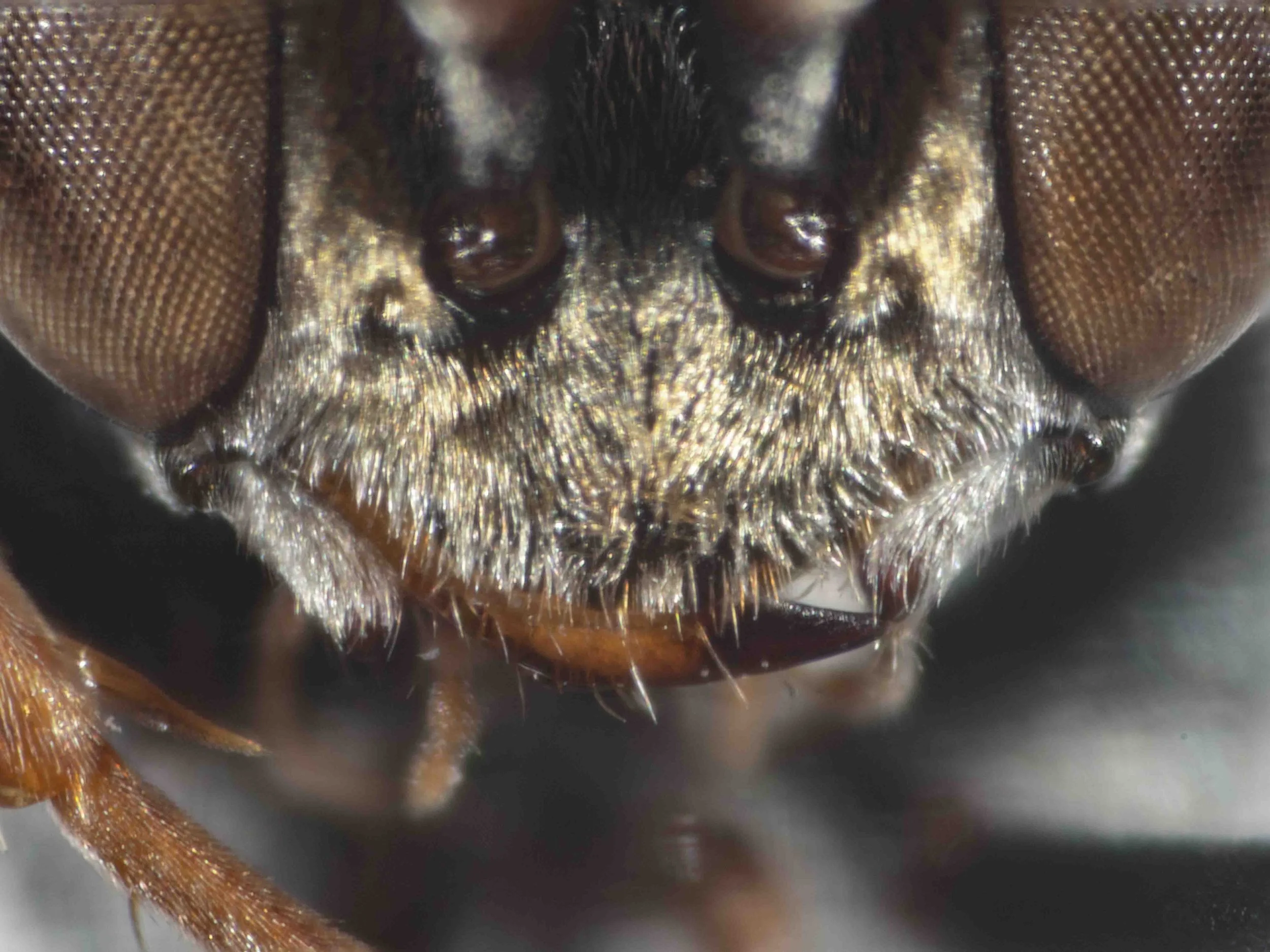
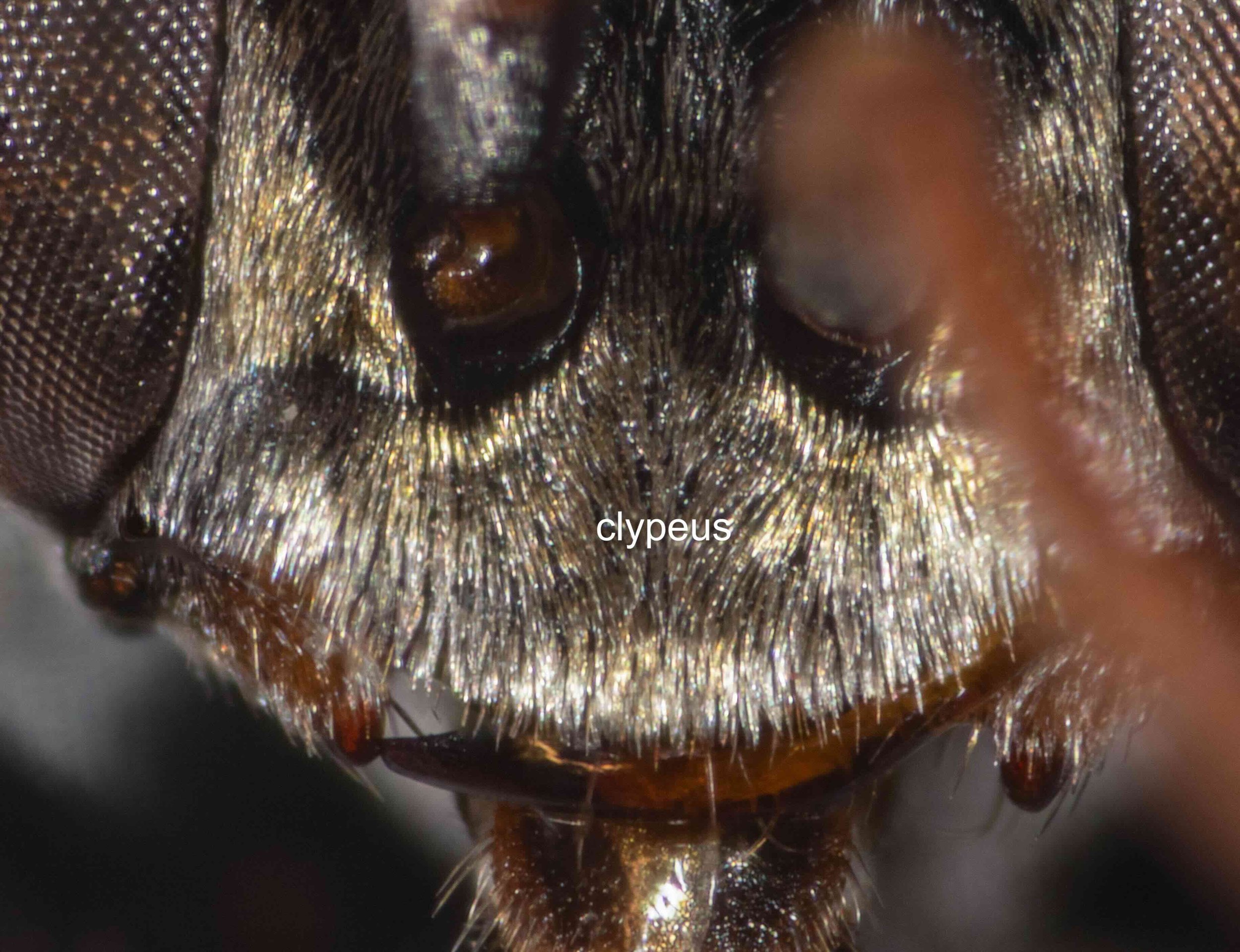
male clypeus (frontal view)
The dense pubescence conceals the apical rim of the clypeus when viewed face on.
[compare with Lomholdt’s Fig. 32]
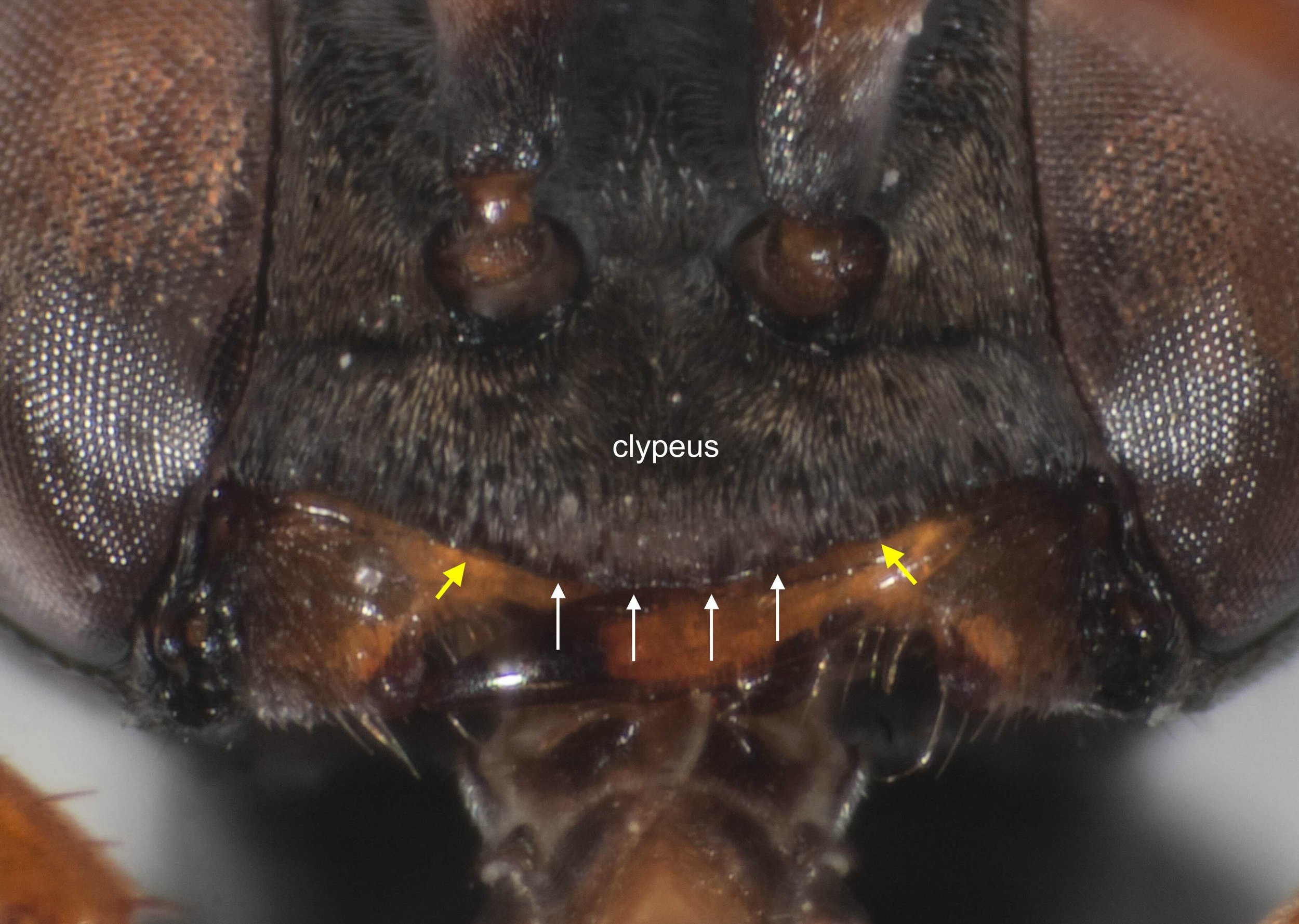
male clypeus (more ventral view)
The arrows indicate apical rim of the clypeus. There is a suggestion of a single, lateral tooth (thicker, yellow arrows), but it is not prominent as it is in the female.
[compare with Lomholdt’s Fig. 32]
Lomholdt 1983 Figs. 29-32
Sphodrotes have:
- inner margins of eyes parallel, or slightly converging below
- a wide scapal basin (most)
Sphodrotes have:
- inner margins of eyes parallel, or slightly converging below
- a wide scapal basin (most)
Sphodrotes have:
- 3 submarginal cells in the forewing
- the second submarginal cell triangular and petiolate, or at least narrowed anteriorly (arrow)
- broad genae, so the head appears rectangular when viewed dorsally
- integument strongly sculpted, and usually pitted
Sphodrotes have:
- both recurrent veins (arrows) received by submarginal cell II (usually, with occasional exceptions)
Unlike many other wasps, Sphodrotes rarely display their wings in this way, so one has to be lucky to get field shots clearly showing forewing venation … making this a less useful feature for genus level ID.
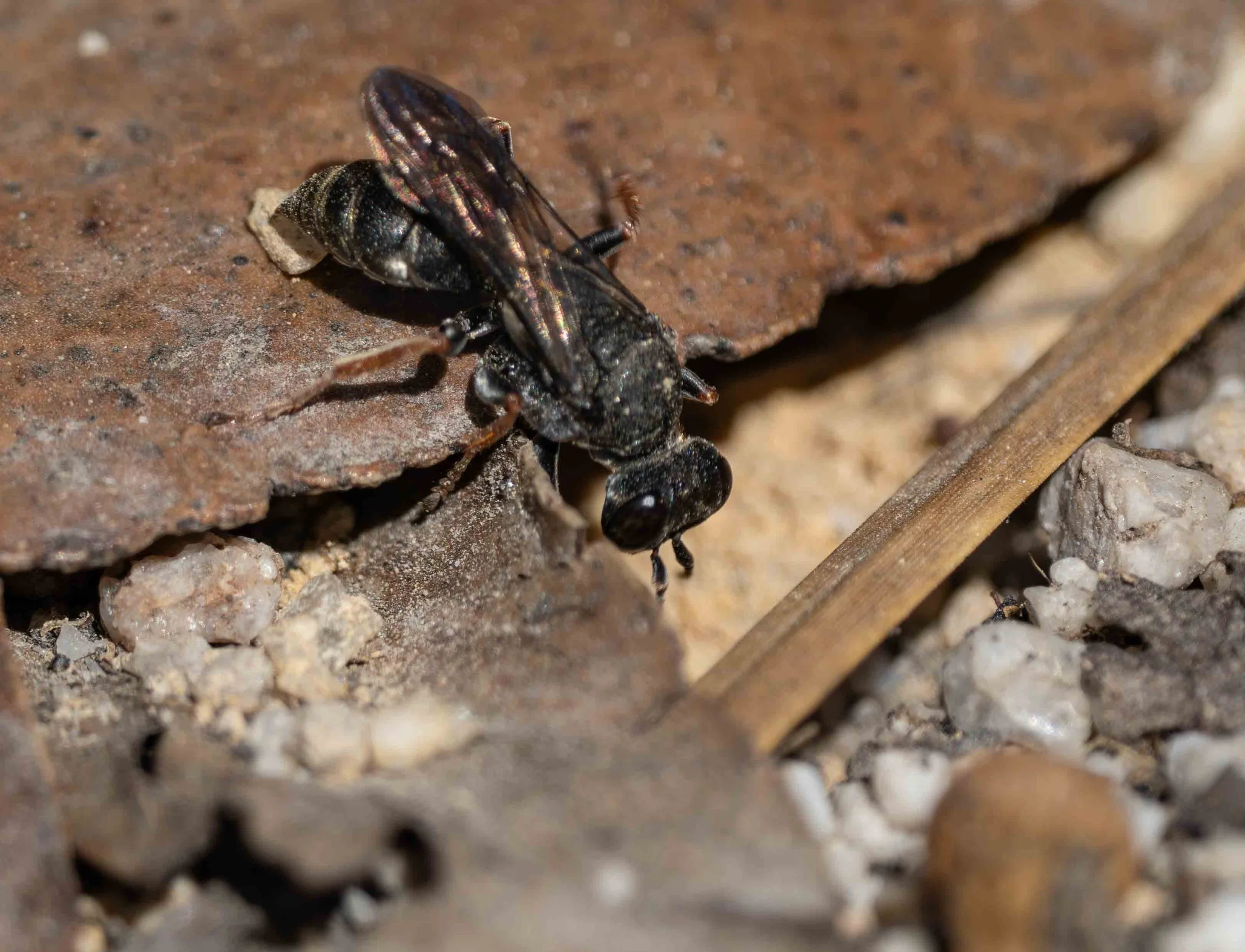
Most of the Sphodrotes I see are males, either flying on patrol or perched on low vegetation.
They tend to pivot to and fro on the same perch, looking in all directions, before flying off again … and often returning to the same perch a short time later.
Makes life easy for the photographer!
Sphodrotes have:
- the mesopleuron sharply angled anteriorly (arrow)
That is, they look to have a square chest.
Occasionally I catch a female outside her burrow, grooming in the sun. Such photo opportunities are, however, quite rare. It’s normally the males that are sitting about on the vegetation.
Sphodrotes have:
- integument strongly sculpted, and usually pitted
This coarsely sculptured integument is one of the most reliably visible clues to the genus.
Inspecting her chosen nest site … sandy soil beneath a layer of loose gravel, fallen leaves and twigs.
Excavation works proceed in relative obscurity. This is in stark contrast to the ‘out in the open’ approach of nest digging among some other crabronids (e.g. Cerceris, Bembix).
If I’m patient and watch a known burrow entrance, I may get a glimpse of the female returning with prey. Typically they dive into the open burrow beneath the leaf litter before I can get a good look … let alone a shot. This was my lucky day, as she landed outside before wrestling her large catch below ground.
Evans (1973) recorded Sphodrotes nemoralis in Far North QLD provisioning their nests with immature bugs (Pentatomoidea … stink bugs, etc). And it seems our local species is targeting similar prey.
Within 4 minutes she headed out again, quickly departing the area. Like many ground-nesting crabronids, Sphodrotes are susceptible to a variety of parasites and nest invaders. Avoiding detection is a priority – although a near impossibility.
I had just spotted this female land on the stick, when the male flew in and grabbed her. Note the much smaller head and body of the male … a size difference that is difficult to appreciate unless they’re coupled like this.
His mandibles are gripping her antennae, appearing to pull her head up … perhaps making it more difficult for her to scurry or fly away.
Escape she does, by throwing her whole body off the stick, although the coupling holds firm for a moment longer. Immediately after this shot they were separated … and the male was perched nearby, grooming.
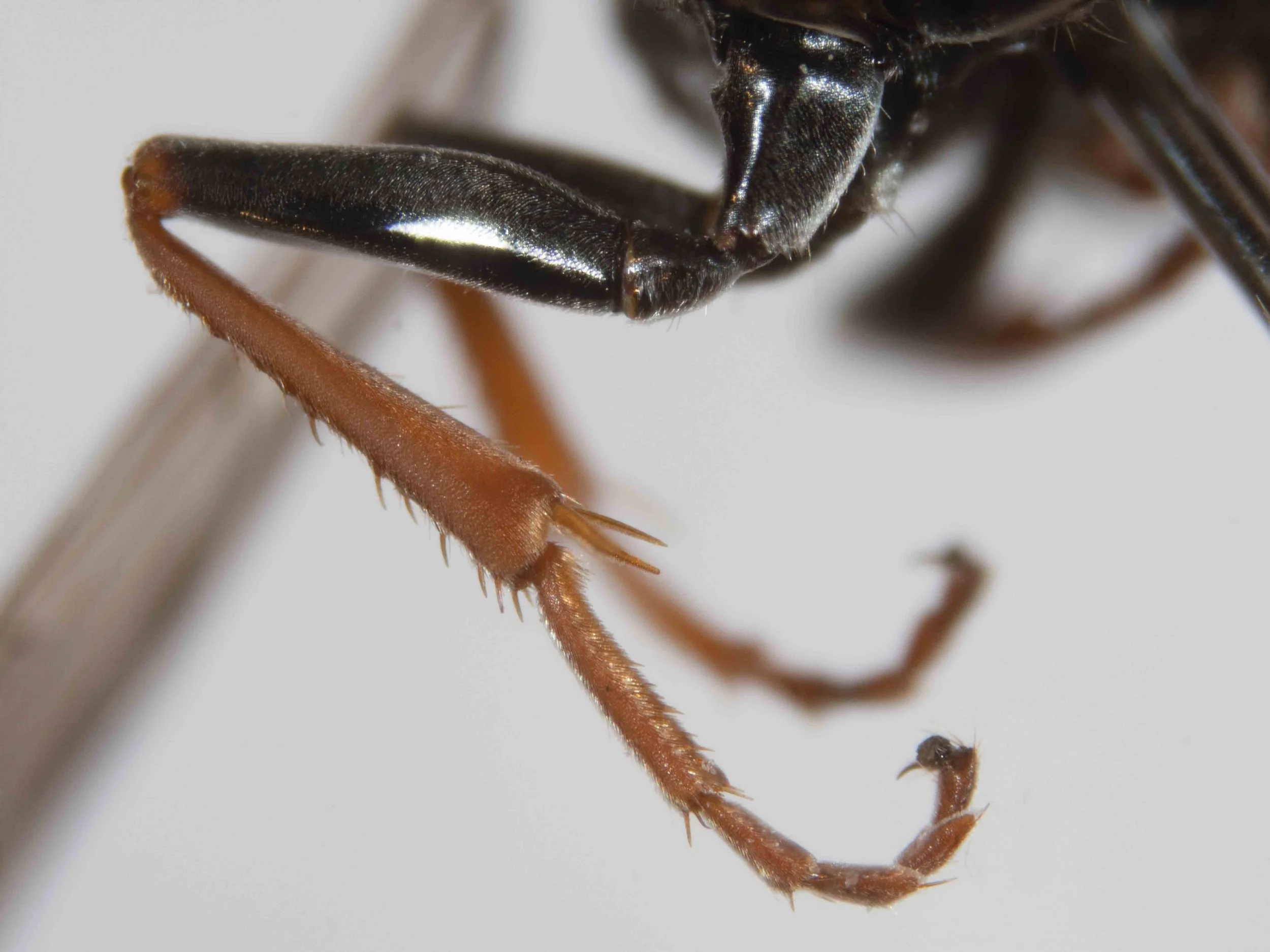
hind leg, posterior view
Extract: Lomholdt 1983, p. 88
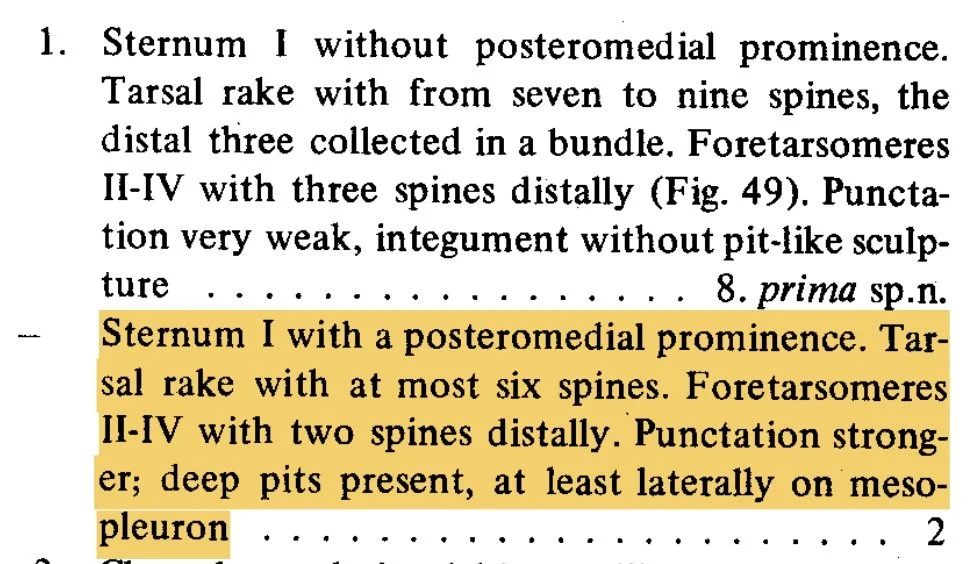
“Tarsal rake with at most six spines. Foretarsomeres II-IV with two spines distally."
“Sternum I with a posteromedial prominence”
“Punctation stronger; deeper pits present …”
“Sternum I with a posteromedial prominence”
“Punctation stronger; deeper pits present …”
Extract: Lomholdt 1983, p. 88
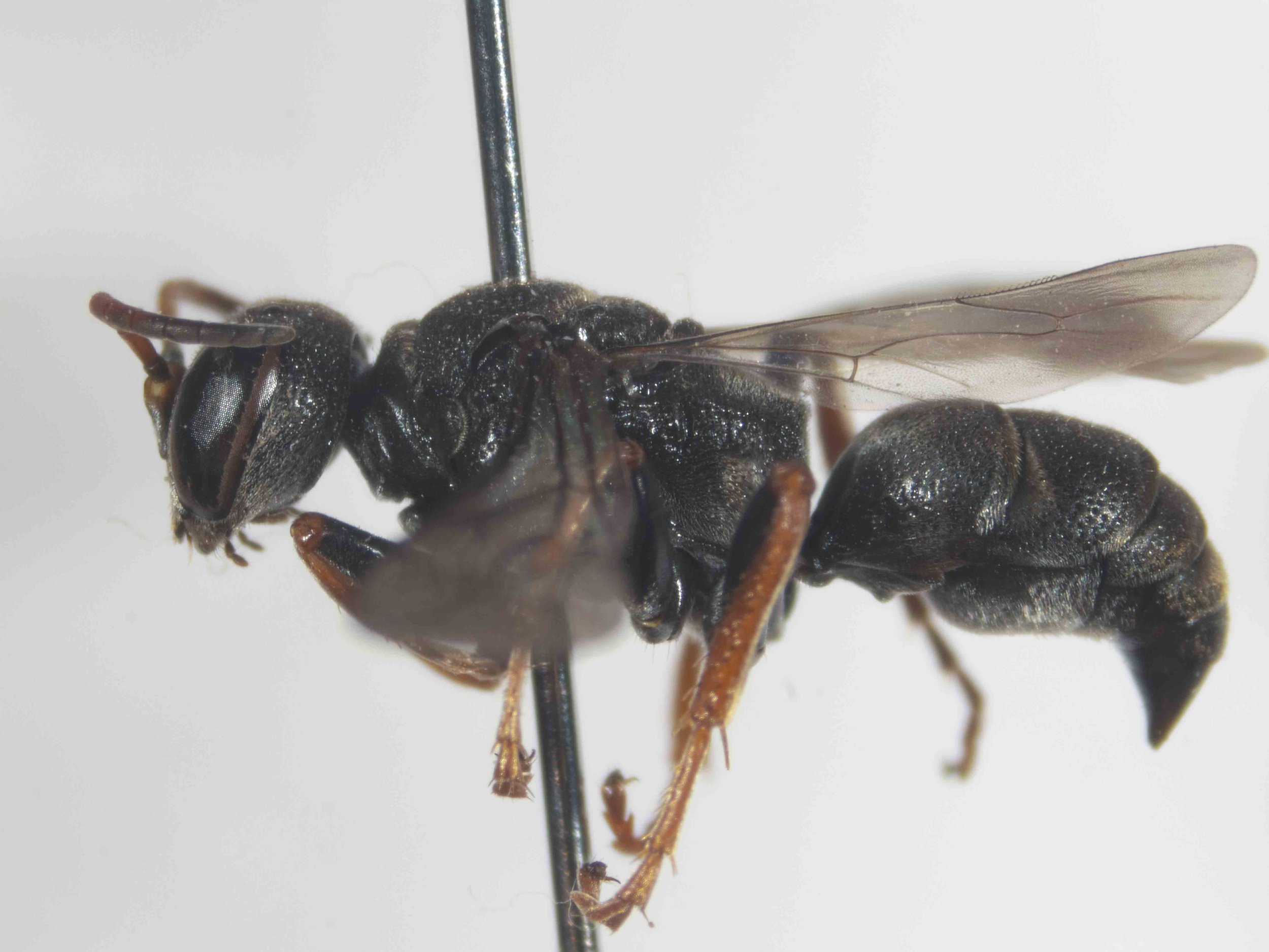
“Mainly black species” … (including: thorax, prododeum, gaster)
“Mainly black species” … (including: thorax & propodeum in the male)
“Mainly black species” … (including: clypeal synsclerite, femora extensively)
Extract: Lomholdt 1983, p. 88
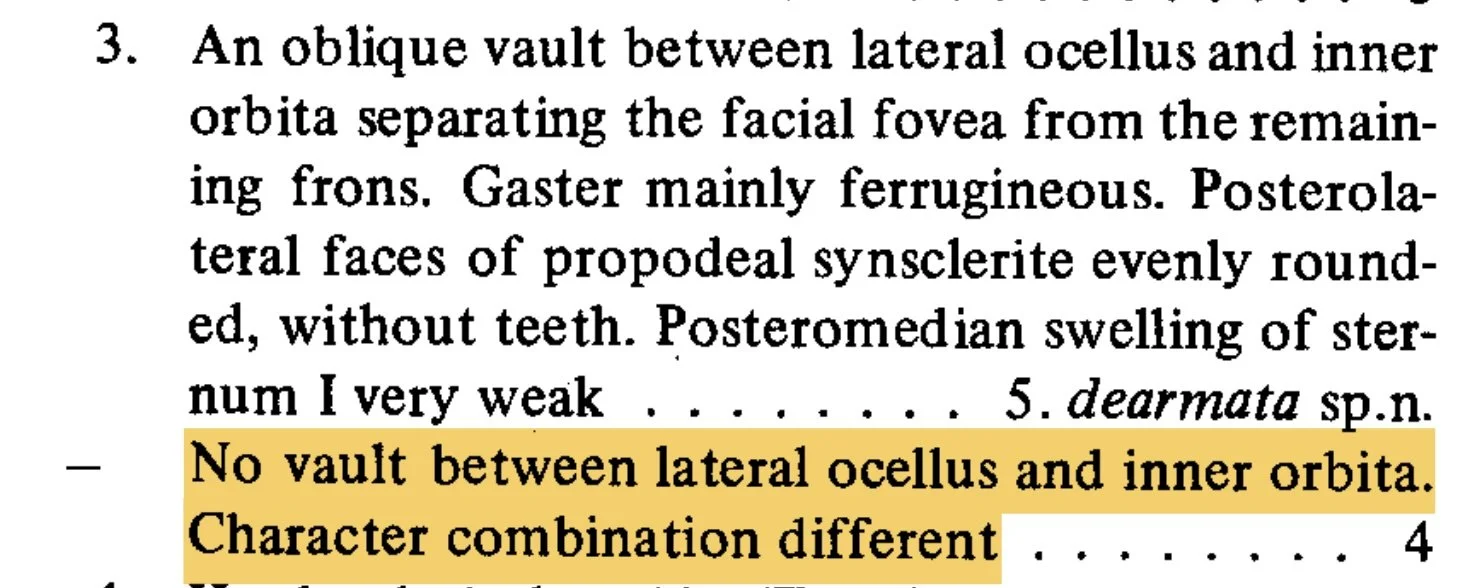
“No vault between lateral ocellus and inner orbita.”
“Character combination different” … (gaster NOT mainly ferrugineous)
Extract: Lomholdt 1983, p. 88
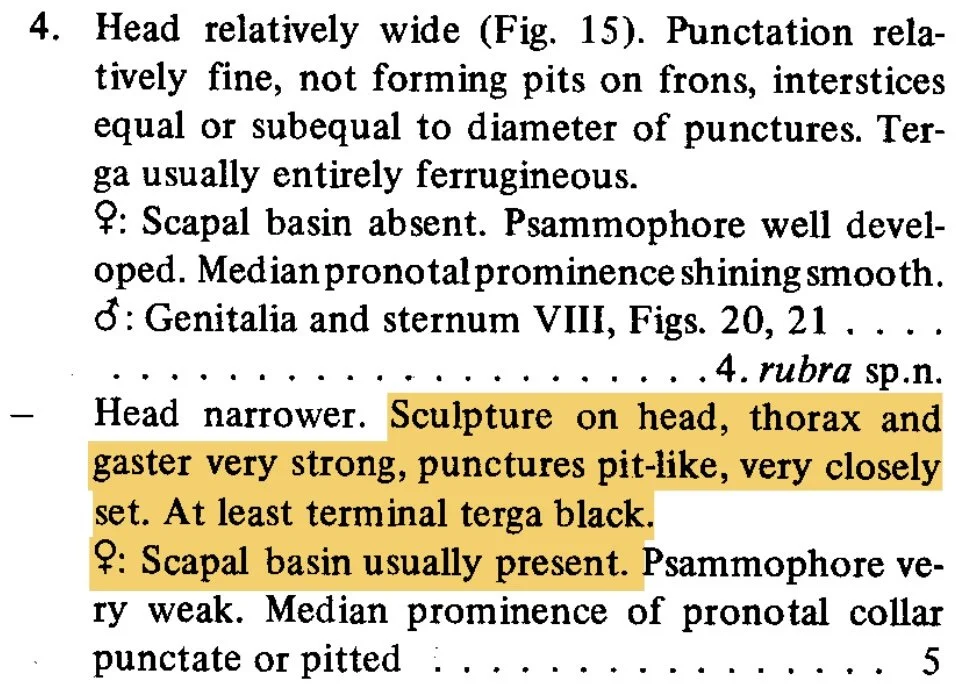
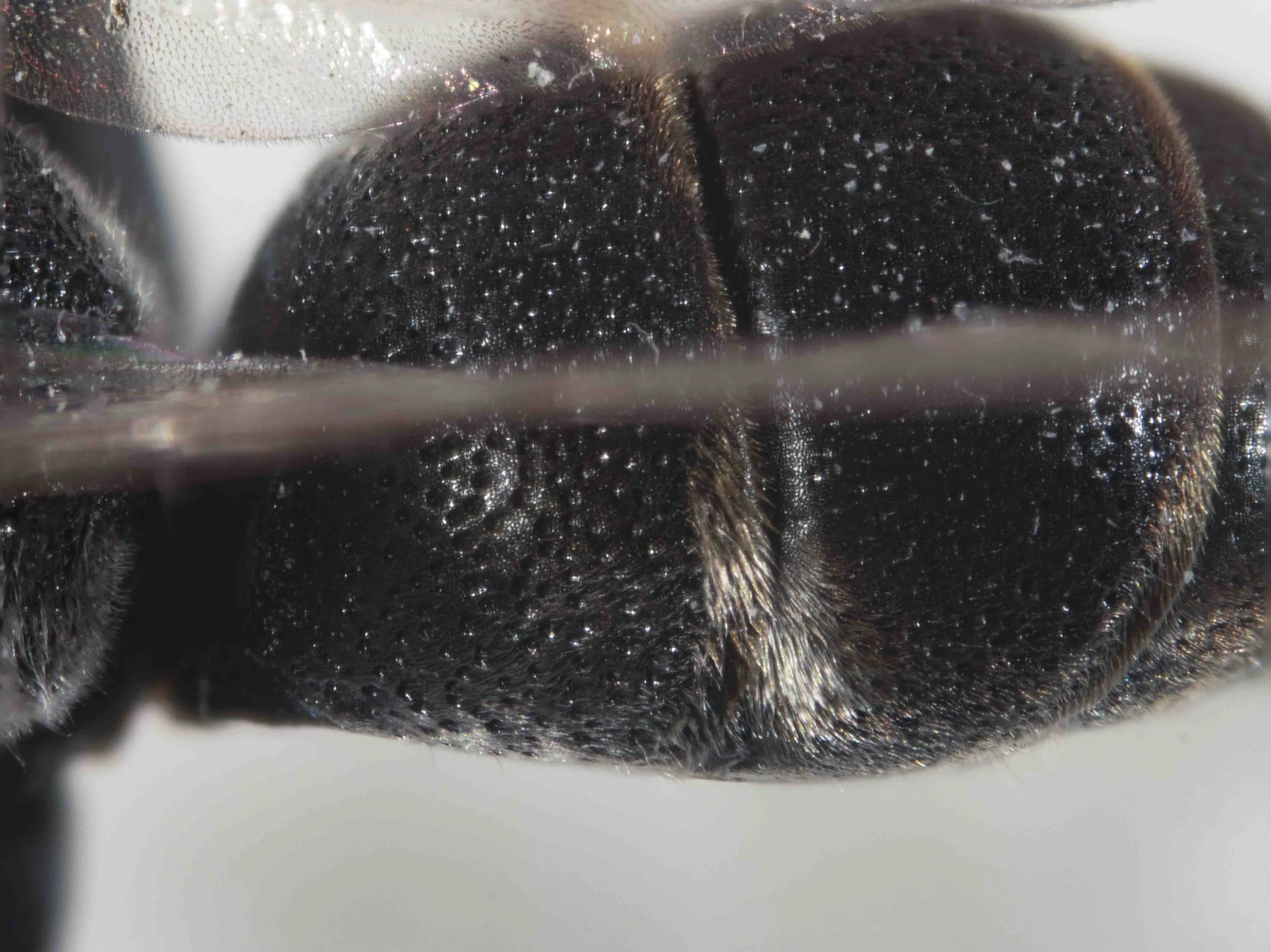
“Sculpture on head, thorax and gaster very strong, punctures pit-like, very closely set”
Extract: Lomholdt 1983, p. 88
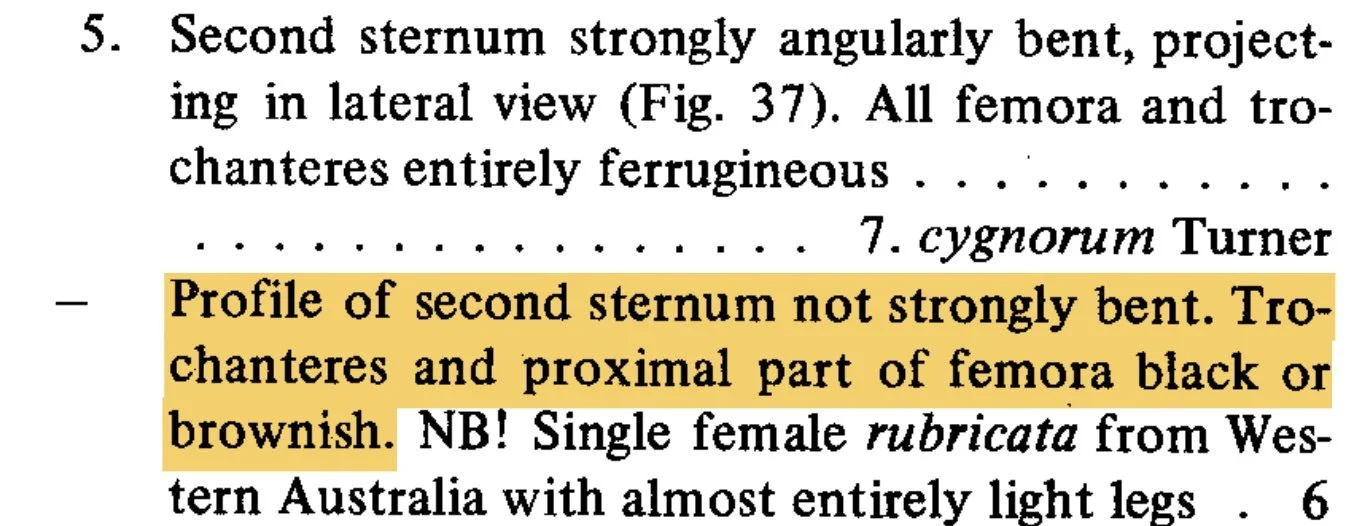
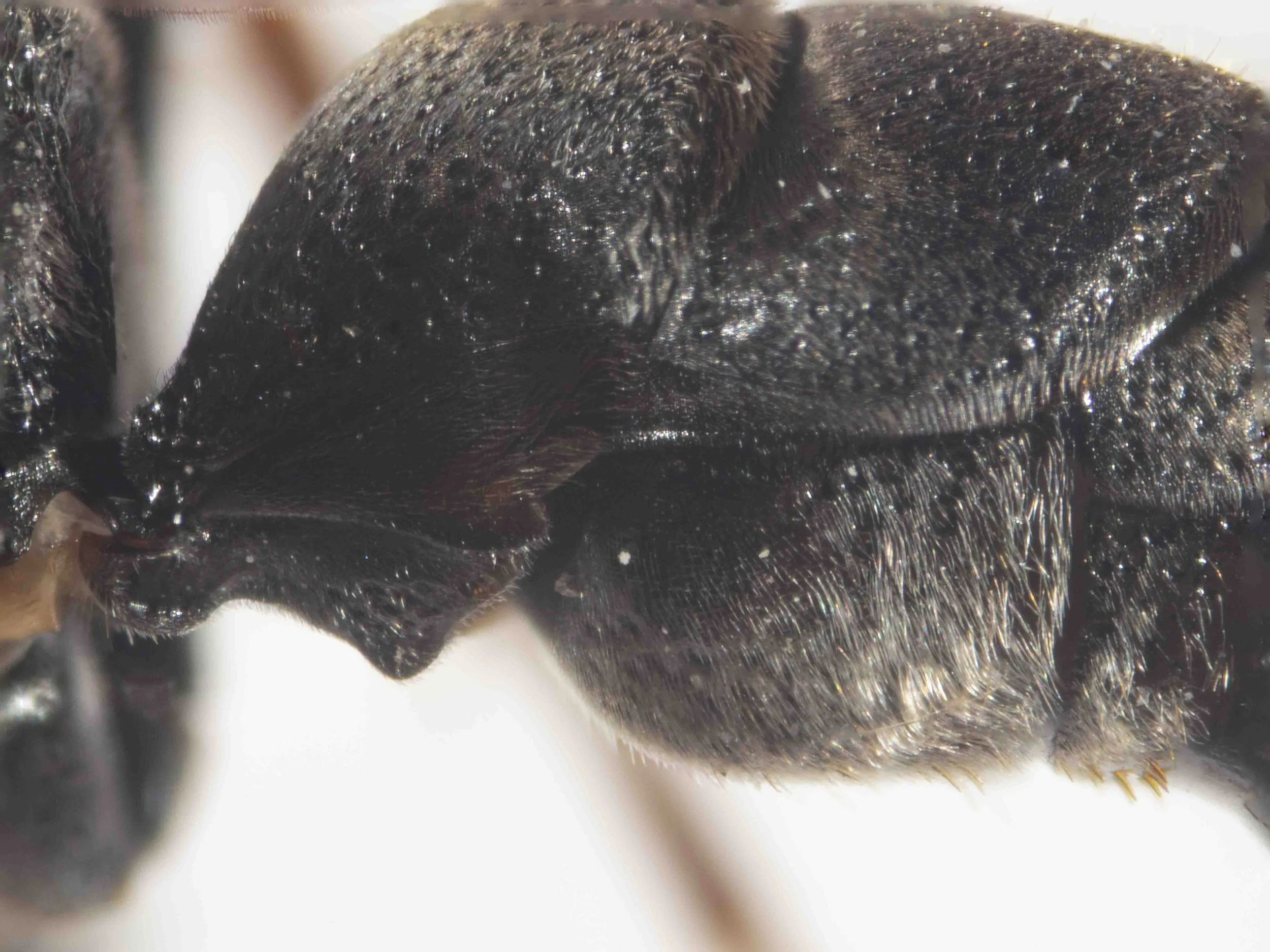
“Profile of second sternum not strongly bent.”
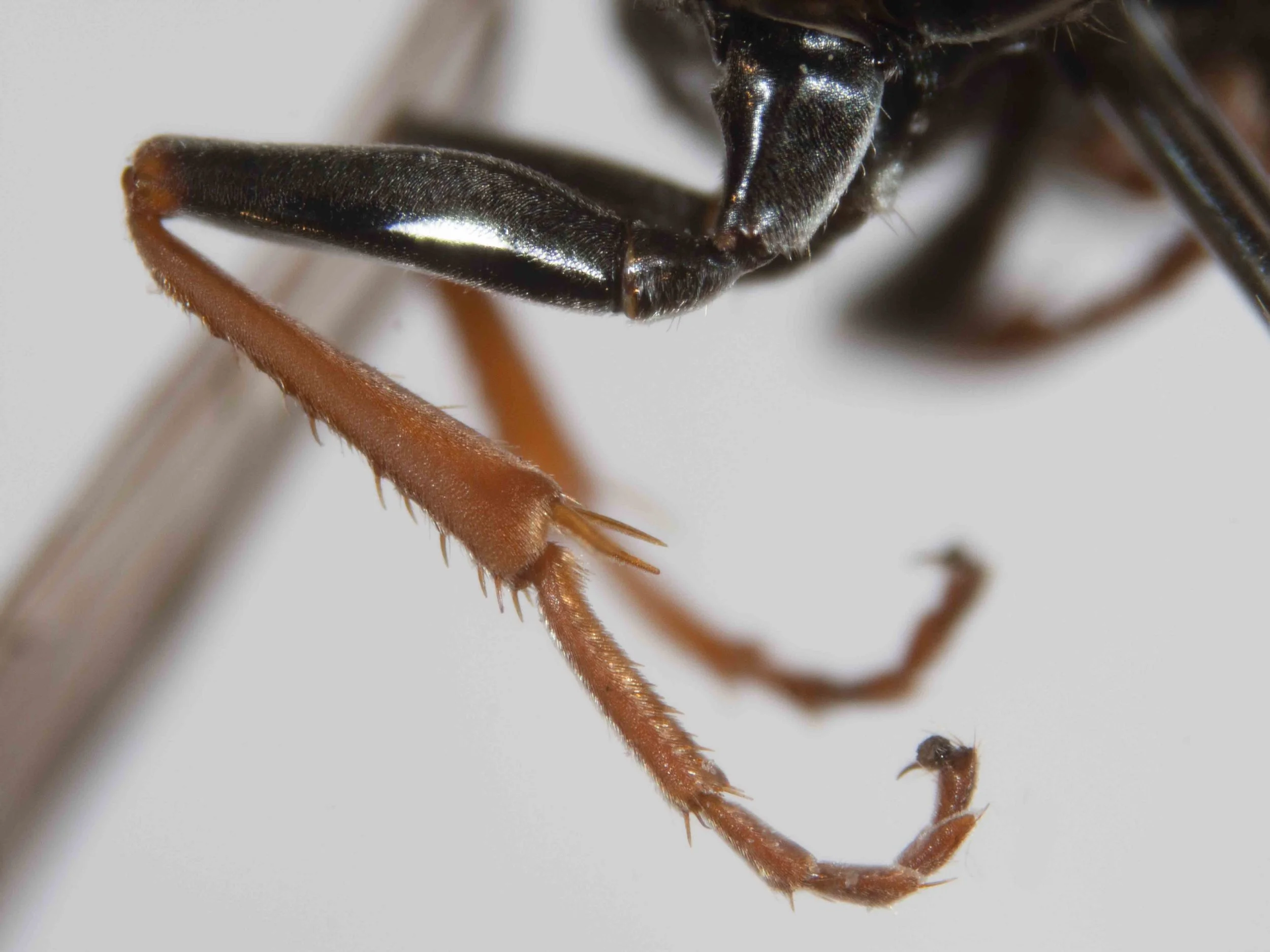
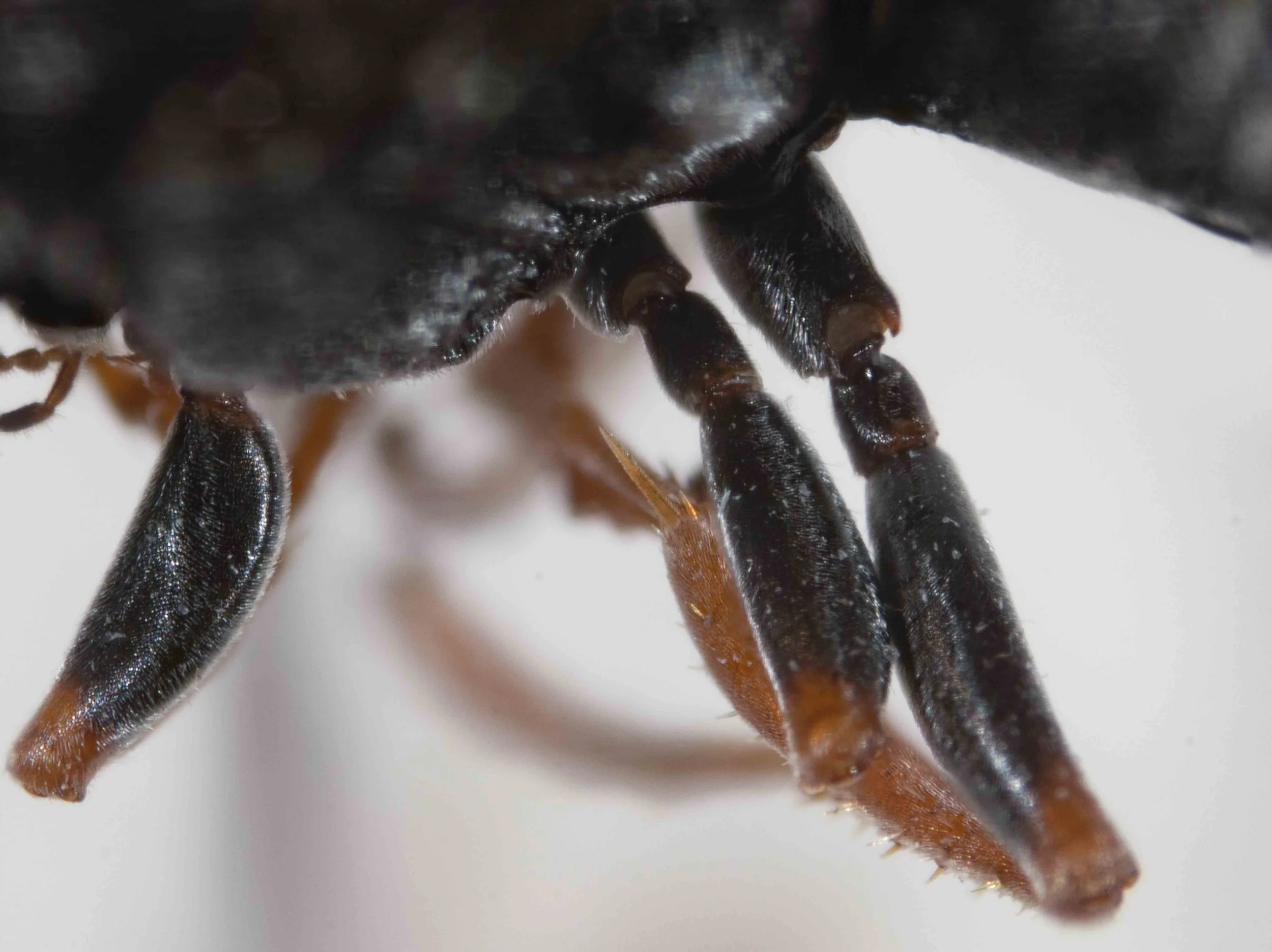
“Trochanters and proximal part of femora black or brownish.”
(this image: left hind leg, viewed posteriorly)
“Trochanters and proximal part of femora black or brownish.”
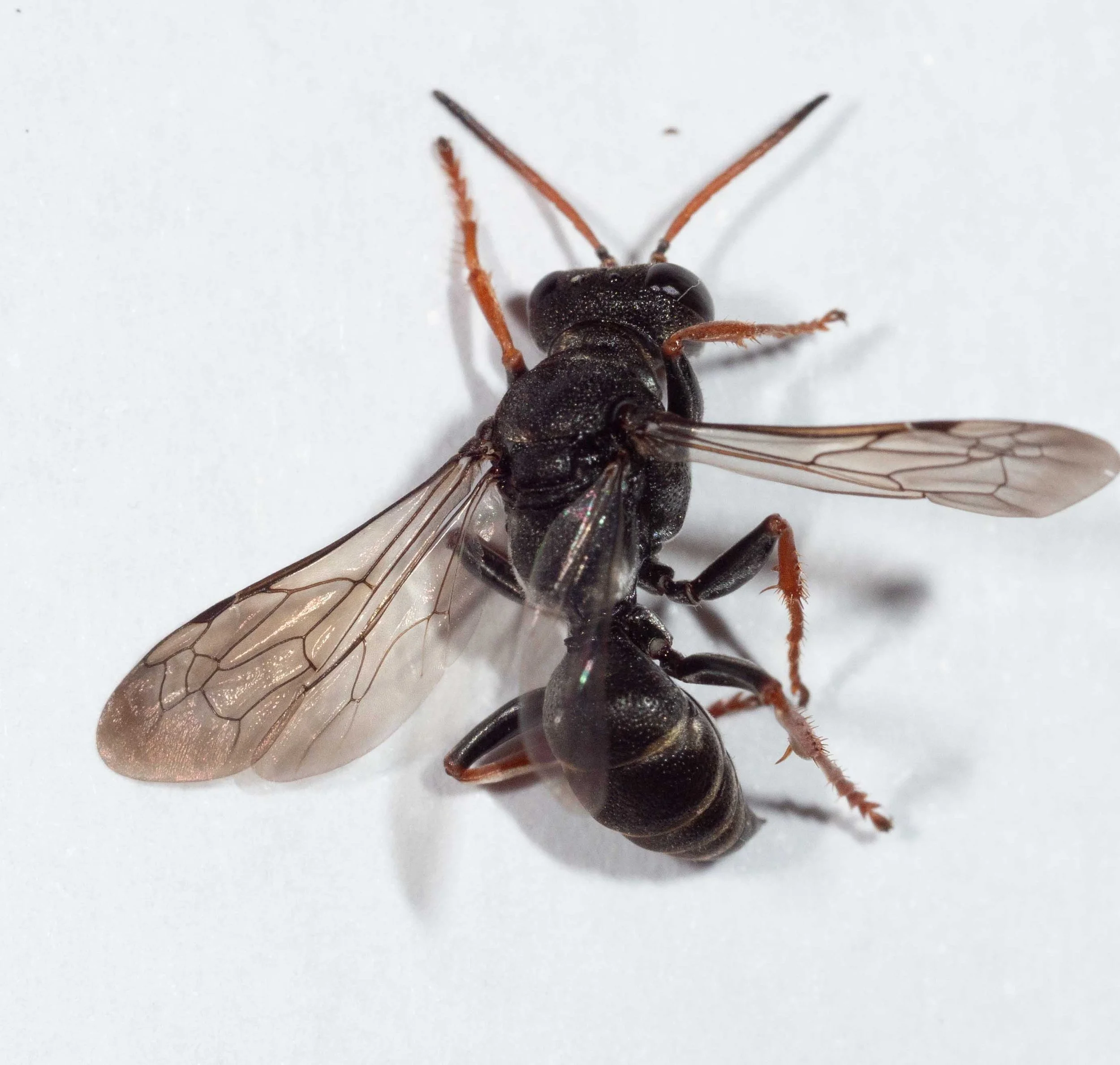
(this image: dorsal view, anterior to left)
Extract: Lomholdt 1983, p. 88
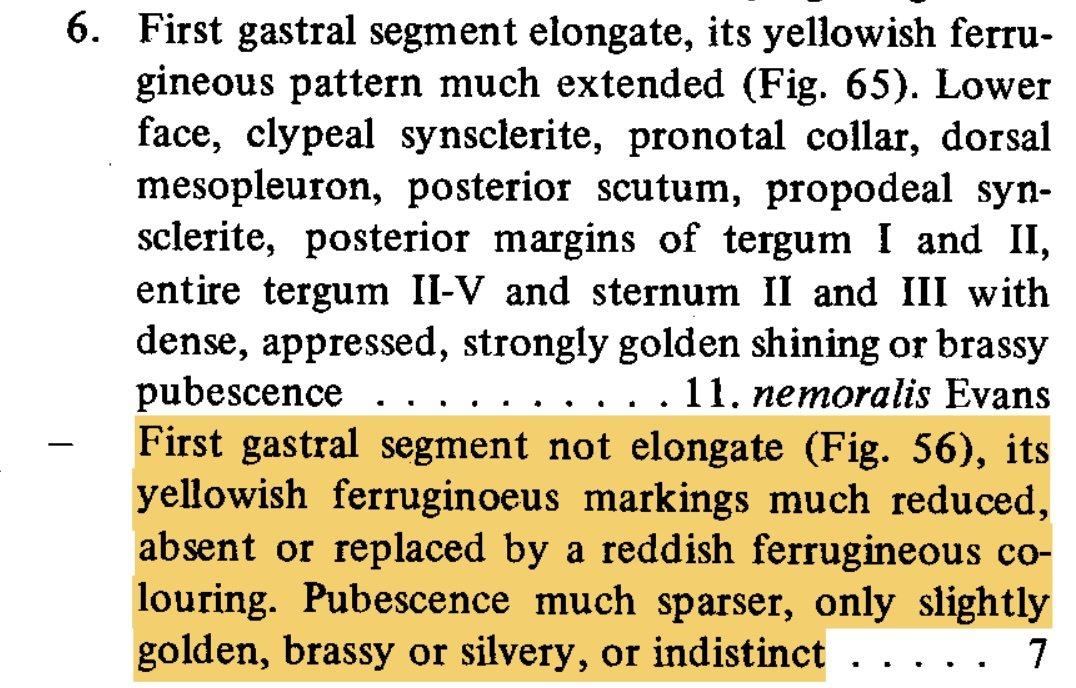
“First gastral segment not elongate … , its yellowish ferrugineous markings much reduced, absent or replaced by a reddish ferrugineous colouring. Pubescence much sparser, only slightly golden, brassy or silvery, or indistinct.”
Compare to S. cygnorum
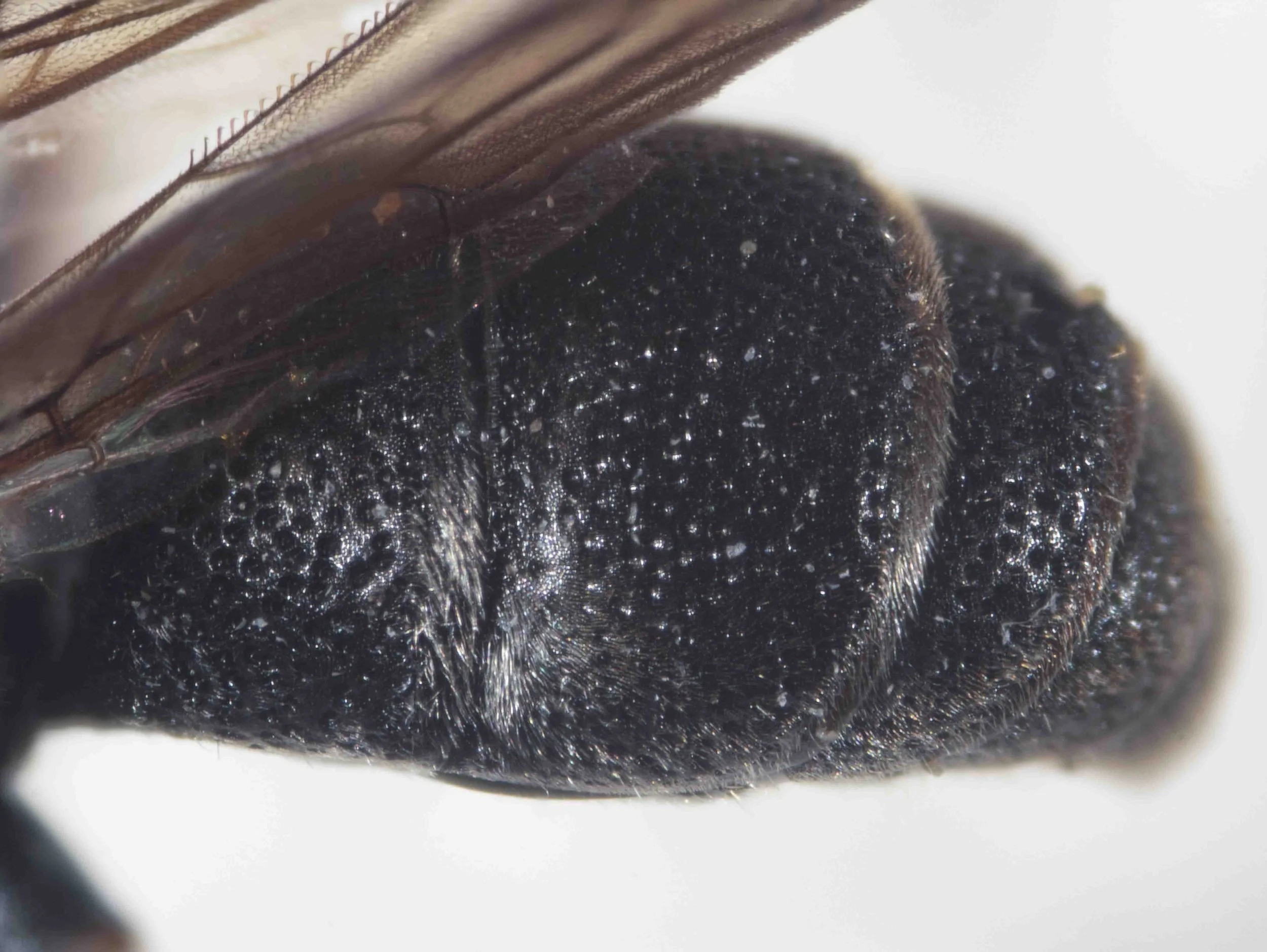
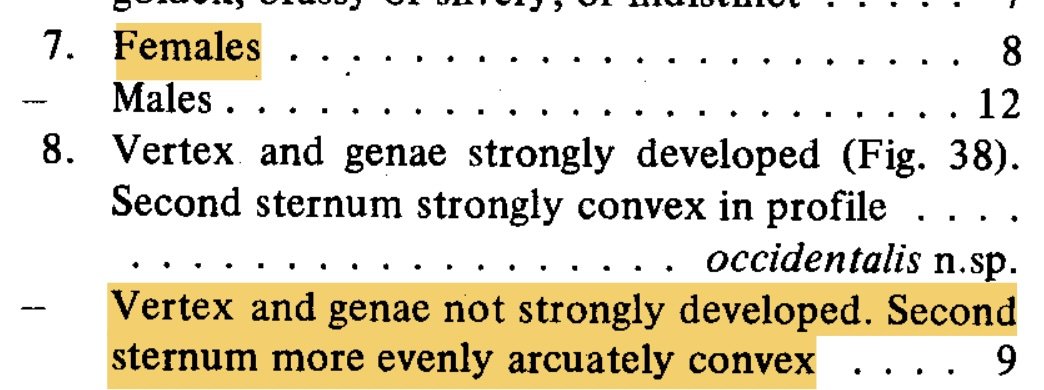
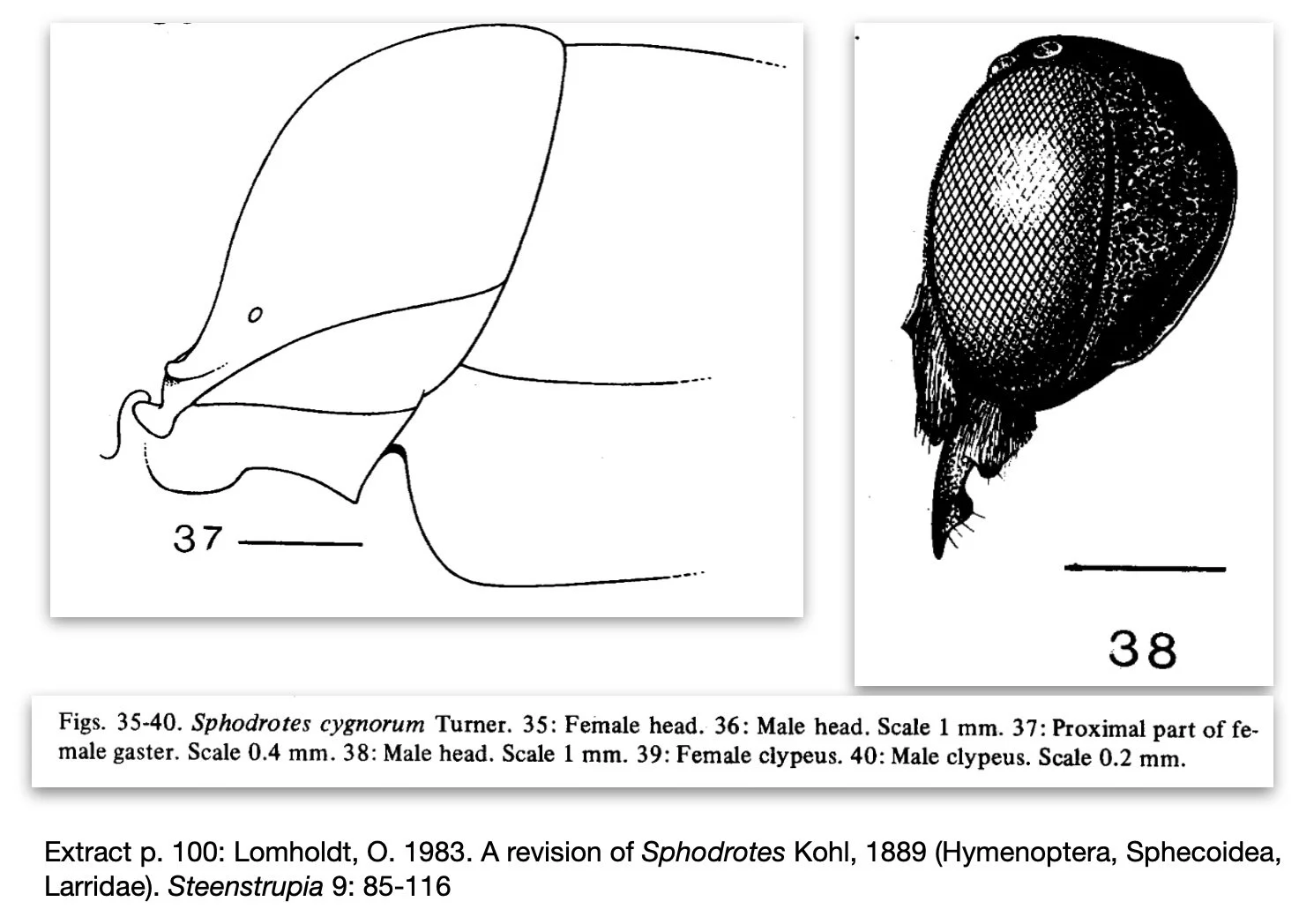
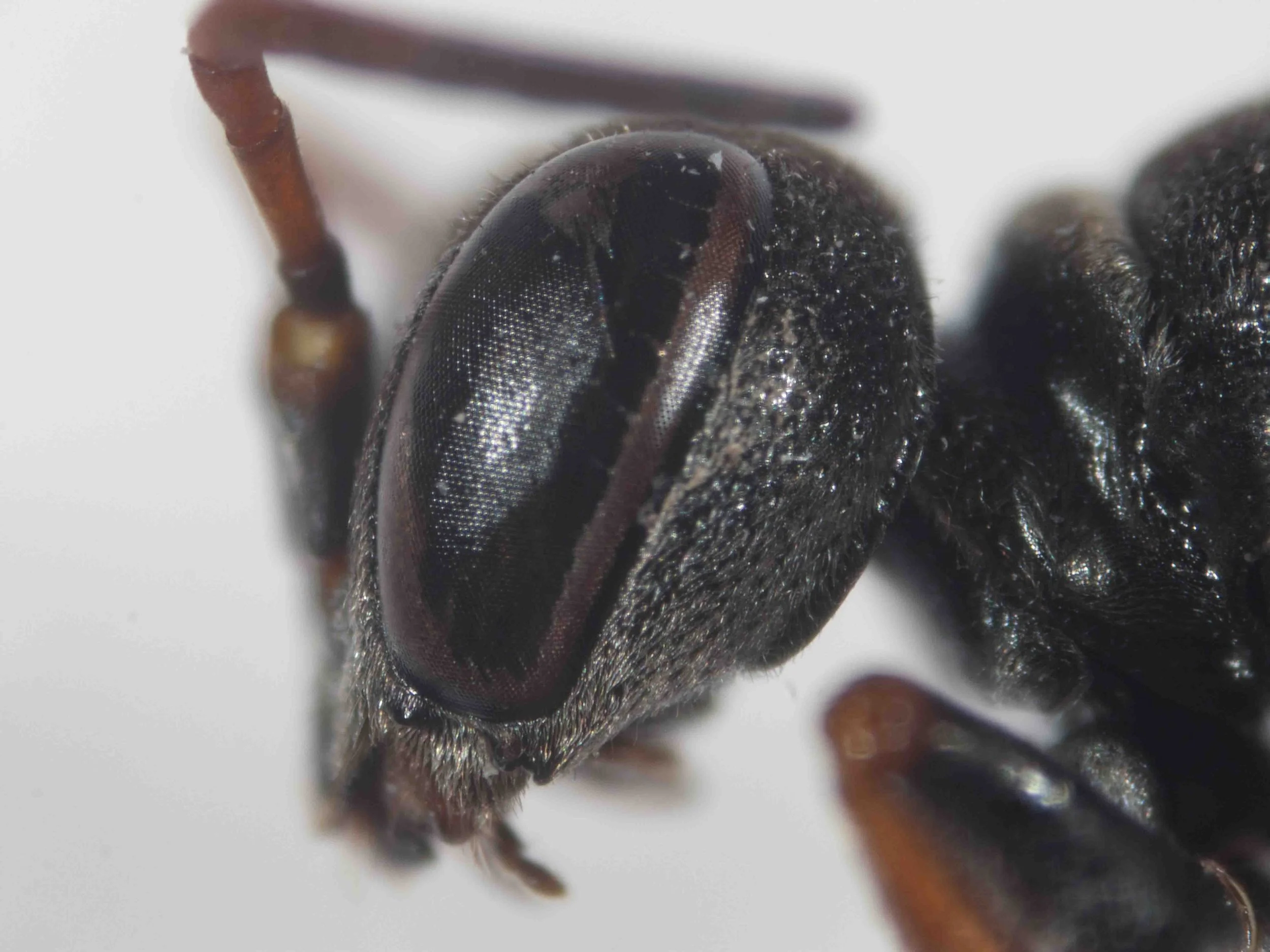
Lomholdt doesn’t provide diagrams of S2 in S. occidentalis, so it is difficult to assess this character. He does note that S. occidentalis and S. cygnorum are very similar, and the drawing of the male head in S. cygnorum (Fig. 38) is quite different to the 2512C. In addition, both S. occidentalis and S. cygnorum are only known from SW Western Australia.
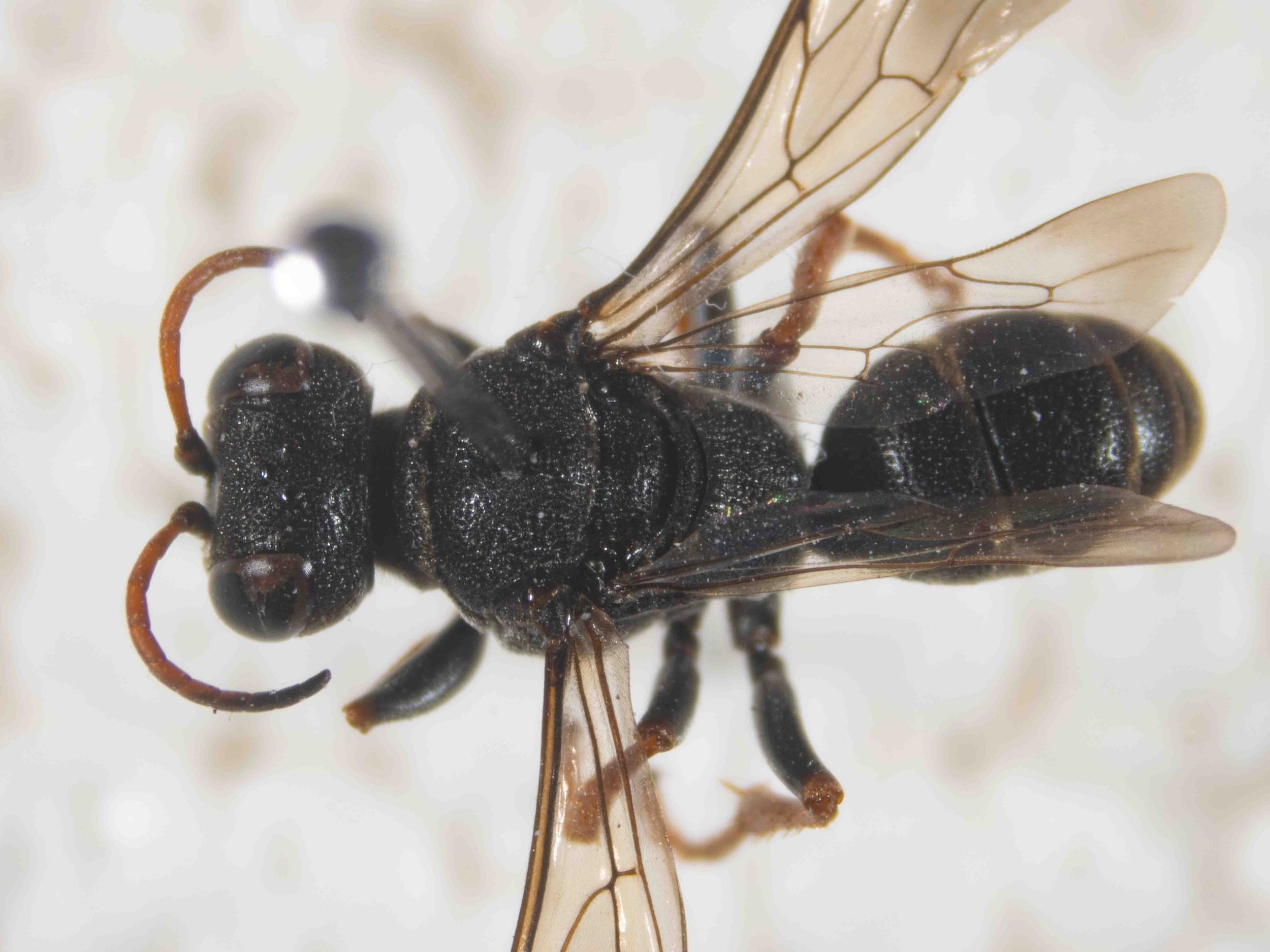
“Vertex and genae not strongly developed”
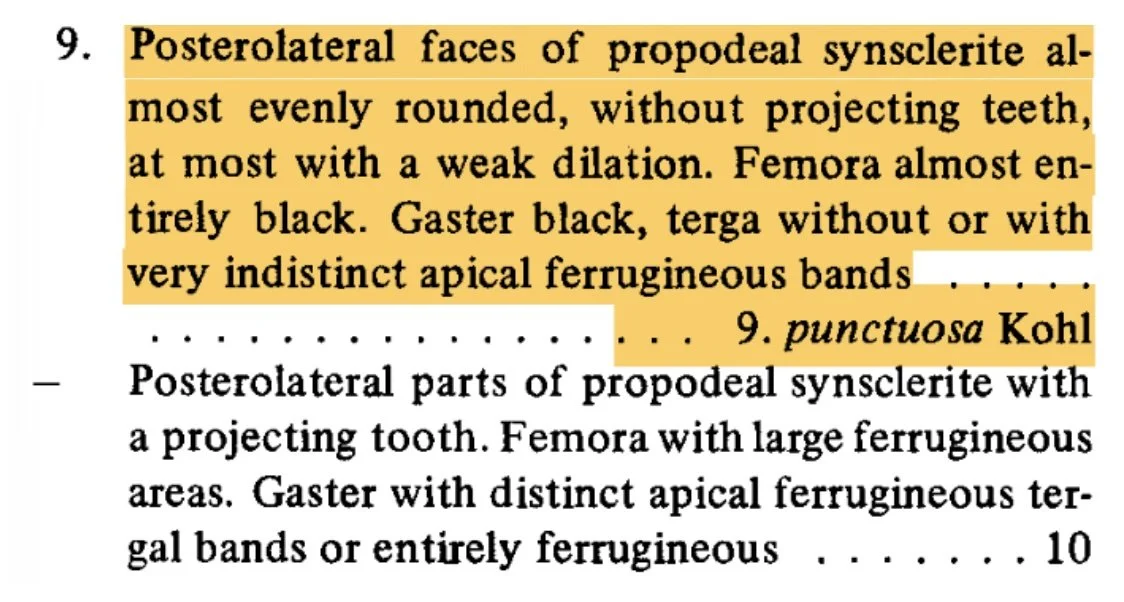
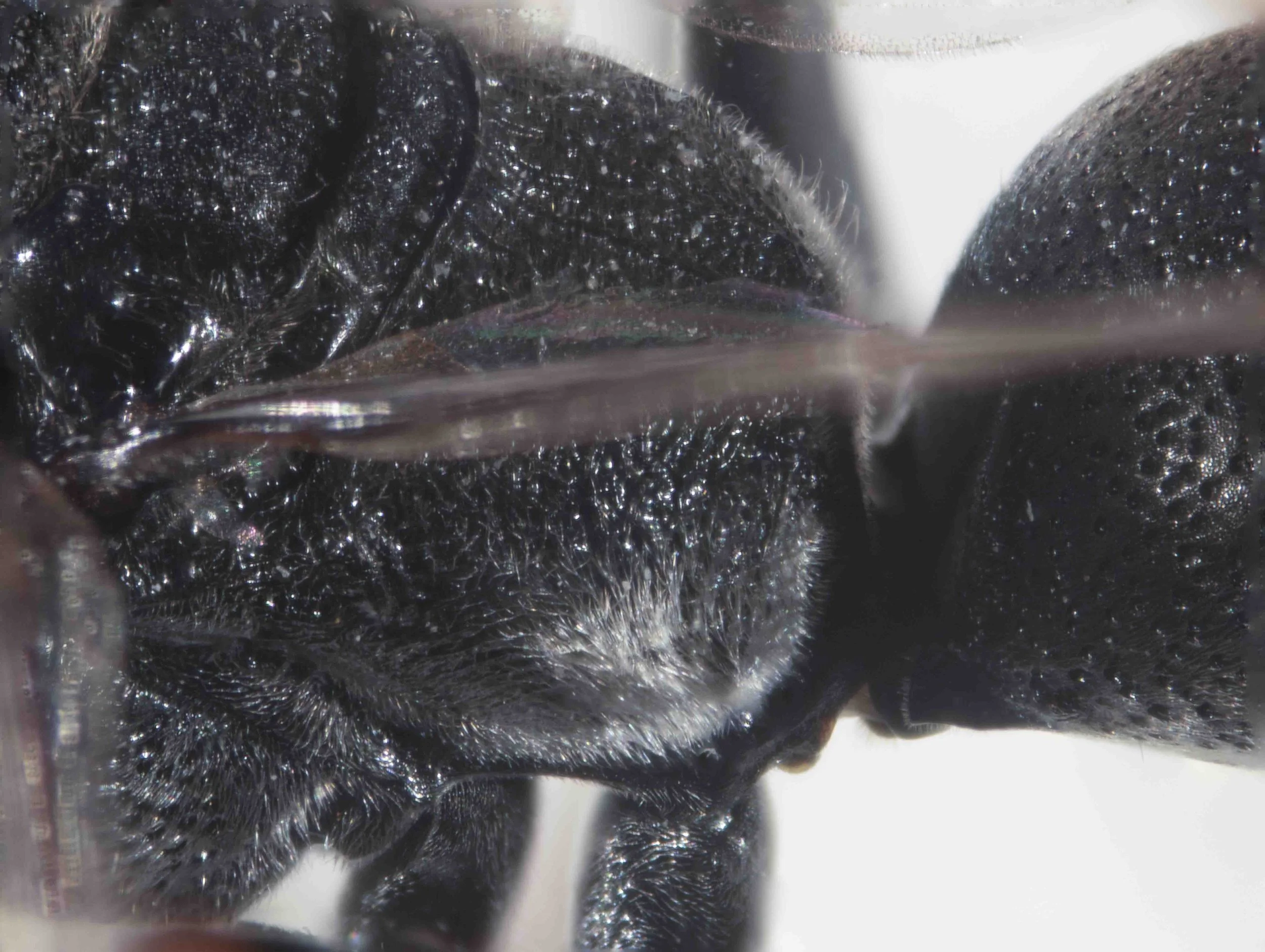
“Posterolateral faces of propodeal synsclerite almost evenly rounded, without projecting teeth, at most with a weak dilation.”
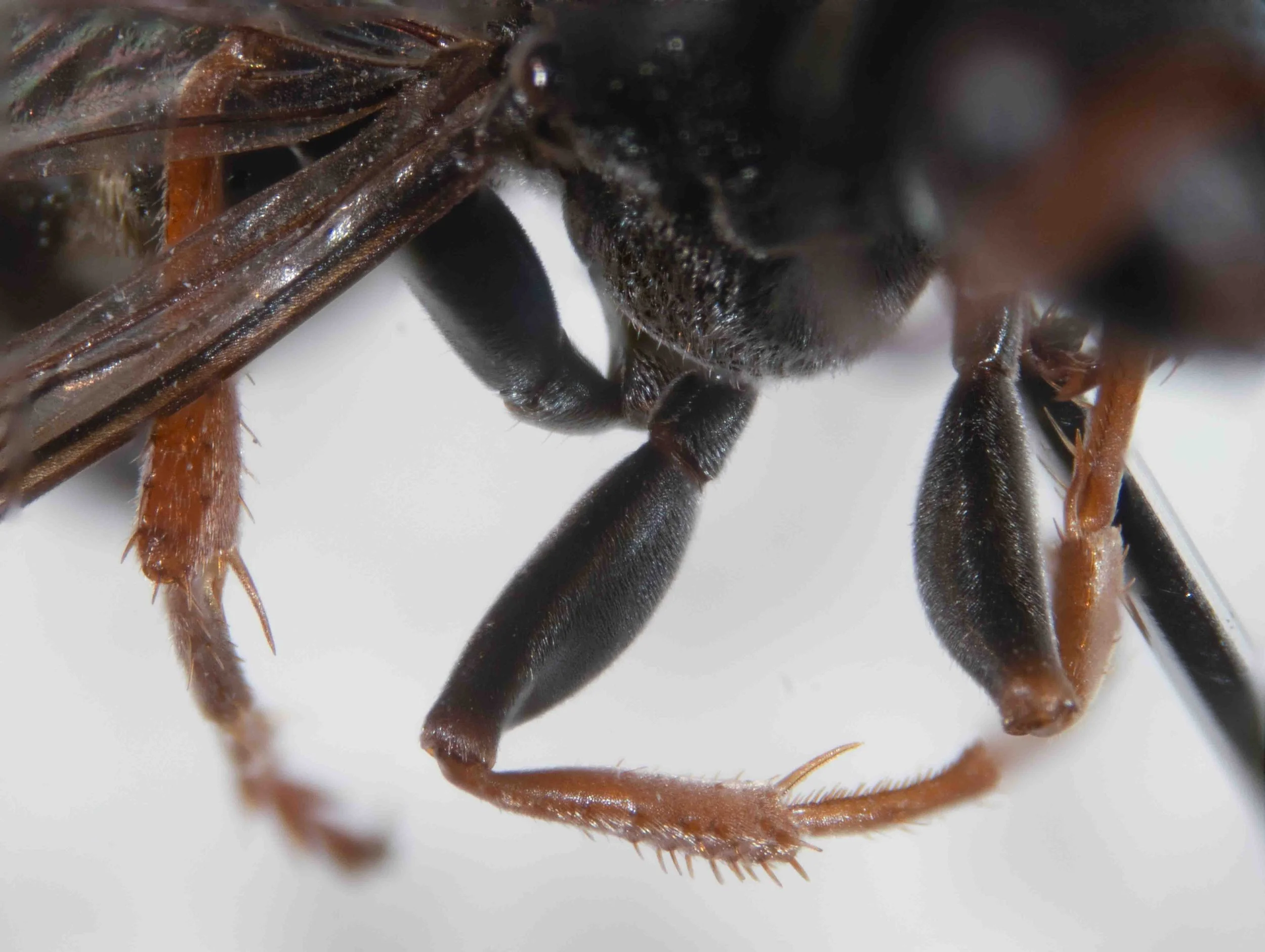
“Femora almost entirely black.”
Note that in S. ordinaria (a widespread species which is otherwise very similar to S. punctuosa), Lomholdt describes the female leg colour as “Femora 2 and 3 ferrugineous along dorsal faces.”
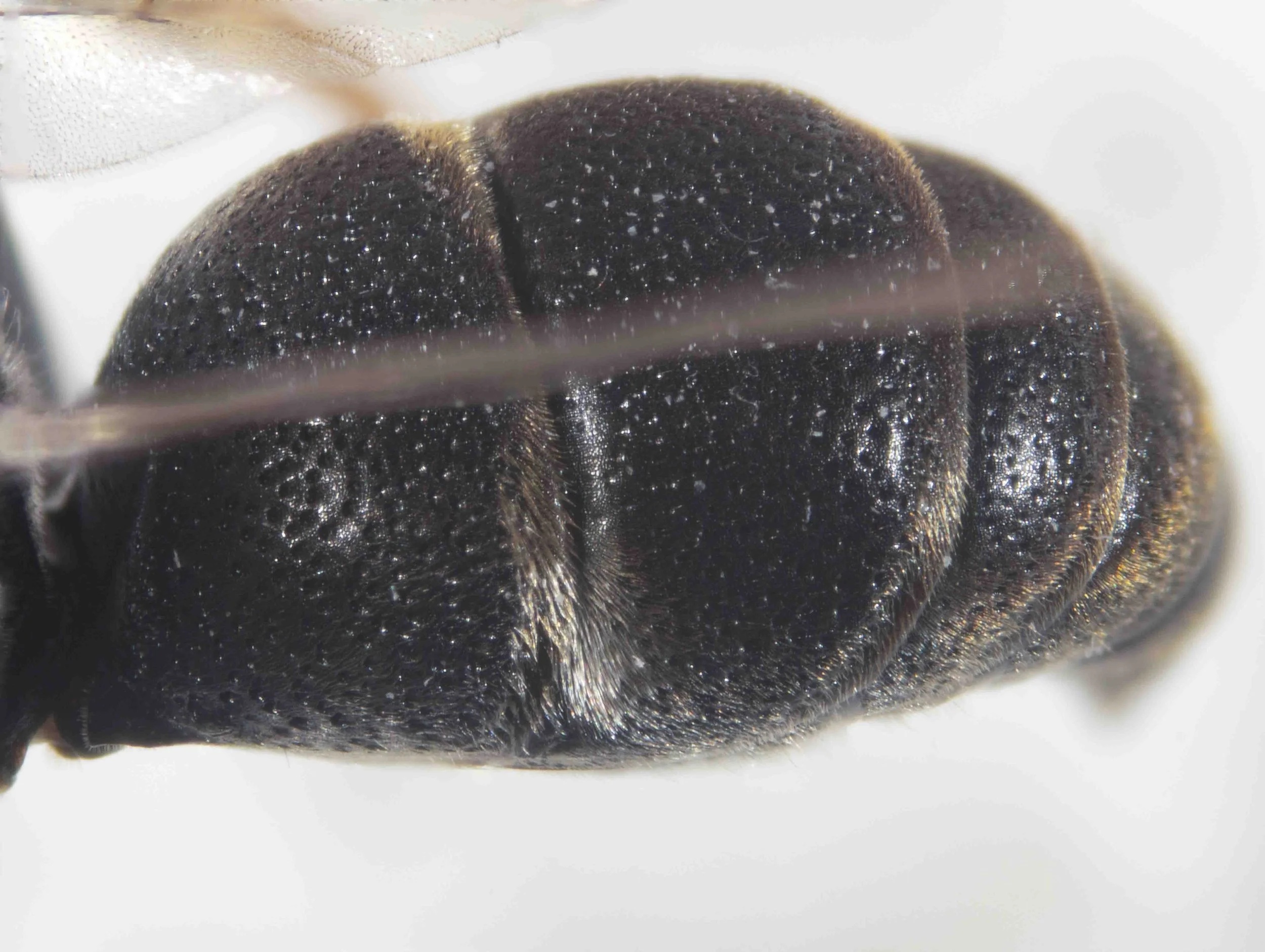
“Gaster black, terga without or with very indistinct apical ferrugineous bands.”
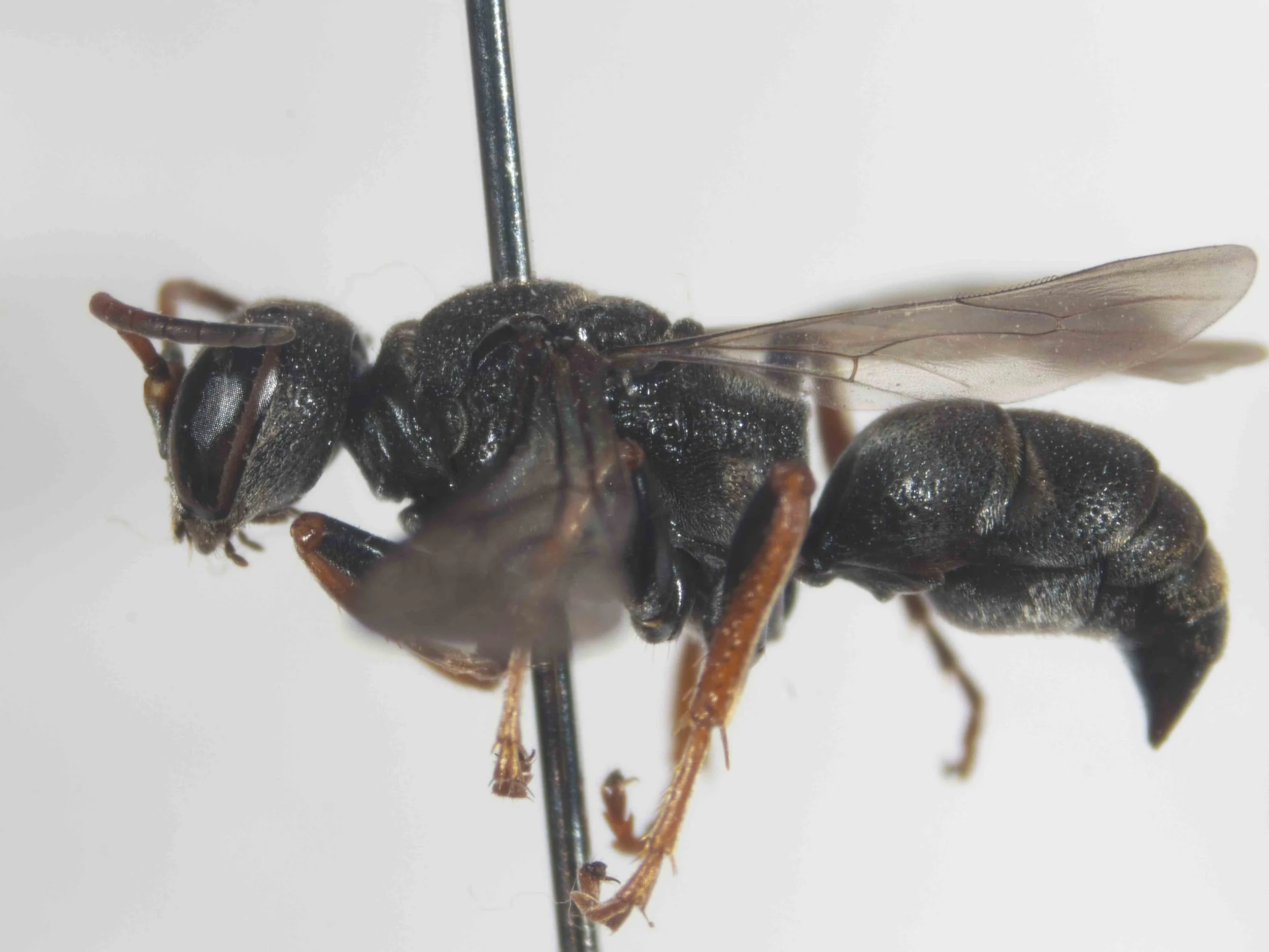
BODY LENGTH
Based on 10 specimens, Lomholdt gave the size range as 9.5-12mm.
2512D has a body length of ~9.5mm
HEAD
HEAD
“Lower face with silvery pubescence of varying density.”
[genus-level description: "Inner orbita parallel or slightly converging ventrally.” …. “Female clypeal synsclerite (i.e. clypeus + lateroclypeus) with a wide median, slightly arcuately convex lobe usually slightly emarginate medially, three small rounded lateral teeth or nodules usually present.”]
HEAD
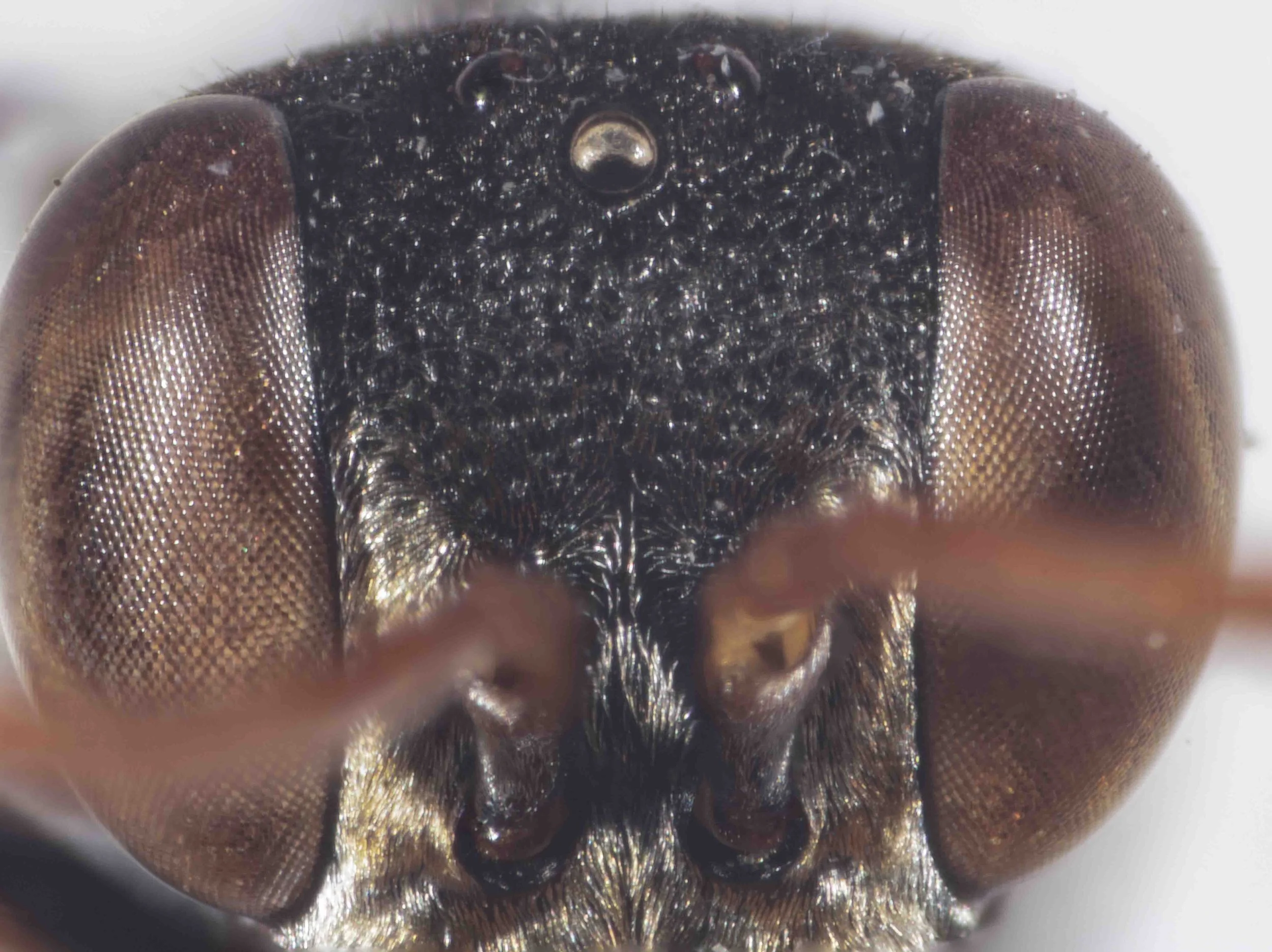
“Facial sculpture double, consisting of deep punctures separated by shining, finely and densely punctate interstices less than their diameter.”
HEAD
“Frontal line absent or very indistinct. Facial foveae distinct, medially bordered by a longitudinal elevation.”
“Antennal colour varying from almost quite dark brown or black to light yellowish ferrugineous. First flagellomere three times longer than wide (27:9).”
[genus-level description: “Lateral ocelli circular.” … “A wide, shallow facial depression above the antennal sockets (the “scapal basin” of Bohart & Menke, 1976) present in most species.” …. “Both a frontal line (or carina) and facial foveae usually present, most distinct in females.”]
HEAD
“Clypeal outline (Fig. 31), the three lateral teeth distinct, median emargination very shallow or absent.”
HEAD
“Mandibles densely pubsecent proximally, median part ferrugineously amber, apex black to dark ferrugineous.”
[genus-level description: “Mandibles with externoventral notch, proximally delimited by a blunt tooth.”]
HEAD
[genus-level description: “Occipital carina usually highly raised, not joining hypostomal carina.”]
THORAX
“Thorax, inc. pronotal lobes black, strongly and densely punctate, punctation on scutum not as strong as that of frons, interstices even, finely punctate.”
[genus-level description: “Pronotum short, collar usually with a low, median swelling. Axillae shining smooth.”]
[genus-level description: “Anterolateral part of mesopleuron plane.”]
THORAX
“Pronotal collar with a small, shining, median tubercle, posterior margin with silvery or slightly brassy pubescence.”
Note: I don’t see the median tubercle described by Lomholdt.
[genus-level description: “Occipital carina usually highly raised, not joining hypostomal carina”.]
THORAX
“Pronotal collar with a small, shining, median tubercle, posterior margin with silvery or slightly brassy pubescence.”
Note: I don’t see the median tubercle described by Lomholdt.
THORAX
“Anterodorsal mesopleuron very strongly sculptured, punctures pit-like. Episternal sulcus deep. Hypopimeral area with coarse, reticulo-striate sculpture. Entire mesopleuron with thin greyish-white pubescence.”
PROPODEUM
“Dorsal face with a weak, median carina (absent in some specimens), remaining surface strongly reticulate. Posterolateral areas with dense, silvery pubescence, teeth absent or only slightly indicated. Lateral faces coarsely striate medially. Posterior face with superficial, transverse striation.”
[genus-level description: “One or two posterolateral prominences usually present, less pronounced in males than in females.”]
PROPODEUM
“Dorsal face with a weak, median carina (absent in some specimens), remaining surface strongly reticulate. Posterolateral areas with dense, silvery pubescence, teeth absent or only slightly indicated. Lateral faces coarsely striate medially. Posterior face with superficial, transverse striation.”
[genus-level description: “One or two posterolateral prominences usually present, less pronounced in males than in females. Dorsal face with a median carina terminating in a shallow depression, this face otherwise with strong, irregular, radiating rugae, or foveolate. Dorsal enclosure only indicated by a shallow, indistinctly pitted, groove.”]
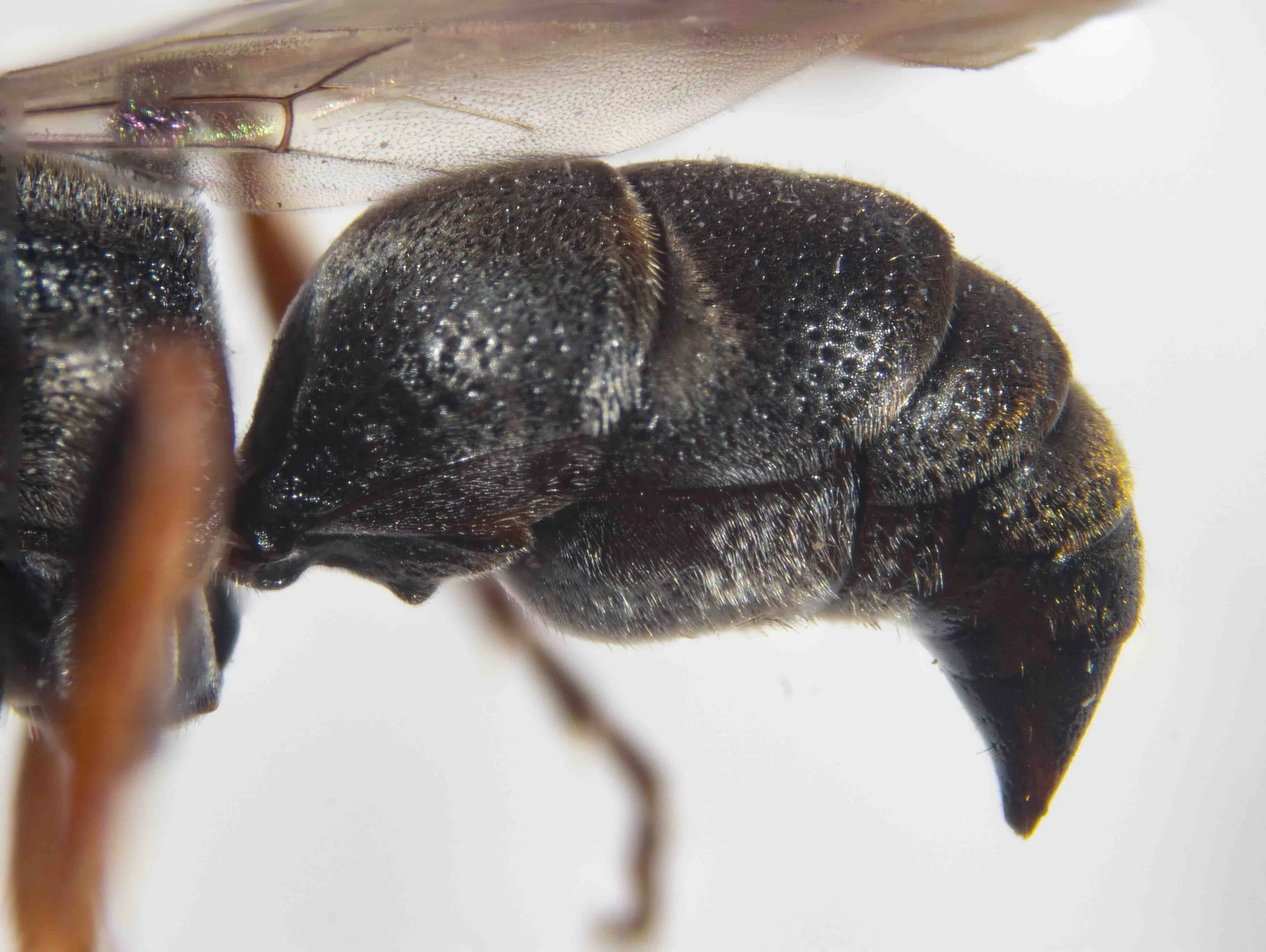
GASTER
“Gastral black, apical tergal margins slightly ferrugineously transparent. Pubescence thin, silvery to slightly golden, forming fasciae on tergum I-III.”
GASTER
“Gastral black, apical tergal margins slightly ferrugineously transparent. Pubescence thin, silvery to slightly golden, forming fasciae on tergum I-III.”
GASTER
“Sternum I with indistinct median keel, posterior tooth rather weak”.
GASTER
“Sternum I with indistinct median keel, posterior tooth rather weak”.
[genus-level description: “Tergum 1 with a laterobasal, strongly raised, almost angularly projecting lamella. Sternum 1 (except in prima) with a median vault or carina terminating in a compressed tooth.”]
GASTER
[genus-level description: “Terminal tergum without pygidial plate.”]
LEGS
“Femora black with light ferrugineous apices. Tibiae and tarsi light ferrugineous.”
LEGS
“Foremetatarsus with 5-6 rake spines of which the distal one is distinctly shorter than the second tarsal segment.”
[genus-level description: “Females with well developed tarsal rake and – at least indications of – a psammophore.”]
WINGS
“Wings slightly infumate.”
[genus-level description: “Forewings with three submarginal cells of which the second is petiolate. Both recurrent veins received by the second submarginal cell, or the first being interstitial, or even joining first submarginal cell in single specimens.”]
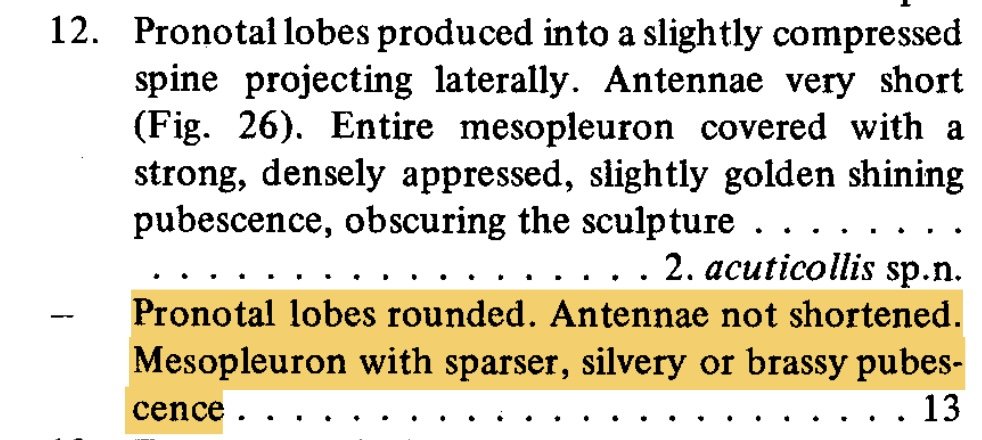
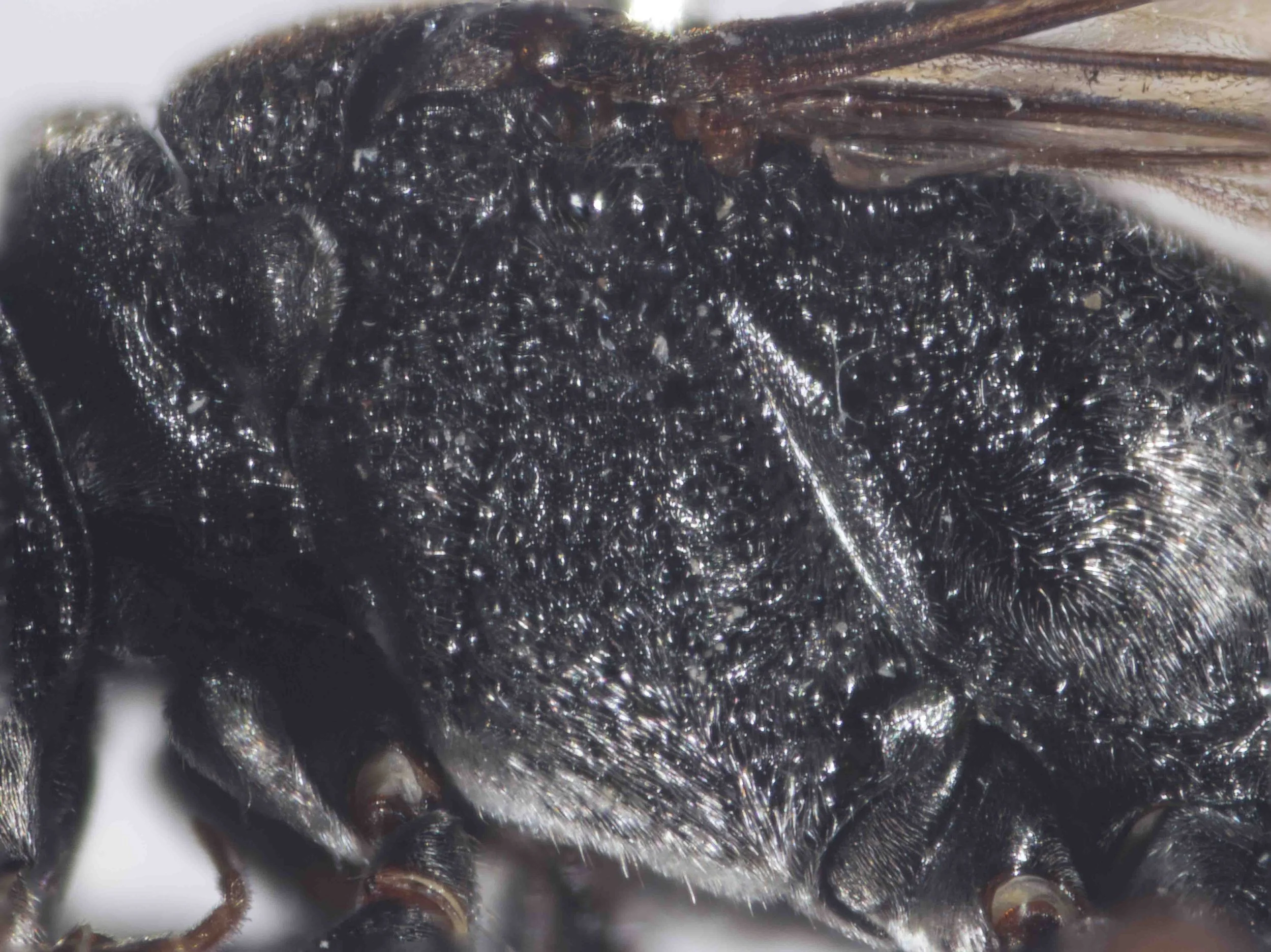
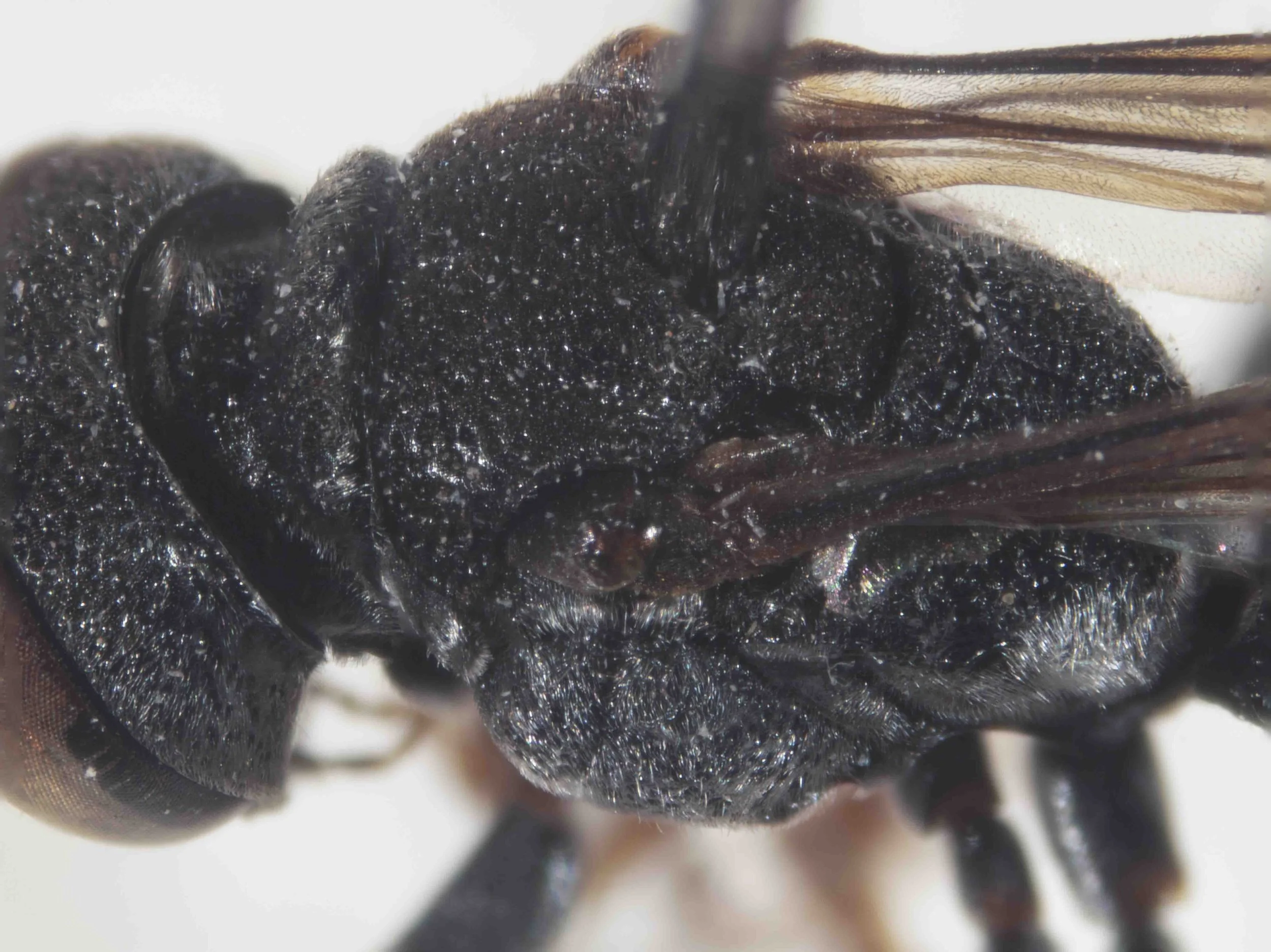
“Pronotal lobes rounded.” … “Mesopleuron with sparser, silvery or brassy pubescence.”
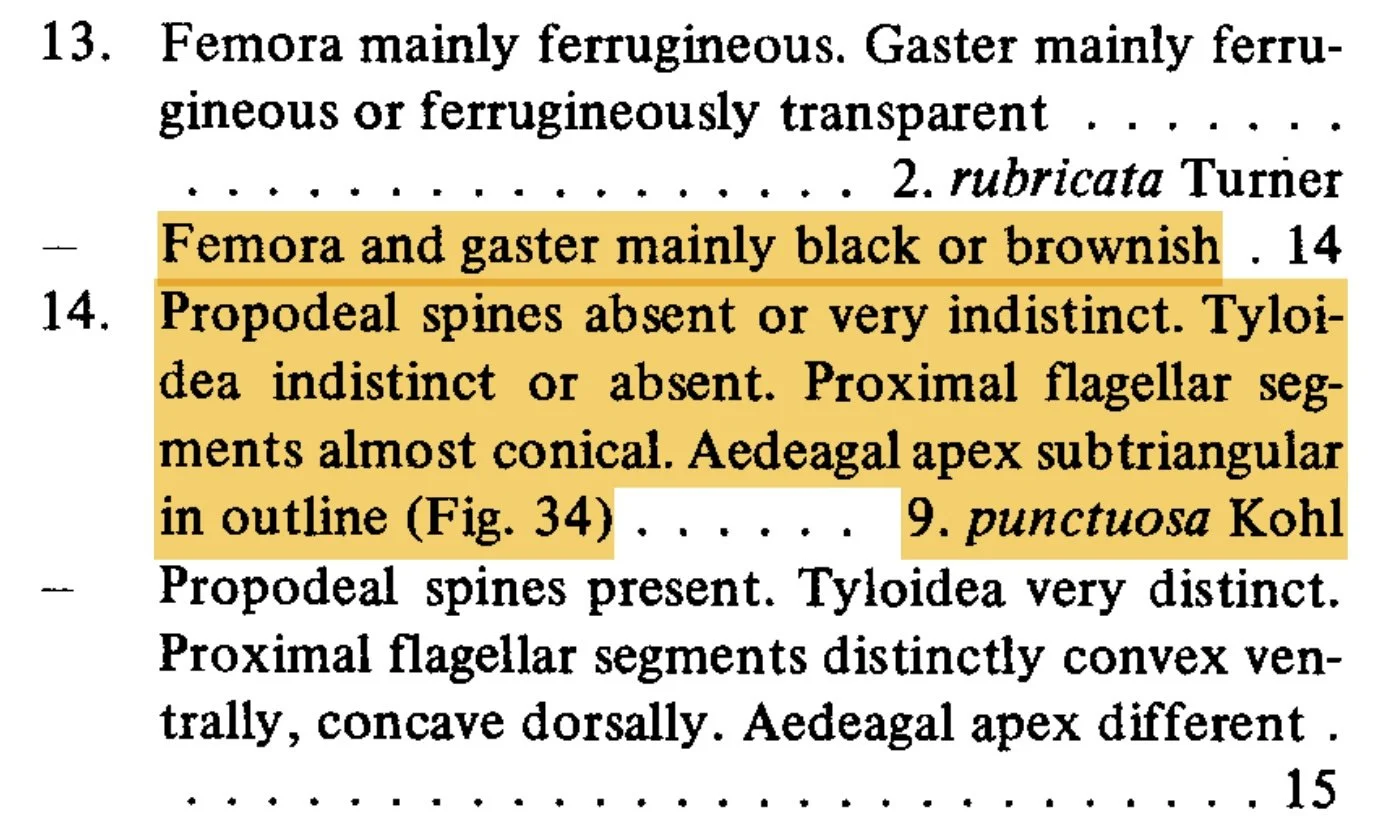
“Propodeal spines absent or very indistinct.”
“Tyloidea indistinct or absent.”
(this image: dorsal view scape, pedicel and proximal antennomeres)
[genus-level description: “Proximal flagellar segments with distinct tyoidea in some males. These segments with concave dorsal faces.”]
“Tyloidea indistinct or absent.”
(this image: ventral view scape, pedicel and proximal antennomeres)
[genus-level description: “Proximal flagellar segments with distinct tyoidea in some males. These segments with concave dorsal faces.”]
“Tyloidea indistinct or absent.”
(this image: dorso-lateral view scape, pedicel and proximal antennomeres)
[genus-level description: “Proximal flagellar segments with distinct tyoidea in some males. These segments with concave dorsal faces.”]
BODY LENGTH
Based on 16 specimens, Lomholdt gave the size range as 8-10mm.
2512C has a body length of ~7.5mm
HEAD
HEAD
“Punctation on frons much denser and stronger, interstices narrower, micropunctation finer.” … “Frontal and clypeal pubescence much denser, brassy or slightly golden.”
HEAD
“Frontal and clypeal pubescence much denser, brassy or slightly golden. Clypeal outline as in Fig. 32.”
HEAD
“Clypeal outline as in Fig. 32.”
HEAD
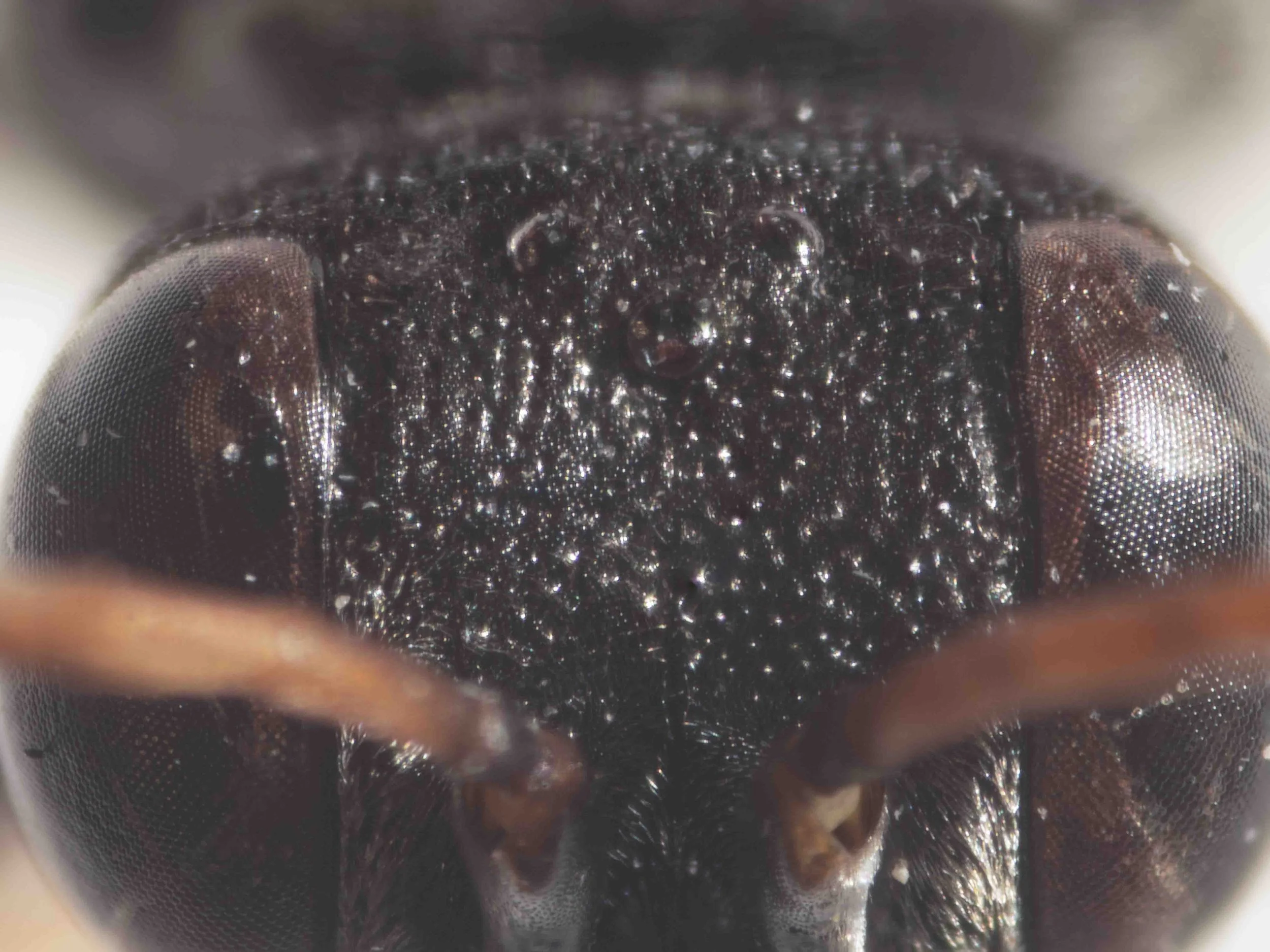
“Punctation on frons much denser and stronger, interstices narrower, micropunctation finer. Frontal line distinct in some specimens. Facial fovea absent.”
Note: There is a trace of a frontal line in the lower half of the frons of 2512C.
HEAD
“Facial fovea absent. Scapal basin deeper.”
Note: In this direct dorsal view I see evidence of narrow facial fovea, although they are indistinct.
HEAD
“Antennae long, first flagellomere almost twice as long as wide (15:8).”
HEAD
“Antennae long, first flagellomere almost twice as long as wide (15:8). Proximal flagellar segments light ferrugineous ventrally to quite light ferrugineous. Tyloidea absent or only very slightly indicated. Proximal flagellar segments conical, slightly convex ventrally and concave dorsally in some specimens.”
(this image: dorso-lateral view scape, pedicel and proximal antennomeres)
Note: I see no evidence of tyloidea in 2512C.
HEAD
“Antennae long, first flagellomere almost twice as long as wide (15:8). Proximal flagellar segments light ferrugineous ventrally to quite light ferrugineous. Tyloidea absent or only very slightly indicated. Proximal flagellar segments conical, slightly convex ventrally and concave dorsally in some specimens.”
(this image: ventral view scape, pedicel and proximal antennomeres)
Note: I see no evidence of tyloidea in 2512C.
THORAX
“Median pronotal prominence very weak or absent.”
Note: I see no evidence of a median prominence in 2512C
THORAX
“Pronotal lobes slightly ferrugineous transparent in some specimens.”
Note: pronotal lobe entirely black in 2512C
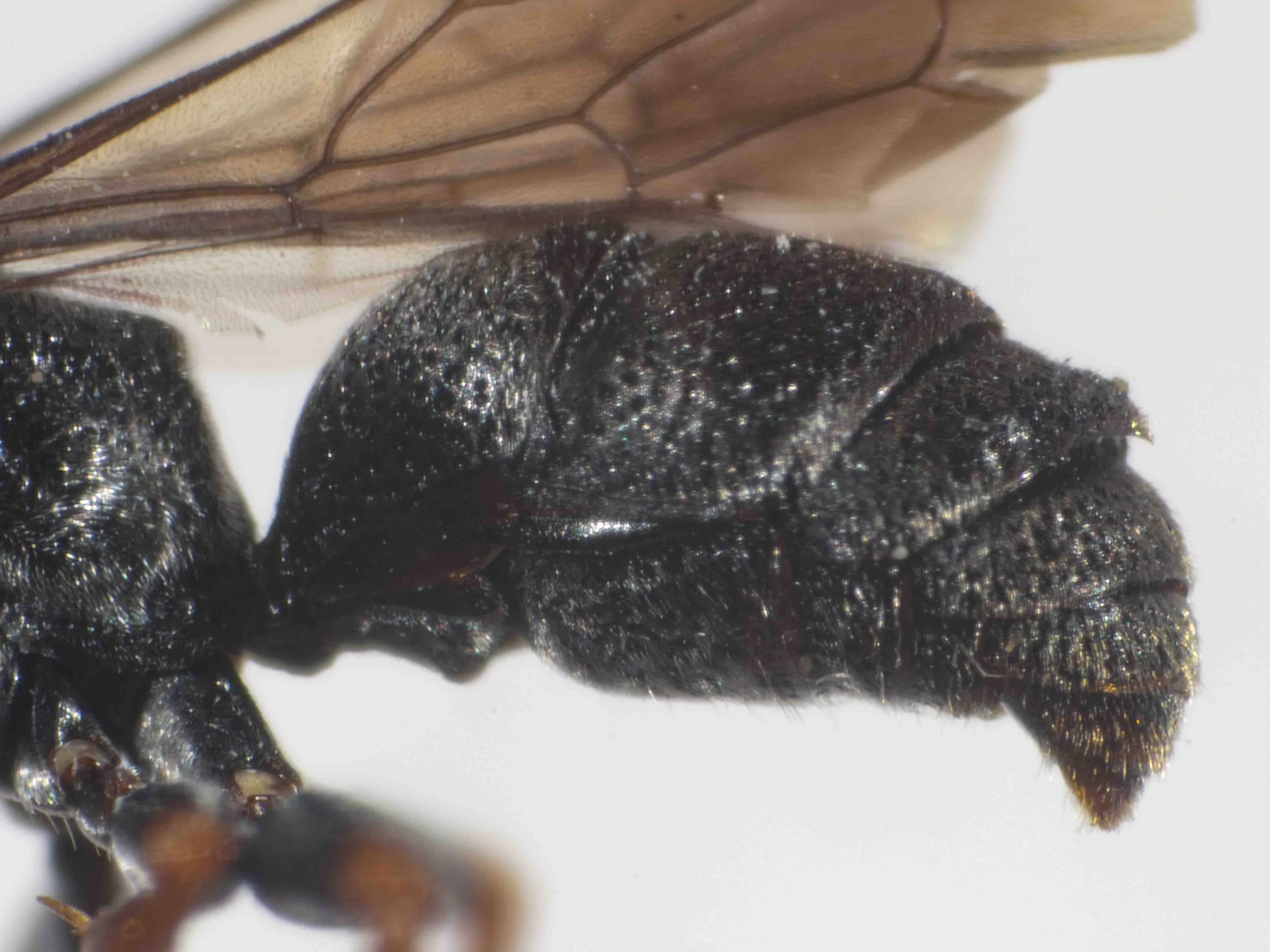
THORAX
“Thoracic, propodeal, and gastral sculpture stronger and denser.”
GASTER
“Thoracic, propodeal, and gastral sculpture stronger and denser.”
LEGS
“Metatarsus I with 4-5 rake spines.”
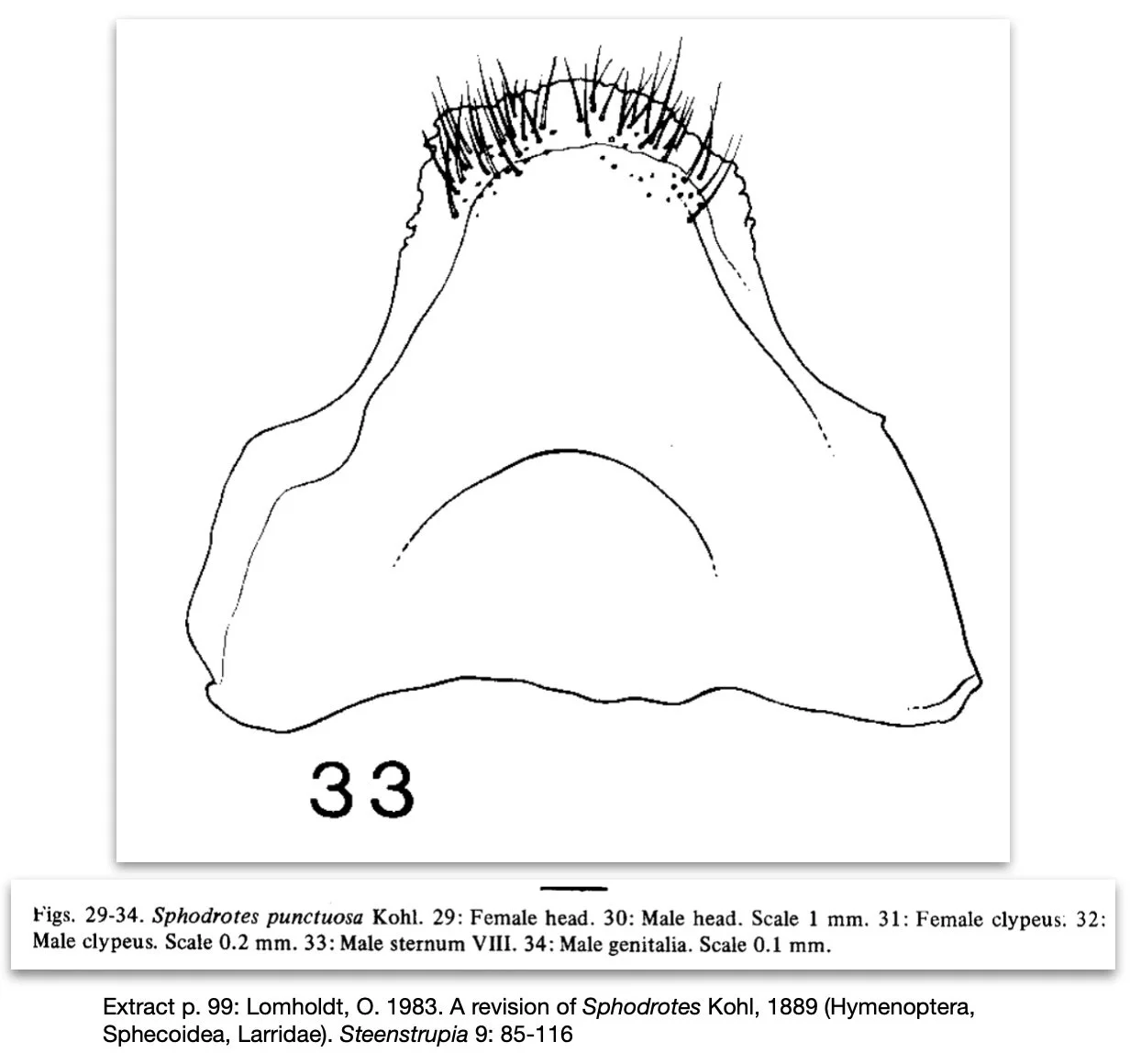
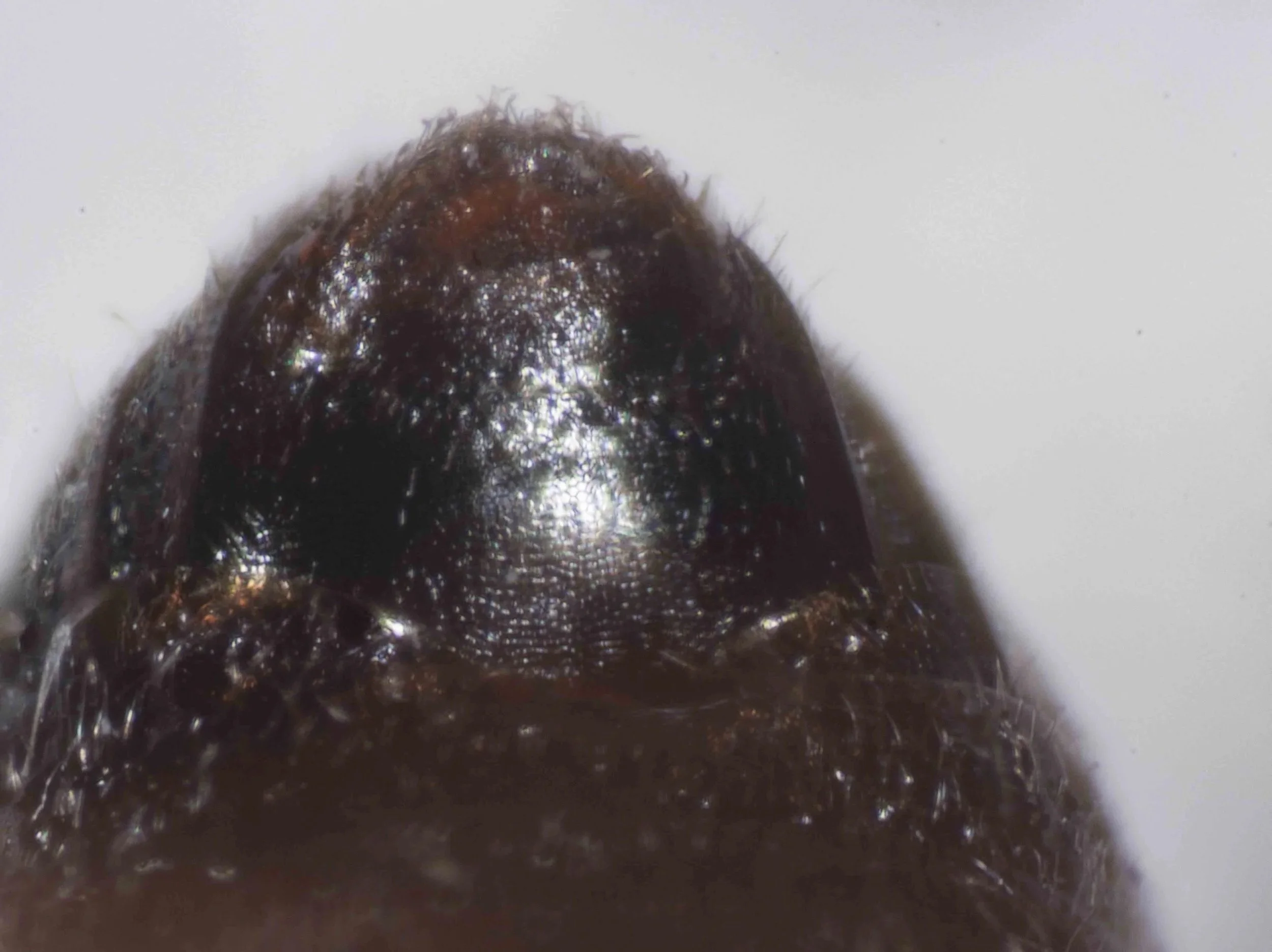
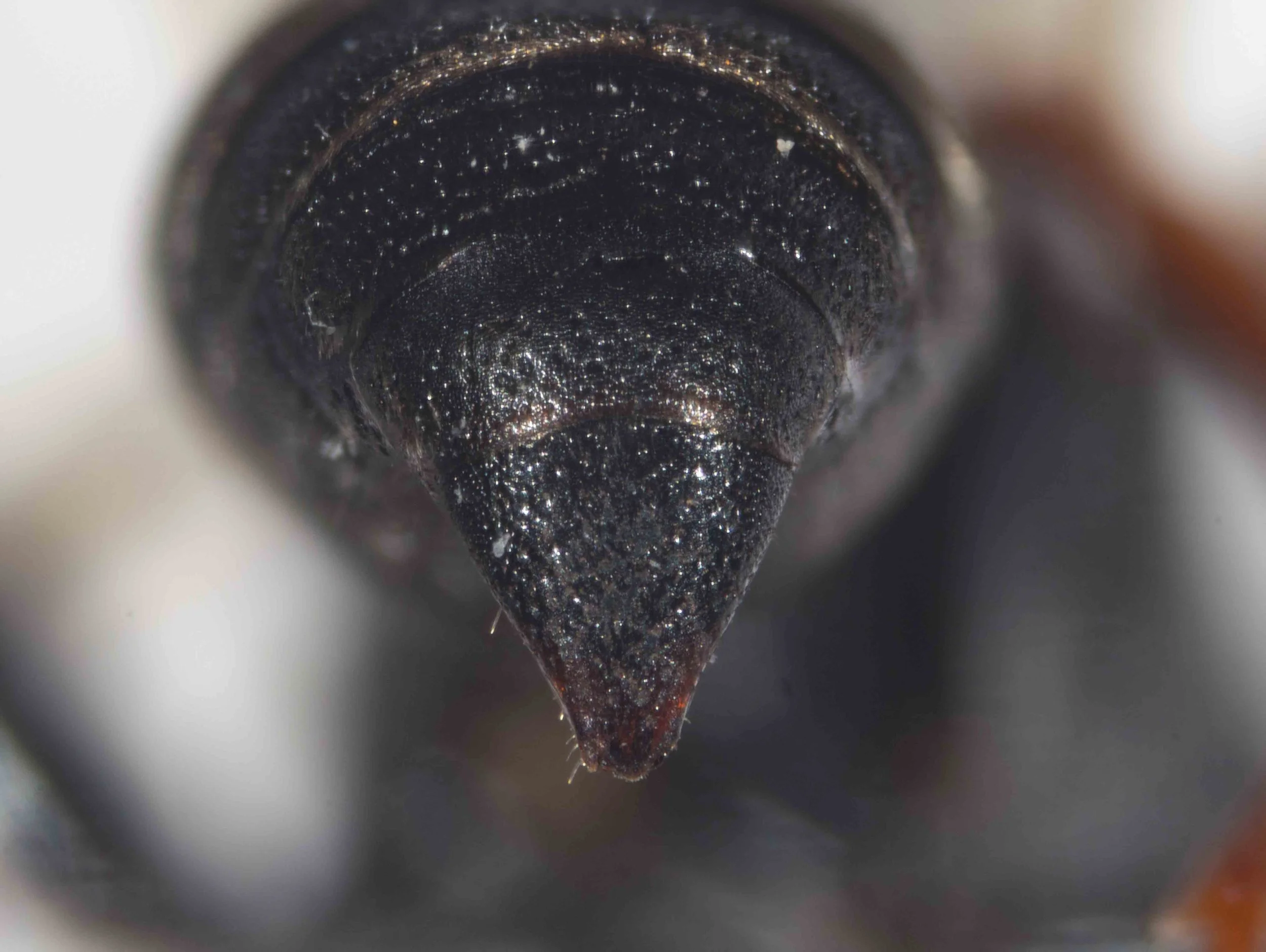
GASTER - sternum VIII
Compare sternum VIII to Fig. 33. Note, however, that the diagram shows the entire sclerite, dissected. In the intact gaster, only the apical portion is visible.