
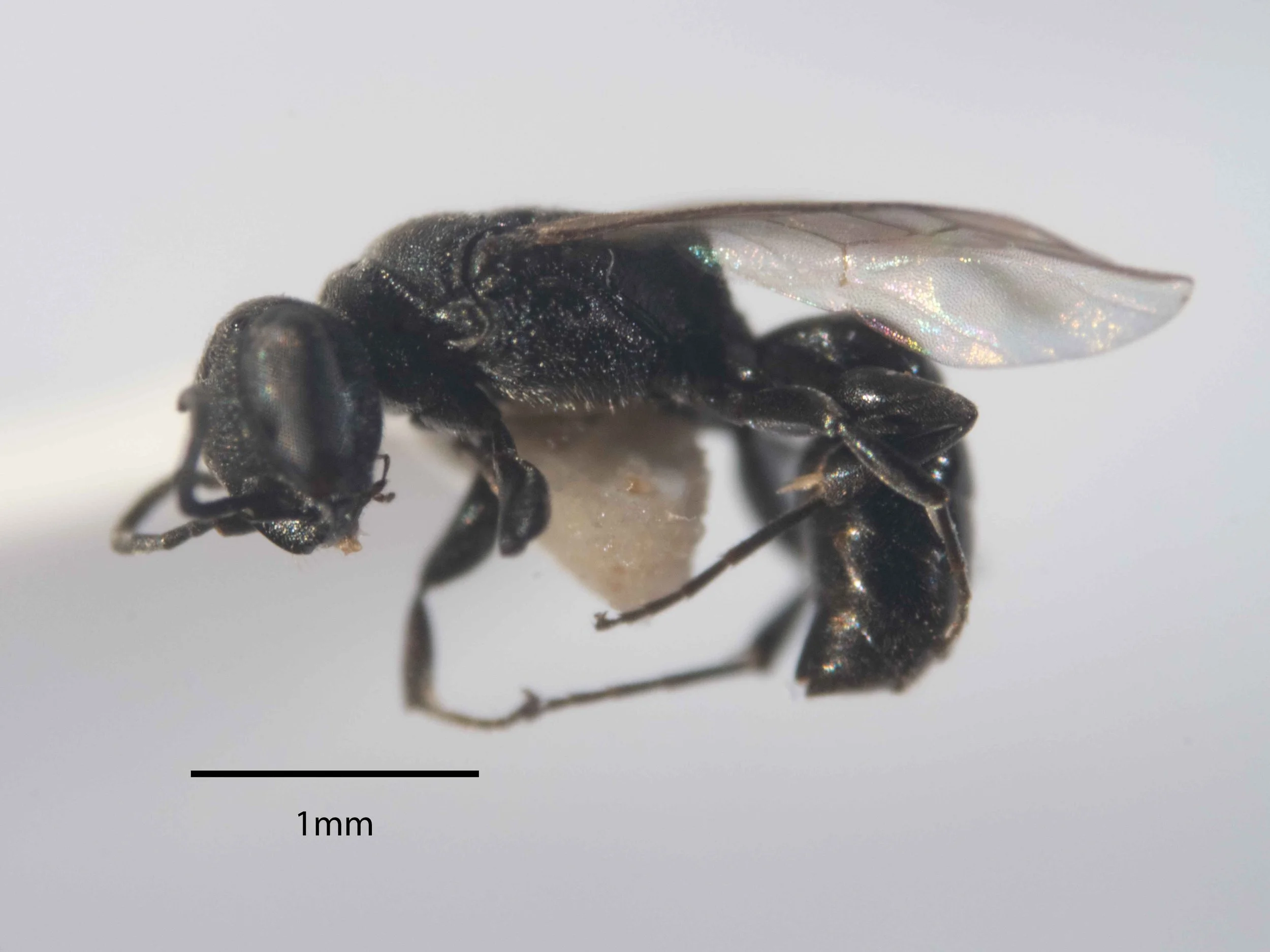
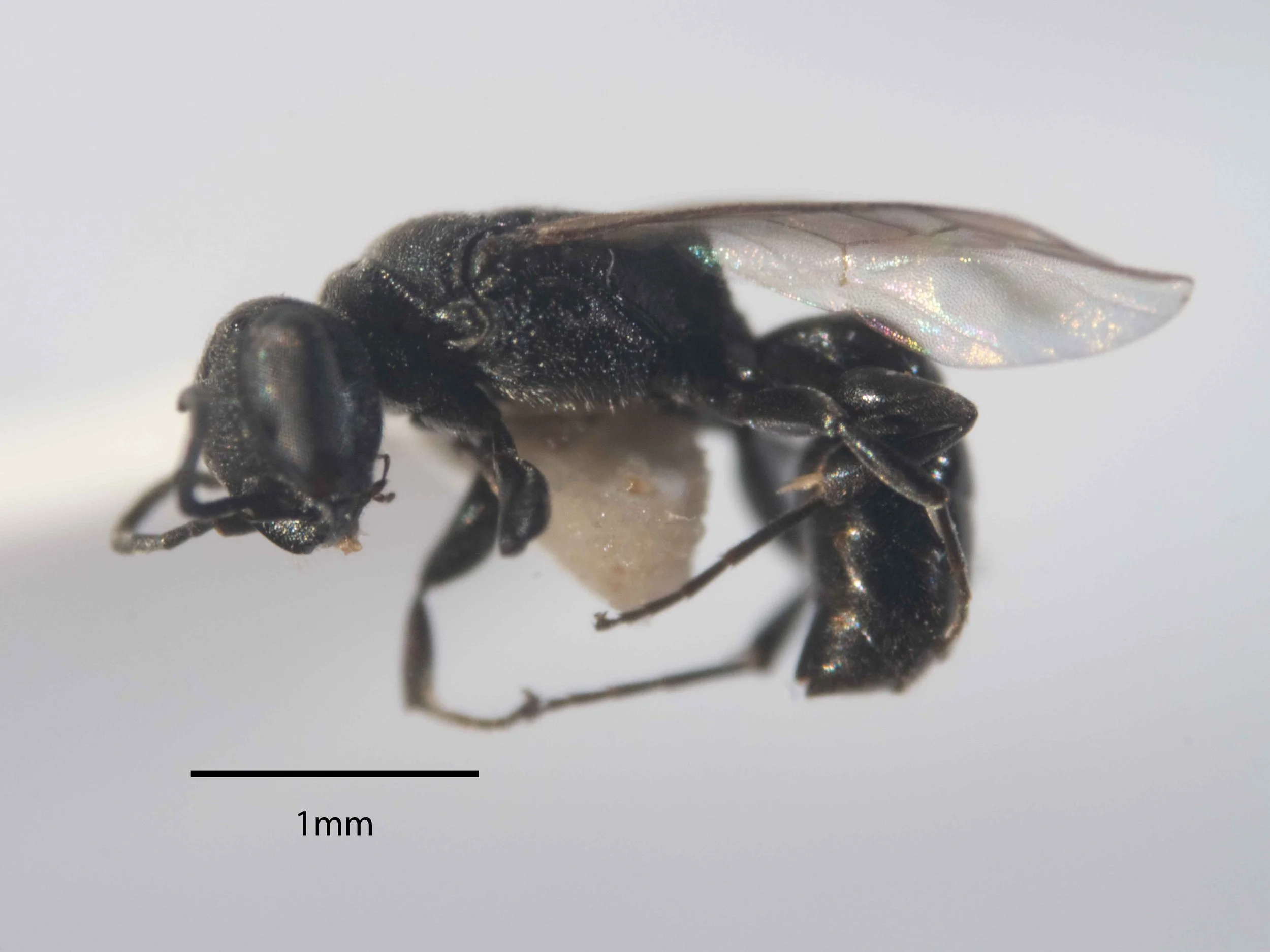
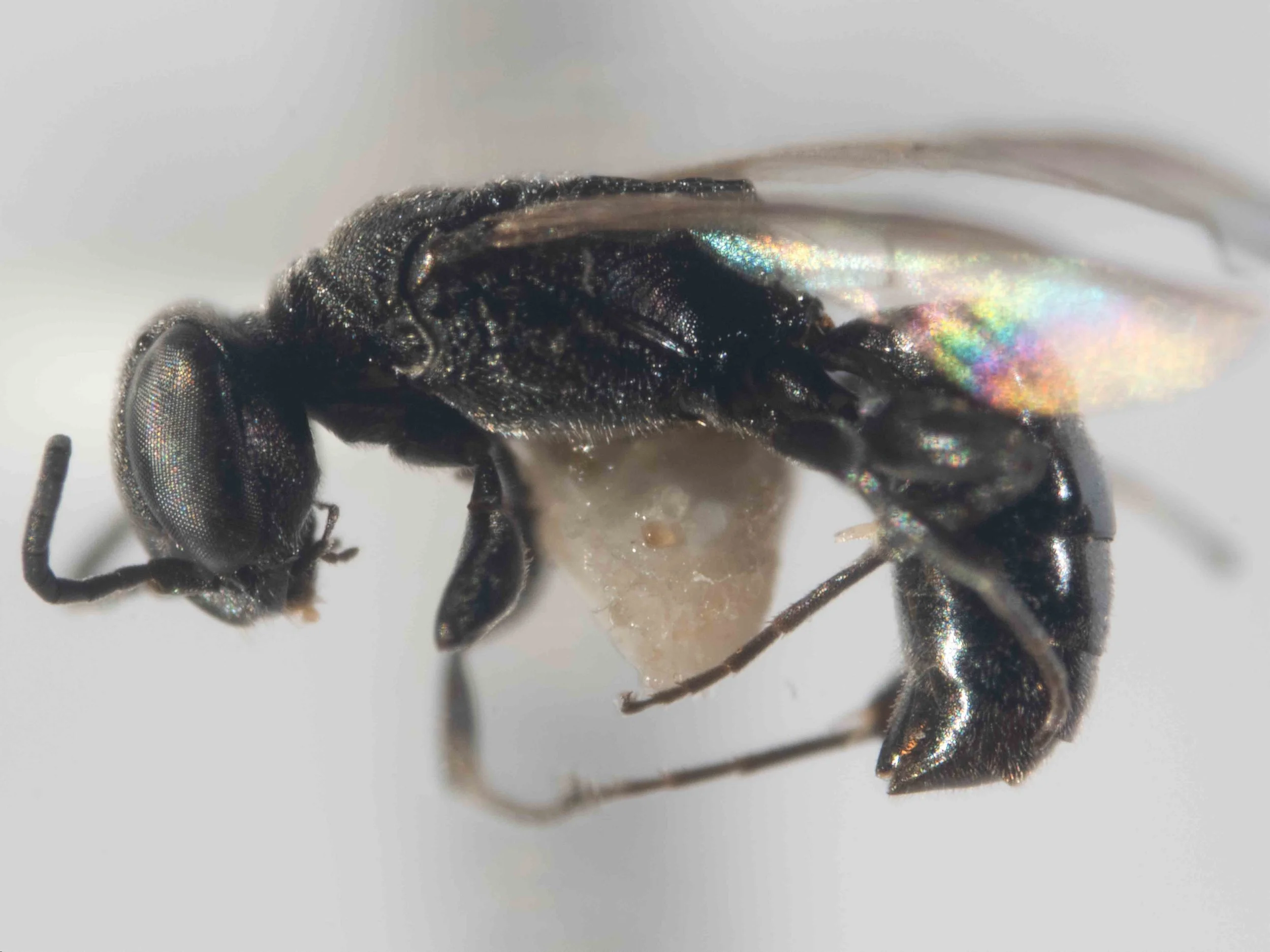
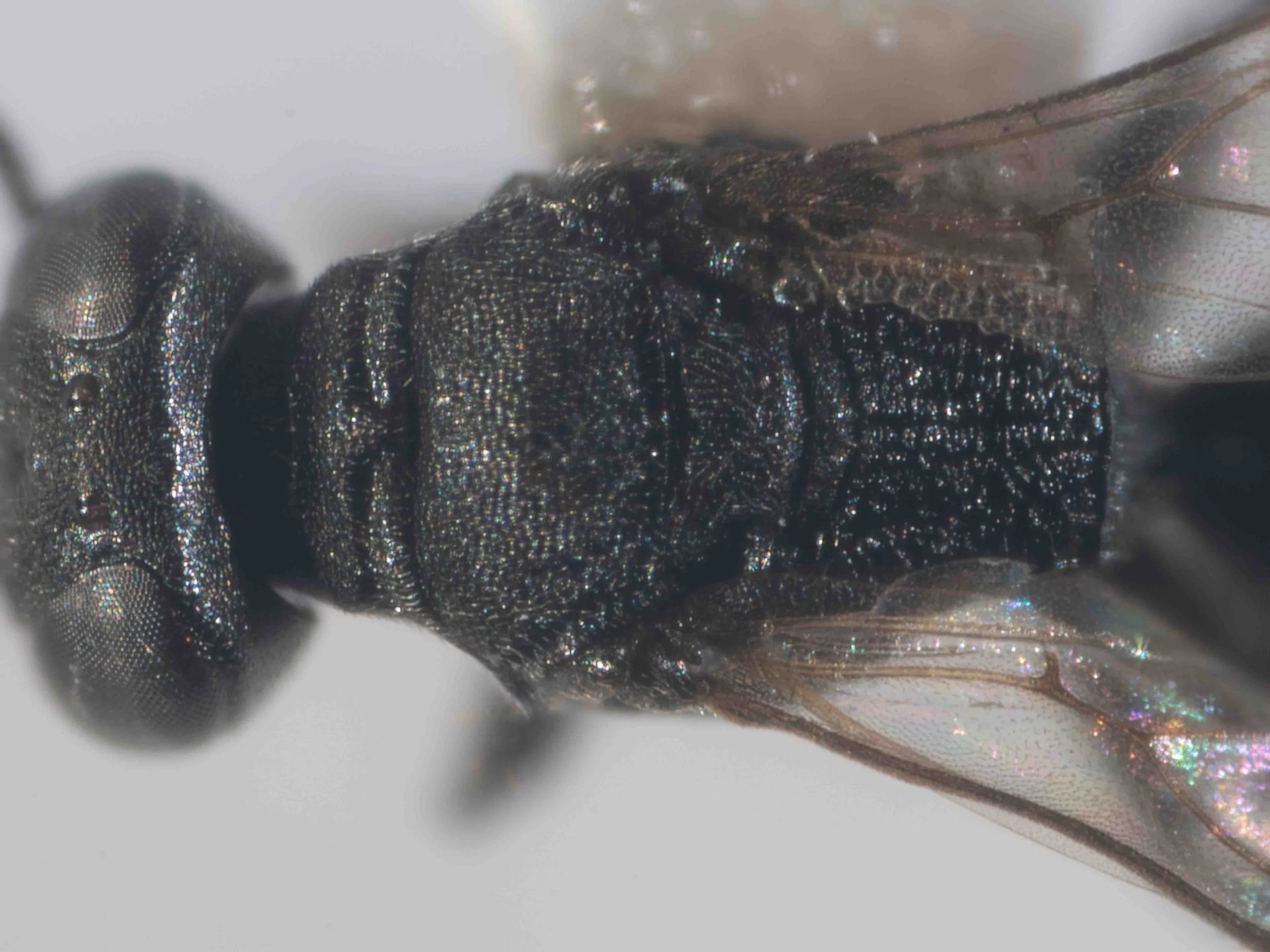
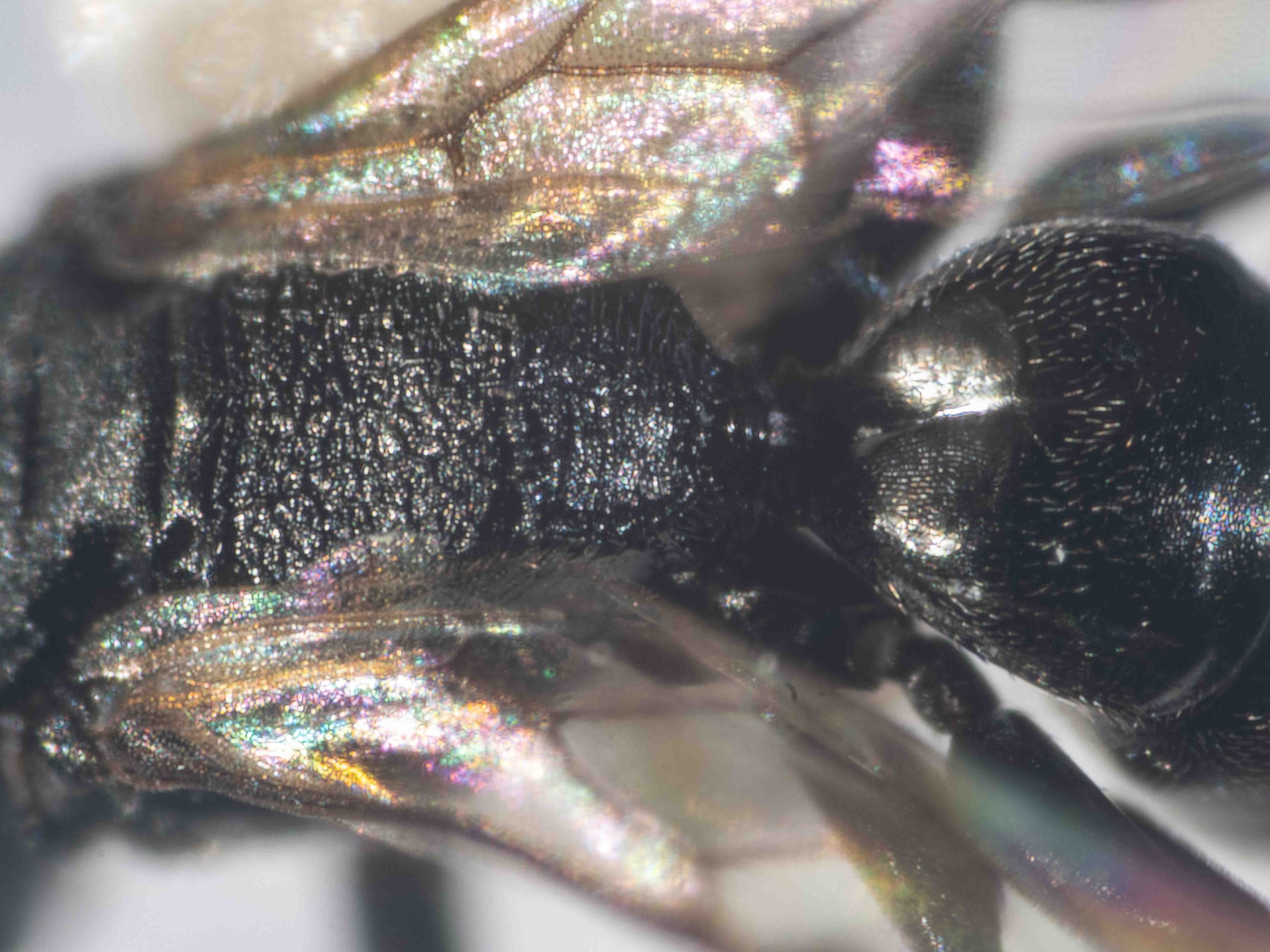
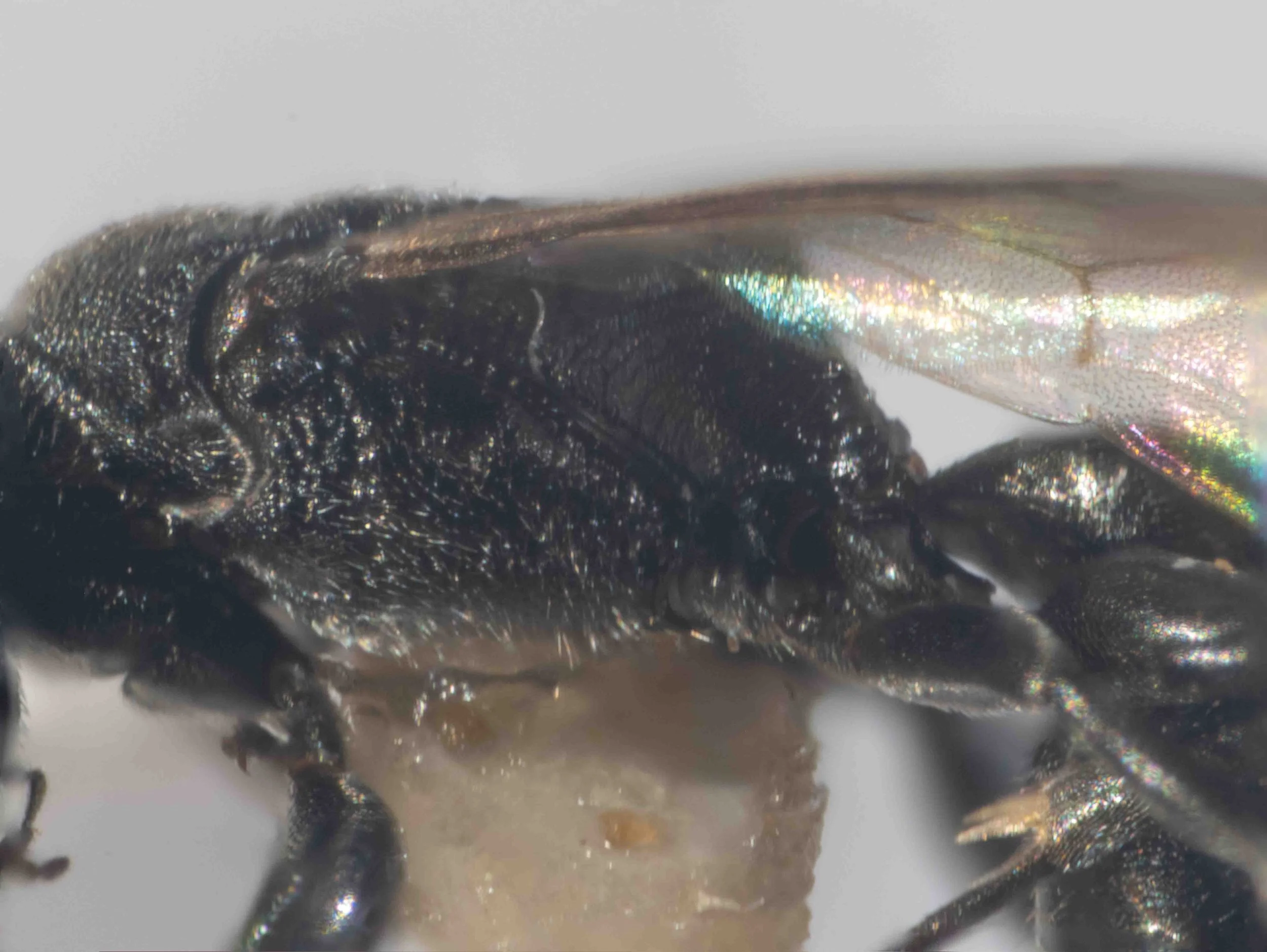
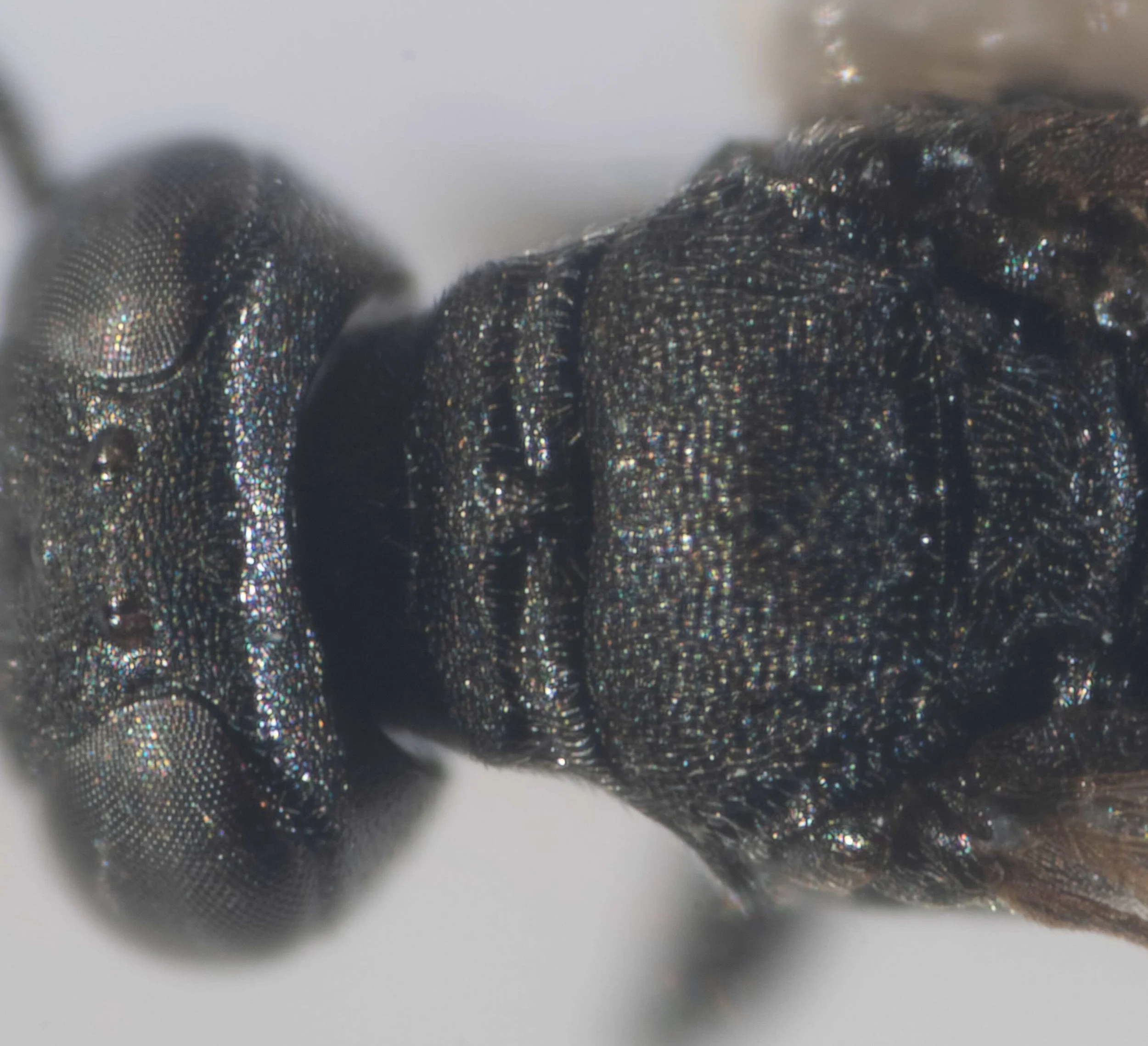
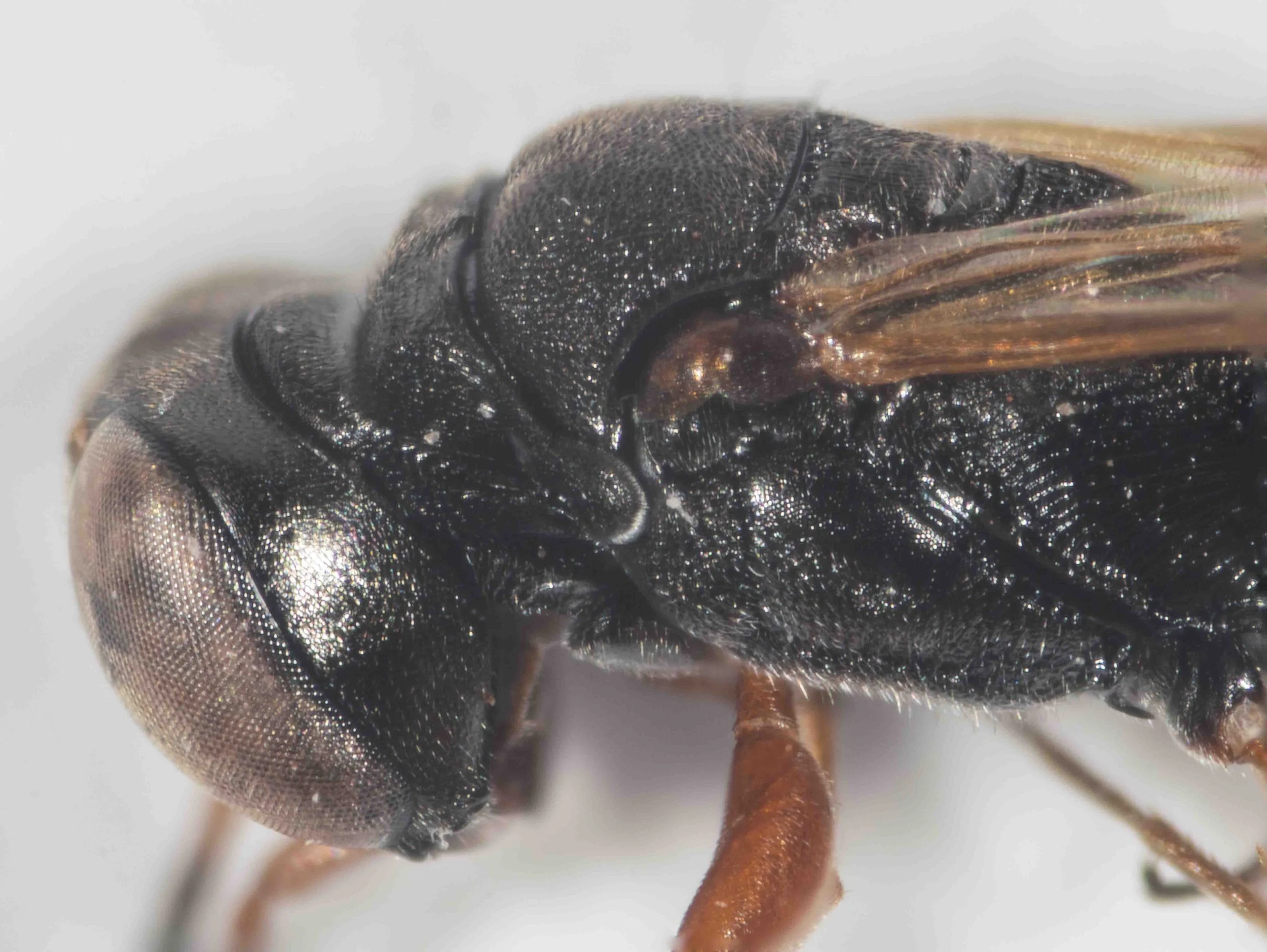
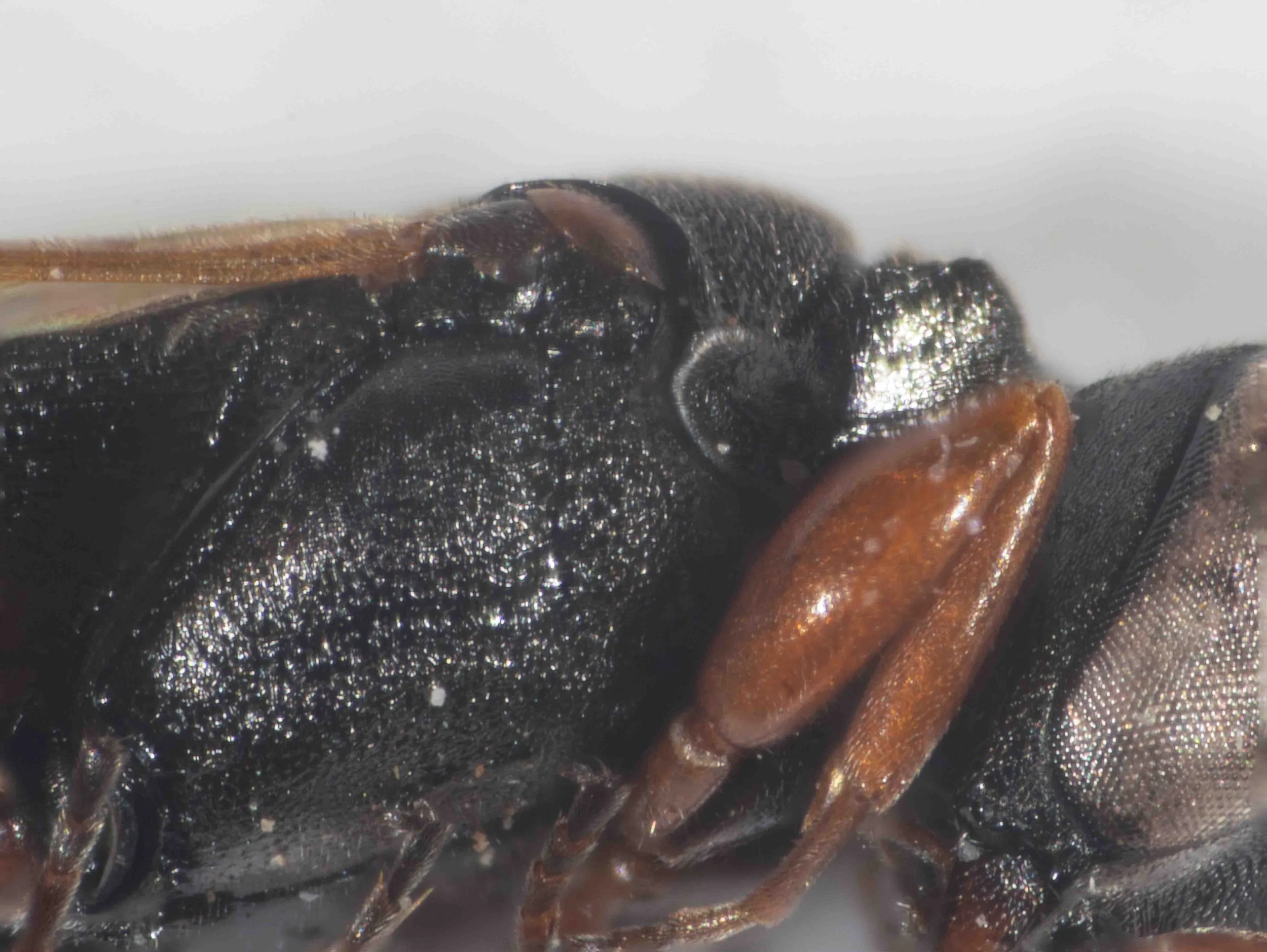
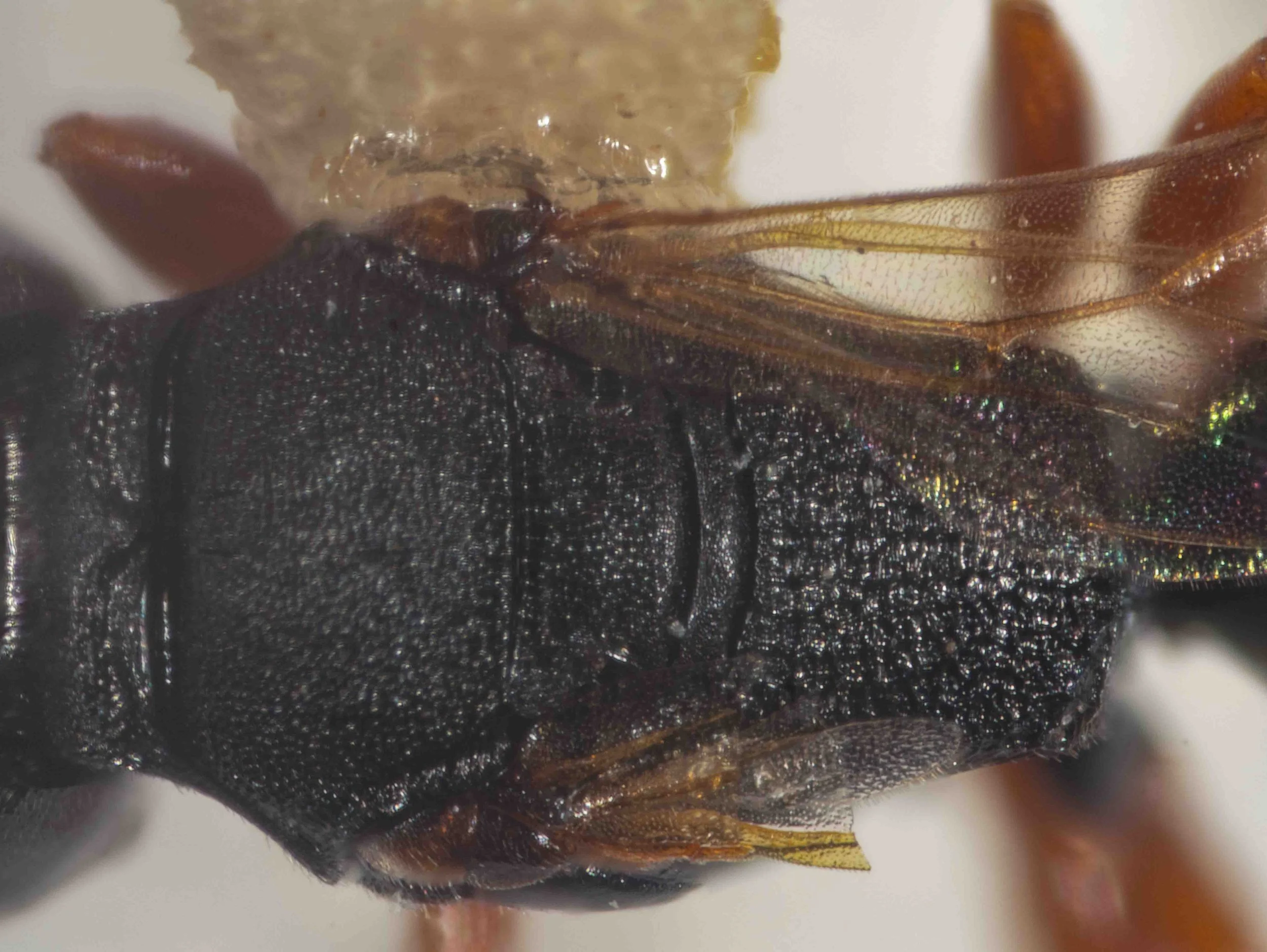
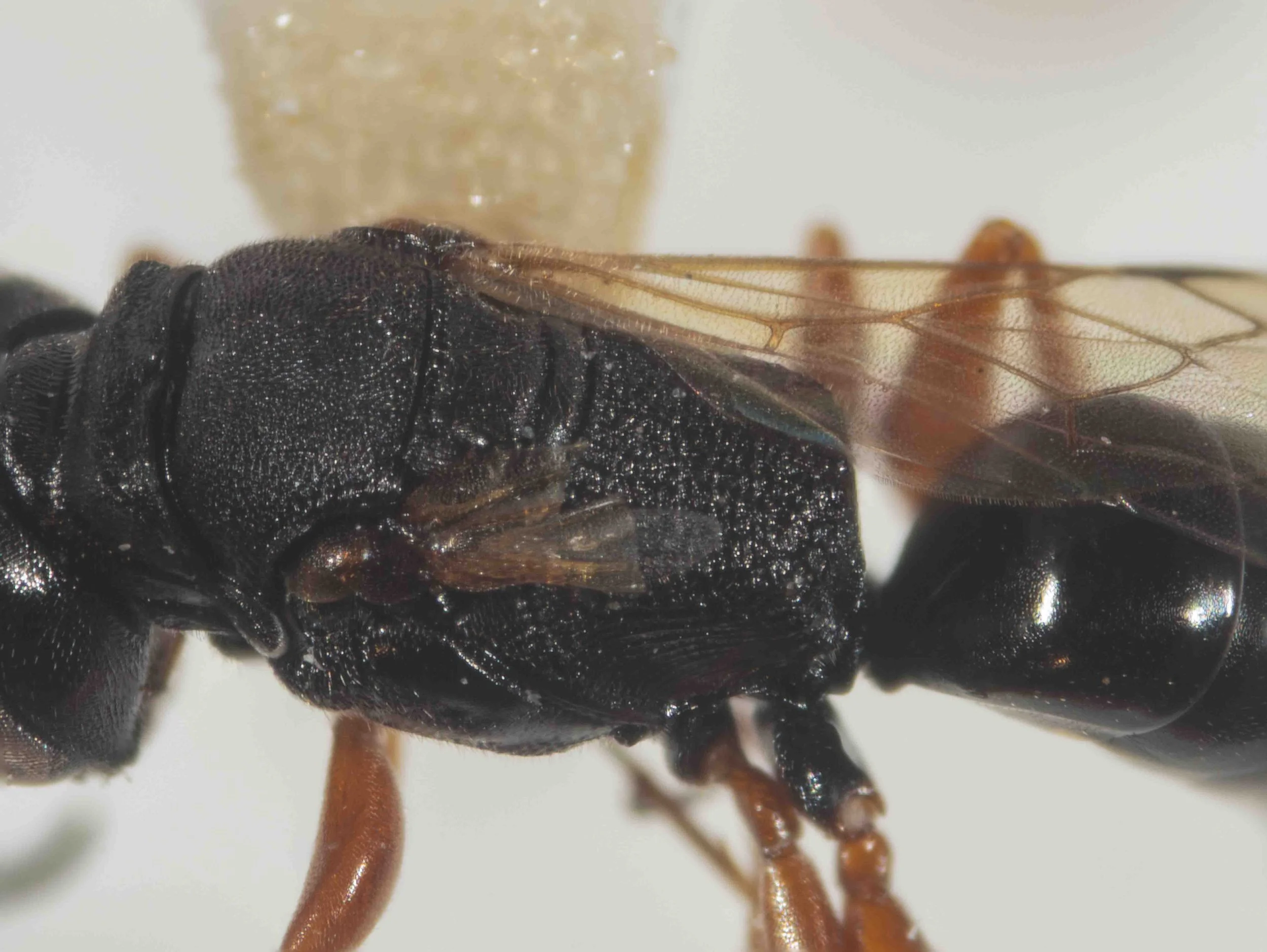
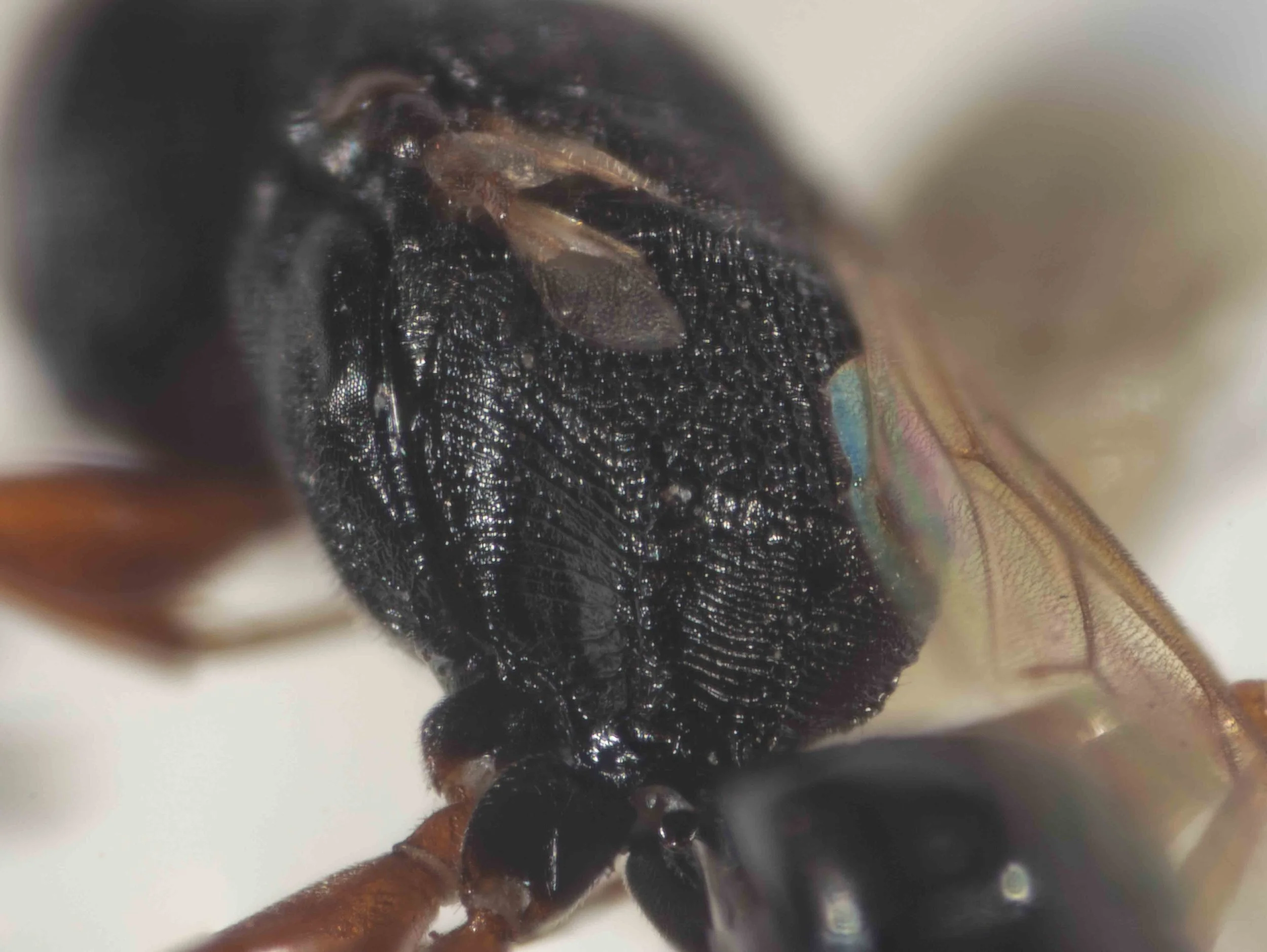
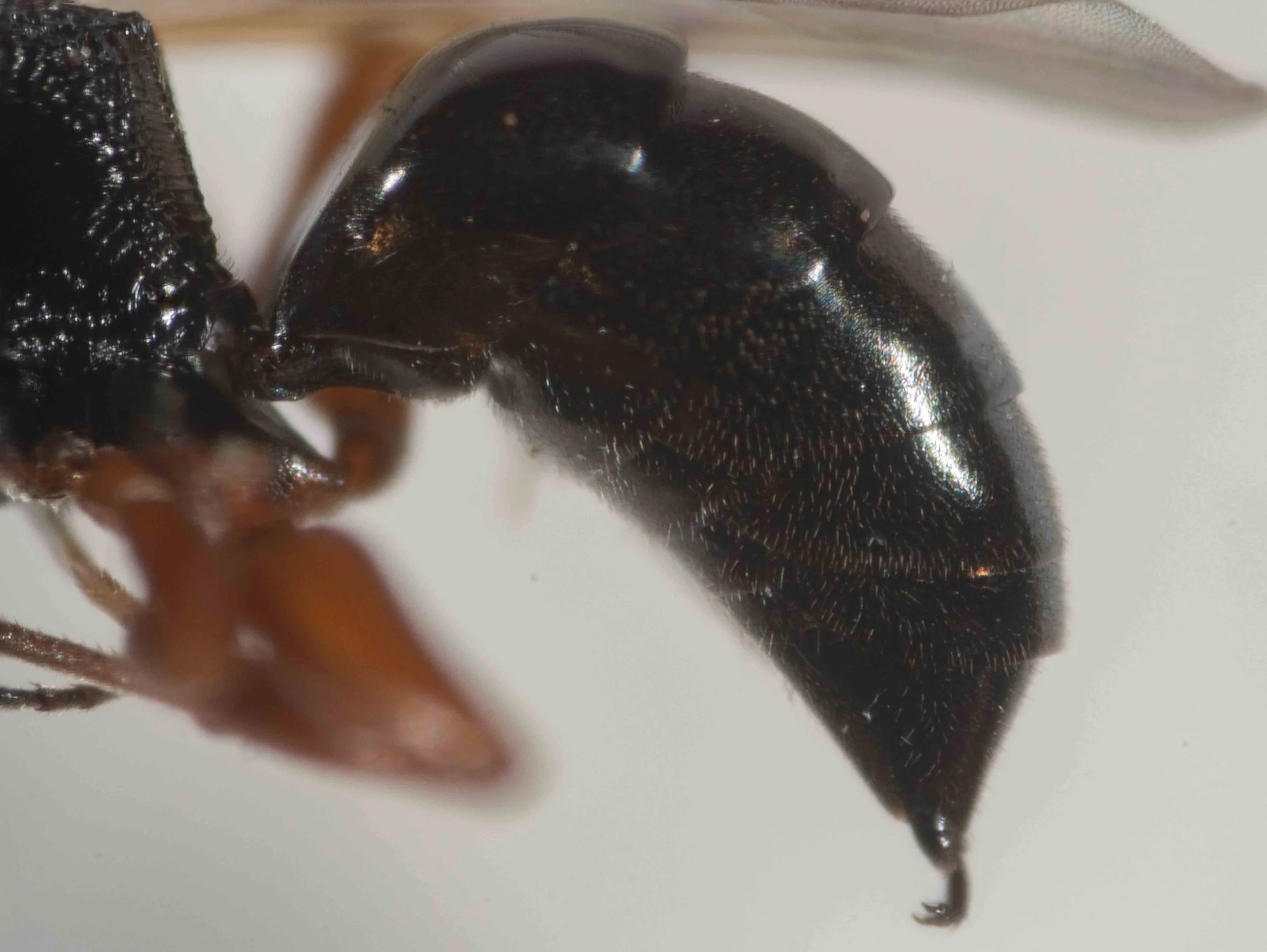
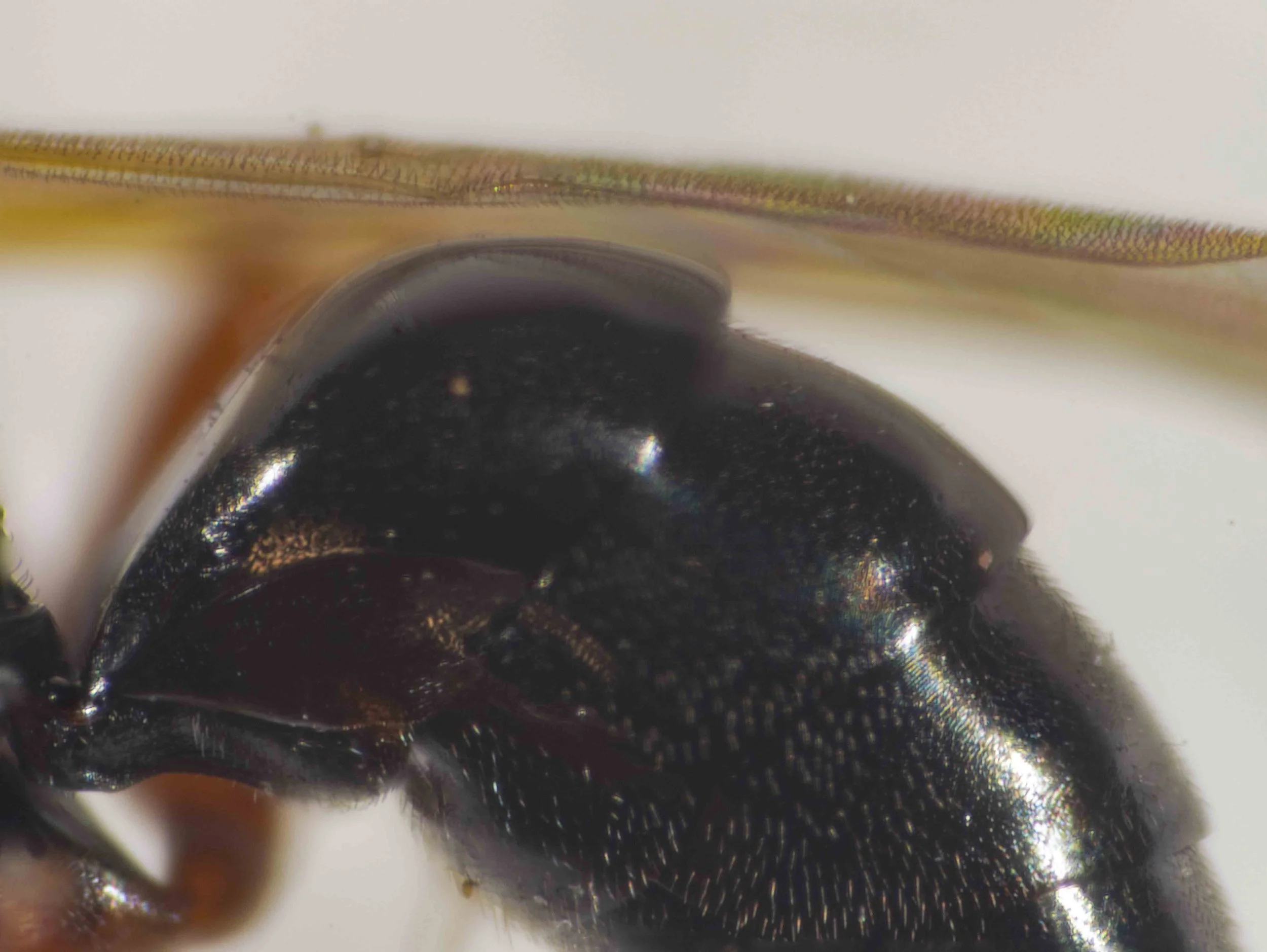
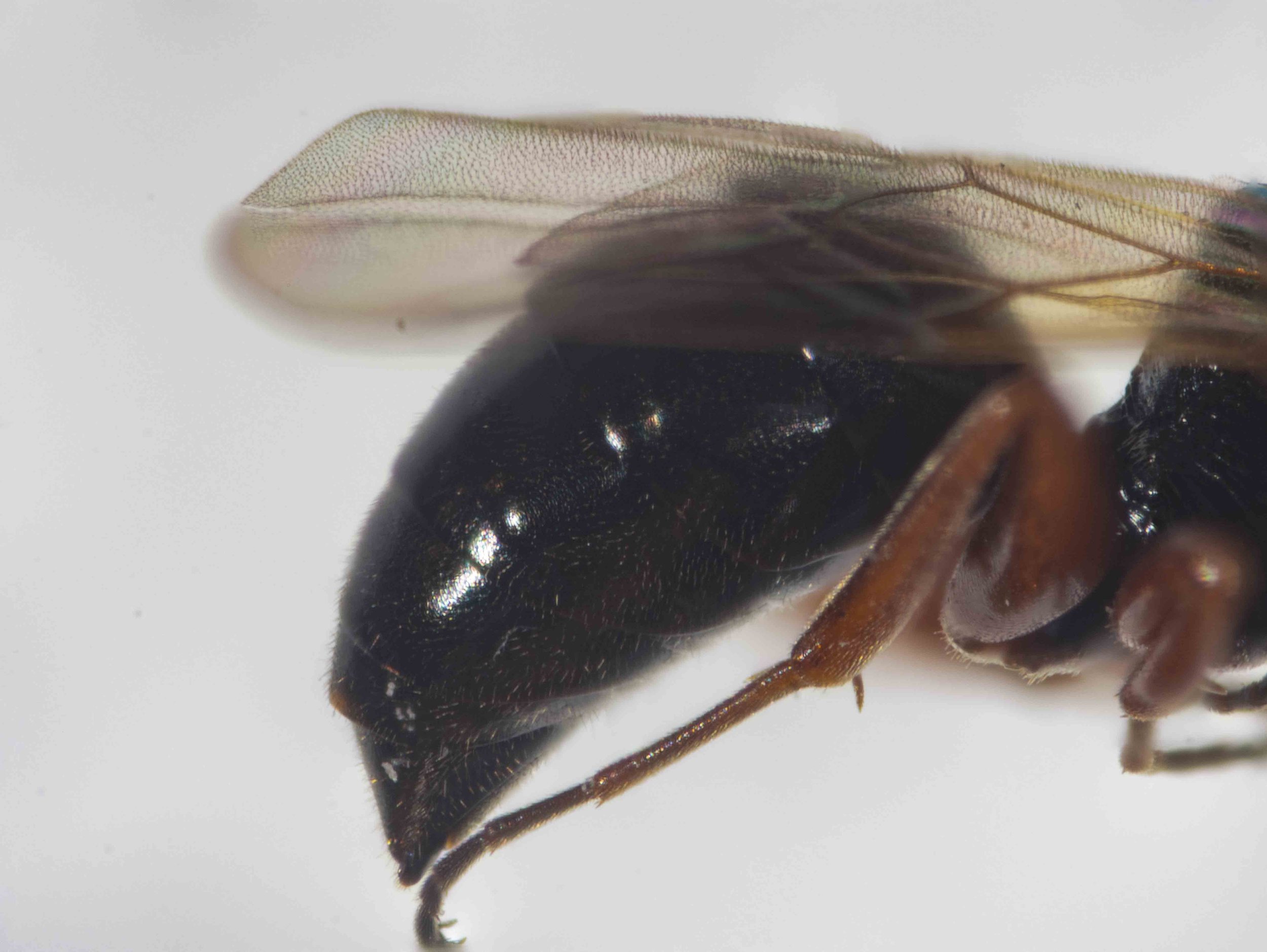
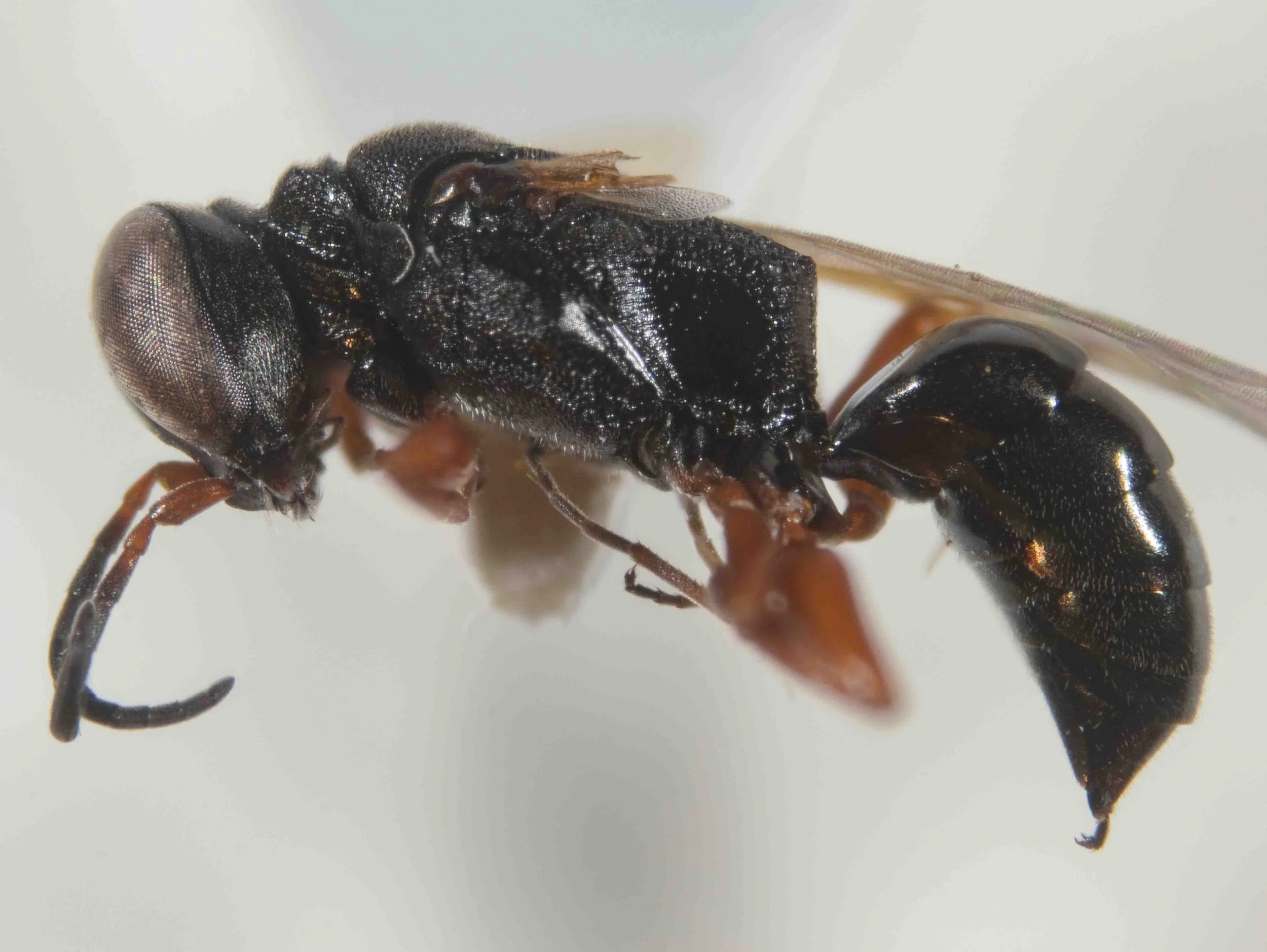
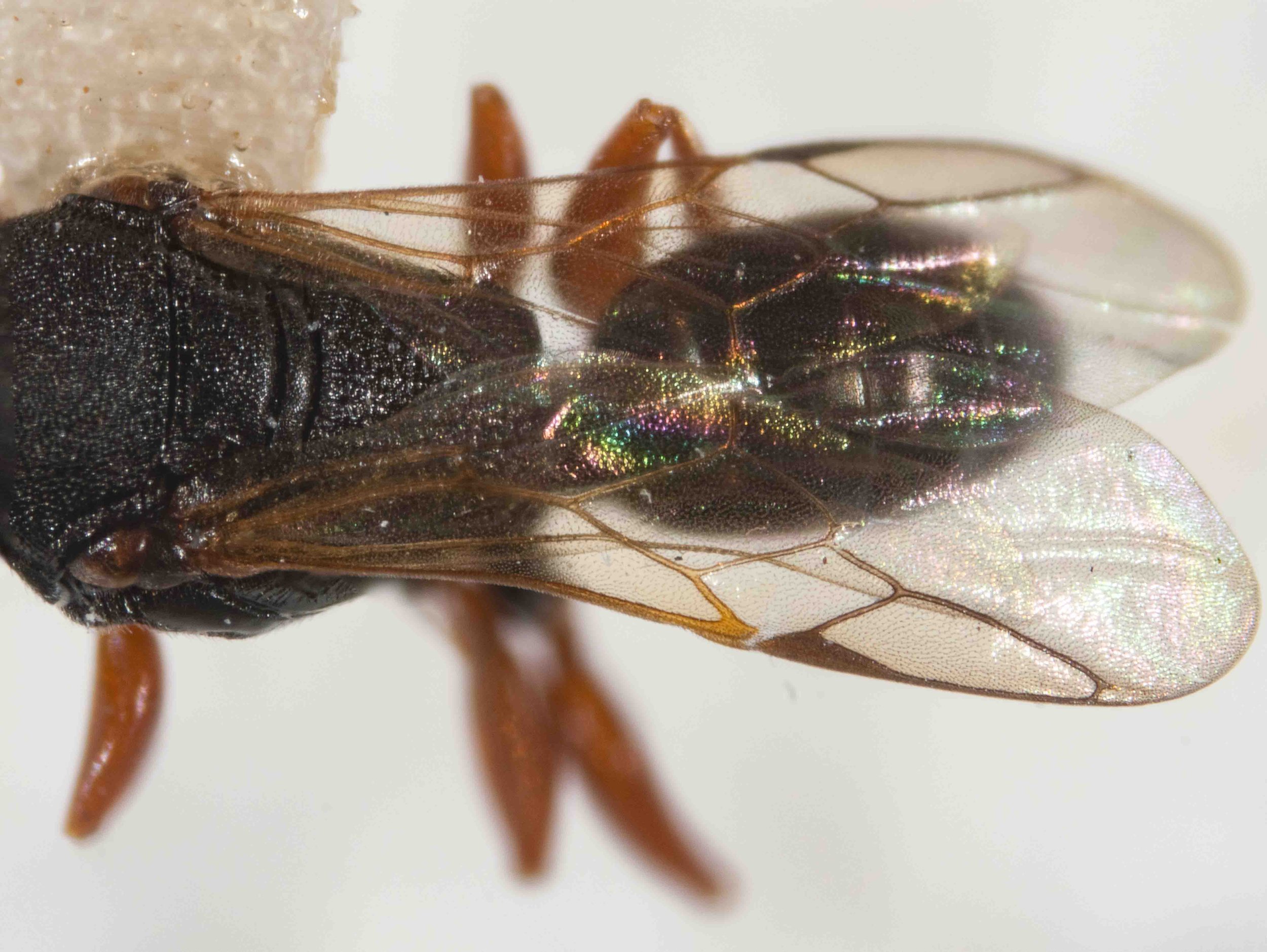
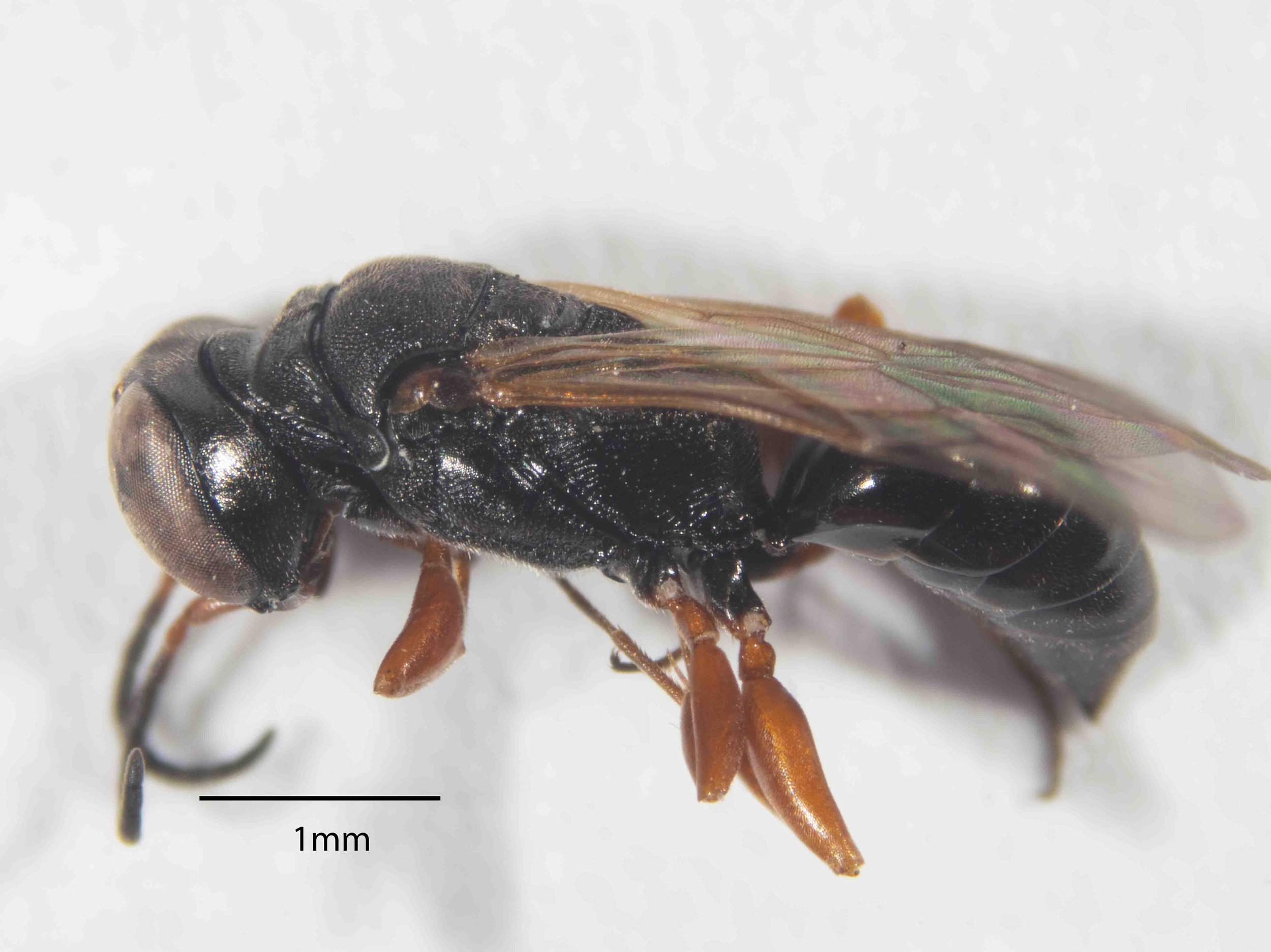
general habitus
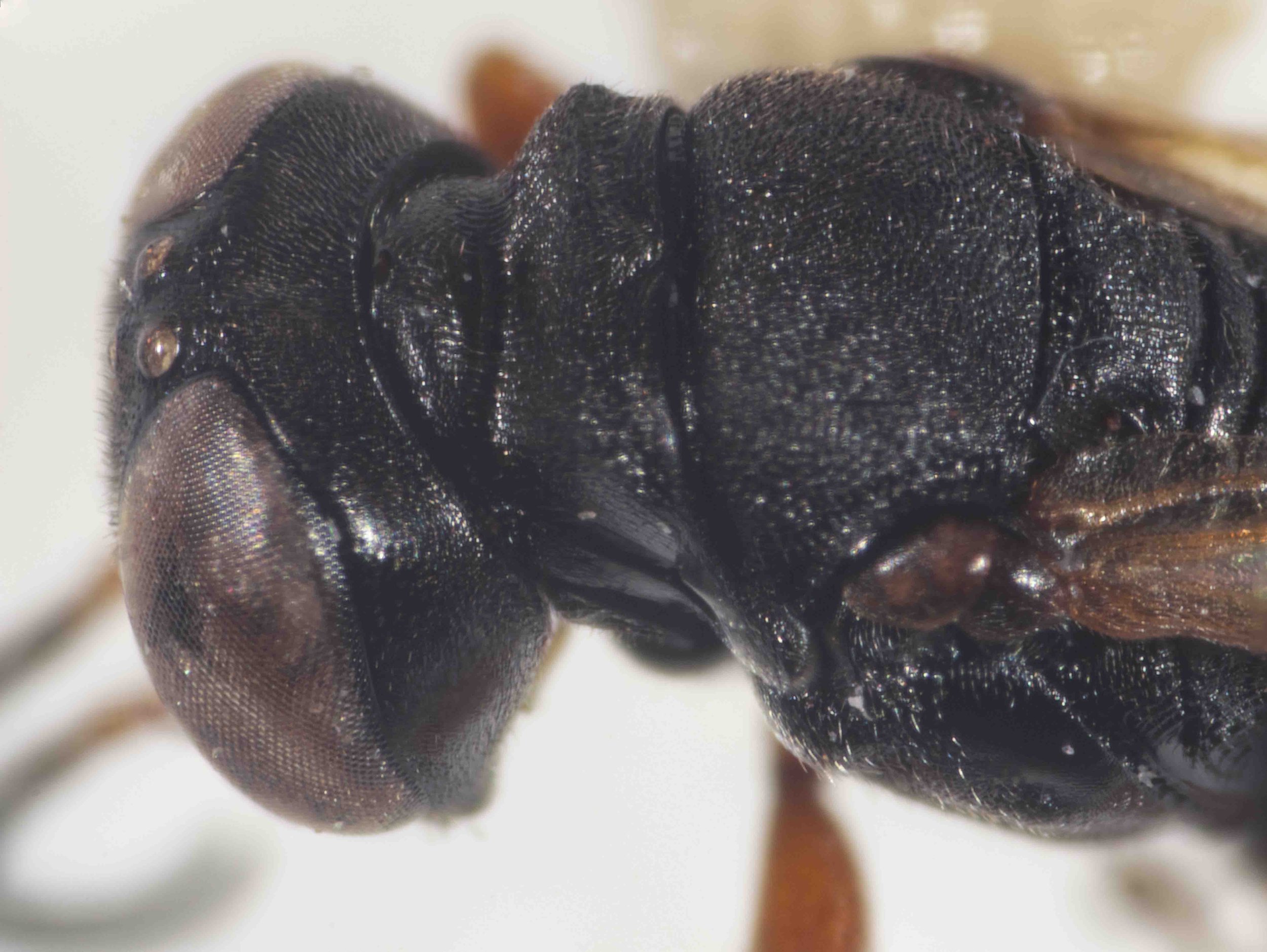
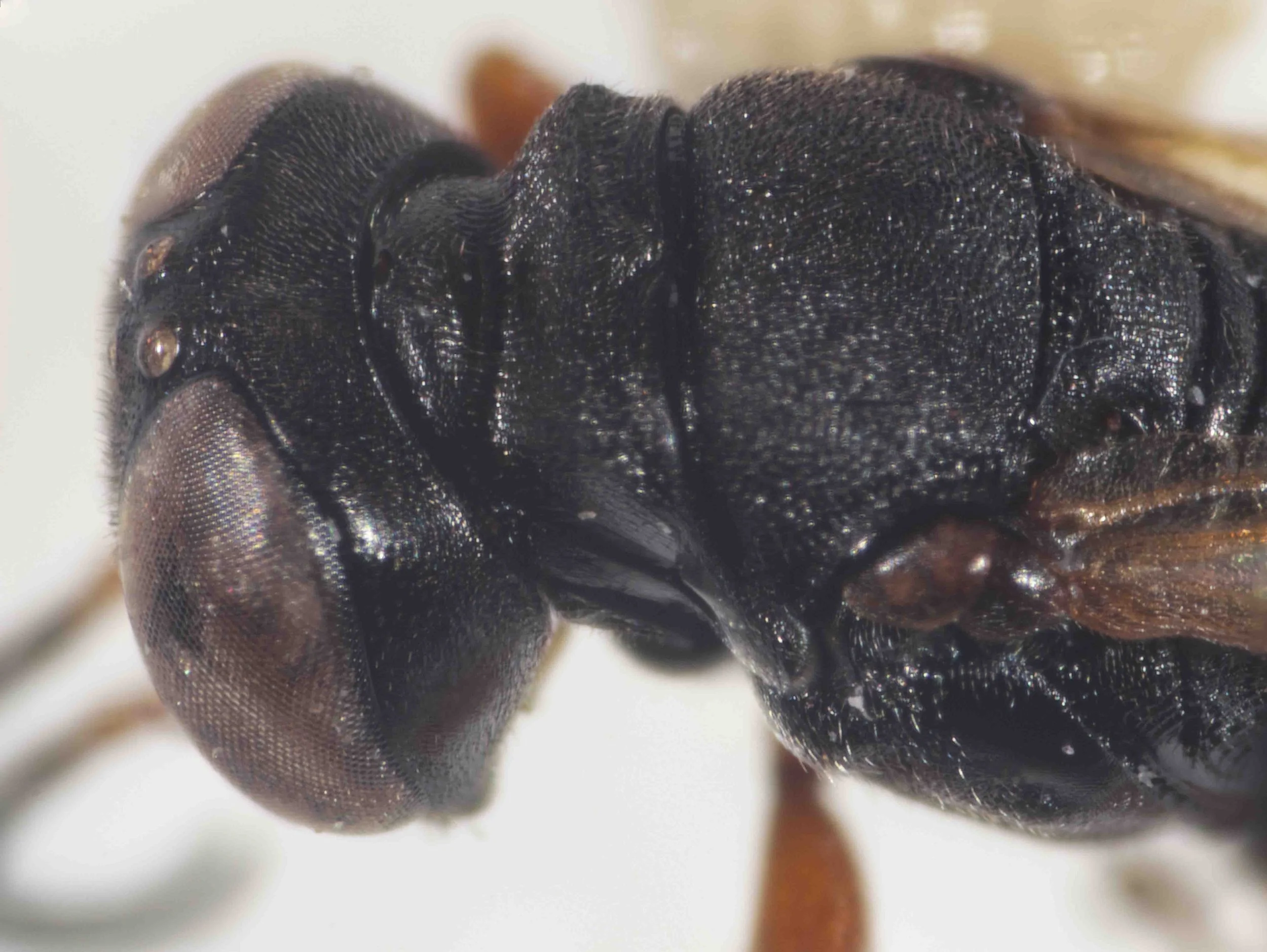
Small, largely dull black, coarsely sculptured.
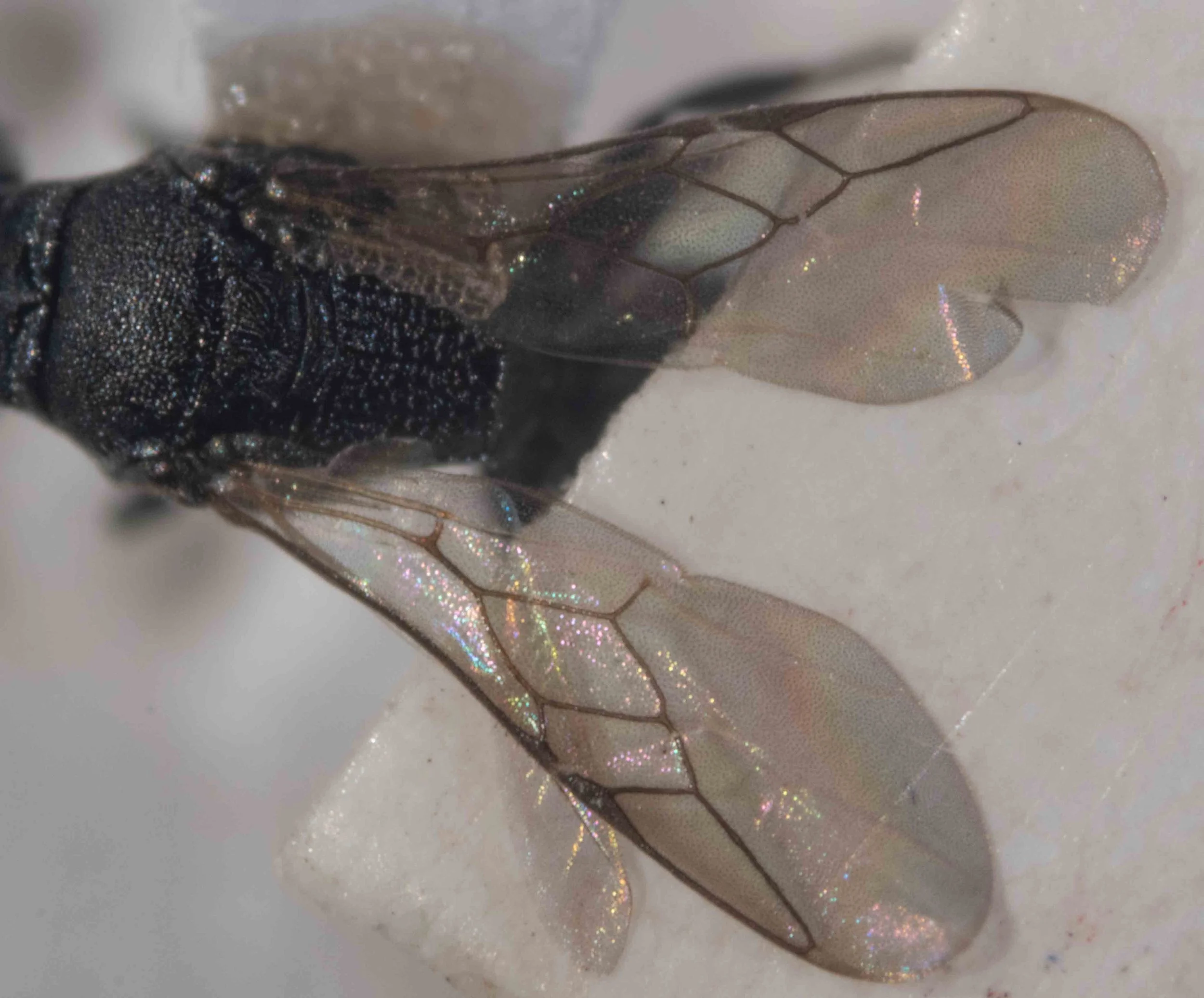
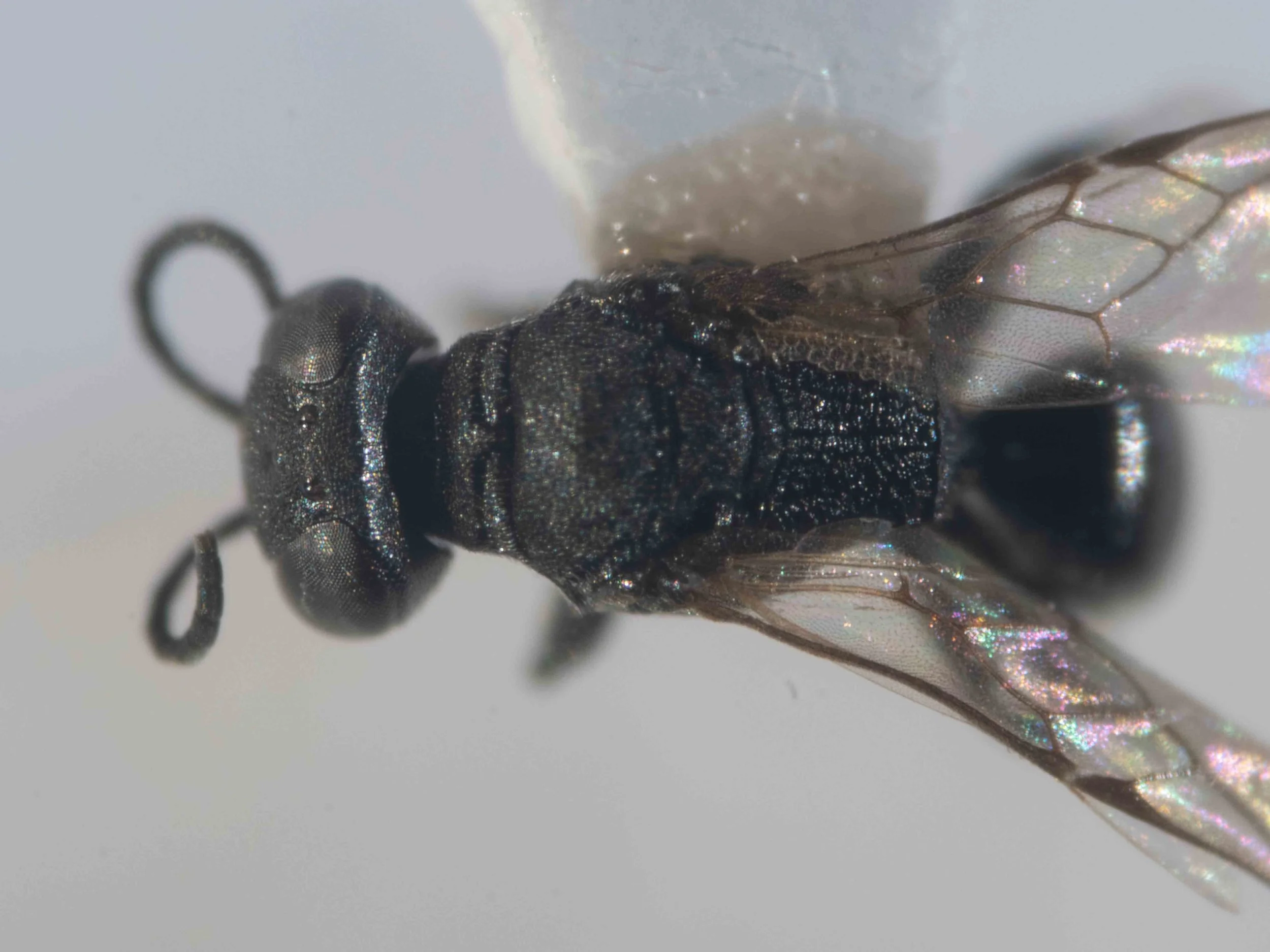
forewing venation
Just one submarginal cell, one discoidal cell, and the subcoidal cell open posteriorly. The latter is one of the key differences between Nitela and Auchenophorus.
hindwing venation
No closed cells in hindwing. Again, this is key difference between Nitela and Auchenophorus.
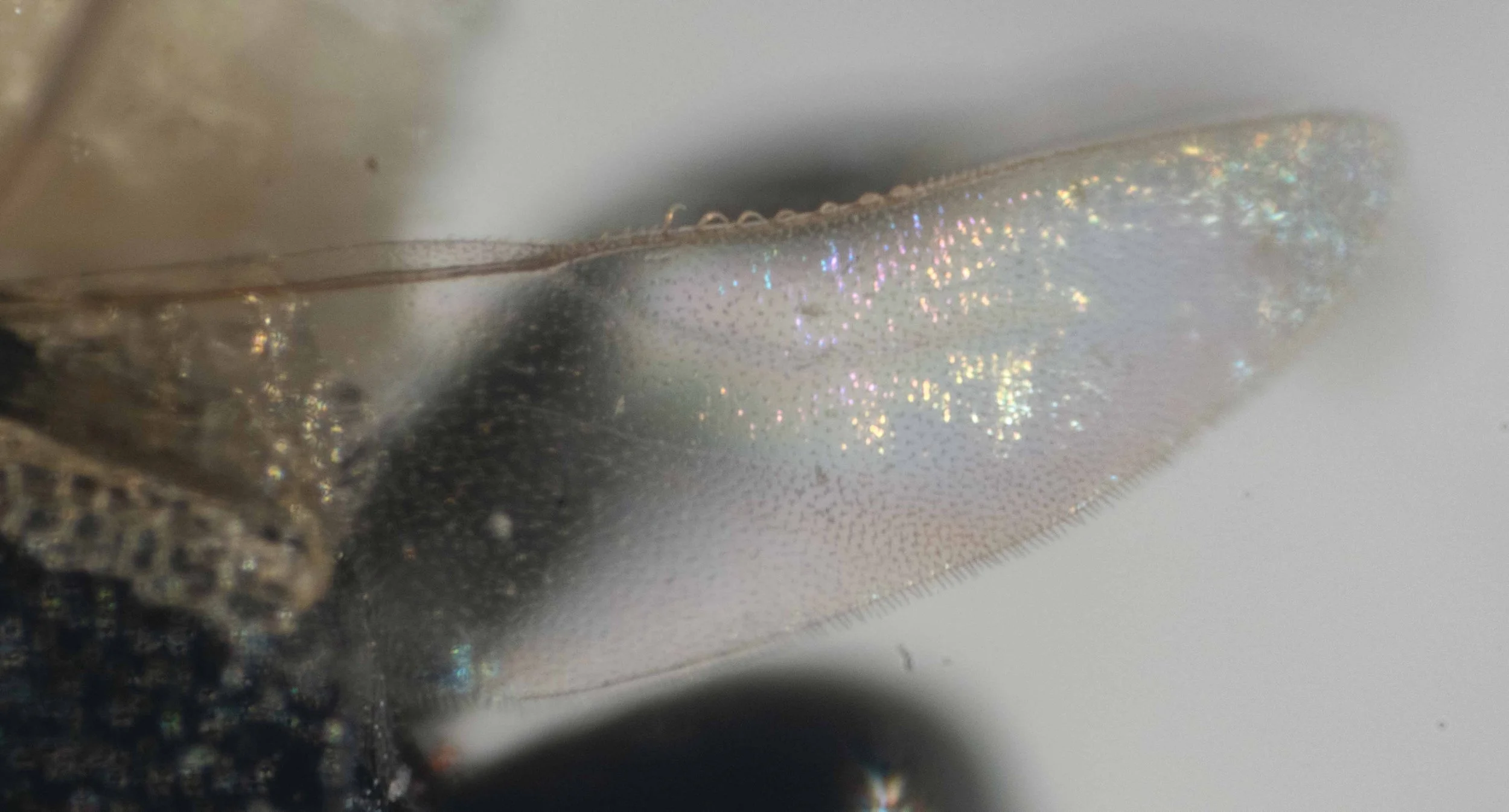
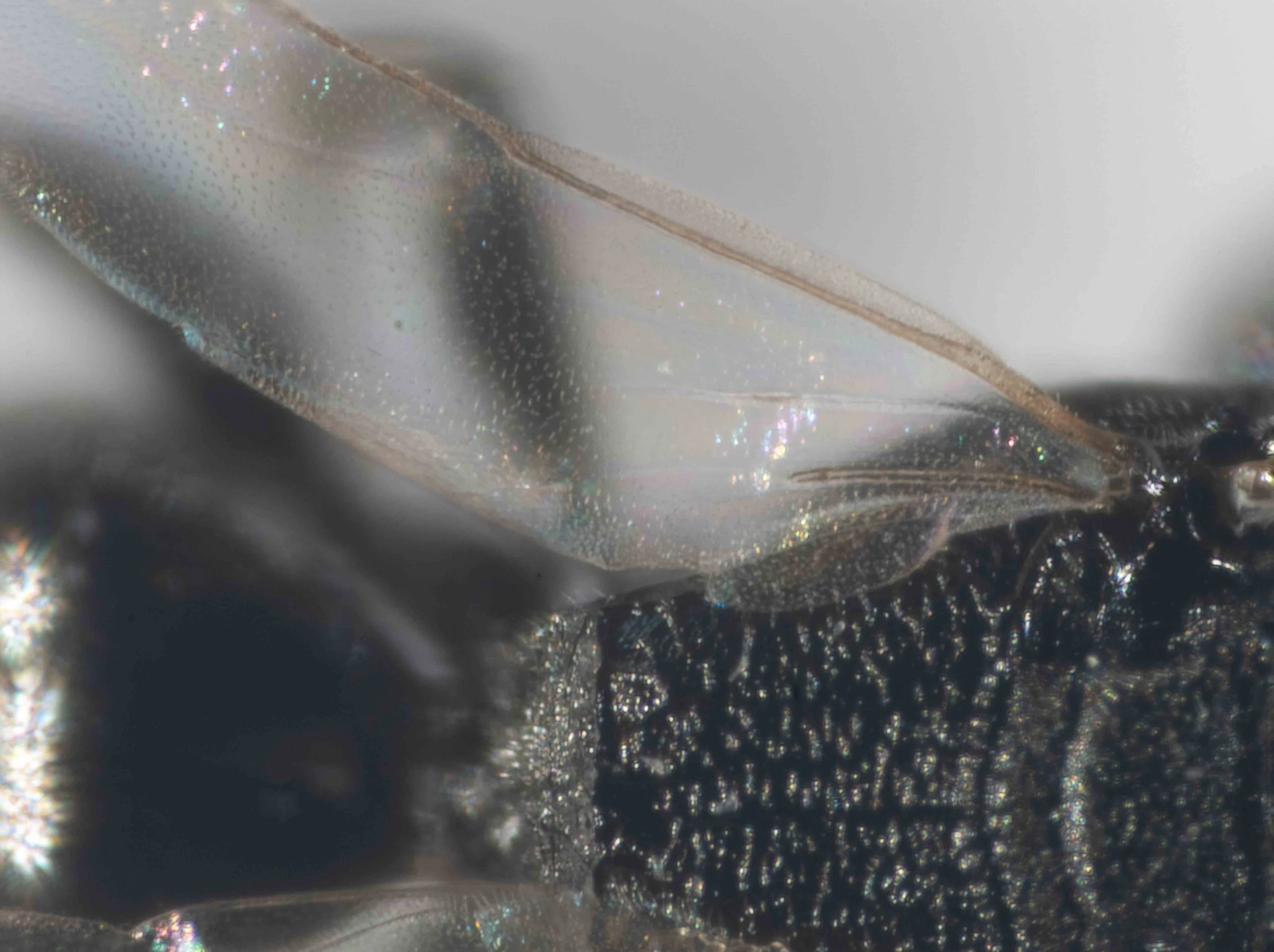
jugal lobe of hindwing
Jugal lobe present, but small.
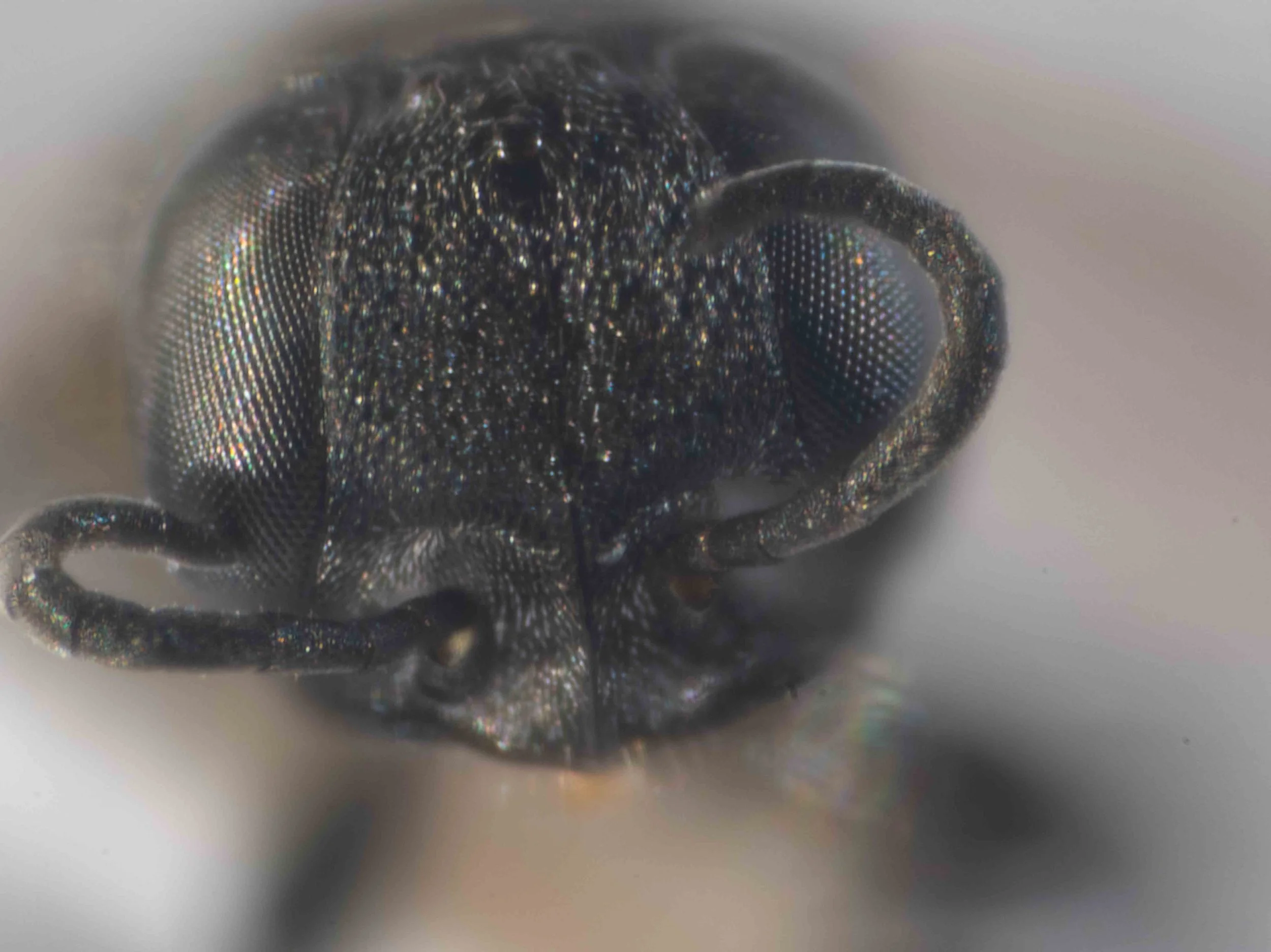
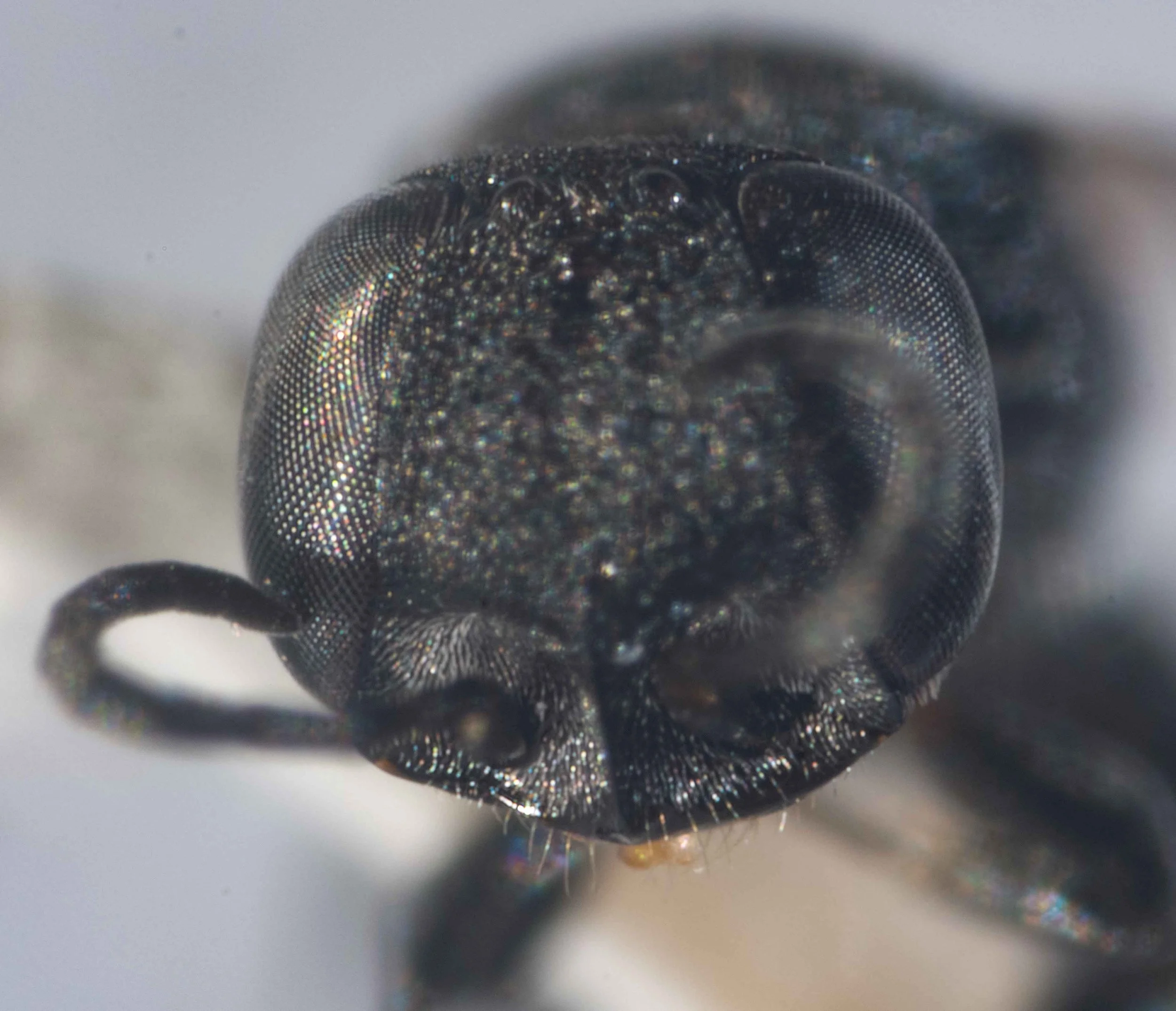
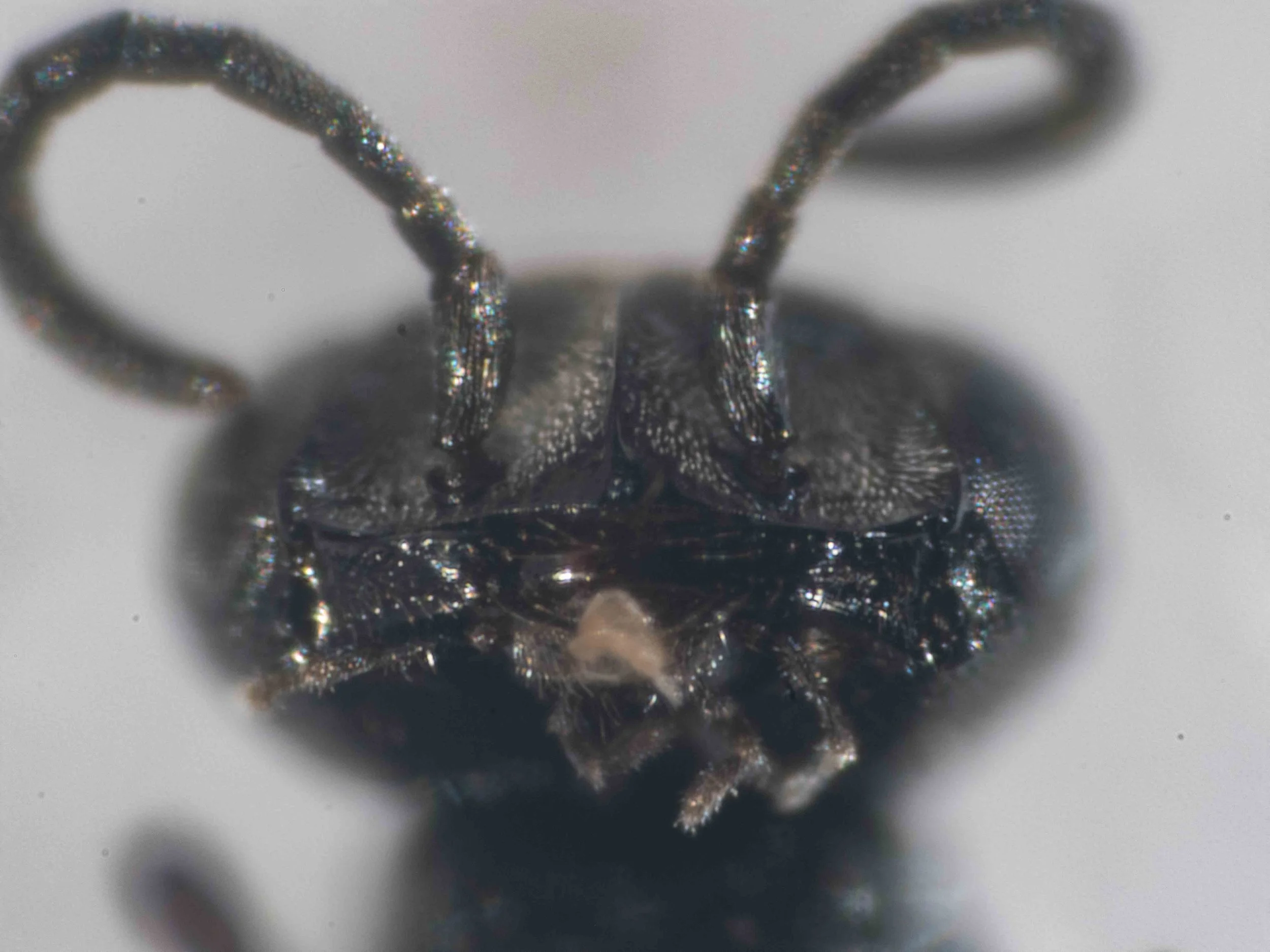
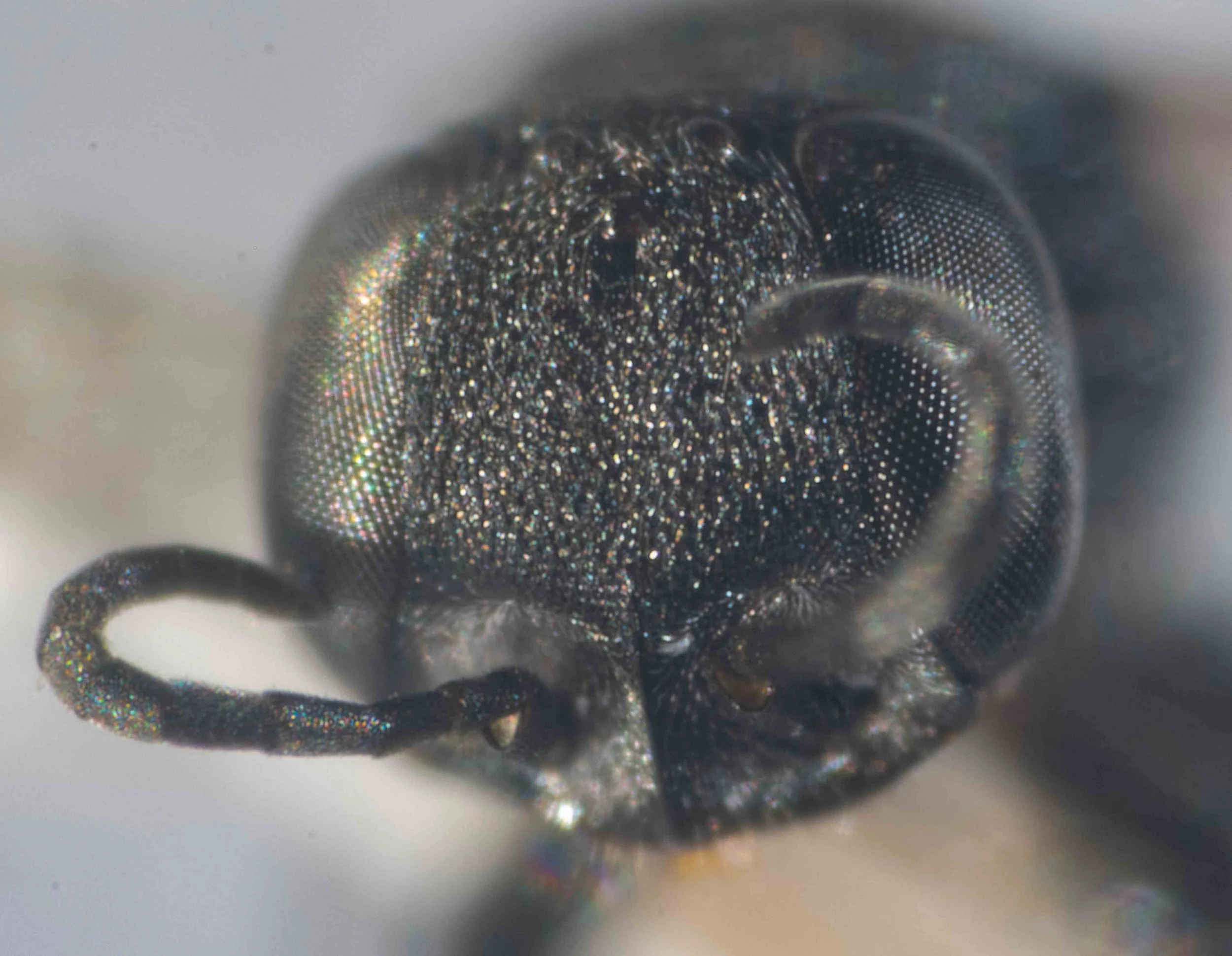
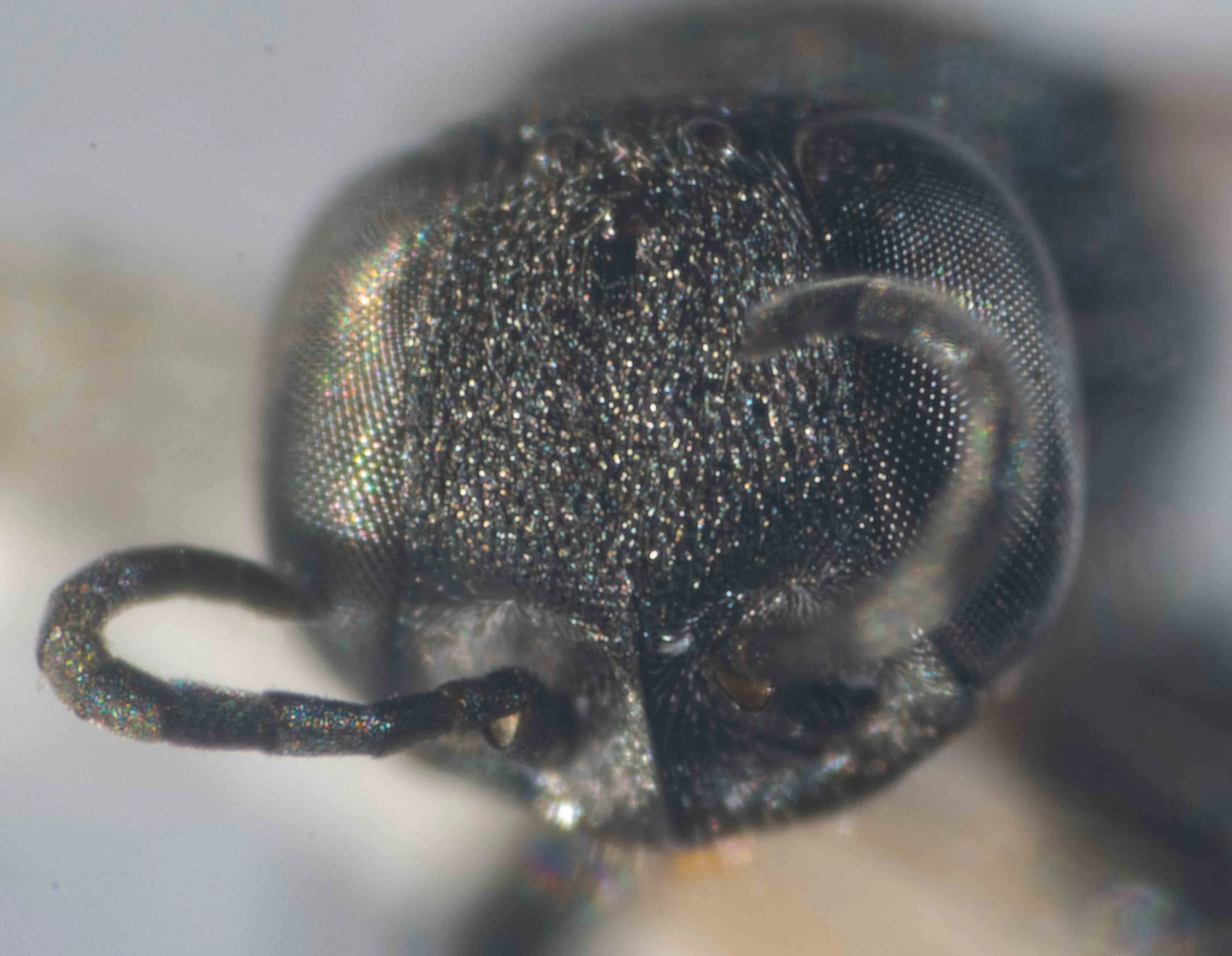
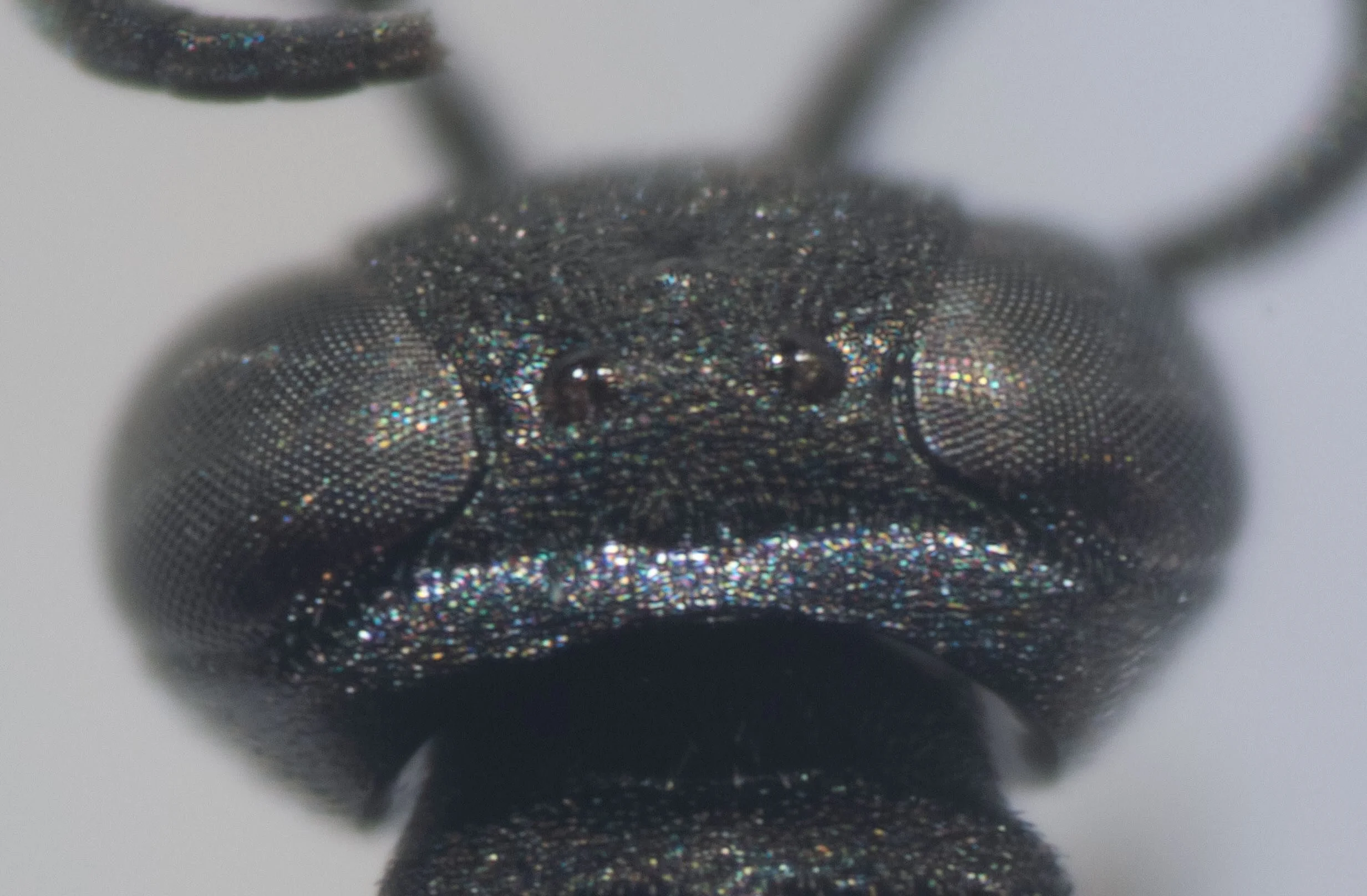
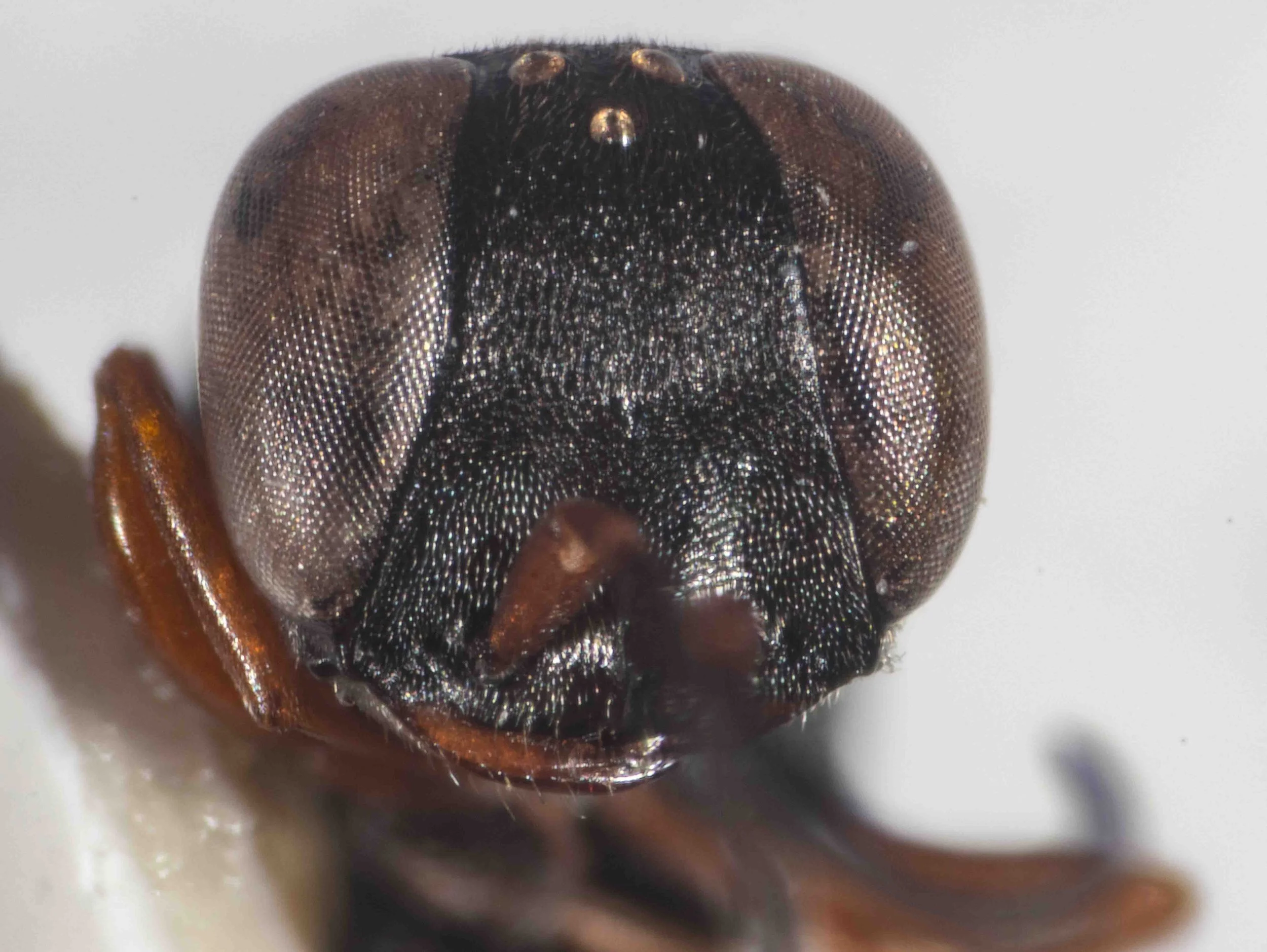
shape of eyes, ocelli & frons
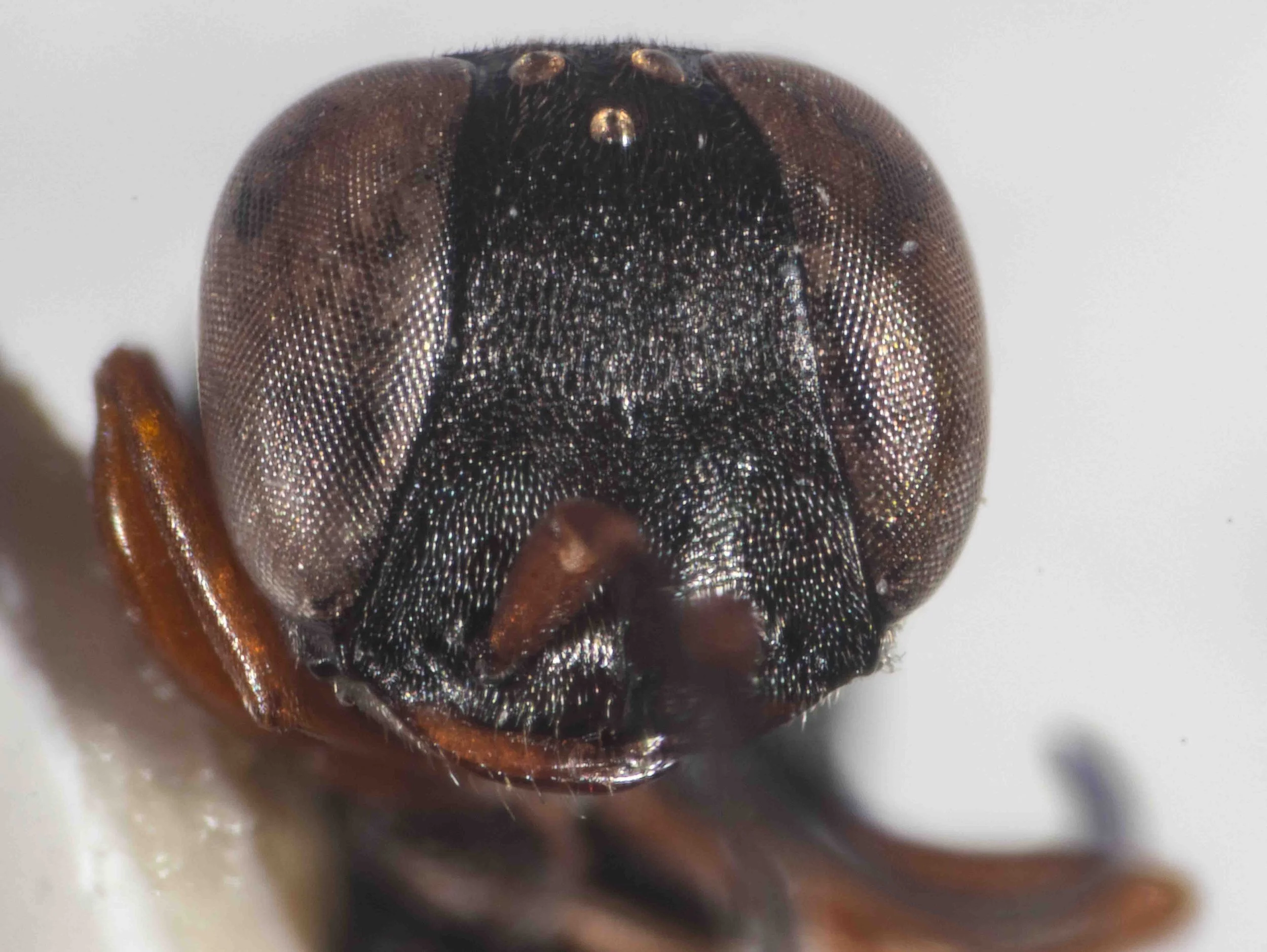
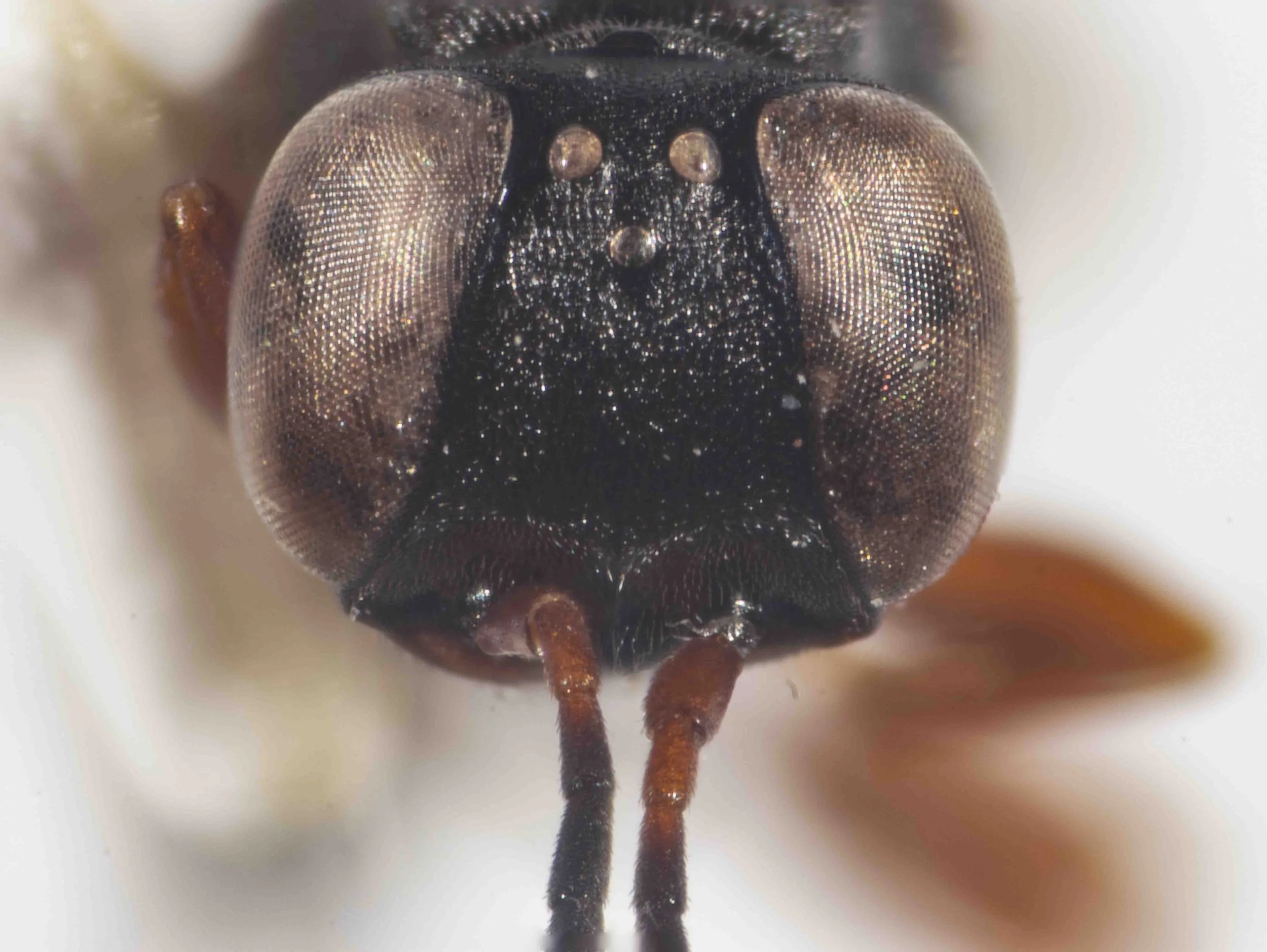
Eyes converging above. Ocelli normal.
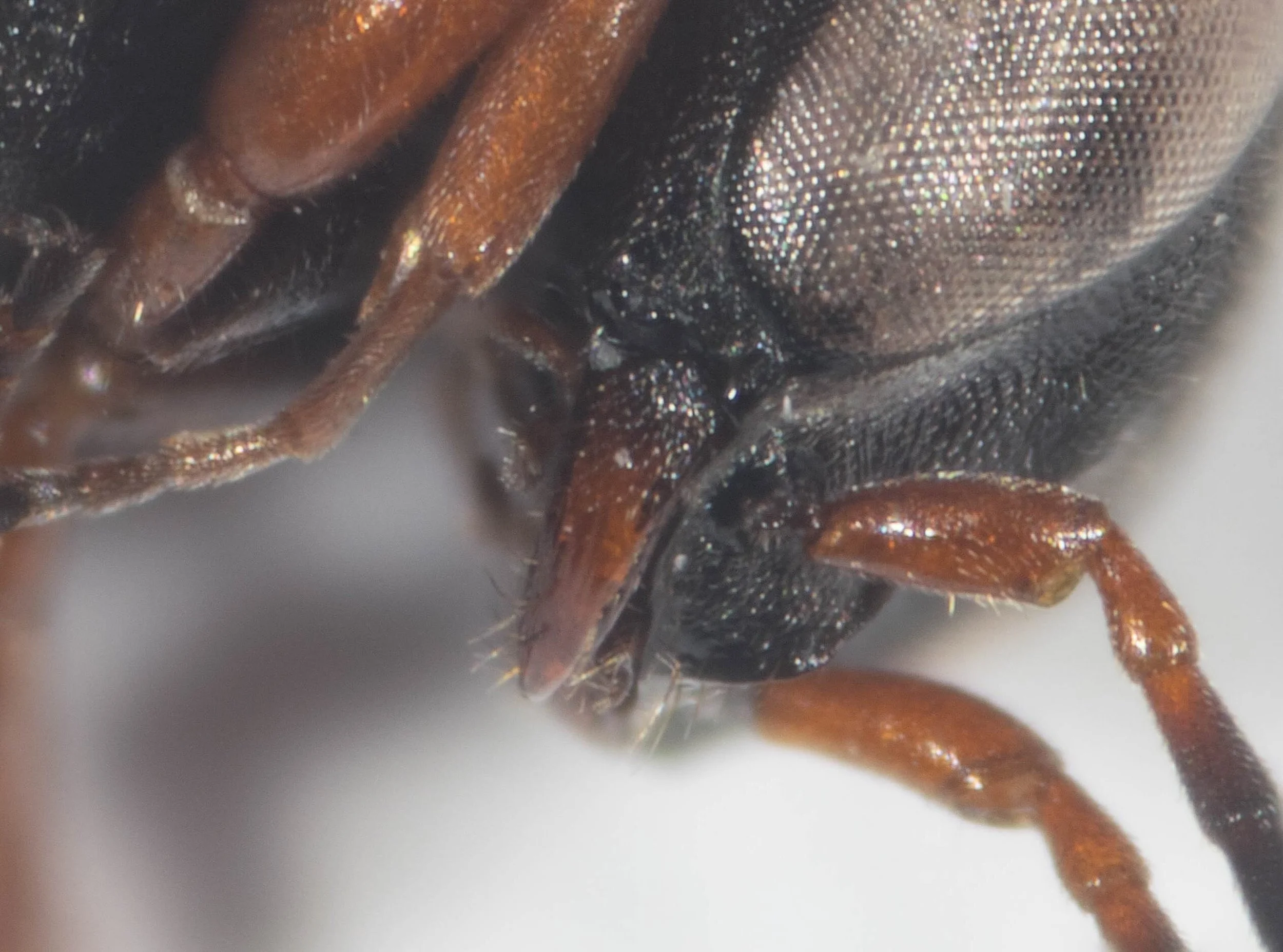
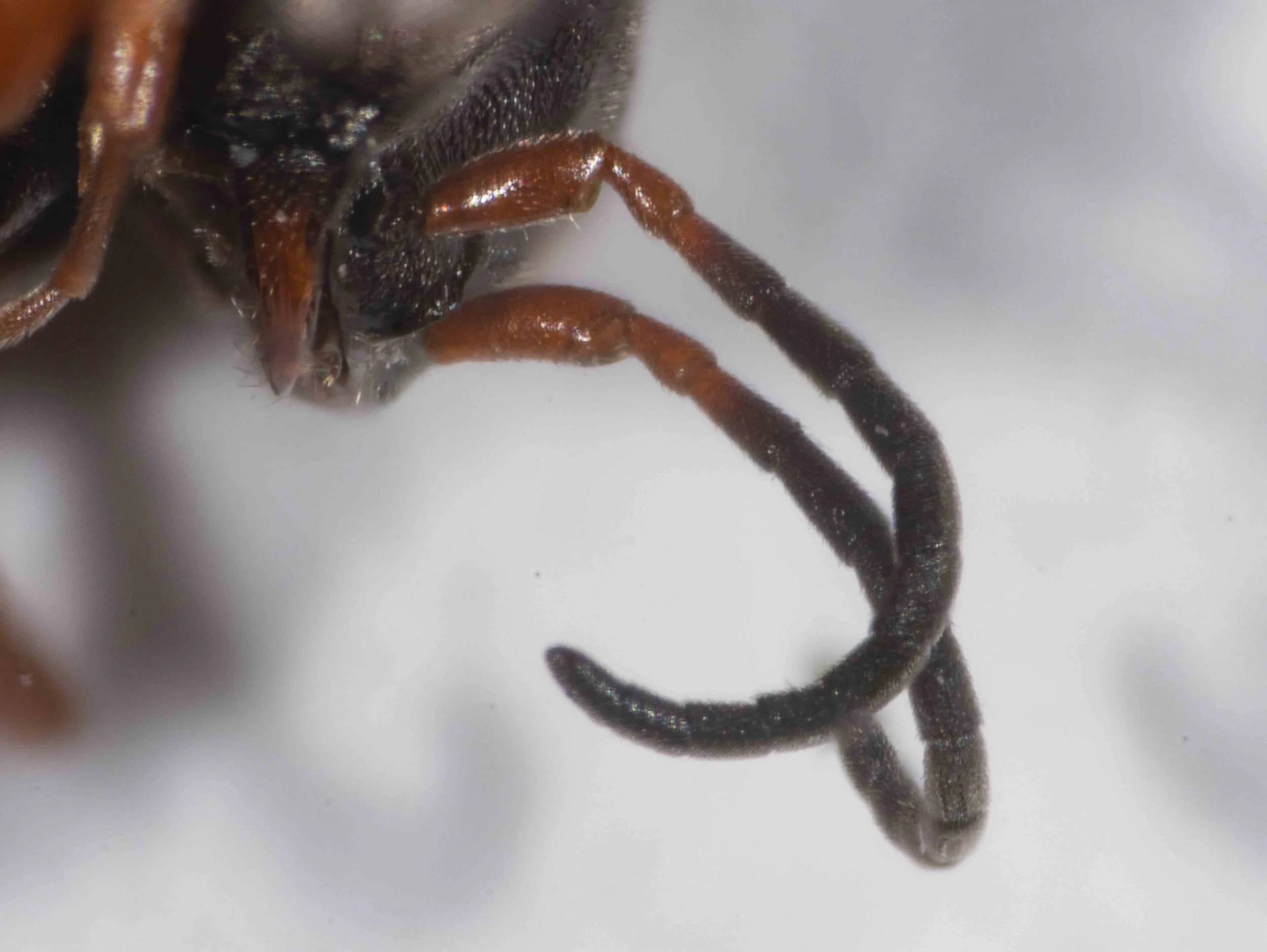
Antennae set very low on face, convergent with clypeal suture. Antennal sockets surrounded by basin (‘scapal basin’).
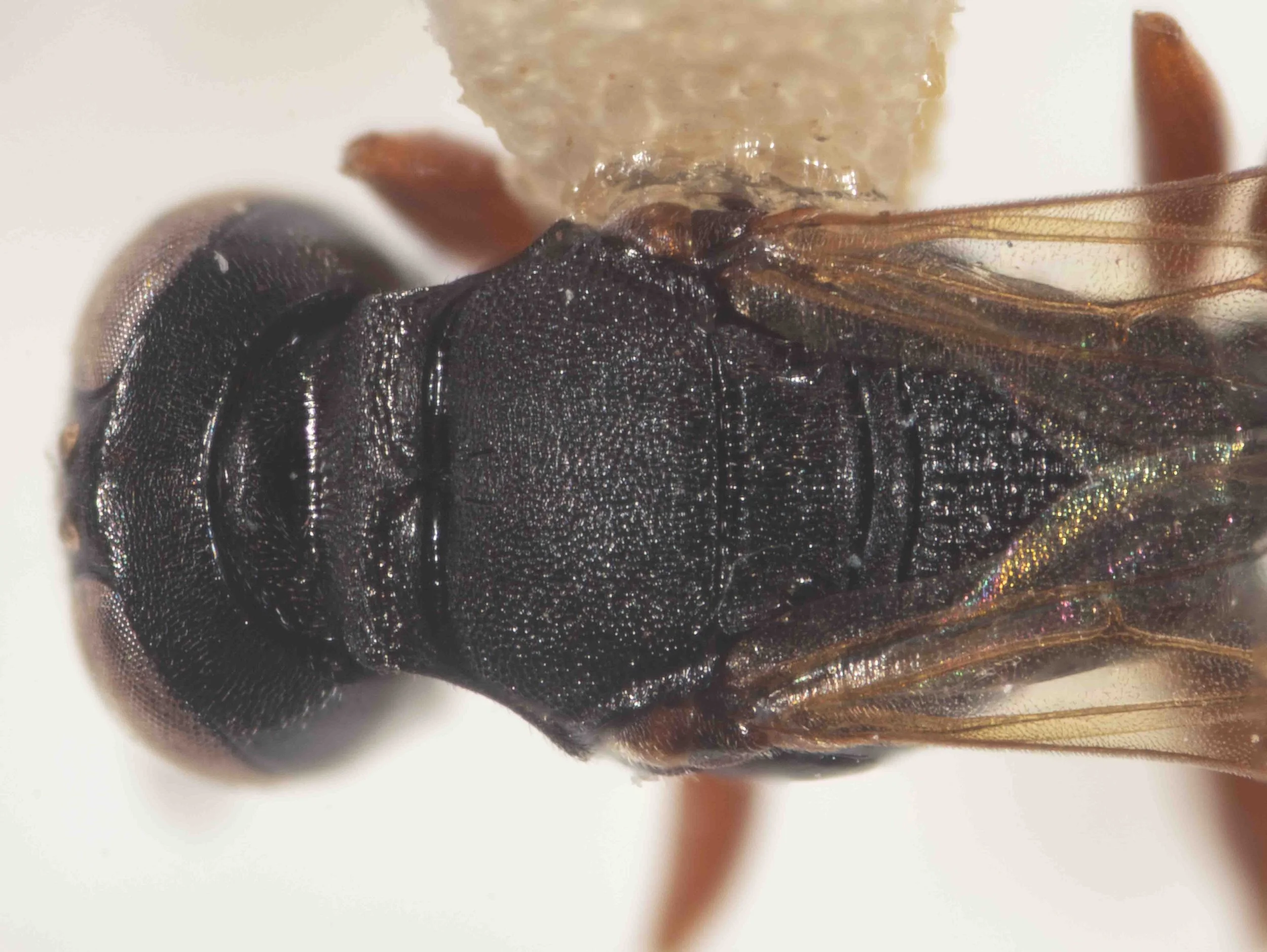
shape of mesosoma
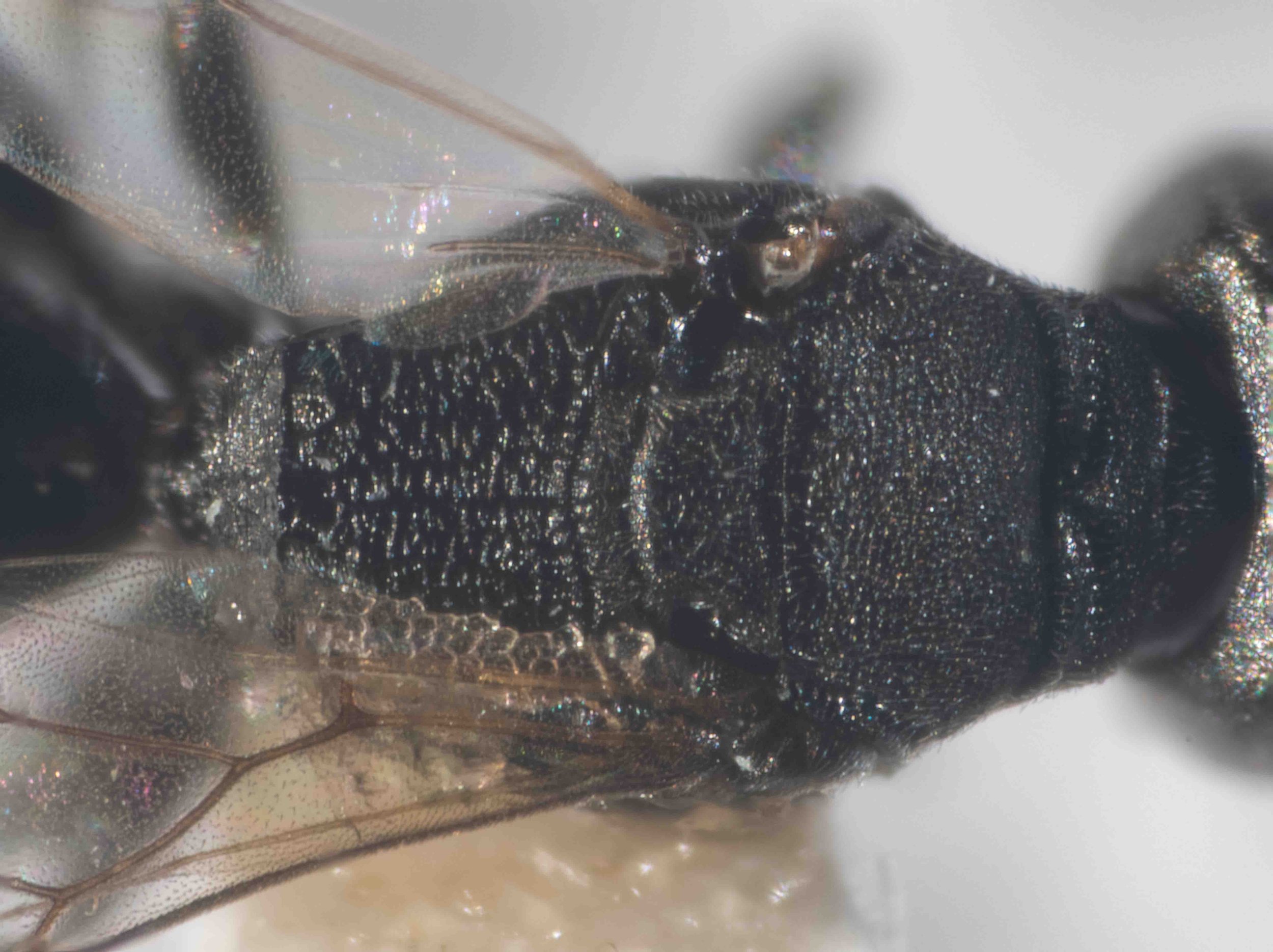
Pronotal collar moderately long. The transverse groove is a common, but not universal, feature of the genus.
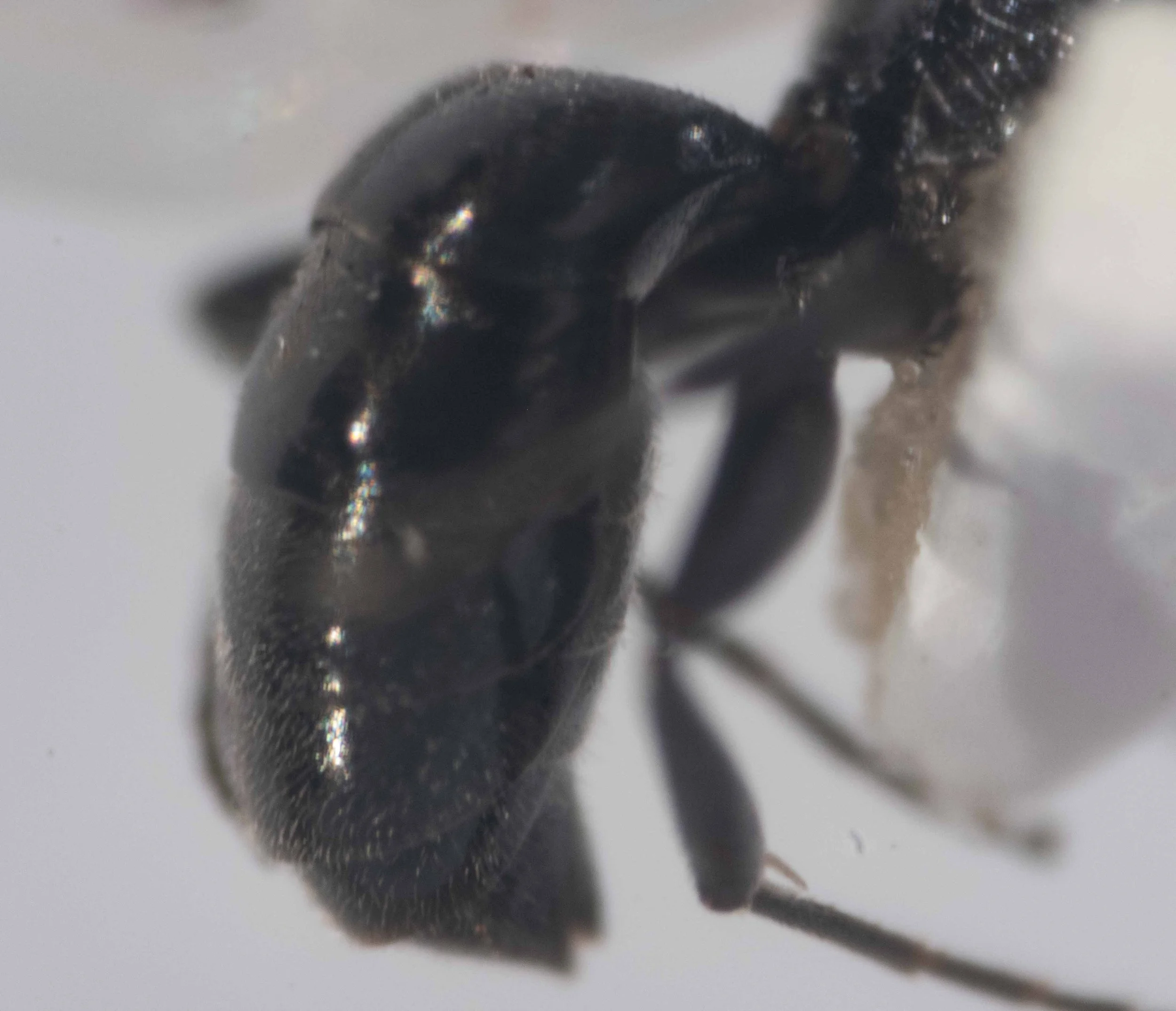
Propodeum long, without dorsal enclosure, the posterior surface flat and nearly vertical.
gaster shape
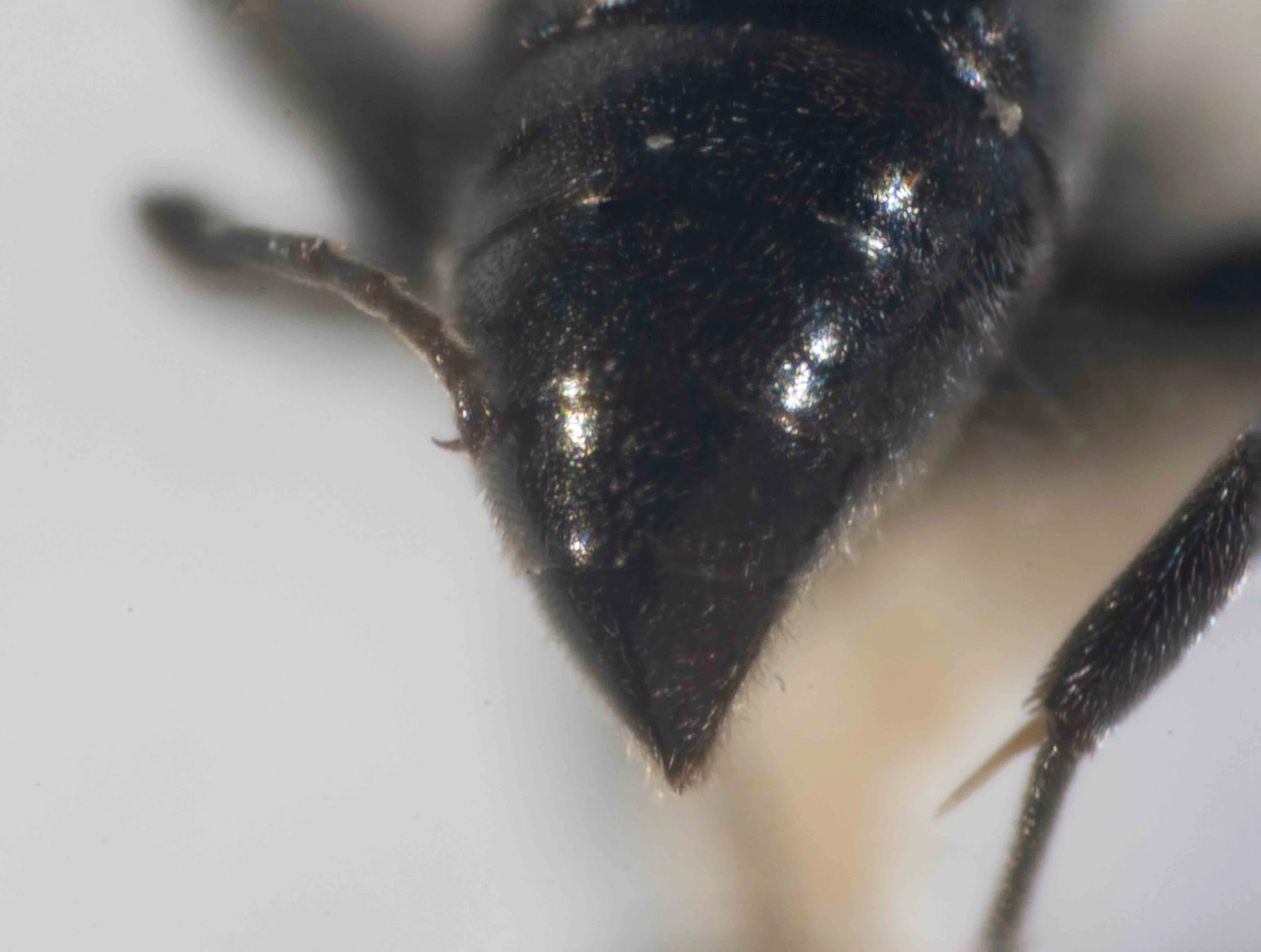
Gaster sessile.
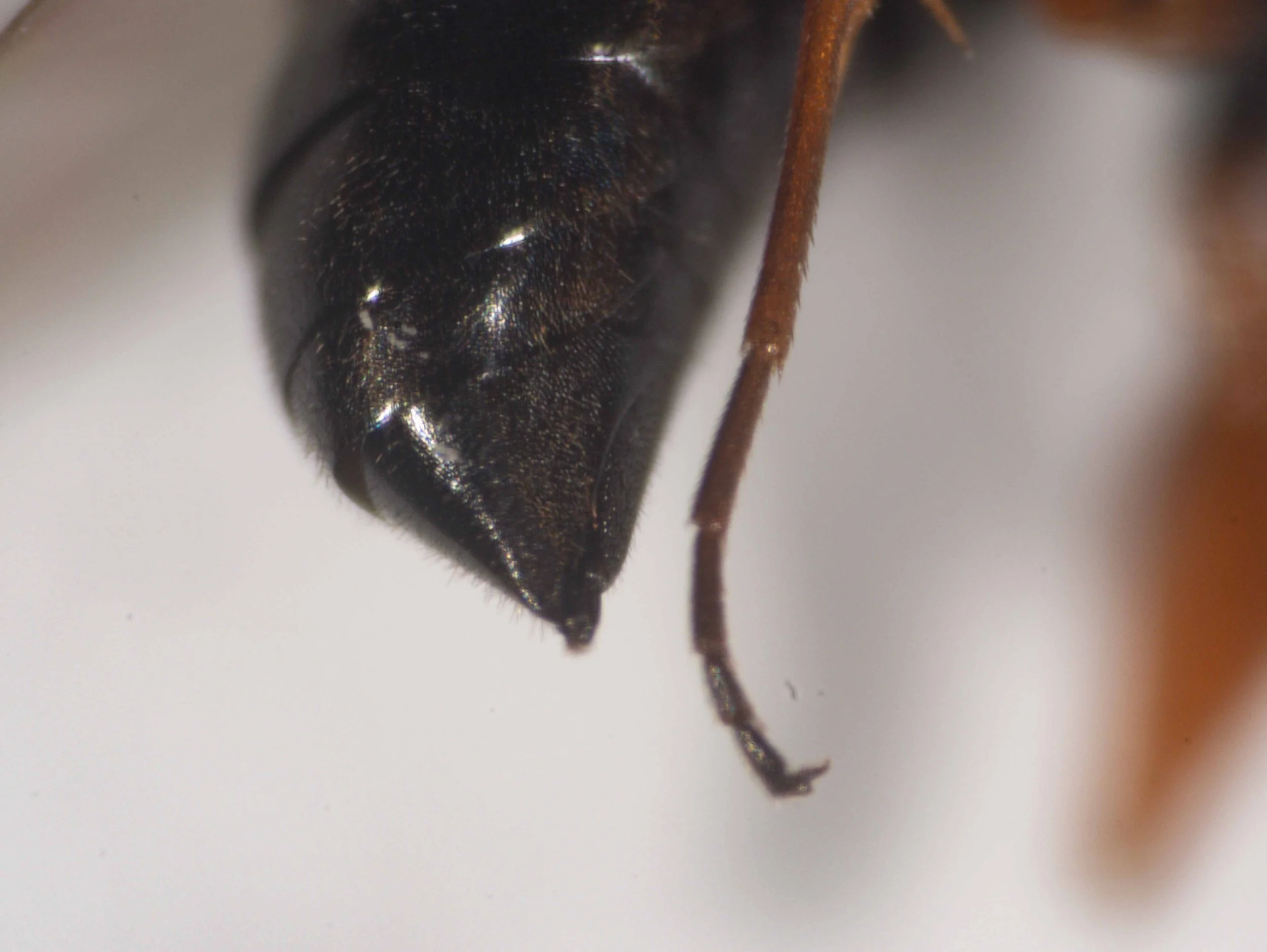
pygidium
No pygidial plate.
size
Head-body length 3-4mm; forewing length 2.5mm.
The holotype female N. australiensis is ‘only about 3mm’, with a forewing length just over 2mm (Schulz 1908). The holotype of N. nigricans from QLD, later synonymised with N. australiensis, is larger, at 5mm body length (Turner 1910).
colouration
Almost entirely black. The tibia apically and the tarsi are dark brown. The hairs are generally pale, but more brown on the apical segments of the gaster.
The holotype of N. australiensis is described somewhat differently, with the apical segments of the maxillary palps light brown, the front tibia extensively orange, the others pale yellow-white.
In contrast, Turner (1910) described the N. nigricans holotype as wholly black, with just the mandibles (in part) and the tibial spines pale. And Turner’s 1916 key to species describes the legs of N. australiensis (inc. N. nigricans, which was synonymised) as ‘almost entirely black’ … in contrast to N. reticulata and N. kurandae.
head width
Head slightly wider than maximum width of thorax …. which is in accord with the description of the N. australiensis holotype (Schulz 1908).
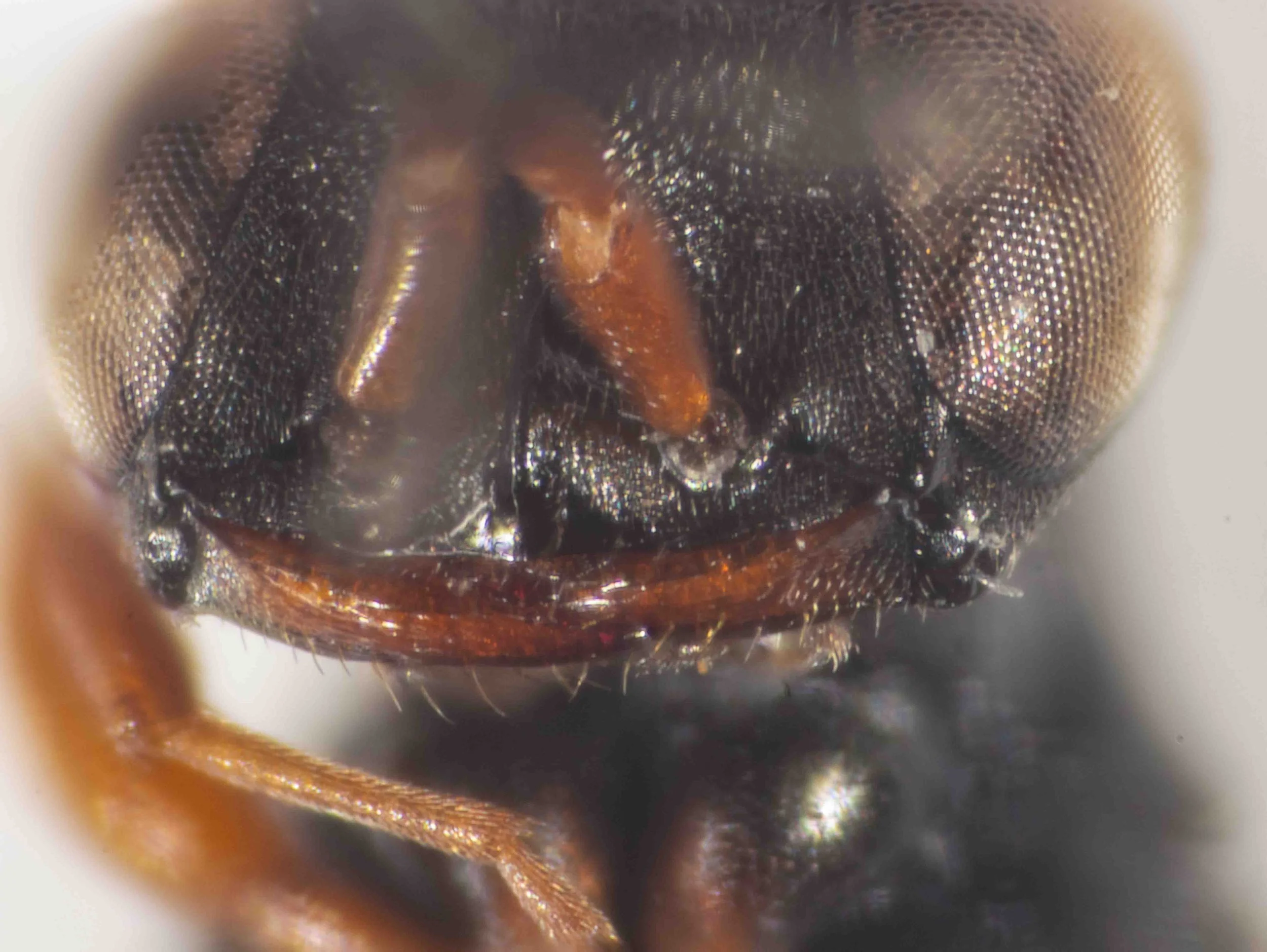
clypeus shape
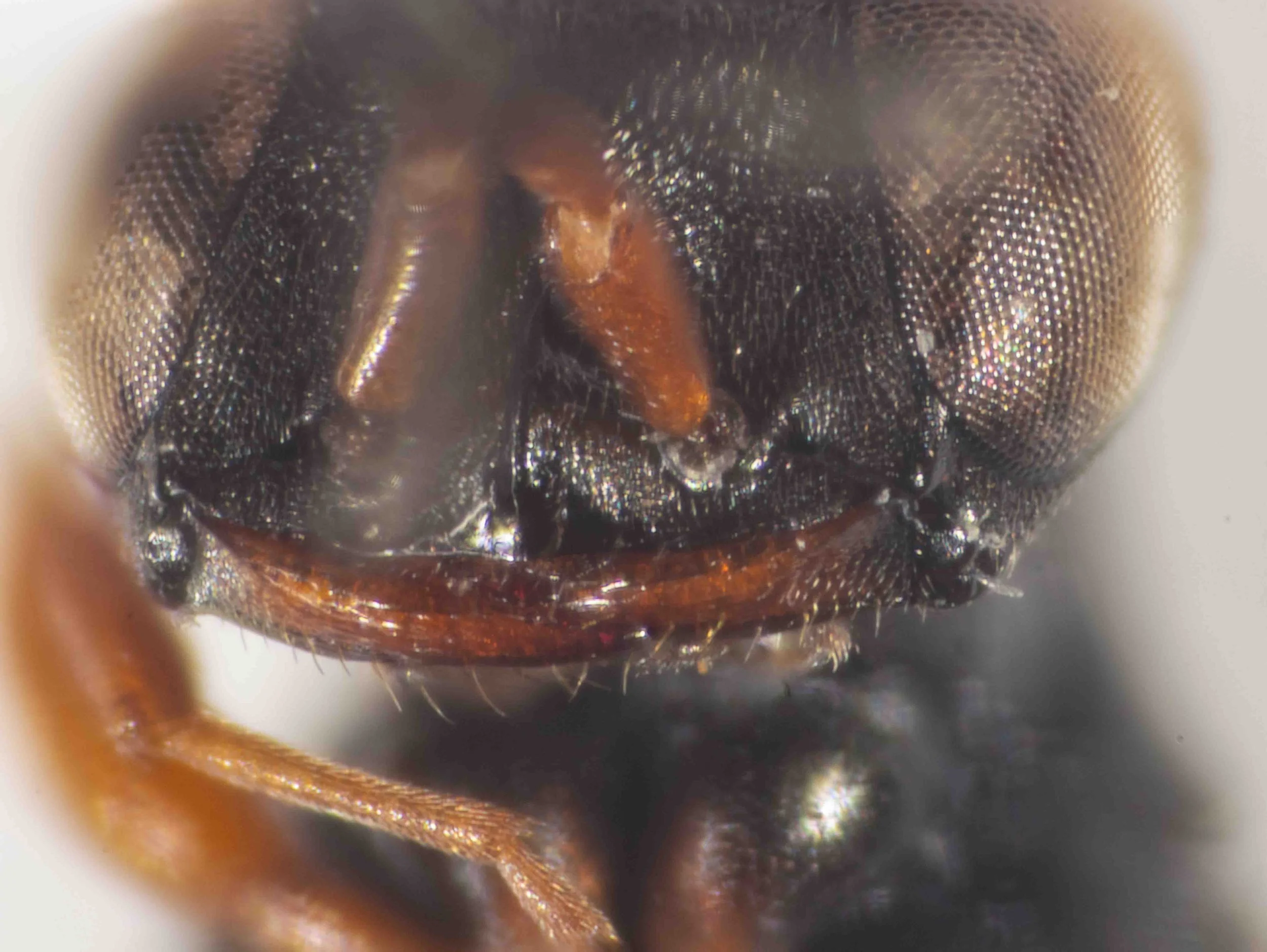
Gently curved, without obvious teeth or lobes.
Clypeus of holotype N. australiensis described ‘weakly curved across entire width, almost truncated, without a projecting, central portion’ (Schutz 1908).
Clypeus of holotype of N. nigricans described as ‘convex in the middle and subcarinate’ (Turner 1910).
clypeus shape
Prominent median carina extends from near apex of clypeus, between antennal sockets, and a short distance onto frons.
The holotype of N. australiensis has a ‘longitudinal ridge sharply raised in the middle of the clypeus, but continued only to the lowest frons, where it forms the boundary between the fronsular depressions’ (ie scapal basins) (Schultz 1908).
scapal basin shape
The basin surrounding each antennal socket is deep, the upper edge clearly defined. They are also wide, extending to the inner margin of the eye.
This seems quite different to the condition in the N. australiensis holotype …
… which Schultz (1908) describes as being ‘not sharply bordered above, but rather blending gently into the middle part of the frons’ and ‘not reaching the inner edges of the eyes, remaining a distance from them equal to the length of the first antennal flagellum segment, and bordered there by two fine, raised, somewhat curved and slightly convergent longitudinal lines’.
frons sculpture
Frons evenly sculpted, relatively strongly reticulate. No longitudinal ridges apparent.
This contrasts with the N. australiensis holotype in which the frons is described as being ‘very densely and rather strongly longitudinally wrinked, not reticulate as in N. fallax Kohl’ (Schultz 1908).
Note the N. nigricans is reported to have an “obscure groove from the anterior ocellus reaching halfway to the base of the clypeus” (Turner 1910). I don’t see any such groove in #2603A.
ocellar arrangement
Ocelli is a broad, low triangle. The posterior ocelli very close to the compound eyes, and the POL more then 2x OOL.
The holotype N. australiensis has the posterior ocelli ‘so close to the eyes that their distance is scarcely half their diameter’ (Schultz 1908).
In describing N. nigricans, Turner states ‘Posterior ocelli nearly twice as far from each other as from the eyes’ (Turner 1910).
scutum sculpture
Scutum evenly punctured, arranged in waving tranverse lines, and posterolateral edges with crenulated sulcus.
This accords with the description of the N. australiensis holotype which is ‘densely wrinkled and punctate anteriorly and on the sides with a distinct inclination of the wrinkles to run transversely’, ‘punctures stronger than on the vertex’, and ‘lateral margins deeply impressed lengthwise and transversely notched’ (Schultz 1908).
posterior propodeum & first tergite
The posterior, vertical face of the propodeum has a series of transverse ridges. The base of tergite 1, nearly perpendicular to the posterior part, has a deep, narrow median groove.
The holotype of N. australiensis is described as follows:
‘ the posterior surface of the median segment is quite strongly and regularly striated with oblique transverse wrinkles from both sides towards the middle and upwards’ …
‘the narrow, yet deep longitudinal impression at the base of the first tergite extends almost to the beginning of the posterior, horizontal half’ (Schultz 1908).
sides of thorax
The propodeum laterally is shining, with a series of wavy, transverse ridges. The mesopleural suture is strongly crenulate, flanked by an obvious, smooth carinae posteriorly (between mesopleuron and propodeum).
Again, this seems to accord with the description of the N. australiensis holotype … ‘the sides of the hind thorax are separated from the sides of the mesosternum by a notched groove, behind which lies a smooth, keel-like longitudinal line’ (Schultz 1908).
pronotum shape
Viewed dorsally, the pronotum is rounded laterally, without obvious angles. There is a strong transverse groove, interrupted at the midline by a backwards pointing ‘wedge’ on the anterior ridge of the collar.
There is no mention of the pronotum shape in the original description of N. australiensis. However, in N. nigricans, it is described as follows:
“Pronotum transverse, the angles not prominent, the margins raised, leaving a narrow tranverse groove interrupted in the middle between them” (Turner 1910). That certainly fits.