Week in Pictures: a new year
The new year, 2021
The Fire is now 12 months behind us and the forest’s transformation is well underway. This is the first lush, green season we’ve seen in several years. In 2020 we recorded the highest rainfall for the 10 years we’ve lived here … 1224mm! The plants are responding, and so are the insects and birds. Here’s a glimpse.
And be sure to check out Paul’s latest wasp-on-orchid movie below … it’s definitely worth a look!

Neochmia temporalis. We discovered where these guys have been hiding out - in the grove of Kangaroo Apple bushes above the river. Parents displaying a young one.

The parent birds were successful again this year. Two young left the nest hollow in late December.
Todiramphus sanctus - juvenile

Like many hunting species, kingfishers regurgitate undigestible material as a pellet. I’m guessing that this pellet includes the exoskeletons of many cicadas!
Todiramphus sanctus - juvenile

I found our pair of Australian Wood Ducks with their clutch of 6 five-day old chicks hiding out in the undergrowth. Female with 4 of the youngsters shown here. Keep your head down junior!
Chenonetta jubata

A rather regular visitor of late, and a real threat to the various juvenile birds we’re starting to see.
Accipiter cirrocephalus (see iNaturalist record)

A handy predator, with aphids and mosquitoes in the diet
Family: Dolichopodidae (see iNaturalist record)

A rare shot on a natural substrate. These huge flies favour boots, buckets, and anything black or blue.
Triclista guttata (see iNaturalist record)


Flowers continue to open on our tongue orchid, as do mating attempts by male wasps. This pair got into the act at the same time.
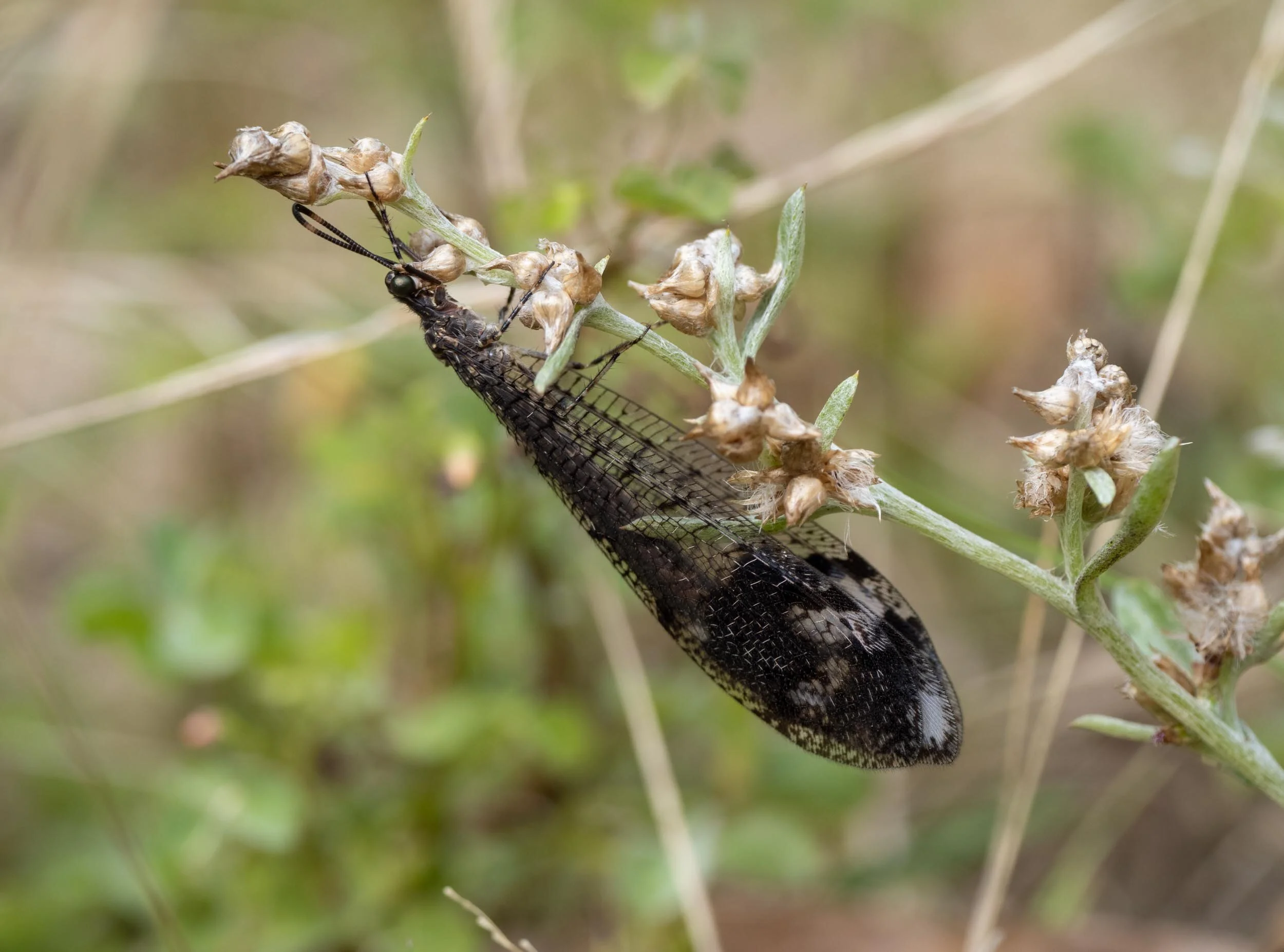
A large lacewing that spent its youth as an ant predator living in a sandpit.
Glenoleon pulchellus (see iNaturalist record)
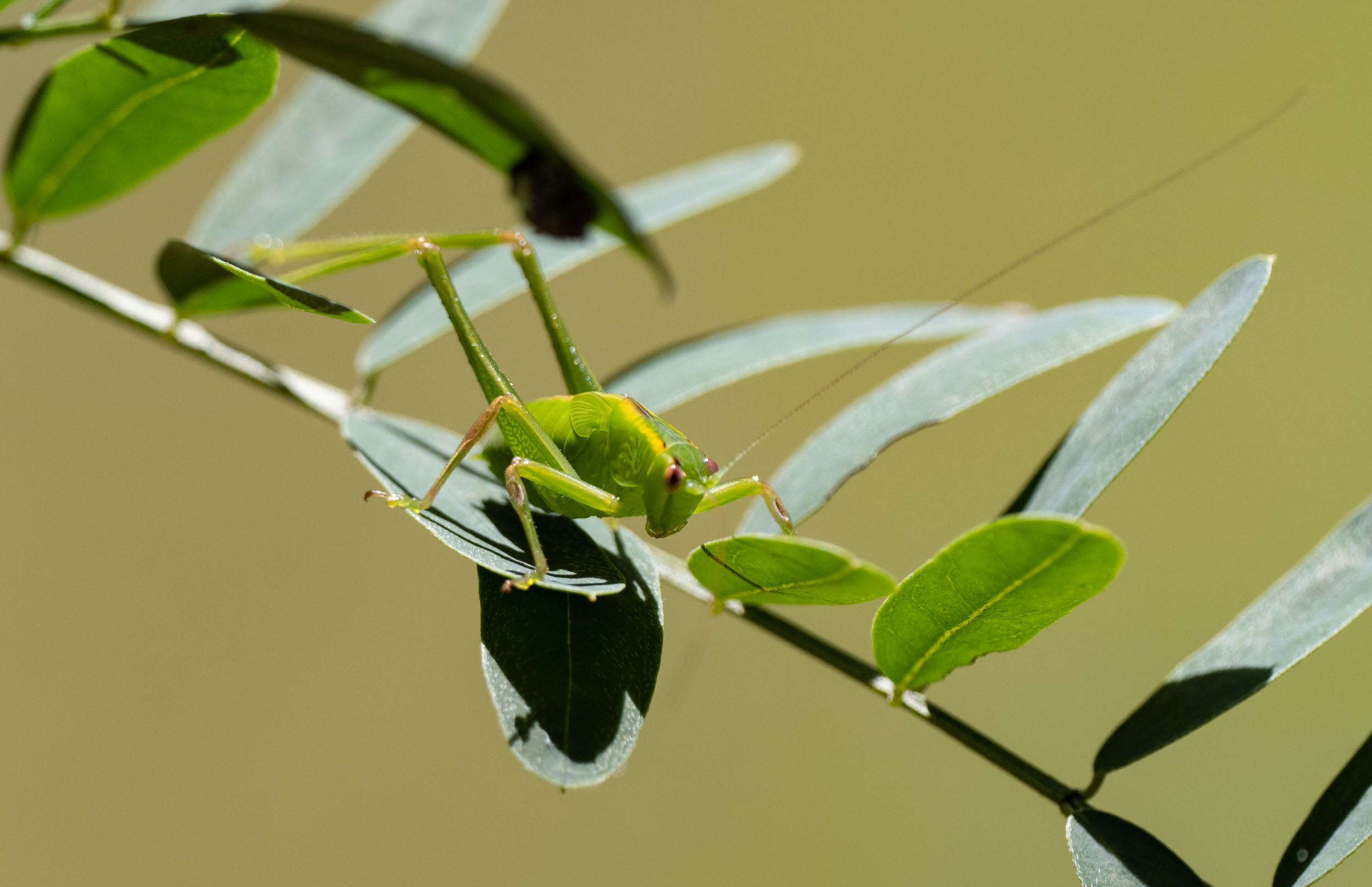
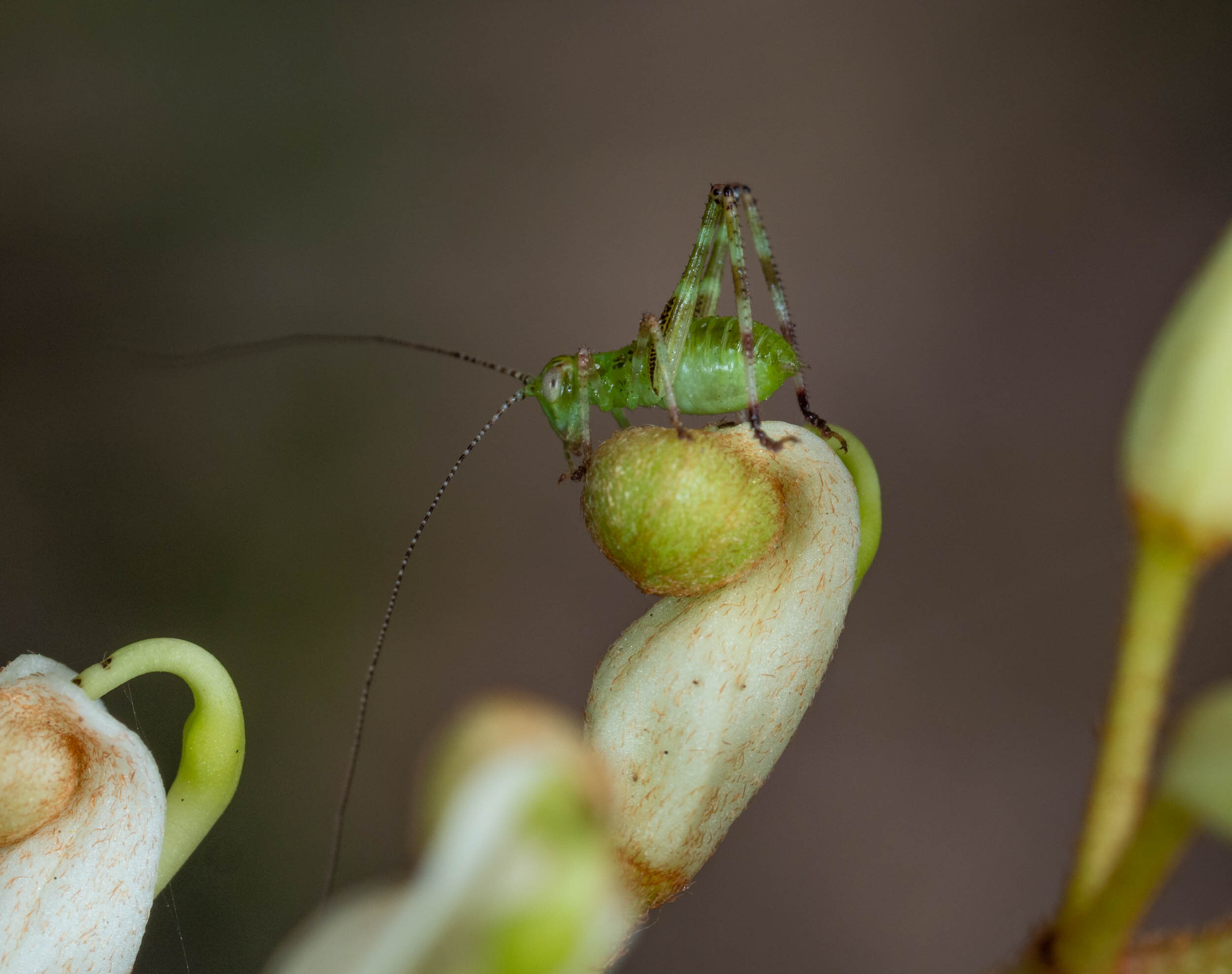
This tiny nymph landed on the unopened flower of a Holly Lomatia. The opened flowers can be seen in the next image.

Lomatia ilicifolia. Family Proteaceae. This plant only ever flowers after a fire, so this is the first (and hopefully last!) time we’ve seen its display.

This Bluebell (Wahlenbergia gracilis) is just 8mm wide … so the pollen-laden little bee is truly tiny.

Of course, the bee was my target but the flowering of the Angophora is exciting! Every tree burnt a year ago. Every tree now heavy with blossom and luxuriant leaf growth.
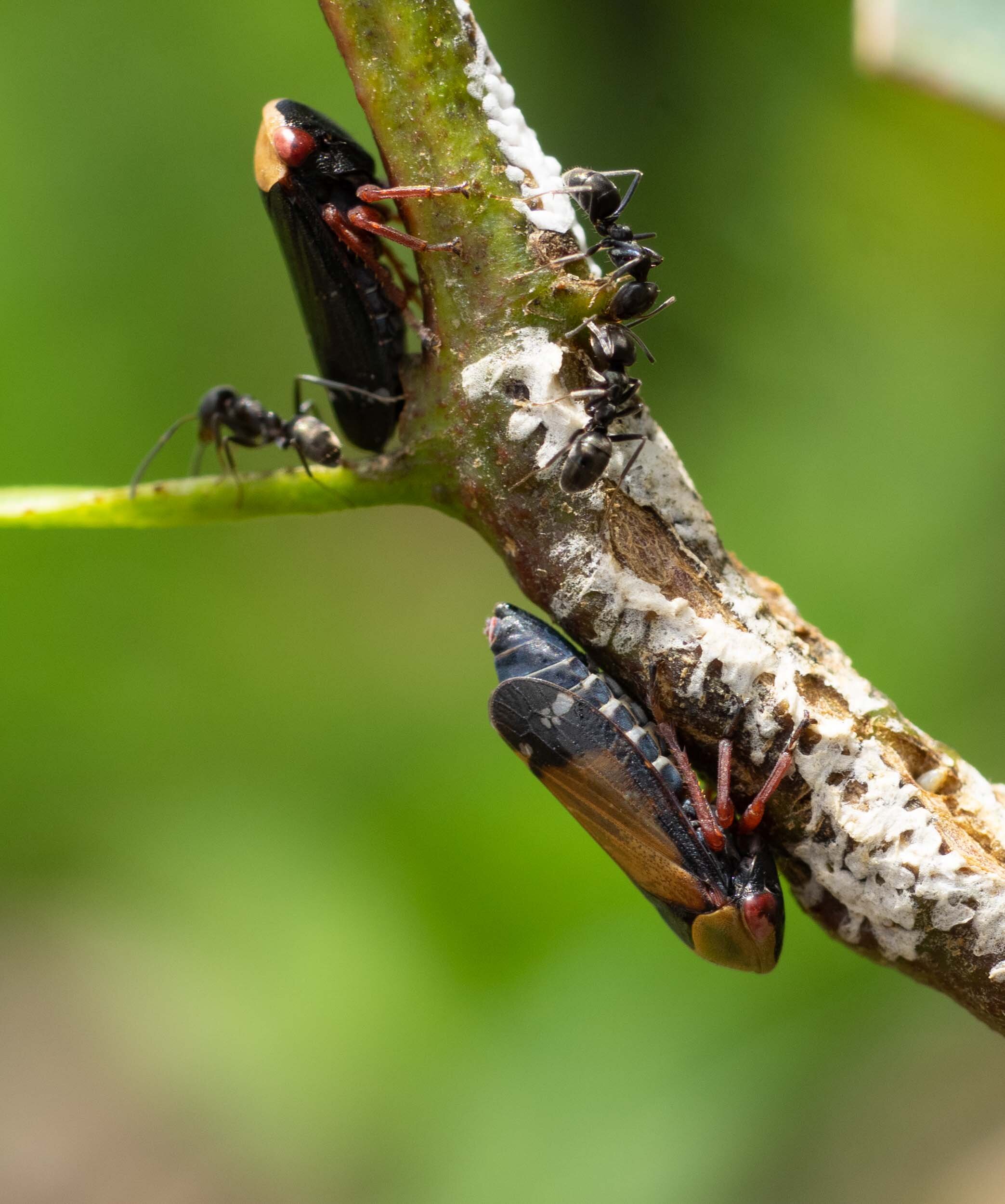
Unusual colouring and I’ve yet to find a species match.
Eurymeloides (see iNaturalist record)


A Geebung specialist, they are currently swarming about the flowering Persoonia.
Leioproctus sp.

Not much more than 10mm … counting those long front legs!
Sidymella hirsuta - male (see iNaturalist record)

Primeuchroeus sp. I sighted this beautiful green creature inspecting tiny holes in the bark - looking for a bee or wasp nest to deposit her eggs. Her young develop at the expense of the original occupants. See iNaturalist record.

Harsh Ground Fern (Hypolepis muelleri) has appeared for the first time since the fire. See iNaturalist record.
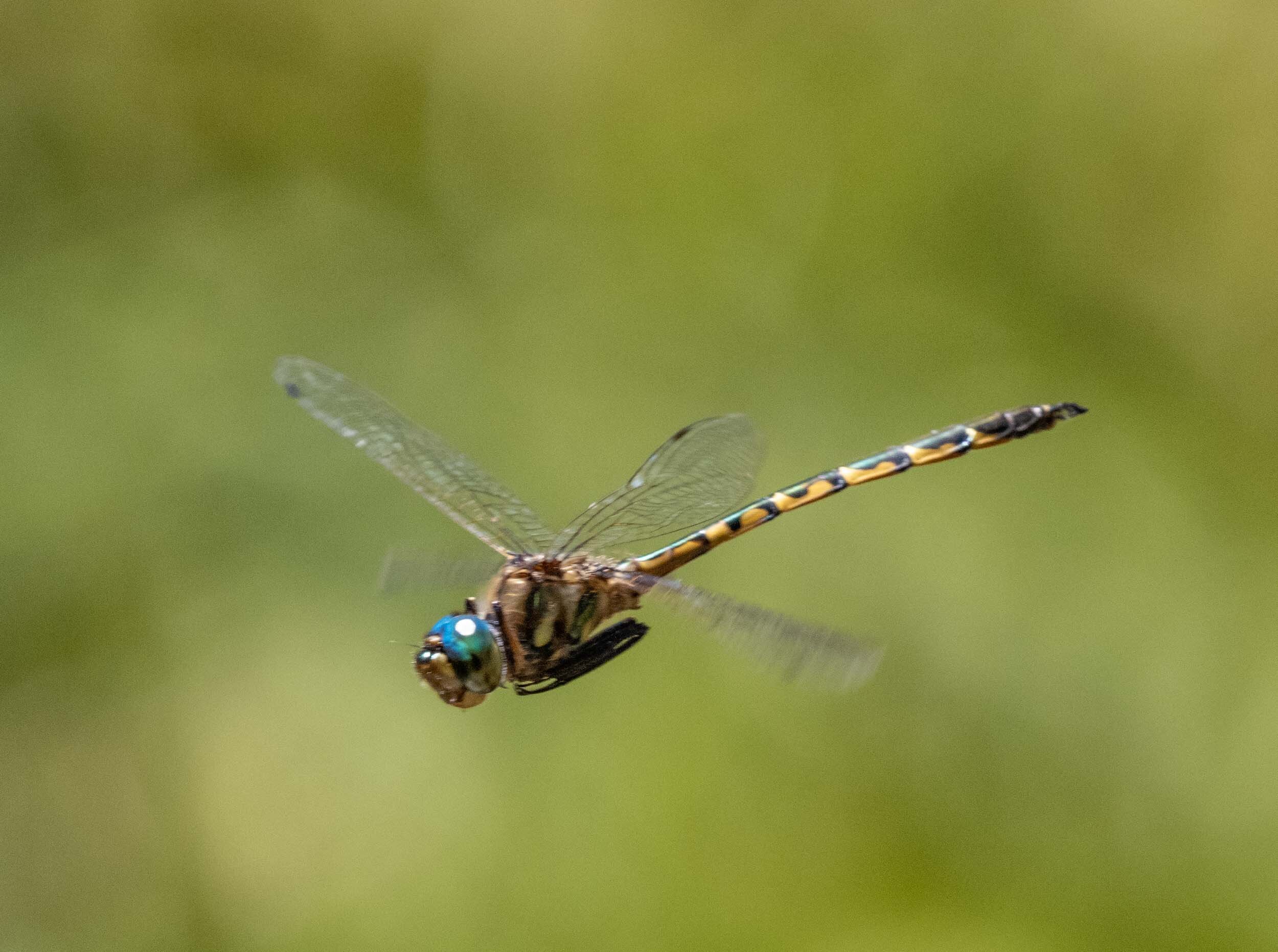

The “wheel” position adopted by mating dragonflies - male above, female below.
Australian Emeralds (Hemicordulia australiae) See iNaturalist record.
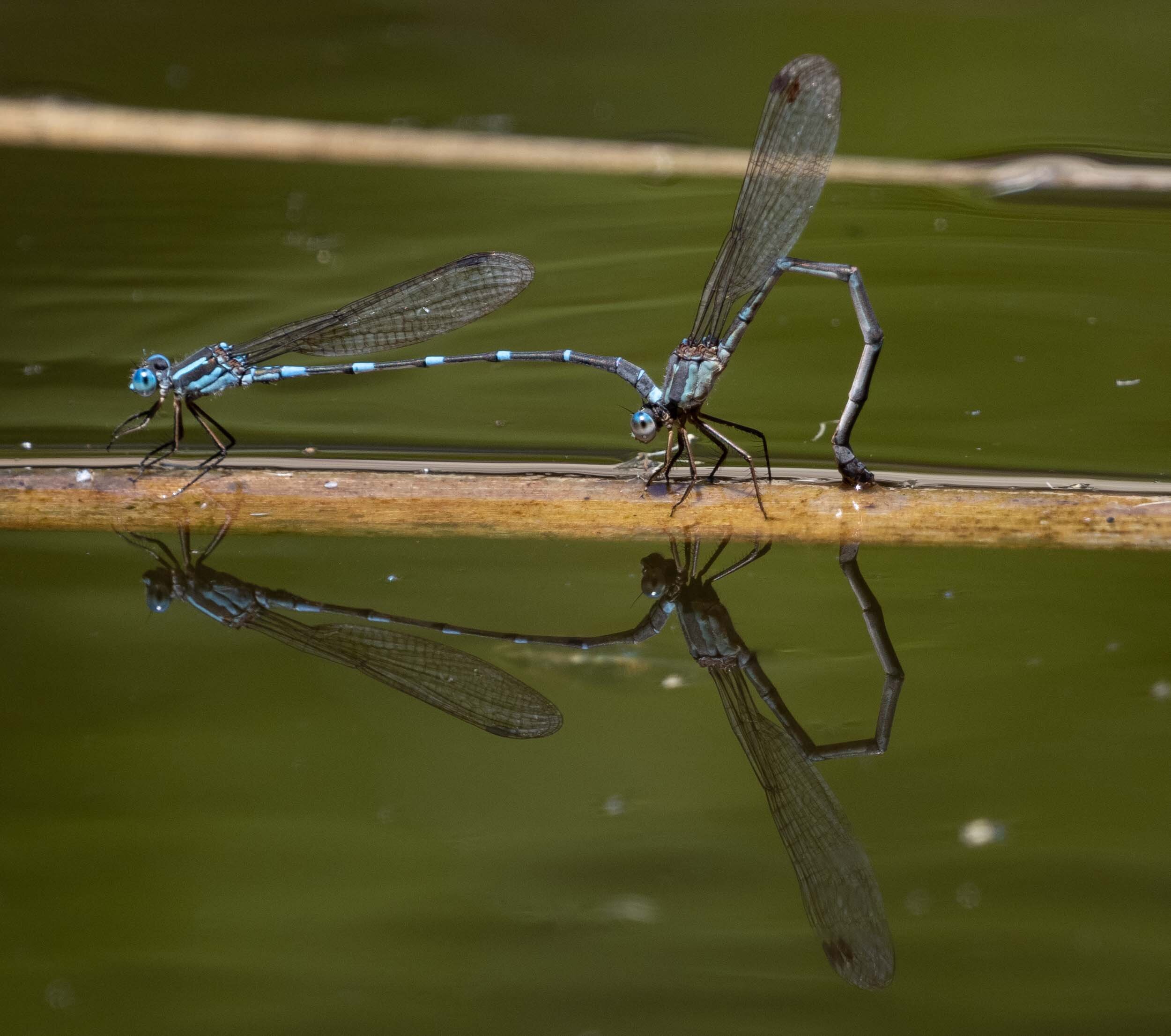
The female deposits eggs in a reed stem while the male provides support and wards off other males.
Wandering Ringtails (Austrolestes leda)

Stenoptilia zophodactyla. I found these moths with their bizarre wings fluttering around in the undergrowth. See iNaturalist record.

The seeding head of a grass is an ideal spot for a group of tiny thynnine wasps to spend the night

Peakesia coeruleipes. Another new one for the forest, obligingly showing off his blue tibia to enable my identification (see iNaturalist record).

Tisiphone abeona. Regularly seen near the house patrolling one of its food plants, Tall Saw-Sedge (Gahnia clarkei).

Marchantia sp. I discovered these primitive plants with their umbrella heads bearing sex organs in the hollow left by a burnt tree stump. See iNaturalist record.
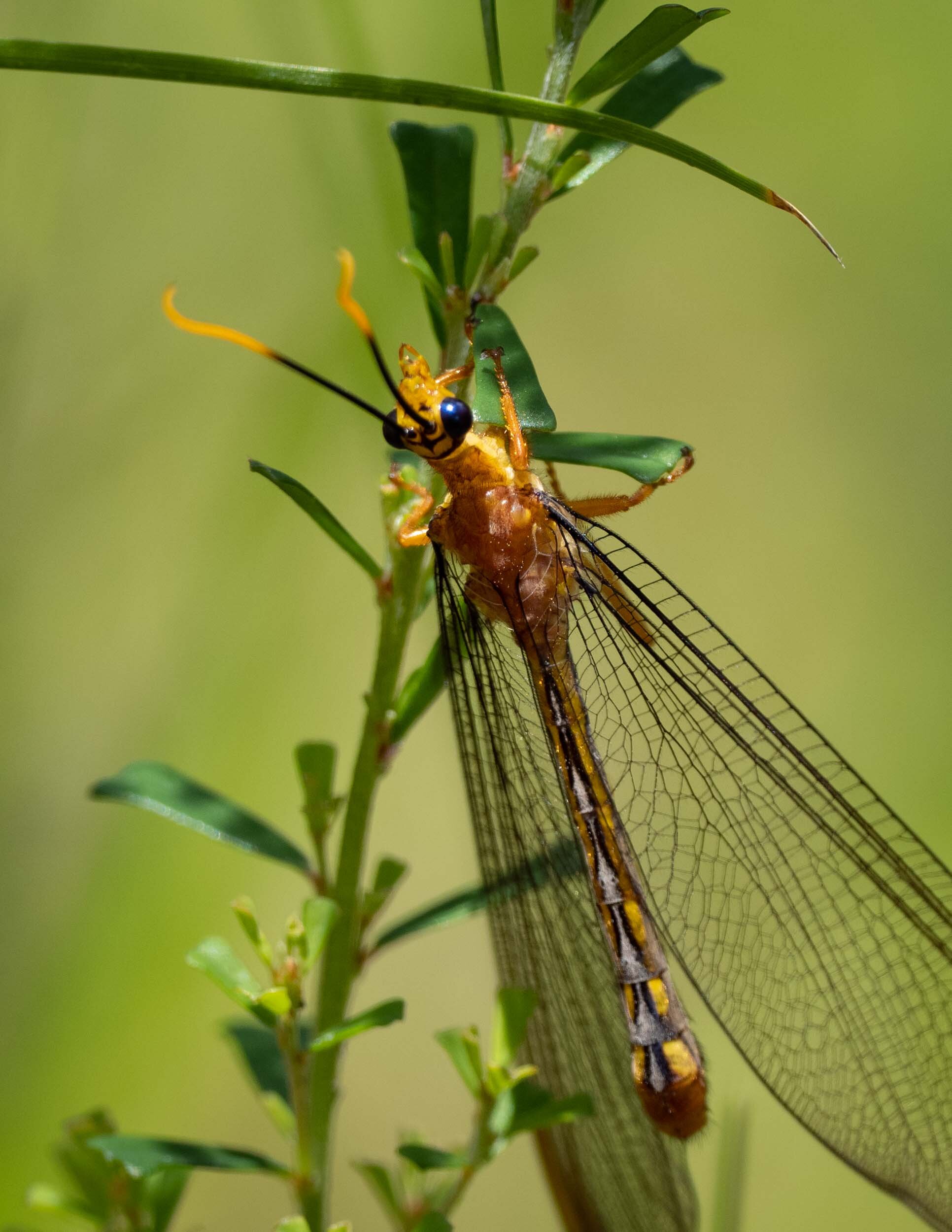
Cover image for this post:
Blue Eyes Lacewing (Nymphes myrmeleonoides)