Week in pictures

September 2017: 18th to 24th
Click to enlarge, and then 'hover' to read more about each image

A number of our native Fabaceae (pea) species come into full bloom in late September - like Daviesia ulicifolia, the Gorse Bitter-pea. More to come!

The Showy Parrot-pea, Dillwynia sericea, is another of the Fabaceae that flowers in early Spring.

Acacia flowers do not produce nectar. So what is this Dusky Blue (Candalides hyacinthinus) butterfly doing? Perhaps it's actually seeking the sugary secretions made by the wattle leaves.

The Woolly Teatree, Leptospermum lanigerum, is the first of our home teatrees to flower in Spring.
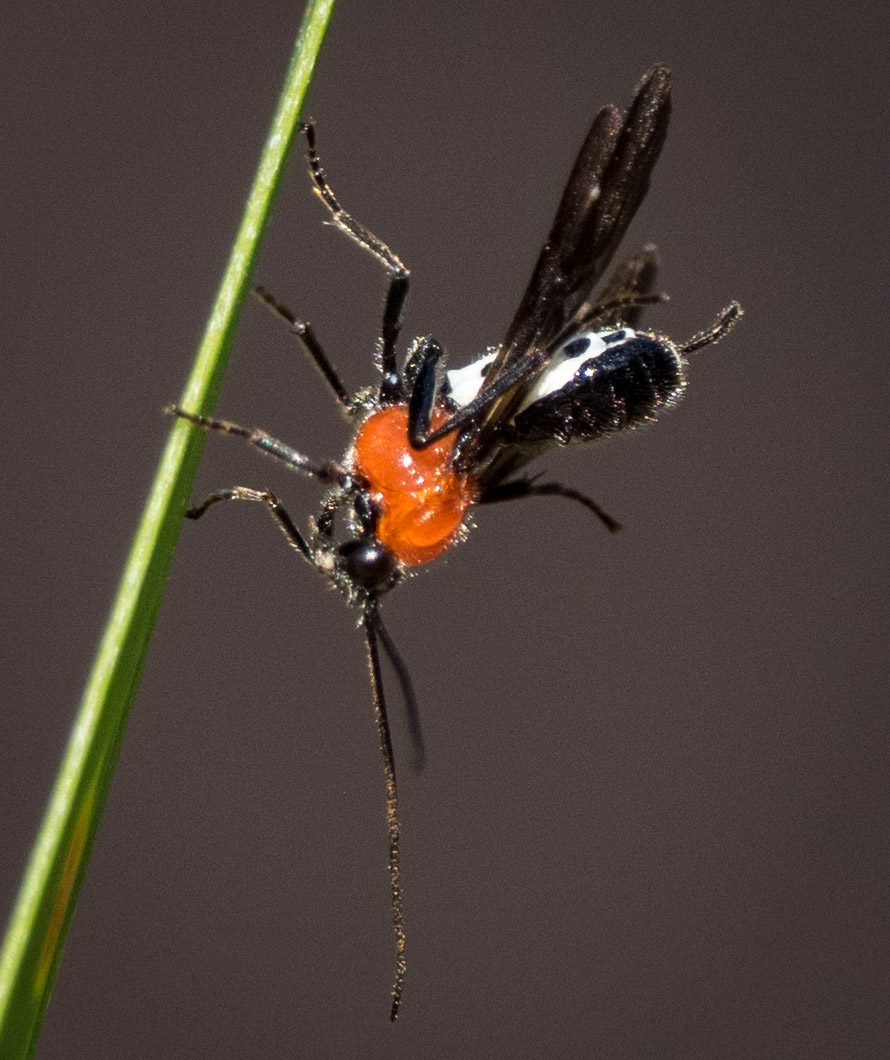
Braconid wasps are small but strikingly coloured. There are hundreds, perhaps thousands, of species in Australia ... and most of them come in various ensembles of black, orange and white! This one is using its back legs to groom its wings.

Yet another species of Braconid wasp. We watched her probing a fallen log with her long ovipositor, no doubt laying eggs on or inside insect larvae ... probably wood-boring beetle grubs.

Another look at that fantastic butterfly tongue, the subject of my blog this week. This is a male Bright Copper butterfly (Paralucia aurifer).


Correa reflexa flowers nearly all year, providing a source of nectar for long-billed birds like the Eastern Spinebill. Family Rutaceae.

Cockroaches can be quite beautiful. This 'litter runner' (Platyzosteria sp.) is native to Australia and was, true to the common name for the group, wandering about amongst the leaf litter. Its head-down posture ia a defensive strategy ... it did this whenever I 'bothered' it.

Raising the abdomen and extending the legs, the cockroach reveals its striking yellow and black markings. It would be rather intimidating to a potential predator such as the wolf spider I photographed nearby. And apparently it can emit a nasty chemical as further defence. I (happily) didn't experience this.

Suddenly the forest floor is alive again after dark. Wolf spiders are everywhere! Many are tiny, but this female was a little larger ... and very beautiful!

On an exploratory tour of our west-facing cliff face I came across a resident who has been missing for several months - a Tree Goanna (Varanus varanus) soaking up the sun. I suspect that fat belly is full of possum. I found a tail of a Brushtail Possum nearby - and that's all!

The Dainty Bird Orchid (Chiloglottis trapeziformis) was one of seven different species we discovered on a trip to the forest behind the beach.

We managed to sight the sciarid fly that pollinates this orchid (Pterostylis curta) and a number of other local Greenhood species.


In the last week we've seen swarms of these large flies (Hilara sp.) flying back and forth over the surface of our frog pond. The fly stabs a small insect with its dagger-like proboscis, wraps it in silk - made by glands in those swollen front legs - and presents it to a prospective mate.