1
2
3
4
5
6
7
8

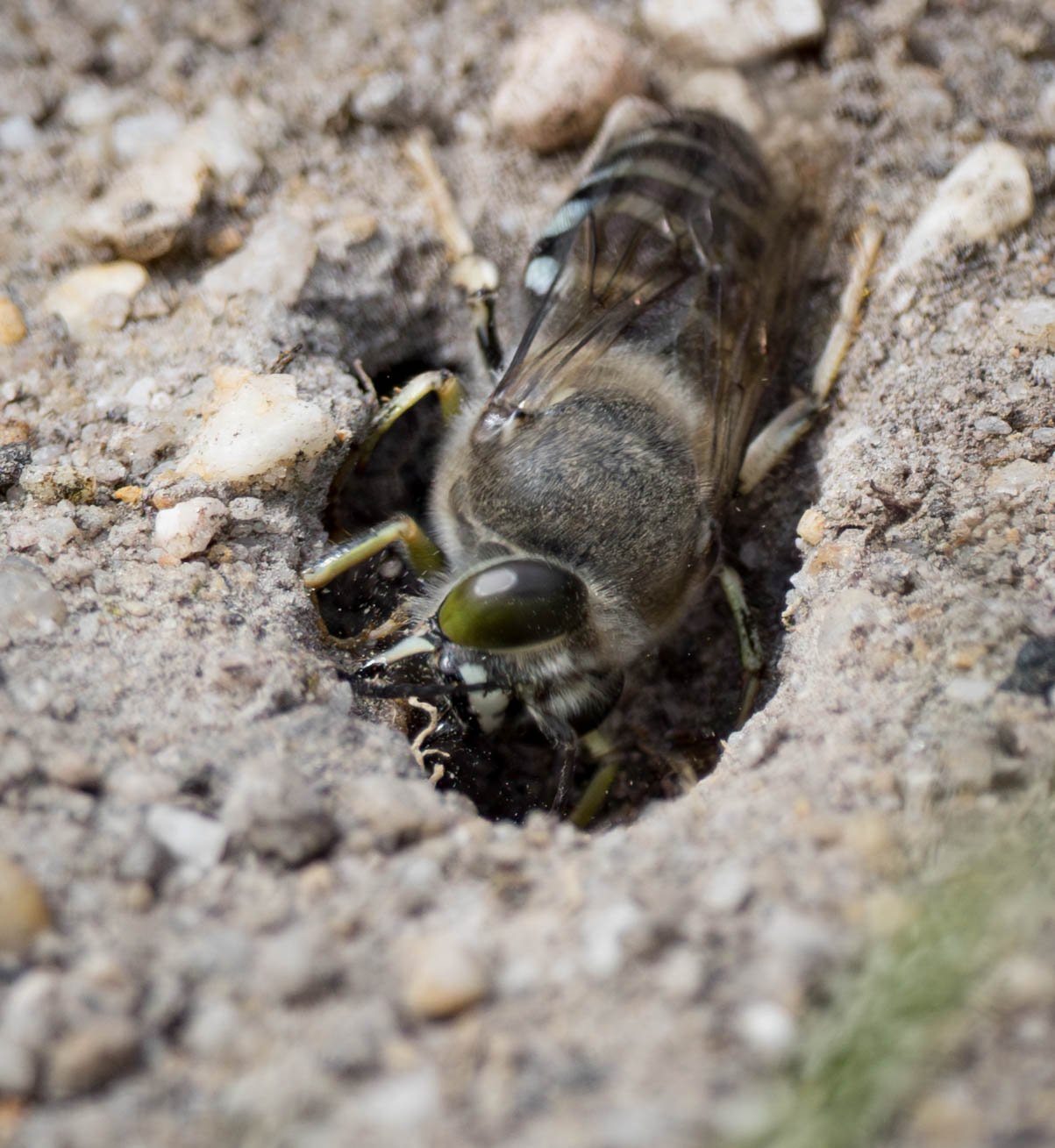
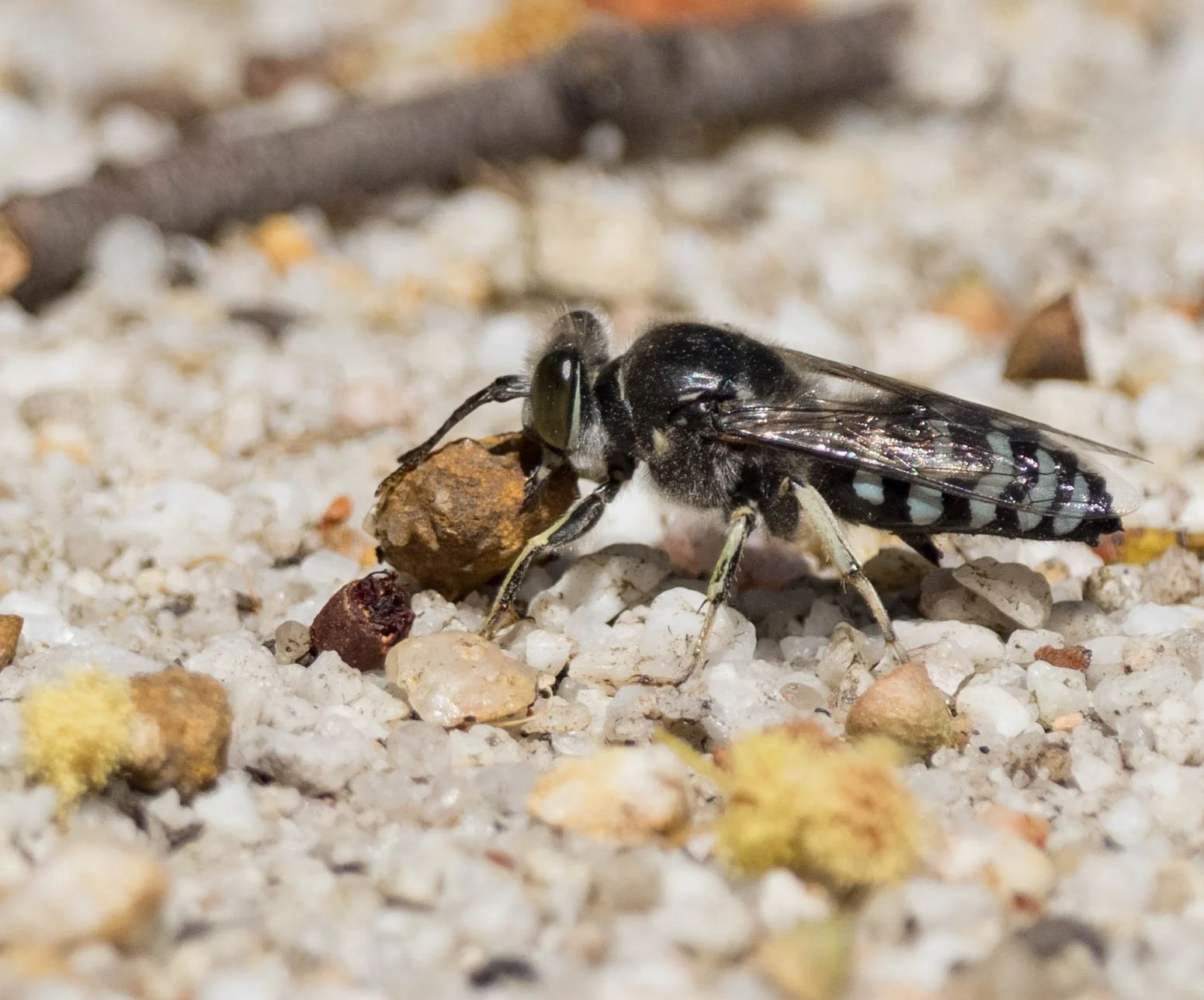
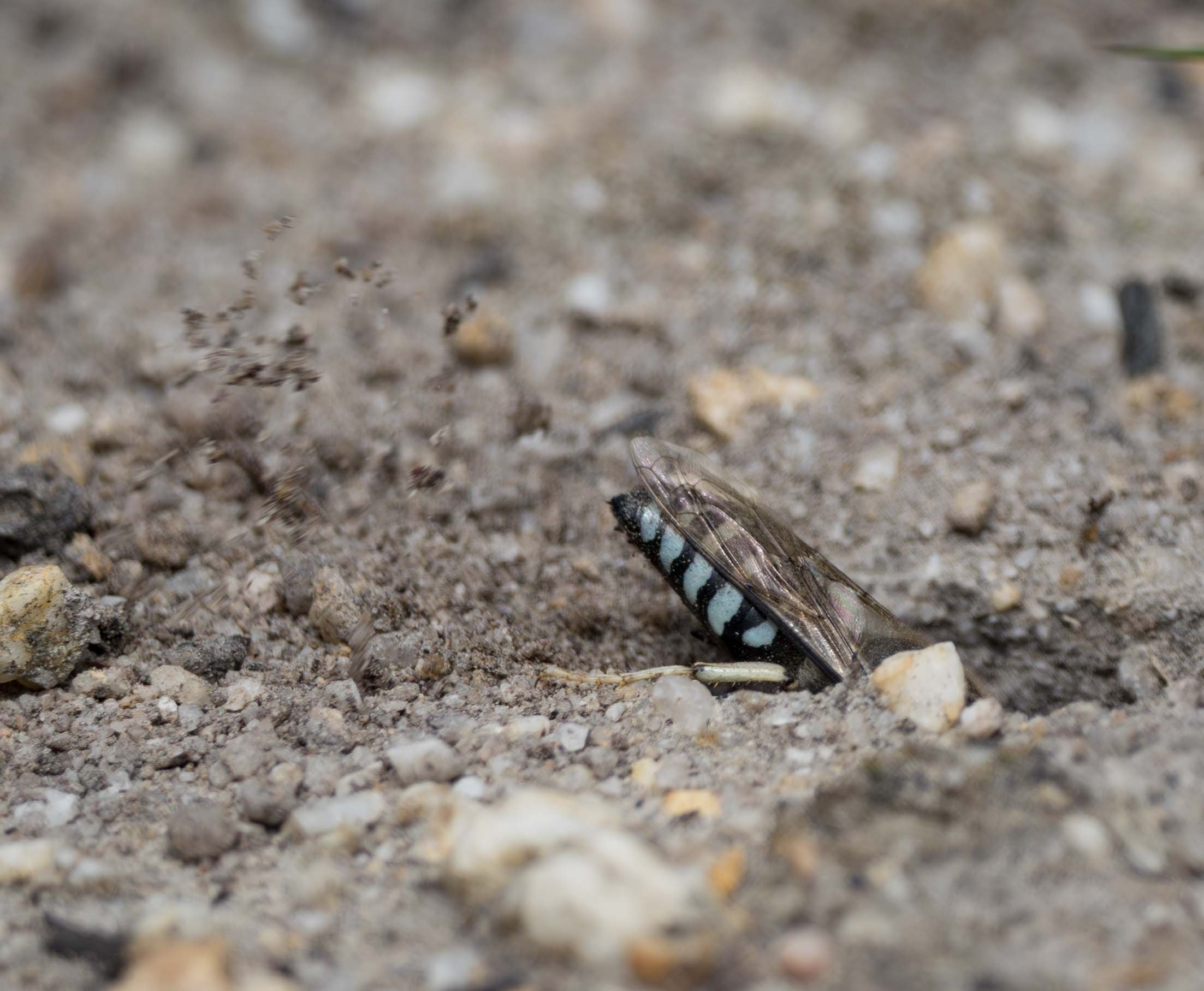
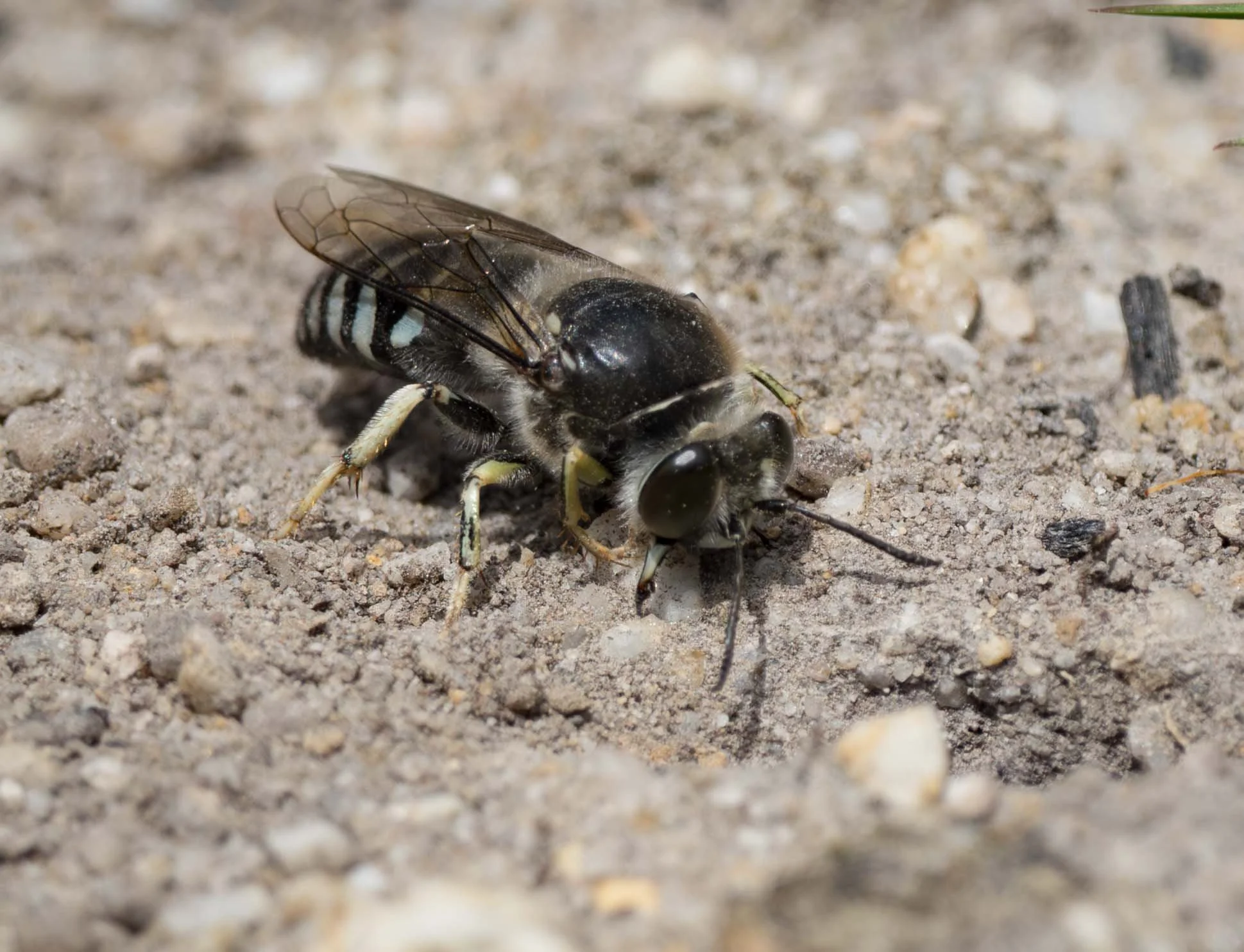
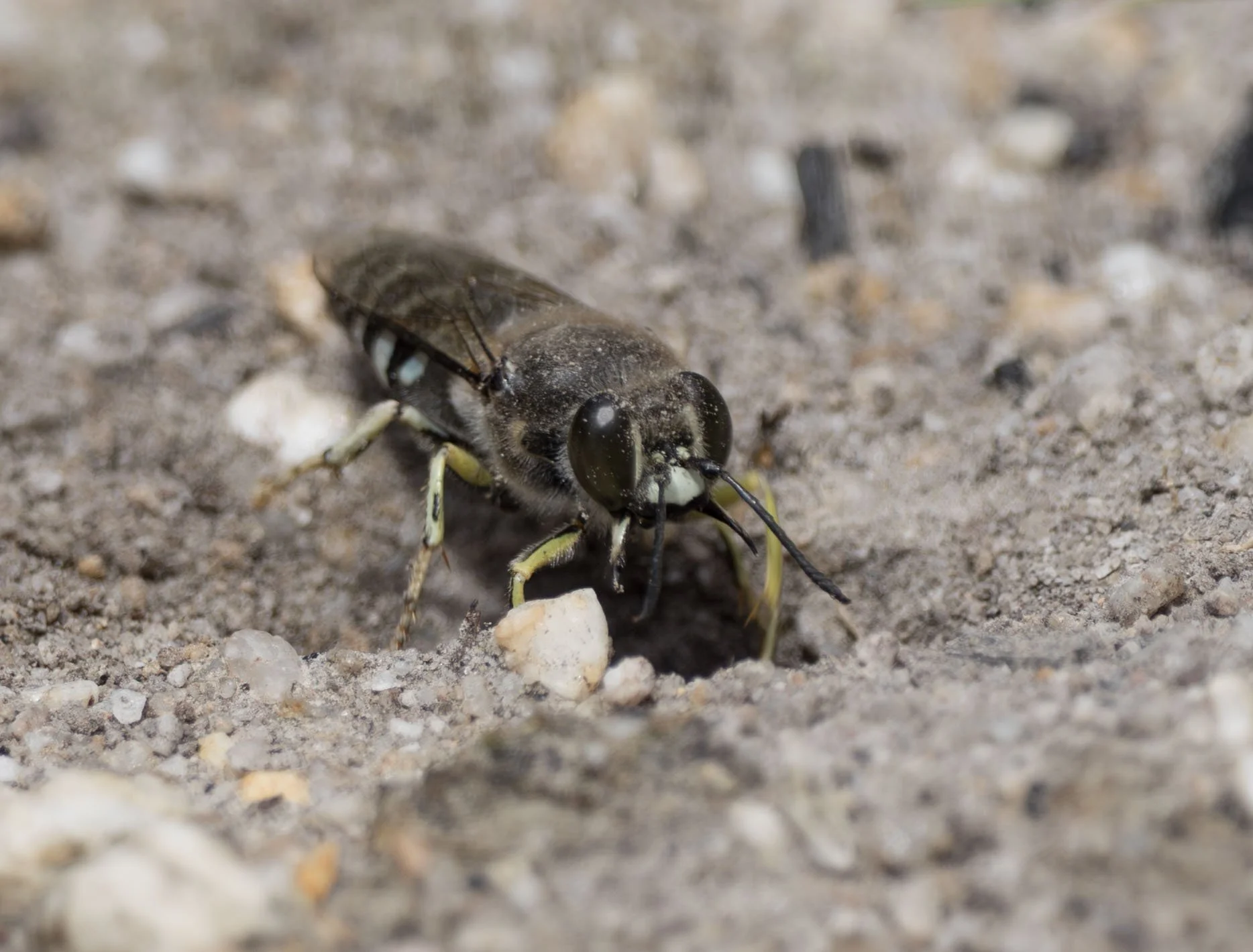
Mandibles are used to prise out larger stones.
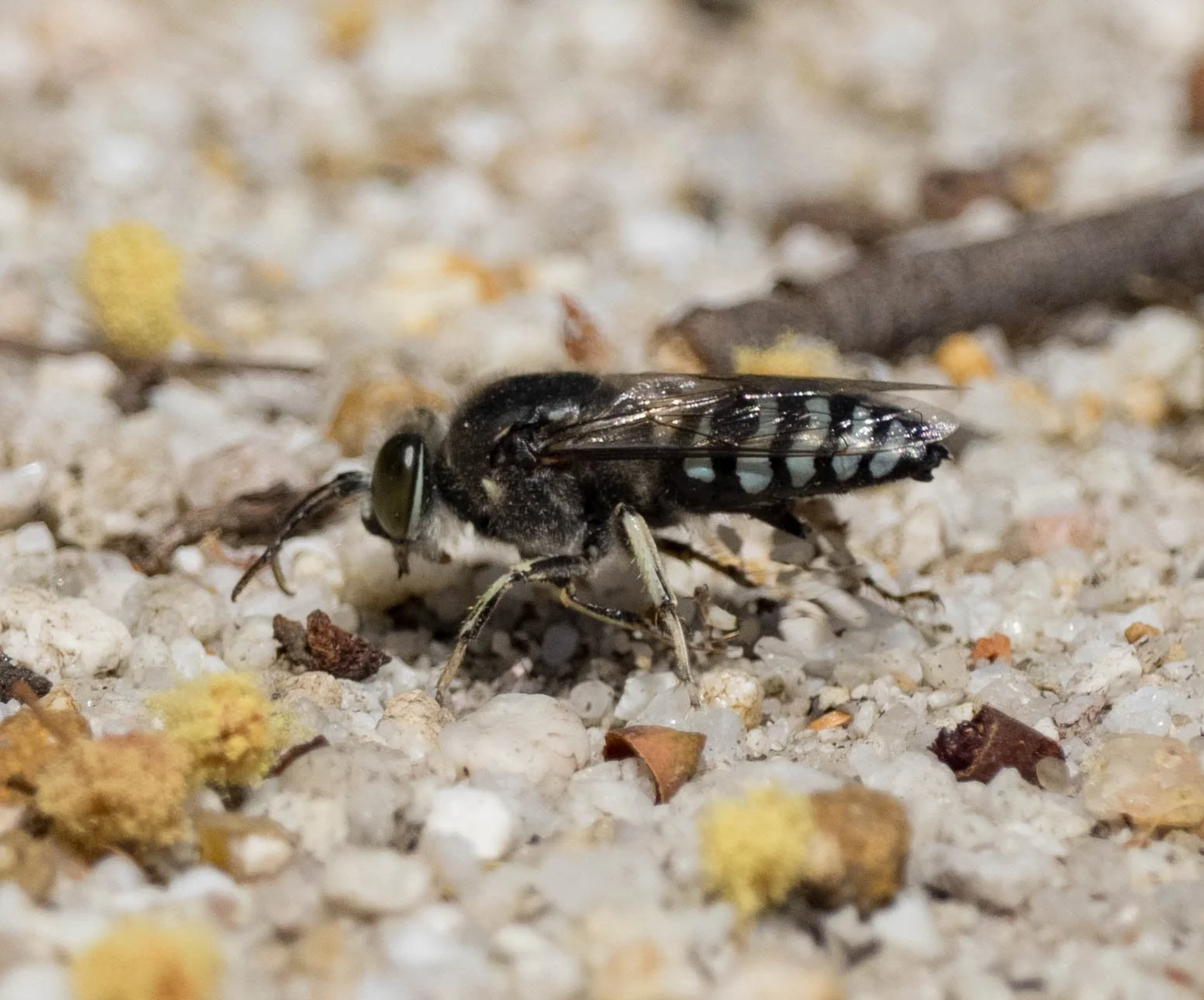
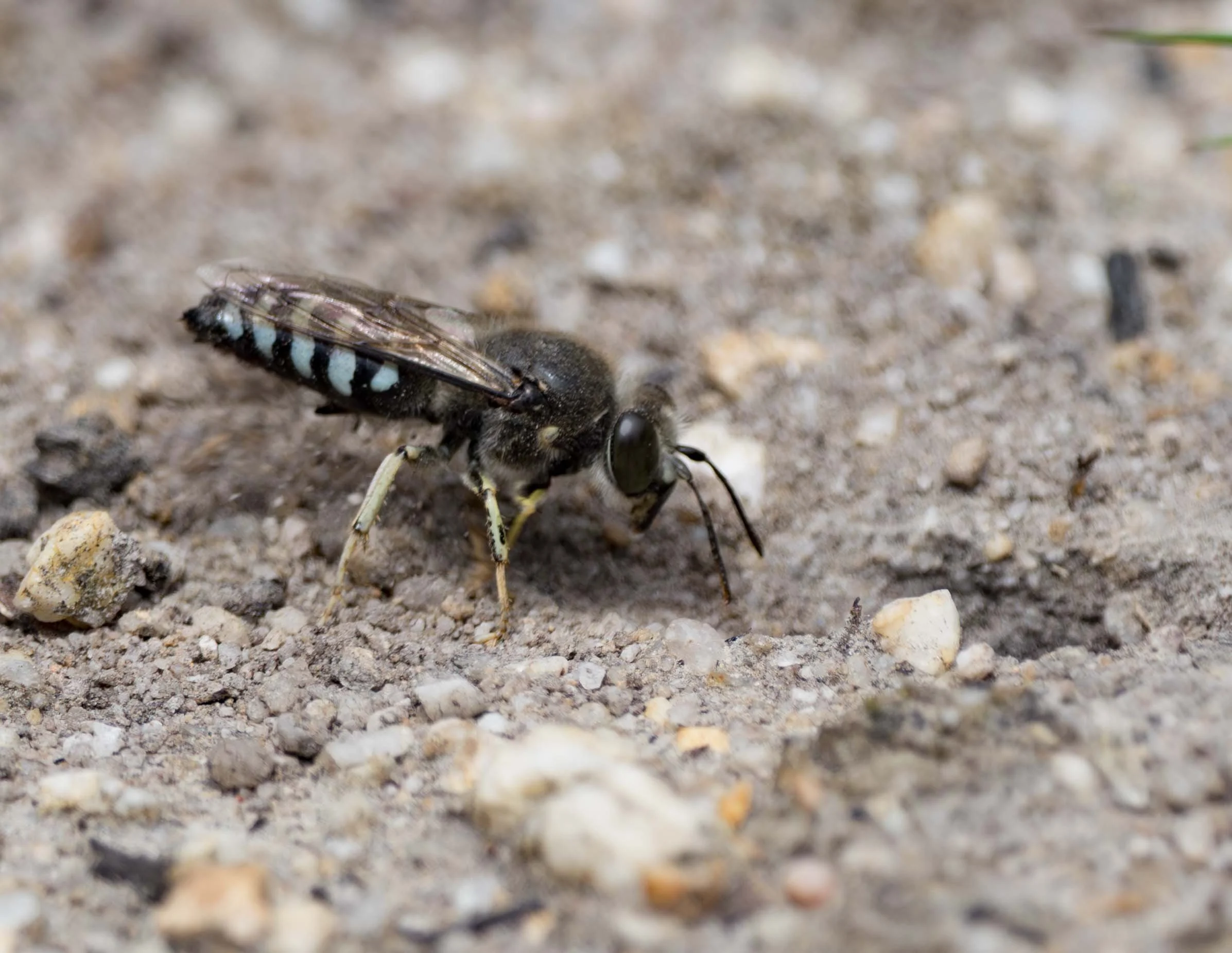
Males dig too, whether to create overnight retreats or (as here) in search of a female.
Those mandibles in action again. No wonder they become worn with time.
Males spend much of their time flying back and forth over patches of the nesting area. This is a behaviour I typically associate with our local Bembix. But on this day they were keen to dig. Very keen!
Back in 2017 I wasn’t at all sure what this was about. Indeed, I assumed these were nesting females. Now I know better.
Males can detect the presence of females as they prepare to emerge for the first time. Such females are virgin and receptive. They will mate just once, then quickly get under way with nest digging, egg laying, and provisioning.
Males can sense the presence of females well before they reach the surface. Studies have shown the both chemical and vibrational cues are involved, and that males recognise the sex of the hidden wasp. They can even distinguish newly-emerging virgins from previously mated, nesting females!
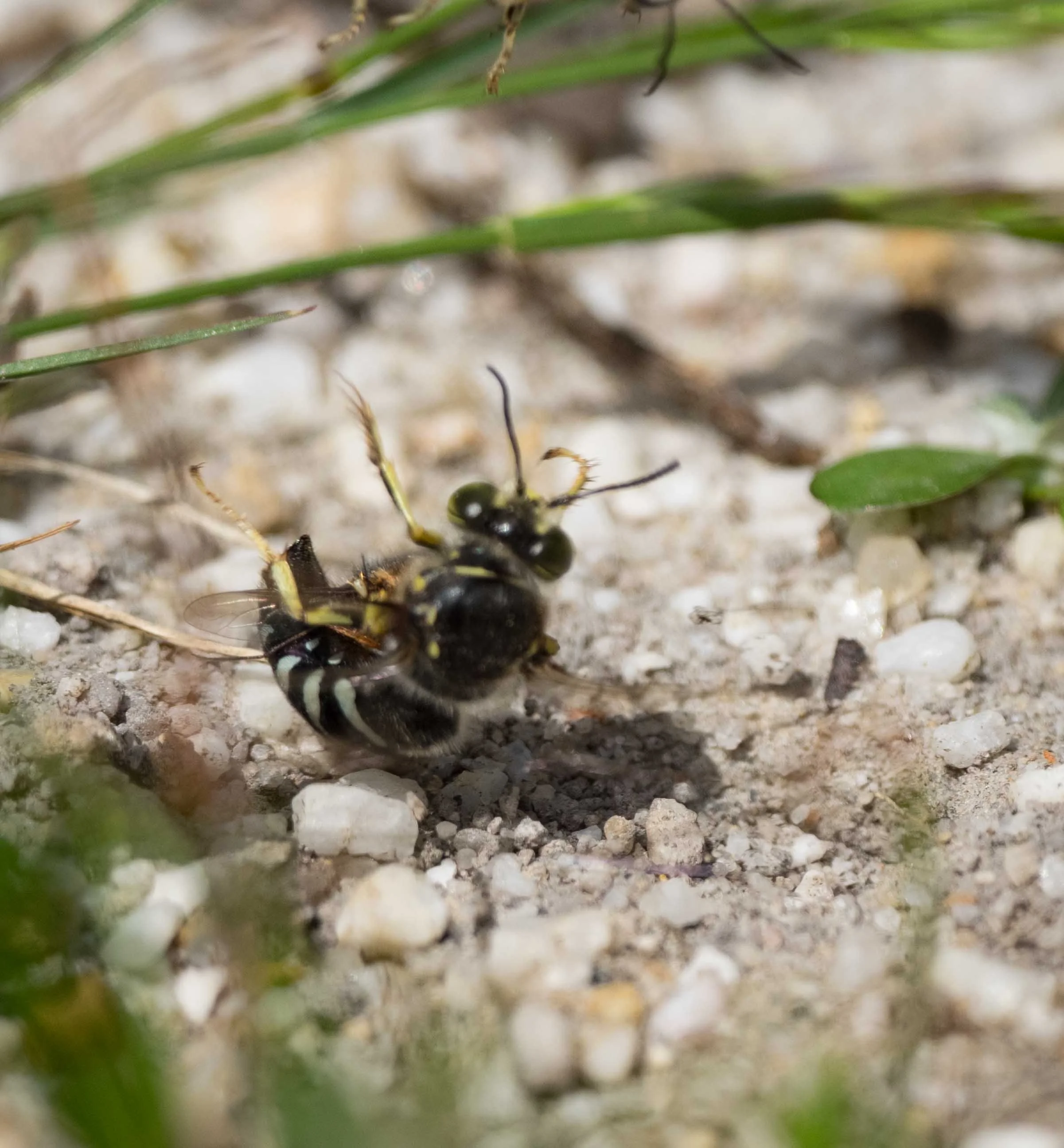
In a lightning attack, a cruising male made a grab for her. She was clearly not receptive! Unfortunately, it all happened a little too fast for me to capture on camera.