1
2
3
4
5
6
7
8
9
10
11
12

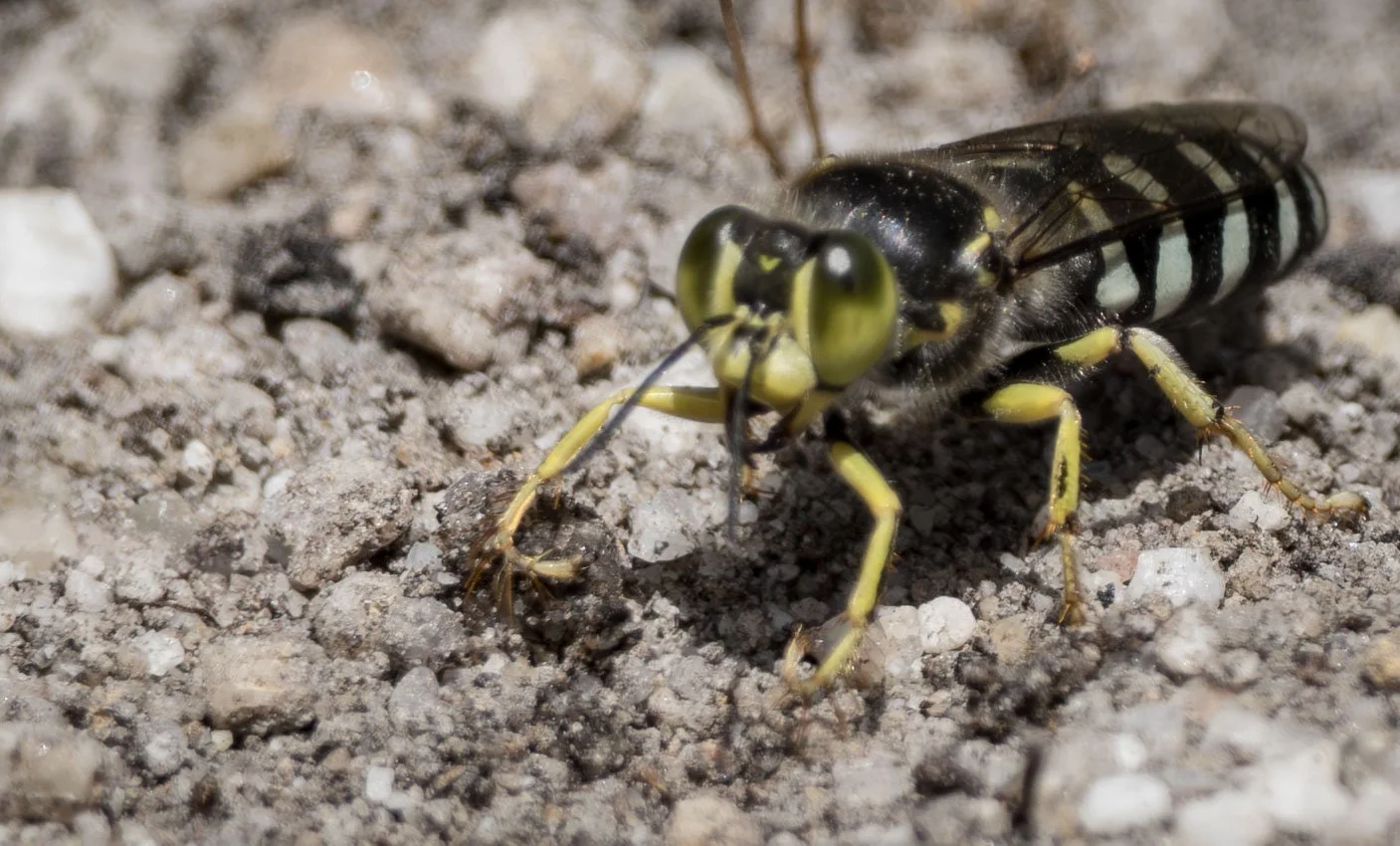
The outer edges of the front tarsi are adorned with an array of stiff spines. These form a rake for sweeping sand.
Incidentally, these ‘pecten spines’ are an important diagnostic character. Species vary in the number, colour & length of the spines, as well as in the shape of the tarsal segments
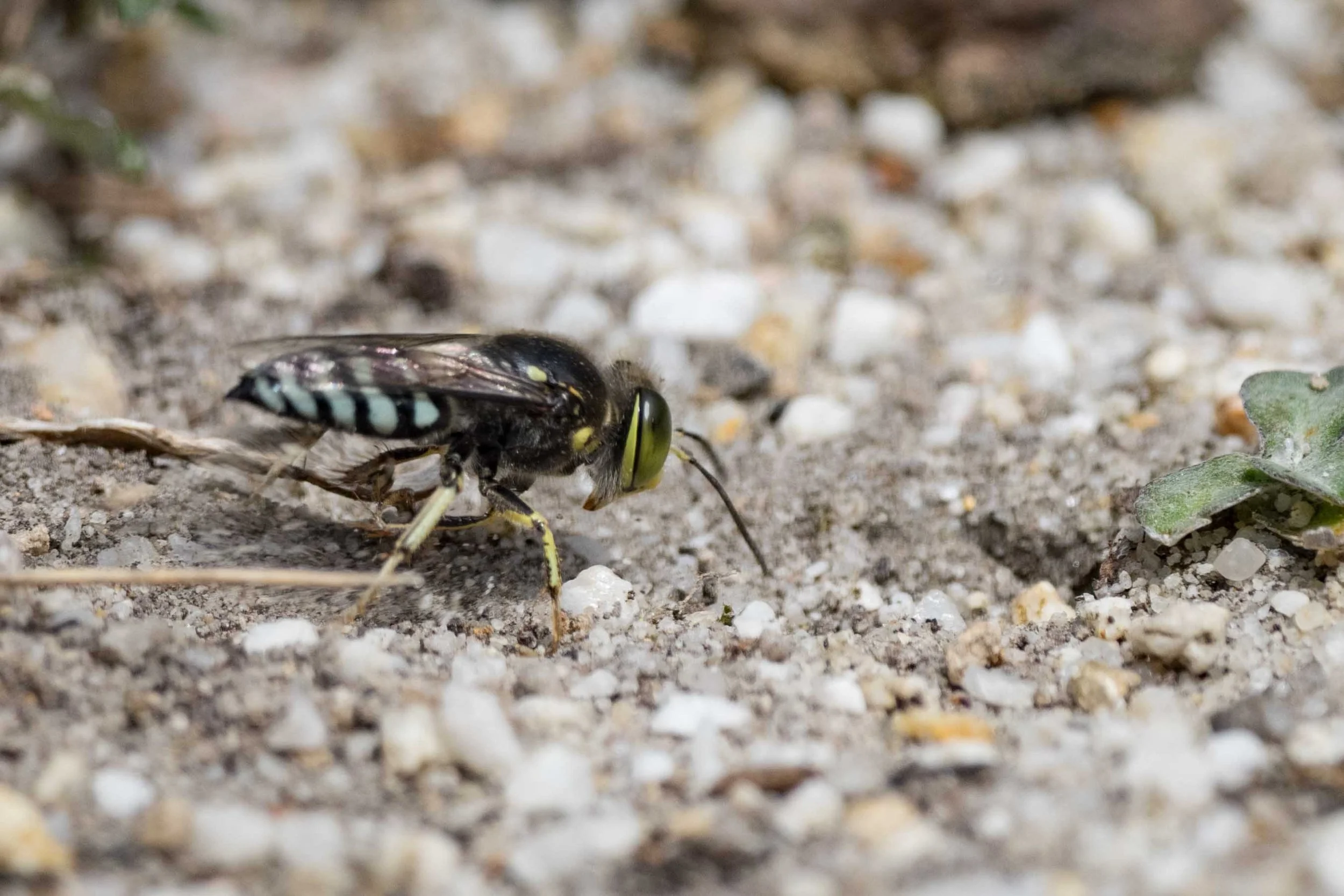
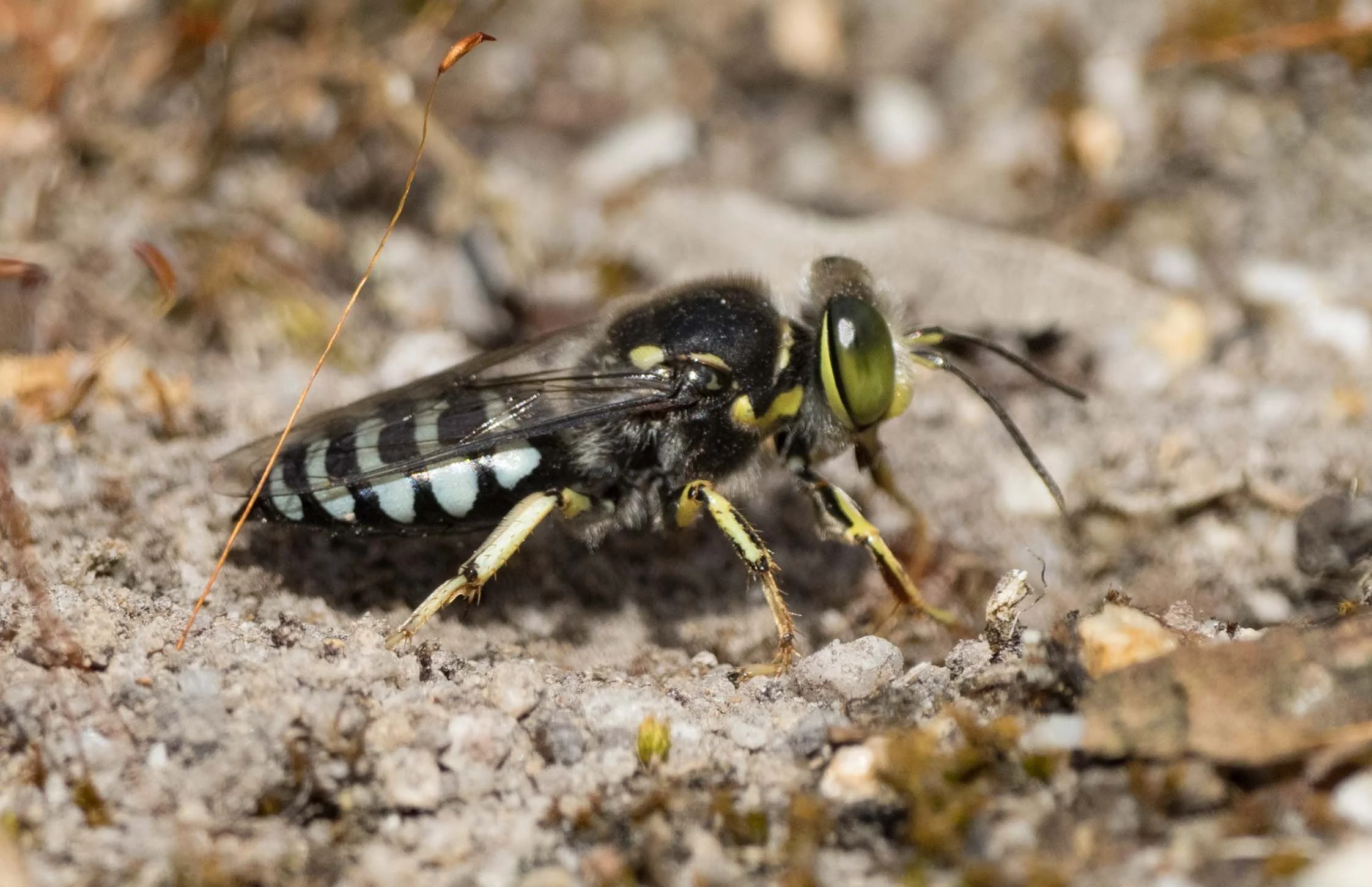
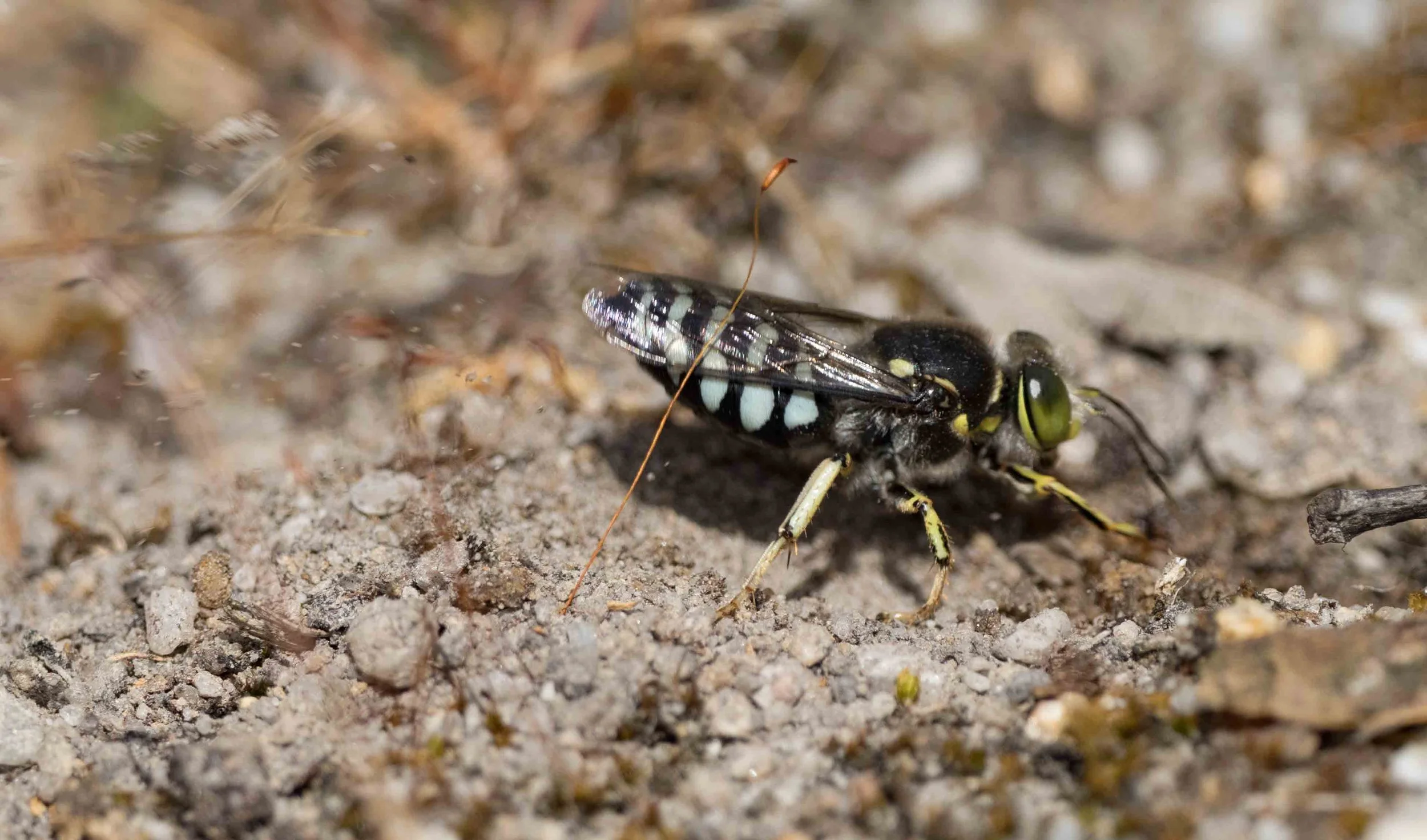
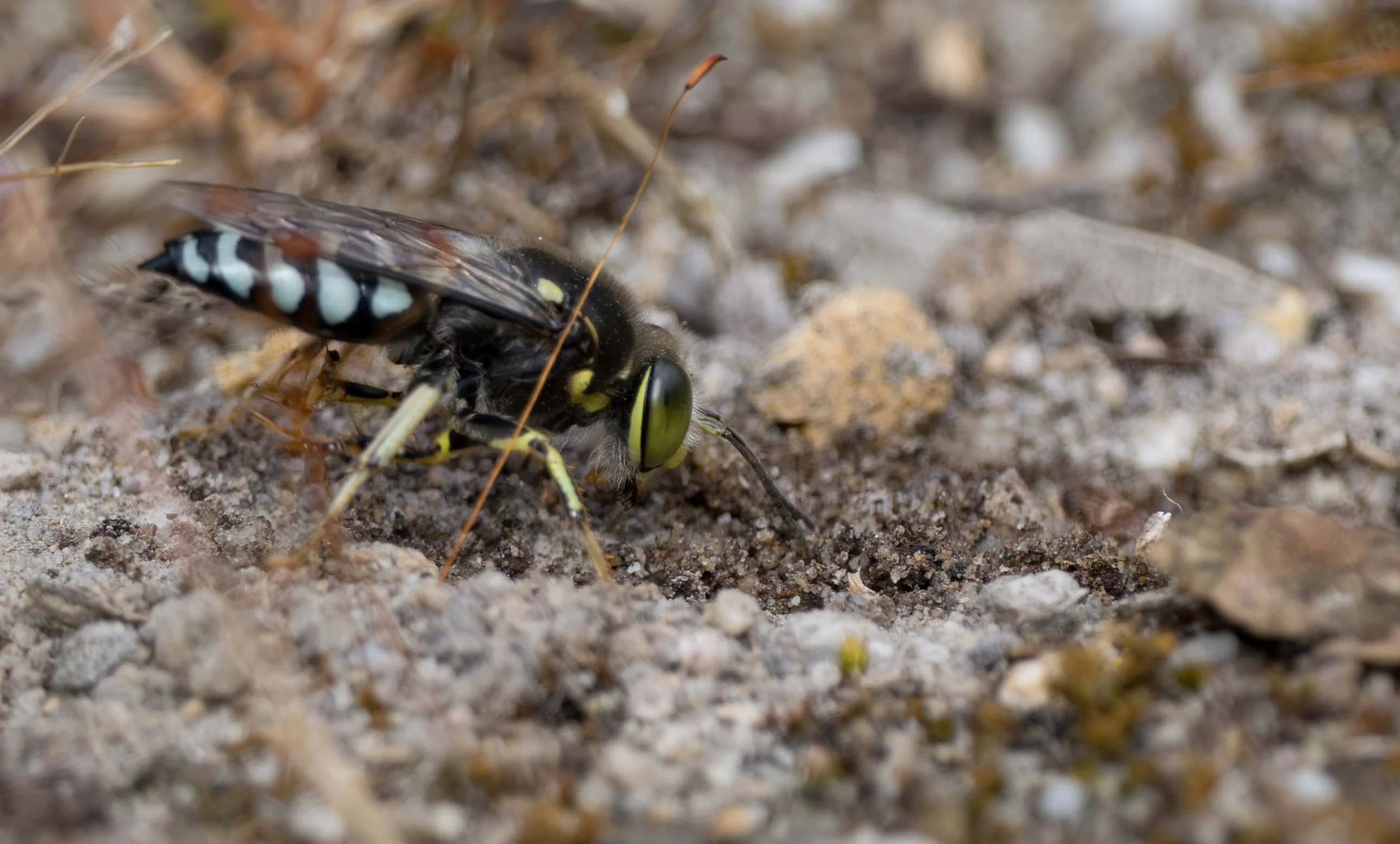
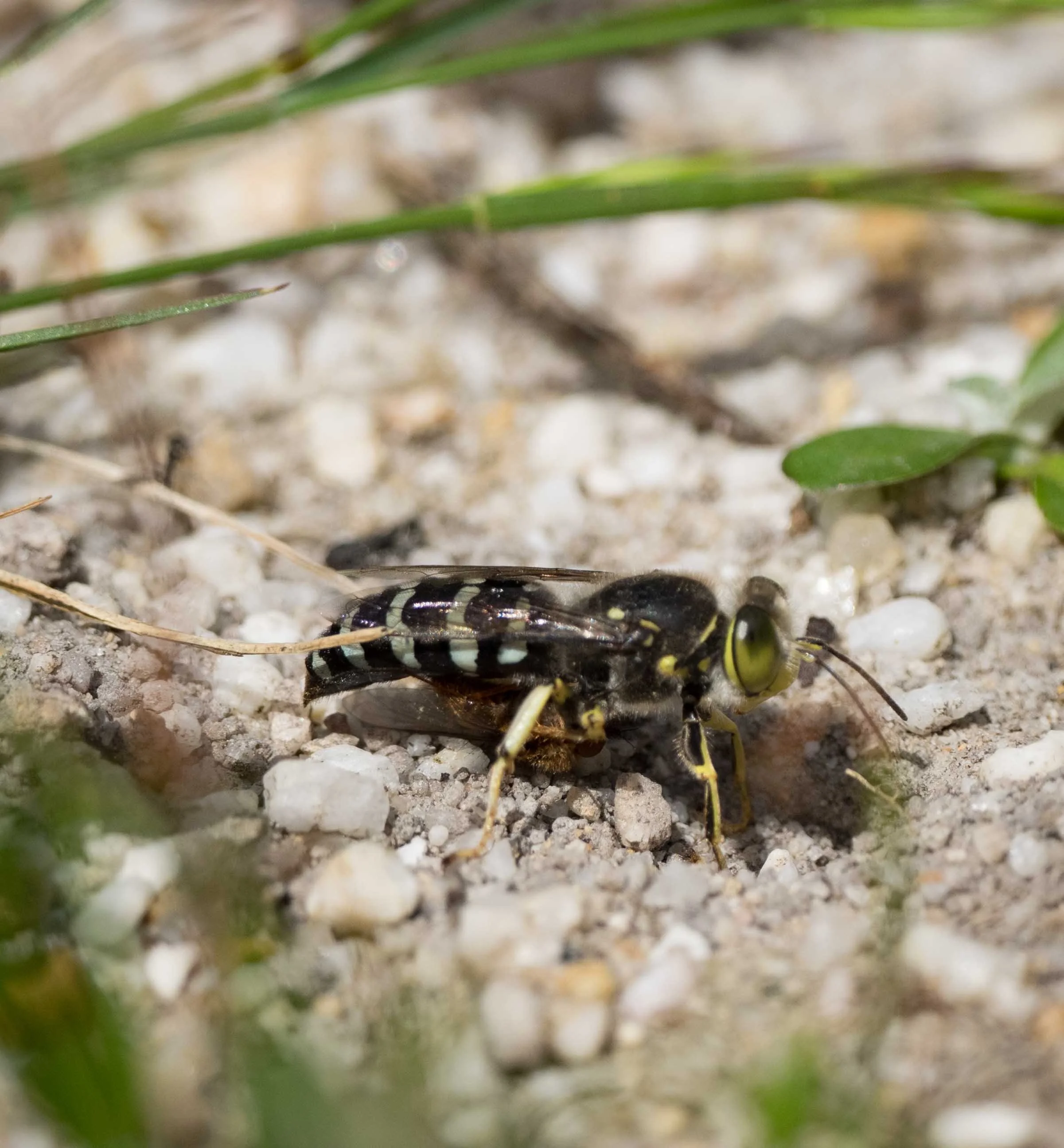
Digging a new burrow or opening a concealed one involves a similar set of actions. It is the front pair of legs that do the scraping as the wasps scuttles backwards with each sweep.
The action is fast and furious. With sand from the last sweep still flying, she is already reaching forward for another load.
A few sweeps later, now dragging each load further from the entrance before kicking it out behind.
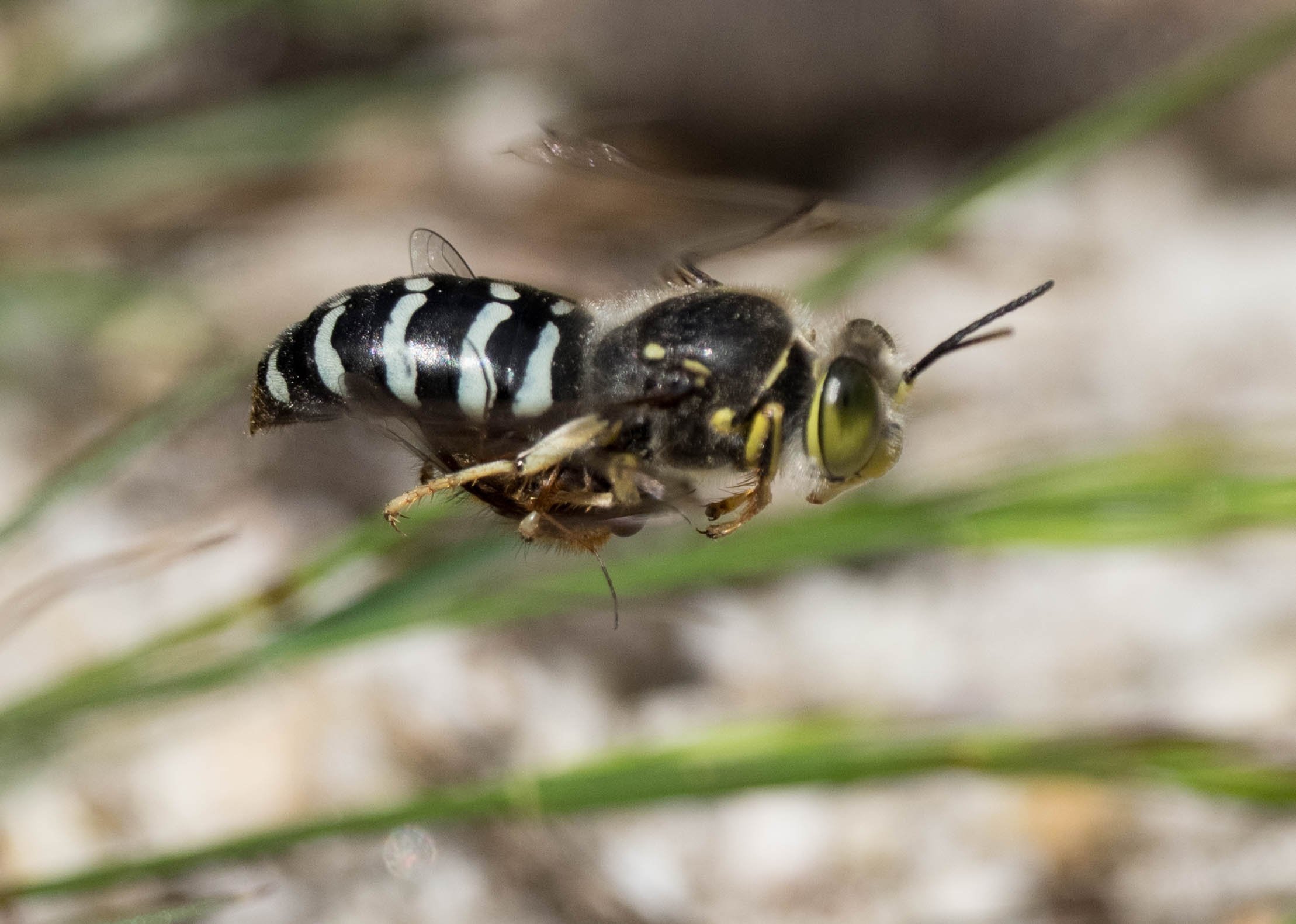
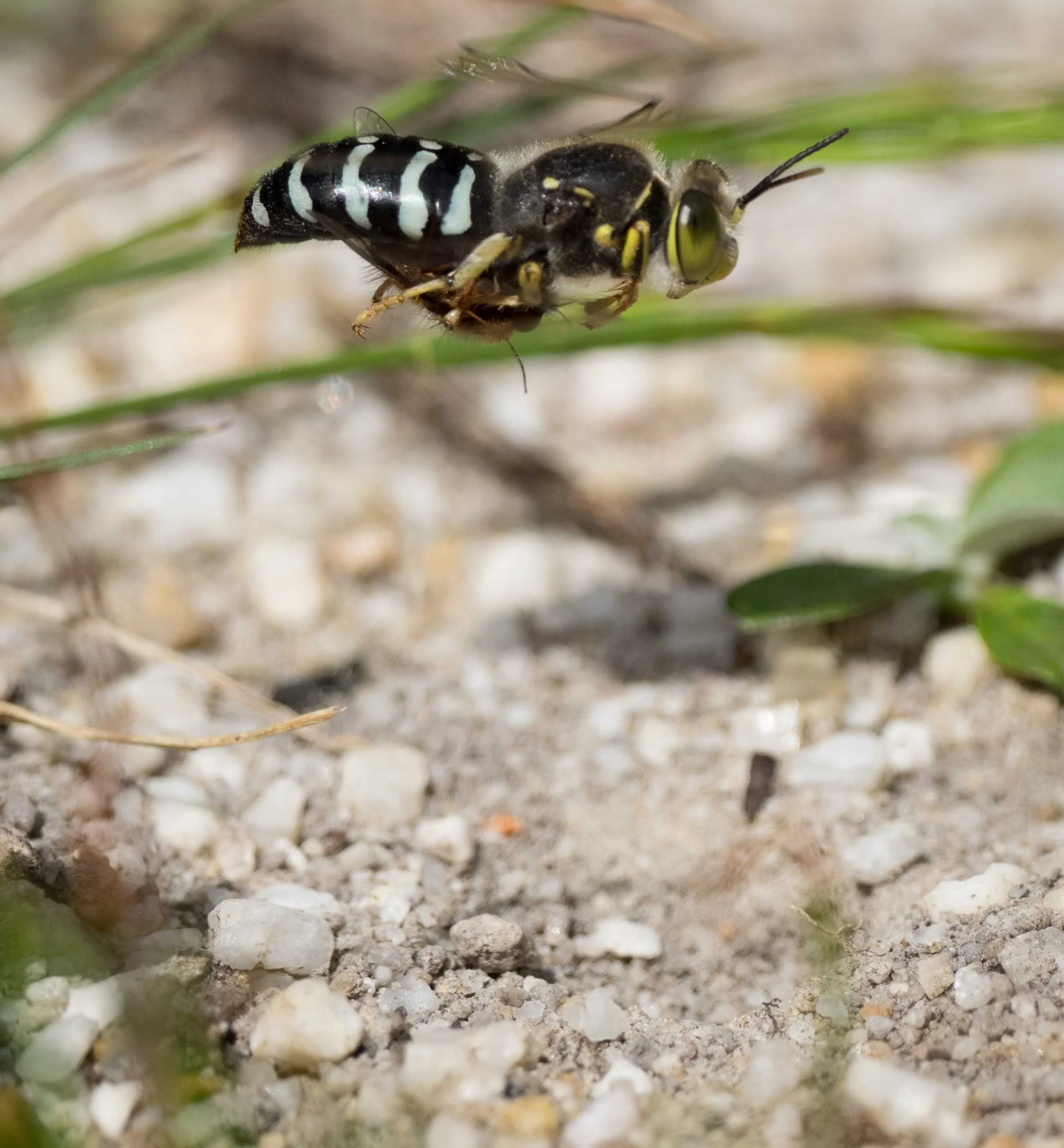
On returning from a successful hunt, females fly directly to the site of their nest. The cues she follows may be visual, chemical, or both. Whatever the mechanism, it is remarkably reliable.
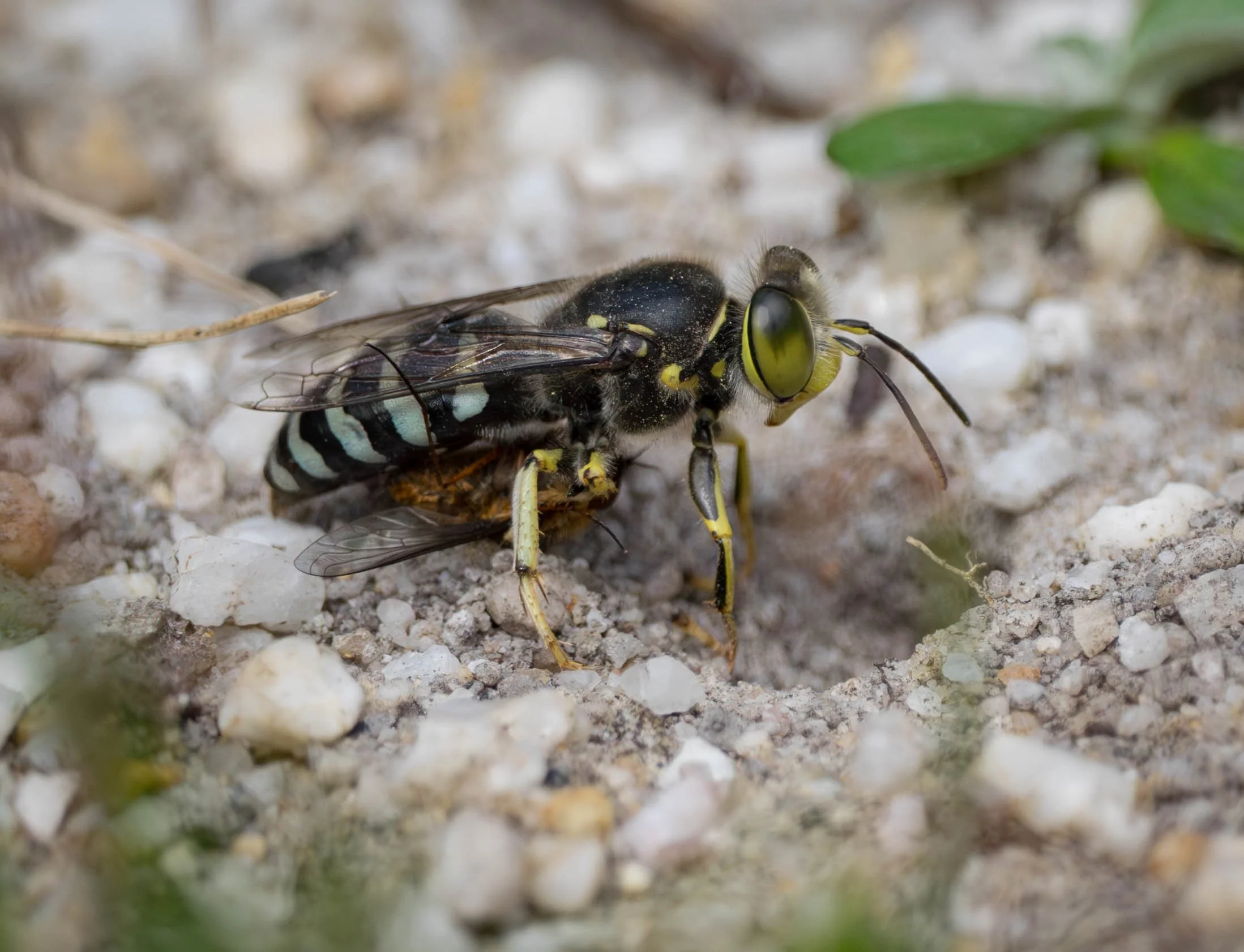
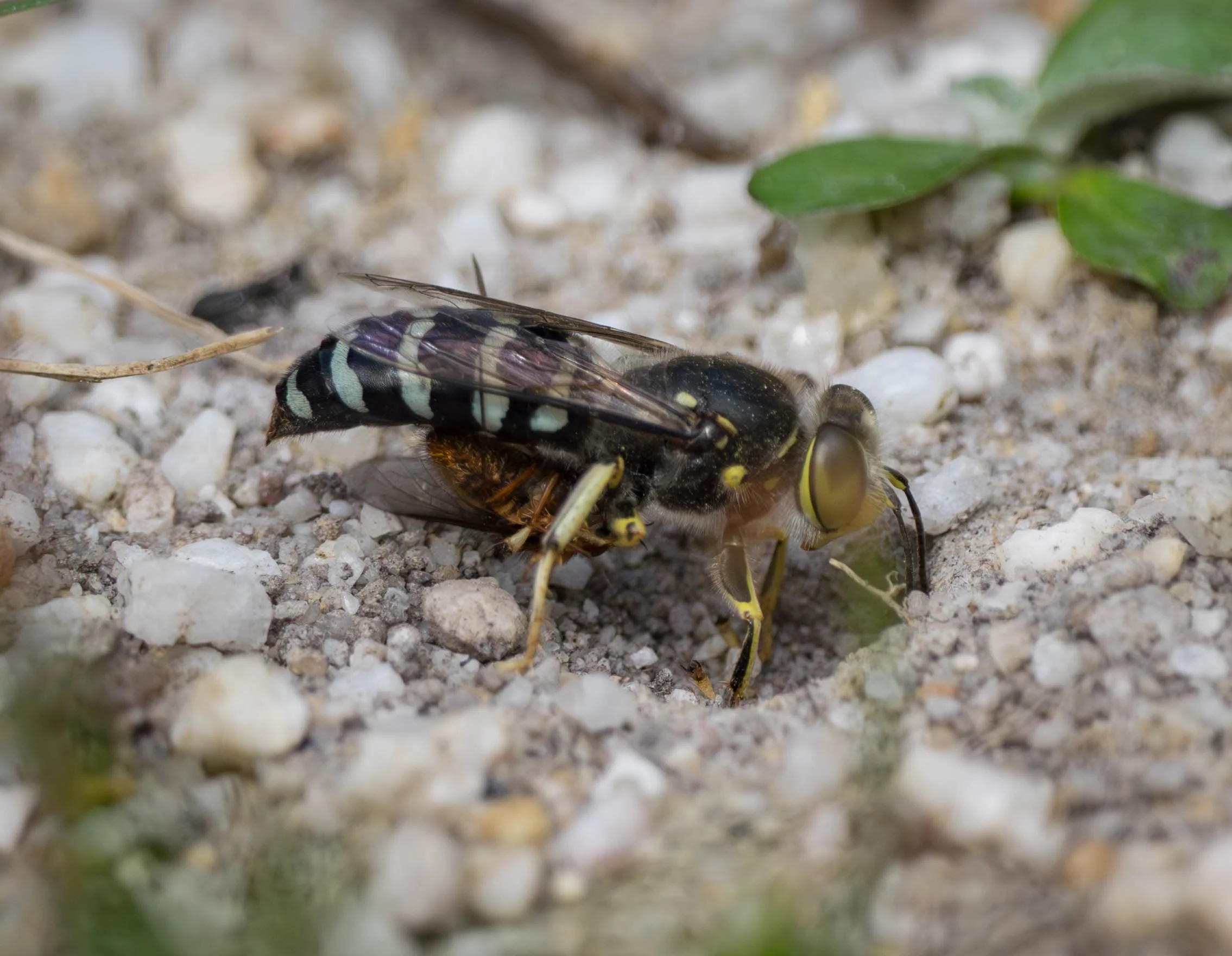
Bee flies are a favoured prey of Bembix furcata, according to a study undertaken in the ACT (Evans & Matthews 1973). The fly in this photo is indeed a Bombyliidae – perhaps Staurostichus, a genus that takes flight in large numbers here during November.
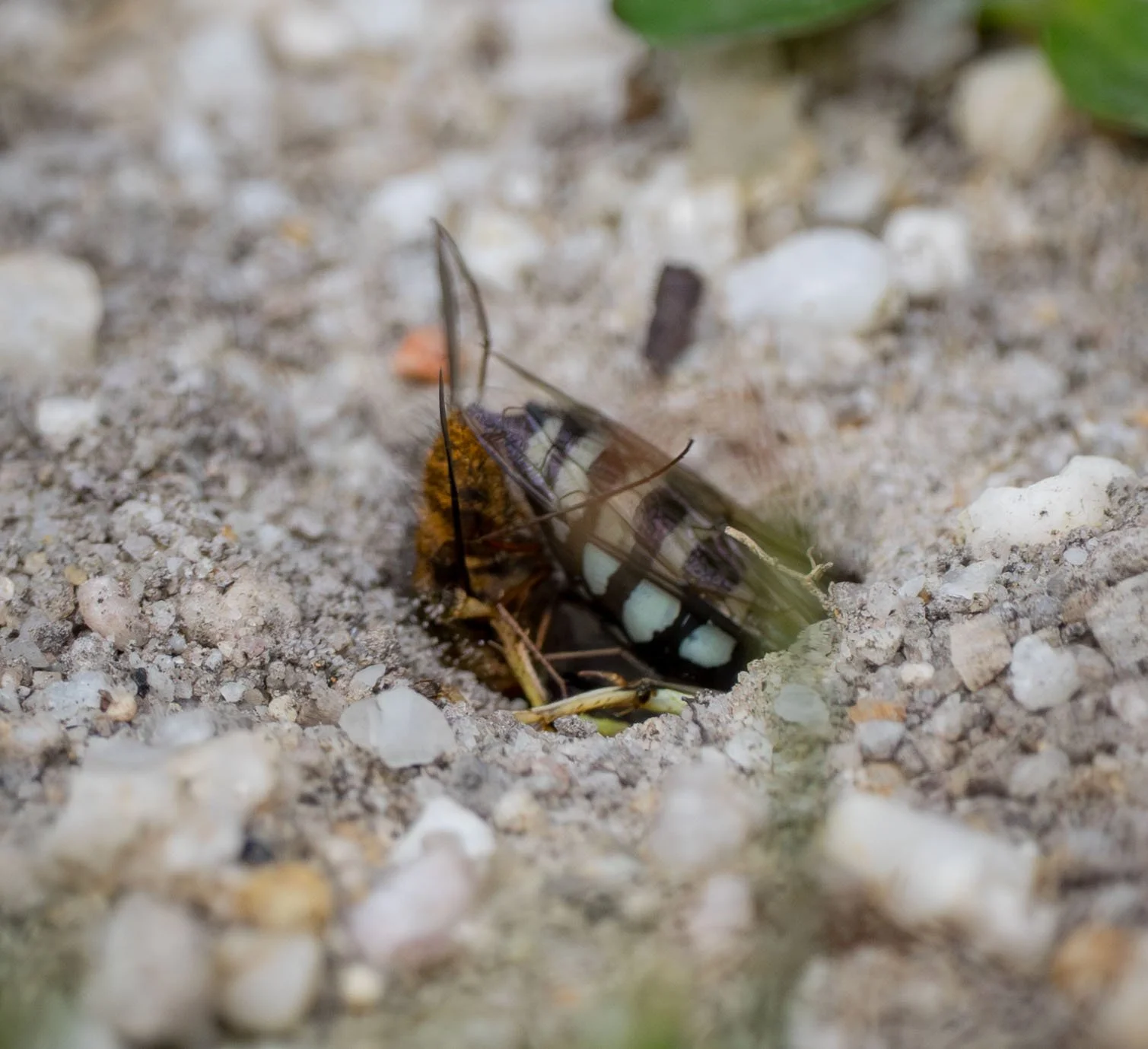
The fly is held securely by the wasp’s middle legs. And she continues to hold it while she rakes open the burrow.
She is quick to disappear from sight, and for good reason. On the surface she may lose her prize to thieving neighbours – one of the downsides of a crowded nesting area. Then there are the ever-present ants that will grab any prey left unattended.
Returning with a paralysed fly, this female prepared to dig open her burrow.
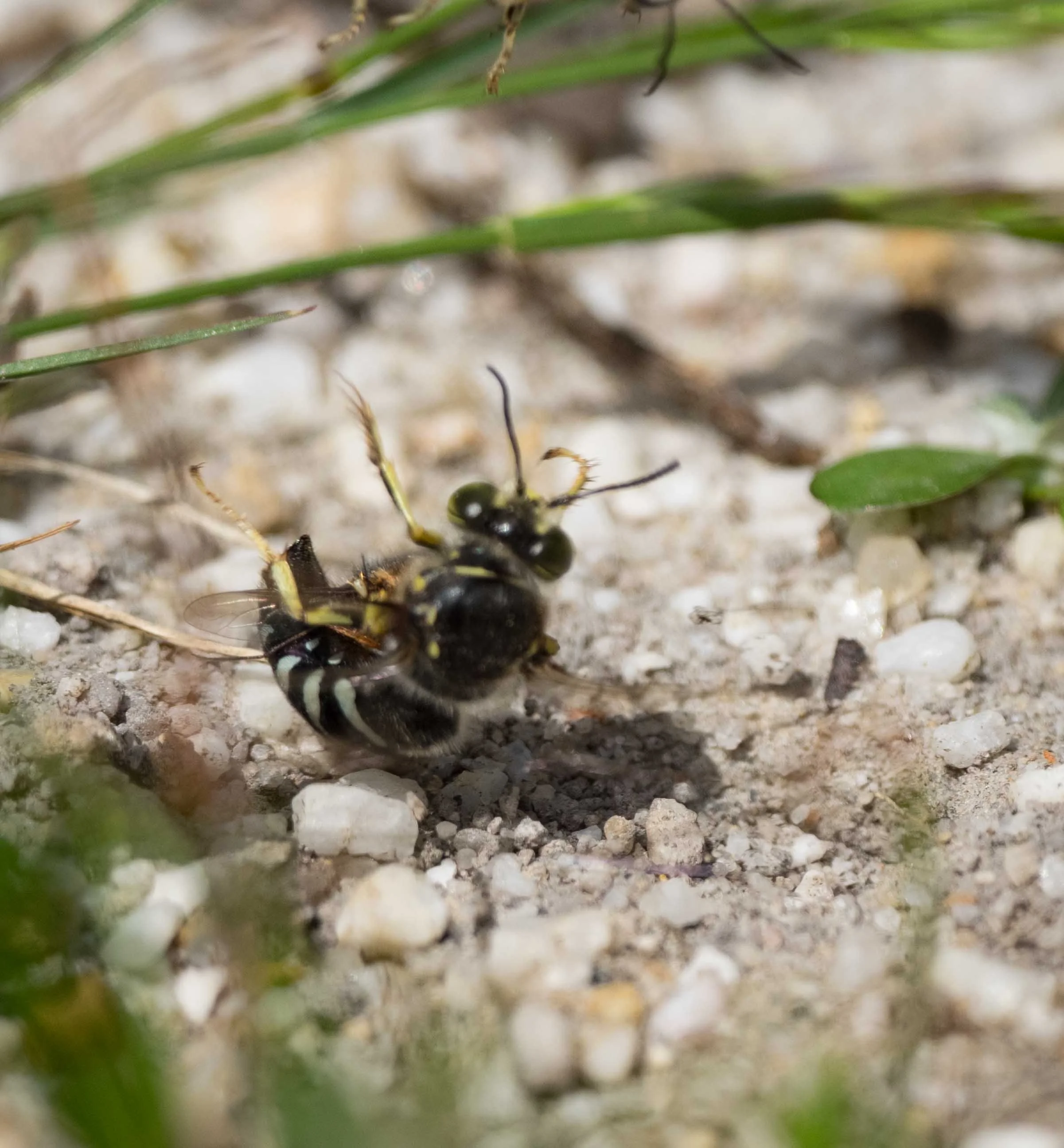
In a lightning attack, a cruising male made a grab for her. She was clearly not receptive! Unfortunately, it all happened a little too fast for me to capture on camera.
Within seconds she was again aloft, lining up her approach. The earlier photo series under ‘A hunter of flies’ show her subsequent success. The male did not make a second attempt.