1
2
3
a unique colour pattern
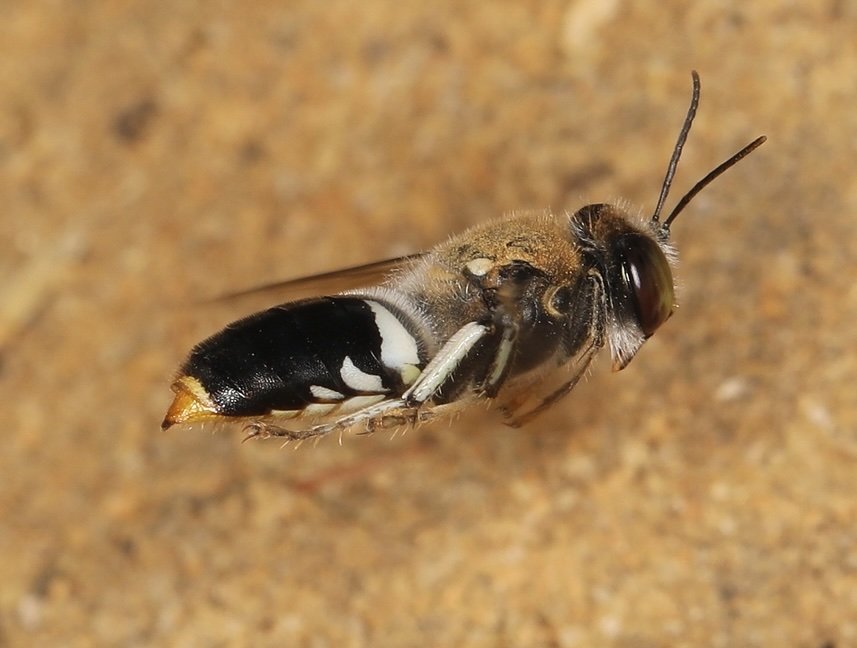
There are few Australian Bembix that can be unambiguously identified to species level based on the colour pattern alone … but this one can! Commonly referred to as the ‘Panda Sand Wasp’, Bembix vespiformis is unmistakable. There is some variation … the apical segments are not always orange (particularly in the east), and T2-4 may be all black or have white spots. But the large, tapered white spots on T2 are a consistent feature.
Bembix vespiformis
Image courtesy Kerry Stuart
https://inaturalist.ala.org.au/observations/198711178
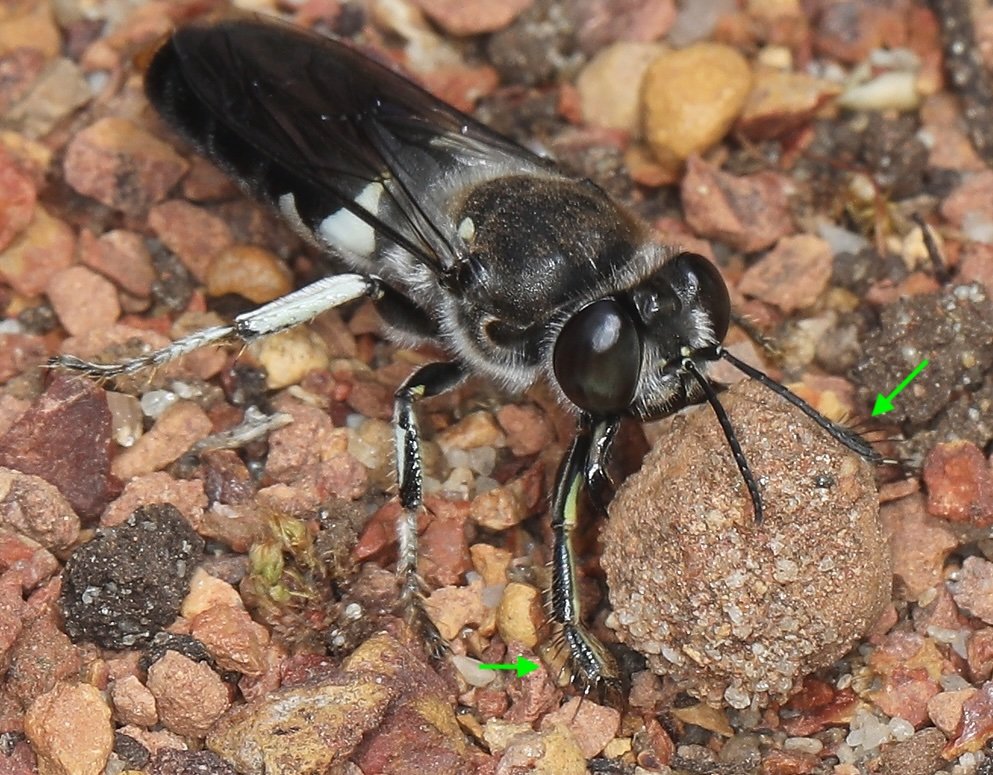
long, dark pecten spines
Despite the distinctive colour pattern, I like to check as many other features as possible against a putative species description. For example, here the colour of the mandibles, legs, mesoscutum all fit with Bembix vespiformis … as do the 7 long, dark pecten spines on each of the front basitarsi (arrows).
Note that this is one of many Bembix species widely distributed across continental Australia.
Bembix vespiformis
Image courtesy Kerry Stuart
https://inaturalist.ala.org.au/observations/195650631
mandible shape
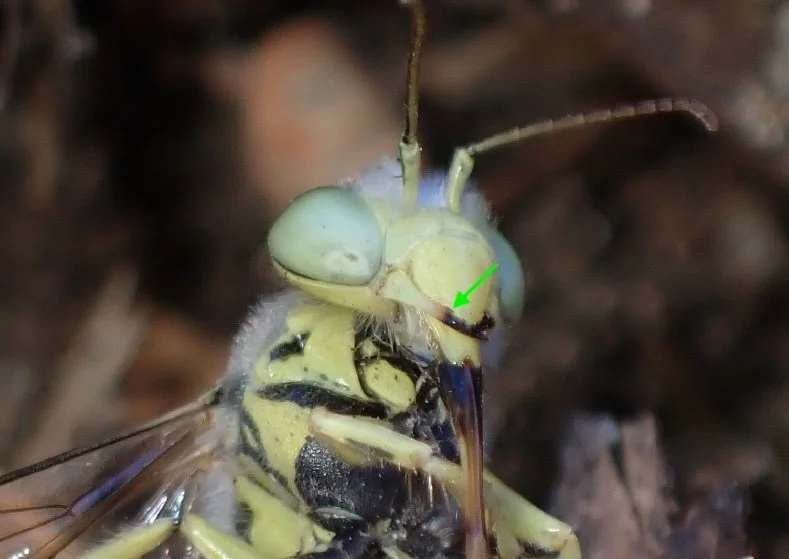
The differences in mandible shape between species are slight and somewhat relative … yet they are important. In some cases, they are one of the few reliable diagnostic characters. For example, female B. littoralis and B. variabilis are structurally very similar. Colour patterns certainly help but as both are highly (highly!) variable species, a structural feature provides a valuable cross-check. Both species have slender mandibles, but that of B. variabilis is particular slender and straight, with a very small tooth (green arrow).
Mandible shape correlates with nest substrate. Species that nest in coarse sand or compact soil typically tend to have robust mandibles, strongly curved, and with an oblique cutting edge between the apex and the tooth. In contrast, those that burrow in very friable substrate tend to have slender mandibles with little or even no cutting edge … as in this B. variabilis.
B. variabilis
Image courtesy Faz
https://inaturalist.ala.org.au/observations/335029293