

1
2
3
4
5
6

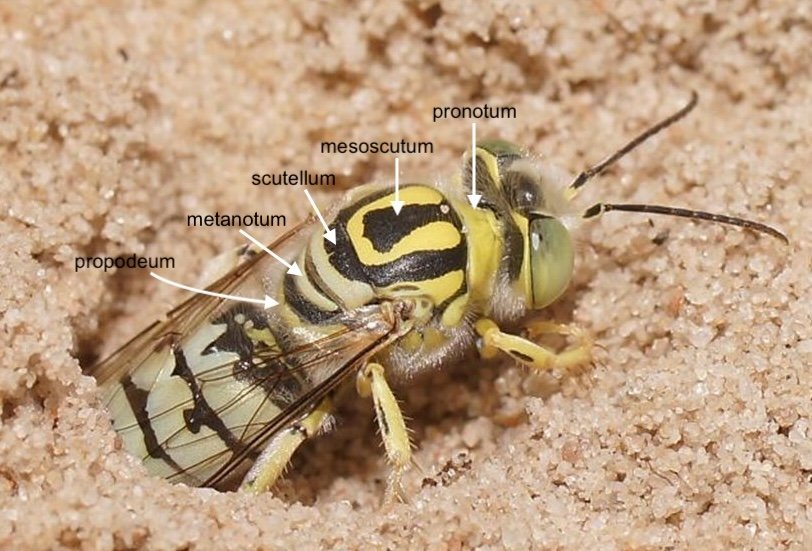
dorsal mesosoma ('thorax')
The major visible plates along the dorsal midline of the mesosoma are: pronotal collar (low in Bembix, relative to the mesoscutum); mesoscutum (often simply called the scutum); scutellum; metanotum (very short); and the propodeum. When the wings are in the usual position at rest, the propodeum is obscured, as it is in species with particularly dense setae (hairs).
The U-shaped yellow mark on the mesoscutum is referred to as a discal mark. In some individuals (and species), the discal marks are much narrower than this, and the segments of the U are often not connected.
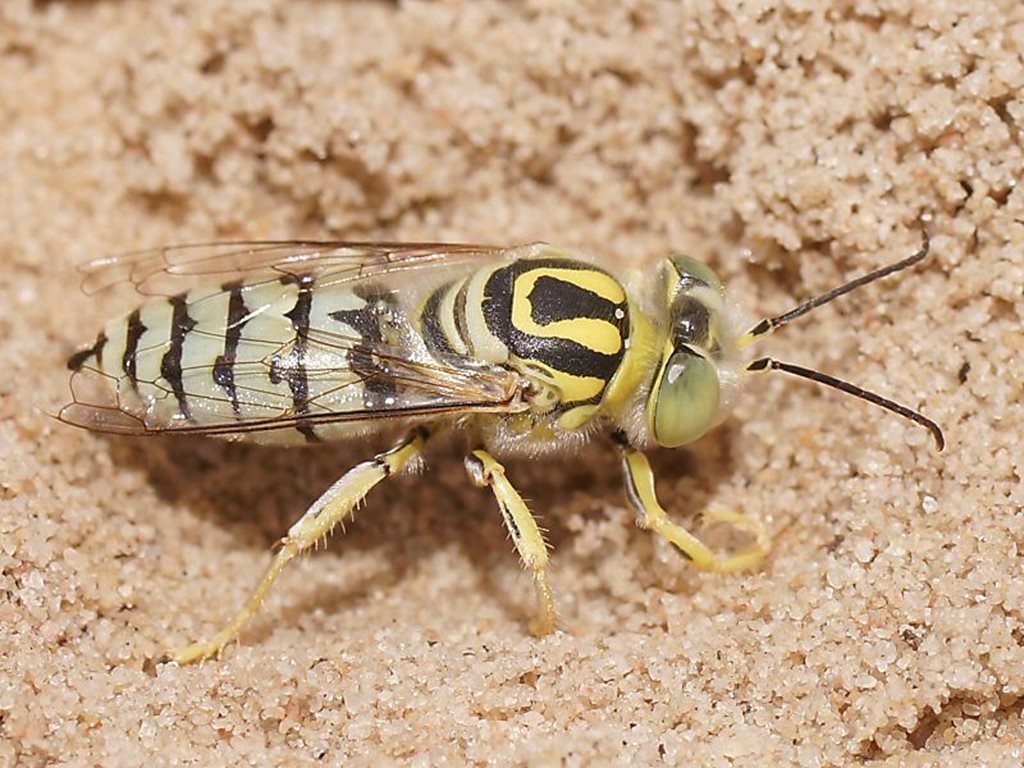
Bembix variabilis
Image courtesy Reiner Richter
https://inaturalist.ala.org.au/observations/25727992
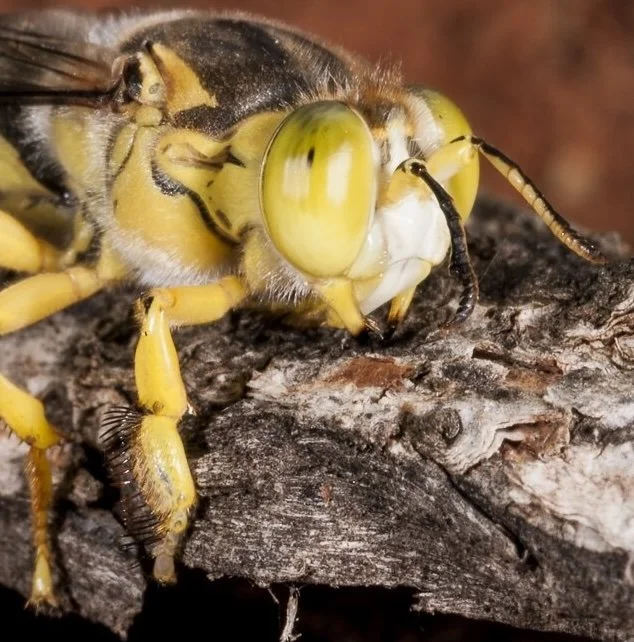
pecten spines, clypeus, labrum, male antenna
The large number of pecten spines immediately identifies this as one of just three species (the Pectinipes species group). The highly distinctive shapes of the clypeus and labrum shape are diagnostic, and the strongly curved antennae provide further support.
Bembix flavifrons
Photographer: Mark Norman (Museums Victoria)
https://collections.museumsvictoria.com.au/specimens/2482511
Accessed 21 December 2025
B. variabilis
- band on T1 has an angular median notch (in addition to the pair of more lateral emarginations)
- colour of metasomal bands is typically cream or off-white (but may be brighter yellow in some individuals)
https://inaturalist.ala.org.au/observations/25727992
(image courtesy Reiner Richter)
B. lamellata
- tricoloured mandible
- large (broad?) S2 projection
- S6 elevated, angulate apically
- unusually dense & long pale hairs, including on T1 & propodeum
- metasoma mainly black, limited white markings
https://inaturalist.ala.org.au/observations/145146372
(image courtesy Brian Byrnes)
B. lamellata
- central vertex above eye level
- clypeus & labrum wholly pale
- large yellow spot on mesopleura
https://inaturalist.ala.org.au/observations/145157864
(image courtesy Brian Byrnes)
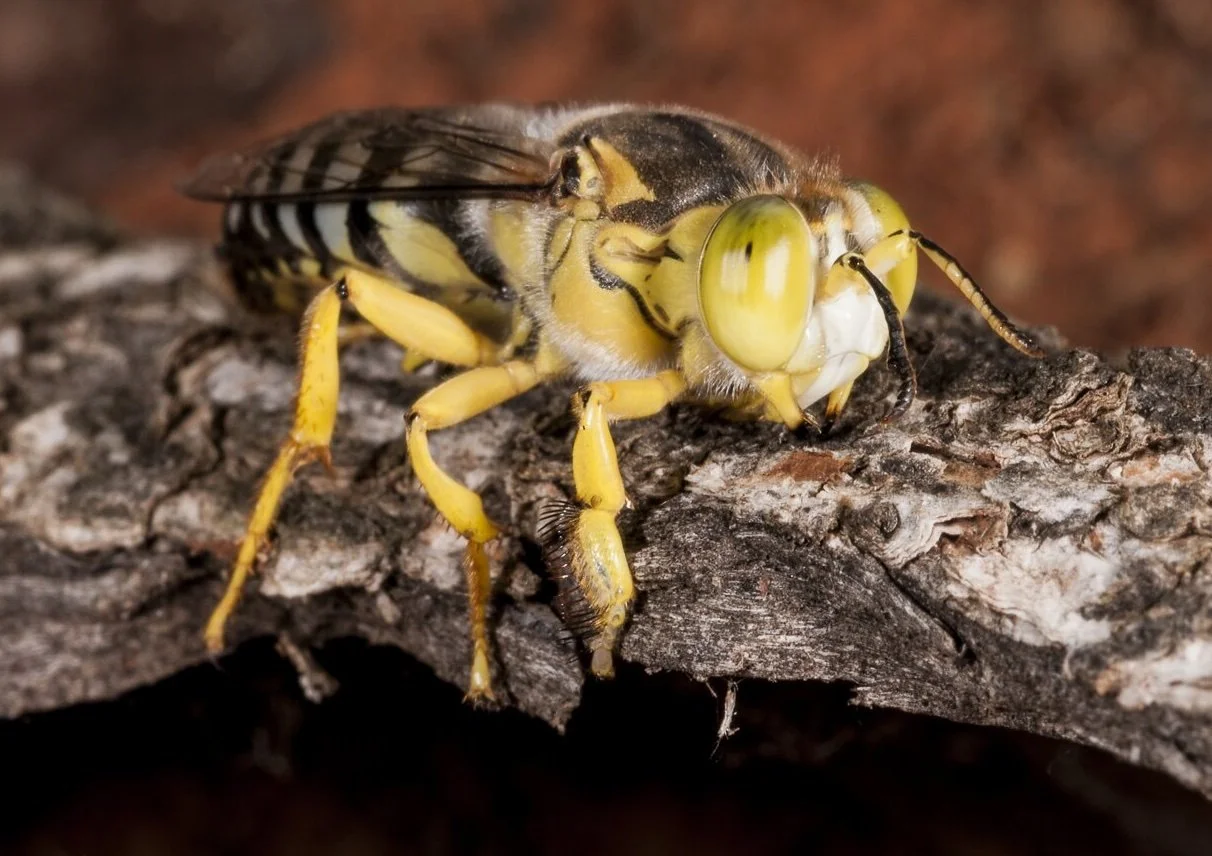
B. flavifrons
- numerous pecten spines on front basitarsus (at least 16)
- expanded front basitarsus
- clypeus shape diagnostic, with pair deep lateral grooves and strongly elevated medially and laterally
- labrum also unusual form, with median basal sulcus and strongly elevated laterally
- mid tibia much expanded from a slender base
Photographer: Mark Norman (Museums Victoria)
https://collections.museumsvictoria.com.au/specimens/2482511
Accessed 21 December 2025