1

mandible shape
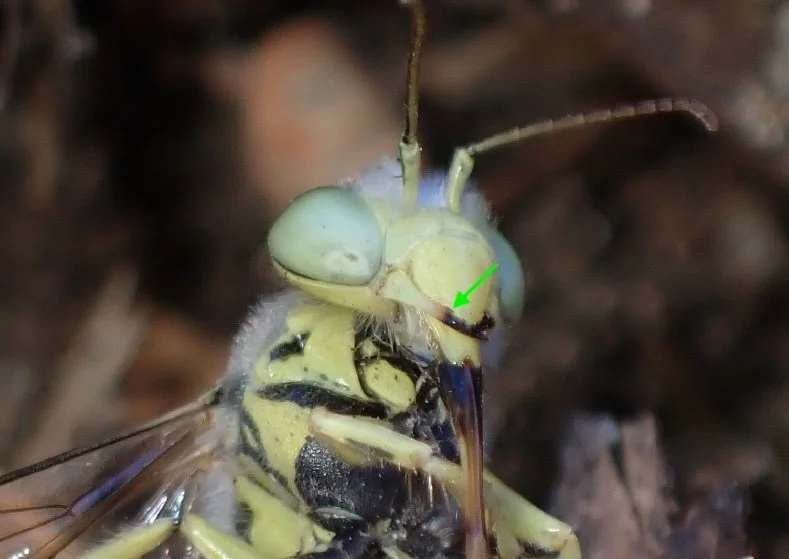
The differences in mandible shape between species are slight and somewhat relative … yet they are important. In some cases, they are one of the few reliable diagnostic characters. For example, female B. littoralis and B. variabilis are structurally very similar. Colour patterns certainly help but as both are highly (highly!) variable species, a structural feature provides a valuable cross-check. Both species have slender mandibles, but that of B. variabilis is particular slender and straight, with a very small tooth (green arrow).
Mandible shape correlates with nest substrate. Species that nest in coarse sand or compact soil typically tend to have robust mandibles, strongly curved, and with an oblique cutting edge between the apex and the tooth. In contrast, those that burrow in very friable substrate tend to have slender mandibles with little or even no cutting edge … as in this B. variabilis.
B. variabilis
Image courtesy Faz
https://inaturalist.ala.org.au/observations/335029293