1
2
3
4
5
6
7
8
9
10
11
12
13
14
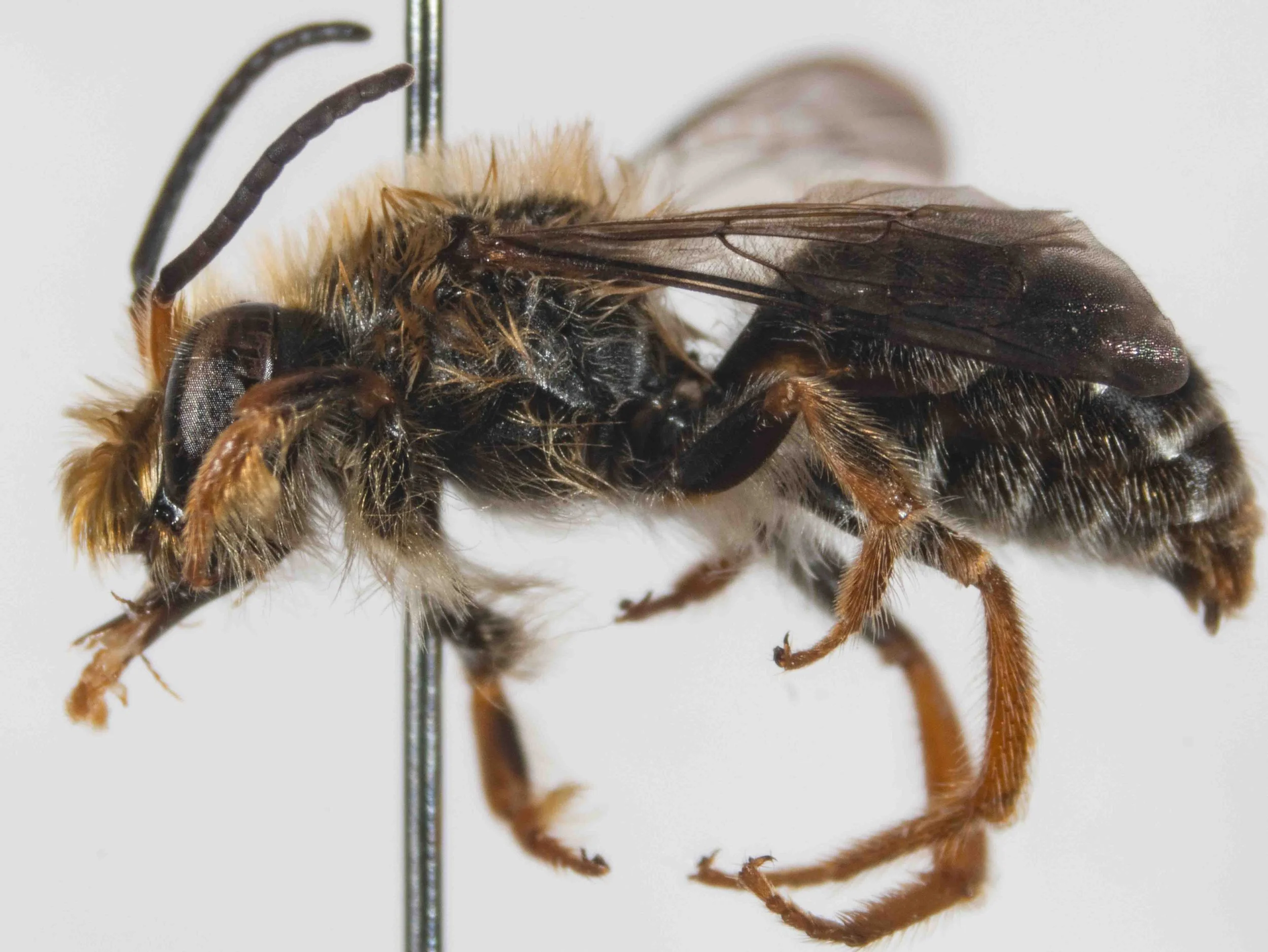
Body length: 12mm. Note that the holotype male of Trichocolletes orientalis: 10.7mm
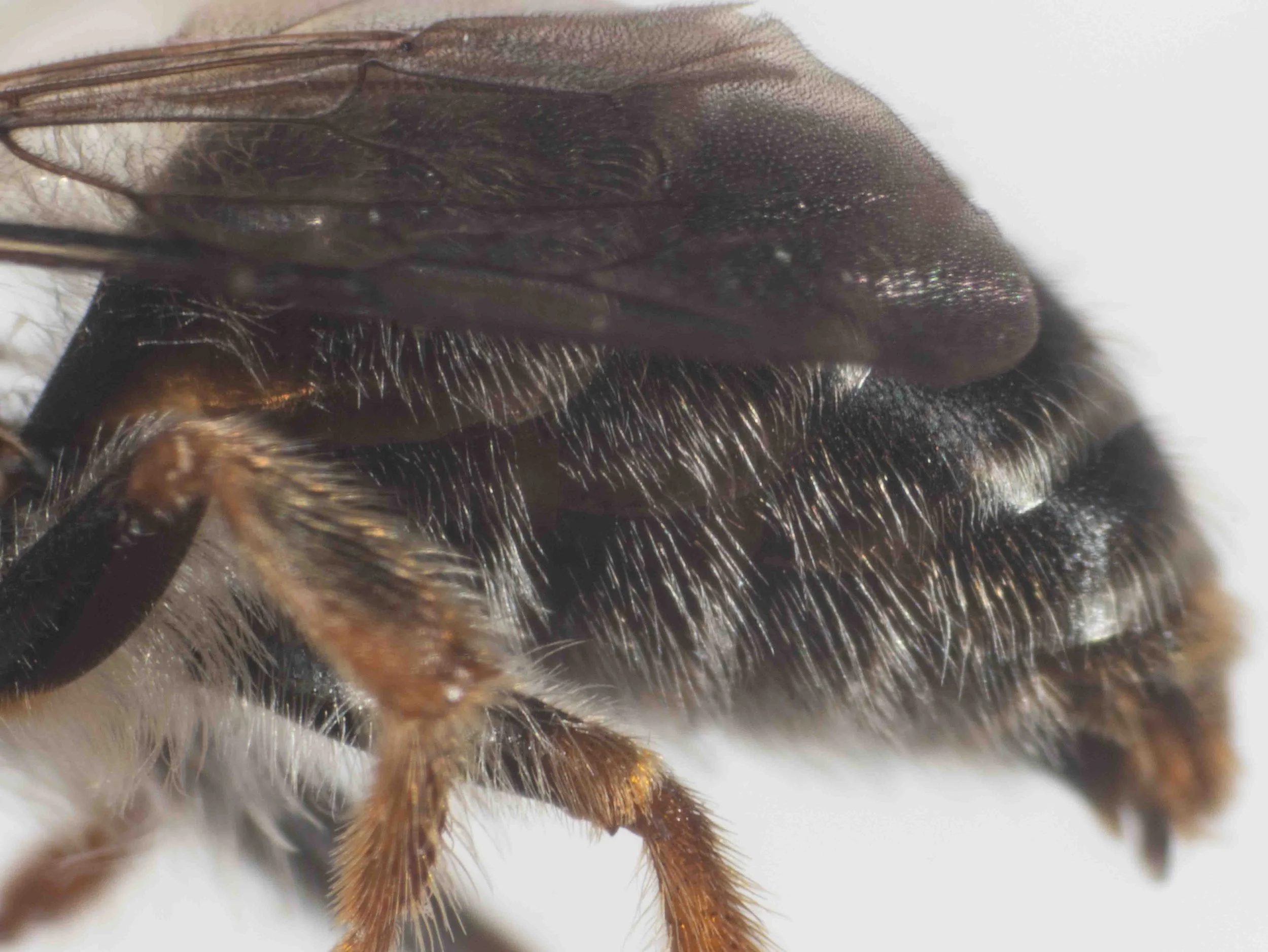
May be distinguished from sympatric males of T. venustus by “the extensive areas of dark brown on mid tibia” (it is clear orange-brown in T. venustus).
Description male holotype T. orientalis includes:
“femora and trochanters with much long pale hair”
“tarsi, tibiae and distal ends of femora orange-brown, fore and mid tibiae medially suffused with dark brown”
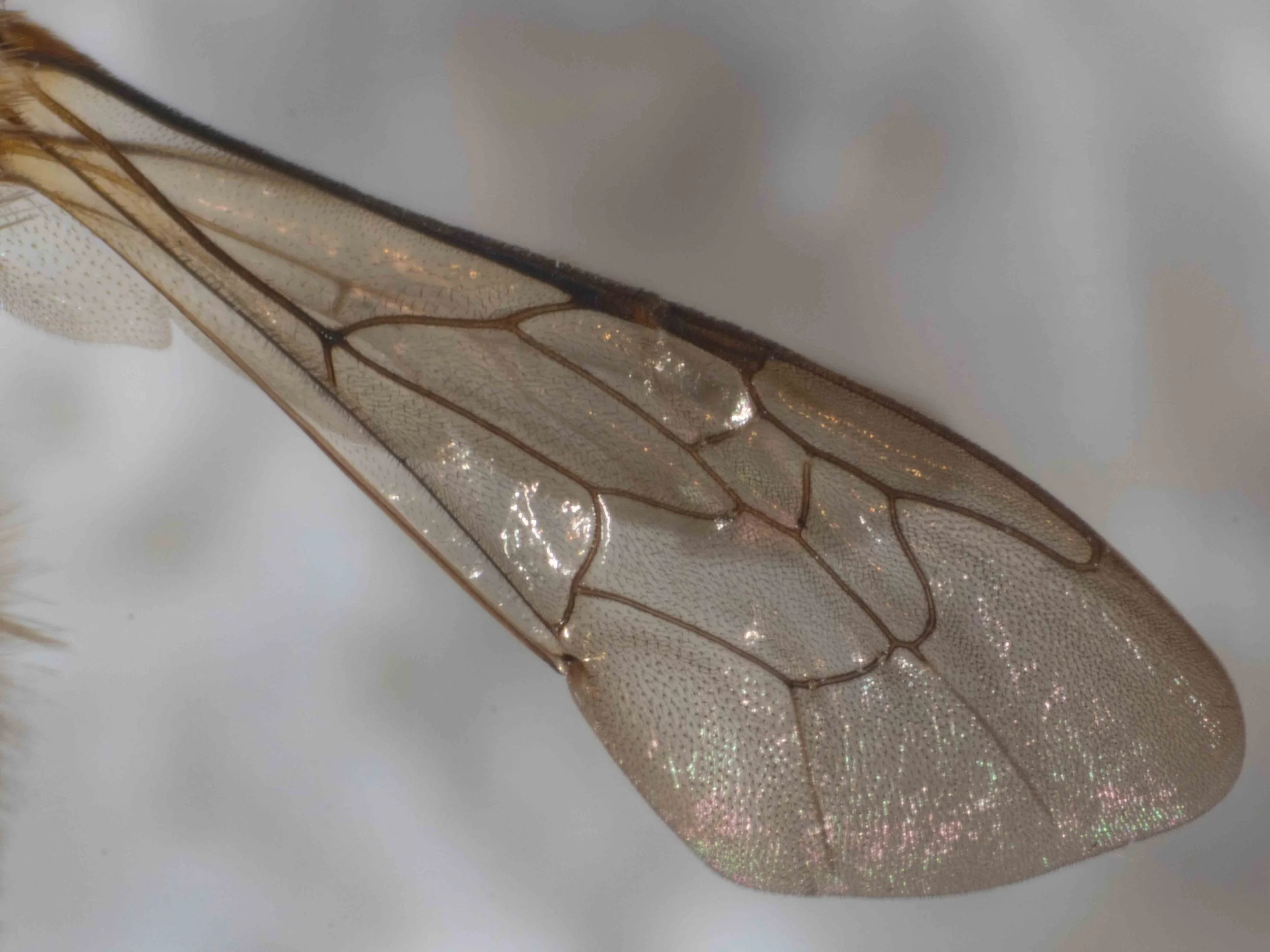
Forewing venation typical of Trichocolletes, with: “three submarginal cells; pterostigma short, parallel-sided; ending at, or slightly beyond, base of vein r.” (Batley & Houston 2012)
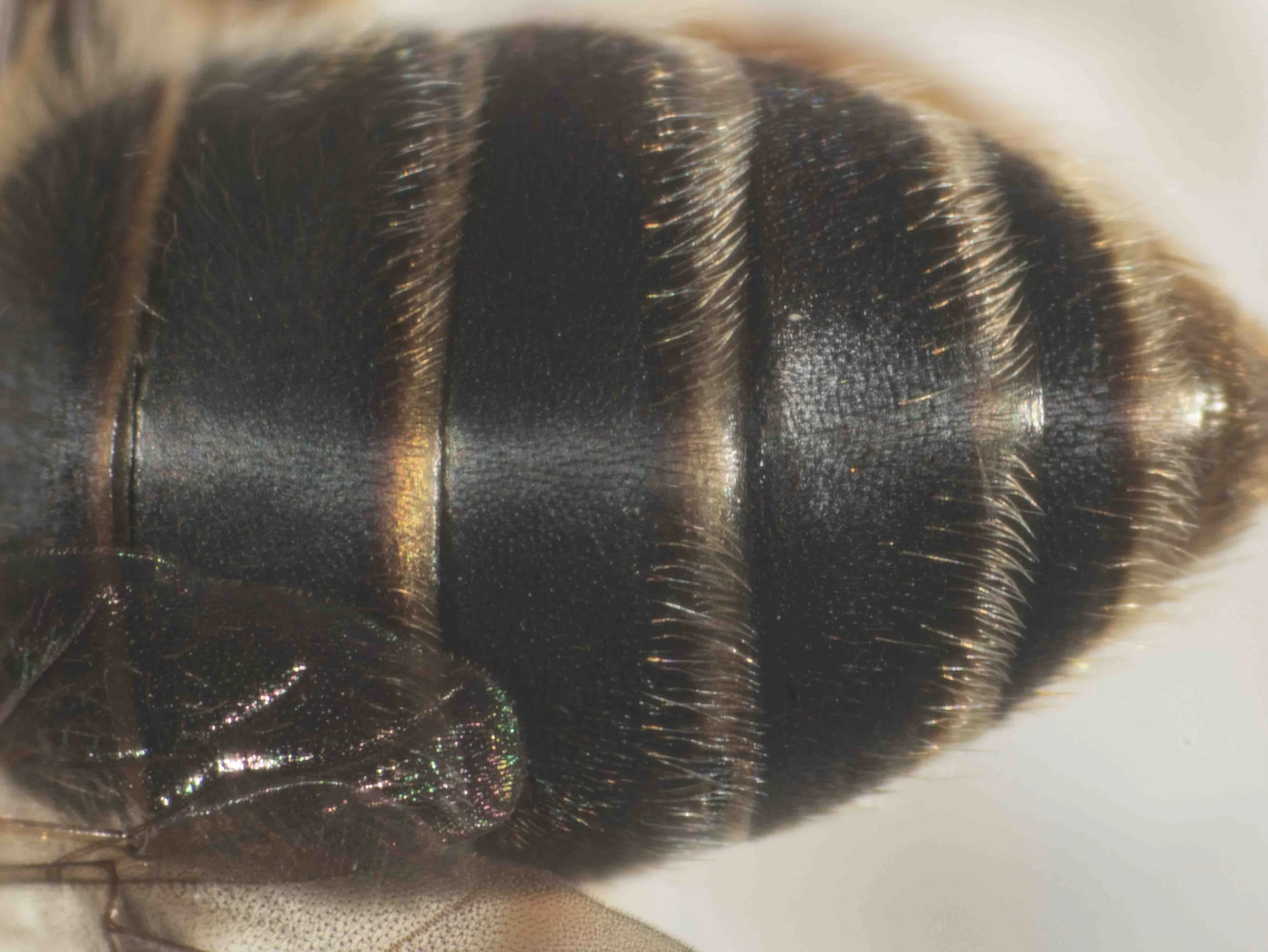
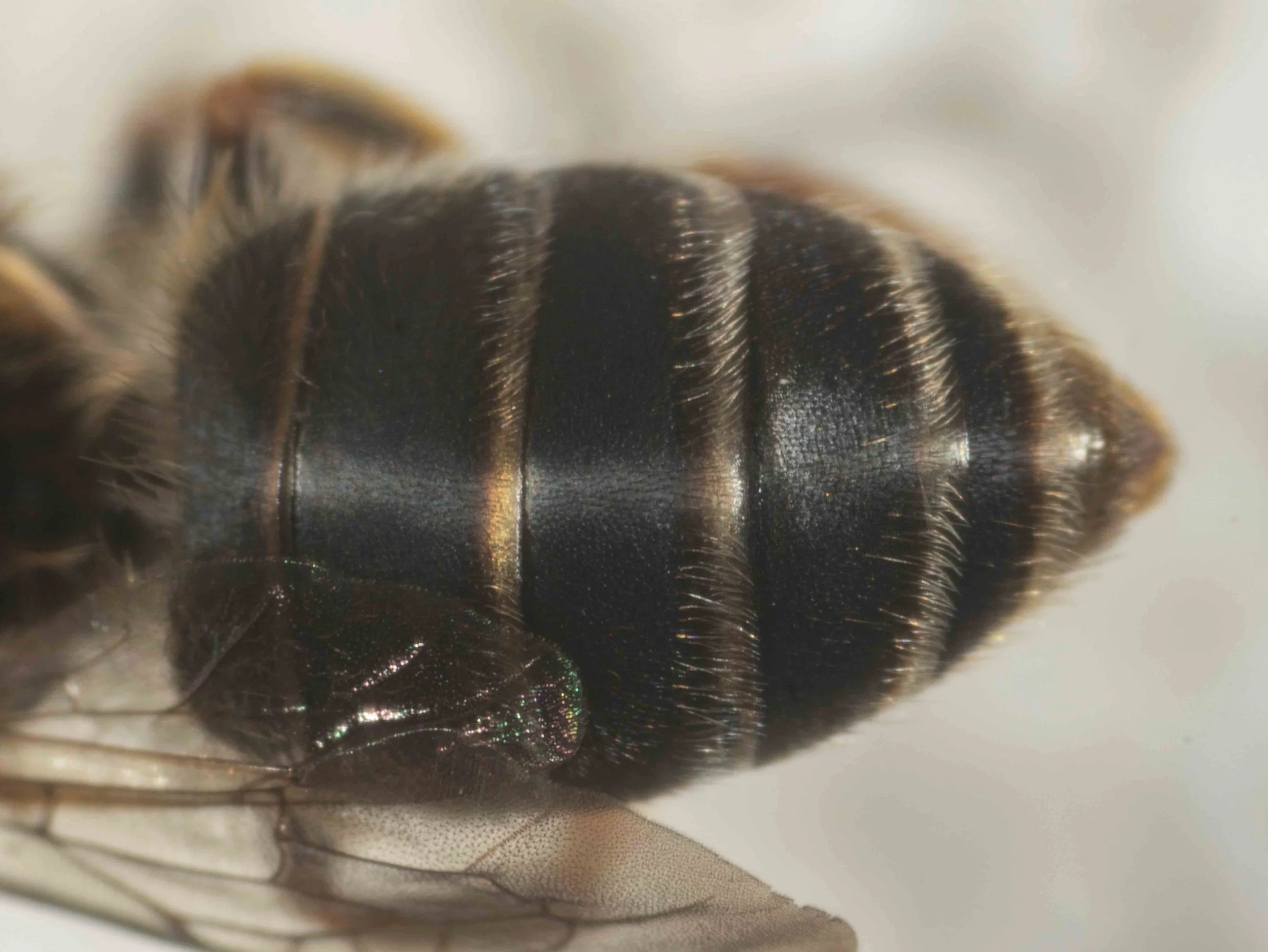
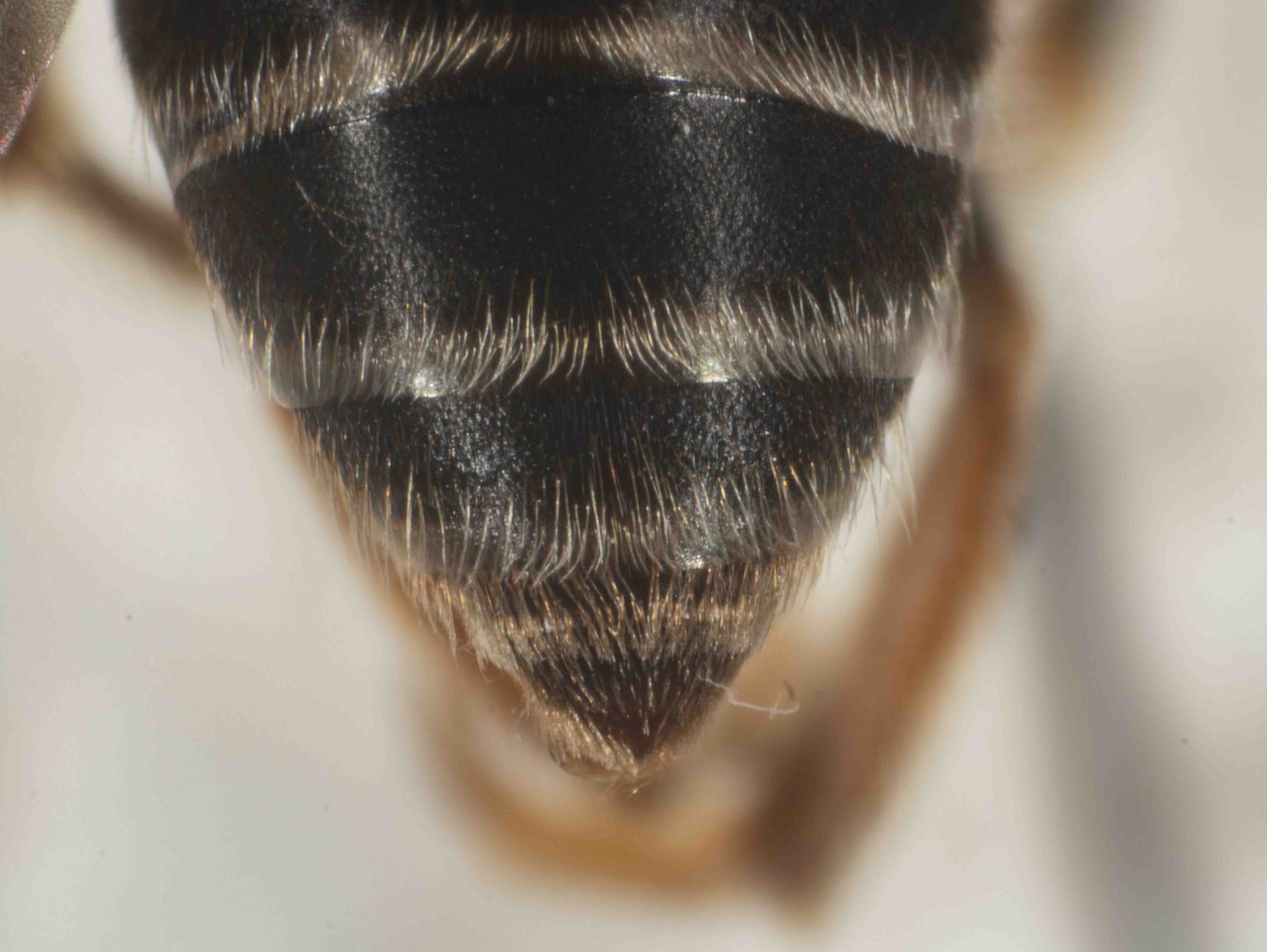
Key step 13: Metasoma with narrow silver or pale gold integumental bands –> Step 14
May be distinguished from sympatric males of T. fuscus by width of metasomal bands (they are gold and “not narrow” in T. fuscus).
Description male holotype T. orientalis includes:
“T1–5 with bands usually narrow, silver, sometimes of moderate width and occasionally gold”
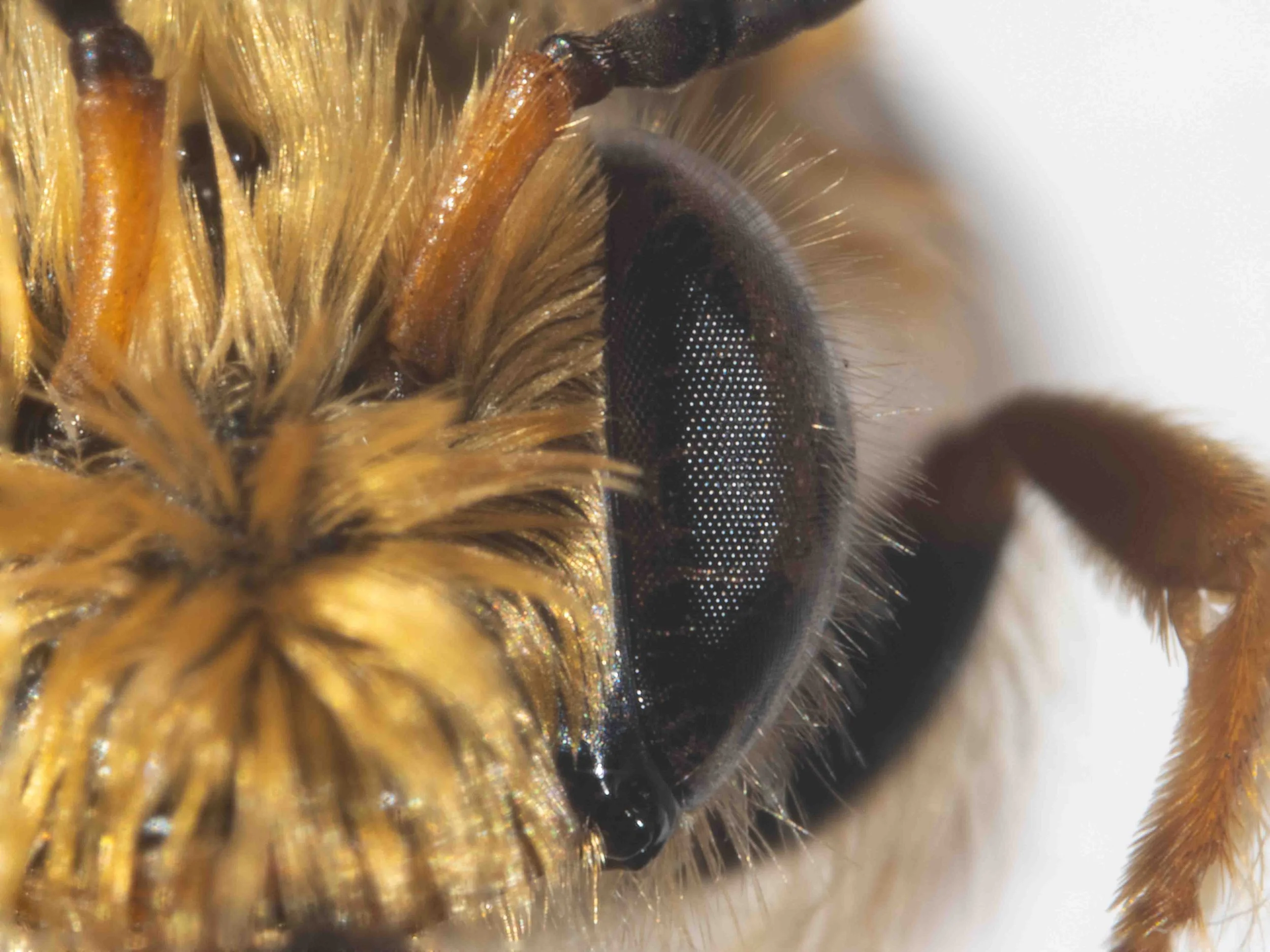
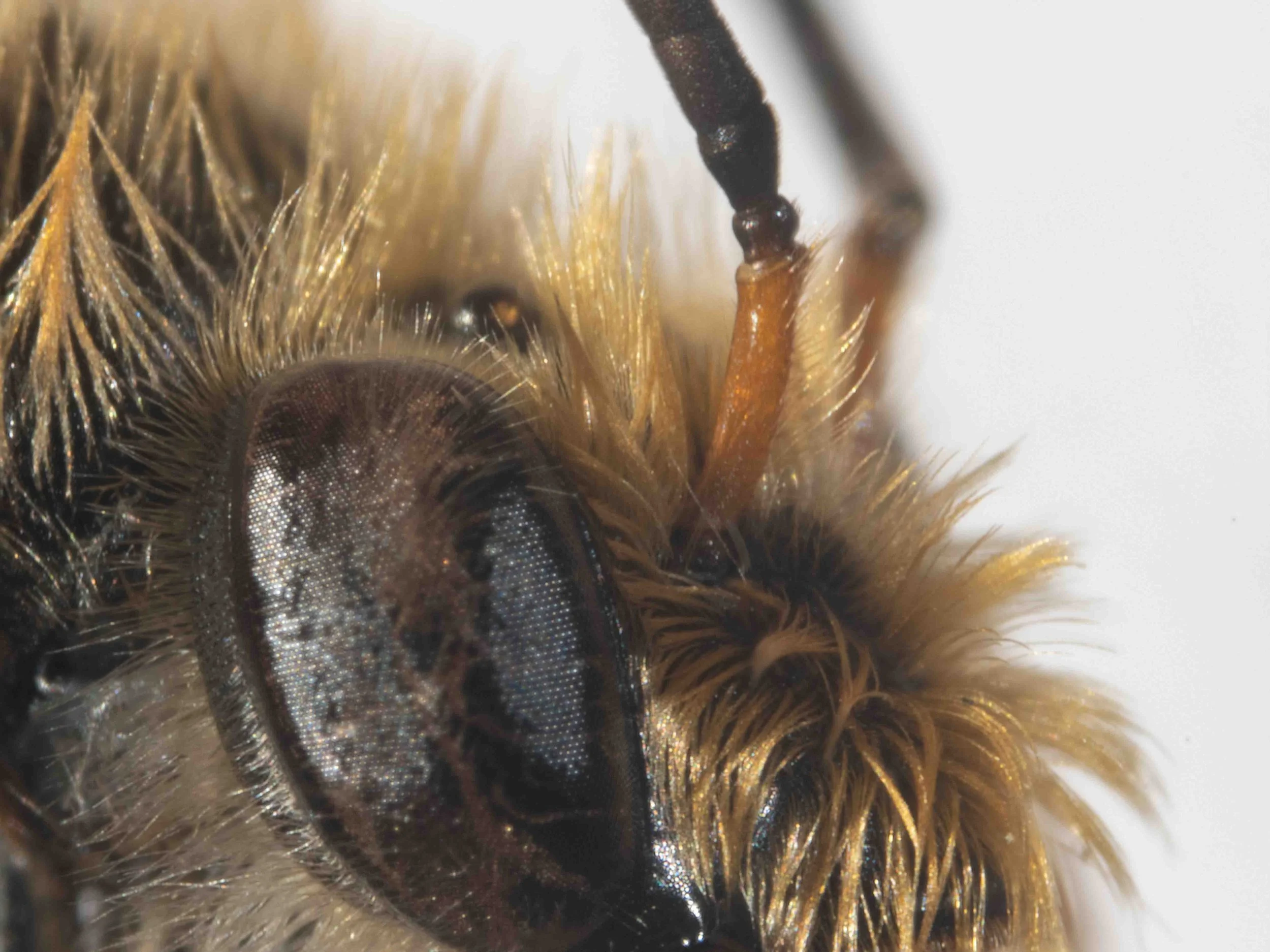
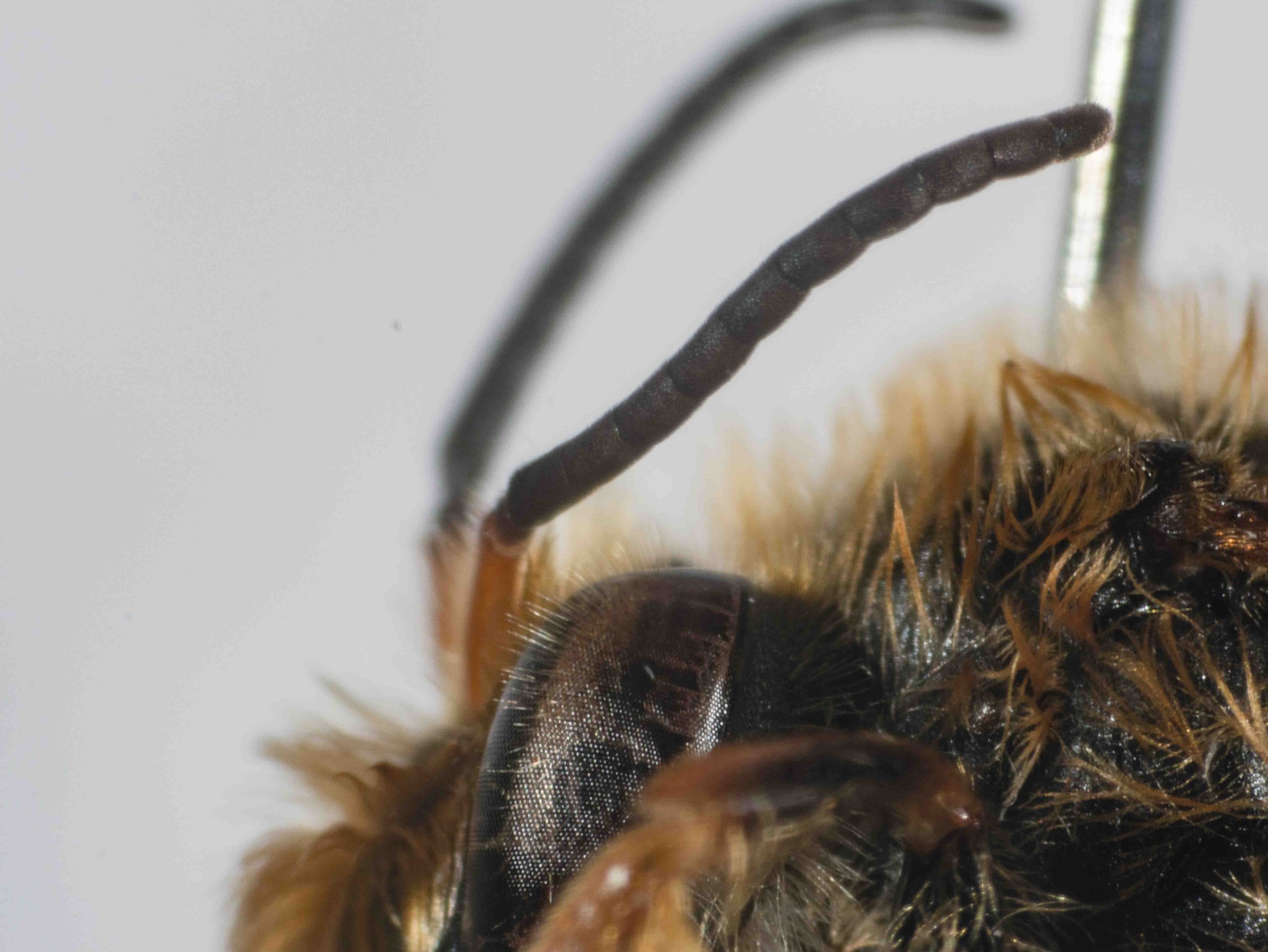
Key step 1: Eyes hairy (cf ‘with minute setae only’) –> 2
Key step 2: Scape mostly orange-brown, occasionally dark brown (cf ‘scape mostly black’) –> 3
Key step 15: Scape clear orange brown (cf ‘with brown suffusions’) –> T. orientalis
May be distinguished from sympatric males of T. tenuiculus by scape colour (is has brown infusions in T. tenuiculus).
Description male holotype T. orientalis includes:
“Face densely and scutum closely covered with long, finely-branched, bright orange hair.”
Key step 1: Eyes hairy (not ‘with minute setae only’) –> 2
Key step 9: Gena with open to close hair (cf ‘Gena with dense white hair’) –> 12
Key step 15: Scape clear orange brown (cf ‘with brown suffusions’) –> T. orientalis
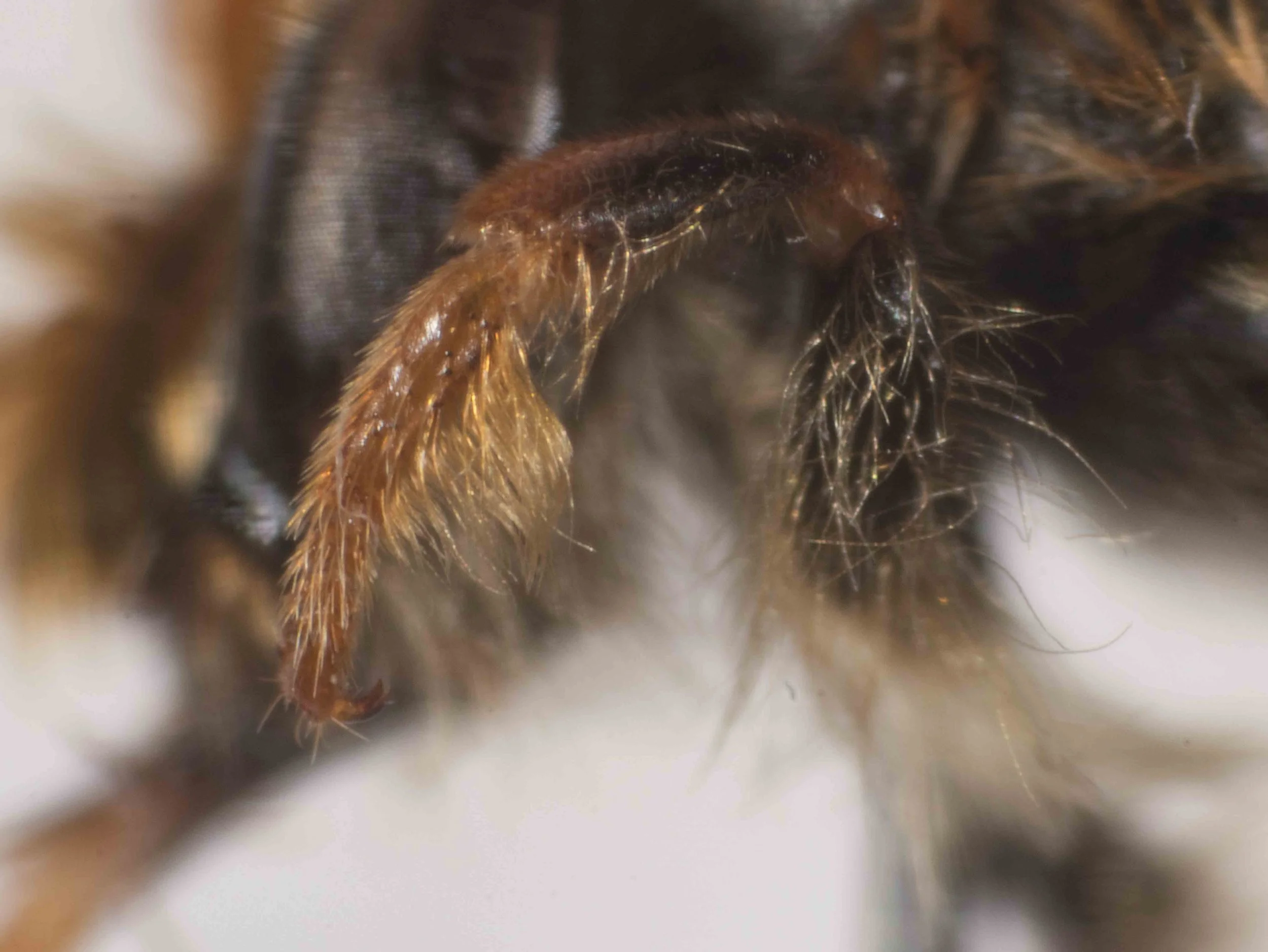
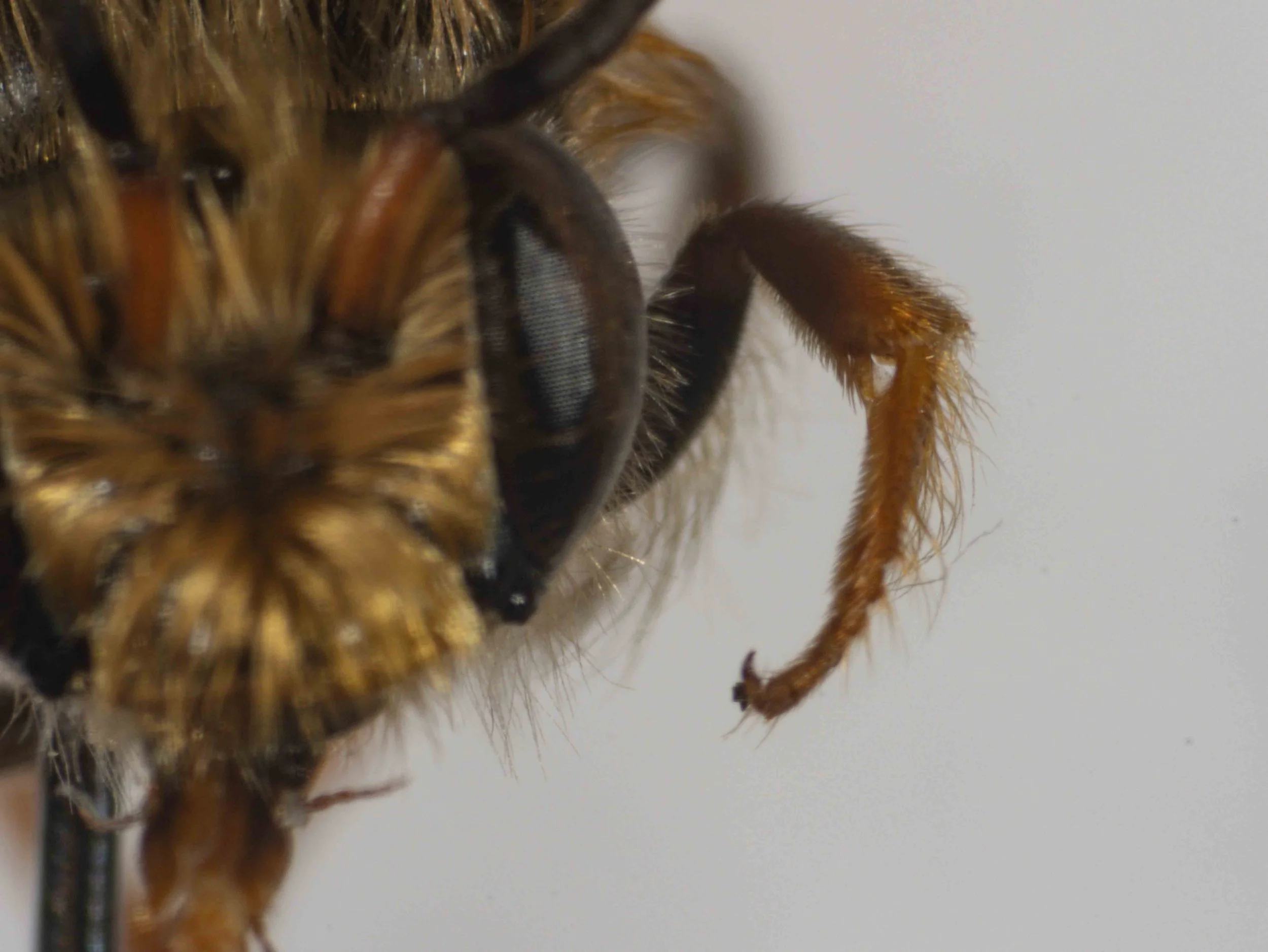
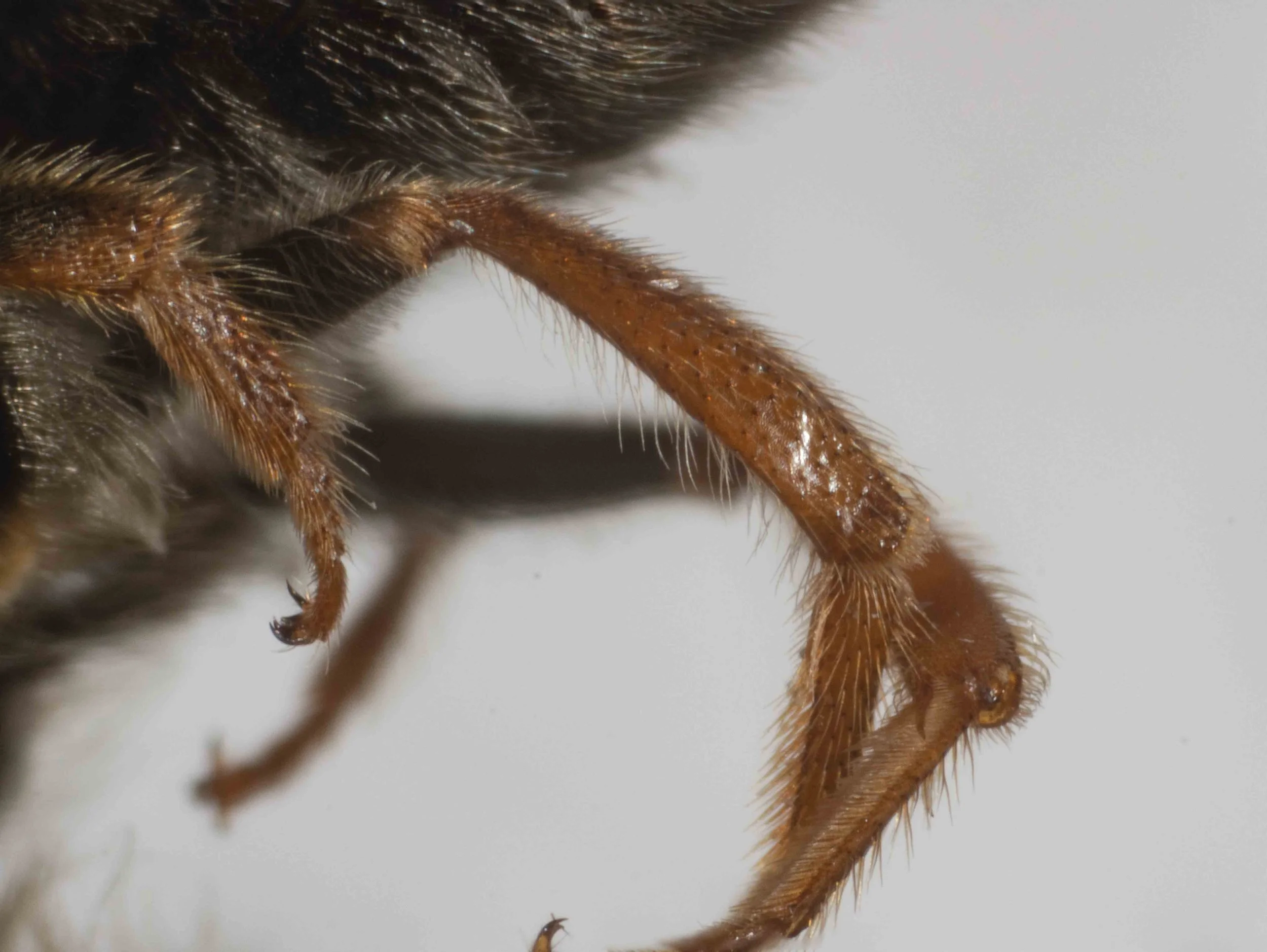
Key step 15: Fore basitarsal plume long, distinct (not short, weak) –> T. orientalis.
May be distinguished from sympatric males of T. aeratus by the presence of the plume (there is no such plume in T. aeratus), and from T. tenuiculus by the length and strength of the plume hairs (they are short and weak in T. tenuiculus).
Description male holotype T. orientalis includes:
“Fore basitarsus with tapered plume of golden hair”
Front leg, showing plume of basitarsus as viewed anteriorly
Mid tibia medially suffused with dark brown.
May be distinguished from sympatric males of T. venustus by “the extensive areas of dark brown on mid tibia” (it is clear orange-brown in T. venustus).
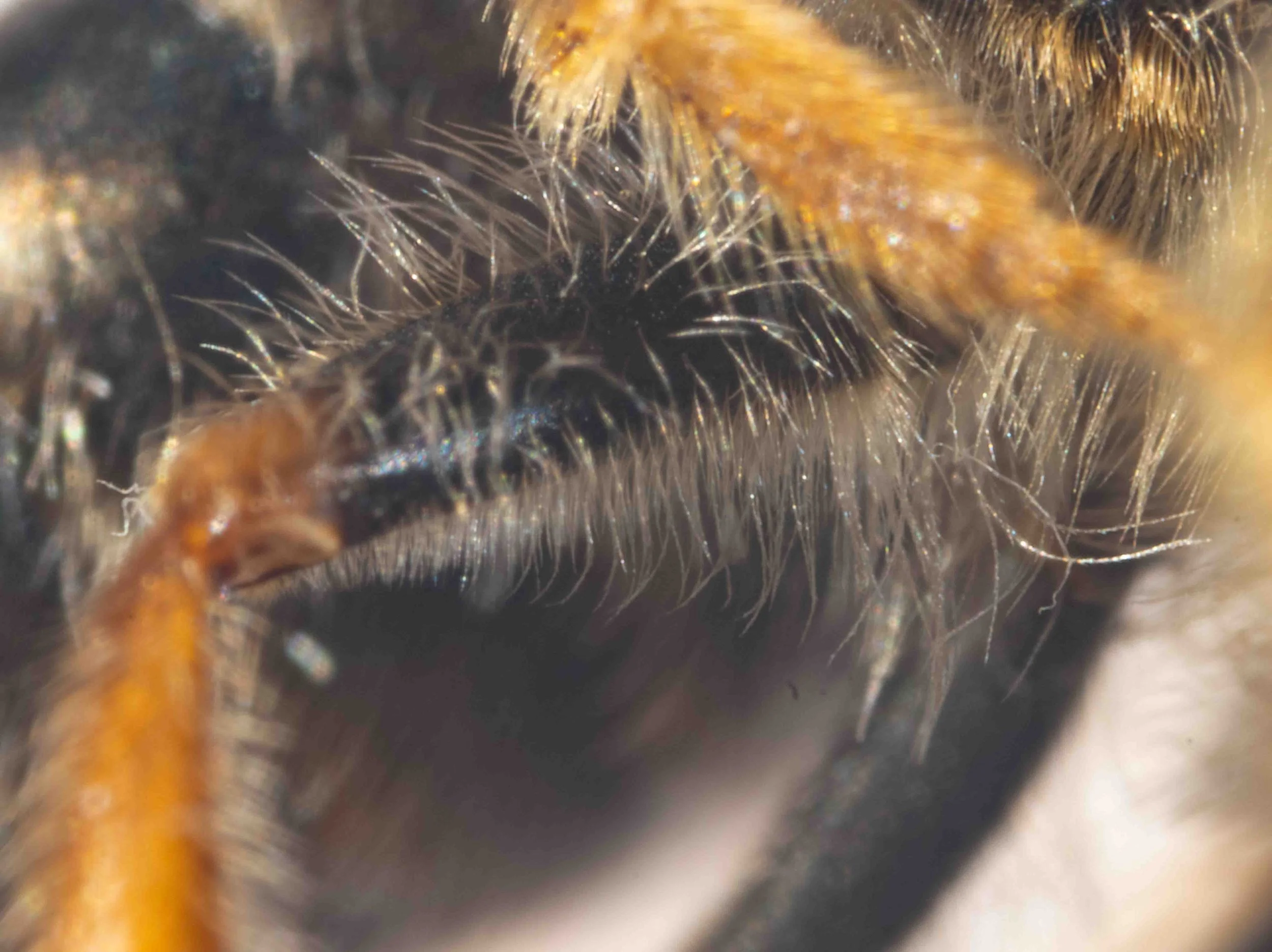
hind femora without the dense, long hair characteristic of T. capillosus
hind tibia, without the long fringe of hair characteristic of T. venustus
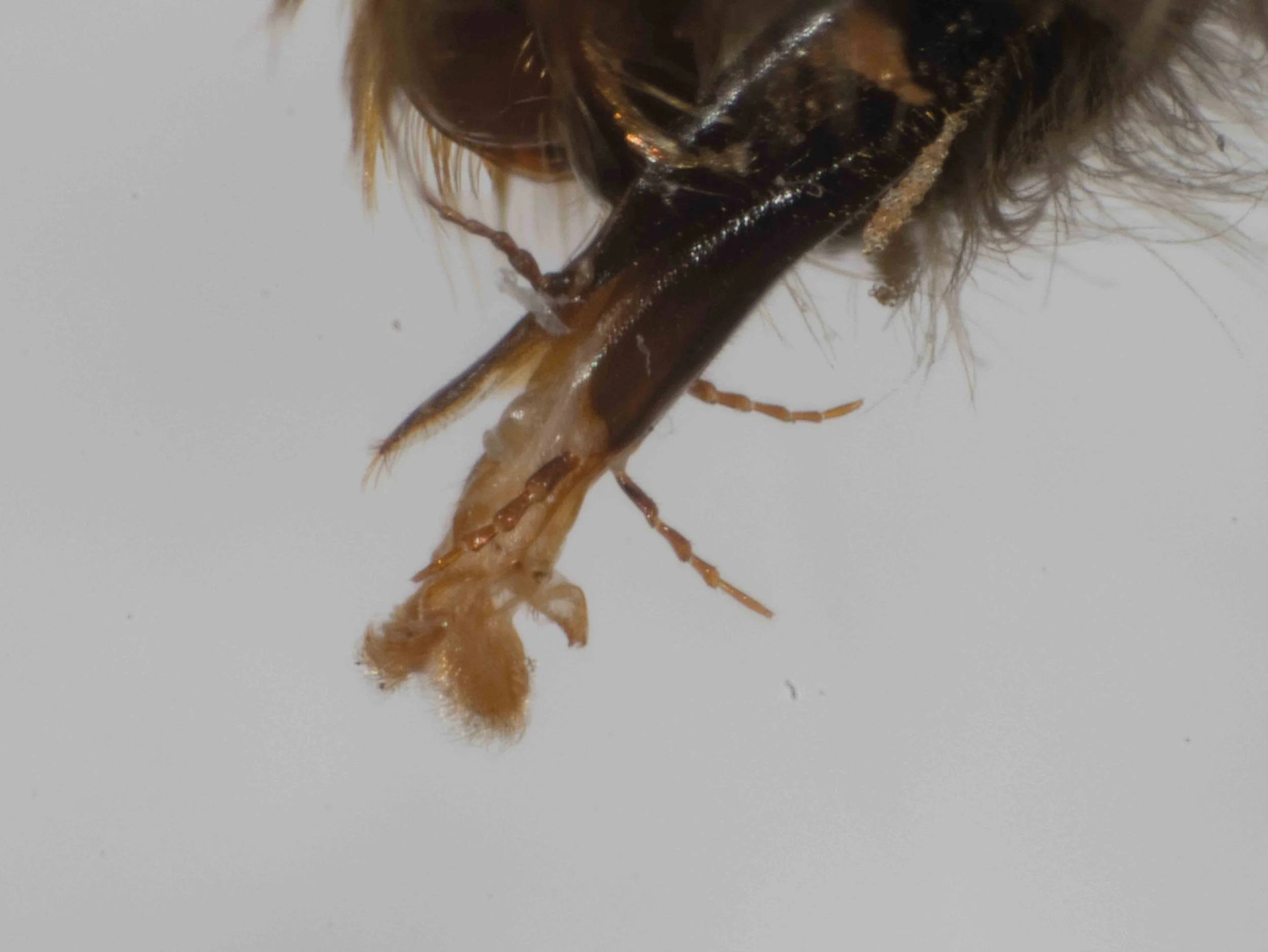
Apex of metasoma, showing T4-T7
Note 11 flagellomeres = male
Mouthparts, showing the proboscis characteristic of Colletidae, with its mop-like glossa