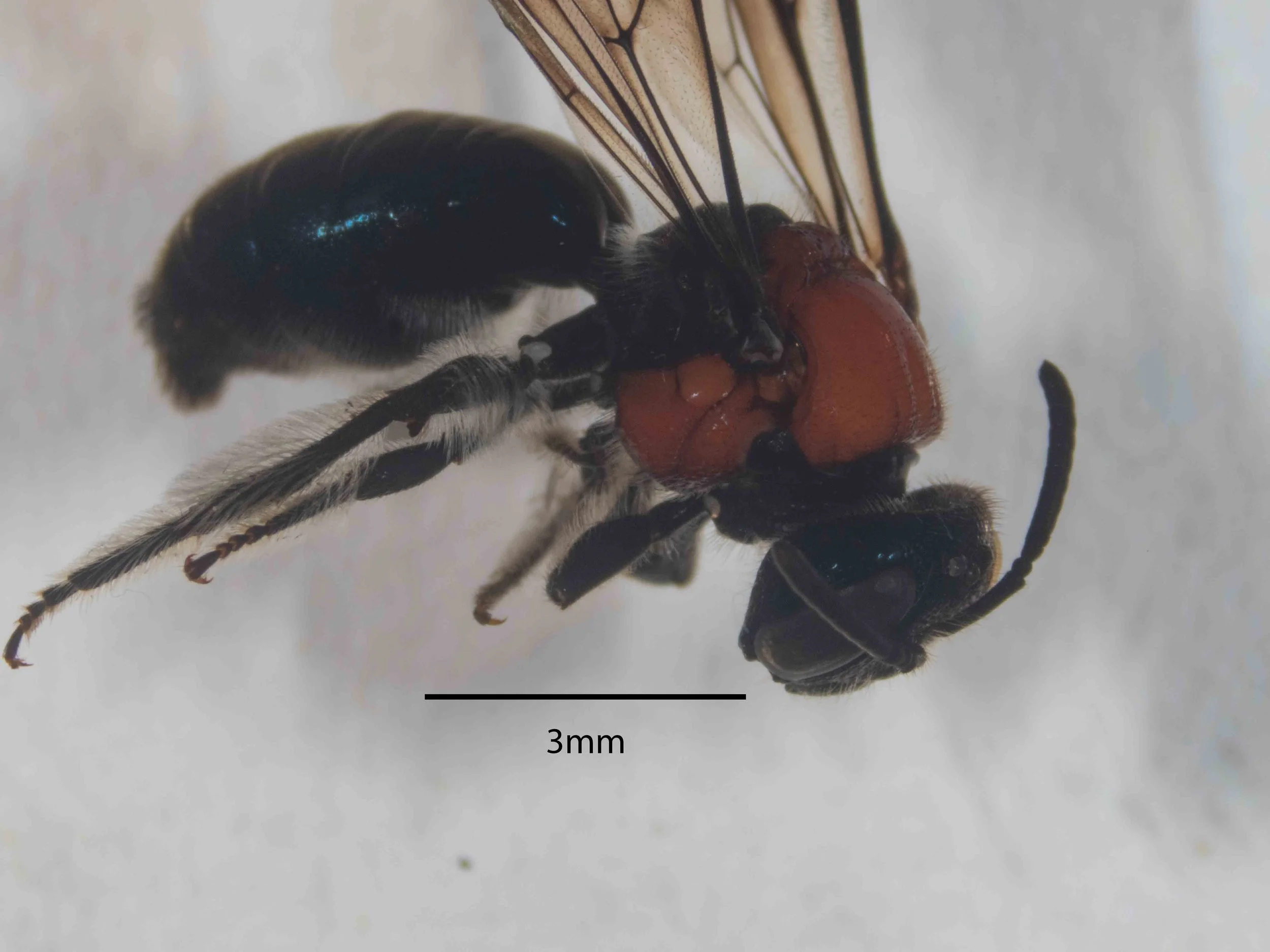
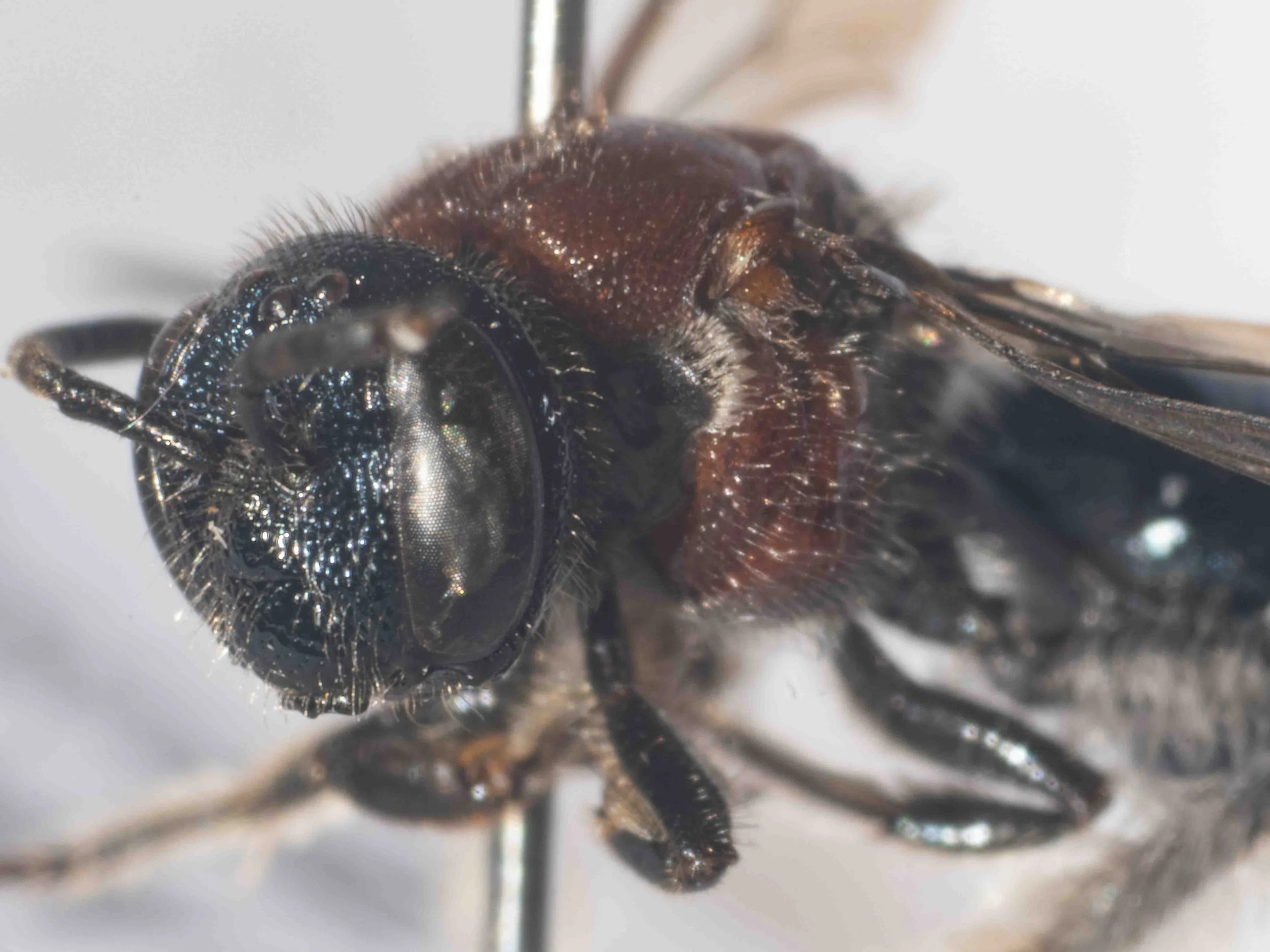
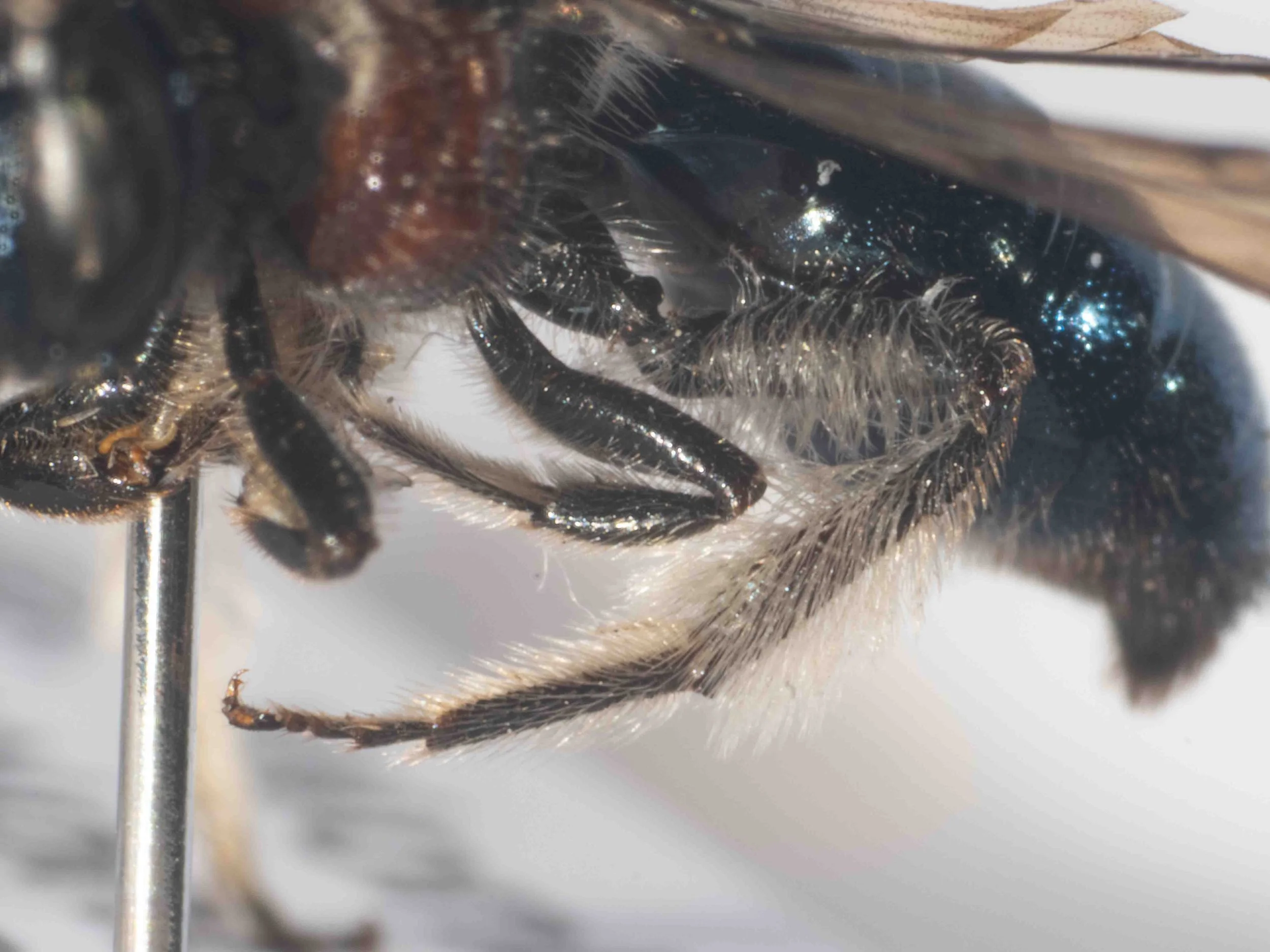
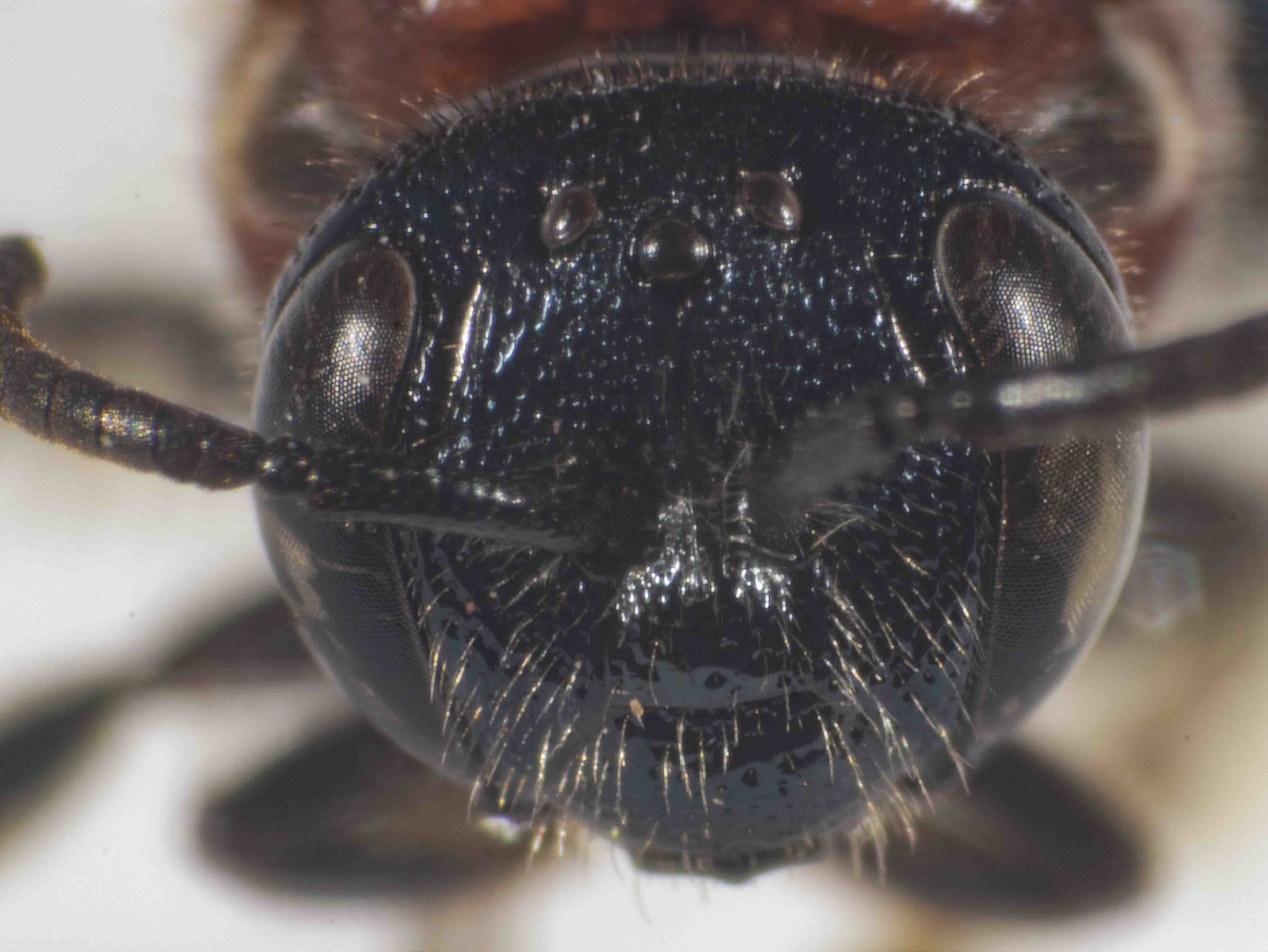
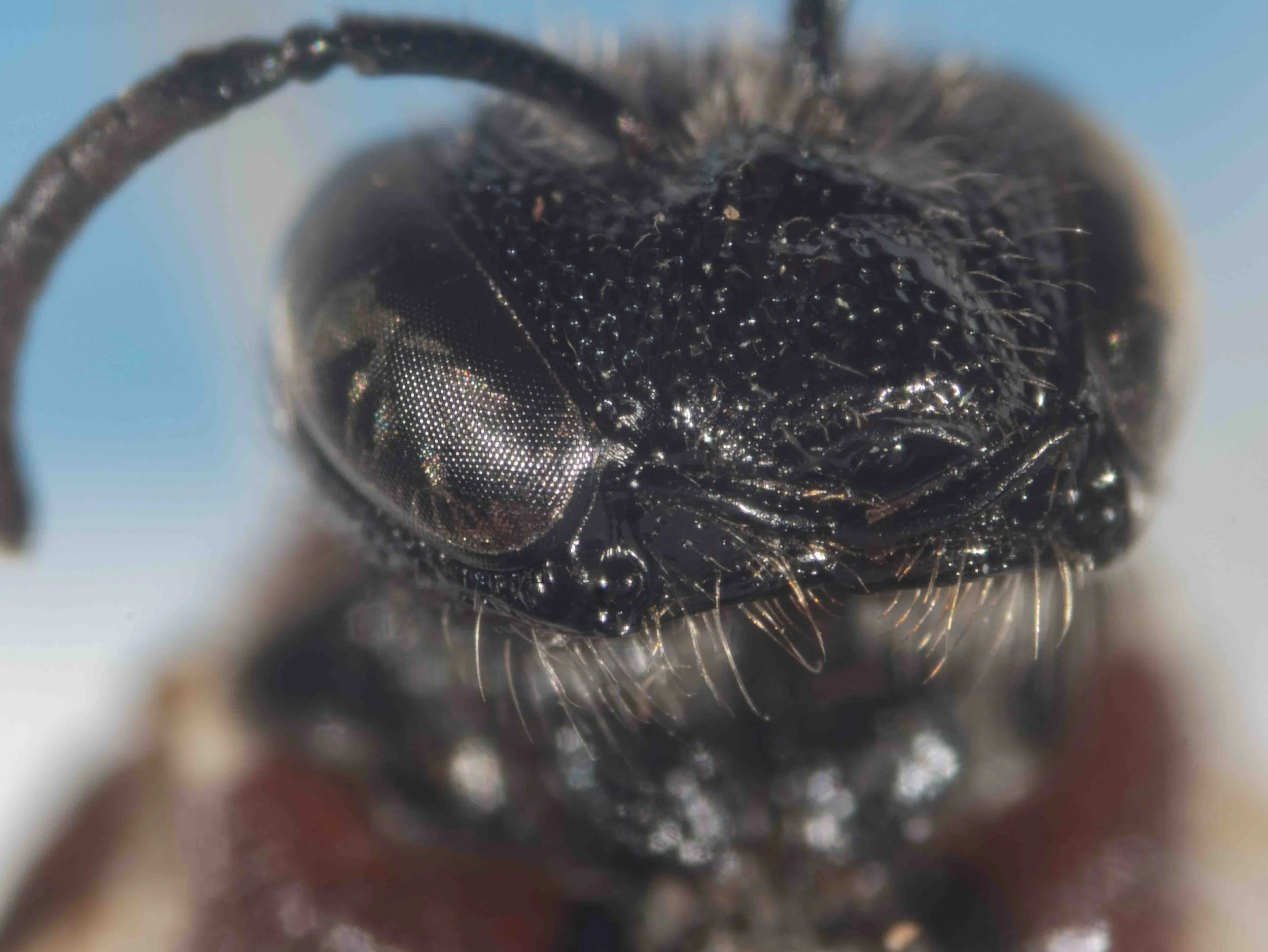
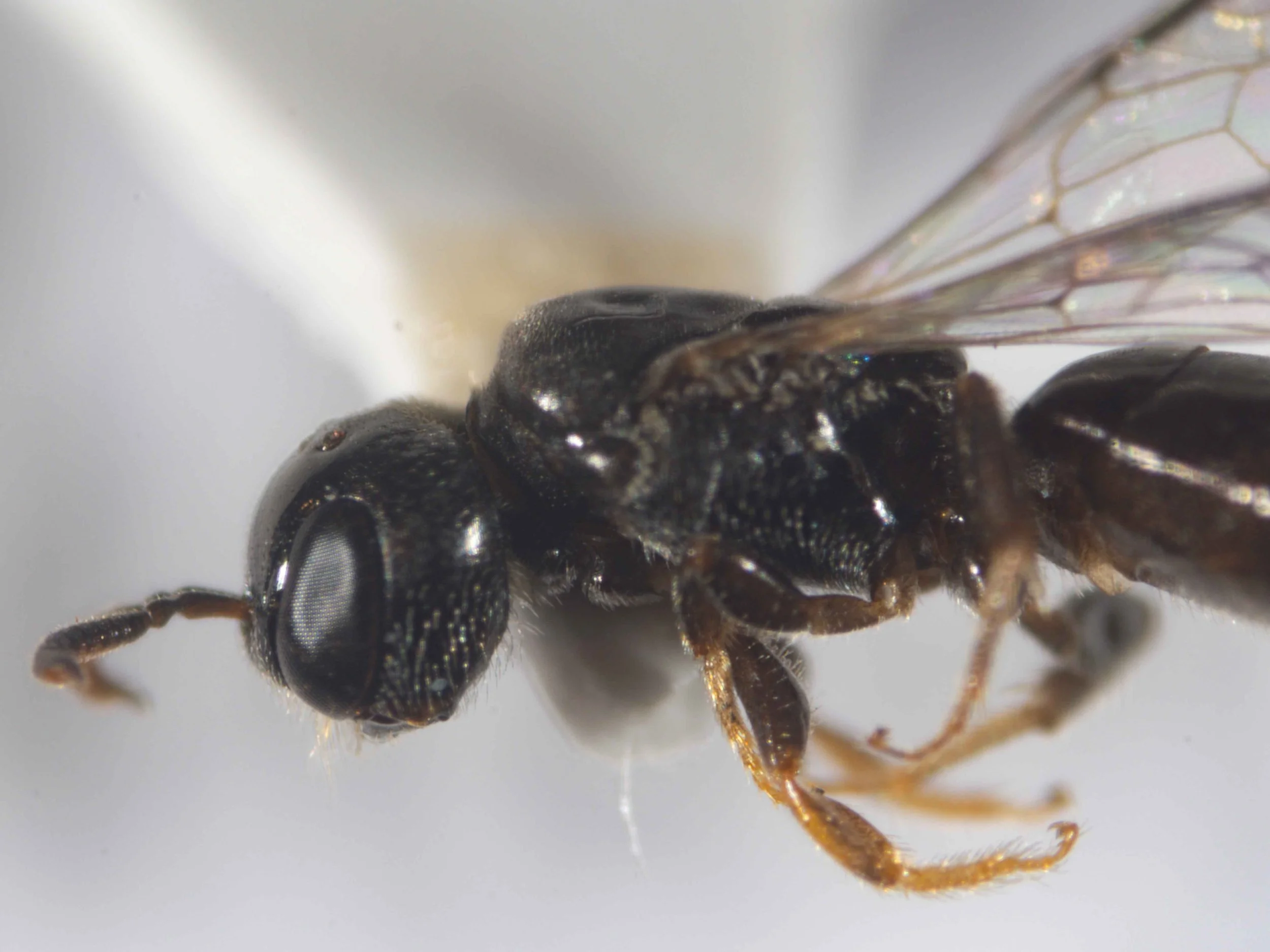
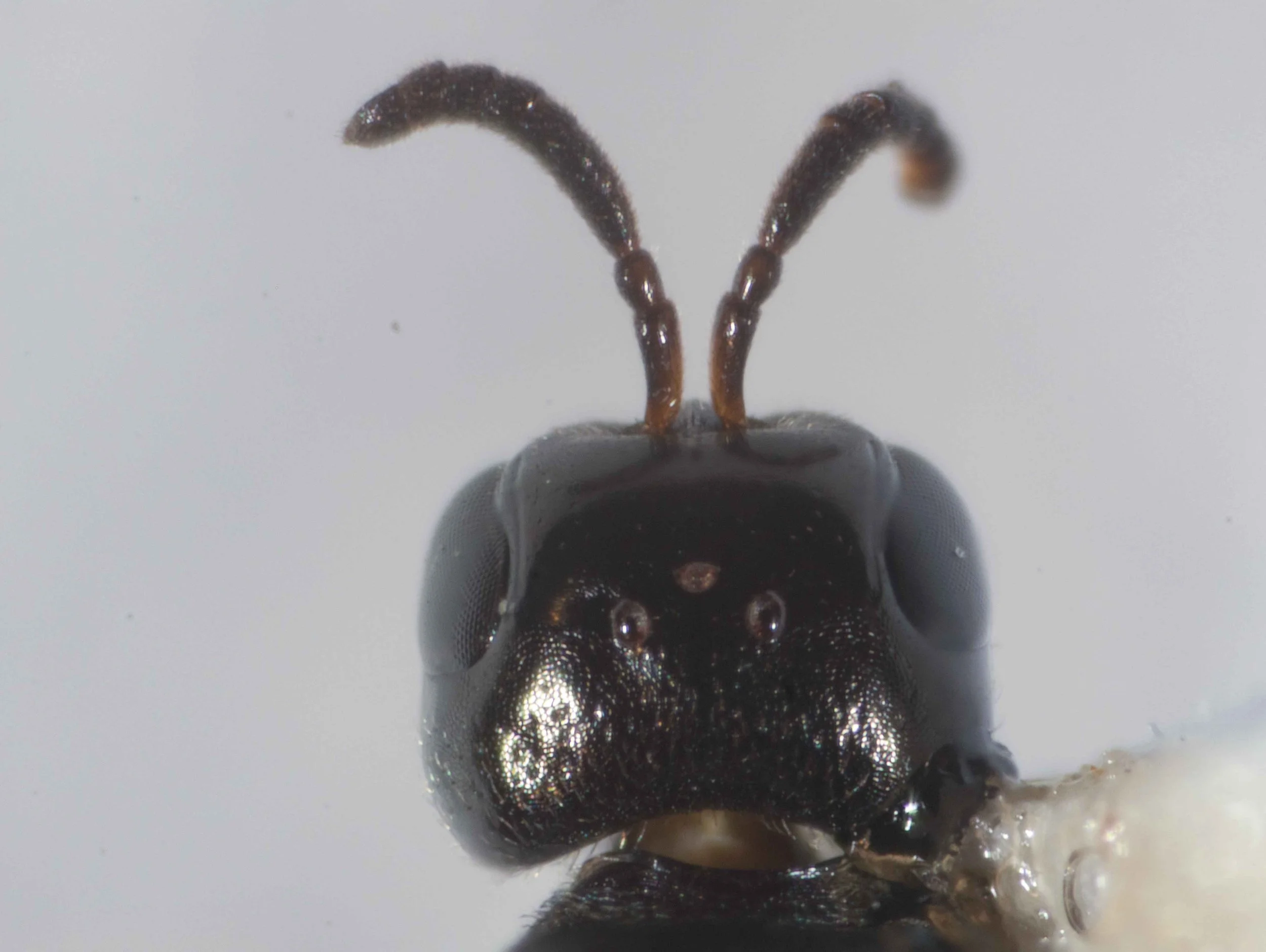
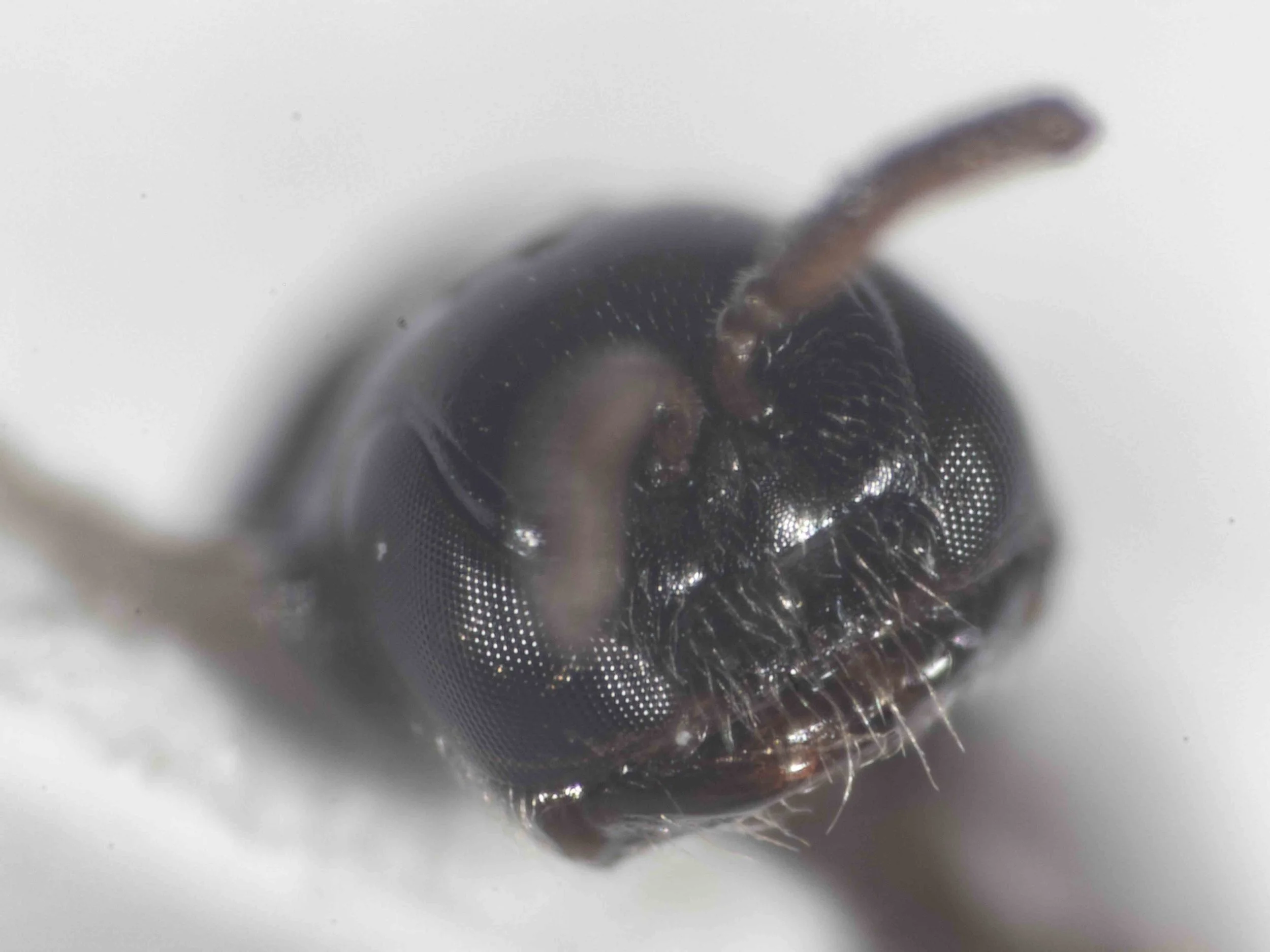
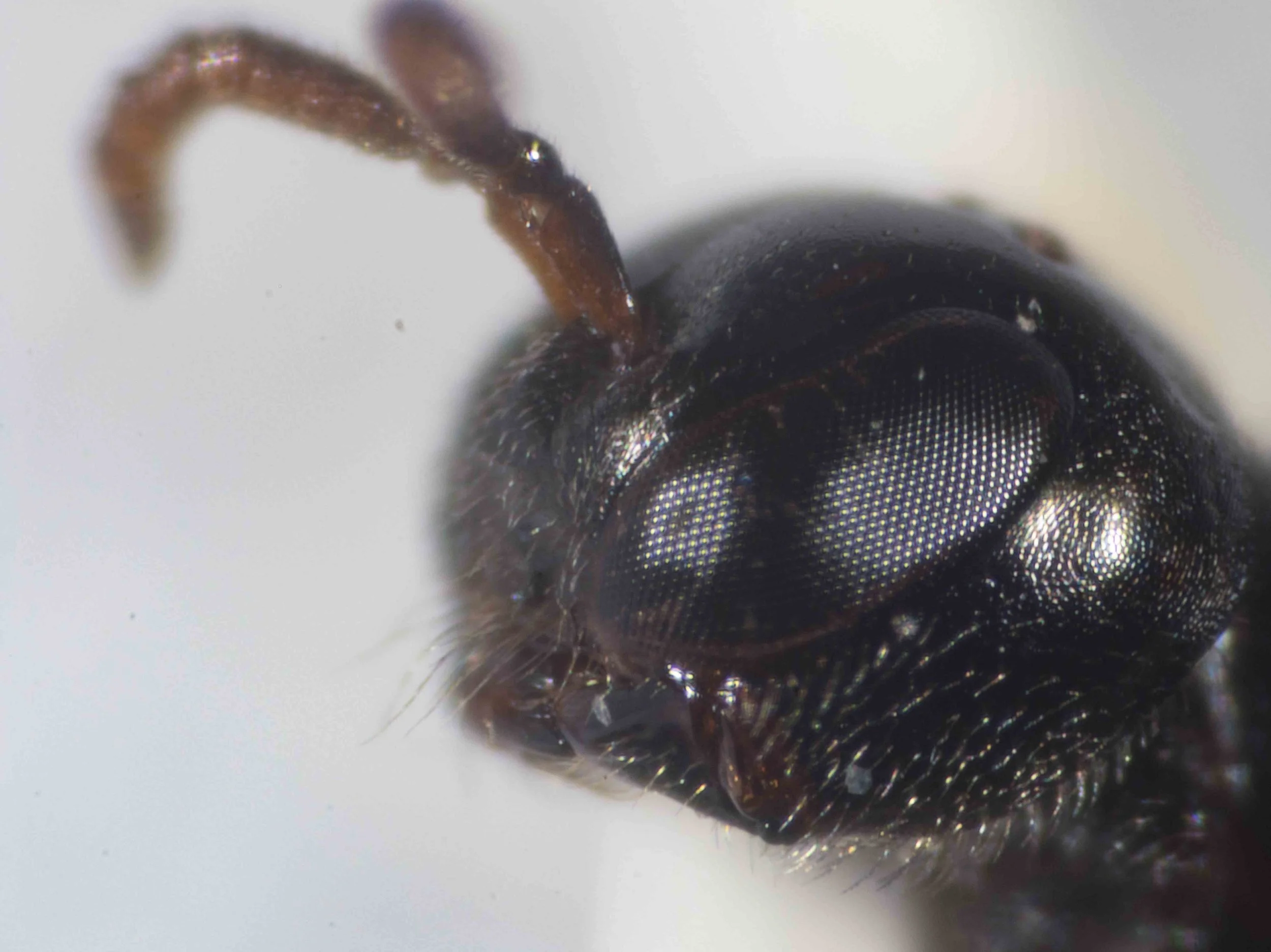
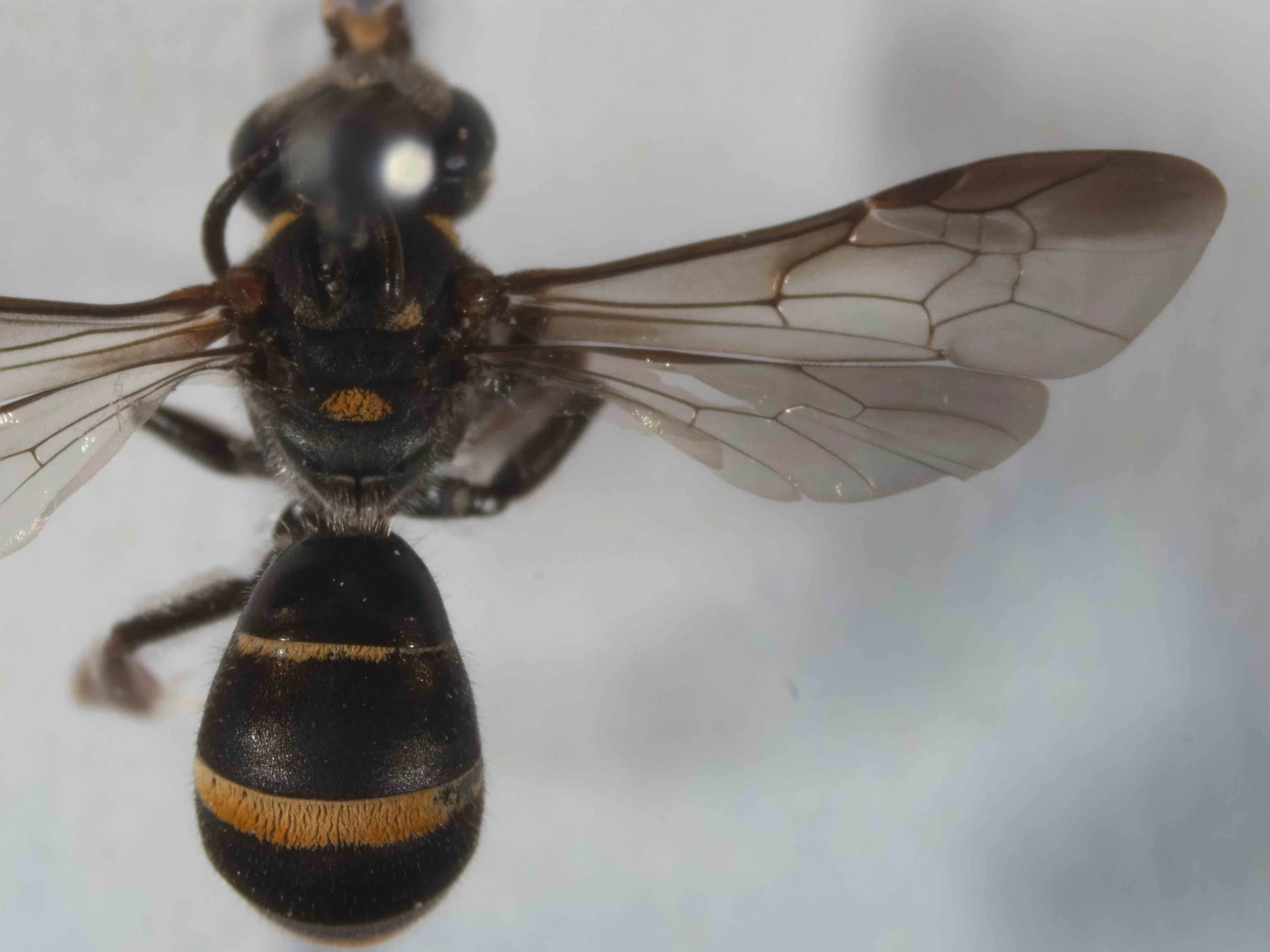
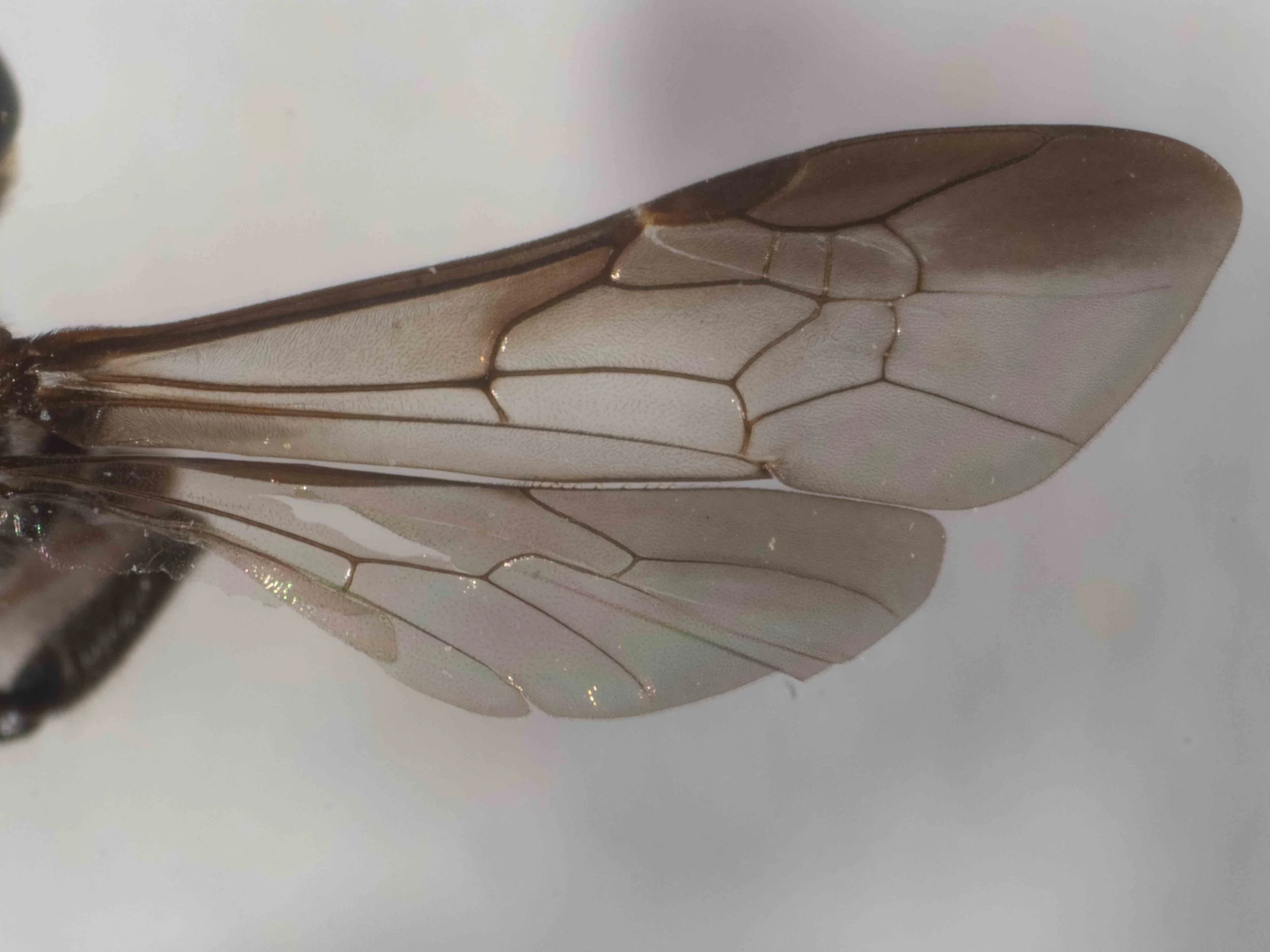
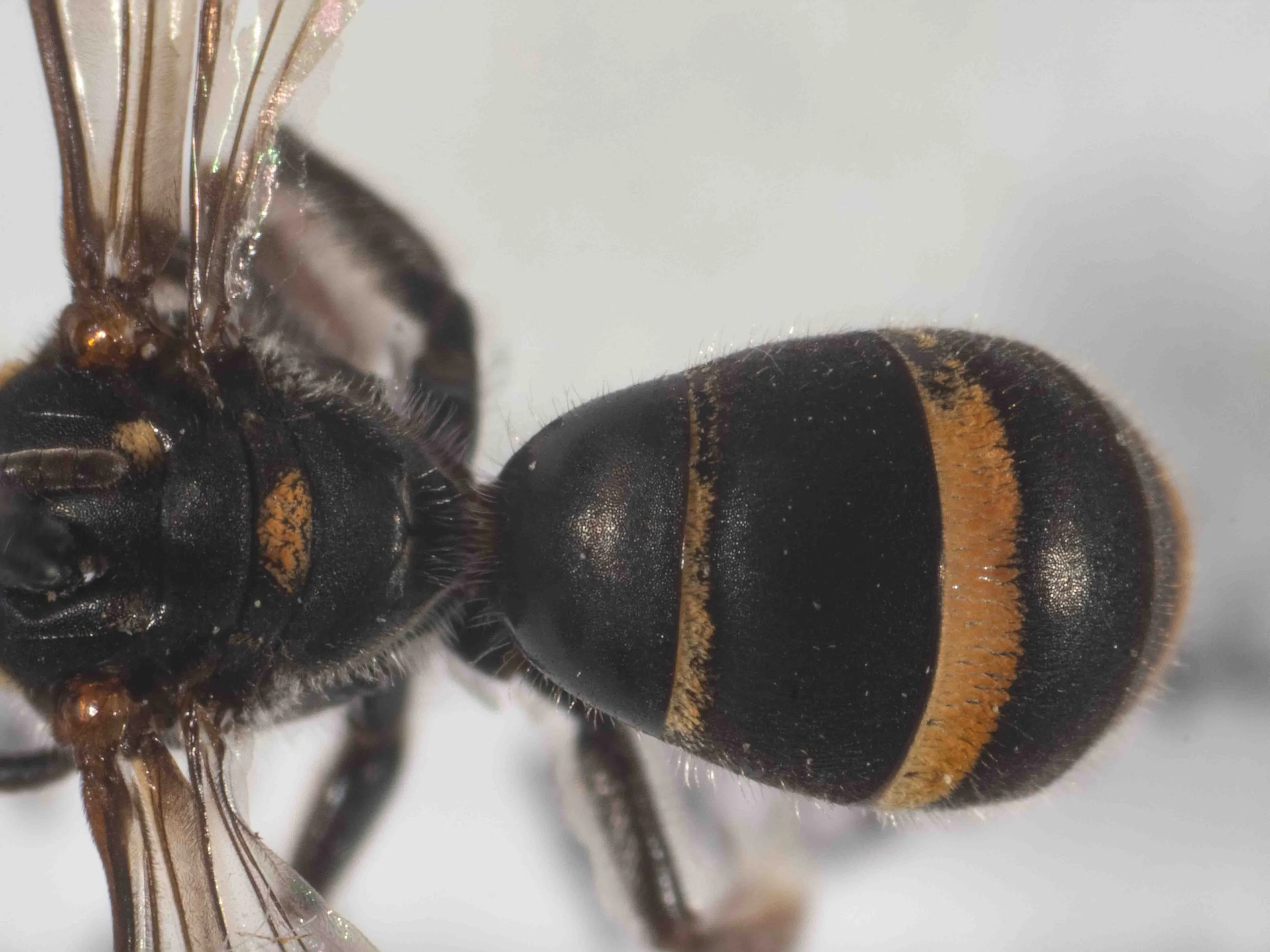
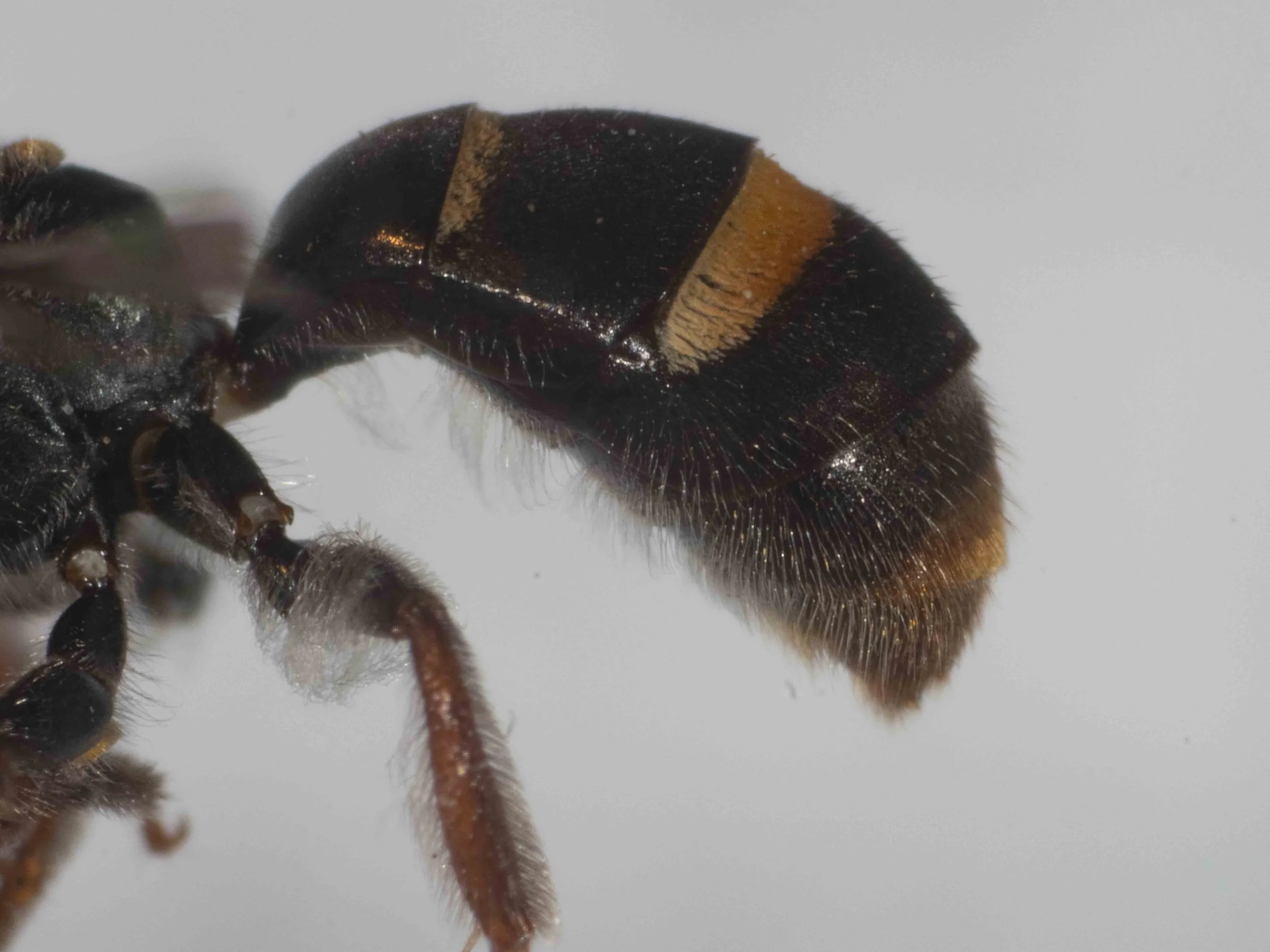
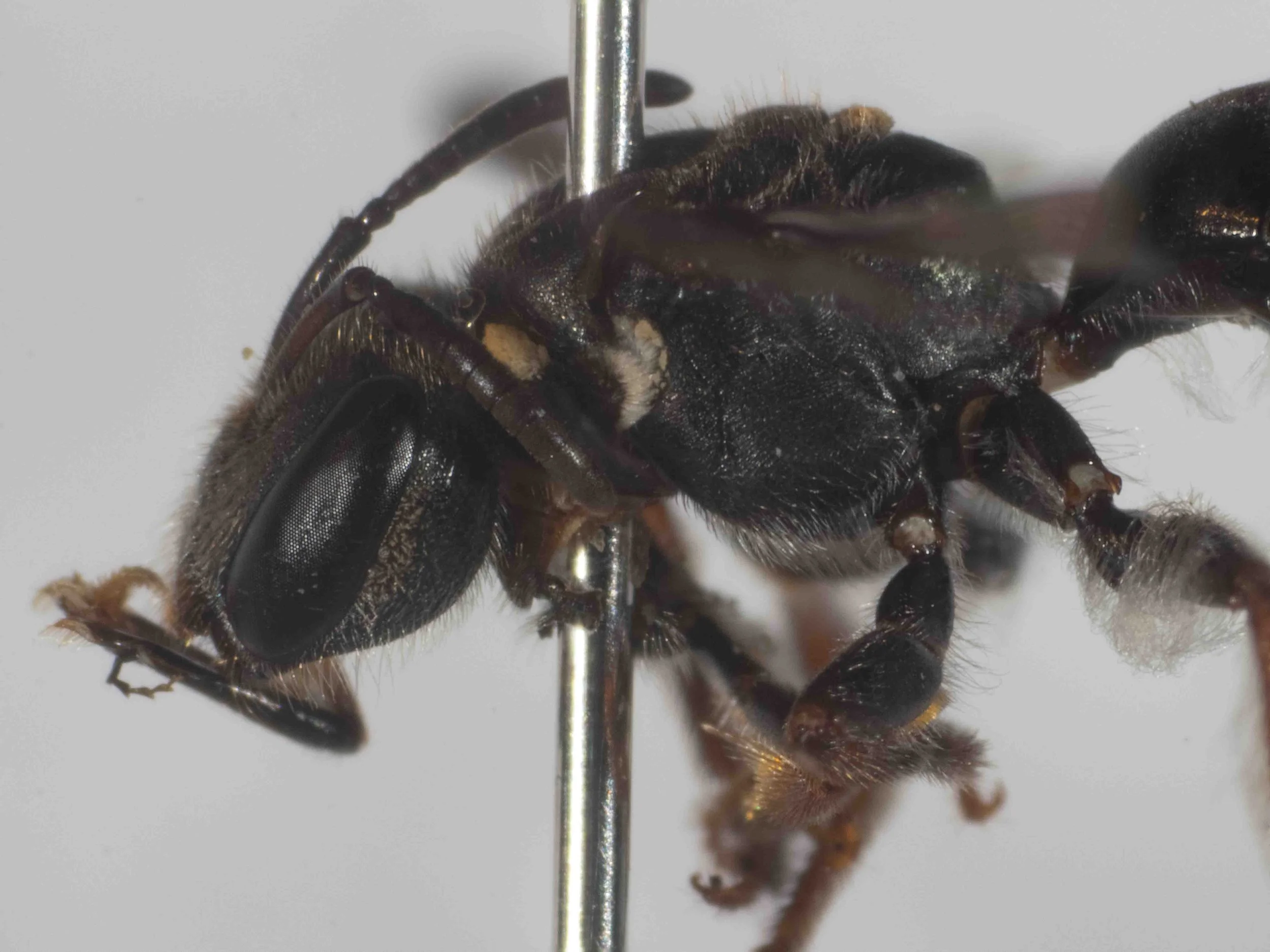
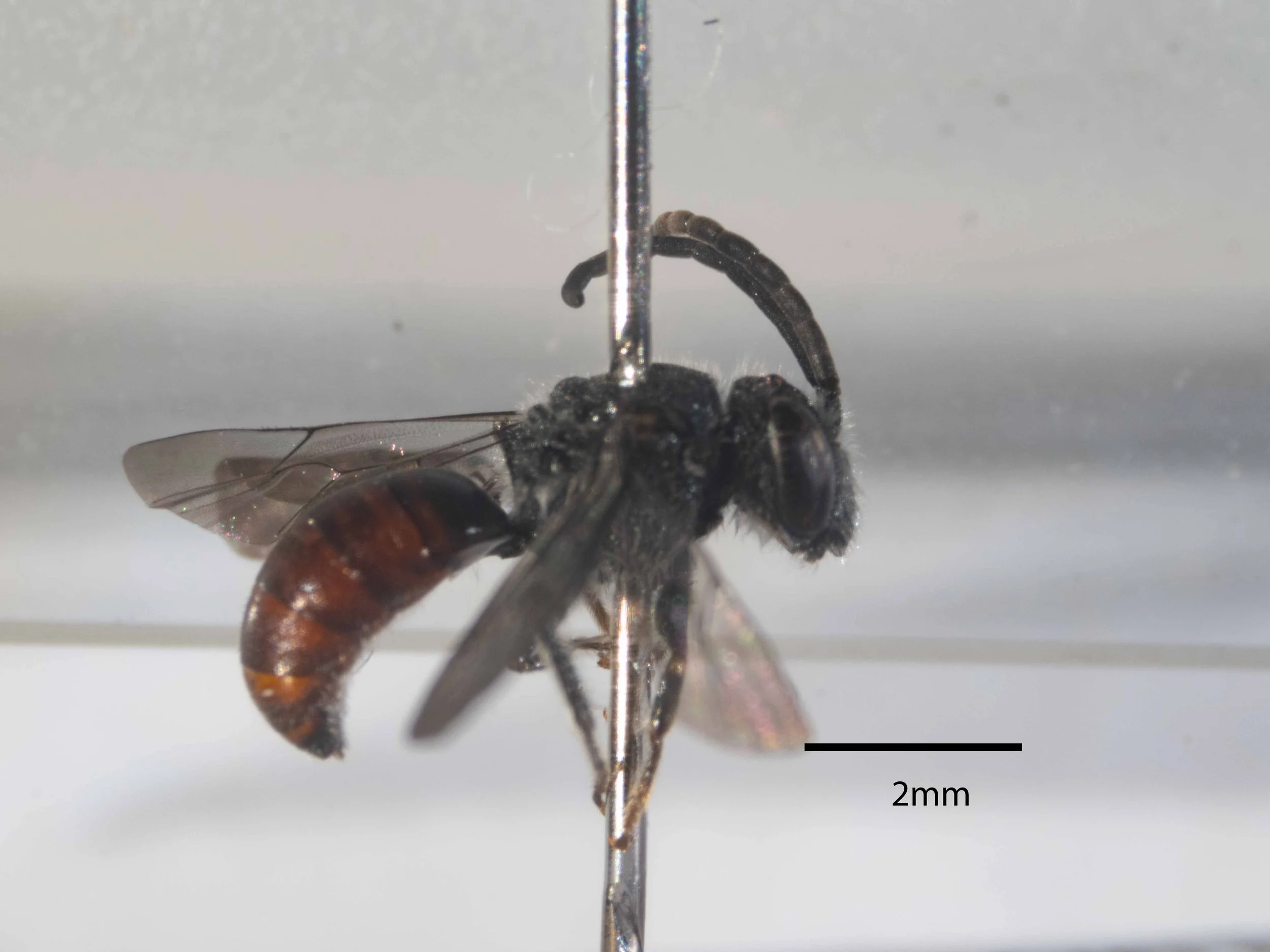
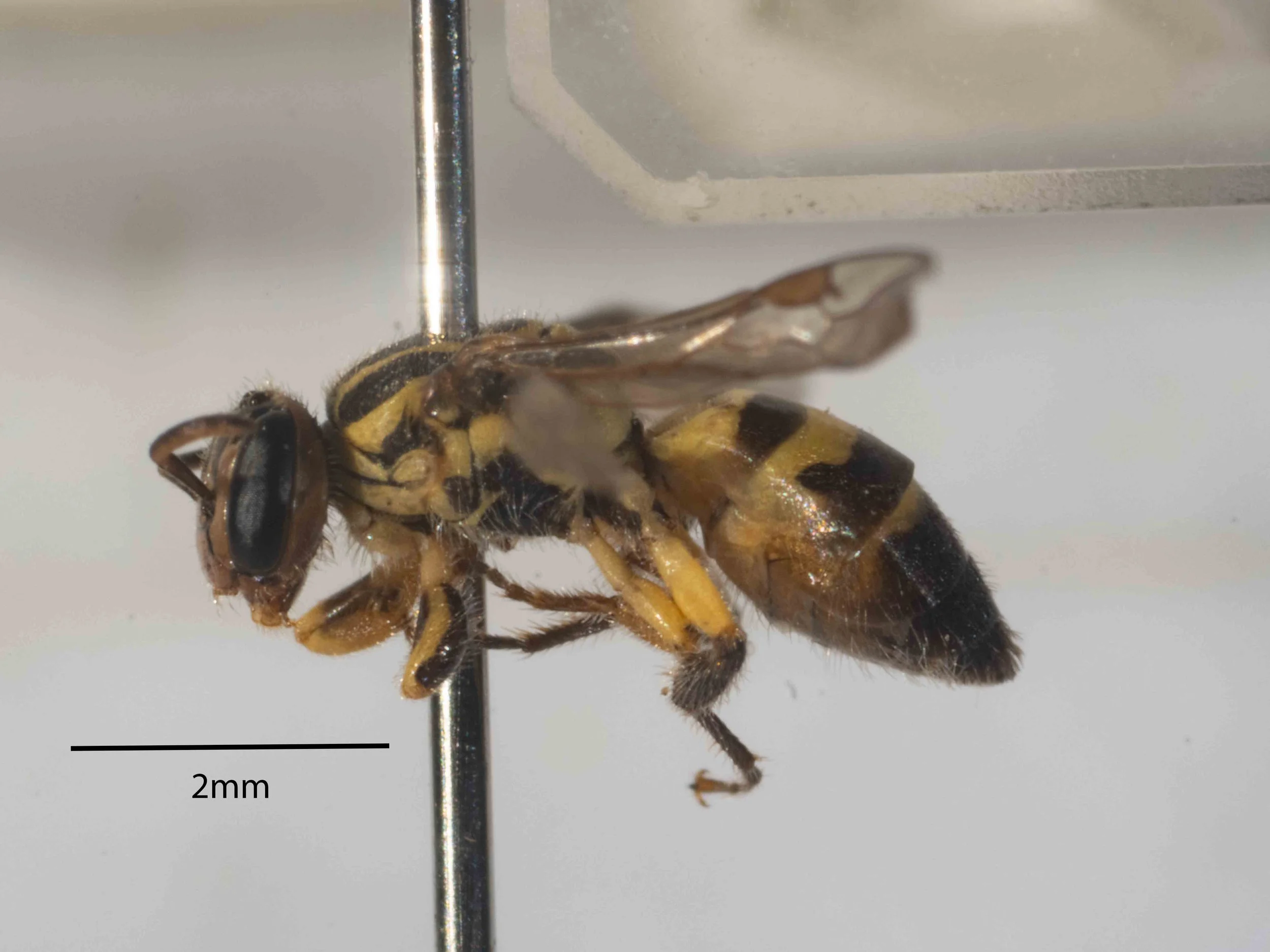
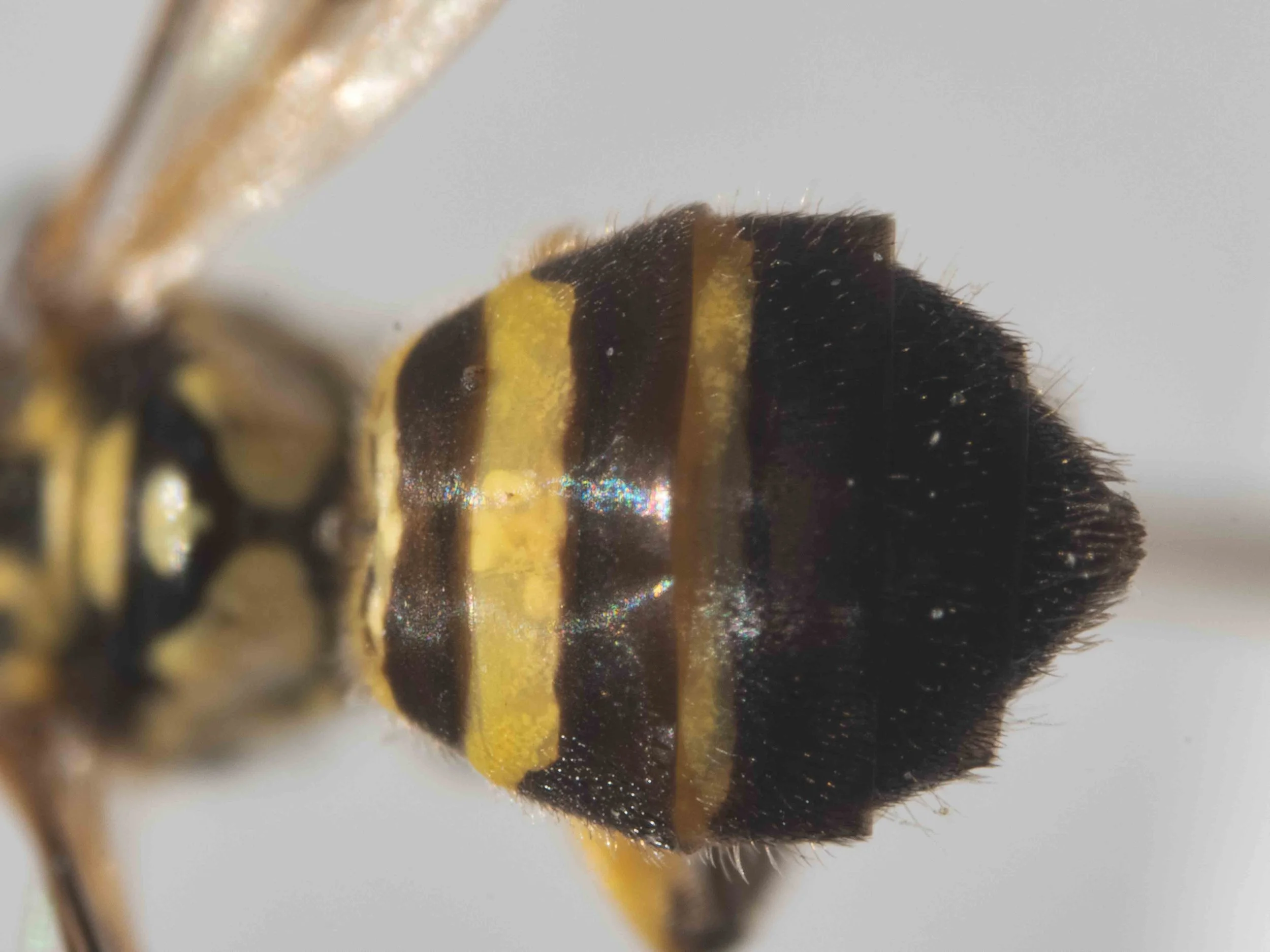
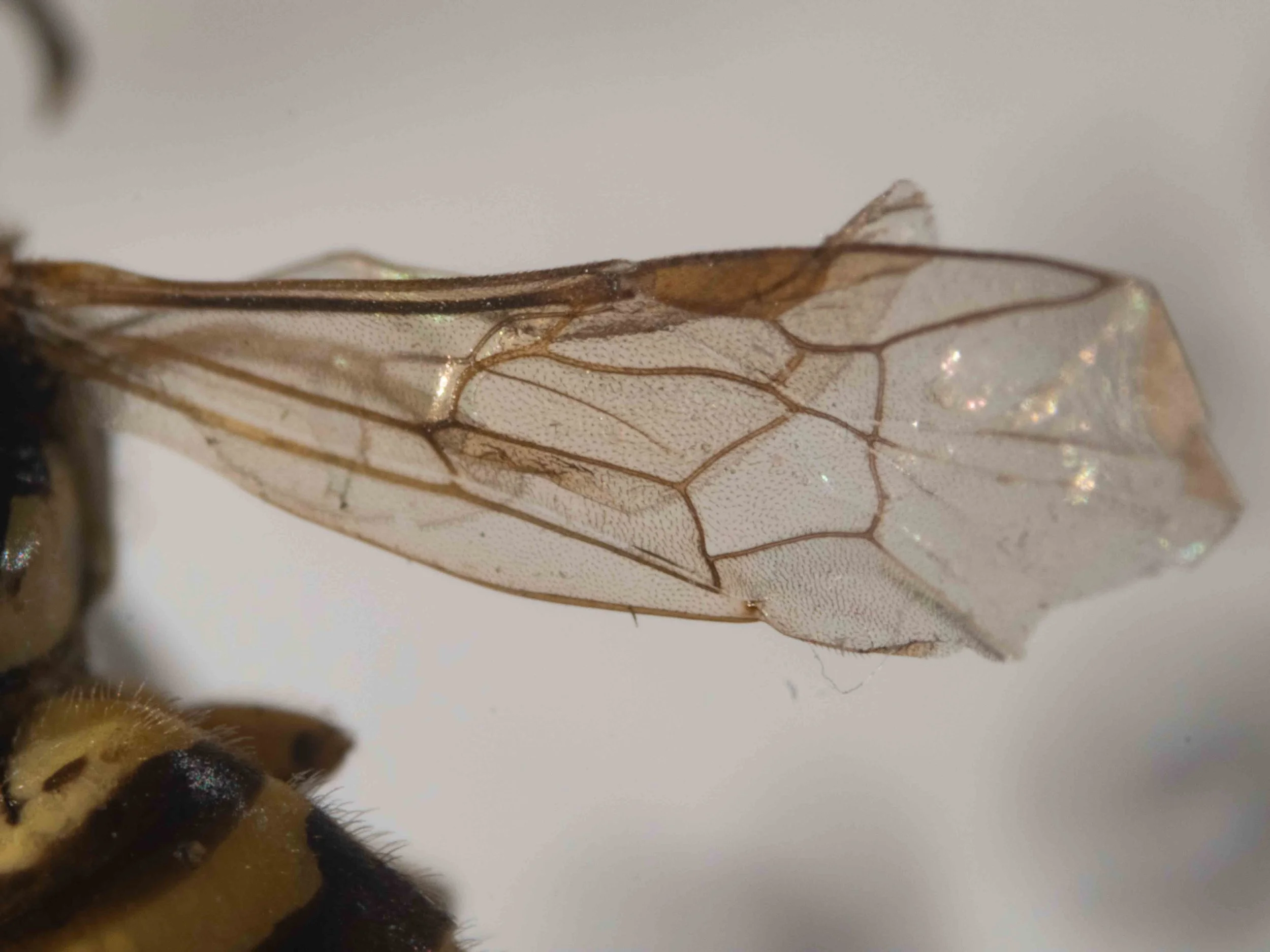
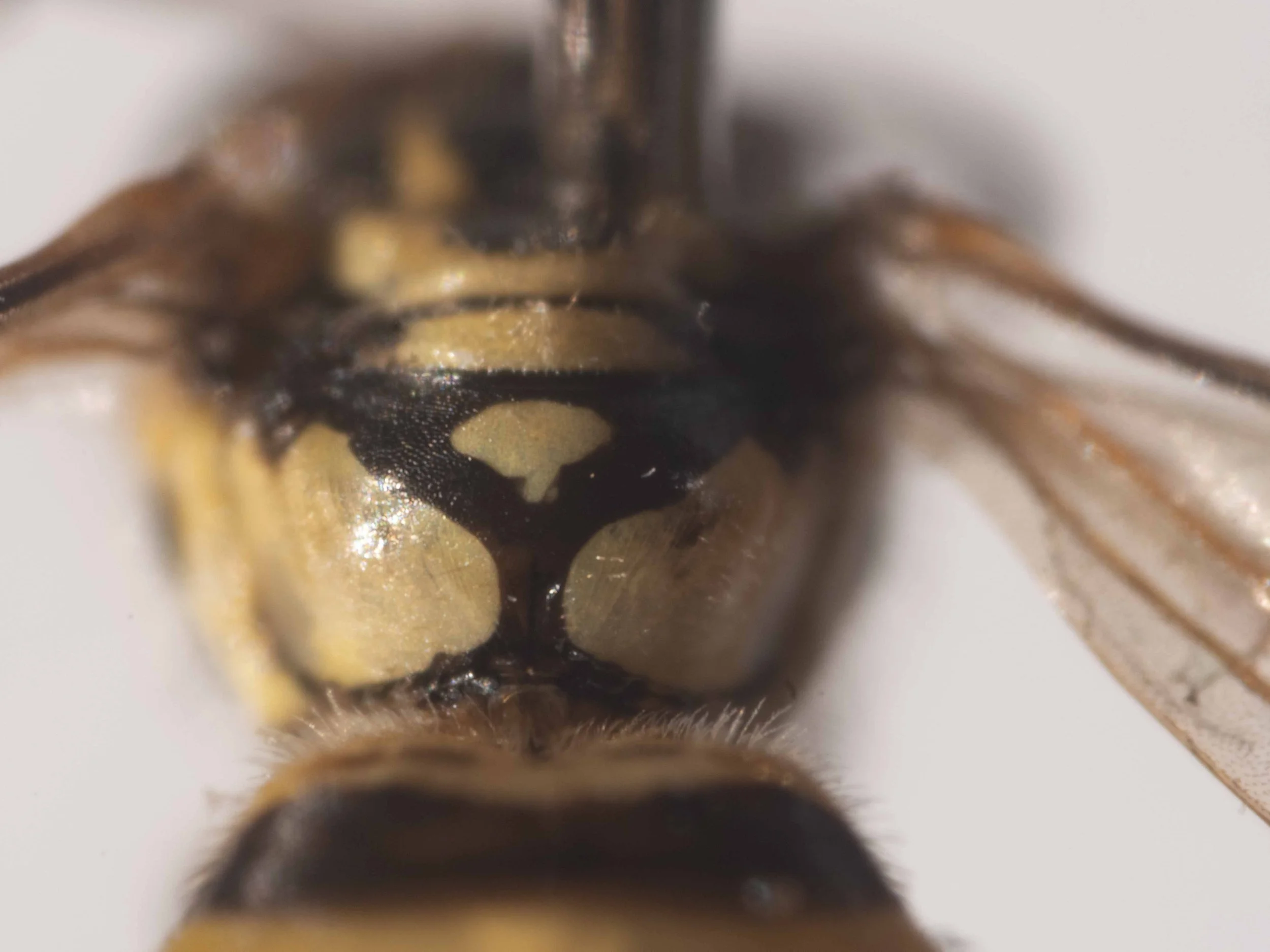
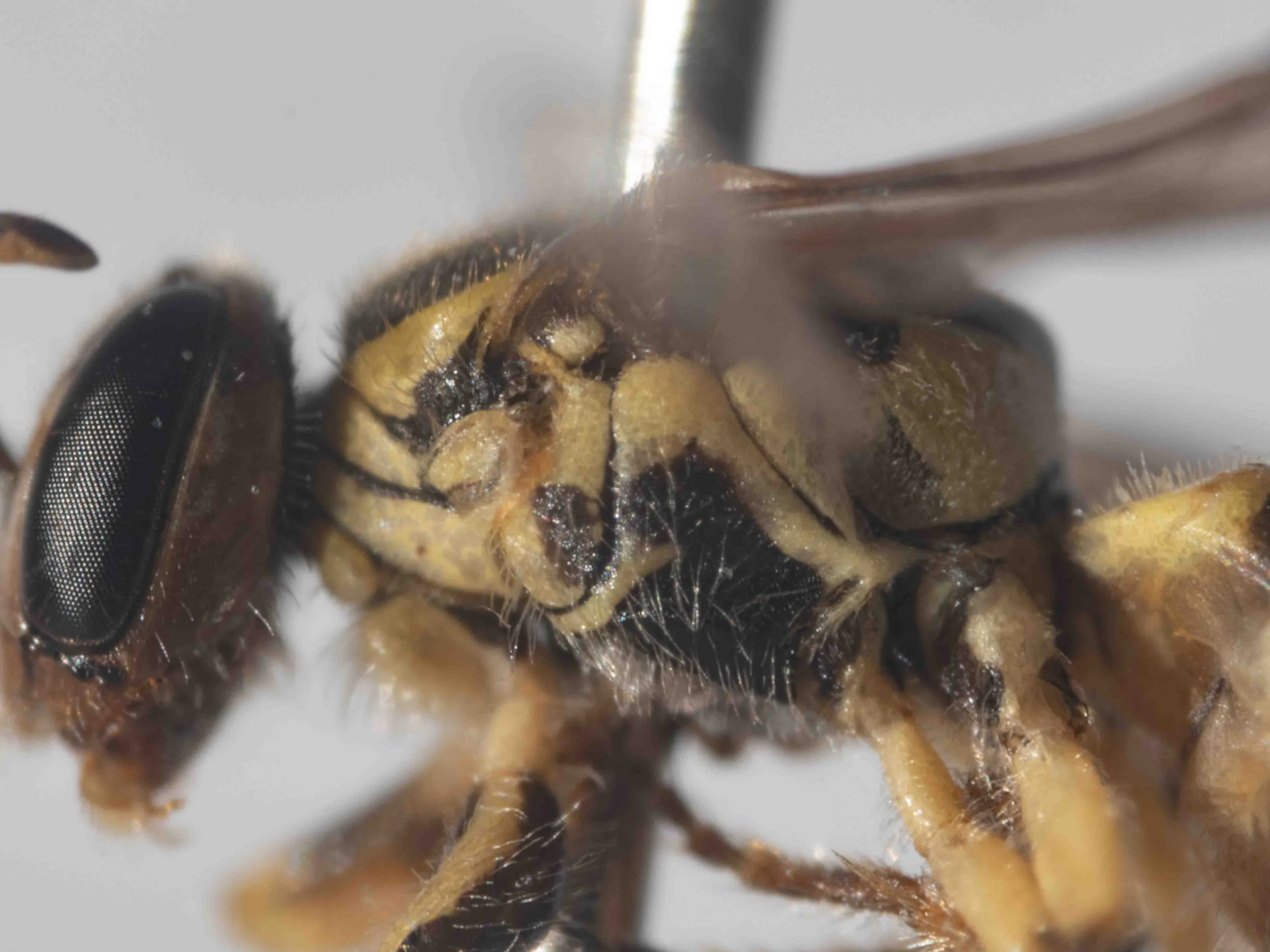
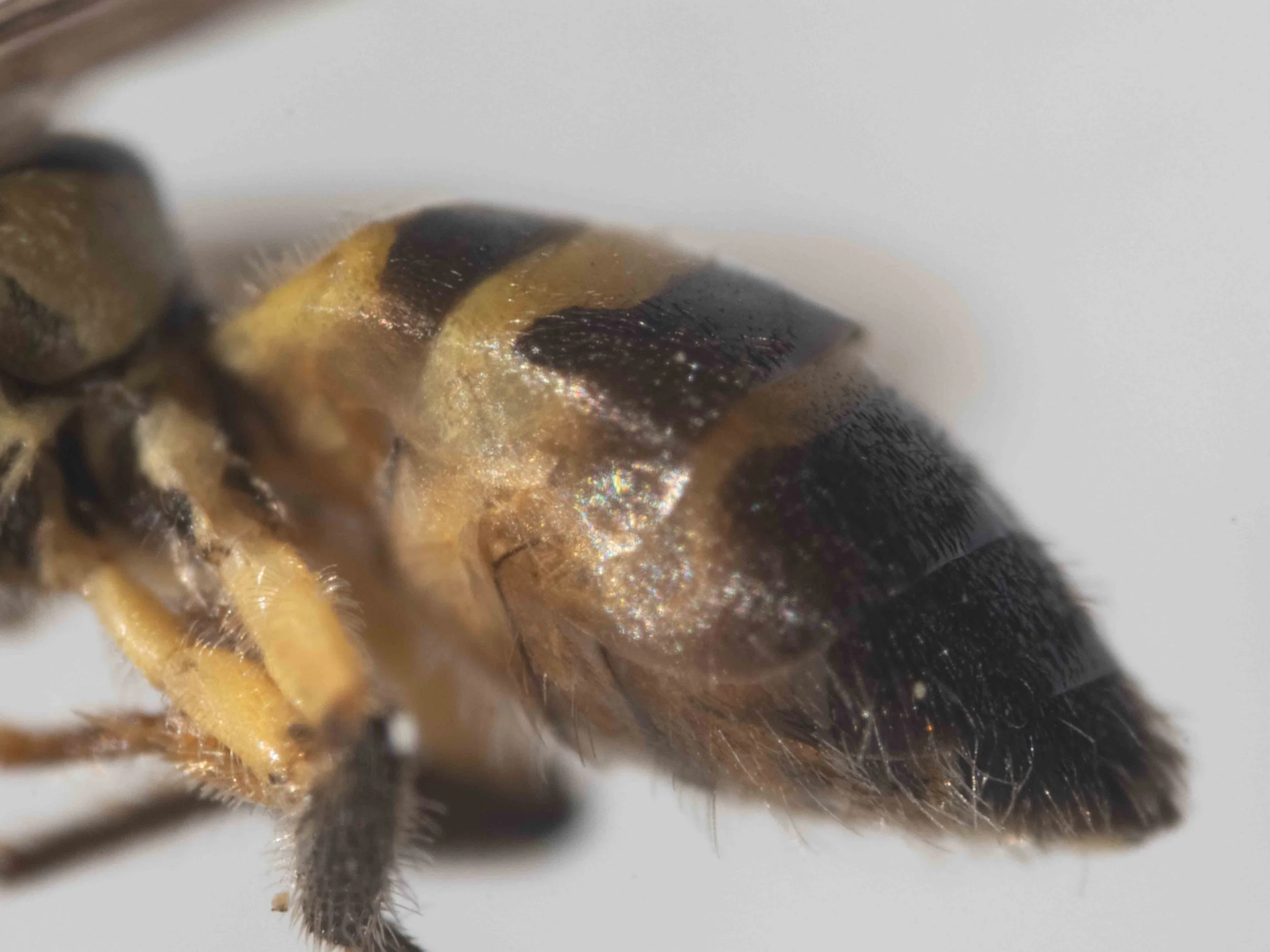
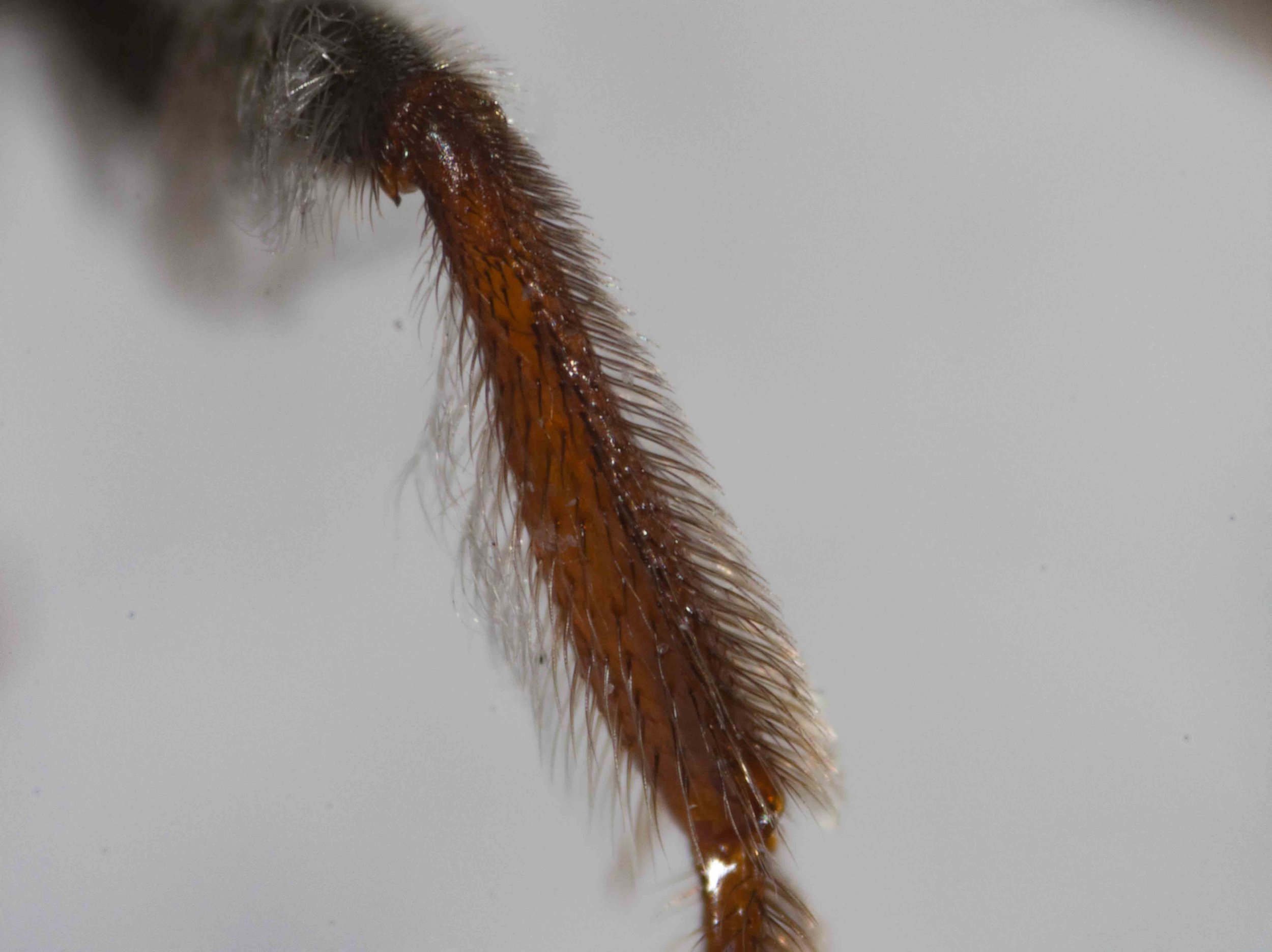
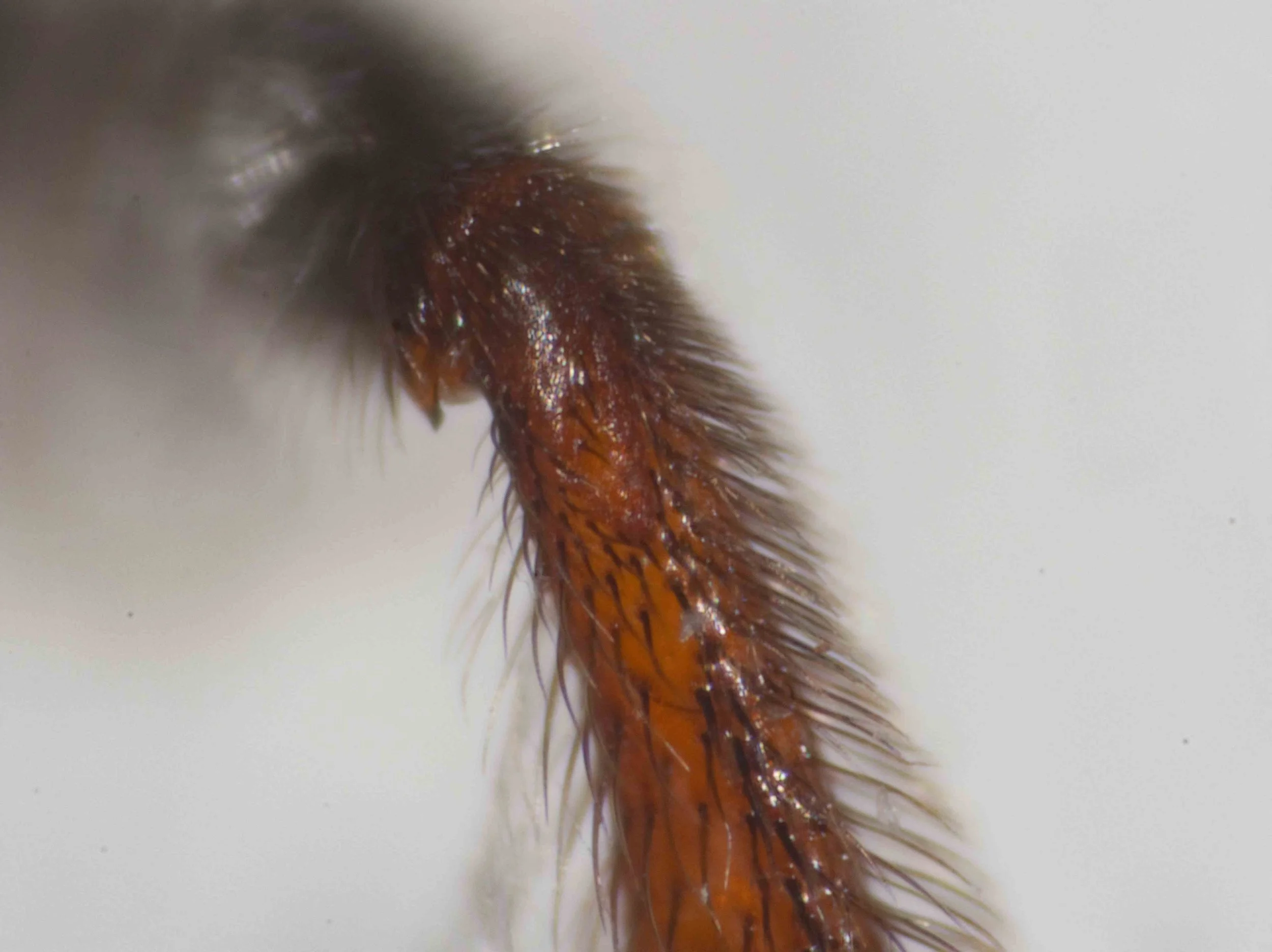
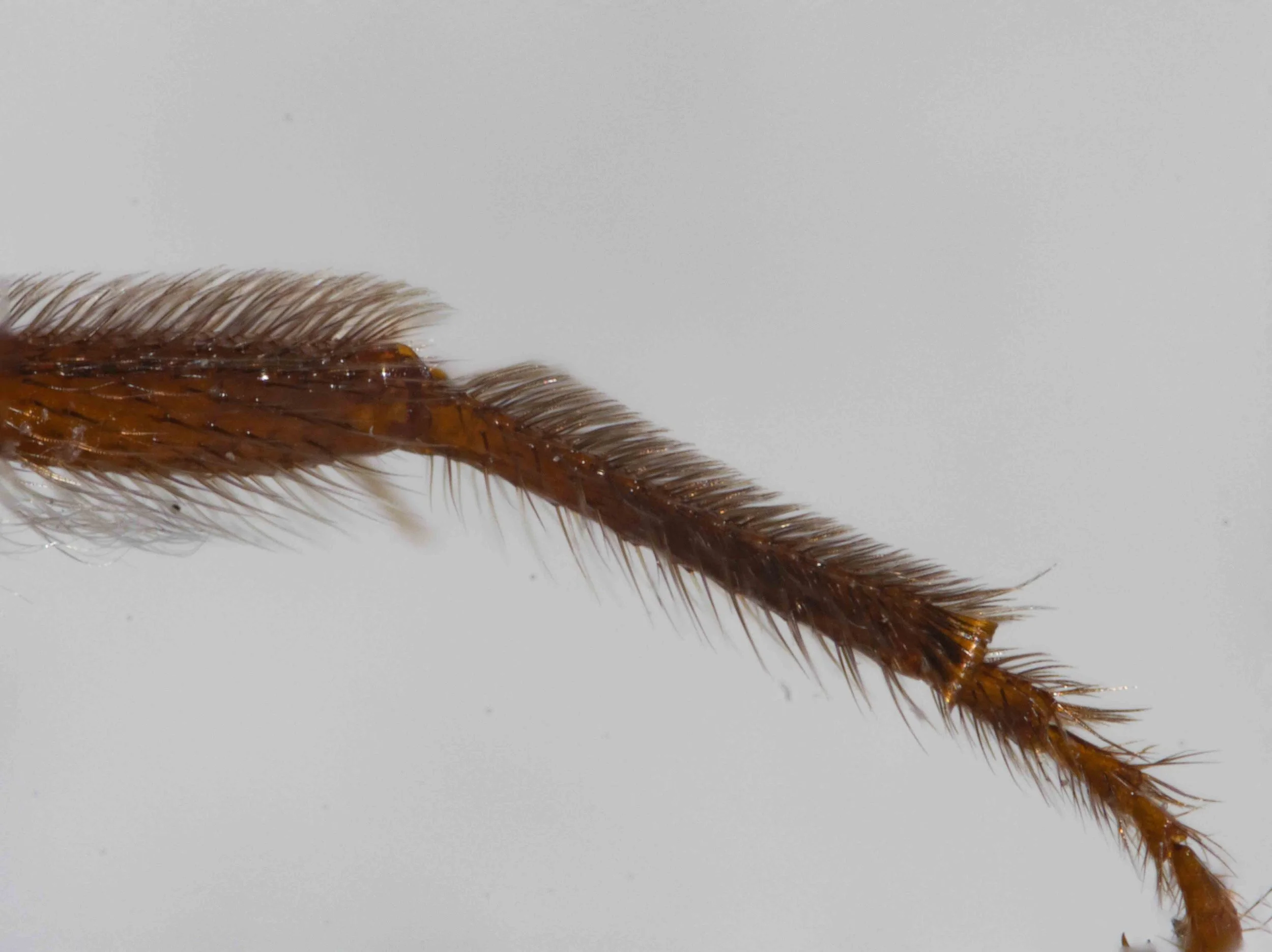
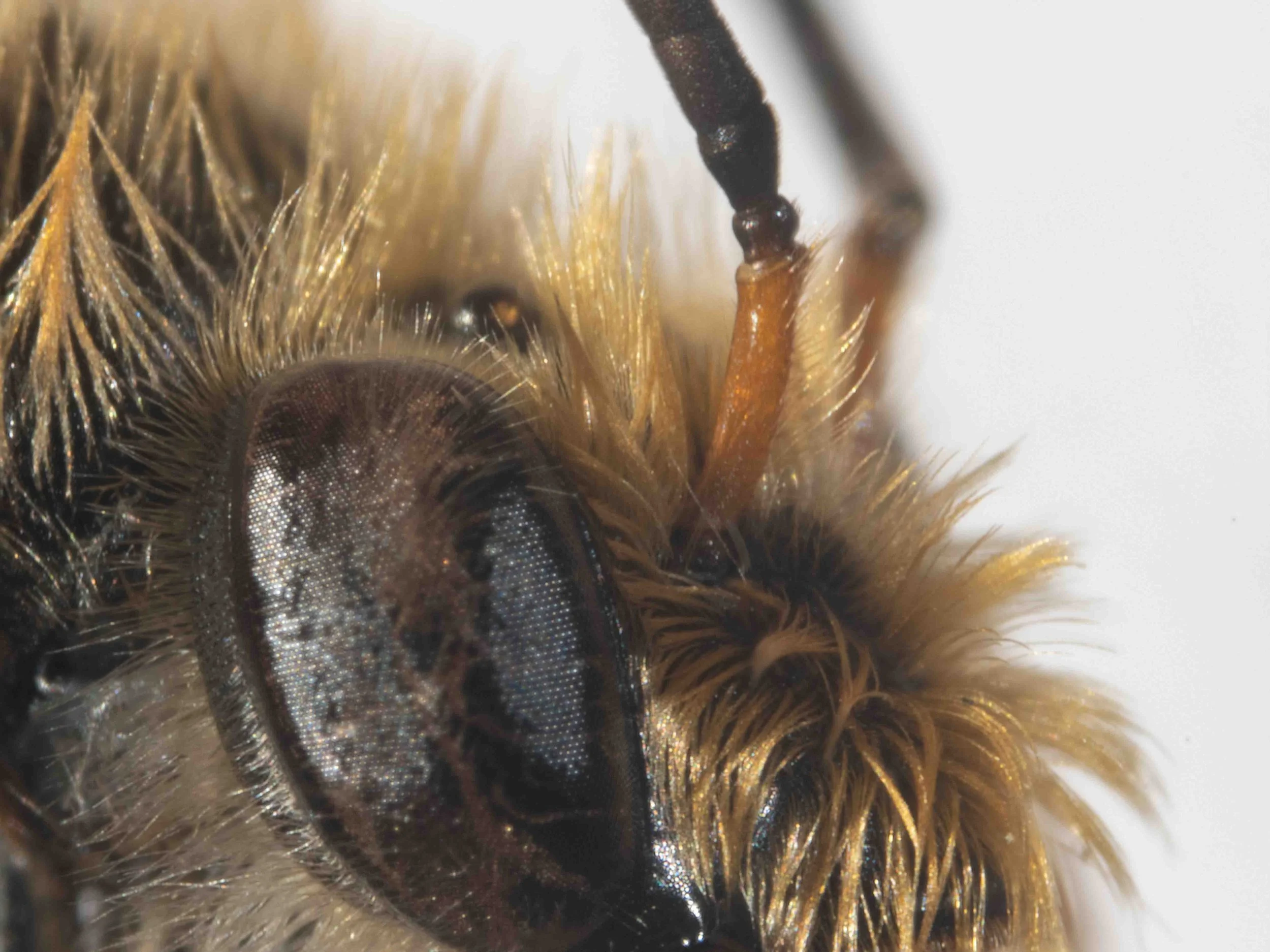
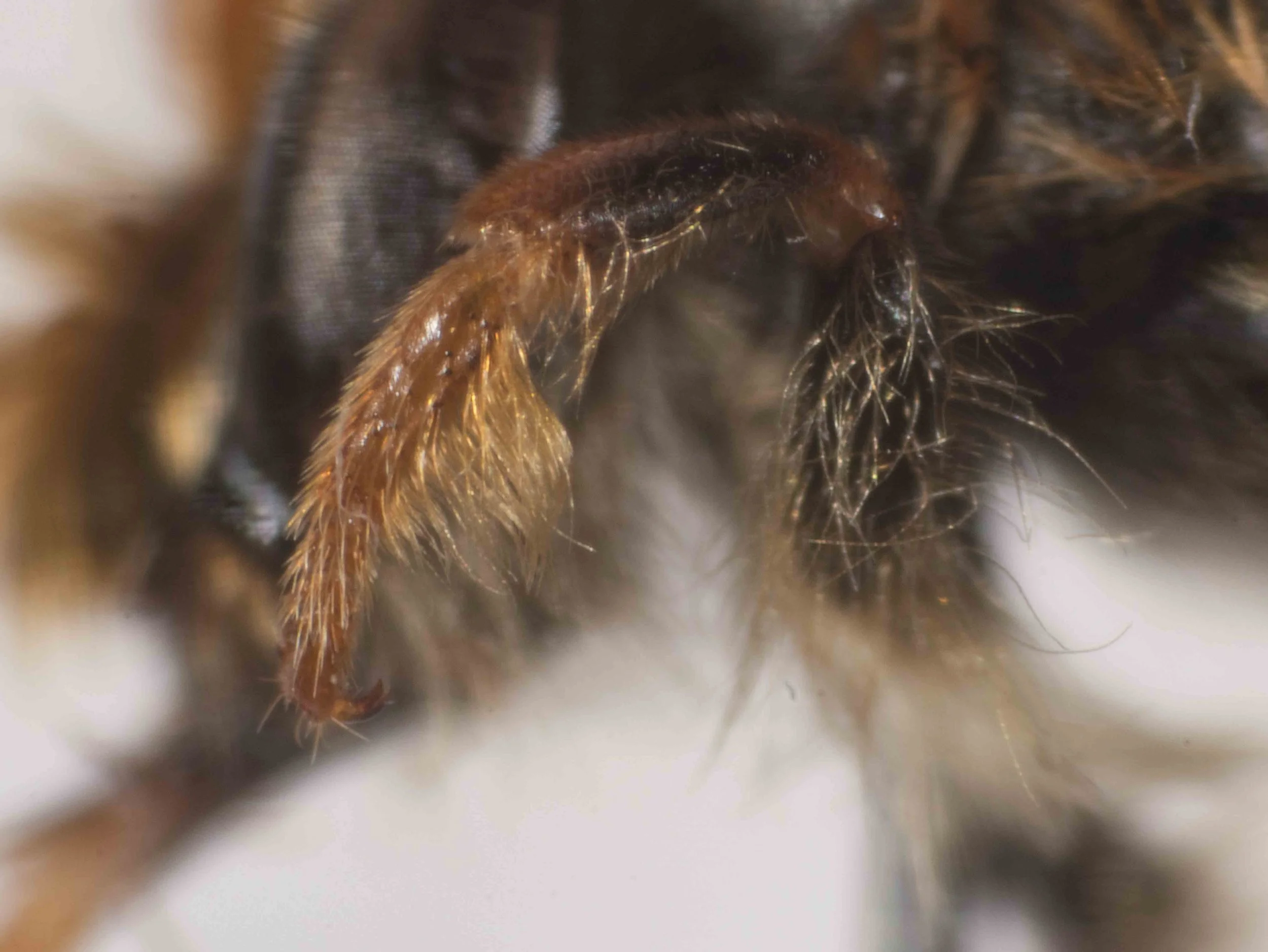
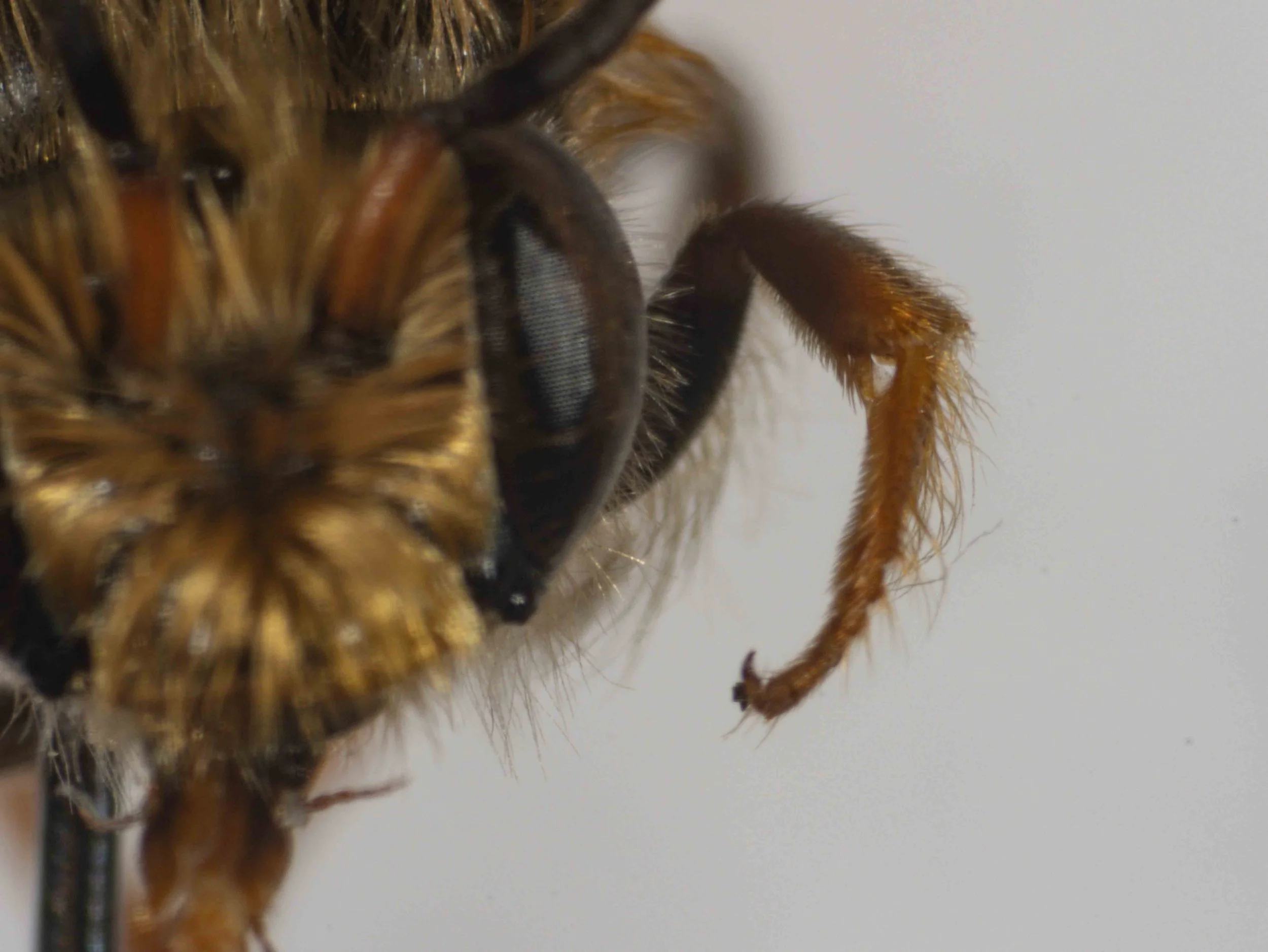
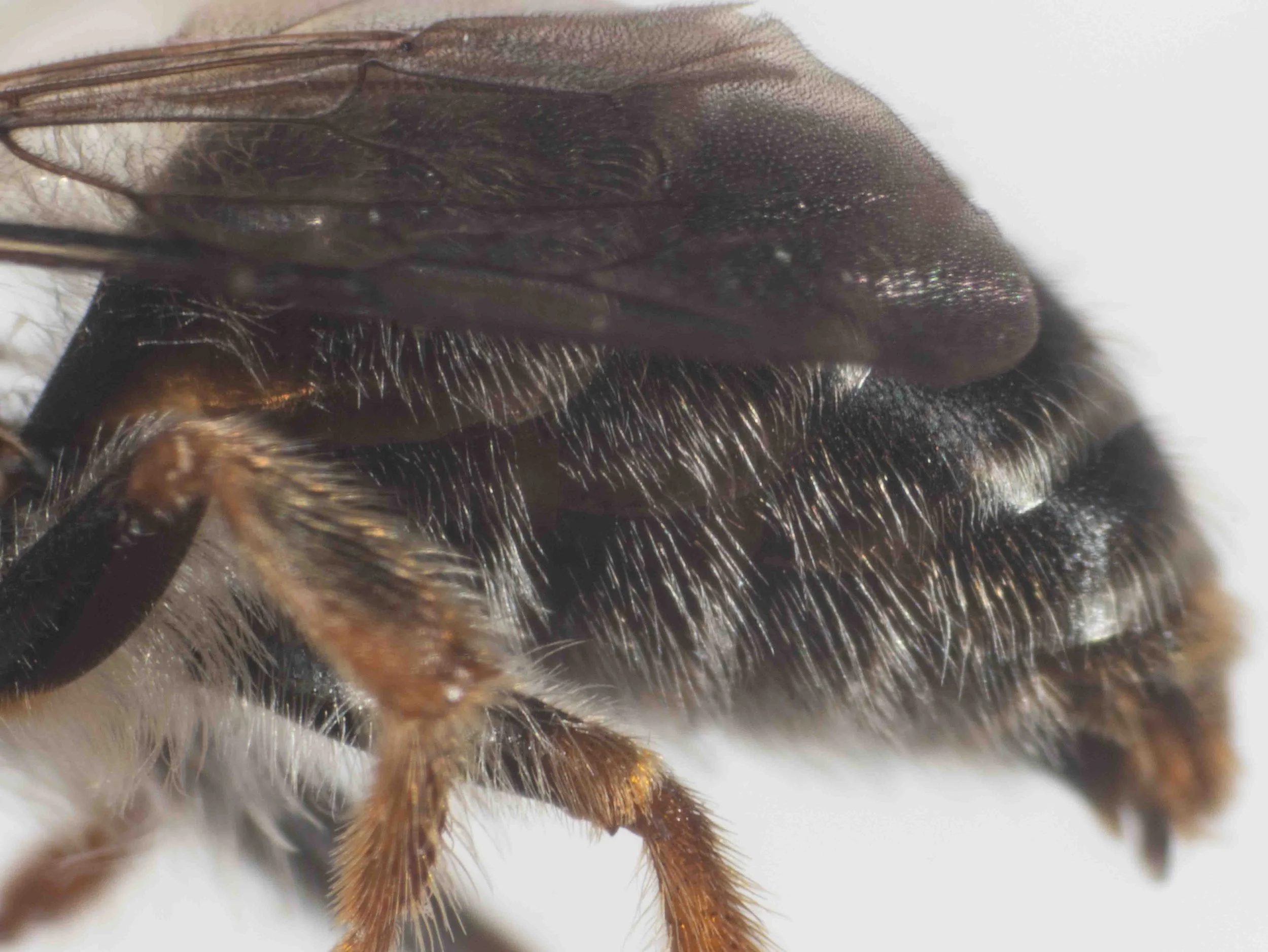
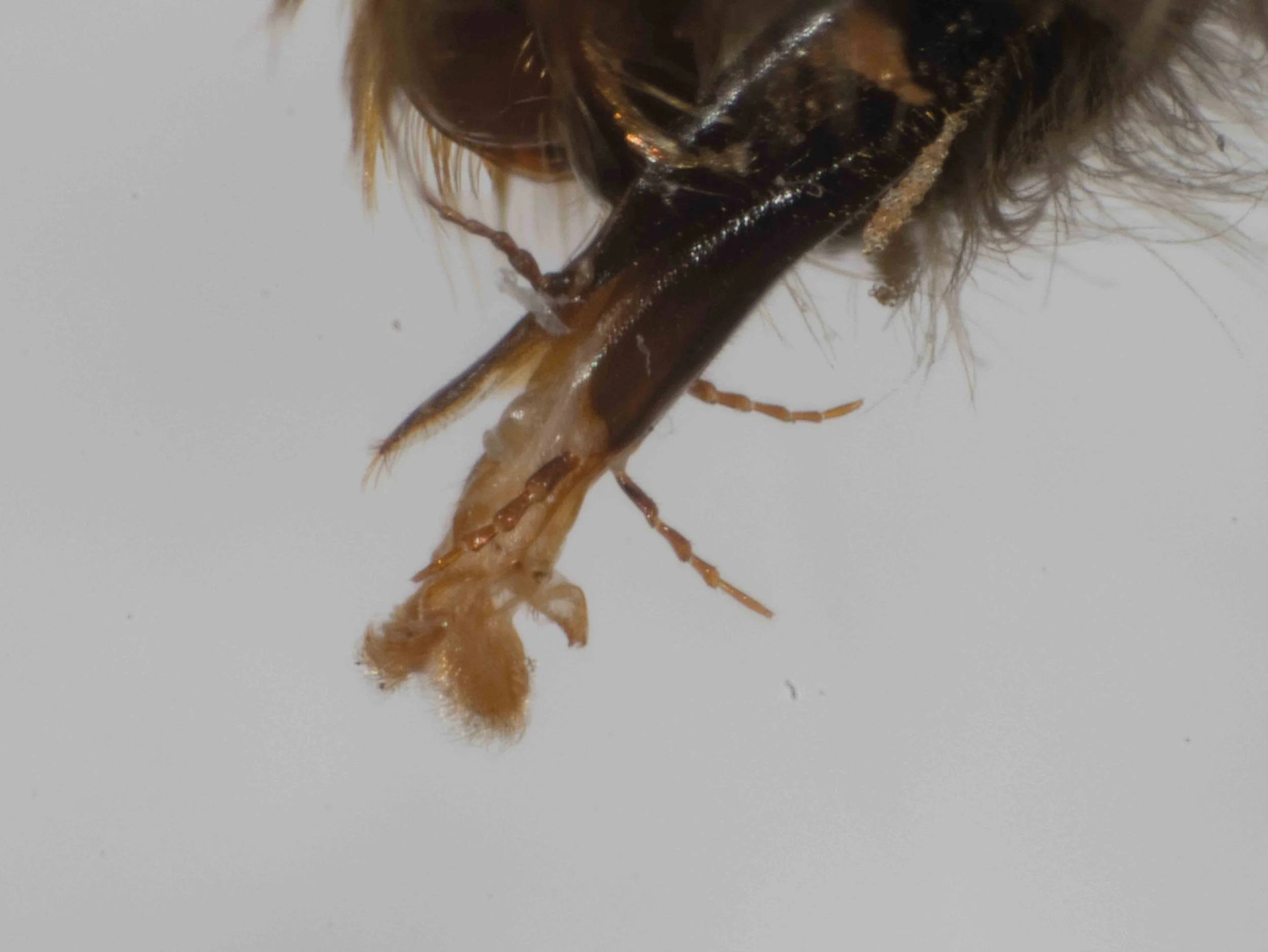
Size ~ 9mm
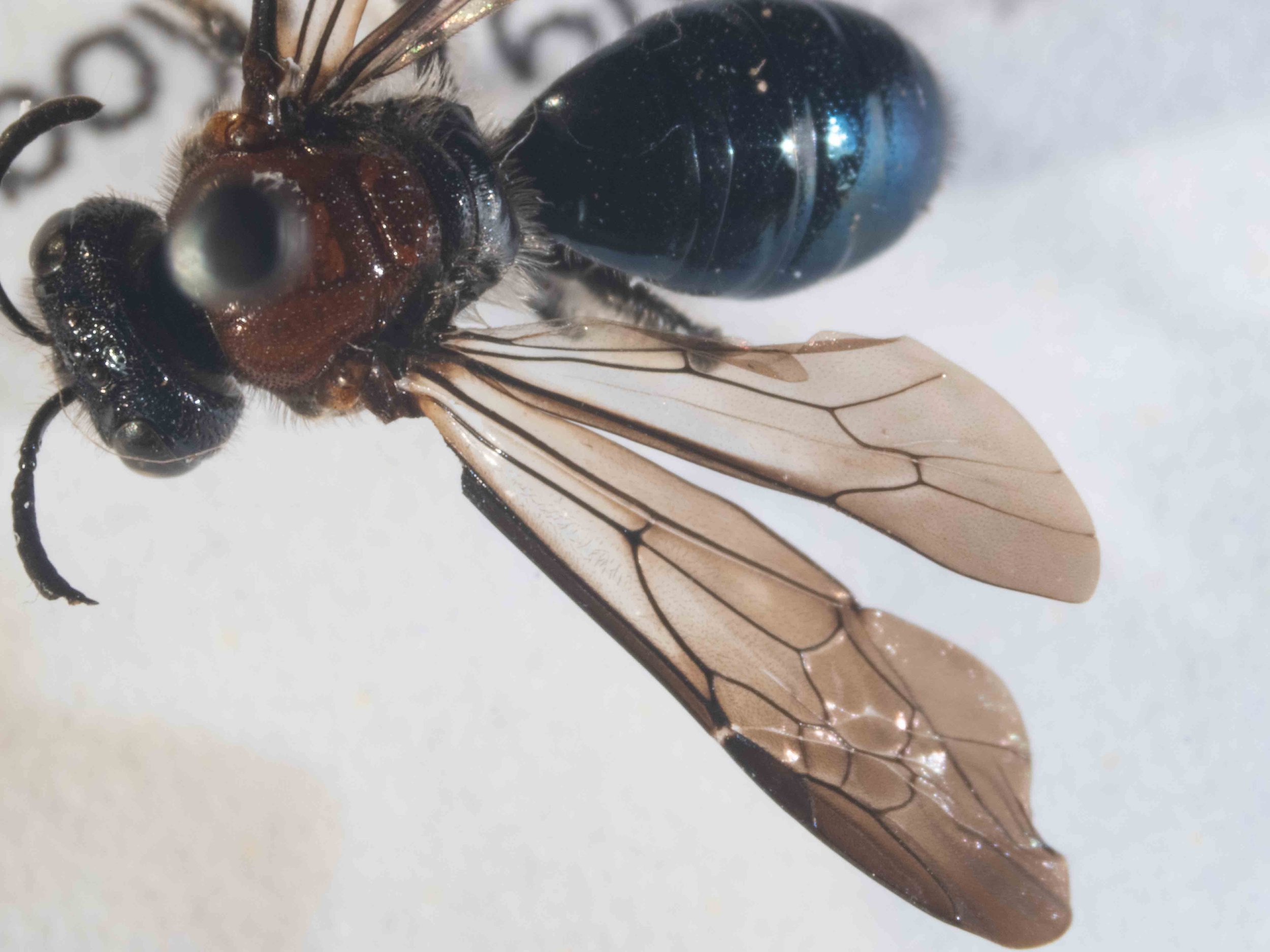
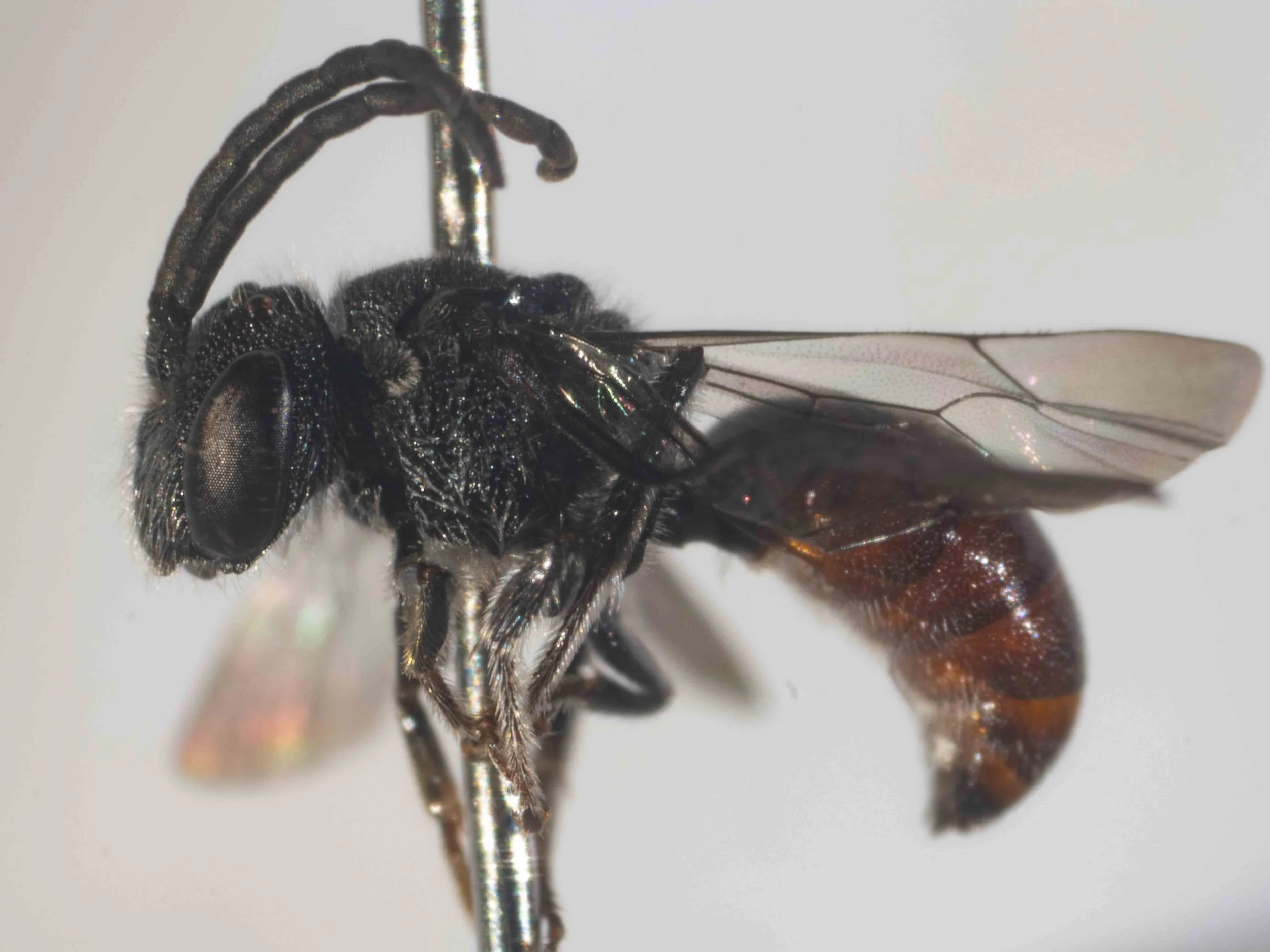
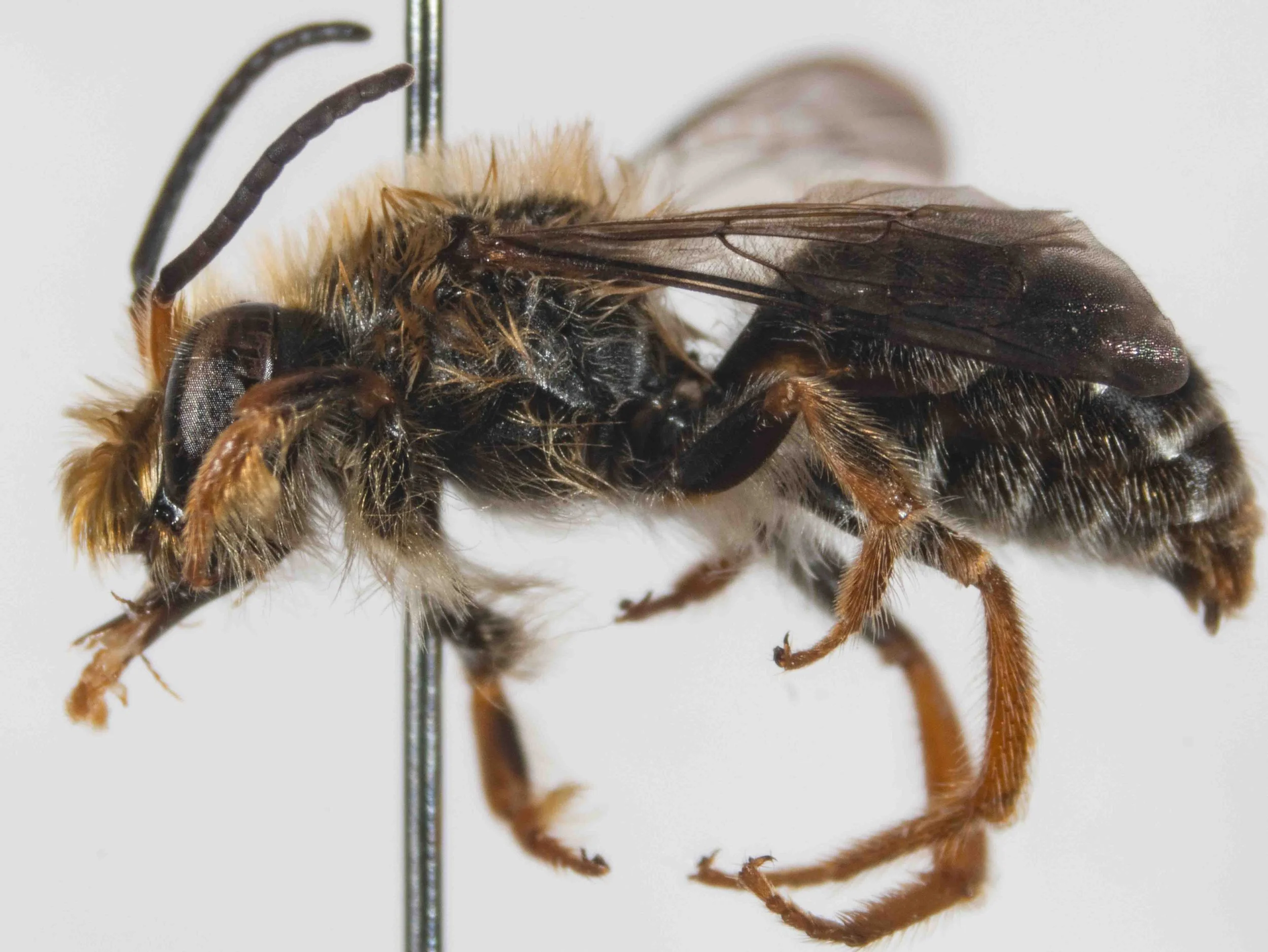
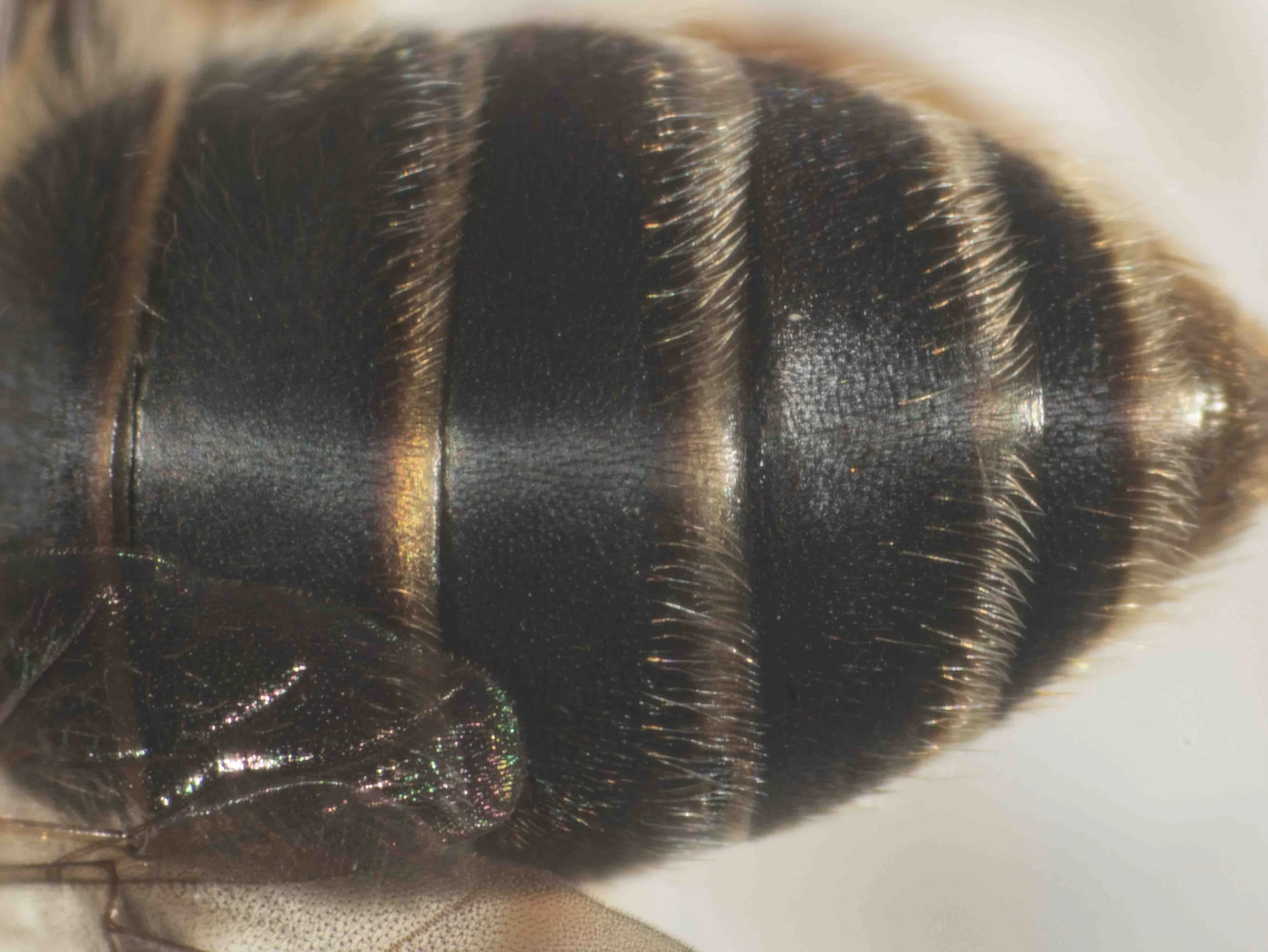
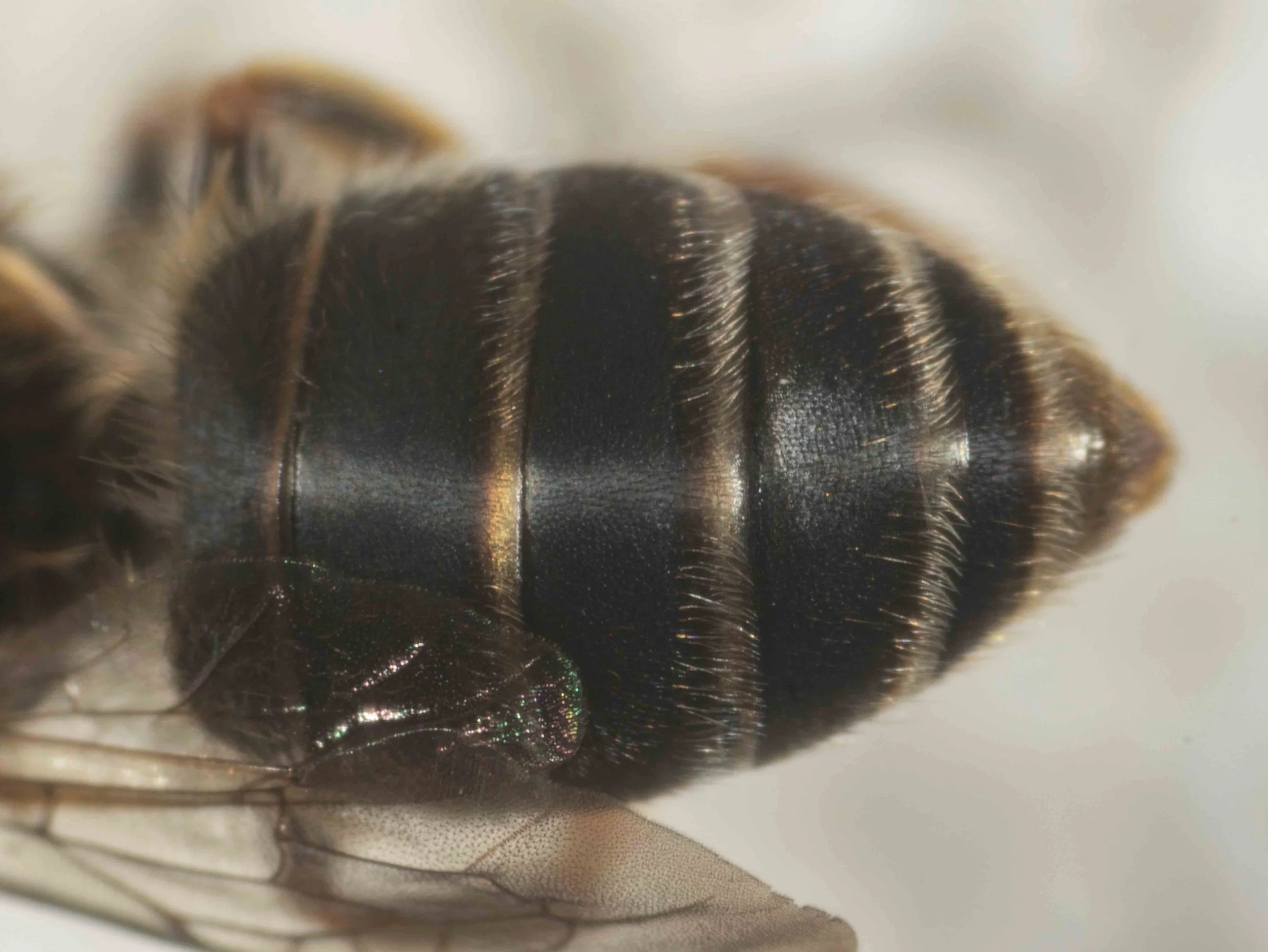
Colour: mesoscutum & scutellum orange/red; metanotum & propodeum black; head & metasoma dark metallic-blue; wings heavily infuscated brown
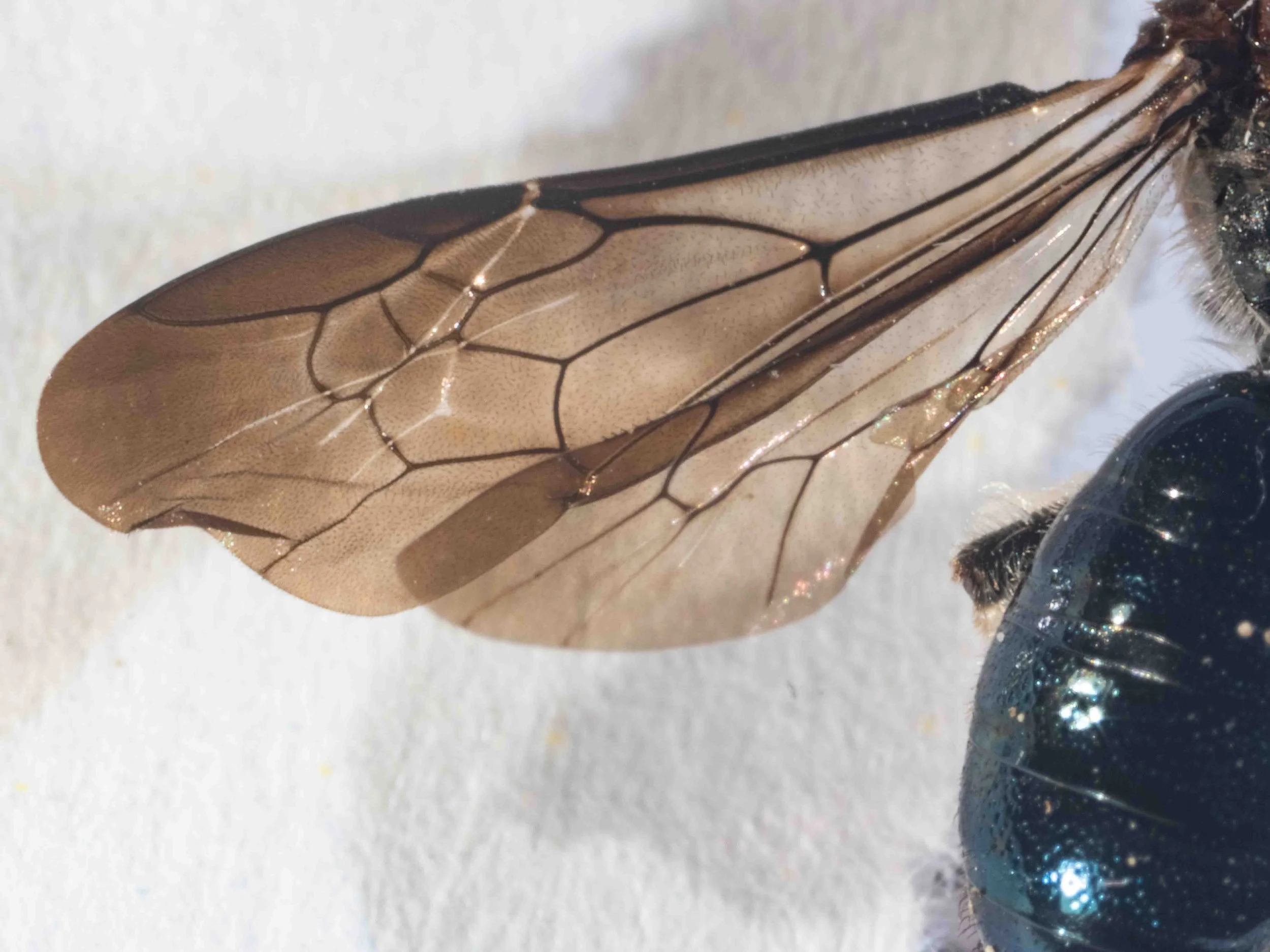
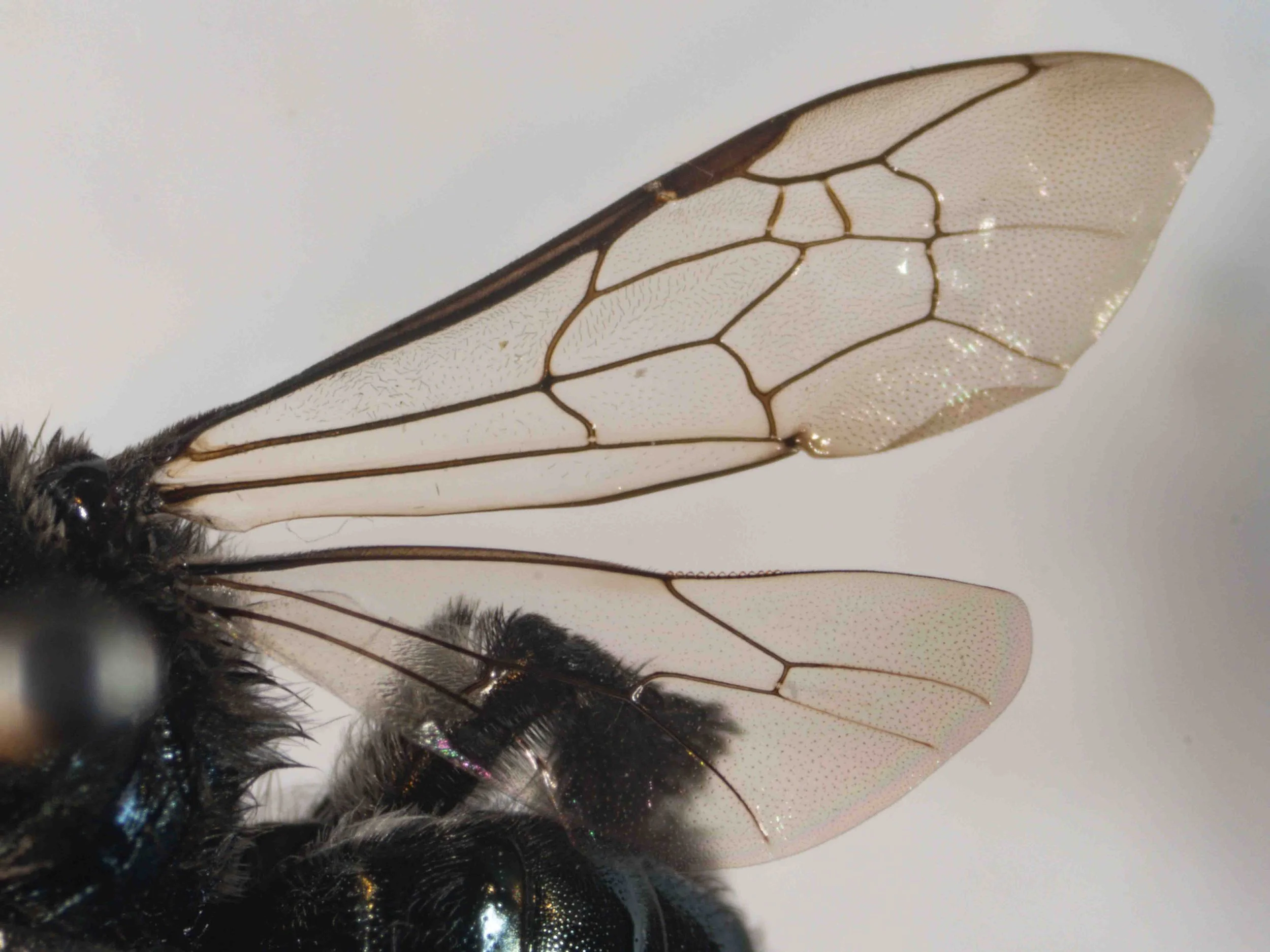
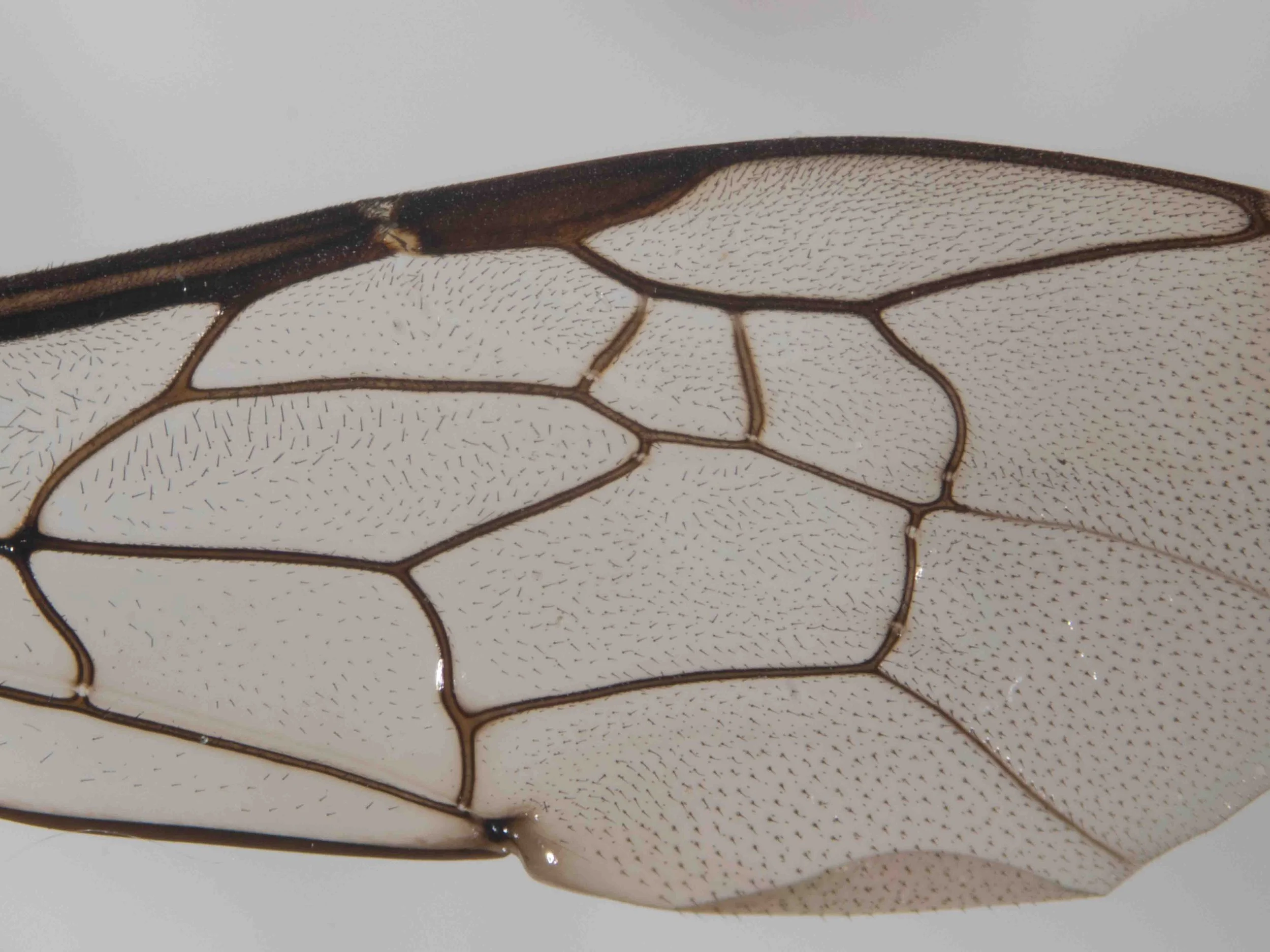
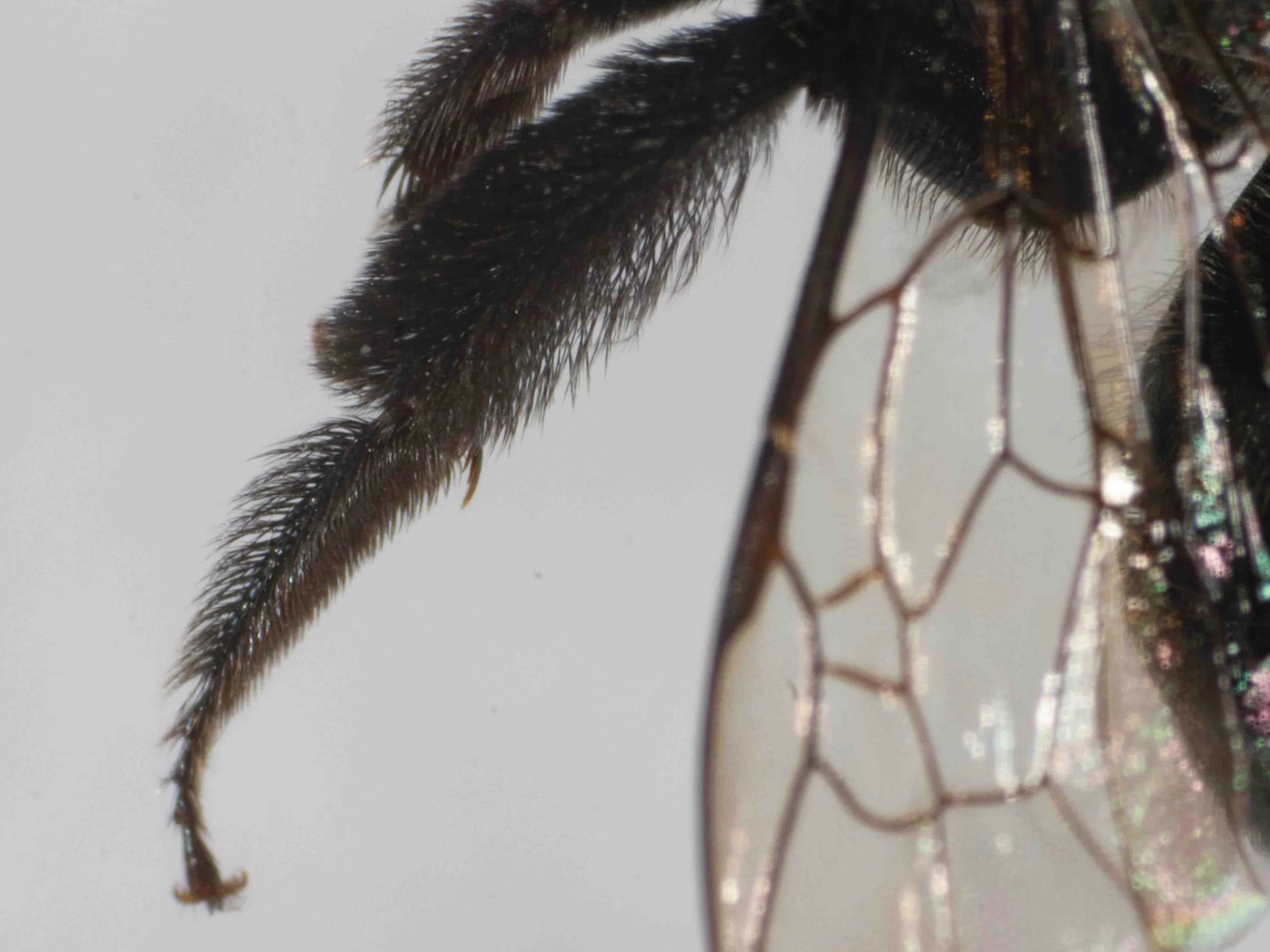
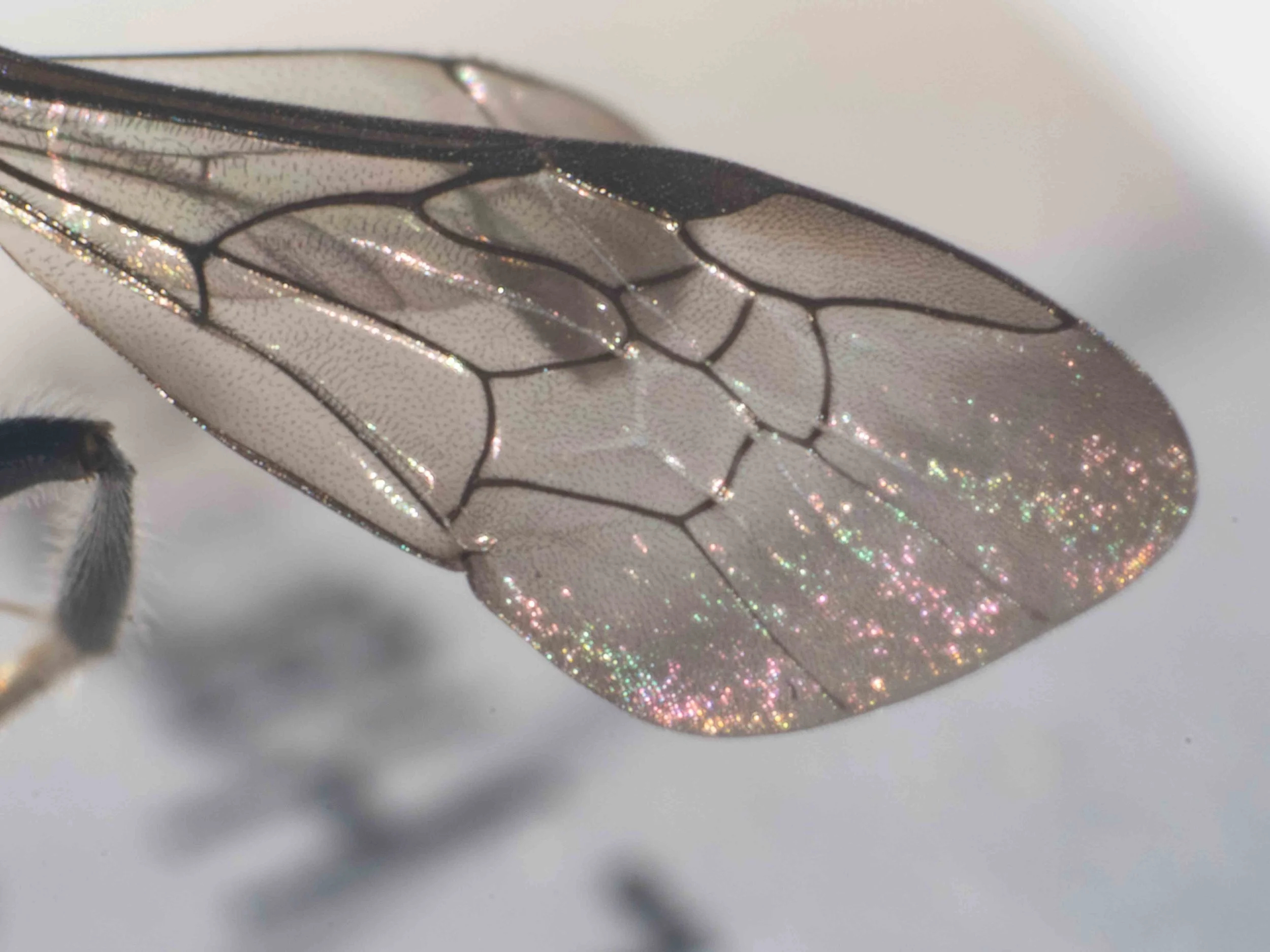
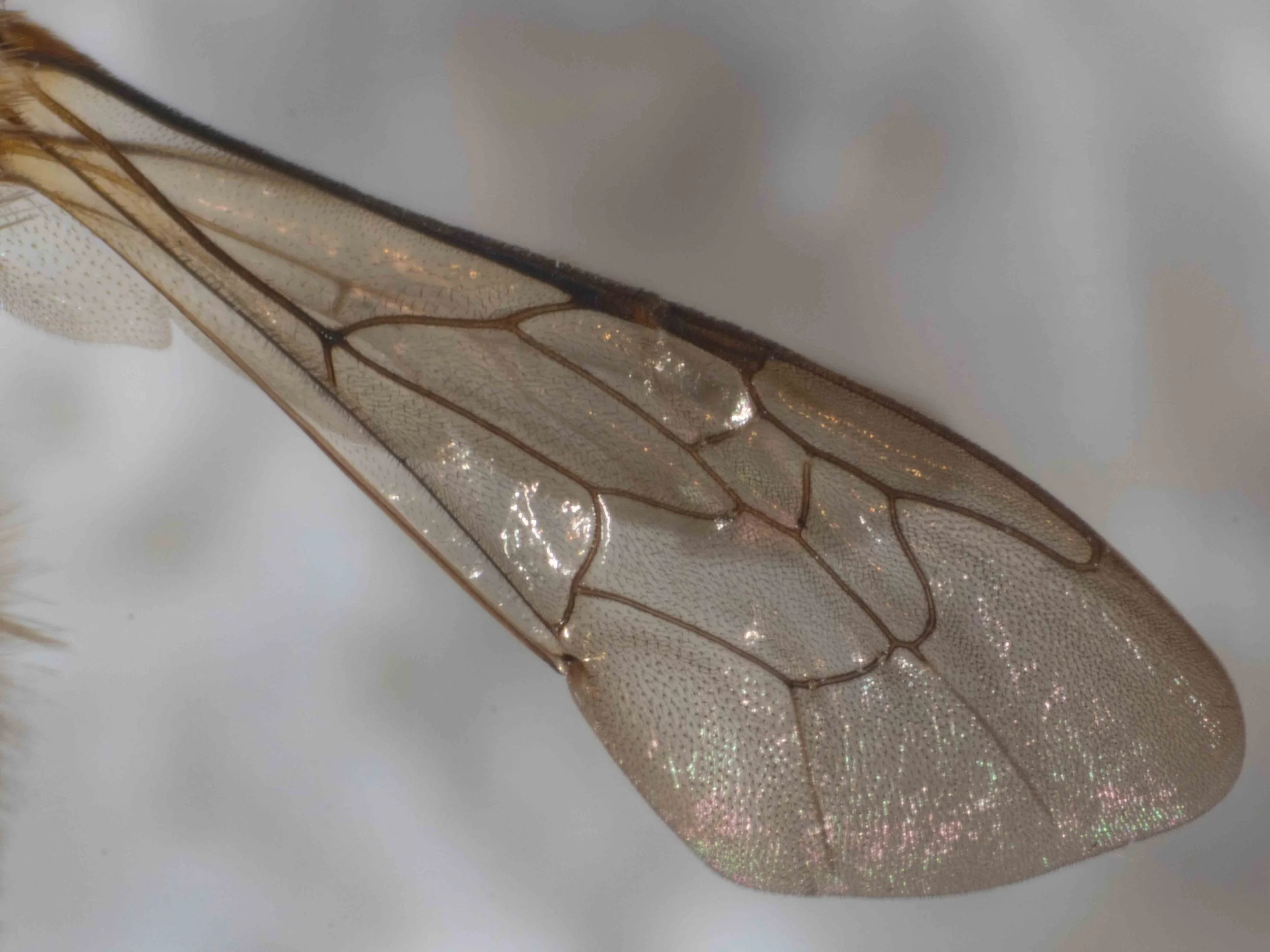
Forewing venation: 3 submarginal cells; stigma well-developed; apex of marginal cell on wing margin
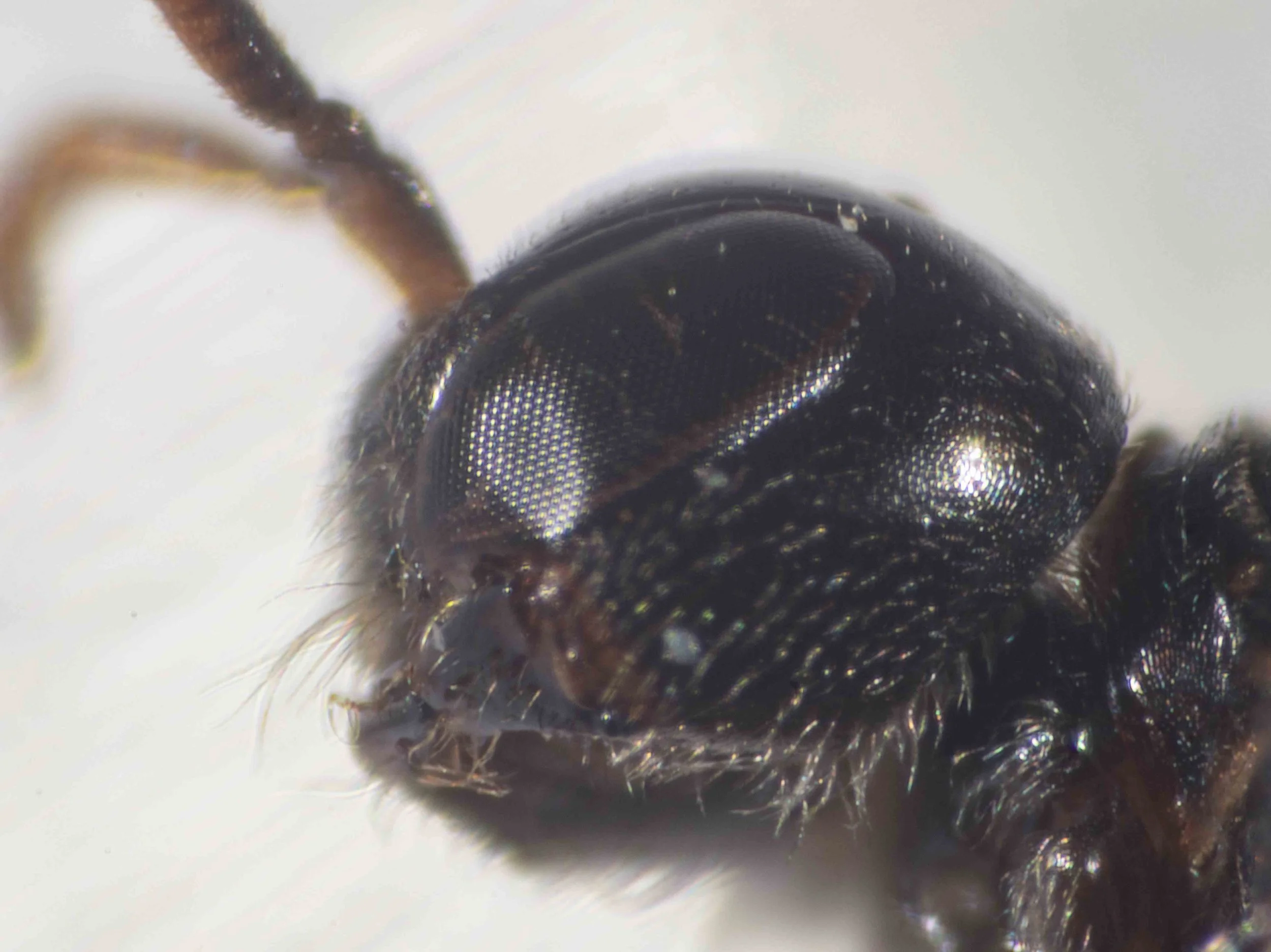
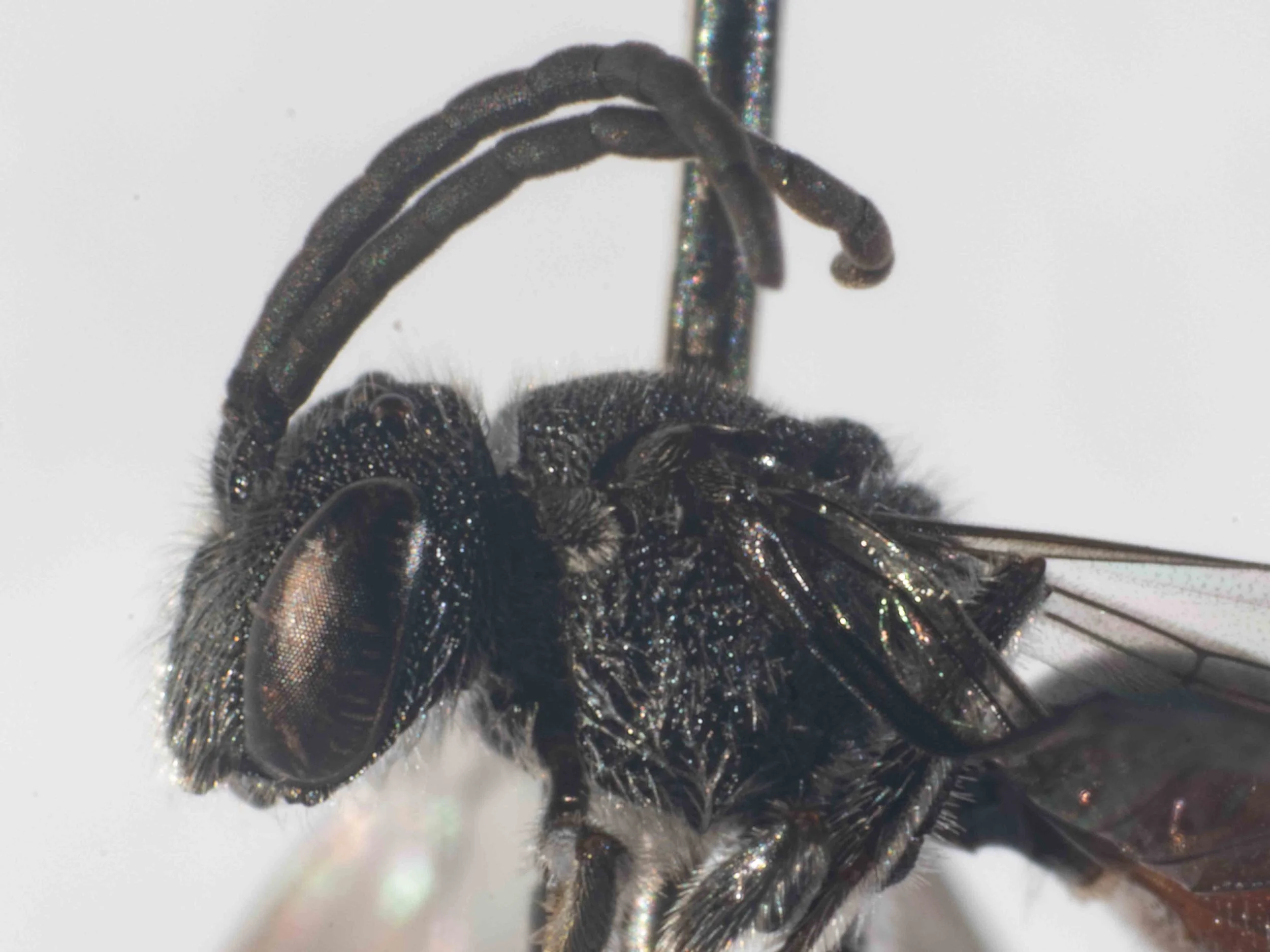
Strong sculpturing on head and thorax
Colour: pronotum black; mesopleura orange/red
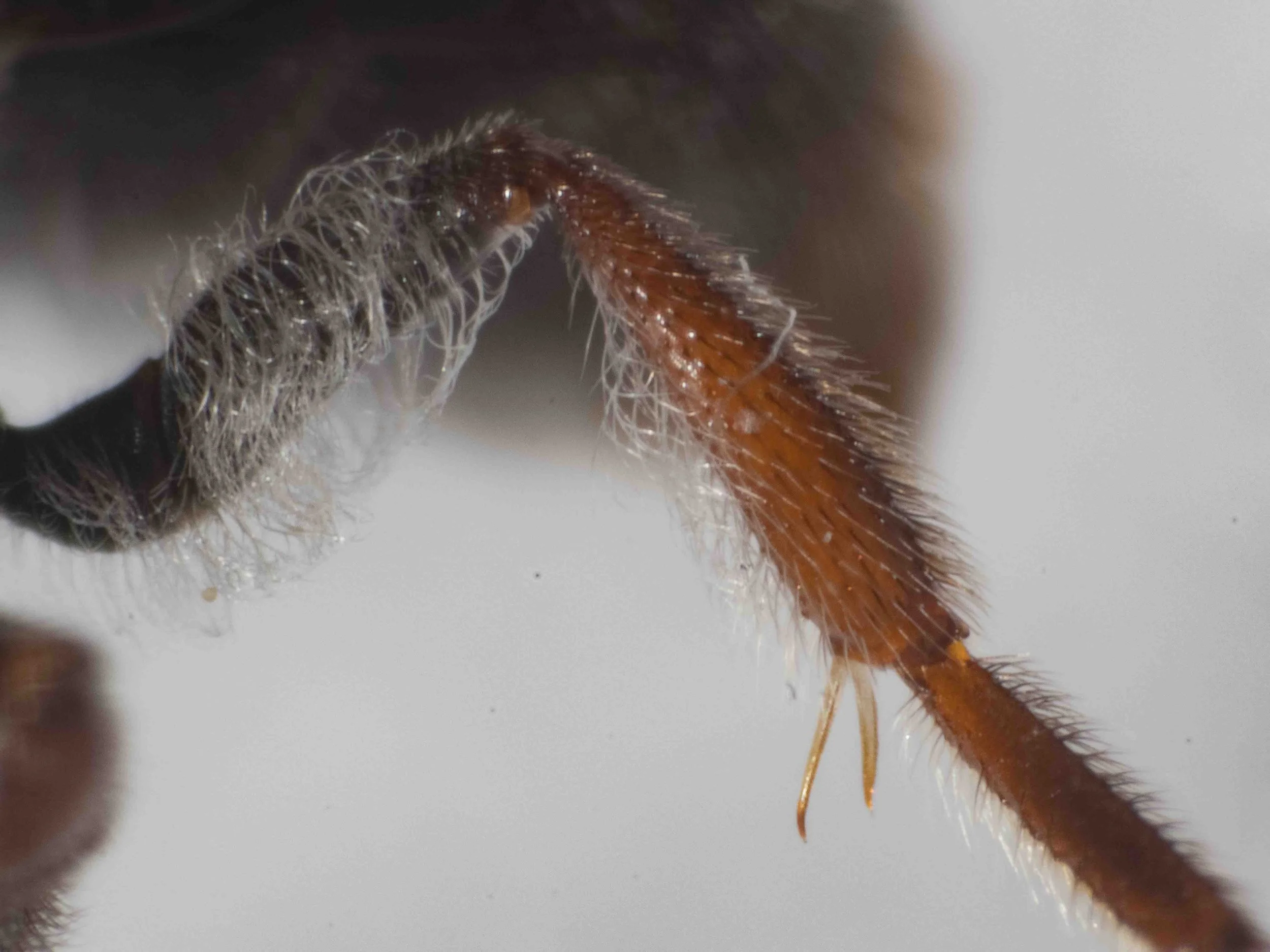
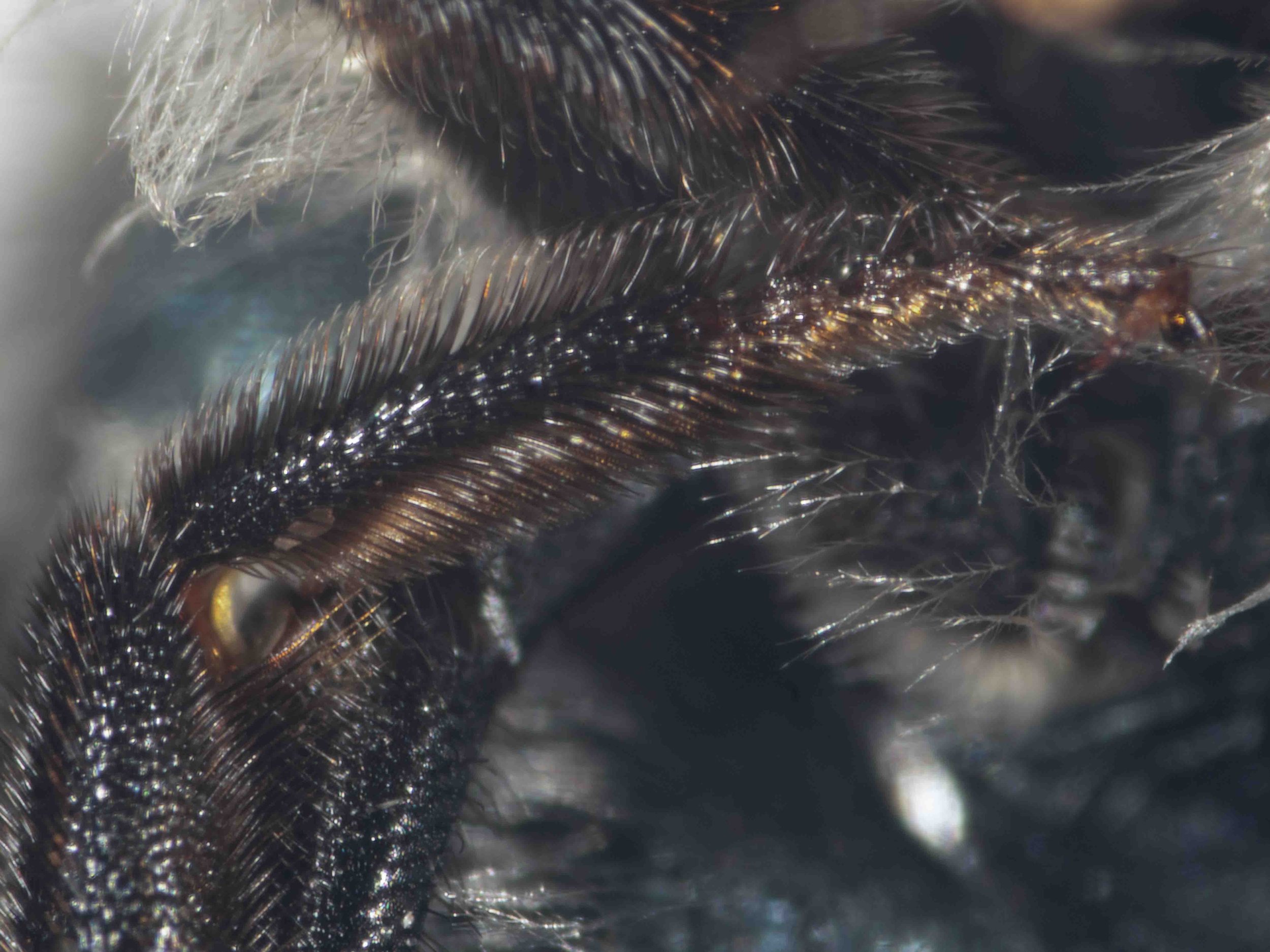
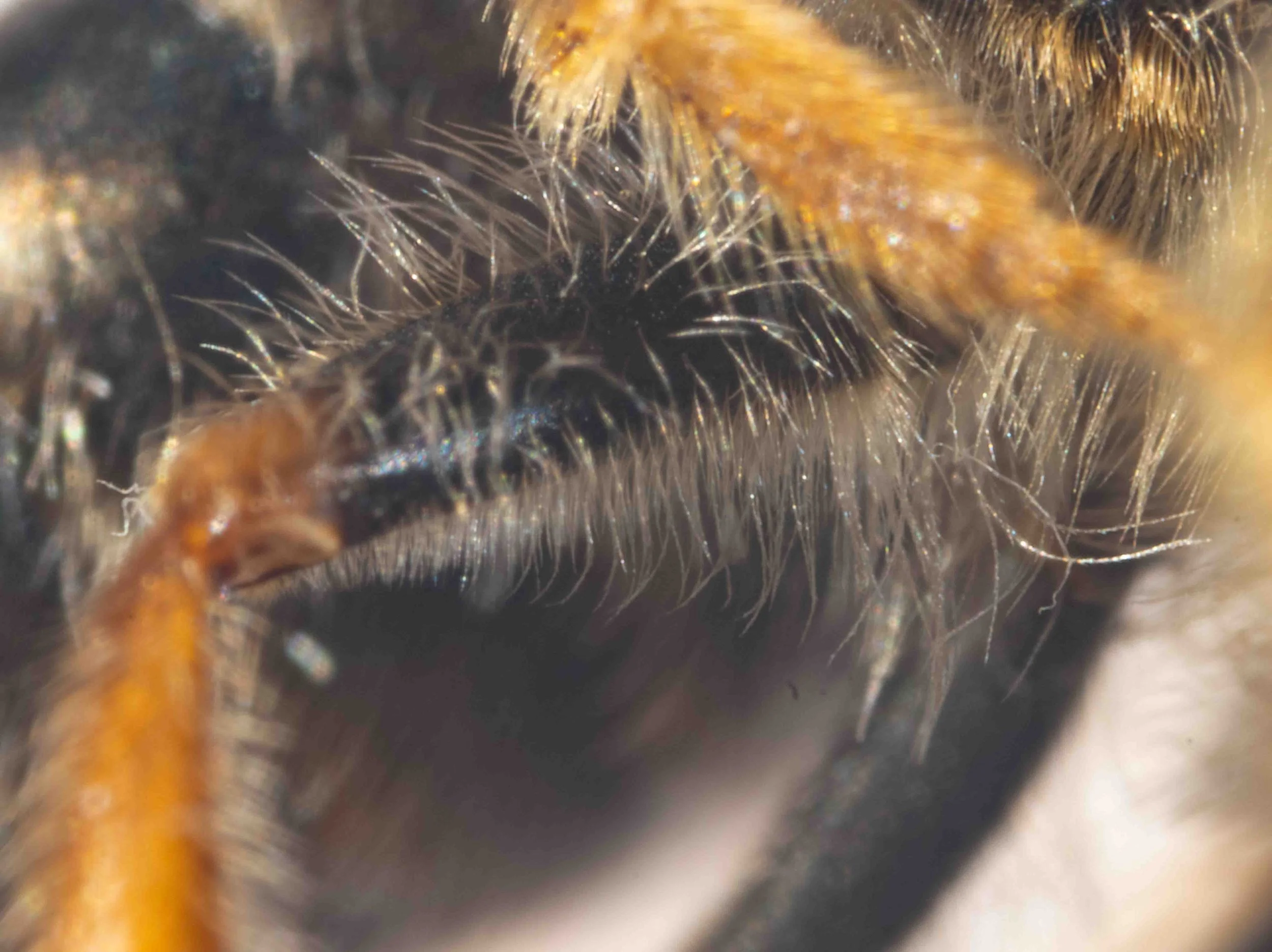
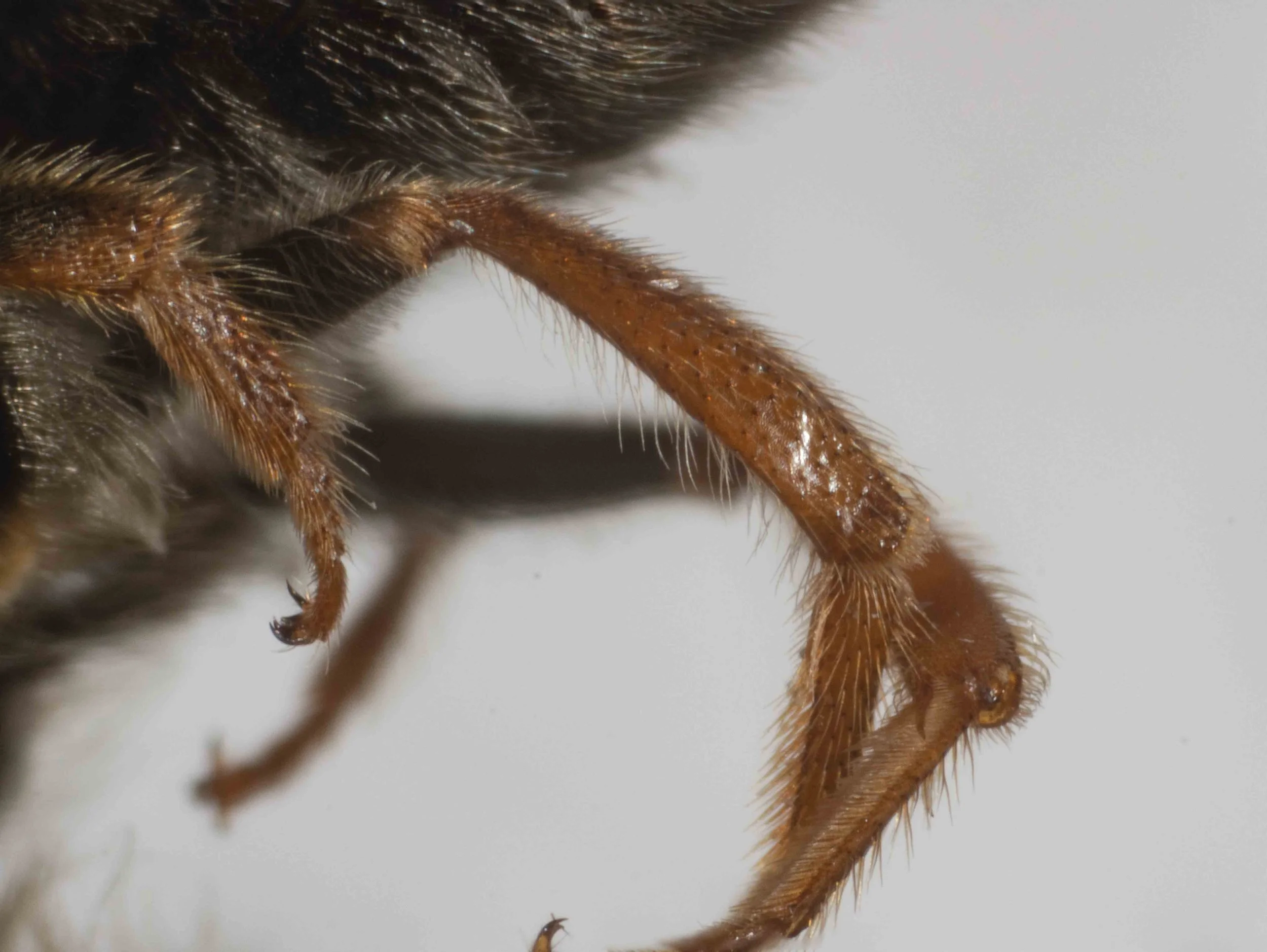
Scopae on hind legs (femora & tibia)
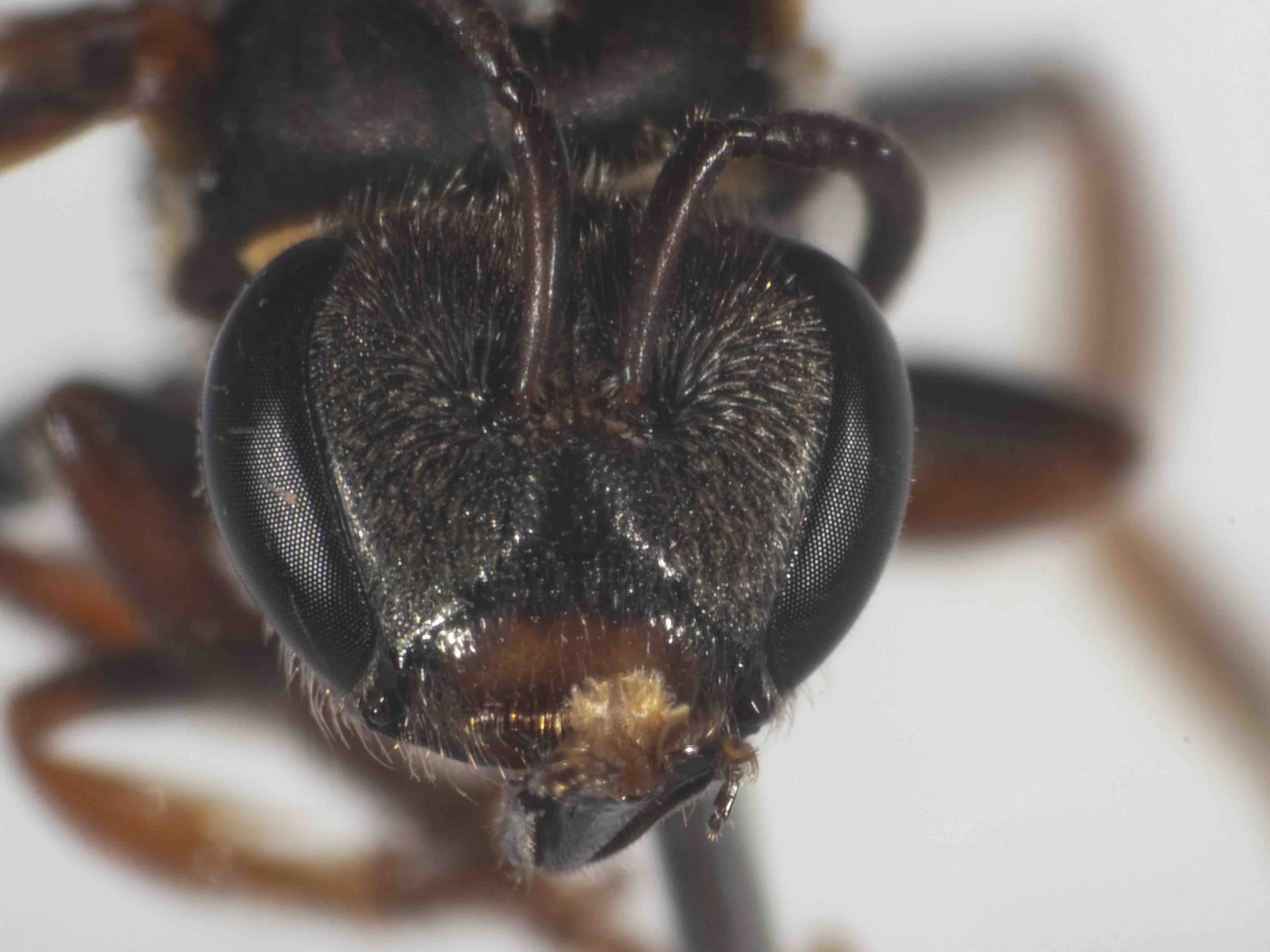
Facial fovea: linear
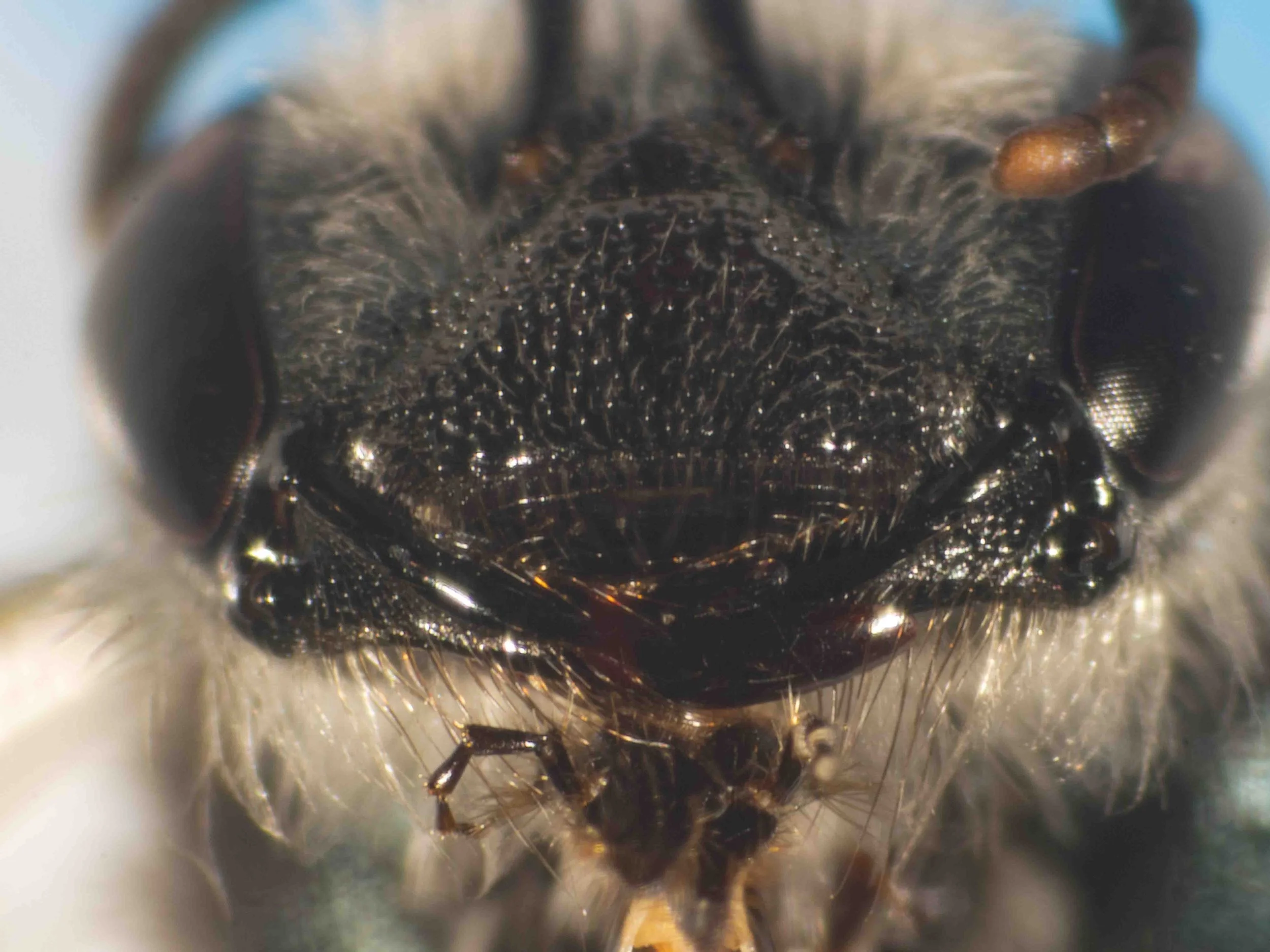
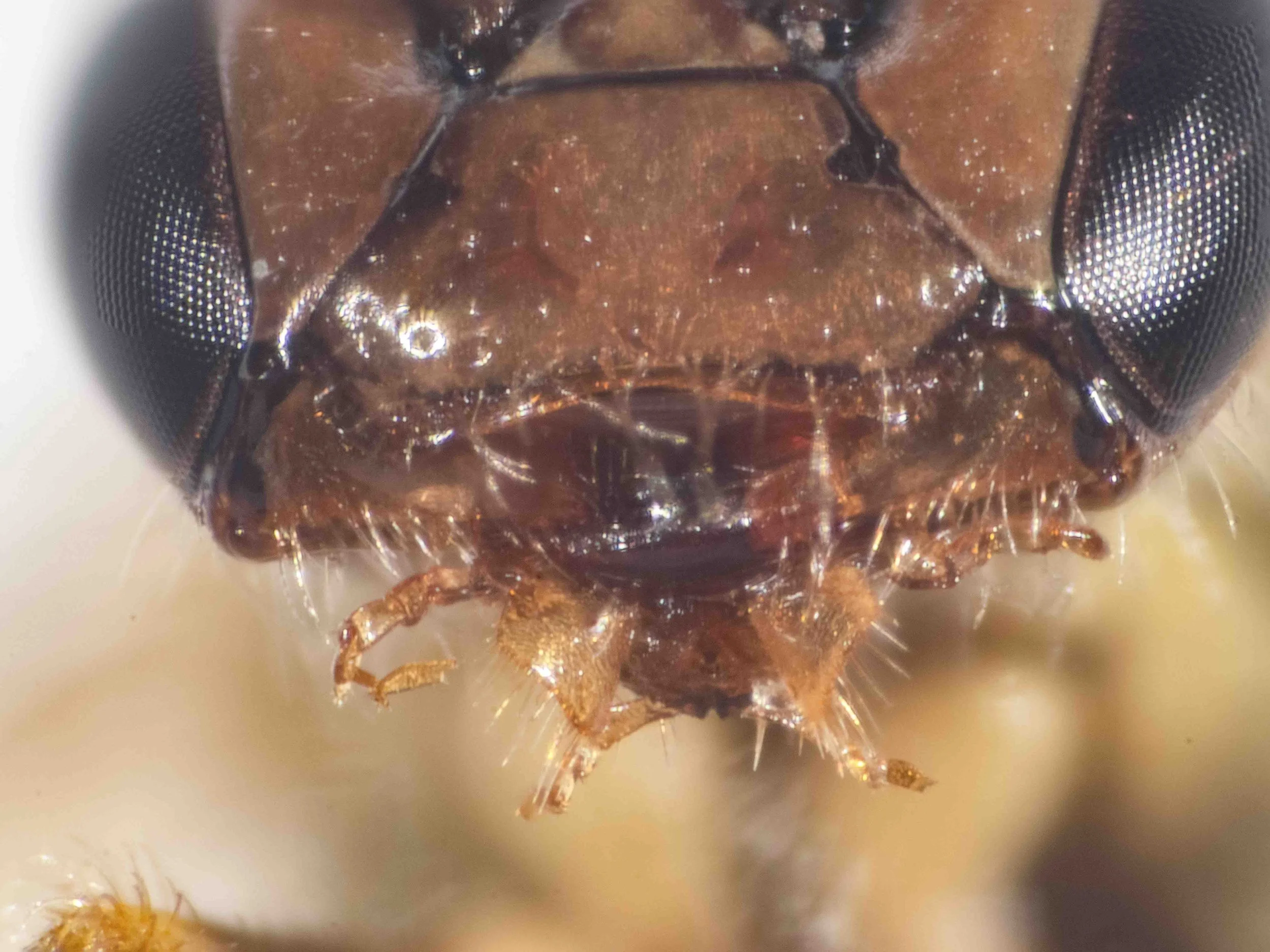
Mandibles broad, multidentate
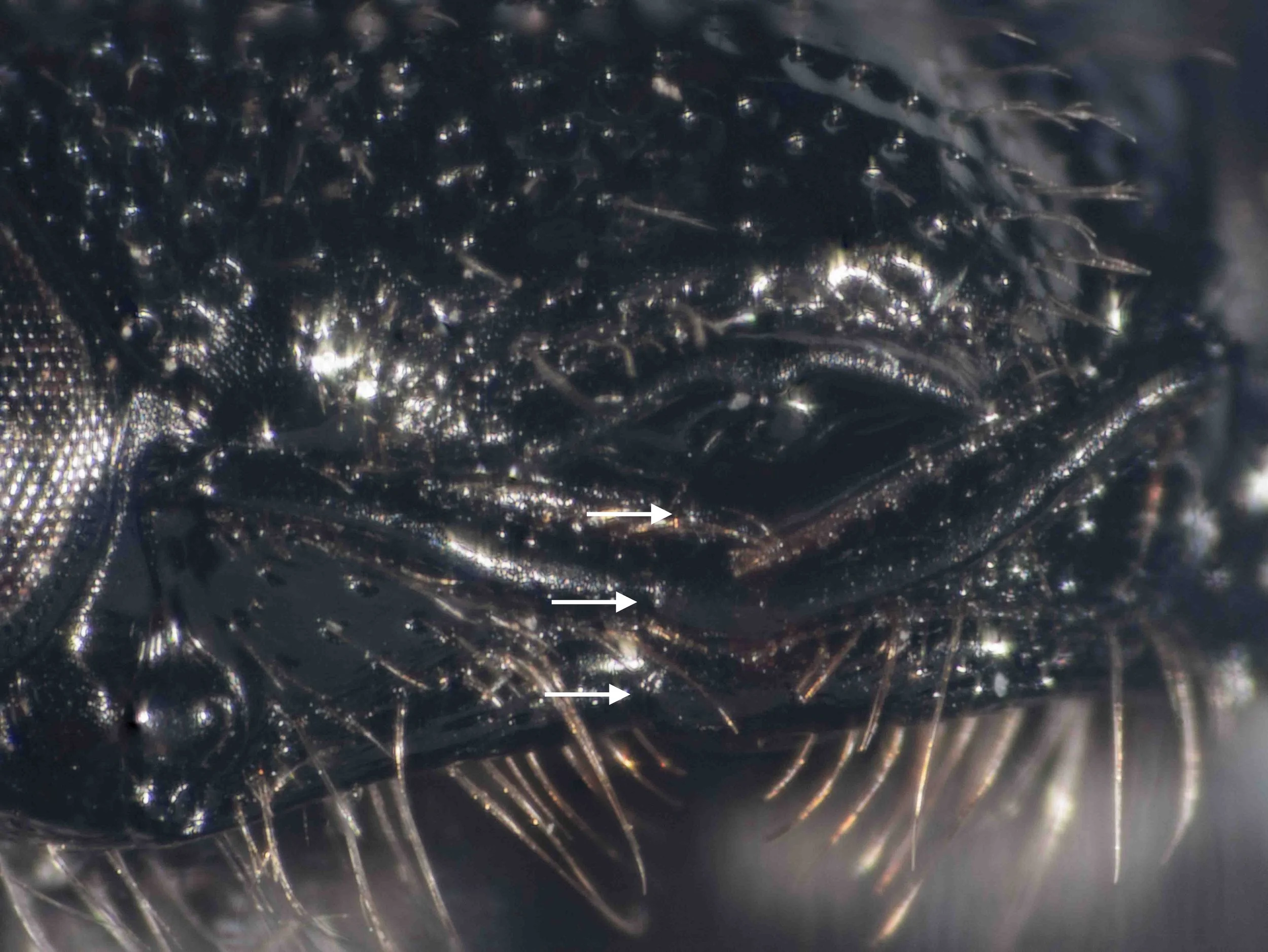
Mandibles tridentate (arrows)
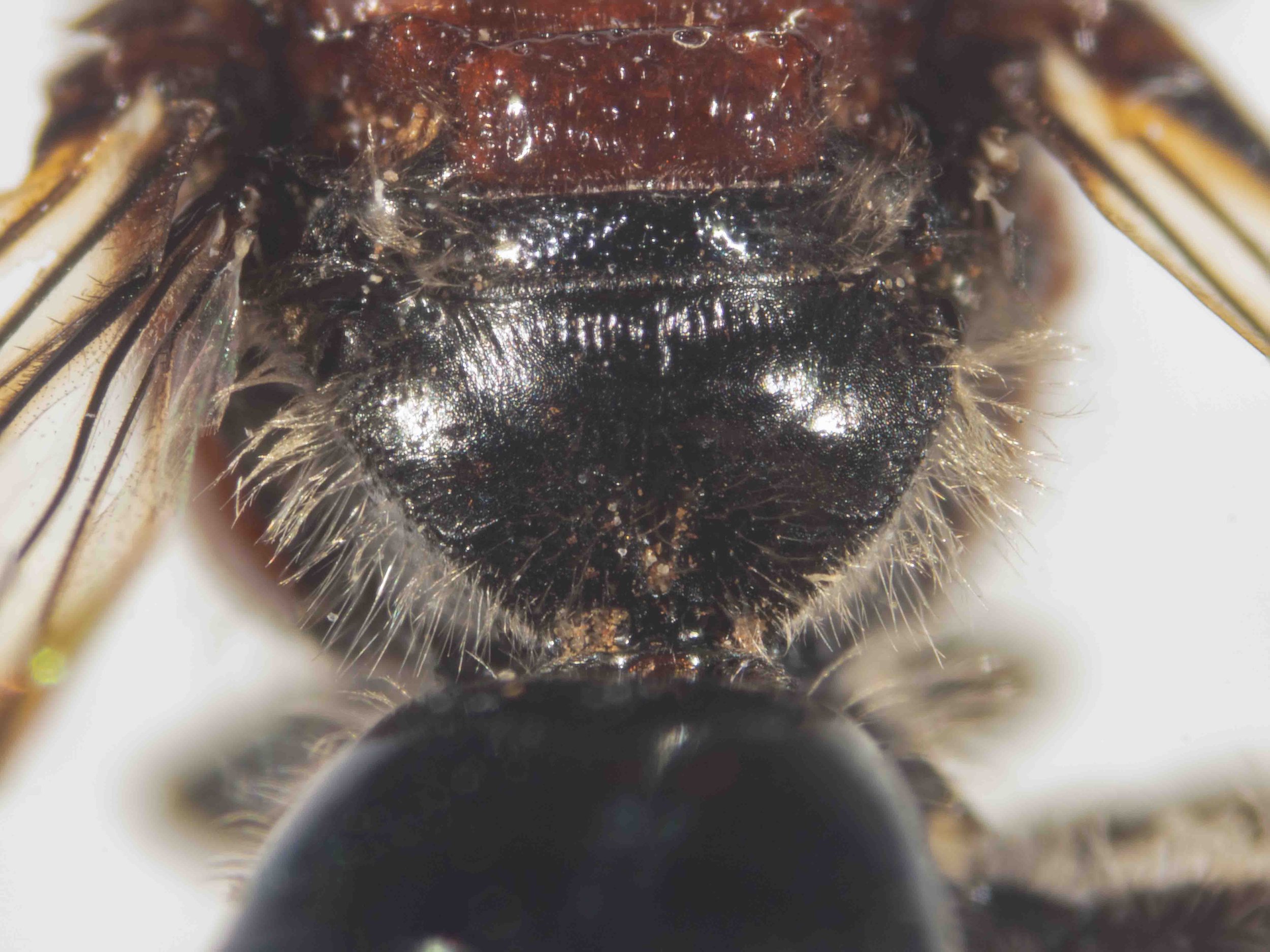
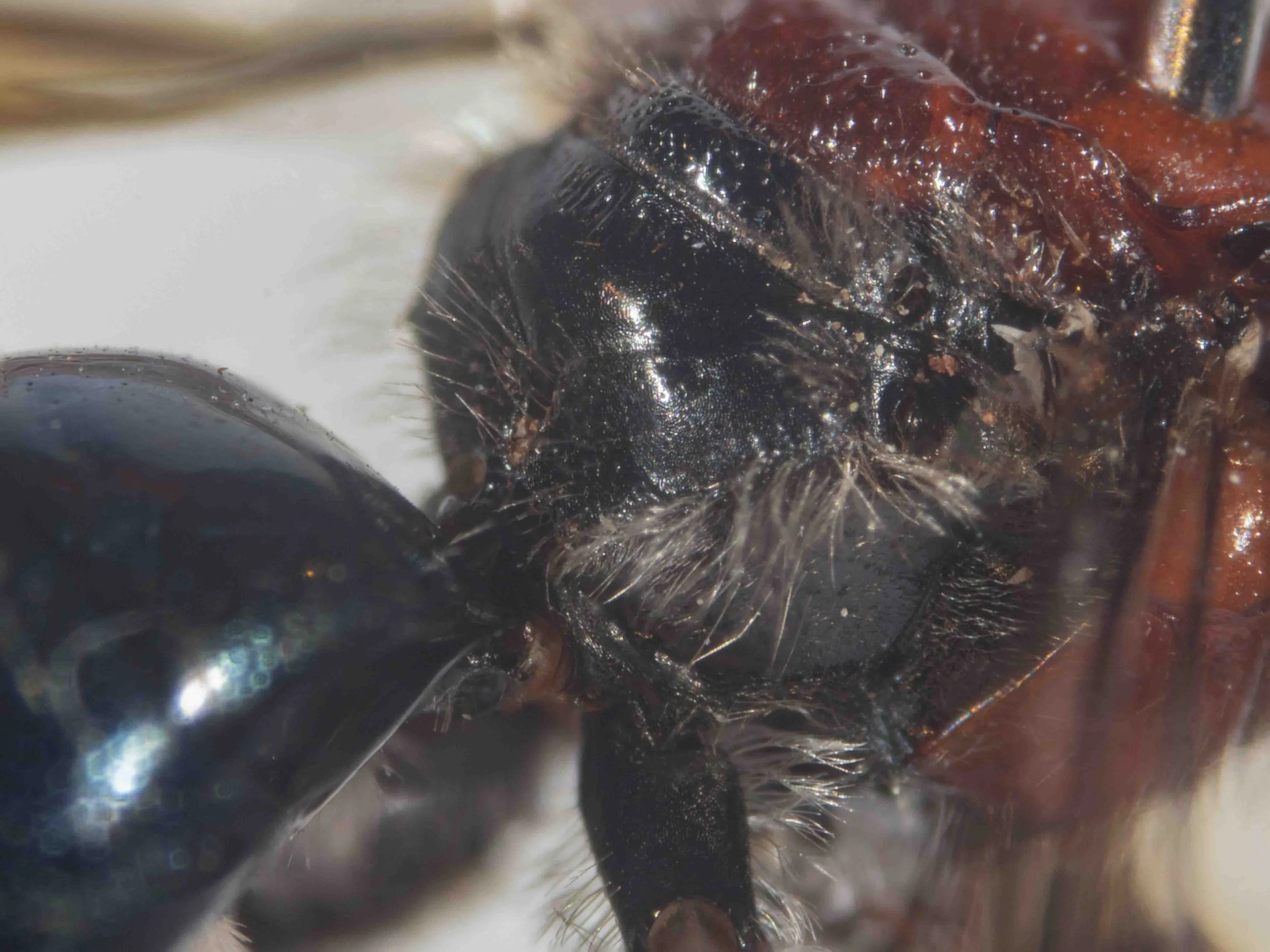
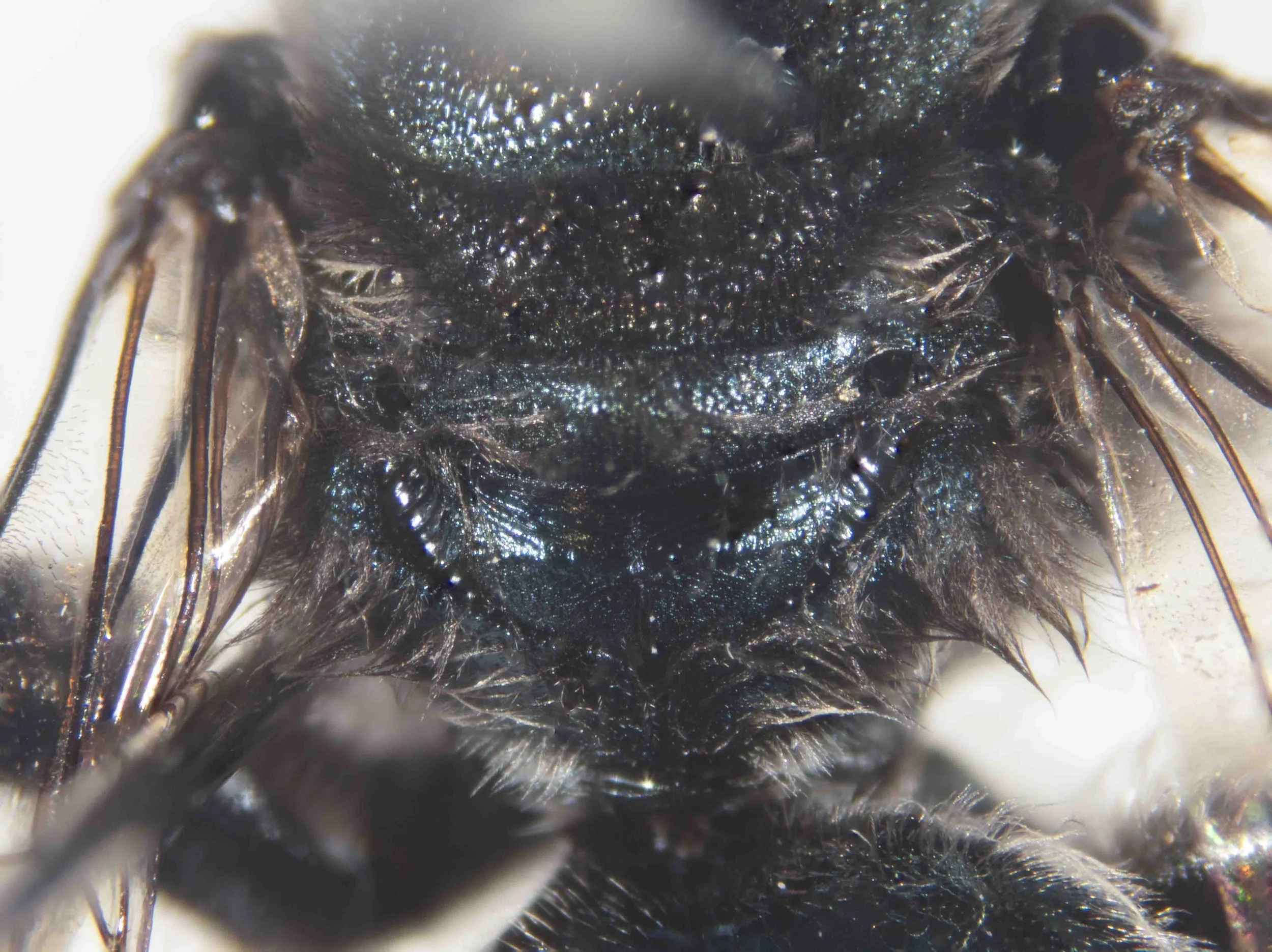
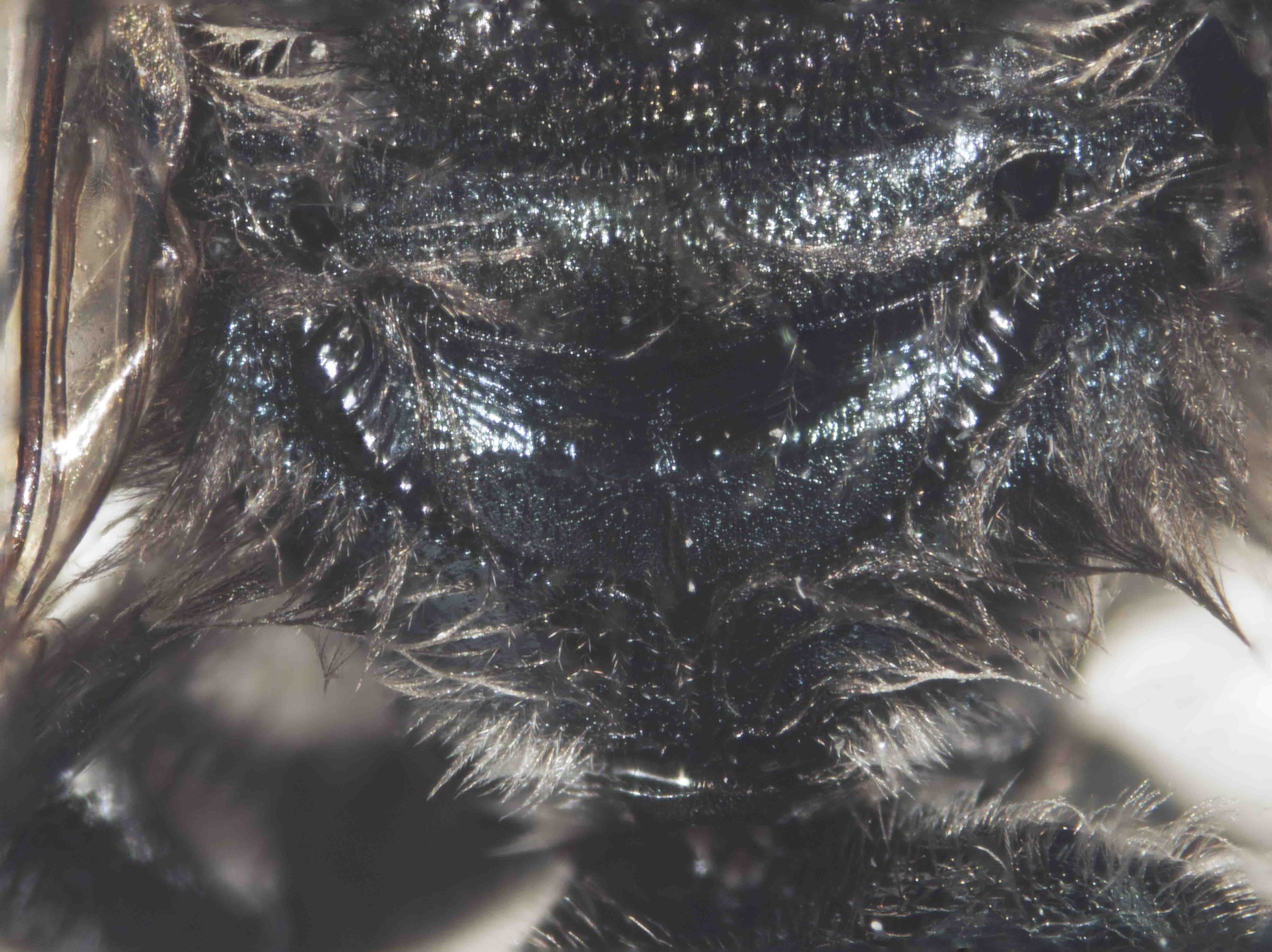
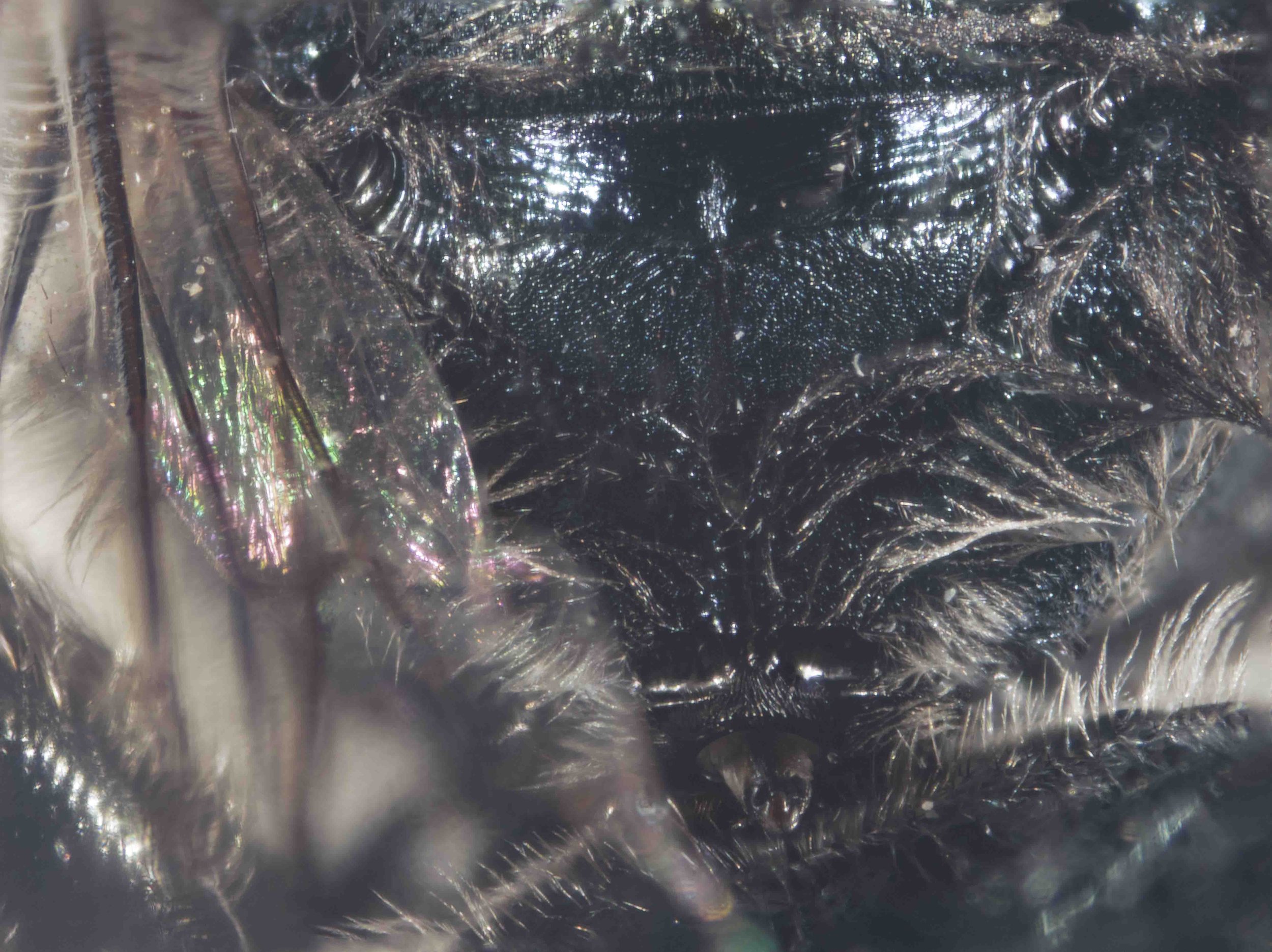
Propodeum enclosure not delineated laterally, except by shallow sulci. Remainder of dorsal propodeum gently rounded, dropping off abruptly at sides.
Propodeum enclosure not delineated laterally, except by shallow sulci. Remainder of dorsal propodeum gently rounded, dropping off abruptly at sides. The interface between dorsal and lateral surfaces might be considered a carina, or at least a ridge.
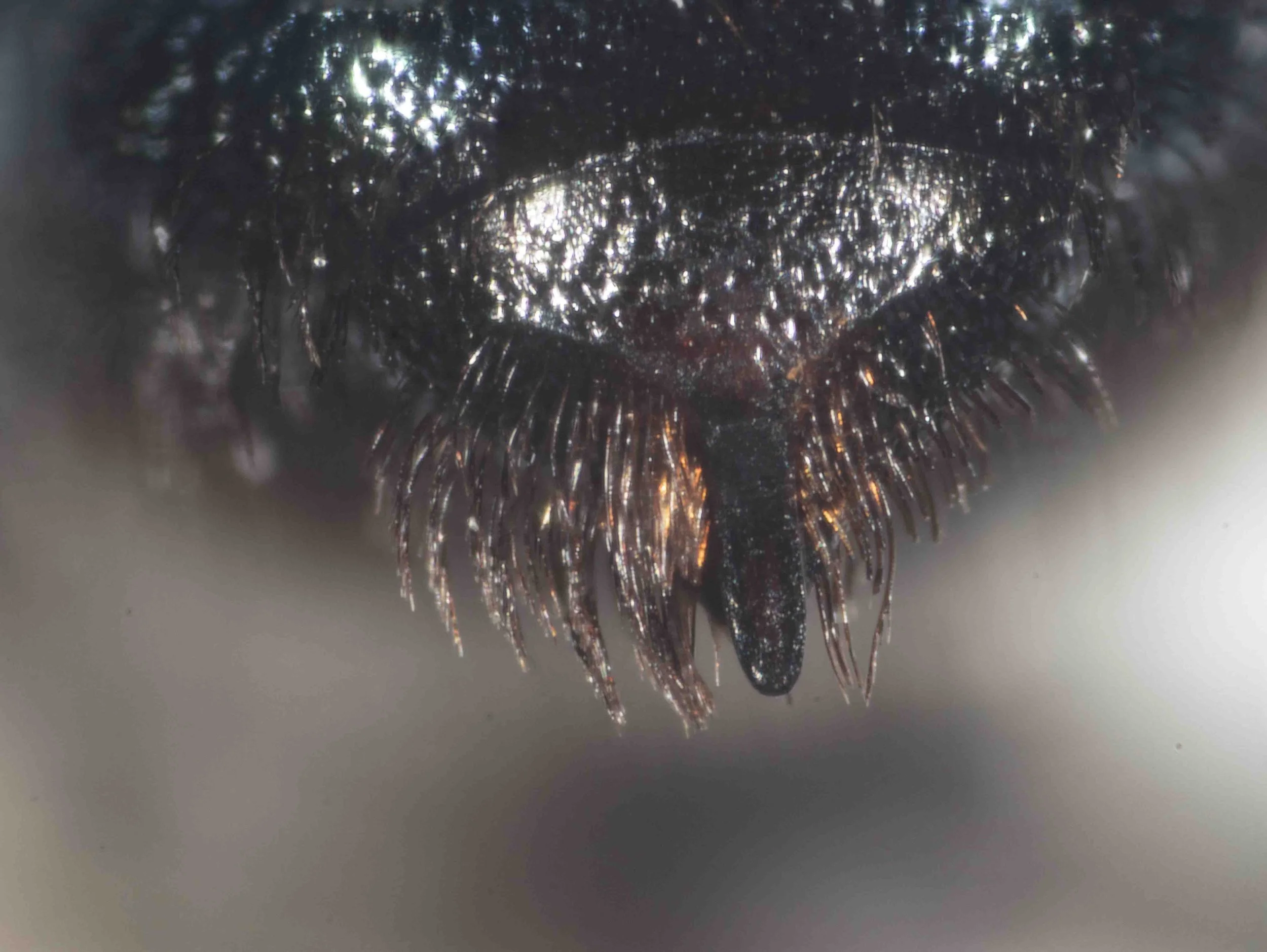
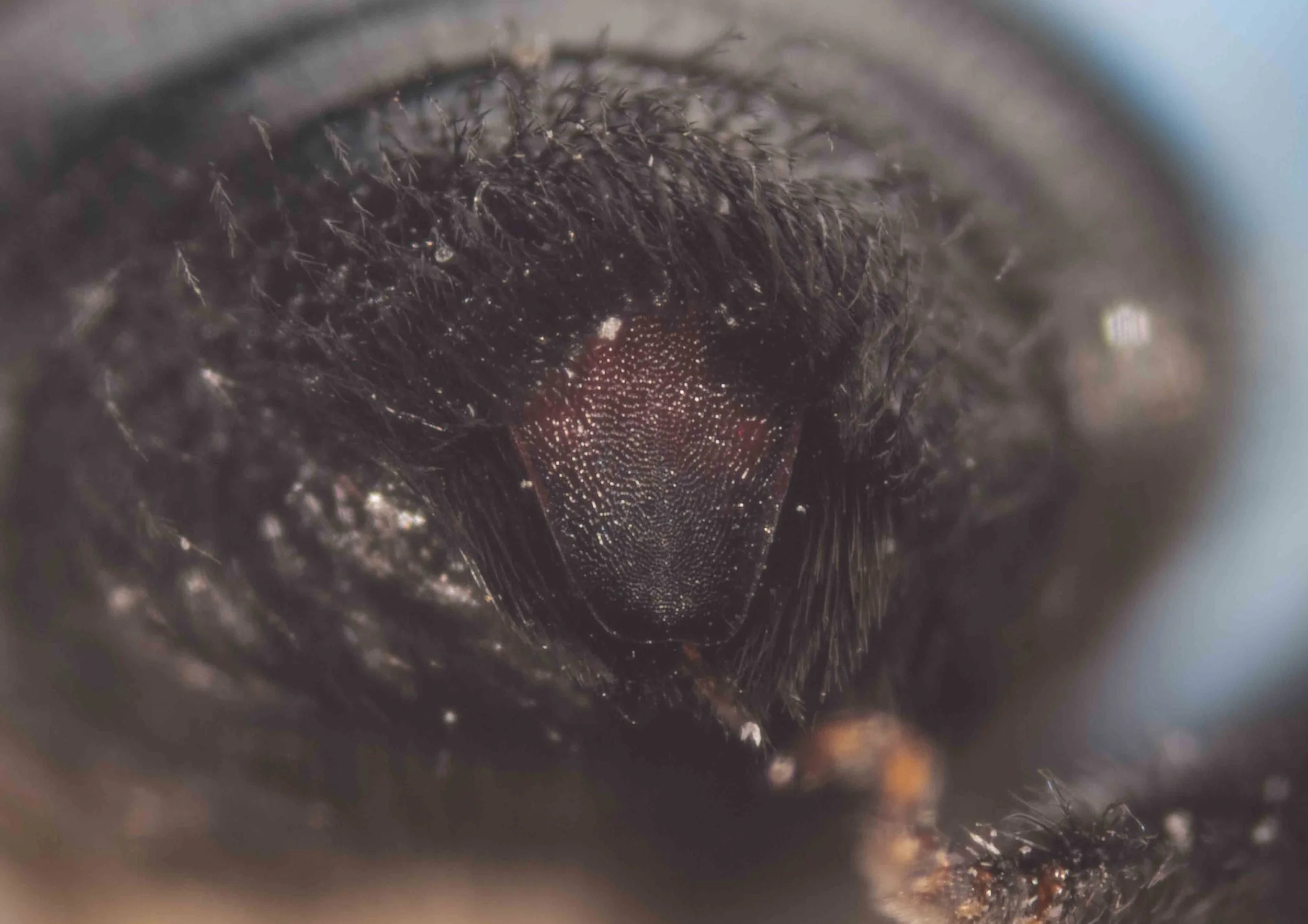
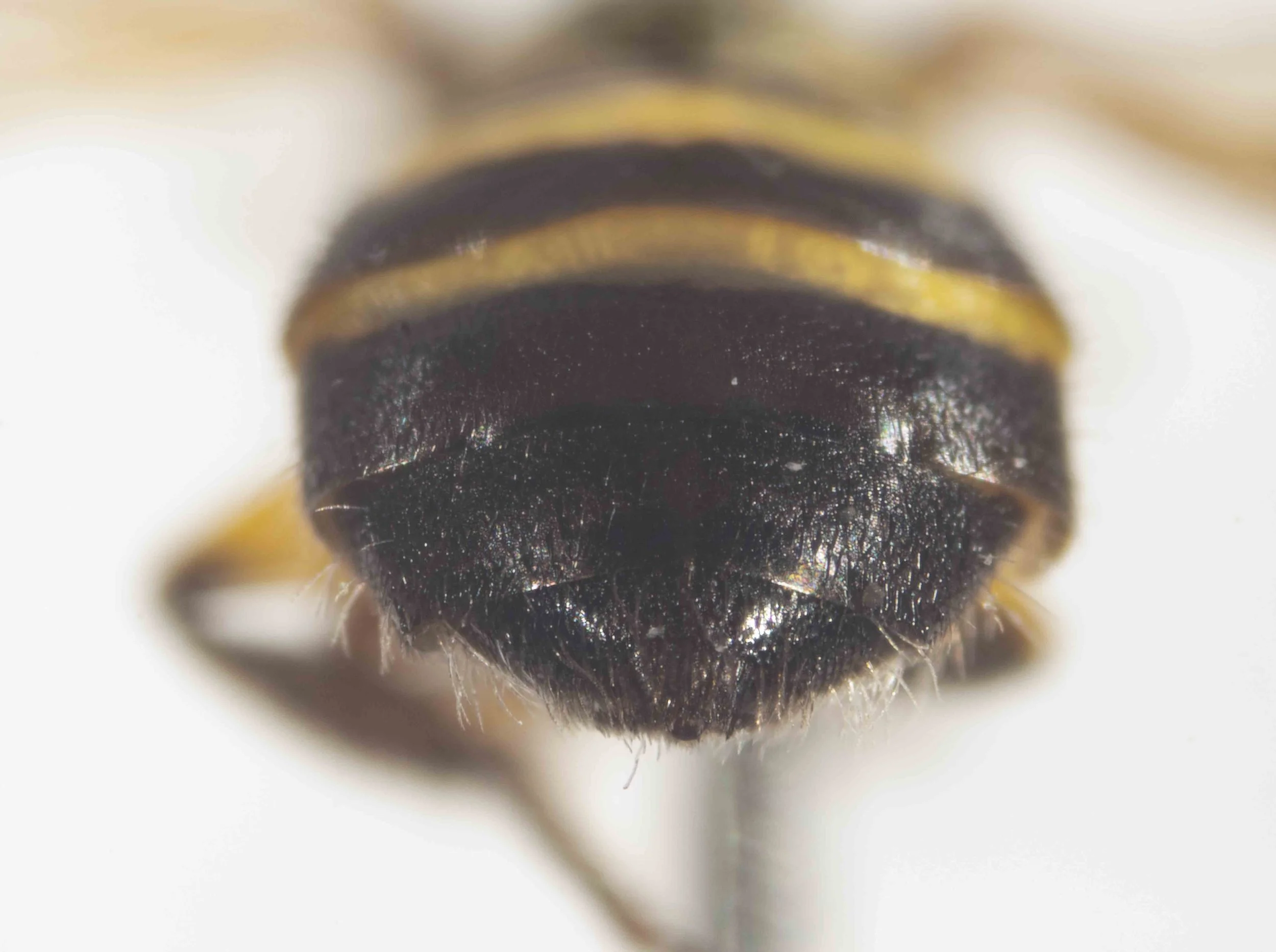
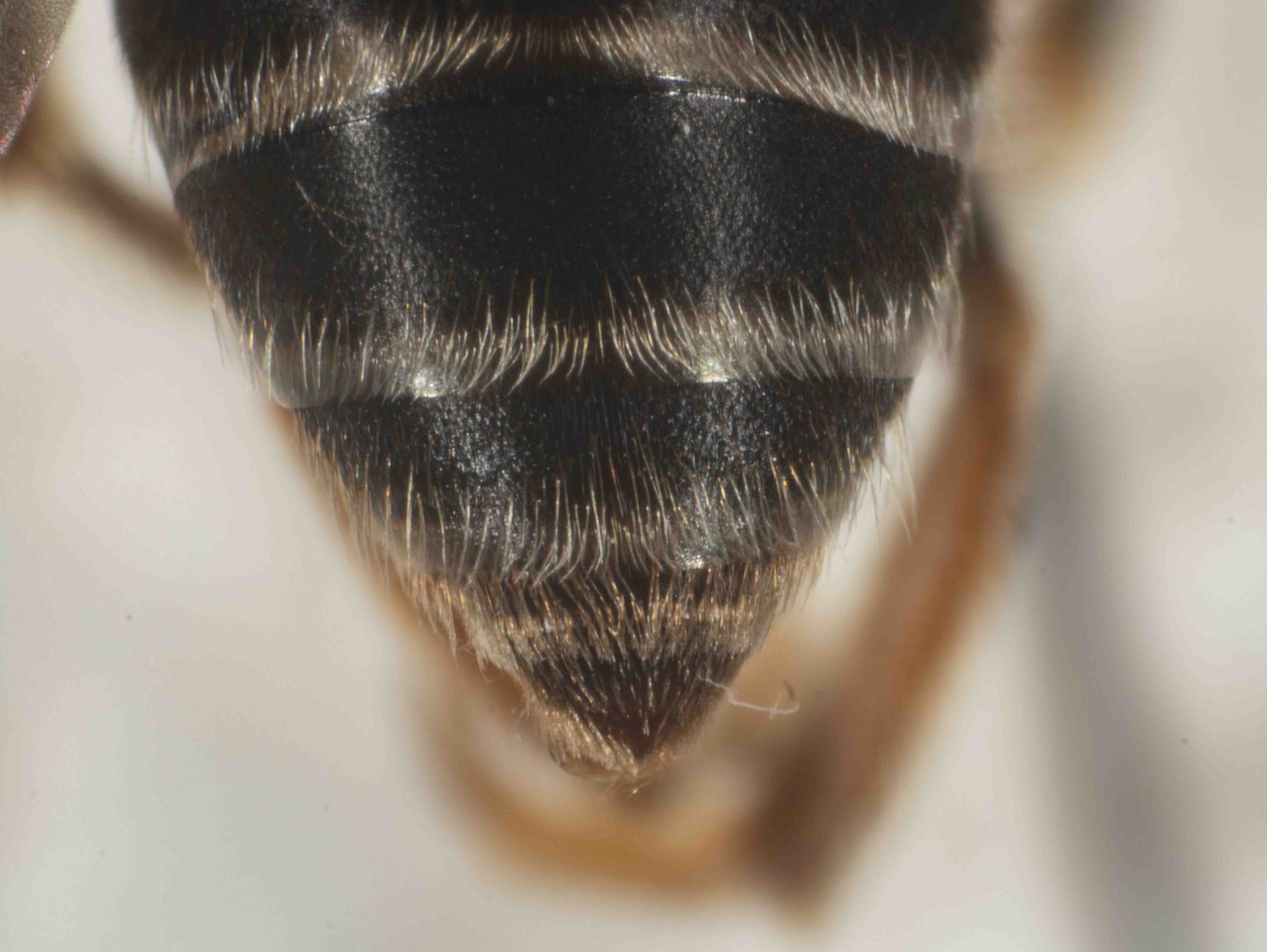
Pygidial plate: slender, parallel-sided.
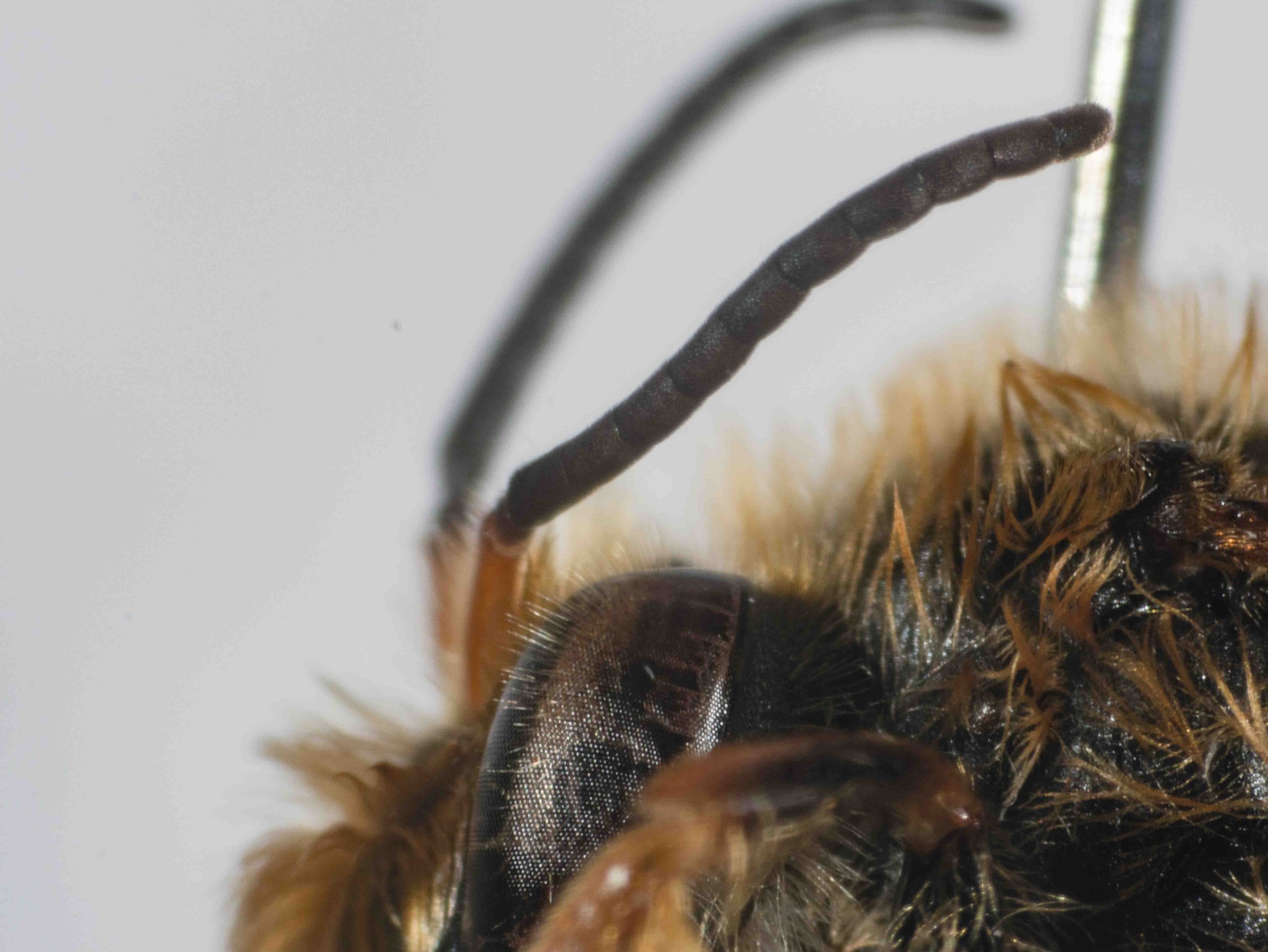
Female (note 10 flagellomeres)
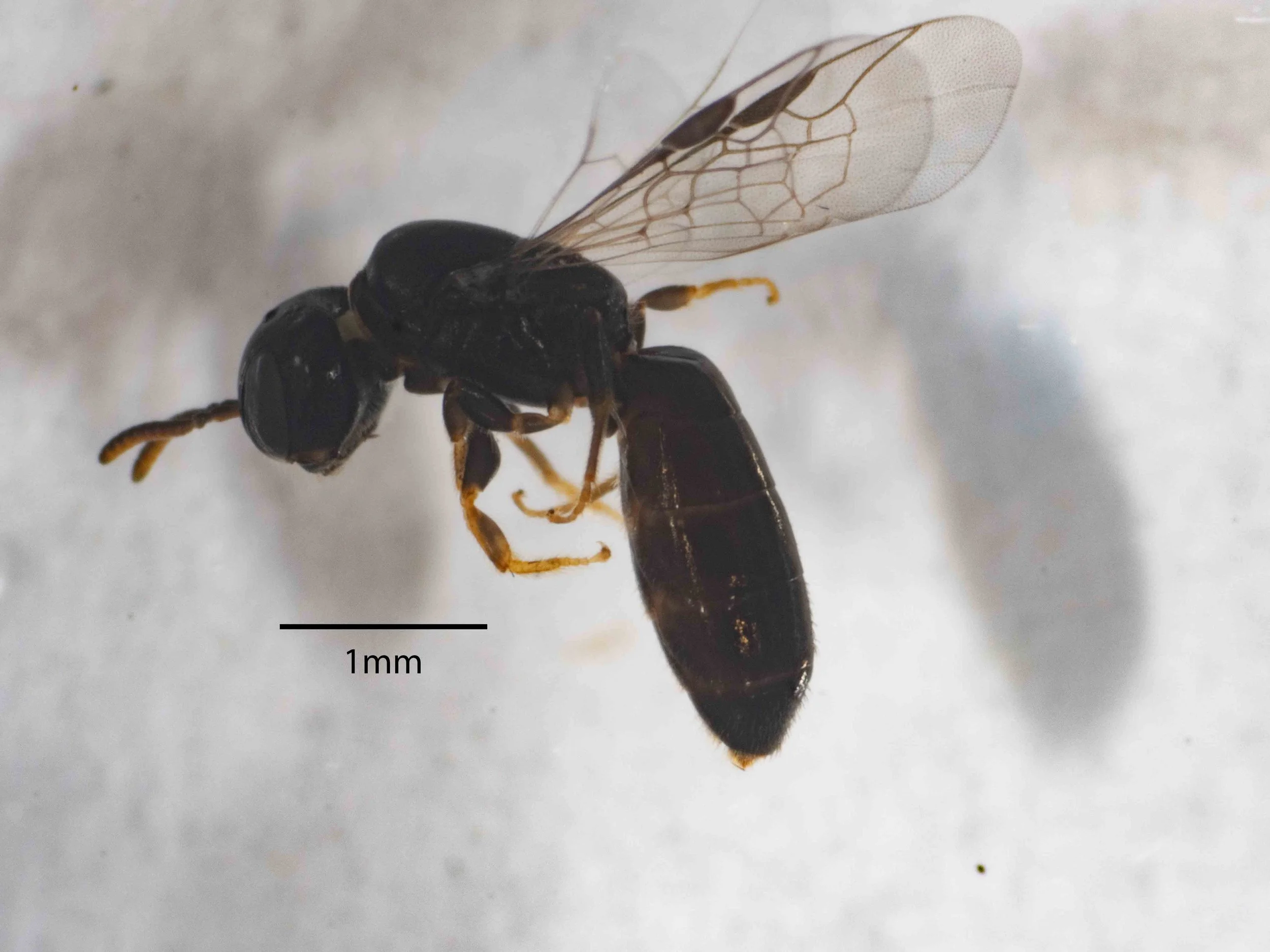
Size ~ 4mm
TI with long, median groove
Scopae: absent
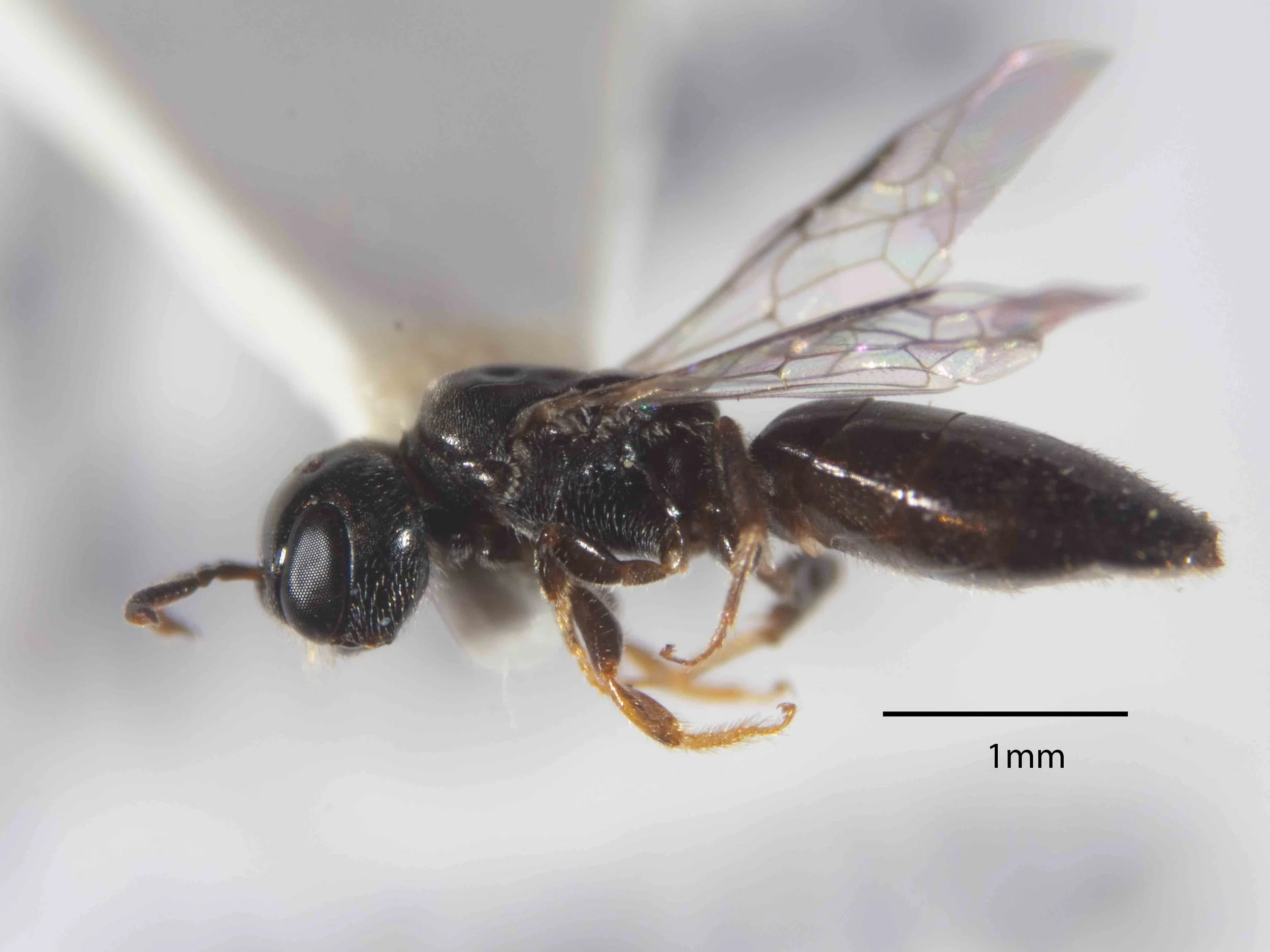
Size ~ 4mm
Scopae: absent
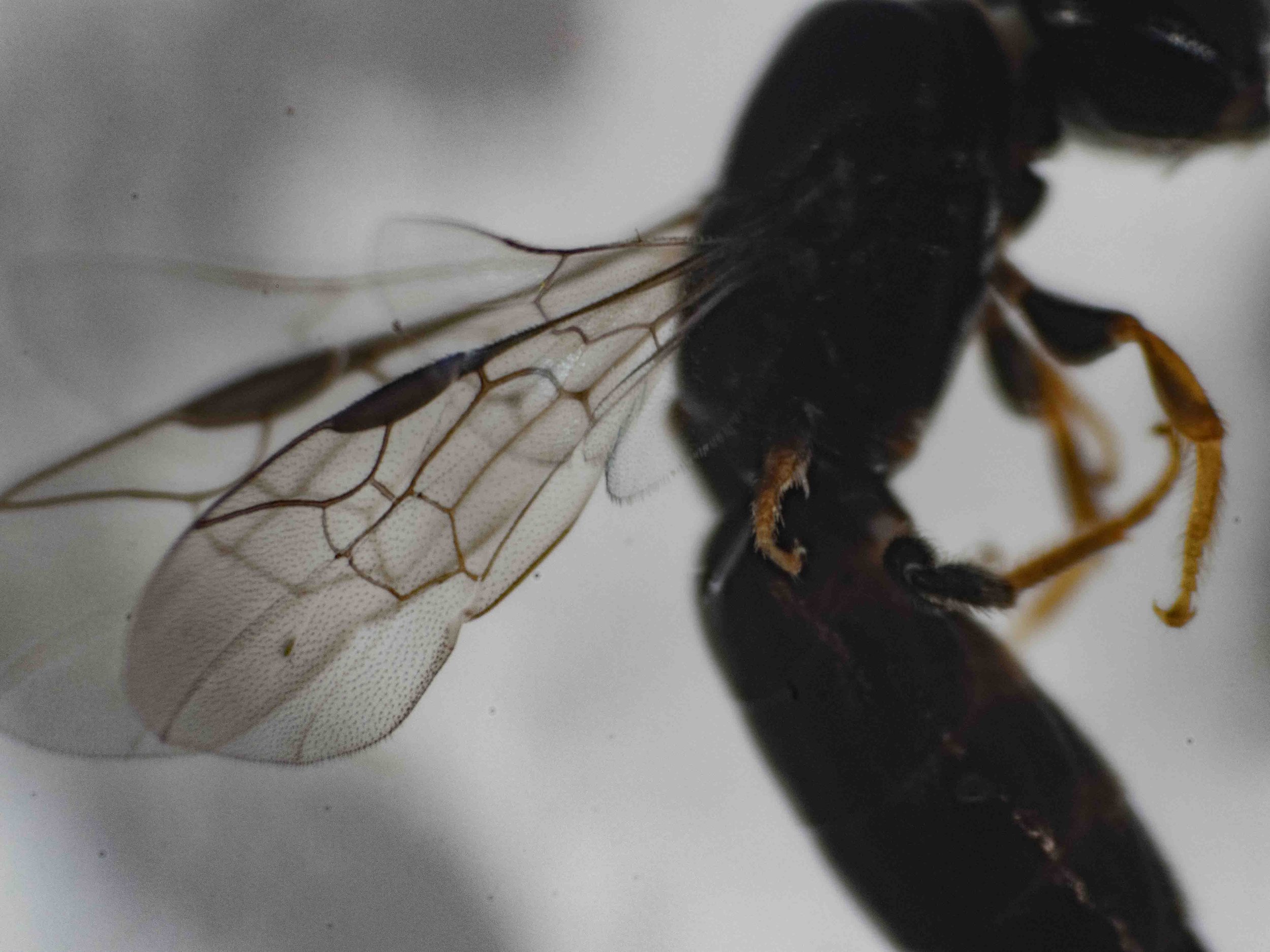
Forewing: first recurrent vein basal to first submarginal cross-vein; marginal cell terminating acutely on anterior margin of wing
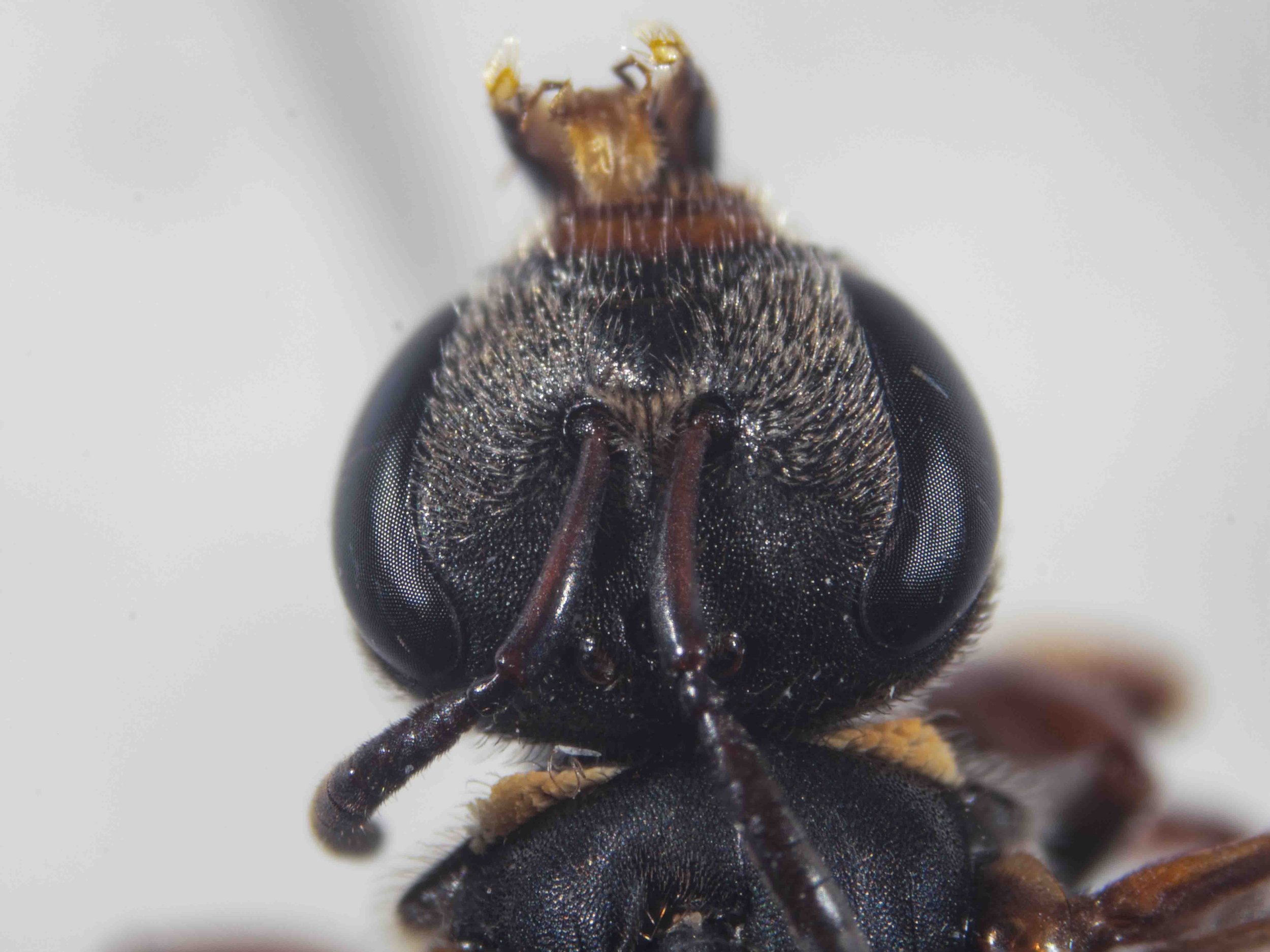
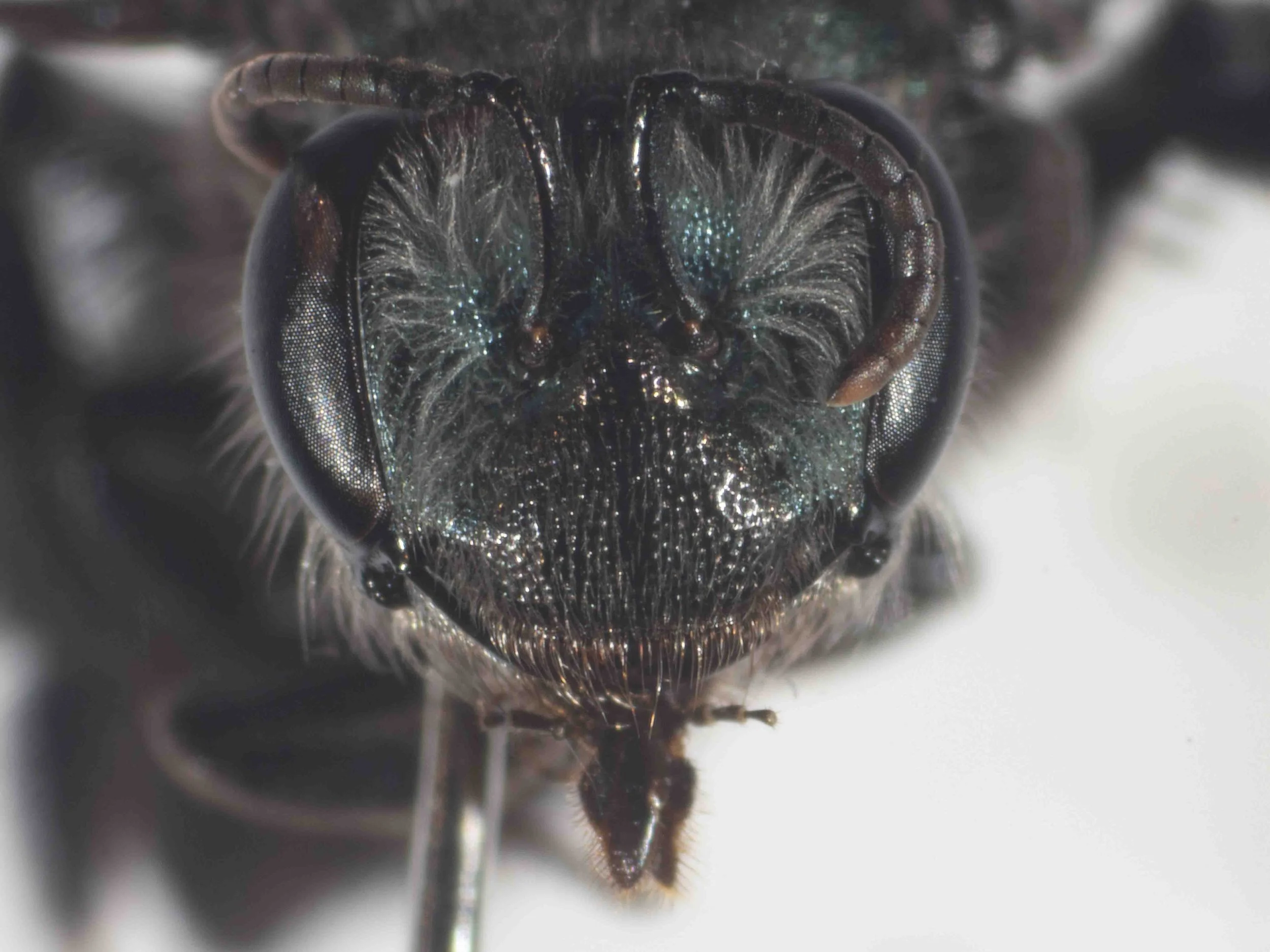
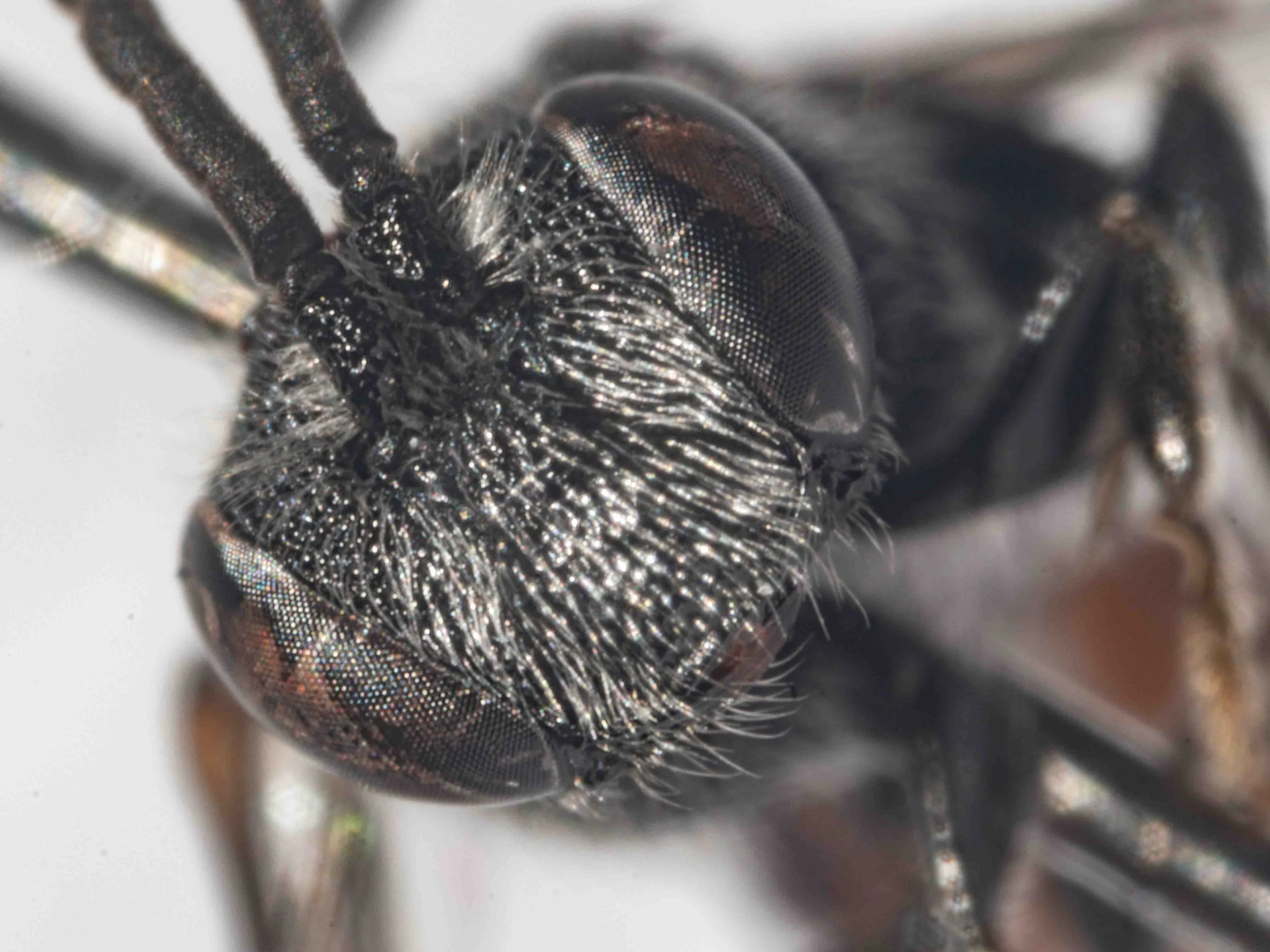
Head shape: quadrate
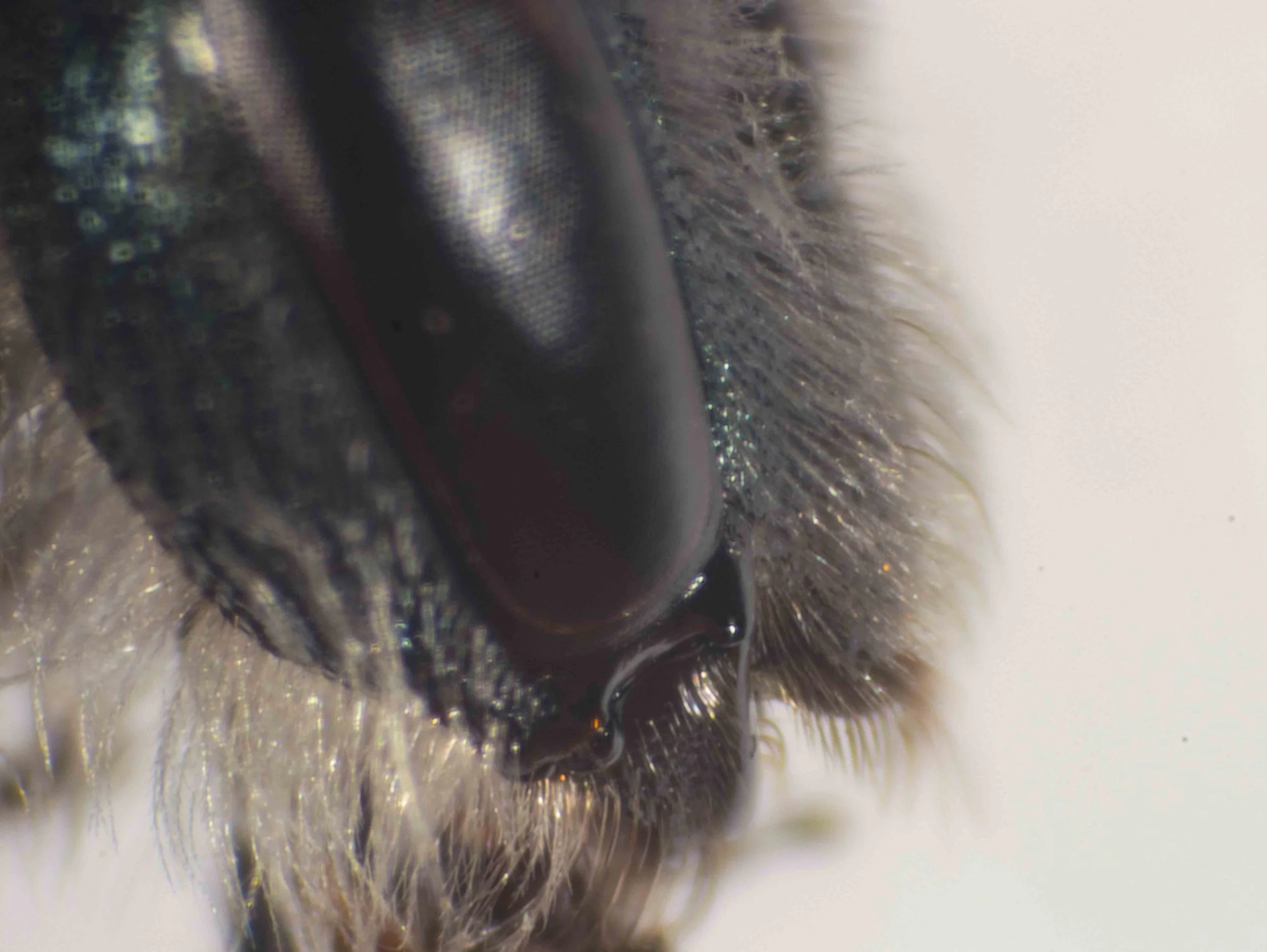
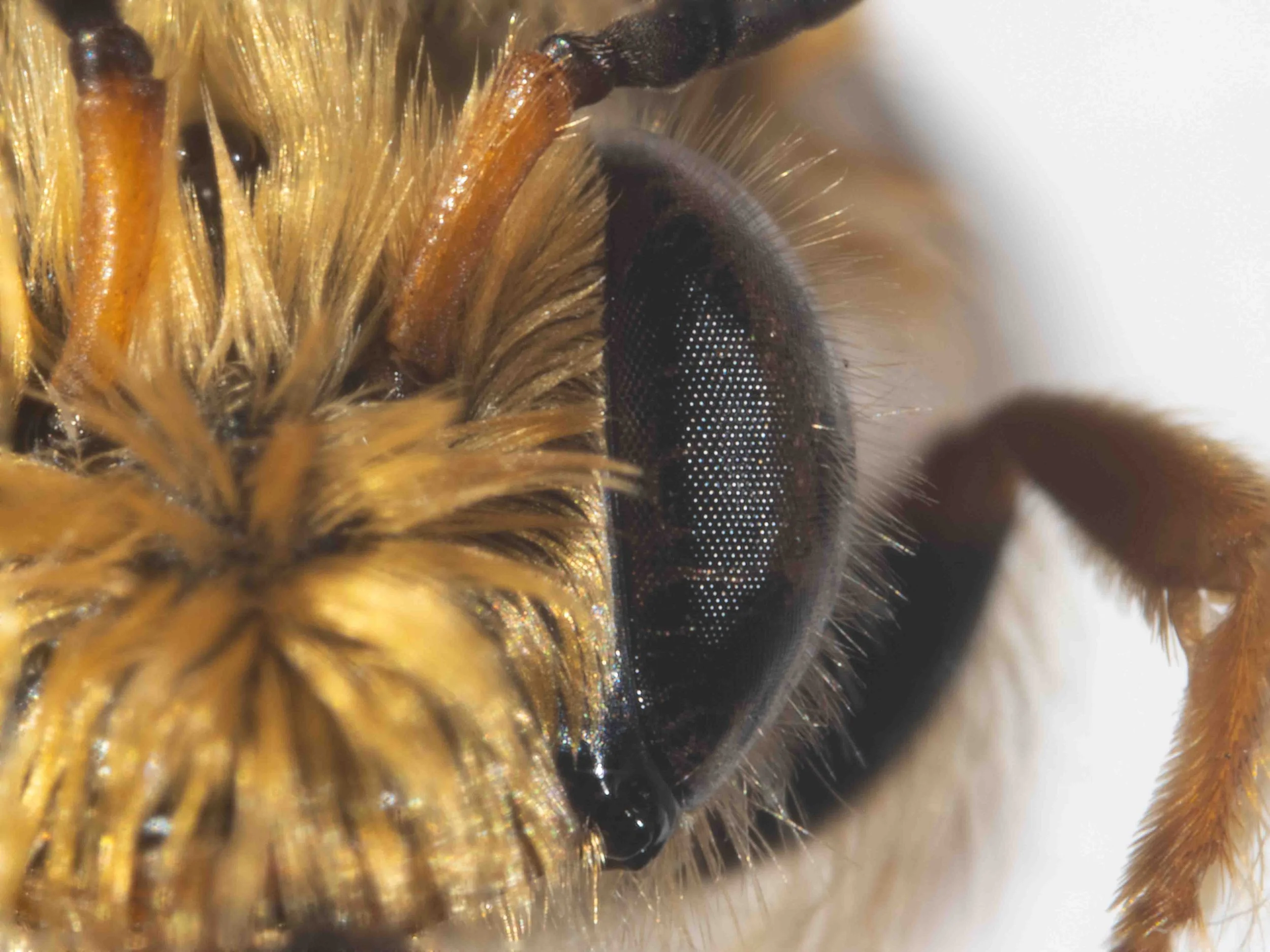
Eye shape: extends beyond anterior articulation of mandible
Clypeus: appears recessed, relative to supraclypeal region (not forming continuous arc)
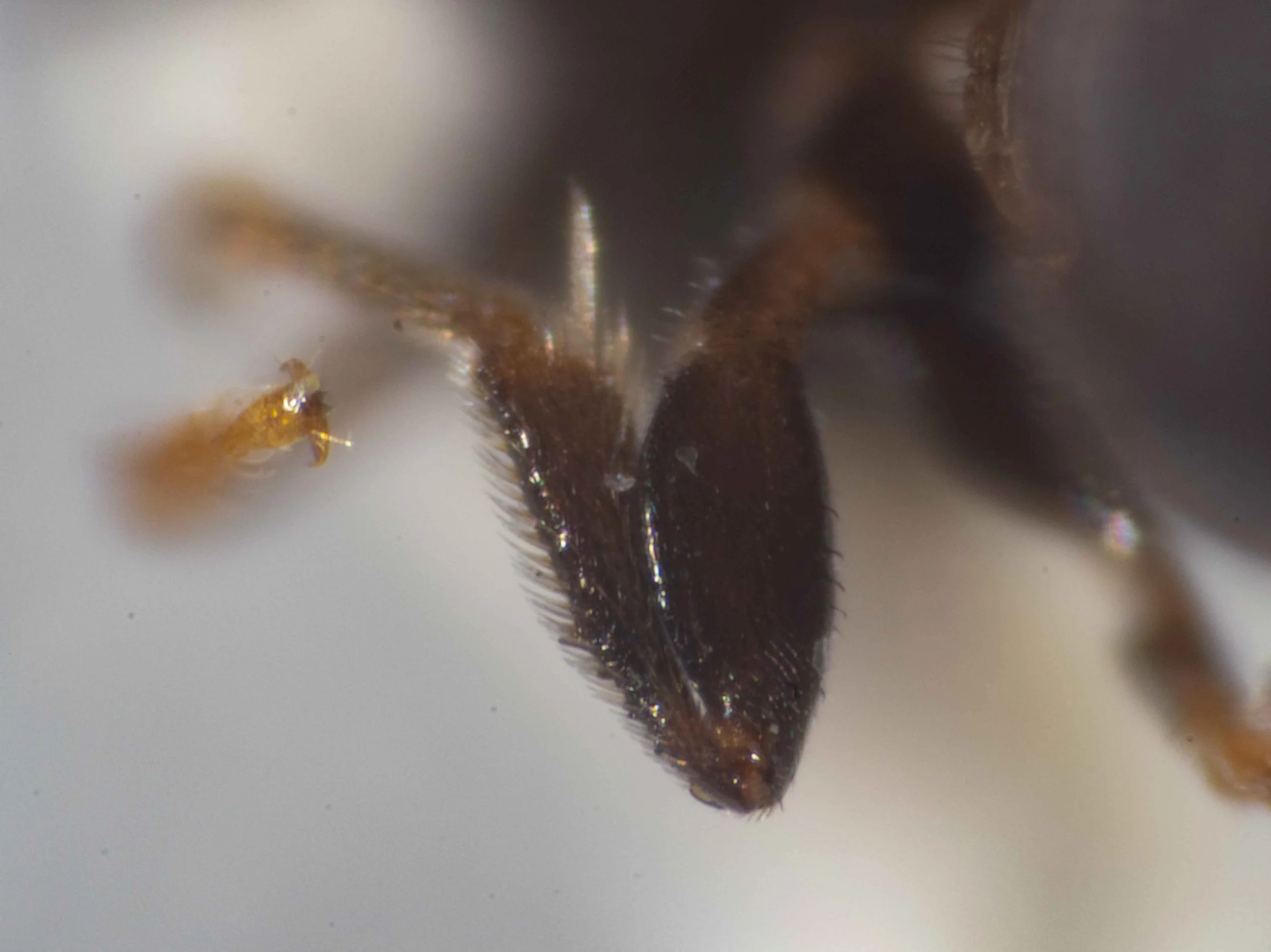
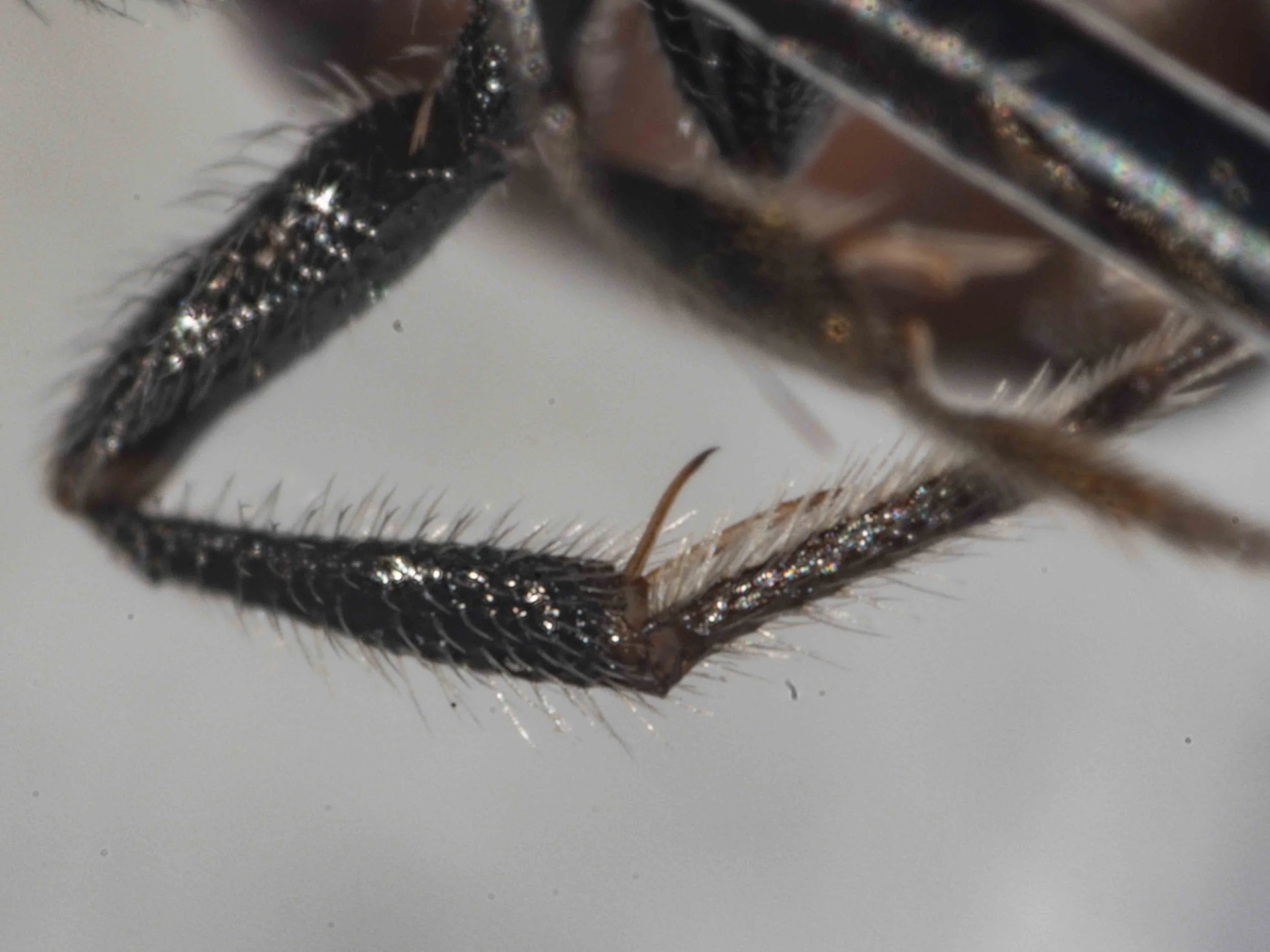
Hind femur and tibia (viewed anteriorly): basitibial plate edged by small tubercles
Hind tibia (viewed dorsally): basitabial plate not clearly defined
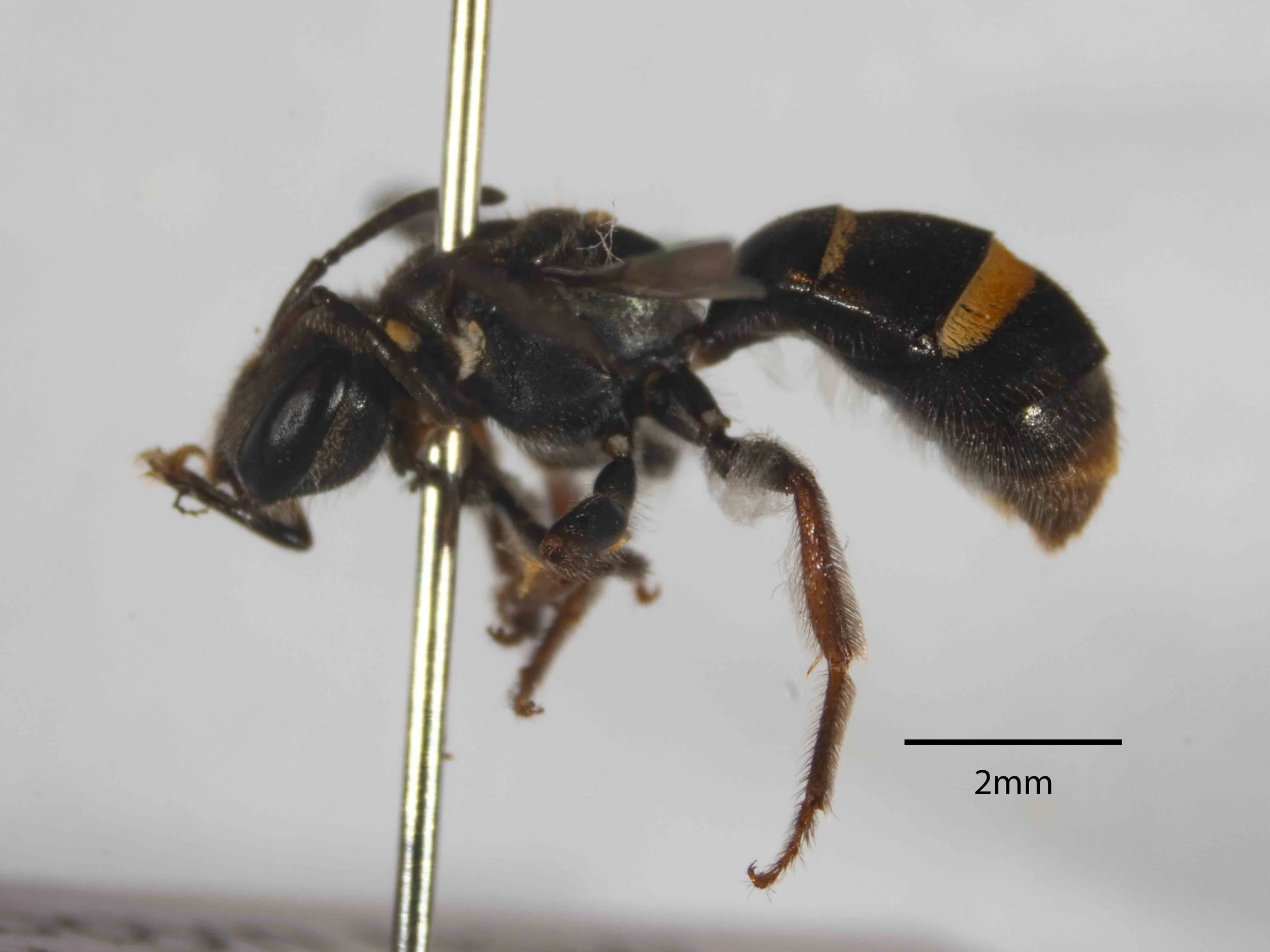
Tomentum: orange basal bands on T2 & T3; orange patches on mesoscutum, posterolaterally,and metanotum, medially
Forewing: 3 submarginal cells, SCIII much shorter than SCI, SCIII longer than SCII; basal vein strongly curved; first recurrent vein interstitial SCII & SCIII; marginal cell apex acute, situated on wing vein
Tomentum: orange basal bands on T2 & T3; orange patches on mesoscutum, posterolaterally,and metanotum, medially
Tomentum: orange patches on pronotal collar, laterally; white fringe on pronotal lobes
Scopae: well-developed on hind femur; shorter, less dense on hind tibia
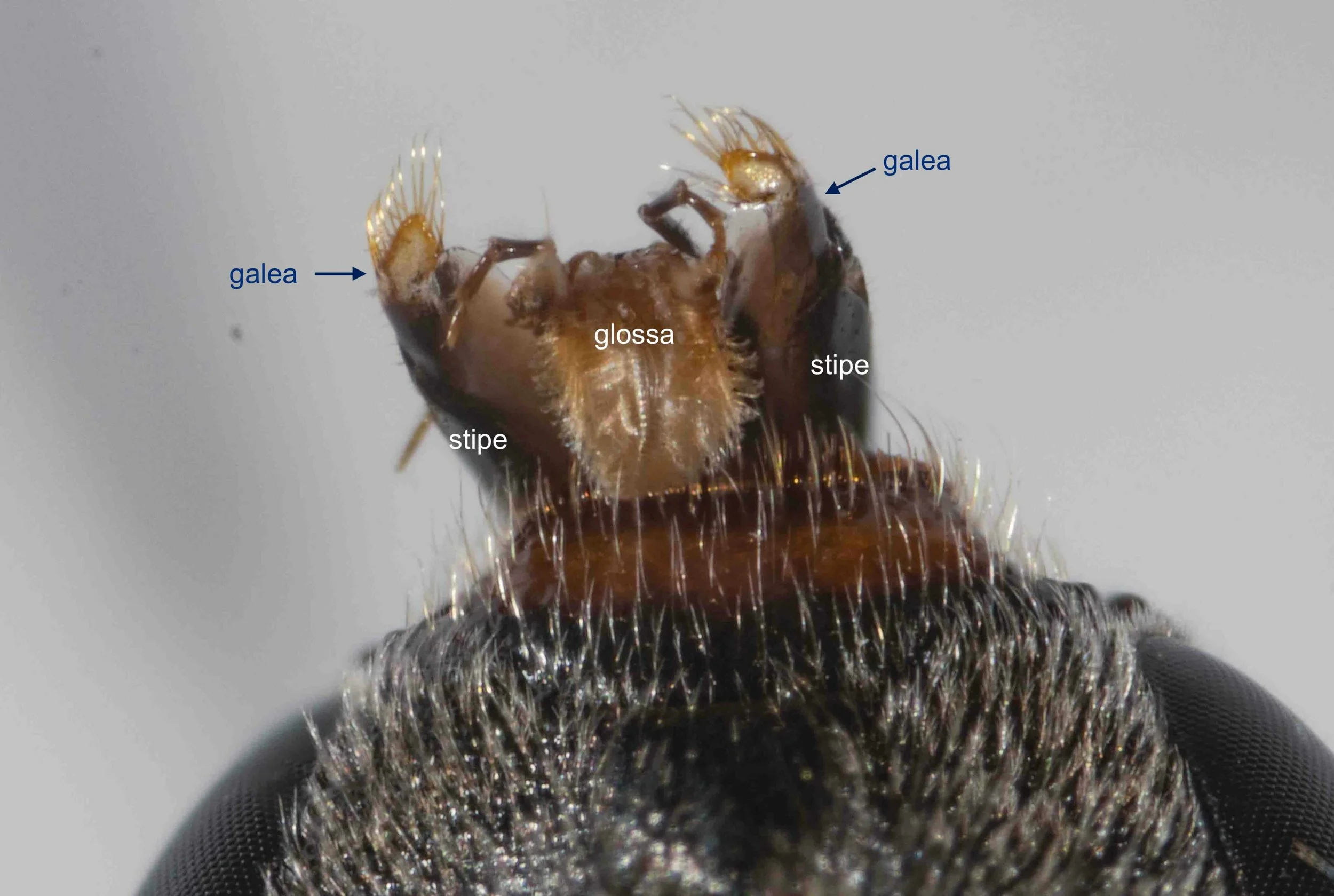
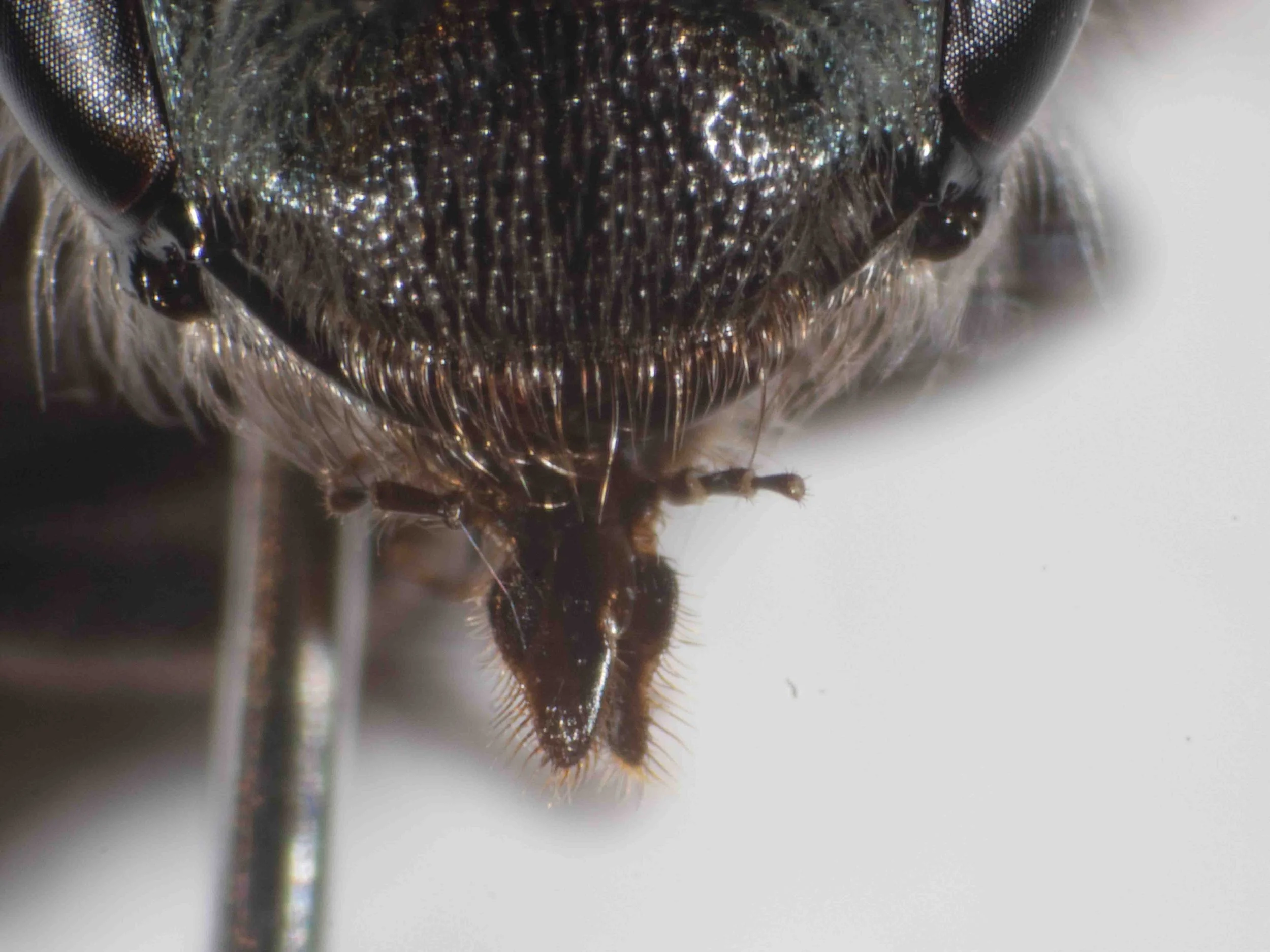
Proboscis tip, viewed dorsally. Galea closely associated (‘applied’) to stipes.
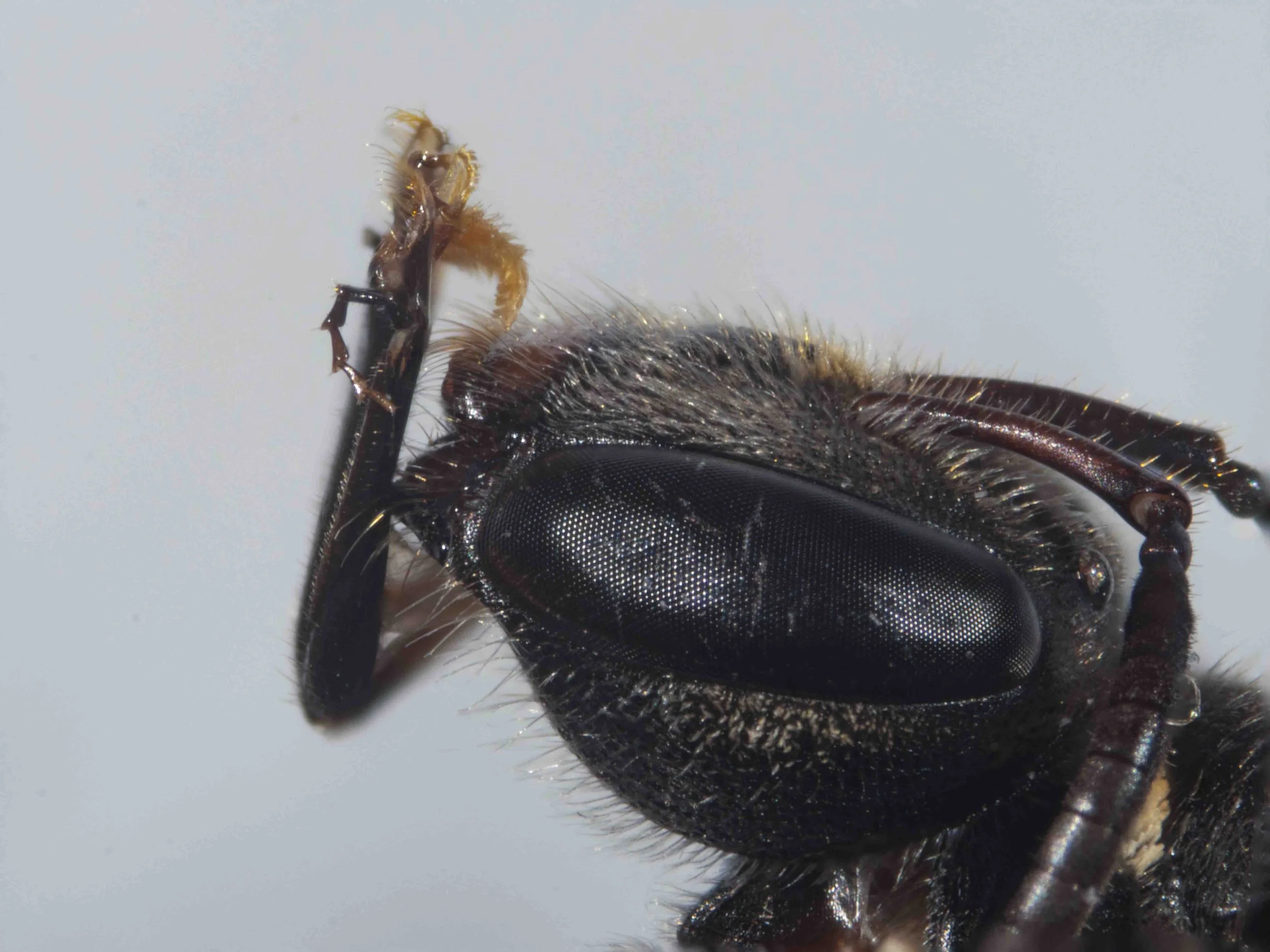
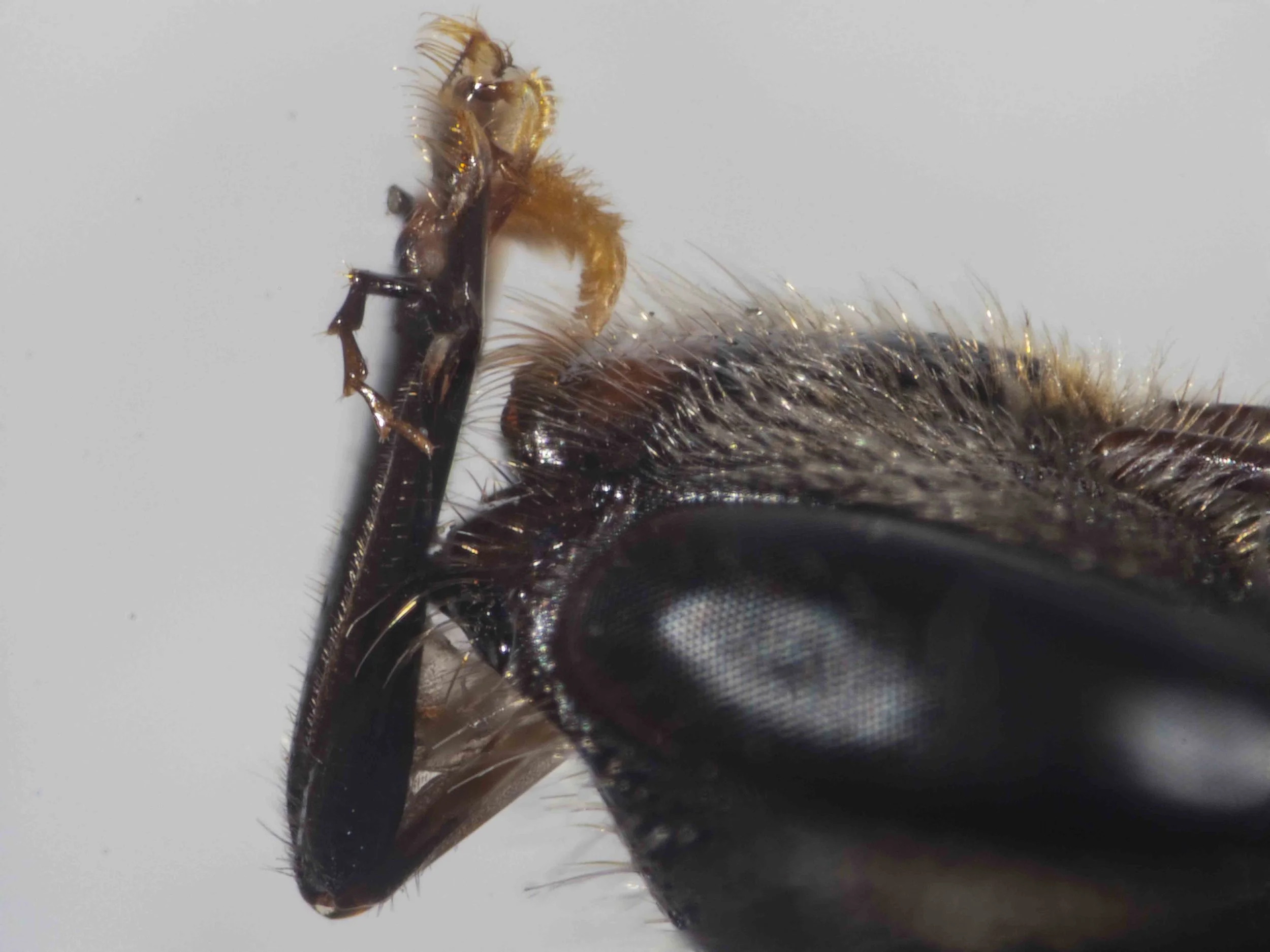
Proboscis, showing relative length of cardo and prementum.
Proboscis: long prementum; short, acute glossa; 6-segmented maxillary palp
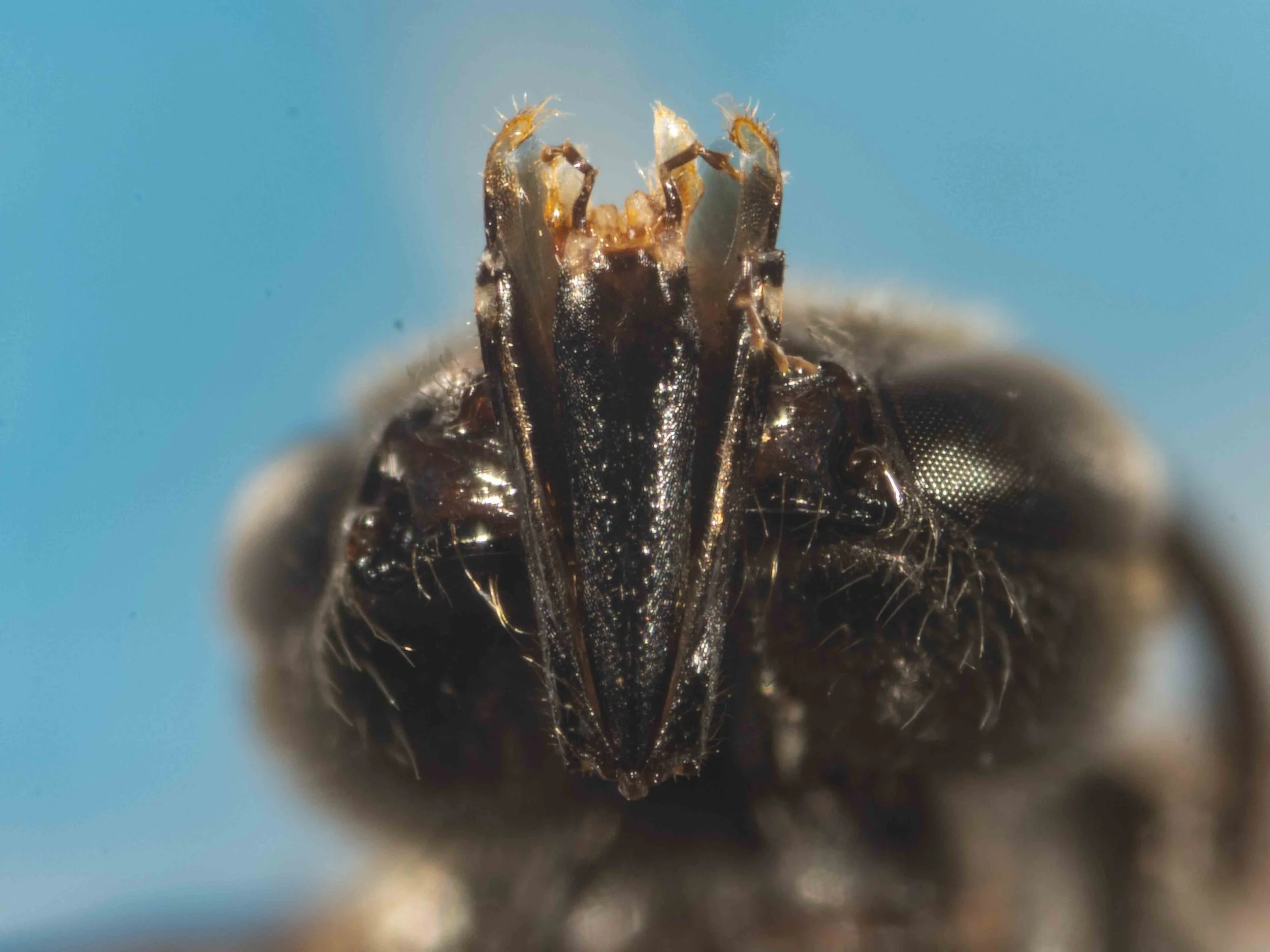
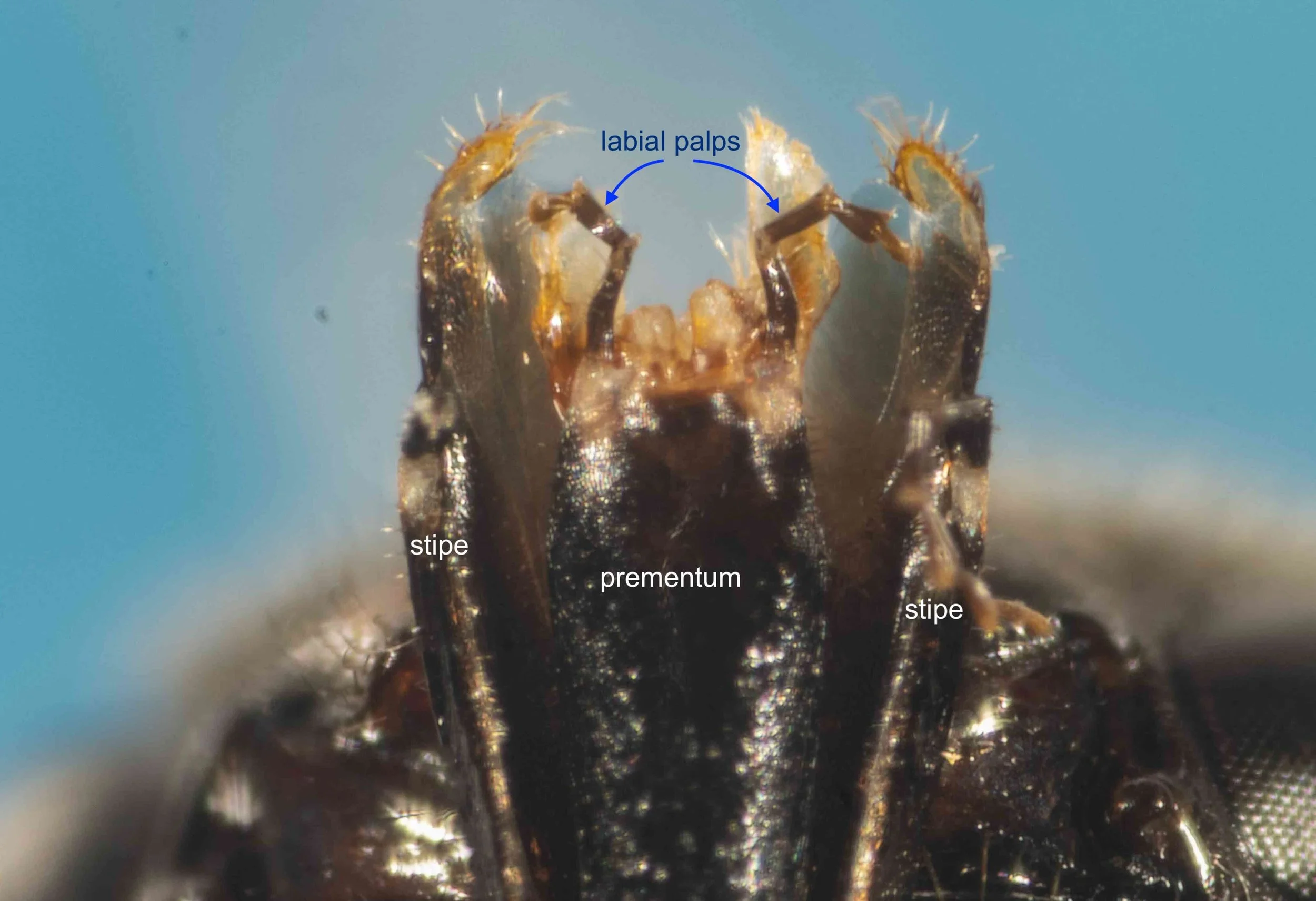
Proboscis, viewed ventrally, showing prementum and labial palps, flanked laterally by stipes.
Proboscis tip, viewed ventrally. Note that the glossa is curved upwards and so not visible in this image.
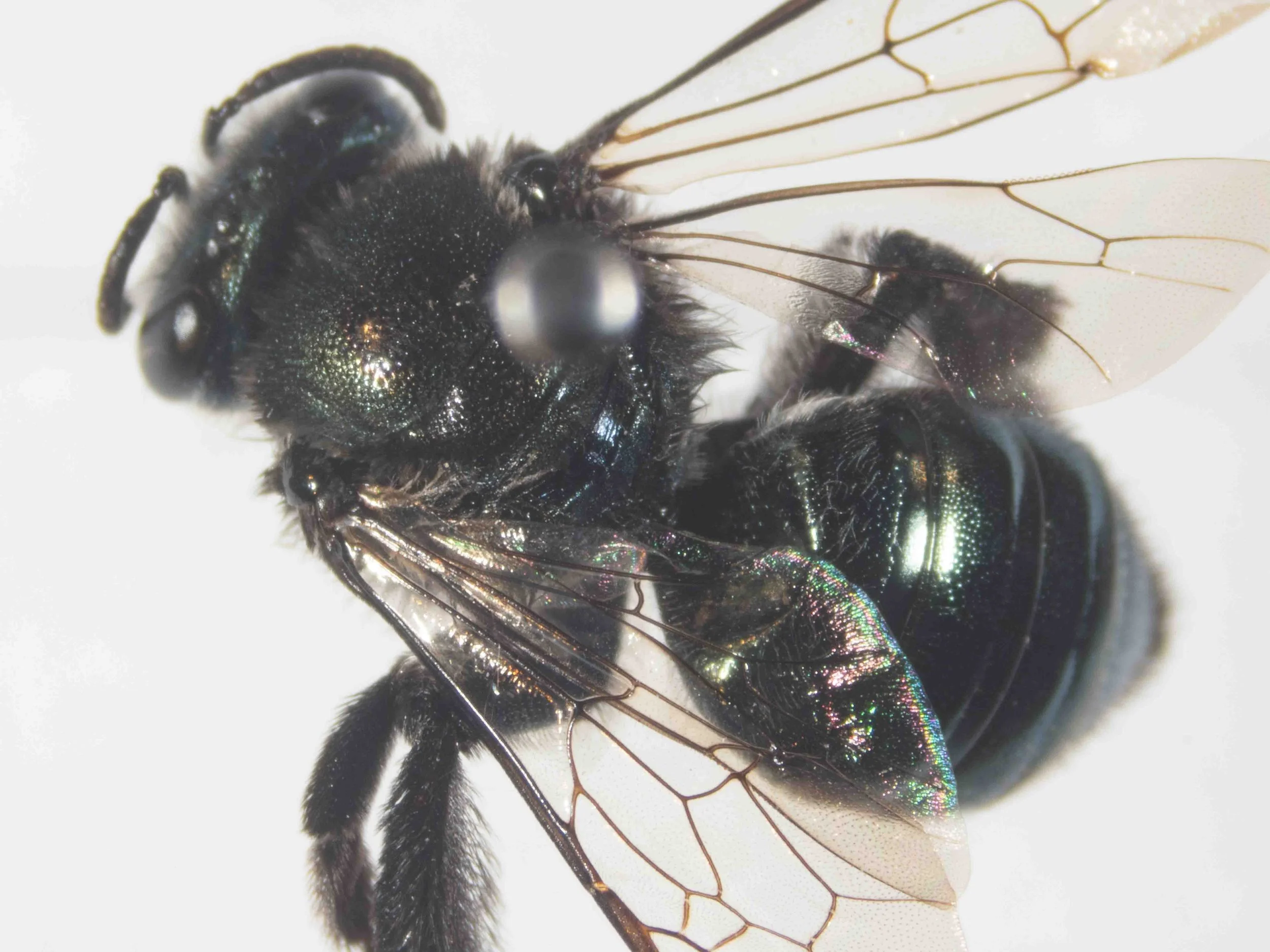
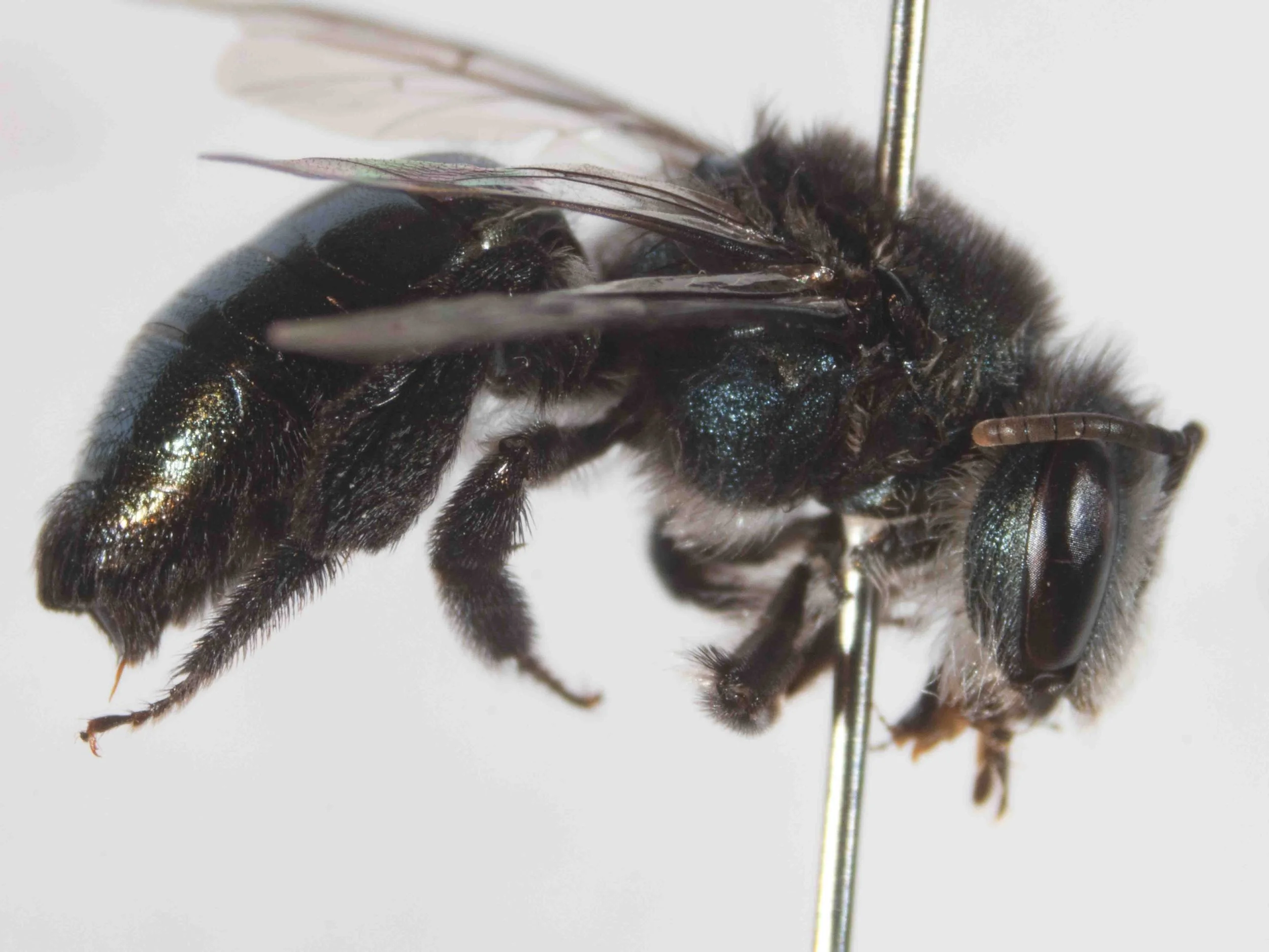
Size: 11-12mm, robust.
Body colour: dark metallic blue-green throughout.
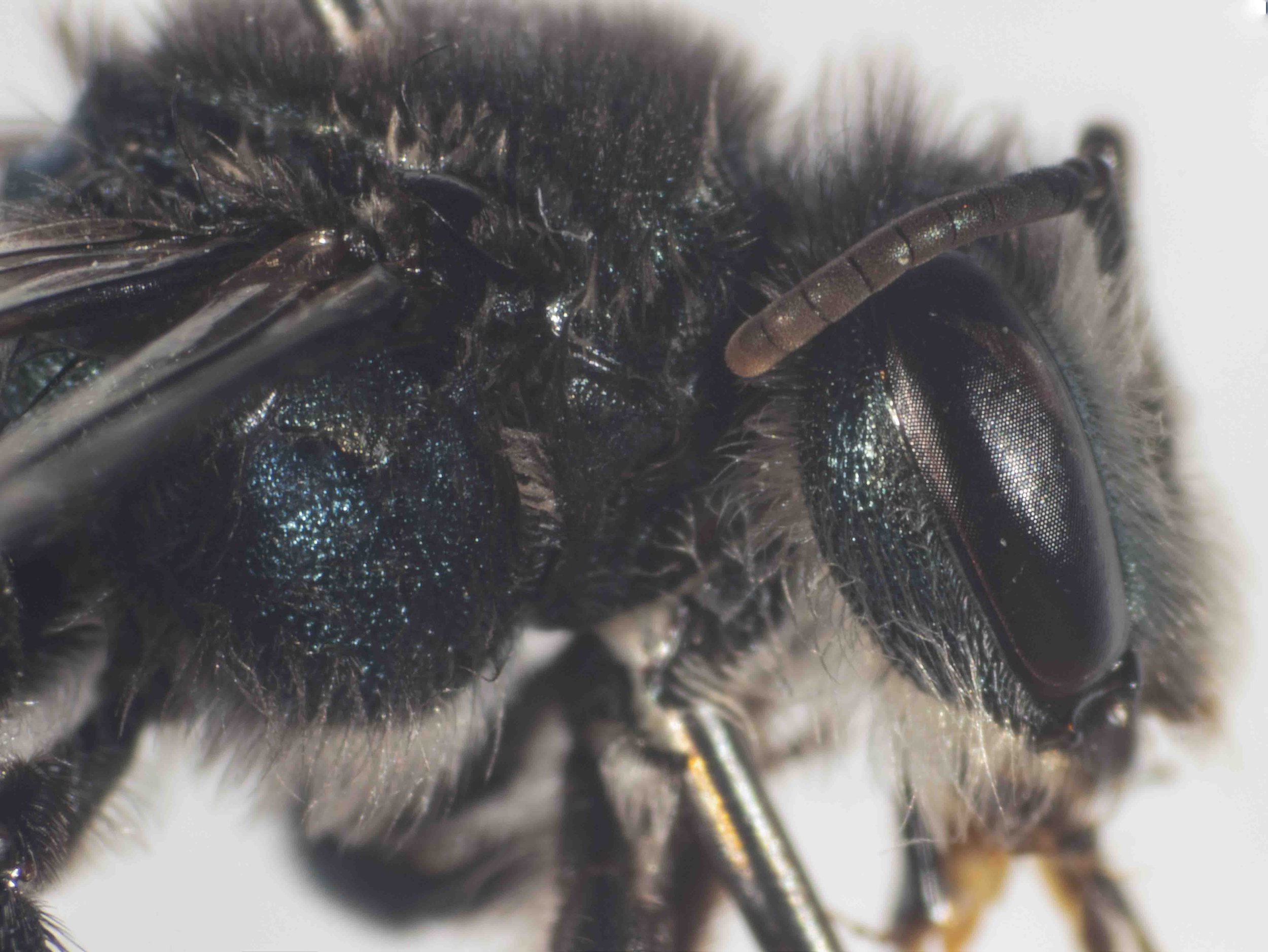
Long hairs over most of head, mesosoma, and legs.
Long hairs over most of head, including genae
Forewing: 3 submarginal cells; stigma well-developed, tapering apically to marginal cell vein well inside marginal cell (see p. 105, Houston 2018)
Female (note 10 flagellar segments)
Mandibles long. Labrum with transverse ridges.
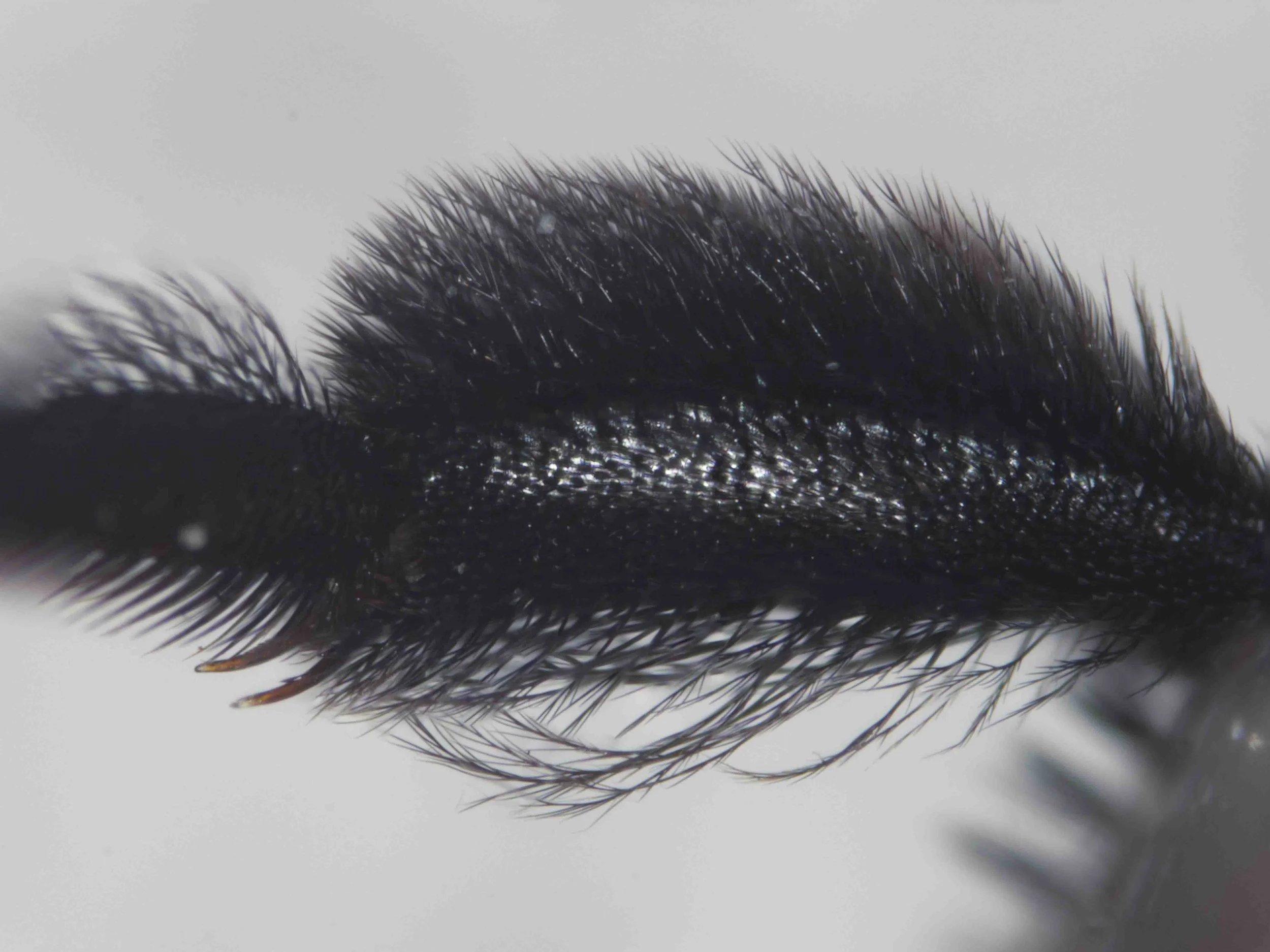
Hind tibia (and base of basitarsus), viewed anteriorly
Hind tibia (viewed posteriorly): scopae long, particularly dense above (dorsally); hairs beneath include mixture, with some particularly long, and obviously plumose.
Front basitarsus: short, dense bristles (compare images p. 107 Houston 2018)
Pygidial plate: present
Head and thorax strongly sculptured.
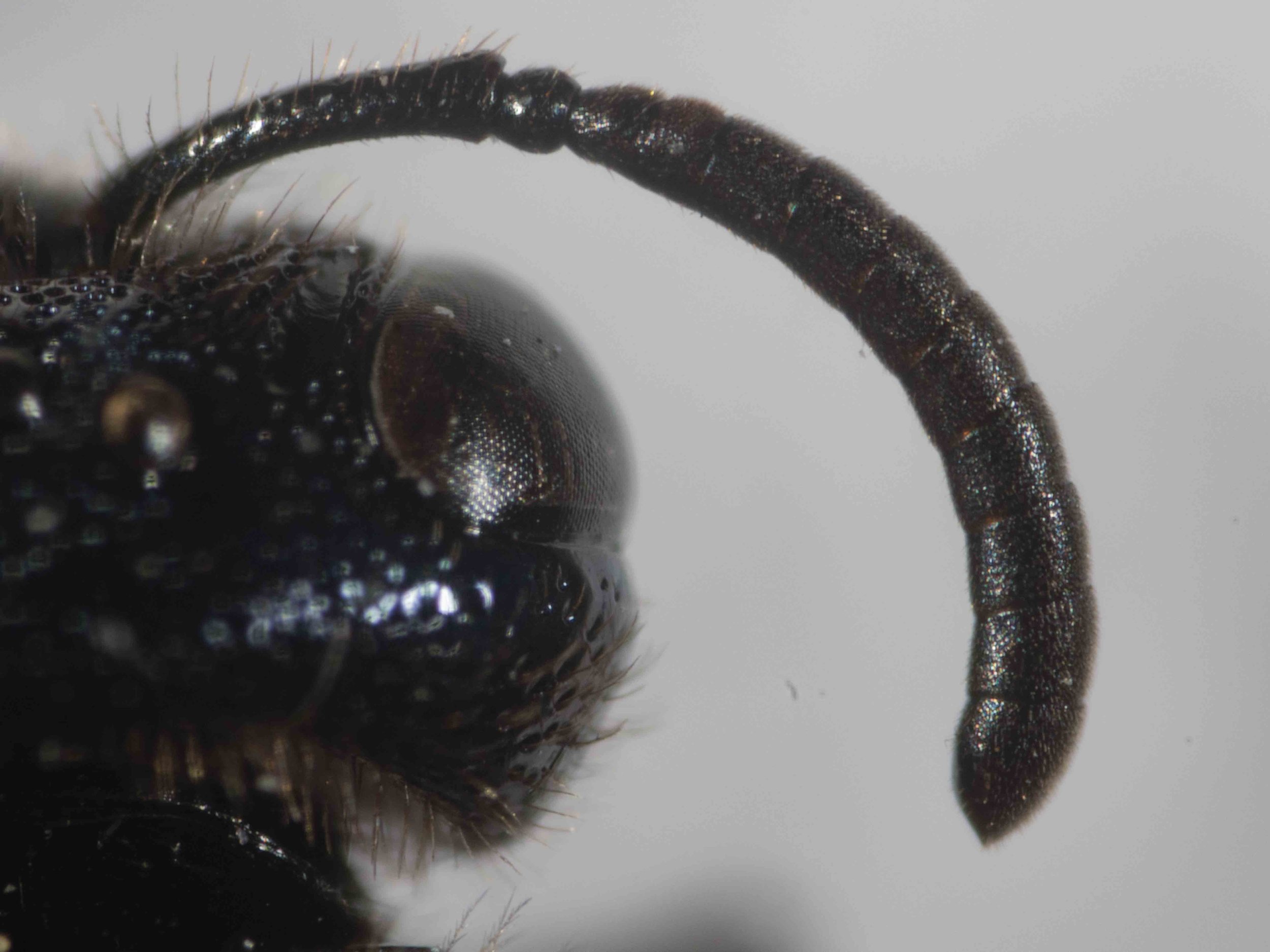
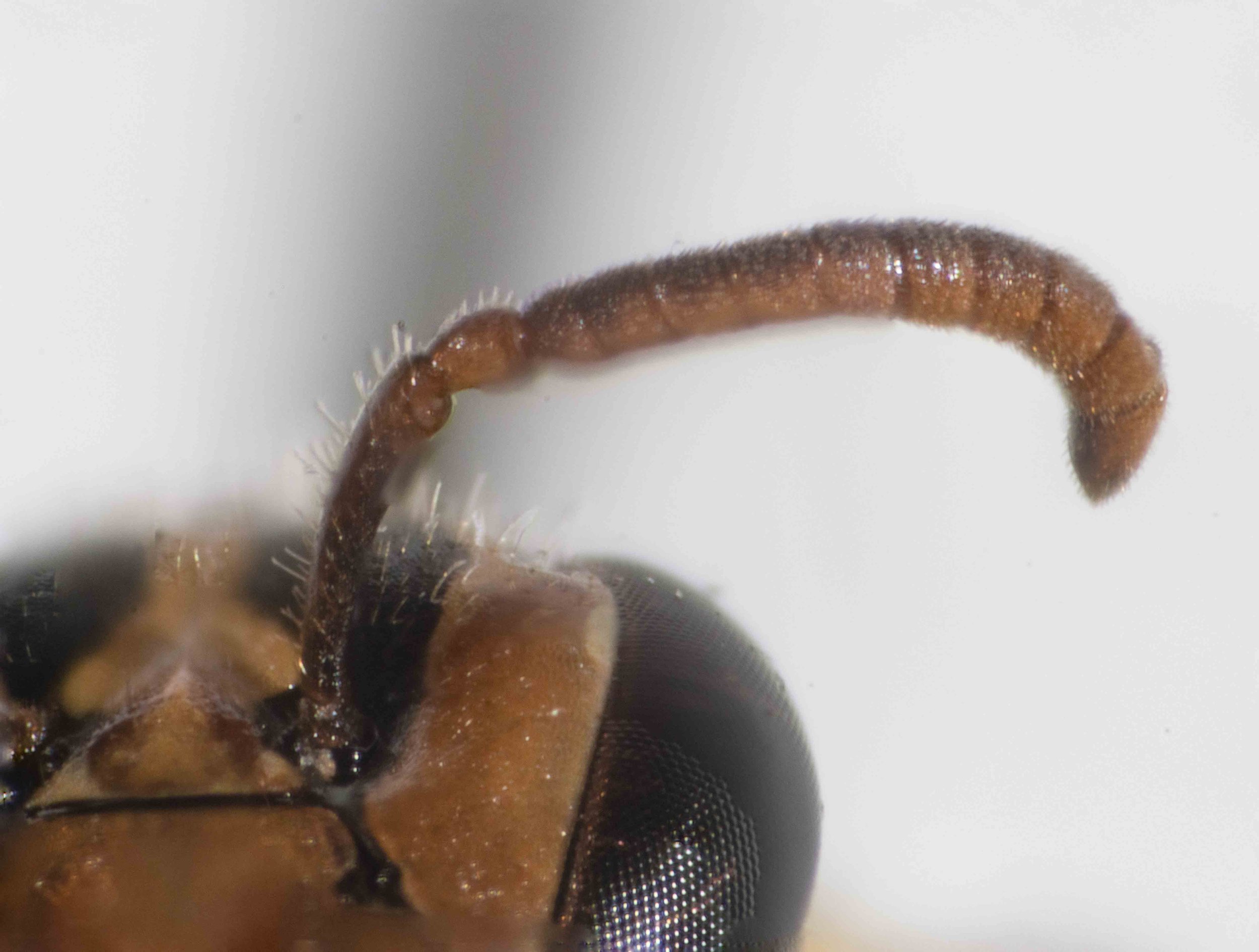
Antennae: long; 11 flagellomeres (male)
Size: ~7mm
Head and thorax strongly sculptured.
Compare antennae and head shape with image e Houston (2018), page 101.
Forewing: 3 submarginal cells; basal vein not strongly arched; stigma well developed; apex of marginal cell on wing margin; strongly tinted brown, veins nearly black
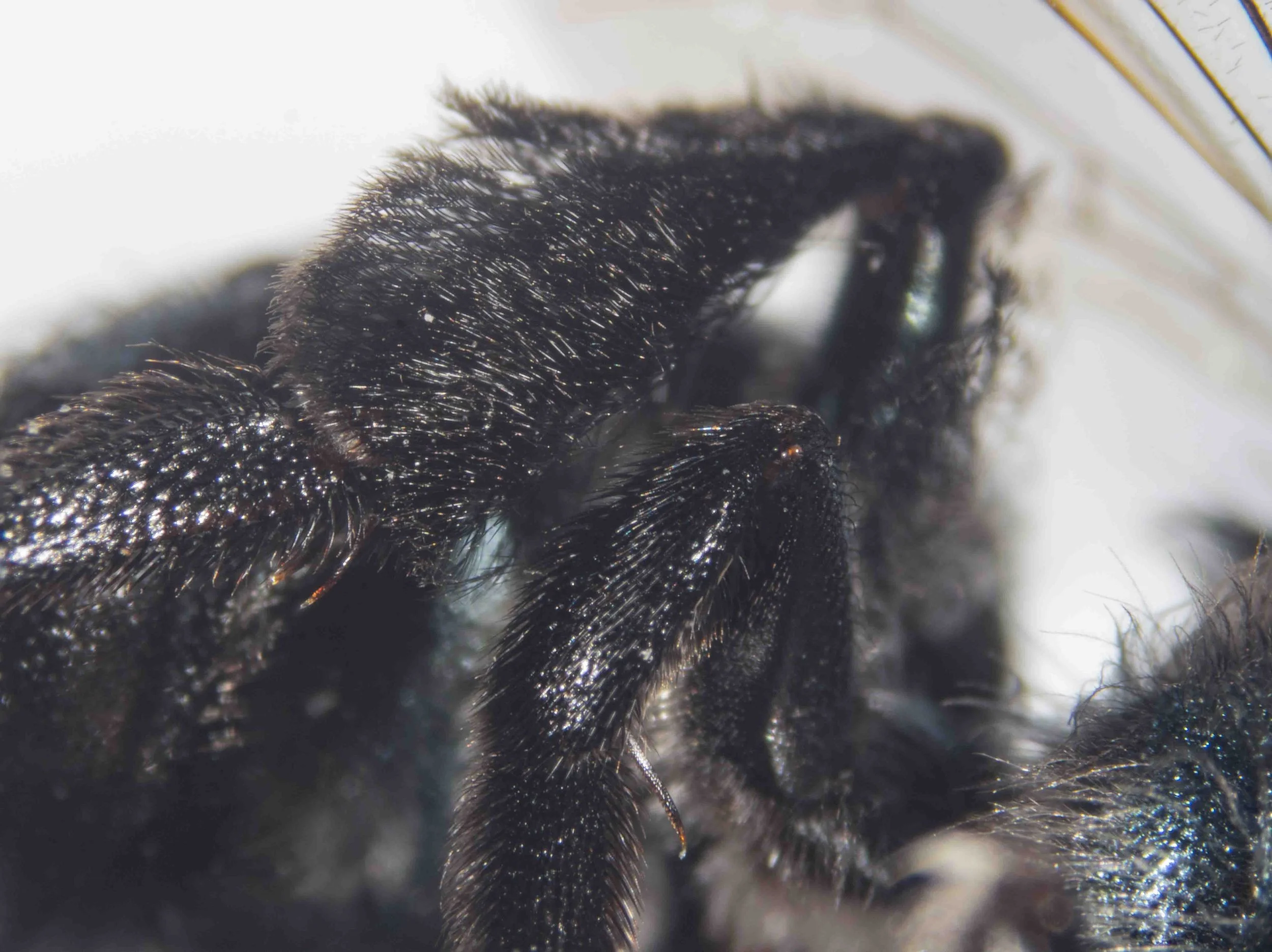
Mid tibia (anterior view)
Front tibia and tarsus (anterior view)
Size: ~6mm
Scopae: absent
TI with long median groove.
Forewing: 2 submarginal cells; SCII about half as long as SCI; basal angle of SCI distinctly less than 90º; posterior vein of SCI sinuate; first recurrent vein joining SCII
Base of hind tibia, viewed dorsally
Hind basitarsus
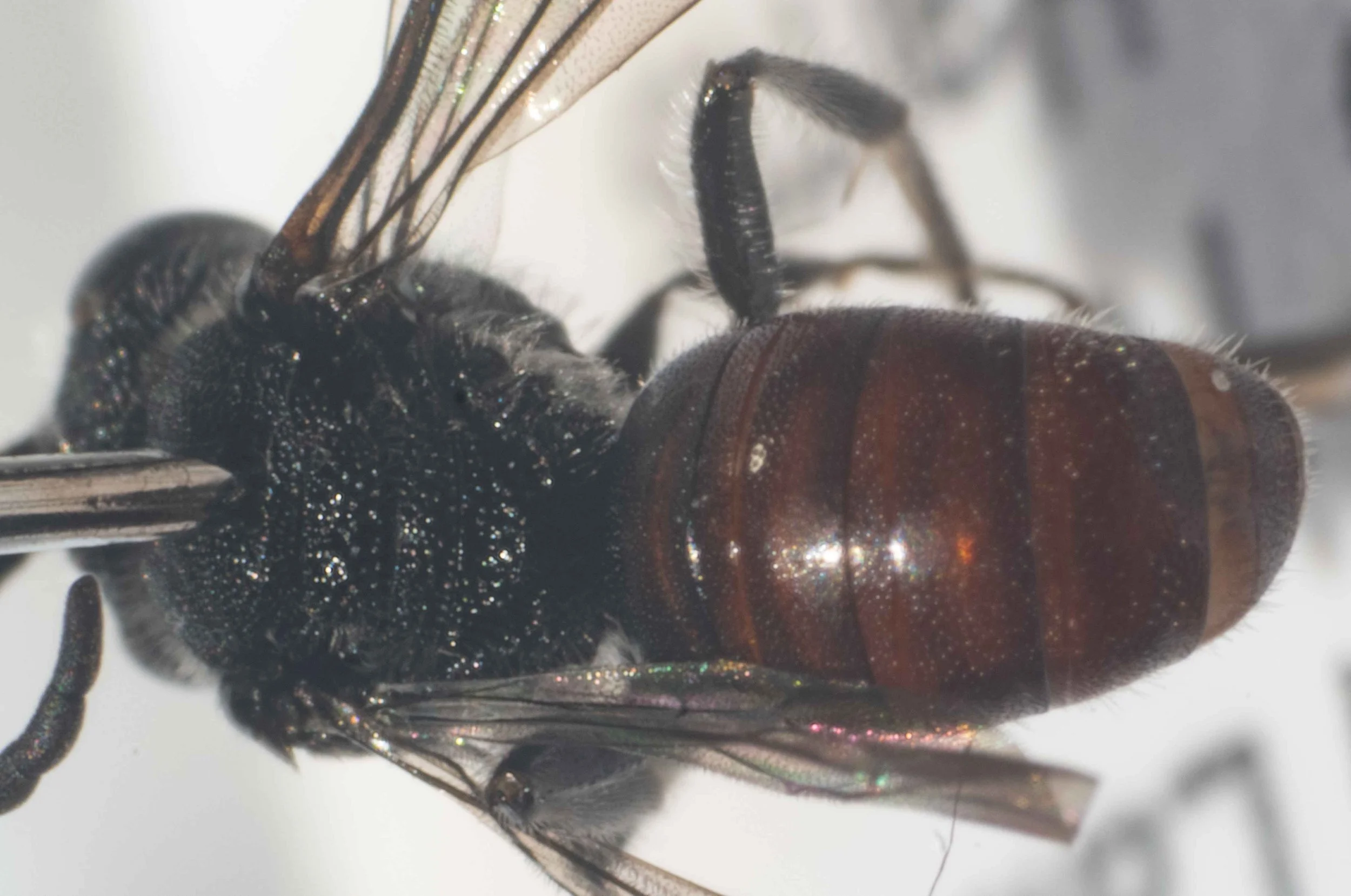
Apex of metasoma, viewed dorsally.
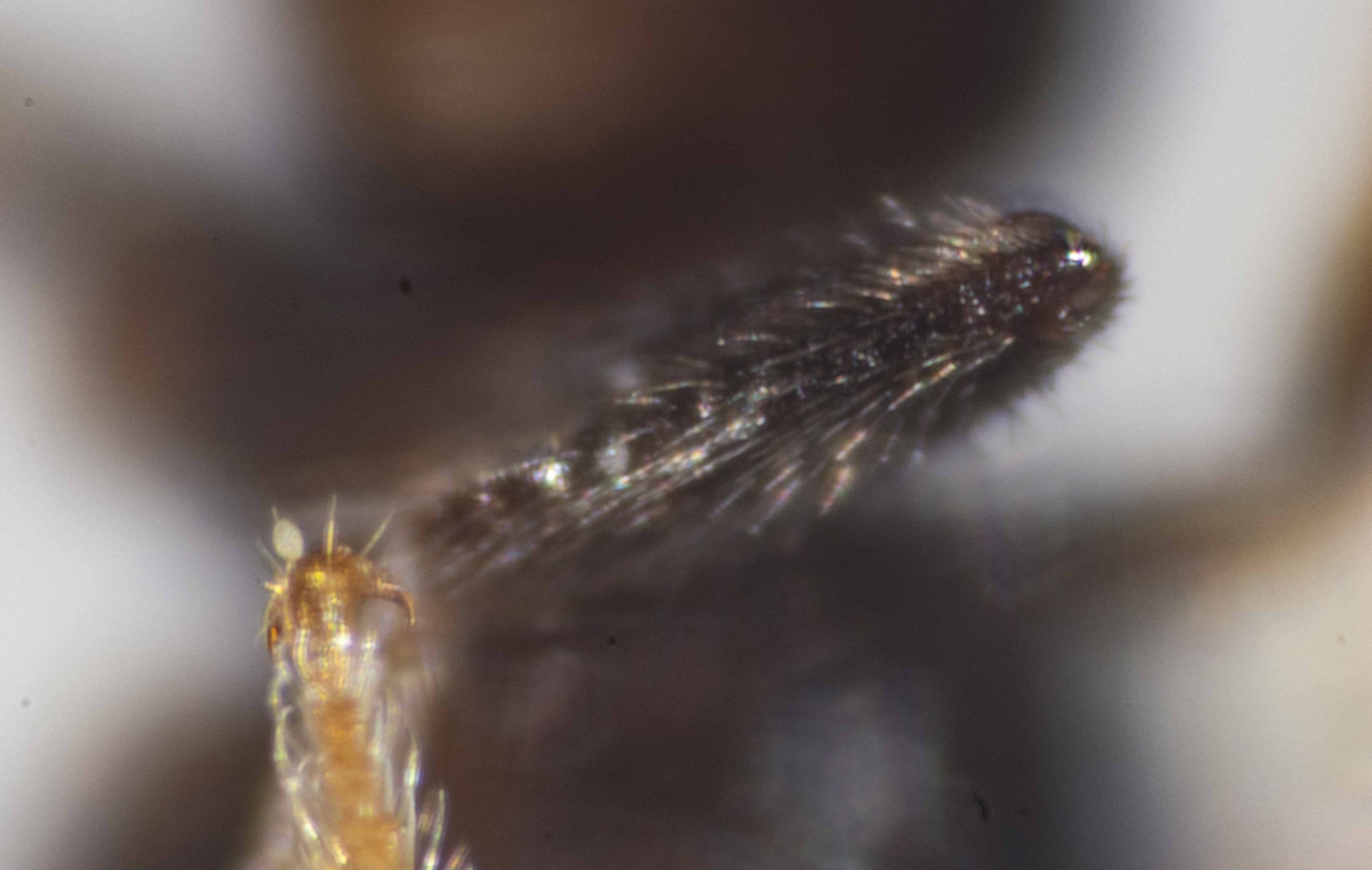
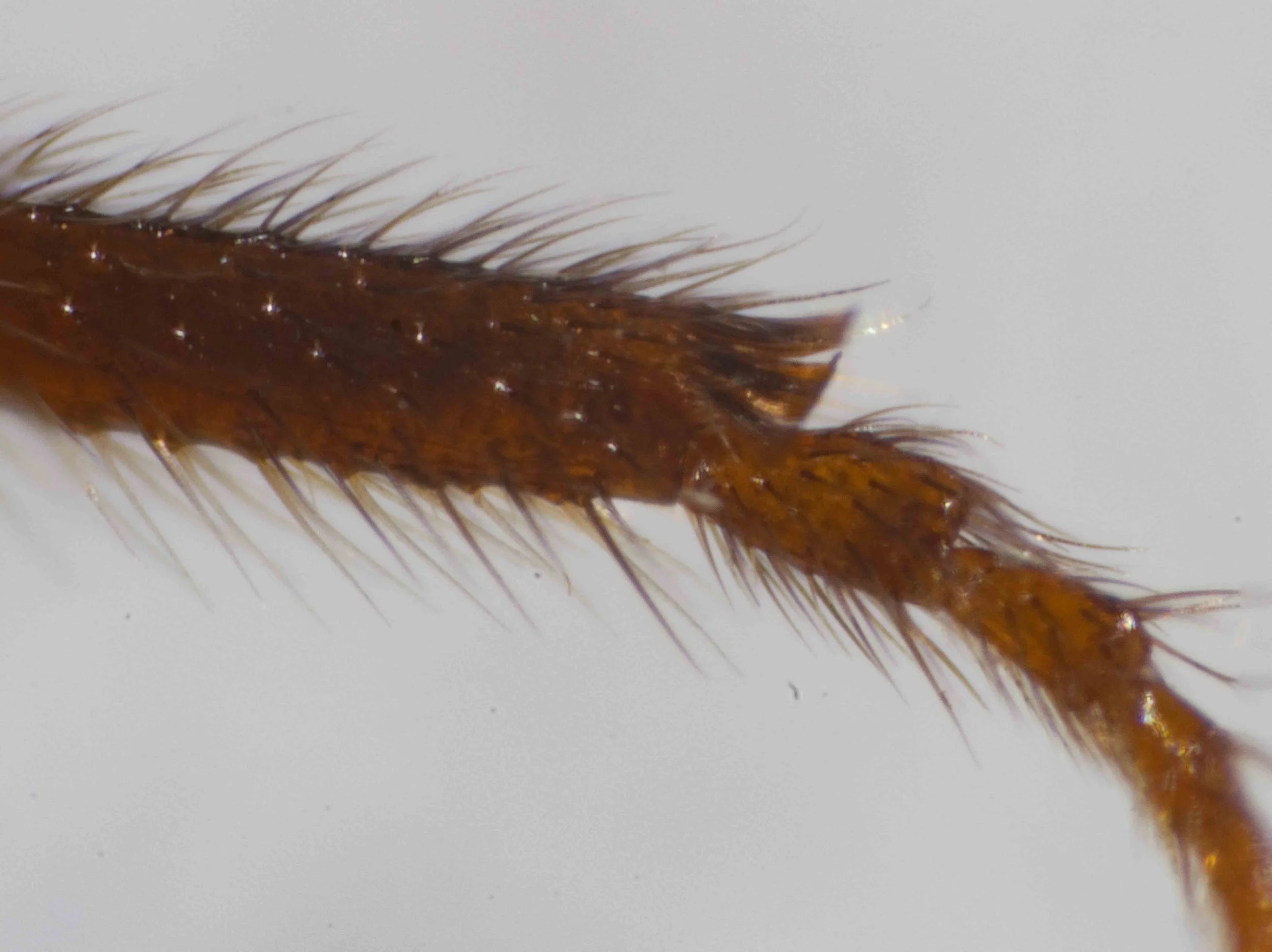
Apex of hind basitarsus, viewed anteriorly: penicillus present
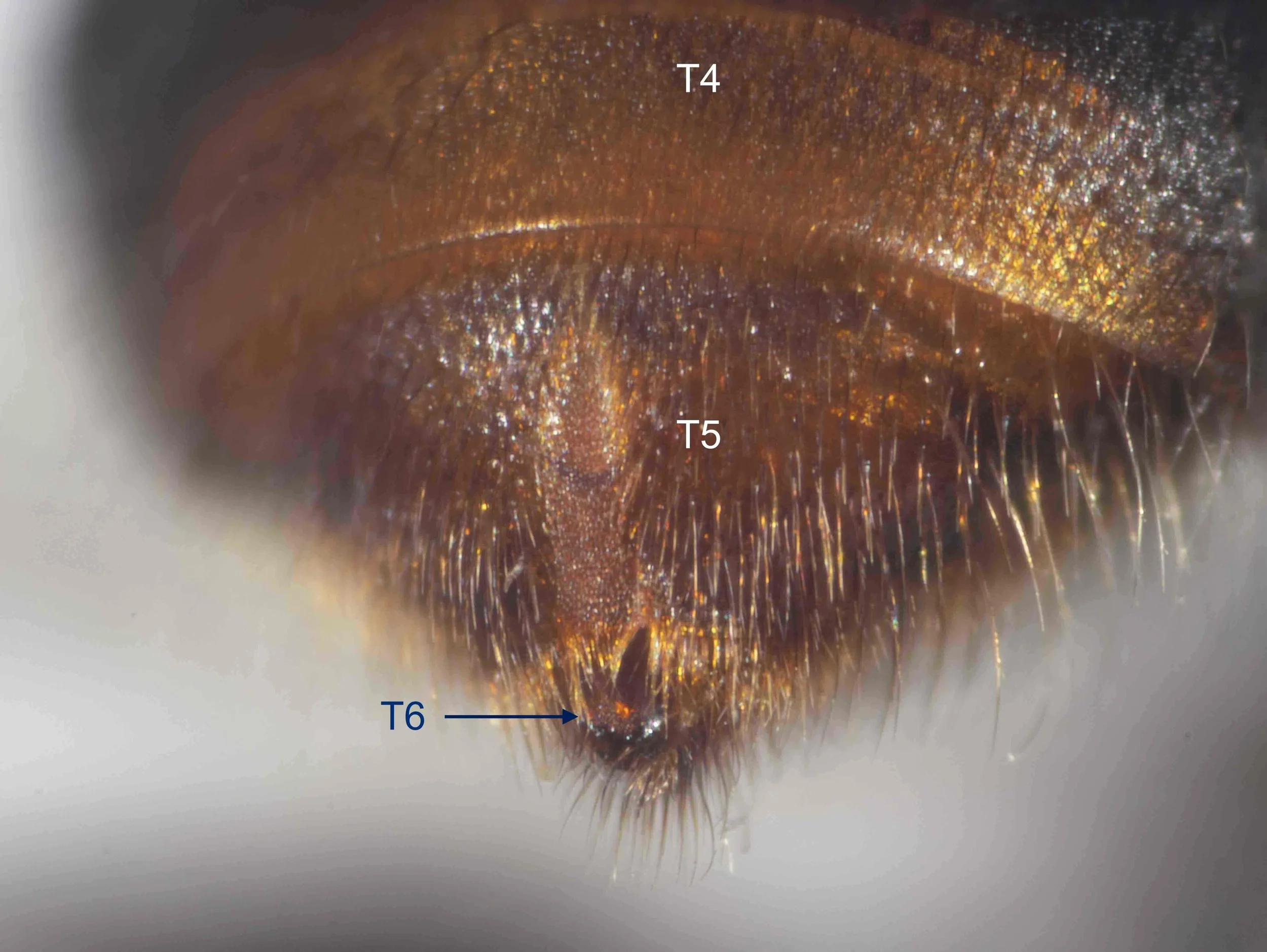
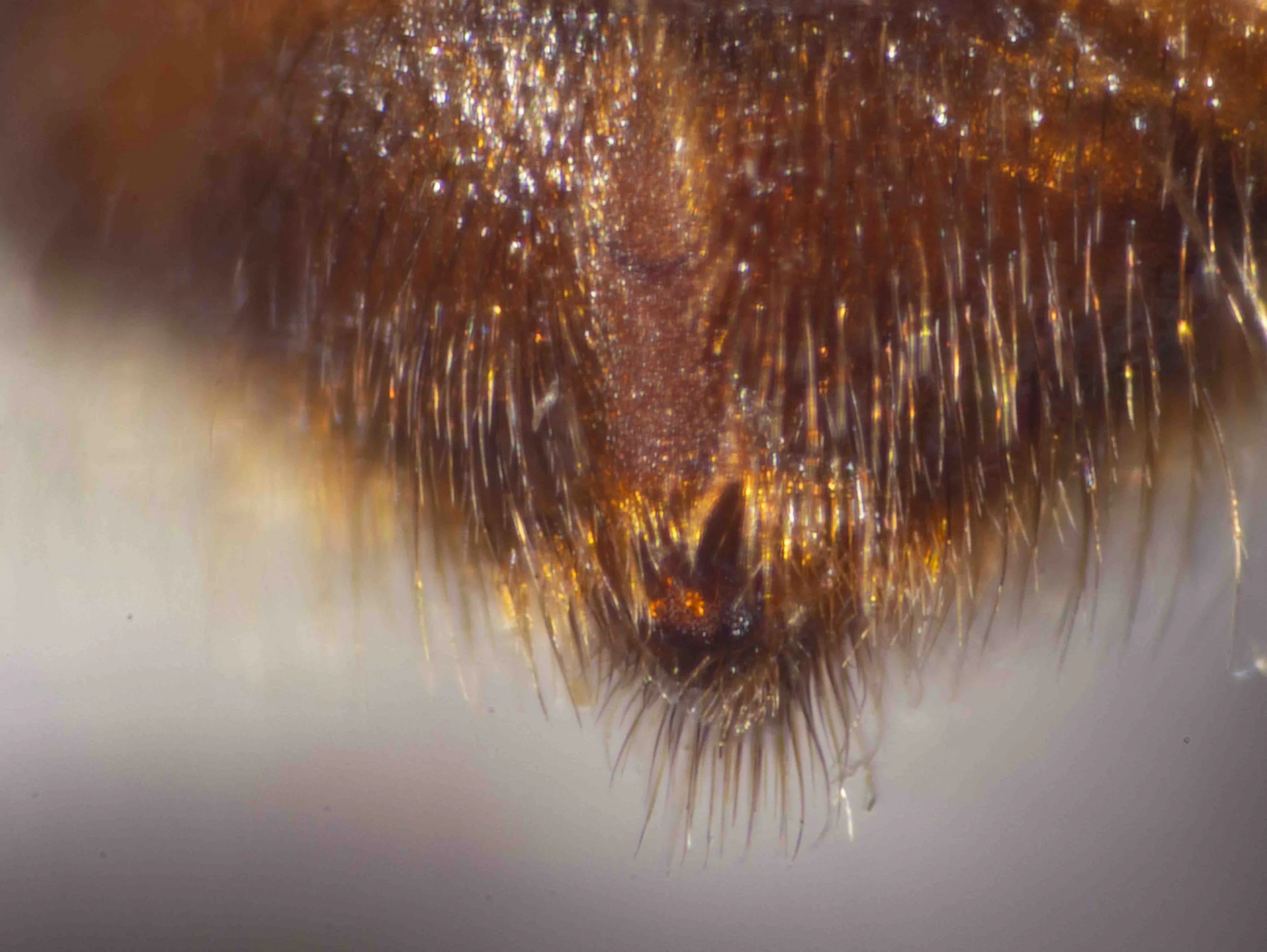
T5: with hair fringe divided medially by a nearly hairless strip
T6: pygidial plate present
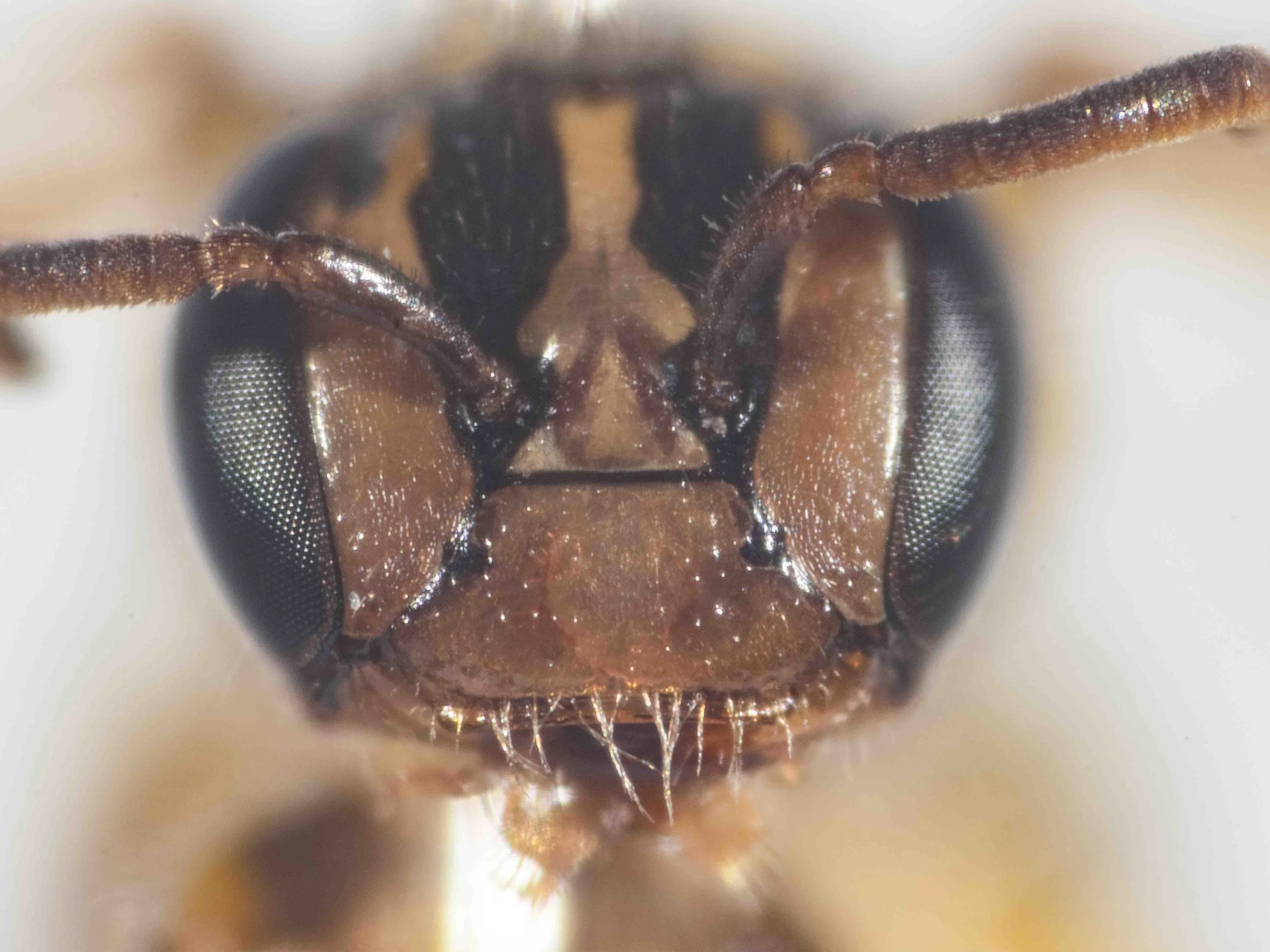
Facial marking consistent with Exley 1974, Figs. 9J-K
Antenna with 10 flagellomeres (female)
Pygidial plate: present
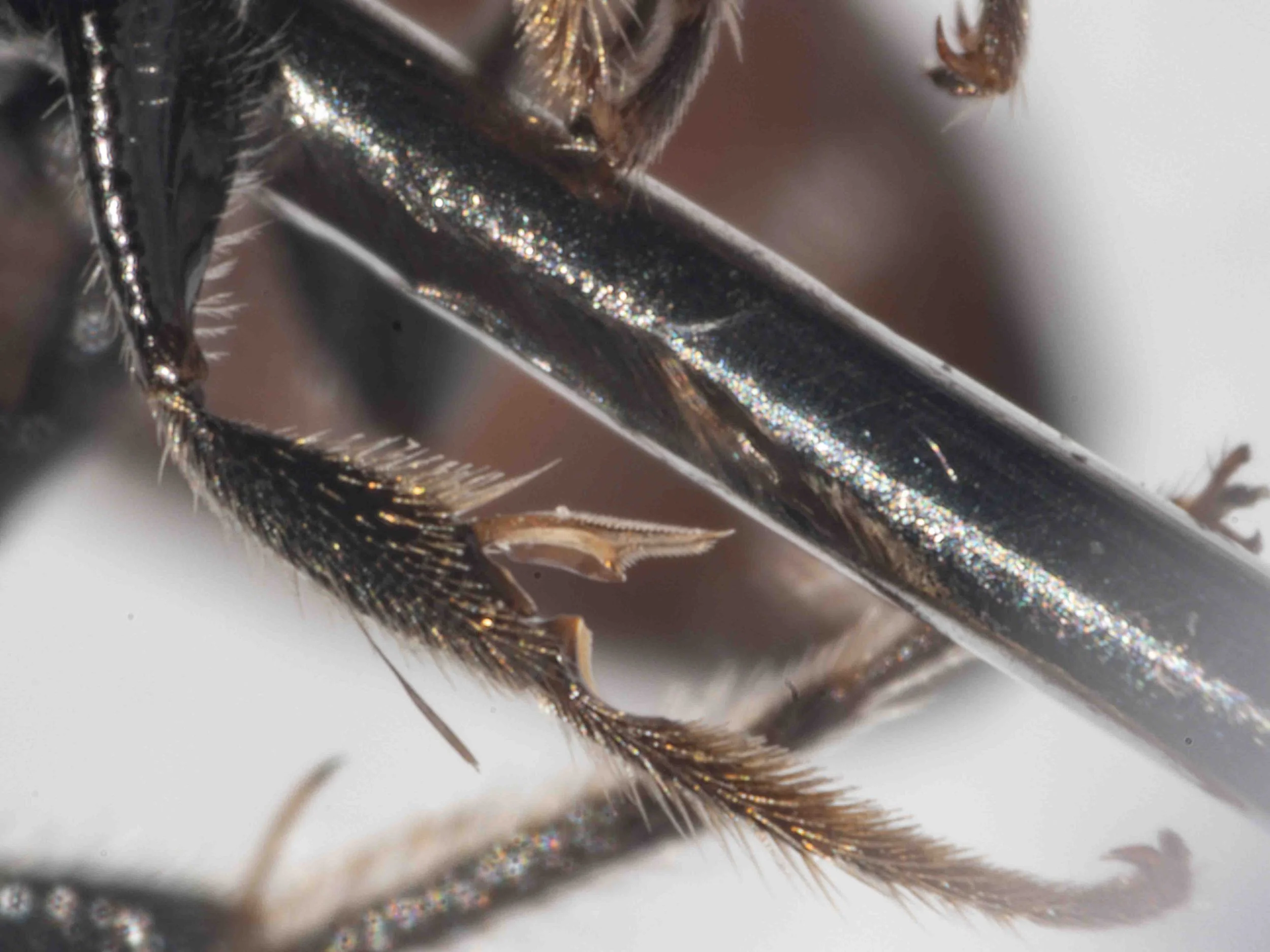
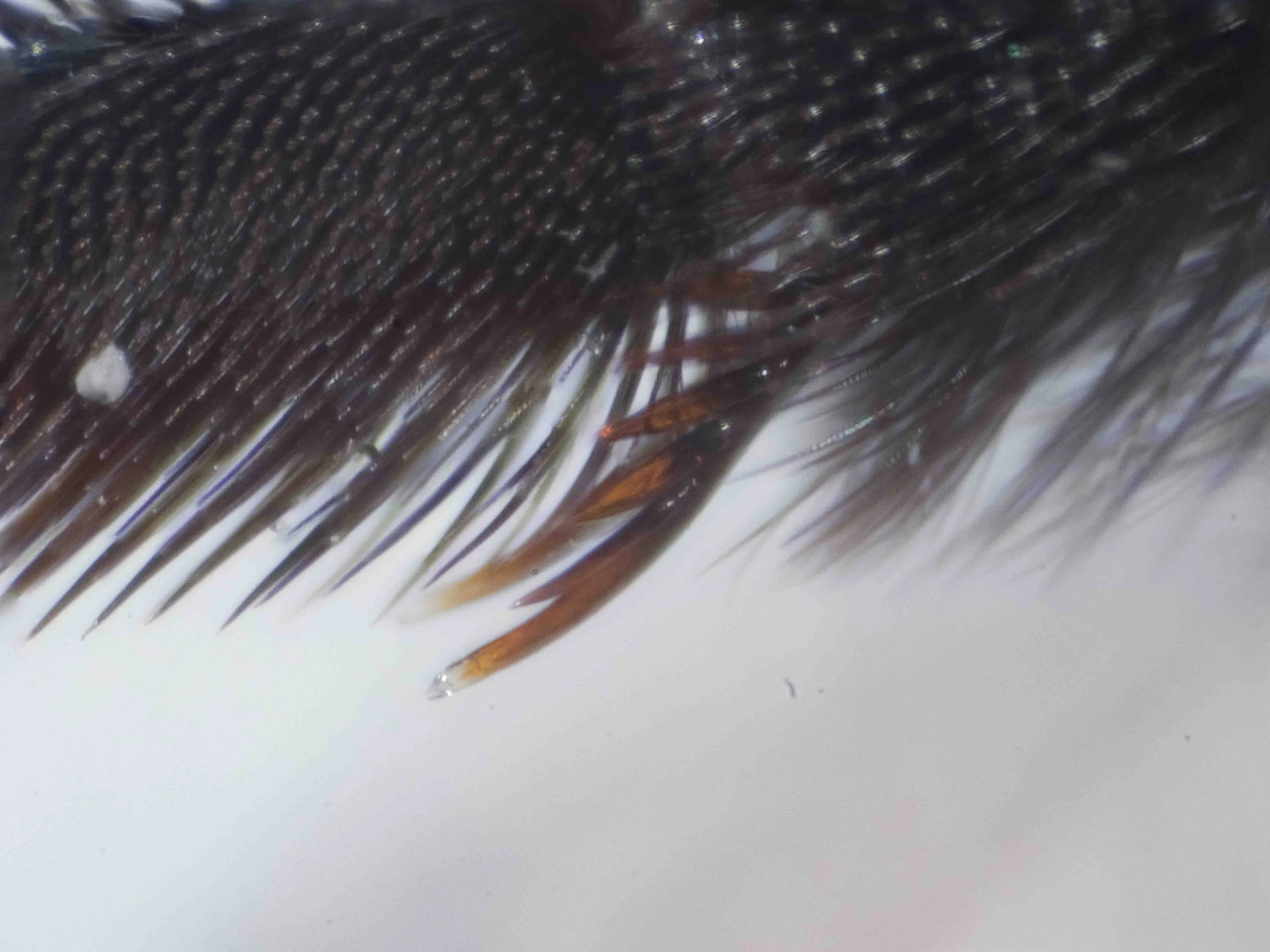
tibial spur of left hind leg (posterior view)
scutellum and dorsal enclosure of propodeum
propodeum, posteroventral view showing both dorsal surface (with enclosure) posterior face
Body length: 12mm. Note that the holotype male of Trichocolletes orientalis: 10.7mm
May be distinguished from sympatric males of T. venustus by “the extensive areas of dark brown on mid tibia” (it is clear orange-brown in T. venustus).
Description male holotype T. orientalis includes:
“femora and trochanters with much long pale hair”
“tarsi, tibiae and distal ends of femora orange-brown, fore and mid tibiae medially suffused with dark brown”
Forewing venation typical of Trichocolletes, with: “three submarginal cells; pterostigma short, parallel-sided; ending at, or slightly beyond, base of vein r.” (Batley & Houston 2012)
Key step 13: Metasoma with narrow silver or pale gold integumental bands –> Step 14
May be distinguished from sympatric males of T. fuscus by width of metasomal bands (they are gold and “not narrow” in T. fuscus).
Description male holotype T. orientalis includes:
“T1–5 with bands usually narrow, silver, sometimes of moderate width and occasionally gold”
Key step 1: Eyes hairy (cf ‘with minute setae only’) –> 2
Key step 2: Scape mostly orange-brown, occasionally dark brown (cf ‘scape mostly black’) –> 3
Key step 15: Scape clear orange brown (cf ‘with brown suffusions’) –> T. orientalis
May be distinguished from sympatric males of T. tenuiculus by scape colour (is has brown infusions in T. tenuiculus).
Description male holotype T. orientalis includes:
“Face densely and scutum closely covered with long, finely-branched, bright orange hair.”
Key step 1: Eyes hairy (not ‘with minute setae only’) –> 2
Key step 9: Gena with open to close hair (cf ‘Gena with dense white hair’) –> 12
Key step 15: Scape clear orange brown (cf ‘with brown suffusions’) –> T. orientalis
Key step 15: Fore basitarsal plume long, distinct (not short, weak) –> T. orientalis.
May be distinguished from sympatric males of T. aeratus by the presence of the plume (there is no such plume in T. aeratus), and from T. tenuiculus by the length and strength of the plume hairs (they are short and weak in T. tenuiculus).
Description male holotype T. orientalis includes:
“Fore basitarsus with tapered plume of golden hair”
Front leg, showing plume of basitarsus as viewed anteriorly
Mid tibia medially suffused with dark brown.
May be distinguished from sympatric males of T. venustus by “the extensive areas of dark brown on mid tibia” (it is clear orange-brown in T. venustus).
hind femora without the dense, long hair characteristic of T. capillosus
hind tibia, without the long fringe of hair characteristic of T. venustus
Apex of metasoma, showing T4-T7
Note 11 flagellomeres = male
Mouthparts, showing the proboscis characteristic of Colletidae, with its mop-like glossa